
PROVINCIAL MOTOR VEHICLES ORDINANCE, 1965
Stored extracted text; legal completeness and current force have not been independently established. Inspect source and version details
Reading view reduces excess blank space and hides page extraction markers. Original text and downloads are retained.
Reading layout follows the stored source. Open the original transcription below to compare wording and extraction details.
THE PROVINCIAL MOTOR VEHICLES ORDINANCE, 1965 (XIX of 1965)
TWELFTH SCHEDULE THIRTEENTH SCHEDULE THE FOURTEENTH SCHEDULE THE FIFTEENTH SCHEDULE
TEXT 1THE 2[PROVINCIAL] MOTOR VEHICLES ORDINANCE, 1965 (XIX of 1965) [10 July 1965] An Ordinance to amend and consolidate the law relating to Motor Vehicles in the Province of West Pakistan. Preamble.– WHEREAS it is expedient to amend and consolidate the law relating to motor vehicles in the Province of West Pakistan;
AND WHEREAS the Provincial Assembly of West Pakistan is not in session and the Governor of West Pakistan is satisfied that circumstances exist which render immediate legislation necessary;
NOW, THEREFORE, in exercise of the powers conferred on him by clause (1) of Article 79 of the Constitution, the Governor of West Pakistan is pleased to make and promulgate the following Ordinance:–
CHAPTER I
Preliminary
Section 1. Short title and extent
(1) This Ordinance may be called the 3[Provincial] Motor Vehicles Ordinance, 1965.
(2) It extends to the whole of 4[Pakistan].
Section 2. Definitions
In this Ordinance, unless the context otherwise requires, the following expressions shall have the meanings hereby respectively assigned to them, that is to say–
(1) “ambulance” means a vehicle designed for the carriage of sick, wounded or invalid persons or animals;
(2) “axle weight” means in relation to an axle of a vehicle the total weight transmitted by the several wheels attached to that axle to the surface whereon the vehicle rests;
(3) “ 1[Board]” means the 2[Punjab Road Transport Board] established under section 70;
1This Ordinance was promulgated by the Governor of West Pakistan on June 8, 1965, published in the Gazette of West Pakistan Gazette (Extraordinary), dated July 10, 1965, pp. 3721-3829, approved by the Provincial Assembly of West Pakistan on July 10, 1965, under clause (3) of Article 79 of the Constitution of the Islamic Republic of Pakistan (1962).
2Substituted for the words “West Pakistan” by the Federal Adaptation of Laws Order, 1975 (4 of 1975), published in the Gazette of Pakistan (Extraordinary), Part I, dated August 1, 1975, Article 2(1) read with Schedule.
3Ibid.
4Substituted for the words “the Province of West Pakistan, except the Tribal Areas” by the Order ibid.
(4) “certificate of registration” means the certificate issued by a competent authority to the effect that a motor vehicle has been duly registered in accordance with provisions of Chapter III;
(5) “contract carriage” means a motor vehicle which carries a passenger or passengers for hire or reward under a contract expressed or implied for the use of the vehicle as a whole at or for a fixed or agreed rate or sum and from one point to another without stopping to pick up or set down along the line of route passengers not included in the contract; and includes a motor cab notwithstanding that the passengers may pay separate fares;
3[(5-A) “CVH” denotes a Commercial Vehicle for Hire which is a public service vehicle used by a CVH driver for carriage of passengers for hire or reward through DPPT but does not include heavy transport vehicle; (5-B) “CVH driver” means a person who drives a CVH while operating for hire or reward through DPPT;]
(6) “delivery van” means any goods vehicle the registered laden weight of which does not exceed 5,000 pounds avoirdupois; 4[(6-A) “DPPT” denotes a Digital Platform for Passenger Transportation which is an online enabled application offered or used by a TNC to book a CVH or PVH for hire or reward from a pre-determined pick-up point to pre-determined drop off point;]
(7) “driver” includes, where a separate person acts as steersman of a motor vehicle, that person as well as any other person engaged in the driving of the vehicle;
5[(7-A) “Driving License Information Management System” means a centralized electronic system established for issuance, renewal, management, and record-keeping of driving licenses in accordance with the provisions of this Ordinance;]
6[7[(7-B)] “e-traffic management system” means an electronic system installed and maintained for management of traffic and recording of traffic violations, automatically by use of artificial intelligence through cameras installed by the Punjab Safe Cities Authority;]
1Substituted for the word “Corporation” by the West Pakistan Motor Vehicles (Punjab Amendment) Act, 1973 (III of 1973), published in the Punjab Gazette (Extraordinary), dated February 26, 1973, pp. 471-D-471-F, s. 2(b).
2Substituted for the words “Road Transport Corporation” by the Act ibid., s. 2(a).
3Inserted by the Provincial Motor Vehicles (Amendment) Act 2025 (XXI of 2025), published in the Punjab Gazette (Extraordinary), dated 24 March, 2025, pp. 3637-3640, s. 2(a).
4Inserted by the Provincial Motor Vehicles (Amendment) Act 2025 (XXI of 2025), published in the Punjab Gazette (Extraordinary), dated 24 March, 2025, pp. 3637-3640, s. 2(b).
5Inserted by the Provincial Motor Vehicles (Second Amendment) Act 2026 (XXVI of 2026), published in the Punjab Gazette (Extraordinary), dated May 07, 2026, pp. 5847-5853, s. 2(b).
6Inserted by the Provincial Motor Vehicles (First Amendment) Act 2025 (XXXI of 2025), published in the Punjab Gazette (Extraordinary), dated May 30, 2025, pp. 4755-4756, s. 2(a).
7Renumbered by the Provincial Motor Vehicles (Second Amendment) Act 2026 (XXVI of 2026), published in the Punjab Gazette (Extraordinary), dated May 07, 2026, pp. 5847-5853, s. 2(a).
1[(7-C) “electronic ticketing system” means electronic software application for issuance of penalty tickets for offenses specified under the Twelfth Schedule of this Ordinance;]
(8) “emergency vehicle” means a motor vehicle used solely for police, fire- brigade or ambulance purposes or to relieve distress;
(9) “fares” includes sums payable for a season ticket or in respect of the hire of a contract carriage;
(10) “goods” include live-stock, and anything (other than equipment ordinarily used with the vehicle) carried by a vehicle except living persons, but does not include luggage or personal effects carried in a motor car or in a trailer attached to a motor car or the personal luggage of passengers travelling in the vehicle;
(11) “goods vehicle” means any motor vehicle constructed or adapted for use for the carriage of goods, or any motor vehicle not so constructed or adapted when used for the carriage of goods, solely or in addition to passengers;
(12) “Government” means the 2[Provincial Government];
(13) “heavy transport vehicle” means a transport vehicle the registered axle weight of which exceeds 10,600 pounds avoirdupois, or the registered laden weight of which exceeds 14,500 pounds avoirdupois;
(14) “intersection” shall include the area bounded by the side lines, real or projected, of two or more public highways which meet or cross each other;
(15) “invalid carriage” means a motor vehicle the unladen weight of which does not exceed five hundred weights, specially designed and constructed, and not merely adapted, for the use of a person suffering from some physical defect or disability, and used solely by or for such a person;
(16) “licence” means the document issued by a competent authority authorising the person specified therein to drive a motor vehicle or a motor vehicle of any specified class or description;
(17) “licensing authority” means an authority empowered to grant licences under this Ordinance;
(18) “light transport vehicle” means any public service vehicle other than a motor cab, or any goods vehicle other than a heavy transport vehicle or a delivery van;
(19) “locomotive” means a motor vehicle which is itself not constructed to carry any load (other than equipment used for the purpose of propulsion), the unladen weight of which exceeds 16,000 pounds avoirdupois, but does not include a road-roller;
1Inserted by the Provincial Motor Vehicles (Second Amendment) Act 2026 (XXVI of 2026), published in the Punjab Gazette (Extraordinary), dated May 07, 2026, pp. 5847-5853, s. 2(c).
2Substituted for the words “Government of West Pakistan” by the Federal Adaptation of Laws Order, 1975 (4 of 1975), published in the Gazette of Pakistan (Extraordinary), Part I, dated August 1, 1975, pp. 435-467, Article 2(1) read with Schedule.
(20) “motor cab” means any motor vehicle constructed, adapted or used to carry not more than ten passengers excluding the driver, for hire or reward;
(21) “motor car” means any motor vehicle other than a transport vehicle, locomotive, road-roller, tractor, motor cycle or invalid carriage;
(22) “motor cycle” means a motor vehicle, other than an invalid carriage, with less than four wheels, the unladen weight of which, inclusive of any side-car attached to the vehicle, does not exceed 900 pounds avoirdupois;
(23) “motor vehicle” means any 1[vehicle propelled mechanically or electrically either partially or completely, and any hybrid vehicle,] adapted for use upon roads whether the power of propulsion is transmitted thereto from an external or internal source, and includes a chassis to which a body has not been attached 2[, a tractor] and a trailer, 3[a combined harvester, a rig, a fork lifter, a road roller, construction and earth moving machinery such as a wheel loader, a crane, an excavator, a grader, a dozer and a pipe layer, a road making and a road/sewerage cleaning plant,] but does not include a vehicle running upon fixed rails or used solely upon the premises of the owner;
(24) “owner” means the person in whose name the motor vehicle is registered and includes–
(a) a transferee of the motor vehicle from such persons;
(b) in relation to motor vehicle which is the subject of a hire- purchase agreement, the person in possession of the vehicle under that agreement; and
(c) where the person in whose name the motor vehicle is registered or the person in possession of the motor vehicle under a hire- purchase agreement is–
(i) a minor, the guardian of such minor;
(ii) a company registered under the Companies Act, 1913, the directors of such company;
(iii) a society registered under the Societies Registration Act, 1860, or under any law relating to co-operative societies, the principal officer of such society by whatever designation known;
(iv) a firm, all the partners of such firm; and
1Substituted for the words “mechanically propelled vehicle” by the Provincial Motor Vehicles (Amendment) Act 2023 (XV of 2023), published in the Punjab Gazette (Extraordinary), dated February 17, 2023, pp. 3957-3959, s. 2.
2Inserted by the Provincial Motor Vehicles (Amendment) Ordinance, 1978 (VIII of 1978), published in the Gazette of Pakistan (Extraordinary), dated March 5, 1978, pp. 47-53, s. 2(a).
3Inserted by the Punjab Finance Ordinance, 2002 (XXXVII of 2002) (w.e.f. 1.7.2002), published in the Punjab Gazette (Extraordinary), dated June 25, 2002, pp. 2023-2027, s. 5. Under Article 5A of the Provisional Constitution Order 1999 (I of 1999), as amended, read with Article 270AA of the Constitution of the Islamic Republic of Pakistan, 1973, it shall not be subject to any limitation as to duration prescribed in the Constitution.
(v) any other association of persons, all the members of such association:
Provided that where such company, firm, society or other association of persons has given notice to the registering authority that it has nominated a director, partner, office- bearer, member or officer, as the case may be, of the company, firm, society or association to be the owner of the vehicle for the purposes of this Ordinance, the person so nominated shall alone be deemed to be the owner for the purposes of this Ordinance;
(25) “permit” means the document issued by the Provincial Transport Authority or a Regional Transport Authority Authorising the use of a transport vehicle as a contract carriage or stage carriage, or authorising the owner as a private carrier or public carrier to use such vehicle;
(26) “prescribed” means prescribed by rules made under this Ordinance;
(27) “private carrier” means an owner of a transport vehicle other than a public carrier who uses that vehicle solely for the carriage of goods which are his property or the carriage of which is necessary for the purposes of his business, not being a business of providing transport, or who uses the vehicle for any of the purposes specified in sub- section (2) of section 44;
1[(27-A) “Province” means the Province of the Punjab;]
(28) “public carrier” means an owner of a transport vehicle who transports or undertakes to transport goods, or any class of goods, for another person at any time and in any public place, for hire or reward, whether in pursuance of the terms of a contract or agreement or otherwise, and includes any person, body, association or company engaged in the business of carrying the goods of persons associated with that person, body, association or company for the purposes of having their goods transported;
(29) “public highway” shall include any highway, road, street, avenue, alley, public place, public driveway or any other public way;
(30) “public place” means a road, street way of other place, whether a thoroughfare or not to which the public have a right of access, and includes any place or stand at which passengers are picked up or set down by a stage carriage;
(31) “public service vehicle” means any motor vehicle used or adapted to be used for the carriage of passengers for hire or reward, and includes a motor cab, contract carriage, and stage carriage; 1[(31-A) “PVH” denotes a Private Vehicle for Hire which is a motor car or a motor cycle used by a PVH driver for carriage of passengers for hire or reward through DPPT;
1Added by the West Pakistan Motor Vehicles (Punjab Amendment) Ordinance, 1971 (XXII of 1971) (w.e.f. 1.7.1970), published in the Punjab Gazette (Extraordinary), dated October 5, 1971, pp. 1238-E-1238-F, s. 2.
(31-B) “PVH driver” means a person who drives a PVH while operating for hire or reward through DPPT;]
(32) “registered axle weight” means in respect of any vehicle the axle weight certified and registered by the registering authority as permissible for that vehicle;
(33) “registered laden weight” means in respect of any vehicle the total weight of the vehicle and load certified and registered by the registering authority as permissible for that vehicle;
(34) “registering authority” means an authority empowered to register motor vehicles under Chapter III;
2[(34-A) “Punjab Safe Cities Authority” means the Punjab Safe Cities Authority established under the Punjab Safe Cities Authority Act 2016 (I of 2016);]
(35) “school bus” means any motor vehicle used exclusively for the carriage of students of any educational institution recognised by Government or the managing committee of which is a society registered under the Societies Registration Act, 1860;
(36) “semi-trailer” means any vehicle which is so designed that when operated, the forward end of its body or chassis rests upon the body or chassis of the towing motor vehicle;
(37) “stage carriage” means a motor vehicle carrying or adapted to carry more than six persons excluding the driver which carries passengers for hire or reward at separate fares paid by or for individual passengers, either for the whole journey or for stages of the journey;
(38) “street (roadway)” means that part of the public highway which is intended for vehicular traffic;
(39) “tractor” means a motor vehicle which is not itself constructed to carry any load (other than equipment used for the purpose of propulsion) the unladen weight of which does not exceed 16,000 pounds avoirdupois but does not include a road-roller;
(40) “traffic signs” includes all signals, warning sign posts, direction posts, or other devices for the information, guidance or direction of drivers of motor vehicles;
(41) “trailer” means any vehicle other than a side-car drawn or intended to be drawn by a motor vehicle;
(42) “transport vehicle” means a public service vehicle, a goods vehicle, a locomotive or a tractor 1[* * * * ];
1Inserted by the Provincial Motor Vehicles (Amendment) Act 2025 (XXI of 2025), published in the Punjab Gazette (Extraordinary), dated 24 March, 2025, pp. 3637-3640, s. 2(c).
2Inserted by the Provincial Motor Vehicles (First Amendment) Act 2025 (XXXI of 2025), published in the Gazette of Punjab (Extraordinary), dated May 30, 2025, pp. 4755-4756, s. 2(b).
2[(42-A) “TNC” denotes a Transportation Network Company having a licence granted by the Provincial Transport Authority for operating DPPT;]
(43) “unladen weight” means the weight of a vehicle or trailer, including all equipment ordinarily used within the vehicle or trailer when working, but excluding the weight of the driver or attendant; and where alternative parts or bodies are used, the unladen weight of the vehicle means the weight of the vehicle with the heaviest such alternative part or body;
(44) “weight” means the total weight transmitted for the time being by the wheels of a vehicle to the surface on which the vehicle rests.
CHAPTER II
Licensing of Drivers of Motor Vehicles
Section 3. Prohibition on driving without licence
3[(1)] No person shall drive a motor vehicle in any public place unless he holds an effective licence authorising him to drive the vehicle; and no person shall so drive a motor vehicle as paid employee or shall so drive a public service vehicle unless his licence specifically entitles him so to do:
Provided that a person receiving instructions in driving a motor vehicle may, subject to such conditions as may be prescribed by Government in this behalf, drive a motor vehicle in any public place.
4[(2) No person shall drive a motor vehicle in any public place unless he has in his possession his own copy of the most recent version of the Pakistan Highway Code published by the Federal Government.]
Section 4. Age limit in connection with driving of motor vehicles
(1) No person shall drive in any public place–
(i) a motor cycle or an invalid carriage, unless he has attained the age of eighteen years;
5[provided that a person who has attained the age of sixteen years may drive a motor cycle up to 125 cc or an electric motor cycle having equivalent power if he holds the juvenile driving permit issued by the licensing authority in such manner as may be prescribed;]
(ii) a motor car, otherwise than as a paid employee, unless he has attained the age of eighteen years;
1Omitted the words “other than locomotive or tractor used solely for agricultural purposes” by the Provincial Motor Vehicles
(Amendment) Ordinance, 1978 (VIII of 1978), published in the Gazette of Pakistan (Extraordinary), dated March 5, 1978, pp. 47-53, s. 2(b).
2Inserted by the Provincial Motor Vehicles (Amendment) Act 2025 (XXI of 2025), published in the Punjab Gazette (Extraordinary), dated 24 March, 2025, pp. 3637-3640, s. 2(d).
3Re-numbered by the Ordinance ibid., s. 3.
4Added by the Provincial Motor Vehicles (Amendment) Ordinance, 1978 (VIII of 1978), published in the Gazette of Pakistan (Extraordinary), dated March 5, 1978, pp. 47-53, s. 3.
5Added by the Provincial Motor Vehicles (Amendment) Act, 2026 (X of 2026), published in the Punjab Gazette of (Extraordinary), dated February 19, 2026, pp. 4475-4476, s.2.
(iii) a motor car as a paid employee or a transport vehicle, unless he has attained the age of twenty-one years;
(iv) a heavy transport vehicle, unless he has attained the age of twenty-two
years.
(2)(a) No person about the age of fifty years shall drive a transport vehicle in any public place unless the licence entitling him so to do bears an effective endorsement by the licensing authority that such person has furnished a certificate in Form B as set forth in the First Schedule signed by a registered medical practitioner.
(b) The licensing authority shall not make on any licence any such endorsement as is referred to in clause (a) unless it appears from the medical certificate furnished by the holder of the licence that he is not suffering from any disease or disability specified in the Second Schedule or any other disease or disability which is likely to cause the driving by him of a transport vehicle to be a source of danger to the public or to the passengers.
(c) An endorsement made under the provisions of clause (a) shall be effective for a period of twelve months from the date thereof, but the said period may, from time to time, be extended by the licensing authority by a further period of twelve months at any one time, on the production by the holder of the licence of a fresh medical certificate as required under clause (a) and on being satisfied therefrom that the holder of the licence is not suffering from any disease or disability referred to in clause (b).
(3) No person shall drive a motor vehicle in a public place with his eyes wholly or partly covered with any cloth or other opaque substance, or in such manner as to interfere in any manner with his vision.
Section 5. Owners of motor vehicles not to permit contravention of section 3 or section 4
No owner or person in charge of a motor vehicle shall cause or permit any person who does not satisfy the provisions of section 3 or section 4 to drive the vehicle.
Section 6. Restriction on use of licence by person other than holder
No holder of a licence shall permit it to be used by any other person.
Section 7. Grant of licence
(1) Any person who is not disqualified under section 4 for driving a motor vehicle and who is not for the time being disqualified for holding or obtaining a licence, may apply to the licensing authority having jurisdiction in the area in which he ordinarily resides or carries on business or, if the application is for a licence to drive as a paid employee, in which the employer resides or carries on business for the issue to him of a licence.
(2) Every application under sub-section (1) shall be 1[processed electronically through Driving License Information Management System] in Form A
1Inserted by the Provincial Motor Vehicles (Second Amendment) Act 2026 (XXVI of 2026), published in the Punjab Gazette (Extraordinary), dated May 07, 2026, pp. 5847-5848, s. 3a (i).
as set forth in the First Schedule 1[* * * * * * * * * * * * * * * * * * * * *] and shall contain the information required by the Form.
(3) Where the application is for a licence to drive as a paid employee or to drive a transport vehicle, or where in any other case the licensing authority for reasons to be stated in writing so requires, the application shall be accompanied by a medical certificate in Form B as set forth in the First Schedule signed by a registered medical practitioner.
(4) Every application for a licence to drive 2[a motor vehicle] shall be 3[processed after taking electronically a recent photograph of the applicant, and shall bear the electronic biometric impression of each finger of each hand of the applicant].
(5) If, from the application or from the medical certificate referred to in sub- section (3), it appears that the applicant is suffering from any disease or disability specified in the Second Schedule or any other disease or disability which is likely to cause the driving by him of a motor vehicle of the class which he would be authorised by the licence applied for to drive to be a source of danger to the public or to the passengers, the licensing authority shall refuse to issue the licence:
Provided that–
(a) a licence limited to driving an invalid carriage may be issued to the applicant, if the licensing authority is satisfied that he is fit to drive such a carriage;
(b) the applicant may, except where he suffers from a disease or disability specified in the Second Schedule, claim to be subjected to a test of his fitness or ability to drive a motor vehicle of a particular construction or design, and if he passes such test to the satisfaction of the licensing authority and is not otherwise disqualified, the licensing authority shall grant him a licence to drive such motor vehicle as the licensing authority may specify in the licence.
(6) No licence shall be issued to any applicant unless he passes to the satisfaction of the licensing authority the test of competence specified in the Third Schedule:
Provided that where the application is for a licence to drive a motor vehicle (not being a transport vehicle) otherwise than as a paid employee, the licensing authority may exempt the applicant from the test specified in the Third Schedule, if–
(a) the applicant possesses a driving certificate issued by an automobile association recognised in this behalf by Government; or
1Omitted by the Provincial Motor Vehicles (Second Amendment) Act 2026 (XXVI of 2026), published in the Punjab Gazette (Extraordinary), dated May 07, 2026, pp. 5847-5848, s. 3a (ii).
2Substituted for the words “as a paid employee and every application for a licence to drive a transport vehicle” by the Provincial Motor Vehicles (Amendment) Ordinance, 1978 (VIII of 1978), published in the Gazette of Pakistan (Extraordinary), dated March 5, 1978, pp. 47-53, s. 4(1)(a).
3Substituted by the Provincial Motor Vehicles (Second Amendment) Act 2026 (XXVI of 2026), published in the Punjab Gazette (Extraordinary), dated May 07, 2026, pp. 5847-5848, s. 3b.
(b) the licensing authority is satisfied that the applicant has previously held a licence (or similar document) valid outside the Province 1[or in any other country] and has had not less than twelve months recent experience of driving a motor vehicle of the class to which the application refers:
Provided further that where the applicant, being a serving member of the armed forces of Pakistan, is in possession of a valid army driving licence and has been actually driving one or more classes of motor vehicles for not less than three years immediately before the date of application, the licensing authority shall, subject to the prescribed conditions, exempt him from the test specified in the Third Schedule and issue to him a driving licence for the class or classes of motor vehicles he has been so driving.
(7) The test of competence to drive shall be carried out in a vehicle of the class to which the application refers, and for the purposes of Part I of the test–
(a) a person who passes the test in driving a heavy transport vehicle shall be deemed also to have passed the test in driving any motor vehicle other than a motor cycle or a road-roller;
(b) a person who passes the test in driving a light transport vehicle shall be deemed also to have passed the test in driving a motor car, or a motor cab or a delivery van.
(8) No licence shall be issued to any applicant to drive a heavy transport vehicle unless he has held for a period of not less than three years immediately preceding the making of the application an effective licence to drive a motor vehicle other than a motor cycle, an invalid carriage or a road-roller.
(9) When an application has been duly made to the appropriate licensing authority and the applicant has satisfied such authority of his physical fitness and of his competence to drive and has paid to the authority the prescribed fee, the licensing authority shall grant the applicant a licence unless the applicant is disqualified under section 4 for driving a motor vehicle or is for the time being disqualified for holding or obtaining a licence:
Provided that a licensing authority may issue a licence to drive a motor cycle or a motor car notwithstanding that it is not the appropriate licensing authority; if the licensing authority is satisfied that there is good reason for the applicant’s inability to apply to the appropriate licensing authority.
2[(10) No licence shall be issued to any applicant unless he has in his possession his own copy of the most recent version of the Pakistan Highway Code published by the Federal Government.]
1Inserted by the Provincial Motor Vehicles (Second Amendment) Act 2026 (XXVI of 2026), published in the Punjab Gazette (Extraordinary), dated May 07, 2026, pp. 5847-5848, s. 3c.
2Added by the Provincial Motor Vehicles (Amendment) Ordinance, 1978 (VIII of 1978), published in the Gazette of Pakistan (Extraordinary), dated March 5, 1978, pp. 47-53, s. 4(2).
Section 8. Form and contents of licence
(1) Every licence, except a licence issued under section 15, shall be in Form C as set forth in the First Schedule and shall have affixed thereto 1[the photograph] referred to in sub-section (4) of section 7.
(2) A licence shall specify whether the holder is entitled to drive as a paid employee and whether he is entitled to drive a public service vehicle and shall further be expressed as entitling the holder to drive a motor vehicle of one or more of the following classes, namely:–
(a) motor cycle,
(b) motor car,
(c) motor cab,
(d) delivery van,
(e) light transport vehicle,
(f) heavy transport vehicle,
(g) locomotive,
(h) tractor,
(i) road-roller,
(j) invalid carriage,
(k) any other motor vehicle of a specified description.
Section 9. Additions to licences
(1) Any person holding a licence issued under this Ordinance who is not for the time being disqualified for holding or obtaining a licence may apply in Form D as set forth in the First Schedule to the licensing authority having jurisdiction in the area in which he ordinarily resides or caries on business or, if the application relates to a licence to drive as a paid employee, in which the employer resides or carries on business, for the addition of any class of motor vehicles to the licence as is specified in section 8.
2[(1-A) Every application under sub-section (1) shall be processed electronically through Driving License Information Management System.]
(2) The provisions of section 7 shall apply to an application under this section as if the application were for the grant of a licence under that section to drive the class of motor vehicle which the applicant desires to be added to his licence:
Provided that the provisions of sub-sections (3) and (4) of that section shall not apply where the applicant is the holder of a licence to drive as a paid employee or to drive a transport vehicle.
(3) No fee other than a fee for the test of competence to drive shall be charged for an addition to a licence under this section.
1Substituted by the Provincial Motor Vehicles (Second Amendment) Act 2026 (XXVI of 2026), published in the Punjab Gazette (Extraordinary), dated May 07, 2026, pp. 5847-5848, s. 4.
2Inserted by the Provincial Motor Vehicles (Second Amendment) Act 2026 (XXVI of 2026), published in the Punjab Gazette (Extraordinary), dated May 07, 2026, pp. 5847-5848, s. 5.
Section 10. Extent of validity of licence
(1) Subject to any rules made by Government, a licence issued under the foregoing sections shall be effective throughout the Province.
(2) Subject to any rules made by Government, a licence to drive a motor vehicle issued by a competent authority in any part of Pakistan not included in the Province shall be valid throughout the Province as if it were a licence issued under this Ordinance and it shall be lawful for the holder of such a licence to drive and be employed in driving in the Province a motor vehicle of any class or description which he is authorised by such licence to drive:
Provided that the holder of such a licence is not disqualified under any of the provisions of this Ordinance for holding or obtaining a licence in the Province.
Section 11. Currency of licences
A licence issued under the foregoing sections shall, subject to the provisions contained in this Ordinance as to the cancellation of licences and the disqualification of holders of licences for holding or obtaining licences, be effective without renewal for a period upto three years in the case of a licence to drive a motor car or motor cycle otherwise than as a paid employee, and in any other case for a period of twelve months only from the date of issue of last renewal.
Section 12. Renewal of licences
(1) Any licensing authority may on an application made to it renew a licence issued under the provisions of this Ordinance 1[:]
2[(1-A) Every application under sub-section (1) shall be processed electronically through Driving License Information Management System.]
3[Provided that no licence shall be renewed unless the holder thereof has in his possession his own copy of the most recent version of the Pakistan Highway Code published by the Federal Government.]
(2) A licence to drive as a paid employee shall not be renewed 4[* * * * * * * * * * * * * * * * * * * * * * *] unless he furnishes a fresh medical certificate in Form B as set forth in the First Schedule and signed by a registered medical practitioner 5[* * * * * * * * * * * * * * *].
6[(2-A) Every medical certificate furnished under sub-section (2), shall be processed electronically through Driving License Information Management System.]
(3) An application for the renewal of a licence shall be in Form E as set forth in the First Schedule and shall contain the declaration required by the Form;
1Substituted for full stop by the Provincial Motor Vehicles (Amendment) Ordinance, 1978 (VIII of 1978), published in the Gazette of Pakistan (Extraordinary), dated March 5, 1978, pp. 47-53, s. 6.
2Inserted by the Provincial Motor Vehicles (Second Amendment) Act 2026 (XXVI of 2026), published in the Punjab Gazette (Extraordinary), dated May 07, 2026, pp. 5847-5848, s. 6 (a).
3Added by the Provincial Motor Vehicles (Amendment) Ordinance, 1978 (VIII of 1978), published in the Gazette of Pakistan (Extraordinary), dated March 5, 1978, pp. 47-53, s. 6.
4Omitted by the Provincial Motor Vehicles (Second Amendment) Act 2026 (XXVI of 2026), published in the Punjab Gazette (Extraordinary), dated May 07, 2026, pp. 5847-5848, s. 6 (b).
5Omitted by the Provincial Motor Vehicles (Second Amendment) Act 2026 (XXVI of 2026), published in the Punjab Gazette (Extraordinary), dated May 07, 2026, pp. 5847-5848, s. 6 (b).
6Inserted by the Provincial Motor Vehicles (Second Amendment) Act 2026 (XXVI of 2026), published in the Punjab Gazette (Extraordinary), dated May 07, 2026, pp. 5847-5848, s. 6 (c).
provided that if the applicant does not or is unable to subscribe to the said declaration, the provisions of sub-section (5) of section 7 shall apply.
(4) The fee payable for the renewal of a licence shall be as prescribed, and enhanced fee may be prescribed where the application for renewal is made more than thirty days from the date of expiry of the licence:
Provided that if the application for renewal is made more than three years after the expiry of the licence, the licensing authority may refuse to renew the licence unless the applicant undergoes and passes to its satisfaction the test of competence specified in the Third Schedule.
(5) When the authority renewing the licence is not the authority which issued the licence, it shall intimate the fact of renewal to the authority which issued the licence.
Section 13. Cancellation of licence on grounds of disease or disability
(1) Notwithstanding anything contained in section 11 or section 12, any licensing authority may at any time cancel a licence or may require the holder thereof, as a condition of continuing to hold such licence, to furnish a fresh medical certificate in Form B as set forth in the First Schedule and signed by a registered medical practitioner, if the licensing authority has reasonable grounds to believe that the holder of the licence is, by virtue of any disease or disability, unfit to drive a motor vehicle.
(2) When the authority cancelling the licence is not the authority which issued the licence, it shall intimate the fact of cancellation to the authority which issued the licence.
Section 14. Order refusing licences and appeal therefrom
(1) Where the licensing authority refuses to issue or cancels or refuses to renew any licence, it shall do so by an order communicated to the applicant or the holder, as the case may be, giving reasons in writing for such refusal or cancellation.
(2) Upon the issue of any such order the person affected if he is the holder of a licence, shall forthwith surrender his licence to the licensing authority making the order if the licence has not already been surrendered, and the licensing authority shall, if no appeal is preferred against its order as provided in sub-section (3), or where any such appeal has been preferred and been dismissed, destroy the licence or cause it to be destroyed.
(3) Any person aggrieved by an order referred to in sub-section (1) may, within thirty days of the service on him of the order, appeal to the prescribed authority, who shall decide the appeal after giving the authority against whose order the appeal has been preferred an opportunity of being heard, and that authority shall be bound by the decision of the appellate authority.
Section 15. Licence to drive motor vehicles, the property of the Central Government
(1) The authority specified in Part A of the Fourth Schedule may grant licences, valid throughout the Province, to persons who have completed their eighteenth year to drive motor vehicles which are the property or for the time being under the exclusive control of the Central Government.
(2) A licence issued under this section shall specify the class or classes of vehicles which the holder is entitled to drive and the period for which he is so entitled.
(3) A licence issued under this section shall not entitle the holder to drive any motor vehicle except a motor vehicle which is the property or for the time being under the exclusive control of the Central Government.
(4) The authority issuing any licence under this section shall at the request of Government furnish such information respecting any person to whom a licence is issued as Government may at any time require.
Section 16. Power of licensing authority to disqualify for holding a licence
(1) If a licensing authority is satisfied after giving him an opportunity of being heard that any person–
(a) is a habitual criminal or a habitual drunkard, or
(b) is using or has used a motor vehicle in the commission of a cognizable offence, or
(c) has by his previous conduct as driver of a motor vehicle shown that his driving is likely to be attended with danger to the public,
it may, for reasons to be recorded in writing, make an order disqualifying that person for a specified period for holding or obtaining a licence.
1[(1A) If a licensing authority is satisfied, after giving him an opportunity of being heard, that in respect of any person an order under sub-section (2) of this section, or a declaration under sub-section (1) of section 18, has been made on more than one occasion, it may, for reasons to be recorded in writing, make an order cancelling the licence granted to that person and disqualifying him for holding or obtaining a licence for such period as it may deem fit.]
(2) Upon the issue of any such order the person affected, if he is the holder of a licence, shall forthwith surrender his licence to the licensing authority making the order, if the licence has not already been surrendered, and the licensing authority shall keep it until the disqualification has expired or has been removed.
(3) Any person aggrieved by an order made by a licensing authority under this section may, within thirty days of the service on him of the order, appeal to the prescribed authority, and such appellate authority shall give notice to the licensing authority and hear either party if so required by that party and may make such inquiry into the matter as it thinks fit. An order made by any such appellate authority shall be final.
Section 17. Power of Regional Transport Authority to disqualify
(1) A Regional Transport Authority constituted under Chapter IV may, for reasons to be recorded in writing and subject to any prescribed conditions, declare any person disqualified, for a specified period, for holding or obtaining a licence to drive a transport vehicle in the Province.
1Inserted by the Provincial Motor Vehicles (Amendment) Ordinance, 1978 (VIII of 1978), published in the Gazette of Pakistan (Extraordinary), dated March 5, 1978, pp. 47-53, s. 7.
(2) A Regional Transport Authority making a declaration under sub-section
(1) shall, if the person so disqualified is the holder of a licence, furnish a copy of the declaration to the licensing authority by whom the licence was granted, and if the person so disqualified is not the holder of a licence, to the licensing authority within whose jurisdiction he ordinarily resides.
(3) Upon the making of a declaration under sub-section (1), the person affected, if he is the holder of a licence shall forthwith surrender his licence to the licensing authority by whom the licence was granted, and the licensing authority shall keep it until the disqualification has expired or has been removed.
(4) Any person aggrieved by an order made under sub-section (1) may, within thirty days of the receipt of intimation of such order, appeal against the order to the prescribed authority.
Section 18. Power of Court to order disqualification
(1) Where a person is convicted of an offence under this Ordinance, or of an offence in the commission of which a motor vehicle was used, the Court by which such person is convicted may, subject to the provisions of this section, in addition to imposing any other punishment authorised by law, declare the person so convicted to be disqualified for such period as the Court may specify for holding any licence or for holding a licence to drive a particular class or description of vehicles:
Provided that the Court shall not order the disqualification of an offender convicted for the first or second time of an offence punishable under section 98.
(2) The Court shall order the disqualification of an offender convicted of an offence punishable under section 99 or section 100 and such disqualification shall be for a period of not less than six months.
(3) The Court shall order the disqualification of an offender convicted of an offence against the provisions of clause (c) of sub-section (1) of section 92 or of section 94 and such disqualification shall be for a period of not less than one month.
(4) The Court shall, unless for special reasons to be recorded in writing it thinks fit to order otherwise, order the disqualification of an offender–
(a) who having been convicted of an offence punishable under section 101 is again convicted of an offence punishable under that section,
(b) who is convicted of an offence punishable under section 103,
(c) who is convicted of an offence punishable under section 106:
Provided that the period of disqualification shall not exceed, in the cases referred to in clauses (a) and (b), two years, and, in the case referred to in clause (c), one year.
(5) A Court ordering the disqualification of an offender convicted of an offence punishable under section 101 may also direct that the offender shall, whether he has previously passed the test of competency to drive, specified in the Third Schedule or not, remain disqualified until he has, subsequent to the making of the order of disqualification passed that test to the satisfaction of the licensing authority.
(6) The Court to which an appeal lies from any conviction of an offence of the nature specified in sub-section (1) may set aside or vary any order of
disqualification made by the Court below, and the Court to which appeals ordinarily lie from any Court may set aside or vary any order of disqualification made by that Court, notwithstanding that no appeal lies against the conviction in connection with which such order was made.
Section 19. Effect of disqualification order
(1) A person in respect of whom any disqualification order is made under this Chapter shall be debarred to the extent and for the period specified in such order from holding or obtaining a licence and the licence, if any, held by such person at the date of the order shall cease to be effective during such period.
(2) The operation of a disqualification order made under section 18 shall not be suspended or postponed while an appeal is pending against such order or against the conviction as a result of which such order is made, unless the appellate Court so directs.
(3) Any person in respect of whom any disqualification order has been made may at any time after the expiry of six months from the date of the order apply to the Court or other authority by which the order was made, to remove the disqualification; and the Court or authority, as the case may be, may, having regard to all the circumstances of the case, remove or vary the order of disqualification:
Provided that where an application has been made under this section a second application thereunder shall not be entertained before the expiry of a further period of three months.
Section 20. Endorsement
(1) The Court or authority making an order of disqualification shall endorse or cause to be endorsed upon the licence, if any, held by the person disqualified, particulars of the order of disqualification and of any conviction for an offence in respect of which an order of disqualification is made; and particulars of any removal or variation of an order of disqualification made under sub-section (3) of section 19 shall be similarly so endorsed.
(2) Any person accused of an offence specified in the Fifth Schedule or any other offence involving the driving of a motor vehicle shall, when attending the Court trying him for such offence bring with him his licence if it is in his possession.
(3) The Court by which any person is convicted of an offence specified in the Fifth Schedule or any other offence involving the driving of a motor vehicle shall, whether or not an order of disqualification is made in respect of such conviction, endorse or cause to be endorsed particulars of such conviction on any licence held by the person convicted.
Section 21. Transfer of endorsement and issue of licence free from endorsement
(1) An endorsement on any licence shall be transferred to any new or duplicate licence obtained by the holder thereof until the holder becomes entitled under the provisions of this section to have a licence issued to him free from endorsement.
(2) Where a licence is required to be endorsed and the licence is at the time not in the possession of the Court or authority by which the endorsement is to be made, then–
(a) if the person in respect of whom the endorsement is to be made is at the time the holder of a licence, he shall produce the licence before the Court or authority within such time as the Court or authority may fix, or
(b) if, not being then the holder of a licence, he subsequently obtains a licence, he shall within five days after obtaining the licence, produce it before the Court or authority for the purpose of endorsement;
and if the licence is not produced within the time specified, the person in respect of whom the endorsement is to be made, shall be deemed to have committed an offence punishable under section 97 and the licence shall on the expiry of such time be of no effect until it has been produced for the purpose of endorsement.
(3) A person whose licence has been endorsed shall if during the period of five years since the last endorsement was made no further order of endorsement has been made against him, be entitled, on surrendering his licence and on payment of the prescribed fee, to receive a copy of the licence free from all endorsements; and if the endorsement was only in respect of exceeding a speed limit, he shall be entitled to have a copy of the licence free from endorsement issued on the expiration of one year from the date of the order directing the endorsement to be made:
Provided that in computing the said period of five years and one year respectively, the time during which the said person was disqualified for holding or obtaining a licence shall be excluded.
(4) When a licence is endorsed by or an order of endorsement is made by any Court, it shall send particulars of the endorsement or order, as the case may be, to the licensing authority by which the licence was last renewed and to the licensing authority which granted the licence.
(5) Where the holder of a licence is disqualified by the order of any Court for holding or obtaining a licence, the Court shall take possession of the licence and forward it to the licensing authority by which it was granted or last renewed and that authority shall keep the licence until the disqualification has expired or has been removed and the person entitled to the licence has made a demand in writing for its return to him:
Provided that, if the disqualification is limited to the driving of a motor vehicle of a particular class or description, the Court shall endorse the licence to this effect and shall send a copy of the order of disqualification to the licensing authority by which the licence was granted and shall return the licence to the holder.
(6) Where on an appeal against any conviction or order of a Court which has been endorsed on a licence, the appellate Court varies or sets aside the conviction or order, the appellate Court shall so inform the licensing authority by which the licence was last renewed and the licensing authority which granted the licence, and shall amend or cause to be amended the endorsement of such conviction or order.
Section 22. Power to make rules
(1) Government may make rules for the purpose of carrying into effect the provisions of this Chapter.
(2) Without prejudice to the generality of the foregoing power, such rules may provide for all or any of the following matters, namely:–
(a) the appointment, jurisdiction, control and functions of licensing authorities and other prescribed authorities;
(b) the conduct and hearing of appeals that may be preferred under this Chapter, the fees to be paid in respect of such appeals and the refund of such fees; provided that no fee so fixed shall exceed two rupees;
(c) the issue of duplicate licences to replace licences lost, destroyed or mutilated, the replacement of photographs which have become obsolete and the issue of temporary licences to persons receiving instruction in driving and the fees to be charged therefor;
(d) the conditions subject to which a Regional Transport Authority may disqualify a person for holding a licence to drive a transport vehicle;
(e) the medical examination and testing of applicants for licences and of drivers and the fees to be charged therefor;
(f) the fees to be paid for the grant and renewal of licences;
(g) the exemption of prescribed persons, or prescribed classes of persons from payment of all or any portion of the fees payable under this Chapter;
(h) the granting by registered medical practitioners of the certificates referred to in sub-section (2) of section 4, sub-section (3) of section 7 and sub-section (1) of section 13;
(i) the communication of particulars of licences granted by one licensing authority to other licensing authorities;
(j) the control of schools or establishments for the instruction of drivers of motor vehicles and the acceptance of driving certificates issued by such schools or establishments as qualifying the holder for exemption from Part I of the test specified in the Third Schedule; and
(k) the exemption of drivers of road-rollers from all or any of the provisions of this Chapter or of the rules made thereunder.
CHAPTER III
Registration of Motor Vehicles
Section 23. Motor vehicles not to be driven without registration
(1) No person shall drive any motor vehicle and no owner of a motor vehicle shall cause or permit the vehicle to be driven in any public place or in any other place for the purpose of carrying passengers or goods unless the vehicle is registered in accordance with this Chapter and the vehicle carries a registration mark displayed in the prescribed manner. Explanation.– A motor vehicle shall not be deemed to be registered in accordance with this Chapter if the certificate of registration has been suspended or cancelled.
(2) Nothing in this section shall apply to a motor vehicle while being driven within the limits of jurisdiction of a registering authority to or from the appropriate place of registration for the purpose of being registered under section 24, 26, 40 or 41, or to a motor vehicle exempted from the provisions of this Chapter while in the possession of a dealer in motor vehicles.
Section 24. Registration where to be made
1[(1) Subject to the provisions of section 26, section 40 and section 41, every owner or keeper of a motor vehicle, registered with National Database and Registration Authority as resident of the Province, shall cause the motor vehicle to be registered by registering authority anywhere in the Province and the Government may impose an additional fee as may be prescribed.]
(2) Government may, by rule made under section 43, require that any certificate of registration issued under the provisions of the Motor Vehicles Act, 1939 2, shall be presented, within a prescribed period, to a specified registering authority for entry therein of such further particulars of the vehicle as that authority may, for the purposes of this Ordinance, deem fit to record.
Section 25. Registration how to be made
(1) An application by or on behalf of the owner of a motor vehicle for registration shall be in Form F as set forth in the First Schedule, shall contain the information required by that form, and shall be accompanied by the prescribed 3[documents and] fee 4[:]
5[Provided that application may also be submitted through the motor vehicle transaction licensee licensed under the Punjab Motor Vehicle Transaction Licensees Act 2015 (XXVII of 2015).]
(2) The registering authority shall issue to the owner of a motor vehicle registered by it a certificate of registration in Form G as set forth in the First Schedule and shall enter in a record to be kept by it particulars of such certificate.
6[ 7[(3) The registration authority shall assign to the vehicle a distinguishing mark (in this Ordinance referred to as the registration mark) of such description as may be prescribed:
Provided that any motor vehicle, whether the property of Government or not, declared by the Federal Government to be meant for the use of the President or the Prime Minister, or by a Provincial Government to be meant for the use of the Governor or the Chief Minister of the Province, shall not be assigned a registration mark, and shall instead display such other mark as may be specified by the Federal Government or the Provincial Government, as the case may be.]]
1Substituted by the Provincial Motor Vehicles (Third Amendment) Act 2025 (XXXV of 2025), published in the Punjab Gazette (Extraordinary), dated May 30, 2025, p. 4765, s. 2.
2IV of 1939.
3Added by the Provincial Motor Vehicles (Amendment) Act 2023 (XV of 2023), published in the Punjab Gazette (Extraordinary), dated February 17, 2023, pp. 3957-3959, s. 3(a).
4Substituted for the full stop by the Provincial Motor Vehicles (Amendment) Act 2023 (XV of 2023), published in the Punjab Gazette (Extraordinary), dated February 17, 2023, pp. 3957-3959, s. 3(b).
5Inserted by the Act ibid.
6Substituted by the Provincial Motor Vehicles (Amendment) Ordinance, 1981 (XXXVI of 1981), published in the Gazette of Pakistan (Extraordinary), Part I, dated November 25, 1981, pp. 517-518, s. 2.
7Substituted by the Provincial Motor Vehicles (Second Amendment) Ordinance 1999 (XXXVIII of 1999), published in the Punjab Gazette (Extraordinary), dated July 28, 1999, pp. 895-896, s. 2(i). Under Article 5A of the Provisional Constitution Order 1999 (I of 1999), as amended read with Article 270AA of the Constitution of the Islamic Republic of Pakistan, 1973, it shall not be subject to any limitation as to duration prescribed in the Constitution.
1[(4) The prescribed authority shall make available to the owner of the vehicle, on payment of the prescribed fee, a set of two plates made of such material, colour and dimensions as may be prescribed.]
2[(4A) An owner may submit an application to the registering authority for allocation of personalized vanity plates that are linked with a particular registration mark and the owner shall display on the motor vehicle the personalized vanity plates. Explanation.– The personalized vanity plates are made of such material, format and specifications and are issued in such manner as may be prescribed.]
3[ 4[(5) The Government may, by a notification, direct the owners of motor vehicles registered in a district to obtain new registration marks within the period and in accordance with the procedure, as may be specified.]]
5[(6) The Government may, by a notification, direct the owners of motor vehicles registered in a district to obtain a set of two number plates of the prescribed description within the period and in accordance with the procedure, as may be specified.]
Section 26. Temporary registration
(1) Notwithstanding anything contained in section 24, the owner of a motor vehicle may apply in the prescribed manner to any registering authority to have the vehicle temporarily registered and thereupon such registering authority shall issue to the owner of the vehicle a temporary certificate of registration and assign to the vehicle a temporary mark of registration.
(2) A registration made under this section shall be valid only for a period of one month, and shall not be renewable.
Section 27. Production of vehicle at the time of registration
The registering authority may, before proceeding to register a motor vehicle, require the person applying for registration of the vehicle to produce the vehicle either before itself or such authority as Government may, by order appoint for this purpose in order that the registering authority may satisfy itself that the particulars contained in the application are true and that the vehicle complies with the requirements of Chapter VI and of the rules made thereunder.
Section 28. Refusal of registration
(1) The registering authority may, for reasons to be recorded in writing, refuse to register any motor vehicle, if–
(a) the vehicle is mechanically so defective as to render its use unsafe; or
(b) the vehicle does not comply with the requirements of Chapter VI, or of the rules made thereunder; or
1Substituted by the Provincial Motor Vehicles (Amendment) Ordinance, 1981 (XXXVI of 1981), published in the Gazette of Pakistan (Extraordinary), Part I, dated November 25, 1981, pp. 517-518, s. 2.
2Added by the Provincial Motor Vehicles (Second Amendment) Act 2015 (XXVIII of 2015), published in the Punjab Gazette (Extraordinary), dated June 19, 2015, p. 7045, s. 2.
3Substituted by the Provincial Motor Vehicles (Amendment) Ordinance, 1981 (XXXVI of 1981), published in the Gazette of Pakistan (Extraordinary), Part I, dated November 25, 1981, pp. 517-518, s. 2.
4Substituted by the Provincial Motor Vehicles (Amendment) Act 2009 (XVI of 2009), published in the Punjab Gazette (Extraordinary), dated November 18, 2009, pp. 1637-1638, s. 2(a).
5Inserted by the Provincial Motor Vehicles (Amendment) Act 2009 (XVI of 2009), published in the Punjab Gazette (Extraordinary), dated November 18, 2009, pp. 1637-1638, s. 2(b).
(c) the applicant fails to furnish particulars of any previous registration of the vehicle; or
(d) the applicant fails to produce before the registering authority–
(i) where the vehicle has been previously registered under this Ordinance or under any other law relating to the registration of motor vehicles in force in any place in Pakistan, a letter of authority or a certificate of transfer from the person shown as owner in the last registration certificate in respect of such vehicle; or
(ii) where the vehicle has been imported from any place outside Pakistan and has not been previously registered in any place in Pakistan, an import licence for the vehicle.
(2) Where a registering authority refuses to register a motor vehicle, it shall furnish to the applicant free of cost a copy of the reasons for such refusal.
[1] Section 29. Effectiveness of certificate of registration
(1) Subject to the other provisions of this section, a motor vehicle registered by a competent authority in any part of Pakistan not included in the Province under the law relating to motor vehicles in force in such part, shall remain effective in the Province.
(2) The registration certificate of the vehicle registered in any part of Pakistan other than the Province shall conform to and substantially contain the same particulars as in the Form G as set forth in the First Schedule.
(3) If a registration certificate is issued by an authority specified in sub- section (1) and it complies with the requirements of sub-section (2), the certificate shall be effective throughout the Province as if it is a certificate of registration issued under this Ordinance and the provisions of this Ordinance shall apply to such certificate.
(4) Nothing in this section shall apply to a motor vehicle previously registered in the Province if the certificate of registration of the vehicle is, for the time being, suspended or cancelled for any reason other than permanent removal of the vehicle from the Province.]
[2] Section 30. [Omitted]
* * * * * * * * * ]
Section 31. Change of residence or place of business
(1) If the owner of a motor vehicle ceases to reside or have his place of business at the address recorded in the certificate of registration of the vehicle, he shall, within thirty days of any such change of address, intimate his new address to the registering authority by which the certificate of registration was issued, or, if the new address is within the jurisdiction of another registering authority, to that other registering authority, and shall at the same time forward the certificate of registration to the registering authority in order that the new address may be entered therein.
1Substituted by the Provincial Motor Vehicles (Amendment) Act 2009 (XVI of 2009), published in the Punjab Gazette (Extraordinary), dated November 18, 2009, pp. 1637-1638, s. 3.
2Omitted by the Provincial Motor Vehicles (Amendment) Act 2009 (XVI of 2009), published in the Punjab Gazette (Extraordinary), dated November 18, 2009, pp. 1637-1638, s. 4.
(2) A registering authority other than the original registering authority making any such entry shall communicate the altered address to the original registering authority.
(3) Nothing in sub-section (1) shall apply where the change of the address recorded in the certificate of registration is due to a temporary absence not intended to exceed six months in duration or where the motor vehicle is neither used nor removed from the address recorded in the certificate of registration.
Section 32. Transfer of ownership
(1) Within thirty days of the transfer of ownership of any motor vehicle registered under this Chapter, the transferee shall report the transfer to the registering authority within whose jurisdiction he ordinarily resides and shall forward the certificate of registration of the vehicle to that registering authority together with the prescribed fee in order that particulars of the transfer of ownership may be entered therein.
(2) A registering authority other than the original registering authority making any such entry shall communicate the transfer of ownership to the original registering authority.
[1] Section 32A. Cancellation of certificate of registration of vehicles registered in the Tribal Areas of Baluchistan in certain cases
If the owner of a motor vehicle registered by a registering authority having jurisdiction in the Tribal Areas of the Province of Baluchistan ceases to reside or to have his place of business in those Areas, or sells or otherwise transfers the motor vehicle to any person who does not reside or have his place of business in those Areas, the certificate of registration and registration mark of the vehicle shall stand cancelled as from the day on which he ceases to reside or to have his place of business in those Areas or, as the case may be, sells or otherwise transfers the vehicle to such person.]
Section 33. Alteration in motor vehicle
(1) If a motor vehicle is so altered that the particulars contained in the certificate of registration are no longer accurate, the owner of the vehicle shall within fourteen days of the making of any such alteration, report the alteration to the registering authority within whose jurisdiction he resides and shall forward the certificate of registration of the vehicle to that authority 2[along with certificate of compliance of standards pertaining to alteration of vehicles under the Punjab Road Safety Authority Act 2023] together with the prescribed fee in order that particulars of the alteration may be entered therein.
3[* * * * * * * * * * * * * * * * * * * * * * * * * * * *].
(2) A registering authority other than the original registering authority making any such entry shall communicate the details of the entry to the original registering authority.
1Inserted by the Provincial Motor Vehicles (Amendment) Ordinance, 1978 (VIII of 1978), published in the Gazette of Pakistan (Extraordinary), dated March 5, 1978, pp. 47-53, s. 10.
2Inserted by the Punjab Road Safety Authority Act 2023 (XIII of 2023), published in the Punjab Gazette (Extraordinary), dated February 17, 2023, pp. 3891-3896, s. 29.
3Omitted by the Punjab Road Safety Authority Act 2023 (XIII of 2023), published in the Punjab Gazette (Extraordinary), dated February 17, 2023, pp. 3891-3896, s. 29.
Section 34. Suspension of registration
(1) A registering authority or any other prescribed authority may, after giving the owner an opportunity of making any representation he may wish to make, for reason to be recorded in writing, suspend the registration certificate of a motor vehicle, if–
(a) the vehicle is not insured as required by law; or
(b) any fees or taxes payable in respect of the vehicle under this Ordinance or the rules framed thereunder, or the West Pakistan Motor Vehicles Taxation Act, 1958, have remained unpaid for a period exceeding three months from the date such fees or taxes were due; or
(c) in the case of a public service vehicle, it is not covered by a valid certificate of fitness; or
(d) the authority has reasons to believe that the vehicle is in such a condition that its use in a public place would constitute a danger to the public, or that it fails to comply with the requirements of Chapter VI or of the rules made thereunder; or
(e) a substantially false statement has been made in the application for registration of the vehicle; or
(f) the registration certificate has been deliberately defaced or mutilated or unauthorized additions or alterations have been made therein; and such suspension shall remain in force till the vehicle is duly insured as required by law, or the fees or taxes have been paid, or a valid certificate of fitness in respect of the vehicle has been obtained, or the defects are remedied to the satisfaction of such authority, or the false statement in the application for registration has been replaced by a correct statement in the prescribed manner, as the case may be.
(2) A registering authority or any prescribed authority may, after giving the owner an opportunity of making any representation he may wish to make and for reasons to be recorded in writing, suspend, for a period not exceeding six months, the certificate of registration of a vehicle, if it is satisfied that–
(i) the vehicle is used for subversive activities against the State; or
(ii) the vehicle is used for hire or reward without obtaining a permit from the Provincial or a Regional Transport Authority as required under section 44; or
(iii) the vehicle has been found by a Court to have been used by the owner of the vehicle, or with his knowledge or connivance in the commission of a cognizable offence punishable with imprisonment of not less than five years.
(3) An authority other than a registering authority shall, when making a suspension order under sub-section (1), intimate in writing the fact of suspension and the reasons therefor to the registering authority within whose jurisdiction the vehicle is at the time of the suspension.
(4) A registering authority or other prescribed authority suspending the registration certificate of a motor vehicle under this section shall communicate the fact of suspension together with the reasons therefor in writing to the owner of the vehicle, and the owner shall thereupon forthwith surrender to that authority the
certificate of registration and any token or card issued to authorise the use of the vehicle in a public place.
(5) Where the registration of a motor vehicle has been suspended under sub-section (1) for a continuous period of not less than one month, the registering authority, within whose jurisdiction the vehicle was when the registration was suspended, shall, if it is not the original registering authority, inform that authority of the suspension, and when the suspension has continued without interruption for a period of not less than six months, the registering authority within whose jurisdiction the vehicle was when the registration was suspended may, if it is the original registering authority, cancel the registration and the entry relating to the vehicle in its records, and if it is not the original registering authority, shall forward the certificate of registration and any token or card surrendered under sub-section (4) to that authority which may cancel it forthwith 1[:]
2[Provided that any order for cancellation of registration under subsection 5 shall be made in accordance with the procedure laid down in section 35 of this Ordinance.]
(6) The certificate of registration and any token or card surrendered under sub-section (4) shall be returned to the owner when the order suspending registration is rescinded.
3[(7) A motor vehicle shall not be deemed to be validly registered for the purposes of section 25 of this Ordinance, after passing of a suspension order under this section and no such vehicle shall be used in any public place until the order for suspension is rescinded.]
Section 35. Cancellation of registration
(1) If a motor vehicle has been destroyed or has been rendered permanently incapable of use, the owner shall, as soon as may be, report the fact to the registering authority within whose jurisdiction he resides and shall forward to that authority the certificate of registration of the vehicle together with any token or card issued to authorise the use of the vehicle in a public place.
(2) The registering authority shall, if it is the original registering authority, cancel the registration and the certificate of registration, or, if it is not, shall forward the report and the certificate of registration, to the original registering authority and that authority shall cancel the registration and the certificate of registration.
(3) Any registering authority may order the examination of a motor vehicle within its jurisdiction by such authority as Government may by order appoint and, if upon such examination and after giving the owner an opportunity to make any representation he may wish to make it is satisfied that the vehicle is in such a condition that its use in a public place would constitute a danger to the public and that it is beyond reasonable repair, may, for reasons to be recorded in writing, cancel the registration of the vehicle.
1Substituted for the full stop by the Provincial Motor Vehicles (Amendment) Act 2023 (XV of 2023), published in the Punjab Gazette (Extraordinary), dated February 17, 2023, pp. 3957-3959, s. 6(a).
2Inserted by the Act ibid.
3Inserted by the Provincial Motor Vehicles (Amendment) Act 2023 (XV of 2023), published in the Punjab Gazette (Extraordinary), dated February 17, 2023, pp. 3957-3959, s. 6(b).
(4) If a registering authority is satisfied that a motor vehicle has been permanently removed out of the Province, it shall cancel the registration of the vehicle.
(5) A registering authority or any prescribed authority cancelling the registration of a motor vehicle under this section shall communicate the fact, together with the reasons therefor, in writing to the owner of the vehicle, and the owner of the vehicle shall thereupon forthwith surrender to that authority the certificate of registration of the vehicle and any token or card issued to authorise the use of the vehicle in a public place.
(6) A registering authority making an order of cancellation under this section shall, if it is the original registering authority, cancel the certificate of registration and the entry relating to the vehicle in its records, and if it is not the original registering authority, intimate in writing the fact of cancellation and the reasons therefor, and forward the certificate of registration and any token or card surrendered to it under sub-section (6), to the original registering authority, and that authority shall cancel the certificate of registration and the entry relating to the motor vehicle in its records.
(7) The expression “original registering authority” in this section and in sections 31, 32, 33 and 34 means the registering authority in whose records the registration of the vehicle is recorded.
Section 36. Appeals
(1) Any owner of a motor vehicle aggrieved by an order of refusal to register a motor vehicle made under section 28 or to issue a certificate of fitness made under sub-section (1) of section 39 or by an order of suspension or cancellation of registration made under section 34 or 35 or by an order of cancellation of the fitness certificate made under sub-section (3) of section 39 may, within thirty days of the date on which he has received notice of such order, appeal against the order in the prescribed manner to the prescribed authority.
(2) The appellate authority shall give notice of the appeal to the original authority, and after giving opportunity to the original authority and the appellant to be heard either personally or by pleader in the appeal, pass such orders as it thinks fit.
Section 37. Special requirement for registration of transport vehicles
(1) A registering authority shall refuse to register any transport vehicle, other than a motor cab unless the application for registration is accompanied by a document in Form H as set forth in the First Schedule signed by the maker of the vehicle or an assembler duly authorised by the maker in this behalf stating the maximum laden weight and maximum axle weights for which the vehicle is and the several axles are designed.
(2) Where a transport vehicle or chassis, as the case may be, has affixed to it a metal plate, bearing the stamp of the maker or assembler and identified as appertaining to the particular vehicle or chassis to which it is attached, which contains the particulars specified in sub-section (1), that plate may at the discretion of a registering authority be deemed to be the document referred to in that sub- section.
Section 38. Special particulars to be recorded on registration of transport vehicles
A registering authority, when registering a transport vehicle other than a motor cab,
shall enter in the record of registration and shall also enter in the certificate of registration of the vehicle the following particulars, namely:–
(a) the unladen weight of the vehicle;
(b) the number, nature and size of the tyres attached to each wheel;
(c) the laden weight of the vehicle and the axle weights pertaining to the several axles thereof, determined in accordance with the Tyre and Rim Manufactures Association load ratings for tyres as revised from time to time and approved by the Provincial Transport Authority.
(d) if the vehicle is used or adapted to be used for the carriage of passengers solely or in addition to goods, the number of passengers for whom accommodation is provided, and the owner of the vehicle shall have the said particulars exhibited in the prescribed manner on the vehicle.
Section 39. Certificate of fitness of transport vehicles
(1) Subject to the provision of section 40, a transport vehicle 1[, CVH and PVH] shall not be deemed to be validly registered for the purposes of section 23, unless it carries a certificate of fitness in Form I as set forth in the First Schedule, issued by the prescribed authority, to the effect that the vehicle complies for the time being with all the requirements of Chapter VI and the rules made thereunder; and where the prescribed authority refuses to issue such certificate, it shall supply the owner of the vehicle with its reasons in writing for such refusal.
(2) Subject to the provisions of sub-section (3), a certificate of fitness shall remain effective for three years unless a shorter period, not being in any case less than six months, is specified in the certificate by the 2[authority issuing the certificate] 3[:]
4[Provided that in case of a permit issued under section 60 (1) (a), a certificate of fitness shall remain effective for a period of six months and on the expiry of that period the permit shall be deemed to be suspended until a new certificate of fitness has been obtained.]
(3) The 5[***] prescribed authority may, for reasons to be recorded in writing, cancel a certificate of fitness at any time, if satisfied that the vehicle to which it relates no longer complies with all the requirements of this Ordinance and the rules made thereunder; and on such cancellation the certificate of registration of the vehicle and any permit granted in respect of the vehicle under Chapter IV shall be deemed to be suspended until a new certificate of fitness has been obtained.
1Inserted by the Provincial Motor Vehicles (Amendment) Act 2025 (XXI of 2025), published in the Punjab Gazette (Extraordinary), dated 24 March, 2025, pp. 3637-3640, s.3.
2Substituted for the words “prescribed authority” by the West Pakistan Motor Vehicles (Amendment) Ordinance, 1970 (IX of 1970), published in the Gazette of West Pakistan (Extraordinary), dated March 27, 1970, pp. 507-518, s. 2(a)(i).
3Replaced for full-stop by the Ordinance ibid., s. 2(a)(ii).
4Added by the Ordinance ibid.
5Omitted the words “issuing authority or other” by the Ordinance ibid., s. 2(b).
[1] Section 39A. Certificate of fitness for motor cars 2[and motor cycles]
(1) A motor car 3[and motor cycle] included in Fifteenth Schedule shall carry a certificate of fitness in Form I as set forth in the First Schedule, issued by the prescribed authority.
(2) Subject to the provisions of subsection (3), a certificate of fitness shall be issued after the period mentioned in 4[Fifteenth] Schedule.
(3) The prescribed authority may, for reasons to be recorded in writing, cancel a certificate of fitness at any time; if satisfied that the vehicle 5[and motor cycle] to which it relates no longer complies with all the requirements of this Ordinance and the rules made thereunder.]
Section 40. Registration of vehicles, the property of the Central Government
(1) The authorities specified in Part B of the Fourth Schedule may register any motor vehicle which is the property or for the time being under the exclusive control of the Central Government; and any vehicle so registered shall not, so long as it remains the property or under the exclusive control of the Central Government, require to be registered otherwise under this Ordinance.
(2) A transport vehicle registered under this section shall carry a certificate of fitness in Form I as set forth in the First Schedule issued by the authority referred to in sub-section (1).
(3) An authority registering a vehicle under sub-section (1) shall assign to it a registration mark in accordance with the provisions contained in the Fourth Schedule and shall issue a certificate in respect of the vehicle that the vehicle has been registered under this section.
(4) If a vehicle registered under this section ceases to be the property or under the exclusive control of the Central Government, the provisions of section 24 shall thereupon apply.
(5) The authority registering a vehicle under sub-section (1) shall furnish to Government all such information regarding the general nature, over-all dimensions, and axle weight of the vehicle as Government may at any time require.
[6] Section 41. Special registration of vehicles
Notwithstanding anything contained in this Chapter and the Sixth Schedule, Government may, by rules, prescribe a special procedure for the registration of any class, or type or category of motor vehicles, or motor vehicles belonging to a specified class of persons, and such rules may among other matters provide for–
1Inserted by the Provincial Motor Vehicles (Amendment) Act 2022 (XLI of 2022), published in the Punjab Gazette (Extraordinary), dated December 16, 2022, pp. 2637-2638, s. 2.
2Inserted by the Provincial Motor Vehicles (Second Amendment) Act 2025 (XXXIII of 2025), published in the Punjab Gazette (Extraordinary), dated 30 May, 2025, pp. 4761-4762, s. 2(a).
3Inserted by the Provincial Motor Vehicles (Second Amendment) Act 2025 (XXXIII of 2025), published in the Punjab Gazette (Extraordinary), dated 30 May, 2025, pp. 4761-4762, s. 2(b).
4Substituted for the word “Fifteen” by the Provincial Motor Vehicles (Second Amendment) Act 2025 (XXXIII of 2025), published in the Punjab Gazette (Extraordinary), dated 30 May, 2025, pp. 4761-4762, s. 2(c).
5Substituted by the Provincial Motor Vehicles (Second Amendment) Act 2025 (XXXIII of 2025), published in the Punjab Gazette (Extraordinary), dated 30 May, 2025, pp. 4761-4762, s. 2(d).
6Substituted by the West Pakistan Motor Vehicles (Amendment) Ordinance, 1965 (XXXIX of 1965), published in the Gazette of West Pakistan (Extraordinary), dated November 27, 1965, pp. 5869-5870, s. 2 (effective from the date by the Government, s.
1(2)).
(a) the appointment of a special registration authority for such motor vehicles; and
(b) special registration mark to be carried by such motor vehicles.]
Section 42. Application of Chapter III to trailers
(1) The registration mark assigned to a trailer shall be displayed in the prescribed manner on the side of the vehicle.
(2) No person shall drive a motor vehicle to which a trailer is or trailers are attached unless the registration mark of the motor vehicle so driven is displayed in the prescribed manner on the trailer or on the last trailer in the train, as the case may
be.
Section 43. Power to make rules
(1) Government may make rules for the purpose of carrying into effect the provisions of this Chapter.
(2) Without prejudice to the generality of the foregoing power, such rules may provide for all or any of the following matters, namely:–
(a) the conduct and hearing of appeals that may be preferred under this Chapter, the fees to be paid in respect of such appeals and the refund of such fees;
(b) the appointment, functions and jurisdiction of registering and other prescribed authorities;
(c) the issue of certificates of registration and certificates of fitness and duplicate of such certificates to replace certificates lost, destroyed or mutilated;
(d) the temporary registration of motor vehicles, and the issue of temporary certificates of registration and mark;
(e) the manner in which registration marks and the particulars referred to in section 38, and other prescribed particulars shall be exhibited;
(f) the fees to be charged for the issue or alteration of certificates of registration, for certificates of fitness, for registration marks, and for the examination or inspection of motor vehicles, and the refund of such fees;
1[(ee) the authorising of suitable automobile workshops to issue certificates of fitness, the licensing of such workshops, the equipment and apparatus to be maintained by such workshops, their inspection, the terms and conditions and the period for which, and the authorities by whom the licences may be granted and renewed, and the fees to be paid for the grant and renewal of the licences;]
(g) the exemption of prescribed persons or prescribed classes of persons from payment of all or any portion of the fees payable under this Chapter;
(h) the forms, other than those set forth in the First Schedule, to be used for the purposes of this Chapter;
1Added by the West Pakistan Motor Vehicles (Amendment) Ordnance, 1970 (IX of 1970), published in the Gazette of West Pakistan (Extraordinary), dated March 27, 1970, pp. 507-518, s. 3.
(i) the communication between registering authorities of particulars of certificates of registration and by owners of vehicles registered outside the Province of particulars of such vehicles and of their registration;
(j) the particulars to be furnished by the owner of any motor vehicle to the registering authority, upon the transfer of possession of the motor vehicle under the terms of a hiring agreement;
(k) the extension of the validity of certificates of fitness pending consideration of applications for their renewal;
(l) the exemption from the provisions of this Chapter and the conditions and fees for exemption, of motor vehicles in the possession of dealers;
(m) the exemption of road-rollers, graders and other vehicles designed and used solely for the construction, repair and cleaning of roads from all or any of the provisions of this Chapter and the rules made thereunder, and the conditions governing such exemption; and the exemption of light goods vehicles from the provisions of section 39 and the conditions governing such exemption.
CHAPTER IV
Control of Transport Vehicles
Section 44. Transport vehicles not to be used or driven without permit
(1) No owner of a transport vehicle shall use or permit the use of, and no driver of a transport vehicle shall drive or cause or permit to be driven, the vehicle in any public place, save in accordance with the conditions of a permit authorising the use or driving of the vehicle in such place granted or countersigned by a Regional or Provincial Transport Authority:
Provided that a stage carriage permit shall, subject to any conditions that may be specified in the permit, authorise the use of the vehicle as a contract carriage:
Provided further that a stage carriage permit may, subject to any conditions that may be specified in the permit, authorise the use of the vehicle as a goods vehicle either when carrying passengers or not:
Provided also that a public carrier’s permit shall, subject to any conditions that may be specified in the permit authorise the holder to use the vehicle for the carriage of goods for or in connection with a trade or business carried on by him.
(2) In determining, for the purposes of this Chapter, whether a transport vehicle is or is not used for the carriage of goods for hire or reward–
(a) the delivery or collection by or on behalf of the owner of goods sold, used or let on hire or hire-purchase in the course of any trade or business carried on by him other than the trade or business of providing transport,
(b) the delivery or collection by or on behalf of the owner of goods which have been or which are to be subjected to a process or treatment in the course of a trade or business carried on by him, or
(c) the carriage of goods in a transport vehicle by a manufacturer of or agent or dealer in such goods whilst the vehicle is being used for demonstration purposes,
shall not be deemed to constitute a carrying of the goods for hire or reward; but the carriage in a transport vehicle of goods by a person not being a dealer in such goods who has acquired temporary ownership of the goods for the purpose of transporting them to another place and there relinquishing ownership shall be deemed to constitute a carrying of the goods for hire or reward.
(3) Sub-section (1) shall not apply–
(a) to any transport vehicle owned by or on behalf of the Central or any Provincial Government and used for public purposes unconnected with any commercial enterprise;
(b) to any transport vehicle owned by a local authority or by a person acting under contract with a local authority and used solely for road cleaning, watering or conservancy purposes;
(c) to any emergency vehicle;
(d) to any transport vehicle used for any other public purpose prescribed in this behalf;
(e) to any transport vehicle used solely for conveyance of corpses;
(f) to any transport vehicle used for towing a disabled vehicle or for removing goods from a disabled vehicle to a place of safety;
(g) to any school bus; or
(h) to any trailer used for any purpose, other than the carriage of goods for hire or reward when drawn by a motor vehicle constructed for the carriage of not more than six passengers excluding the driver.
(4) Subject to the provisions of sub-section (3), sub-section (1) shall, if Government by rules made under section 69 so prescribes, apply to any motor vehicle adapted to carry more than nine passengers excluding the driver.
[1] Section 44A. Permission to drive transport vehicles registered in other Provinces
A transport vehicle registered in any other Province may be allowed to be driven within the Province–
(a) in case of a transport vehicle for which a permit has been issued, by general or special resolution of the Provincial Transport Authority; and
(b) in any other case, by general or special order of the Government;
subject to such terms and conditions as may be specified by the Provincial Transport Authority or the Government in the said resolution or order, as the case may be.]
[2] Section 44B. CVH and PVH not to be driven without permit
(1) No CVH or PVH shall be operated by the TNC through DPPT without a permit granted by the Regional Transport Authority.
(2) An application, along with prescribed fee, for grant of permit under sub-
1Added by the West Pakistan Motor Vehicles (Punjab Amendment) Ordinance, 1971 (XXII of 1971) (w.e.f. 1.7.1970), published in the Punjab Gazette (Extraordinary), dated October 5, 1971, pp. 1238-E-1238-F, s. 3.
2Inserted by the Provincial Motor Vehicles (Amendment) Act 2025 (XXI of 2025), published in the Punjab Gazette (Extraordinary), dated 24 March, 2025, pp. 3637-3640, s.4.
section (1), shall be submitted to the Regional Transport Authority by the owner or lessee of the CVH or PVH on such form as may be issued by the Regional Transport Authority covering the following particulars:
(a) name and address of the owner or lessee of the CVH or PVH;
(b) name and address of the CVH driver or PVH driver who will drive the CVH or PVH;
(c) a copy of the driving licence of CVH driver or PVH driver;
(d) region for which the permit is required;
(e) a copy of the certificate of registration of CVH or PVH;
(f) a copy of certificate of fitness of CVH or PVH duly issued by the prescribed authority; and
(g) proof of registration of CVH or PVH and CVH driver or PVH driver with
TNC.
(3) An application under sub-section (2) shall be decided by the concerned Regional Transport Authority within fourteen days from the date of submission of such application.
(4) A permit issued under this section shall be valid for a period of one
year.
(5) An application for a CVH permit or PVH permit shall be TNC specific.
Section 44C. Prohibitions on CVH and PVH permit holders
(1) A CVH driver or PVH driver shall not accept another booking or allow another person to use the same CVH or PVH without permission of the passenger using the CVH or PVH through DPPT.
(2) In case permission under sub-section (1) is granted, the record of such permission shall be maintained by the TNC through DPPT.]
Section 45. Power of Government to control road transport
(1) Government, having regard to–
(a) the advantages offered to the public, trade and industry by the development of motor transport, and
(b) the desirability of–
(i) co-ordinating road and rail transport,
(ii) preventing the deterioration of the road system, and
(iii) preventing uneconomic competition among transport vehicles,
and after having heard the representatives of the interests affected and having consulted the Provincial and Regional Transport Authorities concerned, may, for reasons to be recorded in writing, by a notification in the official Gazette–
(i) prohibit or restrict throughout the Province or in any area or on any route within the Province, subject to such conditions as it may think desirable, the conveying of long distance goods traffic generally or of prescribed classes of goods, by private or public carriers; or
(ii) fix maximum or minimum fares or freights for stage carriages and public carriers to be applicable throughout the Province or within any area or on any route within the Province.
(2) Notwithstanding anything in sub-section (1), Government may, by notification under this sub-section, cancel generally or in relation to a specified area any permit or class of permits granted under this Chapter in respect of transport vehicles in order to enable the 1[Board] constituted under section 70 to use its transport vehicles on the routes thus rendered vacant:
Provided that the provisions of section 22 of the West Pakistan General Clauses Act, 1956 as to previous publication shall apply to a notification under this sub-section, and for the purposes of the said section, a notification under this sub- section shall be deemed to be a rule made under an Act.
(3) Government may direct the Provincial Transport Authority or a Regional Transport Authority not to grant or issue any permit (if already granted but not issued) or to restrict the grant of fresh permits to a specified number on any route or routes or part of a route on which the 2[Board] is already operating motor transport or intends to do so. Explanation.– For the purpose of this sub-section “route” includes any combination of routes or an elongation of a route.
[3] Section 45A. Power of Government to regulate stage carriages
(1) The Government may, in order to regulate stage carriages on a route or in an area, for the purposes of–
(a) reducing traffic congestion;
(b) providing an efficient, adequate, reliable, dignified, safe, integrated, economical and properly coordinated road transport system;
(c) providing adequate seating arrangements for women and disabled; and
(d) satisfying any other requirement for proper transportation system; conduct or cause to be conducted a periodical survey in order to determine all or any of the following:
(i) the need for alignment or realignment of a route or routes;
(ii) the particular type or kind of motor vehicle (including nature, capacity, quality and age) which can be used as a stage carriage on the route;
(iii) the number of permits for the stage carriages required to be issued for the route;
(iv) the measures to control and reduce environmental pollution and traffic congestion;
1Substituted for the word “Corporation” by the West Pakistan Motor Vehicles (Punjab Amendment) Act, 1973 (III of 1973), published in the Punjab Gazette (Extraordinary), dated February 26, 1973, pp. 471-D-471-F, s. 2(b).
2Ibid.
3Inserted by the Provincial Motor Vehicles (Amendment) Act 2005 (VI of 2005), published in the Punjab Gazette (Extraordinary), dated June 27, 2005, pp. 5807-5810, s. 2.
(v) the need for preservation and future expansion of roads and commuter demands;
(vi) the time period for which any of these arrangements may be adequate; and
(vii) any other factor necessary for the development of a proper road transport system.
(2) The Government may, subject to sub-section (1), by notification in the official Gazette–
(a) declare a route to be a specified route;
(b) determine the technical specifications (including capacity, quality and
age) of the stage carriages which shall ply on the specified route;
(c) fix the number of permits required to be issued in respect of a specified route; and
(d) determine qualifications and conditions for the grant of a permit for the specified route which may be based on the following:
(i) competence of the applicant;
(ii) viable business plan of the applicant;
(iii) the minimum number of stage carriages that an applicant shall have to ply or operate on the specified route;
(iv) the services that an applicant shall have to establish, operate and maintain on the specified route;
(v) the requisite arrangements for the maintenance and operations of the stage carriages of an applicant;
(vi) the nature, value, extent and duration of a performance guarantee which an applicant shall be required to furnish; and
(vii) any other reasonable qualifications and conditions as may be prescribed in the interest of the development of the road transport system.]
Section 46. Transport authorities
(1) Government shall by notification in the official Gazette, constitute–
(i) a Provincial Transport Authority to exercise and discharge throughout the Province the powers and functions specified in sub-section (6); and
(ii) Regional Transport Authorities to exercise and discharge throughout such areas (in this Chapter referred to as regions) as may be specified in the notification, in respect of each Regional Transport Authority, the powers and functions conferred by or under this Chapter on such authorities:
Provided that the area specified as the region of a Regional Transport Authority shall in no case be less than an entire District.
(2) The Provincial Transport Authority or a Regional Transport Authority shall consist of such 1[ 2[persons]] as Government may think fit to appoint, but no person who has any financial interests whether as proprietor, employee or otherwise in any transport undertaking, shall be appointed or continue as a member of the Provincial or a Regional Transport Authority. Explanation.– A person shall not be deemed to have any financial interest in a transport undertaking for the purposes of this section merely by reason of the fact that he is a member or an employee of the Railway Board or is a person in the service of Pakistan or serving under the 3[Board].
(3) If any person who is appointed as member of the Provincial or a Regional Transport Authority has any such interest in a transport undertaking as is referred to in sub-section (2), he shall forthwith give notice of the same in writing to Government.
(4) If any member of the Provincial or a Regional Transport Authority during his term of office acquires any such interest in a transport undertaking as is referred to in sub-section (2), he shall within four weeks of acquiring such interest give notice of the same in writing to Government, and shall on the giving of such notice cease to be such member.
(5) If any person becomes a member or continues to remain as a member of the Provincial or a Regional Transport Authority in contravention of the provisions of this section he shall be deemed to have committed an offence against this Ordinance.
(6) The Provincial Transport Authority shall exercise and discharge the following powers and functions, namely:–
(i) to co-ordinate and regulate the activities and policies of the Regional Transport Authorities;
(ii) to perform the duties of a Regional Transport Authority–
(a) where there is no such authority; or
(b) where there is such authority, if it thinks fit so to do and if so required by that authority;
4[or] 5[(c) where the Government directs it to do so;]
(iii) to settle all disputes and decide all matters on which differences of opinion arise between the Regional Transport Authorities; and
(iv) to discharge such other functions as may be prescribed.
1Substituted for the words “officials and non-officials” by the West Pakistan Motor Vehicles (Amendment) Ordnance, 1970 (IX of 1970), published in the Gazette of West Pakistan (Extraordinary), dated March 27, 1970, pp. 507-518, s. 4.
2Substituted for the words “number of Government officers” by the Provincial Motor Vehicles (Amendment) Ordinance 1999 (IX of 1999), published in the Punjab Gazette (Extraordinary), dated March 20, 1999, pp. 401-403, s. 2.
3Substituted for the word “Corporation” by the West Pakistan Motor Vehicles (Punjab Amendment) Act, 1973 (III of 1973), published in the Punjab Gazette (Extraordinary), dated February 26, 1973, pp. 471-D-471-F, s. 2(b).
4Inserted by the Provincial Motor Vehicles (Amendment) Act 2005 (VI of 2005), published in the Punjab Gazette (Extraordinary), dated June 27, 2005, pp. 5807-5810, s. 3.
5Ibid.
(7) The Provincial Transport Authority may, subject to such conditions as may be prescribed, issue to a Regional Transport Authority such orders and directions of a general character in respect of road transport as it may deem necessary, and the Regional Transport Authority shall give effect to all such orders and directions.
(8) The Provincial Transport Authority and any Regional Transport Authority, if authorised in this behalf by rules made under section 69, may delegate such of its powers and functions to such authority, or person and subject to such restrictions, limitations and conditions as may be prescribed by the said rules.
Section 47. General provisions as to applications for permits
(1) Every application for a permit shall be made to the Regional Transport Authority of the region or of one of the regions in which it is proposed to use the vehicle or vehicles and, if the applicant resides or has his principal place of business in any one of those regions, to the Regional Transport Authority of that region.
(2) Nothing in sub-section (1) shall apply to road transport services operated by the 1[Board].
2[(3) Notwithstanding anything contained in sub-sections (1) and (2), where a notification has been issued by the Government under section 45-A, the Provincial Transport Authority shall invite applications for the grant of permits through advertisement in the press indicating the route, specification of the stage carriages, the number of permits to be issued for that route and the qualifications and conditions determined in such notification.]
3[(4) The applicant shall, with his application, attach a copy of a valid fitness certificate issued by the prescribed authority for a transport vehicle.]
[4] Section 48. Application for stage carriage permits
(1) An application for a permit to use a motor vehicle as a stage carriage (in this Chapter referred to as a stage carriage permit) shall contain the following particulars, namely:–
(a) the name and address of the applicant;
(b) the registration number, type, model and seating capacity of the vehicle in respect of which the application is made;
(c) the route or routes on which 5[* * *] it is intended to use the vehicle; and
(d) such other matters as may be prescribed.
(2) An application for a permit shall be accompanied by an affidavit of the applicant to the effect that he is the actual owner of the motor vehicle in respect of
1Substituted for the word “Corporation” by the West Pakistan Motor Vehicles (Punjab Amendment) Act, 1973 (III of 1973), published in the Punjab Gazette (Extraordinary), dated February 26, 1973, pp. 471-D-471-F, s. 2(b).
2Inserted by the Provincial Motor Vehicles (Amendment) Act 2005 (VI of 2005), published in the Punjab Gazette (Extraordinary), dated June 27, 2005, pp. 5807-5810, s. 4.
3Inserted by the Provincial Motor Vehicles (Amendment) Act 2016 (XLIX of 2016), published in the Punjab Gazette (Extraordinary), dated October 29, 2016, pp. 2471-2472, s. 2.
4Substituted by the West Pakistan Motor Vehicles (Amendment) Ordinance, 1970 (IX of 1970), published in the Gazette of West Pakistan (Extraordinary), dated March 27, 1970, pp. 507-518, s. 5.
5Omitted the words “or the area within which” by the West Pakistan Motor Vehicles (Punjab Amendment) Ordinance, 1970 (IX of 1970), published in the Punjab Gazette (Extraordinary), dated December 3, 1970, pp. 561-565, s. 3(i).
which the application is made 1[and that no Government servant has any financial interest in such motor vehicle, either directly or indirectly.] Explanation.– For the purposes of this Chapter, “actual owner” means a person or a body of persons having proprietary rights in a motor vehicle, acquired by way of purchase, gift, inheritance, or under a hire-purchase agreement, or as a result of the settlement of a lawful claim.]
2[(3) No application for grant of permit shall be made unless the vehicle in respect of which the permit is required conforms to the age prescribed for the purpose.]
3[(4) An application for the grant of the permit of a specified route shall be supported by sufficient material showing that the applicant is qualified for the grant of the permit in terms of the qualifications determined by the Government under section 45-A.] 4[
[5] Section 49. Procedure for grant of stage carriage permits
(1) Where an application for a stage carriage permit conforming to the provisions of this Ordinance has been received by the Provincial or the Regional Transport Authority, as the case may be, it may, on the payment of the prescribed fee, and furnishing of a bank guarantee to its satisfaction for the payment of any compensation which the applicant may be required to pay under the provision of this Ordinance, grant a permit to the applicant in the prescribed form in respect of motor vehicle specified in the application:
Provided that where any such permit granted in respect of the vehicle for which the permit is applied for has been suspended or cancelled, the Provincial or Regional Transport Authority–
(a) shall not, during the period of suspension of the previous permit, grant a permit in respect of the vehicle; and
(b) may, in case of a previous permit, for reasons to be recorded in writing, a copy whereof shall be granted to the applicant free of cost, refuse to grant a permit for a period not exceeding three months whereafter the applicant may make a fresh application for the grant of a stage carriage permit in respect of the same vehicle.
(2) Condition of furnishing a bank guarantee under sub-section (1) may be dispensed with if–
(a) the applicant furnishes security, equalling the requisite bank guarantee, issued by an insurance company duly registered with the Securities and Exchange Commission of Pakistan; or
1Added by the West Pakistan Motor Vehicles (Punjab Amendment) Ordinance, 1972 (XII of 1972), published in the Punjab Gazette (Extraordinary), dated April 20, 1972, pp. 691-F-691-H, s. 2.
2Added by the West Pakistan Motor Vehicles (Punjab Amendment) Ordinance, 1970 (IX of 1970), published in the Punjab Gazette (Extraordinary), dated December 3, 1970, pp. 561-565, s. 3(ii).
3Inserted by the Provincial Motor Vehicles (Amendment) Act 2005 (VI of 2005), published in the Punjab Gazette (Extraordinary), dated June 27, 2005, pp. 5807-5810, s. 5.
4Substituted by the West Pakistan Motor Vehicles (Amendment) Ordinance, 1970 (IX of 1970), published in the Gazette of West Pakistan (Extraordinary), dated March 27, 1970, pp. 507-518, s. 6.
5Substituted by the Provincial Motor Vehicles (Amendment) Act 2005 (VI of 2005), published in the Punjab Gazette (Extraordinary), dated June 27, 2005, pp. 5807-5810, s. 6.
(b) the applicant furnishes a valid membership certificate issued by the West Pakistan Transporters Mutual Assistance Cooperative Society Limited.]
[1] Section 50. Conditions for grant of stage carriage permits
2[(1) A Regional Transport Authority or the Provincial Transport Authority shall insert a condition in every stage carriage permit that in case of death of or injury to a passenger in the stage carriage arising out of the use of the stage carriage, the permit holder shall pay, as compensation to the passenger or the legal representatives of the passenger, the amount specified in the Thirteenth Schedule.]
(2) A Regional Transport Authority may attach to a stage carriage permit any prescribed condition or any or all of the following conditions, namely:–
(i) that the service specified in the permit shall be commenced not later than a specified date and be continued for a specified period;
(ii) that a specified number of return trips of daily service shall be maintained on the route or routes specified in the permit and that they may be varied only in accordance with the specified conditions;
(iii) that the stage carriage shall be used only on specified routes 3[* * *];
(iv) that copies of the fare-table and time-table approved by the Regional Transport Authority shall be exhibited on the stage carriage and at its stands and stops on the route, and that the timetable and fare-table so exhibited shall be observed;
(v) that not more than a specified number of passengers and not more than a specified amount of luggage shall be carried on any stage carriage at any one time;
(vi) that within municipal limits and in such other areas and places as may be prescribed, passengers shall not be taken up or set down except at specified places;
(vii) that the permit holder shall maintain such accounts and records of the operation of the services and shall submit such financial and statistical returns as may be required by the Regional or Provincial Transport Authority, and that the records and accounts shall be produced for inspection before the person or persons authorized in this behalf by the Regional or Provincial Transport Authority; and
(viii) that tickets shall be issued to passengers for the fares paid.
(3) The Provincial Transport Authority or a Regional Transport Authority may regulate the timings of departure of stage carriages, whether they belong to one or more owners.]
1Substituted by the West Pakistan Motor Vehicles (Amendment) Ordinance, 1970 (IX of 1970), published in the Gazette of West Pakistan (Extraordinary), dated March 27, 1970, pp. 507-518, s. 7.
2Substituted by the Provincial Motor Vehicles (Amendment) Act 2011 (I of 2011), published in the Punjab Gazette (Extraordinary), dated January 22, 2011, pp. 2691-2692, s. 2.
3Omitted the words “or in specified areas” by the West Pakistan Motor Vehicles (Punjab Amendment) Ordinance, 1970 (IX of 1970), published in the Punjab Gazette (Extraordinary), dated December 3, 1970, pp. 561-565, s. 5.
Section 51. Application for contract carriage permit
1[(1)] An application for a permit to use a motor vehicle as a contract carriage (in this Chapter referred to as a contract carriage permit) shall contain the following particulars, namely:– 2[(a) the name and address of the applicant;] 3[(aa)] the type and seating capacity of the vehicle;
(b) the area for which the permit is required; 4[(c) * * * * * * * * * ]
(d) any other particulars which may be prescribed.
5[(2) An application under sub-section (1) shall be accompanied by an affidavit of the applicant to the effect that no Government Servant has, either directly or indirectly, any financial interest in the vehicle in respect of which permit is applied for.]
Section 52. Procedure of Regional Transport Authority in considering application for contract carriage permits
A Regional Transport Authority shall, in deciding whether to grant or refuse a contract carriage permit, have regard to the extent to which additional contract carriage may be necessary or desirable in the public interest; and shall also take into consideration any representations made by persons already holding contract carriage permits in the region or by any local authority or police authority in the region to the effect that the number of contract carriages for which permits have already been granted is sufficient for or in excess of the needs of the region or any area within the region.
Section 53. Power to restrict the number of contract carriages and impose conditions on contract carriage permits
6[(1)] A Regional Transport Authority may, after consideration of the matters specified in section 52–
(a) fix the number of contract carriages generally or contract carriages of any specified type for which contract carriage permits may be granted in the region or any specified area within the region;
(b) refuse to grant a contract carriage permit, or grant a contract carriage permit in respect of a particular contract carriage or a particular service of contract carriages in such form as it may, subject to the rules made under section 69, deem fit; provided that no person shall be granted a contract carriage permit for any area not specified in the application made by him under section 51;
1Re-numbered by the West Pakistan Motor Vehicles (Punjab Amendment) Ordinance, 1972 (XII of 1972), published in the Punjab Gazette (Extraordinary), dated April 20, 1972, pp. 691-F-691-H, s. 3.
2Inserted by the West Pakistan Motor Vehicles (Amendment) Ordinance, 1970 (IX of 1970), published in the Gazette of West Pakistan (Extraordinary), dated March 27, 1970, pp. 507-518, s. 8(ii).
3Relettered for “(a)” by the Ordinance ibid., s. 8(i).
4Omitted by the Ordinance ibid., s. 8(iii).
5Added by the West Pakistan Motor Vehicles (Punjab Amendment) Ordinance, 1972 (XII of 1972), published in the Punjab Gazette (Extraordinary), dated April 20, 1972, pp. 691-F-691-H, s. 3.
6Re-numbered by the West Pakistan Motor Vehicles (Amendment) Ordinance, 1970 (IX of 1970), published in the Gazette of West Pakistan (Extraordinary), dated March 27, 1970, pp. 507-518, s. 9.
(c) attach to the contract carriage permit any prescribed condition or all or any one of the following conditions, namely:–
(i) that the contract carriage or contract carriages shall be used only in a specified area or on a specified route or routes;
(ii) that except in accordance with specified conditions no contract or hiring may be entered into for transporting goods or passengers in the contract carriage or carriages outside a specified area;
(iii) that subject to specified conditions, goods may be carried in a contract carriage to the exclusion of or in addition to passengers;
(iv) that in the case of motor cabs, specified fares shall be charged and a table of fares displayed on the vehicle;
(v) that in the case of vehicles other than motor cabs, specified rates of hiring not exceeding specified maximum shall be charged;
(vi) that in the case of motor cabs, a specified weight of passengers’ luggage shall be carried free of charge and a specified charge shall be made for any luggage in excess of the luggage to be carried free of charge;
(vii) that a taxi meter shall be fitted to every motor cab;
(viii) that specified conditions of the permit shall be liable to be varied, and that further specified conditions may be attached to the permit by the authority at any time on due notice being given to the permit holder;
(ix) that the conditions of the permit shall not be departed from save with the approval of the authority.
1[(2) The Regional Transport Authority or the Provincial Transport Authority shall insert a condition in every contract carriage permit, other than a permit in respect of a contract carriage constructed, adapted or used for carrying not more than six passengers including the driver, that in case of death of or injury to a passenger in the contract carriage arising out of the use of the contract carriage, the permit holder shall pay, as compensation to the passenger or the legal representatives of the passenger, the amount specified in the Thirteenth Schedule.]
Section 54. Application for private carriers permit
2[(1)] An application for a permit to use a transport vehicle for the carriage of goods for or in connection with a trade or business carried on by the applicant (in this Chapter referred to as a private carrier’s permit) shall contain the following particulars, namely:–
(a) the type and carrying capacity of the vehicle;
1Substituted by the Provincial Motor Vehicles (Amendment) Act 2011 (I of 2011), published in the Punjab Gazette (Extraordinary), dated January 22, 2011, pp. 2691-2692, s. 3.
2Re-numbered by the West Pakistan Motor Vehicles (Punjab Amendment) Ordinance, 1972 (XII of 1972), published in the Punjab Gazette (Extraordinary), dated April 20, 1972, pp. 691-F-691-H, s. 5.
(b) the nature of the goods which the applicant expects normally to carry in connection with his trade or business;
(c) the area for which the permit is required; and
(d) any other particulars which may be prescribed.
1[(2) An application under sub-section (1) shall be accompanied by an affidavit of the applicant to the effect that no Government servant has, either directly or indirectly, any financial interest in the vehicle in respect of which permit is applied for.]
Section 55. Procedure of Regional Transport Authority in considering application for a private carrier’s permit
(1) Where an application conforming to the provisions of section 54 for a private carrier’s permit has been received by the Regional Transport Authority, it shall, if satisfied that the vehicle or vehicles for which the permit is required will not be used except in connection with the business of the applicant, such business not being transport business, grant the applicant, on the payment of the prescribed fee, a permit in the prescribed form in respect of the vehicle or vehicles specified in the application:
Provided that the Regional Transport Authority may, for reasons to be recorded in writing, a copy whereof shall be granted free of cost to the applicant, refuse to grant a permit, where–
(i) the applicant is the holder of a private carrier’s permit which has been suspended; or
(ii) any such permit previously held by the applicant has been cancelled; or
(iii) any such permit previously granted in respect of the vehicle or vehicles for which the permit is applied for has been suspended or cancelled.
(2) A Regional Transport Authority may in granting a private carrier’s permit impose conditions to be specified in the permit relating to the description of goods which may be carried, or the area in which the permit shall be valid, or the maximum laden weight and axle weight of any vehicles used.
(3) A Regional Transport Authority may on the application of the holder of a private carrier’s permit granted by it, and subject to such conditions as it may attach, extend the operation of the permit to the region or to any area within the region of another Regional Transport Authority, and the requirements of section 65 as to counter-signature of permits shall not be applicable to any such permit:
Provided that nothing in this section shall authorise a Regional Transport Authority to grant a permit effective solely within the region of another Regional Transport Authority.
Section 56. Application for public carrier’s permit
An application for a permit to use a motor vehicle for the carriage of goods for hire or reward (in this Chapter referred to
1Added by the Ordinance ibid.
as a public carrier’s permit) shall be made on the prescribed form and shall contain the prescribed particulars 1[:]
2[Provided that the application shall be accompanied by an affidavit of the applicant to the effect that no Government servant has any financial interest, either directly or indirectly, in the vehicle in respect of which the application is made.]
Section 57. Procedures of Regional Transport Authority in considering application for public carrier’s permit
(1) Where an application for a public carrier’s permit conforming to the provisions of section 56 has been received by a Regional Transport Authority, it shall, on payment of the prescribed fees, grant a permit in the prescribed form in respect of the vehicle or vehicles specified in the application:
Provided that the Regional Transport Authority may refuse to grant the permit where–
(i) the applicant is the holder of a public carrier’s permit which has been suspended; or
(ii) any such permit previously held by the applicant has been cancelled; or
(iii) any such permit previously granted in respect of the vehicle or vehicles for which the permit is applied for has been suspended or cancelled.
(2) A Regional Transport Authority may on the application of the holder of a public carrier’s permit granted by it, and subject to such conditions as it may attach, extend the operation of the permit to the region or to any area within the region of another Regional Transport Authority and the requirements of section 65 as to counter-signature of permits shall not be applicable to any such permit:
Provided that nothing in this section shall authorise a Regional Transport Authority to grant a permit effective solely within the region of another Transport Authority.
Section 58. Power to restrict the number of and attach conditions to public carrier’s permits
The Regional Transport Authority may attach to a public carrier’s permit all or any of the following conditions, namely:–
(i) that the vehicle shall be used only on specified routes or in a specified area;
(ii) that the laden weight and the axle weights of any vehicles used shall not exceed a specified maximum;
(iii) that such records as may be prescribed relating to the plying of the vehicles shall be maintained; and
(iv) that the vehicle used shall comply with such other specified condition or conditions appropriate to the service which the Regional Transport Authority thinks proper to impose in the public interest or with a view to prevent uneconomic competition between road transport services.
1Replaced the full-stop by the West Pakistan Motor Vehicles (Punjab Amendment) Ordinance, 1972 (XII of 1972), published in the Punjab Gazette (Extraordinary), dated April 20, 1972, pp. 691-F-691-H, s. 6.
2Added by the Ordinance ibid.
Section 59. Procedure in applying for and granting permits
1[(1) An application for a permit of any kind may be made at any time.] 2[(2) * * * * * * * * * ] 3 [(3) * * * * * * * * * ] 4[(4) * * * * * * * * * ] 5[(5) * * * * * * * * * ] 6[(6) * * * * * * * * * ]
(7) When a Regional Transport Authority refuses an application for a permit of any kind it shall give to the applicant in writing its reasons for the refusal.
Section 60. Duration and renewal of permits
7[(1) A permit other than a special permit issued under section 64 shall be effective 8[*******]–
(a) in the case of a stage carriage permit or a contract carriage permit, not being a permit to ply a motor-cab, for such period, not being less than one year and not more than three years as the 9[Provincial or] Regional Transport Authority may after considering the condition of the 10[public service vehicle] for the route in question in its discretion specify in the permit; and
(b) in the case of any other permit, for such period not being less than three years and not more than five years, as the Regional Transport Authority may, in its discretion specify in the permit.]
(2) A permit may be renewed on an application made in that behalf in the prescribed manner and on payment of the prescribed fee for a period specified in sub-section (1) 11[:]
12[Provided that no person shall claim renewal of a permit of a stage carriage as a matter of right and the Authority which granted the permit may or may not renew it, for reasons to be recorded in writing.]
1Substituted by the West Pakistan Motor Vehicles (Amendment) Ordinance, 1970 (IX of 1970), published in the Gazette of West Pakistan (Extraordinary), dated March 27, 1970, pp. 507-518, s. 10(i).
2Omitted by the Ordinance ibid., s. 10(ii).
3Ibid.
4Ibid.
5Ibid.
6Ibid.
7Substituted by the West Pakistan Motor Vehicles (Amendment) Ordinance, 1970 (IX of 1970), published in the Gazette of West Pakistan (Extraordinary), dated March 27, 1970, pp. 507-518, s. 11.
8Omitted the words “without renewal” by the Provincial Motor Vehicles (Amendment) Act 2005 (VI of 2005), published in the Punjab Gazette (Extraordinary), dated June 27, 2005, pp. 5807-5810, s. 7(1).
9Inserted by the Act ibid.
10Substituted for the word “bus” by the Act ibid.
11Substituted for the full-stop by the Act ibid., s. 7(2).
12Inserted by the Act ibid.
Section 61. General conditions attaching to all permits
(1) Save as provided in section 62, a permit shall not be transferable from one person to another except with the permission of the transport authority which granted the permit and shall not without such permission operate to confer on any person to whom a vehicle covered by the permit is transferred any right to use that vehicle in the manner authorized by the permit.
(2) The holder of a permit may, with the permission of the authority by which the permit was granted, replace by another vehicle of the same or substantially similar nature and capacity any vehicle covered by the permit.
(3) The following shall be conditions of every permit:–
(a) that the vehicle or vehicles to which the permit relates are at all times so maintained as to comply with the requirements of Chapter VI and the rules made thereunder;
(b) that the vehicle or vehicles to which the permit relates are not driven at a speed exceeding the speed permissible under this Ordinance;
(c) that any prohibition or restriction imposed and any maximum or minimum fares or freights fixed by notification made under section 45 are observed in connection with any vehicle or vehicles to which the permit relates;
(d) that the vehicle or vehicles to which the permit relates are not driven in contravention of the provision of section 76; 1[(dd) that no Government servant shall acquire any interest, either directly or indirectly, in the vehicle covered by a permit except when he acquires such interest by operation of law or under the decree, judgment or order of any court or with the permission, in writing, of the authority by which the permit was granted [;] 2]
(e) that the permit holder shall furnish to the Provincial Transport Authority or a Regional Transport Authority or an officer of the Transport Department authorized in this behalf, within such period of time as may be fixed by that authority or the officer, such information relating to the vehicle or vehicles covered by the permit or the permit holder’s business as a carrier as may be required by that authority or officer;
(f) that the provisions of any law for the time being in force in the Province relating to insurance of motor vehicles so far as they apply to the holder of the permit are observed; and
(g) that the permit holder’s business premises shall be according to a design approved by the Provincial Transport Authority and maintained properly. Explanation.– In this clause, business premises include bus stations, shelters, garages and repairs shops for the vehicle or vehicles to which the permit relates.
1Inserted by the West Pakistan Motor Vehicles (Punjab Amendment) Ordinance, 1972 (XII of 1972), published in the Punjab Gazette (Extraordinary), dated April 20, 1972, pp. 691-F-691-H, s. 7.
2Misprinted in the Gazette as full stop “.”.
Section 62. Cancellation and suspension of permit
(1) The transport authority which granted a permit may cancel the permit or may suspend it for such period as it thinks fit–
(a) on the breach of any condition specified in sub-section (3) of section 61 or of any other condition contained in the permit; or
(b) if the holder of the permit uses or causes or allows a vehicle to which the permit relates to be used in any manner not authorized by the permit; or
(c) if the holder of the permit ceases to possess the vehicle or vehicles covered by the permit; or
(d) if the holder of the permit has obtained the permit by fraud or mis- representation; or
(e) if the holder of a public carrier’s permit fails, without reasonable cause, to ply the vehicle; or
(f) if the holder of the permit uses or causes or allows the vehicle or vehicles to be used for subversive activities against the State; or
(g) if the holder of the permit uses or causes or allows the vehicle or vehicles to be used for the transport of goods the movement of which is banned under any law for the time being in force, or for the commission of a cognizable offence; or
(h) if a forgery has been committed in respect of the permit or it has in any way otherwise been tampered with 1[;] 2[or] 3[(i) if the holder of a permit, of a route specified under section 45-A, fails to comply with any of the qualifications or any of the terms and conditions of the permit [:] 4
Provided that no permit shall be cancelled unless an opportunity has been given to the holder of the permit to submit his explanation and of being heard.
(2) Where a transport authority cancels or suspends a permit, it shall record in writing its reasons for the cancellation or suspension and shall give a copy thereof to the holder of the permit.
[5] Section 62A. Suspension and cancellation of permits of the specified route and forfeiture of performance guarantee
If an owner, plying his stage carriages on a specified route having more than one permits, fails to comply with or violates any of the qualifications, or any terms and conditions of the permit, the Provincial Transport Authority may impose all or any of the following penalties upon him:
(a) forfeiture of the whole or part of the performance guarantee; or
1Substituted for colon by the Provincial Motor Vehicles (Amendment) Act 2005 (VI of 2005), published in the Punjab Gazette (Extraordinary), dated June 27, 2005, pp. 5807-5810, s. 8(1).
2Inserted by the Act ibid.
3Ibid. 4Misprinted in the Gazette as full-stop.
5Inserted by the Provincial Motor Vehicles (Amendment) Act 2005 (VI of 2005), published in the Punjab Gazette (Extraordinary), dated June 27, 2005, pp. 5807-5810, s. 9.
(b) suspend all or any of the permits; or
(c) cancel all or any of the permits:
Provided that no such penalty shall be imposed upon the owner unless he is afforded an opportunity to show-cause against the specific allegations and the penalty proposed to be imposed upon him.]
Section 63. Transfer of permit on death of holder
(1) Where the holder of a permit dies, the person succeeding to the possession of the vehicle or vehicles covered by the permit may, for a period of three months, use the permit as if it had been granted to himself:
Provided that such person has, within thirty days of the death of the holder, informed the transport authority which granted the permit of the death of the holder and of his intention to use the permit:
Provided further that no permit shall be so used after the date on which it would have ceased to be effective without renewal in the hands of the deceased holder.
(2) The transport authority may, on application made to it within three months of the death of the holder of a permit, transfer the permit to the person succeeding to the possession of the vehicles covered by the permit. 1[Explanation.– For the purposes of this section, the word “death” shall include winding up, dissolution, insolvency or any other mode of extinction of a person or an entity.]
[2] Section 64. Special permits
(1) A Regional Transport Authority may grant special permits, to be effective for one return trip only, authorising the use of a motor vehicle for that trip as a public service vehicle 3[,] 4[or authorising a transport vehicle being driven empty.]
(2) A Regional Transport Authority may, subject to such conditions as it may impose in this behalf, delegate its powers of issuing a permit under sub-section
(1) to its Chairman, any member or any Gazetted Officer of Government.]
[5] Section 65. Validation of permits for use outside region in which granted
* * * * * * * * * * * ]
Section 66. Appeals
(1) Any person–
(a) aggrieved by the refusal of the Provincial or a Regional Transport Authority to grant a permit, or by any condition attached to a permit granted to him, or
1Inserted by the Provincial Motor Vehicles (Amendment) Act 2005 (VI of 2005), published in the Punjab Gazette (Extraordinary), dated June 27, 2005, pp. 5807-5810, s. 10.
2Substituted by the West Pakistan Motor Vehicles (Amendment) Ordinance, 1970 (IX of 1970), published in the Gazette of West Pakistan (Extraordinary), dated March 27, 1970, pp. 507-518, s. 12.
3Replaced for the “full stop” by the West Pakistan Motor Vehicles (Punjab Amendment) Ordinance, 1972 (XII of 1972), published in the Punjab Gazette (Extraordinary), dated April 20, 1972, pp. 691-F-691-H, s. 8.
4Added by the Ordinance ibid.
5Omitted by the West Pakistan Motor Vehicles (Amendment) Ordinance, 1970 (IX of 1970), published in the Gazette of West Pakistan (Extraordinary), dated March 27, 1970, pp. 507-518, s. 13.
(b) aggrieved by the cancellation or suspension of the permit or by any variation of the conditions thereof, or
(c) aggrieved by the refusal to transfer the permit to the person succeeding on the death of the holder of a permit to the possession of the vehicle or vehicles covered by the permit, or
(d) aggrieved by the refusal of the Provincial or a Regional Transport Authority to countersign a permit, or by any condition attached to such countersignature, or
(e) aggrieved by the refusal to renew a permit, or
(f) being a local authority or police authority or an association which, or a person providing transport facilities who, having opposed the grant of a permit, is aggrieved by the grant thereof or by any condition attached thereto, or
(g) being the holder of a licence, who is aggrieved by the refusal of a Regional Transport Authority to grant an authorisation to drive a public service vehicle, 1[or] 2[(h) aggrieved by a penalty of forfeiture, suspension or cancellation imposed under section 62-A;]
may, within thirty days and in the prescribed manner, appeal to the prescribed authority, who after giving such person and the original authority an opportunity of being heard, pass such order, not inconsistent with the provisions of this Ordinance or the rules framed thereunder, as it may deem fit:
Provided that the appellate authority shall not increase the number of permits granted by the Provincial Transport Authority or a Regional Transport Authority.
(2) No appeal shall lie against any order passed under sub-section (2) of section 45.
(3) Save as expressly provided in this Ordinance, no Court or other authority shall have jurisdiction–
(a) to entertain or adjudicate upon any matter which the Provincial or a Regional Transport Authority or the prescribed authority is empowered by this Ordinance to dispose of or to determine; or
(b) to question the legality of anything done under this Ordinanceby or at the instance of the Provincial or a Regional Transport Authority or the prescribed authority.
(4) No Court or other authority shall be competent to grant an injunction or other order in relation to any proceedings before the Provincial or a Regional Transport Authority or the prescribed authority under this Ordinance, or anything done or intended to be done by or at the instance of any such authority under this Ordinance.
1Added by the Provincial Motor Vehicles (Amendment) Act 2005 (VI of 2005), published in the Punjab Gazette (Extraordinary), dated June 27, 2005, pp. 5807-5810, s. 11.
2Inserted by the Act ibid.
1[ 2[67 Compensation for the death of, or injury to, a passenger.– 3[ 4[(1) In the case of death of or injury to a passenger in a stage carriage or a contract carriage, other than a contract carriage constructed, adapted or used to carry not more than six passengers including the driver, arising out of the use of such carriage, the holder of the permit or, in the absence of the permit, the owner of the carriage shall pay, as compensation to the passenger or the legal representatives of the passenger, the amount specified in the Thirteenth Schedule.]]
(2) The compensation payable under sub-section (1) shall be in addition to any sum which the person entitled to receive compensation may receive or be eligible to receive under a policy of insurance under the provisions of section 95 of the Motor Vehicles Act, 1939 (IV of 1939).
(3) Any contract for the conveyance of a passenger in a stage carriage or contract carriage, other than a contract carriage constructed, adapted or used to carry not more than six passengers including the driver, in respect of which a permit has been issued under this Chapter, shall, so far as it purports to restrict the liability of any person, or to absolve any person from his liability, in respect of any claim made against that person in respect of the death of, or injury to, the passenger who is being carried in, entering or alighting from the vehicle, or purports to impose any conditions with respect to the enforcement of any such liability, be void.]]
[5] Section 67A. Claims Tribunal
(1) Government may, by notification in the official Gazette, constitute a Claims Tribunal for such area or areas as may be specified in the notification, for the purpose of adjudicating upon claims for compensation under section 67. (2) A Claims Tribunal shall consist of one or more members as Government may deem fit to appoint, and where it consists of two or more members, one of them shall be appointed as the Chairman thereof.]
[6] Section 67B. Application for compensation
(1) An application for compensation under section 67 may be made–
(a) by the person who has sustained the injury; or
(b) where death has resulted, by the legal representatives of the deceased passenger; or
(c) by an agent duly authorised by the person injured or the legal representatives of the deceased passenger as the case may be.
(2) Every application under sub-section (1) shall be made to the Claims Tribunal having jurisdiction over the area in which the accident resulting in the death
1Substituted by the West Pakistan Motor Vehicles (Amendment) Ordinance, 1970 (IX of 1970), published in the Gazette of West Pakistan (Extraordinary), dated March 27, 1970, pp. 507-518, s. 14.
2Substituted by the Provincial Motor Vehicles (Amendment) Ordinance, 1978 (VIII of 1978), published in the Gazette of Pakistan (Extraordinary), dated March 5, 1978, pp. 47-53, s. 11.
3Substituted by the West Pakistan Motor Vehicles (Punjab Amendment) Ordinance, 1970 (IX of 1970), published in the Punjab Gazette (Extraordinary), dated December 3, 1970, pp. 561-565, s. 6(i).
4Substituted by the Provincial Motor Vehicles (Amendment) Act 2011 (I of 2011), published in the Punjab Gazette (Extraordinary), dated January 22, 2011, pp. 2691-2692, s. 4.
5Substituted by the West Pakistan Motor Vehicles (Amendment) Ordinance, 1970 (IX of 1970), published in the Gazette of West Pakistan (Extraordinary), dated March 27, 1970, pp. 507-518, s. 14.
6Substituted by the West Pakistan Motor Vehicles (Amendment) Ordinance, 1970 (IX of 1970), published in the Gazette of West Pakistan (Extraordinary), dated March 27, 1970, pp. 507-518, s. 14.
or injury, as the case may be, of the passenger, and shall be in such form and shall contain such particulars as may be prescribed.
(3) No application for compensation under this section shall be entertained unless it is 1[accompanied by such fee as may be prescribed and is] made within ninety days of the accident:
Provided that the Claims Tribunal may entertain an application after the expiry of the said ninety days, if it is satisfied that the applicant was prevented by sufficient cause from making the application in time.]
[2] Section 67BB. Information regarding claim for compensation
Where the Claims Tribunal receives information from any source that an accident giving rise to a claim for compensation under section 67 has occurred within its jurisdiction, it may, after such inquiry as it may deem proper, inform the passenger injured in the accident or the legal representatives of the passenger who has died as a result of the accident that it is open to him or them to make an application for compensation under section 67-B and may give him or them, as the case may be, such other information as it may think fit.]
[3] Section 67C. Award of compensation
On receipt of an application for compensation made under section 67-B, the Claims Tribunal shall hold an inquiry into the claim, giving an opportunity to the parties of being heard, and pass an order determining, in accordance with the provisions of section 67, the amount of compensation payable, and specifying the person or persons to whom the compensation shall be paid.]
[4] Section 67D. Procedure and powers of Claims Tribunal
(1) In the holding of an inquiry under section 67-C, the Claims Tribunal shall, subject to any rules that may be made in this behalf by Government, follow such summary procedure as it thinks fit.
(2) The Claims Tribunal shall be deemed to be a Civil Court for all the purposes of section 195 and Chapter XXXV of the Code of Criminal Procedure, 1898 (Act V of 1898).
(3) The Claims Tribunal shall have all the powers of a Civil Court–
(a) for the purposes of taking evidence on oath, enforcing the attendance of witnesses and compelling the discovery and production of documents and material objects; and
(b) for such other purposes as may be prescribed.]
[5] Section 67E. Appeal
(1) Subject to the provisions of sub-section (2), any person aggrieved by an order of the Claims Tribunal awarding or refusing to award
1Inserted by the West Pakistan Motor Vehicles (Punjab Amendment) Ordinance, 1970 (IX of 1970), published in the Punjab Gazette (Extraordinary), dated December 3, 1970, pp. 561-565, s. 7.
2Added by the Ordinance ibid., s. 8.
3Substituted by the West Pakistan Motor Vehicles (Amendment) Ordinance, 1970 (IX of 1970), published in the Gazette of West Pakistan (Extraordinary), dated March 27, 1970, pp. 507-518, s. 14.
4Ibid.
5Ibid.
compensation, may, 1[on payment of such fee as may be prescribed and] within ninety days from the date of the order, prefer an appeal to the prescribed authority 2[:]
3[Provided that the appellate authority may entertain an appeal after the expiry of the said ninety days, if it is satisfied that the appellant was prevented by sufficient cause from preferring the appeal in time.]
4[(2) An appeal shall not lie under sub-section (1) if the amount in dispute in the appeal does not exceed rupees twenty-five thousand.]
[5] Section 67F. Recovery of amount of compensation
(1) Where any compensation has been awarded by the Claims Tribunal or the prescribed authority, and the same has not been paid to the person to whom it has been awarded, within seven days of the order awarding the compensation–
(a) if the compensation is payable by a person who has furnished a bank guarantee under section 49, the bank giving the guarantee shall on being required by the Tribunal deposit with the Tribunal the amount of compensation, or so much thereof as can be paid out of the amount secured under the guarantee; provided that any amount of compensation which cannot be so recovered shall be recoverable in the manner provided in clause (b);
(b) if the compensation is payable by a person who has not furnished a bank guarantee under section 49, the Claims Tribunal or the prescribed authority awarding the compensation may, on the application of the person entitled to receive the compensation, issue a certificate to the Collector, and the Collector shall thereupon proceed to recover the amount specified in the certificate in the same manner as an arrear of land-revenue.
(2) Where any compensation has been paid under the provisions of clause
(a) of sub-section (1) out of any amount secured under section 49 in respect of a stage carriage, the permit in respect of such stage carriage shall stand suspended until the permit holder furnishes to the Regional Transport Authority which issued the permit, a fresh bank guarantee of the prescribed sum under the provisions of section 49.]
6[(3) An order passed by a Claims Tribunal of any other Province or of the State of Azad Jammu and Kashmir shall be enforceable in the Province in the same manner as if it were an order of a Claims Tribunal of the Province; provided the
1Inserted by the West Pakistan Motor Vehicles (Punjab Amendment) Ordinance, 1970 (IX of 1970), published in the Punjab Gazette (Extraordinary), dated December 3, 1970, pp. 561-565, s. 9(i).
2Replaced for the “full-stop” by the Ordinance ibid., s. 9(ii).
3Added by the Ordinance ibid., s. 9(ii).
4Substituted by the Provincial Motor Vehicles (Amendment) Act 2011 (I of 2011), published in the Punjab Gazette (Extraordinary), dated January 22, 2011, pp. 2691-2692, s. 5.
5Substituted by the West Pakistan Motor Vehicles (Amendment) Ordinance, 1970 (IX of 1970), published in the Gazette of West Pakistan (Extraordinary), dated March 27, 1970, pp. 507-518, s.14.
6Added by the West Pakistan Motor Vehicles (Punjab Amendment) Ordinance, 1972 (XII of 1972), published in the Punjab Gazette (Extraordinary), dated April 20, 1972, pp. 691-F-691-H, s. 10.
orders of the Claims Tribunal in the Province are also enforceable in such other Province or the said State.]
[1] Section 67G. Bar of jurisdiction
No Civil Court shall have jurisdiction to entertain any question relating to any claim for compensation which may be adjudicated upon by a Claims Tribunal, and no injunction in respect of any action taken or to be taken by or before a Claims Tribunal in respect of any claim for compensation shall be granted by a Civil Court.]
Section 68. Power to make rules as to stage carriages and contract carriages
(1) Government may make rules in respect of stage carriages and contract carriages–
(a) to provide for the licensing of persons acting as conductors of such carriages;
(b) to regulate the conduct of persons licensed to act as drivers of, and the conduct and duties of conductors of, such vehicles, when acting as such; and
(c) to regulate the conduct of passengers in such vehicles.
(2) Without prejudice to the generality of the foregoing provisions, such rules may–
(a) authorise the removal from such vehicle by the driver or conductor, or on the request of the driver or conductor, or any passenger, by any police officer, of any person infringing the rules;
(b) require a passenger who is reasonably suspected by the driver or conductor of contravening the rules to give his name and address to a police officer or to the driver or conductor on demand;
(c) require a passenger to declare, if so requested by the driver or conductor, the journey he intends to take or has taken in the vehicle and to pay the fare for the whole of such journey and to accept any ticket provided therefor;
(d) require, on demand being made for the purpose by the driver or conductor or other person authorised by the owner of the vehicle, production during the journey and surrender at the end of the journey by the holder thereof any ticket issued to him;
(e) require a passenger, if so requested by the driver or conductor, to leave the vehicle on the completion of the journey for which he has paid the fare;
(f) require the surrender by the holder thereof on the expiry of the period of journey for which it is issued of a ticket issued to him;
(g) require the maintenance of complaint books in stage carriages and prescribe the conditions under which passengers may record any complaints in the same.
1Substituted by the West Pakistan Motor Vehicles (Amendment) Ordinance, 1970 (IX of 1970), published in the Gazette of West Pakistan (Extraordinary), dated March 27, 1970, pp. 507-518, s. 14.
Section 69. Power to make rules for the purposes of this Chapter
(1) Government may make rules for the purposes of carrying into effect the provisions of this Chapter.
(2) Without prejudice to the generality of the foregoing power, rules under this section may be made with respect to all or any of the following matters, namely:–
(i) the period of appointment and the terms of appointment of and the conduct of business by Regional and Provincial Transport Authorities 1[the delegation of powers by them to their respective Chairmen or any Member,] and the reports to be furnished by them;
(ii) the conduct and hearing of appeals that may be preferred under this Chapter, the fees to be paid in respect of such appeals and the refund of such fees;
(iii) the forms to be used for the purposes of this Chapter, including the forms of permits;
(iv) the issue of copies of permits in place of permits mutilated, defaced, lost or destroyed;
(v) the documents, plates and marks to be carried by transport vehicles, the manner in which they are to be carried and the languages in which any such documents are to be expressed;
(vi) the badges and uniform to be worn by drivers and conductors of stage carriages and contract carriages;
(vii) the fees to be paid in respect of permits, duplicate permits, plates and badges;
(viii) the exemption of prescribed persons or classes of persons from payment of all or any portion of the fees payable under this Chapter;
(ix) the custody, production and cancellation on expiration, of permits, and the return of permits which have become void or have been cancelled;
(x) the conditions subject to which a permit issued in one region shall be valid in another region;
(xi) the authorities to whom, the time within which and the manner in which appeals may be preferred;
(xii) the construction and fittings of, and the equipment to be carried by, stage and contract carriages, whether generally or in specified areas;
(xiii) the determination of the number of passengers a stage or contract carriage is adapted to carry and the number of passengers which may be carried;
(xiv) the conditions subject to which goods may be carried on stage and contract carriages partly or wholly in lieu of passengers;
(xv) the safe custody and disposal of property left in a stage or contract carriage;
1Inserted by the West Pakistan Motor Vehicles (Amendment) Ordinance, 1970 (IX of 1970), published in the Gazette of West Pakistan (Extraordinary), dated March 27, 1970, pp. 507-518, s. 15(i).
(xvi) regulating the painting or marking of transport vehicles and the display of advertising matter thereon, and in particular prohibiting the painting or marking of transport vehicles in such colour or manner as to induce any person to believe that the vehicle is used for the transport of mails;
(xvii) the conveyance in stage or contract carriages of corpses or persons suffering from any infectious contagious disease or goods likely to cause discomfort or injury to passengers, and the inspection and disinfection of such carriages, if used for such purposes;
(xviii) the provision of fitting taxi-meters of approved standard type on motor cabs, and the examining, testing and sealing of taxi-meters;
(xix) prohibiting the picking up or setting down of passengers by stage or contract carriages at specified places or in specified areas or at places other than duly notified stands or halting places, and requiring the driver of a stage carriage to stop and remain stationary for a reasonable time when so required by a passenger desiring to board or alight from the vehicle at a notified halting place;
(xx) the requirements which shall be complied with in the construction or use of any duly notified stand or halting place, including the provision or adequate facilities for the convenience of the users thereof, the fees, if any, which may be charged for the use of such stands or places, the staff to be employed there at and the duties and conduct of such staff, and generally for maintaining such stands and places in a serviceable and clean condition;
(xxi) the regulation of motor cab ranks;
(xxii) requiring the owners of transport vehicles to notify any change of address or to report the failure of or damage to any vehicle used for the conveyance of passengers for hire or reward;
(xxiii) authorising specified persons to enter at all reasonable times and inspect all premises used by permit holders for the purposes of their business;
(xxiv) requiring a person incharge of a stage carriage to carry any person tendering the legal or customary fare;
(xxv) the conditions under which, the types of containers or vehicles in which and the seasons during which animals or birds may or may not be carried;
(xxvi) the licensing of and the regulation of the conduct of agents or canvassers who engage in the sale of tickets for travel by public service vehicles or otherwise solicit business for such vehicles;
(xxvii) the licensing of and the regulation of the activities of agents in the business of collecting, forwarding and distributing of goods carried by transport vehicles;
(xxviii) the inspection of transport vehicles and their contents and of the permits relating to them;
(xxix) the carriage of persons other than the driver in goods vehicles;
(xxx) the records to be maintained and the return to be furnished by the owners of transport vehicles;
1[*] 2[ 3[(xxxi) the classification of routes and imposition of restrictions regarding age of the vehicles for the purposes of issue of stage carriage permits;]
(xxxii) the form in which applications should be made for grant of permits;
(xxxiii) the amount of security which should be made for the grant of stage carriage and contract carriage permits; and] 4[(xxxiv)] any other matter which is to be or may be prescribed. 5[ 6[(69A). * * * * * * * * * ]]
CHAPTER V
7[Punjab Road Transport Board]
Section 70. 8[Punjab Road Transport Board]
(1) Government may establish a 9[Punjab Road Transport Board] for the purpose of operating road transport services in the Province and the 10[Board] so established shall be a body corporate by the name of the 11[Punjab Road Transport Board], having perpetual succession and a common seal, and shall by that name sue and be sued.
12[(2) The Board shall consist of a Chairman and eleven Members and shall be constituted as follows:–
(i) Minister Incharge of Transport Department. Chairman.
(ii) Two Members of the Provincial Assembly of the Punjab to be appointed by Government. Members.
(iii) One representative or any Bargaining Agent of Road Transport Board Workers Union or Federation to be appointed by Government. Member.
1Omitted the word “and” by the West Pakistan Motor Vehicles (Amendment) Ordinance, 1970 (IX of 1970), published in the Gazette of West Pakistan (Extraordinary), dated March 27, 1970, pp. 507-518, s. 15(ii).
2Inserted by the Ordinance ibid., s. 15(iv).
3Substituted by the West Pakistan Motor Vehicles (Punjab Amendment) Ordinance, 1970 (IX of 1970), published in the Punjab Gazette (Extraordinary), dated December 3, 1970, pp. 561-565, s. 10.
4Renumbered for clause “xxxi” by the West Pakistan Motor Vehicles (Amendment) Ordinance, 1970 (IX of 1970), published in the Gazette of West Pakistan (Extraordinary), dated March 27, 1970, pp. 507-518, s. 15(iii).
5Added by the Provincial Motor Vehicles (Amendment) Ordinance 1999 (XLVI of 1999), published in the Punjab Gazette (Extraordinary), dated September 8, 1999, pp. 1255-1257, s. 2.
6Omitted by the Provincial Motor Vehicles (Amendment) Act 2005 (VI of 2005), published in the Punjab Gazette (Extraordinary), dated June 27, 2005, pp. 5807-5810, s. 12.
7Substituted for the words “Road Transport Corporation” by the West Pakistan Motor Vehicles (Punjab Amendment) Act, 1973 (III of 1973); published in the Punjab Gazette (Extraordinary), dated February 26, 1973, pp. 471-D-471-F, s. 2.
8Ibid., s. 2(a).
9Substituted for the words “Road Transport Corporation” by the West Pakistan Motor Vehicles (Punjab Amendment) Act, 1973 (III of 1973), published in the Punjab Gazette (Extraordinary), dated February 26, 1973, pp. 471-D-471-F, s. 2(a).
10Substituted for the word “Corporation” by the Act ibid., s. 2(b).
11Substituted for the words “Road Transport Corporation” by the Act ibid., s. 2(a).
12Substituted by the West Pakistan Motor Vehicles (Punjab Amendment) Act, 1975 (XXIII of 1975), published in the Punjab Gazette (Extraordinary), dated March 31, 1975, pp. 237-D-237-F, s. 2.
(iv) A representative of Technical Branch of Punjab Road Transport Board to be appointed by Government. Member.
(v) A representative of Traffic Branch of Punjab Road Transport Board to be appointed by Government. Member.
(vi) A representative of the Pakistan Western Railway to be appointed by Government. Member.
(vii) Managing Director of the Punjab Road Transport Board. Member.
(viii) A representative of the Finance Department, Government of the Punjab to be appointed by Government. Member.
(ix) A representative of the Punjab Transport Department to be appointed by Government. Member.
(x) A representative of the Punjab Board of Industrial Management to be appointed by Government. Member.
(xi) A representative of the Bankers’ Consortium to be appointed by Government. Member.]
1[(3) The term of office of each individual member shall be such as may be determined by Government at the time of his appointment.]
(4) On the expiry of the term of his office, 2[* * *] a member shall be eligible for re-appointment for another term or for such shorter term as Government may determine.
(5) 3[Any] member may at any time resign his office; provided that his resignation shall not take effect until it is accepted by Government.
(6) 4[Each] member 5[may] receive such salary 6[or] allowances as may be determined by Government and shall perform such duties as may be assigned to them under this Ordinance or the rules framed thereunder.
(7) Government may, by notification in the official Gazette, remove 7[* * *] any member–
(i) if he refuses or fails to discharge or becomes in the opinion of Government incapable of discharging his responsibilities under this Ordinance; or
(ii) if he has been declared insolvent; or
(iii) if he has been declared to be disqualified for employment in, or has been dismissed from the service under the 1[Federal Government] or
1Substituted by the West Pakistan Motor Vehicles (Punjab Amendment) Act, 1973 (III of 1973), published in the Punjab Gazette (Extraordinary), dated February 26, 1973, pp. 471-D-471-F, s. 3(ii).
2Deleted the words “the Chairman or” by the Act ibid., s. 3(iii).
3Substituted for the words “The Chairman or any” by the Act ibid., s. 3(iv).
4Substituted for the words “The Chairman and each” by the Act ibid., s. 3(v).
5Substituted for the word “shall” by the Act ibid.
6Substituted for the word “and” by the Act ibid.
7Deleted the words “the Chairman or” by the Act ibid., s. 3(vi)(a).
the Provincial Government or has been convicted of an offence involving moral turpitude; or
(iv) if he has knowingly acquired or continues to hold, without the permission in writing of Government, directly or indirectly or through a partner, any share or interest in any contract or employment with or by or on behalf of the 2[Board] or in any land or property which to his knowledge is likely to benefit or has benefitted as a result of the operations of the 3[Board];
4[(v) if he absents himself form two consecutive meetings of the Board without leave of absence; or
(vi) if he is found to be a lunatic or is of unsound mind.] 5[(7-A) A person employed for the purposes of an organization established under sub-section (1) shall be deemed to be a public servant within the meaning of section 21 of the Pakistan Penal Code (Act XLV of 1860).]
6[(8) A person employed for the purpose of the 7[Board] shall be deemed to be a public servant within the meaning of section 21 of the Pakistan Penal Code, 1860, but shall not be deemed to be a servant of the Government on the ground that he is employed by the 8[Board] established by the Government.]
9[(9)] Government shall consult the 10[Board] in all matters relating to the coordination of road and rail transport and in the fixation of fares and freights under Chapter IV.
11[(10)] Government may make rules not inconsistent with the provisions of this Ordinance, prescribing the powers and functions of the 12[Board].
1Substituted for the words “Central Government” by the Federal Adaptation of Laws Order, 1975 (4 of 1975), published in the Gazette of Pakistan (Extraordinary), Part I, dated August 1, 1975, pp. 435-467, Article 2(3) read with Table of General Adaptations.
2Substituted for the word “Corporation” by the West Pakistan Motor Vehicles (Punjab Amendment) Act, 1973 (III of 1973), published in the Punjab Gazette (Extraordinary), dated February 26, 1973, pp. 471-D-471-F, s. 2(b).
3Ibid.
4Added by the West Pakistan Motor Vehicles (Punjab Amendment) Act, 1973 (III of 1973), published in the Punjab Gazette (Extraordinary), dated February 26, 1973, pp. 471-D-471-F, s. 3(vi)(b).
5Inserted by the Provincial Motor Vehicles (Amendment) Ordinance, 1978 (VIII of 1978), published in the Gazette of Pakistan (Extraordinary), dated March 5, 1978, pp. 47-53, s. 12. This subsection (7A) shall apply only to Baluchistan and the North-West Frontier Province by virtue of s. 1(2)(b) of the Ordinance ibid.
6Inserted by the West Pakistan Motor Vehicles (Punjab Amendment) Ordinance, 1970 (IX of 1970), published in the Punjab Gazette (Extraordinary), dated December 3, 1970, pp. 561-565, s. 11(b).
7Substituted for the word “Corporation” by the West Pakistan Motor Vehicles (Punjab Amendment) Act, 1973 (III of 1973), published in the Punjab Gazette (Extraordinary), dated February 26, 1973, pp. 471-D-471-F, s. 2(b).
8Ibid., s. 2. 9Re-numbered for “8” by the West Pakistan Motor Vehicles (Punjab Amendment) Ordinance, 1970 (IX of 1970), published in the Punjab Gazette (Extraordinary), dated December 3, 1970, pp. 561-565, s. 11(a).
10Substituted for the word “Corporation” by the West Pakistan Motor Vehicles (Punjab Amendment) Act, 1973 (III of 1973), published in the Punjab Gazette (Extraordinary), dated February 26, 1973, pp. 471-D-471-F, s. 2.
11Re-numbered for “9” by the West Pakistan Motor Vehicles (Punjab Amendment) Ordinance, 1970 (IX of 1970), published in the Punjab Gazette (Extraordinary), dated December 3, 1970, pp. 561-565, s. 11(a).
12Substituted for the word “Corporation” by the West Pakistan Motor Vehicles (Punjab Amendment) Act, 1973 (III of 1973), published in the Punjab Gazette (Extraordinary), dated February 26, 1973, pp. 471-D-471-F, s. 2.
1[(11) Notwithstanding anything contained in any law or any instrument having the force of law for the time being in force, or any judgment of any court Government shall have the Power, and shall be deemed always to have had the power, to dissolve by notification the Board established under sub-section (1) and to lay down in the notification the manner in which all or any of the affairs of the Board, including matters relating to the assets, liabilities, employees and officers of the Board and all matters ensuing as a consequence of the dissolution of the Board shall be dealt with after its dissolution.
(12) Any action taken, notification issued or order made by Government on or after the ninth day of May, 1985, for the dissolution of the Board established under sub-section (1) and dealing with the matters ensuing as a consequence of the dissolution shall, notwithstanding anything contained in any law or any instrument having the force of law for the time being in force, or any judgment of any court, be deemed to have been validly taken, issued or made, as the case may be.]
Section 71. Transport Authorities to have no jurisdiction in respect of motor transport operated by the 2[Board]
(1) The 3[Board] may operate motor transport on any route it may think fit, and where it so operates such transport, the Provincial Transport Authority and a Regional Transport Authority shall, notwithstanding anything in this Ordinance, have no jurisdiction in relation to that transport.
(2) The Provincial Transport Authority or the Regional Transport Authority shall not grant or issue stage carriage permits on new route or routes wholly lying within an urban area to be notified in this behalf by Government, unless an offer has first been made to the 4[Board] to operate its services on such route or routes and the 5[Board] has declined to operate its services on such route or routes:
Provided that if the 6[Board] fails to operate its services on such route or routes within three months of the date on which the offer of the Provincial Transport Authority or the Regional Transport Authorities, as the case may be, was communicated to it, it shall be presumed that the 7[Board] has declined to operate its services on such route or routes.
Section 72. Powers of the 8[Punjab Road Transport Board] to acquire property for motor transport operated by it
(1) The 9[Board] shall have power to acquire any property, movable or immovable, used in, or for, or ancillary to, the operation of any motor transport conducted under this Chapter.
1Added by the Provincial Motor Vehicles (Amendment) Act, 1988 (V of 1988), published in the Gazette of Pakistan (Extraordinary), Part I, dated May 29, 1988, p. 18, s. 2.
2Substituted for the word “Corporation” by the West Pakistan Motor Vehicles (Punjab Amendment) Act, 1973 (III of 1973), published in the Punjab Gazette (Extraordinary), dated February 26, 1973, pp. 471-D-471-F, s. 2.
3Ibid.
4Ibid.
5Ibid.
6Ibid.
7Ibid.
8Substituted for the words “Road Transport Corporation” by the Act ibid., s.2(a).
9Substituted for the word “Corporation” by the West Pakistan Motor Vehicles (Punjab Amendment) Act, 1973 (III of 1973), published in the Punjab Gazette (Extraordinary), dated February 26, 1973, pp. 471-D-471-F, s. 2.
(2) Such acquisition may be made by serving a notice of acquisition on the owner of the property, or if such owner is not readily traceable or the ownership is in dispute, by a notice of acquisition published in the official Gazette and shall take effect from the beginning of the day on which the notice is served or published.
(3) For any property so acquired there shall be paid compensation equivalent to the market value of the property acquired to be calculated in such manner as Government may prescribe.
(4) If any dispute arises as to the amount of compensation payable under sub-section (3), it shall be referred to the arbitration of a person who is or has been a High Court Judge and his award shall be final and binding on the parties and shall not be called in question in any Court of law nor shall anything in the Arbitration Act, 1940 1, apply to such an arbitration. 2[CHAPTER V-A Urban Transport Company
Section 72A. Company
(1) The Government may, in the notified area, establish an Urban Transport Company registered under the Companies Ordinance 1984 (XLVII of
1984) for the provision of urban transport and related services.
(2) A director or an employee of the Company shall be deemed as a public servant within the meaning of section 21 of the Pakistan Penal Code 1860 (XLV of 1860).
(3) The Company shall advise the Government on all public policy matters of urban transport and related services.
Section 72B. Powers of the Company
(1) The Company may, in the notified area–
(a) plan, align, classify and re-classify a route;
(b) specify, operate and enforce the urban transport on the routes; and
(c) plan, build, and maintain infrastructures for the urban transport and related services.
(2) If the Company undertakes to operate urban transport on a route in the notified area that caters to the needs of passengers on the route then notwithstanding anything contained in this Ordinance, the Provincial Transport Authority or a Regional Transport Authority shall not:
(a) issue route permit for such route to any public service vehicle as the Company may notify to the Authority; or
(b) perform any function or exercise any power in relation to a matter specifically assigned to the Company.
Section 72C. Property of the Company
(1) The Company may acquire, hold, possess and dispose of any property, movable or immovable, for purposes of the urban transport.
1X of 1940.
2Inserted by the Provincial Motor Vehicles (Amendment) Act 2009 (I of 2009), published in the Punjab Gazette (Extraordinary), dated April 24, 2009, pp. 3001-3002, s. 2.
(2) The Company shall not dispose of an immovable property without the prior approval of the Government.
Section 72D. Fixation of fares
(1) Notwithstanding anything contained in section 45, the Company shall fix the fares to be charged by the urban transport.
(2) The Government may, on its own motion or on the application of any person, revise the fare fixed by the Company by taking into consideration the operational viability of the urban transport.
Section 72E. Delegation of powers
The Government may delegate any powers or functions of an officer, authority or body under this Ordinance to the Company or employees of the Company to be exercised by it or them in the notified area subject to such conditions as may be determined by the Government.
Section 72F. Interpretation
In this Chapter–
(a) “Company” means the Urban Transport Company established under section 72-A;
(b) “infrastructure” means:
(i) bus stops;
(ii) shelters;
(iii) bus lanes and markings;
(iv) signage;
(v) bus terminals;
(vi) interchanges and transfer terminals; and
(vii) any other related structures.
(c) “notified area” means an area notified by the Government for the purpose of provision of urban transport and related services; and
(d) “urban transport” means the public service vehicles operating in the notified area.
Section 72G. Power to make rules
The Government may, by notification, make rules regulating the urban transport, provision of infrastructure in the notified area, routes and other connected purposes.] 1[CHAPTER V-B LICENCING AND PENALTIES
Section 72H. TNC operating licence
(1) No TNC shall operate without a licence granted by the Provincial Transport Authority.
(2) An application, along with fee as provided in the Sixteenth Schedule, for grant of licence under sub-section (1) shall be submitted to the Provincial Transport Authority containing the following information:
1Inserted by the Provincial Motor Vehicles (Amendment) Act 2025 (XXI of 2025), published in the Punjab Gazette (Extraordinary), dated 24 March, 2025, pp. 3637-3640, s.5.
(a) certificate of incorporation of the TNC under the Companies Act, 2017 (XIX of 2017);
(b) Memorandum of Association and Articles of Association of TNC;
(c) undertaking by the TNC for compliance of protocols for ensuring security and safety of passengers as specified by the Provincial Transport Authority;
(d) complaints redressal mechanism of TNC; and
(e) any other information or details about the TNC as may be required by the Provincial Transport Authority.
(3) The licence granted under sub-section (1) shall be valid for such a period as provided in the Sixteenth Schedule and the renewal thereof may be subject to the payment of such fee as provided in the Sixteenth Schedule and fulfilment of other requirements as may be prescribed.
Section 72I. Responsibilities of TNC
(1) Every TNC shall maintain updated information of CVH, PVH, CVH drivers, PVH drivers, CVH owners and PVH owners, passengers and journeys.
(2) Every TNC shall register a CVH or PVH and its CVH driver or PVH driver before giving access to such CVH or PVH and its CVH driver or PVH driver to
DPPT.
(3) No TNC shall register a CVH driver or PVH driver unless the TNC has satisfied itself about his good conduct and antecedents.
(4) A TNC shall maintain record of every booking and ride for a period of one year and it shall provide such record to the Regional Transport Authority as and when so required for the reasons to be recorded in writing.
(5) A TNC shall have a mechanism for registration and resolution of complaints of the passengers within a definite time line.
(6) A TNC shall have a liability compensation policy to cover claims in case of death or injury:
(a) for CVH drivers or PVH drivers; and
(b) for passengers, as provided in section 67 of this Ordinance.
(7) A TNC shall not disclose passenger’s personal information including journey information to any person other than the Regional Transport Authority.
(8) The DPPT shall:
(a) have an option for online payment of fare;
(b) provide a fare invoice to the passenger at the end of the journey electronically; and
(c) provide an intimation to the person booking the ride that a journey has been completed.
Section 72J. Penalties
(1) Where a CVH driver or PVH driver commits a violation of the terms of the CVH permit or PVH permit, he may be imposed a fine up to rupees two thousand, and the Regional Transport Authority may cancel a CVH permit or PVH
permit where it finds that a CVH or PVH has committed violation of the provisions of this Ordinance.
(2) Where a TNC commits a violation of the requirements provided in section 72-I, the Provincial Transport Authority may suspend its licence for such a period as it may deem fit or may cancel such licence after due notice and hearing.
Section 72K. Appeal and review
(1) An appeal against the order of the Regional Transport Authority passed under this chapter may be preferred to the Provincial Transport Authority within seven days of the passing of the order and decision thereon of the Provincial Transport Authority shall be final.
(2) A TNC if aggrieved of the order passed under sub-section (2) of section 72-J, may, within seven days of passing of the order, file a review before the Provincial Transport Authority.
Section 72L. Power to make rules
The Government may, by notification in the official Gazette, may make rules for carrying out the purposes of this Chapter.
Section 72M. Power to amend Sixteenth Schedule
The Government may, by notification in the official Gazette, amend the Sixteenth Schedule.]
CHAPTER VI
Construction, Equipment and Maintenance of Motor Vehicles
Section 73. General provisions regarding construction and maintenance
Every motor vehicle shall be so constructed and so maintained as to be at all times under the effective control of the person driving the vehicle.
Section 74. Power to make rules
(1) Government may make rules regulating the construction, equipment and maintenance of motor vehicles and trailers.
(2) Without prejudice to the generality of the foregoing power, Government may make rules governing any of the following matters either generally in respect of motor vehicles or trailers or motor vehicles or trailers of a particular class or in particular circumstances, namely:–
(a) the width, height, length and overhang of vehicles and of the loads to be carried therein;
(b) seating arrangements in public service vehicles and the protection of passengers against the weather;
(c) the size, nature and condition of tyres;
(d) brakes and steering gear;
(e) the use of safety glass;
(f) signalling appliances, lamps and reflectors;
(g) speed governors;
(h) the emission of smoke, visible vapour, sparks, ashes, grit or oil;
(i) the reduction of noise emitted by or caused by vehicles;
(j) prohibiting or restricting the use of audible signals at certain times or in certain places;
(k) prohibiting the carrying of appliance likely to cause annoyance or danger;
(l) the periodical testing and inspection of vehicles by prescribed authorities;
(m) the particulars, other than registration marks, to be exhibited by vehicles and the manner in which they shall be exhibited;
(n) the use of trailers or semi-trailers with motor vehicles; and
(o) prohibiting or requiring the painting in particular colours of motor vehicles of particular description or for particular purposes or in particular areas.
CHAPTER VII
Control of Traffic
Section 75. Limits of speed
(1) No person shall drive a motor vehicle or cause or allow a motor vehicle to be driven in any public place at a speed exceeding the maximum speed fixed for the vehicle by or under this Ordinance or by or under any other law for the time being in force:
Provided that such maximum speed shall in no case exceed the maximum fixed for the vehicle in the Eighth Schedule.
(2) Government or any authority authorized in this behalf by Government may, if satisfied that it is necessary to restrict the speed of motor vehicles in the interest of public safety or convenience or because of the nature of any road or bridge, by notification in the official Gazette, fix such maximum speed limits as it thinks fit for motor vehicles or any specified class of motor vehicles or for motor vehicles to which a trailer is attached either generally or in a particular area or on a particular road or roads, and where any such restrictions are imposed, cause appropriate traffic signs to be placed or erected under section 79 at suitable places in such area or on or near such road or bridge, as the case may be.
(3) Nothing in this section shall apply to any vehicle registered under section 40 while it is being used in the execution of military manoeuvres within the area and during the period specified in a notification under sub-section (1) of section 2 of the Manoeuvres, Field Firing and Artillery Practice Act, 1938. 1[75-A Driving motor vehicle on wrong side of the road. – No person shall drive a motor vehicle, or cause or allow a motor vehicle to be driven on the wrong side of the road or part thereof that has been declared or designated as one-way by the Government or the competent authority, as the case may be, whether by means of traffic signs, traffic signals, road markings, or any other prescribed method of traffic control:
Provided that:
(a) emergency vehicles which are engaged in the performance of emergency duties shall be exempted from the provisions of this section;
1Inserted by the Provincial Motor Vehicles (Second Amendment) Act 2026 (XXVI of 2026), published in the Punjab Gazette (Extraordinary), dated May 07, 2026, pp. 5847-5849, s. 7.
(b) Government or competent authority, as the case may be, may for reasons to be recorded in writing, authorize any motor vehicle or class of vehicles to travel in the opposite direction on any road or part thereof, where such movement is necessary for the purposes of public works, planned traffic diversions, or any other justifiable reason; and
(c) any police officer may, in an emergency, allow any motor vehicle or class of vehicles to travel in the opposite direction on any road or part thereof, where such movement is immediately necessary to ensure public safety, facilitate emergency response, or prevent traffic obstruction.]
Section 76. Limit of weight and limitation on use
(1) Government may prescribe conditions for the issue of permits for heavy transport vehicles by the Provincial or Regional Transport Authorities and may prohibit or restrict the use of such vehicles in any area or route within the Province.
(2) Except as may be otherwise prescribed, no person shall drive or cause or allow to be driven in any public place any motor vehicle which is not fitted with pneumatic tyres.
(3) No person shall drive or cause or allow to be driven in any public place any motor vehicle or trailer–
(a) the unladen weight of which exceeds the unladen weight specified in the certificate of registration of the vehicle; or
(b) the laden weight of which exceeds the registered laden weight specified in the certificate of registration; or
(c) any axle weight which exceeds the maximum axle weight specified for that axle in the certificate of registration.
(4) Where the driver or person in charge of a motor vehicle or trailer driven in contravention of sub-section (2) or sub-section (3) is not the owner, a Court may presume that the offence was committed with the knowledge of or under the orders of the owner of the motor vehicle or trailer.
Section 77. Power to have vehicle weighed
Any person authorized in this behalf by Government may, if he has reason to believe that a goods vehicle or trailer is being used in contravention of section 76, require the driver to convey the vehicle to a weighing device, if any, within a distance of one mile from any point on the forward route or within a distance of five miles from the destination of the vehicle for weighment; and if on such weighment the vehicle is found to contravene in any respect the provisions of section 76 regarding weight, he may, by order in writing, direct the driver to convey the vehicle or trailer to the nearest place to be specified in the order, where facilities exist for the storage of goods, and not to remove the vehicle or trailer from that place until the laden weight or axle weight has been reduced or the vehicle has otherwise been treated so that it complies with the provisions of the last preceding section 1[:]
1Substituted for the full stop by the Provincial Motor Vehicles (Amendment) Act 2016 (XXI of 2016), published in the Punjab Gazette (Extraordinary), dated April 20, 2016, pp. 4639-4642, s.2.
1[Provided that on the direction of the authorized person, the driver shall unload the excess weight; and, the loss or risk, incurred or caused during the process, shall be responsibility of the owner or the driver.]
Section 78. Power to restrict the use of vehicles
Government or any authority authorized in this behalf by Government, if satisfied that it is necessary in the interest of public safety or convenience, or because of the nature of any road or bridge, may by notification in the official Gazette, prohibit or restrict, subject to such exceptions and conditions as may be specified in the notification, the driving of motor vehicles or of any specified class of motor vehicles or the use of trailers either generally in a specified area or on a specified road, or bridge, and when any such prohibition or restriction is imposed, shall cause appropriate traffic signs to be placed or erected under section 79 at suitable places in such area or on or near such road or bridge, as the case may be:
Provided that where any prohibition or restriction under this section is to remain in force for a period of not more than one month, notification thereof shall not be necessary.
Section 79. Power to erect traffic signs
(1) Government or any authority authorized in this behalf by Government may cause or permit traffic signs to be placed or erected in any public place for the purpose of regulating motor vehicle traffic.
(2) Traffic signs erected under this Chapter for any purpose for which provision is made in the Ninth Schedule shall be of the size, colour and type and shall have the meanings set forth in the Ninth Schedule, but Government or any authority empowered in this behalf by Government may make or authorise the addition to any sign set forth in the said Schedule of transcription of the words, letters or figures thereon in such script as Government may think fit:
Provided that the transcriptions shall be of similar size and colour to the words, letters or figures set forth in the Ninth Schedule.
(3) Except as provided by this Chapter, no traffic sign shall, after the commencement of this Ordinance, be placed or erected on or near any road; but all traffic signs erected prior to the commencement of this Ordinance by any competent authority shall for the purposes of this Ordinance be deemed to be traffic signs erected under the provisions of this Chapter.
(4) Government or any authority authorized under sub-section (1) may remove or cause to be removed any sign or advertisement which, in its opinion, is so placed as to obscure any traffic sign from view or any sign or advertisement which is, in its opinion, so similar in appearance to a traffic sign as to be misleading.
Section 80. Parking places and halting stations
Government or any authority authorized in this behalf by Government may, in consultation with the local authority having jurisdiction in the area concerned, determine places at which motor vehicles may stand either indefinitely or for a specified period of time, and may determine the places at which public service vehicles may stop for a longer time than is necessary for taking up and setting down of passengers.
1Inserted by the Act ibid.
Section 81. Main roads
Government or any authority authorized by it in this behalf may, by notification in the official Gazette or by the erection at suitable places of the appropriate traffic signs referred to in 1[Part III] of the Ninth Schedule, designate certain roads as main roads for the purposes of the regulations contained in the Tenth Schedule.
Section 82. Duty to obey traffic signs
(1) Every driver of a motor vehicle shall drive the vehicle in conformity with any indication given by a mandatory traffic sign and in conformity with the driving regulations set forth in the Tenth Schedule, and shall comply with all directions given by any electrical traffic signalling device or by any police officer engaged in the regulation of traffic in any public place.
(2) In this section “mandatory traffic sign” means traffic sign included in 2[Part III] of the Ninth Schedule, of any traffic sign of similar form (that is to say, consisting of or including a circular disc displaying a device, word or figure and having a red ground or border) erected for the purpose of regulating motor vehicle traffic under sub-section (1) of section 79.
Section 83. Signals and signalling devices
The driver of a motor vehicle shall on the occasions specified in the Eleventh Schedule make the signal specified therein:
Provided that the signals of an intention to turn to the right or left or to stop may be given by a mechanical or an electrical device of a prescribed nature affixed to the vehicle.
Section 84. Vehicles with left hand control
No person shall drive or cause or allow to be driven in any public place any motor vehicle with a left hand steering control unless it is equipped with a mechanical or electrical signalling device of a prescribed nature and in working order.
Section 85. Leaving vehicle in dangerous position
No person in charge of a motor vehicle shall cause or allow the vehicle or any trailer to remain at rest on any road in such a position or in such a condition or in such circumstances as to cause or be likely to cause danger, obstruction or undue inconvenience to other users of the
road.
Section 86. Riding on running boards
No person driving or in charge of a motor vehicle shall carry any person or permit any person to be carried on the running board or otherwise than within the body of the vehicle:
Provided that Government may, by notification in the official Gazette, permit, in such areas as may be specified in the notification, the Civil Armed Forces, the Frontier Constabulary, the West Pakistan Rangers and the Armed Police to have an armed picket on the running board of a motor vehicle or otherwise than within the body of the vehicle.
1Substituted for the words and letter “Part A” by the Provincial Motor Vehicles (Amendment) Ordinance, 1979 (XXIV of 1979), published in the Gazette of Pakistan (Extraordinary), Part I, dated April 22, 1979, pp. 137-143, s. 2.
2Substituted for the words and letter “Part A” by the Provincial Motor Vehicles (Amendment) Ordinance, 1979 (XXIV of 1979), published in the Gazette of Pakistan (Extraordinary), Part I, dated April 22, 1979, pp. 137-143, s. 2.
Section 87. Obstruction of driver
No person driving a motor vehicle shall allow any person to stand or sit or anything to be placed in such manner or position as to hamper the driver in his control of the vehicle.
Section 88. Stationary vehicles
No person driving or in charge of a motor vehicle shall cause or allow the vehicle to remain stationary in any public place, unless there is in the driver’s seat a person duly licensed to drive the vehicle or unless the mechanism has been stopped and a brake or brakes applied or such other measures taken to ensure that the vehicle cannot accidentally be put in motion in the absence of the driver.
Section 89. Pillion riding
No driver of a two wheeled motor cycle shall carry more than one person in addition to himself on the cycle and no such person shall be carried otherwise than sitting on a proper seat securely fixed to the cycle behind the driver’s
seat.
[1] Section 89A. Rider to wear helmet
No person shall drive, or ride the pillion seat of, a two-wheeled motor vehicle except when he is wearing a crash helmet. Explanation.– In this section, “crash helmet” means a helmet made of such material and meeting such other requirements as may be prescribed.]
[2] Section 89B. Seatbelt
(1) A person who is driving a motor car, motor cab, light transport vehicle or a heavy transport vehicle 3[* * * *] 4[and any person occupying the front passenger seat] shall fasten a seatbelt.
(2) The provision of sub-section (1) shall not apply if–
(a) the person who is driving has a medical exemption certificate issued by a qualified medical practitioner;
(b) no seatbelt is fitted in the vehicle by the manufacturer;
(c) the vehicle is a two or three wheel vehicle or a delivery van, an emergency vehicle, or a goods vehicle; or
(d) the person driving the vehicle is performing a reverse maneuver.
(3) The Government may exempt a class of vehicles, a vehicle, a person or a class of persons from the application of this provision and may charge a prescribe amount of fee for the exemption.
5[(4) * * * * * * * * * * * ]
1Inserted by the Provincial Motor Vehicles (Amendment) Ordinance, 1978 (VIII of 1978), published in the Gazette of Pakistan (Extraordinary), dated March 5, 1978, pp. 47-53, s. 13.
2Inserted by the Provincial Motor Vehicles (Amendment) Act, 2009 (XV of 2009), published in the Punjab Gazette (Extraordinary), dated November 18, 2009, pp. 1631-1635, s. 2.
3Omitted for the words "on a notified road" by the Provincial Motor Vehicles (Amendment) Act 2026 (X of 2026), published in the Punjab Gazette (Extraordinary), dated February 19, 2026, pp. 4475-4476, s. 3(a).
4Inserted by the Provincial Motor Vehicles (Second Amendment) Act 2026 (XXVI of 2026), published in the Punjab Gazette (Extraordinary), dated May 07, 2026, pp. 5847-5849, s. 8.
5Omitted by the Provincial Motor Vehicles (Amendment) Act 2026 (X of 2026), published in the Punjab Gazette (Extraordinary), dated February 19, 2026, pp. 4475-4476, s. 3(b).
1[89-C]. Tinted glasses.– No person shall use, or cause to be used, any motor vehicle fitted with tinted, colored, or darkened glass, film, or any other material on the windscreen, side, or rear windows that reduces visibility:
Provided that the provisions of this section shall not apply to:
(a) vehicles that have been exempted by the Government or competent authority in writing for security or other valid reasons, subject to such conditions as may be prescribed; or
(b) vehicles equipped with tinted or darkened glass installed by the manufacturer at the time of manufacturing of the motor vehicle if such tinted or darkened glass complies with the visibility and safety standards; or
(c) vehicles fitted with removable sun shades or curtains if such sun shades or curtains do not obstruct the driver's vie to ensure safety.]
Section 90. Duty to produce licence and certificate of registration
(1) The driver of a motor vehicle in any public place shall, on demand by any police officer in uniform or any officer of the Transport Department not below the rank of Sub-Inspector 2[or a person authorized by the Government], on production if so required of his authority, produce his licence and the certificate of registration of the vehicle and where, the vehicle is transport vehicle, the certificate of fitness and the permit of the vehicle referred to in sections 39 and 44, respectively, for examination.
(2) The owner of a motor vehicle, or in his absence the driver or other person in charge of the vehicle, shall, on demand by a registering authority or any person authorized in this behalf by Government, produce the certificate of registration of vehicle and, where the vehicle is a transport vehicle, the certificate of fitness referred to in section 39.
(3) If the licence or certificates, as the case may be, are not at the time in the possession of the person to whom demand is made, it shall be a sufficient compliance with this section if such person produces the licence or certificate within ten days at any police station in the Province which he specifies to the officer or authority making the demand:
Provided that, except to such extent and with such modifications as may be prescribed, the provisions of this sub-section shall not apply to a driver driving as a paid employee, or to the driver of a transport vehicle or to any person required to produce the certificate of registration or the certificate of fitness of a transport vehicle.
Section 91. Railway crossing
(1) The driver of a transport vehicle who desires to pass over 3[an un-manned] railway level crossing shall cause the vehicle to stop before the crossing and shall not attempt to pass over the crossing unless the conductor of the vehicle, or where the vehicle has no conductor, a person authorized in this behalf by
1Inserted by the Provincial Motor Vehicles (Second Amendment) Act 2026 (XXVI of 2026), published in the Punjab Gazette (Extraordinary), dated May 07, 2026, pp. 5847-5849, s. 9.
2Ibid., s. 3.
3Substituted for the word “a” by the West Pakistan Motor Vehicles (Punjab Amendment) Ordinance, 1970 (IX of 1970), published in the Punjab Gazette (Extraordinary), dated December 3, 1970, pp. 561-565, s. 12.
the owner of the vehicle in writing other than the driver of the vehicle, walks before the vehicle until it has cleared the railway lines.
(2) The name and particulars of the persons authorized by the owner under sub-section (1) shall be reported by the owner to the Registration Authority.
(3) A person shall not be deemed to have been authorized by the owner of the vehicle for the purposes of sub-section (1) unless he has in his possession at the time of performing the act required to be done under that sub-section the written authority of the owner in this behalf.
Section 92. Duty of driver to stop in certain cases
1[(1) A person who is driving a motor vehicle shall cause the vehicle to stop and remain stationery when:
(a) required or directed by a police officer in uniform;
(b) required by a person authorized by the Government;
(c) required by a person in charge of an animal if the person apprehends that the animal is, or being alarmed by the vehicle, and may become unmanageable; or
(d) the vehicle is involved in an accident with a person or property and the person driving shall give his name and address and the name and address of the owner to the person affected by the accident.]
(2) The driver of a motor vehicle shall, on demand by a person giving his own name and address and alleging that the driver has committed an offence punishable under section 99, give his name and address to that person.
(3) In this section the expression “animal” means any horse, cattle, elephant, camel, ass, mule, sheep or goat.
Section 93. Duty of owner of motor vehicle to give information
The owner of a motor vehicle the driver of which is accused of any offence under this Ordinance shall, on the demand of any police officer or an officer of the Transport Department 2[or a person] authorized in this behalf by Government, give all information regarding the name and address of and the licence held by the driver which is in his possession or could by the exercise of due diligence be ascertained by him.
Section 94. Duty of driver in case of accident and injury to a person, animal or damage to property
When any accident occurs, in which a motor vehicle is involved, the driver of the vehicle or other person in charge of the vehicle shall–
(a) if any person is injured as a result of such accident, take all reasonable steps to secure medical attention for the person so injured, and, if necessary, convey him to the nearest hospital, unless the injured person or his guardian, in case he is a minor, desires otherwise;
(b) if any animal is injured as a result of such accident, take steps and endeavour to locate and report the matter to the owner or custodian of
1Substituted by the Provincial Motor Vehicles (Amendment) Act, 2009 (XV of 2009), published in the Punjab Gazette (Extraordinary), dated November 18, 2009, pp. 1631-1635, s. 4.
2Inserted by the Provincial Motor Vehicles (Amendment) Act, 2009 (XV of 2009), published in the Punjab Gazette (Extraordinary), dated November 18, 2009, pp. 1631-1635, s. 5.
the animal so injured and take all reasonable steps to secure medical attention, if necessary, for the animal;
(c) if any damage has been caused to any property as a result of such accident, take reasonable steps to report the damage to the party sustaining the damage; and
(d) give on demand by a police officer or an officer of the Transport Department 1[or a person] authorized in this behalf by Government any information required by such officer relating to the occurrence, or, if no such officer is present, report the circumstances of occurrence at the nearest police station as soon as possible, and in any case within twenty-four hours of the occurrence.
[2] Section 94A. Duty of police officer in case of accident giving rise to claim for compensation
When an accident giving rise to a claim for compensation under section 67 is reported at a police-station, the officer in charge of the police-station shall immediately forward a copy of the first information report or the relevant extract of the daily diary, as the case may be, to the Claims Tribunal within whose jurisdiction the accident has taken place.]
Section 95. Inspection of vehicle involved in accident
When any accident occurs in which a motor vehicle is involved, any person authorized in this behalf by Government 3[or the Authority established under the Punjab Road Safety Authority Act 2023] may, on production if so required of his authority, inspect the vehicle and for that purpose may enter at any reasonable time any premises where the vehicle may be, and may remove the vehicle for examination:
Provided that the place to which the vehicle is so removed shall be intimated to the owner of the vehicle and the vehicle shall be returned without unnecessary delay, and in no case later than forty-eight hours of its removal.
Section 96. Power to make rules
(1) Government may make rules for the purpose of carrying into effect the provisions of this Chapter.
(2) Without prejudice to the generality of the foregoing power, such rules may provide for all or any of the following matters, namely:–
(a) the nature of the mechanical or electrical signalling devices which may be used on motor vehicles;
(b) the erection of electrical traffic signalling devices, and the types of such devices that may be installed;
(c) the removal and the safe custody of vehicles, including their loads, which have broken down or which have been left standing or have been abandoned on roads;
1Inserted by the Provincial Motor Vehicles (Amendment) Act, 2009 (XV of 2009), published in the Punjab Gazette (Extraordinary), dated November 18, 2009, pp. 1631-1635, s. 6.
2Inserted by the West Pakistan Motor Vehicles (Punjab Amendment) Ordinance, 1970 (IX of 1970), published in the Punjab Gazette (Extraordinary), dated December 3, 1970, pp. 561-565, s. 13.
3Inserted by the Punjab Road Safety Authority Act 2023 (XIII of 2023), published in the Punjab Gazette (Extraordinary), dated February 17, 2023, pp. 3891-3896, s. 29.
(d) the installation and use of weighing devices;
(e) the exemption from all or any of the provisions of this Chapter of emergency vehicles and other special classes of vehicles, subject to such conditions as may be prescribed;
(f) the maintenance and management of parking places and stands and the fees, if any, which may be charged for their use;
(g) prohibiting the driving down hill of a motor vehicle with the gear disengaged, either generally or in specified place;
(h) prohibiting the taking hold of or mounting of a motor vehicle in motion;
(i) prohibiting the use of foot paths or pavements by motor vehicles;
(j) generally, the prevention of danger, injury or annoyance to the public or any person, or of danger or injury to property or of obstruction to traffic.
CHAPTER VIII
Offences, Penalties and Procedure
Section 97. Offences relating to licences
1[(1)] Whoever, being disqualified under this Ordinance for holding or obtaining a licence, drives a motor vehicle in a public place or applies for or obtains a licence or, not being entitled to have a licence issued to him free of endorsement, applies for or obtains a licence without disclosing the endorsements made on a licence previously held by him, or being disqualified under this Ordinance for holding or obtaining a licence, uses a licence such as is referred to in sub-section (2) of section 10, shall be punished with imprisonment of either description for a term which may extend to six months, or with fine which may extend to 2[five thousand], or with both, and any licence so obtained by him shall be of no effect; and if the vehicle so driven is a transport vehicle or, the licence so applied for, obtained or used is a licence to drive a transport vehicle, shall be punished with imprisonment which may extend to two years and with fine which may extend to 3[ten thousand rupees] and any licence so obtained by him shall be of no effect.
4[(2) Whoever contravenes the provisions of sub-section (1) of section 3, shall be punished with fine which may extend to five thousand rupees and such vehicle shall be impounded and handed over to the owner or any authorized person of the owner having valid driving license.]
Section 98. Driving at excessive speed
5[(1) A person who drives a motor vehicle in contravention of section 75 shall be punished with fine which shall not be less than two hundred rupees and which may extend to five hundred rupees, and in case of a
1Inserted by the Provincial Motor Vehicles (Second Amendment) Act 2026 (XXVI of 2026), published in the Punjab Gazette (Extraordinary), dated May 07, 2026, pp. 5847-5849, s. 10 (a).
2Substituted for the words "five hundred" by the Provincial Motor Vehicles (Second Amendment) Act 2026 (XXVI of 2026), published in the Punjab Gazette (Extraordinary), dated May 07, 2026, pp. 5847-5849, s. 10 (b).
3Substituted for the words "rupees one thousand" by the Provincial Motor Vehicles (Second Amendment) Act 2026 (XXVI of 2026), published in the Punjab Gazette (Extraordinary), dated May 07, 2026, pp. 5847-5849, s. 10 (c).
4Inserted by the Provincial Motor Vehicles (Second Amendment) Act 2026 (XXVI of 2026), published in the Punjab Gazette (Extraordinary), dated May 07, 2026, pp. 5847-5849, s. 10 (d).
5Inserted by the Provincial Motor Vehicles (Amendment) Act, 2009 (XV of 2009), published in the Punjab Gazette (Extraordinary), dated November 18, 2009, pp. 1631-1635, s. 7.
transport vehicle, with a fine which shall not be less than five hundred rupees and which may extend to one thousand rupees.]
(2) Whoever causes any person who is employed by him or is subject to his control to drive a motor vehicle in contravention of section 75 shall be punished with fine which may extend to two hundred rupees, and when the vehicle is a transport vehicle, with a fine which may extend to five hundred rupees.
(3) No person shall be convicted of an offence punishable under sub- section (1) solely on the evidence of one witness to the effect that in the opinion of the witness such person was driving at a speed which was unlawful, unless that opinion is shown to be based on an estimate obtained by the use of some mechanical device.
(4) The publication of a time table under which, or the giving of any direction that, any journey or part of a journey is to be completed within a specified time shall, if in the opinion of the Court it is not practicable in the circumstances of the case for the journey or part of a journey to be completed in the specified time without infringing the provisions of section 75, be prima facie evidence that the person who published the time table or gave the direction has committed an offence punishable under sub-section (2).
[1] Section 98A. Offences relating to driving motor vehicle on wrong side of the road
Whoever contravenes the provisions of section 75-A, shall be punished with fine which may extend to five thousand rupees.]
Section 99. Driving recklessly or dangerously
(1) Whoever drives a motor vehicle at a speed or in a manner which is dangerous to human life or property, having regard to all the circumstances of the case, including the nature, condition and use of the place where the vehicle is driven and the amount of traffic which actually is at the time or which might reasonably be expected to be in the place, shall be punished with imprisonment of either description for a term which may extend to six months, or with fine which may extend to five hundred rupees, and if the vehicle be a transport vehicle, with imprisonment which may extend to one year and with a fine which may extend to one thousand rupees.
(2) Whoever, having been previously convicted of an offence specified in sub-section (1) shall, within three years of such conviction, be guilty of an offence punishable under that sub-section, shall be subject for every such subsequent offence to imprisonment of either description for a term which may extend to two years, or with fine which may extend to one thousand rupees, or with both, and where the vehicle is a transport vehicle, with imprisonment which may extend to four years and with fine which may extend to one thousand rupees.
[2] Section 99A. One wheeling of motorcycle
(1) Whoever drives or rides a motorcycle in any public place, while standing or lying thereon or on one wheel, which endangers or is likely to endanger human life or property, shall be liable to be punished with
1Inserted by the Provincial Motor Vehicles (Second Amendment) Act 2026 (XXVI of 2026), published in the Punjab Gazette (Extraordinary), dated May 07, 2026, pp. 5847-5849, s. 11.
2Inserted by the Provincial Motor Vehicles (Amendment) Act 2006 (II of 2006), published in the Punjab Gazette (Extraordinary), dated April 3, 2006, pp. 3855-3856, s. 2.
imprisonment for a term which may extend to six months or with fine which may extend to five thousand rupees or with both.
(2) Whoever, having previously been convicted of an offence specified in sub-section (1), commits the same offence within three years of his previous conviction, shall, for every such subsequent offence, be liable to be punished with imprisonment for a term which may extend to two years or with fine which may extend to ten thousand rupees or with both.
(3) Offence under this section shall be cognizable and the police officer 1[or a person authorized by the Government] may seize and detain the motorcycle.
(4) The motorcycle seized and detained under sub-section (3) by any police officer 2[or a person authorized by the Government], may not be released before or during the trial of the offence and may be forfeited at the time of conviction of the accused.
(5) Offence under this section shall be triable by a Judicial Magistrate of the first class and the Magistrate may, if he thinks fit, try the offence, punishable under this section, in a summary way in accordance with the provisions of Chapter XXII of the Criminal Procedure Code, 1898 (V of 1898).]
[3] Section 99B. Offences relating to age limit in connection with driving of motor vehicles
Whoever contravenes the provisions of sub-section (1) of section 4 shall be punished with fine which may extend to ten thousand rupees and such vehicle shall be impounded and handed over to the owner or any authorized person of the owner having valid driving license.]
Section 100. Driving while under the influence of drink or drugs
Whoever while driving or attempting to drive a motor vehicle is under the influence of drink or a drug to such an extent as to be incapable of exercising proper control over the vehicle, shall be punishable with imprisonment for a term which may extend to six months, or with fine which may extend to one thousand rupees, or with both, and if having been previously convicted of such an offence, shall again be guilty of an offence punishable under this section, shall be subject for every such subsequent offence to imprisonment of either description for a term which may extend to two years, or with fine which may extend to one thousand rupees, or with both.
Section 101. Driving when mentally or physically unfit to drive
Whoever drives a motor vehicle in any public place when he is to his knowledge suffering from any disease or disability calculated to cause his driving of the vehicle to be a source of a danger to the public, shall be punished with fine which may extend to two hundred rupees, and if having been previously convicted of such an offence, shall again be guilty of an offence punishable under this section, shall be subject for every such subsequent offence to fine which may extend to five hundred rupees.
1Inserted by the Provincial Motor Vehicles (Amendment) Act, 2009 (XV of 2009), published in the Punjab Gazette (Extraordinary), dated November 18, 2009, pp. 1631-1635, s. 8(a).
2Ibid., s. 8(b).
3Inserted by the Provincial Motor Vehicles (Second Amendment) Act 2026 (XXVI of 2026), published in the Punjab Gazette (Extraordinary), dated May 07, 2026, pp. 5847-5849, s. 12.
[1] Section 101A. Use of mobile telephones
(1) A person shall not drive a motor vehicle if he is using a hand-held mobile telephone or a device which performs an interactive communication function of transmitting and receiving data.
(2) A person shall not be guilty of contravention of sub-section (1) if, at the time of the alleged contravention, he is–
(a) using the mobile telephone or the device to call the police, fire- ambulance or other emergency service; or
(b) acting in response to an emergency.
(3) A person who contravenes the provision of sub-section (1), shall be punished with fine which shall not be less than two hundred rupees and which may extend to five hundred rupees, and in case of a transport vehicle, with a fine which shall not be less than five hundred rupees and which may extend to one thousand rupees.]
Section 102. Punishment for abetment of certain offences
Whoever abets the commission of an offence under section 99, 100 or 101, shall be punishable with the punishment provided for the offence.
Section 103. Racing and trials of speed
Whoever, without the written consent of Government, permits or takes part in a race or trial of speed between motor vehicles in any public place shall be punished with imprisonment for a term which may extend to six months, or with fine which may extend to one thousand rupees, or with both.
Section 104. Using vehicle in unsafe condition
Any person who drives or causes or allows to be driven in any public place a motor vehicle or trailer while the vehicle or trailer has any defect, which such person knows of or could have discovered by the exercise of ordinary care and which is calculated to render the driving of the vehicle a source of danger to persons and vehicles using such place, shall be punished with imprisonment for a term which may extend to one month, or with fine which may extend to five hundred rupees, or with both, or if as a result of such defect an accident causing bodily injury to any person or animal or damage to property takes place, with imprisonment which may extend to six months, or with fine which may extend to one thousand rupees, or with both.
Section 105. Sale of vehicle in or alteration of vehicle to a condition contravening this Ordinance
2(1) Whoever, being 3[a manufacturer or assembler or owner of a bodybuilding workshop or] an importer of or dealer in motor vehicles, sells or delivers or offers to sell or deliver a motor vehicle or trailer in such condition that the use thereof in a public place would be in contravention of Chapter VI or any rule made thereunder or alters the motor vehicle or trailer so as to render its condition such that its use in a public place would be in contravention of Chapter VI or any rule made
1Inserted by the Provincial Motor Vehicles (Amendment) Act, 2009 (XV of 2009), published in the Punjab Gazette (Extraordinary), dated November 18, 2009, pp. 1631-1635, s. 9.
2Inserted by the Provincial Motor Vehicles (Second Amendment) Act 2026 (XXVI of 2026), published in the Punjab Gazette (Extraordinary), dated May 07, 2026, pp. 5847-5849, s. 13 (a).
3Inserted by the Provincial Motor Vehicles (Second Amendment) Act 2026 (XXVI of 2026), published in the Punjab Gazette (Extraordinary), dated May 07, 2026, pp. 5847-5849, s. 13 (b).
thereunder shall be punished with 1[fine which may extend to fifty thousand rupees but not less than twenty thousand rupees]:
2[(2) Whoever drives, or causes to be driven a motor vehicle as mentioned in sub-section (1) in a public place shall be punished with fine which may extend to fifty thousand rupees but not less than twenty thousand rupees.]
Provided that no person shall be convicted under this section if he proves that he had reasonable cause to believe that the vehicle would not be used in a public place until it had been put into a condition in which it might lawfully be so used.
Section 106. Using vehicle without permit
(1) Whoever drives a motor vehicle or causes or allows a motor vehicle to be used or lets out a motor vehicle for use in contravention of the provisions of sub-section (1) of section 44 3[or section 44-B] shall be punished with imprisonment for a term which may extend to six months or with fine which may extend to five hundred rupees, and if having been previously convicted of such an offence, shall again be guilty of an offence punishable under this section, shall be subject for every such subsequent offence to imprisonment for a term which may extend to two years, or with fine which may extend to one thousand rupees, or with both.
(2) Nothing in this section shall apply to the use of a motor vehicle in an emergency for the conveyance of persons suffering from sickness or injury or for the transport of materials for repair or of food or materials to relieve distress or of medical supplies for a like purpose; provided that the person using the vehicle reports such use to the Regional Transport Authority within seven days.
[4] Section 106A. Using vehicle without fitness certificate
Whoever drives, or causes or permits to be driven, a motor vehicle in a public place in contravention of the provisions of section 39 or section 39-A shall be punished with fine which may extend to five thousand rupees and such unfit vehicle shall not be allowed to be driven on any public place other than taking such vehicle to vehicle inspection station or any such facility authorized by the Provincial Transport Authority to obtain fitness certificate under the provisions of this Ordinance and the rules made thereunder.
Section 106B. Penalty for carrying passengers in public service vehicle exceeding permissible limit
Whoever carries or causes to be carried passengers in a public service vehicle or school bus on the roof or hanging on the sides of the vehicle or exceeding permissible limits shall be punished with fine which may extend to five thousand rupees.]
Section 107. Driving vehicle exceeding permissible weight
Whoever drives a motor vehicle or causes or allows a motor vehicle to be driven in contravention of the
1Substituted by the Provincial Motor Vehicles (Second Amendment) Act 2026 (XXVI of 2026), published in the Punjab Gazette (Extraordinary), dated May 07, 2026, pp. 5847-5849, s. 13 (c).
2Inserted by the Provincial Motor Vehicles (Second Amendment) Act 2026 (XXVI of 2026), published in the Punjab Gazette (Extraordinary), dated May 07, 2026, pp. 5847-5850, s. 13 (d).
3Inserted by the Provincial Motor Vehicles (Amendment) Act 2025 (XXI of 2025), published in the Punjab Gazette (Extraordinary), dated 24 March, 2025, pp. 3637-3640, s.6.
4Inserted by the Provincial Motor Vehicles (Second Amendment) Act 2026 (XXVI of 2026), published in the Punjab Gazette (Extraordinary), dated May 07, 2026, pp. 5847-5850, s. 14.
provisions of section 76 or of the conditions of any permit issued thereunder, or in contravention of any prohibition or restriction imposed under section 78 shall be punished with 1[imprisonment for a term which may extend to one month, or with fine as given below or with both:
Category of goods vehicle Fine, in case of first offence Fine, if offence is repeated within one month from the date of commission of the first offence
(a) goods vehicle with two axles
(i)
Rs. 2,000 for overloading up to 10%.
(ii)
Rs. 5,000 for overloading exceeding 10% and up to 30%.
(iii) Rs. 7,000 for overloading exceeding 30%.
(i) Rs. 4,000 for overloading up to 10%.
(ii) Rs. 10,000 for overloading exceeding 10% and up to 30%.
(iii) Rs. 14,000 for overloading exceeding 30%.
(b) goods vehicle with three or four axles
(i)
Rs. 5,000 for overloading up to 10%.
(ii)
Rs. 10,000 for overloading exceeding 10% and up to 30%.
(iii) Rs. 20,000 for overloading exceeding 30%.
(i) Rs. 10,000 for overloading up to 10%
(ii) Rs. 20,000 for overloading exceeding 10% and up to 30%.
(iii) Rs. 35,000 for overloading exceeding 30%.
(c) goods vehicle with more than four axles
(i) Rs. 7,000 for overloading up to 10%.
(ii) Rs. 15,000 for overloading from 11% to 30%.
(iii) Rs. 25,000 for overloading exceeding 30%.
(i) Rs. 12,000 for overloading up to 10%.
(ii) Rs. 25,000 for overloading exceeding 10% and up to 30%.
(iii) Rs. 40,000 for overloading exceeding 30%.]
Section 108. Penalty for failing to stop in case of accident or failure to furnish information, etc
Whoever contravenes the provisions of clause (c) of sub-section
(1) of section 92 or any of the provisions contained in section 94 or furnishes any information required to be furnished thereunder which he knows to be false shall be punishable with imprisonment which may extend to six months, or with fine which may extend to one thousand rupees, or with both.
Section 109. Taking vehicle without authority
Whoever takes and drives away any motor vehicle without having either the consent of the owner thereof or other lawful authority shall be punished with imprisonment which may extend to three months, or with fine which may extend to five hundred rupees, or with both:
1Substituted by the Provincial Motor Vehicles (Second Amendment) Act 2025 (XXXIII of 2025), published in the Punjab Gazette (Extraordinary), dated 30 May, 2025, pp. 4761-4762, s. 3.
Provided that no accused person shall be convicted under this section if the Court is satisfied that the accused acted in the reasonable belief that he had lawful authority or in the reasonable belief that the owner would in the circumstances of the case have given his consent if he had been asked to do so.
Section 110. Unauthorized interference with vehicle
Whoever otherwise than with lawful authority or reasonable excuse enters or mounts any stationary motor vehicle or tampers with the brake or any part of the mechanism of a motor vehicle shall be punished with imprisonment which may extend to one month or with fine which may extend to two hundred rupees, or with both.
Section 111. Disobedience of orders, obstruction and refusal of information
Whoever wilfully disobeys any direction lawfully given by any person or authority empowered under this Ordinance to give such direction, or obstructs any person or authority in the discharge of any functions which such person or authority is required or empowered under this Ordinance to discharge, or, being required by or under this Ordinance to supply any information, withholds such information or gives information which he knows to be false or which he does not believe to be true, shall, if no other penalty is provided for the offence, be punished with fine which may extend to two hundred rupees.
[1] Section 111A. Penalty for contravention of rules relating to appliances
Whoever carries in any motor vehicle any appliance the carrying of which is prohibited by rules made under section 74 shall be punished with fine which may extend to five hundred rupees and such appliance shall be forfeited to Government.]
[2] Section 112. Penalty for other offences
A person who contravenes any provision of this Ordinance or the rules made thereunder shall, if no other penalty is provided for the contravention, be punished with fine which shall not be less than 3[one thousand] rupees and which may extend to 4[five thousand] rupees, and in case of a transport vehicle, with a fine which shall not be less than 5[five thousand] rupees and which may extend to 6[ten thousand] rupees.]
[7] Section 112A. Unauthorized use of emergency light or a distinctive sign
8[(1)] A person who displays a revolving or an emergency light, fabricates or counterfeits a
1Inserted by the Provincial Motor Vehicles (Amendment) Ordinance, 1978 (VIII of 1978), published in the Gazette of Pakistan (Extraordinary), dated March 5, 1978, pp. 47-53, s. 14.
2Substituted by the Provincial Motor Vehicles (Amendment) Act, 2009 (XV of 2009), published in the Punjab Gazette (Extraordinary), dated November 18, 2009, pp. 1631-1635, s. 10.
3Substituted for the word “two hundred” by the Provincial Motor Vehicles (Second Amendment) Act 2025 (XXXIII of 2025), published in the Punjab Gazette (Extraordinary), dated 30 May, 2025, pp. 4761-4762, s. 4(a).
4Substituted for the word “five hundred” by the Provincial Motor Vehicles (Amendment) Act, 2009 (XV of 2009), published in the Punjab Gazette (Extraordinary), dated November 18, 2009, pp. 1631-1635, s. 4(b).
5Substituted for the word “five hundred” by the Provincial Motor Vehicles (Amendment) Act, 2009 (XV of 2009), published in the Punjab Gazette (Extraordinary), dated November 18, 2009, pp. 1631-1635, s. 4(b).
6Substituted for the word “one thousand” by the Provincial Motor Vehicles (Second Amendment) Act 2025 (XXXIII of 2025), published in the Punjab Gazette (Extraordinary), dated 30 May, 2025, pp. 4761-4762, s. 4(a).
7Ibid., s. 11.
8Inserted by the Provincial Motor Vehicles (Second Amendment) Act 2026 (XXVI of 2026), published in the Punjab Gazette (Extraordinary), dated May 07, 2026, pp. 5847-5850, s. 15(a).
distinctive sign or mark on a motor vehicle in violation of the provisions of this Ordinance, the rules or a notification issued by the Government, shall be punished with imprisonment which may extend to six months or with fine which may extend to 1[fifty thousand] rupees or with both.]
2[(2) The offences under sub-section (1) shall be cognizable.]
[3] Section 112B. Penalty for overcharging of fares
(1) If a person being in charge of a transport vehicle overcharges from a passenger or causes to overcharge from the passenger in violation of the fares approved by the Government or Provincial Transport Authority or Regional Transport Authority, he shall be liable to any of the following punishments:
(a) fine of fifteen hundred rupees in case of overcharging for the first time;
(b) fine of three thousand rupees and impounding of the transport vehicle for minimum of forty eight hours in case of overcharging for the second time within six months of first overcharging; and
(c) fine of four thousand rupees and suspension of route permit of the transport vehicle for three months in case of overcharging within three months of second overcharging.
(2) The Government may notify separate form of register, which may be manual or electronic, for the purpose of maintaining record of repeated overcharging under this section.]
[4] Section 112C. Penalty for overloading etc
(1) A person, who overloads a 5[*] trolley or operates an unlicensed bodybuilding workshop for transport vehicles or uses an unregistered trolley or uses a trolley in contravention of the specifications notified by the Government, shall be liable to punishment as under:
Sr. No Violation Penalty First Offence Repeat Offence (If committed by the same person within [one month from the date of commission of the first] offence under this section)
1. Overloading of trailer or trolley
(a) Rupees 1000/-, for overloading
(a) Rupees 2000/-, for overloading up to 10%;
1Substituted for the words "one thousand" by the Provincial Motor Vehicles (Second Amendment) Act 2026 (XXVI of 2026), published in the Punjab Gazette (Extraordinary), dated May 07, 2026, pp. 5847-5850, s. 15(b).
2Inserted by the Provincial Motor Vehicles (Second Amendment) Act 2026 (XXVI of 2026), published in the Punjab Gazette (Extraordinary), dated May 07, 2026, pp. 5847-5850, s. 15(c).
3Inserted by the Provincial Motor Vehicles (Amendment) Act 2015 (XXXI of 2015), published in the Punjab Gazette (Extraordinary), dated June 26, 2015, pp. 7373-7374, s. 2.
4Inserted by the Provincial Motor Vehicles (Amendment) Act 2016 (XXI of 2016), published in the Punjab Gazette (Extraordinary), dated April 20, 2016, pp. 4639-4642, s. 3.
5Omitted by the Provincial Motor Vehicles (Second Amendment) Act 2025 (XXXIII of 2025), published in the Punjab Gazette (Extraordinary), dated 30 May, 2025, pp. 4761-4762, s. 5(a).
(excess weight or volume). up to 10%;
(b) rupees 2500/- , for overloading from 10% to 30%; and
(c) rupees 5000/- , for overloading exceeding 30%.
(b) rupees 4000/-, for overloading from 10% to 30%; and
(c) rupees 7000/-, for overloading exceeding 30%.
2. Non- compliance of the notified specifications. Rupees 1000/-. Rupees 2000/- and seizing of the registration certificate and impounding of the vehicle along with the trailer or the trolley.
3. Unlicensed bodybuilding workshop. Rupees 10000/-. Sealing of bodybuilding workshop.
4. Non- maintenance of record of bodybuilding of motor vehicles by bodybuilding workshop. Rupees 5000/- and a letter of warning. Rupees 10000/- and cancellation of bodybuilding workshop licence.
(2) The Regional Transport Authority may, on submission of the original registration book and an undertaking in writing by the owner that no such violation shall henceforth be made, release the motor vehicle, the trailer or trolley impounded for a repeat offence of non-compliance of the notified specifications.
(3) A person shall not operate a bodybuilding workshop without holding a valid licence for manufacturing or bodybuilding of trolleys or trailers.
(4) The licence shall be issued and renewed in such form and manner and on payment of such fee as may be prescribed.
(5) The owner of a bodybuilding workshop shall maintain a register of bodybuilding of motor vehicles in such form and manner as may be prescribed and the register shall be open to inspection by the authorized person.
(6) The Government shall maintain a record of convictions under this section in such form and manner as may be prescribed.
(7) Notwithstanding anything contained in this Ordinance, if a person commits an offence under this section, an authorized police officer or a person authorized by the Government may, on the spot, record the offence and draw a charge against such person.
(8) The police officer or the authorized person shall draw the charge in five copies on Form-K of the First Schedule of this Ordinance and shall immediately:
(a) deliver three copies of Form-K to the accused and shall obtain the receipt of acknowledgement;
(b) forward the fourth copy along with the document seized to the bank branch concerned or the prescribed public office; and
(c) retain the fifth copy in office for record.
(9) If the person, charged with an offence under this section, does not contest the charge, he shall pay, within ten days from the date of delivery of the charge to him under subsection (8), the penalty mentioned in this section in the specified branch of the bank or the prescribed public office.
(10) Where the accused pleads guilty and pays the prescribed fine within the specified time, no further proceedings in respect of the offence shall be taken against him, and the document seized shall be returned on submission of proof of the payment of the fine.
(11) The bank or the prescribed public office shall retain one copy of Form- K for record, send the second copy to the treasury and hand over the third copy to the depositor.
(12) If the fine is not paid within the specified time, the prescribed Government officer shall file a complaint against the accused before the court of competent jurisdiction.
(13) If during the trial, the offender is found guilty of the offence by the court, he shall be punished with double the fine prescribed for the offence.
(14) In this section:
(a) “bodybuilding workshop” means any workshop in which public service vehicles, commercial vehicles, trolleys or agriculture implements are manufactured; and
(b) “trolley” means a vehicle other than a trailer and semi-trailer consisting of attached compartment enclosed from all sides with rear and side gates, having maximum three axles, drawn or intended to be drawn by a tractor and used for agriculture or commercial purposes.]
[1] Section 112D. Penalty for driving vehicle carrying load or volume beyond permissible dimensions of the vehicle
Whoever drives, causes to be driven, or permits to be driven a goods vehicle in a public place with extending load or volume beyond the prescribed dimensions or body of the vehicle, including its length, width, or height, shall be punished with fine which may extend to five thousand rupees.
Section 112E. Unauthorized use of tinted glasses
Whoever contravenes the provisions of section 89-C shall be punished with fine which may extend to five thousand rupees.]
1Inserted by the Provincial Motor Vehicles (Second Amendment) Act 2026 (XXVI of 2026), published in the Punjab Gazette (Extraordinary), dated May 07, 2026, pp. 5847-5850, s.16.
Section 113. Power of arrest without warrant
(1) A police officer in uniform 1[or a person authorized by the Government] may arrest without warrant any person who commits in his view an offence punishable under section 99 or section 100 or section 110:
Provided that any person so arrested in connection with an offence punishable under section 100 shall be subjected to a medical examination by a registered medical practitioner within two hours of his arrest, and if not so subjected within the said period of two hours shall be released from custody.
(2) A police officer in uniform 2[or a person authorized by the Government] may arrest without warrant–
(a) any person who being required under the provisions of this Ordinance to give his name and address refuses to do so or gives a name and address which the police officer 3[or a person authorized by the Government] has reason to believe to be false, or
(b) any person concerned in an offence under this Ordinance or reasonably suspected to have been so concerned, if the police officer 4[or a person authorized by the Government] has reason to believe that he will abscond or otherwise avoid the service of a summons.
(3) A police officer arresting without warrant the driver of a motor vehicle shall, if the circumstances so required, take or cause to be taken any steps he may consider proper for the temporary disposal and safe custody of the vehicle.
Section 114. Power of police officer to seize documents
(1) Any police officer authorised in this behalf or other person authorized in this behalf by Government may, if he has reason to believe that any identification mark carried on a motor vehicle or any licence, permit, certificate of registration, certificate of insurance or other document produced before him by the driver or person in charge of a motor vehicle is a false document within the meaning of section 464 of the Pakistan Penal Code, seize the mark or document and call upon the driver or owner of the vehicle to account for his possession of or the presence in the vehicle of such mark or document.
(2) Any police officer 5[or a person] authorized in this behalf by Government may, if he has reason to believe that the driver of a motor vehicle who is charged with any offence under this Ordinance may abscond or otherwise avoid the service of a summons, seize any licence held by such driver and forward it to the Court taking cognizance of the offence, and the said Court may, on the appearance of such driver before it and on such terms as to security as it may deem fit, return the licence to him, and require him to surrender any temporary acknowledgment given to him under sub- section (3).
1Inserted by the Provincial Motor Vehicles (Amendment) Act, 2009 (XV of 2009), published in the Punjab Gazette (Extraordinary), dated November 18, 2009, pp. 1631-1635, s. 12(a).
2Inserted by the Provincial Motor Vehicles (Amendment) Act, 2009 (XV of 2009), published in the Punjab Gazette (Extraordinary), dated November 18, 2009, pp. 1631-1635, s. 12(b).
3Ibid., s. 12(c). 4Ibid., s. 12(d). 5Ibid., s. 13(a).
(3) A police officer 1[or a person] seizing a licence under sub-section (2) shall give to the person surrendering the licence a temporary acknowledgment therefor and such acknowledgment shall authorise the holder to drive any motor vehicle specified in his licence until the licence has been returned to him or up to a date which the police officer 2[or a person] shall specify in the temporary acknowledgment whichever is earlier:
Provided that where for any cause in respect of which the holder of the licence is not at fault, he is unable to appear in the Court before the temporary acknowledgment ceases to be effective, any Magistrate or a police officer 3[or a person] authorized by Government in this behalf may, on application made to him, substitute a later date in the temporary acknowledgment given under this sub- section.
Section 115. Power to detain vehicle used without certificate of registration or permit 4[or certificate of fitness]
Any police officer authorized in this behalf or other person authorized in this behalf by Government may if he has reason to believe that a motor vehicle has been or is being used in contravention of the provisions of sub- section (1) of section 23 or without the permit required by sub-section (1) of section 44 5[or without permit required under section 44-B] or in contravention of any condition of such permit relating to the route on which or the area in which or the purpose for which the vehicle may be used 6[or without having valid certificate of fitness as required under sub-section (1) of section 39], seize and detain the vehicle, and for this purpose take or cause to be taken any steps he may consider proper for the temporary safe custody of the vehicle.
Section 116. Summary disposal of cases
(1) A Court taking cognizance of an offence under this Ordinance shall, unless for reasons to be recorded in writing, the Court directs otherwise or when the offence is an offence specified in Part A of the Fifth Schedule state upon the summons to be served on the accused person that he–
(a) may appear by pleader and not in person, or
(b) may by a specified date prior to the hearing of the charge plead guilty to the charge by registered letter and remit to the Court such sum not exceeding seventy-five rupees as the Court may specify.
(2) Where the offence dealt with in accordance with sub-section (1) is an offence specified in Part B of the Fifth Schedule, the accused person shall, if he pleads guilty to the charge, forward his licence to the Court with the letter containing his plea in order that the conviction may be endorsed on the licence.
1Ibid., s. 13(b).
2Inserted by the Provincial Motor Vehicles (Amendment) Act, 2009 (XV of 2009), published in the Punjab Gazette (Extraordinary), dated November 18, 2009, pp. 1631-1635, s. 13(b).
3Ibid., s. 13(c).
4Added by the Provincial Motor Vehicles (Second Amendment) Act 2025 (XXXIII of 2025), published in the Punjab Gazette (Extraordinary), dated 30 May, 2025, pp. 4761-4762, s. 6(a).
5Inserted by the Provincial Motor Vehicles (Amendment) Act 2025 (XXI of 2025), published in the Punjab Gazette (Extraordinary), dated 24 March, 2025, pp. 3637-3640, s.7.
6Inserted by the Provincial Motor Vehicles (Second Amendment) Act 2025 (XXXIII of 2025), published in the Punjab Gazette (Extraordinary), dated 30 May, 2025, pp. 4761-4762, s. 6(b).
(3) Where an accused person pleads guilty and remits the sum specified and has complied with the provisions of sub-section (2), no further proceedings in respect of the offence shall be taken against him, nor shall he be liable to be disqualified for holding or obtaining a licence by reason of his having pleaded guilty. 1[
[2] Section 116A. Ticketing System
3[(1) Notwithstanding anything contained in the Ordinance or any other law, if a person commits an offence mentioned in the Twelfth Schedule, an authorized police officer or a person authorized by the Government may, at the spot, draw a charge against him stating the offence.]
4[(2) The police officer or the authorized person shall draw the charge on 5[electronic Form-J through electronic ticketing system, print two copies after generation of Payment Slip Identification Number] and shall immediately–
(a) deliver 6[one copy] of Form-J to the accused and get the acknowledgement;
(b) forward the 7[second] copy and the seized document to 8[* * * * * * * *] the traffic sector office from where the accused may get his document after payment of the fine 9[.] 10[(c) * * * * * * * * * * * * * * * * * * * * * * * * * * * * * * * * * * * * * * * *]
(3) A person charged with an offence under this section shall, if he does not want to contest the charge, pay within ten days from the date of delivery of the charge to him under sub-section (2), the penalty specified for the offence in the Twelfth Schedule, as mentioned in the charge, through 11[authorized payment channel approved by the Government or competent authority].
12[(4) Where the accused pleads guilty and pays the prescribed fine within the specified time, no further proceedings in respect of the offence shall be taken against him.]
1Inserted by the West Pakistan Motor Vehicles (Amendment) Ordinance, 1969 (XXII of 1969), published in the Gazette of West Pakistan (Extraordinary), dated September 5, 1969, pp. 1457-1459, s. 2.
2Substituted by the Provincial Motor Vehicles (Amendment) Ordinance, 2001 (XIX of 2001), published in the Punjab Gazette (Extraordinary), dated August 25, 2001, pp. 1563-1568, s. 2.
3Substituted by the Provincial Motor Vehicles (Amendment) Act, 2009 (XV of 2009), published in the Punjab Gazette (Extraordinary), dated November 18, 2009, pp. 1631-1635, s. 14(a).
4Ibid., s. 14(b).
5Substituted for the words "five copies of Form-J" by the Provincial Motor Vehicles (Second Amendment) Act 2026 (XXVI of 2026), published in the Punjab Gazette (Extraordinary), dated May 07, 2026, pp. 5847-5850, s. 17a (i).
6Substituted for the words "three copies" by the Provincial Motor Vehicles (Second Amendment) Act 2026 (XXVI of 2026), published in the Punjab Gazette (Extraordinary), dated May 07, 2026, pp. 5847-5850, s. 17a (ii).
7Substituted for the word "fourth" by the Provincial Motor Vehicles (Second Amendment) Act 2026 (XXVI of 2026), published in the Punjab Gazette (Extraordinary), dated May 07, 2026, pp. 5847-5850, s. 17a (iii)a.
8Omitted by the Provincial Motor Vehicles (Second Amendment) Act 2026 (XXVI of 2026), published in the Punjab Gazette (Extraordinary), dated May 07, 2026, pp. 5847-5850, s. 17a (iii)b.
9Substituted for the words "three copies" by the Provincial Motor Vehicles (Second Amendment) Act 2026 (XXVI of 2026), published in the Punjab Gazette (Extraordinary), dated May 07, 2026, pp. 5847-5850, s. 17a (iii)b.
10Omitted by the Provincial Motor Vehicles (Second Amendment) Act 2026 (XXVI of 2026), published in the Punjab Gazette (Extraordinary), dated May 07, 2026, pp. 5847-5850, s. 17a (iv).
11Substituted by the Provincial Motor Vehicles (Second Amendment) Act 2026 (XXVI of 2026), published in the Punjab Gazette (Extraordinary), dated May 07, 2026, pp. 5847-5850, s. 17b.
12Ibid., s. 14(c).
1[(5) The traffic sector office shall hand over the depositor's seized document after online verification, of the payment, through electronic ticketing system.]
2[(5-A) In addition to the fine, the accused shall also be charged with the points indicated against each offense in the Twelfth Schedule.
(5-B) When the points, accumulated within a one-year period, exceed twenty, the licensing authority shall issue an order disqualifying the accused from holding or obtaining a license for a six-month period, extendable for another six months, under section 16 of this Ordinance and the rules made thereunder.
(5-C) If a person is charged with repeat offense within one month, he shall pay a fine increased by five percent of the fine paid for the previous offense for each repeat traffic violation.]
3[(6) If the fine is not paid within the specified time, the police officer or the authorized person shall file a complaint against the accused before the court of competent jurisdiction.]
(7) If during the trial, the offender is found guilty of the offence by the trial court, he shall be convicted to fine double to that mentioned in the charge.]]
4[(8) The Punjab Safe Cities Authority shall record traffic violations through e-traffic management system and generate e-traffic violation tickets through such e- traffic management system.
(9) The e-traffic violation ticket generated under sub-section (8) shall be sent, electronically or by post or by both, to the owner of the vehicle, within seven days, at the given address registered with registration authority.
(10) If a person to whom e-traffic violation ticket is issued, does not contest the charge in the Court, within fifteen days from the receipt of such e-ticket, he shall deposit the fine as provided in sub-section (3).
(11) If the charge is not contested or the amount of fine is not paid within the period specified in sub-section (10), the fine shall be linked with the registration authority and Police Khidmat Markaz and after such linkage, ten percent of the amount of payable fine shall be recovered in addition to the payable fine at the time of payment and in case of non-payment of such fine, the vehicle shall be impounded and it shall be released after payment of outstanding amount of fine.
1Substituted by the Provincial Motor Vehicles (Second Amendment) Act 2026 (XXVI of 2026), published in the Punjab Gazette (Extraordinary), dated May 07, 2026, pp. 5847-5850, s. 17c.
2Inserted by the Provincial Motor Vehicles (Second Amendment) Act 2026 (XXVI of 2026), published in the Punjab Gazette (Extraordinary), dated May 07, 2026, pp. 5847-5851, s. 17d.
3Ibid., s. 14(d).
4Inserted by the Provincial Motor Vehicles (First Amendment) Act 2025 (XXXI of 2025), published in the Punjab Gazette (Extraordinary), dated May 30, 2025, pp. 4755-4756, s. 3(b).
(12) If the owner fails to pay the fine, due under sub-section (11), within 30 days working days from the impounding date of vehicle, the fine amount shall be increased ten percent of the outstanding amount of fine monthly.
(13) In case amount of fine increases up to the total value of the impounded vehicle, the auction of such vehicle shall be made through the Court by the authority impounding the vehicle in order to recover the outstanding amount of fine.
(14) In case, the owner of the vehicle establishes that he was not driving the vehicle at the time of violation, he shall prove it before the traffic officer not below BS 17 and produce a convincing evidence and if the owner proves so, the person driving the vehicle shall be treated likewise.”]
Section 117. Restriction on conviction
No person prosecuted for an offence punishable under section 99 1[* *] shall be convicted unless–
(a) he was warned at the time the offence was committed that the question of prosecuting him would be taken into consideration, or
(b) within fourteen days from the commission of the offence, a notice specifying the nature of the offence and the time and place where it is alleged to have been committed, was served on or sent by registered post to him or the person registered as the owner of the vehicle at the time of the commission of the offence, or
(c) within twenty-eight days from the commission of the offence, a summons for the offence was served on him:
Provided that nothing in this section shall apply where the Court is satisfied that–
(a) the failure to serve the notice or summons referred to in this sub- section was due to the fact that neither the name and address of the accused nor the name and address of the registered owner of the vehicle could with reasonable diligence have been ascertained in time, or
(b) such failure was brought about by the conduct of the accused.
Section 118. Jurisdiction of Courts
No Court inferior to that of a Magistrate of the second class shall try any offence punishable under this Ordinance or any rules made thereunder.
CHAPTER IX
Miscellaneous
Section 119. Publication of and commencement of rules
(1) Every power to make rules given by this Ordinance is subject to the condition of the rules being made after previous publication.
1Omitted the words and figure “or section 100” by the Provincial Motor Vehicles (Amendment) Ordinance, 1983 (XL of 1983), published in the Gazette of Pakistan (Extraordinary), Part I, dated December 31, 1983, pp. 257-258, s. 2.
(2) All rules made under this Ordinance shall be published in the official Gazette, and shall, unless some later date is appointed, come into force on the date of such publication.
Section 120. Appointment of motor vehicles officers
(1) Government may, for the purpose of carrying into effect the provisions of this Ordinance establish a Motor Vehicles Department and a Transport Department and appoint as officers thereof such persons as it thinks fit.
(2) Every such officer shall be deemed to be a public servant within the meaning of section 21 of the Pakistan Penal Code.
(3) Government may make rules to regulate the discharge by officers of the Motor Vehicles Department and the Transport Department of their functions, and in particular and without prejudice to the generality of the foregoing power, to prescribe the uniform to be worn by them, the authorities to which they shall be subordinate, the duties to be performed by them, the powers to be exercised by them, and the conditions governing the exercise of such powers.
121. General provisions regarding appeals to prescribed appellate authorities.– (1) An appeal under sub-section (3) of section 14, sub-section (3) of section 16, sub-section (4) of section 17, sub-section (1) of section 36 or section 66 shall not operate as a stay of the order or proceedings under the order appealed from, except so far as the appellate authority may direct.
(2) In an appeal under this Ordinance, the order appealed from shall not be altered or reversed merely on account of any error, omission or irregularity, not materially affecting the merits, in the procedure or order of the original authority.
Section 122. Repeal and savings
(1) The enactments specified in the 1[ 2[Fourteenth] Schedule] are hereby repealed to the extent specified against each.
(2) Notwithstanding the repeal of the enactments specified in the Twelfth Schedule, everything done, action taken, obligation, liability, penalty or punishment incurred, inquiry or proceeding commenced, officer appointed or person authorised, jurisdiction or power conferred, licence, certificate or permit granted, rule made and order issued under any of the provisions of the said enactments shall, if not inconsistent with the provisions of this Ordinance, continue in force and, so far as may be, be deemed to have been respectively done, taken, incurred, commenced, appointed, authorised, conferred, granted, made or issued under this Ordinance.
1Substituted for the words “Twelfth Schedule” by the West Pakistan Motor Vehicles (Amendment) Ordinance, 1969 (XXII of 1969), published in the Gazette of West Pakistan (Extraordinary), dated September 5, 1969, pp. 1457-1459, s. 3.
2Substituted for the word “Thirteenth” by the West Pakistan Motor Vehicles (Amendment) Ordinance, 1970 (IX of 1970), published in the Gazette of West Pakistan (Extraordinary), dated March 27, 1970, pp. 507-518, s. 16.
THE SCHEDULES THE FIRST SCHEDULE FORMS FORM A [See section 7(2)] FORM OF APPLICATION FOR LICENCE TO DRIVE A MOTOR VEHICLE SECTION I APPLICATION I apply for a licence to enable me to drive as a paid employee *otherwise than as a paid employee vehicles of the following description:–
(a) motor cycles,
(b) motor cars,
(c) invalid carriages,
(d) motor cabs,
(e) delivery vans,
(f) light transport vehicles *including public service vehicle, excluding
(g) heavy transport vehicles *including public service vehicle, excluding
(h) tractors,
(i) road-rollers,
(j) locomotives,
(k) a vehicle of a special type (description attached) constructed or adopted to be driven by me. (*Strike out whichever inapplicable).
SECTION II PARTICULARS TO BE FURNISHED BY THE APPLICANT
1. Full name and name of father_____________________________
2. Permanent address_____________________________________
3. Temporary address_____________________________________
4. Age on the date of the application__________________________ 1[4A. Identity Card number___________________________________ ]
5. Particulars of any licence previously held by applicant__________
6. Particulars and date of every conviction which has been ordered to be endorsed on any licence held by the applicant.
7. Have you been disqualified for obtaining a licence to drive? If so, give date, testing authority and result of test. SECTION III DECLARATION AS TO PHYSICAL FITNESS OF APPLICANT The applicant is required to answer “Yes” or “No” in the space provided opposite each question–
(a) Do you suffer from epilepsy, or from sudden attacks of disabling giddiness or fainting?
(b) Are you able to distinguish with each eye at a distance of twenty-five yards in good daylight (with glasses, if worn) a motor car number plate containing seven letters and figures?
(c) Have you lost either hand or foot or are you suffering from any defect in movement, control, or muscular power of either arm or leg?
(d) Can you readily distinguish the pigmentary colours red and green?
(e) Do you suffer from night blindness?
(f) Do you suffer from a defect of hearing?
(g) Do you suffer from any other disease or disability likely to cause your driving of a motor vehicle to be a source of danger to the public? If so, give particulars. I declare that to the best of my information and belief the particulars given in section II and the declaration made in section III hereof are true. Note– An applicant who answers “Yes” to questions (b) and (c) in the declaration and “No” to the other questions may claim to be subjected to a test as to his competency to drive vehicles of a specified type or types. ___________________________ Signature or thumb-impression of applicant. Dated 19 . CERTIFICATE OF TEST OF ABILITY TO DRIVE The applicant has passed/failed in the test specified in the Third Schedule to the 2[Provincial] Motor Vehicles Ordinance, 1965. The test was conducted on at
on (date)
Signature of Testing Authority ___________________________ Signature or thumb-impression of applicant. *(Here enter description of vehicle).
1Inserted by the Provincial Motor Vehicles (Amendment) Ordinance, 1978 (VIII of 1978), published in the Gazette of Pakistan (Extraordinary), dated March 5, 1978, pp. 47-53, s. 15(a).
2Substituted for the words “West Pakistan” by the Federal Adaptation of Laws Order, 1975 (4 of 1975), published in the Gazette of Pakistan (Extraordinary), Part I, dated August 1, 1975, Article 2(1) read with Schedule.
FORM B [See section 4(2), section 7(3) and section 15] FORM OF MEDICAL CERTIFICATE IN RESPECT OF AN APPLICANT FOR A LICENCE TO DRIVE ANY TRANSPORT VEHICLE OR TO DRIVE ANY VEHICLE AS A PAID EMPLOYEE (To be filled up by a registered medical practitioner).
1. What is the applicant’s apparent age? _______________
2. Is the applicant subject to epilepsy, vertigo or any mental ailment likely to affect his efficiency? _______________
3. Does the applicant suffer from any heart or lung disorder which might interfere with the performance of his duties as a driver? ________________
4. (a) Is there any defect of visions ? If so, has it been corrected by suitable spectacles? _____________
(b) Can the applicant readily distinguish the pigmentary colours red and green? ____________
(c) Does the applicant suffer from night blindness? ____________
(d) Does the applicant suffer from a degree of deafness which would prevent his hearing the ordinary sound signals?
5. Has the applicant any deformity or loss of members which would interfere with the efficient performance of his duties as a driver? ________________
6. Does he show any evidence of being addicted to the excessive use of alcohol, tobacco or drugs?
7. Is he generally fit as regards (a) bodily health, and (b) eyesight? _____________
8. Marks of identification ________________ I certify that to the best of my knowledge and belief that the applicant ____________________________ is the person herein above described and that the attached photograph is a reasonably correct likeness of the applicant.
Signature____________________ Name_______________________ Designation__________________ Note – Special attention should be directed to distant vision and to the condition of the arms and hands and the joints of both extremities. (Space for photograph)
FORM C [See section 8(1)] DRIVING LICENCE No._______________ 19__________________ (Name)__________________________________________________ son/daughter of (father’s name)_______________________________ of (permanent address)_____________________________________ ________________________________________________________
Signature or thumb-impression.
is licensed to drive, throughout the Province of 2[(name of the Province)], vehicles of the following description:–
(a) Motor cycle.
(b) Motor car.
(c) Motor cab.
(d) Delivery van.
(e) Light transport vehicle.
(f) Heavy transport vehicle.
(g) Locomotive.
(h) Tractor.
(i) Invalid carriage.
(j) Road-roller.
(k) A motor vehicle hereunder described. He is also authorized to drive as a paid employee.* This licence is valid from __________________ to ______________________. (*To be struck out if inapplicable). Signature and designation of Licensing Authority. Date________ 19__. Authorisation to drive public service vehicle– So long as this licence is valid and is renewed from time to time, the holder is authorized to drive a public service vehicle within the Province of West Pakistan. Signature and designation of Prescribed Authority Date_________ 19____. ________________________________________________________ This licence is hereby renewed up to Signature of Licencing Authority
1Omitted the words “if necessary” by the Provincial Motor Vehicles (Amendment) Ordinance, 1978 (VIII of 1978), published in the Gazette of Pakistan (Extraordinary), dated March 5, 1978, pp. 47-53, s. 15(b).
2Substituted for the words “West Pakistan” by the Federal Adaptation of Laws Order, 1975 (4 of 1975), published in the Gazette of Pakistan (Extraordinary), Part I, dated August 1, 1975, Article 2(1) read with Schedule.
(Photograph [**] 1
________________________________________________________ the__________ day of ___________19 ____________________ the__________ day of ___________19 ____________________ the__________ day of ___________19 ____________________ the__________ day of ___________19 ____________________ the__________ day of ___________19 ____________________
ENDORSEMENTS Date Section and Rule Fine or other punishment Signature of Endorsing Authority
FORM D [See section 9] FORM OF APPLICATION FOR THE ADDITION OF A NEW CLASS OF VEHICLE TO A DRIVING LICENCE.
I hereby apply for the addition of the following class/classes of motor vehicles to the attached licence:–
(a) Motor cycle.
(b) Motor car.
(c) Motor cab.
(d) Delivery van.
(e) Light transport vehicle.
(f) Heavy transport vehicle.
(g) Locomotive.
(h) Tractor.
(i) Road-roller.
(j) Invalid carriage.
(k) Motor vehicle of a specified description. *I enclose:
(a) a medical certificate,
(b) three copies of a recent photograph. *Required only where the applicant is not entitled to drive as a paid employee or a transport vehicle and now wishes to do so. Date_________ 19
Signature of applicant.
FORM E [See section 12(2)] FORM OF APPLICATION FOR RENEWAL OF DRIVING LICENCE
I hereby apply for a renewal of the licence under the 1[Provincial] Motor Vehicles Ordinance, 1965, which was issued to me on the ____ by _____________________ (state title of Licensing Authority).
I hereby declare that I am not subject to any disease or disability likely to cause my driving of a motor vehicle to be a source of danger to the public.
Date________________ 19 . Signature of applicant.
1Substituted for the words “West Pakistan” by the Federal Adaptation of Laws Order, 1975 (4 of 1975), published in the Gazette of Pakistan (Extraordinary), Part I, dated August 1, 1975, Article 2(1) read with Schedule.
1[FORM F [see section 25(1)] FORM OF APPLICATION FOR REGISTRATION OF MOTOR VEHICLES (for all types of vehicles)
1. Full Name {in block letters} ______________________________________________________________________
2. Father’s / Husband’s Name {in block letters} ______________________________________________________________________
3. Postal Address _________________________________________________________ ______________________________________________________________________ ______________________________________________________________________ ______________________________________________________________________ Permanent Address ______________________________________________________ ______________________________________________________________________ ______________________________________________________________________ ______________________________________________________________________
4. Phone No. ___________________________
5.
NTN. ________________________________
6. CNIC ________________________________
7. Maker’s Name _________________________
8. Make ________________________________
9. Year of manufacture ____________________
10. Colour ______________________________
11. Chassis Number ____________________________________________________
12. Engine Number _____________________________________________________
13. Engine Capacity _________ CC or _________ KWs
14. Type of Fuel Petrol Diesel Electric CNG Hybrid
15. Seating Capacity (Including Driver) ____________________________________
16. Type of ownership Private/ Government/Semi Government _________________________________________________________________
17. Possessor of Vehicle (in case of financing) ______________________
i. Name ______________________
ii. CNIC ______________________
iii. Contact
19. Previous registration number and date of registration (if any) (to be filled in case of commercial vehicles)
1. Number, description and size of tyre
2. Maximum laden weight _______________ Lbs.
3. Maximum axel weight ________________ Lbs.
(a) Front axle __________ Lbs. (a) Front axle __________ Lbs.
(b) Rear axle __________ Lbs. (b) Rear axle __________ Lbs.
(c) Rear axle __________ Lbs. (c) Rear axle __________ Lbs.
ADDITIONAL TRAILER
(a) Type of Body _______________
1Substituted by the Provincial Motor Vehicles (Amendment) Act 2023 (XV of 2023), published in the Punjab Gazette (Extraordinary), dated February 17, 2023, pp. 3957-3959, s. 7.
(b) Unladen weight _____________
(c) Number, description and size of tyres on the axle ______________________
(d) Maximum axle weigh _______________________ DECLARATION: I hereby declare that the above particulars are true. I further declare that the vehicle particulars of which are given above is not involved in any criminal case and neither attached or confiscated by any competent authority under any law in Pakistan.
Signature of the Declarant
VERIFICATION: Certified that the above particulars are correct.
HIRE PURCHASE: The motor vehicle above described is held by the person as the registered owner under a hire purchase agreement with ______________________
Signature / Stamp of
Name & Signature of Hire Purchase Party
Licensing Officer]
FORM G [See sections 25(2) and 41(2)] FORM OF CERTIFICATE OF REGISTRATION Registered Number ____________________________________ Brief description of the vehicle ____________________________ (e.g., Ford touring car, Chevrolet 32 seater bus, Albion lorry, trailer, etc). Name, name of father, and address of Registered owner __________ _______________________________________________________
Signature of Registering Authority. Transferred to Signature of Registering Authority. Transferred to Signature of Registering Authority.
Detailed Description
1. Class of vehicle_______________________________________
2. Maker’s name_________________________________________
3. Type of body__________________________________________
4. Year of manufacture____________________________________
5. Number of cylinder_____________________________________
6. Chassis Number_______________________________________
7. Engine Number________________________________________
8. Horse power__________________________________________
9. Maker’s classification or, if not known, wheel base____________
10. Seating capacity (including driver)_________________________
11. Unladen weight_______________________________________ Additional particular in the case of all transport vehicles other than mote cabs_______________________________
12. Registered laden weight________________________________
13. Number, description and size of tyres
(a) front axle______________
(b) rear axle______________
(c) any other axle.
14. Registered axle weight____
(a) front axle____________Ibs.
(b) rear axle______________Ibs.
(c) any other axle____________Ibs. Additional particulars of alternative or additional trailer or trailers Registered with an articulated vehile________________
15. Type of body____________________________________
16. Unladen weight__________________________________
17. Number, description and size of tyres on the axle_____________
18. Registered axle weight__________________Ibs.
Date________19 . Signature of Registering Authority.
Note-The motor vehicle above described is held by the person registered as the registered owner under a hire-purchase agreement with_______.
Date_______19 . Signature of Registering Authority.
FORM H [See section 37] DOCUMENT TO BE FURNISHED BY THE MAKER OR AUTHORISED ASSEMBLER IN THE CASE OF TRANSPORT VEHICLES OTHER THAN MOTOR CABS. Certified that the vehicle Chassis No. ______________ and Engine No.________ manufactured by____________ in the year __________ has a wheel base of _________and is designed for maximum weights as follows when fitted with the tyre- equipment specified below:– Maximum laden weight_________________ lbs. Maximum weight front axle_____________ lbs. Maximum weight rear axle______________ lbs. Maximum weight any other axle__________ lbs. Tyres– Front wheels___________________________ Rear wheels____________________________ Other wheels___________________________
Date_________ 19 . Signature of maker or authorized assembler.
Special certificate to be furnished by an assembler– Certified that I am authorised by the maker of the vehicle described above to issue this certificate.
Signature of authorized assembler.
1[FORM I] 2[see sections 39(1), 39-A(1), and 40(2)] CERTIFICATE OF FITNESS 3[(APPLICABLE IN THE CASE OF TRANSPORT VEHICLES, MOTOR CARS 4[, MOTOR CYCLES], CVH AND PVH)] Vehicle No._____________, Engine No._____________ and Chassis No.________________ is certified as complying with the provisions of Chapter VI of the Provincial Motor Vehicles Ordinance, 1965, and the rules made thereunder. This certificate will valid up to ____________. Date of issue of fitness certificate________________
Signature and Designation of Inspecting Authority
The certificate of fitness is hereby renewed: Up to _____________________ 20___________________________
Signature and Designation of Inspecting Authority
Up to _____________________ 20___________________________
Signature and Designation of Inspecting Authority
Up to _____________________ 20__________________________
Signature and Designation of Inspecting Authority]
1Substituted by the Provincial Motor Vehicles (Amendment) Act 2016 (XLIX of 2016), published in the Punjab Gazette (Extraordinary), dated October 29, 2016, pp. 2471-2472, s. 3.
2Substituted by the Provincial Motor Vehicles (Amendment) Act 2022 (XLI of 2022), published in the Punjab Gazette (Extraordinary), dated December 16, 2022, pp. 2637-2638, s. 3(a).
3Substituted by the Provincial Motor Vehicles (Amendment) Act 2022 (XLI of 2022), published in the Punjab Gazette (Extraordinary), dated December 16, 2022, pp. 2637-2638, s. 3(b).
4Inserted by the Provincial Motor Vehicles (Second Amendment) Act 2025 (XXXIII of 2025), published in the Punjab Gazette (Extraordinary), dated May 30, 2025, pp. 4761-4762, s. 7.
1[Form-J [see section 116-A(2)] TRAFFIC VIOLATION TICKET District:
Traffic Sector:
CNIC No:
(For online verification of the violator) Driving License No:
Type of Driving License:
Driving License Expiry Date:
Full Name of Violator:
Residential Address:
Mobile Number:
In case of a commercial vehicle:
Route Permit No:
Fitness Certificate No:
Driver's Identity: (Tick the applicable option) ☐ Other (Specify): ________________ ☐ Owner ☐ Driver Gender of Driver: (Tick the applicable option) ☐ Other ☐ Female ☐ Male Vehicle Involved:
Vehicle Registration No:
Vehicle Make/Model:
Is the Vehicle Applied for (Permit, etc.): ☐ Yes ☐ No Wish to contest the violation in Court? ☐ Yes ☐ No Violation Committed:
(Select from electronic Twelfth Schedule through e-ticketing system)
Confiscated Document(s):
☐ Other:
☐ Route Permit
1Substituted by the Provincial Motor Vehicles (Second Amendment) Act 2026 (XXVI of 2026), published in the Punjab Gazette (Extraordinary), dated May 07, 2026, pp. 5847-5852, s. 18.
☐ Driving License ☐ Registration Certificate Challan Details:
Calculated Fine Amount: ___________________________ (Auto-filled through electronic system based on selected violation) Total Challan Amount: _________________ (Auto-filled through electronic system) Place of Violation/Challan Issued:
(GPS-based auto-capture): _____________________________ Document No: ______________________________________ Remarks (if any): _____________________________________].
1[PUNJAB TRAFFIC POLICE TRAFFIC VIOLATION TICKET Form “K” District____________ Ticket No. Book No. Name of Traffic Sector______________ Date and time___________ Offender’s Name_________________________________________ Address________________________________________________ Registration No. of Vehicle__________ Violation code___________ Document seized________________________________________
Signature of offender____________ Ticket Issuing Officer_________
1. The offender is to deposit the prescribed fine at any notified branch of the Bank of Punjab of the town within 10 days failing which he shall be prosecuted in the court of __________________________
2. If the offender is found guilty by the court, he shall be convicted with double the fine prescribed for the offence.
FOR BANK / PUBLIC OFFICE USE ONLY
Received Rs._____________ (in words)_______________________
Signature Official stamp of the branch]
1Inserted by the Provincial Motor Vehicles (Amendment) Act 2016 (XXI of 2016), published in the Punjab Gazette (Extraordinary), dated April 20, 2016, pp. 4639-4642, s. 4, which were earlier deleted by the Provincial Motor Vehicles
(Amendment) Ordinance, 2001 (XIX of 2001), published in Punjab Gazette (Extraordinary), dated August 25, 2001, pp. 1563- 1565, s. 3.
THE SECOND SCHEDULE [(See section 7(5)]
I. Diseases and disabilities absolutely disqualifying a person for obtaining a licence to drive a motor vehicle.
1. Epilepsy.
2. Lunacy.
3. Heart disease likely to produce sudden attack of giddiness or fainting.
4. Inability to distinguish with each eye at a distance of twenty-five yards in good daylight (with the aid of glasses, if worn) a series of seven letters and figures in white on a black ground of the same size and arrangement as those of the registration mark of a motor car.
5. A degree of deafness which prevents the applicant from hearing, without hearing aids, the ordinary sound signals.
6. Colour blindness or inability readily to distinguish the pigmentary colours red and green.
7. Night blindness.
II. Diseases and disabilities absolutely disqualifying a person for obtaining a licence to drive a public service vehicle.
1. Leprosy.
THE THIRD SCHEDULE [See sections 7(6) and 18(5)] TEST OF COMPETENCE TO DRIVE
PART I
The candidate shall satisfy the person conducting the test that he is able to–
(1) start the engine of the vehicle;
(2) move away straight ahead or at an angle;
(3) overtake, meet or cover the path of other vehicle and take an appropriate course;
(4) turn right and left corners correctly;
(5) stop the vehicle in an emergency and normally, and in the latter case bring to rest at an appropriate part of the road;
(6) drive the vehicle backwards and whilst so doing enter a limited opening either to the right or left;
(7) cause the vehicle to face in the opposite direction by means of forward and reverse gears;
(8) give by hand and by mechanical means (if fitted to the vehicle) or in the case of a disabled driver for whom it is impracticable or undesirable to give signals by hand, by mechanical means in a clear and unmistakable manner, appropriate signals at appropriate times to indicate his intended actions;
(9) act correctly and promptly on all signals given by traffic signs and traffic controllers, and take appropriate action on signs given by other road
users. Note– (i) Requirements 6 and 7 are not applicable in the case of a motor cycle or tricycle not equipped with means for reversing.
(ii) Requirements 6, 7 and 8 are not applicable in the case of invalid carriages.
A candidate shall be deemed to have failed in the test, if during a road test, he does any three or more of the following acts or any one of such acts more than once:–
A. Starting.
(1) Fails to look around before starting.
(2) Noisy and uncertain gear shifting.
(3) Stays too long in low or second gear.
(4) unnecessary fast get away.
(5) Stalls motor.
(6) Fails to signal.
B. Stopping.
(1) Fails to signal.
(2) Slows down too suddenly.
(3) Fails to use rear-view mirror.
C. Turning.
(1) Fails to get into proper lane in time.
(2) Fails to signal.
(3) Fails to check traffic.
(4) Swings wide to the right or cuts corners to the left.
(5) Fails to complete turn in proper lane.
D. Backing.
(1) Fails to look behind before and while backing.
(2) Uncertain steering when backing.
E. Parking.
(1) Hits with a jolt other cars in parking.
(2) Climbs curb in parking.
(3) Parks too far from curb.
(4) Forgets to set emergency brake.
(5) Parks too fast for proper control.
F. Traffic Signals.
(1) Fails to notice signals.
(2) Runs through a stop signal.
G.
Signs.
(1) Does not come to a stop on a signal or at a sign requiring him to do so.
(2) Does not notice caution or warning signs.
(3) Fails to observe direction signs.
H. Passing.
(1) Does not await clear distance ahead.
(2) Passes a vehicle in intersection when unlawful or dangerous to do so.
(3) Passes vehicle on right where unlawful.
(4) Fails to use horn when necessary.
(5) Too little speed in overtaking.
(6) Cuts in too quickly ahead.
I.
Hills.
(1) Cannot shift gears on an upgrade or when going down.
(2) Cannot stop and start on hill without rolling backward.
(3) Descends in neutral.
J.
Speed.
(1) Drives at speeds greater than ability warrants.
(2) Too fast over rough roads, around corners, through blind intersections and in business districts.
(3) Tendency to lag and catch up.
(4) Slows down while passing through an intersection or around a curve, rather than before reaching.
(5) Hinders traffic by driving slowly in centre of street.
K. Attention.
(1) Looks down when shifting gears.
(2) Turns his head when talking.
(3) Fails to notice dangerous spots.
(4) Does not give complete attention to all traffic intersections.
L. Attitude towards others.
(1) Depends on others for safety.
(2) Takes right of way at intersection when not entitled thereto.
(3) Inconsiderate to pedestrians.
(4) Fails to anticipate what others may do.
M. Miscellaneous.
(1) Stalls at intersections.
(2) Fails to keep in correct lane.
(3) Follows too closely other vehicles.
(4) Uses horn too much.
(5) Shifts into wrong gear, such as reverse instead of second.
(6) Passes standing street cars where unlawful.
(7) Speeds up when being overtaken.
(8) Reacts slowly in emergency.
(9) Careless about using proper hand signals or does not make signals clearly.
(10) Unduly nervous.
(11) Over-cautious.
(12) Reckless or careless.
(13) General inexperience.
PART II
(TEST OF TRAFFIC LAWS AND CORRECT ROAD BEHAVIOUR OF APPLICANT)
The candidate shall satisfy the Examiner that he is cognizant of the provisions of sections 85, 86, 87, 88 and 89 and of the Tenth Schedule, that he knows the meaning of the traffic signs specified in the Ninth Schedule and the general provisions of the Highway Code.
PART III
(TEST OF PHYSICAL FITNESS)
The candidate shall satisfy the Examiner that he is not subject to any disease or disability likely to cause his driving of a motor vehicle to be a source of danger to the public and particularly that–
(a) he can read from a distance of twenty-five yards a registration plate bearing letters and figures three inches high or decipher other similar letters or figures of the same size from a distance of twenty-five yards with or without spectacles;
(b) his field of vision is not less than 130 degree;
(c) he can readily distinguish pigmentary colours, red and green;
(d) he can hear ordinary sound signals without the help of hearing aids;
(e) he is not suffering from epilepsy, paralysis, serious heart disorders or mental disorders.
THE FOURTH SCHEDULE [See sections 15(1) and 40(1) and (3)] AUTHORITIES ENTITLED TO GRANT LICENCE TO DRIVE AND TO REGISTER MOTOR VEHICLES, THE PROPERTY OR FOR THE TIME BEING UNDER THE EXCLUSIVE CONTROL OF THE CENTRAL GOVERNMENT, AND REGISTRATION MARKS FOR SUCH VEHICLES
PART A
The authorities specified in the second column may grant licences in respect of vehicles, the property or for the time being under the exclusive control of the Department of the Central Government specified in the first column. Defence Department of the
1. District Commanders. Central Government.
2. Commanders of independent brigades.
3. Officers commanding units having mechanically propelled vehicles in their charge.
4. Commanders, Pakistan Engineers.
PART B
The authorities specified in the second column may register motor vehicle the property or for the time being under the exclusive control of the Department of the Central Government specified in the first column and may grant certificates of fitness in respect of such vehicles. Defence Department of the The Master-General of the Ordinance Central Government in Pakistan or any person authorized by him in this behalf.
PART C
Registration marks for vehicles registered under section 40.
A broad arrow followed by not more than six figures, or a broad arrow followed by a single letter and not more than five figures.
THE FIFTH SCHEDULE [See sections 20(2) and (3) and 116] OFFENCES ON CONVICTION OF WHICH AN ENDORSEMENT SHALL BE MADE ON THE LICENCE OF THE PERSON AFFECTED
PART A
1. Driving when disqualified (section 19).
2. Failing to stop on the occurrence of an accident (section 92).
3. Obtaining or applying for a licence without giving particulars of endorsement (section 97).
4. Driving recklessly or dangerously (section 99).
5. Driving while drunk or under the influence of any drug (section 100).
6. Abetment of an offence under section 99 or section 100.
7. Taking part in unauthorised race or trial or speed (section 103).
8. Altering a licence or using an altered licence.
9. Any offence punishable with imprisonment in the commission of which a motor vehicle was used.
PART B
1. Driving without a licence, or without a licence which is effective, or without a licence applicable to the vehicle driven (section 3).
2. Allowing a licence to be used by another person (section 6).
3. Driving at excessive speed (section 98).
4. Driving when mentally or physically unfit to drive (section 101).
5. Abetment of an offence punishable under section 98 or 101.
6. Refusing or failing within specified time to produce licence (section 90).
7. Failing to stop when required (section 92).
8. Driving an unregistered vehicle (section 23).
9. Driving a transport vehicle not covered by a certificate of fitness (section 39).
10. Driving in contravention of any rule made under section 74 (2) (g) relating to speed governors.
11. Driving a vehicle exceeding the permissible limit of weight (section 107).
12. Failure to comply with a requisition made under section 77.
13. Using a vehicle in unsafe condition (section 104).
14. Driving a transport vehicle in contravention of section 44.
1[THE SIXTH SCHEDULE [See sections 25(3) and 30(2)]. REGISTRATION MARKS * * * * * * * * * * * *] 2[THE SEVENTH SCHEDULE [See section 41] REGISTRATION MARKS FOR VEHICLES REGISTERED UNDER SECTION 41 * * * * * * * * * * * * * * *] 3[THE EIGHTH SCHEDULE [See section 75] LIMITS OF SPEED FOR MOTOR VEHICLES Class of vehicles Maximum speed in kilometers per hour
1. Passengers vehicles, that is to say, vehicles constructed solely for the carriage of passengers and their effects–
(a) if all the wheels are fitted with pneumatic tyres and the vehicle is not drawing a trailer–
(i) if the vehicle is a motor car 95
(ii) if the vehicle is a motor-cycle 70
(iii) if the vehicle is a motor-cab 80
(iv) if the vehicle is a public service vehicle, other than motor cab, capable of carrying not more than 14 passengers excluding driver. 70
(v) if the vehicle is a public service vehicle capable of carrying more than 14 passengers excluding driver. 65
(b) if the vehicle, being motor car or motor cab, is drawing a two-wheeled trailer of a laden weight not exceeding 800 kilograms, and if all the wheels of the vehicle are fitted with pneumatic tyres. 50
(c) any other vehicle, including rickshaw and an invalid carriage. 30
2. Goods vehicles, that is to say, vehicles constructed or adapted for use or used for the conveyance of goods–
(a) if all the wheels are fitted with pneumatic tyres and the vehicle is a delivery van and is not drawing a trailer. 80
(b) if all the wheels are fitted with pneumatic tyres and 50
1Omitted by the Provincial Motor Vehicles (Amendment) Ordinance, 1981 (XXXVI of 1981), published in the Gazette of Pakistan (Extraordinary), Part I, dated November 25, 1981, pp. 517-518, s. 4.
2Omitted by the West Pakistan Motor Vehicles (Amendment) Ordinance, 1965 (XXXIX of 1965), published in the Gazette of West Pakistan (Extraordinary), dated November 27, 1965, pp. 5869-5870, s. 2 (effective from the date by the Government, s.
1(2)).
3Substituted by the Provincial Motor Vehicles (Amendment) Ordinance, 1978 (VIII of 1978), published in the Gazette of Pakistan (Extraordinary), dated March 5, 1978, pp. 47-53, s. 17.
Class of vehicles Maximum speed in kilometers per hour the registered laden weight of the vehicle does not exceed 10200 kilograms and the vehicle is not drawing a trailer.
(c) in any other case 25
3. Tractors–
(a) if drawing not more than one trailer and all the wheels of the tractor and trailer are fitted with pneumatic tyres. 25
(b) in any other case 10
4. Locomotives, whether drawing a trailer or not 10]
1[THE NINTH SCHEDULE
See sections 79, 81 & 82 TRAFFIC SIGNS
PART I
WARNING SIGNS
1Substituted by the Provincial Motor Vehicles (Amendment) Ordinance, 1979 (XXIV of 1979), published in the Gazette of Pakistan (Extraordinary), dated April 22, 1979, pp. s. 3. However, the previous Ninth Schedule remained in force for a period of three years from the commencement of the amending Ordinance i.e. 22nd April 1979.
THE TENTH SCHEDULE [See sections 81 and 82] DRIVING REGULATIONS
1. The driver of a motor vehicle shall drive the vehicle as close to the left hand side of the road as may be expedient, and shall allow all traffic which is proceeding in the opposite direction to pass him on his right hand side.
2. Except as provided in regulation 3, the driver of a motor vehicle shall pass to the right of all traffic proceeding in the same direction as himself.
3. The driver of a motor vehicle may pass to the left of a vehicle the driver of which having indicated an intention to turn to the right has drawn to the centre of the road and may pass a tram-car or other vehicle running on fixed rails, whether travelling in the same direction as himself or otherwise, on either side:
Provided that in no case shall he pass a tram-car at a time or in a manner likely to cause danger or inconvenience to other users of the road or pass on the left hand side of a tram-car, which, when in motion would be travelling in the same direction as himself, while the tram-car is at rest for the purpose of setting down or taking up passengers.
4. The driver of a motor vehicle shall not pass a vehicle travelling in the same direction as himself–
(a) if his passing is likely to cause inconvenience or danger to other traffic proceeding in any direction; or
(b) where a point or corner or a hill or an obstruction of any kind renders the road ahead not clearly visible.
5. The driver of a motor vehicle shall not, when being overtaken or being passed by another vehicle, increase speed or do anything in any way to prevent the other vehicle from passing him.
6. The driver of a motor vehicle shall slow down when approaching a road intersection, a road corner, and shall not enter any such intersection or junction until he has become aware that he may do so without endangering the safety of persons thereon.
7. The driver of a motor vehicle shall on entering a road intersection if the road entered is a main road designated as such, give way to the vehicles proceeding along that road, and in any other case give way to all traffic approaching the intersection on his right hand.
8. The driver of a motor vehicle shall, when passing or meeting a procession or a body of troops or police on the march or when passing workmen engaged on road repair, drive at a speed not greater than fifteen miles an hour.
9. The driver of a motor vehicle shall–
(a) when turning to the left, drive as close as may be to the left hand side of the road from which he is making the turn and of the road which he is entering;
(b) when turning to the right, draw as near as may be to the centre of the road along which he is travelling, and cause the vehicle to move in such a manner that–
(i) as far as may be practicable, it passes beyond, and so as to leave on the driver’s right hand, a point formed by the intersection of the centre lines of the intersection roads, and
(ii) it arrives as near as may be at the left hand side of the road which the driver is entering.
THE ELEVENTH SCHEDULE [See section 83] SIGNALS
1. When about to turn to the right or to drive to the right hand side of the road in order to pass another vehicle or for any other purpose, a driver shall extend his right arm in a horizontal position outside of and to the right of his vehicle with the palm of the hand turned to the front.
2. When about to turn to the left or to drive to the left hand side of the road, a driver shall extend his right arm and rotate it in an anti-clockwise direction.
3. When about to slow down, a driver shall extend his right arm with the palm downward and to the right of the vehicle and shall move the arm so extended up and down several times in such a manner that the signals can be seen by the driver of any vehicle which may be behind him.
4. When about to stop, a driver shall raise his right fore-arm vertically outside of and to the right of the vehicle, palm to the front.
5. When a driver wishes to indicate to the driver of a vehicle behind him that he desires that driver to overtake him, he shall extend his right arm and hand horizontally outside of and to the right of the vehicle and shall swing the arm backwards and forwards in a semi-circular motion.
1[ 2[ 3[
4[TWELFTH SCHEDULE
PENALTIES AND POINT SYSTEM FOR TRAFFIC VIOLATIONS [see section 116-A]
Sr.
No. Violations Motor cycle/ PVH Motor cycle Three- Wheeler/ CVH Three- Wheeler Motor Car/ Jeep etc./ PVH Motor Car (2000cc / battery 106.5KW) Motor Car/ Jeep/ Luxury Vehicles (2000cc / battery 106.5KW) Motor Cab/ Delivery Van Light Transport Vehicle/ Public Service vehicle/ CVH Public Service Vehicle/ Public or Private Carrier etc. Heavy Transport Vehicle/ Public Service vehicle/ CVH Public Service Vehicle/ Public or Private/ Tractor/ Trailer
etc. Points to be deducted 1 Exceeding prescribed speed limit Rs.2000 Rs.2000 Rs.5000 Rs.10000 Rs.5000 Rs.7000 Rs.10000 4 2 Carrying passengers in a public service vehicle exceeding permissible limit -- Rs.2000 -- -- Rs.2000 Rs.2000 Rs.5000 3 3 Violation of traffic signals (electronic or manual) Rs.2000 Rs.2000 Rs.3000 Rs.5000 Rs.3000 Rs.3000 Rs.5000 3 4 Overloading a goods vehicle -- Rs.2000 -- -- Rs.3000 Rs.3000 Rs.4000 3 5 Driving a motor vehicle at night without proper lights Rs.2000 Rs.2000 Rs.3000 Rs.5000 Rs.3000 Rs.4000 Rs.5000 3 6 Driving a motor vehicle on the wrong side of the road Rs.2000 Rs.2000 Rs.5000 Rs.5000 Rs.3000 Rs.4000 Rs.5000 4 7 Driving a motor vehicle with tinted/converted glasses -- -- Rs.5000 Rs.5000 Rs.5000 Rs.5000 Rs.5000 2 8 Violation of line/lane/zebra crossing etc. Rs.1000 Rs.1000 Rs.2000 Rs.2000 Rs.2000 Rs.2000 Rs.2000 1 9 Plying a motor vehicle where and when prohibited Rs.1000 Rs.1000 Rs.3000 Rs.3000 Rs.3000 Rs.3000 Rs.3000 2 10 Obstructing traffic
Rs.1000 Rs.1000 Rs.3000 Rs.5000 Rs.3000 Rs.3000 Rs.5000 2
1Substituted by the Provincial Motors Vehicles (Amendment) Ordinance, 2001 (XIX of 2001), published in the Punjab Gazette (Extraordinary), dated August 25, 2001, pp. 1563-1568, s. 4.
2Substituted by the Provincial Motor Vehicles (Amendment) Act, 2009 (XV of 2009), published in the Punjab Gazette (Extraordinary), dated November 18, 2009, pp. 1631-1635, s. 15.
3Substituted by the Provincial Motor Vehicles (Amendment) Act 2012 (XXVI of 2012), published in the Punjab Gazette (Extraordinary), dated February 11, 2012, pp. 40173-40174, s. 2.
4Substituted by the Provincial Motor Vehicles (Second Amendment) Act 2026 (XXVI of 2026), published in the Punjab Gazette (Extraordinary), dated May 07, 2026, pp. 5847-5853, s.19.
Sr.
No. Violations Motor cycle/ PVH Motor cycle Three- Wheeler/ CVH Three- Wheeler Motor Car/ Jeep etc./ PVH Motor Car (2000cc / battery 106.5KW) Motor Car/ Jeep/ Luxury Vehicles (2000cc / battery 106.5KW) Motor Cab/ Delivery Van Light Transport Vehicle/ Public Service vehicle/ CVH Public Service Vehicle/ Public or Private Carrier etc. Heavy Transport Vehicle/ Public Service vehicle/ CVH Public Service Vehicle/ Public or Private/ Tractor/ Trailer
etc. Points to be deducted 11 Reckless and negligent driving Rs.2000 Rs.2000 Rs.5000 Rs.10000 Rs.5000 Rs.7000 Rs.10000 4 12 Driving a motor vehicle without a driving license Rs.2000 Rs.2000 Rs.5000 Rs.5000 Rs.5000 Rs.5000 Rs.5000 4 13 Using a pressure horn, musical horn or using any other horn in a silence zone Rs.1000 Rs.1000 Rs.2000 Rs.2000 Rs.2000 Rs.2000 Rs.2000 1 14 Emitting excessive smoke Rs.2000 Rs.2000 Rs.3000 Rs.4000 Rs.3000 Rs.3000 Rs.5000 2 15 Driving an unregistered motor vehicle Rs.2000 Rs.2000 Rs.5000 Rs.5000 Rs.3000 Rs.4000 Rs.5000 4 16 Driving in violation of age limit Rs.2000 Rs.2000 Rs.5000 Rs.10000 Rs.5000 Rs.10000 Rs.10000 4 17 Driving a motor vehicle without fitness certificate Rs.1000 Rs.1000 Rs.5000 Rs.5000 Rs.5000 Rs.5000 Rs.5000 4 18 Driving without or in violation of conditions of route permit -- Rs.1000 -- -- Rs.2000 Rs.2000 Rs.2000 2 19 Riding a two- wheel motor cycle/three- wheeled motorcycle rickshaw/ motorcycle loader rickshaw without crash helmet Rs.2000 Rs.2000 -- -- -- -- -- 2 20 Pillion riding by more than two persons Rs.2000 -- -- -- -- -- -- 1 21 Use of hand-held mobile phone while driving Rs.1000 Rs.1000 Rs.3000 Rs.3000 Rs.3000 Rs.3000 Rs.3000 3 22 Non-fastening of seat belt while driving -- -- Rs.2000 Rs.3000 Rs.2000 Rs.2000 Rs.3000 2 23 Violation of parking rules Rs.2000 Rs.2000 Rs.3000 Rs.3000 Rs.3000 Rs.3000 Rs.3000 1 24 Use of a fabricated number plate on a motor vehicle Rs.2000 Rs.2000 Rs.5000 Rs.5000 Rs.5000 Rs.5000 Rs.5000 3
Sr.
No. Violations Motor cycle/ PVH Motor cycle Three- Wheeler/ CVH Three- Wheeler Motor Car/ Jeep etc./ PVH Motor Car (2000cc / battery 106.5KW) Motor Car/ Jeep/ Luxury Vehicles (2000cc / battery 106.5KW) Motor Cab/ Delivery Van Light Transport Vehicle/ Public Service vehicle/ CVH Public Service Vehicle/ Public or Private Carrier etc. Heavy Transport Vehicle/ Public Service vehicle/ CVH Public Service Vehicle/ Public or Private/ Tractor/ Trailer
etc. Points to be deducted 25 Driving goods vehicle carrying load beyond permissible dimensions of vehicle -- Rs.2000 -- -- Rs.5000 Rs.5000 Rs.7000 4 26 Violation of any other provision of the Ordinance or rules under section 112 Rs.1000 Rs.1000 Rs.3000 Rs.3000 Rs.3000 Rs.3000 Rs.3000 1]
1[ 2[ 3[THIRTEENTH SCHEDULE] [See sections 50, 53 and 67]
Scale of compensation payable on death or injury to a passenger in a stage carriage or contract carriage–
Sr.
No. Death or injury Amount of compensation in rupees
1. Death 2,50,000
2. Loss of arm at or above the elbow 65,000
3. Loss of arm below the elbow 50,000
4. Loss of leg at or above the knee 65,000
5. Loss of leg below the knee 60,000
6. Loss of both legs 1,40,000
7. Permanent loss of hearing 65,000
8. Loss of one eye 75,000
9. Loss of both eyes 1,40,000
10. Loss of thumb 40,000
11. Loss of all finger of one foot 50,000
12. Loss of index finger 40,000
1Inserted by the West Pakistan Motor Vehicles (Amendment) Ordinance, 1970 (IX of 1970), published in the Gazette of West Pakistan (Extraordinary), dated March 27, 1970, pp. 507-518, s. 18.
2Substituted by the Provincial Motor Vehicles (Amendment) Ordinance, 1978 (VIII of 1978), published in the Gazette of Pakistan (Extraordinary), dated March 5, 1978, pp. 47-53, s. 18.
3Substituted by the Provincial Motor Vehicles (Amendment) Act 2011 (I of 2011), published in the Punjab Gazette (Extraordinary), dated January 22, 2011, pp. 2691-2692, s. 6.
13. Loss of great toe 38,000
14. Loss of any finger other than index finger 38,000
15. Permanent disfiguration of the face or head 50,000
16. Fracture or dislocation of a bone 40,000
17. Emasculation 50,000
18. Loss of one tooth 12,500
19. Loss of two or more teeth 25,000
20. Any injury which endangers life or which causes the sufferer to be, during the space of twenty days, serve bodily pain, or renders him unable to follow his ordinary pursuits 25,000
21. An injury not specified above 10,000
22. Maximum limit of compensation payable for more than one injuries 1,40,000]]]
THE 1[FOURTEENTH] SCHEDULE [See section 122] ENACTMENTS REPEALED Serial
No. Short title
No. and year Extent of repeal
Paragraph 1. The Motor Vehicles Act, 1939. IV of 1939
The whole, except Chapters VII and VIII and section
125.
2. The Motor Vehicles (Sind Amendment) Act, 1948. Sind XIV of 1948. The whole.
3. The Motor Vehicles (North-West Frontier Amendment) Act, 1950. N.W.F.P. XII of 1950. The whole.
4. The Motor Vehicles (Sind Amendment) Act, 1951. Sind XVIII of
1951. The whole.
5. The Motor Vehicles (North-West Frontier Province) (Amendment) Act,
1953. N.W.F.P. VIII of 1953. The whole.
6. The Motor Vehicles (West Pakistan Amendment) Act, 1958. West Pakistan XIX of 1958. The whole.
7. The Motor Vehicles (West Pakistan Amendment) Ordinance, 1960. West Pakistan Ordinance XXV of
1960. The whole.
8. The Motor Vehicles (West Pakistan Amendment) Ordinance, 1963. West Pakistan Ordinance XIV of
1963. The whole.
1Substituted for the word “Thirteenth” by the West Pakistan Motor Vehicles (Amendment) Ordinance, 1970 (IX of 1970), published in the Gazette of West Pakistan (Extraordinary), dated March 27, 1970, pp. 507-518, s. 17, which was earlier
substituted for the word “Twelfth” by the West Pakistan Motor Vehicles (Amendment), Ordinance, 1969 (XXII of 1969), published in the Gazette of West Pakistan (Extraordinary), dated September 5, 1969, pp. 1457-1459, s. 3.
1[FIFTEENTH SCHEDULE
(see section 39-A) FITNESS CERTIFICATE FOR MOTOR CARS 2[AND MOTOR CYCLES]
Sr.
No. Vehicle Type Category Requirement Validity
1. Motor Car Upto 1000 CC Five years after the date of manufacture One year 1001 CC to 2000 CC Six years after the date of manufacture One year Above 2000 CC Seven years after the date of manufacture One year] 3[2. Motor cycle All CC One year after the date of manufacture One year”. ]
1Added by the Provincial Motor Vehicles (Amendment) Act 2022 (XLI of 2022), published in the Punjab Gazette (Extraordinary), dated December 16, 2022, pp. 2637-2638, s. 4.
2Inserted by the Provincial Motor Vehicles (Second Amendment) Act 2025 (XXXIII of 2025), published in the Punjab Gazette (Extraordinary), dated 30 May, 2025, pp. 4761-4762, s. 8(a).
3Added by the Provincial Motor Vehicles (Second Amendment) Act 2025 (XXXIII of 2025), published in the Punjab Gazette (Extraordinary), dated 30 May, 2025, pp. 4761-4762, s. 8(b).
1[SIXTEENTH SCHEDULE
(see section 72-H) FEE FOR GRANT AND RENEWAL OF TNC OPERATING LICENCE Grant Fee Validity Renewal Fee Validity Two Millions Three years One Million One year.]
1Inserted by the Provincial Motor Vehicles (Amendment) Act 2025 (XXI of 2025), published in the Punjab Gazette (Extraordinary), dated 24 March, 2025, pp. 3637-3640, s.8.
Print contents from the source
CONTENTS
CHAPTER I
Preliminary
1. Short title and extent.
2. Definitions.
CHAPTER II
Licensing of Drivers of Motor Vehicles
3. Prohibition on driving without licence.
4.  Age limit in connection with driving of motor vehicles.
5. Owners of motor vehicles not to permit contravention of section 3 or
section 4.
6. Restriction on use of licence by person other than holder.
7. Grant of licence.
8. Form and contents of licence.
9. Additions to licences.
10. Extent of validity of licence.
11. Currency of licences.
12. Renewal of licences.
13. Cancellation of licence on grounds of disease or disability.
14. Order refusing licences and appeal therefrom.
15. Licence to drive motor vehicles, the property of the Central Government.
16. Power of licensing authority to disqualify for holding a licence.
17. Power of Regional Transport Authority to disqualify.
18. Power of Court to order disqualification.
19. Effect of disqualification order.
20. Endorsement.
21. Transfer of endorsement and issue of licence free from endorsement.
22. Power to make rules.
CHAPTER III
Registration of Motor Vehicles
23. Motor vehicles not to be driven without registration.
24. Registration where to be made.
25. Registration how to be made.
26. Temporary registration.
27. Production of vehicle at the time of registration.
28. Refusal of registration.
29. Effectiveness of certificate of registration.
30. [Omitted]
31. Change of residence or place of business.
32. Transfer of ownership.
32A. Cancellation of certificate of registration of vehicles registered in the
Tribal Areas of Baluchistan in certain cases.
33. Alteration in motor vehicle.
34. Suspension of registration.
35. Cancellation of registration.
36. Appeals.
37. Special requirement for registration of transport vehicles.
38. Special particulars to be recorded on registration of transport vehicles.
39. Certificate of fitness of transport vehicles.
39-A.  Certificate of fitness for motor cars and motor cycles.
40. Registration of vehicles, the property of the Central Government.
41. Special registration of vehicles.
42. Application of Chapter III to trailers.
43. Power to make rules.
CHAPTER IV
Control of Transport Vehicles
44. Transport vehicles not to be used or driven without permit.
44-A. Permission to drive transport vehicles registered in other Provinces.
44-B. CVH and PVH not to be driven without permit.
44-C. Prohibitions on CVH and PVH permit holders.
45. Power of Government to control road transport.
45-A. Power of Government to regulate stage carriages.
46. Transport authorities.
47. General provisions as to applications for permits.
48. Application for stage carriage permits.
49. Procedure for grant of stage carriage permits.
50. Conditions for grant of stage carriage permits.
51. Application for contract carriage permit.
52. Procedure of Regional Transport Authority in considering application for
contract carriage permits.
53. Power to restrict the number of contract carriages and impose
conditions on contract carriage permits.
54. Application for private carriers permit.
55. Procedure of Regional Transport Authority in considering application for
a private carrier’s permit.
56. Application for public carrier’s permit.
57. Procedures of Regional Transport Authority in considering application
for public carrier’s permit.
58. Power to restrict the number of and attach conditions to public carrier’s
permits.
59. Procedure in applying for and granting permits.
60. Duration and renewal of permits.
61. General conditions attaching to all permits.
62. Cancellation and suspension of permit.
62-A. Suspension and cancellation of permits of the specified route and
forfeiture of performance guarantee.
63. Transfer of permit on death of holder.
64. Special permits.
65. [Omitted]
66. Appeals.
67. Compensation for the death of, or injury to, a passenger.
67-A. Claims Tribunal.
67-B. Application for compensation.
67-BB. Information regarding claim for compensation.
67-C. Award of compensation.
67-D. Procedure and powers of Claims Tribunal.
67-E. Appeal.
67-F. Recovery of amount of compensation.
67-G. Bar of jurisdiction.
68. Power to make rules as to stage carriages and contract carriages.
69. Power to make rules for the purposes of this Chapter.
CHAPTER V
Punjab Road Transport Board
70. Punjab Road Transport Board.
71. Transport Authorities to have no jurisdiction in respect of motor
transport operated by the Board.
72. Powers of the Punjab Road Transport Board to acquire property for
motor transport operated by it.
CHAPTER V-A
Urban Transport Company
72-A. Company.
72-B. Powers of the Company.
72-C. Property of the Company.
72-D. Fixation of fares.
72-E. Delegation of powers.
72-F. Interpretation.
72-G. Power to make rules.
CHAPTER V-B
Licencing and Penalties
72-H. TNC operating licence
72-I. Responsibilities of TNC
72-J. Penalties
72-K. Appeal and review
72-L. Power to make rules
72-M. Power to amend Sixteenth Schedule
CHAPTER VI
Construction, Equipment and Maintenance of Motor Vehicles
73. General provisions regarding construction and maintenance.
74. Power to make rules.
CHAPTER VII
Control of Traffic
75. Limits of speed.
75-A Driving motor vehicle on wrong side of the road
76. Limit of weight and limitation on use.
77. Power to have vehicle weighed.
78. Power to restrict the use of vehicles.
79. Power to erect traffic signs.
80. Parking places and halting stations.
81. Main roads.
82. Duty to obey traffic signs.
83. Signals and signalling devices.
84. Vehicles with left hand control.
85. Leaving vehicle in dangerous position.
86. Riding on running boards.
87. Obstruction of driver.
88. Stationary vehicles.
89. Pillion riding.
89A. Rider to wear helmet.
89-B. Seatbelt.
89-C. Tinted glasses
90. Duty to produce licence and certificate of registration.
91. Railway crossing.
92. Duty of driver to stop in certain cases.
93. Duty of owner of motor vehicle to give information.
94. Duty of driver in case of accident and injury to a person, animal or
damage to property.
94-A. Duty of police officer in case of accident giving rise to claim for
compensation.
95. Inspection of vehicle involved in accident.
96. Power to make rules.
CHAPTER VIII
Offences, Penalties and Procedure
97. Offences relating to licences.
98. Driving at excessive speed.
98-A. Offences relating to driving motor vehicle on wrong side of the road
99. Driving recklessly or dangerously.
99-A. One wheeling of motorcycle.
99-B. Offences relating to age limit in connection with driving of motor
vehicles
100. Driving while under the influence of drink or drugs.
101. Driving when mentally or physically unfit to drive.
101-A. Use of mobile telephones.
102. Punishment for abetment of certain offences.
103. Racing and trials of speed.
104. Using vehicle in unsafe condition.
105. Sale of vehicle in or alteration of vehicle to a condition contravening this
Ordinance.
106. Using vehicle without permit.
106-A. Using vehicle without fitness certificate
106-B.Penalty for carrying passengers in public service vehicle exceeding
permissible limit
107. Driving vehicle exceeding permissible weight.
108. Penalty for failing to stop in case of accident or failure to furnish
information, etc.
109. Taking vehicle without authority.
110. Unauthorized interference with vehicle.
111. Disobedience of orders, obstruction and refusal of information.
111-A. Penalty for contravention of rules relating to appliances.
112. Penalty for other offences.
112-A. Unauthorized use of emergency light or a distinctive sign.
112-B. Penalty for overcharging of fares.
112-C. Penalty for overloading etc.
112-D. Penalty for driving vehicle carrying load or  volume beyond permissible
dimensions of the vehicle
112-E. Unauthorized use of tinted glasses
113. Power of arrest without warrant.
114. Power of police officer to seize documents.
115. Power to detain vehicle used without certificate of registration or permit
or certificate of fitness.
116. Summary disposal of cases.
116-A. Ticketing System.
117. Restriction on conviction.
118. Jurisdiction of Courts.
CHAPTER IX
Miscellaneous
119. Publication of and commencement of rules.
120. Appointment of motor vehicles officers.
121. General provisions regarding appeals to prescribed appellate
authorities.
122. Repeal and savings.
THE SCHEDULES
THE FIRST SCHEDULE
THE SECOND SCHEDULE
THE THIRD SCHEDULE
THE FOURTH SCHEDULE
THE FIFTH SCHEDULE
THE SIXTH SCHEDULE
THE SEVENTH SCHEDULE
THE EIGHTH SCHEDULE
THE NINTH SCHEDULE
THE TENTH SCHEDULE
THE ELEVENTH SCHEDULE
Compare the original stored transcription
Exact source transcription retained, including print layout and extraction artifacts. Text SHA-256: 1eec63c215d059146234d04c5c74ed1e84830d126f09d7bef0a23e1df0ebad5e.
THE PROVINCIAL MOTOR VEHICLES ORDINANCE, 1965
(XIX of 1965)
CONTENTS
CHAPTER I
Preliminary
1. Short title and extent.
2. Definitions.
CHAPTER II
Licensing of Drivers of Motor Vehicles
3. Prohibition on driving without licence.
4. Age limit in connection with driving of motor vehicles.
5. Owners of motor vehicles not to permit contravention of section 3 or
section 4.
6. Restriction on use of licence by person other than holder.
7. Grant of licence.
8. Form and contents of licence.
9. Additions to licences.
10. Extent of validity of licence.
11. Currency of licences.
12. Renewal of licences.
13. Cancellation of licence on grounds of disease or disability.
14. Order refusing licences and appeal therefrom.
15. Licence to drive motor vehicles, the property of the Central Government.
16. Power of licensing authority to disqualify for holding a licence.
17. Power of Regional Transport Authority to disqualify.
18. Power of Court to order disqualification.
19. Effect of disqualification order.
20. Endorsement.
21. Transfer of endorsement and issue of licence free from endorsement.
22. Power to make rules.
CHAPTER III
Registration of Motor Vehicles
23. Motor vehicles not to be driven without registration.
24. Registration where to be made.
25. Registration how to be made.
26. Temporary registration.
27. Production of vehicle at the time of registration.
28. Refusal of registration.
29. Effectiveness of certificate of registration.
30. [Omitted]
31. Change of residence or place of business.
32. Transfer of ownership.
32A. Cancellation of certificate of registration of vehicles registered in the
Tribal Areas of Baluchistan in certain cases.
33. Alteration in motor vehicle.
34. Suspension of registration.
35. Cancellation of registration.
36. Appeals.
37. Special requirement for registration of transport vehicles.
38. Special particulars to be recorded on registration of transport vehicles.
39. Certificate of fitness of transport vehicles.
39-A. Certificate of fitness for motor cars and motor cycles.
40. Registration of vehicles, the property of the Central Government.
41. Special registration of vehicles.
42. Application of Chapter III to trailers.
43. Power to make rules.
CHAPTER IV
Control of Transport Vehicles
44. Transport vehicles not to be used or driven without permit.
44-A. Permission to drive transport vehicles registered in other Provinces.
44-B. CVH and PVH not to be driven without permit.
44-C. Prohibitions on CVH and PVH permit holders.
45. Power of Government to control road transport.
45-A. Power of Government to regulate stage carriages.
46. Transport authorities.
47. General provisions as to applications for permits.
48. Application for stage carriage permits.
49. Procedure for grant of stage carriage permits.
50. Conditions for grant of stage carriage permits.
51. Application for contract carriage permit.
52. Procedure of Regional Transport Authority in considering application for
contract carriage permits.
53. Power to restrict the number of contract carriages and impose
conditions on contract carriage permits.
54. Application for private carriers permit.
55. Procedure of Regional Transport Authority in considering application for
a private carrier’s permit.
56. Application for public carrier’s permit.
57. Procedures of Regional Transport Authority in considering application
for public carrier’s permit.
58. Power to restrict the number of and attach conditions to public carrier’s
permits.
59. Procedure in applying for and granting permits.
60. Duration and renewal of permits.
61. General conditions attaching to all permits.
62. Cancellation and suspension of permit.
62-A. Suspension and cancellation of permits of the specified route and
forfeiture of performance guarantee.
63. Transfer of permit on death of holder.
64. Special permits.
65. [Omitted]
66. Appeals.
67. Compensation for the death of, or injury to, a passenger.
67-A. Claims Tribunal.
67-B. Application for compensation.
67-BB. Information regarding claim for compensation.
67-C. Award of compensation.
67-D. Procedure and powers of Claims Tribunal.
67-E. Appeal.
67-F. Recovery of amount of compensation.
67-G. Bar of jurisdiction.
68. Power to make rules as to stage carriages and contract carriages.
69. Power to make rules for the purposes of this Chapter.
CHAPTER V
Punjab Road Transport Board
70. Punjab Road Transport Board.
71. Transport Authorities to have no jurisdiction in respect of motor
transport operated by the Board.
72. Powers of the Punjab Road Transport Board to acquire property for
motor transport operated by it.
CHAPTER V-A
Urban Transport Company
72-A. Company.
72-B. Powers of the Company.
72-C. Property of the Company.
72-D. Fixation of fares.
72-E. Delegation of powers.
72-F. Interpretation.
72-G. Power to make rules.
CHAPTER V-B
Licencing and Penalties
72-H. TNC operating licence
72-I. Responsibilities of TNC
72-J. Penalties
72-K. Appeal and review
72-L. Power to make rules
72-M. Power to amend Sixteenth Schedule
CHAPTER VI
Construction, Equipment and Maintenance of Motor Vehicles
73. General provisions regarding construction and maintenance.
74. Power to make rules.
CHAPTER VII
Control of Traffic
75. Limits of speed.
75-A Driving motor vehicle on wrong side of the road
76. Limit of weight and limitation on use.
77. Power to have vehicle weighed.
78. Power to restrict the use of vehicles.
79. Power to erect traffic signs.
80. Parking places and halting stations.
81. Main roads.
82. Duty to obey traffic signs.
83. Signals and signalling devices.
84. Vehicles with left hand control.
85. Leaving vehicle in dangerous position.
86. Riding on running boards.
87. Obstruction of driver.
88. Stationary vehicles.
89. Pillion riding.
89A. Rider to wear helmet.
89-B. Seatbelt.
89-C. Tinted glasses
90. Duty to produce licence and certificate of registration.
91. Railway crossing.
92. Duty of driver to stop in certain cases.
93. Duty of owner of motor vehicle to give information.
94. Duty of driver in case of accident and injury to a person, animal or
damage to property.
94-A. Duty of police officer in case of accident giving rise to claim for
compensation.
95. Inspection of vehicle involved in accident.
96. Power to make rules.
CHAPTER VIII
Offences, Penalties and Procedure
97. Offences relating to licences.
98. Driving at excessive speed.
98-A. Offences relating to driving motor vehicle on wrong side of the road
99. Driving recklessly or dangerously.
99-A. One wheeling of motorcycle.
99-B. Offences relating to age limit in connection with driving of motor
vehicles
100. Driving while under the influence of drink or drugs.
101. Driving when mentally or physically unfit to drive.
101-A. Use of mobile telephones.
102. Punishment for abetment of certain offences.
103. Racing and trials of speed.
104. Using vehicle in unsafe condition.
105. Sale of vehicle in or alteration of vehicle to a condition contravening this
Ordinance.
106. Using vehicle without permit.
106-A. Using vehicle without fitness certificate
106-B.Penalty for carrying passengers in public service vehicle exceeding
permissible limit
107. Driving vehicle exceeding permissible weight.
108. Penalty for failing to stop in case of accident or failure to furnish
information, etc.
109. Taking vehicle without authority.
110. Unauthorized interference with vehicle.
111. Disobedience of orders, obstruction and refusal of information.
111-A. Penalty for contravention of rules relating to appliances.
112. Penalty for other offences.
112-A. Unauthorized use of emergency light or a distinctive sign.
112-B. Penalty for overcharging of fares.
112-C. Penalty for overloading etc.
112-D. Penalty for driving vehicle carrying load or volume beyond permissible
dimensions of the vehicle
112-E. Unauthorized use of tinted glasses
113. Power of arrest without warrant.
114. Power of police officer to seize documents.
115. Power to detain vehicle used without certificate of registration or permit
or certificate of fitness.
116. Summary disposal of cases.
116-A. Ticketing System.
117. Restriction on conviction.
118. Jurisdiction of Courts.
CHAPTER IX
Miscellaneous
119. Publication of and commencement of rules.
120. Appointment of motor vehicles officers.
121. General provisions regarding appeals to prescribed appellate
authorities.
122. Repeal and savings.
THE SCHEDULES
THE FIRST SCHEDULE
THE SECOND SCHEDULE
THE THIRD SCHEDULE
THE FOURTH SCHEDULE
THE FIFTH SCHEDULE
THE SIXTH SCHEDULE
THE SEVENTH SCHEDULE
THE EIGHTH SCHEDULE
THE NINTH SCHEDULE
THE TENTH SCHEDULE
THE ELEVENTH SCHEDULE
TWELFTH SCHEDULE
THIRTEENTH SCHEDULE
THE FOURTEENTH SCHEDULE
THE FIFTEENTH SCHEDULE
TEXT
1
THE
2
[PROVINCIAL] MOTOR VEHICLES ORDINANCE, 1965
(XIX of 1965)
[10 July 1965]
An
Ordinance
to amend and consolidate the law relating to Motor Vehicles in the Province of West
Pakistan.
Preamble.– WHEREAS it is expedient to amend and consolid ate the law relating to
motor vehicles in the Province of West Pakistan;
AND WHEREAS the Provincial Assembly of West Pakistan is not in session
and the Governor of West Pakistan is satisfied that circumstances exist which render
immediate legislation necessary;
NOW, THEREFORE, in exercise of the powers conferred on him by clause (1)
of Article 79 of the Constitution, the Governor of West Pakistan is pleased to make
and promulgate the following Ordinance:–
CHAPTER I
Preliminary
1. Short title and extent .– (1) This Ordinance may be called the
3
[Provincial]
Motor Vehicles Ordinance, 1965.
(2) It extends to the whole of
4
[Pakistan].
2. Definitions.– In this Ordinance, unless the context otherwise requires, the
following expressions shall have the meanings her eby respectively assigned to
them, that is to say–
(1) “ambulance” means a vehicle designed for the carriage of sick,
wounded or invalid persons or animals;
(2) “axle weight” means in relation to an axle of a vehicle the total weight
transmitted by the sev eral wheels attached to that axle to the surface
whereon the vehicle rests;
(3) “
1
[Board]” means the
2
[Punjab Road Transport Board] established under
section 70;
1This Ordinance was promulgated by the Governor of West Pakistan on June 8, 1965 , published in the Gazette of West
Pakistan Gazette (Extraordinary), dated July 10, 1965, pp. 3721-3829, approved by the Provincial Assembly of West Pakistan
on July 10, 1965, under clause (3) of Article 79 of the Constitution of the Islamic Republic of Pakistan (1962).
2Substituted for the words “West Pakistan” by the Federal Adaptation of Laws Order, 1975 (4 of 1975), published in the Gazette
of Pakistan (Extraordinary), Part I, dated August 1, 1975, Article 2(1) read with Schedule.
3Ibid.
4Substituted for the words “the Province of West Pakistan, except the Tribal Areas” by the Order ibid.
(4) “certificate of registration” means the certificate issued by a competent
authority to the effect that a motor vehicle has been duly registered in
accordance with provisions of Chapter III;
(5) “contract carriage” means a motor vehicle which carries a passenger or
passengers for hire or reward under a contract expressed or implied for
the use of the vehicle as a whole at or for a fixed or agreed rate or sum
and from one point to another without stopping to pick up or set down
along the line of route passengers not included in the contract; and
includes a motor cab notwithstanding that the passen gers may pay
separate fares;
3
[(5-A) “CVH” denotes a Commercial Vehicle for Hire which is a public service
vehicle used by a CVH driver for carriage of passengers for hire or
reward through DPPT but does not include heavy transport vehicle;
(5-B) “CVH driver” means a person who drives a CVH while operating for hire
or reward through DPPT;]
(6) “delivery van” means any goods vehicle the registered laden weight of
which does not exceed 5,000 pounds avoirdupois;
4
[(6-A) “DPPT” denotes a Digital Platform for P assenger Transportation which is an
online enabled application offered or used by a TNC to book a CVH or PVH
for hire or reward from a pre -determined pick-up point to pre-determined drop
off point;]
(7) “driver” includes, where a separate person acts as st eersman of a
motor vehicle, that person as well as any other person engaged in the
driving of the vehicle;
5[(7-A) “Driving License Information Management System ” means a
centralized electronic system established for issuance, renewal,
management, and rec ord-keeping of driving licenses in accordance
with the provisions of this Ordinance;]
6
[7[(7-B)] “e-traffic management system” means an electronic system installed
and maintained for management of traffic and recording of traffic
violations, automatically by use of artificial intelligence through
cameras installed by the Punjab Safe Cities Authority;]
1Substituted for the word “Corporation” by the West Pakistan Motor Vehicles (Punjab Amendment) Act, 197 3 (III of 197 3),
published in the Punjab Gazette (Extraordinary), dated February 26, 1973, pp. 471-D-471-F, s. 2(b).
2Substituted for the words “Road Transport Corporation” by the Act ibid., s. 2(a).
3Inserted by the Provincial Motor Vehicles (Amendment) Act 2025 (XXI of 2025), published in the Punjab Gazette
(Extraordinary), dated 24 March, 2025, pp. 3637-3640, s. 2(a).
4Inserted by the Provincial Motor Vehicles (Amendment) Act 2025 (XXI of 2025), published in the Punjab Gazette
(Extraordinary), dated 24 March, 2025, pp. 3637-3640, s. 2(b).
5Inserted by the Provincial Mo tor Vehicles (Second Amendment) Act 2026 (XXVI of 2026), published in the Punjab Gazette
(Extraordinary), dated May 07, 2026, pp. 5847-5853, s. 2(b).
6Inserted by the Provincial Motor Vehicles (First Amendment) Act 2025 (XXXI of 2025), published in the Punjab Gazette
(Extraordinary), dated May 30, 2025, pp. 4755-4756, s. 2(a).
7Renumbered by the Provincial Mo tor Vehicles (Second Amendment) Act 2026 (XXVI of 2026 ), published in the Punjab
Gazette (Extraordinary), dated May 07, 2026, pp. 5847-5853, s. 2(a).
1[(7-C) “electronic ticketing system ” means electronic software application for
issuance of penalty tickets for offenses specified under the Twelfth
Schedule of this Ordinance;]
(8) “emergency vehicle” means a motor vehicle used solely for police, fire -
brigade or ambulance purposes or to relieve distress;
(9) “fares” includes sums payable for a season ticket or in respect of the
hire of a contract carriage;
(10) “goods” include live -stock, and anything (other than equipment
ordinarily used with the vehicle) carried by a vehicle except living
persons, but does not include luggage or personal effects carried in a
motor car or in a trailer attached to a motor ca r or the personal luggage
of passengers travelling in the vehicle;
(11) “goods vehicle” means any motor vehicle constructed or adapted for
use for the carriage of goods, or any motor vehicle not so constructed
or adapted when used for the carriage of goods , solely or in addition to
passengers;
(12) “Government” means the
2
[Provincial Government];
(13) “heavy transport vehicle” means a transport vehicle the registered axle
weight of which exceeds 10,600 pounds avoirdupois, or the registered
laden weight of which exceeds 14,500 pounds avoirdupois;
(14) “intersection” shall include the area bounded by the side lines, real or
projected, of two or more public highways which meet or cross each
other;
(15) “invalid carriage” means a motor vehicle the unladen weigh t of which
does not exceed five hundred weights, specially designed and
constructed, and not merely adapted, for the use of a person suffering
from some physical defect or disability, and used solely by or for such a
person;
(16) “licence” means the docume nt issued by a competent authority
authorising the person specified therein to drive a motor vehicle or a
motor vehicle of any specified class or description;
(17) “licensing authority” means an authority empowered to grant licences
under this Ordinance;
(18) “light transport vehicle” means any public service vehicle other than a
motor cab, or any goods vehicle other than a heavy transport vehicle or
a delivery van;
(19) “locomotive” means a motor vehicle which is itself not constructed to
carry any load (o ther than equipment used for the purpose of
propulsion), the unladen weight of which exceeds 16,000 pounds
avoirdupois, but does not include a road-roller;
1Inserted by the Provincial Mo tor Vehicles ( Second Amendment) Act 2026 (XXVI of 2026 ), published in the Punjab Gazette
(Extraordinary), dated May 07, 2026, pp. 5847-5853, s. 2(c).
2Substituted for the words “Government of West Pakistan” by the Federal Adaptation of Laws Order, 1975 (4 of 1975) ,
published in the Gazette of Pakistan (Extraordinary), Part I, dated August 1, 1975, pp. 435-467, Article 2(1) read with Schedule.
(20) “motor cab” means any motor vehicle constructed, adapted or used to
carry not more than ten pas sengers excluding the driver, for hire or
reward;
(21) “motor car” means any motor vehicle other than a transport vehicle,
locomotive, road-roller, tractor, motor cycle or invalid carriage;
(22) “motor cycle” means a motor vehicle, other than an invalid ca rriage,
with less than four wheels, the unladen weight of which, inclusive of
any side -car attached to the vehicle, does not exceed 900 pounds
avoirdupois;
(23) “motor vehicle” means any
1
[vehicle propelled mechanically or
electrically either partially or completely, and any hybrid vehicle ,]
adapted for use upon roads whether the power of propulsion is
transmitted thereto from an external or internal source, and includes a
chassis to which a body has not been attached
2
[, a tractor] and a
trailer,
3
[a combi ned harvester, a rig, a fork lifter, a road roller,
construction and earth moving machinery such as a wheel loader, a
crane, an excavator, a grader, a dozer and a pipe layer, a road making
and a road/sewerage cleaning plant,] but does not include a vehicle
running upon fixed rails or used solely upon the premises of the owner;
(24) “owner” means the person in whose name the motor vehicle is
registered and includes–
(a) a transferee of the motor vehicle from such persons;
(b) in relation to motor vehicle whi ch is the subject of a hire -
purchase agreement, the person in possession of the vehicle
under that agreement; and
(c) where the person in whose name the motor vehicle is registered
or the person in possession of the motor vehicle under a hire -
purchase agreement is–
(i) a minor, the guardian of such minor;
(ii) a company registered under the Companies Act, 1913,
the directors of such company;
(iii) a society registered under the Societies Registration Act,
1860, or under any law relating to co -operative societies,
the principal officer of such society by whatever
designation known;
(iv) a firm, all the partners of such firm; and
1Substituted for the words “mechanically propelled vehicle” by the Provincial Motor Vehicles (Amendment) Act 2023 (XV of
2023), published in the Punjab Gazette (Extraordinary), dated February 17, 2023, pp. 3957-3959, s. 2.
2Inserted by the Provincial Motor Vehicles (Amendment) Ordinance, 1978 (VIII of 1978), published in the Gazette of Pakistan
(Extraordinary), dated March 5, 1978, pp. 47-53, s. 2(a).
3Inserted by the Punjab Finance Ordinance, 2002 (XXXVII of 2002) (w.e.f. 1.7.2002), published in the Punjab Gazette
(Extraordinary), dated June 25, 2002, pp. 2023-2027, s. 5 . Under Article 5A of the Provisional Constitution Order 1999 ( I of
1999), as amended, read with Article 270AA of the Constitution of the Islamic Republic of Pakistan, 1973, it shall not be subject
to any limitation as to duration prescribed in the Constitution.
(v) any other association of persons, all the members of such
association:
Provided that where such company, firm, society or other
association of persons has given notice to the registering
authority that it has nominated a director, partner, office -
bearer, member or officer, as the case may be, of the
company, firm, society or association to be the owner of
the vehicle for the purposes of this Ordinance, the person
so nominated shall alone be deemed to be the owner for
the purposes of this Ordinance;
(25) “permit” means the document issued by the Provincial Transport
Authority or a Regional Transport Authority Authorising the use of a
transport vehicle as a contract carriage or stage carriage, or
authorising the owner as a private carrier or public carrier to use such
vehicle;
(26) “prescribed” means prescribed by rules made under this Ordinance;
(27) “private carrier” means an owner o f a transport vehicle other than a
public carrier who uses that vehicle solely for the carriage of goods
which are his property or the carriage of which is necessary for the
purposes of his business, not being a business of providing transport,
or who uses the vehicle for any of the purposes specified in sub -
section (2) of section 44;
1
[(27-A) “Province” means the Province of the Punjab;]
(28) “public carrier” means an owner of a transport vehicle who transports
or undertakes to transport goods, or any class of goods, for another
person at any time and in any public place, for hire or reward, whether
in pursuance of the terms of a contract or agreement or otherwise, and
includes any person, body, association or company engaged in the
business of carrying the goods of persons associated with that person,
body, association or company for the purposes of having their goods
transported;
(29) “public highway” shall include any highway, road, street, avenue, alley,
public place, public driveway or any other public way;
(30) “public place” means a road, street way of other place, whether a
thoroughfare or not to which the public have a right of access, and
includes any place or stand at which passengers are picked up or set
down by a stage carriage;
(31) “public service vehicle” means any motor vehicle used or adapted to be
used for the carriage of passengers for hire or reward, and includes a
motor cab, contract carriage, and stage carriage;
1
[(31-A) “PVH” denotes a Private Vehicle for Hire which is a motor car or a motor
cycle used by a PVH driver for carriage of passengers for hire or reward
through DPPT;
1Added by the West Pakistan Motor Vehicles (Punjab Amendment) Ordinance, 1971 (XXII of 1971) (w.e.f. 1.7.1970), published
in the Punjab Gazette (Extraordinary), dated October 5, 1971, pp. 1238-E-1238-F, s. 2.
(31-B) “PVH driver” means a person who drives a PVH while operating for hire
or reward through DPPT;]
(32) “registered axle weight” means in respect of an y vehicle the axle
weight certified and registered by the registering authority as
permissible for that vehicle;
(33) “registered laden weight” means in respect of any vehicle the total
weight of the vehicle and load certified and registered by the registering
authority as permissible for that vehicle;
(34) “registering authority” means an authority empowered to register motor
vehicles under Chapter III;
2
[(34-A) “Punjab Safe Cities Authority” means the Punjab Safe Cities Authority
established under the Punjab Safe Cities Authority Act 2016 (I of 2016);]
(35) “school bus” means any motor vehicle used exclusively for the carriage
of students of any educational institution recognised by Government or
the managing committee of which is a society registered und er the
Societies Registration Act, 1860;
(36) “semi-trailer” means any vehicle which is so designed that when
operated, the forward end of its body or chassis rests upon the body or
chassis of the towing motor vehicle;
(37) “stage carriage” means a motor v ehicle carrying or adapted to carry
more than six persons excluding the driver which carries passengers
for hire or reward at separate fares paid by or for individual
passengers, either for the whole journey or for stages of the journey;
(38) “street (road way)” means that part of the public highway which is
intended for vehicular traffic;
(39) “tractor” means a motor vehicle which is not itself constructed to carry
any load (other than equipment used for the purpose of propulsion) the
unladen weight of whic h does not exceed 16,000 pounds avoirdupois
but does not include a road-roller;
(40) “traffic signs” includes all signals, warning sign posts, direction posts,
or other devices for the information, guidance or direction of drivers of
motor vehicles;
(41) “trailer” means any vehicle other than a side -car drawn or intended to
be drawn by a motor vehicle;
(42) “transport vehicle” means a public service vehicle, a goods vehicle, a
locomotive or a tractor
1
[* * * * ];
1Inserted by the Provincial Motor Vehicles (Amendment) Act 2025 (XXI of 2025), published in the Punjab Gazette
(Extraordinary), dated 24 March, 2025, pp. 3637-3640, s. 2(c).
2Inserted by the Provincial Motor Vehicles (First Amendment) Act 2025 (XXXI of 2025), published in the Gazette of Punjab
(Extraordinary), dated May 30, 2025, pp. 4755-4756, s. 2(b).
2
[(42-A) “TNC” denotes a Transportation Netw ork Company having a licence
granted by the Provincial Transport Authority for operating DPPT;]
(43) “unladen weight” means the weight of a vehicle or trailer, including all
equipment ordinarily used within the vehicle or trailer when working,
but excludin g the weight of the driver or attendant; and where
alternative parts or bodies are used, the unladen weight of the vehicle
means the weight of the vehicle with the h eaviest such alternative part
or body;
(44) “weight” means the total weight transmitted for the time being by the
wheels of a vehicle to the surface on which the vehicle rests.
CHAPTER II
Licensing of Drivers of Motor Vehicles
3. Prohibition on driving without licence.–
3
[(1)] No person shall drive a motor
vehicle in any public place unless he h olds an effective licence authorising him to
drive the vehicle; and no person shall so drive a motor vehicle as paid employee or
shall so drive a public service vehicle unless his licence specifically entitles him so to
do:
Provided that a person receiving instructions in driving a motor vehicle may,
subject to such conditions as may be prescribed by Government in this behalf, drive
a motor vehicle in any public place.
4
[(2) No person shall drive a motor vehicle in any public place unless he has
in his pos session his own copy of the most recent version of the Pakistan Highway
Code published by the Federal Government.]
4. Age limit in connection with driving of motor vehicles .– (1) No person
shall drive in any public place–
(i) a motor cycle or an invalid c arriage, unless he has attained the age of
eighteen years;
5
[provided that a person who has attained the age of sixteen years may
drive a motor cycle up to 125 cc or an electric motor cycle having
equivalent power if he holds the juvenile driving permit i ssued by the
licensing authority in such manner as may be prescribed;]
(ii) a motor car, otherwise than as a paid employee, unless he has
attained the age of eighteen years;
1Omitted the words “other than locomotive or tractor used solely for agricultural purposes” by the Provincial Motor Vehicles
(Amendment) Ordinance, 1978 (VIII of 1978), published in the Gazette of Pakistan (Extraordinary), dated March 5, 1978, pp.
47-53, s. 2(b).
2Inserted by the Provincial Motor Vehicles (Amendment) Act 2025 (XXI of 2025), published in the Punjab Gazette
(Extraordinary), dated 24 March, 2025, pp. 3637-3640, s. 2(d).
3Re-numbered by the Ordinance ibid., s. 3.
4Added by the Provincial Motor Vehicles (Amendment) Ordinance, 1978 (VIII of 1978), published in the Gazette of Pakistan
(Extraordinary), dated March 5, 1978, pp. 47-53, s. 3.
5Added by the Provincial Motor Vehicles (Amendment) Act, 2026 (X of 2026), published in the Punjab Gazette of
(Extraordinary), dated February 19, 2026, pp. 4475-4476, s.2.
(iii) a motor car as a paid employee or a transport vehicle, unless he has
attained the age of twenty-one years;
(iv) a heavy transport vehicle, unless he has attained the age of twenty -two
years.
(2)(a) No person about the age of fifty years shall drive a transport vehicle in
any public place unless the licence entitling him so to do bears an effective
endorsement by the licensing authority that such person has furnished a certificate in
Form B as set forth in the First Schedule signed by a registered medical practitioner.
(b) The licensing authority shall not make on any licence any s uch
endorsement as is referred to in clause (a) unless it appears from the
medical certificate furnished by the holder of the licence that he is not
suffering from any disease or disability specified in the Second
Schedule or any other disease or disabilit y which is likely to cause the
driving by him of a transport vehicle to be a source of danger to the
public or to the passengers.
(c) An endorsement made under the provisions of clause ( a) shall be
effective for a period of twelve months from the date ther eof, but the
said period may, from time to time, be extended by the licensing
authority by a further period of twelve months at any one time, on the
production by the holder of the licence of a fresh medical certificate as
required under clause ( a) and on being satisfied therefrom that the
holder of the licence is not suffering from any disease or disability
referred to in clause (b).
(3) No person shall drive a motor vehicle in a public place with his eyes
wholly or partly covered with any cloth or other opaque substance, or in such manner
as to interfere in any manner with his vision.
5. Owners of motor vehicles not to permit contravention of section 3 or
section 4.– No owner or person in charge of a motor vehicle shall cause or permit
any person who does not satisfy the provisions of section 3 or section 4 to drive the
vehicle.
6. Restriction on use of licence by person other than holder.– No holder of a
licence shall permit it to be used by any other person.
7. Grant of licence.– (1) Any person who is no t disqualified under section 4 for
driving a motor vehicle and who is not for the time being disqualified for holding or
obtaining a licence, may apply to the licensing authority having jurisdiction in the
area in which he ordinarily resides or carries on business or, if the application is for a
licence to drive as a paid employee, in which the employer resides or carries on
business for the issue to him of a licence.
(2) Every application under sub -section (1) shall be
1
[processed
electronically through D riving License Information Management System] in Form A
1Inserted by the Provincial Mo tor Vehicles (Second Amendment) Act 2026 (XXVI of 2026 ), published in the Punjab Gazette
(Extraordinary), dated May 07, 2026, pp. 5847-5848, s. 3a (i).
as set forth in the First Schedule
1
[* * * * * * * * * * * * * * * * * * * * *] and shall contain
the information required by the Form.
(3) Where the application is for a licence to drive as a paid e mployee or to
drive a transport vehicle, or where in any other case the licensing authority for
reasons to be stated in writing so requires, the application shall be accompanied by
a medical certificate in Form B as set forth in the First Schedule signed b y a
registered medical practitioner.
(4) Every application for a licence to drive
2
[a motor vehicle] shall be
3[processed after taking electronically a recent photograph of the applicant, and shall
bear the electronic biometric impression of each finger o f each hand of the
applicant].
(5) If, from the application or from the medical certificate referred to in sub -
section (3), it appears that the applicant is suffering from any disease or disability
specified in the Second Schedule or any other disease or disability which is likely to
cause the driving by him of a motor vehicle of the class which he would be
authorised by the licence applied for to drive to be a source of danger to the public or
to the passengers, the licensing authority shall refuse to issue the licence:
Provided that–
(a) a licence limited to driving an invalid carriage may be issued to the
applicant, if the licensing authority is satisfied that he is fit to drive such
a carriage;
(b) the applicant may, except where he suffers from a disea se or disability
specified in the Second Schedule, claim to be subjected to a test of his
fitness or ability to drive a motor vehicle of a particular construction or
design, and if he passes such test to the satisfaction of the licensing
authority and is n ot otherwise disqualified, the licensing authority shall
grant him a licence to drive such motor vehicle as the licensing authority
may specify in the licence.
(6) No licence shall be issued to any applicant unless he passes to the
satisfaction of the lic ensing authority the test of competence specified in the Third
Schedule:
Provided that where the application is for a licence to drive a motor vehicle
(not being a transport vehicle) otherwise than as a paid employee, the licensing
authority may exempt the applicant from the test specified in the Third Schedule, if–
(a) the applicant possesses a driving certificate issued by an automobile
association recognised in this behalf by Government; or
1Omitted by the Provincial Mo tor Vehicles (Second Amendment) Act 2026 (XXVI of 2026 ), published in the Punjab Gazette
(Extraordinary), dated May 07, 2026, pp. 5847-5848, s. 3a (ii).
2Substituted for the words “as a paid employee and every application for a licence to drive a transport vehicle” by the Provincial
Motor Vehicles (Amendment) Ordinance, 1978 (VIII of 1978), published in the Gazette of Pakistan (Extraordinary), dated March
5, 1978, pp. 47-53, s. 4(1)(a).
3Substituted by the Provincial Motor Vehicles (Second Amendment) Act 2026 (XXVI of 2026 ), published in the Punjab Gazette
(Extraordinary), dated May 07, 2026, pp. 5847-5848, s. 3b.
(b) the licensing authority is satisfied that the applicant has previously held
a licence (or similar document) valid outside the Province
1
[or in any
other country] and has had not less than twelve months recent
experience of driving a motor vehicle of the class to which the
application refers:
Provided further that where the applicant, being a serving member of the armed
forces of Pakistan, is in possession of a valid army driving licence and has been
actually driving one or more classes of motor vehicles for not less than three years
immediately before the date of application, the licensing authority shall, subject to the
prescribed conditions, exempt him from the test specified in the Third Schedule and
issue to him a driving licence for the class or classes of motor vehicles he has been so
driving.
(7) The test of competence to drive shall be carried out in a vehicle of the
class to which the application refers, and for the purposes of Part I of the test–
(a) a person who passes the test in driving a heavy transport vehicle shall
be deemed also to have passed th e test in driving any motor vehicle
other than a motor cycle or a road-roller;
(b) a person who passes the test in driving a light transport vehicle shall be
deemed also to have passed the test in driving a motor car, or a motor
cab or a delivery van.
(8) No licence shall be issued to any applicant to drive a heavy transport
vehicle unless he has held for a period of not less than three years immediately
preceding the making of the application an effective licence to drive a motor vehicle
other than a motor cycle, an invalid carriage or a road-roller.
(9) When an application has been duly made to the appropriate licensing
authority and the applicant has satisfied such authority of his physical fitness and of
his competence to drive and has paid to the auth ority the prescribed fee, the
licensing authority shall grant the applicant a licence unless the applicant is
disqualified under section 4 for driving a motor vehicle or is for the time being
disqualified for holding or obtaining a licence:
Provided that a licensing authority may issue a licence to drive a motor cycle
or a motor car notwithstanding that it is not the appropriate licensing authority; if the
licensing authority is satisfied that there is good reason for the applicant’s inability to
apply to the appropriate licensing authority.
2
[(10) No licence shall be issued to any applicant unless he has in his
possession his own copy of the most recent version of the Pakistan Highway Code
published by the Federal Government.]
1Inserted by the Provincial Mo tor Vehicles (Second Amendment) Act 2026 (XXVI of 2026 ), published in the Punjab Gazette
(Extraordinary), dated May 07, 2026, pp. 5847-5848, s. 3c.
2Added by the Provincial Motor Vehicles (Amendment) Ordinance, 1978 (VIII of 1978), published in the Gazette of Pakistan
(Extraordinary), dated March 5, 1978, pp. 47-53, s. 4(2).
8. Form and contents of li cence.– (1) Every licence, except a licence issued
under section 15, shall be in Form C as set forth in the First Schedule and shall have
affixed thereto
1
[the photograph] referred to in sub-section (4) of section 7.
(2) A licence shall specify whether th e holder is entitled to drive as a paid
employee and whether he is entitled to drive a public service vehicle and shall further
be expressed as entitling the holder to drive a motor vehicle of one or more of the
following classes, namely:–
(a) motor cycle,
(b) motor car,
(c) motor cab,
(d) delivery van,
(e) light transport vehicle,
(f) heavy transport vehicle,
(g) locomotive,
(h) tractor,
(i) road-roller,
(j) invalid carriage,
(k) any other motor vehicle of a specified description.
9. Additions to licences .– (1) Any person holding a licence issued under this
Ordinance who is not for the time being disqualified for holding or obtaining a licence
may apply in Form D as set forth in the First Schedule to the licensing authority
having jurisdiction in the area i n which he ordinarily resides or caries on business or,
if the application relates to a licence to drive as a paid employee, in which the
employer resides or carries on business, for the addition of any class of motor
vehicles to the licence as is specified in section 8.
2
[(1-A) Every application under sub -section (1) shall be processed
electronically through Driving License Information Management System.]
(2) The provisions of section 7 shall apply to an application under this
section as if the application were for the grant of a licence under that section to drive
the class of motor vehicle which the applicant desires to be added to his licence:
Provided that the provisions of sub -sections (3) and (4) of that section shall
not apply where the applicant is the holder of a licence to drive as a paid employee
or to drive a transport vehicle.
(3) No fee other than a fee for the test of competence to drive shall be
charged for an addition to a licence under this section.
1Substituted by the Provincial Motor Vehicles (Second Amendment) Act 2026 (XXVI of 2026 ), published in the Punjab Gazette
(Extraordinary), dated May 07, 2026, pp. 5847-5848, s. 4.
2Inserted by the Provincial Mo tor Vehicles (Second Amendment) Act 2026 (XXVI of 2026 ), published in the Punjab Gazette
(Extraordinary), dated May 07, 2026, pp. 5847-5848, s. 5.
10. Extent of validity of licence.– (1) Subject to any rules made by Government,
a licence issued under the foregoing sections shall be effective throughout the
Province.
(2) Subject to any rules made by Government, a licence to drive a motor
vehicle issued by a competent authority in any p art of Pakistan not included in the
Province shall be valid throughout the Province as if it were a licence issued under
this Ordinance and it shall be lawful for the holder of such a licence to drive and be
employed in driving in the Province a motor vehi cle of any class or description which
he is authorised by such licence to drive:
Provided that the holder of such a licence is not disqualified under any of the
provisions of this Ordinance for holding or obtaining a licence in the Province.
11. Currency of licences.– A licence issued under the foregoing sections shall,
subject to the provisions contained in this Ordinance as to the cancellation of licences
and the disqualification of holders of licences for holding or obtaining licences, be
effective without renewal for a period upto three years in the case of a licence to drive
a motor car or motor cycle otherwise than as a paid employee, and in any other case
for a period of twelve months only from the date of issue of last renewal.
12. Renewal of licenc es.– (1) Any licensing authority may on an application
made to it renew a licence issued under the provisions of this Ordinance
1
[:]
2
[(1-A) Every application under sub -section (1) shall be processed
electronically through Driving License Information Management System.]
3
[Provided that no licence shall be renewed unless the holder thereof has in
his possession his own copy of the most recent version of the Pakistan Highway
Code published by the Federal Government.]
(2) A licence to drive as a paid emplo yee shall not be renewed
4
[* * * * * * *
* * * * * * * * * * * * * * * *] unless he furnishes a fresh medical certificate in Form B
as set forth in the First Schedule and signed by a registered medical practitioner 5[* *
* * * * * * * * * * * * *].
6
[(2-A) Every medical certificate furnished under sub -section (2), shall be
processed electronically through Driving License Information Management System.]
(3) An application for the renewal of a licence shall be in Form E as set
forth in the First Sch edule and shall contain the declaration required by the Form;
1Substituted for full stop by the Provincial Motor Vehicles (Amendment) Ordinance, 1978 (VIII of 1978), published in the
Gazette of Pakistan (Extraordinary), dated March 5, 1978, pp. 47-53, s. 6.
2Inserted by the Provincial Mo tor Vehicles (Second Amendment) Act 2026 (XXVI of 2026 ), published in the Punjab Gazette
(Extraordinary), dated May 07, 2026, pp. 5847-5848, s. 6 (a).
3Added by the Provincial Motor Vehicles (Am endment) Ordinance, 1978 (VIII of 1978), published in the Gazette of Pakistan
(Extraordinary), dated March 5, 1978, pp. 47-53, s. 6.
4Omitted by the Provincial Mo tor Vehicles (Second Amendment) Act 2026 (XXVI of 2026 ), published in the Punjab Gazette
(Extraordinary), dated May 07, 2026, pp. 5847-5848, s. 6 (b).
5Omitted by the Provincial Mo tor Vehicles (Second Amendment) Act 2026 (XXVI of 2026 ), published in the Punjab Gazette
(Extraordinary), dated May 07, 2026, pp. 5847-5848, s. 6 (b).
6Inserted by the Provincial Motor Vehicles (Second Amendment) Act 2026 (XXVI of 2026 ), published in the Punjab Gazette
(Extraordinary), dated May 07, 2026, pp. 5847-5848, s. 6 (c).
provided that if the applicant does not or is unable to subscribe to the said
declaration, the provisions of sub-section (5) of section 7 shall apply.
(4) The fee payable for the renewal of a l icence shall be as prescribed,
and enhanced fee may be prescribed where the application for renewal is made
more than thirty days from the date of expiry of the licence:
Provided that if the application for renewal is made more than three years
after the expiry of the licence, the licensing authority may refuse to renew the licence
unless the applicant undergoes and passes to its satisfaction the test of competence
specified in the Third Schedule.
(5) When the authority renewing the licence is not the aut hority which
issued the licence, it shall intimate the fact of renewal to the authority which issued
the licence.
13. Cancellation of licence on grounds of disease or disability .– (1)
Notwithstanding anything contained in section 11 or section 12, any lice nsing
authority may at any time cancel a licence or may require the holder thereof, as a
condition of continuing to hold such licence, to furnish a fresh medical certificate in
Form B as set forth in the First Schedule and signed by a registered medical
practitioner, if the licensing authority has reasonable grounds to believe that the
holder of the licence is, by virtue of any disease or disability, unfit to drive a motor
vehicle.
(2) When the authority cancelling the licence is not the authority which
issued the licence, it shall intimate the fact of cancellation to the authority which
issued the licence.
14. Order refusing licences and appeal therefrom .– (1) Where the licensing
authority refuses to issue or cancels or refuses to renew any licence, it shall do so by
an order communicated to the applicant or the holder, as the case may be, giving
reasons in writing for such refusal or cancellation.
(2) Upon the issue of any such order the person affected if he is the holder
of a licence, shall forthwith surrender his licence to the licensing authority making the
order if the licence has not already been surrendered, and the licensing authority
shall, if no appeal is preferred against its order as provided in sub -section (3) , or
where any such appeal has bee n preferred and been dismissed, destroy the licence
or cause it to be destroyed.
(3) Any person aggrieved by an order referred to in sub -section (1) may,
within thirty days of the service on him of the order, appeal to the prescribed
authority, who shall decide the appeal after giving the authority against whose order
the appeal has been preferred an opportunity of being heard, and that authority shall
be bound by the decision of the appellate authority.
15. Licence to drive motor vehicles, the property of the Central
Government.– (1) The authority specified in Part A of the Fourth Schedule may
grant licences, valid throughout the Province, to persons who have completed their
eighteenth year to drive motor vehicles which are the property or for the time bei ng
under the exclusive control of the Central Government.
(2) A licence issued under this section shall specify the class or classes of
vehicles which the holder is entitled to drive and the period for which he is so
entitled.
(3) A licence issued under this section shall not entitle the holder to drive
any motor vehicle except a motor vehicle which is the property or for the time being
under the exclusive control of the Central Government.
(4) The authority issuing any licence under this section shall a t the request
of Government furnish such information respecting any person to whom a licence is
issued as Government may at any time require.
16. Power of licensing authority to disqualify for holding a licence .– (1) If a
licensing authority is satisfied a fter giving him an opportunity of being heard that any
person–
(a) is a habitual criminal or a habitual drunkard, or
(b) is using or has used a motor vehicle in the commission of a cognizable
offence, or
(c) has by his previous conduct as driver of a moto r vehicle shown that his
driving is likely to be attended with danger to the public,
it may, for reasons to be recorded in writing, make an order
disqualifying that person for a specified period for holding or obtaining a
licence.
1
[(1A) If a licensing a uthority is satisfied, after giving him an opportunity of
being heard, that in respect of any person an order under sub -section (2) of this
section, or a declaration under sub -section (1) of section 18, has been made on
more than one occasion, it may, for reasons to be recorded in writing, make an order
cancelling the licence granted to that person and disqualifying him for holding or
obtaining a licence for such period as it may deem fit.]
(2) Upon the issue of any such order the person affected, if he is the
holder of a licence, shall forthwith surrender his licence to the licensing authority
making the order, if the licence has not already been surrendered, and the licensing
authority shall keep it until the disqualification has expired or has been removed.
(3) Any person aggrieved by an order made by a licensing authority under
this section may, within thirty days of the service on him of the order, appeal to the
prescribed authority, and such appellate authority shall give notice to the licensing
authority and hear either party if so required by that party and may make such
inquiry into the matter as it thinks fit. An order made by any such appellate authority
shall be final.
17. Power of Regional Transport Authority to disqualify .– (1) A Regional
Transport Authority constituted under Chapter IV may, for reasons to be recorded in
writing and subject to any prescribed conditions, declare any person disqualified, for
a specified period, for holding or obtaining a licence to drive a transport vehicle in the
Province.
1Inserted by the Provincial Motor Vehicles (Amendment) Ordinance, 1978 (VIII of 1978), publ ished in the Gazette of Pakistan
(Extraordinary), dated March 5, 1978, pp. 47-53, s. 7.
(2) A Regional Transport Authority making a declaration under sub -section
(1) shall, if the person so disqualified is the holder of a licence, furnish a copy of the
declaration to the licensing authority by whom the licence was granted, and if the
person so disqualified is not the holder of a licence, to the licensing authority within
whose jurisdiction he ordinarily resides.
(3) Upon the making of a declaration under sub -section (1), the person
affected, if he is the holder of a licence shall forthwith surrender his licence to the
licensing authority by whom the licence was granted, and the licensing authority shall
keep it until the disqualification has expired or has been removed.
(4) Any person aggrieved by an order made under sub -section ( 1) may,
within thirty days of the receipt of intimation of such order, appeal against the order
to the prescribed authority.
18. Power of Court to order disqualification .– (1) Where a person is convicted
of an offence under this Ordinance, or of an offence in the commission of which a
motor vehicle was used, the Court by which such person is convicted may, subject to
the provisions of this section, in addition to imposing any other punishment
authorised by law, declare the person so convicted to be disquali fied for such period
as the Court may specify for holding any licence or for holding a licence to drive a
particular class or description of vehicles:
Provided that the Court shall not order the disqualification of an offender
convicted for the first or second time of an offence punishable under section 98.
(2) The Court shall order the disqualification of an offender convicted of an
offence punishable under section 99 or section 100 and such disqualification shall be
for a period of not less than six months.
(3) The Court shall order the disqualification of an offender convicted of an
offence against the provisions of clause ( c) of sub -section (1) of section 92 or of
section 94 and such disqualification shall be for a period of not less than one month.
(4) The Court shall, unless for special reasons to be recorded in writing it
thinks fit to order otherwise, order the disqualification of an offender–
(a) who having been convicted of an offence punishable under section 101
is again convicted of an offence punishable under that section,
(b) who is convicted of an offence punishable under section 103,
(c) who is convicted of an offence punishable under section 106:
Provided that the period of disqualification shall not exceed, in the cases
referred to in clauses (a) and (b), two years, and, in the case referred to in clause (c),
one year.
(5) A Court ordering the disqualification of an offender convicted of an
offence punishable under section 101 may also direct that the offender shall,
whether he has previ ously passed the test of competency to drive, specified in the
Third Schedule or not, remain disqualified until he has, subsequent to the making of
the order of disqualification passed that test to the satisfaction of the licensing
authority.
(6) The Court to which an appeal lies from any conviction of an offence of
the nature specified in sub -section (1) may set aside or vary any order of
disqualification made by the Court below, and the Court to which appeals ordinarily
lie from any Court may set aside o r vary any order of disqualification made by that
Court, notwithstanding that no appeal lies against the conviction in connection with
which such order was made.
19. Effect of disqualification order .– (1) A person in respect of whom any
disqualification order is made under this Chapter shall be debarred to the extent and
for the period specified in such order from holding or obtaining a licence and the
licence, if any, held by such person at the date of the order shall cease to be
effective during such period.
(2) The operation of a disqualification order made under section 18 shall
not be suspended or postponed while an appeal is pending against such order or
against the conviction as a result of which such order is made, unless the appellate
Court so directs.
(3) Any person in respect of whom any disqualification order has been
made may at any time after the expiry of six months from the date of the order apply
to the Court or other authority by which the order was made, to remove the
disqualification; and the Court or authority, as the case may be, may, having regard
to all the circumstances of the case, remove or vary the order of disqualification:
Provided that where an application has been made under this section a
second application thereunder shall not be entertained before the expiry of a further
period of three months.
20. Endorsement.– (1) The Court or authority making an order of disqualification
shall endorse or cause to be endorsed upon the licence, if any, held by the person
disqualified, part iculars of the order of disqualification and of any conviction for an
offence in respect of which an order of disqualification is made; and particulars of
any removal or variation of an order of disqualification made under sub -section (3) of
section 19 shall be similarly so endorsed.
(2) Any person accused of an offence specified in the Fifth Schedule or
any other offence involving the driving of a motor vehicle shall, when attending the
Court trying him for such offence bring with him his licence if it is in his possession.
(3) The Court by which any person is convicted of an offence specified in
the Fifth Schedule or any other offence involving the driving of a motor vehicle shall,
whether or not an order of disqualification is made in respect of such co nviction,
endorse or cause to be endorsed particulars of such conviction on any licence held by
the person convicted.
21. Transfer of endorsement and issue of licence free from endorsement .–
(1) An endorsement on any licence shall be transferred to any new or duplicate
licence obtained by the holder thereof until the holder becomes entitled under the
provisions of this section to have a licence issued to him free from endorsement.
(2) Where a licence is required to be endorsed and the licence is at the
time not in the possession of the Court or authority by which the endorsement is to
be made, then–
(a) if the person in respect of whom the endorsement is to be made is at
the time the holder of a licence, he shall produce the licence before the
Court or authority within such time as the Court or authority may fix, or
(b) if, not being then the holder of a licence, he subsequently obtains a
licence, he shall within five days after obtaining the licence, produce it
before the Court or authority for the purpose of endorsement;
and if the licence is not produced within the time specified, the person
in respect of whom the endorsement is to be made, shall be deemed to have
committed an offence punishable under section 97 and the licence shall on
the expiry of such time be of no effect until it has been produced for the
purpose of endorsement.
(3) A person whose licence has been endorsed shall if during the period of
five years since the last endorsement was made no further order of endorsement
has been made against him, be entitled, on surrendering his licence and on payment
of the prescribed fee, to receive a copy of the licence free from all endorsements;
and if the endorsement was only in respect of exceeding a speed limit, he shall be
entitled to have a copy of the licence free from endorsement issued on the expiration
of one year from the date of the order directing the endorsement to be made:
Provided that in computing the said period of five years and one year
respectively, the time during which the said per son was disqualified for holding or
obtaining a licence shall be excluded.
(4) When a licence is endorsed by or an order of endorsement is made by
any Court, it shall send particulars of the endorsement or order, as the case may be,
to the licensing autho rity by which the licence was last renewed and to the licensing
authority which granted the licence.
(5) Where the holder of a licence is disqualified by the order of any Court
for holding or obtaining a licence, the Court shall take possession of the lic ence and
forward it to the licensing authority by which it was granted or last renewed and that
authority shall keep the licence until the disqualification has expired or has been
removed and the person entitled to the licence has made a demand in writing for its
return to him:
Provided that, if the disqualification is limited to the driving of a motor vehicle
of a particular class or description, the Court shall endorse the licence to this effect
and shall send a copy of the order of disqualification to t he licensing authority by
which the licence was granted and shall return the licence to the holder.
(6) Where on an appeal against any conviction or order of a Court which
has been endorsed on a licence, the appellate Court varies or sets aside the
conviction or order, the appellate Court shall so inform the licensing authority by
which the licence was last renewed and the licensing authority which granted the
licence, and shall amend or cause to be amended the endorsement of such
conviction or order.
22. Power to make rules .– (1) Government may make rules for the purpose of
carrying into effect the provisions of this Chapter.
(2) Without prejudice to the generality of the foregoing power, such ru les
may provide for all or any of the following matters, namely:–
(a) the appointment, jurisdiction, control and functions of licensing
authorities and other prescribed authorities;
(b) the conduct and hearing of appeals that may be preferred under this
Chapter, the fees to be paid in respect of such appeals and th e refund
of such fees; provided that no fee so fixed shall exceed two rupees;
(c) the issue of duplicate licences to replace licences lost, destroyed or
mutilated, the replacement of photographs which have become
obsolete and the issue of temporary licence s to persons receiving
instruction in driving and the fees to be charged therefor;
(d) the conditions subject to which a Regional Transport Authority may
disqualify a person for holding a licence to drive a transport vehicle;
(e) the medical examination an d testing of applicants for licences and of
drivers and the fees to be charged therefor;
(f) the fees to be paid for the grant and renewal of licences;
(g) the exemption of prescribed persons, or prescribed classes of persons
from payment of all or any por tion of the fees payable under this
Chapter;
(h) the granting by registered medical practitioners of the certificates
referred to in sub -section (2) of section 4, sub -section (3) of section 7
and sub-section (1) of section 13;
(i) the communication of part iculars of licences granted by one licensing
authority to other licensing authorities;
(j) the control of schools or establishments for the instruction of drivers of
motor vehicles and the acceptance of driving certificates issued by
such schools or establ ishments as qualifying the holder for exemption
from Part I of the test specified in the Third Schedule; and
(k) the exemption of drivers of road -rollers from all or any of the provisions
of this Chapter or of the rules made thereunder.
CHAPTER III
Registration of Motor Vehicles
23. Motor vehicles not to be driven without registration .– (1) No person shall
drive any motor vehicle and no owner of a motor vehicle shall cause or permit the
vehicle to be driven in any public place or in any other place for the purpose of
carrying passengers or goods unless the vehicle is registered in accordance with this
Chapter and the vehicle carries a registration mark displayed in the prescribed
manner.
Explanation.– A motor vehicle shall not be deemed to be registered in a ccordance
with this Chapter if the certificate of registration has been suspended or cancelled.
(2) Nothing in this section shall apply to a motor vehicle while being driven
within the limits of jurisdiction of a registering authority to or from the appr opriate
place of registration for the purpose of being registered under section 24, 26, 40 or
41, or to a motor vehicle exempted from the provisions of this Chapter while in the
possession of a dealer in motor vehicles.
24. Registration where to be made .–
1
[(1) Subject to the provisions of section
26, section 40 and section 41, every owner or keeper of a motor vehicle, registered
with National Database and Registration Authority as resident of the Province, shall
cause the motor vehicle to be registered by registering authority anywhere in the
Province and the Government may impose an additional fee as may be prescribed.]
(2) Government may, by rule made under section 43, require that any
certificate of registration issued under the provisions of the Mot or Vehicles Act,
1939
2
, shall be presented, within a prescribed period, to a specified registering
authority for entry therein of such further particulars of the vehicle as that authority
may, for the purposes of this Ordinance, deem fit to record.
25. Registration how to be made .– (1) An application by or on behalf of the
owner of a motor vehicle for registration shall be in Form F as set forth in the First
Schedule, shall contain the information required by that form, and shall be
accompanied by the prescribed
3
[documents and] fee
4
[:]
5
[Provided that application may also be submitted through the mot or vehicle
transaction licensee licensed under the Punjab Motor Vehicle Transaction Licensees
Act 2015 (XXVII of 2015).]
(2) The registering authority shall issue to the owner of a motor vehicle
registered by it a certificate of registration in Form G as set forth in the First
Schedule and shall enter in a record to be kept by it particulars of such certificate.
6
[
7
[(3) The registration authority shall assig n to the vehicle a distinguishing
mark (in this Ordinance referred to as the registration mark) of such description as
may be prescribed:
Provided that any motor vehicle, whether the property of Government or not,
declared by the Federal Government to be meant for the use of the President or the
Prime Minister, or by a Provincial Government to be meant for the use of the
Governor or the Chief Minister of the Province, shall not be assigned a registration
mark, and shall instead display such other mark as m ay be specified by the Federal
Government or the Provincial Government, as the case may be.]]
1Substituted by the Provincial Motor Vehicles (Third Amendment) Act 2025 (XXXV of 2025), published in the Punjab Gazette
(Extraordinary), dated May 30, 2025, p. 4765, s. 2.
2IV of 1939.
3Added by the Provincial Motor Vehicles (Amendment) Act 2023 (XV of 2023), published in the Punjab Gazette (Extraordinary),
dated February 17, 2023, pp. 3957-3959, s. 3(a).
4Substituted for the full stop by the Provincial Motor Vehicles (Amendment) Act 2023 (XV of 2023), published in the Punjab
Gazette (Extraordinary), dated February 17, 2023, pp. 3957-3959, s. 3(b).
5Inserted by the Act ibid.
6Substituted by the Provincial Motor Vehicles (Amendment) Ordinance, 1981 (XXXVI of 1981), publ ished in the Gazette of
Pakistan (Extraordinary), Part I, dated November 25, 1981, pp. 517-518, s. 2.
7Substituted by the Provincial Motor Vehicles (Second Amendment) Ordinance 1999 (XXXVIII of 1999), published in the Punjab
Gazette (Extraordinary), dated July 28, 1999, pp. 895-896, s. 2(i). Under Article 5A of the Provisional Constitution Order 1999 (I
of 1999), as amended read with Article 270AA of the Constitution of the Islamic Republic of Pakistan, 1973, it shall not be
subject to any limitation as to duration prescribed in the Constitution.
1
[(4) The prescribed authority shall make available to the owner of the
vehicle, on payment of the prescribed fee, a set of two plates made of such material,
colour and dimensions as may be prescribed.]
2
[(4A) An owner may submit an application to the registering authority for
allocation of personalized vanity plates that are linked with a particular registration
mark and the owner shall display on the motor vehicle the personalized vanity plates.
Explanation.– The personalized vanity plates are made of such material, format and
specifications and are issued in such manner as may be prescribed.]
3
[
4
[(5) The Government may, by a notification, direct the owners of motor
vehicles registered in a district to obtain new registration marks within the period and
in accordance with the procedure, as may be specified.]]
5
[(6) The Government may, by a notification, direct the owners of motor
vehicles registered in a district to obtain a set of two number plates of the prescribed
description within the period and in accordance with the procedure, as may be
specified.]
26. Temporary registration.– (1) Notwithstanding anything contained in section
24, the owner of a motor veh icle may apply in the prescribed manner to any
registering authority to have the vehicle temporarily registered and thereupon such
registering authority shall issue to the owner of the vehicle a temporary certificate of
registration and assign to the vehicle a temporary mark of registration.
(2) A registration made under this section shall be valid only for a period of
one month, and shall not be renewable.
27. Production of vehicle at the time of registration .– The registering authority
may, before procee ding to register a motor vehicle, require the person applying for
registration of the vehicle to produce the vehicle either before itself or such authority
as Government may, by order appoint for this purpose in order that the registering
authority may sat isfy itself that the particulars contained in the application are true
and that the vehicle complies with the requirements of Chapter VI and of the rules
made thereunder.
28. Refusal of registration.– (1) The registering authority may, for reasons to be
recorded in writing, refuse to register any motor vehicle, if–
(a) the vehicle is mechanically so defective as to render its use unsafe; or
(b) the vehicle does not comply with the requirements of Chapter VI, or of
the rules made thereunder; or
1Substituted by the Provincial Motor Vehicles (Amendment) Ordinance, 1981 (XXXVI of 1981), published in the Gazette of
Pakistan (Extraordinary), Part I, dated November 25, 1981, pp. 517-518, s. 2.
2Added by the Prov incial Motor Vehicles ( Second Amendment) Act 201 5 (XXVIII of 201 5), published in the Punjab Gazette
(Extraordinary), dated June 19, 2015, p. 7045, s. 2.
3Substituted by the Provincial Motor Vehicles (Amendment) Ordinance, 1981 (XXXVI of 1981), published in the Gazette of
Pakistan (Extraordinary), Part I, dated November 25, 1981, pp. 517-518, s. 2.
4Substituted by the Provincial Motor Vehicles (Amendment) Act 2009 (XVI of 2009), published in the Punjab Gazette
(Extraordinary), dated November 18, 2009, pp. 1637-1638, s. 2(a).
5Inserted by the Provincial Motor Vehicles (Amendment) Act 2009 (XVI of 2009), published in the Punjab Gazette
(Extraordinary), dated November 18, 2009, pp. 1637-1638, s. 2(b).
(c) the applicant fails to furnish particulars of any previous registration of
the vehicle; or
(d) the applicant fails to produce before the registering authority–
(i) where the vehicle has been previously registered under this
Ordinance or under any other law relating to the registration of
motor vehicles in force in any place in Pakistan, a letter of
authority or a certificate of transfer from the person shown as
owner in the last registration certificate in respect of such
vehicle; or
(ii) where the vehicle has been imported from any place outside
Pakistan and has not been previously registered in any place in
Pakistan, an import licence for the vehicle.
(2) Where a registering authority refuses to register a motor vehicle, it shall
furnish to the applicant free of cost a copy of the reasons for such refusal.
1
[29. Effectiveness of certificate of registration .– (1) Subject to the other
provisions of this section, a motor vehicle registered by a competent authority in any
part of Pakistan not included in the Province u nder the law relating to motor vehicles
in force in such part, shall remain effective in the Province.
(2) The registration certificate of the vehicle registered in any part of
Pakistan other than the Province shall conform to and substantially contain th e same
particulars as in the Form G as set forth in the First Schedule.
(3) If a registration certificate is issued by an authority specified in sub -
section (1) and it complies with the requirements of sub -section (2), the certificate
shall be effective throughout the Province as if it is a certificate of registration issued
under this Ordinance and the provisions of this Ordinance shall apply to such
certificate.
(4) Nothing in this section shall apply to a motor vehicle previously
registered in the Province if the certificate of registration of the vehicle is, for the time
being, suspended or cancelled for any reason other than permanent removal of the
vehicle from the Province.]
2
[30. * * * * * * * * * ]
31. Change of residence or place of business .– (1) If the owner of a motor
vehicle ceases to reside or have his place of business at the address recorded in the
certificate of registration of the vehicle, he shall, within thirty days of any such
change of address, intimate his new address to the registering authority by which the
certificate of registration was issued, or, if the new address is within the jurisdiction of
another registering authority, to that other registering authority, and shall at the same
time forward the certificate of registratio n to the registering authority in order that the
new address may be entered therein.
1Substituted by the Provincial Motor Vehicles (Amendment) Act 2009 (XVI of 2009), published in the Punjab Gazette
(Extraordinary), dated November 18, 2009, pp. 1637-1638, s. 3.
2Omitted by the Provincial Motor Vehicles (Amendment) Act 2009 (XVI of 2009), published in the Punjab Gazette
(Extraordinary), dated November 18, 2009, pp. 1637-1638, s. 4.
(2) A registering authority other than the original registering authority
making any such entry shall communicate the altered address to the original
registering authority.
(3) Nothing in sub-section (1) shall apply where the change of the address
recorded in the certificate of registration is due to a temporary absence not intended
to exceed six months in duration or where the motor vehicle is neither used nor
removed from the address recorded in the certificate of registration.
32. Transfer of ownership.– (1) Within thirty days of the transfer of ownership of
any motor vehicle registered under this Chapter, the transferee shall report the transfer
to the registering auth ority within whose jurisdiction he ordinarily resides and shall
forward the certificate of registration of the vehicle to that registering authority together
with the prescribed fee in order that particulars of the transfer of ownership may be
entered therein.
(2) A registering authority other than the original registering authority
making any such entry shall communicate the transfer of ownership to the original
registering authority.
1
[32A. Cancellation of certificate of registration of vehicles register ed in the
Tribal Areas of Baluchistan in certain cases .– If the owner of a motor vehicle
registered by a registering authority having jurisdiction in the Tribal Areas of the
Province of Baluchistan ceases to reside or to have his place of business in those
Areas, or sells or otherwise transfers the motor vehicle to any person who does not
reside or have his place of business in those Areas, the certificate of registration and
registration mark of the vehicle shall stand cancelled as from the day on which he
ceases to reside or to have his place of business in those Areas or, as the case may
be, sells or otherwise transfers the vehicle to such person.]
33. Alteration in motor vehicle .– (1) If a motor vehicle is so altered that the
particulars contained in the certificate of registration are no longer accurate, the
owner of the vehicle shall within fourteen days of the making of any such alteration,
report the alteration to the registering authority within whose jurisdiction he resides
and shall forward the cer tificate of registration of the vehicle to that authority 2[along
with certificate of compliance of standards pertaining to alteration of vehicles under
the Punjab Road Safety Authority Act 2023] together with the prescribed fee in order
that particulars of the alteration may be entered therein.
3
[* * * * * * * * * * * * * * * * * * * * * * * * * * * *].
(2) A registering authority other than the original registering authority
making any such entry shall communicate the details of the entry to the original
registering authority.
1Inserted by the Provincial Motor Vehicles (Amendment) Ordinance, 1978 (VIII of 1978), published in the Gazette of Pakistan
(Extraordinary), dated March 5, 1978, pp. 47-53, s. 10.
2Inserted by the Punjab Road Safety Authori ty Act 2023 (XIII of 2023), published in the Punjab Gazette (Extraordinary), dated
February 17, 2023, pp. 3891-3896, s. 29.
3Omitted by the Punjab Road Safety Authority Act 2023 (XIII of 2023), published in the Punjab Gazette (Extraordinary), dated
February 17, 2023, pp. 3891-3896, s. 29.
34. Suspension of registration .– (1) A registering authority or any other
prescribed authority may, after giving the owner an opportunity of making any
representation he may wish to make, for reason to be recorded in writing, suspend
the registration certificate of a motor vehicle, if–
(a) the vehicle is not insured as required by law; or
(b) any fees or taxes payable in respect of the vehicle under this
Ordinance or the rules fram ed thereunder, or the West Pakistan Motor
Vehicles Taxation Act, 1958, have remained unpaid for a period
exceeding three months from the date such fees or taxes were due; or
(c) in the case of a public service vehicle, it is not covered by a valid
certificate of fitness; or
(d) the authority has reason s to believe that the vehicle is in such a
condition that its use in a public place would constitute a danger to the
public, or that it fails to comply with the requirements of Chapter VI or
of the rules made thereunder; or
(e) a substantially false statement has been made in the application for
registration of the vehicle; or
(f) the registration certificate has been deliberately defaced or mutilated or
unauthorized additions or alterations have been made therein;
and such suspension shall remain in force till the vehicle is duly insured as required
by law, or the fees or taxes have been paid, or a valid certificate of fitness in respect
of the vehicle has been obtained, or the defects are remedied to the satis faction of
such authority, or the false statement in the application for registration has been
replaced by a correct statement in the prescribed manner, as the case may be.
(2) A registering authority or any prescribed authority may, after giving the
owner an opportunity of making any representation he may wish to make and for
reasons to be recorded in writing, suspend, for a period not exceeding six months,
the certificate of registration of a vehicle, if it is satisfied that–
(i) the vehicle is used for subversive activities against the State; or
(ii) the vehicle is used for hire or reward without obtaining a permit from
the Provincial or a Regional Transport Authority as required under
section 44; or
(iii) the vehicle has been found by a Court to have be en used by the owner
of the vehicle, or with his knowledge or connivance in the commission
of a cognizable offence punishable with imprisonment of not less than
five years.
(3) An authority other than a registering authority shall, when making a
suspension order under sub -section (1), intimate in writing the fact of suspension
and the reasons therefor to the registering authority within whose jurisdiction the
vehicle is at the time of the suspension.
(4) A registering authority or other prescribed authori ty suspending the
registration certificate of a motor vehicle under this section shall communicate the
fact of suspension together with the reasons therefor in writing to the owner of the
vehicle, and the owner shall thereupon forthwith surrender to that a uthority the
certificate of registration and any token or card issued to authorise the use of the
vehicle in a public place.
(5) Where the registration of a motor vehicle has been suspended under
sub-section (1) for a continuous period of not less than on e month, the registering
authority, within whose jurisdiction the vehicle was when the registration was
suspended, shall, if it is not the original registering authority, inform that authority of
the suspension, and when the suspension has continued withou t interruption for a
period of not less than six months, the registering authority within whose jurisdiction
the vehicle was when the registration was suspended may, if it is the original
registering authority, cancel the registration and the entry relatin g to the vehicle in its
records, and if it is not the original registering authority, shall forward the certificate of
registration and any token or card surrendered under sub-section (4) to that authority
which may cancel it forthwith
1
[:]
2
[Provided tha t any order for cancellation of registration under subsection 5
shall be made in accordance with the procedure laid down in section 35 of this
Ordinance.]
(6) The certificate of registration and any token or card surrendered under
sub-section (4) shall b e returned to the owner when the order suspending
registration is rescinded.
3
[(7) A motor vehicle shall not be deemed to be validly registered for the
purposes of section 25 of this Ordinance, after passing of a suspension order under
this section and n o such vehicle shall be used in any public place until the order for
suspension is rescinded.]
35. Cancellation of registration .– (1) If a motor vehicle has been destroyed or
has been rendered permanently incapable of use, the owner shall, as soon as may
be, report the fact to the registering authority within whose jurisdiction he resides and
shall forward to that authority the certificate of registration of the vehicle together with
any token or card issued to authorise the use of the vehicle in a public place.
(2) The registering authority shall, if it is the original registering authority,
cancel the registration and the certificate of registration, or, if it is not, shall forward
the report and the certificate of registration, to the original registerin g authority and
that authority shall cancel the registration and the certificate of registration.
(3) Any registering authority may order the examination of a motor vehicle
within its jurisdiction by such authority as Government may by order appoint and, if
upon such examination and after giving the owner an opportunity to make any
representation he may wish to make it is satisfied that the vehicle is in such a
condition that its use in a public place would constitute a danger to the public and
that it is beyond reasonable repair, may, for reasons to be recorded in writing, cancel
the registration of the vehicle.
1Substituted for the full stop by the Provincial Motor Vehicles (Amendment) Act 2023 (XV of 2023), published in the Punjab
Gazette (Extraordinary), dated February 17, 2023, pp. 3957-3959, s. 6(a).
2Inserted by the Act ibid.
3Inserted by the Provincial Motor Vehicles (Amendment) Act 2023 (XV of 2023), published in the Punjab Gazette
(Extraordinary), dated February 17, 2023, pp. 3957-3959, s. 6(b).
(4) If a registering authority is satisfied that a motor vehicle has been
permanently removed out of the Province, it shall cancel the registrati on of the
vehicle.
(5) A registering authority or any prescribed authority cancelling the
registration of a motor vehicle under this section shall communicate the fact, together
with the reasons therefor, in writing to the owner of the vehicle, and the ow ner of the
vehicle shall thereupon forthwith surrender to that authority the certificate of
registration of the vehicle and any token or card issued to authorise the use of the
vehicle in a public place.
(6) A registering authority making an order of canc ellation under this
section shall, if it is the original registering authority, cancel the certificate of
registration and the entry relating to the vehicle in its records, and if it is not the
original registering authority, intimate in writing the fact o f cancellation and the
reasons therefor, and forward the certificate of registration and any token or card
surrendered to it under sub -section (6), to the original registering authority, and that
authority shall cancel the certificate of registration and t he entry relating to the motor
vehicle in its records.
(7) The expression “original registering authority” in this section and in
sections 31, 32, 33 and 34 means the registering authority in whose records the
registration of the vehicle is recorded.
36. Appeals.– (1) Any owner of a motor vehicle aggrieved by an order of refusal
to register a motor vehicle made under section 28 or to issue a certificate of fitness
made under sub -section (1) of section 39 or by an order of suspension or
cancellation of regi stration made under section 34 or 35 or by an order of
cancellation of the fitness certificate made under sub -section (3) of section 39 may,
within thirty days of the date on which he has received notice of such order, appeal
against the order in the prescribed manner to the prescribed authority.
(2) The appellate authority shall give notice of the appeal to the original
authority, and after giving opportunity to the original authority and the appellant to be
heard either personally or by pleader in the appeal, pass such orders as it thinks fit.
37. Special requirement for registration of transport vehicles .– (1) A
registering authority shall refuse to register any transport vehicle, other than a motor
cab unless the application for registration is accompan ied by a document in Form H
as set forth in the First Schedule signed by the maker of the vehicle or an assembler
duly authorised by the maker in this behalf stating the maximum laden weight and
maximum axle weights for which the vehicle is and the several axles are designed.
(2) Where a transport vehicle or chassis, as the case may be, has affixed
to it a metal plate, bearing the stamp of the maker or assembler and identified as
appertaining to the particular vehicle or chassis to which it is attached, wh ich
contains the particulars specified in sub -section (1), that plate may at the discretion
of a registering authority be deemed to be the document referred to in that sub -
section.
38. Special particulars to be recorded on registration of transport vehicle s.–
A registering authority, when registering a transport vehicle other than a motor cab,
shall enter in the record of registration and shall also enter in the certificate of
registration of the vehicle the following particulars, namely:–
(a) the unladen weight of the vehicle;
(b) the number, nature and size of the tyres attached to each wheel;
(c) the laden weight of the vehicle and the axle weights pertaining to the
several axles thereof, determined in accordance with the Tyre and Rim
Manufactures Association load ratings for tyres as revised from time to
time and approved by the Provincial Transport Authority.
(d) if the vehicle is used or adapted to be used for the carriage of
passengers solely or in addition to goods, the number of passengers
for whom accommodation is provided,
and the owner of the vehicle shall have the said particulars exhibited in the
prescribed manner on the vehicle.
39. Certificate of fitness of transport vehicles .– (1) Subject to the provision of
section 40, a transport vehicle
1
[, CVH and PVH] shall not be deemed to be validly
registered for the purposes of section 23, unless it carries a certificate of fitness in
Form I as set forth in the First Schedule, issued by the prescribed authority, to the
effect that the vehicle complies for the time being with all the requirements of
Chapter VI and the rules made thereunder; and where the prescribed authority
refuses to issue such certificate, it shall supply the owner of the vehicle with its
reasons in writing for such refusal.
(2) Subject to the provisions of sub -section (3), a certificate of fitness shall
remain effective for three years unless a shorter period, not being in any case less
than six months, is specified in the certificate by the
2
[authority issuing the certificate]
3
[:]
4
[Provided that in case of a permit issued under section 60 (1) (a), a certificate
of fitness shall remain effective for a period of six months and on the expiry of that
period the permit shall be deemed to be suspended until a new certificate of fitness
has been obtained.]
(3) The
5
[***] prescribed authority may, for reasons to be recorded in
writing, cancel a certificate of fitness at any time, if satisfied that the vehicle to which
it relates no longer complies with all the requirements of this Ordinance and the rules
made thereunder; and on such cancellation the certificate of registration of the
vehicle and any permit granted in respect of the vehicle under Chapter IV shall be
deemed to be suspended until a new certificate of fitness has been obtained.
1Inserted by the Provincial Motor Vehicles (Amendment) Act 2025 (XXI of 2025) , published in the Punjab Gazette
(Extraordinary), dated 24 March, 2025, pp. 3637-3640, s.3.
2Substituted for the words “prescribed authority” by the West Pakistan Motor Vehicles (Amendment) Ordinance, 1970 (IX of
1970), published in the Gazette of West Pakistan (Extraordinary), dated March 27, 1970, pp. 507-518, s. 2(a)(i).
3Replaced for full-stop by the Ordinance ibid., s. 2(a)(ii).
4Added by the Ordinance ibid.
5Omitted the words “issuing authority or other” by the Ordinance ibid., s. 2(b).
1
[39-A. Certificate of fitness for motor cars
2
[and motor cycles].- (1) A motor car
3
[and motor cycle] included in Fifteenth Schedule shall carry a certificate of fitness in
Form I as set forth in the First Schedule, issued by the prescribed authority.
(2) Subject to the provisions of subsection (3), a certificate of fitness shall
be issued after the period mentioned in
4
[Fifteenth] Schedule.
(3) The prescribed authority may, for reasons to be recorded in writing,
cancel a certificate of fitness at any time; if satisfied that the vehicle
5
[and motor
cycle] to which it relates no longer complies with all the requirements of this
Ordinance and the rules made thereunder.]
40. Registration of vehicles, the property of the Central Government.– (1)
The authori ties specified in Part B of the Fourth Schedule may register any motor
vehicle which is the property or for the time being under the exclusive control of the
Central Government; and any vehicle so registered shall not, so long as it remains
the property or under the exclusive control of the Central Government, require to be
registered otherwise under this Ordinance.
(2) A transport vehicle registered under this section shall carry a certificate
of fitness in Form I as set forth in the First Schedule issued by the authority referred
to in sub-section (1).
(3) An authority registering a vehicle under sub -section (1) shall assign to
it a registration mark in accordance with the provisions contained in the Fourth
Schedule and shall issue a certificate in respe ct of the vehicle that the vehicle has
been registered under this section.
(4) If a vehicle registered under this section ceases to be the property or
under the exclusive control of the Central Government, the provisions of section 24
shall thereupon apply.
(5) The authority registering a vehicle under sub-section (1) shall furnish to
Government all such information regarding the general nature, over-all dimensions,
and axle weight of the vehicle as Government may at any time require.
6
[41. Special registration of vehicles.– Notwithstanding anything contained in this
Chapter and the Sixth Schedule, Government may, by rules, prescribe a special
procedure for the registration of any class, or type or category of motor vehicles, or
motor vehicles belonging to a specified class of persons, and such rules may among
other matters provide for–
1Inserted b y the Provincial Motor Vehicles (Amendment) Act 2022 (XLI of 2022), published in the Punjab Gazette
(Extraordinary), dated December 16, 2022, pp. 2637-2638, s. 2.
2Inserted by the Provincial Motor Vehicles (Second Amendment) Act 2025 (XXXIII of 2025), publ ished in the Punjab Gazette
(Extraordinary), dated 30 May, 2025, pp. 4761-4762, s. 2(a).
3Inserted by the Provincial Motor Vehicles (Second Amendment) Act 2025 (XXXIII of 2025), published in the Punjab Gazette
(Extraordinary), dated 30 May, 2025, pp. 4761-4762, s. 2(b).
4Substituted for the word “Fifteen” by the Provincial Motor Vehicles (Second Amendment) Act 2025 (XXXIII of 2025), published
in the Punjab Gazette (Extraordinary), dated 30 May, 2025, pp. 4761-4762, s. 2(c).
5Substituted by the Provincial Motor Vehicles (Second Amendment) Act 2025 (XXXIII of 2025), published in the Punjab Gazette
(Extraordinary), dated 30 May, 2025, pp. 4761-4762, s. 2(d).
6Substituted by the West Pakistan Motor Vehicles (Amendment) Ordinance, 1965 (XXXIX of 1965), publish ed in the Gazette of
West Pakistan (Extraordinary), dated November 27, 1965, pp. 5869 -5870, s. 2 (effective from the date by the Government, s.
1(2)).
(a) the appointment of a special registration authority for such motor
vehicles; and
(b) special registration mark to be carried by such motor vehicles.]
42. Application of Chapter III to trailers .– (1) The registration mark assigned to
a trailer shall be displayed in the prescribed manner on the side of the vehicle.
(2) No person shall drive a motor vehicle to which a trailer is or trailers are
attached unless the registrat ion mark of the motor vehicle so driven is displayed in
the prescribed manner on the trailer or on the last trailer in the train, as the case may
be.
43. Power to make rules .– (1) Government may make rules for the purpose of
carrying into effect the provisions of this Chapter.
(2) Without prejudice to the generality of the foregoing power, such rules
may provide for all or any of the following matters, namely:–
(a) the conduct and hearing of appeals that may be preferred under this
Chapter, the fees to be paid in respect of such appeals and the refund
of such fees;
(b) the appointment, functions and jurisdiction of registering and other
prescribed authorities;
(c) the issue of certificates of registration and certificates of fitness and
duplicate of such ce rtificates to replace certificates lost, destroyed or
mutilated;
(d) the temporary registration of motor vehicles, and the issue of
temporary certificates of registration and mark;
(e) the manner in which registration marks and the particulars referred to
in section 38, and other prescribed particulars shall be exhibited;
(f) the fees to be charged for the issue or alteration of certificates of
registration, for certificates of fitness, for registration marks, and for the
examination or inspection of motor vehicles, and the refund of such
fees;
1
[(ee) the authorising of suitable automobile workshops to issue certificates of
fitness, the licensing of such workshops, the equipment and apparatus
to be maintained by such workshops, their inspection, the terms an d
conditions and the period for which, and the authorities by whom the
licences may be granted and renewed, and the fees to be paid for the
grant and renewal of the licences;]
(g) the exemption of prescribed persons or prescribed classes of persons
from pa yment of all or any portion of the fees payable under this
Chapter;
(h) the forms, other than those set forth in the First Schedule, to be used
for the purposes of this Chapter;
1Added by the West Pakistan Motor Vehicles (Amendment) Ordnance, 1970 (IX of 1970), published in the Gaz ette of West
Pakistan (Extraordinary), dated March 27, 1970, pp. 507-518, s. 3.
(i) the communication between registering authorities of particulars of
certificates of registration and by owners of vehicles registered outside
the Province of particulars of such vehicles and of their registration;
(j) the particulars to be furnished by the owner of any motor vehicle to the
registering authority, upon the transfe r of possession of the motor
vehicle under the terms of a hiring agreement;
(k) the extension of the validity of certificates of fitness pending
consideration of applications for their renewal;
(l) the exemption from the provisions of this Chapter and the conditions
and fees for exemption, of motor vehicles in the possession of dealers;
(m) the exemption of road-rollers, graders and other vehicles designed and
used solely for the construction, repair and cleaning of roads from all or
any of the provisions o f this Chapter and the rules made thereunder,
and the conditions governing such exemption; and the exemption of
light goods vehicles from the provisions of section 39 and the
conditions governing such exemption.
CHAPTER IV
Control of Transport Vehicles
44. Transport vehicles not to be used or driven without permit.– (1) No owner
of a transport vehicle shall use or permit the use of, and no driver of a transport
vehicle shall drive or cause or permit to be driven, the vehicle in any public place,
save in acc ordance with the conditions of a permit authorising the use or driving of
the vehicle in such place granted or countersigned by a Regional or Provincial
Transport Authority:
Provided that a stage carriage permit shall, subject to any conditions that may
be specified in the permit, authorise the use of the vehicle as a contract carriage:
Provided further that a stage carriage permit may, subject to any conditions
that may be specified in the permit, authorise the use of the vehicle as a goods
vehicle either when carrying passengers or not:
Provided also that a public carrier’s permit shall, subject to any conditions that
may be specified in the permit authorise the holder to use the vehicle for the carriage
of goods for or in connection with a trade or business carried on by him.
(2) In determining, for the purposes of this Chapter, whether a transport
vehicle is or is not used for the carriage of goods for hire or reward–
(a) the delivery or collection by or on behalf of the owner of goods sold,
used or l et on hire or hire -purchase in the course of any trade or
business carried on by him other than the trade or business of
providing transport,
(b) the delivery or collection by or on behalf of the owner of goods which
have been or which are to be subjected to a process or treatment in the
course of a trade or business carried on by him, or
(c) the carriage of goods in a transport vehicle by a manufacturer of or
agent or dealer in such goods whilst the vehicle is being used for
demonstration purposes,
shall not be deemed to constitute a carrying of the goods for hire or reward;
but the carriage in a transport vehicle of goods by a person not being a dealer in
such goods who has acquired temporary ownership of the goods for the purpose of
transporting them to another place and there relinquishing ownership shall be
deemed to constitute a carrying of the goods for hire or reward.
(3) Sub-section (1) shall not apply–
(a) to any transport vehicle owned by or on behalf of the Central or any
Provincial Government and used for public purposes unconnected with
any commercial enterprise;
(b) to any transport vehicle owned by a local authority or by a person
acting under contract with a local authority and used solely for road
cleaning, watering or conservancy purposes;
(c) to any emergency vehicle;
(d) to any transport vehicle used for any other public purpose prescribed in
this behalf;
(e) to any transport vehicle used solely for conveyance of corpses;
(f) to any transport vehicle used for towing a disabled vehicle or for
removing goods from a disabled vehicle to a place of safety;
(g) to any school bus; or
(h) to any trailer used for any purpose, other than the carriage of goods for
hire or reward when drawn by a motor vehicle constructed for the
carriage of not more than six passengers excluding the driver.
(4) Subject to the provisions of sub -section (3), sub -section (1) shall, if
Government by rules made under section 69 so prescribes, apply to any motor
vehicle adapted to carry more than nine passengers excluding the driver.
1
[44-A. Permission to drive transport vehicles registered in other Provinces .– A
transport vehicle registered in any other Province may be allowed to be driven within
the Province–
(a) in case of a transport vehicle for which a permit has been i ssued, by
general or special resolution of the Provincial Transport Authority; and
(b) in any other case, by general or special order of the Government;
subject to such terms and conditions as may be specified by the Provincial
Transport Authority or the Government in the said resolution or order, as t he case
may be.]
2
[44-B. CVH and PVH not to be driven without permit .- (1) No CVH or PVH shall
be operated by the TNC through DPPT without a permit granted by the Regional
Transport Authority.
(2) An application, along with prescribed fee, for grant of permit under sub -
1Added by the West Pakistan Motor Vehicles (Punjab Amendment) Ordinance, 1971 (XXII of 1971) (w.e.f. 1.7.1970), published
in the Punjab Gazette (Extraordinary), dated October 5, 1971, pp. 1238-E-1238-F, s. 3.
2Inserted by the Provincial Motor Vehicles (Amendment) Act 2025 (XXI of 2025), published in the Punjab Gazette
(Extraordinary), dated 24 March, 2025, pp. 3637-3640, s.4.
section (1), shall be submitted to the Regional Transport Authority by the owner or
lessee of the CVH or PVH on such form as may be issued by the Regional Transport
Authority covering the following particulars:
(a) name and address of the owner or lessee of the CVH or PVH;
(b) name and address of the CVH driver or PVH driver who will drive the
CVH or PVH;
(c) a copy of the driving licence of CVH driver or PVH driver;
(d) region for which the permit is required;
(e) a copy of the certificate of registration of CVH or PVH;
(f) a copy of certificate of fitne ss of CVH or PVH duly issued by the
prescribed authority; and
(g) proof of registration of CVH or PVH and CVH driver or PVH driver with
TNC.
(3) An application under sub-section (2) shall be decided by the concerned
Regional Transport Authority within fourteen days from the date of submission of
such application.
(4) A permit issued under this section shall be valid for a period of one
year.
(5) An application for a CVH permit or PVH permit shall be TNC specific.
44-C. Prohibitions on CVH and PVH permit holders .- (1) A CVH driver or PVH
driver shall not accept another booking or allow another person to use the same CVH
or PVH without permission of the passenger using the CVH or PVH through DPPT.
(2) In case permission under sub -section (1) is granted, the record of such
permission shall be maintained by the TNC through DPPT.]
45. Power of Government to control road transport .– (1) Government, having
regard to–
(a) the advantages offered to the public, trade and industry by the
development of motor transport, and
(b) the desirability of–
(i) co-ordinating road and rail transport,
(ii) preventing the deterioration of the road system, and
(iii) preventing uneconomic competition among transport vehicles,
and after having heard the representatives of the interests affected and
having consulted the Provincial and Regional Transport Authorities concerned, may,
for reasons to be recorded in writing, by a notification in the official Gazette–
(i) prohibit or restrict throughout the Province or in any area or on
any route within the Province, subject to such conditions as it
may think desirable, the conveying of long distance goods traffic
generally or of prescribed classes of goo ds, by private or public
carriers; or
(ii) fix maximum or minimum fares or freights for stage carriages
and public carriers to be applicable throughout the Province or
within any area or on any route within the Province.
(2) Notwithstanding anything in su b-section (1), Government may, by
notification under this sub -section, cancel generally or in relation to a specified area
any permit or class of permits granted under this Chapter in respect of transport
vehicles in order to enable the
1
[Board] constituted under section 70 to use its
transport vehicles on the routes thus rendered vacant:
Provided that the provisions of section 22 of the West Pakistan General
Clauses Act, 1956 as to previous publication shall apply to a notification under this
sub-section, and for the purposes of the said section, a notification under this sub -
section shall be deemed to be a rule made under an Act.
(3) Government may direct the Provincial Transport Authority or a
Regional Transport Authority not to grant or issue any permi t (if already granted but
not issued) or to restrict the grant of fresh permits to a specified number on any route
or routes or part of a route on which the
2
[Board] is already operating motor transport
or intends to do so.
Explanation.– For the purpose of this sub-section “route” includes any combination
of routes or an elongation of a route.
3
[45-A. Power of Government to regulate stage carriages .– (1) The Government
may, in order to regulate stage carriages on a route or in an area, for the purposes
of–
(a) reducing traffic congestion;
(b) providing an efficient, adequate, reliable, dignified, safe, integrated,
economical and properly coordinated road transport system;
(c) providing adequate seating arrangements for women and disabled; and
(d) satisfying any other requirement for proper transportation system;
conduct or cause to be conducted a periodical survey in order to determine all or any
of the following:
(i) the need for alignment or realignment of a route or routes;
(ii) the particular type o r kind of motor vehicle (including nature, capacity,
quality and age) which can be used as a stage carriage on the route;
(iii) the number of permits for the stage carriages required to be issued for
the route;
(iv) the measures to control and reduce envi ronmental pollution and traffic
congestion;
1Substituted for the word “Corporation” by the West Pakistan Motor Vehicles (Punjab Amendment) Act, 197 3 (III of 197 3),
published in the Punjab Gazette (Extraordinary), dated February 26, 1973, pp. 471-D-471-F, s. 2(b).
2Ibid.
3Inserted by the Provincial Motor Vehicles (Amendment) Act 2005 (VI of 2005), pu blished in the Punjab Gazette
(Extraordinary), dated June 27, 2005, pp. 5807-5810, s. 2.
(v) the need for preservation and future expansion of roads and commuter
demands;
(vi) the time period for which any of these arrangements may be adequate;
and
(vii) any other factor necessary for the developmen t of a proper road
transport system.
(2) The Government may, subject to sub -section (1), by notification in the
official Gazette–
(a) declare a route to be a specified route;
(b) determine the technical specifications (including capacity, quality and
age) of the stage carriages which shall ply on the specified route;
(c) fix the number of permits required to be issued in respect of a specified
route; and
(d) determine qualifications and conditions for the grant of a permit for the
specified route which may be based on the following:
(i) competence of the applicant;
(ii) viable business plan of the applicant;
(iii) the minimum number of stage carriages that an applicant shall
have to ply or operate on the specified route;
(iv) the services that an appli cant shall have to establish, operate
and maintain on the specified route;
(v) the requisite arrangements for the maintenance and operations
of the stage carriages of an applicant;
(vi) the nature, value, extent and duration of a performance
guarantee which an applicant shall be required to furnish; and
(vii) any other reasonable qualifications and conditions as may be
prescribed in the interest of the development of the road
transport system.]
46. Transport authorities .– (1) Government shall by notificati on in the official
Gazette, constitute–
(i) a Provincial Transport Authority to exercise and discharge throughout
the Province the powers and functions specified in sub-section (6); and
(ii) Regional Transport Authorities to exercise and discharge througho ut
such areas (in this Chapter referred to as regions) as may be specified
in the notification, in respect of each Regional Transport Authority, the
powers and functions conferred by or under this Chapter on such
authorities:
Provided that the area specif ied as the region of a Regional Transport
Authority shall in no case be less than an entire District.
(2) The Provincial Transport Authority or a Regional Transport Authority
shall consist of such
1
[
2
[persons]] as Government may think fit to appoint, but no
person who has any financial interests whether as proprietor, employee or otherwise
in any transport undertaking, shall be appointed or continue as a member of the
Provincial or a Regional Transport Authority.
Explanation.– A person shall not be deemed to have any financial interest in a
transport undertaking for the purposes of this section merely by reason of the fact
that he is a member or an employee of the Railway Board or is a person in the
service of Pakistan or serving under the
3
[Board].
(3) If any person who is appointed as member of the Provincial or a
Regional Transport Authority has any such interest in a transport undertaking as is
referred to in sub -section (2), he shall forthwith give notice of the same in writing to
Government.
(4) If any member of the Provincial or a Regional Transport Authority during
his term of office acquires any such interest in a transport undertaking as is referred to
in sub-section (2), he shall within four weeks of acquiring such interest give notice of
the same in writing to Government, and shall on the giving of such notice cease to be
such member.
(5) If any person becomes a member or continues to remain as a member
of the Provincial or a Regional Transport Authority in contravention of the provisions
of thi s section he shall be deemed to have committed an offence against this
Ordinance.
(6) The Provincial Transport Authority shall exercise and discharge the
following powers and functions, namely:–
(i) to co -ordinate and regulate the activities and policies of the Regional
Transport Authorities;
(ii) to perform the duties of a Regional Transport Authority–
(a) where there is no such authority; or
(b) where there is such authority, if it thinks fit so to do and if so
required by that authority;
4
[or]
5
[(c) where the Government directs it to do so;]
(iii) to settle all disputes and decide all matters on which differences of
opinion arise between the Regional Transport Authorities; and
(iv) to discharge such other functions as may be prescribed.
1Substituted for the words “officials and non-officials” by the West Pakistan Motor Vehicles (Amendment) Ordnance, 1970 (IX of
1970), published in the Gazette of West Pakistan (Extraordinary), dated March 27, 1970, pp. 507-518, s. 4.
2Substituted for the words “number of Government officers” by the Provincial Motor Vehicles (Amendment) Ordinance 1999 (IX
of 1999), published in the Punjab Gazette (Extraordinary), dated March 20, 1999, pp. 401-403, s. 2.
3Substituted for the word “Corporation” by the West Pakistan Motor Vehicles (Punjab Amendment) Act, 197 3 (III of 197 3),
published in the Punjab Gazette (Extraordinary), dated February 26, 1973, pp. 471-D-471-F, s. 2(b).
4Inserted by the Provincial Motor Vehicles (Amendment) Act 2005 (VI of 2005), published in the Punjab Gazette
(Extraordinary), dated June 27, 2005, pp. 5807-5810, s. 3.
5Ibid.
(7) The Provincial Transport Authority may, subject to such conditions as
may be prescribed, issue to a Regional Transport Authority such orders and
directions of a general character in respect of road transport as it may deem
necessary, and the Regional Transport Autho rity shall give effect to all such orders
and directions.
(8) The Provincial Transport Authority and any Regional Transport
Authority, if authorised in this behalf by rules made under section 69, may delegate
such of its powers and functions to such autho rity, or person and subject to such
restrictions, limitations and conditions as may be prescribed by the said rules.
47. General provisions as to applications for permits.– (1) Every application for
a permit shall be made to the Regional Transport Authorit y of the region or of one of
the regions in which it is proposed to use the vehicle or vehicles and, if the applicant
resides or has his principal place of business in any one of those regions, to the
Regional Transport Authority of that region.
(2) Nothing in sub -section (1) shall apply to road transport services
operated by the
1
[Board].
2
[(3) Notwithstanding anything contained in sub-sections (1) and (2), where a
notification has been issued by the Government under section 45 -A, the Provincial
Transport Authority shall invite applications for the grant of permits through
advertisement in the press indicating the route, specification of the stage carriages, the
number of permits to be issued for that route and the qualifications and conditions
determined in such notification.]
3
[(4) The applicant shall, with his application, attach a copy of a valid fitness
certificate issued by the prescribed authority for a transport vehicle.]
4
[48. Application for stage carriage permits.– (1) An application for a permit to use
a motor vehicle as a stage carriage (in this Chapter referred to as a stage carriage
permit) shall contain the following particulars, namely:–
(a) the name and address of the applicant;
(b) the registration number, type, model and seating capacity of the vehicle
in respect of which the application is made;
(c) the route or routes on which
5
[* * *] it is intended to use the vehicle; and
(d) such other matters as may be prescribed.
(2) An application for a permit shall be accompanied by an affidavi t of the
applicant to the effect that he is the actual owner of the motor vehicle in respect of
1Substituted for the word “Corporation” by the West Pakistan Motor Vehicles (Punja b Amendment) Act, 197 3 (III of 197 3),
published in the Punjab Gazette (Extraordinary), dated February 26, 1973, pp. 471-D-471-F, s. 2(b).
2Inserted by the Provincial Motor Vehicles (Amendment) Act 2005 (VI of 2005), published in the Punjab Gazette
(Extraordinary), dated June 27, 2005, pp. 5807-5810, s. 4.
3Inserted by the Provincial Motor Vehicles (Amendment) Act 2016 (XLIX of 2016), published in the Punjab Gazette
(Extraordinary), dated October 29, 2016, pp. 2471-2472, s. 2.
4Substituted by the West Pakist an Motor Vehicles (Amendment) Ordinance, 1970 (IX of 1970), published in the Gazette of
West Pakistan (Extraordinary), dated March 27, 1970, pp. 507-518, s. 5.
5Omitted the words “or the area within which” by the West Pakistan Motor Vehicles (Punjab Amendm ent) Ordinance, 1970 (IX
of 1970), published in the Punjab Gazette (Extraordinary), dated December 3, 1970, pp. 561-565, s. 3(i).
which the application is made
1
[and that no Government servant has any financial
interest in such motor vehicle, either directly or indirectly.]
Explanation.– For the purposes of this Chapter, “actual owner” means a person or a
body of persons having proprietary rights in a motor vehicle, acquired by way of
purchase, gift, inheritance, or under a hire -purchase agreement, or as a result of the
settlement of a lawful claim.]
2
[(3) No application for grant of permit shall be made unless the vehicle in
respect of which the permit is required conforms to the age prescribed for the
purpose.]
3
[(4) An application for the grant of the permit of a specified route shall b e
supported by sufficient material showing that the applicant is qualified for the grant of
the permit in terms of the qualifications determined by the Government under section
45-A.]
4
[
5
[49. Procedure for grant of stage carriage permits .– (1) Where an app lication
for a stage carriage permit conforming to the provisions of this Ordinance has been
received by the Provincial or the Regional Transport Authority, as the case may be, it
may, on the payment of the prescribed fee, and furnishing of a bank guarante e to its
satisfaction for the payment of any compensation which the applicant may be
required to pay under the provision of this Ordinance, grant a permit to the applicant
in the prescribed form in respect of motor vehicle specified in the application:
Provided that where any such permit granted in respect of the vehicle for
which the permit is applied for has been suspended or cancelled, the Provincial or
Regional Transport Authority–
(a) shall not, during the period of suspension of the previous permit, grant
a permit in respect of the vehicle; and
(b) may, in case of a previous permit, for reasons to be recorded in writing,
a copy whereof shall be granted to the applicant free of cost, refuse to
grant a permit for a period not exceeding three months wher eafter the
applicant may make a fresh application for the grant of a stage carriage
permit in respect of the same vehicle.
(2) Condition of furnishing a bank guarantee under sub -section (1) may be
dispensed with if–
(a) the applicant furnishes security, equalling the requisite bank guarantee,
issued by an insurance company duly registered with the Securities
and Exchange Commission of Pakistan; or
1Added by the West Pakistan Motor Vehicles (Punjab Amendment) Ordinance, 1972 (XII of 1972), published in the Punjab
Gazette (Extraordinary), dated April 20, 1972, pp. 691-F-691-H, s. 2.
2Added by the West Pakistan Motor Vehicles (Punjab Amendment) Ordinance, 1970 (IX of 1970) , published in the Punjab
Gazette (Extraordinary), dated December 3, 1970, pp. 561-565, s. 3(ii).
3Inserted by the Provincial Motor Vehicles (Amendment) Act 2005 (VI of 2005), published in the Punjab Gazette
(Extraordinary), dated June 27, 2005, pp. 5807-5810, s. 5.
4Substituted by the West Pakistan Motor Vehicles (Amendment) Ordinance, 1970 (IX of 1970), pub lished in the Gazette of
West Pakistan (Extraordinary), dated March 27, 1970, pp. 507-518, s. 6.
5Substituted by the Provincial Motor Vehicles (Amendment) Act 2005 (VI of 2005), published in the Punjab Gazette
(Extraordinary), dated June 27, 2005, pp. 5807-5810, s. 6.
(b) the applicant furnishes a valid membership certificate issued by the
West Pakistan Transporters Mutual Ass istance Cooperative Society
Limited.]
1
[50. Conditions for grant of stage carriage permits .–
2
[(1) A Regional Transport
Authority or the Provincial Transport Authority shall insert a condition in every stage
carriage permit that in case of death of or inju ry to a passenger in the stage carriage
arising out of the use of the stage carriage, the permit holder shall pay, as
compensation to the passenger or the legal representatives of the passenger, the
amount specified in the Thirteenth Schedule.]
(2) A Regional Transport Authority may attach to a stage carriage permit
any prescribed condition or any or all of the following conditions, namely:–
(i) that the service specified in the permit shall be commenced not later
than a specified date and be continued for a specified period;
(ii) that a specified number of return trips of daily service shall be
maintained on the route or routes specified in the permit and that they
may be varied only in accordance with the specified conditions;
(iii) that the stage carriage shall be used only on specified routes
3
[* * *];
(iv) that copies of the fare -table and time -table approved by the Regional
Transport Authority shall be exhibited on the stage carriage and at its
stands and stops on the route, and that the timetable and fare-table so
exhibited shall be observed;
(v) that not more than a specified number of passengers and not more
than a specified amount of luggage shall be carried on any stage
carriage at any one time;
(vi) that within municipal limits and in such other a reas and places as may
be prescribed, passengers shall not be taken up or set down except at
specified places;
(vii) that the permit holder shall maintain such accounts and records of the
operation of the services and shall submit such financial and statis tical
returns as may be required by the Regional or Provincial Transport
Authority, and that the records and accounts shall be produced for
inspection before the person or persons authorized in this behalf by the
Regional or Provincial Transport Authority; and
(viii) that tickets shall be issued to passengers for the fares paid.
(3) The Provincial Transport Authority or a Regional Transport Authority
may regulate the timings of departure of stage carriages, whether they belong to one
or more owners.]
1Substituted by the West Pakistan Motor Vehicles (Amendment) Ordinance, 1970 (IX of 1970), published in the Gazette of
West Pakistan (Extraordinary), dated March 27, 1970, pp. 507-518, s. 7.
2Substituted by the Provincial Motor Vehicles (Amend ment) Act 2011 (I of 2011), published in the Punjab Gazette
(Extraordinary), dated January 22, 2011, pp. 2691-2692, s. 2.
3Omitted the words “or in specified areas” by the West Pakistan Motor Vehicles (Punjab Amendment) Ordinance, 1970 (IX of
1970), published in the Punjab Gazette (Extraordinary), dated December 3, 1970, pp. 561-565, s. 5.
51. Application for contract carriage permit .–
1
[(1)] An application for a permit
to use a motor vehicle as a contract carriage (in this Chapter referred to as a
contract carriage permit) shall contain the following particulars, namely:–
2
[(a) the name and address of the applicant;]
3
[(aa)] the type and seating capacity of the vehicle;
(b) the area for which the permit is required;
4
[(c) * * * * * * * * * ]
(d) any other particulars which may be prescribed.
5
[(2) An application under sub -section (1) shall be accompanied by an
affidavit of the applicant to the effect that no Government Servant has, either directly
or indirectly, any financial interest in the vehicle in respect of which permit is applied
for.]
52. Procedure of Regional Transport Authority in considering application for
contract carriage permits .– A Regional Transport Authority shall, in deciding
whether to grant or refuse a contract carriage permit, have regard to the extent to
which additional contract carriage may be necessary or desirable in t he public
interest; and shall also take into consideration any representations made by persons
already holding contract carriage permits in the region or by any local authority or
police authority in the region to the effect that the number of contract car riages for
which permits have already been granted is sufficient for or in excess of the needs of
the region or any area within the region.
53. Power to restrict the number of contract carriages and impose
conditions on contract carriage permits .–
6
[(1)] A Regional Transport Authority
may, after consideration of the matters specified in section 52–
(a) fix the number of contract carriages generally or contract carriages of
any specified type for which contract carriage permits may be granted in
the region or any specified area within the region;
(b) refuse to grant a contract carriage permit, or grant a contract carriage
permit in respect of a particular contract carriage or a particular service
of contract carriages in such form as it may, subject to the ru les made
under section 69, deem fit; provided that no person shall be granted a
contract carriage permit for any area not specified in the application
made by him under section 51;
1Re-numbered by the West Pakistan Motor Vehicles (Punjab Amendment) Ordinance, 1972 (XII of 1972), published in the
Punjab Gazette (Extraordinary), dated April 20, 1972, pp. 691-F-691-H, s. 3.
2Inserted by the West Pakistan Motor Vehicles (Amendment) Ordinance, 1970 (IX of 1970), published in the Gazette of West
Pakistan (Extraordinary), dated March 27, 1970, pp. 507-518, s. 8(ii).
3Relettered for “(a)” by the Ordinance ibid., s. 8(i).
4Omitted by the Ordinance ibid., s. 8(iii).
5Added by the West Pakistan Motor Vehicles (Punjab Amendment) Ordinance, 1972 (XII of 1972), published in the Punjab
Gazette (Extraordinary), dated April 20, 1972, pp. 691-F-691-H, s. 3.
6Re-numbered by the West Pakistan Motor Vehicles (Amendment) Ordinance, 1970 (IX of 1970), published in the Gazette of
West Pakistan (Extraordinary), dated March 27, 1970, pp. 507-518, s. 9.
(c) attach to the contract carriage permit any prescribed condition or all or
any one of the following conditions, namely:–
(i) that the contract carriage or contract carriages shall be used
only in a specified area or on a specified route or routes;
(ii) that except in accordance with specified conditions no contract
or hiring m ay be entered into for transporting goods or
passengers in the contract carriage or carriages outside a
specified area;
(iii) that subject to specified conditions, goods may be carried in a
contract carriage to the exclusion of or in addition to
passengers;
(iv) that in the case of motor cabs, specified fares shall be charged
and a table of fares displayed on the vehicle;
(v) that in the case of vehicles other than motor cabs, specified
rates of hiring not exceeding specified maximum shall be
charged;
(vi) that in the case of motor cabs, a specified weight of passengers’
luggage shall be carried free of charge and a specified charge
shall be made for any luggage in excess of the luggage to be
carried free of charge;
(vii) that a taxi meter shall be fitted to every motor cab;
(viii) that specified conditions of the permit shall be liable to be
varied, and that further specified conditions may be attached to
the permit by the authority at any time on due notice being given
to the permit holder;
(ix) that the conditions of the permit shall not be departed from save
with the approval of the authority.
1
[(2) The Regional Transport Authority or the Provincial Transport Authority
shall insert a condition in every contract carriage permit, other than a permit in
respect of a contract carriage constructed, adapted or used for carrying not more
than six passengers including the driver, that in case of death of or injury to a
passenger in the contract carriage arising out of the use of the contract carriage, the
permit h older shall pay, as compensation to the passenger or the legal
representatives of the passenger, the amount specified in the Thirteenth Schedule.]
54. Application for private carriers permit .–
2
[(1)] An application for a permit to
use a transport vehicle f or the carriage of goods for or in connection with a trade or
business carried on by the applicant (in this Chapter referred to as a private carrier’s
permit) shall contain the following particulars, namely:–
(a) the type and carrying capacity of the vehicle;
1Substituted by the Provincial Motor Vehicles (Amendment) Act 2011 (I of 201 1), published in the Punjab Gazette
(Extraordinary), dated January 22, 2011, pp. 2691-2692, s. 3.
2Re-numbered by the West Pakistan Motor Vehicles (Punjab Amendment) Ordinance, 1972 (XII of 1972), published in the
Punjab Gazette (Extraordinary), dated April 20, 1972, pp. 691-F-691-H, s. 5.
(b) the nature of the goods which the applicant expects normally to carry in
connection with his trade or business;
(c) the area for which the permit is required; and
(d) any other particulars which may be prescribed.
1
[(2) An application under sub -section (1) shall be accompanied by an
affidavit of the applicant to the effect that no Government servant has, either directly
or indirectly, any financial interest in the vehicle in respect of which permit is applied
for.]
55. Procedure of Regional Transport Authority in considering application for
a private carrier’s permit.– (1) Where an application conforming to the provisions of
section 54 for a private carrier’s permit has been received by the Regional Transport
Authority, it shall, if satisfied that t he vehicle or vehicles for which the permit is
required will not be used except in connection with the business of the applicant,
such business not being transport business, grant the applicant, on the payment of
the prescribed fee, a permit in the prescri bed form in respect of the vehicle or
vehicles specified in the application:
Provided that the Regional Transport Authority may, for reasons to be
recorded in writing, a copy whereof shall be granted free of cost to the applicant,
refuse to grant a permit, where–
(i) the applicant is the holder of a private carrier’s permit which has been
suspended; or
(ii) any such permit previously held by the applicant has been cancelled;
or
(iii) any such permit previously granted in respect of the vehicle or vehicles
for which the permit is applied for has been suspended or cancelled.
(2) A Regional Transport Authority may in granting a private carrier’s
permit impose conditions to be specified in the permit relating to the description of
goods which may be carried, o r the area in which the permit shall be valid, or the
maximum laden weight and axle weight of any vehicles used.
(3) A Regional Transport Authority may on the application of the holder of
a private carrier’s permit granted by it, and subject to such condi tions as it may
attach, extend the operation of the permit to the region or to any area within the
region of another Regional Transport Authority, and the requirements of section 65
as to counter-signature of permits shall not be applicable to any such permit:
Provided that nothing in this section shall authorise a Regional Transport
Authority to grant a permit effective solely within the region of another Regional
Transport Authority.
56. Application for public carrier’s permit.– An application for a permit to use a
motor vehicle for the carriage of goods for hire or reward (in this Chapter referred to
1Added by the Ordinance ibid.
as a public carrier’s permit) shall be made on the prescribed form and shall contain
the prescribed particulars
1
[:]
2
[Provided that the application shall be accompanied by an affidavit of the
applicant to the effect that no Government servant has any financial interest, either
directly or indirectly, in the vehicle in respect of which the application is made.]
57. Procedures of Regional Transport Authority in considering application
for public carrier’s permit .– (1) Where an application for a public carrier’s permit
conforming to the provisions of section 56 has been received by a Regional
Transport Authority, it shall, on payment of the prescribed fees, gra nt a permit in the
prescribed form in respect of the vehicle or vehicles specified in the application:
Provided that the Regional Transport Authority may refuse to grant the permit
where–
(i) the applicant is the holder of a public carrier’s permit which has been
suspended; or
(ii) any such permit previously held by the applicant has been cancelled;
or
(iii) any such permit previously granted in respect of the vehicle or vehicles
for which the permit is applied for has been suspended or cancelled.
(2) A Regional Transport Authority may on the application of the holder of
a public carrier’s permit granted by it, and subject to such conditions as it may
attach, extend the operation of the permit to the region or to any area within the
region of another Regional Transport Authority and the requirements of section 65 as
to counter-signature of permits shall not be applicable to any such permit:
Provided that nothing in this section shall authorise a Regional Transport
Authority to grant a permit effective sole ly within the region of another Transport
Authority.
58. Power to restrict the number of and attach conditions to public carrier’s
permits.– The Regional Transport Authority may attach to a public carrier’s permit
all or any of the following conditions, namely:–
(i) that the vehicle shall be used only on specified routes or in a specified
area;
(ii) that the laden weight and the axle weights of any vehicles used shall
not exceed a specified maximum;
(iii) that such records as may be prescribed relating to t he plying of the
vehicles shall be maintained; and
(iv) that the vehicle used shall comply with such other specified condition
or conditions appropriate to the service which the Regional Transport
Authority thinks proper to impose in the public interest or with a view to
prevent uneconomic competition between road transport services.
1Replaced the full-stop by the West Pakistan Motor Vehicles (Punjab Amendment) Ordinance, 1972 (XII of 1972), published in
the Punjab Gazette (Extraordinary), dated April 20, 1972, pp. 691-F-691-H, s. 6.
2Added by the Ordinance ibid.
59. Procedure in applying for and granting permits .–
1
[(1) An application for a
permit of any kind may be made at any time.]
2
[(2) * * * * * * * * * ]
3
[(3) * * * * * * * * * ]
4
[(4) * * * * * * * * * ]
5
[(5) * * * * * * * * * ]
6
[(6) * * * * * * * * * ]
(7) When a Regional Transport Authority refuses an application for a
permit of any kind it shall give to the applicant in writing its reasons for the refusal.
60. Duration and renewal of permits .–
7
[(1) A permit other than a special permit
issued under section 64 shall be effective
8
[*******]–
(a) in the case of a stage carriage permit or a contract carriage permit, not
being a permit to ply a motor -cab, for such peri od, not being less than
one year and not more than three years as the
9
[Provincial or] Regional
Transport Authority may after considering the condition of the
10
[public
service vehicle] for the route in question in its discretion specify in the
permit; and
(b) in the case of any other permit, for such period not being less than
three years and not more than five years, as the Regional Transport
Authority may, in its discretion specify in the permit.]
(2) A permit may be renewed on an application made in tha t behalf in the
prescribed manner and on payment of the prescribed fee for a peri od specified in
sub-section (1)
11
[:]
12
[Provided that no person shall claim renewal of a permit of a stage carriage
as a matter of right and the Authority which granted the permit may or may not renew
it, for reasons to be recorded in writing.]
1Substituted by the West Pakistan Motor Vehicles (Amendment) Ordinance, 1970 (IX of 1970), published in the Gazette of
West Pakistan (Extraordinary), dated March 27, 1970, pp. 507-518, s. 10(i).
2Omitted by the Ordinance ibid., s. 10(ii).
3Ibid.
4Ibid.
5Ibid.
6Ibid.
7Substituted by the West Pakistan Motor Vehicles (Amendment) Ordinance, 1970 (IX of 1970), published in the Gazette of
West Pakistan (Extraordinary), dated March 27, 1970, pp. 507-518, s. 11.
8Omitted the words “without renewal” by the Provincial Motor Vehicles (Amendment) Act 2005 (VI of 2005), published in the
Punjab Gazette (Extraordinary), dated June 27, 2005, pp. 5807-5810, s. 7(1).
9Inserted by the Act ibid.
10Substituted for the word “bus” by the Act ibid.
11Substituted for the full-stop by the Act ibid., s. 7(2).
12Inserted by the Act ibid.
61. General conditions attaching to all permits .– (1) Save as provided in
section 62, a permit shall not be transferable from one person to another except with
the permission of the tran sport authority which granted the permit and shall not
without such permission operate to confer on any person to whom a vehicle covered
by the permit is transferred any right to use that vehicle in the manner authorized by
the permit.
(2) The holder of a permit may, with the permission of the authority by
which the permit was granted, replace by another vehicle of the same or
substantially similar nature and capacity any vehicle covered by the permit.
(3) The following shall be conditions of every permit:–
(a) that the vehicle or vehicles to which the permit relates are at all times
so maintained as to comply with the requirements of Chapter VI and
the rules made thereunder;
(b) that the vehicle or vehicles to which the permit relates are not driven at
a speed exceeding the speed permissible under this Ordinance;
(c) that any prohibition or restriction imposed and any maximum or
minimum fares or freights fixed by notification made under section 45
are observed in connection with any vehicle or vehicles to which the
permit relates;
(d) that the vehicle or vehicles to which the permit relates are not driven in
contravention of the provision of section 76;
1
[(dd) that no Government servant shall acquire any interest, either directly or
indirectly, in the vehic le covered by a permit except when he acquires
such interest by operation of law or under the decree, judgment or
order of any court or with the permission, in writing, of the authority by
which the permit was granted [;]
2
]
(e) that the permit holder shall furnish to the Provincial Transport Authority
or a Regional Transport Authority or an officer of the Transport
Department authorized in this behalf, within such period of time as may
be fixed by that authority or the officer, such information relating to the
vehicle or vehicles covered by the permit or the permit holder’s business
as a carrier as may be required by that authority or officer;
(f) that the provisions of any law for the time being in force in the Province
relating to insurance of motor vehicl es so far as they apply to the
holder of the permit are observed; and
(g) that the permit holder’s business premises shall be according to a
design approved by the Provincial Transport Authority and maintained
properly.
Explanation.– In this clause, busine ss premises include bus stations, shelters,
garages and repairs shops for the vehicle or vehicles to which the permit relates.
1Inserted by the West Pakistan Motor Vehicles (Punjab Amendment) Ordinance, 1972 (XII of 1972), published in the Punjab
Gazette (Extraordinary), dated April 20, 1972, pp. 691-F-691-H, s. 7.
2Misprinted in the Gazette as full stop “.”.
62. Cancellation and suspension of permit .– (1) The transport authority which
granted a permit may cancel the permit or may suspend it for such period as it thinks
fit–
(a) on the breach of any condition specified in sub-section (3) of section 61
or of any other condition contained in the permit; or
(b) if the holder of the permit uses or causes or allows a vehicle to which
the perm it relates to be used in any manner not authorized by the
permit; or
(c) if the holder of the permit ceases to possess the vehicle or vehicles
covered by the permit; or
(d) if the holder of the permit has obtained the permit by fraud or mis -
representation; or
(e) if the holder of a public carrier’s permit fails, without reasonable cause,
to ply the vehicle; or
(f) if the holder of the permit uses or causes or allows the vehicle or
vehicles to be used for subversive activities against the State; or
(g) if th e holder of the permit uses or causes or allows the vehicle or
vehicles to be used for the transport of goods the movement of which is
banned under any law for the time being in force, or for the commission
of a cognizable offence; or
(h) if a forgery has been committed in respect of the permit or it has in any
way otherwise been tampered with
1
[;]
2
[or]
3
[(i) if the holder of a permit, of a route specified under section 45 -A, fails to
comply with any of the qualifications or any of the terms and conditions
of the permit [:]
4
Provided that no permit shall be cancelled unless an opportunity has been
given to the holder of the permit to submit his explanation and of being heard.
(2) Where a transport authority cancels or suspends a permit, it shall
record in writing its reasons for the cancellation or suspension and shall give a copy
thereof to the holder of the permit.
5
[62-A. Suspension and cancellation of permits of the specified route and
forfeiture of performance guarantee .– If an owner, plying his stage carriages on a
specified route having more than one permits, fails to comply with or violates any of
the qualifications, or any terms and conditions of the permit, the Provincial Transport
Authority may impose all or any of the following penalties upon him:
(a) forfeiture of the whole or part of the performance guarantee; or
1Substituted for colon by the Provincial Motor Vehicles (Amendment) Act 2005 (VI of 2005), published in the Punjab Gazette
(Extraordinary), dated June 27, 2005, pp. 5807-5810, s. 8(1).
2Inserted by the Act ibid.
3Ibid.
4Misprinted in the Gazette as full-stop.
5Inserted by the Provincial Motor Vehicles (Amendment) Act 2005 (VI of 2005), published in the Punjab Gazette
(Extraordinary), dated June 27, 2005, pp. 5807-5810, s. 9.
(b) suspend all or any of the permits; or
(c) cancel all or any of the permits:
Provided that no such penalty shall be imposed upon the owner unless he is
afforded an opportunity to show-cause against the specific allegations and the
penalty proposed to be imposed upon him.]
63. Transfer of permit on death of holder .– (1) Where the holder of a permit
dies, the person succeeding to the possession of the vehicle or vehicles covered by
the permit may, for a period of three months, use the permit as if it had been granted
to himself:
Provided that such person has, within thirty days of the death of the holder,
informed the transport authority which granted the permit of the death of the holder
and of his intention to use the permit:
Provided further that no permit shall be so used after the date on which it
would have ceased to be effective without renewal in the hands of the deceased
holder.
(2) The transport authority may, on applicat ion made to it within three
months of the death of the holder of a permit, transfer the permit to the person
succeeding to the possession of the vehicles covered by the permit.
1
[Explanation.– For the purposes of this section, the word “death” shall includ e
winding up, dissolution, insolvency or any other mode of extinction of a person or an
entity.]
2
[64. Special permits .– (1) A Regional Transport Authority may grant special
permits, to be effective for one return trip only, authorising the use of a motor vehicle
for that trip as a public service vehicle
3
[,]
4
[or authorising a transport vehicle being
driven empty.]
(2) A Regional Transport Authority may, subject to such conditions as it
may impose in this behalf, delegate its powers of issuing a permit un der sub-section
(1) to its Chairman, any member or any Gazetted Officer of Government.]
5
[65. Validation of permits for use outside region in which granted.– * * *
* * * * * * * * ]
66. Appeals.– (1) Any person–
(a) aggrieved by the refusal of the Provin cial or a Regional Transport
Authority to grant a permit, or by any condition attached to a permit
granted to him, or
1Inserted by the Provincial Motor Vehicles (Amendment) Act 2005 (VI of 2005), published in the Punjab Gazette
(Extraordinary), dated June 27, 2005, pp. 5807-5810, s. 10.
2Substituted by the West Pakistan Motor Vehicles (Amendment) Ordinance, 1970 (IX of 1970), publ ished in the Gazette of
West Pakistan (Extraordinary), dated March 27, 1970, pp. 507-518, s. 12.
3Replaced for the “full stop” by the West Pakistan Motor Vehicles (Punjab Amendment) Ordinance, 1972 (XII of 1972),
published in the Punjab Gazette (Extraordinary), dated April 20, 1972, pp. 691-F-691-H, s. 8.
4Added by the Ordinance ibid.
5Omitted by the West Pakistan Motor Vehicles (Amendment) Ordinance, 1970 (IX of 1970), published in the Gazette of West
Pakistan (Extraordinary), dated March 27, 1970, pp. 507-518, s. 13.
(b) aggrieved by the cancellation or suspension of the permit or by any
variation of the conditions thereof, or
(c) aggrieved by the refus al to transfer the permit to the person
succeeding on the death of the holder of a permit to the possession of
the vehicle or vehicles covered by the permit, or
(d) aggrieved by the refusal of the Provincial or a Regional Transport
Authority to countersign a permit, or by any condition attached to such
countersignature, or
(e) aggrieved by the refusal to renew a permit, or
(f) being a local authority or police authority or an association which, or a
person providing transport facilities who, having opposed the grant of a
permit, is aggrieved by the grant thereof or by any condition attached
thereto, or
(g) being the holder of a licence, who is aggrieved by the refusal of a
Regional Transport Authority to grant an authorisation to drive a public
service vehicle,
1
[or]
2
[(h) aggrieved by a penalty of forfeiture, suspension or cancellation
imposed under section 62-A;]
may, within thirty days and in the prescribed manner, appeal to the prescribed
authority, who after giving such person and the original authority an opportunity of
being heard, pass such order, not inconsistent with the provisions of this Ordinance
or the rules framed thereunder, as it may deem fit:
Provided that the appellate authority shall not increase the number of permits
granted by the Provincial Transport Authority or a Regional Transport Authority.
(2) No appeal shall lie against any order passed under sub -section (2) of
section 45.
(3) Save as expressly provided in this Ordinance, no Court or other
authority shall have jurisdiction–
(a) to entertain or adjudicate upon any matter which the Provincial or a
Regional Transport Authority or the prescribed authority is empowered
by this Ordinance to dispose of or to determine; or
(b) to question the legality of anything done under this Ordinanc eby or at
the instance of the Provincial or a Regional Transport Authority or the
prescribed authority.
(4) No Court or other authority shall be competent to grant an injunction or
other order in relation to any proceedings before the Provincial or a Regi onal
Transport Authority or the prescribed authority under this Ordinance, or anything
done or intended to be done by or at the instance of any such authority under this
Ordinance.
1Added by the Provincial Motor Vehicles (Amendment) Act 2005 (VI of 2005), published in the Punjab Gazette (Extraordinary),
dated June 27, 2005, pp. 5807-5810, s. 11.
2Inserted by the Act ibid.
1
[
2
[67 Compensation for the death of, or injury to, a passenger .–
3
[
4
[(1) I n the
case of death of or injury to a passenger in a stage carriage or a contract carriage,
other than a contract carriage constructed, adapted or used to carry not more than
six passengers including the driver, arising out of the use of such carriage, the holder
of the permit or, in the absence of the permit, the owner of the carriage shall pay, as
compensation to the passenger or the legal representatives of the passenger, the
amount specified in the Thirteenth Schedule.]]
(2) The compensation payable under sub-section (1) shall be in addition to
any sum which the person entitled to receive compensation may receive or be
eligible to receive under a policy of insurance under the provisions of section 95 of
the Motor Vehicles Act, 1939 (IV of 1939).
(3) Any contract for the conveyance of a passenger in a stage carriage or
contract carriage, other than a contract carriage constructed, adapted or used to
carry not more than six passengers including the driver, in respect of which a permit
has been issued und er this Chapter, shall, so far as it purports to restrict the liability
of any person, or to absolve any person from his liability, in respect of any claim
made against that person in respect of the death of, or injury to, the passenger who
is being carrie d in, entering or alighting from the vehicle, or purports to impose any
conditions with respect to the enforcement of any such liability, be void.]]
5
[67-A. Claims Tribunal.– (1) Government may, by notification in the official Gazette,
constitute a Claims Tribunal for such area or areas as may be specified in the
notification, for the purpose of adjudicating upon claims for compensation under
section 67. (2) A Claims Tribunal shall consist of one or more members as
Government may deem fit to appoint, and where it consists of two or more members,
one of them shall be appointed as the Chairman thereof.]
6
[67-B. Application for compensation.– (1) An application for compensation under
section 67 may be made–
(a) by the person who has sustained the injury; or
(b) where death has resulted, by the legal representatives of the deceased
passenger; or
(c) by an agent duly authorised by the person injured or the legal
representatives of the deceased passenger as the case may be.
(2) Every application under sub -section (1) shall be made to the Claims
Tribunal having jurisdiction over the area in which the accident resulting in the death
1Substituted by the West Pakistan Motor Vehicles (Amendment) Ordinance, 1970 (IX of 1970), published in the Gazette of
West Pakistan (Extraordinary), dated March 27, 1970, pp. 507-518, s. 14.
2Substituted by the Provincial Motor Vehicles (Amendment) Ordinance, 1978 (VIII of 1978), published in the Gazett e of
Pakistan (Extraordinary), dated March 5, 1978, pp. 47-53, s. 11.
3Substituted by the West Pakistan Motor Vehicles (Punjab Amendment) Ordinance, 1970 (IX of 1970) , published in the Punjab
Gazette (Extraordinary), dated December 3, 1970, pp. 561-565, s. 6(i).
4Substituted by the Provincial Motor Vehicles (Amendment) Act 2011 (I of 2011), published in the Punjab Gazette
(Extraordinary), dated January 22, 2011, pp. 2691-2692, s. 4.
5Substituted by the West Pakistan Motor Vehicles (Amendment) Ordinance, 197 0 (IX of 1970), published in the Gazette of
West Pakistan (Extraordinary), dated March 27, 1970, pp. 507-518, s. 14.
6Substituted by the West Pakistan Motor Vehicles (Amendment) Ordinance, 1970 (IX of 1970), published in the Gazette of
West Pakistan (Extraordinary), dated March 27, 1970, pp. 507-518, s. 14.
or injury, as the case may be, of the passenger, and shall be in such form and shall
contain such particulars as may be prescribed.
(3) No application for compensation under this section shall be entertained
unless it is
1
[accompanied by such fee as may be prescribed and is] made within
ninety days of the accident:
Provided that the Claims Tribunal may entertain an application after the expiry
of the said ninety days, if it is satisfied that the applicant was prevented by sufficient
cause from making the application in time.]
2
[67-BB. Information regarding claim for compensation .– Where the Claims
Tribunal receives information from any source that an accident giving rise to a claim
for compensation under section 67 has occurred within its jurisdiction, it may, after
such inquiry as it may deem proper, inform the passenger injured in the accident or
the legal representatives of the pa ssenger who has died as a result of the accident
that it is open to him or them to make an application for compensation under section
67-B and may give him or them, as the case may be, such other information as it
may think fit.]
3
[67-C. Award of compensat ion.– On receipt of an application for compensation
made under section 67 -B, the Claims Tribunal shall hold an inquiry into the claim,
giving an opportunity to the parties of being heard, and pass an order determining, in
accordance with the provisions of section 67, the amount of compensation payable,
and specifying the person or persons to whom the compensation shall be paid.]
4
[67-D. Procedure and powers of Claims Tribunal .– (1) In the holding of an inquiry
under section 67-C, the Claims Tribunal shall, subject to any rules that may be made
in this behalf by Government, follow such summary procedure as it thinks fit.
(2) The Claims Tribunal shall be deemed to be a Civil Court for all the
purposes of section 195 and Chapter XXXV of the Code of Criminal Procedure, 1898
(Act V of 1898).
(3) The Claims Tribunal shall have all the powers of a Civil Court–
(a) for the purposes of taking evidence on oath, enforcing the attendance
of witnesses and compelling the discovery and production of
documents and material objects; and
(b) for such other purposes as may be prescribed.]
5
[67-E. Appeal.– (1) Subject to the provisions of sub -section (2), any person
aggrieved by an order of the Claims Tribunal awarding or refusing to award
1Inserted by the West Pakistan Motor Vehicles (Punjab Amendment) Ordinance, 1970 (IX of 1970) , published in the Punjab
Gazette (Extraordinary), dated December 3, 1970, pp. 561-565, s. 7.
2Added by the Ordinance ibid., s. 8.
3Substituted by the West Pakistan Motor Vehicles (Amendment) Ordinance, 1970 (IX of 1970), published in the Gazette of
West Pakistan (Extraordinary), dated March 27, 1970, pp. 507-518, s. 14.
4Ibid.
5Ibid.
compensation, may,
1
[on payment o f such fee as may be prescribed and] within
ninety days from the date of the order, prefer an appeal to the prescribed authority
2
[:]
3
[Provided that the appellate authority may entertain an appeal after the expiry
of the said ninety days, if it is satis fied that the appellant was prevented by sufficient
cause from preferring the appeal in time.]
4
[(2) An appeal shall not lie under sub -section (1) if the amount in dispute in
the appeal does not exceed rupees twenty-five thousand.]
5
[67-F. Recovery of a mount of compensation .– (1) Where any compensation has
been awarded by the Claims Tribunal or the prescribed authority, and the same has
not been paid to the person to whom it has been awarded, within seven days of the
order awarding the compensation–
(a) if the compensation is payable by a person who has furnished a bank
guarantee under section 49, the bank giving the guarantee shall on
being required by the Tribunal deposit with the Tribunal the amount of
compensation, or so much thereof as can be paid o ut of the amount
secured under the guarantee; provided that any amount of
compensation which cannot be so recovered shall be recoverable in
the manner provided in clause (b);
(b) if the compensation is payable by a person who has not furnished a
bank guarantee under section 49, the Claims Tribunal or the prescribed
authority awarding the compensation may, on the application of the
person entitled to receive the compensation, issue a certificate to the
Collector, and the Collector shall thereupon proceed to recover the
amount specified in the certificate in the same manner as an arrear of
land-revenue.
(2) Where any compensation has been paid under the provisions of clause
(a) of sub -section (1) out of any amount secured under section 49 in respect of a
stage carriage, the permit in respect of such stage carriage shall stand suspended
until the permit holder furnishes to the Regional Transport Authority which issued the
permit, a fresh bank guarantee of the prescribed sum under the provisions of section
49.]
6
[(3) An order passed by a Claims Tribunal of any other Province or of the
State of Azad Jammu and Kashmir shall be enforceable in the Province in the same
manner as if it were an order of a Claims Tribunal of the Province; provided the
1Inserted by the West Pakista n Motor Vehicles (Punjab Amendment) Ordinance, 1970 (IX of 1970) , published in the Punjab
Gazette (Extraordinary), dated December 3, 1970, pp. 561-565, s. 9(i).
2Replaced for the “full-stop” by the Ordinance ibid., s. 9(ii).
3Added by the Ordinance ibid., s. 9(ii).
4Substituted by the Provincial Motor Vehicles (Amendment) Act 2011 (I of 2011), published in the Punjab Gazette
(Extraordinary), dated January 22, 2011, pp. 2691-2692, s. 5.
5Substituted by the West Pakistan Motor Vehicles (Amendment) Ordinance, 1970 (IX of 1970), published in the Gazette of
West Pakistan (Extraordinary), dated March 27, 1970, pp. 507-518, s.14.
6Added by the West Pakistan Motor Vehicles (Punjab Amendment) Ordinance, 1972 (XII of 1972), published in the Punjab
Gazette (Extraordinary), dated April 20, 1972, pp. 691-F-691-H, s. 10.
orders of the C laims Tribunal in the Province are also enforceable in such other
Province or the said State.]
1
[67-G. Bar of jurisdiction .– No Civil Court shall have jurisdiction to entertain any
question relating to any claim for compensation which may be adjudicated u pon by a
Claims Tribunal, and no injunction in respect of any action taken or to be taken by or
before a Claims Tribunal in respect of any claim for compensation shall be granted
by a Civil Court.]
68. Power to make rules as to stage carriages and contract carriages.– (1)
Government may make rules in respect of stage carriages and contract carriages–
(a) to provide for the licensing of persons acting as conductors of such
carriages;
(b) to regulate the conduct of persons licensed to act as drivers of, and t he
conduct and duties of conductors of, such vehicles, when acting as
such; and
(c) to regulate the conduct of passengers in such vehicles.
(2) Without prejudice to the generality of the foregoing provisions, such
rules may–
(a) authorise the removal from such vehicle by the driver or conductor, or
on the request of the driver or conductor, or any passenger, by any
police officer, of any person infringing the rules;
(b) require a passenger who is reasonably suspected by the driver or
conductor of contravening the rules to give his name and address to a
police officer or to the driver or conductor on demand;
(c) require a passenger to declare, if so requested by the driver or
conductor, the journey he intends to take or has taken in the vehicle
and to pay th e fare for the whole of such journey and to accept any
ticket provided therefor;
(d) require, on demand being made for the purpose by the driver or
conductor or other person authorised by the owner of the vehicle,
production during the journey and surrende r at the end of the journey
by the holder thereof any ticket issued to him;
(e) require a passenger, if so requested by the driver or conductor, to
leave the vehicle on the completion of the journey for which he has
paid the fare;
(f) require the surrender by the holder thereof on the expiry of the period
of journey for which it is issued of a ticket issued to him;
(g) require the maintenance of complaint books in stage carriages and
prescribe the conditions under which passengers may record any
complaints in the same.
1Substituted by the West Pakistan Motor Vehicles (Amendment) Ordinance, 1970 (IX of 1970), published in the Gazette of
West Pakistan (Extraordinary), dated March 27, 1970, pp. 507-518, s. 14.
69. Power to make rules for the purposes of this Chapter .– (1) Government
may make rules for the purposes of carrying into effect the provisions of this
Chapter.
(2) Without prejudice to the generality of the foregoing power, rules under
this section may be made with respect to all or any of the following matters, namely:–
(i) the period of appointment and the terms of appointment of and the
conduct of business by Regional and Provincial Transport Authorities
1
[the delegation of powers by them to their respective Chairmen or any
Member,] and the reports to be furnished by them;
(ii) the conduct and hearing of appeals that may be preferred under this
Chapter, the fees to be paid in respect of such appeals and the refund
of such fees;
(iii) the f orms to be used for the purposes of this Chapter, including the
forms of permits;
(iv) the issue of copies of permits in place of permits mutilated, defaced,
lost or destroyed;
(v) the documents, plates and marks to be carried by transport vehicles,
the manner in which they are to be carried and the languages in which
any such documents are to be expressed;
(vi) the badges and uniform to be worn by drivers and conductors of stage
carriages and contract carriages;
(vii) the fees to be paid in respect of perm its, duplicate permits, plates and
badges;
(viii) the exemption of prescribed persons or classes of persons from
payment of all or any portion of the fees payable under this Chapter;
(ix) the custody, production and cancellation on expiration, of permits, and
the return of permits which have become void or have been cancelled;
(x) the conditions subject to which a permit issued in one region shall be
valid in another region;
(xi) the authorities to whom, the time within which and the manner in which
appeals may be preferred;
(xii) the construction and fittings of, and the equipment to be carried by,
stage and contract carriages, whether generally or in specified areas;
(xiii) the determination of the number of passengers a stage or contract
carriage is adapted to carry and the number of passengers which may
be carried;
(xiv) the conditions subject to which goods may be carried on stage and
contract carriages partly or wholly in lieu of passengers;
(xv) the safe custody and disposal of property left in a stage or contract
carriage;
1Inserted by the West Pakistan Motor Vehicles (Amendment) Ordinance, 1970 (IX of 1970), published in the Gazette of West
Pakistan (Extraordinary), dated March 27, 1970, pp. 507-518, s. 15(i).
(xvi) regulating the painting or marking of transport vehicles and the display
of advertising matter thereon, and in particular prohibiting the painting
or marking of transport vehicles in such colour or manner as to induce
any person to believe that the vehicle is used for the transport of mails;
(xvii) the conveyance in stage or contract carriages of corpses or persons
suffering from any infectious contagious disease or goods likely to
cause discomfort or injury to passengers, and t he inspection and
disinfection of such carriages, if used for such purposes;
(xviii) the provision of fitting taxi -meters of approved standard type on motor
cabs, and the examining, testing and sealing of taxi-meters;
(xix) prohibiting the picking up or se tting down of passengers by stage or
contract carriages at specified places or in specified areas or at places
other than duly notified stands or halting places, and requiring the driver
of a stage carriage to stop and remain stationary for a reasonable ti me
when so required by a passenger desiring to board or alight from the
vehicle at a notified halting place;
(xx) the requirements which shall be complied with in the construction or use
of any duly notified stand or halting place, including the provision or
adequate facilities for the convenience of the users thereof, the fees, if
any, which may be charged for the use of such stands or places, the
staff to be employed there at and the duties and conduct of such staff,
and generally for maintaining such sta nds and places in a serviceable
and clean condition;
(xxi) the regulation of motor cab ranks;
(xxii) requiring the owners of transport vehicles to notify any change of
address or to report the failure of or damage to any vehicle used for the
conveyance of passengers for hire or reward;
(xxiii) authorising specified persons to enter at all reasonable times and
inspect all premises used by permit holders for the purposes of their
business;
(xxiv) requiring a person incharge of a stage carriage to carry any pe rson
tendering the legal or customary fare;
(xxv) the conditions under which, the types of containers or vehicles in which
and the seasons during which animals or birds may or may not be
carried;
(xxvi) the licensing of and the regulation of the conduct of agents or
canvassers who engage in the sale of tickets for travel by public
service vehicles or otherwise solicit business for such vehicles;
(xxvii) the licensing of and the regulation of the activities of agents in the
business of collecting, forwarding and distributing of goods carried by
transport vehicles;
(xxviii) the inspection of transport vehicles and their contents and of the
permits relating to them;
(xxix) the carriage of persons other than the driver in goods vehicles;
(xxx) the records to be maintained and the return to be furnished by the
owners of transport vehicles;
1
[*]
2
[
3
[(xxxi) the classification of routes and imposition of restrictions regarding age
of the vehicles for the purposes of issue of stage carriage permits;]
(xxxii) the form in which applications should be made for grant of permits;
(xxxiii) the amount of security which should be made for the grant of stage
carriage and contract carriage permits; and]
4
[(xxxiv)] any other matter which is to be or may be prescribed.
5
[
6
[(69A). * * * * * * * * * ]]
CHAPTER V
7
[Punjab Road Transport Board]
70. 8
[Punjab Road Transport Board ].– (1) Government may establish a
9
[Punjab
Road Transport Board] for the purpose of operating road transport services in the
Province and the
10
[Board] so established shall be a body corporate by the name of
the
11
[Punjab Road Transport Board] , having perpetual succession and a common
seal, and shall by that name sue and be sued.
12
[(2) The Board shall consist of a Chairman and eleven Members and shall
be constituted as follows:–
(i) Minister Incharge of Transport Department. Chairman.
(ii) Two Members of the Provincial Assembly of the Punjab to
be appointed by Government.
Members.
(iii) One representative or any Bargaining Agent of Road
Transport Board Workers Union or Federation to be
appointed by Government.
Member.
1Omitted the word “and” by the West Pakistan Motor Vehicles (Amendment) Ordin ance, 1970 (IX of 1970), published in the
Gazette of West Pakistan (Extraordinary), dated March 27, 1970, pp. 507-518, s. 15(ii).
2Inserted by the Ordinance ibid., s. 15(iv).
3Substituted by the West Pakistan Motor Vehicles (Punjab Amendment) Ordinance, 19 70 (IX of 1970), published in the Punjab
Gazette (Extraordinary), dated December 3, 1970, pp. 561-565, s. 10.
4Renumbered for clause “xxxi” by the West Pakistan Motor Vehicles (Amendment) Ordinance, 1970 (IX of 1970), published in
the Gazette of West Pakistan (Extraordinary), dated March 27, 1970, pp. 507-518, s. 15(iii).
5Added by the Provincial Motor Vehicles (Amendment) Ordinance 1999 (XLVI of 1999), published in the Punjab Gazette
(Extraordinary), dated September 8, 1999, pp. 1255-1257, s. 2.
6Omitted by the Provincial Motor Vehicles (Amendment) Act 2005 (VI of 2005), published in the Punjab Gazette (Extraordinary),
dated June 27, 2005, pp. 5807-5810, s. 12.
7Substituted for the words “Road Transport Corporation” by the West Pakistan Motor Vehicles (Punj ab Amendment) Act, 1973
(III of 1973); published in the Punjab Gazette (Extraordinary), dated February 26, 1973, pp. 471-D-471-F, s. 2.
8Ibid., s. 2(a).
9Substituted for the words “Road Transport Corporation” by the West Pakistan Motor Vehicles (Punjab Ame ndment) Act, 1973
(III of 1973), published in the Punjab Gazette (Extraordinary), dated February 26, 1973, pp. 471-D-471-F, s. 2(a).
10Substituted for the word “Corporation” by the Act ibid., s. 2(b).
11Substituted for the words “Road Transport Corporation” by the Act ibid., s. 2(a).
12Substituted by the West Pakistan Motor Vehicles (Punjab Amendment) Act, 1975 (XXIII of 1975 ), published in the Punjab
Gazette (Extraordinary), dated March 31, 1975, pp. 237-D-237-F, s. 2.
(iv) A representative of Technical Branch of Punjab Road
Transport Board to be appointed by Government.
Member.
(v) A representative of Traffic Branch of Punjab Road
Transport Board to be appointed by Government.
Member.
(vi) A representative of the Pakistan Western Railway to be
appointed by Government.
Member.
(vii) Managing Director of the Punjab Road Transport Board. Member.
(viii) A representative of the Finance Department, Government
of the Punjab to be appointed by Government.
Member.
(ix) A representative of the Punjab Transport Department to be
appointed by Government.
Member.
(x) A representative of the Punjab Board of Industrial
Management to be appointed by Government.
Member.
(xi) A representative of the Bankers’ Consortium to be
appointed by Government.
Member.]
1
[(3) The term of office of each individual member shall be such as may be
determined by Government at the time of his appointment.]
(4) On the expiry of the term of his office,
2
[* * *] a member shall be eligible
for re -appointment for another term or for such shorter term as Government may
determine.
(5)
3
[Any] member may at any time resign his office; provided that his
resignation shall not take effect until it is accepted by Government.
(6)
4
[Each] member
5
[may] receive such salary
6
[or] allowances as may be
determined by Government and shall perform such duties as may be assigned to
them under this Ordinance or the rules framed thereunder.
(7) Government may, by notification in the official Gazette, remove
7
[* * * ]
any member–
(i) if he refuses or fails to discharge or becomes in the opinion of
Government incapable of discharging his responsibilities under this
Ordinance; or
(ii) if he has been declared insolvent; or
(iii) if he has been declared to be disqualified for employment in, or has
been dismissed from the service under the
1
[Federal Government] or
1Substituted by the West Pakistan Motor Vehicles (Punjab Amendment) Act, 1973 (III of 1973), published in the Punjab Gazette
(Extraordinary), dated February 26, 1973, pp. 471-D-471-F, s. 3(ii).
2Deleted the words “the Chairman or” by the Act ibid., s. 3(iii).
3Substituted for the words “The Chairman or any” by the Act ibid., s. 3(iv).
4Substituted for the words “The Chairman and each” by the Act ibid., s. 3(v).
5Substituted for the word “shall” by the Act ibid.
6Substituted for the word “and” by the Act ibid.
7Deleted the words “the Chairman or” by the Act ibid., s. 3(vi)(a).
the Provincial Government or has been convicted of an offence
involving moral turpitude; or
(iv) if he has kn owingly acquired or continues to hold, without the
permission in writing of Government, directly or indirectly or through a
partner, any share or interest in any contract or employment with or by
or on behalf of the
2
[Board] or in any land or property whic h to his
knowledge is likely to benefit or has benefitted as a result of the
operations of the
3
[Board];
4
[(v) if he absents himself form two consecutive meetings of the Board
without leave of absence; or
(vi) if he is found to be a lunatic or is of unsound mind.]
5
[(7-A) A person employed for the purpose s of an organization established
under sub-section (1) shall be deemed to be a public servant within the meaning of
section 21 of the Pakistan Penal Code (Act XLV of 1860).]
6
[(8) A person employed for the purpose of the
7
[Board] shall be deemed to
be a public servant within the meaning of section 21 of the Pakistan Penal Code,
1860, but shall not be deemed to be a servant of the Government on the ground that
he is employed by the
8
[Board] established by the Government.]
9
[(9)] Government shall consult the
10
[Board] in all matters relating to the
coordination of road and rail transport and in the fixation of fares and freights under
Chapter IV.
11
[(10)] Government may make rules not inconsistent with the provisions of this
Ordinance, prescribing the powers and functions of the
12
[Board].
1Substituted for the words “Central Government” by the Federal Adaptation of Laws Order, 1975 (4 of 1975) , published in the
Gazette of Pakistan (Extraordinary), Part I, dated August 1, 1975, pp. 435-467, Article 2(3) read wit h Table of General
Adaptations.
2Substituted for the word “Corporation” by the West Pakistan Motor Vehicles (Punjab Amendment) Act, 197 3 (III of 197 3),
published in the Punjab Gazette (Extraordinary), dated February 26, 1973, pp. 471-D-471-F, s. 2(b).
3Ibid.
4Added by the West Pakistan Motor Vehicles (Punjab Amendment) Act, 1973 (III of 197 3), published in the Punjab Gazette
(Extraordinary), dated February 26, 1973, pp. 471-D-471-F, s. 3(vi)(b).
5Inserted by the Provincial Motor Vehicles (Amendment) Ordinan ce, 1978 (VIII of 1978), published in the Gazette of Pakistan
(Extraordinary), dated March 5, 1978, pp. 47-53, s. 12. This subsection (7A) shall apply only to Baluchistan and the North-West
Frontier Province by virtue of s. 1(2)(b) of the Ordinance ibid.
6Inserted by the West Pakistan Motor Vehicles (Punjab Amendment) Ordinance, 1970 (IX of 1970) , published in the Punjab
Gazette (Extraordinary), dated December 3, 1970, pp. 561-565, s. 11(b).
7Substituted for the word “Corporation” by the West Pakistan Motor Vehicles (Punjab Amendment) Act, 197 3 (III of 197 3),
published in the Punjab Gazette (Extraordinary), dated February 26, 1973, pp. 471-D-471-F, s. 2(b).
8Ibid., s. 2.
9Re-numbered for “8” by the West Pakistan Motor Vehicles (Punjab Amendment) Ordinance, 1 970 (IX of 1970) , published in
the Punjab Gazette (Extraordinary), dated December 3, 1970, pp. 561-565, s. 11(a).
10Substituted for the word “Corporation” by the West Pakistan Motor Vehicles (Punjab Amendment) Act, 1973 (III of 1973),
published in the Punjab Gazette (Extraordinary), dated February 26, 1973, pp. 471-D-471-F, s. 2.
11Re-numbered for “9” by the West Pakistan Motor Vehicles (Punjab Amendment) Ordinance, 1970 (IX of 1970) , published in
the Punjab Gazette (Extraordinary), dated December 3, 1970, pp. 561-565, s. 11(a).
12Substituted for the word “Corporation” by the West Pakistan Motor Vehicles (Punjab Amendment) Act, 1973 (III of 1973),
published in the Punjab Gazette (Extraordinary), dated February 26, 1973, pp. 471-D-471-F, s. 2.
1
[(11) Notwithstanding anything contained in any law or any instrument
having the force of law for the time being in force, or any judgment of any court
Government shall have the Power, and shall be deemed always to have had the
power, to dissolve by notification the Board established under sub -section (1) and to
lay down in the notification the manner in which all or any of the affairs of the Board,
including matters relating to the assets, liabilities, employees and officers of the
Board and all matters ensuing as a consequence of the dissolution of the Board shall
be dealt with after its dissolution.
(12) Any action taken, notification issued or order made by Government on
or after the ninth day of May, 1985, for the dissolution of the Board established under
sub-section (1) and dealing with the matters ensuing as a consequence of the
dissolution shall, notwithstanding anything contained in any law or any instrument
having the force of law for the time being in force, or any judgment of any court, be
deemed to have been validly taken, issued or made, as the case may be.]
71. Transport Authorities to have no jurisdiction in respect of motor
transport operated by the
2
[Board].– (1) The
3
[Board] may operate motor transport
on any route it may think fit, and where it so operates such transport, the Provincial
Transport Authority and a Regional Transport Authority shall, notwithstanding
anything in this Ordinance, have no jurisdiction in relation to that transport.
(2) The Provincial Transport Authority or the Regional Transport Authority
shall not grant or issue stage carriage permits on new route or routes wholly lying
within an urban area to be notified in this behalf by Governm ent, unless an offer has
first been made to the
4
[Board] to operate its services on such route or routes and the
5
[Board] has declined to operate its services on such route or routes:
Provided that if the
6
[Board] fails to operate its services on such rou te or
routes within three months of the date on which the offer of the Provincial Transport
Authority or the Regional Transport Authorities, as the case may be, was
communicated to it, it shall be presumed that the
7
[Board] has declined to operate its
services on such route or routes.
72. Powers of the
8
[Punjab Road Transport Board ] to acquire property for
motor transport operated by it .– (1) The
9
[Board] shall have power to acquire any
property, movable or immovable, used in, or for, or ancillary to, the o peration of any
motor transport conducted under this Chapter.
1Added by the Provincial Motor Vehicles (Amendment) Act, 1988 (V of 19 88), published in the Gazette of Pakistan
(Extraordinary), Part I, dated May 29, 1988, p. 18, s. 2.
2Substituted for the word “Corporation” by the West Pakistan Motor Vehicles (Punjab Amendment) Act, 1973 (III of 1973),
published in the Punjab Gazette (Extraordinary), dated February 26, 1973, pp. 471-D-471-F, s. 2.
3Ibid.
4Ibid.
5Ibid.
6Ibid.
7Ibid.
8Substituted for the words “Road Transport Corporation” by the Act ibid., s.2(a).
9Substituted for the word “Corporation” by the West Pakistan Motor Vehicles (Punjab Amendment) Act, 1973 (III of 1973),
published in the Punjab Gazette (Extraordinary), dated February 26, 1973, pp. 471-D-471-F, s. 2.
(2) Such acquisition may be made by serving a notice of acquisition on the
owner of the property, or if such owner is not readily traceable or the ownership is in
dispute, by a notice of acquis ition published in the official Gazette and shall take
effect from the beginning of the day on which the notice is served or published.
(3) For any property so acquired there shall be paid compensation
equivalent to the market value of the property acquir ed to be calculated in such
manner as Government may prescribe.
(4) If any dispute arises as to the amount of compensation payable under
sub-section (3), it shall be referred to the arbitration of a person who is or has been a
High Court Judge and his awa rd shall be final and binding on the parties and shall
not be called in question in any Court of law nor shall anything in the Arbitration Act,
1940
1
, apply to such an arbitration.
2
[CHAPTER V-A
Urban Transport Company
72-A. Company.– (1) The Government may, in the notified area, establish an Urban
Transport Company registered under the Companies Ordinance 1984 (XLVII of
1984) for the provision of urban transport and related services.
(2) A director or an employee of the Company shall be deemed as a publi c
servant within the meaning of section 21 of the Pakistan Penal Code 1860 (XLV of
1860).
(3) The Company shall advise the Government on all public policy matters
of urban transport and related services.
72-B. Powers of the Company.– (1) The Company may, in the notified area–
(a) plan, align, classify and re-classify a route;
(b) specify, operate and enforce the urban transport on the routes; and
(c) plan, build, and maintain infrastructures for the urban transport and
related services.
(2) If the Company undertakes to operate urban transport on a route in the
notified area that caters to the needs of passengers on the route then
notwithstanding anything contained in this Ordinance, the Provincial Transport
Authority or a Regional Transport Authority shall not:
(a) issue route permit for such route to any public service vehicle as the
Company may notify to the Authority; or
(b) perform any function or exercise any power in relation to a matter
specifically assigned to the Company.
72-C. Property of the Company.– (1) The Company may acquire, hold, possess
and dispose of any property, movable or immovable, for purposes of the urban
transport.
1X of 1940.
2Inserted by the Provincial Motor Vehicles (Amendment) Act 2009 (I of 2009), published in the Punjab Gazette (Extraordinary),
dated April 24, 2009, pp. 3001-3002, s. 2.
(2) The Company shall not dispose of an immovable property without the
prior approval of the Government.
72-D. Fixation of fares.– (1) Notwithstanding anything contained in section 45, the
Company shall fix the fares to be charged by the urban transport.
(2) The Government may, on its own motion or on the application of any
person, revise the fare fixed by the Company by taking into consideration the
operational viability of the urban transport.
72-E. Delegation of powers .– The Government may delegate any powers or
functions of an officer, authority or body under this Ordinance to the Company or
employees of the Company to be exercised by it or them in the notified area subject
to such conditions as may be determined by the Government.
72-F. Interpretation.– In this Chapter–
(a) “Company” means the Urban Transport Company established under
section 72-A;
(b) “infrastructure” means:
(i) bus stops;
(ii) shelters;
(iii) bus lanes and markings;
(iv) signage;
(v) bus terminals;
(vi) interchanges and transfer terminals; and
(vii) any other related structures.
(c) “notified area” means an area notified by the Gove rnment for the
purpose of provision of urban transport and related services; and
(d) “urban transport” means the public service vehicles operating in the
notified area.
72-G. Power to make rules .– The Government may, by notification, make rules
regulating the urban transport, provision of infrastructure in the notified area, routes
and other connected purposes.]
1
[CHAPTER V-B
LICENCING AND PENALTIES
72-H. TNC operating licence.- (1) No TNC shall operate without a licence granted
by the Provincial Transport Authority.
(2) An application, along with fee as provided in the Sixteenth Schedule, for
grant of licence under sub -section (1) shall be submitted to the Provincial Transport
Authority containing the following information:
1Inserted by the Provincial Motor Vehicles (Amendment) Act 2025 (XXI of 2025), published in the Punjab Gazette
(Extraordinary), dated 24 March, 2025, pp. 3637-3640, s.5.
(a) certificate of incorporation o f the TNC under the Companies Act, 2017
(XIX of 2017);
(b) Memorandum of Association and Articles of Association of TNC;
(c) undertaking by the TNC for compliance of protocols for ensuring
security and safety of passengers as specified by the Provincial
Transport Authority;
(d) complaints redressal mechanism of TNC; and
(e) any other information or details about the TNC as may be required by
the Provincial Transport Authority.
(3) The licence granted under sub -section (1) shall be valid for such a
period as provided in the Sixteenth Schedule and the renewal thereof may be subject
to the payment of such fee as provided in the Sixteenth Schedule and fulfilment of
other requirements as may be prescribed.
72-I. Responsibilities of TNC.- (1) Every TNC shall maintain updated inf ormation of
CVH, PVH, CVH drivers, PVH drivers, CVH owners and PVH owners, passengers
and journeys.
(2) Every TNC shall register a CVH or PVH and its CVH driver or PVH
driver before giving access to such CVH or PVH and its CVH driver or PVH driver to
DPPT.
(3) No TNC shall register a CVH driver or PVH driver unless the TNC has
satisfied itself about his good conduct and antecedents.
(4) A TNC shall maintain record of every booking and ride for a period of
one year and it shall provide such record to the Re gional Transport Authority as and
when so required for the reasons to be recorded in writing.
(5) A TNC shall have a mechanism for registration and resolution of
complaints of the passengers within a definite time line.
(6) A TNC shall have a liability compensation policy to cover claims in case
of death or injury:
(a) for CVH drivers or PVH drivers; and
(b) for passengers, as provided in section 67 of this Ordinance.
(7) A TNC shall not disclose passenger’s personal information including
journey information to any person other than the Regional Transport Authority.
(8) The DPPT shall:
(a) have an option for online payment of fare;
(b) provide a fare invoice to the passenger at the end of the journey
electronically; and
(c) provide an intimation to the person booking the ride that a journey has
been completed.
72-J. Penalties.- (1) Where a CVH driver or PVH driver commits a violation of the
terms of the CVH permit or PVH permit, he may be imposed a fine up to rupees two
thousand, and the Regional Transport Authority may cancel a CVH permit or PVH
permit where it finds that a CVH or PVH has committed violation of the provisions of
this Ordinance.
(2) Where a TNC commits a violation of the requirements provided in
section 72-I, the Provincial Transport Authority may suspend its licence for such a
period as it may deem fit or may cancel such licence after due notice and hearing.
72-K. Appeal and review .- (1) An appeal against the order of the Regional
Transport Authority passed under thi s chapter may be preferred to the Provincial
Transport Authority within seven days of the passing of the order and decision
thereon of the Provincial Transport Authority shall be final.
(2) A TNC if aggrieved of the order passed under sub -section (2) of
section 72-J, may, within seven days of passing of the order, file a review before the
Provincial Transport Authority.
72-L. Power to make rules .- The Government may, by notification in the official
Gazette, may make rules for carrying out the purposes of this Chapter.
72-M. Power to amend Sixteenth Schedule.- The Government may, by notification
in the official Gazette, amend the Sixteenth Schedule.]
CHAPTER VI
Construction, Equipment and Maintenance of Motor Vehicles
73. General provisions regarding constr uction and maintenance .– Every
motor vehicle shall be so constructed and so maintained as to be at all times under
the effective control of the person driving the vehicle.
74. Power to make rules .– (1) Government may make rules regulating the
construction, equipment and maintenance of motor vehicles and trailers.
(2) Without prejudice to the generality of the foregoing power, Government
may make rules governing any of the following matters either generally in respect of
motor vehicles or trailers or motor vehicles or trailers of a particular class or in
particular circumstances, namely:–
(a) the width, height, length and overhang of vehicles and of the loads to
be carried therein;
(b) seating arrangements in public service vehicles and the protection of
passengers against the weather;
(c) the size, nature and condition of tyres;
(d) brakes and steering gear;
(e) the use of safety glass;
(f) signalling appliances, lamps and reflectors;
(g) speed governors;
(h) the emission of smoke, visible vapour, sparks, ashes, grit or oil;
(i) the reduction of noise emitted by or caused by vehicles;
(j) prohibiting or restricting the use of audible signals at certain times or in
certain places;
(k) prohibiting the carrying of appliance likely to cause annoyance or
danger;
(l) the periodical testing and inspection of vehicles by prescribed
authorities;
(m) the particulars, other than registration marks, to be exhibited by
vehicles and the manner in which they shall be exhibited;
(n) the use of trailers or semi-trailers with motor vehicles; and
(o) prohibiting or requiring the painting in particular colours of motor
vehicles of particular description or for particular purposes or in
particular areas.
CHAPTER VII
Control of Traffic
75. Limits of speed.– (1) No person shall drive a motor vehicle or cause or allow
a motor vehicle to be driven in any public place at a speed exceeding the maximum
speed fixed for the vehicle by or under this Ordinance or by or under any other law
for the time being in force:
Provided that such maximu m speed shall in no case exceed the maximum
fixed for the vehicle in the Eighth Schedule.
(2) Government or any authority authorized in this behalf by Government
may, if satisfied that it is necessary to restrict the speed of motor vehicles in the
interest of public safety or convenience or because of the nature of any road or
bridge, by notification in the official Gazette, fix such maximum speed limits as it
thinks fit for motor vehicles or any specified class of motor vehicles or for motor
vehicles to which a trailer is attached either generally or in a particular area or on a
particular road or roads, and where any such restrictions are imposed, cause
appropriate traffic signs to be placed or erected under section 79 at suitable places
in such area or on or near such road or bridge, as the case may be.
(3) Nothing in this section shall apply to any vehicle registered under
section 40 while it is being used in the execution of military manoeuvres within the
area and during the period specified in a notif ication under sub-section (1) of section
2 of the Manoeuvres, Field Firing and Artillery Practice Act, 1938.
1
[75-A Driving motor vehicle on wrong side of the road. – No person shall drive a
motor vehicle, or cause or allow a motor vehicle to be driven on the wrong side of the
road or part thereof that has been declared or designated as one -way by the
Government or the competent authority, as the case may be, whether by means of
traffic signs, traffic signals, road markings, or any other prescribed method o f traffic
control:
Provided that:
(a) emergency vehicles which are engaged in the performance of
emergency duties shall be exempted from the provisions of this
section;
1Inserted by the Provincial Mo tor Vehicles (Second Amendment) Act 2026 (XXVI of 2026 ), published in the Punjab Gazette
(Extraordinary), dated May 07, 2026, pp. 5847-5849, s. 7.
(b) Government or competent authority, as the case may be, may for
reasons to be recorded in wr iting, authorize any motor vehicle or class
of vehicles to travel in the opposite direction on any road or part
thereof, where such movement is necessary for the purposes of public
works, planned traffic diversions, or any other justifiable reason; and
(c) any police officer may, in an emergency, allow any motor vehicle or
class of vehicles to travel in the opposite direction on any road or part
thereof, where such movement is immediately necessary to ensure
public safety, facilitate emergency response, or pre vent traffic
obstruction.]
76. Limit of weight and limitation on use .– (1) Government may prescribe
conditions for the issue of permits for heavy transport vehicles by the Provincial or
Regional Transport Authorities and may prohibit or restrict the use of such vehicles
in any area or route within the Province.
(2) Except as may be otherwise prescribed, no person shall drive or cause
or allow to be driven in any public place any motor vehicle which is not fitted with
pneumatic tyres.
(3) No person shall drive or cause or allow to be driven in any public place
any motor vehicle or trailer–
(a) the unladen weight of which exceeds the unladen weight specified in
the certificate of registration of the vehicle; or
(b) the laden weight of which exceeds the regis tered laden weight
specified in the certificate of registration; or
(c) any axle weight which exceeds the maximum axle weight specified for
that axle in the certificate of registration.
(4) Where the driver or person in charge of a motor vehicle or traile r driven
in contravention of sub -section (2) or sub -section (3) is not the owner, a Court may
presume that the offence was committed with the knowledge of or under the orders
of the owner of the motor vehicle or trailer.
77. Power to have vehicle weighed .– Any person authorized in this behalf by
Government may, if he has reason to believe that a goods vehicle or trailer is being
used in contravention of section 76, require the driver to convey the vehicle to a
weighing device, if any, within a distance of o ne mile from any point on the forward
route or within a distance of five miles from the destination of the vehicle for
weighment; and if on such weighment the vehicle is found to contravene in any
respect the provisions of section 76 regarding weight, he m ay, by order in writing,
direct the driver to convey the vehicle or trailer to the nearest place to be specified in
the order, where facilities exist for the storage of goods, and not to remo ve the
vehicle or trailer f rom that place until the laden weight or axle weight has been
reduced or the vehicle has otherwise been treated so that it complies with the
provisions of the last preceding section
1
[:]
1Substituted for the full stop by the Provinc ial Motor Vehicles (Amendment) Act 2016 (XXI of 2016), published in the Punjab
Gazette (Extraordinary), dated April 20, 2016, pp. 4639-4642, s.2.
1
[Provided that on the direction of the authorized person, the driver shall
unload the excess weight; and, the loss or risk, incurred or caused during the
process, shall be responsibility of the owner or the driver.]
78. Power to restrict the use of vehicles .– Government or any authority
authorized in this behalf by Government, if satisfied that it is necessary in the interest
of public safety or convenience, or because of the nature of any road or bridge, may
by notification in the official Gazette, prohibit or restrict, subject to such exceptions
and conditions as may be specified in the notification, the driving of motor vehicles or
of any specified class of motor vehicles or the use of trailers either generally in a
specified area or on a specified road, or bridge, and when any such prohibition or
restriction is imposed, shall cause appropriate traffic signs to be placed or erected
under section 79 at suitable places in such area or on or near such road or bridge,
as the case may be:
Provided that where any prohibition or restriction under this section is to
remain in force for a period of not more than one month, notification thereof shall not
be necessary.
79. Power to erect traffic signs .– (1) Government or any authority authorized in
this behalf by Government may cause or permit traffic signs to be placed or erected
in any public place for the purpose of regulating motor vehicle traffic.
(2) Traffic signs erected under this Chapter for any purpose for which
provision is made in the Ninth Schedule shall be of the size, colour and type and
shall have the meanings set forth in the Ninth Schedule, but Governm ent or any
authority empowered in this behalf by Government may make or authorise the
addition to any sign set forth in the said Schedule of transcription of the words,
letters or figures thereon in such script as Government may think fit:
Provided that t he transcription s shall be of similar size and colour to the
words, letters or figures set forth in the Ninth Schedule.
(3) Except as provided by this Chapter, no traffic sign shall, after the
commencement of this Ordinance, be placed or erected on or nea r any road; but all
traffic signs erected prior to the commencement of this Ordinance by any competent
authority shall for the purposes of this Ordinance be deemed to be traffic signs
erected under the provisions of this Chapter.
(4) Government or any aut hority authorized under sub -section (1) may
remove or cause to be removed any sign or advertisement which, in its opinion, is so
placed as to obscure any traffic sign from view or any sign or advertisement which is,
in its opinion, so similar in appearance to a traffic sign as to be misleading.
80. Parking places and halting stations .– Government or any authority
authorized in this behalf by Government may, in consultation with the local authority
having jurisdiction in the area concerned, determine places at which motor vehicles
may stand either indefinitely or for a specified period of time, and may determine the
places at which public service vehicles may stop for a longer time than is necessary
for taking up and setting down of passengers.
1Inserted by the Act ibid.
81. Main roads.– Government or any authority authorized by it in this behalf may,
by notification in the official Gazette or by the erection at suitable places of the
appropriate traffic signs referred to in
1
[Part III] of the Ninth Schedule, designate
certain roads as main roads for the purposes of the regulations contained in the
Tenth Schedule.
82. Duty to obey traffic signs.– (1) Every driver of a motor vehicle shall drive the
vehicle in conformity with any indication given by a mandatory traffic sign and in
conformity with the driving regulations set forth in the Tenth Schedule, and shall
comply with all directions given by any electrical traffic signalling device or by any
police officer engaged in the regulation of traffic in any public place.
(2) In this section “mandatory traffic sign” means traffic sign included in
2
[Part III] of the Ninth Schedule, of any traffic sign of similar form (that is to say,
consisting of or including a circular disc displaying a device, word or figure and
having a red ground or border ) erected for the purpose of regulating motor vehicle
traffic under sub-section (1) of section 79.
83. Signals and signalling devices .– The driver of a motor vehicle shall on the
occasions specified in the Eleventh Schedule make the signal specified therein:
Provided that the signals of an intention to turn to the right or left or to stop
may be given by a mechanical or an electrical device of a prescribed nature affixed
to the vehicle.
84. Vehicles with left hand control .– No person shall drive or cause o r allow to
be driven in any public place any motor vehicle with a left hand steering control
unless it is equipped with a mechanical or electrical signalling device of a prescribed
nature and in working order.
85. Leaving vehicle in dangerous position .– No person in charge of a motor
vehicle shall cause or allow the vehicle or any trailer to remain at rest on any road in
such a position or in such a condition or in such circumstances as to cause or be
likely to cause danger, obstruction or undue inconvenien ce to other users of the
road.
86. Riding on running boards .– No person driving or in charge of a motor
vehicle shall carry any person or permit any person to be carried on the running
board or otherwise than within the body of the vehicle:
Provided that Government may, by notification in the official Gazette, permit,
in such areas as may be specified in the notification, the Civil Armed Forces, the
Frontier Constabulary, the West Pakistan Rangers and the Armed Police to have an
armed picket on the running board of a motor vehicle or otherwise than within the
body of the vehicle.
1Substituted for the words and letter “Part A” by the Provincial Motor Vehicles (Am endment) Ordinance, 1979 (XXIV of 1979),
published in the Gazette of Pakistan (Extraordinary), Part I, dated April 22, 1979, pp. 137-143, s. 2.
2Substituted for the words and letter “Part A” by the Provincial Motor Vehicles (Amendment) Ordinance, 1979 (XX IV of 1979),
published in the Gazette of Pakistan (Extraordinary), Part I, dated April 22, 1979, pp. 137-143, s. 2.
87. Obstruction of driver .– No person driving a motor vehicle shall allow any
person to stand or sit or anything to be placed in such manner or position as to
hamper the driver in his control of the vehicle.
88. Stationary vehicles.– No person driving or in charge of a motor vehicle shall
cause or allow the vehicle to remain stationary in any public place, unless there is in
the driver’s seat a person duly licensed to drive the vehi cle or unless the mechanism
has been stopped and a brake or brakes applied or such other measures taken to
ensure that the vehicle cannot accidentally be put in motion in the absence of the
driver.
89. Pillion riding.– No driver of a two wheeled motor cycl e shall carry more than
one person in addition to himself on the cycle and no such person shall be carried
otherwise than sitting on a proper seat securely fixed to the cycle behind the driver’s
seat.
1
[89A. Rider to wear helmet .– No person shall drive, or ride the pillion seat of, a
two-wheeled motor vehicle except when he is wearing a crash helmet.
Explanation.– In this section, “crash helmet” means a helmet made of such material
and meeting such other requirements as may be prescribed.]
2
[89-B. Seatbelt.– (1) A person who is driving a motor car, motor cab, light transport
vehicle or a heavy transport vehicle
3
[* * * * ]
4
[and any person occupying the front
passenger seat] shall fasten a seatbelt.
(2) The provision of sub-section (1) shall not apply if–
(a) the person who is driving has a medical exemption certificate issued by
a qualified medical practitioner;
(b) no seatbelt is fitted in the vehicle by the manufacturer;
(c) the vehicle is a two or three wheel vehicle or a delivery van, an
emergency vehicle, or a goods vehicle; or
(d) the person driving the vehicle is performing a reverse maneuver.
(3) The Government may exempt a class of vehicles, a vehicle, a person
or a class of persons from the application of this provision and may charge a
prescribe amount of fee for the exemption.
5
[(4) * * * * * * * * * * * ]
1Inserted by the Provincial Motor Vehicles (Amendment) Ordinance, 1978 (VIII of 1978), published in the Gazette of Pakistan
(Extraordinary), dated March 5, 1978, pp. 47-53, s. 13.
2Inserted by the Provincial Motor Vehicles (Amendment) Act, 2009 (XV of 2009), published in the Punjab Gazette
(Extraordinary), dated November 18, 2009, pp. 1631-1635, s. 2.
3Omitted for the words "on a notified roa d" by the Provincial Motor Vehicles (Amendment) Act 2026 (X of 2026), published in
the Punjab Gazette (Extraordinary), dated February 19, 2026, pp. 4475-4476, s. 3(a).
4Inserted by the Provincial Mo tor Vehicles (Second Amendment) Act 2026 (XXVI of 2026 ), published in the Punjab Gazette
(Extraordinary), dated May 07, 2026, pp. 5847-5849, s. 8.
5Omitted by the Provincial Motor Vehicles (Amendment) Act 2026 (X of 2026), published in the Punjab Gazette (Extraordinary),
dated February 19, 2026, pp. 4475-4476, s. 3(b).
1
[89-C]. Tinted glasses .– No person shall use, or cause to be used, any motor
vehicle fitted with tinted, colored, or darkened glass, film, or any other material on the
windscreen, side, or rear windows that reduces visibility:
Provided that the provisions of this section shall not apply to:
(a) vehicles that have been exempted by the Government or competent
authority in writing for security or other valid reasons, subject to such
conditions as may be prescribed; or
(b) vehicles equipped with tinted or darkened glass installed by the
manufacturer at the time of manufacturing of the motor vehicle if such
tinted or darkened glass complies with the visibility and safety
standards; or
(c) vehicles fitted with removable sun shades or curtains if such sun
shades or curtains do not obstruct the driver's vie to ensure safety.]
90. Duty to produce licence and certificate of registration.– (1) The driver of a
motor vehicle in any public place shall, on demand by any police officer in uniform or
any officer of the Transport Department not below the rank of Sub -Inspector
2
[or a
person authorized by the Government] , on production if so required of his aut hority,
produce his licence and the certificate of registration of the vehicle and where, the
vehicle is transport vehicle, the certificate of fitness and the permit of the vehicle
referred to in sections 39 and 44, respectively, for examination.
(2) The owner of a motor vehicle, or in his absence the driver or other
person in charge of the vehicle, shall, on demand by a registering authority or any
person authorized in this behalf by Government, produce the certificate of
registration of vehicle and, wher e the vehicle is a transport vehicle, the certificate of
fitness referred to in section 39.
(3) If the licence or certificates, as the case may be, are not at the time in
the possession of the person to whom demand is made, it shall be a sufficient
compliance with this section if such person produces the licence or certificate within
ten days at any police station in the Province which he specifies to the officer or
authority making the demand:
Provided that, except to such extent and with such modificati ons as may be
prescribed, the provisions of this sub -section shall not apply to a driver driving as a
paid employee, or to the driver of a transport vehicle or to any person required to
produce the certificate of registration or the certificate of fitness of a transport
vehicle.
91. Railway crossing.– (1) The driver of a transport vehicle who desires to pass
over
3
[an un-manned] railway level crossing shall cause the vehicle to stop before the
crossing and shall not attempt to pass over the crossing unless the conductor of the
vehicle, or where the vehicle has no conductor, a person authorized in this behalf by
1Inserted by the Provincial Mo tor Vehicles (Second Amendment) Act 2026 (XXVI of 2026 ), published in the Punjab Gazette
(Extraordinary), dated May 07, 2026, pp. 5847-5849, s. 9.
2Ibid., s. 3.
3Substituted for the word “a” by the West Pakistan Moto r Vehicles (Punjab Amendment) Ordinance, 1970 (IX of 1970),
published in the Punjab Gazette (Extraordinary), dated December 3, 1970, pp. 561-565, s. 12.
the owner of the vehicle in writing other than the driver of the vehicle, walks before
the vehicle until it has cleared the railway lines.
(2) The name and particulars of the persons authorized by the owner
under sub-section (1) shall be reported by the owner to the Registration Authority.
(3) A person shall not be deemed to have been authorized by the owner of
the vehicle for the purposes of sub-section (1) unless he has in his possession at the
time of performing the act required to be done under that sub -section the written
authority of the owner in this behalf.
92. Duty of driver to stop in certain cases .–
1
[(1) A person who is driving a
motor vehicle shall cause the vehicle to stop and remain stationery when:
(a) required or directed by a police officer in uniform;
(b) required by a person authorized by the Government;
(c) required by a person in charge of an animal if the person apprehends
that the animal is, or being alarmed by the vehicle, and may become
unmanageable; or
(d) the vehicle is involved in an accident with a person or property and the
person driving shall give his name and address and the name and
address of the owner to the person affected by the accident.]
(2) The driver of a motor vehicle shall, on demand by a person giving his
own name and address and alleging that the driver has committed an offence
punishable under section 99, give his name and address to that person.
(3) In t his section the expression “animal” means any horse, cattle,
elephant, camel, ass, mule, sheep or goat.
93. Duty of owner of motor vehicle to give information.– The owner of a motor
vehicle the driver of which is accused of any offence under this Ordinance shall, on
the demand of any police officer or an officer of the Transport Department
2
[or a
person] authorized in this behalf by Government, give all information regarding the
name and address of and the licence held by the driver which is in his possessi on or
could by the exercise of due diligence be ascertained by him.
94. Duty of driver in case of accident and injury to a person, animal or
damage to property .– When any accident occurs, in which a motor vehicle is
involved, the driver of the vehicle or other person in charge of the vehicle shall–
(a) if any person is injured as a result of such accident, take all reasonable
steps to secure medical attention for the person so injured, and, if
necessary, convey him to the nearest hospital, unless the injure d
person or his guardian, in case he is a minor, desires otherwise;
(b) if any animal is injured as a result of such accident, take steps and
endeavour to locate and report the matter to the owner or custodian of
1Substituted by the Provincial Motor Vehicles (Amendment) Act, 2009 (XV of 2009), published in the Punj ab Gazette
(Extraordinary), dated November 18, 2009, pp. 1631-1635, s. 4.
2Inserted by the Provincial Motor Vehicles (Amendment) Act, 2009 (XV of 2009), published in the Punjab Gazette
(Extraordinary), dated November 18, 2009, pp. 1631-1635, s. 5.
the animal so injured and take all reasonab le steps to secure medical
attention, if necessary, for the animal;
(c) if any damage has been caused to any property as a result of such
accident, take reasonable steps to report the damage to the party
sustaining the damage; and
(d) give on demand by a p olice officer or an officer of the Transport
Department
1
[or a person] authorized in this behalf by Government any
information required by such officer relating to the occurrence, or, if no
such officer is present, report the circumstances of occurrence at the
nearest police station as soon as possible, and in any case within
twenty-four hours of the occurrence.
2
[94-A. Duty of police officer in case of accident giving rise to claim for
compensation.– When an accident giving rise to a claim for compensation under
section 67 is reported at a police -station, the officer in charge of the police -station
shall immediately forward a copy of the first information report or the relevant extract
of the daily diary, as the case may be, to the Claims Tribunal within wh ose
jurisdiction the accident has taken place.]
95. Inspection of vehicle involved in accident .– When any accident occurs in
which a motor vehicle is involved, any person authorized in this behalf by
Government
3
[or the Authority established under the Punj ab Road Safety Authority
Act 2023] may, on production if so required of his authority, inspect the vehicle and
for that purpose may enter at any reasonable time any premises where the vehicle
may be, and may remove the vehicle for examination:
Provided that the place to which the vehicle is so removed shall be intimated
to the owner of the vehicle and the vehicle shall be returned without unnecessary
delay, and in no case later than forty-eight hours of its removal.
96. Power to make rules .– (1) Government may make rules for the purpose of
carrying into effect the provisions of this Chapter.
(2) Without prejudice to the generality of the foregoing power, such rules
may provide for all or any of the following matters, namely:–
(a) the nature of the mechanic al or electrical signalling devices which may
be used on motor vehicles;
(b) the erection of electrical traffic signalling devices, and the types of such
devices that may be installed;
(c) the removal and the safe custody of vehicles, including their loads ,
which have broken down or which have been left standing or have
been abandoned on roads;
1Inserted by the Provincial Motor Vehicles (Amendment) Act, 2009 (XV of 2009), published in the Punjab Gazette
(Extraordinary), dated November 18, 2009, pp. 1631-1635, s. 6.
2Inserted by the West Pakistan Motor Vehicles (Punjab Amendment) Ordinance, 1970 (IX of 19 70), published in the Punjab
Gazette (Extraordinary), dated December 3, 1970, pp. 561-565, s. 13.
3Inserted by the Punjab Road Safety Authority Act 2023 (XIII of 2023), published in the Punjab Gazette (Extraordinary), dated
February 17, 2023, pp. 3891-3896, s. 29.
(d) the installation and use of weighing devices;
(e) the exemption from all or any of the provisions of this Chapter of
emergency vehicles and other special classes of vehicles, subject to
such conditions as may be prescribed;
(f) the maintenance and management of parking places and stands and
the fees, if any, which may be charged for their use;
(g) prohibiting the driving down hill of a motor vehicle with the gear
disengaged, either generally or in specified place;
(h) prohibiting the taking hold of or mounting of a motor vehicle in motion;
(i) prohibiting the use of foot paths or pavements by motor vehicles;
(j) generally, the prevention of danger, injury or annoyance to the public or
any person, or of danger or injury to property or of obstruction to traffic.
CHAPTER VIII
Offences, Penalties and Procedure
97. Offences relating to licences .– 1[(1)] Whoever, being disqualified under this
Ordinance for holding or obta ining a licence, drives a motor vehicle in a public place
or applies for or obtains a licence or, not being entitled to have a licence issued to
him free of endorsement, applies for or obtains a licence without disclosing the
endorsements made on a licence previously held by him, or being disqualified under
this Ordinance for holding or obtaining a licence, uses a licence such as is referred
to in sub -section (2) of section 10, shall be punished with imprisonment of either
description for a term which may extend to six months, or with fine which may extend
to
2
[five thousand], or with both, and any licence so obtained by him shall be of no
effect; and if the vehicle so driven is a transport vehicle or, the licence so applied for,
obtained or used is a licenc e to drive a transport vehicle, shall be punished with
imprisonment which may extend to two years and with fine which may extend to
3
[ten
thousand rupees] and any licence so obtained by him shall be of no effect.
4
[(2) Whoever contravenes the provisions o f sub -section (1) of secti on 3,
shall be punished with fine which may extend to five thousand rupees and such
vehicle shall be impounded and handed over to the owner or any authorized person
of the owner having valid driving license.]
98. Driving at excess ive speed.–
5
[(1) A person who drives a motor vehicle in
contravention of section 75 shall be punished with fine which shall not be less than
two hundred rupees and which may extend to five hundred rupees, and in case of a
1Inserted by the Provincial Mo tor Vehicles (Second Amendment) Act 2026 (XXVI of 2026 ), published in the Punjab Gazette
(Extraordinary), dated May 07, 2026, pp. 5847-5849, s. 10 (a).
2Substituted for the words "five hundred" by the Provincial Mo tor Vehicles (Second Amendment) Act 2026 (XXVI of 2026 ),
published in the Punjab Gazette (Extraordinary), dated May 07, 2026, pp. 5847-5849, s. 10 (b).
3Substituted for the words "rupees one thousand" by the Provincial Mo tor Vehicles (Second Amendment) Act 2 026 (XXVI of
2026), published in the Punjab Gazette (Extraordinary), dated May 07, 2026, pp. 5847-5849, s. 10 (c).
4Inserted by the Provincial Mo tor Vehicles (Second Amendment) Act 2026 (XXVI of 2026 ), published in the Punjab Gazette
(Extraordinary), dated May 07, 2026, pp. 5847-5849, s. 10 (d).
5Inserted by the Provincial Motor Vehicles (Amendment) Act, 2009 (XV of 2009), published in the Punjab Gazette
(Extraordinary), dated November 18, 2009, pp. 1631-1635, s. 7.
transport vehicle, with a fine wh ich shall not be less than five hundred rupees and
which may extend to one thousand rupees.]
(2) Whoever causes any person who is employed by him or is subject to
his control to drive a motor vehicle in contravention of section 75 shall be punished
with f ine which may extend to two hundred rupees, and when the vehicle is a
transport vehicle, with a fine which may extend to five hundred rupees.
(3) No pe rson shall be convicted of an offence punishable under sub -
section (1) solely on the evidence of one wit ness to the effect that in the opinion of
the witness such person was driving at a speed which was unlawful, unless that
opinion is shown to be based on an estimate obtained by the use of some
mechanical device.
(4) The publication of a time table under w hich, or the giving of any
direction that, any journey or part of a journey is to be completed within a specified
time shall, if in the opinion of the Court it is not practicable in the circumstances of
the case for the journey or part of a journey to be c ompleted in the specified time
without infringing the provisions of section 75, be prima facie evidence that the
person who published the time table or gave the direction has committed an offence
punishable under sub-section (2).
1
[98-A. Offences relating to driving motor vehicle on wrong side of the road . –
Whoever contravenes the provisions of section 75 -A, shall be punished with fine
which may extend to five thousand rupees.]
99. Driving recklessly or dangerously .– (1) Whoever drives a motor vehicle at
a speed or in a manner which is dangerous to human life or property, having regard
to all the circumstances of the case, including the nature, condition and use of the
place where the vehicle is driven and the amount of traffic which actually is at the
time or which might reasonably be expected to be in the place, shall be punished
with imprisonment of either description for a term which may extend to six months, or
with fine which may extend to five hundred rupees, and if the vehicle be a transport
vehicle, with imprisonment which may extend to one year and with a fine which may
extend to one thousand rupees.
(2) Whoever, having been previously convicted of an offence specified in
sub-section (1) shall, within three years of such conviction, be guilty of a n offence
punishable under that sub -section, shall be subject for every such subsequent
offence to imprisonment of either description for a term which may extend to two
years, or with fine which may extend to one thousand rupees, or with both, and
where the vehicle is a transport vehicle, with imprisonment which may extend to four
years and with fine which may extend to one thousand rupees.
2
[99-A. One wheeling of motorcycle .– (1) Whoever drives or rides a motorcycle in
any public place, while standing or l ying thereon or on one wheel, which endangers
or is likely to endanger human life or property, shall be liable to be punished with
1Inserted by the Provincial Mo tor Vehicles (Second Amendment) Act 2026 (XXVI of 2026 ), published in the Punjab Gazette
(Extraordinary), dated May 07, 2026, pp. 5847-5849, s. 11.
2Inserted by the Provincial Motor Vehicles (Amendment) Act 2006 (II of 2006), published in the Punjab Gazette (Extraordinary),
dated April 3, 2006, pp. 3855-3856, s. 2.
imprisonment for a term which may extend to six months or with fine which may
extend to five thousand rupees or with both.
(2) Whoever, having previously been convicted of an offence specified in
sub-section (1), commits the same offence within three years of his previous
conviction, shall, for every such subsequent offence, be liable to be punished with
imprisonment for a term which may extend to two years or with fine which may
extend to ten thousand rupees or with both.
(3) Offence under this section shall be cognizable and the police officer
1
[or
a person authorized by the Government] may seize and detain the motorcycle.
(4) The motorcycle seized and detained under sub -section (3) by any
police officer
2
[or a person authorized by the Government], may not be released
before or during the trial of the offence and may be forfeited at the time of conviction
of the accused.
(5) Offence under this section shall be triable by a Judicial Magistrate of
the first class and the Magistrate may, if he thinks fit, try the offence, punishable
under this section, in a summary way in accordance with the provisions of Chapter
XXII of the Criminal Procedure Code, 1898 (V of 1898).]
3
[99-B. Offences relating to age limit in connection with driving of motor
vehicles.– Whoever contravenes the provisions of sub -section (1) of section 4 shall
be punished with fine which may extend to ten thousan d rupees and such vehicle
shall be impounded and handed over to the owner or any authorized person of the
owner having valid driving license.]
100. Driving while under the influence of drink or drugs .– Whoever while
driving or attempting to drive a motor vehicle is under the influence of drink or a drug
to such an extent as to be incapable of exercising proper control over the vehicle,
shall be punishable with imprisonment for a term which may extend to six months, or
with fine which may extend to one thou sand rupees, or with both, and if having been
previously convicted of such an offence, shall again be guilty of an offence
punishable under this section, shall be subject for every such subsequent offence to
imprisonment of either description for a term wh ich may extend to two years, or with
fine which may extend to one thousand rupees, or with both.
101. Driving when mentally or physically unfit to drive .– Whoever drives a
motor vehicle in any public place when he is to his knowledge suffering from any
disease or disability calculated to cause his driving of the vehicle to be a source of a
danger to the public, shall be punished with fine which may extend to two hundred
rupees, and if having been previously convicted of such an offence, shall again be
guilty of an offence punishable under this section, shall be subject for every such
subsequent offence to fine which may extend to five hundred rupees.
1Inserted by the Provincial Motor Vehicles (Amendment) Act, 2009 (XV of 2009), published in the Punjab Gazette
(Extraordinary), dated November 18, 2009, pp. 1631-1635, s. 8(a).
2Ibid., s. 8(b).
3Inserted by the Provincial Mo tor Vehicles (Second Amendment) Act 2026 (XXVI of 2026 ), published in the Punjab Gazette
(Extraordinary), dated May 07, 2026, pp. 5847-5849, s. 12.
1
[101-A. Use of mobile telephones .– (1) A person shall not drive a motor vehicle if
he is using a hand -held mobile telephone or a device which performs an interactive
communication function of transmitting and receiving data.
(2) A person shall not be guilty of contravention of sub -section (1) if, at the
time of the alleged contravention, he is–
(a) using the mobile telephone or the device to call the police, fire -
ambulance or other emergency service; or
(b) acting in response to an emergency.
(3) A person who contravenes the provision of sub -section (1), shall be
punished with fine which shall not be less t han two hundred rupees and which may
extend to five hundred rupees, and in case of a transport vehicle, with a fine which
shall not be less than five hundred rupees and which may extend to one thousand
rupees.]
102. Punishment for abetment of certain offen ces.– Whoever abets the
commission of an offence under section 99, 100 or 101, shall be punishable with the
punishment provided for the offence.
103. Racing and trials of speed .– Whoever, without the written consent of
Government, permits or takes part in a race or trial of speed between motor vehicles
in any public place shall be punished with imprisonment for a term which may extend
to six months, or with fine which may extend to one thousand rupees, or with both.
104. Using vehicle in unsafe condition .– Any person who drives or causes or
allows to be driven in any public place a motor vehicle or trailer while the vehicle or
trailer has any defect, which such person knows of or could have discovered by the
exercise of ordinary care and which is calculated to render the driving of the vehicle a
source of danger to persons and vehicles using such place, shall be punished with
imprisonment for a term which may extend to one month, or with fine which may
extend to five hundred rupees, or with both, or if as a result of such defect an accident
causing bodily injury to any person or animal or damage to property takes place, with
imprisonment which may extend to six months, or with fine which may extend to one
thousand rupees, or with both.
105. Sale of vehicle in or alteration of vehicle to a condition contravening this
Ordinance.–
2
(1) Whoever, being
3
[a manufacturer or assembler or owner of a
bodybuilding workshop or] an importer of or dealer in motor vehicles, sells or delivers
or offers to sell or deliver a mot or vehicle or trailer in such condition that the use
thereof in a public place would be in contravention of Chapter VI or any rule made
thereunder or alters the motor vehicle or trailer so as to render its condition such that
its use in a public place woul d be in contravention of Chapter VI or any rule made
1Inserted by the Provincial Motor Vehicles (Amendment) Act, 2009 (XV of 2009), published i n the Punjab Gazette
(Extraordinary), dated November 18, 2009, pp. 1631-1635, s. 9.
2Inserted by the Provincial Mo tor Vehicles (Second Amendment) Act 2026 (XXVI of 2026 ), published in the Punjab Gazette
(Extraordinary), dated May 07, 2026, pp. 5847-5849, s. 13 (a).
3Inserted by the Provincial Mo tor Vehicles (Second Amendment) Act 2026 (XXVI of 2026 ), published in the Punjab Gazette
(Extraordinary), dated May 07, 2026, pp. 5847-5849, s. 13 (b).
thereunder shall be punished with
1
[fine which may extend to fifty thousand rupees but
not less than twenty thousand rupees]:
2
[(2) Whoever drives, or causes to be driven a motor vehicle as mentioned in
sub-section (1) in a public place shall be punished with fine which may extend to fifty
thousand rupees but not less than twenty thousand rupees.]
Provided that no person shall be convicted under this section if he proves that
he had reasonable cause to believe that the vehicle would not be used in a public
place until it had been put into a condition in which it might lawfully be so used.
106. Using vehicle without permit .– (1) Whoever drives a motor vehicle or
causes or allows a motor vehicle to be used or lets out a motor vehicle for use in
contravention of the provisions of sub -section (1) of section 44
3
[or section 44 -B]
shall be punished with imprisonment for a term which may extend to six months or
with fine which may extend to five hundred rupees, and if having been previously
convicted of such an offence, shall again be guilty of an offence punishable under
this section, shall be subject for every such subsequent offence to imprisonment for
a term which may extend to two years, or with fine which may extend to one
thousand rupees, or with both.
(2) Nothing in this section shall apply to the use of a motor vehicle in an
emergency for the conveyance of persons suffering from sickness or injury or for the
transport of materials for repair or of food or materials to relieve distress or of
medical supplies for a like purpose; provided that the person using the vehicle
reports such use to the Regional Transport Authority within seven days.
4
[106-A. Using vehicle without fitness certificate .– Whoever drives, or causes or
permits to be driven, a motor vehicle in a public place in contravention of the
provisions of section 39 or section 39 -A shall be punished with fine which may
extend to five thousand rupees and such unfit vehicle shall not be allowed to be
driven on any public place other than taking such vehicle to vehicle inspection station
or any such facility authorized by the Provincial Transport Authority to obtain fitness
certificate under the provisions of this Ordinance and the rules made thereunder.
106-B. Penalty for carrying passengers in public service vehicle exceeding
permissible limit.– Whoever carries or causes to be carried passengers in a public
service vehicle or school bus on the roof or hanging on the sides of the vehicle or
exceeding permissible limits shall be punished with fine which may extend to five
thousand rupees.]
107. Driving vehicle exceeding permissible weight .– Whoever drives a motor
vehicle or causes or allows a motor vehicle to be driven in contravention of the
1Substituted by the Provincial Motor Vehicles (Second Amendment) Act 2026 (XXVI of 2026 ), published in the Punjab Gazette
(Extraordinary), dated May 07, 2026, pp. 5847-5849, s. 13 (c).
2Inserted by the Provincial Mo tor Vehicles (Second Amendment) Act 2026 (XXVI of 2026 ), published in the Punjab Gazette
(Extraordinary), dated May 07, 2026, pp. 5847-5850, s. 13 (d).
3Inserted by the Provincial Motor Vehicles (Amendment) Act 2025 (XXI of 2025), published in the Punjab Gazette
(Extraordinary), dated 24 March, 2025, pp. 3637-3640, s.6.
4Inserted by the Provincial Mo tor Vehicles (Second Amendment) Act 2026 (XXVI of 2026 ), published in the Punjab Gazette
(Extraordinary), dated May 07, 2026, pp. 5847-5850, s. 14.
provisions of section 76 or of the conditions of any permit issued thereunder, or in
contravention of any prohibition or restriction imposed under section 78 shall be
punished with
1
[imprisonment for a term which may extend to one month, or with fine
as given below or with both:
Category of
goods
vehicle
Fine, in case of first offence Fine, if offence is repeated within
one month from the date of
commission of the first offence
(a) goods
vehicle
with two
axles
(i) Rs. 2,000 for
overloading up to 10%.
(ii) Rs. 5,000 for
overloading exceeding
10% and up to 30%.
(iii) Rs. 7,000 for
overloading exceeding
30%.
(i) Rs. 4,000 for overloading up to
10%.
(ii) Rs. 10,000 for overloading
exceeding 10% and up to 30%.
(iii) Rs. 14,000 for overloading
exceeding 30%.
(b) goods
vehicle
with
three or
four
axles
(i) Rs. 5,000 for
overloading up to 10%.
(ii) Rs. 10,000 for
overloading exceeding
10% and up to 30%.
(iii) Rs. 20,000 for
overloading exceeding
30%.
(i) Rs. 10,000 for overloading up to
10%
(ii) Rs. 20,000 for overloading
exceeding 10% and up to 30%.
(iii) Rs. 35,000 for overloading
exceeding 30%.
(c) goods
vehicle
with
more
than four
axles
(i) Rs. 7,000 for overloading
up to 10%.
(ii) Rs. 15,000 for
overloading from 11% to
30%.
(iii) Rs. 25,000 for
overloading exceeding
30%.
(i) Rs. 12, 000 for overloading up to
10%.
(ii) Rs. 25,000 for overloading
exceeding 10% and up to 30%.
(iii) Rs. 40,000 for overloading
exceeding 30%.]
108. Penalty for failing to stop in case of accident or failure to furnish
information, etc.– Whoever contravenes the provisions of clause (c) of sub -section
(1) of section 92 or any of the provisions contained in section 94 or furnishes any
information required to be furnished thereunder which he knows to be false shall be
punishable with imprisonment which may ext end to six months, or with fine which
may extend to one thousand rupees, or with both.
109. Taking vehicle without authority .– Whoever takes and drives away any
motor vehicle without having either the consent of the owner thereof or other lawful
authority shall be punished with imprisonment which may extend to three months, or
with fine which may extend to five hundred rupees, or with both:
1Substituted by the Provincial Motor Vehicles (Second Amendment) Act 2025 (XXXIII of 2025), published in the Punjab Gazette
(Extraordinary), dated 30 May, 2025, pp. 4761-4762, s. 3.
Provided that no accused person shall be convicted under this section if the
Court is satisfied that the accused acte d in the reasonable belief that he had lawful
authority or in the reasonable belief that the owner would in the circumstances of the
case have given his consent if he had been asked to do so.
110. Unauthorized interference with vehicle .– Whoever otherwise than with
lawful authority or reasonable excuse enters or mounts any stationary motor vehicle
or tampers with the brake or any part of the mechanism of a motor vehicle shall be
punished with imprisonment which may extend to one month or with fine which may
extend to two hundred rupees, or with both.
111. Disobedience of orders, obstruction and refusal of information .–
Whoever wilfully disobeys any direction lawfully given by any person or authority
empowered under this Ordinance to give such direction, or o bstructs any person or
authority in the discharge of any functions which such person or authority is required
or empowered under this Ordinance to discharge, or, being required by or under this
Ordinance to supply any information, withholds such informatio n or gives information
which he knows to be false or which he does not believe to be true, shall, if no other
penalty is provided for the offence, be punished with fine which may extend to two
hundred rupees.
1
[111-A. Penalty for contravention of rules rel ating to appliances .– Whoever
carries in any motor vehicle any appliance the carrying of which is prohibited by rules
made under section 74 shall be punished with fine which may extend to five hundred
rupees and such appliance shall be forfeited to Government.]
2
[112. Penalty for other offences.– A person who contravenes any provision of this
Ordinance or the rules made thereunder shall, if no other penalty is provided for the
contravention, be punished with fi ne which shall not be less than
3
[one thousand]
rupees and which may extend to
4
[five thousand] rupees, and in case of a transport
vehicle, with a fine which shall not be less than
5
[five thousand] rupees and which may
extend to
6
[ten thousand] rupees.]
7
[112-A. Unauthorized use of emergency light or a distinctive sign .–
8
[(1)] A
person who displays a revolving or an emergency light, fabricates or counterfeits a
1Inserted by the Provincial Motor Vehicles (Amendment) Ordinance, 1978 (VIII of 1978), published in the Gazette of Pakistan
(Extraordinary), dated March 5, 1978, pp. 47-53, s. 14.
2Substituted by the Provincial Motor Vehicles (Amendment) Act, 2009 (XV of 2009), published in the Punjab Gazette
(Extraordinary), dated November 18, 2009, pp. 1631-1635, s. 10.
3Substituted for the word “two hundred” by the Provincial Motor Vehicles (Second Amend ment) Act 2025 (XXXIII of 2025),
published in the Punjab Gazette (Extraordinary), dated 30 May, 2025, pp. 4761-4762, s. 4(a).
4Substituted for the word “five hundred” by the Provincial Motor Vehicles (Amendment) Act, 2009 (XV of 2009), published in the
Punjab Gazette (Extraordinary), dated November 18, 2009, pp. 1631-1635, s. 4(b).
5Substituted for the word “five hundred” by the Provincial Motor Vehicles (Amendment) Act, 2009 (XV of 2009), published in the
Punjab Gazette (Extraordinary), dated November 18, 2009, pp. 1631-1635, s. 4(b).
6Substituted for the word “one thousand” by the Provincial Motor Vehicles (Second Amendment) Act 2025 (XXXIII of 2025),
published in the Punjab Gazette (Extraordinary), dated 30 May, 2025, pp. 4761-4762, s. 4(a).
7Ibid., s. 11.
8Inserted by the Provincial Mo tor Vehicles (Second Amendment) Act 2026 (XXVI of 2026 ), published in the Punjab Gazette
(Extraordinary), dated May 07, 2026, pp. 5847-5850, s. 15(a).
distinctive sign or mark on a motor vehicle in violation of the provisions of this
Ordinance, the rules or a notification issued by the Governm ent, shall be punished
with imprisonment which may extend to six months o r with fine which may extend to
1
[fifty thousand] rupees or with both.]
2
[(2) The offences under sub-section (1) shall be cognizable.]
3
[112-B. Penalty for overcharging of fares .– (1) If a person being in charge of a
transport vehicle overcharges from a passenger or causes to overcharge from the
passenger in violation of the fares approved by the Government or Provincial
Transport Authority or Regional Transport Authority, he shall be liable to any of the
following punishments:
(a) fine of fifteen hundred rupees in case of overcharging for the first time;
(b) fine of three thousand rupees and impounding of the transport vehicle
for minimum of forty eight hours in case of overcharging for the second
time within six months of first overcharging; and
(c) fine of four thousand rupees and suspension of route permit of the
transport vehicle for three months in case of overcharging within three
months of second overcharging.
(2) The Government may notify separate form of register, which may be
manual or electronic, for the purpose of maintaining record of repeated overcharging
under this section.]
4
[112-C. Penalty for overloading etc .– (1) A person, who overloads a
5
[*] trolley or
operates an unlicensed bodybuilding workshop for transport vehicles or uses an
unregistered trolley or uses a trolley in contravention of the specifications notified by
the Government, shall be liable to punishment as under:
Sr.
No
Violation Penalty
First Offence Repeat Offence (If
committed by the
same person within
[one month from the
date of commission
of the first] offence
under this section)
1. Overloading
of trailer or
trolley
(a) Rupees
1000/-, for
overloading
(a) Rupees 2000/ -,
for overloading
up to 10%;
1Substituted for the words "one thousand" by the Provincial Mo tor Vehicles (Second Amendment) Act 2026 (XXVI of 2026 ),
published in the Punjab Gazette (Extraordinary), dated May 07, 2026, pp. 5847-5850, s. 15(b).
2Inserted by the Provincial Mo tor Vehicles (Second Amendment) Act 2026 (XXVI of 2026 ), published in the Punjab G azette
(Extraordinary), dated May 07, 2026, pp. 5847-5850, s. 15(c).
3Inserted by the Provincial Motor Vehicles (Amendment) Act 2015 (XXXI of 2015), published in the Punjab Gazette
(Extraordinary), dated June 26, 2015, pp. 7373-7374, s. 2.
4Inserted by th e Provincial Motor Vehicles (Amendment) Act 2016 (XXI of 2016), published in the Punjab Gazette
(Extraordinary), dated April 20, 2016, pp. 4639-4642, s. 3.
5Omitted by the Provincial Motor Vehicles (Second Amendment) Act 2025 (XXXIII of 2025), published in the Punjab Gazette
(Extraordinary), dated 30 May, 2025, pp. 4761-4762, s. 5(a).
(excess
weight or
volume).
up to 10%;
(b) rupees 2500/ -
, for
overloading
from 10% to
30%; and
(c) rupees 5000/ -
, for
overloading
exceeding
30%.
(b) rupees 4000/ -,
for overloading
from 10% to
30%; and
(c) rupees 7000/ -,
for overloading
exceeding 30%.
2. Non-
compliance of
the notified
specifications.
Rupees 1000/-. Rupees 2000/ - and
seizing of the
registration
certificate and
impounding of the
vehicle along with
the trailer or the
trolley.
3. Unlicensed
bodybuilding
workshop.
Rupees 10000/-. Sealing of
bodybuilding
workshop.
4. Non-
maintenance
of record of
bodybuilding
of motor
vehicles by
bodybuilding
workshop.
Rupees 5000/ -
and a letter of
warning.
Rupees 10000/- and
cancellation of
bodybuilding
workshop licence.
(2) The Regional Transport Authority may, on submission of the original
registration book and an undertaking in writing by the owner that no such violation
shall henceforth be made, release the motor vehicle, the trailer or trolley impounded
for a repeat offence of non-compliance of the notified specifications.
(3) A person shall not operate a bodybuilding workshop without holding a
valid licence for manufacturing or bodybuilding of trolleys or trailers.
(4) The licence shall be issued and renewed in such form and manner and
on payment of such fee as may be prescribed.
(5) The owner of a bodybuilding workshop shall maintain a register of
bodybuilding of motor vehicles in such form and manner as may be prescribed and
the register shall be open to inspection by the authorized person.
(6) The Go vernment shall maintain a record of convictions under this
section in such form and manner as may be prescribed.
(7) Notwithstanding anything contained in this Ordinance, if a person
commits an offence under this section, an authorized police officer or a person
authorized by the Government may, on the spot, record the offence and draw a
charge against such person.
(8) The police officer or the authorized person shall draw the charge in five
copies on Form-K of the First Schedule of this Ordinance and shall immediately:
(a) deliver three copies of Form -K to the accused and shall obtain the
receipt of acknowledgement;
(b) forward the fourth copy along with the document seized to the bank
branch concerned or the prescribed public office; and
(c) retain the fifth copy in office for record.
(9) If the person, charged with an offence under this section, does not
contest the charge, he shall pay, within ten days from the date of delivery of the
charge to him under subsection (8), the penalty mentioned in this section in the
specified branch of the bank or the prescribed public office.
(10) Where the accused pleads guilty and pays the prescribed fine within
the specified time, no further proceedings in respect of the offence shall be taken
against him, and the document seized shall be returned on submission of proof of
the payment of the fine.
(11) The bank or the prescribed public office shall retain one copy of Form -
K for record, send the second copy to the treasury and hand over the third copy to
the depositor.
(12) If the fine is not paid within the specified time, the prescribed
Government officer shall file a complaint against the accused before the court of
competent jurisdiction.
(13) If during the trial, the offender is found guilty of the offence by the court,
he shall be punished with double the fine prescribed for the offence.
(14) In this section:
(a) “bodybuilding workshop” means any workshop in which public service
vehicles, commercial vehicles, trolleys or agriculture implements are
manufactured; and
(b) “trolley” means a vehicle other than a trailer and semi -trailer consisting
of attached compartment enclosed from all sides with rear and side
gates, having maximum three axles, drawn or intended to be drawn by
a tractor and used for agriculture or commercial purposes.]
1
[112-D. Penalty for driving vehicle carrying load or volume beyond permissible
dimensions of the vehicle.– Whoever drives, causes to be driven, or permits to be
driven a goods vehicle in a public place with extending load o r volume beyond the
prescribed dimensions or body of the vehicle, including its length, width, or height,
shall be punished with fine which may extend to five thousand rupees.
112-E. Unauthorized use of tinted glasses.– Whoever contravenes the provisions
of section 89 -C shall be punished with fine which may extend to five thousand
rupees.]
1Inserted by the Provincial Mo tor Vehicles (Second Amendment) Act 2026 (XXVI of 2026 ), published in the Punjab Gazette
(Extraordinary), dated May 07, 2026, pp. 5847-5850, s.16.
113. Power of arrest without warrant .– (1) A police officer in uniform
1
[or a
person authorized by the Government] may arrest without warrant any person who
commits in his view an offence punishable under section 99 or section 100 or section
110:
Provided that any person so arrested in connection with an offence
punishable under section 100 shall be subjected to a medical examination by a
registered medical practitioner w ithin two hours of his arrest, and if not so subjected
within the said period of two hours shall be released from custody.
(2) A police officer in uniform
2
[or a person authorized by the Government]
may arrest without warrant–
(a) any person who being req uired under the provisions of this Ordinance
to give his name and address refuses to do so or gives a name and
address which the police officer
3
[or a person authorized by the
Government] has reason to believe to be false, or
(b) any person concerned in an offence under this Ordinance or
reasonably suspected to have been so concerned, if the police officer
4
[or a person authorized by the Government] has reason to believe that
he will abscond or otherwise avoid the service of a summons.
(3) A police officer arresting without warrant the driver of a motor vehicle
shall, if the circumstances so required, take or cause to be taken any steps he may
consider proper for the temporary disposal and safe custody of the vehicle.
114. Power of police officer to seize d ocuments.– (1) Any police officer
authorised in this behalf or other person authorized in this behalf by Government may,
if he has reason to believe that any identification mark carried on a motor vehicle or
any licence, permit, certificate of registration , certificate of insurance or other
document produced before him by the driver or person in charge of a motor vehicle is
a false document within the meaning of section 464 of the Pakistan Penal Code, seize
the mark or document and call upon the driver or o wner of the vehicle to account for
his possession of or the presence in the vehicle of such mark or document.
(2) Any police officer
5
[or a person] authorized in this behalf by Government
may, if he has reason to believe that the driver of a motor vehicle who is charged with
any offence under this Ordinance may abscond or otherwise avoid the service of a
summons, seize any licence held by such driver and forward it to the Court taking
cognizance of the offence, and the said Court may, on the appearance of such driver
before it and on such terms as to security as it may deem fit, return the licence to him,
and require him to surrender any temporary acknowledgment given to him under sub-
section (3).
1Inserted by the Provincial Motor Vehicles (Amendment) Act, 2009 (XV of 2009), published in the Punjab Gazette
(Extraordinary), dated November 18, 2009, pp. 1631-1635, s. 12(a).
2Inserted by the Provincial Motor Vehicles (Amendment) Act, 2009 (XV of 200 9), published in the Punjab Gazette
(Extraordinary), dated November 18, 2009, pp. 1631-1635, s. 12(b).
3Ibid., s. 12(c).
4Ibid., s. 12(d).
5Ibid., s. 13(a).
(3) A police officer
1
[or a person] seizing a licence under sub-section (2)
shall give to the person surrendering the licence a temporary acknowledgment
therefor and such acknowledgment shall authorise the holder to drive any motor
vehicle specified in his licence until the licence has been returned to him or up t o a
date which the police officer
2
[or a person] shall specify in the temporary
acknowledgment whichever is earlier:
Provided that where for any cause in respect of which the holder of the
licence is not at fault, he is unable to appear in the Court befor e the temporary
acknowledgment ceases to be effective, any Magistrate or a police officer
3
[or a
person] authorized by Government in this behalf may, on application made to him,
substitute a later date in the temporary acknowledgment given under this sub -
section.
115. Power to detain vehicle used without certificate of registration or permit
4
[or certificate of fitness] .– Any police officer authorized in this behalf or other
person authorized in this behalf by Government may if he has reason to believe that
a motor vehicle has been or is being used in contravention of the provisions of sub -
section (1) of section 23 or without the permit required by sub -section (1) of section
44
5
[or without permit required under section 44 -B] or in contravention of any
condition of such permit relating to the route on which or the area in which or the
purpose for which the vehicle may be used
6
[or without having valid certificate of
fitness as required under sub-section (1) of section 39], seize and detain the vehicle,
and for this purpose take or cause to be taken any steps he may consider proper for
the temporary safe custody of the vehicle.
116. Summary disposal of cases .– (1) A Court taking cognizance of an offence
under this Ordinance shall, unless for reasons to be recor ded in writing, the Court
directs otherwise or when the offence is an offence specified in Part A of the Fifth
Schedule state upon the summons to be served on the accused person that he–
(a) may appear by pleader and not in person, or
(b) may by a specifie d date prior to the hearing of the charge plead guilty
to the charge by registered letter and remit to the Court such sum not
exceeding seventy-five rupees as the Court may specify.
(2) Where the offence dealt with in accordance with sub -section (1) is an
offence specified in Part B of the Fifth Schedule, the accused person shall, if he
pleads guilty to the charge, forward his licence to the Court with the letter containing
his plea in order that the conviction may be endorsed on the licence.
1Ibid., s. 13(b).
2Inserted by the Provincial Motor Vehicles (Amendment) Act, 2009 (XV of 2009), pu blished in the Punjab Gazette
(Extraordinary), dated November 18, 2009, pp. 1631-1635, s. 13(b).
3Ibid., s. 13(c).
4Added by the Provincial Motor Vehicles (Second Amendment) Act 2025 (XXXIII of 2025), published in the Punjab Gazette
(Extraordinary), dated 30 May, 2025, pp. 4761-4762, s. 6(a).
5Inserted by the Provincial Motor Vehicles (Amendment) Act 2025 (XXI of 2025), published in the Punjab Gazette
(Extraordinary), dated 24 March, 2025, pp. 3637-3640, s.7.
6Inserted by the Provincial Motor Vehicles (Seco nd Amendment) Act 2025 (XXXIII of 2025), published in the Punjab Gazette
(Extraordinary), dated 30 May, 2025, pp. 4761-4762, s. 6(b).
(3) Where an accused person pleads guilty and remits the sum specified
and has complied with the provisions of sub -section (2), no further proceedings in
respect of the offence shall be taken against him, nor shall he be liable to be
disqualified for holding or obtaining a licence by reason of his having pleaded guilty.
1
[
2
[116-A. Ticketing System .–
3
[(1) Notwithstanding anything contained in the
Ordinance or any other law, if a person commits an offence mentioned in the Twelfth
Schedule, an authorized police officer o r a person authorized by the Government
may, at the spot, draw a charge against him stating the offence.]
4
[(2) The police officer or the authorized person shall draw the charge on
5
[electronic Form -J through electronic ticketing system, print two copies after
generation of Payment Slip Identification Number] and shall immediately–
(a) deliver
6
[one copy] of Form -J to the accused and get the
acknowledgement;
(b) forward the
7
[second] copy and the seized document to
8
[* * * * * * * *]
the traffic sector office from where the accused may get his document
after payment of the fine
9
[.]
10
[(c) * * * * * * * * * * * * * * * * * * * * * * * * * * * * * * * * * * * * * * * *]
(3) A person charged with an offence under this section shall, if he does
not want to contest the charge, pay within ten days from the date of delivery of the
charge to him under sub -section (2), the penalty specified for the offence in the
Twelfth Schedule, as mentioned in the charge, through
11
[authorized payment
channel approved by the Government or competent authority].
12
[(4) Where the accused pleads guilty and pays the prescribed fine within
the specified time, no further proceedings in respect of the offence shall be taken
against him.]
1Inserted by the West Pakistan Motor Vehicles (Amendment) Ordinance, 1969 (XXII of 1969), published in the Gazette of West
Pakistan (Extraordinary), dated September 5, 1969, pp. 1457-1459, s. 2.
2Substituted by the Provincial Motor Vehicles (Amendment) Ordinance, 2001 (XIX of 2001), published in the Punjab Gazette
(Extraordinary), dated August 25, 2001, pp. 1563-1568, s. 2.
3Substituted by the Provincial Motor Vehicles (Amendment) Act, 2009 (XV of 2009), published in the Punjab Gazette
(Extraordinary), dated November 18, 2009, pp. 1631-1635, s. 14(a).
4Ibid., s. 14(b).
5Substituted for the words "five copies of Form -J" by the Provincial Motor Vehicles (Second Amendment) Act 2026 (XXVI of
2026), published in the Punjab Gazette (Extraordinary), dated May 07, 2026, pp. 5847-5850, s. 17a (i).
6Substituted for the words "three copies" by the Provincial Mo tor Vehicles (Second Amen dment) Act 2026 (XXVI of 2026 ),
published in the Punjab Gazette (Extraordinary), dated May 07, 2026, pp. 5847-5850, s. 17a (ii).
7Substituted for the word "fourth" by the Provincial Motor Vehicles (Second Amendment) Act 2026 (XXVI of 2026), published in
the Punjab Gazette (Extraordinary), dated May 07, 2026, pp. 5847-5850, s. 17a (iii)a.
8Omitted by the Provincial Mo tor Vehicles (Second Amendment) Act 2026 (XXVI of 2026 ), published in the Punjab Gazette
(Extraordinary), dated May 07, 2026, pp. 5847-5850, s. 17a (iii)b.
9Substituted for the words "three copies" by the Provincial Mo tor Vehicles (Second Amendment) Act 2026 (XXVI of 2026 ),
published in the Punjab Gazette (Extraordinary), dated May 07, 2026, pp. 5847-5850, s. 17a (iii)b.
10Omitted by the Provi ncial Motor Vehicles (Second Amendment) Act 2026 (XXVI of 2026 ), published in the Punjab Gazette
(Extraordinary), dated May 07, 2026, pp. 5847-5850, s. 17a (iv).
11Substituted by the Provincial Motor Vehicles (Second Amendment) Act 2026 (XXVI of 2026), published in the Punjab Gazette
(Extraordinary), dated May 07, 2026, pp. 5847-5850, s. 17b.
12Ibid., s. 14(c).
1
[(5) The traffic sector office shall hand o ver the depositor's seized
document after online verification, of the payment, through electronic ticketing
system.]
2
[(5-A) In addition to the fine, the accused shall also be charged with the
points indicated against each offense in the Twelfth Schedule.
(5-B) When the points, accumulated within a one -year period, exceed
twenty, the licensing authority shall issue an order disqualifying the accused from
holding or obtaining a license for a six -month period, extendable for another six
months, under section 16 of this Ordinance and the rules made thereunder.
(5-C) If a person is charged with repeat offense within one month, he shall
pay a fine increased by five percent of the fine paid for the previous offense for each
repeat traffic violation.]
3
[(6) If the fine is not paid within the specified time, the police officer or the
authorized person shall file a complaint against the accused before the court of
competent jurisdiction.]
(7) If during the trial, the offender is found guilty of the offence by th e trial
court, he shall be convicted to fine double to that mentioned in the charge.]]
4
[(8) The Punjab Safe Cities Authority shall record traffic violations through
e-traffic management system and generate e -traffic violation tickets through such e -
traffic management system.
(9) The e -traffic violation ticket generated under sub -section (8) shall be
sent, electronically or by post or by both, to the owner of the vehicle, within seven
days, at the given address registered with registration authority.
(10) If a person to whom e -traffic violation ticket is issued, does not contest
the charge in the Court, within fifteen days from the receipt of such e -ticket, he shall
deposit the fine as provided in sub-section (3).
(11) If the charge is not contested or the amount of fine is not paid within the
period specified in sub -section (10), the fine shall be linked with the registration
authority and Police Khidmat Markaz and after such linkage, ten percent of the
amount of payable fine shall be recovered in additio n to the payable fine at the time
of payment and in case of non -payment of such fine, the vehicle shall be impounded
and it shall be released after payment of outstanding amount of fine.
1Substituted by the Provincial Motor Vehicles (Second Amendment) Act 2026 (XXVI of 2026 ), published in the Punjab Gazette
(Extraordinary), dated May 07, 2026, pp. 5847-5850, s. 17c.
2Inserted by the Provincial Mo tor Vehicles (Second Amendment) Act 2026 (XXVI of 2026 ), published in the Punjab Gazette
(Extraordinary), dated May 07, 2026, pp. 5847-5851, s. 17d.
3Ibid., s. 14(d).
4Inserted by the Provin cial Motor Vehicles (First Amendment) Act 2025 (XXXI of 2025), published in the Punjab Gazette
(Extraordinary), dated May 30, 2025, pp. 4755-4756, s. 3(b).
(12) If the owner fails to pay the fine, due under sub -section (11), within 30
days working days from the impounding date of vehicle, the fine amount shall be
increased ten percent of the outstanding amount of fine monthly.
(13) In case amount of fine increases up to the total value of the impounded
vehicle, the auction of such vehicle shall be made through the Court by the authority
impounding the vehicle in order to recover the outstanding amount of fine.
(14) In case, the owner of the vehicle establishes that he was not driving the
vehicle at the time of violation, he shall prove it before the traffic officer not below BS
17 and produce a convincing evidence and if the owner proves so, the person driving
the vehicle shall be treated likewise.”]
117. Restriction on conviction.– No person prosecuted for an offence punishable
under section 99
1
[* *] shall be convicted unless–
(a) he was warned at the time the offence was committed that the question
of prosecuting him would be taken into consideration, or
(b) within fourteen days from the commission of the offence, a notice
specifying the nature of the offence and the time and place where it is
alleged to have been committed, was served on or sent by registered
post to him or the person registered as the owner of the vehicle at the
time of the commission of the offence, or
(c) within twenty -eight days from the commission of the offence, a
summons for the offence was served on him:
Provided that nothing in this section shall apply where the Court is satisfied
that–
(a) the failure to serve the notice or summons referred to in this sub -
section was due to the fact that neither the name and address of the
accused nor the name and address of the registered owner of the
vehicle could with reasonable diligence have been ascertained in time,
or
(b) such failure was brought about by the conduct of the accused.
118. Jurisdiction of Courts .– No Court inferior to that of a Magistrate of the
second class shall try any offence punishable under this Ordinance or any rules
made thereunder.
CHAPTER IX
Miscellaneous
119. Publication of and comm encement of rules .– (1) Every power to make
rules given by this Ordinance is subject to the condition of the rules being made after
previous publication.
1Omitted the words and figure “or section 100” by the Provincial Motor Vehicles (Amendment) Ordinance, 1983 (XL of 1983),
published in the Gazette of Pakistan (Extraordinary), Part I, dated December 31, 1983, pp. 257-258, s. 2.
(2) All rules made under this Ordinance shall be published in the official
Gazette, and shall, unless some later date is appointed, come into force on the date
of such publication.
120. Appointment of motor vehicles officers .– (1) Government may, for the
purpose of carrying into effect the provisions of this Ordinance establish a Motor
Vehicles Department and a Transport Department and appoint as officers thereof
such persons as it thinks fit.
(2) Every such officer shall be deemed to be a public servant within the
meaning of section 21 of the Pakistan Penal Code.
(3) Government may make rules to regulat e the discharge by officers of
the Motor Vehicles Department and the Transport Department of their functions, and
in particular and without prejudice to the generality of the foregoing power, to
prescribe the uniform to be worn by them, the authorities to which they shall be
subordinate, the duties to be performed by them, the powers to be exercised by
them, and the conditions governing the exercise of such powers.
121. General provisions regarding appeals to prescribed appellate
authorities.– (1) An appeal under sub-section (3) of section 14, sub -section (3) of
section 16, sub-section (4) of section 17, sub -section (1) of section 36 or section 66
shall not operate as a stay of the order or proceedings under the order appealed
from, except so far as the appellate authority may direct.
(2) In an appeal under this Ordinance, the order appealed from shall not
be altered or reversed merely on account of any error, omission or irregularity, not
materially affecting the merits, in the procedure or order of the original authority.
122. Repeal and savings .– (1) The enactments specified in the
1
[
2
[Fourteenth]
Schedule] are hereby repealed to the extent specified against each.
(2) Notwithstanding the repeal of the enactments specified in the Twelfth
Schedule, everything done, action taken, obligation, liability, penalty or punishment
incurred, inquiry or proceeding commenced, officer appointed or person authorised,
jurisdiction or power conferred, licence, certificate or permit granted, rule made and
order issued under any of the provisions of the said enactments shall, if not
inconsistent with the provisions of this Ordinance, continue in force and, so far as
may be, be deemed to have been respectively done, taken, incurred, commenced,
appointed, authorised, conferred, granted, made or issued under this Ordinance.
1Substituted for the words “Twelfth Schedule” by the West Pakistan Motor Vehicles (Amendment) Ordinance, 1969 (XXII of
1969), published in the Gazette of West Pakistan (Extraordinary), dated September 5, 1969, pp. 1457-1459, s. 3.
2Substituted for the word “Thirteenth” by the West Pakistan Motor Vehicles (Amendment) Ordinance, 1970 (IX of 1970),
published in the Gazette of West Pakistan (Extraordinary), dated March 27, 1970, pp. 507-518, s. 16.
THE SCHEDULES
THE FIRST SCHEDULE
FORMS
FORM A
[See section 7(2)]
FORM OF APPLICATION FOR LICENCE TO DRIVE A MOTOR VEHICLE
SECTION I
APPLICATION
I apply for a licence to enable me to drive
as a paid employee
*otherwise than as a paid employee
vehicles of the following description:–
(a) motor cycles,
(b) motor cars,
(c) invalid carriages,
(d) motor cabs,
(e) delivery vans,
(f) light transport vehicles *including public service vehicle,
excluding
(g) heavy transport vehicles *including public service vehicle,
excluding
(h) tractors,
(i) road-rollers,
(j) locomotives,
(k) a vehicle of a special type (description attached) constructed or adopted to be
driven by me.
(*Strike out whichever inapplicable).
SECTION II
PARTICULARS TO BE FURNISHED BY THE APPLICANT
1. Full name and name of father_____________________________
2. Permanent address_____________________________________
3. Temporary address_____________________________________
4. Age on the date of the application__________________________
1
[4A. Identity Card number___________________________________ ]
5. Particulars of any licence previously held by applicant__________
6. Particulars and date of every conviction which has been ordered to be e ndorsed on any
licence held by the applicant.
7. Have you been disqualified for obtaining a licence to drive? If so, give date, testing authority
and result of test.
SECTION III
DECLARATION AS TO PHYSICAL FITNESS OF APPLICANT
The applicant is required to answer “Yes” or “No” in the space provided opposite each
question–
(a) Do you suffer from epilepsy, or from sudden attacks of disabling giddiness or fainting?
(b) Are you able to distinguish with each eye at a distance of twenty -five yards in good
daylight (with glasses, if worn) a motor car number plate containing seven letters and
figures?
(c) Have you lost either hand or foot or are you suffering from any defect in movement, control,
or muscular power of either arm or leg?
(d) Can you readily distinguish the pigmentary colours red and green?
(e) Do you suffer from night blindness?
(f) Do you suffer from a defect of hearing?
(g) Do you suffer from any other disease or disability likely to cause your driving of a motor
vehicle to be a source of danger to the public?
If so, give particulars.
I declare that to the best of my information and belief the particulars given in section II and
the declaration made in section III hereof are true.
Note– An applicant who answers “Yes” to questions (b) and (c) in the declaration and “No” to the
other questions may claim to be subjected to a test as to his competency to drive vehicles of a
specified type or types.
___________________________
Signature or thumb-impression of applicant.
Dated 19 .
CERTIFICATE OF TEST OF ABILITY TO DRIVE
The applicant has passed/failed in the test specified in the Third Schedule to the
2
[Provincial]
Motor Vehicles Ordinance, 1965. The test was conducted on at on (date)
Signature of Testing Authority
___________________________
Signature or thumb-impression of applicant.
*(Here enter description of vehicle).
1Inserted by the Provincial Motor Vehicles (Amendment) Ordinance, 1978 (VIII of 1978), published in the Gazette of Pakistan
(Extraordinary), dated March 5, 1978, pp. 47-53, s. 15(a).
2Substituted for the words “West Pakistan” by the Federal Adaptation of Laws Order, 1975 (4 of 1975), published in the Gazette
of Pakistan (Extraordinary), Part I, dated August 1, 1975, Article 2(1) read with Schedule.
FORM B
[See section 4(2), section 7(3) and section 15]
FORM OF MEDICAL CERTIFICATE IN RESPECT OF AN APPLICANT
FOR A LICENCE TO DRIVE ANY TRANSPORT VEHICLE OR TO
DRIVE ANY VEHICLE AS A PAID EMPLOYEE
(To be filled up by a registered medical practitioner).
1. What is the applicant’s apparent age? _______________
2. Is the applicant subject to epilepsy, vertigo or any mental ailment likely to affect his
efficiency? _______________
3. Does the applicant suffer from any heart or lung disorder which might interfere with the
performance of his duties as a driver? ________________
4. (a) Is there any defect of visions ? If so, has it been corrected by suitable spectacles?
_____________
(b) Can the applicant readily distinguish the pigmentary colours red and green?
____________
(c) Does the applicant suffer from night blindness? ____________
(d) Does the applicant suffer from a degree of deafness which would prevent his hearing
the ordinary sound signals?
5. Has the applicant any deformity or loss of members which would interfere with the
efficient performance of his duties as a driver? ________________
6. Does he show any evidence of being a ddicted to the excessive use of alcohol, tobacco
or drugs?
7. Is he generally fit as regards (a) bodily health, and (b) eyesight? _____________
8. Marks of identification ________________
I certify that to the best of my knowledge and belief tha t the applicant
____________________________ is the person herein above described and that the
attached photograph is a reasonably correct likeness of the applicant.
Signature____________________
Name_______________________
Designation__________________
Note – Special attention should be directed to distant vision and to the condition of the arms
and hands and the joints of both extremities.
(Space for photograph)
FORM C
[See section 8(1)]
DRIVING LICENCE
No._______________ 19__________________
(Name)__________________________________________________
son/daughter of (father’s name)_______________________________
of (permanent address)_____________________________________
________________________________________________________
Signature or thumb-impression.
is licensed to drive, throughout the Province of
2
[(name of the Province )], vehicles of the
following description:–
(a) Motor cycle.
(b) Motor car.
(c) Motor cab.
(d) Delivery van.
(e) Light transport vehicle.
(f) Heavy transport vehicle.
(g) Locomotive.
(h) Tractor.
(i) Invalid carriage.
(j) Road-roller.
(k) A motor vehicle hereunder described.
He is also authorized to drive as a paid employee.* This licence is valid from
__________________ to ______________________.
(*To be struck out if inapplicable).
Signature and designation of Licensing Authority.
Date________ 19__.
Authorisation to drive public service vehicle – So long as this licence is valid and is renewed
from time to time, the holder is authorized to drive a public service vehicle within the
Province of West Pakistan.
Signature and designation of Prescribed Authority
Date_________ 19____.
________________________________________________________
This licence is hereby renewed up to Signature of
Licencing
Authority
1Omitted the words “if necessary” by the Provincial Motor Vehicles (Amendment) Ordinance, 1978 (VIII of 1978), published in
the Gazette of Pakistan (Extraordinary), dated March 5, 1978, pp. 47-53, s. 15(b).
2Substituted for the words “West Pakistan” by the Federal Adaptation of Laws Order, 1975 (4 of 1975), published in the Gazette
of Pakistan (Extraordinary), Part I, dated August 1, 1975, Article 2(1) read with Schedule.
(Photograph [**]
1
________________________________________________________
the__________ day of ___________19 ____________________
the__________ day of ___________19 ____________________
the__________ day of ___________19 ____________________
the__________ day of ___________19 ____________________
the__________ day of ___________19 ____________________
ENDORSEMENTS
Date Section and Rule Fine or other punishment Signature of Endorsing
Authority
FORM D
[See section 9]
FORM OF APPLICATION FOR THE ADDITION OF A NEW CLASS OF VEHICLE
TO A DRIVING LICENCE.
I hereby apply for the addition of the following class/classes of motor vehicles
to the attached licence:–
(a) Motor cycle.
(b) Motor car.
(c) Motor cab.
(d) Delivery van.
(e) Light transport vehicle.
(f) Heavy transport vehicle.
(g) Locomotive.
(h) Tractor.
(i) Road-roller.
(j) Invalid carriage.
(k) Motor vehicle of a specified description.
*I enclose: (a) a medical certificate,
(b) three copies of a recent photograph.
*Required only where the applicant is not entitled to drive as a paid employee or a
transport vehicle and now wishes to do so.
Date_________ 19
Signature of applicant.
FORM E
[See section 12(2)]
FORM OF APPLICATION FOR RENEWAL OF DRIVING LICENCE
I hereby apply for a renewal of the licence under the
1
[Provincial] Motor
Vehicles Ordinance, 1965, which was issued to me on the ____ by
_____________________ (state title of Licensing Authority).
I hereby declare that I am not subject to any disease or disability lik ely to
cause my driving of a motor vehicle to be a source of danger to the public.
Date________________ 19 . Signature of applicant.
1Substituted for the words “West Pakistan” by the Federal Adaptation of Laws Order, 1975 (4 of 1975), published in the Gazette
of Pakistan (Extraordinary), Part I, dated August 1, 1975, Article 2(1) read with Schedule.
1
[FORM F
[see section 25(1)]
FORM OF APPLICATION FOR REGISTRATION OF MOTOR VEHICLES
(for all types of vehicles)
1. Full Name {in block letters}
______________________________________________________________________
2. Father’s / Husband’s Name {in block letters}
______________________________________________________________________
3. Postal Address _________________________________________________________
______________________________________________________________________
______________________________________________________________________
______________________________________________________________________
Permanent Address ______________________________________________________
______________________________________________________________________
______________________________________________________________________
______________________________________________________________________
4. Phone No. ___________________________
5. NTN. ________________________________
6. CNIC ________________________________
7. Maker’s Name _________________________
8. Make ________________________________
9. Year of manufacture ____________________
10. Colour ______________________________
11. Chassis Number ____________________________________________________
12. Engine Number _____________________________________________________
13. Engine Capacity _________ CC or _________ KWs
14. Type of Fuel Petrol
Diesel
Electric
CNG
Hybrid
15. Seating Capacity (Including Driver) ____________________________________
16. Type of ownership Private/ Government/Semi Government
_________________________________________________________________
17. Possessor of Vehicle (in case of financing)
______________________ i. Name
______________________ ii. CNIC
______________________ iii. Contact
19. Previous registration number and date of registration (if any)
(to be filled in case of commercial vehicles)
1. Number, description and size of tyre
2. Maximum laden weight _______________ Lbs.
3. Maximum axel weight ________________ Lbs.
(a) Front axle __________ Lbs. (a) Front axle __________ Lbs.
(b) Rear axle __________ Lbs. (b) Rear axle __________ Lbs.
(c) Rear axle __________ Lbs. (c) Rear axle __________ Lbs.
ADDITIONAL TRAILER
(a) Type of Body _______________
1Substituted by the Provincial Motor Vehicles (Amendment) Act 2023 (XV of 2023), published in the Punjab Gazette
(Extraordinary), dated February 17, 2023, pp. 3957-3959, s. 7.
(b) Unladen weight _____________
(c) Number, description and size of tyres on the axle ______________________
(d) Maximum axle weigh _______________________
DECLARATION: I hereby declare that the above particulars are true. I further declare that
the vehicle particulars of which are given above is not involved in any criminal case and
neither attached or confiscated by any competent authority under any law in Pakistan.
Signature of the Declarant
VERIFICATION: Certified that the above particulars are correct.
HIRE PURCHASE: The motor veh icle above described is held by the person as the
registered owner under a hire purchase agreement with ______________________
Signature / Stamp of Name & Signature of
Hire Purchase Party Licensing Officer]
FORM G
[See sections 25(2) and 41(2)]
FORM OF CERTIFICATE OF REGISTRATION
Registered Number ____________________________________
Brief description of the vehicle ____________________________
(e.g., Ford touring car, Chevrolet 32 seater bus, Albion lorry, trailer, etc).
Name, name of fathe r, and address of Registered owner __________
_______________________________________________________
Signature of Registering Authority.
Transferred to
Signature of Registering Authority.
Transferred to
Signature of Registering Authority.
Detailed Description
1. Class of vehicle_______________________________________
2. Maker’s name_________________________________________
3. Type of body__________________________________________
4. Year of manufacture____________________________________
5. Number of cylinder_____________________________________
6. Chassis Number_______________________________________
7. Engine Number________________________________________
8. Horse power__________________________________________
9. Maker’s classification or, if not known, wheel base____________
10. Seating capacity (including driver)_________________________
11. Unladen weight_______________________________________
Additional particular in the case of all transport vehicles other than mote
cabs_______________________________
12. Registered laden weight________________________________
13. Number, description and size of tyres
(a) front axle______________
(b) rear axle______________
(c) any other axle.
14. Registered axle weight____
(a) front axle____________Ibs.
(b) rear axle______________Ibs.
(c) any other axle____________Ibs.
Additional particulars of alternative or additional trailer or trailers Registered with an
articulated vehile________________
15. Type of body____________________________________
16. Unladen weight__________________________________
17. Number, description and size of tyres on the axle_____________
18. Registered axle weight__________________Ibs.
Date________19 . Signature of Registering Authority.
Note-The mot or vehicle above described is he ld by the person registered as the
registered owner under a hire-purchase agreement with_______.
Date_______19 . Signature of Registering Authority.
FORM H
[See section 37]
DOCUMENT TO BE FURNISHED BY THE MAKER OR
AUTHORISED ASSEMBLER IN THE CASE OF
TRANSPORT VEHICLES OTHER THAN MOTOR CABS.
Certified that the vehicle Chassis No. ______________ and Engine No.________
manufactured by____________ in the year __________ has a wheel base of
_________and is designed for maximum weights as follows when fitted with the tyre-
equipment specified below:–
Maximum laden weight_________________ lbs.
Maximum weight front axle_____________ lbs.
Maximum weight rear axle______________ lbs.
Maximum weight any other axle__________ lbs.
Tyres–
Front wheels___________________________
Rear wheels____________________________
Other wheels___________________________
Date_________ 19 . Signature of maker or authorized assembler.
Special certificate to be furnished by an assembler–
Certified that I am authorise d by the maker of the vehicle described above to
issue this certificate.
Signature of authorized assembler.
1
[FORM I]
2
[see sections 39(1), 39-A(1), and 40(2)]
CERTIFICATE OF FITNESS
3
[(APPLICABLE IN THE CASE OF TRANSPORT VEHICLES, MOTOR CARS
4
[,
MOTOR CYCLES], CVH AND PVH)]
Vehicle No._____________, Engine No._____________ and Chassis
No.________________ is certified as complying with the provisions of Chapter VI of
the Provincial Motor Vehicles Ordinance, 1965, and the rules made thereunder. This
certificate will valid up to ____________.
Date of issue of fitness certificate________________
Signature and Designation of Inspecting Authority
The certificate of fitness is hereby renewed:
Up to _____________________ 20___________________________
Signature and Designation of Inspecting Authority
Up to _____________________ 20___________________________
Signature and Designation of Inspecting Authority
Up to _____________________ 20__________________________
Signature and Designation of Inspecting Authority]
1Substituted by the Provincial Motor Vehicles (Amendment) Act 2016 (XLIX of 20 16), published in the Punjab Gazette
(Extraordinary), dated October 29, 2016, pp. 2471-2472, s. 3.
2Substituted by the Provincial Motor Vehicles (Amendment) Act 2022 (XLI of 20 22), published in the Punjab Gazette
(Extraordinary), dated December 16, 2022, pp. 2637-2638, s. 3(a).
3Substituted by the Provincial Motor Vehicles (Amendment) Act 2022 (XLI of 20 22), published in the Punjab Gazette
(Extraordinary), dated December 16, 2022, pp. 2637-2638, s. 3(b).
4Inserted by the Provincial Motor Vehicles ( Second Amendment) Act 2025 (XXXIII of 2025), published in the Punjab Gazette
(Extraordinary), dated May 30, 2025, pp. 4761-4762, s. 7.
1[Form-J
[see section 116-A(2)]
TRAFFIC VIOLATION TICKET
District:
Traffic Sector:
CNIC No:
(For online verification of the violator)
Driving License No:
Type of Driving License:
Driving License Expiry Date:
Full Name of Violator:
Residential Address:
Mobile Number:
In case of a commercial vehicle:
Route Permit No:
Fitness Certificate No:
Driver's Identity: (Tick the applicable option)
☐ Other (Specify): ________________ ☐ Owner ☐ Driver
Gender of Driver: (Tick the applicable option)
☐ Other ☐ Female ☐ Male
Vehicle Involved:
Vehicle Registration No:
Vehicle Make/Model:
Is the Vehicle Applied for (Permit, etc.): ☐ Yes ☐ No
Wish to contest the violation in Court? ☐ Yes ☐ No
Violation Committed:
(Select from electronic Twelfth Schedule through e-ticketing system)
Confiscated Document(s):
☐ Other:
☐ Route Permit
1Substituted by the Provincial Motor Vehicles (Second Amendment) Act 2026 (XXVI of 2026 ), published in the Punjab Gazette
(Extraordinary), dated May 07, 2026, pp. 5847-5852, s. 18.
☐ Driving License
☐ Registration Certificate
Challan Details:
Calculated Fine Amount: ___________________________
(Auto-filled through electronic system based on selected violation)
Total Challan Amount: _________________ (Auto -filled through
electronic system)
Place of Violation/Challan Issued:
(GPS-based auto-capture): _____________________________
Document No: ______________________________________
Remarks (if any): _____________________________________].
1
[PUNJAB TRAFFIC POLICE
TRAFFIC VIOLATION TICKET
Form “K”
District____________
Ticket No.
Book No.
Name of Traffic Sector______________ Date and time___________
Offender’s Name_________________________________________
Address________________________________________________
Registration No. of Vehicle__________ Violation code___________
Document seized________________________________________
Signature of offender____________ Ticket Issuing Officer_________
1. The offender is to deposit the prescribed fine at any notified branch of the Bank
of Punjab of the town within 10 days failing which he shall be prosecuted in the court
of __________________________
2. If the offender is fou nd guilty by the court, he shall be convicted with double the
fine prescribed for the offence.
FOR BANK / PUBLIC OFFICE USE ONLY
Received Rs._____________ (in words)_______________________
Signature Official stamp of the branch]
1Inserted by the Provincial Motor Vehicles (Amendment) Act 2016 (XXI of 2016), published in the Punjab Gazet te
(Extraordinary), dated April 20, 2016, pp. 4639 -4642, s. 4, which were earlier deleted by the Provincial Motor Vehicles
(Amendment) Ordinance, 2001 (XIX of 2001), published in Punjab Gazette (Extraordinary), dated August 25, 2001, pp. 1563-
1565, s. 3.
THE SECOND SCHEDULE
[(See section 7(5)]
I. Diseases and disabilities absolutely disqualifying a person for obtaining a
licence to drive a motor vehicle.
1. Epilepsy.
2. Lunacy.
3. Heart disease likely to produce sudden attack of giddiness or fainting.
4. Inability to distinguish with each eye at a distance of twenty -five yards
in good daylight (with the aid of glasses, if worn) a series of seven
letters and figures in white on a black ground of the same size and
arrangement as those of the registration mark of a motor car.
5. A degree of deafness which prevents the applicant from hearing,
without hearing aids, the ordinary sound signals.
6. Colour blindness or inability readily to distinguish the pigmentary
colours red and green.
7. Night blindness.
II. Diseases and disabilities absolutely disqualifying a person for obtaining a
licence to drive a public service vehicle.
1. Leprosy.
THE THIRD SCHEDULE
[See sections 7(6) and 18(5)]
TEST OF COMPETENCE TO DRIVE
PART I
The candidate shall satisfy the person conducting the test that he is able to–
(1) start the engine of the vehicle;
(2) move away straight ahead or at an angle;
(3) overtake, meet or cover the path of other vehicle and take an
appropriate course;
(4) turn right and left corners correctly;
(5) stop the vehicle in an emergency and normally, and in the latter case
bring to rest at an appropriate part of the road;
(6) drive the vehicle backwards and whilst so doing enter a limited opening
either to the right or left;
(7) cause the vehicle to face in the opposite direction by means of forward
and reverse gears;
(8) give by hand and by mechanical means (if fitted to the vehicle) or in the
case of a disabled driver for whom it is impracticable or undesirable to
give signals by hand, by mechanical means in a clear and
unmistakable manner, appropriate signals at appropriate times to
indicate his intended actions;
(9) act correctly and promptly on all signals given by traffic signs and traffic
controllers, and t ake appropriate action on signs given by other road
users.
Note– (i) Requirements 6 and 7 are not applicable in the case of a motor cycle or
tricycle not equipped with means for reversing.
(ii) Requirements 6, 7 and 8 are not applicable in the case of inva lid
carriages.
A candidate shall be deemed to have failed in the test, if during a road test, he
does any three or more of the following acts or any one of such acts more than
once:–
A. Starting.
(1) Fails to look around before starting.
(2) Noisy and uncertain gear shifting.
(3) Stays too long in low or second gear.
(4) unnecessary fast get away.
(5) Stalls motor.
(6) Fails to signal.
B. Stopping.
(1) Fails to signal.
(2) Slows down too suddenly.
(3) Fails to use rear-view mirror.
C. Turning.
(1) Fails to get into proper lane in time.
(2) Fails to signal.
(3) Fails to check traffic.
(4) Swings wide to the right or cuts corners to the left.
(5) Fails to complete turn in proper lane.
D. Backing.
(1) Fails to look behind before and while backing.
(2) Uncertain steering when backing.
E. Parking.
(1) Hits with a jolt other cars in parking.
(2) Climbs curb in parking.
(3) Parks too far from curb.
(4) Forgets to set emergency brake.
(5) Parks too fast for proper control.
F. Traffic Signals.
(1) Fails to notice signals.
(2) Runs through a stop signal.
G. Signs.
(1) Does not come to a stop on a signal or at a sign requiring him to
do so.
(2) Does not notice caution or warning signs.
(3) Fails to observe direction signs.
H. Passing.
(1) Does not await clear distance ahead.
(2) Passes a vehicle in intersection when unlawful or dangerous to
do so.
(3) Passes vehicle on right where unlawful.
(4) Fails to use horn when necessary.
(5) Too little speed in overtaking.
(6) Cuts in too quickly ahead.
I. Hills.
(1) Cannot shift gears on an upgrade or when going down.
(2) Cannot stop and start on hill without rolling backward.
(3) Descends in neutral.
J. Speed.
(1) Drives at speeds greater than ability warrants.
(2) Too fast over rough roads, around corners, through blind
intersections and in business districts.
(3) Tendency to lag and catch up.
(4) Slows down while passing through an intersection or around a
curve, rather than before reaching.
(5) Hinders traffic by driving slowly in centre of street.
K. Attention.
(1) Looks down when shifting gears.
(2) Turns his head when talking.
(3) Fails to notice dangerous spots.
(4) Does not give complete attention to all traffic intersections.
L. Attitude towards others.
(1) Depends on others for safety.
(2) Takes right of way at intersection when not entitled thereto.
(3) Inconsiderate to pedestrians.
(4) Fails to anticipate what others may do.
M. Miscellaneous.
(1) Stalls at intersections.
(2) Fails to keep in correct lane.
(3) Follows too closely other vehicles.
(4) Uses horn too much.
(5) Shifts into wrong gear, such as reverse instead of second.
(6) Passes standing street cars where unlawful.
(7) Speeds up when being overtaken.
(8) Reacts slowly in emergency.
(9) Careless about using proper hand signals or does not make
signals clearly.
(10) Unduly nervous.
(11) Over-cautious.
(12) Reckless or careless.
(13) General inexperience.
PART II
(TEST OF TRAFFIC LAWS AND CORRECT ROAD BEHAVIOUR OF APPLICANT)
The candidate shall satisfy the Examiner that he is cognizant of the provisions
of sect ions 85, 86, 87, 88 and 89 and of the Tenth Schedule, that he knows the
meaning of the traffic signs specified in the Ninth Schedule and the general
provisions of the Highway Code.
PART III
(TEST OF PHYSICAL FITNESS)
The candidate shall satisfy the Examin er that he is not subject to any disease
or disability likely to cause his driving of a motor vehicle to be a source of danger to
the public and particularly that–
(a) he can read from a distance of twenty -five yards a registration plate
bearing letters an d figures three inches high or decipher other similar
letters or figures of the same size from a distance of twenty -five yards
with or without spectacles;
(b) his field of vision is not less than 130 degree;
(c) he can readily distinguish pigmentary colours, red and green;
(d) he can hear ordinary sound signals without the help of hearing aids;
(e) he is not suffering from epilepsy, paralysis, serious heart disorders or
mental disorders.
THE FOURTH SCHEDULE
[See sections 15(1) and 40(1) and (3)]
AUTHORITIES ENTITLED TO GRANT LICENCE TO DRIVE AND TO REGISTER
MOTOR VEHICLES, THE PROPERTY OR FOR THE TIME BEING UNDER THE
EXCLUSIVE CONTROL OF THE CENTRAL GOVERNMENT, AND
REGISTRATION MARKS FOR SUCH VEHICLES
PART A
The authorities specified in the second column may grant licences in respect
of vehicles, the property or for the time being under the exclusive control of the
Department of the Central Government specified in the first column.
Defence Department of the 1. District Commanders.
Central Government. 2. Commanders of independent brigades.
3. Officers commanding units having mechanically
propelled vehicles in their charge.
4. Commanders, Pakistan Engineers.
PART B
The authorities specified in the second column may register motor vehicle the
property or for the time being under the exclusive control of the Department of the
Central Government specified in the first column and may grant certificates of fitness
in respect of such vehicles.
Defence Department of the The Master-General of the Ordinance
Central Government in Pakistan or any person authorized by him in this
behalf.
PART C
Registration marks for vehicles registered under section 40.
A broad arrow followed by not more than six figures, or a broad arrow
followed by a single letter and not more than five figures.
THE FIFTH SCHEDULE
[See sections 20(2) and (3) and 116]
OFFENCES ON CONVICTION OF WHICH AN ENDORSEMENT
SHALL BE MADE ON THE LICENCE OF THE PERSON AFFECTED
PART A
1. Driving when disqualified (section 19).
2. Failing to stop on the occurrence of an accident (section 92).
3. Obtaining or applying for a licence without giving particulars of endorsement
(section 97).
4. Driving recklessly or dangerously (section 99).
5. Driving while drunk or under the influence of any drug (section 100).
6. Abetment of an offence under section 99 or section 100.
7. Taking part in unauthorised race or trial or speed (section 103).
8. Altering a licence or using an altered licence.
9. Any offence punishable with imprisonment in the commission of which a
motor vehicle was used.
PART B
1. Driving without a licence, or without a licence which is effective, or without a
licence applicable to the vehicle driven (section 3).
2. Allowing a licence to be used by another person (section 6).
3. Driving at excessive speed (section 98).
4. Driving when mentally or physically unfit to drive (section 101).
5. Abetment of an offence punishable under section 98 or 101.
6. Refusing or failing within specified time to produce licence (section 90).
7. Failing to stop when required (section 92).
8. Driving an unregistered vehicle (section 23).
9. Driving a transport vehicle not covered by a certificate of fitness (section 39).
10. Driving in contravention of any rule made under section 74 (2) ( g) relating to
speed governors.
11. Driving a vehicle exceeding the permissible limit of weight (section 107).
12. Failure to comply with a requisition made under section 77.
13. Using a vehicle in unsafe condition (section 104).
14. Driving a transport vehicle in contravention of section 44.
1
[THE SIXTH SCHEDULE
[See sections 25(3) and 30(2)].
REGISTRATION MARKS * * * * * * * * * * * *]
2
[THE SEVENTH SCHEDULE
[See section 41]
REGISTRATION MARKS FOR VEHICLES REGISTERED UNDER SECTION 41 * *
* * * * * * * * * * * * *]
3
[THE EIGHTH SCHEDULE
[See section 75]
LIMITS OF SPEED FOR MOTOR VEHICLES
Class of vehicles Maximum speed in
kilometers per hour
1. Passengers vehicles, that is to say, vehicles
constructed solely for the carriage of passengers and
their effects–
(a) if all the wheels are fitted with pneuma tic tyres and
the vehicle is not drawing a trailer–
(i) if the vehicle is a motor car 95
(ii) if the vehicle is a motor-cycle 70
(iii) if the vehicle is a motor-cab 80
(iv) if the vehicle is a public se rvice vehicle, other
than motor cab, capable of carrying not more
than 14 passengers excluding driver.
70
(v) if the vehicle is a public service vehicle capable
of carrying more than 14 passengers excluding
driver.
65
(b) if the vehicle, being motor car or motor cab, is
drawing a two-wheeled trailer of a laden weight not
exceeding 800 kilograms, and if all the wheels of
the vehicle are fitted with pneumatic tyres.
50
(c) any other vehicle, including rickshaw and an invalid
carriage.
30
2. Goods vehicles, that is to say, vehicles constructed or
adapted for use or used for the conveyance of goods–
(a) if all the wheels are fitted with pneumatic tyres and
the vehicle is a delivery van and is not drawing a
trailer.
80
(b) if all the wheels are fitted with pneumatic tyres and 50
1Omitted by the Provincial Motor Vehicles (Amendment) Ordinance, 1981 (XXXVI of 1981), published in the Gazette of
Pakistan (Extraordinary), Part I, dated November 25, 1981, pp. 517-518, s. 4.
2Omitted by the West Pakistan Motor Vehicles (Amendment) Ordina nce, 1965 (XXXIX of 1965), published in the Gazette of
West Pakistan (Extraordinary), dated November 27, 1965, pp. 5869 -5870, s. 2 (effective from the date by the Government, s.
1(2)).
3Substituted by the Provincial Motor Vehicles (Amendment) Ordinance, 19 78 (VIII of 1978), published in the Gazette of
Pakistan (Extraordinary), dated March 5, 1978, pp. 47-53, s. 17.
Class of vehicles Maximum speed in
kilometers per hour
the registered laden weight of the vehicle does not
exceed 10200 kilograms and the vehicle is not
drawing a trailer.
(c) in any other case 25
3. Tractors–
(a) if drawing not more than one trailer and all the
wheels of the tractor and trailer are fitted with
pneumatic tyres.
25
(b) in any other case 10
4. Locomotives, whether drawing a trailer or not 10]
1
[THE NINTH SCHEDULE
See sections 79, 81 & 82
TRAFFIC SIGNS
PART I
WARNING SIGNS
1Substituted by the Provincial Motor Vehicles (Amendment) Ordinance, 1979 (XXIV of 1979), published in the Gazette of
Pakistan (Extraordinary), dated April 22, 1979, pp. s. 3. However, the previous Ninth Schedule remained in force for a period of
three years from the commencement of the amending Ordinance i.e. 22nd April 1979.
THE TENTH SCHEDULE
[See sections 81 and 82]
DRIVING REGULATIONS
1. The driver of a motor vehicle shall drive the vehicle as close to the left hand
side of the road as may be expedient, and shall allow all traffic which is proceeding
in the opposite direction to pass him on his right hand side.
2. Except as provided in regulation 3, the driver of a motor vehicle shall pass to
the right of all traffic proceeding in the same direction as himself.
3. The driver of a motor vehicle may pass to the left of a vehicle the driver of
which having indicated an intention to t urn to the right has drawn to the centre of the
road and may pass a tram -car or other vehicle running on fixed rails, whether
travelling in the same direction as himself or otherwise, on either side:
Provided that in no case shall he pass a tram -car at a time or in a manner
likely to cause danger or inconvenience to other users of the road or pass on the left
hand side of a tram -car, which, when in motion would be travelling in the same
direction as himself, while the tram -car is at rest for the purpose of setting down or
taking up passengers.
4. The driver of a motor vehicle shall not pass a vehicle travelling in the same
direction as himself–
(a) if his passing is likely to cause inconvenience or danger to other traffic
proceeding in any direction; or
(b) where a point or corner or a hill or an obstruction of any kind renders
the road ahead not clearly visible.
5. The driver of a motor vehicle shall not, when being overtaken or being passed
by another vehicle, increase speed or do anything in any way to pr event the other
vehicle from passing him.
6. The driver of a motor vehicle shall slow down when approaching a road
intersection, a road corner, and shall not enter any such intersection or junction until
he has become aware that he may do so without endang ering the safety of persons
thereon.
7. The driver of a motor vehicle shall on entering a road intersection if the road
entered is a main road designated as such, give way to the vehicles proceeding
along that road, and in any other case give way to all tr affic approaching the
intersection on his right hand.
8. The driver of a motor vehicle shall, when passing or meeting a procession or
a body of troops or police on the march or when passing workmen engaged on road
repair, drive at a speed not greater than fifteen miles an hour.
9. The driver of a motor vehicle shall–
(a) when turning to the left, drive as close as may be to the left hand side
of the road from which he is making the turn and of the road which he
is entering;
(b) when turning to the right, dr aw as near as may be to the centre of the
road along which he is travelling, and cause the vehicle to move in
such a manner that–
(i) as far as may be practicable, it passes beyond, and so as to
leave on the driver’s right hand, a point formed by the
intersection of the centre lines of the intersection roads, and
(ii) it arrives as near as may be at the left hand side of the road
which the driver is entering.
THE ELEVENTH SCHEDULE
[See section 83]
SIGNALS
1. When about to turn to the right or to drive to the right hand side of the road in
order to pass another vehicle or for any other purpose, a driver shall extend his right
arm in a horizontal position outside of and to the right of his vehicle with the palm of
the hand turned to the front.
2. When about to turn to the left or to drive to the left hand side of the road, a
driver shall extend his right arm and rotate it in an anti-clockwise direction.
3. When about to slow down, a driver shall extend his right arm with the palm
downward and to the right of the vehicle and shall move the arm so extended up and
down several times in such a manner that the signals can be seen by the driver of any
vehicle which may be behind him.
4. When about to stop, a driver shall raise his right fore -arm vertically outside o f
and to the right of the vehicle, palm to the front.
5. When a driver wishes to indicate to the driver of a vehicle behind him that he
desires that driver to overtake him, he shall extend his right arm and hand
horizontally outside of and to the right of the vehicle and shall swing the arm
backwards and forwards in a semi-circular motion.
1
[
2
[
3
[
4
[TWELFTH SCHEDULE
PENALTIES AND POINT SYSTEM FOR TRAFFIC VIOLATIONS
[see section 116-A]
Sr.
No. Violations
Motor
cycle/
PVH
Motor
cycle
Three-
Wheeler/
CVH
Three-
Wheeler
Motor Car/
Jeep etc./
PVH Motor
Car
(2000cc /
battery
106.5KW)
Motor Car/
Jeep/
Luxury
Vehicles
(2000cc /
battery
106.5KW)
Motor
Cab/
Delivery
Van
Light
Transport
Vehicle/ Public
Service
vehicle/ CVH
Public Service
Vehicle/ Public
or Private
Carrier etc.
Heavy
Transport
Vehicle/ Public
Service
vehicle/ CVH
Public Service
Vehicle/ Public
or Private/
Tractor/ Trailer
etc.
Points to
be
deducted
1 Exceeding
prescribed speed
limit
Rs.2000 Rs.2000 Rs.5000 Rs.10000 Rs.5000 Rs.7000 Rs.10000 4
2 Carrying
passengers in a
public service
vehicle
exceeding
permissible limit
-- Rs.2000 -- -- Rs.2000 Rs.2000 Rs.5000 3
3 Violation of traffic
signals
(electronic or
manual)
Rs.2000 Rs.2000 Rs.3000 Rs.5000 Rs.3000 Rs.3000 Rs.5000 3
4 Overloading a
goods vehicle -- Rs.2000 -- -- Rs.3000 Rs.3000 Rs.4000 3
5 Driving a motor
vehicle at night
without proper
lights
Rs.2000 Rs.2000 Rs.3000 Rs.5000 Rs.3000 Rs.4000 Rs.5000 3
6 Driving a motor
vehicle on the
wrong side of the
road
Rs.2000 Rs.2000 Rs.5000 Rs.5000 Rs.3000 Rs.4000 Rs.5000 4
7 Driving a motor
vehicle with
tinted/converted
glasses
-- -- Rs.5000 Rs.5000 Rs.5000 Rs.5000 Rs.5000 2
8 Violation of
line/lane/zebra
crossing etc.
Rs.1000 Rs.1000 Rs.2000 Rs.2000 Rs.2000 Rs.2000 Rs.2000 1
9 Plying a motor
vehicle wher e
and when
prohibited
Rs.1000 Rs.1000 Rs.3000 Rs.3000 Rs.3000 Rs.3000 Rs.3000 2
10 Obstructing traffic
Rs.1000 Rs.1000 Rs.3000 Rs.5000 Rs.3000 Rs.3000 Rs.5000 2
1Substituted by the Provincial Motors Vehicles (Amendment) Ordinance, 2001 (XIX of 2001), published in the Punjab Gazette
(Extraordinary), dated August 25, 2001, pp. 1563-1568, s. 4.
2Substituted by the Provincial Motor Vehicles (Amendment) Act, 2009 (XV of 2009), published in the Punjab Gazette
(Extraordinary), dated November 18, 2009, pp. 1631-1635, s. 15.
3Substituted by the Provincial Motor Vehicles (Amendment) Act 2012 (XXVI of 2012), published in the Punjab Gazette
(Extraordinary), dated February 11, 2012, pp. 40173-40174, s. 2.
4Substituted by the Provincial Motor Vehicles (Second Amendment) Act 2026 (XXVI of 2026 ), published in the Punjab Gazette
(Extraordinary), dated May 07, 2026, pp. 5847-5853, s.19.
Sr.
No. Violations
Motor
cycle/
PVH
Motor
cycle
Three-
Wheeler/
CVH
Three-
Wheeler
Motor Car/
Jeep etc./
PVH Motor
Car
(2000cc /
battery
106.5KW)
Motor Car/
Jeep/
Luxury
Vehicles
(2000cc /
battery
106.5KW)
Motor
Cab/
Delivery
Van
Light
Transport
Vehicle/ Public
Service
vehicle/ CVH
Public Service
Vehicle/ Public
or Private
Carrier etc.
Heavy
Transport
Vehicle/ Public
Service
vehicle/ CVH
Public Service
Vehicle/ Public
or Private/
Tractor/ Trailer
etc.
Points to
be
deducted
11 Reckless and
negligent driving Rs.2000 Rs.2000 Rs.5000 Rs.10000 Rs.5000 Rs.7000 Rs.10000 4
12 Driving a motor
vehicle without a
driving license
Rs.2000 Rs.2000 Rs.5000 Rs.5000 Rs.5000 Rs.5000 Rs.5000 4
13 Using a pressure
horn, musical
horn or using any
other horn in a
silence zone
Rs.1000 Rs.1000 Rs.2000 Rs.2000 Rs.2000 Rs.2000 Rs.2000 1
14 Emitting
excessive smoke Rs.2000 Rs.2000 Rs.3000 Rs.4000 Rs.3000 Rs.3000 Rs.5000 2
15 Driving an
unregistered
motor vehicle
Rs.2000 Rs.2000 Rs.5000 Rs.5000 Rs.3000 Rs.4000 Rs.5000 4
16 Driving in
violation of age
limit
Rs.2000 Rs.2000 Rs.5000 Rs.10000 Rs.5000 Rs.10000 Rs.10000 4
17 Driving a motor
vehicle without
fitness certificate
Rs.1000 Rs.1000 Rs.5000 Rs.5000 Rs.5000 Rs.5000 Rs.5000 4
18 Driving without or
in violation of
conditions of
route permit
-- Rs.1000 -- -- Rs.2000 Rs.2000 Rs.2000 2
19 Riding a two -
wheel motor
cycle/three-
wheeled
motorcycle
rickshaw/
motorcycle loader
rickshaw without
crash helmet
Rs.2000 Rs.2000 -- -- -- -- -- 2
20 Pillion riding by
more than two
persons
Rs.2000 -- -- -- -- -- -- 1
21 Use of hand -held
mobile phone
while driving
Rs.1000 Rs.1000 Rs.3000 Rs.3000 Rs.3000 Rs.3000 Rs.3000 3
22 Non-fastening of
seat belt while
driving
-- -- Rs.2000 Rs.3000 Rs.2000 Rs.2000 Rs.3000 2
23 Violation of
parking rules Rs.2000 Rs.2000 Rs.3000 Rs.3000 Rs.3000 Rs.3000 Rs.3000 1
24 Use of a
fabricated
number plate on
a motor vehicle
Rs.2000 Rs.2000 Rs.5000 Rs.5000 Rs.5000 Rs.5000 Rs.5000 3
Sr.
No. Violations
Motor
cycle/
PVH
Motor
cycle
Three-
Wheeler/
CVH
Three-
Wheeler
Motor Car/
Jeep etc./
PVH Motor
Car
(2000cc /
battery
106.5KW)
Motor Car/
Jeep/
Luxury
Vehicles
(2000cc /
battery
106.5KW)
Motor
Cab/
Delivery
Van
Light
Transport
Vehicle/ Public
Service
vehicle/ CVH
Public Service
Vehicle/ Public
or Private
Carrier etc.
Heavy
Transport
Vehicle/ Public
Service
vehicle/ CVH
Public Service
Vehicle/ Public
or Private/
Tractor/ Trailer
etc.
Points to
be
deducted
25 Driving goods
vehicle carrying
load beyond
permissible
dimensions of
vehicle
-- Rs.2000 -- -- Rs.5000 Rs.5000 Rs.7000 4
26 Violation of any
other provision of
the Ordinance or
rules under
section 112
Rs.1000 Rs.1000 Rs.3000 Rs.3000 Rs.3000 Rs.3000 Rs.3000 1]
1
[
2
[
3
[THIRTEENTH SCHEDULE]
[See sections 50, 53 and 67]
Scale of compensation payable on death or injury to a passenger in a stage carri age
or contract carriage–
Sr.
No.
Death or injury Amount of
compensation
in rupees
1. Death 2,50,000
2. Loss of arm at or above the elbow 65,000
3. Loss of arm below the elbow 50,000
4. Loss of leg at or above the knee 65,000
5. Loss of leg below the knee 60,000
6. Loss of both legs 1,40,000
7. Permanent loss of hearing 65,000
8. Loss of one eye 75,000
9. Loss of both eyes 1,40,000
10. Loss of thumb 40,000
11. Loss of all finger of one foot 50,000
12. Loss of index finger 40,000
1Inserted by the West Pakistan Motor Vehicles (Amendment) Ordinance, 1970 (IX of 1970), published in the Gazette of West
Pakistan (Extraordinary), dated March 27, 1970, pp. 507-518, s. 18.
2Substituted by the Provincial Motor Vehicles (Amendment) Ordinance, 1978 (VIII of 1978), published in the Gazette of
Pakistan (Extraordinary), dated March 5, 1978, pp. 47-53, s. 18.
3Substituted by the Provincial Motor Vehicles (Amendment) Act 2011 (I of 2011), published in the Punjab Gazette
(Extraordinary), dated January 22, 2011, pp. 2691-2692, s. 6.
13. Loss of great toe 38,000
14. Loss of any finger other than index
finger
38,000
15. Permanent disfiguration of the face or
head
50,000
16. Fracture or dislocation of a bone 40,000
17. Emasculation 50,000
18. Loss of one tooth 12,500
19. Loss of two or more teeth 25,000
20. Any injury which endangers life or
which causes the sufferer to be, during
the space of twenty days, serve bodily
pain, or renders him unable to follow
his ordinary pursuits
25,000
21. An injury not specified above 10,000
22. Maximum limit o f compensation
payable for more than one injuries
1,40,000]]]
THE
1
[FOURTEENTH] SCHEDULE
[See section 122]
ENACTMENTS REPEALED
Serial
No. Short title No. and year Extent of repeal
1. The Motor Vehicles Act, 1939. IV of 1939. The whole, except
Chapters VII and
VIII and section
125.
2. The Motor Vehicles (Sind Amendment)
Act, 1948.
Sind XIV of 1948. The whole.
3. The Motor Vehicles (North -West
Frontier Amendment) Act, 1950.
N.W.F.P. XII
of 1950.
The whole.
4. The Motor Vehicles (Sind Amendment)
Act, 1951.
Sind XVIII of
1951.
The whole.
5. The Motor Vehicles (North -West
Frontier Province) (Amendment) Act,
1953.
N.W.F.P. VIII
of 1953.
The whole.
6. The Motor Vehicles (West Pakistan
Amendment) Act, 1958.
West Pakistan
XIX of 1958.
The whole.
7. The Moto r Vehicles (West Pakistan
Amendment) Ordinance, 1960.
West Pakistan
Ordinance XXV of
1960.
The whole.
8. The Motor Vehicles (West Pakistan
Amendment) Ordinance, 1963.
West Pakistan
Ordinance XIV of
1963.
The whole.
1Substituted for the word “Thirteenth” by the West Pakistan Motor Vehicles (Amend ment) Ordinance, 1970 (IX of 1970),
published in the Gazette of West Pakistan (Extraordinary), dated March 27, 1970, pp. 507 -518, s. 17, which w as earlier
substituted for the word “Twelfth” by the West Pakistan Motor Vehicles (Amendment), Ordinance, 1969 ( XXII of 1969),
published in the Gazette of West Pakistan (Extraordinary), dated September 5, 1969, pp. 1457-1459, s. 3.
1
[FIFTEENTH SCHEDULE
(see section 39-A)
FITNESS CERTIFICATE FOR MOTOR CARS
2
[AND MOTOR CYCLES]
Sr.
No.
Vehicle
Type
Category Requirement Validity
1. Motor Car
Upto
1000 CC
Five years after the date of
manufacture
One year
1001 CC
to 2000
CC
Six years after the date of
manufacture
One year
Above
2000 CC
Seven years after the date of
manufacture
One year]
3
[2. Motor
cycle
All CC One year after the date of
manufacture
One year”. ]
1Added by the Provincial Motor Vehicles (Amendment) Act 2022 (XLI of 2022), published in the Punjab Gazette (Extraordinary),
dated December 16, 2022, pp. 2637-2638, s. 4.
2Inserted by the Provincial Motor Vehicles (Second Amendment) Act 2025 (XXXIII of 2025), published in the Punjab Gazette
(Extraordinary), dated 30 May, 2025, pp. 4761-4762, s. 8(a).
3Added by the Provincial Motor Vehicles (Second Amendment) Act 2025 (XXXIII of 2025), published in the Punjab Gazette
(Extraordinary), dated 30 May, 2025, pp. 4761-4762, s. 8(b).
1
[SIXTEENTH SCHEDULE
(see section 72-H)
FEE FOR GRANT AND RENEWAL OF TNC OPERATING LICENCE
Grant Fee Validity Renewal Fee Validity
Two Millions Three years One Million One year.]
1Inserted by the Provincial Motor Vehicles (Amendment) Act 2025 (XXI of 2025), published in the Punjab Gazette
(Extraordinary), dated 24 March, 2025, pp. 3637-3640, s.8.Original source pages: graphics and forms
These 5 complete source pages supplement the reading text above. Graphic, form or scanned material on these pages is not fully represented by the searchable transcription. Read the original page images for that material; no verified OCR transcription is claimed.
The full original PDF contains 132 pages. Physical source page numbers below refer to that PDF.
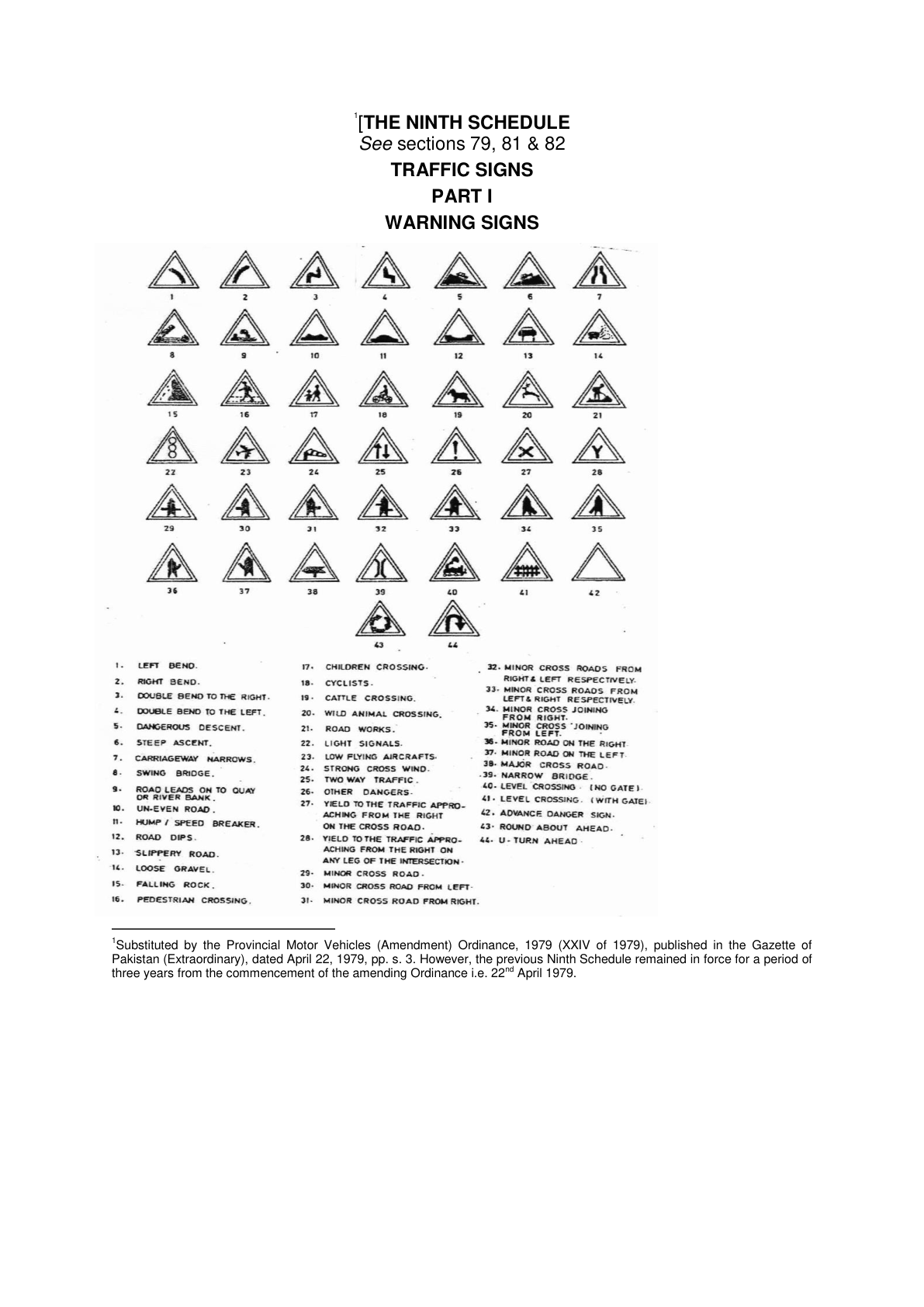
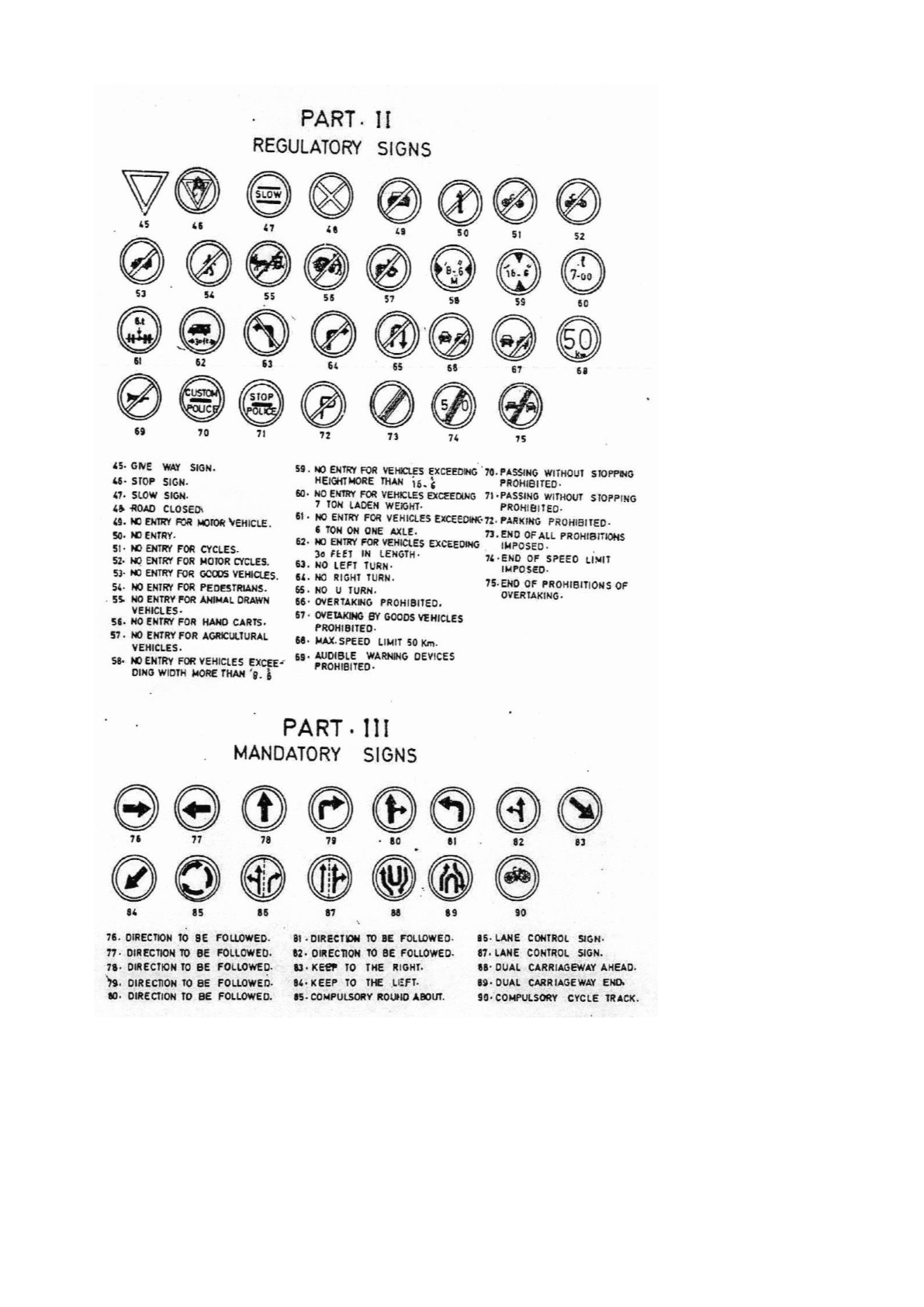
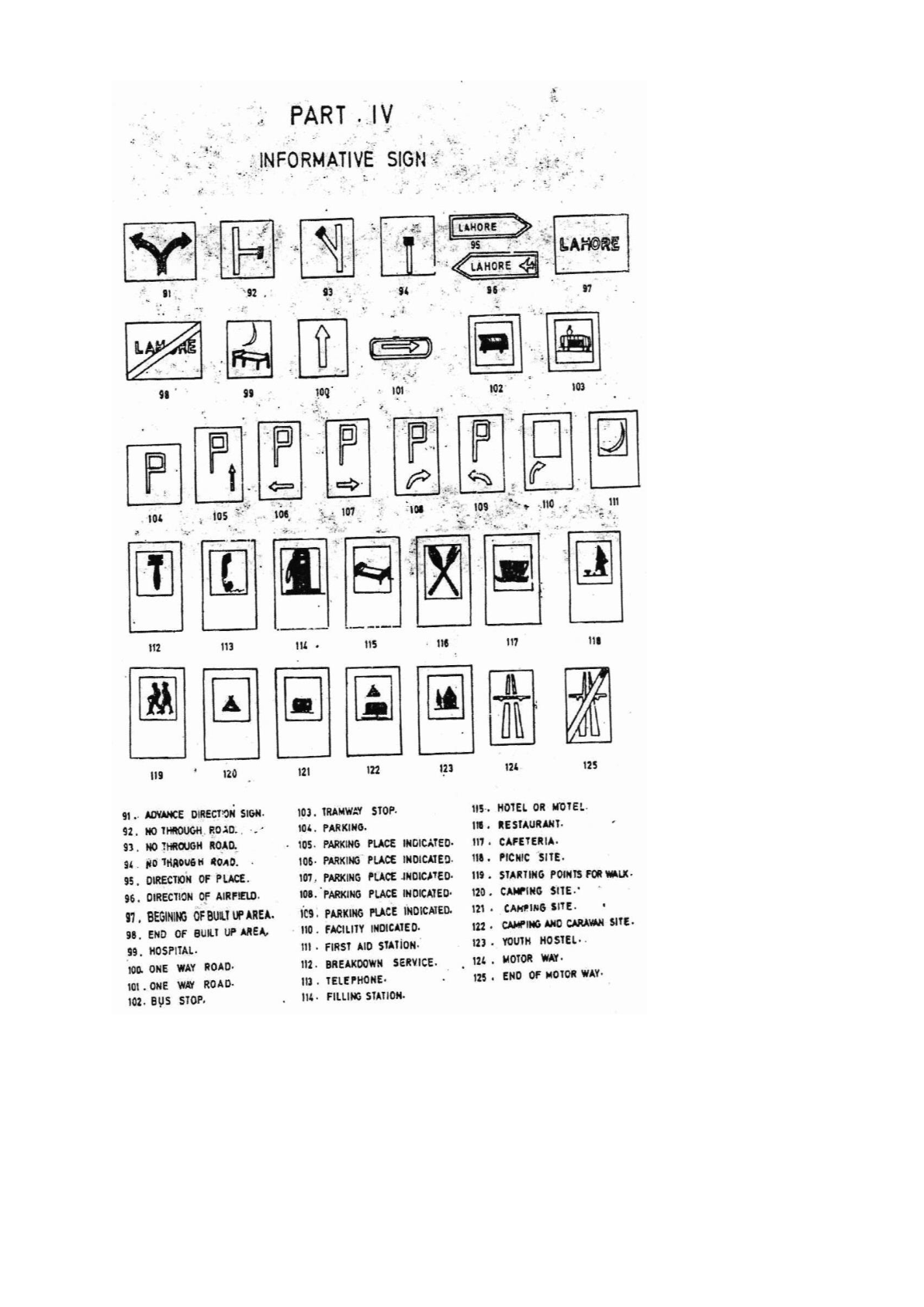
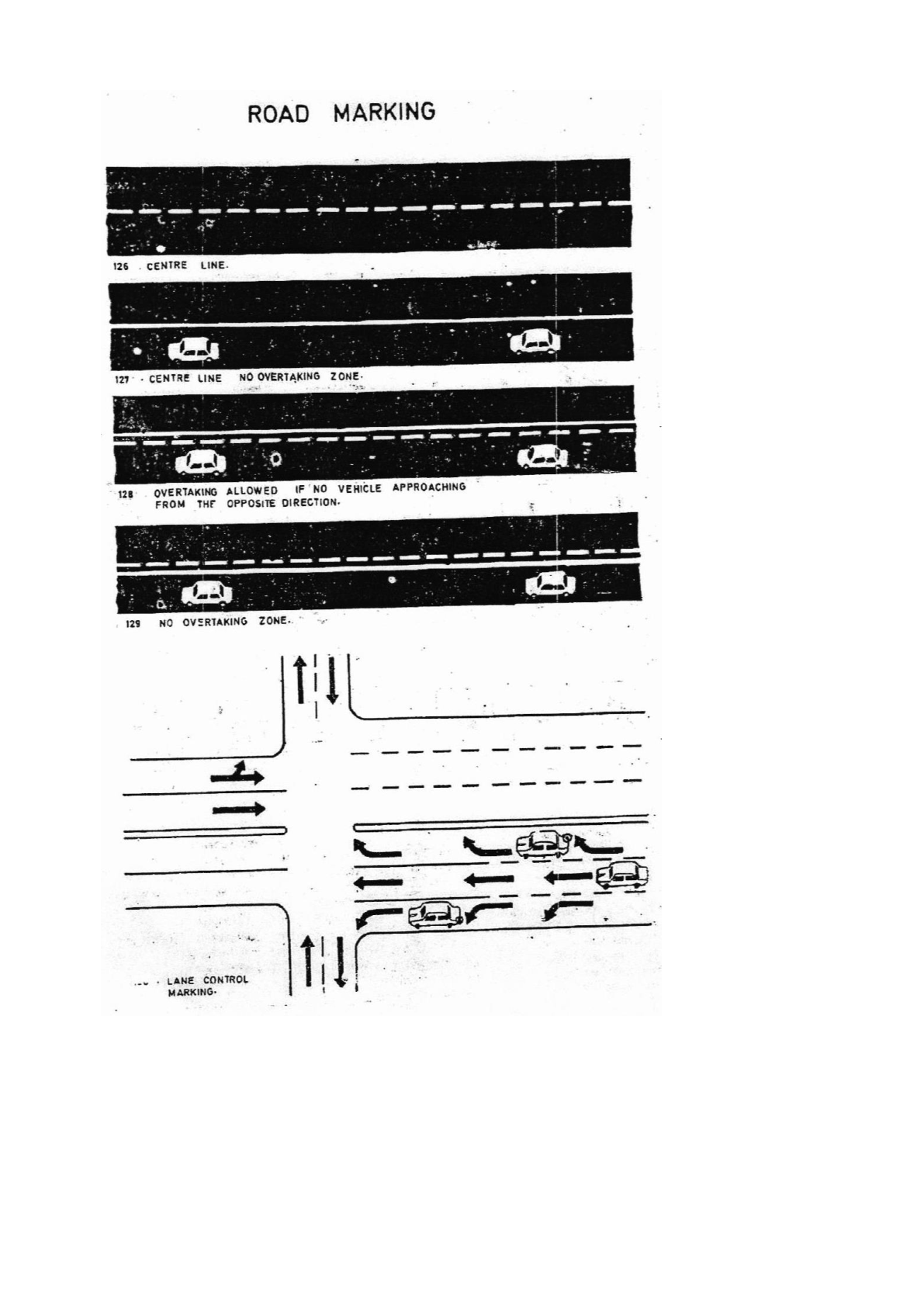
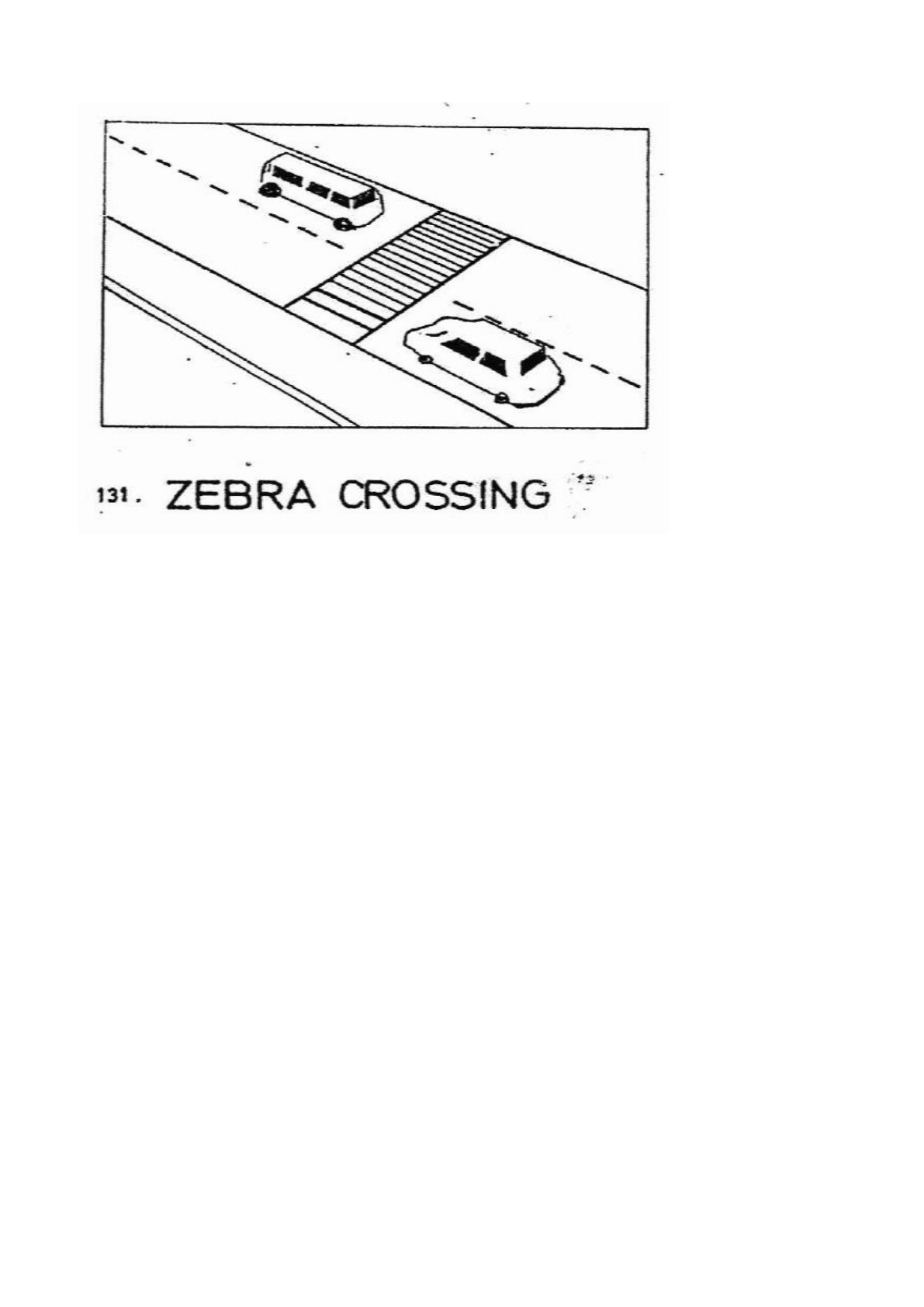
Original source and image integrity
Official original PDF source. Source PDF SHA-256: 478074ae27945e06c39cfa3c88d79b42154d1392b5163b7e9025ecc329e1601f.
Each selected page is rendered in full without clipping. The original file and every page image are hashed. The source-page review identifies graphic or form material; it does not establish a complete OCR transcription, amendment completeness or current force.
- Physical PDF page 118:
905a463120f77100ca4c0c526392aec19b70e6eb75757df1cdf7fae3ebbf0c88 - Physical PDF page 119:
a91e4d1549b4ff318fa5b0b465b9332f2ef61307341dbeef05d893c20975f7b5 - Physical PDF page 120:
5e1c011d60b54274d73faf8f49e79bc52cd945f43d293660425262985479ddad - Physical PDF page 121:
97dbf25bcc5cd3c3e258becbe34f7efdc55aaf7f84a8b1f61cc04cb00f8fd420 - Physical PDF page 122:
663b4662536391c6d121dd076ddf2c606f51e4bf20d975ad942cbff234862dc2
This law in the library
Follow the instruments and provisions named in this source edition, and the laws that cite it. Citation links identify the text being referred to; legal effect and current force require separate examination.
Instruments cited by this law 13
References to provisions in this text 176
Section 3
Open the identified operative provision
Read reference in context
s 3. Prohibition on driving without licence. 4. Age limit in connection with driving of motor vehicles. 5. Owners of motor vehicles not to permit contravention of section 3 or section 4. 6. Restriction on use of licence by person other than holder. 7. Grant of licence. 8. Form and contents of licence. 9. Additions to licences. 10. Extent of validity of licence. 11. Currency of licences
Section 4
Open the identified operative provision
Read reference in context
ion on driving without licence. 4. Age limit in connection with driving of motor vehicles. 5. Owners of motor vehicles not to permit contravention of section 3 or section 4. 6. Restriction on use of licence by person other than holder. 7. Grant of licence. 8. Form and contents of licence. 9. Additions to licences. 10. Extent of validity of licence. 11. Currency of licences. 12. Renewal
Section 70
Open the identified operative provision
Read reference in context
e sev eral wheels attached to that axle to the surface whereon the vehicle rests; (3) “ 1 [Board]” means the 2 [Punjab Road Transport Board] established under section 70; 1This Ordinance was promulgated by the Governor of West Pakistan on June 8, 1965 , published in the Gazette of West Pakistan Gazette (Extraordinary), dated July
Section 44
Open the identified operative provision
Read reference in context
ry for the purposes of his business, not being a business of providing transport, or who uses the vehicle for any of the purposes specified in sub - section (2) of section 44; 1 [(27-A) “Province” means the Province of the Punjab;] (28) “public carrier” means an owner of a transport vehicle who transports or undertakes to transport goods, or any class of goods, for another person at any
Section 3
Open the identified operative provision
Read reference in context
with any cloth or other opaque substance, or in such manner as to interfere in any manner with his vision. 5. Owners of motor vehicles not to permit contravention of section 3 or section 4.– No owner or person in charge of a motor vehicle shall cause or permit any person who does not satisfy the provisions of section 3 or section 4 to drive the vehicle. 6. Restriction on use of licence by pers
Section 4
Open the identified operative provision
Read reference in context
or other opaque substance, or in such manner as to interfere in any manner with his vision. 5. Owners of motor vehicles not to permit contravention of section 3 or section 4.– No owner or person in charge of a motor vehicle shall cause or permit any person who does not satisfy the provisions of section 3 or section 4 to drive the vehicle. 6. Restriction on use of licence by person other than h
Section 3
Open the identified operative provision
Read reference in context
it contravention of section 3 or section 4.– No owner or person in charge of a motor vehicle shall cause or permit any person who does not satisfy the provisions of section 3 or section 4 to drive the vehicle. 6. Restriction on use of licence by person other than holder.– No holder of a licence shall permit it to be used by any other person. 7. Grant of licence.– (1) Any person who is no t dis
Section 4
Open the identified operative provision
Read reference in context
ion of section 3 or section 4.– No owner or person in charge of a motor vehicle shall cause or permit any person who does not satisfy the provisions of section 3 or section 4 to drive the vehicle. 6. Restriction on use of licence by person other than holder.– No holder of a licence shall permit it to be used by any other person. 7. Grant of licence.– (1) Any person who is no t disqualified und
Section 4
Open the identified operative provision
Read reference in context
person other than holder.– No holder of a licence shall permit it to be used by any other person. 7. Grant of licence.– (1) Any person who is no t disqualified under section 4 for driving a motor vehicle and who is not for the time being disqualified for holding or obtaining a licence, may apply to the licensing authority having jurisdiction in the area in which he ordinarily resides or carries o
Section 4
Open the identified operative provision
Read reference in context
ce to drive and has paid to the auth ority the prescribed fee, the licensing authority shall grant the applicant a licence unless the applicant is disqualified under section 4 for driving a motor vehicle or is for the time being disqualified for holding or obtaining a licence: Provided that a licensing authority may issue a licence to drive a motor cycle or a motor car notwithstanding that it is
Section 15
Open the identified operative provision
Read reference in context
Gazette of Pakistan (Extraordinary), dated March 5, 1978, pp. 47-53, s. 4(2). 8. Form and contents of li cence.– (1) Every licence, except a licence issued under section 15, shall be in Form C as set forth in the First Schedule and shall have affixed thereto 1 [the photograph] referred to in sub-section (4) of section 7. (2) A licence shall specify whether th e holder is entitled to drive as
Section 7
Open the identified operative provision
Read reference in context
issued under section 15, shall be in Form C as set forth in the First Schedule and shall have affixed thereto 1 [the photograph] referred to in sub-section (4) of section 7. (2) A licence shall specify whether th e holder is entitled to drive as a paid employee and whether he is entitled to drive a public service vehicle and shall further be expressed as entitling the holder to drive a motor
Section 8
Open the identified operative provision
Read reference in context
to drive as a paid employee, in which the employer resides or carries on business, for the addition of any class of motor vehicles to the licence as is specified in section 8. 2 [(1-A) Every application under sub -section (1) shall be processed electronically through Driving License Information Management System.] (2) The provisions of section 7 shall apply to an application under this s
Section 7
Open the identified operative provision
Read reference in context
2 [(1-A) Every application under sub -section (1) shall be processed electronically through Driving License Information Management System.] (2) The provisions of section 7 shall apply to an application under this section as if the application were for the grant of a licence under that section to drive the class of motor vehicle which the applicant desires to be added to his licence: Provided
Section 7
Open the identified operative provision
Read reference in context
y 07, 2026, pp. 5847-5848, s. 6 (c). provided that if the applicant does not or is unable to subscribe to the said declaration, the provisions of sub-section (5) of section 7 shall apply. (4) The fee payable for the renewal of a l icence shall be as prescribed, and enhanced fee may be prescribed where the application for renewal is made more than thirty days from the date of expiry of the licen
Section 11
Open the identified operative provision
Read reference in context
of renewal to the authority which issued the licence. 13. Cancellation of licence on grounds of disease or disability .– (1) Notwithstanding anything contained in section 11 or section 12, any lice nsing authority may at any time cancel a licence or may require the holder thereof, as a condition of continuing to hold such licence, to furnish a fresh medical certificate in Form B as set forth in
Section 12
Open the identified operative provision
Read reference in context
the authority which issued the licence. 13. Cancellation of licence on grounds of disease or disability .– (1) Notwithstanding anything contained in section 11 or section 12, any lice nsing authority may at any time cancel a licence or may require the holder thereof, as a condition of continuing to hold such licence, to furnish a fresh medical certificate in Form B as set forth in the First Sch
Section 18
Open the identified operative provision
Read reference in context
r giving him an opportunity of being heard, that in respect of any person an order under sub -section (2) of this section, or a declaration under sub -section (1) of section 18, has been made on more than one occasion, it may, for reasons to be recorded in writing, make an order cancelling the licence granted to that person and disqualifying him for holding or obtaining a licence for such period a
Section 98
Open the identified operative provision
Read reference in context
ption of vehicles: Provided that the Court shall not order the disqualification of an offender convicted for the first or second time of an offence punishable under section 98. (2) The Court shall order the disqualification of an offender convicted of an offence punishable under section 99 or section 100 and such disqualification shall be for a period of not less than six months. (3) The Cour
Section 99
Open the identified operative provision
Read reference in context
rst or second time of an offence punishable under section 98. (2) The Court shall order the disqualification of an offender convicted of an offence punishable under section 99 or section 100 and such disqualification shall be for a period of not less than six months. (3) The Court shall order the disqualification of an offender convicted of an offence against the provisions of clause ( c) of sub
Section 100
Open the identified operative provision
Read reference in context
time of an offence punishable under section 98. (2) The Court shall order the disqualification of an offender convicted of an offence punishable under section 99 or section 100 and such disqualification shall be for a period of not less than six months. (3) The Court shall order the disqualification of an offender convicted of an offence against the provisions of clause ( c) of sub -section (1) o
Section 92
Open the identified operative provision
Read reference in context
than six months. (3) The Court shall order the disqualification of an offender convicted of an offence against the provisions of clause ( c) of sub -section (1) of section 92 or of section 94 and such disqualification shall be for a period of not less than one month. (4) The Court shall, unless for special reasons to be recorded in writing it thinks fit to order otherwise, order the disqualific
Section 94
Open the identified operative provision
Read reference in context
(3) The Court shall order the disqualification of an offender convicted of an offence against the provisions of clause ( c) of sub -section (1) of section 92 or of section 94 and such disqualification shall be for a period of not less than one month. (4) The Court shall, unless for special reasons to be recorded in writing it thinks fit to order otherwise, order the disqualification of an offende
Section 101
Open the identified operative provision
Read reference in context
s to be recorded in writing it thinks fit to order otherwise, order the disqualification of an offender– (a) who having been convicted of an offence punishable under section 101 is again convicted of an offence punishable under that section, (b) who is convicted of an offence punishable under section 103, (c) who is convicted of an offence punishable under section 106: Provided that the period o
Section 103
Open the identified operative provision
Read reference in context
victed of an offence punishable under section 101 is again convicted of an offence punishable under that section, (b) who is convicted of an offence punishable under section 103, (c) who is convicted of an offence punishable under section 106: Provided that the period of disqualification shall not exceed, in the cases referred to in clauses (a) and (b), two years, and, in the case referred to in c
Section 106
Open the identified operative provision
Read reference in context
ted of an offence punishable under that section, (b) who is convicted of an offence punishable under section 103, (c) who is convicted of an offence punishable under section 106: Provided that the period of disqualification shall not exceed, in the cases referred to in clauses (a) and (b), two years, and, in the case referred to in clause (c), one year. (5) A Court ordering the disqualification
Section 101
Open the identified operative provision
Read reference in context
two years, and, in the case referred to in clause (c), one year. (5) A Court ordering the disqualification of an offender convicted of an offence punishable under section 101 may also direct that the offender shall, whether he has previ ously passed the test of competency to drive, specified in the Third Schedule or not, remain disqualified until he has, subsequent to the making of the order of
Section 18
Open the identified operative provision
Read reference in context
cence, if any, held by such person at the date of the order shall cease to be effective during such period. (2) The operation of a disqualification order made under section 18 shall not be suspended or postponed while an appeal is pending against such order or against the conviction as a result of which such order is made, unless the appellate Court so directs. (3) Any person in respect of who
Section 19
Open the identified operative provision
Read reference in context
in respect of which an order of disqualification is made; and particulars of any removal or variation of an order of disqualification made under sub -section (3) of section 19 shall be similarly so endorsed. (2) Any person accused of an offence specified in the Fifth Schedule or any other offence involving the driving of a motor vehicle shall, when attending the Court trying him for such offence
Section 97
Open the identified operative provision
Read reference in context
is not produced within the time specified, the person in respect of whom the endorsement is to be made, shall be deemed to have committed an offence punishable under section 97 and the licence shall on the expiry of such time be of no effect until it has been produced for the purpose of endorsement. (3) A person whose licence has been endorsed shall if during the period of five years since the
Section 4
Open the identified operative provision
Read reference in context
or any por tion of the fees payable under this Chapter; (h) the granting by registered medical practitioners of the certificates referred to in sub -section (2) of section 4, sub -section (3) of section 7 and sub-section (1) of section 13; (i) the communication of part iculars of licences granted by one licensing authority to other licensing authorities; (j) the control of schools or establis
Section 7
Open the identified operative provision
Read reference in context
able under this Chapter; (h) the granting by registered medical practitioners of the certificates referred to in sub -section (2) of section 4, sub -section (3) of section 7 and sub-section (1) of section 13; (i) the communication of part iculars of licences granted by one licensing authority to other licensing authorities; (j) the control of schools or establishments for the instruction of d
Section 13
Open the identified operative provision
Read reference in context
e granting by registered medical practitioners of the certificates referred to in sub -section (2) of section 4, sub -section (3) of section 7 and sub-section (1) of section 13; (i) the communication of part iculars of licences granted by one licensing authority to other licensing authorities; (j) the control of schools or establishments for the instruction of drivers of motor vehicles and the a
Section 24
Open the identified operative provision
Read reference in context
being driven within the limits of jurisdiction of a registering authority to or from the appr opriate place of registration for the purpose of being registered under section 24, 26, 40 or 41, or to a motor vehicle exempted from the provisions of this Chapter while in the possession of a dealer in motor vehicles. 24. Registration where to be made .– 1 [(1) Subject to the provisions of section
Section 26
Open the identified operative provision
Read reference in context
rom the provisions of this Chapter while in the possession of a dealer in motor vehicles. 24. Registration where to be made .– 1 [(1) Subject to the provisions of section 26, section 40 and section 41, every owner or keeper of a motor vehicle, registered with National Database and Registration Authority as resident of the Province, shall cause the motor vehicle to be registered by registering aut
Section 40
Open the identified operative provision
Read reference in context
ions of this Chapter while in the possession of a dealer in motor vehicles. 24. Registration where to be made .– 1 [(1) Subject to the provisions of section 26, section 40 and section 41, every owner or keeper of a motor vehicle, registered with National Database and Registration Authority as resident of the Province, shall cause the motor vehicle to be registered by registering authority anywh
Section 41
Open the identified operative provision
Read reference in context
apter while in the possession of a dealer in motor vehicles. 24. Registration where to be made .– 1 [(1) Subject to the provisions of section 26, section 40 and section 41, every owner or keeper of a motor vehicle, registered with National Database and Registration Authority as resident of the Province, shall cause the motor vehicle to be registered by registering authority anywhere in the Pr
Section 43
Open the identified operative provision
Read reference in context
ered by registering authority anywhere in the Province and the Government may impose an additional fee as may be prescribed.] (2) Government may, by rule made under section 43, require that any certificate of registration issued under the provisions of the Mot or Vehicles Act, 1939 2 , shall be presented, within a prescribed period, to a specified registering authority for entry therein of such
Section 24
Open the identified operative provision
Read reference in context
ed description within the period and in accordance with the procedure, as may be specified.] 26. Temporary registration.– (1) Notwithstanding anything contained in section 24, the owner of a motor veh icle may apply in the prescribed manner to any registering authority to have the vehicle temporarily registered and thereupon such registering authority shall issue to the owner of the vehicle a temp
Section 44
Open the identified operative provision
Read reference in context
gainst the State; or (ii) the vehicle is used for hire or reward without obtaining a permit from the Provincial or a Regional Transport Authority as required under section 44; or (iii) the vehicle has been found by a Court to have be en used by the owner of the vehicle, or with his knowledge or connivance in the commission of a cognizable offence punishable with imprisonment of not less than f
Section 35
Open the identified operative provision
Read reference in context
it forthwith 1 [:] 2 [Provided tha t any order for cancellation of registration under subsection 5 shall be made in accordance with the procedure laid down in section 35 of this Ordinance.] (6) The certificate of registration and any token or card surrendered under sub-section (4) shall b e returned to the owner when the order suspending registration is rescinded. 3 [(7) A motor
Section 25
Open the identified operative provision
Read reference in context
rned to the owner when the order suspending registration is rescinded. 3 [(7) A motor vehicle shall not be deemed to be validly registered for the purposes of section 25 of this Ordinance, after passing of a suspension order under this section and n o such vehicle shall be used in any public place until the order for suspension is rescinded.] 35. Cancellation of registration .– (1) If a mot
Section 28
Open the identified operative provision
Read reference in context
the registration of the vehicle is recorded. 36. Appeals.– (1) Any owner of a motor vehicle aggrieved by an order of refusal to register a motor vehicle made under section 28 or to issue a certificate of fitness made under sub -section (1) of section 39 or by an order of suspension or cancellation of regi stration made under section 34 or 35 or by an order of cancellation of the fitness certific
Section 39
Open the identified operative provision
Read reference in context
motor vehicle aggrieved by an order of refusal to register a motor vehicle made under section 28 or to issue a certificate of fitness made under sub -section (1) of section 39 or by an order of suspension or cancellation of regi stration made under section 34 or 35 or by an order of cancellation of the fitness certificate made under sub -section (3) of section 39 may, within thirty days of the da
Section 34
Open the identified operative provision
Read reference in context
er section 28 or to issue a certificate of fitness made under sub -section (1) of section 39 or by an order of suspension or cancellation of regi stration made under section 34 or 35 or by an order of cancellation of the fitness certificate made under sub -section (3) of section 39 may, within thirty days of the date on which he has received notice of such order, appeal against the order in the pr
Section 39
Open the identified operative provision
Read reference in context
r of suspension or cancellation of regi stration made under section 34 or 35 or by an order of cancellation of the fitness certificate made under sub -section (3) of section 39 may, within thirty days of the date on which he has received notice of such order, appeal against the order in the prescribed manner to the prescribed authority. (2) The appellate authority shall give notice of the appeal
Section 40
Open the identified operative provision
Read reference in context
ll have the said particulars exhibited in the prescribed manner on the vehicle. 39. Certificate of fitness of transport vehicles .– (1) Subject to the provision of section 40, a transport vehicle 1 [, CVH and PVH] shall not be deemed to be validly registered for the purposes of section 23, unless it carries a certificate of fitness in Form I as set forth in the First Schedule, issued by the
Section 23
Open the identified operative provision
Read reference in context
vehicles .– (1) Subject to the provision of section 40, a transport vehicle 1 [, CVH and PVH] shall not be deemed to be validly registered for the purposes of section 23, unless it carries a certificate of fitness in Form I as set forth in the First Schedule, issued by the prescribed authority, to the effect that the vehicle complies for the time being with all the requirements of Chapter
Section 60(1)
Open the identified operative provision
Read reference in context
less than six months, is specified in the certificate by the 2 [authority issuing the certificate] 3 [:] 4 [Provided that in case of a permit issued under section 60 (1) (a), a certificate of fitness shall remain effective for a period of six months and on the expiry of that period the permit shall be deemed to be suspended until a new certificate of fitness has been obtained.] (3) The
Section 24
Open the identified operative provision
Read reference in context
r this section. (4) If a vehicle registered under this section ceases to be the property or under the exclusive control of the Central Government, the provisions of section 24 shall thereupon apply. (5) The authority registering a vehicle under sub-section (1) shall furnish to Government all such information regarding the general nature, over-all dimensions, and axle weight of the vehicle as
Section 38
Open the identified operative provision
Read reference in context
of motor vehicles, and the issue of temporary certificates of registration and mark; (e) the manner in which registration marks and the particulars referred to in section 38, and other prescribed particulars shall be exhibited; (f) the fees to be charged for the issue or alteration of certificates of registration, for certificates of fitness, for registration marks, and for the examination or i
Section 39
Open the identified operative provision
Read reference in context
visions o f this Chapter and the rules made thereunder, and the conditions governing such exemption; and the exemption of light goods vehicles from the provisions of section 39 and the conditions governing such exemption. CHAPTER IV Control of Transport Vehicles 44. Transport vehicles not to be used or driven without permit.– (1) No owner of a transport vehicle shall use or permit the use of,
Section 69
Open the identified operative provision
Read reference in context
e of not more than six passengers excluding the driver. (4) Subject to the provisions of sub -section (3), sub -section (1) shall, if Government by rules made under section 69 so prescribes, apply to any motor vehicle adapted to carry more than nine passengers excluding the driver. 1 [44-A. Permission to drive transport vehicles registered in other Provinces .– A transport vehicle registered in
Section 70
Open the identified operative provision
Read reference in context
to a specified area any permit or class of permits granted under this Chapter in respect of transport vehicles in order to enable the 1 [Board] constituted under section 70 to use its transport vehicles on the routes thus rendered vacant: Provided that the provisions of section 22 of the West Pakistan General Clauses Act, 1956 as to previous publication shall apply to a notification under th
Section 69
Open the identified operative provision
Read reference in context
t to all such orders and directions. (8) The Provincial Transport Authority and any Regional Transport Authority, if authorised in this behalf by rules made under section 69, may delegate such of its powers and functions to such autho rity, or person and subject to such restrictions, limitations and conditions as may be prescribed by the said rules. 47. General provisions as to applications for
Section 45
Open the identified operative provision
Read reference in context
operated by the 1 [Board]. 2 [(3) Notwithstanding anything contained in sub-sections (1) and (2), where a notification has been issued by the Government under section 45 -A, the Provincial Transport Authority shall invite applications for the grant of permits through advertisement in the press indicating the route, specification of the stage carriages, the number of permits to be issued for
Section 45A
Open the identified operative provision
Read reference in context
supported by sufficient material showing that the applicant is qualified for the grant of the permit in terms of the qualifications determined by the Government under section 45-A.] 4 [ 5 [49. Procedure for grant of stage carriage permits .– (1) Where an app lication for a stage carriage permit conforming to the provisions of this Ordinance has been received by the Provincial or the Regional Trans
Section 52
Open the identified operative provision
Read reference in context
ntract carriages and impose conditions on contract carriage permits .– 6 [(1)] A Regional Transport Authority may, after consideration of the matters specified in section 52– (a) fix the number of contract carriages generally or contract carriages of any specified type for which contract carriage permits may be granted in the region or any specified area within the region; (b) refuse to grant
Section 69
Open the identified operative provision
Read reference in context
carriage permit in respect of a particular contract carriage or a particular service of contract carriages in such form as it may, subject to the ru les made under section 69, deem fit; provided that no person shall be granted a contract carriage permit for any area not specified in the application made by him under section 51; 1Re-num
Section 51
Open the identified operative provision
Read reference in context
ade under section 69, deem fit; provided that no person shall be granted a contract carriage permit for any area not specified in the application made by him under section 51; 1Re-numbered by the West Pakistan Motor Vehicles (Punjab Amendment) Ordinance, 1972 (XII of 1972), published in the Punjab Gazette (Extraordinary), dated April 20,
Section 54
Open the identified operative provision
Read reference in context
55. Procedure of Regional Transport Authority in considering application for a private carrier’s permit.– (1) Where an application conforming to the provisions of section 54 for a private carrier’s permit has been received by the Regional Transport Authority, it shall, if satisfied that t he vehicle or vehicles for which the permit is required will not be used except in connection with the busine
Section 65
Open the identified operative provision
Read reference in context
as it may attach, extend the operation of the permit to the region or to any area within the region of another Regional Transport Authority, and the requirements of section 65 as to counter-signature of permits shall not be applicable to any such permit: Provided that nothing in this section shall authorise a Regional Transport Authority to grant a permit effective solely within the region of an
Section 56
Open the identified operative provision
Read reference in context
Transport Authority in considering application for public carrier’s permit .– (1) Where an application for a public carrier’s permit conforming to the provisions of section 56 has been received by a Regional Transport Authority, it shall, on payment of the prescribed fees, gra nt a permit in the prescribed form in respect of the vehicle or vehicles specified in the application: Provided that the
Section 65
Open the identified operative provision
Read reference in context
s as it may attach, extend the operation of the permit to the region or to any area within the region of another Regional Transport Authority and the requirements of section 65 as to counter-signature of permits shall not be applicable to any such permit: Provided that nothing in this section shall authorise a Regional Transport Authority to grant a permit effective sole ly within the region of a
Section 64
Open the identified operative provision
Read reference in context
hall give to the applicant in writing its reasons for the refusal. 60. Duration and renewal of permits .– 7 [(1) A permit other than a special permit issued under section 64 shall be effective 8 [*******]– (a) in the case of a stage carriage permit or a contract carriage permit, not being a permit to ply a motor -cab, for such peri od, not being less than one year and not more than three yea
Section 62
Open the identified operative provision
Read reference in context
11Substituted for the full-stop by the Act ibid., s. 7(2). 12Inserted by the Act ibid. 61. General conditions attaching to all permits .– (1) Save as provided in section 62, a permit shall not be transferable from one person to another except with the permission of the tran sport authority which granted the permit and shall not without such permission operate to confer on any person to whom a ve
Section 45
Open the identified operative provision
Read reference in context
speed permissible under this Ordinance; (c) that any prohibition or restriction imposed and any maximum or minimum fares or freights fixed by notification made under section 45 are observed in connection with any vehicle or vehicles to which the permit relates; (d) that the vehicle or vehicles to which the permit relates are not driven in contravention of the provision of section 76; 1 [(dd)
Section 76
Open the identified operative provision
Read reference in context
y vehicle or vehicles to which the permit relates; (d) that the vehicle or vehicles to which the permit relates are not driven in contravention of the provision of section 76; 1 [(dd) that no Government servant shall acquire any interest, either directly or indirectly, in the vehic le covered by a permit except when he acquires such interest by operation of law or under the decree, judgment or
Section 61
Open the identified operative provision
Read reference in context
which granted a permit may cancel the permit or may suspend it for such period as it thinks fit– (a) on the breach of any condition specified in sub-section (3) of section 61 or of any other condition contained in the permit; or (b) if the holder of the permit uses or causes or allows a vehicle to which the perm it relates to be used in any manner not authorized by the permit; or (c) if the
Section 45
Open the identified operative provision
Read reference in context
committed in respect of the permit or it has in any way otherwise been tampered with 1 [;] 2 [or] 3 [(i) if the holder of a permit, of a route specified under section 45 -A, fails to comply with any of the qualifications or any of the terms and conditions of the permit [:] 4 Provided that no permit shall be cancelled unless an opportunity has been given to the holder of the permit to
Section 62A
Open the identified operative provision
Read reference in context
ority to grant an authorisation to drive a public service vehicle, 1 [or] 2 [(h) aggrieved by a penalty of forfeiture, suspension or cancellation imposed under section 62-A;] may, within thirty days and in the prescribed manner, appeal to the prescribed authority, who after giving such person and the original authority an opportunity of being heard, pass such order, not inconsistent with the
Section 45
Open the identified operative provision
Read reference in context
ermits granted by the Provincial Transport Authority or a Regional Transport Authority. (2) No appeal shall lie against any order passed under sub -section (2) of section 45. (3) Save as expressly provided in this Ordinance, no Court or other authority shall have jurisdiction– (a) to entertain or adjudicate upon any matter which the Provincial or a Regional Transport Authority or the prescri
Section 67
An operative target heading has not been identified. Read the source passage
Read reference in context
te, constitute a Claims Tribunal for such area or areas as may be specified in the notification, for the purpose of adjudicating upon claims for compensation under section 67. (2) A Claims Tribunal shall consist of one or more members as Government may deem fit to appoint, and where it consists of two or more members, one of them shall be appointed as the Chairman thereof.] 6 [67-B. Application
Section 67
An operative target heading has not been identified. Read the source passage
Read reference in context
of two or more members, one of them shall be appointed as the Chairman thereof.] 6 [67-B. Application for compensation.– (1) An application for compensation under section 67 may be made– (a) by the person who has sustained the injury; or (b) where death has resulted, by the legal representatives of the deceased passenger; or (c) by an agent duly authorised by the person injured or the lega
Section 67
An operative target heading has not been identified. Read the source passage
Read reference in context
ion regarding claim for compensation .– Where the Claims Tribunal receives information from any source that an accident giving rise to a claim for compensation under section 67 has occurred within its jurisdiction, it may, after such inquiry as it may deem proper, inform the passenger injured in the accident or the legal representatives of the pa ssenger who has died as a result of the accident th
Section 67B
Open the identified operative provision
Read reference in context
or the legal representatives of the pa ssenger who has died as a result of the accident that it is open to him or them to make an application for compensation under section 67-B and may give him or them, as the case may be, such other information as it may think fit.] 3 [67-C. Award of compensat ion.– On receipt of an application for compensation made under section 67 -B, the Claims Tribunal shall
Section 67
An operative target heading has not been identified. Read the source passage
Read reference in context
them, as the case may be, such other information as it may think fit.] 3 [67-C. Award of compensat ion.– On receipt of an application for compensation made under section 67 -B, the Claims Tribunal shall hold an inquiry into the claim, giving an opportunity to the parties of being heard, and pass an order determining, in accordance with the provisions of section 67, the amount of compensation pay
Section 67
An operative target heading has not been identified. Read the source passage
Read reference in context
ibunal shall hold an inquiry into the claim, giving an opportunity to the parties of being heard, and pass an order determining, in accordance with the provisions of section 67, the amount of compensation payable, and specifying the person or persons to whom the compensation shall be paid.] 4 [67-D. Procedure and powers of Claims Tribunal .– (1) In the holding of an inquiry under section 67-C, t
Section 67C
Open the identified operative provision
Read reference in context
pecifying the person or persons to whom the compensation shall be paid.] 4 [67-D. Procedure and powers of Claims Tribunal .– (1) In the holding of an inquiry under section 67-C, the Claims Tribunal shall, subject to any rules that may be made in this behalf by Government, follow such summary procedure as it thinks fit. (2) The Claims Tribunal shall be deemed to be a Civil Court for all the purpo
Section 195
An operative target heading has not been identified. Read the source passage
Read reference in context
in this behalf by Government, follow such summary procedure as it thinks fit. (2) The Claims Tribunal shall be deemed to be a Civil Court for all the purposes of section 195 and Chapter XXXV of the Code of Criminal Procedure, 1898 (Act V of 1898). (3) The Claims Tribunal shall have all the powers of a Civil Court– (a) for the purposes of taking evidence on oath, enforcing the attendance of
Section 49
Open the identified operative provision
Read reference in context
as been awarded, within seven days of the order awarding the compensation– (a) if the compensation is payable by a person who has furnished a bank guarantee under section 49, the bank giving the guarantee shall on being required by the Tribunal deposit with the Tribunal the amount of compensation, or so much thereof as can be paid o ut of the amount secured under the guarantee; provided that an
Section 49
Open the identified operative provision
Read reference in context
o recovered shall be recoverable in the manner provided in clause (b); (b) if the compensation is payable by a person who has not furnished a bank guarantee under section 49, the Claims Tribunal or the prescribed authority awarding the compensation may, on the application of the person entitled to receive the compensation, issue a certificate to the Collector, and the Collector shall thereupon
Section 49
Open the identified operative provision
Read reference in context
ner as an arrear of land-revenue. (2) Where any compensation has been paid under the provisions of clause (a) of sub -section (1) out of any amount secured under section 49 in respect of a stage carriage, the permit in respect of such stage carriage shall stand suspended until the permit holder furnishes to the Regional Transport Authority which issued the permit, a fresh bank guarantee of the
Section 49
Open the identified operative provision
Read reference in context
d until the permit holder furnishes to the Regional Transport Authority which issued the permit, a fresh bank guarantee of the prescribed sum under the provisions of section 49.] 6 [(3) An order passed by a Claims Tribunal of any other Province or of the State of Azad Jammu and Kashmir shall be enforceable in the Province in the same manner as if it were an order of a Claims Tribunal of the P
Section 45
Open the identified operative provision
Read reference in context
Company shall not dispose of an immovable property without the prior approval of the Government. 72-D. Fixation of fares.– (1) Notwithstanding anything contained in section 45, the Company shall fix the fares to be charged by the urban transport. (2) The Government may, on its own motion or on the application of any person, revise the fare fixed by the Company by taking into consideration the
Section 72A
Open the identified operative provision
Read reference in context
uch conditions as may be determined by the Government. 72-F. Interpretation.– In this Chapter– (a) “Company” means the Urban Transport Company established under section 72-A; (b) “infrastructure” means: (i) bus stops; (ii) shelters; (iii) bus lanes and markings; (iv) signage; (v) bus terminals; (vi) interchanges and transfer terminals; and (vii) any other related structures. (c)
Section 67
An operative target heading has not been identified. Read the source passage
Read reference in context
C shall have a liability compensation policy to cover claims in case of death or injury: (a) for CVH drivers or PVH drivers; and (b) for passengers, as provided in section 67 of this Ordinance. (7) A TNC shall not disclose passenger’s personal information including journey information to any person other than the Regional Transport Authority. (8) The DPPT shall: (a) have an option for online
Section 72I
Open the identified operative provision
Read reference in context
where it finds that a CVH or PVH has committed violation of the provisions of this Ordinance. (2) Where a TNC commits a violation of the requirements provided in section 72-I, the Provincial Transport Authority may suspend its licence for such a period as it may deem fit or may cancel such licence after due notice and hearing. 72-K. Appeal and review .- (1) An appeal against the order of the Reg
Section 72J
Open the identified operative provision
Read reference in context
ssing of the order and decision thereon of the Provincial Transport Authority shall be final. (2) A TNC if aggrieved of the order passed under sub -section (2) of section 72-J, may, within seven days of passing of the order, file a review before the Provincial Transport Authority. 72-L. Power to make rules .- The Government may, by notification in the official Gazette, may make rules for carrying
Section 79
Open the identified operative provision
Read reference in context
or in a particular area or on a particular road or roads, and where any such restrictions are imposed, cause appropriate traffic signs to be placed or erected under section 79 at suitable places in such area or on or near such road or bridge, as the case may be. (3) Nothing in this section shall apply to any vehicle registered under section 40 while it is being used in the execution of military
Section 40
Open the identified operative provision
Read reference in context
79 at suitable places in such area or on or near such road or bridge, as the case may be. (3) Nothing in this section shall apply to any vehicle registered under section 40 while it is being used in the execution of military manoeuvres within the area and during the period specified in a notif ication under sub-section (1) of section 2 of the Manoeuvres, Field Firing and Artillery Practice Act,
Section 76
Open the identified operative provision
Read reference in context
icle weighed .– Any person authorized in this behalf by Government may, if he has reason to believe that a goods vehicle or trailer is being used in contravention of section 76, require the driver to convey the vehicle to a weighing device, if any, within a distance of o ne mile from any point on the forward route or within a distance of five miles from the destination of the vehicle for weighment
Section 76
Open the identified operative provision
Read reference in context
istance of five miles from the destination of the vehicle for weighment; and if on such weighment the vehicle is found to contravene in any respect the provisions of section 76 regarding weight, he m ay, by order in writing, direct the driver to convey the vehicle or trailer to the nearest place to be specified in the order, where facilities exist for the storage of goods, and not to remo ve the v
Section 1
Open the identified operative provision
Read reference in context
place until the laden weight or axle weight has been reduced or the vehicle has otherwise been treated so that it complies with the provisions of the last preceding section 1 [:] 1Substituted for the full stop by the Provinc ial Motor Vehicles (Amendment) Act 2016 (XXI of 2016), published in the Punjab Gazette (Extraordinary), dated Apr
Section 79
Open the identified operative provision
Read reference in context
area or on a specified road, or bridge, and when any such prohibition or restriction is imposed, shall cause appropriate traffic signs to be placed or erected under section 79 at suitable places in such area or on or near such road or bridge, as the case may be: Provided that where any prohibition or restriction under this section is to remain in force for a period of not more than one month, no
Section 79
Open the identified operative provision
Read reference in context
lar disc displaying a device, word or figure and having a red ground or border ) erected for the purpose of regulating motor vehicle traffic under sub-section (1) of section 79. 83. Signals and signalling devices .– The driver of a motor vehicle shall on the occasions specified in the Eleventh Schedule make the signal specified therein: Provided that the signals of an intention to turn to the rig
Section 39
Open the identified operative provision
Read reference in context
is behalf by Government, produce the certificate of registration of vehicle and, wher e the vehicle is a transport vehicle, the certificate of fitness referred to in section 39. (3) If the licence or certificates, as the case may be, are not at the time in the possession of the person to whom demand is made, it shall be a sufficient compliance with this section if such person produces the licence
Section 99
Open the identified operative provision
Read reference in context
(2) The driver of a motor vehicle shall, on demand by a person giving his own name and address and alleging that the driver has committed an offence punishable under section 99, give his name and address to that person. (3) In t his section the expression “animal” means any horse, cattle, elephant, camel, ass, mule, sheep or goat. 93. Duty of owner of motor vehicle to give information.– The owner
Section 67
An operative target heading has not been identified. Read the source passage
Read reference in context
rence. 2 [94-A. Duty of police officer in case of accident giving rise to claim for compensation.– When an accident giving rise to a claim for compensation under section 67 is reported at a police -station, the officer in charge of the police -station shall immediately forward a copy of the first information report or the relevant extract of the daily diary, as the case may be, to the Claims Tri
Section 10
Open the identified operative provision
Read reference in context
previously held by him, or being disqualified under this Ordinance for holding or obtaining a licence, uses a licence such as is referred to in sub -section (2) of section 10, shall be punished with imprisonment of either description for a term which may extend to six months, or with fine which may extend to 2 [five thousand], or with both, and any licence so obtained by him shall be of no ef
Section 75
Open the identified operative provision
Read reference in context
y authorized person of the owner having valid driving license.] 98. Driving at excess ive speed.– 5 [(1) A person who drives a motor vehicle in contravention of section 75 shall be punished with fine which shall not be less than two hundred rupees and which may extend to five hundred rupees, and in case of a 1Inserted by the Provincia
Section 75
Open the identified operative provision
Read reference in context
h may extend to one thousand rupees.] (2) Whoever causes any person who is employed by him or is subject to his control to drive a motor vehicle in contravention of section 75 shall be punished with f ine which may extend to two hundred rupees, and when the vehicle is a transport vehicle, with a fine which may extend to five hundred rupees. (3) No pe rson shall be convicted of an offence punisha
Section 75
Open the identified operative provision
Read reference in context
is not practicable in the circumstances of the case for the journey or part of a journey to be c ompleted in the specified time without infringing the provisions of section 75, be prima facie evidence that the person who published the time table or gave the direction has committed an offence punishable under sub-section (2). 1 [98-A. Offences relating to driving motor vehicle on wrong side of t
Section 75
Open the identified operative provision
Read reference in context
offence punishable under sub-section (2). 1 [98-A. Offences relating to driving motor vehicle on wrong side of the road . – Whoever contravenes the provisions of section 75 -A, shall be punished with fine which may extend to five thousand rupees.] 99. Driving recklessly or dangerously .– (1) Whoever drives a motor vehicle at a speed or in a manner which is dangerous to human life or property,
Section 4
Open the identified operative provision
Read reference in context
1898 (V of 1898).] 3 [99-B. Offences relating to age limit in connection with driving of motor vehicles.– Whoever contravenes the provisions of sub -section (1) of section 4 shall be punished with fine which may extend to ten thousan d rupees and such vehicle shall be impounded and handed over to the owner or any authorized person of the owner having valid driving license.] 100. Driving whil
Section 99
Open the identified operative provision
Read reference in context
e hundred rupees and which may extend to one thousand rupees.] 102. Punishment for abetment of certain offen ces.– Whoever abets the commission of an offence under section 99, 100 or 101, shall be punishable with the punishment provided for the offence. 103. Racing and trials of speed .– Whoever, without the written consent of Government, permits or takes part in a race or trial of speed between
Section 44
Open the identified operative provision
Read reference in context
drives a motor vehicle or causes or allows a motor vehicle to be used or lets out a motor vehicle for use in contravention of the provisions of sub -section (1) of section 44 3 [or section 44 -B] shall be punished with imprisonment for a term which may extend to six months or with fine which may extend to five hundred rupees, and if having been previously convicted of such an offence, shal
Section 44
Open the identified operative provision
Read reference in context
le or causes or allows a motor vehicle to be used or lets out a motor vehicle for use in contravention of the provisions of sub -section (1) of section 44 3 [or section 44 -B] shall be punished with imprisonment for a term which may extend to six months or with fine which may extend to five hundred rupees, and if having been previously convicted of such an offence, shall again be guilty of
Section 39
Open the identified operative provision
Read reference in context
ing vehicle without fitness certificate .– Whoever drives, or causes or permits to be driven, a motor vehicle in a public place in contravention of the provisions of section 39 or section 39 -A shall be punished with fine which may extend to five thousand rupees and such unfit vehicle shall not be allowed to be driven on any public place other than taking such vehicle to vehicle inspection station
Section 39
Open the identified operative provision
Read reference in context
thout fitness certificate .– Whoever drives, or causes or permits to be driven, a motor vehicle in a public place in contravention of the provisions of section 39 or section 39 -A shall be punished with fine which may extend to five thousand rupees and such unfit vehicle shall not be allowed to be driven on any public place other than taking such vehicle to vehicle inspection station or any such
Section 76
Open the identified operative provision
Read reference in context
o tor Vehicles (Second Amendment) Act 2026 (XXVI of 2026 ), published in the Punjab Gazette (Extraordinary), dated May 07, 2026, pp. 5847-5850, s. 14. provisions of section 76 or of the conditions of any permit issued thereunder, or in contravention of any prohibition or restriction imposed under section 78 shall be punished with 1 [imprisonment for a term which may extend to one month, or with
Section 78
Open the identified operative provision
Read reference in context
5847-5850, s. 14. provisions of section 76 or of the conditions of any permit issued thereunder, or in contravention of any prohibition or restriction imposed under section 78 shall be punished with 1 [imprisonment for a term which may extend to one month, or with fine as given below or with both: Category of goods vehicle Fine, in case of first offence Fine, if offence is repeated withi
Section 92
Open the identified operative provision
Read reference in context
108. Penalty for failing to stop in case of accident or failure to furnish information, etc.– Whoever contravenes the provisions of clause (c) of sub -section (1) of section 92 or any of the provisions contained in section 94 or furnishes any information required to be furnished thereunder which he knows to be false shall be punishable with imprisonment which may ext end to six months, or with fine
Section 94
Open the identified operative provision
Read reference in context
ent or failure to furnish information, etc.– Whoever contravenes the provisions of clause (c) of sub -section (1) of section 92 or any of the provisions contained in section 94 or furnishes any information required to be furnished thereunder which he knows to be false shall be punishable with imprisonment which may ext end to six months, or with fine which may extend to one thousand rupees, or wit
Section 74
Open the identified operative provision
Read reference in context
alty for contravention of rules rel ating to appliances .– Whoever carries in any motor vehicle any appliance the carrying of which is prohibited by rules made under section 74 shall be punished with fine which may extend to five hundred rupees and such appliance shall be forfeited to Government.] 2 [112. Penalty for other offences.– A person who contravenes any provision of this Ordinance or the
Section 89
Open the identified operative provision
Read reference in context
or height, shall be punished with fine which may extend to five thousand rupees. 112-E. Unauthorized use of tinted glasses.– Whoever contravenes the provisions of section 89 -C shall be punished with fine which may extend to five thousand rupees.] 1Inserted by the Provincial Mo tor Vehicles (Second Amendment) Act 2026 (XXVI of 2026 ), p
Section 99
Open the identified operative provision
Read reference in context
A police officer in uniform 1 [or a person authorized by the Government] may arrest without warrant any person who commits in his view an offence punishable under section 99 or section 100 or section 110: Provided that any person so arrested in connection with an offence punishable under section 100 shall be subjected to a medical examination by a registered medical practitioner w ithin two
Section 100
Open the identified operative provision
Read reference in context
er in uniform 1 [or a person authorized by the Government] may arrest without warrant any person who commits in his view an offence punishable under section 99 or section 100 or section 110: Provided that any person so arrested in connection with an offence punishable under section 100 shall be subjected to a medical examination by a registered medical practitioner w ithin two hours of his ar
Section 110
Open the identified operative provision
Read reference in context
1 [or a person authorized by the Government] may arrest without warrant any person who commits in his view an offence punishable under section 99 or section 100 or section 110: Provided that any person so arrested in connection with an offence punishable under section 100 shall be subjected to a medical examination by a registered medical practitioner w ithin two hours of his arrest, and if not
Section 100
Open the identified operative provision
Read reference in context
his view an offence punishable under section 99 or section 100 or section 110: Provided that any person so arrested in connection with an offence punishable under section 100 shall be subjected to a medical examination by a registered medical practitioner w ithin two hours of his arrest, and if not so subjected within the said period of two hours shall be released from custody. (2) A police off
Section 23
Open the identified operative provision
Read reference in context
n this behalf by Government may if he has reason to believe that a motor vehicle has been or is being used in contravention of the provisions of sub - section (1) of section 23 or without the permit required by sub -section (1) of section 44 5 [or without permit required under section 44 -B] or in contravention of any condition of such permit relating to the route on which or the area in which o
Section 44
Open the identified operative provision
Read reference in context
a motor vehicle has been or is being used in contravention of the provisions of sub - section (1) of section 23 or without the permit required by sub -section (1) of section 44 5 [or without permit required under section 44 -B] or in contravention of any condition of such permit relating to the route on which or the area in which or the purpose for which the vehicle may be used 6 [or without
Section 44
Open the identified operative provision
Read reference in context
avention of the provisions of sub - section (1) of section 23 or without the permit required by sub -section (1) of section 44 5 [or without permit required under section 44 -B] or in contravention of any condition of such permit relating to the route on which or the area in which or the purpose for which the vehicle may be used 6 [or without having valid certificate of fitness as required
Section 39
Open the identified operative provision
Read reference in context
hich or the area in which or the purpose for which the vehicle may be used 6 [or without having valid certificate of fitness as required under sub-section (1) of section 39], seize and detain the vehicle, and for this purpose take or cause to be taken any steps he may consider proper for the temporary safe custody of the vehicle. 116. Summary disposal of cases .– (1) A Court taking cognizance
Section 16
Open the identified operative provision
Read reference in context
ensing authority shall issue an order disqualifying the accused from holding or obtaining a license for a six -month period, extendable for another six months, under section 16 of this Ordinance and the rules made thereunder. (5-C) If a person is charged with repeat offense within one month, he shall pay a fine increased by five percent of the fine paid for the previous offense for each repeat tr
Section 99
Open the identified operative provision
Read reference in context
owner proves so, the person driving the vehicle shall be treated likewise.”] 117. Restriction on conviction.– No person prosecuted for an offence punishable under section 99 1 [* *] shall be convicted unless– (a) he was warned at the time the offence was committed that the question of prosecuting him would be taken into consideration, or (b) within fourteen days from the commission of the of
Section 100
Open the identified operative provision
Read reference in context
t to the condition of the rules being made after previous publication. 1Omitted the words and figure “or section 100” by the Provincial Motor Vehicles (Amendment) Ordinance, 1983 (XL of 1983), published in the Gazette of Pakistan (Extraordinary), Part I, dated December 31, 1983, pp. 257-258, s. 2. (2) All rules made under this Ordinance s
Section 14
Open the identified operative provision
Read reference in context
itions governing the exercise of such powers. 121. General provisions regarding appeals to prescribed appellate authorities.– (1) An appeal under sub-section (3) of section 14, sub -section (3) of section 16, sub-section (4) of section 17, sub -section (1) of section 36 or section 66 shall not operate as a stay of the order or proceedings under the order appealed from, except so far as the appell
Section 16
Open the identified operative provision
Read reference in context
uch powers. 121. General provisions regarding appeals to prescribed appellate authorities.– (1) An appeal under sub-section (3) of section 14, sub -section (3) of section 16, sub-section (4) of section 17, sub -section (1) of section 36 or section 66 shall not operate as a stay of the order or proceedings under the order appealed from, except so far as the appellate authority may direct. (2) I
Section 17
Open the identified operative provision
Read reference in context
isions regarding appeals to prescribed appellate authorities.– (1) An appeal under sub-section (3) of section 14, sub -section (3) of section 16, sub-section (4) of section 17, sub -section (1) of section 36 or section 66 shall not operate as a stay of the order or proceedings under the order appealed from, except so far as the appellate authority may direct. (2) In an appeal under this Ordinanc
Section 36
Open the identified operative provision
Read reference in context
cribed appellate authorities.– (1) An appeal under sub-section (3) of section 14, sub -section (3) of section 16, sub-section (4) of section 17, sub -section (1) of section 36 or section 66 shall not operate as a stay of the order or proceedings under the order appealed from, except so far as the appellate authority may direct. (2) In an appeal under this Ordinance, the order appealed from shall
Section 66
Open the identified operative provision
Read reference in context
te authorities.– (1) An appeal under sub-section (3) of section 14, sub -section (3) of section 16, sub-section (4) of section 17, sub -section (1) of section 36 or section 66 shall not operate as a stay of the order or proceedings under the order appealed from, except so far as the appellate authority may direct. (2) In an appeal under this Ordinance, the order appealed from shall not be alte
Section 7(2)
Open the identified operative provision
Read reference in context
970), published in the Gazette of West Pakistan (Extraordinary), dated March 27, 1970, pp. 507-518, s. 16. THE SCHEDULES THE FIRST SCHEDULE FORMS FORM A [See section 7(2)] FORM OF APPLICATION FOR LICENCE TO DRIVE A MOTOR VEHICLE SECTION I APPLICATION I apply for a licence to enable me to drive as a paid employee *otherwise than as a paid employee vehicles of the following descripti
Section 4(2)
Open the identified operative provision
Read reference in context
Laws Order, 1975 (4 of 1975), published in the Gazette of Pakistan (Extraordinary), Part I, dated August 1, 1975, Article 2(1) read with Schedule. FORM B [See section 4(2), section 7(3) and section 15] FORM OF MEDICAL CERTIFICATE IN RESPECT OF AN APPLICANT FOR A LICENCE TO DRIVE ANY TRANSPORT VEHICLE OR TO DRIVE ANY VEHICLE AS A PAID EMPLOYEE (To be filled up by a registered medical practit
Section 7(3)
Open the identified operative provision
Read reference in context
975 (4 of 1975), published in the Gazette of Pakistan (Extraordinary), Part I, dated August 1, 1975, Article 2(1) read with Schedule. FORM B [See section 4(2), section 7(3) and section 15] FORM OF MEDICAL CERTIFICATE IN RESPECT OF AN APPLICANT FOR A LICENCE TO DRIVE ANY TRANSPORT VEHICLE OR TO DRIVE ANY VEHICLE AS A PAID EMPLOYEE (To be filled up by a registered medical practitioner). 1. W
Section 15
Open the identified operative provision
Read reference in context
published in the Gazette of Pakistan (Extraordinary), Part I, dated August 1, 1975, Article 2(1) read with Schedule. FORM B [See section 4(2), section 7(3) and section 15] FORM OF MEDICAL CERTIFICATE IN RESPECT OF AN APPLICANT FOR A LICENCE TO DRIVE ANY TRANSPORT VEHICLE OR TO DRIVE ANY VEHICLE AS A PAID EMPLOYEE (To be filled up by a registered medical practitioner). 1. What is the appl
Section 8(1)
Open the identified operative provision
Read reference in context
attention should be directed to distant vision and to the condition of the arms and hands and the joints of both extremities. (Space for photograph) FORM C [See section 8(1)] DRIVING LICENCE No._______________ 19__________________ (Name)__________________________________________________ son/daughter of (father’s name)_______________________________ of (permanent address)_________________
Section 9
Open the identified operative provision
Read reference in context
____ ENDORSEMENTS Date Section and Rule Fine or other punishment Signature of Endorsing Authority FORM D [See section 9] FORM OF APPLICATION FOR THE ADDITION OF A NEW CLASS OF VEHICLE TO A DRIVING LICENCE. I hereby apply for the addition of the following class/classes of motor vehicles to the attached licence:– (a) Motor cycle. (b) Mo
Section 12(2)
Open the identified operative provision
Read reference in context
icant is not entitled to drive as a paid employee or a transport vehicle and now wishes to do so. Date_________ 19 Signature of applicant. FORM E [See section 12(2)] FORM OF APPLICATION FOR RENEWAL OF DRIVING LICENCE I hereby apply for a renewal of the licence under the 1 [Provincial] Motor Vehicles Ordinance, 1965, which was issued to me on the ____ by _____________________ (st
Section 25(1)
Open the identified operative provision
Read reference in context
Order, 1975 (4 of 1975), published in the Gazette of Pakistan (Extraordinary), Part I, dated August 1, 1975, Article 2(1) read with Schedule. 1 [FORM F [see section 25(1)] FORM OF APPLICATION FOR REGISTRATION OF MOTOR VEHICLES (for all types of vehicles) 1. Full Name {in block letters} ______________________________________________________________________ 2. Father’s / Husband’s Name {
Section 37
Open the identified operative provision
Read reference in context
registered as the registered owner under a hire-purchase agreement with_______. Date_______19 . Signature of Registering Authority. FORM H [See section 37] DOCUMENT TO BE FURNISHED BY THE MAKER OR AUTHORISED ASSEMBLER IN THE CASE OF TRANSPORT VEHICLES OTHER THAN MOTOR CABS. Certified that the vehicle Chassis No. ______________ and Engine No.________ manufactured by_______
Section 116A(2)
Open the identified operative provision
Read reference in context
tor Vehicles ( Second Amendment) Act 2025 (XXXIII of 2025), published in the Punjab Gazette (Extraordinary), dated May 30, 2025, pp. 4761-4762, s. 7. 1[Form-J [see section 116-A(2)] TRAFFIC VIOLATION TICKET District: Traffic Sector: CNIC No: (For online verification of the violator) Driving License No: Type of Driving License: Driving License Expiry Date: Full Name of Violator:
Section 7(5)
Open the identified operative provision
Read reference in context
les (Amendment) Ordinance, 2001 (XIX of 2001), published in Punjab Gazette (Extraordinary), dated August 25, 2001, pp. 1563- 1565, s. 3. THE SECOND SCHEDULE [(See section 7(5)] I. Diseases and disabilities absolutely disqualifying a person for obtaining a licence to drive a motor vehicle. 1. Epilepsy. 2. Lunacy. 3. Heart disease likely to produce sudden attack of giddiness or fainting. 4. I
Section 40
Open the identified operative provision
Read reference in context
General of the Ordinance Central Government in Pakistan or any person authorized by him in this behalf. PART C Registration marks for vehicles registered under section 40. A broad arrow followed by not more than six figures, or a broad arrow followed by a single letter and not more than five figures. THE FIFTH SCHEDULE [See sections 20(2) and (3) and 116] OFFENCES ON CONVICTION OF WHICH
Section 19
Open the identified operative provision
Read reference in context
ns 20(2) and (3) and 116] OFFENCES ON CONVICTION OF WHICH AN ENDORSEMENT SHALL BE MADE ON THE LICENCE OF THE PERSON AFFECTED PART A 1. Driving when disqualified (section 19). 2. Failing to stop on the occurrence of an accident (section 92). 3. Obtaining or applying for a licence without giving particulars of endorsement (section 97). 4. Driving recklessly or dangerously (section 99). 5. Dr
Section 92
Open the identified operative provision
Read reference in context
SEMENT SHALL BE MADE ON THE LICENCE OF THE PERSON AFFECTED PART A 1. Driving when disqualified (section 19). 2. Failing to stop on the occurrence of an accident (section 92). 3. Obtaining or applying for a licence without giving particulars of endorsement (section 97). 4. Driving recklessly or dangerously (section 99). 5. Driving while drunk or under the influence of any drug (section 100).
Section 97
Open the identified operative provision
Read reference in context
d (section 19). 2. Failing to stop on the occurrence of an accident (section 92). 3. Obtaining or applying for a licence without giving particulars of endorsement (section 97). 4. Driving recklessly or dangerously (section 99). 5. Driving while drunk or under the influence of any drug (section 100). 6. Abetment of an offence under section 99 or section 100. 7. Taking part in unauthorised race
Section 99
Open the identified operative provision
Read reference in context
e of an accident (section 92). 3. Obtaining or applying for a licence without giving particulars of endorsement (section 97). 4. Driving recklessly or dangerously (section 99). 5. Driving while drunk or under the influence of any drug (section 100). 6. Abetment of an offence under section 99 or section 100. 7. Taking part in unauthorised race or trial or speed (section 103). 8. Altering a lice
Section 100
Open the identified operative provision
Read reference in context
thout giving particulars of endorsement (section 97). 4. Driving recklessly or dangerously (section 99). 5. Driving while drunk or under the influence of any drug (section 100). 6. Abetment of an offence under section 99 or section 100. 7. Taking part in unauthorised race or trial or speed (section 103). 8. Altering a licence or using an altered licence. 9. Any offence punishable with imprisonm
Section 99
Open the identified operative provision
Read reference in context
on 97). 4. Driving recklessly or dangerously (section 99). 5. Driving while drunk or under the influence of any drug (section 100). 6. Abetment of an offence under section 99 or section 100. 7. Taking part in unauthorised race or trial or speed (section 103). 8. Altering a licence or using an altered licence. 9. Any offence punishable with imprisonment in the commission of which a motor vehicl
Section 100
Open the identified operative provision
Read reference in context
riving recklessly or dangerously (section 99). 5. Driving while drunk or under the influence of any drug (section 100). 6. Abetment of an offence under section 99 or section 100. 7. Taking part in unauthorised race or trial or speed (section 103). 8. Altering a licence or using an altered licence. 9. Any offence punishable with imprisonment in the commission of which a motor vehicle was used. P
Section 103
Open the identified operative provision
Read reference in context
k or under the influence of any drug (section 100). 6. Abetment of an offence under section 99 or section 100. 7. Taking part in unauthorised race or trial or speed (section 103). 8. Altering a licence or using an altered licence. 9. Any offence punishable with imprisonment in the commission of which a motor vehicle was used. PART B 1. Driving without a licence, or without a licence which is ef
Section 3
Open the identified operative provision
Read reference in context
ch a motor vehicle was used. PART B 1. Driving without a licence, or without a licence which is effective, or without a licence applicable to the vehicle driven (section 3). 2. Allowing a licence to be used by another person (section 6). 3. Driving at excessive speed (section 98). 4. Driving when mentally or physically unfit to drive (section 101). 5. Abetment of an offence punishable under
Section 6
Open the identified operative provision
Read reference in context
ence, or without a licence which is effective, or without a licence applicable to the vehicle driven (section 3). 2. Allowing a licence to be used by another person (section 6). 3. Driving at excessive speed (section 98). 4. Driving when mentally or physically unfit to drive (section 101). 5. Abetment of an offence punishable under section 98 or 101. 6. Refusing or failing within specified time
Section 98
Open the identified operative provision
Read reference in context
, or without a licence applicable to the vehicle driven (section 3). 2. Allowing a licence to be used by another person (section 6). 3. Driving at excessive speed (section 98). 4. Driving when mentally or physically unfit to drive (section 101). 5. Abetment of an offence punishable under section 98 or 101. 6. Refusing or failing within specified time to produce licence (section 90). 7. Failing
Section 101
Open the identified operative provision
Read reference in context
2. Allowing a licence to be used by another person (section 6). 3. Driving at excessive speed (section 98). 4. Driving when mentally or physically unfit to drive (section 101). 5. Abetment of an offence punishable under section 98 or 101. 6. Refusing or failing within specified time to produce licence (section 90). 7. Failing to stop when required (section 92). 8. Driving an unregistered vehic
Section 98
Open the identified operative provision
Read reference in context
ion 6). 3. Driving at excessive speed (section 98). 4. Driving when mentally or physically unfit to drive (section 101). 5. Abetment of an offence punishable under section 98 or 101. 6. Refusing or failing within specified time to produce licence (section 90). 7. Failing to stop when required (section 92). 8. Driving an unregistered vehicle (section 23). 9. Driving a transport vehicle not cove
Section 90
Open the identified operative provision
Read reference in context
ysically unfit to drive (section 101). 5. Abetment of an offence punishable under section 98 or 101. 6. Refusing or failing within specified time to produce licence (section 90). 7. Failing to stop when required (section 92). 8. Driving an unregistered vehicle (section 23). 9. Driving a transport vehicle not covered by a certificate of fitness (section 39). 10. Driving in contravention of any ru
Section 92
Open the identified operative provision
Read reference in context
ent of an offence punishable under section 98 or 101. 6. Refusing or failing within specified time to produce licence (section 90). 7. Failing to stop when required (section 92). 8. Driving an unregistered vehicle (section 23). 9. Driving a transport vehicle not covered by a certificate of fitness (section 39). 10. Driving in contravention of any rule made under section 74 (2) ( g) relating to s
Section 23
Open the identified operative provision
Read reference in context
1. 6. Refusing or failing within specified time to produce licence (section 90). 7. Failing to stop when required (section 92). 8. Driving an unregistered vehicle (section 23). 9. Driving a transport vehicle not covered by a certificate of fitness (section 39). 10. Driving in contravention of any rule made under section 74 (2) ( g) relating to speed governors. 11. Driving a vehicle exceeding t
Section 39
Open the identified operative provision
Read reference in context
Failing to stop when required (section 92). 8. Driving an unregistered vehicle (section 23). 9. Driving a transport vehicle not covered by a certificate of fitness (section 39). 10. Driving in contravention of any rule made under section 74 (2) ( g) relating to speed governors. 11. Driving a vehicle exceeding the permissible limit of weight (section 107). 12. Failure to comply with a requisitio
Section 74(2)
Open the identified operative provision
Read reference in context
stered vehicle (section 23). 9. Driving a transport vehicle not covered by a certificate of fitness (section 39). 10. Driving in contravention of any rule made under section 74 (2) ( g) relating to speed governors. 11. Driving a vehicle exceeding the permissible limit of weight (section 107). 12. Failure to comply with a requisition made under section 77. 13. Using a vehicle in unsafe condition (sec
Section 107
Open the identified operative provision
Read reference in context
10. Driving in contravention of any rule made under section 74 (2) ( g) relating to speed governors. 11. Driving a vehicle exceeding the permissible limit of weight (section 107). 12. Failure to comply with a requisition made under section 77. 13. Using a vehicle in unsafe condition (section 104). 14. Driving a transport vehicle in contravention of section 44. 1 [THE SIXTH SCHEDULE [See sectio
Section 77
Open the identified operative provision
Read reference in context
g) relating to speed governors. 11. Driving a vehicle exceeding the permissible limit of weight (section 107). 12. Failure to comply with a requisition made under section 77. 13. Using a vehicle in unsafe condition (section 104). 14. Driving a transport vehicle in contravention of section 44. 1 [THE SIXTH SCHEDULE [See sections 25(3) and 30(2)]. REGISTRATION MARKS * * * * * * * * * * * *]
Section 104
Open the identified operative provision
Read reference in context
cle exceeding the permissible limit of weight (section 107). 12. Failure to comply with a requisition made under section 77. 13. Using a vehicle in unsafe condition (section 104). 14. Driving a transport vehicle in contravention of section 44. 1 [THE SIXTH SCHEDULE [See sections 25(3) and 30(2)]. REGISTRATION MARKS * * * * * * * * * * * *] 2 [THE SEVENTH SCHEDULE [See section 41] REGISTRA
Section 44
Open the identified operative provision
Read reference in context
ailure to comply with a requisition made under section 77. 13. Using a vehicle in unsafe condition (section 104). 14. Driving a transport vehicle in contravention of section 44. 1 [THE SIXTH SCHEDULE [See sections 25(3) and 30(2)]. REGISTRATION MARKS * * * * * * * * * * * *] 2 [THE SEVENTH SCHEDULE [See section 41] REGISTRATION MARKS FOR VEHICLES REGISTERED UNDER SECTION 41 * * * * * * *
Section 41
Open the identified operative provision
Read reference in context
n contravention of section 44. 1 [THE SIXTH SCHEDULE [See sections 25(3) and 30(2)]. REGISTRATION MARKS * * * * * * * * * * * *] 2 [THE SEVENTH SCHEDULE [See section 41] REGISTRATION MARKS FOR VEHICLES REGISTERED UNDER SECTION 41 * * * * * * * * * * * * * * *] 3 [THE EIGHTH SCHEDULE [See section 75] LIMITS OF SPEED FOR MOTOR VEHICLES Class of vehicles Maximum speed in kilometers p
Section 41
Open the identified operative provision
Read reference in context
sections 25(3) and 30(2)]. REGISTRATION MARKS * * * * * * * * * * * *] 2 [THE SEVENTH SCHEDULE [See section 41] REGISTRATION MARKS FOR VEHICLES REGISTERED UNDER SECTION 41 * * * * * * * * * * * * * * *] 3 [THE EIGHTH SCHEDULE [See section 75] LIMITS OF SPEED FOR MOTOR VEHICLES Class of vehicles Maximum speed in kilometers per hour 1. Passengers vehicles, that is to say, vehicles co
Section 75
Open the identified operative provision
Read reference in context
[THE SEVENTH SCHEDULE [See section 41] REGISTRATION MARKS FOR VEHICLES REGISTERED UNDER SECTION 41 * * * * * * * * * * * * * * *] 3 [THE EIGHTH SCHEDULE [See section 75] LIMITS OF SPEED FOR MOTOR VEHICLES Class of vehicles Maximum speed in kilometers per hour 1. Passengers vehicles, that is to say, vehicles constructed solely for the carriage of passengers and their effects– (a) if
Section 83
Open the identified operative provision
Read reference in context
es of the intersection roads, and (ii) it arrives as near as may be at the left hand side of the road which the driver is entering. THE ELEVENTH SCHEDULE [See section 83] SIGNALS 1. When about to turn to the right or to drive to the right hand side of the road in order to pass another vehicle or for any other purpose, a driver shall extend his right arm in a horizontal position outside of
Section 116A
Open the identified operative provision
Read reference in context
swing the arm backwards and forwards in a semi-circular motion. 1 [ 2 [ 3 [ 4 [TWELFTH SCHEDULE PENALTIES AND POINT SYSTEM FOR TRAFFIC VIOLATIONS [see section 116-A] Sr. No. Violations Motor cycle/ PVH Motor cycle Three- Wheeler/ CVH Three- Wheeler Motor Car/ Jeep etc./ PVH Motor Car (2000cc / battery 106.5KW) Motor Car/ Jeep/ Luxury Vehicles
Section 112
Open the identified operative provision
Read reference in context
beyond permissible dimensions of vehicle -- Rs.2000 -- -- Rs.5000 Rs.5000 Rs.7000 4 26 Violation of any other provision of the Ordinance or rules under section 112 Rs.1000 Rs.1000 Rs.3000 Rs.3000 Rs.3000 Rs.3000 Rs.3000 1] 1 [ 2 [ 3 [THIRTEENTH SCHEDULE] [See sections 50, 53 and 67] Scale of compensation payable on death or injury to a passenger in a stage carri age or
Section 122
Open the identified operative provision
Read reference in context
. An injury not specified above 10,000 22. Maximum limit o f compensation payable for more than one injuries 1,40,000]]] THE 1 [FOURTEENTH] SCHEDULE [See section 122] ENACTMENTS REPEALED Serial No. Short title No. and year Extent of repeal 1. The Motor Vehicles Act, 1939. IV of 1939. The whole, except Chapters VII and VIII and section 125. 2. The Motor Vehicles (Sind Amendment
Section 125
An operative target heading has not been identified. Read the source passage
Read reference in context
ACTMENTS REPEALED Serial No. Short title No. and year Extent of repeal 1. The Motor Vehicles Act, 1939. IV of 1939. The whole, except Chapters VII and VIII and section 125. 2. The Motor Vehicles (Sind Amendment) Act, 1948. Sind XIV of 1948. The whole. 3. The Motor Vehicles (North -West Frontier Amendment) Act, 1950. N.W.F.P. XII of 1950. The whole. 4. The Motor Vehicles (Sind Amen
Section 39A
Open the identified operative provision
Read reference in context
ance, 1969 ( XXII of 1969), published in the Gazette of West Pakistan (Extraordinary), dated September 5, 1969, pp. 1457-1459, s. 3. 1 [FIFTEENTH SCHEDULE (see section 39-A) FITNESS CERTIFICATE FOR MOTOR CARS 2 [AND MOTOR CYCLES] Sr. No. Vehicle Type Category Requirement Validity 1. Motor Car Upto 1000 CC Five years after the date of manufacture One year 1001 CC to 2
Section 72H
Open the identified operative provision
Read reference in context
cond Amendment) Act 2025 (XXXIII of 2025), published in the Punjab Gazette (Extraordinary), dated 30 May, 2025, pp. 4761-4762, s. 8(b). 1 [SIXTEENTH SCHEDULE (see section 72-H) FEE FOR GRANT AND RENEWAL OF TNC OPERATING LICENCE Grant Fee Validity Renewal Fee Validity Two Millions Three years One Million One year.]
Provisions explicitly cited in other instruments 8
Article 79 of Constitution of the Islamic Republic of Pakistan
Cited by PROVINCIAL MOTOR VEHICLES ORDINANCE, 1965
Read source and target evidence
Explicit source reference
West Pakistan Gazette (Extraordinary), dated July 10, 1965, pp. 3721-3829, approved by the Provincial Assembly of West Pakistan on July 10, 1965, under clause (3) of Article 79 of the Constitution of the Islamic Republic of Pakistan (1962). 2Substituted for the words “West Pakistan” by the Federal Adaptation of Laws Order, 1975 (4 of 1975), published in the Gazette of Pakistan (Extraordinary), Part I, dated August 1, 1975, Article 2(1) read with Schedule
Target heading · Constitution of the Islamic Republic of Pakistan
79. Custody, etc., of Federal Consolidated Fund and Public Account. The custody of the Federal Consolidated Fund, the payment of moneys into that Fund, the withdrawal of moneys therefrom, the custody of other moneys received by or on behalf of the Federal Government, their payment into, and withdrawal from, the P
Section 95 of Motor Vehicles Act, 1939
Cited by PROVINCIAL MOTOR VEHICLES ORDINANCE, 1965
The named instrument matches multiple source editions; no edition is selected.
- Motor Vehicles Act, 1939 · Federal
- MOTOR VEHICLES ACT, 1939 · Punjab
Read source and target evidence
Explicit source reference
be in addition to any sum which the person entitled to receive compensation may receive or be eligible to receive under a policy of insurance under the provisions of section 95 of the Motor Vehicles Act, 1939 (IV of 1939). (3) Any contract for the conveyance of a passenger in a stage carriage or contract carriage, other than a contract carriage constructed, adapted or used to carry not more than six passengers including the dr
Section 21 of Pakistan Penal Code, 1860
Cited by PROVINCIAL MOTOR VEHICLES ORDINANCE, 1965
The named instrument matches multiple source editions; no edition is selected.
- Pakistan Penal Code (PPC),1860 (Under Review) · Federal
- PAKISTAN PENAL CODE, 1860 · Punjab
Read source and target evidence
Explicit source reference
akistan Penal Code (Act XLV of 1860).] 6 [(8) A person employed for the purpose of the 7 [Board] shall be deemed to be a public servant within the meaning of section 21 of the Pakistan Penal Code, 1860, but shall not be deemed to be a servant of the Government on the ground that he is employed by the 8 [Board] established by the Government.] 9 [(9)] Government shall consult the 10 [Board] in all matters relating t
Section 21 of Pakistan Penal Code 1860
Cited by PROVINCIAL MOTOR VEHICLES ORDINANCE, 1965
The named instrument matches multiple source editions; no edition is selected.
- Pakistan Penal Code (PPC),1860 (Under Review) · Federal
- PAKISTAN PENAL CODE, 1860 · Punjab
Read source and target evidence
Explicit source reference
for the provision of urban transport and related services. (2) A director or an employee of the Company shall be deemed as a publi c servant within the meaning of section 21 of the Pakistan Penal Code 1860 (XLV of 1860). (3) The Company shall advise the Government on all public policy matters of urban transport and related services. 72-B. Powers of the Company.– (1) The Company may, in the notified area– (a) plan, ali
Section 2 of Manoeuvres, Field Firing and Artillery Practice Act, 1938
Cited by PROVINCIAL MOTOR VEHICLES ORDINANCE, 1965
Read source and target evidence
Explicit source reference
section 40 while it is being used in the execution of military manoeuvres within the area and during the period specified in a notif ication under sub-section (1) of section 2 of the Manoeuvres, Field Firing and Artillery Practice Act, 1938. 1 [75-A Driving motor vehicle on wrong side of the road. – No person shall drive a motor vehicle, or cause or allow a motor vehicle to be driven on the wrong side of the road or part thereof that has been declared or desi
Target heading · Manoeuvres, Field Firing and Artillery Practice Act, 1938
2. Power of Federal Government to authorized manoeuvres .___(1) The 3[Federal Government] may, by notification in the local official Gazette, authorise the execution of military manoeuvres over any area specified in the notification during a specified period not exceeding three months: 4[* * * * * * *]
Article 5A of Provisional Constitution Order 1999
Cited by PROVINCIAL MOTOR VEHICLES ORDINANCE, 1965
The named instrument has not been matched in this library.
Read source and target evidence
Explicit source reference
e Punjab Finance Ordinance, 2002 (XXXVII of 2002) (w.e.f. 1.7.2002), published in the Punjab Gazette (Extraordinary), dated June 25, 2002, pp. 2023-2027, s. 5 . Under Article 5A of the Provisional Constitution Order 1999 ( I of 1999), as amended, read with Article 270AA of the Constitution of the Islamic Republic of Pakistan, 1973, it shall not be subject to any limitation as to duration prescribed in the Constitution. (v) any other associa
Article 5A of Provisional Constitution Order 1999
Cited by PROVINCIAL MOTOR VEHICLES ORDINANCE, 1965
The named instrument has not been matched in this library.
Read source and target evidence
Explicit source reference
l Motor Vehicles (Second Amendment) Ordinance 1999 (XXXVIII of 1999), published in the Punjab Gazette (Extraordinary), dated July 28, 1999, pp. 895-896, s. 2(i). Under Article 5A of the Provisional Constitution Order 1999 (I of 1999), as amended read with Article 270AA of the Constitution of the Islamic Republic of Pakistan, 1973, it shall not be subject to any limitation as to duration prescribed in the Constitution. 1 [(4) The prescrib
Section 22 of West Pakistan General Clauses Act, 1956
Cited by PROVINCIAL MOTOR VEHICLES ORDINANCE, 1965
The named instrument has not been matched in this library.
Read source and target evidence
Explicit source reference
in order to enable the 1 [Board] constituted under section 70 to use its transport vehicles on the routes thus rendered vacant: Provided that the provisions of section 22 of the West Pakistan General Clauses Act, 1956 as to previous publication shall apply to a notification under this sub-section, and for the purposes of the said section, a notification under this sub - section shall be deemed to be a rule made under an Act. (3) Governme
Cited instruments not matched in this library 18
Explore this law in the whole-library map · Download this law’s relationship evidence · Download preserved source record
Original-source comparison
Read the original graphic and form pages retained with this law. Their visual content is separate from the text comparison below.
Original-source character comparison matched under the recorded normalization
Open the compared original source
Source comparison checks the identified transcription and edition. The law's current force, later amendments and territorial application require separate legal review.
Comparison evidence
- Stored text SHA-256
- 1eec63c215d059146234d04c5c74ed1e84830d126f09d7bef0a23e1df0ebad5e
- Original source SHA-256
- 478074ae27945e06c39cfa3c88d79b42154d1392b5163b7e9025ecc329e1601f
- Comparison method
- Complete exact non-whitespace character stream after NFKC, quotation-mark equivalents and soft-hyphen removal. Word boundaries and PDF line-layout differences remain separately described.
Source, version and text details
- Recorded title
- PROVINCIAL MOTOR VEHICLES ORDINANCE, 1965
- Source collection
- Punjab — this does not establish territorial applicability.
- Recorded version
- Not supplied in this record
- Source snapshot
- 2026-08-06T16:49:20Z
- Legal status
- not independently verified
- Text quality
- Complete stored UTF-8 TXT file recovered byte-for-byte from owned Drive. Source transcription retained verbatim; legal completeness, OCR accuracy and current consolidation unverified.
- Recorded quality flags
- No additional flags recorded
- Stable record
- punjab-code-43adb7edf0c8e7a0
- Content extent
- Legal completeness not independently established
- Integrity scope
- Stored UTF-8 text and TXT download bytes checked against their recorded hash. This does not establish legal authenticity or currency.
- Passage offsets
- zero-based Unicode code points and UTF8 bytes; end exclusive
- Stored text SHA-256
- 1eec63c215d059146234d04c5c74ed1e84830d126f09d7bef0a23e1df0ebad5e