
Estacode
Stored extracted text; legal completeness and current force have not been independently established. Inspect source and version details
Reading view reduces excess blank space and hides page extraction markers. Original text and downloads are retained.
Reading layout follows the stored source. Open the original transcription below to compare wording and extraction details.
i
For Official Use
ESTACODE (EDITION-2021)
PREPARED & PUBLISHED BY PAKISTAN PUBLIC ADMINISTRATION RESEARCH CENTRE ESTABLISHMENT DIVISION CABINET SECRETARIAT ISLAMABAD 2021
ii
Copyright (C) 2021, Director General, Pakistan Public Administration Research Centre, Islamabad.
All rights reserved. No Part of this publication can be reproduced in any form or by any means without prior permission in writing from Director General, Pakistan Public Administration Research Centre, Islamabad.
iii
FOREWORD Compilation and Publication of administrative and establishment manuals is one of the key functions assigned to Pakistan Public Administration Research Center (PPARC). PPARC is tasked for provision of updated information in the forms of manuals, publications and Federal Government census data for informed decision making and best administrative practices in the Government.
2. This publication includes all in-vogue amendments/new instructions issued by concerned authorities. Obsolete, redundant, overlapped instructions have been struck out. Efforts have been made to make it more comprehensive, authenticated and sequential. The importance of the publication such as Esta-Code depends upon it being maintained up-to-date by incorporating periodical amendments in the laws & rules in the recent years.
3. I take this opportunity to place on record our sincere thanks to ex- Secretaries, Special Secretaries and Additional Secretaries who made contributions towards this publication during their respective tenures. It is pertinent to acknowledge the efforts made by current Special Secretary, Additional Secretaries and all officers of Establishment Division, as well as, representatives of all concerned stakeholders in finalization of this edition of Esta-Code within stipulated timeframe.
4. I hope that readers/users including researchers will find this publication a useful tool in their field of activity.
5. To make it more qualitative, any suggestions for further improvement will be highly appreciated, if those are addressed to the Director General (PPARC).
(Inamullah Khan Dharejo) Secretary Establishment Islamabad June, 2022
iv
v
PREFACE
Pakistan Public Administration Research Center (PPARC) has published six editions of Esta-Code i.e. 1979, 1983, 1989, 2000, 2007 and 2015. The exercise for revision of Esta-Code is taken up every five years, with a view to provide the up-to-date version of rules and regulations in consolidated form. PPARC initiated and extensive exercise of information collection which had been disseminated by major stakeholders i.e. Establishment, Finance, Cabinet Divisions and Federal Public Service Commission.
2. During holistic review, to make it sequential and more comprehensive, the contents and text of this edition have been re-aligned. The information has been systematically organized and the stakeholders have certified the contents under their respective domain as regards their authenticity. In the course of review, the top hierarchy of Establishment Division provided guidance and inspiration to the team of PPARC in achieving this milestone within stipulated time frame (i.e. cutoff date for updating was set as 31st December, 2021). In revamping of Esta-Code (Edition-2021), indeed the endeavors of officers and officials of PPARC deserve much appreciation, who performed meticulously.
3. Esta-Code (Edition-2021), is being put on the website of Establishment Division i.e. www.establishment.gov.pk & https://pparc.establishment.gov.pk for those who are interested to download. To make it more qualitative, errors, omissions and suggestions are welcome please.
(Muhammad Lakhkar Khan Hoti) Director General Islamabad June, 2022
vi
vii
“Civil Service is the Backbone of the State. Governments are formed and Governments are defeated. Prime Ministers come and go; but you stay on, and therefore, there is a very great responsibility placed on your shoulders.”
Founder of Pakistan
viii
ix
ESTACODE (EDITION-2021)
CHAPTER CONTENTS
CHAPTERS
SUBJECT
Sl. No(s). Page No(s). Chapter-1 Constitutional Provisions 1-2 1-8 Chapter-2 Civil Services Structure 1-5 9-92 Chapter-3 Recruitment & Induction 1-9 93-308 Chapter-4 Appointments 1-16 309-462 Chapter-5 The Revised Leave Rules 1-15 463-506 Chapter-6 Transfers, Postings & Rotation 1-22 507-609 Chapter-7 Career Planning, Promotion & Training 1-15 611-734 Chapter-8 Conduct, Efficiency & Discipline 1-36 735-896 Chapter-9 Retirement & Severance 1-11 897-944 Chapter-10 Appeals, Petitions & Representations 1-6 945-971
Index - 973-1047
CHAPTER 1
CONSTITUTIONAL PROVISIONS (1-2)
CHAPTER-1 ESTACODE (EDITION-2021) Page - 3
CHAPTER-1 CONSTITUTIONAL PROVISIONS
__________
Sl.No. Subjects Page
Nos.
1. Constitutional Provisions ......................................................................... 5-8
2. The Civil Servants (Validation of Rules) Ordinance,2001 ...................... 8
Page -4 ESTACODE (EDITION-2021) CHAPTER-1
CHAPTER-1 ESTACODE (EDITION-2021) Page - 5
CHAPTER-1 CONSTITUTIONAL PROVISIONS 1.1 CONSTITUTIONAL PROVISIONS Extracts from the Constitution of the Islamic Republic of Pakistan, 1973: Part XII Miscellaneous, Chapter I– Services.– Article 240– Subject to the Constitution, the appointments to and the conditions of service of persons in the service of Pakistan shall be determined–
(a) in the case of the services of the Federation, posts in connection with the affairs of the Federation and All Pakistan Service, by or under Act of [Majlis-e-Shoora (Parliament)]; and
(b) in the case of the services of a Province and posts in connection with the affairs of a Province, by or under Act of the Provincial Assembly.
Explanation.– In this Article, "All-Pakistan Service" means a service common to the Federation and the Provinces, which was in existence immediately before the commencing day or which may be created by Act of *[Majlis-e-Shoora (Parliament)]. Article 241– Until the appropriate Legislature makes a law under Article 240, all rules and orders in force immediately before the commencing day shall, so far as consistent with the provisions of the Constitution, continue in force and may be amended from time to time by the Federal Government or, as the case may be, the Provincial Government. Article 242– (1) [Majlis-e-Shoora (Parliament)] in relation to the affairs of the Federation, and the Provincial Assembly of a Province in relation to affairs of the Province, may, by law, provide for the establishment and constitution of a Public Service Commission.
[(1A)The Chairman of the Public Service Commission constituted in relation to the affairs of the Federation shall be appointed by the President in his discretion.]
(2) A Public Service Commission shall perform such functions as may be prescribed by law. Article 268– (1) Except as provided by this Article, all existing laws shall, subject to the Constitution, continue in force, so far as applicable and with the necessary adaptations, until altered, repealed or amended by the appropriate Legislature.
(2) The laws specified in the Sixth Schedule shall not be altered, repealed or amended [expressly or impliedly,] without the
Subs. by P.O No. 14 of 1985, Art. 2 and Sch., for ‗Parliament‘. Ins. by P.O. 14 of 1985 w.e.f. 2 March 1985. Added by Legal Framework Order, 2002. Existing rules, etc., to continue Appointments to service of Pakistan and conditions of service Continuance in force, and adaptation of, certain laws.
Page -6 ESTACODE (EDITION-2021) CHAPTER-1
previous sanction of the President *[accorded after consultation with the Prime Minister].
(3) For the purpose of bringing the provisions of any existing law into accord with the provisions of the Constitution (other than Part II of the Constitution), the President may by Order, within a period of two years from the commencing day, make such adaptation, whether by way of modification, addition or omission, as he may deem to be necessary or expedient, and any such Order may be made so as to have effect from such day, not being a day earlier than the commencing day, as may be specified in the Order.
(4) The President may authorize** the Governor of a Province to exercise, in relation to the Province, the powers conferred on the President by clause (3) in respect of laws relating to matters with respect to which the Provincial Assembly has power to make laws.
(5) The powers exercisable under clause (3) and (4) shall be subject to the provisions of an Act of the appropriate Legislature.
(6) Any court, tribunal or authority required or empowered to enforce an existing law shall, notwithstanding that no adaptations have been made in such law by an Order made under clause (3) or clause (4), construe the law with all such adaptations as are necessary to bring it into accord with the provisions of the Constitution.
(7) In this Article, ―existing laws‖ means all laws (including Ordinances, Orders-in-Council, Orders, rules, bye-laws, regulations and Letters Patent constituting a High Court, and any notifications and other legal instruments having the force of law) in force in Pakistan or any part thereof, or having extra-territorial validity, immediately before the commencing day. Explanation. In this Article, ―in force‖, in relation to any laws, means having effect as law whether or not the law has been brought into operation. Article 212– (1) Notwithstanding anything hereinbefore contained, the appropriate Legislature may by Act [provide for the establishment of] one or more Administrative Courts or Tribunals to exercise exclusive jurisdiction in respect of—
(a) matters relating to the terms and conditions of persons [who
are or have been] in the service of Pakistan, including
disciplinary matters;
(b) matters relating to claims arising from tortious acts of Government,
or any person in the service of Pakistan, or of any local or other
authority empowered by law to levy any tax or cess and any
servant of such authority acting in the discharge of his duties
as such servant; or
* Added by Legal Framework Order, 2002. ** For such authorization, see Gazette of Pakistan, 1973, Extraordinary, Part II, page 2001. Subs. and shall be deemed always to have been so substituted by the Constitution (First Amendment) Act,
1974 (33 of 1974), section 12, for ―establish‖. Administrative Courts and Tribunals
CHAPTER-1 ESTACODE (EDITION-2021) Page - 7
(c) matters relating to the acquisition, administration and disposal of any property which is deemed to be enemy property under any law.
(2) Notwithstanding anything hereinbefore contained, where any Administrative Court or Tribunal is established under clause (1), no other court shall grant an injunction, make any order or entertain any proceeding in respect of any matter to which the jurisdiction of such Administrative Court or Tribunal extends [and all proceedings in respect of any such matter which may be pending before such other court immediately before the establishment of the Administrative Court or Tribunal **[other than an appeal pending before the Supreme Court] shall abate on such establishment]:
Provided that the provisions of this clause shall not apply to an Administrative Court or Tribunal established under an Act of a Provincial Assembly unless, at the request of that Assembly made in the form of a resolution, ***[Majlis-e-Shoora (Parliament)] @by law extends the provisions to such a Court or Tribunal.
(3) An appeal to the Supreme Court from a judgment, decree, order or sentence of an Administrative Court or Tribunal shall lie only if the Supreme Court, being satisfied that the case involves a substantial question of law of public importance, grants leave to appeal. Article 27– (1) No citizen otherwise qualified for appointment in the service of Pakistan shall be discriminated against in respect of any such appointment on the ground only of race, religion, caste, sex, residence or place of birth:
Provided that, for a period not exceeding @@[Forty] years from the commencing day, posts may be reserved for persons belonging to any class or area to secure their adequate representation in the service of Pakistan:
Provided further that, in the interest of the said service, specified posts or services may be reserved for members of either sex if such posts or services entail the performance of duties and functions which cannot be adequately performed by members of the other sex@@@[:]
@@@Provided also that under-representation of any class or area in the service of Pakistan may be redressed in such manner as may be determined by an Act of Majlis-e-Shoora (Parliament).
Ins. and shall be deemed always to have been so inserted by the Constitution (First Amendment) Act, 1974 (33 of 1974), section 12. ** Ins. and shall be deemed always to have been so inserted by the Constitution (First Amendment) Act, 1976 (62 of 1976), section 15. *** Subs. by P.O. No. 14 of 1985, Art. 2 and Sch., for ‗Parliaments‘. @ For such law, see the Provincial Service Tribunal (Extension of Provisions of the Constitution) Act, 1974 (32 of 1974). @@Subs. and shall be deemed always to have been so substitutes by the constitution (16th Amendment Act, 1999 (VII of 1999) s. 2 for Twenty which was previously sub. by P.O. No. 14 of
1985. Art. 2 and Sch., for ‗ten‘. @@@ Subs. and Ins. vide 18th Constitutional amendment s.10 dated 20-04-2010. Safeguard against discrimination in services.
Page -8 ESTACODE (EDITION-2021) CHAPTER-1
(2) Nothing in clause (1) shall prevent any Provincial Government, or any local or other authority in a Province, from prescribing, in relation to any post or class of service under that Government or authority, conditions as to residence in the Province, for a period not exceeding three years, prior to appointment under that Government or authority.
1.2 The Civil Servants (Validation of Rules)
Ordinance, 2001 ORDINANCE NO. II OF 2001 AN ORDINANCE
To validate certain rules made under the Civil Servants Act, 1973 and certain actions taken thereunder–
WHEREAS it is expedient to validate certain rules made under the Civil Servants Act, 1973 (LXXIII of 1973), for the purpose hereinafter appearing;
AND WHEREAS the National Assembly and the Senate stand suspended in pursuance of the Proclamation of Emergency of the fourteenth day of October 1999, and the Provisional Constitution Order No. 1 of 1999;
AND WHEREAS the President is satisfied that circumstances exist which render it necessary to take immediate action;
NOW, THEREFORE, in pursuance of the Proclamation of Emergency of the fourteenth day of October, 1999, and the Provisional Constitution Order No.1 of 1999, read with the Provisional Constitution (Amendment) Order No.9 of 1999, and in exercise of all powers enabling him in that behalf, the President of the Islamic Republic of Pakistan is pleased to make and promulgate the following Ordinance:–
1. Short title and commencement.–(1) This Ordinance may be called the Civil Servants (Validation of Rules) Ordinance, 2001.
(2) It shall come into force at once.
2. Validation of certain rules.–(1) The Civil Servants Occupational Groups and Services (Probation, Training and Seniority) Rules, 1990, the Civil Servants (Seniority) Rules, 1993 and the Civil Servants (Confirmation) Rules, 1993 and all notifications amending the aforesaid Rules immediately before the commencement of the Ordinance are hereby affirmed and shall be deemed always to have been validly made.
(2) All orders made, proceedings taken, acts done, instructions issued, powers exercised, appointments made thereunder by any authority which were made, taken, done or purported to have been made, taken, done, issued, or exercised immediately before the commencement of this Ordinance shall be deemed to have been validly made, taken, done, issued or exercised and deemed always to have had effect accordingly. ________________
CHAPTER 2
CIVIL SERVICES STRUCTURE (9-10)
CHAPTER-2 ESTACODE (EDITION-2021) Page -11
CHAPTER 2 CIVIL SERVICES STRUCTURE
3.1 Occupational Groups and Services (Probation, Training and
Seniority) Rules,1990 ..................................................................
3.2 Occupational Groups and Services (Final Passing Out Examination) Rules, 2003 ............................................................. 75-79
79-80 Sl.No. Subjects Page
Nos.
1.1 C.S.P. Resolution and Principal Decisions of Government ....... 13-16
1.2 Civil Service of Pakistan (Composition and Cadre) Rules, 1954 . 16-22
1.3 Creation/Abolition of Posts of Joint Secretary, Deputy Secretary
and Section Officers ..................................................................... 22
1.4 Clarification Regarding Occupational Groups and Services
(Probation, Training and Seniority) Rules,1990 22-23
I. RULES AND PROCEDURES APPLICABLE TO OCCUPATIONAL GROUPS/SERVICES
2.1 Commerce and Trade Group .................................................... 24-26
2.2 Pakistan Customs Service ............................................................ 26-28
2.3 Inland Revenue Service ................................................................ 28-30
2.4 Tax Administration Reforms: Reorganization of Federal Board of Revenue - creation of new occupational service namely Inland Revenue Service ........................................................................... 30-33
2.5 Pakistan Administrative Service ................................................... 33-36
2.6 Classification of Districts ............................................................. 36
2.7 Economists and Planners Group ................................................... 37-39
2.8 Foreign Service of Pakistan .......................................................... 40-42
2.9 Information Group........................................................................ 42-47
2.10 Military Lands and Cantonments Group ...................................... 47-49
2.11 Office Management Group ........................................................... 49-53
2.12 Pakistan Audit and Accounts Service ........................................... 53-57
2.13 Police Service of Pakistan (Composition, Cadre & Seniority) Rules,1985 .................................................................................. 57-68
2.14 Postal Group ................................................................................. 68-70
2.15 Secretariat Group.......................................................................... 70-72
2.16 Railways (Commercial & Transportation) Group ........................ 72-74
II. SENIORITY & LENGTH OF SERVICES
Page -12 ESTACODE (EDITION-2021) CHAPTER-2
Sl.No. Subjects Page
Nos.
4.1 Determination of Seniority/Length of Service of All
Occupational Groups and Services ............................................
80
4.2 Determination of Inter-se-Seniority of Officers of All
Occupational Groups .................................................................... 4.3 Determination of Inter-se-Seniority of Officers of All Occupational Groups and Services................................................ 81
80
4.4 Determination of Length of Service in Case of Repeaters ............ 4.5 Determination of Inter-se-Seniority of Officers of All Occupational Groups and Services ................................................ 81 81-82
4.6 Determination of Inter-se-Seniority of Probationers of All Occupational Groups and Services who Repeat Their CTP Due to Unsatisfactory Performance .............................................. 4.7 Determination of Length of Service in Case of Repeaters ............ 4.8 Determination of Length of Service in Case of Repeaters ............ 4.9 Determination of Inter-se-Seniority when Specialized Training Programme (STP) is Deferred/repeated ........................................ 83
83 83-84 84-85
4.10 Section Officers' (Probation, Training and Seniority) Rules, 1964...... 85-87
4.11 Fixation of „Inter-se-Seniority‟ of Section Officers appointed by Direct Recruitment ................................................................... 87-88
4.12 Seniority of Joint Secretaries and Holders of Former Senior Administrative Grade .................................................................... 88
III. CHANGE OF OCCUPATIONAL GROUPS/SERVICES
5.1 Change of Occupational Groups/Services .............................. 90
5.2 Change of Occupational Group Prohibition Against Mutual Exchange ...................................................................................... 90
5.3 Initial Training of the Probationers appointed to various Groups/Services on the Results of the Annual Competitive Examination held by the FPSC ..................................................... 90-92 _________________
CHAPTER-2 ESTACODE (EDITION-2021) Page -13
CHAPTER 2 CIVIL SERVICES STRUCTURE 1.1 C.S.P. Resolution and Principal Decisions of Government Cabinet Secretariat (Establishment Branch) Karachi, the 8th November, 1950 RESOLUTION No.F.25/4/50-Ests(SEI).— Before the Partition, the premier administrative Service in India was the Indian Civil Service. This was a single service divided up into a number of cadres on a Provincial basis. Officers appointed to this Service were allotted to the various Provinces and they remained members of the Indian Civil Service cadre of their Provinces throughout their careers. The Central Government met their own needs by the deputation of officers from the provinces. There was also in undivided India the Indian Political Service, the two main sources of recruitment to which were the Indian Civil Service and the Indian Army.
2. The Government of Pakistan have decided to constitute their Civil Service as a centralized Service on a All-Pakistan Basis. It will be called THE CIVIL SERVICE OF PAKISTAN. This decision has been taken in order to create a well-knit Civil Service for the whole of Pakistan, constituted and operated on a centralized basis, thereby increasing association between the various Provinces and developing homogeneity in administration. The members of this Service, who shall be liable to be posted to any of the Provinces of the Dominion, will be administratively more useful to the *Central as well as the Provincial Governments than if they belonged to Provincial Cadres, because of the knowledge and experience they will acquire by serving in the Provinces of West Pakistan as well as in [East Pakistan,] and uniform standards of administration in all parts of the Dominion will also be achieved.
3. The Civil Service of Pakistan shall consist of a *central cadre as distinct from the Provincial cadres of the former Indian Civil Service. All of the Service shall be liable to serve in any Province.
The Service shall consist of posts on the cadre of the former Indian Civil Service in the various Provinces and on the cadre of the former Indian Political Service and of
Now Federal. Words ―East Pakistan‖ may be presumed as deleted.
Page -14 ESTACODE (EDITION-2021) CHAPTER-2
most of the higher posts in the Central Secretariat. [The posts which will form this centralized cadre are mentioned in the Annexure]. Posts may in future be added to or removed from the cadre.
4. The principal decisions of Government with regard to the constitution of the Civil Service are given below:— Initial Composition of the Service Initially, the Civil Service of Pakistan shall be composed of the following:-
(a) Officers of the former Indian Civil Service and the former Indian Political Service employed in Pakistan in continuation of service(other than those who might be transferred to the Pakistan Foreign Service);
(b) Officers appointed to the Pakistan Administrative Service;
(c) Officers to be recruited on an ad hoc basis from the Provincial Civil Services, in numbers not exceeding, for each PROVINCE, 10 percent of the duty posts reserved for the Civil Service of Pakistan in that Province. The **Central Government will lay down the procedure of making recruitment from the Provincial Civil Services. Normal recruitment to the Service In future, recruitment to the Service shall be made by selection on the basis of an open competitive examination to be held each year by the Federal Public Service Commission except in the case of officers of the Armed Forces, who may be appointed to the Service on the recommendations of the Commission arrived at through an interview and a scrutiny of service records. Appointment and training
(1) Appointments to the Service shall be made by the *Central Government.
(2) Candidates appointed direct to the Service will be appointed on probation and will be required to undergo training in the Civil Service Academy at Lahore.
(3) Rules regulating the conduct, discipline and training of probationers will be issued separately by the Central Government.
(4) A probationer on successful completion of his probation may be confirmed in the Service.
Now Federal. Note:— The schedule to the Resolution has also been superseded by the Schedule attached to the Civil Service of Pakistan (Composition and Cadre) Rules,1954. Therefore Annexure stands superseded.
CHAPTER-2 ESTACODE (EDITION-2021) Page -15
Initial postings and liability for transfer
(1) ..................... Transfers from one Province to another or from the Centre to a Province and vice versa shall be made by the Federal Government in consultation with the Provincial Governments concerned and shall be regulated in the interest of sound administration, prospects of promotion, suitability of officers for particular appointments and similar other considerations*.......................
(2) The units within which the centre will make transfers shall be—
(a) East Bengal,
(b) Punjab,
(c) @Sind, and
(d) Frontier i.e. @@NWFP., Tribal Areas Promotion and Leave
1. Promotions from the junior scale to the senior scale on an officiating basis may be made by the Provincial Government concerned, but the *Central Government shall be informed.
2. Substantive appointments to the senior scale shall be made by the Federal Government on the recommendations of the *Pakistan Public Service Commission, who will ascertain the views of the Provincial Government concerned and forward them to the *Central Government with their own recommendations.
3. Appointments at the Centre, including appointments of secretaries to Government, shall be treated as tenure appointments.
4. The Provincial Governments may grant leave to officers of the Service for a period of 4 months or less. Leave in excess of 4 months shall be granted by the **Central Government. Listed Posts in Provinces
1. Posts not exceeding 25 percent of the Superior posts allocated to the Provinces in the @@@[Annexure] shall be treated as Listed appointments, which officers of the Provincial Civil Services will be eligible to hold. The position shall, however, be reviewed after 5 years.
2. Promotion to Listed Posts shall be made in consultation with the Federal Public Service Commission, in accordance with the procedure which may be laid down by the Federal Government.
Omitted in view of the orders contained in the Establishment Division letter No.25/165/ 51-SEI dated the 10th September,1952 and letters No.9/58/59-CI dated the 13th August,1960 and 18th Nov.,1960. Now Federal. East Bengal stands deleted. @ Now Sindh @@ Now K.P.K. @@@ Note:- Annexure stands superseded vide schedule attached to the Civil Service of Pakistan (Composition & Cadre) Rules,1954.
Page -16 ESTACODE (EDITION-2021) CHAPTER-2
3. Provincial Governments may make promotions to Listed Posts only on an officiating basis and in each case the Federal Government shall be informed. Confirmations in the Listed Posts shall be made by the Federal Government, on the recommendations of the Provincial Governments and in consultation with the Federal Public Service Commission.
4. In the matter of disciplinary safeguards, permanent holders of Listed Posts shall have the same rights as members of the Service.
5. Holders of Listed Posts shall not be liable to be transferred away from Provinces in which they are serving except to the Centre. [Please also see Rule 7 of the C.S.P. (Composition and Cadre Rules,1954)] Appointments to Posts at the Centre
1. Not less than 2/3rd of posts of Deputy Secretary at the Centre shall be reserved for officers of the Service. For the remaining posts in these grades, officers of the Service as well as officers not belonging to the Service, i.e., officers of the Central Services Class I, the Secretariat Service, the General Administrative Reserve and the Provincial Services, shall be eligible.
This Decision shall be reviewed at the end of 5 years.
2. Not less than 2/3rd of posts of Secretary and Joint Secretary at the Federal taken together shall be reserved for the Service but officers of the Service as well as officers not belonging to the service shall be eligible for appointment to the remaining posts in those grades. Note:— The above decisions shall apply to posts other than the posts which may be included in the Pool of officers which is being constituted on the lines of the Pool of the Finance and Commerce Departments in undivided India.
5. ORDERED that this Resolution should be published in the official Gazette. Note:— The schedule to the Resolution has also been superseded by the Schedule attached to the Civil Service of Pakistan (Composition and Cadre) Rules,1954.
1.2 Civil Service of Pakistan (Composition
and Cadre) Rules, 1954
WHEREAS the President and the Governors of the Punjab, Sindh and the North-West Frontier Province have agreed that there shall be constituted a Service of the Federation to be known as the Pakistan Administrative Service and that certain posts in connection with the affairs of the Provinces shall be filled by members of that Service and specify, 'as far as need be, the conditions of service of its members, whether serving in posts in connection with the affairs of the Federation or of a Province:
CHAPTER-2 ESTACODE (EDITION-2021) Page -17
NOW, THEREFORE, in pursuance of that agreement and in exercise of the powers conferred by Article 146 of the Constitution of Islamic Republic of Pakistan, 1973 and of all other provisions empowering him in this behalf, the President is pleased to make the following Rules:—
1. These Rules may be cited as the Civil Service of Pakistan (Composition and Cadre) Rules, 1954.
2. In these Rules, unless the context otherwise requires:
(a) "Cadre post" means any duty post included in the Schedule.
(b) "Commission" means the [Federal Public Service
Commission];
(c) "Schedule" means the Schedule to these Rules;
(d) "Service" means the Pakistan Administrative Service.
3. Appointments to the Service shall be made by the President on the basis of results of open competitive examination held by the Federal Public Service Commission, except in the case of officers of the Armed Forces, who may be appointed to the Service on the recommendation of the FPSC arrived at through an interview and a scrutiny of service record.
4. Persons appointed to the Service shall, unless the President otherwise directs, be appointed on probation and the President may make rules specifying the terms and incidents of such probation. In particular, he may provide for the removal from the Service during his term of probation of any person whose conduct and progress is unsatisfactory or for the withholding of increments from such persons.
5.
1) The Cadre posts shall be filled either by members of the Service or by persons not being members of the Service, appointed in accordance with the provisions of these Rules.
(2) The tenure of the member of the Service appointed to a Provincial sub- cadre post other than a Chief Secretary appointed under Rule 15, shall be determined by the [Chief Minister or a person authorized by him] by Order.
(3) The tenure of the member of the Service appointed to a Federal sub-cadre post shall be determined by the [Prime Minister or a person authorized by him] by
Order.
(4) A person who is not a member of the Service, temporarily appointed to a Provincial or Federal sub-cadre post may not hold that post for a period exceeding one year, save with the approval of the **[Prime Minister or a person authorized by him] or the *[Chief Minister or a person authorized by him] as the case may be.
6. [(1) The posts specified in the Schedule of the Federal sub-cadre, excluding the posts in the Federal Secretariat specified below, shall be reserved for the officers of the Pakistan Administrative Service, namely:—
Subs. for ―Provincial Government‖ vide S.R.O No. 1046(I)/2020 dated 14-10-2020. Subs. for ―Federal Government‖ vide ibid. Subs. vide S.R.O No. 1046(I)/2020 dated 14-10-2020.
Page -18 ESTACODE (EDITION-2021) CHAPTER-2
(i) 80% of the sanctioned posts of Deputy Secretary.
(ii) 75% of the sanctioned posts of Joint Secretary.
(iii) 100% posts of Senior Joint Secretary.
(iv) 35% of the sanctioned posts of Additional Secretary.
(v) 35% of the sanctioned posts of Federal Secretary.]
(2) The Federal posts excluded under sub-rule (1) above, shall be reserved and apportioned amongst other services under the Federal responsibility, as may be specified by the Federal Government from time to time in public interest, keeping in view the deputation reserves of various services without further consultations with the federating
units.
(3) [Subject to the provisions of sub-rule (2) of rule 7 and based on the needs of various Ministries and Divisions, vacancies may, in such manner and on such terms and conditions as may be prescribed, be filled on temporary basis from time to time through a competitive process by technically qualified and experienced persons from open market against vacancies in BPS-19 and 20 within the share allocated to Service in Federal Secretariat].
7. (1). The sanctioned posts in the respective Provincial sub-cadre of the Schedule as specified below shall be reserved for the officers of the Pakistan Administrative Service as per agreed Posts-Sharing arrangement:—
BS-17 BS-18 BS-19 BS-20 BS-21
25% 40% 50% 60% 65%
(2) [The officers of provincial management services or provincial civil services, i.e. executive and secretariat services, of the Provinces, Azad Jammu and Kashmir management group and secretariat group and district management service and office management service of Gilgit-Baltistan, recruited directly in BPS-17 through respective public service commission having minimum of 12 years' service in BPS-17 and above who held a cadre post for a period of 5 years and presently holding post in BPS-19 in the respective service on regular basis shall be eligible for appointment in the Service in BPS-19 on recommendations of the Federal Public Service Commission in the prescribed manner.
Provided that the appointments under this sub-rule shall not exceed 30% of the apportioned share of the Service in Federal sub-cadre in BPS-19 and above.‖;]
(3) **[Omitted].
8.
(1) The President, in the case of posts in connection with the affairs of the Federation, and the Governor in the case of posts in connection with the affairs of a
Added vide S.R.O No. 1046(I)/2020 dated 14-10-2020. Subs. & omitted vide S.R.O No. 1046(I)/2020 dated 14-10-2020.
CHAPTER-2 ESTACODE (EDITION-2021) Page -19
Province, may, as the exigencies of the public service require, appoint a person not being a member of the Service to any Cadre post.
(2) Every such appointment made by a Governor shall be provisional and, if the person so appointed is intended to hold the appointment, for a period exceeding 3 months, shall forthwith be reported to the President with the reasons for making it and if the President so directs the Governor shall thereupon cancel the appointment.
(3) Any person appointed to hold a Cadre post under this rule shall not be employed in the post for a period exceeding 12 months save with the previous sanction of the President.
9.
(1) If a Governor proposes to keep any Cadre post in connection with the affairs of a Province vacant for a period exceeding 3 months, he shall forthwith make a report to the President of the reasons for the proposal, the period for which he proposes to keep the post vacant and whether it is proposed to make any and, if so, what arrangements for the performance of the duties of the post held in abeyance.
(2) If the President directs that the post shall be filled, the Governor shall appoint a person to fill it in accordance with the provisions of these rules.
10. The President may by special or general order temporarily dispense with the provisions of rules 8 and 9 requiring a Governor to report to the President any case in which a Cadre post is filled otherwise than under rule 7 by a person not being a member of the Service or in which a Cadre post is kept vacant for a period exceeding 3 months.
11. The Governor of a Province may direct that two Cadre posts in connection with the affairs of a Province shall be held jointly if he considers this necessary for the purpose of facilitating any leave arrangement or for a period not exceeding 3 months if he considers this necessary for any other purpose.
12. No change shall be made in the duties of the holder of any reserved post if, in the opinion of the President, the character of that post would thereby be altered:
Provided that this shall not apply to a temporary change consequential on leave arrangements or to a change not arising from leave arrangements which will not last more than three months.
13.
(1) The President may from time to time, and in the case of posts in connection with the affairs of a Province, after consultation with the Governor of that Province, remove any post from the Schedule or include any post therein.
(2) A Governor may, if the exigencies of the public service so require, create a cadre post in connection with the affairs of a Province below the rank of a Commissioner of a Division, for a period not exceeding three months. If subsequently the Governor proposes to retain that cadre post for a further period, he shall forthwith make a report to the President of the reasons for the proposal and the period for which he proposes to retain that post and shall act in accordance with such directions as the President may give.
14. An officer belonging to the service shall be liable to serve anywhere in Pakistan under the Federal Government and may be deputed by that Government to serve under a Provincial Government. He shall submit himself to the orders of the Government under which he is serving for the time being and of all the officers and authorities under
Page -20 ESTACODE (EDITION-2021) CHAPTER-2
whom he may from time to time be placed by that Government. His whole time shall be at the disposal of the Government under which he is serving.
15. (i) The transfer of an officer belonging to the Service from the Province to another or from the Federation to a Province or from a Province to the Federation shall be made by [ Prime Minister or a person authorized by him] in consultation with the [Chief Minister or a person authorized by him] [ ].
(ii) A **[Chief Minister or a person authorized by him] may post an officer belonging to the Service whose services have been placed at its disposal on any Cadre- post or equivalent in the public interest, under intimation to the *[ Prime Minister or a person authorized by him].
(iii) An officer so deputed to a Provincial Government shall not be posted in higher post except with the approval of the **[Chief Minister or a person authorized by him] and in accordance with the prescribed procedure.
(iv) A PAS officer shall be posted as Chief Secretary in a Province by the *[Prime Minister or a person authorized by him] in consultation with the **[Chief Minister or a person authorized by him] concerned and due consideration will be given to the recommendations of the **[ Chief Minister or a person authorized by him]:
Provided that consultation will mean the intimation of a name or a panel of names of PAS officers to be conveyed to the **[Chief Minister or a person authorized by him] concerned for such a posting, preferably in writing. If there is no response from a **[Chief Minister or a person authorized by him] within 15 days, the *[Prime Minister or a person authorized by him] will proceed to make such an appointment of the named officer or any such officer named on the panel and it will be deemed to have the approval of the **[Chief Minister or a person authorized by him] concerned:
Provided further that if urgency so warrants, the *[Prime Minister or a person authorized by him] may convey its proposal by telephone/fax or any other means and hold necessary consultation with the **[Chief Minister or a person authorized by him] concerned. If there is no response upto 15 days, the *[Prime Minister or a person authorized by him]will proceed to pass appropriate orders. A written confirmation of the proceedings would be sent in each such case.
(v) The procedure of deputing to and withdrawal from any Province of a PAS officer will be the same as indicated above, except that Provincial Government may respond to the proposal within a period of one month.
16.
(1) The President may, by rules, provide for the conduct and discipline of officers of the Service, and officers of the Service shall at all times obey such rules, and shall perform such duties as may be assigned to them.
(2) Notwithstanding anything contained in any other law, rule, contract or instructions to the contrary for the time being in force, any person holding a Provincial or
Subs. for ―Federal Government‖ vide S.R.O No. 1046(I)/2020 dated 14-10-2020. Subs. for ―Provincial Government‖ vide S.R.O No. 1046(I)/2020 dated 14-10-2020. Words ―or Government concerned‖ deleted vide S.R.O No. 1046(I)/2020 dated 14-10-2020.
CHAPTER-2 ESTACODE (EDITION-2021) Page -21
Federal sub-Cadre post may be directed by the appropriate government to report to another duty post, station, for training and proceed on leave, as per prescribed procedure.
17. [The Cadre Schedule to the 1954 Agreement shall be amended from time to time, as per Rule 7 by the Establishment Division in consultation with the Provinces]. [Authority.— Estt. Division‘s Notification No. F.25/12/51-SEI, dated 1-6-1954]. **Schedule of Cadre strength of the Pakistan Administrative Service FEDERAL GOVERNMENT Federal Sub-Cadre
All posts of Deputy Secretary under the Federal Government and all posts of and above the rank of Joint Secretary under the Federal Government or borne on the strength of a Corporation set up or established by, or an organization or an establishment subordinate to, the Federal Government.
Provincial Sub-Cadre
BALOCHISTAN
Chief Secretary 01 Additional Chief Secretary / Senior Member, Board of Revenue and equivalent posts 05 Divisional Commissioners / Administrative Secretaries / and equivalent posts 30 Deputy Commissioners / Additional Secretaries and equivalent posts 25 Additional Deputy Commissioners / Deputy Secretaries and equivalent posts 26 Assistant Commissioners and equivalent posts
21
PUNJAB Chief Secretary
Senior Member, Board of Revenue / Chief Land Commissioner /Relief Commissioner and equivalent posts 03 Additional Chief Secretary / Member, Board of Revenue and equivalent posts 21 Administrative Secretaries / Divisional Commissioners and equivalent posts 85 Deputy Commissioners / Additional Secretaries and equivalent posts 117 Additional Deputy Commissioners / Deputy Secretaries and equivalent posts 155 Assistant Commissioners and equivalent posts 65
Subs.vide S.R.O No. 1046(I)/2020 dated 14-10-2020. ** Subs.vide Notification No. 13/14/2020/E-5 (PAS) dated 12-03-2021.
Page -22 ESTACODE (EDITION-2021) CHAPTER-2
SINDH Chief Secretary 01 Additional Chief Secretary / Senior Member, Board of Revenue /Commissioners and equivalent posts 16 Member, Board of Revenue / Administrative Secretaries and equivalent posts 67 Deputy Commissioner / Additional Secretaries and equivalent posts 59 Additional Commissioner / Deputy Secretaries and equivalent posts 85 Assistant Commissioners and equivalent posts 98
[KHYBER PAKHTUNKHWA] Chief Secretary 01 Additional Chief Secretary / Senior Member, Board of Revenue equivalent posts 11 Divisional Commissioners / Administrative Secretaries and equivalent posts 47 Deputy Commissioners / Additional Secretaries and equivalent posts 67 Additional Deputy Commissioners / Deputy Secretaries and equivalent posts 52 Assistant Commissioners and equivalent posts 63
1.3 Creation/Abolition of Posts of Joint Secretary,
Deputy Secretary and Section Officers
Posts of Secretary, Joint Secretary and Deputy Secretary at the Centre are borne on the C.S.P. Cadre, which is administered by the Establishment Division. It has, however, been noticed that additions to/deletion from this Cadre are made by Ministries without consulting the Establishment Division. It has, therefore, been decided that prior concurrence of the Establishment Division in addition to that of the Ministry of Finance, should invariably be obtained before any additional post is created on the C.S.P. or any existing post is abolished. [Authority.- Estt. Division‘s O.M. No. 1/9/61-CI, dated 14-9-1961]
1.4 Clarification Regarding Occupational Groups and
Services (Probation, Training and Seniority) Rules,1990
It is observed that Ministries/Divisions controlling different occupational groups, other than APUG, are forwarding matters under the subject Rules,1990 for decision to the Establishment Division. It is hereby clarified that the term ―Appointing Authority‖ appearing in the said rules, means Secretary of the Ministry/Division controlling the respective Occupational Group, in respect of officers of BS-17 to BS-19, as per delegation of powers vide SRO. 276(I)/2000 dated 25-05-2000. Accordingly, Ministries/Divisions concerned are requested to examine and decide cases falling under
Subs. for ―N.W.F.P‖ vide SRO No. 1046 (I)/2020 dated 14-10-2020. Federal Government. DMG (District Management Group)***, successor to CSP (Civil Service of Pakistan).***‖District Management Group‖ renamed as ―Pakistan Administrative Service‖ vide Establishment Division‘s O.M.No. 6/3/2012-CP-II dated 21-05-2012.
CHAPTER-2 ESTACODE (EDITION-2021) Page -23
purview of the said rules, at their own level keeping in view the merit of each case. Nevertheless, where an advice/opinion from the FPSC/Establishment Division is required, the Establishment Division may be invariably consulted for necessary views/comments.
2. The above is circulated for information and further necessary action by all concerned.
[Authority.- Estt. Division‘s U.O No. 2/7/2006-T.V dated 28-04-2007.]
Page -24 ESTACODE (EDITION-2021) CHAPTER-2
I. RULES AND PROCEDURES APPLICABLE TO OCCUPATIONAL GROUPS/SERVICES
2.1 Commerce and Trade Group
In pursuance of the Administrative Reforms, it has been decided to form another occupational group to be called the ―Commerce and Trade Group‖. The Group shall comprise posts in the following Departments and such other posts as may be included in the group from time to time.
(i) Trade Development Authority of Pakistan.
(ii) [* * *]
(iii) National Tariff Commission.
(iv) Cotton Board.
(v) Department of Insurance.
(vi) Trade Marks Registry.
2. The Group will be under the administrative control of the Ministry of Commerce and will function within the following framework of rules and procedure.
3. **Grades 1 to 16.—Each Department/ Office will operate separately as hithertofore. The existing instructions in regard to direct recruitment and promotion quotas, the composition of Departmental Promotion and Selection Committees, the Appointing Authorities for various **grades etc. will continue to apply. The provisions of recruitment rules already framed for various categories of posts with the approval of Establishment Division will also continue to apply. All posts to be filled by direct recruitment will be advertised, except posts in **Grade 16 which will be reported to the Federal Public Service Commission.
***4. Grade 17.—@[Sixty per cent of posts in **Grade 17 will be filled through competitive examination to be conducted by the F.P.S.C. and 40% by promotion from amongst the Departmental incumbents holding posts in **Grade 11 and above.] After completion of integrated training at the Academy for Administrative Training@@, the probationer officers allocated to the ―Commerce and Trade Group‖ will undergo common departmental training@@@ to be followed by a departmental examination, the details of which will be worked out by the Secretary, Ministry of Commerce, in consultation with this Division and the Federal Public Service Commission. Thereafter, they will be allocated to a particular department. They will ordinarily remain in that department until they get promotion to the higher grade. With the exception of very special cases, there will be no horizontal movement at this stage from one Department to the other.
Import & Export (Control) Department deleted vide Cabinet Division‘s Memo No. 412/92-Min.I, dated 25.01.1997. ** BPS. ***Para 4 to be seen in light of Occupational Groups and Services (Probation, Training and Seniority) Rules,
1990. @Subs. vide Estt. Division O.M. No. 3/3/86-CP-2 dated 8-9-1987. @@ Civil Services Academy (CSA). May be read as such in subsequent Sl. Nos. wherever it occurs. @@@ There is now a Foreign Trade Institute of Pakistan.
CHAPTER-2 ESTACODE (EDITION-2021) Page -25
5. *Grade 18 and above.— Posts will be filled by promotion or direct recruitment in accordance with the procedure laid down in the Civil Servants (Appointment, Promotion and Transfer) Rules, 1973 and other instructions issued from time to time or by horizontal movement of suitably qualified and experienced officer from other groups. In case of appointment of Director General ML&C, the Prime Minister may appoint any officer of the corresponding rank/grade and having required/special expertise and experience on secondment.
6. Eligibility for posts in the Secretariat.—Officers of Commerce and Trade Group will be eligible for Secretariat posts i.e. Deputy Secretary and Joint Secretary, by horizontal movement, as well as by lateral entry through examination etc.
7. For posts in **Grades 21 and 22.—Additional Secretaries and Secretaries and equivalent, the selection would be made from amongst Government servants of Grade 20 and above and also from amongst professionally qualified persons from other occupational groups as well as the private sector.
8. Lateral entry.— In order to meet shortages of officers in the Commerce and Trade Group or to meet specific requirements, appointments may be made to posts in the Group in any grade by recruitment through lateral entry of persons engaged in a profession or in the service of a corporation or private organization, who possess such professional qualifications and experience as may be prescribed from time to time. Similarly, officers of this group may be posted to appropriate posts in corporations and private organizations under Government management and control.
9. Seniority: **Grades 1 to 16.—Separate Department wise seniority lists would be maintained for all posts in **Grades 1 to 16 as hithertofore, on the basis of continuous regular officiation in the **grade.
10. Seniority: **Grade 17.—All officers of **Grade 17 will be borne on the combined seniority list of the "Commerce and Trade Group". The inter-se seniority of direct recruits to **Grade 17 will be determined on the basis of marks obtained at the Federal Public Service Commission examination and the assessment during training at the Training Institutes/Academies. Those recruited direct on the basis of interview only shall reckon their seniority from the date of appointment. The seniority of officers promoted to *Grade 17 will be determined with reference to the dates of their regular continuous officiation in *Grade 17. As for seniority of direct recruits vis-a-vis promoted officers, the direct recruits of a particular year will as a class rank junior to the promoted officers of that year.
11. Seniority: *Grade 18 and above.— Seniority will be determined in each *grade from the date of regular continuous officiation in the *grade.
12. Officers of other occupational groups working in the Departments referred to in para above.— Such officers of other groups as may be working in posts now borne on the Commerce and Trade Group may be inducted into the Group subject to their option and suitability.
* BPS
Amended vide Establishment Division‘s O.M.No.6/4/2004-CP-II (ML&C) dated 29th October, 2014.
Page -26 ESTACODE (EDITION-2021) CHAPTER-2
13. Provision for accelerated promotions to posts in Grade 17.— To enable bright young persons who have failed to secure, through competitive examination conducted by the F.P.S.C., direct entry to *Grade 17 posts, to get another opportunity to compete for these posts, or to get accelerated promotion within the Department, the following two provisions are made:-
(a) Those of age upto 30 years can appear in the competitive examination conducted by the FPSC provided they have put in at least two years government service;
(b) There will also be a Departmental Examination under which departmental candidates will be considered for promotion to posts in *Grade 17. All officials having a minimum of five years Government service in *Grade 11 and above employed in the Ministry of Commerce, its Attached Departments and Subordinate Offices which are included in the Commerce and Trade Group, will be eligible to appear in this Examination
provided they are otherwise eligible. The upper age limit for this examination will be 45 years for the first examination, 40 years for the next examination, and 35 years for all subsequent examinations.
14. The Secretary, Ministry of Commerce will prepare a scheme for the Departmental Examination at (b) above and obtain the approval of Establishment Division. Subject to availability of suitable departmental candidates, promotion on accelerated basis through the above examination will be limited to a maximum of 25% of the total vacancies and these promotions will be reckoned against the **[promotion quota].
15. The existing arrangements with regard to personnel management of the ―Commerce and Trade Group‖ will continue under the overall supervision of the Ministry of Commerce who will prepare gradation lists of all officers in *Grade 17 and above. Each department under the Ministry of Commerce will prepare, issue and maintain seniority lists of *Grade 16 and below. The Ministry of Commerce will submit periodical reports to the Establishment Secretary. Any major difficulty which may arise in the implementation of these instructions will be resolved in a meeting of the Establishment Secretary and the Secretary, Ministry of Commerce. [Authority.—Estt. Division‘s O.M. No. 6/2/75-ARC, dated 8-5-1975].
2.2 Pakistan Customs Service
In pursuance of the Administrative Reforms, it has been decided to constitute the "Pakistan Customs Service". The group shall comprise all posts in the Customs and Central Excise Department. The overall administration of this group will remain with the
BPS ** Subs. vide Estt. Division‘s O.M. No.3/3/86-CP.2 dated 8-9-1987. Nomenclature ―Customs and Excise Group‖ renamed as ―Pakistan Customs Service vide Estt. Division‘s O.M. No. 4/2/75-ARC dated 12-09-2009.
CHAPTER-2 ESTACODE (EDITION-2021) Page -27
Federal Board of Revenue under the Ministry of Finance. It will function within the following broad framework of rules and regulations.
2. Grade 1 to *Grade 16.—The existing instructions with regard to direct recruitment and promotion quotas, the composition of Departmental Promotion and Selection Committees, the appointing authorities for various grades, etc., will continue to apply as hithertofore. All posts to be filled by direct recruitment will be advertised except posts in *Grade 16 which will be reported to the Federal Public Service Commission.
3. **Grade 17.— 75% posts in *Grade 17 will be filled through competitive examination conducted by the Federal Public Service Commission and 25% through promotion. After completion of one year's training at the Academy for Administrative Training, the probationer officers allocated to this group will undergo departmental and on-the-job training to be followed by an examination. Officers promoted to *Grade 17 may also be required to undergo such departmental training as the Federal Board of Revenue* may prescribe.
4. The following provisions are being made to enable educationally qualified persons in *Grade 16 and below to secure entry in *Grade 17:-
(a) They can appear in the competitive examination upto the age of 30 years
provided they have put in at least 2 years service. A maximum of two chances will be allowed after one has entered government service.
(b) There will also be a departmental examination under which departmental candidates can be considered for accelerated promotion in their own department. The upper age limit for this examination will be 45 years for the first examination, 40 years for the next examination, and 35 years for all subsequent examinations.
The Federal Board of Revenue** will prepare a scheme for the departmental examination at (b) above and obtain the approval of the Ministry of Finance and Establishment Division. Subject to availability of suitable departmental candidates, promotion on accelerated basis through the above examination will be limited to a maximum of 20% of the total vacancies and these promotions will be reckoned against the direct recruitment quota.
5. **Grade 18 and above.— The procedure for promotion and other matter; as laid down in the Civil Servants (Appointment, Promotion and Transfer) Rules, 1973 will be observed subject to the length of service as prescribed in Establishment Division O.M. No. 3/7/74-AR-II, dated the 29th May, 1974 namely:—
For **Grade 18........5 years service in *Grade 17.
For **Grade 19.......12 years service in *Grade 17 and above.
For **Grade 20.......15 years service in *Grade 17 and above.
Revenue Division (Federal Board of Revenue) inserted in the Rules of Business, 1973 (as amended upto 16th January, 2007), vide Cab. Div. Notification No. 4-14/98-Min. I. dated 1-12-1998, Schedule II [Rule 3(3) Distribution of Business Among the Divisions. BPS.
Page -28 ESTACODE (EDITION-2021) CHAPTER-2
6. Secretariat Posts.— Officers of this group will be also eligible for Secretariat Posts (Deputy Secretary and above) to which appointment is made through examination or by horizontal movement with the approval of the Central Selection Board.
7. Lateral entry.— In order to meet shortages of officers in this Group or to meet specific requirements, appointments may be made to posts in the Group in any *Grade by transfer from other Groups, or by recruitment through lateral entry of persons engaged in a profession, or in the service of a corporation or private organisation, who possess such professional qualifications and experience as may be prescribed from time to time. Similarly, officers of this Group may be posted to appropriate posts in corporations under government management and control.
8. Seniority-(i) *Grades 1 to 16.— Seniority lists for all posts in *Grades 1 to 16 would be maintained as hithertofore on the basis of continuous regular officiation in the *Grade.
(ii) *Grade 17.— The inter se seniority of direct recruits to **Grade 17 will be determined on the basis of order of merit, of probationers determined at the time of final passing out from the Academy for Administrative Training. The inter se seniority of the promoted officers to *Grade 17 shall be determined according to the date of their regular continuous officiation in *Grade 17. Direct recruits of a particular year, however, shall as a batch be placed junior to the officers promoted to *Grade 17 in that year.
(iii) *Grade 18 and above.—Seniority in each grade will be determined from the date of regular continuous officiation in the *grade.
9. The existing arrangement with regard to personnel management of the Customs and Central Excise Department will continue under the overall supervision of the Federal Board of Revenue and the Ministry of Finance. The Federal Board of Revenue will prepare gradation list of all officers in *Grade 16 and above. The lists will be prepared Grade-wise. Each Collector of Customs and Central Excise will prepare, issue and maintain seniority lists of *Grade 15 and below.
10. The Federal Board of Revenue will submit periodical reports to the Establishment Secretary. Any major difficulty which may arise in the implementation of these instructions will be resolved in a meeting of Establishment Secretary and the Chairman of the Federal Board of Revenue. [Authority.-Estt. Division‘s O.M. No. 5/2/75-ARC, dated 9-5-1975].
2.3 Inland Revenue Service
In pursuance of the Administrative Reforms, it has been decided to constitute the "**Inland Revenue Service". The group shall comprise all posts in the Income Tax Department. The overall administration of this group will remain with the Federal Board of Revenue under the Ministry of Finance. It will function within the following broad framework of rules and procedure:—
* BPS ―Income Tax Group‖ renamed as ―Inland Revenue Service‖ vide Estt. Div.‘s O.M.No.F.6/2/2009-C.P.II dated 12-09-2009.
CHAPTER-2 ESTACODE (EDITION-2021) Page -29
2. *Grades 1 to 16.—The existing instructions with regard to direct recruitment and promotion quotas, the composition of Departmental Promotion and Selection Committees, the appointing authorities for various *Grades, etc. will continue to apply as hithertofore. All posts to be filled by direct recruitment will be advertised except posts in Grade 16 which will be reported to the Federal Public Service Commission.
3. *Grade 17.— 75% of the posts in *Grade 17 will be filled through competitive examination conducted by the Federal Public Service Commission and 25% through promotion. After completion of one year's training at the Academy for Administrative Training, the probationer officers allocated to this group will undergo departmental and on-the-job training to be followed by an examination. Officers promoted to Grade 17 may also be required to undergo such departmental training as the Federal Board of Revenue may prescribe.
4. The following provisions are made to enable educationally qualified persons in *Grade 16 and below to secure entry in *Grade 17:-
(a) They can appear in the competitive examination upto the age of 30 years
provided they have put in at least 2 years service. A maximum of two chances will be allowed after one has entered Government service.
(b) There will also be a departmental examination under which departmental candidates can be considered for accelerated promotion in their own department. The upper age limit for this will be 45 years for the first examination, 40 years for the next examination and 35 years for subsequent examinations.
The Federal Board of Revenue will prepare a scheme for the departmental examination at (b) above and obtain the approval of the Ministry of Finance and Establishment Division. Subject to availability of suitable departmental candidates, promotion on accelerated basis through the above examination will be limited to a maximum of 20% of the total vacancies and these promotions will be reckoned against the direct recruitment quota.
5. *Grade 18 and above.—The procedure for promotion and other matters as laid down in the Civil Servants (Appointment, Promotion and Transfer) Rules, 1973, will be observed subject to the length of service as prescribed in Establishment Division O.M.
No. 3/7/74. AR II, dated the 20th May, 1974, namely:—
For *Grade 18 .. 5 years service in *Grade 17.
For *Grade 19 .. 12 years service in *Grade 17 and above.
For *Grade 20 .. 15 years service in *Grade 17 and above.
6. Secretariat Posts.— Officers of this group will be eligible for Secretariat posts in **[All Pakistan Unified Grades] in *Grade 19 and above in accordance with the procedure prescribed for appointment to Secretariat posts of Deputy Secretary and above.
* BPS **All Pakistan Services (Change in Nomenclature) Rules, 1973, notified vide SRO 1307(I)/73 dated 14-09- 1973, have been repealed vide SRO 89(I)/2014 dated 14-02-2014, whereby all notifications and instructions issued on the subject from time to time were mutatis mutandis amended.
Page -30 ESTACODE (EDITION-2021) CHAPTER-2
7. Lateral Entry.— In order to meet shortages of officers in this group or to meet specific requirements, appointments may be made to posts in the Group in any *Grade by transfer from other Groups, or by recruitment through lateral entry of persons engaged in a profession or in the service of a corporation or private organization, who possess such professional qualifications and experience as may be prescribed from time to time. Similarly officers of this Group may be posted to appropriate posts in corporations and other organizations under Government management and control.
8. Seniority.— (i) ٭Grade 1 to 16.— Seniority lists for all posts in Grade 1 to 16 would be maintained as hithertofore on the basis of continuous regular officiation in the Grade. The inter se seniority of direct recruits in *Grade 16 in a particular year will be determined in accordance with the merit position obtained by them in the competitive examination conducted by the Federal Public Service Commission.
(ii) *Grade 17.—The inter se seniority of direct recruits in *Grade 17 will be determined on the basis of order of merit of the probationers determined at the time of final passing out from the Academy for Administrative Training. The inter se seniority of officers promoted to *Grade 17 will be determined with reference to the dates of their regular continuous officiation in the grade. As for seniority of direct recruits vis-a-vis promoted officers, the direct recruits of a particular year will as a class rank junior to the promoted officers of that year.
(iii) *Grade 18 and above.— Seniority will be determined in each *Grade from the date of regular continuous officiation in the *Grade.
9. The existing arrangement with regard to personnel management of the Income Tax Department will continue under the overall supervision of the Federal Board of Revenue and the Ministry of Finance. The Federal Board of Revenue will prepare Gradation Lists of all officers in *Grade 16 and above. The lists will be prepared Grade-wise. Each Commissioner of Income Tax will prepare, issue and maintain seniority lists of *Grade 15 and below.
10. The Federal Board of Revenue will submit periodical reports to the Establishment Secretary. Any major difficulties which may arise in the implementation of these instructions will be resolved in a meeting of the Establishment Secretary and the Chairman of the Federal Board of Revenue. [Authority.-Estt. Division‘s O.M. No.4/2/75-ARC, dated 09-5-1975].
2.4 Tax Administrative Reforms: Reorganization of Federal Board of Revenue - Creation of New Occupational Service Namely Inland Revenue Service
In terms of S.No.10.2. (i) of Schedule-II of Rules of Business, 1973 and in continuation of this Division‘s O.M. No.5/2/75-ARC dated 9-5-1975 and O.M. No. 4/2/75- ARC dated 9-5-1975, to say that in view of the ongoing Tax Administrative Reforms that
٭BPS.
CHAPTER-2 ESTACODE (EDITION-2021) Page -31
include reorganization of Federal Board of Revenue, it has been decided to create a new Occupational Service namely Inland Revenue Service with immediate effect.
2. All the business concerning Income Tax, Sales Tax and Federal Excise currently being done by the officers and staff of Inland Revenue Service and Pakistan Customs Service is transferred to the new Inland Revenue Service. Existing Customs and Excise Group will be renamed as Pakistan Customs Service.
3. Federal Board of Revenue shall seek from each officer and staff of the existing Customs & Excise Group and Income Tax Group an irrevocable option for inclusion or otherwise into the new Inland Revenue Service. Such option once exercised shall be final. In order to facilitate the officers in this process, FBR shall apprise each officer (1) the number of posts which would form part of the new occupational service
(2) upon option, the seniority in the new service shall count from the date of regular appointment in the present post in the existing Customs & Excise Group and Income Tax Group in accordance with Civil Servants (Seniority) Rules, 1993, as amended from time to time.
4. Upon receipt of requisite options. Federal Board of Revenue shall proceed as under:-
(a) Scenario-I
In case, some officers from the Pakistan Customs Service and some officers from the Inland Revenue Service opt for Inland Revenue Service, the shortage of the Inland Revenue Service shall be met by posting of officers of Pakistan Customs Service and defunct Inland Revenue under Section 10 of the Civil Servants Act, 1973. Depending upon number of options to be exercised by the officers of Pakistan Customs Service and Inland Revenue Service, the tentative cadre strength of new Inland Revenue Service and Pakistan Customs Service may be as under (i.e. equivalent to existing combined strength of the Inland Revenue Service and Pakistan Customs Service):— New Inland Revenue Service
Functions
Officers Federal Excise
218 Sales Tax Inland Revenue Service
978
Total
1196 Pakistan Customs Service Functions
Officers Customs
218
Page -32 ESTACODE (EDITION-2021) CHAPTER-2
Upon completion of exercise of options, the exact cadre strength shall be finalized by the Establishment Division in consultation with Revenue Division.
(b) Scenario-II
In case all the officers of the Customs and Excise Group and Income Tax Group opt for new Service, the Service be renamed as ―Pakistan Revenue Service‖ with common seniority and doing all the revenue and tax business. All officers would be part of one cadre. The tentative cadre strength of new service may be as under (i.e. equivalent to existing combined strength of the Inland Revenue Service and Pakistan Customs Service):—
Functions
Officers Federal Excise
218 Sales Tax Income Tax
978 Customs
218
Total
1414
Upon completion of exercise of options, the exact cadre strength shall be finalized by the Establishment Division in consultation with Revenue Division.
5. In both the scenarios mentioned in para-4 above, the Income Tax Group officers not opting for the new service will remain in the existing Income Tax Group which will be a defunct and dying cadre without any future intake.
6. The inter-se-seniority of the officers of existing Inland Revenue Service and Pakistan Customs Service exercising option for inclusion in the new Pakistan Revenue Service or Inland Service, as the case may be, shall count from the date of regular appointment in the present post in the existing Customs and Excise Group and Income Tax Group in accordance with Civil Servants (Seniority) Rules, 1993, as amended from time to time.
7. Other measures shall be taken as under:—
(a) All the existing posts currently forming part of Income Tax Group as well as those meant for Federal Excise Business but currently forming part of Customs and Excise Group shall form part of the new Inland Revenue Service with immediate effect. The said posts will, however, be transferred to the new Service upon completion of exercise of option.
(b) Further recruitment to the existing Income Tax Group is stopped.
(c) Effective from 2009, fresh recruitment to the newly constituted Inland Revenue Service or Pakistan Revenue Service as the case may be, shall be initiated through Federal Public Service Commission.
CHAPTER-2 ESTACODE (EDITION-2021) Page -33
8. Establishment Division‘s O.M. No. 5/2/75-ARC dated 9-5-1975 and O.M.
No. 4/2/75-ARC dated 9-5-1975 regarding constitution of existing Inland Revenue Service and Pakistan Customs Service shall be deemed to have been modified to the above extent. In case of inconsistency between the provisions of said O.M.s dated 09-05- 1975 and this O.M., the provisions of this O.M. shall have the overriding effect.
9. To overcome the difficulties and interpretation of the methodology an Anomaly Committee is constituted comprising Additional Secretary-II, Establishment Division, Chairman, Federal Board of Revenue and Additional Secretary, Law and Justice Division whose interpretation shall be final subject to approval of Establishment Division.
10. The Anomaly Committee and all others concerned shall ensure that the decisions contained in this O.M. do not create any administrative complications. [Authority.—Estt. Division‘s O.M. No. F.6/2/2009-CP-II, dated 12-9-2009].
2.5 Pakistan Administrative Service
In continuation of Establishment Division Office Memorandum No. 1/2/74-ARC, dated the 23rd January, 1974 regarding the formation of the Pakistan Audit and Accounts Service, it has been decided with Prime Minister's approval to constitute another occupational group called the *Pakistan Administrative Service, comprising field posts in the civil administration of the district and the division viz. Commissioner, Deputy Commissioner, Additional Deputy Commissioner, Assistant Commissioner and such other posts as may be included in the group from time to time.
2. The *Pakistan Administrative Service will function within the following framework of rules and procedure. These instructions will apply to members of [Omitted] and to all other Government servants holding the posts specified in the Schedule of Cadre Strength of the Civil Service of Pakistan.
3. **Grades 17 to 19: Recruitment to **Grade 17 will continue to be made through Federal Public Service Commission as hithertofore except to the extent the posts have to be filled through promotion. Separate orders in this regard will be issued. After completion of integrated training at the Academy for Administrative Training, the probationer officers allocated to Pakistan Administrative Service will undergo departmental training as hithertofore to be followed by an examination. Promotion to ***Grades 18 and 19 will be made by the Central Selection Committee as explained in subsequent paragraphs.
4. In view of the importance of the post of DeputyCommissioner which at present is a **Grade 18 post carrying special pay, it has been decided as follows:—
―District Management Group‖ renamed as ―Pakistan Administrative Service‖ vide Estt. Division‘s O.M.No.6/3/2012-CP-II dated 21-05-2012. ** BPS Since abolished, except in the ICT administration & FANA, as a result of devolution plan under the local government system introduced in the country. Now District Coordination Officer (DCO) is the principal administrative officer.
Page -34 ESTACODE (EDITION-2021) CHAPTER-2
(i) The post of Deputy Commissioner would be a selection post and selection will be made from amongst officers having at least 10 years service in police, armed forces, civil administration or military lands and Cantonments Department. The selected persons shall be given training in administration and law, if necessary, before posting as Deputy Commissioner.
(ii) To ensure appointments of experienced persons, the post of Deputy Commissioner in major Districts will be placed in Grade 19. As in other groups, for promotion to **Grade 19 a minimum service of 12 years in **Grade 17/18 shall be a condition precedent.
5. **Grade 20.—Promotion to **Grade 20 shall be made by selection from officers of the group who have had at least 15 years of service in **Grades 17-19.
6. Secretarial Posts.— As in other occupational groups, officers of this service will be eligible for Secretariat appointments in accordance with the procedure already prescribed. The officers will be selected, after written tests and interviews, for posts of Deputy Secretary and Joint Secretary in the Federal Government and equivalent posts in the Provincial Secretariat. These posts will be in a common pool to which officers of all Federal and Provincial Departments will be eligible. Those selected for Deputy Secretary and Joint Secretary or equivalent posts would be put through a training programme of 3-4 months. Their final selection would be made after satisfactory completion of training. No posts of the rank of Deputy Secretary and Joint Secretary in the Federal Secretariat, or their equivalent in the Provincial Secretariats tenable by officers of [All Pakistan Unified Grades] would be filled except from these panels. Relaxation will be made with Prime Minister's approval in individual cases.
7. **Grades 21-22.—For posts of Additional Secretaries and Secretaries to the Federal Government and equivalent posts in the Provincial Governments, selection would be made from government servants of various occupational groups in **Grade 20 and above and also from amongst professionally qualified persons from the private sector.
8. Lateral entry.— To bring in fresh blood and to relieve shortages, if any, at various levels, lateral entry will be resorted to. Lateral entry selections will be made only by the Federal Government.
"9. @Seniority.— (i) Seniority inter-se of direct recruits to **Grade 17 appointed in a batch to the @@Pakistan Administrative Service on the results of the competitive examination held by the FPSC shall be determined on the basis of the order of merit of the probationers determined at the time of final passing out from the Academy for
Directorate of Military Lands & Cantonments; ref. Rules of Business, 1973 as amended upto 16th January, 2007, rule 4(4), Schedule-III. BPS All Pakistan Services (Change in Nomenclature) Rules, 1973, notified vide SRO 1307(I)/73 dated 14-09- 1973, have been repealed vide SRO 89(I)/2014 dated 14-02-2014, whereby all notifications and instructions issued on the subject from time to time were mutatis mutandis amended. @Subs.vide Estt. Division O.M. No. 2/2/74-ARC, dated 14-12-1976. This amendment takes effect from the date of issuance of Estt. Division O.M.No.2/2/74-ARC, dated 23-2-1974. @@―District Management Group‖ renamed as ―Pakistan Administrative Service‖ vide Estt. Division‘s O.M.No.6/3/2012-CP-II dated 21-05-2012.
CHAPTER-2 ESTACODE (EDITION-2021) Page -35
Administrative Training. Seniority of direct recruits to Grade 17 appointed otherwise than through the competitive examination held by the FPSC shall be determined on the basis of the date of continuous regular officiation in that *grade in the Pakistan Administrative Service. If the date of continuous regular officiation is the same, the older in age shall rank senior.
(ii) Seniority in *Grade 18 and above shall be determined on the basis of the date of continuous regular officiation in the *grade provided that those who are selected for promotion to a higher grade in one batch shall, on their promotion to the higher grade retain their inter-se-seniority as in the lower grade.
(iii) Gradation list of officers in **[All Pakistan Unified Grades] would be issued by the Establishment Division periodically."
10. Under Article 240 of the Constitution, appointments to and conditions of service of persons in the All-Pakistan Services are to be determined by the Federal Government. The concept of All-Pakistan Services has been retained in the Constitution with a broader national purpose, viz. national integration and cohesion. It is, therefore, emphasized that all matters pertaining to the appointment, promotion, transfer, etc. of members of the [All Pakistan Unified Grades] are the responsibility of Federal Government.
11. In the past, substantive appointments to posts in *Grade 18 were made on the recommendations of the Federal Public Service Commission by the Federal Government after consulting the Provinces concerned. This procedure was, however, reduced to a mere formality as the Provinces who were permitted to make officiating appointments on temporary basis continued such appointments without interruption. For appointments to *Grades above 18, no reference to Federal Public Service Commission was necessary; in their case recommendations were made by the Provinces to the Federal Government and with their approval promotions were made. While making officiating appointments or making recommendations for promotions, the Provinces usually considered only those Government servants who were working within their jurisdiction. The cases of senior persons with good record of service working at the Centre or in other Provinces were generally not considered by the Provinces. This procedure now requires modification for various reasons. Firstly, under the revised procedure consultation with Federal Public Service Commission in the matter of substantive promotion to *Grade 18 is no longer necessary and, therefore, distinction between officiating and substantive appointments is no longer valid. Secondly, as a result of the introduction of the administrative reforms a number of officers from other services have been inducted into All Pakistan Services. It is, therefore, necessary that their claim for promotion should also be fully taken into account before making appointments to higher *Grades.
12. It has, therefore, been decided that:
BPS All Pakistan Services (Change in Nomenclature) Rules, 1973, notified vide SRO 1307(I)/73 dated 14-09- 1973, have been repealed vide SRO 89(I)/2014 dated 14-02-2014, whereby all notifications and instructions issued on the subject from time to time were mutatis mutandis amended. Federal Government.
Page -36 ESTACODE (EDITION-2021) CHAPTER-2
(i) A Central Selection Committee under the Establishment Secretary in which Chief Secretaries of the Provinces would be associated would make recommendations for promotion to Grade 18 and above. For appointments in the Provinces, the cases will be first submitted to Governor/Chief Minister as at present before submitting the cases to the Prime Minister for approval. Instead of making recommendations in each case of promotion, panels of names for promotion to higher *Grades would be prepared periodically so that whenever vacancies have to be filled at short notice, action would be taken without any delay.
(ii) No officer above a certain seniority should remain in the same Province for a period of more than 5 years. The Central Selection Committee referred to above will look into the implementation of this decision. [Authority.-Establishment Division‘s O.M. No. 2/2/74-ARC, dated 23-2-1974 as amended vide Establishment Division‘s O.M. of even number dated 14-12-1976].
2.6 Classification of Districts
The Federal Government in pursuance of para 4 (ii) of the Establishment Division O.M. No. 2/2/74-ARC. II, dated the 23rd February,1975 agree to the classification of the following districts as major districts and placing of posts of Deputy Commissioner of these districts in BPS 19:—
Sl. # Punjab
Sindh
Sl. # K.P.K
Balochistan
1. Lahore
1. Karachi
1. Peshawar
1. Quetta
2. Rawalpindi
2. Hyderabad
2. D.I. Khan
2. Zhob
3. Multan
3. Sukkur
3. Swat
3. Nasirabad
4. Bahawalpur
4. Larkana
4. Abbottabad
4. Mekran
5. Sahiwal
5. Khuzdar
6. Gujranwala
6. Kohlu
7. Sargodha
7. Loralai
8. Faisalabad
Placement of the posts in BPS 19 does not imply automatic @upgradation of the incumbent of the posts. The Provincial Government will refer the case of promotion to BPS 19 against these posts to the Establishment Division in accordance with the normal procedure. [Authority.- Estt. Division‘s Additional Secretary's d.o. letter No.3/16/ 74-ARC-II, dated the 30-8-1975 addressed to Provincial Governments].
BPS See Rotation Policy. Also see Rotation Policy for PAS/PSP officers. @ For instructions/orders on upgradation.
CHAPTER-2 ESTACODE (EDITION-2021) Page -37
2.7 Economists and Planners Group
In pursuance of the Administrative Reforms, it has been decided to constitute another occupational group to be called "Economists and Planners Group" comprising all posts of Economists, Chief, Deputy Chief, Assistant Chief, Research Officers, Planning Officers and Economic Investigators in the Economic Sections of the Planning Division, Economic Affair Division and Finance Division and posts in other Ministries, Divisions and Departments of the Federal Government dealing exclusively with economic matters and planning and development in the economic field. For this purpose the Ministries and Divisions concerned shall communicate to the Planning and Development Division the number and Grades of all such posts under their administrative control, together with a nominal roll of the incumbents of these posts showing dates of their regular appointment in their present *Grades. Based on the information supplied by the Ministries and Divisions, the Planning and Development Division shall prepare a schedule of posts to be included in the Economists and Planners Group and forward it to the Establishment Division for approval.
2. The Economists and Planners Group will be under the administrative control of the Planning and Development Division, and will function within the following broad framework of rules.
3. *Grades1- 16.— Each Ministry/Division/Department will operate these posts separately as heretofore subject to the overall supervision of the Planning and Development Division. The existing rules, regulations and instructions in regard to direct recruitment, promotion quotas, composition of Promotion and Selection Committee, appointing authorities for various *grades etc. will continue to apply as heretofore. The provisions of recruitment rules already framed for various categories of posts with the approval of the Establishment Division will also continue to apply. All posts to be filled by direct recruitment will be advertised.
4. *Grade 17.— Initial entry to *grade 17 will be made from amongst such probationers, recruited through the competitive examination conducted by the Federal Public Service Commission, as are in possession of the prescribed academic qualifications. After the initial institutional training, the probationers officers will be given such departmental training as may be prescribed, to be followed by an examination the details of which will be prepared by the Planning and Development Division. Thereafter, they will be allocated to various posts in different Ministries/ Divisions/ Departments. They will ordinarily remain in the Ministries/ Divisions/Departments of their original posting until they get promotion to the next higher *grade. With the exception of very special cases, there will be no horizontal movement at this stage from one Ministry/Division/ Department to the other.
5. 75% of posts in *grade 17 will be filled by direct recruitment and 25% through promotion on the basis of selection.
6. *Grade 18 and above.—33% posts in *grades 18, 19 & 20 would be filled by promotion if suitably qualified and experienced persons are available. The remaining 67% would be filled by direct recruitment, or transfer, of persons possessing such
BPS.
Page -38 ESTACODE (EDITION-2021) CHAPTER-2
qualifications and experience as may be prescribed. Direct recruitment will be made through the Federal Public Service Commission.
7. All posts in *grade 17 and above will be selection posts.
8. The procedure for promotion and other matters as laid down in the Civil Servants (Appointment, Promotion and Transfer) Rules, 1973 will be observed.
9. Officers of this group will be eligible for appointment to equivalent posts in the Secretariat and other Groups by horizontal movement, and to posts in higher *grades in the Secretariat Group in accordance with the prescribed procedure.
10. Lateral entry.—In order to meet existing deficiency in *grades 17 and 18, the Planning and Development Division will prepare a scheme for recruitment of young economists possessing Master's Degree in Economics and for their training in Pakistan and abroad (in Ph.D. Fellowships etc.) and submit it to the Establishment Division for approval.
11. To meet specific requirements, appointments may also be made to posts in the Group in any grade by recruitment through lateral entry of persons either in Government service, or engaged in a profession or in the service of a corporation, or private organization, who possess professional qualifications and experience as may be prescribed for the posts from time to time. Similarly, officers of the Economists and Planners Group may be posted to appropriate posts in corporations and public sector organizations under government management and control.
12. Seniority.—Grade 1 to 16.— Separate Division-wise/ Department-wise seniority lists would be maintained for all posts in *grades 1 to 16 as hithertofore. The seniority as already determined in various grades under the previous rules before the promulgation of the Civil Servants Ordinance, 1973, i.e. before 15th August, 1973, shall not be disturbed. However, seniority of persons promoted to higher grades on or after 15th August, 1973 shall be determined on the basis of the date of regular appointment to the grade,
provided the persons who are selected for promotion to a higher *grade in one batch shall, on their promotion to the higher *grade, retain their inter-se-seniority in the lower *grade.
13. *Grade 17.— All officers of *grade 17 will be borne on a combined seniority list of the "Economists and Planners Group". The inter-se-seniority of the direct recruits to *grade 17 will be determined on the basis of the order of merit of the probationers determined on the conclusion of training. The inter se seniority of officers promoted to *grade 17 will be determined with reference to the dates of their regular appointment in *grade 17 provided that officers who are selected for promotion to that grade in one batch shall, on their promotion, retain their inter-se-seniority in the lower grade as for seniority of direct recruits vis-a-vis promoted officers, the direct recruits appointed in a particular year will, as a class, rank junior to the officers appointed by promotion on regular basis in that year.
BPS.
CHAPTER-2 ESTACODE (EDITION-2021) Page -39
14. *Grade 18 and above.— Seniority will be determined in each grade from the date of regular appointment to the *grade provided that officers who are selected for promotion to higher grade in one batch shall, on their promotion to a higher *grade, retain their inter-se-seniority in the lower *grade. Those appointed by direct recruitment, if more than one person is selected in one batch, shall be assigned seniority in accordance with the order of merit determined at the time of selection provided the selected persons join within the prescribed time.
15. Provision for accelerated promotion of posts in *grade 17.— To enable bright young persons in the Group who fail to secure direct entry to *Grade 17 posts through the Federal Public Service Commission to get another opportunity to compete for these posts or to get accelerated promotion to *Grade 17 within the department, the following provisions are made:-
(a) Officials of age upto 30 years can appear in the competitive examination conducted by the Federal Public Service Commission provided they have put in at least two years Government Service. Not more than two chances will be allowed after one has entered government service;
(b) There will also be a departmental examination for departmental candidates for accelerated promotion to posts in *Grade 17. Subject to possession of such minimum qualifications as may be prescribed, all officials having a minimum of 5 years government service in *Grade 11 and above in the Group will be entitled to appear in this examination. The upper age limit for this examination will be 45 years for the first examination, 40 years for the next examination and 35 years for subsequent examinations.
16. The Secretary, Planning and Development Division will prepare a scheme for departmental examination mentioned in para 15 and obtain the approval of the Establishment Division. Promotion on accelerated basis through the above examination will, subject to availability of suitable departmental candidates, be limited to the maximum of 25% of the total vacancies in *Grade 17 and these promotions will be reckoned against the direct recruitment quota.
17. The existing arrangements with regard to personnel management of various posts and cadres in the "Economists and Planners Group" will continue but the Secretary, Planning and Development Division in liaison with the Ministry/Division/ Department concerned will be responsible for the smooth implementation of the above instructions. He will prepare *grade-wise gradation list of all officers in Grade-17 and
above. Any major difficulties which may arise in the implementation of these instructions will be resolved in a meeting of the Establishment Secretary, the Secretary Planning & Development Division and such other Secretary or Secretaries as may be co-opted. [Authority.-Estt. Division‘s O.M.No.10/2/75-ARC, dated 25-3-1976].
BPS.
Page -40 ESTACODE (EDITION-2021) CHAPTER-2
2.8 Foreign* Service of Pakistan
In continuation of Establishment Division Office Memorandum No. 1/2/74-ARC, dated the 23rd January, 1974, it has been decided with the Prime Minister's approval to constitute another occupational group called the "Foreign Affairs Group" comprising all posts in or under the Ministry of Foreign Affairs. The group will be under the administrative control of the Foreign Ministry and will function within the following framework of procedure, rules and regulations etc.
2. Grade 1-16.— These comprise posts of Peons, Daftries, Clerks, Assistants, @Stenographers and Office Superintendents. Recruitment will be partly by promotion and partly direct recruitment in accordance with the Civil Servants (Appointment, Promotion and Transfer) Rules, 1973. As provided in the rules, where appointments are to be made from outside, the posts will be advertised.
3. ***Grade 17.— Initial entry to ***Grade 17 in the **Foreign Affairs Group will continue to be made as at present through competitive examination conducted by Federal Public Service Commission. On completion of one year's training at the Academy for Administrative Training@@, suitable candidates would be allocated to **Foreign Affairs Group on the basis of their ability and aptitude. Thereafter, they would be given departmental or on-the-job training in such a manner that they are exposed to Commercial, Press etc., as well as Diplomatic work.
4. As in the case of @@@Accounts Group, the following two provisions are being made to enable educationally qualified persons in ***Grade 16 and below to secure entry in ***Grade 17.
(a) They can appear in the competitive examination conducted by F.P.S.C. upto the age of 30 years provided they have put in at least 2 years services.
(b) There will be a departmental examination under which departmental candidates would be considered for promotion to ***Grade 17. The age limit for this examination will be 35 years. Such departmental examination will be held by FPSC. Those promoted ***Grade 17 will be initially appointed as Section Officers at Headquarters. After training and a spell of duty at Headquarters they would be eligible for posting abroad.
5. ***Grade 18.—Promotion to ***Grade 18 will be from amongst government servants of Grade 17 who have rendered at least 5 years of service in that *Grade.
6. ***Grades 19 and 20.— The existing procedure governing promotions to these Grades would, by and large, remain the same. As in the case of Secretariat
* The nomenclature of Foreign Affairs Groups was changed to ‗Foreign Service of Pakistan‘ vide Estt. Div.‘s Notification No. SRO 936(1)/83, dated 29-9-1983. Foreign Service of Pakistan. BPS @Now Assistant Private Secretary. @@ Civil Service Academy. @@@ Now Pakistan Audit and Accounts Service.
CHAPTER-2 ESTACODE (EDITION-2021) Page -41
Officers, promotion to Grade 20 will be on the basis of written test and as well as Annual Confidential Reports. The minimum length of service for promotion to *Grade 19 and 20 will respectively be 12 years and 15 years in *Grade 17 and above.
7. *Grades 21 and 22.— Selection will be made from Government servants in *Grades 20 and above.
8. Transfer of officers from other Ministries...............
9. Lateral entry.— In view of our expanding requirements to man posts abroad and the need for greater circulation of officers of the Foreign Affairs Group to other Ministries, the cadre strength of the ***Foreign Affairs Group will be kept constantly under review and lateral entry resorted to whenever and in whichever *Grade there is shortage. But apart from the need to meet such shortages, there would be regular lateral entry each year at 1st Secretary/ Director and Minister/Director General levels for continuous enrichment of the ***Foreign Affairs Group by induction of fresh blood from the private sector as well as other occupational groups. For the next few years the Ministry of Foreign Affairs would submit a report every three months as to how the lateral system is working. On this report, the comments of the Establishment Division would be obtained before submission to the Prime Minister.
10. Exposure to other Ministries.— In order to equip them better for diplomatic work officers of the ***Foreign Affairs Group, in the course of their assignment in Pakistan, would be exposed to the work relating to Trade and Commerce, Planning, Public Relations and Publicity and Economic matters. They would be posted, on short term secondments, to Ministries/Organisations/ Corporations etc. dealing with these and allied subjects.
11. Secretariat Officers working in Foreign Office.— There are at present a large number of *Grade 17 and *Grade 18 officers belonging to the former Central Secretariat Service who are working in the Foreign Ministry and in Missions abroad. Some of them who are suitable would be permanently inducted into the *Foreign Affairs Group and the rest would be withdrawn in a phased programme.
12. Personnel Wing of the Foreign Ministry.— The two top posts in the Personnel Wing of the Ministry of Foreign Affairs will be manned by officers, not belonging to ***Foreign Affairs Group.
13. Seniority etc.— A Unified Gradation List of officers of the ***Foreign Affairs Group will be prepared by the Ministry of Foreign Affairs, taking into account the above decisions and in accordance with the principles already adopted for other groups viz-the seniority in each *Grade will be determined from the date of appointment to that *Grade. The strict application of this rule may create hardship in certain cases as for example some Section Officers of former CSS cadre are in *Grade 18 while most of the
BPS Now Performance Evaluation Reports(PERs). Foreign Service of Pakistan.
Page -42 ESTACODE (EDITION-2021) CHAPTER-2
Directors are also in Grade 18. Such anomalies have to be removed. To do this and to resolve any major difficulty that may arise as a result of the application of these instructions in regard to seniority a committee has been set up consisting of the Foreign Secretary (Administration) and Establishment Secretary. [Authority.-Estt. Division‘s O.M. No. 3/2/74-ARC, dated 8-4-1974, as amended vide O.M. of even numbers dated 21-9-1976, 30-1-1978 and 28-2-1978].
2.9 Information Group
In pursuance of the Administrative Reforms, it has been decided to constitute another occupational group to be called "Information Group" which shall comprise all posts in the following Departments and Organizations and such posts in the Ministry of Information and Broadcasting as may be specifically included in the Group:-
(i) Press Information Department and its Regional Information Offices.
(ii) Directorate of Research and Reference.
(iii) External Publicity Wing and its Offices in Pakistan Missions abroad.
(iv) Border Publicity Organization and its Regional Offices.
(v) Audit Bureau of Circulation and its Regional Offices.
(vi) Directorate of Economic Publicity.
(vii) Directorate of Films and Publications.
The group will be under the administrative control of the Ministry of Information and Broadcasting and will function within the following broad framework of rules and procedure.
2. The posts in *Grade 17 and above included in the Information Group are detailed in the enclosed schedule (Annex). The Ministry of Information and Broadcasting may, after consultation with the Establishment Division, add to, or remove any post from the Schedule. In addition, there will be a leave, training and deputation reserve as follows:-
(1) Leave Reserve....10% of the duty posts.
(2) Training and Deputation reserve....10% of the duty posts.
3. BPS 1 to 16.— Each Department and Organization will operate these posts as hithertofore. The existing instructions with regard to direct recruitment and promotion quotas, the composition of Promotion and Selection Committees, the Appointing Authorities for various *Grades, etc., will continue to apply. All posts to be filled by direct recruitment will be advertised, except posts in BPS 16 which will be reported to the Federal Public Service Commission.
4. BPS 17.— Seventy-five per cent posts in BPS 17 will be filled through competitive examination conducted by the Federal Public Service Commission. After completion of training at the Academy for Administrative Training, the probationer officers
BPS
CHAPTER-2 ESTACODE (EDITION-2021) Page -43
allocated to the Information Group will undergo on-the-job departmental training to be followed by an examination prescribed by Ministry of Information and Broadcasting.
5. The remaining 25% posts will be filled by promotion on the basis of selection from amongst BPS 16 Officers of the Ministry of Information and Broadcasting and the Departments and Organizations included in the group.
6. BPS 18 and above.— The posts will be filled by promotion on the basis of selection from amongst eligible officers of the group in accordance with the procedure laid down in the Civil Servants (Appointment, Promotion and Transfer) Rules, 1973 and other instructions issued from time to time, or if no candidate is considered suitable from within the group by horizontal movement of suitably qualified and experienced officers from other groups. Government instructions regarding minimum length of service for eligibility for promotion to BPS 18, 19 and 20 will be observed.
7. Eligibility for senior posts in the Secretariat.— Officers of this group will be eligible for Secretariat posts i.e. Deputy Secretary and Joint Secretary, by horizontal movement, as well as by lateral entry through examination etc.
8. Lateral entry.— In order to meet shortage of officers in the group or to meet specific requirements, appointment may be made in posts in the group in any BPS, by transfer from other groups or by recruitment through lateral entry of persons either in Government service or engaged in a profession or in the service of a corporation or private organization, who possess such professional qualifications and experience as may be prescribed from time to time. Such appointments shall be made through Federal Public Service Commission in consultation with the Establishment Division.
9. Seniority: (a) BPS 1 to 16.— In respect of BPS 1 to 16, separate seniority lists would be maintained for each Department and Organization included in the Information Group, as hithertofore, on the basis of continuous regular officiation in the
Grade.
(b) BPS 17.— All officers of BPS 17 will be borne on a combined seniority list of the "Information Group". The inter-se-seniority of the direct recruits to BPS 17 will be determined on the basis of the order of merit of the probationers determined on the conclusion of training. The inter-se-seniority of officers promoted to BPS 17 will be determined with reference to the dates of their regular appointment in BPS 17 provided that officers who are selected for promotion to that Grade in one batch shall, on their promotion, retain their inter-se-seniority in the lower BPS. As for seniority of direct recruits viz-a-viz promoted officers, the direct recruits appointed in a particular year will, as a class, rank junior to the officers appointed by promotion on regular basis in that year.
(c) BPS 18 and above.— Seniority will be determined in each BPS from the date of regular appointment to the BPS; provided that officers who are selected for promotion to higher BPS in one batch shall, on their promotion to a higher BPS, retain their inter-se-seniority in the lower BPS. Those appointed by direct recruitment, if more than one person is selected in one batch, shall be assigned seniority in accordance with the order of merit determined at the time of selection provided the selected persons join within the prescribed time.
Page -44 ESTACODE (EDITION-2021) CHAPTER-2
Note.—The seniority as already determined in various BPS under the rules in force before the promulgation of the Civil Servants Ordinance, 1973 i.e. before 15-8-1973, shall not, as far as possible be disturbed. However, seniority of persons promoted to higher BPS on or after 15-8-73 shall be determined on the basis of the date of regular appointment to the Grade, provided that the persons who are selected for promotion to a higher Grade in one batch shall, on their promotion to the higher BPS, retain their inter-se-seniority in the lower BPS.
10. Provision for accelerated promotion to posts in BPS 17.— To enable bright young persons who have failed to secure through competitive examination conducted by Federal Public Service Commission direct entry to BPS 17 posts, or to get accelerated promotion within the Department, the following two provisions are made:-
(a) Those of age upto 30 years can appear in the competitive examination conducted by the Federal Public Service Commission provided they have put in at least 2 years service.
(b) There will also be a departmental examination under which departmental candidates will be considered for promotion to posts in BPS 17. All officials having a minimum of 5 years service in BPS 11 and above in the Ministry of Information and Broadcasting and the departments and organizations, which are included in the Information Group, will be eligible to appear in this examination, provided they fulfill the prescribed conditions. The upper age limit for this examination will be 45 years for the first examination, 40 years for the next examination and 35 years for all subsequent examinations.
The Ministry of Information and Broadcasting will prepare a scheme for the departmental examination at (b) above and obtain the approval of Establishment Division. Subject to availability of suitable departmental candidates, promotion on accelerated basis through the above examination will be limited to a maximum of 25% of the total vacancies and these promotions will be reckoned against the direct recruitment quota.
11. The existing arrangements with regard to personnel management will continue under the overall supervision of the Ministry of Information and Broadcasting who will prepare gradation lists of all officers in BPS 17 and above. Each Department under the Ministry of Information and Broadcasting included in the group will prepare, issue and maintain seniority lists in respect of BPS 16 and above.
12. The Ministry of Information and Broadcasting will submit periodical reports to the Establishment Secretary. Any major difficulties which may arise in the implementation of these instructions will be resolved in a meeting of the Establishment Secretary and the Secretary, Ministry of Information and Broadcasting. [Authority.-Estt. Division‘s O.M. No. 2/8/75-ARC, dated 17-6-1977].
CHAPTER-2 ESTACODE (EDITION-2021) Page -45
(ANNEX)
SCHEDULE SHOWING POSTS IN BPS 17 AND ABOVE INCLUDED IN THE INFORMATION GROUP
WING/ NOMENCLATURE BPS
NO. OF DEPARTMENT OF POST
POSTS 1 2 3 4
1. Audit Bureau of Director 19
1
Circulation, Deputy Director 18
1
(Headquarters, Assistant Director 17
1
Islamabad)
Audit Bureau of Assistant Directors 17
4
Circulation,
(Lahore/Karachi/
Total:
7
Peshawar/Quetta).
2. External Publicity Director General 21
1
Wing, Islamabad. Minister (Information) 20
2
(London/New Delhi)
Directors 19
4
Press Counselors 19
8
(Bonn, Cairo, Dhaka,
New York, Paris, Riyadh,
Tehran, Washington)
Deputy Directors 18
6
Press Attaches 18
17
(Abu Dhabi, Colombo,
Canberra, Beijing,
Ankara, Jeddah,
Kuala-Lumpur,Kuwait
London, New Delhi,
Nairobi, Ottawa, Rome,
Tokyo,Hong Kong,
Jakarta, Washington)
Assistant Directors 17
7
Total:
45
3. Internal Publicity Director General 20
1
Directors 19
3
Deputy Directors 18
2
Assistant Directors 17
3
Total:
9
4. Information Director General 20
1 Service Academy Directors 19
2
Deputy Directors 18
3
Total :
6
Subs.vide Ministry of Information and Media Development (now M/o Information and Broadcasting) O.M. No. 1(5)/92-IC, dated 24-7-1993.
Page -46 ESTACODE (EDITION-2021) CHAPTER-2
5. Press Information Director General 21 1 Department
Dy. Directors Genl. 20 2 (Headquarters), Directors 19 7 Islamabad. Deputy Directors 18 12
Assistant Directors/ 17 32
Information Officers PID (Regional Director 19 1 Information Deputy Directors 18 3 Office), Lahore
PID (Sub-Office) Deputy Directors 18 2 Multan/Faisalabad Information Officers 17 2
PID (Regional Assistant Directors/ 17 5 Information Information Officers
Office) Lahore
Total:
67 PID (Regional Director 19 1 Information Deputy Directors 18 2 Office) Karachi
PID (Sub-Office) Deputy Director 18 1 Hyderabad Information Officer 17 1
PID (Regional Information Officers/ 17 6 Information Assistant Directors Office)Karachi Total:
11
PID (Regional Director 19 1 Information Deputy Directors 18 2 Office) Research Officer 17 1 Peshawar Information Officers 17 2 PID (Sub- Information Officer 17 1 Office) D.I. Khan
Total:
7 PID (Regional Director 19 1 Information Deputy Directors 18 2 Office) Quetta Information Officers 17 2
Total:
5 PID (Regional Deputy Director 18 1 Information Office) Information Officer 17 1 Gilgit PID (Sub-Office) Chilas
Information Officer 17 1
Total:
3
CHAPTER-2 ESTACODE (EDITION-2021) Page -47
6. Directorate of Director General 20 1 Films and Directors 19 2 Publications Deputy Directors 18 2 (Headquarters)Ibd. DFP (Lahore Deputy Director 18 1 Office) Directorate of Assistant Directors 17 2 Films and Publications Assistant Directors 17 4 (Headquarters)Ibd.
Total:
12
7. Directorate General Director General 20 1 (Research and Directors 19 3 Reference) Ibd. Deputy Directors 18 9
Assistant Directors 17 11
Total:
24
8. Central Zakat Deputy Director 18 1 Administration (To be paid by Finance Div., Ibd. Central Zakat
Administration) Total:
1
»Grand Total:
197197
(Besides there will be 10% deputation reserve and 10% leave reserve in each pay scale).
2.10 Military Lands and Cantonments Group
In pursuance of the Administrative Reforms, it has been decided to form another Occupational Group to be called "Military Lands and Cantonments Group". The Group shall comprise all posts in the Military Lands and Cantonments Department and such posts as may be included in the group from time to time.
2. The Group will be under the administrative control of the Ministry of Defence and will function within the following broad framework of rules and procedure.
3. BPS 1 to 16.— The existing instructions with regard to direct recruitment and promotion quotas, the composition of Departmental Promotion and Selection Committees, the appointing authorities for various BPS, etc. will continue to apply. The provisions of recruitment rules already framed for various categories of posts with the approval of Establishment Division will also continue to apply. All posts to be filled by direct recruitment will be advertised except posts in BPS 16 which will be reported to the Federal Public Service Commission.
4. BPS 17.— Seventy five percent (75%) posts in BPS 17 will be filled through Competitive Examination to be conducted by the Federal Public Service Commission and 25% by promotion from amongst the departmental incumbents holding posts in BPS 11 and above. After completion of integrated training at the Academy for Administrative Training, the probationer officers allocated to the "Military Lands and Cantonments Group " will undergo common Departmental Training to be followed by a Departmental Examination, the details of which will be worked out by the Secretary, Ministry of Defence in consultation with this Division and the Federal Public Service Commission. Thereafter, they will be allocated to various posts in the Group.
Page -48 ESTACODE (EDITION-2021) CHAPTER-2
[5. BPS 18 and above.— Posts will be filled by promotion or direct recruitment in accordance with the procedure laid down in the Civil Servants (Appointment, Promotion and Transfer) Rules, 1973 and other instructions issued from time to time or by horizontal movement of suitably qualified and experienced officer from other Groups. In case of appointment of Director General ML & C, the Prime Minister may appoint any officer of the corresponding rank/grade and having required/special expertise and experience on secondment.]
6. Eligibility for posts in the Secretariat.— Officers of the Military Lands and Cantonments Group will be eligible for Secretariat posts i.e. Deputy Secretary and Joint Secretary, by horizontal movement as well as by lateral entry through examination
etc.
7. Eligibility for posts in the Pakistan Administrative Service.— Officers of the Military Lands and Cantonments Group will also be eligible for induction in the Pakistan Administrative Service on the basis of selection in accordance with a procedure that may be prescribed from time to time.
8. Lateral Entry.— In order to meet shortages of officers in the Military Lands and Cantonments Group or to meet specific requirements, appointments may be made to posts in the Group in any BPS by transfer from other Groups, or by recruitment through lateral entry of persons engaged in a profession or in the service of a corporation or private organization, who possess such professional qualifications and experience as may be prescribed from time to time.
9. Seniority.— (i) BPS 1 to 16.— Separate seniority lists would be maintained for all posts in BPS 1 to 16 as hithertofore on the basis of continuous regular officiation in the BPS.
(ii) BPS 17.— All officers of BPS 17 will be borne on the combined seniority list of the Military Lands and Cantonments Group. The inter-se-seniority of direct recruits to BPS 17 will be determined on the basis of order of merit of probationers determined at the time of final passing out from the Academy for Administrative Training. The inter-se-seniority of officers promoted to BPS 17 will be determined with reference to the dates of their regular continuous officiation in BPS 17. As for seniority of direct recruits viz-a-viz promoted officers, the direct recruits of a particular year will, as a class, rank junior to the officers promoted to BPS 17 in that year.
(iii) BPS 18 and above.—Seniority in each BPS will be determined from the date of regular continuous officiation in the Grade.
10. Provision for accelerated promotion to posts in BPS 17.—To enable bright young persons who have failed to secure direct entry to BPS 17 posts through Competitive Examination conducted by the Federal Public Service Commission to get another opportunity to compete for these posts or to get accelerated promotion within the department, the following two provisions are made:—
(a) Those of age upto 30 years can appear in the Competitive Examination conducted by the Federal Public Service Commission provided they have
Para-5 modified vide Establishment Division‘s O.M No. 6/4/2004-CP-II (ML&C) dated 29-10-2014. BPS.
CHAPTER-2 ESTACODE (EDITION-2021) Page -49
put in at least two years Government service. A maximum of two chances will be allowed after one has entered Government service.
(b) There will also be a departmental examination under which departmental candidates can be considered for accelerated promotion to posts in BPS
17. All officials having a minimum of 5 years Government service in BPS 11 and above will be entitled to appear in this examination provided they are otherwise eligible. The upper age limit for this examination will be 45 years for the first examination, 40 years for the next examination and 35 years for subsequent examinations.
11. The Secretary, Ministry of Defence, will prepare a scheme for the departmental examination at (b) above and obtain the approval of this Division. Subject to availability of suitable departmental candidates, promotion on accelerated basis through the above examination will be limited to a maximum of 25% of the total vacancies and these promotions will be reckoned against the direct recruitment quota.
12. The existing arrangements with regard to personnel management of the "Military Lands and Cantonments Group" will continue under the overall supervision of the Ministry of Defence who will prepare Gradation Lists of all officers in BPS 17 and
above. The Director, Military Lands and Cantonments will prepare, issue and maintain seniority lists of BPS 16 and below, the Ministry of Defence will submit periodical reports to the Establishment Secretary. Any major difficulty which may arise in the implementation of these instructions will be resolved in a meeting of the Establishment Secretary and the Secretary, Ministry of Defence. [Authority.- Estt. Division‘s O.M.No.9/2/75-ARC, dated 11-5-1975].
2.11 Office Management Group
In continuation of the Establishment Division Office Memorandum No.3/2174- ARC dated the 8th April, 1974, it has been decided to constitute another occupational group called Office Management Group which will comprise:-
(i) all ministerial posts in the Federal Secretariat from BPS 1 to 16,
(ii) posts of Section officers in BPS 17 & 18 ; and
(iii) such other posts including posts in BPS 19 & 20 as may be specified and included in the Group from time to time.
2. Subject to the delegation specified below, the administrative control of the Group will rest with the Establishment Division and will be exercised within the broad framework of rules and procedure as outlined in the succeeding paras.
3. Ministerial Posts from BPS 1 to 16.—Each Ministry/Division will operate these posts as heretofore. The existing rules, regulations and instructions in regard to direct recruitment, promotion, provincial quotas, composition of promotion and selection committees, appointing authorities for various **grades etc., will continue to apply as heretofore.
Relates to the constitution of the Foreign Service of Pakistan. ** BPS
Page -50 ESTACODE (EDITION-2021) CHAPTER-2
4. Initial Composition of Group in respect of Posts in BPS-17 and Above.— The following officers, including those who are on temporary deputation outside the Federal Secretariat, shall be included in the group on its initial constitution viz:
(i) Section officers who already stood en-cadred in the former CSS Cadre through notifications issued from time to time.
(ii) Section officers who were eligible to be en-cadred but notifications could not be issued before the abolition of the CSS Cadre.
(iii) Section Officers directly recruited by FPSC till the end of 1974.
(iv) Ad-hoc Section Officers who qualified in the promotional examinations of 1967 & 1969 but who could not be adjusted on regular basis due to non- availability of posts in the departmental quota.
(v) Ad-hoc Section Officers who appeared in the promotional examinations of 1967 & 1969 and were cleared by revising the standard in consultation with FPSC.
5. Working Strength of Section Officers.—The strength of duty posts of Section Officers in Federal Secretariat will, for the present, be 750. **[10% percent of these posts will be reserved for appointment on deputation on tenure basis or by transfer of officers in BS-17 and BS-18 from other occupational groups/cadres and provincial civil servants in accordance with para 9 (A)]. There will be leave, training and deputation reserve as under: -
Sanctioned Strength***
(i) Leave reserve 10% of the duty posts……………. 75
(ii) Training & deputation reserve 15% ……………….. 112
of the duty posts. 50% of the total strength of these posts will be in BPS 17 and the remaining 50% in BPS-
18. No vacancy in BPS 18 would occur if a Section Officer in BPS -18 is deputed to an ex-cadre post or sent on foreign service except when the deputationist ceases to have lien in the parent Group.
6. Placing of Ad-Hoc Section Officers on Regular Footing.—Ad-hoc Section Officers other than those mentioned at clauses (iv) & (v) of para 4 above, are liable to be replaced by FPSC qualified Section Officers. Such of them as are not replaced will be required to take Section Officers (Qualifying) Examination to be conducted by the FPSC. Not more than two chances to clear the examination will be allowed. Final clearance will be given after taking into account the marks obtained by them in the Qualifying Examination, service record and the vacancies available at the time. Such of them as are cleared finally will be placed on regular footing. Those who do not clear it will be reverted.
Amended vide Estt. Division‘s O.M. No. 10/1/74-C.III(A), dated 17-2-1979. **Subs vide Estt. Division‘s O.M. No.7/12/81-C.III (B)/(OMG.II) dated 4-11-1985. *** Ref. Estt. Div.‘s UO No. 13(2)/2000-OMG-I, dated April, 23, 2007.
CHAPTER-2 ESTACODE (EDITION-2021) Page -51
7. Future Recruitment.—(a)BPS -17: In future 2/3rd of the vacancies of Section Officers in BPS 17 may be filled by direct recruitment through FPSC.
[Provided that the appointing authority may, in the public interest, fill up vacant posts falling to the share of initial appointment, through promotion in the prescribed manner].
**(b)(i) The remaining 1/3rd of the vacancies shall be filled by promotion of the departmental eligible candidates through a promotional examination. The promotional examination will be conducted by the FPSC. The condition of eligibility will be eight years service in BS-11 to BS-16 in President's Secretariat, Prime Minister's Secretariat, Senate Secretariat, National Assembly Secretariat, Federal Secretariat, Attached Departments, Wafaqi Mohtasib's Secretariat, Federal Service Tribunal, Federal Public Service Commission, Intelligence Bureau and also the Civilian employees of Pakistan Armed Forces Headquarters and their lower formations.
***(b) (ii) Appointment on Acting Charge Basis:(a)In the case of vacancies of Section Officers in pay scale, 17 reserved for initial appointment, if the appointing authority is satisfied that the initial appointment will take sufficiently long time, the vacancies may be filled by making appointments on acting charge basis.
(b) The Section Officers, serving on acting charge basis, may be appointed on regular basis to the posts held by them, depending on their merit position in the promotional examination, service record and availability of vacancies in the promotion quota, on the recommendation of Departmental Promotion Committee.
(c) Lateral entry.- In order to meet the shortage of officers in the Federal Secretariat or to meet specific requirements, appointments may be made through lateral entry. Appointment through lateral entry will be made against 2/3rd vacancies reserved for direct recruitment.
(d) Provision for accelerated promotion to the post of BPS 17.- In addition to the provisions made at (b) (i) above, eligible ministerial staff of the Federal Secretariat and its Attached Departments including Assistants, Superintendents, Assistant Private Secretaries and Private Secretaries etc. who hold a university degree and who are over the age of 25 years but below the age of 30 years may appear in the examination for direct recruitment of BPS-17 Section Officers conducted by the FPSC if they have been in continuous service for a period of not less than two years. Two chances will be allowed within the prescribed age limits.
8. Training.—(a) After completion of their common training at the Academy for Administrative Training, the directly recruited officers allocated to the Office Management
Added vide Establishment Division‘s O.M. No. 13/4/2004-OMG.I, dated 31-10-2002. **Subs. vide Establishment Division‘s O.M.No.13/2/98-OMG-I, dated 2.8.2000. ***Added vide Estt. Division‘s O.M. No. 7/12/81-C.III(B)/(OMG-II) dated 4-11-1985.
Page -52 ESTACODE (EDITION-2021) CHAPTER-2
Group will be given on the job departmental training to be followed by an examination which may be prescribed.
(b) Those successful at the promotional examination and finally cleared after taking into account marks obtained by them in the promotional examination and their service records shall undergo a training programme conducted at the Secretariat Training Institute before they are actually posted as Section Officers.
9. BPS-18.—Promotion to BPS 18 will be from amongst Section Officers of BPS-17 who have rendered at least 5 years of service in this BPS, in accordance with the provisions of the Civil Servants (Appointment, Promotion and Transfer) Rules, 1973.
*[9(A) A regular BS-17 or BS-18 Civil Servant, Provincial Civil Servant, Government Servant, Public Servant, or officer of Autonomous Body/Corporation having served on deputation in Federal Secretariat on Section Officers post for a period of three
(03) years shall be eligible to appear in the examination (test and interview) to be conducted by the FPSC for appointment by transfer in OMG on regular basis subject to provision of NOC for appointment by transfer in OMG from parent department of the candidate. For appointment by transfer in BS-17:— A regular BS-17 officer who has three years regular service at his credit in Federal Secretariat on deputation basis on Section Officer
post. For appointment by transfer in BS-18:— A regular BS-18 officer who has three years regular service at his credit in Federal Secretariat on deputation basis on Section Officer post.]
10. BPS 19 & 20.—Promotion to such posts in BPS 19 and 20, as may be specified from time to time, will be made by selection from amongst eligible officers of the Group in accordance with the procedure etc. laid down in the Civil Servants (Appointment, Promotion and Transfer) Rules, 1973. Minimum length of service required for eligibility to BPS-19 & 20 will be 12 years and 15 years, respectively in BPS -17 and above. Officers of this Group will also be eligible for the posts of Deputy Secretary and Joint Secretary, selection to which is made on the basis of written test and interview etc.
11. BPS-21 & 22.—Selection to posts in these BPS will be made from amongst BPS -20 government servants and professionally qualified persons in the private sector.
12. Seniority.—(a) Separate Division-wise seniority lists would be maintained for all posts in BPS 1 to 16 as hitherto on the basis of continuous regular officiation in the
BPS.
(b) All officers of BPS-17 will be borne on one combined seniority list to be drawn up in accordance with the following Principles:-
*Subs. vide Estt. Division‘s O.M. No.7/23/2016-E-VII,dated 07-02-2020.
CHAPTER-2 ESTACODE (EDITION-2021) Page -53
(i) Those Section Officers who were eligible for regular appointment as such under the former CSS Rules shall, as a class, rank senior to other Section Officers; their inter-se-seniority shall be fixed in accordance with provision of the said rules. (ii) The seniority of Section Officers other than those mentioned in (i) above shall be determined on the basis of date of regular continuous officiation as Section Officers provided that the promote officers of a particular year shall, as a class, be senior to the direct recruits of that
year. Their inter-se-seniority, however, shall be determined in the case of direct recruits according to the order of merit assigned to them on completion of their training at the Academy for Administrative Training and, in the case of promoted officers, according to their order of merit as determined in the Promotional Examination. **(iii) The officers appointed vide para 7(b)(ii) will be assigned seniority according to merit position obtained by them in the Promotional - Examination. The officers appointed on the basis of an earlier promotional examination will, as a batch, rank senior to those appointed on the basis of subsequent promotional examination.
(c) Seniority in BPS 18 and above will be determined in each BPS from the date of regular continuous officiating in each BPS. **(d) Officers appointed by transfer will be assigned seniority in accordance with Civil Servants Act, 1973 and the rules framed thereunder.
13. General.—The existing provisions of CSS Rules and Section Officers (Probation, Training & Seniority) Rules, 1964 will continue to be in force to the extent they are not in conflict with the provisions of this Office Memorandum. However, this shall not be construed to limit or abridge the powers of the competent authority to issue new rules and instructions or revisions of the existing ones or to deal with cases of members of group in such manner as may appear to be just and equitable. [Authority:— Estt. Div.‘s O.M. No. 1/2/75-ARC, dated 27-01-1975].
2.12 Pakistan Audit and Accounts Service
Following the introduction of the Administrative Reforms by the Prime Minister on 20th August, 1973 and the abolition of services as a result thereof, the question of formation of new occupational groups to take the place of services has been under consideration of the government. Necessary information was called for from the Ministries/Divisions and Joint Secretary, Administrative Reforms, had detailed discussions with them. The first Ministry to be taken up was the Ministry of Finance. In respect of the Departments etc. under the Ministry of Finance, the President is now pleased to constitute an occupational group called the ***Accounts Group which shall comprise all posts in:-
Subs. vide Estt. Division‘s O.M. No.10/1/74-C.III(A), dated 17-2-1979. **Renumbered vide Estt. Division‘s O.M. No. 7/12/81-C.III(B)/OMG-II, dated 4-11-1985. Accounts Group was renamed as Pakistan Audit and Accounts Service w.e.f. 10th December, 2002 vide Estt. Division‘s OM No. 1/17/92-CPII, dated 10th December, 2002.
Page -54 ESTACODE (EDITION-2021) CHAPTER-2
(i) the Pakistan Audit and Accounts Department, the Military Accounts Department and the Railway Accounts Department; [(ii) the Accounts cadres of the T&T Department, the Pakistan Post Office and the office of the CAO, Ministry of Foreign Affairs and its sub-offices]; and
(iii) all Accounts posts under Ministries/Divisions and Departments of the Federal Government [other than the posts of Budget and Accounts Officers or Finance and Accounts Officers in the Ministries and Divisions of the Federal Secretariat.]
2. The broad framework of rules and regulations etc. within which the Group will function is outlined below.
[3. From BPS 1 to BPS 17.— Each Department will operate separately as heretofore except with regard to BPS 17 posts included in the Inter-Departmental Cadre vide para 4 below. The existing instructions in regard to quotas for direct recruitment and promotion, the composition of promotion and selection committees, the appointing authorities for various grades etc. will continue to apply. All posts to be filled by direct recruitment will be advertised.]
**[4. Inter-Department Cadre.— (a) All posts in BPS 17 which were formerly borne on the cadre of the former Accounts Services and 25% of BPS 17 accounts posts in the T & T @Department and Pakistan Post Office Department shall be borne on an Inter-Departmental Cadre. Posts in BPS 17 sanctioned after 20th August, 1973 will be distributed between the Departmental and Inter-Departmental Cadres in the ratio of 3:1. The Cadre shall in addition comprise all posts in BPS 18 and above in the @@Accounts
Group. Officers of the Inter-Departmental Cadre will be transferable from one Department to the other.
(b) Appointments to posts in BPS 17 on the initial formation of the Inter-Departmental Cadre will be made by allocating posts to the promotee officers and the direct recruits in BPS 17 in the ratio of 50 : 50, on year-to-year basis. Future appointments to BPS 17 posts in the cadre will also be made by allocating vacancies arising in that pay scale to officers of the Departmental Cadre and the direct recruits in the ratio of 50 : 50. The ratio is subject to review after 5 years.
(c) All officers who are holding posts in BPS 18 and above on regular basis shall be deemed to have been appointed to the Inter-Departmental Cadre in their respective Grades.
(d) The number of BPS 17 officers of a department approved for induction in the Inter-Departmental Cadre shall not exceed 50% of the number of BPS 17 posts contributed by that department to the Inter-Departmental Cadre.
Subs. vide Estt. Division‘s O.M.No.10/22/82-R.2 dated 29-11-82 effective from 1-10-1987. T&T Department, converted into Pakistan Telecommunication Corporation Limited (PTCL), stands privatized as Pakistan Telecommunication Company Ltd. The National Telecommunication Corporation
(NTC) caters to the government telecommunication requirements. Subs. vide Estt. Division‘s O.M. No. 2/1/75-ARC, dated 3-3-1976. @ Ref. to footnote # w.r. to para 1(ii). @@ Accounts Group was renamed as Pakistan Audit and Accounts Service w.e.f. 10th December, 2002 vide
Estt. Division‘s OM No. 1/17/92-CPII, dated 10th December, 2002.
CHAPTER-2 ESTACODE (EDITION-2021) Page -55
(e) The probationer officers recruited on the results of the competitive examination held by the Federal Public Service Commission who, after completion of integrated training at the Academy for Administrative Training, are allocated to the Accounts Group, will undergo common departmental training, to be followed by an examination the details of which will be prepared by the Auditor General. Thereafter, they will be allocated to a particular Accounts Department. They will ordinarily remain in that Department until they get promotion to the next higher Grades].
[5. Posts in BPS 18 and above will be filled by promotion of officers of the Inter-Departmental Cadre in accordance with the prescribed procedure.]
6. Secretariat Posts.— Officers of Accounts Departments will be eligible for Secretariat posts and will be selected, after written tests and interviews, for posts in BPS 19 and 20, i.e. Deputy Secretary and Joint Secretary. These posts will be in a common pool to which officers of all federal and provincial departments will be eligible. Instead of making selection as and when vacancies occur, panels of officers for appointment to these posts would be prepared after tests as mentioned above. These panels will be prepared twice a year. Those selected for Deputy Secretary and Joint Secretary's posts would be put through a training programme of 3-4 months. Their final selection would be made after satisfactory completion of training. No posts of the rank of Deputy Secretary and Joint Secretary or equivalent in the Provincial Secretariat or the Federal Secretariat, tenable by officers of [All Pakistan Unified Grades] would be filled except from these panels. (Relaxation will be made with Prime Minister's approval in individual cases).
7. For posts in BPS 21 and 22 i.e. Additional Secretaries and Secretaries and equivalent, the selection would be made from government servants of BPS 20 and above and also from amongst professionally qualified persons from the private sector.
8. Lateral Entry.— In order to meet shortages of officers in the Accounts Group, or to meet specific requirements, appointments may be made to posts in the Accounts Group in any grade by recruitment through lateral entry of persons engaged in a profession, or in the service of a corporation or private organization, who possess such professional qualifications and experience as the President may from time to time determine. Similarly, officers of the Accounts Group may be posted to appropriate posts in corporations and private organizations under Government management and control.
9. Seniority: (i) BPS 1 to [17].—***[Save as provided in (ii) below,] separate Department-wise seniority lists would be maintained for all posts in BPS 1 to ***[17] as hitherto on the basis of continuous regular officiation in the Grade. To meet shortages in a particular grade, and to ensure an even pace of promotion of employees in different Departments, it would be permissible to order transfer from one Department to another.
***[(ii) BPS17 (Inter-Departmental Cadre).–
Subs vide Estt. Division‘s O.M. No. 2/1/75-ARC, dated 3-3-1976. All Pakistan Services (Change in Nomenclature) Rules, 1973, notified vide SRO 1307(I)/73 dated 14-09- 1973, have been repealed vide SRO 89(I)/2014 dated 14-02-2014, whereby all notifications and instructions issued on the subject from time to time were mutatis mutandis amended. Subs.& added vide Estt. Division‘s O.M. No. 2/1/75-ARC, dated 3-3-1976.
Page -56 ESTACODE (EDITION-2021) CHAPTER-2
(a) A separate seniority list will be maintained in respect of BPS 17 officers of the Inter-Departmental Cadre;
(b) The promotee officers adjusted in a particular year will be placed senior to the direct recruits of that year;
(c) The inter-se-seniority of direct recruits of a year or batch will be determined on the basis of the order of merit of the Probationers determined at the time of final passing out from the Academy for Administrative Training.
(d) The inter-se-seniority of the Departmental officers inducted in the Inter-Departmental Cadre in a particular year shall be determined according to the date of their regular continuous officiation.]
(iii) BPS 18 and above.— Seniority will be determined in each grade from the date of regular continuous officiation in the grade.
10. Departmental Examination.— The present departmental examination for promotion to posts in BPS 16 will continue to operate.
11. Provision for accelerated promotion to posts in BPS 17.— To enable bright young persons who have failed to secure through competitive examination conducted by Federal Public Service Commission direct entry to BPS 17 posts, to get another opportunity to compete for these posts, or to get accelerated promotion within the Department, the following two provisions are made:—
(a) They can appear in competitive examination upto the age of 30 years
provided they have put in at least 2 years service. At present this relaxation is admissible upto the age of 28 years and is allowed only if one has not previously appeared in the examination. In future two chances will be allowed after one has entered government service.
(b) There will also be a departmental examination under which departmental candidates can be considered for accelerated promotion in their own department. The upper age limit for this will be [45] years for the first examination, 40 years for the next examination and 35 years for all subsequent examinations.
The Auditor General will prepare a scheme for the Departmental Examination at
(b) above and obtain the approval of the Ministry of Finance and the Establishment Division. Promotion on accelerated basis through the above examination will, subject to availability of suitable departmental candidates, be limited to a maximum of 25% of the total vacancies. [ ]
**[12. The Inter-Departmental Cadre will be administered by the Auditor General and the Departmental Cadres by the respective Heads of Department. The Auditor General will prepare and maintain a gradation list of all officers in Grade 17 and above in the Inter-Departmental Cadre while the Departmental Heads will maintain seniority list of officers and staff in Grade 17 and below in the Departmental Cadres.
Added vide Estt. Division‘s O.M.No.2/l/75-ARC, dated 3-3-1976. Omitted and added ibid.
CHAPTER-2 ESTACODE (EDITION-2021) Page -57
Provided the Auditor General shall not make lateral interventions and transfer/postings in the offices under the control of Controller General of Accounts. For transfer/posting of Inter-Departmental Cadre Officers on posts in Controller General of Accounts Organization, Auditor General will place their services at the disposal of Controller General of Accounts after prior consultations for further posting in the office of CGA and/or in its Organizations.
13. The other existing arrangements with regard to personnel management of the various Accounts Departments and cadres will continue. The Auditor General, in liaison with the Departments concerned, will be responsible for the smooth implementation of the instructions. Any major difficulties which may arise will be resolved in a meeting of the Establishment Secretary, the Finance Secretary and Auditor General]. [Authority.-Estt. Division‘s O.M.No.1/2/74-ARC, dated 23-1-1974].
2.13 Police Service of Pakistan (Composition, Cadre & Seniority)
Rules,1985
Consequent on the issue of Establishment Division Notification No. SRO. 1033/I/85, dated 23-10-1985 regarding Police Service of Pakistan (Composition, Cadre & Seniority) Rules,1985 (Annex) the Establishment Division O.M No. 3/2/75-ARC, dated 31-05-1975 constituting the Police Group is rescinded.
.[Authority.-Estt. Division‘s O.M. No. 3/1/84-CP.2, dated 05-11-1985].
Added vide Estt. Div.‘s O.M.No.6/5/2012/CP-II dated 17-02-2014.
Page -58 ESTACODE (EDITION-2021) CHAPTER-2
ANNEX
S.R.O. 1033(I)/85.—In exercise of the powers conferred by section 25 of the Civil Servants Act, 1973 (LXXI of 1973), the President is pleased to make the following rules, namely:-
1. Short title and commencement.— (1) These rules may be called the Police Service of Pakistan (Composition, Cadre and Seniority) Rules, 1985.
(2) They shall come into force at once.
2. Definitions.— In these rules, unless there is anything repugnant in the subject or context,—
(a) "Cadre post" means a post specified in the Schedule;
(b) "Commission" means the Federal Public Service Commission;
(c) "Schedule" means the schedule to these rules;
(d) "Service" means the Police Service of Pakistan referred to in rule 3.
3. Change in nomenclature and composition.-(1) Notwithstanding anything contained in the All-Pakistan Services (Change in Nomenclature) Rules, 1973, the Police Group is renamed as the Police Service of Pakistan.
(2) The Police Service of Pakistan shall consist of:
(a) persons appointed or deemed to have been appointed to the Police Service of Pakistan in accordance with the Police Service of Pakistan (Composition and Cadre) Rules, 1969;
(b) persons, other than those mentioned in clause (a), appointed to the *Police Group whose names appeared in the gradation list issued on the 28th August, 1980 and persons appointed in the **Police Group after that date but before the commencement of these rules; and
(c) persons appointed to the Service in accordance with these rules.
4. Cadre Strength.— (1) The cadre strength of the service shall be as specified in the Schedule.
(2) The President, or a person authorized by him in this behalf, may, from time to time, and in the case of posts in connection with the affairs of a Province after consultation with the Governor of the Province, remove from or include any post in the Schedule.
* Nomenclature changed from Police Group vide Establishment Division‘s Notification No. SRO 1033(1)/85, dated 23-10-1985.
CHAPTER-2 ESTACODE (EDITION-2021) Page -59
5. Initial appointment.—(1) Initial appointment to the service against cadre posts in basic BPS 17 shall be made on the basis of the results of the competitive examinations held for the purpose by the Commission.
(2) Unless the appointing authority in any case otherwise directs, a person appointed to the Service under sub-rule (1) shall be appointed to the Service as a probationer in accordance with the rules which the Federal Government may make from time to time, including rules and orders relating to training during probation, and shall be required to undergo such departmental training and pass such departmental examinations as may be specified by the Federal Government or the Government of the Province to which he is allocated.
6. Appointment of officers of Armed Forces.— Officers of the Armed Forces of the rank of Captain and Major or equivalent shall be eligible for appointment to the Service in accordance with the procedure laid down by Government and against the cadre posts reserved for them from time to time.
7. Appointment of members of Police cadre of a Province.— Members of the Police cadre of a Province shall be appointed to the Service on the basis of selection made on the recommendation of the Governor:
Provided that appointment of members of the police cadre of a Province under this rule shall not exceed 40% of the senior cadre posts in that Province as specified in the Schedule.
*[7-A. Appointment of members of Pakistan Railway Police.— Member of the Pakistan Railway Police shall be appointed to the service on the basis of selection made on the recommendation of the Ministry of Railways:
Provided that the appointment of members of the Police cadre of Railways under this rule shall not exceed 40% of the senior cadre posts of Pakistan Railway Police as specified in the Schedule].
[7-B* – Appointment of members of police cadre of the Islamabad Capital Territory.— Members of Police cadre of the Islamabad Capital Territory shall be appointed to the service on the basis of selection made on the recommendations of Ministry of Interior:
Provided that appointment of members of Police cadre under this rule shall not exceed 40% of the senior cadre posts in the Islamabad Capital Territory Police as specified in the schedule].
*Ins. vide Estt. Div.‘s Notification No. SRO 258(1)/92, dated 16-04-1992 (E-Wing‘s note dated 29-11-2007 on File
No. 1/8/2002-Manuals-PPARC- Review of Estacode).
Page -60 ESTACODE (EDITION-2021) CHAPTER-2
[7-C. Appointment of members of police cadre of Gilgit-Baltistan.— Members of police cadre of Gilgit-Baltistan shall be appointed to the service on the basis of selection made on the recommendations of Governor, Gilgit-Baltistan:
Provided that appointment of members of the police cadre of Gilgit-Baltistan under this rule shall not exceed forty percent of the senior cadre posts in Gilgit-Baltistan police as specified in the Schedule.]
8. Appointment by promotion.- Members of the Service shall be eligible for promotion to higher posts in accordance with the Civil Servants (Appointment, Promotion and Transfer) Rules, 1973, and the administrative instructions issued from time to time.
9. General.—(1) A cadre post shall ordinarily be filled by a member of the Service.
(2) Nothing in sub-rule (1) shall be construed as preventing the posting to a cadre post of a person who is not a member of the Service:
Provided that no such person shall be so posted for a period exceeding twelve months except with the previous sanction of the authority competent to make appointment to the post.
10. Liability to serve.— A member of the Service shall be liable to serve anywhere in Pakistan in any post and to hold, if he is so directed, more than one post at the same time.
11. Seniority.— (1) The members of the Service referred to in clauses (a) and
(b) of sub-rule (2) of rule 3 shall retain the same seniority as is shown in the gradation list as it stood immediately before the commencement of these rules.
(2) Persons appointed to the Service in accordance with these rules shall count seniority from the date of regular appointment against a post in the Service subject to the following conditions, namely:-
(a) persons selected for initial appointment on the basis of the same competitive examination shall on appointment reckon seniority inter se in accordance with the merit position obtained in that examination;
(b) officers of the Armed Forces selected for appointment to a cadre post on regular basis in a batch shall on appointment retain their seniority inter se:
Provided that officers of the Armed Forces appointed in basic Grade 17 in a year shall be treated as senior to probationers appointed in the same year on the basis of the competitive examination held by Commission.
Inserted vide Estt. Division‘s S.R.O No. 716(I)/2020 dated 03-08-2020.
CHAPTER-2 ESTACODE (EDITION-2021) Page -61
(c) members of the police cadre of a particular Province selected in a year shall on appointment to the Service take seniority inter se as in the Provincial cadre and in keeping with that sequence, each such member shall reckon his date of regular appointment to the Service from the day the respective vacancy arose in the senior cadre posts reserved in that Province for such officers as specified in the schedule:
Provided that, if the date of regular appointment of officers of two or more Provinces be the same, their seniority inter se shall be determined on the basis of their date of regular appointment to the post of Superintendent of Police;
(d) officers selected for promotion in the same batch shall on promotion retain their seniority as in the lower post; and
(e) the general principles of seniority set out in the Establishment Division O.M. No. 1/16/69-D. II dated the 31st December, 1970, shall apply in matters not covered by these rules.
12. The Police Service of Pakistan (Composition and Cadre) Rules, 1969, are hereby repealed. [Authority:— Estab. Div.‘s Notification No. SRO 1033(1)/85, dated 23.10.1985 as amended upto 9.10.1988 vide Estt. Div.‘s Notification No. SRO No. 1034(1)/98, dated 9.10.1998].
The principles of seniority stand replaced by Civil Servants (Seniority) Rules, 1993.
Page -62 ESTACODE (EDITION-2021) CHAPTER-2
SCHEDULE THE POLICE SERVICE OF PAKISTAN CADRE STRENGTH
I. THE FEDERATION
1. Senior posts:
(A) Islamabad Capital Territory:-
Inspector General of Police....... 1
Senior Superintendent of Police.. 1
Superintendent of Police.......... 1
Assistant Inspector General of
Police................................. 1
(B) Bureau of Police Research and
Development:-
Director General (I.G.)
1
Directors (D.I.G.)
2
Deputy Director (S.P.)
1
(C) Federal Control Room:-
Director, (OSD) Security (D.I.G.) 1
Deputy Directors (S.P.) 6
(D) Special Security Cell:-
Director (D.I.G.)
1
Deputy Directors (S.P.)
4
(E) Intelligence Bureau:-
Director
1
Joint Directors
4
Deputy Directors
13
Assistant Directors
35
(F) Federal Investigation Agency:-
Director General
1
Additional Director General
1
Directors 8
Deputy Directors
25
(G) Pakistan Railway Police:-
Inspector General
1
Deputy Inspector General
1
Assistant Inspector General (S.P.) 7
The nomenclature of posts borne on the cadre of PSP is reflected in Schedule attached to PSP (Composition, Cadre and Seniority) Rules, 1985. After the issuance of Police Order, 2002 substantial changes have occurred in the posts tenable by PSP officers. [Source: E-Wing’s note dated 29-11-2007 on File No. 1/8/2002-Manuals-PPARC, Review of Estacode].
CHAPTER-2 ESTACODE (EDITION-2021) Page -63
(H) Pakistan Narcotics Control Board:-
Chairman
1
Directors
5
Deputy Directors
5
(I) States and Frontier Regions
Division:-
Commandant, Frontier Constabulary
(Addl.I.G.)
1
Deputy Commandant, Frontier
Constabulary
1
District Officers,
Frontier Constabulary
9
(J) Pakistan Motorway Police (M2)
Islamabad - Lahore:-
Inspector General
1
Deputy Inspector General 1
Superintendent of Police
______
Total Number of Senior Posts 143
2. Leave, deputation and training
reserve at 40% of total number
of senior posts (143)............ 57
3. [Junior posts:-
(a) Islamabad Capital Territory 9
(b) Frontier Constabulary 10
(c) Pakistan Motorway Police 13
______
Total Numbers of Junior Posts 32
» Total Authorized Strength
at the Centre............... 232
II. THE PUNJAB
1. Senior posts:
Inspector General of Police................. 1
Addl. Inspectors General of Police....... 2
Added & Subs vide Estt. Division‘s Notification No. S.R.O. No.1034(1)/98 dated 9-10-1998. The post of IGP in the provinces has been renamed as Provincial Police Officer (PPO).
Page -64 ESTACODE (EDITION-2021) CHAPTER-2
Commandant, Police Training
College, Sihala............................... 1
Dy. Inspectors General of Police.......... 13
Ranges................. 8
(Rawalpindi, Gujranwala,
Lahore, Sargodha,
Faisalabad, Multan,
Bahawalpur and Dera
Ghazi Khan).
Crime................... 1
Headquarters.......... 1
Traffic.................. 1
Telecommunication &
Transport.............. 1
Commandant, Punjab Reserve
Police................... 1
Assistant Inspectors General of Police........ 5
(Finance, Establishment, Welfare, Legal
and Training)
Senior Superintendents of Police................ 5
(Rawalpindi, Lahore, Faisalabad,
Multan and Gujranwala).
District Superintendents of Police............... 29
(Kasur, Sheikhupura, Attock, Jhelum, Sargodha, Khushab, Mianwali, Bhakhar, Vehari, Sahiwal, Okara, Muzaffargarh, Bahawalpur, Bahawal Nagar, Rahim Yar Khan, Khanewal, Sialkot, Gujrat, Chakwal, Toba Tek Sing, Jhang, D.G. Khan, Rajan-pur, Leyyah and Lahore (Administration, Headquarter, City Cantonment and Traffic).
Superintendents of Police, Special Branch........ 8
Lahore.............. 6
Rawalpindi......... 1
Faisalabad.......... 1
Superintendents of Police Prov. Crime (Crimes
Branch)................................................. 2
Superintendent of Police, Telecommunication.. 1
Superintendent of Police, Motor Transport..... 1
Superintendents of Police, Control Room....... 3
Addl. Superintendents of Police................... 7
(Faisalabad, Rawalpindi, Gujranwala,
Multan, Sahiwal, Sargodha and Bahawalpur).
CHAPTER-2 ESTACODE (EDITION-2021) Page -65
Deputy Commandant, Punjab Reserve Police.... 1
Deputy Commandant, Police Training College,
Sihala..................................................... 1
______
Total Number of Senior Posts:
80
No. of posts to be filled by appointment
of Provincial Police officers at 40% of total
number of senior posts(80)...................32
2. Leave, deputation and training reserve at 40%
of the number of senior posts(80)................. 32
3. Junior posts for ordinary duties.................... 50
______
Total authorised strength of the Punjab........... 162
III. SINDH
1. Senior posts:
Inspector General of Police............ 1
Addl. Inspector General of Police...... 1
Deputy Inspectors General of Police.... 8
Ranges.................... 3
(Karachi, Hyderabad & Sukkur)
Headquarters.............. 1
Special Branch............... 1
Training & Inspection........ 1
Crime......................... 1
Traffic....................... 1
Assistant Inspectors General............... 4
(Establishment, Telecommunication,
Motor Transport and General).
Senior Superintendents of Police........... 5
(Karachi-3, Hyderabad & Sukkur)
District Superintendents of Police.......... 10
(Sanghar, Tharparkar, Badin, Dadu,
Thatta, Nawab Shah, Khairpur,
Larkana, Jacobabad and Shikarpur).
Renamed as Provincial Police Officer (PPO).
Page -66 ESTACODE (EDITION-2021) CHAPTER-2
Superintendents of Police, Crime............ 2
(Sukkur and Karachi).
Superintendents of Police, Traffic.......... 6
(Karachi-3, Hyderabad,Sukkur &
ADIG, Traffic).
Superintendents of Police, Special Branch..... 6
(Headquarters, Hyderabad, Sukkur,
Survey, Political Security &Asstt.
D.I.G.).
Superintendents of Police, Karachi............. 3
(CIA, Security and Administration)
Commandant, Sindh Constabulary................. 1
Principal, Police Training College, Shahdadpur... 1
Addl. Superintendents of Police................ 6
(Karachi-4, Hyderabad & Sukkur)
______
Total Number of Senior Posts:
54
Number of posts to be filled by
appointment of Provincial Police
Officers at 40% of total number
senior posts(54)................. 22
2. Leave, deputation and training reserve at 40%
of the total number of senior posts (54)....... 22
3. Junior posts for ordinary duties................. 16
Total authorised strength of Sindh.... 92
IV. THE N.W.F.P
1. Senior posts:
Inspector General of Police.......... 1
Deputy Inspectors General of Police.. 7
Ranges........................
5
(Peshawar, D.I. Khan, Malakand
Hazara, and Kohat).
Headquarters.................. 1
Special Branch................ 1
Now K.P.K. Renamed as Provincial Police Officer (PPO)
CHAPTER-2 ESTACODE (EDITION-2021) Page -67
Assistant Inspectors General of Police................ 3
(Traffic, Crime and Telecommunication)
Senior Superintendents of Police................. 2
(Peshawar and Abbottabad).
District Superintendents of Police................ 13
(H.Q.Peshawar (Rural), Peshawar (Urban), Mardan,
Kohat, D.I. Khan, Bannu, Dir, Swat, Chitral,
Mansehra, Kohistan and Karak).
Superintendents of Police, Special Branch..... 4
(Political, Security, Survey and
Special Cell)
Superintendent of Police, Crime.......... 1
Superintendent of Police, Traffic........ 1
Addl. Superintendent of Police, Abbottabad... 1
Principal, Police Training School, Hangu........ 1
Director, Forensic Science Laboratory (Crime Branch)........ 1
S.P., Joint Investigation Team (JIT)........... 1
S.P.,(Task Force).............................. 1
Total Number of Senior Posts 37
Number of posts to be filled by
appointment of Provincial Police
Officers at 40% of total number of
senior posts (37)=15
2. Leave, deputation and training
reserve at 40% of the total number
of senior posts (37)....................... 15
3. Junior posts for ordinary duties........ 15
Total authorised strength of the NWFP 67
V. BALOCHISTAN
1. Senior posts:
Inspector General of Police.............. 1
Deputy Inspectors General of Police... 4
Ranges ................ 3
(Quetta, Sibi and Kalat)
Special Branch ......... 1
Now K.P.K.
Renamed as Provincial Police Officer (PPO).
Page -68 ESTACODE (EDITION-2021) CHAPTER-2
Assistant Inspectors General of Police.... 2
Senior Superintendent of Police........... 1
District Superintendents of Police 7
Sibi, Kalat, Mekran, Lasbella,
Loralai Pishin and Nasirabad).
Superintendent of Police, Special Branch..... 1
Superintendent of Police, Crime Branch...... 1
Superintendent of Police,Telecommunication. 1
Superintendent of Police, Motor Transport... 1
Superintendent of Police, Special
Investigation Cell (SB)............................ 1
Commandant, Balochistan Reserve Police..... 1
Principal, Police Training School, Quetta..... 1
Total Number of Senior Posts:
22
Number of posts to be filled by appointment of
Provincial Police Officers at 40% of total number
of senior posts (22)....................9
2. Leave, deputation and training reserve at 40%
of the total number of senior posts (22).................. 9
3. Junior posts for ordinary duties ............... 6
Total authorised strength of
Balochistan................. 37
TOTAL CADRE STRENGTH [590]
2.14 Postal Group
In continuation of Establishment Division Office Memorandum No. 6/2/75- ARC, dated the 8th May , 1975, it has been decided to constitute another Occupational Group to be called the "Postal Group", comprising all posts in the Pakistan Post Office Department (except the Accounts Posts) and such other posts as may be included in the Group from time to time. The administrative control of the group will vest in the Ministry of Communications and will function within the following broad framework of rules and procedure.
2. Grade 1-16.—The posts in **Grade 1-16 in the Department will be operated as hithertofore. The existing instructions in regard to direct recruitment and promotion quotas, the composition of Promotion and Selection Committees, the appointing authorities for various scales etc. will continue to apply. All posts to be filled
Subs. vide Estt. Division‘s Notification No. S.R.O.1034(1)/98, dated 9-10-1998. BPS.
CHAPTER-2 ESTACODE (EDITION-2021) Page -69
by direct recruitment will be advertised except posts in *Grade 16 which will be reported to the Federal Public Service Commission.
3. *Grade 17.— Seventy-five percent posts in *Grade 17 will be filled through competitive examination and 25% through promotion. After completion of integrated training at the Academy for Administrative Training, the probationer officers allocated to the Postal Group will undergo departmental training to be followed by an examination, the details of which will be prepared by the Ministry of Communications. Thereafter they will be allocated to various posts in the Postal Group.
4. *Grade 18 and above.— The officers in *Grade 18 and above in the Department will be administered as hitherto. The procedure for promotions and other matters as laid down in the Civil Servants (Appointment, Promotion and Transfer) Rules, 1973 will be observed.
5. Officers of this Group will be eligible for Secretariat posts (Deputy Secretary and above) in accordance with the procedure prescribed for recruitment to these posts from time to time.
6. Lateral Entry.— In order to meet shortages of officers in the Postal Group, or to meet specific requirements, appointments may be made to posts in the Postal Group in any Grade by recruitment through lateral entry of persons engaged in a profession or in the service of a corporation or private organization, who possess such professional qualifications and experience as may be prescribed from time to time.
7. Seniority: (i) *Grade 1-15.— Seniority lists for all posts in *Grade 1-15 will be maintained as hithertofore on the basis of continuous regular officiation in the Grade.
(ii) *Grade 16 & 17.— The inter-se-seniority of direct recruits in *Grade 16 will be determined on the basis of the marks obtained at the Federal Public Service Commission examination, whereas the inter-se-seniority of direct recruits in *Grade 17 will be determined on the basis of merit of the probationers determined at the time of final passing out from the Academy for Administrative Training.
The inter-se-seniority of officers promoted to *Grade 16 and 17 will be determined in their respective *Grades with reference to the dates of their regular continuous officiation in the *Grade. As for seniority of direct recruits vis-a-vis promoted officers the direct recruits of a particular year will as a class rank junior to the promoted officers of that year.
(iii) *Grade 18 and above.— Seniority will be determined in each scale from the date of regular continuous officiation in the *Grade.
8. Departmental Examinations.— The present departmental examinations for direct recruits in various scales and for promotion to posts in higher *Grades will continue to operate.
9. Provision for accelerated promotion to posts in *Grade 17.— To enable bright young persons who have failed to secure through competitive examination
*BPS/post.
Page -70 ESTACODE (EDITION-2021) CHAPTER-2
conducted by Federal Public Service Commission direct entry to *Grade 17 posts to get another opportunity to compete for these posts, or to get accelerated promotion within the Department, the following two provisions are made:—
(a) they can appear in the F.P.S.C. competitive examination upto the age of 30 years provided they have put in at least two years service. A maximum of two chances will be allowed after one has entered Government service.
(b) there will also be departmental examination under which departmental candidates can be considered for accelerated promotion in their own department. The upper age limit for this will be 45 years for the first examination, 40 years for the next examination and 35 years for subsequent examinations.
The Director General, Pakistan Post Office will prepare a scheme for the departmental examination at (b) above and obtain the approval of the Ministry of Communications and the Establishment Division. Promotion on accelerated basis through the above examination will, subject to availability of suitable department-tal candidates, be limited to a maximum of 25% of the total vacancies. These promotions will be reckoned against direct recruitment quota.
10. The existing arrangements with regard to personnel management in respect of various posts included in the Postal Group will continue. The Director General, Pakistan Post Office, will be responsible for the smooth implementation of the above instructions. He will prepare a scale-wise seniority list of all officers in *Grade 16 and above, while the respective Post Masters General will prepare, issue and maintain seniority lists of official of *Grade 15 and below as hitherto. The Director General will submit periodical reports to the Establishment Secretary. Any major difficulties which may arise in implementation of these instructions will be resolved in a meeting of the Establishment Secretary, Secretary, Ministry of Communications and the Director General, Pakistan Post Office. [Authority.- Estt. Division‘s O.M.No.7/2/75-ARC, dated 30-5-1975].
2.15 Secretariat Group
In continuation of the Establishment Division Office Memorandum No. 1/2/75-ARC, dated the 27th January, 1975, it has been decided to constitute another occupational group to be called the "Secretariat Group". The Group will comprise posts of Deputy Secretary and above in the Federal Secretariat and such posts in the Provincial Secretariats as are borne on the cadre of *[All Pakistan Unified Grades].
2. The Secretariat Group will be under the administrative control of the Establishment Division and will function in accordance with the rules and procedures outlined below.
3. Deputy Secretary.— Appointment to the post of Deputy Secretary will be made in accordance with the following methods:-
* All Pakistan Services (Change in Nomenclature) Rules, 1973, notified vide SRO 1307(I)/73 dated 14-09-1973, have been repealed vide SRO 89(I)/2014 dated 14-02-2014, whereby all notifications and instructions issued on the subject from time to time were mutatis mutandis amended.
CHAPTER-2 ESTACODE (EDITION-2021) Page -71
(i) By promotion of Grade 18 officers of the Office Management Group and the Secretariat Group on the recommendations of the Central Selection
Board. *(ii) By horizontal movement from other Occupational Groups of Grade 19 Officers who have been recommended by the
Ministries/ Divisions/Departments or Provincial Governments and have been found fit by the Central Selection Board.
(iii) By direct appointment on the recommendations of Federal Public Service Commission of persons possessing such qualifications and experience etc., as may be prescribed. *[ ]
4. Joint Secretary.— Appointment to the post of Joint Secretary will be made as under:-
(i) By promotion of officers in the **Grade of Deputy Secretary on the recommendations of the Central Selection Board.
(ii) By horizontal movement of such **Grade 20 Officers of the various occupational groups as are recommended by the Ministries/ Divisions, Departments, Provincial Governments etc. and are found fit by the Central Selection Board.
(iii) By direct appointment on the recommendations of the Federal Public Service Commission of persons possessing such qualifications and experience etc. as may be prescribed. [ ]
5. Additional Secretary@.— Appointment to the post of Additional Secretary will be made by selection from amongst Joint Secretaries, officers of Grade 20 and above belonging to the various occupational groups, and professionally qualified persons in the public sector enterprises and the private sector.
6. Secretary **(Grade 22).— Appointment to the post of Secretary will be made by selection from amongst Additional Secretaries, officers of **Grade 21 and above in the various occupational groups and professionally qualified persons from the public sector enterprises and the private sector.
7. Provincial Secretariats.—All posts of Deputy Secretary and above in the Provincial Secretariats borne on the cadre of @@[All Pakistan Unified Grades] will be filled on All-Pakistan basis. The selection will be made from amongst officers of the Secretariat Group by promotion, on the recommendations of a Selection Board headed by the Establishment Secretary and consisting of all the Chief Secretaries. Officers of the Office Management
* Subs vide Estt. Division‘s O.M.No.2/1/79-R.II, dated 12-6-1979. BPS. Omitted vide Estt. Division‘s OM No. 2/2/75-ARC, dated 7.5.1976 @ Add Sr. JS. (BPS 21). @@All Pakistan Services (Change in Nomenclature) Rules, 1973, notified vide SRO 1307(I)/73 dated 14-09- 1973, have been repealed vide SRO 89(I)/2014 dated 14-02-2014, whereby all notifications and instructions issued on the subject from time to time were mutatis mutandis amended.
Page -72 ESTACODE (EDITION-2021) CHAPTER-2
Group of the Provincial Government will also be eligible for appointment by promotion to the post of Deputy Secretary in the Provincial Secretariat.
8. Seniority.— Deputy Secretary.— Seniority would be determined from the date of continuous regular officiation as Deputy Secretary, or in a post in Grade 19, whichever is earlier.
9. Joint Secretary.— The seniority of a Joint Secretary which is a post in *Grade 20 will be determined from the date of his continuous regular officiation in *Grade 20.
10. Additional Secretaries and Secretaries.— The seniority of Additional Secretaries and Secretaries will be determined from the date of continuous regular officiation in *Grade 21 or 22 as the case may be.
11. Training.— Deputy Secretaries and Joint Secretaries appointed on the recommendations of Federal Public Service Commission will undergo a training course of appropriate duration, before their appointment in the Secretariat.
12. In-service training will be an important factor towards determining the fitness for promotion of a Secretariat Officer to the next higher *Grade.
13. General.— Horizontal movement of officers of this Group to posts in equivalent *Grades in the other occupational groups will be permissible.
14. The terms and conditions of government servants belonging to this Group will be governed, as in the case of other government servants, by the provisions of the Civil Servants Act, 1973, and rules and orders issued thereunder from time to time.
15. This supersedes Establishment Division O.M. No. 2/2/75- ARC, dated the 21st February, 1975. [Authority.- Estt. Division‘s O.M. No. 2/2/75-ARC, dated 12-4-1976].
2.16 Railways (Commercial & Transportation) Group
It has been decided to constitute another occupational group to be called ―Railways (Commercial & Transportation) Group‖ which shall comprise of all posts as may be included in the Group from time to time. The Group will be under the administrative control of the Ministry of Railways and will function with the following broad framework of rules and procedure.
2. The existing posts in BS- 17 to BS-21 indicated in the Schedule to this O.M. shall form part of the Railways (Commercial & Transportation) Group. In addition, there will be a deputation, training and leave reserve as may be determined by the Federal Government from time to time.
3. BS-17.— 80% posts of BS 17 will continue to be filled, as at present through competitive examination conducted by Federal Public Service Commission and 20% through promotion from amongst the departmental incumbents in accordance with
BPS.
CHAPTER-2 ESTACODE (EDITION-2021) Page -73
the recruitment rules thereof. After completion of Common Training Programme at the Civil Service Academy, Lahore, the probationer officers will undergo the Departmental training before posting as prescribed by the Ministry of Railways. Officers to be promoted to BS-17 may also be required to undergo any such departmental training before promotion as the Ministry of Railways may prescribe in consultation with Establishment Division.
4. All the existing officers holding posts in BS-17 and above on regular basis and have been appointed through Competitive examination or through departmental promotion in Ministry of Railways against seats reserved for Transportation & Commercial cadre shall be deemed to have been appointed in the Railways (Commercial & Transportation) Group in their respective grades.
5. BS-18 and above.— The posts will be filled by promotion on the basis of selection from amongst eligible officers of the group in accordance with the procedure laid down in the Civil Servants (Appointment, Promotion and Transfer) Rules,1973 and other instructions issued from time to time, or if no candidate is considered suitable from within the group by horizontal movement of suitably qualified and experience officers from other Occupational Groups/Services. Government instructions regarding minimum length of service for eligibility for promotion to BPS-18,19 and 20 will be observed.
6. Seniority: (i) BS-17. The inter-se-seniority of direct recruits to BS-17 is determined on the basis of Occupational Groups/Services (Probation, Training & Seniority) Rules,1990 and such other rules /instructions as may be issued by the Government from time to time. The inter-se-seniority of the promoted offices to BS-17 shall be determined according to the date of their regular promotion in BS-17 in accordance with Civil Servants (Seniority) Rules,1993.
(ii) Officers appointed to BS-18 and above in the Railways (Commercial & Transportation) Group on regular basis will be governed by Civil Servants (Seniority) Rules,1993.
7. General Cadre Posts.— The officers of the Group will be eligible for posting against general cadre posts in Pakistan Railways in line with the mechanism approved by Railways Board unless specified otherwise by the Government.
8. Secretariat Posts.— Officers of this Group will be eligible for Secretariat posts in BS-19 and above in accordance with the policy and criteria, as may be laid down by the Federal Government from time to time, for such posts in Secretariat Group.
9. The recruitment rules for various posts framed with the concurrence of Establishment Division and FPSC shall remain in force.
10. Any difficulty arising in the implementation of this O.M. will be resolved on the recommendations of an Anomaly Committee comprising representatives (not below the rank of BS-21) of the Establishment Division and Ministry of Railways. The decision of Establishment Secretary in this respect shall be final. [Authority:- Establishment Division‘s O.M.No.F.1/13/92-CP-II dated 12-10-2012.]
Page -74 ESTACODE (EDITION-2021) CHAPTER-2
SCHEDULE INDICATING THE POSTS IN BS-17 TO BS-21 FORMING PART OF RAILWAYS (COMMERCIAL & TRANSPORTATION) GROUP(PARA.2 OF ESTABLISHMENT DIVISION’S O.M.NO.1/13/92-CP-II DATED 12TH OCTOBER,2012)
S.
No. Nomenclature Basic Scale
No. of Posts
1. Additional General Manager/Freight 21 1
2. Chief Operating Superintendent 20 2
3. Chief Commercial Manager 20 2
4. Chief Commercial Marketing Manager 20 2
5. Director Operations 20 1
6. Deputy Chief Operating Superintendent. 19 4
7. Deputy Divisional Superintendent 19 2
8. Deputy Chief Commercial Manager 19 4
9. Joint Director/Traffic/Walton 19 1
10. Deputy Chief Traffic Manager (Dry Port) 19 1
11. Deputy Chief Commercial & Marketing Manager 19 3
12. Joint Director/Traffic and Commercial 19 1
13. Divisional Transportation Officer 18 8
14. Divisional Commercial Officer 18 7
15. Senior Transportation Officer 18 1
16. Deputy Traffic Manager/Dry Port 18 1
17. Senior Commercial Manager 18 1
18. Divisional Marketing Manager 18 2
19. Deputy Manager Corporate Plan 18 1
20. Senior Rates Officer 18 1
21. Deputy Director(Traffic) 18 1
22. Deputy Director (Commercial) 18 1
23. Costing Manager (FBU) 18 1
24. Assistant Transportation Officer 17 20
25. Assistant Commercial Officer 17 3
26. Joint Transport Officer 17 2
27. Junior Commercial Officer 17 5
28. Assistant Director/Traffic 17 1
29. Assistant Traffic Manager/Dry Port 17 1
30. Assistant Marketing Manager/Rates 17 1
31. Assistant Commercial Manager 17 13
32. Junior Officer/Coaching 17 1
33. Assistant Costing Manager 17 1
34. Station Manager 17 1 Total 98
CHAPTER-2 ESTACODE (EDITION-2021) Page -75
II. SENIORITY & LENGTH OF SERVICES
3.1 Occupational Groups and Services
(Probation, Training and Seniority)
Rules, 1990
S.R.O. 874(I)90.— In exercise of the powers conferred by section 25 read with Section 6 and 8 of the Civil Servants Act 1973 (LXXI of 1973), the President is pleased to make the following amendments in the Occupational Groups and Services (Probation, Training and Seniority) Rules,1990.
1. Short title and commencement.— (1) These rules may be called the Occupational Groups and Services (Probation, Training and Seniority) Rules,1990.
(2) These rules shall take effect from 1st October, 1990.
2. Definitions.— In these rules, unless there is anything repugnant in the subject or context:-
(i) ―appointing authority‖ means the person authorized to make appointment to that post under rule 6 of the Civil Servants (Appointment, Promotion and Transfer) Rules, 1973‖;
(ia) ―Commission" means the Federal Public Service Commission;
(ii) ―Examination" includes any exercise approved by the Government which is intended to test a probationer in a field of training during the training programme;
(iii) ―Final Passing Out Examination" means the Final Passing Out Examination conducted by the Commission or the department concerned after conclusion of specialized training;
(iv) ―Government" means the Federal Government (in the Establishment Division);
(v) ―Head of training institution" means the head of a training institution or place where members of an occupational group or service are imparted training;
(vi) ―Inductee" means a person transferred to any occupational group or service by induction from the Armed Forces;
(vii) ―Initial training" means the training prior to specialized training undertaken by the probationers of any one occupational group or service or jointly by combination of any occupational groups or services at a training institution or place that the Government may specify;
(viii) ―Occupational Group or Service" means any group or service recruitment to which is made through the competitive examination conducted by the Commission from time to time against BPS 17 posts under the Federal Government or any occupational group or service transfer to which is made from the Armed Forces by induction and includes the following:-
Page -76 ESTACODE (EDITION-2021) CHAPTER-2
(a) Pakistan Audit and Accounts Service
(b) Commerce and Trade Group
(c) Pakistan Customs Service
(d) Pakistan Administrative Service
(e) Foreign Service of Pakistan
(f) Inland Revenue Service
(g) Information Group
(h) Military Lands and Cantonment Group
(i) Office Management Group
(j) Police Service of Pakistan
(k) Postal Group
(l) Railways (Commercial & Transportation) Group and
(m) Any other service or group which may be notified by the Government as such.
(ix) "Probationer" means a person appointed to any occupational group or service on probation and includes an inductee; and
(x) "Specialized training" means training subsequent to the initial training undertaken by the probationers of an occupational group or service at a training institution or place that the Government may specify.
3. Training Programmes and examinations.—(1)Every probationer shall undergo training in such training institutions and at such places and at such time and for such period and appear in such examinations as the Government may specify. Any probationer who fails to undergo prescribed training and qualify the prescribed examination shall render his appointment liable to termination without notice:
Provided that the Appointing Authority may, on the recommendations of a Special Medical Board and the Federal Public Service Commission allow deferment of training and examination if so justified on the basis of compelling medical grounds [:]
***Provided further that the Prime Minister may allow deferment of training for any cogent reason.
(2) A probationer shall qualify every examination to the satisfaction of the head of the training institution where he is undergoing training.
(3) In addition to 1500 marks of CSS examination, 500 marks shall be allocated for initial training programme, 600 marks for specialized training programme and 1000 marks for the final passing out examination.
(4) Every probationer shall be required to qualify the Final Passing out Examination in the subjects approved by the Government.
(5) The maximum of 1000 marks allocated for Final Passing out Examination shall be distributed among the subjects as approved by the Government.
Accounts Group was renamed as Pakistan Audit and Accounts Service. w.e.f. 10th December, 2002 vide Estt. Division‘s O.M No. 1/17/92-CPII, dated 10th December, 2002. Added vide S.R.O 258(I)/2001, dated 28-04-2001. Subs. & added vide Notification S.R.O No. 743(I)/2016 dated 11-08-2016.
CHAPTER-2 ESTACODE (EDITION-2021) Page -77
(6) A probationer who fails to qualify in any subject or subjects in the Final Passing Out Examination shall be allowed two more chances to appear in the examination to be held subsequently in such subject or subjects.
(7) Qualifying the MBA Tax Management Programme will be mandatory for Income Tax Group and *Customs and Excise Group officers with effect from 31st Common Training Program (CTP). The MBA Tax Management and its evaluation will be considered for all relevant rules and purposes covered under Occupational Groups and Services(Probation, Training and Seniority) Rules,1990.
4. Effect of unsatisfactory completion of training programme:(1) If on the conclusion of a training programme, the performance or conduct of a probationer is determined by the head of the training institution to be unsatisfactory, the Government may require such probationer to undergo such further training as it deems fit.
(2) If a probationer is prevented by sickness or any other adequate cause from completing a training programme to the satisfaction of the head of the training institution, the Government may require him to undergo such further training as it deems fit.
5. Probationer missing the Final Passing Out Examination: If after completing his training to the satisfaction of the head of training institution, a probationer is prevented by ill health from taking in full or in part the Final Passing Out Examination, the Government may arrange for him to be examined specially and if such probationer fails to take the Final Passing Out Examination arranged for him specially, he shall render his appointment liable to termination without notice‖;
6. Probationer failing to qualifying in the Final Passing Out Examination:(1) A probationer who fails to qualify in the Final Passing Out Examination shall have his increments withheld until such time he qualifies such examination.
(2) A probationer who does not qualify in the Final Passing Out Examination shall:
(a) lose his one increment if he fails in the first attempt.
(b) be relegated in seniority to the bottom of his batch if he fails in the second attempt;
(c) be allowed fourth attempt as a matter of grace to qualify the FPOE; and
(d) be discharged from the service under clause (a) of sub-section (2) of section 6 of the Civil Servants Act, 1973 if he fails in the ***fourth attempt:
@“Provided that the Government may, as a matter of grace provide the probationers who could not qualify in their Final Passing Out Examination upto the 31st December, 2002, an additional chance to appear in the Final Passing Out Examination on such date and at such place as it may notify, and if a probationer does not qualify in the examination or fails to avail of the additional chance, he shall be removed from service.”
―Income Tax Group‖ renamed as ―Inland Revenue Service‖ and ―Customs and Excise Group‖ renamed as ―Pakistan Customs Service‖. Added vide S.R.O 771(I)/2006 dated 24-07-2006. Inserted/Subs. vide S.R.O. No.257(I)/2011 dated 15-03-2011. @ Added vide S.R.O 275(I)/2002 dated 17-05-2002.
Page -78 ESTACODE (EDITION-2021) CHAPTER-2
(3) Absence from the Final Passing Out Examination, without permission of the Government shall be deemed to be a failure to qualifying in that examination.
7. Seniority: (1)The seniority of the probationers shall be determined by the appointing authority after Final Passing Out Examination.
(2) Inductees who join the initial training programme shall be given notional marks in a manner that each inductee has the same marks as the senior most probationer of the occupational group in which the inductee has been inducted.
(3) Inductees who join a specialized training programme directly shall be given notional marks equal to the marks obtained by the senior most probationer of the occupational groups including the marks in the initial training programme.
(4) For the purpose of determining the inter-se-seniority of the probationers who commence their training with initial training programme the marks obtained by a probationer in the competitive examination of the Commission or his notional marks, as the case may be, shall be added to the marks obtained by him in the initial training programme, specialized training programme and the marks obtained by qualifying the Final Passing Out Examination in his first attempt.
(5) For the purpose of determining the inter-se-seniority of the inductees who commence their training with the initial training programme or a specialized training programme, the notional marks given to such an inductee and the marks obtained by him in the initial training programme and specialized training programme, as the case may be, shall be added to the marks obtained by him by qualifying the Final Passing Out Examination in the first attempt.
8. Probation: The period of probation of a probationer shall be two years or for such period as the Government may extend for successful completion of training programme.
9. Bond: A probationer shall, before the commencement of the training, execute a Bond, with a surety, to refund in the event of his failing to complete his training or resigning from his service during the period of training or within three years thereafter, all such amounts paid to him or spent in connection with his training.
10. Penalty:—(1)A probationer who fails to comply with the provisions of these rules, or to obey any orders which he may receive from the appointing authority, or from the Provincial Government under which he is serving, or from the head of institution or from any faculty member of the training institution or an officer under whom he may be receiving field training, or who neglects his probationary studies, or is guilty of conduct unbecoming of an officer shall be liable for removal from service or to such other action as the appointing authority may direct.
(2) Before a probationer is removed from service he shall be given an opportunity to show cause.
11. Over-riding effect: The provisions of these rules shall have effect notwithstanding anything contained in any other rule or rules for the time being in force with regard to any occupational group or service.
Added vide S.R.O 766(I)/2001 dated 06-11-2001.
CHAPTER-2 ESTACODE (EDITION-2021) Page -79
12. Repeal:
The Civil Service of Pakistan (Probation, Training and Seniority) Rules, 1954, are hereby repealed (and all such other rules relating to the subject are hereby repealed).
3.2 Occupational Groups and Services (Final Passing Out Examination) Rules, 2003 S.R.O 115 (KE)/2003: In exercise of powers conferred by Section 7-A read with Section 10 of the FPSC, Ordinance, 1977, the Chairman, FPSC, with the approval of the Federal Government has made the following rules for regulating the conduct of Final Passing Out Examination of Probation of different Occupational Group and Services.
1. Short Title and Commencement-(1) These rules may be called the Occupational Groups and Services (Final Passing Out Examination) Rules, 2003.
(2) These rules shall come into force at once.
2. Definitions- In these rules unless there is anything repugnant in the subject or context:—
(i) ―Government‖ means the Federal Government in Establishment Division.
(ii) ―Commission‖ means the Federal Public Service Commission.
(iii) ―Examination‖ means to Final Passing Out Examination of Occupational Group and Services.
(iv) ―Probationer‖ means an officer of any of the regularly constituted Occupational Group/Service.
3. The Commission shall conduct Final Passing Out Examination (herein- after to be called as examination) of Probationers of the Occupational Groups and Services of the Federal Government at the end of Specialized Training Programme run by respective controlling departments/training academics of the Occupational Groups and Services.
4. This examination shall be held once in a year.
5. Syllabus Subjects of Examination (1000 marks)- The examination shall consist of syllabus/subjects of 1000 marks to be taught at the respective training academics, a copy of which shall be provided to the Commission by the controlling departments/academics for setting of question papers.
6. Passing marks shall be 45% in individual subjects as well as in the aggregate.
7. The controlling departments/academics shall be responsible to provide to the Commission sets of reference books/statutes in papers classified as ―open book papers‖ at least three days prior to the commencement of the examination as per number of probationers. Reference books/statutes shall be updated before supplying to the Commission.
8. The controlling departments/academies shall also be responsible to provide to the Commission particulars of the Probationers as and when the same are required by the Commission.
9. Number of attempts-A Probationer shall be required to clear the examination in three attempts, failing which the Government shall take action according
Page -80 ESTACODE (EDITION-2021) CHAPTER-2
to the provisions of Occupational Groups and Services (Probation, Training & Seniority) Rules, 1990.
10. A Probationer unable to appear at the examination due to any reason whatsoever shall take prior permission from the Government and submit a copy thereof to the Commission before commencement of examination.
11. A probationer who misbehave in the examination or uses unfair means or is found guilty of misconduct, his case shall be reported to his controlling department for taking action under the Removal from Service (Special Powers) Ordinance, 2000, under intimation to the Commission.
12. Answer papers in all the subjects of the examination shall be treated as secret documents and therefore, shall not be permitted to be seen by the Probationers or their representatives nor shall re-examination of answer books/scripts be allowed under any circumstances. A Probationer desirous of getting his marks awarded by the examiner, re-counted/re-checked may submit his request for the purpose within one month from the dated of announcement of result alongwith a Treasury Challan of Rs. 100/- per paper as fee for re-checking/re-counting of marks. Thereafter, no such request shall be entertained.
4.1 Determination of Seniority/Length of Service of All Occupational Groups and Services
In pursuance of the Islamabad High Court‘s Judgment dated 07-12-2017 read with Short Order dated 31-10-2017 in Writ Petition No. 2557 of 2017, Estt. Division‘s O.M No. 1/3/2014-T.V dated 26-12-2016 on the above cited subject is withdrawn ab- initio.
2. As per decision of the Islamabad High Court, ―on the strength of already competed CTP a repeater with improved score will not be allowed seniority on the basis of the same and seniority has to be fixed amongst new batch in a particular group. However any repeater (candidate) showing his intent to improve score in CTP is allowed to join the same.‖
3. As a result of Islamabad High Court Order dated 31-10-2017, the practice prior to issuance of Establishment Division‘s O.M mentioned above stands restored. As such, those candidates who change their occupational group as a result of repeating CSS CE will not repeat CTP, continue their posting in their former occupational group/service and join their new occupational group/service on the commencement of their respective STPs only alongwith their batch mates of the new occupational group/service. This will apply to the officers who are presently repeating the ongoing 45th CTP.
4. No officer will be allowed to join STP of their new occupational Group/Service with the senior batch of any previous CTP to ensure comparative merit.
5. This O.M. supersedes all previous O.Ms in conflict with the above stated position to the extent indicated above.
6. Controlling Ministries/Divisions/Departments of various Occupational Groups/Services are advised to follow the above mentioned guidelines.
[Authority.— Establishment Division‘s O.M.No.5/6/2017-T.V dated 01-02-2018].
Removal from Service (Special Powers) Ordinance,2000 has been repealed vide Section 2(1) of the Act No. III of 2010.
CHAPTER-2 ESTACODE (EDITION-2021) Page -81
4.2 Determination of Inter-se-Seniority of Officers of All Occupational Groups
Refer to the subject above and to state that in light of Occupational Groups and Services (Probation, Training and Seniority) Rules,1990, a number of queries have been received by this Division regarding determination of inter-se-seniority. According to sub- rule 4 of Rule 7 of Occupational Groups and Services (Probation, Training and Seniority) Rules,1990 inter-se-seniority of probationers is determined on the basis of aggregate of following marks obtained by the probationers.
i) Marks obtained in the competitive examination of FPSC or notional marks (in case of inductees as per Rules 7(2);
ii) Marks obtained in the initial training program (CTP) or notional marks (in case of inductees as per Rules 7(3);
iii) Marks obtained in the specialized training program (STP);
iv) Marks obtained by qualifying in Final Passing Out Examination in the ‗first attempt‘.
2. A question has arisen as to how the seniority of those probationers should be fixed who are not able to qualify the Final Passing Out Examination in the first and second attempt. Matter is considered in Establishment Division and clarified as under:—
(a) A probationer failing to qualify FPOE in first attempt will only have increments withheld while his/her seniority will not be affected so long as he/she passes in second attempt. To determine inter-se-seniority aggregate marks obtained (as stated in sub paras i-iv above) will be used to calculate the probationer‘s placement in the seniority list.
(b) A probationer who fails to qualify FPOE in second attempt but does it in third attempt will be relegated to the bottom of the seniority list irrespective of aggregate marks obtained.
3. Ministries/Divisions/Departments concerned of all Occupational Groups and Services should follow the above mentioned guidelines to determine inter-se- seniority of the probationers in future. [Authority:— Establishment Division‘s O.M.No.1/3/2014-T.V dated 21-04-2014].
4.3 Determination of Inter-se-Seniority of Officers of All Occupational Groups and Services
Refer to the subject cited above and to state that in continuation to this Division‘s O.M. No.1/3/2014-T.V dated 21-04-2014, it is clarified that inter-se-seniority of probationers within a batch will be determined as per para 2 of the O.M. ibid from the date of insertion of Rule 6(2) in Occupational Groups and Services (Probation, Training and Seniority) Rules,1990 vide SRO 257(I)/2011 dated 15-03-2011.
2. With regard to queries received by this Division on determination of inter- se-seniority of probationers who are allowed deferment from Common Training Program, the Competent Authority is pleased to inform that in such cases inter-se-seniority of probationers, henceforth, will be fixed at the bottom of the batch with which the probationer undergoes CTP. It is further stated that while granting deferment a note to this effect should be clearly communicated to the probationary officer to bring it to his/her notice.
Page -82 ESTACODE (EDITION-2021) CHAPTER-2
3. Any O.M. in conflict with the above stated rule position is hereby superseded. [Authority:- Establishment Division‘s O.M.No.1/3/2014-T-V dated 05-03-2015].
4.4 Determination of Length of Service in Case of Repeaters
Refer to the subject cited above and to state that following a number of queries received, the matter of length of service in case of CSS Competitive Examination repeaters, already serving in the various Occupational Groups and Services (Probation, Training and Seniority) Rules,1990 was considered in this Division.
2. It has been decided that in order to bridge anomalies in the length of service between repeaters and their newly recruited batch mates, any officer-probationary or otherwise-who repeats CSS Competitive Examination and as a result changes his/her Occupational Group/Service, will also repeat Common Training Program with the batch the change has been effected. Further, length of service in the previous Group/Service will not be considered for the purpose of promotion in the new Occupational Group/Service being non-cadre service in light of Section 9 of Civil Servants Act,1973.
[3. For the purpose of determining inter-se-seniority in the light of Rule 7(4) of Occupational Groups and Services (Probation, Training and Seniority) Rules,1990 marks obtained by a probationer in the latest/repeated CTP will be considered.]
4. Controlling Ministries/Divisions/Departments of the various Occupational Groups/Services should follow the abovementioned guidelines for consideration in case of repeaters. [Authority:- Establishment Division‘s O.M. No.2/3/2015-T-V dated 17-03-2015].
4.5 Determination of Inter-se-Seniority of Officers of All Occupational Groups and Services
Refer to the subject cited above and to convey the following decisions taken by the competent authority:—
a. [All cases pending or future of probationers / officers received for determination of seniority due to deferment will have seniority fixed with the batch, these probationers/officers undergo CTP and not their original CSS batch. Accordingly, all past cases that have been decided otherwise i.e., seniority fixed with original CSS batch will be reverted to bring these at par with the new policy issued vide Establishment Division‘s O.M No. 1/3/2014-.T-V dated 05-03-2015.
b. If a probationer is granted deferment after joining CTP with original CSS batch, his/her seniority will be fixed with the batch he/she undergoes/ complete the CTP.]
Subs. vide Establishment Division‘s O.M No. 2/3/2015-T-V dated 15-03-2016. Note:—
Paras a & b of Establishment Division‟s O.M No. 1/3/2014-T.V dated 23-09-2015 were substituted vide Establishment Division‟s O.M No. 1/3/2014-T.V dated 26-12-2016 from ab-initio. On the directions of Islamabad High Court vide Writ Petition No. 2557 of 2017 dated 07-12-2017 which was withdrawn and stands restored to original status vide Establishment Division‟s O.M No. 5/6/2017-T.V dated 01-02-2018.
CHAPTER-2 ESTACODE (EDITION-2021) Page -83
c. Marks of first attempt of FPOE minus marks of failed subject will be considered for the purpose of inter-se-seniority. The same principle is adopted in the CSS optional papers result. The illustration below explains the issue further. Let us assume:—
(i) Total Marks of FPOE - 1000
(ii) Passing Marks - 50% Paper Total Marks Marks Obtained Remarks
A. 100 60 Passed
B. 100 60 Passed
C. 100 60 Passed
D. 100 60 Passed
E. 100 60 Passed
F. 100 60 Passed
G. 100 60 Passed
H. 100 60 Passed
I. 100 60 Passed
J. 100 30 Passed Total 1000 570 Passed
(iii) Total marks including marks of failed subject i.e. J = 570
(iv) Total marks excluding marks of failed subject i.e. J= 540
(v) In order to determine inter-se-seniority, 540 marks will be added to the CSS,CTP and STP marks. Hence, as already explained and as further illustrated in the column below, 1900 marks will determine an individual‘s seniority:— Exams Total Marks Marks Obtained Remarks CSS 1400 800 Passed CTP 500 300 Passed STP 600 350 Passed FPOE 1000 540 Failed in one subject in first attempt Total 3500 1990
2. Any O.M/O.Ms in conflict with the above stated position is/are hereby superseded to this extent. [Authority:- Establishment Division‘s O.M.No.1/3/2014-T-V dated 23-09-2015].
Page -84 ESTACODE (EDITION-2021) CHAPTER-2
4.6 Determination of Inter-se-Seniority of Probationers of All Occupational Groups and Services who Repeat Their CTP Due to Unsatisfactory Performance
Refer to the subject cited above and to convey the following decisions taken by the Competent Authority:—
a. If a probationer is asked to repeat his CTP due to unsatisfactory performance his seniority will be fixed with the batch he successfully completes his CTP. However, for the purpose of pay fixation his length of service will be considered from date of joining of original (first) CTP.
b. In case of un-satisfactory performance even during the second CTP, his service will be liable to be terminated. [Authority.— Establishment Division‘s O.M.No.2/3/2015-T.V dated 22-10-2015]. 4.7 Determination of Length of Service in Case of Repeaters
Refer to Establishment Division‘s O.M.No.2/3/2015-T-V dated 17-03-2015 on the subject above. In compliance with the order of Lahore High Court direction dated 22- 05-2015 in a Writ Petition No.9837 of 2012, the Secretary Establishment Division is pleased to issue following order:— In the past cases of repeaters of CSS and re-allocation to another Occupational Group the length of service of an officer for all future appointments/promotions will be considered from the date of commencement of CTP of that particular batch.
2. All Ministries/Divisions/Departments/Services controlling the Occupational Groups/Services are requested to extend benefit of above order to all those officers who repeated CSS and as a consequence directly joined STP of the group/service to which he/she is re-allocated. [Authority:- Establishment Division‘s O.M. No.2/3/2015-T-V dated 14-01-2016]. 4.8 Determination of Length of Service in case of Repeaters Refer to Establishment Division‘s O.M No. 2/3/2015-T-V dated 17-03-2015 and even number dated 14-01-2016 on the subject cited above.
2. It is explained that in order to bridge anomalies in the length of service between repeater of CSS and their newly recruited batch mates, it was decided vide O.M dated 17-03-2015 that any officer probationary or otherwise, who repeaters CSS and as a result changes his/her Occupational Group/Service will also repeat CTP with the batch the change has been affected. Further, length of service in previous group will not be considered for the purpose of promotion in new occupational group being non-cadre service.
CHAPTER-2 ESTACODE (EDITION-2021) Page -85
3. In the past cases, whereby, a probationer who repeated CSS but not repeated CTP and directly joined the STP of his/her Occupation Group/Service, the length of service will be counted from date of start of CTP of batch with which he/she repeated the CSS and not his/her previous CSS/CTP. The illustration below will further explain the issue:—
4. Let us assume:—
i)
Mr. A was previously allocated to PSP on the basis of CSS CE-2013.
His CTP started on 01-10-2013.
ii)
Mr. A repeated CSS CE in 2014 and was allocated to PAS. CTP of
his new batch mates started on 01-10-2014.
iii)
Mr. A did not join the CTP of PAS started on 01-10-2014 and directly joined the STP of PAS started on 15-04-2015.
iv) Length of Service of Mr. A in PAS for promotion/future appointments will be counted from 01-10-2014 (date of start of CTP of his new batch mates).
v) Length of service of Mr. A in PSP (previous group) will not be considered for the purpose of promotion in new occupational group being non-cadre service. [Authority:- Establishment Division‘s O.M. No.2/3/2015-T-V dated 15-03-2016].
4.9 Determination of Inter-se-Seniority when Specialized Training Programme (STP) is Deferred/Repeated
Refer to subject cited above and to convey the following decision taken by the competent authority:—
i) Deferment of STP shall be granted only on compelling medical grounds.
ii) There shall be no change in inter-se-seniority of the probationary officer(s) in case of deferment of STP other than change due to marks/evaluation in STP contributing towards seniority alongwith other determinants. It will be fixed with the same batch the probationary officer(s) completed the CTP.
iii) All training institutes should be informed that:
a) No probationer will be allowed to repeat the entire STP, except in the case of deferment on compelling medical grounds.
b) In case of performance below desired level a probationary officer(s) may be asked to attend extra classes; detained for a specified period and in extreme negligence/misconduct a case may be moved for removal from service. In such cases, the report on the conduct and performance of a probationary officer(s) should be periodically shared with the Establishment Division prior to sending the case for termination from service.
Page -86 ESTACODE (EDITION-2021) CHAPTER-2
c) Instances of bad conduct may be elaborated in the pen picture
provided by the training institute.
iv) In case of not qualifying the examination(s) of STP the probationary officer may be retained for such period so as to qualify the failed subjects but without any effect to the inter-se-seniority, other than change due to marks/evaluation in STP contributing towards seniority alongwith other determinants.
v) A probationary officer shall be allowed:
a) Seven days casual leave during STP.
b) In addition to these casual leave he/she may be entitled to a cumulative maximum of 30 days medical leave but on the recommendation of a Special Medical Board. [Authority:— Establishment Division‘s O.M No. 4/11/2014 T-III dated 01-12-2015.
4.10 Section Officers' (Probation, Training and Seniority) Rules,1964
In exercise of the powers conferred by paragraph (a) of clause (2) of Article 178 of the Constitution, the President is pleased to make the following rules, namely:—
1. These Rules may be called the Section Officers' (Probation, Training and Seniority) Rules, 1964.
2. These Rules shall apply to persons recruited as Section Officers on the basis of a competitive examination held by the Commission.
3. In these rules, unless there is anything repugnant in the subject or context:-
(a) "Commission" means the Central Public Service Commission;
(b) "the Government" means the **Central Government;
(c) "Probationer" means a person appointed as Section Officer on probation until the period of his probation ends.
4.
(1) Every person selected for appointment as Section Officer on the basis of a competitive examination held by the Commission shall be appointed on probation.
(2) Subject to the provisions of sub-rule (4) of rule 8 and rule 9, the period of probation of a probationer shall be two years unless the Government, in any case, extends it by a further period or periods not exceeding one year in the aggregate.
Constitution of 1962. Federal.
CHAPTER-2 ESTACODE (EDITION-2021) Page -87
(3) The services of a probationer may at any time be terminated without assigning any reason therefor, and shall be terminated if he does not successfully complete his period of probation.
5.
(1) Every Probationer shall undergo training at such institutions, at such places, and for such periods as the Government may decide, in consultation with the Commission.
(2) The curricula for training shall be such as may be prescribed by the Government in consultation with the Commission.
6. The officers under whom a probationer is trained or works for any period shall prepare and submit to the Government a confidential report in respect of such probationer on his work, conduct and performance during such period.
7.
(1) The annual increment of a probationer may be withheld for such period as the Government may direct if he fails to qualify in any of the examinations referred to in rules 8 and 10, or if the Government considers his work, conduct, or performance unsatisfactory.
(2) The withholding of increments under this rule shall not affect a probationer's future increments.
8.
(1) Every probationer shall, after the conclusion of his institutional training, be required to qualify at an examination to be held by the Commission.
(2) The examination shall be in such subjects, carrying, in the aggregate, a maximum of one thousand marks as the *Central Government may prescribe specifying the distribution of marks among the various subjects.
(3) A probationer who fails to qualify in any subject or subjects in an examination referred to in sub-rule (1) shall be allowed two more chances to appear at the examinations to be held subsequently by the Commission in such subject or subjects.
*(4) If a probationer fails to qualify in all the subjects of the examination referred to in sub-rule (2) even after having been allowed the subsequent chances as
provided in sub-rule (3), his services shall be terminated except in the case of a probationer who has failed to qualify in one subject only, in which case he will be reduced in seniority and placed at the bottom of the batch with which he appears in the examination in his third chance and forfeit one increment for a period of one year.
(5) If any probationer is prevented by sickness or any other adequate cause from appearing in the whole or part of the examinations referred to in sub-rule (1) or (3) the Government may arrange for him to be specially examined in any or all of the subjects prescribed for such examinations after such interval as it may, after consulting the Commission and having regard to the circumstances of the case, consider suitable.
9.
(1) The period of probation of a probationer shall not end until he has fully qualified in the examinations referred to in rules 8 and 10 has earned satisfactory confidential reports under rule 6.
Subs. vide Estt. Division‘s Notification No.9/2/66-C.III(B), dated 28-12-1972.
Page -88 ESTACODE (EDITION-2021) CHAPTER-2
(2) Every probationer shall, before commencement of his training, execute a bond in the form prescribed by the Government with one surety to refund all moneys paid to him or spent in connection with his training, as may be determined by the President, in the event of his resigning the service during the period of probation or within 3 years thereafter.
10. After he has completed his institutional training, a probationer shall be posted to such Ministry, Division or other office as the Government may direct, and shall there perform the duties allotted to him, and pass such departmental examinations by such standards as the Government may prescribe in this behalf.
11.
(1) All persons to whom these rules apply and who have been appointed on the basis of the same examination shall rank in seniority amongst themselves in the descending order of the sum of the marks obtained by them in (i) the competitive examination on the basis of which they were selected for appointment; and (ii) the first attempt in the examination held under sub-rule (1) of rule 8.
(2) For the purposes of the fixation of the seniority of a probationer whose case falls within sub-rule (5) of rule 8, the Government may, in consultation with the Commission, pass such orders as it may consider equitable.
12. The service of a probationer shall count for leave and pension from the date of his first joining an institution for training under rule 5. [Authority.- Estt. Division‘s Notification No. S.R.O.90(R), dated 2-9-1964]. 4.11 Fixation of ‘Inter-se-Seniority’ of Section Officers Appointed by Direct Recruitment
Principles regarding the fixation of inter-se-seniority of Section Officers appointed by direct recruitment on the basis of competitive examinations conducted by the Federal Public Service Commission are contained in the Section Officers (Probation, Training and Seniority) Rules, 1964.
2. A question has arisen whether the inter-se-seniority of Section Officers appointed on the basis of competitive examinations held in 1960, 1961 and 1962 should also be fixed in accordance with the principles mentioned above or it should be fixed according to the positions obtained by them in the competitive examination.
3. It was mentioned in the notice issued by the Federal Public Service Commission for the 1960 examination that the seniority of candidates in question would be according to their order of merit in the competitive examination. Furthermore, no mention about the fixation of inter-se-seniority, or about Seniority Rules which were then to be framed, was made in the notices for the 1961 and 1962 examinations and the Section Officers (Probation, Training and Seniority) Rules, 1964, did not prescribe the principles of seniority, with retrospective effect, for Section Officers appointed on the basis of those examinations.
4. It has therefore, been decided that the inter-se-seniority of candidates appointed on the basis of 1960, 1961 and 1962 examinations should be fixed according to their order of merit in the competitive examinations. [Authority.- Estt. Division‘s O.M. No. 1/21/64-C.III, dated 20-8-1965].
CHAPTER-2 ESTACODE (EDITION-2021) Page -89
4.12 Seniority of Joint Secretaries and Holders of Former Senior Administrative Grade
According to para 10 of the Establishment Division Office Memorandum No. 2/2/75-ARC, dated 21st February, 1975, the seniority of Joint Secretary which is a post in BPS 20 will be determined from the date of his continuous regular officiation in BPS 20. Some doubt seems to exist about the correct interpretation of this provision. The provision is explained below.
2. Posts in which was formerly Senior Administrative Grade were placed in National Pay Scale No.20 with effect from 1st March, 1972. Therefore, the holders of Senior Administrative Grade could not be said to be in Grade 20 earlier than 1st March,
1972. Consequently, the seniority of an officer who had been holding a post in Senior Administrative Grade and was later appointed as Joint Secretary would be reckoned from 1st March, 1972, or the date of appointment as Joint Secretary, whichever is earlier. [Authority.-Estt. Division‘s O.M.No.1/1/75-ARC-II, dated 4-4-1973].
Page -90 ESTACODE (EDITION-2021) CHAPTER-2
III. CHANGE OF OCCUPATIONAL GROUPS/SERVICES
5.1 Change of Occupational Groups/Services
Allocation to various occupational groups/services are made on the basis of competitive examinations conducted annually by the Federal Public Service Commission (FPSC). While recommending candidates for allocations to different groups/services, the FPSC takes into consideration the merit position, number of vacancies available, regional/provincial quota, suitability and preferences of candidates.
2. Although change of occupational group is not admissible under the rules, a number of applications/representations are being received in the Establishment Division requesting for change from one occupational group to another after the allocation has been made in accordance with the laid down procedure.
3. It has, therefore, been decided with the approval of the competent authority that Ministries/Divisions/Provincial Governments should not forward applications/ representations relating to change of occupational groups to the Establishment Division.
4. All Ministries/Divisions/Provincial Governments are requested to comply with these instructions so as to reduce the problems arising out of numerous requests for change of groups and in keeping with the principles of sound personnel management. [Authority.- Estt. Division‘s O.M.No. 1/4/88-T.V(Pt.XIII), dated 24-4-1990].
5.2 Change of Occupational Group Prohibition Against Mutual Exchange
The Prime Minister has been pleased to direct that any request(s)/ application(s) for mutual exchange of officers from one Occupational Group/Service to another shall not be entertained. It has also been decided that Government Servants (Applications for Services and Posts) Rules, 1966 be strictly observed, without exception. [Authority:—Estt. Div.‘s O.M. No. 1/4/98-T.V. dated 19-11-1998]
5.3 Initial Training of the Probationers Appointed to various Groups/Services on the Results of the Annual Competitive Examination held by the FPSC
In partial modification of Establishment Division's Office Memoranda (listed at Serial No. 1-11 at Annex) the government has decided that, notwithstanding the provisions relating to the training of probationers of occupational groups/services contained in the said office memoranda, the probationers of one or more groups/services may henceforth be required to undergo and successfully complete their initial training separately or collectively, as the case may be at one or more training institutions and places, as may be specified by government from time to time. It may be further stated that
CHAPTER-2 ESTACODE (EDITION-2021) Page -91
initial training shall be followed by respective departmental specialized or on the job training as the case may be for these occupational groups/services.
2. The probationer who fails to comply with the provisions of these rules or to obey any order which he/she obtains from government or from Director/Head of the training institution or from any other duly constituted authority or who neglects his probationary studies, or is guilty of conduct unbecoming an officer of an occupational group/service shall be liable to removal from group/service or to such other action as the competent authority may direct as provided for under the [Government Servants (Efficiency and Discipline) Rules, 1973.]
3. This Office Memorandum shall also apply to probationers appointed to other groups not specified in the Annex to this O.M. including Railway (Commercial &
Trade) Group, who are appointed on the results of the annual competitive examination held by the FPSC. [Authority.—Estt. Division‘s O.M. No. 1/36/82-T.V, dated 8-4-1990].
Now Civil Servants (Efficiency & Discipline) Rules,2020.
Page -92 ESTACODE (EDITION-2021) CHAPTER-2
(ANNEX)
PROVISIONS RELATING TO THE TRAINING OF PROBATIONERS
Name of the Reference to the paragraph and the Estab. Group/Service Division O.M. containing the provisions.
1. Accounts Group Paragraph 4(e) of O.M.No.1/2/74-ARC, dated 23-1-1974
constituting the Group*.
2. Commerce & Paragraph 4 of O.M. No. 6/2/75-ARC, dated 8-5-1975
Trade Group constituting the Group.
3. Customs & Excise Paragraph 3 of O.M. No.5/2/75-ARC, dated 9-5-1975
Group constituting the Group.
4. District Management Paragraph 3 of O.M.No.2/2/74-ARC, dated 23-2-1974 Group
constituting the Group.
5. Foreign Service Paragraph 3 of O.M.No.3/2/74-ARC, dated 8-4-1974
of Pakistan constituting the service/Group.
6. @Income Tax Group Paragraph 3 of O.M. No.4/2/75-ARC,dated9-5-1975
constituting the Group.
7. Information Paragraph 4 of O.M. No. 2/8/75-ARC, dated 17-6-1977 Group
constituting the Group.
8. Military Lands Paragraph 4 of O.M. No.9/2/75-ARC, dated 11-5-1975 and Cantonment constituting the Group. Group
9. Office Paragraph 8(a) of O.M.No.1/2/75-ARC, dated 27.1.1975 Management Group constituting the Group.
10. @@Police Group Paragraph 3 of 3/2/75-ARC, dated 31.5.1975
constituting the Group/Service.
11. Postal Group Paragraph 3 of O.M. No. 3/2/75-ARC, dated 30.5.1975
constituting the Group.
____________
Pakistan Audit and Accounts Service. Renamed as ―Pakistan Customs Service‖ vide Estt. Div.‘s O.M.No.6/2/2009 CP-II dated 12-09-2009. Renamed as ―Pakistan Administrative Service‖ vide Estt. Div.‘s O.M.No.6/3/2012 CP-II dated 21-05-2012 @ Now ―Inland Revenue Service‖ vide Estt. Div.‘s O.M.No.6/2/2009 CP-II dated 12-09-2009. @@Establishment Division‘s O.M No. 3/2/75-ARC dated 31-05-1975 constituting the Police Group is rescinded
vide Establishment Division‘s O.M No. 3/1//84-CP.2 dated 05-11-1985.
CHAPTER 3
RECRUITMENT & INDUCTION (93-94)
CHAPTER-3 ESTACODE (EDITION-2021) Page -95
Sl.No.
Chapter Contents Page
No.
RECRUITMENT
I. RECRUITMENT POLICY
1.1 Recruitment Policy for the Federal Services/Autonomous
Bodies/ Corporations-2014 ......................................................... 101-103
1.2 Mechanism to Ensure Merit Based Recruitment in the Ministries/Divisions/Sub-ordinate Offices/Autonomous/ Semi- Autonomous Bodies/Corporations/Companies / Authorities ......... 103-105
1.3 Updation/Revision of Recruitment Rules of Various Posts of Ministries/Divisions/Departments under the Federal Government 1.4 Checking the Genuineness of Educational Certificates/ Qualification etc. ........................................................................... 106-107 108
1.5 Selection Procedure of Chief Executives in Key Public Sector Enterprises ..................................................................................... 109-112
1.6 Procedure for Making Recruitment from Abroad .......................... 113
II. FRAMING OF RECRUITMENT RULES
2.1 Framing of Recruitment Rules ................................................... 114-115
2.2 Provision of Supporting Information/Documents with Draft Recruitment Rules for Obtaining Concurrence of Establishment Division or Framing /Amendment of Recruitment Rules and Up- gradation/Re-designation of Posts ................................................. 115-118
2.3 Detailed Recruitment Rules Not Necessary: only Method of Appointment, Qualifications, Experience etc. to be Notified ............ 118-120
2.4 Consultation with F.P.S.C. in respect of Recruitment Rules ......... 121
2.5 Framing of Recruitment Rules: Consultation With FPSC ............. 121
2.6 Recruitment Rules for the Posts of Private Secretary (BPS 17) to the Secretaries/ Additional Secretaries and Other Officers in BPS 21/22 Provided with the Services of P.S in the Federal Government 121-122
2.7 Recruitment to the Posts of Private Secretaries to the Federal Ministers and Ministers of State ...................................................
122
Page -96 ESTACODE (EDITION-2021) CHAPTER-3
Sl.No.
Chapter Contents Page
No.
2.8 Framing of Recruitment Rules-Making Ad-Hoc Appointments ... 122
III. FRAMING OF RECRUITMENT RULES OF PROJECT POSTS
3.1 Waiver of Framing of Recruitment Rules for Project Posts in Ministries/Divisions ......................................................................... 123
3.2 Bar Against Revising Qualifications Prescribed for the Posts in the Recruitment Rules ................................................................. 124
IV. PROVINCIAL / REGIONAL QUOTAS FOR RECRUITMENT
4.1 Provincial / Regional Quotas for Recruitment to the Civil
Posts under the Federal Government ........................................ 125
4.2 Clarification Regarding Provincial/Regional Quotas for Recruitment to the Civil Posts under the Federal Government ........ 125
4.3 Provincial Representation in Islamabad Capital Territory Administration ................................................................................... 126
4.4 Observance of Provincial/Regional Quota while Making Contract Appointments ................................................................. 126
4.5 Reservation of 10% Quota for Employment of Women Across- the-Board in Federal Government Services ................................... 126-127
4.6 Reservation of 05% Quota for Employment of Minorities (Non- Muslims) Across-the-Board in Federal Government Services/ Jobs ............................................................................................... 127-128
4.7 Regulation of Provincial/Regional Quotas ........................................ 128-129
4.8 Clarifications Regarding Application of Revised Provincial/ Regional Quotas ........................................................................... 130
4.9 Isolated Posts – Application Of Provincial/Regional Quotas ....... 130
4.10 Recruitment to Civil Posts in the Administration of Gilgit Baltistan ........................................................................................ 131
4.11 ICT Rights of Persons with Disability Act, 2020 ......................... 131-146
4.12 Uniform Instructions on 2% Disability Quota .............................. 146
CHAPTER-3 ESTACODE (EDITION-2021) Page -97
Sl.No.
Chapter Contents Page
No.
V. DETERMINATION OF DOMICILE
5.1 Determination of Domicile .............................................................. 147
5.2 Determination of Domicile for the Purpose of Appointments Against Provincial/Regional Quotas ................................................ 147-149
5.3 Married Female Candidates - Determination Of Domicile .............. 149-150
5.4 Candidates Not Required to Show Place of Birth of their Fathers for Purposes of Domicile ................................................................. 150
5.5 Change of Domicile After Entry into Government Service ............. 150
VI. COMPETITIVE EXAMINATIONS
6.1 CSS-Competitive Examination Rules,2019 ....................................... 151-171
6.2 Section Officer Promotional Examination Rules,2015 ...................... 172-196
6.3 Eligibility of Superintendent (BS-17) to in Participate Section Officers Promotional Examinations 196
6.4 Appointment by Transfer in Office Management Group (OMG)
(Conduct of examination) Rules,2020 ............................................... 6.5 The Provincial Management Services (PMS) and Provincial Civil Services (PCS) Induction into Pakistan Administrative Service Rules,2020 ........................................................................
196-218
219-245
VII. FEDERAL PUBLIC SERVICE COMMISSION
7.1 Federal Public Service Commission Ordinance,1977 (No. XLV
of 1977) ........................................................................................ 246-251
7.2 Federal Public Service Commission (Composition and
Condition of Service) Regulations, 1978 ..................................... 251-256
7.3 Federal Public Service Commission(Functions) Rules, 1978 ....... 257-258
7.4 Consultation with FPSC in Matters of Appointment ........................ 258-259
7.5 Consultation with Federal Public Service Commission in Respect of Recruitment Rules ......................................................................... 259
7.6 Procedure for Rejection of the Advice of the F.P.S.C. ................. 260
7.7 Supply of Character Rolls to the Commission .............................. 260
7.8 Nomination of Departmental Representatives to Assist the Commission at the Interviews for Various Posts .......................... 260-261
7.9 Variation between views of Departmental Representatives at the Interview and Commission's Advertisements for Various Posts 261-262
7.10 Criteria for Counting of Prescribed Length of Experience for Recruitment to Various Posts ....................................................... 262-263
7.11 Re-allocation Against the Vacancies Caused by Repeaters/Non- Joiners ............................................................................................... 263
Page -98 ESTACODE (EDITION-2021) CHAPTER-3
Sl. No.
Chapter Contents Page
No.
7.12 Withdrawal or Change of Requisition by the Administrative Ministries/Divisions/Departments for Posts Already Advertised by the Commission ....................................................................... 263-264
7.13 Validity Period of Waiting/Reserved Merit List for Making Alternate Nominations in the Cases of Recruitment by Selection .. 264
7.14 Validity Period of Waiting/Reserved Merit List for Making Alternate Nomination(s) in the General Recruitment Cases ......... 264
INDUCTION
I. INDUCTION IN SECRETARIAT POSTS
8.1 Eligibility of Officers for Appointment in Secretariat Posts .......... 265
8.2 Induction in Secretariat Group as Deputy Secretary (BS-19) ........ 265-269
8.3 Induction in Secretariat Group as Joint Secretary (BS-20) ............ 269-282 CHAPTER 3 RECRUITMENT & INDUCTION
II. INDUCTION OF COMMISSIONED OFFICERS AND OTHER RANKS RECRUITED OR INDUCTED ON REGULAR OR CONTRACT BASIS IN CIVIL POSTS
9.1 Provisions Relating to Commissioned Officers and Other Ranks
Recruited or Inducted on Regular Basis or on Contract in Civil
Posts- Terms and Conditions ......................................................... 283-285
9.2 Terms and Conditions of Service of Army Engineer Officers transferred to the Survey of Pakistan .................................................. 285-288
9.3 Use of Military Ranks by Military Personnel and Designation of Civil Employment ........................................................................................ 288
9.4 Employment of Released/Retired Armed Forces Officers/ Personnel in Civil Posts ....................................................................................... 288-289
9.5 Employment of Armed Forces Officers/Personnel – Provisions in Recruitment Rules ............................................................................... 289
9.6 Employment of Ex-servicemen in Government Departments against Posts in BPS 1-4 .................................................................................. 289-290
9.7 Employment of Ex-Servicemen and Pakistan Armed Services Board
(PASB) ................................................................................................ 290-291
9.8 Reservation of 50% Vacancies in BPS 1-3 and in BPS 4 of Staff Car Driver/Despatch Rider for Armed Forces Personnel .......................... 291-292
9.9 Employment of Ex-Servicemen from Other Regions if Locally Not Available ............................................................................................. 292
9.10 Submission of Returns in Respect of Employment of Released/ Retired Armed Forces Personnel ........................................................ 292
9.11 Induction/Re-employment of Officers of Armed Forces of Pakistan in Civil Posts ........................................................................................... 293-297
CHAPTER-3 ESTACODE (EDITION-2021) Page -99
Sl.No.
Chapter Contents Page
No.
9.12 Application of Instructions for Induction/Re-employment of Armed Forces Officers to Autonomous Bodies .............................................. 297
9.13 Guidelines for Re-employment of Retired Armed Forces Officers 297-298
9.14 Inclusion of Commissioned Service in Armed Forces in Length of Service in Civil Posts .......................................................................... 299
9.15 Secondment/Re-Employment of Armed Forces Officers in Civil ...... 299-300
9.16 Pay Fixation and Seniority of Armed Forces Officers Inducted in Civil Posts ........................................................................................................... 300
9.17 Eligibility of Major/Equivalent Retired on Medical Grounds for Induction in Posts in BPS 18/Equivalent ............................................ 300
9.18 Resignation by Armed Forces Officers Inducted in Civil Posts ......... 301
9.19 Pay Fixation of Armed Forces Officers Inducted in Civil Posts ........ 301
9.20 Termination of Contract of Armed Forces Officers in Civil Posts ..... 301-302
9.21 Application of Instructions for Induction/Re-employment of Armed Forces Officers in Autonomous Bodies – Amendment in Recruitment Rules ................................................................................................... 302
9.22 Induction/Re-employment of Armed Forces Officers in Civil Posts – Specification of Groups and Cadres ................................................... 302-303
9.23 Induction/Re-employment of Armed Forces Officers in Civil Posts : Specification of Groups ...................................................................... 303-304
9.24 Induction of Armed Forces Officers in Civil Posts – Modification in Instructions .......................................................................................... 304-305
9.25 Extension in Re-employment on Contract of Armed Forces Officers 305
9.26 Induction/Re-Employment Of Armed Forces Officers into Civil Posts ............................................................................................................. 306-307
9.27 Induction of Armed Forces Officers in Pakistan Administrative Service, Police Service of Pakistan and Foreign Service of Pakistan BS-17 ............................................................................................. 307
9.28 Re-Employment of Retired Armed Forces Officers in Civil in Specified Service Groups/Ministries through Defence Services Officers Selection Board (DSOSB) .................................................... 307
9.29 Constitutions and Functions of the Departmental Promotion Committees ....................................................................................
307-308
________________
CHAPTER-3 ESTACODE (EDITION-2021) Page -101
CHAPTER 3 RECRUITMENT & INDUCTION RECRUITMENT
I. RECRUITMENT POLICY
1.1 Recruitment Policy for the Federal Services/
Autonomous Bodies/Corporations-2014
Refer to Establishment Division‘s O.M.No.4/1/93-R-I dated 25-09-2014 regarding lifting of ban on recruitment under the Federal Government and to state that Ministries/Divisions/Attached Departments/Subordinate Offices/Autonomous Bodies/ Semi-Autonomous Bodies/Corporations/Companies/Authorities etc. are required to follow the recruitment policy as under:—
(i) Recruitment to posts in BPS-16 and above shall continue to be made through the Federal Public Service Commission as hithertofore.
(ii) Initial appointment to posts which are required to be made on All Pakistan basis shall be made under rule-14 of the Civil Servants (Appointment, Promotion & Transfer) Rules, 1973.
(iii) *[Initial appointment to posts in BPS-6 to BPS-15 and equivalent in offices which are required to serve only in a particular Province/Region shall be filled by appointment of persons domiciled in the Province/Region concerned under Rule-15 of the Civil Servants (Appointment, Promotion & Transfer) Rules, 1973].
(iv) [Vacancies in posts in BPS-01 to BPS-05 & equivalent shall ordinarily be filled on local basis under Rule-16 of the Civil Servants (Appointment, Promotion & Transfer) Rules, 1973].
(v) Initial appointment shall be made strictly in accordance with the provisions contained in the Recruitment Rules of the post concerned. In the absence of Recruitment Rules, Ministries / Divisions/Attached Departments / Subordinate Offices / Autonomous Bodies/Semi- Autonomous Bodies/ Corporations/ Companies/ Authorities etc. are first required to frame the Recruitment Rules and lay down the eligibility conditions for such appointments. No recruitment shall be made in the absence of approved Recruitment Rules.
(vi) @[NOC from the Surplus Pool of Establishment Division shall continue to be obtained for recruitments in Ministries Divisions/ Attached
* Amended vides Establishment Division‘s O.M No. 53/1/2008-SP dated 25-06-2019. Amended vides Establishment Division‘s O.M No. 53/1/2008-SP dated 13-03-2020 Subs. vide S.R.O No. 634(I)/2019 dated 17-06-2019. @ Amended vide Establishment Division O.M No. 53/1/2019-SP(Pt) dated 04-03-2019.
Page -102 ESTACODE (EDITION-2021) CHAPTER-3
Departments/ Sub-Ordinate Offices:
Provided that if No Objection Certificate (NOC) is not issued by the Establishment Division within (07) working days to the Ministries/ Divisions for fresh recruitment, it will be deemed to have been issued. All other recruitments including:
(i) Contract/Contingent Paid/Project/Specialized (including MP
Scales) Posts; and
(ii) For Autonomous Bodies/Semi-Autonomous Bodies/ Corpora-
tions/companies/Authorities shall be exempted from seeking NOC
from Establishment Division.]
(vii) The vacancies in each Ministry/Division/Department/Autonomous Body/ Corporation, as per the Provincial/Regional quota etc., shall be advertised through widely published National/ Provincial/ Regional newspapers.
(viii) Minimum of 15 days‘ time limit may be given for receipt of applications.
(ix) Applicants may be required to apply on a prescribed format without being asked for copies of educational qualification etc. However, at the time of written test/interview, the candidates may be asked to bring with them original certificates/documents for satisfaction of the authority.
(x) Regional/Provincial quota, Women quota, Minorities (Non-Muslim) quota and Disabled Persons quota, or any other quota prescribed from time to time, should expressly and clearly be indicated against the vacant post(s) advertised.
(xi) Required qualification and age limit as provided in the recruitment Rules, including general age relaxation, should also be clearly laid down in the advertisement.
(xii) Vacancies in posts should be filled only against the approved sanctioned strength of the said category.
(xiii) *[Ministries/ Divisions/ Departments/ Attached Departments/ Sub-ordinate Offices/ Autonomous Bodies/ Semi- Autonomous Bodies/ Corporations/ Authorities etc. are required to finalize the recruitment within 120 days from the date of advertisement.]
(xiv) Deficiency in the existing Provincial/Regional representation, if any, in the Federal Services including Autonomous/Semi-Autonomous Bodies may be adjusted.
(xv) Administrative Ministries/Divisions shall ensure merit and transparency in the recruitment process at all levels.
* Amended vide Establishment Division O.M No. 53/1/2019-SP(Pt) dated 04-03-2019.
CHAPTER-3 ESTACODE (EDITION-2021) Page -103
(xvi) The candidates using or attempting to use any extraneous influence at any level shall be liable to be disqualified.
(xvii) [The advertisement to be published for recruitment may be forwarded by the concerned Ministry/Division directly to Press Information Department, Information & Broadcasting Division. However, the appointing authority of the concerned Ministry/Division/ Department/ Organization shall ensure completion of all procedural and codal requirements in letter & spirit in line with the Recruitment Policy while making recruitment and will be held responsible for illegality if any.] [Authority:- Establishment Division‘s O.M.No.F.53/1/2008-SP dated 22nd October, 2014] 1.2 Mechanism to Ensure Merit Based Recruitment in the Ministries/Divisions/Sub-ordinate Offices/Autonomous/ Semi-Autonomous Bodies/Corporations/Companies/ Authorities
Refer to Establishment Division‘s O.M of even number dated 22nd October,2014 regarding recruitment policy for the Federal Services, Autonomous Bodies/Corporations and to say that [the Federal Government] is pleased to devise following mechanism, to ensure transparency and merit based recruitment in the Ministries / Divisions / Attached Departments/Autonomous/Semi-Autonomous Bodies / Corporations/Companies/ Authorities:—
a) [*******]
***[The Initial screening of the applicants may be conducted by the
concerned Ministries/Divisions/Sub-ordinate Offices/Autonomous/
Semi-Autonomous Bodies/Corporations/Companies/Authorities
themselves till Cabinet Committee give its final decision on the
subject.]
@[b) Interview The short listed applicants, as a result of screening test, would be interviewed after verification of academic/professional credentials and testimonial. The Departmental Selection Committee (DSC) constituted vide Rule 2(e) of the Civil Servants (Appointment, Promotion & Transfer) Rules, 1973 would adjudge the applicant on the following criteria for selection:—
Subs. vide Establishment Division‘s O.M No. 53/1/2008-SP dated 07-08-2019. The words ―the Federal Government‖ may be read as ―the Prime Minister‖ vide Establishment Division‘s O.M No. F.53/1/2008-SP dated 21-09-2021. Deleted & added vide Establishment Division‘s O.M No. 53/1/2008-SP dated 06-05-2020. @ Subs. & amended vide Establishment Division‘s O.M No. 53/1/2008-SP dated 03-03-2015.
Page -104 ESTACODE (EDITION-2021) CHAPTER-3
- Score in the test may have 70% weightage whereas the weightage of interview will be upto 30%. However, it will be upto the concerned Ministry/Division etc. to assign more weightage to the written test by reducing the weightage assigned to the interview.
- The weightage for interview would be allocated by the members of the DSC as under:—
- Chairman
40% - Two Members
30% each
Further the DSC would assess the applicants as under:—
Relevant qualification/experience 30% Knowledge/Skill relevancy
40% and Personality/Interpersonal
30%
Communication skills
c) Type of Test There shall be no screening test for the posts in BS-1 to BS-5 whereas the candidates shall only have to qualify particular skill test required for the said post. However, while considering suitability for the posts in BS-6 and above, an objective type test shall be designed giving 20% weightage each to Islamic Studies, Pakistan Studies, English, General Knowledge and the subject relevant to job. Further, for skilled jobs in BS-6 and above, the candidates shall have to qualify particular skill test required for the posts in addition to the screening test stated above].
d) Autonomous Bodies/Corporations/Companies/Authorities The present system of recruitment to MP Scales and Management Grades M1 to M3 or equivalent will continue. However, for recruitment to other Executive as well as non-Executive grades equitable with government BPS, the selection criteria given above be adopted.
[e) Appointment on Regular Basis of Contract/Contingent Paid/Daily Wage/Project Employees
For the purpose of appointment on regular basis of Contract/ Contingent Paid/Daily Wage/Project employees the following criteria shall be observed:—
Inserted vide Establishment Division‘s O.M. No. 53/1/2008-SP dated 11-05-2017.
CHAPTER-3 ESTACODE (EDITION-2021) Page -105
(i) All Contract/Contingent Paid/Daily Wage/Project employees who have rendered a minimum Of one year of service, in continuity, as on 1-1-2017 (hereinafter referred to as eligible employees) may apply for appointment on regular basis in the manner prescribed hereinafter provided that the condition of continuity shall not be applicable in case of person(s) employed on daily wages who have completed at least 365 days service.
(ii) For initial appointment to posts in BS-16 and above, the employees shall apply direct to FPSC against relevant/suitable vacancies as and when arising for which they are eligible.
(iii) For initial appointment to posts in BS-1 to BS-15, the eligible employees may apply as per criteria given vide Establishment Division's O.M.No.53/1/2008-SP dated 16-1-2015 and 3-3-2015 shall be adopted.
(iv) The eligible employees shall be awarded extra marks in interview at the rate of one (01) mark for each year of service rendered upto a maximum of five (05) marks, on the recommendations of the respective selection authorities.
(v) The period served as contract/contingent paid/daily wage/ project employee, shall be excluded for the purpose of determination of upper age limit in addition to relaxation of upper age limit as per existing rules.
(vi) Qualifications prescribed for a post shall be strictly followed. In case, a person does not possess the prescribed qualifications/ experience for the post he/she is applying for, he/she shall not be considered for the same.
(vii) The employee must be in good mental and bodily health and free from any physical defect likely to interfere with the discharge of his duties unless appointed against disability quota.
(viii) The advantage of para 1(e) is a one-time dispensation for all contract/ contingent paid/ daily wage/ project employees for their eligibility to regular employment.]
2. In order to oversee and monitor the implementation of above mentioned mechanism of recruitment in the Ministries/Divisions/ Departments/ Sub-ordinate Offices/ Autonomous/Semi-Autonomous Bodies/Corporations/ Companies/Authorities, the following monitoring committee shall be constituted in the Establishment Division:—
a) Additional Secretary (BS-21)or equivalent Chairman
b) JS(BS-20) or equivalent
Member
c) DS (BS-19) or equivalent
Member
d) SO (BS-17) or equivalent
Member/Secretary [Authority:- Establishment Division‘s O.M. No.F.53/1/2008-SP dated 16-01-2015].
Page -106 ESTACODE (EDITION-2021) CHAPTER-3
1.3 Updation/Revision of Recruitment Rules of Various Posts of Ministries/Divisions/Departments under the Federal Government
Refer to Federal Public Service Commission‘s d.o letter F.No.17-20/2017-RR, dated 15th April,2019 (Annexed) wherein it has been stated that commission has observed that each year a significant number of posts remain vacant/unfilled due to non- availability of suitable candidates from respective quotas and fields of education. The Commission has further noticed that during the personal hearings of the candidates, who file representation against rejection of their candidature on account of not meeting the advertised qualifications, that the recruitment rules of various Ministries/Divisions/ Departments were either outdated or were not aligned with the new qualification/ titles/nomenclature of closely related disciplines/degrees available in the market. The Commission feels that we lose good talent available in the market due to the weaknesses in existing recruitment rules.
2. Further, Commission has also informed that to facilitate the process of aligning Recruitment Rules with the latest national qualifications/titles/ standards, FPSC has prepared a “Booklet on Qualifications/Titles/Nomenclatures of Academic Degrees as offered by HEC recognized Universities in Pakistan”. This information is based on the Higher Education Commission‘s ‗Pakistan Qualification Register‘. The purpose of this initiative is to consolidate all available degrees at various academic levels (PhD, M.Phil, MS. M.Sc, M.A. BS, B.Sc, B.A etc) in all disciplines/fields of education being offered by HEC recognized universities. Besides this, it is also important to consult HEC “National Qualifications Framework of Pakistan 2015,” which specifies criteria for the use of Titles/Nomenclatures for different academic and professional degrees. Both the documents are available/accessible on FPSC website www.fpsc.gov.pk and also attached for ready reference for preparation/revision of recruitment rules.
3. In view of the above, all Ministries/Divisions/Departments are advised to revisit/update their respective Recruitment Rules by including the latest qualifications/nomenclature/ disciplines and fields of experience required to perform the job relating to the posts of their Ministry/Division/Department in light of above mentioned documents preferably before 30th June,2019 and to process for concurrence of the Commission through Establishment Division.
[Authority:— Establishment Division‘s O.M. No. 1/4/2019-R-V dated 02-05-2019.]
CHAPTER-3 ESTACODE (EDITION-2021) Page -107
ANNEXURE (See Sl.No. 1.3)
F.NO.17-20/2017-RR FEDERAL PUBLIC SERVICE COMMISSION AGA KHAN ROAD, F-5/1
Subject:
UPDATION/REVISION OF RECRUITMENT RULES OF VARIOUS POSTS OF MINISTRIES/DIVISIONS/ DEPARTMENTS UNDER THE FEDERAL GOVERNMENT.
Federal Public Service Commission is the apex statutory body responsible for recruitment of persons to all Pakistan Services, the Civil Services of the Federation and Civil posts in connection with the affairs of the Federation in BS-16 and above or equivalent. The Commission has observed that each year a significant number of posts remain vacant/unfilled due to non-availability of suitable candidates from respective quotas and fields of education. The Commission has further noticed during the personal hearings of the candidates, who file representation against rejection of their candidature on account of not meeting the advertised qualifications, that the recruitment rules of various Ministries/Divisions/Departments were either outdated or were not aligned with the new qualifications/titles/nomenclature of closely related disciplines/degrees available in the market. The Commission feels that we lose good talent available in the market due to the weaknesses in existing recruitment rules.
2. To facilitate the process of aligning Recruitment Rules with the latest national qualifications/titles/standards, FPSC has prepared a “Booklet on Qualifications/ Titles/Nomenclatures of Academic Degrees as Offered by HEC Recognized Universities in Pakistan”. This information is based on the Higher Education Commission‘s ‗Pakistan Qualification Register‘. The purpose of this initiative is to consolidate all available degree at various academic levels (PhD, MPhil, MS, M.Sc, M.A. BS, B.Sc, B.A etc) in all disciplines/fields of education being offered by HEC recognized universities. Besides this, it is also important to consult HEC “National Qualifications Framework of Pakistan 2015,” which specifies criteria for the use of Titles/Nomenclatures for different academic and professional degrees. Both the documents are available/accessible on FPSC website www.fpsc.gov.pk and also attached for ready reference for preparation/revision of recruitment rules.
3. All Ministries/Divisions/Departments may be directed to revisit their respective Recruitment Rules and to include the latest qualifications/nomenclature/ disciplines and fields of experience required to perform the job relating to the posts of their Ministry/Division/Department in light of the above two documents preferably before 30th June 2019 and to process for concurrence of the Commission through Establishment Division. (Dr. Muhammad Iqbal) Secretary
Dr. Ijaz Munir Secretary, Establishment Division Government of Pakistan
Page -108 ESTACODE (EDITION-2021) CHAPTER-3
1.4 Checking the Genuineness of Educational Certificates/Qualifications etc.
Instances have come to the notice of the Federal Government wherein forged educational certificates have been submitted by certain persons seeking employment under government. It is, therefore, necessary to check thoroughly the genuineness of certificates where the bonafides of persons employed after the 15th August, 1947 are in doubt. One method of checking is to make a reference to the universities which issued the certificates. If this method does not prove successful, cross examination (and other suitable methods which may be possible according to the merits of the case) of the individuals concerned by the appointing authorities themselves may be resorted to. The candidates concerned may also be required to produce two certificates from Gazetted officers in support of their claim to educational qualifications.
2. There may also be cases where the certificates produced are genuine but there is a reasonable doubt that they do not relate to the persons producing them. In such cases, the matter will have to be referred to the District Police authorities for investigation and report.
3. In so far as the competitive examinations conducted by the Federal Public Service Commission are concerned, the original age and educational certificates submitted by the candidates with their applications are fully checked, and necessary enquiries made in all doubtful cases. But, as regards recruitment by selection, the candidates are not generally required to submit their original certificates with their applications. Only attested copies are called for. In these cases, it is essential for the appointing authorities to verify the claims of the candidates as regards age and educational qualifications in the same manner in which their antecedents are verified before appointment. If it is found that a forged certificate has been produced or that the individual, producing a certificate, is not the one to whom it was issued, suitable disciplinary action must be taken against the person concerned, including dismissal from government service, (if the persons are in government service) and a ban on future employment. In specific cases the matter should be reported to the Police for criminal prosecution.
4. Generally, candidates for recruitment made by selection are required to send passport size copies of their photographs with their applications. But this is not compulsory. It is considered desirable to ask all candidates to submit such photographs with their applications.
[Authority:– Estt. Div.’s Letter No. F.40/650-S.E.I. dated 21-6-1950 to all Provincial Governments]. Endorsement:-
Copy to all Ministries/Divisions with the request that the genuineness of educational certificates produced by persons in the ministerial service of the Federal Secretariat and its Attached Departments, who have been declared fit for retention in government service in pursuance of the instructions contained in the Establishment Division O.M. No. 33/l/48-Ests. (ME), dated the 15th March, 1948 should also be checked and, in case of doubt, verified in accordance with the procedure laid down above.
CHAPTER-3 ESTACODE (EDITION-2021) Page -109
1.5 Selection Procedure of Chief Executives in Key Public Sector Enterprises
Refer to the subject cited above and to state that the selection process of Chief Executives/Administrative Heads of Statutory Bodies, Autonomous/Semi-Autonomous Bodies, Corporations, Public Sector Companies and Banks governed by Banking Nationalization Act shall be processed in accordance with the following guidelines, approved by the Federal Government. These guidelines shall apply on the entities listed at Annex in the first phase.
(i) There shall be a Selection Committee constituted for the purpose of selecting Chief Executives/Administrative Heads of the entities mentioned supra. The Selection Committee shall be a recommending body for proposing a short list of suitable candidates. The composition of the Committee would vary with the nature of the organization and the
job. The selection committee shall consist of:
(a) Minister Incharge of the Administrative Division under which the institution falls as per Rules of Business, 1973 as Chairman. (Where the charge of a Ministry/Division is held by Prime Minister, the selection committee shall be headed by a Minister incharge/Minister of Sate/Adviser/Special Assistant to the Prime Minister, as nominated by the Prime Minister).
(b) Secretary of the Administrative Division under which the institution falls as per Rules of Business,1973 as member.
(c) One to three experts having domain knowledge to be nominated as Member by the concerned Minister Incharge.
(d) The non-executive Chairman of the Board of Directors or a senior member of the Board of Directors of the institution in cases where such Board exists; and where such Board does not exist, a person to be nominated by the Minister Incharge as member.
(ii) The concerned Ministry/Division will carry out the Secretariat functions including preparation of the record of all the candidates eligible for interview, recording and circulating the minutes of the Committee meeting and preparing the short list approved by the Committee.
(iii) Each requisitioning Ministry/Division shall furnish job description, eligibility criteria and skills required for the job. The Selection Committee will decide the evaluation parameters for the job. The concerned Division will place a public advertisement in the leading newspapers and post advertisement on the relevant websites of the Government.
(iv) The concerned Division will submit the list of eligible candidates to the Selection Committee for initial review. After this initial review, the concerned Division will arrange interviews for the shortlisted candidates. The Chairman of the selection committee will forward a list of 3 to 5 candidates to the appointing authority.
Page -110 ESTACODE (EDITION-2021) CHAPTER-3
(v) The appointing authority can select any one of the candidates recommended by the Selection Committee. The appointing authority, if not satisfied with the recommended candidates, shall ask for a fresh
panel. The Chief Executive thus selected will be appointed on contract for a fixed tenure as prescribed in the relevant law or as advertised.
(vi) In case an officer working in the Government or Armed Forces is selected for the job of Chief Executive and he/she decides to opt for the associated compensation package he/she would have to seek premature retirement or resign from the Government.
2. The appointments in the Public Sector Companies (PSCs), which have been identified for transfer to Sarmya-e-Pakistan Ltd (SPL) shall be made by the SPL
Board. However, until such time these PSCs are transferred to SPL, the procedure mentioned above may be followed.
3. Amendment in Rule 5(2) of the Public Sector Companies (Corporate Governance) Rules,2013 and other consequential/ancillary amendments will be made by the Securities & Exchange Commission of Pakistan and until amendment in Rule 5(2) is notified the existing provisions of rules 5(2) shall prevail.
4. While applying the above guidelines for appointment of Chief Executive Officers of banks and development financial institutions, the Fit and Proper Test Criteria
(FPTC) and the relevant provisions of Banks Nationalization Act 1974 shall also be followed by the Committee.
5. Appointments in Statutory/Regulatory Bodies shall continue to be governed under the rules, if framed, made under the relevant statutes and if there are no rules and until such rules are framed, the appointments shall be regulated as provided in these guidelines. [Authority:- Establishment Division‘s O.M. No.F.1/29/2018-E-6 dated 28-03-2019].
CHAPTER-3 ESTACODE (EDITION-2021) Page -111
ANNEXURE Aviation Division
1. Pakistan International Airlines (PIA)
2. Civil Aviation Authority (Regulatory part only) Cabinet Division
3. National College of Arts (NCA)
4. Oil and Gas Regulatory Authority (OGRA) Commerce Division
5. National Tariff Commission (NTC)
6. Trading Corporation of Pakistan (TCP)
7. Trade Development Authority of Pakistan (TDAP)
8. National Insurance Company Ltd. (NICL)
9. Pakistan Reinsurance Company Ltd. (PRCL) Climate Change Division
10. Pakistan Environmental Protection Agency (PEPA) Federal Education and Professional Training Division
11. Higher Education Commission (HEC)
12. National Vocational and Technical Education Commission (NAVTEC) Finance Division
13. Competition Commission
14. Securities Exchange Commission of Pakistan (SECP)
15. Central Directorate of National Saving (CDNS)
16. House Building Finance Corporation (HBFC)
17. Pakistan Brunei Investment
18. Kushali Bank of Pakistan (KPB)
19. Pakistan Kuwait Investment Company (PKIC)
20. Pakistan Libyan Holding Company (PLHC)
21. Pakistan Oman Investment Company Ltd. (POIC)
22. Saudi Pak. Agriculture and Industries Company (SAPAIC)
23. Zari Taraqiati Bank Limited (ZTBL)
24. First Women Bank Limited (FWBL).
25. National Bank of Pakistan (NBP)
26. Pak-Iran Joint Investment Company Ltd.
27. Public Procurement Regulatory Authority (PPRA) Food Security & Research Division
28. Pakistan Agriculture Research Council (PARC) National Health Services, Regulation & Coordination Division
29. National Institute of Health (NIH), Islamabad
30. Pakistan Institute of Medical Science (PIMS), Islamabad
31. Drug Regulatory Authority of Pakistan (DRAP) Industries and Production Division
32. Export Processing Zone Authority (EPZA) Information and Broadcasting Division
33. Pakistan Television Corporation (PTV)
34. Pakistan Electronic Media Regulatory Authority (PEMRA) Inter-Provincial Coordination Division
35. Pakistan Sports Board (PSB) Information Technology and Telecommunication Division
36. Universal Service Fund (USF)
37. Pakistan Telecommunication Authority (PTA)
Page -112 ESTACODE (EDITION-2021) CHAPTER-3
Interior Division
38. National Data Registration Authority (NADRA) Maritime Affairs Division
39. Pakistan National Shipping Corporation (PNSC), Karachi
40. Karachi Ports Trust (KPT), Karachi
41. Ports Qasim Authority (PQA), Karachi
42. Gwadar Ports Authority (GPA), Karachi Petroleum Division
43. Pakistan State Oil (PSO)
44. Sui Southern Gas Co.
45. Sui Northern Gas Co. 46 Pakistan Petroleum Ltd.
47. Oil and Gas Development Corporation Prime Minister‘s Office
48. Board of Investment (BOI) Privatization Division
49. Privatization Commission Power Division
50. Jamshoro Power Generation Co.
51. Central Power Generation Co.
52. Northern Power Generation Co.
53. Lakhra Power Generation Co.
54. IESCO, Islamabad
55. LESCO, Lahore
56. GEPCO, Gujranwala
57. MEPCO, Multan
58. FESCO, Faisalabad
59. HESCO, Hyderabad
60. QESCO, Quetta
61. PESCO, Peshawar
62. TESCO, Tribal Areas Science & Technology Division
63. Pakistan Standard Quality Control Authority (PSQCA) Statistics Division
64. Pakistan Bureau of Statistics (PBS) Water Resources Division
65. Water and Power Development Authority (WAPDA)
CHAPTER-3 ESTACODE (EDITION-2021) Page -113
1.6 Procedure for Making Recruitment from Abroad
The question of the procedure which should be adopted when it becomes necessary to resort to recruitment from abroad to civil posts under the Central Government has been engaging the attention of the Establishment Division for some
time. It has now been decided by the Government of Pakistan that recruitment from abroad should be made in the manner indicated in the following paragraphs.
2. If a Ministry considers that it is necessary to make recruitment to civil posts from abroad, it should make a reference to the Federal Public Service Commission, asking them to agree to such recruitment and if they agree, to proceed without delay to take all the steps necessary to make such recruitment. The Federal Public Service Commission will themselves advertise the post or posts abroad and make necessary arrangements for the candidates to be interviewed by Special Selection Committee. Thereafter, the Federal Public Service Commission will make recommendations for the filling of the post or posts in question. In no case should the Ministry itself take steps to advertise the post.
3. There may, however, be exceptional cases in which the Ministries concerned are of the view that recruitment from abroad through the Federal Public Service Commission will prove infructuous, e.g., in the case of appointments to highly technical posts or other posts of considerable importance in connection with which persons of high standing abroad are not likely to respond to advertisements and appear for interviews. In such cases, which should be very rare, the prior approval of the Prime Minister will be necessary for recruitment to be made by the Ministry concerned without the assistance of the Federal Public Service Commission. The procedure to be adopted in such cases will be that the matter should be referred to the Establishment Division so that the orders of the Prime Minister can be obtained. Such reference to the Establishment Division should be made only after the Federal Public Service Commission have first agreed to recruitment to the post in question being made from abroad, and it should be accompanied by a Summary for the Prime Minister, explaining why it is necessary for recruitment to be made otherwise than through the Federal Public Service Commission and showing what steps the Ministry have in mind for filling the post or posts in question.
[Authority:– Estt. Division‘s O.M.No.11/18/49-SE-II, dated 17-1-1951].
‗Federal‘.
Page -114 ESTACODE (EDITION-2021) CHAPTER-3
II. FRAMING OF RECRUITMENT RULES
2.1 Framing of Recruitment Rules
The methods of appointment of Federal civil posts are regulated under the provisions of the Civil Servants (Appointment, Promotion and Transfer) Rules, 1973 framed under Section 25 of the Civil Servants Act, 1973. As these rules provide the basic framework for appointment to Federal civil posts, instructions were issued vide Establishment Division O.M.No. 9/1/73-D.V., dated 29.11.73 laying down a simplified format for notifying recruitment rules since the earlier pattern of detailed recruitment rules for various posts/cadres was no longer considered necessary. The system has its advantages but over the years, the framing of recruitment rules has become an increasingly mechanical exercise and is now reduced to simply inserting uniform standards (of educational requirements, experience, age limits, etc) for equivalent posts in various departments. As a result, the recruitment rules are no more viewed as important and essential instruments of career planning nor do they properly reflect the job requirements particularly in technical posts/cadres. This trend should be reversed and recruitment rules for various posts/cadres should be framed with greater care to serve, on the one hand, as instruments of career planning for the officials concerned and on the other, be tailored around the job requirements particularly in technical cadres.
2. It is, therefore, requested that, while framing recruitment rules, due consideration should be given to job descriptions for laying down the qualifications/ experience for posts and the composition of cadre for prescribing percentage, for direct recruitment and promotions. Efforts should be made to safeguard both the department's interest in raising a fully-qualified and experienced cadre and the career interests of its members whose promotions are governed under the provisions of recruitment rules.
3. Establishment Division has also noticed that some Divisions/ Departments have framed recruitment rules for isolated posts or very small cadres (comprising 3-4 posts) like telephone operators, lady health visitors, teachers of departmental schools, etc. This is not a satisfactory arrangement because such isolated posts or tiny cadres do not offer adequate prospects of promotion to the incumbents. In such cases, it would be advisable to fill the posts by having officials on deputation from departments which have large cadres operating in the relevant field, such as T&T Department* in the case of telephone operators, Federal/ Provincial Health/Education Departments in the case of lady health visitors and teachers, etc. The Divisions/Departments are, therefore, advised not to frame separate recruitment rules for their isolated posts or very small cadres where officials with requisite skills are available in other federal/provincial departments. The posts of the type under reference may be filled by deputation on tenure basis.
4. As a matter of general policy, a person below the age of 18 years cannot be employed as a government servant. Other than this limitation, prescribing minimum age limits for each post is not only unnecessary but leaves the possibility of denying opportunity
* T&T Department **was converted into Pakistan Telecommunication Corporation Ltd. (PTCL) which has been privatized as Pakistan Telecommunication Company Ltd. (PTCL) by the Government of Pakistan. However, there is now National Telecommunication Corporation (NTC) for the telecommunication needs of government.** [Erstwhile] Telephone and Telegraph Department.
CHAPTER-3 ESTACODE (EDITION-2021) Page -115
to some otherwise qualified and capable candidates on a mere technicality. It has, therefore, been decided that, while framing recruitment rules, no conditions regarding minimum age be mentioned. In the existing cases, Ministries/Divisions may consider the matter and take steps to amend the rules, wherever necessary. [Authority:– Estt. Div.‘s O.M. No. 9/1/73-R.5, dated 22-8-1984].
2.2 Provisions of Supporting Information/Documents with Draft Recruitment Rules for Obtaining Concurrence of Establishment Division or Framing/ Amendment of Recruitment Rules and Upgradation/ Re-designation of Posts It has been observed that most of the Ministries/Divisions/Departments do not append supporting documents at the time of submission of cases for framing/amendment of Recruitment Rules and the proposal regarding up-gradation/ re-designation of posts. This results in delay in the process of analysis of the case as well as approval. Therefore, all Ministries/Divisions/Departments are requested to ensure enclosure of following information/documents while forwarding of proposals regarding:
a. Framing or Amendment of Recruitment Rules
(i) Sanction to the creation/continuation/up-gradation of posts duly endorsed by Finance Division.
(ii) A statement showing total number of post(s) with designation, BPS and the total number of their feeding posts.
(iii) Whether post(s) is/are filled-up what method was adopted and full particulars of the incumbents.
(iv) Job description of the concerned post(s).
(v) Comparative statement showing job description of promotional posts and feeding posts.
(vi) Full justifications in case of revision of Recruitment Rules/Amendment thereto.
(vii) Comparative Statement showing the provisions of Recruitment Rules corresponding provisions of draft Recruitment Rules, in case Recruitment Rules of posts already exists.
(viii) Organizational chart showing the concerned posts.
(ix) A certificate that subject matter is not pending in any court of law.
(x) Draft Recruitment Rules on the prescribed format (printed in Estacode and available on official website of Establishment Division).
Page -116 ESTACODE (EDITION-2021) CHAPTER-3
(xi) Clear status of the Department/Organization and its employees.
(xii) Soft copy of draft Recruitment Rules or amendment.
(xiii) Clarify whether qualification of posts in BPS-16 and above are proposed in draft Rules is in line with this Division‘s O.M No. of even number, dated 02-05-2019 or otherwise.
b. Up-gradation of posts
(i) The rationale for up-gradation after analyzing/examining the case on the basis of provision contained in the policy of up-gradation/re-designation of posts issued by Establish- ment Division.
(ii) Justifications for up-gradation/re-designation of posts, as the case may be, indicating specific point of policy under which proposals is found covered.
(iii) Re-structuring study conducted by Management Services Wing of Establishment Division.
(iv) Recruitment Rules of the subject posts.
(v) Job description of the post.
(vi) Comparative statement showing the qualification, experience, age limit of post which is proposed to be up- graded corresponding qualification, experience, age limit of identical/same post available in higher pay scale in other Ministry/Division.
(vii) Certificate that structure of the Department have been examined strictly in line with policy for up-gradation/re- designation of posts issued by Establishment and no other reference for up-gradation/re-designation of posts will be made to Establishment Division till 05 years.
(viii) A certificate that subject matter is not pending in any court of law.
c. Re-Designation of Posts
(i) In case designation already exists, Recruitment Rules of existing and proposed post for re-designation which is available.
(ii) Job description of the both posts.
(iii) Comparative statement showing qualification, experience and age limit of both posts.
(iv) A certificate that upon re-designation there will be no seniority or other administrative conflict/anomaly and in case of any
CHAPTER-3 ESTACODE (EDITION-2021) Page -117
administrative/seniority anomaly/conflict or court case, administrative Ministry/Division will defend the same independently at every forum.
(v) A certificate that subject matter is not pending in any court of law.
(vi) Full justifications for re-designation of posts by referring the same designation in hierarchy of Federal Government.
d. Autonomous, Semi-Autonomous Organizations/Corporations etc.
(i) Copy of Act of Parliament/Ordinance containing the enabling provisions regarding framing of Service Rules/ Service Regulations/ By Laws etc.
(ii) Approval of Board of Governor/Board of Directors/ Governing body etc who is empowered to frame the service rules/regulations.
(iii) Clear status of the organizations and its employees.
(iv) Duly signed and stamped Draft Service Rules/Regulations.
(v) Soft copy should be in the following pattern:
Draft Service Rules Views/Comments of Establishment Division 1……………
2……………
(vi) Schedules of Recruitment Rules should be on the prescribed format given in the ESTACODE.
(vii) For amendment in existing Rules/Regulations, information may be furnished in the following pattern:—
Existing provisions Proposed provisions Justification Views/comments of Establishment Division
Page -118 ESTACODE (EDITION-2021) CHAPTER-3
2. Ministries/Divisions are also advised to ensure framing of only two sets of Recruitment Rules one for posts in BPS-15 and below and other for posts in BPS-16 and above. Therefore, hereafter, the cases of Recruitment Rules in piece meal form will not be entertained in the Establishment Division.
3. It is also observed that Ministries/Divisions/Departments use to forward their proposal pertaining to those cases which are sub-judice in a court of law without intimating the fact to this Division. Resultantly, this division unnecessarily becomes a party in that case. It is, therefore, decided that in future such cases will not be entertained by the Establishment Division before final outcome of the case from court of law.
4. In view of above, all Ministries/Divisions/Departments are requested to comply with the instructions narrated above for timely disposal of the case by the Establishment Division. All previous instructions issued by this division on the subject matter stand modified. [Authority:— Establishment Division‘s O.M No. 1/4/201-R-5 dated 08-06-2020].
2.3 Detailed Recruitment Rules Not Necessary: only Method of Appointment, Qualifications, Experience etc. to be Notified
Reference Civil Servants (Appointment, Promotion and Transfer) Rules, 1973. It is stated that in view of these rules, it is no longer necessary to frame detailed recruitment rules on the pattern of model recruitment rules. It would suffice if only matters specified in sub- rule (2) of rule 3 of the Civil Servants (Appointment, Promotion and Transfer) Rules, 1973 i.e. method of appointment, qualifications/ experience etc., are laid down in a notification (specimen at Annex).
2. The Ministries/Divisions are therefore advised to take action accordingly in respect of the posts under them for which recruitment rules have not been framed so far and inform all concerned under them. [Authority.– Estt. Division‘s O.M.No.9/1/73-DV., dated 29-11-1973].
CHAPTER-3 ESTACODE (EDITION-2021) Page -119
ANNEX (See para 1, 2.4) GOVERNMENT OF PAKISTAN _______ MINISTRY OF _________ _________________(DIVISION) NOTIFICATION
In pursuance of sub-rule (2) of rule 3 of the Civil Servants (Appointment, Promotion and Transfer) Rules, 1973, the following method, qualifications and other conditions are laid down for appointment to the posts of _______ (Designation and Basic Pay Scale of the posts under the Ministry/Division_____________). METHOD OF APPOINTMENT
2. Specify method of appointment to the posts i.e. whether by promotion or direct recruitment. Where posts are required to be filled partly by promotion and partly by direct recruitment, the percentage for promotion/direct recruitment may also be mentioned.
For example:
S.
No. Designation and BPS of the Post By Promotion By Initial Appointment
(1)
(2)
(3)
(4)
1. Name of Post % %
[Provided that if no suitable person is available for promotion, the post or posts reserved for promotion shall be filled by initial appointment and failing that by transfer.
Provided further that if no suitable person is available for promotion to a post, it may be filled, in the public interest, by temporary transfer/ posting of a civil servant, or by deputation of an employee of a public sector corporation in consultation with his appointing authority.] CONDITIONS FOR PROMOTION
3. Promotion to posts in column 1 below shall be made by selection from amongst the persons who hold the posts specified in column 2 on a regular basis and possess the qualifications and experience prescribed in column 3.
Name of the post Persons eligible Condition of eligibility 1 2 3
QUALIFICATIONS/CONDITIONS FOR TRANSFER
4. Appointments by transfer shall be made from amongst the persons holding appointment on a regular basis in the same grade in which the post to be filled exists,
provided the person concerned possesses the qualifications/experience prescribed for direct recruitment or promotion to the post concerned.
Added in pursuance of Estt. Div.‘s OM No. 9/2/2002-R.5, dated 28-10-2002. BPS.
Page -120 ESTACODE (EDITION-2021) CHAPTER-3
QUALIFICATIONS, EXPERIENCE AND AGE LIMITS FOR DIRECT RECRUITMENT
5. A candidate must possess the educational qualifications and experience and must be within the age limits as mentioned against the post concerned in the schedule to this notification. *[Unless otherwise provided, the experience prescribed for initial appointment will be the post qualification]:
Provided that the maximum age limits will be relaxed by 3 years in the case of candidates belonging to Scheduled Castes, Budhist Community, recognized tribes of the Tribal Areas, Azad Kashmir and Gilgit-Baltistan (Districts of Gilgit, Skardu and Diamir), in accordance with the instructions issued by the Establishment Division:
Provided further that for government servants who have completed at least 2 years service, maximum age limit may be relaxed by not more than 10 years upto the age of 55
years. PROBATION
**[6.(1) Persons appointed by initial appointment, promotion or transfer shall be on probation for a period of one year.
(2) The period of probation may be curtailed for good and sufficient reasons, to be recorded, or, if considered necessary, it may be extended for a period not exceeding one year, as may be specified at the time of appointment.
(3) On the successful completion of probation period, the appointing authority shall, by specific order, terminate the probation.
(4) If no order is issued under sub-rule (3), on the expiry of the first year of probation period, the period of probation shall be deemed to have been extended under sub- rule (2):
Provided that, subject to the provisions of proviso to sub-section(2) of section 6 of the Civil Servants Act, 1973 in the absence of an order under sub-rule (3), the period of probation shall, on the expiry of the extended period under sub-rule (2), be deemed to have successfully been completed].
7. This notification issues with the concurrence of the Establishment Division.
SCHEDULE (See para 5)
S.
No. Designation and grade of the post Qualifications and experience Age Limit Maximum Minimum
Deputy Secretary
* Added vide Estt. Div.‘s Notification No. F.9/3/92-R.5, dated 31-10-1992. ** Subs, vide Estt. Division‘s Notification No. S.R.O. 968(1)/82, dated 21-9-1982.
CHAPTER-3 ESTACODE (EDITION-2021) Page -121
2.4 Consultation with F.P.S.C. in Respect of Recruitment Rules
F.P.S.C. not to be consulted in respect of posts in BPS 15 and below.– It has been brought to the notice of this Division by the FPSC that the Commission are receiving references in respect of recruitment rules for posts in BPS 15 and below from various Ministries/Divisions.
2. In this connection attention is invited to para-3 of this Division O.M. of even
No. dated 27th August, 1978 wherein it has been mentioned that the Commission will advise the President on matters relating to qualifications for and methods of appointment to, the services and posts recruitment to which is required to be made through the Commission.
3. The Ministries/Divisions are, therefore, advised that the recruitment rules for posts in BPS 15 and below (which do not fall within the purview of the FPSC) may not be referred to the Commission. [Authority:– Estt. Division‘s O.M.No.11/2/78-DV., dated 19-2-1979].
2.5 Framing of Recruitment Rules:
Consultation With FPSC
Recruitment rules for various posts are required to be framed by the Ministries/Divisions concerned in consultation with the Establishment Division in pursuance of rule 3(2) of Civil Servants (Appointment, Promotion and Transfer) Rules, 1973. Concurrence of the Federal Public Service Commission is also required with regard to qualifications for, and methods of recruitment to posts in BPS 16 and above, in the light of Section 7(b) Federal Public Service Commission Ordinance, 1977 read with FPSC
(Functions) Rules, 1978.
2. The question of finding ways to cut down the inordinate delay often involved in the finalization of the recruitment rules due to protracted correspondence between the Ministry/Division concerned, the Federal Public Service Commission and the Establishment Division has been receiving the attention of the Establishment Division for some time past. It has now been decided on the recommendation of the Committee for Decentralization of Powers recently appointed by the President to appoint a standing committee comprising one representative of the Ministry/Division concerned and one representative of the Establishment Division to finalize the recruitment rules by discussion whenever their finalization is delayed due to difference of opinion between the Ministry or Division concerned and the Establishment Division or between any of the above two and the Federal Public Service Commission will also be invited to the meeting of the Committee where there is a difference of opinion with F.P.S.C. [Authority. Estt. Division‘s O.M.No.7/6/87-R.5, dated 10-7-1988].
2.6 Recruitment Rules for the Posts of Private Secretary (BPS 17) to the Secretaries/ Additional Secretaries and Other Officers in BPS 21/22
Provided with the Services of P.S in the Federal Government
It may be noted that only those officers in BPS 21/22, other than the Federal Secretaries/Additional Secretaries, are entitled to a Private Secretary who have either been
Page -122 ESTACODE (EDITION-2021) CHAPTER-3
specifically allowed ex-officio secretariat status or have been allowed, with the approval of Establishment and Finance Divisions, to have a Private Secretary (BPS 17) on their personal
staff. [Authority.– Estt. Div.‘s O.M. No.9/2/74-R.6(Pt.2), dated 21-1-1988].
2.7 Recruitment to the Posts of Private Secretaries
to the Federal Ministers and Ministers of State
In supersession of the Cabinet Division's O.M.No.112/2/80-Min.I, dated 10th November, 1980 and No.112/18/81-Min.I, dated 13th March, 1982, it is stated that the Federal Ministers and Ministers of State shall appoint their Private Secretaries from the normal source (not from outside), provided it does not involve out of turn/accelerated promotion for the Private Secretary, as follows:—
Federal Ministers:
A BPS 16, 17, 18 officer or a Deputy Secretary in his own pay and allowances with a special pay.
Ministers of State:
A BPS 16, 17, 18 officer in his own pay and allowances with a special pay or a government servant in lower pay scale in his own pay and allowances with a special pay.
2. Finance Division's O.M. No.F.1(1)-Imp/83, dated the 18th August, 1983 and
No. F. 26(1)R-1/80(ii), dated 30th June, 1981 and No.F.1(1)-Imp/83-Pt(iii), dated 15th September, 1983 are modified to the above extent in respect of rates of special pays admissible to the Private Secretaries to the Ministers.
3. This issues with the concurrence of Establishment and the Finance Division conveyed vide their O.M.No.12/1/88-OMG-I, dated 7th April, 1988, and No.F.2(55)R.3/88- 615, dated 1st August, 1988 respectively.
[Authority:— Cabinet Division O.M.No.112/6/87-Min.I, dated 20-11-1988.]
2.8 Framing of Recruitment Rules – Making Ad-Hoc Appointments
It has been observed that the Ministries/Divisions resort to making ad-hoc appointments either in the absence of recruitment rules or during the course of finalization of these rules. It has also been observed that the finalization of recruitment rules take considerable time and the F.P.S.C. do not entertain requisitions for regular appointments or proposals for first extension in ad-hoc appointments unless the rules have been notified. This leads to avoidable administrative complications besides causing financial hardship to the ad-hoc appointees. Ministries/Divisions are, therefore, advised to invariably draft their recruitment rules in the light of model rules already circulated and follow up their finalization/notification on top priority basis so that the time-lag is reduced to the barest minimum. Wherever necessary, Ministries/ Divisions may hold joint meetings with the Establishment Division/FPSC so as to eliminate delay in the finalization of the recruitment rules. [Authority.– Estt. Division‘s O.M.No.2/7/85-CP.5 dated 10-6-1987].
CHAPTER-3 ESTACODE (EDITION-2021) Page -123
III. FRAMING OF RECRUITMENT RULES OF PROJECT POSTS
3.1 Waiver of Framing of Recruitment Rules
for Project Posts in Ministries/Divisions
Refer to the subject cited above and to state that on the recommendations of a committee on Salary Package for Development Projects headed by the Secretary, Planning & Development Division, the following decisions have been taken with the approval of the Prime Minister, for timely appointment of project staff and implementation of development projects:—
(i) Where posts with the similar designation/BPS already exist in a Ministry/Division/Attached Department/Subordinate Office, the qualifications, experience and age limits as laid down for civil posts may be followed by Ministry/Division/Attached Department/ Sub-ordinate Office concerned for contract appointment to project posts.
(ii) In other cases, the Ministries/Divisions/Attached Departments/ Subordinate Office should preferably incorporate the required qualifications and experience on an objective basis in the project PC-I document and where such stipulation has not been made in the PC-I document, the qualification, experience and age limits shall be laid down by the Ministry/Division concerned.
(iii) The project posts shall be advertised and selection shall be made on the recommendations of the appropriate Departmental Selection Committee except where a Selection Committee has been separately constituted by the Planning and Development Division.
(iv) Appointment to project posts sanctioned in basic pay scales shall be made with the approval of appointing authorities as prescribed for civil posts in Rule-6 of the Civil Servant (Appointment, Promotion and Transfer) Rules, 1973.
(v) The Secretary of the Division concerned may approve the appointment of Project Director whose salary package is equivalent or upto maximum of MP-III.
(vi) The cases of appointment to project posts carrying emoluments beyond MP-III shall be submitted for approval of the Prime Minster.
(vii) Initially, contract appointment to project posts shall be made for two years and extension of contract appointment to posts carrying emoluments equivalent to MP-III and above shall be made, on year to year basis, on the recommendations of the Evaluation Committee, constituted under Finance Division O.M No. F.3(7)/R.4/98-Vol.II/2007
(B) dated 11th April,2007.
2. Establishment Division‘s O.M No. 7/8/2000.R-6 dated 27th July, 2002 may be treated as withdrawn. [Authority:— Establishment Division‘s O.M No. 9/4/91.R-5 dated 28-01-2008.]
Page -124 ESTACODE (EDITION-2021) CHAPTER-3
3.2 Bar Against Revising Qualifications Prescribed for the Posts in the Recruitment Rules
The Federal Public Service Commission have brought to notice that the Ministries/Divisions, while placing requisitions for recruitment to posts under them, deviate from the qualifications and other conditions prescribed for the posts in the recruitment rules. In some cases, requests were received by the Commission for modification of the qualifications after the posts had been advertised.
2. Ministries/Divisions are requested to ensure that qualifications and other conditions prescribed for various posts in the recruitment rules are strictly adhered to. If for any reasons these qualifications and conditions are required to be modified, the revised qualifications should be settled in consultation with the Establishment Division before requisitions are placed with the Commission. Once a requisition has been placed for recruitment and the post has been advertised by the Commission, the qualifications etc., should not be revised.
[Authority:– Estt. Division‘s O.M.No.9/3/73-D.V., dated 26-11-1973].
CHAPTER-3 ESTACODE (EDITION-2021) Page -125
IV. PROVINCIAL / REGIONAL QUOTAS FOR RECRUITMENT
4.1 Provincial/Regional Quotas for Recruitment to
the Civil Posts under the Federal Government
Provincial and Regional quotas prescribed in 2007 for direct recruitment to civil posts under the Federal Government vide Establishment Division‘s OM No. 4/10/2006-R-II, dated 12.02.2007 have been reviewed and it has been decided by the Federal Government that with immediate effect, the following merit and provincial/regional quotas shall be observed in filling vacancies reserved for direct recruitment to posts under the Federal Government which are filled on All-Pakistan basis:—
Merit
7.5%
Punjab (including Federal Area of Islamabad)
50%
Sindh
19%
The share of Sindh will be further
Sub-allocated in the following ratio:
Urban areas namely Karachi, Hyderabad
40% of 19%
and Sukkar
or 7.6%
Rural areas i.e. rest of Sindh excluding Karachi 60% of 19%
Hyderabad and Sukkar.
or 11.4%
Khyber Pakhtunkhwa
11.5%
Balochistan
6%
Newly merged Districts of Khyber Pakhtunkhwa (Ex-FATA) 3% (This share shall not be merged into Khyber Pakhtunkhwa and be observed independently for next 10 years in conjunction with the ten-year Development Plan devised to bring the Ex-FATA at par with the Khyber Pakhtunkhwa socially and economically). Gilgit-Baltistan
1%
Azad Kashmir 2%
[Authority:– Estt. Div.‘s OM No. 4/10/2006-R-2, dated 14th February, 2020]
4.2 Clarification Regarding Provincial/Regional Quotas for Recruitment to the Civil Posts under the Federal Government
Administrative instructions regarding provincial/regional quotas prescribed vide O.M of even number dated 12-02-2007 have been revised in the light of Cabinet Decision to the extent of bifurcation of 4% combined quota of Gilgit-Baltistan/ FATA vide O.M of even number dated 14-02-2020.
2. It is to clarify that the bifurcated provincial/regional quota shall be applicable prospectively and shall be effective from the date of its issue. The said O.M shall have no effect on recruitment process which has been initiated prior to 14-02-2020.
[Authority:— Establishment Division‘s O.M No.4/10/2006-R-2 dated 18-03-2020].
Page -126 ESTACODE (EDITION-2021) CHAPTER-3
4.3 Provincial Representation in Islamabad Capital Territory Administration
In compliance with the judgment of Islamabad High Court, Islamabad in Writ Petition No.1648 of 2015 dated 03-09-2015 under which the Secretary Establishment Division and Secretary Ministry of Interior have been directed to issue a fresh Office Memorandum for allocation quota for residents of Islamabad Capital Territory, and directed to state that with the approval of Prime Minister the following regional/provincial allocation has been prescribed in filling vacancies reserved for direct recruitment to posts under the Federal Government which are filled on All Pakistan basis to the extent of offices of Islamabad Capital Territory whose functional jurisdiction is restricted to Islamabad Capital Territory:—
Merit
6%
Punjab
40%
Islamabad Capital Territory
20%
Sindh:
15%
The share of Sindh will be further sub-allocated in
the following ratio:— Urban Areas namely Karachi, Hyderabad
6% & Sukkar Rural Areas i.e. rest of Sindh excluding Karachi.
9% Hyderabad & Sukkar
Khyber Pakhtunkhwa
9% Balochistan
5% Gilgit-Baltistan/FATA
3% AJ&K
2%
[Authority:— Establishment Division‘s O.M No. 4/3/93-R-II dated 26-01-2016]. 4.4 Observance of Provincial/Regional Quota While Making Contract Appointments
It is clarified that as the contract appointments are initial appointments within the meaning of Section 2(1) (c) of the Civil Servants Act, 1973, the instructions relating to Provincial Regional Quota are applicable to such appointments
[Authority:- Establishment Division‘s O.M. No.2/38/2002-CP-I dated 15-08-2002]. 4.5 Reservation of 10% Quota for Employment of Women Across-the-Board in Federal Government Services
It has been decided by the Federal Government to reserve with immediate effect, 10% quota for employment of women to all posts across-the-board in Federal Government Services including CSS to be filled by direct recruitment, in addition to their participation in the open merit.
CHAPTER-3 ESTACODE (EDITION-2021) Page -127
2. This reservation will count as part of overall provincial allocation as contained in the Establishment Division‘s OM No. 4/10/2006-R-2, dated 12-2-2007 and will be calculated against the quota of the province of origin of women candidates concerned.
3. The above reservation will not apply to:-
(i) the percentage of vacancies reserved for recruitment on the basis of merit;
(ii) recruitment made by promotion or transfer in accordance with the relevant rules;
(iii) short term vacancies likely to last for less than six months; and
(iv) isolated posts in which vacancies occur only occasionally.
4. The vacancies reserved for women for which qualified women candidates are not available shall be carried forward and filled by women.
5. These orders shall also apply to initial appointments in all autonomous/semi- autonomous bodies/corporations etc. which are administratively controlled by the Federal Government.
6. Ministries/Divisions are requested to kindly bring the above instructions to the notice of all concerned for information and compliance while making future recruitment.
7. The instructions contained in Establishment Division‘s OM No. 4/2/89-R-2, dated 26.9.1989 and 3/17/2005-R-2, dated 26.9.2006 stand modified to the above extent. [Authority:– Establishment Division‘s OM No. 4/15/2006-R-2, dated 22nd May, 2007]. 4.6 Reservation of 05% Quota for Employment of Minorities (Non-Muslims) Across-the-Board in Federal Government Services/Jobs
It has been decided by the Federal Government to reserve, with immediate effect, 05% quota for employment of Minorities (Non-Muslims), as defined in Article 260(3)(b) of the Constitution of the Islamic Republic of Pakistan 1973, to all posts across the board in the Federal Government Services/jobs to be filled by direct recruitment including CSS, in addition to their participation in the open merit.
2. This reservation will have the same parameters as were prescribed for reservation of quota for women vide Establishment Division‘s O.M.No.4/15/2006-R.2 dated 22-05-2007 and will count as part of overall provincial allocation as contained in the Establishment Division‘s O.M. No.4/10/2006 R-2, dated 12-02-2007 (as reviewed vide O.M No. 4/10/2006-R-2 dated 14-02-2020) and will be calculated against the quota of the province of origin of the Minority (Non-Muslim) candidate concerned.
3. The above reservation will not apply to:-
i) the percentage of vacancies reserved for recruitment on the basis of merit;
ii) Recruitment made by promotion or transfer in accordance with the relevant rules.
Page -128 ESTACODE (EDITION-2021) CHAPTER-3
iii) Short terms vacancies likely to last for less than six months; and
iv) Isolated posts in which vacancies occur only occasionally;
4. The vacancies reserved for Minorities (Non-Muslims) for which qualified candidates are not available shall be carried forward and filled by Minority (Non- Muslim) candidates.
5. These orders shall also apply to initial appointments in all attached departments / autonomous / semi-autonomous bodies / corporations/Public corporations and Companies etc. Administratively controlled by the Federal Government.
6. For removal of any difficulty the interpretation of the Establishment Division shall be final. [Authority:- Estt. Div.‘s O.M.No.4/15/94-R-2 dated 26-05-2009]
4.7 Regulation of Provincial/Regional Quotas
Reference Establishment Division's O.M. No. 8/9/72-TRV, dated August 31, 1973 provincial/regional quotas in respect of posts filled in a particular year are to be worked out to 1000th fraction. A province/region, having larger fraction in accordance with the prescribed quotas, is allocated the vacant post for recruitment whereas the province/region not allocated the post due to smaller fraction, gets those fractions carried forward and added to its share in the subsequent year. The procedure for calculating and carrying forward the share of province/region, is indicated in Annex.
2. Ministries/Divisions/Departments etc. are requested to regulate the Provincial/Regional allocations in respect of posts in grade-17 and above filled by direct recruitment after August 31, 1973. A copy of the up-dated statement should invariably be forwarded alongwith summaries sent to the Establishment Division for seeking approval of the competent authority for initial appointment to posts in grade 17 and above.
[Authority:– Estt. Division‘s O.M. No.9/7/80-A.III, dated 23-9-1980].
CHAPTER-3 ESTACODE (EDITION-2021) Page -129
ANNEX Province/ Region Quota (%)
No. of Vacancies Share Last Year's C/F Balance Total Vacancies to be allotted Balance to be carried forward 1 2 3 4 5 6 7 8 1ST YEAR:
Merit 7.5% 3 0.225 - +0.225 - +0.225 Punjab 50% 3 1.500 - +1.500 2 - 0.500 Sindh 19% 3 0.570 - +0.570 1 -0.430 Sindh (U) 7.6% of 19% 3 0.228 - +0.228 - +0.228 Sindh(R) 11.4% of 19% 3 0.342 - +0.342 1 -0.658 K.P.K 11.5% 3 0.345 - +0.345 - + 0.345 Balochistan 6% 3 0.180 - +0.180 - +0.180 GB/FATA 4% 3 0.120 - +0.120 - +0.120 AJ&K 2% 3 0.060 - +0.060 - +0.060 2ND YEAR:
Merit 7.5% 5 0.375 0.225 0.600 1 -0.400 Punjab 50% 5 2.500 - 0.500 2.000 2 - Sindh 19% 5 0.950 -0.430 0.520 1 -0.480 Sindh (U) 7.6% of 19% 5 0.380 + 0.228 0.608 1 - 0.392 Sindh(R) 11.4% of 19% 5 0.570 - 0.658 -0.088 - - 0.088 K.P.K 11.5% 5 0.575 + 0.345 +0.920 1 -0.080 Balochistan 6% 5 0.300 +0.180 0.480 - +0.480 *GB/FATA 4% 5 0.200 + 0.120 0.320 - +0.320 AJ&K 2% 5 0.010 + 0.060 +0.160 - +0.160 3RD YEAR:
Merit
7.5%
2
0.150
- 0.400
-0.250
-
- 0.250 Punjab 50% 2 1.000
1.000 1 - Sindh 19% 2 0.380 -0.480 -0.100 - -0.100 Sindh (U) 7.6% of 19% 2 0.152 - 0.392 - 0.240 - - 0.240 Sindh(R) 11.4% of 19% 2
0.228 -0.088
+0.140
- - +0.140
K.P.K 11.5% 2 0.230 -0.080 +0.150 - +0.150 Balochistan 6% 2 0.120 +0.480 +0.600 1 -0.400 *GB/FATA 4% 2 0.080 +0.320 +0.400 - + 0.400 AJ&K 2% 2 0.040 + 0.160 +0.200 - +0.200
For bifurcation of quota of GB/FATA please see Sl.No.4.1 & 4.2 vide O.M No.4/10/2006-R-2 dated 14-02- 2020 & 18-03-2020.
Page -130 ESTACODE (EDITION-2021) CHAPTER-3
4.8 Clarifications Regarding Application of Revised Provincial/Regional Quotas
Reference.-Establishment Division O.M.No.F. 8/9/72-TRV, dated the 31st August, 1973.
2. The following clarifications are issued:—
(1) Posts in each grade should be considered separately for purposes of allocation of the prescribed merit and provincial/ regional quotas.
(2) The provincial/regional quotas do not apply to posts filled by promotion. These are applicable to direct, including lateral entry, appointments.
(3) Vacancies which cannot be filled by candidates belonging to the province or region to which the vacancy is allocated should be carried over and re-advertised at a later date.
(4) Posts in the Ministry/Division should be allocated separately from posts in Attached Departments and Subordinate Offices. In other words, the allocation should be made separately for each department, office or institution.
(5) Provincial/regional quotas do not apply to posts filled by transfer of government servants to posts in equivalent grades whether on deputation or on secondment as in the case of military officers. [Authority:– Estt. Div.‘s O.M. No.8/15/73-TRV, dated 28-11-1973].
4.9 Isolated Posts - Application of Provincial/Regional Quotas
Refer to the Establishment Division‘s O.M.No.8/1/77-W.C., dated 18-04-1977 on the above subject and to say that it is laid down in that office Memorandum that an isolated post should be filled on the basis of merit. The matter has been considered again and it has been held that observance of merit and provincial quota in filling vacancies on all-Pakistan basis is a statutory requirement vide Rule 14 of the Civil Servants (Appointment, Promotion and Transfer) Rules, 1973. It is not, therefore, permissible to fill in an isolated post on merit only. Such a post will also have to be filled in, in accordance with the Rule-14 and the instructions explaining the procedure to be adopted in allocating vacancies to the merit and provincial quotas vide Establishment Division‘s O.M.No.9/7/80-A.III., dated the 23rd September, 1980. [Authority:- Establishment Division‘s O.M.No.8/1/77-W.C./R.2 dated 3rd October,1981].
CHAPTER-3 ESTACODE (EDITION-2021) Page -131
4.10 Recruitment to Civil Posts in the Administration of Gilgit Baltistan
Except appointment in grade 17 in Revenue and Police, recruitment to civil posts in Gilgit Baltistan shall, in future, be made only from amongst the local population of those areas provided they possess the requisite academic qualifications. Persons other than the local residents of Gilgit Baltistan shall not be entitled to apply for appointment to such posts.
2. However, technical posts requiring specialization may be filled, with the prior approval of the Establishment Division from amongst non-residents provided that local candidates with the requisite technical qualifications are not available.
3. The Gilgit Baltistan shall continue to be excluded in respect of the posts in these areas from the purview of the provincial/regional quotas fixed by the government. The Establishment Division's O.M.No.F. 8/9/72-TRV dated the 31st August, 1973 whereby Gilgit Baltistan have been allocated quota for recruitment to civil posts under the Federal Government, shall apply to All Pakistan posts only.
4. This supersedes the Establishment Division's O.M. No. 8/9/72-TRV/ R.II dated 25th June, 1978. [Authority:– Estt Division‘s O.M.No.4/l/83-R.2, dated 24-7-1983].
4.11 ICT Rights of Persons with Disability Act, 2020 Introduction
This Act is to promote, protect and effectively ensure the rights and inclusion of persons with disabilities in the communities in line with the Islamic Injunctions and provisions of the Constitution of the Islamic Republic of Pakistan to advance efforts for recognition of their respect and dignity in the society;
WHEREAS it is expedient to put in place legal and institutional framework to protect the rights of persons with disabilities in general and women, children and the elderly in particular, as called for by the United Nations Convention on the Rights of Persons with Disabilities, as well as other human rights treaties and conventions to which Pakistan is a state party;
It is hereby enacted as follows:- PART I PRELIMINARY
1. Short title, extent and commencement.- (1) This Act may be called the ICT Rights of Persons with Disability Act, 2020.
Page -132 ESTACODE (EDITION-2021) CHAPTER-3
(2) It shall extend to the whole of the Islamabad Capital Territory (ICT).
(3) It shall come into force at once.
2. Definition:- In this Act, unless there is anything repugnant in the subject or contest,-
(a) ―access‖ means meaningful and effective access to various physical and intangible means made suitable to fulfill special needs of persons with disabilities;
(b) ―barriers‖ means physical, social, psychological, communication, information, legal or attitudinal hurdles in the way to access to infrastructure and services meant for general public;
(c) ―Constitution‖ means the Constitution of the Islamic Republic of Pakistan;
(d) ―Council‖ means the Council on Rights of Persons with Disabilities constituted under this Act;
(e) ―Court‖ means the Council on Rights of Persons with Disabilities constituted under this Act;
(f) ―Disability‖ means a long term physical or mental condition that limits a person‘s movements, senses or activities and shall include physical, mental, intellectual and developmental disorders or sensory impairments which in interaction with participate fully and effectively in day to day performance and interaction with others on an equal basis;
(g) ―discrimination on the basis of disability‖ means any distinction, exclusion or restriction on the basis of disability which has the purpose or effect of impairing or nullifying the recognition, enjoyment or exercise, on an equal basis with others, of all human rights and fundamental freedoms in the political, economic, social denial of reasonable accommodation;
(h) ―equality before law‖ includes principles of quality on equitable basis that persons with disability shall have in line with the Constitution and international covenants in which Pakistan is a party;
(i) ―freedom of movement‖ shall have the same meaning as expressed in Article 15 of the Constitution;
(j) ―Fund‖ means the fund established under section 28;
(k) ―Independent living‖ means environment to live with freedom, self- control, choice and self-determination in everyday life;
CHAPTER-3 ESTACODE (EDITION-2021) Page -133
(l) ―misconduct‖ shall have the same meaning as defined in the [Government Servants (Efficiency and Discipline) Rules, 1973.]
(m) ―mobility‖ means the possible independent for persons with disabilities with access to quality mobility aids, devices, assistive technologies and forms of assistance intermediaries, including by making them available at affordable cost; and
(n) ―reasonable accommodation‖ means necessary and appropriate modification where needed in a particular case, to ensure that the persons with disabilities enjoy or exercise on an equal basis with others of all human rights and fundamental freedoms at home, workplace and in social life.
PART II RIGHTS OF PERSONS WITHDISABLITIES
3. Equality and non-discrimination of persons with disability.- (1) The government shall ensure that every person with disability shall have a right to be respected for his individual dignity and lead a decent life with equal opportunity to participate in educational, social, economic, cultural and all other activities in the society without any discrimination.
(2) No person or institution, whether public or private, shall discriminate against persons with disabilities or violate their rights or restrict benefits in any manner.
(3) The government shall take all necessary legal and administrative steps including appropriate changes in the existing laws, to ensure that every person with disabilities enjoy a life inclusive of the right of equality guaranteed under the Constitution and that such person‘s disability shall not be used by any person or institution to restrain or restrict him from enjoying his rights unless there is a reasonable cause that not restricting such person may cause him harm or letting him perform something may be out of his physical or mental capacity. (4). In view of restricted access of the persons with disabilities to means of earning their livelihood independently, the government shall take extraordinary steps to ensure their effective inclusiveness in the society through suitable education, skill development, training and placement against appropriate positions in the government departments and entities in the private sector according to the allocated quota.
(5) No person with disability shall be a subject of any research without his willingness or consent without any pressure and such research shall be through using accessible modes, means and formats of communication.
Now Civil Servants (Efficiency & Discipline) Rules,2020.
Page -134 ESTACODE (EDITION-2021) CHAPTER-3
4. Equality before law.- (1) The government shall ensure that the persons with disabilities are treated equally like persons without such disabilities and that they are not discriminated in exercise of their rights.
(2) It shall be ensured that such persons have legal capacity to enjoy their rights and if they need support to exercise legal capacity such support is provided to them free of cost.
5. Right to privacy.- (1) Every person with disabilities shall have right to privacy as available to all citizens regardless of his living in a private home, rehabilitation Centre, hostel or any private or public accommodation.
(2) No person with disabilities regardless of place of residence or living arrangements shall be subjected to arbitrary or unlawful interference with his privacy of person, family, home and communication or correspondence. Such persons shall have the right to the protection of the law against any illegal interference and attack against their person, family, property and reputation.
6. Women, children, elderly people and transgender with disabilities.-
(1) In view of the extraordinary vulnerability of women, children, senior citizens and transgender with disabilities, the government shall in prescribed manner take special measures to ensure that such women, children, seniors citizens and transgenders with disabilities are given full protection under law in enjoying their rights.
(2) The government as well as the private sector shall in the prescribed manners take necessary measures to ensure development, advancement and empowerment of women, children, senior citizens and transgender with disabilities.
7. Ease of access and mobility.- (1) The government as well as the private sector shall take necessary measures towards allowing ease of access to the persons with disabilities to public buildings, hospital, recreational facilities, public transport, streets and roads for which the old buildings and vehicles shall be appropriately modified and new buildings and vehicles shall be built conforming to appropriate standards in conformity with guidelines developed by the Council:
Provided that the government shall ensure accessible washrooms, toilets and bathrooms with all the facilities and necessary accessories.
(2) The council shall develop a guideline on removing barriers and obstacles to access in buildings, roads, mode of transportation, housing, hospitals, schools, workplaces, communication and information related services, recreational spaces, parks and also public washrooms and get those implemented by the concerned authorities and persons both in public and private sectors.
CHAPTER-3 ESTACODE (EDITION-2021) Page -135
(3) The Council shall develop a set of minimum standards and scope of access and related signage that each department, authority, entity and major enterprise shall put in place to ensure necessary access of persons with disabilities.
(4) The government shall implement policies and programs to promote the personal mobility of persons with disabilities at affordable cost or free.
(5) The government shall ensure special seats in all means of transport for persons with disabilities and allot parking space exclusively for persons with disabilities at all public and private places.
(6) The Council shall develop and enforce guidelines allowing persons with disabilities to have full and appropriate access to all forms of mass communication including information technology to enjoy freedom of speech and freedom of information. A national relay system may be established to standardize mechanism understandable consistently across the country.
8. Protection from abusive, violent and intolerant discriminatory behavior.- (1) The government shall take all possible steps to protect persons with disabilities from all forms of abuse, violence and exploitation at the hands of any person, institution or authority.
(2) Whenever an act of abuse, violence and intolerant discriminatory behavior is committed against any person with disability and the information of such act is communicated to the Council or any law enforcement agency, the concerned on receipt of such information shall immediately take necessary action to investigate and curb such act and to take appropriate measures under law to lodge the victim of abuse, violence or intolerance, to a safe place for protected housing. No cost shall be recovered from such victim for lodging in safe place in such situation.
(3) Notwithstanding the provisions of any law for the time being in force, an act of physical violence against a person with disability causing even a minor injury shall be deemed as grievous injury and shall be treated as an act of violence under section 335 of the Pakistan Penal Code, 1860 (Act XLV of 1860) and shall attract punishment accordingly, other situation of aggravated abuse and violence shall also be deemed to have more gravity than in case of a person without disabilities.
(4) In case of need for legal aid such aid shall be made available to such affected person at public expense or prevent its occurrence, as the case may be, or pass such order as deemed fit for the protection of such person with disability.
9. Equity in education.- (1) The government shall take all necessary measures to ensure that persons with disabilities are afforded equal rights to access government as well as private educational institutions and shall be provided with appropriate facilities for their education without any discrimination.
Page -136 ESTACODE (EDITION-2021) CHAPTER-3
(2) The government shall provide free pre-primary to higher education to persons with disabilities.
(3) The government shall take necessary measures to establish special educational institutions for persons with moderate to severe disabilities to cater to their special needs, in addition to making other institutions reasonably equipped and staffed to provide appropriate facilities for inclusive education to such persons in those general educational institutions.
(4) Persons with disabilities shall not be denied admission into any educational institution, whether state owned or private, on ground of their disabilities.
(5) It shall be illegal for an institution and its staff members to discriminate against or abuse or otherwise violate rights of a person with disability at his place of education for which both the institution and such violating person shall be punished.
(6) The government shall ensure inclusive education focusing on personality, development, creativity and strengthening of physical and mental capabilities of persons with disabilities.
(7) Reasonable and appropriate accommodation shall be provided to persons with disabilities in educational institutions including hostels, where applicable.
(8) The government shall establish adequate dedicated and general facilities for teacher training with a view to train adequate number of specially trained teachers equipped with skills to teach students with various disabilities.
(9) The government shall ensure that all persons with disabilities are given full access to all modes and means of education including but not limited to vocational training, online education distance learning and adult education. 10 Equity in the employment. - (1) No person, institution, organization or entity, whether public or private, shall discriminate against a person on the ground of disability in the matters of employment, promotion, career development and enjoying fruits of his employment.
(2) The employer shall ensure the provision of reasonable accommodation including necessary assistive aid and equipment which a person with disabilities would reasonably require to perform his duties.
(3) The government shall reserve an employment quota as prescribed by the Federal Government to be periodically reviewed, at various levels for persons with disabilities in government departments, institutions, entities and corporate entities owned and managed by the government and the concerned department shall implement the allocated quota.
CHAPTER-3 ESTACODE (EDITION-2021) Page -137
(4) The government shall take necessary steps to encourage private enterprises to employ persons with disabilities through incentives for which the government shall prepare long term inclusion plans and allocate necessary resources.
(5) The terms and conditions of employment shall not be less favorable for persons with disabilities as compared with those offered to other persons appointed against same or similar positions.
(6) An establishment which does not employ persons with disabilities as required by sub-section (3) shall pay into the Fund each month the sum of money it would have paid as salary or wages to a person with disabilities had he been employed. In the event of non-payment or non-compliance, the matter shall be brought before an arbitration council to be established for the purpose by the by the Council. 11 Equity in health and medical rehabilitation services.- (1) The government shall ensure barrier free access to necessary public health services and infrastructure to persons with disabilities without any discrimination and without any cast to such persons.
(2) The council shall devise plans to provide special health insurance to persons with disabilities to ensure free medical coverage to such persons.
(3) The government shall encourage private sector health services providers through appropriate incentives to provide quality services to persons with disabilities at affordable rates or free.
(4) Special health service for early identification and intervention of disabilities and medical service especially designed to prevent disability shall be implemented.
(5) The government shall initiate with the help of medical and scientific community, reach to identify causes of various disabilities and make efforts to create awareness in public to adopt practices that help prevent disabilities from happening.
(6) The government shall in respect of person with disabilities undertake initiatives to promote support and implement community based rehabilitation and research initiative at the community level. 12 Right to live independently in community.- (1) The persons with disabilities shall have equal right to alive independently in the community. Such persons shall be provided with all necessary facilities by the government without discrimination to enable them to live independently.
Page -138 ESTACODE (EDITION-2021) CHAPTER-3
(2) The government shall take necessary preventive measures to ensure that persons with disabilities are not excluded or segregated from the community on basis of their disability and that their access to communal facilities and services is restriction free.
(3) The government may also take necessary measures to enable the person with disabilities to have access to a range of in-house, residential and other community support services including personal assistance service necessary to support living and inclusion in community.
13. Right of living.-(1) Every person with disability shall have right to a decent place of living of his choice and no person shall discriminate against a person with disability by way of refusing to rent him or sell to a place of living because of him being a person with disability.
(2) The government shall evolve a policy towards fair and affordable housing for persons with disabilities in government owned, sponsored or assisted projects and also in the private housing schemes. The authorities approving establishment of new housing schemes and plans shall ensure that appropriate number of affordable housing units are included in each such scheme or plan.
(3) The government may set up maintain decent housing facilities for the persons with disabilities who do not have a place to live and need a decent temporary shelter. The Council shall with the help from the authorities of the Federal Capital, civil society organizations and society at large assist to arrange temporary shelter for such persons.
14. Right to home and family- (1) No person with disability especially a child or adult or senior citizen shall be separated from his family on the grounds of disability unless a court of law requires him to be so separated in his best interest.
(2) Where the immediate family of person with disability is unable to cater a person with disability, especially a child with disabilities, the Court shall make effort to place such person at a setup suitable for his safe living.
(3) All persons with disabilities shall have the right to marry a person of their own choice and raise their family without any discrimination.
(4) No person with disability shall be subjected to any medical procedure leading to infertility and forced sterilization shall be a non-compoundable offence.
(5) The government shall provide free services regarding reproductive health especially to women with disabilities.
15. Freedom of expression and information.-(1) The government shall ensure that persons with disabilities have full and equitable rights regarding freedom of
CHAPTER-3 ESTACODE (EDITION-2021) Page -139
speech, right to expression and information and effective measures shall be taken for their such rights to be enjoyed.
(2) The Council shall take necessary measures to convey the voice of persons with disabilities and their organizations across the governments, civil society and international community.
(3) The Council shall encourage the state and private run electronic and print media to promote awareness on the rights of persons with disabilities through public service messages and programming inclusive for all types of disabilities.
(4) The government may provide advertisements to publications dedicated for persons with disabilities.
(5) The government shall ensure that all websites hosted by Pakistani website service providers are accessible for persons with disabilities.
16. Right of political participation.- (1) Persons with disabilities shall have full right to participate in the political activity in the country including exercising right of vote and right to be elected to an elected body.
(2) The election Commission of Pakistan shall ensure that each polling station is accessible to persons with disabilities and necessary arrangements are made for them to case their Votes confidentially and without any difficulty. Any act by any person to cause restriction on exercise of right of vote by a person with disability shall be deemed as forceful obstruction as defined in the Election Act, 2017 (XXXIII of 2017) and shall be prosecuted and punished accordingly.
(3) The Council shall, with the help of the Election Commission of Pakistan, educate political parties on the issues and problems of the persons with disabilities.
(4) The Election Commission of Pakistan shall be mandated to develop voter‘s accessibility mechanism for persons with disabilities such as brail voting paper etc.
17. Access to Justice:- The government shall ensure that persons with disabilities are provided with assistance, including sign language interpreters and attendants to access to the justice system.
18. Right to own property.- Persons with disabilities shall not be denied the right to own, sell or inherit property.
19. Participation in Sports, cultural and recreational activities.- (1) The government shall ensure that no person is discriminated against in participation of any sports, games, cultural and recreational activities on ground of his disability. Assistive devices, equipment and latest technology shall be made available for their inclusion in sports, culture, recreational and leisure activities. One seat for persons with disabilities in
Page -140 ESTACODE (EDITION-2021) CHAPTER-3
the sports board shall be ensured and the government shall ensure linkages of the monitoring mechanism for para Olympics and special Olympics sports association.
(2) Access to cultural materials, programs and activities shall be provided in accessible and appropriate formats to person with disabilities.
(3) Barrier-free and discrimination-free access to media programs, films, theaters, parks, stadiums, play grounds, beaches and other places of leisure, recreation, sports and cultural activities shall be provided to such persons with disabilities.
(4) The government shall facilitate participation of persons with disabilities in scouting, art classes, outdoor camps, hunting, tourism and adventure activities and shall also help to develop and utilize their artistic, creative and intellectual capabilities.
(5) The government shall ensure that talent-enhancing abilities in both public and private schools including sports activities are developed.
(6) The government shall ensure that courses and activities are designed to promote arts and culture to enhance talent of persons with disabilities.
(7) The government shall take steps so that access to cultural materials, programs and activities in accessible and appropriate formats to persons with disabilities are ensured.
20. Protection of persons with disabilities in risk and disaster situation.-
(1) All persons with disabilities shall be given top priority in providing suitable protection and safety in situations of risk and natural disaster and shall immediately be removed from such areas and moved to a safe place on priority.
(2) In situations of armed conflict, the police, civil armed forces and the armed forces shall take appropriate measures on priority to ensure safety, protection and removal of such persons.
(3) All authorities engaged in reconstruction activity subsequent to any situation of armed conflict, humanitarian emergencies or natural disaster shall ensure that persons with disabilities are accorded priority in reconstructing their institutions, homes and other facilities and restoring services.
(4) The Council shall keep a close coordination with the disaster management authorities for protection and removal to safety and keep record of such persons caught in such situation and ensure early rehabilitation.
(5) Needs and concerns of persons with disabilities should be included in disaster risk reduction.
CHAPTER-3 ESTACODE (EDITION-2021) Page -141
PART III ADMINISTRATION OF RIGHTS
21. Strengthening and reconstitution of the National Council for the Rehabilitation of Disabled Persons.- (1) The National Council for the Rehabilitation of Disabled Persons constituted under the Disabled Persons (Employment and Rehabilitation) Ordinance, 1981 (XL of 1981) shall stand reconstituted as the Council on Rights of Persons with Disabilities and shall consist of-
(a) Minister-in-Charge;
Chairperson
(b) Secretary of the Division allocated with business of this Act;
Vice Chairperson
(c) Two members from the Senate, one each from government and the opposition;
Members
(d) Two members from the National Assembly one each from government and the opposition; Members
(e) One representative from Ministry of Information, Broadcasting, National History and Literary Heritage not below the rank of Joint Secretary; Member
(f) One representative from Ministry of Finance, Revenue and Economic Affairs not below the rank of Joint Secretary;
Member
(g) One representative from the Division allocated with business of education not below the level of Joint Secretary;
Member
(h) One representative from the Division allocated with the business of poverty alleviation and social safety not below the rank of Joint Secretary;
Member
(i) An officer not below the rank of a Joint Secretary of the Division to which business of this Act stands allocated;
Member
(j) Chairman, Capital Development Authority (CDA); Member
(k) Chief Executive or Head of National Institute of Rehabilitation Medicine (NIRM) Member
(l) Three persons with disability Members
(2) Member at clause (i) of sub-section (1) shall also act as Secretary of the Council.
(3) The Council may co-opt any person as a member.
(4) The government functionaries represented in the Council shall hold their memberships on ex officio basis. The tenure of the members shall be three years.
Page -142 ESTACODE (EDITION-2021) CHAPTER-3
(5) The Council shall meet at-least quarterly and the quorum of each meeting shall be one-fourth of the total number of the composition of the Council.
22. Function of the Council.- (1) The Council shall have the responsibility to achieve and implement objectives of this Act and to assist the government in developing legal and institutional frame work.
(2) The Council shall be the executive authority to implement this Act, to develop a legal and social environment and to help persons with disabilities to have the protection of law in enjoying their fundamental rights.
(3) The Council shall, with the help of other authorities and persons, take all possible measures to protect persons with disabilities from discrimination, exploitation, torture, inhuman or degrading treatment on the hands of any one including their families and caregivers.
(4) The Council shall coordinate implementation of the principles of relevant convention at provincial and lower administrative levels through providing technical assistance to various organs of the provincial legislatures and governments in developing appropriate legal and institutional frameworks in their jurisdictions and making them achieve the objective of protection and enforcement of rights.
(5) The Council shall evaluate the effectiveness of laws and policies and assess the implementation of laws and policies at the national level and recommend to the government any changes required in the policies, laws and practices.
(6) The Council shall conduct or cause to conduct research on the status of persons with disabilities and matters related to the promotion and protection of their rights.
(7) The Council shall put into place an institutional mechanism to regularly monitor performance of various departments and organizations in the government and issue a performance score card to each such entity and organization at least once in every three years. Similarly, the Council shall devise and maintain score cards for private entities that seek such evaluation and assessment. Such performance audits shall be conducted by third party professionals and the employees of the Council.
(8) The Council shall assess its own performance in creating legal and social environment in the country and issue an annual status report at the end of every calendar year to present its report to the Parliament through Minister-in-charge.
(9) The Council shall be responsible to monitor the activities of private and community bases organizations to ensure that required standards of service are maintained. The Council may enforce and institutional mechanism for effective, efficacious and transparent functions of such organizations and may impose restrictions on organizations not meeting the objective criteria laid down by it.
CHAPTER-3 ESTACODE (EDITION-2021) Page -143
(10) The Council shall have the powers to address individual and collective complaints of violations of human rights of persons with disabilities.
23. Registration of persons with disabilities.-(1) Any person with disability desirous of being employed or otherwise rehabilitated may have his name registered in the register maintained by the Council or its designated office in such form and in such manner as may be prescribed by the Council.
(2) The Council shall, if it thinks necessary, cause each person with the disability registered under sub-section(1) to be assessed as to the nature of his functional disability and also as to his aptitude and the nature of work he is fit to do by a medical officer authorized by it or by such assessing board as it may appoint having at least one medical officer and the medical officer or, as the case may be, the assessing board shall submit its report to the Council in such form as may be prescribed by the Council.
(3) If the person with disability is considered by the Council fit to work, he shall be informed indicating the nature of work for which he may be employed or the trade or vocation in which he may be trained and an endorsement to that effect shall be made against his name in the register.
(4) If the person with disability is not considered by the Council fit to work, he shall be informed accordingly for an endorsement to that effect being made against his name in the register and the Council shall take such measures for his rehabilitation as it thinks fit.
(5) If a person is declared by the Council not to be a disabled person, his name shall be struck off from the register.
24. Establishment to employ persons with disabilities.- (1) Not less than one percent of the total number of persons employed by and establishment at any time shall be persons whose names have been registered with the Council or its designated office of the area in which such establishment is located and against whose names in the register maintained under section 23 an-endorsement exists to the effect that they are fit to work.
(2) The persons with disabilities employed against any post in pursuance of sub-section(1) shall be entitled to the terms and conditions which are not less favourable than those of the other persons employed by the establishment against similar posts.
(3) When calculating the percentage of the posts in an establishment for the purposes of employment of persons with disabilities, the fraction of 0.5 and above shall count as a whole-number.
25. Establishment to pay to the Fund.- An establishment which does not employ a person with disability as required by section 24 shall pay in the Fund each
Page -144 ESTACODE (EDITION-2021) CHAPTER-3
month the sum of money it would have paid as salary or wages to a disabled person had he been employed.
26. Dissolution of the Council.- On the commencement of this Act, the council formed under the Disable Persons (Employment and Rehabilitation) Ordinance, 1981 (XL of 1981) shall stand dissolved and on such dissolution all assets, rights, powers, authorities and privileges and property, movable and immovable, cash and bank balance, reserve funds, investments and all other interests and rights in, or arising out of such property and all debts, liabilities and obligations of whatever kind of the dissolved council subsisting immediately before its dissolution shall stand transferred to and vest in the Council.
27. Government authorities and other persons to assist the Council.- (1) All the functionaries of the government shall extend full and effective cooperation to the Council in ensuring the enforcement of this Act and other laws for protecting the rights of the persons with disabilities.
(2) Any person in the governmental position not effectively cooperating with the Council shall be deemed to have committed misconduct and shall be proceeded against accordingly.
28. Funds for rehabilitation.- (1) The government may establish non- lapsable endowment fund for sustainably financing projects and activities related to ensuring effective rights protection and inclusion in society of persons with disabilities.
(2) The Fund established under sub-section (1) shall be called as ICT Disability Fund which shall be managed by the Council.
(3) The following shall be the sources of the Fund, namely:-
(a) annual allocation and grants of funds from Federal Government;
(b) grants from international organizations, governments and other such bodies;
(c) levies and other charges that government imposes for rehabilitation;
(d) fines and penalties under this Act;
(e) donations and bequests by private persons; and
(f) any other source.
(4) The Fund established under the Disabled Persons (Employment and Rehabilitation) Ordinance, 1981 (XL of 1981) shall stand transferred alongwith all sums and moneys to the Fund established under sub-section (2).
29. Creating public awareness.- (1) The Council shall take immediate, appropriate and result oriented measures to raise awareness amongst the society as whole with regards to recognition and respect for persons with disabilities and their rights.
CHAPTER-3 ESTACODE (EDITION-2021) Page -145
(2) The Council shall recommend to the Federal and Provincial Governments measures to include topics on disability in educational curriculum and to create awareness among young students about persons with disabilities.
(3) The government shall include topics on addressing problems of persons with disabilities in training programs of institutions responsible for imparting trainings to officers and officials of the government, including judges and court officials.
30. Rehabilitation.- (1) The government shall take all possible measures to ensure that persons with disabilities attain maximum independence and ability to participate in activities of life including getting education, doing business, getting employed and participating in sports and cultural activities.
(2) The government shall promote continuing skill development and training in existing advance skills and technologies to persons with disabilities for effective participation and integration in the community.
(3) The government shall undertake initiatives to promote, support and implement community bases rehabilitation and research initiatives of its own.
31. Insurance cover.-(1) the Council may devise and put in place comprehensive group medical and accident insurance for persons with disabilities and may also facilitate such persons in getting affordable life and other forms of insurance.
(2) The Council may pay the premium for persons with disabilities who cannot pay the premium from their own sources.
32. Special disability courts.- (1) For speedy justice, the government may designate and may encourage provincial governments to designate, courts to hear cases under this Act or other laws in which one or more parties are persons with disabilities.
(2) There shall be an effective institutionalized mechanism to monitor cases in courts under sub-section (1) by appropriate judicial forums as devised by the respective High Court.
33. Power to make rules.- (1) The Council may, in consultation with the Federal Government and by notification in the official Gazette, make rules to carry out purposes of this Act.
(2) The rules made under the Disabled Persons (Employment and rehabilitation) Ordinance, 1981 (XL of 1981) so far as they are not inconsistent with the provisions of this Act shall continue to be in force until altered, amended or repealed.
34. Power to make regulation.- The Council may, by notification in the official Gazette, make regulations for its own efficient and professional working and for effective achievement of objectives of this Act.
Page -146 ESTACODE (EDITION-2021) CHAPTER-3
PART IV MISCELLANEOUS
35. Removal of difficulties.- If any difficulty arises in giving effect to any of the provisions of this Act, the Federal Government may make such order, not inconsistent with the provisions of this Act, as may appear to be necessary for the purpose of removing the difficulty.
36. Repeal.- The Disabled Persons (Employment and Rehabilitation) Ordinance, 1981 (XL of 1981) is, to the extent of Islamabad Capital Territory, hereby repealed.
4.12 Uniform Instructions on 2% Disability Quota
Refer to the subject cited above and to say that at present the quota reserved for ―Person with Disability‖ (PWD‘s) is reserved at 2% in the Federal Government. The Prime Minister has been pleased to direct that the said quota of 2% is to be implemented against total strength of Ministries/Divisions/Departments. It is further stated:—
a. Disabled Persons (Employment and Rehabilitation) Ordinance,1981 and now ―ICT Rights of Person with Disabilities Act,2020‖, promulgated on 23rd September,2020 provides reservation of quota on the total number of persons employed by an establishment (on the overall strength of the organization concerned and not against each basic scale).
b. The total number of persons employed means the total sanctioned posts of the establishment, that is, an Organization, Authority, Department or Ministry. This should apply such that 2% of the total sanctioned posts or workforce of the establishment becomes the Disability Quota for that establishment.
2. All the instructions, issued by the Establishment Division on the subject from time to time, may be deemed to have been superseded. [Authority:– Estt Division‘s O.M.No.34/3/86-R-V, dated 18-06-2021].
CHAPTER-3 ESTACODE (EDITION-2021) Page -147
V. DETERMINATION OF DOMICILE
5.1 Determination of Domicile
Reference Establishment Division's O.M. No. 2/2/67-D.V., dated the 26th August,
1968. It has been observed that the instructions contained therein for determining the domicile of candidates while making appointment to posts are not being complied with faithfully in some cases. These instructions clearly provide that a candidate belonging to Pakistan by origin should be considered for appointment on the basis of domicile of his father. Similarly, a migrant candidate should be considered only against the quota of the province/region where his parents are domiciled and where they have resided for at least three years. In case the parents of a migrant candidate have not migrated to Pakistan, he should be considered for appointment on the basis of his own domicile. All the Ministries/Divisions are requested that, while making ad-hoc appointments against the posts required to be filled through FPSC, they should carefully examine the domicile of the candidates in the light of the above instructions. This may also kindly be brought to the notice of all the departments/organizations under their administrative control for strict compliance. [Authority:– Estt. Division‘s O.M.No.2/2/77-W.C/R.2 dated 13-10-1987]. 5.2 Determination of Domicile for the Purpose of Appointments Against Provincial/Regional Quotas
According to the decisions contained in the Establishment Division Office Memorandum No.25/113/ 54-SE I, dated the 4th January, 1956 (Annex-I) and Office Memorandum No. 1/12/56-R, dated the 14th February, 1958 (Annex-II), while a candidate belonging to Pakistan by origin can claim appointment only against the quota of the province/ region to which the father of such a candidate belongs, the candidates who have migrated to Pakistan have different options for claiming appointment against provincial/regional quotas. The matter has, therefore, been reconsidered with a view to rationalizing the policy regarding determination of domicile of the candidates for government service, and the following revised orders are issued, in partial modification of the existing instructions:—
(i) There should be no change in the policy regarding the persons belonging to Pakistan by origin, i.e., they should continue to be considered for appointment only against the quota of the province/region to which the father of such a candidate belongs.
(ii) A migrant candidate, whether residing in Pakistan or abroad, should be considered for appointment only against the quota of the province/region where his parents are domiciled and where they have resided for at least 3
years. However, the condition of 3 years' residence should be deemed to be fulfilled if the parents are officially domiciled in a particular province/region but have been living in some other areas for a number of years due to exigencies of service. For this purpose, the candidate will be required to produce a domicile certificate from a competent authority that his parents are domiciled in the province/region concerned.
(iii) In case the parents of a migrant candidate have not been considered for appointment against the quota of the province/region where he himself is domiciled and has resided or has been educated for a continuous period of
Page -148 ESTACODE (EDITION-2021) CHAPTER-3
three years immediately before applying for appointment and consideration against the quota of a province/region.
2. The decisions above may please be brought to the notice of all concerned for guidance in future. [Authority:– Estt. Div.‘s O.M. No.2/2/67-DV, dated 26-8-1968]. (ANNEX I) (See 5.2 para 1) [Copy of Estt. Div.‘s O.M.No.25/113/54-SEI, dated the 4th January, 1956].
Provincial Quotas on the Basis of Domicile Certificates: The recruitment policy of government, according to which recruitment to the Central Services is made, is based on a system of Provincial quotas. These quotas were meant for candidates who belonged by origin to the provinces of Pakistan, or who, on migration from Indian provinces had permanently settled down in one of the Pakistan Provinces. However, by means of domicile certificates, a large number of candidates who had come over from India but had not permanently settled in any Pakistan Province were able to enter the *Central Services, thus shutting out candidates belonging by origin to Pakistan provinces from their due share in the administration of the country. What these candidates did was to file declarations before District Magistrates, to the effect that they had renounced their previous domicile and that they had resided for over a year in such provinces as (East Bengal), Sindh and the **N.W.F.P., where competitive conditions were comparatively easier. Having obtained such certificates of domicile on the strength of these declarations, the veracity of which could seldom be properly checked, these candidates would leave that particular province and have no further connection with it. They would then prepare themselves for examinations in areas where educational facilities were better but, by virtue of their domicile certificates, they demanded to be considered for appointment against the quota of one of the above provinces in which they claimed to be domiciled, provided, of course, that they had qualified in the examinations. In actual fact, the Domicile Certificate merely made a refugee candidate eligible for appearing in an examination for appointment to a post in Pakistan and did not confer any right on him to be appointed against the quota of a particular province.
2. In order to ensure that government's recruitment policy is properly carried out and that no candidate enters the *Central Services against the quota of a province who does not belong to that province either by origin or through settling down permanently there, government consider it necessary to provide a check against the entry into the Central* Services of candidates who claim to be considered against provincial quotas on spurious grounds. It has, therefore, been decided that, in the case of candidates who qualify for appointment to the *Central Services, but who do not belong, by origin, to any Pakistan province, they should be admitted against the quota of the province in which they claim to have settled permanently, provided there is proof of three years' residence/ education in the province against whose quota they claim to be considered.
‗Federal Services/Groups‘. ** Now Khyber Pakhtunkhwa.
CHAPTER-3 ESTACODE (EDITION-2021) Page -149
This can be established in most cases from educational certificates which the candidates will file with their application. In other cases, where a candidate has been educated in a province for a shorter period although he claims to have resided there for 3 years, other evidence must be produced by the candidate to support his claim. In the case, however, of a refugee candidate studying abroad, or in some parts of Pakistan other than the province against whose quota he claims to be considered, the condition of three years' residence in that Province should be deemed to be satisfied, if the parents of such a candidate have resided in the Province in question for three years.
3. The decision outlined in the preceding paragraph does not mean that refugee candidates, who fail to prove their claim that they belong to a particular area, are shut out from appointments to the *Central Services. As Ministries are aware, the recruitment policy provides a 20% merit quota and a refugee candidate, who does not satisfy the above requirements, can take his chance in that quota. Finally, it may be added that, in the case of a candidate whose father belongs by birth or by origin to a Pakistan province, it is immaterial where he has received his education or has resided. Such a candidate will be considered, for appointment against the quota of vacancies reserved for that province without any check.
4. The above decision will not be affected by the coming into existence of one province in West Pakistan as no change in the existing recruitment policy is contemplated. The recruitment policy in respect of services and posts under the *Central Government will continue to operate in those areas which constitute the previous Provinces and which will now be expressed in terms of districts comprising those areas. (ANNEX II) (See 5.2, para 1)
[Copy of Establishment Division Office Memorandum No. 1/12/56-R, dated the 14th February, 1958].
Attention is invited to the Establishment Division Office Memorandum No. 25/113/54-SEI, dated the 4th January, 1956 in which instructions were issued that in the case of a refugee candidate studying abroad or in some parts of Pakistan other than the province against whose quota he claims to be considered, the conditions of three years' residence in that province should be deemed to be satisfied, if the parents of such a candidate have resided in the province in question for three years. It, therefore, follows by implication that in the case of those candidates, whose parents have acquired the domicile in a province/zone, but who, due to the exigencies of service, have been serving outside that province/zone, for a number of years, the conditions of 3 years residence for that province (for the candidate) will be deemed to have been fulfilled for the purpose of being considered against the quota of that province/zone. 5.3 Married Female Candidates - Determination of Domicile
According to the decisions contained in the Estt. Division‘s O.M No. 2/2/67-DV, dated the 26th August, 1968, the domicile of a candidate is to be determined
* Federal.
Page -150 ESTACODE (EDITION-2021) CHAPTER-3
on the basis of the domicile of his or her parents and if the parents of a migrant candidate have not migrated to Pakistan, on the basis of his or her own residence and education in the province in which he or she is domiciled. A question has arisen whether a female married candidate can be considered to have the same domicile as that of her husband. The matter has been considered and it has been decided that the domicile of a married female candidate may be accepted to be the same as that of her husband for the purposes of direct recruitment.
[Authority:– Estt. Division‘s O.M.No.F.8/5/75-WC, dated 12-8-1975]. 5.4 Candidates Not Required to Show Place of Birth of their Fathers for Purposes of Domicile
As the Ministries/ Divisions are aware, the government observes provincial/ regional quotas in filling vacancies reserved for direct recruitment to posts under the Federal Government. It has been brought to the notice of the government that candidates for appointment to federal posts are sometimes required to state the place of birth of their father. This information is not relevant to the determination of domicile of a candidate. The government have, therefore, decided that, in future, no candidate will be asked to state the place of birth of his father. However, the requirement of stating the domicile of father and other particulars like name, address etc., will continue to be observed as before.
2. The Ministries/Divisions are requested to give wide publicity to these instructions.
[Authority:– Estt. Div.‘s O.M.No.2/5/77/WC/R-IX, dated 11-1-1978]. 5.5 Change of Domicile After Entry into Government Service
A question has arisen whether a person who entered (into) government service on the basis of domicile of a particular province/ region of Pakistan can subsequently change his domicile during his service. As a citizen of Pakistan, a government servant can change his domicile according to the law and the rules made thereunder. It has, however, been decided that the domicile of a government servant as declared by him and accepted by government at the time of entry into government service should be treated as final throughout his service career and no subsequent change in his domicile should be recognized for the purpose of terms and conditions of his service including his allocation and liability to transfer. [Authority:– Estt. Div.‘s O.M. No.1/14/71-TRV, dated 20-9-1971].
CHAPTER-3 ESTACODE (EDITION-2021) Page -151
VI. COMPETITIVE EXAMINATIONS
6.1 CSS-Competitive Examination Rules,2019
S.R.O. No. 1452(I)/2018.– In exercise of the powers conferred by sections 7A and 10 of the Federal Public Service Commission Ordinance, 1977 (XLV of 1977), the Chairman of the Federal Public Service Commission, with the approval of the Federal Government, is pleased to make the following rules, namely:—
1. Short title and commencement.– (1) These rules shall be called the CSS- Competitive Examination Rules, 2019.
(2) These rules shall come into force at once for competitive examination for the years 2019 and onwards.
2. Definitions.– Unless there is anything repugnant in the subject or context,–
(i) ―Act‖ means the Civil Servant‗s Act 1973(LXXI of 1973);
(ii) ―Annexure‖ means an annexure to these rules;
(iii) ―Appendix‖ means an appendix to these rules;
(iv) ―candidate‖ means a person who opts by making application in soft or written form, as the case may be, to appear for competitive examination under these rules;
(v) ―competitive examination‖ means the competitive examination conducted under these rules in respect of the occupational groups and services;
(vi) ―Occupational Groups or Services‖ means the Occupational Groups and Services as specified in the Occupational Groups and Services (Probation, Training and Seniority) Rules, 1990; and
(vii) ―Ordinance‖ means the Federal Public Service Commission Ordinance, 1977 (XLV of 1977);
3. Competitive examination.– (1) The competitive examination shall be conducted by the Commission in respect of the Occupational Groups and Services consisting of–
(a) Commerce and Trade Group;
(b) Foreign Service of Pakistan;
(c) Information Group;
(d) Inland Revenue Service;
(e) Military Lands and Cantonments Group;
(f) Office Management Group;
(g) Pakistan Administrative Service;
(h) Pakistan Audit and Accounts Service;
(i) Pakistan Customs Service;
(j) Police Service of Pakistan;
(k) Postal Group; and
(l) Railways (Commercial and Transportation) Group.
(2) The competitive examination shall comprise the following, namely:-
Page -152 ESTACODE (EDITION-2021) CHAPTER-3
(a) written examination;
(b) medical examination:
(c) psychological assessment; and
(d) viva voce.
(3) Written examination shall be conducted annually by the Commission simultaneously at Abbottabad, Bahawalpur, Dera Ghazi Khan, Dera Ismail Khan, Faisalabad, Gilgit, Gujranwala, Hyderabad, Islamabad, Karachi, Lahore, Larkana, Multan, Muzaffarabad, Peshawar, Quetta, Rawalpindi, Sargodha and Sukkur and any other place as the Commission may determine depending on the number of applicants for each centre.
(4) Written examination under sub-rule (2) shall be held after schedule thereof is advertised by the Commission in leading newspapers and uploaded at its website.
(5) Depending on the number of applicants, the viva voce shall be held at Islamabad, Karachi, Lahore, Multan, Peshawar, Quetta and such other place as the Commission may determine.
4. Change of centre.– Written examination‗s centre once selected by the candidate shall not be changed, unless allowed by the Commission or a committee thereof on an application made in this behalf by the candidate.
5. Cut-off date for determination of eligibility.– The cutoff date for determining the eligibility of the candidate in terms of age, qualifications, domicile shall be the 31st day of December of the year preceding the year of competitive examination.
Explanation.– For competitive examination 2019 the cut-off date thereof shall be the 31st day of December, 2018.
6. Age-limits.– (1) No candidate shall be eligible for admission to the competitive examination unless he is neither below the age of twenty-one years nor above the age of thirty years on the cut-off date.
Explanation.– A candidate born on or before the 31st day of December, 1988 and on or after the 2nd day of January, 1998 shall not be eligible for the competitive examination of the year 2019.
(2) Two years relaxation in upper-age limit of a candidate shall be admissible in respect of the following categories, namely:–
(a) the candidates belonging to the scheduled caste and Buddhist community subject to production of a certificate, in support of their claim, as set out in the application form prescribed by the Commission from time to time and issued by Deputy Commissioner, District Magistrate or such other person by whatever name called and authorized in this behalf;
(b) the candidates belonging to the recognized Tribes who are permanent residents of the areas mentioned-below and whose families have been living in these areas, subject to production of a certificate, in support of their claim, as set out in the application form prescribed by the
CHAPTER-3 ESTACODE (EDITION-2021) Page -153
Commission from time to time and issued by Deputy Commissioner, District Magistrate or such other person by whatever name called and authorized in this behalf:–
(i) Baluchistan;
(ii) Tribal Areas of D.I.Khan and Peshawar Divisions (including former Frontier States of Dir, Swat, Chitral and Amb);
(iii) former excluded (Baloch) area forming part of the Dera Ghazi Khan and Rajanpur Districts;
(iv) former Tribal Areas of Mardan and Hazara Divisions; and
(v) Upper Tanawal Area of Hazara Division;
(c) the candidates who are permanent residents of Azad Kashmir Territory, subject to production of a certificate in support of their claim, as set out in the application form prescribed by the Commission from time to time and issued by the Division to which business of Azad Jammu and Kashmir stands allocated;
(d) the candidates who are permanent residents of Gilgit-Baltistan including Gilgit, Diamir, Baltistan, Ghizer and Guanche, subject to production of a certificate in support of their claim, as set out in the application form prescribed by the Commission from time to time and issued by the Deputy Commissioner, District Magistrate or such other person by whatever name called and authorized in this behalf;
(e) the special candidates, namely, physically impaired, hearing or speech impaired and visually impaired, subject to production of certificate of disability in support of their claim issued by an officer of the Federal Government or, as the case may be, Provincial Government duly authorized in this behalf;
(f) in-service Government servants, armed forces personnel, contract employees, including the Government servants of Azad Jammu and Kashmir, who possess a minimum of two years continuous Government service as on the cut-off date subject to production of departmental permission certificate from the competent authority as set out by the Commission from time to time. Employees of nationalized banks, State Bank of Pakistan, Water and Power Development Authority, regulatory authorities, autonomous bodies and other semi-autonomous bodies are not entitled to the age-relaxation under these rules:
Provided that period of extraordinary leave (EOL) shall not be considered as period spent on duty under Fundamental Rule-9(6) for grant of age-relaxation under these rules.
(3) The relaxation in upper age-limits prescribed in these rules shall be permitted upto the maximum period of an individual concession and not by the total period of the concessions taken together, if admissible in any case.
Page -154 ESTACODE (EDITION-2021) CHAPTER-3
(4) Except as provided in these rules, a candidate shall not be entitled to further relaxation in age-limit under any other rule for the time being in force or on any other ground.
7. Date of birth.– (1) The date of birth entered in the following documents shall be accepted by the Commission:–
(a) matriculation certificate;
(b) secondary or higher secondary school leaving certificate;
(c) certificate of birth from the principal or headmaster of the school from where a candidate has passed his general certificate of education (GCE), ‗O‗ level or equivalent examination, showing the date of birth in the school admission register;
(d) in case of Christian candidates, Baptismal or birth registration certificate.
(2) The decision as to which certificate may be accepted for the purpose of date of birth rests with the Commission.
(3) Once a date of birth has been claimed by a candidate and accepted by the Commission for the purpose of admission to a competitive examination, no change shall be allowed at a subsequent examination or selection.
8. Educational qualifications.– (1) A candidate for competitive examination must hold at least a second division or grade ―C‖ bachelor‗s degree in any faculty of one of the Pakistani universities or an equivalent degree or comparable educational qualifications of a foreign university recognized by the Higher Education Commission (HEC), subject to production of equivalence certificate issued by HEC.
(2) Where a candidate does not hold the required degree on or before the cut-off date, he shall be required to produce a certificate from the duly authorized officer of the concerned degree awarding institution, to the effect that the candidate has fulfilled all the requirements of the said degree and has cleared and passed the examination for the said degree on or before the cut-off date. The candidate however would be required to produce the said degree before the final result is declared by the Commission.
(3) A candidate who has obtained a third division or ‗D‗ grade in his bachelor‗s degree shall be eligible for the competitive examination in cases where he has obtained a higher division or grade in master‗s degree.
9. Nationality.– (1) Candidates for competitive examination must be a citizen of Pakistan or a person deriving his nationality from the State of Jammu and Kashmir.
(2) A candidate who has married a person who is not a citizen of Pakistan shall not be eligible for appointment provided that a person who marries a foreign national of any country recognized by Federal Government with the prior permission of Government may be regarded as eligible for appointment.
10. Domicile.– (1) Seats in respect of the Occupational Groups and Services shall be allocated in accordance with the policy as may be prescribed by the Federal Government
CHAPTER-3 ESTACODE (EDITION-2021) Page -155
before finalizing the appointments and for that purpose the candidates shall produce domicile certificate issued by the competent authority in accordance with the law and the rules.
(2) A candidate who has acquired the citizenship of Pakistan by registration under the Pakistan Citizenship Act, 1951 (II of 1951) and the rules made thereunder shall produce along with the application an attested copy of the certificate of citizenship. A candidate who has not been registered as a citizen of Pakistan but claims that he should be deemed to be citizen of Pakistan under the Pakistan Citizenship Act, 1951 (II of 1951) shall produce proof to the effect that he fulfills the conditions on the basis of which he claims to be deemed as a citizen of Pakistan. A candidate who derives his nationality from the State of Jammu and Kashmir shall produce along with the application a certificate issued by the Division to which business of the Azad Jammu and Kashmir stands allocated duly signed by an officer not below the rank of Deputy Secretary in support of his claim.
(3) Candidates of Azad Jammu and Kashmir shall produce domicile certificate alongwith permanent residence certificate along with the application forms issued by the Division to which business of the Azad Jammu and Kashmir stands allocated duly signed by an officer not below the rank of Deputy Secretary in support of his claim. No such certificates shall be accepted at any later stage.
(4) Domicile once claimed by a candidate and accepted by the Commission for the purpose of admission to competitive examination shall be final. No change will be allowed at a subsequent examination or selection.
(5) Domicile claimed by a candidate and accepted at the time of his first entry into Government service shall be treated as final for the purpose of candidature and allocation and no subsequent change in his domicile shall be accepted.
11. Application for and admission to the competitive examination.– (1) All applications for the competitive examination must be made online through the Commission‗s website www.fpsc.gov.pk.
(2) Online applications under sub-rule (1) must be made on or before the closing date as advertised by the Commission.
(3) Printed copy of duly filled online application form (i.e. hardcopy) may be obtained and after signing it, copies of all documents and certificates as mentioned in application form alongwith original treasury receipt may be attached with it and dispatched to the Secretary of the Commission, so as to reach the Commission‗s headquarters within ten days of the closing date.
(4) An online application received incomplete, wrongly filled in or its hardcopy not accompanied with any one of the documents mentioned in the application form, shall be rejected.
(5) Hardcopy of the online application, if reached to the Commission after the stipulated period of ten days from the closing date, it shall not be accepted and online form already submitted to the Commission shall stand rejected.
Page -156 ESTACODE (EDITION-2021) CHAPTER-3
(6) Any correction in the printed hard copy of online form may be made by hand and initialled before dispatch or submission to the Commission, whereafter no request for change in any entry of online application or its hard copy shall be accepted.
(7) No plea that hardcopy of online application form or any document attached therewith has been lost or delayed in the post shall be entertained.
(8) The candidate shall have to pay or deposit two hundred and fifty Rupees in the Commission‗s head of account as fine, if hard copy of online application is received without signature, subject to no other deficiency in application or attached documents, otherwise his application shall stand rejected.
(9) Hardcopy of the online application must be dispatched in a separate envelope. Two or more applications in one envelope shall not be acceptable.
(10) Candidate shall pay two thousand two hundred Rupees, or such other fee as the Commission may determine from time to time, as application fee for competitive examination as per procedure prescribed in Appendix-II and deposited in the nearest Government‗s treasury or in State Bank or National Bank of Pakistan under the head of account ―C02101-Organs of State Exam Fee (FPSC Receipt)‖. Cash, postal orders, bank drafts and cheques shall not be accepted by the Commission.
(11) Original treasury receipt for written examination must be attached with the application form to be deposited to the Commission. Without providing original treasury receipt, the application of the candidate shall be rejected.
(12) Subjects for the competitive examination shall comprise compulsory papers of 600 marks and optional papers of 600 marks as specified in Appendix-I.
(13) Optional subjects must be selected carefully, as wrong selection of subjects shall lead to rejection of candidature.
(14) Combination of optional subjects once chosen before closing date for submission of online application or corrected in hard copy of online application shall be treated as final and no request for change in subjects shall be allowed thereafter.
(15) A candidate who misses any compulsory or optional subject of written examination for medical or any other reasons shall neither be allowed to appear in the remaining subjects nor separate examination for re-appearing in that missed paper shall be allowed.
(16) No candidate shall be eligible to avail more than three chances of the competitive examination within prescribed age-limits. Explanation.- A candidate shall be deemed to have attempted the examination and his chance stand consumed, if he actually appeared in any one or more papers of the competitive examination and even if he tendered blank answer book or sheet and even if rejected subsequently.
(17) A candidate who conceals the number of previous attempts, shall be liable to prosecution leading to his disqualification under these rules.
CHAPTER-3 ESTACODE (EDITION-2021) Page -157
(18) No candidate shall be admitted to the examination hall who does not hold original Computerized National Identity Card (CNIC) and admission certificate generated or downloaded from the Commission‗s website i.e. www.fpsc.gov.pk as admission certificate shall not be sent through post.
(19) A candidate who arrives at examination hall or centre late, than the time mentioned in admission certificate and date sheet, he shall not be allowed to sit in the examination.
(20) Candidates shall be admitted to the examination provisionally at their own risk subject to their being found eligible in all respects. On detailed scrutiny of the applications after the announcement of result of the written examination, if any candidate is found ineligible in any respect under these rules his candidature shall be cancelled and rejected regardless of the fact whether he has appeared in the examination or qualified therein. (21) To avoid inconvenience, candidates shall ensure before appearing at the examination that they fulfill all requirements of the rules, relating to the examination.
12. Qualifying marks in written examination.- (1) A candidate who fails to secure at least 40% marks in any of the compulsory subjects, 33% marks in any of the optional subjects and 50% marks in the aggregate shall be considered to have failed in written examination and shall not be eligible for medical examination, psychological assessment and viva voce.
(2) Only the candidates declared qualified in the written examination and found eligible shall be called for subsequent medical examination, psychological assessment and viva voce.
13. Medical examination.- (1) All candidates must be in good mental and bodily health and free from any physical defect likely to interfere with the discharge of their duties. The candidates who after such medical examination which the Commission and the appointing authority may prescribe are found not to satisfy these requirements shall not be appointed except special candidates as mentioned in sub-rule (2).
(2) Special candidates in the categories of physically impaired, hearing or speech impaired and visually impaired shall be eligible to compete for competitive examination against all Occupational Groups and Services according to his choice.
(3) Special candidates who are visually impaired or physically impaired shall be
provided helper (writer), if they have been, by any Federal or a Provincial Council for Rehabilitation of Disabled Persons, declared permanently incapacitated with respect to writing and a disability certificate in that regard has been attached by them with application form and also requested for provision of helper in their application form. The Commission shall arrange the helper from within the available staff of the Commission deputed at the examination centre. The role of the helper would merely be to reproduce in writing the words so uttered by the special candidate. No intellectual contribution by the helper shall be permissible. The educational level of the helper would be graduation, intermediate or matriculation as per availability at the examination centre. No request for helper of choice or venue of the examination shall be entertained. The special candidate alongwith helper shall remain within the examination hall till conclusion of the paper.
Page -158 ESTACODE (EDITION-2021) CHAPTER-3
(4) Extra time of 15 minutes per hour shall only be allowed to visually impaired candidates. The other categories of special candidates shall not be allowed extra time.
(5) The special candidate referred to in sub-rules (3) and (4) may attempt the question paper on computer, as the case may be, for which facility shall only be provided at the Commission‗s headquarters and its provincial offices, however, no TA/DA shall be admissible. Such computer literate candidates shall fill the relevant entries in the online application form, else they shall not be allowed to attempt the paper on computer.
(6) No application or medical certificate regarding claim for disability or request for provision of helper or computer on medical grounds or sudden accident, shall be accepted after the closing date, except where the claim has been made in the application form before the closing date and certificate of disability as aforesaid attached as an evidence.
(7) Candidates who qualify the written examination shall be medically examined by the medical board constituted for the purpose. If any candidate remains absent twice in his medical examination, his candidature shall automatically stand rejected and no appeal in this regard shall be entertained and his chance shall be considered as consumed.
(8) In order to prevent disappointment, candidates may get themselves examined by a Government‗s medical officer of the standing of a civil surgeon before applying for admission to the examination, however, they shall abide by the instructions set out in Annex-A.
14. Psychological assessment.- (1) All candidates called for viva voce shall be required to undergo psychological assessment, comprising written tests and group tasks, designed to assess abilities, attitude and personality characteristics of the candidates with special regard to their aptitude for the civil services. Separate marks are not awarded for the psychological assessment. However, 300 marks assigned to viva voce also reflect the performance on psychological assessment. Candidates must bring their CNIC and two recent photographs when summoned for psychological assessment. If a candidate remains absent in the psychological assessment, he shall not be allowed to appear for viva voce.
15. Viva voce.- (1) A candidate who is declared qualified in written examination shall be interviewed by a board who shall have before them a record of his career, both academic and extramural and he shall be asked questions on matters of general interest. The object of the interview is to assess his suitability for the services for which he is entered and in framing their assessment the board shall attach particular importance to the moral and ethical qualities of the candidates, his intelligence and alertness of mind, his vigour and strength of character and his potential qualities of leadership. The board shall take into consideration his extramural activities such as sports, debates, hobbies, etc., and their effect on his physique and character, in assessing his merit.
(2) All candidates are expected to have basic knowledge regarding Islam and Pakistan. Questions may be asked in the viva voce on these subjects. Persons securing less than pass marks in these subjects shall not be considered for appointment, irrespective of their proficiency in other fields. However, the non-Muslim candidates shall not be asked any question regarding Islam.
CHAPTER-3 ESTACODE (EDITION-2021) Page -159
(3) Viva voce shall be of 300 marks. A candidate who fails to secure at least 100 marks in viva voce shall be considered to have failed and shall not be eligible for appointment.
(4) The result of viva voce shall be intimated to all candidates in due course of
time.
16 General provisions regarding competitive examination.- (1) A candidate must satisfy the Commission that he is suitable in all respects for employment under the Government.
(2) The candidates who pass the written examination shall be intimated individually as well as through website but the candidates who fail in written examination shall not be informed individually, they may download detailed marks sheet from website.
(3) Decision of the Commission as to the eligibility or otherwise of a candidate for admission to the examination shall, subject to the provisions of the Ordinance and rules made there under, be final.
(4) A candidate who knowingly furnishes particulars which are false or suppresses material information or attempts to influence the Commission or officers or members of the staff of the Commission or tries to obtain support for his candidature by improper means or deliberately submits forged certificates or tampers with the entries in his age, educational and other certificates or misbehaves in the examination hall or uses unfair means including possession of cellular phone or other electronic device for use or attempted use for copying or is found guilty of misconduct during examination or medical or viva voce tests and uses filthy and unethical language in the answer book during written examination, shall be liable to disqualification for this and subsequent examinations or selections held by the Commission including debarring him from employment under the Federal Government and shall, however, not absolve him from prosecution for a criminal offence if any in accordance with the law in force.
(5) If during the conduct of examination at an examination centre or hall, any candidate is found in possession of cellular phone or likewise devices, he shall be disqualified for the instant examination.
(6) The result of any candidate whose candidature is rejected on any ground shall not be declared, irrespective whether he failed or passed the examination.
(7) A candidate who even after his appointment is found to have knowingly furnished particulars which are false or to have suppressed material information shall be liable to dismissal from government service.
(8) Certificates of age and educational qualifications in which any entry is overwritten, altered, erased, mutilated or tampered with in any way or the genuineness of which is otherwise doubted shall be liable to be impounded till such time as the Commission considers it necessary.
(9) All communication to the Commission should be addressed to the Secretary thereof by each candidate separately quoting his roll number and CNIC number. If roll number has not yet been allotted, serial number of the application may be quoted. Candidates
Page -160 ESTACODE (EDITION-2021) CHAPTER-3
must make their own arrangements for communications addressed to them at the addresses stated in their applications to be redirected to their new addresses, when necessary. However, any change of address should be communicated at once to the Secretary of the Commission. Candidates should not write their postal addresses care of post box number etc. as postal authorities do not accept registered letters at such address.
(10) As provided in Article 260 (3)(b) of the Constitution of the Islamic Republic of Pakistan, non-Muslim means a person who is not Muslim and includes a person belonging to the Christian, Hindu, Sikh, Budhist or Parci community, a person of the Quadiani group or the Lahori group (who call themselves ―Ahmadis‖ or by any other name), or a Bahai and a person belonging to any of the scheduled castes. Only those candidates shall be considered for vacancies reserved for non-Muslims whose application forms for the competitive examination are accompanied by certificate to this effect issued by the Deputy Commissioner or District Magistrate. No such certificate shall be accepted at any later stage.
(11) Subject to the maximum three chances under these rules, applications of Government servants shall be governed by the Government Servants (Application for Services and Posts) Rules, 1966.
(12) Government servants who fulfill conditions laid down in these rules shall be eligible for admission to the examination if permitted by the competent authority in their departments or offices. However, an advance copy of the application may be submitted before the closing date to avoid rejection. Candidates who join Government service after submitting their applications for admission to the examination shall submit the departmental permission certificate immediately thereafter.
(13) Armed forces‘ candidates should route their applications through proper channel. Applications not routed through proper channel shall be rejected. Released or retired personnel should produce a clearance certificate from Military Secretary Branch for employment in civil services of Pakistan. However, an advance copy of the application may be submitted before the closing date to avoid rejection.
(14) A candidate who after submitting such departmental permission, joins Civil Services Academy or is transferred to another department, should obtain the permission of that department and submit it to the Commission as soon as possible.
(15) A candidate who has left Government service should submit with his application an attested copy of his discharge or service certificate. A candidate who has been dismissed from Government or semi Government service shall not be eligible for admission to the examination.
(16) If marks of a candidate are less than 40% in any of the compulsory subjects, less than 33% marks in any of the optional subjects and less than 100 marks out of 300 in viva voce, these shall not be counted and credited in the total marks.
(17) The marking of answers shall be in order of consecutive answers and over attempted question shall not be evaluated and credited.
CHAPTER-3 ESTACODE (EDITION-2021) Page -161
(18) Writing on question paper shall be considered as cheating and delinquent candidate shall be prosecuted under these rules.
(19) If any candidate writes his roll number, except in the space provided for this purpose on the cover of the answer book, or writes his name or makes any distinguishing mark at any place in his answer book or additional answer book he shall be awarded zero marks in that paper, besides any other punishment which the Commission may decide to award.
(20) A candidate who rips the pages or does not cross out empty pages of answer book or additional answer book or does not hand over his answer books or additional answer book to the supervisory staff, he shall be proceeded against for disciplinary action under these rules as the Commission may deem appropriate.
(21) A candidate who has received and read the question paper shall not be allowed to leave his seat or examination hall without marking his attendance and until half the time is over. However, the candidate will not be allowed to take question paper with him until conclusion of the examination in that paper.
(22) Use of calculators shall only be allowed in applied mathematics, pure mathematics, accountancy, statistics, business administration, physics and chemistry. Use of calculator shall not be allowed in the paper of general science and ability.
(23) Paper containing multiple choice questions (MCQs) shall be attempted on optical mark reader (OMR) sheet provided separately for the purpose. Both MCQs paper and OMR sheet shall be collected back after the allotted time. The number of MCQs in each paper may be attempted in the same sequence at the space reserved on OMR sheet. Any answer given beyond the reserved space or not corresponding with question number of MCQ paper shall not be marked or taken into account.
(24) The question papers in Urdu or other Pakistani regional languages (Punjabi, Sindhi, Pushto and Balochi), Persian and Arabic should be answered in the respective languages. However, question relating with translation from respective language into English or vice versa, may be answered as directed in the question paper.
(25) The question paper in Islamic studies or comparative study of major religions is to be answered in English or Urdu only.
(26) The non-Muslim candidates shall have the option either to take Islamic studies or comparative study of major religions.
(27) Candidates must use blue or black ink only in their answer books otherwise zero marks may be awarded.
(28) Answer books in all subjects of examination are confidential documents and cannot, therefore, be permitted to be seen by candidates or their representatives nor re- examination of answer books and scripts shall be allowed under any circumstances. A candidate desirous of getting his marks, awarded by the examiners, re-counted may submit his request for the purpose, within one month from the date of issue of result card or marks sheet alongwith a treasury challan of five hundred Rupees per paper as fee for re-counting of marks only. Thereafter, no such request shall be entertained.
Page -162 ESTACODE (EDITION-2021) CHAPTER-3
(29) Re-evaluation of marks awarded by the viva voce board shall not be allowed under any circumstances.
(30) Grace marks shall not be allowed.
(31) Answer books of candidates shall be retained in the office of the Commission for one year only and thereafter destroyed. Any query relating to answer books should be made within the specified period, thereafter, no request in this regard shall be entertained.
(32) No claim for refund of any fee shall be entertained nor can the fees paid be held in reserve for another examination or selection.
(33) If a candidate who appeared in previous competitive examination, wishes to apply in the next competitive examination, he must submit an application by the prescribed date without waiting for the result of the previous competitive examination. If subsequently it is not necessary for him to appear in the next examination, his examination fee shall not be refunded.
(34) The Commission reserves the right to change the schedule of the examination as well as to cancel any paper or papers or the entire competitive examination without assigning any reason.
17. Representation and review petition.- (1) A candidate aggrieved by any decision of the Commission shall be entitled to make a representation or, as the case may be, a review petition in accordance with the provisions of the Ordinance and the rules made thereunder and no such representation or review petition shall be entertained unless accompanied with an original treasury receipt evidencing payment of fee of five hundred Rupees or such other fee as the Commission may determine from time to time.
18. Determination of final merit and announcement of result.- (1) The candidates who qualify in written examination and viva voce, their final merit shall be determined by adding marks obtained in the written examination and viva voce.
(2) When total marks of written examination and viva voce of more than one candidate are equal, the one who gets more marks in viva voce shall be treated as higher in
merit. If marks in viva voce are also equal, the one who gets more marks in compulsory subjects shall be treated as higher in merit. If marks in compulsory subjects are also equal the one who is older in age shall be treated as higher in merit.
(3) No authority, accept the Commission shall be authorized to announce the result.
19. Vacancies.- Actual number of vacancies in BS-17 to be filled on the results of competitive examination shall be announced with the approval of the Establishment Division.
20. Appointments.- (1) Subject to Rule 10 (1), candidates securing the highest places on the combined results of the written examination, psychological assessment and viva voce and eligible for appointment shall be recommended by the Commission in order of
CHAPTER-3 ESTACODE (EDITION-2021) Page -163
merit up to the number of vacancies available. However, appointments shall be made by the respective appointing authorities. No candidate shall be considered for appointment to any of the Occupational Groups and Services for which he has been declared not suitable by the Commission at the time of viva voce.
(2) Success in the examination confers no right to appointment. Appointments shall be made only after the appointing authority is satisfied, after such enquiry as may be necessary, that the candidate is suitable in all respects for appointment to the public service and subject to the availability of vacancies.
(3) Candidates shall be considered for those Occupational Groups and Services only which they indicate in the application form. No candidate shall be considered for the Occupational Groups and Services which he will not mention in the form. Candidates shall be given a chance to revise their choice of Occupational Groups and Services at the time of the viva voce. Preferences so revised at the time of viva-voce shall be treated as final and no subsequent change shall be allowed under any circumstances. Candidates may opt for an Occupational Group and Service irrespective of the fact whether there is a vacancy therein or not.
(4) The Commission reserves the right to allocate a candidate against any Occupational Group and Service irrespective of his preferences, in the public interest and decision of the Commission in this respect shall be final.
21. Unfilled vacancies and waiting merit list.- (1) Once the process of allocation has been accomplished, the vacancies remained unfilled due to non-availability of qualified candidates shall be carried over to next competitive examination in accordance with the quota policy as may be prescribed by the Federal Government.
(2) The Commission shall maintain the waiting merit list till commencement of Common Training Programme (CTP). Therefore, if any nominee of the Commission does not join and intimation in this regard reaches to the Commission through Establishment Division prior to commencement of CTP, the Commission shall nominate the next candidate on merit against an Occupational Group or Service according to his merit position, preferred choice and in accordance with the quota policy as may be prescribed by the Federal Government.
(3) The vacancies of non-joiner, reported to the Commission after commencement of CTP shall be carried over to next competitive examination.
(4) Once the process of allocation or re-allocation according to time lines given in these rules is over, the waiting merit list shall no longer be valid and the process of that competitive examination shall stand completed and closed.
Page -164 ESTACODE (EDITION-2021) CHAPTER-3
APPENDIX-I [see rules 2(c) and 11(12)] SUBJECTS FOR WRITTEN EXAMINATION (1200 MARKS)
1. The examination will include the following subjects and each subject will carry the marks shown against it.
2. There will be two papers of 100 marks each of the subjects which carry 200 marks. In other subjects there will be one paper. Each paper will be of 3 hours duration.
3. The candidates should expect some objective type questions (MCQs) in compulsory and optional papers except in the papers of essay, applied mathematics and pure mathematics.
4. A Guideline of the syllabus of the subjects in alphabetical order is given in Annex B to these rules.
5. The three papers of general knowledge (GK-I, GK-II and GK-III) are to be passed collectively by scoring 120 marks out of 300.
6. Compulsory subjects (600marks) are—
(1) Essay 100
(2) English (Precis and Composition) 100
(3) General Knowledge:— (General Science (MCQs=20 marks, subjective= 40 marks) Ability: subjective=40 marks 300
(4) Islamic Studies or Comparative Study of Major Religions (for non-Muslim) 100
Total 600
Note:— MCQs are to be attempted on computerized OMR Answer Sheet, whereas subjective questions are to be attempted on Answer Book.
7. Optional subjects (600 marks) The minimum standard of optional subjects will be that of an honour‘s degree of a university in Pakistan. The candidates are required to select optional subjects carrying a total of 600 marks from the following groups as per rules given in column-1 below:—
CHAPTER-3 ESTACODE (EDITION-2021) Page -165
Rules Code
No. Subject Marks Group-I (One subject carrying 200 marks from code No. 1115 can be opted) 11 Accountancy & Auditing 200 12 Economics 200 13 Computer Science 200 14 Political Science 200 15 International Relations 200 Group-II (One subject carrying 200 marks from code 16-17 OR two subjects carrying 100 marks each from code 18-21 can be opted) 16 Physics 200 17 Chemistry 200 18 Applied Mathematics 100 19 Pure Mathematics 100 20 Statistics 100 21 Geology 100 Group-III (One subject carrying 100 marks from code 22-25 can be opted) 22 Business Administration 100 23 Public Administration 100 24 Government & Public Polices 100 25 Town Planning & Urban Management 100 Group-IV (One subject carrying 100 marks from code 26-30 can be opted) 26 History of Pakistan & India 100 27 Islamic History & Culture 100 28 British History 100 29 European History 100 30 History of USA 100 Group-V (One subject carrying 100 marks from code 31-37 can be opted) 31 Gender Studies 100 32 Environmental Sciences 100 33 Agriculture & Forestry 100 34 Botany 100 35 Zoology 100 36 English Literature 100 37 Urdu Literature 100 Group-VI (One subject carrying 100 marks from code 38-44 can be opted) 38 Law 100 39 Constitutional Law 100 40 International Law 100 41 Muslim Law & Jurisprudence 100 42 Mercantile Law 100 43 Criminology 100 44 Philosophy 100 Group-VII (One subject carrying 100 marks from code 45-55 can be opted) 45 Journalism & Mass Communication 100 46 Psychology 100 47 Geography 100 48 Sociology 100 49 Anthropology 100 50 Punjabi 100 51 Sindhi 100 52 Pashto 100 53 Balochi 100 54 Persian 100 55 Arabic 100
Page -166 ESTACODE (EDITION-2021) CHAPTER-3
APPENDIX-II [see rules 2(c), 11(10), 16(28), 17] COMPETITIVE EXAMINATION (CSS) RATE OF FEES 1 . The following fees must be paid by the candidates:—
(A) To the Federal Public Service Commission:—
(i) Rs.2200 for written competitive examination (Application fee)
(ii) Rs.500 for each representation or review petition which a candidate wants to submit against any decision of the Commission.
(iii) Rs.500 per paper as fee for re-counting of marks.
Note.- The procedure for payment of fee is as under: -
(a) The amount should be deposited in the National Bank of Pakistan, or in the nearest Government Treasury or in State Bank of Pakistan under the Head of account ―C02101 Organs of State – Exam Fee (FPSC Receipts)‖. Cash, postal orders, bank drafts and cheques will not be accepted by the Federal Public Service Commission;
(b) The name of the bank/treasury office at which the fee has been deposited should be clearly entered in the treasury receipt. The treasury receipt should be on the form prescribed for the Federal Government transactions and should be obtained from the treasury at which the fee is deposited; and
(c) Candidates outside Pakistan may submit their applications without paying the prescribed examination fee. They must, however, arrange to pay the fees and send the receipt before the date of the examination.
(B) To the Medical Board:—
(i) Rs.100 to be deposited by all the candidates in the Government Treasury or State Bank of Pakistan under Head of Accounts ―C— 02839-Health Fee for Medical Examination.‖ The original copy of the Treasury Challan should be handed over to the President of the Central Medical Board at the time of Medical Examination;
(ii)
Rs. 1400 before examination by a Medical Board in the case of candidates who qualify in the written examination. Payment of this fee will be required to be made in cash to the Medical Board concerned at the time of physical examination of the candidates. Candidates will present their National Identity Cards & Admission Certificates to the Medical Authorities concerned; and
(iii) A Candidate who is medically deferred will have to make the full payment again to the Medical Board at the time of re-examination.
2. Candidates must see the rules and must decide definitely before depositing the fee in the Treasury or Bank that they are eligible in all respects to apply for the examination. Fee once deposited in the Treasury or Bank will not be refunded nor will it be held in reserve for any other examination or selection under any circumstances.
CHAPTER-3 ESTACODE (EDITION-2021) Page -167
Annex A [see rules 2(b) and 13(8)]. FEDERAL PUBLIC SERVICE COMMISSION INSTRUCTIONS FOR PHYSICAL EXAMINATION OF THE COMPETITIVE EXAMINATION
1. These instructions are published for the convenience of candidates enabling them to ascertain the probability of their coming up to the required physical standards. However, Government of Pakistan reserve to themselves an absolute discretion to reject as unfit any candidate whom they may consider, on the report of the Medical Board, to be physically disqualified for the Services and that their discretion is in no respect limited by these regulations.
2. If any change is made in these instructions including standards of physical fitness, an announcement will be made accordingly.
3. Special candidates in the categories of physically impaired, hearing or speech impaired and visually impaired will be considered eligible to compete for all Occupational Groups and Services.
4. For appointment a candidate must be in good mental and bodily health and free from any physical defect likely to interfere with the efficient performance of the duties of his appointment. Candidates whose height is less than 1524 millimeters will not be considered physically fit for appointment to any of the BS 17 post under the Federal Government. In the case of female candidates, this standard will be reduced to 1473 millimeters for posts which are completely sedentary provided the weight of such candidates is not less than 43.5 kilograms except special candidates.
5.
(a) In the matter of the correlation of age, height and chest-girth of
candidates, it is left to the Medical Board to use whatever correlation
figures are considered most suitable as a guide in the examination of
the candidates except for the Police.
(b) For the Police, the correlation of age, height and chest-girth will not
be less than that given in the following Table:—
PHYSICAL EQUIVALENTS Height Without Shoes Millimeters Chest Breath when full Expanded Millimeters Range of expansion not less than Millimeters 1626 and under 1651 ……………..……... 851 51 1651 and under 1727 ……………………. 864 51 1727 and under 1778 …………………… 876 51 1778 and under 1829 ……………………. 890 51 1829 and upwards ……………….……….. 902 51
6. The candidate‗s height will be measured as follows:—
He will remove his shoes and be placed against the standard with his feet together and the weight thrown on the heels and not on the toes or outer sides of the
Page -168 ESTACODE (EDITION-2021) CHAPTER-3
feet. He will stand erect without rigidity and with the heels, calves, buttocks and shoulders touching the standard, the chin will be depressed to bring the vertex of the head level under the horizontal bar and the height will be recorded in millimeters.
7. The candidate‗s chest will be measured as follows:— He will be made to stand erect with his feet together and to raise his arms over his
head. The tape will be so adjusted round the chest that its upper edge touches the interior angles of the shoulder blades behind and lies in the same horizontal plane when the tape is taken round the chest. The arms will then be lowered to hang loosely by the side and care will be taken that the shoulders are not thrown upward or backwards so as to displace the tape. The candidate will then be directed to take a deep aspiration several times and the maximum expansion of the chest will be carefully noted and the minimum and maximum will then be recorded in millimeters 838—890, 864—927, etc. In recording the measurements fractions of less than 13 millimeters should not be noted.
8. The candidate will also be weighed and his weight recorded in kilograms. Fractions of a kilogram should not be noted.
9. The candidate‗s eye sight except special candidates i.e. visually impaired will be tested in accordance with the following rules. Result of each test will be recorded:—
(i) General—The candidate‗s eyes will be submitted to a general examination directed to the detection of any disease of abnormality. The candidate will be rejected if he suffers from any squint or morbid conditions of eyes, eye lids or contiguous structures, or such a sort as to render, or to be likely at a future date to render him/her unfit for service.
(ii) Visual Acuity.— The examination for determining the acuteness of vision includes two tests—one for distant, the other for near vision. Each eye will be examined separately.
I. POLICE
10. The Army test types will be used for the test for distant vision without glasses at a distance of 6096 millimeters and for the test for near vision, without glasses, at any distance selected by the candidate.
11. No candidate will be considered fit for the service whose Visual Acuity falls below the following standards:— Standard I Right eye Left eye
Distant Vision V. 6/6 ………………………………………………………..V. 6/6 Near Vision––0.6……………………………………………………….…Reads 0.6
Standard II
Better eye
Worse eye
Distant Vision, V. 6/6 …………………… V, without glasses, not below 6/60 and
after correction with glasses not below
6/24.
CHAPTER-3 ESTACODE (EDITION-2021) Page -169
Near Vision––0.6………………………..… Reads 1. Better eye Worse eye Distant vision–V, without glasses:–not below V, without glasses, not below 6/60 6/60 and after correction with glasses— not and after correction with glasses– below 6/6. below 6/24. Near Vision—Reads 0.8 Reads1.
12. No relaxation of the standards of vision will be allowed. (a) Each eye will be examined separately and the lids must be kept wide open during the test.
II. RAILWAYS
13. No candidate will be accepted whose Visual Acuity falls below the following standards:—
Better eye
Worse eye
Distant vision without glasses 6/12
6/19 Corrected with glasses 6/6
6/9 Near vision with or without glasses 0.6
0.6
Colour perception, night blindness and field vision:
14. The candidates will be examined, with the apparatus and according to the methods prescribed by the Railway Board‗s Standing Advisory Committee of Medical Officers. Any defect of colour perception or in regard to field vision will be a cause for rejection of the candidate. The candidate under the condition of ordinary test for Visual Acuity having 6/6 vision with both eyes open with or without glasses, will be rejected, if, under the conditions of the Night Blindness Test his/her vision with both eyes open, with or without glasses; falls below 6/24.
III. OTHERS (EXCEPT SPECIAL CANDIDATE i.e. VISUALLY IMPAIRED)
15. Snellen‗s test types will be used for the test for distant vision, without glasses at a distance of 6096 millimeters, and for the test for near vision, without glasses, at any distance selected by the candidate.
16. No candidate will be accepted whose Visual Acuity falls below the following standard:—
Better eye Worse eye Distant vision without glasses *6/24 *6/24 Corrected with glasses 6/6 6/12 Near vision with or without glasses 0.8 1 * Temporarily lowered to 6/60
Page -170 ESTACODE (EDITION-2021) CHAPTER-3
17. Colour perception, night blindness and field of vision:—
(a) Each eye will be examined separately and the lids must be kept wide open during the test.
(b) Inability to distinguish the principal colours will not be regarded as a cause for rejection but the fact will be noted in the proceedings and the candidates will be informed.
(c) Each eye must have full field of vision as tested by hand movements.
18. The degree of acuteness of vision of all candidates for appointment will be entered in the proceedings in the manner:— V.P...................................................................with glasses...............................................Reads V.L...................................................................with glasses….............................................Reads
19. In cases of serious abnormality the opinion of an ophthalmic specialist should be obtained.
20. No candidate will be accepted for appointment if his/her vision does not come upto the requirements specified above without the use of contact glasses.(Av contact glass or lens is defined as a glass shell, the concavity of which is in contact with the globe of the eye, a layer of liquid being interposed between the lens and the cornea. The meaning of the word ― glasses‖ wherever used above is to be interpreted as not covering contact glasses.)
21. The urine (passed in the presence of the examiner) should be examined and the result recorded.
22. Following additional points should be observed:—
(a) that the candidate‗s hearing in each ear is good except special candidates i.e. hearing/speech impaired and that there is no sign of disease of the ear;
(b) that the candidate‗s speech is without impediment except special candidates i.e. hearing/speech impaired;
(c) that the candidate‗s teeth are in good order and that he/she is provided with dentures where necessary for effective mastication (well-filled teeth will be considered as sound). Candidates for the Police Service of Pakistan must have 10 sound teeth in the upper jaw, functionally opposed to 10 sound teeth in the lower jaw. Two of these teeth in each jaw must be molars. Well-filled teeth will be considered as sound;
(d) that the candidate‗s chest is well-formed and his/her chest expansion sufficient; and that his/her heart and lungs are sound ;
(e) that there is no evidence of any abdominal disease ;
(f) that the candidate is not ruptured ;
(g) that the candidate does not suffer from hydrocel, a severe degree of varicocele, varicose veins or polyps. A candidate for the Police Service of Pakistan who has been successfully operated on will be accepted ;
(h) that the candidate‗s limb, hands and feet except special candidates i.e. physically impaired are well formed and developed and that there is
CHAPTER-3 ESTACODE (EDITION-2021) Page -171
no shortening of any limbs and that there is free and perfect motion of
all joints;
(i) that the candidate does not suffer from any inveterate skin disease ;
(j) that there is no congenital malformation or defect ;
(k) that the candidate does not bear traces of acute or chronic disease pointing to an impaired constitution ;
(l) that the candidate bears marks of efficient vaccination ; or in the case of the Police Service of Pakistan he has been vaccinated (twice unsuccessfully) within the last five years. (In support of this the candidates will be required to produce certificate signed by a Medical Officer); and
(m) that the candidate is free from communicable disease.
23. When any defect is found it must be noted in the certificate and the medical examiner should state his opinion whether or not it is likely to interfere with the efficient performance of the duties which will be required of the candidate if the condition is remediable by operation it should be so stated.
24. If a candidate is declared medically unfit by the Central Medical Board, he/she will be informed by the Federal Public Service Commission that he/she has been declared medically unfit. The candidate will also be informed of the particular defect or defects for which he/she has been declared medically unfit. The candidate may prefer an appeal against the decision of the Central Medical Board to the Federal Public Service Commission, Islamabad, within 14 days of the receipt of the information. The appeal must be supported by two certificates from the doctors of standing stating inter alia that:—
(a) They are in full knowledge of the facts that the candidate has been
examined by the Central Medical Board and declared unfit; and
(b) That they have read the Rules and Regulations for physical fitness
required of the candidates for the Competitive Examination.
25. Commission, however, reserve the right to deal with the appeal as they deem fit and do not bind themselves to constitute a second Medical Board for the medical examination of the candidate concerned. No further appeal shall be entertained against the decision of the Appellate Board and the case shall be treated as closed. Note: This issue with the approval of the Federal Government vide Cabinet decision in case
No. 693/Rule-19/18, dated 23.11.2018.
Ramiz Ahmad
Director General
Page -172 ESTACODE (EDITION-2021) CHAPTER-3
6.2 Section Officer Promotional Examination Rules,2015 S.R.O 418(I)/2015.— In exercises of the powers conferred by sub-rule (2) of Rule 3 of the Civil Servants (Appointment, Promotion and Transfer) Rules,1973 and Section 7(1)(b) (i0 and (ii0 of FPSC Ordinance, 1977 (XLV of 1977), the Chairman, FPSC in pursuance of Section 7-A of FPSC Ordinance,1977, and with the approval of the Federal Government has made, in supersession of all earlier Rules for Section Officers Promotional Examination, the Section Officers Promotional Examination Rules,2015 for regulating and conduct of said examination from time to time.
1.
(i) The Section Officers Promotional Examination shall be conducted by
the Federal Public Service Commission for selection of Section
Officers against the number of vacancies as advertised by the
Commission as and when such requisition is received from the
Establishment Division.
(ii) The Section Officers Promotional Examination shall comprise
of the following components:—
(a) Written Examination
(b) Psychological Assessment and
(c) Viva Voce
(iii) The Examination shall be held on the dates as advertised by the
Commission.
(iv) The Examination shall be held simultaneously at Islamabad,
Rawalpindi, Karachi, Lahore, Peshawar and Quetta.
(v) Place for Psychological Assessment and Viva Voce.–
Psychological Assessment and Viva Voce shall be held only at
FPSC HQs, Islamabad or Provincial Headquarters depending upon
the number of qualified candidates at the respective centres.
(vi) The Commission reserves the right to finally decide and notify the
places of Examinations/Psychological Assessment and Viva Voce.
(vii) No request for change of centre shall normally be entertained.
When a candidate, however, desires to change his/ her centre, from
one indicated in his/ her Application Form for the Examination, he/
she should make a written request to this effect to the Secretary,
FPSC, Islamabad and send it by registered post, as soon as possible
but not later than 15 days prior to conduct of examination giving
full justification as to why he/ she desires to do so. Such request
will be considered only on merit.
2. Cut off date to determine eligibility.–The closing date for submission of applications as advertised by the Commission shall be the cut off date to determine the eligibility in terms of length of service and age of the candidate, etc.
3. ELIGIBILITY CRITERIA.–Following shall be the criteria to be eligible for applying/appearing in SOPE:
CHAPTER-3 ESTACODE (EDITION-2021) Page -173
(1) EDUCATION
i) A candidate must hold at least a Second Class or Grade ―C‖ Bachelor‘s degree in any faculty from one of the Pakistani Universities or an equivalent degree or comparable educational qualifications of a foreign University recognized by Higher Education Commission, Islamabad.
ii) A candidate who has obtained a Third Division (or ‗D‘ grade) in
his/her Bachelor‘s degree will be eligible for the Examination in cases
where he/she has obtained a higher Division in Master‘s Degree.
iii) The matter as to which foreign degree is comparable and equivalent to corresponding Pakistani degree shall be decided by HEC. Therefore, an equivalence certificate issued by HEC may be attached with application
form.
(2) AGE-LIMITS A candidate for admission to the examination must have attained the minimum age of 30 years on the closing date for receipt of application as advertised by the Commission.
(1) AGE-RELAXATION No age relaxation shall be allowed in any case.
(4) DATE OF BIRTH The date of birth accepted by the Commission shall be that entered in the following documents, however the decision as to which certificate shall be accepted rests with the Commission:-
i) Matriculation Certificate;
ii) Secondary or Higher Secondary School Leaving Certificate;
iii) Certificate of birth from the Principal/Headmaster of the School from where a candidate has passed his/her GEC, ‗O‘ level or equivalent examination showing the date of birth in the School Admission Register;
iv) In case of Christian candidates, Baptismal or birth registration certificate;
v) Authenticated by service record.
(5) LENGTH OF SERVICE
(i) Eight (08) years regular service in BS-11 to BS-16 in President‘s Secretariat, Prime Minister‘s Secretariat, Senate Secretariat, National Assembly Secretariat, Federal Secretariat, Attached Departments, Wafaqi Mohtasib‘s Secretariat, Federal Service Tribunal, Federal Public Service Commission, Intelligence Bureau and also the Civilian Employees of Pakistan Armed Forces Headquarters and their lower formations.
(ii) Length of service as at (i) above means regular service acquired before or after obtaining the required educational qualification as given at Rule-3
(1) (i) and (ii) above.
Page -174 ESTACODE (EDITION-2021) CHAPTER-3
(6) INELIGIBILITY WITH RESPECT TO SERVICE The employees of the following offices/categories shall not be eligible to apply/ appear for SOPE.
i) All Subordinate Offices such as Customs/Central Excise & Income
Tax including field offices of the FBR.
ii) Accountants General in the Provinces.
iii) AJK Council.
iv) Provincial Governments, Azad Jammu & Kashmir and Gilgit-Baltistan
Governments.
v) Election Commission of Pakistan
vi) Federal Shariat Court
vii) Semi Government, Autonomous Bodies, Corporations and Regulatory Authorities.
viii) Strategic Organizations such as PAEC, KRL, AWC and others.
ix) The employees working below BS-11 and those who are placed in BS-17 on regular basis.
x) The employees mentioned at (i) to (viii) working on deputation basis in Federal Government.
xi) Other departments which have not been declared as attached departments in terms of Schedule III of Rules of Business, 1973.
4. SUBMISSION OF APPLICATION AND ADMISSION TO THE EXAMINATION.—(1) All applications for Section Officers Promotional Examination must be submitted on line through FPSC website www.fpsc.gov.pk, on or before the closing date for receipt of applications as advertised by FPSC.
(2) Print out of the duly filled Online Form (i.e. Hardcopy) may be obtained and after signing it, copies of all documents/certificates (as mentioned at sub rule-7) may be attached with it and furnished to FPSC so as to reach the FPSC (Headquarters) within 10 days of the closing date. Preferably, the hardcopies may be dispatched or furnished before the closing date so that delay in transit may be avoided. Onus of proof of dispatch of hardcopy of online form and documents, before the closing date, shall solely lie on the candidate.
(3) Candidates are cautioned that if an online application is received incomplete or wrongly filled in or its hardcopy not accompanied with any one of the documents mentioned at sub-rule (7), it will be rejected.
(4) Hardcopy of the online application, if reached to FPSC after the stipulated period of 10 days from the closing date, it shall not be accepted and online form already submitted to FPSC shall stand rejected.
(5) The hard copy of the online form shall have the same entries as made in the online form submitted to FPSC, and any variation shall cause rejection of candidature.
CHAPTER-3 ESTACODE (EDITION-2021) Page -175
(6) No plea that hardcopy of online application form or any document attached with it has been lost or delayed in the post shall be entertained.
(7) The candidates must send the following documents with their duly signed Applications, else their applications shall be rejected:-
(i) Recent 4 photographs (attested on back side, mentioning name and
father‘s name).
(ii) Attested copy of Computerized National Identity Card.
(iii) Attested copy of Matriculation Certificate showing date of birth. Provisional Certificate/Result Card/Marks Sheet is not acceptable.
(iv) Attested copy of Intermediate Certificate. Provisional Certificate/Result Card/Marks Sheets is not acceptable.
(v) Attested copy of Degree(s) alongwith Detailed Marks Sheets issued by the Controller of Examination.
(vi) Attested copy of self Domicile Certificate.
(vii) Copies of Notification(s)/ Office Order(s) of each appointment/promotion as claimed.
(viii) Departmental Permission Certificate (DPC) as per Annex-A of Application Form, for proof of working in Ministry/ Division/ Attached Department in terms of Rules of Business, 1973.
(ix) In case of civilian employees of Armed Forces Headquarters and their lower formations, attested copy of Office Order/Notification (mentioning detail of offices and lower formations) issued by the of Defence Division, as a proof.
5. NUMBER OF ATTEMPTS (1) A candidate may avail maximum three attempts of the examination after attaining the minimum age of 30 years on the closing date advertised by the Commission.
(2) The 1st attempt of examination shall be counted w.e.f. first Section Officers Promotional Examination held under these Rules.
(3) A candidate shall be deemed to have attempted the examination and his chance shall stand consumed, if he/she actually appeared in any one or more papers of the examination and even if he/she tendered blank Answer Book/Sheet and even if rejected subsequently.
(4) A candidate who conceals the number of previous attempts, shall be prosecuted leading to his/her disqualification in accordance with Rule-17 of these Rules.
6. DISABLE CANDIDATES.—(1) Disabled candidates viz visually impaired (Blind) and physically impaired shall be provided computer/helper (writer), if they have been declared permanently incapacitated with respect to writing by the Federal/Provincial Council for Rehabilitation of Disabled Persons, and a certificate in this
Page -176 ESTACODE (EDITION-2021) CHAPTER-3
regard has been attached by them with application form and also requested for provision of computer/helper in their application form, the FPSC shall arrange the helper from within the available staff of FPSC deputed at the examination centre. The role of the helper would merely be to reproduce in writing the words so uttered by the disabled candidate. No intellectual contribution by the helper is permissible. The educational level of the helper shall be Graduate/Intermediate/ matriculate as per availability at the examination centre. No request for choicest helper or venue of the examination shall be entertained. The disabled candidate alongwith helper shall remain within the examination hall till conclusion of the paper.
(2) Extra time of 15 minutes per hour shall only be allowed to visually impaired (Blind) candidates. The other categories of disabled candidates shall not be allowed any extra time.
(3) A disabled candidate referred to in sub-rule (1) and (2) may attempt the question paper on computer for which facility shall only be provided at FPSC HQs and FPSC‘s Provincial Offices. However, no TA/DA shall be admissible. Such Computer literate candidates must fill the relevant entries in the online Application Form, else they shall not be allowed to attempt the paper on computer.
7. WRITTEN EXAMINATION.—(1) The medium of the Examination shall be English.
(2) The Examination shall be passed by a candidate as a whole and not in
parts.
(3) Subjects for the Section Officers Promotional Examination shall comprise of compulsory papers of 450 marks and optional papers of 200 marks as prescribed in Appendix-1.
(4) Optional Subjects must be selected carefully. Candidates are cautioned that wrong selection of subjects shall lead to rejection under rule-4 (3) above and para (2) of Appendix-1.
(5) Combination of optional subjects once chosen at the time of submission of online application shall not be allowed to change subsequently. Change of optional subjects in hard copy of online form shall also not be allowed.
(6) For whatsoever reasons, a candidate who misses any compulsory or optional papers of written examination for medical or any other reasons shall not be allowed to appear in the remaining papers.
(7) If a candidate misses a paper for any reason, separate examination in that paper shall not be arranged for him/her.
8. ADMISSION TO EXAMINATION.—(1) No candidate shall be admitted to the examination hall who does not hold a certificate of admission issued by the Commission and Original CNIC. An admission certificate generated or down loaded from FPSC website shall be accepted. Intimation about examination centre and Roll No. may be down loaded from FPSC website, if not received through post.
CHAPTER-3 ESTACODE (EDITION-2021) Page -177
(2) A candidate who arrives at examination hall/centre late than the time mentioned in Admission Certificate & date sheet, he/she shall not be allowed to sit in the examination.
9. EFFECT OF INELIGIBILITY.—(1) Candidates will be admitted to the examination provisionally at their own risk subject to their being found eligible in all respects. On detailed scrutiny of the applications after the announcement of result of the written part of the examination, if any candidate is found ineligible in any respect under these rules for the examination his/her candidature shall be cancelled/ rejected regardless of the fact whether he/she has appeared in the examination or qualified therein.
(2) The result of any candidate, whose candidature is rejected on any ground, shall not be declared, irrespective whether he/she, failed/passed the examination
Note: To avoid ―INCONVENIENCE‖, candidates are advised in their own interest to make sure before appearing at the examination that they fulfill all requirements of the rules, relating to the examination.
10. QUALIFYING MARKS IN WRITTEN EXAMINATION.—(1) A candidate who fails to secure at least 40% marks in any of the compulsory subject/paper and 40% marks in any of the optional subject/paper and 50% marks in the Aggregate shall be considered to have failed in written examination and shall not be eligible for Psychological Assessment and Viva Voce.
(2) No grace marks shall be allowed.
(3) Only those candidates who are declared qualified in written examination and found eligible in all respects shall be called for Psychological Assessment and Viva
Voce.
11. PSYCHOLOGICAL ASSESSMENT.—All candidates called for Viva Voce shall be required to undergo Psychological Assessment, comprising written tests and group tasks. Such tests are designed to assess abilities, attitude and personality characteristics of the candidates with special regard to their aptitude for the Civil Services. Separate marks are not awarded for the Psychological Assessment. However, 200 marks assigned to Viva Voce also reflect the performance on Psychological Assessment. Candidates must bring their National Identity Cards and two copies of recent photographs when summoned for Psychological Assessment. If a candidate remains absent in the Psychological Assessment, he/she shall not be allowed to appear for Viva Voce.
12. VIVA VOCE.—(1) There shall be a Viva Voce of 200 marks.
(2) Each candidate who is declared qualified in written part of the examination shall be interviewed by a Board which shall have before them a record of his/her career, both academic and extramural. He/she shall be asked questions on matters of general interest. The object of the interview is to assess his/her suitability for the services for which he/she is entered and in framing their assessment, the Board shall attach particular importance to the moral and ethical qualities of the candidates, his/her intelligence and alertness of mind, his/her vigor and strength of character and his/her
Page -178 ESTACODE (EDITION-2021) CHAPTER-3
potential qualities of leadership, knowledge and analytical abilities. The Board shall take into consideration his/her extramural activities such as sports, debates, hobbies, etc., and their effect on his/her physique and character, in assessing his/her merit.
(3) All candidates are expected to have basic knowledge regarding Islam, Pakistan and Current Affairs. Questions may be asked in the Viva Voce on these subjects. Persons securing less than pass marks in these subjects shall not be considered for appointment to Government jobs, irrespective of their proficiency in other fields. However, the Non-Muslim candidates shall not be asked any question regarding Islam.
(4) A candidate called for Viva Voce Test, shall be required to bring his/ her original documents, CNIC and Admission Certificate on the date he/ she appears for Viva Voce Test. These will be returned on the spot if found in order. Any document found to have been tampered with, shall be liable to be retained and the candidate, liable to be criminally prosecuted in addition to being permanently debarred from the Commission‘s Examinations and selections and from Employment under Government.
(5) A candidate who fails to secure at least 50% marks in Viva Voce (i.e. 100
marks) shall be considered to have failed and shall not be eligible for appointment.
13. DETERMINATION OF FINAL MERIT & ANNOUNCEMENT OF RESULT.—(1) The candidates who qualify in written examination and Viva Voce, their final merit shall be determined by adding marks obtained in the written examination and viva voce.
(2) When total marks (written examination + viva voce) of more than one candidate are equal, the one who gets more marks in viva voce shall be treated as higher in merit. If marks in viva voce are also equal, the one who gets more marks in compulsory subjects shall be treated as higher in merit. If marks in compulsory subjects shall be also equal, the one who is older in age shall be treated as higher in merit.
(3) The candidates who pass the written examination shall be intimated individually as well as through website but the candidates who fail in written examination shall not be informed individually. They may download detail mark sheets from FPSC‘s website.
(4) Only FPSC is authorized to announce the result of the examination.
14.
(1) The Government sometimes announces public holidays at a short notice. The FPSC examinations/ interviews shall not be affected by such announcements, unless a decision on postponement is conveyed to the candidates.
(2) The Commission reserves the right to change the schedule of the Examination as well as to cancel any paper(s) or the Examination without assigning any reason.
15. Appointment.—(1) The candidates securing highest places on the combined results of the Written Examination, Psychological Assessment and Viva Voce
CHAPTER-3 ESTACODE (EDITION-2021) Page -179
and eligible for appointment shall be recommended by the Commission in order of merit upto the number of advertised vacancies.
(2) Success in the Examination confers no right to appointment, as the appointments are made by the Government in accordance with the Civil Servants (Appointment, Promotion and Transfer) Rules, 1973 and fulfillment of the required formalities.
16. Reserve Merit List/Alternate Nomination.— (1) Once the process of selection against advertised vacancies is completed, the Commission shall maintain the Reserve merit list till commencement of the Specialized Training Program (STP).
(2) In case a recommended candidate tenders his unwillingness to join the Specialized Training Program (STP) to the Establishment Division and request of Establishment Division for alternate nomination reaches to the Commission before the commencement of STP, the Commission shall nominate the next candidate on merit from the reserve merit list against the vacancy.
(3) The vacancies of a non-joiner, reported to the Commission after commencement of STP shall not be entertained and carried over to next examination.
(4) On commencement of the STP, the reserve merit list shall no longer be valid and the process of Section Officers Promotional Examination shall stand completed and closed.
17. Warning.—(1) A candidate who knowingly furnishes particulars which are false, or suppresses material information, or attempts to influence the Commission, or officers or members of the staff of the Commission, or tries to obtain support for his/her candidature by improper means, or deliberately submits forged certificates, or tampers with the entries in his/her age, educational and other certificates, or misbehaves in the examination hall or uses unfair means including use or attempted use of mobile phone or other electronic device for copying, or is found guilty of misconduct during Written Examination, Psychological Assessment and Viva Voce and uses filthy and unethical language in the Answer Book(s)during written examination, may be disqualified for this and/or subsequent examinations/selections held by the Commission and/or criminally prosecuted and debarred from future and/or removal from existing employment under Government.
(2) If during the conduct of Examination at a centre/hall, any candidate is found in possession of mobile phone or likewise devices, he/she shall be prosecuted under the rule-17(1).
(3) A candidate who, even after his/her appointment, is found to have knowingly furnished particulars which are false, or to have suppressed material information shall be liable to dismissal from Service.
18. Departmental Permission Certificate.–Departmental Permission Certificate (DPC) as at Annex-A of the Application Form may be provided within 10 days of the closing date. However, candidate shall submit an advance copy of application on prescribed form to FPSC on or before closing date to avoid rejection due to delay that may occur in processing of DPC by the Government channels.
Page -180 ESTACODE (EDITION-2021) CHAPTER-3
19. Correspondence.– All correspondence may be addressed to Secretary,
FPSC. Candidates should not write their postal addresses care of Post Box Number etc. as Postal Authorities do not accept registered letters for such an address. In all correspondence in connection with Applications, (before receiving Roll Numbers) full name of candidates, CNIC number, contact number and name of the post/examination applied for, should be mentioned.
20. Change of address shall be reported to the FPSC immediately.
21. Recounting.—Answer Books are secret documents and cannot, therefore, be permitted to be seen by the candidates or their representatives nor re-examination of Answer Books/Scripts shall be allowed under any circumstances. A candidate desirous of getting his/her marks, awarded by the examiners re-counted may submit his/her request, so as to reach FPSC within thirty days of the date of display on FPSC‘s website/issue of Result Card/Marks Sheet/ alongwith a Treasury Receipt of Rs.500/- per paper as fee for re-counting of marks only. No such request shall be entertained, thereafter.
22. REPRESENTATION AND REVIEW PETITION.—(1) A candidate aggrieved by any decision of the Federal Public Service Commission may, within thirty days of communication of decision, make a representation to the Commission and the Commission shall decide the representation within fifteen days after giving the candidate a reasonable opportunity of hearing.
(2) A candidate aggrieved by the decision of the Commission made under sub rule (1) may, within fifteen days of communication of decision, submit a review petition to the Commission and the Commission shall decide the review petition within thirty days under intimation to the petitioner. The decision of the Commission on review petition shall be final.
(3) Save as provided in ―Federal Public Service Commission Ordinance, 1977‖, no order made or proceeding taken under ―FPSC ORDINANCE, 1977‖, or rules made hereunder, by the Commission shall be called in question in any court and no injunction shall be granted by any court in respect of any decision made or taken in pursuance of any power conferred by, or under, ―FPSC Ordinance, 1977‖.
(4) Any candidate aggrieved by a decision of the Commission under sub-rule
(2) may, within thirty days of the decision, prefer an appeal to the High Court.
(5) Each representation and review petition duly signed shall be entertained only if accompanied with Original Treasury Receipt of Rs.500/- in each case.
23. SPECIALIZED TRAINING PROGRAM.— (1) The candidates recommended for appointment as Section Officer on probation shall be required to undergo Specialized Training Programme (STP) having 600 Marks.
(2) The format and content of the Specialized Training Program shall be the same as prescribed for officers of Office Management Group.
(3) Qualifying threshold in STP shall be 45 percent.
24. FINAL PASSING OUT EXAMINATION.— (1) After successful completion of Specialized Training Programme (STP), the probationers shall have to
CHAPTER-3 ESTACODE (EDITION-2021) Page -181
appear in the Final Passing Out Examination (FPOE) of 1000 marks to be conducted by
FPSC.
(2) The subjects/ papers and distribution of marks for FPOE shall be the same as prescribed for officers of Office Management Group.
(3) Qualifying threshold in each paper and in aggregate for FPOE shall be 45%.
25. INTER-SE-SENIORITY.—For the purpose of determining the Inter-Se- Seniority of the SOPE qualified and nominated candidates the marks obtained by a qualified candidate in SOPE (Written Examination, Psychological Assessment and Viva
Voce) held by the Commission shall be added to the marks obtained by him/her in the Specialized Training Program and the marks obtained in the Final Passing Out Examination in the first attempt.
26. APPLICATION OF RULES.—The Occupational Groups and Services (Probation, Training and Seniority) Rules, 1990 and Occupational Groups and Services (Final Passing Out Examination) Rules, 2003 shall be applicable mutatis mutandis, to the probationers of SOPE.
27. This issues with the concurrence of Establishment Division vide their letter No. 7/4/2014.T.V, dated 02-12-2014 and 22-4-2015 and FPSC as required vide Establishment Division‘s O.M No.1/2/78-DV, dated 27-8-1978. [No. F. 7/1/2014 (SOPE)-PPE.]
DR. SYED HYDER ALI,
SECRETARY
Page -182 ESTACODE (EDITION-2021) CHAPTER-3
Appendix-I SUBJECTS FOR WRITTEN EXAMINATION FOR SECTION OFFICERS PROMOTIONAL EXAMINATION
(1) Compulsory Papers Paper-I: Essay (50 Marks time:2 Hours) Paper-III General Knowledge 100 Marks
Time: 03 Hours
(i) Every Day Science (20 Marks)
(ii) Islamiat
(20 Marks)
(iii) Pakistan Affairs (30 Marks)
(iv) Current Affairs (20 Marks)
The Non-Muslim candidates have the option either to take/attempt Islamiat portion of Paper-III or otherwise the marks obtained by them in the portion of Pakistan Affairs shall be treated as out of 50 marks in lieu of both Islamiat and Pakistan Affairs. Part-II: English (Precis and Composition) (100 Marks
Time: 03 Hours Precis
= 30 Marks Comprehension
= 30 Marks Grammar
= 40 Marks
Paper-IV Specialized Paper for Office Management-I 100 Marks
Time: 03 Hours
(i) Human Resource Management (30 Marks)
(ii) Basic Concepts of Quality Management (20 Marks)
(iii) Information Technology and Use of MS Office (20 Marks)
(iv) General Financial Rules Vol.I and Vol.II, System
of Financial Control and Budgeting, Role of Public
Accounts Committee
(30 Marks)
Paper-V Specialized Paper for Office Management-II 100 Marks
Time: 03 Hours
(i) Civil Servant Act,1973 and Rules made there under (20 Marks)
(ii) Federal Public Service Commission Ordinance 1977 and Rules made there under (20 Marks)
(iii) Rules of Business,1973 (20 Marks)
(iv) Secretariat Instructions and Office Procedures
(20 Marks)
(v) Public Sector Companies (Corporate Governance) Rules 2013
(vi) PPRA Ordinance and Rules 2004.
(2) Optional Subjects/Papers
Candidates are required to select two optional subjects, carrying 100 marks each, one from each of the following Groups:
(3) Detailed contents of syllabus is available at Annex-I. Code
No. Group-I Each Subject carries 100 marks Opt only one subject from this box 1 Accountancy and Auditing 2 Basic Mathematics and Statistics 3 Business Administration 4 Computer Science 5 Development Economics 6 Economy of Pakistan 7 Public Administration Code
No. Group-II Each Subject carries 100 marks Opt only one subject from this box 8 Constitutional Law including Constitution of Pakistan 9 English Literature 10 Geography 11 History of Pakistan and India 12 History of USA 13 International Relations 14 Political Science
CHAPTER-3 ESTACODE (EDITION-2021) Page -183
GUIDELINES OF THE SYLLABUS Syllabi: The Syllabi for compulsory and optional papers shall be as under:
Paper-I: Essay: Candidates shall be required to write one or more essays in English from six topics.
Paper-II:
Grammar, Precis and Composition:
(i) Precis: Candidates should have the ability to present a precis of a given passage which would be selected from current, economic, social, cultural affairs.
(ii) Comprehension: Two unseen passages from current, social, economic, cultural, political or international affairs will be given with fixed reading time and multiple choice questions will be asked to be answered.
(iii) Grammar, Vocabulary and Translation: The Candidates will be tested in correct usage of English Grammar including synonyms and antonyms, Vocabulary and Translation (English to Urdu and Urdu to English).
Suggested Readings:
English Idioms
McMordie
Practical English Usage
Swan (OUP)
A Practical English Grammar
Thomson & Martinet
A University English Grammar
R. Quirk & S. Greenbaum Paper-III: General Knowledge:
(i) Every day Science
Nature of Science, Brief History of Sciences with special reference to contribution of Muslims in the evolution and development of science;
Physical Sciences including Universe, Galaxy, Solar System, Sun, Earth and Minerals, Energy—sources and resources of energy, energy conservation;
Biological Sciences including basis of life, a brief history of plant and animal kingdom. Global warming and climate change.
Suggested Readings:
Principles of Animal Biology
Khan M. Rafiq
Guide to Science
Isaac Asimove
Exploring Life Sciences
Tuber, Kilburn, Howell
Page -184 ESTACODE (EDITION-2021) CHAPTER-3
(ii) Islamiat:
Islam—Its concept and meaning, Islamic concepts of Universe and Humanity, Man as Vicegerent of Allah, Main Characteristics of Islamic Ideology;
Fundamental Beliefs and Practices of Islam: Tuheed (unity of Allah), Risalat (Finality of Prophethood), Akhrat (Day of Judgement), Slat, Soum (Fasting), Zakat, Hajj, Jehad; Sources of Shariah: The Qur‘an, Sunnah, Ijma (Consensus), Qiyas and Ijtejad (reasoning);
Islamic Way of Life: (a) Social System in Islam (b) Morality in Islam (c) Islamic Political System (d) Islamic Economic System (e) Islam and other Civilization (f) Islam and Terrorism.
Suggested Readings:
Islamic Nizam-e-Hayat
Khurshid Ahmed Islam: Its meaning and Message
Khurshid Ahmed
Introduction to Islam
Dr. Hamidullah Haqeeqat-i-Deen
Moulana Ameen Islahi
(iii) Pakistan Affairs: Ideology of Pakistan-Definition and historical aspects; Pakistan Movement and Political Developments Since 1947. Defense of Pakistan, Terrorism and Counter Terrorism. Education and Health System of Pakistan. Geography of Pakistan: Land, People, Natural Resources, Environment, Global Warming and Natural Disasters, Languages, Ethnicity in Pakistan, Rural and Urban Tensions. Agriculture and Industry.
Suggested Readings:
Geography of Pakistan
K.U.Kureshi The Making of Pakistan
K.K.Aziz Ulema in Politics
I.H. Qureshi Ideological Orientation of Pakistan
Al-Mujahid Sharif Towards Pakistan
Waheed-uz-Zaman
(iv) Current Affairs Pakistan‘s relations with its neighbours: Afghanistan, Iran, China, and India;
Pakistan‘s relations with Muslim World
CHAPTER-3 ESTACODE (EDITION-2021) Page -185
Pakistan‘s relations with the United States, Russia, United Kingdom and European Union Pakistan‘s relations with Central Asian, ASEAN and African Countries. Pakistan‘s role in Regional and International Organizations W.T.O and GSP Plus Issues in Pakistan Politics
Suggested Readings:
Politics in Pakistan
Khalid B. Sayeed Pakistan‘s Foreign Policy
S.M. Burke Pakistan‘s Foreign Policy
Shahid M. Amin Pakistan in 20th Century: A Political History Lawrence Ziring The Military and Politics in Pakistan
Hasan Askari Rizvi The Security of South Asia
Stephen P. Cohen Paper-IV:
Specialized Paper for Office Management-I
(i) Human Resource Management:
Definition, Significance and Scope of Human Resource Management Organization— Types of Organization, Theory of Organization, Principles of Organization, Organization of the Federal and Provincial Governments, Public Sector Enterprises Approaches to Human Resource Management Personnel Administration—Tools of Personnel Management: Selection, Training, Promotion, Compensation, Discipline. Communication, Communication Channels and Principles of Public Relations Human Behaviour and Organizations. Suggested Readings:
Human Resource Management
H.T.Graham & Roger Bennett Management
James A.F. Stoner, R.Edward
Freeman, Daniel R.Gilbert Jr.
(ii) Basis Concepts of Quality Management ISO-9000, ISO-13000, other certifications regarding quality measurement, Management, Management for Results, Setting Performance Goals and Targets,
Page -186 ESTACODE (EDITION-2021) CHAPTER-3
Job Analysis: Job Description, Job Specification, Performance Evaluation,
Suggested Readings:
Quality Management Systems:
A Practical Guide Howard S Gitlow
Quality Management- Principles & Practice Geoff Vorley & Fred Tickle
Putting Total Quality Management to Work Marshal Sashkin &
Kenneth J.Kiser
(iii) Information Technology and MS Office Fundamentals of Computer: CPU, Memory Devices, Types of Computers, Characteristics of Computer and Related Material Application Software: Microsoft Word, Microsoft Power Point, Microsoft Excel Search Engines, Web Design, Email, Internet Surfing, Social Networking (Facebook, Twitter, etc.) General Introduction to Virus and Antivirus utilities. Programming Languages
Suggested Readings:
Understanding Computers: Today and Deborah Morley, Charles Parker Tomorrow
MS Office Handbook Optional Papers
1. Accountancy and Auditing
Principles of Accounting and their applications to all types of Business Organizations— Banking, Insurance, Investment, Trading and Industrial Concerns, Accounting for non-profit Organizations, Work-sheet, Financial statements, Financial Reporting, Financial Analysis and Budgeting, Depreciation, Partnership.
Principles of Auditing, The Accounting System, its importance to Independent Audit, Internal Control, Internal Audit, Rights and Duties of Auditors. Professional Liabilities of an Auditor, Application of Auditing Principles and Techniques to all Types of Trading, Commercial, Industrial, Banking, Insurance and Investment under-takings, Audit programme, Special Audit Investigation of actual or suspected Frauds, Limitations of Audit, Audit Report, Certificates and Opinion as required under Companies Act, Securities Exchange Authority Rules, Auditing and EDP Systems.
Suggested Readings:
Accountancy
Pickles, W.
Principles and Practice of Book Keeping & Accounts Vickery, B.G.
Auditing
Dicksee, L.R.
Companies Act 1984 Practical Auditing
Spiecer and Pegler
Principles and Procedure of Auditing
Kh. Amjad Saeed
CHAPTER-3 ESTACODE (EDITION-2021) Page -187
2. Basic Mathematics and Statistics
A. Basic Mathematics Order of Arithmetic Operations, Placing and Decimal Point, Computation, Significant Digits, Weights, Measures, Directed Numbers, Operations with Zero and with One, Simple Functions and their Graph Linear Equation, Ratios and Trigonometric Functions, Linear Inter-polations Square Roots, Exponents and radicals, Permutations and Combination. The Binomial Expansion, Mathematics, Applied to Business Operations. Murices, Differentiation.
B. Statistics Introduction-Nature of Statistics. Common Statistical measures, and Samples, Statistical measures of Data Statistical-Description of Data, Probability. The Binomial Distribution, Estimation of Parameters, Inference Concerning Two populations. Correlation and Prediction, Simple Regression, Analysis of Variance, Chi-Square, Index Number.
Books Recommended:
Mathematics Essential for
Walker, H.M.
Elementary Latest Ed.
Business Mathematics.
Rosenberg, R.Lewis H.Poe, R.W
Elementary Statistical Concepts.
Walpole, R.T
Basic Statistics for Business and
Hoel, P.C & Jessen, R.J.
Economics
Introduction to Statistics
Steel, R.D. and Torrie, J.H
Business Statistics
Syed, N.A. and Gill, G.H
Modern Elementary Statistics
Freund, John E
Statistics for Business
Whitehead P. and Whitehead, G.
3. Business Administration Management: Nature and Scope of Management-Different Schools of thought, Planning—Planning process; Planning tools; Change Management, Organization—Type of Organization; Theory of Organization; Group dynamics; Staffing; Actuating— Leading; Approaches to Leadership—Coordinating; Communicating; Motivating. Marketing: An overview of Marketing; Marketing‘s Role in Society and inside a Firm; Environment of Marketing; Strategic Planning and Marketing; Financial Management: Nature and Scope of Financial Management; Interpret- ation of Financial Statement—Ratio analysis, Trend analysis— Common size analysis; Time Value of Money—Concept of TVM; Net Present Value; Pay Back period; Internal rate of return; Working Capital Management— Cash Management; Receivable Management; Inventory Management; Accounting—Accounting Cycles, Preparation of Financial Statements; Balance Sheet, Income Statement.
Page -188 ESTACODE (EDITION-2021) CHAPTER-3
Suggested Readings
Management
James A.F. Stoner & Charles Wank
Fundamentals of Marketing
William J.Stanton
Fundamentals of Financial Management Van Horn
4. Computer Science Operating System: Function/Types of operating system, Processes, Inter process
Communication / Synchronization/Co-ordination, Process Scheduling Policies,
Virtual Memory Management Techniques;
Paging/ Segmentation, File
Management Systems. Computer Networks: LAN/WAN/MAN, Communication channels Internet,
Network layer structure, ISO Internet Protocol, OSI/TCP/IP reference model. Structured and Object Oriented Programming: Basics of C/C++ environment,
memory concepts, operators, control structures, selection structures, Array &
functions/methods, classes & data Abstractions, inheritance and polymorphism. Data Base Management: Data Models, E-R Models, Relational Database
concepts, SQL, Normalization, Database Design. Web Programming: HTML,CGI, PERL, Java: Applet/Script, WWW, Web based
interface Design. Computer Graphics: Fundamentals of input, display and hard copy devices,
scan conversion of geometric primitives, 2D and 3D geometric transformations,
clipping and windowing, scene modeling and animation, algorithms for visible
and surface determination.
Suggested Readings
Computer Concepts J.J. Parsond & D.Oja
Java Script: The Definitive Guide
D. Flanagan
The HTML Source Book I.S. Graham
Computer Science: An Overview J.G. Brookshear
Java: An Object First Approach F.Culwin
Algorithms and Data Structures N.Wirth
Introduction to Database Systems C.J. Dat & Addison Wesley
Computer Networks
S. Tanenebaum
Operating System Concepts Silberschatz & J. Peterson,
Computer Graphics: Principles and Practice Foley/Van Dam/Feiner/Hughes
Computer networks and Internet D.E.Comer
Data Base Processing, Fundamentals-design David M. Kropnke
Implementation
CHAPTER-3 ESTACODE (EDITION-2021) Page -189
5. Constitutional Law including Constitution of Pakistan Constitutional Law— Principles of Constitutional Law with special reference to United Kingdom, United States of America, Pakistan and India. Constitutional developments in Pakistan since 1947, 18th ,19th and 20th amendments in the Constitution, Inter-Governmental Relationship: Political and fiscal including National Finance Commission Award and Water Accord, Cabinet, legislative and judicial system, fundamental rights, Principles of Policy, Provincial Autonomy, Procedure for amending the constitution, control of natural resources, etc. Suggested Readings:
Constitution of Pakistan
Monir, M. Constitutional Development of Pakistan
Choudhry, A.G. Governments and Parties in Continental Europe
Lowell, A.L. Introduction to the Study of the Law of the Constitution Dicey
6. Development Economics Introduction, and Understanding Economic Development Theories of Economic Growth and Development The Structure of a Dual Economy, Rural-Urban Migration and Development Agricultural Transformation and Rural Development Population, Labour Markets, Income Distribution and Poverty Alleviation The Role of State and Institutions The Environment and Sustainable Development The Link between Trade and Development Foreign Aid, and Financing Development Microfinance and Micro-development topics Theory of Comparative costs, Arguments for Protection, Balance of payments, International liquidity, International Money and Banking Institution. Suggested Readings:
Economic Development
Todero, Michael &
Stephen Smith Economics of Development
Perkins, D.H., S.Radelet, D.R.
Snodgrass, M.Gillis,
M.Roemer Development Economics
Ray D The Handbook of Development
H.B. Chenery and T.N Srinivasan Economics
Factors in Economic Development Cairncross, A.K Foreign Aid Theory and Practice in Wolf, Jr. DC Southern Asia Introduction to International Economics Snider, D.A.
Page -190 ESTACODE (EDITION-2021) CHAPTER-3
7. Economy of Pakistan
Planning Experience of Pakistan: A critical evaluation of the strategy of economic planning.
Agricultural Development in Pakistan: Changes in Agricultural Policies over plan periods, Major Monetary and Fiscal measures to promote Agricultural development, Green Revolution Strategy and its implications for growth and redistribution, Land Reforms and changes in the Tenure System 1950—1980, Cooperative Farming.
Industrial Development in Pakistan: Early industrialization strategy, Creation of Financial and Development Institutions, Major monetary and fiscal measures to promote industrial development, changing role of public sector over the plan periods, Evaluation of Nationalization Policy, Concentration of industrial income and wealth.
Role of Foreign Trade and Aid in economic development: Trends in Pakistan‘s Balance of Payments, Changes in direction of trade, Trends in Pakistan‘s major exports and imports, Causes of significant changes in the trends, the role of migration and remittances in Pakistan‘s economy, costs and benefits of Foreign Aid.
Privatization, denationalization and deregulation, conceptual and operational aspects. International comparisons. Energy Issues facing Pakistan
Suggested Readings:
Under Development and Agrarian
Mahmood Hassan Khan Structure in Pakistan
Studies in Economic Development with
Ghouse, A Special Reference to Pakistan
The Economics of Developing Countries
Hynit, H. The Economy of Pakistan
Khawja Amjad Saeed Issues in Pakistan Economy
Akbar Zaidi Economic Survey of Pakistan
Ministry of Finance
8. English Literature
The paper will cover the study of English literature from 1798 to 1900 with special reference to the works of W. Blake, Wordsworth, Shelley, Keats, Byron, Charles Lamb, Dickens, Tennyson, Robert Browning, Hardy, George Eliot, J.S. Mills, Ruskin and Oscar
Wilde.
Evidence of first-hand reading will be required. The paper will be designed to test not only the candidates knowledge of the prescribed authors works but also their understanding of the main literary trends during the period. Questions having a bearing on the social and cultural back-ground of the Period also be included.
Suggested Readings:
A Guide to English Literature
Ford, B. Pelican Series 7 Vols
History of English Literature
Legouis and Cazmian
History of English Literature
Hudson
The 19th Century Back Ground
Basil Willey
20th Century Views
Abrahams, M.H.
CHAPTER-3 ESTACODE (EDITION-2021) Page -191
9. History of Pakistan and India
Arrival of European nations—decline and fall of Muslim Rule, contributions of Shah Wali Ullah, Syed Ahmed Shaheed and Sir Syed Ahmed Khan towards regeneration of the Muslim—Hindu reform movements and anti-Muslim role of Hindu leaders.
Constitutional reforms of the British Government and growth of the Political Parties— Indian National Congress, All India Muslim League.
Partition of Bengal, Simla Deputation, Role of Nawab Mohsin-ul-Mulk, Nawab Viqar-ul-Mulk, Syed Ameer Ali, the Agha Khan and other Muslim leaders, Luknow pact; Khilafat movement. Contribution of Maulana Muhammad Ali, Allama Iqbal, Quaid-i- Azam Muhammad Ali Jinnah for Muslim uplift and welfare.
Nehru report, Quadi-i-Azam‘s Fourteen Points, Allama Iqbal‘s Allahabad Address 1930, Round Table Conference. The Congress role in the provinces, Lahore Resolution 1940, various missions and plans for the partition of the sub-continent. Quaid-i-Azam as an organizer of the Muslim League Muslim leader and maker of Pakistan.
Constitution making in Pakistan—various attempts at constitution making. Difficulties in establishing a parliamentary democracy, imposition of various Martial Laws, nature of Pakistan‘s economy, development plans. Role of foreign aid.
Separation of East Pakistan, causes and effect: Pakistan and the World—major powers, Islamic world, relations with India. Social and intellectual trends after 1947. Contribution of Quaid-i-Azam as First Governor General and Liaquat Ali Khan as first Prime Minister.
Suggested Readings:
Constitutional History of India
Keith A.B. Government & Politics in Pakistan
Ahmad Mushtaq. Pakistan & India
G.W. Choudhry Political System in Pakistan
Khalid Bin Saeed Pakistan the Formative Phase
Khalid Bin Saeed Political Parties in Pakistan Vol. I &II Afzal, Rafique. Two Nation theory
Shafiq Ali Khan The British Raj in India
S.M. Burke, Salim Al-Din Qureshi
10. History of USA Introduction: From ancient times to 1492, Advent of the Europeans to British supremacy (1492-1606) USA as a British Colony (1606-1783) USA as an Independent Country (1783-1819) Expansion of USA: From 13 to 50 States (1820-1949) Constitution of the USA: Salient Features
Page -192 ESTACODE (EDITION-2021) CHAPTER-3
Civil War between the North and the East (1850-1869) Industrialization and its emergence as one of the world powers (1870-1916) USA‘s role in the Two World Wars (i.1914-1918, ii.1939-1945) Post 1945 world scenario & emergence of USA & USSR as the Two World Powers. American Role in patronizing UNO and International Organizations 1945- 2012 American Role in Cold War and its emergence as the Sole World Power (1945-1990) and Pakistan‘s Role in this connection International Concerns of USA: An Overview The War on Terror and the Role of Pakistan and USA (2001-2012) Global perception of the USA.
Suggested Readings:
The Ideological Origins of the American
Bailyn. Bernar, 1992
Revolution A Pocket History of the Commager, H. and
United States
Nevins, Allan,1967
Painless American History
Curt Lader, 2009
The Politically Incorrect Guide to American E.Woods, Thomas Jr.,
History 2004
The Civil War; A Narrative
Foote, Shelby,1986
The American Political Tradition and the Men Hofstadter.
Who Made it.
Richard,1948
US-South Asian Relations 1784-1940: A History Iftikhar H. Malik, ed.,
Perspective 2006
The Tragedy of Great Power Politics
Mearsheimer,
John,2001
Enlightenment Revolution and the Birth
Nelson, Craig,
of Modern Nation 2006
Thomas Paine,
The USA :1917-1980
Smith, Nigel,2006
American Colonies: The Selling of North America Taylor, Alan,2002
White Over Black: American Attitudes Toward the Winthrop D.Jordan
Negro 1550-1812
The Complete Book of U.S. Presidents 2005
William. A. De
Gregorio,
A people‘s History of the United States:1492 Zinn, Howard,1980
to Present
11. Geography Cultural Geography: Concept of culture in Geography: human races and their distribution; major language families and their distribution; main religions
CHAPTER-3 ESTACODE (EDITION-2021) Page -193
(Buddhism, Christianity, Hiduism, Islam, Judaism) and their spheres of influence; cultural diffusion; cultural regions of the world. Environmental Geography: Human ecological adaptations; transformation of nature by man; environmental degradation and conservation; ecosystems and their management; global ecological imbalances-problem of pollution, global warming, reduction in bio-diversity and depletion of forests. Economic Geography:
World economic development-measurement and problems; world resources and their distribution; energy crisis; the limits to growth;
world agriculture— typology of agricultural regions; agricultural inputs and productivity; food and nutrition problems, famine—causes, effects and remedies; human developments indicators, world industries—location patterns and problems; patterns of world trade.
Population and Settlement Geography: Growth and distribution of world population; demographic attributes; causes and consequences of migration; concepts of over—, under— and optimum population; carrying capacity of the physical environment; problems associated with overpopulation; types and patterns of rural settlements; hierarchy of urban settlements; concept of primate city and rank-size rule; functional classification of towns; sphere of urban influence; rural-urban fringe; satellite town; problems of urbanization. Regional Geography: Regional geography of South Asia with special reference to Pakistan under the following heads: Environmental setting (physical and climatic); population, hydrology; irrigation; agriculture; natural vegetation; mineral and power resources; major industries; trade and communication.
Suggested Readings:
Population Geography
Barrett, H
Hand Book of South Asia
Bradnock, R.W.A,
Concepts and Regions in Geography Deblij, H.J.D.
The Integrated Human Geography
Home, B
An Introduction to Economic
Khan F.K
Geography
Geography of Pakistan
Khan F.K
The Geography of Economic Activity Thoman, Conklin and Yeats
Environmental Geography: Science, Marsh, W.M. and Grossa J.
Land Use and Earth Systems
12. International Relations The modern state system—history, basic features, evolving forms. International Relations as a field of study, Basic Approaches—Power, Balance of Power, Imperialism, Nationalism. Interaction between states—diplomacy, International Law, international economic and trade linkages—pressures in world politics.
Page -194 ESTACODE (EDITION-2021) CHAPTER-3
Evolution of the International System since 1815 (Congress of Vienna) Historical Overview. Would War I,II, Decolonization, Rise of the Third world Alliance System (NATO, SEATO, CENTO, WARSAWPACT) Peaceful coexistence: Non- Aligned Movement Theories of Peace and Security in Nuclear Age (Deterrence, Limited war, Crisis Management etc.) Détente. Foreign Policies of the Superpowers, major powers (USA,USSR, China) with special reference to South Asia (India, Pakistan, etc.). Regional Security issues and crises (Afghanistan Crises, Iran—Iraq war, Palestine problem, Aparthied and South Africa, Namibia, Polish crises, Euro communism, Central American crises etc.).
Suggested Readings:
Issues in Global Politics
Gavin Boyd World Politics Since 1945
Peter Caluocorassi International Relations: Peace or War
Richard Rosecrance
Relations of Nations
Frederick Hartman Contending Theories of International Relations Tames Dougherty
13. Political Science Western Political Thought: Plato, Aristotle, Machiavelli, Montesquieu, Hobbes, Locke, Rousseau, Bentham, Mill Muslim Political Thought: Al-Farabi, Al-Mawardi, Al-Ghazali, Ibn-i- Khaldun, Iqbal The nature and emergency of Modern state system, Islamic concept of state . Political concepts , Sovereignty, Law, Liberty, Equality, Rights and Duties. Political Dynamics: Public Opinion, Propaganda, Political parties, Pressure Groups. Political Institutions: Legislature, Executive, Judiciary, Political Elites, Civil and Military Bureaucracy. Forms of Government: Monarchy, Democracy, Dictatorship, Unitary, and Federal, Presidential and Parliamentary. Totalitarianism: Fascism, Communism. Local Self-Government: Theory and Practice with special reference to Pakistan. The nature and emergence of Modern state system, Islamic concept of state.
CHAPTER-3 ESTACODE (EDITION-2021) Page -195
Suggested Readings:
History of Muslim Philosophy
M.M. Sharif
Comparative Politics: A Would View
Almond & Powell
Contemporary Political Analysis
Garles Worth James
History of Political Theory
George H.Sabine
Political Thought in Medieval Islam
Rosenthal
Political Thought in perspective
William Edenstein
Patterns of Governments
Samuel H. Beer, Adem
B. Ullam
Pakistan A Political Study
Keith Callard
Politics, Parties and Pressure Groups
V.O. Key Jr .
Modern Political System: Asia
Roy, C. Macradis (Ed.)
Politics in Pakistan: Nature and Direction
Khalid Bin Sayeed
of Change
Reflection on Government
Earnest Barker
The Political System of Pakistan
Khalid B. Sayeed
14. Public Administration:
Public Administration.— Its nature and scope, the role of Public Administrative in a modern Welfare State. Major Schools of thought in Administration .— Scientific Management Movement, Human Relationists; Behavioural School; Systemic theory. Bureaucracy.— Concept of Bureaucracy, Theories of Bureaucracy, Ecology of Bureaucracy of Pakistan as a Change Agent. Administrative Leadership.— Approaches to the study of Leadership Forms of Leadership, Leadership qualities. Administrative Accountability.— Internal and External Controls; Executive Control, Legislative Control, Judicial Control, Ombudsman, Public Opinion and Pressure Groups; Problems of Administrative Accountability in Pakistan. Planning.— Types of Plans, Planning Process; Principles of Planning, Planning Machinery; the system of planning and programming in Pakistan, Planning Machinery in Pakistan. Controlling and Co-Ordination.— Forms of Controls, Control Mechanism, the process of Control, Principle of Controlling; Principles of coordination; Machinery for Coordination; Problems of Coordination in public Administrative in Pakistan. Administration.—Elements of Financial Administration, Performance and Programmed Budgeting, Capital Budget, Principles of Budgeting, Auditing and Accounting.
An Introduction to the Public Administration E.N. Cladden.
Administrative Behaviour
Herbet, A Simon.
Bureaucracy: Modern Society
Pebr, M. Blau.
Page -196 ESTACODE (EDITION-2021) CHAPTER-3
Human Relations Administration
Robert Dubir.
Introduction to the Study of Public
L.D. White.
Administration
Public Administration for a Welfare State
Paul Abbleby.
Public Administration Theory and Practice Fesler, James W.
Research on the Bureaucracy of Pakistan
Braibanti, Raplh.
The Human Side of Enterprise
Douglas McGregor.
The Bureaucracy of Pakistan
Charles F.Kennedy.
The above Recommendations will not only ensure quality induction through the SOPE but will also strengthen the governance and functioning of the Federal Secretariat which is currently suffering from weak base, bad quality and delivery gaps at Section
Level.
6.3 Eligibility of Superintendent (BS-17) to Participate in Section Officers Promotional Examination
Refer to the subject cited above and to say that a query has received in Establishment Division about eligibility of Superintendent (BS-17) for Section Officers Promotional Examination (SOPE). It is clarified that grant of BS-17 to Superintendent is not a promotion within the meaning of Section-9 of the Civil Servant Act,1973, therefore, for all practical purpose, the Superintendents granted/placed in BS-17 are the substantive holders of the post in BS-16 and are eligible for taking SOPE subject to completion of all other conditions/codal formalities. [Authority:- Establishment Division‘s O.M No. 7/5/2014-T-V dated 29-12-2016].
6.4 Appointment by Transfer in Office Management Group (OMG), (Conduct of Examination) Rules,2020 S.R.O 1182(I)/2020.— In pursuance of orders of Supreme Court of Pakistan dated 30-03-2017 passed in Crl Original Petition 182 of 2016, the Chairman, FPSC in pursuance of Section 7-A of FPSC Ordinance,1977, and with the approval of the Federal Government has made rules for regulating and conduct of examination from time to time for Appointment by Transfer in Office Management Group (OMG). PART-I SHORT TITLE, COMMENCEMENT, DEFINITIONS
1. Short title and commencement:—
(i) These rules may be called, Appointment by Transfer in Office Management Group (OMG), (Conduct of examination) Rules,2020.
(ii) They shall come into force at once. Requisition, Eligibility, Application, Fee, Examination, Merit
2. Requisition by the Establishment Division.— The Establishment Division shall send a requisition to the Commission indicating total number of vacancies to be filled through Appointment by Transfer in Office Management Group (OMG).
CHAPTER-3 ESTACODE (EDITION-2021) Page -197
3. FPSC on receipt of requisition shall proceed with the conduct of written examination & selection process under these rules. ELIGIBILITY
3. Criteria:—
Following shall be the criteria to be eligible for applying/appearing in the Examination:—
(i) Educational/Qualifications:—
(a) A candidate must hold at least a Second Class or Grade ―C‖ Bachelor‘s degree in any faculty from one of the HEC/PHEC recognized Pakistani Universities or an equivalent degree or comparable educational qualifications of a foreign University recognized by Higher Education Commission, Islamabad.
(b) A candidate who has obtained a Third Division (or ‗D‘
grade) in his/her Bachelor‘s degree will be eligible for the Examination in cases where he/her has obtained a higher Division in Master‘s Degree.
(c) The matter as to which foreign degree is comparable and equivalent to corresponding Pakistani degree shall be decided by HEC. Therefore, an equivalent certificate issued by HEC may be attached with application form.
(ii) Service Requirements:—
(a) Regular BS-17 or BS-18 Civil Servant, Provincial Civil Servant, Government Servant, Public Servant, or officer of Autonomous body/Corporation having served on deputation in Federal Secretariat on Section Officers post for a period of three (03) years is eligible to appear in the said Examination.
(b) For appointment by transfer as Section Officer in OMG, a holder of BS-17 post can only apply for BS-17 and a holder of BS-18 can only apply for BS-18 post.
(iii) Age-Limits:— A candidate for admission to the examination must have attained the minimum age of 30 years on the closing date for receipt of application as advertised by the Commission.
(iv) Age-Relaxation:— No age relaxation shall be allowed in any case.
Date of Birth:— The date of birth accepted by the Commission shall be that entered in the following documents, however the decision as to which certificate shall be accepted rests with the Commission:—
Page -198 ESTACODE (EDITION-2021) CHAPTER-3
(a) Matriculation Certificate;
(b) Secondary or Higher Secondary School Leaving Certificate;
(c) Certificate of birth from the Principal/Headmaster of the School from where a candidate has passed his/her GEC, ‗O‘ level or equivalent examination showing the date of birth in the School Admission Register;
(d) In case of Christian candidates, Baptismal or birth registration certificate;
(e) Authenticated by service record.
(v) Departmental Permission Certificate for Appointment by Transfer in OMG.—Departmental Permission Certificate (DPC) as at Annex-A of the Application Form may be provided within one month of the closing date. However, candidate shall submit an advance copy of application on prescribed form to FPSC on or before closing date to avoid rejection due to delay that may occur in processing of DPC by the Government channels.
(vi) Certification of Service on deputation in OMG.—A Certificate issued under the signature of Joint Secretary, Establishment Division as per Specimen at Annex-B duly filled in and furnish to Secretary, FPSC within one month of closing date.
APPLICATION
4. Application for Examination:— All applications for Appointment by Transfer Examination must be submitted on line through FPSC website www.fpsc.gov.pk, on or before the closing date for receipt of applications as advertised by FPSC:—
(i) Print out of the duly filled Online Form (i.e. Hardcopy) may be obtained and after signing it, copies of all documents/certificates (as mentioned at sub-rule-vi) may be attached with it and furnished to FPSC so as to reach the FPSC (Headquarters) within 10 days of the closing date. Preferably, the hardcopies may be dispatched or furnished before the closing date so that delay in transit may be avoided. Onus of proof of dispatch of hardcopy of online form and documents, before the closing date, shall solely lie on the candidate.
(ii) Candidates are cautioned that if an online application is received incomplete or wrongly filled in or its hardcopy is not accompanied with any one of the documents mentioned at sub-rule (vi), it will be rejected.
(iii) Hardcopy of the online application, if reached to FPSC after the stipulated period of 10 days from the closing date, it shall not be
CHAPTER-3 ESTACODE (EDITION-2021) Page -199
accepted and online form already submitted to FPSC shall stand rejected.
(iv) The hardcopy of the online form shall have the same entries as made in the online form submitted to FPSC, and any variation shall cause rejection of candidature.
(v) No plea that hardcopy of online application form or any document attached with it has been lost or delayed in the post shall be entertained.
(vi) The candidates must send the following documents with their duly signed Applications, else their applications shall be rejected:—
(a) Recent 4 photographs (attested on back side, mentioning name and father‘s name or husband‘s name).
(b) Attested copy of Computerized National Identity Card.
(c) Attested copy of Matriculation Certificate showing date of
birth. Provisional Certificate/Result Card/Marks Sheet is not acceptable.
(d) Attested copy of Intermediate Certificate. Provisional Certificate/Result Card/ Marks Sheets is not acceptable.
(e) Attested copy of Degree(s) along-with Detailed Marks Sheets issued by the Controller of Examination.
(f) Attested copy of self Domicile Certificate.
(g) Copies of Notification(s)/Office Order(s) of each appointment/promotion/Deputation as claimed.
(vii) The candidates must send the following documents within one month of closing date else their applications shall be rejected:—
(a) Departmental Permission Certificate (DPC) as per Annex-A of Application Form, for proof of working in Ministry/ Division/Attached Department/Body/Organization
(b) Certificate from Establishment Division as per Annex-B of Application Form, for proof of working in BS-17 or BS-18 on deputation basis in OMG.
5. Cut off date to determine eligibility:— The closing date for submission of applications as advertised by the Commission shall be the cut off date to determine the eligibility in terms of length of service and age of the candidate, etc., or as otherwise mentioned in the advertisement.
Page -200 ESTACODE (EDITION-2021) CHAPTER-3
EXAMINATION FEE
6. Examination Fees:— The Exam Fee of Rs.2200/- (non-refundable) is to be deposited in National Bank of Pakistan under the Head of Account ―C-02101-Organs of State, FPSC Exam Fee‖. Blank Treasury Challan (T.R.6) is available at FPSC website, which can be downloaded.
EXAMINATION
7. Examination/Viva Voce:—
(i) The Examination for Appointment by Transfer in Office Management Group (OMG) against 10% reserved quota on regular basis shall be conducted by the Federal Public Service Commission against the number of vacancies as advertised by the Commission as and when such requisition is received from the Establishment Division.
(ii) The Examination shall comprise of the following components:—
(a) Written Examination
(550 Marks)
(b) Viva Voce
(200 Marks)
(iii) The Examination shall be held on the dates as advertised by the Commission.
(iv) The Examination shall be held simultaneously at Islamabad, Karachi, Lahore, Peshawar and Quetta. The Commission reserves the right to finally decide and notify the places of Examinations and Viva Voce.
(v) No request for change of centre shall normally be entertained. When a candidate, however, desires to change his/ her centre, from one indicated in his/ her Application Form for the Examination, he/ she should make a written request to this effect to the Secretary, FPSC, Islamabad and send it by registered post, as soon as possible but not later than 15 days prior to conduct of examination giving full justification as to why he/ she desires to do so. Such request will be considered only on merit.
8. Number of Attempts
(i) A candidate may avail maximum three (03) attempts of the examination after attaining the minimum age of 30 years on the closing date advertised by the Commission.
(ii) A candidate shall be deemed to have attempted the examination and his chance shall stand consumed, if he/she actually appeared in any one or more papers of the examination and even if he/she tendered blank Answer Book/Sheet and even if rejected subsequently.
CHAPTER-3 ESTACODE (EDITION-2021) Page -201
(iii) A candidate, who conceals the number of previous attempts, shall be prosecuted leading to his/her dis-qualification in accordance with Rule-20 of these Rules.
9. Written Examination:—
(i) The medium of the Examination shall be English.
(ii) The Examination shall be passed by a candidate as a whole
and not in parts.
(iii) Subjects for the Examination shall comprise of 550 marks and
as prescribed in Appendix-I.
(iv) For whatsoever reasons, a candidate who misses any papers
of written examination for medical or any other reasons shall
not be allowed to appear in the remaining papers.
(v) If a candidate misses a paper for any reason, separate examination
in that paper shall not be arranged for him/her.
10. Admission to Examination:—
(i) No candidate shall be admitted to the examination hall who
does not hold a certificate of admission issued by the
Commission and Original CNIC. An admission certificate
generated or down loaded from FPSC website shall be
accepted. Intimation about examination centre and Roll No.
may be down loaded from FPSC website, if not received through
post.
(ii) A candidate who arrives at examination hall/centre late than the time mentioned in Admission Certificate & date sheet, he/she shall not be allowed to sit in the examination.
11. Disable Candidates:—
(i) Visually impaired (Blind) candidates may be provided helper
(writer) or Computer. Other disabled candidates in the categories of physically impaired, hearing or speech impaired shall be
provided computer/helper (writer) if they have been, by any Federal or a Provincial Council for Rehabilitation of Disabled Persons, declared permanently incapacitated with respect to writing and a disability certificate in that regard has been attached by them with application form and also requested for provision of helper/computer in their application form. The Commission shall arrange the helper from within the available staff of the Commission deputed at the examination centre. The role of the helper would merely be to reproduce in writing the words so uttered by the special candidate. No intellectual contribution by the helper is permissible. The educational level of the helper would be Graduation/Intermediate as per availability at the examination centre. No request for choice of helper or venue of the examination
Page -202 ESTACODE (EDITION-2021) CHAPTER-3
shall be entertained. The disabled candidate along-with helper shall remain within the examination hall till conclusion of the paper.
(ii) Extra time of 15 minutes per hour shall only be allowed to visually impaired (Blind) candidates. The other categories of disabled candidates shall not be allowed extra time.
(iii) The facility of computer to eligible disabled candidates as given at Para 11(i) shall only be provided at FPSC HQs and FPSC‘s Provincial Offices. However, no TA/DA shall be admissible. Such Computer literate candidates shall fill the relevant entries in the online Application Form, else they shall not be allowed to attempt the paper on computer.
12. Qualifying Marks in Written Examination:—
(i) A candidate who fails to secure at least 40% marks in any subject/paper and 50% marks in the Aggregate shall be considered to have failed in written examination and shall not be eligible for Viva Voce.
(ii) No grace marks shall be allowed.
(iii) Only those candidates who are declared qualified in written examination and found eligible in all respects shall be called for Viva Voce.
13. Viva Voce:—
(i) There shall be a Viva Voce of 200 marks.
(ii) Each candidate who is declared qualified in written part of the examination shall be interviewed by a Board which shall have before them a record of his/her career, both academic and extramural. He/she shall be asked questions on matters of general interest. The object of the interview is to assess his/her suitability for the services for which he/she is entered and in framing their assessment, the Board shall attach particular importance to the moral and ethical qualities of the candidates, his/her intelligence and alertness of mind, his/her vigor and strength of character and his/her potential qualities of leadership, knowledge and analytical abilities. The Board shall take into consideration his/her extramural activities such as sports, debates, hobbies, etc., and their effect on his/her physique and character, in assessing his/her merit.
(iii) All candidates are expected to have basic knowledge regarding Islam, Pakistan and Current Affairs. Questions may be asked in the Viva Voce on these subjects. Persons securing less than pass marks in these subjects shall not be considered for appointment to Government jobs, irrespective of their proficiency in other fields. However, the Non-Muslim candidates shall not be asked any question regarding Islam.
CHAPTER-3 ESTACODE (EDITION-2021) Page -203
(iv) A candidate called for Viva Voce Test, shall be required to bring his/ her original documents, CNIC and Admission Certificate on the date he/ she appears for Viva Voce Test. These will be returned on the spot if found in order. Any document found to have been tampered with, shall be liable to be retained and the candidate, liable to be criminally prosecuted in addition to being permanently debarred from the Commission‘s Examinations and selections and from Employment under Government.
(v) A candidate who fails to secure at least 50% marks in Viva Voce (i.e. 100 marks) shall be considered to have failed and shall not be eligible for appointment.
MERIT
14. Effect of Ineligibility:—
(i) Candidates will be admitted to the examination provisionally at their own risk subject to their being found eligible in all respects. On detailed scrutiny of the applications before or after the announcement of result of the written part of the examination, if any candidate is found ineligible in any respect under these rules for the examination his/her candidature shall be cancelled/ rejected regardless of the fact whether he/she has appeared in the examination or qualified therein.
(ii) The result of any candidate, whose candidature is rejected on any ground, shall not be declared, irrespective whether he/she, failed/passed the examination.
Note: To avoid “INCONVENIENCE”, candidates are advised in their own interest to make sure before appearing at the examination that they fulfill all requirements of the rules, relating to the examination.
15. Determination of Final Merit & Announcement of Result:—
(i) The candidates who qualify in written examination and Viva Voce, their final merit shall be determined by adding marks obtained in the written examination and viva voce.
(ii) When total marks (written examination + viva voce) of more than one candidate are equal, the one who gets more marks in viva voce shall be treated as higher in merit. If marks in viva voce are also equal, the one who gets more marks in written part shall be treated as higher in merit. If marks in written part are also equal, the one who is older in age shall be treated as higher in merit.
(iii) The candidates who pass the written examination shall be intimated individually as well as through website but the candidates who fail in written examination shall not be informed individually. They may download detail mark sheets from FPSC‘s website.
Page -204 ESTACODE (EDITION-2021) CHAPTER-3
(iv) Only FPSC is authorized to announce the result of the examination.
16.
(i) The Federal Government sometimes announces public holidays at a short notice. The FPSC examinations/ interviews shall not be affected by such announcements, unless a decision on postponement is conveyed to the candidates.
(ii) The Commission reserves the right to change the schedule of the Examination as well as to cancel any paper(s) or the Examination without assigning any reason.
17. Application of Provincial/Regional, Women and Minority (Non-Muslim) Quota:— No Provincial/Regional, Women and Minority (Non-Muslim) Quota shall apply to the Posts filled by Appointment by Transfer in OMG.
18. Appointment:—
(i) The candidates securing highest places on the combined results of the Written Examination and Viva Voce and eligible for appointment shall be recommended by the Commission in order of merit upto the number of advertised vacancies.
(ii) Success in the Examination confers no right to appointment but will be in accordance with Civil Servants Act, 1973 and Rules made there under and fulfillment of the required formalities.
19. Reserve Merit List/Alternate Nomination:—
The Commission will issue its recommendations as per number of advertised posts. However, reserve list of qualified candidates (if available) will be maintained for a maximum period of six months. In case a nominee of the Commission does not join due to any reason, the Commission may revise its recommendations for alternate nominee(s) from reserve merit list, if so requested by the Establishment Division within six months of issue of principal nomination. Reserve list is not meant for fresh vacancies. Moreover, in case a nominee of the Commission left service after joining, no alternate nomination will be issued, because in such a case, the post shall stand consumed. Vacancies remained unfilled shall be carried over to next examination. PART-II Miscellaneous
20. Use of Unfair Means, Un-becoming Behavior and Presentation of false information:—
(i) A candidate who knowingly furnishes particulars which are false, or suppresses material information, or attempts to influence the Commission, or officers or members of the staff of the Commission, or tries to obtain support for his/her candidature by improper means, or deliberately submits forged certificates, or
CHAPTER-3 ESTACODE (EDITION-2021) Page -205
tampers with the entries in his/her age, educational and other certificates, or mis-behaves in the examination hall or uses unfair means including use or attempted use of mobile phone or other electronic device for copying, or is found guilty of misconduct during Written Examination or Viva Voce or uses filthy and unethical language in the Answer Book(s) during written examination, may be dis-qualified for this and/or subsequent examinations/ selections held by the Commission and/or criminally prosecuted and debarred from future and/or removal from existing employment under Government.
(ii) If during the conduct of Examination at a centre/hall, any candidate is found in possession of mobile phone or similar devices, he/she shall be prosecuted under the rule-20(i).
(iii) A candidate who, even after his/her appointment, is found to have knowingly furnished particulars which are false, or to have suppressed material information shall be liable to dismissal from Service.
21. Correspondence.—
All correspondence may be addressed to Secretary, FPSC. Candidates should not write their postal addresses as care of Post Box Number etc. as Postal Authorities do not accept registered letters for such an address. In all correspondence in connection with Applications, (before receiving Roll Numbers) full name of candidates, CNIC number, contact number and name of the post/examination applied for, should be mentioned.
22. Change of address shall be reported to the FPSC immediately.
23. Recounting.— Answer Books are secret documents and therefore, cannot be permitted to be seen by the candidates or their representatives nor reexamination of Answer Books/Scripts shall be allowed under any circumstances. A candidate desirous of getting his/her marks awarded by the examiners recounted may submit his/her request, so as to reach FPSC within thirty days of the date of display on FPSC‘s website/issue of Result Card/Marks Sheet/ along-with a Treasury Receipt of Rs.500/- per paper as fee for re-counting of marks only. Accordingly, FPSC may revise the result, if so required. No such request shall be entertained, thereafter.
24. Representation and Review Petition:—
(i) A candidate aggrieved by any decision of the Federal Public Service Commission may, within thirty days of communication of decision, may make a representation to the Commission and the Commission shall decide the representation within fifteen days after giving the candidate a reasonable opportunity of hearing.
(ii) A candidate aggrieved by the decision of the Commission made under sub-rule (i) may, within fifteen days of communication of decision, submit a review petition to the Commission and the
Page -206 ESTACODE (EDITION-2021) CHAPTER-3
Commission shall decide the review petition within thirty days under intimation to the petitioner. The decision of the Commission on review petition shall be final.
(iii) Save as provided in ―Federal Public Service Commission Ordinance, 1977‖, no order made or proceeding taken under ―FPSC ORDINANCE, 1977‖, or rules made hereunder, by the Commission shall be called in question in any court and no injunction shall be granted by any court in respect of any decision made or taken in pursuance of any power conferred by, or under, ―FPSC Ordinance, 1977‖.
(iv) Any candidate aggrieved by a decision of the Commission under sub-rule (ii) may, within thirty days of the decision, prefer an appeal to the High Court.
(v) Each representation and review petition duly signed shall be entertained only if accompanied with Original Treasury Receipt of Rs.500/- in each case.
25. This issues with the approval of Competent Authority.
[No. F. 7-1/2014 (SOPE)-P&PE.]
IRFAN TARIQ,
Assistant Director
Federal Public Service Commission ________
CHAPTER-3 ESTACODE (EDITION-2021) Page -207
Appendix-I GUIDELINES OF THE SYLLABUS
Written Examination (550):— Paper-I:
Essay
(50 Marks Time:2 hours) Paper-II:
English (Precis and Composition) (100 Marks Time:03 hours)
Precis = 30 Marks
Comprehension = 30 Marks
Grammar = 40 Marks Paper-III:
Islamiat (100 Marks Time:03 hours) Note:
The Non-Muslim candidates have the option either to take/ attempt Islamiat portion of Paper-III or otherwise the marks obtained by them in the paper of Pakistan Affairs shall be treated as double in lieu of both Islamiat and Pakistan Affairs. Paper-IV:
Pakistan Affairs (100 Marks Time:03 hours) Paper-V:
Current Affairs (100 Marks Time 03 hours) Paper-VI:
Specialized Paper for Office Management Group (100 Marks: Time:03 hours) Interview/Viva-Voce:
There shall be a Viva-Voce of 200 marks and a candidate who fails to secure at least 40% marks in any of the written paper and 50% marks in the Aggregate shall be considered to have failed in written examination and shall not be eligible for Viva Voce. Syllabi: The Syllabi for Written Examination shall be as under: Paper-I:
Essay: Candidates shall be required to write one essay in English from six topics. Paper-II:
Grammar, Precis and Composition:
(i) Precis: Candidates should have the ability to present a précis of a given passage which would be selected from current, economic, social, cultural affairs.
(ii) Comprehension: Two passages related to current, social, economic, cultural, political or international affairs will be given for multiple choice questions to be answered.
(iii) Grammar, Vocabulary and Translation: The Candidates will be tested in correct usage of English Grammar including synonyms and antonyms, Vocabulary and Translation (English to Urdu and Urdu to English).
Page -208 ESTACODE (EDITION-2021) CHAPTER-3
Suggested Readings:
English Idioms
McMordie
Practical English Usage
Sean (OUP)
A Practical English Grammar Thomson & Martinet
A University English Grammar
R. Quirk & S. Greenbaum Paper-III:
Islamiat:
(i) Islam—its concept and meaning, Islamic concepts of Universe
and Humanity, Man as Vicegerent of Allah, Main Characteristics of Islamic Ideology;
(ii) Fundamental Beliefs and Practices of Islam: Tuheed (Unity
of Allah), Risalat (Finality of Prophethood), Akhrat (Day of
Judgment), Salat, Soum (Fasting), Zakat, Hajj, Jehad;
(iii) Sources of Shariah: The Qur‘an, Sunnah, Ijma (Consensus),
Qiyas and Ijtejad (reasoning);
(iv) Islamic Way of Life: (a) Social System in Islam (b) Morality
in Islam (c) Islamic Political system (d) Islamic Economic System
(e) Islam and other Civilizations (f) Islam and Terrorism
Suggested Readings:
Islami Nizam-e-Hayat
Khurshid Ahmed
Islam: Its meaning and Message
Khurshid Ahmed Introduction to Islam
Dr.Hamidullah Haqeeqat-i-Deen
Moulana Ameen lslahi Paper-IV:
Pakistan Affairs:
(i) Ideology of Pakistan-Definition and historical aspects;
(ii) Pakistan Movement and Political Developments since 1947
(iii) Defense of Pakistan, Terrorism and Counter Terrorism
(iv) Education and Health System of Pakistan
(v) Geography of Pakistan: Land, People, Natural Resources, Environ-
ment, Global Warming and Natural Disasters, Languages, Ethnicity
in Pakistan, Rural and Urban Tensions
(vi) Agriculture and Industry.
Suggested Readings:
Geography of Pakistan
K.U.Kureshi
The Making of Pakistan
K.K.Aziz
Ulema in Politics
I.H.Qureshi
Ideological Orientation of Pakistan Al-Mujahid Sharif Towards Pakistan
Waheed-uz-Zaman
CHAPTER-3 ESTACODE (EDITION-2021) Page -209
Paper-V: Current Affairs
(i) Pakistan‘s relations with its neighbours: Afghanistan, Iran, China, and India;
(ii) Pakistan‘s relations with Muslim World
(iii) Pakistan‘s relations with the United States, Russia, United Kingdom and European Union
(iv) Pakistan‘s relations with Central Asian, ASEAN and African Countries
(v) Pakistan‘s role in Regional and International Organizations
(vi) W.T.O and GSP Plus
(vi) Issues in Pakistan Politics
Suggested Readings:
Politics in Pakistan
Khalid B.Sayeed
Pakistan‘s Foreign Policy
S.M.Burke
Pakistan‘s Foreign Policy
Shahid M. Amin
Pakistan in 20th Century:
Lawrence Ziring
A Political History
The Military and Politics in Pakistan Hasan Askari Rizvi
The Security of South Asia
Stephen P. Cohen Paper-VI: Specialized Paper for Office Management-I:
(i) Rules of Business, 1973 (20 Marks)
(ii) Secretariat Instructions and Office Procedure (20 Marks)
(iii) Constitution of Pakistan, 1973 (20 Marks)
(iv) Civil Servants Act, 1973 and rules made there under (20 Marks)
(v) General Financial Rules-Vol-I &Vol-II (20 Marks)
The above recommendations will not only ensure quality induction through Examination for Appointment by Transfer in OMG but will also strengthen the governance and functioning of the Federal Secretariat which is currently suffering from weak base, bad quality and delivery gaps at Section level.
Page -210 ESTACODE (EDITION-2021) CHAPTER-3
FEDERAL PUBLIC SERVICE COMMISSION Aga Khan Road, Sector F-5/1, ISLAMABAD
Website: www.fpsc.gov.pk E-mail: fpsc@fpsc.gov.pk Fax: 051-9213386-9203410
APPLICATION FORM FOR
EXAMINATION FOR APPOINTMENT BY TRANSFER IN OMG-2019
Please read carefully the Advertisement, and the Rules for the Examination before filling the Application Form.
1. Name: (Write in capital letters with spelling as per Matriculation Certificate)
2. Father‘s Name
3.
4. Computerized (NADRA) National Identity Card (CNIC) No. of Applicant:
5. Encircle the relevant Code:
6. If Non-Muslim, whether desires to be examined in Islamyat:
7. Self Domicile: (Encircle the relevant Code of your Domicile). District of Domicile: …………………………….
Domicile Baluchistan Khyber Pakhtoonkhwa
(KPK) Sindh
(Rural) Sindh
(Urban) Punjab (Including Islamabad) Azad Kashmir Gilgit Baltistan
(GB) FATA Code 10 20 30 31 40 60 61 90
8. Encircle the relevant Code for Exam Centre.
The Commission reserves the right to finally decide the places of Examination/ Interviews.
9. (a) Present Postal Address: (IN CAPITAL LETTERS):_______________________________________________ ____________________________________________________________________ District:___________________
(b) Permanent/Alternate Address:_________________________________________________________________
______________________________________________________________________District:__________________
(c) Office Address_______________________________________________________________________________ _______________________________________________________________________________________________
10. Contact Nos:
11. ACADEMIC For Official Use only Receiving Stamp FPSC HQ/Provincial/Regional Office
Batch No.
Diary No.
Closing Date:
Date of Birth as per Matric certificate: Exact age on Closing Date:
d d - m m - y y y y
d d - m m - y y y y
y y - m m - d d
2 0 1 9
1 9
b) Religion Muslim M Non-Muslim NM
a) Gender Male M Female F Transgender T
Yes
No Islamabad Lahore Karachi Peshawar Quetta I L K P Q Contact/ Phone Nos. with City Code Please write all Nos. Office
Residence
Cell No.
-
Fax No.
E-Mail Address:
Applicant‘s Signature Date:
Paste one Photograph here
(Also for female)
- -
CHAPTER-3 ESTACODE (EDITION-2021) Page -211
QUALIFICATIONS:(must attach proof i.e. certificate/degree(s))
S# Mention here Educational Qualification Name of Institution attended Result Declaration Date (Certificate issued only by the Controller of Exam will be accepted) Board University Examining Body CGPA/ Div/Grade Academic Awards (if any)
Principal Subjects Day Month Year
1 Matriculation
2 Intermediate
3 Bachelor‘s Degree
4 Master‘s Degree
5
6
12. COURSES/TRAINING AND RESEARCH PUBLICATION relevant to Office Procedure, Secretariat Working, Administration, Finance or Procurement etc. (on job training etc. Proof must be attached).
S#
NAME OF COURSE/TRAINING AND RESEARCH INSTITUTION & LOCATION GRADE Period
(EXACT DATES) Mature of training Weeks 1
From d d m m y y y y Inter- nee On Job
to
2
From
to
3
From
to
4
From
to
13.
(i) Do you fall in the category of a disabled candidate? If yes, then encircle the relevant Code:
Disability Visually Impaired (Blind) Physically Impaired Hearing/Speech Impaired (deaf or dumb)
(ii) Whether being disabled, you need assistant for attempting the question paper through (encircle the relevant box)
Writer/Helper Computer (FPSC Headquarters, Islamabad and its Provincial Offices only)
Page -212 ESTACODE (EDITION-2021) CHAPTER-3
EMPLOYMENT RECORDS
14. Describe employments, including all appointments held:
(In case additional space is required photocopy may be used)
15. Extraordinary Leave availed (if any) from ___________________to ____________________(______ years _____months _____days).
16. Details of Examinations in which appeared previously:-
Year Roll No. ‗R‘ for Rejected ‗A‘ for Absent ‗P‘ for Written Pass ‗F‘ for Written Fail ‗FF‘ for Fail in Final Result ‗FQ‘ for Finally Qualified
Employment Records Status of Office/Deptt/Job Nature of Job Must attach proof, attested copies, office orders, Notification(s) of appointment, promotion etc.
Where applicable, must attach relieving orders, orders of leave without pay, acceptance of Resignation or Discharge Certificate, Termination Orders etc.
Pl. write one of the following in relevant column FGS-Federal Govt. Servant PGE-Provin. Govt. Employee SGE-Semi Govt. Employee AB---Autonomous Body.
Pl. write one of the following in relevant column PR-Permanent TM-Temporary OF-Officiating DP-Deputation CA-Contract/Adhoc S# EMPLOYMENT RECORDS Start from first employment in ascending order. A candidate who knowingly furnishes any particular which is false or suppresses material information will be disqualified, criminally prosecuted and debarred from employment under the Government Period (EXACT DATES) Please write ‗To-date‘ If still in service Status Nature of Job Job description d d m m y y y y
1. Post/ Title & BS:
From
Office/
Orgn. To
& City:
Total:
- -
2. Post/ Title & BS:
From
Office/
Orgn. To
& City:
Total:
- -
3. Post/ Title & BS:
From
Office/
Orgn. To
& City:
Total:
- -
4. Post/ Title & BS:
From
Office/
Orgn. To
& City:
Total:
- -
5. Post/ Title & BS:
From
Office/
Orgn. To
& City:
Total:
- -
6. Post/ Title & BS:
From
Office/
Orgn. To
& City:
Total:
- -
7. Post/ Title & BS:
From
Office/Orgn. To
& City:
Total:
- -
8. Post/ Title & BS:
From
Office/
Orgn. To
& City:
Total:
- -
CHAPTER-3 ESTACODE (EDITION-2021) Page -213
17. LANGUAGES (A=excellent , B=Good, C=fair)
Language Read Write Speak Standard English
Urdu
18. EXTRA CURRICULAR ACTIVITIES
S. No Year Extra Curricular Activities/ Sports/ Hobbies From To
19.
(i) PARTICULARS ABOUT PARENTS (ii) PARTICULARS OF NEAR RELATIVES IN GOVT. SERVICE
Father Mother
S. No Name Relation Designation Place of Duty Highest Degree obtained
Date of Death(if applicable)
Your age at his/her death ( if applicable)
Designation present/last
Annual income (Land, Property)
Annual income of the family
20. PARTICULARS ABOUT SPOUSE / FIANCÉE
NATIONALITY: ____________________AGE: ____________EDUCATION: ____________________ Occupation: __________________________________ DESIGNATION: _________________________
21. BROTHERS/SISTERS /STEP BROTHERS/STEP SISTERS
S. No Relation Age Occupation Education
22. FINANCIAL STATUS (encircle relevant column)
1. Upper Middle Class
2. Middle Class
3. Lower Middle Class
4. Low income Group
23. PERSONAL TRAITS/ INTERESTS
________________________________
________________________________
24 PREVIOUS EXPERIENCE OF TAKING PSYCHOLOGICAL TEST
Year_______________________
Page -214 ESTACODE (EDITION-2021) CHAPTER-3
25. Please confirm if following documents have been attached with the application in the following sequence. These must be page numbered in continuation of application.
Sl.# Please tick ( ) for Yes and Cross (X) for No. Yes No Page # (a). Recent 4 photographs (attested on back side, mentioning name and father‘s name).
(b). Attested copy of Computerized National Identity Card.
(c). Attested copy of Matriculation Certificate showing date of birth. Provisional Certificate/Result Card/Marks Sheet is not acceptable.
(d). Attested copy of Intermediate Certificate. Provisional Certificate/Result Card/Marks Sheets is not acceptable.
(e). Attested copy of Degree(s) alongwith Detailed Marks Sheets issued by the Controller of Examination.
(f). Departmental Permission Certificate (DPC) as per Annex-A of Application Form, for proof of working in Ministry/Division/Attached Department/Body/ Organization.
(g) I have initiated and signed DPC (Annex-A) and forwarded to my employer for onward submission to FPSC. Copy of forwarding letter is enclosed.
(h). Certificate from Establishment Division as per Annex-B of Application Form, for proof of working in BS-17 or BS-18 on deputation basis in
OMG.
(i). I have initiated and signed Service Certificate Annex-B and forwarded to Establishment Division to certify my service in OMG. Copy of forwarding letter is enclosed.
(j). Application signed on Page-1 &5.
(k). Any other documents (if attached)
26. I certify that the statements I have made in this application Form are true to the best of my knowledge and belief. I understand that if any of the above statements is false in any material aspect or omits any material information relevant to my previous examinations, service etc. my application is liable to be rejected and if appointed my appointment is liable to be terminated.
31. Submission of fake/forged documents and any mis-representation or omission discovered even after appointment may render my appointment liable to termination in addition to the action decided by the Commission.
27. I have read and understood the Advertisement and Appointment by Transfer (Conduct of Examination) Rules, 2019 before filling this application form and agree to abide by them. Moreover, I am eligible to apply/ appear in this Examination.
Applicant‘s Signature Date:
CHAPTER-3 ESTACODE (EDITION-2021) Page -215
ADDRESS FOR CORRESPONDENCE Important Note:
Please write your name and address in Capital Letters at the six spaces given below. Any change of address should be reported to FPSC immediately. Also the candidates must arrange for communications sent at old address to be redirected or collected. The Commission does not accept any responsibility in this respect. Address ―Care of Post Box No‖ etc should not be written as postal authorities do not accept registered letters at such addresses. No.F.4/37/2019/APT-PPE (Roll No. ) Name ...……………………………….……... Address………………………………………. ……………………………………………… ……………………………………………… Post Code
No.F.4/37/2019/APT-PPE (Roll No. ) Name…………………………………………… Address……………………….............................. …………………………………………............... …………………………………………............... Post Code
No.F.4/37/2019/APT-PPE (Roll No. ) Name ……………………………………….. Address………………………........................ ……………………………………………… …………………………………………….. Post Code
No.F.4/37/2019/APT-PPE (Roll No. ) Name …………………………………………… Address………..…………................................... ………………….………………………………. …………………………………………………. Post Code
No.F.4/37/2019/APT-PPE (Roll No. ) Name ..……………………………………... Address……………………………………… ……………………………………………… …………………………………………….. Post Code
No.F.4/37/2019/APT-PPE (Roll No. ) Name ………………………..…………………… Address…………………….….............................. …………………………………………………… …………………………………………………… Post Code
….……………………………………….………………………………..... Acknowledgement Receipt
FEDERAL PUBLIC SERVICE COMMISSION
Received Application Form for Section Officers Promotional Examination-2016
Mr/Ms._____________________________
(Name of candidate)
Date_________________
(Seal of the FPSC)
Sign:___________________ (FPSC Receiving Clerk)
Attach additional
Page -216 ESTACODE (EDITION-2021) CHAPTER-3
Annex-A FEDERAL PUBLIC SERVICE COMMISSION
(DEPARTMENTAL PERMISSION CERTIFICATE (DPC) FOR APPOINTMENT BY TRANSFER IN OFFICE MANAGEMENT GROUP)
(To be detached by the candidate from the Application Form and submitted to candidate’s employing department before the closing date.)
1. I have applied for the above Examination on the prescribed form separately. Necessary departmental permission may kindly be forwarded to the Secretary, FPSC, Islamabad. Closing date is _______________.
2. I have claimed my particulars and Employment Records in my Application Form as under:—
(a) Name of candidate:
(b) CNIC No:
Contact #
(c) Father’s Name:
(d) Designation & BS:
Office Ph.#
(e) Place of Domicile ( District):
(f) Parent Ministry/Division/Department/Body/Organization
Extraordinary Leave availed (if any) from ______________ to__________ (_______ years _____months ______ days).
Date:_________ (Applicant’s signature) (Continued overleaf…)
Employment Record Status of Office/Deptt/ Job Nature of Job Start from first employment in ascending
order.
Pl. write one of the following in relevant column FGS-Federal Govt. Servant PGE-Provin. Govt. Employee RGE- Regional/ Govt. Employee SGE-Semi Govt. Employee AB---Autonomous Body
Pl. write one of the following in relevant column PR-Permanent TM-Temporary/ Regular OF-Officiating DP-Deputation CA-Contract/Adhoc S # EMPLOYMENT RECORDS Period (EXACT DATES) Please write ‘To-date’ If still in service Status Nature of Job Job description d d m m y y y y
1. Post/ Title & BS:
From
Office/Orgn. To
& City:
Total:
- -
2. Post/ Title & BS:
From
Office/Orgn. To
& City:
Total:
- -
3. Post/ Title & BS:
From
Office/Orgn. To
& City:
Total:
- -
4. Post/ Title & BS:
From
Office/Orgn. To
& City:
Total:
- -
5. Post/ Title & BS:
From
Office/Orgn. To
& City:
Total:
- -
CHAPTER-3 ESTACODE (EDITION-2021) Page -217
From pre-page
TO BE FILLED/VERIFIED BY THE DEPARTMENT/ EMPLOYER OF THE CANDIDATE
The Ministry/Division or Department must process this certificate in the light of FPSC Advertisement and forward or communicate the refusal as the case may be, to FPSC within one month from the closing date. On selection, the department will have to relieve the official for joining the post. Important Note:
This certificate must be processed on Personal File of the employee. The employment record as claimed overleaf, must be checked and verified/ confirmed. This certificate is to be issued after obtaining approval of the Competent Authority. Deputationists must obtain permission from his/ her parent Department. To be signed by BS-17/18 Officer and to be countersigned by BS-19/20 Officer dealing with the Administration/ Appointment/ Promotion & Personal Records etc.
File No:________________________
Dated : -- --20
1. It is certified that Mr./Ms ____________________________________________________________________________
is employed as ______________________________________________________________________ BS ___________
in Office (Deptt)___________________________________________________________w.e.f.____________________
2. It is certified that the employment records as claimed overleaf has been checked carefully, it has been confirmed from his/her Personal File No. ______________________and found in order. However, the employment records at Sl. No. __________ is not verified due to the reason that ______________________________________________
3. He/she is an Officer of Federal/Provincial/Regional Govt./Autonomous Body/Corporation _______________and placed on regular basis in BS-17 on ___________________ and in BS-18 on ___________________.
4. His/Her total period of continuous Government Service till closing date in BS-17 is (_____Years______ Month(s)_______ Days) and in BS-18 is (_____Years______Month(s)_______ Days).
5. As per Appointment by Transfer in OMG (Conduct of Examination) Rules -2019, he/she is eligible to apply and appear in the Exam.
6. Domicile accepted at the time of entry into Government Service was ________________________
7. No Inquiry Proceedings/ Disciplinary Proceedings are pending against him/her.
8. In case it is decided to forward a case where adverse entries do exist in his/her records, extracts of the adverse entries from the relevant PERs should be enclosed for information of the Commission. Also confirm that the adverse remarks were communicated to the official and no appeal/petition is pending for decision thereon.
9. This DPC is issued with the approval of the Competent Authority i.e. ____________________________
(Authority must be mentioned viz Secretary, Joint Secretary (Admn) or D.G etc.)
Caution: For any error, omission or misrepresentation the signatory will be held responsible.
Note: Incomplete, unsigned or unstamped DPC will not be accepted.
To be sent immediately to:
The Secretary
Federal Public Service Commission Aga Khan Road, Sector F-5/1 Islamabad To be signed by BS-17/18 Officer dealing with Administration/ Appointment/ Personal Records
Signature:
Name
Official Stamp must be affixed
Tel No:
To be countersigned by BS-19/20 Officer dealing with Administration/Appointment/ Personal Records
Signature:
Name Official Stamp must be affixed
Tel No:
Page -218 ESTACODE (EDITION-2021) CHAPTER-3
Annex-B FEDERAL PUBLIC SERVICE COMMISSION SERVICE CERTIFICATE FOR APPOINTMENT BY TRANSFER IN OMG (Under Rule 3(vi) of Appointment by Transfer in Office Management Group (OMG), (Conduct of Examination) Rules, 2019) This Form can be downloaded from FPSC website: http://www.fpsc.gov.pk
1. I am desirous of applying for this Examination to be held for Appointment by Transfer in OMG. A Service Certificate (as required under Rules 3(vi) of Appointment by Transfer in Office Management Group (OMG), (Conduct of Examination) Rules, 2019) may kindly be forwarded to the Secretary, FPSC, Islamabad within one month of Closing date i.e. _______________.
2. My particulars are as under:-
a. Name of candidate:
b. CNIC No:
Contact #
c. Father‘s Name:
d. Designation & BS:
Office Ph.#
e. Present Posting with Appointment Held:
f. Parent Ministry/Division/Department/Body/Organization
g. Period served on Deputation OMG as Section Officer (BS-17) from to ( Y M D)
h. Period served on Deputation OMG as Section Officer (BS-18) from to (Y M D)
i. Place of Domicile: ( District)
j. Office Address:
k. Correspondence Address (if other than office address):
Signature of the Candidate________________________________
TO BE FILLED / VERIFIED BY ESTABLISHMENT DIVISION This certificate may be issued under the signature of Joint Secretary, Establishment Division and communicated to FPSC within 30 days from the closing date. On selection, the nominee would join OMG as Section Officer. This certificate must be processed on Personal File of the applicant / employee. The employment record must be checked and verified/ confirmed to fall in line with the Eligibility Criteria.
File No. ______________________
Dated: _______________________
3. It is certified that, Mr. _________________ is an officer of Federal/Provincial/Regional Govt./Autonomous Body/Corporation_______________ and has served on deputation in OMG as ___________________ in BS-17 from _____________________ to _________________ (……..Years…….Month(s)……..Days) and in BS-18 as ______________ from _______________ to __________ (……..Years…….Month(s)……..Days).
4. There is nothing adverse in his/her last three (03) years Performance Evaluation Reports (PERs). Signature::______________________ Name:_________________________ Designating: Joint Secretary, Establishment Division, Islamabad
(Official Seal)
Note: Incomplete, unsigned or unstamped NOC will not be accepted.
To be sent immediately to:
The Secretary
Federal Public Service Commission Aga Khan Road, Sector F-5/1 Islamabad
CHAPTER-3 ESTACODE (EDITION-2021) Page -219
6.5 The Provincial Management Services (PMS)
and Provincial Civil Services (PCS) Induction
into Pakistan Administrative Service Rules,2020
In exercise of the powers conferred by section 7-A of the Federal Public Service Commission Ordinance, 1977 (XLV of 1977), read with sub-rule (2) of rule 7 of the Civil Service of Pakistan (Composition and Cadre) Rules, 1954, the Chairman of the Commission, with the approval of the Federal Government, is pleased to make the following rules, namely:—
PART-I
1. Short title and commencement.—(1) These rules shall be called the Provincial Management Services (PMS) and Provincial Civil Services (PCS) Induction into Pakistan Administrative Service Rules, 2020.
2. Definitions.-(1) In these rules, unless there is anything repugnant in the subject or context,-
a) ―Commission‖ means the Federal Public Service Commission (FPSC);
b) ―Government‖ means the Federal Government;
c) ―Provincial Government‖ means the Government of Balochistan, Khyber Pakhtunkhwa, Punjab and Sindh;
d) ―Regional Governments‖ means the Government of Azad Jammu and Kashmir (AJK) and Government of Gilgit Baltistan;
e) ―Provincial and Regional Civil Service‖ means Provincial Management Services (PMS) and Provincial Civil Services (PCS) (i.e. Executive and Secretariat service) of the province and AJK Management Group and Secretariat Group of AJK and District Management Service and Office Management Service of Government of Gilgit Baltistan;
f) ―inductee‖ means an officer initially appointed to Pakistan Administrative Service (PAS ) in BPS-19 by induction through process of recruitment from the Provincial or Regional Civil Service in accordance with these rules;
g) ―Rules‖ means the Civil Service of Pakistan (Composition and Cadre) Rules, 1954;
h) ―Service‖ means Pakistan Administrative Service (PAS);
i) ―specialized training‖ means specialized training prescribed for the inductees in PAS at a training institution or place as Establishment Division may prescribe; and
j) ―Specified‖ means specified by rules made by Commission under section 7A of the Federal Public Service Commission Ordinance, 1977 (XLV of 1977).
Page -220 ESTACODE (EDITION-2021) CHAPTER-3
(2) The expressions used but not defined herein shall have the same meaning as are assigned to them in the Federal Public Service Commission Ordinance, 1977 (XVL of 1977) and the rules made thereunder. PART-II Requisition, Eligibility, Application, Fee, Examinations, Merit
(3) Requisition by the Establishment Division.—The Establishment Divis- ion shall send a requisition to the Commission indicating total number of vacancies, province and region wise, to be filled through induction by process of recruitment of officers of Provincial and Regional Civil Services into Pakistan Administrative Service in BPS-19 under the Rules.
4. Eligibility Criteria.—(1) The officers of provincial management service or provincial civil services, i.e. executive and secretariat services, of the Provinces, Azad Jammu and Kashmir management group and secretariat group and district management service and office management service of Gilgit Baltistan, recruited directly in BPS-17 through respective public service commission having minimum of twelve years‘ service in BPS-17 and above who held a cadre post for a period of five years and presently holding post in BPS-19 in the respective service on regular basis shall be eligible for appointment in the service in BPS-19 on recommendations of the Federal Public Service Commission as stated under these rules:
Provided that the appointments under this sub-rule shall not exceed thirty percent of the appointed share of the service in Federal sub-cadre in BPS-19 and above.
(2) Only those candidates shall be eligible to apply who have a minimum blood count of seventy five percent and at least three ―very good‖ performance evaluation reports (PER‘s), with no ―average‖ PER, in the immediately preceding five years in which the application for the FPSC examination is made and it shall be the responsibility of the Provincial and Regional Governments to provide the accurate blood count and synopsis of PERs.
(3) No candidate shall be eligible for consideration under sub-rule (2) unless no penalty has been imposed on the application officer during the last five years nor any disciplinary proceedings under the respective efficiency and discipline rules of the Provincial and Regional Governments or any inquiry under the accountability laws or any criminal proceedings are pending or under trial against him in any court of law.
(4) A no objection certificate (NOC) issued under the signature of Secretary
(Services) and counter signature of Chief Secretary of the respective Provincial and Regional Government as per specimen at Annexure-A duly filled in, shall be required and forwarded to Secretary, FPSC within one month of closing date, in respect of the candidate desirous to apply under sub-rule (2) and only officers who obtain NOC from the respective Secretary (Services) duly countersigned by the Chief Secretary as aforesaid shall be eligible to appear in the competitive examination and no exception to this effect shall be accorded at all.
CHAPTER-3 ESTACODE (EDITION-2021) Page -221
(5) Once the seats calculated against 30% apportioned share of cadre posts of PAS in Federal sub-cadre in BPS-19 and above are filled under these rules, the future vacancies of these seats due to promotion, retirement, death or removal etc. of an officer, shall again be available for induction under these rules.
5. Application for the examination.-(1) On receipt of requisition under rule 2, the Commission shall invite applications from the aspirants through public notice in leading newspapers as specified by the Commission.
(2) The aspirants shall apply online till the closing date as specified by the Commission.
(3) After applying online the aspirants shall furnish to FPSC bio-data form as per Annex-B, so as to reach FPSC within fifteen days of online submission.
(4) Admission certificate shall be issued to the applicants online as per practice duly specified by the Commission.
(5) Save as provided in these rules, all candidates may appear in written examination provisionally at their own risk subject to their being found eligible in all respects. On detailed scrutiny of the application after written examination or announcement of result of written part of the examination, if any candidate is found ineligible in any respect under these rules, his candidature shall be cancelled regardless of the fact that he has appeared in the examination or has qualified thereof.
6. Examination fee.-( 1) The application fee and mode of its receipt etc. for appearing in the competitive examination shall be such as specified by the Commission from time to time.
(2) No claim for refund of fee paid under sub-rule (1) shall be entertained nor shall the fees paid be held in reserve for another examination or selection.
(3) Original receipt of payment or treasury receipt shall be mandatory for admission into the examination center. No cash, postal orders, cheques, money orders, bank drafts, or bank scroll, bank or office treasury certificate etc. or any other document to this end, shall be acceptable at all.
7. Competitive examination for induction.--(1) The competitive examination shall comprise following, namely:—
(a) written examination
- 300 Marks
(b) viva voce
- 100 Marks
(2) Written examination for 300 marks shall be required to be undertaken by all the candidates.
Page -222 ESTACODE (EDITION-2021) CHAPTER-3
(3) The number of papers, syllabus, duration and marks for each paper, from time to time, for the written examination shall be specified by the Commission.
(4) If an officer candidate is absent in a paper for medical or any other reasons, no separate examination in the missed paper shall be arranged for him nor shall he be allowed to appear in the remaining papers and shall be considered as failed in the written examination.
(5) An officer who fails to secure at least forty percent marks in each of the papers and fifty percent marks in the aggregate and overall shall be considered to have failed in written examination.
(6) Each candidate officer who is declared qualified in written part of the examination shall be interviewed, which is assigned hundred marks, by the same Board conducting viva voce of the CSS competitive examination in that year, which shall have before them a record of officers' career, and academic and extramural activities.
(7) The Commission shall specify the broad parameters for viva voce.
(8) An officer who fails to secure at least fifty percent marks in viva voce shall be considered failed and shall not be eligible for induction.
(9) The Board shall, in framing its assessment as to suitability for induction, attach particular importance to officer's aptitude, intellect, mental alertness, strength of character; understanding of governance and related statutes, domestic and international affairs, social fabric and cultural matrix of Pakistan, service experience and exposure and potential for leadership towards holding higher positions shall also be considered.
(10) Failure in either interview or written part shall be deemed as failure in the examination as a whole.
(11) An officer shall have a maximum of two chances or attempts in his service career to appear in the written examination and viva voce.
(12) An officer shall be deemed to have attempted the examination and his chance shall stand consumed, if he actually appears in any one or more papers of the written examination and even if he tenders blank answer book or NOC is not issued to him by respective Secretary (Services).
(13) For availing the second chance, the officer must apply afresh and obtain NOC from the respective Provincial or Regional Government.
(14) An officer who conceals the number of previous attempts or any other related material fact, shall be prosecuted leading to his dis-qualification for induction and initiation of criminal proceedings.
CHAPTER-3 ESTACODE (EDITION-2021) Page -223
8. Schedule of examination and centers.-(1) The competitive examination shall be held simultaneously at Islamabad, Karachi, Lahore, Peshawar and Quetta depending upon sufficient number of candidates or a location as determined by the Commission on such dates and time as notified for the purpose.
(2) Viva voce of the officers qualifying the written examination shall be held at Islamabad on such dates and time as notified by the Commission.
(3) Once examination center is selected by an officer, it shall not be changed and the examination center and hall once allotted to an officer shall be final and he shall not be allowed to sit in another centre and hall. ( 4) No officer shall be admitted to the examination hall who does not hold an admission certificate issued under sub-rule (4) of rule 4, original CNIC and original treasury receipt for the payment of fee as stated under sub-rule (3) of rule 5.
(5) An admission certificate generated or downloaded from the FPSC website shall be accepted. Intimation about examination center, roll number and schedule of examination or date sheet, may be downloaded from the FPSC website.
(6) Obtaining correct information, providing correct information, abidance by the rules, completeness of application, provision of complete and upto date documents, adherence to the schedule and appearance at specified date and time for the test and viva voce shall be the sole responsibility of the candidate and no exception to this end shall be considered.
9. Determination of final merit.-(1) The officers who qualify in written examination and viva voce, their final merit shall be determined by adding marks obtained in the written examination and viva voce.
(2) When total marks of both written examination and viva voce of more than one candidate are equal, the one who gets more marks in viva voce shall be treated as higher in merit. If marks in viva voce are also equal, the one who is older in age shall be treated as higher in merit. If the date of birth is also same, the one with higher or additional qualifications shall be treated as higher in merit.
(3) Only the Commission shall announce the result.
10. Determination of previous service and performance.-(1) NOC containing service record and other essential details of the candidate officer shall be sent to the Commission by the respective Provincial or Regional Governments on the format as set out in Annex-A.
(2) In case of discrepancy in facts reported by the candidate in his bio-data form and the contents of NOC sent by the department, details as contained in NOC form shall be considered correct and final.
Page -224 ESTACODE (EDITION-2021) CHAPTER-3
PART-III Vacancies, Domicile, Induction, Probation, Unfilled Vacancies, Specialized Training, Seniority, Promotion and Pay Fixation
11. Vacancies.-(1) Actual number of vacancies in BPS-19 to be filled through induction by process of recruitment of officers of PMS/PCS shall be announced by the Commission after intimation by Establishment Division. The Establishment Division, however, reserves the right to fill a smaller or larger number of vacancies than those announced.
(2) Provincial and regional quotas with inclusion of seven and half percent open merit seats shall be as under:— Ser Province/ Region Existing Quota Distribution of 7.5% Merit Seats Total share
(1)
(2)
(3)
(4)
(5)
1. Punjab (including Federal Area of Islamabad) 50% Nil 50%
2. Sindh The share of Sindh will be further sub-allocated in the following ratio:
8.2% 20.5%
Urban areas namely Karachi, Hyderabad and Sukkur 40% of 19% or 7.6% 0.6% 1.5% Rural areas i.e. rest of Sindh excluding Karachi Hyderabad and Sukkur 60% of 19% or 11.4% 0.90% 12.3%
3. KPK 11.5%
1%
12.5%
4. Balochistan 6% 2% 8%
5. New merged Districts of Khyber Pukhtunkhawa (ex-
FATA) (This share shall not be merged into Khyber Pakhtunkhwa and be observed independently for next 10 years in conjunction with the ten- year development Plan devised to bring the Ex-FATA at par with the Khyber Pakhtunkhwa socially and economically). 3% 1.25% 4.25%
6. Gilgit-Baltistan 1% 0.75% 1.75%
7. AJK 2% 1% 3%
CHAPTER-3 ESTACODE (EDITION-2021) Page -225
12. Domicile.—Vacancies earmarked for prescribed provincial quotas shall be allocated to officers on the basis of the domicile certificate declared by him at the time of joining the service of the respective provincial or regional government.
13. Induction.—(1) Officers securing the highest places in the final merit list for the respective provinces and regions and otherwise eligible shall be recommended by the Commission in order of merit upto the number of vacancies available for each province and region for induction into Pakistan Administrative Service in BPS-19.
(2) No officer shall be considered for induction to Pakistan Administrative Service if he has been declared un-suitable by the Commission during viva voce.
14. Probation period and connection with the PMS or PCS.-(l) Appoint- ment through induction of the recommended officers shall be made by the appointing authority in Pakistan Administrative Service on regular basis.
(2) The inducted officers shall be on probation for a period of two years or for such period as the appointing authority may extend for and till the successful completion of training.
(3) On appointment in the Pakistan Administrative Service, the inducted officers shall sever their connection with the respective Provincial and Regional Governments and shall not hold any lien, except during probation, against post previously held as part of provincial or regional civil service.
15. Unfilled vacancies and waiting merit list.--(l) Once the process of induction is complete on the recommendations of the Commission, the vacancies which remained un-filled due to non-availability of qualified officers under any provincial or regional quota shall be carried over to next examination for filling from among the same quota.
(2) The Commission shall maintain a waiting merit list at the end of completion of process, for each provincial and regional quota for forty-five days after which the waiting merit list shall not be valid and the process of recommendations for induction shall stand completed.
(3) Any recommendee of the Commission who does not join and intimation in this regard reaches to the Commission within thirty days, the Commission shall recommend the next officer candidate on merit in respective quota.
(4) The vacancies of non-joiners, reported to the Commission after forty-five days shall be carried over to next competitive examination.
16. Specialized training programme. - Every officer, inducted in BPS-19, shall undergo specialized training for officers inducted in PAS in such training institutions at such place and time and for such period as the Establishment Division may intimate.
17. Seniority, inter se seniority and length of service.--(1) The seniority of the inductees shall be reckoned from the date of their regular appointment in Pakistan Administrative Service in accordance with the provisions contained in the Civil Servants
Page -226 ESTACODE (EDITION-2021) CHAPTER-3
(Seniority) Rules, 1993. They shall be placed at the bottom of the batch promoted and appointed to BPS-19.
(2) The length of service of the inductee in respect of his eligibility for promotion as prescribed in the Establishment Division's O.M No. l/9/80-R-2 dated 2nd June, 1983 shall be counted with effect from the date of his regular appointment in Pakistan Administrative Service.
(3) The inter-se-seniority of the inductees shall be determined by the appointing authority in order of merit assigned by the Commission.
18. Promotion to higher rank or pay scales in PAS.-The promotion of the inductees to higher rank in PAS shall be governed by the relevant rules applicable to the Pakistan Administrative Service and shall be subject to completion of such conditions and trainings as are prescribed for such promotion in the Pakistan Administrative Service.
19. Pay fixation and pension.--( 1) The pay of the officers inducted in Pakistan Administrative Service shall be fixed under the normal rules applicable to civil servants of the Government.
(2) Without prejudice to other provisions of these rules, the service rendered by the inductees as part of Provincial or Regional civil service shall count towards pension but not towards seniority and promotion. PART-IV Miscellaneous
20. Use of unfair means, un-becoming behavior and presentation of false information.- (1) An officer who knowingly furnishes particulars which are false, suppresses material information, or attempts to influence the Commission, or officers or members of the staff of the Commission, or tries to obtain support for his candidature by improper means, or deliberately submits forged certificates, or misbehaves in the examination hall or uses any kind of unfair means as ordinarily perceived to be· as such including use or attempted use of mobile phone, smart phone, smart watches or any other electronic device or gadgetry for copying or even listening to or receiving information through or communicating both overtly or covertly with external agents, or misconducts, misbehaves or willfully displays rude behavior or coerce or threaten by any mean during examination or viva voce and uses filthy and un-ethical language in the answer book or any other written communication or presents false information using any mean to include before, during and · after written examination and viva voce, shall be dis-qualified for induction and shall be proceeded against under criminal provisions of the Pakistan Penal Code, 1860 (Act XLV of 1860).
(2) An officer who, even after his appointment by induction in Pakistan Administrative Service, is found to have knowingly furnished particulars which were known to him to be false or to have suppressed material information shall be liable to dismissal from service.
21. Decision of the Commission. -Decision of the Commission as to the eligibility or otherwise of an officer for admission to the competitive examination and suitability for induction shall be final.
CHAPTER-3 ESTACODE (EDITION-2021) Page -227
22. Recounting of marks.-(1) Answer books of all subjects and papers of the competitive examination are confidential documents and shall not, therefore, be permitted to be seen by candidate officers or their representatives nor shall re-examination or remarking of answer books and scripts shall be allowed under any circumstances. A candidate officer desirous of getting his marks awarded by the examiners re-counted may submit his request for the purpose within one month from the date of the issue of result card or marks sheet along-with a treasury challan of prescribed fee per paper for re-counting of marks only. Thereafter, no such application shall be entertained.
(2) Re-evaluation of assigned marks awarded by the viva voce Board shall not be allowed under any circumstances.
(3) Grace marks shall not be allowed.
23. Retention of answer books.- (1) Answer books of the competitive examination of the officer candidates shall be retained in the office of the Commission for a period of one year only and thereafter shall be destroyed.
(2) Any query relating to the answers books after the specified period shall not be entertained.
24. Representation and review petition.-(1) An officer candidate aggrieved by any decision of the Commission may, within thirty days of communication of decision, make a representation to the Commission and the Commission shall decide the representation within fifteen days after giving the candidate a reasonable opportunity of hearing.
(2) An officer candidate aggrieved by the decision of the Commission made under sub-rule· (l) may, within fifteen days of decision by the Commission, submit a review petition to the Commission and the Commission shall decide the review petition within thirty days under intimation to the petitioner.
(3) Save as provided in the Federal Public Service Commission Ordinance, 1977 (XLV of 1977), no order made or proceeding taken, or rules made, by the Commission shall be called in question in any court and no injunction shall be granted by any court in respect of any decision made or taken in pursuance of any power conferred by or under the said Ordinance.
(4) Any candidate aggrieved by a decision of the Commission under sub-rule (2) may within thirty days of the decision, prefer an appeal to the High Court.
(5) Each representation and review petition duly signed by the officer candidate shall be entertained only if accompanied with original treasury receipt of the fee specified by the Commission for the purpose.
25. Correspondence.-All correspondence shall be addressed to the Secretary
FPSC. Change of address if any, shall be reported to the FPSC immediately.
26. Penalty.-(1) An inductee who fails to comply with the provisions of these rules, or fails to obey any orders of the appointing authority, or from the employer or
Page -228 ESTACODE (EDITION-2021) CHAPTER-3
Provincial or Regional Government under which he is serving, or from the head of training institution or from any faculty member thereof or an officer under whom he may be receiving field training, or neglects his studies, or is found cheating or misbehaving during examination, or is guilty of misconduct or who mis-behaves in a manner un-becoming of an officer shall be liable for removal from service or to such other action as the appointing authority may direct, in accordance with the applicable rules.
(2) No adverse orders shall be passed in respect of an inductee unless he is given an opportunity to show cause and personal hearing.
CHAPTER-3 ESTACODE (EDITION-2021) Page -229
Annex-A Part-I FEDERAL PUBLIC SERVICE COMMISSION NO OBJECTION CERTIFICATE (NOC) FOR INDUCTION OF OFFICERS OF PMS/PCS INTO PAS (As required under Rulc-3(iv) or PMS/PCS Induction into PAS Rules, 2020) (COMPETITIVE EXAMINATION-2020)
1. I applied for the above Examination on the prescribed form online. Necessary No Objection
Certificate may kindly be forwarded to the Secretary, FPSC, Islamabad within one month
upto _______________________.
2. I claimed my particulars and Employment Record in my Application Form as under:—
(a) Name of officer:
(b) CNIC No:
Contact#
(c) Father's Name:
(d) Date of Birth :
(e) Date of Entry into Government Service:
(f) Date of Entry into PMS/PCS
(g) Present Designation & BS:
Office Ph.#
(h) Place of Domicile: ( District)
(i) Office Address:
3. Service Record: Year of Qualifying PMS/PCS through respective Public Service Commission of Province/Region_______________ Date of Appointment in BS-17___________ Present BPS_______ Date of Promotion to Present Pay Scale____________ Present Post held ________________________ Department ______________ Total Period of Service in BPS-17 and above____________ .
4. Posts Held in BPS-17 and above:
Post Held BPS From To Department Cadre or Ex-Cadre Post
Date:____________ (Applicant‘s signature)
(Continued overleaf…)
Page -230 ESTACODE (EDITION-2021) CHAPTER-3
PART-II
TO BE FILLED/VERIFIED BY TIIE DEPARTMENT/ EMPWYER OF THE CANDIDATE
The Secretary (Service) of respective Provincial/Regional Government must process this certificate in the light of FPSC Advertisement and forward or communicate the refusal as the case may be, to FPSC within one month from the closing date. On selection, the department will have to relieve the official for joining the
post.
Important Note This certificate must be processed on Personal File of the applicant/ employee. The employment record must be checked and verified/ confirmed to fall in line with the Eligibility Criteria.
(i) Personal file No._______________________ (ii) Date of Birth __________________________
(iii) Date of entry into Government Service with Basic Scale: ______________________________
(iv) Date of Entry into PMS/PCS through respective Public Service Commission _____________
v) Present Designation with BS: ______________ (vi) Total Continuous Govt. Service: _________
(vii) Availed Extra-Ordinary Leave (Y.M.D) _________ (viii) Accepted Domicile at time:_____ of entry into Govt. Service
(ix) Date of Promotion in BPS-18: _________ (x) Date of Promotion in BS-19 ________________
(xi) Total Length of Service ___________________.
5. Last 5 years PERs Grading to be filled and certified by Provincial S & GAD:
Period Pay Scale Overall Grading Pen Picture by RO Remarks of CSO From To
6. It is certified that, the applicant with particulars as above has a minimum Blood count of 75% and at least 3 ―very good‖ Performance Evaluation Reports (PERs), with no average PER, in the five years immediately preceding the year in which application for the FPSC examination is made: No minor and major penalty has been imposed on him nor has he/she been convicted by any court of Law during the last 05 years. No Inquiry / Disciplinary Proceedings under respective Efficiency and Discipline Rules of Provincial/ Regional governments or Inquiry / trial under Accountability Ordinance or proceedings in any court of Law are pending against him/her presently.
7. In case it is decided to forward a case where adverse entries do exist in his/her records, extracts of the adverse entries from the relevant PERs should be enclosed for information of the Commission. Also confirm that the adverse remarks were communicated to the official and no appeal/petition -is pending for decision thereon.
8. It is certified that on selection of Mr. _________ for induction in Pakistan Administrative Services, the Government of __________will have no objection to relieve him to join the post under the Federal Government.
CHAPTER-3 ESTACODE (EDITION-2021) Page -231
9. It is certified that this certificate has been processed on personal file of the officer and employment record has been checked and found correct as given above. Signature: ______________________ Name: _________________________ Countersignature of Chief Secretary Designating: Secretary (Services)
Services & General Administration Department (Official Seal)
Government:____________________
Page -232 ESTACODE (EDITION-2021) CHAPTER-3
Annex-B FEDERAL PUBLIC SERVICE COMMISSION
PERSONAL BIO DATE FORM (FOR INDUCTION OF OFFICERS OF PMS/PCS INTO PAS (Under Provincial Management Services (PMS)/ Provincial Civil Services (PCS), Induction into Pakistan Administrative Service
(PAS) Rules, 2020)
0 l. Roll No: ______(To be allotted by the FPSC) Personal No: ________
02. Present Pay Scale: ____________
03. Name: ______________
04. Father's Name:___________
05. Domicile (Self):__________ 06. Province: _______________
07. Date of Birth: ___________ Day ____ Month _______ Year _____
08. Place of Birth/City (Self): ______________
09. Marital status: (Please mark only one put a tick mark ( ) in the relevant box) Single
Married Divorced/Widow
10. CNIC: ___________________________
11. Religion: (Please put a cross in relevant box) Muslim Non Muslim
12 Particulars of the spouse (if married):
Name _______________ CNIC _______________ Nationality ____________________
Age: _____ Education: ______Occupation:_______ Present Designation: ____________
13. Details of Children:
S. No Name of the Child Age (Years) Present Occupation
(a)
(b)
(c)
(d)
(e)
Photograph
(05)
CHAPTER-3 ESTACODE (EDITION-2021) Page -233
14. Particulars of parents:
Father Mother
(a) Place of birth:
________________ ________________
(b) Date of birth:
________________ ________________
(c) Date of death, if not alive:
________________ ________________
(d) Your age at his/ her death:
________________ ________________
(c) Education (highest degree/class Passed): ________________ ________________
(f) Profession
________________ ________________
(g) Designation:
________________ ________________ (h):
________________ ________________
15. Give particulars of Brothers (B) and Sisters (S) in order of birth:
S. No Name Relationship Age Education Present Occupation
(a)
(b)
(c)
(d)
(e)
16. Close relations in Civil Service:
S. No Name Relationship Age Present Pay Scale
Post presently held
(a)
(b)
(c)
(d)
(e)
17. Details of Immovable property (parents, Self and Family):
S. No Identification & nature of Assets(s) Mode of acquisition/year Cost of acquisition
(a)
(b)
(c)
(d)
(e)
18. Annual Income of family Rs. _______ Number of Dependents _______
Page -234 ESTACODE (EDITION-2021) CHAPTER-3
19. Academic Qualifications:
S. No Education Institution attended Year Grade/Div. Marks Obtained Board/ University Main Subjects
(a) Matric
(b) Intermediate
(c) B.A/B.Sc.
(d) M.A/M.Sc.
(e)
M. Phil/M.S.
(f)
Ph. D
(g) Other
20. Additional Qualifications/Trainings:
S. No Nature of Training Agency/Organization Grade/Div Duration Year
(a)
(b)
(c)
(d)
(e)
21. Special Courses (if any):
S. No Name of Course Year Institution
(a)
(b)
(c)
(d)
(e)
22. Languages (Excellent, Good, Fair):
S. No Language Read Write Speak
(a)
(b)
(c)
(d)
23. Social/ Literary interest:
24. Sports/Achievement (with year):
25. Hobbies:
26. Publications (if any) with title, journal, date of publication.
CHAPTER-3 ESTACODE (EDITION-2021) Page -235
27. Travel Abroad:
S. No Countries Period (Days) Purpose
(a)
(b)
(c)
(d)
(e)
28. Postal Address: _____________________________ (in capital letters)
29. Permanent Address: ________________________________________
(if different from above)
30. Telephone Number (if any) with City Code:
Office:
__________Residence: _____________ Mobile: ___________
31. Miscellaneous: (Any other information)
32. Service Record: Year of Qualifying PMS/PCS through respective Public Service Commission of Province/Region __________ Date of Appointment in BS-17__________ Present BPS _________ Date of Promotion to Present Pay Scale_______ Present Post held _____________ Department ______________ Total Period of Service in BPS-I 7 and above _________________.
33. Posts Held In BPS-17 and above:
Post held BPS From To Department Cadre or Ex- Cadre Post
34. Declaration:
(i) I Certify that the statements I have made in this application are true to the best
of my knowledge and belief. I understand that if any of the above statement is
false in any material respect or omit any material information relevant to my
Page -236 ESTACODE (EDITION-2021) CHAPTER-3
previous examination, service, etc. my application is liable to be rejected and
appointment is liable to be terminated.
(ii) I hereby further declare that I have never been involved in any criminal/civil/ disciplinary case or prosecuted in any criminal / civil or quasi-judicial proceedings involving moral turpitude (If involved, please give detailed particulars of the incident with name of police station and nature of offence).
(iii) I have read and understood ―Provincial Management Services (PMS)/Provincial Civil Services (PCS). Induction into Pakistan Administrative Service (PAS) Rules,2020‖ before filling this application form and agree to abide by them, in totality & unconditionally.
35. Certified that I have filled in Part-I of NOC (Annex-A) and furnished the same to Secretary Services for verification/authentication and countersigning by Chief Secretary and onward submission to Secretary. Federal Public Service Commission, Islamabad within one month.
Signature: _______________ Date: ______________
Name of the Officer: _______________ (in Capital letters) _________________________________________________________________ [No.
]
( )
CHAPTER-3 ESTACODE (EDITION-2021) Page -237
GUIDELINES OF SYLLABUS FOR INDUCTION OF PMS/PCS OFFICERS INTO PAS
S. R. O. 275(I)/2021.-In exercise of the powers conferred under Section 7-A of the Federal Public Service Commission Ordinance, 1977 read with sub-rule (2) of rule 7 of the Civil Service of Pakistan (Composition and Cadre) Rules, 1954, and with approval of the Federal Government, the Chairman of the Commission is pleased to make following Guidelines for the Syllabus of Competitive Examination for Induction of Provincial Management Services (PMS)/Provincial Civil Services (PCS), into Pakistan Administrative · Service (PAS) under related Rules, 2020.
1. Examination will comprise of:
(i) Written Examination -300 Marks
(ii) Viva Voce
-100 Marks
2. Written Examination:- Will be of 300 marks with breakdown as under:
(i) Paper- I, Analytical Abilities (100 Marks): Quantitative Reasoning
(50) and Verbal Reasoning (50) on the lines of GRE.
(ii) Paper- II, Essay (50 Marks): An essay of 1200 to 1500 words on given topics.
(iii) Paper – III Analysis Paper (50 Marks): An analysis paper on given theme will be required with plausible conclusions and workable recommendations as outcomes.
(iv) Paper - IV, Objective Type / MCQs (100 Marks): comprising MCQs on Economy, Current Affairs, Pakistan Affairs and Public Policy & Governance. Paper- I, Analytical Abilities (100 Marks)
a. Quantitative Reasoning (50%) understand, interpret and analyze quantitative information solve problems using mathematical models apply basic skills and elementary concepts of arithmetic, algebra, geometry and data analysis
b. Verbal Reasoning (50%) Analyze and draw conclusions from discourse; reason from incomplete data; identify author's assumptions and/or perspec- tive; understand multiple levels of meaning, such as literal, figurative and author's intent
Page -238 ESTACODE (EDITION-2021) CHAPTER-3
select important points; distinguish major from minor or relevant points; summarize text; understand the structure of a text understand the meanings of words, sentences and entire texts; understand relationships among words and among concepts
c. Analytical Writing is covered under Essay as separate paper. Suggested Readings GRE The Official Guide to the Revised General Test (Latest Edition) Barron's GRE, Latest Edition, Sharon Weiner Green M.A. Paper - II, Essay (50 Marks) 50 Marks comprising Essay of 1200-1500 words on given topics focusing on analysis. A wide choice of topics relating to social, political, development, security, economic and international affairs will be given. Officers are expected to reflect comprehensive and reach based knowledge on a selected topic, arrange their ideas in orderly fashion and to write concisely. Candidate's articulation, effective and exact expression and technical treatment of the style of English Essay writing will be given credit. The focus shall be on: articulate complex ideas clearly and effectively support ideas with relevant reasons and examples examine claims and accompanying evidence sustain a well-focused, coherent discussion control the elements of standard written English Suggested Readings
Title Author Practical English. Usage
M. Swan (Oxford University Press). A University English Grammar
R. Quirk & s. Greenbaum (ELBS; Longmans) Write Better, Speak Better Readers Digest Association. Modern English in Action Henry Christ (D.C Heath & Co.)
Paper - III, Analysis Paper (50 Marks) An analysis of given Theme containing brief situation and information will be required. Emphasis will be on soliciting practical recommendations based on
CHAPTER-3 ESTACODE (EDITION-2021) Page -239
sound conclusions. Analysis of situations as faced in Public Administration related to PAS shall be focused at. Any famous known previously experienced situation may also be included. Paper- IV, Objective Type/MCQs (100 Marks) 100 Marks, comprising MCQs on Public Policy, Governance & Administration (35%). Economy of Pakistan (30%). Current and Pakistan Affairs (35%). Broad contours shall be as following:
Public Policy, Governance & Administration (35%)
I. Basic Concepts of Governance: Origin of the Governance, good governance and effective governance; Characteristics of good governance: Participation, Rule of law, Transparency, Responsiveness, Equity, Effectiveness and Efficiency, Accountability, Strategic Vision, Failure of Governance: its indicators diagnostic tools & Effects.
II. Governance Theories: Communitarianism; Decentered Theory; Libertar- ian Socialism; Institutionalism; Marxism; Neoliberalism; Rational Choice Theory; Regulation Theory.
III. Governance Indicators: laid down by World Bank/IMF/ UNESCO/ UNDP/ADB, their explanation & application in Pakistan Transparency and Accountability; Political Stability and Absence of Violence; Government' Effectiveness; Regulatory Authorities & their quality of service; Rule of Law; Control of Corruption.
IV. Public Policy and planning Institutions and their role in Planning: Institutional Framework for Policy Coordination and Planning (ECNEC, Economic Coordination Committees of the Cabinet, The Federal Cabinet, The Secretaries Committee, Minister's Secretariat, The Planning Commission, The Finance Division, The Cabinet Division, and all Federal Ministries for their respective subject); Role of Planning Commission in Policy and Planning; Strategic Planning in Federal: Provincial Government and Local Government; Role of International Donors in Policy Formulation (IMF Document ―Memorandum on Economic and Financial Policies 2013/14-2015/16‖ that underpins almost all public policies.); Public Policy and implementation in Key Sectors (i.e., Health, Education).
V. Accountability: Introduction to Accountability and its concepts (Standards, Symbolism, regional and country-wide comparisons, a Review of Contemporary Studies);
Types of Accountability Political Accountability, Legal/Judicial Accountability, Administration Accountab- ility, Professional Accountability, Private vs. Public Accountability; National Strategies against Corruption and remedial measure.
VI. Bureaucracy: Introduction to the Concept of Bureaucracy (History, Theories of Bureaucracy (Max Weber, Marx, John Steward Mill, Woodrow Wilson) Role of Bureaucracy in Pakistan British Legacy, civil- military relations, neutrality, dilution of degradation, political allegiance,
Page -240 ESTACODE (EDITION-2021) CHAPTER-3
power. Public Administration and Code of Ethics (Effectiveness of the Estacode and the Code of Ethics, Comparison with other countries).
VII. Public Policy Formulation and Implementation: The Policy Making Process: How Policies are Made (Six stages including diagnosis with cautions to be exercised at each stage); Policy Implementation & Role of Bureaucracy (Training, Pervasive Inertia and resources, Political interference, Ability to say ―No.‖); Policy· Analysis, The Quest for Solutions (Lack of research in policy analysis, Lack of coordination among departments, secrecy, openness); Policy Evaluation; Assessing The Impact of Public Policy, Program Evaluation; Success and failure of Government.
VIII. Multi-level Governance in Pakistan: Legislature: National Assembly, Senate, Provincial Assemblies, Standing Committees, Public Accounts Committees: Judiciary: Supreme Court, High Courts, Lower Courts, judicial review, judicial activism. Federal, Provincial Cabinets and Federal Ombudsman. Council of Common Interests, National Economic Council, Economic Committee of the Cabinet, Executive Committee of the National Economic Council, National Finance Commission, Cabinet Committee on Privatization, Cabinet Committees, Public- Private Sector Committees on Economy, Tax Reform. Functioning of the offices and lateral interference in decision making: President of Pakistan; Prime Minister of Pakistan; Office of Governor, Office of Chief Minister. Local Government system under the latest local Government Acts: District Government, Tehsil Government, Union Administration, Its Efficiency, Performance & Causes of Success or Failure.
IX. Federalism, Devolution and Decentralization: Constituents participation in Federal Structure; Principle of Subsidiary in Public Service Delivery; Decentralization Models.
X. Role of Citizens in Governance and channels for factoring their voice.
XI. Good Governance in Islam: Quranic Guidance on Good Governance; Concept of Governance and its application in light of Quran; Sunnah and
Fiqh.
CHAPTER-3 ESTACODE (EDITION-2021) Page -241
SUGGESTION READINGS Titles Author Governance Ane Mette Kjaer Encyclopedia of Governance, Volume 2 Mark Bevir Implementing Public Policy: Governance in Theory and in Practice, Hill M. and Hupe P. Accountability: Managing for Maximum Results Sam R LLyod Guidance for Good Governance:
Explorations in Quranic, Scientific & Cross-Cultural Approaches Abdullah Ahsan & Stephen Bonsalyound How Governments Work Muzaffar A. Ghaffaar Government and Administration in Pakistan
Dr. Jamil-ur-Rehman Public Administration With Special Reference To Pakistan
Dr. Sultan Khan Constitution of Islamic Republic of Pakistan National Assembly Pakistan: Beyond the Crisis State Maleeha Lodhi Power Dynamics, Institutional Instability and Economics Growth: The Case of Pakistan Akmal Hussain Federalism and Rights Ellis Katz and G Allan Tarr Local Government Reforms in Pakistan: Context, Content and Causes Ali Cheema, Asim Ijaz Khawaja and Adnan Qadir Economics Democracy Through Pro Poor Growth Ponna Wignaraja, Akaml Hussian Susil Sirivardana Governance: South Asian Perspective Hasnat Abdul Hye Governance, Economic Policy and Reform in Pakistan Abdus Samad ''Pakistan-Problems of Governance,‖ 1993 Hussain, M., Hussain. A. ―Pakistan's Predicament: The Diagnostic and the Deputes within,‖ Journal of Pakistan Vision, 13/1(2012). Racine, Jean-Luc. The Culture of power and Governance of Pakistan-1947- 2008, Oxford, 2010 Niaz, I. ―Legitimacy and the Administration State: Ontology, History, and Democracy,‖ Public Administration Quarterly, UC Berkeley, 2013 Bevir, M., Handbook of Public Policy Analysis Frank Fischer, Gerald J. Miller, and Mara S. Sidney Public Policy : Politics, Analysis, and Alternatives, 44th Ed., CQ Press, 2012 Kraft, Michael E., Scott R. Furlong Public Policy in An Uncertain World: Analysis Decisions, Harvard, 2013
Economy of Pakistan (30%)
Page -242 ESTACODE (EDITION-2021) CHAPTER-3
i. Definition and Measurement of Development: Characteristics of under development, rethinking on the concept of development: Growth vs. Redistributive justice, Absolute and Relative Poverty, Basic Needs Approach, Sustainable Development, Environmental Degradation & other Issues.
ii. Planning Experience of Pakistan: A critical evaluation of the strategy of economic planning, growth and governance institutions. Strategic Planning and Management; Planning Process; Policy Analysis; Policy Implementation; Program Evaluation; Planning Machinery; Role of Donors and International Institutions in Public Policy and Management; Policy making and implementation of Federal Government of Pakistan.
iii. Agricultural Development in Pakistan: Changes in Agricultural Policies over plan periods, Major Monetary and Fiscal measures to promote Agricultural development, Green Revolution Strategy and its implications for growth and redistribution, Land Reforms and changes in the Tenure System 1950-1980, Subsidies to agriculture sector, Issues and Challenges facing agriculture sector in Pakistan, Cooperative and Corporate Farming, Rural Development.
iv. Industrial Development in Pakistan: Early industrialization strategy, Creation of Financial and Development Institutions, Major monetary and fiscal measures to promote industrial development, changing role of public sector over the plan periods, Evaluation of Nationalization Policy, Concentration of industrial income and wealth, Evaluation of Import Substitution Policy and Export led Growth Strategy in Pakistan. Issues and challenges facing industrial sector in Pakistan.
v. Role of Foreign Trade and Aid in Economic Development: Pakistan's Balance of Payments, Terms of International Trade, Changes in direction of trade, Trends in Pakistan's major exports and imports and issues facing export sector, Causes of significant changes in the trends, role of migration and remittances· in Pakistan's economy, costs and benefits of Foreign Aid, Role of Foreign Direct Investment.
vi. Privatization, Denationalization, Deregulation: Conceptual and operati- onal aspects, International comparisons, globalization and its impact on flow of capital, labour and sovereignty, Pakistan's Experience of Privatization, regulatory bodies and their effectiveness.
vii. Energy Sector of Pakistan: A comprehensive evaluation of energy sector of Pakistan including ·energy mix, power sector, oil and gas sector. management of power generation and distribution, Independent Power Producers experience in Pakistan, Energy reserves and Potential in Pakistan, Energy and power and gas exploration; Policies, regulatory bodies, issues and challenges facing energy sector.
CHAPTER-3 ESTACODE (EDITION-2021) Page -243
viii. Social Sector Development in Pakistan: Education, Health, Sanitation, Demographic dividend, poverty, various indices including Global Multiple Poverty Index.
ix. Taxation system of Pakistan
x. Major Issues in Pakistan Economy: Challenges facing the economy, Energy crisis, Corruption, External debt accumulation and dependency, Un-employment, Income inquiry, Inflation, Fiscal and trade deficits, Balance of payment issues, Water Issues.
SUGGESTION READINGS
Title Author Economic Development Todaro, M.P.
Under Development and Agrarian Structure in Pakistan Khan, Mahmood Hassan Factor in Economic Development Cairncross, A.K
Foreign Aid Theory and Practice in Southern Asia Wolf, Jr. DC Government Finance-An Economic Analysis Due John, F.
Introduction to International Economics Snider, D.A, Paul Krugman, Donimich Salvatore Studies on Economic Development with Special Reference to Pakistan Ghouse, A. History of International Trade Findlay, R and O, Rourke, K Economic Survey of Pakistan Government Publication
Reports of the State Bank of Pakistan State Bank of Pakistan Poverty Reduction Strategy papers Finance Division Annual Plans Planning Commission Foreign Aid Theory and Practice in Southern Asia Wolf, Jr. Dc Government Finance-An Economic Analysis Due John, F.
Current Affairs (35%)
(i) Pakistan's relations with China, Russia, Saud Arabia, Indonesia, Turkey
(ii) Pakistan's relations with the United States
(iii) Pakistan's relations with International Organizations: UN, OIC, WTO, Common Wealth, CAREC, ASEAN
Page -244 ESTACODE (EDITION-2021) CHAPTER-3
(iv) Security Council, World Bank and IMF Reforms
(v) Global financial Crisis and International Economy
(vi) Environment: Global Warming, Hugo Framework of Action, Sendai Framework
(vii) Millennium Development Goals
(viii) Global Energy Politics
(ix) Nuclear politics in South Asia and Role of Pakistan
(x) International Trade; Doha Development Round and Bali Plan of Action Package, Current issues in WTO, New Silk Route, Politics of FTAs/PTAs, MFN Status
(xi) Cooperation and Competition in Arabian Sea, Indian and Pacific Oceans and South China Sea including Arc of Democracy, Stings of Pearls, Trans-Pacific Partnership Treaty, Regional Economic Cooperation Plan
(xii) European Union: Challenges and Prospects and effect of Transatlantic Trade and Investment Treaty
(xiii) Globalization, liberation and erosion of sovereignty SUGGESTION READINGS . . . Title Author Federalism and Ethnic Conflict Regulation in India and Pakistan Adeney, Katharian,. New York: Pal Grave 2007 Labor, Democratization and Development in India and Pakistan Candland, Christopher, NY: Routledge, 2007 Perception, Politics and Security in South Asia: The Compound Crisis in 1990 Chari, P.R., New York: Rutledge,2003 The Future of Pakistan Cohen Stephen P. Et at. Washington:
Brookings Institute Press, 2001 Frontline Pakistan: The Struggle with Militants Islam Hussain, Zahid. New York: I.B Tauris, 2007 Conflict Between India and Pakistan:
an Encyclopedia. Lyon, Peter. California: ABC- CLIO, 2008 Back to Pakistan: A Fifty Year Journey Mass, Leslie Noyes. Playmouth: Rowman & Little Fiedld Publishers,20l1 Judging the State: Courts and Constitut- ional Politics in Pakistan Newberg, Paula R. Cambridge: Cambridge University Press. 1995 Pakistan: Manifest Destiny. Qureshi, Atiff. London: Epic Press 2009
CHAPTER-3 ESTACODE (EDITION-2021) Page -245
[Authority.— Federal Public Service Commission‘s Notification S.R.O No. 274(I)/2021 dated 23rd February,2021] Title Author Pakistan, America, and the Future of Global Jihad Riedel,
Bruce. Deadly Embrace:
Washington: Brookings Institute Press, 2011 Kashmir in Conflict: India, Pakistan and the Unending War Schofield, Victoria. New York: I.B. Tauria, Islamic Law and the Law of Armed Conflict:The Armed Conflict in Pakistan Shah, Niaz A. New York: Routledge, 2011 Making Sense of Pakistan Shaikh, Farzana, New York: Colombia University Press, 2009 A Brief History of Pakistan Wynbrandt, James. New York: InfoBase Publishing, 2009 Powering Pakistan: Meetings Pakistan Energy Needs in 21st Century Robert
M. Hathaway and Michael Gugelman Pakistan‘s Energy Sector: From Crisis to Crisis-Breaking Chain Zaid Alahdad Pakistan Foreign Policy 1947-2005: A Concise History, 2011 Abdul Sattar, Issue in Pakistan 's Economy, 2010 Akbar S. Zaidi Pakistan: A Hard Country, 2012 Anatolleven Government & Politics in South Asia, 6th ed., 2009 Baxter, Malik, Kennedy & Oberst Introduction to International Politics Economy, 2010 David Balaam & Brandford Dillman . . . International Organization (Second Edition) 2012 Volker Rittberger, Bernhard Zangl and Andress Kruck The Age of Deception: Nuclear Diplomacy in Treacherous Times Mohamed Elbaradei, 2011 International Relations, 2012 Joshua Goldstein World Politics:
Trends & Transformation, 2011 Kegley & Blanton Pakistan Beyond the Crisis, 2011 Maleeha Lodhi Globalization in Questions, 2009 Paul Hirst Omtermatopma; Political Economy:
Interests & Institutions in the Global Thomas Oately Politics and Change in the Middle East, 10th Ed., Pearson, 2012 Andersen, Seibert, and Wagnber Eating Grass: The Making of the Pakistani Bomb, (2012) Feroz Khan
Page -246 ESTACODE (EDITION-2021) CHAPTER-3
VII. FEDERAL PUBLIC SERVICE COMMISSION 7.1 Federal Public Service Commission Ordinance,1977 (No. XLV of 1977)
WHEREAS it is expedient to repeal and, with certain modifications, re-enact the Federal Public Service Commission Act, 1973 (LXVI of 1973);
AND WHEREAS the President is satisfied that circumstances exist which render it necessary to take immediate action;
NOW, THEREFORE, in pursuance of the proclamation of the fifth day of July, 1977, read with the Laws (Continuance in Force) Order, 1977 (CMLA Order No.1 of 1977), and in exercise of all powers enabling him in that behalf, the President is pleased to make and promulgate the following Ordinance:—
1. Short title and commencement.—
(1) This Ordinance may be called the Federal Public Service Commission Ordinance, 1977.
(2) It shall come into force at once.
2. Definitions.— In this Ordinance, unless there is anything repugnant in the subject or context:—
(a) ―Commission‖ means the Federal Public Service Commission; and
(b) ―Member‖ means a member of the Commission and includes the Chairman thereof.
3. Composition of Commission, etc.
(1) There shall be a Federal Public Service Commission.
(2) The President shall by regulations determine:-
(a) the number of members of the Commission and their conditions of service; and
(b) the number of members of the staff of the Commission and their conditions of service:
Provided that the salary, allowances and privileges of a member of the Commission shall not be varied to his disadvantage during his term of office.
(3) The Chairman and other members of the Commission shall be appointed by the President. *(4). The Commission shall have:
(a) not less than one half of the members who shall be persons having held office in the service of Pakistan in basic pay scale 21 or above post:
*Substituted vide FPSC (Amendment) Ordinance 56 of 2000, s.s.2 to 5, dated 17-11-2000.
CHAPTER-3 ESTACODE (EDITION-2021) Page -247
Provided that no serving Government servant shall be appoint- ted as a member;
(b) at least one member each from;
(i) retired judges of the superior judiciary;
(ii) retired officers not below the rank of Major-General or equivalent of the Armed Forces; and
(iii) women and the private sector possessing such qualifications and experience as the Federal Government may by rules prescribe.
*[(5). No proceedings or act of the Commission shall be invalid merely on the ground of the existence of a vacancy in, or a defect in the constitution of the Commission.]
4. Term of office of members, etc.
[(1) A member of the Commission shall hold office for a term of three years from the date on which he enters upon office or till he attains the age of sixty-five years whichever is earlier;
Provided that a member of the Commission who is a retired Judge of the Supreme Court or a High Court shall hold office for a term of three years within five years from the date of his retirement;
Provided further that a member of the Commission shall not be eligible for re- appointment.
(1A) Notwithstanding anything in any contract, agreement or any instrument containing terms and conditions of the service, a member who, on or after the commence- ment of the Federal Public Service Commission (Amendment) Act, 2006, completes his tenure or attains upper age-limit specified in sub-section (1) shall on such commencement forthwith cease to be member as defined in clause (b) of section 2.]
(2) A member may resign his office by writing under his hand addressed to the President.
[4A. Oath of office.
Before entering upon office the Chairman and a member shall take oath in the form set out in the Schedule to this Ordinance before the President in case of Chairman and before the Chairman in case of a member.]
5. Ineligibility for further employment.
On ceasing to hold office, a member shall not be eligible for further employment in the service of Pakistan.
* Ins. and shall be deemed always to have been so ins. vide FPSC (Amdt.) Ordinance,1978 (25 of 1978) s.2. Subs. vide FPSC (Amdt.) Act,2006 (v of 06) s.2 and shall be deemed to have been substituted. Amended vide FPSC (Amendment) Ordinance 2000 (56 of 2000) s.s. 2 to 5.
Page -248 ESTACODE (EDITION-2021) CHAPTER-3
[5A. Appointment of a serving member as a Chairman.
A serving member of the Commission shall be eligible for appointment as Chairman for a term not exceeding the unexpired portion of his term as such member.]
6. Removal from office.
A member shall not be removed from office except in the manner applicable to a Judge of a High Court.
7. Functions of the Commission.
(1) The functions of the Commission shall be:— (a) to conduct tests and examinations for recruitment of persons
to All-Pakistan Services, the civil services of the Federation and
civil posts in connection with the affairs of the Federation in basic
pay scales 16 and above or equivalent;‖
**(1a) The recruitment to the posts in basic pay scales 11 to 15 made by any authority or person on or after the 28th May 2003, other than through the Commission, shall, notwithstanding any provision of this Ordinance or any other law, rule, notification or any order, decision of judgment of any court or forum, be deemed to be, and always to have been validly made, taken or done and shall not be called in question in any court or forum or any ground whatsoever.
(b) to advise the President:
(i) on matters relating to, qualifications for and method of
recruitment to, services and posts referred to in clause (a);
(ii) on the principles to be followed in making initial appoint-
ents to the services and posts referred to in clause(a) and in
making appointments by promotion to posts in BPS 18
and above and transfer from one service or occupational group
to another; and
(iii) on any other matter which the President may refer to the
Commission; [and] ***(c) to hold examinations for promotion for such posts as the Federal
Government may, from time to time, by notification in the official
Gazette, specify.
Explanation.—
In this section, ―recruitment‖ means initial appointment other than by promotion or transfer.
Amended vide FPSC (Amendment) Ordinance 2000 (56 of 2000) s.s. 2 to 5. Substituted vide Act No. X of 2005 , s.7 (w.e.f. 28-05-2003). Substituted and Added vide Ordinance No. XLIX of 2002, dated 03-09-2002.
CHAPTER-3 ESTACODE (EDITION-2021) Page -249
(2) Recruitment to the following posts shall be outside the purview of the Commission:—
(i) in the President‘s Secretariat; *[(ia) in the Directorate General of Inter Services Intelligence (ISI)];
(ii) filled by appointing a person on contract for a specified period [not exceeding two years];
(iii) filled on ad-hoc basis for a period of six months or less provided that–
(1) no ad-hoc appointment shall be made before placing a requisition with the Commission for regular appointment; and
(2) before filling the post on ad-hoc basis, prior approval shall be obtained from the Commission;
(iv) filled by re-employing a retired officer, provided that the re- employment is made for a specified period **[not exceeding two years] in a post not higher than the post in which the person was employed on regular basis before retirement; and
(v) filled by the employment or re-employment of persons on the recommend- ations of the High Powered Selection Board constituted by the President who are, or have been, Officers of the Armed Forces and hold, or have held, such posts therein as are declared by the President to be equivalent to the posts to be so filled.
[(3) (a) A candidate aggrieved by any decision of the Federal Public Service Commission may, within thirty days of such decision, make a representation to the Commission and the Commission shall decide the representation within fifteen days after giving the candidate a reasonable opportunity of hearing. The decision of the Commission, subject to the result of review petition, shall be final.
(b) A candidate aggrieved by the decision of the Commission made under paragraph (a) may, within fifteen days of the decision, submit a review petition to the Commission and the Commission shall decide the review petition within thirty days under intimation to the petitioner.
(c) Save as provided in this Ordinance, no order made or proceeding taken under this Ordinance, or rules made thereunder, by the Commission shall be called in question in any court and no injunction shall be granted by any court in respect of any decision made or taken in pursuance of any power conferred by, or under, this Ordinance.
(d) Any candidate aggrieved by a decision of the Commission under paragraph (b) may, within thirty days of the decision, prefer an appeal to the High Court.]
* Inserted vide Act No. XII of 2004 s.2 dated 16th December, 2004. Words ―not exceeding two years‖ were omitted vide Ordinance XLVI of 2007 s.2 and now stands restored w.e.f. 25-03-2010 on expiry of the Ordinance, please see clarification of Section 7(ii) & (iv). Added vide FPSC (Amendment) Ordinance, 2001 dated 27-03-2001.
Page -250 ESTACODE (EDITION-2021) CHAPTER-3
[7-A Conduct of Business of Commission, etc.—The Chairman of the Commission may, with the approval of the Federal Government, make rules for regulating the conduct of the business of the Commission; and such rules may provide for any of the functions of the Commission specified by it being performed by a Committee composed of two or more members constituted by the Chairman for the purpose.]
8. Commission to be informed when its advice not accepted.— Where the President does not accept the advice of the Commission, he shall inform the Commission accordingly.
9. Reports of Commission.—(1) It shall be the duty of the Commission to present to the President annually a report on the work done by the Commission, and the President shall cause a copy of the report to be laid before the National Assembly and the Senate.
(2) The report referred to in sub-section (1) shall be accompanied by a memorandum setting out so far as is known to the Commission:-
(a) the cases, if any, in which the advice of the Commission was not accepted and the reasons thereof; and
(b) the matter, if any, on which the Commission ought to have been consulted but was not consulted and the reasons thereof.
10. Rules.—The Federal Government may, by notification in the official Gazette, make rules for carrying out the purposes of this Ordinance.
11. [Repeal]. [SCHEDULE] (See Section 4A)
I, ___________________________________________ do solemnly swear that I will bear true faith and allegiance to Pakistan:
That, as a Chairman (or Member) of the Federal Public Service Commission I will discharge my duties, and perform my functions, honestly, to the best of my ability and faithfully in accordance with the Constitution of the Islamic Republic of Pakistan and the law, and always in the interest of the solidarity, integrity, well-being and prosperity of Pakistan.
That, I will not allow my personal interest to influence my official conduct or my official decisions and that in the performance of my functions, whether in the selection of persons for recruitment or appointment or in any other way, I will act without fear or favour, affection or ill will.
May Allah Almighty help and guide me (A‘meen). President] [Authority.– FPSC‘s Ordinance No.F.24(1)/77-Pub.,dated 17-12-1977].
Ins. vide FPSC (Amdt.)Ordinance,1978 (25 of 1978), s.3. Omitted vide Ordinance No. XXVII of 1981, dated 08-07-1981. Added vide Federal Public Service Commission (Amendment) Ordinance No. LVI of 2000, s.3 dated 17-11-2000.
CHAPTER-3 ESTACODE (EDITION-2021) Page -251
CLARIFICATION Clarification Regarding Amendment In Federal Public Service Commission Ordinance, 1977
Section-7(2) (ii) & (iv) of the Federal Public Service Commission (FPSC) Ordinance, 1977 was amended vide FPSC (Amendment) Ordinance, 2007 and promulgated on 15-09-2007. Consequently, contract appointments and re-employments beyond two years were taken out of the purview of the Federal Public Service Commission.
2. Supreme Court of Pakistan in its judgment, dated 31st July, 2009 had held that the ordinances promulgated by the President before 03-11-2007, which were given permanence by PCO(1)/2007 and also the Ordinances made and promulgated by the President between 03-11-2007 to 15-12-2007 (both days inclusive) which were also like wise given permanence through the same instrument, stood shorn of their purported permanence. The Supreme Court of Pakistan had observed that this Ordinance may be placed before the Parliament and allowed 120 days (period of validity) in terms of Article 89 of the Constitution to commence from 31st day of July, 2009 for placement of such Ordinances before the Parliament. FPSC (Amendment) Ordinance, 2007 was re- promulgated on 26th November, 2009 as FPSC (Amendment) Ordinance, 2009 (XLVII) of 2009), since it was difficult to get it passed from the National Assembly/Senate within 120 days. The aforesaid Ordinance was placed before the National Assembly, however, it could not be passed till date.
3. Since, the FPSC (Amendment) Ordinance, 2009 is still under process, the existing provision of Section 7(2) (ii) & (iv) have become ineffective and position prior to 15-09-2007 stand restored w.e.f 25-03-2010 on expiry of aforesaid Ordinance in terms of Article-89 of the Constitution of Pakistan. Consequently, contract appointment- employment beyond two years made after 25-03-2010 now requires concurrence of Federal Public Service Commission. [Authority:- Establishment Division‘s U.O.No.3/2/2003-T.V dated 02-05-2012].
7.2 Federal Public Service Commission (Composition and Condition of Service) Regulations, 1978 In exercise of the powers conferred by sub-section (2) of Section-3 of the Federal Public Service Commission Ordinance, 1977 (XLV of 1977), the President is pleased to make the following regulations:— PART-I PRELIMINARY
1. Short title.— These regulations may be called the Federal Public Service Commission (Composition and Condition of Service) Regulations, 1978.
2. Definitions.— In these regulations, unless there in anything repugnant in the subject or context.—
(a) ―Commission‖ means the Federal Public Service Commission and
(b) ―Member‖ means a Member of the Commission and, unless there is any- thing repugnant in the subject or context, includes the Chairman thereof.
Page -252 ESTACODE (EDITION-2021) CHAPTER-3
PART-II MEMBERS
3. Composition.—The Commission shall consist of a Chairman and not more than eleven Members.
Provided that if, at any time, by reason of an increase in the business of the Commission, or for any other reason, it becomes necessary to increase temporarily the number of Members, the President may appoint such number of additional members as appears to him to be necessary.
4. Pay, allowances and perquisites of the Chairman and Members.— The pay, allowances and perquisites of the Chairman and Members shall from the 1st day of January, 2013, be as set out in the Schedule-I to these regulations.
5. Omitted
6. Omitted
7. Omitted
8. Omitted
9. Pension.— (1) No pension shall be attached to the office of a Member; and
(2) A Member who is a re-employed retired government servant shall not be entitled to any pension or gratuity in respect of his service as Member;
(3) A Member who was neither a government servant nor a retired government servant at the time of his appointment as Member shall be entitled to gratuity equal to one month‘s pay for each completed year of service as Member, subject to the gratuity not exceeding eight months pay.
10. Other matters.— In respect of any matter which is not covered by these regulations, a Member shall be governed by the rules or orders applicable to officers of the corresponding @[grades] under government, or as may, in any particular case, be determined by the President. PART-III STAFF
11. Staff.— The staff of the Commission shall be as set out in Schedule-II to these regulations. @@[12. Appointment of Secretary.— The Secretary shall be appointed from amongst serving government servants by the President, or a person authorized by him, in consultation with the Chairman.]
Substituted vide Estt. Div.'s SRO 427/2000, dated 24th June, 2000. Substituted vide Estt. Div.‘s S.R.O 70(I)/2013 dated 04-02-2013. Omitted vide Estt. Div.‘s S.R.O 723(I)/2009 dated 11-08-2009 @ BPS. @@ Substituted vide Estt. Div.'s SRO 427/2000, dated 24th June 2000.
CHAPTER-3 ESTACODE (EDITION-2021) Page -253
13. Term of Office of Secretary.— The Secretary shall hold office ordinarily for a term of four years; but the President may extend the term, or curtail it, as the President may deem appropriate.
14. Age of retirement of Secretary.— No person shall, unless the President otherwise directs, be appointed as Secretary, or continue to hold office as Secretary, after he has attained the age for the time being fixed for the retirement of government servants from service.
15. Pay and allowances of Secretary.— The Secretary shall draw pay and allowances as admissible to him as a serving government servant.
16. Appointment of Officers and Staff of the Commission.— The Chairman, or a person designated by him, shall be authority competent to make appoint- ments to various posts of Officers and Staff of the Commission.
17. Discipline and appeal, etc.— (1) The appointing authority under regulation-16 shall be the Authority under the *[Civil Servants (Efficiency & Discipline) Rules, 2020,] for the Officers and Staff of the Commission.
(2) An appeal shall lie to the Chairman against an order imposing a penalty passed by the ‗Authority‘ or the ‗Authorized Officer‘ other than the Chairman.
(3) No appeal shall lie where a penalty is imposed by the Chairman but the aggrieved persons may apply for review of the order.
(4) Every appeal or a review petition shall be submitted within a period of thirty days of the communication of the order against which appeal or, as the case may be, review petition is preferred.
18. Terms and conditions of service of Officers and Staff.—(1) Subject to Federal Public Service Commission Ordinance, 1977 (XLV of 1977), or these regulat- ions.—
(i) the terms and conditions of the Secretary and other Officers and Staff of the Commission shall be the same as of civil servants in corresponding basic pay scales under Federal Government; and
(ii) the Secretary and other officers and staff of the Commission shall be governed by the Civil Servants, 1973 (LXXI of 1973), and the rules made thereunder.
(2) Any question arising as to which rules or orders are applicable to the case of any officers or member of Staff of the Commission shall be decided by the Chairman. [Authority: Establishment Division SRO No.1316(1)/78, dated 9.11.1979]
*Government Servants (Efficiency & Discipline) Rules,1973 repealed with Civil Servants (Efficiency & Discipline) Rules,2020 .
Page -254 ESTACODE (EDITION-2021) CHAPTER-3
*SCHEDULE-I [See Regulation 4] PAY, ALLOWANCES AND PERQUISITES OF CHAIRMAN AND MEMBERS
S.
No. Items Chairman Member
(1)
(2)
(3)
(4)
1. Pay per month.
Rs. 425, 000
Rs. 400,000
2. Special FPSC allowance per month
Rs. 60,000
Rs. 50,000
3. Sumptuary / Entertainment allowance per month.
Rs. 6,000
Rs. 5,000
4. House rental ceiling allowance per month (if no free Government accommodation is provided)
Rs. 75,000
Rs. 62, 500
5. Electricity and gas charges etc. per month Rs.22, 000
Rs. 16,200
6. Car Chauffer driven 1600 cc for official and private use Chauffer driven 1300 cc for official and private use
7. Telephone and mobile ceiling per month (office and residence) No Limit. No Limit.
8. Internet ceiling per month
(residence) No Limit. No Limit.
9. Travelling Allowance, medical allowance and leave. As admissible to a Minister of
State. As admissible to a Minister of State.
10. Petrol per month. 500 liters for official and private use. 400 liters for official and private
use.
* Substituted vide Estt. Div.‘s S.R.O.70(I)/2013 dated 4th February, 2013.
CHAPTER-3 ESTACODE (EDITION-2021) Page -255
* SCHEDULE II (See Regulation II) Number of Members of the staff of Federal Public Service Commission
S.No. Name of Post BPS
No. of Posts
1. Secretary 22 01
2. Executive Director General 21 01
3. Director General 20 03
4. Director General (Research) 20 01
5. Director General (Legal 20 01
6. Chief Psychologist 20 01
7.
Chief. I.T. 20 01
8. Director 19 08
9. Director (Legal) 19 01
10. Senior Psychologist 19 02
11. Director (Research) 19 01
12. Director (Computer) 19 01
13. Deputy Chief I.T 19 01
14. Senior Private Secretary/Private Secretary 19 14
15. Deputy Director 18 13
16. Deputy Director (Legal) 18 01
17. Psychologist 18 04
18.
Dy. Director (Research) 18 02
19. System Analyst 18 01
20. Programmer 18 01
21. Database Administrator 18 01
22. Quality Assurance Officer 18 01
23. Junior Programmer 17 02
24. Website Manager 17 01
25. Network Administrator 17 01
26. Data Control Officer 17 03
27. Assistant Director (Research) 17 04
28. Assistant Director 17 33
29. Assistant Director (Legal) 17 03
30. Librarian 17 01
31. Transport Officer 17 01
32. Superintendent (Record) 17 01
33. Deputy Assistant Director 16 11
34. System Operator 16 03
* Substituted vide Estt. Div.‘s S.R.O.70(I)/2013 dated 4th February, 2013.
Page -256 ESTACODE (EDITION-2021) CHAPTER-3
S.No. Name of Post BPS
No. of Posts
35. Computer Operator 16 01
36. Assistant Database Administrator 16 01
37. Hardware Engineer 16 01
38. Assistant Network Administrator 16 05
39. Data Processing Assistant 16 18
40. Assistant Private Secretary 16 33
41. Draftsman-cum-Artist 16 01
42. Assistant Incharge 15 02
43. Assistant 14 64
44. Statistical Assistant 14 06
45. Stenotypist 14 49
46. Security Superior 14 01
47. Library Assistant 14 01
48. Telephone Operator 14 02
49. Data Entry Operator 12 17
50. Upper Division Clerk 09 35
51. Lower Division Clerk 07 63
52. Security Clerk 07 02
53. Driver 04 37
54. Despatch Rider 04 02
55. Duplicating Machine Operator 04 03
56. Electrician 04 01
57. Lift Operator 03 03
58. Book Sorter 02 01
59. Daftry 02 16
60. Qasid 02 16
61. Naib Qasid 01 77
62. Frash 01 02
63. Chowkidar 01 10
64. Security Guard(Chowkidar) 01 09
65. Buss Cleaner 01 01
66. Khakroob 01 15 Total 620
CHAPTER-3 ESTACODE (EDITION-2021) Page -257
7.3 Federal Public Service Commission
(Functions) Rules, 1978
In exercise of the powers conferred by section 10 of the Federal Public Service Commission Ordinance, 1977 (XLV of 1977), the Federal Government is pleased to make the following rules, namely:-
1. These Rules may be called the Federal Public Service Commission
(Functions) Rules, 1978.
2. In these rules, unless there is anything repugnant in the subject or context:—
(a) ―ad-hoc basis‖, when used with reference to an appointment, means appointment of a person on temporary basis pending appointment of person nominated by the Commission;
(b) ―civil servant‖ means a person who is, or has been, a civil servant within the meaning of the Civil Servants Act, 1973 (LXVI of 1973);
(c) * (Omitted);
(d) ―regular basis‖ when used with reference to an appointment other than an ad-hoc basis, or on contract, or on a temporary basis, for a specified period;
(e) ―retired officer‖ includes a retired officer of the Armed Forces; and
(f) ―test‖ includes written examination, interview and viva voce.
**3. The Commission shall conduct tests and examinations for recruitment to all posts in connection with the affairs of the Federation in basic pay scale 16 and above or equivalent other than the posts.-
(a) specified in the Schedule to these rules;
(b) filled by appointing a person on contract for a specified period [not exceeding two years];
(c) filled on ad-hoc basis for a period of six months or less provided that.—
(i) no ad-hoc appointment shall be made before placing a requisition with Commission for regular appointment; and
(ii) before filling the post on ad-hoc basis, prior approval shall be obtained from the Commission;
(d) filled by re-employing a retired officer provided that re-employment is made for a specified period of one year ***[not exceeding two years] in a post not higher than the post in which the person was employed on regular basis before retirement; and
* Omitted vide Estt. Div.‘s Notification SRO No. 147(I)/84 dated 09-02-1984. ** Substituted vide an Act No. X of 2005, dated 6th July, 2005. Words ―not exceeding two years‖ were omitted vide Estt. Division‘s Notification S.R.O No. 1245 (I)/2008 dated 27-11-2008 have been restored w.e.f. 25-03-2010 on expiry of the Ordinance. Please see clarification after Sl.No. 7.1 ESTACODE (Editiion-2021).
Page -258 ESTACODE (EDITION-2021) CHAPTER-3
(e) filled by the employment, other than posts in pay scale 17 filled by serving armed forces officers on the recommendations of FPSC, or employment of persons who are, or have been officers of the armed forces of Pakistan and held, or have held such posts therein as are declared by the President to be equivalent to the posts to be so filled.
[4. The Commission shall test civil servants, appointed at any time between the first day of January, 1972 and the fifth day of July, 1977, or promoted to a higher post or grade during the said period whose cases may be referred to the Commission by the President, and make a report to the President whether they are fit to hold the post to which they were appointed or promoted, as the case may be, and, if not, whether, they are fit to hold any other civil post [equivalent or lower, as the case may be], compatible with their qualifications and experience.]
***[5. The Commission shall, on a reference made by the appointing authority, test persons, who may have been appointed to a civil post without observing the prescribed procedure or without fulfilling the prescribed qualifications, experience and age limits, and advise whether they are fit to hold the post to which they were appointed, and, if not, whether they are fit to hold any other civil post in the same or lower Basic Scale compatible with their qualifications and experience.] @‖SCHEDULE‖ (See Rule 3(a) Posts excluded from the purview of the Commission
Ministry, Division or Organization
Name of post
1. President's Secretariat
All posts
(Personal or Public) @@2. Directorate General of
All posts
Inter Services Intelligence (ISI) [Authority: Estt. Div.‘s Notification S.R.O. No. 1316 (I)/78, dated 9-11-1978].
7.4 Consultation with FPSC in Matters of Appointment
Reference.— Section 7 of the Federal Public Service Commission Ordinance, 1977 (No. XLV of 1977).
x x
x x
x x
2. The Federal Public Service Commission (Functions) Rules, 1978 which prescribe the posts in connection with the affairs of the Federation recruitment to which should be made through the Commission. These rules provide that all posts in BPS 16 and above which are filled by direct recruitment shall be filled through the Federal Public
Subs. vide Establishment Division SRO No. 147(1)/84, dated 9-2-1984. Subs. vide Estt. Division Notification No. 3/1/92-R-2 dated 15-09-1993 *** Added vide Estt. Div.‘s Notification SRO 848(I)/2002, dated 27-11-2002. @ Amended vide Estt. Div.'s Notification No. SRO 415/2000, dated 19-06-2000. @@ Inserted vide Estt. Div.'s Notification SRO 424(1)/2005, dated 12-05-2005.
CHAPTER-3 ESTACODE (EDITION-2021) Page -259
Service Commission. The rules also provide that appointments against these posts may be made on ad-hoc basis, independently of the Commission for a period of six months but an extension for a further period of six months may be given, with the approval of the Commission, if a requisition for filling the post was sent to the Commission within one month of the filling of the post on ad hoc basis. The Ministries and Divisions are requested to ensure that all posts in BPS 16 and above falling in the direct recruitment quota should, as in the past, continue to be filled through Federal Public Service Commis-
sion. No extension in ad hoc appointments would be given unless a requisition has been placed with the Commission and Commission's approval to the extension of the ad hoc appointment for a further period of six months has been obtained by the Ministry concerned.
3. It will also be observed from clause (b) of section 7 of the Federal Public Service Commission Ordinance, 1977, that the Commission will advise the President on matters relating to qualifications for, and methods of recruitment to, the services and posts recruitment to which is required to be made through the Commission. This being a statutory requirement should invariably be observed. It is open to the Ministry/Division concerned either to make a simultaneous reference on the subject to the Establishment Division and the Federal Public Service Commission, or to first consult the Establishment Division and thereafter make a reference to the Commission. If there have been any cases after the 22nd December, 1977 when the F.P.S.C. Ordinance came into force, where the concurrence of Establishment Division was obtained but not that of the Commission, an immediate reference may now please be made to the Commission so that the requirements of the statute are complied with. Attention in this connection is also invited to the Federal Public Service Commission's Circular letter No. F. 12/1/78-S, dated 12th August, 1978. [Authority.- Estt. Division‘s O.M.NO.1/2/78-DV, dated 27-8-1978.] 7.5 Consultation with Federal Public Service Commission in Respect of Recruitment Rules
It will be observed from clause (b) of section 7 of the Federal Public Service Commission Ordinance, 1977, that the Commission will advise the President on matters relating to qualifications for, and methods of recruitment to, the services and posts recruitment to which is required to be made through the Commission. This being a statutory requirement should invariably be observed. It is open to the Ministry/Division concerned either to make a simultaneous reference on the subject to the Establishment Division and the Federal Public Service Commission, or to first consult the Establishment Division and thereafter make a reference to the Commission. If there have been any cases after the 22nd December, 1977 when the F.P.S.C. Ordinance came into force, where the concurrence of Establishment Division was obtained but not that of the Commission, an immediate reference may now please be made to the Commission so that the requirements of the statute are complied with. Attention in this connection is also invited to the Federal Public Service Commission's Circular letter No.F.12/1/78, dated 12.8.1978. [Authority.- Para 3 of Estt. Division‘s O.M.No.11/2/78-DV., dated 27-8-1979].
Page -260 ESTACODE (EDITION-2021) CHAPTER-3
7.6 Procedure for Rejection of the Advice of the Federal Public Service Commission
In supersession of the Cabinet Secretariat (Establishment Branch) Office Memorandum No. 10/3/50-SEII, dated the 13th June, 1950, on the subject of the convention regarding acceptance of the advice of the Federal Public Service commission, the government have been pleased to decide that the advice of the Federal Public Service Commission in a case referred to it shall be accepted by the Ministry/Division/ Department concerned, subject to the provisions of para 2, below.
2. Where a referring Ministry, Division or Department disagrees with the advice given, it shall communicate the reasons for disagreement to the Commission, and after the Commission has expressed its further views in the matter, the case will be submitted for decision to the President through the Establishment Division. [Authority.- Estt. Division‘s O.M. No. 3/3/59-E VII, dated 4-6-1960]. 7.7 Supply of Character Rolls to the Commission
The Commission have noticed that many Character Rolls they receive in connection with selections, appointments, etc., are incomplete. Sometimes, reports for several years are missing, making it difficult for the Commission to determine the suitability of the officers concerned for the posts for which they are being considered. The Commission, therefore, request the Ministries/Divisions to satisfy themselves that Character Rolls are complete and up-to-date before sending them to the Commission.
2. The Ministries/Divisions and the Heads of the Departments should forward the Character Rolls as quickly as possible on demand by the Commission. [Authority.- FPSC‘s O.M.No.F.16/17/53-S, dated 24-04-1953 & FPSC‘s O.M.No.F.1/30/53-R, dated 06-12-1956].
7.8 Nomination of Departmental Representatives
to Assist the Commission at the Interviews for
Various Posts
The Federal Public Service Commission has observed that the government's instructions are not being followed strictly by the Ministries/ Divisions/Departments while nominating Departmental Representatives to assist the Commission at the interviews for recruitment to various posts. The Commission has also noted with profound regret that its requests to Ministries etc. concerned to nominate Departmental Representatives of relevant trades (subject wise) of sufficiently higher status i.e. not below the rank of Joint Secretary and or technical head of the line are not being complied with.
2. Recently, during interviews of candidates for certain technical/ specialist posts, the Departmental Representatives deputed to assist the Commission were officers
CHAPTER-3 ESTACODE (EDITION-2021) Page -261
on administrative side, who were not sufficiently senior in their own departments and/or qualified in technical line. In order to assess the professional competence of the candidates properly and accurately, it is necessary that senior officers of technical departments with requisite qualifications are deputed by the Ministries/etc. to assist the Commission at the interviews for appointment to the scientific, technical and specialist
posts. One of the drawbacks of government representation at junior level is obvious from some instances in which the Ministries/Divisions/Departments find it necessary to repudiate the contribution made by their own representatives at the interviews, on the grounds that they were not sufficiently experienced and, therefore, could not represent the point of view of their Ministries/Divisions/Departments authoritatively.
3. The Commission fully realises that, from the point of view of Departmental Representatives, interviewing of candidates at the four normal centres viz: Peshawar, Islamabad, Lahore and Karachi, is a time consuming job, in order to finish one complete cycle for any appointment. For *Grade 18 and above posts, the Commission generally conducts interviews at one centre, but for others the Commission has to go to each place of interviews.
4. In repeating its invitation to the Ministries etc. the Commission hopes earnestly that, at the interviews fixed by the Commission for selection of their candidates, their representation will invariably be not below the rank of Joint Secretary or head of technical department.
5. In case of technical posts, the Commission would request that the heads of technical departments concerned should invariably be nominated for this purpose who will take full responsibility for giving the views of his department to the Commission. It is further requested that, as far as possible, the same representative should be deputed at all interview centres for a particular post, in order to ensure uniformity of standards. If the Ministries/Divisions/Departments are not in a position to nominate a suitable Departmental Representative of the right status, then the Commission will do without him and issue the recommendations for appointment without such help. [Authority.- FPSC‘s O.M.No.F.1/20/80-RIV, dated 19-4-1981]. 7.9 Variation Between Views of Departmental Representatives at the Interview and Commission's Advertisements for Various Posts
There have been some cases where Departmental Representatives have, before an interview, suggested that they choose person with a particular qualification. This particular qualification has no particular emphasis in the advertisement and, therefore, it is grossly unfair on the candidates who come in response to that advertisement.
* BPS.
Page -262 ESTACODE (EDITION-2021) CHAPTER-3
2. [X X X X X X]
3. As far as the Commission is concerned, it only relies on the recruitment rules. It would be in the interest of departments to review their recruitment rules so that there is no conflict between the recruitment rules and the Departmental Representatives. The Commission will, while taking the advice of the Departmental Representative, reserve the right to recommend only those who are in line and in accordance with the advertisement. [Authority.- Paras 1 & 3 of FPSC‘s letter No. F.1/35/78-RIV dated 29-1-1979]. 7.10 Criteria for Counting of Prescribed Length of Experience for Recruitment to Various Posts
Attention is invited to the Establishment Division's O.M. No. 39/3/75-DV (Pt), dated the 22nd October, 1976, and clause 'c' of para 19 of the ―INSTRUCTIONS TO CANDIDATES‖. A copy of these instructions is duly supplied to the candidates alongwith the prescribed application forms. In all the posts which are advertised by the Commission for selection on the basis of interview only, certain period of experience is generally prescribed for such posts, alongwith academic qualifications. In such cases, the Commission considers that experience relevant which is obtained after acquiring the minimum prescribed educational qualifications for the post. Experience obtained before acquiring the minimum prescribed educational qualification, even if it is of the same line, is not taken into consideration.
2. The above procedure has often resulted in the rejection of candidates who happen to be the ad hoc incumbents of the post or employed in some other capacity in the same department. Applications of all the candidates are duly considered by the Commission but candidates who fall short of the required experience after the prescribed minimum academic qualifications are not called for interview. This results in the representations from the candidates or even from the departments who are keenly interested in the regularization of their ad hoc incumbents. The Establishment Division memorandum referred to above and a copy of the `INSTRUCTIONS TO THE CANDIDATES' is, therefore, brought to the notice of the department to enable them to know the procedure being followed by the Commission for pre-selection of candidates for interview, etc. For obvious reasons, the Commission cannot deviate from the procedure once laid down and known to all.
3. However, there may be cases in which experience gained before acquiring the prescribed minimum educational qualifications may also be considered relevant by Ministries, etc. For example, for a medical post where post-graduate Diploma is prescribed as a minimum qualification, the experience gained after the Medical Degree but before the Diploma is often considered as relevant if so prescribed in the Commission's advertisement.
4. The Ministries/Divisions are, therefore, requested that wherever they consider that the experience gained before acquiring the minimum prescribed educational
CHAPTER-3 ESTACODE (EDITION-2021) Page -263
qualification should also be accepted as relevant, this should be made clear while forwarding the requisitions for the posts and full justification may be given for providing this relaxation in the interest of service. The departments will also be required to certify that this relaxation of the general procedure had the approval of the Secretary of the Ministry/Division concerned. The Commission after due consideration of the proposal may agree to advertise this condition in its advertisements, so that the candidates concerned should know it before applying for the posts. Unless such a clearance is given in the requisition for the posts concerned and advertised by the Commission accordingly, it will not be possible for the Commission to deviate from the general practice stated above. [Authority.— FPSC‘s letter No.F.8/13/81-S, dated 08-7-1981].
7.11 Re-allocation Against the Vacancies Caused by Repeaters/Non-Joiners
In supersession of the Establishment Division‘s O.M of even number dated 18th June,1990 on the above subject, it has been decided with the approval of the competent authority that w.e.f. Competitive Examination-1990 following system/procedure with regard to re-allocation against the vacancies caused by the repeaters/non-joiners will be adopted:—
a) In the first phase, Establishment Division will issue telegrams to all the candidates allocated to various occupational groups/services with the advice to each candidates that he/she should convey his/her acceptance of the offer within 15 days from the date of issue of telegram failing which allocation will be treated as cancelled and the vacancy will be offered to the next eligible candidate. Simultaneously, the allocation made by the FPSC will also be announced in all the leading newspapers with similar advice to the candidates.
b) In the second phase the vacancies occurring due to non-acceptance of offer within 15 days of the announcement will be reported to the FPSC for completing re-allocation before the commencement of the common training programme at the Civil Services Academy, Lahore. Any vacancy occurring after the start of the common training will be carried over to the next competitive examination.
c) The announcement of initial allocation shall be made 45 days before the announcement of common training at CSA to ensure timely completion of both the phases indicated above. [Authority.— Establishment Division‘s O.M No. 1/29/87-T.V dated 19-03-1991]. 7.12 Withdrawal or Change of Requisition by the Administrative Ministries/ Divisions/Departments for Posts Already Advertised by the Commission
It has been decided that:—
(i) The requests received from Ministries/Divisions, Departments for withdrawal of cases wherein interviews have been started or nominations finalized would not be accepted. The sponsoring Ministry/Division/ Department should appoint the Commission's nominees even if the abolished post(s) had to be revived.
Page -264 ESTACODE (EDITION-2021) CHAPTER-3
(ii) Other requests for withdrawal of requisitions would be entertained on the basis of merit of each case if the prescribed procedure has been followed. [Authority.- Para 4(i)&(ii) of Estt. Division‘s O.M. No.10(6)91/CP-I, dated 28-7-1991].
7.13 Validity Period of Waiting/Reserved Merit List for Making Alternate Nominations in the Cases of Recruitment by Selection
Refer Establishment Division‘s O.M of even number dated 05-05-2010 and 28-07- 2010 regarding the above cited subject and to say that Federal Public Service Commission
(FPSC) has further reviewed the instructions on the subject issue circulated vide Office Memoranda referred to above and decided as under:—
i) In case of ―Recruitment by Selection‖ the reserve merit list maintained by the Commission shall remain valid for a period of one year form the date of issuance of nominations by the Commissions.
ii) In case of non-joining of principal nominee(s), subsequent alternate nominations(s) shall be made out of the reserve list within the validity period of one year.
iii) Request received after expiry of validity period of one year shall not be entertained. [Authority.— Establishment Division‘s O.M No. 3/21/2008-T-V dated 14-03-2011].
7.14 Validity Period of Waiting/Reserved Merit List for Making Alternate Nomination(s) in the General Recruitment Cases
Refer to Establishment Division‘s O.M No. of even number dated 14-03-2011 and the Federal Public Service Commission‘s U.O No. F.3-11/2008-FS-IV dated 19-07- 2019, on the subject cited above and Federal Public Service Commission (FPSC) has, over the time observed that requests for alternate nominations from the Ministries/Divisions reached FPSC after expiry of one year period; causing failure to nominate out of the reserved merit list.
2. In order to make maximum nominations from the reserve merit list against non-joiners, the Federal Public Service Commission has decided to extend validity period of the said list from existing one year (12 months) to one and a half years (18 months). The request for alternate nominations received after expiry of the extended validity period of 18 months will not be entertained. [Authority.— Establishment Division‘s O.M No. 3/21/2008-T-V dated 30-07-2019].
CHAPTER-3 ESTACODE (EDITION-2021) Page -265
INDUCTION
I. INDUCTION IN SECRETARIAT POSTS
8.1 Eligibility of Officers for Appointment in Secretariat Posts
It has been decided with the approval of the Prime Minister that government servants in the following BPS will now be eligible for appointment to Secretariat posts, indicated against each, by horizontal movement and without examination:—
BPS 20 ............
Joint Secretary.
BPS 19 ............
Deputy Secretary.
BPS18 with 12 Years service
in BPS 17 and above
Deputy Secretary.
2. The appointment will, however, be made if they are considered fit for these posts by the Central Selection Board.
3. You are requested to kindly let us have recommendations of suitable officers in the above categories working in groups and departments under your administ- rative control whom you consider fit for the posts of Deputy Secretary and Joint Secretary. These names will then be placed before the Central Selection Board. [Authority.- Establishment Secretary's D.O. letter No.25/14/73-AV. dated 6-2-1975].
8.2 Induction in Secretariat Group as Deputy Secretary (BS-19)
Refer to para 3 of this Division‘s O.M.No. 2/2/75-ARC, dated 12-04-1976 (relevant extract enclosed) which provides different methods for appointment as Deputy Secretary in the Secretariat Group including appointment by horizontal movement of BS-19 regular officers of various occupational groups and services. The present Government has reviewed the matter in the light of (a) to give some special dispensation of officers/persons belonging to Balochistan. (b) to provide opportunities for appointment of persons having rendered longer satisfactory service on higher positions in the Autonomous/Semi- Autonomous Bodies /Corporations as Deputy Secretary in Government of Pakistan.
2. With the approval of Competent Authority, it has now been decided to modify para 3 of Establishment Division‘s O.M.No. 2/2/75-ARC, dated 12-04-1976 constituting the Secretariat Group as under:—
Page -266 ESTACODE (EDITION-2021) CHAPTER-3
Modified para 3 of the O.M. constituting Secretariat Group Deputy Secretary Appointment to the post of Deputy Secretary will be made in accordance with the following methods:-
i) By promotion of BS-18 officers of the Office Management Group on the recommendations of the Departmental Selection Board except to the extent indicated at (ii) to (v) below.
ii) By horizontal movement from other Occupational Groups/Service/ Cadre of regular BS-19 Officers who have been recommended by the Ministries/ Divisions Departments OR regular BS-19 Provincial Civil Servants recommended by the respective Provincial Governments and have been found fit by the Central Selection Board in accordance with criteria laid down by the Federal Governments against the 10% of sanctioned posts of Deputy Secretary (BS-19). The said 10% posts shall be further sub-divided in the ratio of 50:50 for induction of Civil Servants from Federal Government and Civil Servants from Provincial Governments.
iii) By direct appointment on the recommendations of Federal Public Service Commission of persons possessing such qualifications and experience etc., as may be prescribed.
iv) Appointment of persons in BS-19 or equivalent in the service of an Autonomous, Semi-Autonomous Body or Corporation or any other Organization set up, establishment owned managed or controlled by the Federal Government or Provincial Government recommended by the respective Governments and found fit by the Federal Public Service Commission in accordance with the criteria laid down by the Federal Government in consultation with FPSC against additional 10% of sanctioned posts of Deputy Secretary (BS-19) as and when so decided by the government. The said 10% seats shall be further sub-divided in the ratio of 50:50 for induction of persons in the service of Federal Government and those persons in service of Provincial Government.
v) 10% of annual vacancies of Deputy Secretary (BS-19) to be filled by the retired officers of Armed Forces of Pakistan on the recommendation of Defence Services Officers Selection Board in line with the existing policy for induction / re-employment of officers of Armed Services as may be modified from time to time.
3. The Criteria for induction of regular (BS-19) officers of the Federal Occupational Groups/ Services and the BS-19 Civil Servants of Provincial Governments as Deputy Secretary (BS-19) in the Secretariat Group shall be as under:—
i) The regular BS-19 officers of Federal Occupational Group/Service/ Cadre/Provincial Governments as recommended by the respective Ministries/Divisions/Departments /Provincial Governments concerned.
ii) The officer has rendered at least 12 years service in BS-17 & above in terms of instructions issued by the Federal Government from time to time, and having served for two years in BS-19 in the Federal Secretariat on deputation /under Section 10 of Civil Servants Act, 1973.
CHAPTER-3 ESTACODE (EDITION-2021) Page -267
iii) PERs of the last twelve years in BS-17 & above or the actual service rendered in B-17 & above, as the case may be will be quantified. 70 marks will be assigned for PERs quantification.
iv) 30 marks will be assigned for assessment of suitability by the Central Selection Board.
v) The selection will be on the basis of centralized merit in PERs/assessment by
CSB.
vi) These officers will be considered in order of seniority against seats as may be reserved / allotted to each Occupational Group/Service/Ex-cadre/Provincial /Region.
vii) Provided that other things remaining the same, Civil Servants belonging to Balochistan shall be given preference.
viii) Seniority shall reckon from the date of regular induction in Secretariat Group in accordance with Civil Servants (Seniority) Rules, 1973.
ix) No disciplinary action under the Government Servants (E&D) Rules, 1973 or proceedings on criminal charges in the Court of Law is pending against the officer.
x) The officer did not derive any benefit in pursuance of NRO in the entire career (BS-17 & above) within the meaning of Supreme Court of Pakistan‘s Judgment dated 16-12-2009 on NRO.
xi) No punishment has been awarded under any criminal law including NAB Ordinance to the officer concerned on the panel in the entire career (BS-17 & above).
4. Persons in BS-19 or equivalent in the service of Autonomous/Semi- Autonomous Bodies or Corporations etc. set-up, established, owned, managed or controlled by the Federal Government or Provincial Government shall be considered for induction as Deputy Secretary (BS-19) in the Secretariat Group in accordance with the following eligibility criteria devised in consultation with FPSC:—
Sl.
No. Criteria Requisite eligibility
(a) Minimum education qualification Graduation
(b) Experience A regular officer holding post in BS-19/equivalent in Federal /Provincial Government or in Autonomous Bodies /Semi Autonomous Bodies/ Corporations working under the Federal /Provincial Government with minimum 12 years service equivalent to BS-17 and above.
If doubt arises in equivalence in any case, decision shall be taken by Establishment Division in consultation with Federal Public Service Commission.
Page -268 ESTACODE (EDITION-2021) CHAPTER-3
Sl.
No. Criteria Requisite eligibility
(c) Age Not exceeding 50 year so other similar reports in a post equivalent to BS-17 and above reasonable period and earn pension as Civil Servant.
(d) Weightage of PERs Satisfactory PERs or other similar reports in a post equivalent to BS-17 and above without adverse remarks.
(e) Interview FPSC shall conduct viva for purpose of selection. Qualifying marks in viva voce shall be 101 out of 200.
(f) Other matters The officers will be considered in order of seniority against seats as may be reserved/ allotted to each of this category. Seniority shall reckon from the date of regular induction in Secretariat Group in accordance with Civil Servants
(Seniority) Rules, 1993. No disciplinary action under the Government Servants (E&D) Rules, 1973 or proceedings on criminal charges in the Court of Law is pending against the officer. The officer did not derive any benefit in pursuance of NRO in the entire career (BS-17 & above) within the meaning of Supreme Court of Pakistan‘s Judgment dated 16-12-2009 on
NRO. No punishment has been awarded under any criminal law including NAB Ordinance to the officer concerned on the panel in the entire career (BS-17 & above). Merit/Provincial/Regional quota as described by the Govern- ment shall apply mutatis mutandis on vacancies to be filled through induction. Other things remaining the same, persons belonging to Balochistan shall be given preference.
5. The aforesaid induction shall be made gradually so as to complete the target of inductions of 20% (10+10) of the sanctioned posts of Deputy Secretary in next 2-3 years, [Authority:- Establishment Division‘s O.M.No.1/15/92-CP-II dated 04-10-2011]. Clarification of Induction in Secretariat Group as Deputy Secretary (BS-19)
The policy for induction of civil servants (BS-19) as well as employees in BS-19 / equivalent in service of Federal / Provincial Autonomous Bodies / Semi-Autonomous Bodies/Corporations as Deputy Secretary (BS-19) in Secretariat Group has been circulated vide Establishment Division‘s O.M. No.1/15/92-CP-II dated 4-10-2011.
2. The said Policy, inter-alia, provides that:
CHAPTER-3 ESTACODE (EDITION-2021) Page -269
(a) 10% posts of Deputy Secretary are reserved for induction of Provincial / Federal Civil Servants. The said 10% of the sanctioned posts of Deputy Secretary (BS-19) to be further sub-divided in the ratio of 50:50 for induction of Civil Servants from Federal Government Civil Servants from Provincial Government. The criteria for inductions of Civil Servants has been provided at para 3 of the said O.M.
(b) 10% of the sanctioned posts of Deputy Secretary are reserved for appointment of employees of Autonomous Bodies / Semi-Autonomous Bodies / Corporations. The said 10% seats to be further sub-divided in the ratio of 50:50 for induction of persons in the service of said bodies Federal Government and Provincial Government. The criteria for induction of employees of Autonomous Bodies / Semi-Autonomous Bodies / Corporations have been provided at para 4 of the said O.M. dated 4-10-2011.
3. Vacancy position will be intimated in due course.
4. Meanwhile, each Ministry/Division is requested to send panel of the suitable officer (not exceeding 10 in each category in para-2) in order of seniority as per prescribed criteria to this Division by 22nd December, 2011 for further action. The Panels (Form IP-I and IP-II) to be signed by the Secretary. The Panels should accompany particulars of each of the Civil Servant / person concerned on the Panel Proforma (IP-III & IV) and Quantification Sheets (IP-V&VI enclosed.) the said Panel Proforma and Quantification Sheet to be signed the Joint Secretary (Admn.) concerned. [Authority:-Estt. Division‘s O.M.No.1/15/92-CP-II, dated 07-12-2011].
8.3 Induction in Secretariat Group as Joint Secretary (BS-20)
Refer to the subject noted above and to say that the policy for induction of Civil Servants (BS-20) as well as persons in BS-20/equivalent in service of Federal/Provincial Autonomous Bodies/Semi-Autonomous Bodies/Corporations etc. as Joint Secretary (BS-20) in Secretariat Group has been circulated vide Establishment Division‘s O.M.No.6/1/2012-CP-II(A) dated 30-05-2012 (Annex).
2. The said Policy, inter-alia provides that appointment to the post of Joint Secretary (BS-20) will be made in accordance with the following methods:-
i) By promotion of officers in the Grade of Deputy Secretary on the recommendations of the Central Selection Board.
ii) By horizontal movement from other Occupational Groups/ Service/ Cadre of regular BS-20 Officers who have been recommended by the Ministries/Divisions/Departments OR regular BS-20 Provincial Civil Servants recommended by the respective Provincial Governments who meet the laid down criteria and recommended by the Central Selection
Page -270 ESTACODE (EDITION-2021) CHAPTER-3
Board against the 06% annual vacancies of Joint Secretary (BS-20). The said 06% annual vacancies shall be further sub-divided in the ratio of 50:50 for induction of Civil Servants from Federal Government and Civil Servants from Provincial Governments.
iii) By direct appointment on the recommendations of Federal Public Service Commission of persons possessing such qualifications and experience etc., as may by prescribed.
iv) Appointment of persons in BS-20 or equivalent in the service of an Autonomous, semi-Autonomous Body or Corporation or any other Organization set up, established owned, managed or controlled by the Federal Government or Provincial Government recommended by the respective Governments who meet the laid down criteria and recommended by the Federal Public Service Commission against 04% of annual vacancies of Joint Secretary (BS-20) as and when so decided by the government. The said 04% vacancies shall be further sub-divided in the ratio of 50:50 for induction of persons in the service of Federal Government and those persons in service of Provincial Governments.
3. The criteria for induction of civil servants in terms of para 2(ii) is given at para 3 of the annex O.M. No. 6/1/2012-CP-II(A) dated 30-05-2012. The criteria for induction of persons in the service of Autonomous/Semi-Autonomous Bodies/ Corpora- tions etc. in terms of para 2(iv) are given at para 4 of the said O.M dated 30-05-2012.
4. Vacancy position will be intimated in due course.
5. Meanwhile, each Ministry/Division is requested to send panel of the suitable officers (not exceeding 05 in each category in para-2) in order of seniority as per prescribed criteria to this Division by 7th June,2012 for further action. The panels (Form IP-A and IP-B) to be signed by the Secretary. The Panels should accompany particulars of each of the Civil Servant/person concerned on the Panel Proforma (IP-C &D) and quantification sheets (IP-E&F). The said Panel Proforma and quantification Sheet to be signed by the Joint Secretary (Admn) concerned. [Authority:-Establishment Division‘s O.M.No. 6/1/2012-CP-II (B) dated 30-05-2012].
CHAPTER-3 ESTACODE (EDITION-2021) Page -271
Annexure
GOVERNMENT OF PAKISTAN CABINET SECRETARIAT ESTABLISHMENT DIVISION *********
No.6/1/2012-CP-II (A)
Islamabad, 30th May,2012.
OFFICE MEMORANDUM
Subject:- Induction in Secretariat Group as Joint Secretary (BS-20)
The undersigned is directed to say that with the approval of Competent Authority, it has now been decided to modify para 4 (relevant extract enclosed) of Establishment Division‘s O.M.No. 2/2/75-ARC, dated 12-04-1976 consisting the Secretariat as under:—
Modified para 4 of the O.M. dated 12-04-1976 consisting Secretariat Group
Joint Secretary Appointment to the post of Joint Secretary will be made in accordance with the following methods:—
i) By promotion of officers in the Grade of Deputy Secretary on the recommendations of the Central Selection Board.
ii) By horizontal movement from other Occupational Groups/ Service/Cadre of regular BS-20 Officers who have been recommended by the Ministries/ Divisions Departments Or regular BS-20 Provincial Civil Servants recommended by the respective Provincial Governments who meet the laid down criteria and recommended by the Central Selection Board against the 06% annual vacancies of Joint Secretary (BS-20). The said 06% annual vacancies shall be further sub-divided in the ratio of 50:50 for induction of Civil Servants from Federal Government and Civil Servants from Provincial Governments.
iii) By direct appointment on the recommendations of Federal Public Service Commission of persons possessing such qualifications and experience etc., as may be prescribed.
iv) Appointment of persons in BS-20 or equivalent in the service of an Autonomous, Semi-Autonomous Body or Corporation or any other Organization set up, established owned, managed or controlled by the Federal Government or Provincial Government recommended by the respective Governments who meet the laid down criteria and recommended by the Federal Public Service Commission against 04% of annual vacancies
Page -272 ESTACODE (EDITION-2021) CHAPTER-3
of Joint Secretary (BS-20) as and when so decided by the government. The said 04% vacancies shall be further sub-divided in the ration of 50:50 for induction of persons in the service of Federal Government and those persons in service of Provincial Governments.
2. The Criteria devised in consultation with FPSC for induction of regular BS-20 officers of the Federal Occupation Groups/ Services and the BS-20 Civil Servants of Provincial Government as Joint Secretary (BS-20) in the Secretariat Group shall be as under:—
a. The regular BS-20 officers of Federal Occupational Group/Service/ Cadre/Provincial Governments as recommended by the respective Ministries/ Divisions/Departments /Provincial Governments concerned.
b. The officer has rendered at least 17 years service in BS-17 & above in terms of instructions issued by the Federal Government from time to time, and having served for two years in BS-20 in the Federal Secretariat on deputation /under Section 10 of Civil Servants Act, 1973.
c. PERs of the last twelve years in BS-17 & above or the actual service rendered in BS-17 & above, as the case may be, will be quantified. 70 marks will be assigned for PERs quantification. However, the officers will only be eligible if they have earned grading ―Good‖ or equivalent and above in their PERs in BS-17 & above.
d. 30 marks will be assigned for assessment of suitability by the Central Selection
Board.
e. The selection will be on the basis of centralized merit in PERs/assessment by
CSB.
f. The officers will be considered in order of seniority against seats as may be reserved/allotted to each Occupational Group/Service/Cadre/Ex-cadre/ Province/Region. Provides that other things remaining the same, Civil Servants belonging to Balochistan shall be given preference.
g. Seniority shall reckon from the date of regular induction in Secretariat Group in accordance with Civil Servants (Seniority) Rules, 1993.
h. No disciplinary action under the Government Servants (E&D) Rules, 1973 or proceedings on criminal charges in the Court of Law is pending against the officer.
i. The officer did not derive any benefit in pursuance of NRO in the entire career (BS-17 & above) within the meaning of Supreme Court of Pakistan‘s Judgment dated 16-12-2009 on NRO.
j. No punishment has been awarded under any criminal law including NAB Ordinance to the officer concerned on the panel in the entire career (BS-17 & above).
CHAPTER-3 ESTACODE (EDITION-2021) Page -273
3. Persons in BS-20 or equivalent in the service of Autonomous/Semi- Autonomous Bodies or Corporations etc. set-up, establishment, owned, managed or controlled by the Federal Government or Provincial Governments shall be considered for induction as Joint Secretary (BS-20) in the Secretariat Group in accordance with the following eligibility criteria devised in consultation with FPSC:-
Sl. No. Criteria Requisite eligibility
(a) Minimum educational qualification Master‘s Degree in Human Resources Management / Financial Management/Law/Economics/Public Administr- ation / Public policy.
(b) Experience A regular officer holding post in BS-20/equivalent in Autonomous/Semi-Autonomous Bodies/Corporations work- ing under the Federal/Provincial Government with minimum 17 years services equivalent to BS-17 and above. If doubt arises in equivalence in any case, decision shall be taken by Establishment Division in consultation with Federal Public Service Commission.
(c) Age Not exceeding 50 years so that he may serve the Federal Government for reasonable period and earn pension as Civil Servant.
(d) Weightage of PERs Good / equivalent and above PERs or other similar reports in a post equivalent to BS-17 and above without adverse remarks.
(e) Interview FPSC shall conduct viva for the purpose of selection. Qualifying marks in viva voce shall be 101 out of 200.
(f) Other matters The officers will be considered in order of seniority against seats as may be reserved / allotted to each of this category. Seniority shall reckon from the date of regular induction in Secretariat Group in accordance with Civil Servants
(Seniority) Rules, 1993. No disciplinary action under the Government Servants (E&D) Rules, 1973 or proceedings on criminal charges in the Court of Law is pending against the officer. The officer did not derive any benefit in pursuance of NRO in the entire career (BS-17 & above) within the meaning of Supreme Court of Pakistan‘s Judgment dated 16-12-2009 on
NRO.
Page -274 ESTACODE (EDITION-2021) CHAPTER-3
No punishment has been awarded under any criminal law including NAB Ordinance to the officer concerned on the panel in the entire career (BS-17 & above) . Merit / Provincial / Regional Quota as described by the Government shall apply mutatis mutandis on vacancies to be filled through induction. Other things remaining the same persons belonging to Balochistan shall be given preference.
(Muhammad Wishaq)
Deputy Secretary
Tele:9207036
Secretaries/Additional Secretaries Incharge of the Ministries/Divisions Islamabad/Rawalpindi
CHAPTER-3 ESTACODE (EDITION-2021) Page -275
IP-A
PANEL OF CIVIL SERVANTS (BS-20) OF THE FEDERAL/PROVINCIAL GOVERNMENT FOR INDUCTION AS JOINT SECRETARY (BS-20) IN SECRETARIAT GROUP OF FEDERAL GOVERNMENT
Seniority
No. Name of the Officer Name of Department
1.
2.
3.
4.
5.
6.
7.
8.
9.
10.
It is certified that:-
a) All the officers on the panel are the regular BS-20 officers of Federal Occupational Group/Service/Cadre/Provincial Governments.
b) The officer has rendered at least 17 years service in BS-17 & above in terms of instructions issued by the Federal Government from time to time, and having served for two years in BS-20 in the Federal Secretariat on deputation/under Section 10 of Civil Servants Act, 1973.
c) No disciplinary action under Government Servants (E&D) Rules,1973/Removal from Service (Special Powers) Ordinance 2000 or proceedings on criminal charges in the court of law is/are pending against any of the officer on the panel.
d) No penalty was awarded to the officers on the panel during the entire career (BS-17 and above).
e) No punishment under any criminal law including NAB Ordinance was awarded to the officers on the panel during the entire career (BS-17 & above).
f) None of the officers on the panel derived any benefit in pursuance of NRO in the entire career (BS-17 and above) within the meaning of Supreme Court of Pakistan Judgment dated 16-12-2009 on NRO.
Dated:____________________
Secretary of the Federal Government /Chief Secretary to the
Govt. of ________
Now Civil Servants (Efficiency & Discipline) Rules,2020.
Page -276 ESTACODE (EDITION-2021) CHAPTER-3
IP-B PANEL OF PERSONS (BS-20/EQUIVALENT) IN THE SERVICE OF AUTONOMOUS/SEMI-AUTONOMOUS BODIES/CORPORATIONS OF THE FEDERAL/ PROVINCIAL GOVERNMENT FOR INDUCTION AS JOINT SECRETARY(BS-20) IN SECRETARIAT GROUP OF FEDERAL GOVERNMENT
Seniority
No. (if applicable) Name of Officer Name of the Autonomous/ Semi- Autonomous Bodies/ Corporations
1.
2.
3.
4.
5.
6.
7.
8.
9.
10.
It is certified that:-
a) The persons on the panel hold Master‘s Degree in Human Resources Management / Financial Management / Law / Economics /Public Administration /Public Policy.
b) The persons on the panel are regular officers holding post in BS-20/equivalent in Autonomous Bodies/Semi-Autonomous Bodies/ Corporations working under the Federal Government with minimum 17 years service equivalent to BS-17 and above.
c) No Disciplinary action under Government Servants (E&D) Rules 1973 / Removal from Service (Special Powers) Ordinance 2000 or proceedings on criminal charges in the court of law is /are pending against any of the officer on the panel.
d) No penalty was awarded to the officers on the panel during the entire career (BS-17 and above).
e) No punishment under any criminal law including NAB Ordinance was awarded to the officers on the panel during the entire career (BS-17 and above).
f) None of the persons on the panel derived any benefit in pursuance of NRO in the entire career (BS-17 and above) within the meaning of Supreme Court of Pakistan judgment dated 16-12-2009 on NRO.
Dated:____________________ Secretary of the Federal Government /Chief Secretary to the
Govt. of __________
CHAPTER-3 ESTACODE (EDITION-2021) Page -277
IP-C PANEL PROFORMA FOR CENTRAL SELECTION BOARD FOR INDUCTION OF CIVIL SERVANTS (BS-20) OF FEDERAL/ PROVINCIAL GOVERNMENTS AS JOINT SECRETARY (BS-20) IN SECRETARIAT GROUP (AS ON_______________) In respect of______________
Personnel No.__________________ Designation on _______________Name of Ministry/Division/Prov. Govt.__________________ Domicile:
Service/Group/Cadre Sen.No Educational Qualification Date of Birth Age Date of Superannuation
SERVICE PARTICULARS Date of Joining Civil Services Academy/ Service/BS-17 Date of promotion in Length of Service Present Scale BS-20
Total in BS-17 and above In present Scale BS-20
Previous Scale BS-19
y – m - d On Deputation to Federal Govt. Next previous Scale BS-18
Appointment in BS-19&20 BS-19 BS-20
1.
1.
2.
2.
Punishment etc. Existing Service Last 10 Years Penalties/Adverse remarks (if any) Disciplinary Proceedings (E&D Rules, 1973) NRO benefit, if any NAB cases, if any Training Courses (other than mandatory Training)
Gradings of mandatory training at:
MCMC
Number of PERs in BS-17/18, BS-19 & BS-20 (Last 17 years) Basic Scale Out - Standing Very Good Good Average Below Average Adverse Report/Remarks BS-18
BS-19
BS-20
Awaited reports (PERs) Additional Information (if any)
EFFICIENCY INDEX Required Threshold Score of PERs (out of 70) Marks awarded by CSB (out of 30 Total
Recommendations of CSB Recommended for Induction Deferred for Induction Not recommended for Induction
Prepared by:___________________
Checked by:________________________
Countersigned Secretary S&GAD
Photo
Page -278 ESTACODE (EDITION-2021) CHAPTER-3
IP-D PANEL PROFORMA FOR CENTRAL SELECTION BOARD FOR INDUCTION OF PERSONS IN THE SERVICE OF AUTONOMOUS/SEMI-AUTONOMOUS BODIES/ CORPORATIONS OF THE FEDERAL/ PROVINCIAL GOVERNMENTS AS JOINT SECRETARY (BS-20) IN SECRETARIAT GROUP (AS ON_______________) In respect of _Mr._____________
Personnel No.__________________ Designation on _______________Name of Ministry/Division/Prov. Govt.__________________
Domicile:
Service/Group/Cadre Sen.No Educational Qualification Date of Birth Age Date of Superannuation
SERVICE PARTICULARS Date of Joining Civil Services Academy/ Service/BS-17 Date of promotion in Length of Service Present ScaleBS- 20/equivalent
Total in BS-17 and above In present Scale BS-20
Previous Scale BS- 19/equivalent
y – m - d On Deputation to Federal Govt. Next previous Scale BS- 18/equivalent
Appointment in BS-19&20 BS-19 BS-20
1.
1.
2.
2.
Punishment etc. Existing Service Last 10 Years Penalties/Adverse remarks (if any) Disciplinary Proceedings (E&D Rules, 1973) NRO benefit, if any NAB cases, if any Training Courses (other than mandatory Training)
Gradings of mandatory training at:
MCMC, if applicable
Number of PERs in BS-17/18, BS-19 & BS-20 (Last 17 years) Basic Scale Out - Standing Very Good Good Average Below Average Adverse Report/ Remarks BS-18
BS-19
BS-20
Awaited reports (PERs) Additional Information (if any)
EFFICIENCY INDEX Marks awarded for Interview by FPSC (out of 200)
Recommendations of CSB Recommended for Induction Deferred for Induction Not recommended
Prepared by:___________________
Checked by:________________________ Countersigned Secretary S&GAD
Photo
CHAPTER-3 ESTACODE (EDITION-2021) Page -279
IP-E QUANTIFICATION SHEET IN R/O MR. XXX DESIGNATION:_____________ BS-20 Ministry/Division/Prov. Govt.___________________
BPS Year Period of PER Overall Assessment Score 17 1981 24-01-81 to 21-10-81
V. Good 08
1982 01-01-82 to 07-08-82 08-08-82 to 31-12-82
V. Good Good 7.60
1983 01-01-83 to 10-08-83 13-08-83 to 31-12-83 Average Good 5.78
1984 01-01-84 to 30-06-84 05-07-84 to 31-12-84 Average Good 5.99
1985 01-01-85 to 10-07-85 Good 07 18 1985 14-07-85 to 31-12-85 Average 05
1986 01-01-86 to 17-05-86 25-05-86 to 23-06-86 20-07-86 to 31-12-86 Good PLTM
V. Good 7.54
1987 01-01-87 to 16-07-87 17-07-87 to 12-09-87 17-09-87 to 31-12-87 Good PLTM Average 6.95
1988 01-01-88 to 28-05-88 29-05-88 to 31-12-88 Good Good 07
1989 01-01-89 to 14-02-89 15-02-89 to 01-10-89 02-10-89 to 31-12-89 PLTM
V. Good PLTM 08
1990 01-01-90 to 05-08-90 20-08-90 to 30-11-90
V. Good
V. Good 08
1991 01-01-91 to 02-08-91 03-08-91 to 31-12-91 Good Good 07
1992 01-01-92 to 14-03-92 15-03-92 to 31-12-92` PLTM
V. Good 08
1993 01-01-93 to 25-07-93 26-07-93 to 30-12-93 01-11-93 to 31-12-93
V. Good Awaiting Posting/RNR Awaiting Posting /RNR 08
1994 01-01-94 to 20-04-94 21-04-94 to 31-12-94 Awaiting Posting /RNR OSD/RNR -
1995 01-01-95 to 08-11-95 09-11-95 to 31-12-95 OSD/RNR PLTM -
1996 01-01-96 to 03-03-96 PLTM - 19 1996 04-03-96 to 10-07-96 14-07-96 to 01-12-96 02-12-96 to 31-12-96
V. Good
V. Good Awaiting Posting /RNR 08
Page -280 ESTACODE (EDITION-2021) CHAPTER-3
1997 Full Awaiting Posting /RNR -
1998 Full Awaiting Posting /RNR -
1999 01-01-99 to 14-06-99 15-06-99 to 31-12-99 Awaiting Posting /RNR Good 07
2000 01-01-0 to 20-08-00 21-08-00 to 25-11-00 26-11-00 to 31-12-00 Good *NIPA/RNR PLTM 07
2001 01-01-01 to 07-04-01 08-04-01 to 22-05-01 23-05-01 to 16-09-01 17-09-01 to 31-12-01
V. Good PLTM
V. Good
V. Good 08
2002 Full
V. Good 08
2003 Full
V. Good 08
2004 Full Awaiting Posting /RNR -
2005 01-01-05 to 31-08-05 01-09-05 to 31-12-05 Awaiting Posting/RNR Awaiting Posting/RNR -
2006 Full Awaiting Posting/RNR -
2007 01-01-07 to 04-12-07 01-09-07 to 31-12-07 Awaiting Posting/RNR DRO/RNR -
2008 Full DRO/RNR - 20 2009 04-03-2009 to10-07-2009 14-07-2009 to 01-12-2009 02-12-2009 to 31-12-2009
V. Good
V. Good Awaiting Posting/RNR 08
2010 Full Awaiting Posting/RNR -
SCORE OF OVERALL ASSESSMENT
LEGEND
RND = Report not required/Due,
PLTM = Period less than three months.
* Now NIM. BPS Number of Grading OS VG G AVG BA Mean Score of broken period Score 17(A)
A=6.87 A+B=14.15 18(B)
B=7.28 19(C)
3C = 7.67x3 23.01 20(D)
5D= 8x5 40 Total Score of PERs={(5XD)+(3XC)+(A+B)}X.70 54.01 Audition for serving in Training Institution for two years.
Deduction for penalty / adverse Remarks.
FINAL SCORE 54.01
CHAPTER-3 ESTACODE (EDITION-2021) Page -281
IP-F QUANTIFICATION SHEET IN R/O MR.XXX DESIGNATION:________ BS-20 Ministry/Division/Prov. Govt.___________________ BPS Year Period of PER Overall Assessment Score 17 1981 24-01-81 to 21-10-81
V. Good 08
1982 01-01-82 to 07-08-82 08-08-82 to 31-12-82
V. Good Good 7.60
1983 01-01-83 to 10-08-83 13-08-83 to 31-12-83 Average Good 5.78
1984 01-01-84 to 30-06-84 05-07-84 to 31-12-84 Average Good 5.99
1985 01-01-85 to 10-07-85 Good 07 18 1985 14-07-85 to 31-12-85 Average 05
1986 01-01-86 to 17-05-86 25-05-86 to 23-06-86 20-07-86 to 31-12-86 Good PLTM
V. Good 7.54
1987 01-01-87 to 16-07-87 17-07-87 to 12-09-87 17-09-87 to 31-12-87 Good PLTM Average 6.95
1988 01-01-88 to 28-05-88 29-05-88 to 31-12-88 Good Good 07
1989 01-01-89 to 14-02-89 15-02-89 to 01-10-89 02-10-89 to 31-12-89 PLTM
V. Good PLTM 08
1990 01-01-90 to 05-08-90 20-08-90 to 30-11-90
V. Good
V. Good 08
1991 01-01-91 to 02-08-91 03-08-90 to 31-12-91 Good Good 08
1992 01-01-92 to 14-03-92 15-03-92 to 31-12-92` PLTM
V. Good 08
1993 01-01-93 to 25-07-93 26-07-93 to 30-12-93 01-11-93 to 31-12-93
V. Good Awaiting Posting/RNR Awaiting Posting /RNR 08
1994 01-01-94 to 20-04-94 21-04-94 to 31-12-94 Awaiting Posting /RNR OSD/RNR -
1995 01-01-95 to 08-11-95 09-11-95 to 31-12-95 OSD/RNR PLTM -
1996 01-01-96 to 03-03-96 PLTM - 19 1996 04-03-96 to 10-07-96 14-07-96 to 01-12-96 02-12-96 to 31-12-96
V. Good
V. Good Awaiting Posting /RNR 08
Page -282 ESTACODE (EDITION-2021) CHAPTER-3
1997 Full Awaiting Posting /RNR -
1998 Full Awaiting Posting /RNR -
1999 01-01-99 to 14-06-99 15-06-99 to 31-12-99 Awaiting Posting /RNR Good 07
2000 01-02-0 to 20-08-00 21-08-00 to 25-11-00 26-11-00 to 31-12-00 Good *NIPA/RNR PLTM 07
2001 01-02-01 to 07-04-01 08-04-01 to 22-05-01 23-05-01 to 16-09-01 17-09-01 to 31-12-01
V. Good PLTM
V. Good
V. Good 08
2002 Full
V. Good 08
2003 Full
V. Good 08
2004 Full Awaiting Posting /RNR -
2005 01-01-05 to 31-08-05 01-09-05 to 31-12-05 Awaiting Posting/RNR Awaiting Posting/RNR -
2006 Full Awaiting Posting/RNR -
2007 01-01-07 to 04-12-07 01-09-07 to 31-12-07 Awaiting Posting/RNR DRO/RNR -
2008 Full DRO/RNR - 20 2009 04-03-2009 to10-07-2009 14-07-2009 to 01-12-2009 02-12-2009 to 31-12-2009 DRO/RNR OSD/RNR OSD/RNR -
2010 01-01-10 to 05-11-10 06-11-10 to 31-12-2010 OSD/RNR PLTM -
SCORE OF OVERALL ASSESSMENT SCORE OFOVER ALL ASSESSMENT
LEGEND
RND = Report not required/Due,
PLTM = Period less than three months.
* Now NIM. BPS Number of Grading OS VG G AVG BA Mean Score of broken period Score 17(A)
A=6.87 A+B=14.15 18(B)
B=7.28 19(C)
3C = 7.67x3 23.01 20(D)
5D= 8x5 40 Total Score of PERs= {(5XD)+(3XC)+(A+B)}X.70 54.01 Audition for serving in Training Institution for two years.
Deduction for penalty / adverse Remarks.
FINAL SCORE 54.01
CHAPTER-3 ESTACODE (EDITION-2021) Page -283
II. INDUCTION OF COMMISSIONED OFFICERS AND OTHER RANKS RECRUITED OR INDUCTED ON REGULAR OR CONTRACT BASIS IN CIVIL POSTS
9.1 Provisions Relating to Commissioned Officers and Other Ranks Recruited or Inducted on Regular Basis or on Contract in Civil Posts-Terms and Conditions
It has been decided that armed forces officers seconded to Civil Ministries (other than Defence), Departments of the Federal/ Provincial Governments, autonomous/ semi-autonomous bodies and corporations etc. will be governed by the following terms and conditions:—
1. Tenure
(a) Officers will normally be seconded for a period upto three years extendable, in exceptional circumstances, by one year by the government, after which the officer will normally either be recalled to the parent service or released. No extension in service will be allowed to officers who complete age/service limits for retirement during secondment.
(b) If the deputation of an officer tends to become indefinitely prolonged, permanent absorption of the officer concerned in the civil cadre by retiring him from the parent service, would be considered.
(c) In case of an emergency, the parent service will have the option of withdrawing a deputed officer without notice, if necessary.
(d) An officer will have the option to request for return to his parent service if he feels that his service career is adversely affected by continued deputation.
2. Pay and Allowances
(a) The deputationists will be entitled to pay of rank, Command/ Staff/Charge Pay, Instructional Pay, Qualification pay, Flying Pay/Submarine Pay/ Special Service Group Pay/Technical Pay/ Disturbance Pay, Kit Allowa- nce and Non-Practicing Allowance drawn by them in the Military service immediately before their secondment in addition to 20% of pay of the rank as special compensatory allowance.
(b) Entertainment Allowance.– Entertainment Allowance may be allowed according to the equivalence of rank formula at the rate admissible on the civil side.
(c) Senior Post Allowance.– This allowance will not be admissible in addition to Command/Staff/Charge/ Instructional pay etc.
3. Pension-Including Disability/Family Pension
(a) Pension, including disability/family pension, will be granted to officers under relevant Military Pension Rules. They will count the period of service with the borrowing Ministries/Departments etc. as qualifying service for pension in the Army/Navy/Air Force.
Page -284 ESTACODE (EDITION-2021) CHAPTER-3
(b) The claims that the officers or their families may have in respect of the disability or death during the period of their employment under the borrowing Ministry/Department etc., or arising out of any disability contracted in such service, shall be determined solely in accordance with the relevant Military Pension Rules, as amended from time to time, and the entire cost of any such pension shall be borne by borrowing Ministries/Departments etc. These Ministries/ Departments will also be liable to bear proportionate share of any gratuities/ pensions that may be admissible to these officers in respect of their service under Military
Rules. In case of officers on deputation to a Non-Government body, the pension contribution for pension admissible to them under relevant Military Pension Rules, in respect of Service rendered by them on deputation will be payable by the borrowing agency.
4. Leave
(a) The officers will continue to be governed by Military Leave Rules.
(b) Leave account of the officers will be maintained by the parent services in consultation with the borrowing organisations and leave will be granted by the appropriate authorities in borrowing organisations under intimation to Service HQ/CORO/Record Office concerned. Leave earned in the borrowing organizations will be availed of, as far as possible, before reversion to the services.
5. Rank.– Acting/temporary rank will be retained/relinquished as if the officers had continued in Military Service in the appointment last held.
6. Promotion in the Services.– While on secondment they will not be entitled to acting/temporary promotions. However, substantive/ substantive temporary promotions will be made upto the rank held at the time they were seconded to civil department. This paragraph does not apply to AMC officers.
7. Traveling Allowance / Daily Allowance / Conveyance Allowance.–As admissible under civil rules.
8. Accommodation etc.
(a) Government accommodation will be provided under civil rules and rent will be paid under those rules.
(b) Normal water/electricity charges prevalent at the station will be paid.
(c) No Service accommodation/furniture will be provided.
9. Purchase of Rations from Service Sources and other Purchases from Canteen Stores Deptts/Officers‘ Shops etc.– They will not be entitled to make the above purchases.
10. Provision of Batman.– Batman will not be provided.
CORO: Chief Officers‘ Record Office.
CHAPTER-3 ESTACODE (EDITION-2021) Page -285
11. Cost of Passage/TA for joining post in the Ministry/Department and returning therefrom.– This will be borne by the borrowing Ministry/ Department etc.
12. Defence Services Officers Provident Fund Contribution.– The officers will continue to contribute towards DSOP Fund.
13. Advance.– The officers may be allowed House Building Advance/ Motor Car Advance from the relevant Services Budget as permissible under relevant Service Rules.
14. Discipline.– The officers will continue to be governed by the provisions of their respective Service Act/Rules/Laws. Day to day conduct and discipline will be governed by the rules of the borrowing Ministries/Departments etc. concerned.
15. In addition to the above, all other special concessions or perquisites such as free residential accommodation, use of transport at government expense etc. which, otherwise normally go with a particular appointment to which the officer may happen to be seconded, will also be admissible to him.
16. The above perquisites are without prejudice to any improvements which the borrowing department may sanction in individual cases under special circumstances in consultation with their financial authorities.
17. Government letters containing the above terms will be issued in individual cases by the borrowing Ministries/ Departments etc.
18. The provisions of this JSI are not applicable to:-
(a) officers serving in the civil armed forces (who will continue to be) governed by their existing rules; and
(b) officers who are absorbed in the civil department.
19. This JSI*shall take effect from 14-12-1981.
20. JSI* No. 46/59, PAC-666/60 and Ministry of Defence letter No. 401/64/ PS-3 (a) 4005/D-2-A dated the 5th June, 1965 may be treated as superseded by this JSI*. [Authority:– JSI 4/85-case No.F-2/70/D-24,(C-IV)/83,ASMF Dy.No.164/S/ASMF of 1985]
9.2 Terms and Conditions of Service of Army Engineer Officers Transferred to the Survey of Pakistan
1. General.– A fixed quota of 1/3rd of the available regular vacancies in the Central Service, Class I**, of the Survey of Pakistan in the grade of Assistant Superintendent of Survey shall be reserved for the officers of the Corps of Engineers, Pakistan Army. Normally, the Corps of Engineers officers shall be of 5-6 years commissioned service, including antedate, if any, at the time of appointment in the Survey of Pakistan.
Joint Services Instructions. ** BPS 17. Technically, Class I refers to BPS 1-22. Here the nomenclature of the post given implies BPS 17.
Page -286 ESTACODE (EDITION-2021) CHAPTER-3
2. Selection.– The Surveyor-General shall intimate to the Military Secretary at General Headquarters the number of vacancies in the grade of Assistant Superintendent of Survey reserved for army officers as and when they fall vacant. The Military Secretary shall then ask for volunteers from the Corps of Engineers and, in consultation with the Engineer- in-Chief, recommend suitable candidates to the Surveyor General. The appointment shall be made by the Government of Pakistan on the recommendations of the Surveyor-General.
3. Probation.–
(a) On first appointment, officers shall be on probation for a period of two years. If an officer is found unsuitable and the Surveyor-General desires his reversion to the army or his services are required by the army during this period he may be reverted to the army by mutual agreement. The officers will have the option to revert to the army during the probationary period.
(b) On successful completion of the probationary period, the officer shall be confirmed as Assistant Superintendent of Survey in the Survey of Pakistan.
4. Training.– The officers shall be exempted by General Headquarters from passing any army promotion examinations, etc. This concession shall, however, cease upon their reversion to the Army either during or on completion of the probationary period, when they may be given a maximum of two chances to pass the appropriate promotion examination.
5. Conditions of Service During Probationary Period.– During the probationary period, the officers shall remain on the effective list of the Army and shall be counted as supernumerary to the authorised strength of the Corps of Engineers, and shall be governed by the following rules :-
(a) Rank.–
(i) They shall retain rank (including temporary rank) held at the time their services are placed at the disposal of the Survey of Pakistan.
(ii) The grant of time-scale substantive promotion during this period shall be governed by the normal army rules, as may be in force from time to
time. Temporary promotions will be allowed on the basis of the ‗next below rule with the prior approval of the Military Secretary.
(b) Pay and Allowances (other than TA/DA).– They shall receive the pay and allowances (other than TA/DA) which they would have received in the army on duty.
(c) TA/DA.– They shall get TA and DA as are admissible to the officers of corresponding status in the Survey of Pakistan.
(d) Pension.– Any claim that these officers or their families may have in respect of their disablement or death during this period of service with the Survey of Pakistan or arising out of any disability contracted in such service shall be determined solely in accordance with the Central Civil Services (Extraordinary Pension) Rules, or any modification or amendm- ent to those rules for the time being in force, and the entire cost of meeting
CHAPTER-3 ESTACODE (EDITION-2021) Page -287
such claim shall be borne by the Survey of Pakistan. The Survey of Pakistan shall also be liable to pay the proportionate share of any service gratuity/pension that may be admissible to the officers in respect of their service with that Department.
(e) House Rent.– Rent for accommodation provided by the government shall be recovered under the army rules.
(f) Medical Treatment.– The officers and their families shall be entitled to the same medical facilities as their civilian counterparts in the Survey Department.
(g) Leave.– Leave shall be admissible as provided in the Military Leave
Rules.
(h) Zonal Allowance.– The officers, if posted to the zone other than the zone of their domicile shall be entitled to receive a zonal allowance at the rate and subject to the conditions laid down by the Ministry of Defence.
(i) Discipline.– For the purposes of discipline the officers shall be governed by the provisions of Rule 346 of the Army Regulation Volume I (Rules), 1960.
(j) Confidential Reports.– Performance Evaluation Reports on the officers shall be rendered on the same forms as are in use in the Survey of Pakistan. A copy of the report shall be sent to the Military Secretary.
6. Rules Applicable After Confirmation.– The officers shall be released from the army without any pensionary benefits from the date of the confirmation in the Survey of Pakistan, and placed in the Pakistan Regular Reserve of Officers (PARRO) under the normal rules.
7. Seniority.– On first appointment, an officer shall be appointed as Assistant Superintendent of Survey in the Central Service, Class I, of the Survey of Pakistan. His seniority in the Service shall count from his date of first commission, including antedate, if any.
8. Recall to Active Duty.– If the service of any military officer transferred to the Survey of Pakistan are required by the Army the Commander-in-Chief, Pakistan Army, may, at discretion order his recall to the Army.
9. Pay.– Their pay on confirmation in the Survey of Pakistan shall be fixed under F.R. 22. For this purpose, the pay in the Army shall be taken to include pay of rank, Staff/Command/ Charge/Instructional Pay, Qualification Pay and Disturbance Pay.
10. Medical Treatment.– On confirmation in the Survey of Pakistan, the officers shall be entitled to medical treatment under the rules and on the scale applicable to officers of the Central Government paid from the civil estimates.
11. Leave.– Officers permanently absorbed in the Survey of Pakistan shall be permitted to carry forward their privilege leave earned during Army service.
BPS 17.
Page -288 ESTACODE (EDITION-2021) CHAPTER-3
12. Confidential Reports.– Annual Confidential Reports on officers permanently absorbed in the Survey of Pakistan shall be rendered on the same forms as are in use in the Survey of Pakistan.
13. Option.– Army officers already transferred to the Survey of Pakistan shall have the option to accept the terms and conditions circulated to them vide Engineer-in- Chief's Branch, General Headquarters O.M. No.1454/II/I/EI, dated 14th April 1952, or the new ones prescribed above. [Authority:– Food & Agriculture Division Notification No.S.R.O.81(K)/65, dated 22-1-1965]. 9.3 Use of Military Ranks by Military Personnel and Designation of Civil Employment
Military personnel who are employed in civil posts may use their military ranks in conjunction with their signature on official documents in the manner illustrated below:-
Major A.B.C.
or
Lieutenant Commander A.B.C., P.N.,
or
Squadron Leader A.B.C., P.A.F.
The rank and signature should, in each case, be followed by the designation in civil employment.
2. The provisions of paragraph 1 do not apply to officers of the Regular, the Supplementary and the Volunteer Reserves of Officers and the Territorial Army. Such officers may use their military ranks with their signature on official documents only while they are serving in a military capacity with the Army, Navy or Air Force. [Authority:– Estt. Division‘s O.M. No. 6/4/61-F.I, dated 4-12-1961]. 9.4 Employment of Released/Retired Armed Forces Officers/ Personnel in Civil Posts
The Ministry of Defence desires that they should be consulted in regard to the employment of released/retired military officers, in civil posts under the various Ministries/Divisions. Accordingly, it has been decided that whenever any Ministry/ Division, or any authority under them propose to employ a released/retired military officer as a result of an application made to them direct (and not through the Ministry of Defence) the Ministry of Defence should be consulted by the Ministry/Division etc. concerned before such an officer is employed by them. The Ministry of Home Affairs
Performance Evaluation Report.
CHAPTER-3 ESTACODE (EDITION-2021) Page -289
etc. are, therefore, requested kindly to bring this decision to the notice of all concerned under them for their information and guidance. [Authority:– Estt. Division‘s O.M. No. 10/4/60-E.XIII, dated 3-6-1961].
9.5 Employment of Armed Forces Officers/ Personnel – Provisions in Recruitment Rules
Attention of the Ministries/Divisions is invited to the Establishment Division O.M. No. 10/5/60-D.V.,dated 6th November, 1962, and Memo. No.10/2/60-D.V, dated 17th September, 1964. It is stated that in the light of the decisions contained therein provisions on the following lines may be made in the recruitment rules.
(i) In Case of Ex-Cadre Gazetted Posts:
―The maximum age limit will be relaxed in the case of released/ retired officers of the armed forces of Pakistan upto a maximum of 10 years or by the number of years an officer has actually served the armed forces, whichever is less.‖
(ii) In Case of Non-Gazetted Civil Posts which are Filled Otherwise Than by a Competitive Examination Held by FPSC:
―The maximum age limit will be relaxed in the case of released/ retired personnel of the armed forces of Pakistan upto a maximum of 10 years or by the number of years a person has served the armed forces, whichever is less.‖
(iii) In Case of Both Ex-Cadre Gazetted Posts and Non-Gazetted Civil Posts:
Released/retired officers/personnel of the armed forces will be preferred to candidates from the open market provided they possess the requisite educational and other qualifications and are otherwise suitable. Note.- For the purpose (i) above, ex-cadre posts means odd jobs or isolated posts. [Authority:– Estt. Div.‘s O.M. No. 5(1)/2/65-D.V., dated 10-3-1966]. 9.6 Employment of Ex-servicemen in Government Departments against Posts in BPS 1-4
Attention is invited to the government decision notified in 1962 to the effect that in filling ex-cadre posts, released/retired officers of the armed forces should be preferred to candidates from the open market provided they possess the requisite educational and other qualifications and are otherwise suitable. Instructions were also issued in 1964 for according preference to released/retired armed forces (Non- Commissioned) personnel for employment in civil posts over candidates from the open market provided they possessed the educational and other qualifications and were otherwise suitable. The instructions provide that the maximum age limit may be relaxed up to a maximum of 10 years or the number of years a person has actually served in the Armed Forces whichever
Page -290 ESTACODE (EDITION-2021) CHAPTER-3
is less. In respect of Class IV jobs, and Class III posts of staff car drivers, the instructions provide for reservation of 50% vacancies for ex-servicemen.
2. The Ministry of Defence have reported that despite these instructions, the efforts of GHQ to provide employment for the maximum number of ex-servicemen have not achieved the desired result. The above instructions are brought to the notice of all Ministries/Divisions, the Attached Departments and the Subordinate Offices with the request that all appointing authorities should ensure strict observance of these instructions so that the maximum possible number of ex-servicemen are absorbed in civil posts.
3. There may also be vacancies both under the Federal Government and the Provincial Governments for which suitably-qualified and experienced candidates from the open market may not be readily available. GHQ is of the view that released/retired armed forces personnel who are not only experienced, energetic, discipline and reliable but also dutiful and willing to work under abnormal conditions, can be suitably employed in the existing vacancies. It is, therefore, requested that vacancies for which suitable departmental/direct recruits are not available should be reported to the Ministry of Defence, Rawalpindi, so that GHQ may be asked to provide a panel of suitable ex-servicemen for selection by the appointing authorities.
4. The instructions in para 3 above do not apply to posts recruitment to which is required to be made, under the relevant rules, through the Federal Public Service Commission. All vacancies in such posts should continue to be reported to the Commission. The eligible ex-servicemen may apply direct to the Commission when the posts are advertised. However, the Ministries/Divisions and the various Departments under them some time do make ad-hoc appointments against posts which are normally required to be filled through the Federal Public Service Commission, subject to replacement by the Federal Public Service Commission nominees and in accordance with the instructions regarding ad-hoc appointments issued by Establishment Division from time to time. It is requested that particulars of vacancies which are intended to be filled on ad-hoc basis, by appointment of persons not already serving in the department, may also be communicated to Ministry of Defence. The ex-servicemen, if appointed on ad- hoc basis, shall be subject to replacement by the F.P.S.C. nominees.
5. It is also requested that suitable instructions may be issued by the Ministries/Divisions to the various autonomous bodies and semi-autonomous bodies under them to employ ex-servicemen in as large a number as possible and for this purpose, details of the posts and the qualifications and experience required may be communicated to Ministry of Defence so that names of suitable ex-serving officers and men may be communicated to them for selection. [Authority:– Estt. Division‘s O.M. No. 17/1/68-D.III, dated 18-10-1971]. 9.7 Employment of Ex-Servicemen and Pakistan Armed Services Board (PASB)
In supersession of the existing practice when a vacancy occurs against the quota reserved for ex-servicemen, the demand for filling in such a vacancy should be placed on the Pakistan Armed Services Board Secretariat in the Ministry of Defence. The P.A.S.B. Secretariat will meet the required demand from its own pool or its Provincial Directorate. In case an ex-serviceman with the required qualifications etc. is not available, the
CHAPTER-3 ESTACODE (EDITION-2021) Page -291
P.A.S.B. Secretariat will inform the department, who has placed the demand of the non-availability of such a person.
2. A copy of the Defence Division Office Memo No. 52/D. 14(W)/1177/76, dated 30th September, 1976 is enclosed (Annex) for further guidance in the matter. [Authority:– Estt. Division‘s O.M. No. 14/l/76-D. III, dated 4-6-1976].
(ANNEX)
[Copy of Government of Pakistan, Ministry of Defence (Defence Division), Rawalpindi, O.M. No. 52/D-14 (W)/1177/76, dated the 30th September, 1976].
Reference is invited to the Establishment Division O.M.No. 14/1/76-D.III, dated the 4th June 1976 under which demand for re-employment of ex-servicemen are to be placed on the Pakistan Armed Services Board, Ministry of Defence, GHQ, Rawalpindi. The Board is in the process of instituting a system for providing suitable ex-servicemen for the required jobs. It will be appreciated that to meet the demand for re-employment of ex-servicemen at least one month's time is needed to enable the Board to call up candidates from their villages, conduct their interviews, select suitable personnel and forward their names to the requisitioning departments. At present the requisitioning departments are giving the Pakistan Armed Services Board only 3 to 4 days time within which all these formalities are to be completed. It is well nigh impossible to complete the required formalities within such a short time.
2. In case the demand is large it would always be available for the requisitioning departments to contact the Pakistan Armed Services Board and its subordinate offices at the provincial/district level, seek their advice and chalk out a coordinated plan for the accomplishment of the task.
3. It is requested that the Federal Ministries/Divisions may kindly be advised to instruct the departments/organizations under their control to allow a minimum period of one month to the Pakistan Armed Services Board for providing the names of suitable ex-servicemen for re-employment. 9.8 Reservation of 50% Vacancies in BPS 1-3 and in BPS 4 of Staff Car Driver/Despatch Rider for Armed Forces Personnel
Reference Establishment Division Office Memorandum No. 25/86/52-SE I, dated the 10th November, 1953. The decision contained in the Office Memorandum under reference has recently been reviewed by government and it has now been decided that 50% of the vacancies in Class IV posts and the Class III posts of Staff Car Driver should be reserved for discharged, retired or demobilized armed forces personnel. The remaining 50% vacancies should be treated as open to all. However, ex-armed forces personnel may compete alongwith others for these vacancies as well.
Now Category-IV.
Page -292 ESTACODE (EDITION-2021) CHAPTER-3
2. It is clarified for information of all the Ministries/Divisions that the posts of Despatch Riders in BPS 4 are governed by the above instructions as well as those contained in this Division circulars issued subsequently. [Authority:– Estt. Division‘s O.M. No. 1/8/58-D.V., dated 19-10-1962 and
Estt. Division‘s O.M. No. 14/4/75-D. III, dated 31-3-1976]. 9.9 Employment of Ex-Servicemen from Other Regions if Locally Not Available
According to the existing instructions, the vacancies reserved for ex-servicemen should not be filled by other persons unless the employing authority obtains a certificate from the Welfare and Rehabilitation Directorate, General Headquarters, Rawalpindi to the effect that suitable ex-servicemen are not available for employment. The vacancies in some of these grades are filled locally.
2. It has now been decided that if ex-servicemen are not available locally the vacancies reserved for them may be filled by ex-servicemen from other regions. [Authority:– Estt. Division‘s O.M. No. 14/l/74-D.III, dated 23-12-1975].
9.10 Submission of Returns in Respect of Employment of Released/ Retired Armed Forces Personnel
The Ministries/Divisions were directed vide Establishment Division Office Memoranda No. 1/18/58 D.V., dated 19th October, 1962, No. 1/14/63-D.V., dated 28th February, 1964 and No. 1/14/63-D.V., dated 14th January, 1965 that 50% of the vacancies in BPS 1 to 3 posts and the posts of Staff Car Drivers (in BPS 4) should be reserved for discharge/ retired or demobilized armed forces personnel, and the procedure to be followed in this connection was described.
2. The Ministries/Divisions are requested that a half yearly return relating to the main Ministry/Division, its Departments and offices giving the following information in respect of grades 1 to 4 should be sent to the Establishment Division on 31st July and 31st January:—
(1) Grade*.
(2) Total number of posts.
(3) Total number of ex-servicemen in the grade*.
(4) Number of vacancies occurred during the preceding six months.
(5) Number of vacancies filled in.
(6) Number of ex-servicemen employed during the preceding six months.
(7) In case ex-servicemen are not appointed against the vacancies reserved for them, the reasons therefor. [Authority:– Estt. Division‘s O.M. No. 17/l/68-D. III, dated 9-5-1974 read with O.M. of even number dated 22-6-1974].
BPS.
CHAPTER-3 ESTACODE (EDITION-2021) Page -293
9.11 *Induction/Re-employment of Officers of Armed Forces of Pakistan in Civil Posts
The question of institutionalizing the induction and re-employment of officers of the armed forces of Pakistan in civil posts has been under consideration for some time
past. The President has now been pleased to decide that induction of officers of the armed forces of Pakistan and their re-employment, as the case may be, shall be regulated by the following instructions:- PART-I
2. Induction of young officers of armed forces of Pakistan upto 8 years commissioned service in civil posts shall be made in accordance with Part II.
3. Induction of officers of the rank of Major or equivalent who may retire or may have retired on completion of the prescribed age or service limit shall be made in accordance with Part III.
4. Re-employment of officers of the rank of Major or equivalent who may retire or may have retired before completion of the prescribed age or service limit and of retired officers of the rank of Lieutenant Colonel and above and equivalent shall be made in accordance with Part IV. PART-II
5. Young officers of the armed forces upto 8 years of commissioned service will be eligible for induction in **grade 17 on regular basis upto 10% of the annual direct recruitment vacancies in the specified occupational groups direct recruitment to which is made through the combined competitive examination held by the FPSC annually.
6. Induction will be made through the High Powered Selection Board constituted by the President for the purpose. The High Powered Selection Board will also determine the Occupational Groups to which the officers are allocated. For this purpose, each Service Chief may be asked to recommend by the 30th June every year names of officers for induction in grade 17 in various groups, keeping in view their educational qualifications and experience. For each vacancy, a panel of preferably 3 officers may be recommended. The recommendations will be scrutinised by the Ministry of Defence before they are placed before the Board.
7. Officers inducted in various groups will be adjusted against vacancies allocated to the province or provinces to which they belong.
8. The officers will be appointed on regular basis, and the probation period shall be deemed to have been waived. On appointment to the civil post, the officers will sever their connection with the armed forces.
* [Note.- The instructions reproduced under this Serial Number may please be read with subsequent amendments/clarifications]. BPS.
Page -294 ESTACODE (EDITION-2021) CHAPTER-3
9. The officers will receive the same training as is given to the probationers appointed on the results of the competitive examination held by the FPSC and will be required to pass completely the prescribed examinations during or on conclusion of the training. Their promotion to the higher grade will be governed by normal rules, and will be subject to the further condition that they have completely passed the prescribed examinations during or on conclusion of the training.
10. The inducted officers will count their seniority from the year in which they are inducted, recruits of the same year retaining their seniority, inter se. They will be placed above the competitioners of the year with whom they receive the training.
11. (a) The pay of the inducted officers in civil *grade will be fixed on the basis of their pay in the substantive rank or temporary rank, if held for one year.
(b) Service rendered in Armed Forces will count towards civil pension. PART-III
12. The officers of the rank of Major and equivalent who may retire or may have retired on completion of the prescribed age or service limit will be eligible for induction in *grade 18 on regular basis upto 10% of the annual vacancies in the various groups and cadres in that *grade, as may be specified.
13. Induction will be made through the High Powered Selection Board in accordance with the procedure laid down in para 6.
14. In selecting officers for induction, provincial quotas will be kept in view.
15. The inducted officers will count seniority in the *grade in which they are inducted from the date of their induction.
16. The pay of inducted officers will be fixed in the civil *grade on the basis of their pay of the substantive rank or temporary rank, if held for one year.
17. The inducted officers will continue to draw their military pension but it shall be deducted from the civil pay. In addition to the military pension, the officers will be entitled to a civil pension on their retirement from civil employment if they have completed the prescribed qualifying service (i.e. 10 years of minimum service). They will be entitled to receive gratuity if they have rendered more than 5 years and less than 10 years of service in the civil post. PART-IV
18. Officers of the rank of Major/ equivalent who retire or may have retired before completion of the prescribed age or service limit and officers of the rank of Lieutenant Colonel and above and equivalent who may retire or may have retired either after completion of prescribed service or age limit or before such completion will be eligible for re-employment on contract for 3 to 5 years, renewable upto the age of 60, upto the maximum of 10% of annual vacancies in various groups and cadres, as may be specified, on the terms and conditions mentioned hereinafter.
BPS. Please see revised instructions vide Estt. Div.‘s O.M.No.1/19/80-IC.I, dated 4-12-1980.
CHAPTER-3 ESTACODE (EDITION-2021) Page -295
19. Re-employment will be made in grades equivalent to their substantive rank, or temporary rank, if held for one year, in accordance with the Army rank-civil grade equivalence formula already approved by the President. However, the officers will be eligible for being considered for a subsequent contract in higher grade.
[Re-employment of officers may be considered for a higher grade* either at the time of subsequent contract or after completing service of three years in the existing contract whichever is earlier].
20. Re-employment on contract basis will be made through the High Powered Selection Board which will also determine the group or cadre in which re-employment is to be made. The procedure for selection will be the same as prescribed in para 6.
21. In selecting officers for re-employment provincial quotas will be kept in view.
22. Re-employment on contract in various *grades shall be made by the authorities competent to make appointment to these *grades in accordance with rule 6 of the Civil Servants (Appointment, Promotion and Transfer) Rules, 1973.
23. The re-employed officers will be eligible for such training as is given to their civilian counterparts.
24. Re-employed officers will not have any seniority and will not be placed on the regular Seniority list.
[25. Pay of the retired officers of the armed forces, who are re-employed in civil posts on contract in *grades equal to the substantive rank or temporary rank, if held for one year, may be fixed at the minimum of the grade in which re-employment is made and full service pension should be paid in addition. Service rendered on civil side shall not qualify for a second pension.]
26. The armed forces officers re-employed on contract shall be liable to serve anywhere within or outside Pakistan, in any post under the Federal Government or Provincial Government or local authorities, or a corporation or body set up or established by such government provided that nothing contained in this paragraph shall apply to an officer re-employed specifically to serve in a particular area or region and further provided that where such an officer is required to serve in a post other than the post in which he has been re-employed, his terms and conditions of service as to his pay shall not be less favourable than those to which he would have been entitled if he had not been so required to serve.
BPS/post. Added vide Estt. Division O.M.No.1(25)/80-IC.I, dated 7.3.1982. Substituted vide Estt. Division‘s O.M. No. 14/5/78-D.III, dated 5-5-1980.
Page -296 ESTACODE (EDITION-2021) CHAPTER-3
27. [Omitted].
28.*[In case no orders are received by the date on which the contractual period expires the contract shall be deemed to have been terminated; unless otherwise ordered].
29. The conduct of re-employed contract officer shall be regulated by rules made, or deemed to have been made or instructions issued, by Government or a prescribed authority as for civil servants under section 15 of the Civil Servants Act, 1973.
30. A re-employed contract officer shall be liable to such disciplinary action and penalties in accordance with the rules made or deemed to have been made under section 16 of the Civil Servants Act, 1973.
31. The armed forces officers re-employed on contract shall be governed by the leave rules contained in the Finance Division O.M. No. F. 1(2)-Rev. I/78, dated the 21st September, 1978 (Note 1 &2 below). However, provisions contained in para 3(ii) and (iii), 5, 6, 10, 11 and 17 shall not apply.
[Note 1: The Revised Leave Rules, 1980 will be applicable. Leave Rules, 1978: 3(ii) (Leave on half Pay) (iii) Leave Preparatory to Retirement, 5 (Leave not due), 6 (Special Leave); 11 (Extraordinary Leave, Leave Without Pay), 10 (Encashment of refused leave); 12 (In-service death), 17 (Authorities refusing leave preparatory to retirement). Note 2: Revised Leave Rules, 1980: 6 (Leave on half pay), 9 (Extraordinary Leave, Leave without pay), 11 (Leave not due), 12 (Special leave), 16 (Leave preparatory to retirement),17 (Encashment of refused leave Preparatory to retirement),18 (Power to refuse leave preparatory to retirement)18-A (Encashment of leave preparatory to retirement) 19 (In-service death)].
32. The leave at the credit on an officer shall be carried forward in case a contract is extended without any interruption. However, all leave at the credit of an officer shall lapse on the date of final expiry or termination of the contract.
33. The officer will be entitled to T.A. on tour and transfer and to medical attendance and treatment on the scale applicable to civil servants of corresponding grade.
34. Where a right to prefer an appeal or apply of review in respect of any order relating to the terms and conditions of his service is provided to an officer of armed forces re-employed on contract under any rules made applicable to him such appeal or application shall, except as may be otherwise prescribed, be made within thirty days or the date of such
order.
35. Where no provision for appeal or review exists under the rules in respect of any order or class of orders, a re-employed officer aggrieved by any such order may, within thirty days of the communication to him of such order made a representation against it to the authority next above the authority which made the order.
36. The existing officers of the category mentioned in this part who have already been appointed on contract in civil posts shall be eligible to elect terms and conditions
Omitted & substituted vide Estt. Division‘s O.M.No. 1(3)/86/CP-6, dated 1-1-1987.
CHAPTER-3 ESTACODE (EDITION-2021) Page -297
specified in this part. They shall be required to give their option either to elect their existing conditions of appointment or to elect the terms and conditions laid down in this part for the remaining period of their contract. The option shall be given within two months of the date of issue of this O.M. They will be brought on the terms and conditions laid down in this part with effect from 23rd December, 1979, the date on which the President was pleased to approve the scheme. Those who fail to submit their option by the prescribed date shall be deemed to have elected their existing terms and conditions. Option shall be final. PART-V
37. Any major difficulties in implementing these decisions will be resolved by reference to a committee comprising Establishment Secretary, Finance Secretary and Law Secretary. The reference will be made through the Establishment Division, who will initially examine it and in case they are unable to remove the difficulty, the matter will be placed before the Committee.
38. This Office Memorandum issued with the concurrence of the Ministry of Finance. [Authority:– Estt. Division‘s O.M. No. 14/5/78-D. III, dated 10-2-1980].
9.12 Application of Instructions for Induction/ Re-employment of Armed Forces Officers to Autonomous Bodies
The President has also been pleased to decide that instructions contained in the Establishment Division O.M. No. 14/5/78-D. III, dated 10th February, 1980 will also apply, mutatis mutandis to the corporations and other autonomous bodies set up by the Federal Government or working under their administrative control.
2. All Ministries/Divisions are requested to advise the corporations and other autonomous bodies under their administrative control to draw instructions for induction or re-employment of officers of armed forces of Pakistan in various posts in the corporations on the lines of the instructions contained in the office memorandum under reference and issue them with the approval of the competent authority. [Authority:– Estt. Division‘s O.M. No. 14/5/78-D.III, dated 11-2-1980]. 9.13 Guidelines for Re-employment of Retired Armed Forces Officers As per policy circulated vide Establishment Division‘s O.M. No. 14 (5)/78-D- III, dated 10-02-1980 as amended from time to time, the retired officers of the armed forces are eligible for re-employment, on the recommendations of the DSOSB, against 10% of the annual vacancies, in the specified Ministries/ Divisions/Departments/ Service Groups of the Federal Government as per procedure/instructions outlined therein. Separate Selection Boards are set up in the Provincial Governments and in the
For amendments in this O.M. No. 14/5/78-D.III, dated 10-02-1980, see subsequent Sl. Nos. 9.12 to 9.26.
Page -298 ESTACODE (EDITION-2021) CHAPTER-3
corporations and autonomous/semi-autonomous bodies to select suitable retired officers of the armed forces for re-employment under these governments/corporations etc.
2. The competent authority has been pleased to approve the following further guidelines on the subject:—
(i) As a matter of principle, all requests for re-employment of retired officers of the armed forces may invariably be sent to the Services HQ for proper scrutiny & placing before the DSOSB as per policy and individual requests may not be entertained. As per its existing charter, the Defence Services Officers Selection Board (DSOSB) shall consider cases strictly against 10% annual vacancies in the specified departments/ organizations/groups/ services listed in Annex.
(ii) Employments/re-employments of defence services officers in civil over and above 10% annual vacancies quota shall continue to be processed by the Establishment Division in coordination with the Defence Division and Services Headquarters/W&R Dte. of GHQ, after such proposals are cleared by the Prime Minister of Pakistan on merit of each case, and in the public interest.
3. It is requested that these instructions/guidelines may be noted for strict compliance and circulated amongst all the departments/ organizations/ groups services
etc. working under the Ministries/Divisions of the Federal Government/Provincial Governments for similar action. [Authority: Establishment Division‘s O.M. No. 3/69/2000-CP-7, dated 27-03-2001] ANNEX
LIST OF SPECIFIED MINISTRIES/DIVISIONS/SERVICES GROUPS
1. Office Management Group (OMG)
(BPS 18 only)
2. Secretariat Group
(BPS 19 & above)
3. Information Group
-do-
4. Foreign Service of Pakistan
-do-
5. Ministry of Education
-do-
6. Ministry of Health
-do-
7. Ministry of Communications
-do-
8. Intelligence Bureau (I.B)
-do-
9. Ministry of Railways
-do-
CHAPTER-3 ESTACODE (EDITION-2021) Page -299
9.14 Inclusion of Commissioned Service in Armed Forces in Length of Service in Civil Posts
Under the existing policy army service does not reckon for the purpose of move- over in respect of the officers inducted in civil posts on regular basis under Part-II of induction policy circulated vide Establishment Division's O.M.No.14/5/78-D.III, dated 10-2-1980. The matter has been examined in consultation with the Establishment Division and decided that the commissioned service rendered by an officer in the armed forces prior to induction into the civil post on regular basis under Part-II of Induction Policy, referred to above, may be included in the length of service for the purpose of grant of move-over subject to the following conditions:-
(i) There is no break in service between the previous commissioned service rendered by them in the existing government department besides such commissioned service has also been counted towards fixation of pay in the existing government department.
(ii) He is not drawing pension against the service rendered in the armed forces.
[Authority:– Finance Division‘s O.M.No.F.6(12)-R-3/89-Imp-I, dated 31-10-1990].
9.15 Secondment/Re-employment of Armed
Forces Officers in Civil
Refer to Establishment Division‘s Office Memorandum No. 4/1/2008-E.4 dated 30- 05-2008 on the subject noted above and to say that secondment of Armed Forces Officers in civil Organizations:—
a) That they would be second to civil posts where their role is essentially required due to special expertise in particular field, and similar expertise cannot be procured from other sources. The post that will be vacated after reversion of officers from secondment shall be filled through promotion/transfer/recruitment etc by the respective Ministries/ Divisions /Organizations, as prescribed.
b) Secondment of Armed Forces Officers would be allowed only against the earmarked posts, and all cases of secondment shall be routed through Establishment Division.
c) Any new proposal/request for secondment against posts other than the earmarked ones would be dealt with in accordance with the revised policy, and will require prior approval of the Prime Minister. The organization requesting for secondment shall give complete justification for their proposal and shall clarify that requisite expertise is not available on the civil side.
d) The re-employment/contract appointment of retired Armed Forces officers shall be made against 10% quota reserved in the specified Divisions/Occupational Groups through High Powered Selection Board, as prescribed in Establishment
Pak. Army, PAF & Pak Navy to be read in view of the words ‗armed forces‘ used.
Page -300 ESTACODE (EDITION-2021) CHAPTER-3
Division O.M No. 14/5/78-D-III dated 10/02/1980 and No. 3/69/2000-CP-7, dated 27-03-2001.
e) In case of the posts earmarked for secondment, it will be allowed in exceptional cases only after approval of the Prime Minister.
f) Where a particular expertise is not available through ordinary means, retired officers of the Armed Forces may be selected through open competition after advertisement of the posts. [Authority:— Establishment Division‘s O.M No. 4/18/2008-E-4 dated 06-11-2008.
9.16 Pay Fixation and Seniority of Armed Forces Officers Inducted in Civil Posts
The question of pay-fixation and seniority of the armed forces officers inducted on permanent basis into the civil in various groups prior to the promulgation of the induction policy, vide this Division's O.M. of even number dated 10th February, 1980 has been under consideration of the government. It has now been decided that pay-fixation and seniority of such officers will be determined on the following conditions:—
(i) These officers will be deemed to have been inducted into their respective groups with effect from the date they started officiating against posts in the said groups on transfer from the army.
(ii) They will count their seniority in the relevant grades with effect from the date of induction.
(iii) Their pay and allowances will be fixed in civil scales of pay in accordance with the rules on the subject.
(iv) In the case of officers who have continued to draw army pay, their present pay will be fixed after allowing them due increments. They will cease to draw army pay and allowances with effect from 1st August, 1981.
(v) Any pay and allowances drawn in excess of the civil rates of pay between the date of their induction and 1st August, 1981 will be written off.
2. The above conditions will also apply to those Defence Services Officers inducted in various groups who have already retired from Defence Service. [Authority:– Estt. Division‘s O.M.No.14/5/78-D.II.I dated 14-7-1981]. 9.17 Eligibility of Major/Equivalent Retired on Medical Grounds for Induction in Posts in BPS 18/Equivalent
Reference Part-III, para 12 of Establishment Division's Office Memorandum of even number dated 10th February, 1980 the President has been pleased to decide that officers of the rank of Major or equivalent retiring on medical grounds (Category C) before attaining the specified length of service/age will also be eligible for induction in grade 18 on regular basis in the various specified groups and cadres. [Authority:– Estt. Division‘s O.M. No.14/5/78-D.III, dated 16-7-1981].
CHAPTER-3 ESTACODE (EDITION-2021) Page -301
9.18 Resignation by Armed Forces Officers Inducted in Civil Posts
According to para 27, Part IV of Estt. Division's O.M. No.14/5/78-D. III, dated 10th February, 1980 termination of contract, either on expiry of contract or otherwise, is to be done through the High Powered Selection Board.
2. The President has been pleased to decide that resignations tendered by contract officers need not be processed through the Defence Services Officers Selection Board and that such resignations should be submitted to the competent authority for acceptance without referring them to the aforesaid Board. [Authority:– Estt. Division‘s O.M. No. 1(19)/80-I.C.I. dated 11-8-1981]. 9.19 Pay Fixation of Armed Forces Officers Inducted in Civil Posts
Reference Establishment Division's O.M.No.14/5/78-D.3, dated 10th February, 1980 in modification of para 16, Part III, of Estt. Division's O.M. referred to above, the President has been pleased to decide that the pay of serving officers of the armed forces of the rank of Major and equivalent inducted in civil posts on permanent basis, will be fixed as follows:—
(a) These officers will be allowed to get their army pay and allowances during the period of their training except kit allowances; and
(b) On the termination of their training and on regular posting their pay will be fixed in civil post in NPS-18 on the basis of their pay of substantive rank or temporary rank if held for one year, including the following as part of pay:
(i) Disturbance pay.
(ii) Qualification pay.
(iii) Command/Staff/Charge pay. [Authority:– Estt. Division‘s O.M. No. 8(4)/81-CP.V, dated 11-1-1983]. 9.20 Termination of Contract of Armed Forces Officers in Civil Posts
Reference is invited to Establishment Division's O.M. No. 14/5/78-D III, dated 10th February, 1980. It is stated that the Prime Minister has been pleased to direct that the following amendments shall be made in the said office memorandum, namely:—
(a) Para 27 in Part IV shall be omitted, and
(b) for para 28, the following shall be substituted:-
―In case no orders are received by the date on which the contractual period expires, the contract shall be deemed to have been terminated, unless otherwise ordered.‖
BPS.
Page -302 ESTACODE (EDITION-2021) CHAPTER-3
2. To avoid any hardship to officers affected by the amendment in para 28 of the said memorandum, the Prime Minister has been pleased to direct that the said amendment shall not apply to officers whose contractual period has either expired or would expire within 3 months from the date of issue of this amendment but no orders extending or terminating such contracts have been received by the Ministries/ Divisions.
3. The Ministries/Divisions are requested to identify and submit such cases, alongwith their recommendations, to the Establishment Division within the next fortnight for placing them before the Defence Services Officers Selection Board and obtaining orders of the competent authority. [Authority:– Estt. Division‘s O.M.No.1(3)86-CP-6, dated 1-1-1987]. 9.21 Application of Instructions for Induction/Re-employment of Armed Forces Officers in Autonomous Bodies – Amendment in Recruitment Rules
With reference to the Establishment Division O.M. No.14/5/78-D. III, dated the 11th February, 1980 it is stated that the instructions contained in Estt. Division's O.M. of even number, dated the 1st January, 1987 will also apply, mutatis mutandis, to the corporations and autonomous bodies set up by the Federal Government or working under their administrative control.
2. All Ministries/Divisions are requested to advise the corporations and other autonomous bodies under their administrative control to make necessary amendments to the instructions issued by them for induction or re-employment of officers of armed forces of Pakistan in various posts in the corporations. [Authority:– Estt. Division‘s O.M.No.1(3)/86-CP.6,dated 14-1-1987]. 9.22 Induction/Re-employment of Armed Forces Officers in Civil Posts – Specification of Groups and Cadres
Under Establishment Division's O.M.No.14/5/78-D.III, dated 10th February, 1980 10% of the annual vacancies in the specified Occupational Groups and cadres are required to be filled by the retired officers of the armed forces of Pakistan. Groups and cadres to which these officers can be appointed have now been specified. It has been decided that:
(a) Except the following, all Occupational Groups will be open to the armed forces officers for induction/re-employment in Grade 17 and 18:—
(i) Economists and Planners Group.
(ii) Commerce and Trade Group.
(iii) Office Management Group.
(b) The following Groups only will be open for appointment in **Grades 19 and above:—
Add ―and Service‖ Note: For revised instructions, please see Sl.No. 9.21. BPS.
CHAPTER-3 ESTACODE (EDITION-2021) Page -303
(1) Secretariat Group.
(2) Foreign Affairs Group.
(3) Information Group.
(4) Accounts Group (for those Officers only who have experience of Finance and Accounts).
2. At present, the Defence Services Officers Selection Board headed by the Minister for Interior is required to select officers of the armed forces for induction/ re-employment in civil posts in the Federal Government, Provincial Governments, corporations and autonomous/ semi-autonomous bodies set up or established by such governments. It has been felt that there is a need to decentralize the powers for effective implementation of the policy regarding induction/ re-employment of the officers of the armed forces. It has therefore, been decided that:—
(a) The Defence Services Officers Selection Board should restrict itself to select officers only for the All Pakistan Unified Grades and the Federal Unified Grades.
(b) Separate Selection Boards should be set up in the Provincial Governments to select retired officers of the defence forces for re-employment under those governments.
(c) Separate Selection Boards should also be set up for re-employment of such officers in the corporations and autonomous/semi-autonomous bodies. These Boards will be headed by the Minister of the administrative Ministry (Division) concerned and should include the Secretary of that Ministry/Division and the Chairman/ Managing Director of the corpora- tion concerned.
3. Each Ministry and the Provincial Governments will intimate the number of vacancies allocated/reserved for the Armed Forces Officers by the 30th June each year to the Ministry of Defence under intimation to this Division. Ministry of Defence will recommend/propose a panel of names of the Armed Forces Officers, to be considered for appointment to the posts. Preferably three names should be recommended/proposed for each vacancy. This Division shall also be informed of the final selection made.
4. The Ministries/Divisions and the Provincial Governments are requested to take immediate action for implementing these decisions. [Authority:– Estt. Division‘s O.M. No. 1/22/80-Ind.-Cell, dated 29-11-1980]. 9.23 Induction/Re-employment of Armed Forces Officers in Civil Posts : Specification of Groups@
In partial modification of Establishment Division O.M. No.14/5/78-D.Ill, dated 10th February, 1980 it has been decided that;
Now Foreign Service of Pakistan vide Notification No. SRO 936(1)/83 dated 29.9.1983. Now Pakistan Audit & Accounts Service vide Estt. Div.‘s OM No. 1/17/92-CP II dated 10th December, 2002. All Pakistan Services (Change in Nomenclature) Rules, 1973, notified vide SRO 1307(I)/73 dated 14-09- 1973, have been repealed vide SRO 89(I)/2014 dated 14-02-2014, whereby all Notifications and instructions issued on the subject from time to time were mutatis mutandis amended. @ Read ‗Services‘ and ‗Group‘.
Page -304 ESTACODE (EDITION-2021) CHAPTER-3
(i) In future, the induction of serving officers of the armed forces of Pakistan will be confined only to PAS, FSP and Police Group in **Grade 17 posts against the following annual intake:-
Pakistan Administrative Service.... 5
Foreign Affairs Group....... 3
*Police Group................. 2
(ii) No induction of serving armed forces officers in **Grade 17 & 18 will be made in any other occupational group or service in the Federal Government or provincial Governments.
(iii) Annual induction in **Grade-18 will not be a regular feature but a limited number of serving Majors or equivalent rank may be chosen by the President. Such cases will be processed through the Defence Services Officers Selection Board and put upto the President for approval.
(iv) Retired officers of the rank of Major or equivalent will be eligible for appointment only in autonomous bodies/ corporations either on contract or regular induction according to the option of the officers. They will also be eligible for appointment on contract basis against 10% vacancies of Section Officers in **Grade-18 in the Federal Secretariat.
(v) Existing retired officers of the rank of the Major or equivalent, who have been inducted as Section Officers in the Federal Secretariat may also exercise the option for employment on contract basis for an initial period of three years with immediate effect. The last date for exercising this option is 31st March, 1982. [Authority:– Estt. Div.‘s O.M. No. 1/19/80-IC(Pt)/CP-5, dated 1-3-1982]. 9.24 Induction of Armed Forces Officers in Civil Posts – Modification in Instructions
In partial modification of Part III of the Estt. Division's O.M.No. 14/5/78-D.III, dated 10th February, 1980 on the subject, it has been decided that:
(a) The officers of the rank of Major and equivalent, who may retire or may have retired on completion of the prescribed age or service limit, will be eligible only for induction in **Grade 18 on regular basis in civil posts under the Federal Government and Provincial Governments upto 10% of the annual vacancies in the various groups/cadres, as may be specified.
(b) The officers of the rank of Major and equivalent who may retire, or may have retired on completion of the prescribed age or service limit will be eligible also for induction on regular basis as well as re-employment on
Police Service of Pakistan. ** BPS. Foreign Service of Pakistan.
CHAPTER-3 ESTACODE (EDITION-2021) Page -305
contract in Grade-18 or equivalent posts in corporations and autonomous/ semi-autonomous bodies under the Federal and Provincial Governments upto 10% of the annual vacancies. Both the regular induction and re-employment on contract will be made on recommendations of the High Powered Selection Board.
(c) If selected for appointment to posts in corporations or autonomous/ semi-autonomous bodies, the officers will be asked to exercise an option whether they want to be re-employed on contract or permanently inducted on regular basis upto the age of superannuation. Option once exercised shall be final.
(d) Such officers as are re-employed on contract will be governed by the terms and conditions mentioned in Part IV of the Establishment Division O.M. referred to above. [Authority:– Estt. Division‘s O.M.No.1/19/80-IC-I,dated 4-12-1980]. 9.25 Extension in Re-employment on Contract of Armed Forces Officers
Attention is invited to the Establishment Division's Office Memorandum No. 14/5/78-D.III, dated 10th February, 1980, as amended from time to time. It is stated that according to the existing instructions all cases of induction/ re-employment on contract of serving retired officers of the armed forces in civil posts are required to be processed through the Defence Services Officers' Selection Board. It has now been decided by the Prime Minister that cases of extension in contract re-employment should also be processed through the Board.
2. Cases for extension in contract re-employment are placed before the Board after obtaining a panel of two or more officers in each case from the Ministry of Defence. The Board considers such cases in the light of recommendations of the administrative Ministries/Divisions/Departments, performance/ service record of the officer and exigencies of the service. Recording of minutes of the meetings and completion of other formalities such as submission of summaries to the Prime Minister and soliciting his orders take sufficiently long time. According to amended para-28 of the Policy vide Establishment Division's Office Memorandum of even number dated 01-01-1987 if no orders are received by the date on which the contractual period expires, the contract is deemed to have been terminated. It is also not possible to convene the meetings of the Board frequently and at a short notice.
3. To ensure that cases of extension in contract re-employment are finalized before the maturity of contract appointments, it is imperative that such cases should be initiated well in advance.
4. In view of the position explained above, all Ministries/ Divisions/ Departments are advised to submit cases of extension in contract re-employment of retired officers of armed forces at least four months in advance of the date of expiry of contract, to ensure timely decision.
[Authority:– Estt. Division‘s O.M.No.1(3)/88-CP.6, dated 14-3-1988].
BPS.
Page -306 ESTACODE (EDITION-2021) CHAPTER-3
9.26 Induction/Re-employment of Armed Forces Officers into Civil Posts
The methodology of induction of officers of the armed forces in civil remained under active consideration of the Establishment Division. The issue was also examined thoroughly by the Recruitment Policy Committee. On the recommendations of the Recruitment Policy Committee, the Prime Minister has been pleased to approve as under:—
(a) Officers of the armed forces, irrespective of their rank, will be eligible for induction in the civil to posts in pay scale 17 only provided–
(i) their overall service record in the armed forces is not below ―High Average‖ and
(ii) they are below 32 years of age.
(b) Induction will be allowed only in the following occupational groups:— (i) Pakistan Administrative Service
(ii) Foreign Service of Pakistan
(iii) Police Service of Pakistan
(c) Induction will be equal to 10% of annual vacancies in each of these groups with a minimum of 2 vacancies in each group.
(d) Induction/allocation to various Occupational Groups will be through FPSC instead of Defence Services Officers Selection Board (DSOSB).
(e) Each Service Headquarter shall have a Board which will examine the cases of officers willing to be considered for induction in civil and who fulfill the conditions indicated above.
(f) Each Board shall recommend to the Ministry of Defence names equal to double the number of available vacancies.
(g) The FPSC will select officers and allocate them to occupational groups* on the basis of psychological test, viva voce and regional/provincial quota.
(h) [Re-employment of the retired officers of the armed forces in civil besides Office Management Group, Secretariat Group, Foreign Service of Pakistan and Information Group has also be extended upto 10% of the annual vacancies in Ministries of Health, Education, Communications and Intelligence Bureau. There will be no re-employment in @Accounts Group in future].
2. Policy governing induction/re-employment of the officers of armed forces in civil stands amended to the extent discussed above.
3. The Prime Minister has desired that the nominations already forwarded by the Ministry of Defence for induction in the civil may be treated as the nominations for the year 1991 and forwarded to FPSC for consideration. The needful has been done.
Previous District Management Group. With ref. to para 1 (b) above, it should read ‗Group and Services‘ insofar as it relates to induction. Subs. vide Estt. Division O.M.No.8/5/96-CP.6/7, dated 30-8-1997. @ Pakistan Audit & Accounts Service.
CHAPTER-3 ESTACODE (EDITION-2021) Page -307
4. The Majors nominated by Ministry of Defence vide Annex-C to O.M.No.2/25/D-24(C.IV)/91, dated 6th July, 1991 will also be considered for induction
provided they are below 32 years of age, their overall record in the armed forces is not below ―High Average‖ and they are willing to be inducted in posts in BPS 17. [Authority:– Estt. Division‘s O.M.No.10(1)/91-CP.I, dated 9-9-1991]. 9.27 Induction of Armed Forces Officers in Pakistan Administrative Service, Police Service of Pakistan and Foreign Service of Pakistan BS-17 Refer to Establishment Division‘s O.M No. 10(1)/91-CP.I dated 09-09-1991 and to state that the competent authority i.e. Prime Minister of Pakistan has been pleased to approve that in future the ratio of 4:1:1 (Pakistan Army, Pakistan Air Force, Pakistan Navy) be implemented while strictly observing the regional/provincial quota on the subject. [Authority:– Estt. Division‘s 7/3/2006-CP-4/CP-5, dated 27-08-2020]. 9.28 Re-employment of Retired Armed Forces Officers in Civil in Specified Service Groups/Ministries through Defence Services Officers Selection Board (DSOSB)
Attention is invited to the Establishment Division's O.M.No.14/5/78-D-III, dated 10th February, 1980 on the subject amended from time to time. The Prime Minister has been pleased to approve that the employment of the retired armed forces officers will be on cyclic basis upto a maximum period of 05(five) years in each case (commencing from the date of the re-employment of the first officer against that vacancy) or till the date of attaining the age of 60 years, whichever is earlier.
2. Policy governing induction/re-employment of the officers of armed forces in civil stands amended to the extent as mentioned in para 1 above. [Authority:– Estt. Division‘s O.M.No.4/1/96-CP.7, dated 14-2-1998].
9.29 Constitutions and Functions of the Departmental Promotion Committees
The Cabinet has decided that Departmental Promotion Committees should be set up in all Ministries to make recommendations in respect of posts which must be filled by selection and which do not come within the scope of the Selection Board.
2. The scope of Departmental Promotion Committees shall include promot- ions within Class I or from Class II* to Class I and within Class II. It is not, however, intended that in respect of services which have a senior and a junior time-scale, the
Class - Gazetted Posts
Corresponding Grades
Gazetted Posts
(1) Class I .............(1)----------------------------------------- BPS 17 to 22
(2) Class II ............(2) ----------------------------------------- BPS 16 Non-Gazetted Posts
(3) Class II ............(3) ----------------------------------------- BPS 11 to 15
(4) Class III............(4) ----------------------------------------- BPS 3 to 10
(5) Class IV.............(5) ----------------------------------------- BPS 1 and 2
Page -308 ESTACODE (EDITION-2021) CHAPTER-3
ordinary movement of an officer from the junior to the senior time-scale should come before the Committee‘s purview. Recommendations of Departmental Committees concerning promotions from Class II to Class I shall, also be subject to the approval of the Federal Public Service Commission.
3. The Committee to be established in each Ministry should consist of the Secretary or an officer nominated by him and at least two other officers who preferably should be officers familiar with the work of candidates for promotion.
4. It will be open to each Ministry to have more than one Committee for dealing with promotions to different categories of posts, e.g., one Committee for promotion to posts of Superintendents and another for promotion to other posts. Where separate Committees are set up, it will be desirable to maintain liaison between them by having, for example, a common member.
5. The Public Service Commission should be associated with these Committees to the greatest extent possible. The Commission should invariably be invited to depute a member to sit on all Committees dealing with promotions to and within any Central Service, Class I. It may not be practicable for the Commission, at any rate at present, to be represented on all Committees in connection with promotions to and within the Central Service, Class II, but the list of such services under the control of each Ministry should be examined in order to determine whether or not there are any services in making promotions to which it is particularly desirable to have the Commission represented in the relevant Committee.
6. The promotions recommended will, to the extent desired by the Minister, be subject to the approval of the Minister in charge.
7. The association of the Commission to the extent contemplated, with these departmental promotion Committees is not intended to remove the necessity for a formal reference of a proposal to the Commission in cases where the consultation with the Commission is necessary under statutory rules.
8. The Committees should follow the method of maintaining a list of persons fit for promotion and no departure from the order in that list should be made without the authority of the Committee provided that when the public interest demands an officer not in the list and not next in the order of the list may be appointed for a period not exceeding four months. The list should be revised and brought up-to-date annually.
9. As regards Class III services, Ministries and Heads of Departments should consider organizing Committees on such similar or other lines as might appear suitable to
them. It is left open to them to make their own arrangements in regard to Class III appointment.
10. Ministries are requested to proceed with the formation of Departmental Promotion Committees and to supply the Establishment with copies of relevant orders not later than the end of February, 1948. [Authority:– Establishment Division‘s Office Memorandum No. 33/1/47-Ests-SE II, dated the 29th January, 1948].
______________________________
CHAPTER 4
APPOINTMENTS (309-310)
CHAPTER-4 ESTACODE (EDITION-2021) Page - 311
CHAPTER 4 APPOINTMENTS
Sl. No(s). Chapter Contents Page No(s).
1.1 Civil Servants Act, 1973 (Act No. LXXI of 1973) ......................... 317-327
1.2 Civil Servants (Appointment, Promotion and Transfer) Rules, 1973327-336
1.3 Amendment in the Recruitment Rules of Civil Posts ...................... 336
1.4 Civil Servants (Confirmation) Rules, 1993 ......................................... 336-339
I. GENERAL CONDITION FOR APPOINTMENTS
2.1 Conditions for Appointment, Promotion and Transfer Rules for Assistant Incharge, Stenotypist, Assistant, UDC and LDC ............ 340-342
2.2 Conditions for Appointment, Promotion and Transfer Rules for Private Secretary, Superintendent and Assistant Private Secretary......................................................................................... 342-344
2.3 Method and Conditions of Appointment to Posts in BPS 4 and Below ............................................................................................. 345-348
2.4 Physical Fitness .............................................................................. 348
2.5 Verification of Antecedents on First Appointment ............................ 348-356
2.6 Recognition of Defence/Staff Colleges Qualifications as Equivalent to University Degree for Government Employment ........ 357
II. RELAXATION OF UPPER AGE LIMIT
3.1 Initial Appointment to Civil Posts (Relaxation of Upper Age
Limit) Rules, 1993 .......................................................................... 358-359
3.2 Clarification Regarding General Relaxation of 5 Years in Upper Age Limit Prescribed in Recruitment Rules ................................... 359-361
3.3 Relaxation in Upper Age Limit to Persons Employed in Governme361-362
III. CONTRACT APPOINTMENTS
4.1 Appointment on Contract Basis .......................................................... 363-365
4.2 Guidelines for Appointment on Contract Basis .............................. 365-367
4.3 Policy Guidelines for Contract Appointments for Posts in Autonomous/Semi-Autonomous Bodies, Corporations, Public Sector Companies etc. Owned and Managed by the Federal Government .................................................................................... 367-368
4.4 Protection of Pay of Contract Employees on Regularization/Appointment on Regular Basis .............................. 368-369
4.5 Extension in the Period of Contract Appointments for Posts Outside the Purview of FPSC ......................................................... 369-370
4.6 Standard Terms and Conditions of Contract Appointments – Case of Retired Civil Servants, Retired Officers of the Armed Forces, Retired Judges of Superior Courts ..................................... 370-371
Page -312 ESTACODE (EDITION-2021) CHAPTER-4
Sl. No(s). Chapter Contents Page No(s).
4.7 Standard Terms and Conditions of Contract Appointments – Case of Retired Civil Servants, Retired Officers of the Armed Forces, Retired Judges of Superior Courts ..................................... 371
4.8 Standard Terms and Conditions of Contract Appointment-Case of Retired Civil Servants, Retired Officers of the Armed Forces, Retired Judges of Superior Courts .................................................. 371-372
4.9 Clarification on Protection of Pay of Gazetted Contract Employees on Regularization/Appointment on Regular Basis ............................. 372
IV. CURRENT/ADDITIONAL CHARGE AND ACTING CHARGE APPOINTMENTS
5.1 Current/Additional Charge and Acting Charge Appointments ........... 373-374
5.2 Clarification Regarding Length of Service for Current Charge ............ 374
5.3 Enhancement of Special Pay Admissible to an Officer Appointed to Hold Current Charge of a Higher Post ................................................... 374
5.4 Current Charge Appointment – Determination of Seniority Within an Organization ................................................................................... 375
5.5 Extension in Current Charge Appointment ......................................... 375-376
5.6 Grant of Current Charge of the Post of Section Officer to Superintendents/Assistants in Ministries/Divisions............................ 376
5.7 Correct Designation of Officers Holding Current Charge of Higher Posts .................................................................................................... 376
5.8 Appointment of Officers on Current Charge Against Higher Posts and Payment of Additional Remuneration Therefor ............. 376-377
5.9 Guidelines for Appointment of Officers on Current Charge Against Higher Posts and Payment of Additional Remuneration Therefor .......................................................................................... 377-378
5.10 Combination of Appointments ....................................................... 378
5.11 Combination of Appointments – Authorization to Secretaries ....... 379
5.12 Additional Charge Appointment: Procedure and Remuneration ........ 379-380
5.13 Combination of Charge/Additional Charge Appointment Not to Be Notified .......................................................................................... 380
CHAPTER-4 ESTACODE (EDITION-2021) Page - 313
Sl. No(s). Chapter Contents Page No(s).
5.14 Appointment on Acting Charge Basis ................................................ 381
5.15 Acting Charge Appointment – Counting of Service .......................... 381-382
5.16 Clarification About the Look after Charge ......................................... 382
V. ADHOC APPOINTMENTS
6.1 Advertisement for Ad-Hoc Appointments ...................................... 383
6.2 Ad-Hoc Appointees to Be Clearly Told of the Conditions of Their Appointments........................................................................ 383
6.3 Proposals for Continuance of Ad-Hoc Appointments .................... 383-384
6.4 Ad-Hoc Appointments and Approval for Extension ...................... 384
6.5 Submission of Summaries Regarding Ad-Hoc Appointments........ 384-385
6.6 Seniority of Ad-Hoc Appointees for Purposes of Reversion or Termination of Services on Availability of Regular Appointees 385
VI. RE-APPOINTMENTS
7.1 Re-appointment to Grade 17 or Above Posts ................................. 386
7.2 Re-appointment to Posts and Selection Board.................................... 386
7.3 Appointment of Secretaries to Government ....................................... 386-387
7.4 Notifications Regarding Postings, Transfers etc. of Officers of the Status of Joint Secretary and Above ................................................... 387-388
VII. MANNER OF SUBMISSION OF CASES
8.1 Manner of Submission of Cases to the Establishment Minister ......... 389-390
8.2 Check List of Information/ Material in Cases to be Submitted to the Establishment Minister ................................................................. 390-395
VIII. MODE OF NOTIFICATION FOR APPOINTMENTS, PROMOTION ETC.
9.1 Mode of Notifying Appointments, Promotions etc., after Introduction of the Scheme of Basic Pay Scales ............................... 396-398
9.2 Continuance of the Practice of Notifying All Appointments in BPS 16 or Above in the Gazette ................................................................. 399
9.3 Approval of Competent Authority and Assumption of Charge .......... 399
IX. SHORT TERM APPOINTMENTS
10.1 Other Short-Term Appointments ........................................................ 400
10.2 Vacancies Caused by Deputation of Officers Abroad ........................... 400-401
10.3 Vacancies Caused by Suspension of Government Servants ............... 401
10.4 Procedure for Creation of Posts of Officer on Special Duty (O.S.D.) and Making Appointments Thereto ..................................... 401-403
X. APPOINTMENT OF CONSULTANTS
11.1 Re-employment of Consultant After the Age of Superannuation ... 404
Page -314 ESTACODE (EDITION-2021) CHAPTER-4
Sl. No(s). Chapter Contents Page No(s).
11.2 Submission of Panels for Nomination by the Prime Minister ........ 405
11.3 Guidelines for Appointment of Consultants ................................... 405-408
11.4 Guidelines for Appointment of Consultants – Designing of a Proforma ................................................................................................... 408-410
XI. UPGRADTION POLICY
12.1 Upgradation of Posts and Procedure for Filling-up of Upgraded Posts .................................................................................................... 411 12.2 Upgradation of Posts ...................................................................... 411-412 12.3 Policy for Upgradation/Re-designation of Posts ............................ 412-413 12.4 Upgradation of Ministerial Posts .................................................... 413-414 12.5 Upgradation of Ministerial Posts .................................................... 415 12.6 Appointment to Upgraded Posts ..................................................... 415 12.7 Upgradation of the Posts of Stenotypist, Stenographer and Private Secretary ............................................................................ 415-416 12.8 Re-designation of the post of *Stenographer (BS-16) as Assistant Private Secretary (BS-16) ................................................................... 416 12.9 Upgradation/Re-designation of the Post ............................................. 417
XII. PRIME MINISTER’S ASSISTANCE PACKAGE
13.1 Assistance Package for Families of Government Employees Who Die in Service ........................................................................ 418-419
13.2 Assistance Package for Families of Government Employees Who Die in Service ........................................................................ 419-424
13.3 Assistance Package for Families of Government Employees Who Die in Service ........................................................................ 425
13.4 Assistance Package for Families of Government Employees Who Die in Service ........................................................................ 425
13.5 Assistance Package for Families of Government Employees Who Die in Service ........................................................................ 425-426
13.6 Revision of Assistance Package for Families of Government Employees Who Die in Service ...................................................... 426-430
13.7 Revision of Assistance Package for Families of Government Employees Who Die in Service ...................................................... 430-431
13.8 Revision of Assistance Package for Families of Government Employees Who Die in Service ...................................................... 431
13.9 Revision of Assistance Package for Families of Government Employees Who Die in Service ...................................................... 431-432
13.10 Revision of Assistance Package for Families of Government Employees Who Die in Service ...................................................... 432
13.11 Revision of Assistance Package for Families of Government Employees Who Die in Service ...................................................... 432
13.12 Revision of Assistance Package for Families of Government Employees Who Die in Service ...................................................... 432-433
13.13 Revision of Assistance Package for Families of Government Employees Who Die in Service (For Shuhda of ICT Police) ......... 433-437
Now Assistant Private Secretary.
CHAPTER-4 ESTACODE (EDITION-2021) Page - 315
Sl. No(s). Chapter Contents Page No(s).
13.14 Appointment on Employees Son Quota Under Prime Minister’s Assistance Package ........................................................................ 13.15 Revision of Assistance Package for Families of Government Employees Who Die in Service (For Shuhda of ANF Personnel) .. 437-438
438-441
XIII. MANAGEMENT POSITION SCALES POLICY,2020
14.1 Management Position Scales Policy,2020 ...................................... 442-452
14.2 General Criteria for Need Assessment, Recruitment and Performance
Divisions ............................................................................................. 452-455
14.3 Clarification Regarding General Criteria for Need Assessment, Recruitment and Performance Evaluation ............. for Hiring Contractual Appointment in Special Professional 455-456
XIV. ACCOMMODATION FACILITIES TO GOVERNMENT
SERVANT
15.1 Provision of Government Accommodation to all Government Servan 457
15.2 Provision of Accommodation to Persons Employed on Contract by Organizations from Own Available Accommodation ........................ 457
15.3 Provision of Government-Owned or Hired Residence to Persons Appointed on Contract ................................................................... 457-458
XV. GOVERNMENT POLICY IN REGARD TO AUTONOMOUS BODIES
16.1 Government Policy in Regard to Autonomous Bodies Established 459
16.2 Procedure Regarding Appointment in Autonomous/Semi- Autonomous Bodies, Under the Federal Government .................... 459-462
16.3 Unauthorized Assignment of the Charge of the Posts of Secretary/Additional Secretary/Head of Departments/ Organizations ...................................................................................... 462
16.4 Cases to be Submitted to the Prime Minister for his Orders .............. 462 _________________
CHAPTER-4 ESTACODE (EDITION-2021) Page - 317
CHAPTER 4 APPOINTMENTS
In pursuance of provisions in the Constitution as in Chapter-1, the Government of Pakistan has promulgated the Civil Servants Act,1973. This Act applies to all Government Servants who are holders of civil posts in connection with the affairs of the Federation excluding those who are:—
i. On deputation from the Provinces;
ii. Persons employed on contract or on work-charged basis or who are paid from contingencies; and
iii. ―Workers‖ or ‗Workmen‘ as defined under the Factories Act,1934 or the Workmen‘s Compensation Act,1923. 1.1 Civil Servants Act, 1973 (Act No. LXXI of 1973)
An Act to regulate the appointment of persons to, and the terms and conditions of service of persons in, the service of Pakistan.
WHEREAS it is expedient to regulate by law, the appointment of persons to, and the terms and conditions of service of persons in, the service of Pakistan, and to provide for matters connected therewith or ancillary thereto;
It is hereby enacted as follows:—
1. Short title, application and commencement.– (1) This Act may be called the Civil Servants Act, 1973.
(2) It applies to all civil servants wherever they may be.
(3) It shall come into force at once. CHAPTER I PRELIMINARY
2. Definitions.–(1) In this Act, unless there is anything repugnant in the subject or context,–
(a) ―ad hoc appointment‖ means appointment of a duly qualified person made otherwise than in accordance with the prescribed method of recruitment, pending recruitment in accordance with such method;
(b) ―civil servant‖ means a person who is a member of an All Pakistan Service or of a civil service of the Federation, or who holds a civil post in connection with the affairs of the Federation, including any such post connected with defence, but does not include–
The Act received assent of the President on the 26th September, 1973 and was published in the Gazette of Pakistan, Extra Part I, September, 29, 1973.
Page -318 ESTACODE (EDITION-2021) CHAPTER-4
(i) a person who is on deputation to the Federation from any Province or other authority;
(ii) a person who is employed on contract, or on work-charged basis or who is paid from contingencies; or
(iii) a person who is a ―worker‖ or ―workman‖ as defined in the Factories Act, 1934 (XXV of 1934), or the Workman's Compensation Act, 1923 (VIII of 1923);
(c) ―initial appointment‖ means appointment made otherwise than by promotion or transfer;
(d) ―pay‖ means the amount drawn monthly by a civil servant as pay and includes technical pay, special pay, personal pay and other emoluments declared by the prescribed authority to be pay;
(e) ―permanent post‖ means a post sanctioned without limit of time;
(f) ―prescribed‖ means prescribed by rules;
(g) ―rules‖ 'means rules made or deemed to have been made under this Act;
(h) ―selection authority‖ means the Federal Public Service Commission, a departmental selection board, departmental selection committee or other authority or body on the recommendation of, or in consultation with which any appointment or promotion, as may be prescribed, is made; and
(i) ―temporary post‖ means a post other than a permanent post.
(2) For the purposes of this Act, an appointment, whether by promotion or otherwise, shall be deemed to have been made on regular basis if it is made in the prescribed manner. CHAPTER II TERMS AND CONDITIONS OF SERVICE OF CIVIL SERVANTS
3. Terms and conditions.– *[(1)] The terms and conditions of a civil servant shall be as provided in this Act and the rules.
[(2) The terms and conditions of service of any person to whom this Act applies shall not be varied to his disadvantage].
[(3)The Federal Government may transfer a civil servant of a devolved Ministry or Division, in an Attached Department or Subordinate Office situated in a
Re-numbered and added vide Civil Servants (Amendment) Act V of 1996, s.2, dated 17-3-1996. Added by Civil Servant (Amendment) Act,2016 (IX of 2016)s.2 dated 21-03-2016.
CHAPTER-4 ESTACODE (EDITION-2021) Page - 319
Province, to the Province concerned, in consequence of the devolution of functions pursuant to the Constitution (Eighteenth Amendment) Act,2010 (X of 2010) and thereby he shall become the civil servant of the respective Province, on the same terms and conditions of service as were applicable to him before such transfer.
(4) The Federal Government may transfer a civil servant working in a Ministry, Division, Attached Department or Subordinate Office located in the Islamabad Capital Territory to any other Ministry, Division, Attached Department or Subordinated Office, in consequence of the abolition of such Ministry, Division, Attached Department or Subordinate Office pursuant to the Constitution (Eighteenth Amendment) Act,2010 (X of 2010) and thereby he shall become the civil servant of the respective Ministry, Division, Department or Office to which he is so transferred, on the same terms and conditions of service as were applicable to him before such transfer.
(5) The seniority of the civil servants transferred by virtue of sub-sections (3) and (4) shall be determined by the concerned Province, Ministry or Division, as the case may be, in accordance with the rules.
(6) The cases of civil servants of a Ministry, Division, Attached Department or Subordinate Office devolved in pursuant to the Constitution (Eighteenth Amendment) Act,2010 (X of 2010) and working in FATA, Gilgit Baltistan and AJK shall be dealt with in the manner as may be provided by an Order made by the President in this behalf.]
4. Tenure of office of civil servants.– Every civil servant shall hold office during the pleasure of the President.
5. Appointments.– Appointments to an All-Pakistan Service or to a civil service of the Federation or to a civil post in connection with the affairs of the Federation, including any civil post connected with defence, shall be made in the prescribed manner by the President or by a person authorised by the President in that behalf.
6. Probation.– (1) An initial appointment to a service or post referred to in section 5, not being an ad hoc appointment, shall be on probation as may be prescribed.
(2) Any appointment of a civil servant by promotion or transfer to a service or post may also be made on probation as may be prescribed.
Where, in respect of any service or post, the satisfactory completion of probation includes the passing of a prescribed examination, test or course or successful completion of any training, a person appointed on probation to such service or post who, before the expiry of the original or extended period of his probation, has failed to pass such examination or test or to successfully complete course or the training shall, except as may be prescribed otherwise,-
(a) if he was appointed to such service or post by initial recruitment, be, discharged; or
(b) if he was appointed to such service or post by promotion or transfer, be reverted to the service or post from which he was promoted or transferred and against which he holds a lien or, if there be no such service or post, be discharged:
Page -320 ESTACODE (EDITION-2021) CHAPTER-4
Provided that, in the case of initial appointment to a service or post, a civil servant shall not be deemed to have completed his period of probation satisfactorily until his character and antecedents have been verified as satisfactory in the opinion of the appointing authority.
7. Confirmation.–(1) A person appointed on probation shall, on satisfactory completion of his probation, be eligible for confirmation in a service or, as the case may be, a post as may be prescribed.
(2) A civil servant promoted to a post [ ** ] on regular basis shall be eligible for confirmation after rendering satisfactory service for the period prescribed for confirmation therein.
(3) There shall be no confirmation against any temporary post.
(4) A civil servant who, during the period of his service, was eligible to be confirmed in any service or against any post retires from service before being confirmed shall not, merely by reason of such retirement, be refused confirmation in such service or post or any benefits accruing therefrom.
(5) Confirmation of a civil servant in a service or post shall take effect from the date of occurrence of permanent vacancy in that service or post or from the date of continuous officiation, in such service or post, whichever is later.
8. Seniority.–(1) For proper administration of a service, cadre or *[post] the appointing authority shall cause a seniority list of the members for the time being of such service, cadre or *[post] to be prepared, but nothing herein contained shall be construed to confer any vested right to a particular seniority in such service, cadre or *[post], as the case may be.
(2) Subject to the provisions of sub-section (1), the seniority of a civil servant shall be reckoned in relation to other civil servants belonging to the same *[service or cadre] whether serving in the same department or office or not, as may be prescribed.
(3) Seniority on initial appointment to a service, cadre or post shall be determined as may be prescribed.
(4) Seniority in *[a post, service or cadre] to which a civil servant is promoted shall take effect from the date of regular appointment to that post:
Provided that civil servants who are selected for promotion to a higher *[post] in one batch shall, on their promotion to the higher *[post], retain their inter se seniority as in the lower *[post].
9. Promotion.–(1) A civil servant possessing such minimum qualifications as may be prescribed shall be eligible for promotion to a *[higher] post for the time being reserved under the rules for departmental promotion in [ ] the service or cadre to which he belongs [:]
The words "or Grade" omitted & subs. vide Civil Servants(Amdt.) Ordinance No.III of 1984 (w.e.f.1-7-1983). Omitted vide Civil Servants (Amendment) Ordinance No. III of 1984, s.4, (w.e.1. 1-7-1983). Subs. vide Civil Servants (Amendment) Ordinance No. XXXIIl of 2001, dated 4-8-2001.
CHAPTER-4 ESTACODE (EDITION-2021) Page - 321
[―Provided that the posts of–
(a) Additional Secretary and Senior Joint Secretary may, in the public interest, be filled by promotion from amongst officers of regularly constituted Occupational Groups and services holding, on regular basis, posts in Basic Pay Scale 20; and
(b) Secretary may, in the public interest, be filled by, promotion from amongst officers of regularly constituted Occupational Groups and services holding, on regular basis, posts in Basic Pay Scale 21;
In such manner and subject to such conditions as may be prescribed.]
(2) A post referred to in sub-section (1) may either be a selection post or a non selection post to which promotions shall be made as may be prescribed–
(a) in the case of a selection post, on the basis of selection on merit; and
(b) in the case of a non-selection post, on the basis of seniority-cum-fitness.
[(3) Promotion to posts in basic pay scales 20 and 21 and equivalent shall be made on the recommendations of a Selection Board which shall be headed by the Chairman, Federal Public Service Commission].
10. Posting and transfer.- Every civil servant shall be liable to serve any where within or outside Pakistan, in any [equivalent or higher] post under the Federal Government, or any Provincial Government or local authority, or a corporation or body set up or established by any such Government:
Provided that nothing contained in this section shall apply to a civil servant recruited specifically to serve in a particular area or region:
Provided further that, where a civil servant is required to serve in a post outside his service or cadre, his terms and conditions of service as to his pay shall not be less favourable than those to which he would have been entitled if he had not been so required to serve.
@[10A. Restriction on service in international organization.- (1) No civil servant shall, during his service, serve in any international organization, including an international non-governmental organization, international financial institution and foreign donor agency.
(2) The restriction under sub-section (1) shall not apply to a civil servant who is posted or deputed in such an organization on behalf of Pakistan or with prior permission of the Federal Government in accordance with rules, which shall be laid before both Houses of Majlis-e-Shoora (Parliament).]
Added vide Civil Servants (Amendment) Ordinance No. XXXIIl of 2001, dated 4-8-2001. Added vide Civil Servants (Amendment) Ordinance No. XLIII of 2000, dated 6-7-2000. Ins. vide Civil Servants (Amendment) Act V of 1996, s.3, dated 17-3-1996. @ Ins. by Civil Servant (Amendment) Act,2016 (XVII of 2016) s.2.
Page -322 ESTACODE (EDITION-2021) CHAPTER-4
11. Termination of Service.– (1) The service of a civil servant may be terminated without notice–
(i) during the initial or extended period of his probation:
Provided that, where such civil servant is appointed by promotion on probation or, as the case may be, is transferred from one [service], cadre or post to another *[service] cadre or post, his service shall not be so terminated so long as he holds a lien against his former post in such *[service] cadre or post but he shall be reverted to his former *[service], cadre or post as the case may be;
(ii) on the expiry of the initial or extended period of his employment; or
(iii) if the appointment is made ad hoc terminable on the appointment of a person on the recommendation of the selection authority, on the appointment of such person.
(2) Where, on the abolition of a post or reduction in the number of posts in a cadre or * [service] the services of a civil servant are required to be terminated, the person whose services are terminated shall ordinarily be the one who is the most junior in such cadre or * [service].
(3) Notwithstanding the provisions of sub-section (1), but subject to the provisions of sub-section (2), the service of a civil servant in temporary employment or appointed ad hoc shall be liable to termination on fourteen days' notice or pay in lieu thereof.
[11-A. Absorption of civil servants rendered surplus.–Notwithstanding anything contained in this Act, the rules, agreement, contract or the terms and conditions of service, a civil servant who is rendered surplus as a result of re-organization or abolition of a Division, department, office or abolition of a post in pursuance of any Government decision may be appointed to a post, carrying basic pay scale equal to the post held by him before such appointment, if he possesses the qualifications and fulfils other conditions applicable to that post:
Provided that where no equivalent post is available he may be offered a lower post in such manner, and subject to such conditions, as may be prescribed and where such civil servant is appointed to a lower post the pay being drawn by him in the higher post immediately preceding his appointment to a lower post shall remain protected].
[11-B. (1) Where it is brought to the notice of the appointing authority that appointment of a person to a civil post was made without observing the prescribed procedure or without fulfilling the prescribed qualification, experience and age limit, it may send a reference to the Federal Public Service Commission for determination whether he is fit to hold the post to which he was appointed and, if not, whether he is fit to hold any other post compatible with his qualification and experience.
Subs. vide Civil Servants (Amendment) Ordinance No. III of 1984 (w.e.f. 1-7-1983). Inserted vide Civil Servants (Amendment) Ordinance No. XX of 2001. Added vide Civil Servants (Amendment) Ordinance No. CXXX of 2002 promulgated on 13.11.2002.
CHAPTER-4 ESTACODE (EDITION-2021) Page - 323
(2) On receipt of the advice of the Federal Public Service Commission on a reference made under sub-section (1), the appointing authority may pass such order of appointment or termination of service as may be considered by it to be just and equitable:
Provided that if it is proposed to pass order of termination of service in the light of the advice of the Commission, a reasonable opportunity of showing cause against the order of termination, shall be provided.
(3) Where an order of appointment is made on the advice of the Commission, it shall be treated as a case of fresh appointment and seniority of such an appointee shall be determined in accordance with the Civil Servants (Seniority) Rules, 1993].
12. [Reversion to a lower post etc.– (1) A civil servant appointed to a higher post on ad hoc, temporary or officiating basis shall be liable to reversion to his lower post.
(2) No civil servant shall be dismissed or removed from service or reduced in rank by an authority subordinate to that by which he was appointed.
(3) No such civil servant as aforesaid shall be dismissed or removed from service, or reduced in rank, until he has been given a reasonable opportunity of showing cause against the action proposed to be taken against him:
Provided that this sub-section shall not apply:–
(i) Where a civil servant is dismissed or removed from service or reduced in rank on the ground of conduct which has led to his conviction on a criminal charge; or
(ii) Where the President or any person authorised by him under the rules is satisfied, for reasons to be recorded in writing, that in the interest of the security of Pakistan or any part thereof, it is not expedient to give to that civil servant such an opportunity].
12-A. [* * * * * * *]
13. [Retirement from service.–(1) A civil servant shall retire from service–
(i) on such date after he has completed @[twenty] years of service qualifying for pension or other retirement benefits as the competent authority may, in public interest, direct; or
(ii) where no direction is given under clause (i), on the completion of the sixtieth year of his age.
Subs. vide Civil Servants (Amendment) Act V of 1996, s.4, dated 17-3-1996. Omitted by Act IX of 2016 s.4 21-03-2016. Subs. vide Civil Servants (Amendment) Ordinance No. XX of 2000, dated 1-6-2000. @ Subs. vide Civil Servants (Amendment) Ordinance No. XXXIV of 2001, promulgated on 4-8-2001.
Page -324 ESTACODE (EDITION-2021) CHAPTER-4
(2) No direction under clause (i) of sub-section (1) shall be made until the civil servant has been informed in writing of the grounds on which it is proposed to make the direction, and has been given a reasonable opportunity of showing cause against the said direction.
Explanation: In this Section, ―competent authority‖ means the appointing authority prescribed in rule 6 of the Civil Servants (Appointment, Promotion and Transfer) Rules, 1973].
14. Employment after retirement.–(1) A retired civil servant shall not be re- employed under the Federal Government, unless such re-employment is necessary in the public interest and is made with the prior approval of the authority next above the appointing authority:
Provided that, where the appointing authority is the President, such re- employment may be ordered with the approval of the President.
(2) Subject to the provisions of sub-section (1) of section 3 of the ex- Government Servants (Employment with Foreign Governments) (Prohibition) Act, 1966 (XII of 1966), a civil servant may, during leave preparatory to retirement, or after retirement from Government service, seek any private employment:
Provided that, where employment is sought by a civil servant while on leave preparatory to retirement or within two years of the date of his retirement, he shall obtain the prior approval of the prescribed authority.
15. Conduct.– The conduct of a civil servant shall be regulated by rules made, or instructions issued, by Government or a prescribed authority, whether generally or in respect of a specified group or class of civil servants.
16. Efficiency and discipline.– A civil servant shall be liable to prescribed disciplinary action and penalties in accordance with the prescribed procedure.
17. Pay.– A civil servant appointed to a post [ * * ] shall be entitled, in accordance with the rules, to the pay sanctioned for such post *[ * * ] :
Provided that, when the appointment is made on a current charge basis or by way of additional charge, his pay shall be fixed in the prescribed manner:
Provided further that where a civil servant has under an order which is later set aside, been dismissed or removed from service or reduced in rank, he shall, on the setting aside of such order, be entitled to such arrears of pay as the authority setting aside such order may determine.
18. Leave.– A civil servant shall be allowed leave in accordance with the leave rules applicable to him, provided that the grant of leave will depend on the exigencies of service and be at the discretion of the competent authority.
The words "or Grade" Omitted vide Civil Servants (Amendment) Ordinance No.III of 1984, w.e.f. 1-7-1983.
CHAPTER-4 ESTACODE (EDITION-2021) Page - 325
19. Pension and Gratuity.– (1) On retirement from service, a civil servant shall be entitled to receive such pension or gratuity as may be prescribed.
(2) In the event of the death of a civil servant, whether before or after retirement, his family shall be entitled to receive such pension, or gratuity, or both, as may be prescribed.
(3) No pension shall be admissible to a civil servant who is dismissed or removed from service for reasons of discipline, but Government may sanction compassionate allowance to such a civil servant, not exceeding two-thirds of the pension or gratuity which would have been admissible to him had he been invalided from service on the date of such dismissal or removal.
(4) If the determination of the amount of pension or gratuity admissible to a civil servant is delayed beyond one month of the date of his retirement or death, he or his family, as the case may be, shall be paid provisionally such anticipatory pension or gratuity as may be determined by the prescribed authority, according to the length of service of the civil servant which qualifies for pension or gratuity; and any over payment consequent on such provisional payment shall be adjusted against the amount of pension or gratuity finally determined as payable to such civil servant or his family.
20. Provident Fund.– (1) Before the expiry of the third month of every financial year, the accounts officer or other officer required to maintain provident fund accounts shall furnish to every civil servant subscribing to a provident fund the account of which he is required to maintain a statement under his hand showing the subscriptions to, including the interests accruing thereon, if any, and withdrawals or advances from his provident fund during the preceding financial year.
(2) Where any subscription made by a civil servant to his provident fund has not been shown or credited in the account by the accounts or other officer required to maintain such account, such subscription shall be credited to the account of the civil servant on the basis of such evidence as may be prescribed.
21. Benevolent Fund and Group Insurance.– AII civil servants and their families shall be entitled to the benefits admissible under the Federal Employees Benevolent Fund and Group Insurance Act, 1969 (II of 1969), and the rules made thereunder.
22. Right of appeal or representation.– (1) Where a right to prefer an appeal or apply for review in respect of any order relating to the terms and conditions of his service is provided to a civil servant under any rules applicable to him, such appeal or application shall, except as may be otherwise prescribed be made within thirty days of the date of such order.
(2) Where no provision for appeal or review exists under the rules in respect of any order or class of orders, a civil servant aggrieved by any such order may, within thirty days of the communication to him of such order, make a representation against it, to the authority next above the authority which made the order:
Page -326 ESTACODE (EDITION-2021) CHAPTER-4
Provided that no representation shall lie on matters relating to the determination of fitness of a person to hold a particular post or to be promoted to a higher post or grade. CHAPTER III MISCELLANEOUS
23. Saving.– Nothing in this Act or in any rule shall be construed to limit or abridge the power of the President to deal with the case of any civil servant in such manner as may appear to him to be just and equitable:
Provided that, where this Act or any rule is applicable to the case of a civil servant, the case shall not be dealt with in any manner less favourable to him than that provided by this Act or such rule.
[23A. Indemnity.– No suit, prosecution or other legal proceedings shall lie against a civil servant for anything done in his official capacity which is in good faith done or intended to be done under this Act or the rules, instructions or directions made or issued thereunder.
23B. Jurisdiction barred.– Save as provided under this Act and the Service Tribunals Act, 1973 (LXX of 1973), or the rules made thereunder, no order made or proceedings taken under this Act, or the rules, made thereunder by the President or any officer authorized by him shall be called in question in any Court and no injunction shall be granted by any Court in respect of any decision made, or proceedings taken in pursuance of any power conferred by, or under, this Act or the rules made thereunder].
24. Removal of difficulties.– If any difficulty arises in giving effect to any of the provisions of this Act, the President may make such order, not inconsistent with the provisions of this Act, as may appear to him to be necessary for the purpose of removing the difficulty:
Provided that no such power shall be exercised after the expiry of one year from the coming into force of this Act. CHAPTER IV RULES
25. Rules.– (1) The President or any person authorised by the President in this behalf, may make such rules as appear to him to be necessary or expedient for carrying out the purposes of this Act.
(2) Any rules, orders or instructions in respect of any terms and conditions of service of civil servants duly made or issued by an authority competent to make them and in force immediately before the commencement of this Act shall, in so far as such rules,
Added vide Civil Servants (Amendment) Ordinance No. LXI of 2001 dated 7-11-2001.
CHAPTER-4 ESTACODE (EDITION-2021) Page - 327
orders or instructions are not inconsistent with the provisions of this Act, be deemed to be rules made under this Act.
26. Repeal.– The Civil Servants Ordinance, 1973 (XIV of 1973), is hereby repealed. [Authority:— The Act received assent of the President on the 26th September, 1973 and was published in the Gazette of Pakistan, Extra Part I, dated 29-9-1973.]
1.2 Civil Servants (Appointment, Promotion and Transfer)
Rules, 1973
In exercise of the powers conferred by section 25 of the Civil Servants Act, 1973 (LXXI of 1973), the President is pleased to make the following rules, namely:– PART I – GENERAL
1. These rules may be called the Civil Servants (Appointment, Promotion and Transfer) Rules, 1973.
2. In these rules, unless there is anything repugnant in the subject or context,–
(a) ―appointing authority‖, in relation to a post means the person authorized under rule 6 to make appointment to that post;
(b) * [―selection board‖ means a Board constituted by the **[Prime Minister], for the purpose of selection for promotion or transfer to posts in basic pay scales 19 to 21 and equivalent, consisting of such persons as may be appointed **[**]from time to time].
(c) ―commission‖ means the Federal Public Service Commission;
(d) [―departmental promotion committee‖ means a Committee constituted for the purpose of making selection for promotion or transfer to posts under a Ministry, Division, Department or Office of the Federal Government in basic pay scales 18 and below and equivalent; and].
(e) *[―departmental selection committee‖ means a Committee constituted for the purpose of making selection for initial appointment to posts under a Ministry, Division, Department or Office of the Federal Government in basic pay scales 1 and above other than appointments which fall within the purview of the Federal Public Service Commission under rule 3 of the Federal Public Service Commission (Functions) Rules, 1978; and]
(f) ***[Omitted].
* Subs. vide Estt. Div.‘s Notification S.R.O. No. 430(I)/2000, dated 26-6-2000 **Subs.& omitted vide Estt. Div.‘s S.R.O No. 855(I)/2019 dated 19-07-2019. ***Omitted clause (f) vide Estt. Div.‘s Notification SRO No. 146(I)/84, dated 9-2-1984. Related to promotion to
posts in BPS 18 with special pay through CSB.
Page -328 ESTACODE (EDITION-2021) CHAPTER-4
3.
(1) Appointments to posts shall be made by any of the following methods, namely:—
(a) *[by promotion [* * * *] in accordance with Part II of these rules;
(b) by transfer in accordance with Part II of these rules, and
(c) by initial appointment in accordance with Part III of these rules].
(2) The method of appointment and the qualifications and other conditions applicable to a post shall be as laid down by the Ministry or Division concerned in consultation with the Establishment Division.
**[(3) ―Notwithstanding anything contained in sub-rule(I), or the method of appointment laid down in the recruitment rules, a person who is rendered surplus as a result of the reorganization or abolition of a Division, Department, Office or permanent post in pursuance of any [decision made through enactment or by the Cabinet or by the Prime Minister, or by the authority otherwise competent to do so, as the case may be] or as a measure of economy may be appointed to a post in the basic pay scale to which he belonged, if he possesses the qualifications, and fulfils other conditions, applicable to that post‖].
@[(4) Where a person referred to in sub-rule (3),–
(i) possesses educational qualifications which are considered interchangeable with, or equivalent to, the qualification prescribed in the relevant recruitment rules; or
(ii) fulfils the prescribed qualifications and the conditions for initial appointment to the post in the relevant rules except the condition relating to prescribed experience, the appointing authority may, for reasons to be recorded in writing, relax the requirement of educational qualifications or, as the case may be, the prescribed experience].
4.
(1) In each Ministry, Division, Department or Office of the Federal Government, there shall be one or more Departmental Promotion Committees, and Departmental Selection Committees, the composition of which shall be determined by the Ministry or Division concerned in consultation with the Establishment Division.
(2) Each such Committee shall consist of at least three members one of whom shall be appointed Chairman.
5. Where an appointing authority for @@[posts in basic pay scales 15 and below and equivalent] does not accept the recommendation of a Departmental Selection or Departmental Promotion Committee, it shall record reasons therefor and obtain orders of the next higher authority.
* Subs. vide Establishment Division Notification S.R.O. No. 742(I)/2002, dated 28-10-2002. ** Added vide Establishment Division Notification S.R.O. No. 57(1)/93, dated 25-1-1993. Subs. vide Estt. Div.‘s S.R.O No. 855(I)/2019 dated 19-07-2019. @ Added vide Establishment Division Notification S.R.O. No. 961(1)/99, dated 25-8-1999. @@ Added vide Establishment Division Notification S.R.O. No.961(I)/99, dated 25-8-1999.
CHAPTER-4 ESTACODE (EDITION-2021) Page - 329
* [6. **[(1)] The appointing authority specified in column (3) of the table below shall be competent to make appointment to the various posts in the basic pay scales specified in column (2) of that table. TABLE
S.No. Basic Pay Scale of Posts Appointing Authority
(1)
(2)
(3)
1. Posts in basic pay scales 20 and above or equivalent. Prime Minister.
2. Posts in basic pay scales 17 to 19 or equivalent. Secretary of the Ministry or Division concerned.
3. Posts in basic pay scale 16 or equivalent. An officer notified by the Secretary of the Ministry or Division concerned.
4. Posts in basic pay scales 3 to 15 or equivalent. An officer notified by the Secretary of the Ministry or Division concerned.
5. Posts in basic pay scales 1 and 2 or equivalent. An officer notified by the Secretary of the Ministry or Division concerned].
@[Provided that appointment to posts in Basic Pay Scales 20 and above or equivalent in the President‘s Secretariat shall be made by the President].
@@[(2) Notwithstanding anything contained in sub-rule (1), the Appointing Authority specified in column (4) of the table below shall be competent to make appointments to the posts specified in column (3) of that table in the department specified in column (2) thereof.
* Subs. vide Estt. Div.‘s Notification S.R.O.No.276(I)/2000, dated 25-5-2000. ** Renumbered vide Estt. Div.‘s Notification S.R.O. No.829(I)/2000, dated 16-11-2000. Subs. vide Estt. Div.‘s Notification S.R.O. No.1(I)/2003, dated 1-1-2003 w.e.f. 23.11.2002. @ Added vide Estt. Div.‘s Notification S.R.O. No.607(I)/2002, dated 10-9-2002. @@ Added vide Estt. Div.‘s Notification S.R.O. No.829(I)/2000, dated 16-11-2000.
Page -330 ESTACODE (EDITION-2021) CHAPTER-4
TABLE
Sl. # Name of Department Basic Pay Scale of posts Appointing Authority 1 2 3 4
1. Pakistan Audit Department and Officers of Inter-Departmental Cadre of Pakistan Audit & Accounts Group*
(i) 17 to 19 or equivalent.
(ii) 16 or equivalent.
(iii) 3 to 15 or equivalent.
(iv) 1 to 2 or equivalent. Auditor-General of Pakistan.
An officer notified by the Auditor- General of Pakistan. An officer notified by the Auditor- General of Pakistan. An officer notified by the Auditor- General of Pakistan]. ** [2. Intelligence Bureau
(i) 17-19 or equivalent
(ii) 1-16 or equivalent Director-General Intelligence Bureau. Officer(s) notified by the Director General, Intelligence Bureau]. ***[3. Controller General of Accounts
(i) BS-17 & 18 and equivalent posts in the offices specified in Section 6 of the Controller General of Accounts (Appointment, Functions and Powers) Ordinance, 2001 (XXIV of 2001).
(ii) BS 1-16 or equivalent posts in the offices specified in Section 6 of the Controller General of Accounts (Appointment, Functions and Powers) Ordinance, 2001 (XXIV of 2001). Controller General of Accounts
(Officer(s) notified by Controller General of Accounts.
@[4. Directorate General, Inter Services Intelligence
(i) BS-17 to BS-19
(ii) BS-1 to BS-16 Director General, ISI Director General (Personnel), ISI PART II – APPOINTMENTS BY PROMOTION OR TRANSFER
7. @@[Promotions and transfer to posts in basic pay scales 2 to 18 and equivalent shall be made on the recommendation of the appropriate Departmental
* Now Pakistan Audit and Accounts Service vide Estt. Div.‘s OM No. 1/17/92-CP I dated 10-12-2002. ** Added vide Estt. Div.‘s Notification S.R.O. No.891(I)/2000, dated 14-12-2000. *** Substituted vide S.R.O. No. 630(I)/2011, dated 13-6-2011. @Added vide S.R.O No. 720 (I)/2021vide Notification No. F.16/38/99-R-II dated 04-06-2021. @@ Subs vide Estt. Div.‘s Notification S.R.O. No. 430(I)/2000, dated 26-6-2000.
CHAPTER-4 ESTACODE (EDITION-2021) Page - 331
Promotion Committee and promotions and transfer to posts in basic pay scales 19 to 21 and equivalent shall be made on the recommendation of the Selection Boards].
*[7-A. (1) The Competent Authority may approve the promotion of an officer or official from the date on which the recommendation of the Central Selection Board or, as, the case may be, the Departmental Promotion Committee was made.
Notwithstanding anything in FR 17 the officer or official who expires or superannuates after the recommendations of the Central Selection Board or the Departmental Promotion Committee and before the issuing of the notification, shall stand exempted from assumption of the charge of the higher post. The Principal Accounting Officer or an Officer so authorized, will give a certificate to the effect that the officer or official has expired or superannuated].
8. Only such persons as possess the qualifications and meet the conditions laid down for the purpose of promotion or transfer to a post shall be considered by the Departmental Promotion Committee or the Central Selection Board, as the case may be.
[8-A. No promotion on regular basis shall be made to posts in basic pay scales [17] to 22 and equivalent unless the officer concerned has completed such minimum length of service, attended such training and passed such departmental examination, as may be prescribed from time to time].
8-B. (1) Where the appointing authority considers it to be in the public interest to fill a post reserved under the rules for departmental promotion and the most senior civil servant belonging to the cadre or service concerned who is otherwise eligible for promotion does not possess the specified length of service the authority may appoint him to that post on acting charge basis.
(2) @[omitted]
(3) In the case of a post in @@[basic pay scales 17 to 22 and equivalent], reserved under the rules to be filled by initial appointment, where the appointing authority is satisfied that no suitable officer *[drawing pay in basic pay scale] in which the post exists is available in that category to fill the post and it is expedient to fill the post, it may appoint to that post on acting charge basis the most senior officer otherwise eligible for promotion in the organization, cadre or service, as the case may be, in excess of the promotion quota.
(4) Acting charge appointment shall be made against posts which are likely to fall vacant for a period of six months or more. Against vacancies occurring for less than six months, current charge appointment may be made according to the orders issued from time to time.
* Added vide Estt. Division‘s Notification No. S.R.O 733(1)/2005, dated 22-7-2005. Subs. vide Estt. Div.‘s Notification S.R.O. No.850(I)/98, dated 25-7-1998. Amended vide Estt. Div.‘s Notification SRO No. 835(I)/2000, dated 17-11-2000. @Omitted vide Establishment Division‘s Notification S.R.O No.269(I)/2000, dated 19-5-2000. It provided that as long as a civil servant holds the acting charge appointment, a civil servant junior to him shall not be considered for regular promotion but may be appointed on acting charge basis on a higher post. @@ Subs. vide Establishment Division‘s Notification S.R.O. No. 146(I)/84, dated 9-2-1984.
Page -332 ESTACODE (EDITION-2021) CHAPTER-4
(5) Appointment on acting charge basis shall be made on the recommendations of the Departmental Promotion Committee or the Central Selection Board, as the case may be, save in the case of [post in basic pay scale 22 and equivalent]
(6) Acting charge appointment shall not amount to appointment by promotion on regular basis for any purpose including seniority.
(7) Acting charge appointment shall not confer any vested right for regular promotion to the post [ ] held on acting charge basis.
9. Appointments by transfer shall be made from amongst the persons holding appointment on a regular basis in *[posts in the same basic pay scale or equivalent to or identical with the posts to be filled]. PART III __ INITIAL APPOINTMENT
10. **[Initial appointment to the All-Pakistan Services, the Civil Services of the Federation and posts in connection with the affairs of the Federation in basic pay scales 16 & above or equivalent, except those which under the Federal Public Service Commission
(Functions) Rules, 1978, do not fall within the purview of the Commission, shall be made on the basis of tests and examinations to be conducted by the commission] ; and
11. **[Initial appointments to posts in basic pay scales 1 to 15 and equivalent, shall be made on the recommendations of the Departmental Selection Committee after the vacancies have been advertised in newspapers].
12. A candidate for initial appointment to a post must possess the educational qualifications and experience and, except as provided in the rules framed for the purpose of relaxation of age limit, must be within the age limit as laid down for the post [ ] ;
***[Provided that unless otherwise specified in the method of appointment, qualifications and other conditions applicable to a post as laid down under sub rule (2) of rule 3, the experience prescribed for initial appointment shall be the post-qualification experience].
@[12-A. Alteration in the date of birth.–The date of birth once recorded at the time of joining government service shall be final and thereafter no alteration in the date of birth of a civil servant shall be permissible].
13. A candidate for appointment shall be a citizen of Pakistan;
Provided that this requirement may be relaxed with the approval of the Establishment Division:
Provided further that, in the case of candidates to be appointed on temporary basis to posts in the Pakistan Missions abroad, such relaxation shall not be accorded for a period exceeding one year at a time.
Subs. vide Establishment Division Notification S.R.O. No. 146(I)/84, dated 9-2-1984. ** Subs. vide Establishment Division Notification S.R.O. No. 773(I)/2013, dated 28-07-2003. Omitted and added vide Estt. Div.'s Notification S.R.O No. 970(I)/98, dated 9-9-1998. @ Subs. vide Establishment Division Notification S.R.O. No. 520(I)/2000, dated 31-7-2000.
CHAPTER-4 ESTACODE (EDITION-2021) Page - 333
14. Vacancies in the undermentioned posts shall be filled on All-Pakistan basis in accordance with the merit and provincial or regional quotas *[as prescribed below:
Merit
7.5%
Punjab (including Federal Area of Islamabad)
50%
Sindh
19%
The share of Sindh will be further
Sub-allocated in the following ratio:
Urban areas namely Karachi, Hyderabad
40% of 19%
and Sukkar
or 7.6%
Rural areas i.e. rest of Sindh excluding Karachi 60% of 19%
Hyderabad and Sukkar.
or 11.4%
Khyber Pakhtunkhwa
11.5%
Balochistan
6%
Newly merged Districts of Khyber Pakhtunkhwa (Ex-FATA) 3% (This share shall not be merged into Khyber Pakhtunkhwa and be observed independently for next 10 years in conjunction with the ten-year Development Plan devised to bring the Ex-FATA at par with the Khyber Pakhtunkhwa socially and economically). Gilgit-Baltistan
1% Azad Kashmir
2%]
(i) All posts in [basic pay scales 16 and above and equivalent].
(ii) Posts in **[basic pay scales [6 to 15] and equivalent] in offices, which serve the whole of Pakistan.
@[Provided that if no suitable person holding the domicile of the Province or Region to which a vacancy has been earmarked and fulfilling the prescribed qualifications is found even after the vacancy has been advertised twice, the appointing authority may fill up the vacancy on open merit on contract in the following manner, namely:—
(i) contract appointment shall be made initially for a period of one year, and if the post falls under the purview of the Federal Public Service Commission, the Commission shall be informed about contract appointment;
(ii) if nomination is not received from the Federal Public Service Commission within one year, contract appointment may in the public interest be extended for another one year; and
(iii) the Federal Public Service Commission shall ensure that the nominations of the qualified candidates are made within a period of two years. If Federal Public Service Commission does not find a
* Subs. & Inserted vide Establishment Division‘s S.R.O No. 747(1)/2020 dated 19-08-2020. Subs. vide Establishment Division‘s Notification S.R.O NO. 146(I)/84, dated 9-2-1984. Subs.vide Estt. Div.‘s S.R.O No. 634(I)/2019 dated 17-06-2019. @ Subs. and added vide Establishment Division‘s Notification S.R.O. No. 784(I)/2002, dated 7-11-2002.
Page -334 ESTACODE (EDITION-2021) CHAPTER-4
suitable candidate, it shall advise the appointing authority, for the extension in the contract].
[Provided further that where the post of Head of an Organization is reserved for promotion and in the absence of suitable person, the post is required to be filled by initial appointment in accordance with the provisions of Recruitment Rules, the appointing authority may fill up the vacancy on open merit on contract basis and where such post is reserved for initial appointment, it may be filled on regular basis on open merit.]
15. Vacancies in posts in [basic pay scales [6 to 15] and equivalent] in offices which serve only a particular province or region shall be filled by appointment of persons domiciled in the province or region concerned ***[strictly in accordance with the provisions contained in the recruitment rules of the post concerned] @[:]
@[Provided that vacancies in such posts in basic pay scales 6 to 15 and equivalent which serve only the region of Islamabad Capital Territory (ICT) shall not, at any time by initial appointment, be filled less than fifty percent of persons domiciled in the ICT.
Provided further that the first proviso shall not be applicable to the vacancies in posts, as specified in clause (ii) of rule 14, in such offices of the Federal Government whose functional jurisdiction extends beyond the region of Islamabad Capital Territory e.g. Federal Ministries/Divisions, Regulatory Authorities, Corporations/Departments with a federal charter extending beyond Islamabad Capital Territory. In such organizations, regional/provincial quotas shall be applicable.]
16. Vacancies in posts in **[basic pay scales @@[1 to 5] and equivalent] shall ordinarily be filled on local basis @@@[**] #[:]
#[Provided that vacancies in such posts in basic pay scales 1 to 5 and equivalent in all offices situated within ICT shall not, at any time by initial appointment, be filled less than fifty percent from amongst the persons domiciled in the ICT.]
17. ##[Except any law provides otherwise, a candidate for] appointment must be in good mental and bodily health and free from any physical defect likely to interfere with the discharge of his duties. A candidate who after such medical examination as Government may prescribe is found not to satisfy these requirements, shall not be appointed. PART-IV.— AD-HOC AND TEMPORARY APPOINTMENTS
18. ###[When under the Federal Public Service Commission (Functions) Rules, 1978, a post is required to be filled through the Commission, the appointing authority
Inserted vide S.R.O No. 208(I)/2017 dated 28-03-2017. Subs.vide Establishment Division Notification S.R.O. No. 146(I)/84, dated 9-2-1984. Subs. & Ins. vide Estt. Div.‘s S.R.O No. 634(I)/2019 dated 17-06-2019. @ Subs. & added vide Establishment Division‘s S.R.O No.791(I)/2020 dated 24-08-2020. @@ Subs. vide Estt. Div.‘s S.R.O No. 634(I)/2019 dated 17-06-2019. @@@ The word ―through balloting‖ Omitted vide Estt. Div.‘s S.R.O No. 198(I)/2020 dated 11-03-2020. # Subs. & added vide Establishment Division‘s S.R.O No.791(I)/2020 dated 24-08-2020. ## Subs.vide Estt. Div.‘s S.R.O No. 855(I)/2019 dated 19-07-2019. ### Subs. vide Establishment Division S.R.O. No.122(I)/2000, dated 15-3-2000.
CHAPTER-4 ESTACODE (EDITION-2021) Page - 335
shall forward a requisition to the Commission on a prescribed form immediately. In exceptional cases, ad-hoc appointment may, however, be made for a period of six months or less with prior clearance of the Commission as provided in rule 19.
19. When the appointing authority considers it to be in public interest to fill a post falling within the purview of the Commission urgently pending nomination of a candidate by the Commission, it may proceed to fill it on ad-hoc basis for a period of six months or less after obtaining prior clearance of the Commission. The post shall be advertised and the same procedures as laid down for initial appointment in Part III shall be followed in making ad-hoc appointments].
20. Short term vacancies in the posts falling within the purview of the Commission and vacancies occurring as a result of creation of temporary posts for a period not exceeding six months, may be filled by the appointing authority otherwise that through the Commission on a purely temporary basis after advertising the vacancy.
*20A. Appointment on deputation.— (1) A person in the service of a Provincial Government or an autonomous, semi-autonomous body or corporation or any other organization set-up, established owned, managed or controlled by the Federal Government who possesses the minimum educational qualifications, experience or comparable length of service prescribed for a post shall be eligible for appointment to the said post on deputation for a period not exceeding three years which may be extended for another period of two years on such terms and conditions as may be sanctioned [by the appointing authority] in consultation with the lending Organization.
(2) Subject to any rule or orders on the subject **[*****] a civil servant who fulfills the conditions and is considered suitable may be sent on deputation to an autonomous, semi-autonomous body or corporation established by law or to the Provincial Government on such terms and conditions as may be decided by the lending and borrowing organizations.
(3) In case of appointment under sub-rule (1) or sub-rule (2) pension contribution shall invariably be made by the borrowing organizations.
*** Provided that posting of serving husband and wife at the same station, unmarried female government servants at the place of residence of their parents/family and that of married female government servants at the place of residence/posting of their husbands who are not in government employment shall be exempted from the said rule. @PART V –- PROBATION
21. (1) Persons appointed by initial appointment, promotion or transfer shall be on probation for a period of one year.
(2) The period of probation may be curtailed for good and sufficient reasons, to be recorded, or, if considered necessary, it may be extended for a period not exceeding one year as may be specified at the time of appointment.
* Inserted vide Estab. Div. Notification No. 3/54/2006-R.2, dated the 3rd May, 2007. Subs. & omitted vide Estt. Div.‘s S.R.O No. 855(I)/2019 dated 19-07-2019. *** Inserted vide Estt. Division‘s Notification S.R.O No.375(I)/2012 dated 16-04-2012. @ Added vide Establishment Division Notification S.R.O. No. 968(I)/82, dated 21-9-1982.
Page -336 ESTACODE (EDITION-2021) CHAPTER-4
(3) On the successful completion of probation period, the appointing authority shall, by specific order, terminate the probation.
(4) If no order is issued under sub-rule (3), on the expiry of the first year of probation period, the period of probation shall be deemed to have been extended under sub- rule (2):
Provided that, subject to the provisions of proviso to sub-section (2) of section 6 of the Civil Servants Act, 1973 in the absence of an order under sub-rule (3), the period of probation shall, on the expiry of the extended period under sub-rule (2), be deemed to have successfully been completed. [Authority:— Estt. Div.‘s Notification S.R.O.No.1498(I)/73, dated 20-10-1973].
1.3 Amendment in the Recruitment Rules of Civil Posts
In pursuance of sub-rule(2) of rule 3 of the Civil Servants (Appointment, Promotion and Transfer) Rules, 1973 recruitment rules of civil posts are made by Ministries/Divisions in consultation with the Establishment Division. Where the recruitment rules provide for filling a post through promotion, the following standard proviso is laid down in Rule-2 (Method of Appointment):— ―Provided that if no suitable person is available for promotion, the post or posts reserved for promotion shall be filled by initial appointment and failing that by transfer.‖
2. Sometimes it may be necessary, in the public interest, to fill promotion posts through temporary transfer / posting of a highly qualified civil servant or by deputation of a highly qualified employee of a public sector corporation. In order to make an enabling provision for this purpose in the recruitment rules, the Chief Executive has been pleased to approve that the following proviso shall be added below the above cited proviso in the recruitment rules of all civil posts:- ―Provided further that if no suitable person is available for promotion to a post, it may be filled, in the public interest, by temporary transfer/ posting of a civil servant, or by deputation of an employee of a public sector corporation, in consultation with his appointing authority‖
3. Similar proviso may be incorporated in recruitment rules that may be made by Ministries/Divisions in future. [Authority:– Estab. Div.‘s OM No. 9/2/2002-R.5, dated 28th October, 2002]
1.4 Civil Servants (Confirmation) Rules, 1993
In exercise of the powers conferred by section 25 of the Civil Servants Act, 1973 (LXXI of 1973), the President is pleased to make the following rules, namely:-
CHAPTER-4 ESTACODE (EDITION-2021) Page - 337
1. Short title, Commencement and application.– (1) These Rules, may be called the Civil Servants (Confirmation) Rules, 1993.
(2) They shall come into force at once.
(3) They shall apply to all civil servants.
2. Definitions.– In these Rules, unless there is anything repugnant in the subject or context,
(a) ―Foreign Service‖ means service in which a civil servant receives his pay with the sanction of Government from any source other than the Federal Consolidated Fund; and
(b) ―lien‖ means the title of a civil servant to hold substantively a post on which he has been confirmed.
3. General Principles of confirmation.– (1) A civil servant initially appointed to a post, on probation including a civil servant promoted or appointed to a post on transfer, shall on satisfactory completion of his probation, be eligible for confirmation in that post:
Provided that the confirmation shall be made only against a permanent post:
Provided further that two or more civil servants shall not be confirmed in the same post and at the same time or in a post on which another civil servant holds a lien:
Provided also that a civil servant shall not be confirmed on two or more posts at the same time.
(2) A civil servant shall be considered for confirmation strictly in order of his seniority.
(3) No confirmation shall be made against the post vacated on dismissal, removal or compulsory retirement of a civil servant until his appeal against such dismissal or, as the case may be, removal or retirement is finally decided.
4. The confirmation shall be made on the recommendations of the Confirmation Committee constituted for the purpose and with the approval of the authorities specified below:— Posts Composition of the Committees Confirming authorities Remarks 1 2 3 4 Posts in BPS 20 and above Secretary of the Administrative Ministry or an authority controlling the Service/ Cadre/Post as Chairman, Additional Secretary or a Joint Secretary where there is no Additional Secretary in the Ministry concerned, and
Addl. Secretary
Estt. Division as Members. If posts are in an Attached Department or Subordinate Office, the Head of the Attached Department or Head of Office, who controls the particular Service/ Cadre/Post may be appointed as Co- opted Member. Prime Minister
Page -338 ESTACODE (EDITION-2021) CHAPTER-4
Posts Composition of the Committees Confirming authorities Remarks 1 2 3 4 Posts in BPS 17 to 19
Additional Secretary or Joint Secretary where there is no Additional Secretary in the Administrative Ministry controlling the Service/Cadre/ Post as Chairman, and a Joint Secretary and a Senior Deputy Secretary of the Ministry concerned as Members. If posts are in an Attached Department or a Subordinate Office, the head of the Attached Department or Head of Office who controls the particular Service/ Cadre/Post may be appointed as Co-opted Member. Secretary of the Administrative Ministry/Division who controls the particular Service/ Cadre/Post.
FOR POST IN BPS 3 TO 16 Posts in BPS 11 to 16 An Officer holding the post in BPS 20 as Chairman and two officers holding the post in BPS 19 as Members. Secretary of the Ministry/ Division concerned or Head of Department
provided he is holding the post in BPS 20 or above. The Administrative Ministry will constitute separate committees for posts in the Ministries/ Divisions and Attached Departm- ents/ Subordinate Offices. Posts in BPS 10 and below:
An Officer in BPS 19 as Chairman and two Officers in BPS 18 as Members. FOR POSTS IN BPS 1 TO 2
Dy. Secretary of the Ministry/ Division concerned or Head of Deptt. or Head of Office provided he is holding the post in BPS 19 or above.
[Provided that in case no post of Joint Secretary or Deputy Secretary exists or the number of such officers in less than the required number in the administrative Ministry or Division for the constitution of the Confirmation Committee, other officers of BPS 20 and BPS 19 in the concerned Ministry or Division may be included in the Committee:
Provided further that in case there is no post in BPS 20 and BPS 19, officer of one- step below status in the concerned Ministry or Division may be included in the Confirmation Committee with the approval of Establishment Division].
5. Acquiring of lien.- (1) On confirmation in a permanent post, a civil servant shall acquire a lien in that post and shall retain it during the period when he—
Added by SRO No. 104(I)/97, dated 4.2.1997.
CHAPTER-4 ESTACODE (EDITION-2021) Page - 339
(a) holds a temporary post other than a post in a service or cadre against which he was originally appointed;
(b) holds a post on deputation with a foreign government, an international organisation, a multinational corporation or any other organisation outside Pakistan;
(c) holds a post in Foreign Service in Pakistan;
(d) is on leave;
(e) is called for duty in the Armed Forces as reservist of Armed Forces of Pakistan;
(f) is under suspension; and
(g) is on joining time on transfer to another post.
(2) A civil servant acquiring lien as referred in sub-rule (1), shall cease to hold lien acquired previously on any other post.
6. Termination of lien.- (1) The lien of a civil servant who is reduced in rank or reverted to a lower post as a consequence of action taken against him under the Government Servants (Efficiency and Discipline) Rules, 1973, shall be terminated against the post from which he is reduced in rank or, as the case may be, reverted to a lower post:
Provided that such civil servant shall acquire a lien against the lower post.
(2) A civil servant shall cease to hold lien against a post if he takes up an appointment on selection in an autonomous body under the control of Federal Government, Provincial Government, local authority or private organisation.
(3) Notwithstanding the consent of a civil servant, his lien on a post under the Federal Government shall not be terminated until he acquires lien on any other post.
(4) A confirmed civil servant who, of his own accord, joins some other service, post or cadre on regular basis shall have, after being selected through a regular selection process, the right of reversion to the previous post against which he shall hold lien only during the period of his probation on his new service, post or cadre.
7. Repeal.—All existing orders and instructions relating to confirmation of civil servants issued from time to time are hereby repealed. [Authority:– Estt. Div.‘s Notification No. S.R.O. 285(1)/93, dated 15-4-1993].
Implies deputation.
Page -340 ESTACODE (EDITION-2021) CHAPTER-4
I. GENERAL CONDITION FOR APPOINTMENTS 2.1 Conditions for Appointment, Promotion and Transfer Rules for Assistant Incharge, Stenotypist, Assistant, UDC and LDC
In exercise of the powers conferred by sub-rule (2) of rule-3 of the Civil Servants (Appointment, Promotion and Transfer) Rules, 1973, the following method, qualifications and other conditions are laid down for appointment to the under-mentioned ministerial posts in the Ministries/ Divisions/Departments of the Federal Government:—
Sl. No. Designation of Post BPS
1. [**] * [**]
2. Stenotypist (Upgraded BPS-14 w.e.f. 23rd December,2011 vide Finance Division‘s O.M.No.19(55) Legal-II/2010-
1055) 14
3. Assistant *15
4. U.D.C. *11
5. L.D.C *09 METHOD OF APPOINTMENT
2. The method of appointment to the posts shall be as under:—
Sl.
No. Designation and BPS of the post Method of Appointment By Promotion % By initial appointment %
1. *[***] *[**] *[*]
2. Stenotypist (BPS 14) — 100%
3. Assistant *(BPS 15) 50% 50%
4. U.D.C. *(BPS 11) 50% 50%
5. L.D.C. *(BPS 09) *20% *80%
Provided that:
(i) if no suitable person is available/eligible for promotion to the posts of Assistant Incharge the posts shall be filled in by transfer.
(ii) failing promotion, the posts of Assistant, U.D.C. and L.D.C. shall be filled in by initial appointment and failing that by transfer:
(iii) failing initial appointment, the post of Stenotypist shall be filled in by appointment by transfer.
Deleted & subs. vide Estt. Div.‘s Notification S.R.O No.920(I)/2016 dated 22-09-2016.
CHAPTER-4 ESTACODE (EDITION-2021) Page - 341
CONDITIONS FOR PROMOTION
3. Promotion to posts in column (2) below shall be made by selection from amongst persons holding posts specified in column (3) on a regular basis and fulfill the conditions prescribed in column (4).
Sl.
No. Designation and BPS of the post Person eligible Conditions of eligibility
(1)
(2)
(3)
(4)
1. [***] *[***] *[*****]
2. Assistant (BPS 15)* U.D.C (BPS-11)* 03 years service as U.D.C *[6 weeks Basic IT Training Course (including MS Office conducted by NITB)]
3. U.D.C. (BPS 11)* L.D.C. (BPS-09)* 03 years service as L.D.C *[3 weeks Basic IT Training Course (including MS Office conducted by NITB)] [4. L.D.C. (BPS 09) Employees holding posts in BPS-08 and
below.
(i) Matric with a minimum typing speed of 30 w.p.m.
(ii) 3 weeks Basic IT Training Course (including MS Office conducted by NITB)]
[Provided that, subject to prescribed eligibility criteria, an official who is likely to retire, within two years from service, on attaining the age of superannuation, shall be exempted from the mandatory training of NITB.] QUALIFICATION, EXPERIENCE AND AGE LIMIT FOR INITIAL APPOINTMENT
4. On the closing date for receipt of applications as fixed in the relevant advertisement, a candidate for initial appointment to a post must possess the educational qualifications and experience and must be within the age limit as mentioned against the post concerned in the Schedule to this notification:
Provided that the maximum age limit shall be relaxed in respect of the candidates specified, and to the extent indicated, in the Initial Appointment to Civil Posts (Relaxation of Upper Age Limit) Rules, 1993, as amended from time to time. QUALIFICATIONS / CONDITIONS FOR APPOINTMENT BY TRANSFER
5. Appointment by transfer shall be made in accordance with the provisions of Rule-7 and 9 of Civil Servants (Appointment, Promotion and Transfer) Rules, 1973. PROBATION
6. Persons appointed by promotion or initial appointment or transfer shall be on probation in accordance with the provision of Section 6 of Civil Servants Act, 1973 read with Rule 21 of the Civil Servants (Appointment, Promotion and Transfer) Rules, 1973.
Deleted & subs. vide Estt. Div.‘s Notification S.R.O No. 920(I)/2016 dated 22-09-2016. Subs. vide Establishment Division‘s S.R.O No. 286(I)/2020 dated 12th March, 2020. Inserted vide Establishment Division‘s Notification S.R.O No. 1455(I)/2020 dated 29-12-2020.
Page -342 ESTACODE (EDITION-2021) CHAPTER-4
7. The Recruitment Rules of Ministerial posts notified vide S.R.O. No. 1077(I)/2005, dated 15-10-2005, amended from time to time, are hereby repealed. SCHEDULE (See para 4)
S.
No. Designation and BPS of the post Qualification/ Experience Age Limit Minimum Maximum
1. Stenotypist(BPS-14)
(i) Intermediate.
(ii) Minimum speed of 80/40 w.p.m in shorthand/typing respectively.
(iii) Must be computer literate 18 years 25 years
2. Assistant (BPS-15) Graduate *[6 weeks Basic IT Training Course (including MS Office conducted by NITB)] 18 years 28 years
3. U.D.C (BPS-11)* Intermediate *[3 weeks Basic IT Training Course (including MS Office conducted by NITB)] 18 years 25 years
4. L.D.C. (BPS-09)*
(i) Matric.
(ii) Minimum typing speed of 30 w.p.m (iii)*[3 weeks Basic IT Training Course (including MS Office conducted by NITB)] 18 years 25 years
[Authority:– Estt. Div.‘s SRO 139(I)/2012, dated 31st January, 2012] 2.2 Conditions for Appointment, Promotion and Transfer Rules for Private Secretary, Superintendent and **Assistant Private Secretary
In exercise of powers conferred by sub-rule (2) of rule-3 of the Civil Servants (Appointment, Promotion and Transfer) Rules, 1973, and Section-7 (1)(b)(i)&(ii) of FPSC Ordinance, 1977 (XLV of 1977), the following method, qualifications and other conditions are laid down for appointment to the following posts in the Ministries/Divisions/ Departments of the Federal Government:— S.No. Designation BPS
1. Private Secretary 17
2. Superintendent Grant BPS-17 w.e.f. 10th September,2014 vide Finance Division O.M.No.1(3)/R-I/2010/2014. 16
3. Assistant Private Secretary (Upgraded BPS-16 w.e.f. 23rd December, 2011 vide Finance Division‘s O.M.No.19(55) Legal-II/2010-1055 and re-designated as Assistant Private Secretary w.e.f. 28th Feb.,2013 vide Finance Division‘s O.M.No.1(110)-R- I/2012-124-13). 16
Subs. vide Estt. Div.‘s Notification S.R.O No.920(I)/2016 dated 22-09-2016. The brackets/words/figures ―Stenographer (BPS-16)‖, wherever occurring shall be substituted with the brackets/words/figures ―Assistant Private Secretary (BPS-16)‖ vide Establishment Division‘s S.R.O No. 785(I)/2013 dated 23-07-2013.
CHAPTER-4 ESTACODE (EDITION-2021) Page - 343
METHOD OF APPOINTMENT
2. The method of appointment to the posts shall be as under:—
Sl.
No. Designation and BPS of the post Method of Appointment By Promotion (%) By initial appointment (%)
(1)
(2)
(3)
(4)
1. Private Secretary (BPS-17) 100% —
2. Superintendent (BPS-16) 100% —
3. Assistant Private Secretary (BPS-16) 50% 50%
Provided that:—
(i) if no suitable person is available/eligible for promotion to the posts of Superintendent and Private Secretary the posts shall be filled by transfer.
(ii) failing initial appointment the posts of *Stenographer shall be filled in by transfer. CONDITIONS FOR PROMOTION
3. Promotion to posts in column (2) below shall be made by selection from amongst the persons who hold the posts specified in column (3) on a regular basis and fulfill the conditions of eligibility as prescribed in column (4):—
Sl.
No. Designation and BPS of the post Person eligible Conditions of eligibility
(1)
(2)
(3)
(4)
1. Private Secretary (BPS-17) *Assistant Private Secretary (BPS-16) 03 years service as *Assistant Private Secretary.
2. *Assistant Private Secretary (BPS-16) Stenotypist (BPS-14) 03 years service as Stenotypist.
3. Superintendent (BPS-16) Assistant Incharge (BPS-15)/ Assistant (BPS-15) 03 years service as Assistant Incharge or 05 years service as Assistant.
QUALIFICATION, EXPERIENCE AND AGE LIMIT FOR INITIAL APPOINTMENT
4. A candidate must possess the educational qualifications and must be within the age limits as mentioned against the posts concerned in the Schedule to this Notification provided that:—
(i) the maximum age limit shall be relaxed in respect of the candidates specified and to the extent indicated in the Initial Appointment to Civil Posts (Relaxation of Upper Age Limit) Rules,1993 as amended from time to time; and
The brackets/words/figures ―Stenographer (BPS-16)‖, wherever occurring shall be substituted with the brackets/words/figures ―Assistant Private Secretary (BPS-16)‖ vide Establishment Division‘s S.R.O No. 785(I)/2013 dated 23-07-2013. Subs. vide Estt. Div.‘s Notification S.R.O No.920(I)/2016 dated 22-09-2016.
Page -344 ESTACODE (EDITION-2021) CHAPTER-4
(ii) eligibility of candidates shall be reckoned, as on the closing date fixed for submission of applications in accordance with these Recruitment Rules and the Instructions issued by the Federal Government and the Federal Public Service Commission from time to time. APPOINTMENT BY TRANSFER
5. Appointment by transfer shall be made by selection from amongst the persons holding appointment on a regular basis under the Federal Government in the same basic pay scale in which the post to be filled exists, provided that the person concerned possesses the qualifications and experience prescribed for initial appointment to the post concerned. PROBATION
6. Persons appointed by initial appointment or promotion or transfer shall be on probation for a period of one year. This period may be curtailed for good and sufficient reasons to be recorded, or if considered necessary, it may be extended for a period not exceeding one year as may be specified at the time of appointment. Appointment or probation shall be subject to the provisions of Section 6 of the Civil Servants Act, 1973 read with Rule 21 of the Civil Servants (Appointment, Promotion and Transfer) Rules, 1973.
7. This Notification issues with the concurrence of the FPSC vide its letter No.F.2-4/2012-RR, dated 18-04-2012 and supersedes Establishment Division‘s S.R.O 1077(I)/ 2005, dated 15-10-2005 as amended from time to time to the extent of the post of Assistant Private Secretary and Superintendent and S.R.O 99(KE)/87, dated 22nd October, 1987. SCHEDULE (See Rule 4)
S. No. Designation and BPS of the post Qualification/ Experience Age Limit Minimum Maximum
(1)
(2)
(3)
(4)
(5)
1. *Assistant Private Secretary (BPS-16)
(i) Second class or Grade ―C‖ Bachelor‘s degree from a University recognized by HEC.
(ii) A minimum speed of 100/50 w.p.m in shorthand/typing respectively.
(iii) Must be computer literate. 20 Years 28 Years
[Authority:— Estt. Div‘s S.R.O. No. 526(I)/2012 dated 18-04-2012].
The brackets/words/figures ―Stenographer (BPS-16)‖, wherever occurring shall be substituted with the brackets/words/figures ―Assistant Private Secretary (BPS-16)‖ vide Establishment Division‘s S.R.O No. 785(I)/2013 dated 23-07-2013.
CHAPTER-4 ESTACODE (EDITION-2021) Page - 345
2.3 Method and Conditions of Appointment to Posts in BPS 4 and Below In pursuance of sub-rule (2) of rule 3 of the Civil Servants (Appointment, Promotion and Transfer) Rules, 1973, the following method, qualifications and other conditions are laid down for appointment to the post in BPS 4 and below in the Ministries and Divisions, Attached Departments and Sub-ordinate Offices under the Federal Government:
METHOD OF APPOINTMENT
2.
(1) The method of appointment to the posts shall be as follows:
1.
(i) Staff Car Driver ( BPS 4)
(ii) *Omitted
100% by initial appointment
2.
(i) Despatch Rider ( BPS 4)
(ii) Omitted
100% by initial appointment
3.
(i) Duplicating Machine Operator (BPS 4)
(ii) Omitted
50% by promotion, 50% by initial appointment
4.
(i) Daftry ( BPS 2)
(ii) Omitted
100% by promotion
5.
(i) Qasid (BPS 2)
(ii) Omitted
100% by promotion.
6. Naib Qasid ( BPS 1)
100% by initial appointment including 10% by Farashes having 10 years satisfactory service
2.
Provided that if no suitable person is available for promotion, the post or posts reserved for promotion shall be filled by initial appointment and failing that by transfer.
3. Vacancies in posts in [BPS 1 and 2] shall ordinarily be filled on local
basis.
4. Upto 50 percent of the vacancies in posts in BPS 1- 4 shall be reserved for ex-servicemen.
*Omitted vide SRO 1231(1)/2006. Note: 'Qasid', literally means 'Messenger', hence Naib (Deputy/Assistant) Qasid. As per Recruitment Policy,2014 see Chapter-03 Sl.No. 1.1 para (iv), BPS-01 to BPS-05 are to be filled on local basis.
Page -346 ESTACODE (EDITION-2021) CHAPTER-4
CONDITIONS FOR PROMOTION
3. Promotion to the posts in column 2 below shall be made by selection from amongst the persons who hold the posts specified, in column 3 on a regular basis and possess the qualifications and experience prescribed in column 4 :-
Sl. No. Name & BPS of the Post Persons eligible
Conditions of eligibility
1. Duplicating Machine Operator ( BPS 4) [(i) Daftry ( BS- 02)
(ii) Qasid (BS-02)]
(i) 3 years service BPS 2
(ii) Knowledge of operating Duplicating Machine essential.
2. Daftry ( BPS 2) Naib Qasid (BPS 1) 3 years service in BPS 1
3. Qasid ( BPS 2) Naib Qasid / Farash ( BPS 1) 3 years service in BPS 1
QUALIFICATION, EXPERIENCE AND AGE LIMITS FOR INITIAL APPOINTMENT
4. (1) A candidate must possess the educational qualifications and experience and must be within the age limits as mentioned against the post concerned in the schedule to this notification.
(2)
Provided that the maximum age limit shall be relaxable in accordance with the provisions of Initial Appointment to Civil Posts (Relaxation of Upper Age Limit) Rules, 1993.
(3) Omitted
(4) ***Omitted
(5) All the vacancies in posts in BPS 1 - 4 shall be advertised in the press. QUALIFICATION / CONDITIONS FOR TRANSFER
5. Appointment by transfer shall be made from amongst the persons holding posts under the Federal Government on a regular basis in the same Basic Pay Scale in which the post to be filled exists provided the person concerned possesses the qualifications/experience prescribed for initial appointment or promotion to the post concerned. PROBATION
6. Persons appointed by promotion or initial appointment or transfer shall be on probation for a period of one year. This period may be curtailed for good and sufficient reasons to be recorded or if considered necessary, it may be extended for a
Amended vide Estt. Division‘s Notification S.R.O.No.1152(I)/2009 dated 31-12-2009. Subs. Estt. Div.‘s Notification SRO 1231(1)/2006, dated 7-12-2000. Omitted vide Estt. Div.‘s Notification SRO 719(1)/2005, dated 13-07-2006.
CHAPTER-4 ESTACODE (EDITION-2021) Page - 347
period not exceeding one year as may be prescribed at the time of appointment. Appointment on probation shall be subject to the provisions of section 6 of Civil Servants Act, 1973, read with rule 21 of the Civil Servants (Appointment, Promotion and Transfer ), Rules, 1973.
7. The other provisions specifically applicable to the employees holding posts in BPS 1 to 4 are given in the Appendix to this Notification.
8. These rules shall not apply to those Government Organisations who have their own recruitment rules in respect of the posts included in this Notification. However, the terms and conditions specifically applicable to the said employees as given in the Appendix to these rules shall also be applicable to them.
9. This Notification issues with the concurrence of the Establishment Division (R-Wing) as contained in U.O No. F.9/4/90-R-5 dated 29th October, 1990. SCHEDULE (See para 4)
S. No. Designation and BPS of the post Qualification and Experience Max age limit
1. Staff Car Driver ( BPS 4)
(i) Primary Pass
(ii) Valid driving license holder and well versed in the traffic rules. 30 years
2. Despatch Rider ( BPS 4)
(i) Primary Pass. 30 years
(ii) Valid driving license holder and well versed in the traffic rules.
3. Duplicating Machine
(i) Primary Pass. 25 years
Operator
(ii) Knowledge of operating duplicating machine essential.
4. Daftry ( BPS 2) Primary Pass. 25 years
5. Qasid ( BPS 2) Primary Pass. 25 years
6. Naib Qasid ( BPS 1) Primary Pass. 25 years Note – 1. The candidates should be put through an elementary test in reading and writing and an interview by the Departmental Selection Committee, Marks should be awarded in ratio of 40% for the test and 60% for interview. Note – 2. In case of technical appointment such as Drivers, Despatch Riders, Duplicating Machine Operators etc. marks may be awarded in the ratio of 60% for practical and reading and writing test and 40% for interview. Note – 3. In case of Drivers/Despatch Riders, in addition to the routine medical examination, the report shall also cover drug addicts. Drivers/Despatch Riders shall be required to undergo such medical test every year to ensure safe driving. However, if considered necessary, the Drivers/ Despatch Riders may be required to undergo the said medical examination during any period of the year in addition to their annual medical examination.
Page -348 ESTACODE (EDITION-2021) CHAPTER-4
Note – 4 Omitted Note – 5 The minimum academic qualification for initial appointments to BPS 1 posts (other than the post of Naib Qasid) shall be primary pass and the maximum age limit shall be 25 years. [Authority:– Estt. Div.‘s S.R.O 1302(1)/90, dated 15th December, 1990].
2.4 Physical Fitness
Please consult Fundamental Rules 10 and 10-A and Supplementary Rules 3, 4 & 4-A of the Compilation of Fundamental & Supplementary Rules, Vol.I, regarding determination of physical fitness of government servants on first appointment and during service.
2.5 Verification of Antecedents on First Appointment
Revised procedure for verification of antecedents of government employees.– In supersession of all previous instructions on the subject, it has now been decided, in consultation with the Intelligence Bureau, to introduce a simplified and less time-consuming procedure for the verification of antecedents of employees at the time of their first appointment in government service.
2. According to the revised procedure, all Federal Government Ministries/ Divisions/Departments, including Federal Public Service Commission, will make simultaneous references for security clearance of fresh employees to the following agencies:-
(a) Intelligence Bureau, Government of Pakistan.
(b) District Police.
(c) Special Branch of Provincial Police concerned.
3. The Intelligence Bureau has undertaken to give a political record check of the candidates direct to the departments concerned within a maximum period of one month. In case a report from the Intelligence Bureau is not received within one month, the department concerned will allow the selected candidates to join their posts on production of character certificates from two government officers not below BPS-17. It will, however, be understood that the appointees will remain on probation for a period of six months or till the receipt of their vetting report. During the probationary period, the new appointees will not be entrusted with sensitive duties/assignments.
Omitted vide Estt. Div.‘s Notification SRO 1231(1)/2006, dated 7-12-2006. FR 10, 10-A: Medical Certificate of health on appointment to government service; appearance before a medical authority for medical examination. SR 3, 4, 4-A: Medical Certificate of fitness for government service to be signed by a medical officer;
exemptions from producing medical certificate to specified classes of government servants or nature of
appointment e.g. temporary/short term or re-employment.
CHAPTER-4 ESTACODE (EDITION-2021) Page - 349
4. The District Police and the Special Branch concerned will be required to give clearance in respect of the character and antecedents of fresh/entrants in government service within a maximum period of two months. These agencies will return the verification rolls, after conducting local enquiries, direct to the department concerned and not through the Intelligence Bureau except in cases where the conduct of the candidate has come to adverse notice and this aspect is considered relevant to his appointment in government service. [Authority.– Cabinet Division‘s letter No. 12(3)/76-MW(S), dated 31-5-1977]. [Note.- The prescribed form for verification of character and antecedents of candidates selected for appointment under the Federal Government is Form S. 190.
Page -350 ESTACODE (EDITION-2021) CHAPTER-4
(ANNEX) (See Sl. No. 2.5)
Form S.190(Revised)
PHOTO
GOVERNMENT OF.................. Federal Public Service Commission Ministry/Division/Office
Verification Roll for candidates for appointment under the Government to be filled in by the candidate in his own handwriting.
1. The name of the post in which the candidate to be appointed.............................
2. Full name (in block letters) with surname and aliases if any Mr./Miss/Mrs............................
3. Previous name (if any) and reasons for change...........................................
4. Father's name in full with occupation and income (if any).............................
5. Date and place of birth of the candidate
give full address...........................................
6. Description
a.
(1) Height........................
(2) Build i.e., heavy/medium/light..............
(3) Frame i.e., large/medium/thin...............
(4) Complexion...................
(5) Colour of hair.................
(6) Colour of eyes.........
(7) Visible marks of identification.............
b.
(1) Religion by birth............
(2) Present Religion.............
7. Residential address (with telephone number if any)
a. Present.......................
b. Permanent......................
8. Nationality:
a. Pakistan National by birth/migration/naturalization
CHAPTER-4 ESTACODE (EDITION-2021) Page - 351
b. If naturalized/migrated:
(1) Previous nationality and address...............
(2) Date of migration...........
(3) Citizenship/Naturalization Certificate Particulars i.e No. date and place of issue etc........................
c. National Identity Card No., date and place of issue.
9. Local and other addresses during the last 10 years where the candidate has stayed for more than six months.
Address
From
To
10. Educational qualifications showing places of education from the age of 10 years.
Name and place of school and college
etc. From To Major field of study Certificate/ diploma degree obtained
Page -352 ESTACODE (EDITION-2021) CHAPTER-4
Note.- A certificate of good character from the Head of Educational Institution last attended by the candidate (to be attached).
11. Knowledge of language:
Can understand
Can speak
Can write
12. Special training, any field...............
13. Any distinctions obtained in literary, sports or miscellaneous fields:
14.
a. Are you capable of sustained physical and mental activity?
..............................................................
b. Have you had any serious illness or any operation in the past three years?
c. How many days you lost from work in the past three years?
15. Has there been any case of mental/nervous illness in your close relatives? .......................................
16.
a. Do you take alcohol?
b. Do you gamble?
17.
a. Government offices or firms, with full description and addresses where the candidate previously worked, and the reasons for leaving:
Offices/ Firms Designation and Pay From To Reasons for leaving
b. Present occupation if any:
Offices/ Firms Designation and Pay From To Reasons for leaving
CHAPTER-4 ESTACODE (EDITION-2021) Page - 353
Note.- Certificate of performance from the Head of the Institution last served by the applicant (to be attached).
18. Offices/firms with full descriptions and addresses where the candidate previously applied without success:
Office/Firm When applied for appointment Job for which applied
19. Particulars of wife (or husband as the case may be) of the candidate:
a. Full name with father's name...........................
b. Nationality .......................
c. Religion...........................
d. Date of birth.....................
e. Place of birth...................
f. Occupation, if any..............
g. Income, if any.....................
20. Particulars of children:
Name Sex Date of Birth Recent Address
a. .......................................................................
b. .......................................................................
c. .......................................................................
d. .......................................................................
21. Particulars of children or dependents educated or receiving education:
a.
b.
c.
d.
e.
a. Name of Child
b. Relationship
c. Name of institution
d. City/country
e. Period of education abroad
f. How financed
Page -354 ESTACODE (EDITION-2021) CHAPTER-4
22. Full particulars of the candidate's near relations, who are in Government service in Pakistan and elsewhere, specifying the posts held, and where posted.
Name of relations Relationship Post held Place of duty
23. Particulars of near relatives/dependents abroad:
Name with
Nationality
Occupation Place of Relationship
Resident
a. ..................................................
b. ..................................................
c. ..................................................
d. .................................................
e. .................................................
f. ..................................................
g. .................................................
h. .................................................
24. (a) Assets:
Immovable
Value
Mode of acquiring ..........
.......
........ ..........
.......
........ ..........
.......
........
(b) Movable of more than Rs. 10,000/-
..........................................................................
..........................................................................
Total value..........................................................
25. Membership of Clubs, Political Parties and Associations (Past and Present) (Name of Organization with date of joining and leaving):
Name of Club, Party
From
To
a. .....................................
b. .....................................
c. .....................................
d. .....................................
e. .....................................
26. Details of Travels Abroad (including travels for education or training):
a. Passport particulars, if any....................
including No., date and place of issue.................
b. Countries for which valid..............................
c. Issuing authority....................
d. Period of validity..................
CHAPTER-4 ESTACODE (EDITION-2021) Page - 355
27. Names with addresses of at least two references in Pakistan who can testify to the candidate's character and antecedents:
Name
Address
-------------
----------------------------------------------
-------------
----------------------------------------------
-------------
----------------------------------------------
28. Name and address of your close friends:
Name
Address
--------------
----------------------------------------------
--------------
----------------------------------------------
--------------
----------------------------------------------
29. Whether arrested, prosecuted, convicted, restricted or externed in any case, political or otherwise, if so full particulars including dates should be furnished..............
30. Finger prints:
Place---------------- Date---------------- Signature---------------------
a. I....................... candidate for appointment to............hereby certify and solemnly affirm that my answers to the above questions are correct to the best of my knowledge and belief.
b. I fully understand that if the above statement is false in any material respect, or omits any material information my appointment is liable to be rejected/ terminated and shall render me to legal and disciplinary action including dismissal if I am already in Government service.
Signature....................
Place........................
Date.........................
To be filled in by the Superintendent of Police, etc. concerned at the request of Ministry/Division/office/Federal Public Service Commission.
Remarks by:
Superintendent of Police
Place----------
Date-----------
D.I.G. Special Branch
Place----------
Date-----------
Director Intelligence Bureau
Place----------
Date-----------
Page -356 ESTACODE (EDITION-2021) CHAPTER-4
Full Name Relationship Age Nationality Religion Sect Occupation with complete details Whether dependent on you Residential address Political affiliations if any Remarks
(1)
(2)
(3)
(4)
(5)
(6)
(7)
(8)
(9)
(10)
(11)
Annex FAMILY PARTICULARS
Note.- Full information in respect of Wife (husband in case of female employees), Father, Mother, Brothers, Sisters, Father-in-Law and Mother-in-Law should be furnished as under. In case of wife (or husband as the case may be) additional information in respect of her maiden name, date and place of birth, date and place of marriage, nationality and religion before marriage should also be furnished in remarks column.
CHAPTER-04 ESTACODE (EDITION-2021) Page - 357
2.6 Recognition of Defence/Staff Colleges Qualifications as Equivalent to University Degree for Government Employment
Where some posts were advertised by the Establishment Division in the past, the minimum requirement for which was a university degree, some senior officers of the armed forces, who wanted to apply for these posts, did not hold a university degree but they had qualified in various service courses e.g. National Defence College*Course, Imperial Defence College Course (now called Royal College of Defence Studies Course), Army War Course, Joint Services Staff College Course, Staff College Course etc.
2. In view of the above position, a proposal made by the Services to the effect that Staff College qualifications may be recognized as equivalent to a university degree for government employment, was considered by the Defence Council, in its meeting held on 11th August, 1973. The President was pleased to approve the proposal to recognize Staff College and other higher defence institutions qualifications given to officers of the Pakistan Armed Forces (Army, Navy and Air Force) as equivalent to the university degree for government employment. The President, however, was further pleased to direct that this recognition would, in no way, encourage the serving officers of the Pakistan Armed Forces (Army, Navy and Air Force) to apply for employment in the civil services, except for their rehabilitation after retirement. The above decision of the Defence Council is conveyed for information and guidance.
[Authority:– Defence Division‘s O.M. No.111/73/D-A, dated 14-6-1974].
* National Defence University (NDU).
Page - 358 ESTACODE (EDITION-2021) CHAPTER-04
II. RELAXATION OF UPPER AGE LIMIT
3.1 Initial Appointment to Civil Posts (Relaxation of Upper Age Limit) Rules, 1993
In exercise of powers conferred by sub-section (1) of section 25 of the Civil ServantsAct,1973 (LXXI of 1973), the President is pleased to make the following rules, namely :– PART I – GENERAL
1. These rules may be called the Initial Appointment to Civil Posts (Relaxation of Upper Age Limit) Rules, 1993.
2. They shall come into force with immediate effect:
Provided that nothing in these rules shall apply to the appointment to the posts in BPS 17 to be filled through C.S.S. Competitive Examination. PART II – GENERAL RELAXATION
3. Maximum age limit as prescribed in the recruitment rules shall be relaxed in respect of the candidates mentioned in column (2) below to the extent mentioned against each under column (3):–
Sl. No. Category of candidates Age relaxation admissible
(i)
a) Candidates belonging to Scheduled Castes, Buddhist Community, recognized tribes of the Tribal Areas, Azad Kashmir and Gilgit Baltistan for all posts under the Federal Government.
b) Candidates belonging to Sindh(R) and Balochistan for posts in BPS 15 and below under the Federal Government. 3 years.
3 years.
(ii) Released or Retired Officers personnel of the Armed Forces of Pakistan. [15] years or the number of years actually served in the Armed Forces of Pakistan, whichever is less.
(iii) Government servants who have completed 2 years continuous Government service on the closing date for receipt of applications. 10 years, upto the age of 55 years.
(iv) Disabled persons for appointment to posts in BPS 15 and below. 10 years
(v) Widow, son or daughter of a deceased civil servant who dies during service 05 years
(4) Where a candidate is entitled to age relaxation under more than one categories specified in rule 3, he shall be allowed relaxation in age only in one category.
Subs. vide Estt. Div.‘s Notification SRO No. 519(I)/98 dated 25-05-1998. Amended vide Estt. Div.‘s Notification SRO No.576(I)/2000 dated 17-08-2000. Added vide Estt. Div.‘s Notification SRO No.1055(I)/2007, dated 24-10-2007.
CHAPTER-04 ESTACODE (EDITION-2021) Page - 359
*[4A. (1) Subject to sub-rule (2) the maximum age limit prescribed for initial appointment under any rules for the time being in force shall be relaxed by a period of five years;
(2) The relaxation in upper age limit shall be over and above the relaxation of age admissible to candidates specified in rule 3 or in any other rules for the time being in force].
**[4B. Notwithstanding the provisions contained in these rules or any other rules for the time being in force, the President or the Prime Minister may, on extreme compassionate grounds, grant age relaxation to an individual candidate for a period not exceeding three years over and above the relaxation in upper age limit already admissible, if any].
***[4C. Notwithstanding anything contained in these rules, or any other rules for the time being in force, one-time relaxation in the upper age limit shall be admissible to the persons appointed to the posts, on ad-hoc basis, from the 1st October, 1981, to the 31st December, 1995, to the extent they are overage for initial appointment to the posts, held by them, as and when advertised by the Federal Public Service Commission].
@ [4D. Notwithstanding anything contained in these rules or any other rules for the time being in force, the President or the Prime Minister@@ may grant age relaxation to the widow, son or daughter of a deceased civil servant who dies during service for such period as may be considered appropriate].
@@@[4E.The relaxation in upper age limit for widow/widower of the deceased government servant shall be relaxed upto the age of 50 years, for appointment under the Prime Minister Assistant Package.]
(5) Repeal.– All existing rules, orders and instructions relating to age relaxation issued from time to time are hereby repealed.
[Authority:– Estt. Div.‘s Notification No. S.R.O 1079(1)/93, dated 4-11-1993]. 3.2 Clarification Regarding General Relaxation of 5 Years in Upper Age Limit Prescribed in Recruitment Rules
Refer to the Establishment Division‘s O.M. No.9/2/91-R-5 dated 28th November,2000 on the above cited subject directing the Ministries/Divisions/ Departm- ents that whenever vacancies are advertised by them, it should be clearly highlighted in the advertisement that a general relaxation of five (5) years in upper age limit SHALL be admissible to all the candidates and to state that the Senate Standing Committee on Cabinet Secretariat, Inter Provincial Coordination and Special Initiatives, in its meeting
* Subs. vide Estt. Div.‘s Notification S.R.O No.586(I)/99 dated 18-05-1999. ** Added vide Estt. Div.‘s Notification S.R.O No.79(I)/95 dated 23-01-1995. *** Added vide Estt. Division Notification No. S.R.O. 798(I)/98, dated 10-7-1998. @ Added vide Estt. Division Notification No. S.R.O. 294(I)/2002, dated 31-5-2002. @@ The words ‗Chief Executive‘ subs. with the words ‗Prime Minister‘ vide Estt. Div.‘s Notification SRO 1056(I)/2007, dated 24-10-2007. @@@ Added vide Estt. Division Notification No. S.R.O. 1004(I)/2016 dated 25-10-2016.
Page - 360 ESTACODE (EDITION-2021) CHAPTER-04
held on 11-06-2010, observed that Departments, while advertising various posts had fixed the age limit as 25 years. The Ministries/Divisions did not mention in their advertisements that the candidates shall be entitled to 5 years relaxation in age over and above the age limit prescribed in the Recruitment Rules. The Committee took serious view of this on part of the Departments due to which injustice could have been caused to the people.
2. In light of the recommendations of the Senate Standing Committee, the Ministries/Divisions/Departments are advised that henceforth, the concession of 5 years general relaxation in upper age limit shall be clubbed with the maximum age limit of the post in their advertisements. In case usual upper age limit of posts in various Basic Pay Scales is as in column(2) below, the maximum age limit shall be as in column (4) below:— Basic Pay Scale Age Limit General Age Relaxation Maximum Age Limit
(1)
(2)
(3)
(4) 1-15 25 years + 5 years 30 years 16 28 years + 5 years 33 years 17 30 years + 5 years 35 years 18 35 years + 5 years 40 years 19 40 years + 5 years 45 years 20 45 years + 5 years 50 years 21 50 years + 5 years 55 years
3. The Ministries/Divisions are further advised that the following relaxation age limit available to the category of candidates specified below (to the extent mention
each) should be clearly mentioned in their advertisements for vacant posts:—
Sl.
No. Category of candidates Age relaxation admissible
(i)
a) Candidates belonging to Scheduled Castes, Buddhist Community, recognized tribes of the Tribal Areas, Azad Kashmir and Gilgit Baltistan for all posts under the Federal Government.
b) Candidates belonging to Sindh(R) and Balochistan for posts in BPS 15 and below under the Federal Government. 3 years.
3 years.
(ii) Released or Retired Officers/ personnel of the Armed Forces of Pakistan. 15 years or the number of years actually served in the Armed Forces of Pakistan, whichever is less.
(iii) Government servants and contract employees who have completed 2 years continuous Government service on the 10 years, upto the age of 55
years.
CHAPTER-04 ESTACODE (EDITION-2021) Page - 361
Sl.
No. Category of candidates Age relaxation admissible closing date for receipt of applications. (iv)
Disabled persons for appointment to posts in BPS 15 and below. 10 years
(v) Widow, son or daughter of a deceased civil servant who dies during service 05 years Note: Where a candidate is entitled to age relaxation under more than one categories specified above, he shall be allowed relaxation in age only in one category.
4. In addition to above, the President/Prime Minister may, on extreme compassionate grounds, grant age relaxation to an individual candidate for a period not exceeding three years.
5. Further, where the Ministries/Divisions/Departments have recently advertised various posts and the candidates have appeared in written test but their interviews are yet to be held i.e. their selection process is not over, the said posts may be re-advertised for additional applications with clear rule position about age limit and age relaxations as at paras 2 and 3 above.
6. It may be added that the upper age limit relaxations mentioned at paras 2 and 3 above have been provided in the Initial Appointment to Civil Posts (Relaxation of Upper age Limit) Rules,1993 which are not applicable for recruitment to posts to be filled through Annual Competitive (CSS) Examination conducted by the FPSC.
7. For recruitment to BS-17 posts to be filled through the Annual Competitive
(CSS) Examination, the upper age limit is presently 28 years which is relaxable by 2 years for Government Servants, Armed Forces Personnel and other specified categories of candidates.
8. The Ministries/Divisions are requested to strictly observe the above mentioned instructions and also bring the same to the notice of the Departments/ Organizations under their administrative control for strict compliance. [Authority:- Establishment Division‘s O.M No.9/2/91-R-5 dated 24-06-2010.] 3.3 Relaxation in Upper Age Limit to Persons Employed in Government Department on Contract Basis
Sub rule (iii) of rule 3 of Initial Appointment to Civil Posts (Relaxation of Upper Age Limit) Rules, 1993, notified vide SRO 1079(I)/93 dated 4th November, 1993 provides *[15] years relaxation upto 55 years in the upper age limit prescribed in the recruitment rules for Government Servants who have completed 02 years continuous government service on the closing date for receipt of applications.
2. A question has arisen whether the above mentioned relaxation in upper age limit is also available to those persons who are employed on contract basis in government departments? The matter has been examined and it is clarified that the above mentioned relaxation in upper age limit is admissible to ―government servants‖. The
*Substituted vide Establishment Division‘s Notification SRO No. 576(1)/2000, dated 17.8.2000.
Page - 362 ESTACODE (EDITION-2021) CHAPTER-04
persons employed in a government department, (as distinct from a body corporate established by or under an Act of Parliament) on contract basis are ―government servants,‖ and are eligible for and entitled to relaxation in upper age limit under sub rule
(iii) of rule 3 of the Initial Appointment to Civil Posts (Relaxation of Upper Age Limit) Rules, 1993, subject to fulfilling the other conditions laid down in the said rules. [Authority.– Establishment Division‘s O.M.No.9/2/90-R.5, dated 11-9-2000].
CHAPTER-04 ESTACODE (EDITION-2021) Page - 363
III. CONTRACT APPOINTMENTS
4.1 Appointment on Contract Basis
The standard terms and conditions of appointment on contract were last circulated vide Establishment Division's O.M.No. F.10/55/82-R.2, dated 15th January,
1985. These have since been reviewed in consultation with Finance Division and Law and Justice Division.
2. All Ministries/Divisions are requested that, henceforth, the Revised Format (Annex-I) may be used in case of contract appointments in the Ministries, Divisions and their Attached Departments and other Organisations under them. [Authority.– Establishment Division‘s O.M.No.F.10/52/95-R.2,dated 18-7-1996].
Annex-I
Revised Format
GOVERNMENT OF PAKISTAN Name of Ministry_______
No………………. Islamabad/Rawalpindi ,20…....
From: ………..
To: …….
Subject: EMPLOYMENT ON CONTRACT BASIS
Sir,
I am directed to say that you have been selected for appointment on contract as ...............……... under the Federal Government on the following terms and conditions:–
1. Post: .......................
2. Place of posting: .........or anywhere within or outside Pakistan as the competent authority may decide.
3. Period of contract: ........ (not exceeding two years) from the date of assumption of charge.
4. Pay: Minimum of the relevant scale of pay. Annual increment shall be admissible as under the normal rules.
5. Allowances: As admissible to corresponding civil servants. However, Qualifications Pay/ Allowance, Senior Post Allowance and Orderly Allowance shall not be admissible in case these allowances were taken into account while calculating pension after retirement from previous service.
Page - 364 ESTACODE (EDITION-2021) CHAPTER-04
6. Traveling Allowance:
As admissible to civil servants of the corresponding pay scale under the rules.
7. Seniority: This contract appointment does not confer any right for being placed in the gradation/ seniority list of the cadre/group to which the subject post belongs.
8. Leave: As admissible under the Revised Leave Rules, 1980. However, provisions contained in Rules 5(c), 8, 11, 14, 16,17, 18, 18-A, 19, 27, 33, 34, 35, 36 and 39 of Rules ibid shall not apply.
All leave at your credit will lapse on the termination of this contract.
9. Medical Facilities: As admissible to officers of the Federal Government under the rules.
10. Pension: Service rendered under this contract shall not qualify for a pension or gratuity.
Pension in respect of previous service, if any, shall continue to be drawn in addition to pay.
11. General Provident Fund:
No contribution towards G.P Fund shall be required.
12. Conduct and Discipline:
Rules made and instructions issued by the Government or a prescribed authority as for civil servants under Section 15 and 16 of the Civil Servants Act, 1973 as amended from time to time shall apply.
13. Appeal: Civil Servants (Appeal) Rules 1977 with amendments if any shall apply.
14. Termination of contract:
The appointment during the period of contract shall be liable to termination on 30 days notice on either side or payment of basic pay in lieu thereof, without assigning any reason.
15. Whole Time employment posting and transfer:
Whole time of the contract appointee would be at the disposal of the Government. He may be employed in any manner required by appropriate authority without claim for additional remuneration. He shall at all times obey the rules prescribed for the time being for the regulation of the service or cadre to which the post in which he has been employed belongs.
16. Other matters: In respect of other matters not specified in this contract, the rules/regulations as applicable to federal civil servants shall apply.
CHAPTER-04 ESTACODE (EDITION-2021) Page - 365
* [17. Accommodation
(i) Persons appointed on contract to civil posts relating to the affairs of the Federation, may be provided the same facility of government owned or hired residence as is admissible to persons of corresponding grade in the civil service.
(ii) Autonomous/semi-autonomous bodies/ corporations under the Federal Government may also be advised to follow the aforesaid policy subject to such modification as may be permissible under their prescribed service regulations.]
2. If the above terms and conditions of appointment are acceptable to you, please send your written confirmation by registered post or personally so as to reach the undersigned within one month of the date of this letter.
3. This offer of appointment will be treated as cancelled if you do not convey acceptance thereof or resume duty within the time specified in para 2 above. Your obedient servant
4.2 Guidelines for Appointment on Contract Basis
It has been noticed with concern that contract appointments were made in the past indiscriminately without proper examination of the need therefor and without ensuring observance of the principle of open merit, and equality of opportunity. It has now been decided by the Chief Executive that the following guidelines should be strictly observed in future while proposing contract appointments to civil posts under the Federal Government:–
(i) The department concerned should specifically justify why it is not possible to fill in a vacancy in accordance with the procedure laid down in the Civil Servants (Appointment, Promotion and Transfer) Rules, 1973 and the recruitment rules and where it is considered necessary to fill in a post on contract, it shall only be for a period not exceeding two years. The professional qualifications, experience, and age limit (where necessary) required for the post, shall be prescribed in consultation with the Establishment Division.
(ii) The decision to fill the vacant post on contract basis shall be taken at the level of the Secretary of the Ministry/Division and/or head of the departments/ organizations etc. The post should be advertised and selection made by a Departmental Selection Committee as per following composition:–
*Amended vide Estt. Div.‘s O.M.No.10/52/95-R.2 dated 25-06-2001.
Page - 366 ESTACODE (EDITION-2021) CHAPTER-04
Basic Pay Scales Composition of the Selection Committee
BPS 20 and above Minister - Chairman
Secretary - Member
J.S (Admn) - Member-cum-Secy.
Note.– In case the post(s) is/are in an Attached Department/Subordinate Office, Head of the Department will be co-opted as member.
BPS 1 to 19 Selection should be made by the Selection Committees/Boards which have been constituted for regular appointments in BPS 19 and below.
(iii) (a) The condition of open advertisement may be dispensed with, with the approval of the Chief Executive**, if it is proposed to appoint a retired civil servant or a retired officer of the armed forces or a retired judge of a superior court, on contract basis.
(b) The condition of open advertisement may be relaxed by the **Chief Executive for the purpose of appointment on contract basis of widow, or one child of a deceased civil servant who dies during service provided that such special dispensation may be allowed only for appointment to posts in BS-10 and below.
(c) @[The condition of open advertisement may also be relaxed by the Prime Minister for the purpose of appointment on contract basis of widow/widower or one child of a deceased civil servant who dies during service and wife/husband or one child of a serving civil servant who becomes ―permanently disabled during service‖ and he/she takes retirement from service provided that such special dispensation may be allowed only for appointment to posts in BPS 10 and below @@[the widow/widower or a child of a civil servant who dies during service may be entitled to apply for contract appointment as per maximum age limit prescribed for Initial Appointment to Civil Posts (Relaxation of Upper Age Limit) Rules,1993].
Provided further that the widow/widower or a child of a civil servant who dies during service and wife/husband or a child of a serving civil servant who becomes ―permanently disabled during service‖ and he/she takes retirement from service will have to apply for contract appointment within one year after the death of a civil servant or retirement of a permanently disabled civil servant. In case of a minor
Added vide Estt. Div.‘s corrigendum F.No.8/10/2000-CP.I, dated 02-03-2000 and O.M.No.810/2000-CP.I dated 12-08-2005. **Prime Minister. Subs. vide Establishment Division‘s O.M. No. F. 8/10/2000-CP.I dated 05-01-2002. @ Subs. vide Establishment Division‘s O.M.No.4/1/2005-CP.I, dated 13.4.2005. @@ Amended vide Establishment Division‘s O.M No. 8/12/2016-E-2 dated 17-04-2018.
CHAPTER-04 ESTACODE (EDITION-2021) Page - 367
child of a civil servant, the one year period will start from the date he/she attains the age of 18 years].
(iv)
All contract appointments shall be made with the approval of the appointing authority prescribed under the Civil Servants (Appointment, Promotion and Transfer) Rules, 1973.
(v) As a matter of general policy, the period of contract shall not be extended beyond two years but in exceptional cases where it is considered necessary to extend such appointments beyond the period of two years, the advice/concurrence of the FPSC may be sought at least six months in advance of expiry of the period of original appointment, and thereafter approval of the competent authority may be sought. It is clarified that the requirement of seeking advice/concurrence of FPSC is applicable only in respect of posts which fall under the purview of FPSC in accordance with rule 3 of FPSC (Functions) Rules, 1978.
2. Policy guidelines for contract appointments in Autonomous Bodies/ Semi- Autonomous Bodies, Corporations, Public Sector Companies etc. owned and managed by the Federal Government shall be issued separately.
3. The Chief Executive may allow contract appointment of a retired civil servant or a retired officer of the armed forces or a retired judge of a superior court or any other person on MP pay package in the public interest and merit. [Authority:– O.M. No.8/10/2000-CP.I, dated 21-3-2000 as amended from time to time]. 4.3 Policy Guidelines for Contract Appointments for Posts in Autonomous/ Semi-Autonomous Bodies, Corporations, Public Sector Companies etc. Owned and Managed by the Federal Government
In order to regulate contract appointments in autonomous/semi-autonomous bodies, corporations, public sector companies etc., owned and managed by the Federal Government, the *Chief Executive has been pleased to lay down the following policy guidelines:–
(i) In the case of tenure posts, appointment to which is regulated by specific provisions of a law, rule and policy instructions, contract appointments may be made in the manner prescribed in the applicable law, rules and policy guidelines/directions issued by the Federal Government.
(ii) For projects which have a limited life, appointments may be made on contract basis by the prescribed appointing authority after open advertise- ment of the vacancies. The advertisement should indicate prescribed academic and professional qualifications, experience, age, provincial/ regional quotas, special quotas etc. where applicable, as per rules/ government policy.
Now Prime Minister.
Page - 368 ESTACODE (EDITION-2021) CHAPTER-04
(iii) For posts other than those mentioned at (i) and (ii) above, contract appointments should be made only subject to fulfillment and observance of the following conditions:
(a) Where the nature of a particular job/vacant position requires contract appointment for a specific period, standing instructions should be issued by the administrative Ministry/ Division concerned, after consultation with the Chairman of the Board of Directors/ Board of Governors, specifying such posts and the parameters governing appointment on contract basis against such posts.
(b) Vacancies should be advertised in the leading national and regional newspapers.
(c) Selection should be made through regularly constituted Selection Committees/Boards.
(iv) In the case of contract appointments/re-employment of retired civil servants, retired armed forces officers and retired judges of superior courts, the condition of open advertisement shall not be applicable,
provided that such appointments shall be made by or with the prior approval of the prescribed authorities in the Federal Government. [(v) The contract appointment, where justified, may be made for a period of two years initially, on standard terms including termination clause of one month‘s notice or one month‘s pay in lieu thereof. Extension may be made on two yearly basis].
2. Ministries/Divisions are requested to circulate the above policy guidelines to all Autonomous/Semi-Autonomous Bodies, Corporations, Public Sector Companies etc., owned and managed by the Federal Government for strict compliance. [Authority.– Estt. Div.‘s O.M. No.6/2/2000-R.3, dated 6-5-2000]. 4.4 Protection of Pay of Contract Employees on Regularization/ Appointment on Regular Basis
The proposals for protection of pay last drawn by the contract employees on their regularization/appointment on regular basis are received in Finance Division and considered/decided on case to case basis. The existing rules/orders on the subject do not provide for protection of pay of contract employees on their regularization. The Courts have held from time to time that the pay of contract employees on their regularization/appointment on regular basis should be protected. The matter has been examined in the light of Court‘s Judgments and it has been decided to issue general policy guidelines in this regard. Pay of a non-Gazetted contract employee on his regularization/appointment on regular basis will be protected subject to the following conditions:-
Subs. vide Establishment Division‘s O.M.No.6/2/2000-R.3, dated 29-4-2002.
CHAPTER-04 ESTACODE (EDITION-2021) Page - 369
i) That the contract appointment has been made on standard terms and conditions circulated by Establishment Division as amended for time to
time.
ii) That the contract employee has applied through proper channel and has been properly relieved by the appointing authority. This condition shall not apply in case of regularization on the same post.
iii) That regularization/regular appointment has been made with the approval of competent authority.
iv) That there is no break/interruption between contract service and regular service.
v) That the service rendered on contract basis shall not qualify for pension/gratuity.
vi) That in case of regular appointment in lower grade pay shall not be protected.
2. Ministries/Divisions/Departments are authorized to protect/ fix pay in terms of above guidelines. Only those cases may be referred to Finance Division where some clarification or advice of Finance Division is required. [Authority:- Finance Division‘s O.M.No.7(9)R-I/2012 dated 31-05-2013] 4.5 Extension in the Period of Contract Appointments for Posts Outside the Purview of FPSC
The guidelines for contract appointments issued vide Establishment Division O.M.No.8/10/2000-CP.I, dated 21-3-2000 lay down inter alia, that:–
(v) ―As a matter of general policy the period of contract shall not be extended beyond two years but in exceptional cases where it is considered necessary to extend such appointments beyond the period of two years, the advice/concurrence of the FPSC may be sought at least six months in advance of expiry of the period of original appointment, and thereafter approval of the competent authority may be sought‖. It is clarified that the requirement of seeking advice/concurrence of FPSC is applicable only in respect of posts which fall under the purview of FPSC in accordance with rule 3 of FPSC (Functions) Rules, 1978‖.
2. The above caveat is only applicable to such posts which fall within the purview of the FPSC in terms of rule 3 of the FPSC (Functions) Rules, 1978 i.e. posts in BPS 16 and above and posts in BPS 11 to 15 in the departments specified vide SRO No.415/2000 dated 19.6.2000.
3. In terms of sub para (iv) of para 1 of above said O.M dated 21-03-2000 contract appointments are required to be made with the approval of the appointing authority prescribed under rule 6 of the Civil Servants (Appointment, Promotion and Transfer) Rules,
1973. This means that contract appointment to posts in BPS 20 and above are required to be
Page - 370 ESTACODE (EDITION-2021) CHAPTER-04
approved by the Chief Executive*, and extension of such appointments beyond two years would also require the approval of the Chief Executive*.
4. As regards appointments beyond two years to posts in BPS 19 and below falling outside the purview of the FPSC following instructions may be followed:–
(i) extension of contract appointments beyond two years to posts in BPS 17 to 19 shall be subject to the approval of the Establishment Secretary;
(ii) extension of contract appointments beyond two years to posts in BPS 16 shall be subject to approval of the Secretary of the administrative Division concerned and heads of departments in BPS 21;
(iii) extension of contract appointments beyond two years to posts in BPS 15 and below shall be subject to approval of a BPS 21 officers designated by Secretary in the case of Ministries/ Divisions and Head of Department in the case of Attached Departments and subordinate offices;
(iv) the case for extension shall be moved at least two months in advance of the expiry of original appointment. [Authority: Estt. Div.‘s O.M. No.8/10/2000-CP.I, dated 23-12-2000].
4.6 Standard Terms and Conditions of Contract Appointments – Case of Retired Civil Servants, Retired Officers of the Armed Forces, Retired Judges of Superior Courts
Reference Standard Terms and Conditions of Contract Employment, issued vide Establishment Division‘s O.M.No.10/52/95-R.2, dated 18.7.1996, as amended from time to time, the matter has been reviewed in consultation with the Finance Division, and it has been decided with the approval of the competent authority that the terms of re- employment of retired civil servants, retired officers of the armed forces and retired judges of superior courts shall henceforth be as under:–
I. Re-employment on a civil post relating to the affairs of the Federal Government:
(a) A retired civil servant and a retired officer of the armed forces, re- employed on a civil post equivalent to the post from which he retired, may be allowed the pay, allowances and perquisites sanctioned for the
post. His pay may be fixed at that stage of the time scale of the post at which he was drawing his pay before retirement.
(b) A retired judge of the superior courts may be allowed pay, allowances and perquisites sanctioned for the post, and his pay may be fixed at the maximum of the pay scale of the post. *(c) A retired civil servant or a retired officer of the armed forces, re- employed against a higher post, may be allowed the last pay drawn plus allowances and perquisites sanctioned for the post.
* Prime Minister. * Subs. vide Estab. Div.‘s OM No. 10.52/95-R-2(pt) dated 6th October 2003.
CHAPTER-04 ESTACODE (EDITION-2021) Page - 371
II. Re-employment in Autonomous Bodies:
(a) A retired civil servant and a retired officer of the armed forces and a retired judge of the superior courts, on re-employment in an autonomous body administered or controlled by the Federal Government, may be allowed pay as determined at (a), (b) and (c) above plus the allowances and perquisites sanctioned for the post.
(b) Where the terms and conditions of a post are prescribed in a statute or a statutory notification, the provisions of the statute or the statutory notification, as the case may be, should prevail.
III. Existing Pensionary benefits to continue. The terms and conditions proposed above should have no bearing on the pension to which a retired civil servant or a retired officer of the armed forces or a retired judge of the superior courts may be entitled in accordance with the applicable law and the rules.
2. The standard terms and conditions of contract appointment circulated vide O.M.No.F.10/52/95-R.2, dated 18-7-1996 stand amended to the above extent. [Authority.– Estt. Div.‘s O.M. No.10/52/95-R.2(Pt), dated 21-8-2001]. 4.7 Standard Terms and Conditions of Contract Appointments – Case of Retired Civil Servants, Retired Officers of the Armed Forces, Retired Judges of Superior Courts
Reference the instructions contained in Establishment Division‘s O.M. No. I0/52/95-R-2 (Pt), dated 21st August, 2001 as amended vide O.M. No. I0/52/95-R-2 (Pt) dated 6th October, 2003 on the above subject. A question has arisen whether on re- employment on contract, annual increment is admissible or otherwise. The matter has been considered in consultation with the Finance Division and it has been decided that annual increment shall be admissible as under the normal rules. [Authority: Estab. Div.‘s OM No. 10/17/2007-R-2, dated 19th July, 2007] 4.8 Standard Terms and Conditions of Contract Appointment-Case of Retired Civil Servants, Retired Officers of the Armed Forces, Retired Judges of Superior Courts Reference Establishment Division's O.M No. 10/52/95-R-2, dated 21-8-2001 as
amended vide O.M of same number dated 6-10-2003 laying down the criteria for fixation of pay of retired civil servants, retired officers of the armed forces and retired judges of the superior courts re-employed on contract against equivalent or higher posts. It is to clarify that the instructions contained in Establishment Division‘s O.M referred to above are applicable to all retired civil servants and retired employees of armed forces re- employed on contract against equivalent or higher post on standard terms and conditions.
However, there is no such provision regarding fixation of pay of such officers re- employed on contract against a lower post. In such like cases persons re-employed on
Page - 372 ESTACODE (EDITION-2021) CHAPTER-04
contract against a lower post are entitled to the pay of the post against which their re- employment has been made. [Authority: Estt. Div.‘s O.M. No. 10/7/2005-R.2, dated 12th January, 2008]
4.9 Clarification on Protection of Pay of Gazetted Contract Employees on Regularization/Appointment on Regular Basis
Refer to this Division‘s O.M of even number dated 07-04-2015 on the subject noted above.
2. The clarifications to the queries raised by Ministries / Divisions/ Departments and AGPR, Islamabad are conveyed as under.
S. No. QUERIES RAISED CLARIFICATION 1 Finance Division‘s OM dated 07-04-21015 does not contain effective date of implementation from which date will it take effect. The said O.M will take effect from the date of its issuance i.e. 07-04-2015. 2 Whether the officer regularized from contract service prior to issuance of the said OM i.e. 07-04-2015 will also be entitled for protection of pay or otherwise. Yes However, no arrears are admissible prior to 07-04- 2015 3 Whether the officer whose services were regularized from development side to non- development side on regular basis (development post to regular post) are entitled to pay protection. Pay is protectable for those employees only whose contract appoint-ment on development side, was made in BPS on standard terms and conditions issued by Establishment Division. 4 Whether arrears/back benefits to those employees are admissible whose service were regularized prior to the issuance of the said O.M on 07-04-2015. No arrears/back benefits are admissible prior to the issuance of the said O.M on 07-04-2015. 5 Whether the concurrence of FPSC is required for all the cases of contract appointment/re- appointment beyond 02 years against civil post in BS-16 to BS-22 made or continue after 25-03-2010. Being an administrative nature of issue, relates to Establishment Division/
FPSC.
[Authority:– Finance Div.‘s O.M. No.4(2)R-2/2014-241, dated 20-09-2016].
CHAPTER-04 ESTACODE (EDITION-2021) Page - 373
IV. CURRENT/ADDITIONAL CHARGE AND ACTING CHARGE APPOINTMENTS
5.1 Current/Additional Charge and Acting Charge Appointments
According to the existing instructions all appointments by promotion in higher posts are to be made through regular selection process i.e. with the approval of the Central Selection Board/ Departmental Promotion Committee and the authority competent to make appointment to the BPS in which the vacancy exists. However, in those cases where a vacancy in a higher post occurs for less than two months and it is considered impossible for good reasons to make arrangements for day to day work of that post to be carried on otherwise, the current charge of the duties of that post may be given temporarily, with the approval of the authority competent to make appointments to the said post, to the most senior officer in the cadre present at the place or in the organization where the vacancy may have occurred if he is otherwise fit and eligible for promotion.
2. Situations arise in various departments where higher posts have to be filled urgently for short periods independently of the normal promotion and appointment procedure which takes time. The matter has been considered in consultation with the Ministry of Finance. In order to overcome the difficulty, the President has been pleased to delegate the power to make current charge appointments as follows:-
(i) Secretaries/Additional
Secretaries............
(ii) Heads of Attached Department
not below BPS 21 including
Chairman, FPSC and Chairman
For BPS
Federal Inspection Commission
17 to 20
in respect of their own
officers.................
(iii) Auditor General of Pakistan
Pakistan Audit Department..
(iv) Military Accountant
General for Military
Upto BPS 20
Accounts Departments......
(v) Member Finance, Railway Board for
Railway Audit Department................
(vi) Head of Department as defined in
For BPS
S.R.2(10) not below BPS-20.........
17 and 18
3. The exercise of the powers as delegated shall be subject to the observance of the following conditions:—
or Selection Board for posts in BPS 19.
Page - 374 ESTACODE (EDITION-2021) CHAPTER-04
(i) the arrangement should not be made for a period of less than one month and should not exceed three months; however, it may be extended by another three months with the approval of the next higher authority;
(ii) as soon as the current charge is given, a proposal for regular appointment should be initiated and referred to DPC/CSB within a month; and
(iii) in making current charge arrangement, the senior most officer available in the organization and present at the place where the vacancy may have occurred, if he is otherwise fit and eligible for promotion, should be considered.
4. An officer appointed to hold current charge of a higher post shall be allowed, in term of F.R. 35 and proviso to Section 17 of the Civil Servants Act, 1973 pay in his own grade plus additional pay equal to 20% of his grade pay ***(In case of Additional Charge of Identical post 20% of the Basic Pay subject to maximum Rs.12,000/- and in case of Additional Charge of Non-Identical post 10% of the Basic Pay subject to maximum Rs.12,000/- w.e.f 01-07-2016.
5. The existing orders on the subject are modified to the above extent. [Authority:– Estt. Division‘s O.M.No.1/21/76-AR.I/R-II, dated 18-6-1980, as amended vide O.M. of even number dated 10-4-1981].
5.2 Clarification Regarding Length of Service for Current Charge
With reference to the Establishment Division's Office Memorandum No.1/21/76- AR.I/R.II dated the 18th June 1980 it is clarified that for the purpose of making current charge arrangements, it is not necessary to insist on completion of the length of service as prescribed for promotion. [Authority:– Estt. Division‘s O.M. No. 1/4/84-R.2 dated 3-7-1984]. 5.3 Enhancement of Special Pay Admissible to an Officer Appointed to Hold Current Charge of a Higher Post
Under the existing orders, an officer appointed to hold current charge of a higher post in addition to the duties of his own post, is allowed in terms of F.R. 35 and proviso to section 17 of Civil Servants Act, 1973, pay of his own post plus special pay equal to 10% of his pay. The position has been reviewed and in order to afford sufficient compensation to a person performing duties of higher post carrying higher responsibilities, it has been decided, with the approval of the competent authority, that in case of current charge appointments to higher posts, special pay shall be admissible at the rate of 20% of pay subject to a maximum of ***[Rs.12,000/- p.m. with effect from 1-7-2016].
2. However, it is emphasized that the current charge arrangements should be made with the approval of the competent authority strictly in accordance with the orders contained in the Establishment Division's O.M.No.1/21/76-A.R.I/R.II, dated 18-6-1980. [Authority:– Finance Division‘s O.M. No. F.2(9)-R.3/85, dated 15-3-1987].
or Selection Board for posts in BPS 19. BPS. Revised & added vide Finance Division O.M. No. F.1(2)/Imp/2016-333, dated 01-07-2016.
CHAPTER-04 ESTACODE (EDITION-2021) Page - 375
5.4 Current Charge Appointment – Determination of Seniority Within an Organization
Reference Establishment Division's O.M. No. 1/21/76- AR.I/R.II, dated 18th June, 1980 which provides that ―the current charge of the duties of that post may be given temporarily, with the approval of the authority competent to make appointment to the said post, to the most senior officer in the cadre present at the place or in the organisation where the vacancy may have occurred if he is otherwise fit and eligible for promotion‖. Queries have been received as to the definition of the word ―place‖ and ―organization‖.
2. The matter has been considered. The word ―place‖ refers to the area in which the office in which the vacancy has arisen is located, e.g., Rawalpindi, Islamabad, Karachi etc. The word ―organization‖ refers to each distinctive administrative unit of department. For instance in a Division which is divided into different Wings each as a distinct entity, the organization will refer to each such Wing. [Authority:– Estt. Division‘s O.M. No. 1/21/76-AR-I/R.II, dated 14-3-1981].
5.5 Extension in Current Charge Appointment
With reference to the Establishment Division O.M. No. 1/21/76-AR.I/R.II, dated the 18th June, 1980 as amended vide Establishment Division O.M. of 10th April, 1981 a question has been raised as to which authority is competent to extend current charge appointment beyond 6 months.
2. The delegation made vide the Establishment Division O.M. No. 1/21/76- AR.I/R.II, dated the 18th June, 1980 as amended vide O.M. dated 10th April, 1981 is in partial modification of the Establishment Division O.M. No. 7/22/70-AVII, dated 7th August, 1970. The cases of extension of current charge appointment beyond 6 months will, therefore, continue to be sanctioned by the Establishment Secretary in respect of posts in BPS 17 to 19 and by the President in respect of posts in BPS 20 and above.
3. The current charge arrangement is made as a temporary measure pending appointment of a person to the post on a regular basis. It is expected that the case for regular appointment will be simultaneously initiated and finalised within the period of 6 months which is considered sufficient for the purpose. Normally, therefore, there should be no occasion for extending current charge arrangement beyond 6 months. In those cases only where it is necessary to continue the current charge arrangement beyond this period cases, should be referred to the Establishment Division. Such cases should indeed the rare. The case should be referred in the form of a summary for the President in the case of posts in BPS 20 and above and for Establishment Secretary in the case of posts in BPS 17 to 19, stating what action was taken to fill the post on a regular basis, the reasons why it has not been possible to make a regular appointment within the prescribed period of 6 months and full justification for further extension of temporary arrangement. The period for further extension should be as short as possible necessary to make regular arrangements.
Now the Prime Minister for posts in BPS 20 and Secretary of the Ministry/Division concerned for posts in
BPS 17 to 19. Prime Minister.
Page - 376 ESTACODE (EDITION-2021) CHAPTER-04
4. The proposal to continue payment of additional pay beyond 6 months will also require approval from the Ministry of Finance. The proposals may therefore be referred initially to the Ministry of Finance for their concurrence before referring the case to the Establishment Division. [Authority:– Estt. Division‘s O.M. No 1/21/76-AR-I/R-II dated 6-4-1987].
5.6 Grant of Current Charge of the Post of Section Officer to Superintendents/Assistants in Ministries/Divisions
Refer to the Establishment Division‘s O.M No. 6/2/90- OMG.II dated 16th May,1990 on the above subject and to state that references have been received in the Establishment Division enquiring whether the current charge of the post of Section Officer can be granted to Stenographer (BPS-15)/Stenotypist (BPS-12) also.
2. The matter has been considered, it is accordingly advised that the current charge of the post of Section Officer in the Ministries/Divisions shall be given only to the Superintendents (BPS-16/17). Alternatively, additional charge may be given to another Section Officer, by the Ministries/Divisions. [Authority:– Estt. Division‘s O.M. No 1/19/96-R-II dated 30-01-1997].
5.7 Correct Designation of Officers Holding Current Charge of Higher Posts
It has been decided in consultation with the Law Division that an officer holding a higher post on current charge basis may use the designation of that post in relation to a duty attached to that post. [Authority:– Estt. Division‘s O.M. No. 1/3/82-R.2, dated 16-12-1982]. 5.8 Appointment of Officers on Current Charge Against Higher Posts and Payment of Additional Remuneration Therefor
Reference instructions contained in para 3 of Establishment Division O.M. No. 1/21/76-AR-I/R -II dated 6-4-1987 which provide that the extension of current charge arrangement should be sought from the *President and the Establishment Secretary in case of posts in BPS 20 and above and posts in BPS 17-19, respectively. It is stated the aforesaid instructions have been reviewed in consequence of amendment in rule 6 of the Civil Servants (Appointment, Promotion & Transfer) Rules 1973 notified vide SRO No.276(1)/2000 dated 25.5.2000 under which Secretaries of the Ministries/ Divisions have been authorized to make appointments to posts in BPS 17 to 19, and it is clarified that extension of current charge arrangement to posts in BPS 17 and above is now required to be sought from the appointing authority prescribed in rule 6 of the Civil Servants (Appointment, Promotion & Transfer) Rules, 1973.
2. While approving/extending current charge arrangements, the following guidelines are required to be strictly observed:-
CHAPTER-04 ESTACODE (EDITION-2021) Page - 377
(i) Current charge arrangement is a temporary measure pending appointment of a person on regular basis in the prescribed manner.
(ii) Proposal for regular appointment in the prescribed manner should be initiated at the earliest opportunity and current charge arrangement should not be considered as a justification for delay in filling the posts on regular basis in the prescribed manner.
(iii) Six months is considered a sufficiently long period for the purpose of filling of posts on regular basis and, therefore, there should, normally, be no occasion or necessity, for seeking extension of current charge arrangement beyond six months.
(iv) Extension of current charge beyond six months requires prior consultation with the Finance Division before seeking the orders of the competent appointing authority prescribed in rule 6 of the Civil Servants (Appointment, Promotion & Transfer) Rules, 1973.
(v) Current charge of a higher post can be given only to those persons who fulfill eligibility conditions for regular promotion to that higher post.
(vi) Normally the most senior persons available in the Wing/Unit where higher post falls vacant should be given current charge or higher post.
3. While issuing formal sanction for grant of additional remuneration on account of current charge, it may be specifically certified that the above mentioned guidelines have been kept in view while approving/extending current charge arrangement. [Authority: Estab. Div.‘s OM No. 1/17/2000-R-2, dated 21st Nov., 2000]
5.9 Guidelines for Appointment of Officers on Current Charge Against Higher Post and Payment of Additional Remuneration Therefor The administrative instructions regarding current charge appointments contained in Establishment Division‘s O.M No. 1/21/76-AR-I/R-II dated 18-06-1980 read with O.M No. 1/21/76-AR-I/R-II dated 06-04-1982 read with O.M No. 1/17/2000- R-II dated 21-11-2000 on the subject provide that all appointments by promotion in higher posts are required to be made through regular selection process i.e. with the approval of CSB/DPC and the Authority competent to make appointment to the grades in which the vacancy exists. However, in those cases where a vacancy in higher posts occurs for less than two months and it is considered impossible for good reasons to make arrangements for day to day work of that post to be carried on otherwise, the duties of that post may be given temporarily with the approval of Authority competent to make appointments to the said posts, to the senior most officer in the cadre present at the place or in the organization where the vacancy may have occurred, if he is otherwise fit and eligible for promotion. In order to overcome the difficulties, authorities competent to approve such arrangements from BS-17 to BS-20 have also been prescribed. The above referred instructions also provide that the said arrangements should not be made for a period of less than one month and should not exceed three months. However, the arrangements can be extended with the approval of the Appointing Authority for another
Page - 378 ESTACODE (EDITION-2021) CHAPTER-04
period of three months. Extension beyond six months requires prior consultation with the Finance Division before seeking orders of the competent authority prescribed in rule 6 of the Civil Servants (Appointment, Promotion & Transfer) Rules, 1973.
2. It has been observed that the said instructions are not being compiled with in letter and spirit and the current charge arrangements are extended with a gap of couple of days for one reason or the other which amounts to deviation from the above mentioned administrative instructions on the subject.
3. The Prime Minister has taken a serious notice of the above practice and has been pleased to observe that current charge is a temporarily arrangement to run day to day work of Organizations. Extensions are frequently made without any cogent reasons and without making arrangements for regular appointment to the post.
4. In view of the above, all Federal Secretaries/Additional Secretaries Incharge of Ministries/Divisions are requested to ensure that the administrative instruct- ions regarding current charge arrangements as mentioned above are being compiled with in its letter and spirit in the Ministries/Divisions/Departments and Organizations under their administrative control and current charge arrangements are made only for cogent and valid reasons while simultaneously making arrangements for regular appointment to that post. [Authority.— Establishment Division‘s O.M No. 8/9/2004-R-II dated 02-02-2017]
5.10 Combination of Appointments
Reference paras of the instructions contained in Establishment Division O.M.No.1/21/75-AER.R.2 dated 19.8.1989 which provide that additional charge arrangement in non-identical post in BPS 17 to 19 requires approval of the Establishment Secretary. The above instructions have been reviewed in the light of amendment in rule 6 of the Civil Servants (Appointment, Promotion and Transfer) Rules, 1973 notified vide SRO No.276(1)/2000, dated 25.5.2000 under which Secretaries of the Ministries/ Divisions concerned have been authorized to make appointment to posts in BPS 17 to 19 consequent upon the aforesaid amendment in rules additional charge arrangement in non-identified posts to BPS 17 to 19 now requires approval of Secretary of the Ministries/ Divisions concerned. Cases involving additional charge of posts borne on the cadre of APUG and OMG shall, however, continue to be submitted for the approval of Establishment Division. The instructions contained in Establishment Division O.M. No.1/21/76-AR-1/R-II dated 19.8.1989 stand amended accordingly.
2. Ministries/Divisions are requested to bring the above instructions to the notice of all departments concerned. [Authority:– Establishment Division‘s O.M.No.1/15/2000-R.2, dated 02.10.2000].
For foundation of the concept ‗Combination of Appointments‘ see FR 49 and Government decisions reproduced below FR 49, PP 82-86 Compilation of Fundamental Rules and Supplementary Rules, First Edition (Second Reprint), Manager of Publications, Karachi, 1979. For financial compensation. All Pakistan Services (Change in Nomenclature) Rules, 1973, notified vide SRO 1307(I)/73 dated 14-09- 1973, have been repealed vide SRO 89(I)/2014 dated 14-02-2014, whereby all notifications and instructions issued on the subject from time to time were mutatis mutandis amended.
CHAPTER-04 ESTACODE (EDITION-2021) Page - 379
5.11 Combination of Appointments - Authorization to Secretaries
Reference the Establishment Division‘s OM No. 1/21/76-AR/I/R,2 dated 19.8. 1989 as amended vide its OM No.1/15/2000-R.2, dated 2.10.2000 on the subject according to which additional charge arrangements in non-identical posts in BPS 17 to BPS 19 can be made with the approval of the Secretary of the Ministry/Division concerned and for the posts borne on the cadre of APUG and ***OMG with the approval of Establishment Secretary and those in BPS 20 and above with the approval of Prime Minister.
2. In view of the current policy of decentralization of the government, the instructions contained in the above referred OM have been reviewed. The Prime Minister has been pleased to authorize the Secretaries of the Ministries/ Divisions to approve additional charge arrangements in non-identical posts in BPS 17 to BPS 20. This arrangement should not be made for a period of less than one month and should not exceed three months. However, it may be extended by another three months with the concurrence of the Establishment Division. Extension of such arrangements beyond six months shall be made with the approval of the Prime Minister.
3. The instructions contained in para 2 & 3 of the Establishment Division‘s OM No. 1/21/76-AR.I/R2 dated 19.8.1989 and No. 1/15/2000-R.2 dated 2-10-2000 stand modified to the extent indicated above. [Authority: Estt. Div.‘s OM NO. 3/89/2004-R-2, dated 01-01-2005]
5.12 Additional Charge Appointment:
Procedure and Remuneration
Reference Finance Division's circular O.M. No. F. 4(14)-R. 4/68, dated the 9th September,1971@, the position has been reviewed and in order to afford sufficient compensation to a government servant entrusted with the additional charge@@ of a vacant identical post, it has been decided, with the approval of the competent authority, that in case of additional charge arrangement, special allowance shall be admissible at a uniform rate of 20% of basic pay not exceeding @Rs. 12,000/- p.m. with effect from 1st July 2016 @@@(In case of Additional Charge of Identical post 20% of the Basic Pay subject to maximum Rs.12,000/- and in case of Additional Charge of Non-Identical post 10% of the Basic Pay subject to maximum Rs.12,000/- w.e.f 01-07-2016), subject to the fulfillment of the following conditions:—
For foundation of the concept ‗Combination of Appointments‘, FR 49 and Government decisions reproduced below FR 49, pages 82-86, Compilation of the Fundamental Rules and Supplementary Rules, First Edition (Secondary Reprint), Manager of Publications, Karachi : 1979. For financial compensation. All Pakistan Services (Change in Nomenclature) Rules, 1973, notified vide SRO 1307(I)/73 dated 14-09-
1973, have been repealed vide SRO 89(I)/2014 dated 14-02-2014, whereby all notifications and instructions
issued on the subject from time to time were mutatis mutandis amended. *** Office Management Group. @ Page 85 of the FR & SR. @@ Current charge appointment is now regulated. @@@ Revised & added vide Finance Division O.M. No. F.1(2)/Imp/2016-333, dated 01-07-2016.
Page - 380 ESTACODE (EDITION-2021) CHAPTER-04
(i) The work of the vacant post, may, as far as possible, be distributed among more than one government servant of the same status and designation available in the Ministries/ Divisions/Departments.
(ii) Where the distribution of the work among more than one government servant is not feasible, the charge of the vacant post may be entrusted, in its entirety, to another government servant. This arrangement should not be made for a period less than one month and should not exceed three months, and it should be allowed with specific approval of the Secretaries/Additional Secretaries/Heads of Attached Departments / Heads of Department not below BPS 21. However, it may be extended by another three months with the approval of next higher authority.
(iii) Immediately on the expiry of six months of the full additional charge of the particular vacant post, the post shall be treated as having been abolished and its duties automatically becoming part of the normal duties of the other existing posts of the same category in the Divisions/Departments concerned. The post so treated as abolished shall not be reviewed without the concurrence of the Financial Adviser concerned.
2. Finance Division's O.M. No. 4(14)-R.4/68, dated the 9th September, 1971 shall be deemed to have been cancelled with effect from 1st February, 1987. [Authority:– Finance Division‘s O.M. No. F.2(9)-R-3/85, dated 18-3-1987].
5.13 Combination of Charge/Additional Charge Appointment not to be Notified
The Finance Division's O.M.No.F.4(14)R.4/68, dated 9-9-1971 authorizes grant of Special Pay at various specified rates in cases in which, in accordance with para 2(ii) of that circular, the charge of the vacant post of an officer in an establishment is entrusted in its entirety to another officer of the same status, category and designation in that establishment. A question was raised whether this combination of charges, where the post and the officer concerned belong to a BPS higher than Grade 15, needs or does not need to be notified in the gazette, in order for the above special pay to become payable. The matter has been considered in consultation with the Establishment Division. The position is that the combination of charge in the above category of cases [unlike the combination of appointments under F. R. 49 or under para 1(2) (c) of the pre-Independence Government of India, Finance Department's O.M. No. F.7(3)-EII/46, dated 26-9-1946] would not have the effect of bringing about any change either in the status of the officer concerned or in his competence to perform official duties. It has accordingly been held that notification, in the gazette, of the combination of charges authorised under para 2(ii) of the above mentioned circular dated 9-9-1971, would be uncalled for.
2. It follows that in cases of the kind referred to in the preceding para, issue of an official letter conveying the approval of the competent authority to the combination of charges in question and to the grant of special pay in accordance with para 2(ii) of the circular dated 9-9-1971 referred to above, would constitute sufficient authority for the Audit to allow the relevant rate of special pay to the officer concerned. [Authority: Finance Division‘s O.M.No.D.907-R.4/76-F.4 (19)R.1/76, dated 6-10-1976].
CHAPTER-04 ESTACODE (EDITION-2021) Page - 381
5.14 Appointment on Acting Charge Basis
Reference rule 8-A of the Civil Servants (Appointment, Promotion and Transfer) Rules, 1973, and to state that a civil servant, on appointment to hold a post on Acting Charge basis, shall –
(a) assume full duties and responsibility of the post and exercise all statutory, administrative and financial powers vested in the regular incumbent of the post; and
(b) during the period of such appointment, be entitled to draw fixed pay equal to the minimum stage of the pay at which his pay would have been fixed, had he been appointed to that post on regular basis. Service rendered on acting charge basis in the scale applicable to the post shall not count for purposes of drawal of increments in that BPS. It shall, however, count towards increments in the scale of pay held immediately before appointment on acting charge basis so that on reversion from acting charge appointment his pay in the lower BPS should be fixed at the same stage which he would have reached, but for appointment to the higher BPS;
Provided that if at any time during his appointment on acting charge basis, his substantive pay exceeds his pay fixed on acting charge appointment, he will draw his substantive pay.
[Explanation.– For the purpose of this proviso, officiating pay drawn in a post held on regular basis continuously for three years (including period of leave) or which would have been drawn for that period but for appointment on acting charge basis shall be treated as substantive pay]. [Authority:– Estt. Division‘s O.M.No.1/9/80-R II(B), dated 12-1-1981 as amended vide O.M.No.1/1/82-R 2 dated 15-8-1983].
5.15 Acting Charge Appointment – Counting of Service
Reference sub-para (b) of Establishment Division's O.M.No. 1/9/80-R.II(B) dated 12th January, 1981 as amended vide O.M.No. 1/1/82/R.2, dated 15th August, 1983. It is stated that, in partial modification of the said orders, it has been decided that the service rendered on acting charge basis in respect of appointments falling under rules 8-B(l) and 8-B(3) of the Civil Servants (Appointment, Promotion and Transfer) Rules, 1973 count in the pay scale applicable to the post for the purposes of accrual of increments subject to fulfillment of the following:—
(i) In case of acting charge appointments to posts carrying BPS 18, the incumbents shall have completed 5 years service in BPS 17.
(ii) In case of acting charge appointments to posts carrying BPS 19 and above the incumbents shall have completed the prescribed length of service for respective posts as under:-
(a) Posts in BPS 19
12 years service in BPS 17 and above.
Amended vide Estt. Division‘s O.M.No.1/25/83-R 2 dated 31-03-1986.
Page - 382 ESTACODE (EDITION-2021) CHAPTER-04
(b) Posts in BPS 20 17 years service in BPS 17 and above.
(c) Posts in BPS 21 22 years service in BPS 17 and above.
2. The above decision shall be effective from the First January, 1985. However, in cases of acting charge appointments made during the period from 12th January, 1981 to 31st December, 1984, the increments shall be restored from the due dates but no arrears due on account of restoration of increments prior to 1st January, 1985 shall be allowed. [Authority:– Estt. Division‘s O.M.No.1/25/83-R.2, dated 27-3-1985]. 5.16 Clarification About the Look After Charge Refer to the subject cited and to say that a number of instances have come to the notice of Establishment Division where the Ministries/Divisions have been found indulging in the practice of assigning look after charge of higher post to an officer during the absence its actual incumbent which cause administrative/ financial inconvenience.
2. In this context it is clarified that there is no provision of look after charge in Civil Servants Act,1973 and Rules made thereunder, rather an officer can be deputed temporarily as an internal arrangement to look after the work of another post for disposal of day to day work of urgent and routine nature in the Ministry/Division/Organization concerned.
3. As a matter of principle, the senior most officer is normally asked by the head of the Division/Department to look after the work of a post when its incumbent is temporarily away. Regarding the decision making process, there may be certain issues which are of quasi-judicial nature and decision cannot be taken by an officer not formally designated to exercise those powers. Likewise, certain financial and administrative powers can only be exercised by an officer to whom additional/current charge of the post is entrusted in the prescribed manner. An officer looking after the work cannot exercise such powers as he has not been delegated with such powers by the competent authority. As regards day to day decisions, these can be taken by an officer looking after the work and can also be reviewed/revised by the head of the Organization depending upon the merit of the case.
4. Ministries/Divisions are requested to disseminate the above position to all the Departments/Offices under their administrative control. [Authority.— Establishment Division‘s O.M No. 3/15/2016-R-II dated 09-04-2021]
CHAPTER-04 ESTACODE (EDITION-2021) Page - 383
V. ADHOC APPOINTMENTS
6.1 Advertisement for Ad-Hoc Appointments
Attention is invited to Establishment Division's Notification No. 1498(I)/73, dated 20th October, 1973 regarding Civil Servants (Appointment, Promotion and Transfer) Rules, 1973.
2. In accordance with Part IV dealing with ad-hoc and temporary appointments, rule 19 lays down that the post shall be advertised and the same procedure as laid down for the initial appointment in Part III shall be followed for making ad-hoc appointments.
3. A number of cases have come to notice where ad-hoc appointments have been made from amongst departmental candidates or from other applicants without an advertisement having been made in the press.
4. This is irregular in future, no proposal for ad-hoc appointments will be entertained unless the post has been duly advertised. The summary of the case submitted to the Establishment Division should invariably state that the post has been advertised and the clipping of the advertisement should be enclosed with the summary.
[Authority:– Estt. Division‘s O.M. No. 2/23/78-D.III, dated 17-4-1978]. 6.2 Ad-Hoc Appointees to be Clearly Told of the Conditions of Their Appointments
It has been noticed that various Ministries/Divisions etc. while advertising posts, falling within the purview of the FPSC, for purposes of making ad-hoc appointments thereto, do not take into account the fact that the appointees on the basis of such advertisements, being replaceable by the FPSC nominees, should be clearly told of this condition of their appointments. This omission on the part of various Ministries/ Divisions, etc. may give rise to complications later on.
2. It is, therefore, requested that, while advertising for ad-hoc appointments to such posts, the Ministries/Divisions etc. should categorically state that the candidates appointed on the basis of such advertisements will be replaceable by the FPSC nominees. The condition may also be communicated to the candidates in the letters/ notifications of such appointments so that no appointee claims regular appointment subsequently on the basis of advertisement or appointment letters/notifications.
3. It may also be ensured that requisition for such posts should invariably be sent to the Commission within two months of the filling up of such posts on ad-hoc basis.
[Authority:– Estt. Division‘s O.M.No.2/6/74-F.IV, dated 14-6-1974]. 6.3 Proposals for Continuance of Ad-Hoc Appointments
It has been observed that placing of requisitions on the Federal Public Service Commission in respect of posts required to be filled through the Commission are delayed by the Ministries/Divisions without any justification and ad-hoc appointments made on such posts are continued for long periods.
Page - 384 ESTACODE (EDITION-2021) CHAPTER-04
2. In this connection, attention is invited to Rule 18 of the Civil Servants (Appointment, Promotion and Transfer) Rules, 1973, which requires that a requisition in the prescribed form shall be forwarded to the Federal Public Service Commission immediately when it is decided to fill the post in question or, if that is not practicable and the post is filled on ad-hoc basis, within two months of the filling of the post.
3. It is, therefore, reiterated that while making ad-hoc appointments against posts falling within the purview of the Federal Public Service Commission, a requisition should be placed on the Commission immediately and in any case not later than two months from the date of filling the post on ad-hoc basis. All proposals relating to ad-hoc appointments and their further continuance should, in future be accompanied by a copy of the requisition sent to the Commission as far as possible, otherwise the Establishment Division may not consider such proposals. [Authority:– Estt. Division‘s O.M.No.2/9/76-D-III, dated 4-6-1976].
6.4 Ad-Hoc Appointments and Approval for Extension
Reference Establishment Division's Office Memo No. 2/9/76-D.III, dated 14th March, 1981. It is stated that the instructions contained therein for making appointment to posts on ad-hoc basis and seeking extensions thereto are not being complied with faithfully. These instructions clearly provide for making ad-hoc appointment for a period not exceeding six months with the approval of competent authority as laid down under rule 6 of the Civil Servants (Appointment, Promotion and Transfer) Rules, 1973, as amended. The first extension beyond the initial period of ad-hoc appointment is required to be given after obtaining approval of the FPSC. As such, the approval of the competent authority for this extension is not required. Subsequent extensions for periods not exceeding six months in the ad-hoc appointment shall not require concurrence of the FPSC but approval of competent authority shall, in any case, be obtained. All the Ministries/Divisions are requested to bring these instructions to the notice of all the departments/ organizations under their administrative control for compliance.
[Authority:– Estt. Division‘s O.M.No. 10/8/86-R.2, dated 15-12-1986].
6.5 Submission of Summaries Regarding Ad-Hoc Appointments
In the appendix to the Establishment Division d.o. letter No. 4/20/74-A.IV, dated the 29th June 1976 detailed procedure governing the submission of cases of ad-hoc appointments has been outlined. It has, however, been noticed that proposals for ad-hoc appointments, which have considerably increased of late, are not submitted in accordance with the instructions laid down therein. Ad-hoc appointments are to be made only in cases of extreme urgency. But non-adherence to the prescribed procedure leads to delay in their finalization. It is, therefore, reiterated that–
(i) the device of ad-hoc appointment should be resorted to only in cases of genuine urgency;
(ii) the post should be widely advertised/circulated;
(iii) regional/provincial quotas should be strictly observed; and
CHAPTER-04 ESTACODE (EDITION-2021) Page - 385
(iv) particulars of all the applicants should be sent alongwith detailed reasons why the person recommended has been selected.
2. Cases where the above procedure has not been followed will have to be returned to the Ministries un-disposed of.
[Authority:– Estt. Division‘s d.o. letter No.4/20/74-A.IV, dated 9-4-1977]. 6.6 Seniority of Ad-Hoc Appointees for Purposes of Reversion or Termination of Services on Availability of Regular Appointees
No rules or instructions regarding determination of the seniority of ad-hoc appointees have so far been issued. This is due to the fact that ad-hoc service does not reckon for purposes of seniority when the ad-hoc appointment is later on converted to regular appointment. Instructions have also been issued in Establishment Division's O.M.
No. 3/29/70-D- III, dated the 7th January, 1971 that ad-hoc appointees should not be promoted to a higher grade. The question of determination of the seniority of the ad- hoc appointees for purposes of promotion, therefore, does not arise. However, sometimes the question which does arise is as to which one of the several ad-hoc appointees should be reverted when the F.P.S.C. qualified candidates become available. It has been decided that reversion should be made in the reverse order of ad-hoc appointment. However, when the date of ad-hoc appointment of more than one officer is one and the same, the reversion should be made in the reverse order of the seniority in the lower grade if available, otherwise the younger in age should revert first. Reversion for the purposes of this O.M. includes termination of service where the ad-hoc appointee was recruited directly from outside. [Authority.- Estt. Division‘s O.M.No.1(8)/72-D.II, dated 4-5-1972].
BPS/Post.
Page - 386 ESTACODE (EDITION-2021) CHAPTER-04
VI. RE-APPOINTMENTS
7.1 Re-appointment to Grade 17 or Above Posts
It appears that some doubt still exists in some quarters about the procedure to be followed in the following cases:-
(a) In case of re-appointment to a post in *Grade 17 or above of an officer whose ―first appointment‖ to a post in *Grade 17 or above was made with the approval of the [President/ Prime Minister].
(b) In case of appointment to hold full charge of a post in *Grade 17 or above, of an officer who had already been holding current charge of the post.
2. The approval of the **[President/Prime Minister] is not necessary for re-appointment of an officer to a post in *Grade 17 or above whose earlier appointment to that post was made with the approval of the **[President/ Prime Minister] and who was subsequently reverted from that post due to no fault of his own. However, where reversion was made as a result of some disciplinary action, fresh approval of the **[President/Prime Minister] would be necessary, if the officer is subsequently re-promoted to a post in *Grade 17 or above.
3. When an officer is appointed to hold current charge of a post in *Grade 17 or above with the approval of the President/ Prime Minister, similar approval of the **[President/Prime Minister] is required when the same officer is appointed to hold full charge of the post. [Authority:– Estt. Division‘s O.M.No.10/2/64-D.I, dated 13-8-1964, as amended vide O.M. No.3/20/70-D.III, dated 16-9-1970].
7.2 Re-appointment to Posts and Selection Board
In continuation of the instructions issued in the Establishment Division Office Memorandum No. 3/20/70-D III, dated the 16th September, 1970 it has been decided that if the re-appointment of an officer to a post in *Grade 17 and above took place after more than one year of the reversion from that post, the case should be placed before the Central Selection Board for determining the continued fitness of the officer to hold a post in *Grade 17 or above. After the approval of the Central Selection Board, it would not be necessary to refer the case to the **[President/ Prime Minister] again. [Authority:– Estt. Division‘s O.M.No.3/20/70-D.III, dated 16-9-1971].
7.3 Appointment of Secretaries to Government
Appointment of Secretaries/Acting Secretaries to the Government are made on the recommendation of the Ministers concerned with the approval of the President. There are,
BPS. Note Below:— Now appointing authorities may be seen in light of Rule-6 of APT Rules,1973.
CHAPTER-04 ESTACODE (EDITION-2021) Page - 387
however, standing instructions on the subject as contained in the Establishment Division Office Memorandum No. 33 (3)/54-SEI, dated the 29th September, 1954.
2. In terms of the Office Memorandum mentioned above, before any appointment of Secretary/Acting Secretary is decided upon, the Establishment Division should be required to submit a factual note about possible candidates, covering such matters as service, eligibility, tenure, etc., together with their Character Rolls. In practice, however, Ministers tend to make these appointments without consulting the Establishment Division. The President has, therefore, been pleased to observe that it is very necessary to follow the procedure laid down in this respect.
3. It has been decided that henceforth all notifications relating to appointments of Secretaries/Acting Secretaries shall be issued by the Establishment Division instead of the Ministries, as has been the practice so far. This course is necessary to avoid notifications being found legally or otherwise defective, as has been found to be the case in some instances. In order to enable this Division to issue the necessary notification, Ministries will send the file to the Establishment Division after Prime Minister's orders have been obtained regarding such appointments. [Authority:– Estt. Secretary's d.o. letter No.26(10)/63-AI, dated 31-8-1963 and Estt. Secretary's d.o. letter No.26(19)/63-A. 1, dated 31-8-1963]. 7.4 Notifications Regarding Postings, Transfers etc. of Officers of the Status of Joint Secretary and Above
It has been noticed by the Establishment Division that Ministries/ Divisions are not fully aware of the correct procedure with regard to obtaining orders for appointment to posts in the Ministries/Divisions and issue of notifications in respect of appointments to such posts. The correct procedure in this regard has, therefore, been explained in the following paragraphs.
2. According to the existing instructions, appointments to the grade of Secretary, Additional Secretary, Acting Secretary and Joint Secretary fall under the purview of the High Level Selection Board while appointments to the posts of Deputy Secretary to the Government of Pakistan [........] come within the scope of the Central Selection Board. The recommendation of the High Power Selection Board/Central Selection Board in respect of these officers have to be obtained by the Establishment Division. Thereafter, action is required to be taken in the following sequence:-
(i) Approval of the President to the recommendation of the appropriate Selection Board.
(ii)
(a) Decision in the Establishment Division in consultation with Ministries/Divisions to post an approved officer to a particular post, and
Now Prime Minister. The word ‘Section Officer’ omitted. Note:- The Prime Minister is now the appointing authority for posts in BPS 20 and above vide rule 6 of the Civil Servants (Appointment, Promotion and Transfer) Rules, 1973.
Page - 388 ESTACODE (EDITION-2021) CHAPTER-04
(b) Submission of a summary to the President for his specific approval
to such appointment.
(iii) Issue of notification by the Establishment Division making the actual appointment.
(iv) Issue of notification by the Ministries/Divisions concerned regarding assumption of charge of the particular post by the selected officer.
3. Action with regard to (i) and (iii) above is required to be taken by the Establishment Division alone. Approval of the President to the appointment of a particular officer to a particular post is at present taken by the administrative Division in which the vacancy exists. This has led to some unforeseen and unhappy consequences, e.g., unwillingness of the administrative Divisions to accept particular officers and allowing the officers to assume charge of their duties before a formal notification has been issued by the Establishment Division. In order to avoid such difficulties, it has now been decided that approval of the *President to all Secretariat appointments would be taken by the Establishment Division, in consultation with the Ministries/Divisions.
4. The next step would be to issue a further notification regarding assumption of charge of the particular post by the selected officer. This notification is to be issued by the Ministries/ Divisions concerned. It is, however, emphasised that assumption of charge by the selected officer cannot be from a date prior to but subsequent to the date of notification regarding his appointment by the Establishment Division. In no case can the selected officer assume charge from a date earlier than the date of notification issued by the Establishment Division. [Authority:– Estt. Division‘s O.M.No.22/25/68-Al, dated 23-1-1969].
Note:- The Prime Minister is now the appointing authority for posts in BPS 20 and above vide rule 6 of the Civil Servants (Appointment, Promotion and Transfer) Rules, 1973.
CHAPTER-04 ESTACODE (EDITION-2021) Page - 389
VII. MANNER OF SUBMISSION OF CASES
8.1 Manner of Submission of Cases to the Establishment Minister
The summaries for the Establishment Minister received from the Ministries/ Divisions are found deficient in many respects and do not always contain all the relevant information which has, therefore, to be obtained formally or informally resulting in delays and loss of time. It is, therefore, requested that Summaries for the Establishment Minister* or papers for Central Selection Board seeking approval to an appointment by promotion, direct recruitment, transfer or re-employment, etc. may kindly be prepared in the following manner:-
(i) The subject should be stated in concise and self-explanatory manner.
(ii) The Summary should begin by indicating the number of vacancies and how they have arisen.
(iii) It should then state how these vacancies have to be filled in under the relevant recruitment rules i.e. whether they are to be filled directly, by promotion or by transfer etc. If they are to be filled directly the regional/ provincial quota to which they belong may be specifically indicated.
(iv) In any case, the qualifications and conditions of eligibility for appointment prescribed in the recruitment rules should be stated either in the Summary or in the Annex thereto. If necessary, a copy of the recruitment rules may be enclosed.
(v) The Summary must also indicate the action taken to fill the vacancy viz. whether the post has been notified to F.P.S.C. or directly advertised for ad- hoc appointment etc. and whether F.P.S.C./ Departmental Selection Committee have recommended any candidate. In the case of promotions, the fact that D.P.C. or the C.S.B., as the case may be, has approved the promotion should be stated alongwith the minutes.
(vi) Full information as to qualifications, experience etc. of candidates recommended for appointment/ promotion/ transfer should be given alongwith clear indication of their place in the seniority list. The candidate's domicile should be precisely stated. Where proposed promotion would involve supersession, detailed justification thereto may be given alongwith names etc. of all the eligible candidates and their C.Rs in order of seniority including those who are proposed to be passed over. Otherwise a clear certificate may be given that no supersession is involved.
2. It is requested that the Summaries may please be typed in double space on Summary paper and henceforth two copies of each Summary (alongwith enclosures) should be invariably sent to the Establishment Division so that the original is returned with the orders of the Establishment Minister and the duplicate retained in the Establishment Division for record.
Cases are, at present, submitted by the Establishment Division to the Prime Minister.
Page - 390 ESTACODE (EDITION-2021) CHAPTER-04
3. In case the Summaries are not received in the above mentioned manner, the same may have to be returned causing delay in according necessary approval. [Authority:– Estt. Secretary's d.o., letter No.4/20/74-A IV, dated 11-12-1974]. 8.2 Check List of Information/ Material in Cases to be submitted to the Establishment Minister
In order to facilitate proper submission of summaries by the Ministries/Divisions, a complete check list of information/material to be incorporated in or attached to the summaries in respect of cases requiring the approval of the Establishment Minister is enclosed as Appendix. It is requested that in future it may kindly be ensured that this information/ material is invariably incorporated in/or furnished with the summaries. Otherwise the summaries will not be processed in this Division and will be returned to the Ministries/ Divisions. [Authority:– Special Secretary (Estt.) d.o. letter No.4/20/74-A.IV, dated 29-6-1976].
Cases submitted to the Prime Minister or other appointing authority, as the case may be.
CHAPTER-04 ESTACODE (EDITION-2021) Page - 391
APPENDIX CHECK LIST FOR SUBMISSION OF SUMMARIES FOR THE ESTABLISHMENT MINISTER
A. GENERAL INSTRUCTIONS:
(i) The summary is to be typed in double space.
(ii) Two copies of each summary (alongwith enclosures) are to be sent to the Establishment Division.
(iii) The summary should contain specific recommendation of the Minister incharge about the proposal made in it.
(iv) The number of vacancies and how they have arisen.
(v) A copy of the recruitment rules approved by the Establishment Division. Otherwise, a copy of the draft recruitment rules or method of recruitment, qualifications and experience determined for the post(s) in consultation with the Establishment Division.
(vi) Number of sanctioned posts; their distribution into promotion, direct recruitment and transfer quotas. Complete list of officers holding promotion
posts. List of officers holding merit quota posts and regional distribution of posts reserved for direct recruitment alongwith the names and domicile of the incumbents holding these posts.
B. APPOINTMENTS BY PROMOTION:
(i) A copy of the minutes of the meeting of the Departmental Promotion Committee.
(ii) An authenticated copy of the seniority list.
(iii) Full justification for supersession, if any.
(iv) Up-to-date C.R. dossiers of the officers recommended for promotion or supersession.
(v) An abstract of the performance evaluation reports for the last five years in respect of officers recommended for promotion, supersession or to be ignored being on deputation etc. in the proforma as per Annex I, ―C‖ and ―D‖ entries to be written in red ink.
(vi) An abstract of the major personal traits for the last five years of officers recommended for promotion or supersession vide proforma as per Annex II, ―C‖ and ―D‖ entries to be written in red ink.
(vii) If an officer recommended for promotion is on deputation with an organization under the Federal or Provincial Governments or autonomous/ semi-autonomous organization, foreign government or an international organization, it may be clearly stated if the deputation is in the interest of public service or not.
Page - 392 ESTACODE (EDITION-2021) CHAPTER-04
(viii) If the officer recommended for promotion is on deputation from another organization a copy of the written consent of that organization to his promotion is to be furnished to the Establishment Division.
(ix) A certificate that the officers recommended for promotion in a particular BPS possess the required length of service in the lower BPS as laid down in the Establishment Division O.M. No. 1/9/80-R. 2 dated 2nd June, 1983.
(x) In case of promotion to BPS19 and above, a copy of the minutes of the meeting of the Central Selection Board together with C.R. dossiers of the officers recommended for promotion.
C. AD-HOC APPOINTMENTS:
(i) Regional quotas to which the vacancies fall.
(ii) Whether the posts were advertised in the press? If so, a copy of such advertisement to be attached.
(iii) Whether the vacancies have been notified to the FPSC for making regular recruitment against them? If so, a copy of the requisition placed with the FPSC is to be attached.
(iv) Full particulars of the candidates tested/interviewed together with their assessment by the Selection Committee.
(v) A copy of the minutes of the meeting of the Selection Committee.
(vi) Bio-data of the candidates recommended.
(vii) Up-to-date C. R. dossier of the candidate being recommended for ad-hoc appointment, if he or she has served in an organization under the Federal or Provincial Government.
(viii) In case of extension in the period of ad-hoc appointment of an officer confidential report on his performance for previous period(s) should be attached.
D. APPOINTMENT THROUGH THE FPSC:
(i) Nomination letter from the FPSC.
(ii) Advertisement issued by the FPSC.
(iii) Regional quota to which the vacancy is allocable.
(iv) Up-to-date PER dossier of the candidate selected by the FPSC, if he or she is/was in Government service.
(v) Bio-data of the selected candidates or their applications addressed to the
FPSC.
Annual Confidential Report re-categorized as Annual Restricted Report; hence ARR.
CHAPTER-04 ESTACODE (EDITION-2021) Page - 393
E. APPOINTMENT BY TRANSFER:
(i) A certificate that the candidate recommended is holding equivalent post on regular basis in his parent organization.
(ii) Up-to-date *PER dossier of the officer recommended for transfer.
(iii) Whether the transfer is permissible under the recruitment rules?
(iv) Minutes of the meeting of the DPC/Selection Committee.
F. APPOINTMENT BY RE-EMPLOYMENT:
(i) A copy of the minutes of the meeting of the Central Selection Board.
(ii) Bio-data of the candidate recommended for re-employment including age and educational qualifications.
(iii) Up-to-date *PER dossier of the officer recommended for re-employment.
Page - 394 ESTACODE (EDITION-2021) CHAPTER-04
CHAPTER-04 ESTACODE (EDITION-2021) Page - 395
ANNEX II (See B(vi) )
COMPARATIVE ANALYSIS OF MAJOR PERSONAL TRAITS IN RESPECT OF BEING CONSIDERED FOR PROMOTION TO BPS
Page - 396 ESTACODE (EDITION-2021) CHAPTER-04
VIII. MODE OF NOTIFICATION FOR APPOINTMENTS, PROMOTIONS ETC 9.1 Mode of Notifying Appointments, Promotions etc., after Introduction of the Scheme of Basic Pay Scales
Reference is invited to the Finance Division O.M. No.1(I)-Imp/83, dated 18th August, 1983 laying down a scheme of basic pay scales and fringe benefits for the civil employees of the Federal Government as shown in the schedule to that O.M. It is laid down in the aforesaid O.M. that basic scales shall not be regarded as ‗grades' and shall not be referred to as ‗grades' in official communications and that the officials shall henceforth be appointed/promoted to posts and not in grades.
*2. All the notifications, summaries and office notes, the name of the post and its pay scale may also be mentioned, where necessary.
3. In pursuance of the aforesaid decisions, necessary amendments to the Civil Servants Act, 1973 and the rules made thereunder have been carried out replacing reference to ‗grades' by corresponding basic pay scales.
4. It is requested that in future all the notifications and orders relating to initial appointment, appointment by promotion or by transfer and other appointment like ad-hoc appointments should invariably mention appointments to posts and not to grades. A few specimen of the draft notifications are also enclosed for guidance. This form normally be
used. [Authority:– Estt. Division‘s O.M. No. 3/11/83-R. 2, 15-04-1984 and dated *13-01-1985]. Draft 1 Promotion No……………….. GOVERNMENT OF PAKISTAN MINISTRY OF .......... ............. Division Islamabad, the ............. NOTIFICATION
Mr...................................... is promoted ..............to the post of ............. *promoted on officiating basis .............. and is posted as....... in the Ministry/Division/Office of................. until further orders.
Deputy Secretary
to the Government of Pakistan
*To be used in cases of promotion in temporary vacancies like leave or deputation vacancies. Nature of the vacancy and the duration of promotion should be specified in the notification.
CHAPTER-04 ESTACODE (EDITION-2021) Page - 397
To The Manager, Printing Corporation of Pakistan Press (PCP), Islamabad.
Draft-2 Initial Appointment
TO BE PUBLISHED IN PART-II OF THE GAZETTE OF PAKISTAN No…………….
GOVERNMENT OF PAKISTAN MINISTRY OF............. ................ Division Islamabad, the ............... NOTIFICATION
On selection by the Federal Public Service Commission, Mr........................................ is appointed as ............................ in the Ministry/Division/Office of ............... w.e.f the date he assumes charge of the post and until further orders.
2. He shall remain on probation for a period of .............................
Deputy Secretary
to the Government of Pakistan To The Manager, Printing Corporation of Pakistan Press, Islamabad
Draft 3 Appointment by Transfer
No…………………..
GOVERNMENT OF PAKISTAN MINISTRY OF............. ............... Division Islamabad, the ............... NOTIFICATION
Mr.............................................. is appointed by transfer to the post of............... in the Ministry/Division/ Office of........ and is posted as..............
2. He shall be on probation for a period of...................................
Deputy Secretary
to the Government of Pakistan
Page - 398 ESTACODE (EDITION-2021) CHAPTER-04
To The Manager, Printing Corporation of Pakistan Press, Islamabad
Draft 4 Acting Appointment
No…………….
GOVERNMENT OF PAKISTAN MINISTRY OF .......... .............. Division
Islamabad, the................... NOTIFICATION
Mr......................... is appointed on acting charge basis to the post of......... in the Ministry/Division/Office of......... until further order and is posted as............
Deputy Secretary
to the Government of Pakistan To The Manager, Printing Corporation of Pakistan Press, Islamabad
Draft 5 Ad-Hoc Appointment No…………………
GOVERNMENT OF PAKISTAN MINISTRY OF ............ ............... Division
Islamabad, the...... NOTIFICATION
Mr....................... is appointed on ad-hoc basis as.................in the Ministry/ Division/Office of.................. for a period not exceeding six months or till the availability of a nominee of the Federal Public Service Commission, whichever is earlier.
2. The appointment shall be terminable without notice on the appointment of a person selected by the Federal Public Service Commission.
Deputy Secretary
to the Government of Pakistan
To The Manager, Printing Corporation of Pakistan Press, Islamabad
CHAPTER-04 ESTACODE (EDITION-2021) Page - 399
9.2 Continuance of the Practice of Notifying All Appointments in BS 16 or Above in the Gazette
The Civil Servants (Change in Nomenclature of Services and Abolition of Classes) Rules, 1973, give formal effect to the abolition of classes announced by the Prime Minister on 20th August, 1973. The classification of posts into gazetted and non-gazetted has also been abolished. However, the practice of notifying all appointments to Basic Pay Scales 16 and above in the Gazette will continue to be followed.
*2. The appointments to the upgraded posts of *Stenographer (BPS 16) in Attached Departments are permitted to be notified in the official Gazette. [Authority:– Para 2 of Estt. Secretary's d.o. letter No.1/1/73-ARC, dated 10-11-1973 and *Estt. Division‘s O.M.No.11/57/80-F.Il(B-16) dated 15-1-1984 ].
9.3 Approval of Competent Authority and Assumption of Charge
In the Establishment Division O.M. No. 22/25/68-AI, dated the 23rd January, 1969 , it was emphasized that the charge of a particular post could be assumed by a government servant, duly approved by the competent authority only from a date subsequent to the date on which the notification of his appointment was issued by the Establishment Division, and that in no case the government servant could assume charge from a date earlier than the date of notification issued by the Establishment Division, unless specifically stated.
2. It has been noticed that the instructions referred to above have not been observed in a number of cases by the Ministries/ Divisions and, in some cases government servants were allowed to assume charge of the posts to which they were appointed by the Establishment Division, with effect from dates earlier than the dates of the notifications of their appointments issued by the Establishment Division. In view of this, it is considered necessary to reiterate the position stated in para 1 above. The fact that vacancies were available in certain cases from back dates, is not relevant, and no government servant can be allowed to assume charge of a higher post retrospectively only for that reason. Further, in order to regularise the position, it is requested that all such cases should be reviewed and relevant notifications, if any, which may have been issued by the Ministries/Divisions in contravention of the instructions referred to above, should be cancelled immediately, and revised notifications issued, under intimation to the Establishment Division. [Authority:– Estt. Division O.M. No. 22/25/73-AV, dated 10-12-1973].
Page - 400 ESTACODE (EDITION-2021) CHAPTER-04
IX. SHORT TERM APPOINTMENTS
10.1 Other Short-Term Appointments
Temporary vacancies upto two months or more.– Orders were issued (vide Establishment Division Memorandum No. 54/27/ 53-ME, dated the 30th September, 1953 and 14th November, 1953) to the effect that:-
(i) No vacancy less than 4 months' duration should be filled;
(ii) Vacancies exceeding 4 months should not normally be filled but may be filled under the personal orders of the Heads of Ministries/ Divisions/ Departments;
(iii) Exception from (i) and (ii) above may be made in the case of technical staff.
2. The question of filling of short-term vacancies has been considered further and it has since been decided, in supersession of the orders referred to above, that :
(i) No vacancy upto 2 months should be filled;
(ii) Vacancies exceeding 2 months should not normally be filled but may be filled under the personal orders of the Heads of Ministries/ Divisions/Departments;
(iii) In case where the nature of work is such that the employment of staff for a short period is unavoidable in the interest of essential work, relaxation in respect of promotion or recruitment to vacancies of even less than 2 months duration should be made and such vacancies should be filled under the personal orders of the Heads of Ministries/Divisions/ Departments. Such relaxation should, however, be made only after consultation with the Establishment Division. [Authority:– Estt. Division‘s O.M. No. 54/27/53-ME, dated 8-4-1954 as amended vide O.M. No.11/4/61-F.II (XV), dated 6-4-1962]. Note.-The above orders do not apply to the case of Secretaries to Government for whom separate orders exist.
10.2 Vacancies Caused by Deputation of Officers Abroad
There has been some confusion in the past in regard to the necessity or otherwise for creation of posts for making officiating arrangements in vacancies caused by the deputation of officers abroad. The matter has been examined and the following instructions are issued for the guidance of Ministries/Divisions, etc.:-
(1) When the officer hands over charge of his post.- The officer concerned is placed on special duty and is entirely detached from duties of the post which he ordinarily holds. A post of Officer on Special Duty would have to be created in the Ministry sponsoring his deputation and the vacancy created in his own Ministry can be filled up in the normal course.
(2) When the officer does not hand over charge of his post.- The officer is not detached from the duties of his post and it is not necessary to make arrangements for the disposal of the work relating to the post due to the absence of its incumbent. A new post in a lower BPS may be created with
CHAPTER-04 ESTACODE (EDITION-2021) Page - 401
the sanction of the authority competent to create such lower post for the period of the officer's absence on duty.
2. The instructions contained in the Ministry of Finance Office Memorandum
No. 4561-EG.I/1/51, dated the 12th July, 1951, are hereby cancelled. [Authority:– Finance Division‘s O.M.No.3005-EG-1/52, dated 7-5-1952].
10.3 Vacancies Caused by Suspension of Government Servants
The question, whether a vacancy caused by suspension of a government servant can be filled up like other ordinary vacancies has been examined in consultation with the Ministry of Finance and the Law Division. It has been decided that, though a vacancy caused by suspension of an officer cannot be filled up substantively, it can be filled up on an officiating basis, and that no supernumerary post need be created in such case.
2. This supersedes Establishment Division's O.M. No. 2/14/67-CIII dated the 19th September, 1968. [Authority:– Estt. Division‘s O.M. No. 6/2/71-DI, dated 20-9-1971].
10.4 Procedure for Creation of Posts of Officer on Special Duty (O.S.D.) and Making Appointments Thereto
A question had arisen whether a procedure should be laid down for creation of posts of O.S.D. and making appointments to such posts. The posts of O.S.D. may be created for the following reasons:—
(1) Government servants (member of a regularly constituted service or otherwise permanent) waiting for posting orders. (2) Deputation of a government servant (member of a regularly constituted *service or otherwise deputed) for duty or course of instruction or training in Pakistan or training abroad, for a period exceeding two months, in accordance with the instructions contained in the Ministry of Finance O.M.No.3005-EGI/52, dated 7-5-1952. (Annex)
(3) For doing work of a special nature, e.g. examination and/or implementation of reports of Commissions/ Committees etc.
(4) For overcoming technical difficulties.
2. In all such cases, concurrence of the Ministry of Finance/ Financial Adviser concerned will be necessary before the posts are created.
or ‘group’. Amended vide Estt. Division‘s O.M.No.11/3/79-DV, dated 11-10-1979.
Page - 402 ESTACODE (EDITION-2021) CHAPTER-04
3. As to the question of appointment to such posts, the matter has been considered in consultation with the Federal Public Service Commission and it has been decided that Establishment Division and the Commission need not be consulted in regard to appointment to the posts created for the reasons stated at para (1) and (2) above.
4. In regard to posts created for the reasons stated at para 1 (3) and (4) above, it has been decided that such posts may be filled by suitable officers either by transfer or by promotion or by direct recruitment on the recommendation of the authority concerned.
5. It has also been decided that the Establishment Division should be consulted before the Ministry of Finance are approached for creating a post of O.S.D. for the reasons stated at (4) above.
6. Apart from the cases as mentioned above, there may be instances in which a temporary government servant holding the post of O.S.D. may be sent for duty/training abroad. It has been decided that in such cases if the temporary government servant is holding the post with the approval of the Federal Public Service Commission or the Selection Board, no consultation will be necessary either with the Commission or the Establishment Division in the case of deputation for duty, but in the case of deputation for training the Establishment Division should be consulted. In the case of officers appointed without consultation with the Commission or Selection Board, the Establishment Division and the Commission both should be consulted before any such officer is deputed for duty or training abroad. [Authority:– Estt. Division‘s O.M. No.5(I)/8/67-DV, dated 19-9-1968]
CHAPTER-04 ESTACODE (EDITION-2021) Page - 403
ANNEX (See para 1(2)) [Copy of Finance Division O.M.No. 3005-EG.I/52, dated 7-5-1952.] Officiating Arrangements in Vacancies Caused by Deputation of Officers Abroad.
There has been some confusion in the past in regard to the necessity or otherwise for creation of posts for making officiating arrangements in vacancies caused by the deputation of officers abroad. The matter has been examined and the following instructions are issued for the guidance of Ministries/Divisions etc:-
(1) When the officer hands over charges of his post.– The officer concerned is placed on Special Duty and is entirely detached from the duties of the post which he ordinarily holds. A post of Officer on Special Duty would have to be created in the Ministry sponsoring his deputation and the vacancy created in his own Ministry can be filled up in the normal course.
(2) When the officer does not hand over charge of his post.- The officer is not detached from the duties of his post and it is not necessary to create a temporary post. In case, however, it becomes necessary to make arrangements for the disposal of the work relating to the post due to the absence of its incumbent, a new post in a lower grade may be created with the sanction of the authority competent to create such lower post for the period of the officer's absence on duty.
2. The instructions contained in this Ministry's Office Memorandum No.4561- EB.I/ 1/51, dated the 12th July, 1951, are hereby cancelled.
Page - 404 ESTACODE (EDITION-2021) CHAPTER-04
X. APPOINTMENT OF CONSULTANTS
11.1 Re-employment of Consultant
After the Age of Superannuation
Reference the guidelines regulating the appointment of Consultants in Ministries/ Divisions and Organizations under their administrative control providing inter alia, the following, vide para 8(i) issued under U.O. No. 11-3/2001-MSW-III, dated 25-1-2002:— ―8 (i) Engagement of retired officers as Consultants/Advisers etc. shall require prior permission of the government, invariably i.e. Establishment Division in case of retired civilian officers; Defence Division in case of retired defence officers; and Law, Justice and Human Rights Division/Supreme Court/ High Courts in case of retired judiciary officers.
2. On the other hand instructions contained in Establishment Secretary d.o.
No. 5/21/80-A.III/D.4/D.5, dated 18.12.1985 issued with the approval of the Prime Minister provide that consultancies granted after the age of superannuation will be treated as re-employment and will be subject to the same rules as are applicable to re- employment after superannuation.
3. With a view to drawing a distinction between the consultancies offered to retired officers only to re-employ them after superannuation and those retired/ superannuated officers who qualify for consultancy through open competition and are offered perks, privileges (package) laid down for that position, a Summary was submitted to the Prime Minister for approval of suitable modifications/clarifications to the instructions contained in Establishment Secretary‘s d.o letter No. 5/21/80-A.III/D.2/ D.5 dated 18-12-1985. The Prime Minister has been pleased to approve that the re- employment rules should apply to those government servants who are appointed on contract as Consultants or otherwise after superannuation without open competition. On the other hand, those retired government servants who compete with others in the private sector for a consultancy position on the basis of open competition and are selected on merit should be entitled to the package, perks and privileges laid down for that position. The contract offered without competition and open merit be governed by re-employment rules while consultants selected on the basis of open competition and merit be offered the relevant package, which the position carries.
4. Ministries/Divisions are requested to follow the above instructions and also bring them to the notice of the Attached Departments, Subordinate Offices, Autonomous Bodies/Semi-Autonomous Bodies, Corporations Regulatory Authorities etc. under their administrative control for compliance.
[Authority:– Establishment Division‘s No. 10/67/2004-R.2, dated 21st June, 2005]
CHAPTER-04 ESTACODE (EDITION-2021) Page - 405
11.2 Submission of Panels for Nomination by the Prime Minister
Refer the subject noted above and to state that the Prime Minister has observed that Ministries/Divisions while proposing names for certain positions requiring approval of the Prime Minister have not been proposing appropriately considered panels for selection. In some cases, single nomination are made, while in other, those recommended have no relevance to the job or organizations for which they are being proposed.
2. The Prime Minister has desired that, in future, the Ministries/Divisions shall ensure the following:—
i) A panel consisting of minimum three people shall be proposed for one position, without fail. Establishment and Cabinet Divisions shall not process any case for approval of the Prime Minister where panel consists of less than three nominations; and,
ii) The Administrative Secretary concerned shall be responsible for ensuring
that CV of the proposed person provides adequate justification for his
nomination for that assignment. [Authority:– Estt. Division‘s O.M No. 52/02/2016-E-1, dated 22-09-2016].
11.3 Guidelines for Appointment of Consultants
Consequent upon the findings of various Committees appointed during 2001 to examine the appointments of consultants and deliberations of the Conference held on 13 November, 2001, under the Chairmanship of the COS to the Chief Executive, the competent authority was pleased to direct, inter alia, that guidelines regulating the appointment of consultants in all Ministries/Divisions and organizations under their administrative control, be framed/ circulated on the approved lines, for compliance by all the Ministries/ Divisions/ Organizations. Accordingly, a set of guidelines, in the succeeding paragraphs, is circulated for strict compliance, to ensure that the best persons are transparently and competitively appointed in a cost-effective manner, only when a consciously and formally identified need for consultants exists.
Determination of Need for Consultants:
2. Need identification is a pre-requisite for any organization planning to obtain services of consultants, who are normally required to tender advice, being experts/specialists, on specific (generally technical) issues/projects to:
(a) Address on uncommon problems;
(b) Provide technical supervisions; or
(c) Introduce innovative practices/solutions
Consultancies would generally fall into two broad categories:
(i) Project Consultancy– to provide technical support/ supervision by filling vacuum of technical expertise, specific to the project and funded out of
Page - 406 ESTACODE (EDITION-2021) CHAPTER-04
development funds; and
(ii) General/Management Consultancy– to provide expert advice, unavailable in-house, to introduce innovative solutions to financial/human resources management/ technical issues or to act as agents of change for status-quo oriented permanent employees and commonly paid for out of non- development budget.
A consultancy would, therefore, always be assignment specific and time bound and should be preferred only when it is considered value effective to hire services of a consultant compared to developing in-house expertise.
3. As a first step, the client organization is required to ascertain as to whether or not the required expertise is available within the organization/ government. In case the expertise is available in-house, reasons for not undertaking the assignment internally may be spelled out and detailed justification, including the following, may be given for hiring the consultant: –
(i) Terms of reference/specific tasks to be accomplished by the consultant.
(ii) Details of the outputs required of the consultant.
(iii) Anticipated benefits from the proposed assignment.
(iv) Professional expertise and experience required for the task to be undertaken.
(v) Approximate time required for completion of the job.
(vi) Cost estimates.
The above information shall be placed for concept clearance before:
(a) A committee headed by the Secretary of the Ministry/ Division concerned and including representative of Finance Division, Establishment Division and the Planning & Development Division for non-development budget-funded consultancy; or
(b) The appropriate approval forum for development budget related consultancies.
Procedure for Hiring Consultants:
4. After concept clearance has been received, the following procedure will be pursued by the client Ministry/Division/Department/ Organization:
(i) Consultancy should be widely advertised indicating the requirements mentioned at para-3 above.
(ii) Advertisement of consultancy will indicate the range of compensation package, including various facilities, depending on the nature of work involved. The applicants will be short-listed and prioritized by an in-house Committee of the client organization.
(iii) For general/non-development budget funded consultancies, a Selection Board, headed by the Secretary of the Ministry/Division concerned and including a representative each of Establishment Division and Finance Division, will recommend a panel of at least three candidates in order of merit for
CHAPTER-04 ESTACODE (EDITION-2021) Page - 407
consideration of the appointing authority. The Selection Board should also recommend the compensation package for the consultants placed on the panel.
(iv) For development budget/project related consultancies a competent Selection Board of the client organization, including a representative of the Planning & Development Division, shall recommend a panel of at least three names to the appropriate approval forum.
(v) Financial sanction for the appointment of a consultant on the terms and conditions recommended by the Selection Board should be obtained from the competent authority.
Final Approval:
5. Final approval will be accorded as follows:
(i) Development project-related consultancies will be approved by the competent approval forum and additional conditionalities of donors will be observed in grant funded consultancies.
(ii) General/non-development budget funded consultancies will be approved by the Chief Executive, on proposals routed through the Establishment Division.
Contracting Procedure:
6. While making an offer of appointment, the following will be provided in the contract/agreement:–
(i) Statement of objectives of the assignment.
(ii) Responsibilities of the consultant stating particulars of the outputs required of him.
(iii) Responsibilities of the client indicating types of inputs to be provided to the consultant.
(iv) Duration of the contract indicating completion dates/ termination of contract.
(v) Financial provisions reflecting manner of payment of remuneration etc.
(vi) General provisions regarding matters like earlier termination of contract.
(vii) Mode of periodic performance appraisal of the consultant.
Others:
7. Following further guidelines will also be kept in view while appointing consultants:–
(i) No person retired from a government organization will be hired as a consultant only to re-employ him/her.
(ii) Consultants should not be appointed to perform routine functions of an organization.
Page - 408 ESTACODE (EDITION-2021) CHAPTER-04
(iii) Special attention should be given by the Divisions/ Organizations to train and develop their own personnel to take up higher responsibilities.
(iv) An objective evaluation and assessment of a consultant‘s performance should invariably be undertaken on a periodic basis in a manner especially designed for the job.
8. In addition to the above, following further guidelines will also be strictly complied with:–
(i) Engagement of retired officers as Consultants/Advisers etc. shall require prior permission of the government, invariably i.e.
(ii) Establishment Division in case of retired civilian officers;
(iii) Defence Division in case of retired defence officers; and
(iv) Law, Justice and Human Rights Division/Supreme Court/ High Courts in case of retired judiciary officers.
(v) The Prime Minister‘s Inspection Commission shall conduct regular/periodical checks in order to monitor compliance of the guidelines;
(vi) Any deviation/departure of the prescribed guidelines shall be dealt with seriously and the defaulting officer(s) shall be proceeded against, under E&D laws/rules.
(vii) A uniform proforma be devised containing all essential particulars/details regarding appointment of a Consultant etc. for evaluation/rational decision making by the Selection Committee/ Board concerned and approving authority.
9. Ministries/Divisions are requested to kindly comply with the above guidelines and also accordingly inform their related departments/ organizations for compliance.
10. This issues with the convenience of the approval of the competent authority by the Prime Minister Secretariat. [Authority:– Establishment Division, M.S. Wing‘s U.O. No.11-3/2001-MSW-III, dated 25-1-2002].
11.4 Guidelines for Appointment
of Consultants – Designing
of a Proforma
In pursuance of para-8(ii) of the Guidelines for Appointment of Consultants, circulated vide Estt. Division‘s U.O. of even number dated 25.1.2002, a proforma containing essential particulars/details regarding appointment of consultants has been designed for uniform evaluation and rational decision making by the Selection Board and the appointing authority.
2. It is, therefore, requested that information as per the enclosed proforma may invariably be placed before the Selection Board and the appointing authority. [Authority:– Estt. Division M.S Wing‘s U.O. No.11-3/2001-MSW-III, dated 12-2-2002].
CHAPTER-04 ESTACODE (EDITION-2021) Page - 409
PROFORMA FOR APPOINTMENT OF CONSULTANTS
ESSENTIAL PARTICULARS/DETAILS TO BE PLACED BEFORE THE SELECTION COMMITTEE/BOARD AND APPROVING AUTHORITY PART – I
(1) Name of the Ministry/Division/ Department hiring the Consultant _______________________
(2) Area of consultancy _______________________
(3) Duration of consultancy _______________________
(4) Date of clearance by the Concept Clearance Committee _______________________
(5) Date of advertisement (copy may be enclosed) _______________________
(6) Number of applications received for the position _______________________
(7) Number of Candidates short-listed (Prioritized list may be enclosed) _______________________
PART – II
(1) Justification for hiring the consultant on basis of need assessment.
(2) Terms of reference (TOR) of the assignment.
(3) Major activities to be performed under the TOR with date of completion in respect of each activity.
(4) Qualifications, professional experience and other specifications considered necessary for the job.
(5) Cost of hiring the consultant:
(a) Remuneration to be paid to the consultant.
(b) Cost of supporting staff.
(c) Cost of equipment/material.
(d) Others.
Para 4(ii) of the Guidelines for Appointment of Consultants refers.
Page - 410 ESTACODE (EDITION-2021) CHAPTER-04
(6) Anticipated benefits of the proposed consultancy including savings to the organization. PART – III (To be filled when the case is submitted for consideration of the appointing authority)
(1) Names of candidates in order of merit, recommended by the Selection Board, broadly giving reasons for such selection.
(2) Compensation package for the Consultants recommended by the Selection Board. PART – IV
(1) A profile of each candidate, in case of individuals, and profiles of principals in case of a firm etc., covering the following, may be enclosed alongwith detailed CV:
(a) Name of the candidate/principal
(b) Age with date of birth
(c) Qualification and experience relevant to the assignment
(d) Other factors which support individual‘s/firm‘s suitability for the job
(2) Draft contract agreement may be enclosed.
(I) Candidates short listed when the case is submitted for consideration of the Selection Board.
(II) Panel of candidates recommended by the Selection Board when the case is submitted for consideration of the appointing authority.
May be revised/modified, if required, in the light of recommendations of the Selection Board when the case is submitted for consideration of the appointing authority.
CHAPTER-04 ESTACODE (EDITION-2021) Page - 411
XI. UPGRADATION POLICY
12.1 Upgradation of Posts and Procedure for Filling-up of Upgraded Posts
Establishment Division has been receiving proposals for upgradation of posts with immediate effect and also for upgradation of their incumbents. It is clarified that upgradation of a post implies the abolition of the existing post and creation of a new post in the higher
grade. Upgradation of a post does not mean automatic upgradation of its incumbent. Appointment to the upgraded post will have to be made in the manner prescribed for that
post. If a post is upgraded with immediate effect, the incumbent would be left without any post (in his grade) until he is approved for appointment to higher grade.
2. In view of the position explained above, all Ministries/Divisions are requested that while sanctioning upgradation of the existing posts, it should be clearly
provided in the sanction letter that upgradation of the post would take effect from the date the post is filled by a person in the higher grade. This would ensure that until the existing incumbent is formally appointed to higher grade, the post and the incumbent would continue in lower grade. [Authority:– Estt. Division‘s O.M.No.8/10/83-R.I, dated 6-3-1983].
12.2 Upgradation of Posts
In continuation of Establishment Division‘s O.M. No. 8/130/91-R.I, dated 3rd December, 1991, it is stated that the President under sub-para ‗F‘ of para 3 of the Presidential directive No. 57/1/CMLA, dated 2nd August 1979 had, inter-alia, frozen upgradation of posts till further orders. Prior to this, the upgradation of posts used to be made with the approval of the Finance Division and Establishment Division. However, after the directive, all the cases of upgradation of posts are submitted to the Prime Minister for approval, in relaxation of the above Presidential directive with the concurrence of Finance Division and Establishment Division.
2. It has come to the notice of the government that Ministries/ Divisions/ Departments etc. are upgrading the posts without the approval of the competent authority i.e. the Prime Minister and concurrence of the Finance Division (Regulations Wing) and Establishment Division. Similarly, the appointments against the upgraded posts are being made by the Ministries/Divisions/Departments etc. without going through the prescribed selection process or approval of the competent authority. It may be pointed out that the upgradation of posts does not mean automatic upgradation of the incumbents. The appointment against the upgraded post will have to be made in the manner prescribed in the recruitment rules for that post and with the approval of the competent authority. Therefore, upgradations of posts made by the Ministries/ Divisions/Departments etc. and appointment of their incumbents against such posts without going through the prescribed selection process or approval of the competent authority are irregular.
3. In view of the above, Ministries/Divisions are requested not to make any upgradation without the concurrence of Finance Division (Regulations Wing) and Establishment Division and the approval of the Prime Minister. The upgradation of posts, made by the Ministries/ Divisions without this process, may be submitted for regularization etc. in the prescribed procedure and for approval of the competent
Page - 412 ESTACODE (EDITION-2021) CHAPTER-04
authority. The above position may also be brought to the notice of all Departments/ Autonomous/Semi-Autonomous Bodies/Corporations etc. under the administrative control of the Ministries/Divisions. [Authority:– Estt. Division‘s O.M No. 8/130/91-R.I, dated 12th May, 1992]
12.3 Policy for Upgradation/Re-designation of Posts
On a summary submitted recently to the* Chief Executive, he has been pleased to approve the policy for upgradation/re-designation of posts as indicated in the proceeding paragraphs.
2. Henceforth, the upgradation of posts shall be considered in the following cases only:
(a) When it is considered necessary to up-grade certain posts in order to rationalize the administrative structure of a Ministry/ Division or a Department to make it more effective or to bring about uniformity of pay scales of similar posts in different organizations.
(b) Where the duties and responsibilities attached to a post have considerably increased.
(c) Where pay scale of a post is considered grossly incommensurate with the qualifications and experience prescribed for appointment to that post.
(d) Up-gradation of a post on personal basis may not be allowed except if any officer, already holding on regular basis a higher grade post, is posted against a post, carrying lower grade, due to exigencies of service.
3. Subject to the observance of the parameters referred to in sub-paras (a) – (d) above, the future proposals for the up-gradation/re-designation of posts shall be processed as under:-
(i) The cases for up-gradation/re-designation of the posts in BPS 1 to 19 will be decided by the Finance Division in consultation with the Establishment Division. However, the decision about the proposed up-gradation/re- designation of posts in BPS 1 to 19 will be taken at the level of Secretary, Finance Division and the Secretary Establishment Division.
(ii) Cases of up-gradation/re-designation of posts in BPS 20 and above will be submitted to the *Chief Executive for approval but after seeking the concurrence of Finance Division and the Establishment Division.
4. ** [When the competent authority approves the up-gradation of a post in the situations mentioned in sub-paras (a), (b) and (c) of para 2, appointment to the up-graded post should be made in accordance with the provisions of the Civil Servants (Appointment, Promotion and Transfer) Rules, 1973, and the specific rules which regulate appointment to the post.]
* Now Prime Minister. ** Subs. and deleted vide Estt. Div.‘s O.M.No.F.8/36/2000-R.I, dated 3-2-2001.
CHAPTER-04 ESTACODE (EDITION-2021) Page - 413
5. The above instructions may please be noted by the Ministries/ Divisions for strict compliance.
6. [ ] [Authority:– Estt. Div.‘s O.M.No.F.8/36/2000-R.I, dated 20.01.2001].
12.4 Up-gradation of Ministerial Posts
Refer to the subject noted above and to say that Ministries/Divisions of the Federal Government have sought different clarifications from Establishment Division. The matter has been examined and it is decided that consolidated reply shall be given to all. Therefore, the clarifications and the reply of Establishment Division on same are as under:—
Clarifications Reply
(i) The existing Assistant-In Charge have been granted BS-16 as one time dispensation and the posts are declared as dying cadre. After the retirement of existing Assistant in Charge who have been granted BS- 16 the posts become vacant, what will be the status/fate of these posts?
(ii) Whether the facility of up-gradation is applicable only to the employees of Ministries/ Divisions or it is also applicable to employees of Attached Departments/Subordinate Offices.
(iii) Whether required training shall be a pre-requisite to the up-gradation or otherwise.
(iv) Will the officials on deputation also be up-graded at their place of present posting or they will be repatriated to their parent department for up-gradation.
(v) The post of Assistant/UDC/LDC working on contract basis will also be up-graded or otherwise?
(i) It is upto the administrative Ministry/Division to convert the same post in to the post of Assistant in consultation with Finance Division.
(ii) The uniform Recruitment Rules of ministerial staff are applicable to all Ministries/Divisions/ Departments of the Federal Government.
(iii) Training is mandatory in the event of promotion and initial appointment. For initial appointment after selection before completion of probation period and for promotion before consideration for promotion passing of prescribed training is mandatory.
(iv) The officials on deputation also stand up-graded at their place of present posting.
(v) Project staff / contract employees which have been appointed in the prescribed manner are also entitled to the benefits of this up-gradation, if it is not in conflict with their terms of appointment.
Deleted vide Establishment Division‘s O.M. No. F.8/36/2000-R.I, dated 3-2-2001.
Page - 414 ESTACODE (EDITION-2021) CHAPTER-04
Clarifications Reply
(vi) If a post has already been advertised in the newspapers without mention- ing requisite basic IT training Course from NITB before receipt of Establishment Division‘s O.M in question dated 10-08-2016. Whether recruitment process may be completed in accordance with the existing Recruitment Rules or the post may be re-advertised in the newspapers?
(vii) Whether, up-gradation of ministerial staff is applicable on autonomous bodies?
(viii) Whether the higher scale BS-16 may also be granted to existing incumbents who are working against the post of Assistant on acting charge basis or otherwise.
(ix) Whether for grant of BS-16 to Assistant will be notified or office order will be issued.
(vi) Necessary corrigendum advertis- ement may be issued.
(vii) Autonomous Bodies may adopt the same decision in accordance with their respective Service Rules.
(viii) Acting charge appointment is made to those officials who otherwise are eligible for promotion but do not possess the required length of service for promotion under Rule 8 B of Civil Servants (Appointment, Promotion & Transfer) Rules,1973. There-fore, the incumbent of the post of Assistant (BS-15) working on acting charge basis will be allowed grant of BS-16 in due time after regularization to the post of Assistant (BS-15).
(ix) Establishment Division‘s d.o letter No.1/1/73-ARC, dated 10-11-1973 provides notifying of all appoint- ments in BS-16 and above in the Gazette of Pakistan. Estt. Division vide its O.M No. 1/13/96-R-6, dated 10-08-2016 has up-graded the post of Assistant to BS-15 and grant of BS- 16 is allowed to existing incumbents of the post. The substantive pay scale of the post of Assistant is BS-15 and BS-16 is only grant. Therefore, Office Order may be issued. [Authority:— Establishment Division‘s O.M No.7/6/2002-R-6(Pt-II) dated 11-01-2017].
CHAPTER-04 ESTACODE (EDITION-2021) Page - 415
12.5 Up-gradation of Ministerial Posts
Refer to the above noted subject and to say that as earlier clarified by Estt. Division vide O.M No. 7/6/2002-R-6(Pt-II) dated 11-01-2017, the contractual employees appointed under the Prime Minister‘s Assistant Package from time to time are entitled for the benefits of up-gradation issued vide Establishment Division‘s O.M No. 1/13/96-R-6 dated 10-08-2016. [Authority:— Establishment Division‘s O.M No.8/90/2016-E-2 dated 23-02-2018].
12.6 Appointment to Upgraded Posts
Refer to the Establishment Division‘s O.M. No.8/36/2000-R-I dated 20-01-2001 containing policy of upgradation/re-designation of posts and to state as under:—
i) The instructions contained in Establishment Division‘s O.M.No. 8/36/2000-R-I dated 20-01-2001 as amended on 03-02-2001 provide that when the competent authority approves the up-gradation of a post on regular basis, appointment to the upgraded post should be made in accordance with the provisions of the Civil Servants(Appointment, Promotion and Transfer) Rules,1973, and the specific rules which regulate appointment to the post.
ii) The instructions contained in Establishment Division‘s O.M.No. 8/10/83- R-I dated 06-03-1983 and O.M. No.8/130/91-R-I dated 12-05-1992 provide that up-gradation of a post does not mean automatic up-gradation of its incumbent. Appointment to upgraded post will have to be made in the manner prescribed for that post. If a post is upgraded with immediate effect, the incumbent would be left without any post (in his grade) until he is approved for appointment to higher grade. Therefore, upgradation of posts made by the Ministries/Divisions/ Departments etc. and appointments of their incumbents against such posts without going through the prescribed selection process or approval of the competent authority, are irregular.
2. It would be highly appreciated if the above mentioned instructions are complied with in letter and spirit in order to avoid administrative complications and future litigation. [Authority:- Estt. Div.‘s D.O.No.8/36/2000.R-I dated 31-12-2008]
12.7 Upgradation of the posts of Stenotypist, Stenographer and Private Secretary
Consequent upon approval of the Prime Minister of Pakistan, the posts of Private Secretaries, *Stenographers and Stenotypists have been upgraded with immediate effect, subject to fulfillment of the conditions mentioned against each.
Stenographer re-designated as Assistant Private Secretary.
Page - 416 ESTACODE (EDITION-2021) CHAPTER-04
Sr. # Name of the Post Existing BS Upgraded BS Condition
1. Private Secretary 17 - Will continue to remain in BS-17 and will be granted BS-18 after putting in 5 years satisfactory service instead of 7 years. The Private Secretaries in BS-18 will further be granted BS-19 after putting in 12 years service in BS-17 and above taking benefit of Establishment Division‘s O.M No. 1/9/80-R- II dated 2-6-1983. However, on grant of BS- 19 nomenclature of the post will be Senior Private Secretary. The existing Private Secretaries in BS-17 will be granted BS-18 on one time basis, irrespective of their length of service in BS-17.
2. *Stenographer 15 16 With enhancement of qualification for initial appointment from intermediate to Graduation.
3. Stenotypist 12 14 With enhancement of qualification for initial appointment from Matriculation to Intermediate.
The incumbents of the upgraded posts will also stand upgraded and their pay will be fixed at the stage next above their basic pay in their lower pay scale.
2. The Establishment Division will amend the recruitment rules of the above said posts, accordingly. [Authority:– Finance. Div.‘s O.M.No.F.19(55)Legal-II/2010-1055 , dated 23-12-2011].
12.8 Re-designation of the post of Stenographer (BS-16) as Assistant Private Secretary (BS-16)
In exercise of the power conferred by sub-rule(2) of rule 3 of the Civil Servants (Appointment, Promotion and Transfer) Rules, 1973, the following amendment shall be made in the Recruitment Rules of Establishment Division notified vide SRO. 526(I)/2012, dated 18th April 2012, namely:
In the aforesaid Recruitment Rules,
The brackets/words/figures ―Stenographer (BPS-16)‖, where occurring shall be
substituted with the brackets/words/figures ―Assistant Private Secretary BPS-16)‖.
2. This Notification issued with the approval of Establishment Division vide O.M No. 7/6/2002-R-6 (Pt-I), dated 09-04-2013 and FPSC vide letter No. F. 12-04-2012-RR dated 23rd July, 2013. [Authority:- Estt. Division‘s S.R.O. 785(I)/2013, dated 23-07-2013]
CHAPTER-04 ESTACODE (EDITION-2021) Page - 417
12.9 Upgradation/Re-designation of the Post
Refer to Establishment Division‘s O.M No.8/36/2000-R-I dated 20-01-2001 and 03-02-2001 on the above subject and D.O. No.8/36/2000-R-I dated 31-12-2008 regarding policy of upgradation/re-designation of posts and to state that Establishment Division examines/ considers the proposals concerning upgradation/re-designation of the posts in the Federal Ministries/Divisions/Attached Departments received from respective Ministries/ Divisions in the light of aforementioned policy.
2. The Honorable Supreme Court of Pakistan in Civil Appeals No. 101 & 102-P of 2011 has ordered as under:—
―The upgradation cannot be made to benefit a particular individual in term of promoting him to a higher post and further providing him with the avenues of lateral appointment or transfer or posting. In order to justify the upgradation, the Government is required to establish that the department needs re-structuring, reform or to meet the exigency of service in the public interest. In the absence of these pre-conditions, upgradation is not permissible.
3. Subsequent to Apex Court‘s judgment, Finance Division vide their U.O No. 9(121) R-1/2016-236 dated 19-04-2017 stated that:—
―Establishment Division is requested to look in to the service structure as a whole of Federal Government keeping in view of the Judgment dated 17-02-2016 of the Supreme Court of Pakistan in consultation with M.S Wing to remove the anomaly/distortion created due to up-gradation of posts and submit recommendations for approval of the Prime Minister‖
4. In view of the above, all Ministries/Divisions are advised to refer the proposals for upgradation/re-designation of post(s) to Establishment Division in the light of paras 1-2 above alongwith specific recommendations of Management Services Wing of the Establishment Division/administrative Ministry/Division on upgradation/re-designation of post(s) for consideration under policy of upgradation/re-designation of posts. [Authority:- Estt. Division‘s O.M No. 8/36/2000-R-I dated 11-09-2018].
Page - 418 ESTACODE (EDITION-2021) CHAPTER-04
XII. PRIME MINISTER’S ASSISTANCE PACKAGE 13.1 Assistance Package for Families of Government Employees Who Die in Service
The approval of Prime Minister of Pakistan to the following assistance package for government employees who die in service:—
Item In Service Death Security Related Death Lump Sum Grant Upto Rs. 1.0 million, according to following scales:- BS Amount (Rs.) 1-4 200,000 5-10 300,000 11-15 400,000 16-17 500,000 18-19 800,000 20 & above 1,000,000
BS Amount (Rs.) 1-5 500,000 16-19 1,000,000 20 & above 1,500,000
Pension 75% pension to the spouse or eldest son till the youngest child attains the age of 18 years. Normal pension to the spouse after that for life. Full pension to the spouse or eldest son till the youngest child attains the age of 18 years. Normal pension to the spouse after that for life. Accommodation Retention of government house or payment of rent for hired house for 05 years or till the age of superannuation, whichever is earlier, but for a minimum period of 03 years. Retention of government house or payment of rent for hired house till superannuation or for 05 years whichever is later. Employment [Employment for posts in BS-01 to BS- 15 on five
(05) years contract appointment without advertisement which may further be extendable till the age of superannuation or regularization as the case may be.] *[Employment for posts in BS-01 to BS-15 on five (05) years contract appointment without advertisement which may further be extendable till the age of superannuation or regularization as the case may be.] Education Free education to one child up to the age of 18 years. Free education to all the children up to the age of 18 years. Health Free health facilities to widow for life and for children upto age of 18 years in government hospitals. Free health facilities to widow for children upto to age of 18 years in government hospitals. Plot of Land Allotment of a plot as per **FGEHF policy against 2% quota fixed for deceased employees. The widow would also be eligible to be considered for allotment of plot as per **FGEHF policy applicable to serving Federal Government employees. However, allotment of plot against one category would render her ineligible for consideration in second category. Allotment of a plot as per **FGEHF policy against 2% quota fixed for deceased employees. The widow would also be eligible to be considered for allotment of plot as per **FGEHF policy applicable to serving Federal Government employees. However, allotment of plot against one category would render her ineligible for consideration in second category.
Amended vide Establishment Division‘s O.M No. 8/65/2016-E-2 dated 21-05-2018. ** Federal Government Employees Housing Foundation.
CHAPTER-04 ESTACODE (EDITION-2021) Page - 419
Item In Service Death Security Related Death House Building Advance In case of advance against salaries sanctioned by the AGPR or the provincial AG Office, the unpaid balance to be waived. In case of advance against salaries sanctioned by the AGPR or the provincial AG Office, the unpaid balance to be waived.
2. All Ministries/Divisions are requested to take further necessary action in the matter accordingly. [Authority:- Establishment Div.‘s O.M No. 7/40/2005-E.2, dated the 13th June, 2006].
13.2 Assistance Package for Families of Government Employees Who Die in Service In continuation of Establishment Division‘s O.M. No.7/40/2005-E-2 dated 13-06-2006, amended from time to time, on the above noted subject, the Prime Minister has now been pleased to approve the following amendments/ additions, effective from 15-06-2013, in the existing Assistance Package for families of Government Employees who die in service:—
Item In Service Deaths Security Related Deaths Lump Sum Grant Upto Rs.9 million according to following scales:—
BS Amount 1-16 2.5 Million 17 4 Million 18-19 8 Million 20 & above 9 Million
a. Upto Rs.10 million according to following scales:—
BS Amount 1-16 3 Million 17 5 Million 18-19 9 Million 20 & above 10 Million
b. Rs.700,000/- to the officers/ officials incapacitated and released from service for having become invalid as a result of injury in encounters/bomb blasts, riots/watch and ward duty or terrorist activity.
c. Rs.500,000/- to the officers/officials incapacitated as a result of the injury in accidents as stated in para ―b‖ above but who are still serving in the department. Pension Full pay and allowances to the families of government servant till the date of superannuation, with increments and full benefits of the revised rates of all pay and allowances, special/Adhoc relief etc., as allowed by the government from time to time. On attaining the age of superannuation, his/her spouse shall be entitled to full pension as per rules governing superannuation officials.
Education Free education to all the children of the deceased government Free education to all the children of the deceased government employees upto
Page - 420 ESTACODE (EDITION-2021) CHAPTER-04
employees upto higher education level including expenses of children on account of tuition Fee, Books and related material, living allowances etc. higher education level including expenses of children on account of tuition Fee, Books and related material, living allowances etc. Cash payment in lieu of plot of land BS Amount 1-8 2 Million 9-16 5 Million 17 and above 7 Million BS Amount 1-8 2 Million 9-16 5 Million 17 and above 7 Million Employment Employment of widow/widower, one son or daughter to the posts in BS-01 to BS-15, on regular basis without advertisement against the post criteria of which the applicant fulfills. Employment of widow/ widower, one son or daughter to the posts in BS-01 to BS- 15, on regular basis without advertisement against the post criteria of which the applicant fulfills. Marriage Grant Marriage grant amounting to Rs.0.80 million, on wedding of one daughter. Marriage grant amounting to Rs.0.80 million, on wedding of one daughter. Nomination of an officer as counsel An officer of BS-17 or BS-18, to be nominated by each Ministry/ Division/ Department as counsel, will be responsible for finaliza- tion/ provision of all the facilities under the package, to the families of Govt. employees who die in service, within one month of the incident. An officer of BS-17 or BS-18, to be nominated by each Ministry/ Division/ Department as counsel, will be responsible for finalization/ provision of all the facilities under the package, to the families of Govt. employees who die in service, within one month of the incident. Special Lump Sum Grant from Benevolent Fund
A special lump sum grant from Benevolent Fund ranging from Rs.200,000 to Rs.500,000 as per following scales:—
S.
No. Pay Scales
(BS) Lump Sum Grant (Rs)
1. 1-10 200,000
2. 11-16 300,000
3. 17-19 400,000
4. 20 and above 500,000 Monthly Benevolent Grant
S.
No. PAY Slabs Amount Minimum Maximum 1 Upto 5,000 8,000 2 5001 5,500 8,300 3 5501 6,000 8,600 4 6001 6,500 8,900 5 6501 7,000 9,200 6 7001 7,500 9,500 7 7501 8,000 9,800 8 8001 8,500 10,100
CHAPTER-04 ESTACODE (EDITION-2021) Page - 421
9 8501 9,000 10,400 10 9001 9,500 10,700 11 9501 11,000 11,200 12 11001 13,000 11,800 13 13001 15,000 12,400 14 15001 17,000 13,000 15 17001 19,000 13,600 16 19001 21,000 14,200 17 21001 23,000 14,800 18 23001 25,000 15,400 19 25001 27,000 16,000 20 27001 29,000 16,600 21 29001 31,000 17,200 22 31001 33,000 17,800 23 33001 35,000 18,400 24 35001 37,000 19,000 25 37001 39,000 19,600 26 39001 & above
20,200 Pre requisite for facilitation of family of deceased
Govt. Employees In case of in service death
(normal) of a government employee, the following pre- requisite must immediately be fulfilled by the concerned Ministry/ Division/ Department so that the family of the deceased government employee could be facilitated without any delay:—
a. Immediate submission of family pension case.
b. Option form for Direct Credit Scheme (online payment of pension).
c. Application for Anticipatory Pension (80% of the total pension). Besides, as a pro-active approach, each Ministry/Division/Department must observe the following practices regarding their employees:—
d. Up to date list of family In case of in service death (normal) of a government employee, the following pre- requisite must immediately be fulfilled by the concerned Ministry/Division/ Department so that the family of the deceased government employee could be facilitated without any delay:—
a. Immediate submission of family pension case.
b. Option form for Direct Credit Scheme (online payment of pension).
c. Application for Anticipatory Pension (80% of the total pension). Besides, as a pro-active approach, each Ministry/Division/Department must observe the following practices regarding their employees:—
d. Up to date list of family members of each employee for pension purpose be maintained before hand.
e. Nomination for General Provident Fund must be ensured for each
Page - 422 ESTACODE (EDITION-2021) CHAPTER-04
members of each employee for pension purpose be maintained before hand.
e. Nomination for General Provident Fund must be ensured for each employee during his/her life time. employee during his/her life time. GP Fund In case of in service death, the assistance package in terms of GP Fund shall be as follows:— BPS 1-3= Payable amount + 50% Bonus. BPS 4-22= Payable amount + 30% Bonus. Fixation of pay of each employee on timely and regular basis. Service verification on regular
basis. Upto date Service Statement. Maintaining leave account on regular basis. Updating employee record through change in SAP of
AGPR. In case of in service death, the assistance package in terms of GP Fund shall be as follows:— BPS 1-3= Payable amount + 50%
Bonus. BPS 4-22= Payable amount + 30%
Bonus. Fixation of pay of each employee on timely and regular basis. Service verification on regular basis. Upto date Service Statement. Maintaining leave account on regular
basis. Updating employee record through change in SAP of AGPR. Payment of Pension through Direct Credit Scheme
(DCS) The following steps shall be taken by the concerned Ministries /Divisions/Departments for payment of pension through Direct Credit Scheme (DCS) (optional):—
a. The Direct Credit Scheme must be made compulsory for all new pensioners/family pensioners w.e.f. 01-01-2015.
b. The manual both halves would be discontinued w.e.f. 01-01-2015 for all new pensioners/family pension-
ers.
c. The historical pensioners must be brought into the stream of DCS, phase-wise. The following steps shall be taken by the concerned Ministries/Divisions/ Departments for payment of pension through Direct Credit Scheme (DCS) (optional):—
a. The Direct Credit Scheme must be made compulsory for all new pensioners/family pensioners w.e.f. 01-01-2015.
b. The manual both halves would be discontinued w.e.f. 01-01-2015 for all new pensioners/family pensioners. The historical pensioners must be brought into the stream of DCS, phase-wise.
2. A list of other existing provisions remaining unchanged is also annexed information and referencing. [Authority:— Establishment Division‘s O.M No. 8/10/2013-E.2 dated 20-10-2014].
CHAPTER-04 ESTACODE (EDITION-2021) Page - 423
Annexure to Establishment Division’s O.M No. 8/10/201-E-2 dated 20th October,2014
LIST OF OTHER EXISTING PROVISIONS OF PRIME MINISTER’S ASSISTANCE PACKAGE REMAINING UNCHANGED
Item In Service Deaths Security related Deaths Pension
Upon embracing Shahdat, salary of such Government employees which they were drawing immediately before Shahadat may continue to be paid un-interrupted, along-with usual allowance and annual increments from time to time, commensurate to their pay scales, alongwith full pensionary benefits, to their widows/widowers/children till superannuation (Establishment Div.‘s O.M No. 7/40/2005-E-2 dated 29th August, 2014). Plot of Land Allotment of a plot as per FGEHF policy against 2% quota fixed for deceased employees. The widow would also be eligible to be considered for allotment of plot as per FGEHF policy applicable to serving Federal Government employees. However, allotment of plot against one category would render her ineligible for consideration in second category. (Establishment Division O.M.
No. 7/40/2005-E-2 dated 13th June, 2006). Allotment of a plot as per FGEHF policy against 2% quota fixed for deceased employees. The widow would also be eligible to be considered for allotment of plot as per FGEHF policy applicable to serving Federal Government employees. However, allotment of plot against one category would render her ineligible for consideration in second category. (Establishment Division O.M.
No. 7/40/2005-E-2 dated 13th June, 2006). Waiver of Unpaid Amount of Plot Allotted by FGEHF The balance amount of plot allotted by FGEHF, in cases where both husband and wife have expired and their dependents are unable to pay the cost of the plot, shall be paid by the Government (Establishment Division O.M. No. 7/40/2005-E-2 (part 2) dated 15th March, 2008). The balance amount of plot allotted by FGEHF, in cases where both husband and wife have expired and their dependents are unable to pay the cost of the plot, shall be paid by the Government. (Establishment Division O.M. No. 7/40/2005-E-2 (part 2) dated 15th March, 2008). House Building Advance In case of advance against salaries sanctioned by the AGPR or the provincial AG office, the unpaid balance to be waived off. (Establishment Division O.M. No. 7/40/2005-E-2 dated 13th June, 2006). In case of advance against salaries sanctioned by the AGPR or the provincial AG office, the unpaid balance to be waived
off. (Establishment Division O.M. No. 7/40/2005-E-2 dated 13th June, 2006). Motor Car, Motor cycle and Bicycle advances The waiver of balance amount of Motor Car, Motor Cycle and Bicycle advances which the deceased employees secured while they were in service. (Estt. Division‘s O.M. No. 8/1/2011-E-2, dated 3rd November, 2011) The waiver of balance amount of Motor Car, Motor Cycle and Bicycle advances which the deceased employees secured while they were in service. (Estt. Division‘s O.M. No. 8/1/2011-E-2, dated 3rd November, 2011)
Page - 424 ESTACODE (EDITION-2021) CHAPTER-04
Item In Service Deaths Security related Deaths Accommodation
Retention of Government house or payment of rent for hired house till superannuation or for 5 years whichever is later. (Establishment Division O.M.
No. 7/40/2005-E-2 dated 13th June, 2006). Motor Car, Motor cycle and Bicycle advances Car, Motor Cycle and Bicycle advances which the deceased employees secured while they were in service. (Establishment Division‘s O.M. No. 8/1/2011-E-2, dated 3rd November, 2011). Car, Motor Cycle and Bicycle advances which the deceased employees secured while they were in service. (Establish- ment Division‘s O.M. No. 8/1/2011-E-2, dated 3rd November, 2011.) Accommodation
Retention of Government house or payment of rent for hired house till superannuation or for 5 years whichever is later. (Establishment Division O.M. No.7/40/2005-E-2 dated 13th June, 2006). Health Free health facilities to widow for life and for children upto age of 18 years in Government hospitals. (Establishment Division O.M. No. 7/40/2005-E-2 dated 13th June, 2006). Free health facilities to widow for life and for children upto age of 8 years in Government hospitals. (Establishment Division O.M. No. 7/40/2005-E-2 dated 13th June, 2006). Monthly Benevolent Grant
S.
No. Pay Slabs Grant Minimum Maximum 1 Upto 5,000 4,000 2 5,001 5,500 4,150 3 5,501 6,000 4,300 4 6,001 6,500 4,450 5 6,501 7,000 4,600 6 7,001 7,500 4,750 7 7,501 8,000 4,900 8 8,001 8,500 5,050 9 8,501 9,000 5,200 10 9,001 9,500 5,350 11 9,501 11,000 5,600 12 11,001 13,000 5,900 13 13,001 15,000 6,200 14 15,001 17,000 6,500 15 17,001 19,000 6,800 16 19,001 21,000 7,100 17 21,001 23,000 7,400 18 23,001 25,000 7,700 19 25,001 27,000 8,000 20 27,001 29,000 8,300 21 29,001 31,000 8,600 22 31,001 33,000 8,900 23 33,001 35,000 9,200 24 35,001 37,000 9,500 25 37,001 39,000 9,800 26 39,001 & Above
10,100
CHAPTER-04 ESTACODE (EDITION-2021) Page - 425
13.3 Assistance Package for Families of Government Employees who Die in Service In partial modification of Establishment Division‘s O.M of even number dated 20-10-2014 on the above subject and to say that the Prime Minister has also been please to approve the following amendment/addition, effective from 15-06-2013, in the existing Assistance Package for families of Government Employees who die in service:— Item In Service Death Security Related Deaths Accommodation Retention of Government house or payment of rent for hired house for 05 (five) years or till the age of superannuation which ever is later.
[Authority:— Establishment Division‘s O.M No. 8/10/2013-E-2 dated 22-10-2014]. 13.4 Assistance Package for Families of Government Employees who Die in Service Refer to the subject noted above and to say that the Prime Minister has been pleased to constitute a Committee under the chairmanship of Secretary Finance to re- examine the policy of death benefits.
2. Till such time the report of the Committee is finalized, the death benefits notified vide Establishment Division‘s O.M No. 8/10/2013-E.2 dated 20-10-2014, shall remain held in abeyance. [Authority:— Establishment Division‘s O.M No. 8/10/2013-E-2 dated 09-02-2015]. 13.5 Assistance Package for Families of Government Employees who Die in Service Refer the subject cited above and to state that references/quarries on following aspects of Prime Minister‘s Assistance Package are often received in Establishment Division:
i. Whether the services of contract employees appointed under the said package can be regularized? if so, under what rules?
ii. Whether, on expiry of their term, the contract of employees, appointed under the said package, can be extended? If so, under what rules?
iii. Whether, upon holding in abeyance of the revised package issued vide Establishment Division‘s O.M No. 8/10/2013-E-2 dated 20-10-2014 what is the status of benefits to be granted to the widows/children of deceased Government Servants.
2. Aforesaid queries are clarified as under for general information of all concerned,
i. Regularization of services of employees appointed on contract basis are governed by Civil Servants (Appointment, Promotion & Transfer) Rules,
1973.
Page - 426 ESTACODE (EDITION-2021) CHAPTER-04
ii. Extension in contract appointments is governed by instructions contained in Establishment Division‘s O.M No. 8/10/2000-CP-I dated 23-12-2000.
iii. Revision made to the subject Package vide Establishment Division‘s O.M
No. 8/10/2013-E-2 dated 20-10-2014 has since been held in abeyance, therefore, all cases are to be dealt under Establishment Division‘s O.M
No. 8/10/2013-E-2 dated 13-06-2006, till further orders/instructions. [Authority:— Establishment Division‘s O.M No. 8/10/2013-(E-II) dated 25-05-2015].
13.6 Revision of Assistance Package for Families of Government Employees Who Die in Service Refer to Establishment Division‘s O.M No. 7/40/2005-E-2, dated 13th June,2006, O.M No.8/10/2013-E-2, dated 20th October, 2014, O.M No. 8/10/ 2013-E-2 dated 9th February,2015 and O.M No. 8/10/2013 (E-II) (PT) dated 25th May,2015 including amendments thereof issued from time to time on the subject noted above and to state that the Prime Minister has been pleased to approve the following revised Assista- nce Package for Government employees, who die in service w.e.f 9th February,2015:—
ITEM IN SERVICE DEATHS SECURITY RELATED DEATHS Lump Sum Grant 300% increase over the package- 2006 for in service death of civilian employees. This increase will be given on the 2006 package as per following scales:—
BS Amount 1-4 Rs.600,000 5-10 Rs.900,000 11-15 Rs.1,200,000 16-17 Rs.1,500,000 18-19 Rs.2,400,000 20 & above Rs.3,000,000
a. Upto Rs.10 million according to following scales:— BS Amount 1-16 3 Million 17 5 Million 18-19 9 Million 20 & above 10 Million
b. Rs.700,000/- to the officers/ officials incapacitated and released from service for having become invalid as a result of injury in encounters/bomb blasts, riots/ watch and ward duty or terrorist activity.
c. Rs. 500,000/- to the officers / officials incapacitated as a result of the injury in accidents as stated in para ―b‖ above but who are still serving in the department. Pension 100% pension to the families of a deceased Government servants as per their length of service and last pay drawn. In case of less than 10 years service of the deceased employees, rate of minimum 10 years service will be applicable. 100% pension to the families of a deceased Government servants as per their length of service and last pay drawn. In case of less than 10 years service of the deceased employees, rate of minimum 10 years service will be applicable. Accommodation Retention of Government house or payment of rent of hired house till the age of superannuation. Retention of Government house or payment of rent of hired house till the age of superannuation.
CHAPTER-04 ESTACODE (EDITION-2021) Page - 427
ITEM IN SERVICE DEATHS SECURITY RELATED DEATHS Education Free education to all the children of the deceased government employ- ees up to graduation in any public/ government educational institution including expenses of tuition fee, books related material and living allowances etc. Free education to all the children of the deceased government employees up to graduation in any public/ government educational institution including expenses of tuition fee, books related material and living allowances etc. Allotment of Plot Discontinuation of the entitlement of 2% quota for allotment of plot. Payment of lump sum grant in lieu of plot subject to the condition that no plot had been allotted in the past, as per scale given below:—
BS Amount 1-8 2 Million 9-16 5 Million 17 and above 7Million
Discontinuation of the entitlement of 2% quota for allotment of plot. Payment of lump sum grant in lieu of plot subject to the condition that no plot had been allotted in the past, as per scale given below:—
BS Amount 1-8 2 Million 9-16 5 Million 17 and above 7Million
Employment [Employment for posts in BS-01 to BS-15 on five (05) years contract appointment without advertisement which may further be extendable till the age of superannuation or regularization as the case may be]. **[Provided further that in case the deceased government servant is survived by two or more widows and/or children from these widows, right of contract appointment shall be decided in the following manner and order:
a) the first widow or a child (18 years or above in age) from the first widow or a minor child from the first widow as soon as he/she attains age of 18 years but he/she has to exercise the option within the time period (one year from date of death) stipulated vide Establishment Division‘s O.M
No. 4/1/2005-CP-I dated 13-04-2005 and failing that:
*[Employment for posts in BS-01 to BS-15 on five (05) years contract appointment without advertisement which may further be extendable till the age of superannuation or regularization as the case may be]. **[Provided further that in case the deceased government servant is survived by two or more widows and/or children from these widows, right of contract appointment shall be decided in the following manner and order:
a) the first widow or a child (18 years or above in age) from the first widow or a minor child from the first widow as soon as he/she attains age of 18 years but he/she has to exercise the option within the time period (one year from date of death) stipulated vide Establishment Division‘s O.M No.4/1/2005- CP-I dated 13-04-2005 and failing that:
Amended vide Establishment Division‘s O.M No. 8/65/2016-E-2 dated 09-09-2016. ** Added vide Establishment Division‘s O.M No. 1/39/2013-E-2 (pt) dated 03-08-2016.
Page - 428 ESTACODE (EDITION-2021) CHAPTER-04
ITEM IN SERVICE DEATHS SECURITY RELATED DEATHS the right to contract appointment shall stand transferred to the 2nd widow or to a child (18 years or above in age) from the 2nd widow or to a child (18 years or above in
age) from the 2nd widow or a minor child from the 2nd widow as soon as he/she attains age of 18 years but he/she has to exercise the option within two years of death.] the right to contract appointment shall stand transferred to the 2nd widow or to a child (18 years or above in age) from the 2nd widow or to a child (18 years or above in age) from the 2nd widow or a minor child from the 2nd widow as soon as he/she attains age of 18 years but he/she has to exercise the option within two years of death.] Marriage Grant Marriage grant amounting to Rs. 8 lac on wedding of one daughter, may be granted to family of deceased Government employees. Marriage grant amounting to Rs. 8 lac on wedding of one daughter, may be granted to family of deceased Government employees. Health Free health facilities as per their entitlement during service. Free health facilities as per their entitlement during service. House Building Advance In case of advance against salaries sanctioned by the AGPR or the provincial AG Office, the unpaid balance to be waived. In case of advance against salaries sanctioned by the AGPR or the provincial AG Office, the unpaid balance to be waived. Nomination of an officer as council An officer of BS-17 or BS-18 may be nominated by each Ministry/ Division/Department as council who will be responsible for finalization/provision of all the facilities under the package, to the families of Govt. employees who die in service within one month of the incident. An officer of BS-17 or BS-18 may be nominated by each Ministry/ Division/Department as council who will be responsible for finalization/ provision of all the facilities under the package, to the families of Govt. employees who die in service within one month of the incident. Special Lump Sum Grant from Benevolent Fund
A special lump sum grant from Benevolent Fund ranging from Rs.200,000 to Rs.500,000
Sr. # Pay Scales
(BS) Lump Sum Grant
1. 1-10 200,000
2. 11-16 300,000
3. 17-19 400,000
4. 20 and above 500,000
CHAPTER-04 ESTACODE (EDITION-2021) Page - 429
ITEM IN SERVICE DEATHS SECURITY RELATED DEATHS Monthly Benevolent Grant
Sr. # Pay Slabs Grant Minimum Maximum 1 Upto 5,000 4,000 2 5,001 5,500 4,150 3 5,501 6,000 4,300 4 6,001 6,500 4,450 5 6,501 7,000 4,600 6 7,001 7,500 4,750 7 7,501 8,000 4,900 8 8,001 8,500 5,050 9 8,501 9,000 5,200 10 9,001 9,500 5,350 11 9,501 11,000 5,600 12 11,001 13,000 5,900 13 13,001 15,000 6,200 14 15,001 17,000 6,500 15 17,001 19,000 6,800 16 19,001 21,000 7,100 17 21,001 23,000 7,400 18 23,001 25,000 7,700 19 25,001 27,000 8,000 20 27,001 29,000 8,300 21 29,001 31,000 8,600 22 31,001 33,000 8,900 23 33,001 35,000 9,200 24 35,001 37,000 9,500 25 37,001 39,000 9,800 26 39,001 & above
10,100
Sr. # Pay Slabs Grant Minimum Maximum 1 Upto 5,000 8,000 2 5,001 5,500 8,300 3 5,501 6,000 8,600 4 6,001 6,500 8,900 5 6,501 7,000 9,200 6 7,001 7,500 9,500 7 7,501 8,000 9,800 8 8,001 8,500 10,100 9 8,501 9,000 10,400 10 9,001 9,500 10,700 11 9,501 11,000 11,200 12 11,001 13,000 11,800 13 13,001 15,000 12,400 14 15,001 17,000 13,000 15 17,001 19,000 13,600 16 19,001 21,000 14,200 17 21,001 23,000 14,800 18 23,001 25,000 15,400 19 25,001 27,000 16,000 20 27,001 29,000 16,600 21 29,001 31,000 17,200 22 31,001 33,000 17,800 23 33,001 35,000 18,400 24 35,001 37,000 19,000 25 37,001 39,000 19,600 26 39,001 & above
20,200 Prerequisite for facilitation of family of deceased
Govt. Employees In case of in service death of a government employee, the following pre-requisites must immediately be fulfilled by the concerned Ministry/Division/ Department so that the family of the deceased government employee may be facilitated without any delay:—
a. Immediate submission of family pension case.
b. Option form for Direct Credit Scheme (online payment of pension).
c. Application for Anticipatory pension (80% of the total pension) Besides as a pro- active approach each Ministry/Division/ Departm- ent must observe the follow- ing practices regarding their employees:— In case of in service death (security related) of a government employee, the following pre-requisites must immediately be fulfilled by the concerned Ministry/Division/ Department so that the family of the deceased government employee may be facilitated without any delay:—
a. Immediate submission of family pension case.
b. Option form for Direct Credit Scheme (online payment of pension).
c. Application for Anticipatory pension (80% of the total pension). Besides as a pro-active approach each Ministry/Division/ Department must observe the following practices regarding their employees:—
d. Up to date list of family
Page - 430 ESTACODE (EDITION-2021) CHAPTER-04
ITEM IN SERVICE DEATHS SECURITY RELATED DEATHS
d. Up to date list of family members of each employee for pension purpose be maintained before hand.
e. Nomination for General Provident Fund must be ensured for each employee in his/her life. members of each employee for pension purpose be maintained before hand.
e. Nomination for General Provident Fund must be ensured for each employee in his/her life. GP Fund Only payable amount of GP Fund shall be paid to the deceased family. Only payable amount of GP Fund shall be paid to the deceased family. Payment of Pension through Direct Credit Scheme (DCS) The following steps may be taken by the concerned Ministries/Divisions/ Departments for payment of pension through Direct Credit Scheme (DCS) (optional):—
a. The Direct Credit Scheme must be made compulsory for all new pensioners/ family pensioners w.e.f 01- 01-2015.
b. The manual both halves would be discontinued w.e.f 01-01-2015 for all new pensioners/family pensioners.
c. The historical pensioners must be brought into the stream of DCS phase-wise. The following steps may be taken by the concerned Ministries/Divisions/ Departments for payment of pension through Direct Credit Scheme (DCS) (optional):—
a. The Direct Credit Scheme must be made compulsory for all new pensioners/ family pensioners w.e.f 01-01-2015.
b. The manual both halves would be discontinued w.e.f 01-01- 2015 for all new pensioners/family pensioners.
c. The historical pensioners must be brought into the stream of DCS phase-wise.
2. The Prime Minister has also approved that:—
(i) Relevant recruitment rules may be appropriately amended to provide for appointments of family members under the instant package; and
(ii) A death will be deemed to be a ― Security Related death‖ if it occurs due to a terrorist act or while combating or confronting the terrorist(s), irrespective of the fact that the victim was member of Law Enforcement Agency (LEA) or Civilian employee. Death of a member of LEA due to a cause, other than a terrorist act, will be classified as an ―In-service death‖. [Authority.—Establishment Division‘s O.M No. 8/10/2013-E-2(Pt) dated 04-12-2015.] 13.7 Revision of Assistance Package For Families of Government Employees Who Die in Service Refer to Establishment Division‘s O.M No. 8/10//2013-E-2 (Pt) dated 4th December, 2015 on the above captioned subject. It is informed that the Prime Minister has been pleased to approve with effect from 11th May, 2016 that employees of
CHAPTER-04 ESTACODE (EDITION-2021) Page - 431
Provincial Government who are working in the Ministries/Divisions/ Attached Departments/Sub-ordinate offices etc. at Federal level on deputation basis and die during service/deputation, the families of the deceased employees are allowed to exercise the option of either availing the Federal or the Provincial package subject to completion of all others conditions/ instructions issued by Establishment Division from time to time. [Authority:-Establishment Division‘s O.M No. 7/26/2016-E-2 dated 18-05-2016.] 13.8 Revision of Assistance Package for
Families of Government Employees
Who Die in Service CLARIFICATION
Refer to the subject cited above and to state that the Prime Minister‘s Assistance Package was revised by the Federal Government as notified by the Establishment Division vide O.M No. 8/10/2013-E-2 dated 4th December,2015. After revision of Assistance Package, number of references have been received from different Ministries/ Divisions/ Departments regarding criteria for release of funds in lieu of plot.
2. It is clarified for information of all concerned that a certificate regarding non-allotment of plot/house/flat from agencies allotting plot/house/flat such as Capital Development Authority (CDA). Federal Government Employees Housing Foundation (FGEHF), Pakistan Housing Authority (PHA) or any other Federal Government Department/agency or any Provincial Government Department/agency, as the case may be, be obtained before making any payment in lieu of plot under the revised Assistance Package. All the agencies/departments concerned allotting plot/house/flat are supposed to issue such certificates within a period of six (06) working days on receipt of any reference.
3. As an alternative arrangement and for quick disposal of such cases Ministries/Divisions/Departments may obtain undertaking/affidavit from the family of the deceased that the deceased was not allotted any plot/house/flat by any government owned agency and that they would refund the amount received on this account if at any later stage it comes to the notice that the deceased employee was allotted a plot/house or flat by the Government or any agency of the government while he was in service. The parent department of the deceased employee would also be required to verify the fact about the deceased about the allotment of plot to the deceased as per record available with them.
[Authority:—Establishment Division‘s O.M No. 8/24/2016-E-2 dated 22-06-2016.]
13.9 Revision of Assistance Package for Families of Government Employees Who Die in Service Refer to the subject cited above and to state that the Prime Minister‘s Assistance Package was revised by the Federal Government as notified by the Establishment Division vide O.M No. 8/10/2013-E-2(Pt) dated 4th December, 2015. After revision of Assistance Package, number of references have been received from different
Page - 432 ESTACODE (EDITION-2021) CHAPTER-04
Ministries/Divisions/ Departments including AGPR, Islamabad seeking clarifications on 100% pension to families of deceased Government Servants.
2. The issue was taken up with Finance Division. Finance Division has clarified that as policy of the Federal Government, the Government servants who die while in service, 25% of the gross pension will be allowed as gratuity and rest 75% as family pension. The above benefits will be equal to full pension. [Authority.—Establishment Division‘s O.M No. 8/24/2016-E-2(Pt) dated 05-08-2016.] 13.10 Revision of Assistance Package for Families of Government Employees Who Die in Service
Refer to Establishment Division‘s O.M of even number dated 3rd August,2016 on the above noted subject. It is clarified that Federal Government employees who died during service w.e.f. 01-07-2005 and survived by two or more widows and/or children from these widows, the families of such deceased Federal Government Servants, the right of contract appointment under the Assistance Package shall be decided on the same analogy/criteria as already notified by Establishment Division vide O.M of even number dated 3rd August, 2016 as referred above. [Authority.—Establishment Division‘s O.M No. 1/39/2013-E-2(Pt) dated 01-12-2016.] 13.11 Revision of Assistance Package for Families of Government Employees Who Die in Service
While disposing a Summary of Establishment Division on the above subject, the Prime Minister has been pleased to approve that Federal Government employees who go missing during service and are not recovered within a period of twelve months from the date of disappearance, and where there is a reasonable presumption of their having died shall be treated at par with Federal Government employees who die during service to the extent of payment of compensation and retirement benefits etc. subject to the condition that where such employee is recovered alive before or after the date of superannuation, the part of compensation linked to the presumption of death during service shall be paid back to the government or adjusted against pension payments of the employee. However, since only few federal government employees have gone missing during service, the Prime Minister has desired that their cases be submitted individually, with complete justification, for his orders rather than seeking a blanket approval. [Authority.—Establishment Division‘s O.M No. 8/08/2016-E.2 dated 08-09-2017.] 13.12 Revision of Assistance Package for Families of Government Employees Who Die in Service
Refer to the subject noted above and to say that the Prime Minister has been pleased to approve that the
CHAPTER-04 ESTACODE (EDITION-2021) Page - 433
―Claims arising during the period between 15-06-2013 and 09-02-2015, while the Assistance Package dated 20-10-2014 was in the field, have to be processed in accordance with the law and rights created under this package‖.
2. The cases of Assistance Package falling under the above stated decision can be submitted to Finance Division for consideration of funds provision through re-appropriation/ Supplementary grants through respective FAs. [Authority:-Establishment Division‘s O.M No. 8/13/2016-E-2 dated 11-06-2018.] 13.13 Revision of Assistance Package for Families
of Government Employees Who Die in Service
(For Shuhda of ICT Police) Refer to Establishment Division‘s O.M No. 7/40/2005-E-2, dated 13th June,2006, O.M No. 8/10/2013-E-2 dated 20th October,2014, O.M. No. 8/10/2013-E-2, dated 9th February,2015 and O.M No. 8/10/2013 (E-II) (PT) dated 25th May,2015 including amendments thereof issued from time to time on the subject noted above and to state that the Prime Minister has been pleased to approved the following revised Assistance Package for Shuhda of ICT Police who embrace Martyrdom/Shahadat during Service w.e.f. 11-07-2019:— Nature of Payment/Entitlement Amount/Benefits Admissible
a) Lump Sum Grant in case of death in encounter, bomb blast, watch & ward duty, riots act of terrorism etc. LUMP SUM AMOUNT
Ranks Lump sum amount (in Rupees) Constable-H.C
Rs. 10 Million ASI-SI
Rs. 12.5 Million Inspector-DSP
Rs. 15 Million SP-SSP
Rs. 18 Million DIG & above
Rs. 20 Million
b) Lump Sum Grant in case of death in accident while performing official duty subject to inquiry by Incharge S.P. /SSP. Ranks Lump sum amount (in Rupees) Constable-H.C
Rs. 3 Million ASI-SI
Rs. 4 Million Inspector-DSP
Rs. 4.50 Million SP-SSP
Rs. 5 Million DIG & above
Rs. 7 Million
Page - 434 ESTACODE (EDITION-2021) CHAPTER-04
Nature of Payment/Entitlement Amount/Benefits Admissible
i) Lump sum grant for permanent disability Rs.3,000,000/- to the officers/officials incapacitated and released from service for having become invalid as a result of injury in encounter/bomb blast/riots/watch and ward duty or terrorist activity.
ii) Lump sum grant for Temporary
disability Rs.1,000,000/- to the
officers/officials incapacitated as a result
of the injury in accidents as stated in para
(i) above but who are still serving in the
department.
iii) Rs.200,000/- in case of serious injury.
iv) Rs.100,000/- in case of minor injury.
SALARY Full pay & allowances to the family of Shaheed till superannuation with increments and full benefits of rates of pay & allowances & ad-hoc relief etc. as revised by the Government from time to time. However, it will not be admissible in accident
cases. PENSION Full pension after superannuation. ACCOMMODATION Retention of Government accommodation till the age of superannuation but not less than 05
years. FUNDING FOR PURCHASE OF HOUSE Rank Minimum Area of House Price of House (in Rupees) Constable-HC 5 Marla 13.5 Million ASI-SI 7 Marla 17.5 Million Inspector-DSP 10 Marla 25 Million SP-SSP 12 Marla 30 Million DIG & Above 20 Marla 50 Million PROVISION OF TRANSPORT Families of Shaheed Police officers from the rank of SP and above will be provided a car (1300cc/Toyota Corolla) or equivalent amount whereas for Inspector & DSP, a car (1000cc) or equivalent amount shall be provided.
CHAPTER-04 ESTACODE (EDITION-2021) Page - 435
Nature of Payment/Entitlement Amount/Benefits Admissible MAINTENANCE/TRANSPORT ALLOWANCE Rank Amount (in Rupees) DIG & Above 100,000/- SSP/SP 75,000/- DSP/Inspector 50,000/- SI/ASI 35,000/- HC/Constable 20,000/- EMPLOYMENT Employment of next of kin shall be made on regular basis instead of contract appointment. EDUCATION Free education to all the children of the deceased government employees up to post- graduation and all expenses in this context shall be borne by the Government. MARRIAGE GRANT Marriage grant amounting to Rs.8 lac on wedding of one daughter, may be granted to family of deceased Government employees. HOUSE BUILDING ADVANCE In case of advance against salaries sanctioned by the AGPR or the provincial AG office, the unpaid balance to be waived. HEALTH Free Health facilities as per their entitlement during service. GP FUND Only Payable amount of GP Fund shall be paid to the deceased family. SPECIAL LUMP SUM GRANT FROM BENEVOLENT FUND A special lump-sum grant from Benevolent Fund ranging from Rs.200,000 to 500,000 S.No. Pay Scale (BS) Lump Sum Grant (Rs)
1. 1-10 200,000
2. 11-16 300,000
3. 17-19 400,000
4. 20 and above 500,000
MONTHLY BENEVOLENT GRANT S# Pay Scale Grant Minimum Maximum
1. Upto 5,000 8,000
2. 5,001 5,500 8,300
3. 5,501 6,000 8,600
4. 6,001 6,500 8,900
5. 6,501 7,000 9,200
Page - 436 ESTACODE (EDITION-2021) CHAPTER-04
Nature of Payment/Entitlement Amount/Benefits Admissible
6. 7,001 7,500 9,500
7. 7,501 8,000 9,800
8. 8,001 8,500 10,100
9. 8,501 9,000 10,400
10. 9,001 9,500 10,700
11. 9,501 11,000 11,200
12. 11,001 13,000 11,800
13. 13,001 15,000 12,400
14. 15,001 17,000 13,000
15. 17,001 19,000 13,600
16. 19,001 21,000 14,200
17. 21,001 23,000 14,800
18. 23,001 25,000 15,400
19. 25,001 27,000 16,000
20. 27,001 29,000 16,600
21. 29,001 31,000 17,200
22. 31,001 33,000 17,800
23. 33,001 35,000 18,400
24. 35,001 37,000 19,000
25. 37,001 39,000 19,600
26. 39,001 & above
20,200 Prerequisite for facilitation of family of deceased Govt. Employees In case of in service death (security related) of a government employee, the following pre- requisites must immediately be fulfilled by the concerned Ministry/Division/Department so that the family of the deceased government employee may be facilitated without any delay:-
(a) Immediate submission of family pension case.
(b) Option form for Direct Credit Scheme (online payment of pension)
(c) Application for Anticipatory Pension (80% of the total pension). Besides as pro-active approach each Ministry/Division/Department must observe the following practices regarding their employees:-
CHAPTER-04 ESTACODE (EDITION-2021) Page - 437
Nature of Payment/Entitlement Amount/Benefits Admissible
(d) Up to date list of family members of each employee for pension purpose be maintained before hand.
(e) Nomination for General Provident Fund must be ensured for each employee in his/her life. Payment of Pension through Direct Credit Scheme (DCS) The following steps may be taken by the concerned Ministries/Divisions/Departments for payment of pension through Direct Credit Scheme (DCS) (optional):-
(a) The direct Credit Scheme must be made compulsory for all new pensioners/family pensioners w.e.f. 01- 01-2015.
(b) The manual both halves would be discontinued w.e.f. 01-01-2015 for all new pensioners/family pensioners.
(c) The historical pensioners must be brought out into the stream of DCS phase-wise.
2. The instant package is only applicable to Shuhda of ICT Police and shall supersede Assistance Package for families of Government Employees who die in service up to the extent of ―Security Related Deaths‖ issued vide No. 8/10/2013-E-2 (pt), dated 4th December, 2015. [Authority:—Establishment Division‘s O.M No. 8/28/2018-E-2 dated 13-03-2020] 13.14 Appointment on Employees Son Quota Under Prime Minister’s Assistance Package
Refer the subject cited above and to convey following recommendations/ findings of the Honourable Wafaqi Mohtasib (Ombudsman)‘s Secretariat in case No. HQR/00050/15, dated 12-02-2014, for strict compliance:—
a. Condolence letters are sent by the heads of department to the next of kin of the deceased employee on the basis of death report to be submitted by the heads of office within 24 hours.
b. Copy of Prime Minister‘s Assistance Package for families of government employees who die in service (alongwith its annexures) are regularly enclosed by the heads of departments with the condolence letters for knowledge/ information of the deceased family.
c. Burial charges are paid to the next of kin by the heads of office through local arrangements before burial of the deceased and be adjusted in the claim.
Page - 438 ESTACODE (EDITION-2021) CHAPTER-04
d. Family Pension cases of the widows/widowers, as the case may be, are processed by the heads of office and sanctioned by the heads of department within a period of one month in future.
e. Nomination for Fund as well as other nominations are regularly updated/revised by the employees in their life time after every ten years.
2. The above instruction may also be brought into the notice of attached departments/subordinate offices of the Ministries/Divisions. [Authority.—Establishment Division‘s O.M No. 8/16/2014-E.2 dated 24-06-2015.]
13.15 Revision of Assistance Package for Families of Government Employees Who Die in Service (For Shuhda of ANF Personnel) Refer to Establishment Division‘s O.M. No. 7/40/2005-E-2 dated 13th June, 2006, O.M. No. 8/10/2013-E-2, dated 20th October, 2014, O.M. No. 8/10/2013-E-2, dated 9th February, 2015 and O.M. No.8/10/2013 (E-II) (PT) dated 25th May, 2015 including amendments thereof issued from time to time on the subject noted above and to state that the Prime Minister has been pleased to approve the following revised Assistance Package for Shuhda of Anti-Narcotics Force (ANF) Employees who embrace Martyrdom/ Shahadat during service w.e.f. 01-07-2020.
Nature of Payment/Entitlement Amount/Benefits Admissible Lump Sum Grant in case of death in, encounter, bomb Blast, watch & ward duty, riots, act of terrorism etc. LUMPSUM AMOUNT
Rank Lump sum Amount (in Rupees) Constable-H.C.
Rs. 10 Million ASI-SI
Rs. 12.5 Million Inspector-Assistant Director
Rs. 15 Million Deputy Director- Joint Director
Rs. 18 Million Director (BS-20) & Above
Rs. 20 Million
Lump Sum Grant in case of death in accident while performing official duty subject to inquiry by Incharge DD/JD
Rank Lump sum Amount (in Rupees) Constable-H.C.
Rs. 3 Million ASI-SI
Rs. 4 Million Inspector-Assistant Director
Rs. 4.50 Million Deputy Director- Joint Director
Rs. 5 Million Director (BS-20) & Above
Rs. 7 Million
CHAPTER-04 ESTACODE (EDITION-2021) Page - 439
Nature of Payment/Entitlement Amount/Benefits Admissible
i) Lump sum grant for permanent disability
Rs. 3,000,000/- to the officer/official incapacitated and released from service for having become invalid as a result of injury in encounter/bomb blast/riots/watch and ward duty or terrorist activity.
ii) Lump sum grant for temporary disability
Rs. 1,000,000/- to the officer/official incapacitated as a result of the injury in accidents as stated in para (i) above but who are still serving in the department.
iii) Rs. 200,000/- in case of serious injury.
iv) Rs. 100,000/- in case of Minor injury. Salary Full Pay & Allowances to the family of Shaheed till superannuation with increments and full benefits of rates of pay & allowances & adhoc relief etc. as revised by the Government from time to time. However, it will not be admissible in accident cases. Pension Full pension after superannuation. Accommodation Retention of Government accommodation till the age of superannuation but not less than 05
years. Funding for purchase of House
Rank Minimum Area of House Price of House (In
PKR) Constable- H.C. 5 Marla 13.5 Million ASI-SI 7 Marla 17.5 Million Inspector- Assistant Director 10 Marla 25 Million Deputy Director-Joint Director 12 Marla 30 Million Director (BS-
20) & Above 20 Marla 50 Million Provision of Transport The Families of Shaheed ANF officer from the rank of D.D. and above will be provided a car (1300cc/Toyota Corolla) or equivalent amount whereas for Inspector & AD, a Car (1000cc) or equivalent amount shall be provided. Maintenance/Transport Allowances
Rank Lump sum Amount (in Rupees) Constable-H.C. 20,000/- ASI-SI 35,000/- Inspector-Assistant Director 50,000/-
Page - 440 ESTACODE (EDITION-2021) CHAPTER-04
Nature of Payment/Entitlement Amount/Benefits Admissible Deputy Director- Joint Director 75,000/- Director (BS-20) & Above 100,000/- Employment Employment of next of kin shall be made on regular basis instead of contract appointment. Education Free education to all the children for the deceased government employees of ANF up to post-graduation and all expenses in this context shall be borne by the Government. Marriage Grant Marriage grant amounting to Rs. 8 lac on wedding of one daughter may be granted to family of deceased employees of ANF. House Building Advance In case of advance against salaries sanctioned by the AGPR or the provincial AG Office, the unpaid balance to be waived. Health Free Health facilities as per their entitlement during service. GP Fund Only Payable amount of GP Fund shall be paid to the deceased family. Special Lump Sum Grant from Benevolent Fund A Special lump sum grant from Benevolent Fund ranging from Rs. 200,000 to Rs. 500,000 BPS Amount 1-10
Rs. 200,000/- 11-16
Rs. 300,000/- 17-19
Rs. 400,000/ 20 & above
Rs. 500,000/ Monthly Benevolent Grant
S# Pay Slabs Grant Minimum Maximum
1. Up to 5,000 8,000
2. 5,001 5,500 8,300
3. 5,501 6,000 8,600
4. 6,001 6,500 8,900
5. 6,501 7,000 9,200
6. 7,001 7,500 9,500
7. 7,501 8,000 9,800
8. 8,001 8,500 10,100
9. 8,501 9,000 10,400
10. 9,001 9,500 10,700
11. 9,501 11,000 11,200
12. 11,001 13,000 11,800
13. 13,001 15,000 12,400
14. 15,001 17,000 13,000
15. 17,001 19,000 13,600
16. 19,001 21,000 14,200
17. 21,001 23,000 14,800
18. 23,001 25,000 15,400
19. 25,001 27,000 16,000
CHAPTER-04 ESTACODE (EDITION-2021) Page - 441
Nature of Payment/Entitlement Amount/Benefits Admissible
20. 27,001 29,000 16,600
21. 29,001 31,000 17,200
22. 31,001 33,000 17,800
23. 33,001 35,000 18,400
24. 35,001 37,000 19,000
25. 37,001 39,000 19,600
26. 39,001 & above
20,200 Prerequisite for facilitation of family of deceased Government employees of ANF. In case of service death (security related) of a government employee, the following pre- requisites must immediately be fulfilled by the concerned Ministry/Division/Department so that the family of the deceased government employee may be facilitated without any delay:-
a. Immediate submission of family pension
case.
b. Option form for Direct Credit Scheme (online payment of pension).
c. Application for Anticipatory Pension (80% of the total pension). Besides as a pro-active approach each Ministry/ Division must observe the following practices regarding their employee:-
d. Up to date list of family members of each employee for pension purpose be maintained beforehand.
e. Nomination for General Provided Fund must be ensured for each employee in his /her life. Payment of Pension through Direct Credit Scheme (DCS) The following steps may be taken by the concerned Ministry/Division/Department for payment of pension through Direct Credit Scheme (DCS) (optional):-
a. The Direct Credit Scheme must be made compulsory for all new pensioner(s)/family pensioner w.e.f. 01-01-2015.
b. The manual both halves would be discontinued w.e.f. 01-01-2015 for all new pensioners/family pensioners.
c. The historical pensioners must be brought into the stream of DCS phase-wise.
2. The instant package is only applicable to Shuhda of ANF personnel and shall supersede Assistant Package for families of Government employees who die in service up to the extent of ―Security Related Deaths‖ issued vide O.M. No. 8/10/2013- E-2(Pt), dated 4th December, 2015. [Authority.—Establishment Division‘s O.M No. 8/24/2020-E-2 dated 08-06-2021.]
Page - 442 ESTACODE (EDITION-2021) CHAPTER-04
XIII. MANAGEMENT POSITION SCALES POLICY,2020
14.1 Management Position Scales Policy,2020
The Prime Minister has been pleased to approve the Management Position Scales Policy,2020, hereinafter referred to as ―MP Scales Policy,2020‖ for making appointment of highly skilled/qualified professionals from open market on tenure basis (contract) against MP Scale positions in Ministries/Divisions, Attached Departments, Sub-ordinate Offices, Autonomous or Semi-Autonomous Bodies (either statutory or otherwise), Regulatory Authorities, etc. as under:
1. Pay Scales:
S# Description Remuneration/Pay Package
I. Management Position Scale I (MP-I) As determined by Finance Division from time to time, with the approval of the Prime Minister.
II. Management Position Scale II (MP-II)
III. Management Position Scale III (MP-III)
2. Need Assessment:
The identification of need is an essential requirement for hiring of management scale professionals. For ascertaining the need for hiring a management scale professional, following shall be clearly established:—
i) The position/posts against which the management scale professionals are required to be hired from open market should be identified clearly with due justification and expected outcome of hiring requisite human resources from open market.
ii) The Finance Secretary, in consultation with Establishment Division, shall be empowered to approve creation of new MP Scale position.
iii) The guiding principle for Ministries/Divisions should be that MP I Scale is meant for top tier, MP II scale for second tier and MP III Scale for third tier of Management positions in an organization.
iv) In all cases of all such appointments, specific TORs will be developed by the Ministries/Divisions concerned featuring relevant qualification, experience, job descriptions with deliverable and timelines etc. keeping in view the needs, objectives & goals of the organizations. These TORs shall also be made part of final recommendations being sent to the appointing authority for making appointments.
CHAPTER-04 ESTACODE (EDITION-2021) Page - 443
3. Initial Recruitment:
The following criteria shall be observed for recruitment: i). Vacancies shall be widely advertised in the national press, principally appearing in at least two national dailies, one in English and other in Urdu, indicating the following:
a) Terms of Reference based on the needs, objectives & goals of the organization.
b) Job description, targets with timeline & deliverables.
c) Job Specifications e.g. educational qualifications, requisite experience in number of year, age bracket, etc.
d) Tenure of appointment.
e) Pay package. ii). The relevant field(s) of qualification and experience shall be specified by the concerned Ministry/Division for each position before the advertisement and shall be mentioned accordingly in the advertisement. iii). There shall be a Scrutiny Committee constituted with approval of the concerned Administrative Secretary as follows: An officer not below the rank of Additional Chairperson
Secretary (where there is no Additional Secretary,
then senior JS or JS of the concerned Division Head of HR Wing of concerned organization Member Joint Secretary/Deputy Secretary of
Member cum the concerned Division
Secretary iv). This Scrutiny Committee shall scrutinize applications and, based on the advertised criteria, prepare a list of all eligible candidates for interview by the Selection Committee constituted as per Schedule-I. There shall be no shortlisting of eligible candidates and all candidates having basic eligibility as per advertised eligibility criteria will be called for interview by the Selection Committee. v). The Selection Committee, after conducting the interviews, shall recommend to the appointing authority a panel of minimum three (03) suitable candidates for each position, in order of merit, for appointment against the position.
Page - 444 ESTACODE (EDITION-2021) CHAPTER-04
vi). While submitting the case to the appointing authority, the necessary documents, e.g. sanction of post(s), advertisement, list of all eligible candidates duly signed by the Scrutiny Committee, original score sheet and minutes of the meeting of the Selection Committee duly signed shall invariably be annexed with the summary moved for the purpose. vii). The summary for the Prime in the matter shall invariably be moved through Establishment Division, without fail, and in case of submission of an incomplete case, the Establishment Division shall have the powers to return the summary without seeking further orders of the Prime Minister. viii). [In case, considering the particular requirements of any MP Scale Position (s), if the Ministry/Division instead of issuing open advertisement of the post intends to opt for headhunting against the said position (s), it may do so with prior approval of the Minister Incharge concerned by hiring the services of a professional head hunting firm, through a competitive process].
4. Contract Extension:
i). The appointment in MP Scales shall initially be for a period of three (03) years which will be extendable for a maximum period of two (02) years on annual basis subject to satisfactory performance evaluation of the incumbent by the Performance Evaluation Committee provided in Schedule-II.
ii). All Ministries/Divisions shall invariably initiate cases for extension of the contract not less than three (03) months before the expiry of contract. The cases for extension with less than three (03) months to the expiry of contract may not be entertained and the Ministries should initiate the process of recruitment afresh as per procedure given in para-3. In such cases, the Ministries/Divisions shall ensure the completion of the process before the expiry of the contract of the incumbent.
iii). The concerned Ministries/Divisions shall evaluate the performance of the employees in MP Scales annually as per criteria given in Schedule-II.
iv). These Performance Evaluation Reports shall be placed before the Performance Evaluation Committee for review/consideration at the time of contract extension.
v). These Performance Evaluation Committee subject to satisfactory performance review of the incumbent may recommend to the appointing authority for extension in the contract of the incumbent.
Added vide Establishment Division‘s O.M No. 1/3/2020-E-6 dated 05-08-2020.
CHAPTER-04 ESTACODE (EDITION-2021) Page - 445
5. Terms and Conditions:
S.
No. Description MP-I MP-II MP-III
1. Required Educational Qualification and Experience Ph.D in relevant subject(s) with 14 years [**] professional experience or Masters in relevant subject(s) with 18 years experience in the relevant field. Ph.D in relevant subject(s) with 10 years *[**] professional experience in the relevant field or Masters in relevant subject(s) with 14 years experience in the relevant field. Ph.D in relevant subject(s) with 06 years *[**] professional experience in the relevant field or Masters in relevant subject(s) with 10 years experience in the relevant
field.
2. Age Limit [****] Maximum=62 (to be calculated as on the closing date of submission of applications) ***[****] Maximum=62 (to be calculated as on the closing date of submission of applications) @[****] Maximum=62 (to be calculated as on the closing date of submission of applications)
3. Tenure of contract Initially for a period of three (03) years further extendable for a maximum period of two
(02) years on annual (yearly) basis subject to satisfactory performance. Initially for a period of three (03) years further extendable for a maximum period of two (02) years on annual (yearly) basis subject to satisfactory performance. Initially for a period of three (03) years further extendable for a maximum period of two
(02) years on annual
(yearly) basis subject to satisfactory performance.
4. Termination of contract On completion of tenure or one month‘s notice from either side. In case of notice by the concerned Ministry/ Division, it shall be after approval of the appointing authority. In case of proceedings under para-6 (viii & ix) of the policy ibid, the condition of one month‘s notice shall not be required. On completion of tenure or one month‘s notice from either side. In case of notice by the concerned Ministry/ Division, it shall be after approval of the appointing authority. In case of proceedings under para-6 (viii & ix) of the policy ibid, the condition of one month‘s notice shall not be required. On completion of tenure or one month‘s notice from either side. In case of notice by the concerned Ministry/ Division, it shall be after approval of the appointing authority. In case of proceedings under para-6 (viii & ix) of the policy ibid, the condition of one month‘s notice shall not be required.
Words ―Post Qualification‖ deleted vide Establishment Division‘s O.M No. 1/3/2020-E-6, dated 05-08-2020. Words ―Minimum age=45‖ deleted vide Establishment Div.‘s O.M No.1/3/2020-E-6, dated 05-08-2020. *** Words ―Minimum age=40‖ deleted vide ibid. @ Words ―Minimum age=35‖ deleted vide Establishment Division‘s O.M No.1/3/2020-E-6, dated 05-08-2020
Page - 446 ESTACODE (EDITION-2021) CHAPTER-04
S.
No. Description MP-I MP-II MP-III
5. Leave The incumbent shall earn leave on full pay @ 3 days per month on annual basis and the leaves earned shall be availed during the currency of the year. Title of Leave will neither be carried over to the next year in case of non-availing nor will it be encashed. The incumbent shall earn leave on full pay @ 3 days per month on annual basis and the leaves earned shall be availed during the currency of the
year. Title of Leave will neither be carried over to the next year in case of non- availing nor will it be encashed. The incumbent shall earn leave on full pay @ 3 days per month on annual basis and the leaves earned shall be availed during the currency of the year. Title of Leave will neither be carried over to the next year in case of non-availing nor will it be encashed.
6. Discipline As application in case of contract employees. As application in case of contract employees. As application in case of contract employees.
7. Appointing Authority Prime Minister on the recommendations of the Selection Committee. Annual extension in contract will also be given by Prime Minister on recommendations of Performance Evaluation Committee. Prime Minister on the recommendations of the Selection Committee. Annual extension in contract will also be given by Prime Minister on recommendations of Performance Evaluation Committee. Prime Minister on the recommendations of the Selection Committee. Annual extension in contract will also be given by Prime Minister on recommendations of Performance Evaluation Committee.
6. Miscellaneous:
i). Unless any other law/rules, for the time being in force, provide otherwise, regular Civil Servant/Government Servants shall not be substantively posted against MP Scale Positions. ii). Civil Servants/Government Servants may, however, subject to eligibility, apply for these positions, through proper channel. iii). Subject to provisions of (i) above, in case a Civil Servant/ Government Servant is selected through competitive process against any such position, he/she shall either resign from Government Service or seek early retirement, severing his/her connection/lien with their parent
CHAPTER-04 ESTACODE (EDITION-2021) Page - 447
cadre/Ministry/ Division/organization, etc., before joining the MP Scale Position. iv). The persons already employed on MP Scales shall submit to the government an affidavit declaring their non-involvement in any other relevant business/job which may tantamount to conflict of interest. v). The persons already employed on MP Scale positions and are holding the MP Scale position on the date of commencement of this policy, shall henceforth be governed under the MP Scales Policy, 2020 in all matters including but not limited to tenure, performance evaluation and contract extension, etc. as the case may be. The tenure of the incumbents in all such cases shall be reckoned from the date of their initial appointment on MP Scale whether made through competitive process or otherwise[:
Provided that the tenure of appointment, as contained in the terms and conditions of the incumbent(s) determined at the time of their initial appointment, shall in no case be construed to be automatically extended to three (03) years from the date of initial appointment of such incumbent:
Provided further that in such cases, where the Ministries/Divisions have already advertised the MP Scale positions prior to introduction of MP Scales Policy,2020, the tenure of the post advertised shall remain the same contained in the MP Policy applicable at the time of the advertisement.] vi). Current charge or additional charge of the positions of MP Scales may not be granted to any regular civil/Government servants. However, in cases of Heads of Autonomous bodies/Semi-Autonomous bodies, Executive/Attached Department, Regulatory Authorities, Corporations, Commissions and Companies etc. where the situation necessitates, the additional charge may only be granted to a civil/ government servant of equivalent grade as given in Schedule-III with approval of the appointing authority for a maximum period of three (03) months only. No extra remuneration will be given to the officer holding the additional charge other than additional charge allowance as determined by Finance Division from time to time. vii). After completion of one tenure of 3/4/5 years *[under this policy or the policy dated 18-08-1998], as the case may be, the incumbent shall be
Added vide Establishment Division‘s O.M No. 1/3/2020-E-6, dated 16-09-2020.
Page - 448 ESTACODE (EDITION-2021) CHAPTER-04
eligible to compete afresh against any MP Scale position, subject to meeting the advertised criteria. viii). Anytime during currency of initial or extended tenure, the performance evaluation score of the incumbent falls in average or unsatisfactory category, the Secretary of the Division concerned/PAO may issue formal warnings to the incumbent MP Scale holder. ix). If satisfied with the valid reasons (unsatisfactory performance or evidence of financial or moral turpitude against the incumbent), the concerned Secretary, if deems fit and after fulfilling the formalities of disciplinary proceedings, may initiate a summary seeking approval of the Prime Minister for pre-mature termination of contract through Establishment Division. x). In case of financial corruption or any other criminal charge, the references may also be filed with the relevant Law Enforcement or Anti-Graft Agencies. xi). Such person(s), who has been removes from Government Service or from an MP Scale Position due to unsatisfactory performance or on account of moral & financial turpitude, shall not be eligible to apply for any MP Scale position. All Ministries/Divisions shall inform Establishment Division shall maintain a negative list of all such disqualified persons which shall be circulated amongst all concerned Ministries/Divisions, from time to time. xii). The policy shall only be applicable on statutory bodies, including regulatory authorities, in such cases, where recruitment rules or service regulations for such positions have not been prescribed under the respective statutes. Statutory authorities and other authorities/ organizations shall also be allowed to adopt the instant policy, with approval of the authority competent to do so, while remaining within their statutory mandate. xiii). The MP Scales shall also be used as benchmark scales for determination of terms and conditions of other positions in statutory bodies like FPSC, FST, OGRA, NEPRA, etc., with approval of the respective authorities competent to approve terms and conditions of such posts. In such cases, the other provisions of the MP Scale Policy,2020 shall not apply. xiv)-A. [If, keeping in view the specific requirements for any particular position(s), any Ministry/Division intends to modify or change the
Added vide Establishment Division‘s O.M No. 1/3/2020-E-6, dated 05-08-2020.
CHAPTER-04 ESTACODE (EDITION-2021) Page - 449
―Required Educational Qualification and Experience‖, a Summary for the Prime Minister shall be moved for the purpose, through Establishment Division, by giving therein full justification of the case;
Provided that any such case shall invariably be moved prior to advertising such a position]. xiv)-B [Prior to submission of the case for orders of the Prime Minister, in terms of sub-para (xvi)-A above, the Division concerned shall send the case to Establishment Division for consideration and recommendations by the Committee consisting of the following:—
a) Secretary, Establishment Division (Convener)
b) Secretary, Cabinet Division
c) Secretary, Finance Division
d) Deputy Chairman, Planning Commission
e) Secretary, Law and Justice Division
f) Any member to be co-opted by the Committee] xv). [All previous Office Memorandums/policy instructions, issued by Finance and Establishment Division from time to time relating to MP Scale positions, shall stand repealed with immediate effect, in so far as these are inconsistent with the MP Scales Policy,2020]. [Authority.—Establishment Division‘s O.M No. 1/3/2020-E-6 dated 12-01-2021].
Added vide Establishment Division‘s O.M No. 1/3/2020-E-6 dated 12-01-2021. Sub-para (xiv) renumbered as Sub-para (xv) vide Establishment Division‘s O.M No. 1/3/2020-E-6, dated 05-08-2020.
Page - 450 ESTACODE (EDITION-2021) CHAPTER-04
SCHEDULE-I
1. The composition of the Selection Committee will be as follows:— Minister Incharge/Minister of State (Where the charge of a Ministry/Division is held by the Prime Minister, the selection board shall be headed by a Federal Minister/Minister of State/Adviser to the Prime Minister/Special Assistant to the Prime Minister, as nominated by the Prime Minister). Chairman Secretary of the concerned Division Member Additional Secretary-II, Establishment Division Member Additional Secretary of the concerned Division or in case there is no Additional Secretary in the Division, the Joint Secretary concerned. Member As given in para-2 of this schedule Co-opted Member(s)
2. Following members may be co-opted on case to case basis: The non-executive Chairman of the Board of Directors or a senior member of the Board of Directors of the institution in cases where such Board exists. Co-opted Member On expert having domain knowledge to be nominated by the Minister Incharge on recommendations of the Secretary concerned. Co-opted Member Head of Autonomous Body (In case of appointment in an autonomous body). Co-opted Member
3. If appointments are to be made in Prime Minister‘s Office or the President Secretariat, the Secretary of the Division would mean the Cabinet Secretary. SCHEDULE-II
1. The composition of the Performance Evaluation Committee will be as follows:— Secretary, Establishment Division Chairperson Secretary, Finance Division Member Secretary of the Administrative Division concerned Member Joint Secretary concerned of Establishment Division Secretary
CHAPTER-04 ESTACODE (EDITION-2021) Page - 451
Head of Autonomous Body concerned (if the post belongs to an autonomous body) Co-opted Member
2. Performance Evaluation Criteria: The following template has been devised for objective assessment of performance on annual basis by the Performance Evaluation Committee for each post of MP Scale: ANNUAL PERFORMANCE EVALUATION TEMPLATE Major Tasks/ Key Result Areas (To be taken from Job Description) Target (To be determined in quantitative
terms) % of Target Achieved Percentage Weightage (May be allocated on the basis of sensitivity of each task) % Score* (Col.3 x Col.4) 1 2 3 4 5 1
1.1 1.2 ---
2
2.1 2.2 ----
Total 100
*%Age Score= Percentage weightage x Percentage target achieved CATEGORIZATION OF PERFORMANCE EVALUATION Performance Category Score Evaluation Classification Excellent 90-100 A Very Good 80-89 B Good 70-79 C Average 60-69 D Unsatisfactory:
Does not meet expectations and standards. Less than 60 E
3. The employee may be categorized ranging from ―Excellent‖ to ―Unsatisfactory‖ as per the table which will serve the purpose for retention or otherwise depending on the score achieved by the incumbents in their Performance Evaluation. The reporting channels for such posts in the set up are to be clearly identified by the Ministry/Division concerned.
Page - 452 ESTACODE (EDITION-2021) CHAPTER-04
4. Establishment Division shall function as Secretariat of the Performance Evaluation Committee and the cases referred to the Committee shall as far as possible be considered in formal meetings of the Committee. The mode of consideration of cases through circulation may only be an exception and shall not be a routine. SCHEDULE-III Equivalence of MP Scales with Basic Pay Scales MP-I Scale BPS-22 MP-II Scale BPS-21 MP-III Scale BPS-20
14.2 General Criteria for Need Assessment, Recruitment and Performance Evaluation for Hiring Contractual Appointment in Special Professional Pay Scale (SPPS-I, II & III) in Ministries/Divisions
The Federal Government has been pleased to introduce Special Professional Pay Scales (SPPS-I,II & III) for hiring of Special Professional Experts/Hiring Skilled and Specialized Manpower with following pay packages and terms and conditions:— S# Description Remunerations (all inclusive)
I. Special Professional Pay Scale (SPPS-I) 1.5-2.00 Million
II. Special Professional Pay Scale (SPPS-II) 1.0-1.49 Million
III. Special Professional Pay Scale (SPPS-III) 0.5-0.99 Million
2. Need Assessment: The need identification is an essential requirement for hiring of professional in specific areas. The following criteria may be followed for the purpose:—
i) To ascertain that expertise required by the concerned Ministries/Divisions in the specialized fields/areas are not available within the sanctioned strength of the Ministries/Divisions at Federal level to avoid duplication.
ii) Specific TORs/tasks for each identified area has to be framed by the Ministries/Divisions concerned clearly specifying the additional Human Resource (HR) requirement (position/post-wise break-up) in specialized field, their Educational Qualification, Job Description and Job Specification with timeline, etc.
iii) Targets in quantitative terms may be developed for each identified area and the same will be made part of the contractual appointment.
CHAPTER-04 ESTACODE (EDITION-2021) Page - 453
iv) Deliverables may clearly be identified and indicated.
3. Recruitment: The following criteria may be observed for recruitment against SPPS positions:—
i) Vacancies may widely be advertised in the national press indicating the term of Reference, tenure of assignment, required job description and job specification for each identified area/position to ensure transparency and
merit.
ii) The required educational qualifications, posts professional certification etc. and relevant experience alongwith age (minimum and maximum) for each identified position as a result of need assessment may clearly be elaborated in the advertisement which is to be implemented in letter and spirit.
iii) [Duration of the appointment against these contractual positions may be for a maximum tenure of two years, extendable for a further period of two years contingent upon result-based performance and pay package thereof for each category may clearly be identified in line with approved tenure and package for SPPS-I,II & III as the case may be].
iv) The recruitment will be contractual based appointment and terms and conditions thereof including code of conduct, procedure of disciplinary proceedings in case of any misconduct, misappropriation and embezzlement of funds or any deviation from the prescribed guidelines and other service provisions including termination of contract may also be clearly indicated for each area/category.
v) An in-house Committee headed by Additional Secretary of the concerned Ministry/Division may be constituted for scrutiny of the applicant‘s paper for placement before the Special Selection Board.
vi) A Special Selection Board may be constituted in line with the criteria duly approved by the Federal Cabinet and notified by Establishment Division with the following composition:— Scale/Position Composition of the Committee SPPS-I Federal Minister or Minister of State or Adviser of the relevant Ministries/Divisions, Secretary of relevant Ministry/Division, a BS-21 representative of Establishment Division and two co-opted experts of the relevant field. Provided that where the charge of a Ministry/Division is held by the Prime Minister, the selection board shall be headed by a Minister Incharge/Minister of State/Adviser to the Prime Minister/Special Assistant to the Prime Minister, as nominated by the Prime Minister, in terms of this O.M No. 1/72/2002-E-6, dated 11-04-2005 *[as amended from time to time]. SPPS-II &III Secretary of the relevant Ministries/Divisions, a BS-21 representative of Establishment Divisions and two co-opted experts of the relevant field.
Subs.& added vide Establishment Division‘s Corrigendum No. 1/11/2018-E-6 dated 26-04-2019.
Page - 454 ESTACODE (EDITION-2021) CHAPTER-04
vii) The approval of the Prime Minister may invariably be solicited for positions in SPPS-I, II and III for every action from initial stage of recruitment till its completion i.e. advertisement, for selection on the provision of a panel of minimum of three candidates selected through a competitive process by the Special Selection Board as well as for the extended period contingent upon proper justification and result based performance.
viii) There shall be no fresh appointment or extension in appointment beyond the age of 65 years.
ix) [The contract of appointment may be terminated on one month notice on either side or payment of one month‘s basic pay in lieu thereof .
x) The incumbent shall earn leave on full pay @ 3 days per month for the period of duty. The leave shall be availed during the currency of contract period. Title to leave shall expire on expiry of contract, if given a fresh contract, the period of earned leave available in respect of the previous contract shall not be carried forward.]
4. Performance Evaluation: Performance measurement and evaluation is the key for employee as well for the organization as it facilitates a decision making process for further retention of the incumbents or otherwise. The following template has been devised for objective assessment of performance on annual basis by the Special Selection Board for each category of contractual employment which may be implemented with letter and spirit:— ANNUAL PERFORMANCE EVALUATION TEMPLATE Major Tasks/Key Result Areas Target (To be determi-ned in quantita-tive
terms) % of Target Achieved Percentage Weightage (May be allocated on the basis of sensitivity of each task) % Score* (Col.3xCol.4) 1 2 3 4 5 1
1.1 1.2 ----
2
2.1 2.2 ----
n1 n 2 -----
Total 100
*% age Score = Percentage weightage x Percentage target achieved
Added vide Establishment Division‘s Corrigendum No. 1/11/2018-E-6 dated 26-04-2019.
CHAPTER-04 ESTACODE (EDITION-2021) Page - 455
CATEGORIZATION OF PERFORMANCE EVALUATION Performance Category Score Evaluation Classification Excellent 90-100 A Very Good 80-89 B Good 70-79 C Average 60-69 D Unsatisfactory: Does not meet expectations and standards. Less than 60 E
5. The employee may be categorized ranging from ―Excellent‖ to ―Unsatisfactory‖ as per the tables which will serve the purpose for retention or otherwise depending on the score achieved by the professionals in their Performance Evaluation. The reporting channels for such posts in the setup be clearly identified. [Authority.– Estt. Div.‘s O.M. No.1/11/2018-E-6, dated 22-03-2019].
14.3 Clarification Regarding General Criteria for Need Assessment, Recruitment and Performance Evaluation for Hiring Contractual Appointment in Special Professional Pay Scale (SPPS-I,II & III) in Ministries/Divisions
Refer to General Criteria for Need Assessment, Recruitment and Performance Evaluation for Hiring contractual appointment in Special Professional Pay Scale (SPPS-I, II &
III) in Ministries/Divisions issued by Establishment Division vide O.M of even number dated 22-03-2019.
2. With the approval of the Prime Minister, following is clarified:—
i) With reference to Para-3, sub-para-vii of the above referred O.M, approval of the Prime Minister shall be clearly solicited for the following actions during the process of recruitment under SPPS:—
a) Advertisement for the positions in SPPS-I, II & III and Constitution of the Special Selection Board;
b) Final recommendations of the Special Selection Board and;
c) Extension in the contract, if any, contingent upon proper justification and result based performance.
ii) With respect to the activity of Need Assessment prior to making appointment under SPPS as provided vide para-2 of the above referred O.M, it is clarified that the Special Professional Pay Scales (SPPS) may only be offered to the highly qualified professionals who are to be hired against the positions requiring technical expertise in some specialized field(s) instead of
Page - 456 ESTACODE (EDITION-2021) CHAPTER-04
general/non-technical or managerial skills as required in case of Management Professionals under MP Scales. For this purpose, the sponsoring Division shall undertake an exhaustive Need Assessment based on specific Parameters/TORs developed especially for such posts/positions thereby justifying the hiring of technical specialist under SPPS instead of hiring under MP Scales. This Need Assessment carrying all necessary justifications shall be made part of the initial summary submitted to the Prime Minister for hiring under SPPS. [Authority:– Estt. Div.‘s O.M. No.1/11/2018-E-6, dated 03-12-2019].
CHAPTER-04 ESTACODE (EDITION-2021) Page - 457
XIV. ACCOMMODATION FACILITIES TO GOVERNMENT SERVANT
15.1 Provision of Government Accommodation to all Government Servants Employed on Contract after Superannuation
In partial modification of Establishment Division O.M. of even number dated 12.8.1998 and 9.10.1998, the competent authority has been pleased to decide that all government servants, who have been re-employed on contract after the age of superannuation, shall be entitled to retain the allotted government accommodation.
2. Ministries/Divisions are requested to bring the above decision to the notice of their Attached Departments and Subordinate Offices.
[Authority:– Estt. Div.‘s O.M. No.10/52/95-R.2(Pt), dated 7-11-1998]. 15.2 Provision of Accommodation to Persons
Employed on Contract by Organizations
from Own Available Accommodation
Reference Establishment Division O.M.No.10/52/95-R.2(Pt.) dated 12.8.1998. A question has arisen whether the instructions contained therein are applicable to persons employed on contract by the government departments which have their own accommodation. The matter has been considered carefully and the competent authority has been pleased to decide that in case any organisation has official accommodation available (other than pool accommodation of Estate Office) for allotment to its contractual employees, the same may be allotted in accordance with the rules of the respective department.
2. The competent authority has further been pleased to decide that officers/officials on retirement, shall be entitled to retain official accommodation for a period of six (6) months instead of two (2) months, as at present, and no extension shall be allowed beyond the aforementioned period. Retiring officers/officials should prepare themselves accordingly.
3. Ministries/Divisions are requested to bring the above decisions to the notice of the Departments and organisations under their administrative control. [Authority:– Estt. Div.‘s O.M. No.10/52/95-R.2(Pt), dated 1-6-1999].
15.3 Provision of Government-Owned or Hired Residence to Persons Appointed on Contract
In supersession of all previous instructions on the subject, the Chief Executive‘s Secretariat have conveyed approval of the competent authority to the following:—
(i) Persons appointed on contract to civil posts relating to the affairs of the Federation, may be provided the same facility of government owned or hired residence as is admissible to persons of corresponding grade in the civil service.
The Prime Minister‘s Sectt. (Public).
Page - 458 ESTACODE (EDITION-2021) CHAPTER-04
(ii) Autonomous/semi-autonomous bodies/corporations under the Federal Government may also be advised to follow the aforesaid policy subject to such modification as may be permissible under their prescribed service regulations.
2. Ministries/Divisions are, therefore, requested to take necessary action accordingly. [Authority: Establishment Division‘s O.M No. 10/52/95-R.2, dated 25th June, 2001]
CHAPTER-04 ESTACODE (EDITION-2021) Page - 459
XV. GOVERNMENT POLICY IN REGARD TO AUTONOMOUS BODIES
16.1 Government Policy in Regard to Autonomous Bodies Established through Resolutions
A number of autonomous bodies were established by the Federal Government from time to time through Resolutions under which some measure of functional autonomy was allowed to the Board of Governors/ Board of Directors for the purpose of effective discharge of their allocated responsibilities. The legal status of such organizations came up for consideration before the Supreme Court in Civil Appeal No.154 of 1988, and it was held by the Court that organizations established through Resolutions were not bodies corporate but government departments, and their employees were held to be civil servants.
2. In the light of the aforesaid decision of the Supreme Court, the question whether the organizations established through Resolution should be made bodies corporate after fulfilling the required legal formality, or be run as a department of government has remained under consideration of the government for some time. The Chief Executive has now been pleased to approve the following general policy guidelines:-
(i) All Ministries/Divisions incharge of organizations through Resolution should determine in consultation with the Management Services Wing of Cabinet Division whether those organizations should be run as Government Department (i.e. Attached Department or Subordinate Office) or as autonomous body.
(ii) Whether it is considered necessary in the public interest to run an organization as an autonomous body for the effective discharge of its functions, the Ministries/Divisions concerned under the relevant law or draft a separate legislation in consultation with Law and **Cabinet Divisions for changing legal status of the organizations to that of a body corporate.
3. All Ministries/Divisions are requested to take necessary action accordingly. [Authority: Estt. Div.‘s OM No. 4/1/91-R.7/R.3, dated 6th September, 2000]
16.2 Procedure Regarding Appointments in
Autonomous/Semi-Autonomous Bodies,
Under the Federal Government
In supersession of the instructions issued vide Office Memorandum No.1/85/94-E.6, dated the 12th September, 1994, henceforth the cases of appointment to various posts in autonomous/semi-autonomous bodies shall be processed in accordance with the following guidelines:–
Now Prime Minister. Management Services Wing is now under the Establishment Division.
Page - 460 ESTACODE (EDITION-2021) CHAPTER-04
Sl.
No. Nature of Case Selection Procedure Approving Authority
i. Appointment of *[**] /Head of the Organization Selection Board headed by the Minister Incharge to consider and recommend from a panel of three names for each vacancy.
Provided that, where the charge of a Ministry/ Division is held by the Prime Minister, the Selection Board shall be headed by a Ministry/ Division of State/Advisor to the Prime Minister/SAPM to Prime Minister nominated by the Prime Minister. . Prime Minister/ *[**] **ii.(a) Posting of government servants of BPS 21 and
above. To be processed through the Establishment Division. Prime Minister/ *[**]
(b) Posting of government servants of BPS 20 — Establishment Secretary
(c) Posting of government servants of BPS 17 to 19 To be processed in the Ministry/Division concerned. Secretary of Ministry/Division concerned.
(d) Posting of government servants in BPS 16 and
below. To be processed by the Department concerned. Heads of Departments. iii.(a) Appointment to posts in Management Grades other than of a Finance Member/Director and those covered by (i) and (ii) above. Selection Board headed by the Secretary of the Ministry/Division concer- ned to consider and recommend from a panel of three names for each vacancy. Prime Minister/ *[**] **(b) Appointments to posts carrying a minimum pay equal to the minimum of BPS 20 and above. Selection Board headed by the Secretary of the Ministry/ Division concerned to consider and recommend Minister Incharge
Omitted & Subs. vide Estt. Div.‘s O.M. No. 6/4/96-R.3, dated 14-09-2018. ** Amended vide Estt. Division OM No. 6/4/96-R.3, dated 26.5.2000.
CHAPTER-04 ESTACODE (EDITION-2021) Page - 461
Sl.
No. Nature of Case Selection Procedure Approving Authority from a panel of three names for each vacancy.
iv. Appointment of Heads of Subsidiary Companies not included in Management
Grade. Selection Board headed by Secretary of the Ministry/ Division concerned and recommend from a panel of three names for each vacancy. Minister Incharge
v. Appointment to posts other than those mentioned above. Through appropriate Select- ion Board set up in the Organization. An Officer authorized by Head of the Organization concerned.
2. This procedure shall be applicable, mutatis mutandis, for selections for these posts from the open market.
3. The constitution of Selection Boards for posts mentioned at Serial Numbers (i), (ii), (iii) and (iv) of para 1 shall be subject to the approval of the Prime Minister/[**] through Establishment Division (unless already so approved). The constitution of the Selection Board at Sr. No. (v) of para 1 shall be approved by the Minister Incharge of the Ministry/Division concerned.
4. In case where the services of any government servant are required for posting on deputation in any autonomous/semi-autonomous body, the administrative Ministry/Division concerned shall propose a panel of at least three names through the Establishment Division in case where the Prime Minister/**[**] is the competent authority.
5. Appointment to the post of Member(Finance), Director (Finance) or the Chief Finance Officer in any autonomous/semi-autonomous body irrespective of the designation shall be made with the approval of the Prime Minister/**[**] in case the post is in BPS 20, equivalent or above. However, for these posts in BPS 19/equivalent the government‘s approval will be accorded by the Finance Secretary in consultation with the Establishment Secretary.
[6. All appointments approved by the President or the Chief Executive/Prime Minister shall be notified by the Establishment Division. Posting of officers of BPS 20 in autonomous and semi-autonomous bodies will also be notified by the Establishment Division. The terms and conditions of deputation to autonomous bodies shall be regulated by the prescribed standard terms and conditions of deputation. Any deviation from the standard terms and conditions of deputation shall require prior approval of Finance and Establishment Divisions].
Amended vide Estt. Division‘s OM No. 6/4/96-R.3, dated 06.06.2002. Omitted & Subs. vide Estt. Div.‘s O.M. No. 6/4/96-R.3, dated 14-09-2018. Subs. vide Establishment Division‘s O.M.No.6/4/96-R.3, dated 10-4-2002.
Page - 462 ESTACODE (EDITION-2021) CHAPTER-04
7. In cases where these instructions are in conflict with the provisions of the laws governing any corporation, the provision of the law to the extent of conflict shall prevail.
8. Establishment Division‘s U.O.No.1/85/94-E.6, dated the 5th May, 1996 regarding ban on promotion in corporations, is hereby cancelled. [Authority.– Establishment Division‘s O.M.No.6/4/96-R.3, dated 10-5-1997].
16.3 Unauthorized Assignment of the Charge of the Posts of Secretary/ Additional Secretary/Head of Departments /Organizations
Refer to the subject noted above and to state that it has been noted that Ministries/ Divisions as a stop-gap arrangement assign the charge of the posts of Secretary/Additional Secretary/Head of Departments/Organizations, functioning, under their administrative control, at their own level without the formal approval of the competent authority, which is a violation of Rule 6 of the Civil Servants (Appointment, Promotion and Transfer) Rules,1973 and Establishment Division‘s instructions circulated vide O.M No. 6/4/96-R-3 dated 10-05-1997. Such a practice is not only a grave violation of rules but also reflects on an Adhoc system of management. [Authority.– Establishment Division‘s O.M.No.43/02/2016-E-1, dated 23-09-2016].
16.4 Cases to be Submitted to the Prime Minister for his Orders
The Prime Minister has observed that most of the Ministries/Divisions in cases to be submitted to the Prime Minister for his orders, such as extension in Current Charge/Additional Charge appointments etc., tend to initiate fresh and separate summaries for the Prime Minister rather than submitting such cases in continuation of earlier summary in terms of instructions of Secretariat Manual.
2. Attention of all Ministries/Divisions is invited for guidance and strict compliance to the detailed office procedure prescribed in Secretariat Instructions on the subject matter in para-49 of the Appendix ―E‖ of the Secretariat Instruction No.70. It is informed that Establishment Division shall only process those cases for orders of the Prime Minister fully complying with the Government instructions and prescribed procedure. [Authority.– Establishment Division‘s O.M.No.52/02/2016-E-1, dated 17-11-2016]. __________________
CHAPTER 5
THE REVISED LEAVE RULES (463-464)
CHAPTER-5 ESTACODE (EDITION-2021) Page - 465
CHAPTER 5
THE REVISED LEAVE RULES
Sl. No(s).
CHAPTER-5 ESTACODE (EDITION-2021) Page - 467
CHAPTER 05 THE REVISED LEAVE RULES Sl.No. 1 Revised Leave Rules, 1980
In exercise of the powers conferred by section 25 of the Civil Servants Act, 1973 (LXXI of 1973), the President is pleased to make the following rules, namely:-
Section 1. Short title, application and commencement
(1) These rules may be called the Revised Leave Rules, 1980.
(2) They shall apply to all civil servants other than those who were employed before the first day of July, 1978, and opted not to be governed by the Revision of Leave Rules issued under the Finance Division's Office Memorandum No.F.1(2)-Rev.I/78, dated the 21st September, 1978.
(3) They shall come into force at once.
Section 2. When leave earned
(1) All service rendered by a civil servant qualifies him to earn leave in accordance with these rules but shall not be earned during the period of
leave.
(2) Any period spent by a civil servant in foreign service qualifies him to earn leave provided that contribution towards leave salary is paid to the Government on account of such period.
Section 3. Earning and Accumulation of leave
(1) A civil servant shall earn leave only on full pay which shall be calculated at the rate of four days for every calendar month of the period of duty rendered and credited to the leave account as "Leave on Full Pay", duty period of fifteen days or less in a calendar month being ignored and those of more than fifteen days being treated as a full calendar month for the purpose.
(2) If a civil servant proceeds on leave during a calendar month and returns from it during another calendar month and the period of duty in either month is more than fifteen days, the leave to be credited for both the incomplete months shall be restricted to that admissible for one full calendar month only.
3. There shall be no maximum limit on the accumulation of such leave.
Section 4. Civil Servants in Vacation Department
A civil servant in vacation department may earn leave on full pay:—
(a) When he avails himself of full vacation in a calendar year at the rate of one day for every calendar month of duty rendered;
(b) When during any year he is prevented from availing himself of the full vacation as for a civil servant in a non-vacation department for that year; and
(c) When he avails himself of only a part of the vacation as in (a) above plus such proportion of thirty days as the number of days of vacation not taken bears to the full vacation.
Page - 468 ESTACODE (EDITION-2021) CHAPTER-5
Section 5. Leave on full pay
The maximum period of leave on full pay that may be granted at one time shall be as follows:–
(a) Without medical certificate....... 120 days
(b) With medical certificate.......... 180 days
plus
(c) On medical certificate
from leave account in
entire service.............
365 days
Note.– Under the Prescribed Leave Rules, 1955, leave on half average pay could be converted into leave on full pay on the strength of Medical Certificate upto a maximum of twelve months in terms of leave on full pay in the whole service. The account of this kind of leave was separately maintained in column 14 (a) of the leave account under the said Rules. Such leave availed of by the civil servants before the introduction of these rules, shall be debited against the maximum limit of 365 days fixed under this rule.
Section 6. Leave on Half Pay
(1) Leave on full pay may, at the option of the civil servant, be converted into leave on half pay, the debit to the leave account will be at the rate of one day of the former for every two days of the latter, fraction of one-half counting as one full day's leave on full pay.
(2) The request for conversion of leave referred to in sub-rule (1) shall be specified by the civil servant in his application for the grant of leave.
(3) There shall be no limit on the grant of leave on half pay so long as it is available by conversion in the leave account.
Section 7. Leave to be Applied, etc., in Terms of Days
Leave shall be applied for, expressed, and sanctioned, in terms of days.
Section 8. Carry Forward of Existing Leave
All leaves at credit in the account of a civil servant on the first day of July, 1978, shall be carried forward and expressed in terms of leave on full pay and the leave account in such cases shall, with effect from the first day of July, 1978, or, in the case of a civil servant who was on leave on that date, with effect from the date of his return from leave, be recast as under:—
(i) Leave on average pay:
(a) 1 month...................... 30 days
(b) 1 day.......................... 1 day
(ii) Leave on half average pay:
(a) 1 month....................... 15 days
(b) 2 days ........................ 1 day
Note.– Fractions, if any, shall be ignored.
Section 9. Extraordinary leave (leave without pay)
(1) Extraordinary leave without pay may be granted on any ground upto a maximum period of five years at a time; provided that the civil servant to whom such leave is granted has been in continuous service for a period of not less than ten years, and, in case a civil servant has not completed ten years of continuous service, extraordinary leave without pay for a maximum period of two years may be granted at the discretion of the head of his office:
CHAPTER-5 ESTACODE (EDITION-2021) Page - 469
Provided that the maximum period of five years shall be reduced by the period of leave on full pay or half pay, if granted in combination with the extraordinary leave.
(2) Extraordinary leave upto a maximum period prescribed under sub- rule (1) may be granted, subject to the conditions stated therein, irrespective of the fact whether a civil servant is a permanent or a temporary employee.
*(3) Extraordinary leave may be granted retrospectively in lieu of absence without
leave.
Section 10. Recreation leave
Recreation leave may be granted for fifteen days once in a calendar year, the debit to the leave account may, however, be for ten days leave on full pay:
Provided that such leave shall not be admissible to a civil servant in a vacation department.
Section 11. Leave not due
(1) Leave not due may be granted on full pay, to be offset against leave to be earned in future, for a maximum period of three hundred and sixty-five days in the entire period of service, subject to the condition that during the first five years of service it shall not exceed ninety days in all.
(2) Such leave may be converted into leave on half pay.
(3) Such leave shall be granted only when there are reasonable chances of the civil servant resuming duty on the expiry of the leave.
(4) Such leave shall be granted sparingly and to the satisfaction of the sanctioning authority. **[ ].
Section 12. Special leave
(1) A female civil servant, on the death of her husband, may be granted special leave on full pay, when applied for a period not exceeding one hundred and thirty days.
(2) Such leave shall not be debited to her leave account.
(3) Such leave shall commence from the date of death of her husband and for this purpose she will have to produce death certificate issued by the competent authority either alongwith her application for special leave or, if that is not possible, the said certificate may be furnished to the leave sanctioning authority separately.
Section 13. Maternity leave
(1) Maternity leave may be granted on full pay, outside the leave account, to a female civil servant to the extent of ninety days in all from the date of its commencement or forty-five days from the date of her confinement, whichever be earlier.
(2) Such leave may not be granted for more than three times in the entire service of a female civil servant except in the case of a female civil servant employed in a vacation department who may be granted maternity leave without this restriction.
(3) For confinements beyond the third one, the female civil servant would have to take leave from her normal leave account.
(4) The spells of maternity leave availed of prior to the coming into force of these rules shall be deemed to have been taken under these rules.
* Added vide Finance Division‘s Notification No. F.1(45)-R 4/81, dated 13-2-1982. ** Omitted vide Finance Division‘s Notification No. S.R.O. 218(KE)/93, dated 24-10-1993.
Page - 470 ESTACODE (EDITION-2021) CHAPTER-5
(5) Maternity leave may be granted in continuation of, or in combination with, any other kind of leave including extraordinary leave as may be due and admissible to a female civil servant.
(6) Leave salary to be paid during maternity leave shall be regulated, as for other leave, in accordance with the formula contained in the Finance Division‘s O.M No.F.9(16)- R.1/69, dated the 26th July, 1969, read with its O.M of even number dated the 28th November, 1969.
(7) The leave salary to be paid during maternity leave will, therefore, remain un- affected even if an increment accrues during such leave and the effect of such an increment will be given after the expiry of maternity leave.
Section 14. Disability Leave
(1) Disability leave may be granted, outside the leave account on each occasion, upto a maximum of seven hundred and twenty days on such medical advice as the head of office may consider necessary, to a civil servant, other than a seaman or a civil servant in part-time service, disabled by injury, ailment or disease contacted in course or in consequence of duty or official position.
(2) The leave salary during disability leave shall be equal to full pay for the first one hundred and eighty days and on half pay of the remaining period.
Section 15. Leave Ex-Pakistan
(1) Leave ex-Pakistan may be granted on full pay to a civil servant who applies for such leave or who proceeds abroad during leave, or takes leave while posted abroad or is otherwise on duty abroad, and makes a specific request to that effect.
(2) The leave pay to be drawn abroad shall be restricted to a maximum of three thousand rupees per month.
(3) The leave pay shall be payable in Sterling if such leave is spent in Asia other than Pakistan and India.
(4) Such leave pay shall be payable for the actual period of leave spent abroad subject to a maximum of one hundred and twenty days at a time.
(5) The civil servants appointed after the 17th May, 1958, shall draw their leave salary in rupees in Pakistan irrespective of the country where they spend their leave.
(6) Leave ex-Pakistan will be regulated and be subject to the same limits and conditions as prescribed in rules 5, 6 and 9.
Section 16. Leave preparatory to retirement
(1) The maximum period upto which a civil servant may be granted leave preparatory to retirement shall be three hundred and sixty-five days.
(2) Such leave may be taken, subject to availability, either on full pay, or partly on full pay and partly on half pay, or entirely on half pay, at the discretion of the civil servant.
*[(3) An officer of BPS-21 or BPS-22 who, on or after the 19th day of February, 1991, opts to retire voluntarily after he has completed twenty-five years of service qualifying for pension may be granted leave preparatory to retirement equal to entire leave at his credit
*Added vide Finance Division‘s O.M. No. F.1(8)-R.4/89, dated 30-5-1991.
CHAPTER-5 ESTACODE (EDITION-2021) Page - 471
in his leave account on full pay or till the date on which he completes the sixtieth years of his age, whichever is earlier:
Provided that such officer shall not be entitled to conversion of leave preparatory to retirement on full pay under rule 6 into leave on half pay].
*[17. Encashment of refused leave preparatory to retirement.– (1) If in case of retirement on superannuation or voluntary retirement on completion of thirty years qualifying service a civil servant cannot for reasons of public service, be granted leave preparatory to retirement duly applied for in sufficient time, he will in lieu thereof be granted lump-sum leave pay for the leave refused to him subject to a maximum of [three hundred and sixty five days leave on full pay]].
(2) Such leave can be refused partly and sanctioned partly but the cash compensation shall be admissible for the actual period of such leave so refused not exceeding ***[three hundred and sixty five days].
(3) The payment of leave pay in lieu of such refused leave may be made to the civil servant either in lump-sum at the time of retirement or may, at his option, be drawn by him month-wise for the period of leave so refused.
(4) For the purpose of lump-sum payment in lieu of such leave, only the "Senior Post Allowance" will be included in "Leave Pay" so admissible.
(5) In case a civil servant on leave preparatory to retirement dies before completing **[three hundred and sixty five days] of such leave, his family shall be entitled to lump-sum payment equal to the period falling short of *[three hundred and sixty five days].
Section 18. Power to refuse leave preparatory to retirement, etc
(1) Ordinarily, leave preparatory to retirement shall not be refused.
(2) All orders refusing leave preparatory to retirement to a civil servant and recalling a civil servant from leave preparatory to retirement shall be passed only by the authorities specified below:
[(i) For civil servants of BPS-20 @Chief Executive
and above.
(ii) For civil servants
Appointing Authority
in BPS-17 to 19
prescribed in rule 6 of the
Civil Servants (Appointment,
Promotion and Transfer)
Rules, 1973; and
(iii) For civil servants in BPS-16 As above in (ii).]
and below
* Subs. vide Finance Division‘s Notification No. SRO 281(I)86, dated 10-3-1986. Subs.vide Finance Division (Regulation Wing) Notification No.SRO 70(KE)/2012 dated 29-8-2012. Subs. vide Finance Division‘s Notification No.F.1(2)/R.4/2000 dated 21-2-2001. @ Now Prime Minister
Page - 472 ESTACODE (EDITION-2021) CHAPTER-5
(3) The authorities specified in sub-rule (2) shall not delegate these powers to any other authority.
[(4) All proposals regarding refusal of Leave Preparatory to Retirement to the Officers in BPS-17 and above shall be submitted to the respective appointing authorities with detailed justification at least three months before the officer is due to proceed on such leave].
[18-A. Encashment of leave preparatory to retirement.– (1) A civil servant may fifteen months before the date of superannuation or thirty years qualifying service on or after the 1st July, 1983, at his option, be allowed to encash his leave preparatory to retirement if he undertakes in writing to perform duty in lieu of the whole period of three hundred and sixty-five days or lesser period which is due and admissible].
[Provided that a civil servant who does not exercise the option within the specified period shall be deemed to have opted for encashment of LPR]. This amendment shall be effective from the 5th March, 1990.
@Provided further that a civil servant appointed or posted as Officer on Special Duty with or without an assignment of duty, shall be deemed to have performed duties in lieu of the period of LPR within the meaning of this rule.
@@[(2) In lieu of such leave, leave pay may be claimed for the actual period of such leave subject to a maximum of @@@[three hundred and sixty five days].
@@@[(2A) Encashment of leave preparatory to retirement (LPR) not exceeding three hundred and sixty five days shall be effective from the first day of July,2012 and shall, for the entire period of leave refused or opted for encashment, be applicable to a civil servant retired or, as the case may be, retiring on or after the first day of July,2012, provided such leave is available at his credit subject to a maximum of three hundred and sixty five days.
(2B) The encashment of LPR shall also be applicable to employees of the autonomous and semi-autonomous bodies under Administrative control of the Federal Government which have adopted basic pay scales scheme and these rules in toto].
@@@[(3) If at any time during such period, leave is granted on account of ill health supported by medical certificate or for performance of Hajj, the amount of cash compensation on account of leave pay shall be reduced by an amount equal to the leave pay for the period of leave so granted].
(4) The civil servant shall submit the option to the authority competent to sanction leave preparatory to retirement, who shall accept the option and issue formal sanction for the payment of cash compensation.
Subs. vide Finance Division‘s Notification No.F.1(2)/R.4/2000 dated 21-2-2001. Subs. vide Finance Division‘s Notification No. F.1(73)-R.4/84, dated 18-12-1984. Added vide Finance Division‘s Notification No. F.1(1)-R-4/90-320, dated 11-3-1990. @ Added vide Finance Division (Regs. Wing) SRO No. (1)/2007, dated 27.10.2007. @@ Subs. vide Finance Division‘s Notification No. SRO 1022 (I)/85 dated 14-10-1985. @@@ Added and Subs. vide Finance Division‘s Notification No. S.R.O. 70(KE)/2012, dated 29-8-2012.
CHAPTER-5 ESTACODE (EDITION-2021) Page - 473
[(5) For the purpose of payment in lieu of such leave.–
(a) the rate of pay shall be the rate admissible [at the time the leave pay is drawn],
(b) the leave pay may be drawn at any time for the period for which duty has already been rendered; and
(c) only the "Senior Post-Allowance" will be included in the leave pay as admissible].
[(6) Leave pay for the purpose of encashment of LPR shall be computed on the basis of pay and allowances reckonable towards pension as shown in the last pay certificate of a civil servant.]
19. In-service death, etc.– (1) In case a civil servant dies, or is declared permanently incapacitated for further service by a Medical Board, while in service, a lump-sum payment equal to leave pay upto @[three hundred and sixty five days] out of the leave at his credit shall be made to his family as defined for the purposes of family pension or, as the case may be, to the civil servant.
(2) For the purpose of lump-sum payment under sub-rule (1), only the "Senior Post Allowance" will be included in the leave pay" so admissible".
Section 20. Reasons need not be specified, etc
(1) It shall not be necessary to specify the reasons for which leave has been applied so long as that leave is due and admissible to a civil servant.
(2) Leave applied for on medical certificate shall not be refused:
Provided that the authority competent to sanction leave may, at its discretion, secure a second medical opinion by requesting the Civil Surgeon or Medical Board, as the case may be, to have the applicant medically examined.
Section 21. Leave when starts and ends
Instead of indicating whether leave starts or ends in the forenoon or afternoon, leave may commence from that day following that on which a civil servant hands over the charge of his post and may end on the day preceding that on which he resumes duty.
Section 22. Recall from leave, etc
(1) If a civil servant is recalled to duty compulsorily with the personal approval of the head of his office from leave of any kind that he is spending away from his headquarters, he may be granted a single return fare plus daily allowance as admissible on tour from the station where he is spending his leave to the place where he is required to report for duty.
Subs. vide Finance Division‘s Notification No. F.(1)73-R-4/84 dated 12-03-1986. Added vide Finance Division‘s Notification No. S.R.O. 70(KE)/2012, dated 29-8-2012. Amended vide Finance Division‘s Notification No. F.I (34) R-4/85, dated 16-9-1985, effective from the date of issue. @ Subs. vide Finance Division‘s Notification No. S.R.O No. 11(KE)/2013 dated 18-02-2013.
Page - 474 ESTACODE (EDITION-2021) CHAPTER-5
(2) In case the civil servant is recalled to duty at headquarters and his remaining leave is cancelled, the fare then admissible shall be for one way journey only.
(3) If the return from leave is optional, the civil servant is entitled to no concession.
Section 23. Overstayal after sanctioned leave, etc
(1) Unless the leave of a civil servant is extended by the head of his office, a civil servant who remains absent after the end of his leave shall not be entitled to any remuneration for the period of such absence, and without prejudice to any disciplinary action that may be taken against him, double the period of such absence shall be debited against his leave account.
(2) Such debit shall, if there is insufficient credit in the leave account, be adjusted against future earning.
Section 24. Any type of leave may be applied
A civil servant may apply for the type of leave which is due and admissible to him and it shall not be refused on the ground that another type of leave should be taken in the particular circumstances, for example, a civil servant may apply for extraordinary leave or leave on half pay even if leave on full pay is otherwise due and admissible to him, or he may, proceed on extraordinary leave followed by leave on half pay and full pay rather than that on full pay, half pay, and without pay.
Section 25. Combination of different types of leave, etc
One type of leave may be combined with joining time or with any other type of leave otherwise admissible to the civil servant:
Provided that leave preparatory to retirement shall not be combined with any other kind of leave.
Section 26. Civil servant on leave not to join duty without permission before its expiry
Unless he is permitted to do so by the authority which sanctioned his leave, a civil servant on leave may not return to duty before the expiry of the period of leave granted to him.
Section 27. Leave due may be granted on abolition of post, etc
(1) When a post is abolished, leave due to the civil servant, whose services are terminated in consequence thereof, shall be granted without regard to the availability of a post for the period of leave.
(2) The grant of leave in such cases shall, so long as he does not attain the age of superannuation, be deemed automatically to have also extended the duration of the post and the tenure of its incumbent.
Section 28. Manner of handing over charge when proceeding on leave, etc
(1) A civil servant proceeding on leave shall hand over the charge of his post, and if he is in Grade-16 and above, he shall, while handing over charge of the post sign the charge relinquishment report.
(2) If leave ex-Pakistan has been sanctioned on medical grounds, the civil servants shall take abroad with him a copy of the medical statement of his case.
Section 29. Assumption of charge on return from leave, etc
(1) A civil servant, on return from leave, shall report for duty to the authority that sanctioned his leave and assume
Now BPS.
CHAPTER-5 ESTACODE (EDITION-2021) Page - 475
charge of the post to which he is directed by that authority unless such direction has been given to him in advance.
(2) In case he is directed to take charge of a post at a station other than that from where he proceeded on leave, travel expenses as on transfer shall be payable to him.
Section 30. Account offices to maintain leave account
(1) Leave account in respect of a civil servant shall be maintained as part of his service book.
(2) The accounts offices shall maintain the leave accounts of civil servants of whom they were maintaining the accounts immediately before the coming into force of these
rules.
Section 31. Leave to lapse when civil servant quits service
All leaves at the credit of a civil servant shall lapse when he quits service.
Section 32. Pay during leave
(1) Leave pay admissible during leave on full pay shall be the greater of:–
(a) the average monthly pay earned during the twelve complete months immediately preceding the month in which the leave begins; and
(b) the rate equal to the rate of pay drawn on the day immediately before the beginning of the leave.
(2) When leave on half pay is taken, the amounts calculated under clauses (a) and (b) of sub-rule (1) shall be halved to determine the greater of the two rates.
*[(3) A civil servant shall be entitled to the leave pay at the revised rate of pay if a general revision in pay of civil servants takes place or an annual increment occurs during the period of leave of the civil servant].
Section 33. Departmental leave
(1) Departmental leave may be granted to civil servants drawing pay in Grade 1 to 9 in the National Pay Scale and serving in the Survey of Pakistan or in any such other department as may be notified by the Finance Division on the conditions laid down in this rule.
(2) Departmental leave may be granted only to a civil servant whose services are temporarily not required and no leave other than leave-not-due is admissible.
(3) A subsistence allowance at such rate as the officer granting the leave may think fit but not exceeding half pay may be granted during departmental leave.
(4) The allowance shall be payable only on return to and resumption of duty after the expiration of the leave, whether taken by itself or combined with departmental leave without pay:
Provided that if a civil servant dies while on departmental leave, the amount of allowance, if any, otherwise admissible upto date of his death shall be paid to his heirs.
(5) Departmental leave with subsistence allowance may be granted during the recess by the head of the party or office to which the civil servant belongs only when the
*Added vide Finance Division‘s Notification No. F.1(6)R-4/93, dated 21-9-1994.
Page - 476 ESTACODE (EDITION-2021) CHAPTER-5
officer granting the leave considers it desirable to re-employ him in the ensuing field season and the leave so granted may, in special cases, be extended by the Surveyor-General upto a maximum of five hundred and forty days at a time.
(6) Departmental leave with subsistence allowance may be granted at times other than the recess for not more than one hundred and eighty days at a time by a Director or Deputy Director, Survey of Pakistan, provided such leave is granted in the interest of public service or work and not at the civil servant's own request.
(7) Leave granted may in special cases be extended by the Surveyor-General upto a maximum of three hundred and sixty five days at a time.
(8) Leave on medical certificate shall in no circumstances be regarded as granted in the interest of public service or work.
(9) Departmental leave without pay may be granted by the Surveyor-General in continuation of departmental leave with subsistence allowance in special cases as authorized by the Finance Division by a general or special order.
(10) When a civil servant holds a post in which the Surveyor-General considers that he is unlikely to be eligible for departmental leave in future, the Surveyor-General may, by special orders in writing, declare that, with effect from such date not being earlier than the civil servant's last return from departmental leave, as the Surveyor-General may fix, any balance of leave at debit in the civil servant's leave account shall be cancelled, and all leave earned after such date will be credited as due in the civil servant's leave account, and all leave taken after such date, including departmental leave with allowances, if any, will be debited to it.
(11) Departmental leave may be combined with any other kind of leave which may be due.
Section 34. Sick leave to a seaman
A civil servant serving as an officer, warrant officer or petty officer on a government vessel may, while undergoing medical treatment for sickness or injury, either on his vessel or in hospital, be granted leave on full pay, outside his leave account, for a period not exceeding forty-five days by the master or the captain of the vessel provided that the civil servant is not malingering or his ill health is not due to such of his own action as cause or aggravate disease or injury.
Section 35. Leave to disabled seaman
A civil servant referred to in rule 34 who is disabled while performing his duty may be allowed leave on full pay for a maximum period not exceeding ninety days on each occasion if:-
(a) the disability is duly certified by a government Medical Officer,
(b) the disability is not due to the civil servant's own carelessness, and
(c) the vacancy caused by his absence is not filled up.
36. Leave earned by civil servant employed in non-continuous establishment.– (1) A civil servant employed in a non-continuous establishment may be granted only earned leave and disability leave as admissible to, and subject to the conditions laid down for, a civil servant employed in a continuous establishment and no other kind of leave shall be admissible to such civil servant.
CHAPTER-5 ESTACODE (EDITION-2021) Page - 477
(2) A civil servant who is transferred from a non-continuous establishment to a continuous establishment and vice versa shall carry forward the balance of earned leave at his credit on the date of his transfer.
Explanation.– In this rule, "non-continuous establishment" means an establishment which does not function throughout the year and "continuous establishment" means an establishment which functions throughout the year.
Section 37. Quarantine leave
(1) Quarantine leave is in the nature of extra casual leave and a substitute shall normally not be employed during the absence of civil servant on such leave:
Provided that where the exigencies of service are compelling, the head of the office may employ a substitute for reasons to be recorded in writing.
(2) A civil servant may be granted quarantine leave outside his leave account to the extent that his authorized medical attendant recommends and the period of such leave shall be treated as duty with full pay and allowances of the post held by him at the time of proceeding on leave.
Section 38. Leave application, its sanction, etc
(1) Except where otherwise stated, an application for leave or for an extension of leave must be made to the head of office where a civil servant is employed and, in the case of the head of office, to the next-above administrative authority and the extent of leave due and admissible shall be stated in the application.
(2) An audit report shall not be necessary before the leave is sanctioned.
(3) When a civil servant submits a medical certificate for the grant of leave, it shall be by an authorized medical attendant *[or other registered medical practitioner] in the form attached to these rules.
*[(3-A). No civil servant who has been granted leave on medical certificate may return to duty without first producing a medical certificate of fitness in the form attached to these rules.]
(4) Leave as admissible to a civil servant under these rules may be sanctioned by the head of a Ministry, Division, Department, Office or any other officer authorized by him to do so and, when so required, leave shall be notified in the official Gazette.
(5) In cases where all the applications for leave cannot, in the interest of public service, be sanctioned to run simultaneously, the authority competent to sanction leave shall, in deciding the priority of the applications, consider:-
(i) whether, and how many applicants can, for the time being, best be spared;
(ii) whether any applicants were last recalled compulsorily from leave; and
(iii) whether any applicants were required to make adjustment in the timing of their leave on the last occasion.
* Ins. & added vide Finance Division‘s Notification No. 847-R.4/83, dated 19-11-1983.
Page - 478 ESTACODE (EDITION-2021) CHAPTER-5
Section 39. Hospital leave and study leave
Subject to these rules, the provisions regarding hospital leave and study leave contained in the Fundamental Rules and Supplementary Rules shall apply to the civil servants.
*[40. Relaxation of Rules.– The Federal Government may, in a case of hardship, relax all or any of the provision of these Rules:
Provided that such relaxation shall not be less favourable to any benefit available to a Civil Servant under these Rules]. [Authority:- Finance Div.‘s S.R.O. No.1313(I)/80, dated 20-12-1980, as amended from time to time].
*Added vide Finance Division Notification No. F.1(4)-R.4/92, dated 01-10-1992.
CHAPTER-5 ESTACODE (EDITION-2021) Page - 479
Form-I
FORM OF MEDICAL CERTIFICATE
Signature of applicant
MEDICAL CERTIFICATE FOR CIVIL SERVANTS
RECOMMENDED FOR LEAVE OR EXTENSION
I,.........................after careful .............................. personal examination of the case, hereby certify that ......................... whose signature is given above, is suffering from ......... and I consider that a period of absence from duty of ....................... with effect from ...................... is absolutely necessary for the restoration of his health.
Dated, the.........
Government Medical Attendant
**or
Other Registered Medical Practitioner
Form-II
[***FORM OF MEDICAL CERTIFICATE OF FITNESS TO RETURN TO DUTY
I, .................. do hereby certify that I have carefully examined .............. of the .................. department, and find that he has recovered from his illness and is now fit to resume duties in Government service. I also certify that before arriving at this decision I have examined the original medical certificate(s) and statement(s) of the case (or certified copies thereof) on which leave was granted or extended, and have taken these into consideration in arriving at my decision.
Dated, the .........
Government Medical Attendant *or
Other Registered Medical Practitioner]
** Added vide Finance Division‘s O.M No. F.1(22)R.4/82, dated 22-12-1982. ***Added vide Finance Division‘s Notification No. 847-R. 4/83 dated 19-11-1983.
Page - 480 ESTACODE (EDITION-2021) CHAPTER-5
Form-III G.F. R.13 APPLICATION FOR LEAVE
Notes.-Items 1 to 9 must be filled in by all applicants. Item 12 applies only in the case of Government servants of Grade 16 and above.
1. Name of applicant
2. Leave Rules applicable
3. Post held
4. Department or Office
5. Pay
6. House rent allowance, conveyance allowance or other compensatory allowances drawn in the present post
7.
(a) Nature of leave applied for
(b) Period of leave in days
(c) Date of commencement
8. Particular Rule/Rules under which leave is admissible
9.
(a) Date of return from Last Leave
(b) Nature of leave
(c) Period of leave in days
Dated:-_________
Signature of applicant
10. Remarks and recommendation of the Controlling Officer
11. Certified that leave applied for is admissible under Rule........and necessary conditions are fulfilled.
Signature……………..
Dated Designation…………..
12. Report of Audit Officer
Dated_________
Signature……………….
Designation…………….
13. Orders of the sanctioning authority certifying that on the expiry of leave the applicant is likely to return to the same post or another post carry the compensatory allowances drawn by him
Dated Signature………………
Designation……………
CHAPTER-5 ESTACODE (EDITION-2021) Page - 481
FORM-III FORM A.T.C.8
FORM OF LEAVE ACCOUNT UNDER THE REVISED LEAVE RULES,1980 [Approved vide Finance Division’s letter No. F.1(3)-Rev.1/78, dated 18-1-1979] Leave Account of Mr. /Miss/Mrs.--------------------------------------------------------------------------- Date of commencement of service-------------------------------------------------------------------------- Date of attaining the age of superannuation------------(N.B.- Instructions for filling in the form are printed on the reverse).
Government/Department served under
PERIOD OF DUTY Leave earned on full pay @ 4 days for each calendar month Leave at credit (Column 21+6)
PERIOD LEAVE TAKEN
Leave on full pay without medical certificate subject to maximum of 120 days & 365 days in case of LPR Leave of full pay on medical certificate subject to maximum of 180 days. Leave on full pay on medical certificate subject to a maximum of 365 days in entire service LEAVE ON HALF PAY Recreation leave of 15 days in a year but 10 days to be debited. LEAVE NOT DUE
ABSENCE Total leave (Columns 10+11+12+ 14+15+17+19 Balance on 1-7-1978 return from leave (Cols.7-20)
Remarks ATTESTATION In terms of half pay In terms of full pay In terms of half pay In terms of full pay Actual No. of days
No. of days debitable (double the actual number)
From To YMD Full calen- dar month Days Days From To Days Days Days Days Days Days Days Days Days Days Days Days
1 2 3 4 5 6 7 8 9 10 11 12 13 14 15 16 17 18 19 20 21 22 23
Page - 482 ESTACODE (EDITION-2021) CHAPTER-5
Sl.No.2 Explanatory Instructions for Filling Up the Leave Account Form
This leave account will be maintained for all civil servants of the Federal Government who were in service on the 1st July, 1978 including those who were on leave on that date and have not opted to retain the existing leave rules and all others, who enter service on or after 1st July, 1978.
2. All leave at credit in the account of a civil servant who was in service on the 1st July, 1978 shall be converted in terms of leave on full pay at the following rates:—
(i) L.A.P*.
(a) 1 month ............30 days
(b) 1 day ..........…...1 day
(ii) L.H.A.P*.
(a) 1 month ............15 days
(b) 2 days ........…....1 day
[Fractions if any to be ignored]
3. The leave account shall commence with an opening entry "Due on 1-7-1978" or in the case of a civil servant, who was on leave on 1-7-1978 with effect from the date of his return from leave. For the purpose of computing the leave at credit, the service upto 30-6-1978 will be taken into account. The leave due in terms of leave on full pay in days will be noted in Column No. 21.
4. (i) In calculating the leave earned on full pay at the rate of 4 days for every calendar month the duty period of 15 days or less in a calendar month shall be ignored and those of more than 15 days shall be treated as a full calendar month for the purpose. If a civil servant proceeds on leave during a calendar month and returns from it during another calendar month and the period of duty in either month is more than 15 days, the leave to be credited for both the incomplete months will be restricted to that admissible for one full calendar month only. There shall be no maximum limit on accumulation of this leave.
(ii) The provision in (i) above will not apply to a vacation department. In such case, a civil servant may earn leave on full pay
(a) when he avails himself of full vacation in a calendar year _________ at the rate of one day for every calendar month of duty rendered;
(b) when during any year he is prevented from availing himself of the
* LAP means Leave on Average Pay, LHAP; Leave on Half Average Pay.
CHAPTER-5 ESTACODE (EDITION-2021) Page - 483
full vacation__________ as for a civil servant in a non-vacation department for that year; and
(c) when he avails himself of only a part of the vacation ______________ as in (a) above plus such proportion of thirty days as the number of days of vacation not taken bears to the full vacation.
5.(a) Leave on full pay may be converted into leave on half pay at the option of the civil servant; the debit to the leave account will be at the rate of one day of the former for every two days of the latter, fraction of one half counting as one full day's leave on full pay. The request for such conversion shall be specified by the civil servant in his application for the grant of leave.
(b) There shall be no limit on the grant of leave on half pay so long as it is available by conversion in the leave account.
6. L.P.R. on full pay will be noted in column No. 10 while that on half pay in columns No. 13 and 14.
7. Leave not due may be granted on full pay to be offset against leave to be earned in future for a maximum period of 365 days in the entire period of service, subject to the condition that during the first five years of service it shall not exceed 90 days in all. Such leave may be converted into leave on half pay. It shall be granted only when there are reasonable chances of the civil servant resuming duty.
8. The grant of Special Leave, Maternity Leave, Disability Leave, Extraordinary Leave, payment of leave pay for refused L.P.R. upto a maximum of *180 days, lump-sum payment equal to full pay upto *180 days out of leave at credit made to the family of a government servant, whose death occurs while in service, Seaman Sick Leave, Departmental Leave, Study Leave, Hospital Leave and Quarantine Leave shall be noted in Column No. 22, Maternity Leave, other than three times in entire service shall, however, be debited to the relevant column of the Leave Account.
9. When a government servant applies for leave Columns 2 to 7, shall be filled in showing the period of duty upto the date preceding that on which a government servant intends to go on leave. The full calendar months to be noted in Column 5 shall be worked out on the lines indicated in (4) above.
10. When a government servant returns from leave, Columns 8 to 23 shall be filled according to the nature of leave. If leave not due is availed off the minus balance to be shown in Column No. 21 should be written in red ink.
3.1 Clarification of Withdrawal of Request of
LPR/Retirement After Sanction/ Notification
Refer to the correspondence resting with M/o Defence (Defence Division)‘s O.M.No.3/25/D-11(CSH)/2006 dated 01-04-2011 on the above subject and to clarify that:-
i) After the withdrawal of Establishment Division‘s O.M No.14/2/2009-R-2 dated
*Now 365 days.
Page - 484 ESTACODE (EDITION-2021) CHAPTER-5
25-08-1996 vide their O.M No. 14/2/2002-R-2 dated 14-07-2011, a Governm- ent servant may withdraw his option of voluntary retirement within the period of LPR and after retirement, there is no option available to the Government servant for re-joining the duty.
ii) An individual, who goes on 365 days LPR and after availing a part thereof, he rejoins his duty. In such cases, the period of leave availed by an individual be adjusted in the order of leave on full pay, leave on half pay and extraordinary leave (leave without pay). Later on, on attaining the age of superannuation, he agains opts for 365 days LPR OR leave encashment of 180 days in lieu of 365 days LPR. Such option of an individual may be treated as a fresh case and he will be allowed LPR or encashment thereof in toto. [Authority:- Finance Division‘s O.M. F.1(1)R-4/2007(Vol-II) dated 17-11-2011]. 3.2 Further Clarification of Withdrawal of Request of LPR/Retirement After Sanction/Notification Refer to Finance Division‘s O.M.No.F.1(1)R-4/2007-(Vol.II) dated 17-11-2011 on the above subject and to state that it has been decided in consultation with Establishment Division that a Government Servant can withdraw option of voluntary retirement, during the period for which encashment has been applied/granted, subject to the following conditions:-
i. He / She may withdraw his/her option of voluntary retirement before retirement matures;
ii. It is binding on a government servant to return any amount of leave pay received by him/her, in lieu of encashment of LPR for that period;
iii. Later on, on attaining the age of superannuation, if he/she again opts for 365 days leave encashment in lieu of 365 days LPR, such option of an individual may be treated as a fresh case and he/she will be allowed encashment of LPR in toto. [Authority:- Finance Division‘s O.M. No.F.1(1)R-4/2007-Vol-II(Pt) dated 06-10-2015].
3.3 Option for Encashment of L.P.R.
Reference Finance Division's O.M. No.F.1(19)R-3/83, dated 11-7-1984 (Annex). It is stated that in case the leave of any kind including Extra-Ordinary Leave without pay is taken during the last 15 or 12 months by a retiring government servant, who opts for encashment of L.P.R. except on grounds contained in the above reference, the period of such leave will be reduced from 180 days or lesser period for which the encashment is allowed.
[Authority.— Finance Division‘s O.M. No.F.1(73)R-4/84, dated 10-12-1989].
CHAPTER-5 ESTACODE (EDITION-2021) Page - 485
(ANNEX) [Copy of Finance Division O.M. No.F.1(19)R.3/83, dated 11-7-1984].
Reference para 25, of the Scheme of Basic Pay Scale contained in Finance Division O.M. No.1(1)Imp/83, dated 18.8.1983, according to which the encashment of L.P.R., which was previously admissible to civil servants only if L.P.R. was refused in public interest, would now be admissible to the employees concerned at their own option. In this connection, various points have been raised for clarification. It has, therefore, been decided to clarify the points of doubt as in the following paragraphs.
2. Under the earlier orders, the concession of encashment of L.P.R. on retirement on superannuation or on completion of 30 years qualifying service was admissible upto the maximum of leave pay for *365 days under rule 17(i) of the Revised Leave Rules,
1980. The words "leave salary" and *"one year" used in para 25 of the Scheme of Basic Pay Scales contained in Finance Division's O.M. No.F.1(1)-Imp/83, dated 18.8.1983, shall, therefore, mean "leave pay" and *"three hundred and sixty five days" respectively, as in para 17 of Revised Leave Rules 1980.
3. A civil servant, who wishes to forego his L.P.R. in favour of cash compensation, shall exercise his option to this effect in writing 15 months prior to the date of retirement, and submit it to the authority competent to sanction for the payment of cash compensation.
4. After having exercised the option for encashment of L.P.R., the government servant shall have to perform duty during the entire period upto the date of retirement and cannot, save as stated in para 5 below, avail himself of any kind of leave, during the last 15 months of his service if the leave, at his credit was 365 days or less, and during the last 12 months of his service if the leave at his credit was more than 365 days. Provided that in the later case, leave can be taken prior to the period of the last 12 months only to the extent that the balance leave at credit does not fall below 365 days.
5. The competent authority may, where it is satisfied that the leave applied for is unavoidable or is fully justified, e.g, in cases of illness, supported by medical certificate, or for performance of ‗Hajj‘ etc., grant leave to an employee during the last 15 or 12 months of his service, as the case may be, in accordance with para 4 above. In such a case, the amount of cash compensation shall be reduced by an amount equal to the leave pay for half of the period of leave taken. For example, if an employee, who has opted for encashment of L.P.R., has taken 60 days of leave, his cash compensation equal to 30 days leave pay would be forfeited.
6. It is requested that the cases of encashment of L.P.R. may be regulated according to the clarifications contained in this Office Memorandum.
3.4 Encashment of LPR on Premature Retirement
The matter of allowing of encashment of L.P.R on premature retirement, on completion of 31 years qualifying service, has been under consideration of the Finance Division. It is clarified that encashment of LPR upto *365 days will also be admissible to
* Amended vide Finance Division‘s Notification No. S.R.O. 70(KE)/2012, dated 29-8-2012.
Page - 486 ESTACODE (EDITION-2021) CHAPTER-5
a civil servant who renders 31 years or more qualifying service and who seeks voluntary retirement on three months‘ notice in terms of Finance Division‘s O.M No. 591-R.4/83, dated 04-09-1983 treating the last year of his service (including the notice period) as duty performed during LPR. It is further clarified that such a government servant would also be entitled to encash his LPR upto maximum of 365 days subject to the same terms and conditions as laid down in rule *18-A of the Revised Leave Rules, 1980‘ as amended from time to time read with Finance Division‘s O.M No. F.1 (19) R.3/83, dated 11-07- 1984 and F.1 (73) R.4/84, dated 10-12-1989 respectively. [Authority.— Finance Division (Regulations Wing) O.M. No.F.1(8)R-4/90, dated 2-6-1991]
3.5 Encashment of L.P.R
Reference Finance Division‘s Office Memorandum No. F.1(8)r-4/90, dated 2nd June,1991 on the subject. It is to state that the competent authority has been pleased to withdraw the O.M referred to above with immediate effect. [Authority.— Finance Division (Regulations Wing) O.M. No.F.1(2)R-4/2001, dated 12-03-2002]
3.6 Encashment of L.P.R (Clarification)
Reference Finance Division‘s Office Memorandum No. F. 1 (2) R-4/2001, dated March, 12, 2002 on the subject. Through the aforesaid O.M, this Division‘s earlier O.M No. F.1(8)-R.4/90, dated 2nd June, 1991 has been withdrawn being contradictory to rule 18-A (1) or Revised Rules, 1980. The cancellation of OM dated 02-06-1991 has created the impression as if the facility of encashment of LPR has been discontinued is not correct. The OM dated 02-06-1991, stipulates that encashment of LPR is admissible on completion of 31 years service. On the other hand, under rule 18-A(1), encashment of LPR is admissible on superannuation or thirty years qualifying service. Therefore, with the cancellation of this Division OM No. F.1(8)-R.4/90, dated 02-06-1991, the cases regarding encashment of LPR may be decided under rule 18-A (1) of Revised Leave Rules, 1980. [Authority.— Finance Division (Regulations Wing) OM No. F.1(2) R-4/2001, dated 27-03-2002].
3.7 Encashment of LPR/Amendment in the Revised Leave Rules 1980 in Respect of Leave Encashment/Grant of Encashment of LPR for 365 Days Instead of 180 Days Sub rule (2A) inserted in Rule 18-A of the Revised Leave Rules, 1980 vide Finance Division SRO 70 (KE)/2012 dated 29-08-2012 clearly says that encashment of Leave Preparatory to Retirement (LPR) not exceeding three hundred and sixty five days shall be effective from the first day of July 2012,and shall, for the entire period of leave refused or opted for encashment, be applicable to a Civil servant retired or, as the case may be, retiring on or after the first day of July,2012, provided such leave is available at his credit subject to a maximum of three hundred and sixty five days. A Civil Servant,
* Substituted vide Finance Division‘s Notification S.R.No.70(KE)/2012 dated 29-8-2012.
CHAPTER-5 ESTACODE (EDITION-2021) Page - 487
whose last working day was 30th June, 2012 and who stood retired w.e.f. 01-07-2012, is not entitled to the encashment of Leave Preparatory to Retirement(LPR) @ 365 days in lieu of 365 days (LPR). [Authority.— Finance Division‘s (Regulation Wing) O.M.No.F.1(7)R-4/2004-Encashment dated 28-01-2013]. 4.1 Permission to Seek Private Employment by Civil Servants During LPR Within Two Years of Retirement A proforma is required to be filled in by Civil Servants who may be desirous or seeking private employment during LPR or within two years of the date of the retirement, in accordance with Section 14 of the Civil Servants Act, 1973. [Authority:- Establishment Division‘s O.M. No.8/1/81-D.4/D.3, dated 17-07-2002].
Page - 488 ESTACODE (EDITION-2021) CHAPTER-5
Annexure Revised Proforma
(See. Sl. No. 4.1)
APPLICATION FORM FOR SEEKING PRIVATE EMPLOYMENT DURING LPR/WITHIN TWO YEARS OF RETIREMENT
1. Name: …………………………..
2. Appointments held during last 5 years of service:
Post(s) held with BPS Department(s)/Organization(s) Total Period of Stay From To
3. Nature of Retirement (): ...........................................................
4. Date of Proceeding on LPR: ......................................................
5. Date of Retirement: ....................................................................
6. Particulars of Private Employee: ................................................
(i) Name of organization: ......................................................
(ii) Law under which registered: ............................................
(iii) Composition of the Board of Directors: ...........................
(iv) Nature of business etc: .....................................................
(v) Location of Head Office: ..................................................
7. Designation of the Post and Pay Offered: ..................................
8. Nature of duties: .........................................................................
9. Whether the firm had official dealings with any of the department in which the officer served during the last five years. If so please give details:
10. Any other information
Signature with Designation/Grade of last post held and Organization
(i) On attaining the age of superannuation.
(ii) Voluntary retirement on completion of 25 years service.
(iii) Premature retirement, under Section 13(1)(i) of Civil Servants Act, 1973.
(iv) Compulsory retirement on account of disciplinary action.
(v) Retirement on medical grounds. (Additional sheet(s) may be added where necessary)
Pl. indicate one of the following:
(a) Voluntary retirement on completion of 25 years service.
(b) Retirement on attaining the age of superannuation (60 Years). Now BPS.
CHAPTER-5 ESTACODE (EDITION-2021) Page - 489
4.2 Arrangements for Providing Substitutes for Officers Proceeding on L.P.R
The maximum period upto which a civil servant may be granted LPR shall be 365 days.
2. To make suitable arrangement for the replacement of retired personnel, a list should in the beginning of a calendar year be prepared of such officers and other employees who may be due to retire during that calendar year and early next year. Those officers/employees should accordingly be asked in writing whether or not they intend to proceed on LPR and if so by which date. Thereafter, action for providing suitable substitute should be initiated. On this principle, action may be taken much in advance during the year preceding the year during which officers are due to retire.
3. Establishment Division is to be contacted as early as possible by (or through) the Ministry/Division concerned for providing a substitute if he belongs to an administrative group/service which is controlled by the Establishment Division. [Authority:- Establishment Division‘s O.M. No.8/53/78-F.1, dated 31-10-1978].
5.1 Special Instructions Relevant to Leave of Civil Servants: Absence from Headquarters Absence from headquarters during leave, holidays or casual leave without obtaining permission from the competent authority is irregular. It is necessary for the government servant concerned to take permission of the authority which sanctioned the leave before leaving his headquarters station and keep his controlling officer advised of the change of address. [Authority.- Estt. Division‘s O.M. No. 23(49)-RI(2)/54, dated 29-12-1954].
5.2 Leaving Headquarters During Holidays or Casual Leave
The orders contained in the Ministry of Finance Office Memorandum No.46-F. 23 (49)-RI (2)/54, dated the 29th December, 1954 are also applicable to the cases of Government Servants who leave their headquarters during holidays or while they are on casual leave. [Authority.- Estt. Division‘s O.M. No. 7/6/55-SE-II, dated 13-6-1955]. 5.3 Bar Against Leaving Place of Duty Without Waiting for Sanction of Leave The civil servants applying for grant of leave are not to leave their offices/places of duty without waiting for actual sanction of the leave applied for. Attention is invited to F. R. 67 wherein it is clearly stated that leave cannot be claimed as of right. Thus an application for leave should not be anticipated as grant of leave. It should therefore, be brought home to the civil servants serving under the control of Ministries/Divisions that if they apply for grant of leave, they must wait for sanction of leave and should not leave the place of their duty before the leave applied for is actually granted by the competent authority. Non-compliance of these instructions might warrant action on account of misconduct under the relevant rule. [Authority:- Establishment Division‘s O.M. No.10/22/83-R.2, dated 12-08-1985]
Page - 490 ESTACODE (EDITION-2021) CHAPTER-5
5.4 Procedure for Grant of Leave to High Officials and to the Officers Belonging to Groups/Services/Cadres Controlled by Establishment Division Under rule 38 of the Revised Leave Rules, 1980, leave is to be sanctioned by the head of the Ministry, Division, Department, Office or any other officer authorized by him to do so and in the case of the head of office by the next above administrative authority. While the officers belonging to Group/ Service/Cadre controlled by the Establishment Division shall apply and be granted leave as provided for in rule 38, copies of notifications granting leave to such officers shall invariably be endorsed to Establishment Division. Where a Ministry/Division required a substitute in place of the officer belonging to the Groups/Services/Cadres controlled by the Establishment Division who is desirous of proceeding on leave of duration of 90 days or more, leave may be granted after consulting the Establishment Division.
2. In the case of grant of leave to a Secretary General, Secretary or Acting Secretary to the Federal Government, or to Additional Secretary/Joint Secretary Incharge of a Ministry/ Division or Heads of department in BPS-22 and civil servants of equivalent status serving as heads of the autonomous and semi-autonomous bodies/corporations under the administrative control of the Federal Government, the following procedure will be followed:–
(i) The application for leave on full pay upto a period of 30 days will be submitted through the Minister to the Prime Minister for orders and a copy of the notification granting leave shall be endorsed to the Secretary, Establishment Division.
(ii) The application for leave on full pay for a period of more than 30 days would be submitted through the Secretary, Establishment Division by the Minister to Prime Minister for obtaining the Prime Minister‘s orders.
3. The Provincial Governments will continue to exercise the powers to grant leave, including leave ex-Pakistan, upto 120 days to the officers of *All Pakistan Unified Grades/Services/Cadres working under them. Applications for leave in excess of 120 days shall be referred to the Establishment Division.
4. The Establishment Division shall be consulted prior to the grant of leave to officers of the *APUG and OMG for a period exceeding four months.
5. When an officer is transferred from one department to another, no leave should be sanctioned to him by the department from which he is transferred. In such cases, leave can be allowed only by the authority under whose control the transferred officer has to go.
6. Ministries/Divisions are to ensure compliance of the above instructions also by the Attached Departments, Subordinate Offices, Autonomous/ Semi-autonomous Bodies/Corporations under their administrative control. [Reviewed by Establishment Division‘s O.M. No.10/22/83-R.2, dated 18-11-1985 vide Establishment Division‘s O.M. No.10/13/2001-R.2, dated 01-03-2001]
*All Pakistan Services (Change in Nomenclature) Rules, 1973, notified vide SRO 1307(I)/73 dated 14-09-1973, have been repealed vide SRO 89(I)/2014 dated 14-02-2014, whereby all notifications and instructions issued on the subject from time to time were mutatis mutandis amended.
CHAPTER-5 ESTACODE (EDITION-2021) Page - 491
Sl.No. 6 Grant of Leave to Government Servants for the Period Spent in Giving Evidence Otherwise than on Behalf of the State in a Criminal/Civil Case not Connected with their Official Duties
A question has arisen as to whether a government servant who is summoned by a court of law to give evidence otherwise than on behalf of the State is to be treated on duty or on leave. It has been decided in consultation with the Ministry of Finance that in such cases the Government Servant concerned should be granted leave. [Authority.- Estt. Division‘s O.M. No. 846/59-E, XII, dated 17-11-1959].
7.1 Grant of Leave to Officers Transferred to Other Posts
It has been decided that, in future, an officer transferred to another post, either in the Federal Secretariat, its Attached or Subordinate Offices, or to a post under a Provincial Government on reversion from the *Centre, should not be allowed leave for any period, except by the authority to whose control he is transferred. [Authority.- Estt. Division‘s O.M .No.6 (21)/60-E.IX, dated 8-10-1960].
7.2 Sanction and Notification of Leave of Officers Transferred to Other Posts
Doubts have arisen as to who should sanction and notify the leave in the case of officers referred to in Establishment Division Office Memorandum No.6(21)/60-E.IX, dated the 8th October, 1960. The intention is that after the date of issue of transfer orders, leave should be allowed and notified only by the authority under whose control the officer transferred has to go. [Authority.- Estt. Division‘s O.M. No. 8/20/60-F.I, dated 30-11-1961].
8.1 Grant of Extraordinary Leave (Leave Without Pay) under Rule 9 of the Revised Leave Rules, 1980
It is clarified after consultation with Law and Justice Division, Establishment Division and Auditor General of Pakistan that EOL of five years is admissible to a government servant for each ‘spell of' ten years of continuous service. If, however, a civil servant has not completed ten years of continuous service on each occasion/time, EOL without pay for a maximum period of two years may be granted at the discretion of the head of his Ministry/Division/ Department.
2. The maximum leave availed during one continuous period should also not exceed 5 years.
3. The cases already decided by the Ministries/Divisions need not be re-opened. [Authority:- Finance Division‘s Notification No.F.1(68)/R.4/84, dated 02-07-1991]
*Federal Government.
Page - 492 ESTACODE (EDITION-2021) CHAPTER-5
8.2 Grant of (EOL) Without Pay and Conversion of EOL into Another Kind of Leave The following special features of the EOL need to be kept in view while dealing with such cases:-
(i) The pay and allowances are inadmissible during the EOL. Annual increments also are inadmissible under FR-26.
(ii) The period of the EOL is not counted towards pension under CSR 361.
(iii) The EOL can cover a period of unauthorized absence; either under an administrative order vide rule 9(3) of Revised Leave Rules 1980 or on a court‘s directions.
(iv) The period of EOL is not considered as period spent on duty under FR-9 (6).
2. Due to the special characteristics of EOL stated above, no rule has been framed for its conversion into another kind of leave retrospectively because it not only involves payment of salary for the previous EOL period but would also involve change in the directions/orders of the authority. Moreover, a Government Servant under rule 24 of Revised Leave Rules 1980, has been given the option to apply for any kind of leave. The leave sanctioning authority has no power to change the nature of leave. This option, once exercised by the government servant, is considered final. Sometimes, cases for retrospective conversion of EOL into another kind of leave are moved on the basis of CSR 232 (3) despite the fact that this rule does not specifically deal with EOL. Similarly, Government decision (3) under FR-87 cannot be used for conversion of EOL into another kind of leave because the said rule governs the leave salary. In the light of foregoing, it has been decided that EOL cannot be converted into any other kind of leave, retrospectively. [Authority:- Finance Division (Regulation Wing)‘s O.M. No.F.1(12) R.4/97,dated 7-1-2002]
8.3 Employment of Government Servants with International Organizations, Foreign Governments on the Basis of Leave DUE/EOL Ministries/ Divisions/Provincial Governments have to obtain, through Establish- ment Division, approval of the competent authority in case of employment of Government Servants with International Organizations/UN Specialized Agencies/Foreign Governments on the basis of leave due/EOL. Ministries/Divisions/Provincial Governm- ents must ensure compliance with the existing requirement to obtain clearance of all such cases of employment of Government Servants (BPS-17 and above/equivalent) with International Organizations/UN Specialized Agencies/Foreign Governments from the SSB* and approval for BPS-20 and above officers from the Prime Minister.
2. The cases of officers in BPS-16 and below/equivalent may be approved by the administrative Secretary of the Ministry/Division. [Authority:- Establishment Division‘s O.M. No.1/65/90-T.IV, dated 11-07-2000]
* Special Selection Board.
CHAPTER-5 ESTACODE (EDITION-2021) Page - 493
Sl.No.9 Grant of Special Leave to Khuddam-ul-Hajjaj ‗Khuddam-ul-Hajjaj‘, (servants of the pilgrims) who remain away from their respective duties to work as khuddam, (servants) may be granted special leave on full pay for that period outside their leave account. [Authority:- Finance Division‘s O.M. No.F.1(15) R.4/82, dated 11-08-1982]
10.1 Leave Reserve under the Section Officers'
Scheme and its Proper Utilization
The posts of Section Officers, Assistants, Stenotypists, Upper Division Clerks and Lower Division Clerks created under the Section Officers' Scheme include posts in the leave reserve which is equal to ten percent of the sanctioned strength in those grades. The position in regard to the utilization of the leave reserve and of filling up of the leave vacancies in the *grades in which leave reserve has been provided, is as follows:-
(i) No leave vacancy in the *grades in which leave reserve has been provided, should normally be filled.
(ii) In case there is a deficiency in the *grades in which leave reserve has been
provided, or where the number of persons on leave is in excess of the number of persons actually available in the leave reserve and it is difficult for the Ministry concerned to discharge its responsibilities efficiently without additional staff, officiating arrangements may be made as a special case, after consulting the Financial Adviser in the case of non-gazetted staff and the Ministry of Finance in the case of Gazetted officers.
(iii) All officers and staff employed in the *grades in which leave reserve has been provided should be asked, towards the end of each calendar year to indicate the approximate date on which and the period for which they wish to proceed on leave during the next year. On the basis of the information so collected, a leave programme for the year should be prepared in such a way that, at any given time, the number of persons on leave does not, as far as possible, exceed the leave reserve in the *grade concerned. The officer and staff available against the leave reserve would thus be available to attend to the work of those granted leave. If there are occasional gaps when the number of officers/staff wishing to proceed on leave is less than the leave reserve, the services of the officers/staff available as leave reserve may be utilized for special items of work which the Ministry may be called upon to undertake, the clearance of arrears in overworked Sections or re-arranging and weeding the records of the Ministry.
BPS/Post(s).
Page - 494 ESTACODE (EDITION-2021) CHAPTER-5
(iv) Leave reserve should be treated as an integral part of the *grades concerned and the persons who are appointed against that reserve should not be labelled as such. The work in a Ministry or Division should, however, be divided in such a way as to facilitate the proper utilization of leave reserve on the lines suggested above.
(2) This issues with the concurrence of the Ministry of Finance. [Authority.- Estt. Division‘s O.M. No.3/1/60-SR, dated 1-2-1961].
10.2 Leave Reserve Section
The review of the staff position carried out by the Management Services Wing has revealed that practically all Ministries/Divisions have converted Leave Reserve Section Officers into regular Sections by assigning to them specific items of work which are of regular nature. It defeats the very objective for which Leave Reserve has been created.
2. In order to ensure the proper utilization of the Section Officers and their ancillary staff in the Leave Reserve, it has been decided that following arrangements should be made in various Ministries/Divisions:-
(i) Experienced Section Officers along with their ancillary staff who could dispose of all types of cases, should be selected to work as Leave Reserve Officers, and no regular work should be assigned to them ;
(ii) The Leave Reserve Section Officer(s) at Rawalpindi /Islamabad or Karachi should be attached directly with the Secretary or other senior officer(s) at the station; and
(iii) When not employed in leave vacancies, the Section Officers should, along with their ancillary staff, attend to the difficult cases of other Sections which may be assigned to them by the Secretary or the senior officer(s) with whom they have been attached. [Authority.- Estt. Division‘s O.M. No.3/1/60-C-III, dated 4-10-1961].
10.3 Utilization of Leave Reserve Section
It is obligatory on the Ministries/Divisions to observe the instructions contained in the Establishment Division Office Memoranda No. 3/1/60-SR, dated the 1st February, 1961, and No. 3/1/60-C.II, dated the 4th Oct., 1961 regarding the utilization of Leave Reserve Section Officers. In this connection, it may be mentioned that in their meeting held on the 14th November, 1961, the ‗Standing Committee for Consideration of Ideas for Improvement in Administration‘ observed that the Leave Reserve Officers were primarily to be used for the purpose for which they were meant and should not be absorbed in the normal organisation of the Ministries and that when not employed against leave vacancies they should be used as a striking force to deal with arrears in any section or sudden pressure of
work. In view of this, the Ministry of Commerce, etc. are requested to re-organize their Sections in such a way as not to entrust the Leave Reserve Section Officers with regular Sections. However, if they require any additional post of Section Officer they should take up the matter in the normal way. Attention in this connection is also invited to the Establishment Division's Office Memorandum No. 5/34/59-SR, dated the 13th February, 1961 (Annex)
CHAPTER-5 ESTACODE (EDITION-2021) Page - 495
regarding procedure for creation/abolition of posts of Section Officers. [Authority.— Estt. Division‘s O.M. No.3/1/60-C-III, dated 5-2-1962].
(ANNEX) [Copy of Establishment Division O.M No. 5/34/59-SR dated 13th February, 1961].
Procedure for creation/abolition of posts of Section Officers: For some time past, the Establishment Division have been considering the question of issuing sanction letters regarding the creation of posts of Section Officers. It has now been decided in consultation with the Ministry of Finance that such sanction letters should be issued by the administrative Ministries concerned in the usual manner.
2. It has further been decided that prior concurrence of the Establishment Division should invariably be obtained before any additional post is created or any existing post is abolished in the cadre of the Section Officer. 10.4 Filling-up of Vacancies on Proceeding of Section Officers on LPR
It has since been decided in consultation with the Ministry of Finance that leave vacancies caused due to Section Officers proceeding on leave preparatory to retirement, may be filled in accordance with the rules. [Authority.- Estt. Division‘s O.M. No. 3/1/60-C.III, dated 6-4-1962].
10.5 Leave and Training Reserve
A Leave Reserve equal to ten percent of the duty posts in the Section Officers Grade has been provided to each Ministry/ Division. Instructions regarding the utilization of the services of Section Officers in this Reserve are contained in the Establishment Division Office Memoranda No. 3/1/60-SR, dated the 1st February, 1961 and No. 3/1/60-C.III, dated the 4th, October 1961 and 5th February, 1962. These instructions, inter alia, provide that Leave Reserve Section Officers should not be absorbed in the regular sections of the Ministries. However, it has been observed that with the passage of time these instructions have been lost sight of by almost all the Divisions who have converted the Leave Reserve into regular Sections. The result is that when any Section Officer proceeds on leave, no Leave Reserve Section Officer becomes available to attend to his work. This has defeated the very purpose for which the Leave Reserve was created, i.e., to have a pool of Officers whose services could immediately become available without any dislocation when any Section Officer proceeded on leave.
2. In addition to the Leave Reserve, each Division has been provided with a Training Reserve, equal to ten percent of the duty posts in the Section Officers‘ Grade. This reserve is mainly intended to accommodate the Section Officers (Probationers) after the completion of their training at the Secretariat Training Institute and till their absorption against regular vacancies on the successful completion of their probationary period. The officers in this Reserve are also required to attend to the work of those Section Officers who proceed on training (e.g. to the S.T.I., the NIM and training courses abroad etc.).
Page - 496 ESTACODE (EDITION-2021) CHAPTER-5
Establishment Division's Office Memorandum No. 2/2/62-CIII, dated the 30th November, 1962 refers in this connection. It is observed that like the Leave Reserve, the Training Reserve has also been absorbed in the regular set-up of the Divisions. Therefore, this also has militated against the very concept of having a Training Reserve with the result that Ministries/Divisions are usually unable to make available their officers for training when required to do so on the plea that arrangements against the resultant vacancies cannot be
made. This obviously retards the process of training of Section Officers which is so necessary for improving efficiency in the Secretariat.
3. In order to ensure proper utilization of the Leave and Training Reserves, all the Ministries are requested to review the position and limit the number of their regular Sections to the number of duty posts in the Section Officers Grade sanctioned for them. [Authority.- Estt. Division‘s O.M. No.3/1/60-C-III, dated 17-6-1967].
11.1 Grant of Study Leave Outside Pakistan
The grant of study leave outside Pakistan admissible under F.R. 84 read with Appendix No. 9 of F.R. & S.R. Volume II was held in abeyance. Subject to the conditi- ons laid down in the succeeding paragraphs the ban imposed on the grant of study leave is lifted.
2. In the case of professors, teachers and professional experts like engineers and doctors, study leave may be granted subject to the usual conditions provided necessary facilities in the particular field of study are not available in Pakistan.
3. In the case of other Government Servants, study leave should be granted, in consultation with the Financial Adviser concerned, in exceptional cases, after it has been established that the proposed course of study shall be beneficial in relation to the functions of the Ministry/Division etc. and that suitable and/or equivalent facilities for such a study are not available within the country. [Authority:- Finance Division‘s O.M No.F.10(3)-R-I/65, dated 20-09-1966].
11.2 Study Leave for L.L.M. (Shariah and Law) Courses of Islamic University Islamabad Under F.R. 84 read with Appendix 9 of F.Rs. & S.Rs Vol.II that study leave is admissible to permanent officers in BPS 16 and above for the study of scientific, technical or similar problems, or to undertake special courses of instruction. The study leave may be granted to permanent officers of BPS 16 and above to study the course of L.L.M. (Shariah & Law) introduced by the Islamic University, Islamabad, subject to the limit and other conditions as laid down in Appendix 9 of F. Rs & S. Rs Vol. II and orders issued thereunder. [Authority:-Finance Division‘s O.M. No. F.1(39)R-4/81-801, dated 17-12-1981].
CHAPTER-5 ESTACODE (EDITION-2021) Page - 497
11.3 Study Leave Rules Prescribed by the President (F.R. 84)*
Study leave may be granted as additional leave to Government servants for the study of scientific, technical or similar problems, or in order to undertake special courses of instruction.
2. These rules are not intended to meet the case of Government Servants deputed to other countries at the instance of Government, either for the performance of special duties imposed on them or for the investigation of specific problems connected with their technical duties. Such cases will continue to be dealt with on their merits under the provisions of Rules 50 and 51 of the Fundamental Rules.
3. The rules shall apply to the Department of Archaeology, Public Health and Medical Department, Botanical Survey, Civil Veterinary Department, Factory Departments, Geological Survey of Pakistan, Agricultural Department, Meteorological Department, Railways Division (Traffic, Locomotive & Engineering Branches), Education Department, Pakistan Public Works Department, Pakistan Forest Institute and National Council for Conservation of Wild Life (except in respect of continental tours, to which special rules apply).
4. The rules may be extended by the authorities empowered to sanction study leave to any Government Servant, including a Government Servant of a Provincial Service, not belonging to any of the departments mentioned above, in whose case if the sanctioning authority is of the opinion that leave should be granted in the public interest to pursue a special course of study or investigation of a scientific or technical nature.
5. The powers granted by these Rules to the Government of Pakistan or to local Governments may be delegated by them to the Ambassador for Pakistan subject to any condition they may think fit to impose.
6. Extra leave on half pay for the purpose of study leave may be taken either in or outside Pakistan. It may be granted to a Government servant of any of the Departments named above by the Local Government under whom he is serving provided that when a Government Servant borne permanently on the cadre of one Province or department is serving temporarily in another Province or department the grant of leave is subject to the conditions:—
(a) that the sanctioning authority can take local arrangements to carry on his work in his absence; and
(b) that the sanction of the Province or department to which he is permanently attached is obtained before leave is given.
7. Study leave should not ordinarily be granted to Government servants of less than five years' service or to Government servants within three years of the date at which
* See FR 84 at pages 127-128, Compilation of FRs and SRs Vol. I, First Edition (Second Reprint), 1978. SR 22 above is at Appendix 9 (FR 84), Vol. II, pages 65-68, Appendices & Forms, Second Edition Revised (corrected upto September, 1985 of the book ibid).
Page - 498 ESTACODE (EDITION-2021) CHAPTER-5
they have the option of retiring, or, if they have the option of retiring after 25 years' service, within three years of the date at which they will complete 25 years' service. Nor should it be granted to Government Servants who are about to retire on proportionate pension.
8. Ministries and Divisions of the Government of Pakistan may grant study leave to Government Servants under their administrative control, subject to the restrictions which apply to the powers of a Local Government.
9. The study leave should be granted with due regard to the exigencies of the public service. In no case should the grant of this leave, in combination with leave other than extraordinary leave or leave on medical certificate, involve absence of a Government servant for more than forty-eight months from regular duties nor should it be granted with such frequency as to remove him from contact with his regular work or to cause cadre difficulties owing to his absence on leave. The study leave if taken on different occasions, shall not exceed forty-eight months in entire service of a Government servant.
10. A Government servant whose study leave in combined with any other kind of leave should be required to take his period of study leave at such a time as to retain, at its conclusion, a balance of other previously sanctioned leave sufficient to cover the period spent in returning to duty.
11. When a Government servant has been granted a definite period of study leave and finds subsequently that his course of study will fall short of the sanctioned period to any considerable extent, his absence from duty should be reduced by the excess period of study leave unless he produces the assent of the sanctioning authority in Pakistan to his taking it as ordinary leave.
12. Except as provided in Rule 13, all applications for study leave should be submitted with the Audit Officer's certificate to the Head of the Department through the prescribed channel and the course or courses of study contemplated and any examination which the candidate proposes to undergo should be clearly specified therein. If the course of study is abroad the Head of the Department should also forward to the Ambassador for Pakistan a copy of the approved programme of study. If it is not possible for the Government servant to give full details, as above, in his original application, or if, at leaving Pakistan he wishes to make any changes in the programme which has been approved in Pakistan, he should submit particulars as soon as possible to the Ambassador for Pakistan. In such cases he should not unless prepared to do so at his own risk, commence the course of study, nor incur any expenses in connection therewith, until he receives approval to the course through the Ambassador.
13. (1) Government servants on leave ex-Pakistan who wish to convert part of the leave into study leave or to undertake a course of study during leave, should before commencing study and before incurring any expenses in connection therewith, submit a programme of their proposed course of study to the Ambassador for Pakistan. The programme should be accompanied by an official syllabus of the course, if one is available, and by any documentary evidence that the particular course, or examination, has the approval of the authorities in Pakistan. In the absence of such evidence the programme may, if approved by the Ambassador, be proceeded with, but no study leave allowance will be admissible until the concurrence of the authority concerned in Pakistan is received.
Amended vide Finance Division (Regulation Wing) Notification No. F.1(2)R.4/2003 dated 5-6-2004.
CHAPTER-5 ESTACODE (EDITION-2021) Page - 499
(2) Government servants on leave ex-Pakistan who desire to have it extended for purposes of study under these Rules, should address the Ambassador for Pakistan but in addition to furnishing a statement of proposed study they must support their application with documentary evidence of their having obtained the approval of the authorities concerned in Pakistan to their applying for an extension of leave. They must also produce documentary evidence of the concurrence of the authority concerned in Pakistan to the grant of study leave or study allowance or both.
14. No course of study will be recognized as qualifying for the grant of study allowance, or for study leave for any other purpose, unless it has been approved in at least broad outline by the sanctioning authority in Pakistan in accordance with Rules 12 and 13 above, and unless, in cases where it has not been found possible to submit full particulars to the authorities in Pakistan, it has been approved in detail by the Ambassador before it is begun.
15. A study allowance will be granted for the period spent in prosecuting a definite course of study at a recognized Institution or in any definite tour of inspection of any special class of work, as well as for the period covered by any examination at the end of the course of study. In no case will subsistence allowance be granted in addition to study allowance and ordinarily travelling expenses will not be paid, but in exceptional cases claims will be considered on their merits by the Government of Pakistan or the Local Government.
16. Study allowance will be admissible up to 14 days for any period of vacation. A period, during which a Government servant interrupts his course for his own convenience, cannot be considered as vacation. Study allowance may be given at the discretion of the Government of Pakistan or a local Government for any period up to fourteen days at one time during which the officer is prevented by sickness duly certified by a medical practitioner from pursuing the sanctioned course of study. In the case of a Government servant retiring from the service without returning to duty after a period of study leave, the study allowance will be forfeited. If the Government servant is under civil leave rules the study leave will be converted into ordinary leave to the extent of the ordinary leave standing to his credit at the date of retirement. Any balance of the period of study leave mentioned above which cannot be so converted will be excluded in reckoning service for pension.
17. Government servants granted study leave are ordinarily required to meet the cost of fees paid for courses of study. In exceptional cases, the Government of Pakistan or the Local Government will be prepared to consider proposals that such fees should be paid by Government.
18. On completion of a course of study a certificate on the proper form (which may be obtained from the Ambassador), together with certificates of examinations passed or of special study shall be forwarded to the authority which sanctioned the leave. In the case of a definite course of study at a recognized Institution, the study allowance will be payable by the Ambassador or in Pakistan, as the case may be, on claims submitted by the Government servant from time to time, supported by proper certificates of attendance. When the programme of study approved under Rule 12 does not include or does not consist entirely of such a course of study, the Government servant shall submit to the Ambassador or to the
Page - 500 ESTACODE (EDITION-2021) CHAPTER-5
authority in Pakistan which sanctioned his leave, as the case may be, a diary showing how his time has been spent, and a report indicating fully the nature of the methods and operations which have been studied, and including suggestion as to the possibility of applying such methods or operations to Pakistan. The sanctioning authority in Pakistan will decide whether the diary and report show that the time of the Government servant has been properly employed, and will determine accordingly for what period the study allowance referred to in Rule 15 may be granted.
19. Study leave will count as service for promotion and pension, but not for
leave. It will not affect any leave which may already be due to a Government servant; it will count as extra leave on half average pay and will be taken into account in reckoning the aggregate amount of leave on half average pay taken by the Government servant towards the maximum period admissible under the Fundamental Rules.
20. During study leave a Government servant will draw half pay. A Government servant may, subject to the approval of the proper authorities being obtained as required by Rule 12 or 13, undertake or commence a course of study during leave on average pay, and, subject to Rules 15 and 16, draw study allowance in respect thereof, provided that study allowance is not drawn for an aggregate period exceeding two years during the entire service of a Government servant. This rule applies to military officers in civil employment taking leave under the Fundamental Rules.
21. On an application for study leave abroad being sanctioned by a Local Government, it should inform the Ambassador of the particulars of the case. It will be necessary for the Government servant concerned to place himself in communication with the Ambassador, who will arrange any details and issue any letters of introduction that may be required. [Authority.- Finance Division‘s Notification No. S.R.O. 923(I)/85, dated 8-9-1985 published in gazette of Pakistan, Extraordinary dated 1-10-1985].
12.1 Casual Leave – Grant of Maximum Leave at a Time
Amount of Casual Leave admissible during a calendar year and the maximum at a
time. It has been decided that Casual Leave upto a maximum of 20 days in a calendar year may be granted to the staff employed in the offices of the Federal Government. [Authority.- Home Affairs Division‘s O.M. No.34/27/48-Public, dated 13-3-1948].
12.2 Grant of Casual Leave at a Time
Under the existing orders, 20 days' Casual Leave is admissible during a calendar year, and the maximum amount that can be allowed at a time is 10 days in the case of members of staff and 15 days in the case of officers. It has now been decided that 15 days' casual leave at a time may be granted to the members of staff also. This rule may be relaxed at the discretion of the Head of Department in special circumstances in the case of officers as well as members of staff.
2. It has also been decided that Ministries, Departments, etc., should be more liberal in the grant of casual leave. Although casual leave cannot be claimed as a matter of
Compilation of FR&SR, Vol I, Part IV, Chapter 10. FR 84 read with Appendix 9.
CHAPTER-5 ESTACODE (EDITION-2021) Page - 501
right, it should be granted invariably unless the presence of an officer is absolutely necessary e.g. in an emergency or in very extraordinary circumstances. [Authority.- Home Affairs Division‘s O.M. No.9/2/53-Public, dated 12-8-1953].
12.3 Spreading of Casual Leave Over Two Years
A question has been raised whether casual leave can be granted within the prescribed limit at one time in such a manner as to spread it over 2 years, i.e. some portion of it in one calendar year and the rest in the following year in one stretch. It has been decided that a Head of Department may grant casual leave in one spell within the prescribed limit so as to debit a part of it against the account of one calendar year and part of it against the account of the following calendar year, provided leave is due. For instance, if a person take 15 days casual leave on the 22nd December and has to his credit 10 days casual leave in that year, there will be no objection if 10 days leave is debited against that credit and the remaining 5 days are debited to the account of the following year. In other words, he would be deemed to have taken 10 days casual leave at the end of that year and 5 days leave in the beginning of the next year. [Authority.- Home Affairs Division‘s O.M. No.9/1/56-Public, dated 9-8-1956].
12.4 Combination of Casual Leave with Holidays
Some doubts have been raised regarding the combination of casual leave with holidays. After careful consideration of the matter it has been decided that:
(a) casual leave may be prefixed or suffixed to a closed or optional holiday,
(b) casual leave may be sandwitched in between two closed or optional holidays.
2. However, if a closed or an optional holiday falls between two days of casual leave it should also be counted as a casual leave. [Authority.- Home Affairs Division‘s O.M. No.9/1/53-Public, dated 24-4-1953]. 12.5 Procedure for Grant of Casual Leave to the Secretaries to the Government and Heads of Departments
A question has been raised as to who should grant leave to Secretaries to the Government of Pakistan.
2. According to item 48 in Appendix 13 of the Fundamental and Supplementary Rules-Volume II, the Ministries have been delegated full powers to grant leave to a gazetted Government Servant not in foreign service.
3. In accordance with the above rule, the Secretary as the official head of the Division is empowered to grant leave to his subordinates. It is not, however, clear as to who is the appropriate authority for grant of leave to the Secretaries. Under the Rules of Business, 1973, the Minister, who is the next higher authority, is mainly concerned with policy matters and does not ordinarily pass executive orders himself. Normally, such cases have to be
Page - 502 ESTACODE (EDITION-2021) CHAPTER-5
submitted for the President's orders. In order to avoid frequent references to the President, the following procedure has been laid down:-
(i) The Minister-in-Charge may grant casual leave upto 10 days to a Secretary to the Government of Pakistan on behalf of the President and the Establishment Division should be informed in such cases.
(ii) All cases of casual leave beyond 10 days and cases of earned leave upto a period of 1 month will be submitted through the Minister to the President for orders under intimation to the Establishment Division.
(iii) Leave applications of Secretaries for a period of more than 1 month would be endorsed by the Minister to the Establishment Division for obtaining the President's orders.
4. The above instructions may please be brought to the notice of all concerned for strict compliance. [Authority.- Estt. Division‘s O.M.‘s No. 23 (I)/69-AI, dated 18-3-1969].
12.6 Procedure for Grant of Casual Leave to Secretaries
Reference Establishment Division's O.M. No. 23(1)/ 69-A.I. dated 18-3-1969. With immediate effect, the following procedure shall be observed for grant of casual leave to a Secretary General, Secretary or Acting Secretary to the Federal Government or to Additional Secretary/Joint Secretary Incharge of a Ministry/Division:—
(i) In cases of leave upto ten days, the Minister-in-Charge may sanction the leave and intimation to that effect given to the Secretary, Establishment Division by the Ministry/Division concerned.
(ii) In cases of leave beyond ten days, the leave application shall be submitted by the Minister-in-Charge to the Prime Minister for orders and if the leave is sanctioned, an intimation to that effect shall be given to the Secretary, Establishment Division by the concerned Ministry/Division.
2. The above instructions may be brought to the notice of all concerned for compliance. [Authority.— Estt. Division‘s O.M. No.10/22/83-R. 2, dated 18-11-1985]. 12.7 Grant of Casual Leave to Heads of Departments and Subordinate Offices
A reference is invited to the Establishment Division letter No. D-671/ 71-F.I, dated the 13th July, 1971, in which Ministries/ Divisions were requested to inform the Establishment Division about the present practice followed in regard to the method of
Prime Minister.
CHAPTER-5 ESTACODE (EDITION-2021) Page - 503
appropriation of casual leave by the Heads of their Attached Departments and Subordinate Offices. From the replies received, the Establishment Division has observed that no uniform practice is being followed in this regard. While some officers appropriate their own casual leave without reference to the Ministry/Division concerned, and take permission only when they have to leave the station, others simply inform the Ministry/Division after the casual leave has been availed of. The question of laying down a uniform policy in this regard has been examined in the Establishment Division and the following instructions are issued for compliance:-
(1) The Heads of Attached Departments/Subordinate Offices should obtain, as far as possible, prior approval of the Ministry/Division concerned before availing themselves of the casual leave, when the purpose thereof could be foreseen in advance.
(2) In case of unforeseen and urgent circumstances when the casual leave is required for one or two days and it is not possible to obtain prior permission, he may avail of the leave and send leave application to the authority concerned immediately, and may also, if possible, inform the authority on telephone.
(3) In special circumstances when even the procedure mentioned at (2) above cannot be followed, the officers should appropriate their own casual leave and inform in writing, the officer concerned in the Ministry/Division as early as possible.
2. As regards the status of officers in the Ministries/Divisions administratively concerned to whom the Heads of Attached Departments/ Subordinate Offices should apply for casual leave, the normal procedure for applying to the next higher officer should be followed. For example, if the Head of the Department/Subordinate Office enjoys the status of Deputy Secretary to the Federal Government or is of equivalent rank, he may apply to the Joint Secretary of the Ministry/Division concerned and so on. [Authority.- Estt. Division‘s O.M. No. D-671/71-F.I, dated 29th December, 1972].
12.8 Absence from Office Due to Curfew to be Treated as Casual Leave
During curfew/emergency, such absence should be treated as Casual Leave but not debited to the causal leave account. [Authority:- Establishment Division‘s O.M. No.8/2/69-F.1, dated 12-03-1969]
12.9 Grant of Casual Leave Ex-Pakistan
It has been decided that the authority competent to grant leave to a Government Servant can also permit him to avail himself of casual leave ex-Pakistan in special circumstances subject to the condition that the limit of 20 days casual leave as prescribed is not exceeded. [Authority:- Home Affairs Division‘s O.M. No.9/10/54-Public, dated 27-01-1955]
Page - 504 ESTACODE (EDITION-2021) CHAPTER-5
12.10 Grant of Casual Leave to Government Servants Deputed Abroad
According to the administrative instructions in Para V (2) of Appendix 3 of the Fundamental and Supplementary Rules, Volume II, casual leave must not be granted to a Government Servant so as to cause evasion of the rules regarding return to duty. Similarly, according to Government Order under F.R 51-A, the grant of return passage to Pakistan on conclusion of deputation abroad is conditional on the official's return to duty forthwith on the conclusion of the deputation, unless the arrangement to the contrary effect had been specially permitted at the time the deputation closes, or is about to close, and the proposed leave is
begun. A question had been raised as to whether in view of these instructions, the grant of casual leave to a Government Servant deputed outside Pakistan on temporary official duty or on training, either before the commencement or after the expiry of the sanctioned period of deputation, which, would have the effect of extending his stay outside Pakistan, would be in
order. It is clarified that although there is no absolute bar on the grant of casual leave outside Pakistan in such cases, it should, ordinarily be discouraged and should be allowed only in exceptional circumstances. [Authority:- Finance Division‘s O.M. No.F.8 (7)-R.2 (Rwp)/61, dated 17-11-1961]
12.11 Grant of Leave to Officers in BPS-22 other than Secretaries and Heads of Departments in BPS-22
The Secretaries of Ministries/Divisions sanction leave to officers in BPS-22 and equivalent, other than Special Secretaries and Heads of Departments in BPS-22, posted under their respective charge.
2. All orders passed in exercise of the powers as delegated, should invariably be endorsed to Establishment Division. [Authority:- Establishment Division‘s O.M. No.10/15/2000-R.2, dated 29-10-2001]
13.1 Grant of Leave to Secretaries, Heads of Departments and Heads of Autonomous/ Semi-Autonomous Bodies/Corporations The following procedure for grant of leave to Secretaries to Federal Government, Heads of Departments and Autonomous Bodies shall be followed:–
(i) All requests for grant of leave on full pay (LFP) including leave ex- Pakistan, to Secretaries of Ministries/Divisions, Heads of Departments in BPS-22, and Heads of Autonomous Bodies in M-I shall be submitted to Minister Incharge of the respective Ministry/Division who will be competent to grant LFP subject to title.
(ii) All requests for leave from officers mentioned at (i), should also suggest specific arrangements for entrusting the work of the Secretary or Head of Department or Autonomous Body, as the case may be, during the period of leave. The Minister may approve for a maximum period of three
CHAPTER-5 ESTACODE (EDITION-2021) Page - 505
months following temporary arrangements for entrusting the work of the officer proceeding on leave to another officer:
(a) current charge of the duties of the post may be given to the most senior officer available within the organization, and
(b) where an officer of an appropriate seniority and background is not available within the organization, the work may be entrusted to another officer of the same status working under the charge of the Minister.
(iii) All requests for grant of LFP to Heads of Departments in BPS-21 and below and Heads of Autonomous Bodies in M-II and M-III, shall be decided by the Secretary of the respective Ministry/Division.
(iv) All orders passed in exercise of the powers delegated at (i), (ii) and (iii) above should invariably be endorsed to Establishment Division. [Authority:- Establishment Division‘s O.M.No. 10/15/2000-R.2, dated 08-04-2000] 13.2 Grant of Leave to Secretaries, Heads of Departments and Heads of Autonomous Bodies Reference Establishment Division‘s instructions regarding grant of LFP including leave ex-Pakistan to Secretaries of Ministries/Divisions, Head of Departments in BPS 22 and Heads of Autonomous Bodies in M-I issued vide its O.M No. 10/15/2000-R.2, dated 8.4.2000. Sub para (i) of the aforesaid instructions read as under: ―(i) All requests for grant of LFP including leave ex-Pakistan, to Secretaries of Ministries/Divisions, Head of Departments in BPS 22, and Head of Autonomous Bodies in M-I shall be submitted to Minister Incharge of the respective Ministry/ Division who will be competent to grant LFP subject to title‖.
2. Secretaries of the Ministries/Divisions concerned are competent to grant LFP to Heads of Departments in BPS 21 and below and Head of Autonomous Bodies in M-II and M-III. Secretaries of the Ministries/Divisions have also been authorized to grant leave to officers in BPS 22 and equivalent other than Heads of Departments in BPS 22 posted under their respective charge vide Division‘s O.M No. 10/15/2000-R-2, dated 29.10.2001.
3. Procedure for visits abroad by Government officials has been prescribed separately vide Cabinet Division‘s D.O. Letter No. F.9-148/2002-Min, dated 19th February, 2003. According to para 2 of the said instructions, visits abroad by the Secretaries/Additional Secretaries Incharge of the Ministries/ Divisions and Head of Autonomous/Semi-Autonomous Bodies and Corporations in MP-I Scale shall require prior approval of the Prime Minister.
4. A question has arisen as to whether *LFP including leave ex-Pakistan to Secretaries/Additional Secretaries Incharge of the Ministries and Head of Departments in
Leave on Full Pay.
Page - 506 ESTACODE (EDITION-2021) CHAPTER-5
BPS 22 and Heads of Autonomous Bodies in MP-I Scale shall be granted by the Minister Incharge or such leave would require approval of the Prime Minister.
5. The matter has been considered. It is accordingly clarified that grant of LFP* including leave ex-Pakistan to Secretaries/Additional Secretaries Incharge of the Ministries/Divisions, Head of Departments in BPS 22 and Head of Autonomous in MP-I Scale shall be granted by the Minister Incharge. Whereas, for official visits abroad only i.e. participation in international conferences, meetings, seminars, workshops etc. by the Secretaries/Additional Secretaries Incharge of the Ministries/Divisions, Heads of Department in BPS 22 and Heads of Autonomous Bodies in MP-I Scale, the prior approval of the Prime Minister shall be required. [Authority.— Estab. Div‘s OM No. 10/15/2000-R.2., dated 30th March, 2006]. Sl.No. 14 Expeditious Processing of Cases Where a Medical Authority Certified that a Government Servant is Permanently Incapacitated for Service
According to the provisions contained in FR 10-A, the competent authority is empowered to retire, from service, a government servant, if a medical authority certifies that the government servant is permanently incapacitated for further service. The cases of such government servants are to be processed expeditiously. As such, Ministries/ Divisions may process such cases expeditiously for seeking orders of the competent authority. [Authority:- Establishment Division‘s O.M. No.14/2/95-R.2, dated 18-10-2000] Sl.No. 15 Employment of Government Servants with NGOs or Private Organizations within Pakistan Refer to Establishment Division‘s of even number dated 11-06-2001 on the subject cited above and to state that the competent authority has been pleased to desire that existing policy regarding grant of permission to Government servants to work with NGOs/private sector organizations, firms, establishments or persons on leave/EOL basis allowed through Establishment Division‘s O.M.No.F.9/4/66-E.5 (DMG), dated 11-06- 2001 is cancelled forthwith. Further, the Government Servants who have already been granted such permission/leave etc. be advised to report back for duty as soon as their leave/existing contract with private employers expire.
2. Ministries/Divisions are requested to bring the above policy decision in the notice of attached departments/sub-ordinate offices under their administrative control for strict compliance with immediate effect. [Authority:- Establishment Division‘s O.M.No.F.9/4/99-E.5(DMG) dated 28th August,2002]. ___________________
*Leave on Full Pay.
CHAPTER 6
TRANSFERS, POSTINGS AND ROTATION (507-508)
CHAPTER-6 ESTACODE (EDITION-2021) Page - 509
CHAPTER 6
TRANSFERS, POSTINGS AND ROTATION
Sl. No(s). Chapter Contents Page No(s).
I. POSTING & TRANSFER
1.1 General Conditions Regarding Postings, Transfers and Deputation 515
1.2 Policy Guidelines for Postings/Transfers of Officers ........................ 515-516
1.3 Normal Tenure of Posting ...................................................................... 516-517
1.4 Normal Tenure for an Officer on the Same Job/Post .............................. 517
1.5 Posting of Officers in Pakistan Missions Abroad ................................... 517-518
1.6 Guidelines for Selection of the Officers for Posting Abroad in Pakistan Missions.................................................................................... 518-519
1.7 Uniform Treatment of Officers Proceeding Abroad to Pursue Higher Studies ..................................................................................................... 519
1.8 Uniform Treatment of Officers Proceeding Abroad to Pursue Higher Studies ..................................................................................................... 520
1.9 Procedure for Selection of Candidates for Appointment in Pakistan Missions Abroad ..................................................................................... 520
1.10 Seeking Reversion to Lower Post for Posting Abroad ........................... 521
1.11 Authorities Empowered to Make Postings and Transfers of Officers and Staff .................................................................................................. 521
1.12 Postings and Transfers of Officers who hold the Status of Joint Secretary to the Federal Government ..................................................... 522
1.13 Instructions on Visits Abroad ................................................................. 522
II. WEDLOCK POLICY
2.1 Wedlock Policy ...................................................................................... 523
2.2 Posting of Serving Husband/Wife at the Same Station .......................... 523-524
2.3 Posting of Unmarried Female Government Servants at the Place of Residence of Parents/Family .................................................................. 524-525
2.4 Posting of Married Female Government Servants at the Place of Residence/Posting of Their Husbands Who are Not in Government Employment ............................................................................................ 525-526
2.5 Standard Operating Procedure (SOP) for Disposal of Cases of Deputation Under Wedlock Policy ......................................................... 526-527
III. ROTATION POLICY
3.1 Rotation Policy For PAS/PSP Officers ......................................... 528-533
3.2 Policy Guidelines for Foreign Appointments and Postings in Pakistan Missions Abroad and Against Pakistan’s Seats in International, Multilateral, Bilateral and Regional Organizations, FORA and Bodies ................................................................................... 533-534
Page - 510 ESTACODE (EDITION-2021) CHAPTER-6
Sl. No(s). Chapter Contents Page No(s).
IV. IMPLEMENTATION OF TRANSFER/POSTING ORDER
4.1 Implementation of Transfer Orders of Officers ................................ 4.2 Posting and Transfer of Officers .......................................................
4.3 Surrender of Section Officers Without Issue of Notification by Establishment Division ..................................................................... 535 535
536
V. GRANT OF LEAVE
5.1 Grant of Leave to Transferred Officers........................................ 537
5.2 Grant of Leave and Notification of Transferred Officers ....................... 537
5.3 Charge Report by Officers Proceeding on Transfer ............................... 537
VI. DIPLOMATIC STATUS TO CIVILIAN OFFICERS
6.1 Diplomatic Status to Civilian Officers of Other Ministries/ Division 538
6.2 Premature Transfer of Government Servants Between Pakistan and
Pakistan Missions Abroad ...................................................................... 538-539
VII. APPLICATIONS FOR SERVICES AND POSTS RULES, 1966 & INSTRUCTIONS
7.1 Government Servants (Applications for Services and Posts) Rules, 540-542
7.2 Failure of the Provincial Governments and Federal Ministries/ Divisions to Inform the F.P.S.C. about Withholding of Application Within One Month of the Closing Date Not to Affect the Candidate's Selection/Appointment ................................. 543
7.3 Recruitment of Candidates on a Pay Higher Than the Minimum Scale of the Post ................................................................................ 543-544
7.4 Modifications in Requisitions Placed with FPSC.............................. 544-545
7.5 Change in Requisition for Recruitment Placed with the FPSC ......... 545
7.6 Revised Requisition Form for Direct-Recruitment Through the Commission ...................................................................................... 545-549
7.7 Grant of Starting Salary to Candidates after Selection by the Federal Public Service Commission ................................................. 549-550
7.8 Recruitment to Posts in BPS 16 and Above ...................................... 550
7.9 General Instructions for Submission of Applications for Various Posts- Competitive Examination-Number of Chances for Government Servants who are in Grade-16 and Below ......................... 550-551
7.10 Right of Government Servants to Apply for Higher Posts in Other Offices ..................................................................................................... 551
7.11 Applications of Section Officers ................................................................ 552
CHAPTER-6 ESTACODE (EDITION-2021) Page - 511
Sl. No(s). Chapter Contents Page No(s).
7.12 Appropriate Authority for Forwarding of Applications Through Proper Channel........................................................................................ 552
7.13 Avoidance of Delay in Forwarding Applications of Government Servants to the F.P.S.C............................................................................ 552-553
7.14 Competitive Examinations/Selections Held by F.P.S.C.- Applications of Departmental Candidates .............................................. 553
7.15 Practice of Withholding/Forwarding of Applications of Departmental Candidates to F.P.S.C...................................................... 553
VIII. (A) TRANSFER TO FOREIGN SERVICE
IN PAKISTAN: DEPUTATION
8.1 Explanation of the Term "deputation" .............................................. 554
8.2 Deputation of Government Servants – Period of Deputation ................. 554-556
8.3 Delegation of Powers in Regard to Deputation of Government Servants ............................................................................................ 556-557
8.4 Deputation of Government Servants ................................................. 557
8.5 Deputation Period – Absorption of Deputationists ................................. 557-559
8.6 Deputation of Government Servants – Normal Period of Deputation and Extension .......................................................................................... 559-560
8.7 Terms and Conditions of Deputation of Civil Servants .................... 560
8.8 Deputation Not a Method of Appointment ............................................. 560-561
8.9 Deputation of Government Servants – Procedure for Extension ............ 561-562
8.10 Terms and Conditions of Deputation of Civil Servants ......................... 562-565
8.11 Terms and Conditions of Deputation of Civil Servants to Foreign Service in Pakistan .................................................................................. 566
8.12 Instructions to Regulate Cases of Transfers/Deputation of Staff from One Office to Another ............................................................................ 566-570
9.1 Grant of Deputation Allowance .......................................................... 570-571
9.2 Clarification About Deputation Allowance ............................................ 571
9.3 Bar Against the Use of the Term "Deputation Allowance" .................... 571-572
10.1 Right of Reversion to Temporary Government Servants ................ 572
10.2 Reversion of Probationers Undergoing Training at the Civil Services Academy to Their Former Post............................................................... 572
10.3 Reversion of Deputationists .................................................................... 572-575
Page - 512 ESTACODE (EDITION-2021) CHAPTER-6
Sl. No(s). Chapter Contents Page No(s).
10.4 Lien of Government Servants – Objective and Administrative Implications ............................................................................................ 575
10.5 Procedure for Confirmation of Deputationists........................................ 575-576
10.6 Confirmation of Deputationists by Borrowing Offices .......................... 576
10.7 Counting of Period of Formal Promotion Towards Increment on Reversion to Parent Office ...................................................................... 576
11.1 Application of Section Officers for Ex-Cadre Posts .......................... 576-577
11.2 Deputation of Section Officers Against Other Posts .............................. 577-578
11.3 Gazetted and Non-Gazetted Technical Services .................................... 578
12.1 Deputationists from Provincial Governments ................................... 578-579
12.2 Change in Terms and Conditions of Deputationists ............................... 579
12.3 Ruling Regarding Employees from Provinces/Authority on Deputation to Federation ........................................................................ 579
12.4 Convention Between the Federal Government and the Provincial Governments ‘Inter-Se’ Regarding Terms and Conditions of Deputationists ......................................................................................... 580
12.5 Appointment of Provincial Government Employees Against BPS 17 and Above Posts Under the Federal Government .................................. 580-581
12.6 Posting on Deputation ............................................................................. 581
12.7 Decision on Leave, or Deputation or for any other Purpose out of Cadre Position ......................................................................................... 581
12.8 Deputation of Officers/Staff in Gilgit Baltistan of the Federation/ Provinces and Vice Versa ....................................................................... 581
12.9 Bar Against Asking Officers by Name for Posting in Corporations/Autonomous Bodies ......................................................... 582 13 Bar Against Allowing Officers to go on Deputation Against Lower Posts 582-583
14.1 Benefit of Promotion in Parent Cadre while in Foreign Service ...... 583
14.2 Drawal of Rewards, Remuneration and Other Concessions Not Specifically Sanctioned........................................................................... 583-584
15.1 Recovery of Leave Salary and Pension Contribution in Respect of 584-585
15.2 Procedure for Recovery of Leave Salary and Pension Contributions .... 585-586
15.3 Recoveries of Dues from Government Servants in Foreign Exchange 586
CHAPTER-6 ESTACODE (EDITION-2021) Page - 513
Sl. No(s). Chapter Contents Page No(s).
VIII. (B) TRANSFER TO FOREIGN SERVICE
OUT OF PAKISTAN: DEPUTATION
16.1 Receiving or Soliciting Direct Offers of Appointment from Private 587
16.2 Adequate Circulation of Vacancy Notice – View of Special Selection Board ....................................................................................... 587
16.3 Decisions by Special Selection Board .................................................... 588
16.4 Circulation of Vacancy Notices .............................................................. 588
16.5 Circulation of Job Descriptions .............................................................. 588
17.1 Functions of the Special Selection Board ........................................... 589
17.2 Procedure for Submission of Cases to S.S.B .......................................... 589-590
17.3 Sparability Certificate ............................................................................. 590
17.4 Requirement of Second Approval by S.S.B ........................................... 590-591
17.5 Clearance for Posting Abroad or on Deputation .................................... 591
18.1 Standard Terms and Conditions of Service for Government Serva 591-593
18.2 Maximum Period of Employment Abroad ................................................ 593
18.3 Extension in Deputation – Decision by Special Selection Board ........... 594
18.4 Extension in the Deputation of Officers Posted in Pakistan Missions Abroad .................................................................................................... 594
18.5 Option of Premature Retirement by Deputationists Abroad ................... 594
18.6 Deputation Against Pakistani Posts Abroad ........................................... 595
18.7 Deputation Against Pakistani Posts Abroad – Proposal for Replacement ........................................................................................... 595 19 SOPs For Recalling of Officers posted on Deputation against Pakistan’s Positions Abroad............................................................................ 595-596
20.1 Deputation of Pakistanis in International Organisations as Short-T 596
20.2 Consultancy Assignment ........................................................................ 597
20.3 Procedure for Deposit of Consultancy Fee ....................................... 597
21.1 Policy Concerning Promotion of Civil Servants on Deputation Ab 597-598
21.2 Policy Governing Civil servants on Deputation Abroad ........................ 598-599
Page - 514 ESTACODE (EDITION-2021) CHAPTER-6
Sl. No(s). Chapter Contents Page No(s).
21.3 Size of Family Members of Serving Personnel Selected for Secondment Abroad .......................................................................... 599
21.4 Size of Family Members of Serving Personnel Selected For Secondment Abroad .......................................................................... 600
21.5 Size of Family Members for Secondment Abroad ............................ 600
21.6 Deputation Abroad Beyond Five Years and Placement in Static List .... 600-601
IX. SERVICE IN INTERNATIONAL AGENCIES
22.1 Publicity of Vacancies in International Agencies, Foreign Governm 602
22.2 Deputation of Defence Officers in Civil : Requisition by Name ....... 602
22.3 Civil Servants (Service in International Organization) Rules,2016 ...... 603-607
22.4 Deployment of Police Personnel in UN Missions ................................. 608-609
______________
CHAPTER-6 ESTACODE (EDITION-2021) Page - 515
CHAPTER 6
TRANSFERS, POSTINGS AND ROTATION
I. POSTING & TRANSFER
1.1 General Conditions Regarding Postings,
Transfers and Deputation- F.R. 15
(a) The Governor-General may transfer a Government servant from one post to another; provided that, except–
(1) on account of inefficiency or misbehaviour,
or
(2) on his written request,
a Government servant shall not be transferred substantively to, or, except in a case covered by rule 49, appointed to officiate in, a post carrying less pay than the pay of the permanent post on which he holds a lien or would hold a lien had, his lien not been suspended under rule 14.
(b) Nothing contained in clause (a) of this Rule or in clause (13) of Rule 9 shall operate to prevent the retransfer of a Government servant to the post on which he would hold a lien, had it not been suspended in accordance with the provisions of clause (a) of rule 14.
Government decision.– Permanent transfers from a higher to a lower scale in anticipation of the abolition of a post are not transfers within the meaning of F.R. 15. [Authority.- Government of India, Finance Div.‘s letter No.F-452-R.I/27, dated 1-2-1928].
1.2 Policy Guidelines for Postings/Transfers of Officers
It has now been decided by the President that postings/transfers of officers of Grade-17 and above in all Occupational Groups/Services/Ex-cadre posts, etc., will, henceforth, be made according to the Rules of Business, 1973 by the respective Ministries/ Departments who are responsible for their administrative control.
2. The following guidelines may, however, be observed by the Ministries/ Departments regarding policy concerning transfers:—
(1) Transfer between Pakistan and foreign countries should normally be made only after 3 years. If an officer is required to be transferred earlier than 3 years, the orders of Establishment Division are required to be obtained.
President/Prime Minister. BPS.
Page - 516 ESTACODE (EDITION-2021) CHAPTER-6
(2) Officers should not be transferred as a result of their taking leave for short periods for rest and recreation for which only acting arrangements should be
made.
(3) Ordinarily 3 months notice should be given to government servants who are transferred from one station to another to enable them to plan their affairs.
3. The above instructions may be passed on to departments under the administrative control of the Division/Ministry. [Authority.- Establishment Secretary‘s D.O. letter No.1/24/78, C.P., dated 30-9-1978].
1.3 Normal Tenure of Posting
It has been observed that government instructions with regard to normal tenure for an officer on the same job/post issued from time to time are not being followed with the result that in some Ministries/Divisions/Departments, officers have continued to work on the same desk for unduly long periods. The position has been reviewed and the competent authority has laid down the following criteria for posting/transfer of the officers working in Ministries/ Divisions and the Attached Departments/Subordinate Offices, Autonomous and Semi-Autonomous Organizations, under their administrative control:
I. POSTINGS/TRANSFERS WITHIN PAKISTAN
(i) The normal tenure of an officer on the same post should be three years.
Posting of an officer on the same post beyond the normal tenure will
require concurrence of the competent authority, in each case.
(ii) Shifting of the officer may be phased in a manner that no dislocation in the official work takes place due to large scale transfers.
(iii) Ordinarily, three months notice should be given to the officer who is to be transferred. Exception may, however, be made in case the officer is required to be shifted immediately in the public interest with the approval of the competent authority.
(iv) Orders for premature transfers in the Ministries/Divisions/Departments of
the Federal Government should be referred to the Establishment Division;
and in the Autonomous/Semi-Autonomous Organizations to the
administrative Ministry concerned.
(v) These instructions will not strictly apply to technical and professional
officers/experts recruited for particular posts. However, posting/ transfer
of such officers may also be rotated in their parent departments/cadres as
far as possible in accordance with the rules of the post.
II. Postings/Transfers to Pakistan Missions Abroad (Other Than Posts Administered by Ministry of Foreign Affairs)
(i) Posts in foreign missions abroad should be filled on the basis of detailed job descriptions to be prepared by the controlling Ministry;
(ii) The controlling Ministry should prepare a panel of suitable officers for the post;
CHAPTER-6 ESTACODE (EDITION-2021) Page - 517
(iii) The panel of suitable officers should be considered by a Committee of the controlling Ministry including a representative of the Establishment Division;
(iv) The recommendations of the Committee should be considered by the Special Selection Board; and
(v) The recommendations of the Special Selection Board should be submitted to the competent authority for approval.
2. Ministries/Divisions are requested to proceed further in the matter of postings/transfers as above and bring these instructions to the notice of all departments, offices, autonomous/semi-autonomous bodies and corporations under their control for strict compliance. [Authority.— Estt. Division‘s O.M. No.10/10/94-R.2, dated 22-3-1994].
1.4 Normal Tenure for an Officer on the Same Job/Post
It has been observed that a number of officers remain at the same desk for considerable period of time. This arrangement is not administratively desirable as the officers holding the same post for a long time tend to develop rigidity in the outlook and ideas and do not view the problems with the same objectivity as they normally should. It is, therefore, essential that officers should not be allowed to remain on the same job for any length of time. Normal tenure for an officer on the same post should be three years and should not exceed five years in any case.
2. The above orders apply not only to the Ministries and Divisions but also to all kinds of organizations, including the Attached Departments and Subordinate Offices as well as autonomous bodies and corporations under the administrative control of the various Federal Ministries/Divisions.
3. As regards the technical officers/experts, if they have been recruited for the same post in which they are working, the orders referred to above will not apply. However, if it is possible to rotate such officers, this may be done. [Authority.- Establishment Secretary‘s d.o. letter Nos.27/370-F.1, dated 4-11-1970 and 30-6-1971].
1.5 Posting of Officers in Pakistan Missions Abroad
Refer to the decision of the Competent Authority in the Chief Executive Secretariat on the above subject and to say that the Chief Executive of Pakistan shall be the approving authority for all appointments/postings against posts in BS-17 and above, pertaining to Ministry of Commerce, Ministry of Labour, Manpower & Overseas Pakistanis, Ministry of Information & Media Development and for posts at the strength of other Ministries/ Divisions in Pakistan Missions abroad.
2. The Special Selection Board constituted with the approval of the Competent Authority in respect of officers in BS-17 and above, shall continue functioning as at present. The recommendations of the S.S.B. will be placed before the Chief Executive for final approval as mandated by the policy guidelines vide this
Page - 518 ESTACODE (EDITION-2021) CHAPTER-6
Division‘s O.M. of even number dated 28-12-1981 for posting in Pakistan Mission abroad.
3. The authorities to approve cases of deputation/employment abroad with International Organization/Foreign Governments shall continue to be the same as notified vide this Division‘s O.M No.1/25/99-T-IV, dated February 12,2000.
4. These instructions may be circulated for strict compliance. [Authority:—Establishment Division‘s O.M. No.4/7/81-T-IV dated 25-06-2001]. 1.6 Guidelines for Selection of the Officers for Posting Abroad in Pakistan Missions
The President has been pleased to approve the following guidelines for selection of officers for posting abroad in Pakistan Missions:—
1. Posts will be filled on the basis of detailed job descriptions to be prepared by the controlling Ministry.
2. The controlling Ministry will:
(a) prepare a panel of suitable officers for the post on the basis of job description from amongst the officers working in or controlled by the Ministry;
(b) [The Ministries /Divisions shall invite nominations and process the applications at their own for selection of officers against their posts in Pakistan Missions abroad in accordance with Guidelines laid down in the Establishment Division‘s OM No. 4/7/81-T-IV dated 28-12-1981. Cases for consideration of the Special Selection Board shall be submitted to the Establishment Division by concerned Ministry / Division, complete in all respects, as usual. The Establishment Division shall remain member on the selection board of the Ministry and Special Selection Board (SSB)].
3. This panel will be considered by a Committee in the Ministry/Division which exercises administrative control of the posts to be filled. The Committee shall include a representative of the Establishment Division.
4. The Committee will select, after due scrutiny, a panel of three officers against each post, taking into consideration the following factors:-
(a) The selectee fulfills the requirements of the post as detailed in the job description.
(b) The selectee is in the same grade as the post to be filled. Officers from higher or lower **grades will not be considered.
Substituted vide Estt: Div.‘s OM No. 4/17/89-T-IV dated 8-6-2012. BPS.
CHAPTER-6 ESTACODE (EDITION-2021) Page - 519
(c) The selectee has an overall good record of service particularly during the last five years of service.
(d) The selectee is, at least, a graduate or possesses the technical qualification required for the job.
(e) Persons within promotion zone within the next 2 years should not be considered.
(f) Those likely to retire during the next 4 years should not be considered.
(g) An officer should not be posted abroad more than once.
5. The panel of three officers selected by the Committee on the above
criteria will be submitted to the Special Selection Board for final selection
including interview.
6. The recommendations of Special Selection Board shall be submitted to the President for approval.
7. The Ministries/Divisions are requested to strictly follow this procedure in future while recommending officers for posting abroad in Pakistan Missions. [Authority.- Estt. Div.‘s O.M.No.4/7/81-TIV, dated 28-12-1981]. CLARIFICATION
It is clarified that Ministries/Divisions having administrative control of the post shall be responsible for scrutiny of the applications/documents called directly by the Ministry or received through the Establishment Division in order to finalize the eligibility of the applicant, in the light of the above referred policy O.M. and submit case complete in all respect to its Departmental Selection Committee (DSC) for consideration before sending the recommendation of DSC to Special Selection Board (SSB). [Authority:— Establishment Division‘s O.M. No.4/7/81-T-IV dated 24-04-2012].
1.7 Uniform Treatment of Officers Proceeding
Abroad to Pursue Higher Studies
Refer to the subject cited above and to state that Prime Minister has been pleased to approve that Civil Servants who are selected on open merit scholarship shall be dealt at par with those who are selected for Technical Assistance Programme (TAP) without differentiation or discrimination
2. Moreover, the civil servants may be considered on duty only for one degree programme at one level i.e. once each for Masters, M.Phil, Ph.D etc.
3. Policy is effective from its date of issuance (16-12-2015) and is only applicable to scholarships/programmes started on or after the date of issuance of aforementioned policy.
[Authority.— Establishment Division‘s O.M No. 9/2/2014-T-III dated 16-12-2015.]
Inserted vide Establishment Division‘s O.M No. 9/2/2014-T-III dated 17-03-2017.
Page - 520 ESTACODE (EDITION-2021) CHAPTER-6
1.8 Uniform Treatment of Officers Proceeding
Abroad to Pursue Higher Studies
Refer to National Assembly Secretariat‘s O.M No. G(524)/Estt.I dated 18th February,2020 on the subject cited above and to state that Establishment Division‘s O.M
No. 9/2/2014-T-III dated 16-12-2015 does not provide the minimum length of service required to become eligible to avail open merit scholarship by a civil servant. Establishment Division is of the view that since a civil servant availing open merit scholarship programme is required to be treated on duty and doesn‘t have to earn leave for adjustment of his study period against any kind of leave, therefore, requirement of acquiring minimum length of service may not be required.
2. It is pertinent to mention here that eligibility of such a civil servant is subject to the condition that he/she may have completed his probation period and the same has formally been terminated by the competent authority before availing the scholarship. [Authority.—Establishment Division‘s O.M No. 9/2/2017-T-III dated 27-02-2020.]
1.9 Procedure for Selection of Candidates for Appointment in Pakistan Missions Abroad
Reference Establishment Division‘s O.M. of even number dated 28th December, 1981 that in order to ensure uniformity in selection of candidates for appointment in Pakistan‘s Missions Abroad, the following procedure be adopted by the Selection Committee to draw up the panel for submission to the Special Selection Board:—
1. The Selection Committee will allocate marks to be distributed as under:—
Marks
(i) Officer‘s Record 50
(ii) Assessment by the Committee 50
(a) Interview 30
(b) Experience 20
____
Total 100
2. The evaluation of record shall be computed against the scale of 50 marks in accordance with the formula for overall assessment enunciated in the Promotion Policy circulated vide Establishment Division‘s letter
No. 10(3)/81-CP-I(Pt), dated 31st October, 1982.
3. The Committee will interview the candidates to assess their fitness for the job.
4. Marks for experience should take into account the experience and additional qualifications relevant to the job. No marks need be allocated for the basic qualifications required for the post. [Authority: Estt. Div.‘s O.M. No.4/7/81-T.IV, dated 18-1-1983].
CHAPTER-6 ESTACODE (EDITION-2021) Page - 521
1.10 Seeking Reversion to Lower Post for Posting Abroad
Instances have come to the notice of Establishment Division where the Ministries/ Divisions have been found indulging in the practice of permitting the employees serving under them, especially those belonging to the ministerial cadre holding posts of Private Secretary, Superintendent, Assistant, *Stenographer etc. to revert to the lower post with a view to facilitating their posting in Pakistan Missions abroad. In the recent past a few Ministries/ Divisions approached this Division also supporting requests of their employees for reversion to lower posts for the purpose of posting abroad.
2. The above matter has been given careful consideration keeping in view the provisions of section 10 of the Civil Servants Act, 1973 and F.R. 15. It has been held that these provisions do not lend any support to voluntary requests of officials for reversion to lower posts with a view to winning posting in Pakistan Missions/offices in foreign countries.
3. In view of above, it is advised that the requirements of Pakistan Missions/offices abroad may be met by restricting selection to holders of corresponding posts in Ministries/Divisions. The selection for posting abroad may be made on the basis of seniority-cum-fitness by an ad hoc committee to be constituted specifically for the purpose. [Authority.- Estt. Division‘s O.M.No.4/8/85-R.6 dated 3-12-1985]. 1.11 Authorities Empowered to Make Postings and Transfers of Officers and Staff Officers in Grade 17 and Above
1. Apart from first appointments and disciplinary measures, other administrative powers will be exercised by the Heads of Departments who should deal with all matters of postings, transfers, increments and leave, etc. except in the case of their deputies about whom references will be made to government. Officers in **Grade 16
2. Subject to the observance of general rules regulating the strength of the service, the method of recruitment (including consultation with the F.P.S.C. wherever required) and the conditions of service, the Heads of Departments will be the appointing authority in respect of all services/posts under his jurisdiction and exercise full powers in respect of their posting, transfer and discipline. Officials in **Grade 1-15
3. The Head of the Department will be the final authority in all matters. [Authority.- Estt. Division‘s O.M.No.7/ 59-S.O., dated 15-1-1960 read with Sl. No. 6/A of Appendix 4 of the Compilation of Fundamental and Supplementary Rules].
* Now Assistant Private Secretary. BPS.
Page - 522 ESTACODE (EDITION-2021) CHAPTER-6
1.12 Postings and Transfers of Officers who hold the Status of Joint Secretary to the Federal Government
Reference Government of Balochistan letter No. 7-1/70-SOI (S&GAD), dated the 29th January, 1974 on the subject. In cases where the appointing authority is the President/ Federal Government, the Provincial Government may issue only notifications of posting/ assumption of charge in respect of an officer after his services have been placed at their disposal by the Federal Government through a formal notification. The Federal Government is required to be invariably consulted before the services of an officer, whether belonging to Provincial Government or to the Federal Government, serving under a province, are either replaced or placed at the disposal of the Federal Government. [Authority.- Estt. Division‘s Letter No. 35/2/74-AI, dated 9-5-1974].
1.13 Instructions on Visits Abroad
Refer to the subject cited above and to inform that the Prime Minister has been pleased to direct as under:—
a. For an officer to be nominated, the Competent Authority shall be the Secretary of the Division concerned except in cases of Federal Secretaries in which the Competent Authority shall be the Federal Minister ; and
b. Case shall be submitted to the Prime Minister Incharge once the sponsoring agency has confirmed participation of the officer, after his nomination by the Competent Authority as mentioned at … (a) above. [Authority:— Cabinet Division‘s O.M No. 9-148/2002-Min-II dated 22-10-2020].
CHAPTER-6 ESTACODE (EDITION-2021) Page - 523
II. WEDLOCK POLICY
2.1 In exercise of the powers conferred by sub-section (1) of section 25 of the Civil Servants Act, 1973 (LXXI of 1973), read with Notification No. SRO 120 (I)/98, dated the 27th February, 1998, the Prime Minister is pleased to direct that the following further amendment shall be made in the Civil Servants (Appointment, Promotion and Transfer) Rules, 1973, namely:—
2. In the aforesaid Rules, in rule 20 A after sub-rule (3) the following proviso has been inserted and shall deem to have always been so inserted, namely:—
Provided that posting of serving husband and wife at the same station, unmarried female government servants at the place of residence of their parents/family and that of married female government servants at the place of residence/posting of their husbands who are not in government employment shall be exempted from the said rule.
Note:—
Please see Sl.No. 1.2 Chapter-4 as Rule 20-A of Civil Servants (Appointment, Promotion and Transfer) Rules,1973. [Authority.— Establishment Division‘s SRO 375(I)/2012 dated 16-04-2012].
2.2 Posting of Serving Husband/Wife at the Same Station
The government has taken note of the socio-economic problems and hardship faced by husbands and wives in government service due to posting at different stations of duty, and it has been decided to prescribe the following guidelines to facilitate posting of husband and wife at the same station:
(i) Where a request is made for posting at a different station in the same department/service/cadre in which an employee is already serving, the request may be accepted subject to availability of a post in the same BPS.
(ii) If a request involves temporary deputation to another department, it may be processed in consultation with the department concerned, and may be accepted on the prescribed terms of deputation subject to availability of a post in the same BPS.
(iii) When a request is made for permanent transfer to absorption in another department/agency, the request may be processed in consultation with the department concerned, subject to the condition that in the event of permanent transfer, seniority shall be determined in accordance with the Civil Servants
(Seniority) Rules, 1993.
(iv) If there is a tie between two or more government servants for posting at the same station in the same department/unit of an organization, the government servant with greater length of service may be preferred.
Page - 524 ESTACODE (EDITION-2021) CHAPTER-6
(v) Request for posting by a spouse facing serious medical problems may be accorded highest priority.
(vi) Spouses already posted at one station, including those posted on deputation beyond the prescribed maximum period, may not normally be disturbed without compelling reasons of public interest. Requests for extension of deputation period beyond the permissible limit may be considered with compassion if interests of public service would permit.
2. The above guidelines are subject to the following conditions:-
(i) Posting of husband and wife at the same station should not be
made by dislocation of any government servant already serving
at a particular station unless his transfer is necessitated by
compelling reasons of public interest or within the framework
of general policy of postings and transfers.
(ii) The prescribed selection authority should be consulted in each
case.
3. All government servants whose spouses are in government service may be asked to furnish, at the end of every calendar year, the particulars of their spouses to their controlling Ministries/Divisions so as to facilitate maintenance of *ICP Charts and up-to-date monitoring of the situation.
4. The above guidelines may be circulated to the autonomous bodies under the charge of Ministries/Divisions for adoption, with such modifications, as may be considered necessary. [Authority.– Estt. Division‘s O.M.No. 10/30/97-R.II, dated 13-5-1998]. 2.3 Posting of Unmarried Female Government Servants at the Place of Residence of Parents/Family
It has been brought to the notice of government that unmarried female government servants face socio-economic and security problems when they are posted at stations other than the place of residence of their parents/family. The government has taken note of this difficulty and it has been decided to prescribe the following guidelines for dealing with requests of unmarried female government servants for posting at the place of residence of their parents/family:—
(i) Where a request is made for posting at a different station in the same department/service/cadre in which an employee is already serving, the request may be accepted subject to availability of a post in the same BPS.
(ii) If a request involves temporary deputation to another department, it may be processed in consultation with the department concerned, and may be
* Individual Career Planning.
CHAPTER-6 ESTACODE (EDITION-2021) Page - 525
accepted on the prescribed terms of deputation subject to availability of a post in the same BPS.
(iii) When a request is made for permanent transfer to absorption in another department/agency, the request may be processed in consultation with the department concerned, subject to the condition that in the event of permanent transfer, seniority shall be determined in accordance with Rule 4 of the Civil Servants (Seniority) Rules, 1993.
(iv) If there is a tie between two or more government servants for posting at the same station in the same department/unit of an organization, the government servant with greater length of service may be preferred.
(v) Request for posting by an unmarried female government servant facing serious medical problems may be accorded highest priority.
(vi) Unmarried female government servants already posted at a station, including those posted on deputation beyond the prescribed maximum period, may normally not be disturbed without compelling reasons of public interest. Requests for extension of deputation period beyond the permissible limit may be considered with compassion, if interests of public service would permit.
2. The above guidelines are subject to the following conditions:-
(i) Posting of unmarried female government servants at the station of residence of their parents/family should not be made by dislocation of any government servant already serving at a particular station unless his transfer is necessitated by compelling reasons of public interest or within the framework of general policy of postings and transfer.
(ii) The prescribed selection authority should be consulted in each case.
3. It has also been decided that the above guidelines shall also be followed by autonomous/semi-autonomous bodies/ corporations etc. under the control of the Federal Government. [Authority.– Estt. Division‘s O.M. No.10/30/97-R-2, dated 17-12-1999]. 2.4 Posting of Married Female Government Servants at the Place of Residence/Posting of Their Husbands Who are Not in Government Employment
Keeping in view the socio-economic problems and hardships faced by husbands and wives in government service due to posting at different stations of duty, the Establishment Division issued instructions/guidelines vide its OM No. 10/39/97-R-2, dated 13.5.1998 and 17.12.1999 to facilitate posting of husbands and wives at the same station and the posting of the unmarried female civil servants at the place of residence of then parents/families. With a view to facilitating those female government servants whose spouses are not in government service or employed in the private sector or unemployed, it
Page - 526 ESTACODE (EDITION-2021) CHAPTER-6
has been decided to extend the facility to this class of government servants also to the above to serve at the place of residence of their spouses irrespective of whether such spouses, are employed with the government, private sector, or even un-employed. [Authority:– Estt. Div.‘s OM No. 10/30/97-R-2, dated 21-4-2006].
2.5 Standard Operating Procedure (SOP) for Disposal
of Cases of Deputation Under Wedlock Policy Refer to National Assembly Secretariat‘s Office Memorandum No. 1(1)/2019- Com-I (Vol-V) dated 06-12-2019 on the subject conveying the recommendations of the Standing Committee on Cabinet Secretariat to develop Standard Operating Procedure for disposal of cases of deputation in Federal Government Departments under Wedlock Policy.
2. The following Standard Operating Procedure shall be observed for disposal of cases of deputation under Wedlock Policy:—
(i) In terms of the deputation policy of the Federal Government issued vide O.M No. 1/28/75-D-II/R-I dated 11-04-2000, the Secretaries of the administrative Ministries/Divisions and Heads of Attached Departments and Subordinate Offices not below BPS-21 have been delegated powers to approve initial deputation of officers upto BS-19 belonging to cadres and posts under the administrative control for a period of three years under standard terms and conditions of deputation. The deputation policy is also applicable to the cases under Wedlock Policy as well. In terms of rule 6 of the Civil Servants (Appointment, Promotion & Transfer) Rules,1973, the Authority to approve the appointment on deputation of officers in BS-20 & above is the Prime Minister.
(ii) After the lapse of initial three years deputation the case for further extension shall be referred to Establishment Division within sixty (60) days before completion of initial period of three years.
(iii) The case for extension under Wedlock Policy complete in all respect alongwith following documents should be forwarded to Establishment Division for its concurrence:—
(a) Singed application of the applicant.
(b) Prescribed proforma duly filled in from lending and borrowing organizations with signatures and official stamps in original.
(c) Copy of approval of initial period of three years deputation.
(d) NOC from the parent department.
(e) Status of the incumbent beyond the initial/approved period of deputation i.e. three years.
(iv) In case where the above mentioned requirements are not fulfilled or parent department of the deputationist is not agreed to issue NOC for further extension of deputation under Wedlock Policy on following grounds the incumbent shall be repatriated to the parent department:—
CHAPTER-6 ESTACODE (EDITION-2021) Page - 527
(a) Services of incumbent are required in the parent department on account of exigencies of services.
(b) The department concerned cannot fill the post on regular basis on account of deputation of its incumbent.
(c) No appointment on deputation basis shall be allowed against a short term vacancy.
(d) In the event of repatriation and joining of deputationist to the parent department the services of a person so appointed against the deputation vacancy is likely to be terminated.
(v) In case where the borrowing Ministry/Division/Department is of the consideration that the services of a deputationist are worth retaining in the organization, it may forward the case for extension in deputation under Wedlock Policy well in time so that the process could be completed before the expiry of deputation period.
(vi) No ex-post facto approval shall be granted in belated cases for extension in deputation period.
(vii) In case where the deputation of a government servant is under normal terms and conditions and during such period his case is converted under Wedlock Policy with the concurrence of lending and borrowing organizations.
(viii) In case where the government servant on deputation is promoted in the parent, it would be responsibility of such government servant to actualize promotion in accordance with the requirement of the parent department.
(ix) In case of disciplinary proceedings, a government servant on deputation under Wedlock Policy, shall liable to be repatriated to parent department with the consent of borrowing organization.
(x) The cases of deputation under Wedlock Policy in respect of officers belonging to Pakistan Administrative Service and Police Service of Pakistan shall be considered in the light of Rotation Policy for these Services. [Authority.—Establishment Division‘s O.M No. 10/30/97-R-II dated 28-01-2020.]
Page - 528 ESTACODE (EDITION-2021) CHAPTER-6
III. ROTATION POLICY
3.1 Rotation Policy of PAS/PSP Officers
Article 240 of the Constitution provides for the All Pakistan Service(s) (APS) common to the Federation and provinces which was/were in existence immediately before the commencing day of the 1973 Constitution. Pakistan Administrative Service
(PAS) and Police Service of Pakistan (PSP) are the only two All Pakistan Services, having sanctioned strength in BS 17 to 22 in the Federal Government, the four Provincial Governments and Government of Gilgit-Baltistan (GB). Given the fact that many areas in these governments are far flung, geographically dispersed, sharply differing from one another culturally, linguistically and administratively, allocation of officers of the PAS and PSP to these governments requires careful and objective handling.
2. For the purpose of ensuring a transparent, objective and equitable framework for transfers and postings, to and from these governments, a policy framework known as ―Rotation Policy of PAS/PSP Officers‖ was introduced in the year 2000. This framework was amended from time to time and needed a thorough review keeping in view the distortions and lacunae that were noticed while implementing this policy framework, since its notification. This policy has been drafted keeping in view the issues, identified during implementation of the existing policy, based on the broad principles that Federation ensures provision of adequate number of PAS/PSP officers against the sanctioned posts in the Federation units and the Federal Government besides ensuring that all officers are provided opportunities to serve across the federating units before they attain the highest levels in governments. Rotation Policy, 2000 shall be replaced with Rotation Policy,2020 under the Civil Servants Act,1973, so that rotation of officers among various governments becomes an unavoidable undertaking in which creation of exceptions is minimized. The Rotation Policy,2020 has been finalized after consultation with all governments. Application and Exceptions
3. The applicability of this policy will be as follows:
a. These policy provisions shall be applicable to PAS/PSP officers;
b. There shall be no exception to the application of the policy on any
grounds whatsoever, including gender or marital status except where
expressly stated;
c. Standard exceptions like personal hardship and spousal location,
which are a norm in many other cadres and departments across the
country, shall not be available to the officers of PAS and PSP, given the primacy, priority and eminence of their service groups and
positions they occupy; and
d. Wedlock Policy shall also not be applicable to PAS/PSP officers. Objectives:
4. The objectives of this policy are:
CHAPTER-6 ESTACODE (EDITION-2021) Page - 529
a) Based on the experience of operation of existing Rotation Policy and the lacunae/distortions observed therein, it is important to ensure that all governments, are served by the PAS/PSP officers in various grades.
b) The tendency of officers to remain in one government for years by
bringing extraneous pressures is checked and curbed.
c) Onus to serve in all the governments on sanctioned posts is equitably
shared by the officers of PAS/PSP.
d) Shortage of officers in all grades, of these services, is equally
distributed among all the governments in Pakistan. Principles of Policy
5. Rotation Policy, 2020 shall regulate transfer/posting of PAS/PSP officers, falling in the following categories:
a. First allocation, and service after completion of Specialized Training
Programme (STP), in a government other than that of an officer‘s
province of domicile;
b. Mandatory service in hard areas for male officers in BS-17 to 19;
c. Rotation of officers serving for long continuous periods at one
geographical location;
d. Rationalization of shortage of officers in each grade, among all the
governments, by transferring least rotated officers to government(s)
with highest shortage.
A. First Allocation
6. First allocation of every PAS/PSP officer shall be made outside the province of his/her domicile on the basis of preferences based on seniority/merit and keeping in view the vacancies in each government.
7. A male officer shall be required to serve in the provincial government/ICT/Gilgit Baltistan until his promotion to BS-18 or for 5 years starting from the date he joins the provincial government/ICT/Gilgit Baltistan after STP as AC (UT)/ ASP (UT), whichever is earlier;
8. A female officer shall be required to serve in the provincial government/ICT/Gilgit Baltistan until her promotion to BS-18 or for 3 years starting from the date she joins the provincial government/ICT/Gilgit Baltistan after STP as AC (UT)/ASP (UT), whichever is earlier.
9. For PSP officers, the one-year FC posting in BS 17 will be considered as period served in the government of initial allocation irrespective of the geographical location where the FC posting in BS 17 is undertaken.
10. No transfer of an officer, on any ground to any provincial government/ ICT/Gilgit Baltistan shall be allowed until his/her promotion or completion of 5 years in case of male officers and 3 years in case of female officers, whichever is earlier.
Page - 530 ESTACODE (EDITION-2021) CHAPTER-6
11. Policy provisions regarding posting of officers, under this section of the policy, shall apply to batches who are inducted in PAS/PSP through CSS examination held in the year 2020 and onwards.
B. Mandatory Service in Hard Areas
12. Every male PAS/PSP officer will have to serve a minimum of two years in the hard areas notified by Establishment Division during service in BS 17 to 19.
C. Continuous Service of 10 Years in a Government
13. No PAS/PSP officer of BS 20 and below shall be allowed to serve in a Government for more than 10 years continuously. In order to determine the length of period served in any government:
a. The period spend on EOL/earned leave/study leave/OSD/training/ foreign deputation/foreign posting shall not be considered as break and will be included, for the purpose of computing the continuous period of ten years.
b. The time spent by an officer on a post of the Federal Government
located within the geographical limits of the provincial/other
governments shall be counted towards computing his service in that
provincial/other governments shall be counted towards computing his
service in that provincial/other government.
c. For the purpose of calculating a break in the continuous period served
by officers currently posted in a government i.e. on the day of
notification of this Policy, following special provision shall be used:
for a period to be considered a valid ‗break‘ within the previous
ten years‘ service. an officer would have served in another
government, and on stations outside the geographical limits of
his/her current government, for at least one year continuously.
Provided that period spent on EOL/OSD/earned leave /study
leave / training/ foreign deputation/foreign posting shall not be
counted towards this one year.
d. Once an officer has been compulsorily rotated under this policy, and
posted to a particular government, then:
(i) Male officer shall not return to the government of his previous
ten-year posting, before completing two years at stations of his
posting situated outside of the geographical limits of
government of his ten-year posting.
(ii) Female officer shall not return to the government of her
previous ten-year posting, before completing one year at
stations of her posting situated outside of the geographical
limits of government of her ten-year posting.
(iii)
Provided that period spent on EOL/OSD/earned leave /study
leave/ training/ deputation shall not be counted towards these
two years and one year respectively.
CHAPTER-6 ESTACODE (EDITION-2021) Page - 531
e. The current officers who have served continuously for 10 years or
more in any of the government shall be transferred to other
governments in three phases spanning over six months each and
starting with the officers who have longest tenures in a government.
Female officers will not be relocated in the first phase but transferred
in second and third phase.
D. Least Rotated Transferred First
14. To meet further shortage, the officers can be rotated even before completion of ten years‘ continuous service in a government on the principle of least rotated transferred.
15. Least rotated will be calculated as:
a. ― On the basis of the time spent posted outside the government in which the officer has served the longest. That officer will be transferred first who has the lowest percentage of time spent posted outside the government in which the officer has served the longest in relation to his total length of service.‖
b. The period spent on any kind of leave/OSD/competitive scholarship/ foreign deputation/foreign posting shall not be considered as break and will be included, for the purpose of computing the continuous service in a government.
c. The time spent by an officer on a post of the Federal Government located within the geographical limits of the provincial/other governments shall be counted towards computing his service in that provincial/other government. The only exception to this rule would be the post of Directing Staff in National School of Public Policy, CSA and NPA, provided the officer was among the top three (03) in his/her batch in the last of the mandatory trainings (NMC,SMC and MCMC as the case may be). Illustration:
Officer A (BS-20) has a total of 25 years service. He has served 15 years in Province I, while serving 8 years in Federal Government and 2 years in Province II. Thus his cumulative time spent outside the government in which he has served the longest (Province I) comes out to be 10 years (or 40% i.e. 10/25).
Officer B (BS-20) has a total of 20 years-service. He has served 11 years in Federal Government, while serving 4 years in Province I and 5 years in Province II. Thus, his cumulative time spent outside the government in which he has served the longest (Federal Government) comes out to be 9 years (or 45% i.e 9/20).
Officer C (BS-20) has a total of 22 years service. He has served 15 years in Province I, while serving 3 years in Province II, 2 years in Province III and 2 years in Province IV. Thus, his cumulative time spent outside the government in which he has served the longest (Province I) comes out to be 7 years (or 32% i.e. 7/22).
Page - 532 ESTACODE (EDITION-2021) CHAPTER-6
Officer D (BS-20) has a total of 24 years, including 2 years Study Leave and one year deputation abroad. He has served 15 years in Federal Government (including one-year deputation abroad), while serving 3 years in Province I, 3 years in Province II (including Study
leave) and 3 years in ICT. Thus, his cumulative time spent outside the government in which he has served the longest (Federal Government) comes out to be 9 years (or 37.5% i.e. 9/22).
Thus, the order in which these officers shall be posted to other governments will be Officer C, Officer D, Officer A and Officer B.
16. Government may transfer any officer from any government, and post him/her to any government, at any time in his/her career keeping in view the exigencies of governance, before completion of 10 years‘ continuous service in a government.
17. Shortage of officers, alongwith the numbers required for equalizing the shortage ratio, in all governments viz-a-viz sanctioned posts in each grade shall be worked out by Establishment Division in January and July of each year. Enabling Provisions
18. Notwithstanding anything contained in this policy, Government may transfer a BPS 21 or 22 officer from any government and may post him/her to any other government keeping in view the exigencies of governance.
19. Officers proceeding on any kind of leave/competitive scholarship/ foreign deputation/foreign posting for a period of one year or more shall report to Establishment Division before proceeding on the same.
20. Grade-wise Lists of Officers for rotation shall be prepared by Establishment Division twice a year, in the months of January and July.
21. Shortage of Officers, alongwith the numbers required for equalizing the shortage, in all governments viz-a-viz sanctioned posts in each grade shall be worked out by Establishment Division in January and July of each year. Conditions Related to Promotions
22. For the purpose of eligibility for promotion BS-19, service of at least 5 years and 3 years outside of the province of domicile shall be compulsory for every male and female officer respectively. This condition, however, shall be applicable on the batches who are inducted in PAS/PSP through CSS examination in the year 2020 and onwards.
23. A male officer shall not be considered eligible for promotion to BS-20 by Central Selection Board if he has not served in a hard area, to be notified by Establishment Division, for at least 2 years during the entire career as a PAS/PSP officer. This provision shall become applicable after three years from the date of notification of this Rotation Policy, PAS/PSP officers having completed 14 years of service in BS-17 and above, after notification of this Rotation Policy, shall be rotated to hard areas based on seniority forthwith so as the provide adequate opportunity to all officers to serve 2 years in hard areas before they are due to be considered for promotion to BS-20.
CHAPTER-6 ESTACODE (EDITION-2021) Page - 533
24. An officer shall not be considered eligible for promotion to BS-21 by a Central Selection Board if he/she was serving in a government/ within geographical limits of the Government continuously for more than 10 years until he/she has been transferred out of that government and has served for at least one year in another government outside the geographical limits of the government of 10 or more years stay. This provision, however, shall become applicable after two years from the date of notification of this Rotation Policy.
25. These conditions related to promotion will be duly observed under rule 6
(1) (d) of the Civil Servants Promotion (BPS-18 to BPS-21) Rules,2019. ANCILLARY PROVISIONS
26. Wedlock Policy shall not apply to PAS/PSP officers in relation of Rotation Policy; instead, spouses shall be posted closest to places of posting of PAS/PSP officers and not vice versa.
27. Offices shall be allowed to retain at least one Government accommodation anywhere in the country for settling their families. Subject to availability suitable accommodation shall be made readily available to the offices transferred to other governments.
28. Hard area incentives for Balochistan & Gilgit Baltistan, as already notified, shall remain intact and shall also apply to any other hard area to be notified by Establishment Division with approval of the Prime Minister.
29. The Rotation Policy 2020 shall come into force w.e.f. 1st January, 2021. Rotation Policy, 2000, and all amendments made therein from time to time, shall be repealed on the notification of this policy. However, all orders/notifications made under the Rotation Policy 2000, as amended from time to time, shall continue to hold force. [Authority:— Establishment Division‘s Notification No. 10/02/2018-E-5 (PAS) dated 05-08-2020.]
3.2 Policy Guidelines for Foreign Appointments and Postings in Pakistan Missions Abroad and Against Pakistan‘s Seats in International, Multilateral, Bilateral and Regional Organizations, FORA and Bodies
The Prime Minister has been pleased to approve the following guidelines for foreign appointments and postings in Pakistan Missions Abroad and against Pakistan‘s seats in international, Multilateral, Bilateral and regional organizations, Fora and Bodies:—
i. For the purpose of these policy guidelines, ―foreign posting‖ means and includes, but is not limited to, foreign appointments and postings in Pakistan Missions Abroad and against Pakistan‘s Seats in International, Multilateral, Bilateral and Regional Organizations, Fora and Bodies; but does not include foreign postings related to defence, intelligence and security affairs and foreign posts which are the cadre posts of any service, cadre or occupational group;
ii. The services, cadres and occupational groups, eligible for selection against each foreign post, against which foreign posting is made, will be clearly defined and identified by the concerned Ministry or Divisions, keeping in view the job description and responsibility of each foreign post vis-à-vis services, cadres and occupational groups, the officers of which generally
Page - 534 ESTACODE (EDITION-2021) CHAPTER-6
possess the qualification, experience and skills necessary to fulfill these responsibilities efficiently;
iii. The concerned Ministry or Division, in each case, shall ensure that selection process is completely transparent and absolutely merit-based. Such transparency and merit shall be clearly visible from the processes, procedures and practices that are adopted for selection;
iv. All foreign posts that are vacant and available or are likely to become vacant and available within one year of the date of circulation of such vacancy, will be circulated amongst the officers of the identified services, cadres and occupational groups, clearly specifying eligibility criteria in terms of educational qualifications, experience, age and so forth;
v. There shall be a precondition of passing a written qualifying test, but the test shall be organized by the concerned Ministry through the Lahore University of Management Sciences, Lahore or the Institute of Business Administration, Karachi;
vi. The minimum qualifying score in the written test will be set at 60 percent;
vii. Candidates qualifying the test will be called for an interview, which will be conducted by a committee to be constituted with the approval of the Prime Minister;
viii. [Sixty percent weightage will be given to the written test scores and forty percent weightage to the interview scores;
ix. Fifty percent passing marks in the interview, and the candidates scoring less than the required threshold shall be deemed to have failed to qualify for the position;]
x. Successful candidates shall be given, in order of their merit, comprising of summation of scores in written test and interview, the option to choose the station of their choice from amongst circulated stations;
xi. The tenure fixed for each foreign post shall be strictly followed and will not be extendable;
xii. An officer of identified services, cadres and occupational groups for any foreign post will be eligible for two tenures of foreign posting in his entire service, provided that there shall be an intervening period of at least three years between two such tenures;
xiii. No relaxation or exceptional to the above policy guidelines shall be granted without prior approval of the Prime Minister for which the concerned Ministry shall provide detailed justifications in a summary; and,
xiv. Failure to initiate and complete the process of selection of new officers, prior to completion of tenures of incumbents shall be the personal responsibility of the concerned Secretary.
2. The Ministries/Divisions are requested to strictly follow this procedure in future while recommending officers for posting abroad in Pakistan Missions and against Pakistan‘s seats in International, Multilateral, Bilateral and Regional Organizations, Fora and Bodies. [Authority:— Establishment Division‘s O.M No. 4/3/2016-T-IV dated 16-02-2016].
Para-1(viii,ix) amended vide Establishment Division‘s O.M No. 4/3/2016-T-IV dated 21-10-2020.
CHAPTER-6 ESTACODE (EDITION-2021) Page - 535
IV. IMPLEMENTATION OF TRANSFER/POSTING ORDER
4.1 Implementation of Transfer Orders of Officers Attention is drawn to office Memorandum No. 10/1/85-R.2. dated 11th November, 1985 issued by the Establishment Division whereby it was conveyed that under current procedures in force the Ministries/Divisions etc. on receipt of transfer orders of an officer were to relieve the incumbent within one week with the responsibility of such action lying with the head of office. In case it was not possible to relieve the officer under transfer within a week, a reference was to be made to the Establishment Division by the head of the Ministry/Division concerned explaining the circumstances due to which it was not possible to relieve the officer and when he would be relieved.
2. The tendency of not honouring the Notifications issued by the Establishment Division puts Establishment Division in an embarrassing position besides creating administrative difficulties/problems for the Ministries/Divisions where such officers are being posted. It would be appreciated that whereas the Ministries/Divisions have to look after their own interest only, the Establishment Division is required to oversee the position of the postings/transfers in all Ministries/Divisions of the Federal Secretariat. This situation is accentuated when are faced with shortage of Section Officers in the Federal Secretariat.
3. In view of the above it is re-iterated that when orders of transfer of an officer serving under a particular Ministry/Division are received he should be relieved within a week‘s time. Furthermore, if the transfer of an officer is pending with your Ministry /Division the same may please be implemented immediately, failing which disciplinary action may be taken against the officer under transfer. [Authority:—Establishment Division‘s O.M No. 6/3/92-OMG-II dated 06-12-1993]
4.2 Posting and Transfer of Officers The instructions issued by Establishment Division vide O.M. No. 16/1/85-R-2 dated 11th November 1985 and D.O letter No. 6/3/92-OMG-II dated 6th December, 1993 and to the state that instances have come to the notice of the Government where officers(s) on promotion or transfer to other Ministry(s)/ Division(s) are not relieved promptly by the offices where they were serving to enable them to take up their new assignments. Similarly, in certain cases, the transferred officers are not taken on charge/accepted in their new assignments on one pretext or the other. This tendency of not honoring Notifications issued by Establishment Division, in the public interest, creates administrative difficulties/ problems for the Ministries/Divisions where such officers are being posted.
2. In view of above it is once again reiterated that whenever orders of transfer/posting of an officer received these should be implemented in letter and spirit. In case of non-compliance Establishment Division will be constrained to take action against the officers under transfer. [Authority:— Establishment Division‘s O.M No. 1/1/2014-OMG-II dated 24-03-2014]
Page - 536 ESTACODE (EDITION-2021) CHAPTER-6
4.3 Surrender of Section Officers Without Issue of Notification by Establishment Division The Establishment Division have noticed a tendency among Ministries/Divisions that when they are not satisfied with the performance of a Section Officer they surrender the officer without consulting the Establishment Division and do not wait for issue of formal notification by the Establishment Division. This action creates a problem for the Establishment Division because the officer report to the Establishment Division and Establishment Division has to pay them salary for the period till they are posted elsewhere, thus unnecessarily burdening the budget of the Establishment Division.
2. The Establishment Division have decided that Ministries/Divisions should not surrender Section Officers unless and until a proper notification has been issued by the Establishment Division. If a Section Officer is not desired to be retained by any Ministry/Division, a formal request indicating specific reasons for surrender may be intimated in the first instance, and after issue of notification, the officer may be relieved for joining his new posting. If , however, any Ministry surrenders an officer without waiting for a proper notification from the Establishment Division, Establishment Division will not be obliged to provide a replacement section officer to the Ministry. [Authority:—Establishment Division‘s d.o letter No. 1/1/86-OMG.II. dated 20-02-1986]
CHAPTER-6 ESTACODE (EDITION-2021) Page - 537
V. GRANT OF LEAVE
5.1 Grant of Leave to Transferred Officers
It has been decided that, in future, an officer transferred to another post, either in the Federal Secretariat, its Attached Departments or Subordinate Offices, or to a post under a Provincial Government on reversion from the charge should not be allowed leave for any period, except by the authority to whose control he is transferred. [Authority:– Estt. Div.‘s O.M. No. 6 (21)/ 60-E.IX, dated 8-10-1960].
5.2 Grant of Leave and Notification of Transferred Officers
Doubts have arisen as to who should sanction and notify the leave in the case of officers referred to in the Establishment Division‘s Office Memorandum No.6 (21)/60-E.IX, dated the 8th October, 1960. The intention is that, after the date of issue of transfer orders, leave should be allowed and notified only by the authority under whose control the officer transferred has to go. [Authority.– Estt. Division‘s O.M. No. 8/20/ 60-F.I., dated 30-11-1961].
5.3 Charge Report by Officers Proceeding on Transfer
Officers proceeding on long leave, transfer or retirement are required to sign a certificate of transfer of charge (Form TR-I) under Rule 114 of General Financial Rules, Vol.-I. In cases where the transfer of charge involves assumption of responsibility for cash, stores, etc., the instructions laid down in rule 44 of Treasury Rules, Volume-I and rules 115 and 150 of the General Financial Rules, Vol.-I are followed. As regards maintenance and handing/taking over of classified and accountable documents adequate instructions exist vide paras 25 to 29 of the booklet ―Security of Classified Matter in Government Departments‖.
2. There is, however, no institutional arrangement in the Federal Secretariat under which an officer, proceeding on long leave, transfer or retirement should leave behind a memorandum on matters of importance concerning his charge, for the benefit of the successor. Consequently, the successor has now himself to grope and find out major development about various issues relating to his office, either incidentally or as and when they force his attention because of their urgency or importance. This lack of institutional arrangement could affect adversely proper perspective or continuity in the handling of problems at different levels.
3. It has, therefore, been decided that, apart from the procedure being followed in respect of cash, stores etc. mentioned in para 1 above, the officer proceeding on leave, transfer or retirement should also prepare a brief note (Note to successor) describing important cases, major issues and the directions in which they are developing and any other matter that his successor should know. [Authority.- Estt. Division‘s O.M. No. F. 8/6/ 74-F.I., dated 7-2-1974].
Page - 538 ESTACODE (EDITION-2021) CHAPTER-6
VI. DIPLOMATIC STATUS TO CIVILIAN OFFICERS
6.1 Diplomatic Status to Civilian Officers of Other Ministries/ Divisions Posted in Pakistan Missions Abroad
In consultation with the Ministry of Foreign Affairs it has been decided that following formula regarding grant of Diplomatic Status shall be applicable to those civilian officers of Ministries/ Divisions who are/shall be posted to Pakistan Missions abroad:-
(1) Second Secretary (Junior Grade-17.
*Grade or any designation
in future).
(2) Second Secretary
*Grade-18.
(Senior *Grade or any
designation in future).
(3) First Secretary.
At least 5 years service in *Grade-18 & cleared by the Special Selection Board in case of non-FAG officers.
(4) Counsellor.
*Grade-19.
(5) Minister.
*Grade-20.
2. It has also been decided that on the appointment of officers to foreign missions not only their seniority in accordance with the formula but also their suitability for appointment at that senior level would be taken into account. [Authority.- Estt. Division‘s O.M. No.4/16/80-T.IV, dated 8-10-1981]. 6.2 Premature Transfer of Government Servants Between Pakistan and Pakistan Missions Abroad
In 1958, the Establishment Division decided, in pursuance of the recommendations of the Economy Committee that the transfer of officers between the two zones of Pakistan and between Pakistan and foreign countries should normally be made after three years. If a transfer was unavoidable before the expiry of this period, sanction of the Cabinet Secretariat (Establishment Division) should be obtained invariably before the transfer orders were issued by the administrative Ministry. The Establishment Division reiterated these instructions from time to time.
2. This Ministry felt that transfer of officials within the two zones of the then Pakistan stood on an altogether different footing from transfer of officials from Pakistan to Missions abroad and vice versa. The exigencies of service, such as inadequacy of staff for certain types of posts, the special suitability of certain officers for certain Missions, the almost continuous re-organization of Missions abroad, etc. made it well-nigh impossible to rigidly adhere to the principle of three years‘ tenure abroad. However, the Establishment
BPS Foreign Affairs Group; now Foreign Service of Pakistan.
CHAPTER-6 ESTACODE (EDITION-2021) Page - 539
Division were not agreeable to exempt this Ministry from the operation of the instructions in question.
3. The Secretary (Administration) discussed the case with the Establishment Secretary, when the latter agreed to exempt this Ministry from the application of the said restraint. It may be stated in this connection that in many cases orders of premature transfers are issued under the directions of the Prime Minister. In the case of Heads of Missions all orders of appointment and recall/transfer are issued in accordance with the directives of the Prime Minister.
4. The Establishment Secretary may kindly see for his formal concurrence in the proposed exemption of this Ministry from the requirement of obtaining prior approval of the Establishment Division in cases of premature transfer of officials between the Ministry of Foreign Affairs and the Pakistan Missions abroad. [Authority.- Ministry of Foreign Affairs U.O. Note No. Rules-1/3/76, dated 3-5-1976 and
Estt. Division U.O. Note No. 6/2/70-CV, dated 5-5-1976].
Page - 540 ESTACODE (EDITION-2021) CHAPTER-6
VII. APPLICATIONS FOR SERVICES AND POSTS RULES, 1966 & INSTRUCTIONS
7.1 Government Servants (Applications for Services and Posts) Rules, 1966
In exercise of the powers conferred by paragraph (a) of clause (2) of Article 178 and clause (1) of Article 179 of the Constitution, the President is pleased to make the following rules, namely:-
1. Short title, application and commencement.– (1) These rules may be called the Government Servants (Applications for Services and Posts) Rules, 1966.
(2) They shall apply to every person who is a member of an All-Pakistan Service or holds any post in connection with the affairs of the federation except:-
(a) persons to whom the Pakistan Railway Establishment Code applies; and
(b) members of such Services and holders of such posts as the Federal Government may, by notification in the official Gazette, specify.
(3) They shall come into force at once.
2. Definitions.– In these rules, unless there is anything repugnant in the subject or context,–
(a) ―competitive examination‖ means a competitive examination held by the Federal Public Service Commission or a Provincial Public Service Commission for recruitment to any Service or post and includes any method whatever adopted for recruitment to the Central Engineering Services; and
(b) ―temporary Government servant‖ means a person who is temporarily employed in connection with the affairs of the Federation, but does not include a person employed on contract or on probation [against a permanent post or as probationer of a regularly constituted service].
3. Manner of making applications.– No Government servant shall apply for appearing at any competitive examination or for appointment to any post other than the post which, he for the time being, holds except–
(a) for appearing at a ministerial services competitive examination through the head of the office, Ministry or Division in which he is employed; and
(b) for appearing at a competitive examination other than a ministerial services competitive examination or for appointment to a service or post to be filled otherwise than by a competitive examination with the prior permission in writing of the head of the office, Ministry or Division in which he is employed, who may, for reasons to be recorded in writing, refuse such permission if he considered that such permission would not be consistent with the interests of the public service.
CHAPTER-6 ESTACODE (EDITION-2021) Page - 541
4. Permission to be given or application to be forwarded not more than twice.– (1) Subject to the provisions of rule 3, the applications of, or permission to, a Government servant for appearing at competitive examinations at which he is otherwise eligible to appear shall not be withheld or refused, but in no case shall the applications be forwarded or permission be granted for appearing at more than two ministerial services competitive examinations during any calendar year or at more than two competitive examinations other than ministerial services competitive examinations during the whole service of a Government servant:
Provided that a Government servant appointed on the results of a competitive examination other than a ministerial services competitive examination shall not be permitted to apply for such examination more than once during his whole service.
(2) Subject to the provisions of rule 3, no Government servant shall apply more than twice in any calendar year for, or for appearing at any test or interview for appointment in, or for the transfer of his services to, a service or post to be filled otherwise than by a competitive examination, in another office, Ministry or Division of the Federal Government or under the Provincial Government or a public statutory corporation.
(3) Notwithstanding anything contained in sub-rules (1) and (2), the applications of, or permission to, a Government servant employed on contract for a specified period, for appointment in a Service or post or for appearing at a competitive examination test or interview, may be withheld or refused if it appears that in the event of selection for appointment to any Service or post pursuant to such application, or on the result, of such examination, test or interview, such Government servant will have to be released before the expiry of his period of contract and that such release would not be consistent with the interests of the public service.
5. Release of Government servants for appointment to a better Service or post.– (1) Where a Government servant who applied in accordance with rule 3 for appearing at a competitive examination is selected for appointment on the result, of such examination, his release for such appointment shall not be withheld or refused if he is a member of a Service in a group and is selected for appointment to a Service in a higher group, but not to a Service in the same or a lower group. For the purpose of this rule, the Central Services are grouped in the following descending order:-
1st Group
Civil Service of Pakistan.
Pakistan Foreign Service.
2nd Group
Police Service of Pakistan.
3rd Group
Finance Services eligible for the Economic Pool, viz., Pakistan Audit and Accounts Service, Pakistan Railway Accounts Service, Pakistan Military Accounts Service, Pakistan Taxation Service and Pakistan Customs and Excise Service.
Page - 542 ESTACODE (EDITION-2021) CHAPTER-6
4th Group
Pakistan Postal Service (Class I) and Pakistan Military Lands and Cantonments Service.
5th Group
Central Secretariat Service (Class I) and other Class I Services and Posts.
6th Group
Class II (Gazetted) Services and posts.
7th Group
Non-Gazetted Services and posts. ILLUSTRATION
A Police Service of Pakistan Officer shall be released for appointment to the Civil Service of Pakistan or Pakistan Foreign Service, but not to any of the Finance Services. A Pakistan Taxation Service Officer shall not be released for appointment to the Pakistan Audit and Accounts Service; or a Pakistan Military Lands and Cantonments Service Officer to the Pakistan Postal Service (Class I).
(2) If any person who, before his appointment to a Service of the Centre or a post in connection with the affairs of the Centre, had appeared at a competitive examination, test or interview or applied for appointment to a Service or post, it is, on the result of such examination, test or interview or pursuant to such application, selected for and offered appointment to a Service or post other than the one to which he belongs or which he holds, his release for such appointment, it desired by him, shall not be withheld or refused.
(3) Notwithstanding anything contained in sub-rules (1) and (2), release before the expiry of the period of contract of a Government servant employed on contract for a specified period may be withheld or refused if such release would not be consistent with the interests of the public service.
6. Temporary Government Servants.– Notwithstanding anything contained in these rules, the applications of, or permission to, a temporary Government servant for appointment to any service or post or for appearing at any competitive examination, test or interview or his release on being selected for any service or post pursuant to such application or on the results of such examination, test or interview shall not be withheld or refused.
7. Exemption.– The President may, in such cases as he thinks fit, exempt any Government servant or class of Government servants from the operation of, or relax the restrictions imposed by, these rules.
8. Repeal.– The Government Servants‘ Applications for posts (Central Services) Rules, 1953, as amended from time to time, are hereby repealed. [Authority.- Estt. Division‘s Notification No. SRO 593 (K)/66, dated 8-6-1966].
CHAPTER-6 ESTACODE (EDITION-2021) Page - 543
7.2 Failure of the Provincial Governments and Federal Ministries/ Divisions to Inform the F.P.S.C. about Withholding of Application Within One Month of the Closing Date Not to Affect the Candidate‘s Selection/Appointment
In the Establishment Division‘s letter No. 8/54/79/F.I(D.5) dated 5th August, 1980 it was requested that the applications, if submitted by Provincial Governments employees through proper channel to FPSC, for posts advertised by the Commission, should please be forwarded on top priority basis; and in case an application is required to be withheld for any reason, the Commission should be informed within one month of the respective ―closing date‖ of the applications.
2. The FPSC have reported that despite the instructions issued on 5th August, 1980, the objective has not been achieved. Several candidates, who appeared before the Commission on the basis of their ―duplicate/advance copy‖, have told the Commission that their original applications fell a prey to the clerical redtapism in their respective offices, and their applications could not be forwarded to the Commission. The Commission have also complained that in several cases, the Provincial Governments as well as the Federal Ministries/Divisions/ Departments informed the Commission about the withholding of applications, after the closing date and in certain cases at a stage when the employee/ candidate had even been interviewed. It will be appreciated that with such state of affairs, not only the efforts of the Commission are wasted, but the talented/ suitable candidates are also prevented from selection/ nomination.
3. Under these circumstances, it has been decided that:-
(i) If the Provincial Governments and the Federal Ministries do not inform the Commission of their refusal, within one month of the ―closing date‖, it will be presumed by the Commission that permission has been granted to the employee/ candidate who has applied in advance; and
(ii) In view of (i) above, if a departmental candidate/employee is selected/ nominated by the Commission, the parent Government/Ministry/ Department/Corporation etc. of that candidate shall be bound to relieve him, to enable him to join the post for which he has been nominated.
[Authority:– Estt. Div.‘s Letter No.8/54/79-F.1-D.(5), dated 16-8-1981]. 7.3 Recruitment of Candidates on a Pay Higher Than the Minimum Scale of the Post
It has been decided in consultation with the Ministry of Finance that the following procedure shall be adopted in connection with recruitment through the Federal Public Service Commission when it is proposed to appoint a candidate on an initial pay higher than the minimum of the post and the requisition sent to the Commission admits of such higher initial pay being given in suitable cases:
(i) Ordinarily, posts will be advertised on prescribed scales and there need be no provision in the advertisement for a higher initial pay being given. In
Page - 544 ESTACODE (EDITION-2021) CHAPTER-6
all such cases, the appointments must be made on the minimum of the scales. No representation for a salary higher than the minimum of the scale will be entertained from any person who enters government service in response to such advertisement without prior consultation with the Federal Public Service Commission and the Ministry of Finance.
(ii) In special cases, however, where due to dearth of suitable candidates or where previous attempts to attract candidates on the minimum of the scale had failed, it may be felt necessary to provide for a higher starting pay. In such cases, whenever the requisitions for recruitment are sent to the Federal Public Service Commission, the prior concurrence of the Ministry of Finance must be obtained, if it is intended in deserving cases to provide a higher initial pay than the minimum of the advertised scale. The limit in the scale up to which the Federal Public Service Commission may be authorised to recommend the starting salary will be laid down by the Finance Ministry in each such case.
(iii) Before a recommendation as to the higher initial pay made by the Commission is accepted by the Ministry concerned, the concurrence of the Ministry of Finance must be obtained.
(iv) Normally, no candidate should be given a salary higher than that recommended by the Commission. If, however, in an exceptional case it is considered desirable to give a higher salary to a candidate than that suggested by the Commission, it will be necessary to obtain the concurrence of the Commission before seeking the approval of the Ministry of Finance.
(v) Any subsequent recommendation made by the Commission must, before it is accepted, have the prior concurrence of the Ministry of Finance.
2. The procedure outlined above, will apply to posts to which recruitment is made on contract. Each such case will however, be considered on its merits as regards the scale of pay and the maximum of the higher start.
[Authority:– Estt. Div.‘s O.M.No.11/4/50-SEI, dated 16-5-1951].
7.4 Modifications in Requisitions Placed with FPSC
Reference instructions contained in the Establishment Division O.M. No. 9/3/73-DV, dated 26th November, 1973 and O.M. No. 2/10/74- F.IV, dated 18th December, 1974.
2. Instances continue to come to notice where after placing requisitions, for recruitment with the Federal Public Service Commission, the Ministries/Divisions/ Departments have made changes in those requisitions. In some cases, the number of posts notified for recruitment was reduced, in other cases the qualifications notified were modified. There have also been cases where the domicile for the post was changed or the requisition altogether withdrawn after the post had been advertised and the candidates interviewed. Such modifications in requisitions placed with the Commission are not only
CHAPTER-6 ESTACODE (EDITION-2021) Page - 545
against the instructions issued by the Establishment Division but also place the Commission as well as the government in great embarrassment, apart from delay in recruitment and wastage of public time and money. It has, therefore, been decided that, in future, if for very cogent reasons a requisition placed with the Commission has to be amended or cancelled, the reference to the Commission should be made under the signature of the Secretary of the Ministry/Division concerned giving the reasons for the proposed amendment. A copy of the communication should be endorsed to the Establishment Division. [Authority:– Estt. Div.‘s O.M.No.11/4/76-D.V., dated 17-7-1976].
7.5 Change in Requisition for Recruitment Placed with the FPSC
Reference.- Establishment Division O.M. Nos. 9/3/73-DV, dated 26-11-73, 2/10/74-F.IV, dated 18-12-1974 and 11/4/76-DV, dated 17-7-1976.
2. It has been brought to the notice of Establishment Division by the Federal Public Service Commission that requests for amendment/ cancellation of the requisitions for recruitment on the plea of amendment in the recruitment rules are still being received by them after the posts are advertised and, in some cases, even after notice for interview is issued. The Commission have observed that such amendments are generally proposed to accommodate ad-hoc appointees who otherwise do not fulfill the requirements of the relevant recruitment rules.
3. As such situations cause embarrassment to the Commission, and result in considerable waste of time and funds spent on re-advertisement, it has been decided that in future no request for amendment/withdrawal of requisition for recruitment will be entertained by the Commission on the plea of an amendment in the recruitment rules. The amendments, if any, will have only prospective and not retrospective application.
4. With a view to exercising proper check on such requests for amendment, cancellation/withdrawal of requisition etc., it has been decided that, in future, all such requests should be routed through the Establishment Division by Ministries/ Divisions
etc. [Authority:– Estt. Div.‘s O.M. No.11/4/76-D.V. dated 19-10-1977 and Estt. Division‘s O.M.No.2/51/78.D.III, dated 11-7-1979].
7.6 Revised Requisition Form for Direct- Recruitment Through the Commission
Revised Requisition Form FPSC-21 for use in recruitment of candidates for appointment to various posts by interview method only is annexed. It is requested that in future the revised Requisition Form may please be used while forwarding requisition to the Commission, instead of the old Forms. [Authority:– Federal Public Service Commission‘s letter No.F.16/6/82-RI, dated 4-7-1982].
Page - 546 ESTACODE (EDITION-2021) CHAPTER-6
ANNEX
Revised Requisition Form F.P.S.C.-21
FEDERAL PUBLIC SERVICE COMMISSION
---------------------------------(Division)
Requisition for recruitment to the post of---------------------------------------------------------- -----------------------------------------------------------------------------------------
―A‖ FOR CANDIDATES‘ INFORMATION
(1)
(a) Designation of the post.
(b) Number of posts to be filled.
(c) Grade
(d) BPS
(e) Special pay (if any).
(f) Whether higher starting salary admissible if any, upto, and necessary prior sanction of the Ministry of Finance has been obtained?
(g) Any other special concessions such as free quarters, light, water etc.
(2) Whether permanent or temporary. (if temporary period for which it will last)?
(3)
(a) Duties.
(b) Place of duty. ―B‖ FOR ADVERTISEMENT
(4) Qualifications required (no deviations from notified recruitment rules are permissible).
(a) Academic:(If more than one qualifications are prescribed, preference, if any, as reflected in the recruitment rules).
(b) Training.
(c) Experience. (The prescribed experience counts after acquiring the requisite basic educational qualification. Whenever the Ministry/Division consider that the prescribed experience gained before acquiring the minimum prescribed educational qualification should also be considered as relevant, this should be made clear, and full justification may please be given for providing this relaxation in the interest of service).
(5) Age Limits.
(a) Minimum.
(b) Maximum. (Any relaxation, whether in Minimum or Maximum age limits).
CHAPTER-6 ESTACODE (EDITION-2021) Page - 547
(6) Provincial/Regional distribution of post(s) in terms of Recruitment Policy.
In figures In words
Merit *(7.5%)
Punjab (50%)
---------- --------
- Sindh (Urban Areas)
(40% of 19% or 7.6%)
---------- --------
- Sindh (Rural Areas).
(60% of 19% or 11.4%)
---------- --------
- KPK (11.5%)
---------- --------
Balochistan*(6%)
---------- --------
- GB/FATA(4%)
---------- --------
Azad Kashmir (2%)
---------- --------
(No change in allocation or reduction in the number of posts would be permitted so far as this requisition is concerned).
Merit *7.5%
Punjab (including Federal Area of Islamabad) 50%
Sindh 19%
The share of Sindh will be further sub-allocated in the following ratio :
Urban Areas, namely Karachi, Hyderabad
and Sukkur 40% of 19% or 7.6%,
Rural Areas, i.e. rest of Sindh
excluding Karachi, Hyderabad and Sukkur.
60% of 19% or 11.4%.
KPK 11.5%
Balochistan *6%
Gilgit Baltistan and Federally Administered Tribal Areas
4% and Azad Kashmir 2%.
(7) Are government servants eligible for concession of age, qualifications, experience, etc., which are relaxable in their favour, as per notified recruitment rules.
(8) Any other condition or qualification not covered by above questions.
(9) Are women eligible in terms of recruitment rules? If women are to be declared ineligible, the Establishment Division‘s prior approval must be obtained.
* Subs. vide Establishment Division‘s O.M. No. 4/10/2006-R2, dated 12th February, 2007.
Page - 548 ESTACODE (EDITION-2021) CHAPTER-6
―C‖ OTHER POINTS
(10) Have the recruitment rules, including method of recruitment and qualifications for the posts been approved by the Establishment Division and the Commission? If so, please state.
(a) The Gazette Notification No. and date of the recruitment rules.
(b) Whether the recruitment rules (with amendments if any) amended in consultation with the Establishment Division and the Commission? If so, please give the Gazette Notification No. and date of all amendments and a copy of the same should be enclosed.
(c) An up-to-date and complete copy of recruitment rules must be enclosed with this Requisition.
(11) Was this post advertised previously? if so, in which year (Commission‘s Consolidated Advertisement No. should be quoted).
(12) Name, telephone number and address of Departmental Representative will be asked by the Commission about a fortnight ahead when the interviews are fixed up. N.B.- The Departmental Representative should be of the status of Joint Secretary to the Federal Government and for the sake of uniformity of assessments of candidates, the same Departmental Representative would be required to assist the Commission at all interviews centres for a particular appointment.
(13) Particulars of the present ad-hoc appointee (s).
Name Date of Qualification Experience Domicile Date of
birth
Ad-Hoc
Appointment
(14) It is certified that:
(i) The qualifications, age limits and experience laid down in the above requisition are in accordance with the recruitment rules, which have been published in the Gazette of Pakistan after approval by the Establishment Division and the Federal Public Service Commission.
CHAPTER-6 ESTACODE (EDITION-2021) Page - 549
(ii) The particulars of ad-hoc appointees have been given in the requisition against Column 13. The ad-hoc appointees fulfill all the prescribed qualifications as educational qualification, experience, age limits and domicile.
(iii) The provincial/regional distribution of posts as given against item No. 6 is in accordance with the Government Recruitment Policy as contained in the Establishment Division‘s O.M. No. F. 8/9/72-TRV, dated the 31st August, 1973, as amended from time to time.
The allocation of the post has not been changed since it was last advertised. The allocation of the post since it was last advertised has been changed with the concurrence of the Establishment Division, as required in their O. M. No. 8/15/73-TRV, dated the 28th November, 1973.
(iv) The requisition has been signed by an officer of the status of Deputy Secretary or above.
(v) Detailed duties of the post against Column 3 of the requisition have been mentioned and enumerated.
(vi) No changes as regards qualification, experience, age, domicile, grade, scale of pay, etc., as far as this requisition is concerned will be accepted, save in unavoidable circumstances when any change in requisition will have to be routed through the Establishment Division. Request for such a change will be signed by the Secretary of the Ministry/Division and routed through the Establishment Division, as required vide O.M. No. 11/4/76-DV, dated the 17th July, 1976 and No. 2/51/78-DIII dated 11th July, 1979.
Signature.......................................
Designation of forwarding authority 7.7 Grant of Starting Salary to Candidates after Selection by the Federal Public Service Commission
It has been brought to the notice of Establishment Division by the Federal Public Service Commission that Ministries/Divisions sometimes approach the Commission to recommend starting salary higher than the minimum prescribed for the candidates after they have been nominated by the Commission. The position in this respect is stated
below.
2. In case it is intended to grant higher starting salary to incumbent of any post, the F.P.S.C. should be informed of such details at the time when the requisition for that post is sent to them to enable them to include this provision in their advertisement. Further, according to Serial No. 16 of Annexure II to the Ministry of Finance O.M. No.
Strike out the alternatives not applicable.
Page - 550 ESTACODE (EDITION-2021) CHAPTER-6
F-1(5)R 12/80, dated the 11th March, 1981*, the F.P.S.C. may recommend the grant of not more than six premature increments to a nominee only when suitable persons of requisite qualifications are not available on the minimum prescribed pay of the post. In either case the Commission may use its discretion to recommend and to fix the number of such increments within the prescribed limit or not to recommend the premature increments.
3. As explained above, in cases where the F.P.S.C. has nominated a person without recommending premature increments, there is no justification for a Ministry/ Division/ Department to ask the Commission for recommendations for such increments.
Paragraph 4. Ministries/Divisions are requested to explain the above position to all the Departments/Offices under their jurisdiction. [Authority
Estt. Division‘s O.M.No.2/22/75-D-III, dated 31-3-1976].
7.8 Recruitment to Posts in BPS 16 and Above
While processing recruitment against various posts in BPS 16 and above under the Federal Government, the administrative Divisions/Departments are required to nominate professionally competent and senior officers (in BPS 20 or above),as Departmental Representatives to assist the Federal Public Services Commission in assessing suitability of the candidates.
2. FPSC has reported that, over the years, it has been noticed that the Departmental Representatives are either not nominated at all or they do not attend on specified dates. At times they come late also. Generally, officers of BPS 19 or below are nominated. They, very often, do not have the requisite experience and/or lack relevant professional/ technical expertise in the field of the advertised post. The Commission is not informed about the non-availability of a qualified officer for which last minute alternative arrangements are impossible to make. The names/addresses of the Departmental Representatives are seldom given, nor are their telephone (Office and Residential) numbers provided. Thus the Commission is prevented from reaching them to ensure their presence.
3. It is, therefore, requested that FPSC‘s instructions in this regard may kindly be complied with in letter and spirit so as to avoid any untoward situation in future. [Authority:– Estt. Div.‘s (Training Wing) Circular No. 3/8/92-T.V. dated 17-10-1993]. 7.9 General Instructions for Submission of Applications for Various Posts-Competitive Examination-Number of Chances for Government Servants who are in *Grade-16 and Below
The government servants in Grade-16 or below who have completed two years service and have failed to secure direct entry into **Grade-17 through competitive examination have been allowed to take two more chances upto the age of 30 years in competitive examination vide Office Memoranda of Establishment Division forming various Occupational Groups. This provision is, however, in conflict with the provisions of rule 4
*The latest orders are contained in Finance Division‘s OM No.F.3(2)-Exp.III/2006 dated 13th September, 2006. BPS Add ‗and Services‘.
CHAPTER-6 ESTACODE (EDITION-2021) Page - 551
of the Government Servants (Application for Posts and Services) Rules, 1966. It has, therefore, been decided that rule 4 of the Government Servants (Applications for Posts and Services) Rules, 1966 may not be applied in the case of such government servants (in *Grade-16 and below) who wish to take two chances in Competitive Examination upto the age of 30 years. [Authority.- Estt. Division‘s O.M. No. 1/21/76-T. III, dated 2-8-1976]. 7.10 Right of Government Servants to Apply for Higher Posts in Other Offices
It has been decided that normally officials appointed to a *grade, either by promotion or by direct recruitment should –
(a) not be considered for appointment to, and
(b) not be allowed to apply for posts in other offices of government or of statutory bodies to a *grade carrying a higher *grade, till they have rendered an appreciable length of service in the former *grade.
Paragraph 2. This ban will, however, not apply to
(i) Appointments made through the Federal Public Service Commission or the Central Selection Board;
(ii) Posts within the normal promotion prospects of the government servant concerned, e.g., the posts of Section Officers in the case of Superintendents of the Federal Secretariat; and
(iii) Purely temporary government servants who are not likely to be employed permanently in the office, Ministry, Division, Service or cadre in which they are employed.
3. Departures from the above instructions should be made only in special cases.
4. Attention of all the Divisions is also invited to the fact that the Establishment Division administer the Civil Service of Pakistan, the Police Service of Pakistan, the G.A.R. (General Wing), the Economic Pool@, and the Section Officers‘ cadre. Therefore, cases relating to the deputation to other offices of the officers of these categories should not be made by the Division in which they are for the time being posted, but should be referred to the Establishment Division for disposal. [Authority.- Estt. Division‘s O.M. No. 1/26/61-C.III, dated 20-2-1963].
* BPS Now Pakistan Administrative Service. Means General Administrative Reserve. Not relevant now. @ Not relevant now. There is an Economists and Planners Group as distinct from the Economic Pool. For Economic Pool, see O&M Establishment Manual Vol. I, O&M Wing, Estt. Division 1968, Chapter X, pages 445-457.
Page - 552 ESTACODE (EDITION-2021) CHAPTER-6
7.11 Applications of Section Officers
The instructions contained in paragraph 5 of the Establishment Division Office Memorandum No. 1/8/52-C.III, dated the 7th August, 1963 are not generally observed by various Ministries/Divisions while forwarding to Establishment Division the applications of Section Officers for appointment elsewhere.
2. It is reiterated that while forwarding the applications in question to the Establishment Division, information on the following points should also be invariably furnished to this Division:-
(1) Pay Scale attached to the post applied for
(2) Method of recruitment to the post in question
(3) Whether the post in question has been advertised
(4) Minimum educational qualifications and/or experience prescribed for the post concerned.
(5) A statement showing the educational qualifications, and/or experience of the candidate concerned indicating also whether he fulfills the requisite qualifications and/or experience.
Paragraph 3. Such applications should be forwarded to the Establishment Division at least a fortnight before the last date prescribed for their receipt by the authorities concerned. [Authority
Estt. Div.‘s O.M. No. 1/8/62-C. III, dated 14-5-1966]. 7.12 Appropriate Authority for Forwarding of Applications Through Proper Channel
The question has arisen as to what should be considered the appropriate authority for forwarding applications of the staff employed in a particular office. As only a responsible and fairly senior officer of a Division etc. is generally in a position to know the staff requirements of his Division, it has been decided, in consultation with the Federal Public Service Commission, that, in the case of a Ministry or a Division, the forwarding authority should be at least a Deputy Secretary and in the case of an Attached Department or a Subordinate Office, it should be the Head of the Department or Office, or an officer of rank equivalent to that of a Deputy Secretary designated by him. [Authority.- Estt. Division‘s O.M.No.50/1/48-Ests.(ME), dated 3-6-1948]. 7.13 Avoidance of Delay in Forwarding Applications of Government Servants to the F.P.S.C
Under the existing orders, all government servants, whether in Provincial or *Central Service, have to apply to the Federal Public Service Commission in connection with the examinations/selections held by them, through their respective Heads of Departments or Offices. The last date for the receipt of applications by the Commission is set down in the
* Federal.
CHAPTER-6 ESTACODE (EDITION-2021) Page - 553
notice relating to every examination conducted by them and in the advertisements issued in connection with selections to be held by them.
2. The Federal Public Service Commission have pointed out that many such applications are received in their office long after the closing date, and have hitherto been entertained if the Commission were satisfied that candidates themselves were not at fault. The Commission are not prepared to continue this indulgence indefinitely and desire it to be made clear that in future late applications will not normally be accepted whatever the reason. It is, therefore, requested that care should be taken to see that applications of candidates who apply to the Federal Public Service Commission for the Central Superior and Ministerial Services examinations and selections are not delayed beyond the permitted date, since delay in future will not be condoned.
3. To deprive a candidate of his candidature by reason of a negligent omission to forward his application could be a serious act of irresponsibility. [Authority.– Estt. Division letter No. 25/4/53-SE (I), dated 23-7-1953, to all Provincial Governments and Ministries of the Federal Government]. 7.14 Competitive Examinations/Selections Held by FPSC – Applications of Departmental Candidates
Reference.–Establishment Division‘s letter No.25/4/53-SEI, dated the 23rd July,
1953. It has been reported by the F.P.S.C. that in several cases the applications from departmental candidates for the various competitive examinations/selections held by the F.P.S.C. are forwarded by the department concerned very late, without regard to the last date prescribed for receipt of applications announced by the Commission. To avoid that departmental delays, the Commission have decided that departmental delays in forwarding the applications of the departmental candidates will not normally be condoned. They will be condoned only in exceptional circumstances, which will be considered by the Commission on the merit of each case.
2. In view of what has been stated above, it will be very much appreciated if every possible effort is kindly made to ensure that applications from departmental candidates for appearing at the competitive examinations/selections held by the FPSC, are forwarded to the Commission by the due dates. In case of unavoidable delays reasons should please be recorded, otherwise applications received after the due dates will not be entertained by the Commission. [Authority.– Estt. Division‘s letter No. 8/4/60-E, XIV, dated 18-7-1960].
7.15 Practice of Withholding/Forwarding of Applications of Departmental Candidates to FPSC
The practice of withholding applications initially and forwarding them at a late stage should also be discontinued as no departmental permission which is granted subsequently will be acceptable to the Commission. [Authority:– Estt. Div.‘s (Training Wing) O.M. No.1/l/84-TR-IV dated 18-6-1985].
Page - 554 ESTACODE (EDITION-2021) CHAPTER-6
VIII. (A) TRANSFER TO FOREIGN SERVICE IN PAKISTAN: DEPUTATION
8.1 Explanation of the Term ―deputation‖
Deputation in Pakistan.– C.S.R. 77: An officer is said to be on deputation when he is detached on special temporary duty for the performance of which there is no permanently or temporarily sanctioned appointment.
According to the practice in vogue a government servant begins to be regarded as a ―deputationist‖ when he is appointed or transferred, through the process of selection, to a post in a department or service altogether different from the one to which he permanently belongs, he continues to be placed in this category so long as he holds the new post in an officiating or a temporary capacity but cease to be regarded as such either on confirmation in the new post or on reversion to his substantive post. (Extract from PLD, 1981 S.C. 531-Islamic Republic of Pakistan versus Israr ul Haq and 23-others.) 8.2 Deputation of Government Servants – Period of Deputation
Maximum Period of Deputation.– In continuation of Establishment Division‘s circular D.O. letter No. 4/1/84-R.I (A) dated 20-11-1986 (Annex), conveying the directives of the Prime Minister requiring the period of appointment to be clearly specified in each case of contract, secondment or deputation, the following policy is laid down for deputation of government servants:
(i) The normal period of deputation for all categories of government servants would be three years. This would be extendable by two years with the prior approval of the competent authority.
(ii) All cases of initial deputation of government servants holding posts in BPS 17 and above would be referred to the Establishment Division for approval of the competent authority. The initial deputation in the case of government servants holding posts in BPS 16 and below would be approved by the Secretary of the administrative Ministry concerned/ Head of the Department not below BPS 21.
(iii) The competent authority to grant extension in deputation beyond the initial period of 3 years, would be as below:—
(a) Government servants Head of the
in BPS 1 and 2. Department.
(b) Government servants Secretary of the Admn.
in BPS 3 to 16. Ministry/Head of the Department
not below BPS 21.
(c) Government servants Secretary of the Admn.
in BPS 17 to 19. Ministry concerned.
CHAPTER-6 ESTACODE (EDITION-2021) Page - 555
(d) Cases of government servants in BPS 20 and above would be referred to the Establishment Division.
(iv) On completion of the maximum period of five years, both the borrowing and the lending organizations should ensure immediate repatriation of the deputationist.
(v) In case it is not possible to repatriate a person to his parent organisation for compelling reasons, the case should be referred to the Establishment Division before the expiry of the maximum period of 5 years, fully explaining the circumstances due to which immediate repatriation is not possible and measures taken to obtain or groom a replacement as early as possible.
2. The above policy would also be applicable to transfer on foreign service in terms of FR 9(7) and rules contained in Chapter XII of the Fundamental Rules.
3. Ministries/Divisions are requested to bring these instructions to the notice of their Attached Departments/ Subordinate Offices/Corporations and Autonomous Bodies etc.
4. The existing instructions on this subject issued vide Estt. Division‘s O.M.
No. 1/28/75-D. II (CV), dated 4-11-1980 and O.M. No. 22/47/82-R-3, dated 12-4-1983 stand modified to the above extent. [Authority.– Estt. Division‘s O.M. No. 1/28/ 75-D.II/R. 3/R.I. dated 18-2-1987].
(ANNEX)
[Copy of Estt. Division Additional Secretary‘s D.O. letter No. 4/1/84-RI (A) dated 20-11-1986]
Re-employment/Appointment on Contract, Secondment or Deputation.– It has come to the notice of the Prime Minister that officers, appointed on contract or serving on re-employment, secondment or on deputation in the Federal Government, are allowed to continue in their posts after the expiry of their tenure without specific orders of the competent authority for its extension. The Prime Minister has taken a serious view of this situation and has directed that:-
(a) In all cases of appointment on contract, re-employment, secondment or deputation, the period of appointment should be clearly specified.
(b) On the last date of the specified period, the officer should automatically stand relieved of his duties unless the orders of the competent authority have been obtained in advance extending the period.
2. Immediate action may be taken to specify the period of appointment in those cases where it has not been specified. It may be ensured that in future no officer is appointed on contract, re-employment, secondment or on deputation without specifying the period of appointment. On the expiry of the specified period, the officer should be relieved of his assignment forthwith, unless the period has already been extended by the competent authority.
3. In order to ensure compliance of the above directive of the Prime Minister, all Ministries/Divisions are requested to identify the cases in which officers are
Page - 556 ESTACODE (EDITION-2021) CHAPTER-6
continuing to work in their posts after the expiry of the specified period of contract/ re-employment/ secondment/deputation and intimate these to the Establishment Division immediately with recommendations for extension of the tenure where required. Action may also be taken to terminate the appointments where extension is not required.
4. All Ministries/Divisions etc. are also advised to initiate cases for extension in the period of contract/re-employment/secondment/deputation in future at least six months in advance of the date of expiry of the period of such appointment.
Paragraph 5. The provision in para 28 of Establishment Division‘s O.M
No. 14/5/ 78-D.III, dated 10-2-1980 dealing with induction/re-employment of the officers of armed forces in civil and such other instructions issued from time to time also stand modified in accordance with the Prime Minister‘s orders contained in para 1 of this letter.
6. The above instructions may also be brought to the notice of all Corporations and Autonomous/Semi-Autonomous Bodies under the administrative control of Ministries/ Divisions as these would apply to them as well. 8.3 Delegation of Powers in Regard to Deputation of Government Servants
In order to ensure expeditious processing of cases of deputation, the Chief Executive has been pleased to delegate to Secretaries of administrative Ministries/ Divisions and Heads of Attached Departments and Subordinate Offices not below BPS 21, powers to approve initial deputation of officers upto BPS 19 belonging to cadres and posts under their administrative control for a period of three years. The above powers are subject to observance of the following guidelines:-
(i) Where a post proposed to be filled is reserved under the rules for departmental promotion, appointment on deputation may be made only if the department certifies that no eligible person is available for promotion or the eligible person is found unfit for promotion by the appropriate DPC/Selection Board. In such cases, deputation may be approved till such time a suitable person becomes available for promotion.
(ii) In case of posts reserved for initial recruitment, appointment on deputation may be made only as temporary arrangement, pending joining of the nominee of the FPSC, and subject to the condition that such appointment shall be made only after a requisition has been placed with the FPSC.
(iii) In cases where a post is tenable through appointment by deputation, the normal period of deputation should be three years and no extension beyond three years may be allowed without prior approval of the Establishment Division.
(iv) No officer should be sent on deputation unless he has completed three years‘ service in his parent department after return from an earlier deputation.
Now Prime Minister.
CHAPTER-6 ESTACODE (EDITION-2021) Page - 557
2. The provision of para 1(ii) of Establishment Division O.M. No.1/28/75- D.II/R.3/R.I, dated 18-02-1987 shall stand amended accordingly.
3. Ministries/Divisions are requested to bring these instructions to the notice of their Attached Departments/Subordinate Offices. [Authority:– Estt. Div.‘s OM No. 1/28/75-D.II/R.3/R.I, dated 11th April, 2000]
Paragraph 8. 4 Deputation of Government Servants Reference Establishment Division‘s O.M
No. 1/28/75-D.II/R-3/R.I, dated 18 February, 1987 as amended vide O.M. of same No. dated 11th April, 2000 on the above subject. The term ―deputation‖ as defined by the Supreme Court of Pakistan vide PLD 1981 SC 531 means that a government servant begins to be regarded as a ―deputationist‖ when he is appointed or transferred, through the process of selection, to a post in a department or service altogether different from the one to which he permanently belongs, he continues to be placed in this category so long as he holds the new post in an officiating or a temporary, capacity, but ceases to be regarded as such either on confirmation in the new post or on reversion to his substantive post.
2. According to the judgement of Federal Services Tribunal in Appeals No. 39 and 40 (R)(CS)/2003 (M/s Liaqat Ali Chaudhry and others Vs Federation of Pakistan), up-held by the Supreme Court of Pakistan, as interpreted by the Law, Justice and Human Rights Division, all the incumbents who are deputed to work in an agency foreign to the service to which they belong, are entitled to draw Deputation Allowance.
3. In view of the position stated above, the Finance Division have issued orders/instructions vide their O.M. No. F.5 (8) R-2/2007, dated the 4th July, 2007 stating that deputation allowance may be granted to all officers/officials of Ministries/ Divisions/Departments who have been transferred and posted on deputation basis or under Section 10 of Civil Servants Act, 1973, to a post in a department or service altogether different from the one to which they permanently belong.
4. In view of the above, Ministries/Divisions are advised that hence-forth the Notifications/Orders issued by them regarding the deputation of their officers/officials to a department/office altogether different from the one to which they actually belong, must invariably state that:
(i) The incumbent will be entitled to deputation allowance.
(ii) The period of deputation shall be three years extendable by two years, with the approval of the competent authority. [Authority:– Estt. Div.‘s O.M. No. 1/18/2007-R-1, dated 10th December, 2007].
8.5 Deputation Period – Absorption of Deputationists
In continuation of Establishment Division‘s O.M. of even number, dated 15.10.1979 (Annex), it is stated that:-
Page - 558 ESTACODE (EDITION-2021) CHAPTER-6
(1) The normal deputation period, for all categories/ grades of government servants, shall be three years, extendable for another two years with prior permission of the Establishment Division. A government servant shall not, however, remain on deputation to another government organization or an autonomous body/corporation etc. for more than five years.
(2) If a person is on deputation to a government organization, and has completed the maximum tenure of five years, he must revert or be reverted by the borrowing office to his parent/lending organization of the expiry of that period; otherwise, the Audit Offices concerned shall not make payment of salary and allowances to him beyond the date of expiry of five years, unless specifically authorized by the Establishment Division.
(3) If a person is on deputation to an autonomous organization/ corporation etc, and has completed the maximum tenure of five years, it will be obligatory for that person to report back to his parent/lending organization on the expiry of that period, irrespective of his being relieved by the borrowing corporation/body etc. Failure to report back, unless specifically authorized otherwise by the Establishment Division, will be construed as ‗Misconduct‘ and make him liable to disciplinary action under the government servants (Efficiency and Discipline) Rules, 1973.
(4) In case a deputationist is proposed to be absorbed permanently in the borrowing office (either a government organization or a corporation etc), such a proposal shall be initiated by the borrowing office at least six months before the expiry of the deputation period of the deputationist concerned. Such a proposal, with the written consent or request of the deputationist, shall be made by the borrowing office to the lending office (or parent office of the deputationist) which shall convey its decision (if necessary, in consultation with the Establishment Division) to the borrowing office as well as the deputationist, by the expiry of the term of his deputation. In the event of non-acceptance of the proposal, the individual shall revert back to his parent office as indicated at (2) and (3)
above.
2. Ministries/Divisions are requested to bring these instructions to the notice of the officers/staff of their Secretariat/Attached Departments/Subordinate Offices/Corporations etc. [Authority.- Estt. Division‘s O.M. No.1/28/75-D.II(CV), dated 4-11-1980].
CHAPTER-6 ESTACODE (EDITION-2021) Page - 559
(ANNEX) [Copy of the Establishment Division‘s O.M.No.1/28/75-D-II (CV) dated 15-10-1979]
In spite of instructions issued on the subject, cases have come to the notice of the Establishment Division where government servants whose services were placed on deputation with other departments/organizations for a specified period have not been returned to the lending departments after the expiry of their tenure of deputation. What happens is that either a deputationist does not want to come back to his parent department or the borrowing department does not allow him to revert to his parent department on expiry of his term of deputation. This practice is against the interest of efficient administration.
2. It has now been decided that in no case a government servant should remain on deputation to another department or autonomous body for more than five
years. If a government servant has completed his maximum period of deputation, and the department still feels the need of his services, the borrowing department/organization should write to the lending department to replace him by another government servant of the same grade and qualification, failing which the borrowing organization would make their own arrangements. If a person is not willing to come back to his department on expiry of the period of his deputation and tenders his resignation, that may normally be accepted.
3. All Ministries, Divisions and Departments are requested to review the cases of deputationists and take necessary action in the light of the above instructions.
4. This supersedes all previous instructions on the subject. 8.6 Deputation of Government Servants – Normal Period of Deputation and Extension
Reference Establishment Division‘s OM No. 4/1/84-R-I(A), dated 20-11-1986 addressed to all Federal Secretaries/Provincial Chief Secretaries, wherein the following directive of the Prime Minister was communicated:
(a) In all cases of appointment on contract, re-employment, secondment or deputation the period of appointment should be clearly specified.
(b) On the last date of the specified period the officer should automatically stand relieved of his duties unless the orders of the competent authority have been obtained in advance for extending the period.
2. The Ministries/Divisions were accordingly directed to specify the period of appointment in those cases where it was not specified and to ensure that no officer was appointed on contract, re-employment, secondment or on deputation without specifying the period of appointment. It was also directed that on expiry of the specified period, the officer should be relieved of his assignment forthwith unless the period has already been extended by the competent authority.
3. The standard terms and conditions of deputation which were drawn in consultation with Finance Division and circulated vide Establishment Division‘s O.M
No. 1/13/87-R.I, dated 03-12-1990, provide that ―the normal period of deputation for all
Page - 560 ESTACODE (EDITION-2021) CHAPTER-6
categories of government servants will be three years. This will be extendable maximum by two years with the prior approval of the competent authority‖ i.e. Establishment Division.
4. The policy guidelines issued with the approval of the Chief Executive and circulated vide Establishment Division‘s O.M No.1/28/75-II/R-3/R.I, dated 11-4-2000 also provided that ―the normal period of deputation should be three years and no extension beyond three years may be allowed without prior approval of Establishment Division.‖
5. Despite the above cited instructions, it has been noticed with concern that in some cases neither the period of deputation is specified by the Ministries/Divisions concerned nor the incumbents are relieved of their duties on the expiry of specified period of deputation, and thus they continue to serve in the borrowing department without the prior approval of the competent authority resulting into administrative problems and legal issues due to non-adherence to the instructions of the government.
6. The Ministries/Divisions are once again advised to strictly observe the directions of the Prime Minister as referred to in paras 1 and 2 above and instructions issued by Establishment Division as referred to in paras 3 and 4 above.
7. The above instructions may also be brought to the notice of all corporations and Autonomous/Semi-Autonomous Bodies under the administrative control of Ministries/ Divisions. [Authority:- Estt. Div.‘s O.M. No. 1/28/75/-D.II/R.3/R.I, dated 04-03-2005].
8.7 Terms and Conditions of Deputation of Civil Servants
Reference the instructions contained in Estab. Div‘s O.M No. 1/28/75/ D.II/R.3/ R.I, dated 5.7.1995, on the above subject. The aforesaid instructions have been reviewed and it has been decided with the approval of the Prime Minister that civil servants who are on probation on promotion to a higher post may be allowed to proceed on deputation. However, this concession will not be admissible to those civil servants, who are on probation on initial appointment and have to pass/qualify a prescribed examination, test or course/training for the successful completion of their probation.
2. Ministries/Divisions are to bring above instructions to the notice of Attached Departments/Subordinate Offices under their administrative Control. [Authority:- Estt. Div.‘s OM No. 1/28/75/D.II/R.3/R.I, dated 14.02.2007]
8.8 Deputation Not a Method of Appointment
Reference Establishment Division‘s O.M.No.1/28/75-D.2/R.3/R.I, dated 18th February, 1987, wherein the normal period of deputation for all categories of government servants had been fixed as three years, extendable by another two years with the prior approval of the competent authority. Under the said instructions, Secretaries of the Ministries/Divisions concerned were authorized to grant extension in deputation period
Now Prime Minister.
CHAPTER-6 ESTACODE (EDITION-2021) Page - 561
beyond the initial period of three years in respect of government servants holding posts in BPS-17 to BPS-19.
2. It has been observed, however, that there is a growing tendency to resort to postings through deputationists despite the fact that deputation is not a normal prescribed method of appointment as, under the Civil Servants (Appointment, Promotion and Transfer) Rules, 1973, three methods of appointments are required to be made either by promotion or by initial appointment or by transfer. The method of appointment to posts is also prescribed in the recruitment rules. Filling up the posts through deputation, if not provided so in the recruitment rules, leads to following adverse implications:-
(i) In case of promotion posts, the promotions of departmental personnel are delayed/stopped.
(ii) In case the post is required to be filled through initial appointment, quota of a particular province is affected.
3. In order to bring the deputation policy in conformity with the present policy of postings and transfers circulated vide Establishment Division‘s O.M. No.10/10/94-R.2, dated 22nd March, 1994, and also to discourage the increasing tendency of postings through deputation, it has been decided that, in future, the deputation period will be limited to three years only. A maximum two years extension in the deputation period will be considered only in exceptional cases, in the public interest, and with the prior approval of the Establishment Division in all cases of government servants in BPS- 17 and above. The extension cases shall be forwarded to the Establishment Division at least six months before the expiry of the three-year deputation period and with proper justification for the proposal. However, no deputation proposals will be entertained which will adversely affect the method of appointment to the post as laid down in the recruitment rules. Accordingly, all such proposals must invariably be accompanied by a formal assurance signed by at least the Joint Secretary (Admn) to that effect.
4. Ministries/Divisions are requested to also bring these instructions to the notice of their Attached Departments, Subordinate Offices, Corporations, Autonomous Bodies, etc, under their administrative control, for guidance/strict compliance. It may please be noted that arrangements have been made in consultation with the Auditor General‘s Office whereby payment of emoluments etc. to those on deputation will be stopped forthwith, immediately following the completion of the three-year deputation period, unless the Establishment Division‘s prior approval has been obtained and conveyed to the concerned Audit Circle.
5. The existing instructions on this subject issued vide Establishment Division‘s O.M.No.1/28/75-D.2/R.3/R.I, dated 18th February, 1987 stand modified to the above extent. [Authority.- Estt. Division‘s O.M. No.1/28/75-R.I, dated 14-3-1995].
8.9 Deputation of Government Servants – Procedure for Extension
Reference Establishment Division O.M. No. 1/28/75-D.II/R.3/R.I, dated 6.10.1994 read with OM dated 14.3.1995 on the above subject. According to the standing instructions contained in this Division OM dated 6.10.1994 cases for extension in
Page - 562 ESTACODE (EDITION-2021) CHAPTER-6
deputation period are required to be forwarded to the Establishment Division at least six months before the expiry of initial period of deputation failing which no extension in deputation period would be granted and the officers concerned would be considered repatriated to their parent department/ organization on expiry of initial period of deputation.
2. It has, however, been observed that, at times, the Ministries/Divisions send cases to this Division for extension in deputation period long after the expiry of initial deputation period. This practice is decidedly against policy instructions on the subject and need to be avoided.
3. Ministries/Divisions are, therefore, requested to comply with the standing instructions, referred to above, strictly and to ensure that cases for extension in deputation period are forwarded to Establishment Division six months before the expiry of initial period of deputation with proper justification. [Authority:- Estab. Div. OM No. 1/28/75-R.I, dated 30th October, 2000]
8.10 Terms and Conditions of Deputation of Civil Servants []
The instructions governing the terms and conditions of transfer of civil servants [to foreign service in Pakistan] are contained in FR.114 and various O.Ms. issued by the Finance Division/Establishment Division from time to time. Since these instructions are scattered over a number of O.Ms. enquiries have been received from Ministries/Divisions regarding applicability of these instructions in their correct perspective. Accordingly, standard terms and conditions of deputation of civil servants *[] have been drawn in consultation with the Finance Division and are given below:—
1. Period of Deputation
The normal period of deputation for all categories of government servants will be three years. This will be extendable maximum by two years with the prior approval of the competent authority.
2. Pay
Pay in BPS as admissible under the government from time to time.
3. Deputation Allowance
Deputation allowance will be admissible at 20% of the basic pay subject to a maximum of Rs. 6000 per month (both for Management Grade and non- Management Grade posts).
4. Travelling Allowance
Travelling allowance will be admissible in accordance with the ordinary TA rules of the government except that where TA rules of the borrowing organization are more favourable the latter will apply.
The words ‗to foreign service in Pakistan‘ deleted vide Estt. Div.‘s O.M.No. 1/13/87-R.I, dated 04-04-2007. The words ‗ to foreign service in Pakistan‘ substituted with the words ‗on deputation‘ vide Estt. Div.‘s O.M.
No. 1/13/87-R.I, dated 04-04-2007.
CHAPTER-6 ESTACODE (EDITION-2021) Page - 563
5. Conveyance
(i) In case official car has been provided to the deputationist by the borrowing organization, it should be used for official purpose only, except where employees of the borrowing organization in an equivalent rank are entitled to free use of official car for both official and private purpose the same facility would be admissible to the deputationist subject to the prescribed petrol limit.
(ii) If the deputationist is entitled to official car in his capacity as a government servant, excluding the official transport provided on a specific post, he shall continue to enjoy the facility on the same terms.
(iii) If the deputationist is the chief executive of the autonomous/semi autonomous body, he will be permitted free use of official car, for official and private purpose subject to the condition that the total petrol consumption will not exceed 180 liters in a month, in case the deputationist is in [BPS-20 or] BPS-21 and 240 liters in case he is in BPS-22.
(iv) If official transport is provided both for official and private purpose, the residence-office conveyance allowance shall not be permissible.
(v) In case official transport is not provided, or if provided, is not used for journey between office and residence, residence-office conveyance allowance will be admissible at specified stations, at the rates and on the conditions laid down in para-8 of the Finance Division‘s O.M. No. F.1(1) IMP.11/77, dated 28.4.1977, as amended from time to time. For occasional travel, the mileage/conveyance rates, admissible in the government will be applicable.
6. Residential Facility
(i) Accommodation may be provided to the deputationist, of a standard not inferior to what is normally admissible to him as a government servant, subject to deduction of 5% of his emoluments. If accommodation is not
provided, the deputationist will receive house rent allowance, at a rate fixed by the government from time to time. If the deputationist is the chief executive of the autonomous/semi autonomous body, free unfurnished accommodation may be provided except where an official residence has already been constructed by the autonomous/semi-autonomous body.
(ii) The facility of hiring of a house owned by a civil servant will be admissible to a civil servant appointed on deputation in an autonomous body as provided under rule 22 of Pakistan Allocation Rules, 1971.
iii) In case accommodation is to be hired for the deputationist, the rental ceiling laid down by the Works Division in the Pakistan Allocation Rules, 1971**, as amended from time to time, or that applicable to employees of
Amended vide Estab. Div.‘s O.M. No. 1/13/87-R.I, dated 15-12-1991. Pakistan Allocation Rules, 1971 were repealed by Pakistan Allocation Rules, 1993 vide Works Division‘s Notification No. SRO 1006(1)/93, dated 20-10-1993 (pages 19-40, Common Services Manual (Vol. II), PPARC, M.S. Wing, Estt. Div. 2003). Pakistan Allocation Rules, 1993 were repealed by the Accommodation Allocation Rules, 2002 vide Works Division‘s Notification No. SRO 749(I)/2002, dated 30-10-2002 (pages 41- 69, of the document ibid).
Page - 564 ESTACODE (EDITION-2021) CHAPTER-6
equivalent rank in the borrowing organization, whichever is beneficial to the deputationist, will be applicable.
7. Medical Facility
Medical facilities may be allowed, in accordance with the relevant rules of the borrowing organization provided that these facilities will not be inferior to those admissible under the government.
8. Pension Contribution
[When a civil servant is posted on deputation basis to autonomous/ semi- autonomous bodies/corporations etc. pension contribution shall invariably be made by the borrowing organization at the prescribed rate].
9. Leave Salary
No leave salary contribution shall be payable by the borrowing organization, but leave/leave salary shall be sanctioned/paid during the period of deputation, by the borrowing organization. The Federal Government employees sent on deputation who are granted leave and paid leave salary by the borrowing organization shall not count the period spent on deputation for earning leave under the Government of Pakistan on their return. However, the leave earned by a civil servant, but not availed/allowed during the period of his deputation in Pakistan will be credited to his leave account on reversion to government department. For this purpose, the autonomous bodies and corporations will maintain proper leave accounts for the government servant on deputation with
them. Encashment of leave will not be admissible in the case of Government servants on deputation on the basis of the Rules/ Regulations of the autonomous bodies/corporations.
10. Disability Leave
The borrowing organization shall also be liable for leave salary, in respect of disability leave granted to the civil servant, on account of disability occurred in and through foreign service, even though if such disability manifests itself after the termination of foreign service. The leave salary charges, for such leave, shall be recovered by the civil servant direct from the borrowing organization.
11. G.P. Fund etc.
During the period of deputation, the civil servant concerned will continue to subscribe to the G.P. Fund, the remittance of which shall be supported with a G.P. Fund schedule, mentioning therein the G.P. Fund Account Number and the name of the Accounts Officer, maintaining the account. The remittance should be made to the parent office of the government servant concerned. The parent office will send copies of challans and schedules, to the Accounts Officer concerned for necessary action. As regards the Benevolent Fund and Group Insurance premium contribution, this should be remitted directly, by the government servant concerned, through the normal banking channel, to the
Substituted vide Estt. Div.‘s O.M.No. 1/13/87-R.I, dated 04-04-2007. deputation
CHAPTER-6 ESTACODE (EDITION-2021) Page - 565
Board of Trustees, Federal Employees Benevolent and Group Insurance Funds, Islamabad with the prescribed schedule, duly completed.
12. Change in Terms of Deputation
The civil servant on deputation will continue to be under the rule-making control of the lending government, in matters of pay, leave, pension, G.P. Fund, etc. The lending government accordingly, will have a right to determine, in consultation with the borrowing organization, the terms of his employment under the latter and these terms shall not be varied by the borrowing organization, without consulting the lending government.
13. Joining Time, Pay and TA
The borrowing organization will pay for the joining time granted on transfer to and reversion from deputation, at the rate prescribed by the Federal Government. It will also pay TA to the deputationist for journeys performed by himself on transfer to and reversion from foreign service.
14. Encashment of LPR
A civil servant on deputation who is due to retire from government service either on completion of 30 years qualifying service or on attaining the age of superannuation, may draw the encashment of LPR from the borrowing organization, if he continues to work during the whole period of his LPR/last year of his service, without repatriation of his services.
15. Compensatory Allowance
[If, by reason of his transfer to foreign service, the government servant loses any privilege or concession of pecuniary value which he would have enjoyed in government service or is constrained to incur extra expenditure due to the nature of his duties in foreign service or to the circumstances in which those duties are performed, he may be allowed a compensatory allowance or other suitable concession with the prior concurrence of the competent authority. This will include Personal Allowance admissible w.e.f. 1st June, 1994 vide para 5(i) of Finance Division‘s O.M.No. F.1(2)-Imp/94(i) dated 15th June, 1994. Such personal allowance in case of BPS-17 to BPS-22 employees shall be reduced equal to annual increments and shall cease as his pay is increased equal to or more than his personal allowance].
16. Qualification Pay/Allowance
The deputationist would also be entitled to draw qualification pay/allowances which he has been drawing in his parent department. The qualification pay/allowance will not be related to the job but will be personal to the incumbent for possessing certain qualifications or passing an examination.
2. The above instruction shall come into force from the date of issue of this O.M. and shall replace the existing orders/ instructions on the subject. [Authority:-Estt. Division‘s O.M.No.1/13/87-R.I, dated 3-12-1990].
Substituted vide Establishment Division‘s O.M. No. 1/13/87-R-I, dated 12-2-1995 ‗deputation‘.
Page - 566 ESTACODE (EDITION-2021) CHAPTER-6
8.11 Terms and Conditions of Deputation of Civil Servants to Foreign Service in Pakistan
Reference this Division‘s Office Memorandum of even number dated 3.12.1990, as amended from time to time Item No. 3 (Deputation Allowance) of the aforesaid O.M be substituted as under [w.e.f. 1.7.2005]:- ―@ 20% of the basic pay subject to a maximum of Rs. 6000/-- per month (both for Management Grade and non-Management Grade posts)‖
2. This issues with the concurrence of Finance Division as contained in their OM No. 3(3)/R.3/2006-360, dated 27.5.2006. [Authority:- Estab. Div. OM No. F. No. 1/13/87- R.I, dated 12th June, 2006]
8.12 Instructions to Regulate Cases of Transfers/Deputation of Staff from One Office to Another
The following instructions are issued to regulate cases of transfers from one office to another of the ministerial staff employed in the Pakistan Federal Secretariat and its Attached Departments with particular reference to the position of a deputationist in his parent office as well as in the borrowing office.
2. Should temporary transfers to other offices be allowed (i) as a normal course, or (ii) only if considered necessary in the public interest.– Transfers should be allowed only in the public interest. The term ―public interest‖ is explained in paragraph 4
below.
3. Should a transfer be allowed (i) normally in the same grade*, or (ii) only if it involves promotion.– It does not appear necessary to lay down any hard and fast rules in this respect, since as stated in paragraph 2 above, transfers will be allowed only, if necessary, in the public interest, and it would, therefore, be immaterial whether a transfer is in the same grade or whether it involves promotion.
4. What should be done to ensure that the claims to promotion of those already employed in the borrowing office have been satisfied.– (a) It has been decided that, in fairness to the persons employed in the office in which a vacancy occurs, a person from another office should be appointed only if no person eligible and suitable for appointment is available in the office concerned. For this purpose, it should be placed on record by the appointing authority, or the Departmental Promotion Committee concerned, as the case may be, that none of the persons eligible concerned, for appointment from
The words ―with immediate effect‖ substituted with the words/figures ―w.e.f. 1.7.2005‖ vide Estt. Div.‘s O.M.No.1/13/87 dated 09-12-2006. BPS/post.
CHAPTER-6 ESTACODE (EDITION-2021) Page - 567
amongst the persons is available in the office. The reasons for declaring the persons employed in the office concerned as unfit for appointment to the post in question should be recorded by the authority concerned. When a person is appointed by transfer in the circumstances stated above, his transfer should be considered to have been made in the public interest. (b) When a transfer becomes necessary in the manner referred to above, it should be arranged between the offices concerned without a reference to any outside authority. It may be pointed out that a transfer should be made only if it is permissible under the relevant rules relating to recruitment to the post or service concerned. In this connection attention is also invited to the Establishment Division Office Memorandum
No. 54/2/48-Estt. (ME), dated the 21st November, 1949.
5. The position in his parent office of the person transferred temporarily to another office.– When a transfer has been made in the public interest as explained in paragraph 4 above, the interests of the person concerned should be protected in his parent office until he is confirmed in the borrowing office. For this purpose, when a vacancy occurs in a higher grade*in his parent office, the person concerned should be considered therefor, and if he is selected for promotion in accordance with the relevant rules, he should be appointed formally (and not actually) to the post in the higher grade*. Similarly, if he was officiating, at the time of his transfer, in post a higher than the one in which he was employed permanently, he should be considered for confirmation in the higher post when his turn comes. This would enable him to occupy, on reversion to his parent office, the position which he would have occupied had ―next rule― should
Note:
Next Below Rule: In initial substantive appointment of a government servant, his pay is fixed, if he holds a lien, on a permanent post in this manner: if the appointment involves assumption of duties and responsibilities of greater importance than those of the permanent post, he will draw as initial pay the stage of time scale next above substantive pay in respect of the old post. When appointment to the new post does not involve such assumption, he will draw, as initial pay at the stage of the time scale equal to his substantive pay in respect of the old post, or if there is no such stage, the stage next below that pay plus personal pay equal to the difference, till he earns an increment in the time scale of the old post or in the time scale of the new post, whichever is less, but if the minimum in the time scale of the new post is higher than his substantive pay, he will draw that minimum as initial pay. The guiding principle for the working of the next below rule, as given in FR 30(10) is that an officer outside his regular line should not suffer by forfeiting acting promotion had he remained in his regular line. Thus a fortuitous acting promotion of a junior officer to an officer outside the line of promotion, does not give rise to claim under the next below rule.
Procedure for regulating pay under the ‗next below rule‘: The Governor General has sanctioned the adoption of the following guiding principle in regard to the working in future of the ‗next below‘ rule. The intention of the so-called rule was apparently that an officer out of his regular line should not suffer by forfeiting acting promotion which he would otherwise have received had he remained in his regular line. From that it follows that the fortuitous acting promotion of someone junior to an officer who is out of the regular line does not, in itself, give rise to a claim under the 'next below' rule. Before such a claim is established it should be necessary that all the officers senior to the officer who is out of the regular line have been given acting promotion, and also the officer next below him, unless in any case the acting promotion is not given because of inefficiency, unsuitability or leave. In the event of one of these three bars being applicable to the officer immediately below the officer outside his regular line, some other officer, even more junior should have received acting promotion and the officers, if any, in between should have been passed over for one of these reasons.
Page - 568 ESTACODE (EDITION-2021) CHAPTER-6
however, be allowed to him in respect of a promotion nor should he be placed in an advantageous position vis-a-vis his colleagues in his parent office, by virtue of his promotion, if any, in the borrowing office. In other words, he should be considered, while on temporary deputation to the other office, as a member of his parent office for the purpose of confirmation, promotion, seniority etc. He should be allowed to revert to his parent office with the agreement of both the lending and the borrowing offices.
Paragraph 6. Seniority on transfer from one office to another
(i) The instructions in the foregoing paragraphs regulate the position of a deputationist in his parent office. As regards his seniority in the office to which he is transferred, it should be determined in the following manner:-
(a) When it is open to the person concerned to accept or refuse an offer of appointment in another office, he should count his seniority in the new office from the date of his transfer to that office.
(b) When a person is compulsorily transferred to another office as a result of conscription, or alongwith the post and his work, he should be allowed to count his previous continuous service in the grade towards seniority in that grade in the new office.
It may be pointed out that separate seniority lists should be prepared in respect of (i) persons appointed on a permanent or a quasi-permanent basis; and (ii) persons appointed on a purely temporary basis, and the person obtained by transfer from another office should be assigned his appropriate place, in accordance with the above instructions, in the list of the persons to which category he belongs.
(ii) The seniority of a person, who went on deputation from one office to another before 31st March, 1951, should be determined in his new office, in accordance with the following instructions:-
(a) In order to get the benefit of continuous service in a *grade, a deputationist be permanent in that *grade in his parent office, and not merely eligible for being made permanent. In case, however, he is subsequently made permanent in a *grade in his parent office from a retrospective date, his
(Late Govt. of India Finance Department Endst. No. F.27(1)-EX-I/36, dated the 20th February, 1936 and Home Department No. F. 52/36, dated the 6th February, 1936).
The Ministry of Finance has had under consideration the question of operation of the 'next below rule' in the offices of the Government of Pakistan. The "next below rule" was a temporary expedient designed to protect government servants from monetary loss and in effect meant the temporary upgrading of posts. It was originally intended that the expediency should not last more than six months in individual cases. Whatever may have been the held advantage in the past to leave a man undisturbed in the post by him if the exigencies of the public service required it, the need for such, considerations does not exist at present. It is the considered opinion of this Ministry that the concessions of the 'next below rule' should not be permitted except in very exceptional circumstances and that too for very short periods. It has been decided, therefore, that the cases wherein the benefit of the ‗next below rule‘ has been conceded should be reviewed forthwith. The Ministry of Interior/etc. should take steps either to obtain the approval of this Ministry for the continuance of that benefit or to revert the government servant concerned to his parent office. (Ministry of Finance O.M. No. 1196-R.E-.G./47, dated the 7th December, 1947) * BPS/post.
CHAPTER-6 ESTACODE (EDITION-2021) Page - 569
seniority should be changeable in the borrowing Ministry/ Department, and he should be considered to be permanent on the date of transfer, and given the benefit of his continuous service in the borrowing Ministry/Department in that *grade;
(b) A deputationist can get the benefit of his continuous service in a *grade in the borrowing Ministry/ Department only if he is appointed in the borrowing Ministry against a regular post in accordance with the roster prescribed in the Establishment Division Office Memorandum No. 54/2/48/Ests. (ME), dated the 21st November, 1949. If, however, he is appointed in the borrowing Ministry/Department against a temporary post, he will take seniority with effect from the date he is appointed against a regular post, and all persons in the borrowing Ministry who are permanent in that *grade, or have been appointed according to the prescribed roster on the date of the deputationists temporary appointment, will take seniority over him.
Paragraph 7. Transfers as a result of conscription
The interests of the person transferred compulsorily to another office as a result of conscription should be adequately protected in his parent office as stated in paragraph 5 above. In addition, when his turn for promotion to a higher *grade comes in his parent office, he should be appointed to the post actually and be allowed the financial benefit of the ―next below rule‖.
8. Transfers alongwith posts.– As regards persons who are transferred to another office alongwith their posts, the question of the protection of their interest in their parent office will not arise, since they will be transferred on a permanent basis and will thus sever their connections with the previous office.
Paragraph 9. Protection of interests of temporary persons
The above instructions apply to persons who hold permanent posts in their parent offices. As regards persons employed on a temporary basis, there is no question of the protection of their interests in their previous office, since, on transfer to another office, they will automatically cease to be members of their previous office. If, however, an occasion arises in which a temporary person is compulsorily transferred to another office as a result of conscription, the question regarding the protection of his interests in his original office should be decided in consultation with the Establishment Division.
Paragraph 10. Persons holding excluded posts
Persons employed against ―excluded posts‖ in the Pakistan Federal Secretariat and its Attached Departments are not eligible for appointment to posts in the regular cadre, vide Establishment Division Office Memorandum No. 54/l/48/Est. (ME), dated the 24th August, 1948. If a case arises in which a person holding a permanent appointment in the regular cadre is appointed temporarily to a post in the ―excluded cadre‖, in view of his special or technical qualifications, his case should be considered as one of transfer to another office, and should be dealt with in the light of the instructions contained in the foregoing paragraphs.
* BPS/post. Note w.r.t para 5 Sl.No.8.12.
Page - 570 ESTACODE (EDITION-2021) CHAPTER-6
11. These instructions take effect from the date of this Office Memorandum. It is necessary that, before a transfer is made, the position of the person concerned, both in his parent office and the borrowing office, should be specially determined in the light of these instructions and the decision communicated in writing to the person concerned as well as to the office to which he is transferred. [Authority.- Estt. Division‘s O.M. No. 6/15/48-ME, dated 31-3-1951 read with O.M. No. 6/39/57-ME, dated 5-2-1958].
9.1 Grant of Deputation Allowance
The term ―deputation‖ has not been defined in the Civil Servants Act, 1973 and the rules made thereunder. However, in its judgement (PLD 1981 SC 531), the Supreme Court of Pakistan has enunciated the following explanation of the term deputation: ―According to the practice in vogue a Government servant begins to be regarded as a ‗deputationist‘ when he is appointed or transferred, through the process of selection to a post in a department or service altogether different from the one to which he permanently belongs. He continues to be placed in this category so long as he holds the new post in an officiating or a temporary capacity but ceases to be regarded as such either on confirmation in the new post or on reversion to his substantive post.‖
2. On the basis of the above cited explanation, appointment of a civil servant of the Federal Government, other than an officer of the *APUG, to a post in the Provincial Government would fall within the definition of deputation.
3. For the purpose of entitlement of deputation allowance, however, the above cited explanation of the term deputation is not relevant because deputation allowance sanctioned in Establishment Division O.M. No. 1/13/87-R.I, dated 3rd December, 1990 is admissible only on ―deputation of civil servants to foreign service in Pakistan‖. The term ―foreign service in Pakistan‖ has been defined in Rule 9(7) of the Fundamental and Supplementary Rules. According to these rules a government servant is considered to be on deputation to foreign service in Pakistan when he receives his pay from outside the general revenues of the Federation, or a Province or Railways fund. This means that deputation allowance is not admissible if a person is on deputation to a department of Federal or Provincial Government even outside the normal line of his service because he continues to receive his salary during such deputation from the general revenues of the Federation or a Province. Deputation allowance is thus admissible only in cases of `deputation to foreign service in Pakistan‘ as defined in FR.9(7) and it is not admissible in cases of deputation to Ministries/ Divisions, Attached Departments or Subordinate Offices of Federal Government or Provincial Government or Railways.
* All Pakistan Services (Change in Nomenclature) Rules, 1973, notified vide SRO 1307(I)/73 dated 14-09- 1973, have been repealed vide SRO 89(I)/2014 dated 14-02-2014, whereby all notifications and instructions issued on the subject from time to time were mutatis mutandis amended.
CHAPTER-6 ESTACODE (EDITION-2021) Page - 571
4. It is requested that the Finance Division may kindly tender their advice on the point raised at para 2 above. [Authority.- Estt. Division‘s O.M. No. Dy.875/98-DS(E.I), dated 2-4-1999].
9.2 Clarification About Deputation Allowance
Reference Establishment Division‘s O.M. No.Dy.875/98-DS(E.I), dated 2.4.1999 on the subject noted above. In accordance with the existing policy instructions issued by the Establishment Division vide O.M. No.1/13/87-R.I, dated 03.12.1990, deputation allowance is strictly allowed to all government servants including Provincial Governments who are deputed under the standard terms of deputation in light of Circular quoted above. It is also confirmed that term ―a foreign service in Pakistan‖, has been covered in rule 9(7) of the Fundamental and Supplementary Rules.
2. It is, therefore, clarified that a government servant is considered to be on deputation to foreign service in Pakistan when he receives his pay from outside the general revenues of the federation or a province or railway funds. Subsequently, deputation allowance would not be admissible to a person on deputation to a department of Federal or Provincial Government even outside the normal line of his service because he continues to receive his salary during such deputation from the general revenue of federation or a province. [Authority.- Finance Division‘s O.M. No. F.12(1) R.3/99-386, dated 13-5-1999]. 9.3 Bar Against the Use of the Term ―Deputation Allowance‖
It has been brought to notice that Ministries and Divisions frequently sanction ―deputation allowance‖ for government servants without specifying the reason for the allowance.
2. At the outset, it may be stated that the term ―deputation allowance‖ has not been used in the F.Rs and under those rules special duty or ―deputation within Pakistan‖ is not recognized vide Audit instruction below F.R. 40. Such cases are correctly described as cases of temporary transfer. The use of the term ―deputation allowance‖ to denote an addition to pay or an allowance granted to a government servant on his transfer from one department to another is technically incorrect and not recognized under the FRs. The position under these rules is that:
(1) if on transfer from one department to another a government servant is appointed to a post for which pay and allowances have already been fixed he should, ordinarily, draw the pay and allowances attached to that post;
(2) if he is transferred for temporary duty against a temporary post created for him, the pay of the post has to be fixed in accordance with the principles laid down in F.R. 40 and the government orders below that rule;
(3) if it is not considered necessary to fix the pay of the post, the officer who is placed on temporary duty draws his own pay but if the duty involves the consideration mentioned in F.R. 9(25), a suitable special pay is sanctioned to him;
Page - 572 ESTACODE (EDITION-2021) CHAPTER-6
(4) if, however, the transfer does not attract the provisions of F.R. 9(25), but the grant of a compensatory allowance is justified e.g., where an officer has to incur extra expenditure due, for instance, to the expensiveness or remoteness of the locality to which he is transferred a suitable compensatory allowance is granted.
The classification of the additional remuneration, in either of the last two cases would depend on the reasons for which it is sanctioned.
3. The position stated above may be kept in view while sanctioning additions to emoluments on transfer of government servants. The terminology used in the sanctions should be strictly in accordance with the terms recognized under the FRs and the reasons for which additions to emoluments are sanctioned should invariably be specified in the sanction letter. [Authority.- Finance Division‘s O.M.No.F.3 (31)-R-II(I)/58, dated 15-8-1958].
10.1 Right of Reversion to Temporary Government Servants
When the right of reversion is given to a temporary person, his case becomes analogous to that of a regular deputationist to some other office. Para 9 of the Office Memorandum, dated the 31st March, 1951 states the normal position in respect of temporary staff. If, however, the employing Ministry give the right of reversion to a temporary employee at their discretion, there is nothing wrong in it. The spirit behind the instructions contained in the Office Memorandum, dated the 31st March, 1951 was the protection of interests of deputationists to other offices while they are away. [Authority.- Estt. Division‘s U.O. Note No. 6/17/58-ME, dated 4-8-1958]. 10.2 Reversion of Probationers Undergoing Training at the Civil Services Academy to Their Former Post
It has been decided that a probationer who holds lien against his former post where he was appointed otherwise than through Competitive Examination held by the Federal Public Service Commission, will be allowed to revert to that former post within 30 days of the commencement of common training programme at the Civil Services Academy. Such a probationer will not be allowed to revert in any case after the expiry of that period.
2. It is requested that the above decision may appropriately be incorporated in the offer of appointment in future. [Authority.- Estt. Division‘s O.M. No.1/17/87-T.V. dated 19-2-1987].
10.3 Reversion of Deputationists
Cases have come to the notice of the Establishment Division where officers whose services were obtained on deputation for a specific period were not returned by the borrowing department when the parent department asked for their reversion. Attention in this regard is invited to the Establishment Division‘s O.M. No. 1(28)/71-D. II, dated the 28th March, 1972 (Annex I), wherein it was laid down that officers obtained on deputation should be reverted to their parent department on the expiry of the period of deputation.
CHAPTER-6 ESTACODE (EDITION-2021) Page - 573
2. In the interest of efficient administration, it is reiterated that the above mentioned instructions should be followed rigidly and the deputationists reverted to their parent department on the expiry of the period of deputation unless the intention is to permanently absorb the deputationist in the cadre or department where he is serving on deputation and the recruitment rules for the post provide for such a course. In such cases, the consent of the deputationist to the suspension or termination of lien on his permanent post in the parent department, as well as the agreement of the parent department, should be obtained. With the completion of these formalities, the deputationist will be treated as regular member of the establishment of the borrowing department.
3. Where, however, it is not intended to permanently absorb the deputationist in the borrowing department, the deputationist must not be allowed to remain away from his parent cadre for unduly protracted period; he should be reverted to the parent department on expiry of the period of deputation as originally fixed. If the borrowing department needs the services of another officer having the qualifications or experience possessed by the deputationist, a request should be made to the lending department to depute some other officer in his place possessing the same qualifications or experience as far as possible. The borrowing department in no case should insist on retaining a particular individual beyond the original period of deputation.
4. All Ministries, Divisions and Departments are requested to examine the cases of deputationists with them and take necessary action in the light of the above instructions. If relaxation of these orders is required in any individual case, it may be referred to Establishment Division with full justification. [Authority.- Estt. Division‘s O.M. No. 1(28)/75-D.II, dated 6-3-1975]. (ANNEX I) (See Sl. No. 10.3) [Copy of Establishment Division O.M. No. 1(28)/71-D. II, dated the 28th March, 1972].
The question has been raised whether the instructions issued in the Establishment Division O.M. No.1/23/71-D.II, dated 29th July, 1971 (Annex II) regarding proforma promotion apply also to past cases where proforma promotions had already been made prior to the issue of these instructions. The Ministries and Divisions are advised to review all such cases. If the officer had been allowed to proceed on deputation for a specific period, he should be required to revert to the parent department on expiry of that period. In case no period was specified, the parent department should examine the propriety of recalling the officer to the parent cadre as it is not administratively desirable that officers and staff should remain away from their parent cadre for unduly long period, say, more than 3 years in the case of gazetted officers and 5 years in the case of non-gazetted staff. However, if in the case of a particular department the number involved is large, the recall of the deputationists should be judiciously staggered so that no large scale reversions are caused in the parent office consequent on the recall of the deputationists. Priority in recall should be given to those who have been allowed proforma promotion in the parent cadre. Where, however, the borrowing departments are prepared to confirm such officers and staff on their own establishment (provided this is admissible in accordance with the recruitment rules applicable to the
Page - 574 ESTACODE (EDITION-2021) CHAPTER-6
post) and the officer or staff is also willing to be so absorbed, reversion to parent cadre may not be insisted upon. (ANNEX II) (See Sl. No. 10.3) [Copy of Establishment Division O.M. No. 1/28/71-D.II, dated the 29th July, 1971].
The Ministries and Divisions, as well as Attached Departments and Subordinate Offices, have, in the past, been ordering proforma promotions (also called promotions in absentia) of persons serving on deputation on foreign service, or in ex-cadre posts, as a matter of course on the sole ground that the deputationists had been approved for promotion by the D.P.C. of the parent department and a person junior to him had been promoted. This has resulted in the deputationists serving away from their parent department or cadre for unduly long periods as such persons not only enjoy better emoluments while on deputation but also feel secure that their interests are being fully protected in their own departments.
2. The intention underlying proforma promotions is to protect the interests of the government servant only in circumstances where the government servant is required to serve away from his parent cadre because of a definite requirement of public interest and not merely to suit his own interests. Normally, therefore, a deputationist, as soon as he becomes due for promotion, should be required to revert to his parent department or cadre so that he is promoted to the next higher post for which he may have been declared
fit. In case an offer of promotion is made to him and he declines to revert, he may be allowed to remain in the outside post on the clear understanding that he will not ask for proforma promotion. Only in exceptional cases where the borrowing department or organization expresses its inability to spare the officer, and the head of the parent department records, in writing, why he considers it necessary to keep the government servant on deputation in the ex-cadre appointment, may proforma promotions be made. Even in such cases the period for which the officer is allowed to continue to remain on deputation, with the benefit of proforma promotion, should be judiciously fixed so that the officer reverts to his cadre and is appointed to the post for which he has been approved for promotion, as early as possible. Such period should not normally exceed 6 months. All cases, where proforma promotions are allowed for a period exceeding 6 months, should be reported to the Establishment Division with full justification.
3. The Ministries/Divisions are also advised that in future whenever they send an officer or member of the staff on deputation to an ex-cadre post, or on foreign service, they should settle in advance the period of deputation with the borrowing office/organization on the expiry of which the government servant should revert to his parent cadre. While selecting persons for deputation, care should also be taken not to depute officers who would soon be coming up for promotion to the next rank in their own cadre and may have to be re-called. In the majority of cases, officers and staff are sent on deputation on their application or request. They should be warned that in case they fall due for promotion, they will have to revert to their parent cadre and they will not be allowed promotions in absentia.
CHAPTER-6 ESTACODE (EDITION-2021) Page - 575
4. The above instructions do not apply to senior appointments in international organizations such as the United Nations, the R.C.D. Secretariat, etc. to which officers are nominated by government having regard to their qualifications, experience and suitability. In such cases it may be presumed that the services of the officer have been placed on deputation with the foreign organization in the public interest, and proforma promotion, when called for, may be made. 10.4 Lien of Government Servants – Objective and Administrative Implications
F.R. 14-A(b) provides that the lien suspended under F.R. 14 (a) (2) cannot be terminated while the government servant remains in government service except on his written request. The effect of this provision is that in a case where a government servant is appointed in a substantive capacity to a permanent post outside the cadre on which he is borne, he can retain his suspended lien in his parent cadre for the entire period of his service under the government, vide Government decision below F.R. 14-A. It is possible that the exercise of this right will result in certain administrative difficulties in some
cases.
2. These rules have been framed with a view to safeguarding the legitimate rights of government servants. It is not contemplated that their provisions should be so exploited as to cause administrative inconvenience to government. In a case, therefore, where the competent administrative authority feels that the retention of a suspended lien, on the post by a government servant after his appointment in a substantive capacity to an ex-cadre post for an indefinite period thereafter if the consent required for its termination under F.R. 14-A(b) is not given, is likely to cause administrative inconvenience, it is open to that authority not to allow, as a purely administrative measure, the making of the substantive appointment on the ex-cadre post. This is fully permissible and is not connected with the provisions of these rules. The Ministries and Divisions etc., may kindly note this for guidance and issue suitable instructions to the administrative authorities subordinate to them, emphasizing the necessity of having this point considered before substantive appointments in ex-cadre posts of government servants holding liens or suspended liens in the cadres administered by them are allowed. In this connection attention is invited to the Ministry of Finance endorsement No. 600-RIII/52, dated the 6th March, 1952 according to which borrowing departments etc., are required to consult the lending departments before confirming lent officers in the posts under the former‘s control. [Authority.- Finance Division‘s O.M. No. 8/36/59-E. XIl, dated 13-3-1961].
10.5 Procedure for Confirmation of Deputationists
Reference.— Ministry of Finance letter No.F.10(23) - EGII/ 48, dated the 10th June, 1949.
2. It has been brought to notice that there have been cases in which permanent officers belonging to a department or government while on deputation to another department or government have been confirmed in the latter without the formal
ECO/Successor Organization
Page - 576 ESTACODE (EDITION-2021) CHAPTER-6
concurrence of the former which is essential as stipulated in the Ministry of Finance letter
No. F. 10 (23)EGII/48, dated the 9th December, 1948. It is requested that when an officer is confirmed in the borrowing government or department, prior formal concurrence of the lending government or department as well as the consent of the officer concerned should be obtained. [Authority.- Finance Division‘s letter No. 600-RIII/52, dated 6-3-1952].
10.6 Confirmation of Deputationists by Borrowing Offices
There are a number of government servants who are substantive holders of permanent posts in one office but are on deputation to another. It has been brought to the notice of the Establishment Division that sometimes when such a government servant, during the course of his service in the borrowing office, is confirmed, the parent office is not informed. As this practice causes administrative inconvenience to the parent office, it should be avoided. As laid down in the Ministry of Finance letter No. 600-RIII/52, dated the 6th March, 1952 permanent officers belonging to a government or department, while on deputation to another government or department, should not be confirmed in the latter without the prior formal concurrence of the former and the consent of the officer concerned. Once such confirmation is decided upon, after taking also into consideration the point emphasized in the Establishment Division O.M. No. 8/36/59-E.XII, dated the 13th March, 1961, a copy of the resultant confirmation orders should be endorsed to the lending government or department.
2. Should such a government servant continue to serve the borrowing government or department till the time of his retirement from service, information to the effect that he is being retired should be furnished to the lending government or department, unless the lien of the government servant in his parent cadre had been terminated at the time of his confirmation in the ex-cadre post, as visualized in the Establishment Division Office Memorandum, dated the 13th March, 1961 referred to in the preceding paragraph. [Authority.- Estt. Division‘s O.M. No. 8/7/64-F.I, dated 19-10-1964]. 10.7 Counting of Period of Formal Promotion Towards Increment on Reversion to Parent Office
It has been decided in consultation with the Ministry of Finance, that the persons on deputation to other offices who are appointed formally (and not actually) to officiate in accordance with paragraph 5 of the Office Memorandum, dated the 31st March, 1951, may be allowed to count the period of such officiating service towards increments in those higher posts, on reversion to their parent offices. [Authority.- Estt. Division‘s O.M. No. 6/15/48-MEI, dated 30-1-1953].
11.1 Application of Section Officers for Ex-Cadre Posts
Instances have come to the notice of the Establishment Division that Ministries/ Divisions are forwarding applications of their Section Officers for appointment against ex-cadre posts without prior clearance of the Establishment Division, and the matter is
CHAPTER-6 ESTACODE (EDITION-2021) Page - 577
referred to this Division for appointment to such posts on ex-post facto basis. This practice is not in order and violates the instructions contained in this Division Office Memorandum No. 3/7/68-C.III, dated 7-2-1970 and 23-10-1971 Ministries/Divisions are requested kindly to adhere strictly to the instructions under reference. [Authority.- Estt. Division‘s O.M. No. 11/11/73-C.III(B), dated 2-4-1973].
11.2 Deputation of Section Officers Against Other Posts
A reference is invited to the Establishment Division O.M. No. 3/7/68-C.III, dated the 7th February, 1970 (Annex) on the above subject. It is stated that it has been decided that all applications of Section Officers for deputation to ex-cadre posts under the Government or Semi-Government Organizations will be in the first instance, scrutinised and examined by a Committee consisting of the Joint Secretary and Deputy Secretary of the Establishment Division and a representative of, at least Deputy Secretary‘s level of the Ministry/Division under whose administrative control the ex-cadre posts in question belong.
2. All Ministries/Divisions are accordingly requested to forward all applications received from Section Officers for appointment to any ex-cadre posts to the Establishment Division at least one month before the last date prescribed for the receipt of such applications by the authority concerned. While forwarding any application to the Establishment Division, the Ministry/ Division concerned should certify that the candidate possesses the requisite qualifications and experience prescribed for the post and that they will have no objection to release him if he is selected for the appointment.
3. In cases where the Section Officers are to be considered alongwith officers belonging to other services the recruiting agency should invariably forward a copy of the notification to the Establishment Division for reference. [Authority.- Estt. Division‘s O.M. No.3/7/68-C.III(B), dated 23-10-1971].
(ANNEX)
[Copy of Establishment Division‘s O.M. No. 3/7/68-C-III, dated the 7th February, 1970].
It was decided by the government in early 1968, vide point No. 6 in the Establishment Division Office Memorandum No.1/ 11/66-C. III, dated the 14th February, 1968, that deputation of CSS officers to autonomous bodies, attached/subordinate offices should be encouraged to give them field experience. Pursuant to that decision, Ministries/Divisions have been deputing officers to other organizations but apparently in a haphazard manner. The following guidelines are, therefore, laid down for observance by all concerned:-
(a) While framing recruitment rules for the posts in government and autonomous organizations for which the services of Section Officers can be gainfully utilized, the question of making them eligible for such appointments may be considered by the administrative Ministries/
Central Secretariat Service (CSS), now Office Management Group (OMG),
Page - 578 ESTACODE (EDITION-2021) CHAPTER-6
Divisions concerned in consultation with the Regulations Wing of the Establishment Division and the Central Public Service Commission, where necessary.
(b) Where recruitment rules have already been framed, the question of revising them with a view to making a provision as proposed at (a) above, may be considered by the Ministries/Divisions concerned.
(c) Where Section Officers are to be considered alongwith officers belonging to other services, then applications may be invited by the recruiting agency. Such applications from Section Officers will invariably be routed through the Establishment Division vide their O.M. No. 1/8/62-C. III, dated the 14th May, 1966.
(d) For the posts against which only Section Officers are to be considered for appointment, the Ministries/Divisions concerned may place their requirements with the Establishment Division indicating:-
(i) Educational qualifications and experience prescribed for the post.
(ii) Pay Scale etc. prescribed for it.
(iii) Nature of the duties attached to it.
(iv) Method of selection.
(v) Any other special points required to be kept in view while making selection.
(e) No Section Officer will be allowed to stay away on deputation for more than five years.
11.3 Gazetted and Non-Gazetted Technical Services
A question has been raised whether the instructions contained in the Establishment Division O.M. No. 6/15/48-ME, dated the 30th January, 1953 are applicable to Gazetted and non-Gazetted technical services also. The matter has been considered in the Establishment Division, and it has been decided that there should be no objection to the cases of officials of the gazetted and non-gazetted technical services being decided in accordance with these instructions provided that the procedure laid down in Para 11 of the Establishment Division O.M. No. 6/15/48-ME, dated the 31st March, 1951 is observed in each case.
2. These instructions will take effect from 1st January, 1961. [Authority.- Estt. Division‘s O.M. No. 11/6/60-E, XI, dated 18-1-1961].
12.1 Deputationists from Provincial Governments
The question has been raised whether, with the substitution of efficiency honorarium for advance increments, it is still necessary for the Ministries/Divisions to obtain the consent of the lending Provincial Governments before recommending
Federal.
CHAPTER-6 ESTACODE (EDITION-2021) Page - 579
deputationists for the grant of efficiency honorarium. After a careful consideration of the financial aspect of the matter, it has been decided that it will not be necessary for the Ministries/Divisions to obtain the consent of the lending Provincial Governments before recommending deputationists for the grant of efficiency honorarium provided the recommendations are not based on the recommendees‘ good performance under the Provincial Governments. [Authority.- Estt. Division‘s O.M. No. 5/l/63-CV/LR.II, dated 13-3-1965].
12.2 Change in Terms and Conditions of Deputationists
A case has recently come to the notice of the Establishment Division in which a BPS 5 employee of a Provincial Government on deputation to the Federal Government was promoted to a BPS-16 post and subsequently to a BPS 17 post while on deputation, without consultation with the Provincial Government concerned. This has created an awkward situation for the Provincial Government in the matter of fixation of pay, grant of pension, etc. to the employee concerned on repatriation from deputation.
2. It may be recalled that a government servant on deputation continues to be under the rule-making control of the lending government and is governed by the rules of the lending government in matters of pay, leave, pension, etc. The lending government accordingly have a right to determine, in consultation with the borrowing government, the terms of his employment under the latter and these terms should not be varied by the borrowing government without consulting the lending government.
3. In view of the position explained above, it is brought to the notice of all the Ministries/Divisions etc. that no increase in pay or improvement in other service prospects should be allowed to any employee on deputation without consulting the lending government or department and without the approval of the Establishment Division. [Authority.- Estt. Division‘s O.M.No.1/4/86-R.I. dated 3-4-1986]. 12.3 Ruling Regarding Employees from Provinces/ Authority on Deputation to Federation
Under clause (2) of section 1 of the Civil Servants Act, 1973, that Act applies only to civil servants. Under sub-clause (i) clause (b) of section 2 of that Act persons who are on deputation to the Federation from any Province or other authority have been excluded from the definition of ―civil servant‖. Therefore the Act or the Rules made thereunder are not applicable to such persons. Any rules having the force of law applying to such persons and existing before the coming into force of the permanent Constitution are to be treated as ―existing laws‖, as defined in clause (7) of Article 268 of the Constitution and will continue to be in force by virtue of clause (1) of that Article. Under Article 241 of the Constitution also until the Parliament makes a law under Article 240 of the Constitution governing such persons, all rules and orders in force immediately before the commencing day are to continue in force in so far as they are not inconsistent with the provisions of the Constitution. [Authority.- Law Division‘s U.O. Note No. 763/75-Law, dated 13-5-1975].
Page - 580 ESTACODE (EDITION-2021) CHAPTER-6
12.4 Convention Between the Federal Government and the Provincial Governments ‗Inter-Se‘ Regarding Terms and Conditions of Deputationists
As a government servant on deputation retains a lien on the permanent post in his parent office, he is ordinarily governed by the rules of the lending government in matters of pay, leave, pension, etc., and continues to be under the rule-making control of the lending government which has a right to recall him. The lending government accordingly has a right to determine in consultation with the borrowing government, the terms of his employment under the latter, and these terms should not be varied by the borrowing government without consulting the lending government.
2. A convention has been established between the Federal Government and the Provincial Governments on the one hand, and the Provincial Governments inter-se, on the other to the effect that no increase in pay or improvements in other service prospects should be offered to any such officer without consulting the lending government or department. [Authority.- Ministry of Finance letter No.F.10(23)-E.G.II/48, dated 9-12-1948 and 10-6-1949]. 12.5 Appointment of Provincial Government Employees Against BPS 17 and Above Posts Under the Federal Government
A question has arisen whether appointment to posts in BPS 17 and above under the Federal Government by appointment through deputation of officers of Provincial Governments are required to be approved by the competent authority in the Federal Government and if so under which legal-provision.
2. According to section 5 of the Civil Servants Act, 1973 appointment to civil posts in connection with the affairs of the Federation are made by the President or by an officer authorised by him in this behalf. Under Rule 6 of the Civil Servants (Appointment, Promotion and Transfer) Rules, 1973 made under the above mentioned Act, 1973 the appointing authority for the posts in BPS 17 and above is the Prime Minister. Therefore, according to section 5 of the Act read with Rule 6, the approval of the Prime Minister is necessary for appointment to posts under the Federal Government, but a doubt has arisen in the case of appointment of officers belonging to Provincial Governments to posts under the Federal Government. The Civil Servants Act, 1973 is applicable to civil servants vide sub-section (2) of Section 1 of the Act. According to definition of ―civil servant‖ given in section 2 of the Act, a person who is on deputation to the Federation from any Province is not a ―civil servant‖. The Civil Servants Act, 1973 does not, therefore, apply to cases of officers of Provincial Governments who are appointed by deputation to posts under the Federal Government. If this view is correct, the next question which arises is whether Article 241 of the Constitution would be attracted in such cases. Our view is that since no act has been made by the Legislature in respect of the officers belonging to Provincial Governments who may be appointed by deputation to posts under the Federal Government, the rules and orders which were enforced immediately before the coming into force of the Constitution, will continue to be applicable to such cases. This will mean that approval of the competent authority as required under the Rules of Business, 1973 which were applicable before coming into force of the Constitution should be obtained in such cases. Under these rules, the
CHAPTER-6 ESTACODE (EDITION-2021) Page - 581
approval of the President was necessary to first appointment to Class I posts under the Federal Government. The President, in the present context means the Prime Minister. The approval of the Prime Minister, or of the persons authorized by him in this behalf, should therefore, be obtained before making appointments of officers of the Provincial Governments to posts connected with the affairs of the Federation. In other words, if the Civil Servants Act, 1973 is not applicable to deputationists from the Provincial Governments, we are not left in void. The law provides for the continuance in force of all previous rules and orders where the Civil Servants Act, 1973 is not applicable.
3. The Law Division is requested for advice on the views of the Establishment Division. [Authority.- Estt. Division‘s U.0.Note No.4/1/74-D.III, dated 8-5-1975] 12.6 Posting on Deputation
It has been observed by the competent authority that Ministries/ Divisions/ Departments/Organizations usually posts officer of BS-17 to BS-19 from Provincial Government to Federal Government and from Federal Government to Provincial Government on deputation basis under delegation of powers.
2. Keeping in view the competent authority has decided that in future, all the Divisions/Organizations/Departments and the Provincial Governments have to process the cases of the officers from BS-17 & above to be posted on deputation basis from Federal Government to provincial government and from provincial government to Federal Government through Establishment Division. [Authority.- Estt. Division‘s O.M No.1/121/2015-E-4, dated 10-08-2015]
12.7 Decision on Leave, or Deputation or for any other Purpose out of Cadre Position
The competent authority i.e. Worthy Secretary Establishment has been pleased to approve that all officers who proceed on leave or deputation or for any other purpose out of cade positions for a year or more, must report to Establishment Division upon return. It must be mentioned in their notifications and applied to all officers in future as well as officers availing such dispensation at the moment. [Authority:— Establishment Division‘s U.O Note No. PF. (1061)/E-5(PAS): dated 04-09-2019]. 12.8 Deputation of Officers/Staff in Gilgit Baltistan of the Federation/ Provinces and Vice Versa
Government of Pakistan have decided that the officers/staff employed in the *Gilgit Baltistan should be made interchangeable with comparable categories of officers/staff working in other parts of the country, including the provinces. This decision may kindly be brought to the notice of all concerned for information and necessary action. [Authority.- Estt. Division‘s letter No.15/3/73-AV, dated 12-5-1973]
Previously Northern Areas.
Page - 582 ESTACODE (EDITION-2021) CHAPTER-6
12.9 Bar Against Asking Officers by Name for Posting in Corporations/ Autonomous Bodies
There is a growing number of cases where government servants have approached the various Ministries and Divisions and have managed to obtain offers by name for posting to the Ministry/Division concerned or to a corporation or autonomous body under them. It has also come to notice that the corporations and autonomous bodies negotiate directly with officers serving in other departments and Ministries and ask for their release for posting with them. This procedure is neither regular nor proper. The posts generally carry additional benefits like special pay, deputation allowances etc. It is, therefore, not fair to confine selection to one or two names which a Ministry/Division may specify. Other officers with requisite qualification and experience with equal, if not better, record of service and senior to those asked for are not considered simply because they do not happen to be known to senior officers in the Ministry or Corporation wanting such officers.
2. The Establishment Division will not now entertain requests for particular officers. This Division will be constrained to take disciplinary action against a government servant, if it is established that he has secured offer through influence or pressure. It is, therefore, requested that all Ministries and Divisions should communicate their requirements to the Establishment Division specifying the qualifications and experience etc. required for the incumbent of a post. The selection of a suitable officer will be made by the Establishment Division from amongst all those government servants who answer the required qualification and experience etc. In making the selection, the Establishment Division will continue to consult the referring Ministry. If there are any special considerations for which the services of a particular officer are required, such requests should come at the level of Secretary or Additional Secretary Incharge of Division and it should be clearly explained why a particular officer is being asked for.
3. So far as corporations are concerned, the Establishment Division propose to prepare panels of officers of various occupational groups in different grades whose services may be lent to the corporations. All future postings to corporations will be made out of these panels. Appointment will be made for a period of at least two years during which the officer will not be eligible for consideration for promotion in his parent department. Officers within the zone of promotion will not, as far as possible, be included in the panels with a view to obviating the possibility of dislocation in the work of the corporation in the event of their recall on promotion by the Ministry concerned. [Authority.- Estt. Secretary‘s D.O. letter No.4/l/75-A.R.C., dated 24-6-1975]. Sl.No. 13 Bar Against Allowing Officers to go on Deputation Against Lower Posts
It has come to the notice of the government that some Ministries/Divisions allowed their officers to go on deputation to foreign service in Pakistan to posts lower in
Services to be added. BPS.
CHAPTER-6 ESTACODE (EDITION-2021) Page - 583
emoluments and responsibility than what they had in the government. This resulted in wasteful utilization of government officers, embarrassment to the officers and difficulties in fixing their emoluments.
2. It has, therefore, been decided to request the Ministries/ Divisions that they should not henceforth depute any of their officers to a post which is lower in emoluments and responsibility than the one he is holding in his parent office. [Authority.-Estt. Division‘s O.M. No. 3/5/ 68-A.III, dated 19-3-1968].
14.1 Benefit of Promotion in Parent Cadre while in Foreign Service
It appears that the position regarding promotion, in their parent cadres, of government servants transferred to ‗foreign service‘ [as defined in Fundamental Rule 9(7)], and the benefit occurring to them from such promotion is not clear in some quarters.
2. Cases of promotion, in their parent cadres, of government servants who are transferred to foreign service and the emoluments admissible to them are regulated by the provisions of Fundamental Rules 113 and 114 which fall in Chapter XII of Section I of the Fundamental and Supplementary Rules, Vol. I, and not by the proviso to the `next below rule‘ i.e., the second proviso below F.R. 30 which falls in Chapter IV of those Rules and applies in cases of government servants serving outside their ordinary line within government service.
3. According to F.R. 113, a government servant transferred to foreign service remains in the cadre in which he was included in a substantive or officiating capacity immediately before his transfer and may be given such substantive or officiating promotion in those cadres as the authority competent to order promotion may decide, keeping in view the considerations mentioned in that rule. According to F. R. 114, read with orders issued thereunder, which have been printed in Appendix No. II to the Fundamental and Supplementary Rules, Vol. II, a government servant transferred to `foreign service‘ in Pakistan shall, unless his duties in foreign service involve a decided increase in work or responsibility in comparison with duties of his post in government service, be allowed the same remunerations as he would have received from time to time in government service but for his transfer to foreign service. It follows from these orders that if a government servant who is on deputation to foreign service is promoted in his parent cadre, he should, if he continues to remain in foreign service, be allowed the remuneration which he would have received in the higher post in government service to which he is promoted. The higher remuneration would, of course, be payable by the foreign employer. [Authority.- Finance Division‘s O.M. No. F. 6(4)-R2/65, dated 9-2-1966]. 14.2 Drawal of Rewards, Remuneration and Other Concessions Not Specifically Sanctioned
Government Order under F.R. 114 and para 1 of Appendix 11 to Fundamental Rules, and Supplementary Rules, Vol. II provides that no government servant shall be permitted to receive any remuneration or enjoy any concession which is not specifically settled, and that if the sanctioning authority is silent as to any particular benefit it must be assumed that it shall not be enjoyed.
Page - 584 ESTACODE (EDITION-2021) CHAPTER-6
2. Audit Instruction No. 2 below F.R. 114 reads that government servants on foreign service cannot accept any reward or remuneration not covered by the terms of their transfer to foreign service unless it is specially sanctioned subsequently by the authority competent to sanction their transfer to foreign service.
3. It has come to the notice of the government that the above provisions of the rules/instructions have not been followed by some of the autonomous/ semi-autonomous/ statutory bodies. In flagrant violation of rules/instructions, government servants on deputation to autonomous bodies etc. have been allowed the services of Peons/Orderlies exclusively for residence, Chowkidar and servants at the residence and transport exclusively for the deputationist without the knowledge and sanction of competent authority. Government have taken serious note of such irregularities. With a view to ensuring financial discipline, the Provincial Governments and the autonomous bodies are requested to discontinue, forthwith, such unauthorized concessions being enjoyed by the government servants on deputation. [Authority.- Finance Division‘s O.M. No. 1(32)/ 69-A.III, dated 12-7-1969].
15.1 Recovery of Leave Salary and Pension Contribution in Respect of Federal Government Employees on Deputation to Foreign Service within Pakistan or Abroad
In accordance with Fundamental Rule 116, the rates of contributions payable on account of pension and leave salary shall be such as the President may by general orders, prescribe. The existing rates are contained in Appendix 11-A, FRs and SRs Vol.
II. The question regarding revision of the rates and mode of recovery etc., of leave salary and pension contributions has been engaging the attention of the government for some time past. It has now been decided to prescribe a uniform rate of recovery of pension contributions at 33.33% of the mean of minimum and maximum of the pay scale of the ***grade held by the government servant concerned at the time of his proceeding on foreign service, plus other emoluments (reckonable for pension) which would have been admissible to him had he not been deputed on foreign service. The above prescribed rate of pension contribution shall apply to all Federal Government employees whether on deputation to foreign service within Pakistan or abroad.
2. In future, the pension contributions in all cases shall be payable by the foreign employers. However, in the case of government servants presently on deputation to foreign service@ within Pakistan or abroad, pension contributions shall be paid by the foreign employers or the government servants concerned, as the case may be, according to the agreed terms of deputation.
3. As regards leave salary contributions, it has been decided that no leave salary contributions shall be recovered from foreign employers, but leave/leave salary shall be sanctioned/paid during the period of foreign service by the foreign employers. The Federal Government employees sent on deputation to *foreign service who, under the
Naib Qasid. Recovery of Leave Salary and Pension contributions may be made as per revised rates as amended from time to time. BPS. @ Deputation
CHAPTER-6 ESTACODE (EDITION-2021) Page - 585
revised procedure, are granted leave and paid leave salary by the foreign employers, shall not count the period spent on foreign service for earning leave under the Government of Pakistan.
4. These orders shall take effect from 01-01-1982. Formal amendments to the relevant rules shall be issued separately. [Authority.- Finance Division‘s O.M. No. F. 5(5) Reg.7/79-1407, dated 15-12-1981].
15.2 Procedure for Recovery of Leave Salary and Pension Contributions
According to the procedure laid down in Part VI of Appendix 3 of FRs and SRs,
Vol. II, a copy of the orders sanctioning a government servant‘s transfer to foreign service should always be communicated to Audit and Accounts Officer concerned. The terms and conditions of foreign service and other detailed particulars regarding pay to be drawn in foreign service are required to be furnished to the Audit and Accounts Officer so that the rates of monthly leave salary and pension contributions are intimated to foreign employer, the government servant concerned and his department. Any promotion or reversion in the parent department is also to be reported to the Audit and Accounts Officer concerned. The contributions paid into the government account are accounted for by the Audit and Accounts Office and recoveries in individual cases are watched.
2. It has come to the notice of the Finance Division that in several cases the orders of transfer of a government servant on foreign service do not reach the Audit and Accounts Office concerned or, if received, the terms and conditions and other particulars are not given therein. Consequently, the rates of monthly contribution cannot be intimated by the Audit and Accounts Office to the foreign employer and the government servant concerned, with the result that the contributions are not deposited promptly and regularly. There have been many cases in which the government servants completed their tenure of foreign service in Pakistan or abroad and returned to their parent department without depositing the leave salary and pension contributions due to the reason that the Audit and Accounts Office concerned is not informed in time about their transfer on **foreign service. The required particulars are not furnished by the department to the Audit and Accounts Office and consequently the latter are not in a position to intimate the rates of monthly contributions resulting in their non-deposit. In case of deputations abroad, loss of foreign exchange is suffered by government if the pension contribution is payable by the government servant and he returns to Pakistan on completion of his tenure without depositing the contribution for the reason that the amount was not intimated to him in due time.
3. In view of the position stated above, all Ministries/Divisions are requested to ensure that in future all sanctions regarding the deputation on foreign service are invariably addressed to the Accounts Offices concerned. While sanctioning the transfer of a government servant on foreign service, the monthly rates of leave salary and pension contribution should be invariably indicated in the sanction. The rates so indicated by the departments concerned may be provisionally adopted for depositing the contributions promptly and regularly every month till the final rates are intimated by the Audit and
Note.-Under the latest orders no leave-salary contributions are recoverable from the foreign employer/ government servant. ** Deputation.
Page - 586 ESTACODE (EDITION-2021) CHAPTER-6
Accounts Offices on receipt of which the excesses/deficiencies, if any, can be adjusted. The Audit and Accounts Officers will check the accuracy of the rates and watch the recoveries of the contributions and their proper accounting in the government accounts. [Authority.- Finance Division‘s O.M.No.F.5(5) Reg.7/77-1082-(2), dated 28-2-1980]. 15.3 Recoveries of Dues from Government Servants in Foreign Exchange
A reference is invited to the Finance Division O.M. No. F. 1(8) EF (B. II)/76-2720 dated the 14th July, 1976. It is stated that the question of recoveries from government servants due in foreign exchange has been re-examined in consultation with the Ministry of Law. The position is that the government is legally entitled to recover the exact amount in the currency in which the overpayment was made or the dues became recoverable. It has, therefore, been decided that if the overpayment was made or dues became recoverable in a particular currency, the recoveries should be made in that currency or in equivalents of US dollars according to the rate of exchange between that currency and the US dollar on the date of recovery. If, for any reason, such as posting in Pakistan on retirement, etc. recoveries cannot be effected in foreign exchange these can be effected in Pakistani rupees. However, since permission to pay such dues in local currency is in fact permission to purchase foreign exchange for refund to government the rate of exchange applicable in such cases shall be the rate prevailing on the date on which such recoveries are actually effected. Finance Division‘s O.M. dated the 14th July, 1976 quoted above may please be deemed to have been modified accordingly with immediate effect. [Authority.- Finance Division‘s O.M.No.F.1(8)EF (B.II)/80-2689, dated 18-12-1980].
CHAPTER-6 ESTACODE (EDITION-2021) Page - 587
VIII. (B) TRANSFER TO FOREIGN SERVICE OUT OF PAKISTAN: DEPUTATION
16.1 Receiving or Soliciting Direct Offers of Appointment
from Private Firms/Organizations
It has been noticed that some government servants are directly receiving or soliciting offers of appointment from private firms/organisations based in foreign countries and are seeking government clearance for accepting such offers on deputation
basis. This practice, which is on the increase, is against Government Servants (Conduct) Rules, 1964. It is obvious that in all cases of this nature, the government servants while still in government service, had established contacts with the private firms/ organisations offering the appointment. This tendency has to be curbed because it is quite possible that the firm/organization, offering the appointment to the government servant concerned, may be doing so in consideration of some favour done to the firm by the government officer concerned. It has, therefore, been decided that any government servant receiving such an offer of employment from a private firm/organisation abroad will not, in future, be allowed to go on deputation. He will have to resign from government service before he is allowed to accept the appointment with a private firm/organisation based in a foreign country.
2. These instructions, however, do not affect the offers of appointments or submission of applications against vacancies announced by foreign governments or international agencies. The existing procedure prescribed in such cases will continue to be observed and the relevant cases should be sent for approval to the Special Selection Board in the prescribed manner. [Authority.- Estt. Division‘s O.M. No.1/23/ 66-T.IV, dated 6-10-1977].
16.2 Adequate Circulation of Vacancy Notice – View of Special Selection Board
Extract from the minutes of the meeting of the Special Selection Board is reproduced below:—
―The Special Selection Board was of the view that in cases where nominations against senior posts were called for, the sponsoring Ministries/Divisions should bring the offers to the notice of the concerned Ministries/Divisions at the level of the Secretary/Joint Secretary.‖
2. It is requested that Ministries/ Divisions concerned may kindly take necessary action in the matter as indicated above as soon as job descriptions are received by them. [Authority.- Estt. Division‘s O.M. No. 1/103/ 71-A.VII, dated 30-10-1971].
Page - 588 ESTACODE (EDITION-2021) CHAPTER-6
16.3 Decisions by Special Selection Board
The following decision of the Special Selection Board taken in its meeting held on 24th July, 1977 is conveyed for necessary compliance:- ―Whenever a Ministry/Division receives a vacancy notice from any international organization, it may be adequately circulated among the concerned agencies and all the applications received be forwarded to the Establishment Division for SSB‘s approval with clear recommendations‖. [Authority.- Estt. Division‘s O.M.No.1/23/66-A. VII/T.IV, dated 6-8-1977].
16.4 Circulation of Vacancy Notices
Despite the instructions contained in the Establishment Division‘s O.M. No. 1/23/66-T.IV, dated the 23rd June, 1977, instances of inadequate circulation of Vacancy Notices received from various international/regional organizations are on the increase. In future all Vacancy Notices may please be circulated to all the Ministries/Divisions concerned and Provincial Governments and copies of all such notices endorsed to the Joint Secretary (Training), Establishment Division, Rawalpindi. [Authority.- Estt. Division‘s O.M. No. 1/23/ 66-T.IV, dated 16-4-1978].
16.5 Circulation of Job Descriptions
It has been observed that the job descriptions of various posts received from the international organizations are not being circulated properly amongst the Ministries/Divisions concerned and the Provincial Governments. It has also been noted that, in many cases, the nominees are not qualified for the jobs. It has, therefore, been decided that in future the Ministries/Divisions should;
(i) circulate the vacancy announcements amongst the Ministries/ Divisions concerned and Provincial Governments well in time;
(ii) nominate only those officers who are properly qualified for the jobs;
(iii) nominate, at least, three candidates for each job to enable S.S.B. to pick up the best suited candidates; and
(iv) to ensure adequate circulation of job descriptions, the Ministries/ Divisions receiving vacancy announcements direct from international organizations should send the copies of their circulars to Economic Affairs Division and Establishment Division indicating the Ministries/Divisions to whom the particular job is being circulated. [Authority.- Estt. Division‘s O.M. No. 4/3/80-T.IV, dated 18-8-1980].
Cabinet Block, Islamabad.
CHAPTER-6 ESTACODE (EDITION-2021) Page - 589
17.1 Functions of the Special Selection Board
The following decisions taken in the Special Selection Board‘s meeting held on 13th October,1977 are conveyed for information and compliance:-
(i) All cases of postings of non-Foreign Service officers in Pakistan‘s missions abroad like Commercial Secretaries, Educational Attaches, Labour Attaches, Information Officers, etc. (excluding Intelligence and Defence personnel) should be referred to the Establishment Division for clearance of Special Selection Board ;
(ii) The cases of deputation of government servants to international agencies and foreign governments should, as before, be referred to the Special Selection Board for clearance. However, no such case will be entertained in which the officers have been received by government officers direct. Only such nominations will be entertained as are received by the Ministries/Divisions through proper channel.
2. It is requested that strict compliance of the foregoing instructions may please be ensured. Any instructions issued by a Ministry/Division or the Provincial Governments which are not in conformity with the above decisions should please be treated as cancelled. Proposals which do not conform to the revised procedure stated above will be returned to the sponsoring Ministries/Divisions unapproved. [Authority.- Estt. Division‘s O.M. No. 1/23/66-T.IV, dated 26-10-1977].
17.2 Procedure for Submission of Cases to S.S.B
It has been noticed that incomplete cases are being forwarded by the Ministries/ Divisions to the Establishment Division viz. Economic Affairs Division which results in
delay.
2. Ministries/Divisions are requested to send cases complete in all respect to this Division through Economic Affairs Division with the following documents:-
(1) Bio-data .........
6 copies
(2) Job description .........
6 copies
(3) Summary Statement
(Proforma attached-
Annex)..........
6 copies
(4) Sparability certificate
(signed by the Secretary
of Division/Head of
Department........
(5) C.R. dossier complete with
photograph of the officer thereon........... [Authority.- Estt. Division‘s O.M. No.1/23/80-T.IV,dated 18-7-1981].
Community Welfare Officers.
Page - 590 ESTACODE (EDITION-2021) CHAPTER-6
(ANNEX)
SUMMARY STATEMENT PROFORMA
Name of Post Name of Inter- national Organi- zation Job Descrip- tion in Brief Qualification Required by the Inter- national Organization Name of Officer Nominated Qualifications of the Officer Nominated Training Experience Attached Whether or not Released Certificate 1 2 3 4 5 6 7 8 9
17.3 Sparability Certificate
The following instructions were issued vide Establishment Division‘s letter No. D.1700/79-T.IV, dated 17th November,1979 :-
―The Establishment Division controls Pakistan Administrative Service, Tribal Areas Group, Secretariat Group, Police and Office Management Group(s) and all service matters of officers of these groups are being dealt with by this Division. It has, therefore, been decided that the Establishment Division will be the final authority to determine the sparability of officers of the above mentioned groups for jobs within or outside Pakistan. The Ministries/Divisions concerned would, of course, be provided a substitute of equal ability‖.
2. It has been observed that sparability certificates are not issued in accordance with the aforesaid instructions. The Special Selection Board is, therefore, unable to consider such cases with the result that they get delayed and the facilities lapse. To avoid such situations, it is requested that it may please be ensured that the sparability certificates of candidates for deputation to foreign government/international agencies belonging to the above mentioned groups are issued strictly in accordance with the instructions contained in letter No. D.1700/79 T.IV dated the 17th November, 1979. [Authority.- Estt. Division‘s O.M. No. D. 1700/79-T.IV, dated 6-10-1981].
17.4 Requirement of Second Approval by S.S.B
The Special Selection Board in its meeting held on 28th July, 1981 decided that the candidates once approved by it for a job in an international organization will require
Previously ―District Management Group‖. Police Service of Pakistan.
CHAPTER-6 ESTACODE (EDITION-2021) Page - 591
fresh approval of the Board if they intended to apply subsequently for a similar job in any international organization. [Authority.- Estt. Division‘s O.M. No. 1/221/ 80-T.IV, dated 5-9-1981].
17.5 Clearance for Posting Abroad or on Deputation
The President has been pleased to direct that all government personnel being posted abroad on government appointments or on deputation with other agencies whether they are members of any service group or are professional such as educationists and scientists will have to be cleared by the intelligence agencies before they proceed to take charge of their assignments. The names of such persons will be forwarded to the D.I.B., ten to twelve weeks before they are scheduled to leave. The individuals will be sent abroad only when clearance has been obtained from the Intelligence Bureau.
2. It is requested to ensure that the above instructions are enforced strictly with immediate effect and government servants under administrative control of Ministries proceed abroad only when they have been cleared by the Intelligence Bureau. [Authority.- Estt. Secretary‘s D.O. letter No.1/102/83-T-IV, dated 18-7-1983].
18.1 Standard Terms and Conditions of Service for
Government Servants Who Proceed for Service Abroad
In supersession of this Division‘s letter of even number dated the 23rd November, 1970, on the subject noted above, the decision of the President is that the government servants who proceed for service abroad, whether in government or in private sector, will be allowed the following terms and conditions for the period of their deputation:-
(1) The period of deputation will be treated as foreign service and will commence from the date of release from the Central Divisions/ Provincial Departments and will terminate on the date of resumption of duty under the *Central/ Provincial Government.
(2) During the period of foreign service, the person concerned will be entitled to pay allowances and travelling facilities (including passage for himself and his family to the place of employment under the borrowing government and back on termination of the contract) in accordance with the regulations of or the terms and conditions offered by the borrowing government.
(3) The person concerned shall, during the period of his foreign service, pay to the Government of Pakistan through the Pakistan Mission in the borrowing country, in foreign currency in which he receives his salary from the foreign employers, pension contribution in accordance with the relevant rules of and at the rate prescribed from time to time by Government of Pakistan. On delayed payments of these contributions, interest shall be payable under S.R. 307. Till such time as the rates of pension contribution are ascertained and intimated by the Audit Office concerned the person concerned shall provisionally pay pension
Federal.
Page - 592 ESTACODE (EDITION-2021) CHAPTER-6
contribution in foreign currency on the basis of the length of his service at the rate given in Appendix No.11-A to the F.R. and S.R. Vol.-II.
(4) During the period of foreign service, the person concerned will continue to subscribe to the G.P. Fund or any other Fund of the same nature of the Central/Provincial Government according to the rules and orders regulating subscription to that Fund. The amount of subscription is payable in foreign exchange and he shall remit the necessary amount in foreign exchange every month to a scheduled bank in Pakistan which shall pay to the Accounts Officer the rupee equivalent thereof at the official rate of exchange on the basis of his pay which would have been admissible to him in government service, but for his transfer to foreign service.
(5) The leave terms of the person concerned during the period of his foreign service will be regulated according to the rules of or the terms and conditions offered by the borrowing government. Leave salary due in respect of such leave will be payable by the borrowing government to the person concerned. No part of the leave earned by him during the period of foreign service will be credited to his leave account with the ***Central/Provincial Government, nor will any liability in respect of leave salary on account of such leave devolve on the government. The ***Central/Provincial Government will not recover any leave salary contribution from the borrowing government. The person concerned will also not be entitled to receive any leave salary, from the ***Central/Provincial government in respect of disability arising in and through foreign service with the borrowing government.
(6) During the period of foreign service, the person concerned will not be entitled to receive any leave salary from ***Central/Provincial Government in respect of disability leave on account of any disability arising in or through foreign service, even though this disability might manifest itself even after the termination of foreign service.
(7) During the period of foreign service, the person concerned will not be entitled to any medical facility in respect of himself and family members at the expense of the ***Central/Provincial Government.
(8) The person concerned shall be on deputation with the borrowing government for the period originally agreed upon. Any extension beyond the original period of deputation shall not be made without the approval of the Government of Pakistan. Any extension without the approval of the Government of Pakistan will be treated as an irregularity on the part of the person concerned and may call for disciplinary action.
(9) Further, if the person concerned during the period of his deputation becomes entitled to any additional benefit, or is appointed to any post
Note.- For latest orders see Finance Div.‘s O.M.No.F-5(5)Regs 7/79-1407, dated 15 12-1981. Note: The rates of pension contributions may be made as per revised rates as amended by Finance Division from time to time. Federal.
CHAPTER-6 ESTACODE (EDITION-2021) Page - 593
involving alteration in his emoluments, he will intimate particulars of such appointment to the Government of Pakistan for information. Any modifications of the terms involving additional liabilities on the government will require their prior approval.
(10) The person concerned shall retain his lien if he is holding a permanent post, or if allowed by the Department/Division, as a special case.
2. In the case of government servants who are already on deputation abroad, sanctions already issued should be amended particularly in the light of sub-paras (4) and
(5) of the preceding para, under intimation to the government servant and the Accounts Officer concerned. [Authority.- Labour and Local Bodies Division‘s letter No. 15-1 (18)/70-EI, dated 1-3-1973].
18.2 Maximum Period of Employment Abroad
It has been decided that government servants who have gone abroad on their own and are in employment with private bodies on contract terms may be allowed to remain abroad till termination of their contract period provided that their total period of foreign employment does not exceed 5 years. Such government servants should submit copies of their contract/ documents, duly authenticated, through the Pakistan Missions concerned to their administrative Ministries so that their liens may be maintained and they may now be required to return by the 30th June, 1978.
2. In this connection, attention of all concerned may be invited to Fundamental Rule 18 which lays down that unless the President, in view of the special circumstances of the case, shall otherwise determine, after 5 years continuous absence from duty, elsewhere than on foreign service in Pakistan, whether with or without leave, a government servant ceases to be in government employ. It would therefore be in their own interest if the government servants who are serving abroad on their own with private organizations or on foreign service terms ensure that the period of 5 years continuous absence from duty in Pakistan if not exceeded without proper government sanction.
3. The Ministries and Divisions are requested to review immediately the cases of the government servants under their administrative control who have been continuously absent from their duty owing to their employment with organizations outside Pakistan either on their own or on foreign service terms and take steps to ensure that those who have completed 5 years period return immediately to their duty in Pakistan failing which they shall cease to be in government employ under F.R. 18 except where their absence in excess of 5 years is covered by proper government sanction or where they are bound by some terms of contract which should be produced by them. In the latter cases, the Ministries/ Divisions concerned may take action to obtain government sanction in terms of F.R. 18 to cover the period exceeding 5 years. [Authority.- Estt. Division‘s O.M. No. 1/23/ 66-T.IV, dated 24-6-1978].
Page - 594 ESTACODE (EDITION-2021) CHAPTER-6
18.3 Extension in Deputation – Decision by Special Selection Board
The following decision of the Special Selection Board taken in its meeting held on the 24th July, 1977 is conveyed for necessary compliance:-
(i) xxxx xxxx xxxx
(ii) All the cases of extension be referred to the Establishment Division and where the administrative Ministries think that extension should not be granted, they may make the recommendations but should obtain the approval/decision of the Special Selection Board/ Establishment Division invariably in all cases.
(iii) All extensions upto 5 years may be liberally recommended but beyond 5 years no extensions should be recommended. [Authority.- Estt. Division‘s O.M. No.1/ 23/ 66-A-VII/T.IV, dated 6-8-1977].
18.4 Extension in the Deputation of Officers Posted in Pakistan Missions Abroad
Reference Establishment Division O.M. No. 1/23/80-T. IV, dated 23rd September, 1980 on the subject. It is stated that the period of deputation of non- diplomatic officers posted in Pakistan Missions abroad should not be more than 3 years.
2. According to the current practice, while deputation of these officers is approved by the Special Selection Board and the Prime Minister, the extensions in their deputation period are being granted by the Ministries/Divisions concerned themselves. It has, however, been noticed that a number of officers have been holding these posts for more than 3 years and requests for extensions beyond their normal tenure are not uncommon. To maintain uniformity in granting extensions to the officers posted against Pakistani posts abroad, it has been decided that extension for a period of one year may continue to be allowed by the Ministries/ Divisions in deserving cases. However, cases involving extension beyond one year should henceforth be put up to the Special Selection Board for decision. [Authority.- Estt. Division‘s O.M. No.1/97/ 83/T.IV, dated 26-3-1986].
18.5 Option of Premature Retirement by Deputationists Abroad
Reference Establishment Division Office Memorandum No. 1/8/74-AVII/ T.IV, dated the 24th September, 1974. In modification of the instructions issued in that Office Memorandum, it has been decided that government servants who have completed five years abroad and have not completed 25 years of service should be asked to return to Pakistan. Government servants who have completed 25 years of service qualifying for pension may opt for retirement from service in Pakistan if they wish to continue in international agencies beyond the prescribed tenure of five years. [Authority.- Estt. Division‘s O.M. No.1/8/ 74-A.VII/T.IV, dated 3-12-1974].
CHAPTER-6 ESTACODE (EDITION-2021) Page - 595
18.6 Deputation Against Pakistani Posts Abroad
It has been observed that the officers going on deputation abroad against Pakistani posts stay abroad beyond the tenure fixed for the posts in question. They ask for extension on various grounds and sometimes put pressures for extending their tenure. The government has taken a serious view of the prevailing situation and has decided that the Ministry/Division concerned will, in future, automatically move the case for recall of the officer 6 months before completion of his normal tenure and submit a panel of names for consideration of the Special Selection Board to enable the latter to select a suitable person to succeed the officer already abroad. [Authority.- Estt. Division‘s O.M.No.1/23/ 80-T.IV, dated 20-8-1980]. 18.7 Deputation Against Pakistani Posts Abroad – Proposal for Replacement
In continuation of the Establishment Division‘s O.M. No. 1/23/80-T.IV, dated 20th August, 1980, it is reiterated that a proposal for replacement of an officer on deputation should be initiated six months before his tenure is due to expire. In case an officer is promoted during his deputation abroad and has more than six months of his tenure left, he should be given a notice of six months to return and join his new post. [Authority.- Estt. Division‘s O.M. No. 1/23/80-T.IV, dated 23-9-1980]. Sl.No. 19
SOPs for Recalling of Officers Posted on Deputation against Pakistan‘s Positions Abroad As per standing instructions circulated vide Establishment Division‘s O.M. No.1/23/80-T-IV dated 20-08-1980 and O.M No.1/97/83.T-IV dated 26-03-1986. It is observed that the controlling Ministries/Divisions in disregard to the above instructions do not process cases of recalling of /and or granting extension to officers on deputation to Pakistan‘s positions abroad well in time resulting in inordinate delays and lapses. Besides, most of the cases of extension beyond one year are referred to the Special Selection Board (SSB) at the eleventh hour by the Ministry/Division concerned and they also fail to select a substitute for the said post within the stipulated time. The Prime Minister has taken a serious view of such delays/negligence and it has therefore been decided to direct the administrative/controlling Ministries/Divisions that the following standard operating procedures with regard to recalling of and or granting extension to officers on deputation to Pakistan‘s position abroad shall be strictly observed to avoid such failures in future:—
i. The normal tenure of posting in Pakistan Missions abroad deputation against permanent seats of Pakistan in International Organizations shall be three years.
ii. No Ministry should extend the period of deputation invariably all such cases where an extension in deputation is essential or required under any specific circumstances should be referred to SSB at least 08 months before the end of tenure. The SSB shall consider the request on merit and furnish its recommendations for orders of Prime Minister within 30 days. No
Page - 596 ESTACODE (EDITION-2021) CHAPTER-6
extension shall be allowed without Prime Minister‘s approval irrespective of pay scale of the deputationist.
iii. The parent/administrative/controlling Ministry/Division shall both issue a recall notice at least 06 months prior to the end of tenure and also start the process of selection of replacement. Failure to do either of the two things shall be considered a failure of the Secretary of the Ministry/Division concerned.
iv. Medical reasons/study of children abroad should not be considered a justification for extension.
v. The parent Ministries/Divisions will remain vigilant regarding tenure and recalling of their officers on deputation abroad. In case no reference for extension is received or the request of the controlling Ministry/Division for extension has not been consented, as the case may be, the parent Ministry/Division will issue a recall notice to the officer at least six months before expiry of the normal period of deputation.
vi. Such recall notices in respect of officers belonging to Pakistan Administrative Service (PAS), Police Service of Pakistan (PSP), Secretariat Group and Office Management Group will be issued by the respective wings of the Establishment Division holding administrative control of these service groups/cadres at least six months before expiry of the normal period of deputation.
2. Failure to observe these procedures or non-compliance of the standing instructions on the subject shall render the officers concerned of the Ministries/Divisions/ Departments liable to disciplinary action under the Government Servants (Efficiency & Discipline) Rules, 1973.
3. Ministries/Divisions Provincial Governments are directed to bring the above instructions to the notice of all concerned for strict compliance. [Authority:— Establishment Division‘s O.M. No.1/9/2004-T-IV dated 17-09-2014].
20.1 Deputation of Pakistanis in International
Organisations as Short-Term Consultant
Officers of the Government of Pakistan/Provincial Governments are sometimes engaged by international organisations as Consultants and paid consultancy fee plus other benefits. Under SR-12, they are required to deposit 1/3rd of the fee into General Revenues. It has, however, been noticed that these instructions for crediting portion of the fee to government are not being followed by the Ministries/Divisions and Provincial governments in the case of consultancies abroad. The Ministries/ Divisions are requested to apply the provisions of SR-12 strictly when officers go abroad as Consultants. [Authority—- Estt. Division‘s O.M. No. 1/27/80-T.IV, dated 13-4-1980].
Now Civil Servants (Efficiency & Discipline) Rules,2020.
CHAPTER-6 ESTACODE (EDITION-2021) Page - 597
20.2 Consultancy Assignments
Consultancy Assignments. The Special Selection Board has further simplified the procedure for consultancy assignments to the following extent:-
(i) consultancy may be allowed for a period not exceeding six months during the five years cycle;
(ii) one consultancy should not be for more than 90 days;
(iii) the Establishment Division may consider any relaxation with regard to (i) & (ii) on case to case basis and recommend to the competent authority, if deemed appropriate; and
(iv) all the cases of consultancies relating to officers in BPS 17-22 will be put up to the Prime Minister for approval. [Authority:– Estab. Div.‘s OM No. 1/8/81-T-TV, dated 13th June, 1996].
20.3 Procedure for Deposit of Consultancy Fee
Reference.- Establishment Division‘s O.M. No. 1/27/80-T. IV, dated 13th April,
1980.
2. It has further been decided by the Special Selection Board that a copy of the letter sanctioning terms and conditions of the officers (including the condition that one third of the fee/ remuneration may be deposited into the General Revenues) may be endorsed, in future, to the AGPR and Accountants General of the Provinces in the case of federal and provincial employees respectively as well as to the Pakistan Embassy in the country where the officer is taking up the consultancy. One copy should also be sent to the Training Wing, Establishment Division. [Authority.- Estt. Division‘s O.M. No. 1/27/80-T. IV, dated 22-9-1980].
21.1 Policy Concerning Promotion of Civil
Servants on Deputation Abroad
A civil servant, if selected for appointment in any international agency, foreign government or private organization abroad, is permitted to go on deputation for a period of 3 years extendable to 5 years on the request of the deputationist or his employer. After expiry of the approved period of deputation, the deputationist is required to come back and resume duty in the country.
2. While on deputation abroad, a civil servant was considered for promotion in accordance with his seniority position but actual promotion took place after he resumed duty on return to Pakistan. This enabled such civil servants to regain their seniority ‗vis-à-vis‘ their juniors on actual promotion. Experience has shown that despite promotion, these officers seldom return even on completion of their approved deputation period. By the time they return, many officers have lost their utility and experience relevant to service needs. Promoting such officers immediately on return may not, therefore, be in public interest.
3. It has, therefore, been decided with the approval of the President that:-
Page - 598 ESTACODE (EDITION-2021) CHAPTER-6
(i) Promotion of a civil servant on deputation to an international agency, foreign government or private organization abroad will only be considered after he resumes duty on return to Pakistan.
(ii) Such officers may be given timely intimation to return so that they can earn at least one annual confidential report before their cases come up for consideration in accordance with their seniority position.
(iii) If an officer returns, his case will be considered for promotion in the normal course. If he does not return in response to such intimation, his case will be deferred till he returns to Pakistan on completion of 5 years and earns a confidential report on his work for one full year after resuming duty. If approved for promotion, he will regain his original seniority.
4. Government may allow an officer to continue against his assignment abroad even after the expiry of 5 years on the request of the officer or his employer. However, in all such cases, the officer‘s names will be removed from the existing Seniority List and placed on a separate Static list with no claim to promotion or to seniority over any junior who may be promoted during this period. An officer‘s name would be brought back on the Seniority List only after he resumes duty on return. In such cases also, the officer must earn a **confidential report for one full year before he is considered for promotion. If approved for promotion he will not regain his seniority. He will be assigned seniority in the higher post only from the date he assumes its charge.
5. All Ministries/Divisions are requested to bring the above instructions to the notice of all civil servants already serving on deputation abroad and those allowed to proceed on deputation in future. [Authority.- Estt. Division‘s O.M.No.10 (3)/ 81-CP.I dated 25-6-1984].
21.2 Policy Governing Civil Servants on Deputation Abroad
The Cabinet in its meeting held on 17.4.1989 took the following decision on the summary submitted by Manpower and Overseas Pakistanis Division:-
―A maximum of 20% of Government servants in all @grades will be allowed to take up overseas employment. For this purpose the Government servants would be required to leave their jobs and would not be allowed to retain lien on their appointments. This may be considered for appointment on their return, if vacancies in the relevant @grades are available‖.
2. The deputation abroad covers the following categories:-
(a) deputation of officers from Government of Pakistan to a foreign government.
Now Performance Evaluation Report (PER). Performance Evaluation Report. Now Overseas Pakistanis and Human Resource Development Division. @ BPS.
CHAPTER-6 ESTACODE (EDITION-2021) Page - 599
(b) deputation of officers from Government of Pakistan to international organizations/agencies; and
(c) employment of government servants in private organizations/ agencies at their own.
3. It is informed that officers coming under categories (a) & (b) at para 2 above would continue to be governed by the existing policy on the subject issued vide Establishment Division‘s O.M. No. 10/3/81.CP.I, dated 25.6.1984. The new policy will only apply to the cases covered by para 2 (c) i.e. government servants who take up overseas employment in private organizations/agencies on their own, would have to leave their jobs without any lien on their appointments in Pakistan.
4. The decision contained in this O.M. will come into force with immediate effect and will not effect the cases decided prior to its date of issue.
5. The above decision of the Cabinet may be widely circulated to all concerned. [Authority.- Estt. Division‘s O.M. No.1 (91)/89-T.IV, dated 17-5-1990]. 21.3 Size of Family Members of Serving Personnel Selected for Secondment Abroad
Reference Ministry of Defence U.O. No.2/1/D-17/2000/3519/ Secy, dated April 24, 2000 and the meeting of Joint Chief Staff Committee held on January 25, 2000, on the above subject. The competent authority has been pleased to approve the following:-
1. Individuals already selected for secondment abroad on the process of departure and having more than 4 children be given an option to either proceed abroad without family or their names be excluded from secondment (a certificate to be rendered to this effect by the selected individuals).
2. No part families will be permitted for secondment abroad.
3. For uniform government policy on the subject at national level, the decision would be implemented in all government departments.
4. The decision of Joint Chief Staff Committee shall not apply to:-
(a) Offices of Pakistan Foreign Service, who shall be exempted from the above as an exception.
(b) Government servants on deputation/employment abroad with international organizations/foreign governments where no funds of Government Pakistan are involved. [Authority:- Estt. Div.‘s O.M. No.5/1/2000-T.IV, dated 23-8-2000]
Page - 600 ESTACODE (EDITION-2021) CHAPTER-6
21.4 Size of Family Members of Serving Personnel Selected For Secondment Abroad In continuation of Establishment Division‘s O.M. of even number dated August 23, 2000 on the above noted subject, it is stated that the competent authority has been pleased to approve the following amendment in the aforementioned O.M.:- For:
No part families will be permitted for secondment abroad. Read:
No part families will be permitted for secondment abroad, except families having non-dependent children i.e. boys enrolled/ serving in the armed forces or pensionable government jobs and girls married and living with their husbands [Authority:- Estt. Div.‘s O.M.No.5/1/2000-T.IV, dated 4-11-2000]
21.5 Size of Family Members for Secondment Abroad In continuation of this Division‘s O.M. of even number dated 23-8-2000 and 04- 11-2000 on the above subject, it is stated that the competent authority has been pleased to approve the following:—
(a) The family of the official who proceeds abroad single, will be allowed to retain government accommodation in Pakistan during the period of secondment abroad subject to the condition that the official will not have accommodation on government expense at two stations i.e. in Pakistan as well as outside Pakistan; and
(b) There is no objection to the members of the families proceeding abroad at their own expense. However, no part families will be permitted.
2. These instructions may please be circulated for strict compliance. [Authority:- Estt. Div.‘s O.M.No.5/1/2000-T.IV(Z), dated 27-8-2001] 21.6 Deputation Abroad Beyond Five Years and Placement in Static List
Refer to the Establishment Division O.M. No. 10(3)/81 CP.I, dated 25th June, 1984 regarding policy governing civil servants on deputation abroad.
2. Till recently, government servants on deputation to international organizations and foreign governments were required to come back after spending five years of their deputation abroad. This policy has been reviewed and, in accordance with para 4 of the O.M. referred to above, government servants can stay abroad beyond 5 years under certain conditions. The relevant provision of the policy is reproduced below:—
―Government may allow an officer to continue against his assignment abroad even after the expiry of 5 years on the request of the officer or his employer. However, in all such cases, the officer‘s name will be removed from the existing Seniority List and placed on a separate
CHAPTER-6 ESTACODE (EDITION-2021) Page - 601
Static List with no claim to promotion or to seniority over any junior who may be promoted during this period. An officer‘s name would be brought back on the Seniority List only after he resumes duty on return. In such cases also, the officer must earn a confidential report for one full year before he is considered for promotion. If approved for promotion, he will not regain his seniority. He will be assigned seniority in the higher post only from the date he assumes its charge‖.
3. It is, therefore, requested that cases of government servants, who wish to stay abroad beyond five years, may kindly be processed accordingly. [Authority.- Establishment Secretary‘s D.O. letter No.1/40/83-T.IV, dated 24-3-1985].
Page - 602 ESTACODE (EDITION-2021) CHAPTER-6
IX. SERVICE IN INTERNATIONAL AGENCIES
22.1 Publicity of Vacancies in International Agencies,
Foreign Governments and Private Organizations
With reference to the Establishment Division Office Memorandum of even number dated 25-6-1984, it is stated that some civil servants serving abroad on deputation with various international agencies, foreign governments or private organizations have complained that sufficient publicity has not been given to the policy contained in Establishment Division Office Memorandum under reference.
2. All Ministries/Divisions were requested vide para 5 of the Establishment Division‘s Office Memorandum dated 25-6-1984 to bring the instructions on the subject to the notice of civil servants already serving on deputation abroad and those allowed to proceed on deputation in future. This may please be ensured. [Authority.- Estt. Division‘s O.M. No.10(3)/81-CP.I(A). dated 19-5-1985].
22.2 Deputation of Defence Officers in Civil : Requisition by Name Reference the instructions regarding above subject issued by the Defence Division vide their U.O.No.F.2/84/D-24/88, dated 23.12.2000 and F.2/33/D-24(C-IV)/88, dated 24.10.88. Despite the above instructions there has been an increasing tendency of requisitioning services of officers of the armed forces by name. Ministries/Divisions are, therefore, requested that in future services of armed forces officers in civil departments shall not be requisitioned by name. Further, for processing of cases of such nature in future, the following guidelines shall be observed:-
(i) When services of personnel of the armed forces are required for posting against any civil post, the proposal to this effect shall be forwarded by the respective Ministry/Division to the Ministry of Defence indicating the post with BPS/pay and allowances job description and the period for which the services are required (copy of the same shall also be forwarded to the COS to the Chief Executive for information).
(ii) Defence Division, in consultation, with the concerned Services HQ and with the approval of the COAS shall forward the panel of officers of armed forces to the Ministry/Division concerned who will make selection of the most suitable officers and obtain approval of the competent authority for secondment of the officer with the civil departments.
(iii) On receipt of confirmation/approval from the borrowing Ministry/ Division. Defence Division will convey the same to the Services HQ concerned to allow the officers to join the respective organization. [Authority:- Estt. Div.‘s O.M. No.1/99/2000-CP-6, dated 10-01-2001]
In the present context, it would imply COS to the President; the Principal Secretary to the Prime Minister.
CHAPTER-6 ESTACODE (EDITION-2021) Page - 603
22.3 Civil Servants (Service in International
Organizations) Rules,2016
Paragraph 1. Short title, application and commencement
(1) These rules may be called the Civil servants (Service in International Organizations) Rules,2016.
(2) They shall apply to the civil servants seeking employment on reserved and specific posts and open posts and deputation in any international organization including an international non-governmental organization, international financial institution and foreign donor agency whether or not on behalf of Pakistan or with prior permission of the Federal Government.
(3) They shall come into force at once.
2. Definitions.— (1) In these rules, unless there is anything repugnant in the subject or context,—
(a) ―Act‖ means the Civil Servants Act,1973 (LXXI of 1973);
(b) ―appellate authority‖ means the authority next above the competent authority;
(c) ―appointing authority‖ means the authority specified in rule 6 of the Civil Servants (Appointment, Promotion and Transfer) Rules,1973 and other applicable rules under the Act;
(d) ―Board‖ means Special Selection Board constituted under rule 6;
(e) ―cadre‖ means the strength of a Service or Group as part of Service or Group sanctioned as separate unit and includes ex-cadre posts;
(f) ―competent authority‖ means the authority competent to approve deputation under these rules;
(g) ―deputation‖ means assignment of a civil servant to a post with prior approval of the competent authority, in an international organization;
(h) ―Division‖ shall have the same meaning as assigned to it under the Rules of Business,1973;
(i) ―foreign government‖ means a Government other than Government of Pakistan;
(j) ―international organization‖ means an international governmental organization or organization working in more than one country including United Nations and its specialized agencies, development agencies of other countries, international non-governmental organizations and companies, foreign government organizations hiring functionaries irrespective of their nationality excepting defence, security and intelligence related foreign governmental organization;
(k) ―open post‖ means a post, open to all eligible competing candidates including civil servants not being a post reserved for nomination by the
Page - 604 ESTACODE (EDITION-2021) CHAPTER-6
Federal Government;
(l) ―reserved and specific post‖ means a post where occupancy is limited to Pakistan‘s officials or alternate between Pakistan and other countries on their turn;
(m) ―Rules‖ means rules made under the Act;
(n) ―Schedule‖ means a schedule to these rules;
(o) ―Secretary‖ shall have the same meaning as assigned to it under the Rules of Business,1973;
(p) ―static list‖ means a list of officers on deputation beyond five years approved under the Rules;
(q) ―surety bond‖ means an undertaking executed by a government servant on the form specified under these rules;
(r) ―tenure‖ means time period specified for deputation including approved extension under these rules; and
(s) ―UN specialized agencies‖ mean the agencies of United Nations Organization (UNO) included in the Schedule.
(2) All other words and expressions used, but not defined herein, shall have the same meanings as are assigned to them in the Act and the Rules.
3. Bar to seek employment in international organizations.— A civil servant shall not approach an international organization for seeking employment therein without approval of the Federal Government or, as the case may be, the competent authority.
4. Selection criteria for reserved and specific posts (1) For the purpose of short listing and selecting civil servants seeking employment on reserved and specific posts, the following procedure shall be adopted, namely:—
(a) for taking up an assignment in an international organization, a civil servant should have completed five years of service in his cadre.
(b) All Pakistan specific foreign posts that are vacant and available or are likely to become vacant, shall be circulated amongst all eligible officers of the identified services, cadres and occupational groups, clearly specifying eligibility criteria in terms of educational qualifications, experience, age, grade and so forth;
(c) There shall be a precondition of passing a written qualifying test, but the test shall be organized by the concerned Ministry through a well reputed testing agency and institution hired through open competitive process;
(d) The minimum qualifying score in the written test shall be set at sixty percent;
CHAPTER-6 ESTACODE (EDITION-2021) Page - 605
(e) Eighty percent weightage shall be given to the written test scores and twenty percent weightage to the interview scores; and
(f) No minimum passing marks shall be fixed for the interview and no candidate shall be deemed to have failed in the selection process merely on the basis of his performance in the interview:
Provided that and officer nominated against a post of sensitive or strategic importance as set out in the schedule shall be selected in a transparent manner to be determined by the competent authority.
5. Method of selection on open posts.— (1) Subject to rule3, a civil servant may apply against open post in an international organization.
(2) Case of a civil servant, who is selected by any international organization pursuant to application under sub-rule (1), shall be placed before the Board for recommendation before sending it to the competent authority. The Board may call the incumbent civil servant for interview or personal appearance.
6. Composition of the Board.— (1) The following shall be members of the Special Selection Board, namely:-
a. Secretary, Cabinet Division
Chairman
b. Secretary, Establishment Division
Member
c. Secretary, Economic Affairs Division
Member
d. Secretary, Foreign Affairs Division
Member
e. Joint Secretary (Training), Establishment Division Member-cum-
Secretary
(2) Secretary, head of the organization or, as the case may be, representative of concerned department not below BS-21 may be invited as co-opted member of the
Board.
(3) The Secretary of the Board shall convene meeting of the Board, with the approval of the Chairman. The Board shall consider the offer of appointment and submit its recommendations to the competent authority.
7. Competent authority.— (1) The person specified in column (3) of the Table below shall be the competent authority to approve the cases of deputation to international organization in respect of civil servants specified in column (2) of the Table, namely:— S.No. Civil Servants in Competent authority
(1)
(2)
(3) 1 BS-20 and above Prime Minister 2 BS-17 to 19 Secretary Establishment Division 3 BS-1 to 16 Secretary of the Minister or Division concerned
Page - 606 ESTACODE (EDITION-2021) CHAPTER-6
(2) The competent authority may approve the recommendations with or without stipulations deemed expedient including the period of deputation and where applicable extension thereof.
(3) The competent authority may, for reasons to be recorded, refer back a case or cases for reconsideration by the Board.
(4) Where a post for which recommendations have been, or being, formulated is abolished or is withdrawn from circulation for any reason or on any ground, the recommendations of the Board shall be deemed to have lapsed.
8. Ineligibility.— A civil servant shall not be eligible to apply for permission under these Rules, who –
(a) is held guilty of misconduct or inefficiency under the Government Servants (Efficiency and Discipline) Rules, 1973 or convicted of an offense of moral turpitude; and
(b) has not completed three years of service in his cadre after returning from immediately preceding deputation in international organization.
9. Tenure of deputation.— (1) The deputation shall be made initially for a period equal to the approved tenure of appointment offered by the borrowing international organization.
(2) In case where the period of deputation is not specified, the period shall be three years extendable to maximum period of two years with the approval of competent authority.
(3) In case of retention of a civil servant after expiry of maximum period of five years he shall be placed static list.
(4) Surety bond shall be executed by the concerned civil servant, that he shall revert to the parent department on completion of the approved tenure of deputation and in case of default he shall render himself liable to be proceeded against for misconduct under the Government Servants (Efficiency and Discipline) Rules, 1973.
10. Repeal.— Any instructions and the policy instructions relating to posting and deputation of a civil servant on foreign assignment are hereby repealed and such repeal shall not in any manner affect operation of orders of posting and deputation of civil servants issued before commencement of these rules.
Now Civil Servants (Efficiency & Discipline) Rules,2020.
CHAPTER-6 ESTACODE (EDITION-2021) Page - 607
SCHEDULE
[see rules 2 and 4]
[1.] The International Organizations of sensitive and strategic importance includes World Bank, International Monitory Fund (IMF), Asian Development Bank (ADB), Islamic Development Bank(IDB), Department for International Development (DFID), US-AID, Organization of Islamic Countries (OIC), Economic Cooperation Organization (ECO), International Atomic Energy Agency (IAEA), World Trade Organization (WTO), International Court of Justice (ICJ), SAARC Secretariat, Commonwealth Secretariat, World Health Organization (WHO), International Labour Organization (ILO), Organization of Petroleum Exporting Countries(OPEC) and International Human Rights Commission (IHRC).
*[2. Any post, other than an open post, in an International Organization that has been offered to Pakistan under any bilateral or multilateral arrangement and has been notified by Establishment Division with the approval of the Prime Minister.]
On Stamp Paper of Rs.100/- Surety Bond [see rules 2 and 9]
I ______________________________ S/O_________________________ an officer of ____________________________ solemnly declare that I have been offered a position of __________________________________________________________ in the __________________ and I shall revert to my parent government/department on the completion of my approved tenure of deputation/posting. In case of default I shall render myself liable to disciplinary action under the Government Servants (Efficiency and Discipline) Rules,1973 for misconduct including recovery of any financial liability/recovery thereof. ___________________ Name and Designation CNIC No.___________ Witness No.(1) _________________ Name _________________ CNIC No. _________________ Witness No.(2) _________________ Name _________________ CNIC No. _________________
Re-numbered and added vide Establishment Division S.R.O 1198(I)/2020 vide Notification No. F.No. 3/7/2016-R-2 dated 05-11-2020. Now Civil Servants (Efficiency & Discipline) Rules,2020.
Page - 608 ESTACODE (EDITION-2021) CHAPTER-6
22.4 Deployment of Police Personnel in UN Missions
Reference Estab. Div. OM No. 5/2/2001-T-TV, dated 28th January, 2002 on the above subject. Finance Division is of the view that the deployment of police personnel in UN Missions cannot be considered as deputation to foreign service unless they pay these personnel, the salary, allowances and other facilities. Deployment of personnel in UN Missions means that the person will go out of the cadre. The cadre means under FR 9(4) the strength of a service or a part of a service sanctioned as a separate unit. According to FR 9(7), foreign service means the service in which the government servant receives his substantive pay with the sanction of the Government from any source other than the revenue of the Governor General or of a province etc. ―If we consider these police officials on foreign service, they cannot be paid salary and other facilities from the revenues of the Government of Pakistan. Moreover, UN is allowing them subsistence
grant. When the subsistence grant is allowed to a government servant by a foreign mission, he cannot be paid the salary from revenues of Government of Pakistan. The provision of FR-9(27) is as under:
―Subsistence grant means a monthly grant made to a Government servant who is not in receipt of pay or leave salary‖.
2. In view of this provision in the financial rules, the police officials sent to serve the UN Missions cannot claim or cannot be paid the salary from the revenues of Government of Pakistan, in this case the concerned Police Department. They can claim pay from the Government of Pakistan or Police Department concerned when they serve under the Government of Pakistan. The rule position has been clarified under FR-9(28) as under:
―The substantive pay means the pay other than special pay, personal pay or emoluments classed by pay by the Governor General under rule 9(21)
(a) (iii) to which a Government servant is entitled on account of a post to which he has been appointed substantively or by reasons of his substantive position in a cadre‖.
When a police personnel is serving in the UN Mission, he is not serving against his substantive post or substantive post or substantive position in a cadre. He cannot be paid pay from the general revenue of Government of Pakistan.
3. From the provisions of above rules, it is clear that police personnel sent to serve the UN Missions cannot claim pay from Government of Pakistan as they did not serve the Government of Pakistan as they did not serve the Government of Pakistan or in their cadre. Moreover, since they will be in receipt of subsistence grant or allowance they cannot be paid salary. Their period of duty in UN Mission will also not be counted for the purpose of pension unless they pay pension contribution. This period will also not count for the maintenance of leave account. They are also required to contribute towards GP Fund etc. However as a special compensation the government may allow the families of such police personnel to retain the government accommodation and medical facilities.
President; Revenues of Government of Pakistan.
CHAPTER-6 ESTACODE (EDITION-2021) Page - 609
4. In view of above, Establishment Division is requested to reconsider the proposed terms and conditions of police personnel so as to bring these in line with the
rules.
Paragraph 5. This issues, with the approval of the competent authority. [Authority
Finance Div.‘s OM No. F.3(7)-R-10/94, dated 7th March, 2002]. _________________
CHAPTER 7
CAREER PLANNING, PROMOTION & TRAINING (611-612)
CHAPTER-7 ESTACODE (EDITION-2021) Page - 613
CHAPTER 7
CAREER PLANNING, PROMOTION & TRAINING
Sl. No(s). Chapter Contents Page No(s).
I. CAREER PLANNING
1.1 Preparation of Seniority Lists BPS Wise .................................................. 617-619
1.2 Seniority of Officers and Occupational Groups After Administrative Reforms ......................................................................................................... 619-620
1.3 Civil Servants (Seniority) Rules, 1993 .......................................................... 620-622
1.4 Permanent Absorption of Civil Servants of the Devolved Ministries/ Divisions/Departments/Organizations .......................................................... 622-624
1.5 Quota Consideration Regarding Permanent Absorption of Civil Servants of the Devolved Ministries/Divisions/ Departments/ Organizations ............ 624
1.6 Operational Guidelines for the Administration of Surplus Pool.............. 625-626
1.7 Modified Guidelines for Disposal of Federal Government Employees in the Surplus Pool ................................................................................. 626-627
1.8 Merger of the Cadres of Urdu and English Typist/ Stenotypist/ Stenographer for Purposes of Seniority, Promotion etc. ............................. 627-628
II. PROMOTION
2.1 Revision of Nominations for NMC,NS&WC,SMC and MCMC ........... 629
2.2 Equivalence of PER Grading in Defence and Civilian Organizations ......... 629
2.3 Civil Servants (Promotion to the Post of Secretary, BS-22 and Equivalent) Rules, 2010 .......................................................................... 630-632
2.4 Issuance of Revised PER Forms ................................................................... 633
2.5 Clarification Regarding Quantification of Part PERs in Case of Incomplete Record .................................................................................. 633-636 3 Civil Servants Promotion (BPS-18 to BPS-21) Rules,2019 ........................... 636-667
4.1 Other Posts in the Federal Secretariat, Attached Departments and Subordin 668
4.2 Appointment of Council Assistant ................................................................ 668-669 5 General Instructions Regarding Promotions ................................................ 669-671
6.1 Minimum Length of Service for Eligibility for Promotion to Posts in Various BPS ................................................................................................. 671-672
6.2 Counting of Ad-Hoc Service for the Purpose of Promotion ......................... 673
6.3 Counting of Service Rendered Against Higher Post Under Section 10 of the Civil Servants Act, 1973 ............................................................... 673-674
6.4 Length of Service for Promotion from BPS-16 to BPS-18 Where There is No Intermediate Post in BPS-17 ............................................... 674
Re-designated as Assistant Private Secretary.
Page - 614 ESTACODE (EDITION-2021) CHAPTER-7
Sl. No(s). Chapter Contents Page No(s).
6.5 Possession of Prescribed Minimum Length of Service Does Not Confer a Right to Promotion Over Senior Persons ................................................... 674
6.6 Grant of BPS-17 to the Superintendent (BPS-16) in the Federal Government Ministries/Divisions/Attached Departments/Sub-ordinate Offices ........................................................................................................... 674-675
7.1 Setting-Up of the Departmental Promotion Committees for Promotion to Posts Upto and Including BPS 18 ...................................... 675
7.2 Composition of Departmental Promotion/Selection Committees ........... 676
7.3 Post in BPS 18 Which Carry Special Pay ..................................................... 676
7.4 DPC Not Competent to Recommend Demotion ........................................... 676-677
7.5 Names of the Selected Persons to be Arranged in the Order of Seniority .......... 677
7.6 DPC Can Interview Candidates .................................................................... 677
7.7 Minutes of the DPC....................................................................................... 677
7.8 Composition of Departmental Selection Board (DSB) for Promotion of Federal Civil Servants from BS-18 to BS-19 ...................................... 677-678
7.9 Proposals for Central Selection Board – Prescribed Forms and Check List (March, 1990) ........................................................................................ 678-680
7.10 Proposal for Central Selection Board – Revised Forms (March,1999) ........... 681-690
7.11 Guidelines for Submission of Proposals for Consideration of Central Selection Board (CSB) .................................................................................. 691
7.12 Procedure for Referring Cases to the Selection Board .................................. 691-692
7.13 Consideration of Cases by Central Selection Board – Furnishing of Full Particulars of Candidates for Promotion ....................................................... 692
7.14 Re-appointment to Posts Within the Purview of Selection Board ................ 692
7.15 Short-Term Appointments and Direct Appointments to Higher Secretariat Posts-under the Present Orders ................................................... 692-693
7.16 Convention Regarding Acceptance of Recommendations of the Selection Board ............................................................................................. 693-694
7.17 Meetings of the Central Selection Board ...................................................... 694
8.1 Promotion/Direct Recruitment Quota ...................................................... 694
8.2 Filling-up of Vacancies – Distribution According to Quota for Promotion, Transfer and Direct Recruitment ................................................ 695
8.3 Maintenance of Roster for Application of Promotion/Initial Appointment Quota ....................................................................................... 695-696
8.4 Eligibility of Superintendent (BS-17) to Participate in Section Officers Promotional Examination ............................................................................. 696
9.1 Proforma Promotions ................................................................................ 696-697
9.2 Consideration for Promotion of a Person on Transfer to Another Office .......... 697
9.3 Proforma Promotions – Review of Cases .................................................... 697-698
9.4 Reversion of Deputationists to Parent Departments ..................................... 698-699
9.5 Revised Guidelines for the FR-17(I) Committee/High Level Committee to Consider the Cases of Proforma Promotion on the Basis of Antedated Seniority ........................................................................................................ 699-702
CHAPTER-7 ESTACODE (EDITION-2021) Page - 615
Sl. No(s). Chapter Contents Page No(s).
9.6 Promotion on Temporary/Regular Basis ................................................ 702-703
9.7 Promotion of an Officer/Official During LPR ............................................. 703
9.8 Bar against Promotion of Ad-Hoc Appointees ............................................ 703
III. TRAINING
A. NATIONAL SCHOOL OF PUBLIC POLICY RULES 10 National School of Public Policy Rules,2017 ....................................................... 704-708
B. TRAINING POLICY
11.1 Promotion Related Capacity Building of Civil Servants in BPS 17 to BPS 19 of Various Occupational Groups/ Services ................................ 708-720
11.2 Criteria for Nomination of Officers to National Management College/ National Institute of Management (NIMs) 721-723
11.3 Nomination of Officers of Autonomous/Semi-Autonomous Bodies Equivalent to BS-18,BS-19 & BS-20 for MCMC, SMC & NMC .............. 724
11.4 Annual Medical Examination Reports-Fitness of a Civil Servant for Posting, Training and Retention in Service ............................................. 724
IV. MISCELLANEOUS INSTRUCTIONS
12.1 Grant of BS-21 and BS-22 to Technical/Professional Officers on Accou 725-726
12.2 Clarification Regarding Revision of policy for Grant of BS-21 and BS- 22 to Technical and Professional officers on the basis of Meritorious Services ......................................................................................................... 726-727
12.3 Grant of BS-21 to Technical and Professional Officers on Account of Meritorious Service ....................................................................................... 727-732 13
Knowledge of Islamic/Pakistan Studies .................................................... 732-733 14
Declining Promotion to Evade Transfer to an Unattractive Station 733 15
Discontinuation of Use of the Term “Competent Authority” ................. 734
_____________________________
CHAPTER-7 ESTACODE (EDITION-2021) Page - 617
CHAPTER 7
CAREER PLANNING, PROMOTION & TRAINING
I. CAREER PLANNING
1.1 Preparation of Seniority Lists BPS Wise
According to sub-section (1) of section 8 of the Civil Servants Act, 1973, seniority lists of all persons employed under the Federal Government are required to be prepared. After promulgation of the All-Pakistan Services (Change in Nomenclature) Rules, 1973, and the Civil Servants (Change in Nomenclature of Services and Abolition of Classes) Rules, 1973, the former regularly constituted Services ceased to exist. Seniority lists of all officers employed under the Federal Government including officers belonging to the former regularly constituted Services, should, therefore be re-drawn grade-wise. In the case of appointments made by promotion, seniority in a particular grade would be determined according to sub- section (4), of section 8 of the Civil Servants Act, 1973, namely, according to the date of regular appointment to a post in that grade, subject to the proviso that civil servants selected for promotion to a higher grade in one batch shall, on their promotion, retain their inter-se- seniority in the lower grade unless superseded. As for seniority between departmental promotees and direct recruits in grades where posts are filled both by promotion and direct recruitment, the rule already prescribed in the general principles of seniority in Establishment Division O.M. No. 1/16/69-D.II, dated 31st December, 1970 shall continue to be followed. According to these rules officers promoted to a higher grade in a continuous arrangement and as a regular measure in a particular year shall, as a class, be senior to those appointed by direct recruitment in the same year.
2. The Establishment Division have already issued gradation lists in respect of BPS 18 and above of the **All-Pakistan Unified Grades. As for Federal Unified Grades, the Ministries/Divisions are requested to prepare gradation lists for each occupational group under their administrative control. The names of the functional groups and the Ministry/ Division administratively concerned with them are:—
Note.- The instructions contained in this O.M. should be read alongwith the modified instructions contained in O.M. dated 1-9-1975. **All Pakistan Services (Change in Nomenclature) Rules, 1973, notified vide SRO 1307(I)/73 dated 14-09- 1973, have been repealed vide SRO 89(I)/2014 dated 14-02-2014, whereby all notifications and instructions issued on the subject from time to time were mutatis mutandis amended.
Page - 618 ESTACODE (EDITION-2021) CHAPTER-7
Name of the Occupational Group Name of the Former Service Ministry/Division concerned 1.* Foreign Service of Pakistan Foreign Affairs Group-Comprises posts under the Ministry of Foreign Affairs. Ministry of Foreign Affairs 2.** Pakistan Audit and Accounts Service Accounts Group-Comprises the former PAAS/PMAS & PRAS. Auditor General/ Ministry of Finance.
3. Inland Revenue Service Income Tax Group Ministry of Finance
1. Pakistan Customs Service Pakistan Customs and Excise Service Ministry of Finance
5. Commerce and Trade Group Trade Service of Pakistan Ministry of Commerce
6. Information Group. Information Service of Pakistan Ministry of Information and Media Development
7. Secretariat Group@ -- Establishment Division
8. Postal Group -- Ministry of Communications
9. Military Lands and Cantonment
Group Pakistan Military Lands and Cantonments Service. Ministry of Defence
10. Railway (Commercial and Transportation) Group Pakistan Railway Service Railways Division
11. Pakistan Administrative Service (PAS) District Management Group Establishment Division 12.@@ Police Service of Pakistan Police Group Establishment Division
13. Office Management Group
(OMG) Central Secretariat Service Establishment Division
14. Economists and Planners Group -- Planning & Development Division
A proforma in which the gradation list should be prepared is enclosed (Annex). Names of other occupational groups will be notified later.
3. The first issue of the gradation list should be marked ―provisional‖. It should be circulated to the officers concerned and objections or representations invited. Mistakes which may be brought to notice may be rectified by the Ministries and Divisions and any general point raised in the representations may be examined and disposed of in consultation with the Establishment Division. Thereafter, the gradation list will be issued as final.
4. A copy of the provisional list may be sent to the Establishment Division also for record. Representations should be disposed of expeditiously and the gradation lists finalised as early as possible. [Authority:– Estt. Division‘s O.M.No.1/9/74-ARC,dated 12-9-1974].
* ―Foreign Affairs Group‖ renamed as Foreign Services of Pakistan vide Notification No. SRO 936(1)/83 dated 29.9.1983. ** ―Accounts Group‖ renamed as Pakistan Audit & Accounts Service w.e.f. 10th December, 2002 vide Estab.
Div. OM No.1/17/92-CPII. ―Income Tax Group‖ renamed as Inland Revenue Service vide Estt. Div.‘s O.M.6/2/2009-CP-II dated 12-09-2009. @ Secretariat Group composed of officers of the former CSP, DMG who opted for this Group; officers of OMG on promotion to the posts of Deputy Secretary and officers of other services/ groups who opted for or were inducted in Secretariat Group. @@ Renamed as Police Services of Pakistan vide Estt. Div.‘s SRO No. 1033(I)/85, dated 23.10.1985 as amended upto 9.10.1998 vide Estt. Div. Notification No. SRO 1034(1)/98, dated 9.10.1998.
CHAPTER-7 ESTACODE (EDITION-2021) Page - 619
(ANNEX) GRADATION LIST OF FEDERAL UNIFIED GRADES Name of the Occupational Group……….............................................. Grade..................
Sl. No. Name and
Desig. Date of Birth Date of entry in Govt. Service Date of entry in Grade-17 Date of regular appointment to present grade. Remarks 1 2 3 4 5 6 7
Note.
(1) Date of regular appointment to present grade (BPS) should be the date of assumption of actual charge in the Grade after issue of promotion/appoint- ment orders by the competent authority.
(2) In the remarks column entries such as serving on deputation to (specify the organisation) with effect from ------ should be made.
(3) Where seniority has been assigned from a date other than the date of regular appointment, the reason for this may be given in the remarks column. 1.2 Seniority of Officers and Occupational Groups After Administrative Reforms
In the Establishment Division Office Memorandum No. 1/9/74-ARC, dated the 12th September, 1974 the Ministries and Divisions were requested to prepare seniority lists grade-wise. It was provided that in the case of appointments made by promotion, seniority in a particular grade should be determined according to sub-section (4) of section 8 of the Civil Servants Act, 1973, namely from the date of regular appointment to a post in a grade.
2. A number of references have been received in the Establishment Division enquiring whether the seniorities in various grades which had already been established according to the previous rules on the subject differently from the principle of date of regular appointment to a grade could not be modified in accordance with the provisions of sub-section (4) of section 8 of the Civil Servants Act, 1973. The matter has been examined in consultation with the Law Division. The position is that consequent upon the Administrative Reforms, certain cadres have been transformed into occupational groups but the composition of the cadres comprising these groups has remained intact. Examples are; the Income Tax Group, the Customs and Excise Group, the Military Lands and Cantonments Group etc. However, in the case of certain other groups for example the Accounts Group and the Secretariat Group - a number of cadres have been
Now renamed as ―Inland Revenue Service‖ vide Estt. Div.‘s O.M.6/2/2009-CP-II dated 12-09-2009. Renamed as ―Pakistan Customs Service‖ vide ibid. Renamed as Pakistan Audit & Accounts Service w.e.f. 10th December, 2002 vide Estt. Div.‘s OM No.1/17/92-CPII, dated 10th December, 2002.
Page - 620 ESTACODE (EDITION-2021) CHAPTER-7
amalgamated to form a new group or cadre. In the case of groups where the cadre has not been amalgamated with any other cadre, the seniority in different grades as determined under the previous rules before the promulgation of the Civil Servants Ordinance, 1973 (15-8-1973) shall not be disturbed. However, seniority of persons promoted to higher grades after 15-8-1973 shall be determined strictly in accordance with the provisions of sub-section (4) of section 8 of the Civil Servants Act, 1973.
Paragraph 3. In regard to occupational groups which have been formed by amalgamating more than one cadre, no such protection of seniority is either permissible or practicable
The old cadres having ceased to exist, the seniorities in the newly formed groups have to be determined afresh and shall be fixed in accordance with the date of regular appointment to posts in the respective grades.
4. The instructions issued in the Establishment Division Office Memorandum No. 1/9/74-ARC, dated 12-9-1974 and the relevant provisions regarding seniority contained in the instructions about constitution of various occupational groups may be deemed to have been modified to the above extent. [Authority:– Estt. Division‘s O.M.No. 1/36/75-D.II, dated 1-9-1975].
1.3 Civil Servants (Seniority) Rules, 1993
In exercise of the powers conferred by section 25 of the Civil Servants Act, 1973 (LXXI of 1973), read with section 8 thereof, the President is pleased to make the following rules, namely:–
Paragraph 1. Short title, application and commencement
(1) These rules may be called the Civil Servants (Seniority) Rules, 1993.
(2) They shall apply to all civil servants except those governed under:–
(i) the Police Service of Pakistan (Composition, Cadre and Seniority) Rules, 1985;
(ii) the Occupational Groups and Services (Probation, Training and Seniority) Rules, 1990; and
(iii) the Establishment Div.‘s O.M. No.1/2/74-ARC, dated 23rd January, 1974, amended vide O.M. No.2/1/75-ARC, dated 3rd March, 1976, and as amended from time to time.
(3) They shall come into force at once.
Paragraph 2. Seniority on initial appointment
(1) Persons initially appointed on the recommendations of the selection authority through an earlier open advertisement shall rank senior to those appointed through a subsequent open advertisement.
(2) If two or more persons are recommended in open advertisement by the selection authority, their inter-se-seniority shall be determined in order of merit assigned by the selection authority.
(3) If only one candidate is recommended in open advertisement by the selection authority, he shall count his seniority from:–
CHAPTER-7 ESTACODE (EDITION-2021) Page - 621
(a) the date of recommendation by the selection authority, if he was already holding the same post on ad-hoc basis.
(b) the date of his joining the post after being recommended by the selection authority if he was not already holding the same post.
3. Seniority on promotion.–Seniority in a service, cadre or post to which a civil servant is promoted shall take effect from the date of regular promotion to that service, cadre or posts:–
Provided that–
(a) Civil servants selected for promotion to higher posts on an earlier date shall be senior to those selected for such promotion on a later date;
(b) Civil servants selected for promotion to higher posts in one batch shall on their promotion to the higher post, retain their inter-se-seniority as in the lower post; [*] *[(ba) Inter-se-seniority of civil servants belonging to different occupational groups or services and selected for promotion to a post in a higher pay scale in one occupational group or service shall, on their promotion, be reckoned from the date of their regular appointment to the immediate lower pay scale in their respective occupational group or service, where such date is same, the person older in age shall rank senior:
(bb) Civil servants of different occupational groups or services who opt for promotion in other occupational groups or services shall, on their promotion as such in one batch, be placed junior to the civil servants of the occupational group or service so opted; and]
(c) Civil servants eligible for promotion who could not be considered for promotion in the original reference in circumstances beyond their control or whose case was deferred while their juniors were promoted to the higher post, shall, on promotion, without supersession, take their seniority with the original batch.
Paragraph 4. Seniority on appointment by transfer
Seniority in service, cadre or post to which a civil servant is appointed by transfer shall take effect from the date of regular appointment to the service, cadre or post;
Provided that–
(a) persons belonging to the same service, cadre or post selected for appointment by transfer to a service, cadre or post in one batch shall, on their appointment, take inter-se-seniority in the order of their date of regular appointment in their previous service, cadre or post; and
(b) persons belonging to different services, cadre or posts selected for appointment by transfer in one batch shall take their inter-se- seniority in the order of the date of their regular appointment to the post which they
Omitted & added vide S.R.O No. 1078(I)/2016 dated 22-11-2016.
Page - 622 ESTACODE (EDITION-2021) CHAPTER-7
were holding before such appointment and, where such date is the same, the person older in age shall rank senior.
[4A. In the event of merger [or devolution] of Ministries, Divisions, Attached Departments or Sub-ordinate Offices, the inter-se-seniority of civil servants, other than those belonging to regularly constituted Occupational Groups and Services, shall be determined in accordance with the date of regular appointment to a cadre or post].
5. Seniority of officers of the Armed Forces on induction in civil posts.– Officers of the Armed Forces of Pakistan who are inducted in a civil service, cadre or post in accordance with the Government orders and instructions shall take seniority in that service, cadre or post from the date of such induction:
Provided that the officers inducted in one batch shall, on induction, retain their inter se seniority as in the Armed Forces of Pakistan.
Paragraph 6. Inter-se-seniority of civil servants appointed in the same calendar year
Civil servants appointed by promotion, transfer, or initial appointment to a service, cadre, or post shall take seniority from the date of their regular appointment to that service, cadre or post:
Provided that the provisions of this rule shall not in any manner affect or impair the right of existing incumbents.
Paragraph 7. Repeal and savings
The General Principles of seniority circulated vide Establishment Division‘s O.M.No.1/16/ 69-D.II, dated the 31st December, 1970@, and all other existing rules, orders and instructions relating to seniority except–
(i) the Police Service of Pakistan (Composition, Cadre and Seniority) Rules, 1985;
(ii) the Occupational Groups and Services (Probation, Training and Seniority) Rules, 1990; and
(iii) the Establishment Division‘s O.M.No.1/2/74-ARC dated 23rd January, 1974, amended vide O.M. No. 2/1/75-ARC, dated the 3rd March, 1976 and as amended from time to time ;are hereby repealed. [Authority.– Estab. Div.‘s S.R.O. 163(I)/93, dated 28-2-1993]. 1.4 Permanent Absorption of Civil Servants of the Devolved Ministries/Divisions/ Departments/Organizations
Refer to the points raised by the different Ministries/Divisions/Departments/ Organizations regarding the absorption of the employees of the devolved Ministries/ Divisions/ Departments/Organizations after promulgation of the Ordinance (Ordinance No.
V) of 2013 and to clarify as under:—
Added vide Estt. Div.‘s Notification SRO No. 01(I)/2002, dated 1-1-2002. Inserted vide Estt. Div.‘s Notification S.R.O No. 437(I)/2018 dated 11-04-2018. Subs. vide Estt. Div‘s SRO No. 572(I)/2009 dated 16-06-2009. @ Sl. No. 158, pp 224-229, Estacode, 1989.
CHAPTER-7 ESTACODE (EDITION-2021) Page - 623
(i) Effective date of absorption:- Effective date of absorption may be the date of issue of order/ notification as the case may be.
(ii) Fixation of Seniority:- Rule 3(1) of the Civil Servants (Appointment, Promotion & Transfer) Rules, 1973 provides the following three methods of appointment:—
(a) By promotion
(b) By transfer
(c) By initial appointment
Adjustment/absorption of Civil Servants of the devolved Ministries/ Divisions/Departments/Organizations may be treated as appointment by transfer and their seniority may be determined under rule 4 of Civil Servants (Seniority) Rules, 1993 which reads as under:-
Rule-4 (Seniority on appointment by transfer):- Seniority in service, cadre or post to which a civil servant is appointed by transfer shall take effect from the date of regular appointment to the service, cadre or post;
Provided that.
(a) Person belonging to the same service, cadre or post selected for appointment by transfer to a service, cadre or post in one batch shall, on their appointment, take inter-se-seniority in the order of their date of regular appointment in their previous service, cadre or post; and
(b) Persons belonging to different services, cadre or post selected for appointment by transfer in one batch shall take their inter-se-seniority in the order of the date of their regular appointment to the post which they were holding before such appointment and, where such date is the same, the person older in age shall rank senior.
(c) Under rule 4-A of the Civil Servants (Seniority) Rules, 1993 in the event of merger of Ministries, Divisions, attached Departments or Subordinate Offices, the inter-se-seniority of civil servants, other than regularly constituted occupational Groups & Service shall be determined in accordance with the date of regular to a Cadre or a post.
(iii) Sanction Strength:- As regards the sanctioned strength, it is clarified that the employees transferred alongwith post and budget may be absorbed against the post transferred at the time of devolution to the Ministries/Divisions/ Departments concerned. However the employees transferred against the vacant posts at the time of devolution shall not add to their sanctioned
Page - 624 ESTACODE (EDITION-2021) CHAPTER-7
strength. The Ministries/Divisions may work out their sanctioned strength after absorption of the employees of the devolved Ministries/ Divisions/ Departments and may submit the case for revision of their sanctioned strength to the Finance Division for concurrence through Management Services Wing of the Establishment Division.
2. The absorption orders may be expedited in line with the orders of placement issued at the time of devolution of Ministries/Divisions/ Departments i.e against the vacant posts/alongwith post & budget as the case may be. However, in case of any further query in the matter, it is requested to consult this Division after issuance of absorption orders. [Authority.– Estab. Div. M.S.Wing‘s OM No.F15(5)2011-MSW-IV dated 17th September, 2013]. 1.5 Quota Consideration Regarding Permanent Absorption of Civil Servants of the Devolved Ministries/Divisions/ Departments/Organizations
Refer to Establishment Division O.M of even numbers dated 3-7-2013 and 17-9-2013 on the above noted subject and to say that as per rules absorption/ appointment by transfer is made against the post reserved for direct recruitment. Thereby it has been decided that no absorption in respect of employees of devolved Ministries/ Divisions be made against the post of the Ministry/Division/Department/ Organization meant for promotion quota. Moreover, cases for absorption of the employees of devolved Ministries/ Divisions may be initiated with prior consultation of Management Service Wing, Establishment Division for revision of Notifications/ Office Orders to the extent of their transfer alongwith post & budget to absorb such employees of the devolved Ministries/Divisions against the transferred post to the concerned Ministry /Division. [Authority:– Estt. Division M.S. Wing‘s O.M. No. 15(5)/2011-MSW-IV, dated 21-10-2013]. Clarification Regarding the Posts Transferred to Different Ministries/Divisions/Organizations alongwith the Incumbents and Later on Vacated Before Absorption of the Incumbents
Refer to different queries raised by various Ministries/Divisions on the above noted subject and to say that the posts which were transferred to Ministries/Divisions/ Organizations alongwith the incumbents of the devolved Ministries/Divisions and later on vacated either due to retirement of the incumbents or some other reason, before permanent absorption of the incumbents, may be treated as a part of the general pool. These posts do not add in to the existing sanctioned strength or structure of the Ministries/Divisions/ Organizations. Final fate of such posts shall be decided upon completion of absorption process. [Authority:- Establishment Div. M.S. Wing‘s O.M.No.15(5)/2011-MSW-IV dated 17-02-2014.]
CHAPTER-7 ESTACODE (EDITION-2021) Page - 625
1.6 Operational Guidelines for the Administration of Surplus Pool
In a presentation to the Chief Executive on ―Restructuring and Rightsizing of Federal Ministries/Divisions‖ held on 28.5.2001, it was, inter alia, decided that the officer-staff ratio (excluding drivers, despatch riders etc.) should be 1:3.2 for the year 2001-2002 and 1:2.5 for the year 2002-2003, and thereafter it would be reviewed again.
2. Each administrative Secretary may be made responsible for ensuring implementation of the above decision by making internal adjustment of staff. If any officer/staff becomes redundant to the requirement of the Ministries/ Divisions/Departments as a result of implementation of the above or any other decision, that may be enlisted with the surplus pool for adjustment elsewhere. As a result of implementation of the above said decisions, the number of surplus civil servants will increase manifold.
3. In terms of Section 11(2) of the Civil Servants Act, 1973, the services of civil servants holding temporary and permanent posts can be terminated on abolition of such posts. However, on human considerations, government decided in 1993 to create a surplus pool under the charge of the Establishment Division. The civil servants declared surplus as a result of abolition of posts are enlisted in the surplus pool for absorption elsewhere.
4. In order to speed-up the pace of absorption of surplus civil servants, following guidelines have been framed with approval of the competent authority, for effective administration of the surplus pool:–
(i) The name of a civil servant, other than ad-hoc employees and persons appointed against leave and deputation vacancies, who may be rendered surplus as a result of reorganization or abolition of a Division/ Department/Organization or reduction in the number of posts shall be placed in the surplus pool administered by Establishment Division for a period of two years whereafter his services shall stand terminated. If a civil servant has already completed two years in the surplus pool on the date of issuance of guidelines, he may be allowed to remain enlisted in the pool for a period of another one year whereafter his services shall stand terminated.
(ii) If a post occupied by a deputationist or a person posted under Section 10 of Civil Servants Act, 1973 is declared surplus, the holder of the post shall be repatriated to his parent organization.
(iii) During the period of his placement in the Surplus Pool a civil servant shall remain on the pay rolls of his parent department and he shall be entitled to pay and allowances which he would have drawn in the post last held by him on regular basis in his parent organization before his placement in the
Pool. His post in his parent department shall be treated as supernumerary post and it shall be abolished after his absorption or the period mentioned in sub-para(i) above, whichever be earlier.
Now Prime Minister.
Page - 626 ESTACODE (EDITION-2021) CHAPTER-7
(iv) During placement in the surplus pool, civil servants may be given the option to avail leave under rule 27 of the Revised Leave Rules 1980.
(v) Civil servants placed in the surplus pool shall be posted for absorption in other Divisions/Departments/Organizations in accordance with rules 3(3) and 3(4) of the Civil Servants (Appointment, Promotion and Transfer) Rules, 1973 and Section 11-A of the Civil Servants Act, 1973.
(vi) Surplus employees in BPS 1 – 5 shall, ordinarily, be posted for absorption at the station of their last posting or place of domicile. Civil servants in BPS 6 and above may be posted at a station other than the station of their last posting or domicile but subject to availability of posts, efforts may be made to arrange their posting nearest to the station of their last posting or their place of domicile.
(vii) Failure of a surplus civil servant to join new post within the prescribed time shall render him liable to removal from the list of surplus pool and termination of his services. Where the competent authority is satisfied that failure of surplus civil servant to report for duty at the place of his new posting within the prescribed time was in circumstances beyond his control, it may, for reasons to be recorded in writing, allow him additional time for joining or consider him for alternative posting at a station other than the one to which he was last posted.
(viii) If a Division/Department/Organization fails to accept the services of a civil servant transferred from surplus pool, the post shall be deemed to have been abolished.
(ix) Legal provision for termination, reversion, E&D proceeding, etc shall be invoked only after the surplus civil servant fails to abide by the government orders within the given time-frame.
5. As regards employees of the autonomous bodies, they are not civil servants and are governed by the regulations/instructions operative in each individual organization. Each Ministry/Division should, therefore, lay down a policy in consultation with the Finance Division for disposal of surplus employees of the autonomous bodies under its administrative control.
6. All Ministries/Divisions are requested to comply with the above instructions/guidelines strictly.
7. This supersedes all the instructions issued on the subject from time to time. [Authority.– Estt. Division‘s O.M.No.1/4/97-RW.III/CP.9, dated 9-10-2001]. 1.7 Modified Guidelines for Disposal of Federal Government Employees in the Surplus Pool The Prime Minister has been pleased to direct that all efforts be made to absorb surplus employees in various government departments as early as possible and the services of no surplus employee be terminated. However, those surplus employees who
CHAPTER-7 ESTACODE (EDITION-2021) Page - 627
are willing to proceed on retirement may be allowed all admissible service benefits like leave, pension/gratuity etc under the normal rules.
2. In order to implement the directive of the Prime Minister, all Ministries/Divisions are requested to comply with the following instructions:—
a) The services of surplus civil servants shall not be terminated by the Ministries/Divisions /Departments. They will continue to work in respective departments and get their salaries etc. till absorption elsewhere.
b) Surplus employees, who are willing to proceed on retirement, may be discharged retired (depending on the length of service) and allowed all admissible service benefit like leave, pension/gratuity etc under the normal
rules.
c) Ministries/Divisions may immediately report available vacancies for direct recruitment in Ministries/Divisions/ Departments for absorption of surplus employees. They shall continue obtaining clearance from Establishment Division before resorting to direct recruitment.
d) Absorption orders issued by Establishment Division may be implement without delay through consultation between the old and the new departments of the surplus employees. The surplus employees are regular civil servants, appointed through prescribed selection processes like tests/interviews etc, they cannot be put through another selection process by the new departments.
3. The guidelines contained in Management Services Wing, Establishment Division‘s O.M No. 1/4/97-RW.III/CP.9 dated 09-10-2001 are modified to the above extent. [Authority.– M.S Wing, Estt. Division‘s O.M.No.1/4/97-MSW-III, dated 14-05-2003]. 1.8 Merger of the Cadres of Urdu and English Typist/Stenotypist/ Stenographer for Purposes of Seniority, Promotion etc.
In the past, posts of Urdu Typist, Stenotypist/*Stenographer have been created in various Ministries/Divisions without consulting the Establishment Division and without prescribing any method of recruitment to these posts including avenues of promotion on account of which the incumbents of these posts have faced stagnation. The matter has been considered in consultation with the Finance Division and the following decisions have been taken:—
(i) The existing posts of Urdu Typist/Urdu Stenotypist and Urdu *Stenographer are merged with the posts of LDC/English Typist (**RNPS 5/BPS 5), English Stenotypist (RNPS 8/BPS 12) and English *Stenographer (RNPS 11/BPS 5) respectively.
Now Assistant Private Secretary. Revised National Pay Scales (1977).
Page - 628 ESTACODE (EDITION-2021) CHAPTER-7
(ii) The existing incumbents of posts of Urdu Typist/ Stenotypist/Stenographer shall form part of the cadre of their English counterparts.
(iii) The Urdu Typists/Stenotypists/*Stenographers who have been allowed pay scales different than those mentioned in (i) above shall also be treated as part of the cadre of their English counterparts. Any such pay scales earlier allowed will be treated as personal to the incumbent of the post concerned.
(iv) The conditions/rules prescribed for appointment to the posts of LDC (English Typist) English Stenotypist and English *Stenographer shall henceforth apply to the posts of Urdu Typist/ Urdu Stenotypist and Urdu *Stenographer, respectively. The incumbents of these posts will, in future, be allowed the same pay scales as are applicable to their English counterparts.
(v) The Urdu Typists/Stenotypists/*Stenographers will enjoy seniority, in the combined cadre with their English counterparts from the date of their continuous regular officiation as such.
(vi) If promotion of an Urdu Typist/Stenotypist/ *Stenographer poses a placement problem, the post held by him may temporarily be upgraded in accordance with the orders/ instructions on the subject, to allow him the benefit of promotion. [Authority:– Estt. Div.‘s O.M.No.5/1/77-F.II(R.6), dated 26-6-1988].
Now Assistant Private Secretary.
CHAPTER-7 ESTACODE (EDITION-2021) Page - 629
II. PROMOTION
2.1 Revision of Nominations for NMC, NS&WC,SMC and MCMC
Refer to Establishment Division‘s O.M.No.F.10/1/2012-CP-II dated 30th December, 2015 regarding withdrawal of exemption from mandatory training courses on the basis of age and to state that the competent authority in Establishment Division has been pleased to decide that the officers who will retire during the currency of training may not be nominated for the course. [Authority:-Establishment Division‘s O.M.No.F.2-4-2015-T-I dated 06-01-2016]. 2.2 Equivalence of PER Grading in Defence and Civilian Organizations
According to the latest Promotion Policy, the equivalence of the overall PER grading for civilian officers serving in defence organizations vis-à-vis those in the civil organizations is as under:—
PER grading in the Army PER grading as in the Promotion Policy Marks
(a) Outstanding Outstanding
10
(b) Above Average Very good
8
(c) High Average Good 7
(d) Average Average 5
(e) Low Average Below Average 1
(f) Below Average (unfit for promotion) Poor 0
3. The quantification of marks for entries of ―Quality and Output of Work‖ and ―Integrity‖ would be as under:—
PER grading in the Army PER grading as in the Promotion Policy Marks
(a) Outstanding Outstanding 10
(b) Above Average Very good 8
(c) High Average Good 7
(d) Average Average 5
(e) Low Average Below Average 1
(f) Below Average (unfit for promotion) Poor 0
[Authority:– Estt. Div.‘s UO No. 10(3)B1-CP.I (A-1) dated 30.10.1986.]
Page - 630 ESTACODE (EDITION-2021) CHAPTER-7
2.3 Civil Servants (Promotion to the Post of Secretary, BS-22 and Equivalent) Rules, 2010 In exercise of the powers conferred by sub-section (1) of section 25 of the Civil Servants Act, 1973 (LXXI of 1973), read with clause (h) of sub-section (1) of Section 2 read proviso to sub-section (1) of section 9 thereof, and all other powers enabling him in this behalf, the Prime Minister is please to make the following rules, namely:—
1. Short title, application and commencement. – (1) These rules may be called the Civil Servants (Promotion to the post of Secretary, BS-22 and equivalent) Rules, 2010.
i. These rules shall apply to all posts in Basic Scale 22 in the All Pakistan Services or, as the case may be, civil service of the Federation or posts in connection with the affairs of the Federation, including the post in BS-22 as Secretary in the Secretariat Group or equivalent in the regularly constituted Occupational Groups and Services and any such post connected with defence, hereinafter referred to as post of Basic Scale 22 in the Federal Government, but shall not apply to the technical posts specified in clause (c) of paragraph 7 (a) of the Finance Division‘s O.M. F.1 (I) Imp./83, dated the 18th August, 1983, read with instructions issued from time to time lastly modified vide Establishment Division‘s O.M. No. F.8/3/2006-CP-5 dated 07-05-2009.
ii. They shall come into force with immediate effect.
2. Definitions.– In these rules, unless there is anything repugnant in the subject or context,–
(a) ―Appendix‖ means Appendix to these rules;
(b) ―Appointing Authority‖ means the Prime Minister;
(c) ―Board‖ means the High Powered Selection Board constituted under rule 5;
(d) ―Government‖ means the Federal Government; and
(e) ―Secretary‖ means the Secretary to the Government of Pakistan.
3. Manner of Promotion.– (1) The posts in BS-22 in the Federal Government shall be filled in by promotion from amongst the officers specified in sub-rule (2) with the approval of the appointing authority on the recommendations of the Board.
(2) The officers holding post in Basic Scale 21 on regular basis in an All Pakistan Service or, as the case may be, a civil service of the Federation or a post in connection with the affairs of the Federation and possessing the length of service and fulfilling other conditions specified in rule 4, shall be eligible for promotion to a post in Basic Scale 22 in the respective service, group or cadre to which the officer for the time being belongs:
The preamble substituted vide Establishment Division‘s Notification S.R.O No. (I)/2017 dated 17-07-2017.
CHAPTER-7 ESTACODE (EDITION-2021) Page - 631
Provided that the post of Secretary in BS-22 in the Secretariat Group may be filled in by promotion in the public interest from amongst officers of regularly constituted Occupational Groups and Services possessing the length of service and fulfilling other conditions specified in rule 4, holding, on regular basis, posts in Basic Scale 21.
(3) Nothing in this rule shall prevent a post in Basic Scale 22 or equivalent already reserved for initial appointment in accordance with the method of appointment laid down under sub-rule (2) of rule 3 of Civil Servants (Appointment, Promotion and Transfer) Rules, 1973, in filling such post in accordance with such method.
4. Length of service and other conditions for promotion. – An officer shall possess the length of service and fulfill the following conditions for promotion to a post in Basic Scale 22 including the post in BS-22 as Secretary in the Secretariat Group or equivalent in the regularly constituted Occupational Groups and Services in the Federal Government;
(i) Twenty-five years service in Basic Scale 17 and above, excluding the period of suspension not counted as duty and extraordinary leave, and has completed at least two years in a post in Basic Scale 21.
(ii) At least three ―very good‖ reports during the last six years;
(iii) No penalty under Government Servants (Efficiency and Discipline) Rules 1973 or under the Removal from Service (Special Powers) Ordinance, 2000 (since repealed) has been imposed upon him during his tenure in BS-21; and
(iv) Possesses sufficient variety of experience. Explanation: For the purpose of this rule, experience in the Secretariat or, as the case may be, in any field office shall be an added qualification.
5. Constitution of High Power Selection Board.– (1) The Federal Government shall constitute a High Powered Selection Board comprising the following:-
Prime Minister Chairman
Principal Secretary to Prime Minister Member
Cabinet Secretary Member
Secretary, Establishment Division Member/
Secretary to the Board
Administrative Secretary concerned Co-opted Member
[Note:- The Chairman may invite Federal Minister(s)/Minister(s) of State/ Advisor(s) to Prime Minister/Special Assistant(s) to the Prime Minister and Officer(s) holding the post in BS-22 for consultation where deemed appropriate.]
The Note of Rule 5 substituted vide Establishment Div.‘s Notification S.R.O No. (I)/2017 dated 17-07-2017.
Page - 632 ESTACODE (EDITION-2021) CHAPTER-7
(2) A panel of eligible officers in the order of their seniority shall be submitted to the Board.
(3) The Establishment Division shall perform the functions of Secretariat of the Board.
6. The existing provisions contained in the Office Memoranda about regularly constituted Occupational Group or Service specified in the Appendix A shall be deemed to have been modified to the above extent. APPENDIX-A (See rule 6) Occupational Groups & Services Name of the Occupational Group/Service OM constituting the Group/Service as amended from time to time
1. Pakistan Audit & Accounts Service
2. Commerce and Trade Group
3. Customs & Excise Group
4. Economists and Planners Group
5. Foreign Service of Pakistan
6. @Income Tax Group
7. Information Group
8. Military Lands and Cantonment Group
9. Police Service of Pakistan
10. Postal Group
11. Office Management Group
12. Secretariat Group
13. @@District Management Group
OM No.1/2/74-ARC dated 23-01-1974
OM No.6/2/75-ARC dated 08-05-1975
OM No.5/2/75-ARC dated 09-05-1975 read with OM No. 6/2/2009-CP.II dated 12-09-2009
OM No.10/2/75-ARC dated 25-03-1976
OM No.3/2/74-ARC dated 08-04-1974
OM No.4/2/75-ARC dated 09-05-1975 read with OM No. 6/2/2009-CP.II dated 12-09-2009
OM No.2/8/75-ARC dated 17-06-1977
OM No.9/2/75-ARC dated 11-05-1975
SRO. 1033 (I)/85 dated 23-10-1985 as amended from time to time read with OM No. 3/2/75-ARC dated 31-05-1975 OM No.7/2/75-ARC dated 30-05-1975
OM No.1/2/75-ARC dated 27-01-1975
OM No.2/2/75-ARC dated 12-04-1976
OM No.2/2/74-ARC dated 23-02-1974 as amended vide OM of even number dated 14-12-1976
[Authority:– Estt. Division‘s S.R.O. 798 (I)/2010, dated 16-8-2010].
Renamed as ― Pakistan Audit & Accounts Service‖ vide Estt. Div.‘s O.M.No.1/17/92-CP-II dated 10-12-2002. Renamed as ―Pakistan Customs Service‖ vide Estt. Div.‘s O.M.No.6/2/2009 CP-II dated 12-09-2009. Renamed as ―Foreign Service of Pakistan‖ vide SRO 936(1)/83 dated 29-09-1983. @ Now Inland Revenue Service vide Estt. Div.‘s O.M.No.6/2/2009 CP-II dated 12-09-2009. @@Renamed as ―Pakistan Administrative Service‖ vide Estt. Div.‘s O.M.No.6/3/2012 CP-II dated 21-05-2012.
CHAPTER-7 ESTACODE (EDITION-2021) Page - 633
2.4 Issuance of Revised PER Forms
This Division‘s OM No. F.1/1/2012-CP-2 dated 12th October, 2012 on the above subject and to invite attention towards para-2 (c) of the OM under reference whereby the decision to revive the relevant boxes in the PER forms, deleted in 2003, was circulated.
2. It has now been decided that the PERs in respect of all officers in BS-17 & 18 as well as in BS-19 & 20 will be written on the revised PER Forms. The Revised Forms will be available on the website of the Establishment Division id est http://www.establishment.gov.pk for convenience of all concerned. The PERs for the calendar year 2013 will be initiated on the Revised Forms. Similarly, in respect of FBR and its lower formations, the PERs for FY 2012-13 shall be initiated on the Revised Forms.
3. The Ministries/Divisions are requested to bring this decision to the notice of all Attached Departments/Sub-ordinate Offices under their administrative control for compliance. [Authority:-Estt. Div‘s OM No. 3/2/2012-CP-II dated 15-08-2013]
2.5 Clarification Regarding Quantification of Part PERs in Case of Incomplete Record
Reference para 3 (Second Step) of the Addendum to Promotion Policy issued vide Establishment Division D.O. No.10(10)/85-CP.I, dated 15-5-1985 amended vide Establishment Division O.M.No.10/1/97-CP.I, dated 12-11-1998 and dated 16-11-1998. It is clarified that where some part PERs due for a calendar year are not available on record (e.g. three part reports were due in a calendar year and only one or two of them are available on record), the denominator I would be calculated taking into account the ratio of the period for which the part PERs were written with the full calendar year as per formula of X/12 where is the number of months for which each part report was written. EXAMPLE-1:
A civil servant is being considered for promotion in May, 2002 for a post carrying BPS 18. His record shows the following availability of PERs:
1997 Average
(full year)
1998 Good
(full year)
1999 Very Good
(full year)
2000 Very Good
(Jan – Apr)
Good
(May – 15 Aug)
Part PER for the remaining period of the Calendar year is due but not available on record.
2001 Good
(full year)
His marks for each year will be worked out as follows:—
Page - 634 ESTACODE (EDITION-2021) CHAPTER-7
Year
Marks of the reports
(1) 1997
05
(2) 1998
07
(3) 1999
08
(4) 2000
08 x 4 07x3.5 56 12 56.5 4.71 12
5) 2001
07
His total quantification will be worked out as follows:
(8x1) + (7x2) + (5x1) + 4.71
1 + 2 + 1 + 7.5
12
31.71 = 6.86 (Say 6.9)
4.625
---
His overall score will be 69
Quantification of higher posts shall be calculated in the same manner as illustrated in the next example:
EXAMPLE-2:
A civil servant is being considered for promotion to a post carrying BPS 20. He earned the following grading during his service against posts carrying.
BPS 17 = 4 ‗Good‘ and 1 Average BPS 18 = 2 ‗Very Good‘, 4 ‗Good‘, and 1 ‗Average‘ which is a part report for 8 months. The remaining part report for 4 months is due but not initiated by the Reporting Officer. BPS 19 = 2 ‗Outstanding‘, 5 ‗Good‘, and 2 ‗Average‘. A perusal of his Dossier reveals that in addition to the above cited 9 PERs, the officer also earned three part reports during one calendar year. Of these, only two part reports, one ‗Very Good‘ for 4 months, and one ‗Good‘ report for 3 months and 15 days for that calendar year is available in the dossier and while the report for the remaining 4 ½ month period is not available on record.
His marks for PERs will be worked out as follows:
CHAPTER-7 ESTACODE (EDITION-2021) Page - 635
First Step
- Weighted average for 1 ‗Average‘ (part) report earned in BPS 18 in one calendar year
=
(5x8)
12
= 40
12
= 3.33
- Weighted average for 1 ‗Very Good‘ (4 months part report) and 1 ‗Good‘ (3 months 15 days part report) during one calendar year in BPS 19.
=
(8x4) + (7x3.5)
12
= 56.5
12
= 4.71 Second Step
- Average marks for post carrying BPS 17
=
(7x4) + (5x1)
5
= 33
5
= 6.6
- Average marks for post carrying BPS 18
=
(8x2) + (7x4) + (3.33) 6 + 8 12
= 47.33
6.67
= 7.09
(X /12)
- Average marks for post carrying BPS 19
=
(10x2) + (7x5) + (5.2) + (4.71) 9 + 7.5 12
= 69.71
9.625
= 7.24
(X/12)
Page - 636 ESTACODE (EDITION-2021) CHAPTER-7
Third Step
BS 17 = 2 X 6.6 = 13.2
BS 18 = 3 X 7.09 = 21.27
BS 19 = 5 X 7.24 = 36.2
= 70.67 (say 71)
His final score for PERs will be 71. [Authority:– Estt. Div.‘s O.M.No.10(1)/97-CP.I/CP.II, dated 7.5.2002]. Sl.No.3
Civil Servants Promotion (BPS-18 to BPS-21) Rules,2019 S.R.O 1493(I)/2019.— In exercise of the powers conferred by sub-section (1) of section 25 of the Civil Servants Act,1973(LXXI of 1973) read with Notification No. S.R.O. 120(I)/98 dated the 27th February,1998, the Prime Minister is pleased to make the following rules, namely:
1. Short title, application and commencement.— (1) These rules shall be called the Civil Servants Promotion (BPS-18 to BPS-21) Rules,2019.
(2) These rules shall apply for promotion of civil servants to all posts in Basic Pay Scales 18 to 21 for the time being reserved for promotion in their respective cadres or services.
(3) These rules shall come into force at once.
2. Definitions.— In these rules, unless there is anything repugnant in the subject or context—
(a) ―Act‖ means the Civil Servants Act,1973 (LXXI of 1973);
(b) ―actualization‖ means assumption of charge of the higher post upon promotion;
(c) ―appointing authority‖ shall have the same meaning as assigned thereto in rule 2 of the Civil Servants (Appointment, Promotion and Transfer) Rules,1973;
(d) ―Central Selection Board‖ or ―CSB‖ means a board constituted under clause (b) of rule 2 of the Civil Servants (Appointment, Promotion and Transfer) Rules,1973 to consider promotion of civil servants to BPS- 20/21 and equivalent;
(e) ―consideration for promotion‖ means consideration of a civil servant for promotion by the CSB, respective DSB or DPC irrespective of the recommendations made by such CSB, DSB or DPC resulting in his/her promotion, acting charge appointment, deferment or supersession;
(f) ―Departmental Selection Board‘ or ―DSB‖ means a board constituted under clause (b) of rule 2 of the Civil Servants (Appointment, Promotion and Transfer) Rules, 1973 to consider promotion of civil servants to BPS- 19 and equivalent;
CHAPTER-7 ESTACODE (EDITION-2021) Page - 637
(g) ―Departmental Promotion Committee‖ or ―DPC‖ means a committee constituted under clause (d) of rule 2 of the Civil Servant (Appointment, Promotion and Transfer) Rules,1973 to consider promotion of civil servants to BPS-18 and equivalent;
(h) ―deferment‖ means deferment of a civil servant for promotion approved by the appointing authority on recommendations of the CSB, DSB or DPC, as the case may be, for reasons to be recorded in writing;
(i) ―dossier‖ means the detailed record and information with regard to an officer;
(j) ―field posting‖ means the posting of officers of Police Service of Pakistan or any particular occupational group or service against any particular post and in specified departments or organizations as notified by the Establishment Division through policy instructions;
(k) ―Government‘ means the Federal Government;
(l) ―mandatory training‖ means the training of an officer required for consideration of his/her promotion to a particular post or basic pay scale as provided in rule 19;
(m) ―promotion‖ means appointment by promotion as provided in the Civil Servants (Appointment, Promotion and Transfer) Rules,1973.
(n) ―schedule‖ means schedule to these rules; and
(o) ―supersession‖ means the decision of the appointing authority on the recommendations of the CSB,DSB or DPC, as the case may be, to supersede an officer for promotion to a higher basic pay scale or post on a particular occasion.
(2) All other words and expressions used but not defined in these rules shall, unless the context otherwise requires, have the same meanings assigned thereto in the Constitution of the Islamic Republic of Pakistan, Civil Servants Act, 1973 (LXXI of
1973) and rules made thereunder.
3. Composition of CSB, DSB and DPC.—(1) The constitution of CSB and DSB shall be notified by the Establishment Division with the approval of Prime Minister.
(2) The DPC shall be constituted in accordance with rule 4 of the Civil Servants (Appointment, Promotion and Transfer) Rules, 1973.
4. Consideration by CSB, DSB and DPC.—(1) The CSB, DSB or DPC, as the case may be, shall consider a civil servant for promotion in order of seniority and in accordance with these rules or the recruitment rules or the criteria specified for promotion to the particular post.
(2) While making consideration under sub-rule(1), the CSB, DSB or DPC, as the case may be, shall follow the provisions of these rules and guidelines set out in Schedule-I to these rules.
(3) Subject to availability of a post for the time being reserved for promotion, a civil servant shall be considered for promotion and after such consideration, he shall be recommended for—
Page - 638 ESTACODE (EDITION-2021) CHAPTER-7
(a) promotion; or
(b) appointment on acting charge basis; or
(c) deferment; or
(d) supersession
(4) Subject to rule 8-B of Civil Servants (Appointment, Promotion and Transfer) Rules, 1973, the consideration as well as recommendations of a civil servant for acting charge appointment shall be made in accordance with the manner of consideration of a civil servant for promotion.
5. Approval of recommendations by the appointing authority. — (1) The recommendations made by the CSB, DSB or DPC shall have no effect unless approved by the appointing authority concerned.
(2) In case a civil servant is recommended for promotion by the CSB, DSB or DPC conditionally and such recommendations have been approved by the appointing authority, the promotion of such a civil servant shall be notified after the required conditions are fulfilled.
(3) The appointing authority shall have the powers to approve or reject or remand back the recommendations of the CSB, DSB or DPC.
(4) In case of rejection or remand back of any particular recommendations, the appointing authority shall record reasons for doing so.
(5) Recommendations of the CSB, DSB or DPC duly approved by the appointing authority if not actualized shall lapse after one year reckoned from the date of such approval by the appointing authority and such cases shall require re-submission for consideration by the CSB, DSB or DPC concerned, provided that the delay in such actualization is attributable to the officer recommended for promotion.
6. Eligibility criteria for consideration for promotion. — (1) The minimum criteria for consideration of promotion to various posts shall be —
(a) fulfillment of length of service for promotion to any particular post or basic pay scale or grade that has been separately specified;
Provided that the conditions made by the President as reproduced in Schedule-II shall apply while calculating the length of service of the civil servant for his/her promotion;
(b) satisfactory completion of mandatory training;
(c) possession of qualification and experience and other conditions as prescribed in the relevant recruitment rules, if notified separately;
(d) fulfillment of mandatory conditions of the rotation policy so specified for any service, group or cadre;
(e) fulfillment of policy for field posting, if so specified for any service, group or cadre; and
(f) fulfillment of other terms and conditions for the time being in force.
CHAPTER-7 ESTACODE (EDITION-2021) Page - 639
(2) The minimum criteria under sub-rule (1) in no way shall vest the right whatsoever for promotion to a particular post.
7. Conditions for deferment. — On consideration for promotion in order of seniority, a civil servant shall be recommended for deferment, if —
(a) the officer does not meet the eligibility criteria as contained in rule 6;
(b) the officer has not submitted Part-I and Part-II of his/her performance
evaluation report (PER) form to his/her reporting officer;
(c) the CSB, DSB or DPC considers that service record of the officer is
incomplete in any aspect;
(d) the CSB, DSB or DPC wants to further watch performance of the
officer for any reason to be recorded in writing:
Provided that period of performance to be watched under this
clause shall not exceed twelve months;
(e) disciplinary or departmental proceedings are pending against the civil
servant:
Provided that this clause shall not be applicable in cases, where on the date of consideration of the civil servant for promotion, such proceedings are pending for more than a year and the delay has not been caused by any reason attributable to the officer;
(f) the civil servant is for a period of not less than one year on deputation to a
foreign government or international agency irrespective of whether it is
located abroad or within the country[:
Provided that this clause shall not be applicable to those civil servants who have been appointed or nominated for deputation to international organizations against reserved and specified posts, as defined in the relevant rules and are representing Government of Pakistan therein; and]
(g) the civil servant is availing ex-Pakistan leave including extra ordinary leave or study leave as well as similar leave within Pakistan for a period of not less than one year;
(h) the civil servants who have availed ex-Pakistan leave including extraordinary leave or study leave as well as similar leave within Pakistan for a period of not less than one year and have not earned one full year PER on return from such leave;
(i) an inquiry, investigation, case or a reference is pending against any civil servant in Anti-Corruption Establishment, Federal Investigation Agency, National Accountability Bureau or such other organization by whatever name called for:
Provided that this clause shall not be applicable in such cases, where on the date of consideration of a civil servant for promotion, [the
Subs.& inserted vide S.R.O No. 1057(I)/2020 dated 13-10-2020.
Page - 640 ESTACODE (EDITION-2021) CHAPTER-7
total period of pendency comprising inquiry, investigation, case or reference is more than three years] and the delay has not been caused by any reason attributable to the officer;
(j) the civil servant has not submitted his/her annual declaration of assets
forms for the last five years; or
(k) there is any other reason to be recorded in writing by the CSB,DSB or DPC as the case may be.
Paragraph 8. Conditions for supersession
A civil servant shall be recommended for supersession, if —
(a) he/she does not meet the requisite threshold for promotion to a
particular post or grade in any particular service, group or post;
(b) subject to the provisions of rule 22, he/she fails thrice for any
reason to attend the mandatory training; or
(c) there is any other reason which shall be recorded in writing by the
CSB, DSB or DPC as the case may be.
Paragraph 9. Consideration of promotion in case seniority is sub-judice
(1) A civil servant whose seniority is sub-judice may be considered for promotion subject to final outcome of the court case.
(2) The promotion if approved under sub-rule (1) shall be considered a temporary promotion and the juniors so promoted on the basis of a sub-judice seniority shall be assigned seniority as per final court orders and in case no vacancy remains available in the cadre, the junior most shall be reverted to lower post or grade, as the case may be.
Paragraph 10. Consideration of promotion of civil servants who were deferred/ superseded
(1) A civil servant deferred, except under clause (d) of rule 7, shall be considered for promotion again after the reason on the basis of which the deferment took place ceases to exist.
(2) The civil servants falling in the category mentioned in clauses (g) and (h) of rule 7 shall be considered for promotion only on return to a cadre post and earning at least one PER for full year before consideration for promotion.
(3) The one full year PER referred in sub-rule (2) means a report of twelve complete months inclusive of period spend on mandatory training:
Provided that if an officer has not earned PER of complete one year (twelve months) and has earned only part PER in that year for reasons beyond his/her control, then his/her special report, for the period of deficiency, earned subsequently shall be taken into account to complete the twelve months requirement for the purpose.
(4) In case where an officer has returned from deputation abroad or joined duty after availing leave of one year or more but no PER is due in the present grade,
Substituted vide S.R.O No. 1030(I)/2021 dated 12-08-2021.
CHAPTER-7 ESTACODE (EDITION-2021) Page - 641
his/her overall PER grading for the previous grade shall be counted, for the purpose of quantification in the present grade:
Provided that only such cases shall be covered under this sub-rule wherein an officer after such return from deputation abroad or leave has served within the cadre for a period of one complete year reckoned from the date the officer assumes duty after such return till the date of holding the meeting of the CSB,DSB or DPC, as the case may be.
Provided further that in such cases a satisfactory special report of the officer in present basic pay scale shall invariably be required but the same shall not be quantified under any circumstances.
(5) A civil servant, once superseded for promotion under rule 8 shall be eligible for reconsideration only after he/she earns one more PER of one full year.
Paragraph 11. Consideration for promotion of civil servants who are on deputation abroad
(1) Promotion of a civil servant on deputation to an international agency or foreign government abroad or within the country for a period not less than one year shall only be considered after the officer resumes duty on his/her cadre post.
(2) Before consideration for promotion a civil servant upon his/her return from deputation shall be required to earn PER for period mentioned in column (3) of the table below in relation to period of deputation as mentioned in column (2) of that Table, namely:— TABLE S.No. Period of Deputation Minimum period of PER
(1)
(2)
(3)
1. One year Three complete months
2. Between one to three years Six complete months
3. Above three years Twelve complete months/ Complete one year
(3) In case the period of deputation is less than one year, the civil servant shall be considered for promotion but the officer shall actualize his/her promotion on return from such a deputation on a cadre post.
[(4) Civil servants who have been appointed or nominated for deputation to international organizations against reserved and specified posts, as defined in relevant rules, and are representing Government of Pakistan therein shall be considered for promotion subject to fulfillment of eligibility criteria.]
Paragraph 12. Consideration for promotion of civil servants who are on leave
(1) A civil servant having availed or availing ex-Pakistan leave or leave within Pakistan including extra ordinary leave or study leave shall be considered for promotion by the CSB or concerned DSB or DPC, provided such leave is less than one year. However, on approval of recommendation of promotion by the appointing authority, the promotion shall be actualized on return from leave.
Added vide S.R.O No. 1057(I)/2020 dated 13-10-2020.
Page - 642 ESTACODE (EDITION-2021) CHAPTER-7
(2) A civil servant having availed or availing ex-Pakistan leave or leave within Pakistan including extra ordinary leave or study leave for a period of not less than one year shall be required to earn a PER for one full year after the officer joins back:
Provided, that the training period and the training evaluation report (TER) shall also be included for the purpose of computation of twelve complete months period and evaluation.
Provided further, that one full year shall start from the date the officer joins back.
Provided further that civil servants availing scholarships after a competitive process and through Technical Assistance Program shall only be required to produce the evidence of successful completion of the course and the provision of sub-rule (2) of rule 12 shall not apply to such cases.
Paragraph 13. Reservation of vacancies
In case of deferment of seniors, particularly in small cadres, the CSB, DSB or the DPC may, as it may deem fit, recommend to reserve a vacancy or vacancies for future promotions in the cadre for reasons to be recorded in writing.
Paragraph 14. Promotion to various posts
(1) The posts in BPS-19 to BPS-21 shall be selection posts, while the posts in BPS-18 shall be non-selection posts.
(2) For selection posts, PERs and TERs shall be given due importance as prescribed under these rules. Dossier and collective judgment of the CSB or DSB shall also be taken into account.
(3) Promotion from BPS-17 to BPS-18 posts, shall be on seniority-cum- fitness, based on PERs score, passing of the departmental examination, successful completion of training courses, as the case may be, if so prescribed.
Paragraph 15. Specialist cadres
(1) The condition of mandatory training as contained in clause (b) of sub rule (1) of rule 6 shall not be strictly applicable to civil servants belonging to specialist cadres such as doctors, engineers, teachers, professors, research scientists and incumbents of purely technical posts, for promotion within their own lines of specialization under their respective service rules.
(2) In case of interpretation of this rule and to declare any particular post or cadre as ―specialist cadre‖ for the purposes of exemption of mandatory training, the Establishment Division shall examine such cases and decide the same as deemed appropriate.
Paragraph 16. Efficiency index for promotion, deferment and supersession
The minimum threshold of marks for promotion to various basic pay scales mentioned in column (2) of the Table below shall be as mentioned in column (3) of that Table, namely:— TABLE S.No. Basic Pay Scale Aggregate marks of efficiency index
(1)
(2)
(3)
1. BS-18 60
CHAPTER-7 ESTACODE (EDITION-2021) Page - 643
2. BS-19 65
3. BS-20 70
4. BS-21 75
Paragraph 17. Panel of officers per vacancy
(1) A panel consisting of a minimum of two officers per vacancy shall be submitted for consideration of the CSB,DSB or DPC depending on availability of the eligible officers in the cadre.
(2) The panel of officers under sub-rule (1) shall be in addition to cases of officers superseded in previous meetings of the CSB, DSB or DPC.
Paragraph 18. Quantification of PERs, training evaluation reports and CSB, DSB and DPC evaluation
(1) For the purpose of consideration by the CSB, DSB and DPC, the PERs shall be quantified in accordance with the formula as set out in Schedule III.
(2) For the purposes of promotion to BPS-18, the PERs shall have the weightage of hundred percent.
(3) For the purposes of promotion to the posts in BPS-19 , BPS-20 and BPS- 21, the following quantification method shall be followed namely:—
(a) PERs in respect of two preceding BPS or the last fifteen years whichever is more shall be quantified. If the service of an officer in present and previous BPS is less than fifteen years then the deficiency shall be met by taking into account the PERs of next lower BPS, which shall be bracketed with the PERs of preceding BPS. Quantification of PERs relating to present and previous BPS will have a ratio of 60%: 40%.
(b) the marks mentioned in column (3) of the table below shall be allocated for quantification of PERs, training evaluation report and CSB and DSB evaluation as mentioned in column (2) of the Table namely:— TABLE
(c) the objective assessment form as set out in Schedule-IV to these rules shall be placed before the CSB and DSB alongwith panel proforma of every officer for objective evaluation. The CSB and DSB shall assess each officer on the panel on the basis of parameters and attributes as given in the respective objective assessment form for promotion; S.No. Factor Marks
(1)
(2)
(3)
1. Quantification of PERs 40%
2. Training Evaluation Reports (TERs) 30%
3. Evaluation by CSB and DSB 30%
4. Total 100%
Page - 644 ESTACODE (EDITION-2021) CHAPTER-7
(d) the CSB or DSB, as the case may be, shall apply its collective judgment to determine the fitness for promotion to selection posts as per parameters given in the objective assessment form and shall award marks to an officer and place him in category A,B or C in accordance with the classification given in the following Table, namely:— TABLE Category Marks
(1)
(2) A 21 to 30 B 11 to 20 C 01 to 10
(e) in such cases whereby a civil servant [,belonging to a specialist cadre,] was not required to undergo mandatory training, weightage of PERs shall be 50% and marks out of 50% shall be awarded by the CSB and DSB; and
(f) in case, a civil servant has been appointed in the cadre in the present scale, his/her PERs of the present scale shall be given the total weightage assigned to the PERs in the Table under clause (b).
Paragraph 19. Trainings
Except civil servants belonging to specialist cadres, every civil servant shall successfully undergo the mandatory trainings mentioned in column (3) of the table below for promotion to next higher BPS as mentioned in that Table namely:— TABLE S.No. For promotion from Name of course
(1)
(2)
(3)
1. BPS-18 to BPS-19 Mid-Career Management Course (MCMC)
2. BPS-19 to BPS-20 Senior Management Course (SMC)
3. BPS-20 to BPS-21 National Management Course(NMC)/ National Security and War Course (NSWC) at NDU
Paragraph 20. Training evaluation reports
A total thirty marks shall be allocated to the last two training evaluation reports (18 marks @ 60% for the training in the present scale and 12 marks @ 40% in the previous scale). In case of promotion to BPS-19, there is only one training, hence calculation shall be made out of 30 marks. Evaluation of reports from the training institutions shall be worked out as set out in Schedule-V.
Paragraph 21. Exemption from mandatory training
Subject to provisions of clause
(b) of rule 8, an officer who is likely to retire within two years from service on attaining the age of superannuation shall be exempted from the mandatory training.
Inserted vide Establishment Division S.R.O No. 58(I)/2020 dated 25-01-2020.
CHAPTER-7 ESTACODE (EDITION-2021) Page - 645
Paragraph 22. Declining to proceed on mandatory training
(1) The provincial governments or as the case may be, the ministries, divisions and departments concerned may make a request for deferment from training of a civil servant only once.
(2) Any relaxation of sub-rule (1) shall require specific approval of the Prime Minister.
Paragraph 23. Communication of reasons of deferment and supersession
The civil servants deferred or superseded shall, immediately after the recommendations of the CSB,DSB and DPC have been approved by the respective appointing authority, invariably be informed about the reasons of their deferments and supersessions.
24. Responsibilities of the Departmental Representative.—While forwarding proposals for consideration of CSB, DSB and DPC the administrative Ministries, Divisions and Departments shall follow the guidelines set out in Schedule-VI.
Paragraph 25. Repeal
The policy instructions including promotion policy, issued by the Establishment Division from time to time and all other policy instructions related to promotion of civil servants in BPS-18, BPS-19, BPS-20 and BPS-21, in so far as inconsistent to these rules, are hereby repealed. [F. No.1/1/2018-CP-II)
DR.ALI RAZA,
Section Officer (CP-II/Policy),
Establishment Division, Islamabad.
___________
Page - 646 ESTACODE (EDITION-2021) CHAPTER-7
SCHEDULE-I
[See rule 4(2)] Guidelines for CSB/DSB/DPC
While considering cases of officers on the panel, the CSB,DSB and DPC concerned shall adhere to the following guidelines, namely:—
(a) performance evaluation reports shall be given due importance but shall not be the sole criterion for promotion to selection posts;
(b) a civil servant shall only be promoted within his/her own group, service or cadre, as the case may be, against the vacancies allocated thereof. Those posted out of their group, service or cadre shall be considered for promotion on their turn but if selected, the actual promotion shall take place only when they rejoin their parent group, service or cadre.
(c) a civil servant superseded will not be considered for promotion unless he/she has earned PERs for one full year. The following illustration/ elaboration further clarify the position: PERs for one full year shall imply, one full year PER(s) earned after consideration/supersession by the Selection Board and will include the PER which was neither due nor placed before the Selection Board even if it relates to the previous year. Illustration-I If an officer ‗A‘ is considered by the Selection Board in Jan,2019 when his/her PER for 2018 is neither due nor placed before the Selection Board and superseded. He will be considered after earning one full year PERs for 2018. Illustration-II If an officer ‗B‘ is considered by the Selection Board in January,2019 when his/her PER for 2018 is not due but placed before the Selection Board and superseded. He/she will be considered after earning one full year PERs for 2019. Illustration-III If an officer ‗C‘ is considered by the Selection Board in May,2019 when his/her PER for 2018 is due and placed before the Board and superseded. He will be considered after earning the PER of 2019.
(d) Posts carrying basic pay scale 19 are generally supervisory posts. Supervision can be effective only if the supervisor has the relevant experience. These officers are also required to make contribution to policy-making at the lowest rung of the policy-making hierarchy. For promotion to these posts, therefore, a civil servant must fulfill qualifying service, eligibility threshold, qualifications, training, relevance of experience, quality and output of work and integrity.
CHAPTER-7 ESTACODE (EDITION-2021) Page - 647
(e) Posts carrying basic pay scale 20 are middle management posts. Field offices are generally headed by the officers in this scale. It is, therefore, essential that in addition to the relevance of experience these officers must also have a sufficient variety and width of experience so that:
(i) they acquire an overview of the functions performed by these
organizations within the broader framework of government‘s
overall objectives/activities to ensure smooth and effective
management at the field level; and
(ii) they can lend pragmatism to policy formulation in assignments at the Secretariat. Variety of experience would include experience in the field, corporations, attached departments, different Ministries/ Divisions and in our Missions abroad. For promotion to middle management posts, a civil servant must fulfill qualifying service, eligibility threshold, qualifications, relevance of experience, quality and output of work and integrity, variety of experience and training. Selection Board should give due consideration to the nature of duties, duration and location of posts previously held by the officer. Depending on the post to be filled, an officer possessing well rounded experience should normally be preferred particularly if he /she has served with distinction in unattractive
areas. While some exposure to a corporation, autonomous body or an ex-cadre assignment may be considered a positive feature, this would not be so where an officer has stayed away from his/her parent cadre for too long.
(f) Posts carrying basic pay scale 21 fall in senior management involving important policy-making or extensive administrative jurisdictions. In addition to the circulation value and variety of experience the incumbents must possess proven analytical competence, breadth of vision, emotional maturity and such other qualities as determine the potential for successfully holding posts in top management. This potential cannot be judged by mathematical formula. The Selection Board will have to apply its collective judgment to determine the same. For promotion to senior management posts, a civil servant must fulfill qualifying service, eligibility threshold, qualifications, relevance of experience, quality and output of work and integrity, variety of experience, training and Top Management Potential. Since officers promoted to this level may be called upon to hold independent charge of a Ministry/Division or to head a major corporation, the board should satisfy itself about the officer‘s maturity, balance and ability to assume such top management positions even at short notice.
Page - 648 ESTACODE (EDITION-2021) CHAPTER-7
SCHEDULE-II
[See rule 6 (1) (a)] MINIMUM LENGTH OF SERVICE FOR ELIGIBILITY FOR PROMOTION TO POSTS IN VARIOUS BPS
In pursuance of rule 8-A of the Civil Servants (Appointment, Promotion and Transfer) Rules,1973 and in supersession of the instructions laid down in the Establishment Division‘s O.M No. 1/9/80 R.II (A), dated the 12th January,1981, the President is pleased to decide that the minimum length of service for promotion to various basic pay scales shall be as follows:—
- For BPS 18
5 years in BS 17
- For BPS 19
12 years in BS 17 and above
- For BPS 20
17 years in BS 17 and above
- For BPS 21
22 years in BS 17 and above
- For BPS 22 25 years in BS 17 & above and 02 years in BS 21
Provided that:—
(i) Where initial appointment of a person not being a person in government service, takes place in a post in BPS 18, 19 or 20, the length of service specified in this Office Memorandum shall be reduced by the following periods;
First appointment in
Reduced by BPS-18
5 years BPS-19
12 years BPS-20
17 years
(ii) Where initial appointment of a person already in government service takes place, on recommendations of the Federal Public Service Commission, in a post in BPS 18,19 or 20, the length of service specified in this Office Memorandum shall be reduced by the periods specified in provision (i);
(iii) Where first appointment of a person other than a person covered by proviso (ii) was made to government service in BPS 16 or below, one- half of the service in BPS 16 and one fourth in BPS 15 and below may be counted as service in BPS 17 for computing length of service for the purpose of promotion only.
CHAPTER-7 ESTACODE (EDITION-2021) Page - 649
SCHEDULE-III
(See rule 18 (1)] QUANTIFYING THE PERFORMANCE EVALUATION REPORTS
1. In accordance with clause (a) of sub-rule 3 of rule 18 of Civil Servants Promotion (BPS-18 to BPS-21) Rules, 2019, Performance Evaluation Reports (PERs) of an officer will be considered for promotion to posts carrying basic pay scales 18 to 21 or equivalent.
2.
(a) The overall gradings in the PERs are allocated the following marks:
Overall Grading
Marks
(i) Outstanding
10
(ii) Very Good
8
(iii) Good
7
(iv) Average
5
(v) Below Average
1
(b) If the overall grading in a PER is ambiguous e.g. placed between ‗Good‘
and ‗Average‘, the PER will be returned to R.O/C.O for clarification.
(c) In case the assessment of the countersigning officer differs from that of the reporting officer in any PER, the quantification will be based on the overall grading recorded by the countersigning officer.
(d) In case where there is a second countersigning officer, the quantification will be based on the overall grading recorded by the second countersigning officer.
(e) Where two or more performance evaluation reports were initiated in a calendar year, the marks for that year shall be quantified as the sum of the weighted averages of these PERs.
(f) Where an officer, appointed to a higher post on acting charge basis, is considered for regular promotion to that post, the PERs earned during his acting charge appointment will be added to the PERs earned in the lower post for calculating average marks.
3. The marks for PERs shall be computed separately for each grade/level of posts carrying the same basic pay scale and a weighted aggregate score will be worked out as follows:
a) For each calendar year earning 02 or more PERs vide 2 (e), part report in
a calendar year will be quantified on the basis of weightage average
proportionately, instead of their arithmetic mean / average, to determine
the yearly score of PERs.
b) To calculate the PER scores in a Basic Pay Scale/Grade, the average
of all the yearly scores will be taken.
c) Weightage will be applied to the PER score and training score for
computing the aggregate score, as per clauses (a), (b) & (e) of sub-rule
3 of rule 18 and as per rule 20.
Page - 650 ESTACODE (EDITION-2021) CHAPTER-7
d) The following addition / deductions shall be made in the total marks
worked out:
A. Additions
Officers who serve as members of the faculty in the government
training institutions for a minimum of one year in continuity, shall be
awarded extra points (maximum upto five points) towards their ―blood
count‖ for the purpose of promotion as per the following criteria:—
a) National Management College National Management Wing (NMW) (NMC)
b) Executive Development Institute
c) National Institute of Public Policy
d) National Defence University
3 Marks (a) to (d)
e) National Management College Senior Management Wing (SMW) (SMC)
f) Or any other place where Senior Management Course is conducted
2 Marks for (e) to (f)
g) NIMs, Civil Service Academy and all other Government Training Institutions including those meant for Specialized training
1 Marks for (g)
i) The officers who had served in a government training institution, including those meant for specialized training in any particular cadre for a period of 2 years or more before 02-01-2006, would continue to get 2 additional marks as per policy in force at that time.
ii) The officers who are posted on or after 02-01-2006 in the institutions, would get additional marks on the completion of one year in terms of modified policy. Similarly, the officers who were serving in training institutions but had not completed 2 years on 02-01-2006 would not get 2 additional marks, but get 3,2 or 1 mark, as the case may be, in accordance with the modified policy.
B. Deductions:
(i) For each major penalty imposed under the Govt. Servants (Efficiency and Discipline) Rules,1973 5 Marks
(ii) For each minor penalty imposed under the *Govt. Servants (Efficiency and Discipline) Rules,1973 3 Marks
(iii) For adverse remarks deductions be made for such remarks only as were duly conveyed to the officer concerned and were not expunged on his representation, or the officer did not represent 1 Mark per PER containing adverse remarks
Now Civil Servants (Efficiency & Discipline) Rules, 2020.
CHAPTER-7 ESTACODE (EDITION-2021) Page - 651
The deduction of marks due to penalty or adverse remarks shall be done only once i.e. when an officer‘s case comes up for consideration for promotion to the next higher grade. Once the officer has been promoted to the higher grade no deduction shall be made subsequently.
Example No. 1 An officer is being considered for promotion to BPS 19. He was awarded a minor penalty in BPS 18. Deduction of 3 marks shall be made from his total quantification whenever his case comes for promotion to BPS 19. Till such time that he is promoted to the next grade (i.e. BPS 19 in this case) his overall quantification shall worked out with deduction of 3 marks.
Example No. 2 The same officer is now being considered for promotion to BPS-20. He was awarded minor penalty in BPS 18 and was subsequently promoted to BPS-19. While calculating his quantification for promotion to BPS-19, deduction of 3 marks was made from his total quantification. However, now that the officer has been promoted to BPS 19 and is being considered for promotion to BPS 20 no deduction shall be made from his total quantification. ―[Exemption from Training
Subject to clause (e) of sub-rule (3) of rule 18, if an officer is exempted from one or both trainings on the basis of either belonging to a specialist cadre or on attaining a certain age as given in rule 21 of these rules, his training score for the respective training or trainings shall be placed at the disposal of the CSB or the DSB, as the case may be.; and] [**] **[***********] Endorsement of Quantification Score
To maintaining 100% accuracy in the process of quantification of the PERs, following process shall be adopted:
(a) the quantification sheets shall be signed by the official designated to do so, besides its countersignature by a responsible supervising officer; and
(b) that any incorrect quantification identified during the course of inspection or re-verification shall be treated as an act of inefficiency and misconduct punishable under the Efficiency and Discipline Rules, besides liability under the criminal law.
Substituted vide Establishment Division S.R.O No. 58(I)/2020 dated 25-01-2020.
The heading ―Single Training‖ and the provision thereunder has been omitted vide S.R.O No.58(I)/2020 dated 25-01-2020.
Page - 652 ESTACODE (EDITION-2021) CHAPTER-7
Schedule-IV [See rule 18(3)(c)] CONFIDENTIAL
GOVERNMENT OF PAKISTAN MINISTRY/DIVISION_________________ OBJECTIVE ASSESSMENT BY CENTRAL/DEPARTMENTAL SELECTION BOARD Officer‘s Name:_________________
Seniority No.:______________ Group/Service/Cadre:________________
Present Scale:_______________
Sr.
No. Parameters/Attributes Total Marks 30 Marks Assigned
1. Output and quality of work Proficiency/productivity/objectivity/effectiveness Dossier and documentary evidence
3
2. Variety and Relevance of Experience Secretariat/Field postings: Federal/ Provincial Government Posting; Leadership/Routine Postings; Deputation/Foreign Postings 3
3. Professional Expertise Organization/methodical/reliability under pressure / knowledgeable/level headedness. Based on dossier and career profile, TERs 3
4. Personality Profile (As known to the Board Members primarily on the basis of dossier/documentary evidence) 3
5. Conduct, Discipline, Behavior Observation by RO/CO during the last 05 years OR as known to the Board Members primarily on the basis of dossier/documentary evidence 3
6. Leadership Functional ability/confidence/decision-making; based on dossier, TERS, PERs 3
7. Estimated Potential for Middle/Higher Management Based on PERs and TERs; Management Skills, Ability to take decisions, Strategic Thinking, Leadership Qualities, Drive for Results and Accomplishments in BPS-19 and 20 in policy formulation and implementation 3
8. Integrity/General Reputation/Perception Professional Ethics/Conduct;
On the basis of PERs/TERs/Opinion of the Board primarily based on the dossier/documentary evidence 3
9. Commitment to Public Service; Devotion to duty/drive/motivation based on PERs, Career Profile, Dossier 3
10. Teamwork; Communication / motivation / interpersonal relations based on Career profile, PERs, TERs 3
Total Marks
Overall Category______________
CHAPTER-7 ESTACODE (EDITION-2021) Page - 653
SCHEDULE-V
[See rule 20] Evaluation of reports from the training institutions shall be worked out as under:
(a) it shall be on the basis of grade percentage already awarded by the National School of Public Policy (National Management College and Senior Management Wing) and its allied training institutions and NS&W Course at NDU as provided in their reports;
(b) in respect of reports of former Pakistan Administrative Staff College and former NIPAs where no such percentage has been awarded, points shall be worked out on the basis of weighted average of the percentage range of grades followed by these institutions as reflected in Table A below: TABLE A S.No. Category Range Weighted Average Points of PASC @ 60%= 18 Points of NIPAs @ 40%=12
(1)
(2)
(3)
(4)
(5)
(6)
1. A Outstanding 91 to 100% 95.50% 17.19 11.46
2. B Very Good 80 to 90% 85.00% 15.3 10.20
3. C Good 66 to 79% 72.50% 13.05 8.70
4. D Average 50 to 65% 57.50% 10.26 6.84
5. E Below Average 35 to 49% 42.00% 7.56 5.04
(c) grades from National Defence University shall be computed according to the weighted average based on the grading key for the range provided by the NDU as reflected in Table B below:— TABLE B S.No. Category Range Weighed Average Points @ 60%= 18
(1)
(2)
(3)
(4)
(5)
1. A Outstanding 76-100% 88.00% 15.84
2. B-Plus Very Good 66-75.99% 71.00% 12.78
3. B-High Good 61-65.99% 63.50% 11.42
4. B-Average Average 56-60.99% 58.50% 10.52
5. B-Low Below Average 51-55.99% 53.50% 9.62
6. B-Minus Below Average 46-50.99% 48.50% 8.72
7. C Below Average 40-45.99% 43.00% 7.74
8. F Below Average 35-39.99% 37.50% 6.74
Page - 654 ESTACODE (EDITION-2021) CHAPTER-7
(d) subsequent to introduction of rationalized grading system by NDU with that of NMC grades with effect from the National Security and War Course (NSWC) 2012-13, the rationalized result (%age) awarded by the NDU shall be taken for quantification of the training evaluation reports
(TERs) in respect of the officers who undergo NSWC at NDU, provided that the previous system of quantifying the TERs on the basis of weighted average grading as tabulated in clause(c) shall continue in respect of such officers who attend mandatory training at NDU prior to NSWC 2012-13.
CHAPTER-7 ESTACODE (EDITION-2021) Page - 655
SCHEDULE-VI
[See rule 24] Guidelines for Ministries, Divisions, Departments and Responsibilities of Departmental Representative
(1) The Administrative Ministries, Divisions and Departments shall submit their cases of promotion for placing before CSB, DSB or DPC on following prescribed forms specimen of which are given at annexures:—
(i) Proposal form (CP-I)
Annex-I
(ii) Panel form (CP-II)
Annex-II
(iii) Synopsis form (CP-III)
Annex-III
(iv) Seniority form (CP-IV)
Annex-IV
(v) Quantification form (CP-V) Annex-V
(2) The Administrative Ministries, Divisions and Departments shall ensure that documents related to the proposals for promotion are prepared with utmost care so that the information submitted to the CSB, DSB and DPC complete and accurate in all respects and shall also ensure that:
(i) Proposal form is signed by the Secretary/Additional Secretary incharge of the Division.
(ii) Complete recruitment rules are furnished.
(iii) ICP Charts/PER dossiers are complete. Explanation about
the missing reports is available in the dossier and all columns
have been accurately filled in the synopsis form.
(iv) Full particulars of officers are furnished in the seniority list
which is final after circulation, un-disputed, complete and
duly authenticated.
(v) Quantification of PER gradings is correct and quantification
form is enclosed in respect of each officer on the panel.
(vi) Number of clear vacancies is indicated.
(vii) Training status of the officers on the panel is indicated and training, reports are enclosed in respect of each officer on the panel.
(3) The departmental representatives who attend the meetings of the CSB, DSB and DPC shall apprise the CSB, DSB and DPC whether or not any departmental proceedings or investigations/trial by NAB, FIA, ACE etc. are pending against the government servants whose cases are being considered by the CSB, DSB and DPC.
(4) Any benefit derived by any person in pursuance of a judgment, conviction or sentence passed under section 31A of the National Accountability Ordinance, 1999 declared by the Supreme Court as void ab-initio, shall not hold the field.
Page - 656 ESTACODE (EDITION-2021) CHAPTER-7
(5) While forwarding proposals for consideration of CSB, DSB and DPC the administrative Ministries, Divisions and Departments shall provide the following additional details and certificates, namely:—
(a) details of penalties, if any, awarded to the officers on the
panel during the entire career (BPS-17 and above);
(b) details of punishments under any criminal laws including National Accountability Ordinance, 1999, if any, awarded to the officers on the panel during the entire career (BPS-17 and above);
(c) certificate to the effect that none of the officers on the panel
derived any benefit in pursuance of National Reconciliation
Ordinance, 2007 (NRO) in the entire career (BPS-17 and
above) within the meaning of the Supreme Court of Pakistan
judgment dated 16-12-2009 on NRO; and
(d) certificate to the effect that no punishment has been awarded to any of the officers on the panel under any criminal law including National Accountability Ordinance, 1999 in the entire career (BPS-17 and above).
CHAPTER-7 ESTACODE (EDITION-2021) Page - 657
Annex-I PROPOSAL FORM Ministry/Division/Department
1. Name of the post(s) to be filled in by promotion
Basic Pay Scale and the Occupational Group/ Ex- Cadre
2. Total sanctioned strength of the cadre Direct Promotion Transfer
(a) Percentage of share
(b) Number of posts allocated to each category
(c) Present occupancy position list of officers to be attached
(d) Number of vacant post(s) in each category
(e) Whether any roster is being maintained for allocation to each category? If so, copy to be enclosed
(f) How the post(s) under promotion quota fell vacant and since when? In case of more details separate papers be enclosed
(g) Whether to be promoted on regular basis or for a limited period due to deputation/ long leave etc.
3. (a) Recruitment Rules framed or not. If so, copy to be attached
(b) In the absence of Recruitment Rules whether the method of recruitment got approved by the Establishment Division. If so, copy to be attached
(c) Person(s) eligible for promotion against vacant post(s)
(d) Prescribed length of service / experience for promotion
(e) Prescribed Qualification, if any
(f) Mandatory Training /Course, if any
(g) Minimum required qualification
4. Seniority list(s) duly verified to be attached
5. Panel of eligible officer(s) duly signed by a responsible officer to be prepared on the prescribed form
6. Number of PERs/ICP Charts
7. Certificate that the officers included in the panel are eligible in all respect and possess the required length of service required for promotion
8. Certificate that no disciplinary action under Govt. Servants (E&D) Rules 1973, proceeding on criminal charges in the court of law is pending against any officer including in the panel.
Now Civil Servants (Efficiency & Discipline) Rules,2020.
Page - 658 ESTACODE (EDITION-2021) CHAPTER-7
Annex-II
PANEL PROFORMA FOR CENTRAL SELECTION BOARD FOR PROMOTION TO BS-21 POSTS (AS ON -------------------)
In respect of __________________ Personnel No.____________
Domicile:
Service/Group Sen.No.:
Educational Qualification Date of Birth Date of Superannuation
SERVICE PARTICULARS Date of joining Academy (CSA)/ SERVICE Date of Promotion in Length of Service Eligibility for consideration Present Scale BS-20 Lower Ranks Total In Present Scale BS-19 BS-18
Important Appointments held in the present Rank/Post:
1.
2.
3.
4.
5.
Penalties/Adverse Remarks in BS-20 (if any) Training Courses (other than mandatory Training) Grading of mandatory trainings at
NMC :
NIPA:
Number of PERs in BS-19 & BS-20 Basic Scale Out- standing Very Good Good Average Below Average Cumulative Period of PERs (in month) Adverse Report/ Remarks BS- 18/19
BS-20
Total
Awaited Reports
(PERs) Additional Information (if any)
EFFICIENCY INDEX Required Threshold Score of PERs + Training Reports Marks awarded by CSB Total 75
Recommendation of CSB Promoted Deferred Superseded
Prepared by:___________________
Checked by:_______________
CHAPTER-7 ESTACODE (EDITION-2021) Page - 659
PANEL PROFORMA FOR CENTRAL SELECTION BOARD FOR PROMOTION TO BS-20 POSTS (AS ON -----------------)
In respect of Mr.
Personnel No.__________
Domicile:
Service/Group Sen.No. Educational Qualification Date of Birth Date of superannuation
SERVICE PARTICULARS Date of joining Academy (CSA)/SERVICE Date of Promotion in Length of Service
Present Scale BS-19 Lower Ranks Total In Present Scale Eligibility for consideration BS-18 BS-17
Important Appointments held in the present Rank/Post:
1.
2.
3.
4.
5.
6.
7.
8.
9.
10.
Extra Ordinary Leave (EOL) (if any):
Deputation with International Organizations (if any): Penalties/Adverse Remarks in BS-19 (If any): Training Courses (other than mandatory Training): Grading of mandatory trainings at
MCMC:
SMC :
Number of PERs in BS-17/18 & BS-19 Basic Scale Outstanding Very Good Good Average Below Average Cumulative Period of PERs (in Months) Adverse Report/Remarks in BS-19 BS-17
BS-18
BS-19
Total
Awaited PERs Additional Information (if any)
Service in the Province of Balochistan EFFICIENCY INDEX Required Threshold Score of PERs + Training Reports Marks awarded by CSB Total 70
Recommendations of CSB Promoted Deferred Superseded
Prepared by:___________________
Checked by:_______________
Page - 660 ESTACODE (EDITION-2021) CHAPTER-7
Wing Name Confidential PANEL PROFORMA FOR PROMOTION TO BS-19 (As on 00-00-00)
SENIORITY NO __________ NAME CADRE DOMICILE PRESENT SCALE DATE OF BIRTH XYZ - - BS-18 - Educational Qualification:— DATE OF JOINING SERVICE LENGTH OF SERVICE IN PRESENT CADRE
i) In other Group/Service/Cadre
ii) in present Cadre in BS-17
iii) Date of Promotion in BS-18
In BS-17 - Years – Months In BS-18 - Years –Months Total service - Years- Months
EOL in BS _______ 00 Years 00 Months Net Service Years Months Important Appointments held in the BS-17/18 Rank/Post:
Penalties imposed under E & D rules (if any): GRADING OF MCMC:— GRADING/QUANTIFICATION OF PERS IN BS-18. Basic Scale Out-standing Very Good Good Average Below Average Adverse Report/ Remarks BS- 18
Awaited Reports (PERs) Additional Information (if any) - Fresh EFFICIENCY INDEX Required Threshold Score of PERs + Training Reports Marks awarded by DSB Total 65 PER+ Training =
Recommendations of DSB Promoted Deferred Superseded
____________
_________________ Prepared by
Checked by
CHAPTER-7 ESTACODE (EDITION-2021) Page - 661
PANEL PROFORMA CONFIDENTIAL FOR PROMOTION TO BS-18
SENIORITY NO.________________
AS ON 00-00-00 NAME SERVICE/GROUP DOMICILE DATE OF JOINING
OF SERVICE
Date of Birth:
Date of Superannuation :—
Educational Qualification :—
QUANTIFIED SCORE OF PERS
Prescribed Threshold PER Score Adverse Remarks Awaited Reports 60 - - -
Conditions of Eligibility Length of Service (5 years):
Required (5 Years) Clearance of FPOE:
Required to be cleared
Probationary Period:
need to be terminated Minimum Threshold
*60 Marks
EOL availed during service:
If on deputation/training abroad, period thereof Penalties imposed under E&D Rules, if any:
Postings Held:
Note:—
Substituted vide Establishment Division S.R.O No. 58(I)/2020 dated 25-01-2020.
Page - 662 ESTACODE (EDITION-2021) CHAPTER-7
Annex-III SYNOPSIS OF PERs
Seniority No.
Name of the Officer : Mr. ……………… (Group/Service) …………………….. Educational Qualification : ………………………….
Year Posting Overall Grading Fitness of Promotion Pen Picture Reporting officer (with Name and Designation) Countersigning Officer (With Name and Designation)
1.
2.
3.
4.
5.
6.
PERFORMANCE
INTEGRITY
PEN PICTURE
SPECIAL APTITUDE/ AREA OF PROFESSIONAL EXPTERTISE
TRAINING AND DEVELOPMENT NEEDS:
Sd/- Reporting Officer
-Sd- Counter Signing Officer
CHAPTER-7 ESTACODE (EDITION-2021) Page - 663
Annex-IV SENIORITY LIST
Sl.
No. Name of Officer Domicile Promotee/ Direct Date of Birth Date of first appointment in Govt. service Date of regular appointment in Basic Pay Scale-17 Date of regular appointment in present pay scale Present posting
(1)
(2)
(3)
(4)
(5)
(6)
(7)
(8)
(9)
Signature ____________________ Designation__________________ Date________________________
Page - 664 ESTACODE (EDITION-2021) CHAPTER-7
Annex-V For Promotion to BS-21
PER GRADING & QUANTIFICATION FORM
Name:— MR.
(Group/BS-------) Seniority No. Date of Birth: 00-00-0000 Year Post held Min/Div/Deptt Period of PER PER’s Assessment Fitness for promotion Score From To By RO By CO Previous Scale (BS-18)
Aggregate Score =
Previous Scale (BS-19)
Aggregate Score =
Present Scale (BS-20)
Aggregate Score =
Substituted vide Establishment Division S.R.O No. 58(I)/2020 dated 25-01-2020. CALCULATION OF SCORE
A:PERs Quantification Score 60:40 @ 40% Basic Scale Aggregate Score Weightage Factor Points Obtained Present Scale
0.24
Previous scale
0.16*
Additions (if any)
Deletions (if any)
Total:—
B:
Training :
@ 30% NMC/NDU
0.18*
SMC
0.12*
LHR KAR IBD PSH
Total : 70% Total : (A + B)
CHAPTER-7 ESTACODE (EDITION-2021) Page - 665
For Promotion to BS-20 PER GRADING & QUANTIFICATION FORM Name:— MR.
(Group/BS-------) Seniority No.
Date of Birth: 00-00-0000 Year Post held Min/Div/Deptt Period of PER PER’s Assessment Fitness for promotion Score From To By RO By CO Previous Scale (BS-17)
Aggregate Score =
Previous Scale (BS-18)
Aggregate Score =
Present Scale (BS-19)
Aggregate Score =
CALCULATION OF SCORE
A:PERs Quantification Score:
60:40 @ 40% Basic Scale Aggregate Score Weightage Factor Points Obtained Present Scale
0.24
Previous scale
0.16*
Additions (if any)
Deletions (if any)
Total:—
B: Training:
@ 30% SMC
0.18*
MCMC
0.12*
LHR KAR QTA PSH
Total : 70% Total : (A + B)
Substituted vide Establishment Division S.R.O No. 58(I)/2020 dated 25-01-2020.
Page - 666 ESTACODE (EDITION-2021) CHAPTER-7
For Promotion to BS-19 PER GRADING & QUANTIFICATION FORM
Name:— MR.
(Group---------/BS-------) Seniority No. Date of Birth: 00-00-0000
Substituted vide Establishment Division S.R.O No. 58(I)/2020 dated 25-01-2020. Year Post held Min/Div/Deptt Period of PER PER’s Assessment Fitness for promotion Score From To By RO By CO Previous Scale (BS-17)
Aggregate Score =
Present Scale (BS-18)
Aggregate Score =
CALCULATION OF SCORE
A:PERs Quantification Score 60:40 @40% Basic Scale Aggregate Score Weightage Factor Points Obtained Present Scale
0.24
Previous scale
0.16*
Additions (if any)
Deletions (if any)
Total:—
B: Training:
@ 30%
MCMC
0.30*
LHR KAR QTA PSH
Total : 70% Total : (A + B)
CHAPTER-7 ESTACODE (EDITION-2021) Page - 667
For Promotion to BS-18 PER GRADING & QUANTIFICATION FORM Name:— MR.
(Group---------/BS-------) Seniority No. __________
Date of Birth: 00-00-0000
Year Post held Min/Div/Deptt Period of PER PER’s Assessment Fitness for promotion Score From To By RO By CO Present Scale (BS-17)
Aggregate Score =
CALCULATION OF SCORE
PERs Quantified Score:
@ 100 % Basic Scale Aggregate Score Weightage Factor Points Obtained Present Scale
1.00
Additions (if any)
Deletions (if any)
Total:—
Total : 100% Total : (A)
Page - 668 ESTACODE (EDITION-2021) CHAPTER-7
4.1 Other Posts in the Federal Secretariat,
Attached Departments and Subordinate Offices
It has been decided that, with the exception of posts of–
(i) Assistant Secretary;
(ii) Administrative Officer;
(iii) Cashier; and
(iv) Personal Assistants to Ministers and Stenographers to Secretaries, Joint Secretaries and other officers which carry special pay which should be treated as selection posts, the various posts in the Ministerial Establishment and Class IV Service in the Pakistan Federal Secretariat (Ministries and Divisions) and its Attached Departments, should be treated as non-selection posts i.e., posts to which promotion should be made according to the principle of ―seniority-cum- fitness‖. For this purpose, it is essential that the standard of fitness should be a very high one. The decision contained in this Office Memorandum should apply to vacancies which are filled from the date of this Office Memorandum.
2. ............... Omitted..............
3. If there are any posts in the Secretariat and its Attached Departments corresponding to the posts of Assistant Secretaries or Administrative Officers, the question whether they should be treated as selection posts should be decided in consultation with the Establishment Division.
4. It is requested that posts in Subordinate Offices should also be classified as selection and non-selection posts by the Ministries concerned, in the light of the instructions contained in this Office Memorandum since it is necessary that the position in this respect should be placed on definite and regular footing, as early as possible. [Authority:– Cabinet Secretariat, Estt. Branch O.M.No.54/2/49-Ests.(ME), dated 3-4-1950].
4.2 Appointment of Council Assistant
Reference.– Establishment Division Office Memorandum No. 1/29/56-ME, dated the 25th April, 1956.
Paragraph 2. Council Assistant
The majority of the replies received in the Establishment Division agree that:-
(a) Council Assistant should be appointed from among Assistants only, and that,
(b) the appointment of Council Assistants should be made by ‗Selection‘.
Now Assistant Private Secretary. Note.- BPS 1 & 2 Appointment of Jamadars attached to Ministers are made by selection from amongst the Naib Quasids employed in the Ministry/Division concerned at the discretion of the Minister-in-Charge vide Establishment Division Office Memorandum No. 54/4/51-ME, dated 2-6-1951.
CHAPTER-7 ESTACODE (EDITION-2021) Page - 669
3. The above views have been accepted by the Establishment Division. If, however, suitable Assistants in a Ministry/Division are not available for employment as Council Assistants, Upper Division Clerks may also be considered for employment as such.
Paragraph 4. Ministries/Divisions are requested to make all further appointments of Council Assistant in the light of the above decision. [Authority
Estt. Division‘s O.M.No. 1/29/56-ME, dated 25-4-1957]. Sl.No.5 General Instructions Regarding Promotions
Sequence in departmental promotions and direct recruitment.- Reference.- Establishment Division‘s Office Memorandum No. 15/38/52-SEII, dated the 22nd June, 1953 (Annex).
2. The replies received from the Ministries and Divisions on the suggestions contained in the above Memorandum have been considered and, in order to ensure that candidates rejected by the Federal Public Service Commission in open competition or selection should not be absorbed in vacancies meant for departmental quotas, it has been decided that the following procedure should be adopted in future:-
(i) where a cadre has definite quotas reserved for departmental promotions and direct recruitment, promotions against the departmental quota should be made first and the posts reserved for direct recruitment filled later. These orders, however, will have no effect on those cadres where recruitment is made solely by direct recruitment or where all appointments are made only by promotion;
(ii) necessary provision regarding the above should be made in all recruitment rules already framed or framed hereafter; and
(iii) in the case of isolated posts, a roster should be maintained in each Ministry and Division to ensure the observance of the prescribed percentage for departmental promotions and direct recruitment. [Authority:– Estt. Division‘s O.M.No.15/38/52-SE II, dated 29-1-1954].
Page - 670 ESTACODE (EDITION-2021) CHAPTER-7
(ANNEX)
[Copy of Establishment Division O.M. No. 15/38/52-SE II, dated the 22nd June, 1953]
In the case of services and cadres in which under the prescribed recruitment rules a certain percentage of vacancies is reserved for departmental promotion and the remainder for direct recruitment, no uniform procedure is followed as to the sequence in which these vacancies should be filled, that is, whether promotions should be made first and direct recruitment made later or vice versa. The Establishment Division have been considering the question of laying down a uniform procedure in this matter and have tentatively come to the conclusion that it would be an advantage both from the point of view of the department as well as the candidates if promotions are made first and vacancies reserved for direct recruitment filled later. There are, however, advantages and disadvantages on both sides, and these are discussed below:
(i) Promotions to departmental quota to be made first and direct recruitment made later:
Under this system the department concerned can straight away promote the suitable departmental candidates and, having done so, intimate the vacancies meant for direct recruitment to the Federal Public Service Commission. If all the vacancies reserved for promotion cannot be filled due to the dearth of suitable departmental candidates the balance can, if necessary, be added to those reserved for direct recruitment. This system assures promotion to the candidates working in the department according to the principle of seniority-cum-fitness without undue delay and they are not left in suspense as to whether or not they should apply to the Commission. If any of the departmental candidates are superseded in departmental promotion, they still have a chance to compete with outside candidates and may, thereby, be selected as being more suitable in comparison with such candidates. This system, therefore, assures promotion to departmental candidates without their having to wait till the vacancies, etc., are advertised by the Commission, while those superseded in departmental promotion can still appear before the Commission.
A further advantage from the point of view of departmental men is that they will rank senior to outside candidates selected through direct recruitment as their appointments can be finalized earlier than those of the later.
A disadvantage which might result from this system is that it may not always be possible in actual practice to follow it due to the exigencies of service which may, in certain cases, necessitate direct recruitment being made first and appointments by departmental promotion later. Such cases, as far as can be seen, are likely to be rare and on the whole it appears that there are definite advantages in following the system whereby recruitment against the departmental quota should precede that through open selection.
(ii) Recruitment by open selection to be made first and by departmental promotions later:
employees; candidates.
CHAPTER-7 ESTACODE (EDITION-2021) Page - 671
One of the results of this procedure will be that larger number of open vacancies will go to departmental candidates in as much as they will be able in the first place to compete with outsiders in open selection and be approved by the Commission on the basis of their long experience and knowledge of the department. Those who are not selected in the open selection can again be considered for departmental promotion and receive promotion according to departmental seniority. This system, however, is bound to result in deterioration of efficiency since those who are not considered fit by the Commission can still be appointed to higher posts by departmental promotion and the advantage of having fresh blood in the service which the open selection quota in a service is intended to provide will be seriously jeopardized. Apart from the resultant deterioration, this system has a further grave objection inasmuch as a person rejected by the Commission would still be able to secure a like post through departmental promotion.
2. The Federal Public Service Commission, who raised this matter, have suggested that departments should first promote the deserving individuals against the quota fixed for promotion and then throw open the remaining posts for open competition. In accordance with this procedure, no one who has been rejected by the Commission or has not faced any competition will be promoted. This is evidently sound in principle.
3. Considering all the facts, the Establishment Division are of the view that the alternative at (i) above has definite advantages from the point of view of efficiency in public service and the safeguarding of the legitimate interests of the departmental candidates and they are, therefore, inclined to issue orders for its adoption by all Ministries/ Divisions/Departments. Before, however, a final decision is taken, Ministries and Divisions are requested kindly to favour the Establishment Division with their views in the matter.
6.1 Minimum Length of Service for Eligibility for Promotion to Posts in Various BPS
In pursuance of rule 8-A of the Civil Servants (Appointment, Promotion and Transfer) Rules, 1973 and in supersession of the instructions laid down in the Establishment Division‘s O.M.No.1/9/80 R.II(A), dated the 12th January, 1981, (Annex), the President is pleased to decide that the minimum length of service for promotion to various grades shall be as follows:- - For BS 18
5 years in BS 17 - For BS 19
12 years in BS 17 and above - For BS 20
17 years in BS 17 and above - For BS 21
22 years in BS 17 and above
- *For BS 22 25 years in BS 17 & above and 02 years in BS 21
Provided that:-
(i) Where initial appointment of a person not being a person in government service, takes place in a post in BPS 18, 19 or 20, the length of service
* Amended vide Notification 7/1/2010. CP.6 and S.R.O 798(I)/2010 dated 16-08-2010.
Page - 672 ESTACODE (EDITION-2021) CHAPTER-7
specified in this Office Memorandum shall be reduced by the following periods;
First appointment in
Reduced by
BPS-18
5 years
BPS-19
12 years
BPS-20
17 years
(ii) Where initial appointment of a person already in government service takes place, on recommendations of the Federal Public Service Commission, in a post in BPS 18, 19 or 20, the length of service specified in this Office Memorandum shall be reduced by the periods specified in proviso (i); (iii) Where first appointment of a person other than a person covered by proviso
(ii) was made to government service in BPS 16 or below, one-half of the service in BPS 16 and one fourth in BPS 15 and below may be counted as service in BPS 17 for computing length of service for the purpose of promotion only. [Authority:– Estt. Division‘s O.M.No.1/9/80-R.2 dated 2-6-1983].
ANNEX
[Copy of O.M.No.1/9/80-R-II(A),dated 12th January, 1981].
Reference Establishment Division O.M. No. 3/7/74-AR. II, dated 20th May, 1974, 27th August, 1974 and 6th February, 1975, in supersession of the instructions laid down in the aforementioned O.M. the President is pleased to decide that the minimum length of service for promotion to various grades shall be as follows:— - For BPS 18
5 years in BPS 17. - For BPS 19
12 years in BPS 17 and above. - For BPS 20
17 years in BPS 17 and above. - For BPS 21
22 years in BPS 17 and above.
Provided that where initial appointment takes place in Grades 18, 19 and 20, the length of service for promotion to higher *Grades shall be as follows, namely:—
- For BPS 19
7 years in BPS 18
- For BPS 20
12 years in BPS 18 and above or 5 years in BPS 19
- For BPS 21
17 years in BPS 18 and above or
5 years in BPS 20.
The proviso (iii) was substituted vide Estt. Div.‘s O.M.No.4/2/2008-CP-69(Pt) dated 18-12-2008, then consequent upon the recommendations of Senate Standing Committee on Cabinet Secretariat (Establishment Division), Inter-Provincial Coordination and Special Initiatives, Establishment Division‘s above referred O.M. has been withdrawn vide Estt. Div.‘s O.M.No.1/9/80-R-II dated 3rd March,2010. The Status of proviso (iii) above is restored to its previous position as of on 02-06-1983. BPS.
CHAPTER-7 ESTACODE (EDITION-2021) Page - 673
6.2 Counting of Ad-Hoc Service for the Purpose of Promotion
Under the existing rules, ad-hoc service does not reckon for the purpose of seniority. A point has since been raised whether ad-hoc service rendered in a post followed by regular appointment to that post may be allowed to be computed towards length of service prescribed for promotion to a higher post. The matter has been considered in the Establishment Division. It has been decided that the service rendered on ad-hoc basis in a post under the Federal Government, followed by regular appointment to a post in the same pay scale shall be counted towards length of service prescribed for promotion to a higher post
provided there is no break between ad-hoc and regular appointments to the post concerned.
Paragraph 2. The above decision may be brought to the notice of all departments/ organizations under the administrative control of Ministries/ Divisions. [Authority
Estt. Division‘s O.M.No.10/22/83-R.2, dated 20-3-1988].
6.3 Counting of Service Rendered Against Higher Post Under Section 10 of the Civil Servants Act, 1973
Section 10 of the Civil Servants Act, 1973 reads as under:—
―10. Posting and transfer:—Every civil servant shall be liable to serve anywhere within or outside Pakistan in any equivalent or higher post under the Federal Government or any Provincial Government or local authority or a corporation or body set up or established by any such Government;
Provided that nothing contained in this section shall apply to a civil servant recruited specifically to serve in a particular area or region.
Provided further that where a civil servant is required to serve in a post outside his service or cadre his terms and conditions of service as to his pay shall not be less favourable than those to which he would have been entitled if he had not been so required to serve‖.
2. A point was raised how the service rendered by a civil servant posted against a higher post under Section 10 of the Civil Servants Act, 1973 would be counted for the purpose of promotion to higher post of the said civil servant.
3. The matter has been given careful consideration in the Establishment Division. It has been observed that according to section 5 of the Civil Servants Act, 1973 all appointments are required to be made in the prescribed manner i.e. on the recommendations of appropriate Departmental Promotion / Selection Committee (s) or Board(s), as the case may be, and with the approval of the designated appointing authorities followed by a notification promoting such civil servant to higher BPS.
4. Section 10 of the Civil Servants Act, 1973 is a liability provision i.e. a civil servant is liable to serve in an equivalent or higher post. Promotion to a higher post and holding temporary charge of a post are two different aspects. Legally, a person is not in a higher grade until his promotion to the higher post is duly notified and charge of the higher post is formally assumed by him.
Page - 674 ESTACODE (EDITION-2021) CHAPTER-7
5. It has, therefore, been decided that the service rendered by a civil servant against higher post under Section 10 of the Civil Servants Act, 1973 cannot be treated at par with the service rendered by regularly promoted officers in the higher scale for the purpose of promotion to the next higher grade.
6. The decision may be brought to the notice of all concerned. [Authority: Estab. Div.‘s OM No. 3/40/2007-R-2, dated 12th Nov., 2007]
6.4 Length of Service for Promotion from BPS-16 to BPS-18 Where There is No Intermediate Post in BPS-17
The minimum length of service for promotion to BPS 18 and above was laid down vide Establishment Division‘s Office Memorandum No.1/9/80-R.II, dated 12th January, 1981 (Sl.No.6.1 Annex). The question as to what should be the length of service for promotion from BPS 16 to BPS 18 where there is no intermediate post in BPS 17 has been considered and it has been decided, with the approval of the President, that in such cases the minimum length of service laid down in the recruitment rules relating to posts in BPS 18 for the purpose of promotion from BPS 16 to BPS 18 should be kept as the basis for such promotions.
2. In case there is no such provision in the recruitment rules, action should be taken by the respective Ministry/Division to include such a provision in the recruitment rules. [Authority:– Estt. Division‘s O.M.No.1/9/80-R.2, dated 4-5-1982].
6.5 Possession of Prescribed Minimum Length of Service Does Not Confer a Right to Promotion Over Senior Persons
The prescribed minimum length of service is a condition for eligibility for promotion and does not confer a right to promotion. Where a senior person has not done prescribed service, the junior, as a rule, should not be considered even if he fulfills the prescribed length of service condition.
2. Even for ―selection‖ post, the persons have to be considered in the order of their seniority. [Authority:– Estt. Division‘s U.O. No.1/21/75-D.II. dated 9-7-1975]. 6.6 Grant of BPS-17 to the Superintendent (BPS-16) in the Federal Government Ministries/Divisions/Attached Departments/Sub-ordinate Offices.
Prime Minister has been pleased to accord approval to the grant of higher time scale to the Superintendents (BPS-16) in the Federal Government Ministries/ Divisions/Attached Departments/Subordinate Offices with immediate effect as under:—
(a) One time grant of BPS-17 to all Superintendents working in BPS-16 irrespective of their length of service.
(b) In future three(03) years satisfactory service as Superintendent BPS-16 may be prescribed for grant of BPS-17 to them.
CHAPTER-7 ESTACODE (EDITION-2021) Page - 675
2. The grant of higher time scale will be subject to the following terms and conditions:—
(i) The recruitment rules, nomenclature/tier of the posts and seniority of the Superintendents shall remain intact.
(ii) The grant of higher time scale will be subject to fitness of candidate and recommendations of the relevant DPC.
(iii) On grant of higher time scale pay will be fixed at the next above stage in BPS-17 and no pre-mature increment is admissible.
(iv) On grant of higher time scale there shall be no change in the entitlement/ admissibility of rental ceiling/House Rent Allowance/ Medical Allowance. [Authority:– Finance Division (Reg. Wing) O.M. No.1(3) R-I/2010/2014 dated 10-9-2014].
7.1 Setting-Up of the Departmental Promotion Committees
for Promotion to Posts Upto and Including BPS 18
For promotion to BPS upto and including 18 and direct recruitment to posts in grades 1 to 15, the Ministries/Divisions will set up one or more Departmental Selection Committees and Departmental Promotion Committees the composition of which will be determined by the Ministry/Division concerned in consultation with the Establishment Division. Proposals for composition of Departmental Selection and Departmental Promotion Committees in respect of each Ministry/Division and Departments and offices under its administrative control may be forwarded to the Establishment Division. Broadly, the composition of the Committees should be as follows:—
Sl.
No. BPS Composition of the Committee Remarks
(i) Departmental Promotion Committee for BPS 17 and 18. Secretary or Additional Secretary, a Joint Secretary and a Senior Deputy Secretary. If the posts are in an Attached Department or a Sub- ordinate Office, the Head of the Attached Department or Head of Office may be appointed as Member in lieu of Joint Secretary/Deputy Secretary. There should preferably be one D.P.C. for posts in BPS 17 and BPS 18 for the Ministry/Division and the Attached Departments and Subordinate Offices under
it.
(ii) Departmental Selection or Departmental Promotion Committees for BPS 11 to 16.
An officer of BPS 20 and two officers of BPS 19.
There may be separate Committees for posts in the Ministry/Division and Attached Departments/ Subordinate Offices under the Ministry/ Division.
(iii) Departmental Selection or Departmental Promotion Committees for BPS 10 and below. An officer of BPS 19 and two officers of BPS 18.
[Authority:– Extract from para 6 of Estt. Secretary‘s d.o. letter No.1/9/73-F.IV, dated 22-10-1973].
Page - 676 ESTACODE (EDITION-2021) CHAPTER-7
7.2 Composition of Departmental Promotion/Selection Committees
According to rule-4 (1) of the Civil Servants (Appointment, Promotion and Transfer) Rules 1973, the composition of a Departmental Promotion/Selection Committee is to be determined by the Ministry or Division concerned in consultation with the Establishment Division. However, the level at which the composition is to be approved in the Ministry concerned has not been specified.
2. It has, therefore, been decided that composition of the Departmental Promotion Committee for BPS 11 to 18 may be approved at the level of Secretary of a Ministry/Division and the composition of Departmental Promotion Committees for BPS 10 and below may be approved by the Joint Secretary. Each Secretary may, in his Division, authorize Joint Secretary (Admn) in respect of Departmental Promotion/Selection Committees for BPS 10 and below. [Authority:– Estt. Division‘s Letter No. 26/1/80-DV, dated 12-10-1980].
7.3 Post in BPS 18 Which Carry Special Pay
It is stated that the proviso to rule 7 of the Civil Servants (Appointment, Promotion and Transfer) Rules, 1973 requiring that posts in BPS 18 which carry a special pay would also be referred to the Central Selection Board if proposed to be filled by promotion or transfer has since been deleted vide Establishment Division‘s Notification No. S.R.O. 46(I)/84, dated 9th February, 1984. It is clarified that all cases in which a post in Basic Pay Scale 18 carrying some special pay is filled by promotion will be placed before the appropriate Departmental Promotion Committee*. Where post in Pay Scale 18 carrying a special pay does not fall in the promotion ladder, it would be filled by departmental heads through normal posting and transfer. [Authority:– Estt. Division‘s O.M. No. 3/6/84-R. 2 dated. 3-7-1984].
7.4 DPC Not Competent to Recommend Demotion
It appears from references made recently to the Establishment Division that the scope and functions of Departmental Promotion Committees are not clearly understood. In certain cases Government servants officiating without any condition in higher BPS have been demoted on the recommendation of Departmental Promotion Committees. It is necessary, therefore, that the position should be clarified.
2. As their name indicates, the function of Departmental Promotion Committees is to make recommendations in respect of promotions and there is nothing in Establishment Division Office Memorandum No. 33/l/47-Ests(SE.II), dated the 29th January, 1948 which relates to the constitution of these Committees, to suggest that these Committees have been given the power to recommend the demotion of an officiating officer.
*BPS. Promotion is to posts/BPS.
CHAPTER-7 ESTACODE (EDITION-2021) Page - 677
Paragraph 3. What Departmental Promotion Committees should do is to prepare a list of officers whom they consider fit for promotion. They should revise this list periodically which means that they can either add to, or substract from it
An officer who has been substantively promoted to a higher BPS will not of course figure in this list. Similarly, an officer who has been promoted to officiate in a substantive vacancy for an indefinite period should not appear in the list because he is for all practical purposes to continue in the higher BPS. In other words, the officers whose names will be shown in the list maintained by these Committees will be those who have not been promoted to higher BPS in any capacity or who have officiated off and on or who are officiating against leave vacancies or in temporary posts of short duration and are, therefore, liable to revert in the normal course to the lower BPS. [Authority:– Estt. Division‘s O.M. No. F. 33/49-SE, dated 18-6-1949].
7.5 Names of the Selected Persons to be Arranged in the Order of Seniority
In accordance with the Establishment Division Office Memorandum No. 1/16/69-D.II, dated 31st December, 1970, regarding general principles of seniority, persons approved by the competent authority, on regular basis for promotion to higher posts in the same batch shall retain the same seniority on the higher BPS as they were enjoying in the lower grade. [Authority:– Para 1 of Estt. Division‘s O.M.No. 13/1/67-D.III, dated 15-7-1972].
7.6 DPC can Interview Candidates
The question of interviewing candidates, by Departmental Promotion Committee, at the time their cases for promotion are being considered, has been examined in this Division, and it has been decided that a DPC can interview the candidates, if it so desires. [Authority:– Estt. Div.‘s O.M.No.13/l/69-D.III, dated 25-3-1969].
7.7 Minutes of the DPC
The proceedings of the Departmental Promotion Committees are very often drawn up in a sketchy manner and do not give the essential details.
2. It is necessary that detailed minutes should be drawn up to show why certain persons have been approved and what are the reasons for declaring certain other persons unfit for promotion. In promotion for selection posts, mere average reports should not be considered sufficient and greater emphasis should be placed on merit according to the existing instructions.
[Authority:– Estt. Div.‘s O.M.No.13/1/69-D.III, dated 3-11-1970]. 7.8 Composition of Departmental Selection Board (DSB) for Promotion of Federal Civil Servants from BS-18 to BS-19
In terms of Section 2(1)(h) of Civil Servants Act,1973 read with Rule-2 (b) of the Civil Servants (Appointment, Promotion and Transfer) Rules,1973, and under Rule 3(1) of Civil Servants Promotion (BS-18 to BS-19) Rules,2019, the Prime Minister has
Page - 678 ESTACODE (EDITION-2021) CHAPTER-7
approved the following composition of Departmental Selection Board (DSB) for promotion of Federal Civil Servants from BS-18 to BS-19 under the Federal Government:—
(1) Secretary of the Administrative Ministry/ Chairman
Division concerned.
(2) A representative of Establishment Division Member
not below BS 21.
(3) Head of the respective Department in case Member
of posts in Attached Departments and
Subordinate Offices.
(4) Chief Secretaries of Provincial Governments Members
for cases of PAS/PSP and Inspector Generals of
Police for cases of PSP officers.
(5) A representative of Law Division not below Member
BPS 21
(6) Additional Secretary or Senior Joint Secretary Member/
or Joint Secretary of the Division concerned, Secretary with approval of Chairman of the Board.
2. The quorum of DSB may be considered complete only when at least 75% of members as per proposed composition are in attendance. However, in exceptional circumstances, and only after the prior approval of chairman of DSB, a senior representative of a member may attend on his behalf.
3. Any DSB proceedings held in absence of representative of Establishment Division will be considered void ab-initio.
[Authority: Estt. Div.‘s Notification No. 6/2/2021-CP-III, dated 21st April, 2021] 7.9 Proposals for Central Selection Board – Prescribed Forms and Check List (March, 1990)
Deficiencies have been occasionally noticed in the documents sent for submission of promotion proposals to the Central Selection Boards. It will be appreciated that submission of complete and accurate documents (including the correctly calculated quantified scores of PERs) is a pre-requisite for consideration of promotion cases by the Boards.
2. A set of the following prescribed forms is given as specimen, indicating the number of copies required, so that the Ministries/ Divisions/Departments concerned may be able to submit complete proposals for promotion:-
(i) Proposal form
(CP-I) One copy.
(ii) Panel form
(CP-II) 20 Copies.
(iii) Synopsis form
(CP-III) 20 Copies.
(iv) Seniority form
(CP-IV) One copy for
each proposal.
CHAPTER-7 ESTACODE (EDITION-2021) Page - 679
(v) Quantification form
(CP-V) One copy for
each officer on the panel.
[ ]
3. It is requested that the required number of copies of these forms, cyclostyled or photo copied legibly, must be attached to each proposal for promotion.
4. For each vacancy, a panel of at least five eligible officers is required. However, in case of smaller cadres where only a few officers are eligible for promotion, complete list, in order of seniority, of all the eligible officers should be enclosed.
5. A check list has been drawn up and enclosed for the guidance of the Ministries/Divisions/Departments.
6. Instructions already issued vide Establishment Division‘s O.M.No.45/1/88- CP-3(Pt), dated 13th January, 1988 shall be treated to have been amended to the extent mentioned above.
[Authority:– Estt. Division‘s O.M.No.45/6/90-CP.3, dated 3-3-1990].
CP Forms No. vi, vii and viii excluded vide Estt. Div. OM No. 45/1/88-CP.3, dated 10-3-1999.
Page - 680 ESTACODE (EDITION-2021) CHAPTER-7
CHECK LIST OF REQUIREMENTS REGARDING PROPOSALS FOR PROMOTION OF OFFICERS
To ensure that:-
(a) the proposal form (CP-I) has been signed by the Secretary/Additional Secretary Incharge of the Division;
(ii) for each vacancy a panel of at least five officers has been submitted and all columns have been accurately filled in the form (CP-II);
(iii) training status of the officers on the panel has been indicated (CP-II);
(iv) ICP Charts/CR dossiers are complete, explanation about the missing reports is available in the dossiers and all columns have been accurately filled in the synopsis form (CP-III);
(v) seniority list is un-disputed, complete and duly authenticated and indicates full particulars of officers (CP-IV);
(vi) quantification of PER gradings is correct and quantification form is enclosed in respect of each officer on the panel (CP-V);
(vii) a copy of relevant Recruitment Rules has been furnished; and
(viii) requisite number of copies of each form has been sent with the proposal.
CHAPTER-7 ESTACODE (EDITION-2021) Page - 681
7.10 Proposal for Central Selection Board – Revised Forms (March, 1999)
Reference Establishment Division‘s O.M. of even number dated 13.1.1988 with which different forms required to accompany the proposals for promotion were circulated. In view of the past experience the Proposal Form (CP-I) and Panel Form (CP-II) have been revised. In the light of the revised Proposal Form (CP-I), the following documents will not be required to be attached separately in future:-
(i) Vacancies certificate form. (CP-VI)
(ii) Disciplinary/Court case certificate form. (CP-VII)
(iii) Prescribed length of service certificate form (CP-VIII)
2. In view of the above, all Ministries/Divisions/ Departments are requested to bring the above position to the notice of all concerned and in future the promotion cases may please be prepared on the revised Proposal Form (CP-I) and Panel Form (CP-II) and sent to the Establishment Division alongwith the following documents for consideration by the CSB concerned:-
(i) Synopsis Form (CP-III)
(ii) Seniority Form (CP-IV)
(iii) Quantification Form (CP-V) [Authority:– Estt. Div.‘s O.M.No.45/1/88-CP.3, dated 10-3-1999].
Page - 682 ESTACODE (EDITION-2021) CHAPTER-7
CP-I PROPOSAL FORM
Ministry/Division/Department
1. Name of the post(s) to be ------------------------------------------ filled in by promotion -------------------------------------------
Basic Pay Scale and the -------------------------------------------
Occupational Group/ -------------------------------------------
Ex-cadre.
2. Total sanctioned strength of
the cadre.
__ _
Direct Promotion Transfer
(a) Percentage of share.
(b) Number of posts allocated to each
category.
(c) Present occupancy
position. List of officers
to be attached.
(d) Number of vacant
post(s) in each category.
(e) Whether any roster
is being maintained
for allocation to
each category?
If so, copy to be
enclosed.
(f) How the post(s) under
promotion quota fell
vacant and since when?
In case of more details separate papers be enclosed
CHAPTER-7 ESTACODE (EDITION-2021) Page - 683
(g) Whether to be promoted
on regular basis or for
a limited period due to
deputation/long leave etc.
3.
(a) Recruitment Rules
framed or not. If so,
copy to be attached.
(b) In the absence of
Recruitment Rules
whether the method of
recruitment got
approved by the
Establishment
Division. If so, copy
to be attached.
(c) Person(s) eligible for
promotion against
vacant post(s).
(d) Prescribed length of
service/experience
for promotion.
(e) Prescribed Qualification,
if any.
(f) Mandatory Training/
Course, if any.
(g) Minimum required
qualification.
4. Seniority list(s) duly verified
to be attached.
5. Panel of eligible officer(s) duly
signed by a responsible officer to
be prepared on the prescribed
form.
6. Number of PERs/ICP Charts.
Page - 684 ESTACODE (EDITION-2021) CHAPTER-7
7. Certified that the officers included in the panel are eligible in all respect and possess the requisite length of service required for promotion. If not, please give details, and reasons for submission of the case to CSB.
8. Also certified that no disciplinary action under Government Servants (E&D) Rules, 1973 or proceedings on criminal charges in the court of law is pending against any officer included in the panel. If otherwise, indicate the names of officers, seniority number on the panel and brief description/nature of the case.
(To be signed by the Secretary/ Additional Secretary Incharge of the Division)
CHAPTER-7 ESTACODE (EDITION-2021) Page - 685
FOR PROMOTION TO BS-20 POSTS
(AS ON……………) In respect of Mr. _____________ Personnel No.________
Domicile: …………… Service/Group: ………………
Sen. No.:..... Educational Qualification Date of Birth Date of Superannuation
SERVICE PARTICULARS Date of joining Academy (CSA)/SERVICE
Date of promotion in
Length of Service Eligibility for Consideration
Present Scale
Lower Ranks
Total
In present Scale
BS-19
BS-18
BS- 17
Important Appointments held in the present Rank/Post:
1.
2.
3.
4.
5.
6.
Extra Ordinary Leave (EOL) (if any)
:
…………….. Deputation with International Organizations (if any)
:
…………….. Penalties / Adverse Remarks in BS-19 (if any)
:
…………….. Training Courses (other than mandatory Training)
:
:……………..
Gradings of mandatory training at ……………… : ………………….
Number of PERs in preceding Two Scales / 15 years Basic Scale Outstanding Very Good Good Average Below Average Cumulative period of PERs (in Months) Adverse Report/ Remarks BS-19
BS-20
Total
Awaited Reports
(PERs)
Additional Information (if any)
EFFICIENCY INDEX
Required threshold Score of PERs+ Training Reports Marks awarded by CSB Total
Recommendations of CSB
Promoted Deferred Superseded
Prepared by:________________ Checked by:___________
Page - 686 ESTACODE (EDITION-2021) CHAPTER-7
FOR PROMOTION TO BS-21 POSTS
(AS ON……………) In respect of Mr. _____________ Personnel No.________
Domicile: …………… Service/Group: ………………
Sen. No.:..... Educational Qualification Date of Birth Date of Superannuation
SERVICE PARTICULARS Date of joining Academy (CSA)/SERVICE
Date of promotion in
Length of Service Eligibility for Consideration
Present Scale
Lower Ranks
Total
In Present Scale
BS-20
BS-19
BS- 18
Important Appointments held in the present Rank/Post:
1.
2.
3.
4.
5.
6.
Extra Ordinary Leave (EOL) (if any)
:
…………….. Deputation with International Organizations (if any)
:
…………….. Penalties / Adverse Remarks in BS-20 (if any)
:
…………….. Training Courses (other than mandatory Training)
:
:……………..
Gradings of mandatory training at ……………… : ………………….
Number of PERs in preceding Two Scales / 15 years Basic Scale Outstanding Very Good Good Average Below Average Cumulative period of PERs (in Months) Adverse Report/ Remarks BS-19
BS-20
Total
Awaited Reports
(PERs)
Additional Information (if any)
EFFICIENCY INDEX
Required threshold Score of PERs+ Training Reports Marks awarded by CSB Total
Recommendations of CSB
Promoted Deferred Superseded
Prepared by:________________ Checked by:___________
CHAPTER-7 ESTACODE (EDITION-2021) Page - 687
SENIORITY FORM CP-IV
SENIORITY LIST
Sl.
No. Name of Officer Domicile Promotee/ Direct Date of Birth Date of first appointment in Govt. service Date of regular appointment in Basic Pay Scale-17
Date of regular appoint- ment in present pay
scale. Present posting
1 2 3 4 5 6 7 8 9
Signature_______________________________________
Designation _____________________________________
Date___________________________________________
Page - 688 ESTACODE (EDITION-2021) CHAPTER-7
CP-V
CHAPTER-7 ESTACODE (EDITION-2021) Page - 689
INSTRUCTIONS FOR GUIDANCE
(See CP-V) While filling in the quantification form overleaf and working out quantification marks the following factors may be kept in view to avoid any error:-
(i) The annual confidential reports carry marks as under:-
Category of reports Overall Assessment Quality and output of work Integrity Moral Intellectual Very good 8 10 10 10 Good 7 07 07 07 Average 5 05 05 05 Below Average 1 01 01 01
―Outstanding Report‖ was introduced in 1985. So an ‗Outstanding Report‘ earned for the calendar year 1985 and that during the subsequent years would carry 10 marks. A ‗Very Good‘ report earned during the years proceeding the calendar year 1985 would, however, carry 10 marks provided (i) all except 1-2 entries made in the report are in column A-1 or (ii) the recommendations made in the report are for ―accelerated promotion‖.
(ii) The equivalence of the ‗Overall, PER gradings for Civilian Officers serving in Defence Organizations vis-à-vis those in the Civil Organizations is as under:-
PER gradings in the Defence Organizations
PER gradings in Civil Organizations
(a) Outstanding
Outstanding
(b) Above Average
Very Good
(c) High Average
Good
(d) Average
Average
(e) Low Average
Below Average
(f) Below Average/Unfit for promotion
Poor
(iii) DEDUCTIONS are to be made from the total of ‗overall marks‘ as indicated below:-
(a) One mark for each adverse report;
(b) 3 marks for each minor penalty imposed on a civil servant in a disciplinary case under (Efficiency and Discipline) Rules, 1973;
(c) 5 marks for each major penalty imposed on a civil servant in a disciplinary case under (Efficiency and Discipline) Rules, 1973.
Page - 690 ESTACODE (EDITION-2021) CHAPTER-7
(iv) Addition of 2 marks is to be made for service in a [specified training] institution for a period of 2 years or more;
(v) If more than one confidential reports have been initiated on an officer during a calendar year, their average marks would be the marks for the whole calendar year;
(vi) Writing of a confidential report covering part periods of two calendar years is not permissible;
(vii) If the period of a report is less than 3 months, it shall be ignored for purposes of quantification;
(viii) Quantification marks should in round figure;
(ix) If the overall grading in a CR is ambiguous e.g. placed between ‗Good‘ and ‗Average‘ the quantification will be based on the lower rating;
(x) Where only two reports or less are available on an officer against posts in a particular basic pay scale, these CRs will be added to the CRs earned in the lower post for calculating the average marks.
(xi) Where an officer appointed to a higher post on acting charge basis is considered for regular promotion that post, the CR earned during acting charge appointment will be added to CRs earned in the lower post for calculating average marks.
Subs. vide Estt. Division‘s d.o. letter No. 45/1/88-CP-3, dated 18-1-2000.
CHAPTER-7 ESTACODE (EDITION-2021) Page - 691
7.11 Guidelines for Submission of Proposals for Consideration of Central Selection Board (CSB)
Reference Establishment Division‘s O.M.No.45/6/90-CP- 3, dated 3.3.1990 wherein guidelines/check-list for submission of proposals for consideration of *CSB were intimated to the Ministries/Divisions. Under the said guidelines, the proposals signed by the Secretary/Additional Secretary Incharge and accompanied by prescribed documents duly authenticated/stamped by responsible officer, are required to be forwarded to the Establishment Division for submission to the *CSB.
2. It has been observed in some cases, however, that the proposals for the Central Selection Boards do not fully conform to the laid down requirements on the subject. In some cases, the proposals are not duly signed by the concerned Secretary/ Additional Secretary Incharge while, in others, the accompanying documents are either unattested and/or carrying incorrect/ incomplete information. All this leads to avoidable delays on account of back references to the concerned Ministries/Divisions.
3. It has also been observed in many cases that the documents are forwarded at the Section Officer‘s level and addressed to his counterpart in this Division. Since the Joint Secretary (Admn) of the Ministry/Division concerned is the focal point there, such proposals for *CSB must invariably be forwarded under his covering letter after ensuring that all the requisite documents relevant to this exercise have been prepared and duly signed by the concerned officers. Moreover, with a view to enforcing secrecy as well as prompt attention, all such references should, henceforth, be addressed to the Additional Secretary (CP&R), Establishment Division, and delivered under a sealed cover. Replies to any query on the part of the Establishment Division (which would not be below the level of Deputy Secretary) should also be furnished at least at the same level if not at the level of Joint Secretary (Admn).
4. All Ministries/Divisions are requested to kindly ensure that their promotion proposals for the consideration of *CSB are forwarded in the light of the position/requirements of paras 2 & 3 above. [Authority:– Estt. Division‘s O.M. No.45/6/90-CP-3, dated 3-5-1995].
7.12 Procedure for Referring Cases to the Selection Board
It has been observed that proposals relating to the Central Selection Board are not being sent alongwith the required number of copies each of the essential documents, like the ―proposal proforma‖ properly filled in, complete C.R. dossiers of the officers, their particulars of service, bio-data, latest seniority lists (arranged according to the new gradation system) etc. Moreover, government servants having (former). East Pakistan domicile and the repatriated PSOWs need to be cleared first by the D.I.B. It is also observed that the particulars of service of the government servants are generally not prepared carefully and the C.R. dossiers are not checked to find out the precise reasons for the missing reports. This has
Note:- As CSB-I & CSB-II are no more in practice. Career Planning & Regulations.
Page - 692 ESTACODE (EDITION-2021) CHAPTER-7
to be ensured in all cases and the latest reports have to be invariably attached to the proposals or the reasons for not attaching such reports have to be clearly indicated.
2. At times, big bundles of C.R. dossiers are sent to the residence of the Secretary, Central Selection Board. This involves great risk (apart from inconvenience) as bulky bundles, of C.R. dossiers have to be carried from residence to the office. Moreover, the CR dossiers received just before the meeting cannot be properly checked. In view of this, it is imperative that the C.R. dossiers should be sent to the Establishment Division well in advance of the date of the meeting of the Central Selection Board after due scrutiny insuring that these are complete in all respects. However, if under extraordinary circumstances the CR dossiers have to be sent just before the meeting, the Ministries/Divisions may kindly arrange to deliver these CR dossiers through special messengers in the office of the Secretary, Central Selection Board before the meeting of the Board in which other items are to be discussed.
3. The above mentioned requirements should be invariably kept in view while sending proposals for the consideration of the Central Selection Board. [Authority:– Estt. Div.‘s D.O. Letter No.25/7/74-AV, dated 3-10-1974]. 7.13 Consideration of Cases by Central Selection Board – Furnishing of Full Particulars of Candidates for Promotion
It has come to the notice of the Central Selection Board that in certain cases a particular candidate or candidates is/are recommended out of the total number of candidates considered by the Ministry/Division, without mentioning the full particulars of all the candidates. The proper procedure in such cases is to place the full particulars of ALL the candidates before the Central Selection Board so that the Board may decide which of the candidates are not suitable for the post in question. It is accordingly requested that the full particulars of ALL the candidates in the field of selection or those who may have been considered by the administrative Ministries/Divisions, should be placed before the Central Selection Board in all such cases. [Authority:– Estt. Division‘s O.M. No.24/3/75-AV, dated 12-2-1975]. 7.14 Re-appointment to Posts Within the Purview of Selection Board
It has been decided that if the re-appointment of an officer to a post took place after more than one year of the reversion from that post the case should be placed before the Central Selection Board for determining the continued fitness of the officer to hold the post. After approval of the Central Selection Board, it would not be necessary to refer the case to the Prime Minister/President again. [Authority:– Estt. Division‘s O.M.No.3/20/70-D.III, dated 16-9-1971]. 7.15 Short-Term Appointments and Direct Appointments to Higher Secretariat Posts-under the Present Orders
Short-term appointments and direct appointments to higher Secretariat posts-under the present orders are as under:—
CHAPTER-7 ESTACODE (EDITION-2021) Page - 693
(i) it is not necessary to refer to the Selection Board acting appointments made as a purely temporary arrangement for a period not expected to exceed 4 months; and
(ii) the Board is not concerned with appointments made from sources other than from government service.
2. It has been decided that:- (a) the period upto which appointment may be made without consulting the Selection Board should be reduced from 4 months to one month; and
(2) The Selection Board should deal with appointments to higher posts in the Secretariat even in the rare cases when such appointments are made from persons not in Government service, i.e. all appointments which are within the purview of the Selection Board will be made on the recommendations of the Board irrespective of the fact whether or not they are made from among persons already in Government service. [Authority:– Estt. Division‘s O.M. No.33/7/49-SEI, dated 13-8-1951]. 7.16 Convention Regarding Acceptance of Recommendations of the Selection Board
The Administrative Enquiry Committee reviewed the working of the Selection Board and in their report made the following recommendations:-
(a) that both for protection to Ministers and in the interests of efficient working, the rules about the Selection Board be closely adhered to; and
(b) that there should be a convention whereby the advice of the Selection Board should be accepted quickly and automatically except in wholly exceptional
cases.
2. Government considered these recommendations and their orders are as follows:—
(a) Accepted.
(b) Government have decided that there should be a convention whereby the advice of the Selection Board should be accepted quickly save in exceptional cases; and that if the Prime Minister or the Minister concerned disagrees with the view of the Selection Board, the case should be returned to the Board for further consideration, and a decision taken by the Prime Minister only after the further views of the Board have been placed before him. [The above instructions are neither a law nor a rule and are subservient in the provisions of the Civil Servants Act, 1973 specially with reference to powers of the ―competent authority‖
Note.- See rule 8B(4) of Civil Servants (A,P&T) Rules 1973, in the present context. The contents of the O.M No. 33/3/54-SEI, dated 22-09-1954 have been upheld by the Lahore High Court, Lahore in Writ Petition No. 7735 of 2005 titled Major Fateh Sher Vs Govt. of Pakistan and others (Supreme Court: Civil Appeal No. 1017 of 2005). Ref. Estt. Div.‘s O.M No. 3/23/2007-R-2, dated 22nd June, 2007. Clarification vide OM No. 3/2/2005-CP.6, dated 21-9-2005.
Page - 694 ESTACODE (EDITION-2021) CHAPTER-7
for giving final approval regarding appointment by promotion. These powers are unfettered and the competent authority may accept, reject or refer back the matter to the Central Selection Board for reconsideration. All these options are available to the Competent Authority whose powers are unfettered to choose any one of the options].
3. In dealing with Selection Board cases, these orders of government must be strictly followed. [Authority:– Estt. Division‘s O.M.No.33/3/54-SEI, dated 22-9-1954].
7.17 Meetings of the Central Selection Board
Reference Cabinet Secretary‘s d.o. letter No. 25/1/72-AV, dated the 27th November, 1972 in which it was stated that only Secretaries should represent their Ministries/Divisions at the meetings of the Central Selection Board. If a Ministry/ Division is not headed by a Secretary or the Secretary is away on foreign tour, then the most senior officer (Additional Secretary/Joint Secretary) in that Ministry/Division could represent the administrative Ministry. The instructions contained in the Cabinet Secretary d.o. letter dated 27-11-1972, were reiterated in d.o. letter No. 25-1/72-AV, dated the 17th January, 1974 and it was further stated that a Secretary/ Additional Secretary was not at all in a position to attend the meeting of the Board, the specific clearance of the Establishment Secretary may please be obtained before deputing some other officer to attend the meeting of the Board. In order to make it convenient for the administrative secretaries to so arrange their engagements as to find time for attending meetings of the Central Selection Board, it was decided to hold meetings of the Board on alternate Thursdays.
2. It has, however, been noticed that even now the Secretaries/ Additional Secretaries Incharge of Ministries/Divisions frequently do not attend the meetings of the
Board. In future, if the Secretaries/Additional Secretaries incharge of the Ministries/ Divisions concerned do not attend the meetings of the Board, the proposals would be returned to those Ministries/ Divisions unconsidered. [Authority:– Addl. Secretary(Estt) d.o. letter No.25/4/76-AV, dated 8-10-1976].
8.1 Promotion/Direct Recruitment Quota
A question has arisen as to how the quota for promotion and direct recruitment if prescribed in the ratio of 50:50 in the recruitment rules is to be maintained when the number of available posts is odd and not equally divisible. The matter has been considered in consultation with the FPSC and it has been decided that in such cases weightage may be given to promotion quota. For example, where an odd number of posts, say 9, are to be filled in the ratio of 50:50, five posts should be earmarked for promotion and four for direct recruitment. [Authority:– Estt. Division‘s O.M. No. D. 210/84.R.5, dated 3-6-1986].
CHAPTER-7 ESTACODE (EDITION-2021) Page - 695
8.2 Filling-up of Vacancies – Distribution According to Quota for Promotion, Transfer and Direct Recruitment
A question has arisen as to how the vacancies caused by resignation, transfer, etc. of the persons appointed against the quota of departmental candidates or direct recruits, before confirmation of such persons should be filled. The matter has been considered in consultation with the Federal Public Service Commission and it has been decided that the vacancies in various services/posts caused by any reason, should be filled on the basis of the quotas fixed for promotion, transfer and direct recruitment. For this purpose the total number of posts in a cadre should be distributed in accordance with the fixed quotas and the vacancies in such posts should be filled so as to achieve the overall quotas fixed for departmental candidates and direct recruits etc.
2. Suitable amendments should be made in the recruitment rules where necessary, in consultation with the Establishment Division and the Federal Public Service Commission. [Authority:– Estt. Division‘s O.M. No. 5(1)11/67-D.V., dated 21-3-1968].
8.3 Maintenance of Roster for Application of Promotion/Initial Appointment Quota
In continuation of Establishment Division‘s O.M. of even number dated 30th September,2015 on the subject cited above; in order to avoid diversity in maintaining of roster for a post to be filled through (a) Promotion (b) initial appointment, or / (c) transfer in accordance with the Recruitment Rules; it has been desired that roster should be maintained, under the signature of Joint Secretary (Admn.) or equivalent, in a single way i.e. by sharing/distribution of sanctioned strength of a post, in whole numbers, to promotion quota and transfer quota or/direct appointment quota, according to the following format:- Roster
As on 00.00.0000(date)
For the post of ---------------------- BS------under notified Recruitment Rules vide SRO-------------
A. Total Sanction Strength:
00
B. Quota/Share for Promotion:
00%= 00 Posts
C. Quota/Share for Transfer:
00%= 00 Posts
D. Quota/Share for Direct Appointment
00%= 00 Posts
Sl.No. (must be equal to sanctioned strength ‗A‘ above) Post allocated (to promotion/transfer/ Direct appointment
Quota) Name of officers Present status of the post (filled/vacant) Remarks:
e.g. how the post become vacant/filled
Note:— In case of any change in the sanctioned strength of the post/or share in the promotion transfer/direct appointment quota for recruitment in the relevant Recruitment Rules, the above roster will be revised.
Page - 696 ESTACODE (EDITION-2021) CHAPTER-7
2. It is further clarified that a circle of roster may be started/completed by filling the vacancies in the first instance through promotion then by transfer/or direct appointment (as per the requirement of the rules framed for the post), before another circle for promotion(s) be started. Besides, if any violation has been made in maintaining roster it must be rectified in the first instance, accordingly. [Authority:– Estt. Division‘s O.M.No.21/1/90-R-5 dated 12-11-2015].
8.4 Eligibility of Superintendent (BS-17) to Participate in Section Officers Promotional Examination
Refer to the subject cited above and to say that a query has received in Establishment Division about eligibility of Superintendent (BS-17) for Section Officers Promotional Examination (SOPE). It is clarified that grant of BS-17 to Superintendent is not a promotion within the meaning of Section-9 of the Civil Servant Act,1973, therefore, for all practical purposes, the Superintendent granted/placed in BS-17 are the substantive holders of the post in BS-16 and are eligible for taking SOPE subject to completion of all other conditions/codal formalities. [Authority:— Establishment Division‘s O.M No. 7/5/2014-T-V dated 29-12-2016].
9.1 Proforma Promotions
The Ministries and Divisions as well as Attached Departments and Subordinate Offices, have, in the past, been ordering proforma promotions (also called promotions in absentia) of persons serving on deputation on foreign service, or in ex-cadre posts as a matter of course on the sole ground that the deputationist had been approved for promotions by the D.P.C. of the parent department and a person junior to him had been promoted. This has resulted in the deputationists serving away from their parent department or cadre for unduly long periods as such persons not only enjoy better emoluments while on deputation but also feel secure that their interests are being fully protected in their own department.
2. The intention underlying ‗proforma promotions‘ is to protect the interests of the government servant only in circumstances where the government servant is required to serve away from his parent cadre because of a definite requirement of public interest and not merely to suit his own interest. Normally, therefore, a deputationist, as soon as he becomes due for promotion should be required to revert to his parent department or cadre so that he is promoted to the next higher post for which he may have been declared fit. In case an offer of promotion is made to him and he declines to revert, he may be allowed to remain in the outside post on the clear understanding that he will not ask for ‗proforma promotion‘. Only in exceptional cases where the borrowing department or organization expresses its inability to spare the officer, and the head of the parent department records in writing why he considers it necessary to keep the government servant on deputation in the ex-cadre appointment, may proforma promotions be made. Even in such cases, the period for which the officer is allowed to continue to remain on deputation, with the benefit of proforma promotion, should be judiciously fixed so that the officer reverts to his cadre and is appointed to the post for which he has been approved for promotion, as early as possible. Such period should not normally exceed 6 months. All cases where ‗proforma promotions‘ are allowed
CHAPTER-7 ESTACODE (EDITION-2021) Page - 697
for a period exceeding 6 months should be reported to the Establishment Division with full justification.
3. The Ministries/Divisions are also advised that in future whenever they send an officer or member of the staff on deputation to an ex-cadre post, or on foreign service, they should settle in advance the period of deputation with the borrowing office/organization on the expiry of which the government servant should revert to his parent cadre. While selecting persons for deputation, care should also be taken not to depute officers who would soon be coming up or promotion to the next rank in their own cadre and may have to be re-called. In the majority of cases, officers and staff are sent on deputation on their application or request. They should be warned that in case they fall due for promotion, they will have to revert to their parent cadre and they will not be allowed promotions in absentia.
4. The above instructions do not apply to senior appointments in international organizations such as the United Nations, the R.C.D. Sectt., etc. to which officers are nominated by government having regard to their qualifications, experience and suitability. In such cases, it may be presumed that the services of the officer have been placed on deputation with the foreign organization in the public interest, and ‗proforma promotion‘ when called for, may be made. [Authority:– Estt. Div.‘s O.M. No. 1/28/71-D.II, dated 29-7-1971].
9.2 Consideration for Promotion of a Person on Transfer to Another Office
A permanent ministerial government servant, who is temporarily transferred from one office to another in the public interest, should be considered for promotion to a higher BPS in his parent office as and when a vacancy occurs in the higher BPS and if he is selected for promotion in accordance with the relevant rules, he should be appointed proforma to the higher BPS so that when he reverts to his parent office he can count, for seniority and increments in the higher BPS, the period for which he remained on deputation. No monetary benefit in respect of his proforma promotion in the parent office shall be allowed to him while he is on deputation. Proforma promotion in such cases should be made with effect from a date determined in accordance with the ‗next below rule and not from any earlier date. [Authority:– Finance Division‘s O.M. No. F.1.(5)-RI-(R.W.P.)/62, dated 21-4-1962].
9.3 Proforma Promotions – Review of Cases
The question has been raised whether the instructions issued in the Establishment Division Office Memorandum No. 1/28/71-D. II, dated 29th July, 1971 regarding proforma promotion apply also to past cases where proforma promotions had already been made prior to the issue of these instructions. The Ministries and Divisions
Or the successor organization i.e. E.C.O.
Page - 698 ESTACODE (EDITION-2021) CHAPTER-7
are advised to review all such cases. If the officer had been allowed to proceed on deputation for a specific period, he should be requested to revert to the parent department on expiry of that period. In case no period was specified, the parent department should examine the propriety of re-calling the officer to the parent cadre as it is not administratively desirable that officers and staff should remain away from their parent cadre for unduly long period, say more than 3 years in the case of gazetted officers and 5 years in the case of non-gazetted staff. However, if in the case of a particular department the number involved is large, the recall of the deputationist should be judiciously staggered so that no large scale reversions are caused in the parent office consequent on the re-call of the deputationists. Priority in re-call should be given to those who have been allowed proforma promotion in the parent cadre. Where, however, the borrowing departments are prepared to confirm such officers and staff on their own establishment (provided this is admissible in accordance with the recruitment rules applicable to the post) and the officer or staff is also willing to be so absorbed, reversion to parent cadre may not be insisted upon. [Authority:– Estt. Division‘s O.M.No.1(28)/71-D.II, dated 28-3-1972].
9.4 Reversion of Deputationists to Parent Departments
Cases have come to the notice of the Establishment Division where officers whose services were obtained on deputation for a specific period were not returned by the borrowing department when the parent department asked for their reversion. Attention in this regard is invited to the Establishment Division‘s O.M.No.1(28)/ 71-D.II, dated the 28th March, 1972, wherein it was laid down that officers obtained on deputation should be reverted to their parent department on the expiry of the period of deputation. It was further laid down therein that the period of deputation should normally be 3 years in the case of officers in BPS 16 and above 5 years in the case of staff in BPS 15 and below.
2. In the interest of efficient administration, it is reiterated that the above mentioned instructions should be followed rigidly and the deputationists reverted to their parent department on the expiry of the period of deputation unless the intention is to permanently absorb the deputationist in the cadre or department where he is serving on deputation and the recruitment rules for the post provide for such a course. In such cases, the consent of the deputationist to the suspension or termination of lien on his permanent post in the parent department, as well as the agreement of the parent department, should be obtained. With the completion of these formalities the deputationist will be treated as regular member of the establishment of the borrowing department.
3. Where, however, it is not intended to permanently absorb the deputationist in the borrowing department the deputationist must not be allowed to remain away from his parent cadre for unduly protected period; he should be reverted to the parent department on expiry of the period of deputation as originally fixed. If the borrowing department needs the services of another officer having the qualifications or experience possessed by the deputationist, a request should be made to the lending department to depute some other officer in his place possessing the same qualifications or experience as far as possible. The borrowing department in no case should insist on retaining a particular individual beyond the original period of deputation.
CHAPTER-7 ESTACODE (EDITION-2021) Page - 699
4. All Ministries, Divisions and Departments are requested to examine the cases of deputationists with them and take necessary action in the light of the above instructions. If relaxation of these orders is required in any individual case, it may be referred to Establishment Division with full justification. [Authority:– Estt. Div.‘s O.M.No.1(28)/75-D.II, dated 6-3-1975]. 9.5 Revised Guidelines for the FR-17(I) Committee/High Level Committee to Consider the Cases of Proforma Promotion on the Basis of Antedated Seniority Part-I Rule Provisions
The F.R.17(I) reads as under:- F.R.17(I) subject to any exceptions specifically made in these rules and to the provisions of sub-rule (2), an officer shall begin to draw the pay and allowances attached to his tenure of a post with effect from the date when he assumes the duties of that post and shall cease to draw them as soon as he ceases to discharge those duties. [Provided that the appointing authority, may if satisfied that a civil servant who was entitled to be promoted from a particular date was, for no fault of his own, wrongfully prevented from rendering service to the Federation in the higher post, direct that such civil servant shall be paid the arrears of pay and allowances of such higher post through proforma promotion or up- gradation arising from the antedated fixation of his seniority]. Part-II Relevant Committee/TORs
2. A Committee was constituted vide Finance Division‘s (Regulation Wing) O.M.No.F.3(I)R-2/94 dated 28-05-2001 to examine the claims under proviso to FR-17 and to advise the Appointing Authority (s) in decision making. The revised composition of the Junior Level Committee on FR-17(1) is as follows:—
Joint Secretary (Regs),
Finance Division
Chairman
Joint Secretary (Regs),
Establishment Division
Member
A BS-20 officer of Law, Justice
and Human Rights Division to be
nominated by the Law Secretary.
Member
Page - 700 ESTACODE (EDITION-2021) CHAPTER-7
Joint Secretary of the Ministry/Division
concerned. [also for the organizations
under the administrative control].
Co-opted Member
Deputy Secretary (Regulations)
Finance Division
Secretary
3. A High Level Committee was also constituted vide Finance Division (Regulation
Wing) O.M. No.3(1)R-2/94-1029-(Pt) dated 10-12-2010 to above recommendations for cases in the respect of Civil Servants in BS-20 and above under proviso to FR-17(I). The revised composition of the High Level FR-17(I) Committee is as under:-
Secretary, Finance Division
Chairman
Secretary, Establishment Division
Member
Secretary, Cabinet Division
Member
Secretary, Law, Justice & Human
Rights Division
Member
Additional Secretary-I,
Establishment Division
Member
Secretary of the Ministry/Division
Concerned.
Co-opted Member
Additional Secretary (Regulations),
Finance Division
Member/Secretary
Paragraph 4. The mandate of the Committee is as under
(b) The Junior Level Committee on FR-17(1) headed by Joint Secretary (Regs.) Finance Division shall also make initial scrutiny in cases of civil employees in BPS-20 and above and submit its report to the above High Level Committee for firming up of its recommendations.
(i) The recommendations of High Level Committee shall be submitted to the appointing authority i.e. Prime Minister for approval.
(ii) The Junior Level Committee on FR-17(1) headed by Joint Secretary (Regs.) Finance Division shall continue to consider/ recommend cases in respect of civil servants in BPS-19 and
below. Part-III Types of cases not to be considered by the FR-17(I) committee(s)
Paragraph 5. The Committee(s) shall refer the following types of cases to the respective DPC/Selection Board for consultation before consideration by the Committee
(a) A Civil Servant who has not yet been recommended for promotion to higher post by respective Selection Board/ Committee except the cases of retired civil servants who could not be considered for promotion for no fault of their
CHAPTER-7 ESTACODE (EDITION-2021) Page - 701
own and retired on attaining the age of superannuation.
(b) A Civil Servant requesting for proforma promotion in Service Cadre to which he/she does not belong.
(c) A Civil Servant who had been superseded on the recommendation of respective DPC/Selection Board and approved by Competent Authority and the said supersession is still intact.
(d) A Civil Servant requesting for proforma promotion on the ex-cadre posts he/she was not nominated for mandatory training but his/her authority was nominated at the relevant point of time and such nominations for training pertains to period beyond one year.
(e) The Civil Servants who were superseded on the recommendations of respective Selection Board/Committee for the recorded reasons having been approved by the Competent Authority.
Part-IV Types of Cases to be Considered by the FR-17(I) Committee(s)
6. The respective Committee shall consider the cases of Civil Servants for proforma promotion to the next higher post in their own cadre or service/group who have been granted antedated seniority within the meaning of proviso below FR-17:—
(a) A Civil Servant who was deferred for any of the reason indicated in the promotion policy but subsequently it is found that the said reason was wrongfully mention. For instance Mr. ‗A‘ was deferred for the reasons that he had not undergone the prescribed training or passed departmental examination. Subsequently it came to notice that he had undergone the mandatory training or passed the departmental examination but the training evaluation report or result of examination could not be submitted to the respective Selection Board/Committee at the relevant point of time.
(a)
(i) Cases of retired civil servants who could not be considered for promotion for no fault of their own and retired on attaining the age of superannuation.
(b) A Civil Servant who was not superseded previously on the recommendations of the respective DPC/Selection Board duly approved by Competent Authority but his/her claim has arisen for any other reason.
(c) A Civil Servant recommended by respective Selection Board/ Committee for supersession and the recommendations were approved by Competent Authority provided that the said supersession has been converted into deferment for reasons, what so ever, either by Count of Law or Competent Authority.
(d) A Civil Servant who was not recommended initially for promotion to higher post by the respective DPC/Selection Board as his/her score was below the minimum threshold for various reasons including.
(i) non-inclusion of additional marks for serving in training institutions.
(ii) non-inclusion of marks for any PER in the PER score.
(iii) non-inclusion of marks of the Selection Board.
Page - 702 ESTACODE (EDITION-2021) CHAPTER-7
(iv) wrong deletion of marks on account of penalty/adverse remarks etc.
(v) any other reason deemed by the Committee to be a reason for wrongful prevention to hold higher post.
(e) The cases at (d) above to be considered if the respective DPC/Selection Board subsequently took note of said omission(s) and had recommended such Civil Servant for promotion to higher post.
(f) The FR-17 Committees shall not consider the cases beyond the scope of FR-17. [Authority:—Finance Division‘s O.M.No.4(6)Imp/FR-17/2013-277 dated 18-09-2015].
9.6 Promotion on Temporary/Regular Basis
At times, Establishment Division receives proposals for regularising the promotion of those promoted earlier against deputation, leave, etc. vacancies, on the grounds that regular vacancy has since occurred.
2. The matter has been considered in the Establishment Division in light of the provisions of the Civil Servants (Appointment, Promotion and Transfer) Rules, 1973, read with the Promotion Policy covering promotion upto BPS 21. It is clarified that an officer recommended for promotion on temporary basis by the Central Selection Board/Departmental Promotion Committee and approved by the competent authority is liable to reversion to lower post in case the higher post is subsequently either abolished or ceases to exist or its original incumbent joins back. However, if a temporarily promoted officer continues working against the higher post without any break and, in the meanwhile, a regular vacancy in the cadre becomes available, no fresh clearance of the Central Selection Board/DPC and approval of the competent authority is required for his promotion to higher post on regular basis. The officer will, therefore, be deemed to have been promoted on regular basis with effect from the date of occurrence of the vacancy on regular basis in the cadre, subject to the following conditions:-
(a) No disciplinary/criminal proceedings have been initiated against him/her during the period from the date of temporary promotion till the occurrence of vacancy on regular basis.
(b) His/her up-to-date service record would form the basis for assessing fitness for promotion on regular basis i.e. quantified score should not be less than minimum threshold prescribed for the purpose. [Authority:– Estt. Div.‘s O.M.No.30/2/90-CP-3, dated 18-2-1997]. CLARIFICATION
Refer to Establishment Division‘s O.M. No.30/2/90-CP-3 dated 18-02-1997 which inter alia provided for regularizing the promotion of officers who were earlier promoted against deputation, leave etc vacancies on the ground that regular vacancy has occurred subject to satisfaction of the conditions prescribed under the above referred O.M. A number of references are received in the Establishment Division regarding clarification for
CHAPTER-7 ESTACODE (EDITION-2021) Page - 703
extending the applicability of this O.M. to the cases of initial appointments made against temporary vacancies.
2. The matter was considered in the Establishment Division and it has been decided to extend the applicability of instructions contained in the above referred O.M. dated 18-02-1997 to cases of initial appointment as well subject to the following conditions:—
(i) The initial appointment against the temporary vacancy is made in the manner prescribed for appointment against regular vacancy duly observing regional/provincial quota and qualification & experience prescribed in the Recruitment Rules of the post concerned.
(ii) The incumbent has continuously worked on the temporary vacancy during the period from appointment to the occurrence of the regular vacancy.
(iii) No disciplinary/criminal proceedings have been initiated against him/her during the said period.
(iv) His/her up-to-date service record would form the basis for assessing fitness for the continuation of subject appointment. [Authority:- Establishment Division‘s O.M No.30/2/90-CP-3/R-2 dated 14-04-2014].
9.7 Promotion of an Officer/ Official During LPR
A question has arisen whether an officer/official who is on LPR can be considered for promotion against a higher post or otherwise.
2. The matter has been considered and the view held is that LPR is one of the types of leave to which a government servant is entitled. As he continues to be a government servant and can be called even for duty, he can, therefore, be considered for promotion against a higher post during LPR.
3. All Ministries/Divisions are requested to bring these instructions to the notice of all concerned. [Authority:– Estt. Division‘s O.M.No.10/62/98-R.2, dated 26-6-1998].
9.8 Bar against Promotion of Ad-Hoc Appointees
The following further instructions are issued for regulating ad-hoc appointments:—
(i) Persons appointed on ad-hoc basis should possess the required qualifications and experience prescribed for posts.
(ii) Persons appointed on an ad-hoc basis should not be promoted to higher
posts. [Authority:– Estt. Division‘s O.M.No.3/29/70-D.III, dated 7-1-1971].
Page - 704 ESTACODE (EDITION-2021) CHAPTER-7
III. TRAINING
A. National School of Public Policy Rules Sl.No.10 National School of Public Policy Rules,2017
S.R.O. 126(I)/2017.— In exercise of the powers conferred by section 16A of the National School of Public Policy‘ Ordinance, 2002 (XCIX of 2002), the Federal Government is pleased to make the following rules, namely:—
Paragraph 1. Short title and commencement
(l) These rules may be called the National School of Public Policy Rules, 2017.
(2) They shall come into force at once.
2. Definitions.—(1) In these rules, unless there is anything repugnant in the subject or context.—
(a) ―Chairman‖ means the Chairman of the Board;
(b) ―employee‖ means a person appointed in the School on regular basis, but does not include the persons posted on deputation or appointed on contract basis or on work charge basis;
(c) ―Government‖ means the Federal Government;
(d) ―Ordinance‖ means the National School of Public Policy Ordinance, 2002 (XCIX of 2002);
(e) ―regulations‖ means the regulations made under the Ordinance; and
(f) ―rules‖ Means the National School of Public Policy Rules, 2017.
(g) ―Schedule‖ means the schedule to these rules.
(2) All other words and expressions used but not defined herein shall have the same meaning as are assigned to them in the Ordinance.
3. Business of the Board.—(1) The Board may meet as and when required but it shall meet at least twice in a year.
(2) Half of the total membership of the Board shall constitute the quorum for a meeting of the Board.
(3) The decisions of the Board shall be taken by majority of its members present and, in case of a tie, the Chairman shall have a casting vote.
(4) All orders and decisions of the Board shall be reduced in writing.
4. Removal of a member other than an ex-officio member of the Board.—(1) The Prime Minister, either on the basis of his own information or on receiving a complaint, for removal of a member other than an ex-officio member, may direct the matter to be enquired into by any BS-22 officer.
CHAPTER-7 ESTACODE (EDITION-2021) Page - 705
(2) In case of physical or mental disability of a member, other than an ex- officio member, he shall be examined by a medical board constituted by the concerned Division on request of Establishment Division. The medical board shall after examination make recommendations for retention or otherwise of the member.
(3) The Prime Minister may decide, in light of the recommendations of the inquiry held under sub-rule (1) or report of the medical board under sub-rule (2), to remove from office the member.
5. Resignation.— (1) A member other than an ex-officio member or Rector, may resign his office by writing under his hand addressed to the Prime Minister.
(2) The resignation shall not become effective unless it is accepted by the Prime Minister and the member or, as the case may be, the Rector shall not absent himself till acceptance of resignation.
Paragraph 6. Rector
(1) The Rector of the School shall be appointed on contract basis for a non-extendable term of four years subject to provisions of the Ordinance and terms and conditions and eligibility criteria as laid down in the Schedule.
(2) The Rector shall be the principal academic and administrative officer of the School and shall be responsible for proper implementation of the decisions of the Board and for the execution of the programmes of the School in accordance with the Ordinance and rules and regulations made thereunder.
(3) The Board shall finalize a panel of at least three candidates for appointment as Rector, subject to provisions of the Ordinance and the rules and regulations made thereunder.
(4) At any time when office of the Rector is vacant, or the Rector is unable to perform his functions for one reason or the other, the charge of vacant post shall be .entrusted to any suitable officer with the approval of appointing authority.
(5) Subject to the provisions of the Ordinance and rules and regulations made thereunder, the Rector shall exercise and perform such other powers and functions as may be determined by the Board.
Paragraph 7. Removal of Rector
(1) The Prime Minister, either on the basis of his own information or on receiving a complaint for removal of the Rector, may desire the matter to be enquired into by any BS-22 officer.
(2) In case of physical, or mental disability, the Rector shall be examined by a medical board constituted by the concerned Division on the request of Establishment Division. The medical board after due examination shall make appropriate recommenda- tions for retention or otherwise of the Rector.
Page - 706 ESTACODE (EDITION-2021) CHAPTER-7
(3) The Prime Minister may decide, in light of the recommendations of the inquiry held under sub-rule (1) or report of the medical board under sub-rule (2), to remove from office the Rector.
Paragraph 8. Directing staff
(1) The directing staff of the School shall be posted by the competent authority through the selection committee constituted under rule 9, from amongst the regularly appointed officers belonging to the federally constituted occupational groups or services against fifty percent of the posts in management pay scales as specified in the Schedule.
(2) The remaining fifty percent posts shall be filled through initial appointment in management pay scales through the selection committee constituted under rule 9, from amongst the persons from private sector or academia as specified in the Schedule duly observing regional and provincial and other quotas prescribed by the Government.
(3) The Rector shall designate one of the directing staff as the Chief Instructor.
(4) The directing staff shall perform such functions and duties as may be assigned to them by the Chief Instructor.
(5) On coming of these Rules into force, all existing incumbent Directing Staff shall have to go through the selection process under Rule 9, and •shall continue to perform functions under existing terms and conditions till their selection under these rules.
(6) Service as directing staff shall be counted towards regular service to the extent of officers selected from regularly appointed officers belonging to the federally constituted occupational groups or services.
(7) The pension contribution of the officers of federally constituted occupational groups and services posted in the School under sub-rule (1) shall be made by the School.
Paragraph 9. Selection committee
The following shall be selection committee to make recommendations, for appointment or posting of the directing staff, to the Prime Minister through the Establishment Division.—
(a) Secretary, Cabinet Division Chairman
(b) Secretary, Establishment Division Member
(c) Secretary Finance Member
(d) Two members of the Board nominated by Member/s
the Prime Minister
(e) Rector
Member/Secretary
Paragraph 10. Repeal
The National School of Public Policy Service Regulations, 2014 are hereby repealed to the extent of these rules but the repeal thereof shall not affect any action or anything done or suffered thereunder.
CHAPTER-7 ESTACODE (EDITION-2021) Page - 707
Schedule [Rule 8 (1),(9) & 9(2)]
Sl.
No. Name Post Pay Scale Qualification & Experience Method of Appointment Appointing Authority Age Limit
(1)
(2)
(3)
(4)
(5)
(6)
(7)
1. Rector
Rs. one million per month plus a staff car with driver and medical facilities under MP-I scale
(a) The candidate should be a serving or retired civil servant in BS-22 or equivalent.
(b) The tenure of the post shall be a non- extendable term of four years or till attaining the age of sixty-five years, whichever is earlier. Initial appoint- ment or the appointment of serving BS-22 officer Prime Minister
65
2. Directing Staff for NMC MP-I Initial appointment
(a) Ph.D or M. Phil Degree in Public Policy, Economics, Finance, Managem- ent, Public Administ- ration, HRM Law, Strategic and Security Studies, History, Political Science, International Relations or other relevant subjects of Social Sciences from HEC recognized institution.
(b) 22 years Research /Training/Teaching experience in recog- nized training/ teaching/research institution For Serving Civil Servants
22 years professional experience in public sector in BS-17 and above or equivalent with NMC or NS&WC qualified. 50% through initial appoint- ment and 50% by . appointment of serving civil servants Prime Minister 40-55 years for initial appointment No age limit for serving civil servants appointed under Rule 8(1)
3. Directing Staff for SMC MP-I for the Chief Instructor and MP- II for all others Initial appointment
(a) M. Phil or 1st Class Master‘s Degree in Public Policy, Economics, Finance, Management, ‗Public Administration, HRM, Law, Strategic and Security Studies, History, Political Science, International 50% through initial appoint- ment and 50% by appointment of serving civil servants Prime Minister 35-50 years for initial appointment No age limit for serving civil serva- nts appoint- ted under Rule 8 (1)
Page - 708 ESTACODE (EDITION-2021) CHAPTER-7
Sl.
No. Name Post Pay Scale Qualification & Experience Method of Appointment Appointing Authority Age Limit
(1)
(2)
(3)
(4)
(5)
(6)
(7) Relations or other relevant subjects of Social Sciences from HEC recognized institution.
(b) 17 years Research Training / Teaching experience in recogni- zed training / teaching / research institution.
For Serving Civil Servants
17 years professional experience in public Sector in BS-17 and above or equivalent with SMC qualified.
4. Directing Staff for MCMC MP-II for Chief Instructor and MP- III for all others Direct Recruitment
(a) 1st Class Master‘s Degree in Public Racy;
Economics, Finance, Management, Public Administration, HRM, Law, Strategic and Secu- rity, Studies, History, Political Science, Inter- national Relations or other relevant subjects of Social Sciences from HEC recognized institution.
(b) 12 years Research / Training/Teaching experience in recogni- zed training/ teaching /research institution. For Serving Civil Servants 12 years professional experience in public sector in BS-17 and above or equivalent with MCMC qualified. 50% through initial appointment and 50% by appointment of serving civil servants.
Prime Minister 30-45 years for initial appointment No age limit for serving civil serva- nts appoint- ted under Rule 8 (1) [Authority.— Establishment Division‘s S.R.O No. 126(I)/2017 dated 28-02-2017]
11.1 Promotion Related Capacity Building of Civil Servants in BPS 17 to BPS 19 of Various Occupational Groups/Services
In order to ensure an optimum development of human resources available to the government, it is imperative that a continuous process of capacity building is so
CHAPTER-7 ESTACODE (EDITION-2021) Page - 709
engineered that training becomes a regular, mandatory requirement, directly linked to vertical growth of civil servants. In this context, the Chief Executive of Pakistan was pleased to decide that officers be trained in regular, short courses to equip them with skills and expertise relevant to their job. It has, therefore, been decided by the government that:–
(a) Civil servants prospectively appointed to all Occupational Groups/ Services be required to undergo twelve days of short training course, each year after completing the initial common and specialized training programmes, in a pre-determined progressive mix of skills and concept courses;
(b) Special focus will be given in Public Finance, Budget Preparation, Accounts etc., in addition to the relevant courses of each Occupational Group. Sample lists of which are annexed;
(c) Officers presently serving in BPS 17 to BPS 19 be required to undergo twelve days of training, starting year, 2002 [till the year of their consideration for promotion to the next higher BPS]; and
(d) Promotion to BPS 18, BPS 19 and BPS 20 be conditional, amongst other criteria, to an assessment of satisfactory participation in these courses.
A sample list of short courses in skills and concepts development identified in consultation with various Ministries/ Divisions/Departments is annexed. All the administrative Ministries/ Divisions/Departments controlling the regularly constituted Occupational Groups, except Ministry of Foreign Affairs (in whose case policy would be announced later) are requested to arrange short training courses for their officers serving in BPS 17 to BPS 19, every year. [Authority.–Establishment Division‘s O.M.No.1/6/2002-CP.II, dated 5-4-2002].
Now Prime Minister. Add ‗and service‘
Page - 710 ESTACODE (EDITION-2021) CHAPTER-7
(Annex 1)
1. COMMERCE AND TRADE GROUP
Sl. No. Training Course Duration Training Institute
1.
a) Basis for International Trade
b) International Marketing One week Foreign Trade Institute of Pakistan (FTIP)
2.
a) Trade Policies
b) Trade Strategies One week Foreign Trade Institute of Pakistan (FTIP)
3.
a) National Trade Laws and Institution
b) International Trade Laws and Institutions -do- -do-
4.
a) Marketing Management
b) Marketing Research
c) Integration Marketing/Planning
Execution -do- -do-
5. Products Development -do- -do-
6.
a) Promotion of Trade and Investment
b) Managing Trade Fairs/Exhibitions abroad for Trade promotion
c) Post fairs follow-up & Analysis 12 days -do-
7. Organization Role and Functions of WTO and its Implications on Pakistan‘s Trade and Investment -do- FTIP/IBA
8. Any other subject considered relevant by the controlling Division/Agency Duration not more than 12 days
2. CUSTOMS AND EXCISE GROUP
Sl. No. Training Course Duration Training Institute
1. Customs laws and procedures One week Directorate of Customs & Excise & Sales Tax Karachi/Lahore/ Islamabad and other training institutes where the facility of training is available.
World Trade Organization. Institute of Business Administration. Now Pakistan Customs Service.
CHAPTER-7 ESTACODE (EDITION-2021) Page - 711
2. Levy and Assessment of duties/taxes, Exemption, Repayments, Warehousing, Transit and Transshipment -do-
3. Import & Export Policies and Procedures and Concepts related to International Trade. -do-
4. Sales Tax Laws & procedure -do-
5. Prevention of Smuggling, Search, Seizure & arrest-Inquiries and Investigations -do-
6. Central Excise Law and procedure -do-
7. Financial Accounting for Tax Officers -do-
8. Customs Baggage Rules -do-
9. Basic Investigation Techniques -do-
10. Any other subject considered relevant by the controlling Division/Agency Duration not more than 12 days
3. PAKISTAN ADMINISTRATIVE SERVICE
Sl. No. Training Course Duration Training Institute
1. Development Planning/Plan formulation, Planning Machinery in Pakistan One week Civil Services Academy NIMs, any other Training Institutes where the facility of Training is available.
2. Feasibility Study, Project Preparation, Implementation Monitoring and Evaluation -do-
3. Public Finance & Finance Management -do-
4. Public Income, its Sources, Effects of Taxation on Production & Distribution -do-
5. Public Expenditure, Objects & Classification, Effects of Public Expenditure on Production & Distribution -do-
District Management Group renamed as ― Pakistan Administrative Service‖ vide Estt. Div.‘s O.M.No. 6/3/2012 CP-II dated 21-05-2012.
Page - 712 ESTACODE (EDITION-2021) CHAPTER-7
Sl. No. Training Course Duration Training Institute
6. Public Debts General Characteristics -do-
7. Principles of Audit & Role of Public Accounts Committee 3 days
8. Public Administration, Sector Management and concept of Public Governors -do-
9. Decision Making -do-
10. Devolution Plan -do-
11. District Tehsil Administration -do-
12. Local Government and Rural Development -do-
13. Role of NGO in Development -do-
14. Any other subject considered relevant by the controlling Division/Agency Duration not more than 12 days
4. ECONOMISTS AND PLANNERS GROUP
Sl. No. Training Course Duration Training Institute
1. Course on Macro Economic Planning 12 days PIDE*
2. Course on Employment Income and Resource Mobilization -do- Pakistan Manpower Institute (PMI)
3. Course on Human Resource Management -do- -do-
4. General Course on Management -do- Pakistan Planning & Management Institute (PPMI)
5. Course on Balance of Payments -do- *PIDE
6. Course on Debt Management -do- *PIDE
7. Any other subject considered relevant by the controlling Division/Agency Duration not more than 12 days
* Pakistan Institute of Development Economics.
CHAPTER-7 ESTACODE (EDITION-2021) Page - 713
5. INLAND REVENUE SERVICE
Sl. No. Training Course Duration Training Institute
1. Income Tax Law One week Directorate of Training and Research (Income Tax), Lahore
2. Investigative Techniques and Commercial Practices -do- -do-
3. Accountancy, Book Keeping and Auditing -do- -do-
4. Knowledge of Computers/ Information Technology -do- -do-
5. Advance Management Programme 12 days Pakistan Institute of Management Karachi/Lahore
6. Financial Management Course One week -do-
7. Skills in Administrative Matters One week Pakistan Institute of Management Karachi/Lahore
8. Streamlining Administrative Procedure and Paperwork -do- -do-
9. Course in Financial Management for DDOs or Equivalent Rank -do- NIM, Karachi
10. Finance and Accounting for non Financial Executives -do- Pakistan Institute of Management, Lahore/Karachi
11. Any other subject considered relevant by the controlling Division/Agency Duration not more than 12 days
6. INFORMATION GROUP
Sl. No. Training Course Duration Training Institute
1. Duties of Press Officers Abroad One week Information Service Academy, PTV Academy or any other Training Institute where the facility of Training is available.
2. Projecting Kashmir Abroad One week
3. Conflict Resolution One week
4. Mass Communication As Agent of Socio-Cultural Change 3 days
5. International Media and Dealing with Foreign Correspondents 3 days
6. Publicity, Public Relations and International Relations One week
Income Tax Group renamed as Inland Revenue Service. Drawing and Disbursing Officer. See for reference ‗A Hand Book for Drawing & Disbursing Officers‘,
PPARC, Management Services Wing, Establishment Division.
Page - 714 ESTACODE (EDITION-2021) CHAPTER-7
Sl. No. Training Course Duration Training Institute
7. Media Diplomacy and New World Order One week
8. International News Agencies and their Role in World Politics One week
9. Any other subject considered relevant by the controlling Division/Agency Duration not more than 12 days
7. MILITARY LANDS & CANTONMENTS GROUP
Sl. No. Training Course Duration Training Institute
1. Cantonment Act, 1924 One week NIMs, CSA* or any other training institute where the facility of training is available.
2. Cantonment Property Rules -do-
3. Cantonment Servants Rules, 1955 -do-
4. Cantonment Election Petition Rules 1997 -do-
5. Administration & Management of Government Land Inside and Outside Cantonment -do-
6. Acquisition & Requisitioning of Land or Property for the purpose of Federation -do-
7. Resumption, Requisitioning Sale of Property for Defence Services -do-
8. Any other subject considered relevant by the controlling Division/Agency Duration not more than 12 days
8. OFFICE MANAGEMENT GROUP
Sl. No. Training Course Duration Training Institute
1. Financial Management One Week STI**, PCB***, NIM, PIM@ or any other Training Institute where the facility is available.
2. Cash Management -do-
3. Office Management -do-
4. Stress Management 3 days
5. Time Management 3 days
6. Budgeting & Financial Control One week
*Civil Services Academy. ** Secretariat Training Institute. *** Pakistan Computer Bureau. @ Pakistan Institute of Management.
CHAPTER-7 ESTACODE (EDITION-2021) Page - 715
7. Communication Skills -do-
8. Legal drafting -do-
9. Service Rules 12 days
10. Any other subject considered relevant by the controlling Division/Agency Duration not more than 12 days
9. *PAKISTAN AUDIT & ACCOUNTS SERVICE
Sl. No. Training Course Duration Training Institute
I. ACCOUNTING
1. Introduction to Chart of Classification 3 days Audit & Accounts, Training Institutes, Lahore, Islamabad, Peshawar, Karachi & Railways Accounts Academy, Quetta.
2. Compilation of Monthly & Annual Accounts -do-
3. Reconciliation of Accounts -do-
4. Appropriation and Finance Accounts -do-
II. AUDIT
1. Value for Money Audit 3 days
2. Issue in Managing Performance Audit 2 days
3. INTOSAL Auditing Standards -do-
4. Stage of Development of Project -do-
5. Planning for Performance Audit -do-
6. Audit Execution 5 days
7. Financial Analysis 2 days
8. Audit of Programme -do-
9. Certification Audit 6 days
10. Evaluation of Internal Controls -do-
11. Report Writing 2 days
12. Reporting Reviewing Concept & Practical -do-
13. Audit of Revenue Receipts 3 days
14. Any other subject considered Relevant by the controlling Division/Agency During not more than 12 days
* Renamed vide Establishment Division OM No. 1/17/92-CP.II, dated 10.12.2002.
Page - 716 ESTACODE (EDITION-2021) CHAPTER-7
10. POLICE SERVICE OF PAKISTAN
Sl. No. Training Course Duration Training Institute
1. Crisis Management 3 days National Police Academy, or any other Training Institute where facility of training is available.
2. Traffic Management & Road Safety 3 days
3. Relation with Prosecution & Prison Administration 3 days
4. Usage of Information Technology in Policing Welfare 3 days
5. Various Systems of Policing One week
6. Policing by Objectives 3 days
7. Crime Scene Management/Major Disorder(s) 3 days
8. Modern Concepts and Methods of Patrolling 3 days
9. Interviewing & Interrogating Skills 3 days
10. Preparation & Scrutiny of Challans 3 days
11. Monitoring of Bails, Acquittals and Conviction in Important Cases One week
12. Native & Scope of Criminology, Modern Theories of Crime One week
13. White Collar Crime & Penology* One week
14. Any other subject considered relevant by the controlling Ministry/Division/ Agency Duration not more than 12 days
Paragraph 11. POSTAL GROUP Sl
No. Training Course Duration Training Institute
1. Budgeting & Financial Management One week Postal Staff College or any other training institute where the training facility is available.
2. Labour Management Relations -do-
3. Post Office Costing Studies -do-
4. Postal Management -do-
5. Postal Statistics -do-
6. Establishment of Special Services with reference to -do-
* The study of punishment in relation to crime; the management of prisons [Chambers 20th Century Dictionary, 1981].
CHAPTER-7 ESTACODE (EDITION-2021) Page - 717
(a) State of Existing Services
(b) Competition with Courier Services
7. Importance of Post – Socio-Economic Development -do-
8. Any other subject considered relevant by controlling Division/Agency Duration not more than 12 days
Paragraph 12. RAILWAYS (COMMERCIAL AND TRANSPORTATION) GROUP Sl
No. Training Course Duration Training Institute
1. Project Management One week PIM*/LUMS**, or any other training institute where the training facility is available.
2. Presentation Skills for Management One week
3. Preparation of Marketing Plan One week
4. Development Marketing Skills One week
5. Management Course for Junior Executives One week
6. Financial Management for Non- Financial Management One week
7. Any other subject considered relevant by the controlling Division/Agency Duration not more than 12 days
Paragraph 13. SECRETARIAT GROUP Sl
No. Training Course Duration Training Institute
1. Rules/Laws Applicable to Civil Servants (Module-I) One week Secretariat Training Institute/ NIM/CSA or any other Training Institute where the facility is available.
2. Rules/Laws Applicable to Civil Servants (Module-II) One week
3. Economy of Pakistan One week
4. Preparation of Development Schemes One week
5. Project Appraisal, Formulation & Monitoring One week
6. International Relations One week
7. Human Resource Management One week
8. Management Information System One week
9. Legal Drafting One week
10. Financial Management & Budgeting One week
11. Decision Making One week
12. Any other subject considered relevant by the controlling Division/Agency Duration not more than 12 days
*Pakistan Institute of Management. **Lahore University of Management Services. National Institute of Public Administration; Civil Services Academy.
Page - 718 ESTACODE (EDITION-2021) CHAPTER-7
(ANNEX-2)
SHORT COURSES FOR CONCEPT DEVELOPMENT FOR OFFICERS IN BPS 18 AND 19 OF ALL GROUPS/SERVICES
Sl. No. Training Course Duration Training Institution
1. Reconciliation of Accounts 3 days Audit & Accounts Training Institute, Karachi/ Lahore/Islamabad/Peshawar, Railways Accounts Academy Quetta.
2. Financial Analysis 2 days -do-
3. Planning for Performance Audit 2 days -do-
4. Communication Skills 3 days P.I.M, NIM
5. I.T & E.Govt. One week P.C.B, NIMs, PASC
6. Human Resource Management One week NIM/STI
7. Introduction of Customs Laws 3 days Directorate of Customs & Excise & Sales Tax
8. Sales Tax & Procedure 3 days -do-
9. Central Excise Laws 3 days -do-
10. Import & Export Policies 3 days -do-
11. Total Quality Management 3 days CSA/NIMs/PIM
12. Devolution Plan 3 days -do-
13. Local Government & Development 3 days -do-
14. Problem Solving & Decision- Making 3 days CSA/NIMs/PIM
15. Macro Economic Planning 3 days PIDE
16. Basic Income Tax Laws 3 days Directorate of Training (Income Tax Lahore)
17. Mass Communication One week Information Academy
18. Media Diplomacy & New World Order One week -do-
19. Financial Management One week NIM, CSA,STI
20. Office Management One week Information Academy.
21. Legal Drafting One week -do-
22. Preparation of Budget One week -do-
23. Stress Management One week NIM/CSA/PIM
24. Crisis Management One week National Police Academy, CSA, NIMs
25. Labour Management One week NILAT Karachi
26. Marketing Skills One week PIM, Karachi/NIM
27. Civil Servants Act and (APT*) Rules One week STI/NIMs
* Civil Servants (Appointment, Promotion and Transfer) Rules, 1973. Hence APT.
CHAPTER-7 ESTACODE (EDITION-2021) Page - 719
Sl. No. Training Course Duration Training Institution
28. Efficiency & Discipline Rules & Removal from Service (Special Powers) Ordinance 2000 One week -do-
29. Preparation of Development Schemes One week NIMs/PIDE
30. Project Appraisal, Formulation & Monitoring One week NIMs/PIDE
31. Management Information System One week NIM/PASC
32. International Relations One week CSA/Staff College FSA
33. Investment Analysis & Economic Management One week PASC/NIMs/PIDE
34. Training of Trainers One week PASC/NIMs
35. Environmental Preservation One week NIM/PASC
36. Role of Women in Rural Development One week PARD/NCRD*
37. Rural Development Administration One week PARD/NCRD*
38. International Economics One week NIMs/PIDE
39. Financial Management of Development Projects One week -do-
40. Business Communication One week PIM/NIMs
41. Human Rights One week NIMs/STI
42. Poverty & Public Policy One week CSA/NIM/PASC/NCRD*
43. Public Relations One week CSA/NIM/PASC
44. Production & Operation Management One week -do-
45. Ethics & Public Policies One week -do-
46. Social Welfare Policies One week -do-
47. Role of NGOs in Rural Development One week PARD/NIM/NCRD**
48. Gender & Governance One week NIMs/CSA/PASC
49. Communicating Effectively through Print Media One week Information Academy
50. Negotiation Skills One week NIM/PIM
51. Human Resource Planning One week NIM/PASC
52. Training Need Assessment One week NIM/PASC
Removal from Service (Special Powers) Ordinance, 2000 has been ceased to exit. **National Centre for Rural Development.
Page - 720 ESTACODE (EDITION-2021) CHAPTER-7
Sl. No. Training Course Duration Training Institution
53. Internet Training One week PCB/NIM/PASC
54. Effective Record Management One week STI/NIM/PIM
55. Stores/Purchase Procedure One week STI/NIM
56. Time Management One week NIM/CSA/PIM
57. Concept of ISO, 9000 One week PIM
58. Treasury Rules One week STI/NIMs
59. General Financial Rules One week NIM/PIM
60. Principles of Good Management One week -do-
61. Interpersonal Communication One week -do-
62. Public Relations for Front Line Officials One week -do-
63. Management of Public Records One week -do-
64. Organizational Behaviour One week -do-
65. General Principles of Modern Government with Special Reference to Global Capitalism & Role of World Bank, IMF Vis-à-Vis, UNO One week NIM/CSA/PIM
66. The Genesis and Applications of the Idea of Good Governance versus Bureaucracy One week NIM/CSA/PIM
67. Human Resource Development One week STI, PIM, NIM
68. Information Technology and Office Automation 12 days PCB/NIM
69. Management Concept and their Application in Third World Countries One week NIM/PIM
70. Concept of Privatisation of Post Merits & De-Merits One week Postal Staff College
71. Computer Literacy/Office-2000 One week PCB/NIM
72. Constitution of Pakistan One week NIM/CSA
73. Microsoft Office One week PCB/NIM
74. Out-look 2 days -do-
75. Web-page Designing 2 days -do-
76. Local Area Network (LAN) 2 days -do-
77. Management Theory & Practice One week NIM/PIM
78.
(a) Financial Management
(b) Information Technology, & E-Commerce and MIS 6 days
6 days FTIP/PIM/IBA [Note– The list of above training institutions is tentative. Training may be arranged as per available training facilities at any training institutions in the relevant field at the nearest station].
CHAPTER-7 ESTACODE (EDITION-2021) Page - 721
11.2 Criteria for Nomination of Officers to National Management College/National Institute of Management (NIMs)
Refer to the subject noted above and to state that the competent authority i.e. Secretary, Establishment Division has been pleased to approve the following criteria/ guidelines for mandatory courses i.e. Mid-Career Management Course (MCMC), Senior Management Course (SMC) and National Management Course (NMC)/National Security and War Course (NS&WC) 2020-21 as under:—
(i) Officer(s) is/are in BS-18/19/20 or equivalent on regular basis.
(ii) The Officer(s) is/are in the promotion zone.
(iii) The officers may be considered in order of seniority in their respective cadres and the officers otherwise senior to them should not be ignored.
(iv) The officers who are on deputation in international organizations, may not be nominated. Similarly, officer posted in Pakistan‘s Missions abroad, except those belonging to Foreign Service of Pakistan, may also not be nominated.
(v) The officers on long leave/EOL and are undergoing disciplinary proceedings may not be nominated. However, those accused officers whose disciplinary proceedings are pending for over one year may also be nominated.
2. The following documents are also required in respect of each nominee:—
(i) Panel Proforma duly filled in (Annex-I) & (Annex-II).
(ii) Detailed bio-data.
(iii) Copy of valid seniority list of officer in BS-18/19/20.
(iv) Certificate to the effect that no disciplinary proceedings are pending against
the nominees. However, those accused officers whose disciplinary
proceedings are pending for over one year are exempted.
(v) Latest annual medical examination report in respect of nominees.
(vi) Certificate to the effect that no junior officer has been nominated for the
course. [Authority:— Establishment Division‘s O.M No. 2/4/2020-T-I (Pt) dated 25-09-2020.]
Page - 722 ESTACODE (EDITION-2021) CHAPTER-7
ANNEX-I
CONFIDENTIAL
As on 2022 NAME SERVICE/GROUP DOMICILE DATE OF JOINING SERVICE
Training Courses
Grade Achieved Penalties if any imposed Under E&D Rules Removal from Service (Special Power) Ordinance,2000. Posting held:
BS-17-18 BS-19 BS-20
Postal/Present Address Mobile/Office Contact No. Email Address
Signature/Stamp of
Administrative Authority
Date of Birth
Date of Superannuation Qualification
Date of Promotion BS-18 BS-19 BS-18
CHAPTER-7 ESTACODE (EDITION-2021) Page - 723
ANNEX-II
1 2 3 4 5 6
No. of Sanctioned/duty posts in BS-20
No. of Officers who have attended presently attending NMC/NDU
No. of officers who have not attended NMC/NDU
No. of sanctioned/duty posts in BS-21 the cadre/Group/Service
No. of vacancies in BS-21 likely to occur in next 1 year Any other relevant information
Signature/Stamp of
Administrative Authority
Page - 724 ESTACODE (EDITION-2021) CHAPTER-7
11.3 Nomination of Officers of Autonomous/ Semi-Autonomous Bodies Equivalent to BS-18, BS-19 & BS-20 for MCMC,SMC & NMC
Refer to above subject and to state that it has been decided that if the Autonomous /Semi-Autonomous Bodies under the administrative control of Federal Government/ Provincial Government/AJ&K Government intend that their officers equivalent to BS-18,BS-19 & BS-20 undergo training courses like MCMC, SMC and NMC at National School of Public Policy alongwith Civil Servants, they shall be allowed, as and when these courses are circulated subject to fulfillment of the prescribed criteria. The nominations of such officers should be forwarded through administrative Ministries/Divisions. [Authority:- Establishment Division‘s O.M. No. 8/5/2014-T-VI dated 13-05-2015].
11.4 Annual Medical Examination Reports- Fitness of a Civil Servant for Posting, Training and Retention in Service
Refer to the instructions contained at paras 4.14 to 4.26 of the Booklet ― A Guide to Performance Evaluation,2004‖ regarding Annual Medical Examination Reports in respect of the officers in BS-17 & above in the Federal Government. It has been observed that the said instructions are not being complied with, therefore, it becomes difficult to monitor an officer‘s health for the purpose of posting, training and retention in service. Besides, several cases have been observed where officers nominated for mandatory training fell seriously ill during training and had to be sent back without completing the training.
2. It is, therefore, advised that the instructions referred in pre-para may be complied with and Annual Medical Examination of every officer be ensured. As the Annual Medical Examination Reports are to be placed in the C.R. dossiers, copy of the Reports may be forwarded to the authorities responsible for maintaining C.R. dossiers.
3. Apropos to above, it has been decided that the latest Medical Report shall henceforth be a compulsory requirement at the time of nomination of officers for mandatory training i.e. MCMC,SMC and NMC/NDU. While sending nomination of officers for mandatory training, their latest Annual Medical Examination Report may also be furnished to the Establishment Division. However, the said requirement shall be applicable w.e.f. 1st January,2014.
4. The Ministries/Divisions are requested to bring the aforesaid decision of the Competent Authority to the notice of all concerned including Attached Departments/Sub- ordinate Offices under their administrative control for information and compliance. [Authority:— Estt. Division‘s O.M.No.10/1/2012-CP-II dated 17-07-2013]
CHAPTER-7 ESTACODE (EDITION-2021) Page - 725
IV. MISCELLANEOUS INSTRUCTIONS
12.1 Grant of BS-21 and BS-22 to Technical/Professional
Officers on Account of Meritorious Services
Following revised criteria as approved by the Prime Minister for grant of BS- 21/22 on the basis of meritorious service was circulated vide this Division O.M.No.8/1/2008-CP-V dated 25th November, 2008:—
a. Officers be considered for grant of BS-21 & BS-22 on the basis of meritorious service in order of seniority.
b. PERs should be quantified in present and previous scales as per existing promotion policy and assigned a weightage of 70%.
c. Training from NIPA, Staff College and National Institute of Management may be given 15% weightage. In case the training information/ requirement is not relevant, overall professional competence be judged and notional marks be assigned on the basis of his previous record.
d. 22 years service in BS-17 and above for grant of BS-22 to technical and professional officers on meritorious service with the addition that the officer concerned should also complete at-least two years service in a post in Basic Scale 21 for the said grant.
e. The Special Selection Committee shall scrutinize Significant Contribution of the Technical and Professional Officers in their relevant fields of specialization, consulting Secretary concerned and head of Offices/Organizations about the background, level of competence and general reputation and allocate marks out of 15 to the officers being considered for grant of BS-21 and BS-22 on the basis of meritorious services.
f. Minimum threshold in this way shall be 75% Marks.
2. In order to prepare a Working Paper for Special Selection Committee, all the Ministries/Divisions are requested to forward proposals in respect of their recommendees in eight sets each for consideration for grant of BS-21 and BS-22 to technical and professional officers under their administrative control, to this Division in accordance with the following procedure:-
a. The proposal should be submitted on the following proformae copies enclosed:—
i. Proforma-I duly signed by the Secretary of the administrative Division.
ii. Proforma-II (Panel Proforma) devised with the concurrence of Finance Division.
iii. P.E.R. Grading & Quantification Form.
b. Proforma-II (Panel Proforma) to be used for grant of BS-21 or BS-22 with appropriate modifications.
Now NIM.
Page - 726 ESTACODE (EDITION-2021) CHAPTER-7
c. The proposal should include only the names of eligible officers in line with Finance Division O.M.No.F.2(3)-R.3/86 dated 7th April,1987 and Estt. Division O.M.No.F.8/1/2008-CP-V dated 25th November, 2008.
d. Following information/documents must also be provided:-
(i) Total number of sanctioned BS-20 technical posts in the Division.
(ii) The number of pool posts (12½ % of the total posts).
(iii) The posts already occupied (officers in position).
(iv) The number of pool posts actually vacant.
(v) Seniority-wise List of officers on the panel.
(vi) Justifications for ignoring senior officers (if applicable).
(vii) The proposed officer fulfills all the conditions enumerated in the annexure to this letter
(viii) A BS-20 officer must sign the documents and furnish a certificate that all the contents are verified and the proposed officers fulfill all the criteria enumerated in the O.M. referred to in para 1 above.
(ix) The category of Technical/Professional Officers as enumerated in Panel Proforma for Special Selection Committee is required to be mentioned for the nominated officer.
(x) The officer holds the technical post in the cadre concerned on regular basis and possesses professional/technical qualification as laid down in the recruitment rules.
e. The proposals for grant of BS-21 & 22 on meritorious basis to the officers belonging to autonomous/semi-autonomous bodies under their control, Ministries/Divisions, be processed in line with Finance Division‘s O.M. No.F.2(3)-R.3/86 dated 13th October,1988 also indicating that these bodies have adopted the Basic Pay Schemes including allowances and benefits.
3. The proposals, if any, should reach the Establishment Division within two weeks from the date of issue of this Office Memorandum. Incomplete proposals as well as those received after due date will not be included in the agenda of the meeting.
[Authority:- Establishment Division‘s O.M.No.8/2/2011-CP-5 dated 03-10-2012]. 12.2 Clarification Regarding Revision of Policy for Grant of BS-21 and BS-22 to Technical and Professional officers on the basis of Meritorious Services
This Division‘s O.M of even number dated 25th November, 2008 on the above subject regarding policy for grant of BS-21 and BS-22 to technical and professional officers on the basis of meritorious services and to say that criteria for grant of BS-21 and BS-22 to technical and professional officers on the basis of meritorious services to the extent of length of service has been modified with the approval of competent authority as under:—
CHAPTER-7 ESTACODE (EDITION-2021) Page - 727
For BS-22 Twenty two years service in Basic Scale 17 and above excluding the period of suspension not counted as duty and extraordinary leave and has completed at least two years in a post in Basic Scale 21. For BS-21
Twenty two years service in Basic Scale 17 and above excluding the period of suspension not counted as duty and extraordinary leave and has completed at least two years in a post in Basic Scale 20.
2. The other terms and conditions for the said grant contained in Finance Division O.M No. F. 2(3)-R 3/86 dated 7th April, 1987 and Establishment Division O.M No. 8/2/97-CP-4 dated 29th December, 2001 read with Establishment Division‘s O.M of even number dated 25th November, 2008 shall remain in force as heretofore. [Authority:– Estt. Division‘s O.M. No. F. 8/1/2008/CP-V dated 4-10-2012].
12.3 Grant of BS-21 to Technical and Professional Officers on Account of Meritorious Service
Refer to Finance Division‘s O.M.No.F.2(3)R-3/86 dated 07-04-1987 on the above subject and to state that appointment and conditions of service of a person are required to be determined in the case of services of a Province and posts in connection with the affairs of a Province by or under Act of the Provincial Assembly in terms of Article 240(b) and Article 142(c) of the Constitution of Islamic Republic of Pakistan,1973.
2. In view of the above, the decision to grant a higher grade to an employee of a provincial service on meritorious basis falls within the competence of the concerned Provincial Government and such cases do not require any order from the Federal Government, as already conveyed by Establishment Division vide their letter No.8/2/97-CP- 5 dated 16-11-2002 (Annexure).
3. Finance Division‘s O.M. under reference containing modalities for grant of BPS-21 & 22 to technical and professional officers of Provincial services may be treated to have been amended to the extent as indicated at para-2 above. [Authority:- Finance Division‘s O.M.No.F.3(5) R-4/2009 dated 2nd April,2015].
Page - 728 ESTACODE (EDITION-2021) CHAPTER-7
ANNEXURE
GOVERNMENT OF PAKISTAN CABINET SECRETARIAT ESTABLISHMENT DIVISION *****
No.8/2/97-CP-5
Islamabad, the 16th November,2002.
From:
Mr. Muhammad Wishaq,
Section Officer (CP-5)
Tel: 9202534.
To:
The Chief Secretary,
Government of Punjab,
Lahore.
The Chief Secretary,
Government of Sindh,
Karachi.
The Chief Secretary,
Government of NWFP,
Peshawar.
The Chief Secretary,
Government of Baluchistan,
Quetta.
Subject:- GRANT OF BS-21/22 TO THE TECHNICAL/PROFESSIONAL OFFICERS IN SPECIALLY MERITORIOUS CASES.
Dear Sir,
I am directed to refer to Finance Division O.M.No.F.2(3)-R-3/86 dated 7th April,1987 and Establishment Division O.M.No.8/2/97-CP-5 dated 29-12-2001 the subject noted above and to say that appointment and conditions of service of a person are required to be determined in the case of services of a Province and posts in connection with the affairs of a Province by or under Act of the Provincial Assembly in terms of Article 240(b) and Article 142(c) of the Constitution of Islamic Republic of Pakistan,1973.
2. In view of above, the decision to grant of higher grade to an employee of a provincial service on meritorious basis falls within the competence of the concerned Provincial Government and case does not require any order from the Federal Government.
3. This issues with the approval of the competent authority.
Yours faithfully,
(MUHAMMAD WISHAQ) SECTION OFFICER
Now K.P.K.
CHAPTER-7 ESTACODE (EDITION-2021) Page - 729
ANNEXURE-I
Ref. Sl.No.12.3
PROFORMA-I GOVERNMENT OF PAKISTAN MINISTRY OF ___________
PROFORMA FOR SUBMISSION OF PROPOSALS FOR GRANT OF BS-21 OR 22 TO TECHNICAL AND PROFESSIONAL OFFICERS
S.
No. Particulars of Posts/officers as on Main Ministry/ Division Attached Department Federal Subordinate Offices Total Columns 3,4&5 1 2 3 4 5 6
i. Total number of technical/ professional posts sanctioned in BS-21.
ii. Total number of technical/ professional posts sanctioned in BS-20.
iii. Total number of officers holding technical/ professional posts in BS-21 on regular basis.
iv. Total number of officers holding technical/ professional posts in BS-20 on regular basis.
v. Pool posts @ 12.5% of the total number of posts in BS-20 (i.e. of (ii) above).
To be signed by……………….. (Head of the Ministry/Division/ Department or an officer of the status of a Joint Secretary BS-20
Page - 730 ESTACODE (EDITION-2021) CHAPTER-7
ANNEXURE-II
Ref. Sl.No.12.1
PROFORMA-II MINISTRY OF_______________
PANEL PROFORMA FOR SPECIAL SELECTION COMMITTEE FOR GRANT OF BS-21/22 TO BS-20/21 TECHNICAL AND PROFESSIONAL OFFICERS ON ACCOUNT OF MERITORIOUS SERVICES AS ON _____________________
Name of the officer
Date of Birth
Domicile
Seniority No.
Service/Cadre to which he belongs
Nomenclature & BS of the post held
Technical Qualification & Experience Prescribed in the Recruitment Rules for the
post.
Technical Qualification & Experience possessed by the officer. Add as Annex-II if required. Job description of the post held by the officer
Performance indicators prescribed for the post. Add as Annex-II if required. The achievements of the officer in specific measurable terms during last 03 years, Add as Annex-III if required. Particulars of publications. Details research papers/books authored by the officer with the names of journals in which research papers were published. Add as Annex-IV if required. Reasons for which the officer is to be considered as specially meritorious. Add as Annex-V if required. Details of significant contribution made by the officer in his field of specialization.
SERVICE PARTICULARS
Date of Joining Government Service Date of Promotion in Length of Service Eligibility for consideration Present Scale BS-20 Lower Ranks BS-19 BS-18 BS-17 Service In the Cadre In Present Scale Total
Y M Y M Y M
IMPORTANT APPOINTMENTS HELD IN THE PRESENT RANK S.No. Post Held S.No. Post Held
1.
2.
Penalties (if any)
:
Training Courses (other than Mandatory Training, if any)
:
Grading of Mandatory Training at NIPA/SMC, if done
:
NUMBER OF PERS
Now NIM.
Photo
CHAPTER-7 ESTACODE (EDITION-2021) Page - 731
Basic Scale Outstanding Very Good Good Average Reports Below Average Adverse Report/ Remarks in BS-19 BS-19
BS-20
Awaited Reports (PERs) Additional Information
EFFICIENCY INDEX Required Threshold Score of PERs & Training Reports
Marks awarded by SSC Total
Recommendations of Special Selection Committee Promoted Deferred Superseded
Prepared by
Checked by (Section Officer or Equivalent
(Deputy Secretary or Equivalent)
Page - 732 ESTACODE (EDITION-2021) CHAPTER-7
ANNEXURE-III
Ref. Sl.No.12.1
PER GRADING & QUANTIFICATION FORM
Name:
Year Post held Min/Div/
Deptt. Period of PER PER’S Assessment Fitness for Promotion Score
From To By RO By CO
Previous Scale (BS-19/20)
Aggregate Score= Present Scale (BS-20/21)
CALCULATION OF SCORE
A. PERs Quantified Score 60:40 @ 70% Basic Scale Aggregate Score Weightage Factor Points Obtained Present Scale
Previous Scale
i. Additions
ii. Deletions
Total (A):-
B. Training: @ 15 % NIPA/NMC
LHR KAR QTA PSH
C. Grand Total (A+B)
Prepared by
Checked by (Superintendent or Equivalent)
(Section Officer or Equivalent)
Countersigned by (Deputy Secretary or Equivalent) Sl.No. 13 Knowledge of Islamic/Pakistan Studies
The President was pleased to direct vide CMLA Secretariat‘s directive No. 270 of 1981 that:— ―Various systems and methods of selection are in vogue for inducting individuals in the government at different levels. At the higher level, selection is made by the Public Service Commissions. Separate criteria are prescribed for induction at each
level. In all these systems and procedures, one thing must be common, that is, assessment of the candidate‘s knowledge of Islamic and Pakistan Studies. Persons without adequate knowledge of these subjects will not be considered fit for appointment to government jobs, irrespective of their proficiency in other fields. Necessary instructions will be issued; as executive orders, immediately, and implementation by all concerned ensured. If an Ordinance is considered to be
Now NIM.
CHAPTER-7 ESTACODE (EDITION-2021) Page - 733
necessary to give effect to this directive or would help to make its implementation more effective, it may be prepared and submitted to me‖.
2. The matter has been examined in the Establishment Division and it has been decided that the existing rules give the Chairman, FPSC and the Departmental Selection Committees adequate powers to prescribe the qualifications for inducting individuals in government departments. There is, therefore, no need for any change in the rules.
3. All selection authorities, however, will ensure that a certain percentage of the marks in any interview/examination carried out for induction of individuals into the government service will be reserved for Islamic and Pakistan Studies. Persons scoring less than pass marks in these subjects will not be considered fit for appointment to government jobs, irrespective of their proficiency in other fields. [Authority:– Estt. Secretary‘s D.O. No.4/14/81-TI, dated 24-6-1981]. Sl.No. 14
Declining Promotion to Evade Transfer to an Unattractive Station
A decision was circulated vide Establishment Division O.M. No. 1/21/76-D. II, dated the 18th September, 1976 (Annex) that if a senior person declines promotion to suit his convenience, he should lose in seniority to the next junior person who is promoted in the relevant vacancy, and that he should not be considered for promotion till after his case for promotion has been considered again by the Selection Board in a subsequent meeting. The competent authority may also consider the grounds on which promotion has been declined and, in suitable cases, may take disciplinary action (on grounds of misconduct, that is, refusal to obey orders to proceed on transfer to another station) where it is clear that the promotion has been declined to evade transfer to an unattractive station, and may impose the penalty of withholding of promotion for a specified period.
2. It has now been considered that the aforesaid decision is inconsistent with the broad provisions of the Civil Servants Act, 1973. The Establishment Division O.M. No. 1/21/76-D.II, dated 18th September, 1976 is, therefore, withdrawn with immediate effect. All such cases where senior persons decline promotion to suit their convenience shall be decided in future on merits of each case in consultation with Establishment Division. [Authority:– Estt. Division O.M.No.1/21/76-D.II(R-4), dated 9-5-1982].
(ANNEX) [Copy of Establishment Div.’s O.M. No. 1/21/76-D.II, dated the 18th September, 1976].
The question as to how the seniority of a person who is cleared for promotion but who declines promotion should be determined when he is subsequently promoted has been considered. It has been decided that if a senior person declines promotion to suit his convenience, he should lose in seniority to the next junior person who is promoted in the relevant vacancy, and that he should not be considered for promotion till after his case for promotion has been considered again by the Selection Board in a subsequent meeting. The competent authority may also consider the grounds on which promotion has been declined and, in suitable cases, may take disciplinary action (on grounds of misconduct that is, refusal to obey orders to proceed on transfer to another station) where it is clear that the promotion has been declined to evade transfer to an unattractive station, and may impose the penalty of withholding of promotion for a specified period.
Page - 734 ESTACODE (EDITION-2021) CHAPTER-7
Sl.No.15 Discontinuation of use of the Term ―Competent Authority‖
The Prime Minister has directed that the words ―competent authority‖ frequently used in official notifications and correspondence should be discontinued with immediate effect. Use of the term ―competent authority‖ creates ambiguity and uncertainty. The authority passing the order should be clearly specified in notification/orders/correspondence wherever such a reference is required. [Authority:— Cabinet Division‘s Circular No. 36/Cab/2002 dated 26-11-2002]
____________________________
CHAPTER 8
CONDUCT, EFFICIENCY AND DISCIPLINE (735 - 736)
CHAPTER-8 ESTACODE (EDITION-2021) Page-737
Chapter 8 Conduct, Efficiency & Discipline
Sl. No(s). Chapter Contents Page No(s).
I. CONDUCT
1.1 Government Servants (Conduct) Rules, 1964 ............................. 743-753
1.2 Delegation of Powers to Secretaries to Government under the Government Servants (Conduct) Rules, 1964 ................................ 753
1.3 Delegation of Powers to Secretaries to Government of Pakistan – Heads of Departments ................................................................. 753
1.4 Interpretation of the term "Government" as Defined in the Government Servants (Conduct) Rules, 1964 ................................ 753-754
1.5 Procedure for the Acceptance and Disposal of Gifts ...................... 754-757
2.1 Bar Against Demanding Dowry and Acceptance of Gifts on Occasions of Marriages ................................................................ 757-758
2.2 Bar Against Acceptance of Gratification by Grade 1-3 Employees on Occasions of Eid etc. from Public ........................... 758
2.3 Acceptance of Foreign Trips Sponsored by Commercial Firms ..... 758-759
2.4 Acceptance of Foreign Awards by Government Servants .............. 759
2.5 Holding of Farewell Parties on the Occasion of Transfers of Government Servants In their Honour ............................................ 759
3.1 Prohibition to be Chief Guests ..................................................... 760
3.2 Raising of Subscriptions for Functions, etc. ................................... 760
3.3 Raising of Subscription for Funds – Regulatory Criteria ............... 760-761
4.1 Grant of Permission for Acquisition of Property (Movable and Immovable) by Government Servants .................................. 761-762
4.2 Revision of Proforma for Permission Regarding Acquisition/Disposal/ Construction of Moveable/ Immovable Property .......................................................................................... 762-763
4.3 Acquisition of Immovable Property by Government Servants Posted/Employed In Pakistan Missions Abroad ............................. 764
4.4 Declaration of Assets Held and Acquired by Government Servants and Corporation Employees ............................................. 765-769
5.1 Amendments in Government Servants (Conduct) Rules, 1964 and Submission of Declaration of Income and Assets Held and Acquired by Government Servants and Corporation Employees ................................................................ 770
5.2 Declaration of Assets Held and Acquired by Government Servants for the year ending 30th June, 20__ .................................. 771-775
Page-738 ESTACODE (EDITION-2021) CHAPTER-8
Sl. No(s). Chapter Contents Page No(s).
5.3 Quarterly Statement Regarding Permissions Granted to the Federal Government Officers Under Government Servants
(Conduct) Rules, 1964 by the Provincial Government to Buy and Sell Assets................................................................................ 776
6.1 Private Medical Practice by Government Servants ................... 776
6.2 Transaction of Insurance Business by Government Servants ......... 777
6.3 Private Work During and After Office Hours ................................ 777
6.4 Future Good Conduct of Pensioners ............................................. 777-778
6.5 Taking Part in Politics by Pensioners .................................................. 778
7.1 Employment of Dependent Family Members of a
Government Servant in Foreign Missions in Pakistan ............... 778
7.2 Engagement in Trade, Business etc. By Spouses of Government Servants .......................................................................................... 778-779
7.3 Instructions under Government Servants (Conduct) Rules, 1964 Regarding Procedure for Engaging in Private Business, Trade and Consultancy Work ................................................................... 779
7.4 Use of Social Media by Government Servants 780-781
7.5 Membership of Private Associations Connected with Social Work ............................................................................................... 782
7.6 Association with Private Trusts, Foundations, etc. ......................... 782
7.7 Prosecution of Studies by Government Servants in Educational Institutions ...................................................................................... 782
7.8 Appearing at an Examination as Private Candidates by Government Servants ..................................................................... 782-783
8.1 Bar Against Naming of Institutions, Projects, Roads, Streets
etc. in the Country after the Names of Government
Servants ......................................................................................... 783-784
8.2 Participation in Foreign Cultural Associations or Organizations ... 784
8.3 Membership of Foreign Cultural Associations/ Organizations ...... 784
9.1 Membership of British Library ................................................... 784
9.2 Unauthorized Communication of Official Documents or Information ....................................................................................... 785
10.1 Premature Leakage of Information to the Press/Media ............. 785
10.2 Instructions under Government Servants (Conduct) Rules,1964 Regarding Procedure for Participating in Electronic, Print and Social Media Platforms .................................................................. 786
10.3 Consultation with Principal Information Officer for Projection of Government Policies Programmes and Activities ...................... 786-787
10.4 Letters to Editor .............................................................................. 787
CHAPTER-8 ESTACODE (EDITION-2021) Page-739
Sl. No(s). Chapter Contents Page No(s).
11.1 Approaches to Ministers, M.N.As. etc. for Purchase or Sale of Property .................................................................................... 788
11.2 Extraneous Influence by Government Servants in Respect of Service Matters ............................................................................... 788
11.3 Measures to Curb Extraneous Influences by Government Servants in Service Matters ............................................................ 789
11.4 Steps to Curb Extraneous Influences ............................................. 789
11.5 Evidence Before Committee of the National Assembly ................. 790
11.6 Clarification of Application of Instructions Regarding Radio Broadcasts to Employees of Autonomous Bodies .......................... 790-791
12.1 Taking Part in Politics - Bar against Supporting Student Agitations ...................................................................................... 791
12.2 Action to be Taken Against Government Servants Found Indulging in Politics/Subversive Activities .................................... 791-792
12.3 Bar Against Discussing Politics in Offices, Clubs, Restaurants and Public Places............................................................................ 792-793
13.1 Supply of Copies of Government's Orders/Instructions to the Employees Associations .......................................................... 793-794
13.2 Continuation of Service Association Other Than Those of Services Regularly Constituted ...................................................... 794 14 Functioning of Service Associations ....................................................... 794
15.1 Permission to Representatives of Service Associations to
Attend Various Meetings ............................................................. 795
15.2 Grant of Interview to the Office Bearers of the Association .......... 795
15.3 Bar Against Public Criticism of Government Action by Associations etc. ............................................................................. 795
15.4 Demands of Service Associations .................................................. 795-796
16.1 Channel of Communication Between Recognized Service
Associations and Government ..................................................... 796
16.2 Approaching Foreign Missions and Aid-Giving Agencies By
Officers to Secure Invitation to Visit a Foreign Country or to
Elicit Offers of Training Facilities ....................................................... 797
17.1 Correspondence with Foreign Missions ...................................... 797
17.2 Bar Against Security Scholarships and Invitation to Visit Abroad ............................................................................................ 798
18.1 Fraternisation Between Government Servants and the
Foreign Missions in Pakistan ....................................................... 798-799
18.2 Indulging in Critical Remarks Against Ministers ........................... 799
19.1 Government Servants (Marriage with Foreign Nationals)
Rules, 1962 ................................................................................................ 800-803
Page-740 ESTACODE (EDITION-2021) CHAPTER-8
Sl. No(s). Chapter Contents Page No(s).
19.2 Marriage or Promise of Marriage with Foreign National (Except Indian) to be Considered `Misconduct' ............................. 803
19.3 Observance of Government Servants (Marriage with Foreign Nationals) Rules, 1962 and Guidelines .......................................... 803
19.4 Bar Against Making Requests for Ex-Post Facto Approval for Marriages with Foreign Nationals .................................................. 804
19.5 Prohibition of Wasteful Expenditure on Marriages ........................ 804
II. EFFICIENCY AND DISCIPLINE
20.1 Civil Servants (Efficiency & Discipline) Rules, 2020 ................. 805-815
20.2 Disciplinary Proceedings under Government Servants (Efficiency and Discipline) Rules, 1973 against Accused Government Servants: Furnishing of Case Material ....................... 815-816
20.3 Applicability of the Disciplinary Proceedings against Dismissed, Removed or Compulsorily Retired Civil Servants ....... 816
21.1 Procedure for Obtaining Orders of the President or Prime Minister in Disciplinary Cases ....................................................... 816-817
21.2 Appointment of an Inquiry Officer Under the Government Servants (Efficiency and Discipline) Rules, 1973 .......................... 817-818
22.1 Need of Keeping the Provisions of FR-29 in View While Imposing the Penalty Under Rule 4(c) of the Civil Servants (Efficiency and Discipline) Rules,2020 ........................................ 818
22.2 Disciplinary Procedure to be Followed in Cases Where No Inquiry Officer/ Committee is Appointed ....................................... 818-819
22.3 Requirement to Issue a Fresh Show Cause Notice if the Penalty Imposed Under Government Servants (Efficiency and Discipline) Rules, 1973, or Proposed to be Imposed is Greater than that Specified in the Show Cause Notice, or is Proposed to be Enhanced by the Appellate Authority ........................................ 819-820
23.1 Publication of Notices in the Newspapers ................................... 820-821
23.2 Publication of Charge Sheet or Show Cause Notice in Newspaper ...................................................................................... 821-822
24.1 Leaving Station by Government Servants under Suspension .... 822
24.2 Bar Against Use of Government Stationery and Service Postage Stamps by Accused Government Servants in Disciplinary Proceedings .................................................................................... 823
25.1 Filling Up of Suspension Vacancies ............................................. 823
25.2 Termination of Services of Temporary Government Servants under Suspension ........................................................................... 823-825
25.3 Bar Against Mentioning of Unfinalised Departmental Proceedings in Confidential Reports .............................................. 825-826
26.1 T.A. Admissible to Witnesses and Accused Government
Servant Summoned by an Inquiry Officer .................................. 826
CHAPTER-8 ESTACODE (EDITION-2021) Page-741
Sl. No(s). Chapter Contents Page No(s).
26.2 Admissibility of TA to Witness in Disciplinary Cases ................... 826-827
26.3 Admissibility of TA to Government Servants under Suspension 827
26.4 Framing of an Additional Charge During Currency of the Disciplinary Proceedings ................................................................ 827
27.1 Scope of Departmental Proceedings Under the Efficiency
and Discipline Rules in Cases Referred to the Courts ............... 827-828
27.2 Quick Disposal of Disciplinary Proceedings Pending Against Government Servants Who are About to Superannuate ................. 829
27.3 Censure, Reprimand and Warning .................................................. 829
28.1 Participation of Government Servants in Drinking Parties ....... 830
28.2 Officers' Duty to Watch Conduct of their Subordinates ................. 830
28.3 Responsibility of Head of Department for Corruption in Department ..................................................................................... 830-831
28.4 Loss of Security Passes to be Treated as 'Misconduct' ................... 831-832
28.5 Use of Intemperate and Inappropriate Language in Representations and Petitions of Government Servants ................ 832
28.6 Grant of Leave to Government Servants Compulsorily Retired from Service under the Government Servants (Efficiency and Discipline) Rules ............................................................................ 832
28.7 Grant of Arrears of Pay and Allowances to Government Servants for Period of Absence from Duty, On Re-Instatement as a Result of Court's Decisions ..................................................... 833
28.8 Reinstatement of Government Servants on Court Decision and Functions of Enquiry Committee.................................................... 833-835
28.9 Grant of Arrears of Pay and Allowances to Government Servants for Period of Absence from Duty, on Reinstatement as a Result of Court’s Decision ........................................................... 836
29.1 Committals to Prison - [CSR 194] ............................................... 836
29.2 Detention of Government Servants Under Public Safety Acts ....... 836-837
29.3 Clarification Regarding Detention of Government Servants Under Public Safety Act ................................................................. 837
29.4 Removal From Service as a Result of Conviction in Court of Law ........................................................................................... 838 30 Strictures Passed by Courts Against Government Servants ................ 839
31.1 False or Forged Information About Educational Qualifica- tions and Age and Pakistan Penal Code ...................................... 839-840
31.2 Anti-Corruption Measures – Government Servants to Disclose Their Assets/Severe Disciplinary Action For Indulging in Corrupt Practices ............................................................................ 840
32.1 Responsibility of Head of Department for Corruption
within Area of his Administrative Jurisdiction.............................. 840-841
Page-742 ESTACODE (EDITION-2021) CHAPTER-8
Sl. No(s). Chapter Contents Page No(s).
32.2 Co-operation with Investigating Officers of the Federal Investigating Agency ...................................................................... 841
32.3 Instructions Regarding Investigations by the Federal Investigation Agency into Cases of Bribery and Corruption .......... 841-845
33.1 The Federal Investigation Agency, Act 1974 (Act VIII of
1975) .............................................................................................. 845-850
33.2 Setting up of Anti-Corruption Council at the Centre to Deal with Cases of Class I Officers......................................................... 851-852
33.3 Correspondence with the F.I.A ....................................................... 852 34 National Accountability Ordinance No. XVIII of 1999 ....................... 853-893
35.1 Queries About Review Exercise .................................................. 894
35.2 Clarification Regarding Option of Seeking Pre-mature Retirement ...................................................................................... 894-895
35.3 Implications of Release of a Government Servant under Section 25 of Ordinance No. XVIII of 1999 for Disciplinary Proceedings .................................................................................... 895-896 36 Employment/Re-employment of Persons Penalized Under the Government Servants (Efficiency and Discipline) Rules, 1973 and the Removal from Service (Special Powers) Ordinance, 2000 ............. 896
————————
CHAPTER-8 ESTACODE (EDITION-2021) Page - 743
CHAPTER 8
CONDUCT, EFFICIENCY AND DISCIPLINE
I. CONDUCT
1.1 Government Servants (Conduct) Rules, 1964
In exercise of the powers conferred by paragraph (a) of clause (2) of Article 178 and clause (1) of Article 179 of the Constitution and of all powers enabling him in that behalf, the President is pleased to make the following rules, namely:— THE GOVERNMENT SERVANTS (CONDUCT) RULES, 1964
Paragraph 1. Short title and commencement
(1) These rules may be called the Government Servants (Conduct) Rules, 1964.
(2) They shall come into force at once.
Paragraph 2. Extent of application
These rules apply to every person, whether on duty or on leave, within or without Pakistan, serving in a civil capacity in connection with the affairs of the **Centre and to the members of an All-Pakistan Service during their employment under the Provincial Governments or while on deputation with any other Government, agency, institution or authority:
Provided that the Central Government may, by a notification in the official Gazette, exempt any class of Government servants from the operation of all or any of these
rules.
Paragraph 3. Definitions
(1) In these rules, unless there is anything repugnant in the subject or context,—
(a) ―Government‖ means the **Central Government and in respect of officers of an All-Pakistan Service serving in a Province, the Provincial Government;
(b) ―Government servant‖ means a person to whom these rules apply; and
(c) ―member of a Government servant‘s family‖ includes-
(i) his wife, child or step-child, whether residing with the Government servant or not; and
Constitution, 1962. Ref. Chapter, 1, Vol. I, Article 241 of the Constitution, 1973 provides that all rules and orders in force before the commencing day shall, so far as consistent with the provisions of the constitution, continue in force and may be amended from time to time by the Federal Government. Hence section 25 (2) of Civil Servants Act, 1973. Federal
Page - 744 ESTACODE (EDITION-2021) CHAPTER-8
(ii) any other relative of the Government servant or his wife, when residing with and wholly dependent upon the Government servant, but does not include a wife legally separated from the Government servant, or a child or step-child who is no longer in any way dependent upon him, or of whose custody the Government servant has been deprived by law.
(2) Reference to a wife in clause (c) of sub-rule (1) shall be construed as references to a husband where the Government servant is a woman.
Paragraph 4. Repeal of previous Conduct Rules
The Government Servants Conduct Rules made under section 96-B of the Government of India Act, 1919, and the Secretary of State‘s Services (Conduct) Rules, 1942, made under sections 247(1), 250 and 269 of the Government of India Act, 1935, in so far as they applied to the persons to whom these rules apply, are hereby repealed, but such repeal shall not affect anything duly done or suffered under those rules.
[5. Gifts.—(1) Save as otherwise provided in this rule, no Government servant shall, except with the previous sanction of the Government, accept, or permit any member of his family to accept, from any person any gift the receipt of which will place him under any form of official obligation to the donor. If, however, due to very exceptional reasons, a gift cannot be refused, the same may, under intimation to the Cabinet Division, be kept for official use in the Department or Organisation in which he is working].
(2) If any question arises whether receipt of a gift places a Government servant under any form of official obligation to the donor, the decision of the Government thereon shall be final.
(3) If any gift is offered by the head or representative of a foreign State, the Government servant concerned should attempt to avoid acceptance of such a gift, if he can do so without giving offence. If, however, he cannot do so, he shall accept the gift and shall report its receipt to the Cabinet Division for orders as to its disposal.
(4) Government servants are prohibited from receiving gift of any kind for their person or for members of their families from diplomats, consular and other foreign Government representatives or their employees who are stationed in Pakistan. If, however, due to very exceptional reasons, a gift cannot be refused, it should invariably be deposited in the ‗Toshakhana‘.
(5) Government servants, except those belonging to BPS 1 to 4, are prohibited from accepting cash awards offered by the visiting foreign dignitaries. In case, however, it becomes impossible to refuse without causing offence to the visiting dignitary, the amount may be accepted and immediately deposited in the Treasury under the proper head of account.
(6) The responsibility for reporting the receipt of a gift shall devolve on the individual recipient. All gifts received by a Government servant, irrespective of their prices,
Subs vide Estt. Div.‘s Notification No.807(I)/79, dated 12-9-1979. Note.- Rule 5 may be read in conjunctions with the instructions contained in the Cabinet Division O.M. No. 8/5/2017-TK, dated 18-12-2018 at Sl.No. 1.5.
CHAPTER-8 ESTACODE (EDITION-2021) Page - 745
must be reported to the ‗Toshakhana‘ in the Cabinet Division. However, the responsibility for reporting to the Cabinet Division receipt of gifts, including the names of recipients, from foreign dignitaries or delegations who come to Pakistan or when Pakistani dignitaries or delegations go abroad, shall lie with the Chief of protocol or his representative in the former case, and with the Ambassador concerned in the latter case. In the case of foreign delegat- ions or visiting dignitaries with whom the Chief of Protocol is not associated, the Ministry sponsoring the visit shall be responsible to supply the details of gifts, if received, and the list of recipients to the Cabinet Division and the Ministry of Foreign Affairs.
(7) The value of gifts shall be assessed by the Cabinet Division and the monetary limits up to which and the condition subject to which, the gifts may be allowed to be retained by the recipient shall be as follows:-
(a) gifts valued upto Rs. 1,000 may be allowed to be retained by the recipient;
(b) gifts valued between Rs. 1,000 and 5,000 may be allowed to be retained by a recipient on his paying 25% of the value of the gift in excess of Rs. 1,000; and
(c) gifts of value exceeding Rs. 5,000 may be allowed to be retained by a recipient on his paying 25% of so much of the value as exceeds Rs. 1,000 but does not exceed Rs. 5,000 and 15% of so much of the value as exceeds Rs. 5,000].
Paragraph 6. Acceptance of foreign awards
No Government servant shall, except with the approval of the President, accept a foreign award, title or decoration.
Explanation.— For the purposes of this rule, the expression ―approval of the President‖ means prior approval in ordinary cases and ex-post-facto approval in special cases where sufficient time is not available for obtaining prior approval.
Paragraph 7. Public demonstrations in honour of Government Servants
(1) No Government servant shall encourage meetings to be held in his honour or presentation of address of which the main purpose is to praise him.
(2) Notwithstanding anything contained in sub-rule(1)—
(a) a Government servant may, with the previous permission of his next higher officer, take part in the raising of funds to be expended for any public or charitable purpose;
(b) a Government servant may take part, with the previous sanction of the Government, in the raising of funds to be expended for any public or charitable object connected with the name of any other Government servant or a person who has recently quitted the service of the Government;
(c) the Head of a Pakistan Mission abroad, while so posted, may attend a public meeting or entertainment held in his honour.
Values given in Rule 5(7) may be read in conjunctions with the Cabinet Division‘s O.M No. 8/5/2017-TK dated 18-12-2018 at Sl.No. 1.5.
Page - 746 ESTACODE (EDITION-2021) CHAPTER-8
(3) When a Government servant takes part in the raising of funds in accordance with the provisions of clauses (a) and (b) of sub-rule (2), he shall be required to keep regular accounts and submit them to his next higher officer for scrutiny.
(4) Clauses (a) and (b) of sub-rule (2) shall not apply to officers of the Police Service of Pakistan and the Pakistan Taxation Service.
Paragraph 8. Gift to Medical Officers
Subject to the departmental rules governing the question, a Medical Officer may accept any gift of moderate value offered in good faith by any person or body of persons in recognition of his professional services.
Paragraph 9. Subscriptions
Subject to rule 7, no Government servant shall, except with the previous sanction of the Government, ask for or accept or in any way participate in the raising of any subscription or other pecuniary assistance in pursuance of any object whatsoever.
Paragraph 10. Lending and Borrowing
(1) No Government servant shall lend money to, or borrow money from, or place himself under any pecuniary obligation to, any person within the local limits of his authority or any person with whom he has any official dealings:
Provided that the above rule shall not apply to dealings in the ordinary course of business with a joint stock company, bank or a firm of standing.
(2) When a government servant is appointed or transferred to a post of such a nature that a person from whom he has borrowed money or to whom he has other wise placed himself under a pecuniary obligation will be subject to his official authority, or will reside, possess immovable property, or carry on business within the local limits of such authority, he shall forthwith declare the circumstances to the Government through the usual channel.
(3) Non-gazetted Government servants shall make the declaration referred to in sub-rule (2) to the head of their office.
(4) This rule, in so far as it may be construed to relate to loans given to or taken from co-operative societies registered under the Cooperative Societies Act, 1912 (II of 1912), or under any law for the time being in force relating to the registration of Cooperative Societies, by the Government servants, shall be subject to any general or special restrictions or relaxations made or permitted by the Government.
[11. Omitted
*11-A Omitted]
Paragraph 12. Declaration of property
(1) Every Government servant shall, at the time of entering Government service, make a declaration to the Government, through the usual channel, of all immovable and movable properties including shares, certificates, securities, insurance policies and jewellery having a total value of **[Rs.50,000 (fifty
Omitted vide Estt. Div.‘s Notification SRO 984(I)/2004, dated 15th December, 2004. **Subs.vide Estt.Div.‘s SRO No. 846(1)/85, dated 5.9.1985 for the words Rs. 10,000/- (Ten thousand).
CHAPTER-8 ESTACODE (EDITION-2021) Page - 747
thousand rupees)] or more belonging to or held by him or a member of his family and such declaration shall,—
(a) state the district within which the property is situated.
(b) show separately individual items of jewellery exceeding [Rs. 50,000 (fifty thousand rupees)] in value, and
(c) give such further information as the Government may, by general or special order, require.
*(2) Every Government Servant shall submit to the Government, through the usual channel an annual declaration of income, assets and expenses for the financial year, ending on 30th June, showing any increase or decrease of property as shown in the declaration under sub-rule(1) or the last annual return, as the case may be.
(3) Declaration of Assets Proforma shall be opened in the concerned section each year and entered into the relevant database in the month of December showing any increase or decrease of property as shown in the declaration under sub-rule or, as the case may be, the last annual return.
Paragraph 13. Disclosure of assets, immovable, movable and liquid
A Government servant shall, as and when he is so required by Government by a general or special order, furnish information as to his assets disclosing liquid assets and all other properties, immovable and movable, including shares, certificates, insurance policies, jewellery *[and expenses during any period specified by such order in the form specified therein].
13-A. Assets to be made public.—The assets of all those who are paid from the government exchequer shall be made public.
Paragraph 14. Speculation and investment
(1) No Government servant shall speculate in investments. For the purpose of this sub-rule, the habitual purchase and sale of securities of notoriously fluctuating value shall be deemed to be speculation in investments.
(2) No Government servant shall make, or permit any member of his family to make, any investment likely to embarrass or influence him in the discharge of his official duties.
(3) No Government servant shall make any investment the value of which is likely to be affected by some event of which information is available to him as a Government servant and is not equally available to the general public.
(4) If any question arises whether a security or an investment is of the nature referred to in any of the foregoing sub-rules, the decision of the Government thereon shall be final.
Subs. vide Estt. Div.‘s SRO No. 846 (1)/85, dated 5.9.1985 for the words Rs. 10,000/- (Ten thousand). Added vide Estt. Division‘s Notification No. SRO.225(1)/92, dated 31-03-1992. Inserted vide Estt. Div.‘s Notification No. S.R.O 771(I)/2012 dated 04-06-2012.
Page - 748 ESTACODE (EDITION-2021) CHAPTER-8
Paragraph 15. Promotion and Management of companies, etc
No Government servant shall, except with the previous sanction of the Government, take part in the promotion, registration or management of any bank or company:
Provided that a Government servant may, subject to the provisions of any general or special order of the Government, take part in the promotion, registration or management of a Co-operative Society registered under the Cooperative Societies Act, 1912 (II of 1912), or under any similar law.
Paragraph 16. Private trade, employment or work
(1) No Government servant shall, except with the previous sanction of the Government, engage in any trade or undertake any employment or work, other than his official duties:
Provided that he may, without such sanction, undertake honorary work of a religious, social or charitable nature or occasional work of a literary artistic-character, subject to the conditions that his official duties do not thereby suffer and that the occupation or undertaking does not conflict or is not inconsistent with his position or obligations as a Government servant but he shall not undertake or shall discontinue such work if so directed by the Government. A Government servant who has any doubt about the propriety of undertaking any particular work should refer the matter for the orders of the Government:
Provided further that non-gazetted Government servant may, without such sanction, undertake a small enterprise which absorbs family labour and where he does so shall file details of the enterprise alongwith the declaration of assets.
(2) Notwithstanding anything contained in sub-rule (1), no Government servant shall associate himself with any private trust, foundation or similar other institution which is not sponsored by the Government.
(3) This rule does not apply to sports activities and membership of recreation
clubs.
Paragraph 16A. Subletting of residential accommodation allotted by Government
No Government servant shall, except with the prior permission of the Head of the Department, sublet residential accommodation let to him by Government.
Paragraph 16B. Government Servant not to live beyond his means, etc
No government servant shall live beyond his means or indulge in ostentation on occasions of marriage or other ceremonies.
Paragraph 17. Insolvency and habitual indebtedness
A Government servant shall avoid habitual indebtedness. If a government servant is adjudged or declared insolvent or if the whole of that portion of his salary which is liable to attachment is frequently attached for debt, has been continuously so attached for a period of two years, or is attached for a sum which, in ordinary circumstances, he cannot repay within a period of two years, he shall be presumed to have contravened this rule unless he proves that the insolvency or indebtedness is the result of circumstances which, with the exercise of ordinary diligence, he could not
CHAPTER-8 ESTACODE (EDITION-2021) Page - 749
have foreseen or over which he had no control and has not proceeded from extravagant or dissipated habits. A government servant who applies to be or is adjudged or declared insolvent shall forthwith report his insolvency to the Head of the Office or Department or to the Secretary of the Ministry, as the case may be, in which he is employed.
17-A. Intimation of involvement and conviction in a criminal case.— If a Government servant is involved as an accused in a criminal case, he shall bring the fact of such involvement or conviction, as the case may be, to the notice of the head of the Office or Department immediately or, if he is arrested and released on bail, soon after such release.
Paragraph 18. Unauthorized communication of official documents or information
No Government servant shall, except in accordance with any special or general order of the Government, communicate directly or indirectly any official document or information to a Government servant unauthorized to receive it, or to a non-official person, or to the press.
Paragraph 19. Approach to members of the Assemblies, etc
No Government servant shall, directly or indirectly, approach any Member of the National Assembly or a Provincial Assembly or any other non-official person to intervene on his behalf in any matter.
Paragraph 20. Management etc. of newspapers or periodicals
No Government servant shall, except with the previous sanction of the Government, own wholly or in part, or conduct or participate in the editing or management of, any newspaper or other periodical publication.
Paragraph 21. Radio broadcasts or television programmes and communications to the press
No Government servant shall, except with the previous sanction of the Government or any other authority empowered by it in this behalf, or in the bonafide discharge of his duties, participate in a radio broadcast or television programme or contribute any article or write any letter, either anonymously or in his own name or in the name of any other person to any newspaper or periodical:
Provided that such sanction shall generally be granted if such broadcast or television programme or such contribution or letter is not, or may not be considered likely to jeopardize the integrity of the Government servant, the security of Pakistan or friendly relations with foreign States, or to offend public order, decency or morality, or to amount to contempt of court, defamation or incitement to an offence:
Provided further that no such sanction shall be required if such broadcast or television programme or such contribution or letter is of a purely literary, artistic or scientific character.
Paragraph 22. Publication of information and public speeches capable of embarrassing the government
No Government servant shall, in any document
Added vide Estt. Div.‘s Notification No. S.R.O.757(I)/78, dated 14-6-1978.
Page - 750 ESTACODE (EDITION-2021) CHAPTER-8
published, or in any communication made to the press, over his own name, or in any public utterance or television programme or in any radio broadcast delivered by him, make any statement of fact or opinion which is capable of embarrassing the Government:
Provided that technical staff (both gazetted and non-gazetted) may publish research papers on technical subjects, if such papers do not express views on political issues or on Government policy and do not include any information of a classified nature.
22-A. Where a Government Servant submits the draft of a literary, artistic or scientific article or book for obtaining previous sanction for its publication, he shall be informed within three months of his doing so whether he has or has not such sanction and, if no communication is issued to him within that period, he shall be entitled to presume that the sanction asked for has been granted.
Paragraph 23. Evidence before committees
(1) No Government servant shall give evidence before a public committee except with the previous sanction of the Government.
(2) No Government servant giving such evidence shall criticize the policy or decisions of the Central or a Provincial Government.
(3) This rule shall not apply to evidence given before statutory committees which have power to compel attendance and the giving of answers, not to evidence given in judicial inquiries.
Paragraph 24. Taking part in politics and elections
(1) No Government servant shall take part in subscribe in aid of or assist in any way, any political movement in Pakistan or relating to the affairs of Pakistan.
(2) No Government servant shall permit any person dependent on him for maintenance or under his care or control to take part in or in any way assist, any movement or activity which is, or tends directly or indirectly to be, subversive of Government as by law established in Pakistan.
(3) No Government servant shall canvass or otherwise interfere or use his influence in connection with or take part in any election to a legislative body, whether in Pakistan or elsewhere:
Provided that a Government servant who is qualified to vote at such election may exercise his right to vote: but if he does so, he shall give no indication of the manner in which he propose to vote or has voted.
***(4) No Government servant shall allow any member of his family dependent on him to indulge in any political activity, including forming a political association and being its member, or to act in a manner in which he himself is not permitted by sub-rule (3) to act.
Added vide Estt. Div.‘s Notification No.7/2/79-D IV, dated 10-7-1980. Federal. *** Subs. vide Estt. Div.‘s Notification No. S.R.O.993(I)/76, dated 30-9-1976.
CHAPTER-8 ESTACODE (EDITION-2021) Page - 751
(5) A government servant who issues an address to electors or in any other manner publicly announces himself or allows himself to be publicly announced as a candidate or prospective candidate for election to a legislative body shall be deemed for the purpose of sub-rule (3) to take part in an election to such body.
(6) The provisions of sub-rules (3) and (5) shall, so far as may be, apply to elections to local authorities or bodies, save in respect of Government servants required or permitted by or under any law, or order of the Government, for the time being in force, to be candidates at such elections.
(7) If any question arises whether any movement or activity falls with the scope of this rule, the decision of the Government thereon shall be final.
Paragraph 25. Propagation of sectarian creeds etc
No Government servant shall propagate such sectarian creeds or take part in such sectarian controversies or indulge in such sectarian partiality and favouritism as are likely to affect his integrity in the discharge of his duties or to embarrass the administration or create feelings of discontent or displeasure amongst the Government servants in particular and amongst the people in general.
25-A. Government servant not to express views, against ideology of Pakistan.— No Government servant shall express views detrimental to the ideology or integrity of Pakistan.
[25-B. Government servant not to take part in or assist, any public demonstration against Government decisions, etc.— No Government servant shall take part in, or in any manner assist, any public demonstration directed against a government decision or policy or permit any member of his family dependent on him to do so].
Paragraph 26. Nepotism, favouritism and victimization, etc
No Government servant shall indulge in provincialism, parochialism, favouritism, victimization and willful abuse of office.
Paragraph 27. Vindication by Government servants of their public acts or character
A Government servant may not, without the previous sanction of the Government, have recourse to any court or to the press for the vindication of his public acts or character from defamatory attacks. In granting sanction, the Government will ordinarily bear the cost of the proceedings and in other cases leave the Government servant to institute them at his own expense. In the latter case, if he obtains a decision in his favour, the Government may reimburse him to the extent of the whole or any part of the cost.
Nothing in this rule limits or otherwise affects the right of a Government servant to vindicate his private acts or character.
Paragraph 28. Membership of service associations
No Government servant shall be a member, representative or officer of any association representing or purporting to
Added vide Estt. Div.‘s Notification No. S.R.O. 432(1)/80, dated 27-4-1980. Added vide Estt. Div.‘s Notification No. S.R.O. 837(1)/83 dated 22-8-1983.
Page - 752 ESTACODE (EDITION-2021) CHAPTER-8
represent, Government servants or any class or Government servants, unless such association satisfies the following conditions, namely:—
(a) Membership of the association and its office bearers shall be confined to a distinct class of Government servants and shall be open to all Government servants of that class.
(b) The association shall not be in any way connected with, or affiliated to any association which does not, or any federation of associations which do not satisfy condition (a).
(c) The association shall not be in any way connected with any political party or organization, or engage in any political activity.
(d) The association shall not —
(i) issue or maintain any periodical publication except in accordance with any general or special order of the Government;
(ii) except with the previous sanction of the Government, published any representation on behalf of its members, whether in the press or otherwise.
(e) The association shall not, in respect of any election to a legislative body, or to a local authority or body, whether in Pakistan or elsewhere—
(i) pay or contribute towards, any expenses incurred in connection with his candidature by a candidate for such election;
(ii) by any means support the candidature of any person for such election; or
(iii) undertake or assist in the registration of electors, or the selection of a candidate for such election.
(f) The association shall not—
(i) maintain, or contribute towards the maintenance of, any member of a legislative body, or of any member of local authority or body, whether in Pakistan or elsewhere;
(ii) pay, or contribute towards, the expenses of any trade union which has constituted a fund under section 16 of the Trade Union Act, 1926 (XVI of 1926).
[28-A. Membership of non-political associations.— No Government servant shall accept membership of any non-political association or organization whose aims and objects, nature of activities and membership are not publicly known].
Paragraph 29. Use of political or other influence
No Government servant shall bring or attempt to bring political or other outside influence, directly or indirectly, to bear on the Government or any Government servant in support of any claim arising in connection with his
Added vide Estt. Div.‘s Notification S.R.O. No. 1809(K), dated 8-9-1969.
CHAPTER-8 ESTACODE (EDITION-2021) Page - 753
employment as such.
Paragraph 30. Approaching foreign Missions and aid-giving agencies
No Government servant shall approach, directly or indirectly a foreign mission in Pakistan or any foreign aid-giving agency to secure for himself invitations to visit a foreign country or to elicit offers of training facilities abroad.
Paragraph 31. Delegation of power
The Government may, by general or special order, delegate to any officer or authority subordinate to it all or any of its powers under these rules and may, by such order, prescribe the channel through which reports shall be made to the Government and the officers receipt by whom of such reports shall be regarded as receipt of the reports by the Government within the meaning of these rules.
Paragraph 32. Rules not to be in derogation of any law, etc
Nothing in these rules shall derogate from the provisions of any law, or of any order of any competent authority, for the time being in force, relating to the conduct of Government servants. [Authority.- Estt. Div.‘s Notification No. S.R.O.405(K)/64, dated 1-5-1964]. 1.2 Delegation of Powers to Secretaries to Government under the Government Servants (Conduct) Rules, 1964
In exercise of the powers conferred by rule 31 of the Government Servants
(Conduct) Rules, 1964, the Central Government is pleased to delegate to the Secretaries to the Government of Pakistan the powers of the *Central Government under rules 23 and 27 of the said Rules, in respect of the officers and staff working under their administrative control. [Authority.- Estt. Div.‘s Notification No.3/10/65-DII, dated 19-7-1965]. 1.3 Delegation of Powers to Secretaries to Government of Pakistan – Heads of Departments
The *Central Government has been pleased to delegate to the Secretaries to the Government of Pakistan the powers of the *Central Government under rule 21 of the Government Servants (Conduct) Rules, 1964, in relation to the Heads of Departments and the government servants under their administrative control, and to the Heads of Departments in respect of the officers and staff working under them. [Authority.- Estt. Div.‘s O.M.No.3/10/65-D.II, dated 27-8-1966]. 1.4 Interpretation of the term ―Government‖ as Defined in the Government Servants (Conduct) Rules, 1964
The term ―Government‖ has been defined in rule 3 (a) of the Government Servants (Conduct) Rules, 1964 as the ―*Central Government‖ and in respect of officers
Federal.
Page - 754 ESTACODE (EDITION-2021) CHAPTER-8
of an All-Pakistan Service serving in a Province, the Provincial Government. A question has arisen as to whether the term ―Central Government‖ for the purpose of these Rules means the *Central Government in the Establishment Division or the *Central Govern- ment in each administrative Ministry/Division.
2. The matter has been considered in consultation with the Law Division and it has been held that the term ―Government‖ appearing in the Government Servants
(Conduct) Rules, 1964 means the *Central Government in any Ministry/Division. This means that ordinarily an officer in each administrative Ministry/Division is to be granted permission under any rule of the Government Servants (Conduct) Rules, 1964 from that Ministry/ Division.
3. Ministries/Divisions are therefore advised:-
(a) to dispose of individual cases under the Government Servants (Conduct) Rules, 1964 in the light of the above interpretation instead of referring such cases to the Estt. Division.
(b) to consider internal delegation of powers below the rank of Secretaries/ Acting Secretaries so that cases may be decided at appropriate level and all cases are not referred to the Secretary of a Ministry/ Division.
4. Cases involving interpretation of the Conduct Rules will, however, continue to be referred to the Establishment Division for advice.
5. Cases of officers belonging to an All-Pakistan Service who are serving, for the time being, in a province, should be decided by the Chief Secretary of the Province concerned. Provincial Governments may also like to consider further delegation of powers so that cases can be decided at appropriate level and every case is not referred to the Chief Secretary.
6. This supersedes all previous orders on the subject. [Authority.- Estt. Div.‘s O.M. No.26/1/69-D-IV, dated 17-12-1969].
1.5 Procedure for the Acceptance and Disposal of Gifts In supersession of Cabinet Division‘s O.M No. 9/8/2004-TK, dated 13th October,2017 and all other instructions issued on the subject from time to time and to state that the Government of Pakistan has made the following procedure for acceptance and disposal of gifts received by Government/Public functionaries.
(1) The responsibility rest with the individual recipient to report receipt of the gift(s) to Cabinet Division. All gifts received by the Government/Public functionaries irrespective of their prices, must be reported and deposited
Federal.
CHAPTER-8 ESTACODE (EDITION-2021) Page - 755
immediately in Toshakhana of the Cabinet Division, Government of Pakistan. If it is found, on checking, that an individual has not reported the receipt of a gift, appropriate action will be taken against him under the relevant rules.
(2) If the Chief of Protocol, Ministry of Foreign Affairs, or his representative has been attached to a visiting dignitary or a foreign delegation, it shall be his responsibility to supply the list of the gifts received, together with the names of the recipients, to the Cabinet Division. In the case of other delegations or visiting dignitaries with whom the Chief of Protocol or his representative is not associated, the Ministry sponsoring the visit shall be responsible to supply the details of gifts received and the list of recipients to the Cabinet Division. In the case of outgoing delegations or visits abroad of our dignitaries, it shall be the responsibility of the Ambassador of Pakistan and/or Head of the Pakistan mission in the country concerned to report the receipt of the gifts, together / with the name of the recipients, to the Cabinet Division through the Ministry of Foreign Affairs.
(3) Government/Public functionaries, except those in BPS 1 to BPS 4 are prohibited from receiving cash awards offered by the visiting foreign dignitaries. Such gifts may be politely refused. In case, however it becomes impossible to refuse without causing offence to the visiting dignitary, the amount shall be immediately deposited in the Government treasury and copy of Treasury Challan shall be provided to the Toshakhana Incharge, Cabinet Division.
(4) Government/Public functionaries, except the President and the Head of the Government, are prohibited from receiving gifts of any kind for their person or for members of their families from diplomats, consular and other foreign government representatives who are stationed in Pakistan or from any public organization or private individual and firm within the country. However, if due to very exceptional reasons the gift cannot be declined, it shall invariably be deposited in the Toshakhana. These instructions do not apply to gifts and donations made to institutions.
(5)
(i) Cabinet Division will get the value of the gifts assessed from Government Sector experts in FBR. Cabinet Division will also get the value of gifts assessed by the private appraisers borne on its approved panel.
(ii) If the difference in value of gifts assessed by two categories of appraisers is less than 25% the high value will be accepted. However, if the difference in value is 25% or more, a Committee to be constituted by the Cabinet Secretary shall decide the final value.
Page - 756 ESTACODE (EDITION-2021) CHAPTER-8
(iii) Private Appraisers borne on the approved panel of the Cabinet Division will be paid 2% of the evaluation cost of each gift or Rs.2000/-, whichever is less.
(6) The monetary limits upto which the gifts can be retained by the recipients are as follows:—
(i) Gifts upto a value of Rs. 30,000/-(Rupees thirty thousand
only) may be retained free of cost by the recipient.
(ii) Gifts valued above Rs.30,000/- may be allowed to be retained by the recipient on payment of 50% of the value exceeding the basic exemption of Rs.30,000/-. This exemption shall however not be available in case of antiques and gifts of intrinsic historical value. All such gifts shall be properly catalogued and displayed at the prominent buildings owned by the Government. Different gift articles given by a single dignitary to a functionary at one occasion will be treated as single gift for the purpose of valuation.
(7) The recipient should collect the gifts after payment of retention price within four months failing which it will become the property of the Toshakhana and will be disposed of as per Toshakhana Rules. The Head of Account of Toshakhana in which the amounts are to be deposited is ―1300000- Others (NES) Misc. Receipt of Darbar Presents (Central)‖.
(8) Gifts deposited in the Toshakhana which are fit for display, shall be properly catalogued and then displayed in the prominent buildings/institutions owned by Government or in the official residences of the Head of the State or the Head of the Government. Such articles shall be properly entered in the Toshakhana register and in the stock registers of the respective offices/institutions.
(9) An annual physical verification shall be carried out in respect of such articles by an authorized officer of the Cabinet Division in the first quarter of each calendar year.
(10) Gifts which are not fit to be retained or displayed shall be disposed of by periodical sales to be arranged by the Cabinet Division, Government of Pakistan. These sales shall be held once or twice a year. The list of gifts to be sold shall be circulated to all Federal Government officers and officers of the Armed Forces. The articles not purchased in two consecutive auctions by the Government servants should be disposed of to the public through sealed bids.
CHAPTER-8 ESTACODE (EDITION-2021) Page - 757
(11) Antique items and vehicles shall not be allowed to be purchased by the recipients. Antiques shall be placed in the museums or displayed in official building owned by the Government. Vehicles shall be given to the Central Pool of Cars of the Cabinet Division.
(12) Gifts, other than those in the nature of antiques or of intrinsic historical value, given to but not retained by the President, the Head of the Government and the Governors, will be sold in accordance with sub-para
(10) above. The gifts in the nature of antiques or of intrinsic historical value shall be put on display in accordance with sub-para (8) above.
(13) The procedure shall apply to the President/Head of the Government and their family members, Chairman Senate, Speaker National Assembly, Chief Justice of the Supreme Court, Governors of the Provinces, Members of the Federal Cabinet, Attorney General for Pakistan, Ministers of State, Deputy Chairman Senate, Deputy Speaker National Assembly, Dignitaries holding ministerial status, Members of Provincial Cabinets, Judges of Supreme Court, Chief Justice/Judges of the High Courts, Parliamentarians and other elected representatives, all Government servants (Civil and Military) as well as employees of the Government controlled corporations, autonomous and semi-autonomous bodies and their spouse/dependents, members of the Provincial Governments, other members of public visiting abroad as members of official delegation. [Authority.— Cabinet Division‘s O.M No. 8/5/2017-TK dated 18-12-2018.] 2.1 Bar Against Demanding Dowry and Acceptance of Gifts on Occasions of Marriages
Attention is invited to rule 5(1) of the Government Servants (Conduct) Rules, 1964, according to which no government servant shall, except with the previous sanction of the government, accept or permit any member of his family to accept from any person any gift the receipt of which may place him under any form of official obligation to the
donor. It has been found that this rule is not being observed by government servants and a number of cases have recently come to notice in which government servants have accepted, particularly on occasions of marriage, expensive gifts from persons with whom they have or are likely to have official dealings. It has also been observed that government officials demand expensive dowries at the time of marriage and even display such dowries and gifts before large gatherings. The Committee on the Eradication of Social Evils has deplored the practice of demanding and displaying dowries and gifts on occasions of marriage as it encourages lavish expenditure and ostentatious living.
2. In view of the increasing tendency to demand and display dowries and to accept expensive gifts, government have decided that rule 5 (1) of the Government Servants (Conduct) Rules, 1964 should be enforced more rigorously and government servants should be directed to avoid lavish expenditure on marriage and other ceremonies
Page - 758 ESTACODE (EDITION-2021) CHAPTER-8
and to desist from demanding or displaying dowries or accepting gifts from persons other than those who are closely related to them. [Authority.- Estt. Div.‘s O.M. No. 3/8/67-D.II, dated 27-6-1967]. 2.2 Bar Against Acceptance of Gratification by Grade 1-3 Employees on Occasions of Eid etc. from Public
Allegations have come to the notice of government that on occasions of Eid and other national festivals, Grade 1-4 employees of certain government departments like the Post Offices, Telegraphs, Income Tax, Customs Departments etc., pester people for money and other gratifications. Government view such malpractices with extreme displeasure and wish to re-emphasize the necessity of stopping forthwith such practices, wherever they exist and in whatever form or shape.
2. In this connection, attention of the Ministries/Divisions is invited to clause (1) of rule 5 of the Government Servants (Conduct) Rules, 1964 which provides, inter alia, that a government servant shall not, except with the previous sanction of the government, accept, or permit any member of his family to accept, from any person any gift the receipt of which will place him under any form of official obligation to the donor. [If, however, due to very exceptional reasons, a gift cannot be refused, the same may, under intimation to the Cabinet Division, be kept for official use in the department or organization in which he is working].
3. It is requested that all the Ministries/Divisions may kindly bring the above instructions home to all the BS-1-4 employees under their control including those employed in the Departments, etc., under them, and take effective steps to eradicate such evil practices. [Authority.- Estt. Div.‘s O.M. No. 4/11/62-D.II, dated 14-4-1962]. 2.3 Acceptance of Foreign Trips Sponsored by Commercial Firms
It has come to the notice of the government that government servants accept offers of foreign trips through the generosity of parties who have commercial dealings with government departments or autonomous bodies. Besides being unbecoming of a government servant, acceptance of such offers tends to place him under official obligation to the party concerned which is not conducive to good administration. It has, therefore, been decided that government servants should attempt to avoid acceptance of offers of such trips. If in any case it is not considered desirable to refuse such an offer in public
BPS. Telephone & Telegraph Department (T&T Deptt.) converted into Pakistan Telecommunication Corporation and later privatized as Pakistan Telecommunication Company Ltd. (PTCL). However, National Telecommunication Corporation caters to the telecommunication needs of the government. The posts of Telephone Operators continue to exist in government organizations. Amended according to rule 5(1) of the Government Servants (Conduct) Rules, 1964.
CHAPTER-8 ESTACODE (EDITION-2021) Page - 759
interest prior permission of the Establishment Division and the Ministry of Finance should invariably be obtained for its acceptance. [Authority.- Estt. Div.‘s O.M. No 3/8/66-D.II, dated 13-8-1966].
2.4 Acceptance of Foreign Awards by Government Servants
It is noted with regret that contrary to the laid down instructions, there have been several instances where government servants have accepted title, honour or decoration from foreign states. Invariably the excuse for having accepted awards by government servants in ignorance of the rules.
2. The competent authority has taken serious notice of this tendency and has been pleased to direct that all Ministries/ Divisions/Departments may be asked to disseminate the rule position to government servants for strict compliance. The Ministries/Divisions are requested to please bring the rule position as defined in Section 6 of the Government Servants (Conduct) Rules, 1964 and Article 259 (1) of the Constitution of Pakistan, to the notice of all employees working under them and also to the employees of autonomous statutory bodies under their administrative control. [Authority.- Estt. Div.‘s O.M. No. 6/10/88-D-3, dated 3-10-1988].
2.5 Holding of Farewell Parties on the Occasion of
Transfers of Government Servants in their Honour
Attention is invited to rule 3 of the Government Servants (Conduct) Rules,1964 according to which a government servant shall not, without the pervious sanction of the local government, receive any complimentary or valedictory address, or take part in the presentation of a complimentary or valedictory address or attend a public meeting, or entertainment held in the honour of such other government servant or to any person. Under sub-rule 2(c) of the same rule, no government servant shall solicit any subscriptions in aid of a fund raised for non-official purposes. Instructions in amplification of this rule issued in the Establishment Division O. M. No. 4/39/61-EVI, dated the 26th July 1961 enjoin that subscriptions which tend to glorify a particular government official should be discoura-
ged. In view of this, the conduct of government servants who encourage non-officials to give big farewell parties on the occasion of their transfers, or who take interest in promoting a large number of pointless functions and inauguration ceremonies would attract the provisions of rule 3 of the Government Servants (Conduct) Rules,1964.
2. It is, therefore, requested that the Ministries/Divisions/Provincial Governm- ents may kindly bring the above rule and instructions to the notice of all government servants and put a stop to this tendency among them. It may also be emphasized that breach of this rule will make them liable to be proceeded against under the Government Servants (Efficiency and Discipline) Rules, 1973 . [Authority.- Estt. Div.‘s Letter No. 4/4/63-D.II, dated 15-3-1963].
Article 259(1) of the Constitution of Pakistan, 1973 reads. ― No citizen shall accept any title, honour or decoration from any foreign State except with the approval of the Federal Government‖. Rules 7 and 9 of the Government Servants (Conduct) Rules, 1964. Now Civil Servants (Efficiency & Discipline) Rules, 2020.
Page - 760 ESTACODE (EDITION-2021) CHAPTER-8
3.1 Prohibition to be Chief Guests
In rule 7 (I) of the Government Servants (Conduct) Rules, 1964 it has been laid down that no government servant shall encourage meetings to be held in his honour or presentation of addresses of which the main object is to praise him.
2. A question has been raised whether cases of government servants who are invited as chief guests would come within the mischief of this rule.
3. The main object of this rule is to discourage government servants from accepting invitation to parties where they will be chief guests. In cases where acceptance of such invitations are considered to be unavoidable, the official concerned should take permission from the next higher authority. When the government servant concerned is the Head of the Department or Secretary to the Government, he will obtain permission through the Secretary of the Ministry concerned or the Establishment Secretary as the case may be. [Authority.- Estt. Div.‘s O.M. No. 3/8/68-D.VIl (DIV), dated 27-9-1969].
3.2 Raising of Subscriptions for Functions, etc.
Enquiries are frequently received from various Ministries/Divisions on the point whether government servants may participate in the raising of funds for functions such as receptions, etc. The matter has been considered and the government have decided that, whenever officials undertake to collect subscriptions for cultural and other non-official purposes, the permission of the next higher authority must invariably be taken. This would not apply naturally to the Basic Democracies*.
2. A question has, however, arisen as to what criteria should be fixed for the guidance of the next higher authority in considering cases for such permission. The next higher authorities should naturally exercise their discretion in this regard keeping in view the basic objectives of the order which is meant to put a check on indiscriminate raising of subscriptions for purposes which are not necessary from the point of view of the community as a whole. Any subscriptions which tend to glorify a particular government official should be specifically discouraged. [Authority.— Establishment Division‘s O.M. No.4/63/59-E.VI, dated 5-11-1960 and O.M. No. 4/39/61-EVI, dated 26-7-1961].
3.3 Raising of Subscription for Funds – Regulatory Criteria
In continuation of the Establishment Division Office Memorandum
No. 4/39/61-E.VI, dated the 26th of July, 1961, the following further criteria have been laid down by government to regulate the raising of funds by government servants:
(i) The ‗next higher authority‘ for the purposes of permission should be the next higher officer of the government servant concerned, but where the next higher officer is below the rank of a Head of Department, the
* Implies the present local government system.
CHAPTER-8 ESTACODE (EDITION-2021) Page - 761
permission of the Head of the Department concerned should be obtained through the next higher officer;
(ii) No coercion or pressure should be used in the raising of funds-the basis of the campaign should be kept purely voluntary and every precaution should be taken to keep this unconnected with official matters;
(iii) The Police and Income Tax authorities should be prohibited from taking part in any collection of funds;
(iv) Collection of funds should take place outside office hours and it should not interfere with or hamper in the performance of the official duties of the government servants concerned;
(v) The authority permitting the raising of funds should satisfy itself that these are utilized for the purposes for which these have been collected;
(vi) Funds should be collected to the extent it is necessary and care should be taken to see that the public are not unnecessarily burdened;
(vii) Foreign establishments and firms should not be individually approached but if in response to a general appeal for funds, they voluntarily contribute, this should be accepted; and
(viii) All subscriptions should be duly receipted, accounted for and the accounts submitted to the higher officer for scrutiny. [Authority.- Estt. Div.‘s O.M. No. 4/39/61-D.II, dated 28-4-1962].
4.1 Grant of Permission for Acquisition of Property (Movable and Immovable) by Government Servants
Clarifications to rule 11 of the Conduct Rules, 1964.— The following clarifications are issued for guidance of the Ministries/Divisions in partial modification of the instructions contained in Establishment Division O.M. No. 3/17/67-D.II, dated the 28th September, 1967 and with reference to the amendments made in the Government Servants (Conduct)Rules, 1964 vide S.R.O. No. 211 (R)/68:—
(a) for purchase of land from Co-operative Housing Society or Government Housing Scheme no permission of the Government is necessary, but for construction of house on the same plot, permission of Government will be required under rule 11-A* of the Government Servants (Conduct) Rules, 1964.
(b) for purchase of bonds, shares or securities from the approved security market, a semi-government institution or through public offer by a company prior permission is not necessary. Permission will, however, be necessary if the purchase is made from sources other than these mentioned above; and
* Rule 11-A, omitted vide Estt. Div.‘s Notification SRO 984(1)/2004, dated 15-12-2004.
Page - 762 ESTACODE (EDITION-2021) CHAPTER-8
(c) If the wife of a government servant finances construction of a house from her independent sources of income, permission of the government will not be required. But if financial arrangements are being made by the government servant either from his own savings or from loan taken by him prior permission should be obtained even if the house to be constructed is in the name of the wife or any dependent member of the government servant. [Authority.- Estt. Div.‘s O.M.No. 3/17/67-D.VII,(D-IV), dated 6-8-1969]. 4.2 Revision of Proforma for Permission Regarding Acquisition/ Disposal/ Construction of Movable/ Immovable Property
The proforma for obtaining information from officers/officials for permission in regard to acquisition/ disposal/construction of movable/immovable property has been revised in order to make it elaborate. Requests from the officers/officials for permission in this regard may henceforth be decided by the Ministries/Divisions concerned after obtaining the necessary information in the revised proforma, (Annex).
2. As regards the officers belonging to the groups controlled by the Establishment Division, namely APUG and OMG, information as in the proforma may be obtained from the officers concerned and forwarded to Establishment Division for necessary action alongwith their applications. [Authority.— Estt. Div.‘s O.M. No.3/47/70-D.IV, dated 29-8-1978].
Add ―and Service‖. All Pakistan Services (Change in Nomenclature) Rules, 1973, notified vide SRO 1307(I)/73 dated 14-09- 1973, have been repealed vide SRO 89(I)/2014 dated 14-02-2014, whereby all notifications and instructions issued on the subject from time to time were mutatis mutandis amended.
CHAPTER-8 ESTACODE (EDITION-2021) Page - 763
(Annex) (Sl.No.4.2) PARTICULARS OF THE MOVABLE/IMMOVABLE PROPERTY PROPOSED TO BE BOUGHT/SOLD
Description of property proposed to be bought, sold or constructed Value of the property Amount for which the property is to be purchased/ sold or constructed Sources and funds from which the property is to be purchased or constructed Whether permission was obtained from government for purchase, sale or construction of property Detailed particulars of the purchaser/ seller i.e., Name, Address, Profession and Relationship with the government servant, if any Whether the government servant had any dealing with the purchaser or seller during his service under government Particulars of the existing movable/ immovable property and value thereof owned by the government servant and his family 1 3 3 4 5 6 7 8
Family:— Includes the wife and children dependent on the Government Servant.
Signature __________________________
Designation ________________________
Ministry/Division ____________________
Dated _____________________________
Establishment Division‘s O.M. No. 3/47/70-D IV, dated 30-8-1978.
Page - 764 ESTACODE (EDITION-2021) CHAPTER-8
4.3 Acquisition of Immovable Property by Government Servants Posted/ Employed In Pakistan Missions Abroad
The question of acquisition of assets in the form of immovable property by Pakistanis residing abroad has been under consideration of the government for sometime past, Pakistani nationals residing abroad fall into the following broad categories:-
(a) Pakistani nationals who have more or less settled down abroad. Such persons may be employed there or may be carrying on some independent business or profession;
(b) Government servants who are Pakistani nationals employed in our Embassies/Missions abroad;
(c) Pakistani nationals employed in branches or subsidiaries abroad of Pakistani companies/firms.
2. There is no objection to Pakistani nationals who have settled down abroad acquiring immovable property or foreign shares and securities by resorting to bank borrowings from their own resources provided no exchange liability is created for remittance from Pakistan at any stage. If and when such persons return to Pakistan, they will have to transfer the income and the sales-proceeds of such properties to Pakistan as required in terms of the provisions of the Foreign Exchange Regulation Act, 1947. There would also be no objection if the branches of Pakistani banks operating abroad give loans and advances to Pakistani settlers abroad for the purpose of acquiring properties abroad
provided these advances and interest thereon are recovered entirely in foreign exchange and no exchange liability is created for remittance from Pakistan as stated above.
3. As regards government servants who are Pakistani nationals employed in the Embassies/Missions abroad or other government servants posted on duty or training abroad, they should be discouraged from acquiring properties or foreign shares and securities abroad. The remuneration which such persons receive is intended to cover their living and other incidental expenses. If an official can manage to save funds out of his remuneration, such savings should be remitted to Pakistan rather than used for acquiring properties and foreign shares and securities abroad.
4. Some Pakistani banks, companies and firms have been permitted to establish branch offices or subsidiaries abroad. In some cases, Pakistani nationals have been employed in such branch offices or subsidiaries abroad. They should also, like government servants, transfer their savings, if any, to Pakistan instead of acquiring assets abroad.
[Authority.- Finance Division‘s O.M.No.1(14)-EF/EXP/62, dated 19-8-1963].
Also refer to State Bank of Pakistan-Foreign Exchange Manual as updated upto March,2017.
CHAPTER-8 ESTACODE (EDITION-2021) Page - 765
4.4 Declaration of Assets Held and Acquired by Government Servants and Corporation Employees
Instructions regarding Declaration of Property and Assets have been issued from time to time, but unfortunately these have been either insufficiently understood or dealt with in routine. As a result, the compliance of these instructions by the Ministries/ Divisions/Departments etc. and by the officials themselves has remained sporadic. The President has also taken notice of this unsatisfactory state of affairs.
2. The instructions on the filing of Declaration of Assets have been revised and consolidated for strict compliance by all concerned, as follows:-
(I) The Declaration of Assets are to be submitted by—
(a) all government servants of all grades,
(b) all re-employed government servants,
(c) all persons employed on contract,
(d) provincial civil servants and corporation employees serving on deputation in the Federal Government,
(e) all officers and employees of corporations/ autonomous bodies set up and/or controlled by the Federal Government.
(f) commissioned and non-commissioned officers of the armed forces serving on secondment in civil posts and in corporations/autonomous bodies.
(II)
(a) The Declaration of Assets should be submitted by all concerned on first appointment and thereafter annually on 31st December each year, on the attached proforma which should be filled in and signed by the Declarant himself.
(b) The revised proforma for declaration of assets provides for affixing of photographs of all officers of BS-17 and above on the first submission of declaration of assets under these instructions.
(III) The Declarations are to be made in respect of Property and Assets held in the name of government servant himself and members of his family as defined in rule 3(1) (c) of the Government Servants (Conduct) Rules, 1964 reproduced below:-
―Member of a government servant‘s family‖ includes–
(i) his wife, child or step-child, whether residing with the government servant or not; and
BPS.
Page - 766 ESTACODE (EDITION-2021) CHAPTER-8
(ii) any other relative of the Government Servant or his wife, when residing with and wholly dependent upon the government servant, but does not include a wife legally separated from the government servant, or a child or step-child who is no longer in any way dependent upon him, or of whose custody the government servant has been deprived by law‖.
(IV) The Declaration should include the description/ details of immovable property such as land, houses required, built, or under construction including the property which is under mortgage or which is otherwise encumbered and movable property such as motor vehicles, investment or ownership (part or otherwise) of business enterprises, stocks, shares, securities, certificates, prize bonds, insurance policies and jewellery having a total value of Rs.[50,000] or more, in terms of rule 12 of the Government Servants (Conduct) Rules, 1964.
(V) (a) It will be the responsibility of Ministries/ Divisions/ Departments/ Corporations/Autonomous Bodies to obtain the declaration of assets in respect of persons serving under them. Failure to file the declarations on the prescribed date or within fifteen days thereof construed as misconduct and the defaulters will be liable to disciplinary action under the rules. Action against the defaulting persons will be taken by the respective Ministries / Divisions / Departments / Organizations etc. under whom the official is serving for the time being in accordance with the relevant disciplinary rules.
(b) A certificate to the effect that such declarations have been obtained from all officials should be forwarded to the Establishment Division by all Ministries/Divisions/ Departments by 1st March of each year.
(VI) (a) The Declaration of Assets should be maintained and handled in the same manner as the confidential reports. These should be kept on separate files for each individual official and maintained as companion files of the C.R. dossiers of the officials concerned. The declaration of assets of the officials whose C.R. dossiers are not required to be maintained under the relevant instructions, should be kept in the above manner as companion files to their service books.
(b) The Ministry/Division/ Department/ Corporation or Autonomous Body which maintains the original C.R. dossier/ Service Books of the officers/staff will be responsible for custody and maintenance of the files of Declaration of Assets in the prescribed manner.
(c) For this purpose, the Declarations should be forwarded, alongwith lists to the respective Secretaries of the Ministries/ Divisions/Heads of Attached Departments/ Corporations/ Autonomous Bodies who
Revised vide Estt. Div.‘s Notification No. S.R.O. 846(I)/85 dated 5-9-1985 from Rs. 10,000 (Ten Thousand).
CHAPTER-8 ESTACODE (EDITION-2021) Page - 767
are responsible for the maintenance of the C.R. dossiers of the concerned officials by 1st March of each year.
(VII) Under a directive of the President, the Secretaries of the Ministries/ Divisions and Heads of Departments etc. are to be held responsible for any case of corruption in the Ministry/Department etc. under them. In cases where the Secretary has reasons to believe that the assets have not been correctly reported, or are in excess of known means of income, may order an investigation through an internal inquiry or by FIA, to be followed by proceedings under disciplinary rules in the event of such charges having been, prima facie, established.
3. The various instructions issued from time to time, regarding filing of Declaration of Assets are deemed to have been modified to the extent stated above.
4. The Ministries/Divisions may please bring these instructions to the notice of the officials serving under them and the Attached Departments/ Subordinate Offices and Heads of Corporations/Autonomous Bodies for compliance. [Authority.- Estt. Secretary‘s D.O. letter No.2/2/81.D.A/D.I, dated 19-9-1982].
Page - 768 ESTACODE (EDITION-2021) CHAPTER-8
(ANNEX)
S-121
(Revised)
(Loose)
Declaration of Assets for the
year ending on 31st December, 20 /on____________________ (initial appointment) PHOTOGRAPH (To be affixed by officers in BPS 17 & above only on the first declaration under the revised instruction).
1. Name and Designation_______________________________________
with BPS__________________________________________________
2. Occupational Group/Service_____________________________(if any).
3. Name of Organization where __________________________serving.
DECLARATION
I__________________S/o___________________________ hereby declare that the Assets, immovable and movable, described in the proforma overleaf duly signed, are held by me and members of my family, [ ‗family‘ as defined in Rule 3(1) (c) of the Government Servants (Conduct) Rules, 1964] on 31st December, 20 /on____________________________________________________________________ _____________________(the date of initial appointment).
Signature _______________
Designation ______________
Rules 3(1) (c) of Government Servants (Conduct) Rules, 1964.
―Member of a government servant‘s family‖ includes:-
(i) his wife, child or step-child, whether residing with the Government servant or not; and
(ii) any other relative of the government servant or his wife, when residing with and wholly dependent upon the government servant, but does not include a wife legally separated from the government servant, or a child or step-child who is no longer in any way dependent upon him or of whose custody the government servant has been deprived by law.‖
Reference to a wife shall be construed as reference to a husband where the government servant is a woman.
CHAPTER-8 ESTACODE (EDITION-2021) Page - 769
For the year ending 31st December, 20…. S-121(Revised) (Loose)
PROFORMA (See Sl. No. 4.6)
I,................S/D/o................. Employed in ...........................................hereby declare that no immovable and movable property, i.e, bonds, shares, certificates, securities, insurance policies and jewellery having a total value of Rs [50,000]or more is held by me and members of my family, except as stated below:-
Name In whose name held Province & District in which the property is situated Nature of property and extent of interest held Approximate value of property How acquired whether by purchase, gift or by inheritance Remarks 1 2 3 4 5 6 7
1. For the period of.........................
20 ...........................................
2. Accretions/decrements made
during .........................................
20 .............................................
Members of family.- As defined in Rule 3(1) (c) of Government Servants (Conduct) Rules, 1964
Signature .................................
Designation...........................
Subs. vide Estt. Div.‘s Notification No. SRO 846(I)/85 dated 5.9.1985.
Page - 770 ESTACODE (EDITION-2021) CHAPTER-8
5.1 Amendments in Government Servants (Conduct) Rules, 1964 and
Submission of Declaration of Income and Assets Held and
Acquired by Government Servants and Corporation Employees
By amendments in the Government Servants (Conduct) Rules, 1964 vide SRO
No. 984(I)/2004, dated 15-12-2004 rules 11 and 11A pertaining to buying/ selling of moveable/immoveable property and construction of building etc. have been omitted. By virtue of substitution of sub-rule (2) of rule-12, every government servant shall submit to the government, through the usual channel an annual declaration of income, assets and expenses for each financial year, (from 1st July to 30th June), showing any increase or decrease of property as shown in the declaration under sub-rule (1) or the last annual return, as the case may be. According to the new sub-rule (3) of the rule 12, declaration of assets proforma shall be opened in the section concerned each year and entered into the relevant database. To meet the requirements of the amended provisions of rule-12 of the Government Servants (Conduct) Rules, 1964, a revised Declaration of Assets Proforma has been devised (Annex).
2. Following guidelines may be noted for strict compliance:
(i) Declaration of Income, Assets & Expenses are to be submitted on prescribed proforma by all government servants in all BPS including all persons re-employed/employed on contract.
(ii) First Declaration of Assets on the revised proforma containing full details assets and liabilities be submitted by all concerned for the Financial Year ending on 30th June by 31st July. The government servants appointed after 30th June submit Declaration of Assets as on the date of their first appointment. Thereafter, every government servant is required to submit declaration of his income and assets on the close of every financial year i.e. 30th June by 31st July each year.
(iii) The declaration of assets belonging to officers of PAS, PSP, Secretariat Group and OMG officers only will be forwarded to the Establishment Division.
(iv) A certificate to the effect that such declaration has been obtained from all officers/officials should be forwarded to the Establishment Division by all the Ministries/ Divisions by 1st of September each
year. The controlling Ministries/Divisions will submit a consolidated certificate in respect of Departments etc. controlled by them.
(v) It will be the responsibility of Ministries/Divisions/ Departments/ corporations/Autonomous Bodies to obtain the declaration of assets in respect of persons serving under them, take disciplinary actions against the defaulting officers/officials who do not submit declarations by the prescribed date or within fifteen days thereof.
(vi) Ministries/Divisions/Departments/Corporations /Autonomous Bodies shall also maintain database regarding annual declaration of income, assets and expenses in respect of the officers/officials administratively controlled by them. [Authority:- Establishment Division‘s O.M. No. 2/1/2004-D-4, dated 22nd Dec., 2004]
CHAPTER-8 ESTACODE (EDITION-2021) Page - 771
5.2 Declaration of Assets Held and Acquired by Government Servants for the year ending 30th June, 20__
Refer to Rule 12 of the Government Servants (Conduct) Rules, 1964 and administrative instructions issued by the Establishment Division from time to time, on the subject cited above. It is requested to obtain Declarations of Assets and Liabilities by August 31, 20__ for the year ending June 30, 20__ from the officers/officials belonging to occupational cadres serving under you, on the prescribed proforma (Annex), which is also available on website ―http:www.establishment.gov.pk‖ of the Establishment Division.
2. Establishment Division maintains the record of Declaration of Assets of PAS, PSP, Secretariat Group and OMG Officers. Therefore, Declarations of the officers belonging to these Groups should be forwarded to Establishment Division. Officers belonging to these Groups serving under the respective Provincial Governments may send an advance copy of their Declaration to Establishment Division, to avoid delay. The Declarations of Assets in respect of all other Service Groups/Cadres will be maintained by their respective Ministries/Divisions/Departments.
3. It is pertinent to mention that non-compliance of the above Rules & Instructions tantamounts to ―Misconduct‖ within the meaning of Rule 2(4) of the Government Servants (Efficiency and Discipline) Rules, 1973. Further, in light of Rule 7
(j) of Civil Servants Promotion (BS-18 to BS-21) Rules, 2019 ―the civil servant who has not submitted his/her annual declaration of assets forms for the last five years‖ will be deferred from promotion in the respective promotion boards. [Authority.— Establishment Division‘s O.M No. 2/1/2013-D-4 dated 06-08-2020]
Now Civil Servants (Efficiency & Discipline) Rules, 2020.
Page - 772 ESTACODE (EDITION-2021) CHAPTER-8
Annex
GOVERNMENT OF PAKISTAN CABINET SECRETARIAT ESTABLISHMENT DIVISION
DECLARATION OF INCOME AND ASSETS Financial Year Ending on 30th June
1. Name
NIC No.
N.T. No.
2. Basic Pay Scale
Occupational Group
Service/Department
Present Position Held
3. Present Residential Address
4. Income Salary
(During the
Financial year)
5. Expenses
Utilities (Electricity, Gas, Total Household (Approx.)
Telephone etc.) expenses
6. Private Foreign traveling Country/Countries Period of Stay
Approx. expenses (Self, Spouse & Children visited
From to___
Rs. During F.Y
7. Children‘s Education
Name(s) of children Educational institutions attended (inland & Abroad)
during F.Y.
8. Club Membership Name of Club(s)
Membership No. Phone (R)
Mobile
Rs.
Rs. Rs
Rs.
Rs.
CHAPTER-8 ESTACODE (EDITION-2021) Page - 773
9. Immovable Assets (Agri & Non-Agri lands, House properties, Commercial & Industrial properties, Open plots of all types)
Identification & nature of Asset(s) Mode of acquisition/year Cost of acquisition
a)
b)
c)
d)
e)
f)
g)
h)
i)
j)
k)
l)
m)
10. Movable Assets (Cash in hand, Motor vehicles, Jewellery, Household items, Equipment, Business
Capital etc.)
Identification & nature of Asset(s) Mode of acquisition/year Cost of acquisition
a)
b)
c)
d)
e)
f)
g)
h)
i)
j)
k)
l)
m)
11. Assets held as Attorney
Identification & nature of Asset(s) Nature of Power of Attorney (Revocable/Irrevocable Nature & Address of the Legal Owner
a)
b)
Page - 774 ESTACODE (EDITION-2021) CHAPTER-8
12. Assets disposed off during the year
Identification & nature of Asset(s) Date of disposal Amount received as Sales proceed (Rs.)
a)
b)
c)
d)
13. Investments (Bonds, Shares, Certificates, deposits/Advances, Loans granted etc.)
Details of Bonds held Investments
Bond No. (s) Denomination Rs.
Rs.
a)
Rs.
b)
Rs.
c)
Rs.
d)
Rs.
14. Banks Accounts (Current, Saving, Deposit A/c & F.C. A/cs)
A/c No. & Bank Branch Year of Opening Main source of deposits Balance as on 30.6 (Rs.)
a)
Rs.
b)
Rs.
c)
Rs.
d)
Rs.
15. Total Assets (9-14)
Rs.
16. Liabilities (Departmental/Bank loans, Over drafts, Mortgages secured, private loans etc.)
Outstanding liabilities (A) Liabilities paid off during the year (B)
a)
Rs.
Rs.
b)
Rs.
Rs.
c)
Rs.
Rs.
d)
Rs.
Rs.
15-16 (A) Net worth
Rs.
As on 30.6.
Net worth declared previously
Rs.
As on 30.6.
Signature ____________________________________ Name
Designation
Name of the Organization/Deptt.__________________
Place
Date
CHAPTER-8 ESTACODE (EDITION-2021) Page - 775
INSTRUCTIONS
1. If the space provided in the form is found inadequate or some explanation is required, a separate page may be attached/annexed.
2. All assets should be valued at cost and in the cases of assets acquired through gift name, address of the donor and donees relationship with him is to be declared.
3. Income declared at Serial 4 must include income earned by the spouse & children as well.
4. Information requested must be completed. No column should be left blank. Columns which are not applicable should be crossed.
5. All assets owned by the officer & his family members (Family as defined in Rule 3(1) (c) of Conduct Rules 1964) should be declared. Assets acquired by major children dependents & others where funds have been provided by the officer are also to be declared.
6. Assets owned partly or acquired on ―Hire purchase Agreement‖ or installment should also be declared.
7. If any exact figure cannot be inserted an estimated/approx figure may be given.
8. Sale proceeds of assets disposed off during the relevant financial year must be declared under the head ―other sources‖ (Serial 4).
9. If there is no change in Assets over the previous year (for which the declaration had been filed) relevant columns (Serial 9, 10 & 11) may be marked ―As Before‖.
10. At Serial 11 assets held by others as attorney on behalf of declarant, his spouse or dependent children are also to be declared.
11. Expenses against utilities (Serial 5) should include bills paid against all meters (Gas & Electricity installed on the residence) and telephone connections (including Mobile) in use of the of officer, spouse & dependent children.
12. Notwithstanding the applicability of any other law for the time being in- force, this declaration is being filed under Conduct Rule 1964 and any breach therefore (including concealment of assets or giving wrong information) is punishable under RSO* 2000.
*Since Removal from Service (Special Powers) Ordinance, 2000, stands repealed vide Section 2 (1) of the Act No.III of 2010, notified vide Estt. Division‘s O.M.No. 3/10/2010-R.II dated 17-03-2010.
Page - 776 ESTACODE (EDITION-2021) CHAPTER-8
5.3 Quarterly Statement Regarding Permissions Granted to the Federal Government Officers Under Government Servants
(Conduct) Rules, 1964 by the Provincial Government to Buy and Sell Assets
The Chief Secretaries of Provincial Governments have been allowed to grant permissions to the officers belonging to All Pakistan Services who were for the time being serving in Provinces to buy and sell assets under the Government Servants (Conduct) Rules, 1964. However, the Establishment Division has no record regarding the number of such permissions granted under these delegated powers to APUG officers and officers/ cadres (other than PCS) during their posting in a province on deputation basis.
2. All Provincial Governments shall submit the information regarding cases disposed of by the orders of the Chief Secretary in respect of *APUG officers on the proforma attached herewith, on quarterly basis as in the enclosed statement (Annex). [Authority:- Estab. Div.‘s O.M. No. 1/3/99/D-3, dated 30th November, 2002] Annex Cases Disposed of by the Orders of Chief Secretary, Government of ______________ under the Provision of the Govt. Servants
(Conduct) Rules, 1964 during the Calendar Years 2001-2002 (onwards), to the Federal Government Officers Posted in the Provinces for the Time Being
Sl.
No. Name, Designation, BPS/Group/Service and Cadre of the Officer Description of Property Sold/ Purchased Copy of Proforma as Prescribed by the Federal Government on which Permission was Sought in Case of Rule 11 & 11-A be attached
6.1 Private Medical Practice by Government Servants
The private practice by unqualified practitioners, will continue to apply. Further, the private practice of homeopathy by the government servants who are registered under the Unani, Ayurvedic and Homeopathic Practitioners Act, 1965, will be subject to rule 16 of the Government Servants (Conduct) Rules, 1964. [Authority.- Estt. Div.‘s O.M.No.6/7/89-D.3, dated 15-3-1990].
All Pakistan Services (Change in Nomenclature) Rules, 1973, notified vide SRO 1307(I)/73 dated 14-09- 1973, have been repealed vide SRO 89(I)/2014 dated 14-02-2014, whereby all notifications and instructions issued on the subject from time to time were mutatis mutandis amended. Provincial Civil Service.
CHAPTER-8 ESTACODE (EDITION-2021) Page - 777
6.2 Transaction of Insurance Business by Government Servants
It has been brought to the notice of the government that certain government servants transact insurance business on behalf of their wives, sisters and other members of family living with or dependent upon them in whose names they have managed to secure agencies of insurance companies. Since during performance of official duties such government servants come across other government servants and private parties, they manage to obtain insurance policies from them by taking undue advantage of their official position. This state of affairs not only brings disrepute to the departments to which they belong, but also distracts their attention from official duties and retards their efficiency.
2. According to rule 16 of the Government Servants (Conduct) Rules, 1964, no government servant can engage himself in any trade or business, directly or indirectly, without the previous sanction of the government. Such transactions, therefore, constitute a violation of that rule and render the government servants concerned liable to disciplinary action under the Government Servants (Efficiency & Discipline) Rules.
3. Ministries/Divisions are advised that it should generally be made known to all concerned that government view this situation with concern and desire that government servants who indulge in this business indirectly through their family members should abandon it forthwith. [Authority.— Estt. Div.‘s O.M.No.3/9/66-D.II, dated 15-8-1966].
6.3 Private Work During and After Office Hours
It has been brought to the notice of the Prime Minister that in order to supplement their income, a large number of low paid government servants do private work in addition to their government jobs. Some of them work as ushers in the afternoon, evening and night shows of cinemas while others are often absent from their jobs under government as they attend to private work even during office hours.
2. Government work inevitably suffers on account of these government servants performing private jobs during or outside office hours. It also aggravates the unemployment problem. The Prime Minister has, therefore, been pleased to direct that action should be taken to put a stop to this objectionable trend among government servants. [Authority.— Estt. Div.‘s O.M. No.1/20/76-D-IV, dated 6-3-1976].
6.4 Future Good Conduct of Pensioners
Attention is invited to clause (1) of Article 351 of the Civil Service Regulations which reads as follows:—
―Future good conduct is an implied condition of every grant of a pension. The Local Government and the Government of Pakistan reserve to themselves the right of withholding or withdrawing a pension or any part of it, if the
Now Civil Servants (Efficiency & Discipline) Rules,2020.
Page - 778 ESTACODE (EDITION-2021) CHAPTER-8
pensioner be convicted of serious crime or be guilty of grave misconduct.‖
2. It has been decided that the provision of the above Article should be strictly enforced in all cases by the pension sanctioning authorities. In cases where a pensioner commits misconduct, prompt action should be taken to withhold or withdraw his pension or any part of it.
3. Misconduct in such cases would mean conduct prejudicial to good behaviour or unbecoming of a gentleman. The decision of the President on any question whether any act on the part of the pensioner is misconduct or not shall be final and binding. [Authority.- Establishment Secretary‘s D.O. letter No.5/4/73-D, IV, dated 11-8-1973].
6.5 Taking Part in Politics by Pensioners
Attention is invited to clause (2) of Article 351 of the Civil Service Regulations which reads as follows:—
―(2) Except with the previous sanction of the Central Government, no pensioner shall, within a period of two years from the date of his/her retirement, take part in any election or engage in political activity of any kind.‖
2. It would be noticed from the above that the pensioner can participate in political activity within two years of his retirement from service only with the previous sanction of the Federal Government. It has, however, been decided that as a matter of policy no permission should in future be granted to any pensioner to engage in political activity of any kind.
3. It may be clarified that political activity would include activities like affiliation with political parties, public speeches, writing articles, giving statements, attending political meetings, making monetary contribution for political purposes etc. This clarification may be brought to the notice of the government servants and also to pensioners who have not yet completed two years from the date of their retirement. [Authority.- Establishment Secretary‘s D.O. letter No. 5/3/73-D.IV, dated 31-7-1973].
7.1 Employment of Dependent Family Members of a Government Servant in Foreign Missions in Pakistan
A question has arisen whether dependent family members of a government servant can seek employment in foreign missions in Pakistan. The matter has been considered and it has been decided that government servants should not allow their wives to seek employment in foreign diplomatic missions in Pakistan. [Authority.- Estt. Div.‘s O.M. No. 1/148/76-D.IV, dated 23-11-1976].
7.2 Engagement in Trade, Business etc. by Spouses of Government Servants
Under the Government Servants (Conduct) Rules, 1964, no government servant is
Federal.
CHAPTER-8 ESTACODE (EDITION-2021) Page - 779
allowed to engage in any trade or undertake any employment or work, other than his official duties, except with the previous sanction of the government. There is, however, no bar to the spouses of government servants taking employment or engaging in any trade or profession. It has come to the notice of government that the wives of some government servants have been engaging in trade and business where influence of the husband could possible be misused. In such cases, the possibility of public interest being jeopardized cannot be ruled out.
2. In order to safeguard the public interest in such cases, it has been decided that all government officials whose spouses have under-taken some private job or are engaged in business and trade may be directed to render a certificate to the Secretary of the Ministry/Division or the Head of the Department concerned that the profession, trade or business in which his or her spouse is engaged is in no way under his/her official influence. [Authority.-Estt. Div.‘s O.M. No. 7/1/79-D-IV, dated 1-9-1979]
7.3 Instructions under Government Servants (Conduct) Rules, 1964 Regarding Procedure for Engaging in Private Business, Trade and Consultancy Work
Government servants in addition to their official duties are known to engage in private business, trade and consultancy work which provide them with pecuniary benefits. However, it has been observed that in many such instances, procedural requirements under the Government Servants (Conduct) Rules,1964 are either not complied with in letter and spirit, or are in many cases, totally ignored.
2. Under Rule 16 of the Government Servants (Conduct) Rules, 1964, government servants are not allowed to engage in private business, trade, or employment/ consultancy work., except with the previous sanctions of the government, and provide such activity does not amount to conflict of interest in terms of the officer‘s position or obligations as a government servant. Further, a government servant shall not undertake or shall discontinue such work, if so directed by the Government. Also, a government servant who has any doubt about the propriety of undertaking any particular work should refer the matter for orders of the Government.
3. The above provisions of the Government Servants (Conduct) Rules,1964 need to be complied with in letter and spirit. These may therefore be circulated to all government servants belonging to all occupational cadres falling under the Federal Government jurisdiction. Any violation of these instructions tantamounts to misconduct and is liable to be proceeded against under the Government Servants (Efficiency and Discipline) Rules,1973. [Authority.- Estt. Div.‘s O.M.No.1/20/1976-D-3, dated 23-07-2020].
Now Civil Servants (Efficiency & Discipline) Rules, 2020.
Page - 780 ESTACODE (EDITION-2021) CHAPTER-8
7.4 Use of Social Media by Government Servants
Kindly refer to Establishment Division‘s Circular No. 1/20/1976-D-3, dated 23rd July, 2020 whereby detailed instructions under Government Servants (Conduct) Rules, 1964, governing participation of government servants in difference media forums including social media platforms were issued for compliance.
2. Under the Rules ibid, no government servant can participate in any media platform except with the express permission of the Government. Rule 18 of the Rules ibid bars a government servant from sharing official information or document with a government servant unauthorized to receive it or a private person or press. Further, Rule 22 of the Rules ibid refrains a government servant from making any statement of fact or opinion which is capable of embarrassing the Government in any document published or in any communication made to the press or in any public utterance or television programme or radio broadcast delivered by him or her. Furthermore, Rules 21, 25, 25-A and 25-B of the Rules ibid bar a government servant from expressing views against ideology and integrity of Pakistan or any government policy or decision. Besides, they also bar a government servant from offering views on any media platform which may either harm the national security or friendly relations with foreign states; or offend public order, decency or morality; or amount to contempt of court or defamation or incitement to an offence; or, propagate sectarian creeds.
3. Despite the aforementioned instructions and the guiding legal frame-work, it has been observed that government servants often engage themselves with social media i.e. websites and applications that enable users to create and share contents or participate in social networking /virtual communities/online groups. They, while using different social media platforms including Facebook, Twitter, WhatsApp, Instagram, Microblog- ging etc. to air their views on a host of subject, sometimes indulge in actions or behavior that does not conform to the required standards of official conduct, as envisaged in the Rules ibid. Such actions range from unauthorized relaying of the official information to disseminating the wrong or misleading information to airing of political or secretarian views etc.
4. In view of the foregoing, it is expedient to issue the following instructions for governing use of social media platforms by government servants:-
i. The same instructions as are applicable to government servants while speaking at public fora or publishing articles in print media, shall apply, mutatis mutandis, to the use of social media by them.
ii. As provided in Rule 18 of the Rules ibid, they shall not indulge in
CHAPTER-8 ESTACODE (EDITION-2021) Page - 781
unauthorized disclosure of the official information or sharing of the official documents they come across during the course of performing their duties, via social media.
iii. In order to maintain their impartiality and objectivity in performance, they shall not partake in any discussion on social media or exchange or forward information or message that express their opinion on political issues.
iv. They shall not participate in furthering of any information especially pertaining to government matters that, prima facie, appears to be unauthentic and misleading.
v. They shall not make any disparaging remarks aimed at any individual or group or sect or faith and shall uphold values guiding the Civil Service at all times. They are advised to observe discretion and moderation in use of the Social Media and uphold high standards of propriety.
5. It is, however, clarified that the instructions contained at para 4 are not intended to discourage any constructive and positive use of social media by a government organization for engaging with the public to solicit feedback on a government policy, suggestions for improvement in service delivery and resolution of their complaints. However, such an organization shall edit their social media platforms continuously or frequently to re move offensive, inappropriate and objectionable remarks.
6. All government servants are required to comply with the above instructions in letter and spirit. These may, therefore, be circulated to all government servants belonging to all the occupational cadres falling in the jurisdiction of the Federal Government. Violation of one or more of these instructions will tantamount to misconduct and shall invite disciplinary action against the delinquent government servant under Civil Servants (Efficiency and Discipline) Rules, 2020. Further, in case of a violation committed on a group platform the ‗Administrators‘‘ or the ‗Admin‘, if they are serving government servants, shall also be liable to the disciplinary proceedings.
7. All Federal Secretaries/Additional Secretaries (Incharge)/Service or Cadre Administrators/Chief Secretaries are requested to ensure implementation of these instructions. [Authority:—Establishment Division‘s O.M No. 14/04/2021-D-II dated 25-08-2021.]
Page - 782 ESTACODE (EDITION-2021) CHAPTER-8
7.5 Membership of Private Associations Connected with Social Work
It has been brought to the notice of the Establishment Division that permission was refused to a government servant to become an office-holder of a private association, whose activities are confined to social work only and whose character is non-political, on the ground that membership of such associations is barred to government servants. Attention of the Ministry of Finance, etc. is drawn to rule 16 of the Government Servants (Conduct) Rules, 1964 and the note thereunder and it is stated that there is no bar to government servants becoming office bearers of such associations, provided they inform their immediate departmental superiors who will decide, with reference to the said rule and note, whether the matter should be reported for the orders of government. [Authority.- Estt. Div.‘s O.M. No. 4/1/49-Ests.(SE), dated 8-6-1949].
7.6 Association with Private Trusts, Foundations, etc.
The Government of Pakistan have considered the desirability or otherwise of serving government servants being associated with private trusts, foundations and similar other institutions which are not sponsored by the government itself, and have decided that no serving officer should associate himself with any such association or organization.
2. These orders will not apply to judges of the High Courts and Supreme Court of Pakistan. [Authority.— Estt. Div.‘s O.M.No.4/8/63-D-II, dated 7-6-1963 read with O.M. of even number dated 8-7-1963].
7.7 Prosecution of Studies by Government Servants in Educational Institutions
A reference is invited to the Establishment Division O.M. No.4/24/59-VI, dated the 3rd May, 1960. It is stated that on further consideration, it has been decided that:—
(1) Government servants intending to take-up a course of study at educational institutions should be required to take prior permission of the Head of the Department.
(2) No such permission should be granted unless the Head of the Department is satisfied that the prosecution of studies will not interfere with the government servants‘ official duties.
(3) Permission granted may be withdrawn, if the Head of the Department is convinced that the government servant is taking part in politics or prosecution of such studies is interfering with the satisfactory performance of the duties. [Authority.- Estt. Div.‘s O.M.No.4/9/63-D.II, dated 23-9-1964].
7.8 Appearing at an Examination as Private Candidates by Government Servants
A question has been raised whether permission is necessary for a government
CHAPTER-8 ESTACODE (EDITION-2021) Page - 783
servant for appearing at an examination as a private candidate. The matter has been considered in consultation with the Home Affairs Division and the two Provincial Governments and it has been decided that:—
(a) In case of those government officials who are prosecuting studies in educational institutions with the permission of the Head of Department no further permission is required for appearing in the examination.
(b) In case of those who want to prosecute studies in spare time without attending any educational institution, no permission is necessary. For appearing in the examination, the Head of the Department may grant leave
provided the government servant concerned can be spared without detriment to the work of the government. [Authority.- Estt. Div.‘s O.M.No.4/9/63-D-VII(D.IV), dated 18-8-1969].
8.1 Bar Against Naming of Institutions, Projects, Roads, Streets
etc. in the Country after the Names of Government Servants
The instructions issued by the Federal Government from time to time for naming institutions, projects, roads, etc. have become out of date. The matter has been reconsidered by the Government of Pakistan, and it has been decided to lay down the following guidelines on the subject in supersession of all previous orders:—
(i) No institution, road, street, etc., should be named after a government servant or a public representative while he is still alive.
(ii) No institution, official or semi-official should be allowed to be named after a non-Pakistani without the permission of the Federal Government.
(iii) British names of towns, institutions, settlements etc. should be gradually replaced by Pakistani or Islamic names.
(iv) Institutions and projects like bridges, buildings, roads, streets, etc. may be named after the following:—
(a) The founder of the nation and persons who were in the forefront of the freedom movement, and took a prominent part in the creation of Pakistan.
(b) National personalities (no longer alive) with unblemished record of service to the nation.
(c) Heroes who have laid down their lives for the defence of the country in war.
(d) Art and cultural institutions may be named after dead artists of national
fame. The same principle can be followed in respect of educational institutions, libraries, scientific and technical institutions etc.
(e) Principal donors of any building or institution built out of or for charity.
Now Interior Division. The word ‗two‘ may be read ‗four‘.
Page - 784 ESTACODE (EDITION-2021) CHAPTER-8
(f) Living or dead heads of state/government of foreign countries friendly towards Pakistan.
(v) Defence installations, military lines and institutions in cantonments and army stations may be named after war ―shaheeds‖.
(vi) No sports tournaments would be named after Governors, Ministers, government officials or public representatives of their wives.
2. Permission of the competent authority in the Federal Government or the Provincial Government concerned (President/ Governor as the case may be) shall be obtained in advance for the naming of institutions etc., on the basis of the above guidelines. In the case of defence installations etc., mentioned at (v) above, prior approval of the Chief of Staff Army/Navy/Air Force should be obtained. [Authority.- Cabinet Secretary‘s letter No.107/21-78-Min., dated 13-5-1978 to all Provincial Governments with copies to Ministries/Divisions].
8.2 Participation in Foreign Cultural Associations or Organizations
Government of Pakistan have had under their consideration the desirability or otherwise of government servants participating in foreign cultural associations or organizations and have decided that no government servant should associate himself with any such associations or organizations. [Authority.- Estt. Div.‘s O.M. No. 4/26/60-E.VI, dated 17-6-1961].
8.3 Membership of Foreign Cultural Associations/Organizations
Government have since further decided to authorize the Secretary of the Ministry concerned to grant permission, in consultation with the Ministry of Home Affairs, to continue the existing membership of such organization, by a government servant who is committed and cannot extricate himself. In new cases, in which also the Ministry of Home Affairs** should be consulted, the policy should be to discourage new membership in the interest of the proper performance of official duties. [Authority.- Estt. Div.‘s O.M. No. 4/26/60-D.II, dated 16-9-1961].
9.1 Membership of British Library
A question arose as to whether the restrictive orders should be applicable also to the membership of the British Council Library and other organizations of like nature. It has been decided that there should be no objection to officers becoming members of the British Council Library and similar organizations. [Authority.- Estt. Div.‘s O.M. No. 4/26/60-D.II, dated 15-11-1961]. Note:— For definition of foreign cultural association, please see Section 2 (a) of the Foreign Cultural Associations (Regulation and Functions) Ordinance, 1975.
Prime Minister; Chief Minister. Ministry of Interior (Interior Division).
CHAPTER-8 ESTACODE (EDITION-2021) Page - 785
9.2 Unauthorized Communication of Official Documents or Information
The Rules of Business contain a provision to the effect that no information acquired directly or indirectly from official documents or relating to official matters shall be communicated by a government servant to the press, to non-officials or even officials belonging to other government offices, unless he has been generally or specially empowered to do so. It has been brought to the notice of the Cabinet Division that the implications of the above rule are not fully appreciated by government servants with the result that information contained in official documents finds its way to non-officials or officials belonging to other government offices and through them to outsiders. Ministry of Finance, etc., are requested kindly to bring the matter to the notice of all government servants under their administrative control and warn them that they should not talk about or discuss official matters coming to their knowledge directly or indirectly with outsiders or even with officials belonging to other government offices.
2. It may further be brought to the notice of the government servants that a provision to the same effect as in the Rules of Business, 1973 is made in rule 18 of the Government Servants Conduct Rules,1964 and an infringement thereof can be the subject of departmental proceedings. It is also an offence under Section 5 of the Official Secrets Act, 1923. [Authority.— Cabinet Division‘s O.M. No. Cord.(1)-8/97/58, dated 28-11-1958].
10.1 Premature Leakage of Information to the Press/Media
Instances have come to the notice of the government where information regarding its policies and other activities was communicated to the press before these policies etc., had been finalized, by sources which were not competent to release or indicate that information. The premature leakage of such information places the government in an embarrassing position.
2. Communication to the press/media or to a Government servant unauthorized to receive it or to a non-official person of any statement facts or opinion or other information by a Government servant which is likely to embarrass the Government is prohibited under rule 22 of the government Servants (Conduct) Rules, 1964 and any infringement of that rule is cognizable under the Government Servants (Efficiency and Discipline) Rules, 1973.
3. It is therefore, imperative to bring these provisions of Rules to the notice of all Government Servants for strict compliance. In case of violation of these Rules/instructions, the defaulting Government servants may be proceeded under *Government Servants (Efficiency and Discipline) Rules, 1973. [Authority.- Estt. Div.‘s O.M.No.1/20/76-D-IV-D.3, dated 02-07-2011].
Now Civil Servants (Efficiency & Discipline) Rules, 2020.
Page - 786 ESTACODE (EDITION-2021) CHAPTER-8
10.2 Instructions under Government Servants (Conduct) Rules,1964 Regarding Procedure for Participating in Electronic, Print and Social Media Platforms
Various instances have come to the notice of Establishment Division that Government Servants participate in electronic, print and social media platforms to air their views on a variety of subjects. However, it has been observed that in many such instances, procedural requirements under the Government Servants (Conduct) Rules,1964 are either not complied with in letter and spirit, or in many cases, totally ignored.
2. Under the Government Servants (Conduct) Rules,1964, no government servant can participate in any media platforms, except with the express permission of the Government. Rules 20,21,22,25,25-A,25-B of the Government Servants (Conduct) Rules,1964 bar government servants from expressing views against policy or ideology of Pakistan, which may harm the security of Pakistan or friendly relations with foreign states, offend public order, decency or morality, or amount to contempt of court, defamation or incitement to an offence, besides propagation of sectarian creeds, and also places a bar on government servants from taking part in any public demonstration directed against a government decision or policy.
3. Attention is also invited to Rule 22 of the Rules Ibid which bars a government servant from making any statement of fact or opinion which is capable of embarrassing the Government in any document published or in any communication made to the press or in any public utterance or television programme or in any radio broadcast delivered by him. Also, Rule 18 bars the government servant from communicating any official document or information to a Government servant unauthorized to receive it or to a non-official person or to the press.
4. The above provisions of the Government Servants (Conduct) Rules,1964 need to be complied with in letter and spirit. These may, therefore, be circulated to all government servants belonging to all the occupational cadres falling under the Federal Government jurisdiction. Any violation of these instructions will tantamount to misconduct, and is liable to be proceeded against under the Government Servants (Efficiency and Discipline) Rules, 1973. [Authority.- Estt. Div.‘s O.M. No.1/20/1976-D-3, dated 23-07-2020].
10.3 Consultation with Principal Information Officer for Projection of Government Policies Programmes and Activities
According to the existing instructions, only Ministers and Secretaries, and such officers as may be specifically authorized, may act as official spokesman of the government and all official news and information is required to be conveyed to the press and the public through the Press Information Department.
Now Civil Servants (Efficiency & Discipline) Rules, 2020.
CHAPTER-8 ESTACODE (EDITION-2021) Page - 787
2. The Principal Information Officer serves the Government of Pakistan as a whole, in addition to arranging issuance of publicity material emanating from ministries/conferences/press briefings for Ministers, Secretaries and official spokesman of the government. As such, it is desirable that the Principal Information Officer be consulted on the medium to be employed for projection of government policies, programmes and activities according to the situation and the subject matter.
3.
(i) Press Conferences.— These shall be called by Ministers or Secretaries/other officials who may be authorized by their respective Ministers.
(ii) Press Statements.— On matters of policy which have already been approved by government and which require publicity and proper projection press releases may be authorized by Secretary concerned and issued through the Press Information Department.
(iii) Press Notes: On matters of public interest, other than policy, press notes of purely informative nature may be issued by the Heads of Attached Departments through the Press Information Department.
4. There is a possibility of incorrect or unauthorized information being collected by journalists and press representatives in informal contacts with officials. Attention is drawn to rule 18 of the Government Servants (Conduct) Rules, 1964 which prohibits unauthorized communication of official documents of information to a government servant unauthorized to receive it, or to a non-official person, or to the press. All government servants are warned to be careful in this matter. Any breach of this rule coming to notice will be severely dealt with. [Authority.- Estt. Div.‘s O.M. No.4/1/72-D.IV, dated 3-2-1972].
10.4 Letters to Editor
The Ministries/Divisions are aware that most of the people explain their difficulties through the ―Letters to Editor‖ columns of newspapers with the intention of seeking redress of their grievances from concerned government departments/agencies.
2. This Ministry holds the view that if the position is clarified by the government departments/agencies by addressing letters to the editors of newspapers in which letters concerning them are published, it will not only clarify their position but also ensure removal of genuine public grievances.
3. Ministries/Divisions are therefore, requested to kindly consider the above viewpoint, and, where practicable, take action in accordance with the procedure laid down in para 1 of Establishment Division‘s Office Memorandum No. 4/l/72-D.IV, dated the 3rd February, 1972.
4. The clipping from the ―Letters to the Editors‖ columns will, as usual, be supplied to the government departments/agencies concerned by the Press Information Department. [Authority.- Information and Broadcasting Division‘s O.M. No. 1(18)/72-P.III, dated 16-5-1972].
Page - 788 ESTACODE (EDITION-2021) CHAPTER-8
11.1 Approaches to Ministers, M.N.As. etc. for Purchase or Sale of Property
It has come to government‘s notice that government servants make approaches through Ministers, Chief Ministers, M.N.As. and M.P.As. or other means for issue of permit to buy transportation vehicles or other imported material and for purchase and sale of property.
2. Such acts are not only in serious breach of Government Servants (Conduct) Rules, 1964 but also contrary to all tenets of propriety and are totally unbecoming of government servants. Government has, therefore, taken serious note of such acts on the part of government servants. In future, if any such case comes to notice, stern action will be taken against those involved. The attention of the government servants, working in your Ministries/Divisions and Attached or Subordinate Offices and Autonomous Institutions may be drawn to the Government Servants (Conduct) Rules, 1964, with direction to refrain from making such requests in future. [Authority.— Establishment Secretary‘s D.O. No.1/38/74-D.IV, dated 8-5-1974]. 11.2 Extraneous Influence by Government Servants in Respect of Service Matters
It has been observed that the government servants, at times, attempt to bring extraneous influences in respect of service matters, such as posting, transfer, deputation etc. These acts are not only in breach of Government Servants (Conduct) rules, 1964 (as amended), but also constitute ‗Misconduct‘ in terms of rule 2(k) of the Government Servants (Efficiency and Discipline) Rules, 1973, reproduced below:—
“„Misconduct‟ means conduct prejudicial to good order or service discipline or contrary to Government Servant (Conduct) Rules, 1964 or unbecoming of an officer and a gentleman and includes any act on the part of a Civil servant to assert or attempt to assert political or other exterior influence directly or indirectly to bear on the government or any government officer in respect of any matter relating to the appointment, promotion, transfer, punishment, retirement or other conditions of service of a Civil servant or having entered into plea bargain under any law for the time being in force and has returned the assets or gains acquired through corruption or corrupt practices, voluntarily.”
2. The civil servants are, therefore, advised, in their own interest, to scrupulo- usly observe the provisions contained in the Government Servants Conduct 1964 and discipline rules. In future, if any civil servant attempts to bring extraneous influence in respect of his posting, transfer, deputation, etc., a note to this effect will be placed in his CR dossier, unless of course, proposals on these matters are made by the Ministries/Divisions/ Departments themselves formally to the Establishment Division. [Authority.- Estt. Div.‘s D.O. Letter No. 5/4/82-DI, dated 28-4-1982].
Now Civil Servants (Efficiency & Discipline) Rules, 2020.
CHAPTER-8 ESTACODE (EDITION-2021) Page - 789
11.3 Measures to Curb Extraneous Influences by Government Servants in Service Matters
It has been observed there is an increasing trend among government servants to bring extraneous influences in service matters such as postings and transfers, promotions,
etc. Apart from that in terms of rule 19 of the Government Servants (Conduct) Rules, 1964, read with sub-rule (k) of rule 2 of the Government Servants (Efficiency and Discipline) Rule, 1973, such acts constitute ‗misconduct‘, they have an adverse effect on the overall discipline and working efficiency of the concerned set ups.
2. In order to curb these practices, the Establishment Division has been circulating instructions reminding the government servants of the provisions under the rules and emphasizing the need to refrain from bringing in extraneous influences in service matters, in the then Adviser to the Prime Minister for Establishment‘s d.o. letter
No. 57-27/86-E.II, dated 25th May, 1989, and the then Establishment Secretary‘s d.o. letter of even number dated 27th May, 1990. Despite clear position under the rules and issuing instructions and reminders on the subject, the instances of misconduct on the part of the defaulting government servants continue to come to notice.
3. It has accordingly been decided that all the competent authorities would bring, immediately, to the notice of the Prime Minister‘s Office cases of the defaulting civil/government servants whenever extraneous pressures are brought to bear upon the normal channels of discipline, for seeking orders to initiate disciplinary proceedings on case to case basis, through the Establishment Division. [Authority.- Estt. Div.‘s D.O. letter No.5/4/82-D.I, dated 5-7-1995].
11.4 Steps to Curb Extraneous Influences
In order to curb the general tendency among the civil/government servants to use extraneous influence in contravention of rules 19 and 29 of the Government Servants
(Conduct) Rules, 1964, the present government has decided to take effective steps on the subject. This includes suspension of any civil/government servant accused of the said contravention followed by expeditious E&D proceedings.
2. It is accordingly requested that, henceforth, all cases of contravention of the said rules must be dealt with by placing the defaulter under suspension, in the first instance, with the approval of the competent authority concerned. It may be ensured that this action is taken without loss of time.
3. It is further requested that copies of suspension orders and, in due course, the final orders in such E&D proceedings, may also be forwarded to Establishment Division. [Authority.- Estt. Div.‘s d.o. letter No.5/4/82-D.I, dated 7-11-1996].
Now Civil Servants (Efficiency & Discipline) Rules, 2020.
Page - 790 ESTACODE (EDITION-2021) CHAPTER-8
11.5 Evidence Before Committee of the National Assembly
Under rules 114 and 179 of the Rules of Procedure of the National Assembly of Pakistan, the Committees of the Assembly have the power, inter alia, to summon and examine any government servant and to require the production of any official record. As the government servant, who may be thus summoned or directed by a Committee would, in the matter of giving evidence before the Committees, be also subjected to the restrains provided for in rule 23 of the Government Servants (Conduct) Rules, 1964 , a question has arisen as to whether a government servant can, in the course of his examination by any such Committee, decline to disclose any information or to produce any document which he thinks it would not be in the interest of the defence, the security or the external relations of Pakistan or in the public interest generally to disclose or produce. The matter has been considered carefully and it has been decided that in such cases, the government servant concerned should claim privilege and politely decline to disclose such information or produce such document on grounds of public interest. [Authority.- Estt. Div.‘s O.M. No. 1/1/64-F.I./DII, dated 14-1-1965].
11.6 Clarification of Application of Instructions Regarding Radio Broadcasts to Employees of Autonomous Bodies
A reference is invited to the Ministry of Communications O.M. No. KP-2(20)/61, dated the 20th March, 1962 (Annex). It is stated that the instructions contained in this Division‘s O.M. No. 18(1)/48-B, dated the 15th December, 1950 apply to all persons in the civil service of Pakistan, whether for the time being on foreign service or not, to whom the Government Servants Conduct Rules also apply.
2. It has been held by the Cabinet Secretariat (Establishment Division) in consultation with the Ministry of Law that the employees of autonomous and semi-autonomous bodies, like the Port Trust, P.I.D.C., Pakistan Council of Scientific and Industrial Research etc. except the government servants who may be on deputation to those bodies cannot be regarded to be in the civil service of Pakistan, and, therefore, they do not come under the purview of the Government Servants Conduct Rules.
3. In view of the above position, the heads of autonomous and semi- autonomous bodies do not come within the fold of the orders contained in this Division‘s O.M referred to above. [Authority.- M/o Information & Broadcasting O.M. No.1(18)/62, dated 10-7-1962].
(ANNEX)
[Copy of Ministry of Communications O.M. No., KP-2(20)/61, dated the 20th March, 1962].
Reference Information and Broadcasting Division‘s Office Memorandum No.13 (1)/48-B, dated the 15th December, 1950 regarding broadcast talks by government servants. A question has arisen whether instructions laid down therein are also applicable to the heads
CHAPTER-8 ESTACODE (EDITION-2021) Page - 791
of autonomous, semi-autonomous bodies like the Port Trust etc. and if the heads of such institutions are asked to broadcast talks, their cases should come to the administrative Ministry concerned for grant of permission. Since mention has been made only of government servants, it is presumed, they do not come into the picture. However, the Ministry of National Reconstruction and Information are requested to kindly clarify the above points for guidance.
12.1 Taking Part in Politics- Bar against Supporting Student Agitations
Attention is invited to rule 23 of the Government Servants Conduct Rules, according to which a government servant shall not permit any person dependent on him or under his care or control, to take part in, or in any way assist any movement or activity which is, or tends directly or indirectly to be subversive of government as by law established in Pakistan. Under the same rule, a government servant shall be deemed to have permitted a person to take part in, or assisted a movement or activity, if he has not taken every possible precaution, and done everything in his power to prevent such person so acting. In view of this, the conduct of government servants who may, consciously or unconsciously, support the student agitators and have sympathies with them would attract the provision of rule 23** of the Government Servants Conduct Rules.
2. It is, therefore, requested that the above rule may be brought to the notice of all government servants and it may also be emphasized that a breach of this rule will make them liable to proceeded against under the Government Servants (Efficiency and Discipline) Rules. [Authority.- Estt. Div.‘s O.M.No.4/23/62-D.II, dated 19-10-1962].
12.2 Action to be Taken Against Government Servants Found Indulging in Politics/Subversive Activities
Instructions have been issued from time to time bringing to the notice of the government servants, rules under which their participation and the activities of political organizations is prohibited. In the context of the present situation it is necessary to bring the provisions of the relevant law/rules to the notice of all government servants for their guidance.
2. Action against the defaulting government servants can be taken under the following law/rules:—
(i) The Pakistan Essential Services (Maintenance) Act, 1952.
(ii) The Government Servants (Conduct) Rules, 1964.
(iii) The @Government Servants (Efficiency and Discipline) Rules.
(a) Pakistan Essential Services (Maintenance) Act, 1952.— If a
Now Ministry of Information and Broadcasting. Rule 24 of the Govt. Servants (Conduct) Rules, 1964 . Refers to Government Servants (Efficiency and Discipline) Rules, 1960. @ Now Civil Servants (Efficiency & Discipline) Rules,2020.
Page - 792 ESTACODE (EDITION-2021) CHAPTER-8
government servant, whose employment has been declared essential under rule 3 of the Pakistan Essential Services (Maintenance) Act, 1952, disobeys a lawful order or abandons work without reasonable excuse or departs from any area-specified in an order of a competent authority, he can be prosecuted under the Act and punished with imprisonment upto one year and with fine.
(b) Government Servants (Conduct) Rules, 1964.— Rule 24 of the Government Servants (Conduct) Rules 1964 prohibits government servants from taking part in, subscribing in aid of, or assisting in any way any political movement in Pakistan, or relating to the affairs of Pakistan, government servants are thus debarred from joining any political party. A defaulting government servant may be proceeded against under the Government Servants (Conduct) Rules 1964 on the charge of misconduct.
(c) Government Servants (Efficiency & Discipline) Rules.— A government servant can be proceeded against if he is guilty of misconduct or is found to be engaged in subversive activities independently or in association with others under rule 3 of the said rules. For subversive activities, the penalty can be compulsory retirement, removal or dismissal from service. [Authority.- Estt. Div.‘s O.M.No.3/I/69-D.II, dated 19-2-1969]. 12.3 Bar against Discussing Politics in Offices, Clubs, Restaurants and Public Places
Attention is drawn to rule 24 of the Government Servants (Conduct) Rules, 1964 which prohibits government servants from taking part in politics and elections. The rule is reproduced below:-
―Rule 24 Taking part in politics and elections:- ―(1) No Government servant shall take part in, subscribe in aid of or assist in any way, any political movement in Pakistan or relating to the affairs of Pakistan. ―(2) No Government servant shall permit any person dependent on him for maintenance or under his care or control to take part in, or in any way assist, any movement or activity which is, or tends directly or indirectly to be, subversive of Government as by law established in Pakistan. ―(3) No Government servant shall canvass or otherwise interfere or use his influence in connection with or take part in any election to a legislative body, whether in Pakistan or elsewhere:
Provided that a Government servant who is qualified to vote at such election may exercise his right to vote; but if he does so, he shall give no indication of the manner in which he proposes to vote or has voted.
CHAPTER-8 ESTACODE (EDITION-2021) Page - 793
―(4) No Government servant shall allow any member of his family dependent on him to indulge in any political activity, including forming a political association and being its member, or to act in a manner in which he himself is not permitted by sub-rule (3) to act.
―(5) A government servant who issues an address to electors or in any other manner publicly announces himself or allows himself to be publicly announced as a candidate or prospective candidate for election to a legislative body shall be deemed for the purpose of sub-rule (3) to take part in an election to such body.
―(6) The provisions of sub-rules (3) and (5) shall, so far as may be, apply to elections to local authorities or bodies, save in respect of Government servants required or permitted by or under any law, or order of the Government for the time being in force to be candidates at such elections.
―(7) If any question arises whether any movement or activity falls within the scope of this rule, the decision of the Government thereon shall be final‖.
2. It is clarified that under sub-rule (7) of the above rule, the government servant is prohibited from discussing politics in offices, clubs, restaurants and other public places. Although a government servant is not debarred from voting at the elections, he cannot propagate his political views openly in a manner that might influence the opinions of others or indicate the trends of his own political thinking. He cannot also attend or participate in functions of political leaders, political rallies, processions etc. Nor can he develop associations which would get him involved directly or indirectly in a realm that is essentially political.
3. It is requested that these instructions should be brought to the notice of the all government servants for strict compliance. The government servants should be warned that any breach of these instructions will be dealt with severely. [Authority.- Estt. Secretary‘s D.O. letter No. 5/2/70-DIV, dated 19-7-1973].
13.1 Supply of Copies of Government Orders/
Instructions to the Employees Associations
Copies of general orders of non-confidential nature, which embody decisions of the government affecting a particular class of employees, may, at the discretion of the authorities which accord recognition, be supplied to the recognized associations, through the Establishment Division.
2. The matter has been examined in the Establishment Division. Now the government orders of non-confidential nature, relating to service matters, are available in the form of books. For instance, administrative or establishment instructions have been compiled in ―Establishment Manual‖, ―Estacode‖ etc., and financial orders in the ―Compilations‖ etc. These books or relevant instructions from those publications, can be had by the associations, individually. The orders which may not be available in those publications and may not be of confidential nature, can be obtained by the associations from the Ministry/Division concerned on formal or informal request.
Subs. vide Estt. Div.‘s Notification No. SRO 993(1)/776, dated 30.9.1976.
Page - 794 ESTACODE (EDITION-2021) CHAPTER-8
3. The instructions regarding the supply of copies to the associations, as contained in the above-quoted and other orders, on the subject, are therefore, hereby withdrawn.
4. Ministries/Divisions are requested to bring these orders to the notice of the office-bearers of the associations, who may be employed with them or with their Attached/Subordinate Organizations. [Authority.- Estt. Div.‘s O.M. No. 16/l/82-D.5, dated 20-6-1982]. 13.2 Continuation of Service Association Other Than Those of Services Regularly Constituted
Associations of employees other than those belonging to the regularly constituted Services, may continue to function till further orders. [Authority.- Estt. Secretary‘s D.O. letter No.16/17/73-F.I, dated 30-1-1974]. Sl.No.14 Functioning of Service Associations
Following decisions of the government were circulated to all Ministries/Offices of the Federal Government vide Establishment Division Office Memoranda of even number, dated the 7th May, 1974 and 11th June, 1974 , that:—
(i) elections for the service associations may not be allowed to be held during office hours,
(ii) victory celebrations in such elections may not be allowed within the office premises during the office hours, and
(iii) meetings of service associations may not be held in the office premises during office hours.
2. It has come to the notice of Establishment Division that these instructions are not being followed strictly. In certain cases, even the general body meetings of service associations were planned to be held in the office premises during office hours, in which the Federal Ministers had been invited to preside over the functions.
3. The orders referred to in para 1 above were issued with a view to ensuring that the government work does not suffer due to association activities. Heads of Ministries/Offices of the Federal Government are once again requested kindly to ensure that service associations of the employees under their administrative control do not hold functions in the office premises during office hours. [Authority.- Estt. Div.‘s O.M. No.16/4/74-F.I, dated 1-4-1976].
Add ―and Groups‖.
CHAPTER-8 ESTACODE (EDITION-2021) Page - 795
15.1 Permission to Representatives of Service Associations to Attend Various Meetings
It is stated that representatives of service associations have informed that they are facing difficulties to attend the meetings during office hours convened by the Staff Welfare Organization.
2. It has been decided with the approval of Establishment Secretary that the representatives of service associations may be permitted to attend meeting of Board of Trustees, Federal Employees Benevolent Fund and Group Insurance as and when held, during office hours, subject to production of notice from the organization.
3. It is, therefore, requested that representatives of the service associations may kindly be allowed to attend the above meetings, which are officially arranged and the agenda of the meeting is also provided to the Ministries/Divisions. The timings should be invariably laid down in the orders of the meeting to ensure that the office bearers after the meeting report back for duties, within the reasonable time. [Authority.- Estt. Div.‘s O.M.No.16/3/87-D-3, dated 7-4-1987].
15.2 Grant of Interview to the Office Bearers of the Association
It is stated that Pakistan BS 1 & 2 Employees‘ Association have stated that the officers in the Ministries/Divisions do not give time for interview to discuss the problem of the employees. Ministries/ Divisions are requested that the request of office bearers of BS 1 & 2 Employees‘ Association for interview regarding their collective and genuine problems may be accepted. [Authority.- Estt. Div.‘s O.M.No.16/5/88-D.5, dated 20-3-1988]. 15.3 Bar Against Public Criticism of Government Action by Associations etc.
Public criticism of the government action by a civil servant or a body of civil servants constitutes misconduct under the Government Servants (Conduct) Rules, 1964 and calls for disciplinary action.
2. The associations of civil servants are not like the ordinary trade unions or bodies of workers employed in the industrial or commercial sector. Civil servants are allowed to form associations under a strict code which allows ventilation of their legitimate grievances only through the prescribed channel. The publicity to the press is not allowed. [Authority.- Estt. Div.‘s D.O. No.1471/PS/ES/76, dated 23-6-1967].
15.4 Demands of Service Associations
It has come to the notice of Establishment Division that un-recognized/ un- registered service associations are in existence with whom some of the Ministries/ Divisions
Page - 796 ESTACODE (EDITION-2021) CHAPTER-8
etc. are having discussions. It is hereby advised that the issues raised registered/ recognized associations may only be considered to ensure elimination of un-registered/un-recognized associations. [Authority.- Estt. Div.‘s O.M. No.16/19/88-D.II, dated 07-11-2006].
16.1 Channel of Communication Between Recognized Service Associations and Government
According to the rules governing recognition of associations of civil servants, the recognized associations are required to submit their representations to government through the office specifically designated for the purpose. The recognition of an association which disregards the rules and adopts other methods of representation is apt to be withdrawn.
2. Instances have come to the notice of Establishment Division where recognized associations have addressed their representations to authorities, other than those to whom such representations should have been addressed and have circulated copies of the representations to various authorities. This is a violation of the condition of recognition of associations.
3. In so far as associations recognized by the Establishment Division are concerned, Deputy Secretary, Establishment Division was designated as the officer to whom representations should be addressed. Other Ministries and Divisions were requested to similarly designate their officers for the purpose. The matter has been further examined and it has been decided that more senior officers should be designated for the purpose which should not be lower than Joint Secretary in the case of Ministries/Divisions and the Head of Department, or his Deputy, in the case of Attached and Subordinate Offices.
4. The Ministries/Divisions are requested to designate appropriate officers for the purpose of receiving representations and to notify the same to the associations whose recognition is still valid in terms of Establishment Division D.O. letter No. 16/17/73-F.I., dated the 30th January, 1974. The Establishment Division may please be informed of such associations and the officers designated to receive representations from the associations.
5. While communicating the designation etc. of the revised designated officers, the association should be warned that in case representations are addressed by the associations to the officer/authority other than the officer designated for the purpose, its recognition is apt to be withdrawn by government. [Authority.— Estt. Div.‘s O.M.No.1814/75-F.II, dated 28-3-1977].
CHAPTER-8 ESTACODE (EDITION-2021) Page - 797
16.2 Approaching Foreign Missions and Aid-Giving Agencies by Officers to Secure Invitation to Visit a Foreign Country or to Elicit Offers of Training Facilities
It has come to Cabinet‘s notice that certain officers of the Central or Provincial Governments have approached foreign governments or their representatives in Pakistan for the grant to them of scholarships, fellowships or other facilities to visit foreign countries, etc., and have finalized the arrangements without obtaining prior approval or have taken these negotiations and arrangements to a stage where refusal by the Government of Pakistan to grant the necessary permission to the officer concerned would embarrass the government as well as the officer. In order to prevent a repetition of such cases, it is considered necessary that no officer should make such approaches in future without the prior approval of the government under which he is employed or make any commitment, whatsoever, without obtaining the prior permission of government. [Authority.- Cabinet Division‘s D.O. letter No. 54(38)-53-Cord, dated 25 and 26-8-1953].
17.1 Correspondence with Foreign Missions
Instances have come to notice in which foreign missions have offered scholarships/ fellowships to officers employed under the Government of Pakistan and the Provincial Governments direct for purposes of their training abroad. Such offers were accepted by officers and Ministries/Governments when approached subsequently, concurred in the arrangements.
2. As the Ministry of Finance, etc., are aware, the channel of communication between the *Central and Provincial Governments and the foreign missions in Pakistan is the Ministry of Foreign Affairs except in such cases where certain Ministries/Departments have been allowed to correspond direct with foreign missions on purely routine or technical matters not involving any question of policy. The Economic Affairs Division have been authorized by the Ministry of Foreign Affairs to carry on correspondence direct with the foreign missions in matters relating to the technical assistance schemes. All Ministries/Divisions are, therefore, requested to route their correspondence with foreign missions on this subject through that Division.
3. In view of the above, the Ministry of Finance, etc., are requested to issue instructions that no officer working under them should correspond with foreign missions in Pakistan direct and that no offer of fellowship/scholarship received from any foreign mission or any foreign government otherwise than through the Economic Affairs Division should be accepted by them nor should any Ministry concur in the acceptance of such an offer except with the concurrence of the Economic Affairs Division. [Authority.- Estt. Div.‘s O.M. No. 1/17/53-SE.II, dated 9-10-1953].
Federal.
Page - 798 ESTACODE (EDITION-2021) CHAPTER-8
17.2 Bar Against Security Scholarships and Invitation to Visit Abroad
1. …………….Omitted………………..
2. Under the existing detailed instructions, all Secretaries to the Federal Government and Chief Secretaries of Provincial Governments are required to ensure that under no circumstances should any scholarships or invitations for visits abroad be accepted from foreign missions/governments when these are offered directly to individuals. Any direct offer is required to be politely declined with the suggestion that the offer be made through the Foreign Office. In the event of direct invitation/offer being received by any individual or official from a foreign government through the post, it has to be transmitted to the Ministry of Foreign Affairs for processing.
3. These procedures have been laid down in accordance with the well-established international rules in diplomatic theory and practice governing the conduct of a sending state and its representatives in a receiving state. Extension of invitations by a sending state to the citizens of the receiving state and their acceptance by the latter fall within the purview of Article 41 (para 2) of the Vienna Convention, as follows:—
―All official business with the receiving state entrusted to the Mission by the sending state shall be conducted with or through the Ministry of Foreign Affairs of the receiving state or such other Ministry as may be agreed.‖
4. It is noted with regret, however, that contrary to the laid-down instructions, there have been several instances where direct invitations were extended by certain foreign governments/missions to Pakistan nationals to visit their countries or to participate in conferences and seminars there. Certain foreign missions in Pakistan have also been seeking to establish direct contacts with various local bodies, institutions and opposition elements.
5. Pursuant to a recent decision taken by the Federal Cabinet, it is reiterated once again that the laid-down procedure for contacts with foreign diplomatic missions, acceptance of invitations, gifts and scholarships etc., from foreign governments should be strictly enforced without any exception. In the case of private individuals and politicians receiving direct invitations, the State Bank of Pakistan and other agencies concerned should adopt effective measures to stop their departure from the country on un- authorizedly-sponsored visits abroad. The system of prior clearance from the Interior Division and the Ministry of Foreign Affairs should be strictly followed in such cases. [Authority.— Paras 2-5 of Estt. Secretary‘s D.O. letter No.104/30/76-Min, dated 23-6-1976].
18.1 Fraternisation Between Government Servants and the Foreign Missions in Pakistan
Instructions have been issued, from time to time, explaining the parameters within which a government servant could cultivate contacts with the personnel of the foreign missions in the country. It has, however, come to the notice of the government that despite clear orders there exists a tendency amongst government officials to approach the foreign
CHAPTER-8 ESTACODE (EDITION-2021) Page - 799
missions, directly or indirectly, for personal favours as well as consular facilities. Such acts, obviously are a clear violation of rule 30 of the Government Servants (Conduct) Rules, 1964 and instructions issued thereunder.
2. The government has taken a serious view of the above tendency amongst government servants and it has, therefore, become imperative to circulate the government instructions on the subject once again for strict compliance by the government servants:—
(1) Government servants should exercise great caution and restraint in the matter of social contacts with the members of foreign mission in Pakistan and, inter- alia, abstain from extending invitations to them for private lunches/dinners at their residence etc.
(2) Officials of the level of Deputy Secretary and below should not receive the officials of the foreign missions, except with the express permission of the Secretary.
(3) Government servants are also prohibited from contacting, or making direct approaches, to the foreign missions in Pakistan, in connection with their private business. All such approaches should be made through proper channel (i.e. the Ministry of Foreign Affairs).
(4) Invitations extended by the foreign missions on the occasions of their national days to the officers below the status of Joint Secretaries, may be accepted only after obtaining permission from the Secretary.
(5) The participation of officers below the status of Joint Secretary in the private functions, arranged by the foreign diplomats, should generally be discouraged. Joint Secretaries and officers of equivalent status will, however, do so with the prior approval of the Secretary.
(6) Repeated and frequent attendance, by the officers, at private functions held by the same foreign diplomat, must be avoided.
(7) As a general rules, only those officers who come into official contact with the foreign diplomat concerned, should accept his invitation.
3. Compliance of the above instructions may be ensured, at all levels, so that no one approaches, directly or indirectly, any foreign missions in Pakistan or any foreign aid- giving agency, for favours and any violation of the rules, as well as the instructions issued on the subject from time to time, will be dealt with severely under the conduct and discipline
rules. [Authority.- Estt. Div.‘s D.O. letter No.6/17/72-DA/D-IV, dated 14-4-1990].
18.2 Indulging in Critical Remarks Against Ministers
All government servants should be warned that they should not indulge in critical remarks against their own Ministers or other Ministers. This is against discipline or good conduct, and should be dealt with as such. [Authority. - Estt. Secretary‘s D.O. letter No.4/20/61-D.II, dated 23-9-1961].
Page - 800 ESTACODE (EDITION-2021) CHAPTER-8
19.1 Government Servants (Marriage with Foreign Nationals) Rules, 1962
In exercise of the powers conferred by clause (2) of Article 178 of the Constitution, the President is pleased to make the following rules, namely:-
1. Short title, application and commencement.— (1) These rules may be called the Government Servants (Marriage with Foreign Nationals) Rules, 1962.
(2) They shall apply to every person who is a member of an All-Pakistan Service or who is serving in a civil capacity in connection with the affairs of the Central* Government, but shall not apply to any person who is employed on contract.
(3) They shall come into force at once.
2. Definitions.— In these rules, unless there is anything repugnant in the subject or context:-
(a) ―foreign national‖ means a person who is not a citizen of Pakistan;
(b) ―government servant‖ means a person in the service of Pakistan to whom these rules apply whether such person is, for the time being, on ‗foreign service‘** or not;
(c) ―marriage‖ means matrimonial relationship entered into in accordance with any law for the time being in force or any religious rites or ceremonies, and its grammatical variations and cognate expressions shall be construed accordingly;
(d) ―misconduct‖ has the same meaning as in the Government Servants (Efficiency and Discipline) Rules, 1960.
―3. Marriage with Foreign nationals prohibited.-(1) Subject to the provisions of sub-rule (2), a government servant who marries or promises to marry a foreign national shall be guilty of misconduct and render himself liable to any of the major penalties under the ***Government Servants (Efficiency and Discipline) Rules, 1973.
(2) A government servant, may with the prior permission of the @Establishment Division marry or promise to marry a @@[foreign national of any country recognized by Federal Government].
* Federal. ** deputation. Now Civil Servants (Efficiency & Discipline) Rules, 2020. @Subs. vide Establishment Division‘s S.R.O No. 999(I)/2019 dated 05-09-2019. @@ Subs. vide Estt. Div.‘s Notification No. S.R.O 1083(I)/2010 dated 12-11-2010.
CHAPTER-8 ESTACODE (EDITION-2021) Page - 801
(3) The grant of permission under sub-rule (2) shall be at the discretion of the Establishment Division, and may be subject to such conditions, if any, as it may specify.‖
4. Supersession of previous rules, notifications, etc.-These rules shall supersede all previous rules, notifications and instructions relating to the conditions of marriage of a government servant. [Authority.- Estt. Division‘s Notification No. S.R.O. 341 (K)/63 (4)/103/5, dated 29-4-1963 as amended upto 13-9-1965]. Note.— Officials who propose to marry Indian nationals should submit applications on the form prescribed vide Establishment Division O.M.No. 4/103/59-D-II, dated the 11th June, 1963.
Subs. vide Establishment Division‘s S.R.O No. 999(I)/2019 dated 05-09-2019.
Page - 802 ESTACODE (EDITION-2021) CHAPTER-8
NEW PROFORMA FOR MARRIAGE WITH A FOREIGN NATIONAL Name of Ministry/Division/Department:_____________________
1. Name, Designation and Department in which the official is employed:
2. Particulars of the lady whom the applicant wishes to marry:
(a) Name:
(b) Father‘s Name:
(c) Age:
(d) Qualification:
(e) Profession:
(f) Full Address:
3. Political affiliation of the lady and her family, if any.
4. Family commitments and relationship, if any.
5. Whether the lady would come to Pakistan to marry, or the official proposes to go to ________________________?
6. If the official wishes to go to *_________________ why cannot the lady come over to Pakistan to get married?
7. Whether the lady has visited Pakistan previously and if so, on what date and for what purpose? With whom and where did she stay.
8. Near relations of the lady in *___________________ if employed, where and in what status.
9. Relations of the lady in Pakistan with address and profession.
10. Work on which the official is engaged at present stating the nature of work secret or ordinary.
11. Work on which the official has been engaged during the last two years stating the nature of work secret or ordinary.
12. (a) Number of visits made to*____________ by the applicant with approximate date and purpose of visit in each cases.
(b) Where and with whom did he stay in *____________
(c) Passport number with date and place of issue.
13. Place visited in *____________________________
14. Proof, if any, in support of the statement made at Serial No.4.
15. Present Pakistani address of the Government Servant Date: Signature________________ Designation______________ Certificate to be recorded by Secretary/Joint Secretary/Incharge/Deputy Secretary/Head of the Department.
CHAPTER-8 ESTACODE (EDITION-2021) Page - 803
It is certified that the information given above represents true position in respect of ____________________________ according to his own statement. Information relating to items No.10, 11 and12 has been verified from the official record.
Place: Signature of the recommending officer Date Designation___________________
“Note: *____________ stand for name of the foreign Country.”
19.2 Marriage or Promise of Marriage with Foreign Nationals (Except Indian) to be Considered ‗Misconduct‘
Attention is invited to the Government Servants (Marriage with Foreign Nationals) Rules, 1962, whereunder marriage or promise of marriage with foreign nationals, except those of India, by any government servant is not permitted and contravention of these rules is considered as misconduct rendering the government servants found guilty, liable to be removed from service. Marriage or promise thereof with the citizens of India is possible only with prior permission of the government.
2. It has come to notice that in some cases, the government servants concerned were not fully aware of these rules. Ministries/Divisions are, therefore, requested to draw attention of their officers to the provisions of these rules and advise their strict observance. The attention of all those who enter service in future may also be specifically drawn to these rules at the time of assumption of duties.
3. There is also need for forewarning the officers particularly the young at the time of their going abroad. The officers on such occasions may be granted interviews by Secretaries or heads of departments under whom they work in which the risk involved in violating the marriage rules may be explained. [Authority.- Estt. Div.‘s O.M. No. 3/13/68-D.II, dated 14-6-1968]. 19.3 Observance of Government Servants (Marriage with Foreign Nationals) Rules, 1962 and Guidelines
The competent authority in the Chief Executive Secretariat has directed that all government servants be directed to:—
(i) scrupulously observe the requirements of the Government Servants (Marriage with Foreign Nationals) Rules, 1962 and policy guidelines issued from time to time; and
(ii) abstain from applying for or acquiring green cards/foreign nationality etc. in contravention of the conduct and discipline laws/rules etc. [Authority: Estt. Div.‘s Circular No. 2/7/81-D4/D3, dated 15th June, 2000]
Now Prime Minister‘s Office.
Page - 804 ESTACODE (EDITION-2021) CHAPTER-8
19.4 Bar Against Making Requests for ‗Ex-Post Facto‘ Approval for Marriages with Foreign Nationals
Lately, there has been an increase in requests of ex-post facto approval for marriages with foreign nationals in relaxation of the above rules. Invariably, the excuse for having contracted such marriages by the government servants is ignorance of the rules.
2. The competent authority has taken serious notice of this tendency and has been pleased to direct that all Ministries/ Divisions/ Departments be asked to disseminate the rule position to government servants for strict compliance. The competent authority has further directed that in future no more ex-post facto permission will be granted in such cases. [Authority.- Estt. Div.‘s O.M. No.2/7/81-D.IV/D.3, dated 26-9-1988].
19.5 Prohibition of Wasteful Expenditure on Marriages
The Cabinet in its meeting held on 11.2.1997, has, inter alia, decided that the government functionaries henceforth should not attend any such marriage functions which violate the provisions of the Marriages (Prohibition of Wasteful Expenses) Act, 1997 and use discretion in attending marriage functions other than those of close family and personal friends.
[Authority.- Estt. Division‘s letter No.2/3/97-D.3, dated 18-6-1997].
CHAPTER-8 ESTACODE (EDITION-2021) Page - 805
II. EFFICIENCY AND DISCIPLINE
20.1 Civil Servants (Efficiency and Discipline) Rules, 2020
In exercise of the powers conferred by sub-section (1) of section 25(1) of the Civil Servants Act,1973 (LXXI of 1973), read with Notification No. S.R.O No. 120(I)/1998, dated the 27th day of February 1998, the Prime Minister is pleased to make the following rules, namely:—
1. Short title, commencement and application.— (1) These rules shall be called the Civil Servants (Efficiency and Discipline) Rules,2020.
(2) These shall come into force at once and shall apply to every Civil Servant.
2. Definitions.—(1) In these rules, unless there is anything repugnant in the subject or context requires otherwise,—
(a) ―Act‖ means Civil Servants Act,1973 (Act No. LLXI of 1973);
(b) ―accused‖ means a civil servant against whom action is initiated under these rules;
(c) ―authority‖ means the appointing authority as prescribed in rule 6 of the Civil Servants (Appointment, Promotion and Transfer) Rules,1973:
Provided that where proceedings under these rules are to be initiated against two or more civil servants jointly, the authority in relation to senior most civil servant in rank shall be the authority in respect of all the accused:
Provided further that in all such cases where the President or the Prime Minister is the authority, all functions of the authority under these rules, except approval of initiating the disciplinary proceedings, appointment of a hearing officer and final decision on the report of inquiry officer or the inquiry committee, shall be performed by the respective cadre administrator.
(d) ―appellate authority‖ means the appellate authority as defined in the Civil Servants (Appeal) Rules,1977;
(e) ―charges‖ means allegations framed against the accused relating to the acts of omission or commission cognizable under these rules;
(f) ―Government‖ means the Federal Government, Provincial Governments, Government of Azad Jammu and Kashmir or Government of Gilgit-Baltistan, as the case may be.
(g) ―hearing officer‖ means an officer, as far as possible senior in rank to the accused, appointed by the authority to afford an opportunity of personal hearing to the accused on behalf of the authority concerned;
Page - 806 ESTACODE (EDITION-2021) CHAPTER-8
(h) ―inefficiency‖ in relation to the discharge of duties of a civil servant means the failure to efficiently perform functions assigned to him;
(i) ―inquiry committee‖ means a committee consisting of two or more officers, headed by a convener, as may be appointed by the authority to inquire into charges of the accused under these rules;
(j) ―inquiry officer‖ means an officer appointed by the authority to inquire into charges of the accused under these rules;
(k) ―misconduct‖ means conduct prejudicial to good order or service discipline or contrary to Government Servants (Conduct) Rules,1964 or unbecoming of an officer and, a gentlemen and includes any act on the part of a civil servant to assert or attempt to assert political or other exterior influence directly or indirectly to bear on the Government or any Government officer in respect of any matter relating to the appointment, promotion, transfer, punishment, retirement or other conditions of service of a civil servant, or having entered into plea bargain under any law for the time being in force and has returned the assets or gains acquired through corruption or corrupt practices, voluntarily;
(l) ―penalty‖ means a penalty as prescribed under these rules.
(2) Words and expressions used but not defined herein shall have the same meanings as are assigned thereto in the Civil Servants Act,1973 (LXXI of 1973) and rules made thereunder or any other legal instrument, statutory order for the time being in force.
3. Grounds for proceedings and penalty.— A civil servant shall be liable to be proceeded under these rules by the authority, if he is—
(a) considered or reported to be inefficient or has ceased to be efficient; or
(b) considered or reported to be guilty of misconduct; or
(c) considered or reported to be corrupt because—
(i) he or any of his dependents or any other person through him or on his behalf is in possession (for which he cannot reasonably account) of pecuniary resources or of property disproportionate to his known source of income; or
(ii) he has assumed a style of living beyond his ostensible means;
(d) engaged, or is reasonably suspected of being engaged, in subversive activities or is reasonably suspected of being associated with other engaged in subversive activities or is guilty of disclosure of official secrets to any un-authorized person.
4. Penalties.—(1) The authority may, by an order, in writing showing reasons, impose one or more of the penalties, in accordance with these rules.
(2) The following shall be various minor penalties, namely:—
CHAPTER-8 ESTACODE (EDITION-2021) Page - 807
(a) censure;
(b) withholding of increment or increments for a specific period, subject to a maximum of three years without cumulative effect:
Provided that the penalty of withholding of increment shall not be imposed upon a civil servant who has reached the maximum of his pay scale or will superannuate within the period of penalty;
(c) reduction to a lower stage or stages, in pay scale, for a specific period, subject to a maximum of three stages without cumulative effect; and
(d) withholding of promotion for a specific period, subject to a maximum of three years, otherwise than for unfitness for promotion in accordance with the rules or orders pertaining to the service or post:
Provided that this period shall be counted from the date when a person junior to the accused is considered for promotion on regular basis for the first time:
Provided further that penalty under this clause shall not be imposed upon a civil servant who has no further prospects of promotion or will superannuate during the period of the said penalty.
(3) The following shall be various major penalties, namely:—
(a) recovery of embezzled money from civil servants convicted of embezzlement, recovery as provided under financial rules, from pay or any other amount payable to the accused, the whole or a part of any pecuniary loss caused to the Government or the organization in which he was employed or posted. If the amount due from any such civil servant cannot be wholly recovered from the pay or any other amount payable to him, such amount shall be recovered under the law for the time being in force;
(b) reduction to a lower post and pay scale from the substantive or regular post, for a specific period, subject to a maximum of three years:
Provided that this penalty shall not be imposed upon the accused who is likely to be superannuated within the period of the penalty;
(c) compulsory retirement;
(d) removal from service; and
(e) dismissal from service
(4) The penalty of removal from service shall not but dismissal from service, under these rules, shall disqualify the civil servant for future employment of any kind under the Government.
Page - 808 ESTACODE (EDITION-2021) CHAPTER-8
(5) Subject to any restraining order, passed by any court of competent jurisdiction, any proceedings under these rules shall not be discontinued merely on the grounds of the matter being sub-judice:
Provided that where the holding of departmental inquiry during judicial custody is not possible or side by side with the criminal proceedings may have the effect of impeding the course of justice or of prejudicing the trial, the inquiry may be deferred by the authority till release on bail or termination of criminal proceedings as the case may be.
3. Suspension and leave.— (1) The authority may place any civil servant under suspension or send him on leave, against whom proceedings are proposed to be initiated for an initial period not exceeding one hundred and twenty days at one time extendable in writing, by the authority for such period as it may deem appropriate or till conclusion of the proceedings, if in the opinion of the authority, suspension or sending civil servant on leave is necessary or expedient. If the period of suspension is not extended before the expiry of initial period of suspension, the suspension of such civil servant shall cease to have effect:
Provided that a civil servant who has been charged for a criminal offence and is committed to prison shall be considered as under suspension from the date of his arrest without the formal approval of Authority. In case such a civil servant is not arrested or is released on bail the Authority may suspend him by specific order.
(2) During suspension period the civil servant shall be entitled to his pay, allowance and other benefits in accordance with Fundamental Rule-53.
(3) If a civil servant is sent on leave in pursuance of an order under sub rule(1), such period shall be treated as on duty.
(4) In case a civil servant is absent from official duty during the proceedings, such period shall be treated as extra ordinary leave without pay.
6. Initiation of proceedings.— Proceedings against the civil servant, in case where the authority decides that it is not necessary to hold an inquiry, shall be initiated from the date the accused is informed by an order in writing of the grounds of proceedings against him and where the authority decides to hold an inquiry against the accused, from the date of such order.
7. Procedure where inquiry is dispensed with.— If the authority decides that it is not necessary to hold an inquiry against the accused, it shall
(a) inform the accused, by an order in writing, of the grounds for proceedings against him, clearly specifying the charges therein, alongwith apportion- ment of responsibility and penalty or penalties proposed to be imposed upon him;
(b) give him a reasonable opportunity of showing cause against the proposed action, which should not be less than ten days and more than fourteen
CHAPTER-8 ESTACODE (EDITION-2021) Page - 809
days, from the receipt of the order or within such extended period, as the authority may allow;
(c) on receipt of reply of the accused, within the stipulated period or after the expiry thereof, if no reply is received, on the basis of available record or facts of the case, as the case may be, determine whether the charge or charges have been proved against the accused or not:
Provided that after receipt of reply to the show cause notice from the accused or in case where no reply is received the authority shall, except in such cases where the President or the Prime Minister is the authority, decide the case within a period of thirty days;
(d) afford an opportunity of personal hearing, before passing any order of penalty under clause (f), if the charge or charges have been proved against him;
(e) exonerate the accused, by an order in writing, if the charge or charges have not been proved against him; and
(f) impose any one or more penalties, mentioned in rule 4, by an order in writing, if the charge or charges have been proved against the accused.
8. Provision of record.— After initiation of order of inquiry the authority shall ensure that relevant record of the case and other related documents should be supplied to the inquiry officer or the inquiry committee, as the case may be, within seven days or within such an extended period which the authority may allow.
9. Procedure to be followed by authority where inquiry is necessary.—
(1) If the authority decides that it is necessary to hold an inquiry against the accused, it shall pass an order of inquiry, in writing. An inquiry order shall include—
(a) subject to sub-rule (2) the appointment of an inquiry officer or inquiry committee, provided that the inquiry officer or the convener of the inquiry committee, as the case may, shall as far as possible, be of a rank senior to the accused and where two or more accused are proceeded against jointly, the inquiry officer or the convener of the inquiry committee shall, as far as possible, be of a rank senior to the senior most accused;
(b) the grounds for proceedings, clearly specifying the charges alongwith apportionment of responsibility which shall be communicated to accused within fourteen days, from the date of initiation of proceedings;
(c) appointment of the departmental representative by designation; and
(d) direction to the accused to submit his written defense to the inquiry officers or convener of the inquiry committee, as the case may be, within reasonable time which shall not be less than ten and more than fourteen days from the date of receipt of order under clause (b) or within such an extended period as the authority may allow.
(2) In cases where more than one civil servants are accused in one case, a single inquiry officer or an inquiry committee shall be appointed and the inquiry officer or
Page - 810 ESTACODE (EDITION-2021) CHAPTER-8
convener of the inquiry committee so appointed shall, as far as possible, be of a rank senior to the senior most civil servant accused in the particular case.
(3) The record of the case and the list of witnesses, if any, shall be communicated to the inquiry officer or the inquiry committee, as the case may be, alongwith the orders of inquiry.
(4) In case where the inquiry officer or any of the members of the inquiry committee is required to be replaced for one reason or the other, the authority shall appoint another inquiry officer or the inquiry committee, as the case may be.
10. Procedure to be followed by inquiry officer or inquiry committee.—
(1) On receipt of reply of the accused or on expiry of the stipulated period, if no reply is received from the accused, the inquiry officer or the inquiry committee, as the case may be, shall inquire into the charge or charges or in defense of the accused, as may be considered necessary and where any witness is produced by one party, the other party shall be entitled to cross-examine such witness.
(2) If the accused fails to furnish his reply within the stipulated period, the inquiry officer or the inquiry committee, as the case may be, shall proceed with the inquiry ex-parte.
(3) The inquiry officer or the inquiry committee, as the case may be shall hear the case on day to day basis and no adjournment shall be given except for reasons to be recorded, in which case the adjournment shall not be of more than seven days.
(4) Statements of witnesses shall be recorded in the presence of accused and departmental representative.
(5) Where the inquiry officer or the inquiry committee, as the case may be, is satisfied that the accused is hampering or attempting to hamper the progress of the inquiry, he or it shall administer a warning and if thereafter he or it is satisfied that the accused is acting is disregard to the warning, he or it shall record a finding to that effect and proceed to complete the inquiry in such a manner as may be deemed expedient in the interest of justice.
(6) If the accused absents himself from the inquiry on medical grounds, he shall be deemed to have hampered or attempted to hamper the progress of the inquiry, unless medical leave, applied for by him, is sanctioned by the authority on the recommendations of a registered authorized medical officer.
(7) The inquiry officer or the inquiry committee, as the case may be, shall complete the inquiry within sixty days or within such an extended period which the authority may allow on the request of inquiry officer or Inquiry Committee, as the case may be, for reasons to be recorded and shall submit his or its report to the authority within seven days of the date of completion of inquiry. The inquiry report must contain clear findings as to whether the charge or charges have been proved or not proved and specific
CHAPTER-8 ESTACODE (EDITION-2021) Page - 811
recommendations regarding exoneration or imposition of minor or major penalty or penalties upon the accused:
Provided that the inquiry shall not be vitiated merely on the grounds of non- observance of the time schedule for completion of the inquiry.
Paragraph 11. Revision
(1) Subject to sub-rule (2), the authority may call for the record of any case pending before the inquiry officer or inquiry committee, as the case may be, and pass such order in relation thereto as it may deem fit.
(2) No order under sub-rule (1) shall be passed in respect of an accused unless the authority has informed him in writing of the grounds on which it is proposed to make the order and has been given an opportunity of showing cause against it, including an opportunity of personal hearing if requested by the accused or is otherwise necessary in the interest of justice, in particular, when the authority contemplates to pass an order adverse to the interest of the accused:
Provided that no such opportunity shall be given where the authority, for reasons to be recorded, is satisfied that, in the interest of security of Pakistan or any part thereof, it is not expedient to give such an opportunity.
(3) In case, the authority decides to call for a case pending before an inquiry officer or inquiry committee or pending before or disposed of by the authorized officer in terms of the Government Servants (Efficiency and Discipline) Rules, 1973, the authority may do so in exercise of powers conferred under rule 6A of the said rules:
Provided that this power shall in no case be exercised after one year of disposal of such a case by the Authorized Officer.
12. Powers of the inquiry officer or inquiry committee.— (1) For the purpose of an inquiry under these rules, the inquiry officer or the inquiry committee, as the case may be, shall have the powers of a civil court trying a suit under the Code of Civil Procedure, 1908 (Act No. V of 1908), in respect of the following matters, namely:—
(a) summoning and enforcing the attendance of any person and examining him on oath;
(b) requiring the discovery and production of documents and receiving evidence on affidavits; and
(c) issuing commissions for the examination of witnesses or documents.
(2) The proceedings under these rules shall be deemed to be judicial proceedings within the meaning of section 193 and 228 of the Pakistan Penal Code, 1860 (Act No. XLV of 1860).
13. Rules 7 and 9 not to apply in certain cases.— Nothing in rule 7 or 9 shall apply to a case—
Page - 812 ESTACODE (EDITION-2021) CHAPTER-8
(a) where the accused is dismissed or removed from service, on the ground of conduct which has led to a sentence of fine or of imprisonment; or
(b) where the authority competent to dismiss or remove a person from service, or to reduce a person in lower post and pay scale, is satisfied that, for reasons to be recorded in writing by that authority, it is not reasonably practicable to give the accused an opportunity of showing cause.
14. Proceedings before or during training, scholarship and leave.—(1) In case where a civil servant who has been nominated for training or scholarship, is required to be proceeded against and he has not yet joined the training institute or institution, his nomination shall be withdrawn forthwith by the nominating authority under intimation to the training institute or institution concerned.
(2) In case where a civil servant has already joined the training or institution he shall be allowed to complete his training or scholarship, and the proceedings against him may be deferred till completion of the training or scholarship.
(3) No civil servant shall be denied training on account of ongoing proceedings for a period of more than one year.
(4) In case where a civil servant on leave, is required to be proceeded against, his leave shall be cancelled by the authority and shall be called back from the leave to join the proceedings.
15. Duties of the departmental representatives.— The departmental representative shall perform the following duties, namely:—
(a) render full assistance to the inquiry officer or the inquiry committee, as the case may be, during the proceedings where he shall be personally present and fully prepared with all the relevant record relating to the case, on each date of hearing.
(b) Cross-examine the witnesses produced by the accused and with the permission of the inquiry officer or the inquiry committee, as the case may be, may also cross-examine the prosecution witnesses; and
(c) rebut the grounds of defense offered by the accused before the inquiry officer or the inquiry committee, as the case may be.
(2) In case of failure to perform the assigned duties, the departmental representative shall be liable to departmental proceedings.
16. Order to be passed on receipt of report from the inquiry officer or inquiry committee.— (1) On receipt of report from the inquiry officer or the inquiry committee, as the case may be, the authority shall examine the report and the relevant case material and determine whether the inquiry has been conducted in accordance with the provisions of these rules.
CHAPTER-8 ESTACODE (EDITION-2021) Page - 813
(2) If the authority is satisfied under sub-rule (1) that the inquiry has been conducted in accordance with the provisions of these rules, it shall further determine whether the charge or charges have been proved against the accused or not.
(3) Where the authority is satisfied under sub-rule (2) that the inquiry proceedings have not been conducted in accordance with the provisions of these rules or the facts and merits of the case have been ignored or there are other sufficient grounds, it may, after recording reasons, either remand the inquiry to the inquiry officer or the inquiry committee, as the case may be, with such directions as the authority may like to give, or may order a de novo inquiry through different inquiry officer or inquiry committee.
(4) The authority may in such case specified under sub-rule (3) also require the inquiry officer or the inquiry committee, as the case may be, to explain as to why the inquiry has not been conducted in accordance with these rules, or as to why the facts or merits of the case have been ignored and on the receipt of reply, may determine that the omission or commission by the inquiry officer or the inquiry committee, as the case may be, was not in good faith and there are grounds to proceed against the inquiry officer or inquiry committee, as the case may be, under these rules.
(5) Where the charge or charges are determined not to have been proved, the authority shall exonerate the accused by an order in writing.
(6) Where the charge or charges are determined to have been proved against the accused, the authority shall issue a show cause notice to the accused providing him therewith a copy of inquiry report by which it shall—
(a) inform him of the charge or charges proved against him and the penalty or penalties proposed to be imposed upon him;
(b) give him reasonable opportunity of showing cause against the penalty or penalties proposed to be imposed upon him and to submit as to why one or more of the penalties as provided in rule 4 including the penalty of dismissal from service may not be imposed upon him and to submit additional defence in writing, if any, within a period which shall not be less than ten days and more than fourteen days from the day the charge or charges have been communicated to him by affording him an opportunity of personal hearing:
Provided that the accused shall in his reply to show cause notice, indicate as to whether he wants to be heard in person or not; and
(c) direct the departmental representative to appear with all the relevant record on the date of personal hearing, if any.
(7) After duly considering the reply of the accused to the show cause notice and affording personal hearing to the accused, as appropriate, the authority shall, keeping in view the findings and recommendations of the inquiry officer or the inquiry committee, as the case may be, facts of the case and defence offered by the accused if requested, by an order in writing—
Page - 814 ESTACODE (EDITION-2021) CHAPTER-8
(a) exonerate the accused if charge or charges are not proved; or
(b) impose any one or more of the penalties specified in rule 4 if charges are proved:
Provided that:—
(i) where charge or charges of grave corruption are proved against an accused the penalty of dismissal from service shall be imposed, in addition to the penalty of recovery, if any; and
(ii) where charge of absence from duty for a period of more than one year is proved against the accused, the penalty of compulsory retirement or removal or dismissal from service shall be imposed upon the accused.
(8) After receipt of reply to the show cause notice and affording opportunity of personal hearing, the authority, except where the Prime Minister himself is the authority, shall decide the case within a period of thirty days, excluding the time during which the post held by the authority remained vacant due to certain reasons.
17. Personal hearing.— Notwithstanding the proviso to clause (b) of sub-rule
(6) of rule 16, the authority may, by an order in writing, call the accused and the departmental representative, alongwith relevant record of the case, to appear before him, or before a hearing officer, who shall as far as possible be senior in rank to the accused, appointed by the authority for personal hearing on the fixed date and time.
18. Procedure of inquiry against civil servant on deputation or working in other Governments or organizations etc.— (1) Where an authority determines to proceed against a civil servant who is on deputation to any other Government, department, corporation, body corporate, autonomous or semi-autonomous body, statutory body or any other organization or institution, hereinafter referred to as the borrowing organization, the authority of such civil servant in his parent department may—
(a) ask the relevant Government or borrowing organization, to frame charges against the civil servant and forward the same his parent department; or
(b) initiate proceedings against him on its own under these rules.
(2) In case of members of All Pakistan Service posted in a Province, Establishment Division may refer a case to the Chief Secretary concerned fro probe or fact finding inquiry and may initiate proceedings on the findings of that probe or fact finding inquiry, or on its own if no findings are received within two months:
Provided that in case of proceedings against any Chief Secretary of a Province, the Establishment Division shall frame the charges and initiate the disciplinary proceedings with approval of the Prime Minister.
19. Appeal. — A civil servant on whom a penalty is imposed shall have such right of appeal provided for as under the Civil Servants (Appeal) Rules,1977:
Provided that, where the penalty is imposed by order of the President, there shall be no appeal but the civil servant concerned may apply for review of the order.
CHAPTER-8 ESTACODE (EDITION-2021) Page - 815
20. Appearance of counsel.— No party to any proceedings under these rules at any stage of the proceedings before the appellate authority, authority, inquiry officer or any inquiry committee as the case may be, shall be represented by an advocate
21. Repeal.— (1) The Government Servants (Efficiency and Discipline) Rules, 1973, in their application to the civil servants to whom these rules, apply, are hereby repealed but the repeal thereof shall not affect any action taken or anything done or suffered thereunder.
(2) Notwithstanding the repeal of the aforesaid rules, all proceedings pending immediately before the commencement of these rules against any civil servant under repealed rules shall continue under the repealed rules. [Authority.– Establishment Division‘s S.R.O No. 1331 (I)/2020 dated 11-12-2020].
20.2 Disciplinary Proceedings Under Government Servants (E&D) Rules, 1973 Against Accused Government Servants: Furnishing of Case Material
Instances have come to the notice of the Establishment Division that the Ministries/Divisions and Provincial Governments, while forwarding the cases for obtaining the orders of the competent authority i.e. Establishment Secretary under [rule 5 (1) (i) of the Government Servants (E&D) Rules, 1973], do not generally observe the provisions of said rules, laid down procedure and earlier instructions issued on the subject matter. It has particularly been observed that the copies of relevant documents and case material against the accused officers are not enclosed as annex alongwith the Summary/Note for the Establishment Secretary, duly signed by the respective authorized officers on the subject.
2. All the Secretaries/Additional Secretaries Incharge of Ministries/ Divisions and Chief Secretaries of the Provincial Governments are requested to kindly ensure that, while forwarding the cases of @BPS-17 and above Federal Government servants for obtaining the orders of the Establishment Secretary under @@[rule 5 (1) (i) of the Government Servants (E&D) Rules, 1973], following information and copies of documents be enclosed alongwith the Summary/Note:–
(i) In case of the proposal for placing @BPS-17 and above Federal Government servants under suspension, copies of all relevant documents/ case material including bio-data of the accused officer and copies of documents on the basis of which suspension of the officer is necessitated viz. any complaint or fact finding inquiry/probe etc. be provided.
@@@[(ii) In case of a request for extension in suspension period of a government
Now Civil Servants (Efficiency & Discipline) Rules,2020. Rule 5 (1) to (4) of Civil Servants (Efficiency & Discipline) Rules, 2020. The role of authorized Officer has not been incorporated in Civil Servants (Efficiency & Discipline)
Rules,2020. @Under Rule 2(c) of Civil Servants (E&D) Rules,2020 read with rule 6 of Civil Servants (A.P&T)Rules,1973, the authorities for BS-17 to 19 Officers are now concerned Secretaries. Establishment Division is not required to be approached for their cases. @@Rule 5 (1) to (4) of Civil Servants (Efficiency & Discipline) Rules, 2020. @@@Cases of suspension or forced leave requires to be observed as given in Rule 5 (1) to (4) of Civil Servants
Page - 816 ESTACODE (EDITION-2021) CHAPTER-8
servant under suspension or extension in forced leave period, on expiry of current sanction after three months, the present position of the disciplinary case, including the stage of inquiry if it is in progress, may invariably be stated in the said proposals.]
(ii) In case of recommendation for reinstatement in service of a government servant under suspension or termination of forced leave period, the copies of complete record of proceedings viz. charge sheet alongwith statement of allegations, show cause notice if issued instead of charge sheet, report of the Inquiry Officer and final orders of the *Authorized Officer etc. be
provided. [Authority.– Establishment Division‘s O.M. No.11/5/2000-D.1, dated 4-5-2000].
20.3 Applicability of Disciplinary Proceedings Against Dismissed, Removed or Compulsorily Retired Civil Servants
On a directive from the Chief Executive Secretariat, the question, as to whether any order under the Government Servants (Efficiency and Discipline) Rules, 1973 can be passed against a civil servant who already stands dismissed from service, has been examined in consultation with Law, Justice & Human Rights Division. It has been clarified that if a person is dismissed or removed from service or compulsorily retired, he does not retain the status of a civil servant for the purpose of any other disciplinary proceedings or imposition of any other penalty. There is a concept of law that the process of appeal is the continuation of the original proceedings, therefore, if a dismissed, removed or retired employee moves a departmental appeal or representation or files an appeal before the appropriate judicial forum he is deemed to be a civil servant for that particular matter only under the said concept of continuation of status during the process of appeal.
2. Where an appeal is filed, the appellant may be treated as a civil servant for the purpose of disposal of that appeal only and the result of any other inquiry that may have been conducted may be held in abeyance. However, if the dismissed, removed or retired person does not file any appeal, the order of dismissal, removal from service or compulsory retirement will attain finality and the result of the other inquiry will become infructuous. [Authority: Estt. Div.‘s O.M. No.SCE/6/97, dated 14.1.2002].
21.1 Procedure for Obtaining Orders of the President
or Prime Minister in Disciplinary Cases
It has been decided that in future, all the summaries for the President/Prime Minister in disciplinary cases should invariably be accompanied by the information desired in the enclosed proforma. The cases/ summaries received without this information will be returned back to their respective Ministries and Divisions. [Authority.- Estt. Division‘s d.o. letter No.3/4/83-D-2, dated 24-3-1983].
(Efficiency & Discipline) Rules, 2020. Now Prime Minister‘s Office. Now Civil Servants (Efficiency & Discipline) Rules, 2020.
CHAPTER-8 ESTACODE (EDITION-2021) Page - 817
BIO-DATA
(TO BE USED IN DISCIPLINARY & OTHER CASES)
1. Name of the Officer
(a) Grade …………….
(b) Date of Birth & Age on
( Years Months Days )
………. …………. ……….
(c) Date of Joining & Length of Service.
(Years Months Days)
………. …………. ……….
(d) Date of Absence from duty. (if applicable)
………. …………. ……….
(e) Total PERs V.Good, Good, Average, Below Average (Years to be shown against Average & Below Average PERs).
Note:
(1) Any missing PERs with reasons.
(2) Photo of the Officer is affixed in the C.R. dossier or not and reasons if missing.
(f) Adverse Remarks.
………. …………. ……….
(g) Service (Showing Appointments held).
………. …………. ……….
21.2 Appointment of an Inquiry Officer Under
the Government Servants (Efficiency & Discipline) Rules, 1973
Under rule 9 (1) (a) of the **Government Servants (Efficiency and Discipline) Rules, 1973, the ―Authorised Officer‖ has the powers to order holding of inquiry against an accused government servant through an Inquiry Officer or Inquiry Committee. It has been noticed that sometimes the Ministries/ Divisions/Departments appoint Inquiry Officers who are junior to the accused government servant.
BPS. Now Civil Servants (Efficiency & Discipline) Rules, 2020. Amended in the light of Civil Servants (Efficiency & Discipline) Rules, 2020
Page - 818 ESTACODE (EDITION-2021) CHAPTER-8
2. It is clarified that it is not appropriate to appoint an ―Inquiry Officer‖ junior to the officer being proceeded against under the aforementioned rules as that could lead to administrative and legal complications at a later stage. All Ministries/Divisions are, therefore, advised to keep this aspect in view while appointing inquiry officers in cases involving disciplinary cases under the E&D Rules. [Authority.- Estt. Division‘s O.M. No. 16/61/94-R.2, dated 24-1-1995].
22.1 Need of Keeping the Provisions of FR-29 in View
While Imposing the Penalty Under [Rule 4 (c)of the
Civil Servants (Efficiency and Discipline) Rules, 2020]
It is to state that *[rule 4 (c) of the Government Servants (Efficiency and Discipline) Rules, 2020] provides for the penalty of reduction to a lower post or time scale or to a lower stage in a time scale. In this connection attention is invited to the provisions of Fundamental Rule 29 which stipulates that ― if a Government Servant on account of misconduct or inefficiency is reduced to a lower grade or post or to a lower stage in his time scale, the authority ordering such reduction shall state the period for which it shall be effective and whether on restoration it shall operate to postpone future increments and if so to what extent‖. Law Division have advised that the provisions of FR-29 should be treated as supplementary to *[rule 4 (c) of the Government Servants (Efficiency and Discipline) Rules, 2020]. It is, therefore, necessary that while passing an order imposing a penalty of reduction to a lower post or time scale or to a lower stage in a time scale, the requirements prescribed in FR-29 should be strictly observed. [Authority.- Estt. Division‘s O.M. No. 16/18/94-R.2, dated 09-09-1998].
22.2 Disciplinary Procedure to be Followed in Cases
Where No Inquiry Officer/ Committee is Appointed
[Rule 7 (a) to (f) of the Government Servants (Efficiency and Discipline) Rules, 2020] provides that if the authorized officer decides that it is not necessary to have an inquiry conducted through an Inquiry Officer or Inquiry Committee, he shall:—
(a) by order in writing, inform the accused of the action proposed to be taken in regard to him and the grounds of action, and
(b) give him a reasonable opportunity of showing cause against that action.
2. Both the provisions mentioned at (a) and (b) in the preceding paragraph are mandatory. On an appeal filed by a government servant against the order of his compulsory retirement, the Service Tribunal has recently set aside the order of his compulsory retirement on the grounds that neither the action to be taken was specifically mentioned in the Show Cause Notice nor was he given a reasonable opportunity of
Modified as Civil Servants (Efficiency & Discipline) Rules, 2020. BPS. Modified in line with Civil Servants (Efficiency & Discipline) Rules, 2020.
CHAPTER-8 ESTACODE (EDITION-2021) Page - 819
showing cause against the proposed action. It has been pointed out by the Services Tribunal that there are decisions of the superior courts on the point that whenever any discretion is given to an authority, it has to be exercised not arbitrarily but honestly, justly, and fairly in the spirit of rules, and on judicial grounds and for substantial reasons. For this purpose, the nature of allegations against the accused has to be considered. In a case where it is clear to the [authorized officer] that the accused can be given reasonable opportunity of showing cause against the action proposed to be taken e.g. where the allegations could be decided by reference to record in a summary manner, the procedure under sub-rule (iii) of rule 5(1) may be adopted. Otherwise, the ends of justice would be served by ordering an inquiry through an Inquiry Officer or Inquiry Committee.
3. In a Show Cause Notice, the proposed action is required to be specified, and no general mention is to be made by reference to all the minor or major penalties in the rules.
4. Further, serving of a Show Cause Notice and mere reply thereto in denial of allegations or mere questions and answers do not amount to affording the accused a reasonable opportunity of showing cause as required by [clause (b) of rule 7 (a) to (f) of the Government Servants (Efficiency and Discipline) Rules, 2020]. The requirement of reasonable opportunity of showing cause against proposed action will only be satisfied if particulars of the charge or charges, substance of evidence in support of the charges and specific punishment which would be called for after the charge or charges are established are communicated to the civil servant who is given reasonable time and opportunity to show cause. [Authority.- Estt. Division‘s O.M. No. 6/8/79-D.I., dated 10-7-1979].
22.3 Requirement to Issue a Fresh Show Cause Notice If the Penalty Imposed Under [Government Servants (Efficiency and Discipline) Rules, 1973] or Proposed to be Imposed is Greater than that Specified in the Show Cause Notice or is Proposed to be Enhanced by the Appellate Authority
As a result of disciplinary action taken against a government servant, the appellate authority considered the penalty imposed by the @[authorized officer] to be inadequate and enhanced the penalty. The government servant filed an appeal against enhancement of penalty before the Services Tribunal (Appeal No. 2(K) of 1980). The Services Tribunal, while accepting the appeal, observed that the penalty was enhanced without giving the appellant an opportunity of being heard which was against natural justice and further observed that ―we are of the firm opinion that even if the rules are silent on the subject, any time an appellant‘s punishment is enhanced, he will be given a show cause and a hearing. This requirement of natural justice shall always be read into the rules.‖ The Division concerned referred the
In the present context ―authorized officer‖ may be meant as ―Authority‖ as mentioned in Rule 2(c) of Civil Servants (Efficiency & Discipline) Rules, 2020. Modified in line with Civil Servants (Efficiency & Discipline) Rules, 2020. Now Civil Servants (Efficiency & Discipline) Rules, 2020. @The role of authorized Officer has not been incorporated in Civil Servants (Efficiency & Discipline) Rules,2020.
Page - 820 ESTACODE (EDITION-2021) CHAPTER-8
observation of the Services Tribunal to the Ministry of Law who confirmed that, while it was open to the appellate authority to revise the sentence upward, it would be appropriate for the appellate authority to give a show cause notice to the appellant and hear him before passing the
order. They advised that the order of the Tribunal should, therefore, be obeyed:
2. The observations of the Service Tribunal and the advice of the Justice Division mentioned in para 1 is brought to the notice of all Ministries/Divisions and Departments for guidance and compliance.
3. The cases in which a penalty is enhanced may be as follows:—
(i) Where the authority decides to enhance the penalty proposed by the authorized officer and which is greater than the maximum penalty shown in the show cause notice issued by the [authorized officer] in terms of [rule 7 (a) (b) of the Civil Servants (Efficiency & Discipline) Rules, 2020], or in the show cause notice issued by the authorized officer in terms of [rule 7 (c)], after considering the inquiry report, as the case may be; or
(ii) Where the authority in exercise of its revisionary powers under @[rule 11] of the rules, decides to enhance a penalty already imposed in a case already disposed of or which, in a pending case, is greater than the penalty shown in the show cause notice; or
(iii) Where the appellate authority, in exercise of its appellate jurisdiction, decides to enhance the penalty already imposed on the appellant.
4. The Ministries, Divisions and Departments are advised to ensure that in all such cases as are mentioned above, before the penalty is enhanced a show cause notice is invariably issued and the accused/appellant is given an opportunity of being heard in person. [Authority.- Estt. Division‘s O.M. No. 4/42/83-D.2, dated 29-7-1985].
23.1 @@ [Publication of Notices in the Newspapers
It has come to the notice of the government that the procedure of publication of notices in the press in the cases of unauthorized absence/ abscondment from duty is being frequently resorted to without taking into consideration the provisions of rule 13(b) of the Civil Servants (Efficiency and Discipline) Rules, 2020 which provides for the dispensation of adopting even formal procedure in such cases. This not only results in undue delay in finalization of these disciplinary cases but also undue wastage of government money on publication of such notices.
The role of authorized Officer has not been incorporated in Civil Servants (Efficiency & Discipline) Rules,2020. Modified as per Rule 7 (a) (b) of Civil Servants (Efficiency & Discipline) Rules, 2020. Modified as per Rule 7 (c) of Civil Servants (Efficiency & Discipline) Rules, 2020. @Modified as per Rule 11 of Civil Servants (Efficiency & Discipline) Rules, 2020. @@Sl.No. 23.1 is modified as per Civil Servants (Efficiency & Discipline) Rules, 2020.
CHAPTER-8 ESTACODE (EDITION-2021) Page - 821
2. The matter has, therefore, been considered in the Establishment Division in consultation with Law Division. It is clarified that under the Civil Servants (Efficiency and Discipline) Rules, 2020, there is no provision making it obligatory or mandatory for the authority/[**] to publish a notice in the newspaper in the cases of unauthorized absence/ abscondment from duty. The requirement of rule 7 of the Civil Servants (Efficiency and Discipline) Rules, 2020, is that the accused may be informed of the action proposed to be taken in regard to him and the grounds of such action and that he may be given a reasonable opportunity of showing cause against the action. This information can be conveyed to him by different means, i.e. by registered post at his last known address or by affixation of a notice at that address, etc. Same is the position under rule 7(b) in respect of service of a charge-sheet. According to rule 13 of the said rules nothing in rule 7 shall apply if the authority competent to dismiss or remove a person from service, or to reduce a person in rank, is satisfied that, for reasons to be recorded, in writing, by that authority, it is not reasonably practicable to give the accused an opportunity of showing cause, for instance, if it is reported that the accused has left his place of abode without leaving an address or he has gone out of the country and his whereabouts are not known. If the authority mentioned in rule 8(b) is satisfied about the genuineness of the report, it may invoke the provision contained in the said rule. The publication of a notice in newspapers may not be resorted to.
3. The publication of notice in the newspapers, in such cases should, however, be resorted to in very rare cases where the competent authority is not in a position to record reasons for its satisfaction as to the practicability of affording the accused an opportunity of showing cause. There a lack of response to such a notice may induce that authority to be so satisfied.
[Authority.- Estt. Division‘s O.M.No.4/18/83-D-2, dated 15-2-1984].
23.2 [Publication of Charge Sheet or Show Cause Notice in Newspaper]
A case has come to notice where long leave granted to a postal clerk was cancelled and he was asked to resume duty immediately. When he failed to do so, a notice was published in the newspaper directing him to resume duty within seven days otherwise ex-parte proceedings under the *[Civil Servants (Efficiency and Discipline) Rules, 2020] could be taken against him which might result in his removal from service. He failed to resume duty. He was accordingly dismissed from service. His departmental appeal was rejected. Thereafter, he filed an appeal in the Services Tribunal (Appeal 2(P) of 1984). The Services Tribunal accepted the appeal and set aside the order holding as follows: ―It is manifestly evident that the impugned order was passed without taking any proceeding under the Efficiency & Discipline Rules though in the notice published in the newspaper it was categorically stated that in case of failure of the appellant to resume duties, ex-parte proceedings
Modified as per Civil Servants (Efficiency & Discipline) Rules, 2020.
Page - 822 ESTACODE (EDITION-2021) CHAPTER-8
under the E&D Rules would be taken against him. In any case, the punishment of dismissal from service could be awarded only after taking proceedings under the E&D Rules which was not done and the impugned order was passed in an arbitrary and unlawful manner. The position being so clear, the impugned order cannot be sustained and we have no option but to set it aside.‖
2. The observations of the Service Tribunal are brought to the notice of all Ministries, Divisions and Departments who should ensure that due care is taken in observing the requirements of *[Civil Servants (Efficiency and Discipline) Rules, 2020] in taking disciplinary action against civil servants. In this case, what was published was merely a notice or a warning that if the clerk did not resume duty, action under *[Civil Servants (Efficiency and Discipline) Rules, 2020] would be taken. However, on his failure to resume duty as directed, order to dismissal was straightway passed without initiating disciplinary action on the ground of misconduct.
3. In this connection, a reference is also invited to the Establishment Division O.M. No. 4/18/83-D.2, dated 15th February, 1984, bringing out the requirement of rule 13, clause (b) and the circumstances in which that rule can be involved. According to rule 13(b), nothing in rule 7 (containing inquiry procedure) will apply to a case where the competent authority is satisfied that for reasons to be recorded, in writing, it is not reasonably practicable to give the accused an opportunity or showing cause. If all efforts to communicate with the accused through normal channels (like sending him the notice or charge sheet by registered post to his known addresses) fail, that may induce the authority to be so satisfied. For this purpose, publication of charge sheet or show cause notice, as the case may be, in the national press is certainly not required. However, if in rare cases, the competent authority is unable to satisfy itself that it is not reasonably practicable to communicate with the accused, the competent authority may publish the notice i.e. show cause notice in terms of rule 7(b) of the Civil Servants (E&D) Rules, 2020 or rule 7(c) or charge sheet in terms of rule 7 (as the case may be) in the newspapers and any lack of response to it may satisfy the competent authority that it is not responsibly practicable to give the accused an opportunity of showing cause. [Authority.- Estt. Division‘s O.M.No.4/18/83-D.2, dated 9-7-1985].
24.1 Leaving Station by Government
Servants Under Suspension
It has been observed that, on being placed under ―suspension‖, an officer is generally prohibited from leaving the station. This is desirable where it is felt that, unless he is confined to a particular station, he might tamper with the evidence likely to be produced against him, but such prohibition should not be enforced if there is no cause for such apprehension. He should simply be required to inform the authority concerned of his movement. [Authority.- Para 3 Estt. Division‘s O.M. No. F. 32/48-Estt.(SE), dated 21-7-1949].
CHAPTER-8 ESTACODE (EDITION-2021) Page - 823
24.2 Bar Against Use of Government Stationery and Service Postage Stamps by Accused Government Servants in Disciplinary Proceedings
The question whether an accused government servant is entitled to use government stationery and service postage stamps in replying to the charges framed against him and in making other correspondence in connection with his defence has recently been examined and it is decided that an accused government servant is not entitled to use government stationery and service postage stamps in replying to the charges or making other correspondence in connection with his defence. Cost of stationery and postage stamps required by him in connection with his defence has, in all cases, to be borne by the accused government servant himself. [Authority.- Estt. Division‘s O.M. No. 2/29/67-D,I., dated 8-1-1968].
25.1 Filling Up of Suspension Vacancies
The question, whether a vacancy caused by suspension of a government servant can be filled-up like other ordinary vacancies, has been recently examined in consultation with the Ministry of Finance and the Law Division. It has been decided that though a vacancy caused by suspension of an officer cannot be filled-up substantively, it can be filled up on an officiating basis, and that no supernumerary post need be created in such case.
2. This supersedes Establishment Division‘s O.M.No.2/14/67- C.III, dated the 19th September, 1968. [Authority.- Estt. Division‘s O.M. No. 6/2/71-D.I, dated 20-9-1971]. 25.2 Termination of Services of Temporary Government Servants under Suspension
Attention is invited to Establishment Division‘s O.M. Nos. 21/11/61-D.I, dated 22nd December, 1962 (Annex-I) and 18th April, 1963 (Annex-II) on the subject of ―Speedy Disposal of Disciplinary Cases-Policy Regarding Government Servants undergoing Criminal Prosecution before Departmental Action‖. It is stated that the advice of the Justice Division was sought whether it was possible to terminate the services of an employee, who was arrested on a criminal charge of murder and had been undergoing trial for a long time, without any notice and without assigning any reasons, in accordance with the terms and conditions of his service as contained in his letter of appointment. The position as per advice of the Justice Division*, is as follows:
2. A civil servant is not necessarily in temporary employment merely because of a statement in the order of appointment that his appointment will be purely temporary and liable to termination at any time without any notice or reasons being assigned. No civil servant is a temporary employee as long as the employment is for an indefinite period or against a post which continues to exist for an indefinite period. It is extremely difficult to
* Law & Justice Division.
Page - 824 ESTACODE (EDITION-2021) CHAPTER-8
attribute to the legislature an intention to clothe the authorities concerned with arbitrary power of terminating the service of a civil servant in their discretion without assigning any reason. The courts have always been reluctant to interpret these provisions in a manner as would justify the externment of an employee without any justification.
3. Further after the enactment of Civil Servants Act, 1973, the services of a civil servant can either be terminated under section 11 of the Act or under [Civil Servants (Efficiency & Discipline) Rules, 2020]. It is not possible to spell out any power to terminate the services of an employee without notice and without assigning any reason from the provisions of sub section (3) of section 11 of Civil Servants Act, 1973, especially in the presence of the provisions of sub-section (1) thereof regarding termination of service during the initial or extended period of probation. If an employee has passed through the period of probation to the satisfaction of the competent authority, he is no longer a temporary employee with the meanings of sub section (3) if his employment is for an indefinite period or against a post which continues to exist for an indefinite period.
4. In the light of the above advice of the Justice Division, services of an employee can no more be terminated without notice and with assigning reason [on the basis of the contents of Establishment Division‘s O.M. dated 22nd December 1962 (Annex I) and 18th April 1963 (Annex II) referred to above]. [Authority.- Estt. Division‘s O.M.No.31/64/86-R3 dated 20-4-1987]. (ANNEX I) [Copy of Establishment Division O.M. No.12/11/61-D.I, dated 22nd December, 1962].
Instances have come to the notice of the government that there are still a number of cases pending in courts against officials for unusually long periods without departmental proceedings having been ever resorted to. It has also been found that, in some cases, the accused officials have, while continuing under suspension, been absconding for long and sometimes for years, presumably with intent to frustrate or delay the court proceedings. With a view to meeting such situations, it has been decided that, whenever such an instance comes to the notice of the government, the accused official, whether permanent or temporary, should be asked by his last known address to report to his official superior/court. If he does not comply with the order, government should take up the formalities of his dismissal from service on charge of misconduct under the Government Servants (Efficiency & Discipline) Rules.[If he turns up and is a temporary hand, his services should be terminated after serving him with the requisite notice or paying him salary in lieu thereof, without assigning any reasons for the action].
2. There may still be cases of temporary government servants undergoing
Modified as per Civil Servants (Efficiency & Discipline) Rules, 2020. Now Civil Servants (Efficiency & Discipline) Rules,2020. Note: This applies to temporary employments made on or after 08-06-1962.
CHAPTER-8 ESTACODE (EDITION-2021) Page - 825
long-drawn court proceedings even if they have not absconded. If in any individual case of this nature, the appointing authority considers that irrespective of the outcome of the court proceedings, the accused official should not be allowed to continue any longer on the pay roll of the government, such authority may recall the official to duty and terminate his services after serving him with the requisite notice or paying his salary in lieu thereof without assigning any reasons for the action. [The course of action discussed in this paragraph should be resorted to unless, of course, there is any direction of the court to the contrary in any particular case].
3. It is requested that all Ministries/Divisions, etc., may kindly check up the position of their employees involved in court proceedings and deal with the individual cases in the light of the suggestions contained in preceding paragraphs. (ANNEX II) [Copy of Establishment Division O.M. No.12/11/61-D-I date the 18th April, 1963]. Reference.- Establishment Division O.M. No. 12/11/61-D.I, dated the 22nd December, 1962 (Annex I)
A question has arisen as to whether it was necessary to recall a suspended temporary government servant to duty before serving him with the requisite notice of discharge on the ground that his services were no longer required. The point has been further examined in Establishment Division in consultation with Law Division and it has been held that a suspended temporary government servant can be served with service termination notice in accordance with the terms of the appointment during the period of suspension and discharged after the notice period without requiring him to resume duty.
2. Utmost precaution should, however, be taken to see that no reason is assigned for the termination except saying that his services are no longer required by the government. 25.3 Bar Against Mentioning of Unfinalised Departmental Proceedings in Confidential Reports
It has been noticed that in some annual confidential reports of officers received from various Ministries, a reference is made to departmental proceedings which are still in progress against the officers concerned.
2. The Establishment Division feel that until and unless the result of such proceedings has been known and final orders, awarding punishment, if any, have been passed by the competent authority, it would not be correct to make any such reference as
Note: This applies to temporary employments made on or after 08-06-1962. Now Performance Evaluation Reports.
Page - 826 ESTACODE (EDITION-2021) CHAPTER-8
may have the effect of creating doubts about the conduct and character of the officers concerned. It can hardly be controverted that such a reference, although factually correct, if inadvertently made, cannot fail to damage the officer‘s record even if in the long run he is completely exonerated.
3. In the circumstances it is requested that, in the case of an officer against whom departmental proceedings are in progress, no mention, whatsoever, should be made about it in his annual confidential reports. Only when such proceedings have been finalized, and the punishment, if any, has been awarded, should a mention about it be made in his confidential report. In such a case, a complete copy of the final order may be placed, as is usually done, on his character roll. [Authority.- Estt. Secretary‘s D.O. letter No.9(1)/58-S.E.III, dated 8-5-1958].
26.1 T.A. Admissible to Witnesses and Accused Government Servant Summoned by an Inquiry Officer
A government servant summoned by an Inquiry Officer should be allowed TA as admissible to him under S. R. 154 „et seq‟ and he should draw it on a regular TA bill from his own department on the strength of the Attendance Certificate furnished by the Inquiry Officer and this should be debited against the office at whose instance the inquiry was being conducted, by book adjustment. In the case of a witness who is not a government servant, travelling expenses should be determined by the Inquiry Officer with reference to the status of the witness and should be paid on the basis of the orders passed by the Inquiry Officer, by the department at whose instance the inquiry was being conducted. The TA to be paid to a non-government servant should, however, in no case exceed the maximum TA admissible to a government servant of the highest grade. The provisions of S.R. 190 „et seq‟ should also be kept in view in such cases. [Authority. - Estt. Division‘s O.M. No. 2/41/62-D.I, dated 28-2-1963]. 26.2 Admissibility of TA to Witness
in Disciplinary Cases
In continuation of the Establishment Division O. M. No. 2/41/62 D. I, dated the 28th February, 1963, a further question has since arisen as to whether the aforesaid provision of TA should equally apply to the defence witness summoned by the Inquiry Officer in departmental proceedings. The point has been examined in Establishment Division in consultation with the Ministry of Finance. The position of the defence witnesses regarding summoning them and paying them TA is as explained hereunder.
2. It is for the Inquiry Officer to consider if any particular witness cited by the accused as a defence witness is likely to be as essential witness for the purpose of defence or in other words, for the determination of truth. If the Inquiry Officer agrees that the examination of the witness will be essential, he may summon him and as soon as he summons him, he will take
Now Performance Evaluation Reports. Supplementary Rules. et seq abbr., and what follows; Latin ‗et sequentia‟.
CHAPTER-8 ESTACODE (EDITION-2021) Page - 827
upon himself the obligation to allow the witness reasonable TA. If the witness is an official, he is to draw the TA from his parent department on the strength of the attendance certificate furnished by the Inquiry Officer, the amount being debited by book adjustment against the office at whose instance the inquiry was conducted.
3. If, however, the Inquiry Officer is not satisfied whether the examination of a particular witness will be essential for the determination of truth he may at his discretion, refuse to summon such a witness. He may, however, agree to summon him on condition that the accused will bear the travelling expenses of the witness and he may accordingly require the accused to deposit with him the anticipated amount of the TA of the witness, in advance, so that the witness could be paid therefrom. In that case, the attendance certificate to be furnished to the witness by the Inquiry Officer should contain the endorsement that the witness has been paid his travelling expenses. This will debar the witness from claiming the TA again from the government. [Authority.- Estt. Division‘s O.M. No. 2/41/62-DI, dated 13-4-1963]. 26.3 Admissibility of TA to Government
Servants under Suspension
A question has since arisen as to whether a government servant under suspension who was required to perform official journey as a witness or as an accused, would be entitled to TA. The question has been examined in Establishment Division, in consultat- ion with the Ministry of Finance, and it has been held that such a government servant would be entitled to TA in such cases and his *grade and salary for that purpose would be taken as if he was not under suspension. [Authority. - Estt. Division‘s O.M. No. 2/41/62-DI, dated 19-7-1963]. 26.4 Framing of an Additional Charge During
Currency of the Disciplinary Proceedings
Instances have come to the notice of the Establishment Division that in cases where the main charge of ―corruption‖ or ―subversion‖ was not proved, but there was sufficient evidence to establish the charge of ―misconduct the accused could not be punished because he had not been charged with misconduct‖, although the offences of ―corruption‖ and ―subvers- ion‖ are the graver forms of ―misconduct‖. To meet such exigencies, it has been decided in consultation with the Law Division, that in all suitable cases where an accused is charged with ―corruption‖ or ―subversion‖, an additional charge of ―misconduct‖ may be added to the main charge. [Authority.- Estt. Division‘s O.M. No. 2/5/66-D.I, dated 11-6-1966].
27.1 Scope of Departmental Proceedings Under the Efficiency & Discipline Rules in Cases Referred to the Courts
References are very often received in the Establishment Division on the above
* BPS.
Page - 828 ESTACODE (EDITION-2021) CHAPTER-8
subject in various forms. The questions generally posed by the Ministries/ Divisions are as under:—
(i) Whether departmental proceedings can be started against a government servant who is being prosecuted in a criminal court;
(ii) Whether departmental inquiry can be conducted against a government servant on the same charges after his acquittal by a court;
(iii) Whether any departmental action lies against a government servant who cannot be prosecuted in a court of law due to technical grounds.
2. The matter has been examined in consultation with Law Division. Each case has to be decided on its merits and in the light of its facts and circumstances. However some guidelines can be laid down in the matter, and the following general guidelines are indicated for deciding such matters:-
(i) There is no legal bar to the holding of a departmental inquiry against a government servant who is being prosecuted in a criminal court. It may, however, be pointed out that where the holding of departmental inquiry side by side with the criminal proceedings may have the effect of impeding the course of justice or of prejudicing the trial, the inquiry should be deferred till the termination of criminal proceedings.
(ii) An acquittal from a criminal case may be on technical grounds or on the ground that all the ingredients of the offence are not proved by the evidence produced in court. But in departmental proceedings even one of the ingredients, if proved, may be sufficient to reach a conclusion that the accused has misconducted himself or has acted in a grossly negligent way or has shown inefficiency in the discharge of his official duties. As an example, to illustrate this point, a recent case may be cited. An officer employed in the Registry of the Supreme Court was charged and tried for embezzlement. He was, however, acquitted by the High Court in criminal appeal No. 676 of 1965. Subsequently, he was dismissed on the same allegations which were found proved in a departmental inquiry initiated by the Supreme Court. Thus departmental proceedings on the same facts may be started even if the person concerned has been acquitted in criminal proceedings.
(iii) In some cases, a government servant cannot be criminally prosecuted on technical grounds. But this does not bar the government from inquiring into the truth of a charge against a government servant by means of a departmental inquiry. Therefore, there is no bar to proceed against a government servant departmentally, when he cannot be criminally prosecuted in a court of law for some reason or other. [Authority. - Estt. Division‘s O.M. No. 4/5/69-D.I, dated 17-6-1969].
CHAPTER-8 ESTACODE (EDITION-2021) Page - 829
27.2 Quick Disposal of Disciplinary Proceedings Pending Against Government Servants Who are About to Superannuate
It has come to the notice of government that inquiry proceedings against civil servants under the [Government Servants (Efficiency and Discipline) Rules, 1973] tend to be unduly protracted for various avoidable reasons causing hardships to the affected government servants on the one hand and defeating the purpose of speedy disposal of cases in others. This is obviously against dictates of justice.
2. The disposal of disciplinary proceeding assumes vital importance, especially in cases against government servants who are about to attain the age of superannuation. It goes without saying that delay in disposal of such cases not only causes hardships to the affected persons but also puts the administration to unnecessary criticism.
3. It is, therefore, requested that disciplinary proceedings against government servants nearing the age of superannuation in future should be disposed of before they superannuate. All the agencies working under the administrative control of the Ministry concerned should be advised accordingly. [Authority.-Estt. Division‘s O.M. No.12/2/88-R.3, dated 3-10-1988].
27.3 Censure, Reprimand and Warning
From references received, it appears that some authorities are not clear regarding the procedure to be followed where punishment of Censure is awarded and regarding the distinction between ‗Censure‘ and ‗Warning‘.
2. Censure is one of the punishments mentioned in *[rule 4 (2) (a) of the Efficiency and Discipline Rules, 2020].
3. There is essentially no difference between ‗Censure and reprimand‘, but as the official term is ‗Censure‘, it seems preferable that normally this term should be used.
4. [ Not reproduced ]
5. According to rule 3 of the Civil Servants (Appeal) Rules, 1977, every civil servant is entitled to appeal to the appellate authority from an order of Censure passed by an authorized officer or an authority provided that, where the penalty is imposed by an order of the President, the civil servant has no right to appeal but he can apply for review of the order.
6. A warning, whether oral or written and whether given ad hoc or in annual confidential report, is not a censure and does not constitute a punishment, provided that it is genuinely a warning and not a censure distinguished as such. [Authority. - Estt. Division‘s O.M. No. 3/1/52-SE. II, dated 12-4-1952 with necessary adaptations in the light of prevailing circumstances].
Now Civil Servants (Efficiency & Discipline) Rules, 2020. Performance Evaluation Report (PER).
Page - 830 ESTACODE (EDITION-2021) CHAPTER-8
28.1 Participation of Government Servants in Drinking Parties
It has been reported that a number of persons organize drinking and other parties in Rawalpindi/Islamabad, which are attended by civil as well as military officers, and where views on government policies are expressed without reservations.
2. While drinking is a manifest violation of the law of the country and the sanctity of Islam, criticism of government by its functionaries, particularly at such gatherings, is a serious offence.
3. Under the Prohibition (Enforcement of Hadd) Order, 1979, alcoholic drinks are available to only non-Muslim foreigners and non-Muslim Citizens of Pakistan. As such, all government servants are apt to strictly follow the aforesaid Order and desist from such vices.
4. It is requested that severe disciplinary action may be taken against the defaulters, irrespective of their status; and they may also be debarred from employment under the government, semi-government organizations, and autonomous bodies.
[Authority. - Estt. Secretary‘s D.O. letter No.5/1/79 DIV, dated 17-9-1979]. 28.2 Officers‘ Duty to Watch Conduct
of their Subordinates
It has been decided that all officers should be informed that it is their duty to watch the conduct of their subordinates and to ensure that corruption does not spread among them. Failures to do so would be reflection on their own efficiency. [Authority. - Estt. Division‘s O.M.No. 3/35/59-SE.II, dated 4-3-1959].
28.3 Responsibility of Head of Department
for Corruption in Department
Measures undertaken to curb corruption in the police have shown appreciable results, and its personnel deserve to be commended, and encouraged to continue with their efforts in that direction.
2. Meanwhile, public complaints of corruption in several government departments persist, and effective steps are required to root it out. It is the bounden duty of every Head of Department to exercise utmost vigilance, analyse the cause, and trace the source where incidence of corruption occurs.
3. In future, a Head of Department will bear the responsibility, and be answerable for proven charges of corruption within the area of his administrative jurisdiction. It is self-evident that corruption prevails in a department if its Head is:
(a) himself corrupt, or
CHAPTER-8 ESTACODE (EDITION-2021) Page - 831
(b) wilfully blind to corruption taking place, or
(c) so inefficient that he is unable to control it.
4. Whichever of these three reasons may be applicable, such a Head of Department cannot be retained in service to the detriment of government‘s objective of serving the people and promoting their weal and welfare. [Authority.- President of Pakistan‘s note No. 57/l/CMLA, dated 25-9-1978]. 28.4 Loss of Security Passes to be Treated as ‗Misconduct‘
As provided in para 97 of the [Security Instructions] (1973 Edition) prepared by the Cabinet Division and this Division‘s Circular letter No. 14/17/71-Cord., dated the 18th November, 1971, a government servant who has lost the Security Pass issued to him is required:—
(i) to make report to the Police Station and to the Head of his Department about the loss of the Pass; and
(ii) to deposit Rs. 5 in the State Bank of Pakistan before a new Security Pass is issued to him. The amount of Rs.5 covers only the cost of the pass and actually no penalty has been imposed on him. It has been noticed that the government servants generally do not take sufficient care to keep the passes in safe custody with the result that loss of security passes is on the increase. As the pass lost can be misused by any unauthorized person which involves serious security risk, it has been decided, in consultation with the authorities concerned, that the loss of Security Pass would be treated as ―misconduct‖ in terms of [Civil Servants (Efficiency and Discipline) Rules, 2020].
2. However, before any action is initiated against a government servant who has lost his Security Pass, it is necessary to determine, in each case as to whether the security pass in question was lost due to negligence. If the government servant concerned is able to give a satisfactory account of the circumstances under which the security pass was lost by him, it may not be proper to proceed against him. If, after preliminary inquiry, it is found that the Security Pass was lost due to the negligence of the government servant concerned or that the lost Security Pass had fallen into unauthorized hands as a result of any wilful omission or commission on his part, only then it would be appropriate to take disciplinary action against him under the *[Civil Servants (E&D) Rules, 2020].
3. All Ministries and Divisions are, therefore, requested that in future while referring the case of issue of a Security Pass to a person who has already lost a Security Pass, it may also please be clearly indicated whether disciplinary action, or if any, has
Modified as per Civil Servants (Efficiency & Discipline) Rules, 2020.
Page - 832 ESTACODE (EDITION-2021) CHAPTER-8
been taken/is being taken against the official concerned. [Authority.- Ministry of Interior O.M. No. 19/2/75-Security dated 31-3-1975 as amended vide O.M. No.19/9/75- Security dated 2nd August, 1982]. 28.5 Use of Intemperate and Inappropriate
Language in Representations and Petitions
of Government Servants
At times, representations of government servants contain wild allegations against superior officers. While government servants would be free to submit their representations in accordance with the prescribed procedure whenever they feel aggrieved, they should be informed that the use of such language constitutes misconduct. You may, therefore, impress upon all government servants working under your administrative control the need and propriety of refraining from the use of such language and to scrupulously observe the norms of decency and decorum. Failure to do so on their part will not only result in no action being taken on requests contained in such representations/petitions but will also render them liable to disciplinary action for misconduct. Serious action will also be taken when wild allegations are made against senior officers which, on investigations, are found to be without any basis. [Authority.- Estt. Division‘s D.O. letter No.8/13/71-F.II, dated 28-5-1974]. 28.6 Grant of Leave to Government Servants Compulsorily
Retired from Service under the *Government Servants
(Efficiency and Discipline) Rules
A reference is invited to the Establishment Division‘s O.M. No. 4/13/60-SR, dated the 4th October, 1960 (Annex) and it is stated that the instructions contained therein have been reviewed in Establishment Division and in supersession of these instructions, it has been decided that government servants compulsorily retired from service as a measure of punishment under the Government Servants (E&D) Rules, 1973 should not be granted leave preparatory to retirement. [Authority.- Estt. Division‘s O.M. No.4/8/88-D.I, dated 4-4-1977].
ANNEX
[Copy of O.M. No. 4/13/60-SR, dated the 4th October, 1960].
It has been decided that the government servants compulsorily retired from Establishment Division service under the Government Servants (Efficiency and Discipline) Rules, 1960, may be granted leave preparatory to retirement under the normal
rules. However, each case should be decided on its own merit by the competent authority as defined in Rule 2 (1) of those Rules.
Now Civil Servants (Efficiency & Discipline) Rules, 2020.
CHAPTER-8 ESTACODE (EDITION-2021) Page - 833
28.7 Grant of Arrears of Pay and Allowances to Government Servants for Period of Absence from Duty, on Re-Instatement as a Result of Court‘s Decisions
The Supreme Court, in its recent judgment in C.A. No.28 of 1969 [West Pakistan
VS. Mrs. A. V. Issacs], has ruled that a civil servant has and always had the right to recover salary already accrued due to him despite the fact that his service was during ―Pleasure‖. This has rendered obsolete its own two earlier judgments in the cases of Mehrajuddin [PLD 1959 SC (Pak) 147] and Fazl-e-Haq Mussarrat [PLD 1960 SC (Pak) 208] and a judgment of the former Federal Court in the case of Ali Ahmed Hussain Shah [PLD 1955 FC 522] all of which followed the Privy Council‘s view on I. M. Lall‘s case and which was also followed in the Law Ministry. In its latest judgment, the Supreme Court has taken the view that if the dismissal of a government servant is held to be unlawful he should be allowed salary for the period he was kept out of service. This was, however, subject to the condition that if he has accepted other employment or engaged in other profitable business during this period, any amount earned by him by way of salary from such employment or as profits of such business would have to be set off against the salary due, firstly because as government servant he cannot serve elsewhere or engage in any other business without the permission of the government and secondly, because on general principle a person cannot be allowed to reap a double advantage. Therefore, it would be no more open to the government to resist claim for arrears of pay of a civil servant wrongfully removed from service on the plea that no such claim was competent. The claim will have to be resisted, if at all, on the facts of a particular case referred to in the judgment as exceptional cases. The right of the government servant to claim future salary has, however, been negatived by the court.
2. In view of the latest judgment of the Supreme Court on the subject, a civil servant‘s claim for arrears of salary in the relevant circumstances cannot now be refused. Therefore, Law Division‘s earlier advice to the contrary must be deemed to have been recalled and the Establishment Division is requested to review, in consultation with the Ministry of Finance, all the pending cases relating to claims of arrears of pay in the light of the fresh declaration of law by the Supreme Court and settle such claims. The Supreme Court‘s judgment underlines the necessity of duly observing with care the provisions of the Constitution and the Government Servants (Efficiency and Discipline) Rules, in all disciplinary cases against government servants and of expeditious disposal of such cases. [Authority.- Law Division‘s O.M.No.F.7(8)/70-SOL(I), dated 12-8-1970]. 28.8 Reinstatement of Government Servants on Court Decision and Functions of Enquiry Committee
A reference is invited to the O.M. from the Law Division No. F. 7(8)/70-Sol(I), dated 12th August, 1970, which states, inter alia, that, in accordance with the Supreme Court‘s judgment in CA No. 28 of 1969 (West Pakistan vs Mrs. A. V. Issacs), if the dismissal of a government servant is held to be unlawful, he has to be allowed salary for
Now Civil Servants (Efficiency & Discipline) Rules, 2020.
Page - 834 ESTACODE (EDITION-2021) CHAPTER-8
the period he was kept out of service, reduced by the amount, if any, that he might have earned by way of salary, or as profits, on account of having accepted some employment, or having been engaged in some profitable business, during the above period. Thus, the legal status of government servants‘ claims for arrears of pay and allowances is no longer the same as had been indicated in para 3 of this Ministry‘s circular d.o. No.F.9(15)-RI (Rwp)/61, dated 23rd December, 1961 (Annex). Consequently, it is no longer appropriate for the enquiry committee referred to in para 4 of that circular D.O. to consider on merits, in cases in which government servants are restored to their posts as a result of court‘s decisions, as to whether or not, and to what extent, pay and allowance for the period of their absence from duty should be restored.
2. It has accordingly been decided that, in cases where a government servant is reinstated retrospectively as a result of a court‘s decision, the functions of the enquiry committee to be set up under para 4 of this Ministry‘s circular d.o.No.F.9(15)-RI (Rwp)/61, dated 23rd December, 1961, as amended (Annex) would henceforth be as follows:-
(a) The Ministry/Division/Department as the case may be, may obtain from the government servant concerned a solemn declaration, supported by an affidavit, as to the particulars of his employment, or engagement in profitable business, during the period of his absence from duty, and the amount earned by him by way of salary from such employment, or as profits in such business.
(b) After examining such evidence as might be available, and cross-examining, if necessary, the government servant, the Ministry/Division/ Department, as the case may be, may give their finding as to whether or not the above declaration is, ‗prima facie‟, acceptable and on what grounds.
(c) If the declaration is found to be, ‗prima facie‟, unacceptable, the Ministry/Division/Department, as the case may be, should refer the case to the committee, which, before giving their finding as to the amount earned by the government servant during the period of absence from duty, may get the declaration properly verified/ scrutinized by any agency they consider appropriate. For example, if the case had been dealt with by the Special Police Establishment at an earlier stage in any connection, this verification/scrutiny may be arranged to be carried out by that Establishment. For purposes of this verification/security, assistance of the relevant Income-tax authorities, may also be sought, if the government servant concerned be an Income-tax payer.
(d) In case the reinstatement of the government servant has been ordered by the court on account of the relevant administrative action having been found to be defective, the committee should also give their findings:
(i) as to which officers were responsible for that defectiveness of administrative action; and
FIA. Agency.
CHAPTER-8 ESTACODE (EDITION-2021) Page - 835
(ii) as to whether any, and what part, of the amount payable to the government servant by way of net salary for the period of his absence from duty, might justifiably be recovered from such officers. The recovery from such officers will, of course, follow departmental proceedings under the Government Servants (Efficiency and Discipline)
Rules.
3. The above instructions do not apply to cases in which government servants are reinstated as a result of acceptance of appeals by departmental appellate authorities, which will continue to be regulated by the provisions of FR-54, as hitherto. [Authority.- Finance Division‘s O.M.No.781-R4/73-F.3(4)-R.I/73, dated 10-7-1973].
(ANNEX)
[Extract of Paras 4 & 5 of the Finance Division letter No. F.I(15) RI (Rwp)/61, dated 23rd December, 1961 as amended].
Paragraph 4. If as a result of court‘s decision, a government servant restored to his post, the question whether pay and allowances for the period he was under suspension or was removed from service should be decided on the merit of each case
For this purpose, it is suggested that in all cases the Ministry or Department concerned should order a departmental enquiry headed by the representative of the Ministry/Deptt. administratively concerned with their Financial Adviser/ Deputy Financial Adviser as a member of the Committee. This committee should consider whether, on the merits of the case, government would be justified in restoring the official concerned, the pay and allowances for the period involved and, if so, whether in full or in part. In coming to a conclusion whether pay and allowances to the individual should or should not be restored, following considerations will have to kept in view:—
(a) whether the person concerned was acquitted on a purely technical or procedural grounds or whether the actually allegations against him had been gone into and were found to be incorrect;
(b) whether the individual during the period he was away from active duty and other sources of income; and so on.
5. It has further been decided that in cases where the total period involved does not exceed 12 months from the time the individual was suspended or removed from service, the final decision should be taken by the Ministry concerned at the level of the Secretary and in all other cases the matter should be referred to the Ministry of Finance for prior concurrence.
Now Civil Servants (Efficiency & Discipline) Rules, 2020.
Page - 836 ESTACODE (EDITION-2021) CHAPTER-8
28.9 Grant of Arrears of Pay and Allowances to Government Servants for Period of Absence from Duty, on Reinstatement as a Result of Court‘s Decision
Due to certain subsequent developments, instructions issued vide Finance Division circular D.O No. F-9(15) R.I (Rwp)/61, dated 23-12-1961 and O.M No. 781- R4/73-F.3(4)-R-I/73, dated 10-07-1973 called for a revision. FR-53 and FR-54 have been amended and government servants under suspension are now entitled to a subsistence grant equal to full pay and allowances. Similarly, employees reinstated in service administratively or as a result of the court‘s decision with consequential benefits are allowed salary for the period they stayed out of service.
2. In view of the above, therefore, there is no need to refer cases to the Finance Division for payment of arrears of pay and allowance pertaining to the period of suspension. In cases of reinstatement after removal/dismissal as a result of courts‘ decisions, however, the Ministry/Division/Department concerned has to determine the amount earned by the government servant concerned from other sources during the period he remained out of service. For this purpose, the Ministry/Division/Department concerned should obtain a solemn declaration from the government servant concerned in the form of an affidavit as to the particulars of his employment/business or any other profitable work undertaken by him during the period of his absence from duty and the amount earned therefrom. The case should, then, be examined by a Departmental Enquiry Committee on which Finance Division may be represented by the FA/DFA concerned. The Committee may examine such other evidence as it may require and give its findings and recommendations to the Secretary of the Ministry / Division concerned for such orders as he may deem appropriate. [Authority: Estt. Div.‘s O.M No. F.5(17)-R-1/2000, dated 4th August, 2000.]
29.1 Committals to Prison- [CSR 194]
A government servant who has been charged for a criminal offence or debt and is committed to prison shall be considered as under suspension from the date of his arrest. In case such a government servant is not arrested or is released on bail, the competent authority may suspend him, by specific order, if the charge against him is connected with his position as government servant or is likely to embarrass him in the discharge of his duties or involves moral turpitude. During suspension period, the government servant shall be entitled to the subsistence grant as admissible under ―FR-53‖. 29.2 Detention of Government Servants
Under Public Safety Acts
A question has arisen whether an employee of the Federal Government who is detained in prison for a period of time under the provisions of the Sindh Maintenance of Public Safety Act, 1948 or a similar enactment and is released without any trial, loses his service under the government and whether such a person is entitled to any leave salary or
Now Chief Finance & Accounts Officers.
CHAPTER-8 ESTACODE (EDITION-2021) Page - 837
subsistence allowance for the period he remained under detention. As some doubts seemed to exist in the matter, the question has been fully considered in consultation with the Law Division and it has been decided that the following procedure should be adopted to regulate cases of detention in prison and subsequent acquittal or conviction:—
(i) As soon as it comes to notice that an employee has been detained in prison, action should be taken to place him under suspension. The period of the employee‘s detention [should be treated as period spent under] committal to prison within the meaning of Article 194 C.S.R. and the pay and allowances during suspension should be regulated under F.R.53.
(ii) If the employee is subsequently acquitted honourably, he should be reinstated forthwith. He will be entitled to receive full salary for the entire period of his absence from duty under F.R. 54(a).
(iii) If on the other hand, the acquittal is not honourable, then the provision of F.R. 54 (b) will apply.
(iv) If the employee is released from detention without any trial, it is open to the competent authority to take disciplinary action against him if good and sufficient reasons exist from such action. In that case the procedure prescribed in the Efficiency and Discipline Rules must be observed.
(v) If the employee is convicted, he may be dismissed from service if his retention in service is not desirable. In that case, the procedure prescribed in the Efficiency and Discipline Rules, need not be observed. He will be entitled to nothing more than the subsistence allowance up to the date of his dismissal from which date the pay and allowance will cease under F.R. 52. [Authority.-Estt. Division‘s O.M.No. F/19/11/49-Ests (SE), dated 20-12-1949]. 29.3 Clarification Regarding Detention of Government Servants Under Public Safety Act
A reference is invited to the Establishment Division‘s O.M. No.F. 19/11/49-Ests (S.E.), dated the 20th December, 1949, and it is stated that a certain amount of confusion has arisen from the words ―considered as resulting from‖ which occur in item (i) of that Office Memorandum. These words, as they stand, are capable of being interpreted as if a person who is detained under the Public Safety Act will be governed by the provisions of Article 194, Civil Service Regulations, as it stands. The position, however, is that Article 194 does not strictly apply to such cases but the intention is that, when a person is detained under the Public Safety Act, his pay and allowances should, on the analogy of the provisions of Article 194, be regulated as if he was committed to prison. In order to make this intention clear, it has been decided that the words ―considered as resulting from‖ referred to above may be replaced by the words ―treated as period spent under‖. [Authority.-Estt. Division‘s O.M.No.27/41/52-SE-II, dated 7-12-1954].
Amended vide Estt. Division‘s O.M.No. 27/41/52-SE II, dated 7-12-1954.
Page - 838 ESTACODE (EDITION-2021) CHAPTER-8
29.4 Removal From Service as a Result
of Conviction in Court of Law
Attention is invited to the Establishment Division‘s O. M. No. 3/24/59-SE.II, dated 21-3-1959 (Annex). It is stated that the instructions contained therein have been reviewed in the Establishment Division and, in supersession of these instructi- ons, it has been decided that, in future, all government servants convicted of a criminal charge involving moral turpitude should be dismissed from government service. For this purpose, Government Servants (Efficiency and Discipline) Rules, 1973 provide for dispensation of the normal disciplinary procedure.
Paragraph 2. The Ministries and Divisions are requested to bring the above position to the notice of all concerned for strict compliance in future. [Authority
Estt. Division‘s O.M.No.2/2/73-DI, dated 15-4-1976].
(ANNEX) [Copy of Establishment Division O.M. No. 3/24/59-SE.I, dated the 21st March, 1959].
References have been received from time to time from Ministries and Divisions
etc. enquiring whether a government servant convicted by a court of law can be removed or dismissed from service or reduced in rank straightaway or it is necessary to give him a show cause notice before passing final orders in the matter.
2. This question has been given due consideration in the Establishment Division who are of the view that, as a general principle, if a government servant is convicted in a court of law he does not automatically lose his employment under government. But if in the opinion of the authority competent to pass orders of dismissal, removal or reduction in rank grounds which led to his conviction are good and sufficient for imposing any of these penalties, that authority can pass such an order. If, however, the competent authority considers that a lesser penalty or no penalty at all is called for in the circumstances of the case (such as minor or technical nature) there is no bar to that authority taking a decision accordingly.
3. If it is decided to award the penalty of dismissal, removal or reduction in rank it is not necessary to give a show cause notice to the person concerned vide Article 181 (2) proviso (a) of the late Constitution or Rule 55 of the Civil Services (Classification, Control and Appeal) Rules [Article 177 (I) (b) of the 1962 Constitution or rule 6 of the Efficiency and Discipline Rules, 1960 may be referred to in the present context].The order of removal, dismissal or reduction can be passed by the competent authority taking into consideration the grounds of conduct which led to the conviction of the person concerned in the court of law. The removal, dismissal or reduction in such cases takes effect from the date of orders and not from the date of verdict passed by the court.
Now Civil Servants (Efficiency and Discipline) Rules,2020.
CHAPTER-8 ESTACODE (EDITION-2021) Page - 839
Sl.No.30 Strictures Passed by Courts Against Government Servants
The question, whether strictures passed by courts of law against a government servant render him liable to departmental action, has been under consideration of the Establishment Division for some time. It has been held that when a court passed any strictures against a government servant, it should not necessarily be assumed that he is guilty of some misconduct or breach of rules or an act of omission or commission. The nature of the action to be taken should be decided after careful consideration of the facts and circumstances of each individual case. If the strictures are such as to merit disciplinary action against the government servant concerned, he should be dealt with departmentally in the light of the Government Servants (Efficiency and Discipline)
Rules. No government servant should, however, be punished on the basis of the strictures without drawing up necessary proceedings in accordance with the aforesaid rules. An entry may be made in the Character Roll of the government servant concerned or a copy of the strictures placed therein only when specific orders are passed to that effect by the competent authority. In no other case, strictures should find a place in the Character Roll of the government servant. [Authority.- Estt. Division‘s O.M. No. 3/110/59-E.V., dated 28-4-1960].
31.1 False or Forged Information about Educational Qualifications and Age and Pakistan Penal Code
Government of Pakistan do not agree with the views expressed by the Government of East Pakistan in their letter No. 2070-GAC, dated 9th December, 1958 that the furnishing of false information by candidates for posts in government service is punishable under section 177 of the Pakistan Penal Code. Section 177 of the Pakistan Penal Code deals with the cases of persons legally bound to furnish information to a public servant, whereas there is no legal obligation in the part of a candidate to furnish information when applying for a post in government service. The offence of furnishing false information in such cases is not, therefore, punishable under section 177, but under section 182 of the Pakistan Penal Code.
2. As for tampering with the date of birth as recorded in an educational certificate, it is considered that this amounts to forgery within the meaning of section 463 of the Pakistan Penal Code. The forging of certificates to support false assertions of educational qualifications would appear to be punishable under section 465, and the use of forged certificates punishable under section 468 of the Pakistan Penal Code. It is considered that these offences, which are punishable with long periods of imprisonment, cannot be tried summarily for the reason that, under section 260 of the Code of Criminal Procedure, only offences punishable with imprisonment for a term not exceeding six months can be tried summarily.
Now Civil Servants (Efficiency and Discipline) Rules,2020.
Page - 840 ESTACODE (EDITION-2021) CHAPTER-8
3. In the circumstances, prosecution for the offences mentioned above should be restricted to cases of false information under section 182 of the Pakistan Penal Code, ignoring the offence of forgery where it is also present. Steps should also be taken to have the cases tried in a summary manner under sub-section (1) of section 260 of the Code of Criminal Procedure, 1898. [Authority.- Estt. Division‘s Letter No.6/26/58-R, dated 20-1-1959 addressed to the [then] Government of East Pakistan]. 31.2 Anti-Corruption Measures – Government Servants to Disclose Their Assets/Severe Disciplinary Action for Indulging in Corrupt Practices
Government of Pakistan have recently considered certain measures for the elimination of corruption among government servants and have, „inter alia‟, decided as follows:—
(a) that a government servant when required by government to disclose his assets, immovable as well as liquid, must comply;
(b) that a government servant, who indulges in nepotism, favouritism, victimization and wilful abuse of office, will be liable to disciplinary action which may include dismissal.
2. It is requested that the above decisions may please be brought to the notice of all government servants serving under the Government of Pakistan. [Authority.- Estt. Division‘s O.M. No. 4/15/53-SE II, dated 7-7-1953].
32.1 Responsibility of Head of Department for Corruption within Area of his Administrative Jurisdiction
Measures undertaken to curb corruption in the police have shown appreciable results, and its personnel deserve to be commended, and encouraged to continue with their efforts in that direction.
2. Meanwhile, public complaints of corruption in several government departments persist, and effective steps are required to root it out. It is the bounden duty of every Head of Department to exercise utmost vigilance, analyse the cause, and trace the source where incidence of corruption occurs.
3. In future, a Head of Department will bear responsibility, and be answerable for proven charges of corruption within the area of his administrative jurisdiction. It is self-evident that corruption prevails in a department of its Head is:
(a) himself corrupt, or
(b) wilfully blind to corruption taking place, or
CHAPTER-8 ESTACODE (EDITION-2021) Page - 841
(c) so inefficient that he is unable to control it.
4. Whichever of these three reasons may be applicable, such a Head of Department cannot be retained in service to the detriment of government‘s objective of serving the people and promoting their weal and welfare. [Authority.- President and CMLA‘s Note No.57/1/CMLA, dated 25-9-1978].
32.2 Co-operation with Investigating Officers of the Federal Investigating Agency
The New Federal Investigation Agency has been constituted by the Government of Pakistan for the investigation of cases of bribery and corruption involving persons serving in connection with the affairs of the Centre. The cases of corruption usually relate to the functions of the public servants concerned and involve the examination of official record for coming to a conclusion whether an offence has been committed or not. Instances have come to notice that in some cases when the Investigating Officers of the Special Police Establishment approached the departments for papers relevant to the cases under investigation, the officers concerned delayed handing over of papers on one pretext or the other and in some cases, even refused to hand over the documents. They were perhaps not aware that under section 94 of the Criminal Procedure Code, an Investigating Officer is empowered to demand the production of any paper connected with the offence, the investigation of which is being conducted by him and omission to comply is punishable under section 175 of the Pakistan Penal Code. Even otherwise, it is the duty of each public servant to assist the anti-corruption agencies in their arduous task of eradicating corruption. The responsibility of the Heads of Departments in this matter has also been emphasized in this Ministry‘s Office Memorandum No. 1/8/67-SP (P), dated the 20th September, 1967. Delay in the investigation of corruption cases is detrimental to the prosecution and goes in favour of the accused who gets a chance to tamper with the record and win over the witnesses before the police can examine them. It is, therefore, requested that suitable instructions may be issued to all concerned impressing upon them the need for prompt handing over of the requisite record to the Investigating Officers and the desirability of extending full co-operation to them in the investigation of corruption cases. [Authority.- Interior Division‘s O.M. No.1/8/68-SP(P), dated 24-7-1968].
32.3 Instructions Regarding Investigations by the Federal Investigation Agency into Cases of Bribery and Corruption
With the coming into force of the F.I.A. Act No. VIII of 1975, the Special Police Establishment stands converted into the Federal Investigation Agency. Instructions regarding investigations by the Federal Investigation Agency into the conduct of cases of bribery and corruption have, therefore, been drawn upon the lines of the former instructions regarding investigations by the Special Police Establishment with necessary modifications, and
Federal. DG,FIA.
Page - 842 ESTACODE (EDITION-2021) CHAPTER-8
a copy thereof is forwarded herewith (Annex) for information and guidance. [Authority.- Interior Division‘s O.M. No. 1/21/74-SP (P), dated 5-3-1975].
(ANNEX)
Instructions Regarding Investigation of Cases of Bribery and Corruption by the Federal Investigation Agency. Note.— The expression ―Competent Authority‖ in these instructions means the Anti- Corruption Council at the Centre in the case of an officer of grade 17 and above who is serving in connection with the affairs of the Federal Government, is not removable from his office save by or with the sanction of the Federal Government and, in any other case, the Interior Division.
1. The Federal Investigation Agency may start an investigation either on its own initiative or on receipt of a complaint or information, oral or written.
2. When the identity of the complainant is not known, as will happen when the complainant is anonymous or pseudonymous, the Agency, shall not register a case unless they are able to obtain, by the preliminary enquiry, independent corroboration of the allegations made in the complaint.
3. When the identity of the complainant is known, the Agency shall ascertain from him full facts in support of his allegations and shall, after doing so, proceed in the manner laid down in the succeeding paragraphs.
4. If the preliminary enquiry, referred to in paragraphs 2 and 3 above, shows that there is reason to suspect the commission of an offence which the Agency is empowered to investigate, the Agency shall at once send a brief statement of the case to the competent authority and seek its concurrence to the registration of the case. On receipt of this concurrence, the Ministry or Department under which the government servant concerned is serving shall be informed of the registration of the case:
Provided that a reference to the competent authority shall not be necessary to the case of those government servants who are not governed by section 197 of the Code of Criminal Procedure, 1898 (Act V of 1898):
Provided further that the Agency may register a case against any government servant at once, if for reasons to be recorded, it considers that delay in investigation will, or is likely to, result in the disappearance of, or in tampering with, the evidence or in immediate loss to government. When registration is effected without prior reference, under this proviso, a report of the action taken, alongwith reasons thereof, shall be
Federal Government. BPS.
CHAPTER-8 ESTACODE (EDITION-2021) Page - 843
forwarded by the Agency at the earliest opportunity to the competent authority.
5. Before the registration of a case, all inquiries shall be secret, as far as possible. After a case has been registered, investigation shall proceed with care and discretion and no undue publicity shall be given to it. Special care shall be taken to ensure that no unnecessary damage is caused to the prestige, reputation and dignity of the government servant involved in the case.
6. At the close of investigation into cases for which sanction for prosecution is required under section 197 of the Code of Criminal Procedure, 1898 (Act V of 1898), or under sub-section (5) of section 6 of the Pakistan Criminal Law Amendment Act, 1958 (XL of 1958). The Agency shall submit to the Anti-Corruption Council, in the case of officers of grade* 17 and above, as per instructions noted under (a) below, and to the Interior Division, in the case of other officers as per instructions noted under (b) below, full facts of the case, the opinion of the legal adviser, the draft sanction order, a charge-sheet and a brief statement of allegations to be supplied to the accused government servant.
(a) In cases registered against officers of *Grade 17 and above, explanation of the accused officer, giving him 15 days time will be obtained by the Deputy Director of the Agency before submission of the case to the Anti-Corruption Council for decision regarding disposal of the case viz. charge-sheet for trial or departmental action or dropping the case. The Anti-Corruption Council will take into consideration the explanation of the accused in taking decision regarding disposal of the case. The Secretary of the Ministry concerned, in which the accused officer serves, if he is not a member of the Anti-Corruption Council, will be co-opted as a member of the Council while deciding the case. If charge-sheet for trial in court is recommended by the Anti-Corruption Council, Interior Division will accord sanction for prosecution, without further reference to the Ministry concerned to obtain explanation of the accused, on the basis of the decision of the Anti-Corruption Council.
(b) In the case of officers of Grade* 16 and below, the Interior Division shall communicate the full facts of the case to the Ministry under whom the government servant concerned is employed and they shall supply to the government servant concerned a copy of the charge-sheet and the brief statement of allegations furnished by the Agency and give him an opportunity to submit within 15 days of its receipt a statement in writing to show cause why he should not be prosecuted in a court of law or otherwise proceeded against:
Provided that the giving of an opportunity to the government servant concerned to submit a statement in writing shall, in no case, be in
*BPS.
Page - 844 ESTACODE (EDITION-2021) CHAPTER-8
the nature of a departmental enquiry or proceedings. The intention is that his statement should be on record when taking a final decision before according sanction for prosecution.
7. In all cases, referred to the Anti-Corruption Council, under para 6, the following procedure for obtaining the explanation etc., of the accused officer shall be observed before seeking permission for registration of a case or open enquiry from the Anti-Corruption Council:-
(1) Explanation of an accused officer shall be obtained before permission for open enquiry is sought by the Federal Investigation Agency, provided there be no difficulty in seizing documents during confidential enquiry and there is no apprehensions for disappearance of material evidence;
(2) Officers of the Federal Investigation Agency will be able to seize documents during preliminary confidential enquiry as there is no legal bar to it;
(3) Explanation of the accused officers should be obtained before seeking permission for registration of a case against him. This will be done by the Deputy Director of the Federal Investigation Agency. Questions asked and replies furnished by the officer whose conduct is under enquiry shall invariably be sent to the Secretary of the Ministry concerned under which the accused officer serves, through the Director General, Federal Investigation Agency; and
(4) In each case, explanation shall be obtained within 15 days.
8. The Ministry concerned to whom reference is made under para 6 (b) shall communicate their recommendations along with the statement of the government servant concerned to the Interior Division within one month of its receipt.
9. If it is decided to prosecute in a court of law a person who is serving in connection with the affairs of the Federal Government or is not removable from his office save by or with the sanction of the Federal Government, the sanction for his prosecution under section 197 of the Code of Criminal Procedure, 1898, or sub-section (5) of section 6 of the Pakistan Criminal Law Amendment Act, 1958 (XL of 1958) as the case may be, shall be issued forthwith by the Interior Division.
Paragraph 10. If it is decided to take departmental action against the government servant, the necessary action shall be taken by the authority under whom the government servant is serving
The agency shall supply to the Ministry or Department under which the government servant concerned is employed, all materials required for the departmental enquiry and thereafter that Ministry or Department may avail of the services of the whole-time Enquiry Officers of the Interior Division in accordance with the provisions of their Memo. No. 2/7/67-SP (P), dated the 13th March, 1963. The Ministry or Department, as the case may be, shall intimate the result of the enquiry to the Interior Division and to the Federal Investigation Agency.
CHAPTER-8 ESTACODE (EDITION-2021) Page - 845
11. In case where departmental action is taken, the Interior Division may call for records of the departmental proceedings.
12. When sanction for prosecution is issued, the government servant concerned shall be placed under suspension, unless this action has been taken at an earlier
stage.
33.1 The Federal Investigation Agency, Act 1974
(Act VIII of 1975)
[Dated: 13-1-1975]
An Act to provide for the constitution of a Federal Investigation Agency.
Whereas it is expedient to provide for the constitution of a Federal Investigation Agency for the investigation of certain offences committed in connection with matters concerning the Federal Government, and for matters connected therewith;
It is hereby enacted as follows:—
Paragraph 1. Short title, extent and commencement
(1) This Act may be called the Federal Investigation Agency Act, 1974.
(2) It extends to the whole of Pakistan and also applies to all citizens of Pakistan and public servants, wherever they may be.
(3) It shall come into force at once.
2. Definition.— In this Act, unless there is anything repugnant in the subject or context,—
(a) ―Agency‖ means the Federal Investigation Agency constituted under section 3;
(b) ―Code‖ means the Code of Criminal Procedure, 1898 (Act V of 1898);
(c) ―Director-General‖ means the Director-General of the Agency;
(d) ―Provincial Police‖ means the Police constituted by a Provincial Government under the Police Act, 1861 (V of 1861);
(e) ―Public servant‖ means a public servant as defined in section 21 of the Pakistan Penal Code (Act XLV of 1860), and includes an employee of any corporation or other body or organization set up, controlled or administered by or under the authority of the Federal Government;
(f) ―Special Police‖ means the Pakistan Special Police Establishment constituted under the Pakistan Special Police Establishment Ordinance,
Page - 846 ESTACODE (EDITION-2021) CHAPTER-8
1948 (VII of 1948);
(g) ―Specified persons‖ means the persons who were appointed to posts in or under a Provincial Police in pursuance of Article 3 of the Special Police and Provincial Police (Amalgamation) Order, 1962 (P.O. No.1 of 1962); and
(h) ―Rule‖ means rules made under this Act.
Paragraph 3. Constitution of the Agency
(1) Notwithstanding anything contained in any other law for the time being in force, the Federal Government may constitute an Agency to be called the Federal Investigation Agency for inquiry into, and investigation of, the offences specified in the Schedule, including an attempt or conspiracy to commit, and abetment of, any such offence.
(2) The Agency shall consist of a Director-General to be appointed by the Federal Government and such number of other officers as the Federal Government may, from time to time, appoint to be members of the Agency.
4. Superintendence and administration of the Agency.—(1) The Superintendence of the Agency shall vest in the Federal Government.
(2) The administration of the Agency shall vest in the Director General who shall exercise in respect of the Agency such of the powers of an Inspector General of Police under the Police Act, 1861 (V of 1861), as may be prescribed by rules.
Paragraph 5. Powers of the members of the Agency
(1) Subject to any order which the Federal Government may make in this behalf, the members of the Agency shall, for the purpose of an inquiry or investigation under this Act, have throughout Pakistan such powers, including powers relating to search, arrest of persons and seizure of property, and such duties, privileges and liabilities as the officers of a Provincial Police have in relation to the investigation of offences under the Code or any other law for the time being in force.
(2) Subject to rules, if any, a member of the Agency not below the rank of a Sub-Inspector may, for the purposes of any inquiry or investigation under this Act, exercise any of the powers of an officer incharge of a Police-station in any area in which he is for the time being and, when so exercising such powers, shall be deemed to be an officer-incharge of a police-station discharging his functions as such within the limits of his station.
(3) Without prejudice to the generality of the provisions of sub-section (1) and sub-section (2), any member of the Agency not below the rank of a Sub-Inspector authorized by the Director- General in this behalf may arrest without warrant any person who has committed, or against whom a reasonable suspicion exists that he has committed, any of the offences referred to in sub-section (1) of section 3.
(4) For the purpose of the exercise by the members of the Agency of the powers of an officer-in-charge of a police-station, ―Police-station‖ includes any place declared, generally or specially, by the Federal Government to be a police- station within
CHAPTER-8 ESTACODE (EDITION-2021) Page - 847
the meaning of the Code.
(5) If, in the opinion of a member of the Agency conducting an investigation, any property which is the subject matter of the investigation is likely to be removed, transferred or otherwise disposed of before an order of the appropriate authority for its seizure is obtained, such member may, by order in writing, direct the owner or any person who is, for the time being, in possession thereof not to remove, transfer or otherwise dispose of such property in any manner except with the previous permission of that member and such order shall be subject to any order made by the court having jurisdiction in the matter.
(6) Any contravention of an order made under sub-section (5) shall be punishable with rigorous imprisonment for a time which may extend to one year, or with fine, or with both.
Paragraph 5A. Certain Officers of the Agency deemed to be public Prosecutors
Notwithstanding anything contained in any order law for the time being in force the Assistant Directors (Legal) and the Deputy Directors (Law) of the Agency shall be deemed to be Public Prosecutors and shall be competent to institute and conduct any proceedings in cases sent up for trial by the Agency in the Special Courts constituted under any law and the courts subordinate to the High Court. (Added through FIA
(Amendment) Ordinance 2002)
Paragraph 6. Power to amend the Schedule
The Federal Government may, by notification in the official Gazette, amend the Schedule so as to add any entry thereto or modify or omit any entry therein.
Paragraph 7. Delegations of powers
The Director General may by order in writing, direct that all or any of his powers under this Act or the rules shall, subject to such conditions, if any, as may be specified in the order, be exercisable also by any member of the Agency so specified.
Paragraph 8. Indemnity
No suit, prosecution or other legal proceeding shall lie against the Federal Government, any member of the Agency or any other person exercising any power or performing any function under this Act or the rules for anything which is in good faith done or intended to be done under this Act or the rules.
Paragraph 9. Power to make rules
(1) The Federal Government may, by notification in the official Gazette, make rules for carrying out the purposes of this Act.
(2) In particular and without prejudice to the generality of the foregoing power, such rules may provide for all or any of the following matters, namely:—
(a) the terms and conditions of service of the Director-General and other members of the Agency and the qualifications for recruitment to various posts;
(b) the powers and functions of the members of the Agency in relation to the
Page - 848 ESTACODE (EDITION-2021) CHAPTER-8
conduct of inquiries and investigations;
(c) the nature and extent of the assistance which the Agency may provide to Provincial investigating agencies;
(d) the powers of the Inspector General of Police under the Police Act, 1861 (V of 1861), which shall be exercisable by the Director- General; and
(e) the manner in which rewards may be given to the members of the Agency or of the public for rendering commendable services.
10. Repeal.— (1) The Pakistan Special Police Establishment Ordinance, 1948 (VIII of 1948), and the Special Police and Provincial Police (Amalgamation) Order, 1962 (P. 0. No. I of 1962), hereinafter referred to respectively as the said Ordinance and the said Order, are hereby repealed.
(2) Upon the repeal of the said Ordinance,-
(a) all persons who were members of the Special Police immediately before such repeal, including the specified persons, shall stand transferred to the Agency and shall, subject to sub-section (5), be entitled to the same terms and conditions to which they were entitled immediately before such repeal; and
(b) any inquiry or investigation pending with the Special Police immediately before such repeal shall continue to be conducted by the Agency.
(3) Notwithstanding the repeal of the said Order, but subject to sub-section (4), every specified person shall continue to be appointed in or under the Provincial Police in or under which he was holding a post immediately before the commencement of this Act.
(4) On the recommendation of the Director-General, and with the concurrence of the Provincial Government concerned, the Federal Government may direct that such of the Specified persons referred to in sub-section (3) as may within thirty days of the commencement of this Act express their willingness to serve in or under the Agency shall be appointed to posts in or under the Agency.
(5) A specified person referred to in clause (a) of sub- section(2), and a person in respect of whom a direction is issued under sub-section (4) shall, upon the repeal of the said Ordinance or, as the case may be, the issue of such direction, cease to hold a post in or under the Provincial Police concerned and shall be entitled to the same terms and conditions of service to which he was entitled immediately before such repeal or the issue of such direction.
CHAPTER-8 ESTACODE (EDITION-2021) Page - 849
THE SCHEDULE
(1) Offences punishable under sections a[120-B, 121,122, 123, 123-A, 124, 124-A], g[161, 162, 163, 164, 165, 165-A, 168, 169], d[175, 182, 183, 186, 187, 188, 189], c[201], e[216], b[217, 218], e[223], d[224, 225], e[225-A], b[245], b[255, 256, 257, 258, 259, 260, 261, 263], f[295-A, 295-C, 298, 298-A], a[300, 301, 302, 324, 332, 333, 334, 335, 336, 337, 337-A, 337-B, 337-C, 337-D, 337-E, 337-F], d[342, 348], b[353] a[365-A] b[366-B], d[383], b[402-A, 402-B, 402-C, 403, 404], i[406], c[407,408], h[409], c[411,418,419,], i[420], a[435, 436, 440], k[462A, 462B, 462C, 462D, 462E, 462F], l[462H,462I, 462J, 462K,462L,462M] d[466], c[467], i[468,471], c[472], d[473, 474, 475, 476], b[477-A, 489-A, 489-B, 489-C, 489-D, 489-E], j[489-F], d[499, 500, 501, 502, 506, 507], of the Pakistan Penal Code (Act XLV of 1860) [TOTAL = 115] m[1-A] Section 25-D & Section 29 of Telegraphic Act,1885. b[2] Offences punishable under the Explosive Substance Act,1908(VI of 1908). b[3] Offences punishable under the Official Secret Act,1923 (XIX of 1923). b[4] Offences punishable under the Foreigners Act, 1946 (XXXI of 1946). b[5] Offences punishable under the Prevention of Corruption Act, 1947 (II of 1947). b[6] Offences punishable under the Foreign Exchange Regulation Act, 1947. b[7] Offences punishable under the Import and Export (Control) Act, 1950(XXXIX of 1950). b[8] Offences punishable under Banking Companies Ordinance, 1962 (LVII of 1962). b[9] Offences punishable under the Pakistan Arms Ordinance, 1965 (W.P. Ord XX of 1965). b[10] Offences punishable under Section the 156 of the Customs Act, 1969 (IV of 1969). b[11] Offences punishable under the Foreign Exchange Repatriation Regulation, 1972. b[12] offences punishable under the Foreign Assets (Declaration) Regulation 1972. b[13] Offences punishable under the National Registration Act,1973 (LVI of 1973).
(Omitted). b[14] Offences punishable under the High Treason (Punishment) Act, 1973 (LXVIII of
1973). b[15] Offences punishable under the Prevention of Anti-National Activities Act,1974
(VII of 1974).
b[16] Offences punishable under the Banks (Nationalization) Act, 1974 (XIX of 1974). b[17] Offences punishable under the Passport Act, 1974 (XX of 1974). b[18] Offences punishable under the Drugs Act, 1976 (XXXI of 1976). b[19] Offences punishable under Emigration Ordinance, 1979 (XVIII of 1979). b[20] Offences punishable under the exit from Pakistan (Control) Ordinance,
1981(XLVI of 1981). n[21] Offences punishable under the Anti-Terrorism Act, 1997(XXVII of 1997) to the
extent of dealing with cases which:—
Page - 850 ESTACODE (EDITION-2021) CHAPTER-8
(a) have Inter-provincial scope, or
(b) entrusted to the Agency by the Federal Government. O[22] Offences punishable under the Prevention & Control of Human Trafficking
Ordinance 2002. (Repealed) p[23] Offences punishable under the Pakistan Telecommunication (Re-organization)
Act, 1996 (XVII of 1996) q[24] Offences punishable under the National Database and Registration Authority
Ordinance, 2002. r[25] Offences Punishable under Section 36 & 37 of the Electronic Transmission
Ordinance, 2002 (L1 of 2002). (Omitted)
s[26] Offences punishable under the Copyright Ordinance, 1962 (XXXIV of 1962). t[27] Offences punishable under the Prevention of Electronic Crimes Ordinance,2007
(LXXII of 2007). u[28] Offences punishable under the Anti-Money Laundering Ordinance,2007
(XI.V of 2007). v[29] Offences punishable under the Electricity Act, 1910 (IX of 1910). w[30] Offences punishable under the Protection of Pakistan 1Act,2014 (X of 2014). x[31] ---------------------------------------------------------------------------------------------------- l[32] Offences punishable under Prevention of Electric Crimes Act,2016 (XL of 2016). y[33] Transportation of Human Organs and Tissues Act,2010 (VI of 2010).
a. S.R.O. 704(I)/2004 dated 18 August,2004, [693 (2004)/Ex.Gaz.] [F.No. 4/14/2003-POLL (2)].
b. S.R.O. 826(I)/97 dated 20 September,1997, (No. 1/18/97-FIA.I.).
c. S.R.O. 113(I)/2002 dated 18 February,2002, [128(2002)/Ex.Gaz.].
d. S.R.O. 381(I)/2012 dated 18 April,2012, [2428 (2012)/Ex.Gaz.] [No. 7/13/2012-FIA.].
e. S.R.O. 31 (KE)/15, dated 22 December,2014, [No.1/12/2014-FIA].
f. S.R.O. 620(I)/2018, dated 18 May,2018, [5925 (2018)/Ex. Gaz.] [No. 1/2/2017-FIA].
g. [Entry 161,162,163,164,165,165-A, 168,169 omitted by S.R.O. 702(I)2004 dated 16-08-2004 PLD 2004 Cent.St. Sup.649 Inst. By S.R.O.1097(I)/2008, dated 24-10-2008, PLD 2004-2009 Supp. Fed. St.125].
h. Section 409 omitted by 702(I) 2004 dated 16-08-2004, PLD 2004 Cent St. Sup. 649 Inst. By S.R.O 1097(I)/2008, dated 24-10-2008, PLD 2004-2009 Supp. Fed. St. 125.
i. S.R.O. 237(I)/98 dated 10 April, 1998, [No. 1/18/97-FIA].
j. S.R.O. 977 (I)/2003 dated 9 October,2003, [5187 (2003)/Ex.Gaz.] [F.No. 1/18/97-FIA.I.]
k. S.R.O. 67(KE)/2013 dated 03 September, 2013, [F.No. 1/4/2013-FIA].
l. S.R.O. 1047(I)/2016 dated 10 November,2016 [4012(2016)/Ex.Gaz.] [1/2/2016-(FIA).]
m. S.R.O. 1231(I)/2012 dated 1st October, 2012, [3038 (2012)/Ex.Gaz.] [F.No. 7/13/2012-FIA.]
n. S.R.O. 157(I)/2002 dated 19 March, 2002, [215 (2002)/Ex-Gaz.]
o. S.R.O. 741(I)/2002 dated 26 October,2002, [1249(2002)/Ex.Gaz.] [F.No. 1/18/97-FIA.I.]
p. S.R.O. 853(I)/2002 dated 28 November,2002, [1411 (2002)/Ex.Gaz.] [F.No. 1/12/2002-FIA.I]
q. S.R.O. 549(I)/2003 dated 18 June,2003, [4897 (2003)/Ex.Gaz.] [F.No. 1/11/2002-FIA.I.]
r. S.R.O. 1050(I)/2003 dated 15 November,2003, [F.No. 1/18/97-FIA.I.]
s. S.R.O. 321(I)/2005 dated 19 April, 2005, [2800 (2005)/Ex.Gaz.] [F.No. 1(I)/2005-FIA.I.]
t. S.R.O. 206(I)/2008 dated 04 March,2008 [2213 (2008)/Ex.Gaz.]
u. S.R.O. 1097(I)/2008 dated 21 October,2008, [3120(2008)/Ex.Gaz.] [F.No. 1/154/2001/FIA]
v. S.R.O. 1/4/2013-FIA dated 24 July,2013 [ F.No. 1/3/2013-FIA, dated 16 July,2013]
w. S.R.O. 5(KE)/2016 dated 7 January,2016, [F.No. 1/5/2015-(FIA)]
x. Entry No. 31 is laying vacant at present.
y. S.R.O. 353(I)/2017 dated 20 May, 2017 [706(2017)/Ex. Gaz.], [N. 1/2017-FIA]
CHAPTER-8 ESTACODE (EDITION-2021) Page - 851
33.2 Setting up of Anti-Corruption Council
at the Centre to Deal with Cases of
Class I Officers
It has been decided to set-up an Anti-Corruption Council at the Centre to deal with cases of corruption against Class I Officers investigated by the Special Police Establishment. The composition etc., of the Council will be as follows:-
(1) Composition.- The Council will be composed as follows:—
(i) Secretary, Cabinet Secretariat Member
(Establishment Division).
(ii) Secretary, Ministry of Home Member
and Kashmir Affairs
(Home Affairs Division***).
(iii) Secretary, Ministry of Law Member
(iv) Inspector-General, Special Secretary
Police Establishment. Note.- (a) The senior most of the three permanent members will act as the Chairman of the Council.
(b) The Council will co-opt the Secretary of the Ministry concerned, the case of whose official comes up for decision.
(2) Jurisdiction.-The Council will deal with cases of corruption against:-
(i) All Class I Officers** of the Central* Government;
(ii) Officers of the Provincial Governments or of the corporate bodies and other organizations set-up by the Central* Government where the authority competent to remove the accused from service is the President;
(iii) Members of All Pakistan Services@ or of Central Class I@@ Services or holders of Class I Posts under the *Central Government who were at the time of the commission of the offence serving in connection with the affairs of a Province.
Federal Government. Officers in BPS 17 to 22. *** Interior Division. @ All Pakistan Unified Grades (APUG): Secretariat Group, Pakistan Administrative Services (PAS) and Police Service of Pakistan . @@ BPS 17-22.
Page - 852 ESTACODE (EDITION-2021) CHAPTER-8
(3) Functions.- The functions of the Council will be as follows:-
(i) To permit institution of open enquiry by the Special Police Establishment.
(ii) To permit registration of a case by the Special Police Establishment, for formal investigation.
(iii) To consider the enquiry/investigation report and recommend, as the case may be,
(a) prosecution of the accused, or
(b) departmental action, or
(c) dropping of the case, or
(d) further enquiry/investigation. [ Note.- Recommendations of the Council shall have the same sanctity and shall be given the same weight as the recommendations of the Central* Public Service Commission]. [Reference Interior Division‟s O. M. No. 1/9/67-SP (P), dated 29-6-1968].
33.3 Correspondence with the F.I.A
The Federal Investigation Agency (formerly Pakistan Special Police Establishment) is authorized to undertake the investigation of crime under the various laws included in the Schedule to the F.I.A. Act, 1974 (VIII of 1975) (Annex) to. As such, all Ministries and Divisions including their subordinate and attached offices, and for that matter an agency or individual, can directly bring to the notice of the Circle and Branch Offices of the F.I.A. (located in various cities), any incidence or alleged incidence of a crime, under the law included in the said Schedule. However, while doing so they are requested to endorse a copy of their communication to the Director General, Federal Investigation Agency, to help facilitate a quick disposal of the reference.
Paragraph 2. References regarding important matters should, however, continue to be addressed to the Interior Division. [Authority
Interior Division‘s O.M. No.8/9/74-Admn.IV., dated 6-3-1975].
* Federal.
CHAPTER-8 ESTACODE (EDITION-2021) Page - 853
Sl.No. 34 National Accountability ORDINANCE NO. XVIII OF 1999 An Ordinance to provide for the setting up of a National Accountability Bureau so as to eradicate corruption and corrupt practices and hold accountable all those persons accused of such practices and matters ancillary thereto; WHEREAS it is expedient and necessary to provide for effective measures for the detection, investigation, prosecution and speedy disposal of cases involving corruption, corrupt practices,1[misuse or abuse] of power 2[or authority], misappropriation of property, taking of kickbacks, commissions and for matters connected and ancillary or incidental thereto;
AND WHEREAS there is an emergent need for the recovery of outstanding amounts from those persons who have committed default in the repayment of amounts to Banks, Financial Institutions, 3[Governmental agencies] and other agencies; AND WHEREAS there is a grave and urgent need for the recovery of state money and other assets from those persons who have misappropriated or removed such 2[money or] assets through corruption, corrupt practices and misuse of power*4 or authority;
5[AND WHEREAS there is an urgent need to educate the society about the causes and effects of corruption and corrupt practices and to implement policies and procedures for the prevention of corruption in the society;] 6[AND WHEREAS there is an increased international awareness that nations should co-operate in combating corruption and seek, obtain or give mutual legal assistance in matters concerning corruption and for matters connected, ancillary or incidental thereto;] AND WHEREAS it is necessary that a National Accountability Bureau be set up so as to achieve the above aims;
AND WHEREAS the National Assembly and the Senate stand suspended in pursuance of the Proclamation of the fourteenth day of October, 1999, and the Provisional Constitution Order No.1 of 1999, as amended;
The NAB Ordinance, 1999 and all rules, notifications and orders made or issued hereunder have been adapted and applied in the Northern Areas. See SRO-467(1)/2000, dated 28-6-2000.
1Subs. by the National Accountability Bureau (Amdt.) ordinance. 2002(133 of 2002), s.2, for ―misuse/abuse‖.
2Ins. ibid., 3Subs.ibid., for ―government.‖ 4The word and oblique ―and/‖ omitted ibid., 5New paragraph ins. ibid., 6New paragraph ins. by the National Accountability Bureau (Amdt.) Ordinance. 2001 (35 of 2001), s.2.
Page - 854 ESTACODE (EDITION-2021) CHAPTER-8
AND WHEREAS the President is satisfied that circumstances exist which [render] it necessary to take immediate action; NOW THEREFORE, in pursuance of the aforesaid Proclamation and Provisional Constitutional Order as well as Order No. 9 of 1999, and in exercise of all powers enabling him in that behalf, the President of the Islamic Republic of Pakistan is pleased to make and promulgate the following Ordinance:-
1. This Ordinance may be called the National Accountability 3*Ordinance, 1999 (No. XVIII of 1999).
2. This Ordinance shall come into force at once and shall be deemed to have come into force from the 1st day of January 1985.
3. 4[The provisions of this Ordinance shall have effect notwithstanding anything contained in any other law for the time being in force.]
4. It extends to the whole of Pakistan and shall apply to all persons in Pakistan, 5[all citizens of Pakistan] and persons who are or have been in the service of Pakistan wherever they may be, including areas which are part of Federally and Provincially Administered Tribal
Areas. 5.-(a) ―Accused‖ shall include a person in respect of whom there are reasonable grounds to believe, 6[that he] is or has been involved in the commission of any offence7[triable] under this Ordinance 8*or is subject of an investigation 9[or] inquiry by the National Accountability Bureau, or 10[any other agency authorised by the National Accountability Bureau in this regard under this Ordinance.]
Subs. by the National Accountability Bureau (Amdt.) Ordinance. 2002 ( 133 of 2002). S.2, for ―renders‖.
2Subs. ibid., s.3, for ―Title‖.
3The word ―Bureau‖, omitted ibid.
4Subs. and shall be deemed always to have been so subs, by the National Accountability Bureau (Amdt.) Ordinance, 1999 (19 of 1999), s.2, for the original section 3,
5Ins. by Ord. No. 133 of 2002, s, 4,
6 Subs. ibid., s5, for ―,‖.
7Ins. by the National Accountability Bureau (Amdt.) Ordinance, 2000 (4 of 2000), S.2, 8The word and oblique ―and/‖ omitted by ords. No. 1336 of 2002, s.5,
9Subs. ibid., for ―i‖
10Subs. ibid., for ―Concerned Agency‖.
2 Short Title Commencement Ordinance to Override other laws Application Definitions:
CHAPTER-8 ESTACODE (EDITION-2021) Page - 855
(b) ―Appropriate Government‖ means in relation to any person serving in connection with the affairs of the Federation, including any person employed by a corporation, body, financial institution, bank, authority undertaking or any other organization set up, controlled or administered by or under the authority of the Federal Government, [the Federal Government and in other cases,] the Provincial Government 2[or the local government] concerned.
(c) ―Assets‖ means any property owned, controlled by or belonging to any accused, whether directly or indirectly, or held benami in the name of his spouse or relatives or associates, whether within or outside Pakistan 3* which 4[he] cannot reasonably account 2[for], or for which 4[he]cannot prove payment of full and lawful consideration.
(d) ―Associates‖ means—
(i) any 5[person] who is or has been managing the affairs 6[of] or keeping accounts 7[for]the accused or who enjoys or has enjoyed any benefit from the assets.
8* * *
(ii) any association of persons, body of individuals, partnership 9[firm] or private limited10[company] within the meaning of Companies Ordinance 1984, of which 11[the accused] is or has been a member, partner or director or which 12[has] been promoted, floated, established or run by the 13[accused, whether singly or jointly, with other persons.]
14[(iii) a trustee of any trust declared by the accused, or of which the accused is also a trustee or a beneficiary; and]
subs. by the National Accountability Bureau (Admt.) Ordinance, 2002 (133 of 2002), s.5 for ―or‖.
2Ins. ibid., 3The comma and word for ―, for‖ omitted ibid.,
4Subs. ibid., for ―they‖
5Subs. ibid., for ―individual‖.
6Subs. ibid., ―for‖.
7Subs. ibid., ―of‖.
8The words ―referred to above‖ omitted ibid.,
9Subs. ibid., for ―firms‖.
10Subs. ibid., for ―Companies‖.
11Subs. ibid., ―such a person‖.
12Subs. ibid., for ―have‖,
13Subs. ibid., for ―same group of Persons‖.
14Subs.ibid., for clause (iii).
Page - 856 ESTACODE (EDITION-2021) CHAPTER-8
[(iv) a benamidar].
2[(da) ―benamidar‖ means any person who ostensibly holds or is in possession or custody of any property of an accused on his behalf for the benefit and enjoyment of the accused;]
(e) ―Chairman National Accountability Bureau‖ means a person who is appointed as such by the President 3*** of Pakistan as mentioned in section 6 (b) hereafter;
(f) ‖Code‖ means the Code of Criminal Procedure, 1898;
4[(fa) ―Conciliation Committee‖ means the Conciliation Committee constituted under section 25A;]
5[(g) ―Court‖ means an Accountability Court which shall consist of a Judge who shall be appointed by the President of Pakistan, in consultation with the Chief Justice of the High Court 6[of the Province] concerned, 7 *** on such terms and conditions as may be determined by the President;]
8[(h) ―Judge‖ means a Judge of a Court who shall be a serving District and Sessions Judge qualified to be appointed as Judge of the High Court and includes a Judge, whether serving or retired District and Sessions Judge, who was appointed Judge of a Court before the commencement of the National Accountability Bureau (Amendment) Ordinance, 2001;]
9[(j) ‖Deputy Chairman National Accountability Bureau‖ means the person appointed as Deputy Chairman of the National Accountability Bureau by the President;]
(k) ―National Accountability Bureau‖ means the Bureau set up and notified under this Ordinance, (hereinafter 10[referred to] as NAB);
Subs. by the National Accountability Bureau (Amdt.) Ordinance, 2002 (133 of 2002), s.5, for ―clause (iv)‖. 2New clause (da) ins.ibid., 3The words ―of the Islamic Republic of Pakistan‖ omitted ibid., 4New clause (fa) ins. by the National Accountability Bureau (Amdt.) Ordinance, 2000 (4 of 2000), s.2.
5Subs. by the National Accountability Bureau (Amdt.) Ordinance, 2001 (35 of 2001)s.3, for clause (g) which was previously amended by Ord. No. 24 of 2000, s.2, for original cl. (g).
6Ins by Ord. No. 133 of 2002, s.5.
7Certain words omitted ibid.,
8Subs. by Ord. No. 35 of 2001, S.3, for clause (h).
9Subs. by Ord. No. 133 of 2002, s.5, for clause (j), which was previously amended by Ord. No. 24 of 2000, s.
2, for ―Chief Executive‖.
10Subs. ibid., ―known‖.
CHAPTER-8 ESTACODE (EDITION-2021) Page - 857
(l) ‖Freezing‖ includes attachment, sealing, [prohibiting], holding, controlling 2* or managing any property either through a Receiver or otherwise as may be directed by the 3* Court or Chairman NAB, and in case it is deemed necessary the disposal thereof, by sale through auction or negotiation subject to confirmation by the Court or by Chairman 4[NAB] as the case maybe after public notice.
(m) ―Holder of public office‖ means a person who-
(i) has been President of Pakistan or the Governor of a Province.
(ii) is, or has been the Prime Minister, Chairman Senate, Speaker of the National Assembly, Deputy Speaker National Assembly, Federal Minister, Minister of State, Attorney General and other Law Officer appointed under the Central Law Officers Ordinance, 1970 (VII of 1970), Advisor to the Prime Minister, Special Assistant to the Prime Minister, Federal Parliamentary Secretary, Member of Parliament, Auditor General, Political Secretary, 5** Consultant to the Prime Minister and holds or has held a post or office with the rank or status of a Federal Minister or Minister of State;
(iii) is, or has been, the Chief Minister, Speaker Provincial Assembly, Deputy Speaker Provincial Assembly, Provincial Minister, Advisor to the Chief Minister, Special Assistant to the Chief Minister, Provincial Parliamentary Secretary, Member of the Provincial Assembly, Advocate General including Additional Advocate General and Assistant Advocate General, Political Secretary, 5** Consultant to the Chief Minister and who holds or has held a post or office with the rank or status of a Provincial Minister;
(iv) is holding, or has held, an office or post in the service of Pakistan, or any service in connection with the affairs of the Federation, or of a Province, or of a local council constituted under any Federal or
subs. by the National Accountability Bureau (Amdt.) Ordinance, 2002 (133 of 2002), 5 for ―prohibition‖. 2The word and oblique ―and/‖ omitted ibid.,
3Omitted by the National Accountability Bureau (Amdt.) Ordinance , 2000 (4 of 2000), s.2.
4Subs. by Ord. No. 133 of 2002, s.5 for ―National Accountability Bureau‖.
5The words ―Advisor or‖ omitted ibid., VII of 1970
Page - 858 ESTACODE (EDITION-2021) CHAPTER-8
Provincial law relating to the constitution of local councils [co- operative societies] or in the management of corporations, banks, financial institutions, 2** firms, concerns, undertakings or any other institution or organization established, controlled or administered by or under the Federal Government or a Provincial Government, other than a person who is a member of any of the armed forces of Pakistan, 3***except a person who is, or has been a member of the said forces and is holding, or has held, a post or office in any public corporation, bank, financial institution, undertaking or other organization established, controlled or administered by or under the Federal Government or a Provincial Government 4[or notwithstanding anything contained in the Pakistan Army Act, 1952 (XXXIX of 1952), or any other law for the time being in force, a person who is a civilian employee of the Armed Forces of Pakistan;]
(v) 5** has been, the Chairman or Vice Chairman of a zila council, a municipal committee, a municipal corporation or a metropolitan corporation constituted under any Federal or Provincial law relating to local councils; and ―Explanation‖ For the purpose of this sub-clause the expressions ―Chairman‖ and ―Vice Chairman‖ shall include ―Mayor‖ and ―Deputy Mayor‖ as the case may be, and the respective councilors therein.
6[(va) is or has been a District Nazim or Naib Nazim, Tehsil Nazim or Naib Nazim or Union Nazim or Naib Nazim;]
(vi) 7***has served in and retired or resigned from or has been discharged or dismissed from the Armed Forces of Pakistan;
Ins. by the National Accountability Bureau (Admt.) Ordinance, 2002 (133 of 2002),s.5. 2The words ―co-operative societies‖ omitted ibid., which was previously amended by Ord. No. 35 of 2001, s,3. 3Omittted by the National Accountability Bureau (Admt.) Ordinance, 2001(35 of 2001),s,3.
4Ins. by Ord. No. 133 of 2002, s, 5.
5The words ―is, or ―omitted ibid., 6New sub-clause (va) ins, ibid.,
7Omitted by the National Accountability Bureau (Amdt.) Ordinance, 2000 (4 of 2000), s.2.
CHAPTER-8 ESTACODE (EDITION-2021) Page - 859
(n) ―Offence‖ means the offences of corruption and corrupt practices [and other offences] as defined in this Ordinance and includes 2[the offences] specified in the Schedule to this Ordinance.
(o) ―PERSON‖ 3[,unless the context otherwise so requires], includes in the case of a 4[company or a body corporate], the sponsors, Chairman, Chief Executive, Managing Director, elected Directors, by whatever name called, and guarantors of the company 1[or body corporate] or any one exercising direction or control of the affairs of such 4[company or a body corporate]3***;and in the case of any firm, partnership or sole proprietorship, the partners, proprietor or any person having 1[any] interest in the said firm, partnership or proprietorship concern or direction or control thereof;
(p) ―Property‖ includes any or all movable and immovable properties situated within or outside Pakistan; 5*
(q) ―Government Property‖ means 6[property] belonging to the Government and includes gifts, donations, financial assistance, grants, aid received or collected in whatever name or for whatever purpose 7[by a holder of public office during the tenure of office; and] 8(r) ―Willful default‖ a person 9[or a holder of public office] is said to commit an offence of willful default under this Ordinance if he does not pay 3[, or continues not to pay,] or return or repay the amount 9[due from him] to any bank, financial institution, cooperative society,10** Government department , statutory body or an authority established or controlled by a Government on the date that it became due 9[as per agreement containing the obligation to pay, return or repay or]
Ins. by the National Accountability Bureau (Admt.) Ordinance, 2002 (133 of 2002), s. 5.
2Subs. by the National Accountability Bureau (Amdt.) Ordinance, 2001 (35 of 2001), s.3 for ―those offences as‖.
3Ins. and omitted by the National Accountability Bureau (second Amdt.)Ordinance, 2000 (24 of 2000). s.2.
4Subs. by Ord. No. 133 of 2002, s.5, for ―Corporate body‖.
5The word ―and‖ omitted ibid.,
6Subs. ibid.,s.k, for ‗both movable and immovable properties.
7Subs. ibid., for ―during the tenure of office‖.
8New clause (r) added by the National Accountability Bureau (amdt.) Ordinance 2000 (4 of 2000), s.2.
9Ins. by Ord. No. 133 of 2002,s.5.
10The words ―or a‖ omitted ibid., s.5.
Page - 860 ESTACODE (EDITION-2021) CHAPTER-8
according to the laws, rules, regulations, instructions, issued or notified by [the State Bank of Pakistan, or the bank,] financial institution, cooperative society, Government Department2[,] statutory body or an authority established or controlled by a Government, as the case may be, and a 3[thirty days notice has been given to 4[such person or holder of public office.]]:
Provided that it is not willful default under this Ordinance if 5[such person or holder of public office] was unable to pay, return or repay the amount as aforesaid on account of any willful breach of agreement or obligation or failure to perform statutory duty on the part of any bank, financial institution, cooperative society 2[,] or a Government department 2[,]statutory body or an authority established or controlled by Government 6[:] 6[Provided further that in the case of default concerning a bank or a financial institution a seven days notice has also been given to 4[such person or holder of public office] by the Governor, State Bank of Pakistan:
Provided further that 7[the] aforesaid thirty days or seven days notice shall not apply to cases pending trial at the time of promulgation on of the National Accountability Bureau (Amendment) Ordinance, 2001]. 9[5A. (1) A Judge of a Court who is a serving District and Sessions Judge shall hold office for a period of three years from the date of his initial appointment as such Judge.
(2) An incumbent Judge who on the 24th April, 2001, is not a serving District and Sessions Judge and has exercised option to serve as a Judge shall continue for a period of three years from the date of his initial appointment as such Judge.
Subs. by the National Accountability Bureau (Second Amdt.) Ordinance, 2000 (24 of 2000), s.2.
2Subs. by the National Accountability Bureau (Amdt.) Ordinance, 2002 (113 of 2002), s.5, for ―or a‖.
3Subs. by the National Accountability Bureau (Amdt.) Ordinance, 2001 (35 of 2001), s. .3, for ―certain words‖.
4Subs by Ord. No. 133 of 2002, s.5, for ‗the defaulter‖.
5Subs. ibid., for ―the accused‖.
6Subs. and added by Ord. No. 35 of 2001, s.3.
7Ins. by Ord. No. 133 of 2002, s.3.
8The word ―etc‖ omitted ibid., s.6. 9New sections 5A and 5B ins. by Ord. No. 35 of 2001. s.4 Tenure 8* of a Judge
CHAPTER-8 ESTACODE (EDITION-2021) Page - 861
(3) An incumbent Judge who is a serving District and Sessions Judge and retires while serving as such Judge shall, subject to his option, continue for a period of three years from the date of his initial appointment as such Judge.
(4) A Judge shall not be removed or transferred from his office before the completion of the term [with] his office without consultation of the Chief Justice of the High Court concerned.
5B. Where a serving District and Sessions Judge retires while serving as a Judge of a Court, he shall be entitled to such pension as would have been admissible to him in his service as District and Sessions Judge, had he not been appointed as Judge of a Court, his service as a Judge of a Court being treated as service for the purpose of calculating that pension.
6. (a) There shall be constituted a National Accountability Bureau for the whole of Pakistan. 2[(b) Chairman, National Accountability Bureau:
(i) There shall be a Chairman NAB to be appointed by the President in consultation with the 3[Leader of the House and the Leader of the Opposition in the National Assembly] for a 4[non-extendable] period of 5[four] years on such terms and conditions as may be determined by the President and shall not be removed except on the grounds of removal of Judge of Supreme Court of Pakistan 6[:] 7[Provided that the present incumbent of the office of Chairman, NAB, shall complete the period of four years from the date of his initial appointment.].
(ii) The Chairman NAB may, in writing under his hand, addressed to the President, resign his office. 8[(ba) A person shall not be appointed as Chairman NAB unless he—
Subs. by the National Accountability Bureau (Admt.) Ordinance, 2002 (133 of 2002), s.6, for ―of‖.
2Subs. by the National Accountability Bureau (Admt.) Ordinance 2001 (35 of 2001), s.5. for sub- section (b), which was previously amended by various enactments.
3Subs. by Ords. No. 133 of 2002, s. 7. for ―Chief Justice of Pakistan‖.
4 Ins. ibid.,
5Subs. ibid., for ―three‖.
6Subs. ibid., for full stop.
7New proviso added ibid., 8New sub-section (ba) added ibid., Pensionery benefits to serving District and Sessions Judge retiring while serving as Judge of a Court National Accountability Bureau
Page - 862 ESTACODE (EDITION-2021) CHAPTER-8
(i) is a retired Chief Justice or a Judge of the Supreme Court or a Chief Justice of a High Court, or
(ii) is a retired officer of the Armed Forces of Pakistan equivalent to the rank of a Lieutenant General; or
(iii) is a retired Federal Government Officer in BPS-22 or equivalent].
(c) Acting Chairman, National Accountability Bureau: As and when the Chairman NAB is absent or unable to perform the functions of his office due to any reason whatsoever, the Deputy Chairman [NAB,] will act as the Chairman NAB, and in case the Deputy Chairman 1[NAB,] is absent or unable to perform the functions of the office, 2[any officer of the NAB] duly authorized by the Chairman NAB, to act as Chairman NAB, 3[shall] act as the Chairman NAB.
Paragraph 7. (a) There shall be a Deputy Chairman NAB appointed by the 4[President] in consultation with the Chairman NAB
The Deputy Chairman 1[NAB] shall assist the Chairman 1[NAB] in the performance of his duties and 1[shall] carry out such functions as may be directed by the Chairman1[NAB]. 5[(aa) A person shall not be appointed as Deputy Chairman NAB unless he—
(i) is or has been an officer of the Armed Forces of Pakistan equivalent to the rank of a Major General; or
(ii) is or has been a Federal Government officer in BPS-21 or equivalent;] 6[(b) The Deputy Chairman 1[NAB] shall hold office for a 1[non-extendable] period of three years and shall not be removed except on the ground of misconduct as defined in sub-rule (4) of rule 2 of the Government Servants (Efficiency & Discipline) Rules, 1973.]
Ins. by the National Accountability Bureau (Amdt.) Ordinance, 2002 (133 of 2002), ss. 7, 8 and 9.
2Subs. ibid., s.7, for “any other person”.
3Subs. ibid., for “ to”.
4Subs. by the National Accountability Bureau (Admt.) Ordinance, 2000 (4 of 2000), s. 4 for “Chief Executive”.
5New sub-section (aa) ins. by Ord. No. 133 of 2002, s.8.
6Subs. by the National Accountability Bureau (Amdt.) Ordinance, 2001 (35 of 2001), for sub- section (b).
Now Civil Servants (Efficiency & Discipline) Rules, 2020. Deputy Chairman National Accountability Bureau
CHAPTER-8 ESTACODE (EDITION-2021) Page - 863
Prosecutor General Accountability
8. [(a) (i) The President of Pakistan, in consultation with the 2***Chairman NAB, may appoint any person, who is qualified to be appointed as a Judge of the Supreme Court, as Prosecutor General Accountability.
(ii) The Prosecutor General Accountability shall hold independent office on whole time basis and shall not hold any other office concurrently.
(iii) The Prosecutor General Accountability shall hold office for a 3[non-extendable] period of three years.
(iv) The Prosecutor General Accountability shall not be removed from office except on the grounds of removal of a Judge of Supreme Court of Pakistan.
(v) The Prosecutor General Accountability may, by writing under his hand addressed to the President of Pakistan, resign his office.]
(b) The Prosecutor General 3[Accountability] shall give advice to the Chairman NAB upon such legal matters and perform such other duties of a legal character as may be referred or assigned to him by the Chairman NAB and in the performance of his duties, he shall have the right of audience in all 4[Courts established under this Ordinance and all other Courts 3[including the Supreme Court and a High Court] and Tribunals].
5[(c) The Prosecutor General Accountability, with the approval of Chairman NAB 6***, may appoint Special Prosecutors to conduct prosecution of cases and to appoint advocates to institute or defend cases, appeals, petitions, applications and all other matters before any court 7[or tribunal including the High Courts and Supreme Court in matters arising out of or relating to proceedings under this Ordinance.]
Subs. by the National Accountability Bureau (Amdt.) Ordinance, 2001 (35 of 2001), s.7, for ―sub-section (a)‘. 2The words ―Chief Justice of Pakistan and‖ omitted by the National Accountability Bureau (Amdt.) Ordinance, 2002 (133 of 2002) s. 9.
3Ins. ibid., ss. 8 and 9.
4Subs. by the National Accountability Bureau (Amdt.) Ordinance, 2000 (4 of 2000), s.5, for certain words.
5Subs. by Ord. No. 35 of 2001, s.7, sub-section (c).
6The certain words omitted by Ord. No. 133 of 2002, s.9.
7Ins. ibid.,
Page - 864 ESTACODE (EDITION-2021) CHAPTER-8
(d) In case the Prosecutor General Accountability is absent or unable to perform the functions of his office due to any reason whatsoever, any other Law Officer of the NAB, duly authorised by the Chairman NAB, shall act as the Prosecutor General Accountability.]
9. (a) A holder of a public office, or any other person, is said to commit or to have committed the offence of corruption and corrupt practices—
(i) if he accepts or obtains from any person or offers any gratification directly or indirectly, other than legal remuneration, as a motive or reward such as is specified in section 161 of the Pakistan Penal Code (Act XLV of 1860) for doing or for-bearing to do any official act, or for showing or for-bearing to show, in the exercise of his official functions, favour or disfavour to any person, or for rendering or attempting to render any service or disservice to any person; or
(ii) if he accepts or obtains or offers any valuable thing without consideration, or for a consideration which he knows to be inadequate, from any person whom he knows to have been, or likely to be, concerned in any proceeding or business transacted or about to be transacted by him, or having any connection with his official functions or 2[from] any person whom he knows to be interested in or related to the person so concerned; or
(iii) if he dishonestly or fraudulently misappropriates or otherwise converts for his own use, or for the use of any other person, any property entrusted to him, or under his control, or willfully allows any other person so to do; or
(iv) if he by corrupt, dishonest, or illegal means, obtains or seeks to obtain for himself, or for his spouse 3* or dependents or any other person, any property, valuable thing, or pecuniary advantage; or
(v) if he or any of his dependents or benamidar owns, possesses, or has 4[acquired] right or title in any 5[―assets or holds irrevocable power of attorney in respect of any assets] or
New Sub-section (d) ins. by the National Accountability Bureau (Amdt.) Ordinance, 2002 (133 of 2002), s.9.
2Subs. ibid., s.10, for ―from‖.
3The word and oblique ‗and/‖ omitted ibid.,
4Subs. by the National Accountability Bureau (Second Amdt.) Ordinance, 2000 (24 of 2000), s.4.
5Subs. by Ord. No. 133 of 2002, s. 10 for ―movable or immovable property‖.
CHAPTER-8 ESTACODE (EDITION-2021) Page - 865
pecuniary resources disproportionate to his known sources of income, which he cannot [reasonably] account for 2[or maintains a standard of living beyond that which is commensurate with his sources of income]; or
(vi) 2[if he misuses his authority so as to gain any benefit or favour for himself or any other person, or 3[renders or attempts to render] 4[or willfully fails to exercise his authority to prevent the grant, or rendition of any undue benefit or favour which he could have prevented by exercising his authority];
(vii) if he has issued any directive, policy, or any SRO (Statutory Regulatory Order) or any other order which grants or 5[attempts to grant] any 6[undue] concession or benefit in any taxation matter or law or otherwise so as to benefit himself or any relative or associate or a benamidar 1[or any other person] 7
8[(viii) if he commits an offence of willful default, 9{; or }]
10[(ix) if he commits the offence of cheating as defined in section 415 of the Pakistan Penal Code, 1860 (Act XLV of 1860), and thereby dishonestly induces members of the public at large to deliver any property including money or valuable security to any person; or
(x) if he commits the offence of criminal breach of trust as defined in section 405 of the Pakistan Penal Code, 1860 (Act XLV of
1860) with regard to any property including money or valuable security entrusted to him by members of the public at large;
Subs. by the National Accountability Bureau (Amdt.) Ordinance, 2002 (133 of 2002), s. 10, for ―reasonable‖.
2Ins. ibid.,
3Subs. ibid., for ―to render or attempt to do so‖.
4Added by the National Accountability Bureau (Second Amdt.) Ordinance, 2000 (24 of 2000), s. 4.
5Subs. by Ord. No. 133 of 2002, s. 10, for ―enables‖.
6Ins. by ord. No. 24 of 2000, s.4.
7Subs. by the National Accountability Bureau (Amdt.) Ordinance, 2001 (35 of 2000), s. 6. for full stop.
8Added, ibid.,
9Subs. by the National Accountability Bureau (Amdt.) Ordinance, 2001 (35 of 2001), s. 8, for full stop.
10Subs by Ord. No. 133 of 2002, s. 10, for ―clause (ix)‖.
Page - 866 ESTACODE (EDITION-2021) CHAPTER-8
(xi) if he, in his capacity as a banker, merchant, factor, broker, attorney or agent, commits criminal breach of trust as provided in section 409 of the Pakistan Penal Code, 1860 (Act XLV of
1860) in respect of property entrusted to him or over which he has dominion; and
(xii) if he aids, assists, abets, attempts or acts in conspiracy with a person or a holder of public office accused of an offence as
provided in clauses (i) to (xi).]; and
(b) All offences under this Ordinance shall be non-boilable and, notwithstanding anything contained in section [426, 491,] 497, 498 and 561 A or any other provision of the Code, or any other law for the time being in force no Court 2*** shall have jurisdiction to grant bail to any person accused of any offence under this Ordinance. 3[(c) If after completing the investigation of an offence against a holder of public office or any other person, the Chairman NAB is satisfied that no prima facie case is made out against him and the case may be closed, the Chairman NAB shall refer the matter to a Court for approval and for the release of the accused, if in custody.] 4* * * * * * *
10. (a) 5[A holder of public office, or any other person who commits the offence of corruption and corrupt practices shall be punishable with 6[rigorous] imprisonment for a term which may extend to 14 years 7[and with fine] and such of the assets and 8[pecuniary resources] of such9[holder of public office or person, as are] found to be disproportionate to the known sources of his income or which 10[are] acquired by money obtained through corruption and corrupt practices whether in his name or in the name
Ins. by the National Accountability Bureau (Amdt.) Ordinance, 2000 (4 of 2000), s. 6. 2Added ibid.,
3Subs. ibid., for ―sub-section (b)‖.
4Subs. ibid., s. 12, for ―a person‖.
5The certain words omitted ibid., s. 12.
6Subs. ibid., for certain words.
7Omitted by the National Accountability Bureau (Amdt.) Ordinance, 2000 (4 of 2000), s. 7.
8Subs. by Ord. No. 133 of 2002, s. 13, for ―a person‖.
9The words and comma ―movable or immovable‖ omitted ibid.,
10Subs. ibid., for ―person which is,‖.
Punishment for corruption and corrupt practices
CHAPTER-8 ESTACODE (EDITION-2021) Page - 867
of any of his dependents, or benamidars shall be *** forfeited to the appropriate Government 2[, or the concerned bank or financial institution as the case may be.] 3[(b) The offences specified in the Schedule to this Ordinance shall be punishable in the manner specified therein.
(c) The Federal Government may, by notification in the official Gazette, amend the Schedule so as to add any entry thereto or modify or omit any entry therein.
11. Where 4[an accused] found guilty of an offence is sentenced to pay a fine, 5* * * the amount of the fine shall in no case be less than the gain derived by the accused or any relative or associate 6[by the commission of the offence.].
12. (a) The Chairman NAB or the Court trying 8[an accused] for any offence as specified under this Ordinance, may, at any time, if there 8*** appear reasonable grounds for believing that the accused has committed such an offence, order the freezing of his property, 9*** or part thereof, whether in his possession or in the possession of any relative, associate or person on his behalf.
(b) If the property ordered to be frozen under sub-section (a) is a debt or other movable property, the freezing may be made:
(i) by seizure; or
(ii) by appointment of receiver; or
(iii) by prohibiting the delivery of such property to the accused or to anyone on his behalf; or
(iv) by all or any of such or other methods as the Court or the Chairman NAB as the case may be, deem fit.
(c) If the property ordered to be frozen is immovable, the freezing shall, in the case of land paying revenue, be made through the Collector of the district in which the land is situated, and in all other cases—
The words ―liable to be‖ omitted by the National Accountability Bureau (Amdt.) Ordinance, 2002 (133 of 2002), s. 11. 2Added ibid.,
3Subs. ibid., for ‗sub-section (b).‖
4Subs. ibid., s. 12, for ―a person‖.
5The certain words omitted ibid., s. 12.
6Subs. ibid., for certain words.
7Omitted by the National Accountability Bureau (Amdt.) Ordinance, 2000(4 of 2000), s. 7.
8Subs. by Ord. No. 133 of 2002, s. 13, for ―a person‖.
9The words and comma ―movable or immovable‖, omitted ibid., Imposition of fine
Power 7*** to freeze property:
Page - 868 ESTACODE (EDITION-2021) CHAPTER-8
(i) by taking possession; or
(ii) by appointment of receiver; or
(iii) by prohibiting the payment of rent or delivery of property to the accused or to any other person on his behalf; or
(iv) by all or any of such methods as the Chairman NAB or the Court may deem fit:
Provided that any order of seizure, freezing, attachment or any prohibitory order mentioned above by the Chairman NAB, shall remain in force for a period not exceeding [fifteen] days unless confirmed by the 2* Court, where the Reference under this Ordinance shall be sent by 3[the Chairman] NAB:
Provided further that notwithstanding 4[anything to the contrary contained herein,] that the order of 3[Chairman] NAB or the Court shall be effective from the time of passing thereof or proclamation thereof in a newspaper, widely circulated and dispatch at the last known address of the accused 5[either by registered post A.D. or courier service or 6* * * electronic media as the 7[Court] may deem proper having regard to the facts and circumstances of the case.]
(d) If the property ordered to be frozen consists of livestock or is of a perishable nature, the Chairman NAB, or the Court may, if it deems proper and expedient, order the immediate sale thereof and the proceeds of the sale may be deposited with the Chairman NAB or the Court, or as either may direct as appropriate.
(e) The powers, duties, and liabilities of a receiver, if any, appointed under this section shall be the same as those of a receiver appointed under Order-XL of the Code of Civil Procedure, 1908 (Act V of 1908).
Subs. by the National Accountability Bureau (Amdt.) Ordinance, 2001 (35 of 2001), s.9, for ―30‖. 2The word ―Accountability‖ omitted by the National Accountability Bureau (Amdt.) Ordinance, 2002 (133 of 2002), s. 13.
3Ins. ibid.,
4Subs. ibid., for ―that‖.
5Added by the National Accountability Bureau (Second Amdt.) Ordinance, 2000 (24 of 2000), s.5.
6The words ―any other mode of‖ omitted by Ord. No. 133 of 2002.
7Subs. ibid., for ―court‖.
CHAPTER-8 ESTACODE (EDITION-2021) Page - 869
[(f) The order of freezing mentioned in sub-sections ‗a‘ to ‗e‘ shall remain operative until the final disposal of the case by the Court, and in the event of the acquittal of the accused, shall continue to remain operative for a period of ten days after receipt of certified copy of the order of acquittal 2[or release] by NAB, whereafter it shall be subject to an order by the court in which an appeal, if any, is filed.
13. (a) Notwithstanding the provisions of any law for the time being in force, the 3* Court shall have exclusive jurisdiction to entertain and adjudicate upon all claims or objections against the freezing of any property under section 12 above. Such claims or objections shall be made before the 3* Court within 14 days from the date of the order freezing such property.
(b) The Court may for sufficient cause extend the time for filing such claims or objections for a period not exceeding additional 14 days. 4[(c) The accused or any other aggrieved party, whose claim or objection against freezing of property has been dismissed by the Court, may, within ten days file an appeal against such order before the High Court].
14. (a) Where in any trial of 5[an offence under clauses (i), (ii),
(iii) and (iv) of sub-section (a) of section 9] it is proved that an accused person has accepted or obtained, or has agreed to accept or attempted to obtain, for himself or for any other person any gratification, other than legal remuneration, or any valuable thing, or any pecuniary advantage from a person or any agent of a person, for any favour shown or promised to be shown by the accused, it shall be presumed, unless the contrary is proved, that he accepted or obtained, or agreed to accept or attempted to obtain, that gratification or that valuable thing or pecuniary advantage for, himself or some other person, as the case may be, as a motive or a reward such as is specified in section 161 to 163 of the Pakistan Penal Code, 1860 (Act XLV of 1860), or, as the case may be, without consideration, or for a consideration which he, believed to be inadequate.
(b) Where in any trial of an offence punishable under-section 165A of the Pakistan Penal Code, 1860 (Act XLV of 1860) it is proved that any gratification, other than legal remuneration or any valuable thing
Subs. by the National Accountability Bureau (Amdt.) Ordinance, 2001 (35 of 2001), s. 9. for sub-section (f).
2Ins. by the National Accountability Bureau (Amdt.) Ordinance, 2002 (133 of 2002), s. 13.
3The word ―Accountability‖ omitted ibid., s. 14.
4Subs. by Ord. No. 35 of 2001, s. 10, for sub-section (c), which was previously amended by Ord. No. 4 of 2000, s.8
5Subs. by Ord. No. 133 of 2002, s. 15, for certain words.
Claim or objection against freezing.
Presumption against accused accepting illegal gratification.
Page - 870 ESTACODE (EDITION-2021) CHAPTER-8
has been given, or offered to be given, or attempted to be given, by any accused person, it shall be presumed, unless the contrary is proved, that he gave or offered to give, or attempted, to give, that gratification, or that valuable thing, as the case may be, as a motive or a reward such as is specified in section 161 to 163 of the said Code; or, as the case may, be without consideration or for a consideration which he believed to be inadequate.
(c) In any trial of an offence punishable under [―clause (v) of sub-section (a) of section 9 of‖] this Ordinance, the fact that the accused person or any other person on his behalf, is in possession, for which the accused person cannot satisfactorily account, of 2[assets] or pecuniary resources disproportionate to his known source of income, or that such person has, at or about the time of the commission of the, offence with which he is charged, obtained an accretion to his pecuniary resources or property for which he cannot satisfactorily account the Court shall presume, unless the contrary is proved, that the accused person is guilty of the offence of corruption and 3* corrupt practices and his conviction 4[therefore] shall not be invalid by reason only that it is based solely on such a presumption. 5[ (d) 6[In any trial] of an offence under 7[clauses (vi) and
(vii) of section 9], the burden of proof that he used his authority, or issued any directive, or authorised the issuance of any policy or statutory rule or order (SRO), or made any grant or allowed any concession, in the public interest, fairly, justly, and for the advancement of the purpose of the enactment under which the authority was used, directive or policy or rule or order was issued or grant was made or concession was allowed shall lie on 8[the accused], and in the absence of such proof the accused shall be guilty of the offence, and his conviction shall not be invalid by the reason that it is based solely on such presumption:] 9[Provided that the prosecution shall first make out a reasonable case against the accused charged under clause (vi) or clause (vii) of sub-section (a) of section 9.]
Ins. by the National Accountability Bureau (Amdt.) Ordinance, 2002 (133 of 2002), s. 15.
2Subs. ibid, for ―Property‖.
3The oblique and word ―or‖ omitted ibid:
4Subs. ibid., for ‗therefore‖.
5New sub-section (d) added by the National Accountability Bureau (Amdt.) Ordinance, 2000 (4 of 2000), s.9.
6Subs. by Ord. No. 133 of 2002, s.14, for ―where a person is accused‖.
7Subs. ibid., for certain words.
8Subs ibid., for ―him‖
9Subs. and added by the National Accountability Bureau (Amdt.) Ordinance, 2001 (35 of 2001), s. 11.
CHAPTER-8 ESTACODE (EDITION-2021) Page - 871
15. 2[(a) Where an accused person is convicted of 3[an offence under section 9 of this Ordinance] he shall forthwith cease to hold public office, if any, held by him and further he shall stand disqualified for a period of ten years, to be reckoned from the date he is released after serving the sentence, for seeking or from being elected, chosen, appointed or nominated as a member or representative of any public body or any statutory or local authority or in service of Pakistan or of any Province:
Provided that any accused person who has availed the benefit of 4[sub-section (b) of section] 25 shall also be deemed to have been convicted for an offence under this Ordinance, and shall forthwith cease to hold public office, if any, held by him and further he shall stand disqualified for a period of ten years, to be reckoned from the date he has discharged his liabilities relating to the matter or transaction in issue, for seeking or from being elected, chosen, appointed or nominated as a member or representative of any public body or any statutory or local authority or in service of Pakistan or of any Province.]
(b) Any person convicted of an offence 5[under section 9 of this Ordinance] shall not be allowed to apply for or be granted or allowed any financial facilities in the form of any loan or advances 6[or other financial accommodation by] any bank or financial institution 7[owned or controlled by the Government] for a period of 10 years from the date of conviction.
16. 8[(a) Notwithstanding anything contained in any other law for the time being in force an accused shall be prosecuted for an offence under this Ordinance in the Court and the case shall be heard from day to day and shall be disposed of within thirty days.] 9[(b) The Court shall sit at such place or places as the 10[Federal] Government may, by order, specify in this behalf.] 11[(c) Where more Courts than one have been established at a place, the Chief Justice of the High court of the Province concerned shall designate a Judge of any such Court to be an Administrative Judge and a case triable under this Ordinance shall be filed before the 12[Court] of the Administrative Judge who may either try the case
Added by the National Accountability Bureau (Amdt.) Ordinance, 2000 (4 of 2000), s. 10.
2Subs. by the National Accountability Bureau (Amdt.) Ordinance, 2001 Ord. No. (35 of 2001), s. 12, for sub-section (a).
3Subs. by the National Accountability Bureau (Amdt.) Ordinance, 2002 (133 of 2002), s. 16 for certain words.
4Subs. ibid., s. 16, for ―section‖.
5Subs. ibid for certain words.
6Subs. by the National Accountability Bureau (Second Amdt.)Ordinance, 2000 (24of 2000),s.6,for ―from‖.
7Subs. ibid., for ―in the public sector‖.
8Subs. ibid., s.17 for ―sub-section (a)‖ which was previously amended by Ord. No. 4 of 2000, s.11
9Subs. by Ord. No. 4 of 2000 s. 11 for the original sub-section (b).
10Ins. by Ord. No. 4 of 2002, s. 17.
11Subs. by the National Accountability Bureau (Amdt.) Ordinance, 2001 (35 of 2001), s.13, for sub-section (c).
12 Sub. By ord. No. 133 of 2002, s. 17, for ―Court‖. Disqualification to contest elections1 [or to hold public office.]
Trial of Offences
Page - 872 ESTACODE (EDITION-2021) CHAPTER-8
himself or, assign it for trial by any other court established at that place at any time prior to the framing of the charge.] [(cc) In respect of a case assigned to a Court under sub section (c), all orders made or proceedings taken before the assignment shall be deemed to have been made or taken by the court to which the case has been assigned]
(d) Notwithstanding anything contained in this section, if in respect of any case relating to an offence triable under this Ordinance, the Chairman NAB, having regard to the facts and circumstances of the case may file a reference before any 2* Court established anywhere in Pakistan, and such Court shall have the jurisdiction to try the same:] 3[16A. (a) 1Notwithstanding anything contained in any other law for the time being in force, the Chairman NAB may apply to any court of law or tribunal that any case involving 4[any] offence under this Ordinance pending before such court or tribunal shall be transferred to a Court established under this Ordinance, then such other Court or Tribunal shall transfer the said case to any Court established under this Ordinance and it shall 5[be deemed to be a reference under section 18 of the Ordinance, and it shall] not be necessary for the Court to recall any witness or again to record any evidence that may have been recorded. 6[(b) 2In respect of any case pending before a Court, 5[if] Prosecutor General Accountability or any Special Prosecutor authorised by him in this behalf, having regard to the facts and circumstances of the case and in the interest of justice and for the protection and safety of witnesses, considers it necessary that such case is transferred for trial, he may apply, for the transfer of the case from any such Court in one Province to a Court in another Province or from one7[Court] in a Province to another Court in the same Province;
(i) to the Supreme Court of Pakistan in case the transfer is intended from a Court in a Province to a Court in another Province; and
(ii) to the High Court of the Province in case the transfer is intended from one Court in a Province to another Court in the same Province;
and the Supreme Court or the High Court, as the case may be, if it
New sub-section (cc0. ins. by the National Accountability Bureau (Amdt.) Ordinance, 2001 (35 of 2001) s. 13. 2The word ―Accountability‖. Omitted by the National Accountability Bureau (Amdt.) Ordinance, 2002 (133 of
2002) s.17. 3New section 16A added by the National Accountability Bureau (Amdt.) Ordinance, 2000 (4 of 2000), s. 12.
4Subs. by Ord. No. 133 of 2002, s. 18. for ‗a Schedule‖.
5Ins. ibid.
6Subs. by Ord. No. 35 of 2001, s. 14 for sub-section (b).
7Subs. by Ord. No. 133 of 2002, s. 18. for ―court‖ Transfer of Cases
CHAPTER-8 ESTACODE (EDITION-2021) Page - 873
is in the interest of justice, transfer the case from one [court] to another 1[court] and the case so transferred shall be tried under this Ordinance without recalling any witness whose evidence may have been recorded.
(c) The accused may also make an application to the Supreme Court for the transfer of a case from a Court in one Province to a Court in another Province and to the High Court for transfer of a case from one Court in a Province to another Court in the same Province and the Supreme Court or the High Court, as the case may be, if it is in the interest of justice, transfer the case from one Court to another Court, and the case so transferred shall be tried under this Ordinance without recalling any witness whose evidence may have been recorded.] 2[16-B. The Court shall have the power to punish for contempt of court with imprisonment for a term which may extend to six months and with fine which may extend to one million rupees any person who—
(a) abuses, interferes with or obstructs the process of the Court in any way or disobeys any order or direction of the Court;
(b) scandalizes the Court or otherwise does anything which tends to bring the Court or a person constituting the Court into hatred, ridicule or contempt;
(c) does anything which tends to prejudice the determination of a matter pending or most likely to come up before the Court; or
(d) does anything, which, by any other law, constitutes contempt of court. 3* * * * * * *
17. (a) Notwithstanding anything contained in any other law for the time being in force, unless there is anything inconsistent with the provisions to this Ordinance, the provisions of the Code of Criminal Procedure, 1898 (Act V of 1989), shall mutatis mutandis, apply to the proceedings under this 5[Ordinance.]
(b) Subject to sub section (a), the provisions of Chapter XXIIA of the Code shall apply to trials under this Ordinance.
Subs. by the National Accountability Bureau (Amdt.) Ordinance, 2002 (133 of 2002) s. 18 for ―court‖. 2New section 16B ins. by the National Accountability Bureau (Second Amdt.) Ordinance 2000 (24 of 2000), s.7. 3Explancation omitted by the National Accountability Bureau (Amdt.) Ordinance, 2001 (35 of 2001), s.15.
4Subs. by Ord. No. 133 of 2002, s. 19. for ‗Provision‖.
5Subs. ibid: for ―Order‖.
Contempt of Court. 4 [Provision of the code to apply;
Page - 874 ESTACODE (EDITION-2021) CHAPTER-8
(c) Notwithstanding anything contained in sub-section (a) or sub-section (b) or in any law for the time being in force, the * Court may, for reasons to be recorded, dispense with any provision of the Code and follow such procedure as it may deem fit in the circumstances of the case. 2[(d) Notwithstanding anything in section 234 of the Code, a person accused of more offences than one of the same kind committed during the space of any number of years, from the first to the last of such offences, may be charged with and tried at one trial for any number of such offences.]
18. (a) The 1* Court shall not take cognizance of any offence under this Ordinance except on a reference made by 3[the Chairman NAB or an officer of the NAB duly authorized by him.]
(b) A reference under this Ordinance shall be initiated by the 4* National Accountability Bureau on—
(i) a reference received from the 5*** appropriate government; or
(ii) receipt of a complaint; or
(ii) 6[its] own accord. 7[(c)] Where the Chairman NAB, or an officer of the NAB duly authorized by him, is of the opinion that it is, or may be, necessary and appropriate to initiate proceedings against any person, he shall refer the matter for inquiry or investigation.]
(d) The responsibility for inquiry into and investigation of an offence alleged to have been committed under this Ordinance shall rest on the NAB to the exclusion of any other agency or authority, unless any such agency or authority is required to do so by the Chairman 8[NAB] 9[or by an officer of the NAB duly authorized by him].
The word ―Accountability‖ omitted by the National Accountability Bureau (Amdt.) Ordinance 2002 (133 of 2002), ss. 19 and 20. 2New sub-section (d) ins. ibid.
3Subs. by the National Accountability Bureau (Second Amdt.) Ordinance, 2000 (24 of 2000), s.8. for certain
words. 4Omitted ibid.,
5Omitted by the National Accountability Bureau (Amdt.) Ordinance, 2000(4 of 2000), s. 13.
6Subs. by Ord. No. 24 of 2000, s. 8 for ―his‖.
7Subs. ibid., for the original sub-section (c).
8Ins. by Ord. No. 133 of 2002. s. 20.
9Subs. by Ord. No. 24 of 2000,s. 8 for ―or/and Deputy Chairman‖.
Cognizance of offences
CHAPTER-8 ESTACODE (EDITION-2021) Page - 875
(e) The Chairman NAB and such members, officers * or servants of the NAB shall have and exercise, for the purposes of an inquiry 1* or investigation the power to arrest any person, and all the powers of an officer-in-charge of a Police Station under the Code, and for that purpose may cause the attendance of any person, and when and if the assistance of any agency, police officer or any other official or agency, as the case may be, is sought by the NAB such official or agency shall render such assistance provided that no person shall be arrested without the permission of the Chairman 2[NAB] or any officer 2[of NAB] duly authorized by the Chairman NAB:
(f) Any Inquiry 3[or] Investigation under this Ordinance shall be completed expeditiously4*** as may be practical and feasible.
(g) The 5*Chairman NAB, 6[or 7* an officer of the NAB duly authorized by him, shall appraise the material and the evidence placed before him during the inquiry and the investigation, and if he decides that it would be proper and just to proceed further 8[and there is sufficient material to justify filing of a reference], he shall refer the matter to 9[a] Court.
(h) If a complaint is inquired into and investigated by the NAB and it is concluded that the complaint received was prima facie frivolous or has been filed with intent to malign or defame any person, the Chairman 2[NAB] or Deputy Chairman NAB or 10[an officer of the NAB duly authorised by the Chairman NAB], may refer the matter to the court, and if the complainant is found guilty he shall be punishable with imprisonment for a term which may extend to one year, or with fine or with both.
The word ―and oblique and /‖ omitted by the National Accountability Bureau (Amdt.) Ordinance 2002 (133 of 2002) s. 20.
2Ins. ibid.,
3Subs ibid., for ―and‖
4Omitted by the National Accountability Bureau (Second Amdt.) Ordinance, 2000 (24 of 2000), s. 8.
5Omitted by the National Accountability Bureau (Amdt.) Ordinance, 2000(4 of 2000), s. 13.
6Ins. by Ord. No. 24 of 2000, s.8.
7Omitted by the National Accountability Bureau (Amdt.) Ordinance, Ordinance, 2001 (35 of 2001), s.16.
8Ins. s. 16.
9Subs. by Ord. No. 133 of 2002, s. 20, for ―an Accountability‘.
10Subs. ibid., for ―the prescribed law officer‖.
Page - 876 ESTACODE (EDITION-2021) CHAPTER-8
Paragraph 19. : The Chairman NAB or [an officer of the NAB duly authorised by him] may, during the course of an inquiry 2[or investigation] 3[of an offence under this Ordinance]
(a) call for information from any person for the purpose of satisfying himself whether there has been any contravention of the provisions of this Ordinance or any rule or order made thereunder.
(b) require any person to produce or deliver any document or thing useful or relevant to the inquiry 2[or investigation];
(c) examine any person acquainted with the facts and circumstances of the case; 4* 5[(d) require any bank or financial institution, notwithstanding anything contained in any other law for the time being in force, to provide any information relating to any person whosoever, including copies of entries made in a bank‘s or a financial institution‘s books such as ledgers, day books, cash books and all other books including record of information and transactions saved in electronic or digital form, and the keepers of such books or records shall be obliged to certify the copies in accordance with law 6[; and] 7[(e) where there is reasonable suspicion that any person is involved in or is privy to an offence under this Ordinance, the Chairman NAB may, with the prior approval in writing of the High Court concerned, direct that surveillance of that person may be carried out through such means as may be necessary in the facts and circumstances of the case and the Chairman NAB, may in this regard seek the aid and assistance of any 8[Governmental] agency and the information so collected may be used as evidence in the trial under this Ordinance:
Provided that the copies obtained or information received or evidence collected under clauses (d) and (e) shall be 9[kept] confidential and shall not be used for any purpose other than for legal proceedings under this Ordinance.
Subs. by the National Accountability Bureau (Amdt.) Ordinance, 2002 (133 of 2002), s. 21, for ―any authorized officer‖.
2Ins. by the National Accountability Bureau (Amdt.) Ordinance, 2000 (4 of 2000), s. 14.
3Subs. by Ord. No. 133 of 2002, s.21, for certain words.
4The words ―and‖ omitted ibid.,
5Subs. by the National Accountability Bureau (Amdt.) Ordinance, 2001 (35 of 2001), s. 17. for clause (d).
6Subs. by Ord. No. 133 of 2002, s. 21, for full stop.
7New clause (e) added by Ord. No. 35 of 2001, s. 17.
8Subs. by Ord. No. 133 of 2002, s. 21, for ―Government‖.
9Ins. ibid., Power to call for information
CHAPTER-8 ESTACODE (EDITION-2021) Page - 877
20. (a) Notwithstanding anything contained in any law for the time being in force, it shall be the duty of all banks and financial institutions to take prompt and immediate notice of all unusual or large transactions [in an account], which have no apparently genuine economic or lawful purpose and upon bonafide professional judgment of the Bank 2[or financial institution] that such transactions could constitute or be related to 3[an offence under this Ordinance], the manager or director of such 4[Bank or] financial institution shall report all such transactions to the Chairman NAB forthwith by the quickest possible mode of communication to be confirmed in writing.
(b) Whosoever fails to supply the information in accordance with subsection (a) shall be punishable with rigorous imprisonment, which may extend to 5 years, 5[and] with fine. 6*** 7 * * * * * * *
21. -: The Chairman NAB or any officer authorized by the Federal Government may request a Foreign State to do 8[any or all of] the following acts in accordance with the law of such State:--
(a) have evidence taken, or documents or other articles produced;
(b) obtain and execute search warrants or other lawful instruments authorizing search for things relevant to investigation or proceedings in Pakistan believed to be located in that State, and if found, seize them;
(c) freeze assets, by whatever processes are lawfully available in that State, to the extent to which the assets are believed on reasonable grounds to be situated in that State;
(d) confiscate articles and forfeit assets to the extent to which the articles or assets, as the case may be, are believed to be located in that State;
(e) transfer to Pakistan any such evidence, documents, things articles, assets or proceeds realized from the disposal of such articles or assets 9*
(f) transfer in custody to Pakistan a person detained in 10[that] state who consents to assist Pakistan in the relevant investigation or proceedings11; *12.
1Subs. by the National Accountability Bureau (Amdt.) Ordinance, 2001 (35 of 2001), s.18, for ―with context to the‖.
2Subs. ibid. for ―Suspicion‖.
3Subs. by the National Accountability Bureau (Amdt.) Ordinance, 2002 (133 of 2002), s. 22, for certain words.
4Ins. by Ord. No. 35 of 2001, s. 18.
5Subs. by Ord. No. 133 of 2002, s. 22, for ―or‖ 6The Comma and words ―or with both‖ omitted ibid., 7Sub-section (c) omitted ibid.,
8Ins. ibid., s. 23.
9Omitted by Ord. No. 35 of 2001, s. 19.
10Subs. by Ord. No. 133 of 2002, s. 23, for the foreign‖.
11Subs. by Ord. No. 35 of 2001, s. 19.
12The word ―and‖ omitted by Ord. No. 133 of 2002, s. 23. Reporting of suspicious financial transaction. International cooperation request for mutual legal assistance.
Page - 878 ESTACODE (EDITION-2021) CHAPTER-8
[(g) notwithstanding anything contained in the Qanun-e-Shahadat Order 1984 (P.O. 10 of 1984) or any other law for the time being in force all evidence, documents or any other material transferred to Pakistan by a Foreign Government shall be receivable as evidence in legal proceedings under this Ordinance 2[; and] 3[(h) notwithstanding anything to the contrary contained hereinabove, the Chairman NAB may, on such terms and conditions as he deems fit, employ any person or organization, whether in Pakistan or abroad, for detecting, tracing or identifying assets acquired by an accused in connection with an offence under this Ordinance, and secreted or hoarded abroad, or for recovery of and repatriation to Pakistan of such assets.
22. (a) The Chairman NAB may 4[inquire into and] investigate any suspected offence, which appears to him on reasonable grounds to involve 5[an offence under] this Ordinance, and has been referred to him, or of his own accord.
(b) The Chairman NAB may, if he thinks fit, conduct any such investigation in conjunction with any other agency or any other person 6* who is, in the opinion of the Chairman NAB, a proper Agency or person to be concerned in it.
23. (a) Notwithstanding anything contained in any other law for the time being in force after the Chairman NAB has initiated 7[an inquiry or] investigation into 8[any offence] under this Ordinance, alleged to have been committed by an accused person, 7[accused] person or any relative or associate of 7[accused] person or any other person on his behalf, shall not transfer by any means whatsoever, 7[or] create a charge on any 9*** property owned by him or in his possession, while the inquiry, investigation or proceedings are pending before the NAB or the 10* Court; and any transfer of any right; title or interest or creation of a charge on such property shall be void.
(b) Any person who transfers, or creates a charge on property in contravention of sub-section (a) shall be punishable with rigorous imprisonment for a term, which may extend to three years
New clause (g) added by the National Accountability Bureau (Amdt.) Ordinance 2001 (35 of 2001), s. 20.
2Ins. by the National Accountability Bureau (Second Amdt.) Ordinance, 2000 (24 of 2000), s. 9.
3Ins. by the National Accountability Bureau (Amdt.) Ordinance, 2002 (133 of 2002), s. 26.
4Ins. by the National Accountability Bureau (Amdt.) Ordinance 2000 94 of 2000), s. 15.
5Subs. by Ord. No. 133 of 2002, s. 24, for certain words.
6The word and oblique ―which/‖ omitted ibid., 7Ins.ibid.,ss. 25 and 26.
8Subs. ibid, for ― the offences‖.
9The words ―movable or immovable‖ omitted ibid., 10The word ―accountability‖ omitted ibid., Jurisdiction Transfer of property void
CHAPTER-8 ESTACODE (EDITION-2021) Page - 879
and shall also be liable to fine not exceeding the value of the property involved [:] 1[Provided that such transfer of any right, title or interest or creation of a charge on such property shall not be void if made with the approval of the Court, subject to such terms and conditions as the Court may deem fit.]
24. (a) The Chairman NAB shall have the power, at any stage of the 3[inquiry or] investigation under this Ordinance, to direct that the accused, if not already arrested, shall be arrested.
(b) If the Chairman, NAB 2[, or an officer of the NAB duly authorized by him], decides to refer the case to a Court, such reference shall contain the substance of the 5[offence or offences as the case may be,] alleged to have been committed by the accused and a copy of such reference shall be forwarded to the Registrar of the 4*Court to which the case has been sent to try the accused, and another copy shall be delivered to the accused.
(c) The provision of sub-section (a) shall also apply to cases, which have already been referred to the Court. 6[(d) Notwithstanding anything contained in the Code, where the holder of a public office or any other person accused of an offence is arrested by NAB under this Ordinance, NAB shall, as soon as may be, inform him of the grounds and substance on the basis of which he has been arrested and produce him before, the 7[Court] 8*** within a period of twenty-four hours of arrest excluding the time necessary for the journey from the place of arrest to the 7[Court] and such person shall, having regard to the facts and circumstances of the case, be liable to be detained in the custody of NAB for the purpose of inquiry and investigation for a period not exceeding ninety days 9[and the Court may remand an accused person to custody not exceeding fifteen days at a time and for every subsequent remand the Court shall record reasons in writing copy of which shall be sent to the High Court.]
Subs. and added by the National Accountability Bureau (Amdt.) Ordinance 2001 (35 of 2001), s. 20.
2Ins. by the National Accountability (Second Amdt.) Ordinance, 2000 (24 of 2000), s. 9.
3Ins. by the National Accountability Bureau (Amdt.) Ordinance, 2002 (133 of 2002), s.26.
4Omitted by the National Accountability Bureau (Amdt.) Ordinance, 2000 (4 of 2000), s.16.
5Subs. by Ord. No. 133 of 2002, s. 26, for ―offence/offences‖.
6Subs by Ord. No. 4 of 2000, s. 16, for the original sub section (d).
7Subs. by Ord. No. 133 of 2002, s.26, for ‗court‘.
8The words ―established under this ordinance‖ omitted ibid.,
9Subs by Ord. No. 35 of 2001, s.21.
2[ARREST]
Page - 880 ESTACODE (EDITION-2021) CHAPTER-8
[(e) All persons presently in custody shall immediately upon coming into force of this sub-section, unless previously produced before 2[a] Court be produced before such Court as provided in sub- section (d) and the Order authorizing retention of custody by NAB shall be deemed to relate to the date of arrest; and] 3[(f) The Chairman NAB may declare and notify any place as 4[a police station or] a sub-jail at his discretion.] 5[25. (a) Notwithstanding anything contained in section 15 or in any other law for the time being in force, where a holder of public office or any other person, prior to the authorization of investigation against him, voluntarily comes forward and offers to return the assets or gains acquired or made by him in the course, or as the consequence, of any offence under this Ordinance, the Chairman NAB may accept such offer and after determination of the amount due from such person and its deposit with the NAB discharge such person from all his liability in respect of the matter or transaction in issue:
Provided that the matter is not sub judice in any court of law.
(b) Where at any time after the authorization of investigation, before or after the commencement of the trial or during the pendency of an appeal, the accused offers to return to the NAB the assets or gains acquired or made by him in the course, or as a consequence, of any offence under this Ordinance, the Chairman, NAB, may, in his discretion, after taking into consideration the facts and circumstances of the case, accept the offer on such terms and conditions as he may consider necessary, and if the accused agrees to return to the NAB the amount determined by the Chairman, NAB, the Chairman, NAB, shall refer the case for the approval of the Court, or as the case may be, the Appellate Court and for the release of the accused.
(c) The amount deposited by the accused with the NAB shall be transferred to the Federal Government or, as the case may be, a Provincial Government or the concerned bank or financial institution, company, body corporate, co-operative society, statutory body, or authority concerned within one month from the date of such deposit]
New sub-section (e) added by the National Accountability Bureau (Amdt.) Ordinance 2001 (35 of 2001) s.21.
2Subs. by the National Accountability Bureau (Amdt.) Ordinance, 2002 (133 of 2002), s. 26, for ―an Accountability‖.
3Sub-section (e) renumbered as sub-section (f) by the National Accountability Bureau (Amdt.) Ordinance 2000 (4 of
2000) s.16.
4Ins. ibid.
5Subs. by Ord. No. 133 of 2002,s. 27, for ―section 25‖, which was previously amended by various enactments.
Voluntary return and plea bargain
CHAPTER-8 ESTACODE (EDITION-2021) Page - 881
[25-A. 2[(a) Where 3[an accused person has been arrested or is in the custody of NAB or apprehends such arrest or custody for the investigation of the charge against him of committing an offence of willful default on account of non-payment of dues to a bank or financial institution or Co-operative Society, he may at any stage before or after such arrest or before, during or after such custody or investigation apply to the Governor, State Bank of Pakistan for reconciliation of his liability through the Conciliation Committee and the Governor may, if he deems fit, refer the matter to the Conciliation Committee.
(aa) The Governor, State Bank of Pakistan shall constitute one or more Conciliation Committees for the purposes of this Ordinance. 4[(b) The Conciliation Committee shall consist of a nominee of the Governor, State Bank of Pakistan, being a senior officer of the State Bank well qualified in the profession of banking who shall be the Chairman of the Committee, two nominees of the NAB to be nominated by the Chairman NAB, two Chartered Accountants to be nominated by the Governor, State Bank of Pakistan, one Chartered Accountant to be nominated by the Council of the Institute of Chartered Accountants of Pakistan, Karachi, such nomination on to be obtained by the Governor, State Bank of Pakistan, a Chartered Accountant to be nominated by the 5[accused] and a Chartered Accountant to be nominated by the lender bank or financial institution. Explanation. - Where the 6[lender] is a consortium or group of banks or financial institutions, the lender means the lead bank or financial institution.
(bb) The Chairman of the Conciliation Committee shall convene the meetings and conduct proceedings of the 7[Conciliation] Committee in the manner he deems fit. 8[(c) The Conciliation Committee, after examination of the record of the lending bank or financial institution and the 9[accused] and after hearing the parties through their Chartered10[Accountants], shall determine the amount outstanding against the 9[accused] calculated in accordance with law, rules, regulations and circulars of the State Bank of Pakistan and further determine the manner and the schedule of repayment having regard to the facts of each case. The9[accused], if he so desires, shall be heard at commencement and before the conclusion of proceedings:
New section 25A ins. by the National Accountability Bureau (Amdt.) Ordinance, 2000 (4 of 2000), s. 18.
2Subs. by the National Accountability Bureau (Second Amdt.) Ordinance, 2000 (24 of 2000), s. 11, for sub- section (a) which was previously amended by Ord. No. 4 of 2000, s. 18.3
3Subs. by the National Accountability Bureau (Amdt.) Ordinance, 2002 (133 of 2002), s. 28for ―a person‖.
4Subs. by Ord. No. 24 of 2000, s. 11, for sub-section (b).
5Subs. by Ord. No. 133 of 2002, s. 28, for ‗borrower‖.
6Subs. ibid., for ―Leader‖.
7Ins. ibid., s. 28.
8Subs. by Ord. No. 24 of 2000, s. 11, for sub-section (c).
9Subs. by Ord. No. 133 of 2002, s. 28, for ‗borrower‖.
10Subs. ibid., for ―Accountant‖.
Payment of loans, etc.
Page - 882 ESTACODE (EDITION-2021) CHAPTER-8
Provided that the borrower shall have the right to have access to, and instruct, the Chartered Accountant representing him before the Conciliation Committee even if the borrower is in* custody, during the proceedings of the Conciliation Committee.]
(d) The Conciliation Committee shall conclude the reference within thirty days and its recommendations shall be recorded by its Chairman and shall contain the views of all members of the 2[Conciliation] Committee. The recommendation of the Conciliation Committee shall be submitted to the 3[Governor, State Bank of Pakistan.] 4[(e) The Governor, State Bank of Pakistan shall consider the recommendations submitted to him under sub-section (d) and may accept the recommendations or may, for reasons to be recorded, pass such other appropriate order thereon as he deems fit. The acceptance of the recommendations of the 2[Conciliation] Committee or passing any other order as aforesaid shall constitute the decision of the Governor, State Bank of Pakistan.] 5[(f) Where the 6[accused] undertakes to repay the amount as determined by the Conciliation Committee, the Chairman NAB, with the approval of the Court, may release the accused.] 7[(g) The decision of the Governor State Bank of Pakistan shall be communicated to the Chairman NAB, which shall be binding on him, except for valid reasons to be recorded in writing subject to approval of the Court, to be accorded within a period of seven days.] 8[(h) In the event of failure either of the Conciliation Committee to conclude the reference within thirty days of the commencement of the conciliation proceedings or the failure of the 6[accused] to accept and implement the decision of the Governor, State Bank of Pakistan regarding the payment and matters relating thereto, such failure to accept or implement the decision shall be referred to the 9* Court subject to the provisions of Section 31D and the Court may proceed with the case thereafter:
The word ―the‖ omitted by the National Accountability Bureau (Amdt.) Ordinance, 2002 (133 of 2002), s. 28.
2Ins. ibid.,
3Subs. by the National Accountability Bureau (Second Amdt.) Ordinance, 2000 (24 of 2000), s. 11, for the ―Chairman NAB‖.
4Subs. ibid., for sub-section (e).
5Subs. by the National Accountability Bureau (Amdt.) Ordinance, 2001 (35 of 2001), s. 23 for sub-section (f), which was previously amended by Ord. No. 24 of 2000, s. 11.
6Subs. by Ord. No. 133 of 2002, s. 28. for ―borrower‖.
7Subs. by Ord. No. 35 of 2001, for sub-section (g).
8Subs. by Ords. No. 24 of 2000, s. 11, for sub-section (h).
9The word ―Accountability‖ Omitted by Ord. No. 133 of 2002, s. 28.
CHAPTER-8 ESTACODE (EDITION-2021) Page - 883
Provided that the period of thirty days may be extended by the Governor, State Bank of Pakistan by such further period or periods as he may find necessary having regard to the facts and circumstances of the case and for reasons to be recorded.]
26. (a) Notwithstanding anything contained in the Code, at any stage of 2[inquiry, investigation or trial], the Chairman 3[NAB] may, with a view to obtaining the evidence of any person supposed to have been directly or indirectly concerned in or privy to any offence, tender a full or conditional pardon to such a person on condition of his making a full and true disclosure of the whole of the circumstances within his knowledge relating to the said offence including the names of the persons involved therein whether as principals or abettors or otherwise.
(b) Every person accepting a tender of pardon under sub-section (a) shall be examined4[by a Magistrate and shall also be examined] as a witness in the subsequent trial.
(c) Subject to sub-section (d), the person to whom pardon has been granted under this section shall not —
(i) in the case of a full pardon be tried for the offence in respect of which the pardon was granted; and
(ii) in the case of conditional pardon be awarded a punishment or penalty higher or other than that specified in the grant of pardon notwithstanding the punishment or penalty authorized by law.
(d) Where the Chairman NAB certifies that in his opinion, any person who has accepted such tender has, either by willfully concealing anything essential or by giving false evidence through willful or reckless mis-statement, not complied with the condition on which the tender 5[of pardon]was made, such a person may be tried for the offence in respect of which the pardon was so tendered, or for any other offence of which he appears to have been guilty in connection with the said matter including the offence of giving false evidence, which he knows or ought to know is false.
(e) Any statement made before 6[a Magistrate] by a person who has accepted a tender of pardon may be given in evidence against him at 7[the] trial.
Certain words omitted by the National Accountability Bureau (Amdt.) Ordinance, 2002 (133 of 2002), s. 29.
2Subs. Ibid., ―investigation or inquiry‖ .
3Ins. ibid.,
4Ins. by the National Accountability Bureau (Second Amdt.) Ordinance, 2000 (24 of 2000), s. 12.
5Ins. by Ord. No. 133 of 2002, s. 29.
6Subs. by Ord. No. 24 of 2000, s. 12, for certain words.
7Subs. ibid., ―such‖.
Tender of pardon:1***
Page - 884 ESTACODE (EDITION-2021) CHAPTER-8
27. The Chairman NAB, [or an officer of the NAB duly authorized by him,] shall have the power to seek full and complete assistance and call for all or any documents and information relevant to or in connection with any matter or 2[inquiry or investigation] pending before the NAB,3[or disposal of any property surrendered to or seized by the NAB,] from any department of the Federal Government, Provincial Government, local authority, bank, financial Institution, person or any authority and institution or department in the public sector or the private sector as he may deem it fit and proper to demand or require, provided that in any case in which a question of secrecy in involved or is raised at any time, the 4[Chairman NAB‘s] decision shall be final. 5[28. 6[(a) The Chairman NAB, or an officer of the NAB duly authorised by him, may appoint such officers and staff as he may consider necessary for the efficient performance of 7[the functions of the NAB] and exercise of powers under this Ordinance.] 8* * * * * * *
(c) The officers and members of staff 3[of the NAB] shall be entitled to such salary, allowances and other terms and conditions of services as the Chairman NAB may, with the approval of the 9[President], determine.
(d) Subject to sub-section (e) the provisions of the Civil Servants Act, 1973 (LXXI of 1973), shall not apply to the persons appointed in 1[or employed by the] NAB.
(e) Nothing contained in sub-section (d) shall apply to a person who is a civil servant within the meaning of law relating to appointments as civil 10[servants] of the Federation or a Province and is deputed to or posted in NAB. 11[(f) The Chairman NAB, may appoint advisers, consultants and experts, on payment of such fee or remuneration as he may determine, to assist him in performing the functions of the NAB and the discharge of his duties under this Ordinance.
Ins. by the National Accountability Bureau (Second Amdt.) Ordinance, 2000 (24 of 2000), s. 13.
2Subs. by the National Accountability Bureau (Amdt.) Ordinance, 2002 (133 of 2002) s. 30, for ―proceeding‖.
3Ins. ibid., ss 30 and 31.
4Subs. ibid., for ―Chairman‘s‖.
5Subs. by the National Accountability Bureau (Amdt.) Ordinance, 2000 (4 of 2000), s. 19 for the Original section 28
6Subs. by Ord. No. 24 of 2002, s. 14, for sub-section (a), which was previously amended by Ord. No. 4 of 2000, s. 19.
7Subs. by the Ord. No. 133 of 2002, s. 31, for ―his functions‖ .
8Subs-section (b) omitted ibid., 9Subs-ibid., for ―Chief Executive‖.
10Subs. ibid., for ―servant‖.
11New sections (f) and 9(g) added ibid., Power to seek assistance Appointment of officer and staff in the National Accountability Bureau
CHAPTER-8 ESTACODE (EDITION-2021) Page - 885
(g) Notwithstanding anything to contrary contained herein, or in any law for the time being in force, the Chairman NAB, shall not be required to consult the Federal Public Service Commission for making appointments and on matters relating to qualifications of persons for such appointments and methods of their recruitment and the qualifications for appointments and methods of recruitment shall be such as he may by rules prescribe.
29. [An accused] shall be a competent witness for the defence and may give evidence on oath in disproof of the charges made against him;
Provided that the accused shall not be compelled to be a witness against himself:
Provided further that, where an accused 2* appears as a witness of his own choice and refuses to answer any question, the Court may draw such adverse inference from such refusal as it may think proper.
30. (a) Notwithstanding anything 3[to the contrary] contained in 4[this Ordinance] or any other law 5[for the time being] in force, on pronouncement of judgment, the 6* Court shall have the jurisdiction and power to take cognizance of an offense committed in the course of the investigating or trial of a case by any officer, any witness, including an expert, who has tendered false evidence in the case, whether he deposed in court or not, or any other person, under section 176 to 182 of Chapter X, or section 191 to 204, or 211 to 223, or 225-A of Chapter XI, of the Pakistan Penal Code 1860 (Act XLV of 1860), or under any other law relating to false evidence and offences against public justice, and to summarily try him and award punishment provided for the offence under the law.
(b) For the purposes of trial under sub-section (a), the Court may, as nearly as may be, follow the procedure specified in Chapter XXII of the Code.
(c) The proceedings under sub-section (a) may be initiated by the 7*Court on its own accord at any time after the decision of the case or, in the event that there is an appeal, after the decision thereof, or on an application made by the 7* 8[prosecution] 9[or the accused tried by the Court, within thirty days.
Subs. by the National Accountability Bureau (Amdt.) Ordinance 2002 (133 of 2002), s. 32, for certain words. 2The word ―person‖ omitted ibid.,
3Ins ibid., ss. 33 and 34.
4Subs. ibid., for the ―preceding provisions‖.
5Subs. ibid., for ―already‖.
6The word ‗Accountability‖ omitted ibid.,
7Omitted by the National Accountability Bureau (Amdt.) Ordinance, 2000 (4 of 2000), s. 20.
8Subs. by the National Accountability Bureau (Amdt.) Ordinance, 2001 (35 of 2001), s. 24, for ―Prosecutor‖.
9Subs. by Ord. No. 133 of 2002, s. 33, for ―of the person accused of an offence‖.
Accused to be competent witness False evidence etc.
Page - 886 ESTACODE (EDITION-2021) CHAPTER-8
31. (a) Notwithstanding anything contained in any other law for the time being in force, if any person concerned with the inquiry 2[,] investigation and prosecution of a case consciously and deliberately and with malice 3* compromises, hampers, misleads, jeopardizes or defeats an4[inquiry or] investigation of a case under process before NAB or any concerned agency or authority or the 5[Court or any other Court] he shall be 6[guilty of an offence under this Ordinance punishable with rigorous imprisonment for a term which may extend to ten years].
(b) No person will be proceeded 7[against] under this section except with the sanction of a committee 8[comprising] the Chairman NAB, Deputy Chairman NAB and the Prosecutor General Accountability. 9[31-A. 10[(a)] Whoever absconds in order to avoid being served with any process issued by any Court or any other authority or officer under this Ordinance or in any manner prevents, avoids or evades the service on himself of such process or conceals himself to screen himself from the proceedings or punishment under this Ordinance shall be guilty of an offence 11[under this Ordinance] punishable with imprisonment which may extend to three years notwithstanding the provisions of section 87 and 88 of 12[Code], or any other law for the time being in
force. 13[(b) Notwithstanding the provisions of section 18 it shall not be necessary to file a reference under this section in cases where a reference is pending before the Court. ] 14[31-B The Prosecutor General Accountability may, with the consent of the Court, withdraw from the prosecution of any 11[accused] Person generally or in respect of any one or more of the offences for which he is tried and upon such withdrawal:
Amended by the National Accountability Bureau (Amdt.) Ordinance 2000 (4 of 2000), s.21
2Subs. by the National Accountability Bureau (Amdt.) Ordinance 2002 (133 of 2002), s. 34. for ―and‖.
3The word ―aforethought‖ omitted ibid.,
4Subs. ibid., ss. 33 and 34.
5Subs. ibid., for ―any court or an court‖ which was previously amended by Ord. No. 4 of 2000, s.21.
6Subs. ibid., for certain words.
7Subs. ibid., for ―with‖.
8Subs. ibid., for ―composing‖.
9New section 31A, 31B and 31C, ins. by Ord. No. 4 of 2000, s. 22. 10Relettered as sub-section (a) by Ord. No. 133 of 2002, s. 35.
11Ins. ibid., ss. 35 and 36
12Subs. ibid., for ―Code of Criminal Procedure, 1898‖.
13New sub-section (b) added ibid.,
14Subs. by the National Accountability Bureau (Amdt.) Ordinance, 2001 (35 of 2001), s. 25, or section 31B.
1[Prohibition to hamper investigation] Absconding to avoid service of warrants.- Withdrawal from prosecution
CHAPTER-8 ESTACODE (EDITION-2021) Page - 887
(i) if it is made before a charge has been framed, the accused shall be discharged in respect of such offence or offences; and
(ii) if it is made after a charge has been framed, he shall be acquitted in respect of such offence or offences.] 31-C No Court established under this Ordinance shall take cognizance of an offence against an officer or an employee of a bank or financial institution for writing off, waving, restructuring or refinancing any financial facility, interest or mark-up without prior approval of the State Bank of Pakistan. 2[31D. Notwithstanding anything contained in this Ordinance or any other law for the time being in force, no inquiry, investigation or proceedings in respect of imprudent loans, defaulted loans or rescheduled loans shall be initiated or conducted by the National Accountability Bureau against any person, company or financial institution without reference from Governor, State Bank of Pakistan.
Provided that cases pending before any Accountability Court before coming into force of the National Accountability Bureau (Second Amendment) Ordinance, 2000, shall continue to be prosecuted and conducted without reference from the Governor, State Bank of Pakistan.] 3[31E The Chairman NAB or the Court may in the facts and circumstances of a case take such measures as may be considered necessary for the safety, security and protection of witnesses and their families.] 32 (a) Any 5[person convicted or the Prosecutor General Accountability, if so directed by 6[the Chairman] NAB,] aggrieved by the final judgment and order of the Court under this Ordinance may, within ten days of the final Judgment and order of the 7* Court prefer an appeal to the High Court of the Province where the Court is situated 8[:] 8[Provided that no appeal shall lie against any interlocutory order of the Court].
Ins. by the National Accountability Bureau (Second Amdt.) Ordinance, 2000 (24 of 2000), s. 15. 2New section 31D ins. ibid., s. 16. 3New section 31E, ins. by the National Accountability Bureau (Amdt.) Ordinance, 2001 (35 of 2001), s. 26.
4added by the National Accountability Bureau (Amdt.) Ordinance, 2002 (133 of 2002), s. 37.
5Subs. by the National Accountability Bureau (Amdt.) Ordinance, 2000 (4 of 2000), s. 23, for ―Party to the Proceedings‖.
6Ins. by Ord. No. 133 of 2002, s. 37.
7The word ―Accountability‖ omitted ibid.,
8Subs. and ins. by Ord. No. 35 of 2001, s. 27.
1[Court to take cognizance of offence with prior approval of the State Bank.-
Inquiry, investigation or proceedings in respect of imprudent bank loans, etc.
Protection of witnesses. Appeal 4[and revision
Page - 888 ESTACODE (EDITION-2021) CHAPTER-8
(b) All Appeals against the final Judgement *** filed before the High Court will be heard by a Bench of not less than two judges constituted by the Chief Justice of High Court and shall be finally disposed of within thirty days of the filing of the appeal. 2[(c) No revision shall lie against any interlocutory order of the Court]:
Provided that where a person makes an application for revision under this sub-section, he shall, in support of such application, furnish copies of the reference, documents and order of the Court and the High Court shall dispose of such application within thirty days without calling for the record of the Court;
Provided further that such application shall be made within ten days of the decision of the Court, which shall provide a copy of such decision within three days thereof. 3* * * * * * * 4[33. Any and all proceedings pending before a 5[court] under the Ehtesab Act, 1997 (IX of 1997), shall stand transferred to 6[a] Court as soon as it is constituted under this Ordinance within the same Province, and it shall not be necessary to recall any witness or again to record any evidence that may have been recorded]. 7[33A. There may be paid bonuses or ex-gratia 8[payments] to the officers and staff of the9[NAB], other Government servants, public servants and rewards to members of public for rendering commendable services in detection, investigation and prosecution of 10[any offence under this Ordinance] as may be prescribed by rules]
Omitted by the National Accountability Bureau (Second Amdt.) Ordinance, 2000 (24 of 2000), s. 15.
2Subs. by the National Accountability Bureau (Amdt.) Ordinance, 2002 (133 of 2002), s. 37, for ―sub-section (c)‖ which was previously amended by various enactments.
3Omitted by the National Accountability Bureau (Amdt.) Ordinance, 2001 (35 of 2001), s. 27.
4Subs. and shall be deemed always to have been so subs. by the National Accountability Bureau (Amdt.) Ordinance, 1999 (19 of 1999, s.2, for the original section 33.
5Subs. by Ord. No. 133 of 2002, s. 38, for ―Court‖.
6Subs. ibid., for ―an Accountability‖.
7New section 33A ins. by Ord. No. 35 of 2001, s. 28.
8Subs. by Ord. No. 133 of 2002, s. 39. for ―payment ―.
9Subs. ibid., for ―National Accountability Bureau‖.
10Subs. ibid., for certain words.
Transfer of pending proceedings Payment of bonuses etc:
CHAPTER-8 ESTACODE (EDITION-2021) Page - 889
[33B. All Ministries, Divisions and Attached Departments of the Federal Government, all departments of Provincial and local governments, statutory corporations or authorities established by the Federal Government or Provincial Government and holders of public office shall furnish to NAB a copy of any contract, entered into by such Ministries, Divisions and Attached Departments of the Federal Government, all departments of Provincial Government or local government, statutory corporations or authorities established by the Federal Government or Provincial Government or such holder of public office on its behalf, as the case may be, of the minimum monetary value of fifty million rupees or more, within such time as is reasonably practicable from the date of signing such contract.
33C. The Chairman NAB, shall from time to time as he deems fit, constitute committees comprising officers of the NAB or other persons or organizations from the private or public sectors to—
(a) educate and advise public authorities, holders of public office and the community at large on measures to combat corruption and corrupt practices;
(b) develop, arrange, supervise, participate in or conduct educational programmes or media campaigns, and generally to disseminate information on the detrimental effects of corruption and corrupt practices and the importance of maintaining the integrity of public administration;
(c) examine the laws in force, and also rules and regulations relating to the practice and procedure of various ministries, departments of the Federal Government or Provincial Government, statutory or other public corporations or bodies, and the conduct of holders of public office and to recommend amendments in such laws, rules or regulations, as the case may be, in order to eliminate corruption and corrupt practices;
(d) instruct, advise and assist any statutory or other public corporation or bodies or upon request, any organization in the private and public sector on measures for the reduction and elimination of corruption and corrupt practices; and
(e) monitor the implementation of the instructions and advice as aforesaid and to assess and evaluate the success or otherwise of such instructions and advice on the reduction and elimination of corruption and corrupt practices.
New section 33B, 33D and 33E ins. by the National Accountability Bureau (Amdt.) Ordinance, 2002 (133 of 2002), s. 40. Reporting of public contracts Measures for the prevention of corruption and corrupt practices
Page - 890 ESTACODE (EDITION-2021) CHAPTER-8
33D. The Chairman NAB shall as soon as possible after the end of every calendar year but before the last day of March next following, submit to the President a report of its affairs for that year which report shall be a public document and on its publication copies thereof shall be provided to the public at a reasonable cost.
33E. Any fine or other sum due under this Ordinance, or as determined to be due by a Court, shall be recoverable as arrears of land revenue.] [34. The Chairman NAB may, with the approval of the President, by notification in the official Gazette, make rules for carrying out the purposes of this Ordinance.] 2[34A. The Chairman NAB may, by an order in writing, delegate any of his powers to and authorise performance of any of his functions by, an officer of the NAB as he may deem fit and proper, subject to such conditions, if any, as may be specified in the order, for carrying out the purposes of this Ordinance.]
35. (a) The Ehtesab Act 1997 (Act IX of 1997) shall stand repealed from the date of promulgation of this Ordinance, provided that notwithstanding the repeal of the said Act, any proceedings pending under Ordinance CXI of 1996, Ordinance No. XX of 1997 and the Ehtesab act, 1997, before any Court established under the said Act, of 1997 3* or any of the aforesaid Ordinances amending the same, shall 4[continue under this Ordinance as transferred under 5*** section 33 to 6[a] Court. 7[(b) Any case or proceeding pending under the aforesaid Ordinances and the Act of 1997 immediately before the commencement of this Ordinance and transferred to any 8[Court] 9***shall be proceeded with and all subsequent proceedings shall be completed in accordance with, and under the provisions of, this Ordinance.]
Subs. by the National Accountability Bureau (Amdt.) Ordinance, 2002(133 of 2002), s. 41, for section 34, which was previously amended by Ord. No. 4 of 2000, s.24, for certain words. 2New section 34A ins. by the National Accountability Bureau (Amdt.) Ordinance 2001 (35 of 2001), s. 29. 3The word ―and/‖ omitted by Ord. No. 133 of 2002, s. 42.
4Subs. by the National Accountability Bureau (Amdt.) Ordinance, 2000 (4 of 2000), s. 25, for certain words, which was previously ins. by Ord. No. 19 of 1999. s.4.
5Omitted by Ord. No. 35 of 2001, s. 30.
6Subs. by Ord. No. 133 of 2002, s. 42, for ―an Accountability‖.
7Subs. by Ord. No. 4 of 2000, s. 25, for the original sub-section (b).
8Subs. by Ord. No. 133 of 2002, s. 42, for ―court‖.
9The words ―established under this Ordinance‖ omitted ibid., NAB to submit an annual report Recovery of amount of fines, etc., as arrears of land revenue Power to make rules Delegation of Powers
Repeal
CHAPTER-8 ESTACODE (EDITION-2021) Page - 891
36. No suit, prosecution, or any other proceedings shall lie against the Federal Government, Provincial Government, Chairman NAB, or any other member of the NAB or any person exercising any power or performing any function under this Ordinance or the Rules made hereunder for any act or thing which has been done in good faith or intended to be done under this Ordinance or the rules thereof. [37. If any difficulty arises in giving effect to any provision of this Ordinance, the2[Chairman NAB] 3[with the approval of the President], may make such order, not inconsistent with the provisions of this Ordinance, as may appear to him to be necessary for the purpose of removing such difficulty.] 4[―THE SCHEDULE] [See section 10(b)]
S.No. Offences Punishment
(1)
(2)
(3)
1. Any person who aids, abets or through any willful act or omissions instrumental in the commission of the offence of willful default or with wrongful intent for illegal gratification by misuse of power, authority, influence, nepotism, favouritism writes off, waives, restructures or refinances illegally, improperly or without sufficient justification the principal amount of loan on any financial facility, interest or markup on any loan or financial facility provided to any person by any bank or financial institution, a cooperative society, a Government department or an authority established or controlled by the Government shall have committed or be deemed to Rigorous imprisonment for a term which may extend to fourteen years and fine.
Subs. by the National Accountability Bureau (Amdt.) Ordinance, 2001 (35 of 2001), s. 31. for section 37.
2Subs by the National Accountability Bureau (Amdt.) Ordinance, 2002 (133 of 2002), s. 43 for ―President‖.
3Subs. ibid., for certain words.
4Subs. ibid., for ―the Schedule‖ which was previously amended by various enactment.
Removal of Difficulties Order Indemnity
Page - 892 ESTACODE (EDITION-2021) CHAPTER-8
S.No. Offences Punishment
(1)
(2)
(3) have committed the offence of corruption or corrupt practices.
2. Refuses to answer questions, or to provide information to any member of the NAB or any other agency when required to do so. Rigorous imprisonment for a term which may extend to five years
3. Giving false information or fabricating false evidence during inquiry into or investigation of an offence by the NAB or any agency authorised by the NAB in this regard when given by-
(a) a complainant, witness or an accused person or any inquiry officer; and
(b) the investigator of the National Accountability Bureau or concerned agency. Rigorous imprisonment for a term, which may extend to five years.
Rigorous imprisonment for a term
which may extend to ten years.
4. Misuse of authority or power in committing any offence specified above, by any person holding a public office including any offence under sections 161 to 165A of the Pakistan Penal Code (Act XLV of 1860).
Rigorous imprisonment for a term
which may extend to fourteen years
5. Deceitfully, fraudulently or dishonestly causing loss to a bank, a financial institution, a co-operative society, a Government department, a statutory body or an authority established or controlled by the Federal Government, a Provincial Government. or a local government. Rigorous imprisonment for a term which may extend to fourteen years.‖.
CHAPTER-8 ESTACODE (EDITION-2021) Page - 893
S.No. Offences Punishment
(1)
(2)
(3)
Paragraph 65. Omitted vide SRO (I)2008
dated 24th Oct 2008
7.
Omitted vide SRO (I)2008 dated 24th Oct 2008
8.
Omitted vide SRO (I)2008 dated 24th Oct 2008
9.
Omitted vide SRO (I)2008 dated 24th Oct 2008
Paragraph 10. Omitted vide SRO (I)2008
dated 24th Oct 2008
Paragraph 11. Omitted vide SRO (I)2008
dated 24th Oct 2008
Paragraph 12. Omitted vide SRO (I)2008
dated 24th Oct 2008
Paragraph 13. Omitted vide SRO (I)2008
dated 24th Oct 2008
Paragraph 14. Omitted vide SRO (I)2008
dated 24th Oct 2008
5 S.# 6 to 14 included in the Schedule vide Law Division‘s notification SRO (I)/2003 dated 20 -11- 2003 (F.# 1(3)-Admin-V).
Page - 894 ESTACODE (EDITION-2021) CHAPTER-8
35.1 Queries about Review Exercise
Queries have been raised by different quarters whether review exercise for retirement of civil servants is also applicable to the employees of autonomous bodies or not and whether the provisions of the Civil Servants Act, 1973 and amendments therein are also applicable to them or not. The position is clarified as under:–
(i) Supreme Court in their judgement in Civil Appeals Nos.154 and 155 of 1988 held that organizations established through Resolutions were not bodies corporate but government departments and their employees were held to be civil servants. In the light of the aforesaid decision of the Supreme Court, Civil Servants Act, 1973 and the rules made thereunder are applicable to the employees of organizations established through Resolutions.
(ii) In case of autonomous bodies which are bodies corporate and are administered or controlled by Federal Government, and have their own service rules/regulations, it is necessary to make enabling provision in their service rules/regulations on the lines of section 13(1)(i) of Civil Servants Act, 1973.
2. Ministries/Divisions are advised to take necessary action for making enabling provision in the Service Rules/ Regulations of Bodies Corporate which are under their administrative control. [Authority.– Establishment Division‘s O.M.No.8/31/2000-R.3, dated 11-10-2000].
35.2 Clarification Regarding Option of Seeking Premature Retirement
The amended section 13(1)(i) of the Civil Servants Act, 1973 lays down that–
―(1) a civil servant shall retire from service–
(i) On such date after he has completed twenty years of service qualifying for pension and other retirement benefits as the competent authority may, in public interest, direct.
2. However, queries have been received in the Establishment Division soliciting advice on the point as to whether, or not, a civil servant can seek voluntary retirement on completion of twenty years of service qualifying for pension and other retiring benefits under section 13(1)(i) of the Civil Servants Act, 1973.
3. As such, it is clarified that there is no provision in the Civil Servants Act, 1973 under which a civil servant can seek voluntary retirement on completion of twenty years of service qualifying for pension and other retirement benefits. However, all government servants have the right to seek retirement – if they so desire – on the
CHAPTER-8 ESTACODE (EDITION-2021) Page - 895
completion of twenty five years service qualifying for pension and other retirement benefits (under CSR 465-B). This right is, however, subject to the provisions of the Essential Services Maintenance Act 1952 and is not available to a civil servant against whom the departmental inquiry/proceedings are pending. [Authority.– Estt. Div.‘s O.M.No.3/8/2000/R.2, dated 22-10-2001].
35.3 Implications of Release of a Government Servant
under Section 25 of Ordinance No. XVIII of 1999
for Disciplinary Proceedings
Section 25 of NAB Ordinance (Ordinance No. XVIII of 1999) lays down, inter alia as under:-
―25. (a) Where at any time whether before or after the commencement of trial the holder of a public notice or any other person accused of any offence under this Ordinance, returns to the NAB, the assets or gains acquired through corruption or corrupt practices,-
(i) if the trial has not commenced, the Chairman NAB may release the accused; and
(ii) if the Court has taken cognizance of the offence or the trial has commenced, the Chairman NAB may, with the approval of the Court, release the accused.
2. A question had arisen whether release of a government servant under section 25 should be construed as an order of conviction, and thereby automatically disqualify him for holding the office which he was holding prior to initiation of proceedings against him under the said Ordinance. The matter has been examined in consultation with the Law and Justice Division and correct legal position is clarified below:-
(a) The voluntary return of gains and release of the accused for return of money are matters unconnected with the terms and conditions of service of civil servants. Neither any presumption can be drawn against him nor he can be considered disqualified only on such facts unless the civil servant concerned is subjected to disciplinary proceedings as per provisions of the law and the rules.
(b) Though the release of a government servant under section 25 of the said Ordinance does not automatically disqualify him for holding his office but it makes him liable to face disciplinary proceedings in regard to charges of corruption mentioned in section 25 of Ordinance No. XVIII of 1999 but this liability should be without prejudice to the right of a government servant to:
(i) be informed in writing about the action proposed to be taken against him and the grounds of the action; and
Page - 896 ESTACODE (EDITION-2021) CHAPTER-8
(ii) be given a reasonable opportunity of showing cause against the action proposed to be taken against him.
3. If follows from the above stated position that the Ministry/ Division/ Department concerned is required to initiate disciplinary proceedings in accordance with the law, if a government servant is released under section 25 of the NAB Ordinance.
4. The above clarification is being circulated for information and guidance of all Ministries/Divisions/Departments. [Authority: Estt. Div.‘s OM No. 3/65/2000-R.2, dated 3rd November 2000] Sl.No.36 Employment/Re-employment of Persons Penalized Under the Government Servants (Efficiency & Discipline) Rules, 1973 and the Removal from Service (Special Powers) Ordinance, 2000
Reference the Estab. Div.‘s OM No. 22/4/71-F.1, dated 3-4-1973 under which Ministries/Divisions/Departments were required to consult the list circulated by the Establishment Division, of persons dismissed from government service for consultation before making fresh appointments. As the number of Ministries/ Divisions/Departments and government servants both have increased tremendously since the issuance of above referred instructions neither the information required for preparation of lists from the Ministries/Divisions is received nor has it now been possible to prepare and circulate lists, keeping in view the voluminous data. Further, to reduce the workload and in the public interest, powers to initiate and finalize disciplinary proceedings in cases of employees from BPS-1 to BPS 19 and equivalent stand delegated to the respective authorities.
2. It has now been decided that, in case of a person having served somewhere under the government before his candidature for fresh appointment or re-employment, Ministries/Divisions/Departments shall consult the parent organization of the person to be appointed/re-employed to find out whether he was penalized under the Government Servants (Efficiency & Discipline) Rules, 1973 or the *Removal from Service (Special Powers) Ordinance, 2000 or had retired from service voluntarily. If a person is found to have been dismissed from service or retired on his request, he shall not be appointed/re- employed. In case of other penalties, the appointing authority may decide whether a penalized candidate may or may not be appointed/re-employed. [Authority: Estab. Div.‘s O.M. No. 12/1/2006-D.2, dated 29th March, 2006]
______________________
Now Civil Servants (Efficiency & Discipline) Rules, 2020. Removal from Service (Special Powers) Ordinance, 2000 has been ceased to exit.
CHAPTER 9
RETIREMENT AND SEVERANCE (897-898)
CHAPTER-9 ESTACODE (EDITION-2021) Page - 899
CHAPTER 9
RETIREMENT AND SEVERANCE
Sl. No(s). Chapter Contents Page No(s).
PART-I RETIREMENT & SEVERANCE AND RE-EMPLOYMENT
I. RETIREMENT FROM SERVICE (STATUTORY PROVISIONS)
1.1 Retirement on Completion of Sixtieth Year of Age ................................... 903-904
1.2 Authorities Competent to Accept Requests for Retirement ....................... 904-905
1.3 Retirement on Completion of 25 years Service-Right to Retire Through ........................................................................... Written Intima 905
1.4 Retirement on Completion of 25 years Service Qualifying for Pension (General Instructions) – Retiring Pension ................................................. 905-906
1.5 Withdrawal of Applications for Premature Retirement ............................. 906
1.6 Voluntary Retirement of Government Servants......................................... 906
1.7 Notifying Retirement of an Officer on Attaining the Age of Superannuation .......................................................................................... 907
1.8 Recall to Duty After Premature Retirement ............................................... 907
2.1 Grant of Medical Allowance to Civil Pensioners of the Federal Governm907-908
2.2 Grant of Medical Allowance to Civil Employees/Pensioners of the Federal Government ........................................................................................ 908-909
2.3 Grant of Medical Allowance to Civil Pensioners of the Federal Government 909-910
3.1 Traveling Allowance for Journey on Retirement (For Mission Abroad) 910
3.2 Revision of Traveling Allowance Rules (Within Pakistan) ....................... 910-911
3.3 T.A. for Journey on Retirement-Cost of Transportation of Personal Car/ Motorcycle/Scooter ........................................................................... 911
3.4 T.A. for Journey on Retirement – Determination of Home Town ............. 912
3.5 Time-Limit for Availing of the Concession of Traveling Allowance After Retirement ........................................................................................ 912
3.6 T.A. for Journey on Retirement-Admissibility of T.A. to Employees with Home Towns of Gilgit Baltistan and Chitral ..................................... 913
3.7 Time Limit for Availing of the Concession of Traveling Allowance After Retirement – Admissibility in Re-employment in Government ....... 913
3.8 Revision of Transfer Grant, Transportation of Motorcar/ Motorcycle/ Scooter and Mileage Allowance...................................................................... 914-915
II. RE-EMPLOYMENT
4.1 Employment after Retirement- Policy and Procedure – Re-employment After Superannuation ....................................................... 916-917
Page - 900 ESTACODE (EDITION-2021) CHAPTER-9
Sl. No(s). Chapter Contents Page No(s).
4.2 Indication of Date of Superannuation of Officers Proposed for Appointment to Tenure Posts .................................................................... 917-918
4.3 Re-employment of Civil Servants After Compulsory Retirement or Termination of Service .................................................................................... 918
4.4 Re-employment During Refused L.P.R .......................................................... 918
4.5 Re-employment after Superannuation by Corporations/ Autonomous Bodies .............................................................................................................. 918-919
4.6 Cabinet Decision Regarding Re-employment ................................................. 919
4.7 Re-employment Beyond Superannuation in Unavoidable Cases.................... 919
5.1 Continuation in Service Beyond Superannuation ...................................... 919-920
5.2 Guard Against Unauthorised Overstayal after Superannuation/on Expiry of the Period of Contract Re-employment ...................................................... 920-921
5.3 Request for Re-employment by Officers Retired Voluntarily ........................ 921
5.4 Permission to Seek Private Employment by Civil Servants During LPR and Within Two Years of Retirement ........................................................ 921-922
5.5 Permissions Granted by the Provincial Governments to Officers of All Pa 923
6.1 Ex-Government Servants (Employment with Foreign Governments) (P 923-924
6.2 Ex-Government Servants Employed by UN Agencies ................................... 924
6.3 Production of Certificate of Physical Fitness by Retired Government Servants on Re-employment to Gazetted Posts ............................................... 924-925
6.4 Re-employment and Medical Examination ..................................................... 925-926
6.5 Fixation of Pay and Allowances of Re-employed Government Servants – Principles for Fixation of Pay .................................................. 926-927
6.6 Grant of Allowances During Re-employment/Contractual Appointment .............................................................................................. 927-928
6.7 Fixation of Pay of Retired Government Servants Civil/Military Re-employed Under the Government and in Autonomous Bodies ............ 928-929
6.8 Principle of Equivalence – Defence Services and National Pay Scales .......... 929-930
7.1 Re-employment – Pay Fixation .................................................................... 930
7.2 Refixation of Pay After Introduction of Revised National Pay Scales ...... 930-932
7.3 Leave Salary Admissible During Re-employment .................................... 932
PART-II TERMINATION OF SERVICES & DIRECTORY RETIREMENT
I. TERMINATION OF SERVICES
8.1 C.S.R. 436. Notice of Discharge on the Abolition of Post to ........ Perman
Employees ...................................................................................................... 933
8.2 Termination of Service of Temporary Government Servants ......................... 934
8.3 Termination of Services of Officers Employed on Contract .......................... 934
CHAPTER-9 ESTACODE (EDITION-2021) Page - 901
Sl. No(s). Chapter Contents Page No(s).
II. REVERSION
9.1 Reversion to Lower Grade/Post ................................................................... 935
9.2 Imposition of Penalty for Specific Period ....................................................... 935
9.3 Reversion to Parent Group/Cadre ................................................................... 935
9.4 Reversion of Ad-Hoc Appointees ................................................................... 935-936
9.5 Departmental Promotion Committee not Concerned with Demotions/ Reversions ....................................................................................................... 936
III. RESIGNATION FROM GOVERNMENT SERVICE
10.1 Acceptance of Resignation During Pendency of Disciplinary .. Proceedi937-938
10.2 Withdrawal of Resignation by Government Servants .................................... 938
10.3 Proposal for Resignation and Original Letter of Resignation ......................... 938-939
10.4 Resignation of Temporary Government Servants .......................................... 939
10.5 Proposals for Resignation to be Self-Contained ............................................. 939
10.6 Procedure for Processing of Cases of Resignation of Officers ....................... 940
10.7 Absence from Duty Without Leave ................................................................ 940
IV. DIRECTORY RETIREMENT
11 Civil Servants (Directory Retirement from Service) Rules,2020 ................. 941-944
_______________
Page - 902 ESTACODE (EDITION-2021) CHAPTER-9
CHAPTER-9 ESTACODE (EDITION-2021) Page - 903
CHAPTER 9
RETIREMENT AND SEVERANCE PART-I RETIREMENT & SEVERANCE AND RE-EMPLOYMENT
I. Retirement from Service (Statutory Provisions)
1.1 Retirement on Completion
of Sixtieth Year of Age
Sections 13 & 19 of Civil Servants Act, 1973 which provides the legal provisions for retirement, are reproduced below:—
13. [Retirement from service.–(1) A civil servant shall retire from service–
(i) on such date after he has completed [twenty] years of service qualifying for pension or other retirement benefits as the competent authority may, in public interest, direct; or
(ii) where no direction is given under clause (i), on the completion of the sixtieth year of his age.
(2) No direction under clause (i) of sub-section (1) shall be made until the civil servant has been informed in writing of the grounds on which it is proposed to make the direction, and has been given a reasonable opportunity of showing cause against the said direction.
Explanation: In this Section, ―competent authority‖ means the appointing authority prescribed in rule 6 of the Civil Servants (Appointment, Promotion and Transfer) Rules, 1973].
19. Pension and Gratuity.– (1) On retirement from service, a civil servant shall be entitled to receive such pension or gratuity as may be prescribed.
(2) In the event of the death of a civil servant, whether before or after retirement, his family shall be entitled to receive such pension, or gratuity, or both, as may be prescribed.
(3) No pension shall be admissible to a civil servant who is dismissed or removed from service for reasons of discipline, but Government may sanction compassionate allowance to such a civil servant, not exceeding two-thirds of the pension or gratuity which would have been admissible to him had he been invalided from service on the date of such dismissal or removal.
Subs. vide Civil Servants (Amendment) Ordinance No. XX of 2000, dated 1-6-2000. Subs. vide Civil Servants (Amendment) Ordinance No. XXXIV of 2001, promulgated on 4-8-2001.
Page - 904 ESTACODE (EDITION-2021) CHAPTER-9
(4) If the determination of the amount of pension or gratuity admissible to a civil servant is delayed beyond one month of the date of his retirement or death, he or his family, as the case may be, shall be paid provisionally such anticipatory pension or gratuity as may be determined by the prescribed authority, according to the length of service of the civil servant which qualifies for pension or gratuity; and any over payment consequent on such provisional payment shall be adjusted against the amount of pension or gratuity finally determined as payable to such civil servant or his family. [Authority:- Civil Servants Act, 1973, Sections 13 & 19.]
1.2 Authorities Competent to Accept Requests for Retirement
A reference is invited to the Establishment Division's Office Memorandum No. 1/2/67-CV, dated the 6th December, 1967 (Annex) in which it was stated that it was not necessary to submit requests for retirement on completion of 25 years' qualifying service to the President for orders where the appointing authority was the *President. This was so because government had allowed all civil servants the right to apply for retirement and the intimation of intention to retire once submitted by a civil servant was final and could not be modified or withdrawn. This right of the civil servant is, however, subject to the provisions of the Essential Services (Maintenance) Act, and is not available to a civil servant against whom a departmental enquiry is pending. The question has, therefore, arisen as to which authority is competent to accept such requests for retirement. It has been decided that requests for retirement of officers of BPS mentioned in column 1 below should be submitted to the Authority mentioned in column 2 for orders:—
Sr. BPS of officers
Authority competent to accept
No.
Request for retirement (i) BPS 21 and above.........
Prime Minister. The summary after approval by the Minister concerned would be submitted through the Establishment Division. **(ii) BPS 17 to 20 ............
Secretary of the Ministry/Division which administratively controls the cadre or department to which the post belongs. ** (iii) BPS 16................... Head of Department.
** (iv) BPS 1 to 15.............. Head of Department or Head of Office. [Authority.- Estt. Div.‘s O.M.No.1/5/73-CV, dated 6-6-1974].
Prime Minister. Note.— Competent Authorities may be meant as described under Rule 6(1) &(2) of the (Appointment, Promotion and Transfer) Rules,1973.
CHAPTER-9 ESTACODE (EDITION-2021) Page - 905
(ANNEX I) [Copy of Establishment Division O.M. No. 1/2/67-CV, dated 06.12.1967] Subject:— Right to retire on a retiring pension after completing 25 years qualifying service-Policy.
A point has been raised whether or not the approval of the President (where the President is the appointing authority) is required for the termination of services of a Class I officer who opts for retirement in pursuance of paragraph (5) of the Ministry of Finance O.M. No. O.B. 2/12/63-IMP (I), dated the 18th August, 1966.
2. The point has been examined in the Establishment Division and it has been decided in consultation with the Law Division that it is unnecessary to submit such cases to the President**. Only such cases of officers of and above the level of heads of major departments and Joint Secretaries to the Federal Government may be submitted to the President** for information. 1.3 Retirement on Completion of 25 Years Service – Right to Retire Through Written Intimation
A question has been raised whether a government servant who intends to retire after completing 25 years service qualifying for pension, can submit a written intimation of his intention to retire even before completing 25 years qualifying service.
2. The matter has been examined, in consultation with the Law Division and the Finance Division, and it has been decided that the right to retire from service accrues to a government servant only after he has completed 25 years' service qualifying for pension. As such, he can exercise the said option and submit a written intimation of his intention to retire only after the date of completion of his 25 years' service qualifying for pension. Application for L.P.R***., if due, shall also be submitted after that date.
Paragraph 3. If a government servant desires to leave service before completion of his 25 years' service qualifying for pension, he may do so by tendering resignation from service
In that case he will not be entitled to any pensionary benefits. [Authority.- Estt. Division‘s O.M. No. 23/2/81-CV (A), dated 12-4-1981].
1.4 Retirement on Completion of 25 Years Service Qualifying for Pension (General Instructions) - Retiring Pension
Subject to the provisions of the Essential Services (Maintenance) Act, 1952, all government servants shall have the right to retire on a retiring pension after completing 25 years qualifying service, provided that a government servant, who intends to retire before
Prime Minister BPS 17 and above. *** Leave Preparatory to Retirement.
Page - 906 ESTACODE (EDITION-2021) CHAPTER-9
attaining the age of superannuation, shall, at least (Six) months before the date on which he intends to retire, submit a written intimation to the authority which appointed him, indicating the date on which he intends to retire. Such an intimation, once submitted, shall be final and shall not be allowed to be modified or withdrawn. [The right given by this paragraph shall not, however, be available to government servant against whom a departmental enquiry is pending]. [Authority.- Para 5 of the Finance Division‘s O.M. No. O.B.2/12/63-IMP(I), dated 18-8-1966 as amended vide Finance Div.‘s O.M No. OB.2/12/63-Imp. (1), dated 14.12. 1967].
1.5 Withdrawal of Applications
for Premature Retirement
According to ―Note 1‖ below Article 465-B/CSR, a written intimation once submitted by a government servant who intends to retire after completing 25 years service qualifying for pension, shall be final and shall not be allowed to be modified or withdrawn.
2. The matter has been examined, in consultation with the Law Division and the Finance Division, and it has been decided that, in partial modification of the existing rules/orders, if a government servant withdraws his application for premature retirement or modifies the date of retirement, before its acceptance by the competent authority, the application or the date of retirement shall be deemed to have been withdrawn or modified, as the case may be. [Authority.- Estt. Division‘s O.M. No. 23/2/81-CV (B), dated 12-4-1981].
1.6 Voluntary Retirement of Government Servants
Refer to para 5 of Finance Division O.M No. OB.2/63-IMP(I) dated 18-08-1966 according to which the right to seek voluntary retirement accrues to a Government servant after he has completed 25 years of qualifying service for pension. A number of cases have come to the notice of Finance Division in which it was found, after such an application for retirement under para 5 of the O.M referred to above has been submitted and accepted by the competent authority and the government servant had actually retired, that the 25 years qualifying service for pension had not been rendered e.g. the period of extra-ordinary leave had not been excluded from service. As such the government servant became altogether ineligible for pension, which caused hardship. In order to avoid recurrence of such cases in future and to avoid resultant hardship to the retired government servant concerned it has been decided that the application on for retirement after completion of 25 years qualifying service must be accompanied by particulars as in the enclosed form. These particulars are based on the pension application form and are intended for the purpose of calculating qualifying service. On receipt of the application, the Head of Department should arrange verification of the qualifying service by the Audit Officer within one month from the date of the receipt of the application before orders of retirement are passed. [Authority.— Finance Division O.M No. F.8(5)-Reg (6)/73 dated 4th January,1975]
Amended in terms of CSR 907.
CHAPTER-9 ESTACODE (EDITION-2021) Page - 907
1.7 Notifying Retirement of an Officer on Attaining the Age of Superannuation
It has come to notice of the Establishment Division that in some cases no notification was issued regarding retirement of the officer who retired from service on attaining the age of superannuation, i.e., the age of 60 years. The absence of a notification regarding the retirement led to delay in payment of the pension and other dues. The matter has, therefore, been considered by the Establishment Division and it is stated that while a notification may not be necessary in the case of officers who attain the age of superannuation for retiring them from service, it is necessary to notify the retirement of such officers to all concerned for the recovery of dues from the officers, if any, and to facilitate payment of pension and other dues of the officers. The Ministries/Divisions are, therefore, requested to ensure that retirement of officers working under them are notified well in time even if the officer concerned does not take leave preparatory to retirement. In case the retiring officer is on deputation with the Ministry/ Division or with any of their Attached Departments/ Subordinate Offices and the orders regarding his retirement are to be issued by his parent Ministry/Department, that Ministry/ Department may please be informed of the date of retirement of the officer so that they may issue notification regarding his retirement. [Authority.- Estt. Division‘s O.M.No.8/22/75-C.I., dated 26-2-1976].
1.8 Recall to Duty After Premature Retirement
Attention is invited to Establishment Division's O.M. No.23/2/81-CV(B) dated 12.4.1981 according to which option to withdraw or modify the request for premature retirement is available to a government servant only before the said request is accepted by the competent authority. Requests for premature retirement once accepted by the competent authority, cannot, repeat cannot, be allowed to be withdrawn or modified. Recall to duty after acceptance of request for voluntary retirement amounts to re- employment for which approval of the Prime Minister is required.
2. Ministries/Divisions are requested to bring the above position to the notice of all concerned including their attached departments and subordinate offices, autonomous and semi-autonomous organizations, etc., to ensure strict compliance with the above stated provision. [Authority.- Estt. Division‘s O.M. No. F. 14/10/95-R.2 dated 25-8-1996].
2.1 Grant of Medical Allowance to Civil Pensioners of the Federal Government
The sanction of the President to the introduction of Medical Allowance with effect from 1st July, 2010 to all civil pensioners of the Federal Government including civilians paid from Defence Estimates and Civil Armed Forces at the following rates:—
(i) Pensioners who retired in BPS 1-15 @15% of pension drawn.
(ii) Pensioners who retired/will retire in BPS 16-22 @20% of pension drawn.
Page - 908 ESTACODE (EDITION-2021) CHAPTER-9
2. The medical allowance will be allowed after allowing increases in family pension, pension and minimum pension notified vide following O.Ms:-
i. No.F2(3)-Reg.6/2010
dated 05-07-2010.
ii. No.F.4(1)-Reg.6/2010
dated 05-07-2010.
iii. No.F.15(1)-Reg./2010
dated 05-07-2010.
3. The re-employed pensioners will be allowed medical allowance after allowing increases in pension on notional basis as increases in pension are not admissible to them during re-employment.
4. The existing facility of reimbursement of amounts spent on account of purchase of medicines by the retired Government servants and local purchase of medicines by Government Hospitals for Outdoor Patients (OPD) will be discontinued. However, the existing facilities for consultation and diagnostic investigations at OPD will continue as before. Reimbursement/Local Purchase on account of Cancer, Hepatitis B,C and Insulin dependent diabetes would be admissible for OPD patients. The existing facility of reimbursement of all kinds of expenditure on account of indoor Medical Treatment will continue as before. [Authority:- Finance Division‘s O.M.No.F.16(1)-Reg.6/2010-778 dated 5th July,2010].
2.2 Grant of Medical Allowance to Civil Employees/Pensioners of the Federal Government
In partial modification of Finance Division‘s O.Ms. No. 1(1)Imp/2010-622 and No.F.16(1) Reg-6/2010-778, both of dated 5th July,2010 regarding the subject mentioned above, that it has been decided in consultation with Ministry of Health that serving/retired civil employees of the Federal Government or member of his/her family suffering from the following chronic diseases, will be entitled for reimbursement of amount spent on account of purchase of medicines for the medical treatment at OPD:—
(1) Chronic pulmonary-cardiovascular and circulatory disorders.
(2) Tumours, malignancies, cancer and chronic blood disorders (Thallasaemias etc).
(3) Chronic hepato-renal disorders, organ failure, dialysis and transplants.
(4) Chronic neuro-psychiatric diseases, neuropathies, epilepsy, paralysis.
(5) Chronic inflammatory-infectious diseases (rheumatoid, arthritis, hepatitis, TB, tetanus etc.)
(6) Chronic endocrine disorder (diabetes/goiter pancreatitis etc).
(7) Chronic degenerative disorders.
(8) Poisoning, dog and snake bite.
(9) Drug Abuse, STD,HIV/AIDS, VHF.
(10) Chronic skin diseases, allergies-chronic connective tissue and auto immune
Now Ministry of National Health Services Regulations and Coordination.
CHAPTER-9 ESTACODE (EDITION-2021) Page - 909
disorders.
(11) Injuries including orthopaedics, burns, gunshot, blast and head injuries.
(12) Day surgery (obstetric-gynae disorders, deliveries, cataract and eye/ENT day procedures).
(13) Shock, cardiogenic shock, stroke and electrolyte disorders.
(14) Treatment for eye, ENT and disabilities/handicaps.
(15) Dental treatment.
2. [X X X X X X X]
3. Ministry of Health will issue necessary instructions for constitution of a Medical Board at each Government Hospital, which will examine the serving/retired Government servant or a member of his/her family and decide suffering from chronic disease, not covered under the above stated list, for reimbursement of medical expenses incurred for the treatment in OPD and their decision shall be final. [Authority:-Finance Division‘s O.M. No.F.6(1)R-10/2010-171-2011 dated 24-03-2011]. Clarification for the Grant of Medical Allowance to Civil Employees/ Pensioners of the Federal Government
Refer to Finance Division‘s O.M. of even number dated 24th March,2011 on the above subject and to clarify that provisions of the said O.M. are applicable to all serving/retired Civil Employees (Gazetted/Non-Gazetted) of the Federal Government with effect from 1st July,2010. [Authority:-Finance Division‘s O.M. No. F.6(1)R-10/2010-564 dated 5th July,2011].
2.3 Grant of Medical Allowance to Civil Pensioners of the Federal Government
Refer to Finance Division‘s O.M.No.F.16(1)-Reg.66/2010-778 dated 5th July,2010 and to state that the Government introduced Medical Allowance with effect from 1st July,2010 to all civil pensioners of the Federal Government including civilians paid from Defence Estimates and Civil Armed Forces.
2. In terms of para-22 of Finance Division‘s O.M. No.F.1(5)-Imp/2011-419 dated 04-07-2011 it was decided that:-
(i) Medical Allowance admissible to the existing retired Civil Servants in BPS-1 to BPS-15 and BPS-16 to BPS-22 @ 25% and @ 20% of the net pension respectively shall continue to be admissible at the frozen level of its admissibility as on 30-06-2011 till further order.
(ii) All the Civil Servants in BPS-1 to BPS-15 and in BPS-16 to BPS-22, who shall retire on or after 01-07-2011 onwards, shall be allowed Medical Allowance @ 25% and @ 20% of the net pension respectively and shall
Now Ministry of National Health Services Regulations and Coordination.
Page - 910 ESTACODE (EDITION-2021) CHAPTER-9
stand frozen at the same level.
3. Now the President has been pleased to sanction, w.e.f. 01-07-2015 until further orders 25% increase in the amount of medical allowance being drawn by the civil pensioners of Federal Government, civilian paid from Defence Estimates and Civil Armed Forces and to the future retirees on the medical allowance admissible to them at the time to retirement and shall stand frozen at same level. [Authority:-Finance Division‘s O.M.No.16(1)-Reg.6/2015-698 dated 07-07-2015].
3.1 Traveling Allowance for Journey on Retirement (For Mission Abroad)
Grant of T.A. on Retirement of Government Servants Posted in Missions Abroad. The President has been pleased to sanction the grant of T.A. as admissible under the rules on retirement within a period of six months from the date of retirement by approved route to home-based government servants serving in Pakistan Missions abroad and their families from the station of retirement to Pakistan.
2. In the event of the legitimate children of the retiring government servants receiving education at the station of retirement, the T.A. for such children may be claimed within one year from the date of retirement. In either case no T.A. advance is to be paid, instead the Mission will itself arrange necessary tickets and charges for the transportation of personal effects in accordance with entitlement.
3. This issues with the concurrence of the Ministry of Finance vide their U.O. Note No.668-R5/64, dated the 30th March, 1964. [Authority:- Foreign Affairs O.M. No. Rules 4/7/63, dated the 4th April, 1964].
3.2 Revision of Traveling Allowance Rules (Within Pakistan) The existing rules governing the grant of traveling allowance to government servants on tour and on transfer, etc. within Pakistan were framed long ago and do not conform to the present day conditions, the President has, therefore, has pleased to decide as follows:— X X X X
TRAVELLING ALLOWANCE FOR JOURNEY ON RETIREMENT
17.(a) A government servant shall be allowed TA to the extent specified below, in respect of the journey from the place of his last posting to his home town, performed during leave preparatory to retirement or on or after retirement.
(i) Actual fare by rail or air of the class to which he was entitled immediately before his retirement for himself and for each member
Amended vide Finance Division‘s O.M.No.F.1(5)R-10/2010-98 dated 24-04-2014.
CHAPTER-9 ESTACODE (EDITION-2021) Page - 911
of his family. For journeys by road between places not connected by rail or *air, mileage allowance shall be allowed.
(ii) Cost of transportation of personal effects to the extent admissible to him immediately before retirement for journeys on transfer.
(b) Advance payment for expenditure as at (a) above shall be made and be treated as final payment.
(c) The home town shall be determined according to entries pertaining to the permanent address of the government servant in his service record or according to the declaration, made by him for purposes of leave travel concession.
(d) The term ―retirement‖ shall mean retirement on attaining the age of superannuation, or on completing prescribed service limit, or voluntary retirement on completion of 25 years qualifying service or on invalid pension or compulsory retirement. X X X X
18. [omitted] X X X X
19. The existing rules and general orders on the subject shall be deemed to have been modified to the extent indicated in the preceding paragraphs.
20. These orders shall come into force from the 1st January, 1973. [Authority: Para 17 of Finance Division‘s OM No. F. 2(1)-Rev., 1/72, dated 20-12-1972].
3.3 T.A. for Journey on Retirement - Cost of Transportation of Personal Car/ Motorcycle/Scooter
Reference paragraph 17 of this Division O.M. No. F. 2(1)-Rev.1/72, dated the 20th December, 1972, as amended from time to time.
2. It has been decided that, in addition to the cost of transportation of personal effects prescribed in paragraph 17 of the Office Memorandum referred to above, the cost of transportation of personal car or motor cycle or scooter shall also be admissible for journey to home town on retirement. The cost shall, however, be calculated by road and restricted to the distance by the practicable route.
3. These orders shall have immediate effect. [Authority:- Finance Division‘s OM No. 2(3)-R. 9/79-dated 23rd January, 1979].
Page - 912 ESTACODE (EDITION-2021) CHAPTER-9
3.4
T. A. for Journey on Retirement – Determination of Home Town According to paragraph 17 of Finance Division‘s Office Memorandum No. F. 2(1)- Rev. 1/72, dated the 20th December, 1972, a civil servant is entitled to travelling allowance for journey on retirement up to his home town, on the scale and to the extent prescribed therein. The home town for this purpose is determined according to entries pertaining to the permanent address in his service record or according to the declaration made for purpose of leave travel concession.
2. A question has arisen as to how the home town should be determined in cases where the civil servant had no occasion to make a declaration for the purpose of leave travel concession; nor was any entry pertaining to permanent address available in his service records or, where available, the service book/service record shows- a place of permanent residence in territories now forming part of India. It has been decided that the following procedure shall be adopted to regulate such cases:—
(i) Civil servants who have already retired or are on leave preparatory to retirements.—They may be allowed to give declaration to this effect now and granted travelling allowance accordingly.
(ii) Civil servants who are in service.—They may be required to declare their home town within a period of six months from the date of issue of these orders. [Authority:- Finance Division‘s O.M. No. F. 2 (42)-R. 9/75, dated the 24th November, 1975].
3.5 Time-Limit for Availing of the Concession of Traveling Allowance After Retirement
Reference paragraph 17 of Finance Division‘s Office Memorandum No. F. 2(l)-
Rev. 1/72, dated the 20th December, 1972, according to which a retiring civil servant is entitled to claim Travelling Allowance for journey, upto his home town, performed during leave preparatory to retirement or on or after retirement to the extent prescribed therein.
2. It has now been decided that a civil servant who did not avail himself of the concession of retirement T.A. during leave preparatory to retirement, may do so within six months after the actual date of his retirement. If, however, a retired civil servant dies during this period, without having availed himself of the concession, it may be allowed to the family on application to the Head of Department and should be availed of before the expiry of six months from the date of retirement of the deceased government servant or within three months of the date of his death, whichever may be later.
3. It has further been decided that in the case of retired civil servants who are re-employed immediately after, or within six months from the date of their retirement, the time limit prescribed in paragraph 2 above, shall commence from the date on which the period of re-employment concludes. [Authority:- Finance Division‘s O.M. No. F. 2 (5)-R. 9/76, dated the 3rd March, 1976].
CHAPTER-9 ESTACODE (EDITION-2021) Page - 913
3.6
T. A. for Journey on Retirement – Admissibility of TA to Employees with Home Towns of Gilgit Baltistan and Chitral
According to paragraph 17 of Finance Division O.M. No. F.2(l) Rev. 1/72 dated the 20th December, 1972 a government servant, on retirement, is entitled to T.A. to the extent specified therein.
2. A question has been raised as to what amount of T.A. shall be admissible to employees whose home towns are in *Gilgit, Baltistan, Chitral and therefore, of necessity, they have to perform the journey on retirement, by air. The matter has been considered and it has been decided that in such cases T.A. shall be allowed as under:—
(i) For the portion of journey connected by rail, rail fare of the class of entitlement.
(ii) For the portion of journey connected by road, mileage allowance at prescribed rate.
(iii) Air fare (economy class) for self and family, from the airport of Rawalpindi/Peshawar, as the case may be, upto the airport near the home town;
(iv) and cost of transportation of personal effects paisas 3 per road mile from the residence at the old station of posting to the residence at his home town, irrespective of mode by which the personal effects are carried. [Authority:- Finance Division‘s O.M. No. F. 2(16)-R. 9/77, dated the 29th July, 1977]. 3.7 Time Limit for Availing of the Concession of Traveling Allowance after Retirement – Admissibility in Re-employment in Government
Reference Finance Division‘s Office Memorandum No. F. 2(5)-R9/76, dated the 3rd March 1976, on the subject noted above. A question has been raised as to whether the concession of retirement T.A in case of re-employment is also admissible to retired civil servants who are re-employed in autonomous/ semi-autonomous organizations or private companies. It is clarified that the concession of retirement T.A. in ‗case‘ of re- employment is admissible only to those retired civil servants who get re-employment in government departments and not to those re-employed in autonomous/semi-autonomous organizations or private companies. It is also clarified that a retired civil servant is entitled to avail of the T.A. concession any time during leave preparatory to retirement or after his retirement but before the expiry of the time limit of six months after the date of retirement. In the case of re-employment during leave preparatory to retirement or within six months from the date of retirement, a retired civil servant can avail of the concession any time before the termination of his re-employment or within a period of six months from the date on which his re-employment period ends. [Authority:- Finance Division‘s O.M. No. F. 2 (28-R.9/80; dated the 10th March, 1981].
Previously ―Northern Areas‖. As per Revised Rates amended from time to time.
Page - 914 ESTACODE (EDITION-2021) CHAPTER-9
3.8 Revision of Transfer Grant, Transportation of Motorcar/ Motorcycle/Scooter and Mileage Allowance
Reference Finance Division's O.M. No. F.2(1)-Rev.I/72 dated the 20th December, 1972, on the above mentioned subject, as amended from time to time. It is stated that the President has been pleased to decide that the existing rates of Transfer Grant, Transportation of Motor Car/Motorcycle/Scooter by road and the Mileage Allowance shall be revised with immediate effect, as under:—
(I) TRANSFER GRANT
(i) Employees having family One month‘s pay.
(ii) Employees not having a family Half month‘s pay. Note:—
(i) Transfer TA is admissible where change of residence is involved in consequence of change of headquarters.
(ii) Transfer grant is admissible only where breaking-up of the house hold establishment at the old station and setting up of the house hold establishment at new station takes place, and a certificate to this effect is recorded on the Transfer TA bill by the Government servant concerned duly countersigned by the controlling officer (No.F.2(34)-r.9/84-999/84, dated 30.09-1984).
[Authority:- Finance Division‘s O.M. No.F.1(2)-Reg.10/2005, dated 10th September, 2005].
(II) TRAVELLING AND MILEAGE ALLOWANCE
Transportation Previous
Existing
(i) Motor Car
Rs. 2/- k.m.
Rs. 5/- per k.m.
(ii) Motor Cycle/Scooter
Rs. 1/- per k.m.
Rs. 2.5/- k.m. Mileage Allowance
(i) Personal Car/Taxi
Rs. 5/- per k.m.
Rs. 10/- pr k.m.
(ii) Motor Cycle/Scooter
Rs. 2/- per k.m.
Rs. 4/- per k.m. (iii)Bicycle/Animal back/ foot
Rs. 1/- per k.m.
Rs. 2/- per k.m.
(iv) Public Transport
Rs. 1/- per k.m. (BPS-6 and below).
Rs. 1/- per k.m. BPS-7 and above).
Rs. 2.5/- per k.m.
Rs. 2.5/- per k.m.
Revised vide Finance Division‘s O.M No. F.1(3)/Imp/2012 dated 16-07-2012.
CHAPTER-9 ESTACODE (EDITION-2021) Page - 915
Travel by Air
Govt. servants in BPS-17 and those in receipt of pay of Rs. 54000 and above.
Govt. servants in BPS-17 and above. Carriage of Personal effects on Transfer/ Retirement
Rs. 0.008 per k.m. Per k.g.
Rs. 0.02 per k.m. per k.g.
(ii) Government servants shall be allowed to use the mode of transport as shown below:— Mode of Transport Category of Government servants Personal car, borrowed car, hiring of a full taxi. Officer of Category I. In the case of others, a taxi may be engaged, if the urgency of the situation so demands, with the approval of the controlling officer. Personal Motor Cycle/Scooter. Category I and II. Bicycle etc. and public transport plying for hire single seat basis. All Government servants.
[Ministry of Finance O.M. No. F. 2(1)-Imp. 1/77, dated the 29th April, 1977.]
It has been decided to reimburse the toll tax on Motor Way paid by an officer while travelling in an official vehicle on official duty/tour on production of original receipt in token thereof. It has also been decided to allow reimbursement of the Toll Tax on Motor Way paid by an officer while travelling on official duty/tour by his own car subject to production of original receipt in token thereof. [Authority:—Finance Division‘s O.M. No. 1(5) R. 9/98-345, dated 13th March, 2002.]
Revised vide Finance Division‘s O.M No. F.1(3)/Imp/2012 dated 16-07-2012.
Page - 916 ESTACODE (EDITION-2021) CHAPTER-9
II. RE-EMPLOYMENT
4.1 Employment after Retirement- Policy and Procedure – Re-employment after Superannuation
It has been noticed that Ministries/Divisions initiate proposals for re-employment of government servants after superannuation as a routine measure. It is emphasized that re-employment beyond superannuation should be an exception and not the rule. It may be recommended only in cases where government considers that the experience gained by the retiring person is of vital importance and can be gainfully utilized, particularly in fields where suitably qualified and experienced persons are not available.
2. For achievement of the objective mentioned above, the government has framed a policy for re-employment of government servants and cases for re-employment would, in future, be considered in accordance with the following criteria:
(i) non-availability of suitably qualified or experienced officers to replace the retiring officer;
(ii) the officer is a highly competent person with distinction in his profession/field;
(iii) the re-employment does not cause a promotion block; and
(iv) retention of the retiring officer, for a specified period, is in the public interest.
This policy would also apply to government controlled corporations and other autonomous bodies.
3. Proposals for re-employment are required to be accompanied with the following documents/information:-
(a) the proposal duly signed by Secretary or Additional Secretary Incharge of the Ministry concerned to be received in the Establishment Division 6 months before the officer is due to attain the age of superannuation and has the approval of the Minister Incharge;
(b) the steps taken to train the substitute, if any;
(c) PERs with photograph, ICP chart and bio-data on prescribed proforma; and
(d) certificate that the officer is medically fit.
4. Re-employment beyond the age of superannuation in all cases requires the approval of the Prime Minister. While submitting summaries for re-employment /extension in re-employment on the prescribed proforma, as circulated vide Establishment Secretary D.O letter No. 4/1/84-R-I dated 08-08-1985 as Annex.
Paragraph 5. It is requested to instruct all concerned in Ministries/ Divisions and Attached Departments/autonomous bodies to strictly follow the guidelines given above. [Authority
Establishment Secretary's D.O. letter No.7/3/ 89-OMG-II dated 28-01-1989].
CHAPTER-9 ESTACODE (EDITION-2021) Page - 917
(ANNEX)
BIO-DATA FORM (TO BE USED IN RE-EMPLOYMENT CASES)
1. (Name of the Officer) ………………..
a. Grade…………
b. Date of Birth & Age on
(Years Months
Days)
………… ……… …………
c. Date of joining & Length of Service
(Years Months
Days)
………… ……… …………
d. Date of Re-Employment (approved earlier) (Only
…………in case of extension in Re-employment period).
e. Total PERs V.Good Good Average Below Average
(Years to be shown against Average & Below Average PERs)
……….. …….. …….. ……… ……… ………….
NOTE:
(1) Any missing PERs with reasons
(2) Photo of the officer affixed in the CR dossier or not, if not affixed.
f. Adverse Remarks in the PERs
g. Service (Showing Appointment Held)
2. Promotion in Blockade
(Indicate if Promotion blockade is created due to his re-employment).
4.2 Indication of Date of Superannuation of Officers Proposed for Appointment to Tenure Posts
Cases have come to the notice in which some officers, who were about to attain the age of superannuation within a few months time, were recommended for appointment to tenure posts, and in the Summary for the Prime Minister, there was no indication that the tenure of the proposed appointment would last much beyond the age of superannuation of the recommendee. Submission of such proposals to the Prime Minister
BPS/Post.
Page - 918 ESTACODE (EDITION-2021) CHAPTER-9
without indication of date of birth amounts to disguised recommendation for re- employment. The competent authority has viewed the aforesaid lapse with displeasure and has directed that all proposals entailing to appointment to tenure posts should, besides providing other relevant information, specifically mention the date of superannuation of the recommendee so that the competent authority may be able to exercise conscious discretion in regard to appointing a person to a tenure post involving his retention in public service beyond the date of his superannuation. [Authority.- Estt. Division‘s O.M. No.1/134/99-E.6, dated 3-9-1999].
4.3 Re-employment of Civil Servants After Compulsory Retirement or Termination of Service
A person, whose services have been terminated as a result of a disciplinary action against him, or retrenched due to winding up of an organization (where he was serving) on grounds of its having been set up irregularly, will not be re-employed without obtaining the orders of the President.
2. Such cases for re-employment of persons, in all grades, both in government service and corporations etc., should be submitted by the Ministry concerned (together with its recommendations and bio-data of the proposed person), through the Establishment Division, to the *President for orders. Such a proposal shall be made in the form of a ―Summary‖, containing the approval of the Minister-in-Charge, and signed by the Secretary or Additional Secretary Incharge. [Authority.- Estt. Division‘s O.M. No. 2/6/78-CV, dated 08-1-1979].
4.4 Re-employment During Refused L.P.R
A question has arisen whether a government servant, whose L.P.R. has been refused, should be recommended for re-employment on the same post, after superannuation.
2. It has been decided that as a matter of policy, re-employment, beyond superannuation, may not be initiated as the period of refused L.P.R. gives ample time to find out replacement of the retiring officer. In exceptional cases, where re-employment beyond superannuation is inevitable, the reasons therefor may specifically be brought out in the ―Summary for the *President‖.
[Authority.- Estt. Division‘s O.M. No. 3/60/81, dated 17-11-1982].
4.5 Re-employment after Superannuation by Corporations/ Autonomous Bodies
It has time and again been stressed that the approval of the President* would be necessary in all cases of re-employment after the age of superannuation in government as well as in the autonomous bodies. In this connection attention is invited to Establishment Secretary's D.O. letter No. 8/l/72-CV, dated 29-5-1972 and Estt. Div.‘s O.M. No. 2/2/ 78- CV, dated 24-12-1978. According to these instructions the age of superannuation of all government servants should be 60 years and this should apply equally to government
Prime Minister. BPS.
CHAPTER-9 ESTACODE (EDITION-2021) Page - 919
controlled corporations/ autonomous bodies etc. and if such organizations have prescribed age beyond 60 years they were required to amend their recruitment/service rules and inform the Establishment Division of compliance. It was abundantly made clear that in case no communication was received, it would be assumed that the age of superannuation, as prescribed in their rules, is 60 years.
2. Contrary to the explicit instructions referred to above, it has come to notice that corporations/autonomous bodies have been re-employing persons after the date of superannuation without obtaining prior approval of the *President.
3. It is, therefore, reiterated that no person who has already attained the age of 60 years should be allowed to be in employment without obtaining prior approval of the President. [Authority.- Estt. Division‘s O.M. No. 2/48/84-ABC dated 23-1-1985].
4.6 Cabinet Decision Regarding Re-employment
The Cabinet in its meeting held on 12-11-1990 has decided that no re- employment beyond the age of superannuation should be allowed except in very exceptional cases for which approval of the Prime Minister would need to be obtained.
2. This decision is also applicable to autonomous bodies/semi-autonomous bodies and may please be brought to their notice for strict compliance. [Authority.- Estt. Division‘s O.M. No.4/2/90-R.I dated 5-12-1990]. 4.7 Re-employment beyond Superannuation in Unavoidable Cases
The Ministries/Divisions are advised not to initiate cases of re-employment of civil servants beyond the age of superannuation unless that is considered unavoidable due to non-availability of his replacement and the importance and sensitivity of the job which must be clearly brought out while initiating any such proposal. [Authority.- Estt. Division‘s O.M. No.4/1/93-R.I dated 27-8-1995].
5.1 Continuation in Service Beyond Superannuation
The Prime Minister has taken serious notice of cases in which civil servants were allowed to continue in service beyond the date on which they attained the age of superannuation or completed the specified period of their re-employment on contract simply on the grounds that proposals for their re-employment beyond the age of 60 or beyond the period of re-employment had been submitted or were being submitted. This practice is in violation of government's clear instructions issued time and again. In this connection, attention is invited to circular (d.o. letter No. 4/1/84-R.I dated 20-6-1984).
Prime Minister.
Page - 920 ESTACODE (EDITION-2021) CHAPTER-9
2. The procedure for employment of civil servants after retirement should be strictly followed. It should particularly be ensured that all proposals for re-employment beyond the age of 60 or for extension of the period of current re-employment are made at least 6 months before the date of attaining the age of superannuation or the date of expiry of the current period of re-employment, as the case may be.
3. In case a proposal for re-employment has been submitted and no decision has been received by the date on which the civil servant concerned attains the age of 60 or completes the current period of re-employment, it is the responsibility of the head of office to ensure that the civil servant relinquishes the charge on such date. [Authority.- Establishment Secretary's D.O. No. 4/1/84-R.I, dated 8-8-1985].
5.2 Guard Against Unauthorised Overstayal after Superannuation/on Expiry of the Period of Contract Re-employment
It has been observed by the Establishment Division in certain cases that officers on superannuation or on expiry of contract re-employment continue in office which is violation of the existing instructions issued on the subject from time to time. Attention is invited to this Division's D.O. letters No. 5/10/83-E-4, dated 23-4-1983, No.4/1/84-R.1, dated 20-11-1986, O.M.No.4/1/84-R.1, dated 2-9-1990 and O.M. No.4/2/90-R.1, dated 5- 12-1990.
2. In view of the above, all the Ministries/Divisions are requested to ensure that the instructions already issued by the Establishment Division are complied with in letter and spirit and no officer is allowed to continue in office after superannuation/on expiry of the period of contract re-employment unless prior approval of the competent authority is obtained in advance. In case of unauthorized overstayal, the financial liability for such an irregularity shall rest upon the head of the department and the officer concerned himself.
3. If it is intended to get the retiring person re-employed on contract in public interest or to get his contract extended, a proposal in the form of a summary for the Prime Minister should be submitted to Establishment Division about six months in advance from the date of his retirement from service/expiry of the contract so that Establishment Division could have sufficient time to process it properly.
Paragraph 4. The proposal for re-employment on contract/extension in contract should invariably contain the following information
(a) A brief report on the performance of the officer during the period of his contract re-employment (only for the cases for extension in contract).
(b) Certificate that the proposed re-employment/ extension in contract will not create promotion blockade for the departmental officers.
(c) Steps taken to train a substitute of the officer and a statement of circumstances in which no officer could be groomed to take up the assignment.
CHAPTER-9 ESTACODE (EDITION-2021) Page - 921
5. No request for grant of ex-post-facto approval to the contract re- employment/ extension in contract, in any circumstances, will be entertained.
6. All the Ministries/Divisions are requested to strictly abide by the above guidelines. If a proposal, floated on the subject, either fails to give adequate information, as mentioned above or is not received in the Establishment Division in time, the same will be liable to be summarily rejected by the Establishment Division and will not be processed further. [Authority.- Estt. Division‘s O.M. No.3/16/99-CP-6, dated 26-5-1999].
5.3 Request for Re-employment by
Officers Retired Voluntarily
As per existing policy of the government, re-employment of retired civil servants beyond superannuation is not encouraged except in cases when a civil servant possesses such expertise that his services are irreplaceable.
2. The Prime Minister has been pleased to decide that requests for re- employment of ex-civil servants, who have voluntarily retired from service, shall be summarily rejected. Ministries/Divisions are advised not to initiate any such proposal in future. [Authority.- Estt. Division‘s O.M. No.4/1/96-R.I, dated 16-11-1996].
5.4 Permission to Seek Private Employment by Civil Servants During LPR and Within Two Years of Retirement
A revised proforma, required to be filled in by civil servants who may be desirous of seeking private employment, during LPR or within two years of the date of the retirement, in accordance with section 14 of the Civil Servants Act, 1973 is enclosed (Annex).
2. All Ministries/Divisions are requested to circulate the above instructions and ensure that these are observed by their employees. [Authority: Estab. Div.‘s OM No. 8/1/83/D4/D3, dated 17th July, 2002]
Page - 922 ESTACODE (EDITION-2021) CHAPTER-9
(Annex)
APPLICATION FORM FOR SEEKING PRIVATE EMPLOYMENT DURING LPR/WITHIN TWO YEARS OF RETIREMENT
1. Name: …………………………..
2. Appointments held during last 5 years of service:
Post(s) held with BPS Department(s)/Organization(s) Total Period of Stay From To
3. Nature of Retirement ():…………………………..
4. Date of Proceeding on LPR: …………………………..
5. Date of Retirement: …………………………..
6. Particulars of Private Employee: …………………………..
(i) Name of organization : …………………………..
(ii) Law under which registered: …………………………..
(iii) Composition of the Board of Directors: ……………………
(iv) Nature of business etc: …………………………..
(v) Location of Head Office: …………………………..
7. Designation of the Post and Pay Offered: …………………………..
8. Nature of duties: …………………………..
9. Whether the firm had official dealings with any of the department in which the officer served during the last five years. If so please give details: 10. Any other information Signature with Designation/BPS of last post held and Organization
(i) On attaining the age of superannuation.
(ii) Voluntary retirement on completion of 25 years service,
(iii) Premature retirement, under Section 13(1)(i) of Civil Servants Act, 1973.
(iv) Compulsory retirement on account of disciplinary action.
(v) Retirement on medical grounds.
(Additional sheet(s) may be added where necessary)
Pl. indicate one of the following:
(a) Voluntary retirement on completion of 25 years service.
(b) Retirement on attaining the age of superannuation (60 Years). 10 (iii) to read with 3.
CHAPTER-9 ESTACODE (EDITION-2021) Page - 923
5.5 Permissions Granted by the Provincial Governments to Officers of All Pakistan Services/Federal Government Officers
The Chief Secretaries of Provincial Governments are allowed to grant permission to the officers belonging to All Pakistan Services who are, for the time being, serving in the Provinces under the Government Servants (Conduct) Rules, 1964.
2. These officers apply for any permission later during their posting in the Federal Government and usually refer to the previous permission(s) obtained by them during their posting in the provinces. As the Establishment Division generally have no intimation/record of such permission(s), it becomes difficult for Establishment Division to deal with such cases in their time perspective.
3. To help keep the record complete and up to date in the Establishment Division, it is requested that;
(i) Copy of each request of Federal Government servant and order passed thereon by Chief Secretary may be sent to Establishment Division.
(ii) Similar information in regard to cases processed during calendar year 2000 onwards may be sent. [Authority: Estab. Div.‘s OM No. 1/3/99.D.3, dated 8th October, 2002]
6.1 Ex-Government Servants (Employment with Foreign
Governments) (Prohibition) Act, 1966 (Act No. XII of 1966)
An Act to prohibit ex-Government servants from seeking or taking up employment with a Foreign Government or Foreign Agency.
WHEREAS, in the interest of the security of Pakistan, it is expedient to prohibit Ex-Government Servants from seeking or taking up employment with a Foreign Government or Foreign Agency;
AND WHEREAS the national interest in relation to the security of Pakistan requires Central legislation in the matter under clause(2) of Article 131 of the Constitution;
It is hereby enacted as follows:-
Paragraph 1. Short title, extent and commencement
(1) This Act may be called the Ex-Government Servants (Employment with Foreign Governments) (Prohibition) Act,
1966.
(2) It extends to the whole of Pakistan.
(3) It shall come into force at once.
2. Definitions.– In this Act, unless there is anything repugnant in the subject or context,–
Article 241, Constitution of Pakistan, 1973 provides for continuance in force of laws, rules and orders consistent with the provisions of the Constitution, 1973.
Page - 924 ESTACODE (EDITION-2021) CHAPTER-9
(a) ―ex-Government servant‖ means any person who was, at any time, appointed or employed as an officer or servant of the *Central Government or a Provincial Government and has ceased to be so appointed or employed;
(b) ―foreign agency‖ means any office or establishment of the diplomatic or consular representative of a foreign Government by whatever name called and includes any information, public relations, trade or commercial agency, service, centre or foundation established or maintained by any such Government or by any person who is a national of a foreign country; and
(c) ―foreign Government‖ means the Government of a foreign country.
3. Prohibition of employment, etc.– (1) No ex-Government servant shall, except with the previous permission in writing of the Federal Government or a person [or authority authorized by it in this behalf] seek or take up employment as an officer or servant of a foreign government or a foreign agency.
(2) No ex-Government servant who is, at the commencement of this Act, in the service of a foreign government or a foreign agency shall, except with the permission in writing of the *Central Government, continue in such service after the expiry of three months from such commencement.
[4. Penalty.– Whoever contravenes the provisions of section 3 shall be punishable with imprisonment for a term which may extend to seven years, or with fine which may extend to fifty thousand rupees or with forfeiture of property, or with any two or more of the said punishments]. [Authority.- The Act Published in the Gazette of Pakistan Extraordinary Part-I, dated 7-7-1966].
6.2 Ex-Government Servants Employed by UN Agencies
Ex-Government servants employed by U.N. or its agencies are not affected by the Ex-Government Servants (Employment with Foreign Governments) (Prohibition) Act, 1966 (Act No. XII of 1966). [Authority.- Para 3 of Ministry of Foreign Affairs Circular No. SS (A) EGS/66, dated 17-12-1966]. 6.3 Production of Certificate of Physical Fitness by Retired Government Servants on Re-employment to Gazetted Posts
Under S.R.4-A (6), retired government servants re-employed immediately after retirement are exempted from producing medical certificate of health. It has, however, been noticed that the appointing authorities do not insist upon the production of a medical certificate even where there has been a break between the retirement and re-employment of the government servants. The attention of the Ministries/Divisions is drawn to the provisions of the said rules and it is stated that the medical certificate of health should be
* Now Federal. Section 3, as amended vide Ordinance No. XXIX of 1984, dated 27-6-1984. Subs. vide Ordinance No. XI of 1982, dated 18-5-1982.
CHAPTER-9 ESTACODE (EDITION-2021) Page - 925
obtained in all cases in which an interval occurs between government servant's retirement and re-employment. [Authority.- Estt. Division‘s O.M. No. 5/5/49-Ests. (SE), dated 23-8-1949].
6.4 Re-employment and Medical Examination
The orders contained in the Ministry of Finance Office Memorandum No. 20-F. 38(I) RI/(2)/54, dated the 17th August, 1954 (Annex) also apply to the cases of re-employment to Gazetted posts when an interval occurs between the retirement and re-employment of a government servant. A medical certificate of health is necessary in such cases under the orders contained in the Establishment Division Office Memorandum No. 5/5/49- Ests. (SE), dated the 23rd August, 1949. [Authority.- Estt. Division‘s O.M. No.15/28/ 54-SEII, dated 4-5-1955].
(ANNEX) [Copy of Finance Division O.M. No. 20-F. 38(I) RI/(2)/54, dated the 17th August, 1954].
The question has been raised whether candidates appointed direct to Gazetted posts under Central Government should be examined by a Medical Board or by a Civil Surgeon. Since those orders are not clear on some points the question has been reconsidered and it has been decided that –
(ii) Persons already in temporary service under Federal Government whether in Gazetted or non-Gazetted posts will also be subject, mutatis mutandis, to the general rules in (i) above; provided that any person appointed to a post not likely to last for more than a year who has already been medically examined by an authority not lower than a Civil Surgeon in respect of a previous post need not undergo examination again until and unless the period of the post is extended beyond one year. If such a person has already been examined by a Medical Board in respect of his previous appointment and if standard of medical examination prescribed for the new post is the same, then he need not be required to undergo a fresh medical examination before confirmation.
(iii) A person, who is already permanent or quasi-permanent in a post under the Federal Government, need not be medically examined on appointment to a Gazetted post; provided that if the new appointment is not in normal line of promotion of the person concerned and requires a different medical standard from that required in his permanent or quasi-permanent appointment or the rules for recruitment to the new appointment prescribe a fresh medical examination in respect of all candidates, he shall undergo a fresh medical examination by the prescribed standard and by the prescribed medical authority.
2. These orders will not have retrospective effect and cases already decided need not be re-opened.
Federal
Page - 926 ESTACODE (EDITION-2021) CHAPTER-9
3. These orders do not apply to the medical examination of persons recruited through competitive examinations held by the Federal Public Service Commission, the rules for which make separate provision for the purpose.
Note:— The above orders also apply to female candidates appointed to Gazetted posts vide Establishment Division letter No. 1/15/58-SEI, dated 27-5-1958, reproduced at Serial No. 5 of Part IV of the Ministry of Finance's Compilation of General Orders (2nd Edition). 6.5 Fixation of Pay and Allowances of Re-employed Government Servants – Principles for Fixation of Pay
The question of formulating a uniform policy in regard to the fixation of pay of retired government servants re-employed under the Government of Pakistan and in autonomous bodies had been under the consideration of the Ministry of Finance for some time past. The President has now been pleased to decide that, in supersession of all previous orders on the above subject, the pay of retired government servant on re-employment shall be fixed in accordance with the following principles:-
(i) Where the new post carries a fixed pay, he should be allowed the pay of that post less pension.
(ii) Where the new post carries a time-scale of pay:-
(a) If the substantive pay last drawn by the officer before retirement was less than the minimum of the scale of the new post, he should be allowed the minimum of the scale less pension.
(b) If the substantive pay last drawn was more than the minimum of the scale but less than the maximum of the scale of the new post, his pay should be fixed at the stage in the scale corresponding to the pay last drawn, or if there be no such stage, at the next lower stage in the scale. From the pay so fixed the amount of pension should be deducted.
(c) Where the substantive pay last drawn was more than the maximum of the scale of the new post the pay should be fixed at the maximum less pension.
(iii) A re-employed government servant should earn increments in all cases where pay has been fixed in a scale at a stage lower than the maximum.
(iv) In case a re-employed pensioner is promoted to a higher post, his pay should be fixed in such a manner as if he was a serving officer with the difference that from the pay so determined the pension would be deducted.
(v) In a case where officiating pay higher than the substantive pay was drawn for a continuous period of 3 years or more immediately before retirement, the officiating pay drawn before retirement may be treated as substantive pay for the purpose of these orders.
CHAPTER-9 ESTACODE (EDITION-2021) Page - 927
2. The above principles should be made applicable to employment in autonomous bodies and public limited companies in which government holds controlling shares.
3. These principles should be followed in case of appointments to statutory posts as those of Governors, Speakers, Ministers etc. A retired official appointed to any statutory post should draw the pay of the post less the amount of pension drawn by him.
4. The pay of the retired military personnel, re-employed in civil posts, may also be fixed in accordance with the above principles. In their case substantive pay shall also include the following elements;
provided that they were drawn before retirement/release/leave/leave pending retirement for a continuous period of 3 years or more:—
(a) Command/Staff/Charge Pay.
(b) Instructional pay.
(c) Qualification pay.
(d) Disturbance Pay.
5. The word ‗pension' wherever used in these orders means pension before commutation and/or surrender.
Paragraph 6. These orders will have effect from the date of issue of this Office Memorandum. [Authority
Finance Division‘s O.M. No.F. 4(7)-Regs.7/72, dated 1-1-1973].
6.6 Grant of Allowances During Re-employment/ Contractual Appointment
The queries have been received from different quarters about the payment of Orderly Allowance, Senior Post Allowance and Qualification Allowance (where admissible) during re-employment/contractual appointment. It is clarified that these allowances are not admissible during re-employment/contractual appointment because:—
(1) 100% Orderly Allowance is already included in pension, as Special Additional Pension.
(2) Similarly, Senior Post Allowance also forms part of pension. Moveover, this allowance is admissible to civil servants: whereas a contractual appointee is not a civil servant.
(3) Qualification Pay also forms part of pension. This has been examined many times in the past. The view has been:
―QP is not admissible because, the philosophy at the time of its introduction was to encourage the government officers in service to do the higher courses and was made a condition for future promotion. It was meant as an incentive for government's regular, permanent officers who are in service. Moreover, the Qualification Pay is counted towards pension. As such, there cannot be two benefits at the same time, as the officer was already drawing.‖
Page - 928 ESTACODE (EDITION-2021) CHAPTER-9
2. If these allowances are again granted on re-employment, it will amount to duplication. This policy is being kept in mind while vetting the terms and conditions of contractual appointments and the payment of the above discussed allowances is not allowed to retired government servants. [Authority.- Finance Division‘s O.M. No. 5(4)R-3/96 dated 16-4-1996]. 6.7 Fixation of Pay of Retired Government Servants Civil/Military Re-employed under the Government and in Autonomous Bodies
The question of fixation of pay of retired government servants, civil and military, on re-employment in civil posts under Federal Government and in autonomous bodies has been reviewed by government and the President has been pleased to decide that re-employment and re-employment pay of retired government servants shall henceforth be regulated in accordance with the following principles:-
(I) Post on which re-employment shall be made
(i) Re-employment of retired civil servants shall be made in grades equivalent to substantive *grade or temporary *grade if held for one year by the government servant before retirement.
(ii) In the case of officers of armed forces, re-employment shall be made on contract in accordance with the instructions contained in the Establishment Division O.M. No. 14/5/78-D. III, dated 10-2-1980 in the case of civil posts and in the light of orders issued in pursuance of the Establishment Division No.14/5/78-D.III, dated 11-2-1980 in the case of autonomous bodies. The equivalent grade in the civil post shall be determined according to the equivalence formula approved by the President.
(II) Pay on re-employment under clause (I) above.
(i)
(a) When a retired civil servant is re-employed under Federal Government after superannuation or after completion of 30 years pensionable service, his initial pay shall be fixed at the minimum of the pay scale of the post in which he is re- employed.
(b) When a retired civil servant is re-employed under the government owned/controlled autonomous/ semi-autono-mous bodies and corporations after superannuation or after completion of 30 years pensionable service, the initial pay of such a government servant shall be fixed at the minimum of the scale of pay of the post in which he is re-employed.
(c) A re-employed government servant would earn increments under normal rules.
(d) In addition to pay, as indicated in clause (a) and (b), full pension shall be admissible to the re-employed civil servant.
BPS.
CHAPTER-9 ESTACODE (EDITION-2021) Page - 929
(ii) (a) When a retired military officer of the rank of Major/ equivalent and above is re-employed under Federal Government or under an autonomous body in accordance with clause I (ii), his pay may be fixed at the minimum of the equivalent grade in which re-employment is made and, in addition, full service pension as admissible under the rules shall be paid. The pay scale of the post shall for this purpose be determined with reference to the equivalence formula mentioned in Clause I (ii).
(iii) The pay of retired government servants other than those covered by I & II shall be fixed in accordance with the Ministry of Finance O. M.
No. F. 4(7) Reg. 7/72, dated 1-1-1973 referred to above, as amended from time to time.
2. Existing re-employed retired civil servants may opt to be governed by the existing rules/orders or by the revised orders in this Office Memorandum. Where such a government servant opts to be governed by the revised orders, his initial pay should be re-fixed at the minimum of the scale of the post held by him with effect from the 1st of the month in which option is given and pension may be allowed in addition as provided in part
(II) (i) above.
3. Existing retired officers of the armed forces of the rank of Major/equivalent and above who were re-employed in civil posts for a specified period may opt either to be governed by their existing terms and conditions or by the revised orders in this Office Memorandum. Where such re-employed officers opt to be governed by the revised orders, they will be brought on the revised terms and conditions with effect from 23rd December, 1979 on which date the President was pleased to approve the scheme published vide Establishment Division O.M. No.14/5/78-D. III, dated 10-2-1980. From that date, their re-employment would be converted into re-employment on contract on the terms and conditions laid down in the O.M. of 10-2-1980 for the remaining term of their re- employment or for a period of 3 years, whichever is less. Their pay will be re-fixed at the minimum of the scale of the post held by them w.e.f 23-12-1979, and if the pay so fixed plus pension is less than the pay received by them immediately before 23-12-1979, the difference shall be allowed as personal pay to be absorbed in future increase of pay.
4. The option will be submitted to the Audit Officer concerned under advice to the Ministries/Divisions, Departments or offices administratively concerned. [Authority.- Finance Division‘s O.M. No.F.4(4)-Reg.7/78 dated 20-3-1980]. 6.8 Principle of Equivalence – Defence Services and National Pay Scales
The President has been pleased to approve the following `principle of equivalence' between the rank held in the Defence Services with appointment in National Pay Scales. Defence Service Rank
Major General
Grade-21 or 22 at the
Basic Pay Scales.
Page - 930 ESTACODE (EDITION-2021) CHAPTER-9
and equivalent
discretion of the Government.
Brigadier and
Grade-20.
equivalent.
Colonel and
*Grade-19
Lt. Colonel (with
18 to 20 years
commissioned
service) and
equivalent.
Major and
*Grade-18
equivalent.
Captain and
*Grade-17
equivalent and
Lt. 2/Lt. and
equivalent.
[Authority.- Estt. Division's Circular No. 16/4/79-AV, dated 8-8-1979].
7.1 Re-employment – Pay Fixation
Reference sub-clauses (i) (b) and (ii) (a) of clause II of para 1 of this Division's O.M. No. F. 4(4) Reg. 7/78, dated 20th March, 1980 laying down the method of fixation of pay of retired civil and military officers on appointment to posts in government owned/controlled autonomous and semi- autonomous bodies. The position has been further reviewed with particular reference to re-employment against a post in an autonomous/semi-autonomous body or corporation included in Management *Grades vide Finance Division O. M. No. F. 6(27) Imp. I/79, dated 30th April, 1980, and appointment to which is, by law, required to be made and the salary of which is required to be fixed, by the Federal Government. It is clarified that in the case of such re-employment, the re-employed officer, civil or military, shall be entitled to draw minimum of the rank/*grade from which he has retired. In addition, he will be entitled to pension and pre-requisites attached to the management post concerned. [Authority.- Finance Division‘s O.M.No.F.4(4)-Reg.7/78-1520, dated 30-11-1980]. 7.2 Re-fixation of Pay After Introduction of Revised National Pay Scales
Under the existing orders, the pay of a retired government servant who has been re-employed under the Federal Government or in an autonomous body or public limited company in which government holds controlling shares and who has not attained the age of 60 years, is required to be fixed after taking into account the amount of gross pension,
For Grade, read ‗BPS‘. For Grade, read ‗BPS‘.
CHAPTER-9 ESTACODE (EDITION-2021) Page - 931
i.e. pension before commutation and/or surrender. Consequent upon the liberalisation of pension rules for civil servants vide Finance Division O.M. No. F. 6(l)-Rev. 1/75, dated 7-1-1977 the amount of gross pension in the case of existing pensioners is also required to be enhanced with effect from 1-2-1977 in accordance with the provisions of paras 3 and 8 of the above mentioned O.M., with resultant adjustment in the pay.
2. It has been decided that, consequent upon the introduction of Revised National Scales of Pay, the pay of retired government servants re-employed since before 1-5-1977 who have been drawing, or may elect to draw, pay in, or with reference to the National Scales of Pay shall, with effect from 1st May, 1977, be fixed in the relevant revised National Scales of Pay in the manner indicated below:-
(i) In the case of a re-employed government servant who has not attained the age of 60 years on 1-5-1977, the initial pay in the relevant Revised National Scale of Pay shall be fixed at the stage equal to, or if there is no such stage, at the stage next above, the amount arrived at by allowing an increase of 10% over the aggregate of the basic pay, which for this purpose shall be taken as inclusive of gross pension, i.e. pension before commutation and/or surrender, and the dearness allowances that would have been admissible thereon, but for these orders, on the 1st May, 1977. The pay so re-fixed shall then be reduced by the amount of gross pension and the amount of pension will continue to be drawn separately in addition to the pay so determined, subject to the condition that pay plus pension shall be limited to the maximum of the Revised National Scale of pay or the last pre-retirement substantive pay inclusive of dearness allowances, whichever is more.
(ii) In the case of a re-employed government servant who has already crossed the age of 60 years before 1-5-1977 and is thereby entitled to draw pension in addition to pay of the post vide this Division O.M. No.F.4(3)-R.7/76, dated 17-2-1976 (Annex), the initial pay in the relevant Revised National Scale of Pay will be fixed as in (i) above on the basis of the pay he is entitled to draw in accordance with the above mentioned O.M., together with the dearness allowances subject to the pay so fixed not exceeding the maximum of the Revised National Scale of Pay. The amount of pension shall not figure in the calculation anywhere and shall in his case continue to be drawn separately in addition to the pay so fixed.
3. When the pay of an existing re-employed government servant is fixed in the revised National Scale of Pay, the amount of Dearness Allowance, Special Dearness Allowance and Additional Dearness Allowance shall cease to be admissible with effect from 1st May, 1977.
4. In the case of a retired government servant employed on or after 1-5-1977, the initial pay shall be fixed in the revised National Scale of Pay in accordance with the relevant orders for the time being in force, provided that the last pre-retirement pay in his case would be taken as inclusive of the amount of Dearness Allowance, Special Dearness
Subs. vide Finance Division‘s O.M.No.F.1(4)Imp/77 dated 30-7-1977.
Page - 932 ESTACODE (EDITION-2021) CHAPTER-9
Allowance and Additional Dearness Allowance, actually drawn or which would have been drawn, on the date of retirement.
5. For the purpose of grant of allowances, the pay or basic pay on which the allowances are to be calculated would, in addition to actual pay drawn, also include the amount of gross pension which had been taken into account for the purpose of determination of pay during the period of re-employment. [Authority.- Finance Division‘s O.M. No. F. 1(4)-Imp.11/77, dated 14-5-1977].
(ANNEX) [Copy of Finance Division O.M. No. F. 4(3)-R. 7/76, dated the 17th February, 1976]. SUBJECT:- Fixation of Pay, of Retired Civil Servants Re-employed in the Government of Pakistan and in Autonomous Bodies.
A reference is invited to the Finance Division's O. M. No. F. 4 (7)Reg. 7/72, dated the 1st January, 1973 read with O.M. No. F. 4(6)-Reg. 7/73, dated the 22nd August, 1974 and it is stated that according to the instructions issued therein, the salary of a re-employed pensioner, as determined with reference to the scale of pay of the post to which he is appointed, is to be reduced by the amount of his gross pension. The position has been further reviewed and it has been decided that, in partial modification of the instructions referred to above, a retired civil servant who is re-employed after, or continues to be re-employed beyond, the age of 60 years, he may, with effect from the date of his appointment or of attaining the age of 60 years, as the case may be, allowed to draw his pension in addition to the pay of the post.
2. The above decision will be applicable to retired government servants appointed to posts, other than statutory posts, under government or in autonomous bodies and public limited companies in which government hold controlling shares.
3. The pay of the existing re-employed pensioners of the above categories shall be re-fixed in accordance with these orders with effect from the date of issue of this Office Memorandum.
7.3 Leave Salary Admissible During Re-Employment
The government servants who proceed on leave preparatory to retirement on voluntary premature retirement on proportionate pension on completing 25 years of qualifying service and re-employed during LPR under the Central or a Provincial Government or in an autonomous or semi-autonomous corporation or body set up by or under the control of the *Central or Provincial Government or in a local body or Local Fund, will be entitled to leave salary, which shall be restricted to the amount of anticipated pension in accordance with Government decision below F.R. 69. [Authority.- Finance Division‘s O.M. No. F.2(59)-R.I/79, dated 22-7-1979, read with O.M. No. F. 2(59)-R.I/79, dated 5-7-1980].
Federal.
CHAPTER-9 ESTACODE (EDITION-2021) Page - 933
PART-II TERMINATION OF SERVICE AND DIRECTORY RETIREMENT
I. TERMINATION OF SERVICES
8.1 C.S.R. 436. Notice of Discharge on the Abolition of Post to Permanent Employees
Reasonable notice should be given to an officer in permanent employ before his services are dispensed with on the abolition of his office. If, in any case, notice of at least three months is not given, and the officer has not been provided with other employment on the date on which his services are dispensed with, then, with the sanction of the authority competent to dispense with the officer's services, a gratuity not exceeding his emoluments for the period by which the notice actually given to him falls short of three months, may be paid to him, in addition to the pension to which he may be entitled under these regulations; but the pension shall not be payable for the period in respect of which he receives a gratuity in lieu of notice.
1. The gratuity prescribed in this Article is not granted as compensation for loss of employment but only in lieu of notice of discharge with a view to mitigating the hardship caused an officer by the sudden loss of employment. When, therefore, an officer discharged without notice is provided with some other employment on the date on which his services are dispensed with whether that re-employment be in qualifying or non-qualifying service, he is not entitled to any gratuity.
2. Unless it contains an express statement to the contrary, an order for the abolition of an office or appointment shall not be brought into operation till the expiry of three months after notice has been given to the officers whose services are to be dispensed with on such abolition. The immediate head of the office or the department will be held responsible that there is no necessary delay in giving such notice. In the case of an officer on leave, the order shall not be brought into operation until the leave expires.
Note.—‖Emoluments‖ in this rule means the emoluments or leave allowances (or partly the one, partly the other) which the officer would be receiving during the period in question had the notice not been given to him.
CSR 436-A. Whenever it is found necessary to determine the service of an officer serving under a contract within the period of his agreement, a specific intimation of the determination of the agreement and of the grounds on which it has been determined shall be furnished to the officer in writing.
Added vide Finance Division‘s Notification No. D.203-RSII/69, dated 24-02-1969.
Page - 934 ESTACODE (EDITION-2021) CHAPTER-9
8.2 Termination of Service of Temporary Government Servants
A civil servant is not necessarily in temporary employment merely because of a statement in the order of appointment that his appointment will be purely temporary and liable to termination at any time without any notice or reasons being assigned. No civil servant is a temporary employee as long as the employment is for an indefinite period or against a post which continues to exist for an indefinite period. It is extremely difficult to attribute to the legislature an intention to clothe the authorities concerned with arbitrary powers of terminating the services of a civil servant in their discretion without assigning any reason. The courts have always been reluctant to interpret these provisions in a manner as would justify the externment of an employee without any justification.
2. Further, after the enactment of Civil Servants Act, 1973, the services of a civil servant can either be terminated under Section 11 of the Act or under Government Servants (E&D) Rules, 1973. It is not possible to spell out any power to terminate the services of an employee without notice and without assigning any reason from the provision of sub section (3) of Section 11 of Civil Servants Act, 1973, especially in the presence of the provisions of sub-section (1) thereof regarding termination of service during the initial or extended period of probation. If an employee has passed through the period of probation to the satisfaction of the competent authority, he is no longer a temporary employee within the meanings of sub-section (3) if his employment is for an indefinite period or against a post which continues to exist for an indefinite period.
3. In the light of the above advice of the Justice Division services of an employee can no more be terminated without notice and without assigning reason. [Authority.- Extract from Estt. Division‘s O.M. No. 31/64-86-R-3 dated 20-4-1987].
8.3 Termination of Services of Officers Employed on Contract
It has been decided by the government that officers employed on contract normally be given 3 months' notice clause in the contract.
2. All concerned are, therefore, requested to keep in view the above decision when appointing an officer on contract and to stipulate in the agreement that the services of the officer employed on contract may be terminated on 3 month's notice on either side even before expiry of the period of the contract. [Authority.- Estt. Div.‘s O.M. No. 13/2/66-D.I. dated 27-6-1966].
Now Civil Servants (Efficiency and Discipline) Rules, 2020.
CHAPTER-9 ESTACODE (EDITION-2021) Page - 935
II. REVERSION
9.1 Reversion to Lower Grade/Post
Fundamental Rule 29.-If a Government servant is, on account of misconduct or inefficiency, reduced to a lower BPS or post, or to a lower stage in his time-scale, the authority ordering such reduction shall state the period for which it shall be effective and whether, on restoration, it shall operate to postpone future increments and if so, to what extent.
Auditor General's Decision.-Having regard to the principle underlying Fundamental Rule 29, the question as to whether an increment falling due during the period of reduction should or should not be allowed is one necessarily to be decided with reference to the exact terms of the orders of the punishing authority. If the Audit Officer feels any doubt about the intention underlying the orders of the punishing authority, he has simply to ascertain it and act accordingly. [Authority.- Auditor General's letter U.O. No. 917/308-42, dated 19-12-1942].
9.2 Imposition of Penalty for Specific Period
It has been noted that the Government Servants (E&D) Rules do not require an authority to specify the period for which any penalty mentioned in Rule 4 (1) shall be effective, although according to Fundamental Rule 29 it is imperative for him to do so. To resolve this apparent discrepancy between the two rules, it is decided that in imposing a penalty under Rule 4 (1) of **Government Servants (E&D) Rules care should be taken to see that such an imposition is for a specified period and it should be stated whether, on restoration, it shall operate to postpone future increments and, if so, to what extent in order to make it in conformity with Fundamental Rule 29. [Authority.- Estt. Division‘s O.M. No. 2/3/65-DI, dated 7-8-1965].
9.3 Reversion to Parent Group/Cadre
Instances have come to the notice of the Establishment Division where officers inducted into the Secretariat Group have asked for reversion to their original Group. This defeats the purpose of horizontal movement which was envisaged under the Administrative Reforms to ensure a fair representation of officers with varied experience at policy making levels in the Federal Government. It has, therefore, been decided that officers ‗inducted into an Occupational Group with their consent, will not in future be allowed to opt out.
2. However, officers of the Secretariat Group can be posted to other groups for exigencies of service and in public interest. [Authority.— Estt. Division‘s O.M. No.7(3)76-AV, dated 4-6-1980].
9.4 Reversion of Ad-Hoc Appointees
Ad hoc appointees cannot be promoted to higher grade vide Estt. Division O.M.
No. 3/29/70-D. III, dated the 7th January, 1971. The question of determination of the
BPS. Civil Servants (Efficiency & Discipline) Rules,2020.
Page - 936 ESTACODE (EDITION-2021) CHAPTER-9
seniority of the ad hoc appointees for purposes of promotion, therefore, does not arise. However, sometimes the question which does arise is as to which one of the several ad hoc appointees should be reverted when the F.P.S.C. qualified candidates become available. It has been decided that reversion should be made in the reverse order of ad hoc appointments. However, when the date of ad hoc appointment of more than one officer is one and the same, the reversion should be made in the reverse order of the seniority in the lower BPS if available, otherwise the younger in age should revert first. Reversion, for the purposes of this O.M., includes termination of service where the ad hoc appointee was recruited directly from outside. [Authority.- Estt. Division‘s O.M. No.1/8/72-DIII, dated 4-5-1972].
9.5 Departmental Promotion Committee not Concerned with Demotions/ Reversions
It appears from references made recently to the Establishment Division that the scope and functions of Departmental Promotion Committees are not clearly understood. In certain cases, government servants officiating without any condition in higher grades have been demoted on the recommendation of Departmental Promotion Committees. It is necessary, therefore, that the position should be clarified.
2. As their name indicates, the function of Departmental Promotion Committee is to make recommendations in respect of promotions and there is nothing in Establishment Division Office Memorandum No. 33/l/47-Ests. (SEII), dated the 29th January, 1948 which relates to the constitution of these Committees to suggest that these Committees have been given the power to recommend the demotion of an officiating officer (Please see Note below).
3. What Departmental Promotion Committees should do is to prepare a list of officers whom they consider fit for promotion. They should revise this list periodically which means that they can either add to, or subtract from it. An officer who has been substantively promoted to a higher BPS will not, of course, figure in this list. Similarly, an officer who has been promoted to officiate in a substantive vacancy for an indefinite period should not appear in the list because he is for all practical purposes to continue in the higher BPS. In other words, the officers whose names will be shown in the list maintained by these Committees will be those who have not been promoted to a higher BPS in any capacity or who have officiated off and on or who are officiating against leave vacancies or in temporary posts of short duration and are, therefore, liable to revert in the normal course to the lower grade. [Authority.- Cabinet Secretariat, Estt. Branch O.M. No.F.33/49-SE, dated 18-6-1949]. Note below:—
Para No. 2 of Sl.No. 2.6 requires to be read with Appointment, Promotion & Transfer) Rules,1973 and Civil Servants Promotion (BPS-18 to BPS-21) Rules,2019 regarding constitution and powers of DPC/CSB.
Rule 2(d) of the Civil Servants (Appointment, Promotion and Transfer) Rules, 1973 framed under the Civil Servants Act, 1973 contains the definition of the term "Departmental Promotion Committee‖.
CHAPTER-9 ESTACODE (EDITION-2021) Page - 937
III. RESIGNATION FROM GOVERNMENT SERVICE
10.1 Acceptance of Resignation During
Pendency of Disciplinary Proceedings
The instructions contained in the Establishment Division Office Memorandum No. 5/3-A/52-ME, dated the 6th January, 1953 (Annex) can be interpreted to mean that the resignation of a government servant, whose conduct is under enquiry, can be accepted and the orders of dismissal or discharge can be passed in due course. The legal position, however, is that any orders of dismissal or discharge passed after retirement or resignation will be void, and inoperative on the ground that the person concerned does not remain in service as soon as his resignation has been accepted. The instructions contained in the Office Memorandum, dated the 6th January, 1953 (Annex) have, therefore, been considered further by the Establishment Division in consultation with the Ministry of Law and the following clarification is issued for the guidance of the Ministries, etc:-
(a) Service of a temporary government servant who has signed the undertaking can be terminated by the government on 14 days' notice.
(b) If such a government servant wants to terminate his employment, he should submit his resignation.
(c) The employer may or may not accept his resignation.
(d) If his resignation is not accepted on any ground, including the ground of disciplinary action outstanding against him, he continues to be in service inspite of his having given 14 days' notice of his intention to do so.
(e) He should not absent himself from office without leave.
(f) If his resignation is accepted, he does not continue his service, and his presence in office should not be insisted upon.
(g) In the event of his resignation having been accepted the disciplinary action standing against him, should not be proceeded with as he cannot be punished for the reason that he does not continue in service.
(h) The undertaking prescribed for temporary employees does not reserve any right in a temporary government servant to terminate his employment by mere notice. He has to resign his post on the expiry of the notice and the resignation does not become effective unless it is accepted by Government. [Authority.- Estt. Division‘s O.M. No. 1/34/57-ME, dated 12-11-1957 read with O.M. No.1/3/57-ME, dated 9-5-1958].
(ANNEX)
[Copy of Establishment Division O.M. No. 5/3-A/52-ME, dated the 6th January, 1953].
A question arose whether temporary employees who have signed the prescribed undertaking should be allowed to resign if disciplinary proceedings are pending against
them. It has been decided, in consultation with the Ministry of Law, that if such a
Page - 938 ESTACODE (EDITION-2021) CHAPTER-9
government servant gives the prescribed notice of his intention to resign or forfeit his pay to the President in lieu thereof, his continuance in service should not be insisted upon. The person concerned should, therefore, be relieved of his duties but the departmental proceedings against him may be continued if considered necessary and formal orders passed.
10.2 Withdrawal of Resignation by Government Servants
The question whether resignation once tendered by a government servant before completion of 25 years qualifying service may be allowed to be withdrawn before or after its acceptance by the competent authority has been under consideration in the Establishment Division.
2. The following decisions have been taken in consultation with the Ministry of Finance:-
(i) Withdrawal of resignation before acceptance.-In case a government servant withdraws resignation before it is accepted by the competent authority, the resignation should be deemed to have been withdrawn.
(ii) Withdrawal of resignation after its acceptance but before it becomes effective (i.e. before the government servant concerned is relieved).—It should be open to the authority accepting the resignation to allow the government servant concerned to withdraw the resignation on the merits of the case. [Authority.- Estt. Div.‘s O.M. No. 8/13/69-F.I, dated 30-1-1970 read with Estt. Division‘s O.M.No.6/9/79-D.I., dated 19-6-1979]
10.3 Proposal for Resignation and Original Letter of Resignation
It has been observed that proposals for acceptance of resignation of officers of BPS-17 and above received in the Establishment Division for submission to the competent authority* are not accompanied by the original letter of resignation sent by the officer concerned. This requires a reference back to the Ministries/Divisions for obtaining the letter of resignation. All Ministries/Divisions are, therefore, requested to please ensure that the letter of resignation of the officer in original invariably forwarded alongwith the Summary for acceptance by the competent authority.
2. Besides, the Summary should contain information on the following points:-
(i) Whether any dues are recoverable from the officer.
(ii) Whether any disciplinary proceedings are pending or are contemplated against him.
*With the delegation of powers of appointment to Secretaries of Ministries/Divisions/Head of Department except those Groups/Service administratively controlled by the Establishment Division in respect of civil servants in BPS 17 & 19, the position has changed. In respect of the resignation of the officers in BPS 17 to 19 borne on the Cadres/Groups/Service controlled by the Establishment Division and all the officers in BPS 20 and above, the orders are to be followed.
CHAPTER-9 ESTACODE (EDITION-2021) Page - 939
(iii) Whether the officer concerned is required to serve the Government for any specified period in accordance with the terms and conditions of his appointment. If so, whether that period has expired. If it has not expired, whether any money spent on his training etc, are recoverable in accordance with any rule or bond executed by him.
[Authority.- Estt. Division‘s O.M. No.1/11/80-D.I., dated 13-2-1980].
10.4 Resignation of Temporary Government Servants
Sub-section (3) of section 11 of the Civil Servants Act, 1973 makes the services of a civil servant subject to the provision of sub-section (2) liable to termination on fourteen days' notice or pay in lieu thereof. Cases have come to the notice of the Establishment Division in which a civil servant, who intends to resign from service, gives 14 days' notice or deposits 14 days' pay in lieu thereof. After expiry of the notice period or having deposited 14 days' pay in lieu thereof, and he absents himself from office without waiting for acceptance of his resignation. This is against the rules. There is no provision in the Civil Servants Act, 1973, whereunder a civil servant whether permanent or temporary who wants to terminate his employment is required to give or can give 14 days' notice or forfeit his pay to government in lieu thereof.
2. A civil servant, permanent or temporary, who wishes to terminate his appointment, should, submit his resignation in writing. The resignation shall not become effective unless it is accepted by the competent authority. Till such time the resignation is accepted, the civil servant concerned continues to be in service and cannot absent himself from his duties without proper leave. The position in this regard is already explained in the Establishment Division's O.M. No. 1/34/57-MS, dated the 12th November, 1957, read with O.M. of even number dated the 9th May, 1958. [Authority.- Estt. Division‘s O.M.No.6/3/81-RI(DI), dated 26-7-1981].
10.5 Proposals for Resignation to be Self-Contained
Attention is invited to the Establishment Division's O.M. No.1/11/80-D.I, dated the 13th February, 1980. It is stated that inspite of instructions contained therein, the Ministries/Divisions have been sending proposals for acceptance of resignation of officers to the Establishment Division which are not self-contained. The proposals are neither sent in the form of a Summary nor are accompanied by the original letter of resignation of the officer. A number of such references also do not give the information as required in para 2 of the aforesaid O.M. This requires back reference to the Ministry/Division concerned causing delay in the disposal of the case. The Ministries/ Divisions are, therefore, requested to submit, in future, the cases of resignation strictly in accordance with the instructions contained in the Establishment Division's O.M. quoted above and may also keep in view the orders contained in O.M. No. 6/3/81-R.I, dated the 13th February, 1982. [Authority.- Estt. Division‘s O.M. No. 15/11/84-R.2, dated 28-5-1984].
Page - 940 ESTACODE (EDITION-2021) CHAPTER-9
10.6 Procedure for Processing of Cases of Resignation of Officers
The Ministries/Divisions have been sending proposals for acceptance of resignation of officers to the Establishment Division after the officers have been relieved of their duties. In most of the cases, it has come to the notice of Establishment Division that government servants usually tender resignation from government service on 14 days‘ notice or forfeit pay in lieu thereof and absent themselves from duties without waiting for the acceptance of their resignations by the competent authority. If a person has submitted resignation from service he continues to be in service, inspite of his having given 14 days notice, till his resignation is accepted by the competent authority. If he absents himself from duty he is liable to be proceeded against under the Efficiency and Discipline Rules, 1973 which may also result in dismissal from government service.
2. Ministries/Divisions are, therefore, requested to forward the cases for acceptance of resignation to the Establishment Division well in time and should not relieve the resigning officer from his duties till his resignation from service is accepted by the competent authority. [Authority.- Estt. Division‘s O.M. No. 15/6/85-R.2 dated 3-3-1986].
10.7 Absence from Duty Without Leave
Cases have come to notice where government servants have applied for leave, but before the leave was sanctioned, have absented themselves from duty and left their station without permission, while government dues were payable by them on various accounts. In some cases, government servants have proceeded on short leave, and subsequently applied for extension of leave, which was not granted, whereupon they have resigned their appointments without clearing the government dues outstanding against
them. Such behaviour on the part of government servants is not only undesirable but also contravenes the provisions of the Pakistan Essential Service (Maintenance) Act, 1952, which makes all employment under government an essential service. If any government servant, without reasonable excuse, abandons his employment or absents himself from work, he is liable to conviction to be punished with imprisonment and fine vide section 5 and 7 of the Act.
2. It is, therefore, requested that the attention of all government servants may kindly be drawn to the provisions of the Act and they may be warned that any contravention of the Act renders them liable to prosecution. A number of prosecutions have already been instituted in the court and others are in contemplation. [Authority.- Estt. Division‘s O.M. No. 11/1/60 E.V., dated 22-10-1960].
Now Civil Servants (Efficiency and Discipline) Rules, 2020.
CHAPTER-9 ESTACODE (EDITION-2021) Page - 941
IV. DIRECTORY RETIREMENT Sl.No.11
[Civil Servants (Directory Retirement from Service) Rules,2020
S.R.O. 320 (I)/2020.— In exercise of the powers conferred by sub-section (1) of Section 25 of the Civil Servants Act,1973 (LXXI of 1973) read with Notification No. S.R.O. 120(I)/98 dated the 27th February,1998, the Prime Minister is pleased to make the following rules, namely:—
1. Short title and commencement.— (1) These rules shall be called the Civil Servants (Directory Retirement from Service) Rules, 2020.
(2) These rules shall come into force at once.
2. Definitions.—(1) In these rules, unless there is anything repugnant in the subject or context,—
(a) ―Act‖ means the Civil Servants Act,1973 (LXXI of 1973);
(b) ―competent authority‖ means the appointing authority in terms of Rule
6 of the Civil Servants (Appointment, Promotion and Transfer) Rules,1973;
(c) ―conduct unbecoming‖ means the conduct on the part of a civil servant that is contrary to public interests or which harms his standing or the standing of the civil service in the eyes of the public or is contrary to any prescribed law/rules/procedures/instructions and includes inefficiency on his part necessitating his directory retirement under these rules;
(d) ―directory retirement‖ means retirement under clause (i) of sub-section (1) of
section 13 of the Act read with sub-section (2) thereof;
(e) ―retirement board‖ means a Board constituted under these rules for review of cases for the purpose of directory retirement in respect of civil servants in BPS-20 and above; and
(f) ―retirement committee‖ means a committee constituted under these rules for review of cases for the purpose of directory retirement in respect of civil servants in BPS-19 and below.
(2) All other words and expressions used but not defined in these rules shall, unless the context otherwise requires, have the same meanings as assigned thereto in the Act and rules made thereunder.
3. Composition of retirement board.— There shall be a retirement board to recommend to the competent authority directory retirement from service in respect of civil servants in BPS-20 and above and shall consist of—
(a) Chairman, Federal Public Service Commission Chairperson
(b) Secretary, Cabinet Division Member
(c) Secretary, Establishment Division Member
Civil Servants (Directory Retirement from Service) Rules, 2020 has been repealed from ab-initio vide Notification S.R.O No. 698(I)/2022 dated 30-05-2022.
Page - 942 ESTACODE (EDITION-2021) CHAPTER-9
(d) Secretary, Finance Division Member
(e) Secretary, Law and Justice Division Member
(f) Secretary or head of the Division concerned, service group or cadre administrator Member
(g) Additional Secretary-II, Establishment Division Secretary
4. Composition of retirement committee.—(1) There shall be various retirement committees in each Division or Department or office to recommend to the competent authority directory retirement from service in respect of civil servants in BPS-19 and below.
(2) The retirement committee for civil servants in BPS-17 to 19 shall consist of—
(a) Additional Secretary or in his absence Senior Joint Secretary or Joint Secretary of the Division concerned Chairperson
(b) Representative of Establishment Division not below BPS- 20 Member
(c) Representative of Finance Division not below BPS-20 Member
(d) Representative of Law and Justice Division not below BPS-20 Member
(e) Head of the Department or office concerned, other than a Division [or his nominee not below BPS-20] Member
(f) Deputy Secretary of the Division concerned Secretary
(3) The retirement committee for civil servants in BPS-16 and below shall consist of —
(a) Senior Joint Secretary or Joint Secretary of the Division concerned Chairperson
(b) Representative of Establishment Division not below BPS- 19 Member
(c) Representative of Finance Division not below BPS-19 Member
(d) Representative of Law and Justice Division not Below BPS-19 Member
(e) Head of the Department or office concerned, other than a Division *[or his nominee not below BPS-19] Member
(f) Deputy Secretary of the Division concerned Secretary
Inserted & added vide Establishment Division‘s S.R.O No. 1264(I)/2020 dated 23-11-2020.
CHAPTER-9 ESTACODE (EDITION-2021) Page - 943
[4. The Retirement Committees of Department or Organization or office not related to any Ministry/Division, and having post with different nomenclature as mentioned in Sub-Rule (2) and (3) above shall consist of member(s) of equivalent rank(s) approved, on case to case basis, by the Establishment Division.]
5. Grounds for retirement.— (1) No civil servant shall be recommended for directory retirement under these rules, unless any one or more of the following conditions is/are fulfilled in his/her case—
(a) has earned average performance evaluation reports (PERs) or adverse remarks have been recorded in three or more PERs from three different officers, for a period not less than six months and have attained-finality after appeal thereagainst if any;
(b) has been twice recommended for supersession by the Central Selection Board (CSB), Departmental Selection Board (DSB) or Departmental Promotion Committee (DPC), as the case may be, or twice not recommended for promotion by the High Powered Selection Board and such recommendations have been approved by the appointing authority and the matter has attained finality;
(c) has been found guilty of corruption or has entered into plea bargain or voluntary return with National Accountability Bureau or any other investigating agency;
(d) has been on more than one occasion placed in category ‗C‘ by the CSB, DSB or, as the case may be, DPC under the Civil Servants Promotion (BPS-18 to BPS-21) Rules, 2019; or
(e) has conduct unbecoming.
6. Procedure for directory retirement.—(1) Each Division, Department or office shall maintain a list of civil servants who have completed service specified in clause
(i) of sub-section (1) of section 13 of the Act alongwith complete service record.
(2) A review of the performance of all civil servants by the respective retirement board and retirement committees shall be conducted upon completion of service specified in sub-rule (1).
(3) Subsequent to the mandatory review upon completion of service under sub- rule (1) and prior to retirement at the age of superannuation or exercising the option of premature retirement, cases of civil servants shall be referred by the Secretary or Cadre Administrator concerned to the relevant retirement board or retirement committees, as the case may be, if it is determined that grounds for directory retirement as specified in rule 5 have become applicable.
(4) While referring cases to the retirement board or retirement committees either for mandatory review after service specified in sub-rule (1) or any subsequent review the Secretary or Cadre Administrator concerned shall ensure provision of relevant record,
Inserted vide Establishment Division‘s S.R.O No. 1264(I)/2020 dated 23-11-2020.
Page - 944 ESTACODE (EDITION-2021) CHAPTER-9
including complete facts, supporting documentary evidence, if any, duly authenticated service record, as well as such other record as may be considered relevant.
(5) The retirement board or retirement committees shall examine the referred cases and may recommend to the competent authority, giving specific reasons, directory retirement of a civil servant.
(6) If the competent authority, after examining the recommendations of the retirement board or retirement committees and other record placed before it, agrees with the recommendations for directory retirement of a civil servant, he shall issue a show cause notice to the civil servant concerned informing him of the grounds on which it is proposed to make the direction for directory retirement and shall provide him the opportunity of personal hearing if so requested by the civil servant concerned:
Provided that in cases where [the President or] the Prime Minister is the competent authority, he may designate *[BS-22 officer(s) to issue show cause notice and also designated BS-22 officer(s) to grant] personal hearing to the civil servant(s) on his behalf.
(7) On receipt of reply of the civil servant and after giving him the opportunity of personal hearing, if any, where the competent authority is satisfied that further retention in service of the civil servant is not in the public interest, the competent authority shall pass order for directory retirement.
7. Retiring pension.— A civil servant against whom an order for directory retirement is passed by the competent authority shall be eligible for pension or other retirement benefits as the competent authority may, in public interest, directs.
Paragraph 8. Right of appeal or review
A civil servant against whom an order for directory retirement is passed by the competent authority shall have the right of appeal or, as the case may be, review in accordance with the Civil Servants (Appeal) Rules, 1977.] [Authority:— Establishment Division‘s S.R.O No. 320(I)/2020 dated 15th April,2020] ________________
Ins. & Subs. vide Establishment Division‘s Notification S.R.O No. 89(I)/2022 dated 10-01-2022.
CHAPTER 10
APPEALS, PETITIONS AND REPRESENTATIONS (945 – 946)
CHAPTER-10 ESTACODE (EDITION-2021) Page -947
CHAPTER 10
APPEALS, PETITIONS AND REPRESENTATIONS
Sl. No(s). Chapter Contents Page No(s).
I. Appeals, Petitions and Representations
1.1 Civil Servants (Appeal) Rules, 1977 ...................................................... 949-952 ` 1.2 Guidelines for Submission of Appeals/Representations to the Chief Executive/President ................................................................................. 952-953
1.3 Forwarding of Advance Copies of the Appeals/ Representations/ Petitions etc. ............................................................................................ 953
2.1 Bar Against Making Joint Representations ............................................. 954
2.2 Appeals/Petitions/Representations by the Civil Servants Addressed to the Prime Minister ................................................................................... 954
2.3 Withholding of Appeals Under the Civil Servants (Appeal) Rules, 1977 ........................................................................................................ 954-955 3 Consideration of Cases of Government Servants Who Have Filed Civil Suits ...................................................................................................................... 955
II. SERVICE TRIBUNALS
4 The Service Tribunals Act, 1973 (Act No. LXX of 1973) .............................. 956-960
5.1 The Service Tribunals (Procedure) Rules, 1974 ................................. 960-967
5.2 Placement of Members in MP-I Scale ..................................................... 968
5.3 Placement of Retired Judicial Officers in MP-I Scale ............................. 968
5.4 Permanent Seat of the Service Tribunal .................................................. 968
6.1 Defence of Cases in the Tribunal and Law Courts .............................. 968-970
6.2 Letter of Attorney General of Pakistan Regarding Implementation of Orders of the Federal Service Tribunal and High Courts Appealed Against in Supreme Court of Pakistan ..................................................... 970
6.3 Letter of Chairman FST Making Suggestions to Reduce Pending Litigation ....................................................................................................... 971
____________________________
Page -948 ESTACODE (EDITION-2021) CHAPTER-10
CHAPTER-10 ESTACODE (EDITION-2021) Page -949
CHAPTER 10
APPEALS, PETITIONS AND REPRESENTATIONS
I. Appeals, Petitions and Representations
1.1 Civil Servants (Appeal) Rules, 1977
In exercise of the powers conferred by section 25 of the Civil Servants Act, 1973 (LXXI of 1973), the President is pleased to make the following rules, namely:–
1.
(1) These rules may be called the Civil Servants (Appeal) Rules, 1977.
(2) They shall come into force at once.
2. In these rules unless there is anything repugnant in the subject or context,–
*[(a) Appellate authority means.–
(1) in cases relating to discipline.–
(i) where the order is made by the [authorised officer], the officer designated as authority under the Government Servants (Efficiency and Discipline) Rules, 1973.
(ii) @[where the order is made by the officer, designated as authority under the rules specified in paragraph (1), the officer or authority next above the authority; and].
(iii) where the order is made by the Prime Minister, the President; and
(2) in other cases, the officer or authority next above the authority against whose order the appeal is preferred and where the order is made by the Prime Minister, the President; and]
(b) *[ ]
(c) ―penalty‖ means a penalty provided for in the ***Government Servants (Efficiency and Discipline) Rules, 1973.
3. Every civil servant shall be entitled to appeal, to the appellate authority from an order passed by an authority **[or an authorized officer] imposing upon him any penalty:
* Subs. and omitted vide Establishment Division Notification S.R.O.No.178(1)/99, dated 24-3-1999. The role of authorized officer has not been incorporated in Civil Servants (Efficiency & Discipline)
Rules,2020, therefore, it may be presumed as Authority in the meaning of Rule 2 (c) Civil Servants
(Efficiency & Discipline) Rules,2020. Now Civil Servants (Efficiency & Discipline) Rules,2020.
Note:— Since Government Servants (Efficiency & Discipline) Rules,1973 have been repealed vide Rule 21
of Civil Servants (Efficiency & Discipline) Rules,2020. Therefore, the reference Government Servants
(Efficiency & Discipline) Rules,1973 wherever occurs, it may be construed as Civil Servants (Efficiency &
Discipline) Rules,2020. @ Subs. vide Establishment Division Notification SRO No.335(I)/2000, dated 14-6-2000.
Page -950 ESTACODE (EDITION-2021) CHAPTER-10
Provided that, where the penalty is imposed by an order of the President, the civil servant shall have no right to appeal but he may apply for review of the order.
4.
(1) A civil servant shall be entitled to appeal to the appellate authority from an order passed by an authority which–
(a) alters to his disadvantage, his conditions of service, pay, allowances or pension; or
(b) interprets to his disadvantage the provisions of any rules whereby his conditions of service, pay, allowances or pension are regulated; or
(c) reduces or withholds the maximum pension, including an additional pension, admissible to him under the rules governing pensions; or
(d) terminates his employment or gives notice of such termination otherwise than–
(i) on his reaching the age of superannuation, or
(ii) in accordance with the provisions of the Civil Servants Act, 1973 (LXXI of 1973):
Provided that a person appointed by the President shall have no right to appeal from an order passed by the President, but he may apply for review of the order:
Provided further that no appeal or review shall lie on matters relating to the determination of fitness of a person to hold a particular post or to be promoted to a higher post or *grade.
(2) A member of an **All-Pakistan Unified Grades serving under a Provincial Government may appeal, from the order of the Provincial Government, to the President.
(3) A civil servant appointed by the President may appeal to the President from an order passed by an authority subordinate to the President.
5.
(1) Every person preferring an appeal should do so separately and in his own name.
(2) Every appeal preferred under these rules shall contain all material statements and arguments relied upon by the appellant, shall contain no disrespectful or improper language, and shall be complete in itself.
(3) Every appeal shall be submitted through the Head of the office to which the appellant belongs or belonged, and through the authority from whose order the appeal is preferred.
(4) Every appeal shall be submitted within a period of thirty days of the
* BPS. **All Pakistan Services (Change in Nomenclature)Rules,1973, notified vide SRO 1307(I)/73 dated 14-09- 1973, have been repealed vide SRO 89(I)/2014 dated 14-02-2014, whereby all notifications and instructions issued on the subject from time to time were mutatis mutandis amended.
CHAPTER-10 ESTACODE (EDITION-2021) Page -951
communication of the order appealed against.
6.
(1) In the case of an appeal under rule 3, the appellate authority shall consider–
(a) Whether the facts on which the order appealed against was based have been established;
(b) Whether the facts established afford sufficient ground for taking action; and
(c) Whether the penalty is excessive adequate, or inadequate, and, after such consideration shall confirm, set aside or modify the previous order, *[and the appellant shall be informed of the reasons for passing such order].
(2) In the case of an appeal under rule 4, the appellate authority shall pass such order as, having regard to all circumstances of the case, appears to it just and equitable. *[and the appellant shall be informed of the reasons for passing such order].
(3) The authority from whose order an appeal is preferred under these rules shall give effect to any order made by the appellate authority.
7.
(1) An appeal may be withheld by an authority not lower than the authority from whose order it is preferred if:–
(a) it is an appeal in a case in which no appeal lies under these rules; or
(b) it does not comply with the provisions of sub-rule (1), (2) or (3) of the rule 5; or
(c) it is not preferred within the time specified in sub-rule (4) of rule 5 and no reasonable cause is shown for the delay; or
(d) it is addressed to an authority to which no appeal lies under these rules; or
**[(e) it is a repetition of a previous appeal and is made to the same appellate authority by which such appeal has been decided, and no new facts or circumstances are adduced which afford grounds for a reconsideration of the case]:
Provided that in every case in which an appeal is withheld, the appellant shall be informed of the fact and the reasons for it:
Provided further that an appeal withheld on account only of failure to comply with the provisions of sub-rule (2) or (3) of rule 5 or clause (d) may be resubmitted within one month of the date on which the appellant is informed of the withholding of the appeal and, if resubmitted in a form which complies with those provisions or is addressed to the proper appellate authority, as the case may be, shall not be withheld.
(2) No appeal shall lie against the withholding of an appeal by an authority competent to do so.
* Added vide Establishment Division Notification S.R.O. No.582 (1)/93, dated 26-6-1993. ** Added vide Establishment Division Notification No. 5/1/81-R.I., dated 26-12-1981.
Page -952 ESTACODE (EDITION-2021) CHAPTER-10
8.
(1) Every appeal which is not withheld under these rules shall be forwarded to the appellate authority with an expression of opinion by the authority from whose order the appeal is preferred.
(2) Every appeal by a civil servant serving under a Provincial Government or a local authority, which is not withheld under these rules shall be forwarded by the Provincial Government or the local authority to the Federal Government with an expression of its opinion.
(3) A list of appeals withheld under rule 7, with reasons for withholding them, shall be forwarded quarterly by the withholding authority to the appellate authority.
(4) An appellate authority may call for any appeal admissible under these rules which has been withheld by a subordinate authority and may pass such orders thereon as it considers fit.
9.
(1) Nothing in these rules shall operate to deprive any person of any right of appeal which he would have had if these rules had not been made, in respect of any order passed before they came into force.
(2) All appeals pending immediately before the coming into force of these rules shall be deemed to be appealed under these rules.
10. The Civil Services (Classification, Control and Appeal) Rules, 1930, are hereby repealed, but the repeal thereof shall not affect any action taken or anything done thereunder. [Authority.–Establishment Division‘s Notification S.R.O. No. 54(I)/77, dated 17-1-1977]. 1.2 Guidelines for Submission of Appeals/ Representations to the Chief Executive/President
It has been observed that Ministries/Divisions/Departments generally do not forward to the Establishment Division complete/comprehensive references on the appeals /representations filed by the aggrieved civil servants before the Chief Executive/ President, for orders in the capacity of the appellate authority. It results in back- referencing and inordinate delay in processing/finalization of such cases.
2. In order to facilitate objective analysis and speedy disposal, the appeals/ representations preferred by the civil servants under the Civil Servants (Appeal) Rules, 1977, or section 9 of the Removal from Service (Special Powers) Ordinance, 2000, as the case may
Now Prime Minister. Add/Substitute ‗Prime Minister‘, as the case may be. Removal from Service (Special Powers) Ordinance,2000 has been repealed vide Establishment Division‘s
O.M. No.3/10/2010-R.II dated 17-03-2010.
CHAPTER-10 ESTACODE (EDITION-2021) Page -953
be, should invariably be submitted in the form of self contained Summary supported by copies of the following essential documents as annexures:–
(i) charge sheet;
(ii) reply of the accused to the charge sheet;
(iii) inquiry report;
(iv) Show Cause Notice;
(v) reply of the accused to the Show Cause Notice;
(vi) recommendations/order of the [‗Authorized Officer‘ or] the ‗Authority‘, as the case may be, regarding the imposition of penalty upon the accused;
(vii) notification of the penalty;
(viii) appeal/representation (in original) alongwith its enclosures; and
(ix) detailed parawise comments of the Ministry / Division / Department concerned on the appeal/representation, in juxtaposition as per prescribed format, annexed herewith.
2. All Ministries/Divisions/Departments and Provincial Governments are requested to bring these guidelines to the notice of all concerned for guidance/ compliance. [Authority.–Establishment Division‘s O.M.No.5/4/94/Rev/D.3 dated 19-9-2001].
(Annex) (Prescribed Format) PARAWISE COMMENTS ON THE APPEAL SUBMITTED BY…………………………………..………. (NAME, DESIGNATION, OFFICE, BPS), AGAINST MINOR/MAJOR PENALTY OF …………………………………………….………
Sl.
No. Contention of the Accused (Relevant paras in Appeal to be Reproduced Comments of the Ministry/Division/ Department Comments to be Offered by Establishment Division
1.3 Forwarding of Advance Copies of the Appeals/Representations/Petitions etc.
Civil servants are not to send advance copies of their appeals/ representations / petitions etc. direct to the higher authorities without going through proper channel which is a clear violation of the government instructions on the subject.
2. Ministries/Divisions/Departments are, therefore, to instruct their staff to refrain from sending advance copies of their appeals/petitions/ representations direct to the higher authorities. [Authority: Estab. Div.‘s O.M. No. 4/3/95-D-3, dated 26th July, 2002]
The role of authorized has not been incorporated in Civil Servants (E&D) Rules,2020.
Page -954 ESTACODE (EDITION-2021) CHAPTER-10
2.1 Bar Against Making Joint Representations
According to the existing instructions a petition, memorial or a representation should be submitted by a government servant in his own behalf only. An implication of these instructions is that joint representations cannot be made to the government. It has been observed that some government servants have submitted representations in contravention of the spirit of these instructions in that they have individually signed copies of petitions containing the same text. Government is of the view that although these petitions are signed and sent separately, they are, in effect, tantamount to joint representations. No action can, therefore, be taken on such representations.
2. The correct procedure is that, if any category of government servants have a grievance of a common nature, they should bring the matter to the notice of the head of the department concerned so that he may take such action, as may be necessary in the circumstances of the case.
3. Ministries/Divisions are requested to advise officers and members of the staff under their control to keep these instructions in mind while making representations in respect of a common grievance. As joint representations are not permitted, a breach of these instructions will amount to an act of indiscipline. [Authority.- Estt. Division‘s O.M.No.3/1/67-D.II, dated 18-2-1967]. 2.2 Appeals/Petitions/Representations by the Civil Servants Addressed to the Prime Minister
The Prime Minister's Secretariat have pointed out that disciplinary action has been initiated and explanations have been called for in respect of officials whose applications were forwarded by that Secretariat to different Ministries and agencies for consideration and redressal. While this may well be within the existing rules, it is not in harmony with demands of a democratic order as it infringes upon the privilege of Prime Minister's Secretariat to forward grievances and requests to the quarters concerned for action and redressal under the directives of the Prime Minister as, indeed, it takes away, from the civil servants an opportunity of access to the Chief Executive of the country through the quickest means possible.
2. It is, therefore, advised that steps may please be taken whereby officials whose cases are referred for redressal by Prime Minister's Secretariat are not victimized and harassed on that account. [Authority.- Estt. Division‘s O.M.No.6/3/89-D.3, dated 12-10-1989]. 2.3 Withholding of Appeals Under the Civil Servants (Appeal) Rules, 1977
Appeals which do not lie under rule 7 of the Civil Servants (Appeal) Rules, 1977 and the same are not to be transmitted to the Prime Minister under rule 8 of these rules
CHAPTER-10 ESTACODE (EDITION-2021) Page -955
with the recommendations of the authority to reject the appeal.
2. As per provisions of rule 8(I) of the Civil Servants (Appeal) Rules, 1977, an appeal which is not withheld under rule 7, is required to be forwarded to the appellate authority with an expression of opinion by the authority in the form of a speaking order foregoing his prerogative to withhold the appeal. Moreover, it would not be fair and proper to submit such cases to the appellate authority for rejection which could have been withheld by the authority. An appeal which is not entertainable, if transmitted to and rejected by the appellate authority, would clearly mean that the appeal has been entertained.
3. All Ministries/Divisions are to exercise greatest care while transmitting appeals to the appellate authority under rule 3 of the Civil Servants (Appeal) Rules, 1977. The appellant should be informed accordingly where appeal is withheld under rule 7 of the Civil Servants (Appeal) Rules, 1977. [Authority:- Estab. Div.‘s OM No. 8/13/2003-D.3, dated 9th September, 2004] Sl.No.3 Consideration of Cases of Government Servants Who Have Filed Civil Suits
In some cases government servants file civil suits in courts of law against government for the redress of their grievances. It has been noticed that the Ministries/ Divisions etc. do not deal with such cases on the plea that the government servants have filed suits and the matter is ‗subjudice‘.
2. A civil suit or a civil petition by a government servant does not preclude redress for the aggrieved government servant. It has, therefore, been decided that the Ministries/Divisions should not refrain from considering the cases of government servants who have filed civil suits against government for redress of their grievances. Cases of such government servants should continue to be considered by the Ministries/Divisions and the grievances of the government servants removed if the merits of their cases so warrant. [Authority.- Estt. Division‘s O.M. No. 2/24/72-D.I dated 28-10-1972].
Page -956 ESTACODE (EDITION-2021) CHAPTER-10
II. SERVICE TRIBUNALS
Sl. No. 4 The Service Tribunals Act, 1973 (Act No. LXX of 1973)
An Act to provide for the establishment of Service Tribunals to exercise jurisdiction in respect of matters relating to the terms and conditions of service of civil servants.
WHEREAS it is expedient to provide for the establishment of Administrative Tribunals, to be called Service Tribunals, to exercise exclusive jurisdiction in respect of matters relating to the terms and conditions of service of civil servants, and for matters connected therewith or ancillary thereto.
It is hereby enacted as follows:–
1. Short title, commencement and application.–(1) This Act may be called the Service Tribunals Act, 1973.
(2) It shall come into force at once.
(3) It applies to all civil servants wherever they may be.
2. Definitions.–-In this Act, unless there is anything repugnant in the subject or context, –
[(a) ―civil servant‖ means a person who is, or has been, a civil servant within the meaning of the Civil Servants Act, 1973 (LXXI of 1973);] **[and shall include a person declared to be a civil servant under section 2(a); and]
(b) ―Tribunal‖ means a Service Tribunal established under section 3.
***2-A [****]
3. Tribunals.–@[(1) The President may, by notification in the official Gazette, establish one or more Service Tribunals as hereinafter provided and, where there are established more than one Tribunal, the President shall specify in the notification the territorial limits within which, or the class or classes or cases in respect of which, each such Tribunal shall exercise jurisdiction under this Act].
(2) A Tribunal shall have exclusive jurisdiction in respect of matters relating to the terms and conditions of service of civil servants, including disciplinary matters.
@[(3) A Tribunal shall consist of–
Subs. vide Service Tribunals (Amendment) Act XXXI of 1974, dated 6-5-1974. ** Added vide Service Tribunals (Amendment) Act XVII of 1997, dated 10-6-1997. *** Section ―2A‖ which was previously added vide Service Tribunals (Amdt.) Act XVII of 1997, dated 10-6- 1997 has been deleted vide F.23(4)/2010 Service Tribunals (Amdt.) Act No.II of 2010 dated 06-03-2010. @Subs. vide Service Tribunals (Amdt.) Act, 2014 Notification No.F.22(23) /2013-Legis dated 17-06-2014.
CHAPTER-10 ESTACODE (EDITION-2021) Page -957
(a) a Chairman, being a person who has been, or is qualified to be judge of a High Court;
(b) such number of members not less than three, each of whom is or has been—
(i) a District Judge; or
(ii) a person who for a period of not less than two years has held a post in BS-21 or above or equivalent under the Federal Government or a Provincial Government with adequate quasi-judicial or legal experience, preference being given to a person having background of dealing with service matters; or
(iii) an Advocate qualified for appointment as Judge of a High Court].
[(4) The Chairman and members of a Tribunal shall be appointed by the President for non-extendable term of three years on such other terms and conditions as the President may determine:
Provided that where a serving District Judge or a civil servant is appointed as a member he shall hold office for a term of three years or till the date of superannuation, whichever is earlier].
(5) The Chairman or a member of a Tribunal may resign his office by writing under his hand addressed to the President.
(6) The Chairman or a member of a Tribunal shall not hold any other office of profit in the service of Pakistan if his remuneration is thereby increased.
*[(7) At any time when—
(i) the Chairman of a Tribunal is absent or is unable to perform the functions of his office due to any cause; or
(ii) office of the Chairman is vacant, the most senior of the other members of a Tribunal shall act as Chairman till the Chairman resumes his office or the regular Chairman is appointed, as the case may be].
**[3-A. Benches of the Tribunal.–(1) The powers and functions of a Tribunal may be exercised or performed by Benches consisting of not less than two members of Tribunal, including the Chairman, constituted by the Chairman.
(2) If the members of a bench differ in opinion as to the decision to be given on any point,–
(a) the point shall be decided according to the opinion of the majority;
Subs.vide Service Tribunals (Amendment) Act, 2014 Notification No.F.22(23) /2013-Legis dt.17-06-2014. **Added vide Ordinance No. IX of 1978, dated 18-3-1978.
Page -958 ESTACODE (EDITION-2021) CHAPTER-10
(b) if the members are equally divided and the Chairman of the Tribunal is not himself a member of the bench, the case shall be referred to the Chairman and the decision of the Tribunal shall be expressed in terms of the opinion of the Chairman; and
(c) if the members are equally divided and the Chairman of the Tribunal is himself a member of the bench, the opinion of the Chairman shall prevail and the decision of the Tribunal shall be expressed in terms of the opinion of the Chairman].
4. Appeals to Tribunals.–-(1) Any civil servant aggrieved by any *[ ] order, whether original or appellate, made by a departmental authority in respect of any of the terms and conditions of his service may, within thirty days of the communication of such order to him, **[or within six months of the establishment of the appropriate Tribunal, whichever is later, prefer an appeal to the Tribunal]:
Provided that—
(a) where an appeal, review or representation to a departmental authority is
provided under the Civil Servants Ordinance, 1973, or any rule against any such order, no appeal shall lie to a Tribunal unless the aggrieved civil servant has preferred an appeal or application for review or representation to such departmental authority and a period of ninety days has elapsed from the date on which such appeal, application or representation was so preferred; ***[ ]
(b) no appeal shall lie to a Tribunal against an order or decision of a departmental authority determining the fitness or otherwise of a person to be appointed to or hold a particular post or to be promoted to a higher grade; @[and]
@@[(c) no appeal shall lie to a Tribunal against an order or decision of a departmental authority made at any time before the 1st July, 1969].
(2) Where the appeal is against an order or decision of a departmental authority imposing a departmental punishment or penalty on a civil servant, the appeal shall be preferred–
(a) in the case of a penalty of dismissal from service, removal from service, compulsory retirement or reduction to a lower post or time-scale or to a lower stage in a time-scale, to a Tribunal referred to in sub-section (3) of section 3 ;and
(b) in any other case, to a Tribunal referred to in sub-section (7) of that section.
Explanation.– In this section, ―departmental authority‖ means any authority
* Omitted vide Service Tribunals (Amendment) Act No. XVII of 1997, dated 10-6-1997. ** Subs. vide Service Tribunals (Amendment) Act No. XXXI of 1974, dated 6-5-1974. *** The word "and" Omitted vide Service Tribunals (Amendment) Act XXXI of 1974 dated 6.5.1974. @ Subs. vide Service Tribunals (Amendment) Act No. XXXI of 1974, dated 6-5-1974. @@Added vide ibid..
CHAPTER-10 ESTACODE (EDITION-2021) Page -959
other than a Tribunal, which is competent to make an order in respect of any of the terms and conditions of civil servants.
*[4A. Review.—(1) A Tribunal shall have the power to review its final order on a review petition filed by an aggrieved party within thirty days of the order on the following grounds, namely:—
(i) discovery of new and important matter or evidence which, after exercise of due diligence, was not within knowledge of the petitioner or could not be produced by him at the time when the order was passed;
(ii) on account of some mistake or error apparent on the face of record; or
(iii) for any other sufficient cause.
(2) The Tribunal shall decide the review petition within thirty days.
(3) The Tribunal may confirm, set aside, vary or modify the judgment or order under review].
5. Powers of Tribunals.–(1) A Tribunal may, on appeal, confirm, set aside, vary or modify the order appealed against.
(2) A Tribunal shall, for the purpose of deciding any appeal, be deemed to be a civil court and shall have the same powers as are vested in such court under the Code of Civil Procedure, 1908 (Act V of 1908), including the powers of–
(a) enforcing the attendance of any person and examining him on oath;
(b) compelling the production of documents; and
(c) issuing commission for the examination of witnesses and documents.
(3) A Tribunal shall have the power to execute its decisions in accordance with the procedure as may be prescribed.
[5A. Financial powers of a Tribunal.—(1) The Registrar of the Tribunal shall be the Principal Accounting Officer of a Tribunal.
(2) The Chairman of Tribunal may authorize re-appropriation of funds from one head of account to another head of account and sanction expenditure on any item from within the allocated budget in accordance with the prescribed procedure without reference to Ministry of Finance].
6. Abatement of suit and other proceedings.–All suits, appeals or applications regarding any matter within the jurisdiction of a Tribunal pending in any court immediately before the commencement of this Act shall abate forthwith:
Provided that any party to such a suit, appeal or application may, within ninety days of the @[establishment of the appropriate Tribunal, prefer an appeal to it] in respect
* Inserted vide Service Tribunals (Amendment) Act,2014 Notification No.F.22(23) /2013-Legis dated 17-06-2014. Added vide Service Tribunals(Amdt.)Act,2014 Notification No.F.22(23)/2013-Legis dated 17-06- 2014. Inserted vide ibid. @ Subs. vide Service Tribunals (Amendment) Act, XXXI of 1974, dated 06-05-1974.
Page -960 ESTACODE (EDITION-2021) CHAPTER-10
of any such matter which is in issue in such suit, appeal or application.
7. Limitation.–The provisions of sections 5 and 12 of the Limitation Act, 1908 (IX of 1908), shall apply to appeals under this Act.
8. Rules.–(1) The Federal Government may, by notification in the official Gazette, make rules for carrying out the purposes of this Act.
(2) In particular and without prejudice to the generality of the foregoing power, such rules may provide for all or any of the following matters namely:–
(a) requirements as to the number of members of the Tribunal necessary for hearings before, or order or decision by, a Tribunal [or a Bench thereof] [*];
(b) filling for a specified period any vacancy in the office of the Chairman or a member of the Tribunal caused by the absence on leave or other-wise of the Chairman or, as the case may be, a member [; and]
@[(c) execution of decision of a Tribunal].
Paragraph 9. Repeal
The Service Tribunals Ordinance, 1973 (XV of 1973), is hereby repealed. [Authority: The Act received assent of the President on 26-9-1973 and was published in the Gazette of Pakistan Extraordinary Part-I, dated 29-9-1973].
5.1 The Service Tribunals (Procedure) Rules, 1974
In exercise of the powers conferred by section 8 of the Service Tribunals Act, 1973 (LXX of 1973), the Federal Government is pleased to make the following rules, namely:— THE SERVICE TRIBUNALS (PROCEDURE) RULES, 1974
1. These rules may be called the Service Tribunals (Procedure) Rules, 1974.
2.
(1) In these rules, unless there is anything repugnant in the subject or context,—
(a) ―Act‖ means the Service Tribunals Act, 1973 (LXX of 1973).
(b) ―Chairman‖ means the Chairman of a Tribunal.
(c) ―Member‖ means a member of a Tribunal and includes the Chairman; and
(d) ―Registrar‖ means the Registrar of a Tribunal and includes any other person authorised by the Tribunal to perform the functions of the Registrar
Subs. vide Service Tribunals (Amendment) Act, XXXI of 1974, dated 06-05-1974. Omitted vide Service Tribunals (Amdt.) Act, 2014 Notification No.F.22(23) /2013-Legis dated 17-06-2014. Subs. vide ibid. @Added vide Service Tribunals (Amdt.) Act,2014 Notification No.F.22(23) /2013-Legis dated 17-06-2014.
CHAPTER-10 ESTACODE (EDITION-2021) Page -961
under these rules.
(2) Words and expressions used but not defined in these rules shall have the same meaning as are assigned to them in the Act.
3.
(1) The permanent seat of a Tribunal shall be at a place which the Federal Government may, by notification in the official Gazette, appoint.
(2) A Tribunal shall ordinarily hold its sittings at its permanent seat but it may hold its sittings at any other place within its jurisdiction if in its opinion the holding of sittings at such other place will be convenient to the parties to the proceedings before it.
4.
(1) A Tribunal shall ordinarily observe the same hours as are observed by the offices of the Federal Government.
(2) A Tribunal shall observe the holidays notified by the Federal Government.
5.
(1) An appeal to a Tribunal may be sent to the Registrar by registered post acknowledgement due or presented to him during office hours either by the appellant personally or through his advocate.
(2) Appeals presented to or received by any member shall be deemed to be properly presented or received under this rule.
6. Every memorandum of appeal shall — *[(1)] (a) be legibly, correctly and concisely written, type-written or printed;
(b) be divided into paragraphs, numbered consecutively, each paragraph containing, as nearly as may be, a separate assertion or averment;
(c) contain the full name, official designation and place of posting of each party;
(d) clearly set out the relief claimed;
(e) be accompanied by —
(i) a copy of the final order, whether original or appellate, and any other order of the competent authority in respect of any of the terms and conditions of service of the appellant against which the appeal is preferred; and
(ii) copies of rules, orders and other documents on which the appellant proposes to rely in support of his claim;
(f) be signed or thumb impressed by the appellant; and
(g) be accompanied by three spare copies of the memorandum of appeal and as many other copies thereof, duly signed or thumb-impressed
* Renumbered vide Estt. Division‘s Notification No. SRO 1100(1)/83, dated 23-11-1983.
Page -962 ESTACODE (EDITION-2021) CHAPTER-10
by the appellant and accompanied by the documents referred to in clause (e), as there are respondents:
Provided that where a Tribunal is satisfied that it is not possible for any appellant to produce any document referred to in clause (e) it may waive the provisions of the clause.
*[(2) If malice, fraudulent intention, knowledge or other condition of mind, including legal or factual malafide, is alleged in an appeal, the memorandum of appeal shall state clearly the facts constituting such malice, fraudulent intention, knowledge or other condition of mind or, as the case may be legal or factual malafide, and be accompanied, besides the documents specified in clause (e) of sub-rule (1), by a summary of the documentary or oral evidence which the appellant proposes to produce in proof of the allegation and an affidavit in support of the contents of the summary].
7. In every memorandum of appeal, the competent authority against whose orders the appeal is preferred and any other party to the dispute shall be shown as respondents.
8. Where an appeal is presented after the period of limitation prescribed in the Act, it shall be accompanied by a petition supported by an affidavit setting forth the cause of delay.
9. No court-fee shall be payable for preferring an appeal to, or filing, exhibiting or recording any document with a Tribunal.
10.
(1) The Registrar shall scrutinize every memorandum of appeal received by him, and shall —
(i) if it is drawn up in accordance with the provisions of rule 6, cause it to be registered in the register of appeals, to be maintained in form appended to these rules and shall, with the approval of the Chairman, fix a date for its preliminary hearing before the Tribunal; and
(ii) if it is not drawn up in accordance with the provisions of rule 6, return it to the appellant for amendment, within a time to be specified in an order to be recorded by him on the memorandum of appeal, which shall in no case be less than fourteen days, pointing out the deficiency.
(2) If the memorandum of appeal is not resubmitted within the period specified under clause (ii) of sub-rule (1), the appeal shall stand dismissed.
11.
(1) A Tribunal may, after hearing the appellant or his advocate dismiss the appeal in limine.
* Added vide Estt. Division‘s Notification No. SRO 1100(I)/81, dated 23-11-1983. See Form A (attached to the rules). ‘L’ - on the threshold.
CHAPTER-10 ESTACODE (EDITION-2021) Page -963
(2) If the appeal is not dismissed in limine, notice of admission of appeal and of the day fixed for its hearing shall, subject to the provisions of sub-rule (3), be served on the appellant, the respondents and on such other persons as the Tribunal may deem proper.
(3) The appellant shall, within one week of the receipt of the notice of admission of his appeal, or within such extended period as may be allowed by the Registrar, deposit with the Registrar:-
(a) cash security for costs in the sum of Rs. 100; and
(b) cost of service of notice on the respondents.
(4) If the appellant does not comply with the provisions of sub-rule (3), his appeal may be dismissed by the Tribunal.
12.
(1) A notice under sub-rule (2) of rule 11 shall be in such form as may be laid down by a Tribunal and may be served by registered post or in any other manner, including publication in one or more daily newspapers, as the Tribunal may direct:
Provided that a notice shall not be issued for publication in a newspaper until the costs of such publication are deposited by the appellant.
(2) The notice to a respondent shall, except where it is published in a newspaper, be accompanied by a copy of the memorandum of appeal and of the documents appended thereto.
(3) Service of notice in accordance with the provisions of this rule shall be deemed to be due notice, and it shall not be necessary to prove that a party has actually received the notice.
13.
(1) A respondent on whom a notice of appeal has been served under rule 12, may send his objections to the appeal by registered post acknowledgement due to the Registrar so as to reach him, or deliver the same to the Registrar either personally or through his advocate not later than seven days before the date specified in the notice for hearing of the appeal or within such extended period as may be allowed by the Registrar.
(2) The objection shall be legibly, correctly and concisely written, type-written or printed, shall be signed by the respondent or by a person authorised by him in that behalf and shall be accompanied by a copy of every document on which the respondent wishes to rely in support of his objections.
(3) The written objections shall be accompanied by four spare copies thereof, complete in all respects, for use of the members of the Tribunal and the appellant.
(4) In case objections are not received or delivered within the time allowed under sub-rule (1), the respondent may be proceeded against ex-parte.
Page -964 ESTACODE (EDITION-2021) CHAPTER-10
14. Questions arising for determination by a Tribunal shall be decided ordinarily upon affidavits and documents proved by affidavits, but the Tribunal may direct that such questions as it may consider necessary shall be decided on such other evidence and in such manner as it may deem fit.
15.
(1) An application for summoning witnesses before a Tribunal shall be made as soon as possible after the issue of notice of admission of appeal under rule 11 and shall state:—
(a) the names, designations and addresses of the witnesses to be summoned; and
(b) a brief resume of the evidence which each witness is expected to give.
(2) If the Tribunal is of the opinion that the evidence of any witness specified in the list of witnesses given under sub-rule (1) may be of material assistance in the disposal of an appeal before it, it shall direct him to be summoned on a date to be fixed by the Tribunal, and direct that the daily allowance and travelling charges of such witness should be deposited by the person calling him within seven days of the date of the order.
(3) The Tribunal may, by general or special order, prescribe the rates of daily allowance and travelling charges to be paid to witnesses summoned by it.
(4) If a person applying for the summoning of a witness fails to deposit the requisite costs of the witness within the period specified in sub-rule (2), or within such extended period as may be allowed by the Tribunal, the application for summoning of witnesses, so far as it relates to such witness, shall be deemed to have been rejected.
(5) If the Tribunal is of the opinion that the evidence of any witness is necessary for the disposal of an appeal before it, it may direct him to be summoned.
(6) Where the Tribunal summons a witness under the provisions of sub-rule (5):—
(a) if such witness is a Government servant, his travelling and daily allowances, if any, shall be payable by the Government; and
(b) if such witness is a private person, his travelling and daily allowance shall be payable by such party and to such extent as may be determined by the Tribunal.
16.
(1) A process for service on a witness of high rank shall be sent in the form of a letter.
(2) Except in urgent cases or as may otherwise be ordered by a Tribunal, a summon to a Government servant shall be served through the head of his office.
CHAPTER-10 ESTACODE (EDITION-2021) Page -965
17.
(1) A Daily Cause List shall be prepared under the orders of the Registrar which shall be affixed on the notice board of the Court room of the Tribunal.
(2) Except as otherwise directed by the Tribunal, cases shall be set down in the Cause List in the order of the date of admission.
18.
(1) A Tribunal may, if it considers necessary, appoint an officer of the Tribunal to record evidence of a witness for and on behalf of the Tribunal.
(2) Evidence of a witness examined by or on behalf of a Tribunal shall be taken ordinarily in the form of a narrative, and shall be signed by the recording officer and countersigned by the members and shall form part of the record.
(3) The parties or their advocates may suggest any questions to be put to a witness and a member may, besides such questions, put any other questions to the witness.
(4) A Tribunal may, in the interest of justice, close the evidence of any party if, in its opinion, the production or continuation of such evidence would involve inordinate delay or unnecessary expenses.
19.
(1) If, on the date fixed for the hearing of an appeal, or on any other subsequent date to which the hearing may have been adjourned, the appellant or his advocate is not present before a Tribunal, the Tribunal may dismiss the appeal or, if it thinks fit, may proceed to hear the other party and decide the appeal.
(2) If, on the date fixed for the hearing of an appeal, or on any subsequent date to which the hearing may have been adjourned, the respondent or any one or more of the respondents, in case there are more than one respondents, or his or their advocates are not present before the Tribunal, the Tribunal may hear the appeal ex-parte against all or any of the respondents who, and whose advocates are so absent.
(3) When an appeal has been dismissed under sub-rule (1) or ex-parte proceedings have been taken under sub-rule (2), the Tribunal may, on such order as to costs as it may deem fit, restore the appeal or, as the case may be, set aside the ex-parte order or allow the defaulting party to rejoin the proceedings.
20. (1) A Tribunal may make such order as to costs of proceedings before it as it may deem fit and such costs shall be paid out of the cash security deposited under clause (a) of sub-rule (3) or rule 11.
(2) If, after deduction of the costs of proceedings under sub-rule (1), any amount deposited under clause (a) of sub-rule (3) of rule 11 remains unutilized, it shall be returned to the appellant.
Page -966 ESTACODE (EDITION-2021) CHAPTER-10
*21. (1) The Tribunal shall, after the order is signed cause certified copies thereof to be sent under registered cover to the parties concerned and shall deliver a copy to the Secretary, Establishment Division, **[and the Solicitor, Law Division].
(2) Any party to the appeal may obtain additional copies of the order on payment of such legal fees, as the Tribunal may from time to time fix.
22. Clerical or arithmetical mistakes arising in an order of final adjudication from any accidental slip or omission may at any time, be corrected by a Tribunal either on its own motion or on an application made by any of the parties:
Provided that every such application shall be duly supported by an affidavit.
23. If a Tribunal is unable to arrive at a unanimous decision, its decision shall be expressed in terms of the view of the majority.
***[23A. Where a party to an appeal decided by a Tribunal desires execution of the decision it may make application to Tribunal which may pass order in accordance with the provisions of the Act].
24. If any member of a Tribunal is, for any reason, unable to take part in the proceedings of the Tribunal, the other members may hear or continue to hear the appeal but the decision of the Tribunal shall be shown to the absentee member and, if such member has any view to express, the same may be recorded and the decision of the Tribunal shall be expressed in terms of the view of the majority.
25. A casual vacancy in the office of the Chairman or a member of a Tribunal caused by the absence on leave or otherwise of the Chairman or, as the case may be, a member may be filled by the President for a specified period by appointment of a person who is qualified to be the Chairman or, as the case may be, a member of a Tribunal.
26. The language of a Tribunal shall be English, but use may be made of the National or any one of the regional languages subject to the prior permission of the Tribunal.
Paragraph 27. A Tribunal may issue instructions in regard to supply of copies to, and inspection of record by parties to proceedings before it. [Authority
Estt. Division‘s Notification No. S.R.O. 1199(1)/74, dated 14-9-1974].
* Subs. vide Estt. Division‘s Notification No. SRO 1111(1)/75, dated 6-11-1975. ** Subs. vide Estt. Division‘s Notification No. S.R.O. 427(1)79, dated 20-5-1979. *** Inserted vide Establishment Division‘s S.R.O No. 743(I)/2019 dated 4th July,2019.
CHAPTER-10 ESTACODE (EDITION-2021) Page -967
FORM ‘A’
REGISTER OF APPEALS
Sl.
No. Date of Presentation of appeal Name and address of the appellant Name and address of the respondents Date of registration of the appeal Whether admitted or dismissed in limine, with date of order Amount of cash security and costs deposited by the appellant Date of final order Brief substance of the final order Date on which copy of the final order sent to the competent authority 1 2 3 4 5 6 7 8 9 10
Page -968 ESTACODE (EDITION-2021) CHAPTER-10
5.2 Placement of Members in MP-I Scale
In terms of Section 3(4) of the Service Tribunal Act,1973, competent authority is pleased to approve following terms and conditions in respect of various categories of members of Federal Service Tribunal (FST) with effect from 1st July,2018:—
i) All such members who were in any executive cadre of government service in BS-21 or BS-22 shall be placed in the MP-I Scale, as amended by the Finance Division from time to time; and:
ii) All such members who remained judicial officers will be entitled to draw pay and allowances equivalent to the last pay drawn as judicial officers. [Authority:— Establishment Division‘s Notification No. 21/3/2017-E-I dated 30-05-2018].
5.3 Placement of Retired Judicial Officers in MP-I Scale
In partial notification of Establishment Division‘s notification No.21/3/ 2017-E-I dated 30-05-2018, the competent authority is pleased to approve that retired judicial officers (District and Session Judges) and Advocates qualified to be a judge of High Court, appointed as Members Judicial, Federal Service Tribunal, are placed in the MP-I Scale, to allow them to draw pay and package similar to Executive Members, as amended by the Finance Division from time to time. [Authority:— Establishment Division‘s Notification No. 21/3/2017-E-I dated 16-10-2019].
5.4 Permanent Seat of the Service Tribunal
In exercise of the powers conferred by sub-rule (1) of rule 3 of the Service Tribunals (Procedure) Rules, 1974, the Federal Government is pleased to appoint Islamabad to be the place at which the Service Tribunal established under the Establishment Division Notification No. S.R.O. 242(1)/74, dated the 22nd February, 1974, shall have its permanent seat. [Authority.- Estt. Division‘s Notification No. 15/l/73-CV., dated 29-10-1974].
6.1 Defence of Cases in the Tribunal and Law Courts
The following guidelines and instructions are to be observed by the Ministries/Divisions/Attached Departments in regard to Appeals/Writ Petitions/ Suits preferred by the aggrieved civil servants before Service Tribunals, High Courts and civil law courts against final orders affecting the terms and conditions of service, including cases where penalty has been awarded under the Government Servants (Efficiency and Discipline) Rules, 1973:-
(i) After the promulgation of the Service Tribunals Act, 1973, the jurisdiction in all matters pertaining to the terms and conditions of the Civil Servants,
Now Civil Servants (Efficiency & Discipline) Rules,2020.
CHAPTER-10 ESTACODE (EDITION-2021) Page- 969
including orders passed under Government Servants (Efficiency and Discipline) Rules 1973 rest with the Tribunal and to that extent, the jurisdiction of the High Courts and the Civil Courts has been ousted. In cases where Writ Petitions/Civil Suits are filed, they should be contested on the point of jurisdiction.
(ii) In Appeals/Writ Petitions/Civil Suits against orders passed by the Ministries/Divisions, the responsibility of defending such cases is of the Ministry / Division / Attached Department concerned. However, in view of the fact that Establishment Division is made proforma party in most of the cases, the cases are referred routinely to Establishment Division which results in loss of time. It is clarified that where the final orders have been passed by the Ministry/ Division other than the Establishment Division no reference should be made to the Establishment Division unless there is a specific point of reference, in which case the issue should be clearly specified and necessary papers supplied as annex in a self contained reference. It would not be possible for the Establishment Division to respond to general queries or a general request for advice in such cases.
(iii) In cases where the Ministries/Divisions are the principal respondent, arrangement for submission of parawise comments well in time and appointment of counsels to defend the case should be made in consultation with the Law Division. The Federal Service Tribunal is presently not happy about the delays in filing parawise comments and the proper defence of the cases before them by the Ministries/ Divisions. [(iii-a) The government departments should assure that no case goes unrepresented before any court/tribunal. A responsible officer well conversant with the case, alongwith government counsel should always be deputed to represent the government and assist the court/tribunal on the basis of departmental record and the policy stand taken in the case.]
(iv) In defending the appeals before the Service Tribunals, the question of limitation should be carefully examined, and the appeals contested on this ground where appeals are time barred.
(v) The Ministries/Divisions are also required to examine those cases which are decided against the government by the Service Tribunal in their capacity as the main respondent, with a view to filing an appeal before the Supreme Court in consultation with the Law Division directly. Such cases need not to be referred to this Division for examination. [(vi) In case it is decided, in consultation with the Law and Justice Division, that an order passed by the Tribunal does not involve any substantial question of law of public importance for moving a CPSLA before the
Inserted vide per Establishment Division‘s O.M No. 1/1/95-Lit.2/Misc. dated 30-08-1995 read with O.M No. 2/19/93-Lit.3, dated 28-05-1994 and O.M No. 1/23/94-Lit.2, dated 03-11-1994. These instructions were re- emphasized vide Establishment Division‘s U.O No. 2/6/2019-Lit-I, dated 16-08-2019. Inserted vide Establishment Division‘s O.M No. F.10/14/92-Lit.I, dated 04-05-1993. These instructions were re-emphasized vide Establishment Division‘s U.O No. 2/6/2019-Lit-I, dated 16-08-2019.
Page -970 ESTACODE (EDITION-2021) CHAPTER-10
Supreme Court of Pakistan, the order should be implemented forthwith under intimation to the Registrar, Federal Service Tribunal, Islamabad. [(vii) Instances have come to the notice where Federal Service Tribunal or High Courts passed orders against the Government and no CPLAs were filed in the Supreme Court of Pakistan; resultantly, such orders became precedents and cause of multiple litigations. The Prime Minster has desired that all legal remedies be exhausted in cases of service matter litigations as any interim decision becomes precedent for all future cases. [Authority.- Estt. Division‘s O.M. No. 14/5/80-Lit. Misc., dated 7-3-1982].
Note.- For detailed instructions regarding the conduct of cases of the Federal Government in courts (including service appeals before the Service Tribunal), see Appendix ‘F’ of the Secretariat Instructions (2004 Edition Pages 119-129).
6.2 Letter of Attorney General of Pakistan Regarding Implementation
of Orders of the Federal Service Tribunal and High Courts Appealed
Against in Supreme Court of Pakistan It has been observed that orders passed in service matters by the Federal Service Tribunal decided against the government are not implemented as per directions given in the respective orders. The government departments postpone the implementation of the orders of the Federal Service Tribunal on the grounds that CPLA is preferred against the order and wait for the disposal of the matter by the Honorable Supreme Court of Pakistan. The government departments are hereby informed that unless the order of FST is suspended specifically by an order of the Supreme Court, the same must be implemented forthwith. However, a clause may be added in the implementation orders that it shall be subject to the final decision of the matter by the Honorable Supreme Court of Pakistan. This eventuality of informing the government departments has arisen because recently the Honorable Supreme Court of Pakistan has started taking a very serious note of this fact and in some of the cases, heavy costs up to Rs. 50,000/- has been imposed by the Honorable Supreme Court of Pakistan simply for the reason that the government department has not implemented the orders during the pendency of the CPLA, without there being any order of suspension of the orders appealed against. The matter must be attended to urgently in order to avoid any further financial loss to the national exchequer. Thus all the matters which are decided by the FST or which are pending in the Honorable Supreme Court of Pakistan or which may be instituted before the Honorable Supreme Court of Pakistan against any order passed by the FST, directing the reinstatement or granting some other relief to a civil servant, be complied with forthwith, unless the order appealed against is specifically suspended by the Honorable Supreme Court of Pakistan.
2. The Secretary Establishment is further requested to convey this message to all the departments concerned of the government in respect of which the service matters crop up before the FST or before the Honorable Supreme Court of Pakistan for necessary action. [Authority:- Office of the Attorney General for Pakistan's DO No. 1(5)2006-AGP, dated 2-3-2006]
Inserted vide Establishment Division‘s O.M No. F.2/9/2016-Lit.I, dated 24-05-2016.
CHAPTER-10 ESTACODE (EDITION-2021) Page- 971
6.3 Letter of Chairman FST Making Suggestions to Reduce Pending Litigation
The worthy Chairman, Federal Service Tribunal vide his d.o letter dated 26th July,2019 (Copy not reproduced) has invited attention of Secretary Establishment Division to the following:— Decisions on appeal are delayed for want of parawise comments from Ministries/Divisions;
Government departments are not represented at appropriate higher level; Implementation of judgments/Decisions is subjected to unreasonable delay by Ministries/Divisions.
2. The worthy Chairman has, therefore, suggested that a ‗Special Cell‘ may be created in all Ministries/Divisions at the appropriate level to keep the Establishment Division informed on regular basis about pendency or disposal of the appeals in the Tribunal.
3. Instructions of the Establishment Division are already available in ESTACODE 2015 at pages 1047 to 1051, emphasizing timely submission of parawise comments, projection of the Government viewpoint through responsible officers and implementation of the judgments that attained finality or not suspended/set aside by the Supreme Court. These instructions are in addition to Appendix-F to Secretariat Instructions.
4. Ministries/Divisions are requested to strictly observe the instructions already holding the field and may also strengthen their own mechanisms to watch progress of Court cases in the light of Paragraph 12 of Appendix-F to Secretariat Instructions which inter alia provides that,—
―It is, therefore, imperative that in each Division/Department, a Section, hereinafter referred to as the Litigation Section, should be earmarked for dealing with or co-ordinating the litigation cases. This Section should receive all summons/notices from courts, maintain a nominal index of litigation cases in the following form, in a Register, and keep a watch over their progress. Name of parties Nature of cases Subject Court Counsel File No. Result ABC vs Pakistan Civil suit or appeal Service matter, arbitration High Court, Peshawar A.G., Peshawar - Dismissed [Authority:— Establishment Division‘s U.O No. 2/6/2019-Lit-I dated 16-08-2019]. ___________________
Page -972 ESTACODE (EDITION-2021) CHAPTER-10
PCPPI—7254(22)PPARC—29-06-2022—1000 Copies (Pc-2).
INDEX ESTACODE (EDITION-2021) Page-973
INDEX (973 - 974)
Page-974 ESTACODE (EDITION-2021) INDEX
INDEX ESTACODE (EDITION-2021) Page-975
A
Absence
...................from Duty Without Leave 940 ...............from Office Due to Curfew to be Treated as Casual Leave 503 Leaving Headquarters During Holidays or Casual Leave: ................. from Headquarters 489 Grant of Arrears of Pay and Allowances to Government Servants for Period of ............... from Duty, On Re-Instatement as a Result of Court's Decisions 833 Grant of Arrears of Pay and Allowances to Govt. Servants for Period of ............... from Duty, on Reinstatement as a Result of Court‟s Decision 836 Acceptance
............... of Foreign Awards by Government Servants 759 ............... of Foreign Trips Sponsored By Commercial Firms 758-759 Bar Against ............... of Gratification by Grade 1-3 Employees on Occasions of Eid etc. from Public 758 Bar Against Demanding Dowry and ............... of Gifts on Occasions of Marriages 757-758 Procedure For the ............... and Disposal of Gifts 754-757 Accommodation
Provision of Government .......................... to all Government Servants Employed on Contract after Superannuation 457 Provision of .......................... to Persons Employed on Contract by Organizations from Own Available .......................... 457 Acting Charge/Additional Charge
...................Appointment – Counting of Service 381-382 ...................Appointment : Procedure and Remuneration 379-380 Appointment on................... Basis 381 Combination of Charge/................... Appointment Not to Be Notified 380 Act
Civil Servants ..................., 1973 (................... No. LXXI of 1973) 317-327 Clarification Regarding Detention of Government Servants Under Public Safety ................... 837 Counting of Service Rendered Against Higher Post Under Section 10 of the Civil Servants ..................., 1973 673-674 Detention of Government Servants under the Public Safety ...................s 836-837 Ex-Government Servants (Employment with Foreign Governments) (Prohibition)...................,1966 (................... No. XII of 1966) 923-924 ICT Rights of Persons with Disability …………., 2020 131-146 The Federal Investigation Agency, ................... 1974 (................... VIII of 1975) 845-850 The Service Tribunals ..................., 1973 (................... No. LXX of 1973) 956-960
Page-976 ESTACODE (EDITION-2021) INDEX
Ad hoc
................... Appointees to Be Clearly Told of the Conditions of Their Appointments 383 ................... Appointments and Approval for Extension 384 Advertisement for ................... Appointments 383 Bar against Promotion of ................... Appointees 703 Counting of ................... Service for the Purpose of Promotion 673 Proposals for Continuance of ................... Appointments 383-384 Seniority of ................... Appointees for Purposes of Reversion or Termination of Services on Availability of Regular Appointees 385 Submission of Summaries Regarding ................... Appointments 384-385 Age
Clarification Regarding General Relaxation of 5 Years in Upper ................... Limit Prescribed in Recruitment Rules 359-361 Initial Appointment to Civil Posts (Relaxation of Upper ................... Limit) Rules, 1993 358-359 Notifying Retirement of an Officer on Attaining the ................... of Superannuation 907 Re-employment of Consultant After the ................... of Superannuation 404 Relaxation in Upper ................... Limit to Persons Employed in Government Department on Contract Basis 361-362 Retirement on Completion of Sixtieth Year of ................... 903-904 False or Forged Information about Educational Qualifications and ............... and Pakistan Penal Code 839-840 Agitation
Taking Part in Politics - Bar against Supporting Students ...............(s) 791 Allowance (s)
Bar Against the Use of the Term "Deputation ..................." 571-572 Clarification About Deputation ................... 571 Fixation of Pay and ...................s of Re-employed Government Servants – Principles for Fixation of Pay 926-927 Grant of ...................s During Re-employment/Contractual Appointment 927-928 Grant of Deputation ................... 570-571 Revision of Transfer Grant, Transportation of Motorcar/Motorcycle/ Scooter and Mileage ................... 914-915 Revision of Traveling Allowance .......................s (Within Pakistan) 910-911 Time Limit for Availing of the Concession of Travelling ................... After Retirement – Admissibility in Re-employment in Government 913 Time-Limit for Availing of the Concession of Travelling ................... After Retirement 912 Travelling ................... for Journey on Retirement (for Mission Abroad) 910 Grant of Arrears of Pay and ...............s to Government Servants for Period of 833
INDEX ESTACODE (EDITION-2021) Page-977
Absence from Duty, On Re-Instatement as a Result of Court's Decisions Grant of Arrears of Pay and ...............s to Government Servants for Period of Absence from Duty, On Re-Instatement as a Result of Court's Decisions 836 Antecedents
Verification of ...................on First Appointment 348-356 Appeals
...............s/Petitions/Representations by the Civil Servants Addressed to the Prime Minister 954 Civil Servants (...............) Rules, 1977 949-952 Forwarding of Advance Copies of the ...............s/Representations/ Petitions etc. 953 Guidelines for Submission of ...............s/Representations to the Chief Executive/President 952-953 Letter of Attorney General of Pakistan Regarding Implementation of Orders of the Federal Service Tribunal and High Courts ...............ed Against in Supreme Court of Pakistan 970 Withholding of ...............s Under the Civil Servants (...............) Rules,1977 954-955 Application
……………… of Instructions for Induction/Re-employment of Armed Forces Officers in Autonomous Bodies – Amendment in Recruitment Rules 302 ................... of Instructions for Induction/Re-employment of Armed Forces Officers to Autonomous Bodies 297 ................... of Section Officers for Ex-Cadre Posts 576-577 ...................s of Section Officers 552 Appropriate Authority for Forwarding of ...................s Through Proper Channel 552 Avoidance of Delay in Forwarding ...................s of Government Servants to the F.P.S.C 552-553 Competitive Examinations/Selections Held by FPSC – ...................s of Departmental Candidates 553 Failure of the Provincial Governments and Federal Ministries/Divisions to Inform the F.P.S.C. about Withholding of ................... Within One Month of the Closing Date Not to Affect the Candidate‟s Selection/Appointment 543 General Instructions for Submission of ...................s for Various Posts- Competitive Examination-Number of Chances for Government Servants who are in Grade-16 and Below 550-551 Government Servants (...................s for Services and Posts) Rules, 1966 540-542 Isolated Posts – ................... of Provincial/Regional Quotas 130 Practice of Withholding/Forwarding of ...................s of Departmental Candidates to FPSC 553 Clarification of ............... of Instructions Regarding Radio Broadcasts to Employees of Autonomous Bodies 790-791 Appointment (s)
Acting Charge ................... – Counting of Service 381-382
Page-978 ESTACODE (EDITION-2021) INDEX
Additional Charge ................... : Procedure and Remuneration 379-380 Ad-Hoc ...................s and Approval for Extension 384 Ad-Hoc Appointees to Be Clearly Told of the Conditions of Their ...................s 383 Advertisement for Ad-Hoc ...................s 383 ................... of Council Assistant 668-669 ................... of Officers on Current Charge Against Higher Posts and Payment of Additional Remuneration Therefor 376-377 Guidelines for ……………… of Officers on Current Charge Against Higher Post and Payment of Additional Remuneration Therefor 377-378 …………………. on Employees Son Quota Under Prime Minister‟s Assistance Package 437-438 ……………… by Transfer in Office Management Group (OMG) (Conduct of examination) Rules,2020 196-218 ................... of Provincial Government Employees Against Grade 17 and Above Posts Under the Federal Government 580-581
................... of Secretaries to Government 386-387 ................... on Acting Charge Basis 381 ................... on Contract Basis 363-365 ........................... to Upgraded Posts 415 Civil Servants (..................., Promotion and Transfer) Rules, 1973 327-336 Clarification on Protection of Pay of Gazetted Contract Employees on Regularization/……………… on Regular Basis 372 Combination of ...................s – Authorization to Secretaries 379 Combination of ...................s 378 Combination of Charge/Additional Charge ................... Not to Be Notified 380 Continuance of the Practice of Notifying All ...................s in BPS 16 or Above in the Gazette 399 Conditions for ..............., Promotion and Transfer Rules for Assistant Incharge, Stenotypist, Assistant, UDC and LDC 340-342 Conditions for ......................., Promotion and Transfer Rules for Private Secretary, Superintendent and Stenographer 342-344 Current Charge ................... – Determination of Seniority Within an Organization 375 Current/Additional Charge and Acting Charge ...................s 373-374 Deputation Not a Method of ................... 560-561 Detailed Recruitment Rules Not Necessary Only Method of ..........................., Qualifications, Experience etc. to be Notified 118-120 Eligibility of Officers for ................... in Secretariat Posts 265 Extension in Current Charge ................... 375-376 Extension in the Period of Contract ...................s for Posts Outside the Purview of FPSC
369-370
INDEX ESTACODE (EDITION-2021) Page-979
Failure of the Provincial Governments and Federal Ministries/Divisions to Inform the F.P.S.C. about Withholding of Application Within One Month of the Closing Date Not to Affect the Candidate‟s Selection/................... 543 Framing of Recruitment Rules – Making Ad-Hoc ...................s 122 General Criteria for Need Assessment, Recruitment and Performance Evaluation for Hiring Contractual ................... in Special Professional Pay Scale (SPPS-I,II &
III) in Ministries/Divisions 452-455 Clarification Regarding General Criteria for Need Assessment, Recruitment and Performance Evaluation for Hiring Contractual ................... in Special Professional Pay Scale (SPPS-I,II & III) in Ministries/Divisions 455-456 Grant of Allowances During Re-employment/Contractual ................... 927-928 Guidelines for ................... of Consultants – Designing of a Proforma 408-410 Guidelines for ................... of Consultants 405-408 Guidelines for ................... on Contract Basis 365-367 Indication of Date of Superannuation of Officers Proposed for ......................to Tenure Posts 917-918 Initial ................... to Civil Posts (Relaxation of Upper Age Limit) Rules, 1993 358-359 Method and Conditions of ................... to Posts in BPS 4 and Below 345-348 Mode of Notifying ...................s, Promotions etc., after Introduction of the Scheme of Basic Pay Scales 396-398 Other Short-Term ...................s 400 Policy Guidelines for Foreign ………………s and Postings in Pakistan Missions Abroad and Against Pakistan‟s Seats in International, Multilateral, Bilateral and Regional Organizations, FORA and Bodies 533-534 Policy Guidelines for Contract ...................s for Posts in Autonomous/Semi- Autonomous Bodies, Corporations, Public Sector Companies etc. Owned and Managed by the Federal Government 367-368 Procedure for Creation of Posts of Officer on Special Duty (O.S.D.) and Making ...................s Thereto 401-403 Procedure for Selection of Candidates for ................... in Pakistan Missions Abroad 520 Proposals for Continuance of Ad-Hoc ...................s 383-384 Protection of Pay of Contract Employees on Regularization/............................. on Regular Basis 368-369 Re-................... to Grade 17 or Above Posts 386 Re-................... to Posts and Selection Board 386 Re-................... to Posts Within the Purview of Selection Board 692 Receiving or Soliciting Direct Offers of ................... from Private Firms/Organizations 587 Short-Term ...................s and Direct ...................s to Higher Secretariat Posts-under the Present Orders 692-693 Standard Terms and Conditions of Contract ...................s – Case of Retired Civil Servants, Retired Officers of the Armed Forces, Retired Judges of Superior Courts 370-371
Page-980 ESTACODE (EDITION-2021) INDEX
Standard Terms and Conditions of Contract ...................s – Case of Retired Civil Servants, Retired Officers of the Armed Forces, Retired Judges of Superior Courts 371 Standard Terms and Conditions of Contract ...................s – Case of Retired Civil Servants, Retired Officers of the Armed Forces, Retired Judges of Superior Courts 371-372 Submission of Summaries Regarding Ad-Hoc ...................s 384-385 Verification of Antecedents on First ................... 348-356 ............... of an Inquiry Officer under the Government Servants (Efficiency and Discipline) Rules, 1973 817-818 Consultation with FPSC in Matters of ............... 258-259 Armed Forces
Application of Instructions for Induction/Re-employment of ................... Officers to Autonomous Bodies 297 Application of Instructions for Induction/Re-employment of …………… Officers in Autonomous Bodies – Amendment in Recruitment Rules 302 Employment of ................... Officers/Personnel – Provisions in Recruitment Rules 289 Employment of Released/Retired ................... Officers/ Personnel in Civil Posts 288-289 Extension in Re-employment on Contract of ................... Officers 305 Guidelines for Re-employment of Retired ................... Officers 297-298 Induction of …………… Officers in Pakistan Administrative Service, Police Service of Pakistan and Foreign Service of Pakistan BS-17 307 Inclusion of Commissioned Service in ................. in Length of Service in Civil Posts 299 Induction of ................... Officers in Civil Posts – Modification in Instructions 304-305 Induction/Re-employment of ................... Officers in Civil Posts – Specification of Groups and Cadres 302-303 Induction/Re-employment of .......................... Officers in Civil Posts : Specification of Groups 303-304 Induction/Re-Employment Of ................... Officers into Civil Posts 306-307 Induction/Re-employment of Officers of ................... of Pakistan in Civil Posts 293-297 Pay Fixation and Seniority of ................... Officers Inducted in Civil Posts 300 Pay Fixation of ................... Officers Inducted in Civil Posts 301 Provision of Government-Owned or Hired Residence to Persons .......................... on Contract 457-458 Re-Employment of Retired ................... Officers in Civil in Specified Service Groups/Ministries through Defence Services Officers Selection Board (DSOSB) 307 Reservation of 50% Vacancies in BPS 1-3 and in BPS 4 of Staff Car Driver/ Despatch Rider for ................... Personnel 291-292 Resignation by ................... Officers Inducted in Civil Posts 301 Secondment/Re-Employment of ……………. Officers in Civil
299-300
INDEX ESTACODE (EDITION-2021) Page-981
Standard Terms and Conditions of Contract Appointments – Case of Retired Civil Servants, Retired Officers of the ..........., Retired Judges of Superior Courts 370-371 Standard Terms and Conditions of Contract Appointments – Case of Retired Civil Servants, Retired Officers of the ..................., Retired Judges of Superior Courts 371 Standard Terms and Conditions of Contract Appointments – Case of Retired Civil Servants, Retired Officers of the ..................., Retired Judges of Superior Courts 371-372 Submission of Returns in Respect of Employment of Released/ Retired ................... Personnel 292 Termination of Contract of …………… Officers in Civil Posts 301-302 Assistance Package
......................... for Families of Government Employees Who Die in Service 418-419 ......................... for Families of Government Employees Who Die in Service 419-424 ......................... for Families of Government Employees Who Die in Service 425 ......................... for Families of Government Employees Who Die in Service 425 ......................... for Families of Government Employees Who Die in Service 425-426 Revision of ...................... for Families of Government Employees Who Die in Service 426-430 Revision of ......................... for Families of Government Employees Who Die in Service 430-431 Revision of ........................ for Families of Government Employees Who Die in Service 431 Revision of ......................... for Families of Government Employees Who Die in Service 431-432 Revision of ......................... for Families of Government Employees Who Die in Service 432 Revision of ......................... for Families of Government Employees Who Die in Service 432 Revision of ......................... for Families of Government Employees Who Die in Service 432-433 Revision of ......................... for Families of Government Employees Who Die in Service (For Shuhda of ICT Police) 433-437 Appointment on Employees Son Quota Under Prime Minister‟s ......................... 437-438 Revision of ......................... for Families of Government Employees Who Die in Service (For Shuhda of ANF Personnel) 438-441 Association (s)
............... with Private Trusts, Foundations, etc. 782 Bar Against Public Criticism of Government Action By ...............s etc. 795 Channel of Communication Between Recognized Service ...............s and Government 796 Continuation of Service ............... Other Than Those of Services Regularly Constituted 794
Page-982 ESTACODE (EDITION-2021) INDEX
Demands of Service ...........................s 795-796 Functioning of Service ...............s 794 Grant of Interview to the Office Bearers of the ............... 795 Membership of Foreign Cultural ...............s/Organizations 784 Membership of Private ...............s Connected with Social Work 782 Participation in Foreign Cultural ...............s or Organizations 784 Permission to Representatives of Service ...............s to Attend Various Meetings 795 Supply of Copies of Government‟s Orders/Instructions to the Employees ...............s 793-794 Autonomous/Semi-Autonomous Bodies
Government Policy in Regard to ........................ Established through Resolutions 459 Nomination of Officers of ............................... Equivalent to BS-18,BS-19 & BS- 20 for MCMC, SMC & NMC 724 Policy Guidelines for Contract Appointments for Posts in ..................., Corporations, Public Sector Companies etc. Owned and Managed by the Federal Government 367-368 Procedure Regarding Appointment in ..................., Under the Federal Government 459-462 Authority
Appropriate ................... for Forwarding of Applications Through Proper Channel 552 Approval of Competent ................... and Assumption of Charge 399 Expeditious Processing of Cases Where the Medical ................... Certified That a Government Servant is Permanently Incapacitated For Service 506 Ruling Regarding Employees from Provinces/................... on Deputation to Federation 579 Requirement to Issue a Fresh Show Cause Notice if the Penalty Imposed Under Government Servants (Efficiency And Discipline) Rules, 1973, or Proposed to be Imposed is Greater than that Specified in the Show Cause Notice, or is Proposed to be Enhanced by the Appellate ...................
819-820
INDEX ESTACODE (EDITION-2021) Page-983
B
Basic Pay Scale (BPS)
Continuance of the Practice of Notifying All Appointments in ...................16 or Above in the Gazette 399 Eligibility of Major/Equivalent Retired on Medical Grounds for Induction in Posts in ...................18/Equivalent 300 Method and Conditions of Appointment to Posts in ..............4 and Below 345-348 Mode of Notifying Appointments, Promotions etc., after Introduction of the Scheme of................... 396-398 Post in ...................18 Which Carry Special Pay 676 Preparation of Seniority Lists ...................Wise 617-619 Promotion Related Capacity Building of Civil Servants in ...................17 to ...................19 of Various Occupational Groups/Services 708-720 Recruitment Rules for the Posts of Private Secretary (BPS 17) to the Secretaries/ Additional Secretaries and Other Officers in ...................21/22
Provided with the Services of P.S in the Federal Government 121-122 Recruitment to Posts in ...................16 and Above
550
Page-984 ESTACODE (EDITION-2021) INDEX
C
Cadre
Civil Service of Pakistan (Composition and ...................) Rules, 1954 16-22 Merger of the ...................s of Urdu and English Typist/Stenotypist/ Stenographer for Purposes of Seniority, Promotion etc. 627-628 Procedure for Grant of Leave to High Officials and to the Officers Belonging to Groups/Services/.................................s Controlled by the Establishment Division 490 Reversion to Parent Group/................... 935 Case (s)
…………s to be Submitted to the Prime Minister for his Orders 462 Check List of Information/ Material in ...........s to be Submitted to the Establishment Minister 390-395 Clarification Regarding Quantification of Part PERs in ............. of Incomplete Record 633-636 Consideration of ...................s by Central Selection Board – Furnishing of Full Particulars of Candidates for Promotion 692 Expeditious Processing of ...................s Where the Medical Authority Certified That a Government Servant is Permanently Incapacitated For Service 506 Grant of Leave to Government Servants for the Period Spent in Giving Evidence Otherwise than on Behalf of the State in a Criminal/Civil................... Not Connected with their Official Duties 491 Determination of Length of Service in ……… of Repeaters 82 Determination of Length of Service in ……… of Repeaters 84 Determination of Length of Service in ……… of Repeaters 84-85 Instructions to Regulate ...................s of Transfers/Deputation of Staff from One Office to Another 566-570 Manner of Submission of ...................s to the Establishment Minister 389-390 Procedure for Processing of ...................s of Resignation of Officers 940 Procedure for Referring ...................s to the Selection Board 691-692 Procedure for Submission of ...................s to S.S.B 589-590 Proforma Promotions – Review of ...................s 697-698 Re-employment Beyond Superannuation in Unavoidable ...................s 919 Standard Terms and Conditions of Contract Appointments – ............ of Retired Civil Servants, Retired Officers of the Armed Forces, Retired Judges of Superior Courts 370-371 Standard Terms and Conditions of Contract Appointments – ……... of Retired Civil Servants, Retired Officers of the Armed Forces, Retired Judges of Superior Courts 371 Standard Terms and Conditions of Contract Appointments – .......... of Retired Civil Servants, Retired Officers of the Armed Forces, Retired Judges of Superior Courts 371-372
INDEX ESTACODE (EDITION-2021) Page-985
Admissibility of TA to Witness in Disciplinary ...............(s) 826-827 Consideration of ...............(s) of Government Servants who Have Filed Civil Suits 955 Defence of ...............(s) in the Tribunal and Law Courts 968-970 Disciplinary Procedure to be Followed in ...............(s) Where No Inquiry Officer/ Committee is Appointed 818-819 Disciplinary Proceedings under Government Servants (Efficiency and Discipline) Rules, 1973 against Accused Government Servants: Furnishing of ............... Material 815-816 Instructions Regarding Investigations by the Federal Investigation Agency into ...............(s) of Bribery and Corruption 841-845 Procedure for Obtaining Orders of the President or Prime Minister in Disciplinary ...............(s) 816-817 Scope of Departmental Proceedings under the Efficiency and Discipline Rules in ...............(s) Referred to the Courts 827-828 Setting up of Anti-Corruption Council at the Centre to Deal with ...............(s) of Class I Officers 851-852 Standard Operating Procedure (SOP) for Disposal of ……..s of Deputation Under Wedlock Policy 526-527 Validity Period of Waiting/Reserved Merit List for Making Alternate Nominations in the …………. of Recruitment by Selection 264 Validity Period of Waiting/Reserved Merit List for Making Alternate Nomination(s) in the General Recruitment ………….. 264 Casual Leave
See “Leave”
Central Selection Board
Consideration of Cases by...................– Furnishing of Full Particulars of Candidates for Promotion 692 Guidelines for Submission of Proposals for Consideration of the................................. 691 Meetings of the................................. 694 Proposals for..................................– Prescribed Forms and Check List (March,
1990) 678-680 Change
................... in Requisition for Recruitment Placed with the FPSC 545 ................... in Terms and Conditions of Deputationists 579 …………. of Occupational Groups/Services 90 ................... of Occupational Group Prohibition Against Mutual Exchange 90 Withdrawal or ……….......... of Requisition by the Administrative Ministries/ Divisions/Departments for Posts Already Advertised by the Commission 263-264 Charge
Additional ................... Appointment : Procedure and Remuneration 379-380 Appointment of Officers on Current .......................... Against Higher Posts and Payment of Additional Remuneration Therefor 376-377
Page-986 ESTACODE (EDITION-2021) INDEX
Guidelines for Appointment of Officers on Current …………. Against Higher Post and Payment of Additional Remuneration Therefor 377-378 Approval of Competent Authority and Assumption of ................... 399 Clarification About the Look after ………. 382 Clarification Regarding Length of Service for Current ................... 374 Combination of ................../Additional ................... Appointment Not to Be Notified 380 Correct Designation of Officers Holding Current ................... of Higher Posts 376 Current .............. Appointment – Determination of Seniority Within an Organization 375 Current/Additional ................... and Acting ................... Appointments 373-374 ................... Report by Officers Proceeding on Transfer 537 Enhancement of Special Pay Admissible to an Officer Appointed to Hold Current ................... of a Higher Post 374 Extension in Current ................... Appointment 375-376 Framing of an Additional ...............During Currency of the Disciplinary Proceedings 827 Publication of ...............(s) Sheet or Show Cause Notice in Newspaper 821-822 Unauthorized Assignment of the …………… of the Posts of Secretary/ Additional Secretary/Head of Departments /Organizations 462 Checking
.......................... the Genuineness of Educational Certificates/ Qualifications etc. 108 Chief Guests
Prohibition to be ........................... 760 Civil Servants
Annual Medical Examination Reports-Fitness of a ................... for Posting, Training and Retention in Service 724 ………….. (Efficiency & Discipline) Rules,2020 805-815 …………. Act, 1973 (Act No. LXXI of 1973) 317-327 …………….. (Directory Retirement from Service) Rules, 2020 941-944 ……………. Promotion (BPS-18 to BPS-21) Rules,2019 636-667 ................ (Promotion to the Post of Secretary BS-22 and Equivalent) Rules,2010 630-632 Counting of Service Rendered Against Higher Post Under Section 10 of the ................... Act, 1973 673-674 ................... (Appointment, Promotion and Transfer) Rules, 1973 327-336 ................... (Confirmation) Rules, 1993 336-339 ……………. (Service in International Organization) Rules,2016 603-607 ................... (Seniority) Rules, 1993
620-622
INDEX ESTACODE (EDITION-2021) Page-987
Composition of Departmental Selection Board (DSB) for Promotion of Federal …………….. from BS-18 to BS-19 677-678 Permanent Absorption of .......................... of the Devolved Ministries/ Divisions/ Departments/ Organizations 622-624 Permission to Seek Private Employment by ................... During LPR Within Two Years of Retirement 487-488 Permission to Seek Private Employment by ................... During LPR Within Two Years of Retirement 921-922 Policy Concerning Promotion of ................... on Deputation Abroad 597-598 Policy Governing ................... on Deputation Abroad 598-599 Promotion Related Capacity Building of ................... in BPS 17 to BPS 19 of Various Occupational Groups/Services 708-720 Quota Consideration Regarding Permanent Absorption of ........................... of the Devolved Ministries/Divisions/ Departments/ Organizations 624 Re-employment of .......................... After Compulsory Retirement or Termination of Service 918 Special Instructions Relevant to Leave of ...................: Absence from Headquarters 489 Standard Terms and Conditions of Contract Appointments – Case of Retired ............, Retired Officers of the Armed Forces, Retired Judges of Superior Courts 370-371 Standard Terms and Conditions of Contract Appointments – Case of Retired ............, Retired Officers of the Armed Forces, Retired Judges of Superior Courts 371 Standard Terms and Conditions of Contract Appointments – Case of Retired ..................., Retired Officers of the Armed Forces, Retired Judges of Superior Courts 371-372 Terms and Conditions of Deputation of ................... 560 Terms and Conditions of Deputation of ................... to Foreign Service in Pakistan 566 Terms and Conditions of Deputation of ................... 562-565 The ................... (Validation of Rules) Ordinance, 2001 8 Appeals/Petitions/Representations by the ..................... Addressed to the Prime Minister 954 Applicability of the Disciplinary Proceedings against Dismissed, Removed or Compulsorily Retired ............... 816 ............... (Appeal) Rules, 1977 949-952 Permission to Seek Private Employment by ............... During LPR and within Two Years of Retirement 487-488 Permission to Seek Private Employment by ............... During LPR and within Two Years of Retirement 921-922 Withholding of Appeals Under the ............... (Appeal) Rules, 1977 954-955
Page-988 ESTACODE (EDITION-2021) INDEX
Civil Suits
Consideration of Cases of Government Servants who Have Filed ................... 955 Clarification
................... About Deputation Allowance 571 ……………. About the Look after Charge 382 ............................ on Protection of Pay of Gazetted Contract Employees on Regularization/Appointment on Regular Basis 372 ................... Regarding General Relaxation of 5 Years in Upper Age Limit Prescribed in Recruitment Rules 359-361 …………….. Regarding Provincial/Regional Quotas for Recruitment to the Civil Posts under the Federal Government 125 …………… Regarding Occupational Groups and Services (Probation, Training and Seniority) Rules,1990 22-23 ................... Regarding Length of Service for Current Charge 374 ................... Regarding Quantification of Part PERs in Case of Incomplete Record 633-636 ...................s Regarding Application of Revised Provincial/ Regional Quotas 130 ................... Regarding Revision of policy for Grant of BS-21 and BS-22 to Technical and Professional officers on the basis of Meritorious Services 726-727 ....................... of Withdrawal of Request of LPR/Retirement After Sanction/Notification 483-484 ............... of Application of Instructions Regarding Radio Broadcasts to Employees of Autonomous Bodies 790-791 ............... Regarding Detention of Government Servants Under Public Safety Act 837 ............... Regarding Option of Seeking Pre-mature Retirement 894-895 Encashment of L.P.R (..........................) 486 Further ...................of Withdrawal of Request of LPR/Retirement After Sanction/Notification 484 Committee
Evidence Before ............... of the National Assembly 790 Reinstatement of Government Servants on Court Decision and Functions of Enquiry ............... 833-835 Revised Guidelines for the FR-17(I) .................../High Level Committee to Consider the Cases of Proforma Promotion on the Basis of Antedated Seniority 699-702 Commerce and Trade Group
Framework of Rules and Procedure applicable to.......................... 24-26 Competitive Examination
...................s/Selections Held by FPSC – Applications of Departmental Candidates 553 General Instructions for Submission of Applications for Various Posts- ...................-Number of Chances for Government Servants who are in Grade-16 and Below 550-551
INDEX ESTACODE (EDITION-2021) Page-989
Condition
Federal Public Service Commission (Composition and ............... of Service) Regulations, 1978 251-256 Conduct
Appointment by Transfer in Office Management Group (OMG) (…………… of examination) Rules,2020 196-218 Future Good ...................of Pensioners 777-778 Delegation of Powers to Secretaries to Government under the Government Servants (...............) Rules, 1964 753 Government Servants (..............) Rules, 1964 743-753 Instructions under Government Servants (…………) Rules, 1964 Regarding Procedure for Engaging in Private Business, Trade and Consultancy Work 779 Interpretation of the term “Government” as Defined in the Government Servants (...................) Rules, 1964 753-754 Loss of Security Passes to be Treated as „Mis...............‟ 831-832 Marriage or Promise of Marriage with Foreign National (Except Indian) to be Considered `Mis...............‟ 803 Officers‟ Duty to Watch ................... of Their Subordinates 830 Confidential
Bar Against Mentioning of Unfinalised Departmental Proceedings in ................... Reports 825-826 Confirmation
Civil Servants (...................) Rules, 1993 336-339 ................... of Deputationists by Borrowing Offices 576 Procedure for ................... of Deputationists 575-576 Constitution
………...........al Provisions 5-8 Consultancy
………………… Assignments 597 Contract Appointment
See “Contract Appointment” in “Appointment”
Corporation
Amendments in Government Servants Conduct Rules, 1964 And Submission of Declaration of Income and Assets Held and Acquired By Government Servants and ............... Employees 770 Corruption
Anti-............... Measures – Government Servants to Disclose Their Assets/Severe Disciplinary Action for Indulging in Corrupt Practices 840 Instructions Regarding Investigations by the Federal Investigation Agency into Cases of Bribery and ............... 841-845 Responsibility of Head of Department for ............... in Department 830-831
Page-990 ESTACODE (EDITION-2021) INDEX
Responsibility of Head of Department for.......................Within Area of his Administrative Jurisdiction 840-841 Court (s)
Standard Terms and Conditions of Contract Appointments – Case of Retired Civil Servants, Retired Officers of the Armed Forces, Retired Judges of Superior ...................s 370-371 Standard Terms and Conditions of Contract Appointments – Case of Retired Civil Servants, Retired Officers of the Armed Forces, Retired Judges of Superior ...................s
371 Standard Terms and Conditions of Contract Appointments – Case of Retired Civil Servants, Retired Officers of the Armed Forces, Retired Judges of Superior ...................s 371-372 Defence of Cases in the Tribunal and Law ...............s 968-970 Grant of Arrears of Pay and Allowances to Government Servants for Period of Absence from Duty, On Re-Instatement as a Result of ...............‟s Decisions 833 Grant of Arrears of Pay and Allowances to Govt. Servants for Period of Absence from Duty, on Reinstatement as a Result of ...............‟s Decision 836 Letter of Attorney General of Pakistan Regarding Implementation of Orders of the Federal Service Tribunal and High ...............s Appealed Against in Supreme ...............of Pakistan 970 Reinstatement of Government Servants on ............... Decision and Functions of Enquiry Committee 833-835 Removal From Service as a Result of Conviction in ............... of Law 838-839 Scope of Departmental Proceedings under the Efficiency and Discipline Rules in Cases Referred to the ...............s 827-828 Strictures Passed by ...............s Against Government Servants 839 Criteria
Raising of Subscription for Funds – Regulatory ............... 760-761 Curb Extraneous
Steps to .............................. Influences 789 Current Charge
Appointment of Officers on ................... Against Higher Posts and Payment of Additional Remuneration Therefor 376-377 Guidelines for Appointment of Officers on ………… Against Higher Post and Payment of Additional Remuneration Therefor 377-378 Clarification Regarding Length of Service for ................... 374 Correct Designation of Officers Holding ................... of Higher Posts 376 ................... Appointment – Determination of Seniority Within an Organization 375 Enhancement of Special Pay Admissible to an Officer Appointed to Hold ................... of a Higher Post 374
INDEX ESTACODE (EDITION-2021) Page-991
D
Declaration
Amendments in Government Servants Conduct Rules, 1964 And Submission of ............... of Income and Assets Held and Acquired By Government Servants and Corporation Employees 770 ............... of Assets Held and Acquired by Government Servants and Corporation Employees 765-769 ……………….. of Assets Held and Acquired by Government Servants for the year ending 30th June, 20__ 771-775 Departmental Promotion Committee
Constitutions and Functions of the................... 307-308 ...................Can Interview Candidates 677 ...................Not Competent to Recommend Demotion 676-677 ...................not Concerned with Demotions/Reversions 936 Minutes of the................... 677 Setting-Up of the ...................s for Promotion to Posts Upto and Including BPS 18 675 Deployment of Police
................................. Personnel in UN Missions 608-609 Deputation
Bar Against Allowing Officers to Go on ................... Against Lower Posts 582-583 Bar Against the Use of the Term “................... Allowance” 571-572 Change in Terms and Conditions of …………….ists 579 Clarification About ................... Allowance 571 Instructions to Regulate Cases of Transfers/................... of Staff from One Office to Another 566-570 Clearance for Posting Abroad or on ................... 591 Confirmation of …………..ists by Borrowing Offices 576 Delegation of Powers in Regard to ................... of Government Servants 556-557 Decision on Leave, or ………….. or for any other Purpose out of Cadre Position 581 ................... Abroad Beyond Five Years and Placement in Static List 600-601 ................... Against Pakistani Posts Abroad – Proposal for Replacement 595 ................... Against Pakistani Posts Abroad 595 ................... Not a Method of Appointment 560-561 ................... of Defence Officers in Civil : Requisition by Name 602 ................... of Government Servants – Normal Period of ................... and Extension 559-560 ................... of Government Servants – Period of ................... 554-556 ................... of Government Servants – Procedure for Extension 561-562
Page-992 ESTACODE (EDITION-2021) INDEX
................... of Government Servants 557 ................... of Officers/Staff in Gilgit Baltistan of the Federation/ Provinces and Vice Versa 581 ................... of Pakistanis in International Organisations as Short-Term Consultant 596 ................... of Section Officers Against Other Posts 577-578 ................... Period – Absorption of ...................ists 557-559 ………………….ists from Provincial Governments 578-579 Explanation of the Term “...................” 554 Extension in ................... – Decision by Special Selection Board 594 Extension in the ................... of Officers Posted in Pakistan Missions Abroad 594 General Conditions Regarding Postings, Transfers and ...................-F.R. 15 515 Grant of ................... Allowance 570-571 Option of Premature Retirement by ...................ists Abroad 594 Policy Concerning Promotion of Civil Servants on ................... Abroad 597-598 Policy Governing Civil Servants on ……….. Abroad 598-599 Posting on …………… 581 Recovery of Leave Salary and Pension Contribution in Respect of Federal Government Employees on ................... to Foreign Service within Pakistan or Abroad 584-585 Reversion of ...................ists to Parent Departments 698-699 Reversion of ...................ists 572-575 Ruling Regarding Employees from Provinces/Authority on ................. to Federation 579 SOPs For Recalling of Officers posted on ................... against Pakistan‟s Positions Abroad 595-596 Terms and Conditions of ................. of Civil Servants to Foreign Service in Pakistan 566 Terms and Conditions of ................... of Civil Servants 560 Terms and Conditions of ................... of Civil Servants 562-565 Vacancies Caused by ................... of Officers Abroad 400-401 Determination
…………………. of Domicile 147 ……………… of Domicile for the Purpose of Appointments Against Provincial/Regional Quotas 147-149 ………………… of Seniority/Length of Service of All Occupational Groups and Services 80 …………………of Inter-se-Seniority of Officers of All Occupational Groups 81 ……………….of Inter-se-Seniority of Officers of All Occupational Groups and Services 81-82 ………….…… of Length of Service in Case of Repeaters 82 ………….…… of Inter-se-Seniority of Officers of All Occupational Groups and Services 82-83
INDEX ESTACODE (EDITION-2021) Page-993
………….…… of Inter-se-Seniority of Probationers of All Occupational Groups and Services who Repeat Their CTP Due to Unsatisfactory Performance 84 ………….…… of Length of Service in Case of Repeaters 84 ………….…… of Length of Service in Case of Repeaters 84-85 ………….…… of Inter-se-Seniority when Specialized Training Programme
(STP) is Deferred/repeated 85-86 Married Female Candidates – ……………. of Domicile 149-150
T. A. for Journey on Retirement– …………….. of Home Town 912 Diplomatic Status
.......................... to Civilian Officers of Other Ministries/ Divisions Posted in Pakistan Missions Abroad 538 Discipline
Civil Servants (Efficiency and ...............) Rules, 2020 805-815 Departmental/Disciplinary Proceeding(s), Procedure Action:
Acceptance of Resignation During Pendency of..................., 937-938 Applicability of the ................... against Dismissed, Removed or Compulsorily Retired Civil Servants 816 Bar Against Use of Government Stationery and Service Postage Stamps by Accused Government Servants in................... 823 ................... under Government Servants (Efficiency and Discipline) Rules, 1973 against Accused Government Servants: Furnishing of Case Material 815-816 ................... Procedure to be Followed in Cases Where No Inquiry Officer/ Committee is Appointed 818-819 Framing of an Additional Charge During Currency of the................... 827 Implications of Release of a Government Servant under Section 25 of Ordinance No. XVIII of 1999 for................... 895-896 Quick Disposal of................... Pending against Government Servants who are about to Superannuate 829 Scope of Departmental ...................(s) under the Efficiency and Discipline Rules in Cases Referred to the Courts 827-828 Domicile
Candidates Not Required to Show Place of Birth of their Fathers for Purposes of ................... 150 Change of ................... After Entry into Government Service 150 Determination of ................... for the Purpose of Appointments Against Provincial/Regional Quotas 147-149 Determination of ................... 147 Married Female Candidates – Determination of ...................
149-150
Page-994 ESTACODE (EDITION-2021) INDEX
Drawal of Reward
.......................s, Remuneration and Other Concessions Not Specifically Sanctioned 583-584 Drinking Parties
Participation of Government Servants in ............... 830 Duty
Absence from ................... Without Leave
Bar Against Leaving Place of ................... Without Waiting for Sanction of Leave 489 Procedure for Creation of Posts of Officer on Special ................... (O.S.D.) and Making Appointments Thereto 401-403 Recall to ................... After Premature Retirement
Grant of Arrears of Pay and Allowances to Government Servants for Period of Absence from ..................., On Re-Instatement as a Result of Court‟s Decisions 833 Grant of Arrears of Pay and Allowances to Govt. Servants for Period of Absence from ..............., on Reinstatement as a Result of Court‟s Decision 836 Officers‟ ............... to Watch Conduct of Their Subordinates 830
INDEX ESTACODE (EDITION-2021) Page-995
E
Educational Certificates
Checking the Genuineness of ………......................../ Qualifications etc. 108 Educational Institution
Prosecution of Studies by Government Servants in the ..........................s 782 Educational Qualifications
False or Forged Information about ............... and Age and Pakistan Penal Code 839-840 Efficiency and Discipline
Appointment of an Inquiry Officer under the Government Servants (...............) Rules, 1973 817-818 Civil Servants (……………………) Rules,2020 805-815 Disciplinary Proceedings under Government Servants (...............) Rules, 1973 against Accused Government Servants: Furnishing of Case Material 815-816 Employment/Re-employment of Persons Penalized Under the Government Servants (...................) Rules, 1973 and the Removal From Service (Special Powers) Ordinance, 2000 896 Grant of Leave to Government Servants Compulsorily Retired from Service under the Government Servants (...............) Rules 832 Need of Keeping the Provisions of FR-29 in View While Imposing the Penalty Under Rule 4(1)(b)(i) of the Government Servants (.......................) Rules,1973 818 Requirement to Issue a Fresh Show Cause Notice if the Penalty Imposed Under Government Servants (...............) Rules, 1973, or Proposed to be Imposed is Greater than that Specified in the Show Cause Notice, or is Proposed to be Enhanced by the Appellate Authority 819-820 Scope of Departmental Proceedings under the ............... Rules in Cases Referred to the Courts 827-828 Employee(s)
Appointment of Provincial Government ...................s Against BPS 17 and Above Posts Under the Federal Government 580-581 C.S.R. 436. Notice of Discharge on the Abolition of Post to Permanent ...................s 933 Recovery of Leave Salary and Pension Contribution in Respect of Federal Government .....................s on Deputation to Foreign Service within Pakistan or Abroad 584-585 Ruling Regarding ...................s from Provinces/Authority on Deputation to Federation 579 Declaration of Assets Held and Acquired by Government Servants and Corporation ...............s 765-769 Amendments in Government Servants (Conduct) Rules, 1964 And Submission of Declaration of Income and Assets Held and Acquired By Government Servants and Corporation ...............s 770
Page-996 ESTACODE (EDITION-2021) INDEX
Clarification of Application of Instructions Regarding Radio Broadcasts to ...............s of Autonomous Bodies 790-791 Supply of Copies of Government Orders/Instructions to the ..........................s Associations 793-794 Bar Against Acceptance of Gratification by Grade 1-3 ..................s on Occasions of Eid etc. from Public 758 Employment
Application of Instructions for Induction/Re-................... of Armed Forces Officers to Autonomous Bodies 297 Application of Instructions for Induction/Re-……………… of Armed Forces Officers in Autonomous Bodies – Amendment in Recruitment Rules 302 Cabinet Decision Regarding Re-................... 919 ................... of Armed Forces Officers/Personnel – Provisions in Recruitment Rules 289 ................... of Ex-Servicemen and Pakistan Armed Services Board (PASB) 290-291 ................... of Ex-Servicemen from Other Regions if Locally Not Available 292 ................... of Government Servants with NGOs or Private Organizations within Pakistan 506 ................... of Government Servants with International Organizations, Foreign Governments on the Basis of Leave DUE/EOL 492 ................... of Released/Retired Armed Forces Officers/ Personnel in Civil Posts 288-289 Ex-Government Servants (......................... with Foreign Governments)
(Prohibition) Act,1966 (Act No. XII of 1966) 923-924 Extension in Re-................... on Contract of Armed Forces Officers 305 Grant of Allowances During Re-.................../Contractual Appointment 927-928 Guard Against Unauthorised Overstayal after Superannuation/on Expiry of the Period of Contract Re-................... 920-921 Induction/Re-................... of Armed Forces Officers in Civil Posts – Specification of Groups and Cadres 302-303 Induction/Re-................... of Armed Forces Officers in Civil Posts : Specification of Groups 303-304 Induction/Re-................... Of Armed Forces Officers into Civil Posts 306-307 Induction/Re-................... of Officers of Armed Forces of Pakistan in Civil Posts 293-297 Leave Salary Admissible During Re-................... 932 Maximum Period of ................... Abroad 593 Permission to Seek Private ................... by Civil Servants During LPR Within Two Years of Retirement 487-488 Permission to Seek Private ................... by Civil Servants During LPR Within Two Years of Retirement 921-922 Posting of Married Female Government Servants at the Place of Residence/Posting of Their Husbands Who are Not in Government ................... 525-526 Production of Certificate of Physical Fitness by Retired Government Servants on Re-................... to Gazetted Posts 924-925
INDEX ESTACODE (EDITION-2021) Page-997
Re-................... – Pay Fixation 930 Re-................... after Superannuation by Corporations/Autonomous Bodies 918-919 Re-................... and Medical Examination 925-926 Re-................... Beyond Superannuation in Unavoidable Cases 919 Re-................... During Refused L.P.R 918 Re-................... of Civil Servants After Compulsory Retirement or Termination of Service 918 Re-................... of Consultant After the Age of Superannuation 404 Re-................... of Retired Armed Forces Officers in Civil in Specified Service Groups/Ministries through Defence Services Officers Selection Board (DSOSB) 307 Recognition of Defence/Staff Colleges Qualifications as Equivalent to University Degree for Government ................... 357 Request for Re-................... by Officers Retired Voluntarily 921 Reservation of 10% Quota for ................... of Women Across-the-Board in Federal Government Services 126-127 Reservation of 05% Quota for …….……………… of Minorities (Non- Muslims) Across-the-Board in Federal Government Services/ Jobs 127-128 Submission of Returns in Respect of ................... of Released/ Retired Armed Forces Personnel 292 Time Limit for Availing of the Concession of Travelling Allowance After Retirement – Admissibility in Re-................... in Government 913 Use of Military Ranks by Military Personnel and Designation of Civil ................... 288 ............... of Dependent Family Members of a Government Servant in Foreign Missions in Pakistan 778 ................... /Re-................... of Persons Penalized Under the Government Servants (Efficiency and Discipline) Rules, 1973 and the Removal From Service (Special Powers) Ordinance, 2000 896 Permission to Seek Private ............... by Civil Servants During LPR and within Two Years of Retirement 487-488 Permission to Seek Private ............... by Civil Servants During LPR and within Two Years of Retirement 921-922 Employment abroad
Maximum Period of....................... 593 Encashment
.......................... of LPR on Premature Retirement 485-486 Option for .......................... of LPR 484-485 .......................... of LPR/Amendment in the Revised Leave Rules 1980 in Respect of Leave ......................./Grant of ................... of LPR for 365 Days Instead of 180 Days 486-487 Establishment Division Procedure for Grant of Leave to High Officials and to the Officers Belonging to Groups/Services/Cadres Controlled by the ................... 490
Page-998 ESTACODE (EDITION-2021) INDEX
Establishment Minister
Check List of Information/ Material in Cases to be Submitted to the................... 390-395 Manner of Submission of Cases to the....................... 389-390 Ex-Government Servant(s)
...................................... Employed by UN Agencies 924 ...................................... Servants (Employment with Foreign Governments) (Prohibition)Act,1966 (Act No. XII of 1966) 923-924 Extension
Ad-Hoc Appointments and Approval for ................... 384 Deputation of Government Servants – Normal Period of Deputation and ................... 559-560 Deputation of Government Servants – Procedure for ................... 561-562 ................... in Current Charge Appointment 375-376 ................... in Deputation – Decision by Special Selection Board 594 ................... in the Deputation of Officers Posted in Pakistan Missions Abroad
594
INDEX ESTACODE (EDITION-2021) Page-999
F
Family Members
Employment of Dependent .......................... of a Government Servant in Foreign Missions in Pakistan 778 Size of ................... of Serving Personnel Selected for Secondment Abroad 599 Size of ........................... of Serving Personnel Selected For Secondment Abroad 600 Size of .......................... for Secondment Abroad 600 Farewell Parties
Holding of ................... on the Occasion of Transfers of Government Servants in their Honour 759 Federal Government
Convention Between the ........................... and the Provincial Governments „Inter- Se’ Regarding Terms and Conditions of Deputationists 580 Federal Investigation Agency (FIA)
........................... Act 1974 (Act VIII of 1975) 845-850 Co-operation with Investigating Officers of the ........................... 841 Correspondence with the ................... 852 Instructions Regarding Investigations by the .................................. into Cases of Bribery and Corruption 841-845 Federal Public Service Commission
Change in Requisition for Recruitment Placed with the................... 545 Channel of Communication Between the Ministries, Departments, etc. and the................... 796 Competitive Examinations/Selections Held by...................– Applications of Departmental Candidates 553 Consultation with ...................in Matters of Appointment 258-259 Consultation with ...................in Respect of Recruitment Rules 121 Consultation with ...................in Respect of Recruitment Rules 259 Extension in the Period of Contract Appointments for Posts Outside the Purview of................... 369-370 ...................(Composition and Condition of Service) Regulations, 1978 251-256 ...................(Functions) Rules, 1978 257-258 ...................Ordinance, 1977 246-251 Framing of Recruitment Rules : Consultation With................... 121 Grant of Starting Salary to Candidates after Selection by the................... 549-550 Initial Training of the Probationers appointed to various Groups/Services on the Results of the Annual Competitive Examination held by the................... 90-92 Modifications in Requisitions Placed with...................
544-545
Page-1000 ESTACODE (EDITION-2021) INDEX
Nomination of Departmental Representatives to Assist the ...................at the Interviews for Various Posts 260-261 Practice of Withholding/Forwarding of Applications of Departmental Candidates to................... 553 Procedure for Rejection of the Advice of the ……………. 260 Revised Requisition Form for Direct- Recruitment Through the.................. 545-549 Supply of Character Rolls to the................... 260 Variation between views of Departmental Representatives at the Interview and ...................‟s Advertisements for Various Posts 261-262 Withdrawal or Change of Requisition by the Administrative Ministries/ Divisions/Departments for Posts Already Advertised by the................... 263-264 Fixation
................... of „inter-se‟-Seniority of Section Officers appointed by direct recruitment 88 ................... of Pay and Allowances of Re-employed Government Servants – Principles for ................... of Pay 926-927 ................... of Pay of Retired Government Servants Civil/Military Re-employed Under the Government and in Autonomous Bodies 928-929 Foreign
Benefit of Promotion in Parent Cadre while in ................... Service 583 Employment of Government Servants with International Organizations, ................... Governments on the Basis of Leave DUE/EOL 492 Ex-Government Servants (Employment with ................... Governments) (Prohibition)Act,1966 (Act No. XII of 1966) 923-924 Induction of Armed Forces Officers in Pakistan Administrative Service, Police Service of Pakistan and ………… Service of Pakistan BS-17 307 Publicity of Vacancies in International Agencies, ................... Governments and Private Organizations 602 Recoveries of Dues from Government Servants in ................... Exchange 586 Recovery of Leave Salary and Pension Contribution in Respect of Federal Government Employees on Deputation to ................... Service within Pakistan or Abroad 584-585 Terms and Conditions of Deputation of Civil Servants to ................... Service in Pakistan 566 Acceptance of ................... Trips Sponsored By Commercial Firms 758-759 Acceptance of ................... Awards by Government Servants 759 Employment of Dependent Family Members of a Government Servant in ................... Missions in Pakistan 778 Participation in ................... Cultural Associations or Organizations 784 Membership of ................... Cultural Associations/Organizations 784 Approaching ................... Missions and Aid Giving Agencies By Officers to Secure Invitation to Visit a ................... Country or to Elicit Offers of Training Facilities 797
INDEX ESTACODE (EDITION-2021) Page-1001
Correspondence with ................... Missions 797 Fraternisation Between Government Servants and the ................... Missions in Pakistan 798-799 Government Servants (Marriage with ................... Nationals) Rules, 1962 800-803 Marriage or Promise of Marriage with ................... Nationals (Except Indian) to be Considered `Misconduct‟ 803 Observance of Government Servants (Marriage with ................... Nationals) Rules, 1962 and Guidelines 803 Bar Against Making Requests for Ex-Post Facto Approval for Marriages with ................... Nationals 804 Policy Guidelines for …………. Appointments and Postings in Pakistan Missions Abroad and Against Pakistan‟s Seats in International, Multilateral, Bilateral and Regional Organizations, FORA and Bodies 533-534 Forms
Explanatory Instructions for Filling-up the Leave Account ................... 482-483 Issuance of revised PER ................... 633 Proposal for Central Selection Board – Revised ...................s (March, 1999) 681-690 Proposals for Central Selection Board – Prescribed ...................s and Check List (March, 1990) 678-680 Revised Requisition ................. for Direct-Recruitment Through the Commission 545-549 Function (s)
Constitutions and ...............................of the Departmental Promotion Committees 307-308 Raising of Subscriptions for ...............s, etc. 760 Reinstatement of Government Servants on Court Decision and .......................s of Enquiry Committee
833-835
Page-1002 ESTACODE (EDITION-2021) INDEX
G
Gift(s)
Bar Against Demanding Dowry and Acceptance of ....................on Occasions of Marriages 757-758 Grant
Casual Leave – ................... of Maximum Leave at a Time 500 ...........................of BPS-17 to the Superintendent (BPS-16) in the Federal Government Ministries/Divisions/Attached Departments/Subordinate Offices 674-675 …………..…of Current Charge of the Post of Section Officer to Superintendents/ Assistants in Ministries/Divisions 376 ................... of Allowances During Re-employment/Contractual Appointment 927-928 ................... of Casual Leave ex-Pakistan 503 ................... of Casual Leave to Government Servants Deputed Abroad 504 ............... of Casual Leave to Heads of Departments and Subordinate Offices 502-503 ................... of Casual Leave at a time 501 ................... of Deputation Allowance 570-571 ................... of Extraordinary Leave (Leave Without Pay) Under Rule 9 of the Revised Leave Rules,1980 491 ................... of Leave to Government Servants for the Period Spent in Giving Evidence Otherwise than on Behalf of the State in a Criminal/Civil Case Not Connected with their Official Duties, 491 ................... of Leave to Officers in BPS-22 other than Secretaries and Heads of Departments in BPS-22 504 ................... of Leave to Officers Transferred to Other Posts 491 ................... of Leave to Secretaries, Head of Departments and Heads of Autonomous Bodies 505-506 ................... of Leave to Transferred Officers 537 ………. of Leave and Notification of Transferred Officers 537 ................... of Special Leave to „Khuddam-ul-Hajjaj‟ 493 ................... of Starting Salary to Candidates after Selection by the Federal Public Service Commission 549-550 ................... of Medical Allowance to Civil Pensioners of the Federal Government 907-908 ................... of Medical Allowance to Civil Employees/Pensioners of the Federal Government 908-909 ................... of Medical Allowance to Civil Pensioners of the Federal Government 909-910 ............... of BS-21 and BS-22 to Technical/Professional Officers on Account of Meritorious Services 725-726 ....................... of BS-21 to Technical and Professional Officers on Account of Meritorious Service 727-732 Clarification Regarding Revision of policy for ............... of BS-21 and BS-22 to Technical and Professional officers on the basis of Meritorious Services 726-727
INDEX ESTACODE (EDITION-2021) Page-1003
Procedure for ................... of Leave to High Officials and to the Officers Belonging to Groups/Services/Cadres Controlled by the Establishment Division 490 Revision of Transfer ..................., Transportation of Motorcar/Motorcycle/ Scooter and Mileage Allowance 914-915 ................... of Study Leave Outside Pakistan 496 ............... of Interview to the Office Bearers of the Association 795 ............... of Leave to Government Servants Compulsorily Retired from Service under the Government Servants (Efficiency and Discipline) Rules 832 ............... of Permission for Acquisition of Property (Movable and Immovable) by Government Servants 761-762 .............. of Leave to Secretaries, Heads of Departments and Heads of Autonomous/Semi-Autonomous Bodies/Corporations 504-505 Permissions ...............ed by the Provincial Governments to the Officers of All Pakistan Services/Federal Government Officers 923 Procedure for .............. of Leave To High Officials And To The Officers Belonging To Groups/Services/ Cadres Controlled by the Establishment Division 490
Quarterly Statement Regarding Permissions ...............ed to the Federal Government Officers Under Government Servants (Conduct) Rules, 1964 by the Provincial Government to Buy and Sell Assets 776 Guideline (s)
…………….for Appointment of Officers on Current Charge Against Higher Post and Payment of Additional Remuneration Therefor 377-378 ...................s for Appointment of Consultants – Designing of a Proforma 408-410 ...................s for Appointment of Consultants 405-408 ...................s for Appointment on Contract Basis 365-367 ...................s for Selection of the Officers for Posting Abroad in Pakistan Missions 518-519 ...........................s for Re-employment of Retired Armed Forces Officers 297-298 ...................s for Submission of Proposals for Consideration of the Central Selection Board (CSB) 691 Operational ...................s for the Administration of Surplus Pool 625-626 Modified …………… for Disposal of Federal Government Employees in the Surplus Pool 626-627 Policy ...................s for Contract Appointments for Posts in Autonomous/Semi- Autonomous Bodies, Corporations, Public Sector Companies etc. Owned and Managed by the Federal Government 367-368 Policy ...................s for Postings/Transfers of Officers 515-516 Revised ...........................s for the FR-17(I) Committee/High Level Committee to Consider the Cases of Proforma Promotion on the Basis of Antedated Seniority 699-702 ...................s for Submission of Appeals/Representations to the Chief Executive/ President 952-953 Observance of Government Servants (Marriage with Foreign Nationals) Rules, 1962 and ...............s 803 Policy ……………s for Foreign Appointments and Postings in Pakistan Missions Abroad and Against Pakistan‟s Seats in International, Multilateral, Bilateral and Regional Organizations, FORA and Bodies 533-534
Page-1004 ESTACODE (EDITION-2021) INDEX
I
Implementation
Letter of Attorney General of Pakistan Regarding ............... of Orders of the Federal Service Tribunal and High Courts Appealed Against in Supreme Court of Pakistan 970 Increment (s)
Counting of Period of Formal Promotion Towards ................... on Reversion to Parent Office 576 Inland Revenue Service
……........................ 28-30 Tax Administration Reforms: Reorganization of Federal Board of Revenue – creation of new occupational service namely .............................. 30-33 Induction
Application of Instructions for ……………/Re-employment of Armed Forces Officers in Autonomous Bodies – Amendment in Recruitment Rules 302 ................... of Armed Forces Officers in Civil Posts – Modification in Instructions 304-305 .................../Re-employment of Armed Forces Officers in Civil Posts – Specification of Groups and Cadres 302-303 .................../Re-employment of Armed Forces Officers in Civil Posts : Specification of Groups 303-304 .................../Re-Employment Of Armed Forces Officers into Civil Posts 306-307 .................../Re-employment of Officers of Armed Forces of Pakistan in Civil Posts 293-297 .......................... in Secretariat Group as Deputy Secretary (BS-19) 265-269 .......................... in Secretariat Group as Joint Secretary (BS-20) 269-282 Application of Instructions for .................../Re-employment of Armed Forces Officers to Autonomous Bodies 297 Eligibility of Major/Equivalent Retired on Medical Grounds for ................... in Posts in BPS 18/Equivalent 300 …………… of Armed Forces Officers in Pakistan Administrative Service, Police Service of Pakistan and Foreign Service of Pakistan BS-17 307 Information Group
………….................... 42-47 Inquiry
Appointment of an ........................... Officer under the Government Servants (Efficiency and Discipline) Rules, 1973 817-818 Disciplinary Procedure to be Followed in Cases Where No ........................... Officer/ Committee is Appointed
818-819
INDEX ESTACODE (EDITION-2021) Page-1005
T.A. Admissible to Witnesses and Accused Government Servant Summoned by an ........................... Officer 826 Inquiry Officer Appointment of an ........................... under the Government Servants (Efficiency and Discipline) Rules, 1973 817-818 T.A. Admissible to Witnesses and Accused Government Servant Summoned by an ........................... 826 Institution(s)
Bar Against Naming of.......................s, Projects, Roads, Streets etc. in the Country after the Names of Government Servants 783-784 Prosecution of Studies by Government Servants in the Educational....................... 782 Uniform …………….s on 2% Disability Quota 146 Insurance Business
Transaction of ...................by Government Servants 777 Introduction
Mode of Notifying Appointments, Promotions etc., after ................... of the Scheme of Basic Pay Scales 396-398 Refixation of Pay After ................... of Revised National Pay Scales
930-932
Page-1006 ESTACODE (EDITION-2021) INDEX
J
Job Description
Circulation of .......................... 588
INDEX ESTACODE (EDITION-2021) Page-1007
L
Law
Defence of Cases in the Tribunal and ...................Courts 968-970 Removal From Service as a Result of Conviction in Court of ................... 838-839 Study Leave for L.L.M. (Shariah and ...............) Courses of Islamic University Islamabad 496 Leave
Absence from Duty Without ................... 940 Absence from Office Due to Curfew to be Treated as Casual ................... 503 Bar Against Leaving Place of Duty Without Waiting for Sanction of ................... 489 Casual ................... – Grant of Maximum ................... at a Time 500 Combination of Casual ................... with Holidays 501 Decision on …………, or Deputation or for any other Purpose out of Cadre Position 581 Grant of EOL Without Pay and Conversion of EOL Into Another Kind of Leave 492 Employment of Government Servants with International Organizations, Foreign Governments on the Basis of ................... DUE/EOL 492 Explanatory Instructions for Filling-up the ................... Account Form 482-483 Grant of ………. to Transferred Officers 537 Grant of ................... and Notification of Transferred Officers 537 Grant of ................... to Government Servants for the Period Spent in Giving Evidence Otherwise than on Behalf of the State in a Criminal/Civil Case Not Connected with their Official Duties 491 Grant of ................... to Officers in BPS-22 other than Secretaries and Heads of Departments in BPS-22 504 Grant of ................... to Officers Transferred to Other Posts 491 Grant of ................... to Secretaries, Heads of Departments and Heads of Autonomous Bodies 505-506 Grant of ................... to Secretaries, Heads of Departments and Heads of Autonomous/Semi-Autonomous Bodies/Corporations 504-505 Grant of Casual ................... ex-Pakistan 503 Grant of Casual ................... to Government Servants Deputed Abroad 504 Grant of Casual ................... to Heads of Departments and Subordinate Offices 502-503 Grant of Casual ................... at a Time 500-501 Grant of Extraordinary ................... (................... Without Pay) Under Rule 9 of the Revised ................... Rules, 1980 491 Grant of Special ................... to „Khuddam-ul-Hajjaj‟ 493
Page-1008 ESTACODE (EDITION-2021) INDEX
................... and Training Reserve 495-496 ................... Reserve Section 494 ................... Reserve under the Section Officers‟ Scheme and its Proper Utilization 493-494 ................... Salary Admissible During Re-employment 932 Leaving Headquarters During Holidays or Casual ................... 489 Procedure for Grant of ................... to High Officials and to the Officers Belonging to Groups/ Services/Cadres Controlled by the Establishment Division 490 Procedure for Grant of Casual ................... to Secretaries 502 Procedure for Grant of Casual ................... to the Secretaries to the Government and Heads of Departments 502-503 Procedure for Recovery of ................... Salary and Pension Contributions 585-586 Recovery of ................... Salary and Pension Contribution in Respect of Federal Government Employees on Deputation to Foreign Service within Pakistan or Abroad 584-585 Revised ................... Rules, 1980 467-481 Sanction and Notification of ................... of Officers Transferred to Other Posts 491 Special Instructions Relevant to ................... of Civil Servants: Absence from Headquarters 489 Spreading of Casual ................... Over Two Years 501 Grant of Study ................... Outside Pakistan 496 Study...............for L.L.M. (Shariah and Law) Courses of Islamic University Islamabad 496 Study ................... Rules Prescribed by the President (F.R. 84) 497-500 Utilization of ................... Reserve Section 494-495 Grant of ............... to Government Servants Compulsorily Retired from Service under the Government Servants (Efficiency and Discipline) Rules 832 Leave Preparatory to Retirement (L.P.R)
Arrangements for providing substitutes for officers proceeding on ................... 489 Clarification of Withdrawal of Request of .................../Retirement After Sanction/Notification 483-484 Further Clarification of Withdrawal of Request of .................../Retirement After Sanction/Notification 484 Option for Encashment of ................... 484-485 Encashment of ………………… on Premature Retirement 485-486 Encashment of ................... 486 Encashment of ...............(Clarification) 486 Encashment of .................../Amendment in the Revised Leave Rules 1980 in Respect of Leave Encashment/Grant of Encashment of .............. for 365 Days Instead of 180 Days 486-487
INDEX ESTACODE (EDITION-2021) Page-1009
Filling-up of Vacancies on Proceeding of Section Officers on ………………. 495 Promotion of an Officer/Official During …………….. 703 Re-employment During Refused ……………. 918 Letters to Editor
................... 787 Length
................... of Service for Promotion from BPS-16 to BPS-18 Where There is No Intermediate Post in BPS-17 674 Minimum ................... of Service for Eligibility for Promotion to Posts in Various BPS 671-672 Possession of Prescribed Minimum ................... of Service does not Confer a Right to Promotion Over Senior Persons 674 Lien
.......................... of Government Servants – Objective and Administrative Implications 575
Page-1010 ESTACODE (EDITION-2021) INDEX
M
Management Position Scale
……………………. Policy,2020 442-452 Marriage
Bar Against Demanding Dowry and Acceptance of Gifts on Occasions of ...............s 757-758 Bar Against Making Requests for Ex-Post Facto Approval for ...............s with Foreign Nationals 804 ............... or Promise of ............... with Foreign National (Except Indian) to be Considered `Misconduct‟ 803 Observance of Government Servants (............... with Foreign Nationals) Rules, 1962 and Guidelines 803 Prohibition of Wasteful Expenditure on ...............s 804 Measures
Anti-Corruption ................... s – Government Servants to Disclose Their Assets/Severe Disciplinary Action for Indulging in Corrupt Practices 840 ...............s to Curb Extraneous Influences by Government Servants in Service Matters 789 Mechanism
..................to Ensure Merit Based Recruitment in the Ministries/ Divisions/Sub- ordinate Offices/Autonomous/ Semi-Autonomous Bodies/ Corporations/ Companies/ Authorities 103-105 Medical or Medical Facilities
Annual .................. Examination Reports-Fitness of a Civil Servant for Posting, Training and Retention in Service 724 Eligibility of Major/Equivalent Retired on ...............Grounds for Induction in Posts in BPS-18/ Equivalent 300 Expeditious Processing of Cases Where a ….….....................Authority Certified That a Government Servant is Permanently Incapacitated For Service 506 Private ................... Practice by Government Servant 776 Membership
.......................... of British Library 784 .................................. of Foreign Cultural Associations/Organizations 784 .............................. of Private Associations Connected with Social Work 782 Meritorious Service(s)
Grant of BS-21 and BS-22 to Technical/Professional Officers on Account of ..............................s 725-726 Clarification Regarding Revision of policy for Grant of BS-21 and BS-22 to Technical and Professional officers on the basis of ..........................s
726-727
INDEX ESTACODE (EDITION-2021) Page-1011
Grant of BS-21 to Technical and Professional Officers on Account of ....................... 727-732 MP-I Scale
Placement of Members in MP-I Scale 968 Placement of Retired Judicial Officers in MP-I Scale 968 Method (s)
Deputation Not a ...................of Appointment
Detailed Recruitment Rules Not Necessary Only ...................of Appointment, Qualifications, Experience etc. to be Notified 118-120 ...................and Conditions of Appointment to Posts in BPS 4 and Below
Military Lands and Cantonments Group
Framework of Rules and Procedure applicable to ................................. 47-49 Military Ranks
Use of...................by Military Personnel and Designation of Civil Employment
Minister(s)
Appeals/Petitions/Representations by the Civil Servants Addressed to the Prime ............... 954 Approaches to ...............s, M.N.As. etc. for Purchase or Sale of Property 788 Indulging in Critical Remarks Against ...............s 799 Procedure for Obtaining Orders of the President or Prime …................. in Disciplinary Cases
816-817
Page-1012 ESTACODE (EDITION-2021) INDEX
N
National Assembly
Evidence Before Committee of the ....................... 790 Nomination
Criteria for ……………. of Officers to National Management College/National Institute of Management (NIMs) 721-723 ................................. of Officers of Autonomous/Semi-Autonomous Bodies Equivalent to BS-18,BS-19 & BS-20 for MCMC, SMC & NMC 724 ................... of Departmental Representatives to Assist the Commission at the Interviews for Various Posts 260-261 Revision of ..............................s for NMC,NS&WC,SMC and MCMC 629 Validity Period of Waiting/Reserved Merit List for Making Alternate …………………s in the Cases of Recruitment by Selection 264 Validity Period of Waiting/Reserved Merit List for Making Alternate ………………..(s) in the General Recruitment Cases 264 Submission of Panels for ……………. by the Prime Minister 405 Notification, Notifying
Continuance of the Practice of ...................All Appointments in BPS 16 or Above in the Gazette 399 ...................Regarding Postings, Transfers etc. of Officers of the Status of Joint Secretary and Above 387-388 ...................Retirement of an Officer on Attaining the Age of Superannuation 907 Notice
Adequate Circulation of Vacancy ................... – View of Special Selection Board 587 C.S.R. 436. ................... of Discharge on the Abolition of Post to Permanent Employees 933 Circulation of Vacancy ...................s 588 Publication of ...............s in the Newspapers 820-821 Publication of Charge Sheet or Show Cause ................... in Newspaper 821-822 Requirement to Issue a Fresh Show Cause ............... if the Penalty Imposed Under Government Servants (Efficiency And Discipline) Rules, 1973, or Proposed to be Imposed is Greater than that Specified in the Show Cause ..............., or is Proposed to be Enhanced by the Appellate Authority
819-820
INDEX ESTACODE (EDITION-2021) Page-1013
O Occupational Groups
Clarification Regarding …………………… and Services (Probation, Training and Seniority) Rules,1990 22-23 Change of ………………/Services 90 Change of ...................Prohibition Against Mutual Exchange 90 Determination of Inter-se-Seniority of Officers of All ……………………… and Services 82-83 Determination of Seniority/Length of Service of All ………………. and Services 80 ...................and Services (Probation, Training and Seniority) Rules, 1990 75-79 Promotion Related Capacity Building of Civil Servants in BPS 17 to BPS 19 of Various .................../Services 708-720 Determination of Inter-se-Seniority of Officers of All …………………..and Services 81-82 Determination of Inter-se-Seniority of Probationers of All …………………….. and Services who Repeat Their CTP Due to Unsatisfactory Performance 84 ……………………... and Services (Final Passing Out Examination) Rules, 2003 79-80 Seniority of Officers and ...................After Administrative Reforms 619-620 Official Document
Unauthorized Communication of ...................s or Information 785 Officer on Special Duty
Procedure for Creation of Posts of..............................and Making Appointments Thereto 401-403 Office Management Group
............................... 49-53 Order (s)
Names of the Selected Persons to be Arranged in the.............. of Seniority 677 Implementation of Transfer ………..s of Officers 535 Letter of Attorney General of Pakistan Regarding Implementation of ...............s of the Federal Service Tribunal and High Courts Appealed Against in Supreme Court of Pakistan 970 Supply of Copies of Government‟s ...............s/Instructions to the Employees Associations 793-794 Ordinance
Employment/Re-employment of Persons Penalized Under the Government Servants (Efficiency and Discipline) Rules, 1973 and the Removal From Service (Special Powers) ..................., 2000 896 Federal Public Service Commission..................., 1977 246-251
Page-1014 ESTACODE (EDITION-2021) INDEX
Implications of Release of a Government Servant under Section 25 of ................... No. XVIII of 1999 for Disciplinary Proceedings 895-896 National Accountability ................... No.XVIII of 1999 853-893 The Civil Servants (Validation of Rules) ..................., 2001 8
INDEX ESTACODE (EDITION-2021) Page-1015
P Pakistan Audit and Accounts Service
............................................ 53-57 Pakistan Administrative Service
....................................... 33-36 Pakistan Customs Service
……….............................. 26-28 Pay
Clarification on Protection of …………. of Gazetted Contract Employees on Regularization/Appointment on Regular Basis 372 Enhancement of Special ....................... Admissible to an Officer Appointed to Hold Current Charge of a Higher Post 374 Fixation of ....................... and Allowances of Re-employed Government Servants – Principles for Fixation of ....................... 926-927 Fixation of ....................... of Retired Government Servants Civil/Military Re-employed Under the Government and in Autonomous Bodies 928-929 Post in BPS 18 Which Carry Special ....................... 676 Principle of Equivalence – Defence Services and National ....................... Scales 929-930 Grant of Arrears of ............... and Allowances to Govt. Servants for Period of Absence from Duty, on Reinstatement as a Result of Court‟s Decision 833 Grant of Arrears of ............... and Allowances to Govt. Servants for Period of Absence from Duty, on Reinstatement as a Result of Court‟s Decision 836 Pay Scale (s)
Mode of Notifying Appointments, Promotions etc., after Introduction of the Scheme of Basic .......................s 396-398 Principle of Equivalence – Defence Services and National .......................s 929-930 Refixation of Pay After Introduction of Revised National .......................s 930-932 Penalty
Imposition of ....................... for Specific Period 935 Requirement to Issue a Fresh Show Cause Notice if the ............... Imposed Under Government Servants (Efficiency And Discipline) Rules, 1973, or Proposed to be Imposed is Greater than that Specified in the Show Cause Notice, or is Proposed to be Enhanced by the Appellate Authority 819-820 Performance Evaluation Reports or PER
Clarification Regarding Quantification of Part .....................in Case of Incomplete Record 633-636 Issuance of revised ............... Forms 633
Page-1016 ESTACODE (EDITION-2021) INDEX
Equivalence of ...................Grading in Defence and Civilian Organization 629 Permanent Absorption
........................of Civil Servants of the Devolved Ministries/Divisions/Departments/ Organizations 622-624 Quota Consideration Regarding ................................. of Civil Servants of the Devolved Ministries/Divisions/ Departments/ Organizations 624 Petition
Appeals/.......................s/Representations by the Civil Servants Addressed to the Prime Minister 954 Forwarding of Advance Copies of the Appeals/Representations/ ...................s
etc. 953 Use of Intemperate and Inappropriate Language in Representations and ...................s of Government Servants 832 Physical Fitness
....................... 348 Production of Certificate of ....................... by Retired Government Servants on Re-employment to Gazetted Posts 924-925 Politics
Taking Part in ....................... by Pensioners 778 Action to be Taken Against Government Servants Found Indulging in .............../Subversive Activities 791-792 Bar Against Discussing ............... in Offices, Clubs, Restaurants and Public Places 792-793 Taking Part in ............... - Bar against Supporting Student Agitations 791 Police Service of Pakistan
Framework of Rules and Procedure applicable to ....................... 57-68 Induction of Armed Forces Officers in Pakistan Administrative Service, ……………………… and Foreign Service of Pakistan BS-17 307 Post (s)
Amendment in the Recruitment Rules of Civil .......................s 336 Application of Section Officers for Ex-Cadre .......................s 576-577 Appointment of Officers on Current Charge Against Higher .......................s and Payment of Additional Remuneration Therefor 376-377 Guidelines for Appointment of Officers on Current Charge Against Higher …………… and Payment of Additional Remuneration Therefor 377-378 Appointment of Provincial Government Employees Against Grade 17 and Above .......................s Under the Federal Government 580-581 Bar Against Allowing Officers to Go on Deputation Against Lower .......................s 582-583 Bar Against Revising Qualifications Prescribed for the .......................s in the Recruitment Rules 124
INDEX ESTACODE (EDITION-2021) Page-1017
Clarification Regarding Provincial/Regional Quotas for Recruitment to the Civil ………..s under the Federal Government 125 C.S.R. 436. Notice of Discharge on the Abolition of ....................... to Permanent Employees 933 Correct Designation of Officers Holding Current Charge of Higher ....................s 376 Counting of Service Rendered Against Higher .................................. Under Section 10 of the Civil Servants Act, 1973 673-674 Creation/Abolition of .......................s of Joint Secretary, Deputy Secretary and Section Officers 22 Deputation Against Pakistani ......................s Abroad – Proposal for Replacement 595 Deputation Against Pakistani .......................s Abroad 595 Deputation of Section Officers Against Other .......................s 577-578 Eligibility of Major/Equivalent Retired on Medical Grounds for Induction in .......................s in BPS 18/Equivalent 300 Eligibility of Officers for Appointment in Secretariat .......................s 265 Employment of Ex-servicemen in Government Departments against ..................s in BPS 1-4 289-290 Employment of Released/Retired Armed Forces Officers/ Personnel in Civil .......................s 288-289 Enhancement of Special Pay Admissible to an Officer Appointed to Hold Current Charge of a Higher ....................... 374 Extension in the Period of Contract Appointments for .......................s Outside the Purview of FPSC 369-370 Grant of Current Charge of the …………… of Section Officer to Superintendents/Assistants in Ministries/Divisions 376 Waiver of Framing of Recruitment Rules for Project ………………s in Ministries/ Divisions 123 General Instructions for Submission of Applications for Various .......................s- Competitive Examination-Number of Chances for Government Servants who are in Grade-16 and Below 550-551 Government Servants (Applications for Services and ....................s) Rules, 1966 540-542 Grant of Leave to Officers Transferred to Other .......................s 491 Inclusion of Commissioned Service in Armed Forces in Length of Service in Civil .......................s 299 Indication of Date of Superannuation of Officers Proposed for Appointment to Tenure .......................s 917-918 Induction/Re-employment of Armed Forces Officers in Civil .......................s – Specification of Groups and Cadres 302-303 Induction/Re-employment of Armed Forces Officers in Civil .......................s : Specification of Groups 303-304
Page-1018 ESTACODE (EDITION-2021) INDEX
Induction/Re-Employment Of Armed Forces Officers into Civil .......................s 306-307 Induction/Re-employment of Officers of Armed Forces of Pakistan in Civil .......................s 293-297 Initial Appointment to Civil .......................s (Relaxation of Upper Age Limit) Rules, 1993 358-359 Isolated .......................s – Application of Provincial/Regional Quotas 130 Length of Service for Promotion from BPS-16 to BPS-18 Where There is No Intermediate ….................... in BPS-17 674 Method and Conditions of Appointment to …....................s in BPS 4 and Below 345-348 Minimum Length of Service for Eligibility for Promotion to…....................s in Various BPS 671-672 Normal Tenure for an Officer on the Same Job/….................... 517 Other …....................s in the Federal Secretariat, Attached Departments and Subordinate Offices 668 Pay Fixation of Armed Forces Officers Inducted in Civil …....................s 301 Policy for Upgradation/Re-designation of …....................s 412-413 Policy Guidelines for Contract Appointments for …....................s in Autonomous/Semi-Autonomous Bodies, Corporations, Public Sector Companies etc. Owned and Managed by the Federal Government 367-368 Procedure for Creation of …....................s of Officer on Special Duty (O.S.D.) and Making Appointments Thereto 401-403 Production of Certificate of Physical Fitness by Retired Government Servants on Re-employment to Gazetted …....................s
Provisions Relating to Commissioned Officers and Other Ranks Recruited or Inducted on Regular Basis or on Contract in Civil …....................s- Terms and Conditions 283-285 Provision of Supporting Information/Documents with Draft Recruitment Rules for Obtaining Concurrence of Establishment Division or Framing /Amendment of Recruitment Rules and Up-gradation/Re-designation of ………….s 115-118 Reappointment to …....................s and Selection Board 386 Re-appointment to …....................s Within the Purview of Selection Board 692 Re-appointment to Grade 17 or Above …....................s 386 Reconstitution of Selection Board for …................s in Basic Pay Scale-19
Recruitment of Candidates on a Pay Higher Than the Minimum Scale of the ….................... 543-544 Recruitment Rules for the …....................s of Private Secretary (BPS 17) to the Secretaries/ Additional Secretaries and Other Officers in BPS 21/22 Provided with the Services of P.S in the Federal Government 121-122 Recruitment to …....................s in BPS 16 and Above 550 Recruitment to Civil …................s in the Administration of Gilgit Baltistan 131 Recruitment to the .......................s of Private Secretaries to the Federal Ministers and Ministers of State 122
INDEX ESTACODE (EDITION-2021) Page-1019
Resignation by Armed Forces Officers Inducted in Civil .......................s 301 Reversion of Probationers Undergoing Training at the Civil Services Academy to Their Former ....................... 572 Reversion to Lower Grade/....................... 935 Right of Government Servants to Apply for Higher ...................s in Other Offices 551 Sanction and Notification of Leave of Officers Transferred to Other ...................s 491 Seeking Reversion to Lower ....................... for Posting Abroad 521 Setting-Up of the Departmental Promotion Committees for Promotion to .......................s Upto and Including BPS 18 675 Short-Term Appointments and Direct Appointments to Higher Secretariat .......................s-under the Present Orders 692-693 Unauthorized Assignment of the Charge of the …………….s of Secretary/ Additional Secretary/Head of Departments /Organizations 462 Upgradation of Ministerial Posts 413-414 Upgradation of Ministerial Posts 415 Upgradation of .......................s and Procedure for Filling-up of Upgraded .......................s 411 Updation/Revision of Recruitment Rules of Various ………..s of Ministries/ Divisions/Departments under the Federal Government 106-107 Upgradation of .......................s 411-412 Appointment to Upgraded ...............s 415 Upgradation of the ..............s of Stenotypist, Stenographer and Private Secretary 415-416 Upgradation/Re-designation of the ……….. 417 Re-designation of the ............... of Stenographer (BS-16) as Assistant Private Secretary (BS-16) 416 Bar Against Making Requests for Ex-............... Facto Approval for Marriages with Foreign Nationals 804 Criteria for Counting of Prescribed Length of Experience for Recruitment to Various ................... s 262-263 Nomination of Departmental Representatives to Assist the Commission at the Interviews for Various ...............s 260-261 Variation between views of Departmental Representatives at the Interview and Commission‟s Advertisements for Various ...............s 261-262 Withdrawal or Change of Requisition by the Administrative Ministries/ Divisions/Departments for ...............s Already Advertised by the Commission 263-264 Postal Group ……….................... 68-70 Posting Authorities Empowered to Make ...............s and Transfers of Officers and Staff 521
Page-1020 ESTACODE (EDITION-2021) INDEX
Bar Against Asking Officers by Name for ............................... in Corporations/ Autonomous Bodies 582 Clearance for ....................... Abroad or on Deputation 591 General Conditions Regarding .......................s, Transfers and Deputation-F.R. 15 515 Guidelines for Selection of the Officers for ............. Abroad in Pakistan Missions 518-519 Normal Tenure of ....................... 516-517 Notifications Regarding .......................s, Transfers etc. of Officers of the Status of Joint Secretary and Above 387-388 Policy Guidelines for .......................s/Transfers of Officers 515-516 ....................... of Married Female Government Servants at the Place of Residence/....................... of Their Husbands Who are Not in Government Employment 525-526 …………… on Deputation 581 ....................... of Serving Husband/Wife at the Same Station 523-524 ....................... of Unmarried Female Government Servants at the Place of Residence of Parents/Family 525-526 .......................s and Transfers of Officers who hold the Status of Joint Secretary to the Federal Government 522 ............... of Officers in Pakistan Missions Abroad 517-518 Policy Guidelines for Foreign Appointments and ………….s in Pakistan Missions Abroad and Against Pakistan‟s Seats in International, Multilateral, Bilateral and Regional Organizations, FORA and Bodies 533-534 ……….. and Transfer of Officers 535 Seeking Reversion to Lower Post for ....................... Abroad 521 Posting abroad
Clearance for ....................... or on Deputation 591 Guidelines for Selection of the Officers for ....................... in Pakistan Missions 518-519 Seeking Reversion to Lower Post for ....................... 521 Power
Delegation of .......................s in Regard to Deputation of Government Servants 556-557 President
Study Leave Rules Prescribed by the ....................... (F.R. 84) 497-500 Guidelines for Submission of Appeals/Representations to the Chief Executive/............... 952-953 Procedure for Obtaining Orders of the ............... or Prime Minister in Disciplinary Cases 816-817 Press/Media
Premature Leakage of Information to the ............... 785 Use of Social ………. by Government Servants
780-781
INDEX ESTACODE (EDITION-2021) Page-1021
Instructions under Government Servants (Conduct) Rules,1964 Regarding Procedure for Participating in Electronic, Print and Social ……… Platforms 786 Prison
Committals to …….. – [CSR 194] 836 Private Candidates
Appearing at an Examination as ..................................... by Government Servants 782-783 Private Work/Trade/Employment
Engagement in..................., Business etc. By Spouses of Government Servants 778-779 ........................... During and After Office Hours 777 Procedure
Additional Charge Appointment : ....................... and Remuneration 379-380 Deputation of Government Servants – ....................... for Extension 561-562 Employment after Retirement- Policy and ...................................... – Re- employment After Superannuation 916-917 Framework of Rules and ....................... applicable to Pakistan Customs Service 26-28 Framework of Rules and ....................... applicable to Pakistan Administrative Service 33-36 Framework of Rules and ....................... applicable to Economists and Planners Group 37-39 Framework of Rules and ....................... applicable to Foreign Service of Pakistan 40-42 Framework of Rules and ....................... applicable to Inland Revenue Service 28-30 Framework of Rules and ....................... applicable to Information Group
Framework of Rules and ....................... applicable to Military Lands and Cantonments Group 47-49 Framework of Rules and ....................... applicable to Office Management Group 49-53 Framework of Rules and ....................... applicable to Pakistan Audit and Accounts Service 53-57 Framework of Rules and ....................... applicable to Police Service of Pakistan 57-68 Framework of Rules and ....................... applicable to Postal Group 68-70 Framework of Rules and ....................... applicable to Secretariat Group 70-72 Framework of Rules and ....................... applicable to Railways (Commercial & Transportation Group) 72-74 Instructions under Government Servants (Conduct) Rules, 1964 Regarding ………….. for Engaging in Private Business, Trade and Consultancy Work 779 Instructions under Government Servants (Conduct) Rules,1964 Regarding ………….. for Participating in Electronic, Print and Social Media Platforms 786 ....................... for Confirmation of Deputationists 575-576 ....................... for Creation of Posts of Officer on Special Duty (O.S.D.) and Making Appointments Thereto 401-403
Page-1022 ESTACODE (EDITION-2021) INDEX
....................... for Deposit of Consultancy Fee 597 ....................... for Grant of Casual Leave to Secretaries 502 ....................... for Grant of Casual Leave to the Secretaries to the Government and Heads of Departments 501-502 ....................... for Grant of Leave to High Officials and to the Officers Belonging to Groups/Services/Cadres Controlled by the Establishment Division 490 ....................... for Making Recruitment from Abroad 113 ....................... for Processing of Cases of Resignation of Officers 940 ....................... for Recovery of Leave Salary and Pension Contributions 585-586 ....................... for Referring Cases to the Selection Board 691-692 ....................... for Selection of Candidates for Appointment in Pakistan Missions Abroad 520 ....................... for Submission of Cases to S.S.B 589-590 ….................... Regarding Appointment in Autonomous/Semi-Autonomous Bodies, Under the Federal Government 459-462 Upgradation of Posts and ….................... for Filling-up of Upgraded Posts 411 Disciplinary …............ to be Followed in Cases Where No Inquiry Officer/ Committee is Appointed 818-819 …............ for Obtaining Orders of the President or Prime Minister in Disciplinary Cases 816-817 …............ for Rejection of the Advice of the F.P.S.C. 260 …............ For the Acceptance and Disposal of Gifts 754-757 Selection ………………. Of Chief Executives in Key Public Sector Enterprises 109-112 Standard Operating ………… (SOP) for Disposal of Cases of Deputation Under Wedlock Policy 526-527 The Service Tribunals (…................) Rules, 1974 960-967 Probation
Initial Training of the …....................ers appointed to various Groups/Services on the Results of the Annual Competitive Examination held by the FPSC 90-92 Reversion of …....................ers Undergoing Training at the Civil Services Academy to Their Former Post 572 Section Officers‟ (…...................., Training and Seniority) Rules, 1964 86-88 Promotion
Civil Servants …………… (BPS-18 to BPS-21) Rules,2019 636-667 Conditions for Appointment, …................ and Transfer Rules for Assistant Incharge, Stenotypist, Assistant, UDC and LDC 340-342 Conditions for Appointment,….................... and Transfer Rules for Private Secretary, Superintendent and Stenographer 342-344 Bar against ….................... of Ad-Hoc Appointees 703 Benefit of ….................... in Parent Cadre while in Foreign Service 583 Civil Servants (…........................ to the Post of Secretary BS-22 and Equivalent) Rules,2010 630-632
INDEX ESTACODE (EDITION-2021) Page-1023
Civil Servants (Appointment, ….................... and Transfer) Rules, 1973 327-336 Composition of Departmental Selection Board (DSB) for ………… of Federal Civil Servants from BS-18 to BS-19 677-678 Composition of Departmental …..................../Selection Committees 676 Consideration for ….................... of a Person on Transfer to Another Office 697 Consideration of Cases by Central Selection Board – Furnishing of Full Particulars of Candidates for ….................... 692 Constitutions and Functions of the Departmental ….................... Committees 307-308 Counting of Ad-Hoc Service for the Purpose of ….................... 673 Counting of Period of Formal ….................... Towards Increment on Reversion to Parent Office 576 Declining ….................... to Evade Transfer to an Unattractive Station 733 Departmental…..............Committee not Concerned with Demotions/Reversions 936 Eligibility of Superintendent (BS-17) to in Participate Section Officers ……………..al Examinations 196 Filling-up of Vacancies – Distribution According to Quota for …...................., Transfer and Direct Recruitment 695 General Instructions Regarding …....................s 669-671 Length of Service for ….................... from BPS-16 to BPS-18 Where There is No Intermediate Post in BPS-17 674 Merger of the Cadres of Urdu and English Typist/Stenotypist/ Stenographer for Purposes of Seniority, ….................... etc. 627-628 Minimum Length of Service for Eligibility for ….................... to Posts in Various BPS 671-672 Mode of Notifying Appointments, …....................s etc., after Introduction of the Scheme of Basic Pay Scales 396-398 Policy Concerning ….................... of Civil Servants on Deputation Abroad 597-598 Possession of Prescribed Minimum Length of Service does not Confer a Right to ….................... Over Senior Persons 674 Proforma …....................s – Review of Cases 697-698 Proforma …....................s 696-697 ….................... of an Officer/Official During LPR 703 ….................... on Temporary/Regular Basis 702-703 ….................... Related Capacity Building of Civil Servants in BPS 17 to BPS 19 of Various Occupational Groups/Services 708-720 …..................../Direct Recruitment Quota 694 Setting-Up of the Departmental ….................... Committees for ….................... to Posts Upto and Including BPS 18 675 Section Officer ……………..al Examination Rules,2015 172-196 Property
Acquisition of Immovable …..........by Government Servants Posted/ Employed In Pakistan Missions Abroad 764
Page-1024 ESTACODE (EDITION-2021) INDEX
Approaches to Ministers, M.N.As. etc. for Purchase or Sale of …............ 788 Grant of Permission for Acquisition of …............ (Movable and Immovable) by Government Servants 761-762 Revision of Proforma for Permission Regarding Acquisition/Disposal/ Construction of Moveable/immovable …............ 762-763 Protection/Projection
Consultation with Principal Information Officer for…....................... of Government Policies Programmes and Activities 786-787 Provincial Government (s)
Appointment of ….................... Employees Against Grade 17 and Above Posts Under the Federal Government 580-581 Convention Between the Central Government and the …....................s ‘Inter- Se’ Regarding Terms and Conditions of Deputationists 580 Deputationists from …....................s 578-579 Quarterly Statement Regarding Permissions Granted to the Federal Government Officers Under Government Servants (Conduct) Rules, 1964 by the …............ to Buy and Sell Assets 776 Provincial/Regional Quota(s)
Determination of Domicile for the Purpose of Appointments Against …....................s 147-149 Failure of the …....................s and Federal Ministries/Divisions to Inform the F.P.S.C. about Withholding of Application Within One Month of the Closing Date Not to Affect the Candidate‟s Selection/Appointment 543 Isolated Posts – Application of …....................s 130 Clarification Regarding …………………….. for Recruitment to the Civil Posts under the Federal Government 125 …....................s for Recruitment to the Civil Posts Under the Federal Government 125 Observance of …....................... Quota by Making Contract Appointment 126 Regulation of …....................s 128-129
INDEX ESTACODE (EDITION-2021) Page-1025
Q
Queries
…........................ About Review Exercise 894 Quota
Appointment on Employees Son …………… Under Prime Minister‟s Assistance Package 437-438 Clarifications Regarding Application of Revised Provincial/ Regional …....................s 130 Clarification Regarding Provincial/Regional ………….. for Recruitment to the Civil Posts under the Federal Government 125 Determination of Domicile for the Purpose of Appointments Against Provincial/ Regional …....................s 147-149 Filling-up of Vacancies – Distribution According to……….….................... for Promotion, Transfer and Direct Recruitment 695 Isolated Posts – Application of Provincial/Regional …....................s 130 Maintenance of Roster for Application of Promotion/Initial Appointment …............. 695-696 Observance of Provincial/Regional …..............by Making Contract Appointment 126 Promotion/Direct Recruitment ….................... 694 Provincial / Regional …....................s for Recruitment to the Civil Posts under the Federal Government 125 Regulation of Provincial/Regional …....................s 128-129 Reservation of 10% ….................... for Employment of Women Across-the- Board in Federal Government Services 126-127 Reservation of 05% …………. For Employment of Minorities (Non-Muslims) Across-the-Board in Federal Government Services/ Jobs 127-128 Uniform Instructions on 2% Disability ………….
146
Page-1026 ESTACODE (EDITION-2021) INDEX
R
Radio Broadcasts
Clarification of Application of Instructions Regarding…................ to Employees of Autonomous Bodies 790-791 Recruitment
Application of Instructions for Induction/Re-employment of Armed Forces Officers in Autonomous Bodies – Amendment in ………….. Rules 302 Amendment in the ….................... Rules of Civil Posts 336 Bar Against Revising Qualifications Prescribed for the Posts in the …................. Rules 124 Change in Requisition for ….................... Placed with the FPSC 545 Clarification Regarding General Relaxation of 5 Years in Upper Age Limit Prescribed in ….................... Rules 359-361 Consultation with F.P.S.C. in Respect of ….................... Rules 121 Consultation with F.P.S.C. in Respect of ….................... Rules 259 Detailed ….................... Rules Not Necessary Only Method of Appointment, Qualifications, Experience etc. to be Notified 118-120 Employment of Armed Forces Officers/Personnel – Provisions in ….......... Rules 289 Filling-up of Vacancies – Distribution According to Quota for Promotion, Transfer and Direct ….................... 695 Fixation of „inter-se‟-Seniority of Section Officers appointed by direct …............ 88 Framing of ….................... Rules – Making Ad-Hoc Appointments 122 Framing of ….................... Rules : Consultation With FPSC 121 General Criteria for Need Assessment, …………….. and Performance Evaluation for Hiring Contractual Appointment in Special Professional Pay Scale (SPPS-I,II & III) in Ministries/Divisions 452-455 Clarification Regarding General Criteria for Need Assessment, ……………… and Performance Evaluation for Hiring Contractual Appointment in Special Professional Pay Scale (SPPS-I,II & III) in Ministries/Divisions 455-456 Waiver of Framing of …………… Rules for Project Posts in Ministries/ Divisions 123 Framing of ….................... Rules 114-115 Mechanism to Ensure Merit Based ….............................. in the Ministries/Divisions/Sub-ordinate Offices/Autonomous/ Semi-Autonomous Bodies/Corporations/Companies/ Authorities 103-105 Procedure for Making ….................... from Abroad 113 Promotion/Direct ….................... Quota
694
INDEX ESTACODE (EDITION-2021) Page-1027
Provincial / Regional Quotas for …............. to the Civil Posts under the Federal Government 125 ………………… to Civil Posts in the Administration of Gilgit Baltistan 131 …...........Policy for the Federal Services/Autonomous Bodies/Corporations- 2014 101-103 …................ of Candidates on a Pay Higher Than the Minimum Scale of the Post 543-544 ….................... Rules for the Posts of Private Secretary (BPS 17) to the Secretaries/ Additional Secretaries and Other Officers in BPS 21/22 Provided with the Services of P.S in the Federal Government 121-122 ….................... to Posts in BPS 16 and Above 550 ….................... to the Posts of Private Secretaries to the Federal Ministers and Ministers of State 122 Revised Requisition Form for Direct-….................... Through the Commission 545-549 Updation/Revision of ……………. Rules of Various Posts of Ministries/ Divisions/Departments under the Federal Government 106-107 Criteria for Counting of Prescribed Length of Experience for ….........................to Various Posts 262-263 Provision of Supporting Information/Documents with Draft Recruitment Rules for Obtaining Concurrence of Establishment Division or Framing /Amendment of ……………. Rules and Up-gradation/Re-designation of Posts 115-118 Validity Period of Waiting/Reserved Merit List for Making Alternate Nominations in the Cases of …………… by Selection 264 Validity Period of Waiting/Reserved Merit List for Making Alternate Nomination(s) in the General …………….. Cases 264 Re-employment
Application of Instructions for Induction/….................... of Armed Forces Officers to Autonomous Bodies 297
Application of Instructions for Induction/……………… of Armed Forces Officers in Autonomous Bodies – Amendment in Recruitment Rules 302 Cabinet Decision Regarding ….................... 919 Employment after Retirement- Policy and Procedure – ….................... After Superannuation 916-917 Extension in ….................... on Contract of Armed Forces Officers 305 Grant of Allowances During …..................../Contractual Appointment 927-928 Guard Against Unauthorised Overstayal after Superannuation/on Expiry of the Period of Contract ….................... 920-921 Guidelines for ….................... of Retired Armed Forces Officers 297-298 Induction/….................... of Armed Forces Officers in Civil Posts – Specification of Groups and Cadres 302-303 Induction/….................... of Armed Forces Officers in Civil Posts : Specification of Groups 303-304
Page-1028 ESTACODE (EDITION-2021) INDEX
Induction/….................... Of Armed Forces Officers into Civil Posts 306-307 Induction/….................... of Officers of Armed Forces of Pakistan in Civil Posts 293-297 Leave Salary Admissible During ….................... 932 Production of Certificate of Physical Fitness by Retired Government Servants on ….................... to Gazetted Posts 924-925 ….................... – Pay Fixation 930 ….................... after Superannuation by Corporations/Autonomous Bodies 918-919 ….................... and Medical Examination 925-926 ….................... Beyond Superannuation in Unavoidable Cases 919 ….................... During Refused L.P.R 918 …...................of Civil Servants After Compulsory Retirement or Termination of Service 918 ….................... of Consultant After the Age of Superannuation 404 ….................... of Retired Armed Forces Officers in Civil in Specified Service Groups/Ministries through Defence Services Officers Selection Board
(DSOSB) 307 Request for ….................... by Officers Retired Voluntarily 921 Secondment/………………… of Armed Forces Officers in Civil 299-300 Time Limit for Availing of the Concession of Traveling Allowance After Retirement – Admissibility in ….................... in Government
913 Employment/…....................... of Persons Penalized Under the Government Servants (Efficiency and Discipline) Rules, 1973 and the Removal From Service (Special Powers) Ordinance, 2000 896 Reform
Tax Administration …....................s: Reorganization of Federal Board of Revenue – creation of new occupational service namely Inland Revenue Service 30-33 Re-Instatement Grant of Arrears of Pay and Allowances to Government Servants for Period of Absence from Duty, On….................... as a Result of Court‟s Decisions 833 Grant of Arrears of Pay and Allowances to Government Servants for Period of Absence from Duty, On….................... as a Result of Court‟s Decisions 836 Regulation
Federal Public Service Commission (Composition and Condition of Service) …....................s, 1978 251-256 …........................of Provincial/Regional Quotas 128-129 Removal from Service
Employment/Re-employment of Persons Penalized Under the Government Servants (Efficiency and Discipline) Rules, 1973 and the …................ (Special Powers) Ordinance, 2000 896
INDEX ESTACODE (EDITION-2021) Page-1029
…....................as a Result of Conviction in Court of Law 838-839 Representations
Appeals/Petitions/…........................ by the Civil Servants Addressed to the Prime Minister 954 Provincial …………….. in Islamabad Capital Territory Administration 126 Bar Against Making Joint ….................... 954 Forwarding of Advance Copies of the Appeals/…..................../ Petitions etc. 953 Guidelines for Submission of Appeals/….................... to the Chief Executive/ President 952-953 Use of Intemperate and Inappropriate Language in ….................... and Petitions of Government Servants 832 Retirement
Authorities Competent to Accept Requests for ….................... 904-905 Civil Servants (Directory ……………. From Service) Rules,2020 941-944 Clarification of Withdrawal of Request of LPR/…........................ After Sanction/Notification 483-484 Employment after …....................- Policy and Procedure – Re-employment After Superannuation 916-917 Encashment of LPR on Premature ….................... 485-486 Further Clarification of Withdrawal of Request of LPR/…........................... After Sanction/Notification 484 Notifying ….................... of an Officer on Attaining the Age of Superannuation 907 Option of Premature ….................... by Deputationists Abroad 594 Permission to Seek Private Employment by Civil Servants During LPR Within Two Years of ….................... 487-488 Permission to Seek Private Employment by Civil Servants During LPR Within Two Years of ….................... 921-922 Placement of ……….. Judicial Officers in MP-I Scale 968 Recall to Duty After Premature ….................... 907 Re-Employment of Civil Servants After Compulsory ….................... or Termination of Service 918 ….................... on Completion of 25 Years Service – Right to Retire Through Written Intimation 905 ….................... on Completion of 25 years Service Qualifying for Pension (General Instructions) – Retiring Pension 905-906 ….................... on Completion of Sixtieth Year of Age 903-904
T. A. for Journey on ….................... – Determination of Home Town 912 T.A. for Journey on …....................-Cost of Transportation of Personal Car/ Motorcycle/Scooter 911
T. A. for Journey on ………………… –Admissibility of TA to Employees with Home Towns of Gilgit Baltistan and Chitral
913
Page-1030 ESTACODE (EDITION-2021) INDEX
Time Limit for Availing of the Concession of Traveling Allowance After ….................... – Admissibility in Re-employment in Government 913 Time-Limit for Availing of the Concession of Traveling Allowance After ….................... 912 Traveling Allowance for Journey on ….................... (for Mission Abroad) 910 Withdrawal of Applications for Premature ….................... 906 Clarification Regarding Option of Seeking Pre-mature …....................... 894-895 Permission to Seek Private Employment by Civil Servants During LPR and within Two Years of …....................... 487-488 Permission to Seek Private Employment by Civil Servants During LPR and within Two Years of …....................... 921-922 Voluntary …………. Of Government Servants 906 Resignation
Acceptance of…....................During Pendency of Disciplinary Proceedings 937-938 Procedure for Processing of Cases of ….................... of Officers 940 Proposal for ….................... and Original Letter of ….................... 938-939 Proposals for ….................... to be Self-Contained 939 ….................... of Temporary Government Servants 934 Withdrawal of ….................... by Government Servants 938 Resolution
C.S.P. …....................... and Principal Decisions of Government 13-16 Reversion
Counting of Period of Formal Promotion Towards Increment on ….................... to Parent Office 576 Departmental Promotion Committee not Concerned with Demotions/..................s 936 ….................... of Ad-Hoc Appointees 935-936 ….................... of Deputationists to Parent Departments 698-699 ….................... of Probationers Undergoing Training at the Civil Services Academy to Their Former Post 572 ….................... to Lower Grade/Post 935 ….................... to Parent Group/Cadre 935 Seniority of Ad-Hoc Appointees for Purposes of ….................... or Termination of Services on Availability of Regular Appointees 385 Rotation Policy
…....................... For PAS/PSP Officers 528-533 Rules (s)
Amendment in the Recruitment …....................s of Civil Posts 336 Amendments in Government Servants Conduct …..............................., 1964 And Submission of Declaration of Income and Assets Held and Acquired By Government Servants and Corporation Employees 770
INDEX ESTACODE (EDITION-2021) Page-1031
Application of Instructions for Induction/Re-employment of Armed Forces Officers in Autonomous Bodies – Amendment in Recruitment ………… 302 Appointment by Transfer in Office Management Group (OMG) (Conduct of examination) ………..,2020 196-218 Appointment of an Inquiry Officer Under the Government Servants (Efficiency and Discipline) …...................., 1973, 817-818 Civil Servants (Efficiency & Discipline) ………,2020 805-815 Civil Servants Promotion (BPS-18 to BPS-21) …………,2019 636-667 Civil Servants (Directory Retirement from Service) ………..,2020 941-944 Clarification Regarding Occupational Groups and Services (Probation, Training and Seniority) ………....,1990 22-23 Conditions for Appointment, Promotion and Transfer …............ for Assistant Incharge, Stenotypist, Assistant, UDC and LDC 340-342 Conditions for Appointment, Promotion and Transfer …................ for Private Secretary, Superintendent and Stenographer 342-344 CSS-Competitive Examination ………s,2019 151-171 Section Officer Promotional Examination …………s,2015 172-196 Bar Against Revising Qualifications Prescribed for the Posts in the Recruitment …....................s 124 Civil Servants (Appeal) …....................s, 1977 949-952 Civil Servants (Appointment, Promotion and Transfer) …................s, 1973 327-336 Civil Servants (Confirmation) …....................s, 1993 336-339 Civil Servants (Seniority) …....................s, 1993 620-622 Civil Servants (Service in International Organization) ………..s,2016 603-607 Civil Service of Pakistan (Composition and Cadre) …....................s, 1954 16-22 Clarification Regarding General Relaxation of 5 Years in Upper Age Limit Prescribed in Recruitment …....................s 359-361 Consultation with F.P.S.C. in Respect of Recruitment …....................s 121 Consultation with F.P.S.C. in Respect of Recruitment …....................s 259 Delegation of Powers to Secretaries to Government under the Government Servants (Conduct) …...................., 1964 753 Detailed Recruitment …....................s Not Necessary Only Method of Appointment, Qualifications, Experience etc. to be Notified 118-120 Disciplinary Proceedings under Government Servants (Efficiency and Discipline) …................................., 1973 against Accused Government Servants: Furnishing of Case Material 815-816 Employment of Armed Forces Officers/Personnel – Provisions in Recruitment …....................s 289 Employment/Re-employment of Persons Penalized Under the Government Servants (Efficiency and Discipline) …...................., 1973 and the Removal From Service (Special Powers) Ordinance, 2000 896 Federal Public Service Commission (Functions) …...................., 1978 257-258
Page-1032 ESTACODE (EDITION-2021) INDEX
Framing of Recruitment …....................s – Making Ad-Hoc Appointments 122 Framing of Recruitment …....................s : Consultation With FPSC 121 Waiver of Framing of Recruitment ………………..s for Project Posts in Ministries/ Divisions 123 Framing of Recruitment …....................s 114-115 Government Servants (Applications for Services and Posts) …................s, 1966 540-542 Government Servants (Conduct) …...................., 1964 743-753 Government Servants (Efficiency and Discipline) …...................., 1973
Government Servants(Marriage with Foreign Nationals)…................, 1962 800-803 Grant of Extraordinary Leave (Leave Without Pay) Under ….................... 9 of the Revised Leave …....................s, 1980 491 Grant of Leave to Government Servants Compulsorily Retired from Service under the Government Servants (Efficiency and Discipline) ….................... 832 National School of Public Policy …………s,2017 704-708 Need of Keeping the Provisions of FR-29 in View While Imposing the Penalty Under …............ 4(1)(b)(i) of the Government Servants (Efficiency and Discipline) …...........,1973 818 Initial Appointment to Civil Posts (Relaxation of Upper Age Limit) …....................s, 1993 358-359 Interpretation of the term “Government” as Defined in the Government Servants (Conduct) …...................., 1964
753-754 Occupational Groups and Services (Final Passing Out Examination)………, 2003 79-80 Occupational Groups and Services (Probation, Training and Seniority) …....................s, 1990 75-79 Quarterly Statement Regarding Permissions Granted to the Federal Government Officers Under Government Servants (Conduct) …...................., 1964 by the Provincial Government to Buy and Sell Assets 776 Recruitment …....................s for the Posts of Private Secretary (BPS 17) to the Secretaries/ Additional Secretaries and Other Officers in BPS 21/22 Provided with the Services of P.S in the Federal Government 121-122 Requirement to Issue a Fresh Show Cause Notice if the Penalty Imposed Under Government Servants (Efficiency And Discipline) …...................., 1973, or Proposed to be Imposed is Greater than that Specified in the Show Cause Notice, or is Proposed to be Enhanced by the Appellate Authority 819-820 Revised Leave …....................s, 1980 467-481 Revision of Traveling Allowance …....................s (Within Pakistan) 910-911 Scope of Departmental Proceedings under the Efficiency and Discipline ….................... in Cases Referred to the Courts 827-828 Section Officers‟ (Probation, Training and Seniority) …....................s, 1964 86-88 Study Leave …....................s Prescribed by the President (F.R. 84)
497-500
INDEX ESTACODE (EDITION-2021) Page-1033
The Provincial Management Services (PMS) and Provincial Civil Services
(PCS) Induction into Pakistan Administrative Service ……….,2020 219-245 The Civil Servants (Validation of …....................s) Ordinance, 2001 8 The Service Tribunals (Procedure) …...................., 1974 960-967 Withholding of Appeals Under the Civil Servants (Appeal) …..........., 1977 954-955 Updation/Revision of Recruitment …………… of Various Posts of Ministries/ Divisions/Departments under the Federal Government
106-107
Page-1034 ESTACODE (EDITION-2021) INDEX
S
Section Officer(s)
Application of …................for Ex-Cadre Posts 576-577 Applications of…................ 552 Deputation of …................Against Other Posts 577-578 Eligibility of Superintendent (BS-17) to Participate in ….………… Promotional Examinations 196 Eligibility of Superintendent (BS-17) to Participate in ….………… Promotional Examinations 696 Filling-up of Vacancies on Proceeding of …................on LPR 495 Creation/Abolition of Posts of Joint Secretary, Deputy Secretary and ….................... 22 Fixation of „inter-se‟-Seniority of …................appointed by direct recruitment 88 Grant of Current Charge of the Post of ……………… to Superintendents/Assistants in Ministries/Divisions 376 Leave Reserve under the …................Scheme and its Proper Utilization 493-494 …................ (Probation, Training and Seniority) Rules, 1964 86-88 …………….. Promotional Examination Rules,2015 172-196 Surrender of ………..s Without Issue of Notification by Establishment Division 536 Scheme
Mode of Notifying Appointments, Promotions etc., after Introduction of the …................ of Basic Pay Scales 396-398 Leave Reserve under the Section Officers‟ …................and its Proper Utilization 493-494 Service (s)
Acting Charge Appointment – Counting of …................, 381-382 Assistance Package for Families of Government Employees Who Die in ………. 418-419 Assistance Package for Families of Government Employees Who Die in ………. 419-424 Assistance Package for Families of Government Employees Who Die in ………. 425 .Assistance Package for Families of Government Employees Who Die in ……… 425 Assistance Package for Families of Government Employees Who Die in ………. 425-426 Civil Servants (…………. In International Organization) Rules,2016 603-607 Revision of Assistance Package for Families of Government Employees Who Die in ………….. 426-430 Revision of Assistance Package for Families of Government Employees Who Die in ………….. 430-431
INDEX ESTACODE (EDITION-2021) Page-1035
Revision of Assistance Package for Families of Government Employees Who Die in …………… 431 Revision of Assistance Package for Families of Government Employees Who Die in …………….. 431-432 Revision of Assistance Package for Families of Government Employees Who Die in Service 432 Revision of Assistance Package for Families of Government Employees Who Die in …………….. 432 Revision of Assistance Package for Families of Government Employees Who Die in …………….. 432-433 Revision of Assistance Package for Families of Government Employees Who Die in …………….. (For Shuhda of ICT Police) 433-437 Revision of Assistance Package for Families of Government Employees Who Die in …………….. (For Shuhda of ANF Personnel) 438-441 Change of Occupational Groups/…………. 90 Civil Servants (Directory Retirement from …………) Rules,2020 941-944 Determination of Seniority/Length of ……… of All Occupational Groups and …………… 80 Determination of Inter-se-Seniority of Officers of All Occupational Groups and …………. 81-82 Determination of Inter-se-Seniority of Officers of All Occupational Groups and …………. 82-83 Determination of Inter-se-Seniority of Probationers of All Occupational Groups and ………….. who Repeat Their CTP Due to Unsatisfactory Performance 84 Demands of …................ Associations 795-796 Determination of Length of …................ in Case of Repeaters 82 Determination of Length of …................ in Case of Repeaters 84 Determination of Length of …................ in Case of Repeaters 84-85 Benefit of Promotion in Parent Cadre while in Foreign …................ 583 Change of Domicile After Entry into Government …................ 150 Civil …................ of Pakistan (Composition and Cadre) Rules, 1954 16-22 Clarification Regarding Length of …................ for Current Charge 374 Continuation in …................ Beyond Superannuation 919-920 Counting of …................ Rendered Against Higher Post Under Section 10 of the Civil Servants Act, 1973 673-674 Counting of Ad-Hoc …................ for the Purpose of Promotion 673 Employment of Ex-….............men and Pakistan Armed…................s Board
(PASB) 290-291 Employment of Ex-…................men from Other Regions if Locally Not Available 292 Employment of Ex-…................men in Government Departments against posts in BPS 1-4
289-290
Page-1036 ESTACODE (EDITION-2021) INDEX
Expeditious Processing of Cases Where the Medical Authority Certified That a Government Servant is Permanently Incapacitated For …................ 506 Framework of Rules and Procedure applicable to Pakistan Audit and Accounts …................ 53-57 Gazetted and Non-Gazetted Technical …................s 578 Government Servants (Applications for …................s and Posts) Rules, 1966 540-542 Grant of Starting Salary to Candidates after Selection by the Federal Public …................ Commission 549-550 Induction of Armed Forces Officers in Pakistan Administrative …………., Police ……….. of Pakistan and Foreign …………. Of Pakistan BS-17 307 Inclusion of Commissioned ….........in Armed Forces in Length of ............... in Civil Posts 299 Initial Training of the Probationers appointed to various Groups/…................s on the Results of the Annual Competitive Examination held by the FPSC 90-92 Letter of Chairman Federal .……….. Tribunal Making Suggestions to Reduce Pending Litigation 971 Length of …................ for Promotion from BPS-16 to BPS-18 Where There is No Intermediate Post in BPS-17 674 Minimum Length of ............. for Eligibility for Promotion for Posts in Various BPS 671-672 Occupational Groups and.............s (Probation, Training and Seniority) Rules, 1990 75-79 Permanent Seat of the ………. Tribunal 968 Possession of Prescribed Minimum Length of …................ does not Confer a Right to Promotion Over Senior Persons 674 Principle of Equivalence – Defence …................s and National Pay Scales 929-930 Procedure for Grant of Leave to High Officials and to the Officers Belonging to Groups/…..............................s/Cadres Controlled by the Establishment Division 490 Promotion Related Capacity Building of Civil Servants in BPS 17 to BPS 19 of Various Occupational Groups/…................s, 708-720 Recovery of Leave Salary and Pension Contribution in Respect of Federal Government Employees on Deputation to Foreign …................ within Pakistan or Abroad 584-585 Recruitment Rules for the Posts of Private Secretary (BPS 17) to the Secretaries/ Additional Secretaries and Other Officers in BPS 21/22 Provided with the …................s of P.S in the Federal Government 121-122 Re-Employment of Civil Servants After Compulsory Retirement or Termination of …................ 918 Re-Employment of Retired Armed Forces Officers in Civil in Specified …................ Groups/Ministries through Defence …................s Officers Selection Board (DSOSB) 307 Reservation of 10% Quota for Employment of Women Across-the-Board in Federal Government …................s
126-127
INDEX ESTACODE (EDITION-2021) Page-1037
Reservation of 05% Quota for Employment of Minorities (Non-Muslims) Across-the-Board in Federal Government …………../ Jobs 127-128 Retirement on Completion of 25 Years …................ – Right to Retire Through Written Intimation 905 Retirement on Completion of 25 years …................ Qualifying for Pension (General Instructions) – Retiring Pension 905-906 Reversion of Probationers Undergoing Training at the Civil …................s Academy to Their Former Post 572 Seniority of Ad-Hoc Appointees for Purposes of Reversion or Termination of …................s on Availability of Regular Appointees 385 Standard Terms and Conditions of …................ for Government Servants who Proceed for …................ Abroad 591-593 The Provincial Management …………s (PMS) and Provincial Civil ………….s (PCS) Induction into Pakistan Administrative …………. Rules,2020 219-245 Termination of …................ of Temporary Government Servants 934 Termination of …................s of Officers Employed on Contract 934 Terms and Conditions of …................ of Army Engineer Officers transferred to the Survey of Pakistan 285-288 Terms and Conditions of Deputation of Civil Servants to Foreign …............ in Pakistan 566 Bar Against Use of Government Stationery and …....................... Postage Stamps by Accused Government Servants in Disciplinary Proceedings 823 Channel of Communication Between Recognized …....................... Associations and Government 796 Employment/Re-employment of Persons Penalized Under the Government Servants (Efficiency and Discipline) Rules, 1973 and the Removal From …....................... (Special Powers) Ordinance, 2000 896 Extraneous Influence by Government Servants in Respect of …....................... Matters 788 Federal Public …....................... Commission (Composition and Condition of ….......................) Regulations, 1978 251-256 Federal Public …....................... Commission (Functions) Rules, 1978 257-258 Federal Public …....................... Commission Ordinance, 1977 246-251 Grant of Leave to Government Servants Compulsorily Retired from …....................... under the Government Servants (Efficiency and Discipline) Rules 832 Measures to Curb Extraneous Influences by Government Servants in …....................... Matters 789 Permission to Representatives of …....................... Associations to Attend Various Meetings 795 Permissions Granted by the Provincial Governments to the Officers of All Pakistan …......................./Federal Government Officers 923
Page-1038 ESTACODE (EDITION-2021) INDEX
Removal From …....................... as a Result of Conviction in Court of Law 838-839 Termination of …....................... of Temporary Government Servants under Suspension 823-825 The …....................... Tribunals (Procedure) Rules, 1974 960-967 The …....................... Tribunals Act, 1973 (Act No. LXX of 1973) 956-960 Security Pass
Loss of …................ to be Treated as „Misconduct‟ 831-832 Secretaries
Appointment of …................ to Government 386-387 Combination of Appointments – Authorization to …................ 379 Grant of Leave to …................, Heads of Departments and Heads of Autonomous Bodies 505-506 Grant of Leave to …………….., Heads of Departments and Heads of Autonomous/Semi-Autonomous Bodies/ Corporations 504-505 Grant of Leave to Officers in BPS-22 other than …................ and Heads of Departments in BPS-22 504 Procedure for Grant of Casual Leave to …................ 502 Procedure for Grant of Casual Leave to the …................ to the Government and Heads of Departments 501-502 Recruitment Rules for the Posts of Private Secretary (BPS 17) to the …................/ Additional …................ and Other Officers in BPS 21/22
Provided with the Services of P.S in the Federal Government 121-122 Recruitment to the Posts of Private …................ to the Federal Ministers and Ministers of State 122 Delegation of Powers to …....................... to Government under the Government Servants (Conduct) Rules, 1964 753 Delegation of Powers to …....................... to Government of Pakistan – Heads of Departments 753 Secretariat Group
Framework of Rules and Procedure applicable to…................ 70-72 Induction in …........................ as Deputy Secretary (BS-19) 265-269 Induction in …....................... as Joint Secretary (BS-20) 269-282 Security Scholarships
Bar Against …....................................... and Invitation to Visit Abroad 798 Selection (s)
Adequate Circulation of Vacancy Notice – View of Special …................ Board 587 Composition of Departmental Promotion/…................ Committees 676 Composition of Departmental ………….. Board (DSB) for Promotion of Federal Civil Servants from BS-18 to BS-19 677-678 Consideration of Cases by Central …................ Board – Furnishing of Full Particulars of Candidates for Promotion
692
INDEX ESTACODE (EDITION-2021) Page-1039
Convention Regarding Acceptance of Recommendations of the …................ Board 693-694 Decisions by Special …................ Board 588 Extension in Deputation – Decision by Special …................ Board 594 Failure of the Provincial Governments and Federal Ministries/Divisions to Inform the F.P.S.C. about Withholding of Application Within One Month of the Closing Date Not to Affect the Candidate‟s …................/Appointment 543 Functions of the Special …................ Board 589 Grant of Starting Salary to Candidates after …................ by the Federal Public Service Commission 549-550 Guidelines for Submission of Proposals for Consideration of the Central …................ Board (CSB) 691 Meetings of the Central …................ Board, 694 Procedure for Referring Cases to the …................ Board 691-692 Proposal for Central …................ Board – Revised Forms (March, 1999) 681-690 Proposals for Central …................ Board – Prescribed Forms and Check List (March, 1990) 678-680 Re-appointment to Posts Within the Purview of …................ Board 692 Reconstitution of …................ Board for Posts in Basic Pay Scale-19
Re-Employment of Retired Armed Forces Officers in Civil in Specified Service Groups/Ministries through Defence Services Officers …................ Board
(DSOSB) 307 ……………… Procedure of Chief Executives in Key Public Sector Enterprises 109-112 Selection Board
Adequate Circulation of Vacancy Notice – View of Special…................ 587 Consideration of Cases by Central…................– Furnishing of Full Particulars of Candidates for Promotion 692 Convention Regarding Acceptance of Recommendations of the…................ 693-694 Decisions by Special…................ 588 Extension in Deputation – Decision by Special…................ 594 Functions of the Special…................ 589 Guidelines for Submission of Proposals for Consideration of the Central…................ 691 Meetings of the Central…................ 694 Procedure for Referring Cases to the…................ 691-692 Proposal for Central…................– Revised Forms (March, 1999) 681-690 Proposals for Central…................ – Prescribed Forms and Check List (March,
1990) 678-680 Re-appointment to Posts Within the Purview of…................ 692 Reconstitution of …................for Posts in Basic Pay Scale-19
Re-Employment of Retired Armed Forces Officers in Civil in Specified Service Groups/Ministries through Defence Services Officers …................ (DSOSB) 307
Page-1040 ESTACODE (EDITION-2021) INDEX
Seniority
Civil Servants (…................) Rules, 1993 620-622 Current Charge Appointment – Determination of …................ Within an Organization 375 Determination of ………./Length of Service of All Occupational Groups and Services 80 Determination of Inter-se-…........... of Officers of All Occupational Groups 81 Determination of Inter-se-…............ of Officers of All Occupational Groups and Services 81-82 Determination of Inter-se-……………. Of Officers of All Occupational Groups and Services 82-83 Determination of Inter-se-……………. Of Probationers of All Occupational Groups and Services who Repeat Their CTP Due to Unsatisfactory Performance 84 Determination of Inter-se-………………. When Specialized Training Programme (STP) is Deferred/repeated 85-86 Fixation of ‘inter-se’-…............................. of Section Officers appointed by direct recruitment 88
Merger of the Cadres of Urdu and English Typist/Stenotypist/ Stenographer for Purposes of …................, Promotion etc. 627-628 Names of the Selected Persons to be Arranged in the Order of ………................. 677 Occupational Groups and Services (Probation, Training and ................) Rules, 1990 75-79 Pay Fixation and …................ of Armed Forces Officers Inducted in Civil Posts 300 Preparation of …................ Lists BPS Wise 617-619 Section Officers‟ (Probation, Training and …................) Rules, 1964 86-88 …................ of Ad-Hoc Appointees for Purposes of Reversion or Termination of Services on Availability of Regular Appointees 385 …................ of Joint Secretaries and Holders of Former Senior Administrative Grade 89 …................ of Officers and Occupational Groups After Administrative Reforms 619-620 Service Matters
Extraneous Influence by Government Servants in Respect of…....................... 788 Measures to Curb Extraneous Influences by Government Servants in …....................... 789 Service Tribunals
Defence of Cases in the ….................... and Law Courts 968-970 Letter of Attorney General of Pakistan Regarding Implementation of Orders of the Federal …………… and High Courts Appealed Against in Supreme Court of Pakistan 970 Letter of Chairman Federal ………….. Making Suggestions to Reduce Pending Litigation 971 Permanent Seat of the…................ 968
INDEX ESTACODE (EDITION-2021) Page-1041
The …....................... (Procedure) Rules,1974 960-967 The …....................... Act, 1973 (Act No. LXX of 1973) 956-960 Sparability Certificate ………………….. 590 Special Selection Board
Adequate Circulation of Vacancy Notice – View of................... 587 Decisions by................... 588 Extension in Deputation – Decision by................... 594 Procedure for Submission of Cases to ................... 589-590 Requirement of Second Approval by ................... 590-591 Staff Car Driver
Reservation of 50% Vacancies in BPS 1-3 and in BPS 4 of................... /Despatch Rider for Armed Forces Personnel
291-292 Study Leave
See “Leave”
Studies
Knowledge of Islamic/Pakistan................... 732-733 Uniform Treatment of Officers Proceeding Abroad to Pursue Higher ………. 519 Uniform Treatment of Officers Proceeding Abroad to Pursue Higher ………. 520 Superannuation
Continuation in Service Beyond ................... 919-920 Employment after Retirement- Policy and Procedure – Re-employment After ................... 916-917 Guard Against Unauthorised Overstayal after .................../on Expiry of the Period of Contract Re-employment 920-921 Indication of Date of ................... of Officers Proposed for Appointment to Tenure Posts 917-918 Notifying Retirement of an Officer on Attaining the Age of ........................... 907 Provision of Government Accommodation to all Government Servants Employed on Contract after ................... 457 Re-employment after ................... by Corporations/Autonomous Bodies 918-919 Re-employment Beyond ................... in Unavoidable Cases 919 Re-employment of Consultant After the Age of ................... 404 Superintendent
Grant of BPS-17 to the ..........................................(BPS-16) in the Federal Government Ministries/Divisions/Attached Departments/Subordinate Offices 674-675 Eligibility of ….………… (BS-17) to Participate in Section Officers Promotional Examinations 196 Eligibility of ….………… (BS-17) to Participate in Section Officers Promotional Examinations 696
Page-1042 ESTACODE (EDITION-2021) INDEX
Suspension/Suspend
Vacancies Caused by .......................... of Government Servants 401 Admissibility of TA to Government Servants under .......................... 827 Filling Up of .......................... Vacancies 823 Leaving Station by Government Servants under .......................... 822 Termination of Services of Temporary Government Servants under .....................
823-825
INDEX ESTACODE (EDITION-2021) Page-1043
T
Temporary
Right of Reversion to ................... Government Servants 572 Terms and Conditions
Convention Between the Central Government and the Provincial Governments „Inter-Se‟ Regarding .......................of Deputationists 580 Standard .......................of Contract Appointments – Case of Retired Civil Servants, Retired Officers of the Armed Forces, Retired Judges of Superior Courts 370-371 Standard .......................of Contract Appointments – Case of Retired Civil Servants, Retired Officers of the Armed Forces, Retired Judges of Superior Courts 371 Standard .......................of Contract Appointments – Case of Retired Civil Servants, Retired Officers of the Armed Forces, Retired Judges of Superior Courts 371-372 Standard .......................of Service for Government Servants who Proceed for Service Abroad 591-593 .......................of Deputation of Civil Servants 560 .......................of Deputation of Civil Servants 562-565 ....................... of Deputation of Civil Servants to Foreign Service in Pakistan 566 Tenure
Indication of Date of Superannuation of Officers Proposed for Appointment to ....................... Posts 917-918 Termination
Re-employment of Civil Servants After Compulsory Retirement or ..................... of Service 918 Seniority of Ad-Hoc Appointees for Purposes of Reversion or ................... of Services on Availability of Regular Appointees 385 ................... of Contract of Armed Forces Officers in Civil Posts 301-302 ................... of Service of Temporary Government Servants 934 ................... of Services of Officers Employed on Contract 934 ................... of Services of Temporary Government Servants under Suspension 823-825 Training
Determination of Inter-se-Seniority when Specialized …………….. Programme (STP) is Deferred/repeated 85-86 Initial ....................... of the Probationers appointed to various Groups/Services on the Results of the Annual Competitive Examination held by the FPSC 90-92 Leave and ................... Reserve 495-496 Occupational Groups and Services (Probation, .............. and Seniority) Rules, 1990 75-79
Page-1044 ESTACODE (EDITION-2021) INDEX
Reversion of Probationers Undergoing ................... at the Civil Services Academy to Their Former Post 572 Section Officers' (Probation, ................... and Seniority) Rules, 1964 86-88 Approaching Foreign Missions and Aid Giving Agencies By Officers to Secure Invitation to Visit a Foreign Country or to Elicit Offers of ................... Facilities 797 Transfer (s)
Appointment by ………….. in Office Management Group (OMG) (Conduct of examination) Rules,2020 196-218 Conditions for Appointment, Promotion and ................... Rules for Assistant Incharge, Stenotypist, Assistant, UDC and LDC 340-342 Conditions for Appointment, Promotion and ................... Rules for Private Secretary, Superintendent and Stenographer 342-344 Authorities Empowered to Make Postings and ...................s of Officers and Staff 521 Charge Report by Officers Proceeding on ................... 537 Civil Servants (Appointment, Promotion and ...................) Rules, 1973 327-336 Consideration for Promotion of a Person on ................... to Another Office 697 Declining Promotion to Evade ................... to an Unattractive Station 733 Filling-up of Vacancies – Distribution According to Quota for Promotion, ................... and Direct Recruitment 695 General Conditions Regarding Postings, ...................s and Deputation-F.R. 15 515 Implementation of …………. Orders of Officers 535 Instructions to Regulate Cases of ...................s/Deputation of Staff from One Office to Another 566-570 Notifications Regarding Postings, ...................s etc. of Officers of the Status of Joint Secretary and Above 387-388 Policy Guidelines for Postings/...................s of Officers 515-516 Postings and ...................s of Officers who hold the Status of Joint Secretary to the Federal Government 522 Premature ................... of Government Servants Between Pakistan and Pakistan Missions Abroad 538-539 Posting and ………… of Officers 535 Revision of ....................... Grant, Transportation of Motorcar/Motorcycle/ Scooter and Mileage Allowance 914-915 Sanction and Notification of Leave of Officers ...................red to Other Posts 491 Terms and Conditions of Service of Army Engineer Officers ...................red to the Survey of Pakistan
285-288
INDEX ESTACODE (EDITION-2021) Page-1045
U
Upgradation/Upgraded
Policy for ......................./Redesignation of Posts 412-413 .......................of Posts and Procedure for Filling-up of Upgraded Posts 411 Appointment to ................... Posts
.......................... of the Posts of Stenotypist, Stenographer and Private Secretary 415-416 .......................of Posts 411-412 Provision of Supporting Information/Documents with Draft Recruitment Rules for Obtaining Concurrence of Establishment Division or Framing /Amendment of Recruitment Rules and …………../Re-designation of Posts 115-118 …………… of Ministerial Posts 413-414 …………... of Ministerial Posts 415 …………/Re-designation of the Post 417 UN Agencies
Ex-Government Servants Employed by .......................... 924 UN Missions
Deployment of Police Personnel in ..........................
608-609
Page-1046 ESTACODE (EDITION-2021) INDEX
V
Vacancies
Adequate Circulation of ...................Notice – View of Special Selection Board 587 Circulation of .......................Notices 588 Filling-up of ................... – Distribution According to Quota for Promotion, Transfer and Direct Recruitment 695 Reservation of 50% ................... in BPS 1-3 and in BPS 4 of Staff Car Driver/Despatch Rider for Armed Forces Personnel 291-292 Filling Up of Suspension............... 823 Visit Abroad
Instructions on ……….s Abroad 522 Bar Against Security Scholarships and Invitation to ……………. 798
INDEX ESTACODE (EDITION-2021) Page-1047
W Warning
Censure, Reprimand and ....................... 829 Women
Reservation of 10% Quota for Employment of ................... Across-the-Board in Federal Government Services 126-127 Wedlock Policy
…………….. 523
_________________________
Page-1048 ESTACODE (EDITION-2021) INDEX
INDEX ESTACODE (EDITION-2021) Page-1049
LIST OF PUBLICATIONS PUBLISHED BY THE PAKISTAN PUBLIC ADMINISTRATION RESEARCH CENTRE
Sl.
No. Name of Publication Price Per Copy 1 A Manual on Occupational Groups/Services (Ed-2014) 300/- 2 A Manual of Travelling Allowance Rules (Ed-2013) 200/- 3 A Compendium of Laws and Rules Containing Efficiency and Discipline Rules (Ed-2012) 200/- 4 A Manual on Management of Public Record and State Documents (Ed-2012) 100/- 5 A Manual on Benevolent & Group Insurance, Benefits (Ed-2010) 100/- 6 A Manual on Staff Welfare Organization (Ed-2010) 200/- 7 ESTACODE (Ed-2007) 1110/- 8 A Compendium of Services Laws and Rules (Ed-2003) 180/- 9 The Establishment Manual (Ed-1992) 400/- 10 Secretariat Instructions 135/- 11 Common Services Manual Vol-II(Ed-1997) 260/- 12 A Manual of Pension Procedures (Ed-2006) 145/- 13 A Guide to Performance Evaluation (Ed-2004) 120/- 14 Compendium of Laws Applicable to Federal Government Employees (Ed-1990) 100/- 15 Compendium of Rules Applicable to Federal Government Employees (Ed-1992) 130/- 16 A Hand Book on Autonomous Bodies (Ed-1989) 120/- 17 Reference Book on Autonomous Bodies(Ed-1989) 160/- 18 Government and Administration in Pakistan(Ed-2003) 800/- 19 National Strategy for Administration (Reprint-2003) 70/- 20 Civil Services in Pakistan (Reprint-2003) 110/- 21 Evolution of Pakistan's Administrative System(Reprint-2003) 260/- 22 Bibliography Pak. Government and Administration Vol-I-III 160/- 23 Bibliography Pak. Government and Administration Vol-III.A(Ed-1987) 40/- 24 Bibliography Pak. Government and Administration Vol-IV(Ed-1983) 50/- 25 F.G. Civil Servants Census Reprint-1989 100/- 26 Administration Journal 100/- 27 Second Census of Employees of Autonomous Bodies/Corporations 100/- 28 How to Supervise Workers at work 135/-
Note. i). The Publications are supplied after receipt of payment in case of offices located at Islamabad/Rawalpindi through Treasury Challan in National Bank of Pakistan Main Branch Civic Centre Melody, Islamabad or State Bank of Pakistan in the following Head of Account.
“C03-Misc.Receipts.
C038-Others
C03853-Sale of Publications of (PPARC), Establishment Division, Islamabad”
and in case of out stationed offices through a bank draft in favour of the DDO, PPARC, M.S.Wing, Establishment Division, Islamabad.
ii). The above publications are available at the Sales Depot of PPARC at Ground Floor Local Government & Rural Development Complex, Sector G-5/2, Islamabad to be deposited in NBP Main Branch, Melody or State Bank of Pakistan. ____________________
Print contents from the source
CONTENTS Page No(s). 1 Revised Leave Rules, 1980 ............................................................................. 467-481 2 Explanatory Instructions For Filling Up The Leave Account Form .... 482-483 3.1 Clarification of Withdrawal of Request of LPR/Retirement after Sanction/Notification ..................................................................... 483-484 3.2 Further Clarification of Withdrawal of Request of LPR/ Retirement After Sanction/Notification ........................................... 484 3.3 Option for Encashment of LPR ....................................................... 484-485 3.4 Encashment of LPR on Premature Retirement .................................... 485-486 3.5 Encashment of L.P.R ........................................................................... 486 3.6 Encashment of L.P.R (Clarification) ............................................... 486 3.7 Encashment of LPR/Amendment in the Revised Leave Rules 1980 in Respect of Leave Encashment/Grant of Encashment of LPR for 365 Days Instead of 180 Days ........................................... 486-487 4.1 Permission To Seek Private Employment by Civil Servants During LPR Within Two Years of Retirement ........................... 487-488 4.2 Arrangements for providing substitutes for officers proceeding on L.P.R........................................................................................... 489 5.1 Special Instructions Relevant To Leave of Civil Servants: Absence from Headquarters ......................................................... 489 5.2 Leaving Headquarters During Holidays or Casual Leave ............... 489 5.3 Bar against leaving place of duty without waiting for sanction of leave ................................................................................................ 489 5.4 Procedure For Grant of Leave To High Officials and to the Officers Belonging to Groups/Services/ Cadres Controlled by the Establishment Division .............................................................. 490 6 Grant of Leave to Government Servants for the Period Spent in Giving Evidence Otherwise than on Behalf of the State in a Criminal/ Civil Case not Connected with their Official Duties .................................... 491 7.1 Grant of Leave to Officers Transferred to Other Posts .................. 491 7.2 Sanction and Notification of Leave of Officers Transferred to Other Posts ........................................................................................... 491 8.1 Grant of Extraordinary Leave (Leave Without Pay) under Rule 9 of the Revised Leave Rules, 1980 ........................................... 491 8.2 Grant of EOL Without Pay and Conversion of EOL into Another Kind of Leave .................................................................... 492 Page - 466 ESTACODE (EDITION-2021) CHAPTER-5 Sl. No(s). CONTENTS Page No(s). 8.3 Employment of Government Servants with International Organizations, Foreign Governments on the Basis of Leave DUE/EOL ........................................................................................ 495 9 Grant of Special Leave to Khuddam-ul-Hajjaj ...................................... 493 10.1 Leave Reserve under the Section Officers' Scheme and its Proper Utilization................................................................................ 493-494 10.2 Leave Reserve Section ......................................................................... 494 10.3 Utilization of Leave Reserve Section .............................................. 494-495 10.4 Filling-up of Vacancies on Proceeding of Section Officers on LPR ................................................................................................. 495 10.5 Leave and Training Reserve ............................................................ 495-496 11.1 Grant of Study Leave Outside Pakistan ...................................... 496 11.2 Study Leave for L.L.M. (Shariah and Law) Courses of Islamic University Islamabad ....................................................................... 496 11.3 Study Leave Rules Prescribed by the President (F.R. 84) ................... 497-500 12.1 Casual Leave – Grant of Maximum Leave at a Time ..................... 500 12.2 Grant of Casual Leave at a Time ......................................................... 500-501 12.3 Spreading of Casual Leave Over Two Years ....................................... 501 12.4 Combination of Casual Leave with Holidays ...................................... 501 12.5 Procedure for Grant of Casual Leave to the Secretaries to the Government and Heads of Departments .............................................. 501-502 12.6 Procedure for Grant of Casual Leave to Secretaries ............................ 502 12.7 Grant of Casual Leave to Heads of Departments and Subordinate Offices .................................................................................................. 502-503 12.8 Absence from Office Due to Curfew to be treated as Casual Leave ... 503 12.9 Grant of Casual Leave Ex-Pakistan ..................................................... 503 12.10 Grant of Casual Leave to Government Servants Deputed Abroad ...... 504 12.11 Grant of Leave to Officers in BPS-22 other than Secretaries and Heads of Departments in BPS-22 .................................................... 504 13.1 Grant of Leave to Secretaries, Heads of Departments and Heads of Autonomous/Semi-Autonomous Bodies/ Corporations .................................................................................. 504-505 13.2 Grant of Leave to Secretaries, Heads of Departments and Heads of Autonomous Bodies .................................................................... 505-506 14 Expeditious Processing of Cases Where a Medical Authority Certified that a Government Servant is Permanently Incapacitated for Service ................................................................................................. 506 15 Employment of Government Servants with NGOs or Private Organization within Pakistan .................................................................. 506 _______________
Compare the original stored transcription
Exact source transcription retained, including print layout and extraction artifacts. Text SHA-256: 5e8658e3b365ae9bb4cbe36b8bc32aba5e4bee1572d75daef292b031bb62e9f3.
i
For Official Use
ESTACODE
(EDITION-2021)
PREPARED & PUBLISHED BY
PAKISTAN PUBLIC ADMINISTRATION RESEARCH CENTRE
ESTABLISHMENT DIVISION
CABINET SECRETARIAT
ISLAMABAD
2021
ii
Copyright (C) 2021,
Director General, Pakistan Public Administration Research Centre, Islamabad.
All rights reserved.
No Part of this publication can be reproduced in any form or by any means without prior
permission in writing from Director General, Pakistan Public Administration Research
Centre, Islamabad.
iii
FOREWORD
Compilation and Publication of administrative and establishment manuals is one
of the key functions assigned to Pakistan Public Administration Research Center
(PPARC). PPARC is tasked for provision of updated information in the forms of
manuals, publications and Federal Government census data for informed decision making
and best administrative practices in the Government.
2.
This publication includes all in-vogue amendments/new instructions
issued by concerned authorities. Obsolete, redundant, overlapped instructions have been
struck out. Efforts have been made to make it more comprehensive, authenticated and
sequential. The importance of the publication such as Esta-Code depends upon it being
maintained up-to-date by incorporating periodical amendments in the laws & rules in the
recent years.
3.
I take this opportunity to place on record our sincere thanks to ex-
Secretaries, Special Secretaries and Additional Secretaries who made contributions
towards this publication during their respective tenures. It is pertinent to acknowledge the
efforts made by current Special Secretary, Additional Secretaries and all officers of
Establishment Division, as well as, representatives of all concerned stakeholders in
finalization of this edition of Esta-Code within stipulated timeframe.
4.
I hope that readers/users including researchers will find this publication a
useful tool in their field of activity.
5.
To make it more qualitative, any suggestions for further improvement will
be highly appreciated, if those are addressed to the Director General (PPARC).
(Inamullah Khan Dharejo)
Secretary Establishment
Islamabad June, 2022
iv
v
PREFACE
Pakistan Public Administration Research Center (PPARC) has published six
editions of Esta-Code i.e. 1979, 1983, 1989, 2000, 2007 and 2015. The exercise for
revision of Esta-Code is taken up every five years, with a view to provide the up-to-date
version of rules and regulations in consolidated form. PPARC initiated and extensive
exercise of information collection which had been disseminated by major stakeholders
i.e. Establishment, Finance, Cabinet Divisions and Federal Public Service Commission.
2.
During holistic review, to make it sequential and more comprehensive,
the contents and text of this edition have been re-aligned. The information has been
systematically organized and the stakeholders have certified the contents under their
respective domain as regards their authenticity. In the course of review, the top hierarchy
of Establishment Division provided guidance and inspiration to the team of PPARC in
achieving this milestone within stipulated time frame (i.e. cutoff date for updating was set
as 31st December, 2021). In revamping of Esta-Code (Edition-2021), indeed the
endeavors of officers and officials of PPARC deserve much appreciation, who performed
meticulously.
3.
Esta-Code (Edition-2021), is being put on the website of Establishment
Division i.e. www.establishment.gov.pk & https://pparc.establishment.gov.pk for those who
are interested to download. To make it more qualitative, errors, omissions and suggestions
are welcome please.
(Muhammad Lakhkar Khan Hoti)
Director General
Islamabad June, 2022
vi
vii
“Civil Service is the Backbone of the State. Governments
are formed and Governments are defeated. Prime Ministers
come and go; but you stay on, and therefore, there is a very
great responsibility placed on your shoulders.”
Founder of Pakistan
viii
ix
ESTACODE
(EDITION-2021)
CHAPTER CONTENTS
CHAPTERS
SUBJECT
Sl.
No(s).
Page
No(s).
Chapter-1
Constitutional Provisions
1-2
1-8
Chapter-2
Civil Services Structure
1-5
9-92
Chapter-3
Recruitment & Induction
1-9
93-308
Chapter-4
Appointments
1-16
309-462
Chapter-5
The Revised Leave Rules
1-15
463-506
Chapter-6
Transfers, Postings & Rotation
1-22
507-609
Chapter-7
Career Planning, Promotion & Training
1-15
611-734
Chapter-8
Conduct, Efficiency & Discipline
1-36
735-896
Chapter-9
Retirement & Severance
1-11
897-944
Chapter-10
Appeals, Petitions & Representations
1-6
945-971
Index
-
973-1047
CHAPTER 1
CONSTITUTIONAL PROVISIONS
(1-2)
CHAPTER-1 ESTACODE (EDITION-2021) Page - 3
CHAPTER-1
CONSTITUTIONAL PROVISIONS
__________
Sl.No.
Subjects
Page
Nos.
1.
Constitutional Provisions .........................................................................
5-8
2.
The Civil Servants (Validation of Rules) Ordinance,2001 ......................
8
Page -4 ESTACODE (EDITION-2021) CHAPTER-1
CHAPTER-1 ESTACODE (EDITION-2021) Page - 5
CHAPTER-1
CONSTITUTIONAL PROVISIONS
1.1
CONSTITUTIONAL PROVISIONS
Extracts from the Constitution of the Islamic Republic of Pakistan, 1973: Part XII
Miscellaneous, Chapter I– Services.–
Article 240– Subject to the Constitution, the appointments to and the conditions of service of
persons in the service of Pakistan shall be determined–
(a)
in the case of the services of the Federation, posts in
connection with the affairs of the Federation and All
Pakistan Service, by or under Act of [Majlis-e-Shoora
(Parliament)]; and
(b)
in the case of the services of a Province and posts in
connection with the affairs of a Province, by or under Act of
the Provincial Assembly.
Explanation.– In this Article, "All-Pakistan Service" means a
service common to the Federation and the Provinces, which was in
existence immediately before the commencing day or which may be
created by Act of *[Majlis-e-Shoora (Parliament)].
Article 241– Until the appropriate Legislature makes a law under Article
240, all rules and orders in force immediately before the commencing day
shall, so far as consistent with the provisions of the Constitution, continue
in force and may be amended from time to time by the Federal
Government or, as the case may be, the Provincial Government.
Article 242– (1) [Majlis-e-Shoora (Parliament)] in relation to the affairs
of the Federation, and the Provincial Assembly of a Province in relation to
affairs of the Province, may, by law, provide for the establishment and
constitution of a Public Service Commission.
[(1A)The Chairman of the Public Service Commission
constituted in relation to the affairs of the Federation shall be appointed by
the President in his discretion.]
(2) A Public Service Commission shall perform such functions
as may be prescribed by law.
Article 268– (1) Except as provided by this Article, all existing laws shall,
subject to the Constitution, continue in force, so far as applicable and with
the necessary adaptations, until altered, repealed or amended by the
appropriate Legislature.
(2)
The laws specified in the Sixth Schedule shall not be
altered, repealed or amended [expressly or impliedly,] without the
Subs. by P.O No. 14 of 1985, Art. 2 and Sch., for ‗Parliament‘.
Ins. by P.O. 14 of 1985 w.e.f. 2 March 1985.
Added by Legal Framework Order, 2002.
Existing rules,
etc., to continue
Appointments
to
service
of
Pakistan
and
conditions
of
service
Continuance in
force, and
adaptation of,
certain laws.
Page -6 ESTACODE (EDITION-2021) CHAPTER-1
previous sanction of the President *[accorded after consultation with the
Prime Minister].
(3)
For the purpose of bringing the provisions of any existing
law into accord with the provisions of the Constitution (other than Part II
of the Constitution), the President may by Order, within a period of two
years from the commencing day, make such adaptation, whether by way of
modification, addition or omission, as he may deem to be necessary or
expedient, and any such Order may be made so as to have effect from such
day, not being a day earlier than the commencing day, as may be specified in
the Order.
(4)
The President may authorize** the Governor of a Province to
exercise, in relation to the Province, the powers conferred on the President
by clause (3) in respect of laws relating to matters with respect to which
the Provincial Assembly has power to make laws.
(5)
The powers exercisable under clause (3) and (4) shall be
subject to the provisions of an Act of the appropriate Legislature.
(6)
Any court, tribunal or authority required or empowered to
enforce an existing law shall, notwithstanding that no adaptations have
been made in such law by an Order made under clause (3) or clause (4),
construe the law with all such adaptations as are necessary to bring it
into accord with the provisions of the Constitution.
(7) In this Article, ―existing laws‖ means all laws (including
Ordinances, Orders-in-Council, Orders, rules, bye-laws, regulations and
Letters Patent constituting a High Court, and any notifications and other
legal instruments having the force of law) in force in Pakistan or any part
thereof, or having extra-territorial validity, immediately before the
commencing day.
Explanation. In this Article, ―in force‖, in relation to any laws, means
having effect as law whether or not the law has been brought into
operation.
Article 212– (1) Notwithstanding anything hereinbefore contained,
the appropriate Legislature may by Act [provide for the establishment
of] one or more Administrative Courts or Tribunals to exercise exclusive
jurisdiction in respect of—
(a)
matters relating to the terms and conditions of persons [who
are or have been] in the service of Pakistan, including
disciplinary matters;
(b)
matters relating to claims arising from tortious acts of Government,
or any person in the service of Pakistan, or of any local or other
authority empowered by law to levy any tax or cess and any
servant of such authority acting in the discharge of his duties
as such servant; or
* Added by Legal Framework Order, 2002.
** For such authorization, see Gazette of Pakistan, 1973, Extraordinary, Part II, page 2001.
Subs. and shall be deemed always to have been so substituted by the Constitution (First Amendment) Act,
1974 (33 of 1974), section 12, for ―establish‖.
Administrative
Courts and
Tribunals
CHAPTER-1 ESTACODE (EDITION-2021) Page - 7
(c)
matters relating to the acquisition, administration and
disposal of any property which is deemed to be enemy
property under any law.
(2)
Notwithstanding anything hereinbefore contained, where any
Administrative Court or Tribunal is established under clause (1), no other
court shall grant an injunction, make any order or entertain any proceeding in
respect of any matter to which the jurisdiction of such Administrative Court
or Tribunal extends [and all proceedings in respect of any such matter which
may be pending before such other court immediately before the
establishment of the Administrative Court or Tribunal **[other than an appeal
pending before the Supreme Court] shall abate on such establishment]:
Provided that the provisions of this clause shall not apply to an
Administrative Court or Tribunal established under an Act of a
Provincial Assembly unless, at the request of that Assembly made in
the form of a resolution, ***[Majlis-e-Shoora (Parliament)] @by law
extends the provisions to such a Court or Tribunal.
(3)
An appeal to the Supreme Court from a judgment,
decree, order or sentence of an Administrative Court or Tribunal shall
lie only if the Supreme Court, being satisfied that the case involves a
substantial question of law of public importance, grants leave to appeal.
Article 27– (1) No citizen otherwise qualified for appointment in the
service of Pakistan shall be discriminated against in respect of any such
appointment on the ground only of race, religion, caste, sex, residence or
place of birth:
Provided that, for a period not exceeding @@[Forty] years from
the commencing day, posts may be reserved for persons belonging to any
class or area to secure their adequate representation in the service of
Pakistan:
Provided further that, in the interest of the said service,
specified posts or services may be reserved for members of either sex if
such posts or services entail the performance of duties and functions
which cannot be adequately performed by members of the other
sex@@@[:]
@@@Provided also that under-representation of any class or
area in the service of Pakistan may be redressed in such manner as may
be determined by an Act of Majlis-e-Shoora (Parliament).
Ins. and shall be deemed always to have been so inserted by the Constitution (First Amendment) Act, 1974
(33 of 1974), section 12.
** Ins. and shall be deemed always to have been so inserted by the Constitution (First Amendment) Act, 1976
(62 of 1976), section 15.
*** Subs. by P.O. No. 14 of 1985, Art. 2 and Sch., for ‗Parliaments‘.
@ For such law, see the Provincial Service Tribunal (Extension of Provisions of the Constitution) Act,
1974 (32 of 1974).
@@Subs. and shall be deemed always to have been so substitutes by the constitution (16th
Amendment Act, 1999 (VII of 1999) s. 2 for Twenty which was previously sub. by P.O. No. 14 of
1985. Art. 2 and Sch., for ‗ten‘.
@@@ Subs. and Ins. vide 18th Constitutional amendment s.10 dated 20-04-2010.
Safeguard
against
discrimination
in services.
Page -8 ESTACODE (EDITION-2021) CHAPTER-1
(2)
Nothing in clause (1) shall prevent any Provincial
Government, or any local or other authority in a Province, from
prescribing, in relation to any post or class of service under that Government
or authority, conditions as to residence in the Province, for a period not
exceeding three years, prior to appointment under that Government or
authority.
1.2
The Civil Servants (Validation of Rules)
Ordinance, 2001
ORDINANCE NO. II OF 2001
AN
ORDINANCE
To validate certain rules made under the Civil Servants Act, 1973 and certain
actions taken thereunder–
WHEREAS it is expedient to validate certain rules made under the Civil Servants Act,
1973 (LXXIII of 1973), for the purpose hereinafter appearing;
AND WHEREAS the National Assembly and the Senate stand suspended in pursuance
of the Proclamation of Emergency of the fourteenth day of October 1999, and the Provisional
Constitution Order No. 1 of 1999;
AND WHEREAS the President is satisfied that circumstances exist which render it
necessary to take immediate action;
NOW, THEREFORE, in pursuance of the Proclamation of Emergency of the
fourteenth day of October, 1999, and the Provisional Constitution Order No.1 of 1999, read
with the Provisional Constitution (Amendment) Order No.9 of 1999, and in exercise of all
powers enabling him in that behalf, the President of the Islamic Republic of Pakistan is
pleased to make and promulgate the following Ordinance:–
1.
Short title and commencement.–(1) This Ordinance may be called the
Civil Servants (Validation of Rules) Ordinance, 2001.
(2) It shall come into force at once.
2.
Validation of certain rules.–(1) The Civil Servants Occupational Groups
and Services (Probation, Training and Seniority) Rules, 1990, the Civil Servants (Seniority)
Rules, 1993 and the Civil Servants (Confirmation) Rules, 1993 and all notifications amending
the aforesaid Rules immediately before the commencement of the Ordinance are hereby
affirmed and shall be deemed always to have been validly made.
(2)
All orders made, proceedings taken, acts done, instructions issued, powers
exercised, appointments made thereunder by any authority which were made, taken, done
or purported to have been made, taken, done, issued, or exercised immediately before the
commencement of this Ordinance shall be deemed to have been validly made, taken,
done, issued or exercised and deemed always to have had effect accordingly.
________________
CHAPTER 2
CIVIL SERVICES STRUCTURE
(9-10)
CHAPTER-2 ESTACODE (EDITION-2021) Page -11
CHAPTER 2
CIVIL SERVICES STRUCTURE
3.1
Occupational Groups and Services (Probation, Training and
Seniority) Rules,1990 ..................................................................
3.2
Occupational Groups and Services (Final Passing Out
Examination) Rules, 2003 .............................................................
75-79
79-80
Sl.No.
Subjects
Page
Nos.
1.1
C.S.P. Resolution and Principal Decisions of Government .......
13-16
1.2
Civil Service of Pakistan (Composition and Cadre) Rules, 1954 .
16-22
1.3
Creation/Abolition of Posts of Joint Secretary, Deputy Secretary
and Section Officers .....................................................................
22
1.4
Clarification Regarding Occupational Groups and Services
(Probation, Training and Seniority) Rules,1990
22-23
I.
RULES AND PROCEDURES APPLICABLE TO
OCCUPATIONAL GROUPS/SERVICES
2.1
Commerce and Trade Group ....................................................
24-26
2.2
Pakistan Customs Service ............................................................
26-28
2.3
Inland Revenue Service ................................................................
28-30
2.4
Tax Administration Reforms: Reorganization of Federal Board of
Revenue - creation of new occupational service namely Inland
Revenue Service ...........................................................................
30-33
2.5
Pakistan Administrative Service ...................................................
33-36
2.6
Classification of Districts .............................................................
36
2.7
Economists and Planners Group ...................................................
37-39
2.8
Foreign Service of Pakistan ..........................................................
40-42
2.9
Information Group........................................................................
42-47
2.10
Military Lands and Cantonments Group ......................................
47-49
2.11
Office Management Group ...........................................................
49-53
2.12
Pakistan Audit and Accounts Service ...........................................
53-57
2.13
Police Service of Pakistan (Composition, Cadre & Seniority)
Rules,1985 ..................................................................................
57-68
2.14
Postal Group .................................................................................
68-70
2.15
Secretariat Group..........................................................................
70-72
2.16
Railways (Commercial & Transportation) Group ........................
72-74
II. SENIORITY & LENGTH OF SERVICES
Page -12 ESTACODE (EDITION-2021) CHAPTER-2
Sl.No.
Subjects
Page
Nos.
4.1
Determination of Seniority/Length of Service of All
Occupational Groups and Services ............................................
80
4.2
Determination of Inter-se-Seniority of Officers of All
Occupational Groups ....................................................................
4.3
Determination of Inter-se-Seniority of Officers of All
Occupational Groups and Services................................................
81
80
4.4
Determination of Length of Service in Case of Repeaters ............
4.5
Determination of Inter-se-Seniority of Officers of All
Occupational Groups and Services ................................................
81
81-82
4.6
Determination of Inter-se-Seniority of Probationers of All
Occupational Groups and Services who Repeat Their CTP
Due to Unsatisfactory Performance ..............................................
4.7
Determination of Length of Service in Case of Repeaters ............
4.8
Determination of Length of Service in Case of Repeaters ............
4.9
Determination of Inter-se-Seniority when Specialized Training
Programme (STP) is Deferred/repeated ........................................
83
83
83-84
84-85
4.10 Section Officers' (Probation, Training and Seniority) Rules, 1964......
85-87
4.11 Fixation of „Inter-se-Seniority‟ of Section Officers appointed
by Direct Recruitment ...................................................................
87-88
4.12 Seniority of Joint Secretaries and Holders of Former Senior
Administrative Grade ....................................................................
88
III. CHANGE OF OCCUPATIONAL
GROUPS/SERVICES
5.1
Change of Occupational Groups/Services ..............................
90
5.2
Change of Occupational Group Prohibition Against Mutual
Exchange ......................................................................................
90
5.3
Initial Training of the Probationers appointed to various
Groups/Services on the Results of the Annual Competitive
Examination held by the FPSC .....................................................
90-92
_________________
CHAPTER-2 ESTACODE (EDITION-2021) Page -13
CHAPTER 2
CIVIL SERVICES STRUCTURE
1.1
C.S.P. Resolution and Principal
Decisions of Government
Cabinet Secretariat
(Establishment Branch)
Karachi, the 8th November, 1950
RESOLUTION
No.F.25/4/50-Ests(SEI).— Before the Partition, the premier administrative
Service in India was the Indian Civil Service. This was a single service divided up into a
number of cadres on a Provincial basis. Officers appointed to this Service were allotted to
the various Provinces and they remained members of the Indian Civil Service cadre of
their Provinces throughout their careers. The Central Government met their own needs
by the deputation of officers from the provinces. There was also in undivided India the
Indian Political Service, the two main sources of recruitment to which were the Indian
Civil Service and the Indian Army.
2.
The Government of Pakistan have decided to constitute their Civil Service
as a centralized Service on a All-Pakistan Basis. It will be called THE CIVIL SERVICE
OF PAKISTAN. This decision has been taken in order to create a well-knit Civil Service
for the whole of Pakistan, constituted and operated on a centralized basis, thereby
increasing association between the various Provinces and developing homogeneity in
administration. The members of this Service, who shall be liable to be posted to any of
the Provinces of the Dominion, will be administratively more useful to the *Central as
well as the Provincial Governments than if they belonged to Provincial Cadres, because
of the knowledge and experience they will acquire by serving in the Provinces of West
Pakistan as well as in [East Pakistan,] and uniform standards of administration in all
parts of the Dominion will also be achieved.
3.
The Civil Service of Pakistan shall consist of a *central cadre as distinct
from the Provincial cadres of the former Indian Civil Service. All of the Service shall be
liable to serve in any Province.
The Service shall consist of posts on the cadre of the former Indian Civil Service
in the various Provinces and on the cadre of the former Indian Political Service and of
Now Federal.
Words ―East Pakistan‖ may be presumed as deleted.
Page -14 ESTACODE (EDITION-2021) CHAPTER-2
most of the higher posts in the Central Secretariat. [The posts which will form this
centralized cadre are mentioned in the Annexure]. Posts may in future be added to or
removed from the cadre.
4.
The principal decisions of Government with regard to the constitution of
the Civil Service are given below:—
Initial Composition of the Service
Initially, the Civil Service of Pakistan shall be composed of the following:-
(a)
Officers of the former Indian Civil Service and the former Indian Political
Service employed in Pakistan in continuation of service(other than those
who might be transferred to the Pakistan Foreign Service);
(b)
Officers appointed to the Pakistan Administrative Service;
(c)
Officers to be recruited on an ad hoc basis from the Provincial Civil
Services, in numbers not exceeding, for each PROVINCE, 10 percent of
the duty posts reserved for the Civil Service of Pakistan in that Province.
The **Central Government will lay down the procedure of making recruitment
from the Provincial Civil Services.
Normal recruitment to the Service
In future, recruitment to the Service shall be made by selection on the basis of an
open competitive examination to be held each year by the Federal Public Service
Commission except in the case of officers of the Armed Forces, who may be appointed to
the Service on the recommendations of the Commission arrived at through an interview
and a scrutiny of service records.
Appointment and training
(1)
Appointments to the Service shall be made by the *Central Government.
(2)
Candidates appointed direct to the Service will be appointed on probation
and will be required to undergo training in the Civil Service Academy at
Lahore.
(3)
Rules regulating the conduct, discipline and training of probationers will
be issued separately by the Central Government.
(4)
A probationer on successful completion of his probation may be
confirmed in the Service.
Now Federal.
Note:— The schedule to the Resolution has also been superseded by the Schedule attached to the Civil
Service of Pakistan (Composition and Cadre) Rules,1954. Therefore Annexure stands superseded.
CHAPTER-2 ESTACODE (EDITION-2021) Page -15
Initial postings and liability for transfer
(1) ..................... Transfers from one Province to another or from the Centre
to a Province and vice versa shall be made by the Federal Government in consultation
with the Provincial Governments concerned and shall be regulated in the interest of
sound administration, prospects of promotion, suitability of officers for particular
appointments and similar other considerations*.......................
(2)
The units within which the centre will make transfers shall be—
(a)
East Bengal,
(b)
Punjab,
(c)
@Sind, and
(d)
Frontier i.e. @@NWFP., Tribal Areas
Promotion and Leave
1.
Promotions from the junior scale to the senior scale on an officiating basis
may be made by the Provincial Government concerned, but the *Central Government
shall be informed.
2.
Substantive appointments to the senior scale shall be made by the Federal
Government on the recommendations of the *Pakistan Public Service Commission, who
will ascertain the views of the Provincial Government concerned and forward them to the
*Central Government with their own recommendations.
3.
Appointments at the Centre, including appointments of secretaries to
Government, shall be treated as tenure appointments.
4.
The Provincial Governments may grant leave to officers of the Service for
a period of 4 months or less. Leave in excess of 4 months shall be granted by the
**Central Government.
Listed Posts in Provinces
1.
Posts not exceeding 25 percent of the Superior posts allocated to the
Provinces in the @@@[Annexure] shall be treated as Listed appointments, which officers
of the Provincial Civil Services will be eligible to hold. The position shall, however, be
reviewed after 5 years.
2.
Promotion to Listed Posts shall be made in consultation with the Federal
Public Service Commission, in accordance with the procedure which may be laid down
by the Federal Government.
Omitted in view of the orders contained in the Establishment Division letter No.25/165/ 51-SEI dated the 10th
September,1952 and letters No.9/58/59-CI dated the 13th August,1960 and 18th Nov.,1960.
Now Federal.
East Bengal stands deleted.
@ Now Sindh
@@ Now K.P.K.
@@@ Note:-
Annexure stands superseded vide schedule attached to the Civil Service of Pakistan (Composition & Cadre)
Rules,1954.
Page -16 ESTACODE (EDITION-2021) CHAPTER-2
3.
Provincial Governments may make promotions to Listed Posts only on an
officiating basis and in each case the Federal Government shall be informed.
Confirmations in the Listed Posts shall be made by the Federal Government, on the
recommendations of the Provincial Governments and in consultation with the Federal
Public Service Commission.
4.
In the matter of disciplinary safeguards, permanent holders of Listed Posts
shall have the same rights as members of the Service.
5.
Holders of Listed Posts shall not be liable to be transferred away from
Provinces in which they are serving except to the Centre.
[Please also see Rule 7 of the C.S.P. (Composition and Cadre Rules,1954)]
Appointments to Posts at the Centre
1.
Not less than 2/3rd of posts of Deputy Secretary at the Centre shall be
reserved for officers of the Service. For the remaining posts in these grades, officers of
the Service as well as officers not belonging to the Service, i.e., officers of the Central
Services Class I, the Secretariat Service, the General Administrative Reserve and the
Provincial Services, shall be eligible.
This Decision shall be reviewed at the end of 5 years.
2.
Not less than 2/3rd of posts of Secretary and Joint Secretary at the Federal
taken together shall be reserved for the Service but officers of the Service as well as
officers not belonging to the service shall be eligible for appointment to the remaining
posts in those grades.
Note:— The above decisions shall apply to posts other than the posts which may be
included in the Pool of officers which is being constituted on the lines of the
Pool of the Finance and Commerce Departments in undivided India.
5.
ORDERED that this Resolution should be published in the official
Gazette.
Note:— The schedule to the Resolution has also been superseded by the Schedule
attached to the Civil Service of Pakistan (Composition and Cadre) Rules,1954.
1.2
Civil Service of Pakistan (Composition
and Cadre) Rules, 1954
WHEREAS the President and the Governors of the Punjab, Sindh and the
North-West Frontier Province have agreed that there shall be constituted a Service of the
Federation to be known as the Pakistan Administrative Service and that certain posts in
connection with the affairs of the Provinces shall be filled by members of that Service
and specify, 'as far as need be, the conditions of service of its members, whether serving
in posts in connection with the affairs of the Federation or of a Province:
CHAPTER-2 ESTACODE (EDITION-2021) Page -17
NOW, THEREFORE, in pursuance of that agreement and in exercise of the
powers conferred by Article 146 of the Constitution of Islamic Republic of Pakistan,
1973 and of all other provisions empowering him in this behalf, the President is pleased
to make the following Rules:—
1.
These Rules may be cited as the Civil Service of Pakistan (Composition
and Cadre) Rules, 1954.
2.
In these Rules, unless the context otherwise requires:
(a)
"Cadre post" means any duty post included in the Schedule.
(b)
"Commission"
means
the
[Federal
Public
Service
Commission];
(c)
"Schedule" means the Schedule to these Rules;
(d)
"Service" means the Pakistan Administrative Service.
3.
Appointments to the Service shall be made by the President on the basis of
results of open competitive examination held by the Federal Public Service Commission,
except in the case of officers of the Armed Forces, who may be appointed to the Service
on the recommendation of the FPSC arrived at through an interview and a scrutiny of
service record.
4.
Persons appointed to the Service shall, unless the President otherwise
directs, be appointed on probation and the President may make rules specifying the terms
and incidents of such probation. In particular, he may provide for the removal from the
Service during his term of probation of any person whose conduct and progress is
unsatisfactory or for the withholding of increments from such persons.
5.
1) The Cadre posts shall be filled either by members of the Service or by
persons not being members of the Service, appointed in accordance with the provisions of
these Rules.
(2)
The tenure of the member of the Service appointed to a Provincial sub-
cadre post other than a Chief Secretary appointed under Rule 15, shall be determined by
the [Chief Minister or a person authorized by him] by Order.
(3) The tenure of the member of the Service appointed to a Federal sub-cadre
post shall be determined by the [Prime Minister or a person authorized by him] by
Order.
(4) A person who is not a member of the Service, temporarily appointed to a
Provincial or Federal sub-cadre post may not hold that post for a period exceeding one
year, save with the approval of the **[Prime Minister or a person authorized by him] or
the *[Chief Minister or a person authorized by him] as the case may be.
6.
[(1) The posts specified in the Schedule of the Federal sub-cadre,
excluding the posts in the Federal Secretariat specified below, shall be reserved for the
officers of the Pakistan Administrative Service, namely:—
Subs. for ―Provincial Government‖ vide S.R.O No. 1046(I)/2020 dated 14-10-2020.
Subs. for ―Federal Government‖ vide ibid.
Subs. vide S.R.O No. 1046(I)/2020 dated 14-10-2020.
Page -18 ESTACODE (EDITION-2021) CHAPTER-2
(i)
80% of the sanctioned posts of Deputy Secretary.
(ii)
75% of the sanctioned posts of Joint Secretary.
(iii) 100% posts of Senior Joint Secretary.
(iv)
35% of the sanctioned posts of Additional Secretary.
(v)
35% of the sanctioned posts of Federal Secretary.]
(2)
The Federal posts excluded under sub-rule (1) above, shall be reserved and
apportioned amongst other services under the Federal responsibility, as may be specified
by the Federal Government from time to time in public interest, keeping in view the
deputation reserves of various services without further consultations with the federating
units.
(3)
[Subject to the provisions of sub-rule (2) of rule 7 and based on the needs
of various Ministries and Divisions, vacancies may, in such manner and on such terms
and conditions as may be prescribed, be filled on temporary basis from time to time
through a competitive process by technically qualified and experienced persons from
open market against vacancies in BPS-19 and 20 within the share allocated to Service in
Federal Secretariat].
7.
(1). The sanctioned posts in the respective Provincial sub-cadre of the
Schedule as specified below shall be reserved for the officers of the Pakistan
Administrative Service as per agreed Posts-Sharing arrangement:—
BS-17 BS-18 BS-19 BS-20 BS-21
25% 40% 50% 60% 65%
(2)
[The officers of provincial management services or provincial civil
services, i.e. executive and secretariat services, of the Provinces, Azad Jammu and
Kashmir management group and secretariat group and district management service and
office management service of Gilgit-Baltistan, recruited directly in BPS-17 through
respective public service commission having minimum of 12 years' service in BPS-17
and above who held a cadre post for a period of 5 years and presently holding post in
BPS-19 in the respective service on regular basis shall be eligible for appointment in the
Service in BPS-19 on recommendations of the Federal Public Service Commission in the
prescribed manner.
Provided that the appointments under this sub-rule shall not exceed 30% of the
apportioned share of the Service in Federal sub-cadre in BPS-19 and above.‖;]
(3)
**[Omitted].
8.
(1) The President, in the case of posts in connection with the affairs of the
Federation, and the Governor in the case of posts in connection with the affairs of a
Added vide S.R.O No. 1046(I)/2020 dated 14-10-2020.
Subs. & omitted vide S.R.O No. 1046(I)/2020 dated 14-10-2020.
CHAPTER-2 ESTACODE (EDITION-2021) Page -19
Province, may, as the exigencies of the public service require, appoint a person not being
a member of the Service to any Cadre post.
(2)
Every such appointment made by a Governor shall be provisional and, if
the person so appointed is intended to hold the appointment, for a period exceeding 3
months, shall forthwith be reported to the President with the reasons for making it and if
the President so directs the Governor shall thereupon cancel the appointment.
(3)
Any person appointed to hold a Cadre post under this rule shall not be
employed in the post for a period exceeding 12 months save with the previous sanction of
the President.
9.
(1) If a Governor proposes to keep any Cadre post in connection with the
affairs of a Province vacant for a period exceeding 3 months, he shall forthwith make a
report to the President of the reasons for the proposal, the period for which he proposes to
keep the post vacant and whether it is proposed to make any and, if so, what
arrangements for the performance of the duties of the post held in abeyance.
(2)
If the President directs that the post shall be filled, the Governor shall
appoint a person to fill it in accordance with the provisions of these rules.
10.
The President may by special or general order temporarily dispense with
the provisions of rules 8 and 9 requiring a Governor to report to the President any case in
which a Cadre post is filled otherwise than under rule 7 by a person not being a member
of the Service or in which a Cadre post is kept vacant for a period exceeding 3 months.
11.
The Governor of a Province may direct that two Cadre posts in connection
with the affairs of a Province shall be held jointly if he considers this necessary for the
purpose of facilitating any leave arrangement or for a period not exceeding 3 months if he
considers this necessary for any other purpose.
12.
No change shall be made in the duties of the holder of any reserved post if,
in the opinion of the President, the character of that post would thereby be altered:
Provided that this shall not apply to a temporary change consequential on leave
arrangements or to a change not arising from leave arrangements which will not last more
than three months.
13.
(1) The President may from time to time, and in the case of posts in
connection with the affairs of a Province, after consultation with the Governor of that
Province, remove any post from the Schedule or include any post therein.
(2) A Governor may, if the exigencies of the public service so require, create a
cadre post in connection with the affairs of a Province below the rank of a Commissioner
of a Division, for a period not exceeding three months. If subsequently the Governor
proposes to retain that cadre post for a further period, he shall forthwith make a report to
the President of the reasons for the proposal and the period for which he proposes to
retain that post and shall act in accordance with such directions as the President may give.
14.
An officer belonging to the service shall be liable to serve anywhere in
Pakistan under the Federal Government and may be deputed by that Government to serve
under a Provincial Government. He shall submit himself to the orders of the Government
under which he is serving for the time being and of all the officers and authorities under
Page -20 ESTACODE (EDITION-2021) CHAPTER-2
whom he may from time to time be placed by that Government. His whole time shall be
at the disposal of the Government under which he is serving.
15. (i) The transfer of an officer belonging to the Service from the Province to
another or from the Federation to a Province or from a Province to the Federation shall be
made by [ Prime Minister or a person authorized by him] in consultation with the [Chief
Minister or a person authorized by him] [ ].
(ii) A **[Chief Minister or a person authorized by him] may post an officer
belonging to the Service whose services have been placed at its disposal on any Cadre-
post or equivalent in the public interest, under intimation to the *[ Prime Minister or a
person authorized by him].
(iii) An officer so deputed to a Provincial Government shall not be posted in
higher post except with the approval of the **[Chief Minister or a person authorized by
him] and in accordance with the prescribed procedure.
(iv) A PAS officer shall be posted as Chief Secretary in a Province by the
*[Prime Minister or a person authorized by him] in consultation with the **[Chief Minister
or a person authorized by him] concerned and due consideration will be given to the
recommendations of the **[ Chief Minister or a person authorized by him]:
Provided that consultation will mean the intimation of a name or a panel of names
of PAS officers to be conveyed to the **[Chief Minister or a person authorized by him]
concerned for such a posting, preferably in writing. If there is no response from a **[Chief
Minister or a person authorized by him] within 15 days, the *[Prime Minister or a person
authorized by him] will proceed to make such an appointment of the named officer or any
such officer named on the panel and it will be deemed to have the approval of the **[Chief
Minister or a person authorized by him] concerned:
Provided further that if urgency so warrants, the *[Prime Minister or a person
authorized by him] may convey its proposal by telephone/fax or any other means and hold
necessary consultation with the **[Chief Minister or a person authorized by him]
concerned. If there is no response upto 15 days, the *[Prime Minister or a person
authorized by him]will proceed to pass appropriate orders. A written confirmation of the
proceedings would be sent in each such case.
(v) The procedure of deputing to and withdrawal from any Province of a PAS
officer will be the same as indicated above, except that Provincial Government may
respond to the proposal within a period of one month.
16.
(1) The President may, by rules, provide for the conduct and discipline of
officers of the Service, and officers of the Service shall at all times obey such rules, and
shall perform such duties as may be assigned to them.
(2) Notwithstanding anything contained in any other law, rule, contract or
instructions to the contrary for the time being in force, any person holding a Provincial or
Subs. for ―Federal Government‖ vide S.R.O No. 1046(I)/2020 dated 14-10-2020.
Subs. for ―Provincial Government‖ vide S.R.O No. 1046(I)/2020 dated 14-10-2020.
Words ―or Government concerned‖ deleted vide S.R.O No. 1046(I)/2020 dated 14-10-2020.
CHAPTER-2 ESTACODE (EDITION-2021) Page -21
Federal sub-Cadre post may be directed by the appropriate government to report to
another duty post, station, for training and proceed on leave, as per prescribed procedure.
17.
[The Cadre Schedule to the 1954 Agreement shall be amended from
time to time, as per Rule 7 by the Establishment Division in consultation with the
Provinces].
[Authority.— Estt. Division‘s Notification No. F.25/12/51-SEI, dated 1-6-1954].
**Schedule of Cadre strength of the Pakistan Administrative Service
FEDERAL GOVERNMENT
Federal Sub-Cadre
All posts of Deputy Secretary under the Federal Government and all posts of
and above the rank of Joint Secretary under the Federal Government or borne on the
strength of a Corporation set up or established by, or an organization or an establishment
subordinate to, the Federal Government.
Provincial Sub-Cadre
BALOCHISTAN
Chief Secretary
01
Additional Chief Secretary / Senior Member, Board of Revenue
and equivalent posts
05
Divisional Commissioners / Administrative Secretaries / and
equivalent posts
30
Deputy Commissioners / Additional Secretaries and equivalent posts
25
Additional Deputy Commissioners / Deputy Secretaries and
equivalent posts
26
Assistant Commissioners and equivalent posts
21
PUNJAB
Chief Secretary
Senior Member, Board of Revenue / Chief Land Commissioner
/Relief Commissioner and equivalent posts
03
Additional Chief Secretary / Member, Board of Revenue and
equivalent posts
21
Administrative Secretaries / Divisional Commissioners and
equivalent posts
85
Deputy Commissioners / Additional Secretaries and equivalent posts
117
Additional Deputy Commissioners / Deputy Secretaries and
equivalent posts
155
Assistant Commissioners and equivalent posts
65
Subs.vide S.R.O No. 1046(I)/2020 dated 14-10-2020.
** Subs.vide Notification No. 13/14/2020/E-5 (PAS) dated 12-03-2021.
Page -22 ESTACODE (EDITION-2021) CHAPTER-2
SINDH
Chief Secretary
01
Additional Chief Secretary / Senior Member, Board of Revenue
/Commissioners and equivalent posts
16
Member, Board of Revenue / Administrative Secretaries and
equivalent posts
67
Deputy Commissioner / Additional Secretaries and equivalent posts
59
Additional Commissioner / Deputy Secretaries and equivalent posts
85
Assistant Commissioners and equivalent posts
98
[KHYBER PAKHTUNKHWA]
Chief Secretary
01
Additional Chief Secretary / Senior Member, Board of Revenue
equivalent posts
11
Divisional
Commissioners / Administrative
Secretaries and
equivalent posts
47
Deputy Commissioners / Additional Secretaries and equivalent posts
67
Additional Deputy Commissioners / Deputy Secretaries and
equivalent posts
52
Assistant Commissioners and equivalent posts
63
1.3
Creation/Abolition of Posts of Joint Secretary,
Deputy Secretary and Section Officers
Posts of Secretary, Joint Secretary and Deputy Secretary at the Centre are
borne on the C.S.P. Cadre, which is administered by the Establishment Division. It has,
however, been noticed that additions to/deletion from this Cadre are made by Ministries
without consulting the Establishment Division. It has, therefore, been decided that prior
concurrence of the Establishment Division in addition to that of the Ministry of Finance,
should invariably be obtained before any additional post is created on the C.S.P. or any
existing post is abolished.
[Authority.- Estt. Division‘s O.M. No. 1/9/61-CI, dated 14-9-1961]
1.4
Clarification Regarding Occupational Groups and
Services (Probation, Training and Seniority) Rules,1990
It is observed that Ministries/Divisions controlling different occupational
groups, other than APUG, are forwarding matters under the subject Rules,1990 for
decision to the Establishment Division. It is hereby clarified that the term ―Appointing
Authority‖ appearing in the said rules, means Secretary of the Ministry/Division
controlling the respective Occupational Group, in respect of officers of BS-17 to BS-19,
as per delegation of powers vide SRO. 276(I)/2000 dated 25-05-2000. Accordingly,
Ministries/Divisions concerned are requested to examine and decide cases falling under
Subs. for ―N.W.F.P‖ vide SRO No. 1046 (I)/2020 dated 14-10-2020.
Federal Government.
DMG (District Management Group)***, successor to CSP (Civil Service of Pakistan).***‖District
Management Group‖ renamed as ―Pakistan Administrative Service‖ vide Establishment Division‘s O.M.No.
6/3/2012-CP-II dated 21-05-2012.
CHAPTER-2 ESTACODE (EDITION-2021) Page -23
purview of the said rules, at their own level keeping in view the merit of each case.
Nevertheless, where an advice/opinion from the FPSC/Establishment Division is
required, the Establishment Division may be invariably consulted for necessary
views/comments.
2.
The above is circulated for information and further necessary action by all
concerned.
[Authority.- Estt. Division‘s U.O No. 2/7/2006-T.V dated 28-04-2007.]
Page -24 ESTACODE (EDITION-2021) CHAPTER-2
I.
RULES AND PROCEDURES APPLICABLE TO
OCCUPATIONAL GROUPS/SERVICES
2.1 Commerce and Trade Group
In pursuance of the Administrative Reforms, it has been decided to form another
occupational group to be called the ―Commerce and Trade Group‖. The Group shall comprise
posts in the following Departments and such other posts as may be included in the group from
time to time.
(i)
Trade Development Authority of Pakistan.
(ii)
[* * *]
(iii) National Tariff Commission.
(iv) Cotton Board.
(v)
Department of Insurance.
(vi) Trade Marks Registry.
2.
The Group will be under the administrative control of the Ministry of
Commerce and will function within the following framework of rules and procedure.
3.
**Grades 1 to 16.—Each Department/ Office will operate separately as
hithertofore. The existing instructions in regard to direct recruitment and promotion
quotas, the composition of Departmental Promotion and Selection Committees, the
Appointing Authorities for various **grades etc. will continue to apply. The provisions of
recruitment rules already framed for various categories of posts with the approval of
Establishment Division will also continue to apply. All posts to be filled by direct
recruitment will be advertised, except posts in **Grade 16 which will be reported to the
Federal Public Service Commission.
***4. Grade 17.—@[Sixty per cent of posts in **Grade 17 will be filled through
competitive examination to be conducted by the F.P.S.C. and 40% by promotion from
amongst the Departmental incumbents holding posts in **Grade 11 and above.] After
completion of integrated training at the Academy for Administrative Training@@, the
probationer officers allocated to the ―Commerce and Trade Group‖ will undergo common
departmental training@@@ to be followed by a departmental examination, the details of
which will be worked out by the Secretary, Ministry of Commerce, in consultation with
this Division and the Federal Public Service Commission. Thereafter, they will be
allocated to a particular department. They will ordinarily remain in that department until
they get promotion to the higher grade. With the exception of very special cases, there
will be no horizontal movement at this stage from one Department to the other.
Import & Export (Control) Department deleted vide Cabinet Division‘s Memo No. 412/92-Min.I, dated
25.01.1997.
** BPS.
***Para 4 to be seen in light of Occupational Groups and Services (Probation, Training and Seniority) Rules,
1990.
@Subs. vide Estt. Division O.M. No. 3/3/86-CP-2 dated 8-9-1987.
@@ Civil Services Academy (CSA). May be read as such in subsequent Sl. Nos. wherever it occurs.
@@@ There is now a Foreign Trade Institute of Pakistan.
CHAPTER-2 ESTACODE (EDITION-2021) Page -25
5.
*Grade 18 and above.— Posts will be filled by promotion or direct
recruitment in accordance with the procedure laid down in the Civil Servants
(Appointment, Promotion and Transfer) Rules, 1973 and other instructions issued from
time to time or by horizontal movement of suitably qualified and experienced officer
from other groups. In case of appointment of Director General ML&C, the Prime
Minister may appoint any officer of the corresponding rank/grade and having
required/special expertise and experience on secondment.
6.
Eligibility for posts in the Secretariat.—Officers of Commerce and Trade
Group will be eligible for Secretariat posts i.e. Deputy Secretary and Joint Secretary, by
horizontal movement, as well as by lateral entry through examination etc.
7.
For posts in **Grades 21 and 22.—Additional Secretaries and Secretaries
and equivalent, the selection would be made from amongst Government servants of
Grade 20 and above and also from amongst professionally qualified persons from other
occupational groups as well as the private sector.
8.
Lateral entry.— In order to meet shortages of officers in the Commerce
and Trade Group or to meet specific requirements, appointments may be made to posts in
the Group in any grade by recruitment through lateral entry of persons engaged in a
profession or in the service of a corporation or private organization, who possess such
professional qualifications and experience as may be prescribed from time to time.
Similarly, officers of this group may be posted to appropriate posts in corporations and
private organizations under Government management and control.
9.
Seniority: **Grades 1 to 16.—Separate Department wise seniority lists
would be maintained for all posts in **Grades 1 to 16 as hithertofore, on the basis of
continuous regular officiation in the **grade.
10.
Seniority: **Grade 17.—All officers of **Grade 17 will be borne on the
combined seniority list of the "Commerce and Trade Group". The inter-se seniority of
direct recruits to **Grade 17 will be determined on the basis of marks obtained at the
Federal Public Service Commission examination and the assessment during training at
the Training Institutes/Academies. Those recruited direct on the basis of interview only
shall reckon their seniority from the date of appointment. The seniority of officers
promoted to *Grade 17 will be determined with reference to the dates of their regular
continuous officiation in *Grade 17. As for seniority of direct recruits vis-a-vis promoted
officers, the direct recruits of a particular year will as a class rank junior to the promoted
officers of that year.
11.
Seniority: *Grade 18 and above.— Seniority will be determined in each
*grade from the date of regular continuous officiation in the *grade.
12.
Officers of other occupational groups working in the Departments referred
to in para above.— Such officers of other groups as may be working in posts now borne
on the Commerce and Trade Group may be inducted into the Group subject to their
option and suitability.
* BPS
Amended vide Establishment Division‘s O.M.No.6/4/2004-CP-II (ML&C) dated 29th October, 2014.
Page -26 ESTACODE (EDITION-2021) CHAPTER-2
13. Provision for accelerated promotions to posts in Grade 17.— To enable
bright young persons who have failed to secure, through competitive examination
conducted by the F.P.S.C., direct entry to *Grade 17 posts, to get another opportunity to
compete for these posts, or to get accelerated promotion within the Department, the
following two provisions are made:-
(a)
Those of age upto 30 years can appear in the competitive examination
conducted by the FPSC provided they have put in at least two years
government service;
(b)
There will also be a Departmental Examination under which departmental
candidates will be considered for promotion to posts in *Grade 17. All
officials having a minimum of five years Government service in *Grade
11 and above employed in the Ministry of Commerce, its Attached
Departments and Subordinate Offices which are included in the
Commerce and Trade Group, will be eligible to appear in this Examination
provided they are otherwise eligible. The upper age limit for this
examination will be 45 years for the first examination, 40 years for the
next examination, and 35 years for all subsequent examinations.
14.
The Secretary, Ministry of Commerce will prepare a scheme for the
Departmental Examination at (b) above and obtain the approval of Establishment
Division. Subject to availability of suitable departmental candidates, promotion on
accelerated basis through the above examination will be limited to a maximum of 25% of
the total vacancies and these promotions will be reckoned against the **[promotion
quota].
15.
The existing arrangements with regard to personnel management of the
―Commerce and Trade Group‖ will continue under the overall supervision of the Ministry
of Commerce who will prepare gradation lists of all officers in *Grade 17 and above.
Each department under the Ministry of Commerce will prepare, issue and maintain
seniority lists of *Grade 16 and below. The Ministry of Commerce will submit
periodical reports to the Establishment Secretary. Any major difficulty which may arise
in the implementation of these instructions will be resolved in a meeting of the
Establishment Secretary and the Secretary, Ministry of Commerce.
[Authority.—Estt. Division‘s O.M. No. 6/2/75-ARC, dated 8-5-1975].
2.2
Pakistan Customs Service
In pursuance of the Administrative Reforms, it has been decided to constitute
the "Pakistan Customs Service". The group shall comprise all posts in the Customs and
Central Excise Department. The overall administration of this group will remain with the
BPS
** Subs. vide Estt. Division‘s O.M. No.3/3/86-CP.2 dated 8-9-1987.
Nomenclature ―Customs and Excise Group‖ renamed as ―Pakistan Customs Service vide Estt. Division‘s
O.M. No. 4/2/75-ARC dated 12-09-2009.
CHAPTER-2 ESTACODE (EDITION-2021) Page -27
Federal Board of Revenue under the Ministry of Finance. It will function within the
following broad framework of rules and regulations.
2.
Grade 1 to *Grade 16.—The existing instructions with regard to direct
recruitment and promotion quotas, the composition of Departmental Promotion and Selection
Committees, the appointing authorities for various grades, etc., will continue to apply as
hithertofore. All posts to be filled by direct recruitment will be advertised except posts in
*Grade 16 which will be reported to the Federal Public Service Commission.
3.
**Grade 17.— 75% posts in *Grade 17 will be filled through competitive
examination conducted by the Federal Public Service Commission and 25% through
promotion. After completion of one year's training at the Academy for Administrative
Training, the probationer officers allocated to this group will undergo departmental and
on-the-job training to be followed by an examination. Officers promoted to *Grade 17
may also be required to undergo such departmental training as the Federal Board of
Revenue* may prescribe.
4.
The following provisions are being made to enable educationally qualified
persons in *Grade 16 and below to secure entry in *Grade 17:-
(a)
They can appear in the competitive examination upto the age of 30 years
provided they have put in at least 2 years service. A maximum of two
chances will be allowed after one has entered government service.
(b)
There will also be a departmental examination under which departmental
candidates can be considered for accelerated promotion in their own
department. The upper age limit for this examination will be 45 years for the
first examination, 40 years for the next examination, and 35 years for all
subsequent examinations.
The Federal Board of Revenue** will prepare a scheme for the departmental
examination at (b) above and obtain the approval of the Ministry of Finance and
Establishment Division. Subject to availability of suitable departmental candidates,
promotion on accelerated basis through the above examination will be limited to a
maximum of 20% of the total vacancies and these promotions will be reckoned against
the direct recruitment quota.
5.
**Grade 18 and above.— The procedure for promotion and other matter;
as laid down in the Civil Servants (Appointment, Promotion and Transfer) Rules, 1973
will be observed subject to the length of service as prescribed in Establishment Division
O.M. No. 3/7/74-AR-II, dated the 29th May, 1974 namely:—
For **Grade 18........5 years service in *Grade 17.
For **Grade 19.......12 years service in *Grade 17 and above.
For **Grade 20.......15 years service in *Grade 17 and above.
Revenue Division (Federal Board of Revenue) inserted in the Rules of Business, 1973 (as amended upto 16th
January, 2007), vide Cab. Div. Notification No. 4-14/98-Min. I. dated 1-12-1998, Schedule II [Rule 3(3)
Distribution of Business Among the Divisions.
BPS.
Page -28 ESTACODE (EDITION-2021) CHAPTER-2
6.
Secretariat Posts.— Officers of this group will be also eligible for
Secretariat Posts (Deputy Secretary and above) to which appointment is made through
examination or by horizontal movement with the approval of the Central Selection Board.
7.
Lateral entry.— In order to meet shortages of officers in this Group or to
meet specific requirements, appointments may be made to posts in the Group in any
*Grade by transfer from other Groups, or by recruitment through lateral entry of persons
engaged in a profession, or in the service of a corporation or private organisation, who
possess such professional qualifications and experience as may be prescribed from time
to time. Similarly, officers of this Group may be posted to appropriate posts in corporations
under government management and control.
8.
Seniority-(i) *Grades 1 to 16.— Seniority lists for all posts in *Grades 1 to 16
would be maintained as hithertofore on the basis of continuous regular officiation in the
*Grade.
(ii)
*Grade 17.— The inter se seniority of direct recruits to **Grade 17 will be
determined on the basis of order of merit, of probationers determined at the time of final
passing out from the Academy for Administrative Training. The inter se seniority of the
promoted officers to *Grade 17 shall be determined according to the date of their regular
continuous officiation in *Grade 17. Direct recruits of a particular year, however, shall
as a batch be placed junior to the officers promoted to *Grade 17 in that year.
(iii) *Grade 18 and above.—Seniority in each grade will be determined from
the date of regular continuous officiation in the *grade.
9.
The existing arrangement with regard to personnel management of the
Customs and Central Excise Department will continue under the overall supervision of
the Federal Board of Revenue and the Ministry of Finance. The Federal Board of
Revenue will prepare gradation list of all officers in *Grade 16 and above. The lists will
be prepared Grade-wise. Each Collector of Customs and Central Excise will prepare,
issue and maintain seniority lists of *Grade 15 and below.
10.
The Federal Board of Revenue will submit periodical reports to the
Establishment Secretary. Any major difficulty which may arise in the implementation of
these instructions will be resolved in a meeting of Establishment Secretary and the
Chairman of the Federal Board of Revenue.
[Authority.-Estt. Division‘s O.M. No. 5/2/75-ARC, dated 9-5-1975].
2.3
Inland Revenue Service
In pursuance of the Administrative Reforms, it has been decided to constitute the
"**Inland Revenue Service". The group shall comprise all posts in the Income Tax
Department. The overall administration of this group will remain with the Federal Board of
Revenue under the Ministry of Finance. It will function within the following broad framework
of rules and procedure:—
* BPS
―Income Tax Group‖ renamed as ―Inland Revenue Service‖ vide Estt. Div.‘s O.M.No.F.6/2/2009-C.P.II dated
12-09-2009.
CHAPTER-2 ESTACODE (EDITION-2021) Page -29
2.
*Grades 1 to 16.—The existing instructions with regard to direct
recruitment and promotion quotas, the composition of Departmental Promotion and
Selection Committees, the appointing authorities for various *Grades, etc. will continue
to apply as hithertofore. All posts to be filled by direct recruitment will be advertised
except posts in Grade 16 which will be reported to the Federal Public Service
Commission.
3.
*Grade 17.— 75% of the posts in *Grade 17 will be filled through
competitive examination conducted by the Federal Public Service Commission and 25%
through promotion. After completion of one year's training at the Academy for
Administrative Training, the probationer officers allocated to this group will undergo
departmental and on-the-job training to be followed by an examination. Officers
promoted to Grade 17 may also be required to undergo such departmental training as the
Federal Board of Revenue may prescribe.
4.
The following provisions are made to enable educationally qualified
persons in *Grade 16 and below to secure entry in *Grade 17:-
(a)
They can appear in the competitive examination upto the age of 30 years
provided they have put in at least 2 years service. A maximum of two chances
will be allowed after one has entered Government service.
(b)
There will also be a departmental examination under which departmental
candidates can be considered for accelerated promotion in their own
department. The upper age limit for this will be 45 years for the first
examination, 40 years for the next examination and 35 years for
subsequent examinations.
The Federal Board of Revenue will prepare a scheme for the departmental
examination at (b) above and obtain the approval of the Ministry of Finance and
Establishment Division. Subject to availability of suitable departmental candidates,
promotion on accelerated basis through the above examination will be limited to a
maximum of 20% of the total vacancies and these promotions will be reckoned against
the direct recruitment quota.
5.
*Grade 18 and above.—The procedure for promotion and other matters as
laid down in the Civil Servants (Appointment, Promotion and Transfer) Rules, 1973, will
be observed subject to the length of service as prescribed in Establishment Division O.M.
No. 3/7/74. AR II, dated the 20th May, 1974, namely:—
For *Grade 18 ..
5 years service in *Grade 17.
For *Grade 19 ..
12 years service in *Grade 17 and above.
For *Grade 20 ..
15 years service in *Grade 17 and above.
6.
Secretariat Posts.— Officers of this group will be eligible for Secretariat
posts in **[All Pakistan Unified Grades] in *Grade 19 and above in accordance with the
procedure prescribed for appointment to Secretariat posts of Deputy Secretary and above.
* BPS
**All Pakistan Services (Change in Nomenclature) Rules, 1973, notified vide SRO 1307(I)/73 dated 14-09-
1973, have been repealed vide SRO 89(I)/2014 dated 14-02-2014, whereby all notifications and instructions
issued on the subject from time to time were mutatis mutandis amended.
Page -30 ESTACODE (EDITION-2021) CHAPTER-2
7.
Lateral Entry.— In order to meet shortages of officers in this group or to
meet specific requirements, appointments may be made to posts in the Group in any
*Grade by transfer from other Groups, or by recruitment through lateral entry of persons
engaged in a profession or in the service of a corporation or private organization, who
possess such professional qualifications and experience as may be prescribed from time
to time. Similarly officers of this Group may be posted to appropriate posts in
corporations and other organizations under Government management and control.
8.
Seniority.— (i) ٭Grade 1 to 16.— Seniority lists for all posts in Grade 1 to
16 would be maintained as hithertofore on the basis of continuous regular officiation in
the Grade. The inter se seniority of direct recruits in *Grade 16 in a particular year will be
determined in accordance with the merit position obtained by them in the competitive
examination conducted by the Federal Public Service Commission.
(ii) *Grade 17.—The inter se seniority of direct recruits in *Grade 17 will be
determined on the basis of order of merit of the probationers determined at the time of
final passing out from the Academy for Administrative Training. The inter se seniority of
officers promoted to *Grade 17 will be determined with reference to the dates of their
regular continuous officiation in the grade. As for seniority of direct recruits vis-a-vis
promoted officers, the direct recruits of a particular year will as a class rank junior to the
promoted officers of that year.
(iii) *Grade 18 and above.— Seniority will be determined in each *Grade from
the date of regular continuous officiation in the *Grade.
9.
The existing arrangement with regard to personnel management of the
Income Tax Department will continue under the overall supervision of the Federal Board
of Revenue and the Ministry of Finance. The Federal Board of Revenue will prepare
Gradation Lists of all officers in *Grade 16 and above. The lists will be prepared
Grade-wise. Each Commissioner of Income Tax will prepare, issue and maintain
seniority lists of *Grade 15 and below.
10.
The Federal Board of Revenue will submit periodical reports to the
Establishment Secretary. Any major difficulties which may arise in the implementation of
these instructions will be resolved in a meeting of the Establishment Secretary and the
Chairman of the Federal Board of Revenue.
[Authority.-Estt. Division‘s O.M. No.4/2/75-ARC, dated 09-5-1975].
2.4
Tax Administrative Reforms: Reorganization of Federal
Board of Revenue - Creation of New Occupational Service
Namely Inland Revenue Service
In terms of S.No.10.2. (i) of Schedule-II of Rules of Business, 1973 and in
continuation of this Division‘s O.M. No.5/2/75-ARC dated 9-5-1975 and O.M. No. 4/2/75-
ARC dated 9-5-1975, to say that in view of the ongoing Tax Administrative Reforms that
٭BPS.
CHAPTER-2 ESTACODE (EDITION-2021) Page -31
include reorganization of Federal Board of Revenue, it has been decided to create a new
Occupational Service namely Inland Revenue Service with immediate effect.
2.
All the business concerning Income Tax, Sales Tax and Federal Excise
currently being done by the officers and staff of Inland Revenue Service and Pakistan
Customs Service is transferred to the new Inland Revenue Service. Existing Customs and
Excise Group will be renamed as Pakistan Customs Service.
3.
Federal Board of Revenue shall seek from each officer and staff of the
existing Customs & Excise Group and Income Tax Group an irrevocable option for
inclusion or otherwise into the new Inland Revenue Service. Such option once exercised
shall be final. In order to facilitate the officers in this process, FBR shall apprise each
officer (1) the number of posts which would form part of the new occupational service
(2) upon option, the seniority in the new service shall count from the date of regular
appointment in the present post in the existing Customs & Excise Group and Income Tax
Group in accordance with Civil Servants (Seniority) Rules, 1993, as amended from time
to time.
4.
Upon receipt of requisite options. Federal Board of Revenue shall proceed
as under:-
(a)
Scenario-I
In case, some officers from the Pakistan Customs Service and some officers
from the Inland Revenue Service opt for Inland Revenue Service, the shortage of the
Inland Revenue Service shall be met by posting of officers of Pakistan Customs Service
and defunct Inland Revenue under Section 10 of the Civil Servants Act, 1973. Depending
upon number of options to be exercised by the officers of Pakistan Customs Service and
Inland Revenue Service, the tentative cadre strength of new Inland Revenue Service and
Pakistan Customs Service may be as under (i.e. equivalent to existing combined strength
of the Inland Revenue Service and Pakistan Customs Service):—
New Inland Revenue Service
Functions
Officers
Federal Excise
218
Sales Tax
Inland Revenue Service
978
Total
1196
Pakistan Customs Service
Functions
Officers
Customs
218
Page -32 ESTACODE (EDITION-2021) CHAPTER-2
Upon completion of exercise of options, the exact cadre strength shall be
finalized by the Establishment Division in consultation with Revenue Division.
(b)
Scenario-II
In case all the officers of the Customs and Excise Group and Income Tax Group opt
for new Service, the Service be renamed as ―Pakistan Revenue Service‖ with common
seniority and doing all the revenue and tax business. All officers would be part of one cadre.
The tentative cadre strength of new service may be as under (i.e. equivalent to existing
combined strength of the Inland Revenue Service and Pakistan Customs Service):—
Functions
Officers
Federal Excise
218
Sales Tax
Income Tax
978
Customs
218
Total
1414
Upon completion of exercise of options, the exact cadre strength shall be
finalized by the Establishment Division in consultation with Revenue Division.
5.
In both the scenarios mentioned in para-4 above, the Income Tax Group
officers not opting for the new service will remain in the existing Income Tax Group
which will be a defunct and dying cadre without any future intake.
6.
The inter-se-seniority of the officers of existing Inland Revenue Service
and Pakistan Customs Service exercising option for inclusion in the new Pakistan
Revenue Service or Inland Service, as the case may be, shall count from the date of
regular appointment in the present post in the existing Customs and Excise Group and
Income Tax Group in accordance with Civil Servants (Seniority) Rules, 1993, as
amended from time to time.
7.
Other measures shall be taken as under:—
(a)
All the existing posts currently forming part of Income Tax Group as well
as those meant for Federal Excise Business but currently forming part of
Customs and Excise Group shall form part of the new Inland Revenue
Service with immediate effect. The said posts will, however, be
transferred to the new Service upon completion of exercise of option.
(b)
Further recruitment to the existing Income Tax Group is stopped.
(c)
Effective from 2009, fresh recruitment to the newly constituted Inland
Revenue Service or Pakistan Revenue Service as the case may be, shall be
initiated through Federal Public Service Commission.
CHAPTER-2 ESTACODE (EDITION-2021) Page -33
8.
Establishment Division‘s O.M. No. 5/2/75-ARC dated 9-5-1975 and O.M.
No. 4/2/75-ARC dated 9-5-1975 regarding constitution of existing Inland Revenue
Service and Pakistan Customs Service shall be deemed to have been modified to the
above extent. In case of inconsistency between the provisions of said O.M.s dated 09-05-
1975 and this O.M., the provisions of this O.M. shall have the overriding effect.
9.
To overcome the difficulties and interpretation of the methodology an
Anomaly Committee is constituted comprising Additional Secretary-II, Establishment
Division, Chairman, Federal Board of Revenue and Additional Secretary, Law and Justice
Division whose interpretation shall be final subject to approval of Establishment Division.
10. The Anomaly Committee and all others concerned shall ensure that the
decisions contained in this O.M. do not create any administrative complications.
[Authority.—Estt. Division‘s O.M. No. F.6/2/2009-CP-II, dated 12-9-2009].
2.5
Pakistan Administrative Service
In continuation of Establishment Division Office Memorandum No.
1/2/74-ARC, dated the 23rd January, 1974 regarding the formation of the Pakistan Audit
and Accounts Service, it has been decided with Prime Minister's approval to constitute
another occupational group called the *Pakistan Administrative Service, comprising field
posts in the civil administration of the district and the division viz. Commissioner,
Deputy Commissioner, Additional Deputy Commissioner, Assistant Commissioner and such
other posts as may be included in the group from time to time.
2.
The *Pakistan Administrative Service will function within the following
framework of rules and procedure. These instructions will apply to members of [Omitted]
and to all other Government servants holding the posts specified in the Schedule of Cadre
Strength of the Civil Service of Pakistan.
3.
**Grades 17 to 19: Recruitment to **Grade 17 will continue to be made
through Federal Public Service Commission as hithertofore except to the extent the posts have
to be filled through promotion. Separate orders in this regard will be issued. After completion
of integrated training at the Academy for Administrative Training, the probationer officers
allocated to Pakistan Administrative Service will undergo departmental training as
hithertofore to be followed by an examination. Promotion to ***Grades 18 and 19 will be
made by the Central Selection Committee as explained in subsequent paragraphs.
4.
In view of the importance of the post of DeputyCommissioner which at
present is a **Grade 18 post carrying special pay, it has been decided as follows:—
―District Management Group‖ renamed as ―Pakistan Administrative Service‖ vide Estt. Division‘s
O.M.No.6/3/2012-CP-II dated 21-05-2012.
** BPS
Since abolished, except in the ICT administration & FANA, as a result of devolution plan under the local
government system introduced in the country. Now District Coordination Officer (DCO) is the principal
administrative officer.
Page -34 ESTACODE (EDITION-2021) CHAPTER-2
(i)
The post of Deputy Commissioner would be a selection post and selection will
be made from amongst officers having at least 10 years service in police,
armed forces, civil administration or military lands and Cantonments
Department. The selected persons shall be given training in administration
and law, if necessary, before posting as Deputy Commissioner.
(ii)
To ensure appointments of experienced persons, the post of Deputy
Commissioner in major Districts will be placed in Grade 19. As in other
groups, for promotion to **Grade 19 a minimum service of 12 years in
**Grade 17/18 shall be a condition precedent.
5.
**Grade 20.—Promotion to **Grade 20 shall be made by selection from
officers of the group who have had at least 15 years of service in **Grades 17-19.
6.
Secretarial Posts.— As in other occupational groups, officers of this service
will be eligible for Secretariat appointments in accordance with the procedure already
prescribed. The officers will be selected, after written tests and interviews, for posts of Deputy
Secretary and Joint Secretary in the Federal Government and equivalent posts in the
Provincial Secretariat. These posts will be in a common pool to which officers of all Federal
and Provincial Departments will be eligible. Those selected for Deputy Secretary and Joint
Secretary or equivalent posts would be put through a training programme of 3-4 months.
Their final selection would be made after satisfactory completion of training. No posts of the
rank of Deputy Secretary and Joint Secretary in the Federal Secretariat, or their equivalent in
the Provincial Secretariats tenable by officers of [All Pakistan Unified Grades] would be
filled except from these panels. Relaxation will be made with Prime Minister's approval in
individual cases.
7.
**Grades 21-22.—For posts of Additional Secretaries and Secretaries to
the Federal Government and equivalent posts in the Provincial Governments, selection
would be made from government servants of various occupational groups in **Grade 20
and above and also from amongst professionally qualified persons from the private
sector.
8.
Lateral entry.— To bring in fresh blood and to relieve shortages, if any, at
various levels, lateral entry will be resorted to. Lateral entry selections will be made only
by the Federal Government.
"9. @Seniority.— (i) Seniority inter-se of direct recruits to **Grade 17 appointed
in a batch to the @@Pakistan Administrative Service on the results of the competitive
examination held by the FPSC shall be determined on the basis of the order of merit of
the probationers determined at the time of final passing out from the Academy for
Directorate of Military Lands & Cantonments; ref. Rules of Business, 1973 as amended upto 16th January,
2007, rule 4(4), Schedule-III.
BPS
All Pakistan Services (Change in Nomenclature) Rules, 1973, notified vide SRO 1307(I)/73 dated 14-09-
1973, have been repealed vide SRO 89(I)/2014 dated 14-02-2014, whereby all notifications and instructions
issued on the subject from time to time were mutatis mutandis amended.
@Subs.vide Estt. Division O.M. No. 2/2/74-ARC, dated 14-12-1976. This amendment takes effect from the date of
issuance of Estt. Division O.M.No.2/2/74-ARC, dated 23-2-1974.
@@―District Management Group‖ renamed as ―Pakistan Administrative Service‖ vide Estt. Division‘s
O.M.No.6/3/2012-CP-II dated 21-05-2012.
CHAPTER-2 ESTACODE (EDITION-2021) Page -35
Administrative Training. Seniority of direct recruits to Grade 17 appointed otherwise
than through the competitive examination held by the FPSC shall be determined on the
basis of the date of continuous regular officiation in that *grade in the Pakistan
Administrative Service. If the date of continuous regular officiation is the same, the older
in age shall rank senior.
(ii)
Seniority in *Grade 18 and above shall be determined on the basis of the
date of continuous regular officiation in the *grade provided that those who are selected
for promotion to a higher grade in one batch shall, on their promotion to the higher grade
retain their inter-se-seniority as in the lower grade.
(iii) Gradation list of officers in **[All Pakistan Unified Grades] would be issued
by the Establishment Division periodically."
10.
Under Article 240 of the Constitution, appointments to and conditions of
service of persons in the All-Pakistan Services are to be determined by the Federal
Government. The concept of All-Pakistan Services has been retained in the Constitution
with a broader national purpose, viz. national integration and cohesion. It is, therefore,
emphasized that all matters pertaining to the appointment, promotion, transfer, etc. of
members of the [All Pakistan Unified Grades] are the responsibility of Federal
Government.
11.
In the past, substantive appointments to posts in *Grade 18 were made on the
recommendations of the Federal Public Service Commission by the Federal Government after
consulting the Provinces concerned. This procedure was, however, reduced to a mere
formality as the Provinces who were permitted to make officiating appointments on
temporary basis continued such appointments without interruption. For appointments to
*Grades above 18, no reference to Federal Public Service Commission was necessary; in their
case recommendations were made by the Provinces to the Federal Government and with their
approval promotions were made. While making officiating appointments or making
recommendations for promotions, the Provinces usually considered only those Government
servants who were working within their jurisdiction. The cases of senior persons with good
record of service working at the Centre or in other Provinces were generally not considered
by the Provinces. This procedure now requires modification for various reasons. Firstly, under
the revised procedure consultation with Federal Public Service Commission in the matter of
substantive promotion to *Grade 18 is no longer necessary and, therefore, distinction between
officiating and substantive appointments is no longer valid. Secondly, as a result of the
introduction of the administrative reforms a number of officers from other services have been
inducted into All Pakistan Services. It is, therefore, necessary that their claim for promotion
should also be fully taken into account before making appointments to higher *Grades.
12.
It has, therefore, been decided that:
BPS
All Pakistan Services (Change in Nomenclature) Rules, 1973, notified vide SRO 1307(I)/73 dated 14-09-
1973, have been repealed vide SRO 89(I)/2014 dated 14-02-2014, whereby all notifications and instructions
issued on the subject from time to time were mutatis mutandis amended.
Federal Government.
Page -36 ESTACODE (EDITION-2021) CHAPTER-2
(i)
A Central Selection Committee under the Establishment Secretary in
which Chief Secretaries of the Provinces would be associated would make
recommendations for promotion to
Grade 18 and above. For
appointments in the Provinces, the cases will be first submitted to
Governor/Chief Minister as at present before submitting the cases to the
Prime Minister for approval. Instead of making recommendations in each
case of promotion, panels of names for promotion to higher *Grades
would be prepared periodically so that whenever vacancies have to be
filled at short notice, action would be taken without any delay.
(ii)
No officer above a certain seniority should remain in the same Province
for a period of more than 5 years. The Central Selection Committee
referred to above will look into the implementation of this decision.
[Authority.-Establishment Division‘s O.M. No. 2/2/74-ARC, dated 23-2-1974 as amended vide
Establishment Division‘s O.M. of even number dated 14-12-1976].
2.6
Classification of Districts
The Federal Government in pursuance of para 4 (ii) of the Establishment
Division O.M. No. 2/2/74-ARC. II, dated the 23rd February,1975 agree to the classification
of the following districts as major districts and placing of posts of Deputy Commissioner of
these districts in BPS 19:—
Sl. #
Punjab
Sindh
Sl. # K.P.K
Balochistan
1.
Lahore
1.
Karachi
1.
Peshawar
1.
Quetta
2.
Rawalpindi
2.
Hyderabad
2.
D.I. Khan
2.
Zhob
3.
Multan
3.
Sukkur
3.
Swat
3.
Nasirabad
4.
Bahawalpur
4.
Larkana
4.
Abbottabad
4.
Mekran
5.
Sahiwal
5.
Khuzdar
6.
Gujranwala
6.
Kohlu
7.
Sargodha
7.
Loralai
8.
Faisalabad
Placement of the posts in BPS 19 does not imply automatic @upgradation of the
incumbent of the posts. The Provincial Government will refer the case of promotion to
BPS 19 against these posts to the Establishment Division in accordance with the normal
procedure.
[Authority.- Estt. Division‘s Additional Secretary's d.o. letter No.3/16/ 74-ARC-II,
dated the 30-8-1975 addressed to Provincial Governments].
BPS
See Rotation Policy.
Also see Rotation Policy for PAS/PSP officers.
@ For instructions/orders on upgradation.
CHAPTER-2 ESTACODE (EDITION-2021) Page -37
2.7
Economists and Planners Group
In pursuance of the Administrative Reforms, it has been decided to constitute
another occupational group to be called "Economists and Planners Group" comprising all
posts of Economists, Chief, Deputy Chief, Assistant Chief, Research Officers, Planning
Officers and Economic Investigators in the Economic Sections of the Planning Division,
Economic Affair Division and Finance Division and posts in other Ministries, Divisions and
Departments of the Federal Government dealing exclusively with economic matters and
planning and development in the economic field. For this purpose the Ministries and
Divisions concerned shall communicate to the Planning and Development Division the
number and Grades of all such posts under their administrative control, together with a
nominal roll of the incumbents of these posts showing dates of their regular appointment in
their present *Grades. Based on the information supplied by the Ministries and Divisions, the
Planning and Development Division shall prepare a schedule of posts to be included in the
Economists and Planners Group and forward it to the Establishment Division for approval.
2.
The Economists and Planners Group will be under the administrative
control of the Planning and Development Division, and will function within the following
broad framework of rules.
3.
*Grades1- 16.— Each Ministry/Division/Department will operate these posts
separately as heretofore subject to the overall supervision of the Planning and Development
Division. The existing rules, regulations and instructions in regard to direct recruitment,
promotion quotas, composition of Promotion and Selection Committee, appointing authorities
for various *grades etc. will continue to apply as heretofore. The provisions of recruitment
rules already framed for various categories of posts with the approval of the Establishment
Division will also continue to apply. All posts to be filled by direct recruitment will be
advertised.
4.
*Grade 17.— Initial entry to *grade 17 will be made from amongst such
probationers, recruited through the competitive examination conducted by the Federal
Public Service Commission, as are in possession of the prescribed academic
qualifications. After the initial institutional training, the probationers officers will be
given such departmental training as may be prescribed, to be followed by an examination
the details of which will be prepared by the Planning and Development Division.
Thereafter, they will be allocated to various posts in different Ministries/ Divisions/
Departments. They will ordinarily remain in the Ministries/ Divisions/Departments of
their original posting until they get promotion to the next higher *grade. With the
exception of very special cases, there will be no horizontal movement at this stage from
one Ministry/Division/ Department to the other.
5.
75% of posts in *grade 17 will be filled by direct recruitment and 25%
through promotion on the basis of selection.
6.
*Grade 18 and above.—33% posts in *grades 18, 19 & 20 would be filled
by promotion if suitably qualified and experienced persons are available. The remaining
67% would be filled by direct recruitment, or transfer, of persons possessing such
BPS.
Page -38 ESTACODE (EDITION-2021) CHAPTER-2
qualifications and experience as may be prescribed. Direct recruitment will be made
through the Federal Public Service Commission.
7.
All posts in *grade 17 and above will be selection posts.
8.
The procedure for promotion and other matters as laid down in the Civil
Servants (Appointment, Promotion and Transfer) Rules, 1973 will be observed.
9.
Officers of this group will be eligible for appointment to equivalent posts
in the Secretariat and other Groups by horizontal movement, and to posts in higher
*grades in the Secretariat Group in accordance with the prescribed procedure.
10.
Lateral entry.—In order to meet existing deficiency in *grades 17 and 18,
the Planning and Development Division will prepare a scheme for recruitment of young
economists possessing Master's Degree in Economics and for their training in Pakistan
and abroad (in Ph.D. Fellowships etc.) and submit it to the Establishment Division for
approval.
11.
To meet specific requirements, appointments may also be made to posts in
the Group in any grade by recruitment through lateral entry of persons either in
Government service, or engaged in a profession or in the service of a corporation, or
private organization, who possess professional qualifications and experience as may be
prescribed for the posts from time to time. Similarly, officers of the Economists and
Planners Group may be posted to appropriate posts in corporations and public sector
organizations under government management and control.
12. Seniority.—Grade 1 to 16.— Separate Division-wise/ Department-wise
seniority lists would be maintained for all posts in *grades 1 to 16 as hithertofore. The
seniority as already determined in various grades under the previous rules before the
promulgation of the Civil Servants Ordinance, 1973, i.e. before 15th August, 1973, shall
not be disturbed. However, seniority of persons promoted to higher grades on or after 15th
August, 1973 shall be determined on the basis of the date of regular appointment to the grade,
provided the persons who are selected for promotion to a higher *grade in one batch shall, on
their promotion to the higher *grade, retain their inter-se-seniority in the lower *grade.
13.
*Grade 17.— All officers of *grade 17 will be borne on a combined
seniority list of the "Economists and Planners Group". The inter-se-seniority of the direct
recruits to *grade 17 will be determined on the basis of the order of merit of the
probationers determined on the conclusion of training. The inter se seniority of officers
promoted to *grade 17 will be determined with reference to the dates of their regular
appointment in *grade 17 provided that officers who are selected for promotion to that
grade in one batch shall, on their promotion, retain their inter-se-seniority in the lower
grade as for seniority of direct recruits vis-a-vis promoted officers, the direct recruits
appointed in a particular year will, as a class, rank junior to the officers appointed by
promotion on regular basis in that year.
BPS.
CHAPTER-2 ESTACODE (EDITION-2021) Page -39
14.
*Grade 18 and above.— Seniority will be determined in each grade from
the date of regular appointment to the *grade provided that officers who are selected for
promotion to higher grade in one batch shall, on their promotion to a higher *grade,
retain their inter-se-seniority in the lower *grade. Those appointed by direct recruitment,
if more than one person is selected in one batch, shall be assigned seniority in accordance
with the order of merit determined at the time of selection provided the selected persons
join within the prescribed time.
15.
Provision for accelerated promotion of posts in *grade 17.— To enable
bright young persons in the Group who fail to secure direct entry to *Grade 17 posts
through the Federal Public Service Commission to get another opportunity to compete for
these posts or to get accelerated promotion to *Grade 17 within the department, the
following provisions are made:-
(a)
Officials of age upto 30 years can appear in the competitive examination
conducted by the Federal Public Service Commission provided they have
put in at least two years Government Service. Not more than two chances
will be allowed after one has entered government service;
(b)
There will also be a departmental examination for departmental candidates
for accelerated promotion to posts in *Grade 17. Subject to possession of
such minimum qualifications as may be prescribed, all officials having a
minimum of 5 years government service in *Grade 11 and above in the
Group will be entitled to appear in this examination. The upper age limit
for this examination will be 45 years for the first examination, 40 years for
the next examination and 35 years for subsequent examinations.
16. The Secretary, Planning and Development Division will prepare a scheme
for departmental examination mentioned in para 15 and obtain the approval of the
Establishment Division. Promotion on accelerated basis through the above examination
will, subject to availability of suitable departmental candidates, be limited to the
maximum of 25% of the total vacancies in *Grade 17 and these promotions will be
reckoned against the direct recruitment quota.
17. The existing arrangements with regard to personnel management of
various posts and cadres in the "Economists and Planners Group" will continue but the
Secretary, Planning and Development Division in liaison with the Ministry/Division/
Department concerned will be responsible for the smooth implementation of the above
instructions. He will prepare *grade-wise gradation list of all officers in Grade-17 and
above. Any major difficulties which may arise in the implementation of these instructions
will be resolved in a meeting of the Establishment Secretary, the Secretary Planning &
Development Division and such other Secretary or Secretaries as may be co-opted.
[Authority.-Estt. Division‘s O.M.No.10/2/75-ARC, dated 25-3-1976].
BPS.
Page -40 ESTACODE (EDITION-2021) CHAPTER-2
2.8
Foreign* Service of Pakistan
In continuation of Establishment Division Office Memorandum No.
1/2/74-ARC, dated the 23rd January, 1974, it has been decided with the Prime Minister's
approval to constitute another occupational group called the "Foreign Affairs Group"
comprising all posts in or under the Ministry of Foreign Affairs. The group will be under
the administrative control of the Foreign Ministry and will function within the following
framework of procedure, rules and regulations etc.
2.
Grade 1-16.— These comprise posts of Peons, Daftries, Clerks,
Assistants, @Stenographers and Office Superintendents. Recruitment will be partly by
promotion and partly direct recruitment in accordance with the Civil Servants
(Appointment, Promotion and Transfer) Rules, 1973. As provided in the rules, where
appointments are to be made from outside, the posts will be advertised.
3.
***Grade 17.— Initial entry to ***Grade 17 in the **Foreign Affairs
Group will continue to be made as at present through competitive examination conducted
by Federal Public Service Commission. On completion of one year's training at the
Academy for Administrative Training@@, suitable candidates would be allocated to
**Foreign Affairs Group on the basis of their ability and aptitude. Thereafter, they would
be given departmental or on-the-job training in such a manner that they are exposed to
Commercial, Press etc., as well as Diplomatic work.
4.
As in the case of @@@Accounts Group, the following two provisions are
being made to enable educationally qualified persons in ***Grade 16 and below to secure
entry in ***Grade 17.
(a)
They can appear in the competitive examination conducted by F.P.S.C.
upto the age of 30 years provided they have put in at least 2 years services.
(b)
There will be a departmental examination under which departmental
candidates would be considered for promotion to ***Grade 17. The age limit
for this examination will be 35 years. Such departmental examination will be
held by FPSC. Those promoted ***Grade 17 will be initially appointed as
Section Officers at Headquarters. After training and a spell of duty at
Headquarters they would be eligible for posting abroad.
5. ***Grade 18.—Promotion to ***Grade 18 will be from amongst government
servants of Grade 17 who have rendered at least 5 years of service in that *Grade.
6.
***Grades 19 and 20.— The existing procedure governing promotions to
these Grades would, by and large, remain the same. As in the case of Secretariat
* The nomenclature of Foreign Affairs Groups was changed to ‗Foreign Service of Pakistan‘ vide Estt. Div.‘s
Notification No. SRO 936(1)/83, dated 29-9-1983.
Foreign Service of Pakistan.
BPS
@Now Assistant Private Secretary.
@@ Civil Service Academy.
@@@ Now Pakistan Audit and Accounts Service.
CHAPTER-2 ESTACODE (EDITION-2021) Page -41
Officers, promotion to Grade 20 will be on the basis of written test and as well as
Annual Confidential Reports. The minimum length of service for promotion to *Grade
19 and 20 will respectively be 12 years and 15 years in *Grade 17 and above.
7.
*Grades 21 and 22.— Selection will be made from Government servants
in *Grades 20 and above.
8.
Transfer of officers from other Ministries...............
9.
Lateral entry.— In view of our expanding requirements to man posts
abroad and the need for greater circulation of officers of the Foreign Affairs Group to
other Ministries, the cadre strength of the ***Foreign Affairs Group will be kept
constantly under review and lateral entry resorted to whenever and in whichever *Grade
there is shortage. But apart from the need to meet such shortages, there would be regular
lateral entry each year at 1st Secretary/ Director and Minister/Director General levels for
continuous enrichment of the ***Foreign Affairs Group by induction of fresh blood from
the private sector as well as other occupational groups. For the next few years the
Ministry of Foreign Affairs would submit a report every three months as to how the
lateral system is working. On this report, the comments of the Establishment Division
would be obtained before submission to the Prime Minister.
10.
Exposure to other Ministries.— In order to equip them better for
diplomatic work officers of the ***Foreign Affairs Group, in the course of their
assignment in Pakistan, would be exposed to the work relating to Trade and Commerce,
Planning, Public Relations and Publicity and Economic matters. They would be posted,
on short term secondments, to Ministries/Organisations/ Corporations etc. dealing with
these and allied subjects.
11.
Secretariat Officers working in Foreign Office.— There are at present a
large number of *Grade 17 and *Grade 18 officers belonging to the former Central
Secretariat Service who are working in the Foreign Ministry and in Missions abroad.
Some of them who are suitable would be permanently inducted into the *Foreign Affairs
Group and the rest would be withdrawn in a phased programme.
12.
Personnel Wing of the Foreign Ministry.— The two top posts in the
Personnel Wing of the Ministry of Foreign Affairs will be manned by officers, not
belonging to ***Foreign Affairs Group.
13.
Seniority etc.— A Unified Gradation List of officers of the ***Foreign
Affairs Group will be prepared by the Ministry of Foreign Affairs, taking into account the
above decisions and in accordance with the principles already adopted for other groups
viz-the seniority in each *Grade will be determined from the date of appointment to that
*Grade. The strict application of this rule may create hardship in certain cases as for
example some Section Officers of former CSS cadre are in *Grade 18 while most of the
BPS
Now Performance Evaluation Reports(PERs).
Foreign Service of Pakistan.
Page -42 ESTACODE (EDITION-2021) CHAPTER-2
Directors are also in Grade 18. Such anomalies have to be removed. To do this and to
resolve any major difficulty that may arise as a result of the application of these
instructions in regard to seniority a committee has been set up consisting of the Foreign
Secretary (Administration) and Establishment Secretary.
[Authority.-Estt. Division‘s O.M. No. 3/2/74-ARC, dated 8-4-1974, as amended vide
O.M. of even numbers dated 21-9-1976, 30-1-1978 and 28-2-1978].
2.9
Information Group
In pursuance of the Administrative Reforms, it has been decided to constitute
another occupational group to be called "Information Group" which shall comprise all
posts in the following Departments and Organizations and such posts in the Ministry of
Information and Broadcasting as may be specifically included in the Group:-
(i)
Press Information Department and its Regional Information Offices.
(ii) Directorate of Research and Reference.
(iii) External Publicity Wing and its Offices in Pakistan Missions abroad.
(iv) Border Publicity Organization and its Regional Offices.
(v)
Audit Bureau of Circulation and its Regional Offices.
(vi) Directorate of Economic Publicity.
(vii) Directorate of Films and Publications.
The group will be under the administrative control of the Ministry of
Information and Broadcasting and will function within the following broad framework of
rules and procedure.
2.
The posts in *Grade 17 and above included in the Information Group are
detailed in the enclosed schedule (Annex). The Ministry of Information and Broadcasting
may, after consultation with the Establishment Division, add to, or remove any post from
the Schedule. In addition, there will be a leave, training and deputation reserve as
follows:-
(1) Leave Reserve....10% of the duty posts.
(2) Training and Deputation reserve....10% of the duty posts.
3.
BPS 1 to 16.— Each Department and Organization will operate these
posts as hithertofore. The existing instructions with regard to direct recruitment and
promotion quotas, the composition of Promotion and Selection Committees, the
Appointing Authorities for various *Grades, etc., will continue to apply. All posts to be
filled by direct recruitment will be advertised, except posts in BPS 16 which will be
reported to the Federal Public Service Commission.
4.
BPS 17.— Seventy-five per cent posts in BPS 17 will be filled through
competitive examination conducted by the Federal Public Service Commission. After
completion of training at the Academy for Administrative Training, the probationer officers
BPS
CHAPTER-2 ESTACODE (EDITION-2021) Page -43
allocated to the Information Group will undergo on-the-job departmental training to be
followed by an examination prescribed by Ministry of Information and Broadcasting.
5.
The remaining 25% posts will be filled by promotion on the basis of
selection from amongst BPS 16 Officers of the Ministry of Information and Broadcasting
and the Departments and Organizations included in the group.
6.
BPS 18 and above.— The posts will be filled by promotion on the basis of
selection from amongst eligible officers of the group in accordance with the procedure
laid down in the Civil Servants (Appointment, Promotion and Transfer) Rules, 1973 and
other instructions issued from time to time, or if no candidate is considered suitable from
within the group by horizontal movement of suitably qualified and experienced officers
from other groups. Government instructions regarding minimum length of service for
eligibility for promotion to BPS 18, 19 and 20 will be observed.
7.
Eligibility for senior posts in the Secretariat.— Officers of this group will
be eligible for Secretariat posts i.e. Deputy Secretary and Joint Secretary, by horizontal
movement, as well as by lateral entry through examination etc.
8.
Lateral entry.— In order to meet shortage of officers in the group or to
meet specific requirements, appointment may be made in posts in the group in any BPS,
by transfer from other groups or by recruitment through lateral entry of persons either in
Government service or engaged in a profession or in the service of a corporation or
private organization, who possess such professional qualifications and experience as may
be prescribed from time to time. Such appointments shall be made through Federal Public
Service Commission in consultation with the Establishment Division.
9.
Seniority: (a) BPS 1 to 16.— In respect of BPS 1 to 16, separate seniority
lists would be maintained for each Department and Organization included in the
Information Group, as hithertofore, on the basis of continuous regular officiation in the
Grade.
(b)
BPS 17.— All officers of BPS 17 will be borne on a combined seniority
list of the "Information Group". The inter-se-seniority of the direct recruits to BPS 17
will be determined on the basis of the order of merit of the probationers determined on
the conclusion of training. The inter-se-seniority of officers promoted to BPS 17 will be
determined with reference to the dates of their regular appointment in BPS 17 provided
that officers who are selected for promotion to that Grade in one batch shall, on their
promotion, retain their inter-se-seniority in the lower BPS. As for seniority of direct
recruits viz-a-viz promoted officers, the direct recruits appointed in a particular year will, as a
class, rank junior to the officers appointed by promotion on regular basis in that year.
(c)
BPS 18 and above.— Seniority will be determined in each BPS from the
date of regular appointment to the BPS; provided that officers who are selected for
promotion to higher BPS in one batch shall, on their promotion to a higher BPS, retain
their inter-se-seniority in the lower BPS. Those appointed by direct recruitment, if more
than one person is selected in one batch, shall be assigned seniority in accordance with
the order of merit determined at the time of selection provided the selected persons join
within the prescribed time.
Page -44 ESTACODE (EDITION-2021) CHAPTER-2
Note.—The seniority as already determined in various BPS under the rules in
force before the promulgation of the Civil Servants Ordinance, 1973 i.e. before
15-8-1973, shall not, as far as possible be disturbed. However, seniority of persons
promoted to higher BPS on or after 15-8-73 shall be determined on the basis of the date
of regular appointment to the Grade, provided that the persons who are selected for
promotion to a higher Grade in one batch shall, on their promotion to the higher BPS,
retain their inter-se-seniority in the lower BPS.
10.
Provision for accelerated promotion to posts in BPS 17.— To enable
bright young persons who have failed to secure through competitive examination
conducted by Federal Public Service Commission direct entry to BPS 17 posts, or to get
accelerated promotion within the Department, the following two provisions are made:-
(a)
Those of age upto 30 years can appear in the competitive examination
conducted by the Federal Public Service Commission provided they have put
in at least 2 years service.
(b)
There will also be a departmental examination under which departmental
candidates will be considered for promotion to posts in BPS 17. All
officials having a minimum of 5 years service in BPS 11 and above in the
Ministry of Information and Broadcasting and the departments and
organizations, which are included in the Information Group, will be eligible to
appear in this examination, provided they fulfill the prescribed conditions. The
upper age limit for this examination will be 45 years for the first examination,
40 years for the next examination and 35 years for all subsequent
examinations.
The Ministry of Information and Broadcasting will prepare a scheme for the
departmental examination at (b) above and obtain the approval of Establishment Division.
Subject to availability of suitable departmental candidates, promotion on accelerated basis
through the above examination will be limited to a maximum of 25% of the total vacancies
and these promotions will be reckoned against the direct recruitment quota.
11.
The existing arrangements with regard to personnel management will
continue under the overall supervision of the Ministry of Information and Broadcasting
who will prepare gradation lists of all officers in BPS 17 and above. Each Department
under the Ministry of Information and Broadcasting included in the group will prepare,
issue and maintain seniority lists in respect of BPS 16 and above.
12.
The Ministry of Information and Broadcasting will submit periodical
reports to the Establishment Secretary. Any major difficulties which may arise in the
implementation of these instructions will be resolved in a meeting of the Establishment
Secretary and the Secretary, Ministry of Information and Broadcasting.
[Authority.-Estt. Division‘s O.M. No. 2/8/75-ARC, dated 17-6-1977].
CHAPTER-2 ESTACODE (EDITION-2021) Page -45
(ANNEX)
SCHEDULE SHOWING POSTS IN BPS 17 AND
ABOVE INCLUDED IN THE INFORMATION GROUP
WING/
NOMENCLATURE
BPS
NO. OF
DEPARTMENT
OF POST
POSTS
1 2
3
4
1. Audit Bureau of
Director
19
1
Circulation,
Deputy Director
18
1
(Headquarters,
Assistant Director
17
1
Islamabad)
Audit Bureau of
Assistant Directors
17
4
Circulation,
(Lahore/Karachi/
Total:
7
Peshawar/Quetta).
2. External Publicity
Director General
21
1
Wing, Islamabad.
Minister (Information)
20
2
(London/New Delhi)
Directors
19
4
Press Counselors
19
8
(Bonn, Cairo, Dhaka,
New York, Paris, Riyadh,
Tehran, Washington)
Deputy Directors
18
6
Press Attaches
18
17
(Abu Dhabi, Colombo,
Canberra, Beijing,
Ankara, Jeddah,
Kuala-Lumpur,Kuwait
London, New Delhi,
Nairobi, Ottawa, Rome,
Tokyo,Hong Kong,
Jakarta, Washington)
Assistant Directors
17
7
Total:
45
3. Internal Publicity
Director General
20
1
Directors
19
3
Deputy Directors
18
2
Assistant Directors
17
3
Total:
9
4. Information
Director General
20
1
Service Academy
Directors
19
2
Deputy Directors
18
3
Total :
6
Subs.vide Ministry of Information and Media Development (now M/o Information and Broadcasting) O.M. No.
1(5)/92-IC, dated 24-7-1993.
Page -46 ESTACODE (EDITION-2021) CHAPTER-2
5. Press Information
Director General
21
1
Department
Dy. Directors Genl.
20
2
(Headquarters),
Directors
19
7
Islamabad.
Deputy Directors
18
12
Assistant Directors/
17
32
Information Officers
PID (Regional
Director
19
1
Information
Deputy Directors
18
3
Office), Lahore
PID (Sub-Office)
Deputy Directors
18
2
Multan/Faisalabad
Information Officers
17
2
PID (Regional
Assistant Directors/
17
5
Information
Information Officers
Office) Lahore
Total:
67
PID (Regional
Director
19
1
Information
Deputy Directors
18
2
Office) Karachi
PID (Sub-Office)
Deputy Director
18
1
Hyderabad
Information Officer
17
1
PID (Regional
Information Officers/
17
6
Information
Assistant Directors
Office)Karachi
Total:
11
PID (Regional
Director
19
1
Information
Deputy Directors
18
2
Office)
Research Officer
17
1
Peshawar
Information Officers
17
2
PID (Sub-
Information Officer
17
1
Office) D.I. Khan
Total:
7
PID (Regional
Director
19
1
Information
Deputy Directors
18
2
Office) Quetta
Information Officers
17
2
Total:
5
PID (Regional
Deputy Director
18
1
Information Office)
Information Officer
17
1
Gilgit PID (Sub-Office)
Chilas
Information Officer
17
1
Total:
3
CHAPTER-2 ESTACODE (EDITION-2021) Page -47
6. Directorate of
Director General
20
1
Films and
Directors
19
2
Publications
Deputy Directors
18
2
(Headquarters)Ibd.
DFP (Lahore
Deputy Director
18
1
Office) Directorate of Assistant Directors 17
2
Films and Publications
Assistant Directors
17
4
(Headquarters)Ibd.
Total:
12
7. Directorate General
Director General
20
1
(Research and
Directors
19
3
Reference) Ibd.
Deputy Directors
18
9
Assistant Directors
17
11
Total:
24
8. Central Zakat
Deputy Director
18
1
Administration
(To be paid by
Finance Div., Ibd. Central Zakat
Administration)
Total:
1
»Grand Total:
197197
(Besides there will be 10% deputation reserve and 10% leave reserve in each pay scale).
2.10
Military Lands and Cantonments Group
In pursuance of the Administrative Reforms, it has been decided to form another
Occupational Group to be called "Military Lands and Cantonments Group". The Group
shall comprise all posts in the Military Lands and Cantonments Department and such
posts as may be included in the group from time to time.
2.
The Group will be under the administrative control of the Ministry of
Defence and will function within the following broad framework of rules and procedure.
3.
BPS 1 to 16.— The existing instructions with regard to direct recruitment
and promotion quotas, the composition of Departmental Promotion and Selection
Committees, the appointing authorities for various BPS, etc. will continue to apply. The
provisions of recruitment rules already framed for various categories of posts with the
approval of Establishment Division will also continue to apply. All posts to be filled by
direct recruitment will be advertised except posts in BPS 16 which will be reported to the
Federal Public Service Commission.
4.
BPS 17.— Seventy five percent (75%) posts in BPS 17 will be filled
through Competitive Examination to be conducted by the Federal Public Service
Commission and 25% by promotion from amongst the departmental incumbents holding
posts in BPS 11 and above. After completion of integrated training at the Academy for
Administrative Training, the probationer officers allocated to the "Military Lands and
Cantonments Group " will undergo common Departmental Training to be followed by a
Departmental Examination, the details of which will be worked out by the Secretary,
Ministry of Defence in consultation with this Division and the Federal Public Service
Commission. Thereafter, they will be allocated to various posts in the Group.
Page -48 ESTACODE (EDITION-2021) CHAPTER-2
[5. BPS 18 and above.— Posts will be filled by promotion or direct
recruitment in accordance with the procedure laid down in the Civil Servants
(Appointment, Promotion and Transfer) Rules, 1973 and other instructions issued from
time to time or by horizontal movement of suitably qualified and experienced officer
from other Groups. In case of appointment of Director General ML & C, the Prime
Minister may appoint any officer of the corresponding rank/grade and having
required/special expertise and experience on secondment.]
6.
Eligibility for posts in the Secretariat.— Officers of the Military Lands
and Cantonments Group will be eligible for Secretariat posts i.e. Deputy Secretary and
Joint Secretary, by horizontal movement as well as by lateral entry through examination
etc.
7.
Eligibility for posts in the Pakistan Administrative Service.— Officers of
the Military Lands and Cantonments Group will also be eligible for induction in the
Pakistan Administrative Service on the basis of selection in accordance with a procedure
that may be prescribed from time to time.
8.
Lateral Entry.— In order to meet shortages of officers in the Military
Lands and Cantonments Group or to meet specific requirements, appointments may be
made to posts in the Group in any BPS by transfer from other Groups, or by recruitment
through lateral entry of persons engaged in a profession or in the service of a corporation
or private organization, who possess such professional qualifications and experience as
may be prescribed from time to time.
9.
Seniority.— (i) BPS 1 to 16.— Separate seniority lists would be
maintained for all posts in BPS 1 to 16 as hithertofore on the basis of continuous regular
officiation in the BPS.
(ii) BPS 17.— All officers of BPS 17 will be borne on the combined seniority
list of the Military Lands and Cantonments Group. The inter-se-seniority of direct
recruits to BPS 17 will be determined on the basis of order of merit of probationers
determined at the time of final passing out from the Academy for Administrative
Training. The inter-se-seniority of officers promoted to BPS 17 will be determined with
reference to the dates of their regular continuous officiation in BPS 17. As for seniority of
direct recruits viz-a-viz promoted officers, the direct recruits of a particular year will, as a
class, rank junior to the officers promoted to BPS 17 in that year.
(iii) BPS 18 and above.—Seniority in each BPS will be determined from the
date of regular continuous officiation in the Grade.
10.
Provision for accelerated promotion to posts in BPS 17.—To enable
bright young persons who have failed to secure direct entry to BPS 17 posts through
Competitive Examination conducted by the Federal Public Service Commission to get
another opportunity to compete for these posts or to get accelerated promotion within the
department, the following two provisions are made:—
(a)
Those of age upto 30 years can appear in the Competitive Examination
conducted by the Federal Public Service Commission provided they have
Para-5 modified vide Establishment Division‘s O.M No. 6/4/2004-CP-II (ML&C) dated 29-10-2014.
BPS.
CHAPTER-2 ESTACODE (EDITION-2021) Page -49
put in at least two years Government service. A maximum of two chances
will be allowed after one has entered Government service.
(b)
There will also be a departmental examination under which departmental
candidates can be considered for accelerated promotion to posts in BPS
17. All officials having a minimum of 5 years Government service in BPS
11 and above will be entitled to appear in this examination provided they
are otherwise eligible. The upper age limit for this examination will be 45
years for the first examination, 40 years for the next examination and 35
years for subsequent examinations.
11.
The Secretary, Ministry of Defence, will prepare a scheme for the
departmental examination at (b) above and obtain the approval of this Division. Subject
to availability of suitable departmental candidates, promotion on accelerated basis
through the above examination will be limited to a maximum of 25% of the total
vacancies and these promotions will be reckoned against the direct recruitment quota.
12.
The existing arrangements with regard to personnel management of the
"Military Lands and Cantonments Group" will continue under the overall supervision of
the Ministry of Defence who will prepare Gradation Lists of all officers in BPS 17 and
above. The Director, Military Lands and Cantonments will prepare, issue and maintain
seniority lists of BPS 16 and below, the Ministry of Defence will submit periodical
reports to the Establishment Secretary. Any major difficulty which may arise in the
implementation of these instructions will be resolved in a meeting of the Establishment
Secretary and the Secretary, Ministry of Defence.
[Authority.- Estt. Division‘s O.M.No.9/2/75-ARC, dated 11-5-1975].
2.11
Office Management Group
In continuation of the Establishment Division Office Memorandum No.3/2174-
ARC dated the 8th April, 1974, it has been decided to constitute another occupational
group called Office Management Group which will comprise:-
(i)
all ministerial posts in the Federal Secretariat from BPS 1 to 16,
(ii)
posts of Section officers in BPS 17 & 18 ; and
(iii) such other posts including posts in BPS 19 & 20 as may be specified and
included in the Group from time to time.
2.
Subject to the delegation specified below, the administrative control of the
Group will rest with the Establishment Division and will be exercised within the broad
framework of rules and procedure as outlined in the succeeding paras.
3.
Ministerial Posts from BPS 1 to 16.—Each Ministry/Division will operate
these posts as heretofore. The existing rules, regulations and instructions in regard to
direct recruitment, promotion, provincial quotas, composition of promotion and selection
committees, appointing authorities for various **grades etc., will continue to apply as
heretofore.
Relates to the constitution of the Foreign Service of Pakistan.
** BPS
Page -50 ESTACODE (EDITION-2021) CHAPTER-2
4.
Initial Composition of Group in respect of Posts in BPS-17 and Above.—
The following officers, including those who are on temporary deputation outside the
Federal Secretariat, shall be included in the group on its initial constitution viz:
(i)
Section officers who already stood en-cadred in the former CSS Cadre
through notifications issued from time to time.
(ii)
Section officers who were eligible to be en-cadred but notifications could
not be issued before the abolition of the CSS Cadre.
(iii) Section Officers directly recruited by FPSC till the end of 1974.
(iv) Ad-hoc Section Officers who qualified in the promotional examinations of
1967 & 1969 but who could not be adjusted on regular basis due to non-
availability of posts in the departmental quota.
(v)
Ad-hoc Section Officers who appeared in the promotional examinations of
1967 & 1969 and were cleared by revising the standard in consultation
with FPSC.
5.
Working Strength of Section Officers.—The strength of duty posts of
Section Officers in Federal Secretariat will, for the present, be 750. **[10% percent of
these posts will be reserved for appointment on deputation on tenure basis or by transfer
of officers in BS-17 and BS-18 from other occupational groups/cadres and provincial
civil servants in accordance with para 9 (A)]. There will be leave, training and deputation
reserve as under: -
Sanctioned Strength***
(i)
Leave reserve 10% of the duty posts…………….
75
(ii)
Training & deputation reserve 15%
……………….. 112
of the duty posts.
50% of the total strength of these posts will be in BPS 17 and the remaining 50% in BPS-
18. No vacancy in BPS 18 would occur if a Section Officer in BPS -18 is deputed to an
ex-cadre post or sent on foreign service except when the deputationist ceases to have lien
in the parent Group.
6.
Placing of Ad-Hoc Section Officers on Regular Footing.—Ad-hoc Section
Officers other than those mentioned at clauses (iv) & (v) of para 4 above, are liable to be
replaced by FPSC qualified Section Officers. Such of them as are not replaced will be
required to take Section Officers (Qualifying) Examination to be conducted by the FPSC.
Not more than two chances to clear the examination will be allowed. Final clearance will
be given after taking into account the marks obtained by them in the Qualifying
Examination, service record and the vacancies available at the time. Such of them as are
cleared finally will be placed on regular footing. Those who do not clear it will be
reverted.
Amended vide Estt. Division‘s O.M. No. 10/1/74-C.III(A), dated 17-2-1979.
**Subs vide Estt. Division‘s O.M. No.7/12/81-C.III (B)/(OMG.II) dated 4-11-1985.
*** Ref. Estt. Div.‘s UO No. 13(2)/2000-OMG-I, dated April, 23, 2007.
CHAPTER-2 ESTACODE (EDITION-2021) Page -51
7.
Future Recruitment.—(a)BPS -17: In future 2/3rd of the vacancies of
Section Officers in BPS 17 may be filled by direct recruitment through FPSC.
[Provided that the appointing authority may, in the public interest, fill up vacant
posts falling to the share of initial appointment, through promotion in the prescribed manner].
**(b)(i) The remaining 1/3rd of the vacancies shall be filled by promotion of the
departmental eligible candidates through a promotional examination. The promotional
examination will be conducted by the FPSC. The condition of eligibility will be eight years
service in BS-11 to BS-16 in President's Secretariat, Prime Minister's Secretariat, Senate
Secretariat, National Assembly Secretariat, Federal Secretariat, Attached Departments,
Wafaqi Mohtasib's Secretariat, Federal Service Tribunal, Federal Public Service Commission,
Intelligence Bureau and also the Civilian employees of Pakistan Armed Forces Headquarters
and their lower formations.
***(b) (ii) Appointment on Acting Charge Basis:(a)In the case of vacancies of
Section Officers in pay scale, 17 reserved for initial appointment, if the appointing
authority is satisfied that the initial appointment will take sufficiently long time, the
vacancies may be filled by making appointments on acting charge basis.
(b)
The Section Officers, serving on acting charge basis, may be appointed on
regular basis to the posts held by them, depending on their merit position in
the promotional examination, service record and availability of vacancies in
the promotion quota, on the recommendation of Departmental Promotion
Committee.
(c)
Lateral entry.- In order to meet the shortage of officers in the Federal
Secretariat or to meet specific requirements, appointments may be made
through lateral entry. Appointment through lateral entry will be made
against 2/3rd vacancies reserved for direct recruitment.
(d)
Provision for accelerated promotion to the post of BPS 17.- In addition to
the provisions made at (b) (i) above, eligible ministerial staff of the
Federal Secretariat and its Attached Departments including Assistants,
Superintendents, Assistant Private Secretaries and Private Secretaries etc.
who hold a university degree and who are over the age of 25 years but
below the age of 30 years may appear in the examination for direct
recruitment of BPS-17 Section Officers conducted by the FPSC if they
have been in continuous service for a period of not less than two years.
Two chances will be allowed within the prescribed age limits.
8.
Training.—(a) After completion of their common training at the Academy
for Administrative Training, the directly recruited officers allocated to the Office Management
Added vide Establishment Division‘s O.M. No. 13/4/2004-OMG.I, dated 31-10-2002.
**Subs. vide Establishment Division‘s O.M.No.13/2/98-OMG-I, dated 2.8.2000.
***Added vide Estt. Division‘s O.M. No. 7/12/81-C.III(B)/(OMG-II) dated 4-11-1985.
Page -52 ESTACODE (EDITION-2021) CHAPTER-2
Group will be given on the job departmental training to be followed by an examination which
may be prescribed.
(b)
Those successful at the promotional examination and finally cleared after
taking into account marks obtained by them in the promotional examination and their
service records shall undergo a training programme conducted at the Secretariat Training
Institute before they are actually posted as Section Officers.
9.
BPS-18.—Promotion to BPS 18 will be from amongst Section Officers of
BPS-17 who have rendered at least 5 years of service in this BPS, in accordance with the
provisions of the Civil Servants (Appointment, Promotion and Transfer) Rules, 1973.
*[9(A)
A regular BS-17 or BS-18 Civil Servant, Provincial Civil Servant,
Government Servant, Public Servant, or officer of Autonomous Body/Corporation having
served on deputation in Federal Secretariat on Section Officers post for a period of three
(03) years shall be eligible to appear in the examination (test and interview) to be
conducted by the FPSC for appointment by transfer in OMG on regular basis subject to
provision of NOC for appointment by transfer in OMG from parent department of the
candidate.
For appointment by transfer in BS-17:— A regular BS-17 officer who has three years
regular service at his credit in Federal Secretariat on deputation basis on Section Officer
post.
For appointment by transfer in BS-18:— A regular BS-18 officer who has three years
regular service at his credit in Federal Secretariat on deputation basis on Section Officer
post.]
10.
BPS 19 & 20.—Promotion to such posts in BPS 19 and 20, as may be
specified from time to time, will be made by selection from amongst eligible officers of
the Group in accordance with the procedure etc. laid down in the Civil Servants
(Appointment, Promotion and Transfer) Rules, 1973. Minimum length of service
required for eligibility to BPS-19 & 20 will be 12 years and 15 years, respectively in BPS
-17 and above. Officers of this Group will also be eligible for the posts of Deputy
Secretary and Joint Secretary, selection to which is made on the basis of written test and
interview etc.
11.
BPS-21 & 22.—Selection to posts in these BPS will be made from
amongst BPS -20 government servants and professionally qualified persons in the private
sector.
12.
Seniority.—(a) Separate Division-wise seniority lists would be maintained
for all posts in BPS 1 to 16 as hitherto on the basis of continuous regular officiation in the
BPS.
(b)
All officers of BPS-17 will be borne on one combined seniority list to be
drawn up in accordance with the following Principles:-
*Subs. vide Estt. Division‘s O.M. No.7/23/2016-E-VII,dated 07-02-2020.
CHAPTER-2 ESTACODE (EDITION-2021) Page -53
(i)
Those Section Officers who were eligible for regular appointment as
such under the former CSS Rules shall, as a class, rank senior to
other Section Officers; their inter-se-seniority shall be fixed in
accordance with provision of the said rules.
(ii) The seniority of Section Officers other than those mentioned in (i)
above shall be determined on the basis of date of regular continuous
officiation as Section Officers provided that the promote officers of a
particular year shall, as a class, be senior to the direct recruits of that
year. Their inter-se-seniority, however, shall be determined in the case
of direct recruits according to the order of merit assigned to them on
completion of their training at the Academy for Administrative Training
and, in the case of promoted officers, according to their order of merit as
determined in the Promotional Examination.
**(iii) The officers appointed vide para 7(b)(ii) will be assigned seniority
according to merit position obtained by them in the Promotional -
Examination. The officers appointed on the basis of an earlier
promotional examination will, as a batch, rank senior to those
appointed on the basis of subsequent promotional examination.
(c) Seniority in BPS 18 and above will be determined in each BPS from the
date of regular continuous officiating in each BPS.
**(d)
Officers appointed by transfer will be assigned seniority in accordance
with Civil Servants Act, 1973 and the rules framed thereunder.
13.
General.—The existing provisions of CSS Rules and Section Officers
(Probation, Training & Seniority) Rules, 1964 will continue to be in force to the extent they
are not in conflict with the provisions of this Office Memorandum. However, this shall
not be construed to limit or abridge the powers of the competent authority to issue new
rules and instructions or revisions of the existing ones or to deal with cases of members
of group in such manner as may appear to be just and equitable.
[Authority:— Estt. Div.‘s O.M. No. 1/2/75-ARC, dated 27-01-1975].
2.12
Pakistan Audit and Accounts Service
Following the introduction of the Administrative Reforms by the Prime Minister
on 20th August, 1973 and the abolition of services as a result thereof, the question of
formation of new occupational groups to take the place of services has been under
consideration of the government. Necessary information was called for from the
Ministries/Divisions and Joint Secretary, Administrative Reforms, had detailed
discussions with them. The first Ministry to be taken up was the Ministry of Finance. In
respect of the Departments etc. under the Ministry of Finance, the President is now
pleased to constitute an occupational group called the ***Accounts Group which shall
comprise all posts in:-
Subs. vide Estt. Division‘s O.M. No.10/1/74-C.III(A), dated 17-2-1979.
**Renumbered vide Estt. Division‘s O.M. No. 7/12/81-C.III(B)/OMG-II, dated 4-11-1985.
Accounts Group was renamed as Pakistan Audit and Accounts Service w.e.f. 10th December, 2002 vide Estt.
Division‘s OM No. 1/17/92-CPII, dated 10th December, 2002.
Page -54 ESTACODE (EDITION-2021) CHAPTER-2
(i)
the Pakistan Audit and Accounts Department, the Military Accounts
Department and the Railway Accounts Department;
[(ii) the Accounts cadres of the T&T Department, the Pakistan Post Office
and the office of the CAO, Ministry of Foreign Affairs and its
sub-offices]; and
(iii) all Accounts posts under Ministries/Divisions and Departments of the
Federal Government [other than the posts of Budget and Accounts
Officers or Finance and Accounts Officers in the Ministries and Divisions
of the Federal Secretariat.]
2.
The broad framework of rules and regulations etc. within which the Group
will function is outlined below.
[3.
From BPS 1 to BPS 17.— Each Department will operate separately as
heretofore except with regard to BPS 17 posts included in the Inter-Departmental Cadre
vide para 4 below. The existing instructions in regard to quotas for direct recruitment and
promotion, the composition of promotion and selection committees, the appointing
authorities for various grades etc. will continue to apply. All posts to be filled by direct
recruitment will be advertised.]
**[4. Inter-Department Cadre.— (a) All posts in BPS 17 which were formerly
borne on the cadre of the former Accounts Services and 25% of BPS 17 accounts posts in
the T & T @Department and Pakistan Post Office Department shall be borne on an
Inter-Departmental Cadre. Posts in BPS 17 sanctioned after 20th August, 1973 will be
distributed between the Departmental and Inter-Departmental Cadres in the ratio of 3:1.
The Cadre shall in addition comprise all posts in BPS 18 and above in the @@Accounts
Group. Officers of the Inter-Departmental Cadre will be transferable from one
Department to the other.
(b)
Appointments to posts in BPS 17 on the initial formation of the
Inter-Departmental Cadre will be made by allocating posts to the promotee officers and
the direct recruits in BPS 17 in the ratio of 50 : 50, on year-to-year basis. Future
appointments to BPS 17 posts in the cadre will also be made by allocating vacancies
arising in that pay scale to officers of the Departmental Cadre and the direct recruits in
the ratio of 50 : 50. The ratio is subject to review after 5 years.
(c)
All officers who are holding posts in BPS 18 and above on regular basis
shall be deemed to have been appointed to the Inter-Departmental Cadre in their
respective Grades.
(d)
The number of BPS 17 officers of a department approved for induction in
the Inter-Departmental Cadre shall not exceed 50% of the number of BPS 17 posts
contributed by that department to the Inter-Departmental Cadre.
Subs. vide Estt. Division‘s O.M.No.10/22/82-R.2 dated 29-11-82 effective from 1-10-1987.
T&T Department, converted into Pakistan Telecommunication Corporation Limited (PTCL), stands
privatized as Pakistan Telecommunication Company Ltd. The National Telecommunication Corporation
(NTC) caters to the government telecommunication requirements.
Subs. vide Estt. Division‘s O.M. No. 2/1/75-ARC, dated 3-3-1976.
@ Ref. to footnote # w.r. to para 1(ii).
@@ Accounts Group was renamed as Pakistan Audit and Accounts Service w.e.f. 10th December, 2002 vide
Estt. Division‘s OM No. 1/17/92-CPII, dated 10th December, 2002.
CHAPTER-2 ESTACODE (EDITION-2021) Page -55
(e)
The probationer officers recruited on the results of the competitive
examination held by the Federal Public Service Commission who, after completion of
integrated training at the Academy for Administrative Training, are allocated to the
Accounts Group, will undergo common departmental training, to be followed by an
examination the details of which will be prepared by the Auditor General. Thereafter,
they will be allocated to a particular Accounts Department. They will ordinarily remain in
that Department until they get promotion to the next higher Grades].
[5. Posts in BPS 18 and above will be filled by promotion of officers of the
Inter-Departmental Cadre in accordance with the prescribed procedure.]
6.
Secretariat Posts.— Officers of Accounts Departments will be eligible for
Secretariat posts and will be selected, after written tests and interviews, for posts in BPS
19 and 20, i.e. Deputy Secretary and Joint Secretary. These posts will be in a common
pool to which officers of all federal and provincial departments will be eligible. Instead
of making selection as and when vacancies occur, panels of officers for appointment to
these posts would be prepared after tests as mentioned above. These panels will be
prepared twice a year. Those selected for Deputy Secretary and Joint Secretary's posts
would be put through a training programme of 3-4 months. Their final selection would be
made after satisfactory completion of training. No posts of the rank of Deputy Secretary
and Joint Secretary or equivalent in the Provincial Secretariat or the Federal Secretariat,
tenable by officers of [All Pakistan Unified Grades] would be filled except from these
panels. (Relaxation will be made with Prime Minister's approval in individual cases).
7.
For posts in BPS 21 and 22 i.e. Additional Secretaries and Secretaries and
equivalent, the selection would be made from government servants of BPS 20 and above
and also from amongst professionally qualified persons from the private sector.
8.
Lateral Entry.— In order to meet shortages of officers in the Accounts
Group, or to meet specific requirements, appointments may be made to posts in the
Accounts Group in any grade by recruitment through lateral entry of persons engaged in a
profession, or in the service of a corporation or private organization, who possess such
professional qualifications and experience as the President may from time to time
determine. Similarly, officers of the Accounts Group may be posted to appropriate posts
in corporations and private organizations under Government management and control.
9.
Seniority: (i) BPS 1 to [17].—***[Save as provided in (ii) below,]
separate Department-wise seniority lists would be maintained for all posts in
BPS 1 to ***[17] as hitherto on the basis of continuous regular officiation in the Grade.
To meet shortages in a particular grade, and to ensure an even pace of promotion of
employees in different Departments, it would be permissible to order transfer from one
Department to another.
***[(ii) BPS17 (Inter-Departmental Cadre).–
Subs vide Estt. Division‘s O.M. No. 2/1/75-ARC, dated 3-3-1976.
All Pakistan Services (Change in Nomenclature) Rules, 1973, notified vide SRO 1307(I)/73 dated 14-09-
1973, have been repealed vide SRO 89(I)/2014 dated 14-02-2014, whereby all notifications and instructions
issued on the subject from time to time were mutatis mutandis amended.
Subs.& added vide Estt. Division‘s O.M. No. 2/1/75-ARC, dated 3-3-1976.
Page -56 ESTACODE (EDITION-2021) CHAPTER-2
(a) A separate seniority list will be maintained in respect of BPS 17 officers
of the Inter-Departmental Cadre;
(b) The promotee officers adjusted in a particular year will be placed senior to
the direct recruits of that year;
(c) The inter-se-seniority of direct recruits of a year or batch will be
determined on the basis of the order of merit of the Probationers
determined at the time of final passing out from the Academy for
Administrative Training.
(d) The inter-se-seniority of the Departmental officers inducted in the
Inter-Departmental Cadre in a particular year shall be determined
according to the date of their regular continuous officiation.]
(iii) BPS 18 and above.— Seniority will be determined in each grade from the
date of regular continuous officiation in the grade.
10. Departmental Examination.— The present departmental examination for
promotion to posts in BPS 16 will continue to operate.
11.
Provision for accelerated promotion to posts in BPS 17.— To enable
bright young persons who have failed to secure through competitive examination
conducted by Federal Public Service Commission direct entry to BPS 17 posts, to get
another opportunity to compete for these posts, or to get accelerated promotion within
the Department, the following two provisions are made:—
(a)
They can appear in competitive examination upto the age of 30 years
provided they have put in at least 2 years service. At present this
relaxation is admissible upto the age of 28 years and is allowed only if one
has not previously appeared in the examination. In future two chances will
be allowed after one has entered government service.
(b)
There will also be a departmental examination under which departmental
candidates can be considered for accelerated promotion in their own
department. The upper age limit for this will be [45] years for the first
examination, 40 years for the next examination and 35 years for all
subsequent examinations.
The Auditor General will prepare a scheme for the Departmental Examination at
(b) above and obtain the approval of the Ministry of Finance and the Establishment
Division. Promotion on accelerated basis through the above examination will, subject to
availability of suitable departmental candidates, be limited to a maximum of 25% of the
total vacancies. [ ]
**[12. The Inter-Departmental Cadre will be administered by the Auditor
General and the Departmental Cadres by the respective Heads of Department. The
Auditor General will prepare and maintain a gradation list of all officers in Grade 17 and
above in the Inter-Departmental Cadre while the Departmental Heads will maintain
seniority list of officers and staff in Grade 17 and below in the Departmental Cadres.
Added vide Estt. Division‘s O.M.No.2/l/75-ARC, dated 3-3-1976.
Omitted and added ibid.
CHAPTER-2 ESTACODE (EDITION-2021) Page -57
Provided the Auditor General shall not make lateral interventions and
transfer/postings in the offices under the control of Controller General of Accounts. For
transfer/posting of Inter-Departmental Cadre Officers on posts in Controller General of
Accounts Organization, Auditor General will place their services at the disposal of
Controller General of Accounts after prior consultations for further posting in the office
of CGA and/or in its Organizations.
13. The other existing arrangements with regard to personnel management of the
various Accounts Departments and cadres will continue. The Auditor General, in liaison
with the Departments concerned, will be responsible for the smooth implementation of
the instructions. Any major difficulties which may arise will be resolved in a meeting of
the Establishment Secretary, the Finance Secretary and Auditor General].
[Authority.-Estt. Division‘s O.M.No.1/2/74-ARC, dated 23-1-1974].
2.13
Police Service of Pakistan (Composition, Cadre & Seniority)
Rules,1985
Consequent on the issue of Establishment Division Notification No. SRO.
1033/I/85, dated 23-10-1985 regarding Police Service of Pakistan (Composition, Cadre &
Seniority) Rules,1985 (Annex) the Establishment Division O.M No. 3/2/75-ARC, dated
31-05-1975 constituting the Police Group is rescinded.
.[Authority.-Estt. Division‘s O.M. No. 3/1/84-CP.2, dated 05-11-1985].
Added vide Estt. Div.‘s O.M.No.6/5/2012/CP-II dated 17-02-2014.
Page -58 ESTACODE (EDITION-2021) CHAPTER-2
ANNEX
S.R.O. 1033(I)/85.—In exercise of the powers conferred by section 25 of the
Civil Servants Act, 1973 (LXXI of 1973), the President is pleased to make the following
rules, namely:-
1.
Short title and commencement.— (1) These rules may be called the
Police Service of Pakistan (Composition, Cadre and Seniority) Rules, 1985.
(2)
They shall come into force at once.
2.
Definitions.— In these rules, unless there is anything repugnant in the
subject or context,—
(a)
"Cadre post" means a post specified in the Schedule;
(b)
"Commission" means the Federal Public Service Commission;
(c)
"Schedule" means the schedule to these rules;
(d)
"Service" means the Police Service of Pakistan referred to in rule 3.
3. Change in nomenclature and composition.-(1) Notwithstanding anything
contained in the All-Pakistan Services (Change in Nomenclature) Rules, 1973, the Police
Group is renamed as the Police Service of Pakistan.
(2)
The Police Service of Pakistan shall consist of:
(a)
persons appointed or deemed to have been appointed to the Police Service
of Pakistan in accordance with the Police Service of Pakistan
(Composition and Cadre) Rules, 1969;
(b)
persons, other than those mentioned in clause (a), appointed to the *Police
Group whose names appeared in the gradation list issued on the 28th
August, 1980 and persons appointed in the **Police Group after that date
but before the commencement of these rules; and
(c)
persons appointed to the Service in accordance with these rules.
4.
Cadre Strength.— (1) The cadre strength of the service shall be as
specified in the Schedule.
(2)
The President, or a person authorized by him in this behalf, may, from
time to time, and in the case of posts in connection with the affairs of a Province after
consultation with the Governor of the Province, remove from or include any post in the
Schedule.
* Nomenclature changed from Police Group vide Establishment Division‘s Notification No. SRO 1033(1)/85,
dated 23-10-1985.
CHAPTER-2 ESTACODE (EDITION-2021) Page -59
5.
Initial appointment.—(1) Initial appointment to the service against cadre
posts in basic BPS 17 shall be made on the basis of the results of the competitive
examinations held for the purpose by the Commission.
(2)
Unless the appointing authority in any case otherwise directs, a person
appointed to the Service under sub-rule (1) shall be appointed to the Service as a
probationer in accordance with the rules which the Federal Government may make from
time to time, including rules and orders relating to training during probation, and shall be
required to undergo such departmental training and pass such departmental examinations
as may be specified by the Federal Government or the Government of the Province to
which he is allocated.
6.
Appointment of officers of Armed Forces.— Officers of the Armed
Forces of the rank of Captain and Major or equivalent shall be eligible for appointment to
the Service in accordance with the procedure laid down by Government and against the
cadre posts reserved for them from time to time.
7.
Appointment of members of Police cadre of a Province.— Members of
the Police cadre of a Province shall be appointed to the Service on the basis of selection made
on the recommendation of the Governor:
Provided that appointment of members of the police cadre of a Province under
this rule shall not exceed 40% of the senior cadre posts in that Province as specified in
the Schedule.
*[7-A. Appointment of members of Pakistan Railway Police.— Member of
the Pakistan Railway Police shall be appointed to the service on the basis of selection
made on the recommendation of the Ministry of Railways:
Provided that the appointment of members of the Police cadre of Railways
under this rule shall not exceed 40% of the senior cadre posts of Pakistan
Railway Police as specified in the Schedule].
[7-B* – Appointment of members of police cadre of the Islamabad Capital
Territory.— Members of Police cadre of the Islamabad Capital Territory shall be
appointed to the service on the basis of selection made on the recommendations of
Ministry of Interior:
Provided that appointment of members of Police cadre under this rule shall not
exceed 40% of the senior cadre posts in the Islamabad Capital Territory Police as
specified in the schedule].
*Ins. vide Estt. Div.‘s Notification No. SRO 258(1)/92, dated 16-04-1992 (E-Wing‘s note dated 29-11-2007 on File
No. 1/8/2002-Manuals-PPARC- Review of Estacode).
Page -60 ESTACODE (EDITION-2021) CHAPTER-2
[7-C. Appointment of members of police cadre of Gilgit-Baltistan.—
Members of police cadre of Gilgit-Baltistan shall be appointed to the service on the basis
of selection made on the recommendations of Governor, Gilgit-Baltistan:
Provided that appointment of members of the police cadre of Gilgit-Baltistan
under this rule shall not exceed forty percent of the senior cadre posts in Gilgit-Baltistan
police as specified in the Schedule.]
8.
Appointment by promotion.- Members of the Service shall be eligible
for promotion to higher posts in accordance with the Civil Servants (Appointment,
Promotion and Transfer) Rules, 1973, and the administrative instructions issued from
time to time.
9.
General.—(1) A cadre post shall ordinarily be filled by a member of the
Service.
(2) Nothing in sub-rule (1) shall be construed as preventing the posting to a
cadre post of a person who is not a member of the Service:
Provided that no such person shall be so posted for a period exceeding
twelve months except with the previous sanction of the authority competent to
make appointment to the post.
10.
Liability to serve.— A member of the Service shall be liable to serve
anywhere in Pakistan in any post and to hold, if he is so directed, more than one post at
the same time.
11. Seniority.— (1) The members of the Service referred to in clauses (a) and
(b) of sub-rule (2) of rule 3 shall retain the same seniority as is shown in the gradation list
as it stood immediately before the commencement of these rules.
(2) Persons appointed to the Service in accordance with these rules shall count
seniority from the date of regular appointment against a post in the Service subject to the
following conditions, namely:-
(a) persons selected for initial appointment on the basis of the same
competitive examination shall on appointment reckon seniority inter se in
accordance with the merit position obtained in that examination;
(b) officers of the Armed Forces selected for appointment to a cadre post on
regular basis in a batch shall on appointment retain their seniority inter se:
Provided that officers of the Armed Forces appointed in basic
Grade 17 in a year shall be treated as senior to probationers appointed in
the same year on the basis of the competitive examination held by
Commission.
Inserted vide Estt. Division‘s S.R.O No. 716(I)/2020 dated 03-08-2020.
CHAPTER-2 ESTACODE (EDITION-2021) Page -61
(c)
members of the police cadre of a particular Province selected in a year
shall on appointment to the Service take seniority inter se as in the
Provincial cadre and in keeping with that sequence, each such member
shall reckon his date of regular appointment to the Service from the day
the respective vacancy arose in the senior cadre posts reserved in that
Province for such officers as specified in the schedule:
Provided that, if the date of regular appointment of officers of two or
more Provinces be the same, their seniority inter se shall be determined on
the basis of their date of regular appointment to the post of Superintendent
of Police;
(d) officers selected for promotion in the same batch shall on promotion retain
their seniority as in the lower post; and
(e)
the general principles of seniority set out in the Establishment Division
O.M. No. 1/16/69-D. II dated the 31st December, 1970, shall apply in
matters not covered by these rules.
12.
The Police Service of Pakistan (Composition and Cadre) Rules, 1969, are
hereby repealed.
[Authority:— Estab. Div.‘s Notification No. SRO 1033(1)/85, dated 23.10.1985 as amended upto
9.10.1988 vide Estt. Div.‘s Notification No. SRO No. 1034(1)/98, dated 9.10.1998].
The principles of seniority stand replaced by Civil Servants (Seniority) Rules, 1993.
Page -62 ESTACODE (EDITION-2021) CHAPTER-2
SCHEDULE
THE POLICE SERVICE OF PAKISTAN
CADRE STRENGTH
I. THE FEDERATION
1.
Senior posts:
(A) Islamabad Capital Territory:-
Inspector General of Police.......
1
Senior Superintendent of Police..
1
Superintendent of Police..........
1
Assistant Inspector General of
Police.................................
1
(B) Bureau of Police Research and
Development:-
Director General (I.G.)
1
Directors (D.I.G.)
2
Deputy Director (S.P.)
1
(C) Federal Control Room:-
Director, (OSD) Security (D.I.G.)
1
Deputy Directors (S.P.)
6
(D) Special Security Cell:-
Director (D.I.G.)
1
Deputy Directors (S.P.)
4
(E) Intelligence Bureau:-
Director
1
Joint Directors
4
Deputy Directors
13
Assistant Directors
35
(F)
Federal Investigation Agency:-
Director General
1
Additional Director General
1
Directors
8
Deputy Directors
25
(G)
Pakistan Railway Police:-
Inspector General
1
Deputy Inspector General
1
Assistant Inspector General (S.P.)
7
The nomenclature of posts borne on the cadre of PSP is reflected in Schedule attached to PSP (Composition,
Cadre and Seniority) Rules, 1985. After the issuance of Police Order, 2002 substantial changes have occurred in
the posts tenable by PSP officers.
[Source: E-Wing’s note dated 29-11-2007 on File No. 1/8/2002-Manuals-PPARC, Review of Estacode].
CHAPTER-2 ESTACODE (EDITION-2021) Page -63
(H)
Pakistan Narcotics Control Board:-
Chairman
1
Directors
5
Deputy Directors
5
(I)
States and Frontier Regions
Division:-
Commandant, Frontier Constabulary
(Addl.I.G.)
1
Deputy Commandant, Frontier
Constabulary
1
District Officers,
Frontier Constabulary
9
(J)
Pakistan Motorway Police (M2)
Islamabad - Lahore:-
Inspector General
1
Deputy Inspector General
1
Superintendent of Police
______
Total Number of Senior Posts
143
2.
Leave, deputation and training
reserve at 40% of total number
of senior posts (143)............
57
3.
[Junior posts:-
(a) Islamabad Capital Territory
9
(b) Frontier Constabulary
10
(c) Pakistan Motorway Police
13
______
Total Numbers of Junior Posts
32
»
Total Authorized Strength
at the Centre...............
232
II. THE PUNJAB
1.
Senior posts:
Inspector General of Police.................
1
Addl. Inspectors General of Police.......
2
Added & Subs vide Estt. Division‘s Notification No. S.R.O. No.1034(1)/98 dated 9-10-1998.
The post of IGP in the provinces has been renamed as Provincial Police Officer (PPO).
Page -64 ESTACODE (EDITION-2021) CHAPTER-2
Commandant, Police Training
College, Sihala...............................
1
Dy. Inspectors General of Police..........
13
Ranges.................
8
(Rawalpindi, Gujranwala,
Lahore, Sargodha,
Faisalabad, Multan,
Bahawalpur and Dera
Ghazi Khan).
Crime...................
1
Headquarters..........
1
Traffic..................
1
Telecommunication &
Transport..............
1
Commandant, Punjab Reserve
Police...................
1
Assistant Inspectors General of Police........
5
(Finance, Establishment, Welfare, Legal
and Training)
Senior Superintendents of Police................
5
(Rawalpindi, Lahore, Faisalabad,
Multan and Gujranwala).
District Superintendents of Police...............
29
(Kasur, Sheikhupura, Attock, Jhelum, Sargodha, Khushab, Mianwali, Bhakhar,
Vehari, Sahiwal, Okara, Muzaffargarh, Bahawalpur, Bahawal Nagar, Rahim Yar Khan,
Khanewal, Sialkot, Gujrat, Chakwal, Toba Tek Sing, Jhang, D.G. Khan, Rajan-pur,
Leyyah and Lahore (Administration, Headquarter, City Cantonment and Traffic).
Superintendents of Police, Special Branch........
8
Lahore..............
6
Rawalpindi.........
1
Faisalabad..........
1
Superintendents of Police Prov. Crime (Crimes
Branch).................................................
2
Superintendent of Police, Telecommunication..
1
Superintendent of Police, Motor Transport.....
1
Superintendents of Police, Control Room.......
3
Addl. Superintendents of Police...................
7
(Faisalabad, Rawalpindi, Gujranwala,
Multan, Sahiwal, Sargodha and Bahawalpur).
CHAPTER-2 ESTACODE (EDITION-2021) Page -65
Deputy Commandant, Punjab Reserve Police....
1
Deputy Commandant, Police Training College,
Sihala.....................................................
1
______
Total Number of Senior Posts:
80
No. of posts to be filled by appointment
of Provincial Police officers at 40% of total
number of senior posts(80)...................32
2.
Leave, deputation and training reserve at 40%
of the number of senior posts(80).................
32
3.
Junior posts for ordinary duties....................
50
______
Total authorised strength of the Punjab...........
162
III. SINDH
1.
Senior posts:
Inspector General of Police............
1
Addl. Inspector General of Police......
1
Deputy Inspectors General of Police....
8
Ranges....................
3
(Karachi, Hyderabad & Sukkur)
Headquarters..............
1
Special Branch...............
1
Training & Inspection........
1
Crime.........................
1
Traffic.......................
1
Assistant Inspectors General...............
4
(Establishment, Telecommunication,
Motor Transport and General).
Senior Superintendents of Police...........
5
(Karachi-3, Hyderabad & Sukkur)
District Superintendents of Police..........
10
(Sanghar, Tharparkar, Badin, Dadu,
Thatta, Nawab Shah, Khairpur,
Larkana, Jacobabad and Shikarpur).
Renamed as Provincial Police Officer (PPO).
Page -66 ESTACODE (EDITION-2021) CHAPTER-2
Superintendents of Police, Crime............
2
(Sukkur and Karachi).
Superintendents of Police, Traffic..........
6
(Karachi-3, Hyderabad,Sukkur &
ADIG, Traffic).
Superintendents of Police, Special Branch.....
6
(Headquarters, Hyderabad, Sukkur,
Survey, Political Security &Asstt.
D.I.G.).
Superintendents of Police, Karachi.............
3
(CIA, Security and Administration)
Commandant, Sindh Constabulary.................
1
Principal, Police Training College, Shahdadpur...
1
Addl. Superintendents of Police................
6
(Karachi-4, Hyderabad & Sukkur)
______
Total Number of Senior Posts:
54
Number of posts to be filled by
appointment of Provincial Police
Officers at 40% of total number
senior posts(54).................
22
2.
Leave, deputation and training reserve at 40%
of the total number of senior posts (54).......
22
3.
Junior posts for ordinary duties.................
16
Total authorised strength of Sindh....
92
IV. THE N.W.F.P
1.
Senior posts:
Inspector General of Police..........
1
Deputy Inspectors General of Police..
7
Ranges........................
5
(Peshawar, D.I. Khan, Malakand
Hazara, and Kohat).
Headquarters..................
1
Special Branch................
1
Now K.P.K.
Renamed as Provincial Police Officer (PPO)
CHAPTER-2 ESTACODE (EDITION-2021) Page -67
Assistant Inspectors General of Police................
3
(Traffic, Crime and Telecommunication)
Senior Superintendents of Police.................
2
(Peshawar and Abbottabad).
District Superintendents of Police................
13
(H.Q.Peshawar (Rural), Peshawar (Urban), Mardan,
Kohat, D.I. Khan, Bannu, Dir, Swat, Chitral,
Mansehra, Kohistan and Karak).
Superintendents of Police, Special Branch.....
4
(Political, Security, Survey and
Special Cell)
Superintendent of Police, Crime..........
1
Superintendent of Police, Traffic........
1
Addl. Superintendent of Police, Abbottabad...
1
Principal, Police Training School, Hangu........
1
Director, Forensic Science Laboratory (Crime Branch)........
1
S.P., Joint Investigation Team (JIT)...........
1
S.P.,(Task Force)..............................
1
Total Number of Senior Posts
37
Number of posts to be filled by
appointment of Provincial Police
Officers at 40% of total number of
senior posts (37)=15
2.
Leave, deputation and training
reserve at 40% of the total number
of senior posts (37).......................
15
3.
Junior posts for ordinary duties........
15
Total authorised strength of the NWFP
67
V. BALOCHISTAN
1.
Senior posts:
Inspector General of Police..............
1
Deputy Inspectors General of Police...
4
Ranges ................
3
(Quetta, Sibi and Kalat)
Special Branch .........
1
Now K.P.K.
Renamed as Provincial Police Officer (PPO).
Page -68 ESTACODE (EDITION-2021) CHAPTER-2
Assistant Inspectors General of Police....
2
Senior Superintendent of Police...........
1
District Superintendents of Police
7
Sibi, Kalat, Mekran, Lasbella,
Loralai Pishin and Nasirabad).
Superintendent of Police, Special Branch.....
1
Superintendent of Police, Crime Branch......
1
Superintendent of Police,Telecommunication.
1
Superintendent of Police, Motor Transport...
1
Superintendent of Police, Special
Investigation Cell (SB)............................
1
Commandant, Balochistan Reserve Police.....
1
Principal, Police Training School, Quetta.....
1
Total Number of Senior Posts:
22
Number of posts to be filled by appointment of
Provincial Police Officers at 40% of total number
of senior posts (22)....................9
2.
Leave, deputation and training reserve at 40%
of the total number of senior posts (22)..................
9
3.
Junior posts for ordinary duties ...............
6
Total authorised strength of
Balochistan.................
37
TOTAL CADRE STRENGTH
[590]
2.14
Postal Group
In continuation of Establishment Division Office Memorandum No. 6/2/75-
ARC, dated the 8th May , 1975, it has been decided to constitute another Occupational
Group to be called the "Postal Group", comprising all posts in the Pakistan Post Office
Department (except the Accounts Posts) and such other posts as may be included in the
Group from time to time. The administrative control of the group will vest in the
Ministry of Communications and will function within the following broad framework of
rules and procedure.
2.
Grade 1-16.—The posts in **Grade 1-16 in the Department will be
operated as hithertofore. The existing instructions in regard to direct recruitment and
promotion quotas, the composition of Promotion and Selection Committees, the
appointing authorities for various scales etc. will continue to apply. All posts to be filled
Subs. vide Estt. Division‘s Notification No. S.R.O.1034(1)/98, dated 9-10-1998.
BPS.
CHAPTER-2 ESTACODE (EDITION-2021) Page -69
by direct recruitment will be advertised except posts in *Grade 16 which will be reported
to the Federal Public Service Commission.
3.
*Grade 17.— Seventy-five percent posts in *Grade 17 will be filled
through competitive examination and 25% through promotion. After completion of
integrated training at the Academy for Administrative Training, the probationer officers
allocated to the Postal Group will undergo departmental training to be followed by an
examination, the details of which will be prepared by the Ministry of Communications.
Thereafter they will be allocated to various posts in the Postal Group.
4.
*Grade 18 and above.— The officers in *Grade 18 and above in the
Department will be administered as hitherto. The procedure for promotions and other
matters as laid down in the Civil Servants (Appointment, Promotion and Transfer) Rules,
1973 will be observed.
5.
Officers of this Group will be eligible for Secretariat posts (Deputy
Secretary and above) in accordance with the procedure prescribed for recruitment to these
posts from time to time.
6.
Lateral Entry.— In order to meet shortages of officers in the Postal Group,
or to meet specific requirements, appointments may be made to posts in the Postal Group
in any Grade by recruitment through lateral entry of persons engaged in a profession or in
the service of a corporation or private organization, who possess such professional
qualifications and experience as may be prescribed from time to time.
7.
Seniority: (i) *Grade 1-15.— Seniority lists for all posts in *Grade 1-15
will be maintained as hithertofore on the basis of continuous regular officiation in the Grade.
(ii) *Grade 16 & 17.— The inter-se-seniority of direct recruits in *Grade 16
will be determined on the basis of the marks obtained at the Federal Public Service
Commission examination, whereas the inter-se-seniority of direct recruits in *Grade 17
will be determined on the basis of merit of the probationers determined at the time of
final passing out from the Academy for Administrative Training.
The inter-se-seniority of officers promoted to *Grade 16 and 17 will be
determined in their respective *Grades with reference to the dates of their regular
continuous officiation in the *Grade. As for seniority of direct recruits vis-a-vis promoted
officers the direct recruits of a particular year will as a class rank junior to the promoted
officers of that year.
(iii) *Grade 18 and above.— Seniority will be determined in each scale from
the date of regular continuous officiation in the *Grade.
8. Departmental Examinations.— The present departmental examinations for
direct recruits in various scales and for promotion to posts in higher *Grades will
continue to operate.
9.
Provision for accelerated promotion to posts in *Grade 17.— To enable
bright young persons who have failed to secure through competitive examination
*BPS/post.
Page -70 ESTACODE (EDITION-2021) CHAPTER-2
conducted by Federal Public Service Commission direct entry to *Grade 17 posts to get
another opportunity to compete for these posts, or to get accelerated promotion within the
Department, the following two provisions are made:—
(a)
they can appear in the F.P.S.C. competitive examination upto the age of 30
years provided they have put in at least two years service. A maximum of
two chances will be allowed after one has entered Government service.
(b)
there will also be departmental examination under which departmental
candidates can be considered for accelerated promotion in their own
department. The upper age limit for this will be 45 years for the first
examination, 40 years for the next examination and 35 years for
subsequent examinations.
The Director General, Pakistan Post Office will prepare a scheme for the
departmental examination at (b) above and obtain the approval of the Ministry of
Communications and the Establishment Division. Promotion on accelerated basis through
the above examination will, subject to availability of suitable department-tal candidates,
be limited to a maximum of 25% of the total vacancies. These promotions will be
reckoned against direct recruitment quota.
10. The existing arrangements with regard to personnel management in
respect of various posts included in the Postal Group will continue. The Director
General, Pakistan Post Office, will be responsible for the smooth implementation of the
above instructions. He will prepare a scale-wise seniority list of all officers in *Grade 16
and above, while the respective Post Masters General will prepare, issue and maintain
seniority lists of official of *Grade 15 and below as hitherto. The Director General will
submit periodical reports to the Establishment Secretary. Any major difficulties which
may arise in implementation of these instructions will be resolved in a meeting of the
Establishment Secretary, Secretary, Ministry of Communications and the Director
General, Pakistan Post Office.
[Authority.- Estt. Division‘s O.M.No.7/2/75-ARC, dated 30-5-1975].
2.15
Secretariat Group
In continuation of the Establishment Division Office Memorandum No.
1/2/75-ARC, dated the 27th January, 1975, it has been decided to constitute another
occupational group to be called the "Secretariat Group". The Group will comprise posts
of Deputy Secretary and above in the Federal Secretariat and such posts in the Provincial
Secretariats as are borne on the cadre of *[All Pakistan Unified Grades].
2.
The Secretariat Group will be under the administrative control of the
Establishment Division and will function in accordance with the rules and procedures
outlined below.
3.
Deputy Secretary.— Appointment to the post of Deputy Secretary will be
made in accordance with the following methods:-
* All Pakistan Services (Change in Nomenclature) Rules, 1973, notified vide SRO 1307(I)/73 dated 14-09-1973,
have been repealed vide SRO 89(I)/2014 dated 14-02-2014, whereby all notifications and instructions issued
on the subject from time to time were mutatis mutandis amended.
CHAPTER-2 ESTACODE (EDITION-2021) Page -71
(i) By promotion of Grade 18 officers of the Office Management Group and
the Secretariat Group on the recommendations of the Central Selection
Board.
*(ii)
By horizontal movement from other Occupational Groups of Grade 19
Officers
who
have
been
recommended
by
the
Ministries/
Divisions/Departments or Provincial Governments and have been found fit
by the Central Selection Board.
(iii) By direct appointment on the recommendations of Federal Public Service
Commission of persons possessing such qualifications and experience etc.,
as may be prescribed. *[ ]
4.
Joint Secretary.— Appointment to the post of Joint Secretary will be made
as under:-
(i)
By promotion of officers in the **Grade of Deputy Secretary on the
recommendations of the Central Selection Board.
(ii)
By horizontal movement of such **Grade 20 Officers of the various
occupational groups as are recommended by the Ministries/ Divisions,
Departments, Provincial Governments etc. and are found fit by the Central
Selection Board.
(iii) By direct appointment on the recommendations of the Federal Public Service
Commission of persons possessing such qualifications and experience etc. as
may be prescribed. [ ]
5.
Additional Secretary@.— Appointment to the post of Additional Secretary
will be made by selection from amongst Joint Secretaries, officers of Grade 20 and above
belonging to the various occupational groups, and professionally qualified persons in the
public sector enterprises and the private sector.
6.
Secretary **(Grade 22).— Appointment to the post of Secretary will be
made by selection from amongst Additional Secretaries, officers of **Grade 21 and above in
the various occupational groups and professionally qualified persons from the public sector
enterprises and the private sector.
7.
Provincial Secretariats.—All posts of Deputy Secretary and above in the
Provincial Secretariats borne on the cadre of @@[All Pakistan Unified Grades] will be filled on
All-Pakistan basis. The selection will be made from amongst officers of the Secretariat Group
by promotion, on the recommendations of a Selection Board headed by the Establishment
Secretary and consisting of all the Chief Secretaries. Officers of the Office Management
* Subs vide Estt. Division‘s O.M.No.2/1/79-R.II, dated 12-6-1979.
BPS.
Omitted vide Estt. Division‘s OM No. 2/2/75-ARC, dated 7.5.1976
@ Add Sr. JS. (BPS 21).
@@All Pakistan Services (Change in Nomenclature) Rules, 1973, notified vide SRO 1307(I)/73 dated 14-09-
1973, have been repealed vide SRO 89(I)/2014 dated 14-02-2014, whereby all notifications and instructions
issued on the subject from time to time were mutatis mutandis amended.
Page -72 ESTACODE (EDITION-2021) CHAPTER-2
Group of the Provincial Government will also be eligible for appointment by promotion to the
post of Deputy Secretary in the Provincial Secretariat.
8.
Seniority.— Deputy Secretary.— Seniority would be determined from the
date of continuous regular officiation as Deputy Secretary, or in a post in Grade 19,
whichever is earlier.
9.
Joint Secretary.— The seniority of a Joint Secretary which is a post in
*Grade 20 will be determined from the date of his continuous regular officiation in
*Grade 20.
10.
Additional Secretaries and Secretaries.— The seniority of Additional
Secretaries and Secretaries will be determined from the date of continuous regular
officiation in *Grade 21 or 22 as the case may be.
11.
Training.— Deputy Secretaries and Joint Secretaries appointed on the
recommendations of Federal Public Service Commission will undergo a training course
of appropriate duration, before their appointment in the Secretariat.
12.
In-service training will be an important factor towards determining the fitness
for promotion of a Secretariat Officer to the next higher *Grade.
13.
General.— Horizontal movement of officers of this Group to posts in
equivalent *Grades in the other occupational groups will be permissible.
14.
The terms and conditions of government servants belonging to this Group
will be governed, as in the case of other government servants, by the provisions of the
Civil Servants Act, 1973, and rules and orders issued thereunder from time to time.
15. This supersedes Establishment Division O.M. No. 2/2/75- ARC, dated the
21st February, 1975.
[Authority.- Estt. Division‘s O.M. No. 2/2/75-ARC, dated 12-4-1976].
2.16
Railways (Commercial &
Transportation) Group
It has been decided to constitute another occupational group to be called
―Railways (Commercial & Transportation) Group‖ which shall comprise of all posts as
may be included in the Group from time to time. The Group will be under the
administrative control of the Ministry of Railways and will function with the following
broad framework of rules and procedure.
2.
The existing posts in BS- 17 to BS-21 indicated in the Schedule to this
O.M. shall form part of the Railways (Commercial & Transportation) Group. In addition,
there will be a deputation, training and leave reserve as may be determined by the Federal
Government from time to time.
3.
BS-17.— 80% posts of BS 17 will continue to be filled, as at present
through competitive examination conducted by Federal Public Service Commission and
20% through promotion from amongst the departmental incumbents in accordance with
BPS.
CHAPTER-2 ESTACODE (EDITION-2021) Page -73
the recruitment rules thereof. After completion of Common Training Programme at the
Civil Service Academy, Lahore, the probationer officers will undergo the Departmental
training before posting as prescribed by the Ministry of Railways. Officers to be
promoted to BS-17 may also be required to undergo any such departmental training
before promotion as the Ministry of Railways may prescribe in consultation with
Establishment Division.
4.
All the existing officers holding posts in BS-17 and above on regular basis
and have been appointed through Competitive examination or through departmental
promotion in Ministry of Railways against seats reserved for Transportation &
Commercial cadre shall be deemed to have been appointed in the Railways (Commercial
& Transportation) Group in their respective grades.
5.
BS-18 and above.— The posts will be filled by promotion on the basis of
selection from amongst eligible officers of the group in accordance with the procedure
laid down in the Civil Servants (Appointment, Promotion and Transfer) Rules,1973 and
other instructions issued from time to time, or if no candidate is considered suitable from
within the group by horizontal movement of suitably qualified and experience officers
from other Occupational Groups/Services. Government instructions regarding minimum
length of service for eligibility for promotion to BPS-18,19 and 20 will be observed.
6.
Seniority: (i) BS-17. The inter-se-seniority of direct recruits to BS-17 is
determined on the basis of Occupational Groups/Services (Probation, Training &
Seniority) Rules,1990 and such other rules /instructions as may be issued by the
Government from time to time. The inter-se-seniority of the promoted offices to BS-17
shall be determined according to the date of their regular promotion in BS-17 in
accordance with Civil Servants (Seniority) Rules,1993.
(ii)
Officers appointed to BS-18 and above in the Railways (Commercial &
Transportation) Group on regular basis will be governed by Civil Servants (Seniority)
Rules,1993.
7.
General Cadre Posts.— The officers of the Group will be eligible for
posting against general cadre posts in Pakistan Railways in line with the mechanism
approved by Railways Board unless specified otherwise by the Government.
8.
Secretariat Posts.— Officers of this Group will be eligible for Secretariat
posts in BS-19 and above in accordance with the policy and criteria, as may be laid down
by the Federal Government from time to time, for such posts in Secretariat Group.
9.
The recruitment rules for various posts framed with the concurrence of
Establishment Division and FPSC shall remain in force.
10.
Any difficulty arising in the implementation of this O.M. will be resolved
on the recommendations of an Anomaly Committee comprising representatives (not
below the rank of BS-21) of the Establishment Division and Ministry of Railways. The
decision of Establishment Secretary in this respect shall be final.
[Authority:- Establishment Division‘s O.M.No.F.1/13/92-CP-II dated 12-10-2012.]
Page -74 ESTACODE (EDITION-2021) CHAPTER-2
SCHEDULE INDICATING THE POSTS IN BS-17 TO BS-21 FORMING
PART OF RAILWAYS (COMMERCIAL & TRANSPORTATION)
GROUP(PARA.2 OF ESTABLISHMENT DIVISION’S O.M.NO.1/13/92-CP-II
DATED 12TH OCTOBER,2012)
S.
No.
Nomenclature
Basic
Scale
No. of
Posts
1.
Additional General Manager/Freight
21
1
2.
Chief Operating Superintendent
20
2
3.
Chief Commercial Manager
20
2
4.
Chief Commercial Marketing Manager
20
2
5.
Director Operations
20
1
6.
Deputy Chief Operating Superintendent.
19
4
7.
Deputy Divisional Superintendent
19
2
8.
Deputy Chief Commercial Manager
19
4
9.
Joint Director/Traffic/Walton
19
1
10.
Deputy Chief Traffic Manager (Dry Port)
19
1
11.
Deputy Chief Commercial & Marketing Manager
19
3
12.
Joint Director/Traffic and Commercial
19
1
13.
Divisional Transportation Officer
18
8
14.
Divisional Commercial Officer
18
7
15.
Senior Transportation Officer
18
1
16.
Deputy Traffic Manager/Dry Port
18
1
17.
Senior Commercial Manager
18
1
18.
Divisional Marketing Manager
18
2
19.
Deputy Manager Corporate Plan
18
1
20.
Senior Rates Officer
18
1
21.
Deputy Director(Traffic)
18
1
22.
Deputy Director (Commercial)
18
1
23.
Costing Manager (FBU)
18
1
24.
Assistant Transportation Officer
17
20
25.
Assistant Commercial Officer
17
3
26.
Joint Transport Officer
17
2
27.
Junior Commercial Officer
17
5
28.
Assistant Director/Traffic
17
1
29.
Assistant Traffic Manager/Dry Port
17
1
30.
Assistant Marketing Manager/Rates
17
1
31.
Assistant Commercial Manager
17
13
32.
Junior Officer/Coaching
17
1
33.
Assistant Costing Manager
17
1
34.
Station Manager
17
1
Total
98
CHAPTER-2 ESTACODE (EDITION-2021) Page -75
II. SENIORITY & LENGTH OF SERVICES
3.1
Occupational Groups and Services
(Probation, Training and Seniority)
Rules, 1990
S.R.O. 874(I)90.— In exercise of the powers conferred by section 25 read with
Section 6 and 8 of the Civil Servants Act 1973 (LXXI of 1973), the President is pleased
to make the following amendments in the Occupational Groups and Services (Probation,
Training and Seniority) Rules,1990.
1.
Short title and commencement.— (1) These rules may be called the
Occupational Groups and Services (Probation, Training and Seniority) Rules,1990.
(2)
These rules shall take effect from 1st October, 1990.
2.
Definitions.— In these rules, unless there is anything repugnant in the
subject or context:-
(i)
―appointing authority‖ means the person authorized to make appointment
to that post under rule 6 of the Civil Servants (Appointment, Promotion
and Transfer) Rules, 1973‖;
(ia) ―Commission" means the Federal Public Service Commission;
(ii)
―Examination" includes any exercise approved by the Government which
is intended to test a probationer in a field of training during the training
programme;
(iii) ―Final Passing Out Examination" means the Final Passing Out
Examination conducted by the Commission or the department concerned
after conclusion of specialized training;
(iv) ―Government" means the Federal Government (in the Establishment
Division);
(v)
―Head of training institution" means the head of a training institution or
place where members of an occupational group or service are imparted
training;
(vi) ―Inductee" means a person transferred to any occupational group or
service by induction from the Armed Forces;
(vii) ―Initial training" means the training prior to specialized training undertaken by
the probationers of any one occupational group or service or jointly by
combination of any occupational groups or services at a training institution or
place that the Government may specify;
(viii) ―Occupational Group or Service" means any group or service recruitment
to which is made through the competitive examination conducted by the
Commission from time to time against BPS 17 posts under the Federal
Government or any occupational group or service transfer to which is
made from the Armed Forces by induction and includes the following:-
Page -76 ESTACODE (EDITION-2021) CHAPTER-2
(a)
Pakistan Audit and Accounts Service
(b) Commerce and Trade Group
(c)
Pakistan Customs Service
(d) Pakistan Administrative Service
(e)
Foreign Service of Pakistan
(f)
Inland Revenue Service
(g)
Information Group
(h) Military Lands and Cantonment Group
(i)
Office Management Group
(j)
Police Service of Pakistan
(k)
Postal Group
(l)
Railways (Commercial & Transportation) Group and
(m) Any other service or group which may be notified by the
Government as such.
(ix) "Probationer" means a person appointed to any occupational group or
service on probation and includes an inductee; and
(x)
"Specialized training" means training subsequent to the initial training
undertaken by the probationers of an occupational group or service at a
training institution or place that the Government may specify.
3. Training Programmes and examinations.—(1)Every probationer shall
undergo training in such training institutions and at such places and at such time and for
such period and appear in such examinations as the Government may specify. Any
probationer who fails to undergo prescribed training and qualify the prescribed
examination shall render his appointment liable to termination without notice:
Provided that the Appointing Authority may, on the recommendations of a
Special Medical Board and the Federal Public Service Commission allow deferment of
training and examination if so justified on the basis of compelling medical grounds [:]
***Provided further that the Prime Minister may allow deferment of training for
any cogent reason.
(2)
A probationer shall qualify every examination to the satisfaction of the
head of the training institution where he is undergoing training.
(3)
In addition to 1500 marks of CSS examination, 500 marks shall be
allocated for initial training programme, 600 marks for specialized training programme
and 1000 marks for the final passing out examination.
(4)
Every probationer shall be required to qualify the Final Passing out
Examination in the subjects approved by the Government.
(5)
The maximum of 1000 marks allocated for Final Passing out Examination
shall be distributed among the subjects as approved by the Government.
Accounts Group was renamed as Pakistan Audit and Accounts Service. w.e.f. 10th December, 2002 vide Estt.
Division‘s O.M No. 1/17/92-CPII, dated 10th December, 2002.
Added vide S.R.O 258(I)/2001, dated 28-04-2001.
Subs. & added vide Notification S.R.O No. 743(I)/2016 dated 11-08-2016.
CHAPTER-2 ESTACODE (EDITION-2021) Page -77
(6)
A probationer who fails to qualify in any subject or subjects in the Final
Passing Out Examination shall be allowed two more chances to appear in the
examination to be held subsequently in such subject or subjects.
(7)
Qualifying the MBA Tax Management Programme will be mandatory for
Income Tax Group and *Customs and Excise Group officers with effect from 31st
Common Training Program (CTP). The MBA Tax Management and its evaluation will
be considered for all relevant rules and purposes covered under Occupational Groups and
Services(Probation, Training and Seniority) Rules,1990.
4.
Effect of unsatisfactory completion of training programme:(1) If on the
conclusion of a training programme, the performance or conduct of a probationer is
determined by the head of the training institution to be unsatisfactory, the Government may
require such probationer to undergo such further training as it deems fit.
(2)
If a probationer is prevented by sickness or any other adequate cause from
completing a training programme to the satisfaction of the head of the training institution,
the Government may require him to undergo such further training as it deems fit.
5. Probationer missing the Final Passing Out Examination: If after
completing his training to the satisfaction of the head of training institution, a probationer
is prevented by ill health from taking in full or in part the Final Passing Out Examination,
the Government may arrange for him to be examined specially and if such probationer
fails to take the Final Passing Out Examination arranged for him specially, he shall
render his appointment liable to termination without notice‖;
6.
Probationer failing to qualifying in the Final Passing Out
Examination:(1) A probationer who fails to qualify in the Final Passing Out
Examination shall have his increments withheld until such time he qualifies such
examination.
(2)
A probationer who does not qualify in the Final Passing Out Examination
shall:
(a)
lose his one increment if he fails in the first attempt.
(b)
be relegated in seniority to the bottom of his batch if he fails in the second
attempt;
(c)
be allowed fourth attempt as a matter of grace to qualify the FPOE; and
(d)
be discharged from the service under clause (a) of sub-section (2) of section 6
of the Civil Servants Act, 1973 if he fails in the ***fourth attempt:
@“Provided that the Government may, as a matter of grace provide the probationers
who could not qualify in their Final Passing Out Examination upto the 31st December, 2002,
an additional chance to appear in the Final Passing Out Examination on such date and at
such place as it may notify, and if a probationer does not qualify in the examination or fails to
avail of the additional chance, he shall be removed from service.”
―Income Tax Group‖ renamed as ―Inland Revenue Service‖ and ―Customs and Excise Group‖ renamed as
―Pakistan Customs Service‖.
Added vide S.R.O 771(I)/2006 dated 24-07-2006.
Inserted/Subs. vide S.R.O. No.257(I)/2011 dated 15-03-2011.
@ Added vide S.R.O 275(I)/2002 dated 17-05-2002.
Page -78 ESTACODE (EDITION-2021) CHAPTER-2
(3)
Absence from the Final Passing Out Examination, without permission of
the Government shall be deemed to be a failure to qualifying in that examination.
7. Seniority: (1)The seniority of the probationers shall be determined by the
appointing authority after Final Passing Out Examination.
(2)
Inductees who join the initial training programme shall be given notional
marks in a manner that each inductee has the same marks as the senior most probationer
of the occupational group in which the inductee has been inducted.
(3)
Inductees who join a specialized training programme directly shall be
given notional marks equal to the marks obtained by the senior most probationer of the
occupational groups including the marks in the initial training programme.
(4)
For the purpose of determining the inter-se-seniority of the probationers
who commence their training with initial training programme the marks obtained by a
probationer in the competitive examination of the Commission or his notional marks, as
the case may be, shall be added to the marks obtained by him in the initial training
programme, specialized training programme and the marks obtained by qualifying the
Final Passing Out Examination in his first attempt.
(5)
For the purpose of determining the inter-se-seniority of the inductees who
commence their training with the initial training programme or a specialized training
programme, the notional marks given to such an inductee and the marks obtained by him
in the initial training programme and specialized training programme, as the case may be,
shall be added to the marks obtained by him by qualifying the Final Passing Out
Examination in the first attempt.
8.
Probation: The period of probation of a probationer shall be two years or
for such period as the Government may extend for successful completion of training
programme.
9.
Bond: A probationer shall, before the commencement of the training,
execute a Bond, with a surety, to refund in the event of his failing to complete his training
or resigning from his service during the period of training or within three years thereafter,
all such amounts paid to him or spent in connection with his training.
10.
Penalty:—(1)A probationer who fails to comply with the provisions of
these rules, or to obey any orders which he may receive from the appointing authority, or
from the Provincial Government under which he is serving, or from the head of
institution or from any faculty member of the training institution or an officer under
whom he may be receiving field training, or who neglects his probationary studies, or is
guilty of conduct unbecoming of an officer shall be liable for removal from service or to
such other action as the appointing authority may direct.
(2)
Before a probationer is removed from service he shall be given an
opportunity to show cause.
11.
Over-riding effect: The provisions of these rules shall have effect
notwithstanding anything contained in any other rule or rules for the time being in force
with regard to any occupational group or service.
Added vide S.R.O 766(I)/2001 dated 06-11-2001.
CHAPTER-2 ESTACODE (EDITION-2021) Page -79
12.
Repeal:
The Civil Service of Pakistan (Probation, Training and
Seniority) Rules, 1954, are hereby repealed (and all such other rules relating to the
subject are hereby repealed).
3.2
Occupational Groups and Services
(Final Passing Out Examination) Rules, 2003
S.R.O 115 (KE)/2003: In exercise of powers conferred by Section 7-A read with
Section 10 of the FPSC, Ordinance, 1977, the Chairman, FPSC, with the approval of the
Federal Government has made the following rules for regulating the conduct of Final
Passing Out Examination of Probation of different Occupational Group and Services.
1.
Short Title and Commencement-(1) These rules may be called the
Occupational Groups and Services (Final Passing Out Examination) Rules, 2003.
(2)
These rules shall come into force at once.
2.
Definitions- In these rules unless there is anything repugnant in the
subject or context:—
(i)
―Government‖ means the Federal Government in Establishment Division.
(ii)
―Commission‖ means the Federal Public Service Commission.
(iii) ―Examination‖ means to Final Passing Out Examination of Occupational
Group and Services.
(iv) ―Probationer‖ means an officer of any of the regularly constituted
Occupational Group/Service.
3.
The Commission shall conduct Final Passing Out Examination (herein-
after to be called as examination) of Probationers of the Occupational Groups and
Services of the Federal Government at the end of Specialized Training Programme run by
respective controlling departments/training academics of the Occupational Groups and
Services.
4.
This examination shall be held once in a year.
5.
Syllabus Subjects of Examination (1000 marks)- The examination shall
consist of syllabus/subjects of 1000 marks to be taught at the respective training
academics, a copy of which shall be provided to the Commission by the controlling
departments/academics for setting of question papers.
6.
Passing marks shall be 45% in individual subjects as well as in the
aggregate.
7.
The controlling departments/academics shall be responsible to provide to
the Commission sets of reference books/statutes in papers classified as ―open book
papers‖ at least three days prior to the commencement of the examination as per number
of probationers. Reference books/statutes shall be updated before supplying to the
Commission.
8.
The controlling departments/academies shall also be responsible to
provide to the Commission particulars of the Probationers as and when the same are
required by the Commission.
9.
Number of attempts-A Probationer shall be required to clear the
examination in three attempts, failing which the Government shall take action according
Page -80 ESTACODE (EDITION-2021) CHAPTER-2
to the provisions of Occupational Groups and Services (Probation, Training & Seniority)
Rules, 1990.
10.
A Probationer unable to appear at the examination due to any reason
whatsoever shall take prior permission from the Government and submit a copy thereof
to the Commission before commencement of examination.
11.
A probationer who misbehave in the examination or uses unfair means or
is found guilty of misconduct, his case shall be reported to his controlling department for
taking action under the Removal from Service (Special Powers) Ordinance, 2000, under
intimation to the Commission.
12.
Answer papers in all the subjects of the examination shall be treated as
secret documents and therefore, shall not be permitted to be seen by the Probationers or
their representatives nor shall re-examination of answer books/scripts be allowed under
any circumstances. A Probationer desirous of getting his marks awarded by the examiner,
re-counted/re-checked may submit his request for the purpose within one month from the
dated of announcement of result alongwith a Treasury Challan of Rs. 100/- per paper as
fee for re-checking/re-counting of marks. Thereafter, no such request shall be entertained.
4.1
Determination of Seniority/Length of Service
of All Occupational Groups and Services
In pursuance of the Islamabad High Court‘s Judgment dated 07-12-2017 read
with Short Order dated 31-10-2017 in Writ Petition No. 2557 of 2017, Estt. Division‘s
O.M No. 1/3/2014-T.V dated 26-12-2016 on the above cited subject is withdrawn ab-
initio.
2.
As per decision of the Islamabad High Court, ―on the strength of already
competed CTP a repeater with improved score will not be allowed seniority on the basis
of the same and seniority has to be fixed amongst new batch in a particular group.
However any repeater (candidate) showing his intent to improve score in CTP is allowed
to join the same.‖
3.
As a result of Islamabad High Court Order dated 31-10-2017, the practice
prior to issuance of Establishment Division‘s O.M mentioned above stands restored. As
such, those candidates who change their occupational group as a result of repeating CSS
CE will not repeat CTP, continue their posting in their former occupational group/service
and join their new occupational group/service on the commencement of their respective
STPs only alongwith their batch mates of the new occupational group/service. This will
apply to the officers who are presently repeating the ongoing 45th CTP.
4.
No officer will be allowed to join STP of their new occupational
Group/Service with the senior batch of any previous CTP to ensure comparative merit.
5.
This O.M. supersedes all previous O.Ms in conflict with the above stated
position to the extent indicated above.
6.
Controlling Ministries/Divisions/Departments of various Occupational
Groups/Services are advised to follow the above mentioned guidelines.
[Authority.— Establishment Division‘s O.M.No.5/6/2017-T.V dated 01-02-2018].
Removal from Service (Special Powers) Ordinance,2000 has been repealed vide Section 2(1) of the Act No.
III of 2010.
CHAPTER-2 ESTACODE (EDITION-2021) Page -81
4.2
Determination of Inter-se-Seniority of
Officers of All Occupational Groups
Refer to the subject above and to state that in light of Occupational Groups and
Services (Probation, Training and Seniority) Rules,1990, a number of queries have been
received by this Division regarding determination of inter-se-seniority. According to sub-
rule 4 of Rule 7 of Occupational Groups and Services (Probation, Training and Seniority)
Rules,1990 inter-se-seniority of probationers is determined on the basis of aggregate of
following marks obtained by the probationers.
i)
Marks obtained in the competitive examination of FPSC or notional marks
(in case of inductees as per Rules 7(2);
ii)
Marks obtained in the initial training program (CTP) or notional marks (in
case of inductees as per Rules 7(3);
iii)
Marks obtained in the specialized training program (STP);
iv)
Marks obtained by qualifying in Final Passing Out Examination in the
‗first attempt‘.
2.
A question has arisen as to how the seniority of those probationers should
be fixed who are not able to qualify the Final Passing Out Examination in the first and
second attempt. Matter is considered in Establishment Division and clarified as under:—
(a)
A probationer failing to qualify FPOE in first attempt will only have
increments withheld while his/her seniority will not be affected so long as
he/she passes in second attempt. To determine inter-se-seniority aggregate
marks obtained (as stated in sub paras i-iv above) will be used to calculate
the probationer‘s placement in the seniority list.
(b)
A probationer who fails to qualify FPOE in second attempt but does it in
third attempt will be relegated to the bottom of the seniority list
irrespective of aggregate marks obtained.
3.
Ministries/Divisions/Departments concerned of all Occupational Groups
and Services should follow the above mentioned guidelines to determine inter-se-
seniority of the probationers in future.
[Authority:— Establishment Division‘s O.M.No.1/3/2014-T.V dated 21-04-2014].
4.3
Determination of Inter-se-Seniority of Officers of
All Occupational Groups and Services
Refer to the subject cited above and to state that in continuation to this
Division‘s O.M. No.1/3/2014-T.V dated 21-04-2014, it is clarified that inter-se-seniority
of probationers within a batch will be determined as per para 2 of the O.M. ibid from the
date of insertion of Rule 6(2) in Occupational Groups and Services (Probation, Training
and Seniority) Rules,1990 vide SRO 257(I)/2011 dated 15-03-2011.
2.
With regard to queries received by this Division on determination of inter-
se-seniority of probationers who are allowed deferment from Common Training Program,
the Competent Authority is pleased to inform that in such cases inter-se-seniority of
probationers, henceforth, will be fixed at the bottom of the batch with which the
probationer undergoes CTP. It is further stated that while granting deferment a note to
this effect should be clearly communicated to the probationary officer to bring it to
his/her notice.
Page -82 ESTACODE (EDITION-2021) CHAPTER-2
3.
Any O.M. in conflict with the above stated rule position is hereby
superseded.
[Authority:- Establishment Division‘s O.M.No.1/3/2014-T-V dated 05-03-2015].
4.4
Determination of Length of Service
in Case of Repeaters
Refer to the subject cited above and to state that following a number of queries
received, the matter of length of service in case of CSS Competitive Examination
repeaters, already serving in the various Occupational Groups and Services (Probation,
Training and Seniority) Rules,1990 was considered in this Division.
2.
It has been decided that in order to bridge anomalies in the length of
service between repeaters and their newly recruited batch mates, any officer-probationary
or otherwise-who repeats CSS Competitive Examination and as a result changes his/her
Occupational Group/Service, will also repeat Common Training Program with the batch
the change has been effected. Further, length of service in the previous Group/Service
will not be considered for the purpose of promotion in the new Occupational
Group/Service being non-cadre service in light of Section 9 of Civil Servants Act,1973.
[3. For the purpose of determining inter-se-seniority in the light of Rule 7(4)
of Occupational Groups and Services (Probation, Training and Seniority) Rules,1990
marks obtained by a probationer in the latest/repeated CTP will be considered.]
4.
Controlling Ministries/Divisions/Departments of the various Occupational
Groups/Services should follow the abovementioned guidelines for consideration in case
of repeaters.
[Authority:- Establishment Division‘s O.M. No.2/3/2015-T-V dated 17-03-2015].
4.5
Determination of Inter-se-Seniority of Officers of
All Occupational Groups and Services
Refer to the subject cited above and to convey the following decisions taken by
the competent authority:—
a.
[All cases pending or future of probationers / officers received for
determination of seniority due to deferment will have seniority fixed with
the batch, these probationers/officers undergo CTP and not their original
CSS batch. Accordingly, all past cases that have been decided otherwise
i.e., seniority fixed with original CSS batch will be reverted to bring these
at par with the new policy issued vide Establishment Division‘s O.M No.
1/3/2014-.T-V dated 05-03-2015.
b.
If a probationer is granted deferment after joining CTP with original CSS
batch, his/her seniority will be fixed with the batch he/she undergoes/
complete the CTP.]
Subs. vide Establishment Division‘s O.M No. 2/3/2015-T-V dated 15-03-2016.
Note:—
Paras a & b of Establishment Division‟s O.M No. 1/3/2014-T.V dated 23-09-2015 were substituted vide
Establishment Division‟s O.M No. 1/3/2014-T.V dated 26-12-2016 from ab-initio. On the directions of
Islamabad High Court vide Writ Petition No. 2557 of 2017 dated 07-12-2017 which was withdrawn and stands
restored to original status vide Establishment Division‟s O.M No. 5/6/2017-T.V dated 01-02-2018.
CHAPTER-2 ESTACODE (EDITION-2021) Page -83
c.
Marks of first attempt of FPOE minus marks of failed subject will be
considered for the purpose of inter-se-seniority. The same principle is
adopted in the CSS optional papers result. The illustration below explains
the issue further.
Let us assume:—
(i)
Total Marks of FPOE -
1000
(ii)
Passing Marks
-
50%
Paper
Total Marks
Marks Obtained
Remarks
A.
100
60
Passed
B.
100
60
Passed
C.
100
60
Passed
D.
100
60
Passed
E.
100
60
Passed
F.
100
60
Passed
G.
100
60
Passed
H.
100
60
Passed
I.
100
60
Passed
J.
100
30
Passed
Total
1000
570
Passed
(iii)
Total marks including marks of failed subject i.e. J =
570
(iv)
Total marks excluding marks of failed subject i.e. J=
540
(v)
In order to determine inter-se-seniority, 540 marks will be added to
the CSS,CTP and STP marks. Hence, as already explained and as
further illustrated in the column below, 1900 marks will determine
an individual‘s seniority:—
Exams
Total Marks
Marks
Obtained
Remarks
CSS
1400
800
Passed
CTP
500
300
Passed
STP
600
350
Passed
FPOE
1000
540
Failed in one subject in first attempt
Total
3500
1990
2.
Any O.M/O.Ms in conflict with the above stated position is/are hereby
superseded to this extent.
[Authority:- Establishment Division‘s O.M.No.1/3/2014-T-V dated 23-09-2015].
Page -84 ESTACODE (EDITION-2021) CHAPTER-2
4.6
Determination of Inter-se-Seniority of
Probationers of All Occupational Groups
and Services who Repeat Their CTP Due
to Unsatisfactory Performance
Refer to the subject cited above and to convey the following decisions taken by
the Competent Authority:—
a.
If a probationer is asked to repeat his CTP due to unsatisfactory
performance his seniority will be fixed with the batch he successfully
completes his CTP. However, for the purpose of pay fixation his length of
service will be considered from date of joining of original (first) CTP.
b.
In case of un-satisfactory performance even during the second CTP, his
service will be liable to be terminated.
[Authority.— Establishment Division‘s O.M.No.2/3/2015-T.V dated 22-10-2015].
4.7
Determination of Length of
Service in Case of Repeaters
Refer to Establishment Division‘s O.M.No.2/3/2015-T-V dated 17-03-2015 on
the subject above. In compliance with the order of Lahore High Court direction dated 22-
05-2015 in a Writ Petition No.9837 of 2012, the Secretary Establishment Division is
pleased to issue following order:—
In the past cases of repeaters of CSS and re-allocation to another
Occupational Group the length of service of an officer for all future
appointments/promotions will be considered from the date of
commencement of CTP of that particular batch.
2.
All Ministries/Divisions/Departments/Services controlling the Occupational
Groups/Services are requested to extend benefit of above order to all those officers who
repeated CSS and as a consequence directly joined STP of the group/service to which
he/she is re-allocated.
[Authority:- Establishment Division‘s O.M. No.2/3/2015-T-V dated 14-01-2016].
4.8
Determination of Length of Service
in case of Repeaters
Refer to Establishment Division‘s O.M No. 2/3/2015-T-V dated 17-03-2015 and
even number dated 14-01-2016 on the subject cited above.
2.
It is explained that in order to bridge anomalies in the length of service
between repeater of CSS and their newly recruited batch mates, it was decided vide O.M
dated 17-03-2015 that any officer probationary or otherwise, who repeaters CSS and as a
result changes his/her Occupational Group/Service will also repeat CTP with the batch
the change has been affected. Further, length of service in previous group will not be
considered for the purpose of promotion in new occupational group being non-cadre service.
CHAPTER-2 ESTACODE (EDITION-2021) Page -85
3.
In the past cases, whereby, a probationer who repeated CSS but not
repeated CTP and directly joined the STP of his/her Occupation Group/Service, the
length of service will be counted from date of start of CTP of batch with which he/she
repeated the CSS and not his/her previous CSS/CTP. The illustration below will further
explain the issue:—
4.
Let us assume:—
i)
Mr. A was previously allocated to PSP on the basis of CSS CE-2013.
His CTP started on 01-10-2013.
ii)
Mr. A repeated CSS CE in 2014 and was allocated to PAS. CTP of
his new batch mates started on 01-10-2014.
iii)
Mr. A did not join the CTP of PAS started on 01-10-2014 and directly
joined the STP of PAS started on 15-04-2015.
iv)
Length of Service of Mr. A in PAS for promotion/future appointments
will be counted from 01-10-2014 (date of start of CTP of his new batch
mates).
v)
Length of service of Mr. A in PSP (previous group) will not be
considered for the purpose of promotion in new occupational group being
non-cadre service.
[Authority:- Establishment Division‘s O.M. No.2/3/2015-T-V dated 15-03-2016].
4.9
Determination of Inter-se-Seniority when
Specialized Training Programme (STP) is
Deferred/Repeated
Refer to subject cited above and to convey the following decision taken by the
competent authority:—
i)
Deferment of STP shall be granted only on compelling medical grounds.
ii)
There shall be no change in inter-se-seniority of the probationary
officer(s) in case of deferment of STP other than change due to
marks/evaluation in STP contributing towards seniority alongwith other
determinants. It will be fixed with the same batch the probationary
officer(s) completed the CTP.
iii)
All training institutes should be informed that:
a)
No probationer will be allowed to repeat the entire STP, except in
the case of deferment on compelling medical grounds.
b)
In case of performance below desired level a probationary
officer(s) may be asked to attend extra classes; detained for a
specified period and in extreme negligence/misconduct a case may
be moved for removal from service. In such cases, the report on
the conduct and performance of a probationary officer(s) should be
periodically shared with the Establishment Division prior to
sending the case for termination from service.
Page -86 ESTACODE (EDITION-2021) CHAPTER-2
c)
Instances of bad conduct may be elaborated in the pen picture
provided by the training institute.
iv)
In case of not qualifying the examination(s) of STP the probationary
officer may be retained for such period so as to qualify the failed subjects
but without any effect to the inter-se-seniority, other than change due to
marks/evaluation in STP contributing towards seniority alongwith other
determinants.
v)
A probationary officer shall be allowed:
a)
Seven days casual leave during STP.
b)
In addition to these casual leave he/she may be entitled to a
cumulative maximum of 30 days medical leave but on the
recommendation of a Special Medical Board.
[Authority:— Establishment Division‘s O.M No. 4/11/2014 T-III dated 01-12-2015.
4.10
Section Officers' (Probation, Training
and Seniority) Rules,1964
In exercise of the powers conferred by paragraph (a) of clause (2) of Article
178 of the Constitution, the President is pleased to make the following rules, namely:—
1.
These Rules may be called the Section Officers' (Probation, Training and
Seniority) Rules, 1964.
2.
These Rules shall apply to persons recruited as Section Officers on the
basis of a competitive examination held by the Commission.
3.
In these rules, unless there is anything repugnant in the subject or context:-
(a)
"Commission" means the Central Public Service Commission;
(b)
"the Government" means the **Central Government;
(c)
"Probationer" means a person appointed as Section Officer on
probation until the period of his probation ends.
4.
(1) Every person selected for appointment as Section Officer on the basis
of a competitive examination held by the Commission shall be appointed on probation.
(2)
Subject to the provisions of sub-rule (4) of rule 8 and rule 9, the period of
probation of a probationer shall be two years unless the Government, in any case, extends
it by a further period or periods not exceeding one year in the aggregate.
Constitution of 1962.
Federal.
CHAPTER-2 ESTACODE (EDITION-2021) Page -87
(3)
The services of a probationer may at any time be terminated without
assigning any reason therefor, and shall be terminated if he does not successfully
complete his period of probation.
5.
(1) Every Probationer shall undergo training at such institutions, at such
places, and for such periods as the Government may decide, in consultation with the
Commission.
(2)
The curricula for training shall be such as may be prescribed by the
Government in consultation with the Commission.
6.
The officers under whom a probationer is trained or works for any period
shall prepare and submit to the Government a confidential report in respect of such
probationer on his work, conduct and performance during such period.
7.
(1) The annual increment of a probationer may be withheld for such period
as the Government may direct if he fails to qualify in any of the examinations referred to
in rules 8 and 10, or if the Government considers his work, conduct, or performance
unsatisfactory.
(2)
The withholding of increments under this rule shall not affect a
probationer's future increments.
8.
(1) Every probationer shall, after the conclusion of his institutional
training, be required to qualify at an examination to be held by the Commission.
(2)
The examination shall be in such subjects, carrying, in the aggregate, a
maximum of one thousand marks as the *Central Government may prescribe specifying the
distribution of marks among the various subjects.
(3) A probationer who fails to qualify in any subject or subjects in an
examination referred to in sub-rule (1) shall be allowed two more chances to appear at the
examinations to be held subsequently by the Commission in such subject or subjects.
*(4) If a probationer fails to qualify in all the subjects of the examination
referred to in sub-rule (2) even after having been allowed the subsequent chances as
provided in sub-rule (3), his services shall be terminated except in the case of a
probationer who has failed to qualify in one subject only, in which case he will be
reduced in seniority and placed at the bottom of the batch with which he appears in the
examination in his third chance and forfeit one increment for a period of one year.
(5)
If any probationer is prevented by sickness or any other adequate cause
from appearing in the whole or part of the examinations referred to in sub-rule (1) or (3)
the Government may arrange for him to be specially examined in any or all of the
subjects prescribed for such examinations after such interval as it may, after consulting
the Commission and having regard to the circumstances of the case, consider suitable.
9.
(1) The period of probation of a probationer shall not end until he has fully
qualified in the examinations referred to in rules 8 and 10 has earned satisfactory
confidential reports under rule 6.
Subs. vide Estt. Division‘s Notification No.9/2/66-C.III(B), dated 28-12-1972.
Page -88 ESTACODE (EDITION-2021) CHAPTER-2
(2)
Every probationer shall, before commencement of his training, execute a bond
in the form prescribed by the Government with one surety to refund all moneys paid to him or
spent in connection with his training, as may be determined by the President, in the event of
his resigning the service during the period of probation or within 3 years thereafter.
10.
After he has completed his institutional training, a probationer shall be
posted to such Ministry, Division or other office as the Government may direct, and shall
there perform the duties allotted to him, and pass such departmental examinations by
such standards as the Government may prescribe in this behalf.
11.
(1) All persons to whom these rules apply and who have been appointed
on the basis of the same examination shall rank in seniority amongst themselves in the
descending order of the sum of the marks obtained by them in (i) the competitive
examination on the basis of which they were selected for appointment; and (ii) the first
attempt in the examination held under sub-rule (1) of rule 8.
(2) For the purposes of the fixation of the seniority of a probationer whose case
falls within sub-rule (5) of rule 8, the Government may, in consultation with the
Commission, pass such orders as it may consider equitable.
12. The service of a probationer shall count for leave and pension from the date
of his first joining an institution for training under rule 5.
[Authority.- Estt. Division‘s Notification No. S.R.O.90(R), dated 2-9-1964].
4.11
Fixation of ‘Inter-se-Seniority’ of Section Officers
Appointed by Direct Recruitment
Principles regarding the fixation of inter-se-seniority of Section Officers
appointed by direct recruitment on the basis of competitive examinations conducted by
the Federal Public Service Commission are contained in the Section Officers (Probation,
Training and Seniority) Rules, 1964.
2.
A question has arisen whether the inter-se-seniority of Section Officers
appointed on the basis of competitive examinations held in 1960, 1961 and 1962 should
also be fixed in accordance with the principles mentioned above or it should be fixed
according to the positions obtained by them in the competitive examination.
3.
It was mentioned in the notice issued by the Federal Public Service
Commission for the 1960 examination that the seniority of candidates in question would be
according to their order of merit in the competitive examination. Furthermore, no mention
about the fixation of inter-se-seniority, or about Seniority Rules which were then to be
framed, was made in the notices for the 1961 and 1962 examinations and the Section
Officers (Probation, Training and Seniority) Rules, 1964, did not prescribe the principles of
seniority, with retrospective effect, for Section Officers appointed on the basis of those
examinations.
4.
It has therefore, been decided that the inter-se-seniority of candidates
appointed on the basis of 1960, 1961 and 1962 examinations should be fixed according to
their order of merit in the competitive examinations.
[Authority.- Estt. Division‘s O.M. No. 1/21/64-C.III, dated 20-8-1965].
CHAPTER-2 ESTACODE (EDITION-2021) Page -89
4.12
Seniority of Joint Secretaries and Holders of
Former Senior Administrative Grade
According to para 10 of the Establishment Division Office Memorandum No.
2/2/75-ARC, dated 21st February, 1975, the seniority of Joint Secretary which is a post in BPS
20 will be determined from the date of his continuous regular officiation in BPS 20. Some
doubt seems to exist about the correct interpretation of this provision. The provision is
explained below.
2.
Posts in which was formerly Senior Administrative Grade were placed in
National Pay Scale No.20 with effect from 1st March, 1972. Therefore, the holders of
Senior Administrative Grade could not be said to be in Grade 20 earlier than 1st March,
1972. Consequently, the seniority of an officer who had been holding a post in Senior
Administrative Grade and was later appointed as Joint Secretary would be reckoned from
1st March, 1972, or the date of appointment as Joint Secretary, whichever is earlier.
[Authority.-Estt. Division‘s O.M.No.1/1/75-ARC-II, dated 4-4-1973].
Page -90 ESTACODE (EDITION-2021) CHAPTER-2
III. CHANGE OF OCCUPATIONAL
GROUPS/SERVICES
5.1
Change of Occupational Groups/Services
Allocation to various occupational groups/services are made on the basis of
competitive examinations conducted annually by the Federal Public Service Commission
(FPSC). While recommending candidates for allocations to different groups/services, the
FPSC takes into consideration the merit position, number of vacancies available,
regional/provincial quota, suitability and preferences of candidates.
2.
Although change of occupational group is not admissible under the rules, a
number of applications/representations are being received in the Establishment Division
requesting for change from one occupational group to another after the allocation has
been made in accordance with the laid down procedure.
3.
It has, therefore, been decided with the approval of the competent
authority that Ministries/Divisions/Provincial Governments should not forward
applications/ representations relating to change of occupational groups to the
Establishment Division.
4.
All Ministries/Divisions/Provincial Governments are requested to comply
with these instructions so as to reduce the problems arising out of numerous requests for
change of groups and in keeping with the principles of sound personnel management.
[Authority.- Estt. Division‘s O.M.No. 1/4/88-T.V(Pt.XIII), dated 24-4-1990].
5.2
Change of Occupational Group Prohibition
Against Mutual Exchange
The Prime Minister has been pleased to direct that any request(s)/ application(s)
for mutual exchange of officers from one Occupational Group/Service to another shall
not be entertained. It has also been decided that Government Servants (Applications for
Services and Posts) Rules, 1966 be strictly observed, without exception.
[Authority:—Estt. Div.‘s O.M. No. 1/4/98-T.V. dated 19-11-1998]
5.3
Initial Training of the Probationers
Appointed to various Groups/Services
on the Results of the Annual Competitive
Examination held by the FPSC
In partial modification of Establishment Division's Office Memoranda (listed at
Serial No. 1-11 at Annex) the government has decided that, notwithstanding the
provisions relating to the training of probationers of occupational groups/services
contained in the said office memoranda, the probationers of one or more groups/services
may henceforth be required to undergo and successfully complete their initial training
separately or collectively, as the case may be at one or more training institutions and
places, as may be specified by government from time to time. It may be further stated that
CHAPTER-2 ESTACODE (EDITION-2021) Page -91
initial training shall be followed by respective departmental specialized or on the job
training as the case may be for these occupational groups/services.
2.
The probationer who fails to comply with the provisions of these rules or
to obey any order which he/she obtains from government or from Director/Head of the
training institution or from any other duly constituted authority or who neglects his
probationary studies, or is guilty of conduct unbecoming an officer of an occupational
group/service shall be liable to removal from group/service or to such other action as the
competent authority may direct as provided for under the [Government Servants
(Efficiency and Discipline) Rules, 1973.]
3.
This Office Memorandum shall also apply to probationers appointed to
other groups not specified in the Annex to this O.M. including Railway (Commercial &
Trade) Group, who are appointed on the results of the annual competitive examination
held by the FPSC.
[Authority.—Estt. Division‘s O.M. No. 1/36/82-T.V, dated 8-4-1990].
Now Civil Servants (Efficiency & Discipline) Rules,2020.
Page -92 ESTACODE (EDITION-2021) CHAPTER-2
(ANNEX)
PROVISIONS RELATING TO THE
TRAINING OF PROBATIONERS
Name of the
Reference to the paragraph and the Estab.
Group/Service
Division O.M. containing the provisions.
1.
Accounts Group
Paragraph 4(e) of O.M.No.1/2/74-ARC, dated 23-1-1974
constituting the Group*.
2. Commerce &
Paragraph 4 of O.M. No. 6/2/75-ARC, dated 8-5-1975
Trade Group
constituting the Group.
3. Customs & Excise
Paragraph 3 of O.M. No.5/2/75-ARC, dated 9-5-1975
Group
constituting the Group.
4. District Management
Paragraph 3 of O.M.No.2/2/74-ARC, dated 23-2-1974 Group
constituting the Group.
5. Foreign Service
Paragraph 3 of O.M.No.3/2/74-ARC, dated 8-4-1974
of Pakistan
constituting the service/Group.
6. @Income Tax Group
Paragraph 3 of O.M. No.4/2/75-ARC,dated9-5-1975
constituting the Group.
7. Information
Paragraph 4 of O.M. No. 2/8/75-ARC, dated 17-6-1977 Group
constituting the Group.
8. Military Lands
Paragraph 4 of O.M. No.9/2/75-ARC, dated 11-5-1975
and Cantonment
constituting the Group.
Group
9. Office
Paragraph 8(a) of O.M.No.1/2/75-ARC, dated 27.1.1975
Management Group
constituting the Group.
10. @@Police Group
Paragraph 3 of 3/2/75-ARC, dated 31.5.1975
constituting the Group/Service.
11. Postal Group
Paragraph 3 of O.M. No. 3/2/75-ARC, dated 30.5.1975
constituting the Group.
____________
Pakistan Audit and Accounts Service.
Renamed as ―Pakistan Customs Service‖ vide Estt. Div.‘s O.M.No.6/2/2009 CP-II dated 12-09-2009.
Renamed as ―Pakistan Administrative Service‖ vide Estt. Div.‘s O.M.No.6/3/2012 CP-II dated 21-05-2012
@ Now ―Inland Revenue Service‖ vide Estt. Div.‘s O.M.No.6/2/2009 CP-II dated 12-09-2009.
@@Establishment Division‘s O.M No. 3/2/75-ARC dated 31-05-1975 constituting the Police Group is rescinded
vide Establishment Division‘s O.M No. 3/1//84-CP.2 dated 05-11-1985.
CHAPTER 3
RECRUITMENT & INDUCTION
(93-94)
CHAPTER-3 ESTACODE (EDITION-2021) Page -95
Sl.No.
Chapter Contents
Page
No.
RECRUITMENT
I.
RECRUITMENT POLICY
1.1
Recruitment Policy for the Federal Services/Autonomous
Bodies/ Corporations-2014 .........................................................
101-103
1.2
Mechanism to Ensure Merit Based Recruitment in the
Ministries/Divisions/Sub-ordinate Offices/Autonomous/ Semi-
Autonomous Bodies/Corporations/Companies / Authorities .........
103-105
1.3
Updation/Revision of Recruitment Rules of Various Posts of
Ministries/Divisions/Departments under the Federal Government
1.4
Checking
the
Genuineness
of
Educational
Certificates/
Qualification etc. ...........................................................................
106-107
108
1.5
Selection Procedure of Chief Executives in Key Public Sector
Enterprises .....................................................................................
109-112
1.6
Procedure for Making Recruitment from Abroad ..........................
113
II. FRAMING OF RECRUITMENT RULES
2.1
Framing of Recruitment Rules ...................................................
114-115
2.2
Provision of Supporting Information/Documents with Draft
Recruitment Rules for Obtaining Concurrence of Establishment
Division or Framing /Amendment of Recruitment Rules and Up-
gradation/Re-designation of Posts .................................................
115-118
2.3
Detailed Recruitment Rules Not Necessary: only Method of
Appointment, Qualifications, Experience etc. to be Notified ............
118-120
2.4
Consultation with F.P.S.C. in respect of Recruitment Rules .........
121
2.5
Framing of Recruitment Rules: Consultation With FPSC .............
121
2.6
Recruitment Rules for the Posts of Private Secretary (BPS 17) to
the Secretaries/ Additional Secretaries and Other Officers in BPS
21/22 Provided with the Services of P.S in the Federal Government
121-122
2.7
Recruitment to the Posts of Private Secretaries to the Federal
Ministers and Ministers of State ...................................................
122
Page -96 ESTACODE (EDITION-2021) CHAPTER-3
Sl.No.
Chapter Contents
Page
No.
2.8
Framing of Recruitment Rules-Making Ad-Hoc Appointments ...
122
III. FRAMING OF RECRUITMENT RULES OF PROJECT POSTS
3.1
Waiver of Framing of Recruitment Rules for Project Posts in
Ministries/Divisions .........................................................................
123
3.2
Bar Against Revising Qualifications Prescribed for the Posts in
the Recruitment Rules .................................................................
124
IV. PROVINCIAL / REGIONAL QUOTAS FOR
RECRUITMENT
4.1
Provincial / Regional Quotas for Recruitment to the Civil
Posts under the Federal Government ........................................
125
4.2
Clarification
Regarding
Provincial/Regional
Quotas
for
Recruitment to the Civil Posts under the Federal Government ........
125
4.3
Provincial
Representation
in
Islamabad
Capital
Territory
Administration ...................................................................................
126
4.4
Observance of Provincial/Regional Quota while Making
Contract Appointments .................................................................
126
4.5
Reservation of 10% Quota for Employment of Women Across-
the-Board in Federal Government Services ...................................
126-127
4.6
Reservation of 05% Quota for Employment of Minorities (Non-
Muslims) Across-the-Board in Federal Government Services/
Jobs ...............................................................................................
127-128
4.7
Regulation of Provincial/Regional Quotas ........................................
128-129
4.8
Clarifications Regarding Application of Revised Provincial/
Regional Quotas ...........................................................................
130
4.9
Isolated Posts – Application Of Provincial/Regional Quotas .......
130
4.10
Recruitment to Civil Posts in the Administration of Gilgit
Baltistan ........................................................................................
131
4.11
ICT Rights of Persons with Disability Act, 2020 .........................
131-146
4.12
Uniform Instructions on 2% Disability Quota ..............................
146
CHAPTER-3 ESTACODE (EDITION-2021) Page -97
Sl.No.
Chapter Contents
Page
No.
V. DETERMINATION OF DOMICILE
5.1 Determination of Domicile ..............................................................
147
5.2 Determination of Domicile for the Purpose of Appointments
Against Provincial/Regional Quotas ................................................
147-149
5.3 Married Female Candidates - Determination Of Domicile ..............
149-150
5.4 Candidates Not Required to Show Place of Birth of their Fathers
for Purposes of Domicile .................................................................
150
5.5 Change of Domicile After Entry into Government Service .............
150
VI. COMPETITIVE EXAMINATIONS
6.1
CSS-Competitive Examination Rules,2019 .......................................
151-171
6.2
Section Officer Promotional Examination Rules,2015 ......................
172-196
6.3
Eligibility of Superintendent (BS-17) to in Participate Section
Officers Promotional Examinations
196
6.4
Appointment by Transfer in Office Management Group (OMG)
(Conduct of examination) Rules,2020 ...............................................
6.5
The Provincial Management Services (PMS) and Provincial
Civil Services (PCS) Induction into Pakistan Administrative
Service Rules,2020 ........................................................................
196-218
219-245
VII. FEDERAL PUBLIC SERVICE COMMISSION
7.1
Federal Public Service Commission Ordinance,1977 (No. XLV
of 1977) ........................................................................................
246-251
7.2
Federal
Public
Service
Commission
(Composition
and
Condition of Service) Regulations, 1978 .....................................
251-256
7.3
Federal Public Service Commission(Functions) Rules, 1978 .......
257-258
7.4
Consultation with FPSC in Matters of Appointment ........................
258-259
7.5
Consultation with Federal Public Service Commission in Respect
of Recruitment Rules .........................................................................
259
7.6
Procedure for Rejection of the Advice of the F.P.S.C. .................
260
7.7
Supply of Character Rolls to the Commission ..............................
260
7.8
Nomination of Departmental Representatives to Assist the
Commission at the Interviews for Various Posts ..........................
260-261
7.9
Variation between views of Departmental Representatives at the
Interview and Commission's Advertisements for Various Posts
261-262
7.10 Criteria for Counting of Prescribed Length of Experience for
Recruitment to Various Posts .......................................................
262-263
7.11
Re-allocation Against the Vacancies Caused by Repeaters/Non-
Joiners ...............................................................................................
263
Page -98 ESTACODE (EDITION-2021) CHAPTER-3
Sl. No.
Chapter Contents
Page
No.
7.12
Withdrawal or Change of Requisition by the Administrative
Ministries/Divisions/Departments for Posts Already Advertised
by the Commission .......................................................................
263-264
7.13 Validity Period of Waiting/Reserved Merit List for Making
Alternate Nominations in the Cases of Recruitment by Selection ..
264
7.14
Validity Period of Waiting/Reserved Merit List for Making
Alternate Nomination(s) in the General Recruitment Cases .........
264
INDUCTION
I.
INDUCTION IN SECRETARIAT POSTS
8.1
Eligibility of Officers for Appointment in Secretariat Posts ..........
265
8.2
Induction in Secretariat Group as Deputy Secretary (BS-19) ........
265-269
8.3
Induction in Secretariat Group as Joint Secretary (BS-20) ............
269-282
CHAPTER 3
RECRUITMENT & INDUCTION
II.
INDUCTION OF COMMISSIONED OFFICERS AND OTHER RANKS
RECRUITED OR INDUCTED ON REGULAR OR CONTRACT BASIS IN CIVIL
POSTS
9.1
Provisions Relating to Commissioned Officers and Other Ranks
Recruited or Inducted on Regular Basis or on Contract in Civil
Posts- Terms and Conditions .........................................................
283-285
9.2
Terms and Conditions of Service of Army Engineer Officers
transferred to the Survey of Pakistan ..................................................
285-288
9.3
Use of Military Ranks by Military Personnel and Designation of Civil
Employment ........................................................................................
288
9.4
Employment of Released/Retired Armed Forces Officers/ Personnel
in Civil Posts .......................................................................................
288-289
9.5
Employment of Armed Forces Officers/Personnel – Provisions in
Recruitment Rules ...............................................................................
289
9.6
Employment of Ex-servicemen in Government Departments against
Posts in BPS 1-4 ..................................................................................
289-290
9.7
Employment of Ex-Servicemen and Pakistan Armed Services Board
(PASB) ................................................................................................
290-291
9.8
Reservation of 50% Vacancies in BPS 1-3 and in BPS 4 of Staff Car
Driver/Despatch Rider for Armed Forces Personnel ..........................
291-292
9.9
Employment of Ex-Servicemen from Other Regions if Locally Not
Available .............................................................................................
292
9.10 Submission of Returns in Respect of Employment of Released/
Retired Armed Forces Personnel ........................................................
292
9.11 Induction/Re-employment of Officers of Armed Forces of Pakistan in
Civil Posts ...........................................................................................
293-297
CHAPTER-3 ESTACODE (EDITION-2021) Page -99
Sl.No.
Chapter Contents
Page
No.
9.12 Application of Instructions for Induction/Re-employment of Armed
Forces Officers to Autonomous Bodies ..............................................
297
9.13 Guidelines for Re-employment of Retired Armed Forces Officers
297-298
9.14 Inclusion of Commissioned Service in Armed Forces in Length of
Service in Civil Posts ..........................................................................
299
9.15 Secondment/Re-Employment of Armed Forces Officers in Civil ......
299-300
9.16 Pay Fixation and Seniority of Armed Forces Officers Inducted in Civil
Posts ...........................................................................................................
300
9.17 Eligibility of Major/Equivalent Retired on Medical Grounds for
Induction in Posts in BPS 18/Equivalent ............................................
300
9.18 Resignation by Armed Forces Officers Inducted in Civil Posts .........
301
9.19 Pay Fixation of Armed Forces Officers Inducted in Civil Posts ........
301
9.20 Termination of Contract of Armed Forces Officers in Civil Posts .....
301-302
9.21 Application of Instructions for Induction/Re-employment of Armed
Forces Officers in Autonomous Bodies – Amendment in Recruitment
Rules ...................................................................................................
302
9.22 Induction/Re-employment of Armed Forces Officers in Civil Posts –
Specification of Groups and Cadres ...................................................
302-303
9.23 Induction/Re-employment of Armed Forces Officers in Civil Posts :
Specification of Groups ......................................................................
303-304
9.24 Induction of Armed Forces Officers in Civil Posts – Modification in
Instructions ..........................................................................................
304-305
9.25 Extension in Re-employment on Contract of Armed Forces Officers
305
9.26 Induction/Re-Employment Of Armed Forces Officers into Civil Posts
.............................................................................................................
306-307
9.27 Induction of Armed Forces Officers in Pakistan Administrative
Service, Police Service of Pakistan and Foreign Service of Pakistan
BS-17 .............................................................................................
307
9.28 Re-Employment of Retired Armed Forces Officers in Civil in
Specified Service Groups/Ministries through Defence Services
Officers Selection Board (DSOSB) ....................................................
307
9.29 Constitutions and Functions of the Departmental Promotion
Committees ....................................................................................
307-308
________________
CHAPTER-3 ESTACODE (EDITION-2021) Page -101
CHAPTER 3
RECRUITMENT & INDUCTION
RECRUITMENT
I. RECRUITMENT POLICY
1.1
Recruitment Policy for the Federal Services/
Autonomous Bodies/Corporations-2014
Refer to Establishment Division‘s O.M.No.4/1/93-R-I dated 25-09-2014
regarding lifting of ban on recruitment under the Federal Government and to state that
Ministries/Divisions/Attached Departments/Subordinate Offices/Autonomous Bodies/
Semi-Autonomous Bodies/Corporations/Companies/Authorities etc. are required to
follow the recruitment policy as under:—
(i)
Recruitment to posts in BPS-16 and above shall continue to be made
through the Federal Public Service Commission as hithertofore.
(ii)
Initial appointment to posts which are required to be made on All
Pakistan basis shall be made under rule-14 of the Civil Servants
(Appointment, Promotion & Transfer) Rules, 1973.
(iii)
*[Initial appointment to posts in BPS-6 to BPS-15 and equivalent in
offices which are required to serve only in a particular Province/Region
shall be filled by appointment of persons domiciled in the
Province/Region concerned under Rule-15 of the Civil Servants
(Appointment, Promotion & Transfer) Rules, 1973].
(iv)
[Vacancies in posts in BPS-01 to BPS-05 & equivalent shall
ordinarily be filled on local basis under Rule-16 of the Civil Servants
(Appointment, Promotion & Transfer) Rules, 1973].
(v)
Initial appointment shall be made strictly in accordance with the
provisions contained in the Recruitment Rules of the post concerned. In
the absence of Recruitment Rules, Ministries / Divisions/Attached
Departments / Subordinate Offices / Autonomous Bodies/Semi-
Autonomous Bodies/ Corporations/ Companies/ Authorities etc. are first
required to frame the Recruitment Rules and lay down the eligibility
conditions for such appointments. No recruitment shall be made in the
absence of approved Recruitment Rules.
(vi)
@[NOC from the Surplus Pool of Establishment Division shall continue to
be obtained for recruitments in Ministries Divisions/ Attached
* Amended vides Establishment Division‘s O.M No. 53/1/2008-SP dated 25-06-2019.
Amended vides Establishment Division‘s O.M No. 53/1/2008-SP dated 13-03-2020
Subs. vide S.R.O No. 634(I)/2019 dated 17-06-2019.
@ Amended vide Establishment Division O.M No. 53/1/2019-SP(Pt) dated 04-03-2019.
Page -102 ESTACODE (EDITION-2021) CHAPTER-3
Departments/ Sub-Ordinate Offices:
Provided that if No Objection Certificate (NOC) is not issued by
the Establishment Division within (07) working days to the Ministries/
Divisions for fresh recruitment, it will be deemed to have been issued.
All other recruitments including:
(i)
Contract/Contingent
Paid/Project/Specialized
(including
MP
Scales) Posts; and
(ii)
For Autonomous Bodies/Semi-Autonomous Bodies/ Corpora-
tions/companies/Authorities shall be exempted from seeking NOC
from Establishment Division.]
(vii) The vacancies in each Ministry/Division/Department/Autonomous Body/
Corporation, as per the Provincial/Regional quota etc., shall be advertised
through widely published National/ Provincial/ Regional newspapers.
(viii) Minimum of 15 days‘ time limit may be given for receipt of applications.
(ix)
Applicants may be required to apply on a prescribed format without being
asked for copies of educational qualification etc. However, at the time of
written test/interview, the candidates may be asked to bring with them
original certificates/documents for satisfaction of the authority.
(x)
Regional/Provincial quota, Women quota, Minorities (Non-Muslim)
quota and Disabled Persons quota, or any other quota prescribed from
time to time, should expressly and clearly be indicated against the vacant
post(s) advertised.
(xi)
Required qualification and age limit as provided in the recruitment Rules,
including general age relaxation, should also be clearly laid down in the
advertisement.
(xii) Vacancies in posts should be filled only against the approved sanctioned
strength of the said category.
(xiii) *[Ministries/ Divisions/ Departments/ Attached Departments/ Sub-ordinate
Offices/ Autonomous Bodies/ Semi- Autonomous Bodies/ Corporations/
Authorities etc. are required to finalize the recruitment within 120 days from the
date of advertisement.]
(xiv) Deficiency in the existing Provincial/Regional representation, if any, in
the Federal Services including Autonomous/Semi-Autonomous Bodies
may be adjusted.
(xv) Administrative Ministries/Divisions shall ensure merit and transparency
in the recruitment process at all levels.
* Amended vide Establishment Division O.M No. 53/1/2019-SP(Pt) dated 04-03-2019.
CHAPTER-3 ESTACODE (EDITION-2021) Page -103
(xvi) The candidates using or attempting to use any extraneous influence at any
level shall be liable to be disqualified.
(xvii) [The advertisement to be published for recruitment may be forwarded by
the
concerned
Ministry/Division
directly
to
Press
Information
Department, Information & Broadcasting Division. However, the
appointing authority of the concerned Ministry/Division/ Department/
Organization shall ensure completion of all procedural and codal
requirements in letter & spirit in line with the Recruitment Policy while
making recruitment and will be held responsible for illegality if any.]
[Authority:- Establishment Division‘s O.M.No.F.53/1/2008-SP dated 22nd October, 2014]
1.2
Mechanism to Ensure Merit Based Recruitment in the
Ministries/Divisions/Sub-ordinate Offices/Autonomous/
Semi-Autonomous Bodies/Corporations/Companies/
Authorities
Refer to Establishment Division‘s O.M of even number dated 22nd October,2014
regarding recruitment policy for the Federal Services, Autonomous Bodies/Corporations
and to say that [the Federal Government] is pleased to devise following mechanism, to
ensure transparency and merit based recruitment in the Ministries / Divisions / Attached
Departments/Autonomous/Semi-Autonomous
Bodies
/
Corporations/Companies/
Authorities:—
a)
[*******]
***[The Initial screening of the applicants may be conducted by the
concerned
Ministries/Divisions/Sub-ordinate
Offices/Autonomous/
Semi-Autonomous
Bodies/Corporations/Companies/Authorities
themselves till Cabinet Committee give its final decision on the
subject.]
@[b) Interview
The short listed applicants, as a result of screening test, would be
interviewed after verification of academic/professional credentials and
testimonial. The Departmental Selection Committee (DSC) constituted
vide Rule 2(e) of the Civil Servants (Appointment, Promotion &
Transfer) Rules, 1973 would adjudge the applicant on the following
criteria for selection:—
Subs. vide Establishment Division‘s O.M No. 53/1/2008-SP dated 07-08-2019.
The words ―the Federal Government‖ may be read as ―the Prime Minister‖ vide Establishment Division‘s
O.M No. F.53/1/2008-SP dated 21-09-2021.
Deleted & added vide Establishment Division‘s O.M No. 53/1/2008-SP dated 06-05-2020.
@ Subs. & amended vide Establishment Division‘s O.M No. 53/1/2008-SP dated 03-03-2015.
Page -104 ESTACODE (EDITION-2021) CHAPTER-3
- Score in the test may have 70% weightage whereas the weightage of
interview will be upto 30%. However, it will be upto the concerned
Ministry/Division etc. to assign more weightage to the written test by
reducing the weightage assigned to the interview.
- The weightage for interview would be allocated by the members of the
DSC as under:—
-
Chairman
40%
-
Two Members
30% each
Further the DSC would assess the applicants as under:—
Relevant qualification/experience
30%
Knowledge/Skill relevancy
40% and
Personality/Interpersonal
30%
Communication skills
c)
Type of Test
There shall be no screening test for the posts in BS-1 to BS-5 whereas the
candidates shall only have to qualify particular skill test required for the
said post.
However, while considering suitability for the posts in BS-6 and above,
an objective type test shall be designed giving 20% weightage each to
Islamic Studies, Pakistan Studies, English, General Knowledge and the
subject relevant to job. Further, for skilled jobs in BS-6 and above, the
candidates shall have to qualify particular skill test required for the posts
in addition to the screening test stated above].
d)
Autonomous Bodies/Corporations/Companies/Authorities
The present system of recruitment to MP Scales and Management Grades
M1 to M3 or equivalent will continue. However, for recruitment to other
Executive as well as non-Executive grades equitable with government
BPS, the selection criteria given above be adopted.
[e)
Appointment on Regular Basis of Contract/Contingent Paid/Daily
Wage/Project Employees
For the purpose of appointment on regular basis of Contract/ Contingent
Paid/Daily Wage/Project employees the following criteria shall be
observed:—
Inserted vide Establishment Division‘s O.M. No. 53/1/2008-SP dated 11-05-2017.
CHAPTER-3 ESTACODE (EDITION-2021) Page -105
(i)
All Contract/Contingent Paid/Daily Wage/Project employees who
have rendered a minimum Of one year of service, in continuity, as
on 1-1-2017 (hereinafter referred to as eligible employees) may
apply for appointment on regular basis in the manner prescribed
hereinafter provided that the condition of continuity shall not be
applicable in case of person(s) employed on daily wages who have
completed at least 365 days service.
(ii)
For initial appointment to posts in BS-16 and above, the
employees shall apply direct to FPSC against relevant/suitable
vacancies as and when arising for which they are eligible.
(iii)
For initial appointment to posts in BS-1 to BS-15, the eligible
employees may apply as per criteria given vide Establishment
Division's O.M.No.53/1/2008-SP dated 16-1-2015 and 3-3-2015
shall be adopted.
(iv)
The eligible employees shall be awarded extra marks in interview
at the rate of one (01) mark for each year of service rendered upto
a maximum of five (05) marks, on the recommendations of the
respective selection authorities.
(v)
The period served as contract/contingent paid/daily wage/ project
employee, shall be excluded for the purpose of determination of
upper age limit in addition to relaxation of upper age limit as per
existing rules.
(vi)
Qualifications prescribed for a post shall be strictly followed. In
case, a person does not possess the prescribed qualifications/
experience for the post he/she is applying for, he/she shall not be
considered for the same.
(vii) The employee must be in good mental and bodily health and free
from any physical defect likely to interfere with the discharge of
his duties unless appointed against disability quota.
(viii) The advantage of para 1(e) is a one-time dispensation for all
contract/ contingent paid/ daily wage/ project employees for their
eligibility to regular employment.]
2. In order to oversee and monitor the implementation of above mentioned
mechanism of recruitment in the Ministries/Divisions/ Departments/ Sub-ordinate Offices/
Autonomous/Semi-Autonomous Bodies/Corporations/ Companies/Authorities, the following
monitoring committee shall be constituted in the Establishment Division:—
a)
Additional Secretary (BS-21)or equivalent
Chairman
b)
JS(BS-20) or equivalent
Member
c)
DS (BS-19) or equivalent
Member
d)
SO (BS-17) or equivalent
Member/Secretary
[Authority:- Establishment Division‘s O.M. No.F.53/1/2008-SP dated 16-01-2015].
Page -106 ESTACODE (EDITION-2021) CHAPTER-3
1.3
Updation/Revision of Recruitment Rules of Various
Posts of Ministries/Divisions/Departments under the
Federal Government
Refer to Federal Public Service Commission‘s d.o letter F.No.17-20/2017-RR,
dated 15th April,2019 (Annexed) wherein it has been stated that commission has
observed that each year a significant number of posts remain vacant/unfilled due to non-
availability of suitable candidates from respective quotas and fields of education. The
Commission has further noticed that during the personal hearings of the candidates, who
file representation against rejection of their candidature on account of not meeting the
advertised qualifications, that the recruitment rules of various Ministries/Divisions/
Departments were either outdated or were not aligned with the new qualification/
titles/nomenclature of closely related disciplines/degrees available in the market. The
Commission feels that we lose good talent available in the market due to the weaknesses
in existing recruitment rules.
2.
Further, Commission has also informed that to facilitate the process of
aligning Recruitment Rules with the latest national qualifications/titles/ standards, FPSC
has prepared a “Booklet on Qualifications/Titles/Nomenclatures of Academic Degrees
as offered by HEC recognized Universities in Pakistan”. This information is based on
the Higher Education Commission‘s ‗Pakistan Qualification Register‘. The purpose of
this initiative is to consolidate all available degrees at various academic levels (PhD,
M.Phil, MS. M.Sc, M.A. BS, B.Sc, B.A etc) in all disciplines/fields of education being
offered by HEC recognized universities. Besides this, it is also important to consult HEC
“National Qualifications Framework of Pakistan 2015,” which specifies criteria for the
use of Titles/Nomenclatures for different academic and professional degrees. Both the
documents are available/accessible on FPSC website www.fpsc.gov.pk and also attached
for ready reference for preparation/revision of recruitment rules.
3.
In view of the above, all Ministries/Divisions/Departments are advised to
revisit/update
their
respective
Recruitment
Rules
by
including
the
latest
qualifications/nomenclature/ disciplines and fields of experience required to perform the
job relating to the posts of their Ministry/Division/Department in light of above
mentioned documents preferably before 30th June,2019 and to process for concurrence of
the Commission through Establishment Division.
[Authority:— Establishment Division‘s O.M. No. 1/4/2019-R-V dated 02-05-2019.]
CHAPTER-3 ESTACODE (EDITION-2021) Page -107
ANNEXURE
(See Sl.No. 1.3)
F.NO.17-20/2017-RR
FEDERAL PUBLIC SERVICE COMMISSION
AGA KHAN ROAD, F-5/1
Subject:
UPDATION/REVISION
OF
RECRUITMENT
RULES
OF
VARIOUS POSTS OF MINISTRIES/DIVISIONS/ DEPARTMENTS
UNDER THE FEDERAL GOVERNMENT.
Federal Public Service Commission is the apex statutory body responsible for
recruitment of persons to all Pakistan Services, the Civil Services of the Federation and
Civil posts in connection with the affairs of the Federation in BS-16 and above or
equivalent. The Commission has observed that each year a significant number of posts
remain vacant/unfilled due to non-availability of suitable candidates from respective
quotas and fields of education. The Commission has further noticed during the personal
hearings of the candidates, who file representation against rejection of their candidature
on account of not meeting the advertised qualifications, that the recruitment rules of
various Ministries/Divisions/Departments were either outdated or were not aligned with
the new qualifications/titles/nomenclature of closely related disciplines/degrees available
in the market. The Commission feels that we lose good talent available in the market due
to the weaknesses in existing recruitment rules.
2.
To facilitate the process of aligning Recruitment Rules with the latest
national qualifications/titles/standards, FPSC has prepared a “Booklet on Qualifications/
Titles/Nomenclatures of Academic Degrees as Offered by HEC Recognized
Universities in Pakistan”. This information is based on the Higher Education
Commission‘s ‗Pakistan Qualification Register‘. The purpose of this initiative is to
consolidate all available degree at various academic levels (PhD, MPhil, MS, M.Sc, M.A.
BS, B.Sc, B.A etc) in all disciplines/fields of education being offered by HEC recognized
universities. Besides this, it is also important to consult HEC “National Qualifications
Framework
of
Pakistan
2015,”
which
specifies
criteria
for
the
use
of
Titles/Nomenclatures for different academic and professional degrees. Both the
documents are available/accessible on FPSC website www.fpsc.gov.pk and also
attached for ready reference for preparation/revision of recruitment rules.
3.
All Ministries/Divisions/Departments may be directed to revisit their
respective Recruitment Rules and to include the latest qualifications/nomenclature/
disciplines and fields of experience required to perform the job relating to the posts of
their Ministry/Division/Department in light of the above two documents preferably
before 30th June 2019 and to process for concurrence of the Commission through
Establishment Division.
(Dr. Muhammad Iqbal)
Secretary
Dr. Ijaz Munir
Secretary,
Establishment Division
Government of Pakistan
Page -108 ESTACODE (EDITION-2021) CHAPTER-3
1.4
Checking the Genuineness of Educational
Certificates/Qualifications etc.
Instances have come to the notice of the Federal Government wherein forged
educational certificates have been submitted by certain persons seeking employment under
government. It is, therefore, necessary to check thoroughly the genuineness of certificates
where the bonafides of persons employed after the 15th August, 1947 are in doubt. One
method of checking is to make a reference to the universities which issued the certificates. If
this method does not prove successful, cross examination (and other suitable methods which
may be possible according to the merits of the case) of the individuals concerned by the
appointing authorities themselves may be resorted to. The candidates concerned may also be
required to produce two certificates from Gazetted officers in support of their claim to
educational qualifications.
2.
There may also be cases where the certificates produced are genuine but
there is a reasonable doubt that they do not relate to the persons producing them. In such
cases, the matter will have to be referred to the District Police authorities for investigation
and report.
3.
In so far as the competitive examinations conducted by the Federal Public
Service Commission are concerned, the original age and educational certificates submitted by
the candidates with their applications are fully checked, and necessary enquiries made in all
doubtful cases. But, as regards recruitment by selection, the candidates are not generally
required to submit their original certificates with their applications. Only attested copies are
called for. In these cases, it is essential for the appointing authorities to verify the claims of the
candidates as regards age and educational qualifications in the same manner in which their
antecedents are verified before appointment. If it is found that a forged certificate has been
produced or that the individual, producing a certificate, is not the one to whom it was issued,
suitable disciplinary action must be taken against the person concerned, including dismissal
from government service, (if the persons are in government service) and a ban on future
employment. In specific cases the matter should be reported to the Police for criminal
prosecution.
4.
Generally, candidates for recruitment made by selection are required to send
passport size copies of their photographs with their applications. But this is not compulsory.
It is considered desirable to ask all candidates to submit such photographs with their
applications.
[Authority:– Estt. Div.’s Letter No. F.40/650-S.E.I. dated 21-6-1950 to all Provincial Governments].
Endorsement:-
Copy to all Ministries/Divisions with the request that the genuineness of
educational certificates produced by persons in the ministerial service of the Federal
Secretariat and its Attached Departments, who have been declared fit for retention
in government service in pursuance of the instructions contained in the
Establishment Division O.M. No. 33/l/48-Ests. (ME), dated the 15th March, 1948
should also be checked and, in case of doubt, verified in accordance with the
procedure laid down above.
CHAPTER-3 ESTACODE (EDITION-2021) Page -109
1.5
Selection Procedure of Chief Executives
in Key Public Sector Enterprises
Refer to the subject cited above and to state that the selection process of Chief
Executives/Administrative Heads of Statutory Bodies, Autonomous/Semi-Autonomous
Bodies, Corporations, Public Sector Companies and Banks governed by Banking
Nationalization Act shall be processed in accordance with the following guidelines,
approved by the Federal Government. These guidelines shall apply on the entities listed
at Annex in the first phase.
(i)
There shall be a Selection Committee constituted for the purpose of
selecting Chief Executives/Administrative Heads of the entities
mentioned supra. The Selection Committee shall be a recommending
body for proposing a short list of suitable candidates. The composition of
the Committee would vary with the nature of the organization and the
job. The selection committee shall consist of:
(a)
Minister Incharge of the Administrative Division under which the
institution falls as per Rules of Business, 1973 as Chairman.
(Where the charge of a Ministry/Division is held by Prime
Minister, the selection committee shall be headed by a Minister
incharge/Minister of Sate/Adviser/Special Assistant to the Prime
Minister, as nominated by the Prime Minister).
(b)
Secretary of the Administrative Division under which the
institution falls as per Rules of Business,1973 as member.
(c)
One to three experts having domain knowledge to be nominated as
Member by the concerned Minister Incharge.
(d)
The non-executive Chairman of the Board of Directors or a senior
member of the Board of Directors of the institution in cases where
such Board exists; and where such Board does not exist, a person
to be nominated by the Minister Incharge as member.
(ii)
The concerned Ministry/Division will carry out the Secretariat functions
including preparation of the record of all the candidates eligible for
interview, recording and circulating the minutes of the Committee
meeting and preparing the short list approved by the Committee.
(iii)
Each requisitioning Ministry/Division shall furnish job description,
eligibility criteria and skills required for the job. The Selection
Committee will decide the evaluation parameters for the job. The
concerned Division will place a public advertisement in the leading
newspapers and post advertisement on the relevant websites of the
Government.
(iv)
The concerned Division will submit the list of eligible candidates to the
Selection Committee for initial review. After this initial review, the
concerned Division will arrange interviews for the shortlisted candidates.
The Chairman of the selection committee will forward a list of 3 to 5
candidates to the appointing authority.
Page -110 ESTACODE (EDITION-2021) CHAPTER-3
(v)
The appointing authority can select any one of the candidates
recommended by the Selection Committee. The appointing authority, if
not satisfied with the recommended candidates, shall ask for a fresh
panel. The Chief Executive thus selected will be appointed on contract for
a fixed tenure as prescribed in the relevant law or as advertised.
(vi)
In case an officer working in the Government or Armed Forces is selected
for the job of Chief Executive and he/she decides to opt for the associated
compensation package he/she would have to seek premature retirement or
resign from the Government.
2.
The appointments in the Public Sector Companies (PSCs), which have
been identified for transfer to Sarmya-e-Pakistan Ltd (SPL) shall be made by the SPL
Board. However, until such time these PSCs are transferred to SPL, the procedure
mentioned above may be followed.
3.
Amendment in Rule 5(2) of the Public Sector Companies (Corporate
Governance) Rules,2013 and other consequential/ancillary amendments will be made by
the Securities & Exchange Commission of Pakistan and until amendment in Rule 5(2) is
notified the existing provisions of rules 5(2) shall prevail.
4.
While applying the above guidelines for appointment of Chief Executive
Officers of banks and development financial institutions, the Fit and Proper Test Criteria
(FPTC) and the relevant provisions of Banks Nationalization Act 1974 shall also be
followed by the Committee.
5.
Appointments in Statutory/Regulatory Bodies shall continue to be
governed under the rules, if framed, made under the relevant statutes and if there are no
rules and until such rules are framed, the appointments shall be regulated as provided in
these guidelines.
[Authority:- Establishment Division‘s O.M. No.F.1/29/2018-E-6 dated 28-03-2019].
CHAPTER-3 ESTACODE (EDITION-2021) Page -111
ANNEXURE
Aviation Division
1.
Pakistan International Airlines (PIA)
2.
Civil Aviation Authority (Regulatory part only)
Cabinet Division
3.
National College of Arts (NCA)
4.
Oil and Gas Regulatory Authority (OGRA)
Commerce Division
5.
National Tariff Commission (NTC)
6.
Trading Corporation of Pakistan (TCP)
7.
Trade Development Authority of Pakistan (TDAP)
8.
National Insurance Company Ltd. (NICL)
9.
Pakistan Reinsurance Company Ltd. (PRCL)
Climate Change Division
10.
Pakistan Environmental Protection Agency (PEPA)
Federal Education and Professional Training Division
11.
Higher Education Commission (HEC)
12.
National Vocational and Technical Education Commission (NAVTEC)
Finance Division
13.
Competition Commission
14.
Securities Exchange Commission of Pakistan (SECP)
15.
Central Directorate of National Saving (CDNS)
16.
House Building Finance Corporation (HBFC)
17.
Pakistan Brunei Investment
18.
Kushali Bank of Pakistan (KPB)
19.
Pakistan Kuwait Investment Company (PKIC)
20.
Pakistan Libyan Holding Company (PLHC)
21.
Pakistan Oman Investment Company Ltd. (POIC)
22.
Saudi Pak. Agriculture and Industries Company (SAPAIC)
23.
Zari Taraqiati Bank Limited (ZTBL)
24.
First Women Bank Limited (FWBL).
25.
National Bank of Pakistan (NBP)
26.
Pak-Iran Joint Investment Company Ltd.
27.
Public Procurement Regulatory Authority (PPRA)
Food Security & Research Division
28.
Pakistan Agriculture Research Council (PARC)
National Health Services, Regulation & Coordination Division
29.
National Institute of Health (NIH), Islamabad
30.
Pakistan Institute of Medical Science (PIMS), Islamabad
31.
Drug Regulatory Authority of Pakistan (DRAP)
Industries and Production Division
32.
Export Processing Zone Authority (EPZA)
Information and Broadcasting Division
33.
Pakistan Television Corporation (PTV)
34.
Pakistan Electronic Media Regulatory Authority (PEMRA)
Inter-Provincial Coordination Division
35.
Pakistan Sports Board (PSB)
Information Technology and Telecommunication Division
36.
Universal Service Fund (USF)
37.
Pakistan Telecommunication Authority (PTA)
Page -112 ESTACODE (EDITION-2021) CHAPTER-3
Interior Division
38.
National Data Registration Authority (NADRA)
Maritime Affairs Division
39.
Pakistan National Shipping Corporation (PNSC), Karachi
40.
Karachi Ports Trust (KPT), Karachi
41.
Ports Qasim Authority (PQA), Karachi
42.
Gwadar Ports Authority (GPA), Karachi
Petroleum Division
43.
Pakistan State Oil (PSO)
44.
Sui Southern Gas Co.
45.
Sui Northern Gas Co.
46
Pakistan Petroleum Ltd.
47.
Oil and Gas Development Corporation
Prime Minister‘s Office
48.
Board of Investment (BOI)
Privatization Division
49.
Privatization Commission
Power Division
50.
Jamshoro Power Generation Co.
51.
Central Power Generation Co.
52.
Northern Power Generation Co.
53.
Lakhra Power Generation Co.
54.
IESCO, Islamabad
55.
LESCO, Lahore
56.
GEPCO, Gujranwala
57.
MEPCO, Multan
58.
FESCO, Faisalabad
59.
HESCO, Hyderabad
60.
QESCO, Quetta
61.
PESCO, Peshawar
62.
TESCO, Tribal Areas
Science & Technology Division
63.
Pakistan Standard Quality Control Authority (PSQCA)
Statistics Division
64.
Pakistan Bureau of Statistics (PBS)
Water Resources Division
65.
Water and Power Development Authority (WAPDA)
CHAPTER-3 ESTACODE (EDITION-2021) Page -113
1.6
Procedure for Making Recruitment
from Abroad
The question of the procedure which should be adopted when it becomes
necessary to resort to recruitment from abroad to civil posts under the Central
Government has been engaging the attention of the Establishment Division for some
time. It has now been decided by the Government of Pakistan that recruitment from
abroad should be made in the manner indicated in the following paragraphs.
2.
If a Ministry considers that it is necessary to make recruitment to civil
posts from abroad, it should make a reference to the Federal Public Service Commission,
asking them to agree to such recruitment and if they agree, to proceed without delay to
take all the steps necessary to make such recruitment. The Federal Public Service
Commission will themselves advertise the post or posts abroad and make necessary
arrangements for the candidates to be interviewed by Special Selection Committee.
Thereafter, the Federal Public Service Commission will make recommendations for the
filling of the post or posts in question. In no case should the Ministry itself take steps to
advertise the post.
3.
There may, however, be exceptional cases in which the Ministries
concerned are of the view that recruitment from abroad through the Federal Public
Service Commission will prove infructuous, e.g., in the case of appointments to highly
technical posts or other posts of considerable importance in connection with which
persons of high standing abroad are not likely to respond to advertisements and appear
for interviews. In such cases, which should be very rare, the prior approval of the Prime
Minister will be necessary for recruitment to be made by the Ministry concerned without
the assistance of the Federal Public Service Commission. The procedure to be adopted in
such cases will be that the matter should be referred to the Establishment Division so that
the orders of the Prime Minister can be obtained. Such reference to the Establishment
Division should be made only after the Federal Public Service Commission have first
agreed to recruitment to the post in question being made from abroad, and it should be
accompanied by a Summary for the Prime Minister, explaining why it is necessary for
recruitment to be made otherwise than through the Federal Public Service Commission
and showing what steps the Ministry have in mind for filling the post or posts in question.
[Authority:– Estt. Division‘s O.M.No.11/18/49-SE-II, dated 17-1-1951].
‗Federal‘.
Page -114 ESTACODE (EDITION-2021) CHAPTER-3
II. FRAMING OF RECRUITMENT RULES
2.1
Framing of Recruitment Rules
The methods of appointment of Federal civil posts are regulated under the
provisions of the Civil Servants (Appointment, Promotion and Transfer) Rules, 1973 framed
under Section 25 of the Civil Servants Act, 1973. As these rules provide the basic framework
for appointment to Federal civil posts, instructions were issued vide Establishment Division
O.M.No. 9/1/73-D.V., dated 29.11.73 laying down a simplified format for notifying
recruitment rules since the earlier pattern of detailed recruitment rules for various
posts/cadres was no longer considered necessary. The system has its advantages but over the
years, the framing of recruitment rules has become an increasingly mechanical exercise and
is now reduced to simply inserting uniform standards (of educational requirements,
experience, age limits, etc) for equivalent posts in various departments. As a result, the
recruitment rules are no more viewed as important and essential instruments of career
planning nor do they properly reflect the job requirements particularly in technical
posts/cadres. This trend should be reversed and recruitment rules for various posts/cadres
should be framed with greater care to serve, on the one hand, as instruments of career
planning for the officials concerned and on the other, be tailored around the job requirements
particularly in technical cadres.
2.
It is, therefore, requested that, while framing recruitment rules, due
consideration should be given to job descriptions for laying down the qualifications/
experience for posts and the composition of cadre for prescribing percentage, for direct
recruitment and promotions. Efforts should be made to safeguard both the department's
interest in raising a fully-qualified and experienced cadre and the career interests of its
members whose promotions are governed under the provisions of recruitment rules.
3.
Establishment Division has also noticed that some Divisions/ Departments
have framed recruitment rules for isolated posts or very small cadres (comprising 3-4 posts)
like telephone operators, lady health visitors, teachers of departmental schools, etc. This is
not a satisfactory arrangement because such isolated posts or tiny cadres do not offer
adequate prospects of promotion to the incumbents. In such cases, it would be advisable to
fill the posts by having officials on deputation from departments which have large cadres
operating in the relevant field, such as T&T Department* in the case of telephone operators,
Federal/ Provincial Health/Education Departments in the case of lady health visitors and
teachers, etc. The Divisions/Departments are, therefore, advised not to frame separate
recruitment rules for their isolated posts or very small cadres where officials with requisite
skills are available in other federal/provincial departments. The posts of the type under
reference may be filled by deputation on tenure basis.
4.
As a matter of general policy, a person below the age of 18 years cannot be
employed as a government servant. Other than this limitation, prescribing minimum age
limits for each post is not only unnecessary but leaves the possibility of denying opportunity
* T&T Department **was converted into Pakistan Telecommunication Corporation Ltd. (PTCL) which has been
privatized as Pakistan Telecommunication Company Ltd. (PTCL) by the Government of Pakistan. However,
there is now National Telecommunication Corporation (NTC) for the telecommunication needs of
government.** [Erstwhile] Telephone and Telegraph Department.
CHAPTER-3 ESTACODE (EDITION-2021) Page -115
to some otherwise qualified and capable candidates on a mere technicality. It has, therefore,
been decided that, while framing recruitment rules, no conditions regarding minimum age be
mentioned. In the existing cases, Ministries/Divisions may consider the matter and take steps
to amend the rules, wherever necessary.
[Authority:– Estt. Div.‘s O.M. No. 9/1/73-R.5, dated 22-8-1984].
2.2
Provisions of Supporting Information/Documents
with Draft Recruitment Rules for Obtaining
Concurrence of Establishment Division or Framing/
Amendment of Recruitment Rules and Upgradation/
Re-designation of Posts
It has been observed that most of the Ministries/Divisions/Departments do not
append supporting documents at the time of submission of cases for framing/amendment
of Recruitment Rules and the proposal regarding up-gradation/ re-designation of posts.
This results in delay in the process of analysis of the case as well as approval. Therefore,
all Ministries/Divisions/Departments are requested to ensure enclosure of following
information/documents while forwarding of proposals regarding:
a.
Framing or Amendment of Recruitment Rules
(i)
Sanction to the creation/continuation/up-gradation of posts duly
endorsed by Finance Division.
(ii)
A statement showing total number of post(s) with designation, BPS and
the total number of their feeding posts.
(iii) Whether post(s) is/are filled-up what method was adopted
and full particulars of the incumbents.
(iv) Job description of the concerned post(s).
(v)
Comparative statement showing job description of promotional
posts and feeding posts.
(vi) Full
justifications
in
case
of
revision
of
Recruitment
Rules/Amendment thereto.
(vii) Comparative Statement showing the provisions of Recruitment
Rules corresponding provisions of draft Recruitment Rules, in case
Recruitment Rules of posts already exists.
(viii) Organizational chart showing the concerned posts.
(ix) A certificate that subject matter is not pending in any court
of law.
(x)
Draft Recruitment Rules on the prescribed format (printed in
Estacode and available on official website of Establishment
Division).
Page -116 ESTACODE (EDITION-2021) CHAPTER-3
(xi) Clear status of the Department/Organization and its employees.
(xii) Soft copy of draft Recruitment Rules or amendment.
(xiii) Clarify whether qualification of posts in BPS-16 and above
are proposed in draft Rules is in line with this Division‘s
O.M No. of even number, dated 02-05-2019 or otherwise.
b.
Up-gradation of posts
(i)
The
rationale
for
up-gradation
after
analyzing/examining
the case on the basis of provision contained in the policy of
up-gradation/re-designation
of
posts
issued
by
Establish-
ment Division.
(ii)
Justifications
for
up-gradation/re-designation
of
posts,
as
the case may be, indicating specific point of policy under
which proposals is found covered.
(iii) Re-structuring
study
conducted
by
Management
Services
Wing of Establishment Division.
(iv) Recruitment Rules of the subject posts.
(v)
Job description of the post.
(vi) Comparative
statement
showing
the
qualification,
experience, age limit of post which is proposed to be up-
graded corresponding qualification, experience, age limit of
identical/same post available in higher pay scale in other
Ministry/Division.
(vii) Certificate
that
structure
of
the
Department
have
been
examined strictly in line with policy for up-gradation/re-
designation of posts
issued
by
Establishment
and
no
other reference for up-gradation/re-designation of posts will
be made to Establishment Division till 05 years.
(viii) A certificate that subject matter is not pending in any court
of law.
c.
Re-Designation of Posts
(i)
In case designation already exists, Recruitment Rules of
existing
and
proposed
post
for
re-designation
which
is
available.
(ii)
Job description of the both posts.
(iii) Comparative
statement
showing
qualification,
experience
and age limit of both posts.
(iv) A certificate that upon re-designation there will be no seniority or
other administrative conflict/anomaly and in case of any
CHAPTER-3 ESTACODE (EDITION-2021) Page -117
administrative/seniority
anomaly/conflict
or
court
case,
administrative
Ministry/Division
will
defend
the
same
independently at every forum.
(v)
A certificate that subject matter is not pending in any court of law.
(vi) Full justifications for re-designation of posts by referring the same
designation in hierarchy of Federal Government.
d.
Autonomous, Semi-Autonomous Organizations/Corporations etc.
(i)
Copy of Act of Parliament/Ordinance containing the enabling
provisions regarding framing of Service Rules/ Service Regulations/
By Laws etc.
(ii)
Approval of Board of Governor/Board of Directors/ Governing body
etc who is empowered to frame the service rules/regulations.
(iii) Clear status of the organizations and its employees.
(iv) Duly signed and stamped Draft Service Rules/Regulations.
(v)
Soft copy should be in the following pattern:
Draft Service Rules
Views/Comments of
Establishment Division
1……………
2……………
(vi) Schedules of Recruitment Rules should be on the prescribed format
given in the ESTACODE.
(vii) For amendment in existing Rules/Regulations, information may be
furnished in the following pattern:—
Existing
provisions
Proposed
provisions
Justification
Views/comments of
Establishment Division
Page -118 ESTACODE (EDITION-2021) CHAPTER-3
2.
Ministries/Divisions are also advised to ensure framing of only two sets
of Recruitment Rules one for posts in BPS-15 and below and other for posts in BPS-16
and above. Therefore, hereafter, the cases of Recruitment Rules in piece meal form will
not be entertained in the Establishment Division.
3.
It is also observed that Ministries/Divisions/Departments use to forward
their proposal pertaining to those cases which are sub-judice in a court of law without
intimating the fact to this Division. Resultantly, this division unnecessarily becomes a
party in that case. It is, therefore, decided that in future such cases will not be entertained
by the Establishment Division before final outcome of the case from court of law.
4.
In view of above, all Ministries/Divisions/Departments are requested to
comply with the instructions narrated above for timely disposal of the case by the
Establishment Division. All previous instructions issued by this division on the subject
matter stand modified.
[Authority:— Establishment Division‘s O.M No. 1/4/201-R-5 dated 08-06-2020].
2.3
Detailed Recruitment Rules Not Necessary:
only Method of Appointment, Qualifications,
Experience etc. to be Notified
Reference Civil Servants (Appointment, Promotion and Transfer) Rules, 1973. It is
stated that in view of these rules, it is no longer necessary to frame detailed recruitment rules
on the pattern of model recruitment rules. It would suffice if only matters specified in sub-
rule (2) of rule 3 of the Civil Servants (Appointment, Promotion and Transfer) Rules, 1973
i.e. method of appointment, qualifications/ experience etc., are laid down in a notification
(specimen at Annex).
2.
The Ministries/Divisions are therefore advised to take action accordingly in
respect of the posts under them for which recruitment rules have not been framed so far and
inform all concerned under them.
[Authority.– Estt. Division‘s O.M.No.9/1/73-DV., dated 29-11-1973].
CHAPTER-3 ESTACODE (EDITION-2021) Page -119
ANNEX
(See para 1, 2.4)
GOVERNMENT OF PAKISTAN _______
MINISTRY OF _________
_________________(DIVISION)
NOTIFICATION
In pursuance of sub-rule (2) of rule 3 of the Civil Servants (Appointment,
Promotion and Transfer) Rules, 1973, the following method, qualifications and other
conditions are laid down for appointment to the posts of _______ (Designation and Basic
Pay Scale of the posts under the Ministry/Division_____________).
METHOD OF APPOINTMENT
2.
Specify method of appointment to the posts i.e. whether by promotion or
direct recruitment. Where posts are required to be filled partly by promotion and partly by
direct recruitment, the percentage for promotion/direct recruitment may also be mentioned.
For example:
S.
No.
Designation and BPS of the Post
By Promotion
By Initial
Appointment
(1)
(2)
(3)
(4)
1.
Name of Post
%
%
[Provided that if no suitable person is available for promotion, the post or posts
reserved for promotion shall be filled by initial appointment and failing that by transfer.
Provided further that if no suitable person is available for promotion to a post, it
may be filled, in the public interest, by temporary transfer/ posting of a civil servant, or by
deputation of an employee of a public sector corporation in consultation with his appointing
authority.]
CONDITIONS FOR PROMOTION
3.
Promotion to posts in column 1 below shall be made by selection from
amongst the persons who hold the posts specified in column 2 on a regular basis and possess
the qualifications and experience prescribed in column 3.
Name of the post
Persons eligible
Condition of eligibility
1
2
3
QUALIFICATIONS/CONDITIONS FOR TRANSFER
4.
Appointments by transfer shall be made from amongst the persons holding
appointment on a regular basis in the same grade in which the post to be filled exists,
provided the person concerned possesses the qualifications/experience prescribed for direct
recruitment or promotion to the post concerned.
Added in pursuance of Estt. Div.‘s OM No. 9/2/2002-R.5, dated 28-10-2002.
BPS.
Page -120 ESTACODE (EDITION-2021) CHAPTER-3
QUALIFICATIONS, EXPERIENCE AND AGE LIMITS
FOR DIRECT RECRUITMENT
5.
A candidate must possess the educational qualifications and experience and
must be within the age limits as mentioned against the post concerned in the schedule to this
notification. *[Unless otherwise provided, the experience prescribed for initial appointment
will be the post qualification]:
Provided that the maximum age limits will be relaxed by 3 years in the case of
candidates belonging to Scheduled Castes, Budhist Community, recognized tribes of the
Tribal Areas, Azad Kashmir and Gilgit-Baltistan (Districts of Gilgit, Skardu and Diamir), in
accordance with the instructions issued by the Establishment Division:
Provided further that for government servants who have completed at least 2 years
service, maximum age limit may be relaxed by not more than 10 years upto the age of 55
years.
PROBATION
**[6.(1) Persons appointed by initial appointment, promotion or transfer shall be on
probation for a period of one year.
(2) The period of probation may be curtailed for good and sufficient reasons, to
be recorded, or, if considered necessary, it may be extended for a period not exceeding one
year, as may be specified at the time of appointment.
(3)
On the successful completion of probation period, the appointing authority
shall, by specific order, terminate the probation.
(4)
If no order is issued under sub-rule (3), on the expiry of the first year of
probation period, the period of probation shall be deemed to have been extended under sub-
rule (2):
Provided that, subject to the provisions of proviso to sub-section(2) of section 6 of
the Civil Servants Act, 1973 in the absence of an order under sub-rule (3), the period of
probation shall, on the expiry of the extended period under sub-rule (2), be deemed to have
successfully been completed].
7.
This notification issues with the concurrence of the Establishment Division.
SCHEDULE
(See para 5)
S.
No.
Designation and
grade of the post
Qualifications and
experience
Age Limit
Maximum Minimum
Deputy Secretary
* Added vide Estt. Div.‘s Notification No. F.9/3/92-R.5, dated 31-10-1992.
** Subs, vide Estt. Division‘s Notification No. S.R.O. 968(1)/82, dated 21-9-1982.
CHAPTER-3 ESTACODE (EDITION-2021) Page -121
2.4
Consultation with F.P.S.C. in
Respect of Recruitment Rules
F.P.S.C. not to be consulted in respect of posts in BPS 15 and below.– It has been
brought to the notice of this Division by the FPSC that the Commission are receiving
references in respect of recruitment rules for posts in BPS 15 and below from various
Ministries/Divisions.
2.
In this connection attention is invited to para-3 of this Division O.M. of even
No. dated 27th August, 1978 wherein it has been mentioned that the Commission will advise
the President on matters relating to qualifications for and methods of appointment to, the
services and posts recruitment to which is required to be made through the Commission.
3.
The Ministries/Divisions are, therefore, advised that the recruitment rules for
posts in BPS 15 and below (which do not fall within the purview of the FPSC) may not be
referred to the Commission.
[Authority:– Estt. Division‘s O.M.No.11/2/78-DV., dated 19-2-1979].
2.5
Framing of Recruitment Rules:
Consultation With FPSC
Recruitment rules for various posts are required to be framed by the
Ministries/Divisions concerned in consultation with the Establishment Division in pursuance
of rule 3(2) of Civil Servants (Appointment, Promotion and Transfer) Rules, 1973.
Concurrence of the Federal Public Service Commission is also required with regard to
qualifications for, and methods of recruitment to posts in BPS 16 and above, in the light of
Section 7(b) Federal Public Service Commission Ordinance, 1977 read with FPSC
(Functions) Rules, 1978.
2.
The question of finding ways to cut down the inordinate delay often involved
in the finalization of the recruitment rules due to protracted correspondence between the
Ministry/Division concerned, the Federal Public Service Commission and the Establishment
Division has been receiving the attention of the Establishment Division for some time past. It
has now been decided on the recommendation of the Committee for Decentralization of
Powers recently appointed by the President to appoint a standing committee comprising one
representative of the Ministry/Division concerned and one representative of the
Establishment Division to finalize the recruitment rules by discussion whenever their
finalization is delayed due to difference of opinion between the Ministry or Division
concerned and the Establishment Division or between any of the above two and the Federal
Public Service Commission will also be invited to the meeting of the Committee where there
is a difference of opinion with F.P.S.C.
[Authority. Estt. Division‘s O.M.No.7/6/87-R.5, dated 10-7-1988].
2.6
Recruitment Rules for the Posts of Private Secretary (BPS 17) to the
Secretaries/ Additional Secretaries and Other Officers in BPS 21/22
Provided with the Services of P.S in the Federal Government
It may be noted that only those officers in BPS 21/22, other than the Federal
Secretaries/Additional Secretaries, are entitled to a Private Secretary who have either been
Page -122 ESTACODE (EDITION-2021) CHAPTER-3
specifically allowed ex-officio secretariat status or have been allowed, with the approval of
Establishment and Finance Divisions, to have a Private Secretary (BPS 17) on their personal
staff.
[Authority.– Estt. Div.‘s O.M. No.9/2/74-R.6(Pt.2), dated 21-1-1988].
2.7
Recruitment to the Posts of Private Secretaries
to the Federal Ministers and Ministers of State
In supersession of the Cabinet Division's O.M.No.112/2/80-Min.I, dated 10th
November, 1980 and No.112/18/81-Min.I, dated 13th March, 1982, it is stated that the
Federal Ministers and Ministers of State shall appoint their Private Secretaries from the
normal source (not from outside), provided it does not involve out of turn/accelerated
promotion for the Private Secretary, as follows:—
Federal Ministers:
A BPS 16, 17, 18 officer or a Deputy Secretary in his own pay and allowances with
a special pay.
Ministers of State:
A BPS 16, 17, 18 officer in his own pay and allowances with a special pay or a
government servant in lower pay scale in his own pay and allowances with a
special pay.
2.
Finance Division's O.M. No.F.1(1)-Imp/83, dated the 18th August, 1983 and
No. F. 26(1)R-1/80(ii), dated 30th June, 1981 and No.F.1(1)-Imp/83-Pt(iii), dated 15th
September, 1983 are modified to the above extent in respect of rates of special pays
admissible to the Private Secretaries to the Ministers.
3.
This issues with the concurrence of Establishment and the Finance Division
conveyed vide their O.M.No.12/1/88-OMG-I, dated 7th April, 1988, and No.F.2(55)R.3/88-
615, dated 1st August, 1988 respectively.
[Authority:— Cabinet Division O.M.No.112/6/87-Min.I, dated 20-11-1988.]
2.8
Framing of Recruitment Rules – Making
Ad-Hoc Appointments
It has been observed that the Ministries/Divisions resort to making ad-hoc
appointments either in the absence of recruitment rules or during the course of
finalization of these rules. It has also been observed that the finalization of recruitment
rules take considerable time and the F.P.S.C. do not entertain requisitions for regular
appointments or proposals for first extension in ad-hoc appointments unless the rules
have been notified. This leads to avoidable administrative complications besides causing
financial hardship to the ad-hoc appointees. Ministries/Divisions are, therefore, advised
to invariably draft their recruitment rules in the light of model rules already circulated
and follow up their finalization/notification on top priority basis so that the time-lag is
reduced to the barest minimum. Wherever necessary, Ministries/ Divisions may hold
joint meetings with the Establishment Division/FPSC so as to eliminate delay in the
finalization of the recruitment rules.
[Authority.– Estt. Division‘s O.M.No.2/7/85-CP.5 dated 10-6-1987].
CHAPTER-3 ESTACODE (EDITION-2021) Page -123
III. FRAMING OF RECRUITMENT RULES OF PROJECT POSTS
3.1
Waiver of Framing of Recruitment Rules
for Project Posts in Ministries/Divisions
Refer to the subject cited above and to state that on the recommendations of a
committee on Salary Package for Development Projects headed by the Secretary, Planning &
Development Division, the following decisions have been taken with the approval of the
Prime Minister, for timely appointment of project staff and implementation of development
projects:—
(i)
Where posts with the similar designation/BPS already exist in a
Ministry/Division/Attached
Department/Subordinate
Office,
the
qualifications, experience and age limits as laid down for civil posts may
be followed by Ministry/Division/Attached Department/ Sub-ordinate
Office concerned for contract appointment to project posts.
(ii)
In
other
cases,
the
Ministries/Divisions/Attached
Departments/
Subordinate
Office
should
preferably
incorporate
the
required
qualifications and experience on an objective basis in the project PC-I
document and where such stipulation has not been made in the PC-I
document, the qualification, experience and age limits shall be laid down
by the Ministry/Division concerned.
(iii)
The project posts shall be advertised and selection shall be made on the
recommendations of the appropriate Departmental Selection Committee
except where a Selection Committee has been separately constituted by
the Planning and Development Division.
(iv)
Appointment to project posts sanctioned in basic pay scales shall be made
with the approval of appointing authorities as prescribed for civil posts in
Rule-6 of the Civil Servant (Appointment, Promotion and Transfer)
Rules, 1973.
(v)
The Secretary of the Division concerned may approve the appointment of
Project Director whose salary package is equivalent or upto maximum of
MP-III.
(vi)
The cases of appointment to project posts carrying emoluments beyond
MP-III shall be submitted for approval of the Prime Minster.
(vii) Initially, contract appointment to project posts shall be made for two
years and extension of contract appointment to posts carrying
emoluments equivalent to MP-III and above shall be made, on year to
year basis, on the recommendations of the Evaluation Committee,
constituted under Finance Division O.M No. F.3(7)/R.4/98-Vol.II/2007
(B) dated 11th April,2007.
2.
Establishment Division‘s O.M No. 7/8/2000.R-6 dated 27th July, 2002
may be treated as withdrawn.
[Authority:— Establishment Division‘s O.M No. 9/4/91.R-5 dated 28-01-2008.]
Page -124 ESTACODE (EDITION-2021) CHAPTER-3
3.2
Bar Against Revising Qualifications
Prescribed for the Posts in the
Recruitment Rules
The Federal Public Service Commission have brought to notice that the
Ministries/Divisions, while placing requisitions for recruitment to posts under them,
deviate from the qualifications and other conditions prescribed for the posts in the
recruitment rules. In some cases, requests were received by the Commission for
modification of the qualifications after the posts had been advertised.
2.
Ministries/Divisions are requested to ensure that qualifications and other
conditions prescribed for various posts in the recruitment rules are strictly adhered to. If
for any reasons these qualifications and conditions are required to be modified, the
revised qualifications should be settled in consultation with the Establishment Division
before requisitions are placed with the Commission. Once a requisition has been placed
for recruitment and the post has been advertised by the Commission, the qualifications etc.,
should not be revised.
[Authority:– Estt. Division‘s O.M.No.9/3/73-D.V., dated 26-11-1973].
CHAPTER-3 ESTACODE (EDITION-2021) Page -125
IV. PROVINCIAL / REGIONAL QUOTAS FOR RECRUITMENT
4.1
Provincial/Regional Quotas for Recruitment to
the Civil Posts under the Federal Government
Provincial and Regional quotas prescribed in 2007 for direct recruitment to civil
posts under the Federal Government vide Establishment Division‘s OM No. 4/10/2006-R-II,
dated 12.02.2007 have been reviewed and it has been decided by the Federal Government
that with immediate effect, the following merit and provincial/regional quotas shall be
observed in filling vacancies reserved for direct recruitment to posts under the Federal
Government which are filled on All-Pakistan basis:—
Merit
7.5%
Punjab (including Federal Area of Islamabad)
50%
Sindh
19%
The share of Sindh will be further
Sub-allocated in the following ratio:
Urban areas namely Karachi, Hyderabad
40% of 19%
and Sukkar
or 7.6%
Rural areas i.e. rest of Sindh excluding Karachi
60% of 19%
Hyderabad and Sukkar.
or 11.4%
Khyber Pakhtunkhwa
11.5%
Balochistan
6%
Newly merged Districts of Khyber Pakhtunkhwa (Ex-FATA)
3%
(This share shall not be merged into Khyber Pakhtunkhwa and be observed
independently for next 10 years in conjunction with the ten-year Development
Plan devised to bring the Ex-FATA at par with the Khyber Pakhtunkhwa
socially and economically).
Gilgit-Baltistan
1%
Azad Kashmir 2%
[Authority:– Estt. Div.‘s OM No. 4/10/2006-R-2, dated 14th February, 2020]
4.2
Clarification Regarding Provincial/Regional
Quotas for Recruitment to the Civil Posts under
the Federal Government
Administrative instructions regarding provincial/regional quotas prescribed vide
O.M of even number dated 12-02-2007 have been revised in the light of Cabinet Decision
to the extent of bifurcation of 4% combined quota of Gilgit-Baltistan/ FATA vide O.M of
even number dated 14-02-2020.
2.
It is to clarify that the bifurcated provincial/regional quota shall be
applicable prospectively and shall be effective from the date of its issue. The said O.M shall
have no effect on recruitment process which has been initiated prior to 14-02-2020.
[Authority:— Establishment Division‘s O.M No.4/10/2006-R-2 dated 18-03-2020].
Page -126 ESTACODE (EDITION-2021) CHAPTER-3
4.3
Provincial Representation in Islamabad
Capital Territory Administration
In compliance with the judgment of Islamabad High Court, Islamabad in Writ
Petition No.1648 of 2015 dated 03-09-2015 under which the Secretary Establishment
Division and Secretary Ministry of Interior have been directed to issue a fresh Office
Memorandum for allocation quota for residents of Islamabad Capital Territory, and directed
to state that with the approval of Prime Minister the following regional/provincial allocation
has been prescribed in filling vacancies reserved for direct recruitment to posts under the
Federal Government which are filled on All Pakistan basis to the extent of offices of
Islamabad Capital Territory whose functional jurisdiction is restricted to Islamabad Capital
Territory:—
Merit
6%
Punjab
40%
Islamabad Capital Territory
20%
Sindh:
15%
The share of Sindh will be further sub-allocated in
the following ratio:—
Urban Areas namely Karachi, Hyderabad
6%
& Sukkar
Rural Areas i.e. rest of Sindh excluding Karachi.
9%
Hyderabad & Sukkar
Khyber Pakhtunkhwa
9%
Balochistan
5%
Gilgit-Baltistan/FATA
3%
AJ&K
2%
[Authority:— Establishment Division‘s O.M No. 4/3/93-R-II dated 26-01-2016].
4.4
Observance of Provincial/Regional Quota
While Making Contract Appointments
It is clarified that as the contract appointments are initial appointments within the
meaning of Section 2(1) (c) of the Civil Servants Act, 1973, the instructions relating to
Provincial Regional Quota are applicable to such appointments
[Authority:- Establishment Division‘s O.M. No.2/38/2002-CP-I dated 15-08-2002].
4.5
Reservation of 10% Quota for Employment
of Women Across-the-Board in Federal
Government Services
It has been decided by the Federal Government to reserve with immediate effect,
10% quota for employment of women to all posts across-the-board in Federal Government
Services including CSS to be filled by direct recruitment, in addition to their participation in
the open merit.
CHAPTER-3 ESTACODE (EDITION-2021) Page -127
2.
This reservation will count as part of overall provincial allocation as
contained in the Establishment Division‘s OM No. 4/10/2006-R-2, dated 12-2-2007 and will
be calculated against the quota of the province of origin of women candidates concerned.
3.
The above reservation will not apply to:-
(i)
the percentage of vacancies reserved for recruitment on the basis of merit;
(ii)
recruitment made by promotion or transfer in accordance with the relevant
rules;
(iii) short term vacancies likely to last for less than six months; and
(iv) isolated posts in which vacancies occur only occasionally.
4.
The vacancies reserved for women for which qualified women candidates are
not available shall be carried forward and filled by women.
5.
These orders shall also apply to initial appointments in all autonomous/semi-
autonomous bodies/corporations etc. which are administratively controlled by the Federal
Government.
6.
Ministries/Divisions are requested to kindly bring the above instructions to
the notice of all concerned for information and compliance while making future recruitment.
7.
The instructions contained in Establishment Division‘s OM No. 4/2/89-R-2,
dated 26.9.1989 and 3/17/2005-R-2, dated 26.9.2006 stand modified to the above extent.
[Authority:– Establishment Division‘s OM No. 4/15/2006-R-2, dated 22nd May, 2007].
4.6
Reservation of 05% Quota for Employment
of Minorities (Non-Muslims) Across-the-Board
in Federal Government Services/Jobs
It has been decided by the Federal Government to reserve, with immediate
effect, 05% quota for employment of Minorities (Non-Muslims), as defined in Article
260(3)(b) of the Constitution of the Islamic Republic of Pakistan 1973, to all posts across
the board in the Federal Government Services/jobs to be filled by direct recruitment
including CSS, in addition to their participation in the open merit.
2.
This reservation will have the same parameters as were prescribed for
reservation of quota for women vide Establishment Division‘s O.M.No.4/15/2006-R.2
dated 22-05-2007 and will count as part of overall provincial allocation as contained in
the Establishment Division‘s O.M. No.4/10/2006 R-2, dated 12-02-2007 (as reviewed
vide O.M No. 4/10/2006-R-2 dated 14-02-2020) and will be calculated against the quota
of the province of origin of the Minority (Non-Muslim) candidate concerned.
3.
The above reservation will not apply to:-
i)
the percentage of vacancies reserved for recruitment on the basis of merit;
ii)
Recruitment made by promotion or transfer in accordance with the
relevant rules.
Page -128 ESTACODE (EDITION-2021) CHAPTER-3
iii)
Short terms vacancies likely to last for less than six months; and
iv)
Isolated posts in which vacancies occur only occasionally;
4.
The vacancies reserved for Minorities (Non-Muslims) for which qualified
candidates are not available shall be carried forward and filled by Minority (Non-
Muslim) candidates.
5.
These orders shall also apply to initial appointments in all attached
departments / autonomous / semi-autonomous bodies / corporations/Public
corporations and Companies etc. Administratively controlled by the Federal Government.
6.
For removal of any difficulty the interpretation of the Establishment
Division shall be final.
[Authority:- Estt. Div.‘s O.M.No.4/15/94-R-2 dated 26-05-2009]
4.7
Regulation of Provincial/Regional Quotas
Reference Establishment Division's O.M. No. 8/9/72-TRV, dated August 31, 1973
provincial/regional quotas in respect of posts filled in a particular year are to be worked out
to 1000th fraction. A province/region, having larger fraction in accordance with the
prescribed quotas, is allocated the vacant post for recruitment whereas the province/region
not allocated the post due to smaller fraction, gets those fractions carried forward and added
to its share in the subsequent year. The procedure for calculating and carrying forward the
share of province/region, is indicated in Annex.
2.
Ministries/Divisions/Departments etc. are requested to regulate the
Provincial/Regional allocations in respect of posts in grade-17 and above filled by direct
recruitment after August 31, 1973. A copy of the up-dated statement should invariably be
forwarded alongwith summaries sent to the Establishment Division for seeking approval of
the competent authority for initial appointment to posts in grade 17 and above.
[Authority:– Estt. Division‘s O.M. No.9/7/80-A.III, dated 23-9-1980].
CHAPTER-3 ESTACODE (EDITION-2021) Page -129
ANNEX
Province/
Region
Quota
(%)
No. of
Vacancies
Share
Last
Year's
C/F
Balance
Total
Vacancies
to be
allotted
Balance
to be
carried
forward
1
2
3
4
5
6
7
8
1ST YEAR:
Merit
7.5%
3
0.225
-
+0.225
-
+0.225
Punjab
50%
3
1.500
-
+1.500
2
- 0.500
Sindh
19%
3
0.570
-
+0.570
1
-0.430
Sindh (U)
7.6% of
19%
3
0.228
-
+0.228
-
+0.228
Sindh(R)
11.4%
of 19%
3
0.342
-
+0.342
1
-0.658
K.P.K
11.5%
3
0.345
-
+0.345
-
+ 0.345
Balochistan
6%
3
0.180
-
+0.180
-
+0.180
GB/FATA
4%
3
0.120
-
+0.120
-
+0.120
AJ&K
2%
3
0.060
-
+0.060
-
+0.060
2ND YEAR:
Merit
7.5%
5
0.375
0.225
0.600
1
-0.400
Punjab
50%
5
2.500
- 0.500
2.000
2
-
Sindh
19%
5
0.950
-0.430
0.520
1
-0.480
Sindh (U)
7.6% of
19%
5
0.380
+ 0.228
0.608
1
- 0.392
Sindh(R)
11.4%
of 19%
5
0.570
- 0.658
-0.088
-
- 0.088
K.P.K
11.5%
5
0.575
+ 0.345
+0.920
1
-0.080
Balochistan
6%
5
0.300
+0.180
0.480
-
+0.480
*GB/FATA
4%
5
0.200
+ 0.120
0.320
-
+0.320
AJ&K
2%
5
0.010
+ 0.060
+0.160
-
+0.160
3RD YEAR:
Merit
7.5%
2
0.150
- 0.400
-0.250
-
- 0.250
Punjab
50%
2
1.000
1.000
1
-
Sindh
19%
2
0.380
-0.480
-0.100
-
-0.100
Sindh (U)
7.6% of
19%
2
0.152
- 0.392
- 0.240
-
- 0.240
Sindh(R)
11.4%
of 19%
2
0.228
-0.088
+0.140
-
-
+0.140
K.P.K
11.5%
2
0.230
-0.080
+0.150
-
+0.150
Balochistan
6%
2
0.120
+0.480
+0.600
1
-0.400
*GB/FATA
4%
2
0.080
+0.320
+0.400
-
+ 0.400
AJ&K
2%
2
0.040
+ 0.160
+0.200
-
+0.200
For bifurcation of quota of GB/FATA please see Sl.No.4.1 & 4.2 vide O.M No.4/10/2006-R-2 dated 14-02-
2020 & 18-03-2020.
Page -130 ESTACODE (EDITION-2021) CHAPTER-3
4.8
Clarifications Regarding Application
of Revised Provincial/Regional Quotas
Reference.-Establishment Division O.M.No.F. 8/9/72-TRV, dated the 31st
August, 1973.
2.
The following clarifications are issued:—
(1)
Posts in each grade should be considered separately for purposes of
allocation of the prescribed merit and provincial/ regional quotas.
(2)
The provincial/regional quotas do not apply to posts filled by promotion.
These are applicable to direct, including lateral entry, appointments.
(3)
Vacancies which cannot be filled by candidates belonging to the province
or region to which the vacancy is allocated should be carried over and
re-advertised at a later date.
(4)
Posts in the Ministry/Division should be allocated separately from posts in
Attached Departments and Subordinate Offices. In other words, the
allocation should be made separately for each department, office or
institution.
(5)
Provincial/regional quotas do not apply to posts filled by transfer of
government servants to posts in equivalent grades whether on deputation
or on secondment as in the case of military officers.
[Authority:– Estt. Div.‘s O.M. No.8/15/73-TRV, dated 28-11-1973].
4.9
Isolated Posts - Application of
Provincial/Regional Quotas
Refer to the Establishment Division‘s O.M.No.8/1/77-W.C., dated 18-04-1977
on the above subject and to say that it is laid down in that office Memorandum that an
isolated post should be filled on the basis of merit. The matter has been considered again
and it has been held that observance of merit and provincial quota in filling vacancies on
all-Pakistan basis is a statutory requirement vide Rule 14 of the Civil Servants
(Appointment, Promotion and Transfer) Rules, 1973. It is not, therefore, permissible to
fill in an isolated post on merit only. Such a post will also have to be filled in, in
accordance with the Rule-14 and the instructions explaining the procedure to be adopted
in allocating vacancies to the merit and provincial quotas vide Establishment Division‘s
O.M.No.9/7/80-A.III., dated the 23rd September, 1980.
[Authority:- Establishment Division‘s O.M.No.8/1/77-W.C./R.2 dated 3rd October,1981].
CHAPTER-3 ESTACODE (EDITION-2021) Page -131
4.10 Recruitment to Civil Posts in the
Administration of Gilgit Baltistan
Except appointment in grade 17 in Revenue and Police, recruitment to civil
posts in Gilgit Baltistan shall, in future, be made only from amongst the local population
of those areas provided they possess the requisite academic qualifications. Persons other
than the local residents of Gilgit Baltistan shall not be entitled to apply for appointment to
such posts.
2.
However, technical posts requiring specialization may be filled, with the
prior approval of the Establishment Division from amongst non-residents provided that
local candidates with the requisite technical qualifications are not available.
3.
The Gilgit Baltistan shall continue to be excluded in respect of the posts in
these areas from the purview of the provincial/regional quotas fixed by the government.
The Establishment Division's O.M.No.F. 8/9/72-TRV dated the 31st August, 1973
whereby Gilgit Baltistan have been allocated quota for recruitment to civil posts under
the Federal Government, shall apply to All Pakistan posts only.
4.
This supersedes the Establishment Division's O.M. No. 8/9/72-TRV/ R.II
dated 25th June, 1978.
[Authority:– Estt Division‘s O.M.No.4/l/83-R.2, dated 24-7-1983].
4.11 ICT Rights of Persons with Disability Act, 2020
Introduction
This Act is to promote, protect and effectively ensure the rights and inclusion of
persons with disabilities in the communities in line with the Islamic Injunctions and
provisions of the Constitution of the Islamic Republic of Pakistan to advance efforts for
recognition of their respect and dignity in the society;
WHEREAS it is expedient to put in place legal and institutional framework to
protect the rights of persons with disabilities in general and women, children and the
elderly in particular, as called for by the United Nations Convention on the Rights of
Persons with Disabilities, as well as other human rights treaties and conventions to which
Pakistan is a state party;
It is hereby enacted as follows:-
PART I
PRELIMINARY
1.
Short title, extent and commencement.- (1) This Act may be called the
ICT Rights of Persons with Disability Act, 2020.
Page -132 ESTACODE (EDITION-2021) CHAPTER-3
(2)
It shall extend to the whole of the Islamabad Capital Territory
(ICT).
(3)
It shall come into force at once.
2.
Definition:- In this Act, unless there is anything repugnant in the subject
or contest,-
(a)
―access‖ means meaningful and effective access to various physical and
intangible means made suitable to fulfill special needs of persons with
disabilities;
(b)
―barriers‖ means physical, social, psychological, communication,
information, legal or attitudinal hurdles in the way to access to
infrastructure and services meant for general public;
(c)
―Constitution‖ means the Constitution of the Islamic Republic of
Pakistan;
(d)
―Council‖ means the Council on Rights of Persons with Disabilities
constituted under this Act;
(e)
―Court‖ means the Council on Rights of Persons with Disabilities
constituted under this Act;
(f)
―Disability‖ means a long term physical or mental condition that limits a
person‘s movements, senses or activities and shall include physical,
mental, intellectual and developmental disorders or sensory impairments
which in interaction with participate fully and effectively in day to day
performance and interaction with others on an equal basis;
(g)
―discrimination on the basis of disability‖ means any distinction,
exclusion or restriction on the basis of disability which has the purpose or
effect of impairing or nullifying the recognition, enjoyment or exercise,
on an equal basis with others, of all human rights and fundamental
freedoms in the political, economic, social denial of reasonable
accommodation;
(h)
―equality before law‖ includes principles of quality on equitable basis
that persons with disability shall have in line with the Constitution and
international covenants in which Pakistan is a party;
(i)
―freedom of movement‖ shall have the same meaning as expressed in
Article 15 of the Constitution;
(j)
―Fund‖ means the fund established under section 28;
(k)
―Independent living‖ means environment to live with freedom, self-
control, choice and self-determination in everyday life;
CHAPTER-3 ESTACODE (EDITION-2021) Page -133
(l)
―misconduct‖ shall have the same meaning as defined in the
[Government Servants (Efficiency and Discipline) Rules, 1973.]
(m)
―mobility‖ means the possible independent for persons with disabilities
with access to quality mobility aids, devices, assistive technologies and
forms of assistance intermediaries, including by making them available at
affordable cost; and
(n)
―reasonable accommodation‖ means necessary and appropriate
modification where needed in a particular case, to ensure that the persons
with disabilities enjoy or exercise on an equal basis with others of all human
rights and fundamental freedoms at home, workplace and in social life.
PART II
RIGHTS OF PERSONS WITHDISABLITIES
3.
Equality and non-discrimination of persons with disability.- (1) The
government shall ensure that every person with disability shall have a right to be
respected for his individual dignity and lead a decent life with equal opportunity to
participate in educational, social, economic, cultural and all other activities in the society
without any discrimination.
(2)
No person or institution, whether public or private, shall discriminate
against persons with disabilities or violate their rights or restrict benefits in any manner.
(3)
The government shall take all necessary legal and administrative steps
including appropriate changes in the existing laws, to ensure that every person with
disabilities enjoy a life inclusive of the right of equality guaranteed under the
Constitution and that such person‘s disability shall not be used by any person or
institution to restrain or restrict him from enjoying his rights unless there is a reasonable
cause that not restricting such person may cause him harm or letting him perform
something may be out of his physical or mental capacity.
(4).
In view of restricted access of the persons with disabilities to means of
earning their livelihood independently, the government shall take extraordinary steps to
ensure their effective inclusiveness in the society through suitable education, skill
development, training and placement against appropriate positions in the government
departments and entities in the private sector according to the allocated quota.
(5)
No person with disability shall be a subject of any research without his
willingness or consent without any pressure and such research shall be through using
accessible modes, means and formats of communication.
Now Civil Servants (Efficiency & Discipline) Rules,2020.
Page -134 ESTACODE (EDITION-2021) CHAPTER-3
4.
Equality before law.- (1)
The government shall ensure that the
persons with disabilities are treated equally like persons without such disabilities and that
they are not discriminated in exercise of their rights.
(2)
It shall be ensured that such persons have legal capacity to enjoy their
rights and if they need support to exercise legal capacity such support is provided to them
free of cost.
5.
Right to privacy.- (1) Every person with disabilities shall have right to
privacy as available to all citizens regardless of his living in a private home, rehabilitation
Centre, hostel or any private or public accommodation.
(2)
No person with disabilities regardless of place of residence or living
arrangements shall be subjected to arbitrary or unlawful interference with his privacy of
person, family, home and communication or correspondence. Such persons shall have the
right to the protection of the law against any illegal interference and attack against their
person, family, property and reputation.
6.
Women, children, elderly people and transgender with disabilities.-
(1) In view of the extraordinary vulnerability of women, children, senior citizens and
transgender with disabilities, the government shall in prescribed manner take special
measures to ensure that such women, children, seniors citizens and transgenders with
disabilities are given full protection under law in enjoying their rights.
(2)
The government as well as the private sector shall in the prescribed
manners take necessary measures to ensure development, advancement and
empowerment of women, children, senior citizens and transgender with disabilities.
7.
Ease of access and mobility.- (1) The government as well as the private
sector shall take necessary measures towards allowing ease of access to the persons with
disabilities to public buildings, hospital, recreational facilities, public transport, streets
and roads for which the old buildings and vehicles shall be appropriately modified and
new buildings and vehicles shall be built conforming to appropriate standards in
conformity with guidelines developed by the Council:
Provided that the government shall ensure accessible washrooms, toilets
and bathrooms with all the facilities and necessary accessories.
(2)
The council shall develop a guideline on removing barriers and obstacles
to access in buildings, roads, mode of transportation, housing, hospitals, schools,
workplaces, communication and information related services, recreational spaces, parks
and also public washrooms and get those implemented by the concerned authorities and
persons both in public and private sectors.
CHAPTER-3 ESTACODE (EDITION-2021) Page -135
(3)
The Council shall develop a set of minimum standards and scope of
access and related signage that each department, authority, entity and major enterprise
shall put in place to ensure necessary access of persons with disabilities.
(4)
The government shall implement policies and programs to promote the
personal mobility of persons with disabilities at affordable cost or free.
(5)
The government shall ensure special seats in all means of transport for
persons with disabilities and allot parking space exclusively for persons with disabilities
at all public and private places.
(6)
The Council shall develop and enforce guidelines allowing persons with
disabilities to have full and appropriate access to all forms of mass communication
including information technology to enjoy freedom of speech and freedom of
information. A national relay system may be established to standardize mechanism
understandable consistently across the country.
8.
Protection from abusive, violent and intolerant discriminatory
behavior.- (1) The government shall take all possible steps to protect persons with
disabilities from all forms of abuse, violence and exploitation at the hands of any person,
institution or authority.
(2)
Whenever an act of abuse, violence and intolerant discriminatory
behavior is committed against any person with disability and the information of such act
is communicated to the Council or any law enforcement agency, the concerned on receipt
of such information shall immediately take necessary action to investigate and curb such
act and to take appropriate measures under law to lodge the victim of abuse, violence or
intolerance, to a safe place for protected housing. No cost shall be recovered from such
victim for lodging in safe place in such situation.
(3)
Notwithstanding the provisions of any law for the time being in force, an
act of physical violence against a person with disability causing even a minor injury shall
be deemed as grievous injury and shall be treated as an act of violence under section 335
of the Pakistan Penal Code, 1860 (Act XLV of 1860) and shall attract punishment
accordingly, other situation of aggravated abuse and violence shall also be deemed to
have more gravity than in case of a person without disabilities.
(4)
In case of need for legal aid such aid shall be made available to such
affected person at public expense or prevent its occurrence, as the case may be, or pass
such order as deemed fit for the protection of such person with disability.
9.
Equity in education.- (1) The government shall take all necessary
measures to ensure that persons with disabilities are afforded equal rights to access
government as well as private educational institutions and shall be provided with
appropriate facilities for their education without any discrimination.
Page -136 ESTACODE (EDITION-2021) CHAPTER-3
(2)
The government shall provide free pre-primary to higher education to
persons with disabilities.
(3)
The government shall take necessary measures to establish special
educational institutions for persons with moderate to severe disabilities to cater to their
special needs, in addition to making other institutions reasonably equipped and staffed to
provide appropriate facilities for inclusive education to such persons in those general
educational institutions.
(4)
Persons with disabilities shall not be denied admission into any
educational institution, whether state owned or private, on ground of their disabilities.
(5)
It shall be illegal for an institution and its staff members to discriminate
against or abuse or otherwise violate rights of a person with disability at his place of
education for which both the institution and such violating person shall be punished.
(6)
The government shall ensure inclusive education focusing on personality,
development, creativity and strengthening of physical and mental capabilities of persons
with disabilities.
(7)
Reasonable and appropriate accommodation shall be provided to persons
with disabilities in educational institutions including hostels, where applicable.
(8)
The government shall establish adequate dedicated and general facilities
for teacher training with a view to train adequate number of specially trained teachers
equipped with skills to teach students with various disabilities.
(9)
The government shall ensure that all persons with disabilities are given
full access to all modes and means of education including but not limited to vocational
training, online education distance learning and adult education.
10
Equity in the employment. - (1) No person, institution, organization or
entity, whether public or private, shall discriminate against a person on the ground of
disability in the matters of employment, promotion, career development and enjoying
fruits of his employment.
(2)
The employer shall ensure the provision of reasonable accommodation
including necessary assistive aid and equipment which a person with disabilities would
reasonably require to perform his duties.
(3)
The government shall reserve an employment quota as prescribed by the
Federal Government to be periodically reviewed, at various levels for persons with
disabilities in government departments, institutions, entities and corporate entities owned
and managed by the government and the concerned department shall implement the
allocated quota.
CHAPTER-3 ESTACODE (EDITION-2021) Page -137
(4)
The government shall take necessary steps to encourage private
enterprises to employ persons with disabilities through incentives for which the
government shall prepare long term inclusion plans and allocate necessary resources.
(5)
The terms and conditions of employment shall not be less favorable for
persons with disabilities as compared with those offered to other persons appointed
against same or similar positions.
(6)
An establishment which does not employ persons with disabilities as
required by sub-section (3) shall pay into the Fund each month the sum of money it
would have paid as salary or wages to a person with disabilities had he been employed.
In the event of non-payment or non-compliance, the matter shall be brought before an
arbitration council to be established for the purpose by the by the Council.
11
Equity in health and medical rehabilitation services.- (1) The
government shall ensure barrier free access to necessary public health services and
infrastructure to persons with disabilities without any discrimination and without any cast
to such persons.
(2)
The council shall devise plans to provide special health insurance to
persons with disabilities to ensure free medical coverage to such persons.
(3)
The government shall encourage private sector health services providers
through appropriate incentives to provide quality services to persons with disabilities at
affordable rates or free.
(4)
Special health service for early identification and intervention of
disabilities and medical service especially designed to prevent disability shall be
implemented.
(5)
The government shall initiate with the help of medical and scientific
community, reach to identify causes of various disabilities and make efforts to create
awareness in public to adopt practices that help prevent disabilities from happening.
(6)
The government shall in respect of person with disabilities undertake
initiatives to promote support and implement community based rehabilitation and
research initiative at the community level.
12
Right to live independently in community.- (1) The persons with
disabilities shall have equal right to alive independently in the community. Such persons
shall be provided with all necessary facilities by the government without discrimination
to enable them to live independently.
Page -138 ESTACODE (EDITION-2021) CHAPTER-3
(2)
The government shall take necessary preventive measures to ensure that
persons with disabilities are not excluded or segregated from the community on basis of
their disability and that their access to communal facilities and services is restriction free.
(3)
The government may also take necessary measures to enable the person
with disabilities to have access to a range of in-house, residential and other community
support services including personal assistance service necessary to support living and
inclusion in community.
13.
Right of living.-(1) Every person with disability shall have right to a
decent place of living of his choice and no person shall discriminate against a person with
disability by way of refusing to rent him or sell to a place of living because of him being
a person with disability.
(2)
The government shall evolve a policy towards fair and affordable housing
for persons with disabilities in government owned, sponsored or assisted projects and
also in the private housing schemes. The authorities approving establishment of new
housing schemes and plans shall ensure that appropriate number of affordable housing
units are included in each such scheme or plan.
(3)
The government may set up maintain decent housing facilities for the
persons with disabilities who do not have a place to live and need a decent temporary
shelter. The Council shall with the help from the authorities of the Federal Capital, civil
society organizations and society at large assist to arrange temporary shelter for such
persons.
14.
Right to home and family- (1) No person with disability especially a
child or adult or senior citizen shall be separated from his family on the grounds of
disability unless a court of law requires him to be so separated in his best interest.
(2)
Where the immediate family of person with disability is unable to cater a
person with disability, especially a child with disabilities, the Court shall make effort to
place such person at a setup suitable for his safe living.
(3)
All persons with disabilities shall have the right to marry a person of their
own choice and raise their family without any discrimination.
(4)
No person with disability shall be subjected to any medical procedure
leading to infertility and forced sterilization shall be a non-compoundable offence.
(5)
The government shall provide free services regarding reproductive health
especially to women with disabilities.
15.
Freedom of expression and information.-(1) The
government
shall
ensure that persons with disabilities have full and equitable rights regarding freedom of
CHAPTER-3 ESTACODE (EDITION-2021) Page -139
speech, right to expression and information and effective measures shall be taken for their
such rights to be enjoyed.
(2)
The Council shall take necessary measures to convey the voice of persons
with disabilities and their organizations across the governments, civil society and
international community.
(3)
The Council shall encourage the state and private run electronic and print
media to promote awareness on the rights of persons with disabilities through public
service messages and programming inclusive for all types of disabilities.
(4)
The government may provide advertisements to publications dedicated
for persons with disabilities.
(5)
The government shall ensure that all websites hosted by Pakistani website
service providers are accessible for persons with disabilities.
16.
Right of political participation.- (1) Persons with disabilities shall
have full right to participate in the political activity in the country including exercising
right of vote and right to be elected to an elected body.
(2)
The election Commission of Pakistan shall ensure that each polling
station is accessible to persons with disabilities and necessary arrangements are made for
them to case their Votes confidentially and without any difficulty. Any act by any person
to cause restriction on exercise of right of vote by a person with disability shall be
deemed as forceful obstruction as defined in the Election Act, 2017 (XXXIII of 2017)
and shall be prosecuted and punished accordingly.
(3)
The Council shall, with the help of the Election Commission of Pakistan,
educate political parties on the issues and problems of the persons with disabilities.
(4)
The Election Commission of Pakistan shall be mandated to develop voter‘s
accessibility mechanism for persons with disabilities such as brail voting paper etc.
17.
Access to Justice:- The government shall ensure that persons with
disabilities are provided with assistance, including sign language interpreters and
attendants to access to the justice system.
18.
Right to own property.- Persons with disabilities shall not be denied the
right to own, sell or inherit property.
19.
Participation in Sports, cultural and recreational activities.- (1) The
government shall ensure that no person is discriminated against in participation of any
sports, games, cultural and recreational activities on ground of his disability. Assistive
devices, equipment and latest technology shall be made available for their inclusion in
sports, culture, recreational and leisure activities. One seat for persons with disabilities in
Page -140 ESTACODE (EDITION-2021) CHAPTER-3
the sports board shall be ensured and the government shall ensure linkages of the
monitoring mechanism for para Olympics and special Olympics sports association.
(2)
Access to cultural materials, programs and activities shall be provided in
accessible and appropriate formats to person with disabilities.
(3)
Barrier-free and discrimination-free access to media programs, films,
theaters, parks, stadiums, play grounds, beaches and other places of leisure, recreation,
sports and cultural activities shall be provided to such persons with disabilities.
(4)
The government shall facilitate participation of persons with disabilities
in scouting, art classes, outdoor camps, hunting, tourism and adventure activities and
shall also help to develop and utilize their artistic, creative and intellectual capabilities.
(5)
The government shall ensure that talent-enhancing abilities in both public
and private schools including sports activities are developed.
(6)
The government shall ensure that courses and activities are designed to
promote arts and culture to enhance talent of persons with disabilities.
(7)
The government shall take steps so that access to cultural materials,
programs and activities in accessible and appropriate formats to persons with disabilities
are ensured.
20.
Protection of persons with disabilities in risk and disaster situation.-
(1) All persons with disabilities shall be given top priority in providing suitable
protection and safety in situations of risk and natural disaster and shall immediately be
removed from such areas and moved to a safe place on priority.
(2)
In situations of armed conflict, the police, civil armed forces and the
armed forces shall take appropriate measures on priority to ensure safety, protection and
removal of such persons.
(3)
All authorities engaged in reconstruction activity subsequent to any
situation of armed conflict, humanitarian emergencies or natural disaster shall ensure that
persons with disabilities are accorded priority in reconstructing their institutions, homes
and other facilities and restoring services.
(4)
The Council shall keep a close coordination with the disaster
management authorities for protection and removal to safety and keep record of such
persons caught in such situation and ensure early rehabilitation.
(5)
Needs and concerns of persons with disabilities should be included in
disaster risk reduction.
CHAPTER-3 ESTACODE (EDITION-2021) Page -141
PART III
ADMINISTRATION OF RIGHTS
21.
Strengthening and reconstitution of the National Council for the
Rehabilitation of Disabled Persons.- (1) The National Council for the Rehabilitation of
Disabled Persons constituted under the Disabled Persons (Employment and
Rehabilitation) Ordinance, 1981 (XL of 1981) shall stand reconstituted as the Council on
Rights of Persons with Disabilities and shall consist of-
(a)
Minister-in-Charge;
Chairperson
(b)
Secretary of the Division allocated with business of
this Act;
Vice Chairperson
(c)
Two members from the Senate, one each from
government and the opposition;
Members
(d)
Two members from the National Assembly one
each from government and the opposition;
Members
(e)
One representative from Ministry of Information,
Broadcasting,
National
History
and
Literary
Heritage not below the rank of Joint Secretary;
Member
(f)
One representative from Ministry of Finance,
Revenue and Economic Affairs not below the rank
of Joint Secretary;
Member
(g)
One representative from the Division allocated with
business of education not below the level of Joint
Secretary;
Member
(h)
One representative from the Division allocated with
the business of poverty alleviation and social safety
not below the rank of Joint Secretary;
Member
(i)
An officer not below the rank of a Joint Secretary of
the Division to which business of this Act stands
allocated;
Member
(j)
Chairman, Capital Development Authority (CDA);
Member
(k)
Chief Executive or Head of National Institute of
Rehabilitation Medicine (NIRM)
Member
(l)
Three persons with disability
Members
(2)
Member at clause (i) of sub-section (1) shall also act as Secretary of the
Council.
(3)
The Council may co-opt any person as a member.
(4)
The government functionaries represented in the Council shall hold their
memberships on ex officio basis. The tenure of the members shall be three years.
Page -142 ESTACODE (EDITION-2021) CHAPTER-3
(5)
The Council shall meet at-least quarterly and the quorum of each meeting
shall be one-fourth of the total number of the composition of the Council.
22.
Function of the Council.- (1) The Council shall have the responsibility
to achieve and implement objectives of this Act and to assist the government in
developing legal and institutional frame work.
(2)
The Council shall be the executive authority to implement this Act, to
develop a legal and social environment and to help persons with disabilities to have the
protection of law in enjoying their fundamental rights.
(3)
The Council shall, with the help of other authorities and persons, take all
possible measures to protect persons with disabilities from discrimination, exploitation,
torture, inhuman or degrading treatment on the hands of any one including their families
and caregivers.
(4)
The Council shall coordinate implementation of the principles of relevant
convention at provincial and lower administrative levels through providing technical
assistance to various organs of the provincial legislatures and governments in developing
appropriate legal and institutional frameworks in their jurisdictions and making them
achieve the objective of protection and enforcement of rights.
(5)
The Council shall evaluate the effectiveness of laws and policies and
assess the implementation of laws and policies at the national level and recommend to the
government any changes required in the policies, laws and practices.
(6)
The Council shall conduct or cause to conduct research on the status of
persons with disabilities and matters related to the promotion and protection of their rights.
(7)
The Council shall put into place an institutional mechanism to regularly
monitor performance of various departments and organizations in the government and
issue a performance score card to each such entity and organization at least once in every
three years. Similarly, the Council shall devise and maintain score cards for private
entities that seek such evaluation and assessment. Such performance audits shall be
conducted by third party professionals and the employees of the Council.
(8)
The Council shall assess its own performance in creating legal and social
environment in the country and issue an annual status report at the end of every calendar
year to present its report to the Parliament through Minister-in-charge.
(9)
The Council shall be responsible to monitor the activities of private and
community bases organizations to ensure that required standards of service are
maintained. The Council may enforce and institutional mechanism for effective,
efficacious and transparent functions of such organizations and may impose restrictions
on organizations not meeting the objective criteria laid down by it.
CHAPTER-3 ESTACODE (EDITION-2021) Page -143
(10) The Council shall have the powers to address individual and collective
complaints of violations of human rights of persons with disabilities.
23.
Registration of persons with disabilities.-(1) Any person with disability
desirous of being employed or otherwise rehabilitated may have his name registered in
the register maintained by the Council or its designated office in such form and in such
manner as may be prescribed by the Council.
(2)
The Council shall, if it thinks necessary, cause each person with the
disability registered under sub-section(1) to be assessed as to the nature of his functional
disability and also as to his aptitude and the nature of work he is fit to do by a medical
officer authorized by it or by such assessing board as it may appoint having at least one
medical officer and the medical officer or, as the case may be, the assessing board shall
submit its report to the Council in such form as may be prescribed by the Council.
(3)
If the person with disability is considered by the Council fit to work, he
shall be informed indicating the nature of work for which he may be employed or the
trade or vocation in which he may be trained and an endorsement to that effect shall be
made against his name in the register.
(4)
If the person with disability is not considered by the Council fit to work,
he shall be informed accordingly for an endorsement to that effect being made against his
name in the register and the Council shall take such measures for his rehabilitation as it
thinks fit.
(5)
If a person is declared by the Council not to be a disabled person, his
name shall be struck off from the register.
24.
Establishment to employ persons with disabilities.- (1) Not less than
one percent of the total number of persons employed by and establishment at any time
shall be persons whose names have been registered with the Council or its designated
office of the area in which such establishment is located and against whose names in the
register maintained under section 23 an-endorsement exists to the effect that they are fit
to work.
(2)
The persons with disabilities employed against any post in pursuance of
sub-section(1) shall be entitled to the terms and conditions which are not less favourable
than those of the other persons employed by the establishment against similar posts.
(3)
When calculating the percentage of the posts in an establishment for the
purposes of employment of persons with disabilities, the fraction of 0.5 and above shall
count as a whole-number.
25.
Establishment to pay to the Fund.- An establishment which does not
employ a person with disability as required by section 24 shall pay in the Fund each
Page -144 ESTACODE (EDITION-2021) CHAPTER-3
month the sum of money it would have paid as salary or wages to a disabled person had
he been employed.
26.
Dissolution of the Council.- On the commencement of this Act, the
council formed under the Disable Persons (Employment and Rehabilitation) Ordinance,
1981 (XL of 1981) shall stand dissolved and on such dissolution all assets, rights,
powers, authorities and privileges and property, movable and immovable, cash and bank
balance, reserve funds, investments and all other interests and rights in, or arising out of
such property and all debts, liabilities and obligations of whatever kind of the dissolved
council subsisting immediately before its dissolution shall stand transferred to and vest in
the Council.
27.
Government authorities and other persons to assist the Council.- (1)
All the functionaries of the government shall extend full and effective cooperation to the
Council in ensuring the enforcement of this Act and other laws for protecting the rights of
the persons with disabilities.
(2)
Any person in the governmental position not effectively cooperating with
the Council shall be deemed to have committed misconduct and shall be proceeded
against accordingly.
28.
Funds for rehabilitation.- (1) The government may establish non-
lapsable endowment fund for sustainably financing projects and activities related to
ensuring effective rights protection and inclusion in society of persons with disabilities.
(2)
The Fund established under sub-section (1) shall be called as ICT
Disability Fund which shall be managed by the Council.
(3)
The following shall be the sources of the Fund, namely:-
(a)
annual allocation and grants of funds from Federal Government;
(b)
grants from international organizations, governments and other such
bodies;
(c)
levies and other charges that government imposes for rehabilitation;
(d)
fines and penalties under this Act;
(e)
donations and bequests by private persons; and
(f)
any other source.
(4)
The Fund established under the Disabled Persons (Employment and
Rehabilitation) Ordinance, 1981 (XL of 1981) shall stand transferred alongwith all sums
and moneys to the Fund established under sub-section (2).
29.
Creating public awareness.- (1) The Council shall take immediate,
appropriate and result oriented measures to raise awareness amongst the society as whole
with regards to recognition and respect for persons with disabilities and their rights.
CHAPTER-3 ESTACODE (EDITION-2021) Page -145
(2)
The Council shall recommend to the Federal and Provincial Governments
measures to include topics on disability in educational curriculum and to create
awareness among young students about persons with disabilities.
(3)
The government shall include topics on addressing problems of persons
with disabilities in training programs of institutions responsible for imparting trainings to
officers and officials of the government, including judges and court officials.
30.
Rehabilitation.- (1) The government shall take all possible measures to
ensure that persons with disabilities attain maximum independence and ability to
participate in activities of life including getting education, doing business, getting
employed and participating in sports and cultural activities.
(2)
The government shall promote continuing skill development and training
in existing advance skills and technologies to persons with disabilities for effective
participation and integration in the community.
(3)
The government shall undertake initiatives to promote, support and
implement community bases rehabilitation and research initiatives of its own.
31.
Insurance cover.-(1) the Council may devise and put in place
comprehensive group medical and accident insurance for persons with disabilities and
may also facilitate such persons in getting affordable life and other forms of insurance.
(2)
The Council may pay the premium for persons with disabilities who
cannot pay the premium from their own sources.
32.
Special disability courts.- (1) For speedy justice, the government may
designate and may encourage provincial governments to designate, courts to hear cases
under this Act or other laws in which one or more parties are persons with disabilities.
(2)
There shall be an effective institutionalized mechanism to monitor cases
in courts under sub-section (1) by appropriate judicial forums as devised by the
respective High Court.
33.
Power to make rules.- (1) The Council may, in consultation with the
Federal Government and by notification in the official Gazette, make rules to carry out
purposes of this Act.
(2)
The rules made under the Disabled Persons (Employment and
rehabilitation) Ordinance, 1981 (XL of 1981) so far as they are not inconsistent with the
provisions of this Act shall continue to be in force until altered, amended or repealed.
34.
Power to make regulation.- The Council may, by notification in the
official Gazette, make regulations for its own efficient and professional working and for
effective achievement of objectives of this Act.
Page -146 ESTACODE (EDITION-2021) CHAPTER-3
PART IV
MISCELLANEOUS
35.
Removal of difficulties.- If any difficulty arises in giving effect to any
of the provisions of this Act, the Federal Government may make such order, not
inconsistent with the provisions of this Act, as may appear to be necessary for the
purpose of removing the difficulty.
36.
Repeal.- The Disabled Persons (Employment and Rehabilitation)
Ordinance, 1981 (XL of 1981) is, to the extent of Islamabad Capital Territory, hereby
repealed.
4.12 Uniform Instructions on 2% Disability Quota
Refer to the subject cited above and to say that at present the quota reserved for
―Person with Disability‖ (PWD‘s) is reserved at 2% in the Federal Government. The Prime
Minister has been pleased to direct that the said quota of 2% is to be implemented against
total strength of Ministries/Divisions/Departments. It is further stated:—
a.
Disabled Persons (Employment and Rehabilitation) Ordinance,1981 and now
―ICT Rights of Person with Disabilities Act,2020‖, promulgated on 23rd
September,2020 provides reservation of quota on the total number of persons
employed by an establishment (on the overall strength of the organization
concerned and not against each basic scale).
b.
The total number of persons employed means the total sanctioned posts of the
establishment, that is, an Organization, Authority, Department or Ministry.
This should apply such that 2% of the total sanctioned posts or workforce of
the establishment becomes the Disability Quota for that establishment.
2.
All the instructions, issued by the Establishment Division on the subject from time to
time, may be deemed to have been superseded.
[Authority:– Estt Division‘s O.M.No.34/3/86-R-V, dated 18-06-2021].
CHAPTER-3 ESTACODE (EDITION-2021) Page -147
V. DETERMINATION OF DOMICILE
5.1
Determination of Domicile
Reference Establishment Division's O.M. No. 2/2/67-D.V., dated the 26th August,
1968. It has been observed that the instructions contained therein for determining the domicile
of candidates while making appointment to posts are not being complied with faithfully in
some cases. These instructions clearly provide that a candidate belonging to Pakistan by
origin should be considered for appointment on the basis of domicile of his father. Similarly, a
migrant candidate should be considered only against the quota of the province/region where
his parents are domiciled and where they have resided for at least three years. In case the
parents of a migrant candidate have not migrated to Pakistan, he should be considered for
appointment on the basis of his own domicile. All the Ministries/Divisions are requested that,
while making ad-hoc appointments against the posts required to be filled through FPSC, they
should carefully examine the domicile of the candidates in the light of the above instructions.
This may also kindly be brought to the notice of all the departments/organizations under their
administrative control for strict compliance.
[Authority:– Estt. Division‘s O.M.No.2/2/77-W.C/R.2 dated 13-10-1987].
5.2
Determination of Domicile for the Purpose of
Appointments Against Provincial/Regional Quotas
According to the decisions contained in the Establishment Division Office
Memorandum No.25/113/ 54-SE I, dated the 4th January, 1956 (Annex-I) and Office
Memorandum No. 1/12/56-R, dated the 14th February, 1958 (Annex-II), while a
candidate belonging to Pakistan by origin can claim appointment only against the quota
of the province/ region to which the father of such a candidate belongs, the candidates
who have migrated to Pakistan have different options for claiming appointment against
provincial/regional quotas. The matter has, therefore, been reconsidered with a view to
rationalizing the policy regarding determination of domicile of the candidates for
government service, and the following revised orders are issued, in partial modification
of the existing instructions:—
(i)
There should be no change in the policy regarding the persons belonging
to Pakistan by origin, i.e., they should continue to be considered for
appointment only against the quota of the province/region to which the
father of such a candidate belongs.
(ii)
A migrant candidate, whether residing in Pakistan or abroad, should be
considered for appointment only against the quota of the province/region
where his parents are domiciled and where they have resided for at least 3
years. However, the condition of 3 years' residence should be deemed to
be fulfilled if the parents are officially domiciled in a particular
province/region but have been living in some other areas for a number of
years due to exigencies of service. For this purpose, the candidate will be
required to produce a domicile certificate from a competent authority that
his parents are domiciled in the province/region concerned.
(iii) In case the parents of a migrant candidate have not been considered for
appointment against the quota of the province/region where he himself is
domiciled and has resided or has been educated for a continuous period of
Page -148 ESTACODE (EDITION-2021) CHAPTER-3
three years immediately before applying for appointment and
consideration against the quota of a province/region.
2.
The decisions above may please be brought to the notice of all concerned
for guidance in future.
[Authority:– Estt. Div.‘s O.M. No.2/2/67-DV, dated 26-8-1968].
(ANNEX I)
(See 5.2 para 1)
[Copy of Estt. Div.‘s O.M.No.25/113/54-SEI, dated the 4th January, 1956].
Provincial Quotas on the Basis of Domicile Certificates: The recruitment policy
of government, according to which recruitment to the Central Services is made, is based
on a system of Provincial quotas. These quotas were meant for candidates who belonged
by origin to the provinces of Pakistan, or who, on migration from Indian provinces had
permanently settled down in one of the Pakistan Provinces. However, by means of
domicile certificates, a large number of candidates who had come over from India but
had not permanently settled in any Pakistan Province were able to enter the *Central
Services, thus shutting out candidates belonging by origin to Pakistan provinces from
their due share in the administration of the country. What these candidates did was to file
declarations before District Magistrates, to the effect that they had renounced their
previous domicile and that they had resided for over a year in such provinces as (East
Bengal), Sindh and the **N.W.F.P., where competitive conditions were comparatively
easier. Having obtained such certificates of domicile on the strength of these
declarations, the veracity of which could seldom be properly checked, these candidates
would leave that particular province and have no further connection with it. They would
then prepare themselves for examinations in areas where educational facilities were better
but, by virtue of their domicile certificates, they demanded to be considered for
appointment against the quota of one of the above provinces in which they claimed to be
domiciled, provided, of course, that they had qualified in the examinations. In actual
fact, the Domicile Certificate merely made a refugee candidate eligible for appearing in
an examination for appointment to a post in Pakistan and did not confer any right on him
to be appointed against the quota of a particular province.
2.
In order to ensure that government's recruitment policy is properly carried
out and that no candidate enters the *Central Services against the quota of a province
who does not belong to that province either by origin or through settling down
permanently there, government consider it necessary to provide a check against the entry
into the Central* Services of candidates who claim to be considered against provincial
quotas on spurious grounds. It has, therefore, been decided that, in the case of candidates
who qualify for appointment to the *Central Services, but who do not belong, by origin,
to any Pakistan province, they should be admitted against the quota of the province in
which they claim to have settled permanently, provided there is proof of three years'
residence/ education in the province against whose quota they claim to be considered.
‗Federal Services/Groups‘.
** Now Khyber Pakhtunkhwa.
CHAPTER-3 ESTACODE (EDITION-2021) Page -149
This can be established in most cases from educational certificates which the candidates
will file with their application. In other cases, where a candidate has been educated in a
province for a shorter period although he claims to have resided there for 3 years, other
evidence must be produced by the candidate to support his claim. In the case, however,
of a refugee candidate studying abroad, or in some parts of Pakistan other than the
province against whose quota he claims to be considered, the condition of three years'
residence in that Province should be deemed to be satisfied, if the parents of such a
candidate have resided in the Province in question for three years.
3.
The decision outlined in the preceding paragraph does not mean that
refugee candidates, who fail to prove their claim that they belong to a particular area, are
shut out from appointments to the *Central Services. As Ministries are aware, the
recruitment policy provides a 20% merit quota and a refugee candidate, who does not
satisfy the above requirements, can take his chance in that quota. Finally, it may be
added that, in the case of a candidate whose father belongs by birth or by origin to a
Pakistan province, it is immaterial where he has received his education or has resided.
Such a candidate will be considered, for appointment against the quota of vacancies
reserved for that province without any check.
4.
The above decision will not be affected by the coming into existence of
one province in West Pakistan as no change in the existing recruitment policy is
contemplated. The recruitment policy in respect of services and posts under the *Central
Government will continue to operate in those areas which constitute the previous
Provinces and which will now be expressed in terms of districts comprising those areas.
(ANNEX II)
(See 5.2, para 1)
[Copy of Establishment Division Office Memorandum No. 1/12/56-R, dated
the 14th February, 1958].
Attention is invited to the Establishment Division Office Memorandum No.
25/113/54-SEI, dated the 4th January, 1956 in which instructions were issued that in the case
of a refugee candidate studying abroad or in some parts of Pakistan other than the province
against whose quota he claims to be considered, the conditions of three years' residence in that
province should be deemed to be satisfied, if the parents of such a candidate have resided in
the province in question for three years. It, therefore, follows by implication that in the case of
those candidates, whose parents have acquired the domicile in a province/zone, but who, due
to the exigencies of service, have been serving outside that province/zone, for a number of
years, the conditions of 3 years residence for that province (for the candidate) will be deemed
to have been fulfilled for the purpose of being considered against the quota of that
province/zone.
5.3
Married Female Candidates -
Determination of Domicile
According to the decisions contained in the Estt. Division‘s O.M No.
2/2/67-DV, dated the 26th August, 1968, the domicile of a candidate is to be determined
* Federal.
Page -150 ESTACODE (EDITION-2021) CHAPTER-3
on the basis of the domicile of his or her parents and if the parents of a migrant candidate
have not migrated to Pakistan, on the basis of his or her own residence and education in
the province in which he or she is domiciled. A question has arisen whether a female
married candidate can be considered to have the same domicile as that of her husband.
The matter has been considered and it has been decided that the domicile of a married
female candidate may be accepted to be the same as that of her husband for the purposes
of direct recruitment.
[Authority:– Estt. Division‘s O.M.No.F.8/5/75-WC, dated 12-8-1975].
5.4
Candidates Not Required to Show Place of Birth
of their Fathers for Purposes of Domicile
As the Ministries/ Divisions are aware, the government observes provincial/
regional quotas in filling vacancies reserved for direct recruitment to posts under the
Federal Government. It has been brought to the notice of the government that candidates
for appointment to federal posts are sometimes required to state the place of birth of their
father. This information is not relevant to the determination of domicile of a candidate.
The government have, therefore, decided that, in future, no candidate will be asked to
state the place of birth of his father. However, the requirement of stating the domicile of
father and other particulars like name, address etc., will continue to be observed as
before.
2.
The Ministries/Divisions are requested to give wide publicity to these
instructions.
[Authority:– Estt. Div.‘s O.M.No.2/5/77/WC/R-IX, dated 11-1-1978].
5.5
Change of Domicile After Entry
into Government Service
A question has arisen whether a person who entered (into) government service
on the basis of domicile of a particular province/ region of Pakistan can subsequently
change his domicile during his service. As a citizen of Pakistan, a government servant
can change his domicile according to the law and the rules made thereunder. It has,
however, been decided that the domicile of a government servant as declared by him and
accepted by government at the time of entry into government service should be treated as
final throughout his service career and no subsequent change in his domicile should be
recognized for the purpose of terms and conditions of his service including his allocation
and liability to transfer.
[Authority:– Estt. Div.‘s O.M. No.1/14/71-TRV, dated 20-9-1971].
CHAPTER-3 ESTACODE (EDITION-2021) Page -151
VI. COMPETITIVE EXAMINATIONS
6.1
CSS-Competitive Examination Rules,2019
S.R.O. No. 1452(I)/2018.– In exercise of the powers conferred by sections 7A and
10 of the Federal Public Service Commission Ordinance, 1977 (XLV of 1977), the Chairman
of the Federal Public Service Commission, with the approval of the Federal Government, is
pleased to make the following rules, namely:—
1.
Short title and commencement.– (1) These rules shall be called the CSS-
Competitive Examination Rules, 2019.
(2)
These rules shall come into force at once for competitive examination for the
years 2019 and onwards.
2.
Definitions.– Unless there is anything repugnant in the subject or context,–
(i)
―Act‖ means the Civil Servant‗s Act 1973(LXXI of 1973);
(ii) ―Annexure‖ means an annexure to these rules;
(iii) ―Appendix‖ means an appendix to these rules;
(iv) ―candidate‖ means a person who opts by making application in soft or
written form, as the case may be, to appear for competitive
examination under these rules;
(v) ―competitive examination‖ means the competitive examination
conducted under these rules in respect of the occupational groups and
services;
(vi) ―Occupational Groups or Services‖ means the Occupational Groups
and Services as specified in the Occupational Groups and Services
(Probation, Training and Seniority) Rules, 1990; and
(vii) ―Ordinance‖ means the Federal Public Service Commission
Ordinance, 1977 (XLV of 1977);
3.
Competitive examination.– (1) The competitive examination shall be conducted
by the Commission in respect of the Occupational Groups and Services consisting of–
(a)
Commerce and Trade Group;
(b)
Foreign Service of Pakistan;
(c)
Information Group;
(d)
Inland Revenue Service;
(e)
Military Lands and Cantonments Group;
(f)
Office Management Group;
(g)
Pakistan Administrative Service;
(h)
Pakistan Audit and Accounts Service;
(i)
Pakistan Customs Service;
(j)
Police Service of Pakistan;
(k)
Postal Group; and
(l)
Railways (Commercial and Transportation) Group.
(2)
The competitive examination shall comprise the following, namely:-
Page -152 ESTACODE (EDITION-2021) CHAPTER-3
(a) written examination;
(b) medical examination:
(c) psychological assessment; and
(d) viva voce.
(3) Written examination shall be conducted annually by the Commission
simultaneously at Abbottabad, Bahawalpur, Dera Ghazi Khan, Dera Ismail Khan,
Faisalabad, Gilgit, Gujranwala, Hyderabad, Islamabad, Karachi, Lahore, Larkana, Multan,
Muzaffarabad, Peshawar, Quetta, Rawalpindi, Sargodha and Sukkur and any other place as
the Commission may determine depending on the number of applicants for each centre.
(4)
Written examination under sub-rule (2) shall be held after schedule thereof is
advertised by the Commission in leading newspapers and uploaded at its website.
(5)
Depending on the number of applicants, the viva voce shall be held at
Islamabad, Karachi, Lahore, Multan, Peshawar, Quetta and such other place as the
Commission may determine.
4.
Change of centre.– Written examination‗s centre once selected by the
candidate shall not be changed, unless allowed by the Commission or a committee thereof on
an application made in this behalf by the candidate.
5.
Cut-off date for determination of eligibility.– The cutoff date for
determining the eligibility of the candidate in terms of age, qualifications, domicile shall be
the 31st day of December of the year preceding the year of competitive examination.
Explanation.– For competitive examination 2019 the cut-off date thereof shall be
the 31st day of December, 2018.
6.
Age-limits.– (1) No candidate shall be eligible for admission to the
competitive examination unless he is neither below the age of twenty-one years nor above
the age of thirty years on the cut-off date.
Explanation.– A candidate born on or before the 31st day of December, 1988 and
on or after the 2nd day of January, 1998 shall not be eligible for the competitive examination
of the year 2019.
(2)
Two years relaxation in upper-age limit of a candidate shall be admissible in
respect of the following categories, namely:–
(a)
the candidates belonging to the scheduled caste and Buddhist
community subject to production of a certificate, in support of their
claim, as set out in the application form prescribed by the Commission
from time to time and issued by Deputy Commissioner, District
Magistrate or such other person by whatever name called and
authorized in this behalf;
(b)
the candidates belonging to the recognized Tribes who are permanent
residents of the areas mentioned-below and whose families have been
living in these areas, subject to production of a certificate, in support of
their claim, as set out in the application form prescribed by the
CHAPTER-3 ESTACODE (EDITION-2021) Page -153
Commission from time to time and issued by Deputy Commissioner,
District Magistrate or such other person by whatever name called and
authorized in this behalf:–
(i) Baluchistan;
(ii) Tribal Areas of D.I.Khan and Peshawar Divisions (including
former Frontier States of Dir, Swat, Chitral and Amb);
(iii) former excluded (Baloch) area forming part of the Dera Ghazi
Khan and Rajanpur Districts;
(iv) former Tribal Areas of Mardan and Hazara Divisions; and
(v) Upper Tanawal Area of Hazara Division;
(c)
the candidates who are permanent residents of Azad Kashmir Territory,
subject to production of a certificate in support of their claim, as set out
in the application form prescribed by the Commission from time to time
and issued by the Division to which business of Azad Jammu and
Kashmir stands allocated;
(d)
the candidates who are permanent residents of Gilgit-Baltistan
including Gilgit, Diamir, Baltistan, Ghizer and Guanche, subject to
production of a certificate in support of their claim, as set out in the
application form prescribed by the Commission from time to time and
issued by the Deputy Commissioner, District Magistrate or such other
person by whatever name called and authorized in this behalf;
(e)
the special candidates, namely, physically impaired, hearing or speech
impaired and visually impaired, subject to production of certificate of
disability in support of their claim issued by an officer of the Federal
Government or, as the case may be, Provincial Government duly
authorized in this behalf;
(f)
in-service Government servants, armed forces personnel, contract
employees, including the Government servants of Azad Jammu and
Kashmir, who possess a minimum of two years continuous Government
service as on the cut-off date subject to production of departmental
permission certificate from the competent authority as set out by the
Commission from time to time. Employees of nationalized banks, State
Bank of Pakistan, Water and Power Development Authority, regulatory
authorities, autonomous bodies and other semi-autonomous bodies are
not entitled to the age-relaxation under these rules:
Provided that period of extraordinary leave (EOL) shall not be
considered as period spent on duty under Fundamental Rule-9(6) for
grant of age-relaxation under these rules.
(3)
The relaxation in upper age-limits prescribed in these rules shall be permitted
upto the maximum period of an individual concession and not by the total period of the
concessions taken together, if admissible in any case.
Page -154 ESTACODE (EDITION-2021) CHAPTER-3
(4)
Except as provided in these rules, a candidate shall not be entitled to further
relaxation in age-limit under any other rule for the time being in force or on any other
ground.
7.
Date of birth.– (1) The date of birth entered in the following documents
shall be accepted by the Commission:–
(a) matriculation certificate;
(b) secondary or higher secondary school leaving certificate;
(c) certificate of birth from the principal or headmaster of the school from
where a candidate has passed his general certificate of education (GCE),
‗O‗ level or equivalent examination, showing the date of birth in the
school admission register;
(d) in case of Christian candidates, Baptismal or birth registration certificate.
(2)
The decision as to which certificate may be accepted for the purpose of date
of birth rests with the Commission.
(3)
Once a date of birth has been claimed by a candidate and accepted by the
Commission for the purpose of admission to a competitive examination, no change
shall be allowed at a subsequent examination or selection.
8.
Educational qualifications.– (1) A candidate for competitive examination
must hold at least a second division or grade ―C‖ bachelor‗s degree in any faculty of one of
the Pakistani universities or an equivalent degree or comparable educational qualifications of
a foreign university recognized by the Higher Education Commission (HEC), subject to
production of equivalence certificate issued by HEC.
(2)
Where a candidate does not hold the required degree on or before the cut-off
date, he shall be required to produce a certificate from the duly authorized officer of the
concerned degree awarding institution, to the effect that the candidate has fulfilled all the
requirements of the said degree and has cleared and passed the examination for the said
degree on or before the cut-off date. The candidate however would be required to produce
the said degree before the final result is declared by the Commission.
(3)
A candidate who has obtained a third division or ‗D‗ grade in his bachelor‗s
degree shall be eligible for the competitive examination in cases where he has obtained a
higher division or grade in master‗s degree.
9.
Nationality.– (1) Candidates for competitive examination must be a citizen of
Pakistan or a person deriving his nationality from the State of Jammu and Kashmir.
(2)
A candidate who has married a person who is not a citizen of Pakistan shall
not be eligible for appointment provided that a person who marries a foreign national of any
country recognized by Federal Government with the prior permission of Government may be
regarded as eligible for appointment.
10.
Domicile.– (1) Seats in respect of the Occupational Groups and Services shall
be allocated in accordance with the policy as may be prescribed by the Federal Government
CHAPTER-3 ESTACODE (EDITION-2021) Page -155
before finalizing the appointments and for that purpose the candidates shall produce domicile
certificate issued by the competent authority in accordance with the law and the rules.
(2)
A candidate who has acquired the citizenship of Pakistan by registration
under the Pakistan Citizenship Act, 1951 (II of 1951) and the rules made thereunder shall
produce along with the application an attested copy of the certificate of citizenship. A
candidate who has not been registered as a citizen of Pakistan but claims that he should be
deemed to be citizen of Pakistan under the Pakistan Citizenship Act, 1951 (II of 1951) shall
produce proof to the effect that he fulfills the conditions on the basis of which he claims to be
deemed as a citizen of Pakistan. A candidate who derives his nationality from the State of
Jammu and Kashmir shall produce along with the application a certificate issued by the
Division to which business of the Azad Jammu and Kashmir stands allocated duly signed by
an officer not below the rank of Deputy Secretary in support of his claim.
(3)
Candidates of Azad Jammu and Kashmir shall produce domicile certificate
alongwith permanent residence certificate along with the application forms issued by the
Division to which business of the Azad Jammu and Kashmir stands allocated duly signed by
an officer not below the rank of Deputy Secretary in support of his claim. No such
certificates shall be accepted at any later stage.
(4)
Domicile once claimed by a candidate and accepted by the Commission for
the purpose of admission to competitive examination shall be final. No change will be
allowed at a subsequent examination or selection.
(5)
Domicile claimed by a candidate and accepted at the time of his first entry
into Government service shall be treated as final for the purpose of candidature and
allocation and no subsequent change in his domicile shall be accepted.
11.
Application for and admission to the competitive examination.– (1) All
applications for the competitive examination must be made online through the Commission‗s
website www.fpsc.gov.pk.
(2)
Online applications under sub-rule (1) must be made on or before the closing
date as advertised by the Commission.
(3)
Printed copy of duly filled online application form (i.e. hardcopy) may be
obtained and after signing it, copies of all documents and certificates as mentioned in
application form alongwith original treasury receipt may be attached with it and dispatched
to the Secretary of the Commission, so as to reach the Commission‗s headquarters within ten
days of the closing date.
(4)
An online application received incomplete, wrongly filled in or its hardcopy
not accompanied with any one of the documents mentioned in the application form, shall be
rejected.
(5)
Hardcopy of the online application, if reached to the Commission after the
stipulated period of ten days from the closing date, it shall not be accepted and online form
already submitted to the Commission shall stand rejected.
Page -156 ESTACODE (EDITION-2021) CHAPTER-3
(6)
Any correction in the printed hard copy of online form may be made by hand
and initialled before dispatch or submission to the Commission, whereafter no request for
change in any entry of online application or its hard copy shall be accepted.
(7)
No plea that hardcopy of online application form or any document attached
therewith has been lost or delayed in the post shall be entertained.
(8)
The candidate shall have to pay or deposit two hundred and fifty Rupees in
the Commission‗s head of account as fine, if hard copy of online application is received
without signature, subject to no other deficiency in application or attached documents,
otherwise his application shall stand rejected.
(9)
Hardcopy of the online application must be dispatched in a separate envelope.
Two or more applications in one envelope shall not be acceptable.
(10) Candidate shall pay two thousand two hundred Rupees, or such other fee as
the Commission may determine from time to time, as application fee for competitive
examination as per procedure prescribed in Appendix-II and deposited in the nearest
Government‗s treasury or in State Bank or National Bank of Pakistan under the head of
account ―C02101-Organs of State Exam Fee (FPSC Receipt)‖. Cash, postal orders, bank
drafts and cheques shall not be accepted by the Commission.
(11) Original treasury receipt for written examination must be attached with the
application form to be deposited to the Commission. Without providing original treasury
receipt, the application of the candidate shall be rejected.
(12) Subjects for the competitive examination shall comprise compulsory papers
of 600 marks and optional papers of 600 marks as specified in Appendix-I.
(13) Optional subjects must be selected carefully, as wrong selection of subjects
shall lead to rejection of candidature.
(14) Combination of optional subjects once chosen before closing date for
submission of online application or corrected in hard copy of online application shall be
treated as final and no request for change in subjects shall be allowed thereafter.
(15) A candidate who misses any compulsory or optional subject of written
examination for medical or any other reasons shall neither be allowed to appear in the
remaining subjects nor separate examination for re-appearing in that missed paper shall be
allowed.
(16) No candidate shall be eligible to avail more than three chances of the
competitive examination within prescribed age-limits. Explanation.- A candidate shall be
deemed to have attempted the examination and his chance stand consumed, if he actually
appeared in any one or more papers of the competitive examination and even if he tendered
blank answer book or sheet and even if rejected subsequently.
(17) A candidate who conceals the number of previous attempts, shall be liable to
prosecution leading to his disqualification under these rules.
CHAPTER-3 ESTACODE (EDITION-2021) Page -157
(18) No candidate shall be admitted to the examination hall who does not hold
original Computerized National Identity Card (CNIC) and admission certificate generated or
downloaded from the Commission‗s website i.e. www.fpsc.gov.pk as admission certificate
shall not be sent through post.
(19) A candidate who arrives at examination hall or centre late, than the time
mentioned in admission certificate and date sheet, he shall not be allowed to sit in the
examination.
(20) Candidates shall be admitted to the examination provisionally at their own
risk subject to their being found eligible in all respects. On detailed scrutiny of the
applications after the announcement of result of the written examination, if any candidate is
found ineligible in any respect under these rules his candidature shall be cancelled and
rejected regardless of the fact whether he has appeared in the examination or qualified
therein. (21) To avoid inconvenience, candidates shall ensure before appearing at the
examination that they fulfill all requirements of the rules, relating to the examination.
12.
Qualifying marks in written examination.- (1) A candidate who fails to
secure at least 40% marks in any of the compulsory subjects, 33% marks in any of the
optional subjects and 50% marks in the aggregate shall be considered to have failed in
written examination and shall not be eligible for medical examination, psychological
assessment and viva voce.
(2)
Only the candidates declared qualified in the written examination and found
eligible shall be called for subsequent medical examination, psychological assessment and
viva voce.
13.
Medical examination.- (1) All candidates must be in good mental and bodily
health and free from any physical defect likely to interfere with the discharge of their duties.
The candidates who after such medical examination which the Commission and the
appointing authority may prescribe are found not to satisfy these requirements shall not be
appointed except special candidates as mentioned in sub-rule (2).
(2)
Special candidates in the categories of physically impaired, hearing or speech
impaired and visually impaired shall be eligible to compete for competitive examination
against all Occupational Groups and Services according to his choice.
(3)
Special candidates who are visually impaired or physically impaired shall be
provided helper (writer), if they have been, by any Federal or a Provincial Council for
Rehabilitation of Disabled Persons, declared permanently incapacitated with respect to
writing and a disability certificate in that regard has been attached by them with application
form and also requested for provision of helper in their application form. The Commission
shall arrange the helper from within the available staff of the Commission deputed at the
examination centre. The role of the helper would merely be to reproduce in writing the words
so uttered by the special candidate. No intellectual contribution by the helper shall be
permissible. The educational level of the helper would be graduation, intermediate or
matriculation as per availability at the examination centre. No request for helper of choice or
venue of the examination shall be entertained. The special candidate alongwith helper shall
remain within the examination hall till conclusion of the paper.
Page -158 ESTACODE (EDITION-2021) CHAPTER-3
(4)
Extra time of 15 minutes per hour shall only be allowed to visually impaired
candidates. The other categories of special candidates shall not be allowed extra time.
(5)
The special candidate referred to in sub-rules (3) and (4) may attempt the
question paper on computer, as the case may be, for which facility shall only be provided at
the Commission‗s headquarters and its provincial offices, however, no TA/DA shall be
admissible. Such computer literate candidates shall fill the relevant entries in the online
application form, else they shall not be allowed to attempt the paper on computer.
(6)
No application or medical certificate regarding claim for disability or request
for provision of helper or computer on medical grounds or sudden accident, shall be accepted
after the closing date, except where the claim has been made in the application form before
the closing date and certificate of disability as aforesaid attached as an evidence.
(7)
Candidates who qualify the written examination shall be medically examined
by the medical board constituted for the purpose. If any candidate remains absent twice in his
medical examination, his candidature shall automatically stand rejected and no appeal in this
regard shall be entertained and his chance shall be considered as consumed.
(8)
In order to prevent disappointment, candidates may get themselves
examined by a Government‗s medical officer of the standing of a civil surgeon before
applying for admission to the examination, however, they shall abide by the instructions
set out in Annex-A.
14.
Psychological assessment.- (1) All candidates called for viva voce shall be
required to undergo psychological assessment, comprising written tests and group tasks,
designed to assess abilities, attitude and personality characteristics of the candidates with
special regard to their aptitude for the civil services. Separate marks are not awarded for the
psychological assessment. However, 300 marks assigned to viva voce also reflect the
performance on psychological assessment. Candidates must bring their CNIC and two recent
photographs when summoned for psychological assessment. If a candidate remains absent in
the psychological assessment, he shall not be allowed to appear for viva voce.
15.
Viva voce.- (1) A candidate who is declared qualified in written examination
shall be interviewed by a board who shall have before them a record of his career, both
academic and extramural and he shall be asked questions on matters of general interest. The
object of the interview is to assess his suitability for the services for which he is entered and
in framing their assessment the board shall attach particular importance to the moral and
ethical qualities of the candidates, his intelligence and alertness of mind, his vigour and
strength of character and his potential qualities of leadership. The board shall take into
consideration his extramural activities such as sports, debates, hobbies, etc., and their effect
on his physique and character, in assessing his merit.
(2)
All candidates are expected to have basic knowledge regarding Islam and
Pakistan. Questions may be asked in the viva voce on these subjects. Persons securing less
than pass marks in these subjects shall not be considered for appointment, irrespective of
their proficiency in other fields. However, the non-Muslim candidates shall not be asked any
question regarding Islam.
CHAPTER-3 ESTACODE (EDITION-2021) Page -159
(3)
Viva voce shall be of 300 marks. A candidate who fails to secure at least 100
marks in viva voce shall be considered to have failed and shall not be eligible for
appointment.
(4)
The result of viva voce shall be intimated to all candidates in due course of
time.
16
General provisions regarding competitive examination.- (1) A candidate
must satisfy the Commission that he is suitable in all respects for employment under the
Government.
(2)
The candidates who pass the written examination shall be intimated
individually as well as through website but the candidates who fail in written examination
shall not be informed individually, they may download detailed marks sheet from website.
(3)
Decision of the Commission as to the eligibility or otherwise of a candidate
for admission to the examination shall, subject to the provisions of the Ordinance and rules
made there under, be final.
(4)
A candidate who knowingly furnishes particulars which are false or
suppresses material information or attempts to influence the Commission or officers or
members of the staff of the Commission or tries to obtain support for his candidature by
improper means or deliberately submits forged certificates or tampers with the entries in his
age, educational and other certificates or misbehaves in the examination hall or uses unfair
means including possession of cellular phone or other electronic device for use or attempted
use for copying or is found guilty of misconduct during examination or medical or viva voce
tests and uses filthy and unethical language in the answer book during written examination,
shall be liable to disqualification for this and subsequent examinations or selections held by
the Commission including debarring him from employment under the Federal Government
and shall, however, not absolve him from prosecution for a criminal offence if any in
accordance with the law in force.
(5)
If during the conduct of examination at an examination centre or hall, any
candidate is found in possession of cellular phone or likewise devices, he shall be
disqualified for the instant examination.
(6)
The result of any candidate whose candidature is rejected on any ground shall
not be declared, irrespective whether he failed or passed the examination.
(7)
A candidate who even after his appointment is found to have knowingly
furnished particulars which are false or to have suppressed material information shall be
liable to dismissal from government service.
(8)
Certificates of age and educational qualifications in which any entry is
overwritten, altered, erased, mutilated or tampered with in any way or the genuineness of
which is otherwise doubted shall be liable to be impounded till such time as the Commission
considers it necessary.
(9)
All communication to the Commission should be addressed to the Secretary
thereof by each candidate separately quoting his roll number and CNIC number. If roll
number has not yet been allotted, serial number of the application may be quoted. Candidates
Page -160 ESTACODE (EDITION-2021) CHAPTER-3
must make their own arrangements for communications addressed to them at the addresses
stated in their applications to be redirected to their new addresses, when necessary. However,
any change of address should be communicated at once to the Secretary of the Commission.
Candidates should not write their postal addresses care of post box number etc. as postal
authorities do not accept registered letters at such address.
(10) As provided in Article 260 (3)(b) of the Constitution of the Islamic Republic
of Pakistan, non-Muslim means a person who is not Muslim and includes a person belonging
to the Christian, Hindu, Sikh, Budhist or Parci community, a person of the Quadiani group or
the Lahori group (who call themselves ―Ahmadis‖ or by any other name), or a Bahai and a
person belonging to any of the scheduled castes. Only those candidates shall be considered
for vacancies reserved for non-Muslims whose application forms for the competitive
examination are accompanied by certificate to this effect issued by the Deputy
Commissioner or District Magistrate. No such certificate shall be accepted at any later stage.
(11) Subject to the maximum three chances under these rules, applications of
Government servants shall be governed by the Government Servants (Application for
Services and Posts) Rules, 1966.
(12) Government servants who fulfill conditions laid down in these rules shall be
eligible for admission to the examination if permitted by the competent authority in their
departments or offices. However, an advance copy of the application may be submitted
before the closing date to avoid rejection. Candidates who join Government service after
submitting their applications for admission to the examination shall submit the departmental
permission certificate immediately thereafter.
(13) Armed forces‘ candidates should route their applications through proper
channel. Applications not routed through proper channel shall be rejected. Released or
retired personnel should produce a clearance certificate from Military Secretary Branch for
employment in civil services of Pakistan. However, an advance copy of the application may
be submitted before the closing date to avoid rejection.
(14) A candidate who after submitting such departmental permission, joins Civil
Services Academy or is transferred to another department, should obtain the permission of
that department and submit it to the Commission as soon as possible.
(15) A candidate who has left Government service should submit with his
application an attested copy of his discharge or service certificate. A candidate who has been
dismissed from Government or semi Government service shall not be eligible for admission
to the examination.
(16) If marks of a candidate are less than 40% in any of the compulsory subjects,
less than 33% marks in any of the optional subjects and less than 100 marks out of 300 in
viva voce, these shall not be counted and credited in the total marks.
(17) The marking of answers shall be in order of consecutive answers and over
attempted question shall not be evaluated and credited.
CHAPTER-3 ESTACODE (EDITION-2021) Page -161
(18) Writing on question paper shall be considered as cheating and delinquent
candidate shall be prosecuted under these rules.
(19) If any candidate writes his roll number, except in the space provided for this
purpose on the cover of the answer book, or writes his name or makes any distinguishing
mark at any place in his answer book or additional answer book he shall be awarded
zero marks in that paper, besides any other punishment which the Commission may decide
to award.
(20) A candidate who rips the pages or does not cross out empty pages of answer
book or additional answer book or does not hand over his answer books or additional answer
book to the supervisory staff, he shall be proceeded against for disciplinary action under
these rules as the Commission may deem appropriate.
(21) A candidate who has received and read the question paper shall not be
allowed to leave his seat or examination hall without marking his attendance and until half
the time is over. However, the candidate will not be allowed to take question paper with him
until conclusion of the examination in that paper.
(22) Use of calculators shall only be allowed in applied mathematics, pure
mathematics, accountancy, statistics, business administration, physics and chemistry. Use of
calculator shall not be allowed in the paper of general science and ability.
(23) Paper containing multiple choice questions (MCQs) shall be attempted on
optical mark reader (OMR) sheet provided separately for the purpose. Both MCQs paper and
OMR sheet shall be collected back after the allotted time. The number of MCQs in each
paper may be attempted in the same sequence at the space reserved on OMR sheet. Any
answer given beyond the reserved space or not corresponding with question number of MCQ
paper shall not be marked or taken into account.
(24) The question papers in Urdu or other Pakistani regional languages (Punjabi,
Sindhi, Pushto and Balochi), Persian and Arabic should be answered in the respective
languages. However, question relating with translation from respective language into English
or vice versa, may be answered as directed in the question paper.
(25) The question paper in Islamic studies or comparative study of major religions
is to be answered in English or Urdu only.
(26) The non-Muslim candidates shall have the option either to take Islamic
studies or comparative study of major religions.
(27) Candidates must use blue or black ink only in their answer books otherwise
zero marks may be awarded.
(28) Answer books in all subjects of examination are confidential documents and
cannot, therefore, be permitted to be seen by candidates or their representatives nor re-
examination of answer books and scripts shall be allowed under any circumstances. A
candidate desirous of getting his marks, awarded by the examiners, re-counted may submit
his request for the purpose, within one month from the date of issue of result card or marks
sheet alongwith a treasury challan of five hundred Rupees per paper as fee for re-counting of
marks only. Thereafter, no such request shall be entertained.
Page -162 ESTACODE (EDITION-2021) CHAPTER-3
(29) Re-evaluation of marks awarded by the viva voce board shall not be allowed
under any circumstances.
(30) Grace marks shall not be allowed.
(31) Answer books of candidates shall be retained in the office of the Commission
for one year only and thereafter destroyed. Any query relating to answer books should be
made within the specified period, thereafter, no request in this regard shall be entertained.
(32) No claim for refund of any fee shall be entertained nor can the fees paid be
held in reserve for another examination or selection.
(33) If a candidate who appeared in previous competitive examination, wishes to
apply in the next competitive examination, he must submit an application by the prescribed
date without waiting for the result of the previous competitive examination. If subsequently
it is not necessary for him to appear in the next examination, his examination fee shall not be
refunded.
(34) The Commission reserves the right to change the schedule of the examination
as well as to cancel any paper or papers or the entire competitive examination without
assigning any reason.
17.
Representation and review petition.- (1) A candidate aggrieved by any
decision of the Commission shall be entitled to make a representation or, as the case may be,
a review petition in accordance with the provisions of the Ordinance and the rules made
thereunder and no such representation or review petition shall be entertained unless
accompanied with an original treasury receipt evidencing payment of fee of five hundred
Rupees or such other fee as the Commission may determine from time to time.
18.
Determination of final merit and announcement of result.- (1) The
candidates who qualify in written examination and viva voce, their final merit shall be
determined by adding marks obtained in the written examination and viva voce.
(2)
When total marks of written examination and viva voce of more than one
candidate are equal, the one who gets more marks in viva voce shall be treated as higher in
merit. If marks in viva voce are also equal, the one who gets more marks in compulsory
subjects shall be treated as higher in merit. If marks in compulsory subjects are also equal the
one who is older in age shall be treated as higher in merit.
(3)
No authority, accept the Commission shall be authorized to announce the
result.
19. Vacancies.- Actual number of vacancies in BS-17 to be filled on the results of
competitive examination shall be announced with the approval of the Establishment
Division.
20. Appointments.- (1) Subject to Rule 10 (1), candidates securing the highest
places on the combined results of the written examination, psychological assessment and
viva voce and eligible for appointment shall be recommended by the Commission in order of
CHAPTER-3 ESTACODE (EDITION-2021) Page -163
merit up to the number of vacancies available. However, appointments shall be made by the
respective appointing authorities. No candidate shall be considered for appointment to any of
the Occupational Groups and Services for which he has been declared not suitable by the
Commission at the time of viva voce.
(2)
Success in the examination confers no right to appointment. Appointments
shall be made only after the appointing authority is satisfied, after such enquiry as may be
necessary, that the candidate is suitable in all respects for appointment to the public service
and subject to the availability of vacancies.
(3)
Candidates shall be considered for those Occupational Groups and Services
only which they indicate in the application form. No candidate shall be considered for the
Occupational Groups and Services which he will not mention in the form. Candidates
shall be given a chance to revise their choice of Occupational Groups and Services at the
time of the viva voce. Preferences so revised at the time of viva-voce shall be treated as
final and no subsequent change shall be allowed under any circumstances. Candidates
may opt for an Occupational Group and Service irrespective of the fact whether there is a
vacancy therein or not.
(4)
The Commission reserves the right to allocate a candidate against any
Occupational Group and Service irrespective of his preferences, in the public interest and
decision of the Commission in this respect shall be final.
21.
Unfilled vacancies and waiting merit list.- (1) Once the process of
allocation has been accomplished, the vacancies remained unfilled due to non-availability of
qualified candidates shall be carried over to next competitive examination in accordance with
the quota policy as may be prescribed by the Federal Government.
(2)
The Commission shall maintain the waiting merit list till commencement of
Common Training Programme (CTP). Therefore, if any nominee of the Commission does
not join and intimation in this regard reaches to the Commission through Establishment
Division prior to commencement of CTP, the Commission shall nominate the next candidate
on merit against an Occupational Group or Service according to his merit position, preferred
choice and in accordance with the quota policy as may be prescribed by the Federal
Government.
(3)
The vacancies of non-joiner, reported to the Commission after
commencement of CTP shall be carried over to next competitive examination.
(4)
Once the process of allocation or re-allocation according to time lines given
in these rules is over, the waiting merit list shall no longer be valid and the process of that
competitive examination shall stand completed and closed.
Page -164 ESTACODE (EDITION-2021) CHAPTER-3
APPENDIX-I
[see rules 2(c) and 11(12)]
SUBJECTS FOR WRITTEN EXAMINATION (1200 MARKS)
1.
The examination will include the following subjects and each subject will carry the
marks shown against it.
2.
There will be two papers of 100 marks each of the subjects which carry 200 marks. In
other subjects there will be one paper. Each paper will be of 3 hours duration.
3.
The candidates should expect some objective type questions (MCQs) in compulsory
and optional papers except in the papers of essay, applied mathematics and pure
mathematics.
4.
A Guideline of the syllabus of the subjects in alphabetical order is given in Annex B
to these rules.
5.
The three papers of general knowledge (GK-I, GK-II and GK-III) are to be passed
collectively by scoring 120 marks out of 300.
6.
Compulsory subjects (600marks) are—
(1)
Essay
100
(2)
English (Precis and Composition)
100
(3)
General Knowledge:—
(General Science (MCQs=20 marks, subjective= 40 marks)
Ability: subjective=40 marks
300
(4)
Islamic Studies or Comparative Study of Major Religions (for
non-Muslim)
100
Total
600
Note:— MCQs are to be attempted on computerized OMR Answer Sheet, whereas
subjective questions are to be attempted on Answer Book.
7.
Optional subjects (600 marks)
The minimum standard of optional subjects will be that of an honour‘s degree of a university
in Pakistan. The candidates are required to select optional subjects carrying a total of 600
marks from the following groups as per rules given in column-1 below:—
CHAPTER-3 ESTACODE (EDITION-2021) Page -165
Rules
Code
No.
Subject
Marks
Group-I
(One subject carrying 200 marks from code No.
1115 can be opted)
11
Accountancy & Auditing
200
12
Economics
200
13
Computer Science
200
14
Political Science
200
15
International Relations
200
Group-II
(One subject carrying 200 marks from code 16-17
OR two subjects carrying 100 marks each from
code 18-21 can be opted)
16
Physics
200
17
Chemistry
200
18
Applied Mathematics
100
19
Pure Mathematics
100
20
Statistics
100
21
Geology
100
Group-III
(One subject carrying 100 marks from code 22-25
can be opted)
22
Business Administration
100
23
Public Administration
100
24
Government & Public Polices
100
25
Town Planning & Urban
Management
100
Group-IV
(One subject carrying 100 marks from code 26-30
can be opted)
26
History of Pakistan & India
100
27
Islamic History & Culture
100
28
British History
100
29
European History
100
30
History of USA
100
Group-V
(One subject carrying 100 marks from code 31-37
can be opted)
31
Gender Studies
100
32
Environmental Sciences
100
33
Agriculture & Forestry
100
34
Botany
100
35
Zoology
100
36
English Literature
100
37
Urdu Literature
100
Group-VI
(One subject carrying 100 marks from code 38-44
can be opted)
38
Law
100
39
Constitutional Law
100
40
International Law
100
41
Muslim Law & Jurisprudence
100
42
Mercantile Law
100
43
Criminology
100
44
Philosophy
100
Group-VII
(One subject carrying 100 marks from code 45-55
can be opted)
45
Journalism & Mass
Communication
100
46
Psychology
100
47
Geography
100
48
Sociology
100
49
Anthropology
100
50
Punjabi
100
51
Sindhi
100
52
Pashto
100
53
Balochi
100
54
Persian
100
55
Arabic
100
Page -166 ESTACODE (EDITION-2021) CHAPTER-3
APPENDIX-II
[see rules 2(c), 11(10), 16(28), 17]
COMPETITIVE EXAMINATION (CSS)
RATE OF FEES
1 .
The following fees must be paid by the candidates:—
(A) To the Federal Public Service Commission:—
(i)
Rs.2200 for written competitive examination (Application fee)
(ii)
Rs.500 for each representation or review petition which a candidate
wants to submit against any decision of the Commission.
(iii)
Rs.500 per paper as fee for re-counting of marks.
Note.- The procedure for payment of fee is as under: -
(a)
The amount should be deposited in the National Bank of Pakistan, or in
the nearest Government Treasury or in State Bank of Pakistan under the
Head of account ―C02101 Organs of State – Exam Fee (FPSC
Receipts)‖. Cash, postal orders, bank drafts and cheques will not be
accepted by the Federal Public Service Commission;
(b)
The name of the bank/treasury office at which the fee has been
deposited should be clearly entered in the treasury receipt. The treasury
receipt should be on the form prescribed for the Federal Government
transactions and should be obtained from the treasury at which the fee is
deposited; and
(c)
Candidates outside Pakistan may submit their applications without
paying the prescribed examination fee. They must, however, arrange to
pay the fees and send the receipt before the date of the examination.
(B) To the Medical Board:—
(i)
Rs.100 to be deposited by all the candidates in the Government
Treasury or State Bank of Pakistan under Head of Accounts ―C—
02839-Health Fee for Medical Examination.‖ The original copy of the
Treasury Challan should be handed over to the President of the
Central Medical Board at the time of Medical Examination;
(ii)
Rs. 1400 before examination by a Medical Board in the case of
candidates who qualify in the written examination. Payment of this
fee will be required to be made in cash to the Medical Board concerned
at the time of physical examination of the candidates. Candidates will
present their National Identity Cards & Admission Certificates to the
Medical Authorities concerned; and
(iii)
A Candidate who is medically deferred will have to make the full
payment again to the Medical Board at the time of re-examination.
2.
Candidates must see the rules and must decide definitely before depositing
the fee in the Treasury or Bank that they are eligible in all respects to apply for the
examination. Fee once deposited in the Treasury or Bank will not be refunded nor will it be
held in reserve for any other examination or selection under any circumstances.
CHAPTER-3 ESTACODE (EDITION-2021) Page -167
Annex A
[see rules 2(b) and 13(8)].
FEDERAL PUBLIC SERVICE COMMISSION INSTRUCTIONS FOR PHYSICAL
EXAMINATION OF THE COMPETITIVE EXAMINATION
1.
These instructions are published for the convenience of candidates enabling them to
ascertain the probability of their coming up to the required physical standards.
However, Government of Pakistan reserve to themselves an absolute discretion to
reject as unfit any candidate whom they may consider, on the report of the Medical
Board, to be physically disqualified for the Services and that their discretion is in no
respect limited by these regulations.
2.
If any change is made in these instructions including standards of physical fitness,
an announcement will be made accordingly.
3.
Special candidates in the categories of physically impaired, hearing or speech
impaired and visually impaired will be considered eligible to compete for all
Occupational Groups and Services.
4.
For appointment a candidate must be in good mental and bodily health and
free from any physical defect likely to interfere with the efficient performance of
the duties of his appointment. Candidates whose height is less than 1524
millimeters will not be considered physically fit for appointment to any of the BS
17 post under the Federal Government. In the case of female candidates, this
standard will be reduced to 1473 millimeters for posts which are completely
sedentary provided the weight of such candidates is not less than 43.5 kilograms
except special candidates.
5.
(a)
In the matter of the correlation of age, height and chest-girth of
candidates, it is left to the Medical Board to use whatever correlation
figures are considered most suitable as a guide in the examination of
the candidates except for the Police.
(b)
For the Police, the correlation of age, height and chest-girth will not
be less than that given in the following Table:—
PHYSICAL EQUIVALENTS
Height Without Shoes
Millimeters
Chest
Breath when full
Expanded
Millimeters
Range of expansion
not less than
Millimeters
1626 and under 1651 ……………..……...
851
51
1651 and under 1727 …………………….
864
51
1727 and under 1778 ……………………
876
51
1778 and under 1829 …………………….
890
51
1829 and upwards ……………….………..
902
51
6.
The candidate‗s height will be measured as follows:—
He will remove his shoes and be placed against the standard with his feet
together and the weight thrown on the heels and not on the toes or outer sides of the
Page -168 ESTACODE (EDITION-2021) CHAPTER-3
feet. He will stand erect without rigidity and with the heels, calves, buttocks and
shoulders touching the standard, the chin will be depressed to bring the vertex of
the head level under the horizontal bar and the height will be recorded in
millimeters.
7.
The candidate‗s chest will be measured as follows:—
He will be made to stand erect with his feet together and to raise his arms over his
head. The tape will be so adjusted round the chest that its upper edge touches the
interior angles of the shoulder blades behind and lies in the same horizontal plane
when the tape is taken round the chest. The arms will then be lowered to hang
loosely by the side and care will be taken that the shoulders are not thrown upward
or backwards so as to displace the tape. The candidate will then be directed to take
a deep aspiration several times and the maximum expansion of the chest will be
carefully noted and the minimum and maximum will then be recorded in
millimeters 838—890, 864—927, etc. In recording the measurements fractions of
less than 13 millimeters should not be noted.
8.
The candidate will also be weighed and his weight recorded in kilograms. Fractions
of a kilogram should not be noted.
9.
The candidate‗s eye sight except special candidates i.e. visually impaired will be
tested in accordance with the following rules. Result of each test will be recorded:—
(i) General—The candidate‗s eyes will be submitted to a general examination
directed to the detection of any disease of abnormality. The candidate will be
rejected if he suffers from any squint or morbid conditions of eyes, eye lids or
contiguous structures, or such a sort as to render, or to be likely at a future
date to render him/her unfit for service.
(ii) Visual Acuity.— The examination for determining the acuteness of vision
includes two tests—one for distant, the other for near vision. Each eye will be
examined separately.
I. POLICE
10.
The Army test types will be used for the test for distant vision without glasses at a
distance of 6096 millimeters and for the test for near vision, without glasses, at any distance
selected by the candidate.
11.
No candidate will be considered fit for the service whose Visual Acuity falls below
the following standards:—
Standard I
Right eye
Left eye
Distant Vision V. 6/6 ………………………………………………………..V. 6/6
Near Vision––0.6……………………………………………………….…Reads 0.6
Standard II
Better eye
Worse eye
Distant Vision, V. 6/6 ……………………
V, without glasses, not below 6/60 and
after correction with glasses not below
6/24.
CHAPTER-3 ESTACODE (EDITION-2021) Page -169
Near Vision––0.6………………………..…
Reads 1.
Better eye Worse eye
Distant vision–V, without glasses:–not below
V, without glasses, not below 6/60
6/60 and after correction with glasses— not
and
after
correction
with
glasses–
below 6/6.
below 6/24.
Near Vision—Reads 0.8
Reads1.
12.
No relaxation of the standards of vision will be allowed. (a) Each eye will be
examined separately and the lids must be kept wide open during the test.
II. RAILWAYS
13.
No candidate will be accepted whose Visual Acuity falls below the following
standards:—
Better eye
Worse eye
Distant vision without glasses
6/12
6/19
Corrected with glasses
6/6
6/9
Near vision with or without glasses
0.6
0.6
Colour perception, night blindness and field vision:
14.
The candidates will be examined, with the apparatus and according to the methods
prescribed by the Railway Board‗s Standing Advisory Committee of Medical Officers. Any
defect of colour perception or in regard to field vision will be a cause for rejection of the
candidate. The candidate under the condition of ordinary test for Visual Acuity having 6/6
vision with both eyes open with or without glasses, will be rejected, if, under the conditions
of the Night Blindness Test his/her vision with both eyes open, with or without glasses; falls
below 6/24.
III. OTHERS (EXCEPT SPECIAL CANDIDATE i.e. VISUALLY IMPAIRED)
15.
Snellen‗s test types will be used for the test for distant vision, without glasses at a
distance of 6096 millimeters, and for the test for near vision, without glasses, at any distance
selected by the candidate.
16.
No candidate will be accepted whose Visual Acuity falls below the following
standard:—
Better eye
Worse eye
Distant vision without glasses
*6/24 *6/24
Corrected with glasses
6/6 6/12
Near vision with or without glasses
0.8 1
* Temporarily lowered to 6/60
Page -170 ESTACODE (EDITION-2021) CHAPTER-3
17.
Colour perception, night blindness and field of vision:—
(a)
Each eye will be examined separately and the lids must be kept wide open
during the test.
(b)
Inability to distinguish the principal colours will not be regarded as a cause
for rejection but the fact will be noted in the proceedings and the candidates
will be informed.
(c)
Each eye must have full field of vision as tested by hand movements.
18.
The degree of acuteness of vision of all candidates for appointment will be entered
in the proceedings in the manner:—
V.P...................................................................with glasses...............................................Reads
V.L...................................................................with glasses….............................................Reads
19.
In cases of serious abnormality the opinion of an ophthalmic specialist should be
obtained.
20.
No candidate will be accepted for appointment if his/her vision does not come upto
the requirements specified above without the use of contact glasses.(Av contact glass or lens
is defined as a glass shell, the concavity of which is in contact with the globe of the eye, a
layer of liquid being interposed between the lens and the cornea. The meaning of the word ―
glasses‖ wherever used above is to be interpreted as not covering contact glasses.)
21.
The urine (passed in the presence of the examiner) should be examined and the
result recorded.
22.
Following additional points should be observed:—
(a)
that the candidate‗s hearing in each ear is good except special candidates i.e.
hearing/speech impaired and that there is no sign of
disease of the ear;
(b)
that the candidate‗s speech is without impediment except special candidates
i.e. hearing/speech impaired;
(c)
that the candidate‗s teeth
are in good order and that he/she is provided
with dentures where necessary for effective mastication
(well-filled teeth
will be considered as sound). Candidates for the Police Service of Pakistan
must have 10 sound teeth in the upper jaw,
functionally opposed to 10
sound teeth in the lower jaw. Two of these teeth in each jaw must be
molars. Well-filled teeth will be considered as sound;
(d)
that the candidate‗s chest is well-formed and his/her chest expansion
sufficient; and that his/her heart and lungs are sound ;
(e)
that there is no evidence of any abdominal disease ;
(f)
that the candidate is not ruptured ;
(g)
that the candidate does not suffer from hydrocel, a severe degree of
varicocele, varicose veins or polyps. A candidate for the Police Service of
Pakistan who has been successfully operated on will be accepted ;
(h)
that the candidate‗s limb, hands and feet except special candidates i.e.
physically impaired are well formed and developed and that there is
CHAPTER-3 ESTACODE (EDITION-2021) Page -171
no shortening of any limbs and that there is free and perfect motion of
all joints;
(i)
that the candidate does not suffer from any inveterate skin disease ;
(j)
that there is no congenital malformation or defect ;
(k)
that the candidate does not bear traces of acute or chronic disease pointing
to an impaired constitution ;
(l)
that the candidate bears marks of efficient vaccination ; or in the case of the
Police Service of Pakistan he has been vaccinated (twice unsuccessfully)
within the last five years. (In support of this the candidates will be required
to produce certificate signed by a Medical Officer); and
(m) that the candidate is free from communicable disease.
23.
When any defect is found it must be noted in the certificate and the medical
examiner should state his opinion whether or not it is likely to interfere with the efficient
performance of the duties which will be required of the candidate if the condition is
remediable by operation it should be so stated.
24.
If a candidate is declared medically unfit by the Central Medical Board, he/she will
be informed by the Federal Public Service Commission that he/she has been declared
medically unfit. The candidate will also be informed of the particular defect or defects for
which he/she has been declared medically unfit. The candidate may prefer an appeal against
the decision of the Central Medical Board to the Federal Public Service Commission,
Islamabad, within 14 days of the receipt of the information. The appeal must be supported by
two certificates from the doctors of standing stating inter alia that:—
(a)
They are in full knowledge of the facts that the candidate has been
examined by the Central Medical Board and declared unfit; and
(b)
That they have read the Rules and Regulations for physical fitness
required of the candidates for the Competitive Examination.
25.
Commission, however, reserve the right to deal with the appeal as they deem fit and
do not bind themselves to constitute a second Medical Board for the medical examination of
the candidate concerned. No further appeal shall be entertained against the decision of the
Appellate Board and the case shall be treated as closed.
Note: This issue with the approval of the Federal Government vide Cabinet decision in case
No. 693/Rule-19/18, dated 23.11.2018.
Ramiz Ahmad
Director General
Page -172 ESTACODE (EDITION-2021) CHAPTER-3
6.2
Section Officer Promotional Examination Rules,2015
S.R.O 418(I)/2015.— In exercises of the powers conferred by sub-rule (2) of Rule
3 of the Civil Servants (Appointment, Promotion and Transfer) Rules,1973 and Section
7(1)(b) (i0 and (ii0 of FPSC Ordinance, 1977 (XLV of 1977), the Chairman, FPSC in
pursuance of Section 7-A of FPSC Ordinance,1977, and with the approval of the Federal
Government has made, in supersession of all earlier Rules for Section Officers Promotional
Examination, the Section Officers Promotional Examination Rules,2015 for regulating and
conduct of said examination from time to time.
1.
(i)
The Section Officers Promotional Examination shall be conducted by
the Federal Public Service Commission for selection of Section
Officers against the number of vacancies as advertised by the
Commission as and when such requisition is received from the
Establishment Division.
(ii)
The Section Officers Promotional Examination shall comprise
of the following components:—
(a) Written Examination
(b) Psychological Assessment and
(c) Viva Voce
(iii)
The Examination shall be held on the dates as advertised by the
Commission.
(iv)
The Examination shall be held simultaneously at Islamabad,
Rawalpindi, Karachi, Lahore, Peshawar and Quetta.
(v)
Place
for
Psychological
Assessment
and
Viva
Voce.–
Psychological Assessment and Viva Voce shall be held only at
FPSC HQs, Islamabad or Provincial Headquarters depending upon
the number of qualified candidates at the respective centres.
(vi)
The Commission reserves the right to finally decide and notify the
places of Examinations/Psychological Assessment and Viva Voce.
(vii) No request for change of centre shall normally be entertained.
When a candidate, however, desires to change his/ her centre, from
one indicated in his/ her Application Form for the Examination, he/
she should make a written request to this effect to the Secretary,
FPSC, Islamabad and send it by registered post, as soon as possible
but not later than 15 days prior to conduct of examination giving
full justification as to why he/ she desires to do so. Such request
will be considered only on merit.
2.
Cut off date to determine eligibility.–The closing date for submission of
applications as advertised by the Commission shall be the cut off date to determine the
eligibility in terms of length of service and age of the candidate, etc.
3.
ELIGIBILITY CRITERIA.–Following shall be the criteria to be
eligible for applying/appearing in SOPE:
CHAPTER-3 ESTACODE (EDITION-2021) Page -173
(1)
EDUCATION
i)
A candidate must hold at least a Second Class or Grade ―C‖ Bachelor‘s
degree in any faculty from one of the Pakistani Universities or an
equivalent degree or comparable educational qualifications of a foreign
University recognized by Higher Education Commission, Islamabad.
ii) A candidate who has obtained a Third Division (or ‗D‘ grade) in
his/her Bachelor‘s degree will be eligible for the Examination in cases
where he/she has obtained a higher Division in Master‘s Degree.
iii) The matter as to which foreign degree is comparable and equivalent to
corresponding Pakistani degree shall be decided by HEC. Therefore, an
equivalence certificate issued by HEC may be attached with application
form.
(2) AGE-LIMITS
A candidate for admission to the examination must have attained the minimum
age of 30 years on the closing date for receipt of application as advertised by the
Commission.
(1)
AGE-RELAXATION
No age relaxation shall be allowed in any case.
(4)
DATE OF BIRTH
The date of birth accepted by the Commission shall be that entered in the
following documents, however the decision as to which certificate shall be
accepted rests with the Commission:-
i)
Matriculation Certificate;
ii)
Secondary or Higher Secondary School Leaving Certificate;
iii)
Certificate of birth from the Principal/Headmaster of the School from
where a candidate has passed his/her GEC, ‗O‘ level or equivalent
examination showing the date of birth in the School Admission Register;
iv)
In case of Christian candidates, Baptismal or birth registration certificate;
v)
Authenticated by service record.
(5) LENGTH OF SERVICE
(i)
Eight (08) years regular service in BS-11 to BS-16 in President‘s
Secretariat, Prime Minister‘s Secretariat, Senate Secretariat, National
Assembly Secretariat, Federal Secretariat, Attached Departments,
Wafaqi Mohtasib‘s Secretariat, Federal Service Tribunal, Federal Public
Service Commission, Intelligence Bureau and also the Civilian Employees
of Pakistan Armed Forces Headquarters and their lower formations.
(ii) Length of service as at (i) above means regular service acquired before or
after obtaining the required educational qualification as given at Rule-3
(1) (i) and (ii) above.
Page -174 ESTACODE (EDITION-2021) CHAPTER-3
(6) INELIGIBILITY WITH RESPECT TO SERVICE
The employees of the following offices/categories shall not be eligible to apply/
appear for SOPE.
i)
All Subordinate Offices such as Customs/Central Excise & Income
Tax including field offices of the FBR.
ii)
Accountants General in the Provinces.
iii)
AJK Council.
iv)
Provincial Governments, Azad Jammu & Kashmir and Gilgit-Baltistan
Governments.
v)
Election Commission of Pakistan
vi) Federal Shariat Court
vii)
Semi Government, Autonomous Bodies, Corporations and Regulatory
Authorities.
viii) Strategic Organizations such as PAEC, KRL, AWC and others.
ix)
The employees working below BS-11 and those who are placed in BS-17
on regular basis.
x)
The employees mentioned at (i) to (viii) working on deputation basis in
Federal Government.
xi)
Other departments which have not been declared as attached departments
in terms of Schedule III of Rules of Business, 1973.
4. SUBMISSION OF APPLICATION AND ADMISSION TO THE
EXAMINATION.—(1) All applications for Section Officers Promotional Examination
must be submitted on line through FPSC website www.fpsc.gov.pk, on or before the
closing date for receipt of applications as advertised by FPSC.
(2)
Print out of the duly filled Online Form (i.e. Hardcopy) may be obtained
and after signing it, copies of all documents/certificates (as mentioned at sub rule-7) may
be attached with it and furnished to FPSC so as to reach the FPSC (Headquarters) within
10 days of the closing date. Preferably, the hardcopies may be dispatched or furnished
before the closing date so that delay in transit may be avoided. Onus of proof of dispatch
of hardcopy of online form and documents, before the closing date, shall solely lie on the
candidate.
(3)
Candidates are cautioned that if an online application is received
incomplete or wrongly filled in or its hardcopy not accompanied with any one of the
documents mentioned at sub-rule (7), it will be rejected.
(4)
Hardcopy of the online application, if reached to FPSC after the stipulated
period of 10 days from the closing date, it shall not be accepted and online form already
submitted to FPSC shall stand rejected.
(5)
The hard copy of the online form shall have the same entries as made in
the online form submitted to FPSC, and any variation shall cause rejection of
candidature.
CHAPTER-3 ESTACODE (EDITION-2021) Page -175
(6) No plea that hardcopy of online application form or any document
attached with it has been lost or delayed in the post shall be entertained.
(7) The candidates must send the following documents with their duly signed
Applications, else their applications shall be rejected:-
(i) Recent 4 photographs (attested on back side, mentioning name and
father‘s name).
(ii)
Attested copy of Computerized National Identity Card.
(iii) Attested copy of Matriculation Certificate showing date of birth.
Provisional Certificate/Result Card/Marks Sheet is not acceptable.
(iv) Attested copy of Intermediate Certificate. Provisional Certificate/Result
Card/Marks Sheets is not acceptable.
(v)
Attested copy of Degree(s) alongwith Detailed Marks Sheets issued by the
Controller of Examination.
(vi) Attested copy of self Domicile Certificate.
(vii) Copies of Notification(s)/ Office Order(s) of each appointment/promotion
as claimed.
(viii) Departmental Permission Certificate (DPC) as per Annex-A of
Application Form, for proof of working in Ministry/ Division/ Attached
Department in terms of Rules of Business, 1973.
(ix) In case of civilian employees of Armed Forces Headquarters and their
lower formations, attested copy of Office Order/Notification (mentioning
detail of offices and lower formations) issued by the of Defence Division,
as a proof.
5.
NUMBER OF ATTEMPTS (1) A candidate may avail maximum three
attempts of the examination after attaining the minimum age of 30 years on the closing
date advertised by the Commission.
(2) The 1st attempt of examination shall be counted w.e.f. first Section
Officers Promotional Examination held under these Rules.
(3) A candidate shall be deemed to have attempted the examination and his
chance shall stand consumed, if he/she actually appeared in any one or more papers of the
examination and even if he/she tendered blank Answer Book/Sheet and even if rejected
subsequently.
(4)
A candidate who conceals the number of previous attempts, shall be
prosecuted leading to his/her disqualification in accordance with Rule-17 of these Rules.
6. DISABLE CANDIDATES.—(1) Disabled candidates viz visually
impaired (Blind) and physically impaired shall be provided computer/helper (writer), if
they have been declared permanently incapacitated with respect to writing by the
Federal/Provincial Council for Rehabilitation of Disabled Persons, and a certificate in this
Page -176 ESTACODE (EDITION-2021) CHAPTER-3
regard has been attached by them with application form and also requested for provision
of computer/helper in their application form, the FPSC shall arrange the helper from
within the available staff of FPSC deputed at the examination centre. The role of the
helper would merely be to reproduce in writing the words so uttered by the disabled
candidate. No intellectual contribution by the helper is permissible. The educational level
of the helper shall be Graduate/Intermediate/ matriculate as per availability at the
examination centre. No request for choicest helper or venue of the examination shall be
entertained. The disabled candidate alongwith helper shall remain within the examination
hall till conclusion of the paper.
(2)
Extra time of 15 minutes per hour shall only be allowed to visually
impaired (Blind) candidates. The other categories of disabled candidates shall not be
allowed any extra time.
(3)
A disabled candidate referred to in sub-rule (1) and (2) may attempt the
question paper on computer for which facility shall only be provided at FPSC HQs and
FPSC‘s Provincial Offices. However, no TA/DA shall be admissible. Such Computer
literate candidates must fill the relevant entries in the online Application Form, else they
shall not be allowed to attempt the paper on computer.
7.
WRITTEN EXAMINATION.—(1) The medium of the Examination
shall be English.
(2)
The Examination shall be passed by a candidate as a whole and not in
parts.
(3)
Subjects for the Section Officers Promotional Examination shall comprise
of compulsory papers of 450 marks and optional papers of 200 marks as prescribed in
Appendix-1.
(4)
Optional Subjects must be selected carefully. Candidates are cautioned
that wrong selection of subjects shall lead to rejection under rule-4 (3) above and para (2)
of Appendix-1.
(5)
Combination of optional subjects once chosen at the time of submission
of online application shall not be allowed to change subsequently. Change of optional
subjects in hard copy of online form shall also not be allowed.
(6)
For whatsoever reasons, a candidate who misses any compulsory or
optional papers of written examination for medical or any other reasons shall not be
allowed to appear in the remaining papers.
(7)
If a candidate misses a paper for any reason, separate examination in that
paper shall not be arranged for him/her.
8.
ADMISSION TO EXAMINATION.—(1) No candidate shall be
admitted to the examination hall who does not hold a certificate of admission issued by
the Commission and Original CNIC. An admission certificate generated or down
loaded from FPSC website shall be accepted. Intimation about examination centre and
Roll No. may be down loaded from FPSC website, if not received through post.
CHAPTER-3 ESTACODE (EDITION-2021) Page -177
(2)
A candidate who arrives at examination hall/centre late than the time
mentioned in Admission Certificate & date sheet, he/she shall not be allowed to sit in the
examination.
9.
EFFECT OF INELIGIBILITY.—(1) Candidates will be admitted to the
examination provisionally at their own risk subject to their being found eligible in all
respects. On detailed scrutiny of the applications after the announcement of result of the
written part of the examination, if any candidate is found ineligible in any respect under
these rules for the examination his/her candidature shall be cancelled/ rejected regardless
of the fact whether he/she has appeared in the examination or qualified therein.
(2)
The result of any candidate, whose candidature is rejected on any ground,
shall not be declared, irrespective whether he/she, failed/passed the examination
Note: To avoid ―INCONVENIENCE‖, candidates are advised in their own
interest to make sure before appearing at the examination that they fulfill all
requirements of the rules, relating to the examination.
10.
QUALIFYING MARKS IN WRITTEN EXAMINATION.—(1) A
candidate who fails to secure at least 40% marks in any of the compulsory subject/paper
and 40% marks in any of the optional subject/paper and 50% marks in the Aggregate
shall be considered to have failed in written examination and shall not be eligible for
Psychological Assessment and Viva Voce.
(2)
No grace marks shall be allowed.
(3)
Only those candidates who are declared qualified in written examination
and found eligible in all respects shall be called for Psychological Assessment and Viva
Voce.
11.
PSYCHOLOGICAL ASSESSMENT.—All candidates called for Viva
Voce shall be required to undergo Psychological Assessment, comprising written tests
and group tasks. Such tests are designed to assess abilities, attitude and personality
characteristics of the candidates with special regard to their aptitude for the Civil
Services. Separate marks are not awarded for the Psychological Assessment. However,
200 marks assigned to Viva Voce also reflect the performance on Psychological
Assessment. Candidates must bring their National Identity Cards and two copies of recent
photographs when summoned for Psychological Assessment. If a candidate remains
absent in the Psychological Assessment, he/she shall not be allowed to appear for Viva Voce.
12.
VIVA VOCE.—(1) There shall be a Viva Voce of 200 marks.
(2)
Each candidate who is declared qualified in written part of the
examination shall be interviewed by a Board which shall have before them a record of
his/her career, both academic and extramural. He/she shall be asked questions on matters
of general interest. The object of the interview is to assess his/her suitability for the
services for which he/she is entered and in framing their assessment, the Board shall
attach particular importance to the moral and ethical qualities of the candidates, his/her
intelligence and alertness of mind, his/her vigor and strength of character and his/her
Page -178 ESTACODE (EDITION-2021) CHAPTER-3
potential qualities of leadership, knowledge and analytical abilities. The Board shall take
into consideration his/her extramural activities such as sports, debates, hobbies, etc., and
their effect on his/her physique and character, in assessing his/her merit.
(3)
All candidates are expected to have basic knowledge regarding Islam,
Pakistan and Current Affairs. Questions may be asked in the Viva Voce on these subjects.
Persons securing less than pass marks in these subjects shall not be considered for
appointment to Government jobs, irrespective of their proficiency in other fields.
However, the Non-Muslim candidates shall not be asked any question regarding Islam.
(4)
A candidate called for Viva Voce Test, shall be required to bring his/ her
original documents, CNIC and Admission Certificate on the date he/ she appears for Viva
Voce Test. These will be returned on the spot if found in order. Any document found to
have been tampered with, shall be liable to be retained and the candidate, liable to be
criminally prosecuted in addition to being permanently debarred from the Commission‘s
Examinations and selections and from Employment under Government.
(5)
A candidate who fails to secure at least 50% marks in Viva Voce (i.e. 100
marks) shall be considered to have failed and shall not be eligible for appointment.
13.
DETERMINATION OF FINAL MERIT & ANNOUNCEMENT OF
RESULT.—(1) The candidates who qualify in written examination and Viva Voce, their
final merit shall be determined by adding marks obtained in the written examination and
viva voce.
(2)
When total marks (written examination + viva voce) of more than one
candidate are equal, the one who gets more marks in viva voce shall be treated as higher
in merit. If marks in viva voce are also equal, the one who gets more marks in
compulsory subjects shall be treated as higher in merit. If marks in compulsory subjects
shall be also equal, the one who is older in age shall be treated as higher in merit.
(3)
The candidates who pass the written examination shall be intimated
individually as well as through website but the candidates who fail in written examination
shall not be informed individually. They may download detail mark sheets from FPSC‘s
website.
(4)
Only FPSC is authorized to announce the result of the examination.
14.
(1) The Government sometimes announces public holidays at a short
notice. The FPSC examinations/ interviews shall not be affected by such announcements,
unless a decision on postponement is conveyed to the candidates.
(2)
The Commission reserves the right to change the schedule of the
Examination as well as to cancel any paper(s) or the Examination without assigning any
reason.
15.
Appointment.—(1) The candidates securing highest places on the
combined results of the Written Examination, Psychological Assessment and Viva Voce
CHAPTER-3 ESTACODE (EDITION-2021) Page -179
and eligible for appointment shall be recommended by the Commission in order of merit
upto the number of advertised vacancies.
(2)
Success in the Examination confers no right to appointment, as the
appointments are made by the Government in accordance with the Civil Servants
(Appointment, Promotion and Transfer) Rules, 1973 and fulfillment of the required
formalities.
16.
Reserve Merit List/Alternate Nomination.— (1) Once the process of
selection against advertised vacancies is completed, the Commission shall maintain the
Reserve merit list till commencement of the Specialized Training Program (STP).
(2)
In case a recommended candidate tenders his unwillingness to join the
Specialized Training Program (STP) to the Establishment Division and request of
Establishment Division for alternate nomination reaches to the Commission before the
commencement of STP, the Commission shall nominate the next candidate on merit from
the reserve merit list against the vacancy.
(3)
The vacancies of a non-joiner, reported to the Commission after
commencement of STP shall not be entertained and carried over to next examination.
(4)
On commencement of the STP, the reserve merit list shall no longer be
valid and the process of Section Officers Promotional Examination shall stand completed
and closed.
17.
Warning.—(1) A candidate who knowingly furnishes particulars which
are false, or suppresses material information, or attempts to influence the Commission, or
officers or members of the staff of the Commission, or tries to obtain support for his/her
candidature by improper means, or deliberately submits forged certificates, or tampers
with the entries in his/her age, educational and other certificates, or misbehaves in the
examination hall or uses unfair means including use or attempted use of mobile phone or
other electronic device for copying, or is found guilty of misconduct during Written
Examination, Psychological Assessment and Viva Voce and uses filthy and unethical
language in the Answer Book(s)during written examination, may be disqualified for this
and/or subsequent examinations/selections held by the Commission and/or criminally
prosecuted and debarred from future and/or removal from existing employment under
Government.
(2)
If during the conduct of Examination at a centre/hall, any candidate is
found in possession of mobile phone or likewise devices, he/she shall be prosecuted
under the rule-17(1).
(3)
A candidate who, even after his/her appointment, is found to have
knowingly furnished particulars which are false, or to have suppressed material
information shall be liable to dismissal from Service.
18.
Departmental
Permission
Certificate.–Departmental
Permission
Certificate (DPC) as at Annex-A of the Application Form may be provided within 10
days of the closing date. However, candidate shall submit an advance copy of application
on prescribed form to FPSC on or before closing date to avoid rejection due to delay that
may occur in processing of DPC by the Government channels.
Page -180 ESTACODE (EDITION-2021) CHAPTER-3
19.
Correspondence.– All correspondence may be addressed to Secretary,
FPSC. Candidates should not write their postal addresses care of Post Box Number etc. as
Postal Authorities do not accept registered letters for such an address. In all
correspondence in connection with Applications, (before receiving Roll Numbers) full
name of candidates, CNIC number, contact number and name of the post/examination
applied for, should be mentioned.
20.
Change of address shall be reported to the FPSC immediately.
21.
Recounting.—Answer Books are secret documents and cannot, therefore,
be permitted to be seen by the candidates or their representatives nor re-examination of
Answer Books/Scripts shall be allowed under any circumstances. A candidate desirous of
getting his/her marks, awarded by the examiners re-counted may submit his/her request,
so as to reach FPSC within thirty days of the date of display on FPSC‘s website/issue of
Result Card/Marks Sheet/ alongwith a Treasury Receipt of Rs.500/- per paper as fee for
re-counting of marks only. No such request shall be entertained, thereafter.
22. REPRESENTATION AND REVIEW PETITION.—(1) A candidate
aggrieved by any decision of the Federal Public Service Commission may, within thirty
days of communication of decision, make a representation to the Commission and the
Commission shall decide the representation within fifteen days after giving the candidate
a reasonable opportunity of hearing.
(2)
A candidate aggrieved by the decision of the Commission made under
sub rule (1) may, within fifteen days of communication of decision, submit a review
petition to the Commission and the Commission shall decide the review petition within
thirty days under intimation to the petitioner. The decision of the Commission on review
petition shall be final.
(3)
Save as provided in ―Federal Public Service Commission Ordinance,
1977‖, no order made or proceeding taken under ―FPSC ORDINANCE, 1977‖, or rules
made hereunder, by the Commission shall be called in question in any court and no
injunction shall be granted by any court in respect of any decision made or taken in
pursuance of any power conferred by, or under, ―FPSC Ordinance, 1977‖.
(4)
Any candidate aggrieved by a decision of the Commission under sub-rule
(2) may, within thirty days of the decision, prefer an appeal to the High Court.
(5)
Each representation and review petition duly signed shall be entertained
only if accompanied with Original Treasury Receipt of Rs.500/- in each case.
23. SPECIALIZED TRAINING PROGRAM.— (1) The candidates
recommended for appointment as Section Officer on probation shall be required to
undergo Specialized Training Programme (STP) having 600 Marks.
(2)
The format and content of the Specialized Training Program shall be the
same as prescribed for officers of Office Management Group.
(3)
Qualifying threshold in STP shall be 45 percent.
24.
FINAL PASSING OUT EXAMINATION.— (1) After successful
completion of Specialized Training Programme (STP), the probationers shall have to
CHAPTER-3 ESTACODE (EDITION-2021) Page -181
appear in the Final Passing Out Examination (FPOE) of 1000 marks to be conducted by
FPSC.
(2)
The subjects/ papers and distribution of marks for FPOE shall be the
same as prescribed for officers of Office Management Group.
(3)
Qualifying threshold in each paper and in aggregate for FPOE shall be
45%.
25.
INTER-SE-SENIORITY.—For the purpose of determining the Inter-Se-
Seniority of the SOPE qualified and nominated candidates the marks obtained by a
qualified candidate in SOPE (Written Examination, Psychological Assessment and Viva
Voce) held by the Commission shall be added to the marks obtained by him/her in the
Specialized Training Program and the marks obtained in the Final Passing Out
Examination in the first attempt.
26.
APPLICATION OF RULES.—The Occupational Groups and Services
(Probation, Training and Seniority) Rules, 1990 and Occupational Groups and Services
(Final Passing Out Examination) Rules, 2003 shall be applicable mutatis mutandis, to the
probationers of SOPE.
27.
This issues with the concurrence of Establishment Division vide their
letter No. 7/4/2014.T.V, dated 02-12-2014 and 22-4-2015 and FPSC as required vide
Establishment Division‘s O.M No.1/2/78-DV, dated 27-8-1978.
[No. F. 7/1/2014 (SOPE)-PPE.]
DR. SYED HYDER ALI,
SECRETARY
Page -182 ESTACODE (EDITION-2021) CHAPTER-3
Appendix-I
SUBJECTS FOR WRITTEN EXAMINATION FOR SECTION OFFICERS
PROMOTIONAL EXAMINATION
(1)
Compulsory Papers
Paper-I: Essay (50 Marks time:2 Hours)
Paper-III General Knowledge
100 Marks
Time: 03 Hours
(i)
Every Day Science (20 Marks)
(ii) Islamiat
(20 Marks)
(iii) Pakistan Affairs (30 Marks)
(iv) Current Affairs (20 Marks)
The Non-Muslim candidates have the option
either to take/attempt Islamiat portion of
Paper-III or otherwise the marks obtained by
them in the portion of Pakistan Affairs shall
be treated as out of 50 marks in lieu of both
Islamiat and Pakistan Affairs.
Part-II: English (Precis and Composition)
(100 Marks
Time: 03 Hours
Precis
=
30 Marks
Comprehension
=
30 Marks
Grammar
=
40 Marks
Paper-IV Specialized Paper for Office Management-I
100 Marks
Time: 03 Hours
(i)
Human Resource Management (30 Marks)
(ii)
Basic Concepts of Quality Management (20 Marks)
(iii) Information Technology and Use of MS Office (20 Marks)
(iv) General Financial Rules Vol.I and Vol.II, System
of Financial Control and Budgeting, Role of Public
Accounts Committee
(30 Marks)
Paper-V Specialized Paper for Office
Management-II
100 Marks
Time: 03 Hours
(i)
Civil Servant Act,1973 and Rules made
there under (20 Marks)
(ii) Federal Public Service Commission
Ordinance 1977 and Rules made there
under
(20 Marks)
(iii) Rules of Business,1973 (20 Marks)
(iv) Secretariat Instructions and Office
Procedures
(20 Marks)
(v) Public Sector Companies (Corporate
Governance) Rules 2013
(vi) PPRA Ordinance and Rules 2004.
(2)
Optional Subjects/Papers
Candidates are required to select two optional subjects, carrying 100 marks
each, one from each of the following Groups:
(3)
Detailed contents of syllabus is available at Annex-I.
Code
No.
Group-I
Each Subject carries 100 marks
Opt only one subject from this
box
1
Accountancy and Auditing
2
Basic Mathematics and Statistics
3
Business Administration
4
Computer Science
5
Development Economics
6
Economy of Pakistan
7
Public Administration
Code
No.
Group-II
Each Subject carries 100 marks Opt only
one subject from this box
8
Constitutional Law including Constitution
of Pakistan
9
English Literature
10
Geography
11
History of Pakistan and India
12
History of USA
13
International Relations
14
Political Science
CHAPTER-3 ESTACODE (EDITION-2021) Page -183
GUIDELINES OF THE SYLLABUS
Syllabi: The Syllabi for compulsory and optional papers shall be as under:
Paper-I: Essay: Candidates shall be required to write one or more essays in English from
six topics.
Paper-II:
Grammar, Precis and Composition:
(i)
Precis: Candidates should have the ability to present a precis of a given
passage which would be selected from current, economic, social, cultural
affairs.
(ii)
Comprehension: Two unseen passages from current, social, economic,
cultural, political or international affairs will be given with fixed reading
time and multiple choice questions will be asked to be answered.
(iii)
Grammar, Vocabulary and Translation: The Candidates will be tested
in correct usage of English Grammar including synonyms and antonyms,
Vocabulary and Translation (English to Urdu and Urdu to English).
Suggested Readings:
English Idioms
McMordie
Practical English Usage
Swan (OUP)
A Practical English Grammar
Thomson & Martinet
A University English Grammar
R. Quirk & S. Greenbaum
Paper-III: General Knowledge:
(i)
Every day Science
Nature of Science, Brief History of Sciences with special reference
to contribution of Muslims in the evolution and development of
science;
Physical Sciences including Universe, Galaxy, Solar System, Sun,
Earth and Minerals, Energy—sources and resources of energy,
energy conservation;
Biological Sciences including basis of life, a brief history of plant
and animal kingdom.
Global warming and climate change.
Suggested Readings:
Principles of Animal Biology
Khan M. Rafiq
Guide to Science
Isaac Asimove
Exploring Life Sciences
Tuber, Kilburn, Howell
Page -184 ESTACODE (EDITION-2021) CHAPTER-3
(ii)
Islamiat:
Islam—Its concept and meaning, Islamic concepts of Universe and
Humanity, Man as Vicegerent of Allah, Main Characteristics of
Islamic Ideology;
Fundamental Beliefs and Practices of Islam: Tuheed (unity of
Allah), Risalat (Finality of Prophethood), Akhrat (Day of
Judgement), Slat, Soum (Fasting), Zakat, Hajj, Jehad;
Sources of Shariah: The Qur‘an, Sunnah, Ijma (Consensus), Qiyas
and Ijtejad (reasoning);
Islamic Way of Life: (a) Social System in Islam (b) Morality in
Islam (c) Islamic Political System (d) Islamic Economic System (e)
Islam and other Civilization (f) Islam and Terrorism.
Suggested Readings:
Islamic Nizam-e-Hayat
Khurshid Ahmed
Islam: Its meaning and Message
Khurshid Ahmed
Introduction to Islam
Dr. Hamidullah
Haqeeqat-i-Deen
Moulana Ameen Islahi
(iii) Pakistan Affairs:
Ideology of Pakistan-Definition and historical aspects;
Pakistan Movement and Political Developments Since 1947.
Defense of Pakistan, Terrorism and Counter Terrorism.
Education and Health System of Pakistan.
Geography of Pakistan: Land, People, Natural Resources,
Environment, Global Warming and Natural Disasters, Languages,
Ethnicity in Pakistan, Rural and Urban Tensions.
Agriculture and Industry.
Suggested Readings:
Geography of Pakistan
K.U.Kureshi
The Making of Pakistan
K.K.Aziz
Ulema in Politics
I.H. Qureshi
Ideological Orientation of Pakistan
Al-Mujahid Sharif
Towards Pakistan
Waheed-uz-Zaman
(iv) Current Affairs
Pakistan‘s relations with its neighbours: Afghanistan, Iran, China,
and India;
Pakistan‘s relations with Muslim World
CHAPTER-3 ESTACODE (EDITION-2021) Page -185
Pakistan‘s relations with the United States, Russia, United Kingdom
and European Union
Pakistan‘s relations with Central Asian, ASEAN and African
Countries.
Pakistan‘s role in Regional and International Organizations
W.T.O and GSP Plus
Issues in Pakistan Politics
Suggested Readings:
Politics in Pakistan
Khalid B. Sayeed
Pakistan‘s Foreign Policy
S.M. Burke
Pakistan‘s Foreign Policy
Shahid M. Amin
Pakistan in 20th Century: A Political History
Lawrence Ziring
The Military and Politics in Pakistan
Hasan Askari Rizvi
The Security of South Asia
Stephen P. Cohen
Paper-IV:
Specialized Paper for Office Management-I
(i)
Human Resource Management:
Definition, Significance and Scope of Human Resource
Management
Organization— Types of Organization, Theory of Organization,
Principles of Organization, Organization of the Federal and
Provincial Governments, Public Sector Enterprises
Approaches to Human Resource Management
Personnel Administration—Tools of Personnel Management:
Selection, Training, Promotion, Compensation, Discipline.
Communication, Communication Channels and Principles of Public
Relations
Human Behaviour and Organizations.
Suggested Readings:
Human Resource Management
H.T.Graham & Roger Bennett
Management
James A.F. Stoner, R.Edward
Freeman, Daniel R.Gilbert Jr.
(ii)
Basis Concepts of Quality Management
ISO-9000,
ISO-13000,
other
certifications
regarding
quality
measurement,
Management, Management for Results, Setting Performance Goals
and Targets,
Page -186 ESTACODE (EDITION-2021) CHAPTER-3
Job Analysis: Job Description, Job Specification, Performance
Evaluation,
Suggested Readings:
Quality Management Systems:
A Practical Guide Howard S Gitlow
Quality Management- Principles & Practice Geoff Vorley & Fred Tickle
Putting Total Quality Management to Work Marshal Sashkin &
Kenneth J.Kiser
(iii) Information Technology and MS Office
Fundamentals of Computer: CPU, Memory Devices, Types of
Computers, Characteristics of Computer and Related Material
Application Software: Microsoft Word, Microsoft Power Point,
Microsoft Excel
Search Engines, Web Design, Email, Internet Surfing, Social
Networking (Facebook, Twitter, etc.)
General Introduction to Virus and Antivirus utilities.
Programming Languages
Suggested Readings:
Understanding Computers: Today and Deborah Morley, Charles Parker Tomorrow
MS Office Handbook
Optional Papers
1.
Accountancy and Auditing
Principles of Accounting and their applications to all types of Business
Organizations— Banking, Insurance, Investment, Trading and Industrial Concerns,
Accounting for non-profit Organizations, Work-sheet, Financial statements, Financial
Reporting, Financial Analysis and Budgeting, Depreciation, Partnership.
Principles of Auditing, The Accounting System, its importance to Independent
Audit, Internal Control, Internal Audit, Rights and Duties of Auditors. Professional
Liabilities of an Auditor, Application of Auditing Principles and Techniques to all Types
of Trading, Commercial, Industrial, Banking, Insurance and Investment under-takings,
Audit programme, Special Audit Investigation of actual or suspected Frauds, Limitations
of Audit, Audit Report, Certificates and Opinion as required under Companies Act,
Securities Exchange Authority Rules, Auditing and EDP Systems.
Suggested Readings:
Accountancy
Pickles, W.
Principles and Practice of Book Keeping & Accounts
Vickery, B.G.
Auditing
Dicksee, L.R.
Companies Act 1984 Practical Auditing
Spiecer and Pegler
Principles and Procedure of Auditing
Kh. Amjad Saeed
CHAPTER-3 ESTACODE (EDITION-2021) Page -187
2.
Basic Mathematics and Statistics
A.
Basic Mathematics
Order of Arithmetic Operations, Placing and Decimal Point, Computation,
Significant Digits, Weights, Measures, Directed Numbers, Operations with Zero
and with One, Simple Functions and their Graph Linear Equation, Ratios and
Trigonometric Functions, Linear Inter-polations Square Roots, Exponents and
radicals, Permutations and Combination. The Binomial Expansion, Mathematics,
Applied to Business Operations. Murices, Differentiation.
B.
Statistics
Introduction-Nature of Statistics. Common Statistical measures, and Samples,
Statistical measures of Data Statistical-Description of Data, Probability. The
Binomial Distribution, Estimation of Parameters, Inference Concerning Two
populations. Correlation and Prediction, Simple Regression, Analysis of Variance,
Chi-Square, Index Number.
Books Recommended:
Mathematics Essential for
Walker, H.M.
Elementary Latest Ed.
Business Mathematics.
Rosenberg, R.Lewis H.Poe, R.W
Elementary Statistical Concepts.
Walpole, R.T
Basic Statistics for Business and
Hoel, P.C & Jessen, R.J.
Economics
Introduction to Statistics
Steel, R.D. and Torrie, J.H
Business Statistics
Syed, N.A. and Gill, G.H
Modern Elementary Statistics
Freund, John E
Statistics for Business
Whitehead P. and Whitehead, G.
3.
Business Administration
Management: Nature and Scope of Management-Different Schools of thought,
Planning—Planning process; Planning tools; Change Management, Organization—Type
of Organization; Theory of Organization; Group dynamics; Staffing; Actuating—
Leading; Approaches to Leadership—Coordinating; Communicating; Motivating.
Marketing: An overview of Marketing; Marketing‘s Role in Society and inside a
Firm; Environment of Marketing; Strategic Planning and Marketing;
Financial Management: Nature and Scope of Financial Management; Interpret-
ation of Financial Statement—Ratio analysis, Trend analysis— Common size analysis;
Time Value of Money—Concept of TVM; Net Present Value; Pay Back period; Internal
rate of return; Working Capital Management— Cash Management; Receivable
Management; Inventory Management; Accounting—Accounting Cycles, Preparation of
Financial Statements; Balance Sheet, Income Statement.
Page -188 ESTACODE (EDITION-2021) CHAPTER-3
Suggested Readings
Management
James A.F. Stoner & Charles Wank
Fundamentals of Marketing
William J.Stanton
Fundamentals of Financial Management
Van Horn
4.
Computer Science
Operating System: Function/Types of operating system, Processes, Inter process
Communication / Synchronization/Co-ordination, Process Scheduling Policies,
Virtual
Memory
Management
Techniques;
Paging/
Segmentation,
File
Management Systems.
Computer Networks: LAN/WAN/MAN, Communication channels
Internet,
Network layer structure, ISO Internet Protocol, OSI/TCP/IP
reference model.
Structured and Object Oriented Programming: Basics of C/C++ environment,
memory concepts, operators, control structures, selection structures, Array &
functions/methods, classes & data Abstractions, inheritance and polymorphism.
Data Base Management: Data Models, E-R Models, Relational Database
concepts, SQL, Normalization, Database Design.
Web Programming: HTML,CGI, PERL, Java: Applet/Script, WWW, Web based
interface Design.
Computer Graphics: Fundamentals of input, display and hard copy
devices,
scan conversion of geometric primitives, 2D and 3D geometric transformations,
clipping and windowing, scene modeling and animation, algorithms for visible
and surface determination.
Suggested Readings
Computer Concepts
J.J. Parsond & D.Oja
Java Script: The Definitive Guide
D. Flanagan
The HTML Source Book
I.S. Graham
Computer Science: An Overview
J.G. Brookshear
Java: An Object First Approach
F.Culwin
Algorithms and Data Structures
N.Wirth
Introduction to Database Systems
C.J. Dat & Addison Wesley
Computer Networks
S. Tanenebaum
Operating System Concepts
Silberschatz & J. Peterson,
Computer Graphics: Principles and Practice
Foley/Van Dam/Feiner/Hughes
Computer networks and Internet
D.E.Comer
Data Base Processing, Fundamentals-design
David M. Kropnke
Implementation
CHAPTER-3 ESTACODE (EDITION-2021) Page -189
5.
Constitutional Law including Constitution of Pakistan
Constitutional Law— Principles of Constitutional Law with special
reference to United Kingdom, United States of America, Pakistan and India.
Constitutional developments in Pakistan since 1947, 18th ,19th and 20th
amendments in the Constitution, Inter-Governmental Relationship: Political
and fiscal including National Finance Commission Award and Water
Accord, Cabinet, legislative and judicial system, fundamental rights,
Principles of Policy, Provincial Autonomy, Procedure for amending the
constitution, control of natural resources, etc.
Suggested Readings:
Constitution of Pakistan
Monir, M.
Constitutional Development of Pakistan
Choudhry, A.G.
Governments and Parties in Continental Europe
Lowell, A.L.
Introduction to the Study of the Law of the Constitution
Dicey
6.
Development Economics
Introduction, and Understanding Economic Development
Theories of Economic Growth and Development
The Structure of a Dual Economy, Rural-Urban Migration and Development
Agricultural Transformation and Rural Development
Population, Labour Markets, Income Distribution and Poverty Alleviation
The Role of State and Institutions
The Environment and Sustainable Development
The Link between Trade and Development
Foreign Aid, and Financing Development
Microfinance and Micro-development topics
Theory of Comparative costs, Arguments for Protection, Balance of
payments, International liquidity, International Money and Banking
Institution.
Suggested Readings:
Economic Development
Todero, Michael &
Stephen Smith
Economics of Development
Perkins, D.H., S.Radelet, D.R.
Snodgrass, M.Gillis,
M.Roemer
Development Economics
Ray D
The Handbook of Development
H.B. Chenery and T.N Srinivasan
Economics
Factors in Economic Development
Cairncross, A.K
Foreign Aid Theory and Practice in
Wolf, Jr. DC
Southern Asia
Introduction to International Economics
Snider, D.A.
Page -190 ESTACODE (EDITION-2021) CHAPTER-3
7.
Economy of Pakistan
Planning Experience of Pakistan: A critical evaluation of the strategy of
economic planning.
Agricultural Development in Pakistan: Changes in Agricultural Policies over
plan periods, Major Monetary and Fiscal measures to promote Agricultural development,
Green Revolution Strategy and its implications for growth and redistribution, Land
Reforms and changes in the Tenure System 1950—1980, Cooperative Farming.
Industrial Development in Pakistan: Early industrialization strategy, Creation of
Financial and Development Institutions, Major monetary and fiscal measures to promote
industrial development, changing role of public sector over the plan periods, Evaluation
of Nationalization Policy, Concentration of industrial income and wealth.
Role of Foreign Trade and Aid in economic development: Trends in Pakistan‘s
Balance of Payments, Changes in direction of trade, Trends in Pakistan‘s major exports
and imports, Causes of significant changes in the trends, the role of migration and
remittances in Pakistan‘s economy, costs and benefits of Foreign Aid.
Privatization, denationalization and deregulation, conceptual and operational
aspects. International comparisons.
Energy Issues facing Pakistan
Suggested Readings:
Under Development and Agrarian
Mahmood Hassan Khan
Structure in Pakistan
Studies in Economic Development with
Ghouse, A
Special Reference to Pakistan
The Economics of Developing Countries
Hynit, H.
The Economy of Pakistan
Khawja Amjad Saeed
Issues in Pakistan Economy
Akbar Zaidi
Economic Survey of Pakistan
Ministry of Finance
8.
English Literature
The paper will cover the study of English literature from 1798 to 1900 with special
reference to the works of W. Blake, Wordsworth, Shelley, Keats, Byron, Charles Lamb,
Dickens, Tennyson, Robert Browning, Hardy, George Eliot, J.S. Mills, Ruskin and Oscar
Wilde.
Evidence of first-hand reading will be required. The paper will be designed to test
not only the candidates knowledge of the prescribed authors works but also their
understanding of the main literary trends during the period. Questions having a bearing
on the social and cultural back-ground of the Period also be included.
Suggested Readings:
A Guide to English Literature
Ford, B. Pelican Series 7 Vols
History of English Literature
Legouis and Cazmian
History of English Literature
Hudson
The 19th Century Back Ground
Basil Willey
20th Century Views
Abrahams, M.H.
CHAPTER-3 ESTACODE (EDITION-2021) Page -191
9.
History of Pakistan and India
Arrival of European nations—decline and fall of Muslim Rule, contributions of
Shah Wali Ullah, Syed Ahmed Shaheed and Sir Syed Ahmed Khan towards regeneration
of the Muslim—Hindu reform movements and anti-Muslim role of Hindu leaders.
Constitutional reforms of the British Government and growth of the Political
Parties— Indian National Congress, All India Muslim League.
Partition of Bengal, Simla Deputation, Role of Nawab Mohsin-ul-Mulk, Nawab
Viqar-ul-Mulk, Syed Ameer Ali, the Agha Khan and other Muslim leaders, Luknow pact;
Khilafat movement. Contribution of Maulana Muhammad Ali, Allama Iqbal, Quaid-i-
Azam Muhammad Ali Jinnah for Muslim uplift and welfare.
Nehru report, Quadi-i-Azam‘s Fourteen Points, Allama Iqbal‘s Allahabad Address
1930, Round Table Conference. The Congress role in the provinces, Lahore Resolution
1940, various missions and plans for the partition of the sub-continent. Quaid-i-Azam as
an organizer of the Muslim League Muslim leader and maker of Pakistan.
Constitution making in Pakistan—various attempts at constitution making.
Difficulties in establishing a parliamentary democracy, imposition of various Martial
Laws, nature of Pakistan‘s economy, development plans. Role of foreign aid.
Separation of East Pakistan, causes and effect: Pakistan and the World—major
powers, Islamic world, relations with India. Social and intellectual trends after 1947.
Contribution of Quaid-i-Azam as First Governor General and Liaquat Ali Khan as first
Prime Minister.
Suggested Readings:
Constitutional History of India
Keith A.B.
Government & Politics in Pakistan
Ahmad Mushtaq.
Pakistan & India
G.W. Choudhry
Political System in Pakistan
Khalid Bin Saeed
Pakistan the Formative Phase
Khalid Bin Saeed
Political Parties in Pakistan Vol. I &II
Afzal, Rafique.
Two Nation theory
Shafiq Ali Khan
The British Raj in India
S.M. Burke, Salim Al-Din Qureshi
10.
History of USA
Introduction: From ancient times to 1492, Advent of the Europeans to British
supremacy (1492-1606)
USA as a British Colony (1606-1783)
USA as an Independent Country (1783-1819)
Expansion of USA: From 13 to 50 States (1820-1949)
Constitution of the USA: Salient Features
Page -192 ESTACODE (EDITION-2021) CHAPTER-3
Civil War between the North and the East (1850-1869)
Industrialization and its emergence as one of the world powers (1870-1916)
USA‘s role in the Two World Wars (i.1914-1918, ii.1939-1945)
Post 1945 world scenario & emergence of USA & USSR as the Two World
Powers.
American Role in patronizing UNO and International Organizations 1945-
2012
American Role in Cold War and its emergence as the Sole World Power
(1945-1990) and Pakistan‘s Role in this connection
International Concerns of USA: An Overview
The War on Terror and the Role of Pakistan and USA (2001-2012)
Global perception of the USA.
Suggested Readings:
The Ideological Origins of the American
Bailyn. Bernar, 1992
Revolution A Pocket History of the Commager, H. and
United States
Nevins, Allan,1967
Painless American History
Curt Lader, 2009
The Politically Incorrect Guide to American
E.Woods, Thomas Jr.,
History 2004
The Civil War; A Narrative
Foote, Shelby,1986
The American Political Tradition and the Men
Hofstadter.
Who Made it.
Richard,1948
US-South Asian Relations 1784-1940: A History
Iftikhar H. Malik, ed.,
Perspective 2006
The Tragedy of Great Power Politics
Mearsheimer,
John,2001
Enlightenment Revolution and the Birth
Nelson, Craig,
of Modern Nation 2006
Thomas Paine,
The USA :1917-1980
Smith, Nigel,2006
American Colonies: The Selling of North America
Taylor, Alan,2002
White Over Black: American Attitudes Toward the
Winthrop D.Jordan
Negro 1550-1812
The Complete Book of U.S. Presidents 2005
William. A. De
Gregorio,
A people‘s History of the United States:1492
Zinn, Howard,1980
to Present
11.
Geography
Cultural Geography: Concept of culture in Geography: human races and
their distribution; major language families and their distribution; main
religions
CHAPTER-3 ESTACODE (EDITION-2021) Page -193
(Buddhism, Christianity, Hiduism, Islam, Judaism) and their spheres of influence;
cultural diffusion; cultural regions of the world.
Environmental Geography: Human ecological adaptations; transformation of
nature by man; environmental degradation and conservation; ecosystems and their
management; global ecological imbalances-problem of pollution, global warming,
reduction in bio-diversity and depletion of forests.
Economic
Geography:
World
economic
development-measurement
and
problems; world resources and their distribution; energy crisis; the limits to
growth;
world agriculture— typology of agricultural regions; agricultural inputs and productivity;
food and nutrition problems, famine—causes, effects and remedies; human developments
indicators, world industries—location patterns and problems; patterns of world trade.
Population and Settlement Geography: Growth and distribution of world
population; demographic attributes; causes and consequences of migration; concepts of
over—, under— and optimum population; carrying capacity of the physical environment;
problems associated with overpopulation; types and patterns of rural settlements;
hierarchy of urban settlements; concept of primate city and rank-size rule; functional
classification of towns; sphere of urban influence; rural-urban fringe; satellite town;
problems of urbanization.
Regional Geography: Regional geography of South Asia with special reference to
Pakistan under the following heads: Environmental setting (physical and climatic);
population, hydrology; irrigation; agriculture; natural vegetation; mineral and power
resources; major industries; trade and communication.
Suggested Readings:
Population Geography
Barrett, H
Hand Book of South Asia
Bradnock, R.W.A,
Concepts and Regions in Geography
Deblij, H.J.D.
The Integrated Human Geography
Home, B
An Introduction to Economic
Khan F.K
Geography
Geography of Pakistan
Khan F.K
The Geography of Economic Activity
Thoman, Conklin and Yeats
Environmental Geography: Science,
Marsh, W.M. and Grossa J.
Land Use and Earth Systems
12.
International Relations
The modern state system—history, basic features, evolving forms.
International Relations as a field of study, Basic Approaches—Power,
Balance of Power, Imperialism, Nationalism.
Interaction between states—diplomacy, International Law, international
economic and trade linkages—pressures in world politics.
Page -194 ESTACODE (EDITION-2021) CHAPTER-3
Evolution of the International System since 1815 (Congress of Vienna)
Historical Overview.
Would War I,II, Decolonization, Rise of the Third world Alliance System
(NATO, SEATO, CENTO, WARSAWPACT) Peaceful coexistence: Non-
Aligned Movement Theories of Peace and Security in Nuclear Age
(Deterrence, Limited war, Crisis Management etc.) Détente.
Foreign Policies of the Superpowers, major powers (USA,USSR, China)
with special reference to South Asia (India, Pakistan, etc.).
Regional Security issues and crises (Afghanistan Crises, Iran—Iraq war,
Palestine problem, Aparthied and South Africa, Namibia, Polish crises,
Euro communism, Central American crises etc.).
Suggested Readings:
Issues in Global Politics
Gavin Boyd
World Politics Since 1945
Peter Caluocorassi
International Relations: Peace or War
Richard Rosecrance
Relations of Nations
Frederick Hartman
Contending Theories of International Relations
Tames Dougherty
13.
Political Science
Western Political Thought: Plato, Aristotle, Machiavelli, Montesquieu,
Hobbes, Locke, Rousseau, Bentham, Mill
Muslim Political Thought: Al-Farabi, Al-Mawardi, Al-Ghazali, Ibn-i-
Khaldun, Iqbal
The nature and emergency of Modern state system, Islamic concept of state .
Political concepts , Sovereignty, Law, Liberty, Equality, Rights and Duties.
Political Dynamics: Public Opinion, Propaganda, Political parties, Pressure
Groups.
Political Institutions: Legislature, Executive, Judiciary, Political Elites, Civil
and Military Bureaucracy.
Forms of Government: Monarchy, Democracy, Dictatorship, Unitary, and
Federal, Presidential and Parliamentary.
Totalitarianism: Fascism, Communism.
Local Self-Government: Theory and Practice with special reference to
Pakistan. The nature and emergence of Modern state system, Islamic
concept of state.
CHAPTER-3 ESTACODE (EDITION-2021) Page -195
Suggested Readings:
History of Muslim Philosophy
M.M. Sharif
Comparative Politics: A Would View
Almond & Powell
Contemporary Political Analysis
Garles Worth James
History of Political Theory
George H.Sabine
Political Thought in Medieval Islam
Rosenthal
Political Thought in perspective
William Edenstein
Patterns of Governments
Samuel H. Beer, Adem
B. Ullam
Pakistan A Political Study
Keith Callard
Politics, Parties and Pressure Groups
V.O. Key Jr .
Modern Political System: Asia
Roy, C. Macradis (Ed.)
Politics in Pakistan: Nature and Direction
Khalid Bin Sayeed
of Change
Reflection on Government
Earnest Barker
The Political System of Pakistan
Khalid B. Sayeed
14.
Public Administration:
Public Administration.— Its nature and scope, the role of Public
Administrative in a modern Welfare State.
Major Schools of thought in Administration .— Scientific Management
Movement, Human Relationists; Behavioural School; Systemic theory.
Bureaucracy.— Concept of Bureaucracy, Theories of Bureaucracy,
Ecology of Bureaucracy of Pakistan as a Change Agent.
Administrative Leadership.— Approaches to the study of Leadership
Forms of Leadership, Leadership qualities.
Administrative Accountability.— Internal and External Controls;
Executive Control, Legislative Control, Judicial Control, Ombudsman,
Public Opinion and Pressure Groups; Problems of Administrative
Accountability in Pakistan.
Planning.— Types of Plans, Planning Process; Principles of Planning,
Planning Machinery; the system of planning and programming in
Pakistan, Planning Machinery in Pakistan.
Controlling and Co-Ordination.— Forms of Controls, Control
Mechanism, the process of Control, Principle of Controlling; Principles
of coordination; Machinery for Coordination; Problems of Coordination
in public Administrative in Pakistan.
Administration.—Elements of Financial Administration, Performance
and Programmed Budgeting, Capital Budget, Principles of Budgeting,
Auditing and Accounting.
An Introduction to the Public Administration
E.N. Cladden.
Administrative Behaviour
Herbet, A Simon.
Bureaucracy: Modern Society
Pebr, M. Blau.
Page -196 ESTACODE (EDITION-2021) CHAPTER-3
Human Relations Administration
Robert Dubir.
Introduction to the Study of Public
L.D. White.
Administration
Public Administration for a Welfare State
Paul Abbleby.
Public Administration Theory and Practice
Fesler, James W.
Research on the Bureaucracy of Pakistan
Braibanti, Raplh.
The Human Side of Enterprise
Douglas McGregor.
The Bureaucracy of Pakistan
Charles F.Kennedy.
The above Recommendations will not only ensure quality induction through the
SOPE but will also strengthen the governance and functioning of the Federal Secretariat
which is currently suffering from weak base, bad quality and delivery gaps at Section
Level.
6.3
Eligibility of Superintendent (BS-17) to Participate in
Section Officers Promotional Examination
Refer to the subject cited above and to say that a query has received in
Establishment Division about eligibility of Superintendent (BS-17) for Section Officers
Promotional Examination (SOPE). It is clarified that grant of BS-17 to Superintendent is
not a promotion within the meaning of Section-9 of the Civil Servant Act,1973, therefore,
for all practical purpose, the Superintendents granted/placed in BS-17 are the substantive
holders of the post in BS-16 and are eligible for taking SOPE subject to completion of all
other conditions/codal formalities.
[Authority:- Establishment Division‘s O.M No. 7/5/2014-T-V dated 29-12-2016].
6.4
Appointment by Transfer in Office Management
Group (OMG), (Conduct of Examination) Rules,2020
S.R.O 1182(I)/2020.— In pursuance of orders of Supreme Court of Pakistan
dated 30-03-2017 passed in Crl Original Petition 182 of 2016, the Chairman, FPSC in
pursuance of Section 7-A of FPSC Ordinance,1977, and with the approval of the Federal
Government has made rules for regulating and conduct of examination from time to time
for Appointment by Transfer in Office Management Group (OMG).
PART-I
SHORT TITLE, COMMENCEMENT, DEFINITIONS
1.
Short title and commencement:—
(i)
These rules may be called, Appointment by Transfer in Office
Management
Group
(OMG),
(Conduct
of
examination)
Rules,2020.
(ii)
They shall come into force at once.
Requisition, Eligibility, Application, Fee, Examination, Merit
2.
Requisition by the Establishment Division.— The Establishment
Division shall send a requisition to the Commission indicating total
number of vacancies to be filled through Appointment by Transfer in
Office Management Group (OMG).
CHAPTER-3 ESTACODE (EDITION-2021) Page -197
3.
FPSC on receipt of requisition shall proceed with the conduct of written
examination & selection process under these rules.
ELIGIBILITY
3.
Criteria:—
Following shall be the criteria to be eligible for applying/appearing in the
Examination:—
(i)
Educational/Qualifications:—
(a)
A candidate must hold at least a Second Class or Grade ―C‖
Bachelor‘s degree in any faculty from one of the
HEC/PHEC recognized Pakistani Universities or an
equivalent degree or comparable educational qualifications
of a foreign University recognized by Higher Education
Commission, Islamabad.
(b)
A candidate who has obtained a Third Division (or ‗D‘
grade) in his/her Bachelor‘s degree will be eligible for the
Examination in cases where he/her has obtained a higher
Division in Master‘s Degree.
(c)
The matter as to which foreign degree is comparable and
equivalent to corresponding Pakistani degree shall be
decided by HEC. Therefore, an equivalent certificate issued
by HEC may be attached with application form.
(ii)
Service Requirements:—
(a)
Regular BS-17 or BS-18 Civil Servant, Provincial Civil
Servant, Government Servant, Public Servant, or officer of
Autonomous body/Corporation having served on deputation
in Federal Secretariat on Section Officers post for a period
of three (03) years is eligible to appear in the said
Examination.
(b)
For appointment by transfer as Section Officer in OMG, a
holder of BS-17 post can only apply for BS-17 and a holder
of BS-18 can only apply for BS-18 post.
(iii)
Age-Limits:—
A candidate for admission to the examination must have attained
the minimum age of 30 years on the closing date for receipt of
application as advertised by the Commission.
(iv)
Age-Relaxation:—
No age relaxation shall be allowed in any case.
Date of Birth:—
The date of birth accepted by the Commission shall be that entered
in the following documents, however the decision as to which
certificate shall be accepted rests with the Commission:—
Page -198 ESTACODE (EDITION-2021) CHAPTER-3
(a)
Matriculation Certificate;
(b)
Secondary or Higher Secondary School Leaving Certificate;
(c)
Certificate of birth from the Principal/Headmaster of the
School from where a candidate has passed his/her GEC, ‗O‘
level or equivalent examination showing the date of birth in
the School Admission Register;
(d)
In case of Christian candidates, Baptismal or birth
registration certificate;
(e)
Authenticated by service record.
(v)
Departmental Permission Certificate for Appointment by
Transfer in OMG.—Departmental Permission Certificate (DPC)
as at Annex-A of the Application Form may be provided within
one month of the closing date. However, candidate shall submit an
advance copy of application on prescribed form to FPSC on or
before closing date to avoid rejection due to delay that may occur
in processing of DPC by the Government channels.
(vi)
Certification of Service on deputation in OMG.—A Certificate
issued under the signature of Joint Secretary, Establishment
Division as per Specimen at Annex-B duly filled in and furnish to
Secretary, FPSC within one month of closing date.
APPLICATION
4.
Application for Examination:—
All applications for Appointment by Transfer Examination must be
submitted on line through FPSC website www.fpsc.gov.pk, on or before
the closing date for receipt of applications as advertised by FPSC:—
(i)
Print out of the duly filled Online Form (i.e. Hardcopy) may be
obtained and after signing it, copies of all documents/certificates
(as mentioned at sub-rule-vi) may be attached with it and furnished
to FPSC so as to reach the FPSC (Headquarters) within 10 days of
the closing date. Preferably, the hardcopies may be dispatched or
furnished before the closing date so that delay in transit may be
avoided. Onus of proof of dispatch of hardcopy of online form and
documents, before the closing date, shall solely lie on the
candidate.
(ii)
Candidates are cautioned that if an online application is received
incomplete or wrongly filled in or its hardcopy is not accompanied
with any one of the documents mentioned at sub-rule (vi), it will
be rejected.
(iii)
Hardcopy of the online application, if reached to FPSC after the
stipulated period of 10 days from the closing date, it shall not be
CHAPTER-3 ESTACODE (EDITION-2021) Page -199
accepted and online form already submitted to FPSC shall stand
rejected.
(iv)
The hardcopy of the online form shall have the same entries as
made in the online form submitted to FPSC, and any variation shall
cause rejection of candidature.
(v)
No plea that hardcopy of online application form or any
document attached with it has been lost or delayed in the post shall
be entertained.
(vi)
The candidates must send the following documents with their duly
signed Applications, else their applications shall be rejected:—
(a)
Recent 4 photographs (attested on back side, mentioning
name and father‘s name or husband‘s name).
(b)
Attested copy of Computerized National Identity Card.
(c)
Attested copy of Matriculation Certificate showing date of
birth. Provisional Certificate/Result Card/Marks Sheet is not
acceptable.
(d)
Attested copy of Intermediate Certificate. Provisional
Certificate/Result Card/ Marks Sheets is not acceptable.
(e)
Attested copy of Degree(s) along-with Detailed Marks
Sheets issued by the Controller of Examination.
(f)
Attested copy of self Domicile Certificate.
(g)
Copies
of
Notification(s)/Office
Order(s)
of
each
appointment/promotion/Deputation as claimed.
(vii) The candidates must send the following documents within one
month of closing date else their applications shall be rejected:—
(a)
Departmental Permission Certificate (DPC) as per Annex-A
of Application Form, for proof of working in Ministry/
Division/Attached Department/Body/Organization
(b)
Certificate from Establishment Division as per Annex-B of
Application Form, for proof of working in BS-17 or BS-18
on deputation basis in OMG.
5.
Cut off date to determine eligibility:—
The closing date for submission of applications as advertised by the
Commission shall be the cut off date to determine the eligibility in terms
of length of service and age of the candidate, etc., or as otherwise
mentioned in the advertisement.
Page -200 ESTACODE (EDITION-2021) CHAPTER-3
EXAMINATION FEE
6.
Examination Fees:—
The Exam Fee of Rs.2200/- (non-refundable) is to be deposited in
National Bank of Pakistan under the Head of Account ―C-02101-Organs
of State, FPSC Exam Fee‖. Blank Treasury Challan (T.R.6) is available at
FPSC website, which can be downloaded.
EXAMINATION
7. Examination/Viva Voce:—
(i)
The Examination for Appointment by Transfer in Office
Management Group (OMG) against 10% reserved quota on regular
basis shall be conducted by the Federal Public Service
Commission against the number of vacancies as advertised by the
Commission as and when such requisition is received from the
Establishment Division.
(ii) The Examination shall comprise of the following components:—
(a) Written Examination
(550 Marks)
(b) Viva Voce
(200 Marks)
(iii)
The Examination shall be held on the dates as advertised by the
Commission.
(iv)
The Examination shall be held simultaneously at Islamabad,
Karachi, Lahore, Peshawar and Quetta. The Commission
reserves the right to finally decide and notify the places of
Examinations and Viva Voce.
(v)
No request for change of centre shall normally be entertained.
When a candidate, however, desires to change his/ her centre, from
one indicated in his/ her Application Form for the Examination, he/
she should make a written request to this effect to the Secretary,
FPSC, Islamabad and send it by registered post, as soon as possible
but not later than 15 days prior to conduct of examination giving
full justification as to why he/ she desires to do so. Such request
will be considered only on merit.
8.
Number of Attempts
(i)
A candidate may avail maximum three (03) attempts of the
examination after attaining the minimum age of 30 years on the
closing date advertised by the Commission.
(ii)
A candidate shall be deemed to have attempted the examination
and his chance shall stand consumed, if he/she actually appeared in
any one or more papers of the examination and even if he/she
tendered blank Answer Book/Sheet and even if rejected
subsequently.
CHAPTER-3 ESTACODE (EDITION-2021) Page -201
(iii)
A candidate, who conceals the number of previous attempts, shall
be prosecuted leading to his/her dis-qualification in accordance
with Rule-20 of these Rules.
9.
Written Examination:—
(i)
The medium of the Examination shall be English.
(ii)
The Examination shall be passed by a candidate as a whole
and not in parts.
(iii)
Subjects for the Examination shall comprise of 550 marks and
as prescribed in Appendix-I.
(iv)
For whatsoever reasons, a candidate who misses any papers
of written examination for medical or any other reasons shall
not be allowed to appear in the remaining papers.
(v)
If a candidate misses a paper for any reason, separate examination
in that paper shall not be arranged for him/her.
10.
Admission to Examination:—
(i)
No candidate shall be admitted to the examination hall who
does not hold a certificate of admission issued by the
Commission and Original CNIC. An admission certificate
generated or down loaded from FPSC website shall be
accepted. Intimation about examination centre and Roll No.
may be down loaded from FPSC website, if not received through
post.
(ii)
A candidate who arrives at examination hall/centre late than the
time mentioned in Admission Certificate & date sheet, he/she shall
not be allowed to sit in the examination.
11.
Disable Candidates:—
(i)
Visually impaired (Blind) candidates may be provided helper
(writer) or Computer. Other disabled candidates in the categories
of physically impaired, hearing or speech impaired shall be
provided computer/helper (writer) if they have been, by any
Federal or a Provincial Council for Rehabilitation of Disabled
Persons, declared permanently incapacitated with respect to
writing and a disability certificate in that regard has been attached
by them with application form and also requested for provision of
helper/computer in their application form. The Commission shall
arrange the helper from within the available staff of the
Commission deputed at the examination centre. The role of the
helper would merely be to reproduce in writing the words so
uttered by the special candidate. No intellectual contribution by the
helper is permissible. The educational level of the helper would be
Graduation/Intermediate as per availability at the examination
centre. No request for choice of helper or venue of the examination
Page -202 ESTACODE (EDITION-2021) CHAPTER-3
shall be entertained. The disabled candidate along-with helper shall
remain within the examination hall till conclusion of the paper.
(ii)
Extra time of 15 minutes per hour shall only be allowed to visually
impaired (Blind) candidates. The other categories of disabled
candidates shall not be allowed extra time.
(iii)
The facility of computer to eligible disabled candidates as given at
Para 11(i) shall only be provided at FPSC HQs and FPSC‘s
Provincial Offices. However, no TA/DA shall be admissible. Such
Computer literate candidates shall fill the relevant entries in the
online Application Form, else they shall not be allowed to attempt
the paper on computer.
12.
Qualifying Marks in Written Examination:—
(i)
A candidate who fails to secure at least 40% marks in any
subject/paper and 50% marks in the Aggregate shall be considered
to have failed in written examination and shall not be eligible for
Viva Voce.
(ii)
No grace marks shall be allowed.
(iii)
Only those candidates who are declared qualified in written
examination and found eligible in all respects shall be called for
Viva Voce.
13.
Viva Voce:—
(i)
There shall be a Viva Voce of 200 marks.
(ii)
Each candidate who is declared qualified in written part of the
examination shall be interviewed by a Board which shall have
before them a record of his/her career, both academic and
extramural. He/she shall be asked questions on matters of general
interest. The object of the interview is to assess his/her suitability
for the services for which he/she is entered and in framing their
assessment, the Board shall attach particular importance to the
moral and ethical qualities of the candidates, his/her intelligence
and alertness of mind, his/her vigor and strength of character and
his/her potential qualities of leadership, knowledge and analytical
abilities. The Board shall take into consideration his/her extramural
activities such as sports, debates, hobbies, etc., and their effect on
his/her physique and character, in assessing his/her merit.
(iii)
All candidates are expected to have basic knowledge regarding
Islam, Pakistan and Current Affairs. Questions may be asked in the
Viva Voce on these subjects. Persons securing less than pass marks
in these subjects shall not be considered for appointment to
Government jobs, irrespective of their proficiency in other fields.
However, the Non-Muslim candidates shall not be asked any
question regarding Islam.
CHAPTER-3 ESTACODE (EDITION-2021) Page -203
(iv)
A candidate called for Viva Voce Test, shall be required to bring
his/ her original documents, CNIC and Admission Certificate on
the date he/ she appears for Viva Voce Test. These will be returned
on the spot if found in order. Any document found to have been
tampered with, shall be liable to be retained and the candidate,
liable to be criminally prosecuted in addition to being permanently
debarred from the Commission‘s Examinations and selections and
from Employment under Government.
(v)
A candidate who fails to secure at least 50% marks in Viva Voce
(i.e. 100 marks) shall be considered to have failed and shall not be
eligible for appointment.
MERIT
14.
Effect of Ineligibility:—
(i)
Candidates will be admitted to the examination provisionally at
their own risk subject to their being found eligible in all respects.
On detailed scrutiny of the applications before or after the
announcement of result of the written part of the examination, if
any candidate is found ineligible in any respect under these rules
for the examination his/her candidature shall be cancelled/ rejected
regardless of the fact whether he/she has appeared in the
examination or qualified therein.
(ii)
The result of any candidate, whose candidature is rejected on any
ground, shall not be declared, irrespective whether he/she,
failed/passed the examination.
Note: To avoid “INCONVENIENCE”, candidates are advised in
their own interest to make sure before appearing at the
examination that they fulfill all requirements of the rules,
relating to the examination.
15.
Determination of Final Merit & Announcement of Result:—
(i)
The candidates who qualify in written examination and Viva Voce,
their final merit shall be determined by adding marks obtained in
the written examination and viva voce.
(ii)
When total marks (written examination + viva voce) of more than
one candidate are equal, the one who gets more marks in viva voce
shall be treated as higher in merit. If marks in viva voce are also
equal, the one who gets more marks in written part shall be treated
as higher in merit. If marks in written part are also equal, the one
who is older in age shall be treated as higher in merit.
(iii)
The candidates who pass the written examination shall be
intimated individually as well as through website but the
candidates who fail in written examination shall not be informed
individually. They may download detail mark sheets from FPSC‘s
website.
Page -204 ESTACODE (EDITION-2021) CHAPTER-3
(iv)
Only FPSC is authorized to announce the result of the
examination.
16.
(i)
The Federal Government sometimes announces public holidays
at a short notice. The FPSC examinations/ interviews shall not be
affected by such announcements, unless a decision on
postponement is conveyed to the candidates.
(ii)
The Commission reserves the right to change the schedule of the
Examination as well as to cancel any paper(s) or the Examination
without assigning any reason.
17.
Application of Provincial/Regional, Women and Minority (Non-Muslim)
Quota:— No Provincial/Regional, Women and Minority (Non-Muslim)
Quota shall apply to the Posts filled by Appointment by Transfer in OMG.
18.
Appointment:—
(i)
The candidates securing highest places on the combined results of
the Written Examination and Viva Voce and eligible for
appointment shall be recommended by the Commission in order of
merit upto the number of advertised vacancies.
(ii)
Success in the Examination confers no right to appointment but
will be in accordance with Civil Servants Act, 1973 and Rules
made there under and fulfillment of the required formalities.
19.
Reserve Merit List/Alternate Nomination:—
The Commission will issue its recommendations as per number of
advertised posts. However, reserve list of qualified candidates (if
available) will be maintained for a maximum period of six months. In
case a nominee of the Commission does not join due to any reason, the
Commission may revise its recommendations for alternate nominee(s)
from reserve merit list, if so requested by the Establishment Division
within six months of issue of principal nomination. Reserve list is not
meant for fresh vacancies. Moreover, in case a nominee of the
Commission left service after joining, no alternate nomination will be
issued, because in such a case, the post shall stand consumed. Vacancies
remained unfilled shall be carried over to next examination.
PART-II
Miscellaneous
20.
Use of Unfair Means, Un-becoming Behavior and Presentation of
false information:—
(i)
A candidate who knowingly furnishes particulars which are false,
or suppresses material information, or attempts to influence the
Commission, or officers or members of the staff of the
Commission, or tries to obtain support for his/her candidature by
improper means, or deliberately submits forged certificates, or
CHAPTER-3 ESTACODE (EDITION-2021) Page -205
tampers with the entries in his/her age, educational and other
certificates, or mis-behaves in the examination hall or uses unfair
means including use or attempted use of mobile phone or other
electronic device for copying, or is found guilty of misconduct
during Written Examination or Viva Voce or uses filthy and
unethical language in the Answer Book(s) during written
examination, may be dis-qualified for this and/or subsequent
examinations/ selections held by the Commission and/or criminally
prosecuted and debarred from future and/or removal from existing
employment under Government.
(ii)
If during the conduct of Examination at a centre/hall, any
candidate is found in possession of mobile phone or similar
devices, he/she shall be prosecuted under the rule-20(i).
(iii)
A candidate who, even after his/her appointment, is found to have
knowingly furnished particulars which are false, or to have suppressed
material information shall be liable to dismissal from Service.
21.
Correspondence.—
All correspondence may be addressed to Secretary, FPSC. Candidates
should not write their postal addresses as care of Post Box Number etc. as
Postal Authorities do not accept registered letters for such an address. In
all correspondence in connection with Applications, (before receiving
Roll Numbers) full name of candidates, CNIC number, contact number
and name of the post/examination applied for, should be mentioned.
22.
Change of address shall be reported to the FPSC immediately.
23.
Recounting.— Answer Books are secret documents and therefore, cannot
be permitted to be seen by the candidates or their representatives nor
reexamination of Answer Books/Scripts shall be allowed under any
circumstances. A candidate desirous of getting his/her marks awarded by
the examiners recounted may submit his/her request, so as to reach FPSC
within thirty days of the date of display on FPSC‘s website/issue of
Result Card/Marks Sheet/ along-with a Treasury Receipt of Rs.500/- per
paper as fee for re-counting of marks only. Accordingly, FPSC may
revise the result, if so required. No such request shall be entertained,
thereafter.
24.
Representation and Review Petition:—
(i)
A candidate aggrieved by any decision of the Federal Public
Service Commission may, within thirty days of communication of
decision, may make a representation to the Commission and the
Commission shall decide the representation within fifteen days
after giving the candidate a reasonable opportunity of hearing.
(ii)
A candidate aggrieved by the decision of the Commission made
under sub-rule (i) may, within fifteen days of communication of
decision, submit a review petition to the Commission and the
Page -206 ESTACODE (EDITION-2021) CHAPTER-3
Commission shall decide the review petition within thirty days
under intimation to the petitioner. The decision of the Commission
on review petition shall be final.
(iii) Save as provided in ―Federal Public Service Commission
Ordinance, 1977‖, no order made or proceeding taken under
―FPSC ORDINANCE, 1977‖, or rules made hereunder, by the
Commission shall be called in question in any court and no
injunction shall be granted by any court in respect of any decision
made or taken in pursuance of any power conferred by, or under,
―FPSC Ordinance, 1977‖.
(iv) Any candidate aggrieved by a decision of the Commission under
sub-rule (ii) may, within thirty days of the decision, prefer an
appeal to the High Court.
(v)
Each representation and review petition duly signed shall be
entertained only if accompanied with Original Treasury Receipt of
Rs.500/- in each case.
25.
This issues with the approval of Competent Authority.
[No. F. 7-1/2014 (SOPE)-P&PE.]
IRFAN TARIQ,
Assistant Director
Federal Public Service Commission
________
CHAPTER-3 ESTACODE (EDITION-2021) Page -207
Appendix-I
GUIDELINES OF THE SYLLABUS
Written Examination (550):—
Paper-I:
Essay
(50 Marks Time:2 hours)
Paper-II:
English (Precis and Composition)
(100 Marks Time:03 hours)
Precis = 30 Marks
Comprehension = 30 Marks
Grammar = 40 Marks
Paper-III:
Islamiat (100 Marks Time:03 hours)
Note:
The Non-Muslim candidates have the option either to take/ attempt Islamiat
portion of Paper-III or otherwise the marks obtained by them in the paper
of Pakistan Affairs shall be treated as double in lieu of both Islamiat and
Pakistan Affairs.
Paper-IV:
Pakistan Affairs (100 Marks Time:03 hours)
Paper-V:
Current Affairs (100 Marks Time 03 hours)
Paper-VI:
Specialized Paper for Office Management Group (100 Marks: Time:03 hours)
Interview/Viva-Voce:
There shall be a Viva-Voce of 200 marks and a candidate who fails to secure
at least 40% marks in any of the written paper and 50% marks in the
Aggregate shall be considered to have failed in written examination and
shall not be eligible for Viva Voce.
Syllabi: The Syllabi for Written Examination shall be as under:
Paper-I:
Essay: Candidates shall be required to write one essay in English from six
topics.
Paper-II:
Grammar, Precis and Composition:
(i)
Precis: Candidates should have the ability to present a précis of a given
passage which would be selected from current, economic, social, cultural
affairs.
(ii)
Comprehension: Two passages related to current, social, economic,
cultural, political or international affairs will be given for multiple choice
questions to be answered.
(iii) Grammar, Vocabulary and Translation: The Candidates will be tested
in correct usage of English Grammar including synonyms and antonyms,
Vocabulary and Translation (English to Urdu and Urdu to English).
Page -208 ESTACODE (EDITION-2021) CHAPTER-3
Suggested Readings:
English Idioms
McMordie
Practical English Usage
Sean (OUP)
A Practical English Grammar
Thomson & Martinet
A University English Grammar
R. Quirk & S. Greenbaum
Paper-III:
Islamiat:
(i)
Islam—its concept and meaning, Islamic concepts of Universe
and Humanity, Man as Vicegerent of Allah, Main Characteristics
of
Islamic Ideology;
(ii)
Fundamental Beliefs and Practices of Islam: Tuheed (Unity
of Allah), Risalat (Finality of Prophethood), Akhrat (Day of
Judgment), Salat, Soum (Fasting), Zakat, Hajj, Jehad;
(iii)
Sources of Shariah: The Qur‘an, Sunnah, Ijma (Consensus),
Qiyas and Ijtejad (reasoning);
(iv)
Islamic Way of Life: (a) Social System in Islam (b) Morality
in Islam (c) Islamic Political system (d) Islamic Economic System
(e) Islam and other Civilizations (f) Islam and Terrorism
Suggested Readings:
Islami Nizam-e-Hayat
Khurshid Ahmed
Islam: Its meaning and Message
Khurshid Ahmed
Introduction to Islam
Dr.Hamidullah
Haqeeqat-i-Deen
Moulana Ameen lslahi
Paper-IV:
Pakistan Affairs:
(i)
Ideology of Pakistan-Definition and historical aspects;
(ii)
Pakistan Movement and Political Developments since 1947
(iii) Defense of Pakistan, Terrorism and Counter Terrorism
(iv)
Education and Health System of Pakistan
(v)
Geography of Pakistan: Land, People, Natural Resources,
Environ-
ment, Global Warming and Natural Disasters, Languages, Ethnicity
in Pakistan, Rural and Urban Tensions
(vi)
Agriculture and Industry.
Suggested Readings:
Geography of Pakistan
K.U.Kureshi
The Making of Pakistan
K.K.Aziz
Ulema in Politics
I.H.Qureshi
Ideological Orientation of Pakistan
Al-Mujahid Sharif
Towards Pakistan
Waheed-uz-Zaman
CHAPTER-3 ESTACODE (EDITION-2021) Page -209
Paper-V: Current Affairs
(i)
Pakistan‘s relations with its neighbours: Afghanistan, Iran, China,
and India;
(ii)
Pakistan‘s relations with Muslim World
(iii) Pakistan‘s relations with the United States, Russia, United
Kingdom and European Union
(iv)
Pakistan‘s relations with Central Asian, ASEAN and African
Countries
(v)
Pakistan‘s role in Regional and International Organizations
(vi)
W.T.O and GSP Plus
(vi)
Issues in Pakistan Politics
Suggested Readings:
Politics in Pakistan
Khalid B.Sayeed
Pakistan‘s Foreign Policy
S.M.Burke
Pakistan‘s Foreign Policy
Shahid M. Amin
Pakistan in 20th Century:
Lawrence Ziring
A Political History
The Military and Politics in Pakistan
Hasan Askari Rizvi
The Security of South Asia
Stephen P. Cohen
Paper-VI: Specialized Paper for Office Management-I:
(i)
Rules of Business, 1973 (20 Marks)
(ii)
Secretariat Instructions and Office Procedure (20 Marks)
(iii)
Constitution of Pakistan, 1973 (20 Marks)
(iv)
Civil Servants Act, 1973 and rules made there under (20 Marks)
(v)
General Financial Rules-Vol-I &Vol-II (20 Marks)
The above recommendations will not only ensure quality induction through
Examination for Appointment by Transfer in OMG but will also strengthen the
governance and functioning of the Federal Secretariat which is currently suffering from
weak base, bad quality and delivery gaps at Section level.
Page -210 ESTACODE (EDITION-2021) CHAPTER-3
FEDERAL PUBLIC SERVICE COMMISSION
Aga Khan Road, Sector F-5/1, ISLAMABAD
Website: www.fpsc.gov.pk E-mail: fpsc@fpsc.gov.pk Fax: 051-9213386-9203410
APPLICATION FORM FOR
EXAMINATION FOR APPOINTMENT BY TRANSFER IN OMG-2019
Please read carefully the Advertisement, and the Rules for the Examination before filling the Application Form.
1. Name: (Write in capital letters with spelling as per Matriculation Certificate)
2. Father‘s Name
3.
4. Computerized (NADRA) National Identity Card (CNIC) No. of Applicant:
5. Encircle the relevant Code:
6. If Non-Muslim, whether desires to be examined in Islamyat:
7. Self Domicile: (Encircle the relevant Code of your Domicile). District of Domicile: …………………………….
Domicile
Baluchistan
Khyber
Pakhtoonkhwa
(KPK)
Sindh
(Rural)
Sindh
(Urban)
Punjab
(Including
Islamabad)
Azad
Kashmir
Gilgit Baltistan
(GB)
FATA
Code
10
20
30
31
40
60
61
90
8. Encircle the relevant
Code for Exam Centre.
The Commission reserves the right to finally decide the places of Examination/ Interviews.
9. (a) Present Postal Address: (IN CAPITAL LETTERS):_______________________________________________
____________________________________________________________________ District:___________________
(b) Permanent/Alternate Address:_________________________________________________________________
______________________________________________________________________District:__________________
(c) Office Address_______________________________________________________________________________
_______________________________________________________________________________________________
10. Contact Nos:
11.
ACADEMIC
For Official Use only
Receiving Stamp FPSC HQ/Provincial/Regional Office
Batch No.
Diary No.
Closing Date:
Date of Birth as per Matric certificate:
Exact age on Closing Date:
d
d
-
m
m
-
y
y
y
y
d
d
-
m
m
-
y
y
y
y
y
y
-
m
m
-
d
d
2
0
1
9
1
9
b)
Religion
Muslim
M
Non-Muslim
NM
a)
Gender Male
M
Female
F
Transgender T
Yes
No
Islamabad
Lahore
Karachi
Peshawar
Quetta
I
L
K
P
Q
Contact/ Phone Nos.
with City Code
Please write all Nos.
Office
Residence
Cell No.
-
Fax No.
E-Mail Address:
Applicant‘s Signature
Date:
Paste one
Photograph here
(Also for female)
-
-
CHAPTER-3 ESTACODE (EDITION-2021) Page -211
QUALIFICATIONS:(must attach proof i.e. certificate/degree(s))
S#
Mention here
Educational
Qualification
Name of
Institution
attended
Result Declaration Date
(Certificate issued only by the
Controller of Exam will be accepted)
Board University
Examining Body
CGPA/
Div/Grade
Academic
Awards
(if any)
Principal
Subjects
Day
Month
Year
1
Matriculation
2
Intermediate
3
Bachelor‘s
Degree
4
Master‘s Degree
5
6
12.
COURSES/TRAINING AND RESEARCH PUBLICATION relevant to Office Procedure, Secretariat
Working, Administration, Finance or Procurement etc. (on job training etc. Proof must be attached).
S#
NAME OF COURSE/TRAINING
AND RESEARCH INSTITUTION &
LOCATION
GRADE
Period
(EXACT DATES)
Mature of
training
Weeks
1
From
d
d
m
m
y
y
y
y
Inter-
nee
On
Job
to
2
From
to
3
From
to
4
From
to
13.
(i)
Do you fall in the category of a disabled candidate? If yes, then encircle the relevant Code:
Disability
Visually Impaired (Blind)
Physically Impaired
Hearing/Speech Impaired
(deaf or dumb)
(ii)
Whether being disabled, you need assistant for attempting the question paper through (encircle the relevant box)
Writer/Helper
Computer (FPSC Headquarters, Islamabad and its Provincial Offices only)
Page -212 ESTACODE (EDITION-2021) CHAPTER-3
EMPLOYMENT RECORDS
14.
Describe employments, including all appointments held:
(In case additional space is required photocopy may be used)
15.
Extraordinary Leave availed (if any) from ___________________to ____________________(______ years
_____months _____days).
16.
Details of Examinations in which appeared previously:-
Year
Roll No.
‗R‘ for
Rejected
‗A‘ for
Absent
‗P‘ for
Written Pass
‗F‘ for
Written Fail
‗FF‘ for Fail in
Final Result
‗FQ‘ for
Finally Qualified
Employment Records
Status of Office/Deptt/Job
Nature of Job
Must attach proof, attested copies, office
orders,
Notification(s)
of
appointment,
promotion etc.
Where applicable, must attach relieving orders,
orders of leave without pay, acceptance of
Resignation or Discharge Certificate, Termination
Orders etc.
Pl. write one of the following
in relevant column
FGS-Federal Govt. Servant
PGE-Provin. Govt. Employee
SGE-Semi Govt. Employee
AB---Autonomous Body.
Pl. write one of the following
in relevant column
PR-Permanent
TM-Temporary
OF-Officiating
DP-Deputation
CA-Contract/Adhoc
S#
EMPLOYMENT RECORDS
Start from first employment in ascending order.
A candidate who knowingly furnishes any particular
which is false or suppresses material information
will be disqualified, criminally prosecuted and
debarred from employment under the Government
Period
(EXACT DATES)
Please write ‗To-date‘ If still in service
Status
Nature of Job
Job description
d
d
m
m
y
y
y
y
1.
Post/ Title & BS:
From
Office/
Orgn.
To
& City:
Total:
-
-
2.
Post/ Title & BS:
From
Office/
Orgn.
To
& City:
Total:
-
-
3.
Post/ Title & BS:
From
Office/
Orgn.
To
& City:
Total:
-
-
4.
Post/ Title & BS:
From
Office/
Orgn.
To
& City:
Total:
-
-
5.
Post/ Title & BS:
From
Office/
Orgn.
To
& City:
Total:
-
-
6.
Post/ Title & BS:
From
Office/
Orgn.
To
& City:
Total:
-
-
7.
Post/ Title & BS:
From
Office/Orgn.
To
& City:
Total:
-
-
8.
Post/ Title & BS:
From
Office/
Orgn.
To
& City:
Total:
-
-
CHAPTER-3 ESTACODE (EDITION-2021) Page -213
17.
LANGUAGES
(A=excellent , B=Good, C=fair)
Language
Read
Write
Speak
Standard
English
Urdu
18.
EXTRA CURRICULAR ACTIVITIES
S. No
Year
Extra Curricular Activities/ Sports/ Hobbies
From
To
19.
(i) PARTICULARS ABOUT PARENTS (ii) PARTICULARS OF NEAR RELATIVES IN GOVT. SERVICE
Father Mother
S. No
Name
Relation
Designation
Place of Duty
Highest Degree obtained
Date of Death(if applicable)
Your age at his/her death ( if
applicable)
Designation present/last
Annual income (Land, Property)
Annual income of the family
20.
PARTICULARS ABOUT SPOUSE / FIANCÉE
NATIONALITY: ____________________AGE: ____________EDUCATION: ____________________
Occupation: __________________________________ DESIGNATION: _________________________
21.
BROTHERS/SISTERS /STEP BROTHERS/STEP SISTERS
S. No
Relation
Age
Occupation
Education
22.
FINANCIAL STATUS (encircle relevant column)
1. Upper Middle Class
2. Middle Class
3. Lower Middle Class
4. Low income Group
23. PERSONAL TRAITS/ INTERESTS
________________________________
________________________________
24
PREVIOUS EXPERIENCE OF TAKING PSYCHOLOGICAL TEST
Year_______________________
Page -214 ESTACODE (EDITION-2021) CHAPTER-3
25.
Please confirm if following documents have been attached with the application in the following sequence.
These must be page numbered in continuation of application.
Sl.#
Please tick ( ) for Yes and Cross (X) for No.
Yes
No
Page #
(a).
Recent 4 photographs (attested on back side, mentioning name and father‘s name).
(b).
Attested copy of Computerized National Identity Card.
(c).
Attested copy of Matriculation Certificate showing date of birth. Provisional
Certificate/Result Card/Marks Sheet is not acceptable.
(d).
Attested copy of Intermediate Certificate. Provisional Certificate/Result
Card/Marks Sheets is not acceptable.
(e).
Attested copy of Degree(s) alongwith Detailed Marks Sheets issued by the
Controller of Examination.
(f).
Departmental Permission Certificate (DPC) as per Annex-A of Application Form,
for proof of working in Ministry/Division/Attached Department/Body/
Organization.
(g)
I have initiated and signed DPC (Annex-A) and forwarded to my employer for
onward submission to FPSC. Copy of forwarding letter is enclosed.
(h).
Certificate from Establishment Division as per Annex-B of Application
Form, for proof of working in BS-17 or BS-18 on deputation basis in
OMG.
(i).
I have initiated and signed Service Certificate Annex-B and forwarded to
Establishment Division to certify my service in OMG. Copy of forwarding
letter is enclosed.
(j).
Application signed on Page-1 &5.
(k).
Any other documents (if attached)
26.
I certify that the statements I have made in this application Form are true to the best of my knowledge and belief. I
understand that if any of the above statements is false in any material aspect or omits any material information relevant to my
previous examinations, service etc. my application is liable to be rejected and if appointed my appointment is liable to be terminated.
31.
Submission of fake/forged documents and any mis-representation or omission discovered even after appointment
may render my appointment liable to termination in addition to the action decided by the Commission.
27.
I have read and understood the Advertisement and Appointment by Transfer (Conduct of Examination) Rules,
2019 before filling this application form and agree to abide by them. Moreover, I am eligible to apply/ appear in this
Examination.
Applicant‘s Signature
Date:
CHAPTER-3 ESTACODE (EDITION-2021) Page -215
ADDRESS FOR CORRESPONDENCE
Important Note:
Please write your name and address in Capital Letters at the six spaces given below. Any
change of address should be reported to FPSC immediately. Also the candidates must arrange for
communications sent at old address to be redirected or collected. The Commission does not accept any
responsibility in this respect. Address ―Care of Post Box No‖ etc should not be written as postal authorities
do not accept registered letters at such addresses.
No.F.4/37/2019/APT-PPE (Roll No. )
Name ...……………………………….……...
Address……………………………………….
………………………………………………
………………………………………………
Post Code
No.F.4/37/2019/APT-PPE (Roll No. )
Name……………………………………………
Address………………………..............................
…………………………………………...............
…………………………………………...............
Post Code
No.F.4/37/2019/APT-PPE (Roll No. )
Name ………………………………………..
Address………………………........................
………………………………………………
……………………………………………..
Post Code
No.F.4/37/2019/APT-PPE (Roll No. )
Name ……………………………………………
Address………..…………...................................
………………….……………………………….
………………………………………………….
Post Code
No.F.4/37/2019/APT-PPE (Roll No. )
Name ..……………………………………...
Address………………………………………
………………………………………………
……………………………………………..
Post Code
No.F.4/37/2019/APT-PPE (Roll No. )
Name
………………………..……………………
Address…………………….…..............................
……………………………………………………
……………………………………………………
Post Code
….……………………………………….……………………………….....
Acknowledgement Receipt
FEDERAL PUBLIC SERVICE
COMMISSION
Received Application Form for Section
Officers Promotional Examination-2016
Mr/Ms._____________________________
(Name of candidate)
Date_________________
(Seal of the FPSC)
Sign:___________________
(FPSC Receiving Clerk)
Attach additional
Page -216 ESTACODE (EDITION-2021) CHAPTER-3
Annex-A
FEDERAL PUBLIC SERVICE COMMISSION
(DEPARTMENTAL PERMISSION CERTIFICATE (DPC) FOR APPOINTMENT BY TRANSFER IN OFFICE
MANAGEMENT GROUP)
(To be detached by the candidate from the Application Form and
submitted to candidate’s employing department before the closing date.)
1.
I have applied for the above Examination on the prescribed form separately. Necessary
departmental
permission
may
kindly
be
forwarded
to
the
Secretary,
FPSC, Islamabad.
Closing date is _______________.
2.
I have claimed my particulars and Employment Records in my Application Form as under:—
(a)
Name of candidate:
(b)
CNIC No:
Contact #
(c)
Father’s Name:
(d)
Designation & BS:
Office Ph.#
(e)
Place of Domicile ( District):
(f)
Parent Ministry/Division/Department/Body/Organization
Extraordinary Leave availed (if any) from ______________ to__________ (_______ years _____months ______ days).
Date:_________ (Applicant’s signature)
(Continued overleaf…)
Employment Record
Status of Office/Deptt/ Job
Nature of Job
Start from first employment in ascending
order.
Pl. write one of the following in
relevant column
FGS-Federal Govt. Servant
PGE-Provin. Govt. Employee
RGE- Regional/ Govt. Employee
SGE-Semi Govt. Employee
AB---Autonomous Body
Pl. write one of the following in
relevant column
PR-Permanent
TM-Temporary/ Regular
OF-Officiating
DP-Deputation
CA-Contract/Adhoc
S
#
EMPLOYMENT RECORDS
Period
(EXACT DATES)
Please write ‘To-date’ If still in service
Status
Nature of Job
Job
description
d
d
m
m
y
y
y
y
1.
Post/ Title & BS:
From
Office/Orgn.
To
& City:
Total:
-
-
2.
Post/ Title & BS:
From
Office/Orgn.
To
& City:
Total:
-
-
3.
Post/ Title & BS:
From
Office/Orgn.
To
& City:
Total:
-
-
4.
Post/ Title & BS:
From
Office/Orgn.
To
& City:
Total:
-
-
5.
Post/ Title & BS:
From
Office/Orgn.
To
& City:
Total:
-
-
CHAPTER-3 ESTACODE (EDITION-2021) Page -217
From pre-page
TO BE FILLED/VERIFIED BY THE DEPARTMENT/ EMPLOYER OF THE CANDIDATE
The Ministry/Division or Department must process this certificate in the light of FPSC Advertisement and
forward or communicate the refusal as the case may be, to FPSC within one month from the closing date. On
selection, the department will have to relieve the official for joining the post.
Important
Note:
This certificate must be processed on Personal File of the employee.
The employment record as claimed overleaf, must be checked and verified/ confirmed.
This certificate is to be issued after obtaining approval of the Competent Authority.
Deputationists must obtain permission from his/ her parent Department.
To be signed by BS-17/18 Officer and to be countersigned by BS-19/20 Officer
dealing with the Administration/ Appointment/ Promotion & Personal Records etc.
File No:________________________
Dated : -- --20
1.
It is certified that Mr./Ms ____________________________________________________________________________
is employed as ______________________________________________________________________ BS ___________
in Office (Deptt)___________________________________________________________w.e.f.____________________
2.
It is certified that the employment records as claimed overleaf has been checked carefully, it has been confirmed from
his/her Personal File No. ______________________and found in order. However, the employment records at Sl. No.
__________ is not verified due to the reason that ______________________________________________
3.
He/she is an Officer of Federal/Provincial/Regional Govt./Autonomous Body/Corporation _______________and placed
on regular basis in BS-17 on ___________________ and in BS-18 on ___________________.
4.
His/Her total period of continuous Government Service till closing date in BS-17 is (_____Years______
Month(s)_______ Days) and in BS-18 is (_____Years______Month(s)_______ Days).
5.
As per Appointment by Transfer in OMG (Conduct of Examination) Rules -2019, he/she is eligible to apply and appear
in the Exam.
6.
Domicile accepted at the time of entry into Government Service was ________________________
7.
No Inquiry Proceedings/ Disciplinary Proceedings are pending against him/her.
8.
In case it is decided to forward a case where adverse entries do exist in his/her records, extracts of the adverse entries
from the relevant PERs should be enclosed for information of the Commission. Also confirm that the adverse remarks
were communicated to the official and no appeal/petition is pending for decision thereon.
9.
This DPC is issued with the approval of the Competent Authority i.e. ____________________________
(Authority must be mentioned viz Secretary, Joint Secretary (Admn) or D.G etc.)
Caution: For any error, omission or misrepresentation the signatory will be held responsible.
Note: Incomplete, unsigned or unstamped DPC will not be accepted.
To be sent immediately to:
The Secretary
Federal Public Service Commission
Aga Khan Road, Sector F-5/1
Islamabad
To
be
signed
by
BS-17/18
Officer
dealing
with
Administration/ Appointment/ Personal Records
Signature:
Name
Official Stamp must be affixed
Tel No:
To be countersigned by BS-19/20 Officer dealing
with Administration/Appointment/ Personal Records
Signature:
Name
Official Stamp must be affixed
Tel No:
Page -218 ESTACODE (EDITION-2021) CHAPTER-3
Annex-B
FEDERAL PUBLIC SERVICE COMMISSION
SERVICE CERTIFICATE
FOR APPOINTMENT BY TRANSFER IN OMG
(Under Rule 3(vi) of Appointment by Transfer in Office Management Group (OMG), (Conduct
of Examination) Rules, 2019)
This Form can be downloaded from FPSC website: http://www.fpsc.gov.pk
1.
I am desirous of applying for this Examination to be held for Appointment by Transfer in OMG. A Service
Certificate (as required under Rules 3(vi) of Appointment by Transfer in Office Management Group (OMG),
(Conduct of Examination) Rules, 2019) may kindly be forwarded to the Secretary, FPSC, Islamabad within one
month of Closing date i.e. _______________.
2.
My particulars are as under:-
a.
Name of candidate:
b.
CNIC No:
Contact #
c.
Father‘s Name:
d.
Designation & BS:
Office Ph.#
e.
Present Posting with Appointment Held:
f.
Parent Ministry/Division/Department/Body/Organization
g.
Period served on Deputation OMG as Section Officer (BS-17) from to ( Y M D)
h.
Period served on Deputation OMG as Section Officer (BS-18) from to (Y M D)
i.
Place of Domicile: ( District)
j.
Office Address:
k.
Correspondence Address (if other than office address):
Signature of the Candidate________________________________
TO BE FILLED / VERIFIED BY ESTABLISHMENT DIVISION
This certificate may be issued under the signature of Joint Secretary, Establishment Division and
communicated to FPSC within 30 days from the closing date. On selection, the nominee would join
OMG as Section Officer.
This certificate must be processed on Personal File of the applicant / employee.
The employment record must be checked and verified/ confirmed to fall in line with the Eligibility
Criteria.
File No.
______________________
Dated: _______________________
3.
It is certified that, Mr. _________________ is an officer of Federal/Provincial/Regional Govt./Autonomous
Body/Corporation_______________ and has served on deputation in OMG as ___________________ in BS-17
from _____________________ to _________________ (……..Years…….Month(s)……..Days) and in BS-18 as
______________ from _______________ to __________ (……..Years…….Month(s)……..Days).
4.
There is nothing adverse in his/her last three (03) years Performance Evaluation Reports (PERs).
Signature::______________________
Name:_________________________
Designating: Joint Secretary,
Establishment Division, Islamabad
(Official Seal)
Note: Incomplete, unsigned or unstamped NOC will not be accepted.
To be sent immediately to:
The Secretary
Federal Public Service Commission
Aga Khan Road, Sector F-5/1
Islamabad
CHAPTER-3 ESTACODE (EDITION-2021) Page -219
6.5
The Provincial Management Services (PMS)
and Provincial Civil Services (PCS) Induction
into Pakistan Administrative Service Rules,2020
In exercise of the powers conferred by section 7-A of the Federal Public Service
Commission Ordinance, 1977 (XLV of 1977), read with sub-rule (2) of rule 7 of the Civil
Service of Pakistan (Composition and Cadre) Rules, 1954, the Chairman of the
Commission, with the approval of the Federal Government, is pleased to make the
following rules, namely:—
PART-I
1.
Short title and commencement.—(1) These rules shall be called the
Provincial Management Services (PMS) and Provincial Civil Services (PCS) Induction
into Pakistan Administrative Service Rules, 2020.
2.
Definitions.-(1) In these rules, unless there is anything repugnant in the
subject or context,-
a)
―Commission‖ means the Federal Public Service Commission (FPSC);
b)
―Government‖ means the Federal Government;
c)
―Provincial Government‖ means the Government of Balochistan, Khyber
Pakhtunkhwa, Punjab and Sindh;
d)
―Regional Governments‖ means the Government of Azad Jammu and
Kashmir (AJK) and Government of Gilgit Baltistan;
e)
―Provincial and Regional Civil Service‖ means Provincial Management
Services (PMS) and Provincial Civil Services (PCS) (i.e. Executive and
Secretariat service) of the province and AJK Management Group and
Secretariat Group of AJK and District Management Service and Office
Management Service of Government of Gilgit Baltistan;
f)
―inductee‖ means an officer initially appointed to Pakistan Administrative
Service (PAS ) in BPS-19 by induction through process of recruitment from
the Provincial or Regional Civil Service in accordance with these rules;
g)
―Rules‖ means the Civil Service of Pakistan (Composition and Cadre)
Rules, 1954;
h)
―Service‖ means Pakistan Administrative Service (PAS);
i)
―specialized training‖ means specialized training prescribed for the
inductees in PAS at a training institution or place as Establishment
Division may prescribe; and
j)
―Specified‖ means specified by rules made by Commission under section
7A of the Federal Public Service Commission Ordinance, 1977 (XLV of
1977).
Page -220 ESTACODE (EDITION-2021) CHAPTER-3
(2)
The expressions used but not defined herein shall have the same meaning
as are assigned to them in the Federal Public Service Commission Ordinance, 1977 (XVL
of 1977) and the rules made thereunder.
PART-II
Requisition, Eligibility, Application, Fee, Examinations, Merit
(3)
Requisition by the Establishment Division.—The Establishment Divis-
ion shall send a requisition to the Commission indicating total number of vacancies,
province and region wise, to be filled through induction by process of recruitment of
officers of Provincial and Regional Civil Services into Pakistan Administrative Service in
BPS-19 under the Rules.
4.
Eligibility Criteria.—(1) The officers of provincial management service
or provincial civil services, i.e. executive and secretariat services, of the Provinces, Azad
Jammu and Kashmir management group and secretariat group and district management
service and office management service of Gilgit Baltistan, recruited directly in BPS-17
through respective public service commission having minimum of twelve years‘ service
in BPS-17 and above who held a cadre post for a period of five years and presently
holding post in BPS-19 in the respective service on regular basis shall be eligible for
appointment in the service in BPS-19 on recommendations of the Federal Public Service
Commission as stated under these rules:
Provided that the appointments under this sub-rule shall not exceed thirty percent
of the appointed share of the service in Federal sub-cadre in BPS-19 and above.
(2)
Only those candidates shall be eligible to apply who have a minimum
blood count of seventy five percent and at least three ―very good‖ performance
evaluation reports (PER‘s), with no ―average‖ PER, in the immediately preceding five
years in which the application for the FPSC examination is made and it shall be the
responsibility of the Provincial and Regional Governments to provide the accurate blood
count and synopsis of PERs.
(3)
No candidate shall be eligible for consideration under sub-rule (2) unless
no penalty has been imposed on the application officer during the last five years nor any
disciplinary proceedings under the respective efficiency and discipline rules of the
Provincial and Regional Governments or any inquiry under the accountability laws or any
criminal proceedings are pending or under trial against him in any court of law.
(4)
A no objection certificate (NOC) issued under the signature of Secretary
(Services) and counter signature of Chief Secretary of the respective Provincial and
Regional Government as per specimen at Annexure-A duly filled in, shall be required and
forwarded to Secretary, FPSC within one month of closing date, in respect of the
candidate desirous to apply under sub-rule (2) and only officers who obtain NOC from
the respective Secretary (Services) duly countersigned by the Chief Secretary as aforesaid
shall be eligible to appear in the competitive examination and no exception to this effect
shall be accorded at all.
CHAPTER-3 ESTACODE (EDITION-2021) Page -221
(5) Once the seats calculated against 30% apportioned share of cadre posts of
PAS in Federal sub-cadre in BPS-19 and above are filled under these rules, the future
vacancies of these seats due to promotion, retirement, death or removal etc. of an officer,
shall again be available for induction under these rules.
5.
Application for the examination.-(1) On receipt of requisition under rule
2, the Commission shall invite applications from the aspirants through public notice in
leading newspapers as specified by the Commission.
(2)
The aspirants shall apply online till the closing date as specified by the
Commission.
(3)
After applying online the aspirants shall furnish to FPSC bio-data form as
per Annex-B, so as to reach FPSC within fifteen days of online submission.
(4)
Admission certificate shall be issued to the applicants online as per
practice duly specified by the Commission.
(5)
Save as provided in these rules, all candidates may appear in written
examination provisionally at their own risk subject to their being found eligible in all
respects. On detailed scrutiny of the application after written examination or
announcement of result of written part of the examination, if any candidate is found
ineligible in any respect under these rules, his candidature shall be cancelled regardless of
the fact that he has appeared in the examination or has qualified thereof.
6.
Examination fee.-( 1) The application fee and mode of its receipt etc. for
appearing in the competitive examination shall be such as specified by the Commission
from time to time.
(2)
No claim for refund of fee paid under sub-rule (1) shall be entertained nor
shall the fees paid be held in reserve for another examination or selection.
(3)
Original receipt of payment or treasury receipt shall be mandatory for
admission into the examination center. No cash, postal orders, cheques, money orders,
bank drafts, or bank scroll, bank or office treasury certificate etc. or any other document
to this end, shall be acceptable at all.
7.
Competitive
examination
for
induction.--(1)
The
competitive
examination shall comprise following, namely:—
(a)
written examination
- 300 Marks
(b) viva voce
- 100 Marks
(2)
Written examination for 300 marks shall be required to be undertaken by
all the candidates.
Page -222 ESTACODE (EDITION-2021) CHAPTER-3
(3)
The number of papers, syllabus, duration and marks for each paper, from
time to time, for the written examination shall be specified by the Commission.
(4)
If an officer candidate is absent in a paper for medical or any other
reasons, no separate examination in the missed paper shall be arranged for him nor shall
he be allowed to appear in the remaining papers and shall be considered as failed in the
written examination.
(5)
An officer who fails to secure at least forty percent marks in each of the
papers and fifty percent marks in the aggregate and overall shall be considered to have
failed in written examination.
(6)
Each candidate officer who is declared qualified in written part of the
examination shall be interviewed, which is assigned hundred marks, by the same Board
conducting viva voce of the CSS competitive examination in that year, which shall have
before them a record of officers' career, and academic and extramural activities.
(7)
The Commission shall specify the broad parameters for viva voce.
(8)
An officer who fails to secure at least fifty percent marks in viva voce shall
be considered failed and shall not be eligible for induction.
(9)
The Board shall, in framing its assessment as to suitability for induction,
attach particular importance to officer's aptitude, intellect, mental alertness, strength of
character; understanding of governance and related statutes, domestic and international
affairs, social fabric and cultural matrix of Pakistan, service experience and exposure and
potential for leadership towards holding higher positions shall also be considered.
(10) Failure in either interview or written part shall be deemed as failure in the
examination as a whole.
(11) An officer shall have a maximum of two chances or attempts in his service
career to appear in the written examination and viva voce.
(12) An officer shall be deemed to have attempted the examination and his
chance shall stand consumed, if he actually appears in any one or more papers of the
written examination and even if he tenders blank answer book or NOC is not issued to
him by respective Secretary (Services).
(13) For availing the second chance, the officer must apply afresh and obtain
NOC from the respective Provincial or Regional Government.
(14) An officer who conceals the number of previous attempts or any other
related material fact, shall be prosecuted leading to his dis-qualification for induction and
initiation of criminal proceedings.
CHAPTER-3 ESTACODE (EDITION-2021) Page -223
8.
Schedule of examination and centers.-(1) The competitive examination
shall be held simultaneously at Islamabad, Karachi, Lahore, Peshawar and Quetta
depending upon sufficient number of candidates or a location as determined by the
Commission on such dates and time as notified for the purpose.
(2) Viva voce of the officers qualifying the written examination shall be held
at Islamabad on such dates and time as notified by the Commission.
(3) Once examination center is selected by an officer, it shall not be changed
and the examination center and hall once allotted to an officer shall be final and he shall
not be allowed to sit in another centre and hall.
( 4) No officer shall be admitted to the examination hall who does not hold an
admission certificate issued under sub-rule (4) of rule 4, original CNIC and original
treasury receipt for the payment of fee as stated under sub-rule (3) of rule 5.
(5)
An admission certificate generated or downloaded from the FPSC website
shall be accepted. Intimation about examination center, roll number and schedule of
examination or date sheet, may be downloaded from the FPSC website.
(6)
Obtaining correct information, providing correct information, abidance by
the rules, completeness of application, provision of complete and upto date documents,
adherence to the schedule and appearance at specified date and time for the test and viva
voce shall be the sole responsibility of the candidate and no exception to this end shall be
considered.
9.
Determination of final merit.-(1) The officers who qualify in written
examination and viva voce, their final merit shall be determined by adding marks
obtained in the written examination and viva voce.
(2) When total marks of both written examination and viva voce of more than
one candidate are equal, the one who gets more marks in viva voce shall be treated as
higher in merit. If marks in viva voce are also equal, the one who is older in age shall be
treated as higher in merit. If the date of birth is also same, the one with higher or
additional qualifications shall be treated as higher in merit.
(3) Only the Commission shall announce the result.
10. Determination of previous service and performance.-(1) NOC
containing service record and other essential details of the candidate officer shall be sent
to the Commission by the respective Provincial or Regional Governments on the format
as set out in Annex-A.
(2) In case of discrepancy in facts reported by the candidate in his bio-data
form and the contents of NOC sent by the department, details as contained in NOC form
shall be considered correct and final.
Page -224 ESTACODE (EDITION-2021) CHAPTER-3
PART-III
Vacancies, Domicile, Induction, Probation, Unfilled Vacancies, Specialized
Training, Seniority, Promotion and Pay Fixation
11. Vacancies.-(1) Actual number of vacancies in BPS-19 to be filled through
induction by process of recruitment of officers of PMS/PCS shall be announced by the
Commission after intimation by Establishment Division. The Establishment Division,
however, reserves the right to fill a smaller or larger number of vacancies than those
announced.
(2)
Provincial and regional quotas with inclusion of seven and half percent
open merit seats shall be as under:—
Ser
Province/ Region
Existing
Quota
Distribution
of 7.5%
Merit Seats
Total share
(1)
(2)
(3)
(4)
(5)
1.
Punjab (including Federal
Area of Islamabad)
50%
Nil
50%
2.
Sindh
The share of Sindh will be
further sub-allocated in the
following ratio:
8.2%
20.5%
Urban areas namely Karachi,
Hyderabad and Sukkur
40% of
19% or 7.6% 0.6%
1.5%
Rural areas i.e. rest of Sindh
excluding Karachi Hyderabad
and Sukkur
60% of
19% or
11.4%
0.90%
12.3%
3.
KPK
11.5%
1%
12.5%
4.
Balochistan
6%
2%
8%
5.
New
merged
Districts
of
Khyber Pukhtunkhawa (ex-
FATA) (This share shall not be
merged
into
Khyber
Pakhtunkhwa and be observed
independently for next 10 years
in conjunction with the ten-
year development Plan devised
to bring the Ex-FATA at par
with the Khyber Pakhtunkhwa
socially and economically).
3%
1.25%
4.25%
6.
Gilgit-Baltistan
1%
0.75%
1.75%
7.
AJK
2%
1%
3%
CHAPTER-3 ESTACODE (EDITION-2021) Page -225
12. Domicile.—Vacancies earmarked for prescribed provincial quotas shall be
allocated to officers on the basis of the domicile certificate declared by him at the time of
joining the service of the respective provincial or regional government.
13. Induction.—(1) Officers securing the highest places in the final merit list
for the respective provinces and regions and otherwise eligible shall be recommended by
the Commission in order of merit upto the number of vacancies available for each
province and region for induction into Pakistan Administrative Service in BPS-19.
(2) No officer shall be considered for induction to Pakistan Administrative
Service if he has been declared un-suitable by the Commission during viva voce.
14. Probation period and connection with the PMS or PCS.-(l) Appoint-
ment through induction of the recommended officers shall be made by the appointing
authority in Pakistan Administrative Service on regular basis.
(2) The inducted officers shall be on probation for a period of two years or for
such period as the appointing authority may extend for and till the successful completion of
training.
(3) On appointment in the Pakistan Administrative Service, the inducted
officers shall sever their connection with the respective Provincial and Regional
Governments and shall not hold any lien, except during probation, against post previously
held as part of provincial or regional civil service.
15. Unfilled vacancies and waiting merit list.--(l) Once the process of
induction is complete on the recommendations of the Commission, the vacancies which
remained un-filled due to non-availability of qualified officers under any provincial or regional
quota shall be carried over to next examination for filling from among the same quota.
(2) The Commission shall maintain a waiting merit list at the end of
completion of process, for each provincial and regional quota for forty-five days after
which the waiting merit list shall not be valid and the process of recommendations for
induction shall stand completed.
(3) Any recommendee of the Commission who does not join and intimation in
this regard reaches to the Commission within thirty days, the Commission shall
recommend the next officer candidate on merit in respective quota.
(4) The vacancies of non-joiners, reported to the Commission after forty-five
days shall be carried over to next competitive examination.
16. Specialized training programme. - Every officer, inducted in BPS-19, shall
undergo specialized training for officers inducted in PAS in such training institutions at such
place and time and for such period as the Establishment Division may intimate.
17. Seniority, inter se seniority and length of service.--(1) The seniority of the
inductees shall be reckoned from the date of their regular appointment in Pakistan
Administrative Service in accordance with the provisions contained in the Civil Servants
Page -226 ESTACODE (EDITION-2021) CHAPTER-3
(Seniority) Rules, 1993. They shall be placed at the bottom of the batch promoted and
appointed to BPS-19.
(2) The length of service of the inductee in respect of his eligibility for
promotion as prescribed in the Establishment Division's O.M No. l/9/80-R-2 dated 2nd
June, 1983 shall be counted with effect from the date of his regular appointment in
Pakistan Administrative Service.
(3) The inter-se-seniority of the inductees shall be determined by the
appointing authority in order of merit assigned by the Commission.
18. Promotion to higher rank or pay scales in PAS.-The promotion of the
inductees to higher rank in PAS shall be governed by the relevant rules applicable to the
Pakistan Administrative Service and shall be subject to completion of such conditions
and trainings as are prescribed for such promotion in the Pakistan Administrative Service.
19. Pay fixation and pension.--( 1) The pay of the officers inducted in
Pakistan Administrative Service shall be fixed under the normal rules applicable to civil
servants of the Government.
(2) Without prejudice to other provisions of these rules, the service rendered
by the inductees as part of Provincial or Regional civil service shall count towards
pension but not towards seniority and promotion.
PART-IV
Miscellaneous
20. Use of unfair means, un-becoming behavior and presentation of false
information.- (1) An officer who knowingly furnishes particulars which are false,
suppresses material information, or attempts to influence the Commission, or officers or
members of the staff of the Commission, or tries to obtain support for his candidature by
improper means, or deliberately submits forged certificates, or misbehaves in the
examination hall or uses any kind of unfair means as ordinarily perceived to be· as such
including use or attempted use of mobile phone, smart phone, smart watches or any other
electronic device or gadgetry for copying or even listening to or receiving information
through or communicating both overtly or covertly with external agents, or misconducts,
misbehaves or willfully displays rude behavior or coerce or threaten by any mean during
examination or viva voce and uses filthy and un-ethical language in the answer book or
any other written communication or presents false information using any mean to include
before, during and · after written examination and viva voce, shall be dis-qualified for
induction and shall be proceeded against under criminal provisions of the Pakistan Penal
Code, 1860 (Act XLV of 1860).
(2) An officer who, even after his appointment by induction in Pakistan
Administrative Service, is found to have knowingly furnished particulars which were
known to him to be false or to have suppressed material information shall be liable to
dismissal from service.
21. Decision of the Commission. -Decision of the Commission as to the
eligibility or otherwise of an officer for admission to the competitive examination and
suitability for induction shall be final.
CHAPTER-3 ESTACODE (EDITION-2021) Page -227
22. Recounting of marks.-(1) Answer books of all subjects and papers of
the competitive examination are confidential documents and shall not, therefore, be
permitted to be seen by candidate officers or their representatives nor shall re-examination or
remarking of answer books and scripts shall be allowed under any circumstances. A candidate
officer desirous of getting his marks awarded by the examiners re-counted may submit his
request for the purpose within one month from the date of the issue of result card or marks
sheet along-with a treasury challan of prescribed fee per paper for re-counting of marks only.
Thereafter, no such application shall be entertained.
(2) Re-evaluation of assigned marks awarded by the viva voce Board shall not
be allowed under any circumstances.
(3) Grace marks shall not be allowed.
23. Retention of answer books.- (1) Answer books of the competitive
examination of the officer candidates shall be retained in the office of the Commission
for a period of one year only and thereafter shall be destroyed.
(2) Any query relating to the answers books after the specified period shall not
be entertained.
24. Representation and review petition.-(1) An officer candidate aggrieved
by any decision of the Commission may, within thirty days of communication of decision,
make a representation to the Commission and the Commission shall decide the representation
within fifteen days after giving the candidate a reasonable opportunity of hearing.
(2) An officer candidate aggrieved by the decision of the Commission made
under sub-rule· (l) may, within fifteen days of decision by the Commission, submit a
review petition to the Commission and the Commission shall decide the review petition
within thirty days under intimation to the petitioner.
(3) Save as provided in the Federal Public Service Commission Ordinance,
1977 (XLV of 1977), no order made or proceeding taken, or rules made, by the
Commission shall be called in question in any court and no injunction shall be granted by
any court in respect of any decision made or taken in pursuance of any power conferred
by or under the said Ordinance.
(4) Any candidate aggrieved by a decision of the Commission under sub-rule (2)
may within thirty days of the decision, prefer an appeal to the High Court.
(5) Each representation and review petition duly signed by the officer
candidate shall be entertained only if accompanied with original treasury receipt of the
fee specified by the Commission for the purpose.
25. Correspondence.-All correspondence shall be addressed to the Secretary
FPSC. Change of address if any, shall be reported to the FPSC immediately.
26. Penalty.-(1) An inductee who fails to comply with the provisions of these
rules, or fails to obey any orders of the appointing authority, or from the employer or
Page -228 ESTACODE (EDITION-2021) CHAPTER-3
Provincial or Regional Government under which he is serving, or from the head of
training institution or from any faculty member thereof or an officer under whom he may
be receiving field training, or neglects his studies, or is found cheating or misbehaving
during examination, or is guilty of misconduct or who mis-behaves in a manner
un-becoming of an officer shall be liable for removal from service or to such other action
as the appointing authority may direct, in accordance with the applicable rules.
(2) No adverse orders shall be passed in respect of an inductee unless he is
given an opportunity to show cause and personal hearing.
CHAPTER-3 ESTACODE (EDITION-2021) Page -229
Annex-A
Part-I
FEDERAL PUBLIC SERVICE COMMISSION
NO OBJECTION CERTIFICATE (NOC)
FOR INDUCTION OF OFFICERS OF PMS/PCS INTO PAS
(As required under Rulc-3(iv) or PMS/PCS Induction into PAS Rules, 2020)
(COMPETITIVE EXAMINATION-2020)
1.
I applied for the above Examination on the prescribed form online. Necessary No Objection
Certificate may kindly be forwarded to the Secretary, FPSC, Islamabad within one month
upto _______________________.
2.
I claimed my particulars and Employment Record in my Application Form as under:—
(a)
Name of officer:
(b)
CNIC No:
Contact#
(c)
Father's Name:
(d)
Date of Birth :
(e)
Date of Entry into Government Service:
(f)
Date of Entry into PMS/PCS
(g)
Present Designation & BS:
Office Ph.#
(h)
Place of Domicile: ( District)
(i)
Office Address:
3.
Service Record: Year of Qualifying PMS/PCS through respective Public Service
Commission of Province/Region_______________ Date of Appointment in BS-17___________
Present BPS_______ Date of Promotion to Present Pay Scale____________ Present Post held
________________________ Department ______________ Total Period of Service in BPS-17 and
above____________ .
4.
Posts Held in BPS-17 and above:
Post Held
BPS
From
To
Department
Cadre or
Ex-Cadre Post
Date:____________ (Applicant‘s signature)
(Continued overleaf…)
Page -230 ESTACODE (EDITION-2021) CHAPTER-3
PART-II
TO BE FILLED/VERIFIED BY TIIE DEPARTMENT/ EMPWYER OF THE CANDIDATE
The Secretary (Service) of respective Provincial/Regional Government must process this certificate in the
light of FPSC Advertisement and forward or communicate the refusal as the case may be, to FPSC within
one month from the closing date. On selection, the department will have to relieve the official for joining the
post.
Important Note
This certificate must be processed on Personal File of the applicant/
employee.
The employment record must be checked and verified/ confirmed to fall in
line with the Eligibility Criteria.
(i) Personal file No._______________________ (ii) Date of Birth __________________________
(iii) Date of entry into Government Service with Basic Scale: ______________________________
(iv) Date of Entry into PMS/PCS through respective Public Service Commission _____________
v) Present Designation with BS: ______________ (vi) Total Continuous Govt. Service: _________
(vii) Availed Extra-Ordinary Leave (Y.M.D) _________ (viii) Accepted Domicile at time:_____
of entry into Govt. Service
(ix) Date of Promotion in BPS-18: _________ (x) Date of Promotion in BS-19 ________________
(xi) Total Length of Service ___________________.
5.
Last 5 years PERs Grading to be filled and certified by Provincial S & GAD:
Period
Pay Scale
Overall
Grading
Pen Picture by
RO
Remarks of
CSO
From
To
6.
It is certified that, the applicant with particulars as above has a minimum Blood count of
75% and at least 3 ―very good‖ Performance Evaluation Reports (PERs), with no average PER, in
the five years immediately preceding the year in which application for the FPSC examination is made:
No minor and major penalty has been imposed on him nor has he/she been convicted by any court of
Law during the last 05 years. No Inquiry / Disciplinary Proceedings under respective Efficiency and
Discipline Rules of Provincial/ Regional governments or Inquiry / trial under Accountability Ordinance
or proceedings in any court of Law are pending against him/her presently.
7.
In case it is decided to forward a case where adverse entries do exist in his/her records,
extracts of the adverse entries from the relevant PERs should be enclosed for information of the
Commission. Also confirm that the adverse remarks were communicated to the official and no
appeal/petition -is pending for decision thereon.
8.
It is certified that on selection of Mr. _________ for induction in Pakistan Administrative
Services, the Government of __________will have no objection to relieve him to join the post
under the Federal Government.
CHAPTER-3 ESTACODE (EDITION-2021) Page -231
9.
It is certified that this certificate has been processed on personal file of the officer and
employment record has been checked and found correct as given above.
Signature: ______________________
Name: _________________________
Countersignature of Chief Secretary
Designating: Secretary (Services)
Services & General Administration Department
(Official Seal)
Government:____________________
Page -232 ESTACODE (EDITION-2021) CHAPTER-3
Annex-B
FEDERAL PUBLIC SERVICE COMMISSION
PERSONAL BIO DATE FORM
(FOR INDUCTION OF OFFICERS OF PMS/PCS INTO PAS
(Under Provincial Management Services (PMS)/
Provincial Civil Services (PCS), Induction into Pakistan Administrative Service
(PAS) Rules, 2020)
0 l.
Roll No: ______(To be allotted by the FPSC) Personal No: ________
02.
Present Pay Scale: ____________
03.
Name: ______________
04.
Father's Name:___________
05.
Domicile (Self):__________ 06.
Province: _______________
07.
Date of Birth: ___________ Day ____ Month _______ Year _____
08.
Place of Birth/City (Self): ______________
09.
Marital status: (Please mark only one put a tick mark ( ) in the relevant box)
Single
Married
Divorced/Widow
10.
CNIC: ___________________________
11.
Religion: (Please put a cross in relevant box)
Muslim
Non Muslim
12
Particulars of the spouse (if married):
Name _______________ CNIC _______________ Nationality ____________________
Age: _____ Education: ______Occupation:_______ Present Designation: ____________
13.
Details of Children:
S. No
Name of the Child
Age (Years)
Present Occupation
(a)
(b)
(c)
(d)
(e)
Photograph
(05)
CHAPTER-3 ESTACODE (EDITION-2021) Page -233
14.
Particulars of parents:
Father
Mother
(a) Place of birth:
________________
________________
(b) Date of birth:
________________
________________
(c) Date of death, if not alive:
________________
________________
(d) Your age at his/ her death:
________________
________________
(c) Education (highest degree/class Passed):
________________
________________
(f) Profession
________________
________________
(g) Designation:
________________
________________
(h):
________________
________________
15.
Give particulars of Brothers (B) and Sisters (S) in order of birth:
S. No
Name
Relationship
Age
Education
Present
Occupation
(a)
(b)
(c)
(d)
(e)
16.
Close relations in Civil Service:
S. No
Name
Relationship
Age
Present Pay
Scale
Post presently
held
(a)
(b)
(c)
(d)
(e)
17.
Details of Immovable property (parents, Self and Family):
S. No Identification & nature of Assets(s) Mode of acquisition/year Cost of acquisition
(a)
(b)
(c)
(d)
(e)
18.
Annual Income of family Rs. _______ Number of Dependents _______
Page -234 ESTACODE (EDITION-2021) CHAPTER-3
19.
Academic Qualifications:
S.
No
Education
Institution
attended
Year
Grade/Div.
Marks
Obtained
Board/
University
Main
Subjects
(a)
Matric
(b)
Intermediate
(c)
B.A/B.Sc.
(d)
M.A/M.Sc.
(e)
M. Phil/M.S.
(f)
Ph. D
(g)
Other
20.
Additional Qualifications/Trainings:
S. No
Nature of Training
Agency/Organization
Grade/Div Duration
Year
(a)
(b)
(c)
(d)
(e)
21.
Special Courses (if any):
S. No
Name of Course
Year
Institution
(a)
(b)
(c)
(d)
(e)
22.
Languages (Excellent, Good, Fair):
S. No
Language
Read
Write
Speak
(a)
(b)
(c)
(d)
23.
Social/ Literary interest:
24.
Sports/Achievement (with year):
25.
Hobbies:
26.
Publications (if any) with title, journal, date of publication.
CHAPTER-3 ESTACODE (EDITION-2021) Page -235
27.
Travel Abroad:
S. No Countries
Period (Days)
Purpose
(a)
(b)
(c)
(d)
(e)
28.
Postal Address: _____________________________
(in capital letters)
29.
Permanent Address: ________________________________________
(if different from above)
30.
Telephone Number (if any) with City Code:
Office:
__________Residence: _____________ Mobile: ___________
31.
Miscellaneous: (Any other information)
32.
Service Record: Year of Qualifying PMS/PCS through respective Public Service
Commission of Province/Region __________ Date of Appointment in BS-17__________ Present
BPS _________ Date of Promotion to Present Pay Scale_______ Present Post held _____________
Department ______________ Total Period of Service in BPS-I 7 and above _________________.
33.
Posts Held In BPS-17 and above:
Post held
BPS
From
To
Department
Cadre or Ex-
Cadre Post
34.
Declaration:
(i)
I Certify that the statements I have made in this application are true to the best
of my knowledge and belief. I understand that if any of the above statement is
false in any material respect or omit any material information relevant to my
Page -236 ESTACODE (EDITION-2021) CHAPTER-3
previous examination, service, etc. my application is liable to be rejected and
appointment is liable to be terminated.
(ii)
I hereby further declare that I have never been involved in any criminal/civil/
disciplinary case or prosecuted in any criminal / civil or quasi-judicial proceedings
involving moral turpitude (If involved, please give detailed particulars of the
incident with name of police station and nature of offence).
(iii)
I have read and understood ―Provincial Management Services (PMS)/Provincial
Civil Services (PCS). Induction into Pakistan Administrative Service (PAS)
Rules,2020‖ before filling this application form and agree to abide by them, in
totality & unconditionally.
35.
Certified that I have filled in Part-I of NOC (Annex-A) and furnished the same to Secretary
Services for verification/authentication and countersigning by Chief Secretary and onward
submission to Secretary. Federal Public Service Commission, Islamabad within one month.
Signature: _______________
Date: ______________
Name of the Officer: _______________
(in Capital letters)
_________________________________________________________________
[No.
]
(
)
CHAPTER-3 ESTACODE (EDITION-2021) Page -237
GUIDELINES OF SYLLABUS FOR INDUCTION OF PMS/PCS OFFICERS
INTO PAS
S. R. O. 275(I)/2021.-In exercise of the powers conferred under Section 7-A of
the Federal Public Service Commission Ordinance, 1977 read with sub-rule (2) of rule 7
of the Civil Service of Pakistan (Composition and Cadre) Rules, 1954, and with approval
of the Federal Government, the Chairman of the Commission is pleased to make
following Guidelines for the Syllabus of Competitive Examination for Induction of
Provincial Management Services (PMS)/Provincial Civil Services (PCS), into Pakistan
Administrative · Service (PAS) under related Rules, 2020.
1.
Examination will comprise of:
(i)
Written Examination
-300 Marks
(ii)
Viva Voce
-100 Marks
2.
Written Examination:- Will be of 300 marks with breakdown as under:
(i)
Paper- I, Analytical Abilities (100 Marks): Quantitative Reasoning
(50) and Verbal Reasoning (50) on the lines of GRE.
(ii) Paper- II, Essay (50 Marks): An essay of 1200 to 1500 words on
given topics.
(iii) Paper – III Analysis Paper (50 Marks): An analysis paper on given
theme will be required with plausible conclusions and workable
recommendations as outcomes.
(iv) Paper - IV, Objective Type / MCQs (100 Marks): comprising
MCQs on Economy, Current Affairs, Pakistan Affairs and Public
Policy & Governance.
Paper- I, Analytical Abilities (100 Marks)
a.
Quantitative Reasoning (50%)
understand, interpret and analyze quantitative information
solve problems using mathematical models
apply basic skills and elementary concepts of arithmetic,
algebra, geometry and data analysis
b.
Verbal Reasoning (50%)
Analyze and draw conclusions from discourse; reason from
incomplete data; identify author's assumptions and/or perspec-
tive; understand multiple levels of meaning, such as literal,
figurative and author's intent
Page -238 ESTACODE (EDITION-2021) CHAPTER-3
select important points; distinguish major from minor or relevant
points; summarize text; understand the structure of a text
understand the meanings of words, sentences and entire texts;
understand relationships among words and among concepts
c.
Analytical Writing is covered under Essay as separate paper.
Suggested Readings
GRE The Official Guide to the Revised General Test (Latest Edition) Barron's
GRE, Latest Edition, Sharon Weiner Green M.A.
Paper - II, Essay (50 Marks)
50 Marks comprising Essay of 1200-1500 words on given topics focusing on
analysis.
A wide choice of topics relating to social, political, development, security,
economic and international affairs will be given. Officers are expected to
reflect comprehensive and reach based knowledge on a selected topic,
arrange their ideas in orderly fashion and to write concisely. Candidate's
articulation, effective and exact expression and technical treatment of the
style of English Essay writing will be given credit. The focus shall be on:
articulate complex ideas clearly and effectively
support ideas with relevant reasons and examples
examine claims and accompanying evidence
sustain a well-focused, coherent discussion
control the elements of standard written English
Suggested Readings
Title
Author
Practical English. Usage
M. Swan (Oxford University Press).
A University English Grammar
R. Quirk & s. Greenbaum (ELBS; Longmans)
Write Better, Speak Better
Readers Digest Association.
Modern English in Action
Henry Christ (D.C Heath & Co.)
Paper - III, Analysis Paper (50 Marks)
An analysis of given Theme containing brief situation and information will be
required. Emphasis will be on soliciting practical recommendations based on
CHAPTER-3 ESTACODE (EDITION-2021) Page -239
sound conclusions. Analysis of situations as faced in Public Administration
related to PAS shall be focused at. Any famous known previously experienced
situation may also be included.
Paper- IV, Objective Type/MCQs (100 Marks)
100 Marks, comprising MCQs on Public Policy, Governance & Administration
(35%). Economy of Pakistan (30%). Current and Pakistan Affairs (35%). Broad
contours shall be as following:
Public Policy, Governance & Administration (35%)
I.
Basic Concepts of Governance: Origin of the Governance, good
governance and effective governance; Characteristics of good governance:
Participation, Rule of law, Transparency, Responsiveness, Equity,
Effectiveness and Efficiency, Accountability, Strategic Vision, Failure of
Governance: its indicators diagnostic tools & Effects.
II.
Governance Theories: Communitarianism; Decentered Theory; Libertar-
ian Socialism; Institutionalism; Marxism; Neoliberalism; Rational Choice
Theory; Regulation Theory.
III.
Governance Indicators: laid down by World Bank/IMF/ UNESCO/
UNDP/ADB, their explanation & application in Pakistan Transparency
and Accountability; Political Stability and Absence of Violence;
Government' Effectiveness; Regulatory Authorities & their quality of
service; Rule of Law; Control of Corruption.
IV.
Public Policy and planning Institutions and their role in Planning:
Institutional Framework for Policy Coordination and Planning (ECNEC,
Economic Coordination Committees of the Cabinet, The Federal Cabinet,
The Secretaries Committee, Minister's Secretariat, The Planning
Commission, The Finance Division, The Cabinet Division, and all Federal
Ministries for their respective subject); Role of Planning Commission in
Policy and Planning; Strategic Planning in Federal: Provincial
Government and Local Government; Role of International Donors in
Policy Formulation (IMF Document ―Memorandum on Economic and
Financial Policies 2013/14-2015/16‖ that underpins almost all public
policies.); Public Policy and implementation in Key Sectors (i.e., Health,
Education).
V.
Accountability: Introduction to Accountability and its concepts
(Standards, Symbolism, regional and country-wide comparisons, a Review
of
Contemporary
Studies);
Types
of
Accountability
Political
Accountability, Legal/Judicial Accountability, Administration Accountab-
ility, Professional Accountability, Private vs. Public Accountability;
National Strategies against Corruption and remedial measure.
VI.
Bureaucracy: Introduction to the Concept of Bureaucracy (History,
Theories of Bureaucracy (Max Weber, Marx, John Steward Mill,
Woodrow Wilson) Role of Bureaucracy in Pakistan British Legacy, civil-
military relations, neutrality, dilution of degradation, political allegiance,
Page -240 ESTACODE (EDITION-2021) CHAPTER-3
power. Public Administration and Code of Ethics (Effectiveness of the
Estacode and the Code of Ethics, Comparison with other countries).
VII. Public Policy Formulation and Implementation: The Policy Making
Process: How Policies are Made (Six stages including diagnosis with
cautions to be exercised at each stage); Policy Implementation & Role of
Bureaucracy (Training, Pervasive Inertia and resources, Political
interference, Ability to say ―No.‖); Policy· Analysis, The Quest for
Solutions (Lack of research in policy analysis, Lack of coordination
among departments, secrecy, openness); Policy Evaluation; Assessing The
Impact of Public Policy, Program Evaluation; Success and failure of
Government.
VIII. Multi-level Governance in Pakistan:
Legislature: National Assembly, Senate, Provincial Assemblies,
Standing Committees, Public Accounts Committees:
Judiciary: Supreme Court, High Courts, Lower Courts, judicial
review, judicial activism.
Federal, Provincial Cabinets and Federal Ombudsman.
Council of Common Interests, National Economic Council,
Economic Committee of the Cabinet, Executive Committee of
the National Economic Council, National Finance Commission,
Cabinet Committee on Privatization, Cabinet Committees, Public-
Private Sector Committees on Economy, Tax Reform.
Functioning of the offices and lateral interference in decision
making: President of Pakistan; Prime Minister of Pakistan; Office of
Governor, Office of Chief Minister.
Local Government system under the latest local Government Acts:
District Government, Tehsil Government, Union Administration, Its
Efficiency, Performance & Causes of Success or Failure.
IX.
Federalism, Devolution and Decentralization: Constituents participation in
Federal Structure; Principle of Subsidiary in Public Service Delivery;
Decentralization Models.
X.
Role of Citizens in Governance and channels for factoring their voice.
XI.
Good Governance in Islam: Quranic Guidance on Good Governance;
Concept of Governance and its application in light of Quran; Sunnah and
Fiqh.
CHAPTER-3 ESTACODE (EDITION-2021) Page -241
SUGGESTION READINGS
Titles
Author
Governance
Ane Mette Kjaer
Encyclopedia of Governance, Volume 2
Mark Bevir
Implementing Public Policy: Governance in
Theory and in Practice,
Hill M. and Hupe P.
Accountability: Managing for Maximum Results
Sam R LLyod
Guidance for Good Governance:
Explorations in Quranic, Scientific & Cross-Cultural
Approaches
Abdullah Ahsan & Stephen
Bonsalyound
How Governments Work
Muzaffar A. Ghaffaar
Government and Administration in Pakistan
Dr. Jamil-ur-Rehman
Public Administration With Special Reference To Pakistan
Dr. Sultan Khan
Constitution of Islamic Republic of Pakistan
National Assembly
Pakistan: Beyond the Crisis State
Maleeha Lodhi
Power Dynamics, Institutional Instability and Economics
Growth: The Case of Pakistan
Akmal Hussain
Federalism and Rights
Ellis Katz and G Allan Tarr
Local Government Reforms in Pakistan: Context, Content
and Causes
Ali Cheema, Asim Ijaz
Khawaja and Adnan Qadir
Economics Democracy Through Pro Poor Growth
Ponna Wignaraja, Akaml
Hussian Susil Sirivardana
Governance: South Asian Perspective
Hasnat Abdul Hye
Governance, Economic Policy and Reform in Pakistan
Abdus Samad
''Pakistan-Problems of Governance,‖ 1993
Hussain, M., Hussain. A.
―Pakistan's Predicament: The Diagnostic and the Deputes
within,‖ Journal of Pakistan Vision, 13/1(2012).
Racine, Jean-Luc.
The Culture of power and Governance of Pakistan-1947-
2008, Oxford, 2010
Niaz, I.
―Legitimacy and the Administration State: Ontology,
History, and Democracy,‖ Public Administration
Quarterly, UC Berkeley, 2013
Bevir, M.,
Handbook of Public Policy Analysis
Frank Fischer, Gerald J.
Miller, and Mara S. Sidney
Public Policy : Politics, Analysis, and Alternatives, 44th
Ed., CQ Press, 2012
Kraft, Michael E., Scott R.
Furlong
Public Policy in An Uncertain World: Analysis Decisions,
Harvard, 2013
Economy of Pakistan (30%)
Page -242 ESTACODE (EDITION-2021) CHAPTER-3
i.
Definition and Measurement of Development: Characteristics of under
development, rethinking on the concept of development: Growth vs.
Redistributive justice, Absolute and Relative Poverty, Basic Needs
Approach, Sustainable Development, Environmental Degradation & other
Issues.
ii.
Planning Experience of Pakistan: A critical evaluation of the strategy of
economic planning, growth and governance institutions. Strategic
Planning and Management; Planning Process; Policy Analysis; Policy
Implementation; Program Evaluation; Planning Machinery; Role of
Donors and International Institutions in Public Policy and Management;
Policy making and implementation of Federal Government of Pakistan.
iii. Agricultural Development in Pakistan: Changes in Agricultural Policies
over plan periods, Major Monetary and Fiscal measures to promote
Agricultural development, Green Revolution Strategy and its implications
for growth and redistribution, Land Reforms and changes in the Tenure
System 1950-1980, Subsidies to agriculture sector, Issues and Challenges
facing agriculture sector in Pakistan, Cooperative and Corporate Farming,
Rural Development.
iv.
Industrial Development in Pakistan: Early industrialization strategy,
Creation of Financial and Development Institutions, Major monetary and
fiscal measures to promote industrial development, changing role of public
sector over the plan periods, Evaluation of Nationalization Policy,
Concentration of industrial income and wealth, Evaluation of Import
Substitution Policy and Export led Growth Strategy in Pakistan. Issues and
challenges facing industrial sector in Pakistan.
v.
Role of Foreign Trade and Aid in Economic Development:
Pakistan's Balance of Payments, Terms of International Trade, Changes in
direction of trade, Trends in Pakistan's major exports and imports and
issues facing export sector, Causes of significant changes in the trends,
role of migration and remittances· in Pakistan's economy, costs and
benefits of Foreign Aid, Role of Foreign Direct Investment.
vi.
Privatization, Denationalization, Deregulation: Conceptual and operati-
onal aspects, International comparisons, globalization and its impact on
flow of capital, labour and sovereignty, Pakistan's Experience of
Privatization, regulatory bodies and their effectiveness.
vii. Energy Sector of Pakistan: A comprehensive evaluation of energy sector
of Pakistan including ·energy mix, power sector, oil and gas sector.
management of power generation and distribution, Independent Power
Producers experience in Pakistan, Energy reserves and Potential in
Pakistan, Energy and power and gas exploration; Policies, regulatory
bodies, issues and challenges facing energy sector.
CHAPTER-3 ESTACODE (EDITION-2021) Page -243
viii. Social Sector Development in Pakistan: Education, Health, Sanitation,
Demographic dividend, poverty, various indices including Global Multiple
Poverty Index.
ix.
Taxation system of Pakistan
x.
Major Issues in Pakistan Economy: Challenges facing the economy,
Energy crisis, Corruption, External debt accumulation and dependency,
Un-employment, Income inquiry, Inflation, Fiscal and trade deficits,
Balance of payment issues, Water Issues.
SUGGESTION READINGS
Title
Author
Economic Development
Todaro, M.P.
Under Development and Agrarian Structure in
Pakistan
Khan, Mahmood Hassan
Factor in Economic Development
Cairncross, A.K
Foreign Aid Theory and Practice in Southern
Asia
Wolf, Jr. DC
Government Finance-An Economic Analysis
Due John, F.
Introduction to International Economics
Snider, D.A, Paul Krugman, Donimich
Salvatore
Studies on Economic Development with Special
Reference to Pakistan
Ghouse, A.
History of International Trade
Findlay, R and O, Rourke, K
Economic Survey of Pakistan
Government Publication
Reports of the State Bank of Pakistan
State Bank of Pakistan
Poverty Reduction Strategy papers
Finance Division
Annual Plans
Planning Commission
Foreign Aid Theory and Practice in Southern
Asia
Wolf, Jr. Dc
Government Finance-An Economic Analysis
Due John, F.
Current Affairs (35%)
(i) Pakistan's relations with China, Russia, Saud Arabia, Indonesia, Turkey
(ii) Pakistan's relations with the United States
(iii) Pakistan's relations with International Organizations: UN, OIC, WTO,
Common Wealth, CAREC, ASEAN
Page -244 ESTACODE (EDITION-2021) CHAPTER-3
(iv) Security Council, World Bank and IMF Reforms
(v) Global financial Crisis and International Economy
(vi) Environment: Global Warming, Hugo Framework of Action, Sendai
Framework
(vii) Millennium Development Goals
(viii) Global Energy Politics
(ix) Nuclear politics in South Asia and Role of Pakistan
(x) International Trade; Doha Development Round and Bali Plan of Action
Package, Current issues in WTO, New Silk Route, Politics of FTAs/PTAs,
MFN Status
(xi) Cooperation and Competition in Arabian Sea, Indian and Pacific Oceans and
South China Sea including Arc of Democracy, Stings of Pearls, Trans-Pacific
Partnership Treaty, Regional Economic Cooperation Plan
(xii) European Union: Challenges and Prospects and effect of Transatlantic Trade
and Investment Treaty
(xiii) Globalization, liberation and erosion of sovereignty
SUGGESTION READINGS
.
. .
Title
Author
Federalism
and
Ethnic
Conflict
Regulation in India and Pakistan
Adeney, Katharian,. New York: Pal Grave
2007
Labor,
Democratization
and
Development in India and Pakistan
Candland, Christopher, NY: Routledge,
2007
Perception, Politics and Security in
South Asia: The Compound Crisis in
1990
Chari, P.R., New York: Rutledge,2003
The Future of Pakistan
Cohen Stephen P. Et at. Washington:
Brookings Institute Press, 2001
Frontline Pakistan: The Struggle with
Militants Islam
Hussain, Zahid. New York: I.B Tauris,
2007
Conflict Between India and Pakistan:
an Encyclopedia.
Lyon, Peter. California: ABC- CLIO, 2008
Back to Pakistan: A Fifty Year Journey Mass, Leslie Noyes. Playmouth: Rowman
& Little Fiedld Publishers,20l1
Judging the State: Courts and Constitut-
ional Politics in Pakistan
Newberg, Paula R. Cambridge: Cambridge
University Press. 1995
Pakistan: Manifest Destiny.
Qureshi, Atiff. London: Epic Press 2009
CHAPTER-3 ESTACODE (EDITION-2021) Page -245
[Authority.— Federal Public Service Commission‘s Notification S.R.O No. 274(I)/2021 dated
23rd February,2021]
Title
Author
Pakistan, America, and the Future of
Global Jihad
Riedel,
Bruce.
Deadly
Embrace:
Washington: Brookings Institute Press, 2011
Kashmir in Conflict: India, Pakistan
and the Unending War
Schofield, Victoria. New York: I.B. Tauria,
Islamic Law and the Law of Armed
Conflict:The Armed Conflict in Pakistan
Shah, Niaz A. New York: Routledge, 2011
Making Sense of Pakistan
Shaikh, Farzana, New York: Colombia
University Press, 2009
A Brief History of Pakistan
Wynbrandt, James. New York: InfoBase
Publishing, 2009
Powering Pakistan: Meetings Pakistan
Energy Needs in 21st Century
Robert
M.
Hathaway
and
Michael
Gugelman
Pakistan‘s Energy Sector: From Crisis
to Crisis-Breaking Chain
Zaid Alahdad
Pakistan Foreign Policy 1947-2005: A
Concise History, 2011
Abdul Sattar,
Issue in Pakistan 's Economy, 2010
Akbar S. Zaidi
Pakistan: A Hard Country, 2012
Anatolleven
Government & Politics in South Asia,
6th ed., 2009
Baxter, Malik, Kennedy & Oberst
Introduction to International Politics
Economy, 2010
David Balaam & Brandford Dillman . . .
International Organization (Second
Edition) 2012
Volker Rittberger, Bernhard Zangl and
Andress Kruck
The Age of Deception: Nuclear
Diplomacy in Treacherous Times
Mohamed Elbaradei, 2011
International Relations, 2012
Joshua Goldstein
World
Politics:
Trends
&
Transformation, 2011
Kegley & Blanton
Pakistan Beyond the Crisis, 2011
Maleeha Lodhi
Globalization in Questions, 2009
Paul Hirst
Omtermatopma; Political Economy:
Interests & Institutions in the Global
Thomas Oately
Politics and Change in the Middle
East, 10th Ed., Pearson, 2012
Andersen, Seibert, and Wagnber
Eating Grass: The Making of the
Pakistani Bomb, (2012)
Feroz Khan
Page -246 ESTACODE (EDITION-2021) CHAPTER-3
VII. FEDERAL PUBLIC SERVICE COMMISSION
7.1
Federal Public Service Commission
Ordinance,1977 (No. XLV of 1977)
WHEREAS it is expedient to repeal and, with certain modifications, re-enact the
Federal Public Service Commission Act, 1973 (LXVI of 1973);
AND WHEREAS the President is satisfied that circumstances exist which
render it necessary to take immediate action;
NOW, THEREFORE, in pursuance of the proclamation of the fifth day of July,
1977, read with the Laws (Continuance in Force) Order, 1977 (CMLA Order No.1 of
1977), and in exercise of all powers enabling him in that behalf, the President is pleased
to make and promulgate the following Ordinance:—
1.
Short title and commencement.—
(1)
This Ordinance may be called the Federal Public Service Commission
Ordinance, 1977.
(2)
It shall come into force at once.
2.
Definitions.— In this Ordinance, unless there is anything repugnant in the
subject or context:—
(a)
―Commission‖ means the Federal Public Service Commission; and
(b)
―Member‖ means a member of the Commission and includes the
Chairman thereof.
3.
Composition of Commission, etc.
(1) There shall be a Federal Public Service Commission.
(2) The President shall by regulations determine:-
(a)
the number of members of the Commission and their conditions of
service; and
(b)
the number of members of the staff of the Commission and their
conditions of service:
Provided that the salary, allowances and privileges of a
member of the Commission shall not be varied to his disadvantage
during his term of office.
(3) The Chairman and other members of the Commission shall be appointed
by the President.
*(4).
The Commission shall have:
(a)
not less than one half of the members who shall be persons having
held office in the service of Pakistan in basic pay scale 21 or above
post:
*Substituted vide FPSC (Amendment) Ordinance 56 of 2000, s.s.2 to 5, dated 17-11-2000.
CHAPTER-3 ESTACODE (EDITION-2021) Page -247
Provided that no serving Government servant shall be appoint-
ted as a member;
(b)
at least one member each from;
(i)
retired judges of the superior judiciary;
(ii)
retired officers not below the rank of Major-General or
equivalent of the Armed Forces; and
(iii) women and the private sector possessing such qualifications
and experience as the Federal Government may by rules
prescribe.
*[(5). No proceedings or act of the Commission shall be invalid merely on the
ground of the existence of a vacancy in, or a defect in the constitution of the
Commission.]
4.
Term of office of members, etc.
[(1) A member of the Commission shall hold office for a term of three years
from the date on which he enters upon office or till he attains the age of sixty-five years
whichever is earlier;
Provided that a member of the Commission who is a retired Judge of the
Supreme Court or a High Court shall hold office for a term of three years within five
years from the date of his retirement;
Provided further that a member of the Commission shall not be eligible for re-
appointment.
(1A) Notwithstanding anything in any contract, agreement or any instrument
containing terms and conditions of the service, a member who, on or after the commence-
ment of the Federal Public Service Commission (Amendment) Act, 2006, completes his
tenure or attains upper age-limit specified in sub-section (1) shall on such commencement
forthwith cease to be member as defined in clause (b) of section 2.]
(2)
A member may resign his office by writing under his hand addressed to
the President.
[4A. Oath of office.
Before entering upon office the Chairman and a member shall take oath in the
form set out in the Schedule to this Ordinance before the President in case of Chairman
and before the Chairman in case of a member.]
5.
Ineligibility for further employment.
On ceasing to hold office, a member shall not be eligible for further employment
in the service of Pakistan.
* Ins. and shall be deemed always to have been so ins. vide FPSC (Amdt.) Ordinance,1978 (25 of 1978) s.2.
Subs. vide FPSC (Amdt.) Act,2006 (v of 06) s.2 and shall be deemed to have been substituted.
Amended vide FPSC (Amendment) Ordinance 2000 (56 of 2000) s.s. 2 to 5.
Page -248 ESTACODE (EDITION-2021) CHAPTER-3
[5A.
Appointment of a serving member as a Chairman.
A serving member of the Commission shall be eligible for appointment as
Chairman for a term not exceeding the unexpired portion of his term as such member.]
6.
Removal from office.
A member shall not be removed from office except in the manner applicable to a Judge of
a High Court.
7.
Functions of the Commission.
(1) The functions of the Commission shall be:—
(a)
to conduct tests and examinations for recruitment of persons
to All-Pakistan Services, the civil services of the Federation and
civil posts in connection with the affairs of the Federation in basic
pay scales 16 and above or equivalent;‖
**(1a)
The recruitment to the posts in basic pay scales 11 to 15 made
by any authority or person on or after the 28th May 2003, other
than through the Commission, shall, notwithstanding any provision
of this Ordinance or any other law, rule, notification or any order,
decision of judgment of any court or forum, be deemed to be, and
always to have been validly made, taken or done and shall not be
called in question in any court or forum or any ground whatsoever.
(b)
to advise the President:
(i)
on matters relating to, qualifications for and method of
recruitment to, services and posts referred to in clause (a);
(ii)
on the principles to be followed in making initial appoint-
ents to the services and posts referred to in clause(a) and in
making appointments by promotion to posts in BPS 18
and above and transfer from one service or occupational group
to another; and
(iii)
on any other matter which the President may refer to the
Commission; [and]
***(c)
to hold examinations for promotion for such posts as the Federal
Government may, from time to time, by notification in the official
Gazette, specify.
Explanation.—
In this section, ―recruitment‖ means initial appointment other than by
promotion or transfer.
Amended vide FPSC (Amendment) Ordinance 2000 (56 of 2000) s.s. 2 to 5.
Substituted vide Act No. X of 2005 , s.7 (w.e.f. 28-05-2003).
Substituted and Added vide Ordinance No. XLIX of 2002, dated 03-09-2002.
CHAPTER-3 ESTACODE (EDITION-2021) Page -249
(2)
Recruitment to the following posts shall be outside the purview of the
Commission:—
(i) in the President‘s Secretariat;
*[(ia) in the Directorate General of Inter Services Intelligence (ISI)];
(ii)
filled by appointing a person on contract for a specified period [not
exceeding two years];
(iii) filled on ad-hoc basis for a period of six months or less provided that–
(1)
no ad-hoc appointment shall be made before placing a requisition
with the Commission for regular appointment; and
(2) before filling the post on ad-hoc basis, prior approval shall be
obtained from the Commission;
(iv) filled by re-employing a retired officer, provided that the re- employment
is made for a specified period **[not exceeding two years] in a post not
higher than the post in which the person was employed on regular basis
before retirement; and
(v)
filled by the employment or re-employment of persons on the recommend-
ations of the High Powered Selection Board constituted by the President
who are, or have been, Officers of the Armed Forces and hold, or have
held, such posts therein as are declared by the President to be equivalent to
the posts to be so filled.
[(3) (a) A candidate aggrieved by any decision of the Federal Public Service
Commission may, within thirty days of such decision, make a
representation to the Commission and the Commission shall decide the
representation within fifteen days after giving the candidate a
reasonable opportunity of hearing. The decision of the Commission,
subject to the result of review petition, shall be final.
(b) A candidate aggrieved by the decision of the Commission made under
paragraph (a) may, within fifteen days of the decision, submit a review
petition to the Commission and the Commission shall decide the review
petition within thirty days under intimation to the petitioner.
(c) Save as provided in this Ordinance, no order made or proceeding taken
under this Ordinance, or rules made thereunder, by the Commission
shall be called in question in any court and no injunction shall be
granted by any court in respect of any decision made or taken in
pursuance of any power conferred by, or under, this Ordinance.
(d) Any candidate aggrieved by a decision of the Commission under
paragraph (b) may, within thirty days of the decision, prefer an appeal
to the High Court.]
* Inserted vide Act No. XII of 2004 s.2 dated 16th December, 2004.
Words ―not exceeding two years‖ were omitted vide Ordinance XLVI of 2007 s.2 and now stands restored
w.e.f. 25-03-2010 on expiry of the Ordinance, please see clarification of Section 7(ii) & (iv).
Added vide FPSC (Amendment) Ordinance, 2001 dated 27-03-2001.
Page -250 ESTACODE (EDITION-2021) CHAPTER-3
[7-A Conduct of Business of Commission, etc.—The Chairman of the
Commission may, with the approval of the Federal Government, make rules for
regulating the conduct of the business of the Commission; and such rules may provide for
any of the functions of the Commission specified by it being performed by a Committee
composed of two or more members constituted by the Chairman for the purpose.]
8.
Commission to be informed when its advice not accepted.— Where the
President does not accept the advice of the Commission, he shall inform the Commission
accordingly.
9.
Reports of Commission.—(1) It shall be the duty of the Commission to
present to the President annually a report on the work done by the Commission, and the
President shall cause a copy of the report to be laid before the National Assembly and the
Senate.
(2)
The report referred to in sub-section (1) shall be accompanied by a
memorandum setting out so far as is known to the Commission:-
(a)
the cases, if any, in which the advice of the Commission was not accepted
and the reasons thereof; and
(b)
the matter, if any, on which the Commission ought to have been consulted
but was not consulted and the reasons thereof.
10.
Rules.—The Federal Government may, by notification in the official Gazette,
make rules for carrying out the purposes of this Ordinance.
11.
[Repeal].
[SCHEDULE]
(See Section 4A)
I, ___________________________________________ do solemnly swear that
I will bear true faith and allegiance to Pakistan:
That, as a Chairman (or Member) of the Federal Public Service Commission I will
discharge my duties, and perform my functions, honestly, to the best of my ability and
faithfully in accordance with the Constitution of the Islamic Republic of Pakistan and the law,
and always in the interest of the solidarity, integrity, well-being and prosperity of Pakistan.
That, I will not allow my personal interest to influence my official conduct or my
official decisions and that in the performance of my functions, whether in the selection of
persons for recruitment or appointment or in any other way, I will act without fear or favour,
affection or ill will.
May Allah Almighty help and guide me (A‘meen).
President]
[Authority.– FPSC‘s Ordinance No.F.24(1)/77-Pub.,dated 17-12-1977].
Ins. vide FPSC (Amdt.)Ordinance,1978 (25 of 1978), s.3.
Omitted vide Ordinance No. XXVII of 1981, dated 08-07-1981.
Added vide Federal Public Service Commission (Amendment) Ordinance No. LVI of 2000, s.3 dated
17-11-2000.
CHAPTER-3 ESTACODE (EDITION-2021) Page -251
CLARIFICATION
Clarification Regarding Amendment In Federal Public Service Commission
Ordinance, 1977
Section-7(2) (ii) & (iv) of the Federal Public Service Commission (FPSC)
Ordinance, 1977 was amended vide FPSC (Amendment) Ordinance, 2007 and
promulgated on 15-09-2007. Consequently, contract appointments and re-employments
beyond two years were taken out of the purview of the Federal Public Service
Commission.
2.
Supreme Court of Pakistan in its judgment, dated 31st July, 2009 had held
that the ordinances promulgated by the President before 03-11-2007, which were given
permanence by PCO(1)/2007 and also the Ordinances made and promulgated by the
President between 03-11-2007 to 15-12-2007 (both days inclusive) which were also like
wise given permanence through the same instrument, stood shorn of their purported
permanence. The Supreme Court of Pakistan had observed that this Ordinance may be
placed before the Parliament and allowed 120 days (period of validity) in terms of Article
89 of the Constitution to commence from 31st day of July, 2009 for placement of such
Ordinances before the Parliament. FPSC (Amendment) Ordinance, 2007 was re-
promulgated on 26th November, 2009 as FPSC (Amendment) Ordinance, 2009 (XLVII)
of 2009), since it was difficult to get it passed from the National Assembly/Senate within
120 days. The aforesaid Ordinance was placed before the National Assembly, however, it
could not be passed till date.
3.
Since, the FPSC (Amendment) Ordinance, 2009 is still under process, the
existing provision of Section 7(2) (ii) & (iv) have become ineffective and position prior
to 15-09-2007 stand restored w.e.f 25-03-2010 on expiry of aforesaid Ordinance in terms
of Article-89 of the Constitution of Pakistan. Consequently, contract appointment-
employment beyond two years made after 25-03-2010 now requires concurrence of
Federal Public Service Commission.
[Authority:- Establishment Division‘s U.O.No.3/2/2003-T.V dated 02-05-2012].
7.2
Federal Public Service Commission (Composition
and Condition of Service) Regulations, 1978
In exercise of the powers conferred by sub-section (2) of Section-3 of the Federal
Public Service Commission Ordinance, 1977 (XLV of 1977), the President is pleased to
make the following regulations:—
PART-I PRELIMINARY
1.
Short title.— These regulations may be called the Federal Public Service
Commission (Composition and Condition of Service) Regulations, 1978.
2.
Definitions.— In these regulations, unless there in anything repugnant in
the subject or context.—
(a)
―Commission‖ means the Federal Public Service Commission and
(b)
―Member‖ means a Member of the Commission and, unless there is any-
thing repugnant in the subject or context, includes the Chairman thereof.
Page -252 ESTACODE (EDITION-2021) CHAPTER-3
PART-II MEMBERS
3.
Composition.—The Commission shall consist of a Chairman and not more
than eleven Members.
Provided that if, at any time, by reason of an increase in the business of the
Commission, or for any other reason, it becomes necessary to increase temporarily the
number of Members, the President may appoint such number of additional members as
appears to him to be necessary.
4. Pay, allowances and perquisites of the Chairman and Members.— The
pay, allowances and perquisites of the Chairman and Members shall from the 1st day of
January, 2013, be as set out in the Schedule-I to these regulations.
5. Omitted
6. Omitted
7. Omitted
8. Omitted
9.
Pension.— (1) No pension shall be attached to the office of a Member; and
(2)
A Member who is a re-employed retired government servant shall not be
entitled to any pension or gratuity in respect of his service as Member;
(3)
A Member who was neither a government servant nor a retired
government servant at the time of his appointment as Member shall be entitled to gratuity
equal to one month‘s pay for each completed year of service as Member, subject to the
gratuity not exceeding eight months pay.
10.
Other matters.— In respect of any matter which is not covered by these
regulations, a Member shall be governed by the rules or orders applicable to officers of
the corresponding @[grades] under government, or as may, in any particular case, be
determined by the President.
PART-III STAFF
11. Staff.— The staff of the Commission shall be as set out in Schedule-II to
these regulations.
@@[12. Appointment of Secretary.— The Secretary shall be appointed from
amongst serving government servants by the President, or a person authorized by him, in
consultation with the Chairman.]
Substituted vide Estt. Div.'s SRO 427/2000, dated 24th June, 2000.
Substituted vide Estt. Div.‘s S.R.O 70(I)/2013 dated 04-02-2013.
Omitted vide Estt. Div.‘s S.R.O 723(I)/2009 dated 11-08-2009
@ BPS.
@@ Substituted vide Estt. Div.'s SRO 427/2000, dated 24th June 2000.
CHAPTER-3 ESTACODE (EDITION-2021) Page -253
13. Term of Office of Secretary.— The Secretary shall hold office ordinarily
for a term of four years; but the President may extend the term, or curtail it, as the
President may deem appropriate.
14.
Age of retirement of Secretary.— No person shall, unless the President
otherwise directs, be appointed as Secretary, or continue to hold office as Secretary, after
he has attained the age for the time being fixed for the retirement of government servants
from service.
15.
Pay and allowances of Secretary.— The Secretary shall draw pay and
allowances as admissible to him as a serving government servant.
16.
Appointment of Officers and Staff of the Commission.— The
Chairman, or a person designated by him, shall be authority competent to make appoint-
ments to various posts of Officers and Staff of the Commission.
17. Discipline and appeal, etc.— (1) The appointing authority under
regulation-16 shall be the Authority under the *[Civil Servants (Efficiency & Discipline)
Rules, 2020,] for the Officers and Staff of the Commission.
(2)
An appeal shall lie to the Chairman against an order imposing a penalty
passed by the ‗Authority‘ or the ‗Authorized Officer‘ other than the Chairman.
(3) No appeal shall lie where a penalty is imposed by the Chairman but the
aggrieved persons may apply for review of the order.
(4)
Every appeal or a review petition shall be submitted within a period of
thirty days of the communication of the order against which appeal or, as the case may
be, review petition is preferred.
18.
Terms and conditions of service of Officers and Staff.—(1) Subject to
Federal Public Service Commission Ordinance, 1977 (XLV of 1977), or these regulat-
ions.—
(i)
the terms and conditions of the Secretary and other Officers and Staff of
the Commission shall be the same as of civil servants in corresponding
basic pay scales under Federal Government; and
(ii)
the Secretary and other officers and staff of the Commission shall be
governed by the Civil Servants, 1973 (LXXI of 1973), and the rules made
thereunder.
(2)
Any question arising as to which rules or orders are applicable to the case
of any officers or member of Staff of the Commission shall be decided by the Chairman.
[Authority: Establishment Division SRO No.1316(1)/78, dated 9.11.1979]
*Government Servants (Efficiency & Discipline) Rules,1973 repealed with Civil Servants (Efficiency &
Discipline) Rules,2020 .
Page -254 ESTACODE (EDITION-2021) CHAPTER-3
*SCHEDULE-I
[See Regulation 4]
PAY, ALLOWANCES AND PERQUISITES OF CHAIRMAN AND MEMBERS
S.
No.
Items
Chairman
Member
(1)
(2)
(3)
(4)
1.
Pay per month.
Rs. 425, 000
Rs. 400,000
2.
Special FPSC allowance per
month
Rs. 60,000
Rs. 50,000
3.
Sumptuary / Entertainment
allowance per month.
Rs. 6,000
Rs. 5,000
4.
House rental ceiling allowance per
month (if no free Government
accommodation is provided)
Rs. 75,000
Rs. 62, 500
5.
Electricity and gas charges etc. per
month
Rs.22, 000
Rs. 16,200
6.
Car
Chauffer driven 1600 cc for
official and private use
Chauffer
driven
1300 cc for official
and private use
7.
Telephone and mobile ceiling per
month (office and residence)
No Limit.
No Limit.
8.
Internet ceiling per month
(residence)
No Limit.
No Limit.
9.
Travelling Allowance, medical
allowance and leave.
As admissible to a Minister of
State.
As admissible to a
Minister of State.
10.
Petrol per month.
500 liters for official and
private use.
400
liters
for
official and private
use.
* Substituted vide Estt. Div.‘s S.R.O.70(I)/2013 dated 4th February, 2013.
CHAPTER-3 ESTACODE (EDITION-2021) Page -255
* SCHEDULE II (See Regulation II)
Number of Members of the staff of Federal Public Service Commission
S.No. Name of Post
BPS
No. of Posts
1.
Secretary
22
01
2.
Executive Director General
21
01
3.
Director General
20
03
4.
Director General (Research)
20
01
5.
Director General (Legal
20
01
6.
Chief Psychologist
20
01
7.
Chief. I.T.
20
01
8.
Director
19
08
9.
Director (Legal)
19
01
10.
Senior Psychologist
19
02
11.
Director (Research)
19
01
12.
Director (Computer)
19
01
13.
Deputy Chief I.T
19
01
14.
Senior Private Secretary/Private Secretary
19
14
15.
Deputy Director
18
13
16.
Deputy Director (Legal)
18
01
17.
Psychologist
18
04
18.
Dy. Director (Research)
18
02
19.
System Analyst
18
01
20.
Programmer
18
01
21.
Database Administrator
18
01
22.
Quality Assurance Officer
18
01
23.
Junior Programmer
17
02
24.
Website Manager
17
01
25.
Network Administrator
17
01
26.
Data Control Officer
17
03
27.
Assistant Director (Research)
17
04
28.
Assistant Director
17
33
29.
Assistant Director (Legal)
17
03
30.
Librarian
17
01
31.
Transport Officer
17
01
32.
Superintendent (Record)
17
01
33.
Deputy Assistant Director
16
11
34.
System Operator
16
03
* Substituted vide Estt. Div.‘s S.R.O.70(I)/2013 dated 4th February, 2013.
Page -256 ESTACODE (EDITION-2021) CHAPTER-3
S.No. Name of Post
BPS
No. of Posts
35.
Computer Operator
16
01
36.
Assistant Database Administrator
16
01
37.
Hardware Engineer
16
01
38.
Assistant Network Administrator
16
05
39.
Data Processing Assistant
16
18
40.
Assistant Private Secretary
16
33
41.
Draftsman-cum-Artist
16
01
42.
Assistant Incharge
15
02
43.
Assistant
14
64
44.
Statistical Assistant
14
06
45.
Stenotypist
14
49
46.
Security Superior
14
01
47.
Library Assistant
14
01
48.
Telephone Operator
14
02
49.
Data Entry Operator
12
17
50.
Upper Division Clerk
09
35
51.
Lower Division Clerk
07
63
52.
Security Clerk
07
02
53.
Driver
04
37
54.
Despatch Rider
04
02
55.
Duplicating Machine Operator
04
03
56.
Electrician
04
01
57.
Lift Operator
03
03
58.
Book Sorter
02
01
59.
Daftry
02
16
60.
Qasid
02
16
61.
Naib Qasid
01
77
62.
Frash
01
02
63.
Chowkidar
01
10
64.
Security Guard(Chowkidar)
01
09
65.
Buss Cleaner
01
01
66.
Khakroob
01
15
Total
620
CHAPTER-3 ESTACODE (EDITION-2021) Page -257
7.3
Federal Public Service Commission
(Functions) Rules, 1978
In exercise of the powers conferred by section 10 of the Federal Public Service
Commission Ordinance, 1977 (XLV of 1977), the Federal Government is pleased to
make the following rules, namely:-
1.
These Rules may be called the Federal Public Service Commission
(Functions) Rules, 1978.
2.
In these rules, unless there is anything repugnant in the subject or
context:—
(a)
―ad-hoc basis‖, when used with reference to an appointment, means
appointment of a person on temporary basis pending appointment of
person nominated by the Commission;
(b)
―civil servant‖ means a person who is, or has been, a civil servant within
the meaning of the Civil Servants Act, 1973 (LXVI of 1973);
(c)
* (Omitted);
(d)
―regular basis‖ when used with reference to an appointment other than an
ad-hoc basis, or on contract, or on a temporary basis, for a specified
period;
(e)
―retired officer‖ includes a retired officer of the Armed Forces; and
(f)
―test‖ includes written examination, interview and viva voce.
**3. The Commission shall conduct tests and examinations for recruitment to
all posts in connection with the affairs of the Federation in basic pay scale 16 and above
or equivalent other than the posts.-
(a)
specified in the Schedule to these rules;
(b)
filled by appointing a person on contract for a specified period [not
exceeding two years];
(c)
filled on ad-hoc basis for a period of six months or less provided that.—
(i)
no ad-hoc appointment shall be made before placing a requisition
with Commission for regular appointment; and
(ii)
before filling the post on ad-hoc basis, prior approval shall be
obtained from the Commission;
(d)
filled by re-employing a retired officer provided that re-employment is made
for a specified period of one year ***[not exceeding two years] in a post not
higher than the post in which the person was employed on regular basis before
retirement; and
* Omitted vide Estt. Div.‘s Notification SRO No. 147(I)/84 dated 09-02-1984.
** Substituted vide an Act No. X of 2005, dated 6th July, 2005.
Words ―not exceeding two years‖ were omitted vide Estt. Division‘s Notification S.R.O No. 1245 (I)/2008
dated 27-11-2008 have been restored w.e.f. 25-03-2010 on expiry of the Ordinance. Please see clarification
after Sl.No. 7.1 ESTACODE (Editiion-2021).
Page -258 ESTACODE (EDITION-2021) CHAPTER-3
(e)
filled by the employment, other than posts in pay scale 17 filled by serving
armed forces officers on the recommendations of FPSC, or employment of
persons who are, or have been officers of the armed forces of Pakistan and
held, or have held such posts therein as are declared by the President to be
equivalent to the posts to be so filled.
[4. The Commission shall test civil servants, appointed at any time between
the first day of January, 1972 and the fifth day of July, 1977, or promoted to a higher post
or grade during the said period whose cases may be referred to the Commission by the
President, and make a report to the President whether they are fit to hold the post to
which they were appointed or promoted, as the case may be, and, if not, whether, they are
fit to hold any other civil post [equivalent or lower, as the case may be], compatible
with their qualifications and experience.]
***[5. The Commission shall, on a reference made by the appointing authority,
test persons, who may have been appointed to a civil post without observing the
prescribed procedure or without fulfilling the prescribed qualifications, experience and
age limits, and advise whether they are fit to hold the post to which they were appointed,
and, if not, whether they are fit to hold any other civil post in the same or lower Basic
Scale compatible with their qualifications and experience.]
@‖SCHEDULE‖
(See Rule 3(a)
Posts excluded from the purview of the Commission
Ministry, Division or Organization
Name of post
1.
President's Secretariat
All posts
(Personal or Public)
@@2.
Directorate General of
All posts
Inter Services Intelligence (ISI)
[Authority: Estt. Div.‘s Notification S.R.O. No. 1316 (I)/78, dated 9-11-1978].
7.4
Consultation with FPSC in
Matters of Appointment
Reference.— Section 7 of the Federal Public Service Commission Ordinance,
1977 (No. XLV of 1977).
x x
x x
x
x
2.
The Federal Public Service Commission (Functions) Rules, 1978 which
prescribe the posts in connection with the affairs of the Federation recruitment to which
should be made through the Commission. These rules provide that all posts in BPS 16
and above which are filled by direct recruitment shall be filled through the Federal Public
Subs. vide Establishment Division SRO No. 147(1)/84, dated 9-2-1984.
Subs. vide Estt. Division Notification No. 3/1/92-R-2 dated 15-09-1993
*** Added vide Estt. Div.‘s Notification SRO 848(I)/2002, dated 27-11-2002.
@ Amended vide Estt. Div.'s Notification No. SRO 415/2000, dated 19-06-2000.
@@ Inserted vide Estt. Div.'s Notification SRO 424(1)/2005, dated 12-05-2005.
CHAPTER-3 ESTACODE (EDITION-2021) Page -259
Service Commission. The rules also provide that appointments against these posts may be
made on ad-hoc basis, independently of the Commission for a period of six months but an
extension for a further period of six months may be given, with the approval of the
Commission, if a requisition for filling the post was sent to the Commission within one
month of the filling of the post on ad hoc basis. The Ministries and Divisions are
requested to ensure that all posts in BPS 16 and above falling in the direct recruitment
quota should, as in the past, continue to be filled through Federal Public Service Commis-
sion. No extension in ad hoc appointments would be given unless a requisition has been
placed with the Commission and Commission's approval to the extension of the ad hoc
appointment for a further period of six months has been obtained by the Ministry
concerned.
3.
It will also be observed from clause (b) of section 7 of the Federal Public
Service Commission Ordinance, 1977, that the Commission will advise the President on
matters relating to qualifications for, and methods of recruitment to, the services and
posts recruitment to which is required to be made through the Commission. This being a
statutory requirement should invariably be observed. It is open to the Ministry/Division
concerned either to make a simultaneous reference on the subject to the Establishment
Division and the Federal Public Service Commission, or to first consult the Establishment
Division and thereafter make a reference to the Commission. If there have been any cases
after the 22nd December, 1977 when the F.P.S.C. Ordinance came into force, where the
concurrence of Establishment Division was obtained but not that of the Commission, an
immediate reference may now please be made to the Commission so that the
requirements of the statute are complied with. Attention in this connection is also invited
to the Federal Public Service Commission's Circular letter No. F. 12/1/78-S, dated
12th August, 1978.
[Authority.- Estt. Division‘s O.M.NO.1/2/78-DV, dated 27-8-1978.]
7.5
Consultation with Federal Public Service
Commission in Respect of Recruitment Rules
It will be observed from clause (b) of section 7 of the Federal Public Service
Commission Ordinance, 1977, that the Commission will advise the President on matters
relating to qualifications for, and methods of recruitment to, the services and posts
recruitment to which is required to be made through the Commission. This being a
statutory requirement should invariably be observed. It is open to the Ministry/Division
concerned either to make a simultaneous reference on the subject to the Establishment
Division and the Federal Public Service Commission, or to first consult the Establishment
Division and thereafter make a reference to the Commission. If there have been any cases
after the 22nd December, 1977 when the F.P.S.C. Ordinance came into force, where the
concurrence of Establishment Division was obtained but not that of the Commission, an
immediate reference may now please be made to the Commission so that the
requirements of the statute are complied with. Attention in this connection is also invited
to the Federal Public Service Commission's Circular letter No.F.12/1/78, dated
12.8.1978.
[Authority.- Para 3 of Estt. Division‘s O.M.No.11/2/78-DV., dated 27-8-1979].
Page -260 ESTACODE (EDITION-2021) CHAPTER-3
7.6
Procedure for Rejection of the Advice of the
Federal Public Service Commission
In supersession of the Cabinet Secretariat (Establishment Branch) Office
Memorandum No. 10/3/50-SEII, dated the 13th June, 1950, on the subject of the
convention regarding acceptance of the advice of the Federal Public Service commission,
the government have been pleased to decide that the advice of the Federal Public Service
Commission in a case referred to it shall be accepted by the Ministry/Division/
Department concerned, subject to the provisions of para 2, below.
2.
Where a referring Ministry, Division or Department disagrees with the
advice given, it shall communicate the reasons for disagreement to the Commission, and
after the Commission has expressed its further views in the matter, the case will be
submitted for decision to the President through the Establishment Division.
[Authority.- Estt. Division‘s O.M. No. 3/3/59-E VII, dated 4-6-1960].
7.7
Supply of Character Rolls
to the Commission
The Commission have noticed that many Character Rolls they receive in
connection with selections, appointments, etc., are incomplete. Sometimes, reports for
several years are missing, making it difficult for the Commission to determine the
suitability of the officers concerned for the posts for which they are being considered.
The Commission, therefore, request the Ministries/Divisions to satisfy themselves that
Character Rolls are complete and up-to-date before sending them to the Commission.
2.
The Ministries/Divisions and the Heads of the Departments should forward the
Character Rolls as quickly as possible on demand by the Commission.
[Authority.- FPSC‘s O.M.No.F.16/17/53-S, dated 24-04-1953 & FPSC‘s O.M.No.F.1/30/53-R,
dated 06-12-1956].
7.8
Nomination of Departmental Representatives
to Assist the Commission at the Interviews for
Various Posts
The Federal Public Service Commission has observed that the government's
instructions are not being followed strictly by the Ministries/ Divisions/Departments
while nominating Departmental Representatives to assist the Commission at the
interviews for recruitment to various posts. The Commission has also noted with
profound regret that its requests to Ministries etc. concerned to nominate Departmental
Representatives of relevant trades (subject wise) of sufficiently higher status i.e. not below the
rank of Joint Secretary and or technical head of the line are not being complied with.
2.
Recently, during interviews of candidates for certain technical/ specialist
posts, the Departmental Representatives deputed to assist the Commission were officers
CHAPTER-3 ESTACODE (EDITION-2021) Page -261
on administrative side, who were not sufficiently senior in their own departments and/or
qualified in technical line. In order to assess the professional competence of the
candidates properly and accurately, it is necessary that senior officers of technical
departments with requisite qualifications are deputed by the Ministries/etc. to assist the
Commission at the interviews for appointment to the scientific, technical and specialist
posts. One of the drawbacks of government representation at junior level is obvious from
some instances in which the Ministries/Divisions/Departments find it necessary to
repudiate the contribution made by their own representatives at the interviews, on the
grounds that they were not sufficiently experienced and, therefore, could not represent the
point of view of their Ministries/Divisions/Departments authoritatively.
3.
The Commission fully realises that, from the point of view of
Departmental Representatives, interviewing of candidates at the four normal centres viz:
Peshawar, Islamabad, Lahore and Karachi, is a time consuming job, in order to finish one
complete cycle for any appointment. For *Grade 18 and above posts, the Commission
generally conducts interviews at one centre, but for others the Commission has to go to
each place of interviews.
4.
In repeating its invitation to the Ministries etc. the Commission hopes
earnestly that, at the interviews fixed by the Commission for selection of their candidates,
their representation will invariably be not below the rank of Joint Secretary or head of
technical department.
5.
In case of technical posts, the Commission would request that the heads of
technical departments concerned should invariably be nominated for this purpose who
will take full responsibility for giving the views of his department to the Commission. It
is further requested that, as far as possible, the same representative should be deputed at
all interview centres for a particular post, in order to ensure uniformity of standards. If
the Ministries/Divisions/Departments are not in a position to nominate a suitable
Departmental Representative of the right status, then the Commission will do without
him and issue the recommendations for appointment without such help.
[Authority.- FPSC‘s O.M.No.F.1/20/80-RIV, dated 19-4-1981].
7.9
Variation Between Views of Departmental
Representatives at the Interview and Commission's
Advertisements for Various Posts
There have been some cases where Departmental Representatives have, before
an interview, suggested that they choose person with a particular qualification. This
particular qualification has no particular emphasis in the advertisement and, therefore, it
is grossly unfair on the candidates who come in response to that advertisement.
* BPS.
Page -262 ESTACODE (EDITION-2021) CHAPTER-3
2.
[X
X
X
X
X
X]
3.
As far as the Commission is concerned, it only relies on the recruitment rules.
It would be in the interest of departments to review their recruitment rules so that there is no
conflict between the recruitment rules and the Departmental Representatives. The
Commission will, while taking the advice of the Departmental Representative, reserve the
right to recommend only those who are in line and in accordance with the advertisement.
[Authority.- Paras 1 & 3 of FPSC‘s letter No. F.1/35/78-RIV dated 29-1-1979].
7.10 Criteria for Counting of Prescribed
Length of Experience for Recruitment
to Various Posts
Attention is invited to the Establishment Division's O.M. No. 39/3/75-DV (Pt),
dated the 22nd October, 1976, and clause 'c' of para 19 of the ―INSTRUCTIONS TO
CANDIDATES‖. A copy of these instructions is duly supplied to the candidates
alongwith the prescribed application forms. In all the posts which are advertised by the
Commission for selection on the basis of interview only, certain period of experience is
generally prescribed for such posts, alongwith academic qualifications. In such cases, the
Commission considers that experience relevant which is obtained after acquiring the
minimum prescribed educational qualifications for the post. Experience obtained before
acquiring the minimum prescribed educational qualification, even if it is of the same line,
is not taken into consideration.
2.
The above procedure has often resulted in the rejection of candidates who
happen to be the ad hoc incumbents of the post or employed in some other capacity in the
same department. Applications of all the candidates are duly considered by the
Commission but candidates who fall short of the required experience after the prescribed
minimum academic qualifications are not called for interview. This results in the
representations from the candidates or even from the departments who are keenly
interested in the regularization of their ad hoc incumbents. The Establishment Division
memorandum referred to above and a copy of the `INSTRUCTIONS TO THE
CANDIDATES' is, therefore, brought to the notice of the department to enable them to
know the procedure being followed by the Commission for pre-selection of candidates
for interview, etc. For obvious reasons, the Commission cannot deviate from the
procedure once laid down and known to all.
3.
However, there may be cases in which experience gained before acquiring
the prescribed minimum educational qualifications may also be considered relevant by
Ministries, etc. For example, for a medical post where post-graduate Diploma is
prescribed as a minimum qualification, the experience gained after the Medical Degree
but before the Diploma is often considered as relevant if so prescribed in the
Commission's advertisement.
4.
The Ministries/Divisions are, therefore, requested that wherever they
consider that the experience gained before acquiring the minimum prescribed educational
CHAPTER-3 ESTACODE (EDITION-2021) Page -263
qualification should also be accepted as relevant, this should be made clear while
forwarding the requisitions for the posts and full justification may be given for providing
this relaxation in the interest of service. The departments will also be required to certify
that this relaxation of the general procedure had the approval of the Secretary of the
Ministry/Division concerned. The Commission after due consideration of the proposal
may agree to advertise this condition in its advertisements, so that the candidates
concerned should know it before applying for the posts. Unless such a clearance is given in
the requisition for the posts concerned and advertised by the Commission accordingly, it will
not be possible for the Commission to deviate from the general practice stated above.
[Authority.— FPSC‘s letter No.F.8/13/81-S, dated 08-7-1981].
7.11 Re-allocation Against the Vacancies
Caused by Repeaters/Non-Joiners
In supersession of the Establishment Division‘s O.M of even number dated 18th
June,1990 on the above subject, it has been decided with the approval of the competent
authority that w.e.f. Competitive Examination-1990 following system/procedure with regard
to re-allocation against the vacancies caused by the repeaters/non-joiners will be adopted:—
a)
In the first phase, Establishment Division will issue telegrams to all the
candidates allocated to various occupational groups/services with the advice to
each candidates that he/she should convey his/her acceptance of the offer
within 15 days from the date of issue of telegram failing which allocation will
be treated as cancelled and the vacancy will be offered to the next eligible
candidate. Simultaneously, the allocation made by the FPSC will also be
announced in all the leading newspapers with similar advice to the candidates.
b) In the second phase the vacancies occurring due to non-acceptance of offer
within 15 days of the announcement will be reported to the FPSC for
completing re-allocation before the commencement of the common training
programme at the Civil Services Academy, Lahore. Any vacancy occurring
after the start of the common training will be carried over to the next
competitive examination.
c)
The announcement of initial allocation shall be made 45 days before the
announcement of common training at CSA to ensure timely completion of
both the phases indicated above.
[Authority.— Establishment Division‘s O.M No. 1/29/87-T.V dated 19-03-1991].
7.12 Withdrawal or Change of Requisition by the
Administrative Ministries/ Divisions/Departments
for Posts Already Advertised by the Commission
It has been decided that:—
(i)
The requests received from Ministries/Divisions, Departments for
withdrawal of cases wherein interviews have been started or nominations
finalized would not be accepted. The sponsoring Ministry/Division/
Department should appoint the Commission's nominees even if the
abolished post(s) had to be revived.
Page -264 ESTACODE (EDITION-2021) CHAPTER-3
(ii)
Other requests for withdrawal of requisitions would be entertained on the
basis of merit of each case if the prescribed procedure has been followed.
[Authority.- Para 4(i)&(ii) of Estt. Division‘s O.M. No.10(6)91/CP-I, dated 28-7-1991].
7.13 Validity Period of Waiting/Reserved Merit List
for Making Alternate Nominations in the Cases
of Recruitment by Selection
Refer Establishment Division‘s O.M of even number dated 05-05-2010 and 28-07-
2010 regarding the above cited subject and to say that Federal Public Service Commission
(FPSC) has further reviewed the instructions on the subject issue circulated vide Office
Memoranda referred to above and decided as under:—
i)
In case of ―Recruitment by Selection‖ the reserve merit list maintained by the
Commission shall remain valid for a period of one year form the date of
issuance of nominations by the Commissions.
ii)
In case of non-joining of principal nominee(s), subsequent alternate
nominations(s) shall be made out of the reserve list within the validity period
of one year.
iii)
Request received after expiry of validity period of one year shall not be
entertained.
[Authority.— Establishment Division‘s O.M No. 3/21/2008-T-V dated 14-03-2011].
7.14 Validity Period of Waiting/Reserved Merit
List for Making Alternate Nomination(s) in
the General Recruitment Cases
Refer to Establishment Division‘s O.M No. of even number dated 14-03-2011
and the Federal Public Service Commission‘s U.O No. F.3-11/2008-FS-IV dated 19-07-
2019, on the subject cited above and Federal Public Service Commission (FPSC) has,
over the time observed that requests for alternate nominations from the
Ministries/Divisions reached FPSC after expiry of one year period; causing failure to
nominate out of the reserved merit list.
2.
In order to make maximum nominations from the reserve merit list against
non-joiners, the Federal Public Service Commission has decided to extend validity period
of the said list from existing one year (12 months) to one and a half years (18 months).
The request for alternate nominations received after expiry of the extended validity
period of 18 months will not be entertained.
[Authority.— Establishment Division‘s O.M No. 3/21/2008-T-V dated 30-07-2019].
CHAPTER-3 ESTACODE (EDITION-2021) Page -265
INDUCTION
I.
INDUCTION IN SECRETARIAT POSTS
8.1
Eligibility of Officers for Appointment in Secretariat Posts
It has been decided with the approval of the Prime Minister that government
servants in the following BPS will now be eligible for appointment to Secretariat posts,
indicated against each, by horizontal movement and without examination:—
BPS 20 ............
Joint Secretary.
BPS 19 ............
Deputy Secretary.
BPS18 with 12 Years service
in BPS 17 and above
Deputy Secretary.
2.
The appointment will, however, be made if they are considered fit for
these posts by the Central Selection Board.
3.
You are requested to kindly let us have recommendations of suitable
officers in the above categories working in groups and departments under your administ-
rative control whom you consider fit for the posts of Deputy Secretary and Joint
Secretary. These names will then be placed before the Central Selection Board.
[Authority.- Establishment Secretary's D.O. letter No.25/14/73-AV. dated 6-2-1975].
8.2
Induction in Secretariat Group as
Deputy Secretary (BS-19)
Refer to para 3 of this Division‘s O.M.No. 2/2/75-ARC, dated 12-04-1976
(relevant extract enclosed) which provides different methods for appointment as Deputy
Secretary in the Secretariat Group including appointment by horizontal movement of BS-19
regular officers of various occupational groups and services. The present Government has
reviewed the matter in the light of (a) to give some special dispensation of officers/persons
belonging to Balochistan. (b) to provide opportunities for appointment of persons having
rendered longer satisfactory service on higher positions in the Autonomous/Semi-
Autonomous Bodies /Corporations as Deputy Secretary in Government of Pakistan.
2.
With the approval of Competent Authority, it has now been decided to
modify para 3 of Establishment Division‘s O.M.No. 2/2/75-ARC, dated 12-04-1976
constituting the Secretariat Group as under:—
Page -266 ESTACODE (EDITION-2021) CHAPTER-3
Modified para 3 of the O.M. constituting Secretariat Group
Deputy Secretary
Appointment to the post of Deputy Secretary will be made in accordance with
the following methods:-
i)
By promotion of BS-18 officers of the Office Management Group on the
recommendations of the Departmental Selection Board except to the extent
indicated at (ii) to (v) below.
ii) By horizontal movement from other Occupational Groups/Service/ Cadre of
regular BS-19 Officers who have been recommended by the Ministries/
Divisions Departments OR regular BS-19 Provincial Civil Servants
recommended by the respective Provincial Governments and have been found
fit by the Central Selection Board in accordance with criteria laid down by the
Federal Governments against the 10% of sanctioned posts of Deputy
Secretary (BS-19). The said 10% posts shall be further sub-divided in the ratio
of 50:50 for induction of Civil Servants from Federal Government and Civil
Servants from Provincial Governments.
iii) By direct appointment on the recommendations of Federal Public Service
Commission of persons possessing such qualifications and experience etc., as
may be prescribed.
iv) Appointment of persons in BS-19 or equivalent in the service of an
Autonomous, Semi-Autonomous Body or Corporation or any other
Organization set up, establishment owned managed or controlled by the
Federal Government or Provincial Government recommended by the
respective Governments and found fit by the Federal Public Service
Commission in accordance with the criteria laid down by the Federal
Government in consultation with FPSC against additional 10% of sanctioned
posts of Deputy Secretary (BS-19) as and when so decided by the
government. The said 10% seats shall be further sub-divided in the ratio of
50:50 for induction of persons in the service of Federal Government and those
persons in service of Provincial Government.
v)
10% of annual vacancies of Deputy Secretary (BS-19) to be filled by the
retired officers of Armed Forces of Pakistan on the recommendation of
Defence Services Officers Selection Board in line with the existing policy for
induction / re-employment of officers of Armed Services as may be modified
from time to time.
3.
The Criteria for induction of regular (BS-19) officers of the Federal
Occupational Groups/ Services and the BS-19 Civil Servants of Provincial Governments
as Deputy Secretary (BS-19) in the Secretariat Group shall be as under:—
i)
The regular BS-19 officers of Federal Occupational Group/Service/
Cadre/Provincial
Governments
as
recommended
by
the
respective
Ministries/Divisions/Departments /Provincial Governments concerned.
ii) The officer has rendered at least 12 years service in BS-17 & above in terms
of instructions issued by the Federal Government from time to time, and
having served for two years in BS-19 in the Federal Secretariat on deputation
/under Section 10 of Civil Servants Act, 1973.
CHAPTER-3 ESTACODE (EDITION-2021) Page -267
iii) PERs of the last twelve years in BS-17 & above or the actual service rendered
in B-17 & above, as the case may be will be quantified. 70 marks will be
assigned for PERs quantification.
iv) 30 marks will be assigned for assessment of suitability by the Central
Selection Board.
v) The selection will be on the basis of centralized merit in PERs/assessment by
CSB.
vi) These officers will be considered in order of seniority against seats as may be
reserved / allotted to each Occupational Group/Service/Ex-cadre/Provincial
/Region.
vii) Provided that other things remaining the same, Civil Servants belonging to
Balochistan shall be given preference.
viii) Seniority shall reckon from the date of regular induction in Secretariat Group
in accordance with Civil Servants (Seniority) Rules, 1973.
ix) No disciplinary action under the Government Servants (E&D) Rules, 1973 or
proceedings on criminal charges in the Court of Law is pending against the
officer.
x) The officer did not derive any benefit in pursuance of NRO in the entire
career (BS-17 & above) within the meaning of Supreme Court of Pakistan‘s
Judgment dated 16-12-2009 on NRO.
xi) No punishment has been awarded under any criminal law including NAB
Ordinance to the officer concerned on the panel in the entire career (BS-17 &
above).
4.
Persons in BS-19 or equivalent in the service of Autonomous/Semi-
Autonomous Bodies or Corporations etc. set-up, established, owned, managed or
controlled by the Federal Government or Provincial Government shall be considered for
induction as Deputy Secretary (BS-19) in the Secretariat Group in accordance with the
following eligibility criteria devised in consultation with FPSC:—
Sl.
No.
Criteria
Requisite eligibility
(a)
Minimum
education
qualification
Graduation
(b)
Experience
A regular officer holding post in BS-19/equivalent in Federal
/Provincial Government or in Autonomous Bodies /Semi
Autonomous Bodies/ Corporations working under the Federal
/Provincial Government with minimum 12 years service
equivalent to BS-17 and above.
If doubt arises in equivalence in any case, decision shall be
taken by Establishment Division in consultation with Federal
Public Service Commission.
Page -268 ESTACODE (EDITION-2021) CHAPTER-3
Sl.
No.
Criteria
Requisite eligibility
(c)
Age
Not exceeding 50 year so other similar reports in a post
equivalent to BS-17 and above reasonable period and earn
pension as Civil Servant.
(d)
Weightage
of PERs
Satisfactory PERs or other similar reports in a post equivalent
to BS-17 and above without adverse remarks.
(e)
Interview
FPSC shall conduct viva for purpose of selection. Qualifying
marks in viva voce shall be 101 out of 200.
(f)
Other
matters
The officers will be considered in order of seniority against
seats as may be reserved/ allotted to each of this category.
Seniority shall reckon from the date of regular induction in
Secretariat Group in accordance with Civil Servants
(Seniority) Rules, 1993.
No disciplinary action under the Government Servants (E&D)
Rules, 1973 or proceedings on criminal charges in the Court of
Law is pending against the officer.
The officer did not derive any benefit in pursuance of NRO in
the entire career (BS-17 & above) within the meaning of
Supreme Court of Pakistan‘s Judgment dated 16-12-2009 on
NRO.
No punishment has been awarded under any criminal law
including NAB Ordinance to the officer concerned on the
panel in the entire career (BS-17 & above).
Merit/Provincial/Regional quota as described by the Govern-
ment shall apply mutatis mutandis on vacancies to be filled
through induction.
Other things remaining the same, persons belonging to
Balochistan shall be given preference.
5.
The aforesaid induction shall be made gradually so as to complete the
target of inductions of 20% (10+10) of the sanctioned posts of Deputy Secretary in next
2-3 years,
[Authority:- Establishment Division‘s O.M.No.1/15/92-CP-II dated 04-10-2011].
Clarification of Induction in Secretariat Group as Deputy Secretary (BS-19)
The policy for induction of civil servants (BS-19) as well as employees in BS-19 /
equivalent in service of Federal / Provincial Autonomous Bodies / Semi-Autonomous
Bodies/Corporations as Deputy Secretary (BS-19) in Secretariat Group has been
circulated vide Establishment Division‘s O.M. No.1/15/92-CP-II dated 4-10-2011.
2.
The said Policy, inter-alia, provides that:
CHAPTER-3 ESTACODE (EDITION-2021) Page -269
(a)
10% posts of Deputy Secretary are reserved for induction of Provincial /
Federal Civil Servants. The said 10% of the sanctioned posts of Deputy
Secretary (BS-19) to be further sub-divided in the ratio of 50:50 for
induction of Civil Servants from Federal Government Civil Servants from
Provincial Government. The criteria for inductions of Civil Servants has
been provided at para 3 of the said O.M.
(b)
10% of the sanctioned posts of Deputy Secretary are reserved for
appointment of employees of Autonomous Bodies / Semi-Autonomous
Bodies / Corporations. The said 10% seats to be further sub-divided in the
ratio of 50:50 for induction of persons in the service of said bodies Federal
Government and Provincial Government. The criteria for induction of
employees of Autonomous Bodies / Semi-Autonomous Bodies / Corporations
have been provided at para 4 of the said O.M. dated 4-10-2011.
3.
Vacancy position will be intimated in due course.
4.
Meanwhile, each Ministry/Division is requested to send panel of the
suitable officer (not exceeding 10 in each category in para-2) in order of seniority as per
prescribed criteria to this Division by 22nd December, 2011 for further action. The
Panels (Form IP-I and IP-II) to be signed by the Secretary. The Panels should accompany
particulars of each of the Civil Servant / person concerned on the Panel Proforma (IP-III
& IV) and Quantification Sheets (IP-V&VI enclosed.) the said Panel Proforma and
Quantification Sheet to be signed the Joint Secretary (Admn.) concerned.
[Authority:-Estt. Division‘s O.M.No.1/15/92-CP-II, dated 07-12-2011].
8.3
Induction in Secretariat Group
as Joint Secretary (BS-20)
Refer to the subject noted above and to say that the policy for induction of Civil
Servants (BS-20) as well as persons in BS-20/equivalent in service of Federal/Provincial
Autonomous Bodies/Semi-Autonomous Bodies/Corporations etc. as Joint Secretary
(BS-20) in Secretariat Group has been circulated vide Establishment Division‘s
O.M.No.6/1/2012-CP-II(A) dated 30-05-2012 (Annex).
2.
The said Policy, inter-alia provides that appointment to the post of Joint
Secretary (BS-20) will be made in accordance with the following methods:-
i)
By promotion of officers in the Grade of Deputy Secretary on the
recommendations of the Central Selection Board.
ii)
By horizontal movement from other Occupational Groups/ Service/ Cadre
of regular BS-20 Officers who have been recommended by the
Ministries/Divisions/Departments OR regular BS-20 Provincial Civil
Servants recommended by the respective Provincial Governments who
meet the laid down criteria and recommended by the Central Selection
Page -270 ESTACODE (EDITION-2021) CHAPTER-3
Board against the 06% annual vacancies of Joint Secretary (BS-20). The
said 06% annual vacancies shall be further sub-divided in the ratio of
50:50 for induction of Civil Servants from Federal Government and Civil
Servants from Provincial Governments.
iii)
By direct appointment on the recommendations of Federal Public Service
Commission of persons possessing such qualifications and experience etc.,
as may by prescribed.
iv)
Appointment of persons in BS-20 or equivalent in the service of an
Autonomous, semi-Autonomous Body or Corporation or any other
Organization set up, established owned, managed or controlled by the
Federal Government or Provincial Government recommended by the
respective Governments who meet the laid down criteria and
recommended by the Federal Public Service Commission against 04% of
annual vacancies of Joint Secretary (BS-20) as and when so decided by the
government. The said 04% vacancies shall be further sub-divided in the
ratio of 50:50 for induction of persons in the service of Federal
Government and those persons in service of Provincial Governments.
3.
The criteria for induction of civil servants in terms of para 2(ii) is given at
para 3 of the annex O.M. No. 6/1/2012-CP-II(A) dated 30-05-2012. The criteria for
induction of persons in the service of Autonomous/Semi-Autonomous Bodies/ Corpora-
tions etc. in terms of para 2(iv) are given at para 4 of the said O.M dated 30-05-2012.
4.
Vacancy position will be intimated in due course.
5.
Meanwhile, each Ministry/Division is requested to send panel of the
suitable officers (not exceeding 05 in each category in para-2) in order of seniority as per
prescribed criteria to this Division by 7th June,2012 for further action. The panels (Form
IP-A and IP-B) to be signed by the Secretary. The Panels should accompany particulars
of each of the Civil Servant/person concerned on the Panel Proforma (IP-C &D) and
quantification sheets (IP-E&F). The said Panel Proforma and quantification Sheet to be
signed by the Joint Secretary (Admn) concerned.
[Authority:-Establishment Division‘s O.M.No. 6/1/2012-CP-II (B) dated 30-05-2012].
CHAPTER-3 ESTACODE (EDITION-2021) Page -271
Annexure
GOVERNMENT OF PAKISTAN
CABINET SECRETARIAT
ESTABLISHMENT DIVISION
*********
No.6/1/2012-CP-II (A)
Islamabad, 30th May,2012.
OFFICE MEMORANDUM
Subject:-
Induction in Secretariat Group as Joint Secretary (BS-20)
The undersigned is directed to say that with the approval of Competent
Authority, it has now been decided to modify para 4 (relevant extract enclosed) of
Establishment Division‘s O.M.No. 2/2/75-ARC, dated 12-04-1976 consisting the
Secretariat as under:—
Modified para 4 of the O.M. dated 12-04-1976 consisting Secretariat Group
Joint Secretary
Appointment to the post of Joint Secretary will be made in accordance with the
following methods:—
i)
By promotion of officers in the Grade of Deputy Secretary on the
recommendations of the Central Selection Board.
ii) By horizontal movement from other Occupational Groups/ Service/Cadre of
regular BS-20 Officers who have been recommended by the Ministries/
Divisions Departments Or regular BS-20 Provincial Civil Servants
recommended by the respective Provincial Governments who meet the laid
down criteria and recommended by the Central Selection Board against the
06% annual vacancies of Joint Secretary (BS-20). The said 06% annual
vacancies shall be further sub-divided in the ratio of 50:50 for induction of Civil
Servants from Federal Government and Civil Servants from Provincial
Governments.
iii) By direct appointment on the recommendations of Federal Public Service
Commission of persons possessing such qualifications and experience etc., as
may be prescribed.
iv) Appointment of persons in BS-20 or equivalent in the service of an
Autonomous, Semi-Autonomous Body or Corporation or any other
Organization set up, established owned, managed or controlled by the
Federal Government or Provincial Government recommended by the
respective Governments who meet the laid down criteria and recommended
by the Federal Public Service Commission against 04% of annual vacancies
Page -272 ESTACODE (EDITION-2021) CHAPTER-3
of Joint Secretary (BS-20) as and when so decided by the government. The
said 04% vacancies shall be further sub-divided in the ration of 50:50 for
induction of persons in the service of Federal Government and those persons
in service of Provincial Governments.
2.
The Criteria devised in consultation with FPSC for induction of regular
BS-20 officers of the Federal Occupation Groups/ Services and the BS-20 Civil Servants
of Provincial Government as Joint Secretary (BS-20) in the Secretariat Group shall be as
under:—
a.
The regular BS-20 officers of Federal Occupational Group/Service/
Cadre/Provincial Governments as recommended by the respective Ministries/
Divisions/Departments /Provincial Governments concerned.
b. The officer has rendered at least 17 years service in BS-17 & above in terms of
instructions issued by the Federal Government from time to time, and having
served for two years in BS-20 in the Federal Secretariat on deputation /under
Section 10 of Civil Servants Act, 1973.
c.
PERs of the last twelve years in BS-17 & above or the actual service rendered in
BS-17 & above, as the case may be, will be quantified. 70 marks will be assigned
for PERs quantification. However, the officers will only be eligible if they have
earned grading ―Good‖ or equivalent and above in their PERs in BS-17 & above.
d. 30 marks will be assigned for assessment of suitability by the Central Selection
Board.
e.
The selection will be on the basis of centralized merit in PERs/assessment by
CSB.
f.
The officers will be considered in order of seniority against seats as may be
reserved/allotted
to
each
Occupational
Group/Service/Cadre/Ex-cadre/
Province/Region.
Provides that other things remaining the same, Civil Servants belonging
to Balochistan shall be given preference.
g. Seniority shall reckon from the date of regular induction in Secretariat Group
in accordance with Civil Servants (Seniority) Rules, 1993.
h.
No disciplinary action under the Government Servants (E&D) Rules, 1973 or
proceedings on criminal charges in the Court of Law is pending against the officer.
i.
The officer did not derive any benefit in pursuance of NRO in the entire career
(BS-17 & above) within the meaning of Supreme Court of Pakistan‘s
Judgment dated 16-12-2009 on NRO.
j.
No punishment has been awarded under any criminal law including NAB
Ordinance to the officer concerned on the panel in the entire career (BS-17 &
above).
CHAPTER-3 ESTACODE (EDITION-2021) Page -273
3.
Persons in BS-20 or equivalent in the service of Autonomous/Semi-
Autonomous Bodies or Corporations etc. set-up, establishment, owned, managed or
controlled by the Federal Government or Provincial Governments shall be considered for
induction as Joint Secretary (BS-20) in the Secretariat Group in accordance with the
following eligibility criteria devised in consultation with FPSC:-
Sl. No.
Criteria
Requisite eligibility
(a)
Minimum
educational
qualification
Master‘s Degree in Human Resources Management /
Financial Management/Law/Economics/Public Administr-
ation / Public policy.
(b)
Experience
A regular officer holding post in BS-20/equivalent in
Autonomous/Semi-Autonomous Bodies/Corporations work-
ing
under
the
Federal/Provincial
Government
with
minimum 17 years services equivalent to BS-17 and above.
If doubt arises in equivalence in any case, decision shall be
taken by Establishment Division in consultation with
Federal Public Service Commission.
(c)
Age
Not exceeding 50 years so that he may serve the Federal
Government for reasonable period and earn pension as Civil
Servant.
(d)
Weightage of
PERs
Good / equivalent and above PERs or other similar reports
in a post equivalent to BS-17 and above without adverse
remarks.
(e)
Interview
FPSC shall conduct viva for the purpose of selection.
Qualifying marks in viva voce shall be 101 out of 200.
(f)
Other matters
The officers will be considered in order of seniority against
seats as may be reserved / allotted to each of this category.
Seniority shall reckon from the date of regular induction in
Secretariat Group in accordance with Civil Servants
(Seniority) Rules, 1993.
No disciplinary action under the Government Servants
(E&D) Rules, 1973 or proceedings on criminal charges in
the Court of Law is pending against the officer.
The officer did not derive any benefit in pursuance of NRO in
the entire career (BS-17 & above) within the meaning of
Supreme Court of Pakistan‘s Judgment dated 16-12-2009 on
NRO.
Page -274 ESTACODE (EDITION-2021) CHAPTER-3
No punishment has been awarded under any criminal law
including NAB Ordinance to the officer concerned on the
panel in the entire career (BS-17 & above) .
Merit / Provincial / Regional Quota as described by the
Government shall apply mutatis mutandis on vacancies to
be filled through induction.
Other things remaining the same persons belonging to
Balochistan shall be given preference.
(Muhammad Wishaq)
Deputy Secretary
Tele:9207036
Secretaries/Additional Secretaries
Incharge of the Ministries/Divisions
Islamabad/Rawalpindi
CHAPTER-3 ESTACODE (EDITION-2021) Page -275
IP-A
PANEL OF CIVIL SERVANTS (BS-20) OF THE FEDERAL/PROVINCIAL
GOVERNMENT FOR INDUCTION AS JOINT SECRETARY (BS-20) IN
SECRETARIAT GROUP OF FEDERAL GOVERNMENT
Seniority
No.
Name of the Officer
Name of Department
1.
2.
3.
4.
5.
6.
7.
8.
9.
10.
It is certified that:-
a) All the officers on the panel are the regular BS-20 officers of Federal
Occupational Group/Service/Cadre/Provincial Governments.
b) The officer has rendered at least 17 years service in BS-17 & above in terms of
instructions issued by the Federal Government from time to time, and having
served for two years in BS-20 in the Federal Secretariat on deputation/under
Section 10 of Civil Servants Act, 1973.
c) No disciplinary action under Government Servants (E&D) Rules,1973/Removal
from Service (Special Powers) Ordinance 2000 or proceedings on criminal
charges in the court of law is/are pending against any of the officer on the panel.
d) No penalty was awarded to the officers on the panel during the entire career
(BS-17 and above).
e) No punishment under any criminal law including NAB Ordinance was awarded
to the officers on the panel during the entire career (BS-17 & above).
f)
None of the officers on the panel derived any benefit in pursuance of NRO in
the entire career (BS-17 and above) within the meaning of Supreme Court of
Pakistan Judgment dated 16-12-2009 on NRO.
Dated:____________________
Secretary of the Federal
Government /Chief
Secretary to the
Govt. of ________
Now Civil Servants (Efficiency & Discipline) Rules,2020.
Page -276 ESTACODE (EDITION-2021) CHAPTER-3
IP-B
PANEL OF PERSONS (BS-20/EQUIVALENT) IN THE SERVICE OF
AUTONOMOUS/SEMI-AUTONOMOUS BODIES/CORPORATIONS OF THE
FEDERAL/ PROVINCIAL GOVERNMENT FOR INDUCTION AS JOINT
SECRETARY(BS-20) IN SECRETARIAT GROUP OF FEDERAL GOVERNMENT
Seniority
No.
(if applicable)
Name of Officer
Name of the Autonomous/ Semi-
Autonomous Bodies/ Corporations
1.
2.
3.
4.
5.
6.
7.
8.
9.
10.
It is certified that:-
a)
The persons on the panel hold Master‘s Degree in Human Resources Management /
Financial Management / Law / Economics /Public Administration /Public Policy.
b)
The persons on the panel are regular officers holding post in BS-20/equivalent in
Autonomous Bodies/Semi-Autonomous Bodies/ Corporations working under the Federal
Government with minimum 17 years service equivalent to BS-17 and above.
c)
No Disciplinary action under Government Servants (E&D) Rules 1973 / Removal from
Service (Special Powers) Ordinance 2000 or proceedings on criminal charges in the court
of law is /are pending against any of the officer on the panel.
d)
No penalty was awarded to the officers on the panel during the entire career (BS-17 and
above).
e)
No punishment under any criminal law including NAB Ordinance was awarded to the
officers on the panel during the entire career (BS-17 and above).
f)
None of the persons on the panel derived any benefit in pursuance of NRO in the entire
career (BS-17 and above) within the meaning of Supreme Court of Pakistan judgment
dated 16-12-2009 on NRO.
Dated:____________________
Secretary of the Federal
Government /Chief Secretary
to the
Govt. of __________
CHAPTER-3 ESTACODE (EDITION-2021) Page -277
IP-C
PANEL PROFORMA FOR CENTRAL SELECTION
BOARD FOR INDUCTION OF CIVIL SERVANTS (BS-20) OF
FEDERAL/ PROVINCIAL GOVERNMENTS AS JOINT SECRETARY
(BS-20) IN SECRETARIAT GROUP
(AS ON_______________)
In respect of______________
Personnel No.__________________
Designation on _______________Name of Ministry/Division/Prov. Govt.__________________
Domicile:
Service/Group/Cadre
Sen.No
Educational
Qualification
Date of Birth
Age
Date of Superannuation
SERVICE PARTICULARS
Date of Joining
Civil Services
Academy/
Service/BS-17
Date of promotion in
Length of Service
Present Scale
BS-20
Total in BS-17
and above
In present Scale BS-20
Previous Scale
BS-19
y – m - d
On Deputation to
Federal Govt.
Next previous
Scale BS-18
Appointment in BS-19&20
BS-19
BS-20
1.
1.
2.
2.
Punishment etc.
Existing Service
Last 10 Years
Penalties/Adverse remarks (if any)
Disciplinary Proceedings (E&D Rules, 1973)
NRO benefit, if any
NAB cases, if any
Training Courses (other than mandatory Training)
Gradings of mandatory training at:
MCMC
Number of PERs in BS-17/18, BS-19 & BS-20 (Last 17 years)
Basic
Scale
Out -
Standing
Very Good
Good
Average
Below
Average
Adverse
Report/Remarks
BS-18
BS-19
BS-20
Awaited reports (PERs)
Additional Information (if any)
EFFICIENCY INDEX
Required
Threshold
Score of PERs (out of 70)
Marks awarded by CSB (out
of 30
Total
Recommendations of CSB
Recommended for Induction
Deferred for Induction
Not recommended for
Induction
Prepared by:___________________
Checked by:________________________
Countersigned
Secretary S&GAD
Photo
Page -278 ESTACODE (EDITION-2021) CHAPTER-3
IP-D
PANEL PROFORMA FOR CENTRAL SELECTION
BOARD FOR INDUCTION OF PERSONS IN THE SERVICE OF
AUTONOMOUS/SEMI-AUTONOMOUS BODIES/ CORPORATIONS OF THE
FEDERAL/ PROVINCIAL GOVERNMENTS AS JOINT SECRETARY
(BS-20) IN SECRETARIAT GROUP
(AS ON_______________)
In respect of _Mr._____________
Personnel No.__________________
Designation on _______________Name of Ministry/Division/Prov. Govt.__________________
Domicile:
Service/Group/Cadre
Sen.No
Educational
Qualification
Date of Birth
Age
Date of Superannuation
SERVICE PARTICULARS
Date of Joining Civil
Services Academy/
Service/BS-17
Date of promotion in
Length of Service
Present ScaleBS-
20/equivalent
Total in BS-17
and above
In present
Scale
BS-20
Previous Scale BS-
19/equivalent
y – m - d
On
Deputation to
Federal Govt.
Next previous Scale BS-
18/equivalent
Appointment in BS-19&20
BS-19
BS-20
1.
1.
2.
2.
Punishment etc.
Existing Service
Last 10 Years
Penalties/Adverse remarks (if any)
Disciplinary Proceedings (E&D Rules, 1973)
NRO benefit, if any
NAB cases, if any
Training Courses (other than mandatory Training)
Gradings of mandatory training at:
MCMC, if applicable
Number of PERs in BS-17/18, BS-19 & BS-20 (Last 17 years)
Basic Scale
Out -
Standing
Very Good
Good
Average
Below
Average
Adverse
Report/
Remarks
BS-18
BS-19
BS-20
Awaited reports (PERs)
Additional Information (if any)
EFFICIENCY INDEX
Marks awarded for Interview by FPSC (out of 200)
Recommendations of CSB
Recommended for Induction
Deferred for Induction
Not
recommended
Prepared by:___________________
Checked by:________________________
Countersigned
Secretary S&GAD
Photo
CHAPTER-3 ESTACODE (EDITION-2021) Page -279
IP-E
QUANTIFICATION SHEET IN R/O MR. XXX
DESIGNATION:_____________
BS-20
Ministry/Division/Prov. Govt.___________________
BPS Year Period of PER
Overall Assessment
Score
17
1981
24-01-81 to 21-10-81
V. Good
08
1982
01-01-82 to 07-08-82
08-08-82 to 31-12-82
V. Good
Good
7.60
1983
01-01-83 to 10-08-83
13-08-83 to 31-12-83
Average
Good
5.78
1984
01-01-84 to 30-06-84
05-07-84 to 31-12-84
Average
Good
5.99
1985
01-01-85 to 10-07-85
Good
07
18
1985
14-07-85 to 31-12-85
Average
05
1986
01-01-86 to 17-05-86
25-05-86 to 23-06-86
20-07-86 to 31-12-86
Good
PLTM
V. Good
7.54
1987
01-01-87 to 16-07-87
17-07-87 to 12-09-87
17-09-87 to 31-12-87
Good
PLTM
Average
6.95
1988
01-01-88 to 28-05-88
29-05-88 to 31-12-88
Good
Good
07
1989
01-01-89 to 14-02-89
15-02-89 to 01-10-89
02-10-89 to 31-12-89
PLTM
V. Good
PLTM
08
1990
01-01-90 to 05-08-90
20-08-90 to 30-11-90
V. Good
V. Good
08
1991
01-01-91 to 02-08-91
03-08-91 to 31-12-91
Good
Good
07
1992
01-01-92 to 14-03-92
15-03-92 to 31-12-92`
PLTM
V. Good
08
1993
01-01-93 to 25-07-93
26-07-93 to 30-12-93
01-11-93 to 31-12-93
V. Good
Awaiting Posting/RNR
Awaiting Posting /RNR
08
1994
01-01-94 to 20-04-94
21-04-94 to 31-12-94
Awaiting Posting /RNR
OSD/RNR
-
1995
01-01-95 to 08-11-95
09-11-95 to 31-12-95
OSD/RNR
PLTM
-
1996
01-01-96 to 03-03-96
PLTM
-
19
1996
04-03-96 to 10-07-96
14-07-96 to 01-12-96
02-12-96 to 31-12-96
V. Good
V. Good
Awaiting Posting /RNR
08
Page -280 ESTACODE (EDITION-2021) CHAPTER-3
1997
Full
Awaiting Posting /RNR
-
1998
Full
Awaiting Posting /RNR
-
1999
01-01-99 to 14-06-99
15-06-99 to 31-12-99
Awaiting Posting /RNR
Good
07
2000
01-01-0 to 20-08-00
21-08-00 to 25-11-00
26-11-00 to 31-12-00
Good
*NIPA/RNR
PLTM
07
2001
01-01-01 to 07-04-01
08-04-01 to 22-05-01
23-05-01 to 16-09-01
17-09-01 to 31-12-01
V. Good
PLTM
V. Good
V. Good
08
2002
Full
V. Good
08
2003
Full
V. Good
08
2004
Full
Awaiting Posting /RNR
-
2005
01-01-05 to 31-08-05
01-09-05 to 31-12-05
Awaiting Posting/RNR
Awaiting Posting/RNR
-
2006
Full
Awaiting Posting/RNR
-
2007
01-01-07 to 04-12-07
01-09-07 to 31-12-07
Awaiting Posting/RNR
DRO/RNR
-
2008
Full
DRO/RNR
-
20
2009
04-03-2009 to10-07-2009
14-07-2009 to 01-12-2009
02-12-2009 to 31-12-2009
V. Good
V. Good
Awaiting Posting/RNR
08
2010
Full
Awaiting Posting/RNR
-
SCORE OF OVERALL ASSESSMENT
LEGEND
RND
= Report not required/Due,
PLTM = Period less than three months.
* Now NIM.
BPS
Number of Grading
OS VG G AVG BA
Mean Score of
broken period
Score
17(A)
A=6.87
A+B=14.15
18(B)
B=7.28
19(C)
3C = 7.67x3
23.01
20(D)
5D= 8x5
40
Total Score of PERs={(5XD)+(3XC)+(A+B)}X.70
54.01
Audition for serving in Training Institution for two years.
Deduction for penalty / adverse Remarks.
FINAL SCORE
54.01
CHAPTER-3 ESTACODE (EDITION-2021) Page -281
IP-F
QUANTIFICATION SHEET IN R/O MR.XXX DESIGNATION:________
BS-20
Ministry/Division/Prov. Govt.___________________
BPS Year Period of PER
Overall Assessment
Score
17
1981
24-01-81 to 21-10-81
V. Good
08
1982
01-01-82 to 07-08-82
08-08-82 to 31-12-82
V. Good
Good
7.60
1983
01-01-83 to 10-08-83
13-08-83 to 31-12-83
Average
Good
5.78
1984
01-01-84 to 30-06-84
05-07-84 to 31-12-84
Average
Good
5.99
1985
01-01-85 to 10-07-85
Good
07
18
1985
14-07-85 to 31-12-85
Average
05
1986
01-01-86 to 17-05-86
25-05-86 to 23-06-86
20-07-86 to 31-12-86
Good
PLTM
V. Good
7.54
1987
01-01-87 to 16-07-87
17-07-87 to 12-09-87
17-09-87 to 31-12-87
Good
PLTM
Average
6.95
1988
01-01-88 to 28-05-88
29-05-88 to 31-12-88
Good
Good
07
1989
01-01-89 to 14-02-89
15-02-89 to 01-10-89
02-10-89 to 31-12-89
PLTM
V. Good
PLTM
08
1990
01-01-90 to 05-08-90
20-08-90 to 30-11-90
V. Good
V. Good
08
1991
01-01-91 to 02-08-91
03-08-90 to 31-12-91
Good
Good
08
1992
01-01-92 to 14-03-92
15-03-92 to 31-12-92`
PLTM
V. Good
08
1993
01-01-93 to 25-07-93
26-07-93 to 30-12-93
01-11-93 to 31-12-93
V. Good
Awaiting Posting/RNR
Awaiting Posting /RNR
08
1994
01-01-94 to 20-04-94
21-04-94 to 31-12-94
Awaiting Posting /RNR
OSD/RNR
-
1995
01-01-95 to 08-11-95
09-11-95 to 31-12-95
OSD/RNR
PLTM
-
1996
01-01-96 to 03-03-96
PLTM
-
19
1996
04-03-96 to 10-07-96
14-07-96 to 01-12-96
02-12-96 to 31-12-96
V. Good
V. Good
Awaiting Posting /RNR
08
Page -282 ESTACODE (EDITION-2021) CHAPTER-3
1997
Full
Awaiting Posting /RNR
-
1998
Full
Awaiting Posting /RNR
-
1999
01-01-99 to 14-06-99
15-06-99 to 31-12-99
Awaiting Posting /RNR
Good
07
2000
01-02-0 to 20-08-00
21-08-00 to 25-11-00
26-11-00 to 31-12-00
Good
*NIPA/RNR
PLTM
07
2001
01-02-01 to 07-04-01
08-04-01 to 22-05-01
23-05-01 to 16-09-01
17-09-01 to 31-12-01
V. Good
PLTM
V. Good
V. Good
08
2002
Full
V. Good
08
2003
Full
V. Good
08
2004
Full
Awaiting Posting /RNR
-
2005
01-01-05 to 31-08-05
01-09-05 to 31-12-05
Awaiting Posting/RNR
Awaiting Posting/RNR
-
2006
Full
Awaiting Posting/RNR
-
2007
01-01-07 to 04-12-07
01-09-07 to 31-12-07
Awaiting Posting/RNR
DRO/RNR
-
2008
Full
DRO/RNR
-
20
2009
04-03-2009 to10-07-2009
14-07-2009 to 01-12-2009
02-12-2009 to 31-12-2009
DRO/RNR
OSD/RNR
OSD/RNR
-
2010
01-01-10 to 05-11-10
06-11-10 to 31-12-2010
OSD/RNR
PLTM
-
SCORE OF OVERALL ASSESSMENT
SCORE OFOVER ALL ASSESSMENT
LEGEND
RND
= Report not required/Due,
PLTM = Period less than three months.
* Now NIM.
BPS
Number of Grading
OS VG G AVG BA
Mean Score of
broken period
Score
17(A)
A=6.87
A+B=14.15
18(B)
B=7.28
19(C)
3C = 7.67x3
23.01
20(D)
5D= 8x5
40
Total Score of PERs= {(5XD)+(3XC)+(A+B)}X.70
54.01
Audition for serving in Training Institution for two years.
Deduction for penalty / adverse Remarks.
FINAL SCORE
54.01
CHAPTER-3 ESTACODE (EDITION-2021) Page -283
II.
INDUCTION OF COMMISSIONED OFFICERS AND OTHER RANKS
RECRUITED OR INDUCTED ON REGULAR OR CONTRACT BASIS
IN CIVIL POSTS
9.1
Provisions Relating to Commissioned Officers
and Other Ranks Recruited or Inducted on Regular
Basis or on Contract in Civil Posts-Terms and Conditions
It has been decided that armed forces officers seconded to Civil Ministries (other
than Defence), Departments of the Federal/ Provincial Governments, autonomous/
semi-autonomous bodies and corporations etc. will be governed by the following terms
and conditions:—
1.
Tenure
(a)
Officers will normally be seconded for a period upto three years
extendable, in exceptional circumstances, by one year by the government,
after which the officer will normally either be recalled to the parent
service or released. No extension in service will be allowed to officers
who complete age/service limits for retirement during secondment.
(b)
If the deputation of an officer tends to become indefinitely prolonged,
permanent absorption of the officer concerned in the civil cadre by retiring
him from the parent service, would be considered.
(c)
In case of an emergency, the parent service will have the option of
withdrawing a deputed officer without notice, if necessary.
(d)
An officer will have the option to request for return to his parent service if
he feels that his service career is adversely affected by continued
deputation.
2.
Pay and Allowances
(a)
The deputationists will be entitled to pay of rank, Command/ Staff/Charge
Pay, Instructional Pay, Qualification pay, Flying Pay/Submarine Pay/
Special Service Group Pay/Technical Pay/ Disturbance Pay, Kit Allowa-
nce and Non-Practicing Allowance drawn by them in the Military service
immediately before their secondment in addition to 20% of pay of the rank
as special compensatory allowance.
(b)
Entertainment Allowance.– Entertainment Allowance may be allowed
according to the equivalence of rank formula at the rate admissible on the
civil side.
(c)
Senior Post Allowance.– This allowance will not be admissible in addition
to Command/Staff/Charge/ Instructional pay etc.
3.
Pension-Including Disability/Family Pension
(a)
Pension, including disability/family pension, will be granted to officers
under relevant Military Pension Rules. They will count the period of
service with the borrowing Ministries/Departments etc. as qualifying
service for pension in the Army/Navy/Air Force.
Page -284 ESTACODE (EDITION-2021) CHAPTER-3
(b)
The claims that the officers or their families may have in respect of the
disability or death during the period of their employment under the
borrowing Ministry/Department etc., or arising out of any disability
contracted in such service, shall be determined solely in accordance with
the relevant Military Pension Rules, as amended from time to time, and
the entire cost of any such pension shall be borne by borrowing
Ministries/Departments etc. These Ministries/ Departments will also be
liable to bear proportionate share of any gratuities/ pensions that may be
admissible to these officers in respect of their service under Military
Rules. In case of officers on deputation to a Non-Government body, the
pension contribution for pension admissible to them under relevant
Military Pension Rules, in respect of Service rendered by them on
deputation will be payable by the borrowing agency.
4.
Leave
(a)
The officers will continue to be governed by Military Leave Rules.
(b)
Leave account of the officers will be maintained by the parent services in
consultation with the borrowing organisations and leave will be granted by
the appropriate authorities in borrowing organisations under intimation to
Service HQ/CORO/Record Office concerned. Leave earned in the
borrowing organizations will be availed of, as far as possible, before
reversion to the services.
5.
Rank.– Acting/temporary rank will be retained/relinquished as if the
officers had continued in Military Service in the appointment last held.
6.
Promotion in the Services.– While on secondment they will not be entitled
to acting/temporary promotions. However, substantive/ substantive temporary
promotions will be made upto the rank held at the time they were seconded to civil
department. This paragraph does not apply to AMC officers.
7.
Traveling Allowance / Daily Allowance / Conveyance Allowance.–As
admissible under civil rules.
8.
Accommodation etc.
(a)
Government accommodation will be provided under civil rules and rent
will be paid under those rules.
(b)
Normal water/electricity charges prevalent at the station will be paid.
(c)
No Service accommodation/furniture will be provided.
9.
Purchase of Rations from Service Sources and other Purchases from
Canteen Stores Deptts/Officers‘ Shops etc.– They will not be entitled to make the above
purchases.
10. Provision of Batman.– Batman will not be provided.
CORO: Chief Officers‘ Record Office.
CHAPTER-3 ESTACODE (EDITION-2021) Page -285
11. Cost of Passage/TA for joining post in the Ministry/Department and
returning therefrom.– This will be borne by the borrowing Ministry/ Department etc.
12. Defence Services Officers Provident Fund Contribution.– The officers will
continue to contribute towards DSOP Fund.
13. Advance.– The officers may be allowed House Building Advance/ Motor
Car Advance from the relevant Services Budget as permissible under relevant Service Rules.
14. Discipline.– The officers will continue to be governed by the provisions of
their respective Service Act/Rules/Laws. Day to day conduct and discipline will be
governed by the rules of the borrowing Ministries/Departments etc. concerned.
15. In addition to the above, all other special concessions or perquisites such as
free residential accommodation, use of transport at government expense etc. which,
otherwise normally go with a particular appointment to which the officer may happen to be
seconded, will also be admissible to him.
16.
The above perquisites are without prejudice to any improvements which the
borrowing department may sanction in individual cases under special circumstances in
consultation with their financial authorities.
17. Government letters containing the above terms will be issued in individual
cases by the borrowing Ministries/ Departments etc.
18.
The provisions of this JSI are not applicable to:-
(a)
officers serving in the civil armed forces (who will continue to be) governed
by their existing rules; and
(b)
officers who are absorbed in the civil department.
19. This JSI*shall take effect from 14-12-1981.
20.
JSI* No. 46/59, PAC-666/60 and Ministry of Defence letter No. 401/64/
PS-3 (a) 4005/D-2-A dated the 5th June, 1965 may be treated as superseded by this JSI*.
[Authority:– JSI 4/85-case No.F-2/70/D-24,(C-IV)/83,ASMF Dy.No.164/S/ASMF of 1985]
9.2
Terms and Conditions of Service of
Army Engineer Officers Transferred
to the Survey of Pakistan
1.
General.– A fixed quota of 1/3rd of the available regular vacancies in the
Central Service, Class I**, of the Survey of Pakistan in the grade of Assistant Superintendent
of Survey shall be reserved for the officers of the Corps of Engineers, Pakistan Army.
Normally, the Corps of Engineers officers shall be of 5-6 years commissioned service,
including antedate, if any, at the time of appointment in the Survey of Pakistan.
Joint Services Instructions.
** BPS 17. Technically, Class I refers to BPS 1-22. Here the nomenclature of the post given implies BPS 17.
Page -286 ESTACODE (EDITION-2021) CHAPTER-3
2.
Selection.– The Surveyor-General shall intimate to the Military Secretary at
General Headquarters the number of vacancies in the grade of Assistant Superintendent of
Survey reserved for army officers as and when they fall vacant. The Military Secretary shall
then ask for volunteers from the Corps of Engineers and, in consultation with the Engineer-
in-Chief, recommend suitable candidates to the Surveyor General. The appointment shall be
made by the Government of Pakistan on the recommendations of the Surveyor-General.
3.
Probation.–
(a)
On first appointment, officers shall be on probation for a period of two years.
If an officer is found unsuitable and the Surveyor-General desires his
reversion to the army or his services are required by the army during this
period he may be reverted to the army by mutual agreement. The officers will
have the option to revert to the army during the probationary period.
(b)
On successful completion of the probationary period, the officer shall be
confirmed as Assistant Superintendent of Survey in the Survey of Pakistan.
4.
Training.– The officers shall be exempted by General Headquarters from
passing any army promotion examinations, etc. This concession shall, however, cease upon
their reversion to the Army either during or on completion of the probationary period, when
they may be given a maximum of two chances to pass the appropriate promotion examination.
5.
Conditions of Service During Probationary Period.– During the
probationary period, the officers shall remain on the effective list of the Army and shall
be counted as supernumerary to the authorised strength of the Corps of Engineers, and
shall be governed by the following rules :-
(a)
Rank.–
(i)
They shall retain rank (including temporary rank) held at the time
their services are placed at the disposal of the Survey of Pakistan.
(ii)
The grant of time-scale substantive promotion during this period shall
be governed by the normal army rules, as may be in force from time to
time. Temporary promotions will be allowed on the basis of the ‗next
below rule with the prior approval of the Military Secretary.
(b) Pay and Allowances (other than TA/DA).– They shall receive the pay and
allowances (other than TA/DA) which they would have received in the
army on duty.
(c) TA/DA.– They shall get TA and DA as are admissible to the officers of
corresponding status in the Survey of Pakistan.
(d)
Pension.– Any claim that these officers or their families may have in
respect of their disablement or death during this period of service with the
Survey of Pakistan or arising out of any disability contracted in such
service shall be determined solely in accordance with the Central Civil
Services (Extraordinary Pension) Rules, or any modification or amendm-
ent to those rules for the time being in force, and the entire cost of meeting
CHAPTER-3 ESTACODE (EDITION-2021) Page -287
such claim shall be borne by the Survey of Pakistan. The Survey of
Pakistan shall also be liable to pay the proportionate share of any service
gratuity/pension that may be admissible to the officers in respect of their
service with that Department.
(e)
House Rent.– Rent for accommodation provided by the government shall
be recovered under the army rules.
(f)
Medical Treatment.– The officers and their families shall be entitled to the
same medical facilities as their civilian counterparts in the Survey
Department.
(g) Leave.– Leave shall be admissible as provided in the Military Leave
Rules.
(h) Zonal Allowance.– The officers, if posted to the zone other than the zone
of their domicile shall be entitled to receive a zonal allowance at the rate
and subject to the conditions laid down by the Ministry of Defence.
(i)
Discipline.– For the purposes of discipline the officers shall be governed by
the provisions of Rule 346 of the Army Regulation Volume I (Rules), 1960.
(j)
Confidential Reports.– Performance Evaluation Reports on the officers
shall be rendered on the same forms as are in use in the Survey of
Pakistan. A copy of the report shall be sent to the Military Secretary.
6.
Rules Applicable After Confirmation.– The officers shall be released
from the army without any pensionary benefits from the date of the confirmation in the
Survey of Pakistan, and placed in the Pakistan Regular Reserve of Officers (PARRO)
under the normal rules.
7.
Seniority.– On first appointment, an officer shall be appointed as Assistant
Superintendent of Survey in the Central Service, Class I, of the Survey of Pakistan. His
seniority in the Service shall count from his date of first commission, including antedate,
if any.
8.
Recall to Active Duty.– If the service of any military officer transferred to
the Survey of Pakistan are required by the Army the Commander-in-Chief, Pakistan Army,
may, at discretion order his recall to the Army.
9.
Pay.– Their pay on confirmation in the Survey of Pakistan shall be fixed
under F.R. 22. For this purpose, the pay in the Army shall be taken to include pay of rank,
Staff/Command/ Charge/Instructional Pay, Qualification Pay and Disturbance Pay.
10.
Medical Treatment.– On confirmation in the Survey of Pakistan, the
officers shall be entitled to medical treatment under the rules and on the scale applicable to
officers of the Central Government paid from the civil estimates.
11.
Leave.– Officers permanently absorbed in the Survey of Pakistan shall be
permitted to carry forward their privilege leave earned during Army service.
BPS 17.
Page -288 ESTACODE (EDITION-2021) CHAPTER-3
12.
Confidential Reports.–
Annual Confidential Reports on officers
permanently absorbed in the Survey of Pakistan shall be rendered on the same forms as are
in use in the Survey of Pakistan.
13.
Option.– Army officers already transferred to the Survey of Pakistan shall
have the option to accept the terms and conditions circulated to them vide Engineer-in-
Chief's Branch, General Headquarters O.M. No.1454/II/I/EI, dated 14th April 1952, or the
new ones prescribed above.
[Authority:– Food & Agriculture Division Notification No.S.R.O.81(K)/65, dated 22-1-1965].
9.3
Use of Military Ranks by Military
Personnel and Designation of
Civil Employment
Military personnel who are employed in civil posts may use their military ranks in
conjunction with their signature on official documents in the manner illustrated below:-
Major A.B.C.
or
Lieutenant Commander A.B.C., P.N.,
or
Squadron Leader A.B.C., P.A.F.
The rank and signature should, in each case, be followed by the designation in
civil employment.
2. The provisions of paragraph 1 do not apply to officers of the Regular, the
Supplementary and the Volunteer Reserves of Officers and the Territorial Army. Such
officers may use their military ranks with their signature on official documents only
while they are serving in a military capacity with the Army, Navy or Air Force.
[Authority:– Estt. Division‘s O.M. No. 6/4/61-F.I, dated 4-12-1961].
9.4
Employment of Released/Retired Armed
Forces Officers/ Personnel in Civil Posts
The Ministry of Defence desires that they should be consulted in regard to the
employment of released/retired military officers, in civil posts under the various
Ministries/Divisions. Accordingly, it has been decided that whenever any Ministry/
Division, or any authority under them propose to employ a released/retired military
officer as a result of an application made to them direct (and not through the Ministry of
Defence) the Ministry of Defence should be consulted by the Ministry/Division etc.
concerned before such an officer is employed by them. The Ministry of Home Affairs
Performance Evaluation Report.
CHAPTER-3 ESTACODE (EDITION-2021) Page -289
etc. are, therefore, requested kindly to bring this decision to the notice of all concerned
under them for their information and guidance.
[Authority:– Estt. Division‘s O.M. No. 10/4/60-E.XIII, dated 3-6-1961].
9.5
Employment of Armed Forces Officers/
Personnel – Provisions in Recruitment Rules
Attention of the Ministries/Divisions is invited to the Establishment Division
O.M. No. 10/5/60-D.V.,dated 6th November, 1962, and Memo. No.10/2/60-D.V, dated
17th September, 1964. It is stated that in the light of the decisions contained therein
provisions on the following lines may be made in the recruitment rules.
(i)
In Case of Ex-Cadre Gazetted Posts:
―The maximum age limit will be relaxed in the case of released/ retired
officers of the armed forces of Pakistan upto a maximum of 10 years or
by the number of years an officer has actually served the armed forces,
whichever is less.‖
(ii)
In Case of Non-Gazetted Civil Posts which are Filled Otherwise Than by a
Competitive Examination Held by FPSC:
―The maximum age limit will be relaxed in the case of released/ retired
personnel of the armed forces of Pakistan upto a maximum of 10 years or by
the number of years a person has served the armed forces, whichever is less.‖
(iii) In Case of Both Ex-Cadre Gazetted Posts and Non-Gazetted Civil Posts:
Released/retired officers/personnel of the armed forces will be preferred to
candidates from the open market provided they possess the requisite
educational and other qualifications and are otherwise suitable.
Note.-
For the purpose (i) above, ex-cadre posts means odd jobs or isolated posts.
[Authority:– Estt. Div.‘s O.M. No. 5(1)/2/65-D.V., dated 10-3-1966].
9.6
Employment of Ex-servicemen in
Government Departments against
Posts in BPS 1-4
Attention is invited to the government decision notified in 1962 to the effect that
in filling ex-cadre posts, released/retired officers of the armed forces should be preferred
to candidates from the open market provided they possess the requisite educational and
other qualifications and are otherwise suitable. Instructions were also issued in 1964 for
according preference to released/retired armed forces (Non- Commissioned) personnel
for employment in civil posts over candidates from the open market provided they
possessed the educational and other qualifications and were otherwise suitable. The
instructions provide that the maximum age limit may be relaxed up to a maximum of 10
years or the number of years a person has actually served in the Armed Forces whichever
Page -290 ESTACODE (EDITION-2021) CHAPTER-3
is less. In respect of Class IV jobs, and Class III posts of staff car drivers, the instructions
provide for reservation of 50% vacancies for ex-servicemen.
2.
The Ministry of Defence have reported that despite these instructions, the
efforts of GHQ to provide employment for the maximum number of ex-servicemen have
not achieved the desired result. The above instructions are brought to the notice of all
Ministries/Divisions, the Attached Departments and the Subordinate Offices with the
request that all appointing authorities should ensure strict observance of these instructions
so that the maximum possible number of ex-servicemen are absorbed in civil posts.
3.
There may also be vacancies both under the Federal Government and the
Provincial Governments for which suitably-qualified and experienced candidates from the
open market may not be readily available. GHQ is of the view that released/retired armed
forces personnel who are not only experienced, energetic, discipline and reliable but also
dutiful and willing to work under abnormal conditions, can be suitably employed in the
existing vacancies. It is, therefore, requested that vacancies for which suitable
departmental/direct recruits are not available should be reported to the Ministry of Defence,
Rawalpindi, so that GHQ may be asked to provide a panel of suitable ex-servicemen for
selection by the appointing authorities.
4.
The instructions in para 3 above do not apply to posts recruitment to
which is required to be made, under the relevant rules, through the Federal Public Service
Commission. All vacancies in such posts should continue to be reported to the
Commission. The eligible ex-servicemen may apply direct to the Commission when the
posts are advertised. However, the Ministries/Divisions and the various Departments
under them some time do make ad-hoc appointments against posts which are normally
required to be filled through the Federal Public Service Commission, subject to
replacement by the Federal Public Service Commission nominees and in accordance with
the instructions regarding ad-hoc appointments issued by Establishment Division from
time to time. It is requested that particulars of vacancies which are intended to be filled
on ad-hoc basis, by appointment of persons not already serving in the department, may
also be communicated to Ministry of Defence. The ex-servicemen, if appointed on ad-
hoc basis, shall be subject to replacement by the F.P.S.C. nominees.
5.
It is also requested that suitable instructions may be issued by the
Ministries/Divisions to the various autonomous bodies and semi-autonomous bodies
under them to employ ex-servicemen in as large a number as possible and for this
purpose, details of the posts and the qualifications and experience required may be
communicated to Ministry of Defence so that names of suitable ex-serving officers and
men may be communicated to them for selection.
[Authority:– Estt. Division‘s O.M. No. 17/1/68-D.III, dated 18-10-1971].
9.7
Employment of Ex-Servicemen and
Pakistan Armed Services Board (PASB)
In supersession of the existing practice when a vacancy occurs against the quota
reserved for ex-servicemen, the demand for filling in such a vacancy should be placed on
the Pakistan Armed Services Board Secretariat in the Ministry of Defence. The P.A.S.B.
Secretariat will meet the required demand from its own pool or its Provincial Directorate.
In case an ex-serviceman with the required qualifications etc. is not available, the
CHAPTER-3 ESTACODE (EDITION-2021) Page -291
P.A.S.B. Secretariat will inform the department, who has placed the demand of the
non-availability of such a person.
2.
A copy of the Defence Division Office Memo No. 52/D. 14(W)/1177/76,
dated 30th September, 1976 is enclosed (Annex) for further guidance in the matter.
[Authority:– Estt. Division‘s O.M. No. 14/l/76-D. III, dated 4-6-1976].
(ANNEX)
[Copy of Government of Pakistan, Ministry of Defence (Defence Division),
Rawalpindi, O.M. No. 52/D-14 (W)/1177/76, dated the 30th September, 1976].
Reference is invited to the Establishment Division O.M.No. 14/1/76-D.III, dated
the 4th June 1976 under which demand for re-employment of ex-servicemen are to be
placed on the Pakistan Armed Services Board, Ministry of Defence, GHQ, Rawalpindi.
The Board is in the process of instituting a system for providing suitable ex-servicemen
for the required jobs. It will be appreciated that to meet the demand for re-employment
of ex-servicemen at least one month's time is needed to enable the Board to call up
candidates from their villages, conduct their interviews, select suitable personnel and
forward their names to the requisitioning departments. At present the requisitioning
departments are giving the Pakistan Armed Services Board only 3 to 4 days time within
which all these formalities are to be completed. It is well nigh impossible to complete the
required formalities within such a short time.
2.
In case the demand is large it would always be available for the
requisitioning departments to contact the Pakistan Armed Services Board and its subordinate
offices at the provincial/district level, seek their advice and chalk out a coordinated plan for
the accomplishment of the task.
3.
It is requested that the Federal Ministries/Divisions may kindly be advised to
instruct the departments/organizations under their control to allow a minimum period of one
month to the Pakistan Armed Services Board for providing the names of suitable
ex-servicemen for re-employment.
9.8
Reservation of 50% Vacancies in BPS 1-3
and in BPS 4 of Staff Car Driver/Despatch
Rider for Armed Forces Personnel
Reference Establishment Division Office Memorandum No. 25/86/52-SE I,
dated the 10th November, 1953. The decision contained in the Office Memorandum under
reference has recently been reviewed by government and it has now been decided that
50% of the vacancies in Class IV posts and the Class III posts of Staff Car Driver should
be reserved for discharged, retired or demobilized armed forces personnel. The remaining
50% vacancies should be treated as open to all. However, ex-armed forces personnel
may compete alongwith others for these vacancies as well.
Now Category-IV.
Page -292 ESTACODE (EDITION-2021) CHAPTER-3
2.
It is clarified for information of all the Ministries/Divisions that the posts
of Despatch Riders in BPS 4 are governed by the above instructions as well as those
contained in this Division circulars issued subsequently.
[Authority:– Estt. Division‘s O.M. No. 1/8/58-D.V., dated 19-10-1962 and
Estt. Division‘s O.M. No. 14/4/75-D. III, dated 31-3-1976].
9.9
Employment of Ex-Servicemen from Other
Regions if Locally Not Available
According to the existing instructions, the vacancies reserved for ex-servicemen
should not be filled by other persons unless the employing authority obtains a certificate
from the Welfare and Rehabilitation Directorate, General Headquarters, Rawalpindi to
the effect that suitable ex-servicemen are not available for employment. The vacancies in
some of these grades are filled locally.
2.
It has now been decided that if ex-servicemen are not available locally the
vacancies reserved for them may be filled by ex-servicemen from other regions.
[Authority:– Estt. Division‘s O.M. No. 14/l/74-D.III, dated 23-12-1975].
9.10 Submission of Returns in Respect of Employment
of Released/ Retired Armed Forces Personnel
The Ministries/Divisions were directed vide Establishment Division Office
Memoranda No. 1/18/58 D.V., dated 19th October, 1962, No. 1/14/63-D.V., dated 28th
February, 1964 and No. 1/14/63-D.V., dated 14th January, 1965 that 50% of the
vacancies in BPS 1 to 3 posts and the posts of Staff Car Drivers (in BPS 4) should be
reserved for discharge/ retired or demobilized armed forces personnel, and the procedure
to be followed in this connection was described.
2.
The Ministries/Divisions are requested that a half yearly return relating to
the main Ministry/Division, its Departments and offices giving the following information
in respect of grades 1 to 4 should be sent to the Establishment Division on 31st July and
31st January:—
(1) Grade*.
(2) Total number of posts.
(3) Total number of ex-servicemen in the grade*.
(4) Number of vacancies occurred during the preceding six months.
(5) Number of vacancies filled in.
(6) Number of ex-servicemen employed during the preceding six
months.
(7) In case ex-servicemen are not appointed against the vacancies
reserved for them, the reasons therefor.
[Authority:– Estt. Division‘s O.M. No. 17/l/68-D. III, dated 9-5-1974 read with O.M. of even
number dated 22-6-1974].
BPS.
CHAPTER-3 ESTACODE (EDITION-2021) Page -293
9.11
*Induction/Re-employment of
Officers of Armed Forces of
Pakistan in Civil Posts
The question of institutionalizing the induction and re-employment of officers of
the armed forces of Pakistan in civil posts has been under consideration for some time
past. The President has now been pleased to decide that induction of officers of the armed
forces of Pakistan and their re-employment, as the case may be, shall be regulated by the
following instructions:-
PART-I
2.
Induction of young officers of armed forces of Pakistan upto 8 years
commissioned service in civil posts shall be made in accordance with Part II.
3.
Induction of officers of the rank of Major or equivalent who may retire or
may have retired on completion of the prescribed age or service limit shall be made in
accordance with Part III.
4.
Re-employment of officers of the rank of Major or equivalent who may
retire or may have retired before completion of the prescribed age or service limit and of
retired officers of the rank of Lieutenant Colonel and above and equivalent shall be made in
accordance with Part IV.
PART-II
5.
Young officers of the armed forces upto 8 years of commissioned service
will be eligible for induction in **grade 17 on regular basis upto 10% of the annual direct
recruitment vacancies in the specified occupational groups direct recruitment to which is
made through the combined competitive examination held by the FPSC annually.
6.
Induction will be made through the High Powered Selection Board constituted
by the President for the purpose. The High Powered Selection Board will also determine the
Occupational Groups to which the officers are allocated. For this purpose, each Service Chief
may be asked to recommend by the 30th June every year names of officers for induction in
grade 17 in various groups, keeping in view their educational qualifications and experience.
For each vacancy, a panel of preferably 3 officers may be recommended. The
recommendations will be scrutinised by the Ministry of Defence before they are placed before
the Board.
7.
Officers inducted in various groups will be adjusted against vacancies
allocated to the province or provinces to which they belong.
8.
The officers will be appointed on regular basis, and the probation period
shall be deemed to have been waived. On appointment to the civil post, the officers will
sever their connection with the armed forces.
* [Note.- The instructions reproduced under this Serial Number may please be read with subsequent
amendments/clarifications].
BPS.
Page -294 ESTACODE (EDITION-2021) CHAPTER-3
9.
The officers will receive the same training as is given to the probationers
appointed on the results of the competitive examination held by the FPSC and will be
required to pass completely the prescribed examinations during or on conclusion of the
training. Their promotion to the higher grade will be governed by normal rules, and will
be subject to the further condition that they have completely passed the prescribed
examinations during or on conclusion of the training.
10.
The inducted officers will count their seniority from the year in which they
are inducted, recruits of the same year retaining their seniority, inter se. They will be
placed above the competitioners of the year with whom they receive the training.
11. (a)
The pay of the inducted officers in civil *grade will be fixed on the
basis of their pay in the substantive rank or temporary rank, if held
for one year.
(b)
Service rendered in Armed Forces will count towards civil pension.
PART-III
12.
The officers of the rank of Major and equivalent who may retire or may
have retired on completion of the prescribed age or service limit will be eligible for
induction in *grade 18 on regular basis upto 10% of the annual vacancies in the various
groups and cadres in that *grade, as may be specified.
13.
Induction will be made through the High Powered Selection Board in
accordance with the procedure laid down in para 6.
14.
In selecting officers for induction, provincial quotas will be kept in view.
15.
The inducted officers will count seniority in the *grade in which they are
inducted from the date of their induction.
16.
The pay of inducted officers will be fixed in the civil *grade on the basis
of their pay of the substantive rank or temporary rank, if held for one year.
17.
The inducted officers will continue to draw their military pension but it
shall be deducted from the civil pay. In addition to the military pension, the officers will
be entitled to a civil pension on their retirement from civil employment if they have
completed the prescribed qualifying service (i.e. 10 years of minimum service). They
will be entitled to receive gratuity if they have rendered more than 5 years and less than
10 years of service in the civil post.
PART-IV
18.
Officers of the rank of Major/ equivalent who retire or may have retired before
completion of the prescribed age or service limit and officers of the rank of Lieutenant
Colonel and above and equivalent who may retire or may have retired either after completion
of prescribed service or age limit or before such completion will be eligible for
re-employment on contract for 3 to 5 years, renewable upto the age of 60, upto the maximum
of 10% of annual vacancies in various groups and cadres, as may be specified, on the terms
and conditions mentioned hereinafter.
BPS.
Please see revised instructions vide Estt. Div.‘s O.M.No.1/19/80-IC.I, dated 4-12-1980.
CHAPTER-3 ESTACODE (EDITION-2021) Page -295
19.
Re-employment will be made in grades equivalent to their substantive
rank, or temporary rank, if held for one year, in accordance with the Army rank-civil
grade equivalence formula already approved by the President. However, the officers will
be eligible for being considered for a subsequent contract in higher grade.
[Re-employment of officers may be considered for a higher grade* either at
the time of subsequent contract or after completing service of three years in the existing
contract whichever is earlier].
20.
Re-employment on contract basis will be made through the High Powered
Selection Board which will also determine the group or cadre in which re-employment is
to be made. The procedure for selection will be the same as prescribed in para 6.
21.
In selecting officers for re-employment provincial quotas will be kept in view.
22.
Re-employment on contract in various *grades shall be made by the
authorities competent to make appointment to these *grades in accordance with rule 6 of
the Civil Servants (Appointment, Promotion and Transfer) Rules, 1973.
23.
The re-employed officers will be eligible for such training as is given to
their civilian counterparts.
24.
Re-employed officers will not have any seniority and will not be placed on
the regular Seniority list.
[25. Pay of the retired officers of the armed forces, who are re-employed in
civil posts on contract in *grades equal to the substantive rank or temporary rank, if held
for one year, may be fixed at the minimum of the grade in which re-employment is made
and full service pension should be paid in addition. Service rendered on civil side shall
not qualify for a second pension.]
26.
The armed forces officers re-employed on contract shall be liable to serve
anywhere within or outside Pakistan, in any post under the Federal Government or
Provincial Government or local authorities, or a corporation or body set up or established
by such government provided that nothing contained in this paragraph shall apply to an
officer re-employed specifically to serve in a particular area or region and further provided
that where such an officer is required to serve in a post other than the post in which he has
been re-employed, his terms and conditions of service as to his pay shall not be less
favourable than those to which he would have been entitled if he had not been so required
to serve.
BPS/post.
Added vide Estt. Division O.M.No.1(25)/80-IC.I, dated 7.3.1982.
Substituted vide Estt. Division‘s O.M. No. 14/5/78-D.III, dated 5-5-1980.
Page -296 ESTACODE (EDITION-2021) CHAPTER-3
27. [Omitted].
28.*[In case no orders are received by the date on which the contractual period
expires the contract shall be deemed to have been terminated; unless otherwise ordered].
29.
The conduct of re-employed contract officer shall be regulated by rules
made, or deemed to have been made or instructions issued, by Government or a
prescribed authority as for civil servants under section 15 of the Civil Servants Act, 1973.
30. A re-employed contract officer shall be liable to such disciplinary action and
penalties in accordance with the rules made or deemed to have been made under section 16 of
the Civil Servants Act, 1973.
31.
The armed forces officers re-employed on contract shall be governed by
the leave rules contained in the Finance Division O.M. No. F. 1(2)-Rev. I/78, dated the
21st September, 1978 (Note 1 &2 below). However, provisions contained in para 3(ii)
and (iii), 5, 6, 10, 11 and 17 shall not apply.
[Note 1: The Revised Leave Rules, 1980 will be applicable. Leave Rules, 1978: 3(ii)
(Leave on half Pay) (iii) Leave Preparatory to Retirement, 5 (Leave not due), 6
(Special Leave); 11 (Extraordinary Leave, Leave Without Pay), 10 (Encashment
of refused leave); 12 (In-service death), 17 (Authorities refusing leave
preparatory to retirement).
Note 2: Revised Leave Rules, 1980: 6 (Leave on half pay), 9 (Extraordinary Leave,
Leave without pay), 11 (Leave not due), 12 (Special leave), 16 (Leave
preparatory to retirement),17 (Encashment of refused leave Preparatory to
retirement),18 (Power to refuse leave preparatory to retirement)18-A
(Encashment of leave preparatory to retirement) 19 (In-service death)].
32.
The leave at the credit on an officer shall be carried forward in case a
contract is extended without any interruption. However, all leave at the credit of an
officer shall lapse on the date of final expiry or termination of the contract.
33.
The officer will be entitled to T.A. on tour and transfer and to medical
attendance and treatment on the scale applicable to civil servants of corresponding grade.
34.
Where a right to prefer an appeal or apply of review in respect of any order
relating to the terms and conditions of his service is provided to an officer of armed forces
re-employed on contract under any rules made applicable to him such appeal or application
shall, except as may be otherwise prescribed, be made within thirty days or the date of such
order.
35.
Where no provision for appeal or review exists under the rules in respect
of any order or class of orders, a re-employed officer aggrieved by any such order may,
within thirty days of the communication to him of such order made a representation
against it to the authority next above the authority which made the order.
36.
The existing officers of the category mentioned in this part who have already
been appointed on contract in civil posts shall be eligible to elect terms and conditions
Omitted & substituted vide Estt. Division‘s O.M.No. 1(3)/86/CP-6, dated 1-1-1987.
CHAPTER-3 ESTACODE (EDITION-2021) Page -297
specified in this part. They shall be required to give their option either to elect their existing
conditions of appointment or to elect the terms and conditions laid down in this part for the
remaining period of their contract. The option shall be given within two months of the date of
issue of this O.M. They will be brought on the terms and conditions laid down in this part with
effect from 23rd December, 1979, the date on which the President was pleased to approve the
scheme. Those who fail to submit their option by the prescribed date shall be deemed to have
elected their existing terms and conditions. Option shall be final.
PART-V
37.
Any major difficulties in implementing these decisions will be resolved by
reference to a committee comprising Establishment Secretary, Finance Secretary and Law
Secretary. The reference will be made through the Establishment Division, who will initially
examine it and in case they are unable to remove the difficulty, the matter will be placed
before the Committee.
38.
This Office Memorandum issued with the concurrence of the Ministry of
Finance.
[Authority:– Estt. Division‘s O.M. No. 14/5/78-D. III, dated 10-2-1980].
9.12 Application of Instructions for Induction/
Re-employment of Armed Forces Officers
to Autonomous Bodies
The President has also been pleased to decide that instructions contained in the
Establishment Division O.M. No. 14/5/78-D. III, dated 10th February, 1980 will also
apply, mutatis mutandis to the corporations and other autonomous bodies set up by the
Federal Government or working under their administrative control.
2.
All Ministries/Divisions are requested to advise the corporations and other
autonomous bodies under their administrative control to draw instructions for induction
or re-employment of officers of armed forces of Pakistan in various posts in the
corporations on the lines of the instructions contained in the office memorandum under
reference and issue them with the approval of the competent authority.
[Authority:– Estt. Division‘s O.M. No. 14/5/78-D.III, dated 11-2-1980].
9.13 Guidelines for Re-employment
of Retired Armed Forces Officers
As per policy circulated vide Establishment Division‘s O.M. No. 14 (5)/78-D-
III, dated 10-02-1980 as amended from time to time, the retired officers of the armed
forces are eligible for re-employment, on the recommendations of the DSOSB, against
10% of the annual vacancies, in the specified Ministries/ Divisions/Departments/ Service
Groups of the Federal Government as per procedure/instructions outlined therein.
Separate Selection Boards are set up in the Provincial Governments and in the
For amendments in this O.M. No. 14/5/78-D.III, dated 10-02-1980, see subsequent Sl. Nos. 9.12 to 9.26.
Page -298 ESTACODE (EDITION-2021) CHAPTER-3
corporations and autonomous/semi-autonomous bodies to select suitable retired officers
of the armed forces for re-employment under these governments/corporations etc.
2.
The competent authority has been pleased to approve the following further
guidelines on the subject:—
(i)
As a matter of principle, all requests for re-employment of retired officers
of the armed forces may invariably be sent to the Services HQ for proper
scrutiny & placing before the DSOSB as per policy and individual
requests may not be entertained. As per its existing charter, the Defence
Services Officers Selection Board (DSOSB) shall consider cases strictly
against
10%
annual
vacancies
in
the
specified
departments/
organizations/groups/ services listed in Annex.
(ii)
Employments/re-employments of defence services officers in civil over
and above 10% annual vacancies quota shall continue to be processed by
the Establishment Division in coordination with the Defence Division and
Services Headquarters/W&R Dte. of GHQ, after such proposals are
cleared by the Prime Minister of Pakistan on merit of each case, and in the
public interest.
3.
It is requested that these instructions/guidelines may be noted for strict
compliance and circulated amongst all the departments/ organizations/ groups services
etc. working under the Ministries/Divisions of the Federal Government/Provincial
Governments for similar action.
[Authority: Establishment Division‘s O.M. No. 3/69/2000-CP-7, dated 27-03-2001]
ANNEX
LIST OF SPECIFIED MINISTRIES/DIVISIONS/SERVICES GROUPS
1.
Office Management Group (OMG)
(BPS 18 only)
2.
Secretariat Group
(BPS 19 & above)
3.
Information Group
-do-
4.
Foreign Service of Pakistan
-do-
5.
Ministry of Education
-do-
6.
Ministry of Health
-do-
7.
Ministry of Communications
-do-
8.
Intelligence Bureau (I.B)
-do-
9.
Ministry of Railways
-do-
CHAPTER-3 ESTACODE (EDITION-2021) Page -299
9.14 Inclusion of Commissioned Service in Armed
Forces in Length of Service in Civil Posts
Under the existing policy army service does not reckon for the purpose of move-
over in respect of the officers inducted in civil posts on regular basis under Part-II of induction
policy circulated vide Establishment Division's O.M.No.14/5/78-D.III, dated 10-2-1980. The
matter has been examined in consultation with the Establishment Division and decided that
the commissioned service rendered by an officer in the armed forces prior to induction into
the civil post on regular basis under Part-II of Induction Policy, referred to above, may be
included in the length of service for the purpose of grant of move-over subject to the
following conditions:-
(i)
There is no break in service between the previous commissioned service
rendered by them in the existing government department besides such
commissioned service has also been counted towards fixation of pay in the
existing government department.
(ii)
He is not drawing pension against the service rendered in the armed
forces.
[Authority:– Finance Division‘s O.M.No.F.6(12)-R-3/89-Imp-I, dated 31-10-1990].
9.15 Secondment/Re-employment of Armed
Forces Officers in Civil
Refer to Establishment Division‘s Office Memorandum No. 4/1/2008-E.4 dated 30-
05-2008 on the subject noted above and to say that secondment of Armed Forces Officers in
civil Organizations:—
a)
That they would be second to civil posts where their role is essentially required
due to special expertise in particular field, and similar expertise cannot be
procured from other sources. The post that will be vacated after reversion of
officers from secondment shall be filled through promotion/transfer/recruitment
etc by the respective Ministries/ Divisions /Organizations, as prescribed.
b) Secondment of Armed Forces Officers would be allowed only against the
earmarked posts, and all cases of secondment shall be routed through
Establishment Division.
c)
Any new proposal/request for secondment against posts other than the
earmarked ones would be dealt with in accordance with the revised policy, and
will require prior approval of the Prime Minister. The organization requesting
for secondment shall give complete justification for their proposal and shall
clarify that requisite expertise is not available on the civil side.
d) The re-employment/contract appointment of retired Armed Forces officers shall
be made against 10% quota reserved in the specified Divisions/Occupational
Groups through High Powered Selection Board, as prescribed in Establishment
Pak. Army, PAF & Pak Navy to be read in view of the words ‗armed forces‘ used.
Page -300 ESTACODE (EDITION-2021) CHAPTER-3
Division O.M No. 14/5/78-D-III dated 10/02/1980 and No. 3/69/2000-CP-7,
dated 27-03-2001.
e)
In case of the posts earmarked for secondment, it will be allowed in exceptional
cases only after approval of the Prime Minister.
f)
Where a particular expertise is not available through ordinary means, retired
officers of the Armed Forces may be selected through open competition after
advertisement of the posts.
[Authority:— Establishment Division‘s O.M No. 4/18/2008-E-4 dated 06-11-2008.
9.16 Pay Fixation and Seniority of
Armed Forces Officers Inducted
in Civil Posts
The question of pay-fixation and seniority of the armed forces officers inducted
on permanent basis into the civil in various groups prior to the promulgation of the
induction policy, vide this Division's O.M. of even number dated 10th February, 1980 has
been under consideration of the government. It has now been decided that pay-fixation
and seniority of such officers will be determined on the following conditions:—
(i)
These officers will be deemed to have been inducted into their respective
groups with effect from the date they started officiating against posts in
the said groups on transfer from the army.
(ii)
They will count their seniority in the relevant grades with effect from the
date of induction.
(iii) Their pay and allowances will be fixed in civil scales of pay in accordance
with the rules on the subject.
(iv) In the case of officers who have continued to draw army pay, their present
pay will be fixed after allowing them due increments. They will cease to
draw army pay and allowances with effect from 1st August, 1981.
(v)
Any pay and allowances drawn in excess of the civil rates of pay between
the date of their induction and 1st August, 1981 will be written off.
2.
The above conditions will also apply to those Defence Services Officers
inducted in various groups who have already retired from Defence Service.
[Authority:– Estt. Division‘s O.M.No.14/5/78-D.II.I dated 14-7-1981].
9.17 Eligibility of Major/Equivalent Retired
on Medical Grounds for Induction in
Posts in BPS 18/Equivalent
Reference Part-III, para 12 of Establishment Division's Office Memorandum of
even number dated 10th February, 1980 the President has been pleased to decide that
officers of the rank of Major or equivalent retiring on medical grounds (Category C)
before attaining the specified length of service/age will also be eligible for induction in
grade 18 on regular basis in the various specified groups and cadres.
[Authority:– Estt. Division‘s O.M. No.14/5/78-D.III, dated 16-7-1981].
CHAPTER-3 ESTACODE (EDITION-2021) Page -301
9.18 Resignation by Armed Forces
Officers Inducted in Civil Posts
According to para 27, Part IV of Estt. Division's O.M. No.14/5/78-D. III, dated
10th February, 1980 termination of contract, either on expiry of contract or otherwise, is
to be done through the High Powered Selection Board.
2.
The President has been pleased to decide that resignations tendered by
contract officers need not be processed through the Defence Services Officers Selection
Board and that such resignations should be submitted to the competent authority for
acceptance without referring them to the aforesaid Board.
[Authority:– Estt. Division‘s O.M. No. 1(19)/80-I.C.I. dated 11-8-1981].
9.19 Pay Fixation of Armed Forces
Officers Inducted in Civil Posts
Reference Establishment Division's O.M.No.14/5/78-D.3, dated 10th February, 1980
in modification of para 16, Part III, of Estt. Division's O.M. referred to above, the President
has been pleased to decide that the pay of serving officers of the armed forces of the rank of
Major and equivalent inducted in civil posts on permanent basis, will be fixed as follows:—
(a)
These officers will be allowed to get their army pay and allowances during
the period of their training except kit allowances; and
(b)
On the termination of their training and on regular posting their pay will
be fixed in civil post in NPS-18 on the basis of their pay of substantive
rank or temporary rank if held for one year, including the following as part
of pay:
(i)
Disturbance pay.
(ii)
Qualification pay.
(iii) Command/Staff/Charge pay.
[Authority:– Estt. Division‘s O.M. No. 8(4)/81-CP.V, dated 11-1-1983].
9.20 Termination of Contract of Armed
Forces Officers in Civil Posts
Reference is invited to Establishment Division's O.M. No. 14/5/78-D III, dated
10th February, 1980. It is stated that the Prime Minister has been pleased to direct that the
following amendments shall be made in the said office memorandum, namely:—
(a)
Para 27 in Part IV shall be omitted, and
(b)
for para 28, the following shall be substituted:-
―In case no orders are received by the date on which the contractual period
expires, the contract shall be deemed to have been terminated, unless
otherwise ordered.‖
BPS.
Page -302 ESTACODE (EDITION-2021) CHAPTER-3
2.
To avoid any hardship to officers affected by the amendment in para 28 of the
said memorandum, the Prime Minister has been pleased to direct that the said amendment
shall not apply to officers whose contractual period has either expired or would expire within
3 months from the date of issue of this amendment but no orders extending or terminating
such contracts have been received by the Ministries/ Divisions.
3.
The Ministries/Divisions are requested to identify and submit such cases,
alongwith their recommendations, to the Establishment Division within the next fortnight for
placing them before the Defence Services Officers Selection Board and obtaining orders of
the competent authority.
[Authority:– Estt. Division‘s O.M.No.1(3)86-CP-6, dated 1-1-1987].
9.21
Application of Instructions for Induction/Re-employment of
Armed Forces Officers in Autonomous Bodies – Amendment
in Recruitment Rules
With reference to the Establishment Division O.M. No.14/5/78-D. III, dated the
11th February, 1980 it is stated that the instructions contained in Estt. Division's O.M. of
even number, dated the 1st January, 1987 will also apply, mutatis mutandis, to the
corporations and autonomous bodies set up by the Federal Government or working under
their administrative control.
2.
All Ministries/Divisions are requested to advise the corporations and other
autonomous bodies under their administrative control to make necessary amendments to
the instructions issued by them for induction or re-employment of officers of armed
forces of Pakistan in various posts in the corporations.
[Authority:– Estt. Division‘s O.M.No.1(3)/86-CP.6,dated 14-1-1987].
9.22
Induction/Re-employment of Armed Forces Officers
in Civil Posts – Specification of Groups and Cadres
Under Establishment Division's O.M.No.14/5/78-D.III, dated 10th February,
1980 10% of the annual vacancies in the specified Occupational Groups and cadres are
required to be filled by the retired officers of the armed forces of Pakistan. Groups and
cadres to which these officers can be appointed have now been specified. It has been
decided that:
(a)
Except the following, all Occupational Groups will be open to the armed
forces officers for induction/re-employment in Grade 17 and 18:—
(i)
Economists and Planners Group.
(ii)
Commerce and Trade Group.
(iii) Office Management Group.
(b)
The following Groups only will be open for appointment in **Grades 19
and above:—
Add ―and Service‖
Note: For revised instructions, please see Sl.No. 9.21.
BPS.
CHAPTER-3 ESTACODE (EDITION-2021) Page -303
(1)
Secretariat Group.
(2)
Foreign Affairs Group.
(3)
Information Group.
(4)
Accounts Group (for those Officers only who have experience of
Finance and Accounts).
2.
At present, the Defence Services Officers Selection Board headed by the
Minister for Interior is required to select officers of the armed forces for induction/
re-employment in civil posts in the Federal Government, Provincial Governments,
corporations and autonomous/ semi-autonomous bodies set up or established by such
governments. It has been felt that there is a need to decentralize the powers for effective
implementation of the policy regarding induction/ re-employment of the officers of the
armed forces. It has therefore, been decided that:—
(a)
The Defence Services Officers Selection Board should restrict itself to
select officers only for the All Pakistan Unified Grades and the Federal
Unified Grades.
(b)
Separate Selection Boards should be set up in the Provincial Governments
to select retired officers of the defence forces for re-employment under
those governments.
(c)
Separate Selection Boards should also be set up for re-employment of
such officers in the corporations and autonomous/semi-autonomous
bodies. These Boards will be headed by the Minister of the administrative
Ministry (Division) concerned and should include the Secretary of that
Ministry/Division and the Chairman/ Managing Director of the corpora-
tion concerned.
3.
Each Ministry and the Provincial Governments will intimate the number
of vacancies allocated/reserved for the Armed Forces Officers by the 30th June each year
to the Ministry of Defence under intimation to this Division. Ministry of Defence will
recommend/propose a panel of names of the Armed Forces Officers, to be considered for
appointment to the posts. Preferably three names should be recommended/proposed for
each vacancy. This Division shall also be informed of the final selection made.
4.
The Ministries/Divisions and the Provincial Governments are requested to
take immediate action for implementing these decisions.
[Authority:– Estt. Division‘s O.M. No. 1/22/80-Ind.-Cell, dated 29-11-1980].
9.23
Induction/Re-employment of Armed Forces Officers
in Civil Posts : Specification of Groups@
In partial modification of Establishment Division O.M. No.14/5/78-D.Ill, dated
10th February, 1980 it has been decided that;
Now Foreign Service of Pakistan vide Notification No. SRO 936(1)/83 dated 29.9.1983.
Now Pakistan Audit & Accounts Service vide Estt. Div.‘s OM No. 1/17/92-CP II dated 10th December, 2002.
All Pakistan Services (Change in Nomenclature) Rules, 1973, notified vide SRO 1307(I)/73 dated 14-09-
1973, have been repealed vide SRO 89(I)/2014 dated 14-02-2014, whereby all Notifications and instructions
issued on the subject from time to time were mutatis mutandis amended.
@ Read ‗Services‘ and ‗Group‘.
Page -304 ESTACODE (EDITION-2021) CHAPTER-3
(i)
In future, the induction of serving officers of the armed forces of Pakistan
will be confined only to PAS, FSP and Police Group in **Grade 17 posts
against the following annual intake:-
Pakistan Administrative Service....
5
Foreign Affairs Group.......
3
*Police Group.................
2
(ii) No induction of serving armed forces officers in **Grade 17 & 18 will be
made in any other occupational group or service in the Federal
Government or provincial Governments.
(iii) Annual induction in **Grade-18 will not be a regular feature but a limited
number of serving Majors or equivalent rank may be chosen by the
President. Such cases will be processed through the Defence Services
Officers Selection Board and put upto the President for approval.
(iv) Retired officers of the rank of Major or equivalent will be eligible for
appointment only in autonomous bodies/ corporations either on contract or
regular induction according to the option of the officers. They will also be
eligible for appointment on contract basis against 10% vacancies of
Section Officers in **Grade-18 in the Federal Secretariat.
(v)
Existing retired officers of the rank of the Major or equivalent, who have
been inducted as Section Officers in the Federal Secretariat may also
exercise the option for employment on contract basis for an initial period
of three years with immediate effect. The last date for exercising this
option is 31st March, 1982.
[Authority:– Estt. Div.‘s O.M. No. 1/19/80-IC(Pt)/CP-5, dated 1-3-1982].
9.24
Induction of Armed Forces Officers
in Civil Posts – Modification in Instructions
In partial modification of Part III of the Estt. Division's O.M.No. 14/5/78-D.III,
dated 10th February, 1980 on the subject, it has been decided that:
(a) The officers of the rank of Major and equivalent, who may retire or may
have retired on completion of the prescribed age or service limit, will be
eligible only for induction in **Grade 18 on regular basis in civil posts
under the Federal Government and Provincial Governments upto 10% of
the annual vacancies in the various groups/cadres, as may be specified.
(b)
The officers of the rank of Major and equivalent who may retire, or may
have retired on completion of the prescribed age or service limit will be
eligible also for induction on regular basis as well as re-employment on
Police Service of Pakistan.
** BPS.
Foreign Service of Pakistan.
CHAPTER-3 ESTACODE (EDITION-2021) Page -305
contract in Grade-18 or equivalent posts in corporations and autonomous/
semi-autonomous bodies under the Federal and Provincial Governments
upto 10% of the annual vacancies. Both the regular induction and
re-employment on contract will be made on recommendations of the High
Powered Selection Board.
(c)
If selected for appointment to posts in corporations or autonomous/
semi-autonomous bodies, the officers will be asked to exercise an option
whether they want to be re-employed on contract or permanently inducted
on regular basis upto the age of superannuation. Option once exercised
shall be final.
(d)
Such officers as are re-employed on contract will be governed by the
terms and conditions mentioned in Part IV of the Establishment Division
O.M. referred to above.
[Authority:– Estt. Division‘s O.M.No.1/19/80-IC-I,dated 4-12-1980].
9.25
Extension in Re-employment on
Contract of Armed Forces Officers
Attention is invited to the Establishment Division's Office Memorandum No.
14/5/78-D.III, dated 10th February, 1980, as amended from time to time. It is stated that
according to the existing instructions all cases of induction/ re-employment on contract of
serving retired officers of the armed forces in civil posts are required to be processed
through the Defence Services Officers' Selection Board. It has now been decided by the
Prime Minister that cases of extension in contract re-employment should also be
processed through the Board.
2.
Cases for extension in contract re-employment are placed before the Board
after obtaining a panel of two or more officers in each case from the Ministry of Defence.
The Board considers such cases in the light of recommendations of the administrative
Ministries/Divisions/Departments, performance/ service record of the officer and
exigencies of the service. Recording of minutes of the meetings and completion of other
formalities such as submission of summaries to the Prime Minister and soliciting his
orders take sufficiently long time. According to amended para-28 of the Policy vide
Establishment Division's Office Memorandum of even number dated 01-01-1987 if no
orders are received by the date on which the contractual period expires, the contract is
deemed to have been terminated. It is also not possible to convene the meetings of the
Board frequently and at a short notice.
3.
To ensure that cases of extension in contract re-employment are finalized
before the maturity of contract appointments, it is imperative that such cases should be
initiated well in advance.
4.
In view of the position explained above, all Ministries/ Divisions/
Departments are advised to submit cases of extension in contract re-employment of
retired officers of armed forces at least four months in advance of the date of expiry of
contract, to ensure timely decision.
[Authority:– Estt. Division‘s O.M.No.1(3)/88-CP.6, dated 14-3-1988].
BPS.
Page -306 ESTACODE (EDITION-2021) CHAPTER-3
9.26
Induction/Re-employment of Armed
Forces Officers into Civil Posts
The methodology of induction of officers of the armed forces in civil remained
under active consideration of the Establishment Division. The issue was also examined
thoroughly by the Recruitment Policy Committee. On the recommendations of the
Recruitment Policy Committee, the Prime Minister has been pleased to approve as
under:—
(a)
Officers of the armed forces, irrespective of their rank, will be eligible for
induction in the civil to posts in pay scale 17 only provided–
(i)
their overall service record in the armed forces is not below ―High
Average‖ and
(ii)
they are below 32 years of age.
(b)
Induction will be allowed only in the following occupational groups:—
(i)
Pakistan Administrative Service
(ii)
Foreign Service of Pakistan
(iii) Police Service of Pakistan
(c)
Induction will be equal to 10% of annual vacancies in each of these groups
with a minimum of 2 vacancies in each group.
(d)
Induction/allocation to various Occupational Groups will be through
FPSC instead of Defence Services Officers Selection Board (DSOSB).
(e)
Each Service Headquarter shall have a Board which will examine the
cases of officers willing to be considered for induction in civil and who
fulfill the conditions indicated above.
(f)
Each Board shall recommend to the Ministry of Defence names equal to
double the number of available vacancies.
(g)
The FPSC will select officers and allocate them to occupational groups* on
the basis of psychological test, viva voce and regional/provincial quota.
(h)
[Re-employment of the retired officers of the armed forces in civil
besides Office Management Group, Secretariat Group, Foreign Service of
Pakistan and Information Group has also be extended upto 10% of the
annual vacancies in Ministries of Health, Education, Communications and
Intelligence Bureau. There will be no re-employment in @Accounts Group
in future].
2.
Policy governing induction/re-employment of the officers of armed forces
in civil stands amended to the extent discussed above.
3.
The Prime Minister has desired that the nominations already forwarded by
the Ministry of Defence for induction in the civil may be treated as the nominations for
the year 1991 and forwarded to FPSC for consideration. The needful has been done.
Previous District Management Group.
With ref. to para 1 (b) above, it should read ‗Group and Services‘ insofar as it relates to induction.
Subs. vide Estt. Division O.M.No.8/5/96-CP.6/7, dated 30-8-1997.
@ Pakistan Audit & Accounts Service.
CHAPTER-3 ESTACODE (EDITION-2021) Page -307
4.
The Majors nominated by Ministry of Defence vide Annex-C to
O.M.No.2/25/D-24(C.IV)/91, dated 6th July, 1991 will also be considered for induction
provided they are below 32 years of age, their overall record in the armed forces is not
below ―High Average‖ and they are willing to be inducted in posts in BPS 17.
[Authority:– Estt. Division‘s O.M.No.10(1)/91-CP.I, dated 9-9-1991].
9.27
Induction of Armed Forces Officers in Pakistan Administrative
Service, Police Service of Pakistan and Foreign Service of Pakistan
BS-17
Refer to Establishment Division‘s O.M No. 10(1)/91-CP.I dated 09-09-1991 and
to state that the competent authority i.e. Prime Minister of Pakistan has been pleased to
approve that in future the ratio of 4:1:1 (Pakistan Army, Pakistan Air Force, Pakistan Navy)
be implemented while strictly observing the regional/provincial quota on the subject.
[Authority:– Estt. Division‘s 7/3/2006-CP-4/CP-5, dated 27-08-2020].
9.28
Re-employment of Retired Armed Forces Officers in Civil in
Specified Service Groups/Ministries through Defence Services
Officers Selection Board (DSOSB)
Attention is invited to the Establishment Division's O.M.No.14/5/78-D-III, dated
10th February, 1980 on the subject amended from time to time. The Prime Minister has
been pleased to approve that the employment of the retired armed forces officers will be
on cyclic basis upto a maximum period of 05(five) years in each case (commencing from
the date of the re-employment of the first officer against that vacancy) or till the date of
attaining the age of 60 years, whichever is earlier.
2.
Policy governing induction/re-employment of the officers of armed forces
in civil stands amended to the extent as mentioned in para 1 above.
[Authority:– Estt. Division‘s O.M.No.4/1/96-CP.7, dated 14-2-1998].
9.29
Constitutions and Functions of the
Departmental Promotion Committees
The Cabinet has decided that Departmental Promotion Committees should be set
up in all Ministries to make recommendations in respect of posts which must be filled by
selection and which do not come within the scope of the Selection Board.
2.
The scope of Departmental Promotion Committees shall include promot-
ions within Class I or from Class II* to Class I and within Class II. It is not, however,
intended that in respect of services which have a senior and a junior time-scale, the
Class - Gazetted Posts
Corresponding Grades
Gazetted Posts
(1) Class I .............(1)----------------------------------------- BPS 17 to 22
(2) Class II ............(2) ----------------------------------------- BPS 16
Non-Gazetted Posts
(3) Class II ............(3) ----------------------------------------- BPS 11 to 15
(4) Class III............(4) ----------------------------------------- BPS 3 to 10
(5) Class IV.............(5) ----------------------------------------- BPS 1 and 2
Page -308 ESTACODE (EDITION-2021) CHAPTER-3
ordinary movement of an officer from the junior to the senior time-scale should come
before the Committee‘s purview. Recommendations of Departmental Committees
concerning promotions from Class II to Class I shall, also be subject to the approval of
the Federal Public Service Commission.
3.
The Committee to be established in each Ministry should consist of the
Secretary or an officer nominated by him and at least two other officers who preferably
should be officers familiar with the work of candidates for promotion.
4.
It will be open to each Ministry to have more than one Committee for
dealing with promotions to different categories of posts, e.g., one Committee for
promotion to posts of Superintendents and another for promotion to other posts. Where
separate Committees are set up, it will be desirable to maintain liaison between them by
having, for example, a common member.
5.
The Public Service Commission should be associated with these
Committees to the greatest extent possible. The Commission should invariably be invited
to depute a member to sit on all Committees dealing with promotions to and within any
Central Service, Class I. It may not be practicable for the Commission, at any rate at
present, to be represented on all Committees in connection with promotions to and within
the Central Service, Class II, but the list of such services under the control of each
Ministry should be examined in order to determine whether or not there are any services
in making promotions to which it is particularly desirable to have the Commission
represented in the relevant Committee.
6.
The promotions recommended will, to the extent desired by the Minister,
be subject to the approval of the Minister in charge.
7.
The association of the Commission to the extent contemplated, with these
departmental promotion Committees is not intended to remove the necessity for a formal
reference of a proposal to the Commission in cases where the consultation with the
Commission is necessary under statutory rules.
8.
The Committees should follow the method of maintaining a list of persons
fit for promotion and no departure from the order in that list should be made without the
authority of the Committee provided that when the public interest demands an officer not
in the list and not next in the order of the list may be appointed for a period not exceeding
four months. The list should be revised and brought up-to-date annually.
9.
As regards Class III services, Ministries and Heads of Departments should
consider organizing Committees on such similar or other lines as might appear suitable to
them. It is left open to them to make their own arrangements in regard to Class III
appointment.
10.
Ministries are requested to proceed with the formation of Departmental
Promotion Committees and to supply the Establishment with copies of relevant orders not
later than the end of February, 1948.
[Authority:– Establishment Division‘s Office Memorandum No. 33/1/47-Ests-SE II, dated the 29th
January, 1948].
______________________________
CHAPTER 4
APPOINTMENTS
(309-310)
CHAPTER-4 ESTACODE (EDITION-2021) Page - 311
CHAPTER 4
APPOINTMENTS
Sl.
No(s).
Chapter Contents
Page
No(s).
1.1
Civil Servants Act, 1973 (Act No. LXXI of 1973) ......................... 317-327
1.2 Civil Servants (Appointment, Promotion and Transfer) Rules, 1973327-336
1.3
Amendment in the Recruitment Rules of Civil Posts ......................
336
1.4
Civil Servants (Confirmation) Rules, 1993 ......................................... 336-339
I. GENERAL CONDITION FOR APPOINTMENTS
2.1
Conditions for Appointment, Promotion and Transfer Rules for
Assistant Incharge, Stenotypist, Assistant, UDC and LDC ............
340-342
2.2
Conditions for Appointment, Promotion and Transfer Rules for
Private Secretary, Superintendent and Assistant Private
Secretary.........................................................................................
342-344
2.3
Method and Conditions of Appointment to Posts in BPS 4 and
Below .............................................................................................
345-348
2.4
Physical Fitness ..............................................................................
348
2.5
Verification of Antecedents on First Appointment ............................ 348-356
2.6
Recognition
of
Defence/Staff
Colleges
Qualifications
as
Equivalent to University Degree for Government Employment ........
357
II.
RELAXATION OF UPPER AGE LIMIT
3.1
Initial Appointment to Civil Posts (Relaxation of Upper Age
Limit) Rules, 1993 ..........................................................................
358-359
3.2
Clarification Regarding General Relaxation of 5 Years in Upper
Age Limit Prescribed in Recruitment Rules ...................................
359-361
3.3
Relaxation in Upper Age Limit to Persons Employed in Governme361-362
III.
CONTRACT APPOINTMENTS
4.1
Appointment on Contract Basis .......................................................... 363-365
4.2
Guidelines for Appointment on Contract Basis .............................. 365-367
4.3
Policy Guidelines for Contract Appointments for Posts in
Autonomous/Semi-Autonomous Bodies, Corporations, Public
Sector Companies etc. Owned and Managed by the Federal
Government ....................................................................................
367-368
4.4
Protection
of
Pay
of
Contract
Employees
on
Regularization/Appointment on Regular Basis ..............................
368-369
4.5
Extension in the Period of Contract Appointments for Posts
Outside the Purview of FPSC .........................................................
369-370
4.6
Standard Terms and Conditions of Contract Appointments –
Case of Retired Civil Servants, Retired Officers of the Armed
Forces, Retired Judges of Superior Courts .....................................
370-371
Page -312 ESTACODE (EDITION-2021) CHAPTER-4
Sl.
No(s).
Chapter Contents
Page
No(s).
4.7 Standard Terms and Conditions of Contract Appointments –
Case of Retired Civil Servants, Retired Officers of the Armed
Forces, Retired Judges of Superior Courts .....................................
371
4.8 Standard Terms and Conditions of Contract Appointment-Case
of Retired Civil Servants, Retired Officers of the Armed Forces,
Retired Judges of Superior Courts ..................................................
371-372
4.9 Clarification on Protection of Pay of Gazetted Contract Employees
on Regularization/Appointment on Regular Basis .............................
372
IV. CURRENT/ADDITIONAL CHARGE AND ACTING
CHARGE APPOINTMENTS
5.1
Current/Additional Charge and Acting Charge Appointments ........... 373-374
5.2
Clarification Regarding Length of Service for Current Charge ............
374
5.3
Enhancement of Special Pay Admissible to an Officer Appointed to
Hold Current Charge of a Higher Post ...................................................
374
5.4
Current Charge Appointment – Determination of Seniority Within
an Organization ...................................................................................
375
5.5
Extension in Current Charge Appointment ......................................... 375-376
5.6
Grant of Current Charge of the Post of Section Officer to
Superintendents/Assistants in Ministries/Divisions............................
376
5.7
Correct Designation of Officers Holding Current Charge of Higher
Posts ....................................................................................................
376
5.8
Appointment of Officers on Current Charge Against Higher
Posts and Payment of Additional Remuneration Therefor .............
376-377
5.9
Guidelines for Appointment of Officers on Current Charge
Against Higher Posts and Payment of Additional Remuneration
Therefor ..........................................................................................
377-378
5.10 Combination of Appointments .......................................................
378
5.11 Combination of Appointments – Authorization to Secretaries .......
379
5.12 Additional Charge Appointment: Procedure and Remuneration ........ 379-380
5.13 Combination of Charge/Additional Charge Appointment Not to
Be Notified ..........................................................................................
380
CHAPTER-4 ESTACODE (EDITION-2021) Page - 313
Sl.
No(s).
Chapter Contents
Page
No(s).
5.14 Appointment on Acting Charge Basis ................................................
381
5.15 Acting Charge Appointment – Counting of Service .......................... 381-382
5.16 Clarification About the Look after Charge .........................................
382
V. ADHOC APPOINTMENTS
6.1
Advertisement for Ad-Hoc Appointments ......................................
383
6.2
Ad-Hoc Appointees to Be Clearly Told of the Conditions of
Their Appointments........................................................................
383
6.3
Proposals for Continuance of Ad-Hoc Appointments .................... 383-384
6.4
Ad-Hoc Appointments and Approval for Extension ......................
384
6.5
Submission of Summaries Regarding Ad-Hoc Appointments........ 384-385
6.6
Seniority of Ad-Hoc Appointees for Purposes of Reversion or
Termination of Services on Availability of Regular Appointees
385
VI. RE-APPOINTMENTS
7.1
Re-appointment to Grade 17 or Above Posts .................................
386
7.2
Re-appointment to Posts and Selection Board....................................
386
7.3
Appointment of Secretaries to Government ....................................... 386-387
7.4
Notifications Regarding Postings, Transfers etc. of Officers of the
Status of Joint Secretary and Above ...................................................
387-388
VII. MANNER OF SUBMISSION OF CASES
8.1
Manner of Submission of Cases to the Establishment Minister ......... 389-390
8.2
Check List of Information/ Material in Cases to be Submitted to
the Establishment Minister .................................................................
390-395
VIII. MODE OF NOTIFICATION FOR APPOINTMENTS,
PROMOTION ETC.
9.1
Mode of Notifying Appointments, Promotions etc., after
Introduction of the Scheme of Basic Pay Scales ...............................
396-398
9.2
Continuance of the Practice of Notifying All Appointments in BPS
16 or Above in the Gazette .................................................................
399
9.3
Approval of Competent Authority and Assumption of Charge ..........
399
IX.
SHORT TERM APPOINTMENTS
10.1 Other Short-Term Appointments ........................................................
400
10.2 Vacancies Caused by Deputation of Officers Abroad ........................... 400-401
10.3 Vacancies Caused by Suspension of Government Servants ...............
401
10.4 Procedure for Creation of Posts of Officer on Special Duty
(O.S.D.) and Making Appointments Thereto .....................................
401-403
X.
APPOINTMENT OF CONSULTANTS
11.1 Re-employment of Consultant After the Age of Superannuation ...
404
Page -314 ESTACODE (EDITION-2021) CHAPTER-4
Sl.
No(s).
Chapter Contents
Page
No(s).
11.2 Submission of Panels for Nomination by the Prime Minister ........
405
11.3 Guidelines for Appointment of Consultants ................................... 405-408
11.4 Guidelines for Appointment of Consultants – Designing of a
Proforma ...................................................................................................
408-410
XI.
UPGRADTION POLICY
12.1 Upgradation of Posts and Procedure for Filling-up of Upgraded
Posts ....................................................................................................
411
12.2 Upgradation of Posts ...................................................................... 411-412
12.3 Policy for Upgradation/Re-designation of Posts ............................ 412-413
12.4 Upgradation of Ministerial Posts .................................................... 413-414
12.5 Upgradation of Ministerial Posts ....................................................
415
12.6 Appointment to Upgraded Posts .....................................................
415
12.7 Upgradation of the Posts of Stenotypist, Stenographer and
Private Secretary ............................................................................
415-416
12.8 Re-designation of the post of *Stenographer (BS-16) as Assistant
Private Secretary (BS-16) ...................................................................
416
12.9 Upgradation/Re-designation of the Post .............................................
417
XII. PRIME MINISTER’S ASSISTANCE PACKAGE
13.1 Assistance Package for Families of Government Employees
Who Die in Service ........................................................................
418-419
13.2 Assistance Package for Families of Government Employees
Who Die in Service ........................................................................
419-424
13.3 Assistance Package for Families of Government Employees
Who Die in Service ........................................................................
425
13.4 Assistance Package for Families of Government Employees
Who Die in Service ........................................................................
425
13.5 Assistance Package for Families of Government Employees
Who Die in Service ........................................................................
425-426
13.6 Revision of Assistance Package for Families of Government
Employees Who Die in Service ......................................................
426-430
13.7 Revision of Assistance Package for Families of Government
Employees Who Die in Service ......................................................
430-431
13.8 Revision of Assistance Package for Families of Government
Employees Who Die in Service ......................................................
431
13.9 Revision of Assistance Package for Families of Government
Employees Who Die in Service ......................................................
431-432
13.10 Revision of Assistance Package for Families of Government
Employees Who Die in Service ......................................................
432
13.11 Revision of Assistance Package for Families of Government
Employees Who Die in Service ......................................................
432
13.12 Revision of Assistance Package for Families of Government
Employees Who Die in Service ......................................................
432-433
13.13 Revision of Assistance Package for Families of Government
Employees Who Die in Service (For Shuhda of ICT Police) .........
433-437
Now Assistant Private Secretary.
CHAPTER-4 ESTACODE (EDITION-2021) Page - 315
Sl.
No(s).
Chapter Contents
Page
No(s).
13.14 Appointment on Employees Son Quota Under Prime Minister’s
Assistance Package ........................................................................
13.15 Revision of Assistance Package for Families of Government
Employees Who Die in Service (For Shuhda of ANF Personnel) ..
437-438
438-441
XIII.
MANAGEMENT POSITION SCALES POLICY,2020
14.1 Management Position Scales Policy,2020 ...................................... 442-452
14.2 General Criteria for Need Assessment, Recruitment and Performance
Divisions .............................................................................................
452-455
14.3 Clarification
Regarding
General
Criteria
for
Need
Assessment,
Recruitment
and
Performance
Evaluation
............. for Hiring Contractual Appointment in Special Professional
455-456
XIV. ACCOMMODATION FACILITIES TO GOVERNMENT
SERVANT
15.1 Provision of Government Accommodation to all Government Servan
457
15.2 Provision of Accommodation to Persons Employed on Contract by
Organizations from Own Available Accommodation ........................
457
15.3 Provision of Government-Owned or Hired Residence to Persons
Appointed on Contract ...................................................................
457-458
XV. GOVERNMENT POLICY IN REGARD TO
AUTONOMOUS BODIES
16.1 Government Policy in Regard to Autonomous Bodies Established
459
16.2 Procedure Regarding Appointment in Autonomous/Semi-
Autonomous Bodies, Under the Federal Government ....................
459-462
16.3 Unauthorized Assignment of the Charge of the Posts
of
Secretary/Additional
Secretary/Head
of
Departments/
Organizations ......................................................................................
462
16.4 Cases to be Submitted to the Prime Minister for his Orders ..............
462
_________________
CHAPTER-4 ESTACODE (EDITION-2021) Page - 317
CHAPTER 4
APPOINTMENTS
In pursuance of provisions in the Constitution as in Chapter-1, the Government of
Pakistan has promulgated the Civil Servants Act,1973. This Act applies to all Government
Servants who are holders of civil posts in connection with the affairs of the Federation
excluding those who are:—
i.
On deputation from the Provinces;
ii.
Persons employed on contract or on work-charged basis or who are paid
from contingencies; and
iii.
―Workers‖ or ‗Workmen‘ as defined under the Factories Act,1934 or the
Workmen‘s Compensation Act,1923.
1.1
Civil Servants Act, 1973
(Act No. LXXI of 1973)
An Act to regulate the appointment of persons to, and the terms and conditions
of service of persons in, the service of Pakistan.
WHEREAS it is expedient to regulate by law, the appointment of persons to, and
the terms and conditions of service of persons in, the service of Pakistan, and to provide for
matters connected therewith or ancillary thereto;
It is hereby enacted as follows:—
1. Short title, application and commencement.– (1) This Act may be called the
Civil Servants Act, 1973.
(2) It applies to all civil servants wherever they may be.
(3) It shall come into force at once.
CHAPTER I
PRELIMINARY
2.
Definitions.–(1) In this Act, unless there is anything repugnant in the
subject or context,–
(a)
―ad hoc appointment‖ means appointment of a duly qualified person made
otherwise than in accordance with the prescribed method of recruitment,
pending recruitment in accordance with such method;
(b)
―civil servant‖ means a person who is a member of an All Pakistan
Service or of a civil service of the Federation, or who holds a civil post in
connection with the affairs of the Federation, including any such post connected
with defence, but does not include–
The Act received assent of the President on the 26th September, 1973 and was published in the Gazette of
Pakistan, Extra Part I, September, 29, 1973.
Page -318 ESTACODE (EDITION-2021) CHAPTER-4
(i)
a person who is on deputation to the Federation from any Province
or other authority;
(ii)
a person who is employed on contract, or on work-charged basis or
who is paid from contingencies; or
(iii) a person who is a ―worker‖ or ―workman‖ as defined in the
Factories Act, 1934 (XXV of 1934), or the Workman's
Compensation Act, 1923 (VIII of 1923);
(c)
―initial appointment‖ means appointment made otherwise than by
promotion or transfer;
(d)
―pay‖ means the amount drawn monthly by a civil servant as pay and
includes technical pay, special pay, personal pay and other emoluments
declared by the prescribed authority to be pay;
(e)
―permanent post‖ means a post sanctioned without limit of time;
(f)
―prescribed‖ means prescribed by rules;
(g)
―rules‖ 'means rules made or deemed to have been made under this Act;
(h)
―selection authority‖ means the Federal Public Service Commission, a
departmental selection board, departmental selection committee or other
authority or body on the recommendation of, or in consultation with which
any appointment or promotion, as may be prescribed, is made; and
(i)
―temporary post‖ means a post other than a permanent post.
(2)
For the purposes of this Act, an appointment, whether by promotion or
otherwise, shall be deemed to have been made on regular basis if it is made in the prescribed
manner.
CHAPTER II
TERMS AND CONDITIONS OF SERVICE OF CIVIL SERVANTS
3.
Terms and conditions.– *[(1)] The terms and conditions of a civil servant
shall be as provided in this Act and the rules.
[(2) The terms and conditions of service of any person to whom this Act
applies shall not be varied to his disadvantage].
[(3)The Federal Government may transfer a civil servant of a devolved
Ministry or Division, in an Attached Department or Subordinate Office situated in a
Re-numbered and added vide Civil Servants (Amendment) Act V of 1996, s.2, dated 17-3-1996.
Added by Civil Servant (Amendment) Act,2016 (IX of 2016)s.2 dated 21-03-2016.
CHAPTER-4 ESTACODE (EDITION-2021) Page - 319
Province, to the Province concerned, in consequence of the devolution of functions
pursuant to the Constitution (Eighteenth Amendment) Act,2010 (X of 2010) and thereby
he shall become the civil servant of the respective Province, on the same terms and
conditions of service as were applicable to him before such transfer.
(4)
The Federal Government may transfer a civil servant working in a
Ministry, Division, Attached Department or Subordinate Office located in the Islamabad
Capital Territory to any other Ministry, Division, Attached Department or Subordinated
Office, in consequence of the abolition of such Ministry, Division, Attached Department
or Subordinate Office pursuant to the Constitution (Eighteenth Amendment) Act,2010 (X
of 2010) and thereby he shall become the civil servant of the respective Ministry,
Division, Department or Office to which he is so transferred, on the same terms and
conditions of service as were applicable to him before such transfer.
(5)
The seniority of the civil servants transferred by virtue of sub-sections (3)
and (4) shall be determined by the concerned Province, Ministry or Division, as the case
may be, in accordance with the rules.
(6)
The cases of civil servants of a Ministry, Division, Attached Department
or Subordinate Office devolved in pursuant to the Constitution (Eighteenth Amendment)
Act,2010 (X of 2010) and working in FATA, Gilgit Baltistan and AJK shall be dealt with
in the manner as may be provided by an Order made by the President in this behalf.]
4.
Tenure of office of civil servants.– Every civil servant shall hold office
during the pleasure of the President.
5.
Appointments.– Appointments to an All-Pakistan Service or to a civil
service of the Federation or to a civil post in connection with the affairs of the Federation,
including any civil post connected with defence, shall be made in the prescribed manner
by the President or by a person authorised by the President in that behalf.
6.
Probation.– (1) An initial appointment to a service or post referred to in
section 5, not being an ad hoc appointment, shall be on probation as may be prescribed.
(2) Any appointment of a civil servant by promotion or transfer to a service or
post may also be made on probation as may be prescribed.
Where, in respect of any service or post, the satisfactory completion of probation
includes the passing of a prescribed examination, test or course or successful completion
of any training, a person appointed on probation to such service or post who, before the
expiry of the original or extended period of his probation, has failed to pass such
examination or test or to successfully complete course or the training shall, except as may
be prescribed otherwise,-
(a)
if he was appointed to such service or post by initial recruitment, be,
discharged; or
(b)
if he was appointed to such service or post by promotion or transfer, be
reverted to the service or post from which he was promoted or transferred
and against which he holds a lien or, if there be no such service or post, be
discharged:
Page -320 ESTACODE (EDITION-2021) CHAPTER-4
Provided that, in the case of initial appointment to a service or post,
a civil servant shall not be deemed to have completed his period of probation
satisfactorily until his character and antecedents have been verified as
satisfactory in the opinion of the appointing authority.
7.
Confirmation.–(1) A person appointed on probation shall, on satisfactory
completion of his probation, be eligible for confirmation in a service or, as the case may
be, a post as may be prescribed.
(2)
A civil servant promoted to a post [ ** ] on regular basis shall be eligible
for confirmation after rendering satisfactory service for the period prescribed for confirmation
therein.
(3)
There shall be no confirmation against any temporary post.
(4) A civil servant who, during the period of his service, was eligible to be
confirmed in any service or against any post retires from service before being confirmed shall
not, merely by reason of such retirement, be refused confirmation in such service or post or
any benefits accruing therefrom.
(5)
Confirmation of a civil servant in a service or post shall take effect from
the date of occurrence of permanent vacancy in that service or post or from the date of
continuous officiation, in such service or post, whichever is later.
8.
Seniority.–(1) For proper administration of a service, cadre or *[post] the
appointing authority shall cause a seniority list of the members for the time being of such
service, cadre or *[post] to be prepared, but nothing herein contained shall be construed to
confer any vested right to a particular seniority in such service, cadre or *[post], as the case
may be.
(2)
Subject to the provisions of sub-section (1), the seniority of a civil servant
shall be reckoned in relation to other civil servants belonging to the same *[service or
cadre] whether serving in the same department or office or not, as may be prescribed.
(3)
Seniority on initial appointment to a service, cadre or post shall be
determined as may be prescribed.
(4) Seniority in *[a post, service or cadre] to which a civil servant is promoted
shall take effect from the date of regular appointment to that post:
Provided that civil servants who are selected for promotion to a higher
*[post] in one batch shall, on their promotion to the higher *[post], retain their
inter se seniority as in the lower *[post].
9.
Promotion.–(1) A civil servant possessing such minimum qualifications
as may be prescribed shall be eligible for promotion to a *[higher] post for the time being
reserved under the rules for departmental promotion in [ ] the service or cadre to which
he belongs [:]
The words "or Grade" omitted & subs. vide Civil Servants(Amdt.) Ordinance No.III of 1984 (w.e.f.1-7-1983).
Omitted vide Civil Servants (Amendment) Ordinance No. III of 1984, s.4, (w.e.1. 1-7-1983).
Subs. vide Civil Servants (Amendment) Ordinance No. XXXIIl of 2001, dated 4-8-2001.
CHAPTER-4 ESTACODE (EDITION-2021) Page - 321
[―Provided that the posts of–
(a) Additional Secretary and Senior Joint Secretary may, in the public interest,
be filled by promotion from amongst officers of regularly constituted
Occupational Groups and services holding, on regular basis, posts in Basic
Pay Scale 20; and
(b) Secretary may, in the public interest, be filled by, promotion from amongst
officers of regularly constituted Occupational Groups and services holding, on
regular basis, posts in Basic Pay Scale 21;
In such manner and subject to such conditions as may be prescribed.]
(2) A post referred to in sub-section (1) may either be a selection post or a non
selection post to which promotions shall be made as may be prescribed–
(a)
in the case of a selection post, on the basis of selection on merit; and
(b)
in the case of a non-selection post, on the basis of seniority-cum-fitness.
[(3) Promotion to posts in basic pay scales 20 and 21 and equivalent shall be made
on the recommendations of a Selection Board which shall be headed by the Chairman, Federal
Public Service Commission].
10. Posting and transfer.- Every civil servant shall be liable to serve any
where within or outside Pakistan, in any [equivalent or higher] post under the Federal
Government, or any Provincial Government or local authority, or a corporation or body set up
or established by any such Government:
Provided that nothing contained in this section shall apply to a civil
servant recruited specifically to serve in a particular area or region:
Provided further that, where a civil servant is required to serve in a
post outside his service or cadre, his terms and conditions of service as to
his pay shall not be less favourable than those to which he would have
been entitled if he had not been so required to serve.
@[10A. Restriction on service in international organization.- (1) No civil
servant shall, during his service, serve in any international organization, including an
international non-governmental organization, international financial institution and
foreign donor agency.
(2)
The restriction under sub-section (1) shall not apply to a civil servant who
is posted or deputed in such an organization on behalf of Pakistan or with prior
permission of the Federal Government in accordance with rules, which shall be laid
before both Houses of Majlis-e-Shoora (Parliament).]
Added vide Civil Servants (Amendment) Ordinance No. XXXIIl of 2001, dated 4-8-2001.
Added vide Civil Servants (Amendment) Ordinance No. XLIII of 2000, dated 6-7-2000.
Ins. vide Civil Servants (Amendment) Act V of 1996, s.3, dated 17-3-1996.
@ Ins. by Civil Servant (Amendment) Act,2016 (XVII of 2016) s.2.
Page -322 ESTACODE (EDITION-2021) CHAPTER-4
11.
Termination of Service.– (1) The service of a civil servant may be terminated
without notice–
(i)
during the initial or extended period of his probation:
Provided that, where such civil servant is appointed by promotion on
probation or, as the case may be, is transferred from one [service], cadre
or post to another *[service] cadre or post, his service shall not be so
terminated so long as he holds a lien against his former post in such
*[service] cadre or post but he shall be reverted to his former *[service],
cadre or post as the case may be;
(ii) on the expiry of the initial or extended period of his employment; or
(iii) if the appointment is made ad hoc terminable on the appointment of a
person on the recommendation of the selection authority, on the
appointment of such person.
(2)
Where, on the abolition of a post or reduction in the number of posts in a
cadre or * [service] the services of a civil servant are required to be terminated, the person
whose services are terminated shall ordinarily be the one who is the most junior in such
cadre or * [service].
(3) Notwithstanding the provisions of sub-section (1), but subject to the
provisions of sub-section (2), the service of a civil servant in temporary employment or
appointed ad hoc shall be liable to termination on fourteen days' notice or pay in lieu thereof.
[11-A. Absorption of civil servants rendered surplus.–Notwithstanding
anything contained in this Act, the rules, agreement, contract or the terms and conditions of
service, a civil servant who is rendered surplus as a result of re-organization or abolition of a
Division, department, office or abolition of a post in pursuance of any Government decision
may be appointed to a post, carrying basic pay scale equal to the post held by him before such
appointment, if he possesses the qualifications and fulfils other conditions applicable to that
post:
Provided that where no equivalent post is available he may be offered a
lower post in such manner, and subject to such conditions, as may be prescribed
and where such civil servant is appointed to a lower post the pay being drawn by
him in the higher post immediately preceding his appointment to a lower post
shall remain protected].
[11-B. (1) Where it is brought to the notice of the appointing authority that
appointment of a person to a civil post was made without observing the prescribed
procedure or without fulfilling the prescribed qualification, experience and age limit, it
may send a reference to the Federal Public Service Commission for determination
whether he is fit to hold the post to which he was appointed and, if not, whether he is fit
to hold any other post compatible with his qualification and experience.
Subs. vide Civil Servants (Amendment) Ordinance No. III of 1984 (w.e.f. 1-7-1983).
Inserted vide Civil Servants (Amendment) Ordinance No. XX of 2001.
Added vide Civil Servants (Amendment) Ordinance No. CXXX of 2002 promulgated on 13.11.2002.
CHAPTER-4 ESTACODE (EDITION-2021) Page - 323
(2)
On receipt of the advice of the Federal Public Service Commission on a
reference made under sub-section (1), the appointing authority may pass such order of
appointment or termination of service as may be considered by it to be just and equitable:
Provided that if it is proposed to pass order of termination of service in
the light of the advice of the Commission, a reasonable opportunity of showing
cause against the order of termination, shall be provided.
(3) Where an order of appointment is made on the advice of the Commission, it
shall be treated as a case of fresh appointment and seniority of such an appointee shall be
determined in accordance with the Civil Servants (Seniority) Rules, 1993].
12.
[Reversion to a lower post etc.– (1) A civil servant appointed to a higher
post on ad hoc, temporary or officiating basis shall be liable to reversion to his lower post.
(2)
No civil servant shall be dismissed or removed from service or reduced in
rank by an authority subordinate to that by which he was appointed.
(3) No such civil servant as aforesaid shall be dismissed or removed from
service, or reduced in rank, until he has been given a reasonable opportunity of showing
cause against the action proposed to be taken against him:
Provided that this sub-section shall not apply:–
(i)
Where a civil servant is dismissed or removed from service or reduced in
rank on the ground of conduct which has led to his conviction on a
criminal charge; or
(ii) Where the President or any person authorised by him under the rules is
satisfied, for reasons to be recorded in writing, that in the interest of the
security of Pakistan or any part thereof, it is not expedient to give to that
civil servant such an opportunity].
12-A. [*
*
*
*
*
*
*]
13. [Retirement from service.–(1) A civil servant shall retire from service–
(i)
on such date after he has completed @[twenty] years of service qualifying for
pension or other retirement benefits as the competent authority may, in public
interest, direct; or
(ii) where no direction is given under clause (i), on the completion of the
sixtieth year of his age.
Subs. vide Civil Servants (Amendment) Act V of 1996, s.4, dated 17-3-1996.
Omitted by Act IX of 2016 s.4 21-03-2016.
Subs. vide Civil Servants (Amendment) Ordinance No. XX of 2000, dated 1-6-2000.
@ Subs. vide Civil Servants (Amendment) Ordinance No. XXXIV of 2001, promulgated on 4-8-2001.
Page -324 ESTACODE (EDITION-2021) CHAPTER-4
(2) No direction under clause (i) of sub-section (1) shall be made until the
civil servant has been informed in writing of the grounds on which it is proposed to make
the direction, and has been given a reasonable opportunity of showing cause against the
said direction.
Explanation: In this Section, ―competent authority‖ means the appointing
authority prescribed in rule 6 of the Civil Servants (Appointment, Promotion and
Transfer) Rules, 1973].
14. Employment after retirement.–(1) A retired civil servant shall not be re-
employed under the Federal Government, unless such re-employment is necessary in the
public interest and is made with the prior approval of the authority next above the
appointing authority:
Provided that, where the appointing authority is the President, such re-
employment may be ordered with the approval of the President.
(2) Subject to the provisions of sub-section (1) of section 3 of the ex-
Government Servants (Employment with Foreign Governments) (Prohibition) Act, 1966
(XII of 1966), a civil servant may, during leave preparatory to retirement, or after
retirement from Government service, seek any private employment:
Provided that, where employment is sought by a civil servant while on
leave preparatory to retirement or within two years of the date of his retirement,
he shall obtain the prior approval of the prescribed authority.
15.
Conduct.– The conduct of a civil servant shall be regulated by rules made,
or instructions issued, by Government or a prescribed authority, whether generally or in
respect of a specified group or class of civil servants.
16. Efficiency and discipline.– A civil servant shall be liable to prescribed
disciplinary action and penalties in accordance with the prescribed procedure.
17. Pay.– A civil servant appointed to a post [ * * ] shall be entitled, in
accordance with the rules, to the pay sanctioned for such post *[ * * ] :
Provided that, when the appointment is made on a current charge basis or
by way of additional charge, his pay shall be fixed in the prescribed manner:
Provided further that where a civil servant has under an order which is later set
aside, been dismissed or removed from service or reduced in rank, he shall, on the setting
aside of such order, be entitled to such arrears of pay as the authority setting aside such
order may determine.
18. Leave.– A civil servant shall be allowed leave in accordance with the
leave rules applicable to him, provided that the grant of leave will depend on the
exigencies of service and be at the discretion of the competent authority.
The words "or Grade" Omitted vide Civil Servants (Amendment) Ordinance No.III of 1984, w.e.f. 1-7-1983.
CHAPTER-4 ESTACODE (EDITION-2021) Page - 325
19. Pension and Gratuity.– (1) On retirement from service, a civil servant
shall be entitled to receive such pension or gratuity as may be prescribed.
(2) In the event of the death of a civil servant, whether before or after retirement,
his family shall be entitled to receive such pension, or gratuity, or both, as may be prescribed.
(3)
No pension shall be admissible to a civil servant who is dismissed or
removed from service for reasons of discipline, but Government may sanction
compassionate allowance to such a civil servant, not exceeding two-thirds of the pension
or gratuity which would have been admissible to him had he been invalided from service
on the date of such dismissal or removal.
(4)
If the determination of the amount of pension or gratuity admissible to a
civil servant is delayed beyond one month of the date of his retirement or death, he or his
family, as the case may be, shall be paid provisionally such anticipatory pension or
gratuity as may be determined by the prescribed authority, according to the length of
service of the civil servant which qualifies for pension or gratuity; and any over payment
consequent on such provisional payment shall be adjusted against the amount of pension
or gratuity finally determined as payable to such civil servant or his family.
20. Provident Fund.– (1) Before the expiry of the third month of every
financial year, the accounts officer or other officer required to maintain provident fund
accounts shall furnish to every civil servant subscribing to a provident fund the account
of which he is required to maintain a statement under his hand showing the subscriptions
to, including the interests accruing thereon, if any, and withdrawals or advances from his
provident fund during the preceding financial year.
(2)
Where any subscription made by a civil servant to his provident fund has
not been shown or credited in the account by the accounts or other officer required to
maintain such account, such subscription shall be credited to the account of the civil
servant on the basis of such evidence as may be prescribed.
21. Benevolent Fund and Group Insurance.– AII civil servants and their
families shall be entitled to the benefits admissible under the Federal Employees
Benevolent Fund and Group Insurance Act, 1969 (II of 1969), and the rules made
thereunder.
22. Right of appeal or representation.– (1) Where a right to prefer an appeal
or apply for review in respect of any order relating to the terms and conditions of his
service is provided to a civil servant under any rules applicable to him, such appeal or
application shall, except as may be otherwise prescribed be made within thirty days of the
date of such order.
(2)
Where no provision for appeal or review exists under the rules in respect
of any order or class of orders, a civil servant aggrieved by any such order may, within
thirty days of the communication to him of such order, make a representation against it,
to the authority next above the authority which made the order:
Page -326 ESTACODE (EDITION-2021) CHAPTER-4
Provided that no representation shall lie on matters relating to the determination
of fitness of a person to hold a particular post or to be promoted to a higher post or grade.
CHAPTER III
MISCELLANEOUS
23. Saving.– Nothing in this Act or in any rule shall be construed to limit or abridge
the power of the President to deal with the case of any civil servant in such manner as may
appear to him to be just and equitable:
Provided that, where this Act or any rule is applicable to the case of a civil
servant, the case shall not be dealt with in any manner less favourable to him
than that provided by this Act or such rule.
[23A. Indemnity.– No suit, prosecution or other legal proceedings shall lie
against a civil servant for anything done in his official capacity which is in good faith
done or intended to be done under this Act or the rules, instructions or directions made or
issued thereunder.
23B. Jurisdiction barred.– Save as provided under this Act and the Service
Tribunals Act, 1973 (LXX of 1973), or the rules made thereunder, no order made or
proceedings taken under this Act, or the rules, made thereunder by the President or any
officer authorized by him shall be called in question in any Court and no injunction shall
be granted by any Court in respect of any decision made, or proceedings taken in
pursuance of any power conferred by, or under, this Act or the rules made thereunder].
24. Removal of difficulties.– If any difficulty arises in giving effect to any of
the provisions of this Act, the President may make such order, not inconsistent with the
provisions of this Act, as may appear to him to be necessary for the purpose of removing
the difficulty:
Provided that no such power shall be exercised after the expiry of one year
from the coming into force of this Act.
CHAPTER IV
RULES
25. Rules.– (1) The President or any person authorised by the President in this
behalf, may make such rules as appear to him to be necessary or expedient for carrying
out the purposes of this Act.
(2) Any rules, orders or instructions in respect of any terms and conditions of
service of civil servants duly made or issued by an authority competent to make them and
in force immediately before the commencement of this Act shall, in so far as such rules,
Added vide Civil Servants (Amendment) Ordinance No. LXI of 2001 dated 7-11-2001.
CHAPTER-4 ESTACODE (EDITION-2021) Page - 327
orders or instructions are not inconsistent with the provisions of this Act, be deemed to be
rules made under this Act.
26. Repeal.– The Civil Servants Ordinance, 1973 (XIV of 1973), is hereby
repealed.
[Authority:— The Act received assent of the President on the 26th September, 1973 and was
published in the Gazette of Pakistan, Extra Part I, dated 29-9-1973.]
1.2
Civil Servants (Appointment, Promotion and Transfer)
Rules, 1973
In exercise of the powers conferred by section 25 of the Civil Servants Act, 1973
(LXXI of 1973), the President is pleased to make the following rules, namely:–
PART I – GENERAL
1.
These rules may be called the Civil Servants (Appointment, Promotion and
Transfer) Rules, 1973.
2.
In these rules, unless there is anything repugnant in the subject or context,–
(a)
―appointing authority‖, in relation to a post means the person authorized
under rule 6 to make appointment to that post;
(b)
* [―selection board‖ means a Board constituted by the **[Prime Minister],
for the purpose of selection for promotion or transfer to posts in basic pay
scales 19 to 21 and equivalent, consisting of such persons as may be
appointed **[**]from time to time].
(c)
―commission‖ means the Federal Public Service Commission;
(d)
[―departmental promotion committee‖ means a Committee constituted for
the purpose of making selection for promotion or transfer to posts under a
Ministry, Division, Department or Office of the Federal Government in
basic pay scales 18 and below and equivalent; and].
(e)
*[―departmental selection committee‖ means a Committee constituted for
the purpose of making selection for initial appointment to posts under a
Ministry, Division, Department or Office of the Federal Government in
basic pay scales 1 and above other than appointments which fall within the
purview of the Federal Public Service Commission under rule 3 of the
Federal Public Service Commission (Functions) Rules, 1978; and]
(f)
***[Omitted].
* Subs. vide Estt. Div.‘s Notification S.R.O. No. 430(I)/2000, dated 26-6-2000
**Subs.& omitted vide Estt. Div.‘s S.R.O No. 855(I)/2019 dated 19-07-2019.
***Omitted clause (f) vide Estt. Div.‘s Notification SRO No. 146(I)/84, dated 9-2-1984. Related to promotion to
posts in BPS 18 with special pay through CSB.
Page -328 ESTACODE (EDITION-2021) CHAPTER-4
3.
(1) Appointments to posts shall be made by any of the following methods,
namely:—
(a)
*[by promotion [* * * *] in accordance with Part II of these rules;
(b)
by transfer in accordance with Part II of these rules, and
(c)
by initial appointment in accordance with Part III of these rules].
(2)
The method of appointment and the qualifications and other conditions
applicable to a post shall be as laid down by the Ministry or Division concerned in
consultation with the Establishment Division.
**[(3) ―Notwithstanding anything contained in sub-rule(I), or the method of
appointment laid down in the recruitment rules, a person who is rendered surplus as a
result of the reorganization or abolition of a Division, Department, Office or permanent
post in pursuance of any [decision made through enactment or by the Cabinet or by the
Prime Minister, or by the authority otherwise competent to do so, as the case may be] or
as a measure of economy may be appointed to a post in the basic pay scale to which he
belonged, if he possesses the qualifications, and fulfils other conditions, applicable to that
post‖].
@[(4) Where a person referred to in sub-rule (3),–
(i)
possesses educational qualifications which are considered interchangeable
with, or equivalent to, the qualification prescribed in the relevant recruitment
rules; or
(ii)
fulfils the prescribed qualifications and the conditions for initial
appointment to the post in the relevant rules except the condition relating
to prescribed experience, the appointing authority may, for reasons to be
recorded in writing, relax the requirement of educational qualifications or,
as the case may be, the prescribed experience].
4.
(1) In each Ministry, Division, Department or Office of the Federal
Government, there shall be one or more Departmental Promotion Committees, and
Departmental Selection Committees, the composition of which shall be determined by the
Ministry or Division concerned in consultation with the Establishment Division.
(2)
Each such Committee shall consist of at least three members one of whom
shall be appointed Chairman.
5.
Where an appointing authority for @@[posts in basic pay scales 15 and below
and equivalent] does not accept the recommendation of a Departmental Selection or
Departmental Promotion Committee, it shall record reasons therefor and obtain orders of the
next higher authority.
* Subs. vide Establishment Division Notification S.R.O. No. 742(I)/2002, dated 28-10-2002.
** Added vide Establishment Division Notification S.R.O. No. 57(1)/93, dated 25-1-1993.
Subs. vide Estt. Div.‘s S.R.O No. 855(I)/2019 dated 19-07-2019.
@ Added vide Establishment Division Notification S.R.O. No. 961(1)/99, dated 25-8-1999.
@@ Added vide Establishment Division Notification S.R.O. No.961(I)/99, dated 25-8-1999.
CHAPTER-4 ESTACODE (EDITION-2021) Page - 329
* [6. **[(1)] The appointing authority specified in column (3) of the table below
shall be competent to make appointment to the various posts in the basic pay scales specified
in column (2) of that table.
TABLE
S.No.
Basic Pay Scale of Posts
Appointing Authority
(1)
(2)
(3)
1.
Posts in basic pay scales 20 and
above or equivalent.
Prime Minister.
2.
Posts in basic pay scales 17 to 19 or
equivalent.
Secretary of the Ministry or Division
concerned.
3.
Posts in basic pay scale 16 or
equivalent.
An officer notified by the Secretary of
the Ministry or Division concerned.
4.
Posts in basic pay scales 3 to 15 or
equivalent.
An officer notified by the Secretary of
the Ministry or Division concerned.
5.
Posts in basic pay scales 1 and 2 or
equivalent.
An officer notified by the Secretary of
the Ministry or Division concerned].
@[Provided that appointment to posts in Basic Pay Scales 20 and above or
equivalent in the President‘s Secretariat shall be made by the President].
@@[(2) Notwithstanding anything contained in sub-rule (1), the Appointing
Authority specified in column (4) of the table below shall be competent to make
appointments to the posts specified in column (3) of that table in the department specified in
column (2) thereof.
* Subs. vide Estt. Div.‘s Notification S.R.O.No.276(I)/2000, dated 25-5-2000.
** Renumbered vide Estt. Div.‘s Notification S.R.O. No.829(I)/2000, dated 16-11-2000.
Subs. vide Estt. Div.‘s Notification S.R.O. No.1(I)/2003, dated 1-1-2003 w.e.f. 23.11.2002.
@ Added vide Estt. Div.‘s Notification S.R.O. No.607(I)/2002, dated 10-9-2002.
@@ Added vide Estt. Div.‘s Notification S.R.O. No.829(I)/2000, dated 16-11-2000.
Page -330 ESTACODE (EDITION-2021) CHAPTER-4
TABLE
Sl. #
Name of Department
Basic Pay Scale of posts
Appointing Authority
1
2
3
4
1.
Pakistan
Audit
Department and Officers
of
Inter-Departmental
Cadre of Pakistan Audit
& Accounts Group*
(i)
17 to 19 or
equivalent.
(ii)
16 or equivalent.
(iii) 3 to 15 or equivalent.
(iv) 1 to 2 or equivalent.
Auditor-General of Pakistan.
An officer notified by the Auditor-
General of Pakistan.
An officer notified by the Auditor-
General of Pakistan.
An officer notified by the Auditor-
General of Pakistan].
** [2.
Intelligence Bureau
(i)
17-19 or equivalent
(ii)
1-16 or equivalent
Director-General Intelligence Bureau.
Officer(s) notified by the Director General,
Intelligence Bureau].
***[3.
Controller General of
Accounts
(i)
BS-17 & 18 and
equivalent posts in
the offices specified
in Section 6 of the
Controller General
of Accounts
(Appointment,
Functions and
Powers) Ordinance,
2001 (XXIV of
2001).
(ii)
BS 1-16 or
equivalent posts in
the offices specified
in Section 6 of the
Controller General
of Accounts
(Appointment,
Functions and
Powers) Ordinance,
2001 (XXIV of
2001).
Controller General of Accounts
(Officer(s) notified by Controller General
of Accounts.
@[4.
Directorate General, Inter
Services Intelligence
(i)
BS-17 to BS-19
(ii)
BS-1 to BS-16
Director General, ISI
Director General (Personnel), ISI
PART II – APPOINTMENTS BY PROMOTION OR TRANSFER
7.
@@[Promotions and transfer to posts in basic pay scales 2 to 18 and
equivalent shall be made on the recommendation of the appropriate Departmental
* Now Pakistan Audit and Accounts Service vide Estt. Div.‘s OM No. 1/17/92-CP I dated 10-12-2002.
** Added vide Estt. Div.‘s Notification S.R.O. No.891(I)/2000, dated 14-12-2000.
*** Substituted vide S.R.O. No. 630(I)/2011, dated 13-6-2011.
@Added vide S.R.O No. 720 (I)/2021vide Notification No. F.16/38/99-R-II dated 04-06-2021.
@@ Subs vide Estt. Div.‘s Notification S.R.O. No. 430(I)/2000, dated 26-6-2000.
CHAPTER-4 ESTACODE (EDITION-2021) Page - 331
Promotion Committee and promotions and transfer to posts in basic pay scales 19 to 21 and
equivalent shall be made on the recommendation of the Selection Boards].
*[7-A. (1) The Competent Authority may approve the promotion of an officer or
official from the date on which the recommendation of the Central Selection Board or, as,
the case may be, the Departmental Promotion Committee was made.
Notwithstanding anything in FR 17 the officer or official who expires or
superannuates after the recommendations of the Central Selection Board or the Departmental
Promotion Committee and before the issuing of the notification, shall stand exempted from
assumption of the charge of the higher post. The Principal Accounting Officer or an Officer
so authorized, will give a certificate to the effect that the officer or official has expired or
superannuated].
8.
Only such persons as possess the qualifications and meet the conditions laid
down for the purpose of promotion or transfer to a post shall be considered by the
Departmental Promotion Committee or the Central Selection Board, as the case may be.
[8-A. No promotion on regular basis shall be made to posts in basic pay scales [17]
to 22 and equivalent unless the officer concerned has completed such minimum length of
service, attended such training and passed such departmental examination, as may be prescribed
from time to time].
8-B. (1) Where the appointing authority considers it to be in the public interest to
fill a post reserved under the rules for departmental promotion and the most senior civil
servant belonging to the cadre or service concerned who is otherwise eligible for promotion
does not possess the specified length of service the authority may appoint him to that post on
acting charge basis.
(2) @[omitted]
(3)
In the case of a post in @@[basic pay scales 17 to 22 and equivalent], reserved
under the rules to be filled by initial appointment, where the appointing authority is satisfied
that no suitable officer *[drawing pay in basic pay scale] in which the post exists is available
in that category to fill the post and it is expedient to fill the post, it may appoint to that post
on acting charge basis the most senior officer otherwise eligible for promotion in the
organization, cadre or service, as the case may be, in excess of the promotion quota.
(4)
Acting charge appointment shall be made against posts which are likely to
fall vacant for a period of six months or more. Against vacancies occurring for less than six
months, current charge appointment may be made according to the orders issued from time
to time.
* Added vide Estt. Division‘s Notification No. S.R.O 733(1)/2005, dated 22-7-2005.
Subs. vide Estt. Div.‘s Notification S.R.O. No.850(I)/98, dated 25-7-1998.
Amended vide Estt. Div.‘s Notification SRO No. 835(I)/2000, dated 17-11-2000.
@Omitted vide Establishment Division‘s Notification S.R.O No.269(I)/2000, dated 19-5-2000. It provided that as
long as a civil servant holds the acting charge appointment, a civil servant junior to him shall not be considered for
regular promotion but may be appointed on acting charge basis on a higher post.
@@ Subs. vide Establishment Division‘s Notification S.R.O. No. 146(I)/84, dated 9-2-1984.
Page -332 ESTACODE (EDITION-2021) CHAPTER-4
(5)
Appointment on acting charge basis shall be made on the
recommendations of the Departmental Promotion Committee or the Central Selection Board,
as the case may be, save in the case of [post in basic pay scale 22 and equivalent]
(6)
Acting charge appointment shall not amount to appointment by promotion on
regular basis for any purpose including seniority.
(7)
Acting charge appointment shall not confer any vested right for regular
promotion to the post [ ] held on acting charge basis.
9.
Appointments by transfer shall be made from amongst the persons holding
appointment on a regular basis in *[posts in the same basic pay scale or equivalent to or
identical with the posts to be filled].
PART III __ INITIAL APPOINTMENT
10. **[Initial appointment to the All-Pakistan Services, the Civil Services of the
Federation and posts in connection with the affairs of the Federation in basic pay scales 16
& above or equivalent, except those which under the Federal Public Service Commission
(Functions) Rules, 1978, do not fall within the purview of the Commission, shall be made
on the basis of tests and examinations to be conducted by the commission] ; and
11.
**[Initial appointments to posts in basic pay scales 1 to 15 and equivalent,
shall be made on the recommendations of the Departmental Selection Committee after the
vacancies have been advertised in newspapers].
12.
A candidate for initial appointment to a post must possess the educational
qualifications and experience and, except as provided in the rules framed for the purpose of
relaxation of age limit, must be within the age limit as laid down for the post [ ] ;
***[Provided that unless otherwise specified in the method of appointment,
qualifications and other conditions applicable to a post as laid down under sub rule (2) of rule
3, the experience prescribed for initial appointment shall be the post-qualification
experience].
@[12-A. Alteration in the date of birth.–The date of birth once recorded at the
time of joining government service shall be final and thereafter no alteration in the date
of birth of a civil servant shall be permissible].
13. A candidate for appointment shall be a citizen of Pakistan;
Provided that this requirement may be relaxed with the approval of the
Establishment Division:
Provided further that, in the case of candidates to be appointed on temporary
basis to posts in the Pakistan Missions abroad, such relaxation shall not be accorded for a
period exceeding one year at a time.
Subs. vide Establishment Division Notification S.R.O. No. 146(I)/84, dated 9-2-1984.
** Subs. vide Establishment Division Notification S.R.O. No. 773(I)/2013, dated 28-07-2003.
Omitted and added vide Estt. Div.'s Notification S.R.O No. 970(I)/98, dated 9-9-1998.
@ Subs. vide Establishment Division Notification S.R.O. No. 520(I)/2000, dated 31-7-2000.
CHAPTER-4 ESTACODE (EDITION-2021) Page - 333
14.
Vacancies in the undermentioned posts shall be filled on All-Pakistan
basis in accordance with the merit and provincial or regional quotas *[as prescribed
below:
Merit
7.5%
Punjab (including Federal Area of Islamabad)
50%
Sindh
19%
The share of Sindh will be further
Sub-allocated in the following ratio:
Urban areas namely Karachi, Hyderabad
40% of 19%
and Sukkar
or 7.6%
Rural areas i.e. rest of Sindh excluding Karachi
60% of 19%
Hyderabad and Sukkar.
or 11.4%
Khyber Pakhtunkhwa
11.5%
Balochistan
6%
Newly merged Districts of Khyber Pakhtunkhwa (Ex-FATA) 3%
(This share shall not be merged into Khyber Pakhtunkhwa and be observed
independently for next 10 years in conjunction with the ten-year Development
Plan devised to bring the Ex-FATA at par with the Khyber Pakhtunkhwa
socially and economically).
Gilgit-Baltistan
1%
Azad Kashmir
2%]
(i)
All posts in [basic pay scales 16 and above and equivalent].
(ii) Posts in **[basic pay scales [6 to 15] and equivalent] in offices, which
serve the whole of Pakistan.
@[Provided that if no suitable person holding the domicile of the Province or
Region to which a vacancy has been earmarked and fulfilling the prescribed
qualifications is found even after the vacancy has been advertised twice, the appointing
authority may fill up the vacancy on open merit on contract in the following manner,
namely:—
(i)
contract appointment shall be made initially for a period of one year,
and if the post falls under the purview of the Federal Public Service
Commission, the Commission shall be informed about contract
appointment;
(ii)
if nomination is not received from the Federal Public Service
Commission within one year, contract appointment may in the public
interest be extended for another one year; and
(iii) the Federal Public Service Commission shall ensure that the
nominations of the qualified candidates are made within a period of
two years. If Federal Public Service Commission does not find a
* Subs. & Inserted vide Establishment Division‘s S.R.O No. 747(1)/2020 dated 19-08-2020.
Subs. vide Establishment Division‘s Notification S.R.O NO. 146(I)/84, dated 9-2-1984.
Subs.vide Estt. Div.‘s S.R.O No. 634(I)/2019 dated 17-06-2019.
@ Subs. and added vide Establishment Division‘s Notification S.R.O. No. 784(I)/2002, dated 7-11-2002.
Page -334 ESTACODE (EDITION-2021) CHAPTER-4
suitable candidate, it shall advise the appointing authority, for the
extension in the contract].
[Provided further that where the post of Head of an Organization is reserved
for promotion and in the absence of suitable person, the post is required to be filled by
initial appointment in accordance with the provisions of Recruitment Rules, the
appointing authority may fill up the vacancy on open merit on contract basis and where
such post is reserved for initial appointment, it may be filled on regular basis on open
merit.]
15.
Vacancies in posts in [basic pay scales [6 to 15] and equivalent] in
offices which serve only a particular province or region shall be filled by appointment of persons
domiciled in the province or region concerned ***[strictly in accordance with the provisions
contained in the recruitment rules of the post concerned] @[:]
@[Provided that vacancies in such posts in basic pay scales 6 to 15 and equivalent
which serve only the region of Islamabad Capital Territory (ICT) shall not, at any time by initial
appointment, be filled less than fifty percent of persons domiciled in the ICT.
Provided further that the first proviso shall not be applicable to the vacancies in posts,
as specified in clause (ii) of rule 14, in such offices of the Federal Government whose functional
jurisdiction extends beyond the region of Islamabad Capital Territory e.g. Federal
Ministries/Divisions, Regulatory Authorities, Corporations/Departments with a federal charter
extending beyond Islamabad Capital Territory. In such organizations, regional/provincial quotas
shall be applicable.]
16. Vacancies in posts in **[basic pay scales @@[1 to 5] and equivalent] shall
ordinarily be filled on local basis @@@[**] #[:]
#[Provided that vacancies in such posts in basic pay scales 1 to 5 and equivalent
in all offices situated within ICT shall not, at any time by initial appointment, be filled
less than fifty percent from amongst the persons domiciled in the ICT.]
17.
##[Except any law provides otherwise, a candidate for] appointment must
be in good mental and bodily health and free from any physical defect likely to interfere
with the discharge of his duties. A candidate who after such medical examination as
Government may prescribe is found not to satisfy these requirements, shall not be appointed.
PART-IV.— AD-HOC AND TEMPORARY APPOINTMENTS
18. ###[When under the Federal Public Service Commission (Functions) Rules,
1978, a post is required to be filled through the Commission, the appointing authority
Inserted vide S.R.O No. 208(I)/2017 dated 28-03-2017.
Subs.vide Establishment Division Notification S.R.O. No. 146(I)/84, dated 9-2-1984.
Subs. & Ins. vide Estt. Div.‘s S.R.O No. 634(I)/2019 dated 17-06-2019.
@ Subs. & added vide Establishment Division‘s S.R.O No.791(I)/2020 dated 24-08-2020.
@@ Subs. vide Estt. Div.‘s S.R.O No. 634(I)/2019 dated 17-06-2019.
@@@ The word ―through balloting‖ Omitted vide Estt. Div.‘s S.R.O No. 198(I)/2020 dated 11-03-2020.
# Subs. & added vide Establishment Division‘s S.R.O No.791(I)/2020 dated 24-08-2020.
## Subs.vide Estt. Div.‘s S.R.O No. 855(I)/2019 dated 19-07-2019.
### Subs. vide Establishment Division S.R.O. No.122(I)/2000, dated 15-3-2000.
CHAPTER-4 ESTACODE (EDITION-2021) Page - 335
shall forward a requisition to the Commission on a prescribed form immediately. In
exceptional cases, ad-hoc appointment may, however, be made for a period of six months
or less with prior clearance of the Commission as provided in rule 19.
19. When the appointing authority considers it to be in public interest to fill a
post falling within the purview of the Commission urgently pending nomination of a
candidate by the Commission, it may proceed to fill it on ad-hoc basis for a period of six
months or less after obtaining prior clearance of the Commission. The post shall be
advertised and the same procedures as laid down for initial appointment in Part III shall
be followed in making ad-hoc appointments].
20. Short term vacancies in the posts falling within the purview of the
Commission and vacancies occurring as a result of creation of temporary posts for a
period not exceeding six months, may be filled by the appointing authority otherwise that
through the Commission on a purely temporary basis after advertising the vacancy.
*20A. Appointment on deputation.— (1) A person in the service of a Provincial
Government or an autonomous, semi-autonomous body or corporation or any other
organization set-up, established owned, managed or controlled by the Federal Government
who possesses the minimum educational qualifications, experience or comparable length of
service prescribed for a post shall be eligible for appointment to the said post on deputation for
a period not exceeding three years which may be extended for another period of two years on
such terms and conditions as may be sanctioned [by the appointing authority] in consultation
with the lending Organization.
(2)
Subject to any rule or orders on the subject **[*****] a civil servant who
fulfills the conditions and is considered suitable may be sent on deputation to an
autonomous, semi-autonomous body or corporation established by law or to the
Provincial Government on such terms and conditions as may be decided by the lending
and borrowing organizations.
(3)
In case of appointment under sub-rule (1) or sub-rule (2) pension contribution
shall invariably be made by the borrowing organizations.
*** Provided that posting of serving husband and wife at the same station, unmarried
female government servants at the place of residence of their parents/family and that of
married female government servants at the place of residence/posting of their husbands who
are not in government employment shall be exempted from the said rule.
@PART V –- PROBATION
21. (1) Persons appointed by initial appointment, promotion or transfer shall be on
probation for a period of one year.
(2)
The period of probation may be curtailed for good and sufficient reasons,
to be recorded, or, if considered necessary, it may be extended for a period not exceeding
one year as may be specified at the time of appointment.
* Inserted vide Estab. Div. Notification No. 3/54/2006-R.2, dated the 3rd May, 2007.
Subs. & omitted vide Estt. Div.‘s S.R.O No. 855(I)/2019 dated 19-07-2019.
*** Inserted vide Estt. Division‘s Notification S.R.O No.375(I)/2012 dated 16-04-2012.
@ Added vide Establishment Division Notification S.R.O. No. 968(I)/82, dated 21-9-1982.
Page -336 ESTACODE (EDITION-2021) CHAPTER-4
(3)
On the successful completion of probation period, the appointing authority
shall, by specific order, terminate the probation.
(4)
If no order is issued under sub-rule (3), on the expiry of the first year of
probation period, the period of probation shall be deemed to have been extended under sub-
rule (2):
Provided that, subject to the provisions of proviso to sub-section (2) of section 6 of the
Civil Servants Act, 1973 in the absence of an order under sub-rule (3), the period of probation
shall, on the expiry of the extended period under sub-rule (2), be deemed to have successfully
been completed.
[Authority:— Estt. Div.‘s Notification S.R.O.No.1498(I)/73, dated 20-10-1973].
1.3
Amendment in the Recruitment
Rules of Civil Posts
In pursuance of sub-rule(2) of rule 3 of the Civil Servants (Appointment,
Promotion and Transfer) Rules, 1973 recruitment rules of civil posts are made by
Ministries/Divisions in consultation with the Establishment Division. Where the
recruitment rules provide for filling a post through promotion, the following standard
proviso is laid down in Rule-2 (Method of Appointment):—
―Provided that if no suitable person is available for promotion,
the post or posts reserved for promotion shall be filled by
initial appointment and failing that by transfer.‖
2.
Sometimes it may be necessary, in the public interest, to fill promotion
posts through temporary transfer / posting of a highly qualified civil servant or by
deputation of a highly qualified employee of a public sector corporation. In order to make
an enabling provision for this purpose in the recruitment rules, the Chief Executive has
been pleased to approve that the following proviso shall be added below the above cited
proviso in the recruitment rules of all civil posts:-
―Provided further that if no suitable person is available for
promotion to a post, it may be filled, in the public interest, by
temporary transfer/ posting of a civil servant, or by deputation
of an employee of a public sector corporation, in consultation
with his appointing authority‖
3.
Similar proviso may be incorporated in recruitment rules that may be
made by Ministries/Divisions in future.
[Authority:– Estab. Div.‘s OM No. 9/2/2002-R.5, dated 28th October, 2002]
1.4
Civil Servants (Confirmation) Rules, 1993
In exercise of the powers conferred by section 25 of the Civil Servants Act, 1973
(LXXI of 1973), the President is pleased to make the following rules, namely:-
CHAPTER-4 ESTACODE (EDITION-2021) Page - 337
1.
Short title, Commencement and application.– (1) These Rules, may be
called the Civil Servants (Confirmation) Rules, 1993.
(2)
They shall come into force at once.
(3)
They shall apply to all civil servants.
2.
Definitions.– In these Rules, unless there is anything repugnant in the subject
or context,
(a)
―Foreign Service‖ means service in which a civil servant receives his pay
with the sanction of Government from any source other than the Federal
Consolidated Fund; and
(b) ―lien‖ means the title of a civil servant to hold substantively a post on which
he has been confirmed.
3.
General Principles of confirmation.– (1) A civil servant initially appointed
to a post, on probation including a civil servant promoted or appointed to a post on transfer,
shall on satisfactory completion of his probation, be eligible for confirmation in that post:
Provided that the confirmation shall be made only against a permanent post:
Provided further that two or more civil servants shall not be confirmed in the same
post and at the same time or in a post on which another civil servant holds a lien:
Provided also that a civil servant shall not be confirmed on two or more posts at the
same time.
(2)
A civil servant shall be considered for confirmation strictly in order of his
seniority.
(3) No confirmation shall be made against the post vacated on dismissal,
removal or compulsory retirement of a civil servant until his appeal against such dismissal
or, as the case may be, removal or retirement is finally decided.
4.
The confirmation shall be made on the recommendations of the Confirmation
Committee constituted for the purpose and with the approval of the authorities specified
below:—
Posts
Composition of the Committees
Confirming
authorities
Remarks
1
2
3
4
Posts in BPS 20
and above
Secretary of the Administrative Ministry or
an
authority
controlling
the
Service/
Cadre/Post
as
Chairman,
Additional
Secretary or a Joint Secretary where there is
no Additional Secretary in the Ministry
concerned,
and
Addl.
Secretary
Estt.
Division as Members. If posts are in an
Attached Department or Subordinate Office,
the Head of the Attached Department or
Head of Office, who controls the particular
Service/ Cadre/Post may be appointed as Co-
opted Member.
Prime Minister
Page -338 ESTACODE (EDITION-2021) CHAPTER-4
Posts
Composition of the Committees
Confirming
authorities
Remarks
1
2
3
4
Posts in BPS 17 to
19
Additional Secretary or Joint Secretary
where there is no Additional Secretary in the
Administrative Ministry controlling the
Service/Cadre/ Post as Chairman, and a Joint
Secretary and a Senior Deputy Secretary of
the Ministry concerned as Members. If posts
are in an Attached Department or a
Subordinate Office, the head of the Attached
Department or Head of Office who controls
the particular Service/ Cadre/Post may be
appointed as Co-opted Member.
Secretary of the
Administrative
Ministry/Division
who controls the
particular
Service/
Cadre/Post.
FOR POST IN BPS 3 TO 16
Posts in BPS 11 to
16
An Officer holding the post in BPS 20 as
Chairman and two officers holding the
post in BPS 19 as Members.
Secretary of the
Ministry/ Division
concerned or Head
of
Department
provided
he
is
holding the post in
BPS 20 or above.
The Administrative
Ministry
will
constitute
separate
committees for posts
in
the
Ministries/
Divisions
and
Attached Departm-
ents/
Subordinate
Offices.
Posts in BPS 10
and below:
An Officer in BPS 19 as Chairman and
two Officers in BPS 18 as Members.
FOR POSTS IN BPS 1 TO 2
Dy. Secretary of the Ministry/ Division
concerned or Head of Deptt. or Head of
Office provided he is holding the post in
BPS 19 or above.
[Provided that in case no post of Joint Secretary or Deputy Secretary exists or the
number of such officers in less than the required number in the administrative Ministry or
Division for the constitution of the Confirmation Committee, other officers of BPS 20 and
BPS 19 in the concerned Ministry or Division may be included in the Committee:
Provided further that in case there is no post in BPS 20 and BPS 19, officer of one-
step below status in the concerned Ministry or Division may be included in the Confirmation
Committee with the approval of Establishment Division].
5.
Acquiring of lien.- (1) On confirmation in a permanent post, a civil servant
shall acquire a lien in that post and shall retain it during the period when he—
Added by SRO No. 104(I)/97, dated 4.2.1997.
CHAPTER-4 ESTACODE (EDITION-2021) Page - 339
(a)
holds a temporary post other than a post in a service or cadre against which
he was originally appointed;
(b)
holds a post on deputation with a foreign government, an international
organisation, a multinational corporation or any other organisation outside
Pakistan;
(c)
holds a post in Foreign Service in Pakistan;
(d)
is on leave;
(e)
is called for duty in the Armed Forces as reservist of Armed Forces of
Pakistan;
(f)
is under suspension; and
(g)
is on joining time on transfer to another post.
(2)
A civil servant acquiring lien as referred in sub-rule (1), shall cease to hold
lien acquired previously on any other post.
6.
Termination of lien.- (1) The lien of a civil servant who is reduced in rank
or reverted to a lower post as a consequence of action taken against him under the
Government Servants (Efficiency and Discipline) Rules, 1973, shall be terminated against
the post from which he is reduced in rank or, as the case may be, reverted to a lower post:
Provided that such civil servant shall acquire a lien against the lower post.
(2)
A civil servant shall cease to hold lien against a post if he takes up an
appointment on selection in an autonomous body under the control of Federal Government,
Provincial Government, local authority or private organisation.
(3)
Notwithstanding the consent of a civil servant, his lien on a post under the
Federal Government shall not be terminated until he acquires lien on any other post.
(4)
A confirmed civil servant who, of his own accord, joins some other service,
post or cadre on regular basis shall have, after being selected through a regular selection
process, the right of reversion to the previous post against which he shall hold lien only
during the period of his probation on his new service, post or cadre.
7.
Repeal.—All existing orders and instructions relating to confirmation of civil
servants issued from time to time are hereby repealed.
[Authority:– Estt. Div.‘s Notification No. S.R.O. 285(1)/93, dated 15-4-1993].
Implies deputation.
Page -340 ESTACODE (EDITION-2021) CHAPTER-4
I.
GENERAL CONDITION FOR APPOINTMENTS
2.1
Conditions for Appointment, Promotion
and Transfer Rules for Assistant Incharge,
Stenotypist, Assistant, UDC and LDC
In exercise of the powers conferred by sub-rule (2) of rule-3 of the Civil
Servants (Appointment, Promotion and Transfer) Rules, 1973, the following method,
qualifications and other conditions are laid down for appointment to the under-mentioned
ministerial posts in the Ministries/ Divisions/Departments of the Federal Government:—
Sl. No.
Designation of Post
BPS
1.
[**]
* [**]
2.
Stenotypist
(Upgraded BPS-14 w.e.f. 23rd December,2011 vide
Finance Division‘s O.M.No.19(55) Legal-II/2010-
1055)
14
3.
Assistant
*15
4.
U.D.C.
*11
5.
L.D.C
*09
METHOD OF APPOINTMENT
2.
The method of appointment to the posts shall be as under:—
Sl.
No.
Designation and BPS of the post
Method of Appointment
By Promotion
%
By initial
appointment %
1.
*[***]
*[**]
*[*]
2.
Stenotypist (BPS 14)
—
100%
3.
Assistant *(BPS 15)
50%
50%
4.
U.D.C. *(BPS 11)
50%
50%
5.
L.D.C. *(BPS 09)
*20%
*80%
Provided that:
(i)
if no suitable person is available/eligible for promotion to the posts of
Assistant Incharge the posts shall be filled in by transfer.
(ii)
failing promotion, the posts of Assistant, U.D.C. and L.D.C. shall be filled
in by initial appointment and failing that by transfer:
(iii) failing initial appointment, the post of Stenotypist shall be filled in by
appointment by transfer.
Deleted & subs. vide Estt. Div.‘s Notification S.R.O No.920(I)/2016 dated 22-09-2016.
CHAPTER-4 ESTACODE (EDITION-2021) Page - 341
CONDITIONS FOR PROMOTION
3.
Promotion to posts in column (2) below shall be made by selection from
amongst persons holding posts specified in column (3) on a regular basis and fulfill the
conditions prescribed in column (4).
Sl.
No.
Designation and BPS of
the post
Person eligible
Conditions of eligibility
(1)
(2)
(3)
(4)
1.
[***]
*[***]
*[*****]
2.
Assistant (BPS 15)*
U.D.C (BPS-11)*
03 years service as U.D.C
*[6 weeks Basic IT Training Course (including
MS Office conducted by NITB)]
3.
U.D.C. (BPS 11)*
L.D.C. (BPS-09)*
03 years service as L.D.C
*[3 weeks Basic IT Training Course (including
MS Office conducted by NITB)]
[4.
L.D.C. (BPS 09)
Employees holding
posts in BPS-08 and
below.
(i) Matric with a minimum typing speed of 30
w.p.m.
(ii) 3 weeks Basic IT Training Course
(including MS Office conducted by
NITB)]
[Provided that, subject to prescribed eligibility criteria, an official who is
likely to retire, within two years from service, on attaining the age of superannuation,
shall be exempted from the mandatory training of NITB.]
QUALIFICATION, EXPERIENCE AND AGE LIMIT
FOR INITIAL APPOINTMENT
4.
On the closing date for receipt of applications as fixed in the relevant
advertisement, a candidate for initial appointment to a post must possess the educational
qualifications and experience and must be within the age limit as mentioned against the
post concerned in the Schedule to this notification:
Provided that the maximum age limit shall be relaxed in respect of the
candidates specified, and to the extent indicated, in the Initial Appointment to Civil Posts
(Relaxation of Upper Age Limit) Rules, 1993, as amended from time to time.
QUALIFICATIONS / CONDITIONS FOR
APPOINTMENT BY TRANSFER
5.
Appointment by transfer shall be made in accordance with the provisions
of Rule-7 and 9 of Civil Servants (Appointment, Promotion and Transfer) Rules, 1973.
PROBATION
6.
Persons appointed by promotion or initial appointment or transfer shall be
on probation in accordance with the provision of Section 6 of Civil Servants Act, 1973 read
with Rule 21 of the Civil Servants (Appointment, Promotion and Transfer) Rules, 1973.
Deleted & subs. vide Estt. Div.‘s Notification S.R.O No. 920(I)/2016 dated 22-09-2016.
Subs. vide Establishment Division‘s S.R.O No. 286(I)/2020 dated 12th March, 2020.
Inserted vide Establishment Division‘s Notification S.R.O No. 1455(I)/2020 dated 29-12-2020.
Page -342 ESTACODE (EDITION-2021) CHAPTER-4
7.
The Recruitment Rules of Ministerial posts notified vide S.R.O. No.
1077(I)/2005, dated 15-10-2005, amended from time to time, are hereby repealed.
SCHEDULE
(See para 4)
S.
No.
Designation and BPS of
the post
Qualification/ Experience
Age Limit
Minimum
Maximum
1.
Stenotypist(BPS-14)
(i) Intermediate.
(ii) Minimum speed of 80/40 w.p.m in
shorthand/typing respectively.
(iii) Must be computer literate
18 years
25 years
2.
Assistant (BPS-15)
Graduate
*[6 weeks Basic IT Training Course
(including MS Office conducted by
NITB)]
18 years
28 years
3.
U.D.C (BPS-11)*
Intermediate
*[3 weeks Basic IT Training Course
(including MS Office conducted by
NITB)]
18 years
25 years
4.
L.D.C. (BPS-09)*
(i) Matric.
(ii) Minimum typing speed of 30 w.p.m
(iii)*[3 weeks Basic IT Training Course
(including MS Office conducted by NITB)]
18 years
25 years
[Authority:– Estt. Div.‘s SRO 139(I)/2012, dated 31st January, 2012]
2.2
Conditions for Appointment, Promotion and Transfer Rules
for Private Secretary, Superintendent and **Assistant Private
Secretary
In exercise of powers conferred by sub-rule (2) of rule-3 of the Civil Servants
(Appointment, Promotion and Transfer) Rules, 1973, and Section-7 (1)(b)(i)&(ii) of
FPSC Ordinance, 1977 (XLV of 1977), the following method, qualifications and other
conditions are laid down for appointment to the following posts in the
Ministries/Divisions/ Departments of the Federal Government:—
S.No.
Designation
BPS
1.
Private Secretary
17
2.
Superintendent
Grant
BPS-17
w.e.f.
10th
September,2014
vide
Finance
Division
O.M.No.1(3)/R-I/2010/2014.
16
3.
Assistant Private Secretary
(Upgraded BPS-16 w.e.f. 23rd December, 2011 vide Finance Division‘s
O.M.No.19(55) Legal-II/2010-1055 and re-designated as Assistant Private
Secretary w.e.f. 28th Feb.,2013 vide Finance Division‘s O.M.No.1(110)-R-
I/2012-124-13).
16
Subs. vide Estt. Div.‘s Notification S.R.O No.920(I)/2016 dated 22-09-2016.
The brackets/words/figures ―Stenographer (BPS-16)‖, wherever occurring shall be substituted with the
brackets/words/figures ―Assistant Private Secretary (BPS-16)‖ vide Establishment Division‘s S.R.O No.
785(I)/2013 dated 23-07-2013.
CHAPTER-4 ESTACODE (EDITION-2021) Page - 343
METHOD OF APPOINTMENT
2.
The method of appointment to the posts shall be as under:—
Sl.
No.
Designation and BPS of the post
Method of Appointment
By Promotion
(%)
By initial
appointment
(%)
(1)
(2)
(3)
(4)
1.
Private Secretary (BPS-17)
100%
—
2.
Superintendent (BPS-16)
100%
—
3.
Assistant Private Secretary (BPS-16)
50%
50%
Provided that:—
(i) if no suitable person is available/eligible for promotion to the posts of
Superintendent and Private Secretary the posts shall be filled by transfer.
(ii) failing initial appointment the posts of *Stenographer shall be filled in by
transfer.
CONDITIONS FOR PROMOTION
3.
Promotion to posts in column (2) below shall be made by selection from
amongst the persons who hold the posts specified in column (3) on a regular basis and
fulfill the conditions of eligibility as prescribed in column (4):—
Sl.
No.
Designation and BPS
of the post
Person eligible
Conditions of eligibility
(1)
(2)
(3)
(4)
1.
Private Secretary (BPS-17)
*Assistant Private Secretary (BPS-16) 03 years service as *Assistant
Private Secretary.
2.
*Assistant Private Secretary
(BPS-16)
Stenotypist (BPS-14)
03 years service as
Stenotypist.
3.
Superintendent (BPS-16)
Assistant Incharge (BPS-15)/
Assistant (BPS-15)
03 years service as Assistant
Incharge or 05 years service
as Assistant.
QUALIFICATION, EXPERIENCE AND AGE LIMIT
FOR INITIAL APPOINTMENT
4.
A candidate must possess the educational qualifications and must be
within the age limits as mentioned against the posts concerned in the Schedule to this
Notification provided that:—
(i)
the maximum age limit shall be relaxed in respect of the candidates
specified and to the extent indicated in the Initial Appointment to Civil
Posts (Relaxation of Upper Age Limit) Rules,1993 as amended from time
to time; and
The brackets/words/figures ―Stenographer (BPS-16)‖, wherever occurring shall be substituted with the
brackets/words/figures ―Assistant Private Secretary (BPS-16)‖ vide Establishment Division‘s S.R.O No.
785(I)/2013 dated 23-07-2013.
Subs. vide Estt. Div.‘s Notification S.R.O No.920(I)/2016 dated 22-09-2016.
Page -344 ESTACODE (EDITION-2021) CHAPTER-4
(ii)
eligibility of candidates shall be reckoned, as on the closing date fixed for
submission of applications in accordance with these Recruitment Rules
and the Instructions issued by the Federal Government and the Federal
Public Service Commission from time to time.
APPOINTMENT BY TRANSFER
5. Appointment by transfer shall be made by selection from amongst the
persons holding appointment on a regular basis under the Federal Government in the
same basic pay scale in which the post to be filled exists, provided that the person
concerned possesses the qualifications and experience prescribed for initial appointment
to the post concerned.
PROBATION
6. Persons appointed by initial appointment or promotion or transfer shall be on
probation for a period of one year. This period may be curtailed for good and sufficient
reasons to be recorded, or if considered necessary, it may be extended for a period not
exceeding one year as may be specified at the time of appointment. Appointment or
probation shall be subject to the provisions of Section 6 of the Civil Servants Act, 1973 read
with Rule 21 of the Civil Servants (Appointment, Promotion and Transfer) Rules, 1973.
7. This Notification issues with the concurrence of the FPSC vide its letter
No.F.2-4/2012-RR, dated 18-04-2012 and supersedes Establishment Division‘s S.R.O
1077(I)/ 2005, dated 15-10-2005 as amended from time to time to the extent of the post
of Assistant Private Secretary and Superintendent and S.R.O 99(KE)/87, dated 22nd
October, 1987.
SCHEDULE
(See Rule 4)
S. No.
Designation and BPS
of the post
Qualification/ Experience
Age Limit
Minimum
Maximum
(1)
(2)
(3)
(4)
(5)
1.
*Assistant Private
Secretary (BPS-16)
(i) Second class or Grade ―C‖
Bachelor‘s degree from a
University recognized by HEC.
(ii) A minimum speed of 100/50
w.p.m
in
shorthand/typing
respectively.
(iii) Must be computer literate.
20 Years
28 Years
[Authority:— Estt. Div‘s S.R.O. No. 526(I)/2012 dated 18-04-2012].
The brackets/words/figures ―Stenographer (BPS-16)‖, wherever occurring shall be substituted with the
brackets/words/figures ―Assistant Private Secretary (BPS-16)‖ vide Establishment Division‘s S.R.O No.
785(I)/2013 dated 23-07-2013.
CHAPTER-4 ESTACODE (EDITION-2021) Page - 345
2.3
Method and Conditions of Appointment
to Posts in BPS 4 and Below
In pursuance of sub-rule (2) of rule 3 of the Civil Servants (Appointment,
Promotion and Transfer) Rules, 1973, the following method, qualifications and other
conditions are laid down for appointment to the post in BPS 4 and below in the Ministries
and Divisions, Attached Departments and Sub-ordinate Offices under the Federal
Government:
METHOD OF APPOINTMENT
2.
(1) The method of appointment to the posts shall be as follows:
1.
(i) Staff Car Driver ( BPS 4)
(ii) *Omitted
100% by initial appointment
2.
(i) Despatch Rider ( BPS 4)
(ii) Omitted
100% by initial appointment
3.
(i) Duplicating Machine
Operator (BPS 4)
(ii) Omitted
50% by promotion,
50% by initial appointment
4.
(i) Daftry ( BPS 2)
(ii) Omitted
100% by promotion
5.
(i) Qasid (BPS 2)
(ii) Omitted
100% by promotion.
6.
Naib Qasid ( BPS 1)
100% by initial appointment including 10%
by Farashes having 10 years satisfactory
service
2.
Provided that if no suitable person is available for promotion, the post or
posts reserved for promotion shall be filled by initial appointment and failing that by
transfer.
3.
Vacancies in posts in [BPS 1 and 2] shall ordinarily be filled on local
basis.
4.
Upto 50 percent of the vacancies in posts in BPS 1- 4 shall be reserved for
ex-servicemen.
*Omitted vide SRO 1231(1)/2006.
Note: 'Qasid', literally means 'Messenger', hence Naib (Deputy/Assistant) Qasid.
As per Recruitment Policy,2014 see Chapter-03 Sl.No. 1.1 para (iv), BPS-01 to BPS-05 are to be filled on
local basis.
Page -346 ESTACODE (EDITION-2021) CHAPTER-4
CONDITIONS FOR PROMOTION
3.
Promotion to the posts in column 2 below shall be made by selection from
amongst the persons who hold the posts specified, in column 3 on a regular basis and
possess the qualifications and experience prescribed in column 4 :-
Sl. No.
Name & BPS of the
Post
Persons eligible
Conditions of eligibility
1.
Duplicating
Machine Operator
( BPS 4)
[(i) Daftry ( BS- 02)
(ii) Qasid (BS-02)]
(i) 3 years service BPS 2
(ii) Knowledge of operating
Duplicating Machine essential.
2.
Daftry ( BPS 2)
Naib Qasid (BPS 1)
3 years service in BPS 1
3.
Qasid ( BPS 2)
Naib Qasid / Farash ( BPS 1)
3 years service in BPS 1
QUALIFICATION, EXPERIENCE AND AGE LIMITS FOR INITIAL
APPOINTMENT
4. (1)
A candidate must possess the educational qualifications and experience
and must be within the age limits as mentioned against the post concerned in the schedule
to this notification.
(2)
Provided that the maximum age limit shall be relaxable in accordance with
the provisions of Initial Appointment to Civil Posts (Relaxation of Upper Age Limit)
Rules, 1993.
(3)
Omitted
(4)
***Omitted
(5) All the vacancies in posts in BPS 1 - 4 shall be advertised in the press.
QUALIFICATION / CONDITIONS FOR TRANSFER
5.
Appointment by transfer shall be made from amongst the persons holding
posts under the Federal Government on a regular basis in the same Basic Pay Scale in
which the post to be filled exists provided the person concerned possesses the
qualifications/experience prescribed for initial appointment or promotion to the post
concerned.
PROBATION
6.
Persons appointed by promotion or initial appointment or transfer shall be
on probation for a period of one year. This period may be curtailed for good and
sufficient reasons to be recorded or if considered necessary, it may be extended for a
Amended vide Estt. Division‘s Notification S.R.O.No.1152(I)/2009 dated 31-12-2009.
Subs. Estt. Div.‘s Notification SRO 1231(1)/2006, dated 7-12-2000.
Omitted vide Estt. Div.‘s Notification SRO 719(1)/2005, dated 13-07-2006.
CHAPTER-4 ESTACODE (EDITION-2021) Page - 347
period not exceeding one year as may be prescribed at the time of appointment.
Appointment on probation shall be subject to the provisions of section 6 of Civil Servants
Act, 1973, read with rule 21 of the Civil Servants (Appointment, Promotion and Transfer
), Rules, 1973.
7.
The other provisions specifically applicable to the employees holding
posts in BPS 1 to 4 are given in the Appendix to this Notification.
8.
These rules shall not apply to those Government Organisations who have
their own recruitment rules in respect of the posts included in this Notification. However,
the terms and conditions specifically applicable to the said employees as given in the
Appendix to these rules shall also be applicable to them.
9.
This Notification issues with the concurrence of the Establishment
Division (R-Wing) as contained in U.O No. F.9/4/90-R-5 dated 29th October, 1990.
SCHEDULE
(See para 4)
S. No.
Designation and BPS
of the post
Qualification and Experience
Max age limit
1.
Staff Car Driver ( BPS 4)
(i) Primary Pass
(ii) Valid driving license holder and well
versed in the traffic rules.
30 years
2.
Despatch Rider ( BPS 4)
(i) Primary Pass.
30 years
(ii) Valid driving license holder and
well versed in the traffic rules.
3.
Duplicating Machine
(i) Primary Pass.
25 years
Operator
(ii) Knowledge of operating
duplicating machine essential.
4.
Daftry ( BPS 2)
Primary Pass.
25 years
5.
Qasid ( BPS 2)
Primary Pass.
25 years
6.
Naib Qasid ( BPS 1)
Primary Pass.
25 years
Note – 1.
The candidates should be put through an elementary test in reading and
writing and an interview by the Departmental Selection Committee, Marks
should be awarded in ratio of 40% for the test and 60% for interview.
Note – 2.
In case of technical appointment such as Drivers, Despatch Riders,
Duplicating Machine Operators etc. marks may be awarded in the ratio
of 60% for practical and reading and writing test and 40% for
interview.
Note – 3.
In case of Drivers/Despatch Riders, in addition to the routine medical
examination, the report shall also cover drug addicts. Drivers/Despatch
Riders shall be required to undergo such medical test every year to
ensure safe driving. However, if considered necessary, the Drivers/
Despatch Riders may be required to undergo the said medical
examination during any period of the year in addition to their annual
medical examination.
Page -348 ESTACODE (EDITION-2021) CHAPTER-4
Note – 4 Omitted
Note – 5
The minimum academic qualification for initial appointments to
BPS 1 posts (other than the post of Naib Qasid) shall be primary pass
and the maximum age limit shall be 25 years.
[Authority:– Estt. Div.‘s S.R.O 1302(1)/90, dated 15th December, 1990].
2.4
Physical Fitness
Please consult Fundamental Rules 10 and 10-A and Supplementary Rules 3, 4 &
4-A of the Compilation of Fundamental & Supplementary Rules, Vol.I, regarding
determination of physical fitness of government servants on first appointment and during
service.
2.5
Verification of Antecedents
on First Appointment
Revised procedure for verification of antecedents of government employees.– In
supersession of all previous instructions on the subject, it has now been decided, in
consultation with the Intelligence Bureau, to introduce a simplified and less time-consuming
procedure for the verification of antecedents of employees at the time of their first
appointment in government service.
2.
According to the revised procedure, all Federal Government Ministries/
Divisions/Departments, including Federal Public Service Commission, will make
simultaneous references for security clearance of fresh employees to the following agencies:-
(a)
Intelligence Bureau, Government of Pakistan.
(b)
District Police.
(c)
Special Branch of Provincial Police concerned.
3.
The Intelligence Bureau has undertaken to give a political record check of the
candidates direct to the departments concerned within a maximum period of one month. In
case a report from the Intelligence Bureau is not received within one month, the department
concerned will allow the selected candidates to join their posts on production of character
certificates from two government officers not below BPS-17. It will, however, be understood
that the appointees will remain on probation for a period of six months or till the receipt of
their vetting report. During the probationary period, the new appointees will not be entrusted
with sensitive duties/assignments.
Omitted vide Estt. Div.‘s Notification SRO 1231(1)/2006, dated 7-12-2006.
FR 10, 10-A: Medical Certificate of health on appointment to government service; appearance before a
medical
authority for medical examination.
SR 3, 4, 4-A: Medical Certificate of fitness for government service to be signed by a medical officer;
exemptions from producing medical certificate to specified classes of government servants or nature of
appointment e.g. temporary/short term or re-employment.
CHAPTER-4 ESTACODE (EDITION-2021) Page - 349
4.
The District Police and the Special Branch concerned will be required to give
clearance in respect of the character and antecedents of fresh/entrants in government service
within a maximum period of two months. These agencies will return the verification rolls,
after conducting local enquiries, direct to the department concerned and not through the
Intelligence Bureau except in cases where the conduct of the candidate has come to adverse
notice and this aspect is considered relevant to his appointment in government service.
[Authority.– Cabinet Division‘s letter No. 12(3)/76-MW(S), dated 31-5-1977].
[Note.- The prescribed form for verification of character and antecedents of candidates
selected for appointment under the Federal Government is Form S. 190.
Page -350 ESTACODE (EDITION-2021) CHAPTER-4
(ANNEX)
(See Sl. No. 2.5)
Form S.190(Revised)
PHOTO
GOVERNMENT OF..................
Federal Public Service Commission
Ministry/Division/Office
Verification Roll for candidates for appointment under the Government to be filled
in by the candidate in his own handwriting.
1.
The name of the post in which the candidate to be appointed.............................
2.
Full
name
(in
block
letters)
with
surname
and
aliases
if
any
Mr./Miss/Mrs............................
3. Previous name (if any) and reasons for change...........................................
4. Father's name in full with occupation and income (if any).............................
5. Date and place of birth of the candidate
give full address...........................................
6. Description
a.
(1) Height........................
(2) Build i.e., heavy/medium/light..............
(3) Frame i.e., large/medium/thin...............
(4) Complexion...................
(5) Colour of hair.................
(6) Colour of eyes.........
(7) Visible marks of identification.............
b.
(1) Religion by birth............
(2) Present Religion.............
7.
Residential address (with telephone number if any)
a.
Present.......................
b.
Permanent......................
8.
Nationality:
a.
Pakistan National by birth/migration/naturalization
CHAPTER-4 ESTACODE (EDITION-2021) Page - 351
b.
If naturalized/migrated:
(1)
Previous nationality and address...............
(2)
Date of migration...........
(3)
Citizenship/Naturalization Certificate Particulars i.e No. date and
place of issue etc........................
c.
National Identity Card No., date and place of issue.
9.
Local and other addresses during the last 10 years where the candidate has stayed
for more than six months.
Address
From
To
10.
Educational qualifications showing places of education from the age of 10 years.
Name and place of
school and college
etc.
From
To
Major field
of study
Certificate/
diploma degree obtained
Page -352 ESTACODE (EDITION-2021) CHAPTER-4
Note.- A certificate of good character from the Head of Educational Institution last
attended by the candidate (to be attached).
11.
Knowledge of language:
Can understand
Can speak
Can write
12.
Special training, any field...............
13.
Any distinctions obtained in literary, sports or miscellaneous fields:
14.
a.
Are you capable of sustained physical and mental activity?
..............................................................
b.
Have you had any serious illness or any operation in the past three years?
c.
How many days you lost from work in the past three years?
15. Has there been any case of mental/nervous illness in your close relatives?
.......................................
16.
a.
Do you take alcohol?
b.
Do you gamble?
17.
a.
Government offices or firms, with full description and addresses where
the candidate previously worked, and the reasons for leaving:
Offices/
Firms
Designation and Pay
From
To
Reasons for leaving
b.
Present occupation if any:
Offices/
Firms
Designation and Pay
From
To
Reasons for leaving
CHAPTER-4 ESTACODE (EDITION-2021) Page - 353
Note.-
Certificate of performance from the Head of the Institution last served by
the applicant (to be attached).
18.
Offices/firms with full descriptions and addresses where the candidate previously
applied without success:
Office/Firm
When applied for
appointment
Job for which applied
19.
Particulars of wife (or husband as the case may be) of the candidate:
a.
Full name with father's name...........................
b.
Nationality .......................
c.
Religion...........................
d.
Date of birth.....................
e.
Place of birth...................
f.
Occupation, if any..............
g.
Income, if any.....................
20.
Particulars of children:
Name
Sex
Date of Birth
Recent Address
a. .......................................................................
b. .......................................................................
c. .......................................................................
d. .......................................................................
21.
Particulars of children or dependents educated or receiving education:
a.
b.
c.
d.
e.
a. Name of Child
b. Relationship
c. Name of institution
d. City/country
e. Period of education abroad
f. How financed
Page -354 ESTACODE (EDITION-2021) CHAPTER-4
22.
Full particulars of the candidate's near relations, who are in Government service in
Pakistan and elsewhere, specifying the posts held, and where posted.
Name of relations
Relationship
Post held
Place of duty
23.
Particulars of near relatives/dependents abroad:
Name with
Nationality
Occupation
Place of
Relationship
Resident
a. ..................................................
b. ..................................................
c. ..................................................
d. .................................................
e. .................................................
f. ..................................................
g. .................................................
h. .................................................
24. (a) Assets:
Immovable
Value
Mode of acquiring
..........
.......
........
..........
.......
........
..........
.......
........
(b) Movable of more than Rs. 10,000/-
..........................................................................
..........................................................................
Total value..........................................................
25.
Membership of Clubs, Political Parties and Associations (Past and Present) (Name
of Organization with date of joining and leaving):
Name of Club, Party
From
To
a. .....................................
b. .....................................
c. .....................................
d. .....................................
e. .....................................
26.
Details of Travels Abroad (including travels for education or training):
a. Passport particulars, if any....................
including No., date and place of issue.................
b. Countries for which valid..............................
c. Issuing authority....................
d. Period of validity..................
CHAPTER-4 ESTACODE (EDITION-2021) Page - 355
27.
Names with addresses of at least two references in Pakistan who can testify to
the candidate's character and antecedents:
Name
Address
-------------
----------------------------------------------
-------------
----------------------------------------------
-------------
----------------------------------------------
28.
Name and address of your close friends:
Name
Address
--------------
----------------------------------------------
--------------
----------------------------------------------
--------------
----------------------------------------------
29.
Whether arrested, prosecuted, convicted, restricted or externed in any case,
political or otherwise, if so full particulars including dates should be
furnished..............
30.
Finger prints:
Place---------------- Date---------------- Signature---------------------
a.
I....................... candidate for appointment to............hereby certify and solemnly
affirm that my answers to the above questions are correct to the best of my
knowledge and belief.
b.
I fully understand that if the above statement is false in any material respect, or
omits any material information my appointment is liable to be rejected/
terminated and shall render me to legal and disciplinary action including
dismissal if I am already in Government service.
Signature....................
Place........................
Date.........................
To be filled in by the Superintendent of Police, etc. concerned at the request of
Ministry/Division/office/Federal Public Service Commission.
Remarks by:
Superintendent of Police
Place----------
Date-----------
D.I.G. Special Branch
Place----------
Date-----------
Director Intelligence Bureau
Place----------
Date-----------
Page -356 ESTACODE (EDITION-2021) CHAPTER-4
Full
Name
Relationship
Age
Nationality
Religion
Sect
Occupation with
complete details
Whether dependent
on you
Residential address
Political affiliations
if any
Remarks
(1)
(2)
(3)
(4)
(5)
(6)
(7)
(8)
(9)
(10)
(11)
Annex
FAMILY PARTICULARS
Note.-
Full information in respect of Wife (husband in case of female employees), Father, Mother, Brothers, Sisters, Father-in-Law and Mother-in-Law should be
furnished as under. In case of wife (or husband as the case may be) additional information in respect of her maiden name, date and place of birth, date and place of
marriage, nationality and religion before marriage should also be furnished in remarks column.
CHAPTER-04 ESTACODE (EDITION-2021) Page - 357
2.6
Recognition of Defence/Staff Colleges
Qualifications as Equivalent to University
Degree for Government Employment
Where some posts were advertised by the Establishment Division in the past, the
minimum requirement for which was a university degree, some senior officers of the armed
forces, who wanted to apply for these posts, did not hold a university degree but they had
qualified in various service courses e.g. National Defence College*Course, Imperial Defence
College Course (now called Royal College of Defence Studies Course), Army War Course,
Joint Services Staff College Course, Staff College Course etc.
2.
In view of the above position, a proposal made by the Services to the effect
that Staff College qualifications may be recognized as equivalent to a university degree for
government employment, was considered by the Defence Council, in its meeting held on
11th August, 1973. The President was pleased to approve the proposal to recognize Staff
College and other higher defence institutions qualifications given to officers of the Pakistan
Armed Forces (Army, Navy and Air Force) as equivalent to the university degree for
government employment. The President, however, was further pleased to direct that this
recognition would, in no way, encourage the serving officers of the Pakistan Armed Forces
(Army, Navy and Air Force) to apply for employment in the civil services, except for their
rehabilitation after retirement. The above decision of the Defence Council is conveyed for
information and guidance.
[Authority:– Defence Division‘s O.M. No.111/73/D-A, dated 14-6-1974].
* National Defence University (NDU).
Page - 358 ESTACODE (EDITION-2021) CHAPTER-04
II.
RELAXATION OF UPPER AGE LIMIT
3.1
Initial Appointment to Civil Posts (Relaxation
of Upper Age Limit) Rules, 1993
In exercise of powers conferred by sub-section (1) of section 25 of the Civil
ServantsAct,1973 (LXXI of 1973), the President is pleased to make the following rules,
namely :–
PART I – GENERAL
1.
These rules may be called the Initial Appointment to Civil Posts
(Relaxation of Upper Age Limit) Rules, 1993.
2.
They shall come into force with immediate effect:
Provided that nothing in these rules shall apply to the appointment to the posts in
BPS 17 to be filled through C.S.S. Competitive Examination.
PART II – GENERAL RELAXATION
3.
Maximum age limit as prescribed in the recruitment rules shall be relaxed
in respect of the candidates mentioned in column (2) below to the extent mentioned
against each under column (3):–
Sl. No.
Category of candidates
Age relaxation admissible
(i)
a)
Candidates belonging to Scheduled Castes,
Buddhist Community, recognized tribes of the
Tribal Areas, Azad Kashmir and Gilgit
Baltistan for all posts under the Federal
Government.
b)
Candidates
belonging
to
Sindh(R)
and
Balochistan for posts in BPS 15 and below
under the Federal Government.
3 years.
3 years.
(ii)
Released or Retired Officers personnel of the Armed
Forces of Pakistan.
[15] years or the number of years
actually served in the Armed Forces
of Pakistan, whichever is less.
(iii)
Government servants who have completed 2 years
continuous Government service on the closing date
for receipt of applications.
10 years, upto the age of 55 years.
(iv)
Disabled persons for appointment to posts in BPS 15
and below.
10 years
(v)
Widow, son or daughter of a deceased civil servant
who dies during service
05 years
(4)
Where a candidate is entitled to age relaxation under more than one
categories specified in rule 3, he shall be allowed relaxation in age only in one category.
Subs. vide Estt. Div.‘s Notification SRO No. 519(I)/98 dated 25-05-1998.
Amended vide Estt. Div.‘s Notification SRO No.576(I)/2000 dated 17-08-2000.
Added vide Estt. Div.‘s Notification SRO No.1055(I)/2007, dated 24-10-2007.
CHAPTER-04 ESTACODE (EDITION-2021) Page - 359
*[4A. (1) Subject to sub-rule (2) the maximum age limit prescribed for initial
appointment under any rules for the time being in force shall be relaxed by a period of
five years;
(2)
The relaxation in upper age limit shall be over and above the relaxation of age
admissible to candidates specified in rule 3 or in any other rules for the time being in force].
**[4B. Notwithstanding the provisions contained in these rules or any other
rules for the time being in force, the President or the Prime Minister may, on extreme
compassionate grounds, grant age relaxation to an individual candidate for a period not
exceeding three years over and above the relaxation in upper age limit already
admissible, if any].
***[4C. Notwithstanding anything contained in these rules, or any other rules
for the time being in force, one-time relaxation in the upper age limit shall be admissible
to the persons appointed to the posts, on ad-hoc basis, from the 1st October, 1981, to the
31st December, 1995, to the extent they are overage for initial appointment to the posts,
held by them, as and when advertised by the Federal Public Service Commission].
@ [4D. Notwithstanding anything contained in these rules or any other rules
for the time being in force, the President or the Prime Minister@@ may grant age
relaxation to the widow, son or daughter of a deceased civil servant who dies during
service for such period as may be considered appropriate].
@@@[4E.The relaxation in upper age limit for widow/widower of the deceased
government servant shall be relaxed upto the age of 50 years, for appointment under the
Prime Minister Assistant Package.]
(5)
Repeal.– All existing rules, orders and instructions relating to age relaxation
issued from time to time are hereby repealed.
[Authority:– Estt. Div.‘s Notification No. S.R.O 1079(1)/93, dated 4-11-1993].
3.2
Clarification Regarding General Relaxation
of 5 Years in Upper Age Limit Prescribed in
Recruitment Rules
Refer to the Establishment Division‘s O.M. No.9/2/91-R-5 dated 28th
November,2000 on the above cited subject directing the Ministries/Divisions/ Departm-
ents that whenever vacancies are advertised by them, it should be clearly highlighted in
the advertisement that a general relaxation of five (5) years in upper age limit SHALL
be admissible to all the candidates and to state that the Senate Standing Committee on
Cabinet Secretariat, Inter Provincial Coordination and Special Initiatives, in its meeting
* Subs. vide Estt. Div.‘s Notification S.R.O No.586(I)/99 dated 18-05-1999.
** Added vide Estt. Div.‘s Notification S.R.O No.79(I)/95 dated 23-01-1995.
*** Added vide Estt. Division Notification No. S.R.O. 798(I)/98, dated 10-7-1998.
@ Added vide Estt. Division Notification No. S.R.O. 294(I)/2002, dated 31-5-2002.
@@ The words ‗Chief Executive‘ subs. with the words ‗Prime Minister‘ vide Estt. Div.‘s Notification
SRO 1056(I)/2007, dated 24-10-2007.
@@@ Added vide Estt. Division Notification No. S.R.O. 1004(I)/2016 dated 25-10-2016.
Page - 360 ESTACODE (EDITION-2021) CHAPTER-04
held on 11-06-2010, observed that Departments, while advertising various posts had
fixed the age limit as 25 years. The Ministries/Divisions did not mention in their
advertisements that the candidates shall be entitled to 5 years relaxation in age over and
above the age limit prescribed in the Recruitment Rules. The Committee took serious
view of this on part of the Departments due to which injustice could have been caused to
the people.
2. In light of the recommendations of the Senate Standing Committee, the
Ministries/Divisions/Departments are advised that henceforth, the concession of 5 years
general relaxation in upper age limit shall be clubbed with the maximum age limit of the
post in their advertisements. In case usual upper age limit of posts in various Basic Pay
Scales is as in column(2) below, the maximum
age limit shall be as in column (4) below:—
Basic Pay Scale
Age Limit
General
Age Relaxation
Maximum Age
Limit
(1)
(2)
(3)
(4)
1-15
25 years
+ 5 years
30 years
16
28 years
+ 5 years
33 years
17
30 years
+ 5 years
35 years
18
35 years
+ 5 years
40 years
19
40 years
+ 5 years
45 years
20
45 years
+ 5 years
50 years
21
50 years
+ 5 years
55 years
3.
The Ministries/Divisions are further advised that the following relaxation
age limit available to the category of candidates specified below (to the extent mention
each) should be clearly mentioned in their advertisements for vacant posts:—
Sl.
No.
Category of candidates
Age relaxation admissible
(i)
a)
Candidates belonging to Scheduled
Castes,
Buddhist
Community,
recognized tribes of the Tribal Areas,
Azad Kashmir and Gilgit Baltistan for
all posts under the Federal Government.
b) Candidates belonging to Sindh(R) and
Balochistan for posts in BPS 15 and
below under the Federal Government.
3 years.
3 years.
(ii)
Released or Retired Officers/ personnel of
the Armed Forces of Pakistan.
15 years or the number of
years actually served in the
Armed Forces of Pakistan,
whichever is less.
(iii)
Government
servants
and
contract
employees who have completed 2 years
continuous Government service on the
10 years, upto the age of 55
years.
CHAPTER-04 ESTACODE (EDITION-2021) Page - 361
Sl.
No.
Category of candidates
Age relaxation admissible
closing date for receipt of applications.
(iv)
Disabled persons for appointment to posts
in BPS 15 and below.
10 years
(v)
Widow, son or daughter of a deceased civil
servant who dies during service
05 years
Note: Where a candidate is entitled to age relaxation under more than one categories
specified above, he shall be allowed relaxation in age only in one category.
4.
In addition to above, the President/Prime Minister may, on extreme
compassionate grounds, grant age relaxation to an individual candidate for a period not
exceeding three years.
5.
Further, where the Ministries/Divisions/Departments have recently
advertised various posts and the candidates have appeared in written test but their interviews
are yet to be held i.e. their selection process is not over, the said posts may be re-advertised
for additional applications with clear rule position about age limit and age relaxations as at
paras 2 and 3 above.
6.
It may be added that the upper age limit relaxations mentioned at paras 2 and
3 above have been provided in the Initial Appointment to Civil Posts (Relaxation of Upper
age Limit) Rules,1993 which are not applicable for recruitment to posts to be filled through
Annual Competitive (CSS) Examination conducted by the FPSC.
7.
For recruitment to BS-17 posts to be filled through the Annual Competitive
(CSS) Examination, the upper age limit is presently 28 years which is relaxable by 2 years
for Government Servants, Armed Forces Personnel and other specified categories of
candidates.
8. The Ministries/Divisions are requested to strictly observe the above
mentioned instructions and also bring the same to the notice of the Departments/
Organizations under their administrative control for strict compliance.
[Authority:- Establishment Division‘s O.M No.9/2/91-R-5 dated 24-06-2010.]
3.3
Relaxation in Upper Age Limit to Persons Employed
in Government Department on Contract Basis
Sub rule (iii) of rule 3 of Initial Appointment to Civil Posts (Relaxation of
Upper Age Limit) Rules, 1993, notified vide SRO 1079(I)/93 dated 4th November, 1993
provides *[15] years relaxation upto 55 years in the upper age limit prescribed in the
recruitment rules for Government Servants who have completed 02 years continuous
government service on the closing date for receipt of applications.
2.
A question has arisen whether the above mentioned relaxation in upper
age limit is also available to those persons who are employed on contract basis in
government departments? The matter has been examined and it is clarified that the above
mentioned relaxation in upper age limit is admissible to ―government servants‖. The
*Substituted vide Establishment Division‘s Notification SRO No. 576(1)/2000, dated 17.8.2000.
Page - 362 ESTACODE (EDITION-2021) CHAPTER-04
persons employed in a government department, (as distinct from a body corporate
established by or under an Act of Parliament) on contract basis are ―government
servants,‖ and are eligible for and entitled to relaxation in upper age limit under sub rule
(iii) of rule 3 of the Initial Appointment to Civil Posts (Relaxation of Upper Age Limit)
Rules, 1993, subject to fulfilling the other conditions laid down in the said rules.
[Authority.– Establishment Division‘s O.M.No.9/2/90-R.5, dated 11-9-2000].
CHAPTER-04 ESTACODE (EDITION-2021) Page - 363
III. CONTRACT APPOINTMENTS
4.1
Appointment on Contract Basis
The standard terms and conditions of appointment on contract were last
circulated vide Establishment Division's O.M.No. F.10/55/82-R.2, dated 15th January,
1985. These have since been reviewed in consultation with Finance Division and Law
and Justice Division.
2.
All Ministries/Divisions are requested that, henceforth, the Revised
Format (Annex-I) may be used in case of contract appointments in the Ministries,
Divisions and their Attached Departments and other Organisations under them.
[Authority.– Establishment Division‘s O.M.No.F.10/52/95-R.2,dated 18-7-1996].
Annex-I
Revised Format
GOVERNMENT OF PAKISTAN
Name of Ministry_______
No……………….
Islamabad/Rawalpindi ,20…....
From: ………..
To: …….
Subject: EMPLOYMENT ON CONTRACT BASIS
Sir,
I am directed to say that you have been selected for appointment on contract as
...............……... under the Federal Government on the following terms and conditions:–
1. Post:
.......................
2. Place of posting:
.........or anywhere within or outside Pakistan as the
competent authority may decide.
3. Period of contract:
........ (not exceeding two years) from the date of
assumption of charge.
4. Pay:
Minimum of the relevant scale of pay. Annual increment
shall be admissible as under the normal rules.
5. Allowances:
As admissible to corresponding civil servants. However,
Qualifications Pay/ Allowance, Senior Post Allowance and
Orderly Allowance shall not be admissible in case these
allowances were taken into account while calculating pension
after retirement from previous service.
Page - 364 ESTACODE (EDITION-2021) CHAPTER-04
6. Traveling
Allowance:
As admissible to civil servants of the corresponding pay scale
under the rules.
7. Seniority:
This contract appointment does not confer any right for being
placed in the gradation/ seniority list of the cadre/group to
which the subject post belongs.
8. Leave:
As admissible under the Revised Leave Rules, 1980.
However, provisions contained in Rules 5(c), 8, 11, 14,
16,17, 18, 18-A, 19, 27, 33, 34, 35, 36 and 39 of Rules ibid
shall not apply.
All leave at your credit will lapse on the termination of this
contract.
9. Medical Facilities:
As admissible to officers of the Federal Government under
the rules.
10. Pension:
Service rendered under this contract shall not qualify for a
pension or gratuity.
Pension in respect of previous service, if any, shall
continue to be drawn in addition to pay.
11. General Provident
Fund:
No contribution towards G.P Fund shall be required.
12. Conduct and
Discipline:
Rules made and instructions issued by the Government or a
prescribed authority as for civil servants under Section 15
and 16 of the Civil Servants Act, 1973 as amended from
time to time shall apply.
13. Appeal:
Civil Servants (Appeal) Rules 1977 with amendments if
any shall apply.
14. Termination of
contract:
The appointment during the period of contract shall be
liable to termination on 30 days notice on either side or
payment of basic pay in lieu thereof, without assigning
any reason.
15. Whole Time
employment
posting and
transfer:
Whole time of the contract appointee would be at the
disposal of the Government. He may be employed in any
manner required by appropriate authority without claim for
additional remuneration. He shall at all times obey the
rules prescribed for the time being for the regulation of the
service or cadre to which the post in which he has been
employed belongs.
16. Other matters:
In respect of other matters not specified in this contract, the
rules/regulations as applicable to federal civil servants
shall apply.
CHAPTER-04 ESTACODE (EDITION-2021) Page - 365
* [17. Accommodation
(i) Persons appointed on contract to civil posts relating to
the affairs of the Federation, may be provided the same
facility of government owned or hired residence as is
admissible to persons of corresponding grade in the
civil service.
(ii) Autonomous/semi-autonomous bodies/ corporations
under the Federal Government may also be advised to
follow
the
aforesaid
policy
subject
to
such
modification as may be permissible under their
prescribed service regulations.]
2.
If the above terms and conditions of appointment are acceptable to you,
please send your written confirmation by registered post or personally so as to reach the
undersigned within one month of the date of this letter.
3.
This offer of appointment will be treated as cancelled if you do not convey
acceptance thereof or resume duty within the time specified in para 2 above.
Your obedient servant
4.2
Guidelines for Appointment
on Contract Basis
It has been noticed with concern that contract appointments were made in the past
indiscriminately without proper examination of the need therefor and without ensuring
observance of the principle of open merit, and equality of opportunity. It has now been
decided by the Chief Executive that the following guidelines should be strictly observed in
future while proposing contract appointments to civil posts under the Federal Government:–
(i)
The department concerned should specifically justify why it is not possible
to fill in a vacancy in accordance with the procedure laid down in the Civil
Servants (Appointment, Promotion and Transfer) Rules, 1973 and the
recruitment rules and where it is considered necessary to fill in a post on
contract, it shall only be for a period not exceeding two years. The
professional qualifications, experience, and age limit (where necessary)
required for the post, shall be prescribed in consultation with the
Establishment Division.
(ii)
The decision to fill the vacant post on contract basis shall be taken at the
level of the Secretary of the Ministry/Division and/or head of the
departments/ organizations etc.
The post should be advertised and selection made by a Departmental Selection
Committee as per following composition:–
*Amended vide Estt. Div.‘s O.M.No.10/52/95-R.2 dated 25-06-2001.
Page - 366 ESTACODE (EDITION-2021) CHAPTER-04
Basic Pay Scales Composition of the Selection Committee
BPS 20 and above
Minister
-
Chairman
Secretary
-
Member
J.S (Admn)
-
Member-cum-Secy.
Note.– In case the post(s) is/are in an Attached
Department/Subordinate
Office,
Head
of
the
Department will be co-opted as member.
BPS 1 to 19
Selection
should
be
made
by
the
Selection
Committees/Boards which have been constituted for
regular appointments in BPS 19 and below.
(iii) (a)
The condition of open advertisement may be dispensed with, with the
approval of the Chief Executive**, if it is proposed to appoint a retired
civil servant or a retired officer of the armed forces or a retired judge of a
superior court, on contract basis.
(b)
The condition of open advertisement may be relaxed by the **Chief
Executive for the purpose of appointment on contract basis of widow, or
one child of a deceased civil servant who dies during service provided
that such special dispensation may be allowed only for appointment to
posts in BS-10 and below.
(c)
@[The condition of open advertisement may also be relaxed by the Prime
Minister for the purpose of appointment on contract basis of
widow/widower or one child of a deceased civil servant who dies during
service and wife/husband or one child of a serving civil servant who
becomes ―permanently disabled during service‖ and he/she takes
retirement from service provided that such special dispensation may be
allowed only for appointment to posts in BPS 10 and below @@[the
widow/widower or a child of a civil servant who dies during service may
be entitled to apply for contract appointment as per maximum age limit
prescribed for Initial Appointment to Civil Posts (Relaxation of Upper
Age Limit) Rules,1993].
Provided further that the widow/widower or a child of a civil
servant who dies during service and wife/husband or a child of a serving
civil servant who becomes ―permanently disabled during service‖ and
he/she takes retirement from service will have to apply for contract
appointment within one year after the death of a civil servant or
retirement of a permanently disabled civil servant. In case of a minor
Added vide Estt. Div.‘s corrigendum F.No.8/10/2000-CP.I, dated 02-03-2000 and O.M.No.810/2000-CP.I
dated 12-08-2005.
**Prime Minister.
Subs. vide Establishment Division‘s O.M. No. F. 8/10/2000-CP.I dated 05-01-2002.
@ Subs. vide Establishment Division‘s O.M.No.4/1/2005-CP.I, dated 13.4.2005.
@@ Amended vide Establishment Division‘s O.M No. 8/12/2016-E-2 dated 17-04-2018.
CHAPTER-04 ESTACODE (EDITION-2021) Page - 367
child of a civil servant, the one year period will start from the date he/she
attains the age of 18 years].
(iv)
All contract appointments shall be made with the approval of the
appointing authority prescribed under the Civil Servants (Appointment,
Promotion and Transfer) Rules, 1973.
(v)
As a matter of general policy, the period of contract shall not be extended
beyond two years but in exceptional cases where it is considered
necessary to extend such appointments beyond the period of two years,
the advice/concurrence of the FPSC may be sought at least six months in
advance of expiry of the period of original appointment, and thereafter
approval of the competent authority may be sought. It is clarified that the
requirement of seeking advice/concurrence of FPSC is applicable only in
respect of posts which fall under the purview of FPSC in accordance with
rule 3 of FPSC (Functions) Rules, 1978.
2.
Policy guidelines for contract appointments in Autonomous Bodies/ Semi-
Autonomous Bodies, Corporations, Public Sector Companies etc. owned and managed by
the Federal Government shall be issued separately.
3.
The Chief Executive may allow contract appointment of a retired civil
servant or a retired officer of the armed forces or a retired judge of a superior court or any
other person on MP pay package in the public interest and merit.
[Authority:– O.M. No.8/10/2000-CP.I, dated 21-3-2000 as amended from time to time].
4.3
Policy Guidelines for Contract Appointments for
Posts in Autonomous/ Semi-Autonomous Bodies, Corporations,
Public Sector Companies etc. Owned
and Managed by the Federal Government
In order to regulate contract appointments in autonomous/semi-autonomous
bodies, corporations, public sector companies etc., owned and managed by the Federal
Government, the *Chief Executive has been pleased to lay down the following policy
guidelines:–
(i)
In the case of tenure posts, appointment to which is regulated by specific
provisions of a law, rule and policy instructions, contract appointments
may be made in the manner prescribed in the applicable law, rules and
policy guidelines/directions issued by the Federal Government.
(ii)
For projects which have a limited life, appointments may be made on
contract basis by the prescribed appointing authority after open advertise-
ment of the vacancies. The advertisement should indicate prescribed
academic and professional qualifications, experience, age, provincial/
regional quotas, special quotas etc. where applicable, as per rules/
government policy.
Now Prime Minister.
Page - 368 ESTACODE (EDITION-2021) CHAPTER-04
(iii) For posts other than those mentioned at (i) and (ii) above, contract
appointments should be made only subject to fulfillment and observance
of the following conditions:
(a)
Where the nature of a particular job/vacant position requires
contract appointment for a specific period, standing instructions should
be issued by the administrative Ministry/ Division concerned, after
consultation with the Chairman of the Board of Directors/ Board of
Governors, specifying such posts and the parameters governing
appointment on contract basis against such posts.
(b)
Vacancies should be advertised in the leading national and regional
newspapers.
(c)
Selection should be made through regularly constituted Selection
Committees/Boards.
(iv) In the case of contract appointments/re-employment of retired civil
servants, retired armed forces officers and retired judges of superior
courts, the condition of open advertisement shall not be applicable,
provided that such appointments shall be made by or with the prior
approval of the prescribed authorities in the Federal Government.
[(v) The contract appointment, where justified, may be made for a period of
two years initially, on standard terms including termination clause of one
month‘s notice or one month‘s pay in lieu thereof. Extension may be
made on two yearly basis].
2.
Ministries/Divisions are requested to circulate the above policy guidelines
to all Autonomous/Semi-Autonomous Bodies, Corporations, Public Sector Companies
etc., owned and managed by the Federal Government for strict compliance.
[Authority.– Estt. Div.‘s O.M. No.6/2/2000-R.3, dated 6-5-2000].
4.4
Protection of Pay of Contract Employees on
Regularization/ Appointment on Regular Basis
The proposals for protection of pay last drawn by the contract employees on their
regularization/appointment on regular basis are received in Finance Division and
considered/decided on case to case basis. The existing rules/orders on the subject do not
provide for protection of pay of contract employees on their regularization. The Courts
have held from time to time that the pay of contract employees on their
regularization/appointment on regular basis should be protected. The matter has been
examined in the light of Court‘s Judgments and it has been decided to issue general policy
guidelines in this regard. Pay of a non-Gazetted contract employee on his
regularization/appointment on regular basis will be protected subject to the following
conditions:-
Subs. vide Establishment Division‘s O.M.No.6/2/2000-R.3, dated 29-4-2002.
CHAPTER-04 ESTACODE (EDITION-2021) Page - 369
i)
That the contract appointment has been made on standard terms and
conditions circulated by Establishment Division as amended for time to
time.
ii)
That the contract employee has applied through proper channel and has
been properly relieved by the appointing authority. This condition shall not
apply in case of regularization on the same post.
iii)
That regularization/regular appointment has been made with the approval of
competent authority.
iv)
That there is no break/interruption between contract service and regular
service.
v)
That the service rendered on contract basis shall not qualify for
pension/gratuity.
vi)
That in case of regular appointment in lower grade pay shall not be
protected.
2.
Ministries/Divisions/Departments are authorized to protect/ fix pay in terms
of above guidelines. Only those cases may be referred to Finance Division where some
clarification or advice of Finance Division is required.
[Authority:- Finance Division‘s O.M.No.7(9)R-I/2012 dated 31-05-2013]
4.5
Extension in the Period of Contract
Appointments for Posts Outside the
Purview of FPSC
The guidelines for contract appointments issued vide Establishment Division
O.M.No.8/10/2000-CP.I, dated 21-3-2000 lay down inter alia, that:–
(v) ―As a matter of general policy the period of contract shall not be extended
beyond two years but in exceptional cases where it is considered necessary
to extend such appointments beyond the period of two years, the
advice/concurrence of the FPSC may be sought at least six months in
advance of expiry of the period of original appointment, and thereafter
approval of the competent authority may be sought‖. It is clarified that the
requirement of seeking advice/concurrence of FPSC is applicable only in
respect of posts which fall under the purview of FPSC in accordance with
rule 3 of FPSC (Functions) Rules, 1978‖.
2.
The above caveat is only applicable to such posts which fall within the
purview of the FPSC in terms of rule 3 of the FPSC (Functions) Rules, 1978 i.e. posts in
BPS 16 and above and posts in BPS 11 to 15 in the departments specified vide SRO
No.415/2000 dated 19.6.2000.
3.
In terms of sub para (iv) of para 1 of above said O.M dated 21-03-2000
contract appointments are required to be made with the approval of the appointing authority
prescribed under rule 6 of the Civil Servants (Appointment, Promotion and Transfer) Rules,
1973. This means that contract appointment to posts in BPS 20 and above are required to be
Page - 370 ESTACODE (EDITION-2021) CHAPTER-04
approved by the Chief Executive*, and extension of such appointments beyond two years
would also require the approval of the Chief Executive*.
4.
As regards appointments beyond two years to posts in BPS 19 and below
falling outside the purview of the FPSC following instructions may be followed:–
(i)
extension of contract appointments beyond two years to posts in BPS 17 to 19
shall be subject to the approval of the Establishment Secretary;
(ii)
extension of contract appointments beyond two years to posts in BPS 16 shall
be subject to approval of the Secretary of the administrative Division concerned
and heads of departments in BPS 21;
(iii) extension of contract appointments beyond two years to posts in BPS 15 and
below shall be subject to approval of a BPS 21 officers designated by
Secretary in the case of Ministries/ Divisions and Head of Department in the
case of Attached Departments and subordinate offices;
(iv) the case for extension shall be moved at least two months in advance of the
expiry of original appointment.
[Authority: Estt. Div.‘s O.M. No.8/10/2000-CP.I, dated 23-12-2000].
4.6
Standard Terms and Conditions of Contract Appointments – Case of
Retired Civil Servants, Retired Officers of the Armed Forces, Retired
Judges of Superior Courts
Reference Standard Terms and Conditions of Contract Employment, issued vide
Establishment Division‘s O.M.No.10/52/95-R.2, dated 18.7.1996, as amended from time
to time, the matter has been reviewed in consultation with the Finance Division, and it
has been decided with the approval of the competent authority that the terms of re-
employment of retired civil servants, retired officers of the armed forces and retired
judges of superior courts shall henceforth be as under:–
I.
Re-employment on a civil post relating to the affairs of the Federal
Government:
(a)
A retired civil servant and a retired officer of the armed forces, re-
employed on a civil post equivalent to the post from which he retired,
may be allowed the pay, allowances and perquisites sanctioned for the
post. His pay may be fixed at that stage of the time scale of the post at
which he was drawing his pay before retirement.
(b)
A retired judge of the superior courts may be allowed pay, allowances and
perquisites sanctioned for the post, and his pay may be fixed at the
maximum of the pay scale of the post.
*(c) A retired civil servant or a retired officer of the armed forces, re-
employed against a higher post, may be allowed the last pay drawn plus
allowances and perquisites sanctioned for the post.
* Prime Minister.
* Subs. vide Estab. Div.‘s OM No. 10.52/95-R-2(pt) dated 6th October 2003.
CHAPTER-04 ESTACODE (EDITION-2021) Page - 371
II. Re-employment in Autonomous Bodies:
(a)
A retired civil servant and a retired officer of the armed forces and a
retired judge of the superior courts, on re-employment in an autonomous
body administered or controlled by the Federal Government, may be
allowed pay as determined at (a), (b) and (c) above plus the allowances
and perquisites sanctioned for the post.
(b)
Where the terms and conditions of a post are prescribed in a statute or a
statutory notification, the provisions of the statute or the statutory
notification, as the case may be, should prevail.
III. Existing Pensionary benefits to continue.
The terms and conditions proposed above should have no bearing on the
pension to which a retired civil servant or a retired officer of the armed forces
or a retired judge of the superior courts may be entitled in accordance with the
applicable law and the rules.
2.
The standard terms and conditions of contract appointment circulated vide
O.M.No.F.10/52/95-R.2, dated 18-7-1996 stand amended to the above extent.
[Authority.– Estt. Div.‘s O.M. No.10/52/95-R.2(Pt), dated 21-8-2001].
4.7
Standard Terms and Conditions of Contract Appointments – Case
of Retired Civil Servants, Retired Officers of the Armed Forces,
Retired Judges of Superior Courts
Reference the instructions contained in Establishment Division‘s O.M. No.
I0/52/95-R-2 (Pt), dated 21st August, 2001 as amended vide O.M. No. I0/52/95-R-2 (Pt)
dated 6th October, 2003 on the above subject. A question has arisen whether on re-
employment on contract, annual increment is admissible or otherwise. The matter has
been considered in consultation with the Finance Division and it has been decided that
annual increment shall be admissible as under the normal rules.
[Authority: Estab. Div.‘s OM No. 10/17/2007-R-2, dated 19th July, 2007]
4.8
Standard Terms and Conditions of Contract Appointment-Case of
Retired Civil Servants, Retired Officers of the Armed Forces,
Retired Judges of Superior Courts
Reference Establishment Division's O.M No. 10/52/95-R-2, dated 21-8-2001 as
amended vide O.M of same number dated 6-10-2003 laying down the criteria for fixation
of pay of retired civil servants, retired officers of the armed forces and retired judges of
the superior courts re-employed on contract against equivalent or higher posts. It is to
clarify that the instructions contained in Establishment Division‘s O.M referred to above
are applicable to all retired civil servants and retired employees of armed forces re-
employed on contract against equivalent or higher post on standard terms and conditions.
However, there is no such provision regarding fixation of pay of such officers re-
employed on contract against a lower post. In such like cases persons re-employed on
Page - 372 ESTACODE (EDITION-2021) CHAPTER-04
contract against a lower post are entitled to the pay of the post against which their re-
employment has been made.
[Authority: Estt. Div.‘s O.M. No. 10/7/2005-R.2, dated 12th January, 2008]
4.9
Clarification on Protection of Pay of Gazetted
Contract Employees on Regularization/Appointment
on Regular Basis
Refer to this Division‘s O.M of even number dated 07-04-2015 on the subject
noted above.
2.
The clarifications to the queries raised by Ministries / Divisions/ Departments and
AGPR, Islamabad are conveyed as under.
S. No.
QUERIES RAISED
CLARIFICATION
1
Finance Division‘s OM dated 07-04-21015
does
not
contain
effective
date
of
implementation from which date will it take
effect.
The said O.M will take
effect from the date of its
issuance i.e. 07-04-2015.
2
Whether the officer regularized from contract
service prior to issuance of the said OM i.e.
07-04-2015 will also be entitled for protection
of pay or otherwise.
Yes However, no arrears are
admissible prior to 07-04-
2015
3
Whether the officer whose services were
regularized from development side to non-
development
side
on
regular
basis
(development post to regular post) are entitled
to pay protection.
Pay is protectable for those
employees
only
whose
contract appoint-ment on
development side, was made
in BPS on standard terms
and conditions issued by
Establishment Division.
4
Whether arrears/back benefits to those
employees are admissible whose service were
regularized prior to the issuance of the said
O.M on 07-04-2015.
No arrears/back benefits are
admissible
prior
to
the
issuance of the said O.M on
07-04-2015.
5
Whether the concurrence of FPSC is required
for all the cases of contract appointment/re-
appointment beyond 02 years against civil
post in BS-16 to BS-22 made or continue after
25-03-2010.
Being
an
administrative
nature of issue, relates to
Establishment
Division/
FPSC.
[Authority:– Finance Div.‘s O.M. No.4(2)R-2/2014-241, dated 20-09-2016].
CHAPTER-04 ESTACODE (EDITION-2021) Page - 373
IV. CURRENT/ADDITIONAL CHARGE AND ACTING CHARGE
APPOINTMENTS
5.1
Current/Additional Charge and
Acting Charge Appointments
According to the existing instructions all appointments by promotion in higher
posts are to be made through regular selection process i.e. with the approval of the
Central Selection Board/ Departmental Promotion Committee and the authority
competent to make appointment to the BPS in which the vacancy exists. However, in those
cases where a vacancy in a higher post occurs for less than two months and it is considered
impossible for good reasons to make arrangements for day to day work of that post to be carried
on otherwise, the current charge of the duties of that post may be given temporarily, with the
approval of the authority competent to make appointments to the said post, to the most senior
officer in the cadre present at the place or in the organization where the vacancy may have
occurred if he is otherwise fit and eligible for promotion.
2.
Situations arise in various departments where higher posts have to be filled
urgently for short periods independently of the normal promotion and appointment
procedure which takes time. The matter has been considered in consultation with the
Ministry of Finance. In order to overcome the difficulty, the President has been pleased to
delegate the power to make current charge appointments as follows:-
(i)
Secretaries/Additional
Secretaries............
(ii)
Heads of Attached Department
not below BPS 21 including
Chairman, FPSC and Chairman
For BPS
Federal Inspection Commission
17 to 20
in respect of their own
officers.................
(iii) Auditor General of Pakistan
Pakistan Audit Department..
(iv) Military Accountant
General for Military
Upto BPS 20
Accounts Departments......
(v) Member Finance, Railway Board for
Railway Audit Department................
(vi) Head of Department as defined in
For BPS
S.R.2(10) not below BPS-20.........
17 and 18
3.
The exercise of the powers as delegated shall be subject to the observance of
the following conditions:—
or Selection Board for posts in BPS 19.
Page - 374 ESTACODE (EDITION-2021) CHAPTER-04
(i) the arrangement should not be made for a period of less than one month and
should not exceed three months; however, it may be extended by another
three months with the approval of the next higher authority;
(ii) as soon as the current charge is given, a proposal for regular appointment
should be initiated and referred to DPC/CSB within a month; and
(iii) in making current charge arrangement, the senior most officer available in
the organization and present at the place where the vacancy may have
occurred, if he is otherwise fit and eligible for promotion, should be
considered.
4.
An officer appointed to hold current charge of a higher post shall be
allowed, in term of F.R. 35 and proviso to Section 17 of the Civil Servants Act, 1973 pay in
his own grade plus additional pay equal to 20% of his grade pay ***(In case of
Additional Charge of Identical post 20% of the Basic Pay subject to maximum Rs.12,000/-
and in case of Additional Charge of Non-Identical post 10% of the Basic Pay subject to
maximum Rs.12,000/- w.e.f 01-07-2016.
5.
The existing orders on the subject are modified to the above extent.
[Authority:– Estt. Division‘s O.M.No.1/21/76-AR.I/R-II, dated 18-6-1980, as amended vide O.M. of
even number dated 10-4-1981].
5.2
Clarification Regarding Length of
Service for Current Charge
With
reference
to
the
Establishment
Division's
Office
Memorandum
No.1/21/76- AR.I/R.II dated the 18th June 1980 it is clarified that for the purpose of
making current charge arrangements, it is not necessary to insist on completion of the
length of service as prescribed for promotion.
[Authority:– Estt. Division‘s O.M. No. 1/4/84-R.2 dated 3-7-1984].
5.3
Enhancement of Special Pay Admissible to an Officer
Appointed to Hold Current Charge of a Higher Post
Under the existing orders, an officer appointed to hold current charge of a higher
post in addition to the duties of his own post, is allowed in terms of F.R. 35 and proviso to
section 17 of Civil Servants Act, 1973, pay of his own post plus special pay equal to 10% of
his pay. The position has been reviewed and in order to afford sufficient compensation to a
person performing duties of higher post carrying higher responsibilities, it has been decided,
with the approval of the competent authority, that in case of current charge appointments to
higher posts, special pay shall be admissible at the rate of 20% of pay subject to a maximum
of ***[Rs.12,000/- p.m. with effect from 1-7-2016].
2.
However, it is emphasized that the current charge arrangements should be
made with the approval of the competent authority strictly in accordance with the orders
contained in the Establishment Division's O.M.No.1/21/76-A.R.I/R.II, dated 18-6-1980.
[Authority:– Finance Division‘s O.M. No. F.2(9)-R.3/85, dated 15-3-1987].
or Selection Board for posts in BPS 19.
BPS.
Revised & added vide Finance Division O.M. No. F.1(2)/Imp/2016-333, dated 01-07-2016.
CHAPTER-04 ESTACODE (EDITION-2021) Page - 375
5.4
Current Charge Appointment – Determination
of Seniority Within an Organization
Reference Establishment Division's O.M. No. 1/21/76- AR.I/R.II, dated 18th June,
1980 which provides that ―the current charge of the duties of that post may be given
temporarily, with the approval of the authority competent to make appointment to the said
post, to the most senior officer in the cadre present at the place or in the organisation where
the vacancy may have occurred if he is otherwise fit and eligible for promotion‖. Queries
have been received as to the definition of the word ―place‖ and ―organization‖.
2.
The matter has been considered. The word ―place‖ refers to the area in
which the office in which the vacancy has arisen is located, e.g., Rawalpindi, Islamabad,
Karachi etc. The word ―organization‖ refers to each distinctive administrative unit of
department. For instance in a Division which is divided into different Wings each as a
distinct entity, the organization will refer to each such Wing.
[Authority:– Estt. Division‘s O.M. No. 1/21/76-AR-I/R.II, dated 14-3-1981].
5.5
Extension in Current Charge Appointment
With reference to the Establishment Division O.M. No. 1/21/76-AR.I/R.II, dated
the 18th June, 1980 as amended vide Establishment Division O.M. of 10th April, 1981 a
question has been raised as to which authority is competent to extend current charge
appointment beyond 6 months.
2.
The delegation made vide the Establishment Division O.M. No.
1/21/76- AR.I/R.II, dated the 18th June, 1980 as amended vide O.M. dated 10th April,
1981 is in partial modification of the Establishment Division O.M. No. 7/22/70-AVII,
dated 7th August, 1970. The cases of extension of current charge appointment beyond 6
months will, therefore, continue to be sanctioned by the Establishment Secretary in respect of
posts in BPS 17 to 19 and by the President in respect of posts in BPS 20 and above.
3.
The current charge arrangement is made as a temporary measure pending
appointment of a person to the post on a regular basis. It is expected that the case for regular
appointment will be simultaneously initiated and finalised within the period of 6 months
which is considered sufficient for the purpose. Normally, therefore, there should be no
occasion for extending current charge arrangement beyond 6 months. In those cases only
where it is necessary to continue the current charge arrangement beyond this period cases,
should be referred to the Establishment Division. Such cases should indeed the rare. The
case should be referred in the form of a summary for the President in the case of posts in
BPS 20 and above and for Establishment Secretary in the case of posts in BPS 17 to 19,
stating what action was taken to fill the post on a regular basis, the reasons why it has not
been possible to make a regular appointment within the prescribed period of 6 months and
full justification for further extension of temporary arrangement. The period for further
extension should be as short as possible necessary to make regular arrangements.
Now the Prime Minister for posts in BPS 20 and Secretary of the Ministry/Division concerned for posts
in
BPS 17 to 19.
Prime Minister.
Page - 376 ESTACODE (EDITION-2021) CHAPTER-04
4.
The proposal to continue payment of additional pay beyond 6 months will
also require approval from the Ministry of Finance. The proposals may therefore be referred
initially to the Ministry of Finance for their concurrence before referring the case to the
Establishment Division.
[Authority:– Estt. Division‘s O.M. No 1/21/76-AR-I/R-II dated 6-4-1987].
5.6
Grant of Current Charge of the Post of Section Officer to
Superintendents/Assistants in Ministries/Divisions
Refer to the Establishment Division‘s O.M No. 6/2/90- OMG.II dated 16th
May,1990 on the above subject and to state that references have been received in the
Establishment Division enquiring whether the current charge of the post of Section Officer
can be granted to Stenographer (BPS-15)/Stenotypist (BPS-12) also.
2.
The matter has been considered, it is accordingly advised that the current
charge of the post of Section Officer in the Ministries/Divisions shall be given only to the
Superintendents (BPS-16/17). Alternatively, additional charge may be given to another
Section Officer, by the Ministries/Divisions.
[Authority:– Estt. Division‘s O.M. No 1/19/96-R-II dated 30-01-1997].
5.7
Correct Designation of Officers Holding
Current Charge of Higher Posts
It has been decided in consultation with the Law Division that an officer holding a
higher post on current charge basis may use the designation of that post in relation to a duty
attached to that post.
[Authority:– Estt. Division‘s O.M. No. 1/3/82-R.2, dated 16-12-1982].
5.8
Appointment of Officers on Current Charge Against Higher Posts
and Payment of Additional Remuneration Therefor
Reference instructions contained in para 3 of Establishment Division O.M. No.
1/21/76-AR-I/R -II dated 6-4-1987 which provide that the extension of current charge
arrangement should be sought from the *President and the Establishment Secretary in
case of posts in BPS 20 and above and posts in BPS 17-19, respectively. It is stated the
aforesaid instructions have been reviewed in consequence of amendment in rule 6 of the
Civil Servants (Appointment, Promotion & Transfer) Rules 1973 notified vide SRO
No.276(1)/2000 dated 25.5.2000 under which Secretaries of the Ministries/ Divisions
have been authorized to make appointments to posts in BPS 17 to 19, and it is clarified
that extension of current charge arrangement to posts in BPS 17 and above is now
required to be sought from the appointing authority prescribed in rule 6 of the Civil
Servants (Appointment, Promotion & Transfer) Rules, 1973.
2.
While approving/extending current charge arrangements, the following
guidelines are required to be strictly observed:-
CHAPTER-04 ESTACODE (EDITION-2021) Page - 377
(i)
Current charge arrangement is a temporary measure pending appointment
of a person on regular basis in the prescribed manner.
(ii)
Proposal for regular appointment in the prescribed manner should be
initiated at the earliest opportunity and current charge arrangement should
not be considered as a justification for delay in filling the posts on regular
basis in the prescribed manner.
(iii) Six months is considered a sufficiently long period for the purpose of
filling of posts on regular basis and, therefore, there should, normally, be
no occasion or necessity, for seeking extension of current charge
arrangement beyond six months.
(iv) Extension of current charge beyond six months requires prior consultation
with the Finance Division before seeking the orders of the competent
appointing authority prescribed in rule 6 of the Civil Servants
(Appointment, Promotion & Transfer) Rules, 1973.
(v)
Current charge of a higher post can be given only to those persons who
fulfill eligibility conditions for regular promotion to that higher post.
(vi) Normally the most senior persons available in the Wing/Unit where
higher post falls vacant should be given current charge or higher post.
3.
While issuing formal sanction for grant of additional remuneration on
account of current charge, it may be specifically certified that the above mentioned guidelines
have been kept in view while approving/extending current charge arrangement.
[Authority: Estab. Div.‘s OM No. 1/17/2000-R-2, dated 21st Nov., 2000]
5.9
Guidelines for Appointment of Officers on Current
Charge Against Higher Post and Payment of Additional
Remuneration Therefor
The administrative instructions regarding current charge appointments
contained in Establishment Division‘s O.M No. 1/21/76-AR-I/R-II dated 18-06-1980
read with O.M No. 1/21/76-AR-I/R-II dated 06-04-1982 read with O.M No. 1/17/2000-
R-II dated 21-11-2000 on the subject provide that all appointments by promotion in
higher posts are required to be made through regular selection process i.e. with the
approval of CSB/DPC and the Authority competent to make appointment to the grades in
which the vacancy exists. However, in those cases where a vacancy in higher posts
occurs for less than two months and it is considered impossible for good reasons to make
arrangements for day to day work of that post to be carried on otherwise, the duties of
that post may be given temporarily with the approval of Authority competent to make
appointments to the said posts, to the senior most officer in the cadre present at the place
or in the organization where the vacancy may have occurred, if he is otherwise fit and
eligible for promotion. In order to overcome the difficulties, authorities competent to
approve such arrangements from BS-17 to BS-20 have also been prescribed. The above
referred instructions also provide that the said arrangements should not be made for a
period of less than one month and should not exceed three months. However, the
arrangements can be extended with the approval of the Appointing Authority for another
Page - 378 ESTACODE (EDITION-2021) CHAPTER-04
period of three months. Extension beyond six months requires prior consultation with the
Finance Division before seeking orders of the competent authority prescribed in rule 6 of
the Civil Servants (Appointment, Promotion & Transfer) Rules, 1973.
2.
It has been observed that the said instructions are not being compiled
with in letter and spirit and the current charge arrangements are extended with a gap of
couple of days for one reason or the other which amounts to deviation from the above
mentioned administrative instructions on the subject.
3.
The Prime Minister has taken a serious notice of the above practice and
has been pleased to observe that current charge is a temporarily arrangement to run day
to day work of Organizations. Extensions are frequently made without any cogent
reasons and without making arrangements for regular appointment to the post.
4.
In view of the above, all Federal Secretaries/Additional Secretaries
Incharge of Ministries/Divisions are requested to ensure that the administrative instruct-
ions regarding current charge arrangements as mentioned above are being compiled with
in its letter and spirit in the Ministries/Divisions/Departments and Organizations under
their administrative control and current charge arrangements are made only for cogent
and valid reasons while simultaneously making arrangements for regular appointment to
that post.
[Authority.— Establishment Division‘s O.M No. 8/9/2004-R-II dated 02-02-2017]
5.10
Combination of Appointments
Reference paras of the instructions contained in Establishment Division
O.M.No.1/21/75-AER.R.2 dated 19.8.1989 which provide that additional charge
arrangement in non-identical post in BPS 17 to 19 requires approval of the Establishment
Secretary. The above instructions have been reviewed in the light of amendment in rule 6
of the Civil Servants (Appointment, Promotion and Transfer) Rules, 1973 notified vide
SRO No.276(1)/2000, dated 25.5.2000 under which Secretaries of the Ministries/
Divisions concerned have been authorized to make appointment to posts in BPS 17 to 19
consequent upon the aforesaid amendment in rules additional charge arrangement in
non-identified posts to BPS 17 to 19 now requires approval of Secretary of the
Ministries/ Divisions concerned. Cases involving additional charge of posts borne on the
cadre of APUG and OMG shall, however, continue to be submitted for the approval of
Establishment Division. The instructions contained in Establishment Division O.M.
No.1/21/76-AR-1/R-II dated 19.8.1989 stand amended accordingly.
2.
Ministries/Divisions are requested to bring the above instructions to the
notice of all departments concerned.
[Authority:– Establishment Division‘s O.M.No.1/15/2000-R.2, dated 02.10.2000].
For foundation of the concept ‗Combination of Appointments‘ see FR 49 and Government decisions
reproduced below FR 49, PP 82-86 Compilation of Fundamental Rules and Supplementary Rules, First
Edition (Second Reprint), Manager of Publications, Karachi, 1979. For financial compensation.
All Pakistan Services (Change in Nomenclature) Rules, 1973, notified vide SRO 1307(I)/73 dated 14-09-
1973, have been repealed vide SRO 89(I)/2014 dated 14-02-2014, whereby all notifications and instructions
issued on the subject from time to time were mutatis mutandis amended.
CHAPTER-04 ESTACODE (EDITION-2021) Page - 379
5.11 Combination of Appointments -
Authorization to Secretaries
Reference the Establishment Division‘s OM No. 1/21/76-AR/I/R,2 dated 19.8.
1989 as amended vide its OM No.1/15/2000-R.2, dated 2.10.2000 on the subject
according to which additional charge arrangements in non-identical posts in BPS 17 to
BPS 19 can be made with the approval of the Secretary of the Ministry/Division
concerned and for the posts borne on the cadre of APUG and ***OMG with the
approval of Establishment Secretary and those in BPS 20 and above with the approval of
Prime Minister.
2.
In view of the current policy of decentralization of the government, the
instructions contained in the above referred OM have been reviewed. The Prime Minister
has been pleased to authorize the Secretaries of the Ministries/ Divisions to approve
additional charge arrangements in non-identical posts in BPS 17 to BPS 20. This
arrangement should not be made for a period of less than one month and should not
exceed three months. However, it may be extended by another three months with the
concurrence of the Establishment Division. Extension of such arrangements beyond six
months shall be made with the approval of the Prime Minister.
3.
The instructions contained in para 2 & 3 of the Establishment Division‘s
OM No. 1/21/76-AR.I/R2 dated 19.8.1989 and No. 1/15/2000-R.2 dated 2-10-2000 stand
modified to the extent indicated above.
[Authority: Estt. Div.‘s OM NO. 3/89/2004-R-2, dated 01-01-2005]
5.12
Additional Charge Appointment:
Procedure and Remuneration
Reference Finance Division's circular O.M. No. F. 4(14)-R. 4/68, dated the 9th
September,1971@, the position has been reviewed and in order to afford sufficient
compensation to a government servant entrusted with the additional charge@@ of a vacant
identical post, it has been decided, with the approval of the competent authority, that in case
of additional charge arrangement, special allowance shall be admissible at a uniform rate of
20% of basic pay not exceeding @Rs. 12,000/- p.m. with effect from 1st July 2016 @@@(In
case of Additional Charge of Identical post 20% of the Basic Pay subject to maximum
Rs.12,000/- and in case of Additional Charge of Non-Identical post 10% of the Basic Pay
subject to maximum Rs.12,000/- w.e.f 01-07-2016), subject to the fulfillment of the
following conditions:—
For foundation of the concept ‗Combination of Appointments‘, FR 49 and Government decisions reproduced
below FR 49, pages 82-86, Compilation of the Fundamental Rules and Supplementary Rules, First Edition
(Secondary Reprint), Manager of Publications, Karachi : 1979. For financial compensation.
All Pakistan Services (Change in Nomenclature) Rules, 1973, notified vide SRO 1307(I)/73 dated 14-09-
1973, have been repealed vide SRO 89(I)/2014 dated 14-02-2014, whereby all notifications and instructions
issued on the subject from time to time were mutatis mutandis amended.
*** Office Management Group.
@ Page 85 of the FR & SR.
@@ Current charge appointment is now regulated.
@@@ Revised & added vide Finance Division O.M. No. F.1(2)/Imp/2016-333, dated 01-07-2016.
Page - 380 ESTACODE (EDITION-2021) CHAPTER-04
(i)
The work of the vacant post, may, as far as possible, be distributed among
more than one government servant of the same status and designation
available in the Ministries/ Divisions/Departments.
(ii)
Where the distribution of the work among more than one government
servant is not feasible, the charge of the vacant post may be entrusted, in its
entirety, to another government servant. This arrangement should not be
made for a period less than one month and should not exceed three months,
and it should be allowed with specific approval of the Secretaries/Additional
Secretaries/Heads of Attached Departments / Heads of Department not
below BPS 21. However, it may be extended by another three months with
the approval of next higher authority.
(iii) Immediately on the expiry of six months of the full additional charge of the
particular vacant post, the post shall be treated as having been abolished and
its duties automatically becoming part of the normal duties of the other
existing posts of the same category in the Divisions/Departments concerned.
The post so treated as abolished shall not be reviewed without the
concurrence of the Financial Adviser concerned.
2.
Finance Division's O.M. No. 4(14)-R.4/68, dated the 9th September, 1971
shall be deemed to have been cancelled with effect from 1st February, 1987.
[Authority:– Finance Division‘s O.M. No. F.2(9)-R-3/85, dated 18-3-1987].
5.13
Combination of Charge/Additional Charge
Appointment not to be Notified
The Finance Division's O.M.No.F.4(14)R.4/68, dated 9-9-1971 authorizes grant of
Special Pay at various specified rates in cases in which, in accordance with para 2(ii) of that
circular, the charge of the vacant post of an officer in an establishment is entrusted in its
entirety to another officer of the same status, category and designation in that establishment.
A question was raised whether this combination of charges, where the post and the officer
concerned belong to a BPS higher than Grade 15, needs or does not need to be notified in
the gazette, in order for the above special pay to become payable. The matter has been
considered in consultation with the Establishment Division. The position is that the
combination of charge in the above category of cases [unlike the combination of
appointments under F. R. 49 or under para 1(2) (c) of the pre-Independence Government of
India, Finance Department's O.M. No. F.7(3)-EII/46, dated 26-9-1946] would not have the
effect of bringing about any change either in the status of the officer concerned or in his
competence to perform official duties. It has accordingly been held that notification, in the
gazette, of the combination of charges authorised under para 2(ii) of the above mentioned
circular dated 9-9-1971, would be uncalled for.
2.
It follows that in cases of the kind referred to in the preceding para, issue of
an official letter conveying the approval of the competent authority to the combination of
charges in question and to the grant of special pay in accordance with para 2(ii) of the
circular dated 9-9-1971 referred to above, would constitute sufficient authority for the Audit
to allow the relevant rate of special pay to the officer concerned.
[Authority: Finance Division‘s O.M.No.D.907-R.4/76-F.4 (19)R.1/76, dated 6-10-1976].
CHAPTER-04 ESTACODE (EDITION-2021) Page - 381
5.14
Appointment on Acting Charge Basis
Reference rule 8-A of the Civil Servants (Appointment, Promotion and Transfer)
Rules, 1973, and to state that a civil servant, on appointment to hold a post on Acting
Charge basis, shall –
(a)
assume full duties and responsibility of the post and exercise all statutory,
administrative and financial powers vested in the regular incumbent of the
post; and
(b)
during the period of such appointment, be entitled to draw fixed pay equal to
the minimum stage of the pay at which his pay would have been fixed, had
he been appointed to that post on regular basis. Service rendered on acting
charge basis in the scale applicable to the post shall not count for purposes of
drawal of increments in that BPS. It shall, however, count towards
increments in the scale of pay held immediately before appointment on
acting charge basis so that on reversion from acting charge appointment his
pay in the lower BPS should be fixed at the same stage which he would have
reached, but for appointment to the higher BPS;
Provided that if at any time during his appointment on acting charge basis, his
substantive pay exceeds his pay fixed on acting charge appointment, he will draw his
substantive pay.
[Explanation.– For the purpose of this proviso, officiating pay drawn in a post held
on regular basis continuously for three years (including period of leave) or which would
have been drawn for that period but for appointment on acting charge basis shall be treated
as substantive pay].
[Authority:– Estt. Division‘s O.M.No.1/9/80-R II(B), dated 12-1-1981 as amended
vide O.M.No.1/1/82-R 2 dated 15-8-1983].
5.15
Acting Charge Appointment – Counting of Service
Reference sub-para (b) of Establishment Division's O.M.No. 1/9/80-R.II(B) dated
12th January, 1981 as amended vide O.M.No. 1/1/82/R.2, dated 15th August, 1983. It is
stated that, in partial modification of the said orders, it has been decided that the service
rendered on acting charge basis in respect of appointments falling under rules 8-B(l) and
8-B(3) of the Civil Servants (Appointment, Promotion and Transfer) Rules, 1973 count in
the pay scale applicable to the post for the purposes of accrual of increments subject to
fulfillment of the following:—
(i)
In case of acting charge appointments to posts carrying BPS 18, the
incumbents shall have completed 5 years service in BPS 17.
(ii)
In case of acting charge appointments to posts carrying BPS 19 and above the
incumbents shall have completed the prescribed length of service for
respective posts as under:-
(a) Posts in BPS 19
12 years service in BPS 17 and above.
Amended vide Estt. Division‘s O.M.No.1/25/83-R 2 dated 31-03-1986.
Page - 382 ESTACODE (EDITION-2021) CHAPTER-04
(b) Posts in BPS 20
17 years service in BPS 17 and above.
(c) Posts in BPS 21
22 years service in BPS 17 and above.
2.
The above decision shall be effective from the First January, 1985.
However, in cases of acting charge appointments made during the period from 12th January,
1981 to 31st December, 1984, the increments shall be restored from the due dates but no
arrears due on account of restoration of increments prior to 1st January, 1985 shall be allowed.
[Authority:– Estt. Division‘s O.M.No.1/25/83-R.2, dated 27-3-1985].
5.16 Clarification About the Look After Charge
Refer to the subject cited and to say that a number of instances have come to the
notice of Establishment Division where the Ministries/Divisions have been found
indulging in the practice of assigning look after charge of higher post to an officer during
the absence its actual incumbent which cause administrative/ financial inconvenience.
2.
In this context it is clarified that there is no provision of look after charge in
Civil Servants Act,1973 and Rules made thereunder, rather an officer can be deputed
temporarily as an internal arrangement to look after the work of another post for disposal
of day to day work of urgent and routine nature in the Ministry/Division/Organization
concerned.
3.
As a matter of principle, the senior most officer is normally asked by the head
of the Division/Department to look after the work of a post when its incumbent is
temporarily away. Regarding the decision making process, there may be certain issues
which are of quasi-judicial nature and decision cannot be taken by an officer not
formally designated to exercise those powers. Likewise, certain financial and
administrative powers can only be exercised by an officer to whom additional/current
charge of the post is entrusted in the prescribed manner. An officer looking after the
work cannot exercise such powers as he has not been delegated with such powers by the
competent authority. As regards day to day decisions, these can be taken by an officer
looking after the work and can also be reviewed/revised by the head of the Organization
depending upon the merit of the case.
4.
Ministries/Divisions are requested to disseminate the above position to all the
Departments/Offices under their administrative control.
[Authority.— Establishment Division‘s O.M No. 3/15/2016-R-II dated 09-04-2021]
CHAPTER-04 ESTACODE (EDITION-2021) Page - 383
V. ADHOC APPOINTMENTS
6.1
Advertisement for Ad-Hoc Appointments
Attention is invited to Establishment Division's Notification No. 1498(I)/73,
dated 20th October, 1973 regarding Civil Servants (Appointment, Promotion and
Transfer) Rules, 1973.
2.
In accordance with Part IV dealing with ad-hoc and temporary
appointments, rule 19 lays down that the post shall be advertised and the same procedure
as laid down for the initial appointment in Part III shall be followed for making ad-hoc
appointments.
3.
A number of cases have come to notice where ad-hoc appointments have
been made from amongst departmental candidates or from other applicants without an
advertisement having been made in the press.
4.
This is irregular in future, no proposal for ad-hoc appointments will be
entertained unless the post has been duly advertised. The summary of the case submitted
to the Establishment Division should invariably state that the post has been advertised
and the clipping of the advertisement should be enclosed with the summary.
[Authority:– Estt. Division‘s O.M. No. 2/23/78-D.III, dated 17-4-1978].
6.2
Ad-Hoc Appointees to be Clearly Told of the
Conditions of Their Appointments
It has been noticed that various Ministries/Divisions etc. while advertising
posts, falling within the purview of the FPSC, for purposes of making ad-hoc
appointments thereto, do not take into account the fact that the appointees on the basis of
such advertisements, being replaceable by the FPSC nominees, should be clearly told of
this condition of their appointments. This omission on the part of various Ministries/
Divisions, etc. may give rise to complications later on.
2.
It is, therefore, requested that, while advertising for ad-hoc appointments
to such posts, the Ministries/Divisions etc. should categorically state that the candidates
appointed on the basis of such advertisements will be replaceable by the FPSC
nominees. The condition may also be communicated to the candidates in the letters/
notifications of such appointments so that no appointee claims regular appointment
subsequently on the basis of advertisement or appointment letters/notifications.
3.
It may also be ensured that requisition for such posts should invariably be
sent to the Commission within two months of the filling up of such posts on ad-hoc basis.
[Authority:– Estt. Division‘s O.M.No.2/6/74-F.IV, dated 14-6-1974].
6.3
Proposals for Continuance of
Ad-Hoc Appointments
It has been observed that placing of requisitions on the Federal Public Service
Commission in respect of posts required to be filled through the Commission are delayed
by the Ministries/Divisions without any justification and ad-hoc appointments made on
such posts are continued for long periods.
Page - 384 ESTACODE (EDITION-2021) CHAPTER-04
2.
In this connection, attention is invited to Rule 18 of the Civil Servants
(Appointment, Promotion and Transfer) Rules, 1973, which requires that a requisition in
the prescribed form shall be forwarded to the Federal Public Service Commission
immediately when it is decided to fill the post in question or, if that is not practicable and
the post is filled on ad-hoc basis, within two months of the filling of the post.
3.
It is, therefore, reiterated that while making ad-hoc appointments against
posts falling within the purview of the Federal Public Service Commission, a requisition
should be placed on the Commission immediately and in any case not later than two
months from the date of filling the post on ad-hoc basis. All proposals relating to ad-hoc
appointments and their further continuance should, in future be accompanied by a copy
of the requisition sent to the Commission as far as possible, otherwise the Establishment
Division may not consider such proposals.
[Authority:– Estt. Division‘s O.M.No.2/9/76-D-III, dated 4-6-1976].
6.4
Ad-Hoc Appointments and
Approval for Extension
Reference Establishment Division's Office Memo No. 2/9/76-D.III, dated 14th
March, 1981. It is stated that the instructions contained therein for making appointment
to posts on ad-hoc basis and seeking extensions thereto are not being complied with
faithfully. These instructions clearly provide for making ad-hoc appointment for a period
not exceeding six months with the approval of competent authority as laid down under
rule 6 of the Civil Servants (Appointment, Promotion and Transfer) Rules, 1973, as
amended. The first extension beyond the initial period of ad-hoc appointment is required
to be given after obtaining approval of the FPSC. As such, the approval of the competent
authority for this extension is not required. Subsequent extensions for periods not
exceeding six months in the ad-hoc appointment shall not require concurrence of the
FPSC but approval of competent authority shall, in any case, be obtained. All the
Ministries/Divisions are requested to bring these instructions to the notice of all the
departments/ organizations under their administrative control for compliance.
[Authority:– Estt. Division‘s O.M.No. 10/8/86-R.2, dated 15-12-1986].
6.5 Submission of Summaries Regarding
Ad-Hoc Appointments
In the appendix to the Establishment Division d.o. letter No. 4/20/74-A.IV,
dated the 29th June 1976 detailed procedure governing the submission of cases of ad-hoc
appointments has been outlined. It has, however, been noticed that proposals for ad-hoc
appointments, which have considerably increased of late, are not submitted in
accordance with the instructions laid down therein. Ad-hoc appointments are to be made
only in cases of extreme urgency. But non-adherence to the prescribed procedure leads to
delay in their finalization. It is, therefore, reiterated that–
(i)
the device of ad-hoc appointment should be resorted to only in cases of
genuine urgency;
(ii)
the post should be widely advertised/circulated;
(iii) regional/provincial quotas should be strictly observed; and
CHAPTER-04 ESTACODE (EDITION-2021) Page - 385
(iv) particulars of all the applicants should be sent alongwith detailed reasons
why the person recommended has been selected.
2.
Cases where the above procedure has not been followed will have to be
returned to the Ministries un-disposed of.
[Authority:– Estt. Division‘s d.o. letter No.4/20/74-A.IV, dated 9-4-1977].
6.6
Seniority of Ad-Hoc Appointees for Purposes of Reversion or
Termination of Services on Availability of Regular Appointees
No rules or instructions regarding determination of the seniority of ad-hoc
appointees have so far been issued. This is due to the fact that ad-hoc service does not
reckon for purposes of seniority when the ad-hoc appointment is later on converted to
regular appointment. Instructions have also been issued in Establishment Division's O.M.
No. 3/29/70-D- III, dated the 7th January, 1971 that ad-hoc appointees should not be
promoted to a higher grade. The question of determination of the seniority of the ad-
hoc appointees for purposes of promotion, therefore, does not arise. However,
sometimes the question which does arise is as to which one of the several ad-hoc
appointees should be reverted when the F.P.S.C. qualified candidates become available.
It has been decided that reversion should be made in the reverse order of ad-hoc
appointment. However, when the date of ad-hoc appointment of more than one officer is
one and the same, the reversion should be made in the reverse order of the seniority in
the lower grade if available, otherwise the younger in age should revert first. Reversion
for the purposes of this O.M. includes termination of service where the ad-hoc appointee
was recruited directly from outside.
[Authority.- Estt. Division‘s O.M.No.1(8)/72-D.II, dated 4-5-1972].
BPS/Post.
Page - 386 ESTACODE (EDITION-2021) CHAPTER-04
VI.
RE-APPOINTMENTS
7.1
Re-appointment to Grade 17 or Above Posts
It appears that some doubt still exists in some quarters about the procedure to be
followed in the following cases:-
(a)
In case of re-appointment to a post in *Grade 17 or above of an officer whose
―first appointment‖ to a post in *Grade 17 or above was made with the approval
of the [President/ Prime Minister].
(b)
In case of appointment to hold full charge of a post in *Grade 17 or above,
of an officer who had already been holding current charge of the post.
2.
The approval of the **[President/Prime Minister] is not necessary for
re-appointment of an officer to a post in *Grade 17 or above whose earlier appointment to
that post was made with the approval of the **[President/ Prime Minister] and who was
subsequently reverted from that post due to no fault of his own. However, where reversion
was made as a result of some disciplinary action, fresh approval of the **[President/Prime
Minister] would be necessary, if the officer is subsequently re-promoted to a post in *Grade
17 or above.
3.
When an officer is appointed to hold current charge of a post in *Grade 17 or
above with the approval of the President/ Prime Minister, similar approval of the
**[President/Prime Minister] is required when the same officer is appointed to hold full
charge of the post.
[Authority:– Estt. Division‘s O.M.No.10/2/64-D.I, dated 13-8-1964, as amended
vide O.M. No.3/20/70-D.III, dated 16-9-1970].
7.2
Re-appointment to Posts and
Selection Board
In continuation of the instructions issued in the Establishment Division Office
Memorandum No. 3/20/70-D III, dated the 16th September, 1970 it has been decided that if
the re-appointment of an officer to a post in *Grade 17 and above took place after more than
one year of the reversion from that post, the case should be placed before the Central
Selection Board for determining the continued fitness of the officer to hold a post in *Grade
17 or above. After the approval of the Central Selection Board, it would not be necessary to
refer the case to the **[President/ Prime Minister] again.
[Authority:– Estt. Division‘s O.M.No.3/20/70-D.III, dated 16-9-1971].
7.3
Appointment of Secretaries to Government
Appointment of Secretaries/Acting Secretaries to the Government are made on the
recommendation of the Ministers concerned with the approval of the President. There are,
BPS.
Note Below:—
Now appointing authorities may be seen in light of Rule-6 of APT Rules,1973.
CHAPTER-04 ESTACODE (EDITION-2021) Page - 387
however, standing instructions on the subject as contained in the Establishment Division
Office Memorandum No. 33 (3)/54-SEI, dated the 29th September, 1954.
2.
In terms of the Office Memorandum mentioned above, before any
appointment of Secretary/Acting Secretary is decided upon, the Establishment Division
should be required to submit a factual note about possible candidates, covering such matters
as service, eligibility, tenure, etc., together with their Character Rolls. In practice, however,
Ministers tend to make these appointments without consulting the Establishment Division.
The President has, therefore, been pleased to observe that it is very necessary to follow the
procedure laid down in this respect.
3.
It has been decided that henceforth all notifications relating to appointments
of Secretaries/Acting Secretaries shall be issued by the Establishment Division instead of the
Ministries, as has been the practice so far. This course is necessary to avoid notifications
being found legally or otherwise defective, as has been found to be the case in some
instances. In order to enable this Division to issue the necessary notification, Ministries will
send the file to the Establishment Division after Prime Minister's orders have been obtained
regarding such appointments.
[Authority:– Estt. Secretary's d.o. letter No.26(10)/63-AI, dated 31-8-1963 and Estt. Secretary's d.o.
letter No.26(19)/63-A. 1, dated 31-8-1963].
7.4
Notifications Regarding Postings,
Transfers etc. of Officers of the Status
of Joint Secretary and Above
It has been noticed by the Establishment Division that Ministries/ Divisions are not
fully aware of the correct procedure with regard to obtaining orders for appointment to posts
in the Ministries/Divisions and issue of notifications in respect of appointments to such posts.
The correct procedure in this regard has, therefore, been explained in the following
paragraphs.
2.
According to the existing instructions, appointments to the grade of Secretary,
Additional Secretary, Acting Secretary and Joint Secretary fall under the purview of the High
Level Selection Board while appointments to the posts of Deputy Secretary to the
Government of Pakistan [........] come within the scope of the Central Selection Board. The
recommendation of the High Power Selection Board/Central Selection Board in respect of
these officers have to be obtained by the Establishment Division. Thereafter, action is
required to be taken in the following sequence:-
(i)
Approval of the President to the recommendation of the appropriate
Selection Board.
(ii)
(a)
Decision in the Establishment Division in consultation with
Ministries/Divisions to post an approved officer to a particular post,
and
Now Prime Minister.
The word ‘Section Officer’ omitted.
Note:- The Prime Minister is now the appointing authority for posts in BPS 20 and above vide rule 6 of the
Civil Servants (Appointment, Promotion and Transfer) Rules, 1973.
Page - 388 ESTACODE (EDITION-2021) CHAPTER-04
(b)
Submission of a summary to the President for his specific approval
to such appointment.
(iii) Issue of notification by the Establishment Division making the actual
appointment.
(iv) Issue of notification by the Ministries/Divisions concerned regarding
assumption of charge of the particular post by the selected officer.
3.
Action with regard to (i) and (iii) above is required to be taken by the
Establishment Division alone. Approval of the President to the appointment of a particular
officer to a particular post is at present taken by the administrative Division in which the
vacancy exists. This has led to some unforeseen and unhappy consequences, e.g.,
unwillingness of the administrative Divisions to accept particular officers and allowing the
officers to assume charge of their duties before a formal notification has been issued by the
Establishment Division. In order to avoid such difficulties, it has now been decided that
approval of the *President to all Secretariat appointments would be taken by the
Establishment Division, in consultation with the Ministries/Divisions.
4.
The next step would be to issue a further notification regarding assumption
of charge of the particular post by the selected officer. This notification is to be issued by the
Ministries/ Divisions concerned. It is, however, emphasised that assumption of charge by
the selected officer cannot be from a date prior to but subsequent to the date of notification
regarding his appointment by the Establishment Division. In no case can the selected officer
assume charge from a date earlier than the date of notification issued by the Establishment
Division.
[Authority:– Estt. Division‘s O.M.No.22/25/68-Al, dated 23-1-1969].
Note:- The Prime Minister is now the appointing authority for posts in BPS 20 and above vide rule 6 of the
Civil Servants (Appointment, Promotion and Transfer) Rules, 1973.
CHAPTER-04 ESTACODE (EDITION-2021) Page - 389
VII. MANNER OF SUBMISSION OF CASES
8.1
Manner of Submission of Cases
to the Establishment Minister
The summaries for the Establishment Minister received from the Ministries/
Divisions are found deficient in many respects and do not always contain all the relevant
information which has, therefore, to be obtained formally or informally resulting in delays
and loss of time. It is, therefore, requested that Summaries for the Establishment Minister* or
papers for Central Selection Board seeking approval to an appointment by promotion, direct
recruitment, transfer or re-employment, etc. may kindly be prepared in the following
manner:-
(i)
The subject should be stated in concise and self-explanatory manner.
(ii)
The Summary should begin by indicating the number of vacancies and how
they have arisen.
(iii) It should then state how these vacancies have to be filled in under the
relevant recruitment rules i.e. whether they are to be filled directly, by
promotion or by transfer etc. If they are to be filled directly the regional/
provincial quota to which they belong may be specifically indicated.
(iv) In any case, the qualifications and conditions of eligibility for appointment
prescribed in the recruitment rules should be stated either in the Summary or
in the Annex thereto. If necessary, a copy of the recruitment rules may be
enclosed.
(v)
The Summary must also indicate the action taken to fill the vacancy viz.
whether the post has been notified to F.P.S.C. or directly advertised for ad-
hoc appointment etc. and whether F.P.S.C./ Departmental Selection
Committee have recommended any candidate. In the case of promotions, the
fact that D.P.C. or the C.S.B., as the case may be, has approved the
promotion should be stated alongwith the minutes.
(vi) Full information as to qualifications, experience etc. of candidates
recommended for appointment/ promotion/ transfer should be given
alongwith clear indication of their place in the seniority list. The candidate's
domicile should be precisely stated. Where proposed promotion would
involve supersession, detailed justification thereto may be given alongwith
names etc. of all the eligible candidates and their C.Rs in order of seniority
including those who are proposed to be passed over. Otherwise a clear
certificate may be given that no supersession is involved.
2.
It is requested that the Summaries may please be typed in double space on
Summary paper and henceforth two copies of each Summary (alongwith enclosures) should
be invariably sent to the Establishment Division so that the original is returned with the
orders of the Establishment Minister and the duplicate retained in the Establishment
Division for record.
Cases are, at present, submitted by the Establishment Division to the Prime Minister.
Page - 390 ESTACODE (EDITION-2021) CHAPTER-04
3.
In case the Summaries are not received in the above mentioned manner, the
same may have to be returned causing delay in according necessary approval.
[Authority:– Estt. Secretary's d.o., letter No.4/20/74-A IV, dated 11-12-1974].
8.2
Check List of Information/ Material in Cases to
be submitted to the Establishment Minister
In order to facilitate proper submission of summaries by the Ministries/Divisions, a
complete check list of information/material to be incorporated in or attached to the
summaries in respect of cases requiring the approval of the Establishment Minister is
enclosed as Appendix. It is requested that in future it may kindly be ensured that this
information/ material is invariably incorporated in/or furnished with the summaries.
Otherwise the summaries will not be processed in this Division and will be returned to the
Ministries/ Divisions.
[Authority:– Special Secretary (Estt.) d.o. letter No.4/20/74-A.IV, dated 29-6-1976].
Cases submitted to the Prime Minister or other appointing authority, as the case may be.
CHAPTER-04 ESTACODE (EDITION-2021) Page - 391
APPENDIX
CHECK LIST FOR SUBMISSION OF SUMMARIES FOR
THE ESTABLISHMENT MINISTER
A.
GENERAL INSTRUCTIONS:
(i)
The summary is to be typed in double space.
(ii) Two copies of each summary (alongwith enclosures) are to be sent to the
Establishment Division.
(iii) The summary should contain specific recommendation of the Minister
incharge about the proposal made in it.
(iv) The number of vacancies and how they have arisen.
(v) A copy of the recruitment rules approved by the Establishment Division.
Otherwise, a copy of the draft recruitment rules or method of recruitment,
qualifications and experience determined for the post(s) in consultation with
the Establishment Division.
(vi) Number of sanctioned posts; their distribution into promotion, direct
recruitment and transfer quotas. Complete list of officers holding promotion
posts. List of officers holding merit quota posts and regional distribution of
posts reserved for direct recruitment alongwith the names and domicile of
the incumbents holding these posts.
B.
APPOINTMENTS BY PROMOTION:
(i)
A copy of the minutes of the meeting of the Departmental Promotion
Committee.
(ii)
An authenticated copy of the seniority list.
(iii)
Full justification for supersession, if any.
(iv)
Up-to-date C.R. dossiers of the officers recommended for promotion or
supersession.
(v)
An abstract of the performance evaluation reports for the last five years in
respect of officers recommended for promotion, supersession or to be
ignored being on deputation etc. in the proforma as per Annex I, ―C‖ and
―D‖ entries to be written in red ink.
(vi)
An abstract of the major personal traits for the last five years of officers
recommended for promotion or supersession vide proforma as per Annex
II, ―C‖ and ―D‖ entries to be written in red ink.
(vii) If an officer recommended for promotion is on deputation with an
organization under the Federal or Provincial Governments or autonomous/
semi-autonomous organization, foreign government or an international
organization, it may be clearly stated if the deputation is in the interest of
public service or not.
Page - 392 ESTACODE (EDITION-2021) CHAPTER-04
(viii)
If the officer recommended for promotion is on deputation from another
organization a copy of the written consent of that organization to his
promotion is to be furnished to the Establishment Division.
(ix)
A certificate that the officers recommended for promotion in a particular
BPS possess the required length of service in the lower BPS as laid down
in the Establishment Division O.M. No. 1/9/80-R. 2 dated 2nd June, 1983.
(x)
In case of promotion to BPS19 and above, a copy of the minutes of the
meeting of the Central Selection Board together with C.R. dossiers of the
officers recommended for promotion.
C.
AD-HOC APPOINTMENTS:
(i)
Regional quotas to which the vacancies fall.
(ii) Whether the posts were advertised in the press? If so, a copy of such
advertisement to be attached.
(iii) Whether the vacancies have been notified to the FPSC for making regular
recruitment against them? If so, a copy of the requisition placed with the
FPSC is to be attached.
(iv) Full particulars of the candidates tested/interviewed together with their
assessment by the Selection Committee.
(v) A copy of the minutes of the meeting of the Selection Committee.
(vi) Bio-data of the candidates recommended.
(vii) Up-to-date C. R. dossier of the candidate being recommended for ad-hoc
appointment, if he or she has served in an organization under the Federal or
Provincial Government.
(viii) In case of extension in the period of ad-hoc appointment of an officer
confidential report on his performance for previous period(s) should be
attached.
D.
APPOINTMENT THROUGH THE FPSC:
(i)
Nomination letter from the FPSC.
(ii) Advertisement issued by the FPSC.
(iii) Regional quota to which the vacancy is allocable.
(iv) Up-to-date PER dossier of the candidate selected by the FPSC, if he or she
is/was in Government service.
(v) Bio-data of the selected candidates or their applications addressed to the
FPSC.
Annual Confidential Report re-categorized as Annual Restricted Report; hence ARR.
CHAPTER-04 ESTACODE (EDITION-2021) Page - 393
E.
APPOINTMENT BY TRANSFER:
(i) A certificate that the candidate recommended is holding equivalent post on
regular basis in his parent organization.
(ii) Up-to-date *PER dossier of the officer recommended for transfer.
(iii) Whether the transfer is permissible under the recruitment rules?
(iv) Minutes of the meeting of the DPC/Selection Committee.
F.
APPOINTMENT BY RE-EMPLOYMENT:
(i) A copy of the minutes of the meeting of the Central Selection Board.
(ii) Bio-data of the candidate recommended for re-employment including age
and educational qualifications.
(iii) Up-to-date *PER dossier of the officer recommended for re-employment.
Page - 394 ESTACODE (EDITION-2021) CHAPTER-04
CHAPTER-04 ESTACODE (EDITION-2021) Page - 395
ANNEX II
(See B(vi) )
COMPARATIVE ANALYSIS OF MAJOR PERSONAL TRAITS IN RESPECT OF BEING CONSIDERED
FOR PROMOTION TO BPS
Page - 396 ESTACODE (EDITION-2021) CHAPTER-04
VIII.
MODE OF NOTIFICATION FOR APPOINTMENTS,
PROMOTIONS ETC
9.1
Mode of Notifying Appointments,
Promotions etc., after Introduction
of the Scheme of Basic Pay Scales
Reference is invited to the Finance Division O.M. No.1(I)-Imp/83, dated 18th
August, 1983 laying down a scheme of basic pay scales and fringe benefits for the civil
employees of the Federal Government as shown in the schedule to that O.M. It is laid down
in the aforesaid O.M. that basic scales shall not be regarded as ‗grades' and shall not be
referred to as ‗grades' in official communications and that the officials shall henceforth be
appointed/promoted to posts and not in grades.
*2.
All the notifications, summaries and office notes, the name of the post and its
pay scale may also be mentioned, where necessary.
3.
In pursuance of the aforesaid decisions, necessary amendments to the Civil
Servants Act, 1973 and the rules made thereunder have been carried out replacing reference
to ‗grades' by corresponding basic pay scales.
4.
It is requested that in future all the notifications and orders relating to initial
appointment, appointment by promotion or by transfer and other appointment like ad-hoc
appointments should invariably mention appointments to posts and not to grades. A few
specimen of the draft notifications are also enclosed for guidance. This form normally be
used.
[Authority:– Estt. Division‘s O.M. No. 3/11/83-R. 2, 15-04-1984 and dated *13-01-1985].
Draft 1 Promotion
No………………..
GOVERNMENT OF PAKISTAN
MINISTRY OF ..........
............. Division
Islamabad, the .............
NOTIFICATION
Mr...................................... is promoted ..............to the post of ............. *promoted on
officiating basis .............. and is posted as....... in the Ministry/Division/Office of.................
until further orders.
Deputy Secretary
to the Government of Pakistan
*To be used in cases of promotion in temporary vacancies like leave or deputation vacancies. Nature of the vacancy
and the duration of promotion should be specified in the notification.
CHAPTER-04 ESTACODE (EDITION-2021) Page - 397
To
The Manager,
Printing Corporation of Pakistan Press (PCP),
Islamabad.
Draft-2 Initial Appointment
TO BE PUBLISHED IN PART-II OF THE GAZETTE OF
PAKISTAN
No…………….
GOVERNMENT OF PAKISTAN
MINISTRY OF.............
................ Division
Islamabad, the ...............
NOTIFICATION
On
selection
by
the
Federal
Public
Service
Commission,
Mr........................................ is appointed as ............................ in the Ministry/Division/Office
of ............... w.e.f the date he assumes charge of the post and until further orders.
2.
He shall remain on probation for a period of .............................
Deputy Secretary
to the Government of Pakistan
To
The Manager,
Printing Corporation of
Pakistan Press, Islamabad
Draft 3 Appointment by Transfer
No…………………..
GOVERNMENT OF PAKISTAN
MINISTRY OF.............
............... Division
Islamabad, the ...............
NOTIFICATION
Mr.............................................. is appointed by transfer to the post of............... in
the Ministry/Division/ Office of........ and is posted as..............
2. He shall be on probation for a period of...................................
Deputy Secretary
to the Government of Pakistan
Page - 398 ESTACODE (EDITION-2021) CHAPTER-04
To
The Manager,
Printing Corporation of
Pakistan Press, Islamabad
Draft 4 Acting Appointment
No…………….
GOVERNMENT OF PAKISTAN
MINISTRY OF ..........
.............. Division
Islamabad, the...................
NOTIFICATION
Mr......................... is appointed on acting charge basis to the post of......... in the
Ministry/Division/Office of......... until further order and is posted as............
Deputy Secretary
to the Government of Pakistan
To
The Manager,
Printing Corporation of
Pakistan Press, Islamabad
Draft 5 Ad-Hoc Appointment
No…………………
GOVERNMENT OF PAKISTAN
MINISTRY OF ............
............... Division
Islamabad, the......
NOTIFICATION
Mr....................... is appointed on ad-hoc basis as.................in the Ministry/
Division/Office of.................. for a period not exceeding six months or till the availability
of a nominee of the Federal Public Service Commission, whichever is earlier.
2.
The appointment shall be terminable without notice on the appointment of
a person selected by the Federal Public Service Commission.
Deputy Secretary
to the Government of Pakistan
To
The Manager,
Printing Corporation of Pakistan Press,
Islamabad
CHAPTER-04 ESTACODE (EDITION-2021) Page - 399
9.2
Continuance of the Practice of Notifying
All Appointments in BS 16 or Above in
the Gazette
The Civil Servants (Change in Nomenclature of Services and Abolition of Classes)
Rules, 1973, give formal effect to the abolition of classes announced by the Prime Minister
on 20th August, 1973. The classification of posts into gazetted and non-gazetted has also
been abolished. However, the practice of notifying all appointments to Basic Pay Scales 16
and above in the Gazette will continue to be followed.
*2.
The appointments to the upgraded posts of *Stenographer (BPS 16) in
Attached Departments are permitted to be notified in the official Gazette.
[Authority:– Para 2 of Estt. Secretary's d.o. letter No.1/1/73-ARC, dated 10-11-1973 and *Estt.
Division‘s O.M.No.11/57/80-F.Il(B-16) dated 15-1-1984 ].
9.3
Approval of Competent Authority and
Assumption of Charge
In the Establishment Division O.M. No. 22/25/68-AI, dated the 23rd January, 1969
, it was emphasized that the charge of a particular post could be assumed by a government
servant, duly approved by the competent authority only from a date subsequent to the date on
which the notification of his appointment was issued by the Establishment Division, and that
in no case the government servant could assume charge from a date earlier than the date of
notification issued by the Establishment Division, unless specifically stated.
2.
It has been noticed that the instructions referred to above have not been
observed in a number of cases by the Ministries/ Divisions and, in some cases government
servants were allowed to assume charge of the posts to which they were appointed by the
Establishment Division, with effect from dates earlier than the dates of the notifications of
their appointments issued by the Establishment Division. In view of this, it is considered
necessary to reiterate the position stated in para 1 above. The fact that vacancies were
available in certain cases from back dates, is not relevant, and no government servant can be
allowed to assume charge of a higher post retrospectively only for that reason. Further, in
order to regularise the position, it is requested that all such cases should be reviewed and
relevant notifications, if any, which may have been issued by the Ministries/Divisions in
contravention of the instructions referred to above, should be cancelled immediately, and
revised notifications issued, under intimation to the Establishment Division.
[Authority:– Estt. Division O.M. No. 22/25/73-AV, dated 10-12-1973].
Page - 400 ESTACODE (EDITION-2021) CHAPTER-04
IX.
SHORT TERM APPOINTMENTS
10.1 Other Short-Term Appointments
Temporary vacancies upto two months or more.– Orders were issued (vide
Establishment Division Memorandum No. 54/27/ 53-ME, dated the 30th September, 1953
and 14th November, 1953) to the effect that:-
(i)
No vacancy less than 4 months' duration should be filled;
(ii)
Vacancies exceeding 4 months should not normally be filled but may be
filled under the personal orders of the Heads of Ministries/ Divisions/
Departments;
(iii) Exception from (i) and (ii) above may be made in the case of technical staff.
2.
The question of filling of short-term vacancies has been considered further
and it has since been decided, in supersession of the orders referred to above, that :
(i) No vacancy upto 2 months should be filled;
(ii) Vacancies exceeding 2 months should not normally be filled but may be
filled
under
the
personal
orders
of
the
Heads
of
Ministries/
Divisions/Departments;
(iii) In case where the nature of work is such that the employment of staff for a
short period is unavoidable in the interest of essential work, relaxation in
respect of promotion or recruitment to vacancies of even less than 2 months
duration should be made and such vacancies should be filled under the
personal orders of the Heads of Ministries/Divisions/ Departments. Such
relaxation should, however, be made only after consultation with the
Establishment Division.
[Authority:– Estt. Division‘s O.M. No. 54/27/53-ME, dated 8-4-1954 as amended
vide O.M. No.11/4/61-F.II (XV), dated 6-4-1962].
Note.-The above orders do not apply to the case of Secretaries to Government for
whom separate orders exist.
10.2
Vacancies Caused by Deputation
of Officers Abroad
There has been some confusion in the past in regard to the necessity or otherwise for
creation of posts for making officiating arrangements in vacancies caused by the deputation of
officers abroad. The matter has been examined and the following instructions are issued for
the guidance of Ministries/Divisions, etc.:-
(1)
When the officer hands over charge of his post.- The officer concerned is
placed on special duty and is entirely detached from duties of the post which
he ordinarily holds. A post of Officer on Special Duty would have to be
created in the Ministry sponsoring his deputation and the vacancy created in
his own Ministry can be filled up in the normal course.
(2)
When the officer does not hand over charge of his post.- The officer is not
detached from the duties of his post and it is not necessary to make
arrangements for the disposal of the work relating to the post due to the
absence of its incumbent. A new post in a lower BPS may be created with
CHAPTER-04 ESTACODE (EDITION-2021) Page - 401
the sanction of the authority competent to create such lower post for the
period of the officer's absence on duty.
2.
The instructions contained in the Ministry of Finance Office Memorandum
No. 4561-EG.I/1/51, dated the 12th July, 1951, are hereby cancelled.
[Authority:– Finance Division‘s O.M.No.3005-EG-1/52, dated 7-5-1952].
10.3
Vacancies Caused by Suspension
of Government Servants
The question, whether a vacancy caused by suspension of a government servant can
be filled up like other ordinary vacancies has been examined in consultation with the
Ministry of Finance and the Law Division. It has been decided that, though a vacancy
caused by suspension of an officer cannot be filled up substantively, it can be filled up on an
officiating basis, and that no supernumerary post need be created in such case.
2.
This supersedes Establishment Division's O.M. No. 2/14/67-CIII dated the
19th September, 1968.
[Authority:– Estt. Division‘s O.M. No. 6/2/71-DI, dated 20-9-1971].
10.4 Procedure for Creation of Posts of
Officer on Special Duty (O.S.D.) and
Making Appointments Thereto
A question had arisen whether a procedure should be laid down for creation of
posts of O.S.D. and making appointments to such posts. The posts of O.S.D. may be created
for the following reasons:—
(1)
Government servants (member of a regularly constituted service or
otherwise permanent) waiting for posting orders.
(2)
Deputation of a government servant (member of a regularly constituted
*service or otherwise deputed) for duty or course of instruction or training in
Pakistan or training abroad, for a period exceeding two months, in
accordance with the instructions contained in the Ministry of Finance
O.M.No.3005-EGI/52, dated 7-5-1952. (Annex)
(3)
For doing work of a special nature, e.g. examination and/or implementation
of reports of Commissions/ Committees etc.
(4) For overcoming technical difficulties.
2.
In all such cases, concurrence of the Ministry of Finance/ Financial Adviser
concerned will be necessary before the posts are created.
or ‘group’.
Amended vide Estt. Division‘s O.M.No.11/3/79-DV, dated 11-10-1979.
Page - 402 ESTACODE (EDITION-2021) CHAPTER-04
3.
As to the question of appointment to such posts, the matter has been
considered in consultation with the Federal Public Service Commission and it has been
decided that Establishment Division and the Commission need not be consulted in regard to
appointment to the posts created for the reasons stated at para (1) and (2) above.
4.
In regard to posts created for the reasons stated at para 1 (3) and (4) above, it
has been decided that such posts may be filled by suitable officers either by transfer or by
promotion or by direct recruitment on the recommendation of the authority concerned.
5.
It has also been decided that the Establishment Division should be consulted
before the Ministry of Finance are approached for creating a post of O.S.D. for the reasons
stated at (4) above.
6.
Apart from the cases as mentioned above, there may be instances in which a
temporary government servant holding the post of O.S.D. may be sent for duty/training
abroad. It has been decided that in such cases if the temporary government servant is holding
the post with the approval of the Federal Public Service Commission or the Selection Board,
no consultation will be necessary either with the Commission or the Establishment Division in
the case of deputation for duty, but in the case of deputation for training the Establishment
Division should be consulted. In the case of officers appointed without consultation with the
Commission or Selection Board, the Establishment Division and the Commission both should
be consulted before any such officer is deputed for duty or training abroad.
[Authority:– Estt. Division‘s O.M. No.5(I)/8/67-DV, dated 19-9-1968]
CHAPTER-04 ESTACODE (EDITION-2021) Page - 403
ANNEX
(See para 1(2))
[Copy of Finance Division O.M.No. 3005-EG.I/52, dated 7-5-1952.]
Officiating Arrangements in Vacancies Caused by Deputation of Officers Abroad.
There has been some confusion in the past in regard to the necessity or otherwise
for creation of posts for making officiating arrangements in vacancies caused by the
deputation of officers abroad. The matter has been examined and the following instructions
are issued for the guidance of Ministries/Divisions etc:-
(1)
When the officer hands over charges of his post.– The officer concerned is
placed on Special Duty and is entirely detached from the duties of the post
which he ordinarily holds. A post of Officer on Special Duty would have to
be created in the Ministry sponsoring his deputation and the vacancy created
in his own Ministry can be filled up in the normal course.
(2)
When the officer does not hand over charge of his post.- The officer is not
detached from the duties of his post and it is not necessary to create a
temporary post. In case, however, it becomes necessary to make
arrangements for the disposal of the work relating to the post due to the
absence of its incumbent, a new post in a lower grade may be created with
the sanction of the authority competent to create such lower post for the
period of the officer's absence on duty.
2.
The instructions contained in this Ministry's Office Memorandum No.4561-
EB.I/ 1/51, dated the 12th July, 1951, are hereby cancelled.
Page - 404 ESTACODE (EDITION-2021) CHAPTER-04
X.
APPOINTMENT OF CONSULTANTS
11.1
Re-employment of Consultant
After the Age of Superannuation
Reference the guidelines regulating the appointment of Consultants in Ministries/
Divisions and Organizations under their administrative control providing inter alia, the
following, vide para 8(i) issued under U.O. No. 11-3/2001-MSW-III, dated 25-1-2002:—
―8 (i) Engagement of retired officers as Consultants/Advisers etc. shall require
prior permission of the government, invariably i.e.
Establishment Division in case of retired civilian officers;
Defence Division in case of retired defence officers; and
Law, Justice and Human Rights Division/Supreme Court/
High Courts in case of retired judiciary officers.
2.
On the other hand instructions contained in Establishment Secretary d.o.
No. 5/21/80-A.III/D.4/D.5, dated 18.12.1985 issued with the approval of the Prime
Minister provide that consultancies granted after the age of superannuation will be treated
as re-employment and will be subject to the same rules as are applicable to re-
employment after superannuation.
3.
With a view to drawing a distinction between the consultancies offered to
retired officers only to re-employ them after superannuation and those retired/
superannuated officers who qualify for consultancy through open competition and are
offered perks, privileges (package) laid down for that position, a Summary was submitted
to the Prime Minister for approval of suitable modifications/clarifications to the
instructions contained in Establishment Secretary‘s d.o letter No. 5/21/80-A.III/D.2/ D.5
dated 18-12-1985. The Prime Minister has been pleased to approve that the re-
employment rules should apply to those government servants who are appointed on
contract as Consultants or otherwise after superannuation without open competition. On
the other hand, those retired government servants who compete with others in the private
sector for a consultancy position on the basis of open competition and are selected on
merit should be entitled to the package, perks and privileges laid down for that position.
The contract offered without competition and open merit be governed by re-employment
rules while consultants selected on the basis of open competition and merit be offered the
relevant package, which the position carries.
4.
Ministries/Divisions are requested to follow the above instructions and
also bring them to the notice of the Attached Departments, Subordinate Offices,
Autonomous Bodies/Semi-Autonomous Bodies, Corporations Regulatory Authorities etc.
under their administrative control for compliance.
[Authority:– Establishment Division‘s No. 10/67/2004-R.2, dated 21st June, 2005]
CHAPTER-04 ESTACODE (EDITION-2021) Page - 405
11.2
Submission of Panels for Nomination
by the Prime Minister
Refer the subject noted above and to state that the Prime Minister has observed
that Ministries/Divisions while proposing names for certain positions requiring approval
of the Prime Minister have not been proposing appropriately considered panels for
selection. In some cases, single nomination are made, while in other, those recommended
have no relevance to the job or organizations for which they are being proposed.
2.
The Prime Minister has desired that, in future, the Ministries/Divisions
shall ensure the following:—
i)
A panel consisting of minimum three people shall be proposed for one
position, without fail. Establishment and Cabinet Divisions shall not process
any case for approval of the Prime Minister where panel consists of less
than three nominations; and,
ii) The Administrative Secretary concerned shall be responsible for ensuring
that CV of the proposed person provides adequate justification for his
nomination for that assignment.
[Authority:– Estt. Division‘s O.M No. 52/02/2016-E-1, dated 22-09-2016].
11.3 Guidelines for Appointment of Consultants
Consequent upon the findings of various Committees appointed during 2001 to
examine the appointments of consultants and deliberations of the Conference held on 13
November, 2001, under the Chairmanship of the COS to the Chief Executive, the competent
authority was pleased to direct, inter alia, that guidelines regulating the appointment of
consultants in all Ministries/Divisions and organizations under their administrative control, be
framed/ circulated on the approved lines, for compliance by all the Ministries/ Divisions/
Organizations. Accordingly, a set of guidelines, in the succeeding paragraphs, is circulated for
strict compliance, to ensure that the best persons are transparently and competitively
appointed in a cost-effective manner, only when a consciously and formally identified need
for consultants exists.
Determination of Need for Consultants:
2.
Need identification is a pre-requisite for any organization planning to
obtain services of consultants, who are normally required to tender advice, being
experts/specialists, on specific (generally technical) issues/projects to:
(a)
Address on uncommon problems;
(b)
Provide technical supervisions; or
(c)
Introduce innovative practices/solutions
Consultancies would generally fall into two broad categories:
(i) Project Consultancy– to provide technical support/ supervision by filling
vacuum of technical expertise, specific to the project and funded out of
Page - 406 ESTACODE (EDITION-2021) CHAPTER-04
development funds; and
(ii) General/Management Consultancy– to provide expert advice, unavailable
in-house, to introduce innovative solutions to financial/human resources
management/ technical issues or to act as agents of change for status-quo
oriented permanent employees and commonly paid for out of non-
development budget.
A consultancy would, therefore, always be assignment specific and time bound
and should be preferred only when it is considered value effective to hire services of a
consultant compared to developing in-house expertise.
3.
As a first step, the client organization is required to ascertain as to whether
or not the required expertise is available within the organization/ government. In case the
expertise is available in-house, reasons for not undertaking the assignment internally may
be spelled out and detailed justification, including the following, may be given for hiring
the consultant: –
(i)
Terms of reference/specific tasks to be accomplished by the consultant.
(ii)
Details of the outputs required of the consultant.
(iii) Anticipated benefits from the proposed assignment.
(iv) Professional expertise and experience required for the task to be
undertaken.
(v)
Approximate time required for completion of the job.
(vi) Cost estimates.
The above information shall be placed for concept clearance before:
(a)
A committee headed by the Secretary of the Ministry/ Division
concerned and including representative of Finance Division,
Establishment Division and the Planning & Development Division
for non-development budget-funded consultancy; or
(b)
The appropriate approval forum for development budget related
consultancies.
Procedure for Hiring Consultants:
4.
After concept clearance has been received, the following procedure will be
pursued by the client Ministry/Division/Department/ Organization:
(i)
Consultancy should be widely advertised indicating the requirements
mentioned at para-3 above.
(ii)
Advertisement of consultancy will indicate the range of compensation
package, including various facilities, depending on the nature of work
involved. The applicants will be short-listed and prioritized by an in-house
Committee of the client organization.
(iii) For general/non-development budget funded consultancies, a Selection Board,
headed by the Secretary of the Ministry/Division concerned and including a
representative each of Establishment Division and Finance Division, will
recommend a panel of at least three candidates in order of merit for
CHAPTER-04 ESTACODE (EDITION-2021) Page - 407
consideration of the appointing authority. The Selection Board should also
recommend the compensation package for the consultants placed on the panel.
(iv) For development budget/project related consultancies a competent
Selection Board of the client organization, including a representative of the
Planning & Development Division, shall recommend a panel of at least
three names to the appropriate approval forum.
(v)
Financial sanction for the appointment of a consultant on the terms and
conditions recommended by the Selection Board should be obtained from the
competent authority.
Final Approval:
5.
Final approval will be accorded as follows:
(i)
Development project-related consultancies will be approved by the
competent approval forum and additional conditionalities of donors will
be observed in grant funded consultancies.
(ii)
General/non-development budget funded consultancies will be approved
by the Chief Executive, on proposals routed through the Establishment
Division.
Contracting Procedure:
6.
While making an offer of appointment, the following will be provided in
the contract/agreement:–
(i)
Statement of objectives of the assignment.
(ii)
Responsibilities of the consultant stating particulars of the outputs
required of him.
(iii) Responsibilities of the client indicating types of inputs to be provided to
the consultant.
(iv) Duration of the contract indicating completion dates/ termination of
contract.
(v)
Financial provisions reflecting manner of payment of remuneration etc.
(vi) General provisions regarding matters like earlier termination of contract.
(vii) Mode of periodic performance appraisal of the consultant.
Others:
7.
Following further guidelines will also be kept in view while appointing
consultants:–
(i)
No person retired from a government organization will be hired as a
consultant only to re-employ him/her.
(ii)
Consultants should not be appointed to perform routine functions of an
organization.
Page - 408 ESTACODE (EDITION-2021) CHAPTER-04
(iii) Special attention should be given by the Divisions/ Organizations to train
and develop their own personnel to take up higher responsibilities.
(iv) An objective evaluation and assessment of a consultant‘s performance
should invariably be undertaken on a periodic basis in a manner especially
designed for the job.
8.
In addition to the above, following further guidelines will also be strictly
complied with:–
(i)
Engagement of retired officers as Consultants/Advisers etc. shall require
prior permission of the government, invariably i.e.
(ii)
Establishment Division in case of retired civilian officers;
(iii) Defence Division in case of retired defence officers; and
(iv) Law, Justice and Human Rights Division/Supreme Court/ High Courts in
case of retired judiciary officers.
(v)
The
Prime
Minister‘s
Inspection
Commission
shall
conduct
regular/periodical checks in order to monitor compliance of the guidelines;
(vi) Any deviation/departure of the prescribed guidelines shall be dealt with
seriously and the defaulting officer(s) shall be proceeded against, under
E&D laws/rules.
(vii) A uniform proforma be devised containing all essential particulars/details
regarding appointment of a Consultant etc. for evaluation/rational decision
making by the Selection Committee/ Board concerned and approving
authority.
9.
Ministries/Divisions are requested to kindly comply with the above
guidelines and also accordingly inform their related departments/ organizations for
compliance.
10.
This issues with the convenience of the approval of the competent
authority by the Prime Minister Secretariat.
[Authority:– Establishment Division, M.S. Wing‘s U.O. No.11-3/2001-MSW-III, dated 25-1-2002].
11.4
Guidelines for Appointment
of Consultants – Designing
of a Proforma
In pursuance of para-8(ii) of the Guidelines for Appointment of Consultants,
circulated vide Estt. Division‘s U.O. of even number dated 25.1.2002, a proforma
containing essential particulars/details regarding appointment of consultants has been
designed for uniform evaluation and rational decision making by the Selection Board and
the appointing authority.
2.
It is, therefore, requested that information as per the enclosed proforma
may invariably be placed before the Selection Board and the appointing authority.
[Authority:– Estt. Division M.S Wing‘s U.O. No.11-3/2001-MSW-III, dated 12-2-2002].
CHAPTER-04 ESTACODE (EDITION-2021) Page - 409
PROFORMA FOR APPOINTMENT OF CONSULTANTS
ESSENTIAL PARTICULARS/DETAILS TO BE PLACED BEFORE THE
SELECTION COMMITTEE/BOARD AND APPROVING AUTHORITY
PART – I
(1) Name of the Ministry/Division/
Department hiring the Consultant
_______________________
(2) Area of consultancy
_______________________
(3) Duration of consultancy
_______________________
(4) Date of clearance by the Concept
Clearance Committee
_______________________
(5) Date of advertisement (copy may be
enclosed)
_______________________
(6) Number of applications received for the
position
_______________________
(7) Number of Candidates short-listed
(Prioritized list may be enclosed)
_______________________
PART – II
(1)
Justification for hiring the consultant on basis of need assessment.
(2)
Terms of reference (TOR) of the assignment.
(3)
Major activities to be performed under the TOR with date of completion in
respect of each activity.
(4)
Qualifications, professional experience and other specifications considered
necessary for the job.
(5)
Cost of hiring the consultant:
(a)
Remuneration to be paid to the consultant.
(b)
Cost of supporting staff.
(c)
Cost of equipment/material.
(d)
Others.
Para 4(ii) of the Guidelines for Appointment of Consultants refers.
Page - 410 ESTACODE (EDITION-2021) CHAPTER-04
(6)
Anticipated benefits of the proposed consultancy including savings to the
organization.
PART – III
(To be filled when the case is submitted for
consideration of the appointing authority)
(1)
Names of candidates in order of merit, recommended by the Selection Board,
broadly giving reasons for such selection.
(2)
Compensation package for the Consultants recommended by the Selection Board.
PART – IV
(1)
A profile of each candidate, in case of individuals, and profiles of principals in
case of a firm etc., covering the following, may be enclosed alongwith detailed CV:
(a)
Name of the candidate/principal
(b)
Age with date of birth
(c)
Qualification and experience relevant to the assignment
(d)
Other factors which support individual‘s/firm‘s suitability for the job
(2)
Draft contract agreement may be enclosed.
(I)
Candidates short listed when the case is submitted for consideration of the
Selection Board.
(II) Panel of candidates recommended by the Selection Board when the case is
submitted for consideration of the appointing authority.
May be revised/modified, if required, in the light of recommendations of the Selection Board when the case is
submitted for consideration of the appointing authority.
CHAPTER-04 ESTACODE (EDITION-2021) Page - 411
XI.
UPGRADATION POLICY
12.1 Upgradation of Posts and Procedure
for Filling-up of Upgraded Posts
Establishment Division has been receiving proposals for upgradation of posts with
immediate effect and also for upgradation of their incumbents. It is clarified that upgradation
of a post implies the abolition of the existing post and creation of a new post in the higher
grade. Upgradation of a post does not mean automatic upgradation of its incumbent.
Appointment to the upgraded post will have to be made in the manner prescribed for that
post. If a post is upgraded with immediate effect, the incumbent would be left without any
post (in his grade) until he is approved for appointment to higher grade.
2.
In view of the position explained above, all Ministries/Divisions are
requested that while sanctioning upgradation of the existing posts, it should be clearly
provided in the sanction letter that upgradation of the post would take effect from the date the
post is filled by a person in the higher grade. This would ensure that until the existing
incumbent is formally appointed to higher grade, the post and the incumbent would continue
in lower grade.
[Authority:– Estt. Division‘s O.M.No.8/10/83-R.I, dated 6-3-1983].
12.2 Upgradation of Posts
In continuation of Establishment Division‘s O.M. No. 8/130/91-R.I, dated 3rd
December, 1991, it is stated that the President under sub-para ‗F‘ of para 3 of the
Presidential directive No. 57/1/CMLA, dated 2nd August 1979 had, inter-alia, frozen
upgradation of posts till further orders. Prior to this, the upgradation of posts used to be
made with the approval of the Finance Division and Establishment Division. However,
after the directive, all the cases of upgradation of posts are submitted to the Prime
Minister for approval, in relaxation of the above Presidential directive with the
concurrence of Finance Division and Establishment Division.
2.
It has come to the notice of the government that Ministries/ Divisions/
Departments etc. are upgrading the posts without the approval of the competent authority
i.e. the Prime Minister and concurrence of the Finance Division (Regulations Wing) and
Establishment Division. Similarly, the appointments against the upgraded posts are being
made by the Ministries/Divisions/Departments etc. without going through the prescribed
selection process or approval of the competent authority. It may be pointed out that the
upgradation of posts does not mean automatic upgradation of the incumbents. The
appointment against the upgraded post will have to be made in the manner prescribed in
the recruitment rules for that post and with the approval of the competent authority.
Therefore, upgradations of posts made by the Ministries/ Divisions/Departments etc. and
appointment of their incumbents against such posts without going through the prescribed
selection process or approval of the competent authority are irregular.
3.
In view of the above, Ministries/Divisions are requested not to make any
upgradation without the concurrence of Finance Division (Regulations Wing) and
Establishment Division and the approval of the Prime Minister. The upgradation of posts,
made by the Ministries/ Divisions without this process, may be submitted for
regularization etc. in the prescribed procedure and for approval of the competent
Page - 412 ESTACODE (EDITION-2021) CHAPTER-04
authority. The above position may also be brought to the notice of all Departments/
Autonomous/Semi-Autonomous Bodies/Corporations etc. under the administrative
control of the Ministries/Divisions.
[Authority:– Estt. Division‘s O.M No. 8/130/91-R.I, dated 12th May, 1992]
12.3 Policy for Upgradation/Re-designation of Posts
On a summary submitted recently to the* Chief Executive, he has been pleased to
approve the policy for upgradation/re-designation of posts as indicated in the proceeding
paragraphs.
2.
Henceforth, the upgradation of posts shall be considered in the following
cases only:
(a)
When it is considered necessary to up-grade certain posts in order to
rationalize the administrative structure of a Ministry/ Division or a
Department to make it more effective or to bring about uniformity of pay
scales of similar posts in different organizations.
(b)
Where the duties and responsibilities attached to a post have considerably
increased.
(c)
Where pay scale of a post is considered grossly incommensurate with the
qualifications and experience prescribed for appointment to that post.
(d)
Up-gradation of a post on personal basis may not be allowed except if any
officer, already holding on regular basis a higher grade post, is posted against
a post, carrying lower grade, due to exigencies of service.
3.
Subject to the observance of the parameters referred to in sub-paras (a) – (d)
above, the future proposals for the up-gradation/re-designation of posts shall be processed as
under:-
(i)
The cases for up-gradation/re-designation of the posts in BPS 1 to 19 will be
decided by the Finance Division in consultation with the Establishment
Division. However, the decision about the proposed up-gradation/re-
designation of posts in BPS 1 to 19 will be taken at the level of Secretary,
Finance Division and the Secretary Establishment Division.
(ii)
Cases of up-gradation/re-designation of posts in BPS 20 and above will be
submitted to the *Chief Executive for approval but after seeking the
concurrence of Finance Division and the Establishment Division.
4.
** [When the competent authority approves the up-gradation of a post in the
situations mentioned in sub-paras (a), (b) and (c) of para 2, appointment to the up-graded
post should be made in accordance with the provisions of the Civil Servants (Appointment,
Promotion and Transfer) Rules, 1973, and the specific rules which regulate appointment to the
post.]
* Now Prime Minister.
** Subs. and deleted vide Estt. Div.‘s O.M.No.F.8/36/2000-R.I, dated 3-2-2001.
CHAPTER-04 ESTACODE (EDITION-2021) Page - 413
5.
The above instructions may please be noted by the Ministries/ Divisions for
strict compliance.
6.
[ ]
[Authority:– Estt. Div.‘s O.M.No.F.8/36/2000-R.I, dated 20.01.2001].
12.4 Up-gradation of Ministerial Posts
Refer to the subject noted above and to say that Ministries/Divisions of the
Federal Government have sought different clarifications from Establishment Division. The
matter has been examined and it is decided that consolidated reply shall be given to all.
Therefore, the clarifications and the reply of Establishment Division on same are as under:—
Clarifications
Reply
(i)
The existing Assistant-In Charge
have been granted BS-16 as one
time dispensation and the posts are
declared as dying cadre. After the
retirement of existing Assistant in
Charge who have been granted BS-
16 the posts become vacant, what
will be the status/fate of these posts?
(ii)
Whether the facility of up-gradation
is applicable only to the employees
of Ministries/ Divisions or it is also
applicable to employees of Attached
Departments/Subordinate Offices.
(iii)
Whether required training shall be a
pre-requisite to the up-gradation or
otherwise.
(iv)
Will the officials on deputation also
be up-graded at their place of
present posting or they will be
repatriated
to
their
parent
department for up-gradation.
(v)
The post of Assistant/UDC/LDC
working on contract basis will also
be up-graded or otherwise?
(i)
It
is
upto
the
administrative
Ministry/Division to convert the same
post in to the post of Assistant in
consultation with Finance Division.
(ii) The uniform Recruitment Rules of
ministerial staff are applicable to all
Ministries/Divisions/ Departments of
the Federal Government.
(iii) Training is mandatory in the event of
promotion and initial appointment.
For initial appointment after selection
before completion of probation period
and
for
promotion
before
consideration for promotion passing
of prescribed training is mandatory.
(iv) The officials on deputation also stand
up-graded at their place of present
posting.
(v)
Project staff / contract employees
which have been appointed in the
prescribed manner are also entitled to
the benefits of this up-gradation, if it
is not in conflict with their terms of
appointment.
Deleted vide Establishment Division‘s O.M. No. F.8/36/2000-R.I, dated 3-2-2001.
Page - 414 ESTACODE (EDITION-2021) CHAPTER-04
Clarifications
Reply
(vi)
If a post has already been advertised
in the newspapers without mention-
ing requisite basic IT training
Course from NITB before receipt of
Establishment Division‘s O.M in
question dated 10-08-2016. Whether
recruitment
process
may
be
completed in accordance with the
existing Recruitment Rules or the
post may be re-advertised in the
newspapers?
(vii) Whether, up-gradation of ministerial
staff is applicable on autonomous
bodies?
(viii) Whether the higher scale BS-16 may
also
be
granted
to
existing
incumbents who are working against
the post of Assistant on acting
charge basis or otherwise.
(ix)
Whether for grant of BS-16 to
Assistant will be notified or office
order will be issued.
(vi) Necessary
corrigendum
advertis-
ement may be issued.
(vii) Autonomous Bodies may adopt the
same decision in accordance with
their respective Service Rules.
(viii) Acting charge appointment is made to
those officials who otherwise are
eligible for promotion but do not
possess the required length of service
for promotion under Rule 8 B of Civil
Servants (Appointment, Promotion &
Transfer) Rules,1973. There-fore, the
incumbent of the post of Assistant
(BS-15) working on acting charge
basis will be allowed grant of BS-16
in due time after regularization to the
post of Assistant (BS-15).
(ix) Establishment Division‘s d.o letter
No.1/1/73-ARC, dated 10-11-1973
provides notifying of all appoint-
ments in BS-16 and above in the
Gazette of Pakistan. Estt. Division
vide its O.M No. 1/13/96-R-6, dated
10-08-2016 has up-graded the post of
Assistant to BS-15 and grant of BS-
16 is allowed to existing incumbents
of the post. The substantive pay scale
of the post of Assistant is BS-15 and
BS-16 is only grant. Therefore,
Office Order may be issued.
[Authority:— Establishment Division‘s O.M No.7/6/2002-R-6(Pt-II) dated 11-01-2017].
CHAPTER-04 ESTACODE (EDITION-2021) Page - 415
12.5 Up-gradation of Ministerial Posts
Refer to the above noted subject and to say that as earlier clarified by Estt.
Division vide O.M No. 7/6/2002-R-6(Pt-II) dated 11-01-2017, the contractual employees
appointed under the Prime Minister‘s Assistant Package from time to time are entitled for
the benefits of up-gradation issued vide Establishment Division‘s O.M No. 1/13/96-R-6
dated 10-08-2016.
[Authority:— Establishment Division‘s O.M No.8/90/2016-E-2 dated 23-02-2018].
12.6 Appointment to Upgraded Posts
Refer to the Establishment Division‘s O.M. No.8/36/2000-R-I dated 20-01-2001
containing policy of upgradation/re-designation of posts and to state as under:—
i)
The instructions contained in Establishment Division‘s O.M.No.
8/36/2000-R-I dated 20-01-2001 as amended on 03-02-2001 provide that
when the competent authority approves the up-gradation of a post on
regular basis, appointment to the upgraded post should be made in
accordance with the provisions of the Civil Servants(Appointment,
Promotion and Transfer) Rules,1973, and the specific rules which regulate
appointment to the post.
ii)
The instructions contained in Establishment Division‘s O.M.No. 8/10/83-
R-I dated 06-03-1983 and O.M. No.8/130/91-R-I dated 12-05-1992
provide that up-gradation of a post does not mean automatic up-gradation
of its incumbent. Appointment to upgraded post will have to be made in
the manner prescribed for that post. If a post is upgraded with immediate
effect, the incumbent would be left without any post (in his grade) until he
is approved for appointment to higher grade. Therefore, upgradation of
posts made by the Ministries/Divisions/ Departments etc. and
appointments of their incumbents against such posts without going
through the prescribed selection process or approval of the competent
authority, are irregular.
2.
It would be highly appreciated if the above mentioned instructions are
complied with in letter and spirit in order to avoid administrative complications and future
litigation.
[Authority:- Estt. Div.‘s D.O.No.8/36/2000.R-I dated 31-12-2008]
12.7 Upgradation of the posts of Stenotypist,
Stenographer and Private Secretary
Consequent upon approval of the Prime Minister of Pakistan, the posts of Private
Secretaries, *Stenographers and Stenotypists have been upgraded with immediate effect,
subject to fulfillment of the conditions mentioned against each.
Stenographer re-designated as Assistant Private Secretary.
Page - 416 ESTACODE (EDITION-2021) CHAPTER-04
Sr. #
Name of the Post
Existing
BS
Upgraded
BS
Condition
1.
Private Secretary
17
-
Will continue to remain in BS-17 and will be
granted BS-18 after putting in 5 years
satisfactory service instead of 7 years. The
Private Secretaries in BS-18 will further be
granted BS-19 after putting in 12 years
service in BS-17 and above taking benefit of
Establishment Division‘s O.M No. 1/9/80-R-
II dated 2-6-1983. However, on grant of BS-
19 nomenclature of the post will be Senior
Private Secretary.
The
existing
Private
Secretaries
in
BS-17 will be granted BS-18 on one time
basis, irrespective of their length of service in
BS-17.
2.
*Stenographer
15
16
With enhancement of qualification for initial
appointment
from
intermediate
to
Graduation.
3.
Stenotypist
12
14
With enhancement of qualification for initial
appointment
from
Matriculation
to
Intermediate.
The incumbents of the upgraded posts will also stand upgraded and their pay will
be fixed at the stage next above their basic pay in their lower pay scale.
2.
The Establishment Division will amend the recruitment rules of the above
said posts, accordingly.
[Authority:– Finance. Div.‘s O.M.No.F.19(55)Legal-II/2010-1055 , dated 23-12-2011].
12.8 Re-designation of the post of
Stenographer (BS-16) as Assistant
Private Secretary (BS-16)
In exercise of the power conferred by sub-rule(2) of rule 3 of the Civil Servants
(Appointment, Promotion and Transfer) Rules, 1973, the following amendment shall be
made in the Recruitment Rules of Establishment Division notified vide SRO. 526(I)/2012,
dated 18th April 2012, namely:
In the aforesaid Recruitment Rules,
The brackets/words/figures ―Stenographer (BPS-16)‖, where occurring shall be
substituted with the brackets/words/figures ―Assistant Private Secretary BPS-16)‖.
2.
This Notification issued with the approval of Establishment Division vide
O.M No. 7/6/2002-R-6 (Pt-I), dated 09-04-2013 and FPSC vide letter No. F. 12-04-2012-RR
dated 23rd July, 2013.
[Authority:- Estt. Division‘s S.R.O. 785(I)/2013, dated 23-07-2013]
CHAPTER-04 ESTACODE (EDITION-2021) Page - 417
12.9 Upgradation/Re-designation of the Post
Refer to Establishment Division‘s O.M No.8/36/2000-R-I dated 20-01-2001 and
03-02-2001 on the above subject and D.O. No.8/36/2000-R-I dated 31-12-2008 regarding
policy of upgradation/re-designation of posts and to state that Establishment Division
examines/ considers the proposals concerning upgradation/re-designation of the posts in the
Federal Ministries/Divisions/Attached Departments received from respective Ministries/
Divisions in the light of aforementioned policy.
2.
The Honorable Supreme Court of Pakistan in Civil Appeals No. 101 & 102-P
of 2011 has ordered as under:—
―The upgradation cannot be made to benefit a particular individual in term
of promoting him to a higher post and further providing him with the avenues of
lateral appointment or transfer or posting. In order to justify the upgradation, the
Government is required to establish that the department needs re-structuring,
reform or to meet the exigency of service in the public interest. In the absence of
these pre-conditions, upgradation is not permissible.
3.
Subsequent to Apex Court‘s judgment, Finance Division vide their U.O No.
9(121) R-1/2016-236 dated 19-04-2017 stated that:—
―Establishment Division is requested to look in to the service structure as a
whole of Federal Government keeping in view of the Judgment dated 17-02-2016 of
the Supreme Court of Pakistan in consultation with M.S Wing to remove the
anomaly/distortion created due to up-gradation of posts and submit
recommendations for approval of the Prime Minister‖
4.
In view of the above, all Ministries/Divisions are advised to refer the
proposals for upgradation/re-designation of post(s) to Establishment Division in the light of
paras 1-2 above alongwith specific recommendations of Management Services Wing of the
Establishment Division/administrative Ministry/Division on upgradation/re-designation of
post(s) for consideration under policy of upgradation/re-designation of posts.
[Authority:- Estt. Division‘s O.M No. 8/36/2000-R-I dated 11-09-2018].
Page - 418 ESTACODE (EDITION-2021) CHAPTER-04
XII.
PRIME MINISTER’S ASSISTANCE PACKAGE
13.1 Assistance Package for Families of
Government Employees Who Die in Service
The approval of Prime Minister of Pakistan to the following assistance package
for government employees who die in service:—
Item
In Service Death
Security Related Death
Lump Sum Grant
Upto Rs. 1.0 million, according to
following scales:-
BS
Amount
(Rs.)
1-4
200,000
5-10
300,000
11-15
400,000
16-17
500,000
18-19
800,000
20 & above
1,000,000
BS
Amount
(Rs.)
1-5
500,000
16-19
1,000,000
20 & above
1,500,000
Pension
75% pension to the spouse or eldest son
till the youngest child attains the age of
18 years.
Normal pension to the spouse after that
for life.
Full pension to the spouse or eldest
son till the youngest child attains
the age of 18 years.
Normal pension to the spouse after
that for life.
Accommodation
Retention of government house or
payment of rent for hired house for 05
years or till the age of superannuation,
whichever is earlier, but for a minimum
period of 03 years.
Retention of government house or
payment of rent for hired house till
superannuation or for 05 years
whichever is later.
Employment
[Employment for posts in BS-01 to BS-
15
on
five
(05)
years
contract
appointment
without
advertisement
which may further be extendable till the
age of superannuation or regularization as
the case may be.]
*[Employment for posts in BS-01 to
BS-15 on five (05) years contract
appointment without advertisement
which may further be extendable till
the
age
of
superannuation
or
regularization as the case may be.]
Education
Free education to one child up to the age
of 18 years.
Free education to all the children up
to the age of 18 years.
Health
Free health facilities to widow for life
and for children upto age of 18 years in
government hospitals.
Free health facilities to widow for
children upto to age of 18 years in
government hospitals.
Plot of Land
Allotment of a plot as per **FGEHF
policy against 2% quota fixed for
deceased employees.
The widow would also be eligible to be
considered for allotment of plot as per
**FGEHF policy applicable to serving
Federal Government employees. However,
allotment of plot against one category
would
render
her
ineligible
for
consideration in second category.
Allotment of a plot as per **FGEHF
policy against 2% quota fixed for
deceased employees.
The widow would also be eligible to
be considered for allotment of plot
as per **FGEHF policy applicable
to serving Federal Government
employees. However, allotment of
plot against one category would
render
her
ineligible
for
consideration in second category.
Amended vide Establishment Division‘s O.M No. 8/65/2016-E-2 dated 21-05-2018.
** Federal Government Employees Housing Foundation.
CHAPTER-04 ESTACODE (EDITION-2021) Page - 419
Item
In Service Death
Security Related Death
House
Building
Advance
In case of advance against salaries
sanctioned by the AGPR or the provincial
AG Office, the unpaid balance to be
waived.
In case of advance against salaries
sanctioned by the AGPR or the
provincial AG Office, the unpaid
balance to be waived.
2.
All Ministries/Divisions are requested to take further necessary action in
the matter accordingly.
[Authority:- Establishment Div.‘s O.M No. 7/40/2005-E.2, dated the 13th June, 2006].
13.2 Assistance Package for Families of
Government Employees Who Die in Service
In continuation of Establishment Division‘s O.M. No.7/40/2005-E-2 dated
13-06-2006, amended from time to time, on the above noted subject, the Prime Minister
has now been pleased to approve the following amendments/ additions, effective from
15-06-2013, in the existing Assistance Package for families of Government Employees
who die in service:—
Item
In Service Deaths
Security Related Deaths
Lump
Sum
Grant
Upto Rs.9 million according to
following scales:—
BS
Amount
1-16
2.5 Million
17
4 Million
18-19
8 Million
20 & above
9 Million
a.
Upto Rs.10 million according to
following scales:—
BS
Amount
1-16
3 Million
17
5 Million
18-19
9 Million
20 & above
10 Million
b.
Rs.700,000/- to the officers/ officials
incapacitated and released from service for
having become invalid as a result of injury
in encounters/bomb blasts, riots/watch and
ward duty or terrorist activity.
c.
Rs.500,000/- to the officers/officials
incapacitated as a result of the injury in
accidents as stated in para ―b‖ above but
who are still serving in the department.
Pension
Full pay and allowances to the
families of government servant till
the date of superannuation, with
increments and full benefits of the
revised rates of all pay and
allowances, special/Adhoc relief
etc., as allowed by the government
from time to time.
On
attaining
the
age
of
superannuation, his/her spouse shall
be entitled to full pension as per
rules
governing
superannuation
officials.
Education
Free education to all the children of
the
deceased
government
Free education to all the children of the
deceased
government
employees
upto
Page - 420 ESTACODE (EDITION-2021) CHAPTER-04
employees upto higher education
level including expenses of children
on account of tuition Fee, Books
and
related
material,
living
allowances etc.
higher education level including expenses of
children on account of tuition Fee, Books
and related material, living allowances etc.
Cash
payment
in
lieu of plot
of land
BS
Amount
1-8
2 Million
9-16
5 Million
17 and above
7 Million
BS
Amount
1-8
2 Million
9-16
5 Million
17 and above
7 Million
Employment
Employment of widow/widower,
one son or daughter to the posts
in BS-01 to BS-15, on regular
basis
without
advertisement
against the post criteria of which
the applicant fulfills.
Employment of widow/ widower, one son
or daughter to the posts in BS-01 to BS-
15, on regular basis without advertisement
against the post criteria of which the
applicant fulfills.
Marriage
Grant
Marriage grant amounting to
Rs.0.80 million, on wedding of
one daughter.
Marriage grant amounting to Rs.0.80
million, on wedding of one daughter.
Nomination
of an officer
as counsel
An officer of BS-17 or BS-18, to
be nominated by each Ministry/
Division/ Department as counsel,
will be responsible for finaliza-
tion/ provision of all the facilities
under the package, to the families
of Govt. employees who die in
service, within one month of the
incident.
An officer of BS-17 or BS-18, to be
nominated by each Ministry/ Division/
Department
as
counsel,
will
be
responsible for finalization/ provision of
all the facilities under the package, to the
families of Govt. employees who die in
service, within one month of the incident.
Special
Lump
Sum
Grant
from
Benevolent
Fund
A
special
lump
sum
grant
from
Benevolent
Fund
ranging
from
Rs.200,000
to
Rs.500,000
as
per
following scales:—
S.
No.
Pay Scales
(BS)
Lump Sum
Grant (Rs)
1.
1-10
200,000
2.
11-16
300,000
3.
17-19
400,000
4.
20 and above
500,000
Monthly
Benevolent
Grant
S.
No.
PAY Slabs
Amount
Minimum Maximum
1
Upto
5,000
8,000
2
5001
5,500
8,300
3
5501
6,000
8,600
4
6001
6,500
8,900
5
6501
7,000
9,200
6
7001
7,500
9,500
7
7501
8,000
9,800
8
8001
8,500
10,100
CHAPTER-04 ESTACODE (EDITION-2021) Page - 421
9
8501
9,000
10,400
10
9001
9,500
10,700
11
9501
11,000
11,200
12
11001
13,000
11,800
13
13001
15,000
12,400
14
15001
17,000
13,000
15
17001
19,000
13,600
16
19001
21,000
14,200
17
21001
23,000
14,800
18
23001
25,000
15,400
19
25001
27,000
16,000
20
27001
29,000
16,600
21
29001
31,000
17,200
22
31001
33,000
17,800
23
33001
35,000
18,400
24
35001
37,000
19,000
25
37001
39,000
19,600
26
39001 &
above
20,200
Pre requisite
for
facilitation
of family of
deceased
Govt.
Employees
In case of in service death
(normal)
of
a
government
employee, the following pre-
requisite must immediately be
fulfilled
by
the
concerned
Ministry/ Division/ Department
so that the family of the deceased
government employee could be
facilitated without any delay:—
a. Immediate
submission
of
family pension case.
b. Option form for Direct Credit
Scheme (online payment of
pension).
c. Application for Anticipatory
Pension (80% of the total
pension).
Besides, as a pro-active approach,
each Ministry/Division/Department
must
observe
the
following
practices
regarding
their
employees:—
d. Up to date list of family
In case of in service death (normal) of a
government employee, the following pre-
requisite must immediately be fulfilled by
the
concerned
Ministry/Division/
Department so that the family of the
deceased government employee could be
facilitated without any delay:—
a. Immediate
submission
of
family
pension case.
b. Option form for Direct Credit Scheme
(online payment of pension).
c. Application for Anticipatory Pension
(80% of the total pension).
Besides, as a pro-active approach, each
Ministry/Division/Department
must
observe the following practices regarding
their employees:—
d. Up to date list of family members of
each employee for pension purpose be
maintained before hand.
e. Nomination for General Provident
Fund must be ensured for each
Page - 422 ESTACODE (EDITION-2021) CHAPTER-04
members of each employee
for
pension
purpose
be
maintained before hand.
e. Nomination
for
General
Provident
Fund
must
be
ensured for each employee
during his/her life time.
employee during his/her life time.
GP Fund
In case of in service death, the
assistance package in terms of GP
Fund shall be as follows:—
BPS 1-3= Payable amount +
50% Bonus.
BPS 4-22= Payable amount +
30% Bonus.
Fixation of pay of each
employee
on
timely
and
regular basis.
Service verification on regular
basis.
Upto date Service Statement.
Maintaining leave account on
regular basis.
Updating
employee
record
through change in SAP of
AGPR.
In case of in service death, the assistance
package in terms of GP Fund shall be as
follows:—
BPS 1-3= Payable amount + 50%
Bonus.
BPS 4-22= Payable amount + 30%
Bonus.
Fixation of pay of each employee on
timely and regular basis.
Service verification on regular basis.
Upto date Service Statement.
Maintaining leave account on regular
basis.
Updating employee record through
change in SAP of AGPR.
Payment
of
Pension
through
Direct Credit
Scheme
(DCS)
The following steps shall be
taken by the concerned Ministries
/Divisions/Departments
for
payment
of
pension
through
Direct Credit Scheme (DCS)
(optional):—
a. The Direct Credit Scheme
must be made compulsory for
all
new
pensioners/family
pensioners w.e.f. 01-01-2015.
b. The
manual
both
halves
would be discontinued w.e.f.
01-01-2015
for
all
new
pensioners/family
pension-
ers.
c. The historical pensioners must
be brought into the stream of
DCS, phase-wise.
The following steps shall be taken by the
concerned
Ministries/Divisions/
Departments for payment of pension
through Direct Credit Scheme (DCS)
(optional):—
a. The Direct Credit Scheme must be
made
compulsory
for
all
new
pensioners/family pensioners w.e.f.
01-01-2015.
b. The manual both halves would be
discontinued w.e.f. 01-01-2015 for all
new pensioners/family pensioners.
The historical pensioners must be brought
into the stream of DCS, phase-wise.
2.
A list of other existing provisions remaining unchanged is also annexed
information and referencing.
[Authority:— Establishment Division‘s O.M No. 8/10/2013-E.2 dated 20-10-2014].
CHAPTER-04 ESTACODE (EDITION-2021) Page - 423
Annexure to
Establishment Division’s O.M No. 8/10/201-E-2
dated 20th October,2014
LIST OF OTHER EXISTING PROVISIONS OF PRIME MINISTER’S ASSISTANCE
PACKAGE REMAINING UNCHANGED
Item
In Service Deaths
Security related Deaths
Pension
Upon embracing Shahdat, salary of such
Government employees which they were
drawing immediately before Shahadat
may continue to be paid un-interrupted,
along-with usual allowance and annual
increments
from
time
to
time,
commensurate to their pay scales,
alongwith full pensionary benefits, to
their
widows/widowers/children
till
superannuation (Establishment Div.‘s
O.M No. 7/40/2005-E-2 dated 29th
August, 2014).
Plot of Land
Allotment of a plot as per FGEHF policy against
2% quota fixed for deceased employees. The
widow would also be eligible to be considered for
allotment of plot as per FGEHF policy applicable
to serving Federal Government employees.
However, allotment of plot against one category
would render her ineligible for consideration in
second category. (Establishment Division O.M.
No. 7/40/2005-E-2 dated 13th June, 2006).
Allotment of a plot as per FGEHF
policy against 2% quota fixed for
deceased employees.
The widow would also be eligible to be
considered for allotment of plot as per
FGEHF policy applicable to serving
Federal
Government
employees.
However, allotment of plot against one
category would render her ineligible for
consideration
in
second
category.
(Establishment
Division
O.M.
No.
7/40/2005-E-2 dated 13th June, 2006).
Waiver of Unpaid
Amount
of
Plot
Allotted by FGEHF
The balance amount of plot allotted by FGEHF, in
cases where both husband and wife have expired
and their dependents are unable to pay the cost of
the plot, shall be paid by the Government
(Establishment Division O.M. No. 7/40/2005-E-2
(part 2) dated 15th March, 2008).
The balance amount of plot allotted by
FGEHF, in cases where both husband
and wife have expired and their
dependents are unable to pay the cost of
the
plot,
shall
be
paid
by
the
Government. (Establishment Division
O.M. No. 7/40/2005-E-2 (part 2) dated
15th March, 2008).
House
Building
Advance
In case of advance against salaries sanctioned by
the AGPR or the provincial AG office, the unpaid
balance to be waived off. (Establishment Division
O.M. No. 7/40/2005-E-2 dated 13th June, 2006).
In case of advance against salaries
sanctioned by the AGPR or the
provincial AG office, the unpaid balance
to
be
waived
off.
(Establishment
Division O.M. No. 7/40/2005-E-2 dated
13th June, 2006).
Motor Car, Motor
cycle and Bicycle
advances
The waiver of balance amount of Motor Car,
Motor Cycle and Bicycle advances which the
deceased employees secured while they were in
service. (Estt. Division‘s O.M. No. 8/1/2011-E-2,
dated 3rd November, 2011)
The waiver of balance amount of Motor
Car, Motor Cycle and Bicycle advances
which the deceased employees secured
while they were in service. (Estt.
Division‘s O.M. No. 8/1/2011-E-2,
dated 3rd November, 2011)
Page - 424 ESTACODE (EDITION-2021) CHAPTER-04
Item
In Service Deaths
Security related Deaths
Accommodation
Retention of Government house or
payment of rent for hired house till
superannuation or for 5 years whichever
is later. (Establishment Division O.M.
No. 7/40/2005-E-2 dated 13th June,
2006).
Motor Car, Motor
cycle and Bicycle
advances
Car, Motor Cycle and Bicycle advances which the
deceased employees secured while they were in
service. (Establishment Division‘s O.M. No.
8/1/2011-E-2, dated 3rd November, 2011).
Car, Motor Cycle and Bicycle advances
which the deceased employees secured
while they were in service. (Establish-
ment Division‘s O.M. No. 8/1/2011-E-2,
dated 3rd November, 2011.)
Accommodation
Retention of Government house or
payment of rent for hired house till
superannuation or for 5 years whichever
is later. (Establishment Division O.M.
No.7/40/2005-E-2
dated
13th
June,
2006).
Health
Free health facilities to widow for life and for
children upto age of 18 years in Government
hospitals. (Establishment Division O.M. No.
7/40/2005-E-2 dated 13th June, 2006).
Free health facilities to widow for life
and for children upto age of 8 years in
Government hospitals. (Establishment
Division O.M. No. 7/40/2005-E-2 dated
13th June, 2006).
Monthly
Benevolent Grant
S.
No.
Pay Slabs
Grant
Minimum
Maximum
1
Upto
5,000
4,000
2
5,001
5,500
4,150
3
5,501
6,000
4,300
4
6,001
6,500
4,450
5
6,501
7,000
4,600
6
7,001
7,500
4,750
7
7,501
8,000
4,900
8
8,001
8,500
5,050
9
8,501
9,000
5,200
10
9,001
9,500
5,350
11
9,501
11,000
5,600
12
11,001
13,000
5,900
13
13,001
15,000
6,200
14
15,001
17,000
6,500
15
17,001
19,000
6,800
16
19,001
21,000
7,100
17
21,001
23,000
7,400
18
23,001
25,000
7,700
19
25,001
27,000
8,000
20
27,001
29,000
8,300
21
29,001
31,000
8,600
22
31,001
33,000
8,900
23
33,001
35,000
9,200
24
35,001
37,000
9,500
25
37,001
39,000
9,800
26
39,001
&
Above
10,100
CHAPTER-04 ESTACODE (EDITION-2021) Page - 425
13.3 Assistance Package for Families of
Government Employees who Die in Service
In partial modification of Establishment Division‘s O.M of even number dated
20-10-2014 on the above subject and to say that the Prime Minister has also been please
to approve the following amendment/addition, effective from 15-06-2013, in the existing
Assistance Package for families of Government Employees who die in service:—
Item
In Service Death
Security Related Deaths
Accommodation
Retention of Government house
or payment of rent for hired
house for 05 (five) years or till
the age of superannuation which
ever is later.
[Authority:— Establishment Division‘s O.M No. 8/10/2013-E-2 dated 22-10-2014].
13.4 Assistance Package for Families of Government
Employees who Die in Service
Refer to the subject noted above and to say that the Prime Minister has been
pleased to constitute a Committee under the chairmanship of Secretary Finance to re-
examine the policy of death benefits.
2.
Till such time the report of the Committee is finalized, the death benefits
notified vide Establishment Division‘s O.M No. 8/10/2013-E.2 dated 20-10-2014, shall
remain held in abeyance.
[Authority:— Establishment Division‘s O.M No. 8/10/2013-E-2 dated 09-02-2015].
13.5 Assistance Package for Families of Government
Employees who Die in Service
Refer the subject cited above and to state that references/quarries on following
aspects of Prime Minister‘s Assistance Package are often received in Establishment Division:
i.
Whether the services of contract employees appointed under the said
package can be regularized? if so, under what rules?
ii.
Whether, on expiry of their term, the contract of employees, appointed
under the said package, can be extended? If so, under what rules?
iii.
Whether, upon holding in abeyance of the revised package issued vide
Establishment Division‘s O.M No. 8/10/2013-E-2 dated 20-10-2014 what
is the status of benefits to be granted to the widows/children of deceased
Government Servants.
2.
Aforesaid queries are clarified as under for general information of all
concerned,
i.
Regularization of services of employees appointed on contract basis are
governed by Civil Servants (Appointment, Promotion & Transfer) Rules,
1973.
Page - 426 ESTACODE (EDITION-2021) CHAPTER-04
ii.
Extension in contract appointments is governed by instructions contained
in Establishment Division‘s O.M No. 8/10/2000-CP-I dated 23-12-2000.
iii.
Revision made to the subject Package vide Establishment Division‘s O.M
No. 8/10/2013-E-2 dated 20-10-2014 has since been held in abeyance,
therefore, all cases are to be dealt under Establishment Division‘s O.M
No. 8/10/2013-E-2 dated 13-06-2006, till further orders/instructions.
[Authority:— Establishment Division‘s O.M No. 8/10/2013-(E-II) dated 25-05-2015].
13.6 Revision of Assistance Package for Families of
Government Employees Who Die in Service
Refer to Establishment Division‘s O.M No. 7/40/2005-E-2, dated 13th
June,2006, O.M No.8/10/2013-E-2, dated 20th October, 2014, O.M No. 8/10/ 2013-E-2
dated 9th February,2015 and O.M No. 8/10/2013 (E-II) (PT) dated 25th May,2015
including amendments thereof issued from time to time on the subject noted above and to
state that the Prime Minister has been pleased to approve the following revised Assista-
nce Package for Government employees, who die in service w.e.f 9th February,2015:—
ITEM
IN SERVICE DEATHS
SECURITY RELATED
DEATHS
Lump Sum Grant
300% increase over the package-
2006 for in service death of civilian
employees. This increase will be
given on the 2006 package as per
following scales:—
BS
Amount
1-4
Rs.600,000
5-10
Rs.900,000
11-15
Rs.1,200,000
16-17
Rs.1,500,000
18-19
Rs.2,400,000
20 & above
Rs.3,000,000
a. Upto Rs.10 million according to
following scales:—
BS
Amount
1-16
3 Million
17
5 Million
18-19
9 Million
20 & above
10 Million
b. Rs.700,000/- to the officers/
officials incapacitated and released
from service for having become
invalid as a result of injury in
encounters/bomb blasts, riots/ watch
and ward duty or terrorist activity.
c. Rs. 500,000/- to the officers /
officials incapacitated as a result of
the injury in accidents as stated in
para ―b‖ above but who are still
serving in the department.
Pension
100% pension to the families of a
deceased Government servants as
per their length of service and last
pay drawn. In case of less than 10
years service of the deceased
employees, rate of minimum 10
years service will be applicable.
100% pension to the families of a
deceased Government servants as
per their length of service and last
pay drawn. In case of less than 10
years
service
of
the
deceased
employees, rate of minimum 10
years service will be applicable.
Accommodation
Retention of Government house or
payment of rent of hired house till
the age of superannuation.
Retention of Government house or
payment of rent of hired house till
the age of superannuation.
CHAPTER-04 ESTACODE (EDITION-2021) Page - 427
ITEM
IN SERVICE DEATHS
SECURITY RELATED
DEATHS
Education
Free education to all the children of
the deceased government employ-
ees up to graduation in any public/
government educational institution
including expenses of tuition fee,
books related material and living
allowances etc.
Free education to all the children of
the deceased government employees
up to graduation in any public/
government educational institution
including expenses of tuition fee,
books related material and living
allowances etc.
Allotment of Plot
Discontinuation of the entitlement
of 2% quota for allotment of plot.
Payment of lump sum grant in lieu
of plot subject to the condition that
no plot had been allotted in the
past, as per scale given below:—
BS
Amount
1-8
2 Million
9-16
5 Million
17 and above
7Million
Discontinuation of the entitlement of
2% quota for allotment of plot.
Payment of lump sum grant in lieu
of plot subject to the condition that
no plot had been allotted in the past,
as per scale given below:—
BS
Amount
1-8
2 Million
9-16
5 Million
17 and above
7Million
Employment
[Employment for posts in BS-01
to BS-15 on five (05) years
contract
appointment
without
advertisement which may further
be extendable till the age of
superannuation or regularization as
the case may be].
**[Provided further that in case the
deceased government servant is
survived by two or more widows
and/or children from these widows,
right of contract appointment shall
be decided in the following manner
and order:
a) the first widow or a child (18
years or above in age) from the
first widow or a minor child
from the first widow as soon
as he/she attains age of 18
years
but
he/she
has
to
exercise the option within the
time period (one year from
date of death) stipulated vide
Establishment Division‘s O.M
No.
4/1/2005-CP-I
dated
13-04-2005 and failing that:
*[Employment for posts in BS-01 to
BS-15 on five (05) years contract
appointment without advertisement
which may further be extendable till
the
age
of
superannuation
or
regularization as the case may be].
**[Provided further that in case the
deceased government servant is
survived by two or more widows
and/or children from these widows,
right of contract appointment shall
be decided in the following manner
and order:
a) the first widow or a child (18
years or above in age) from the
first widow or a minor child
from the first widow as soon as
he/she attains age of 18 years
but he/she has to exercise the
option within the time period
(one year from date of death)
stipulated vide Establishment
Division‘s O.M No.4/1/2005-
CP-I dated 13-04-2005 and
failing that:
Amended vide Establishment Division‘s O.M No. 8/65/2016-E-2 dated 09-09-2016.
** Added vide Establishment Division‘s O.M No. 1/39/2013-E-2 (pt) dated 03-08-2016.
Page - 428 ESTACODE (EDITION-2021) CHAPTER-04
ITEM
IN SERVICE DEATHS
SECURITY RELATED
DEATHS
the right to contract appointment
shall stand transferred to the 2nd
widow or to a child (18 years or
above in age) from the 2nd widow
or to a child (18 years or above in
age) from the 2nd widow or a minor
child from the 2nd widow as soon
as he/she attains age of 18 years
but he/she has to exercise the
option within two years of death.]
the right to contract appointment
shall stand transferred to the 2nd
widow or to a child (18 years or
above in age) from the 2nd widow or
to a child (18 years or above in age)
from the 2nd widow or a minor child
from the 2nd widow as soon as
he/she attains age of 18 years but
he/she has to exercise the option
within two years of death.]
Marriage Grant
Marriage grant amounting to Rs. 8
lac on wedding of one daughter,
may be granted to family of
deceased Government employees.
Marriage grant amounting to Rs. 8
lac on wedding of one daughter, may
be granted to family of deceased
Government employees.
Health
Free health facilities as per their
entitlement during service.
Free health facilities as per their
entitlement during service.
House
Building
Advance
In case of advance against salaries
sanctioned by the AGPR or the
provincial AG Office, the unpaid
balance to be waived.
In case of advance against salaries
sanctioned by the AGPR or the
provincial AG Office, the unpaid
balance to be waived.
Nomination of an
officer as council
An officer of BS-17 or BS-18 may
be nominated by each Ministry/
Division/Department as council
who
will
be
responsible
for
finalization/provision of all the
facilities under the package, to the
families of Govt. employees who
die in service within one month of
the incident.
An officer of BS-17 or BS-18 may
be nominated by each Ministry/
Division/Department as council who
will be responsible for finalization/
provision of all the facilities under
the package, to the families of Govt.
employees who die in service within
one month of the incident.
Special Lump Sum
Grant
from
Benevolent Fund
A special lump sum grant from
Benevolent
Fund
ranging
from
Rs.200,000 to Rs.500,000
Sr.
#
Pay Scales
(BS)
Lump Sum
Grant
1.
1-10
200,000
2.
11-16
300,000
3.
17-19
400,000
4.
20 and above
500,000
CHAPTER-04 ESTACODE (EDITION-2021) Page - 429
ITEM
IN SERVICE DEATHS
SECURITY RELATED
DEATHS
Monthly
Benevolent Grant
Sr. #
Pay Slabs
Grant
Minimum Maximum
1
Upto
5,000
4,000
2
5,001
5,500
4,150
3
5,501
6,000
4,300
4
6,001
6,500
4,450
5
6,501
7,000
4,600
6
7,001
7,500
4,750
7
7,501
8,000
4,900
8
8,001
8,500
5,050
9
8,501
9,000
5,200
10
9,001
9,500
5,350
11
9,501
11,000
5,600
12
11,001
13,000
5,900
13
13,001
15,000
6,200
14
15,001
17,000
6,500
15
17,001
19,000
6,800
16
19,001
21,000
7,100
17
21,001
23,000
7,400
18
23,001
25,000
7,700
19
25,001
27,000
8,000
20
27,001
29,000
8,300
21
29,001
31,000
8,600
22
31,001
33,000
8,900
23
33,001
35,000
9,200
24
35,001
37,000
9,500
25
37,001
39,000
9,800
26
39,001
& above
10,100
Sr. #
Pay Slabs
Grant
Minimum Maximum
1
Upto
5,000
8,000
2
5,001
5,500
8,300
3
5,501
6,000
8,600
4
6,001
6,500
8,900
5
6,501
7,000
9,200
6
7,001
7,500
9,500
7
7,501
8,000
9,800
8
8,001
8,500
10,100
9
8,501
9,000
10,400
10
9,001
9,500
10,700
11
9,501
11,000
11,200
12
11,001
13,000
11,800
13
13,001
15,000
12,400
14
15,001
17,000
13,000
15
17,001
19,000
13,600
16
19,001
21,000
14,200
17
21,001
23,000
14,800
18
23,001
25,000
15,400
19
25,001
27,000
16,000
20
27,001
29,000
16,600
21
29,001
31,000
17,200
22
31,001
33,000
17,800
23
33,001
35,000
18,400
24
35,001
37,000
19,000
25
37,001
39,000
19,600
26
39,001
& above
20,200
Prerequisite
for
facilitation
of
family of deceased
Govt. Employees
In case of in service death of a
government
employee,
the
following
pre-requisites
must
immediately be fulfilled by the
concerned
Ministry/Division/
Department so that the family of the
deceased government employee may
be facilitated without any delay:—
a.
Immediate
submission
of
family pension case.
b.
Option form for Direct Credit
Scheme (online payment of
pension).
c.
Application for Anticipatory
pension (80% of the total
pension) Besides as a pro-
active
approach
each
Ministry/Division/ Departm-
ent must observe the follow-
ing practices regarding their
employees:—
In case of in service death (security
related) of a government employee,
the following pre-requisites must
immediately be fulfilled by the
concerned
Ministry/Division/
Department so that the family of the
deceased government employee may
be facilitated without any delay:—
a. Immediate
submission
of
family pension case.
b. Option form for Direct Credit
Scheme (online payment of
pension).
c. Application for Anticipatory
pension (80% of the total
pension).
Besides as a pro-active approach each
Ministry/Division/ Department must
observe
the
following
practices
regarding their employees:—
d. Up to date list of family
Page - 430 ESTACODE (EDITION-2021) CHAPTER-04
ITEM
IN SERVICE DEATHS
SECURITY RELATED
DEATHS
d. Up to date list of family
members of each employee
for
pension
purpose
be
maintained before hand.
e. Nomination
for
General
Provident Fund must be
ensured for each employee in
his/her life.
members of each employee for
pension
purpose
be
maintained before hand.
e. Nomination
for
General
Provident
Fund
must
be
ensured for each employee in
his/her life.
GP Fund
Only payable amount of GP Fund
shall be paid to the deceased family.
Only payable amount of GP Fund
shall be paid to the deceased family.
Payment
of
Pension
through
Direct
Credit
Scheme (DCS)
The following steps may be taken by
the concerned Ministries/Divisions/
Departments
for
payment
of
pension
through
Direct
Credit
Scheme (DCS) (optional):—
a. The Direct Credit Scheme
must be made compulsory
for
all
new
pensioners/
family pensioners w.e.f 01-
01-2015.
b. The manual both halves
would be discontinued w.e.f
01-01-2015
for
all
new
pensioners/family
pensioners.
c. The
historical
pensioners
must be brought into the
stream of DCS phase-wise.
The following steps may be taken by
the concerned Ministries/Divisions/
Departments for payment of pension
through Direct Credit Scheme (DCS)
(optional):—
a. The Direct Credit Scheme
must be made compulsory for
all new pensioners/ family
pensioners w.e.f 01-01-2015.
b. The manual both halves would
be discontinued w.e.f 01-01-
2015
for
all
new
pensioners/family pensioners.
c. The historical pensioners must
be brought into the stream of
DCS phase-wise.
2.
The Prime Minister has also approved that:—
(i)
Relevant recruitment rules may be appropriately amended to provide
for appointments of family members under the instant package; and
(ii)
A death will be deemed to be a ― Security Related death‖ if it occurs
due to a terrorist act or while combating or confronting the
terrorist(s), irrespective of the fact that the victim was member of
Law Enforcement Agency (LEA) or Civilian employee. Death of a
member of LEA due to a cause, other than a terrorist act, will be
classified as an ―In-service death‖.
[Authority.—Establishment Division‘s O.M No. 8/10/2013-E-2(Pt) dated 04-12-2015.]
13.7 Revision of Assistance Package
For Families of Government Employees
Who Die in Service
Refer to Establishment Division‘s O.M No. 8/10//2013-E-2 (Pt) dated 4th
December, 2015 on the above captioned subject. It is informed that the Prime Minister
has been pleased to approve with effect from 11th May, 2016 that employees of
CHAPTER-04 ESTACODE (EDITION-2021) Page - 431
Provincial Government who are working in the Ministries/Divisions/ Attached
Departments/Sub-ordinate offices etc. at Federal level on deputation basis and die during
service/deputation, the families of the deceased employees are allowed to exercise the
option of either availing the Federal or the Provincial package subject to completion of all
others conditions/ instructions issued by Establishment Division from time to time.
[Authority:-Establishment Division‘s O.M No. 7/26/2016-E-2 dated 18-05-2016.]
13.8 Revision of Assistance Package for
Families of Government Employees
Who Die in Service
CLARIFICATION
Refer to the subject cited above and to state that the Prime Minister‘s Assistance
Package was revised by the Federal Government as notified by the Establishment
Division vide O.M No. 8/10/2013-E-2 dated 4th December,2015. After revision of
Assistance Package, number of references have been received from different Ministries/
Divisions/ Departments regarding criteria for release of funds in lieu of plot.
2.
It is clarified for information of all concerned that a certificate regarding
non-allotment of plot/house/flat from agencies allotting plot/house/flat such as Capital
Development Authority (CDA). Federal Government Employees Housing Foundation
(FGEHF), Pakistan Housing Authority (PHA) or any other Federal Government
Department/agency or any Provincial Government Department/agency, as the case may
be, be obtained before making any payment in lieu of plot under the revised Assistance
Package. All the agencies/departments concerned allotting plot/house/flat are supposed to
issue such certificates within a period of six (06) working days on receipt of any
reference.
3.
As an alternative arrangement and for quick disposal of such cases
Ministries/Divisions/Departments may obtain undertaking/affidavit from the family of
the deceased that the deceased was not allotted any plot/house/flat by any government
owned agency and that they would refund the amount received on this account if at any
later stage it comes to the notice that the deceased employee was allotted a plot/house or
flat by the Government or any agency of the government while he was in service. The
parent department of the deceased employee would also be required to verify the fact
about the deceased about the allotment of plot to the deceased as per record available
with them.
[Authority:—Establishment Division‘s O.M No. 8/24/2016-E-2 dated 22-06-2016.]
13.9 Revision of Assistance Package for
Families of Government Employees
Who Die in Service
Refer to the subject cited above and to state that the Prime Minister‘s Assistance
Package was revised by the Federal Government as notified by the Establishment
Division vide O.M No. 8/10/2013-E-2(Pt) dated 4th December, 2015. After revision of
Assistance Package, number of references have been received from different
Page - 432 ESTACODE (EDITION-2021) CHAPTER-04
Ministries/Divisions/ Departments including AGPR, Islamabad seeking clarifications on
100% pension to families of deceased Government Servants.
2.
The issue was taken up with Finance Division. Finance Division has
clarified that as policy of the Federal Government, the Government servants who die
while in service, 25% of the gross pension will be allowed as gratuity and rest 75% as
family pension. The above benefits will be equal to full pension.
[Authority.—Establishment Division‘s O.M No. 8/24/2016-E-2(Pt) dated 05-08-2016.]
13.10 Revision of Assistance Package for Families
of Government Employees Who Die in Service
Refer to Establishment Division‘s O.M of even number dated 3rd August,2016
on the above noted subject. It is clarified that Federal Government employees who died
during service w.e.f. 01-07-2005 and survived by two or more widows and/or children
from these widows, the families of such deceased Federal Government Servants, the right
of contract appointment under the Assistance Package shall be decided on the same
analogy/criteria as already notified by Establishment Division vide O.M of even number
dated 3rd August, 2016 as referred above.
[Authority.—Establishment Division‘s O.M No. 1/39/2013-E-2(Pt) dated 01-12-2016.]
13.11 Revision of Assistance Package for
Families of Government Employees
Who Die in Service
While disposing a Summary of Establishment Division on the above subject, the
Prime Minister has been pleased to approve that Federal Government employees who go
missing during service and are not recovered within a period of twelve months from the
date of disappearance, and where there is a reasonable presumption of their having died
shall be treated at par with Federal Government employees who die during service to the
extent of payment of compensation and retirement benefits etc. subject to the condition
that where such employee is recovered alive before or after the date of superannuation,
the part of compensation linked to the presumption of death during service shall be paid
back to the government or adjusted against pension payments of the employee. However,
since only few federal government employees have gone missing during service, the
Prime Minister has desired that their cases be submitted individually, with complete
justification, for his orders rather than seeking a blanket approval.
[Authority.—Establishment Division‘s O.M No. 8/08/2016-E.2 dated 08-09-2017.]
13.12 Revision of Assistance Package for
Families of Government Employees
Who Die in Service
Refer to the subject noted above and to say that the Prime Minister has been
pleased to approve that the
CHAPTER-04 ESTACODE (EDITION-2021) Page - 433
―Claims arising during the period between 15-06-2013 and 09-02-2015, while
the Assistance Package dated 20-10-2014 was in the field, have to be processed in
accordance with the law and rights created under this package‖.
2.
The cases of Assistance Package falling under the above stated decision
can be submitted to Finance Division for consideration of funds provision through
re-appropriation/ Supplementary grants through respective FAs.
[Authority:-Establishment Division‘s O.M No. 8/13/2016-E-2 dated 11-06-2018.]
13.13
Revision of Assistance Package for Families
of Government Employees Who Die in Service
(For Shuhda of ICT Police)
Refer to Establishment Division‘s O.M No. 7/40/2005-E-2, dated 13th
June,2006, O.M No. 8/10/2013-E-2 dated 20th October,2014, O.M. No. 8/10/2013-E-2,
dated 9th February,2015 and O.M No. 8/10/2013 (E-II) (PT) dated 25th May,2015
including amendments thereof issued from time to time on the subject noted above and to
state that the Prime Minister has been pleased to approved the following revised
Assistance Package for Shuhda of ICT Police who embrace Martyrdom/Shahadat during
Service w.e.f. 11-07-2019:—
Nature of Payment/Entitlement
Amount/Benefits Admissible
a)
Lump Sum Grant in case of death in
encounter, bomb blast, watch & ward
duty, riots act of terrorism etc.
LUMP SUM AMOUNT
Ranks
Lump sum amount
(in Rupees)
Constable-H.C
Rs. 10 Million
ASI-SI
Rs. 12.5 Million
Inspector-DSP
Rs. 15 Million
SP-SSP
Rs. 18 Million
DIG & above
Rs. 20 Million
b)
Lump Sum Grant in case of death in
accident while performing official duty
subject to inquiry by Incharge S.P. /SSP.
Ranks
Lump sum amount
(in Rupees)
Constable-H.C
Rs. 3 Million
ASI-SI
Rs. 4 Million
Inspector-DSP
Rs. 4.50 Million
SP-SSP
Rs. 5 Million
DIG & above
Rs. 7 Million
Page - 434 ESTACODE (EDITION-2021) CHAPTER-04
Nature of Payment/Entitlement
Amount/Benefits Admissible
i)
Lump
sum
grant
for
permanent
disability
Rs.3,000,000/-
to
the
officers/officials
incapacitated
and
released from service for having become
invalid
as
a
result
of
injury
in
encounter/bomb
blast/riots/watch
and
ward duty or terrorist activity.
ii) Lump sum grant for Temporary
disability
Rs.1,000,000/-
to
the
officers/officials incapacitated as a result
of the injury in accidents as stated in para
(i) above but who are still serving in the
department.
iii) Rs.200,000/- in case of serious injury.
iv) Rs.100,000/- in case of minor injury.
SALARY
Full pay & allowances to the family of
Shaheed till superannuation with increments
and full benefits of rates of pay & allowances
& ad-hoc relief etc. as revised by the
Government from time to time.
However, it will not be admissible in accident
cases.
PENSION
Full pension after superannuation.
ACCOMMODATION
Retention of Government accommodation till
the age of superannuation but not less than 05
years.
FUNDING FOR PURCHASE OF HOUSE
Rank
Minimum
Area
of
House
Price
of
House
(in
Rupees)
Constable-HC
5 Marla
13.5 Million
ASI-SI
7 Marla
17.5 Million
Inspector-DSP
10 Marla
25 Million
SP-SSP
12 Marla
30 Million
DIG & Above
20 Marla
50 Million
PROVISION OF TRANSPORT
Families of Shaheed Police officers from the
rank of SP and above will be provided a car
(1300cc/Toyota Corolla) or equivalent amount
whereas for Inspector & DSP, a car (1000cc)
or equivalent amount shall be provided.
CHAPTER-04 ESTACODE (EDITION-2021) Page - 435
Nature of Payment/Entitlement
Amount/Benefits Admissible
MAINTENANCE/TRANSPORT
ALLOWANCE
Rank
Amount (in
Rupees)
DIG & Above
100,000/-
SSP/SP
75,000/-
DSP/Inspector
50,000/-
SI/ASI
35,000/-
HC/Constable
20,000/-
EMPLOYMENT
Employment of next of kin shall be made on
regular basis instead of contract appointment.
EDUCATION
Free education to all the children of the
deceased government employees up to post-
graduation and all expenses in this context shall
be borne by the Government.
MARRIAGE GRANT
Marriage grant amounting to Rs.8 lac on
wedding of one daughter, may be granted to
family of deceased Government employees.
HOUSE BUILDING ADVANCE
In case of advance against salaries sanctioned by
the AGPR or the provincial AG office, the
unpaid balance to be waived.
HEALTH
Free Health facilities as per their entitlement
during service.
GP FUND
Only Payable amount of GP Fund shall be paid
to the deceased family.
SPECIAL LUMP SUM GRANT FROM
BENEVOLENT FUND
A special lump-sum grant from Benevolent
Fund ranging from Rs.200,000 to 500,000
S.No. Pay Scale (BS)
Lump Sum
Grant (Rs)
1.
1-10
200,000
2.
11-16
300,000
3.
17-19
400,000
4.
20 and above
500,000
MONTHLY BENEVOLENT GRANT
S#
Pay Scale
Grant
Minimum
Maximum
1.
Upto
5,000
8,000
2.
5,001
5,500
8,300
3.
5,501
6,000
8,600
4.
6,001
6,500
8,900
5.
6,501
7,000
9,200
Page - 436 ESTACODE (EDITION-2021) CHAPTER-04
Nature of Payment/Entitlement
Amount/Benefits Admissible
6.
7,001
7,500
9,500
7.
7,501
8,000
9,800
8.
8,001
8,500
10,100
9.
8,501
9,000
10,400
10.
9,001
9,500
10,700
11.
9,501
11,000
11,200
12.
11,001
13,000
11,800
13.
13,001
15,000
12,400
14.
15,001
17,000
13,000
15.
17,001
19,000
13,600
16.
19,001
21,000
14,200
17.
21,001
23,000
14,800
18.
23,001
25,000
15,400
19.
25,001
27,000
16,000
20.
27,001
29,000
16,600
21.
29,001
31,000
17,200
22.
31,001
33,000
17,800
23.
33,001
35,000
18,400
24.
35,001
37,000
19,000
25.
37,001
39,000
19,600
26.
39,001 &
above
20,200
Prerequisite for facilitation of family of
deceased Govt. Employees
In case of in service death (security related) of
a government employee, the following pre-
requisites must immediately be fulfilled by the
concerned Ministry/Division/Department so that
the family of the deceased government employee
may be facilitated without any delay:-
(a) Immediate
submission
of
family
pension case.
(b) Option form for Direct Credit Scheme
(online payment of pension)
(c) Application for Anticipatory Pension
(80% of the total pension).
Besides
as
pro-active
approach
each
Ministry/Division/Department must observe
the
following
practices
regarding
their
employees:-
CHAPTER-04 ESTACODE (EDITION-2021) Page - 437
Nature of Payment/Entitlement
Amount/Benefits Admissible
(d)
Up to date list of family members of
each employee for pension purpose be
maintained before hand.
(e)
Nomination for General Provident Fund
must be ensured for each employee in
his/her life.
Payment of Pension through Direct Credit
Scheme (DCS)
The following steps may be taken by the
concerned
Ministries/Divisions/Departments
for payment of pension through Direct Credit
Scheme (DCS) (optional):-
(a) The direct Credit Scheme must be made
compulsory
for
all
new
pensioners/family pensioners w.e.f. 01-
01-2015.
(b) The manual both halves would be
discontinued w.e.f. 01-01-2015 for all
new pensioners/family pensioners.
(c) The historical pensioners must be
brought out into the stream of DCS
phase-wise.
2.
The instant package is only applicable to Shuhda of ICT Police and shall
supersede Assistance Package for families of Government Employees who die in service
up to the extent of ―Security Related Deaths‖ issued vide No. 8/10/2013-E-2 (pt), dated
4th December, 2015.
[Authority:—Establishment Division‘s O.M No. 8/28/2018-E-2 dated 13-03-2020]
13.14
Appointment on Employees Son
Quota Under Prime Minister’s
Assistance Package
Refer the subject cited above and to convey following recommendations/
findings of the Honourable Wafaqi Mohtasib (Ombudsman)‘s Secretariat in case No.
HQR/00050/15, dated 12-02-2014, for strict compliance:—
a.
Condolence letters are sent by the heads of department to the next of kin of the
deceased employee on the basis of death report to be submitted by the heads of
office within 24 hours.
b. Copy of Prime Minister‘s Assistance Package for families of government
employees who die in service (alongwith its annexures) are regularly enclosed
by the heads of departments with the condolence letters for knowledge/
information of the deceased family.
c.
Burial charges are paid to the next of kin by the heads of office through local
arrangements before burial of the deceased and be adjusted in the claim.
Page - 438 ESTACODE (EDITION-2021) CHAPTER-04
d. Family Pension cases of the widows/widowers, as the case may be, are
processed by the heads of office and sanctioned by the heads of department
within a period of one month in future.
e.
Nomination for Fund as well as other nominations are regularly updated/revised
by the employees in their life time after every ten years.
2.
The above instruction may also be brought into the notice of attached
departments/subordinate offices of the Ministries/Divisions.
[Authority.—Establishment Division‘s O.M No. 8/16/2014-E.2 dated 24-06-2015.]
13.15 Revision of Assistance Package for Families of
Government Employees Who Die in Service
(For Shuhda of ANF Personnel)
Refer to Establishment Division‘s O.M. No. 7/40/2005-E-2 dated 13th June,
2006, O.M. No. 8/10/2013-E-2, dated 20th October, 2014, O.M. No. 8/10/2013-E-2, dated
9th February, 2015 and O.M. No.8/10/2013 (E-II) (PT) dated 25th May, 2015 including
amendments thereof issued from time to time on the subject noted above and to state that
the Prime Minister has been pleased to approve the following revised Assistance Package
for Shuhda of Anti-Narcotics Force (ANF) Employees who embrace Martyrdom/
Shahadat during service w.e.f. 01-07-2020.
Nature of Payment/Entitlement
Amount/Benefits Admissible
Lump Sum Grant in case of death in,
encounter, bomb Blast, watch & ward duty,
riots, act of terrorism etc.
LUMPSUM AMOUNT
Rank
Lump sum Amount
(in Rupees)
Constable-H.C.
Rs. 10 Million
ASI-SI
Rs. 12.5 Million
Inspector-Assistant
Director
Rs. 15 Million
Deputy
Director-
Joint Director
Rs. 18 Million
Director (BS-20) &
Above
Rs. 20 Million
Lump Sum Grant in case of death in
accident while performing official duty
subject to inquiry by Incharge DD/JD
Rank
Lump sum Amount
(in Rupees)
Constable-H.C.
Rs. 3 Million
ASI-SI
Rs. 4 Million
Inspector-Assistant
Director
Rs. 4.50 Million
Deputy
Director-
Joint Director
Rs. 5 Million
Director (BS-20) &
Above
Rs. 7 Million
CHAPTER-04 ESTACODE (EDITION-2021) Page - 439
Nature of Payment/Entitlement
Amount/Benefits Admissible
i) Lump sum grant for permanent disability
Rs.
3,000,000/-
to
the
officer/official
incapacitated and released from service for
having become invalid as a result of injury
in encounter/bomb blast/riots/watch and
ward duty or terrorist activity.
ii) Lump sum grant for temporary disability
Rs.
1,000,000/-
to
the
officer/official
incapacitated as a result of the injury in
accidents as stated in para (i) above but who
are still serving in the department.
iii) Rs. 200,000/- in case of serious injury.
iv) Rs. 100,000/- in case of Minor injury.
Salary
Full Pay & Allowances to the family of
Shaheed till superannuation with increments
and full benefits of rates of pay & allowances &
adhoc relief etc. as revised by the Government
from time to time. However, it will not be
admissible in accident cases.
Pension
Full pension after superannuation.
Accommodation
Retention of Government accommodation till
the age of superannuation but not less than 05
years.
Funding for purchase of House
Rank
Minimum
Area of
House
Price of
House (In
PKR)
Constable-
H.C.
5 Marla
13.5 Million
ASI-SI
7 Marla
17.5 Million
Inspector-
Assistant
Director
10 Marla
25 Million
Deputy
Director-Joint
Director
12 Marla
30 Million
Director (BS-
20) & Above
20 Marla
50 Million
Provision of Transport
The Families of Shaheed ANF officer from the
rank of D.D. and above will be provided a car
(1300cc/Toyota Corolla) or equivalent amount
whereas for Inspector & AD, a Car (1000cc) or
equivalent amount shall be provided.
Maintenance/Transport Allowances
Rank
Lump sum Amount
(in Rupees)
Constable-H.C.
20,000/-
ASI-SI
35,000/-
Inspector-Assistant
Director
50,000/-
Page - 440 ESTACODE (EDITION-2021) CHAPTER-04
Nature of Payment/Entitlement
Amount/Benefits Admissible
Deputy
Director-
Joint Director
75,000/-
Director (BS-20) &
Above
100,000/-
Employment
Employment of next of kin shall be made on
regular basis instead of contract appointment.
Education
Free education to all the children for the
deceased government employees of ANF up to
post-graduation and all expenses in this context
shall be borne by the Government.
Marriage Grant
Marriage grant amounting to Rs. 8 lac on
wedding of one daughter may be granted to
family of deceased employees of ANF.
House Building Advance
In case of advance against salaries sanctioned
by the AGPR or the provincial AG Office, the
unpaid balance to be waived.
Health
Free Health facilities as per their entitlement
during service.
GP Fund
Only Payable amount of GP Fund shall be paid
to the deceased family.
Special Lump Sum Grant from Benevolent
Fund
A Special lump sum grant from Benevolent
Fund ranging from Rs. 200,000 to Rs. 500,000
BPS
Amount
1-10
Rs. 200,000/-
11-16
Rs. 300,000/-
17-19
Rs. 400,000/
20 & above
Rs. 500,000/
Monthly Benevolent Grant
S#
Pay Slabs
Grant
Minimum
Maximum
1.
Up to
5,000
8,000
2.
5,001
5,500
8,300
3.
5,501
6,000
8,600
4.
6,001
6,500
8,900
5.
6,501
7,000
9,200
6.
7,001
7,500
9,500
7.
7,501
8,000
9,800
8.
8,001
8,500
10,100
9.
8,501
9,000
10,400
10.
9,001
9,500
10,700
11.
9,501
11,000
11,200
12.
11,001
13,000
11,800
13.
13,001
15,000
12,400
14.
15,001
17,000
13,000
15.
17,001
19,000
13,600
16.
19,001
21,000
14,200
17.
21,001
23,000
14,800
18.
23,001
25,000
15,400
19.
25,001
27,000
16,000
CHAPTER-04 ESTACODE (EDITION-2021) Page - 441
Nature of Payment/Entitlement
Amount/Benefits Admissible
20.
27,001
29,000
16,600
21.
29,001
31,000
17,200
22.
31,001
33,000
17,800
23.
33,001
35,000
18,400
24.
35,001
37,000
19,000
25.
37,001
39,000
19,600
26.
39,001
&
above
20,200
Prerequisite for facilitation of family of
deceased Government employees of ANF.
In case of service death (security related) of a
government employee, the following pre-
requisites must immediately be fulfilled by the
concerned Ministry/Division/Department so that
the family of the deceased government
employee may be facilitated without any delay:-
a. Immediate submission of family pension
case.
b. Option form for Direct Credit Scheme
(online payment of pension).
c. Application for Anticipatory Pension (80%
of the total pension).
Besides as a pro-active approach each Ministry/
Division must observe the following practices
regarding their employee:-
d. Up to date list of family members of each
employee for pension purpose be maintained
beforehand.
e. Nomination for General Provided Fund must
be ensured for each employee in his /her life.
Payment of Pension through Direct Credit
Scheme (DCS)
The following steps may be taken by the
concerned Ministry/Division/Department for
payment of pension through Direct Credit
Scheme (DCS) (optional):-
a. The Direct Credit Scheme must be made
compulsory for all new pensioner(s)/family
pensioner w.e.f. 01-01-2015.
b. The
manual
both
halves
would
be
discontinued w.e.f. 01-01-2015 for all new
pensioners/family pensioners.
c. The historical pensioners must be brought
into the stream of DCS phase-wise.
2.
The instant package is only applicable to Shuhda of ANF personnel and
shall supersede Assistant Package for families of Government employees who die in
service up to the extent of ―Security Related Deaths‖ issued vide O.M. No. 8/10/2013-
E-2(Pt), dated 4th December, 2015.
[Authority.—Establishment Division‘s O.M No. 8/24/2020-E-2 dated 08-06-2021.]
Page - 442 ESTACODE (EDITION-2021) CHAPTER-04
XIII. MANAGEMENT POSITION SCALES POLICY,2020
14.1 Management Position Scales Policy,2020
The Prime Minister has been pleased to approve the Management Position Scales
Policy,2020, hereinafter referred to as ―MP Scales Policy,2020‖ for making appointment of
highly skilled/qualified professionals from open market on tenure basis (contract) against
MP Scale positions in Ministries/Divisions, Attached Departments, Sub-ordinate Offices,
Autonomous or Semi-Autonomous Bodies (either statutory or otherwise), Regulatory
Authorities, etc. as under:
1.
Pay Scales:
S#
Description
Remuneration/Pay Package
I.
Management Position Scale I (MP-I)
As determined by Finance Division
from time to time, with the approval
of the Prime Minister.
II.
Management Position Scale II (MP-II)
III.
Management Position Scale III (MP-III)
2.
Need Assessment:
The identification of need is an essential requirement for hiring of management
scale professionals. For ascertaining the need for hiring a management scale professional,
following shall be clearly established:—
i)
The position/posts against which the management scale professionals are
required to be hired from open market should be identified clearly with due
justification and expected outcome of hiring requisite human resources from
open market.
ii)
The Finance Secretary, in consultation with Establishment Division, shall be
empowered to approve creation of new MP Scale position.
iii)
The guiding principle for Ministries/Divisions should be that MP I Scale is
meant for top tier, MP II scale for second tier and MP III Scale for third tier
of Management positions in an organization.
iv)
In all cases of all such appointments, specific TORs will be developed by the
Ministries/Divisions concerned featuring relevant qualification, experience,
job descriptions with deliverable and timelines etc. keeping in view the
needs, objectives & goals of the organizations. These TORs shall also be
made part of final recommendations being sent to the appointing authority for
making appointments.
CHAPTER-04 ESTACODE (EDITION-2021) Page - 443
3.
Initial Recruitment:
The following criteria shall be observed for recruitment:
i).
Vacancies shall be widely advertised in the national press, principally
appearing in at least two national dailies, one in English and other in Urdu,
indicating the following:
a)
Terms of Reference based on the needs, objectives & goals of the
organization.
b)
Job description, targets with timeline & deliverables.
c)
Job Specifications e.g. educational qualifications, requisite experience
in number of year, age bracket, etc.
d)
Tenure of appointment.
e)
Pay package.
ii).
The relevant field(s) of qualification and experience shall be specified by the
concerned Ministry/Division for each position before the advertisement and
shall be mentioned accordingly in the advertisement.
iii). There shall be a Scrutiny Committee constituted with approval of the
concerned Administrative Secretary as follows:
An officer not below the rank of Additional
Chairperson
Secretary (where there is no Additional Secretary,
then senior JS or JS of the concerned Division
Head of HR Wing of concerned organization
Member
Joint Secretary/Deputy Secretary of
Member cum
the concerned Division
Secretary
iv).
This Scrutiny Committee shall scrutinize applications and, based on the
advertised criteria, prepare a list of all eligible candidates for interview by the
Selection Committee constituted as per Schedule-I. There shall be no
shortlisting of eligible candidates and all candidates having basic eligibility as
per advertised eligibility criteria will be called for interview by the Selection
Committee.
v).
The Selection Committee, after conducting the interviews, shall recommend
to the appointing authority a panel of minimum three (03) suitable candidates
for each position, in order of merit, for appointment against the position.
Page - 444 ESTACODE (EDITION-2021) CHAPTER-04
vi).
While submitting the case to the appointing authority, the necessary
documents, e.g. sanction of post(s), advertisement, list of all eligible
candidates duly signed by the Scrutiny Committee, original score sheet and
minutes of the meeting of the Selection Committee duly signed shall
invariably be annexed with the summary moved for the purpose.
vii). The summary for the Prime in the matter shall invariably be moved through
Establishment Division, without fail, and in case of submission of an
incomplete case, the Establishment Division shall have the powers to return
the summary without seeking further orders of the Prime Minister.
viii). [In case, considering the particular requirements of any MP Scale Position
(s), if the Ministry/Division instead of issuing open advertisement of the post
intends to opt for headhunting against the said position (s), it may do so with
prior approval of the Minister Incharge concerned by hiring the services of a
professional head hunting firm, through a competitive process].
4.
Contract Extension:
i).
The appointment in MP Scales shall initially be for a period of three (03)
years which will be extendable for a maximum period of two (02) years on
annual basis subject to satisfactory performance evaluation of the incumbent
by the Performance Evaluation Committee provided in Schedule-II.
ii).
All Ministries/Divisions shall invariably initiate cases for extension of the
contract not less than three (03) months before the expiry of contract. The
cases for extension with less than three (03) months to the expiry of contract
may not be entertained and the Ministries should initiate the process of
recruitment afresh as per procedure given in para-3. In such cases, the
Ministries/Divisions shall ensure the completion of the process before the
expiry of the contract of the incumbent.
iii).
The concerned Ministries/Divisions shall evaluate the performance of the
employees in MP Scales annually as per criteria given in Schedule-II.
iv).
These Performance Evaluation Reports shall be placed before the
Performance Evaluation Committee for review/consideration at the time of
contract extension.
v).
These Performance
Evaluation
Committee
subject
to
satisfactory
performance review of the incumbent may recommend to the appointing
authority for extension in the contract of the incumbent.
Added vide Establishment Division‘s O.M No. 1/3/2020-E-6 dated 05-08-2020.
CHAPTER-04 ESTACODE (EDITION-2021) Page - 445
5.
Terms and Conditions:
S.
No.
Description
MP-I
MP-II
MP-III
1.
Required
Educational
Qualification
and Experience
Ph.D
in
relevant
subject(s) with 14 years
[**]
professional
experience or Masters in
relevant subject(s) with
18 years experience in
the relevant field.
Ph.D
in
relevant
subject(s)
with
10
years
*[**]
professional
experience
in
the
relevant
field
or
Masters in relevant
subject(s)
with
14
years experience in
the relevant field.
Ph.D in relevant subject(s)
with
06
years
*[**]
professional experience in
the
relevant
field
or
Masters
in
relevant
subject(s) with 10 years
experience in the relevant
field.
2.
Age Limit
[****]
Maximum=62
(to be calculated as on
the
closing
date
of
submission
of
applications)
***[****]
Maximum=62
(to be calculated as on
the closing date of
submission
of
applications)
@[****]
Maximum=62
(to be calculated as on the
closing date of submission
of applications)
3.
Tenure
of
contract
Initially for a period of
three (03) years further
extendable
for
a
maximum
period
of
two
(02)
years
on
annual (yearly) basis
subject to satisfactory
performance.
Initially for a period
of three (03) years
further
extendable
for a maximum period
of two (02) years on
annual (yearly) basis
subject to satisfactory
performance.
Initially for a period of
three (03) years further
extendable
for
a
maximum period of two
(02)
years
on
annual
(yearly) basis subject to
satisfactory performance.
4.
Termination of
contract
On
completion
of
tenure or one month‘s
notice from either side.
In case of notice by the
concerned
Ministry/
Division, it shall be
after approval of the
appointing authority. In
case
of
proceedings
under para-6 (viii & ix)
of the policy ibid, the
condition
of
one
month‘s notice shall
not be required.
On completion of
tenure
or
one
month‘s notice from
either side. In case of
notice
by
the
concerned Ministry/
Division, it shall be
after approval of the
appointing authority.
In
case
of
proceedings
under
para-6 (viii & ix) of
the policy ibid, the
condition
of
one
month‘s notice shall
not be required.
On completion of tenure
or one month‘s notice
from either side. In case
of
notice
by
the
concerned
Ministry/
Division, it shall be after
approval of the appointing
authority.
In
case
of
proceedings under para-6
(viii & ix) of the policy
ibid, the condition of one
month‘s notice shall not
be required.
Words ―Post Qualification‖ deleted vide Establishment Division‘s O.M No. 1/3/2020-E-6, dated 05-08-2020.
Words ―Minimum age=45‖ deleted vide Establishment Div.‘s O.M No.1/3/2020-E-6, dated 05-08-2020.
*** Words ―Minimum age=40‖ deleted vide ibid.
@ Words ―Minimum age=35‖ deleted vide Establishment Division‘s O.M No.1/3/2020-E-6, dated 05-08-2020
Page - 446 ESTACODE (EDITION-2021) CHAPTER-04
S.
No.
Description
MP-I
MP-II
MP-III
5.
Leave
The incumbent shall
earn leave on full pay
@ 3 days per month on
annual basis and the
leaves earned shall be
availed
during
the
currency of the year.
Title of Leave will
neither be carried over
to the next year in case
of non-availing nor will
it be encashed.
The
incumbent
shall earn leave on
full pay @ 3 days
per
month
on
annual basis and
the leaves earned
shall be availed
during
the
currency
of
the
year.
Title
of
Leave will neither
be carried over to
the next year in
case
of
non-
availing nor will it
be encashed.
The
incumbent
shall
earn leave on full pay
@ 3 days per month on
annual basis and the
leaves earned shall be
availed
during
the
currency of the year.
Title of Leave will
neither be carried over
to the next year in case
of non-availing nor will
it be encashed.
6.
Discipline
As application in case
of contract employees.
As application in
case of contract
employees.
As application in case of
contract employees.
7.
Appointing
Authority
Prime Minister on the
recommendations
of
the
Selection
Committee.
Annual
extension in contract
will also be given by
Prime
Minister
on
recommendations
of
Performance
Evaluation Committee.
Prime Minister on
the recommendations
of
the
Selection
Committee. Annual
extension in contract
will also be given by
Prime Minister on
recommendations of
Performance
Evaluation
Committee.
Prime Minister on the
recommendations of the
Selection
Committee.
Annual
extension
in
contract will also be given
by Prime Minister on
recommendations
of
Performance
Evaluation
Committee.
6.
Miscellaneous:
i).
Unless any other law/rules, for the time being in force, provide
otherwise, regular Civil Servant/Government Servants shall not be
substantively posted against MP Scale Positions.
ii).
Civil Servants/Government Servants may, however, subject to
eligibility, apply for these positions, through proper channel.
iii). Subject to provisions of (i) above, in case a Civil Servant/ Government
Servant is selected through competitive process against any such
position, he/she shall either resign from Government Service or seek
early retirement, severing his/her connection/lien with their parent
CHAPTER-04 ESTACODE (EDITION-2021) Page - 447
cadre/Ministry/ Division/organization, etc., before joining the MP
Scale Position.
iv).
The persons already employed on MP Scales shall submit to the
government an affidavit declaring their non-involvement in any other
relevant business/job which may tantamount to conflict of interest.
v).
The persons already employed on MP Scale positions and are holding
the MP Scale position on the date of commencement of this policy,
shall henceforth be governed under the MP Scales Policy, 2020 in all
matters including but not limited to tenure, performance evaluation and
contract extension, etc. as the case may be. The tenure of the
incumbents in all such cases shall be reckoned from the date of their
initial appointment on MP Scale whether made through competitive
process or otherwise[:
Provided that the tenure of appointment, as contained in the
terms and conditions of the incumbent(s) determined at the time of
their initial appointment, shall in no case be construed to be
automatically extended to three (03) years from the date of initial
appointment of such incumbent:
Provided
further
that
in
such
cases,
where
the
Ministries/Divisions have already advertised the MP Scale positions
prior to introduction of MP Scales Policy,2020, the tenure of the post
advertised shall remain the same contained in the MP Policy applicable
at the time of the advertisement.]
vi).
Current charge or additional charge of the positions of MP Scales may
not be granted to any regular civil/Government servants. However, in
cases of Heads of Autonomous bodies/Semi-Autonomous bodies,
Executive/Attached Department, Regulatory Authorities, Corporations,
Commissions and Companies etc. where the situation necessitates, the
additional charge may only be granted to a civil/ government servant of
equivalent grade as given in Schedule-III with approval of the
appointing authority for a maximum period of three (03) months only.
No extra remuneration will be given to the officer holding the
additional charge other than additional charge allowance as determined
by Finance Division from time to time.
vii). After completion of one tenure of 3/4/5 years *[under this policy or the
policy dated 18-08-1998], as the case may be, the incumbent shall be
Added vide Establishment Division‘s O.M No. 1/3/2020-E-6, dated 16-09-2020.
Page - 448 ESTACODE (EDITION-2021) CHAPTER-04
eligible to compete afresh against any MP Scale position, subject to
meeting the advertised criteria.
viii). Anytime during currency of initial or extended tenure, the performance
evaluation score of the incumbent falls in average or unsatisfactory
category, the Secretary of the Division concerned/PAO may issue
formal warnings to the incumbent MP Scale holder.
ix).
If satisfied with the valid reasons (unsatisfactory performance or
evidence of financial or moral turpitude against the incumbent), the
concerned Secretary, if deems fit and after fulfilling the formalities of
disciplinary proceedings, may initiate a summary seeking approval of
the Prime Minister for pre-mature termination of contract through
Establishment Division.
x).
In case of financial corruption or any other criminal charge, the
references may also be filed with the relevant Law Enforcement or
Anti-Graft Agencies.
xi).
Such person(s), who has been removes from Government Service or
from an MP Scale Position due to unsatisfactory performance or on
account of moral & financial turpitude, shall not be eligible to apply for
any MP Scale position. All Ministries/Divisions shall inform
Establishment Division shall maintain a negative list of all such
disqualified persons which shall be circulated amongst all concerned
Ministries/Divisions, from time to time.
xii). The policy shall only be applicable on statutory bodies, including
regulatory authorities, in such cases, where recruitment rules or service
regulations for such positions have not been prescribed under the
respective statutes. Statutory authorities and other authorities/
organizations shall also be allowed to adopt the instant policy, with
approval of the authority competent to do so, while remaining within
their statutory mandate.
xiii). The MP Scales shall also be used as benchmark scales for
determination of terms and conditions of other positions in statutory
bodies like FPSC, FST, OGRA, NEPRA, etc., with approval of the
respective authorities competent to approve terms and conditions of
such posts. In such cases, the other provisions of the MP Scale
Policy,2020 shall not apply.
xiv)-A.
[If, keeping in view the specific requirements for any particular
position(s), any Ministry/Division intends to modify or change the
Added vide Establishment Division‘s O.M No. 1/3/2020-E-6, dated 05-08-2020.
CHAPTER-04 ESTACODE (EDITION-2021) Page - 449
―Required Educational Qualification and Experience‖, a Summary for
the Prime Minister shall be moved for the purpose, through
Establishment Division, by giving therein full justification of the case;
Provided that any such case shall invariably be moved prior to
advertising such a position].
xiv)-B
[Prior to submission of the case for orders of the Prime Minister, in
terms of sub-para (xvi)-A above, the Division concerned shall send the
case to Establishment Division for consideration and recommendations
by the Committee consisting of the following:—
a)
Secretary, Establishment Division (Convener)
b)
Secretary, Cabinet Division
c)
Secretary, Finance Division
d)
Deputy Chairman, Planning Commission
e)
Secretary, Law and Justice Division
f)
Any member to be co-opted by the Committee]
xv).
[All previous Office Memorandums/policy instructions, issued by
Finance and Establishment Division from time to time relating to MP
Scale positions, shall stand repealed with immediate effect, in so far as
these are inconsistent with the MP Scales Policy,2020].
[Authority.—Establishment Division‘s O.M No. 1/3/2020-E-6 dated 12-01-2021].
Added vide Establishment Division‘s O.M No. 1/3/2020-E-6 dated 12-01-2021.
Sub-para (xiv) renumbered as Sub-para (xv) vide Establishment Division‘s O.M No. 1/3/2020-E-6, dated
05-08-2020.
Page - 450 ESTACODE (EDITION-2021) CHAPTER-04
SCHEDULE-I
1.
The composition of the Selection Committee will be as follows:—
Minister Incharge/Minister of State
(Where the charge of a Ministry/Division is held by the Prime
Minister, the selection board shall be headed by a Federal
Minister/Minister of State/Adviser to the Prime Minister/Special
Assistant to the Prime Minister, as nominated by the Prime
Minister).
Chairman
Secretary of the concerned Division
Member
Additional Secretary-II, Establishment Division
Member
Additional Secretary of the concerned Division or in case there is
no Additional Secretary in the Division, the Joint Secretary
concerned.
Member
As given in para-2 of this schedule
Co-opted Member(s)
2.
Following members may be co-opted on case to case basis:
The non-executive Chairman of the Board of Directors or a senior
member of the Board of Directors of the institution in cases where
such Board exists.
Co-opted Member
On expert having domain knowledge to be nominated by the
Minister Incharge on recommendations of the Secretary concerned.
Co-opted Member
Head of Autonomous Body (In case of appointment in an
autonomous body).
Co-opted Member
3.
If appointments are to be made in Prime Minister‘s Office or the President
Secretariat, the Secretary of the Division would mean the Cabinet Secretary.
SCHEDULE-II
1.
The composition of the Performance Evaluation Committee will be as
follows:—
Secretary, Establishment Division
Chairperson
Secretary, Finance Division
Member
Secretary of the Administrative Division concerned
Member
Joint Secretary concerned of Establishment Division
Secretary
CHAPTER-04 ESTACODE (EDITION-2021) Page - 451
Head of Autonomous Body concerned (if the post belongs to an
autonomous body)
Co-opted Member
2.
Performance Evaluation Criteria: The following template has been
devised for objective assessment of performance on annual basis by the Performance
Evaluation Committee for each post of MP Scale:
ANNUAL PERFORMANCE EVALUATION TEMPLATE
Major Tasks/
Key Result
Areas (To be
taken from Job
Description)
Target
(To be
determined in
quantitative
terms)
% of
Target
Achieved
Percentage
Weightage
(May be allocated on
the basis of sensitivity
of each task)
% Score*
(Col.3 x
Col.4)
1
2
3
4
5
1
1.1
1.2
---
2
2.1
2.2
----
Total
100
*%Age Score= Percentage weightage x Percentage target achieved
CATEGORIZATION OF PERFORMANCE EVALUATION
Performance Category
Score
Evaluation Classification
Excellent
90-100
A
Very Good
80-89
B
Good
70-79
C
Average
60-69
D
Unsatisfactory:
Does
not
meet
expectations
and
standards.
Less than 60
E
3.
The employee may be categorized ranging from ―Excellent‖ to
―Unsatisfactory‖ as per the table which will serve the purpose for retention or otherwise
depending on the score achieved by the incumbents in their Performance Evaluation. The
reporting channels for such posts in the set up are to be clearly identified by the
Ministry/Division concerned.
Page - 452 ESTACODE (EDITION-2021) CHAPTER-04
4.
Establishment Division shall function as Secretariat of the Performance
Evaluation Committee and the cases referred to the Committee shall as far as possible be
considered in formal meetings of the Committee. The mode of consideration of cases
through circulation may only be an exception and shall not be a routine.
SCHEDULE-III
Equivalence of MP Scales with Basic Pay Scales
MP-I Scale
BPS-22
MP-II Scale
BPS-21
MP-III Scale
BPS-20
14.2 General Criteria for Need Assessment, Recruitment
and Performance Evaluation for Hiring Contractual
Appointment in Special Professional Pay Scale
(SPPS-I, II & III) in Ministries/Divisions
The Federal Government has been pleased to introduce Special Professional Pay
Scales (SPPS-I,II & III) for hiring of Special Professional Experts/Hiring Skilled and
Specialized Manpower with following pay packages and terms and conditions:—
S#
Description
Remunerations
(all inclusive)
I.
Special Professional Pay Scale (SPPS-I)
1.5-2.00 Million
II.
Special Professional Pay Scale (SPPS-II)
1.0-1.49 Million
III.
Special Professional Pay Scale (SPPS-III)
0.5-0.99 Million
2.
Need Assessment: The need identification is an essential requirement for
hiring of professional in specific areas. The following criteria may be followed for the
purpose:—
i)
To ascertain that expertise required by the concerned Ministries/Divisions in
the specialized fields/areas are not available within the sanctioned strength of
the Ministries/Divisions at Federal level to avoid duplication.
ii)
Specific TORs/tasks for each identified area has to be framed by the
Ministries/Divisions concerned clearly specifying the additional Human
Resource (HR) requirement (position/post-wise break-up) in specialized
field, their Educational Qualification, Job Description and Job Specification
with timeline, etc.
iii)
Targets in quantitative terms may be developed for each identified area and
the same will be made part of the contractual appointment.
CHAPTER-04 ESTACODE (EDITION-2021) Page - 453
iv)
Deliverables may clearly be identified and indicated.
3.
Recruitment: The following criteria may be observed for recruitment
against SPPS positions:—
i)
Vacancies may widely be advertised in the national press indicating the term
of Reference, tenure of assignment, required job description and job
specification for each identified area/position to ensure transparency and
merit.
ii)
The required educational qualifications, posts professional certification etc.
and relevant experience alongwith age (minimum and maximum) for each
identified position as a result of need assessment may clearly be elaborated in
the advertisement which is to be implemented in letter and spirit.
iii)
[Duration of the appointment against these contractual positions may be for
a maximum tenure of two years, extendable for a further period of two years
contingent upon result-based performance and pay package thereof for each
category may clearly be identified in line with approved tenure and package
for SPPS-I,II & III as the case may be].
iv)
The recruitment will be contractual based appointment and terms and
conditions thereof including code of conduct, procedure of disciplinary
proceedings in case of any misconduct, misappropriation and embezzlement
of funds or any deviation from the prescribed guidelines and other service
provisions including termination of contract may also be clearly indicated for
each area/category.
v)
An in-house Committee headed by Additional Secretary of the concerned
Ministry/Division may be constituted for scrutiny of the applicant‘s paper for
placement before the Special Selection Board.
vi)
A Special Selection Board may be constituted in line with the criteria duly
approved by the Federal Cabinet and notified by Establishment Division with
the following composition:—
Scale/Position
Composition of the Committee
SPPS-I
Federal Minister or Minister of State or Adviser of the relevant
Ministries/Divisions, Secretary of relevant Ministry/Division, a BS-21
representative of Establishment Division and two co-opted experts of the
relevant field. Provided that where the charge of a Ministry/Division is held
by the Prime Minister, the selection board shall be headed by a Minister
Incharge/Minister of State/Adviser to the Prime Minister/Special Assistant
to the Prime Minister, as nominated by the Prime Minister, in terms of this
O.M No. 1/72/2002-E-6, dated 11-04-2005 *[as amended from time to
time].
SPPS-II &III
Secretary of the relevant Ministries/Divisions, a BS-21 representative of
Establishment Divisions and two co-opted experts of the relevant field.
Subs.& added vide Establishment Division‘s Corrigendum No. 1/11/2018-E-6 dated 26-04-2019.
Page - 454 ESTACODE (EDITION-2021) CHAPTER-04
vii) The approval of the Prime Minister may invariably be solicited for positions
in SPPS-I, II and III for every action from initial stage of recruitment till its
completion i.e. advertisement, for selection on the provision of a panel of
minimum of three candidates selected through a competitive process by the
Special Selection Board as well as for the extended period contingent upon
proper justification and result based performance.
viii) There shall be no fresh appointment or extension in appointment beyond the
age of 65 years.
ix)
[The contract of appointment may be terminated on one month notice on
either side or payment of one month‘s basic pay in lieu thereof .
x)
The incumbent shall earn leave on full pay @ 3 days per month for the period
of duty. The leave shall be availed during the currency of contract period.
Title to leave shall expire on expiry of contract, if given a fresh contract, the
period of earned leave available in respect of the previous contract shall not
be carried forward.]
4.
Performance Evaluation: Performance measurement and evaluation is the
key for employee as well for the organization as it facilitates a decision making process for
further retention of the incumbents or otherwise. The following template has been devised
for objective assessment of performance on annual basis by the Special Selection Board for
each category of contractual employment which may be implemented with letter and spirit:—
ANNUAL PERFORMANCE EVALUATION TEMPLATE
Major Tasks/Key
Result Areas
Target
(To be determi-ned
in quantita-tive
terms)
% of
Target
Achieved
Percentage
Weightage (May be
allocated on the
basis of sensitivity
of each task)
% Score*
(Col.3xCol.4)
1
2
3
4
5
1
1.1
1.2
----
2
2.1
2.2
----
n1
n 2
-----
Total
100
*% age Score = Percentage weightage x Percentage target achieved
Added vide Establishment Division‘s Corrigendum No. 1/11/2018-E-6 dated 26-04-2019.
CHAPTER-04 ESTACODE (EDITION-2021) Page - 455
CATEGORIZATION OF PERFORMANCE EVALUATION
Performance Category
Score
Evaluation Classification
Excellent
90-100
A
Very Good
80-89
B
Good
70-79
C
Average
60-69
D
Unsatisfactory: Does not meet
expectations and standards.
Less than 60
E
5.
The employee may be categorized ranging from ―Excellent‖ to
―Unsatisfactory‖ as per the tables which will serve the purpose for retention or otherwise
depending on the score achieved by the professionals in their Performance Evaluation. The
reporting channels for such posts in the setup be clearly identified.
[Authority.– Estt. Div.‘s O.M. No.1/11/2018-E-6, dated 22-03-2019].
14.3 Clarification Regarding General Criteria for Need
Assessment, Recruitment and Performance Evaluation
for Hiring Contractual Appointment in Special Professional
Pay Scale (SPPS-I,II & III) in Ministries/Divisions
Refer to General Criteria for Need Assessment, Recruitment and Performance
Evaluation for Hiring contractual appointment in Special Professional Pay Scale (SPPS-I, II &
III) in Ministries/Divisions issued by Establishment Division vide O.M of even number
dated 22-03-2019.
2.
With the approval of the Prime Minister, following is clarified:—
i)
With reference to Para-3, sub-para-vii of the above referred O.M, approval of
the Prime Minister shall be clearly solicited for the following actions during
the process of recruitment under SPPS:—
a)
Advertisement for the positions in SPPS-I, II & III and Constitution of
the Special Selection Board;
b)
Final recommendations of the Special Selection Board and;
c)
Extension in the contract, if any, contingent upon proper justification
and result based performance.
ii)
With respect to the activity of Need Assessment prior to making appointment
under SPPS as provided vide para-2 of the above referred O.M, it is clarified
that the Special Professional Pay Scales (SPPS) may only be offered to the
highly qualified professionals who are to be hired against the positions
requiring technical expertise in some specialized field(s) instead of
Page - 456 ESTACODE (EDITION-2021) CHAPTER-04
general/non-technical or managerial skills as required in case of Management
Professionals under MP Scales. For this purpose, the sponsoring Division shall
undertake an exhaustive Need Assessment based on specific Parameters/TORs
developed especially for such posts/positions thereby justifying the hiring of
technical specialist under SPPS instead of hiring under MP Scales. This Need
Assessment carrying all necessary justifications shall be made part of the
initial summary submitted to the Prime Minister for hiring under SPPS.
[Authority:– Estt. Div.‘s O.M. No.1/11/2018-E-6, dated 03-12-2019].
CHAPTER-04 ESTACODE (EDITION-2021) Page - 457
XIV.
ACCOMMODATION FACILITIES TO GOVERNMENT SERVANT
15.1 Provision of Government Accommodation
to all Government Servants Employed on
Contract after Superannuation
In partial modification of Establishment Division O.M. of even number dated
12.8.1998 and 9.10.1998, the competent authority has been pleased to decide that all
government servants, who have been re-employed on contract after the age of
superannuation, shall be entitled to retain the allotted government accommodation.
2.
Ministries/Divisions are requested to bring the above decision to the notice
of their Attached Departments and Subordinate Offices.
[Authority:– Estt. Div.‘s O.M. No.10/52/95-R.2(Pt), dated 7-11-1998].
15.2
Provision of Accommodation to Persons
Employed on Contract by Organizations
from Own Available Accommodation
Reference Establishment Division O.M.No.10/52/95-R.2(Pt.) dated 12.8.1998. A
question has arisen whether the instructions contained therein are applicable to persons
employed on contract by the government departments which have their own
accommodation. The matter has been considered carefully and the competent authority has
been pleased to decide that in case any organisation has official accommodation available
(other than pool accommodation of Estate Office) for allotment to its contractual employees,
the same may be allotted in accordance with the rules of the respective department.
2.
The competent authority has further been pleased to decide that
officers/officials on retirement, shall be entitled to retain official accommodation for a period
of six (6) months instead of two (2) months, as at present, and no extension shall be allowed
beyond the aforementioned period. Retiring officers/officials should prepare themselves
accordingly.
3.
Ministries/Divisions are requested to bring the above decisions to the notice
of the Departments and organisations under their administrative control.
[Authority:– Estt. Div.‘s O.M. No.10/52/95-R.2(Pt), dated 1-6-1999].
15.3 Provision of Government-Owned or Hired
Residence to Persons Appointed on Contract
In supersession of all previous instructions on the subject, the Chief Executive‘s
Secretariat have conveyed approval of the competent authority to the following:—
(i)
Persons appointed on contract to civil posts relating to the affairs of the
Federation, may be provided the same facility of government owned or
hired residence as is admissible to persons of corresponding grade in the
civil service.
The Prime Minister‘s Sectt. (Public).
Page - 458 ESTACODE (EDITION-2021) CHAPTER-04
(ii) Autonomous/semi-autonomous bodies/corporations under the Federal
Government may also be advised to follow the aforesaid policy subject to
such modification as may be permissible under their prescribed service
regulations.
2.
Ministries/Divisions are, therefore, requested to take necessary action
accordingly.
[Authority: Establishment Division‘s O.M No. 10/52/95-R.2, dated 25th June, 2001]
CHAPTER-04 ESTACODE (EDITION-2021) Page - 459
XV.
GOVERNMENT POLICY IN REGARD TO AUTONOMOUS BODIES
16.1 Government Policy in Regard to Autonomous
Bodies Established through Resolutions
A number of autonomous bodies were established by the Federal Government
from time to time through Resolutions under which some measure of functional
autonomy was allowed to the Board of Governors/ Board of Directors for the purpose of
effective discharge of their allocated responsibilities. The legal status of such organizations
came up for consideration before the Supreme Court in Civil Appeal No.154 of 1988, and it
was held by the Court that organizations established through Resolutions were not bodies
corporate but government departments, and their employees were held to be civil servants.
2.
In the light of the aforesaid decision of the Supreme Court, the question
whether the organizations established through Resolution should be made bodies
corporate after fulfilling the required legal formality, or be run as a department of government
has remained under consideration of the government for some time. The Chief Executive has
now been pleased to approve the following general policy guidelines:-
(i)
All Ministries/Divisions incharge of organizations through Resolution should
determine in consultation with the Management Services Wing of Cabinet
Division whether those organizations should be run as Government
Department (i.e. Attached Department or Subordinate Office) or as
autonomous body.
(ii)
Whether it is considered necessary in the public interest to run an organization
as an autonomous body for the effective discharge of its functions, the
Ministries/Divisions concerned under the relevant law or draft a separate
legislation in consultation with Law and **Cabinet Divisions for changing
legal status of the organizations to that of a body corporate.
3.
All Ministries/Divisions are requested to take necessary action accordingly.
[Authority: Estt. Div.‘s OM No. 4/1/91-R.7/R.3, dated 6th September, 2000]
16.2
Procedure Regarding Appointments in
Autonomous/Semi-Autonomous Bodies,
Under the Federal Government
In supersession of the instructions issued vide Office Memorandum No.1/85/94-E.6,
dated the 12th September, 1994, henceforth the cases of appointment to various posts in
autonomous/semi-autonomous bodies shall be processed in accordance with the following
guidelines:–
Now Prime Minister.
Management Services Wing is now under the Establishment Division.
Page - 460 ESTACODE (EDITION-2021) CHAPTER-04
Sl.
No.
Nature of Case
Selection Procedure
Approving
Authority
i.
Appointment of *[**] /Head
of the Organization
Selection Board headed by
the Minister Incharge to
consider
and
recommend
from a panel of three names
for each vacancy.
Provided that, where the
charge
of
a
Ministry/
Division is held by the Prime
Minister, the Selection Board
shall
be
headed
by
a
Ministry/
Division
of
State/Advisor to the Prime
Minister/SAPM
to
Prime
Minister nominated by the
Prime Minister. .
Prime
Minister/
*[**]
**ii.(a)
Posting
of
government
servants of BPS 21 and
above.
To be processed through the
Establishment Division.
Prime
Minister/
*[**]
(b)
Posting of government
servants of BPS 20
—
Establishment
Secretary
(c)
Posting of government
servants of BPS 17 to 19
To be processed in the
Ministry/Division concerned.
Secretary
of
Ministry/Division
concerned.
(d)
Posting
of
government
servants in BPS 16 and
below.
To be processed by the
Department concerned.
Heads
of
Departments.
iii.(a)
Appointment to posts in
Management Grades other
than
of
a
Finance
Member/Director and those
covered by (i) and (ii) above.
Selection Board headed by
the
Secretary
of
the
Ministry/Division
concer-
ned
to
consider
and
recommend from a panel of
three
names
for
each
vacancy.
Prime
Minister/
*[**]
**(b)
Appointments
to
posts
carrying a minimum pay
equal to the minimum of
BPS 20 and above.
Selection Board headed by
the Secretary of the Ministry/
Division
concerned
to
consider
and
recommend
Minister Incharge
Omitted & Subs. vide Estt. Div.‘s O.M. No. 6/4/96-R.3, dated 14-09-2018.
** Amended vide Estt. Division OM No. 6/4/96-R.3, dated 26.5.2000.
CHAPTER-04 ESTACODE (EDITION-2021) Page - 461
Sl.
No.
Nature of Case
Selection Procedure
Approving
Authority
from a panel of three names
for each vacancy.
iv.
Appointment of Heads of
Subsidiary Companies not
included in Management
Grade.
Selection Board headed by
Secretary of the Ministry/
Division
concerned
and
recommend from a panel of
three
names
for
each
vacancy.
Minister Incharge
v.
Appointment to posts other
than those mentioned above.
Through appropriate Select-
ion Board set up in the
Organization.
An
Officer
authorized
by
Head
of
the
Organization
concerned.
2.
This procedure shall be applicable, mutatis mutandis, for selections for these
posts from the open market.
3.
The constitution of Selection Boards for posts mentioned at Serial Numbers
(i), (ii), (iii) and (iv) of para 1 shall be subject to the approval of the Prime Minister/[**]
through Establishment Division (unless already so approved). The constitution of the
Selection Board at Sr. No. (v) of para 1 shall be approved by the Minister Incharge of the
Ministry/Division concerned.
4.
In case where the services of any government servant are required for posting
on
deputation
in
any
autonomous/semi-autonomous
body,
the
administrative
Ministry/Division concerned shall propose a panel of at least three names through the
Establishment Division in case where the Prime Minister/**[**] is the competent authority.
5.
Appointment to the post of Member(Finance), Director (Finance) or the
Chief Finance Officer in any autonomous/semi-autonomous body irrespective of the
designation shall be made with the approval of the Prime Minister/**[**] in case the post is
in BPS 20, equivalent or above. However, for these posts in BPS 19/equivalent the
government‘s approval will be accorded by the Finance Secretary in consultation with the
Establishment Secretary.
[6. All appointments approved by the President or the Chief Executive/Prime
Minister shall be notified by the Establishment Division. Posting of officers of BPS 20 in
autonomous and semi-autonomous bodies will also be notified by the Establishment
Division. The terms and conditions of deputation to autonomous bodies shall be regulated by
the prescribed standard terms and conditions of deputation. Any deviation from the standard
terms and conditions of deputation shall require prior approval of Finance and Establishment
Divisions].
Amended vide Estt. Division‘s OM No. 6/4/96-R.3, dated 06.06.2002.
Omitted & Subs. vide Estt. Div.‘s O.M. No. 6/4/96-R.3, dated 14-09-2018.
Subs. vide Establishment Division‘s O.M.No.6/4/96-R.3, dated 10-4-2002.
Page - 462 ESTACODE (EDITION-2021) CHAPTER-04
7.
In cases where these instructions are in conflict with the provisions of the
laws governing any corporation, the provision of the law to the extent of conflict shall
prevail.
8.
Establishment Division‘s U.O.No.1/85/94-E.6, dated the 5th May, 1996
regarding ban on promotion in corporations, is hereby cancelled.
[Authority.– Establishment Division‘s O.M.No.6/4/96-R.3, dated 10-5-1997].
16.3 Unauthorized Assignment of the Charge of the Posts of Secretary/
Additional Secretary/Head of Departments /Organizations
Refer to the subject noted above and to state that it has been noted that Ministries/
Divisions as a stop-gap arrangement assign the charge of the posts of Secretary/Additional
Secretary/Head of Departments/Organizations, functioning, under their administrative
control, at their own level without the formal approval of the competent authority, which is
a violation of Rule 6 of the Civil Servants (Appointment, Promotion and Transfer)
Rules,1973 and Establishment Division‘s instructions circulated vide O.M No. 6/4/96-R-3
dated 10-05-1997. Such a practice is not only a grave violation of rules but also reflects on
an Adhoc system of management.
[Authority.– Establishment Division‘s O.M.No.43/02/2016-E-1, dated 23-09-2016].
16.4 Cases to be Submitted to the
Prime Minister for his Orders
The Prime Minister has observed that most of the Ministries/Divisions in cases to
be submitted to the Prime Minister for his orders, such as extension in Current
Charge/Additional Charge appointments etc., tend to initiate fresh and separate summaries
for the Prime Minister rather than submitting such cases in continuation of earlier summary
in terms of instructions of Secretariat Manual.
2.
Attention of all Ministries/Divisions is invited for guidance and strict
compliance to the detailed office procedure prescribed in Secretariat Instructions on the
subject matter in para-49 of the Appendix ―E‖ of the Secretariat Instruction No.70. It is
informed that Establishment Division shall only process those cases for orders of the Prime
Minister fully complying with the Government instructions and prescribed procedure.
[Authority.– Establishment Division‘s O.M.No.52/02/2016-E-1, dated 17-11-2016].
__________________
CHAPTER 5
THE REVISED LEAVE RULES
(463-464)
CHAPTER-5 ESTACODE (EDITION-2021) Page - 465
CHAPTER 5
THE REVISED LEAVE RULES
Sl.
No(s).
CONTENTS
Page
No(s).
1
Revised Leave Rules, 1980 .............................................................................
467-481
2
Explanatory Instructions For Filling Up The Leave Account Form ....
482-483
3.1
Clarification of Withdrawal of Request of LPR/Retirement
after Sanction/Notification .....................................................................
483-484
3.2
Further Clarification of Withdrawal of Request of LPR/
Retirement After Sanction/Notification ...........................................
484
3.3
Option for Encashment of LPR .......................................................
484-485
3.4
Encashment of LPR on Premature Retirement ....................................
485-486
3.5
Encashment of L.P.R ...........................................................................
486
3.6
Encashment of L.P.R (Clarification) ...............................................
486
3.7
Encashment of LPR/Amendment in the Revised Leave Rules
1980 in Respect of Leave Encashment/Grant of Encashment of
LPR for 365 Days Instead of 180 Days ...........................................
486-487
4.1
Permission To Seek Private Employment by Civil Servants
During LPR Within Two Years of Retirement ...........................
487-488
4.2
Arrangements for providing substitutes for officers proceeding
on L.P.R...........................................................................................
489
5.1
Special Instructions Relevant To Leave of Civil Servants:
Absence from Headquarters .........................................................
489
5.2
Leaving Headquarters During Holidays or Casual Leave ...............
489
5.3
Bar against leaving place of duty without waiting for sanction of
leave ................................................................................................
489
5.4
Procedure For Grant of Leave To High Officials and to the
Officers Belonging to Groups/Services/ Cadres Controlled by
the Establishment Division ..............................................................
490
6
Grant of Leave to Government Servants for the Period Spent in
Giving Evidence Otherwise than on Behalf of the State in a Criminal/
Civil Case not Connected with their Official Duties ....................................
491
7.1
Grant of Leave to Officers Transferred to Other Posts ..................
491
7.2
Sanction and Notification of Leave of Officers Transferred to
Other Posts ...........................................................................................
491
8.1
Grant of Extraordinary Leave (Leave Without Pay) under
Rule 9 of the Revised Leave Rules, 1980 ...........................................
491
8.2
Grant of EOL Without Pay and Conversion of EOL into
Another Kind of Leave ....................................................................
492
Page - 466 ESTACODE (EDITION-2021) CHAPTER-5
Sl.
No(s).
CONTENTS
Page
No(s).
8.3
Employment of Government Servants with International
Organizations, Foreign Governments on the Basis of Leave
DUE/EOL ........................................................................................
495
9
Grant of Special Leave to Khuddam-ul-Hajjaj ......................................
493
10.1
Leave Reserve under the Section Officers' Scheme and its
Proper Utilization................................................................................
493-494
10.2
Leave Reserve Section .........................................................................
494
10.3
Utilization of Leave Reserve Section ..............................................
494-495
10.4
Filling-up of Vacancies on Proceeding of Section Officers on
LPR .................................................................................................
495
10.5
Leave and Training Reserve ............................................................
495-496
11.1
Grant of Study Leave Outside Pakistan ......................................
496
11.2
Study Leave for L.L.M. (Shariah and Law) Courses of Islamic
University Islamabad .......................................................................
496
11.3
Study Leave Rules Prescribed by the President (F.R. 84) ...................
497-500
12.1
Casual Leave – Grant of Maximum Leave at a Time .....................
500
12.2
Grant of Casual Leave at a Time .........................................................
500-501
12.3
Spreading of Casual Leave Over Two Years .......................................
501
12.4
Combination of Casual Leave with Holidays ......................................
501
12.5
Procedure for Grant of Casual Leave to the Secretaries to the
Government and Heads of Departments ..............................................
501-502
12.6
Procedure for Grant of Casual Leave to Secretaries ............................
502
12.7
Grant of Casual Leave to Heads of Departments and Subordinate
Offices ..................................................................................................
502-503
12.8
Absence from Office Due to Curfew to be treated as Casual Leave ...
503
12.9
Grant of Casual Leave Ex-Pakistan .....................................................
503
12.10 Grant of Casual Leave to Government Servants Deputed Abroad ......
504
12.11 Grant of Leave to Officers in BPS-22 other than Secretaries and
Heads of Departments in BPS-22 ....................................................
504
13.1
Grant of Leave to Secretaries, Heads of Departments and
Heads
of
Autonomous/Semi-Autonomous
Bodies/
Corporations ..................................................................................
504-505
13.2
Grant of Leave to Secretaries, Heads of Departments and Heads
of Autonomous Bodies ....................................................................
505-506
14
Expeditious Processing of Cases Where a Medical Authority
Certified that a Government Servant is Permanently Incapacitated
for Service .................................................................................................
506
15
Employment of Government Servants with NGOs or Private
Organization within Pakistan ..................................................................
506
_______________
CHAPTER-5 ESTACODE (EDITION-2021) Page - 467
CHAPTER 05
THE REVISED LEAVE RULES
Sl.No. 1
Revised Leave Rules, 1980
In exercise of the powers conferred by section 25 of the Civil Servants Act, 1973
(LXXI of 1973), the President is pleased to make the following rules, namely:-
1.
Short title, application and commencement.– (1) These rules may be
called the Revised Leave Rules, 1980.
(2) They shall apply to all civil servants other than those who were employed
before the first day of July, 1978, and opted not to be governed by the Revision of Leave
Rules issued under the Finance Division's Office Memorandum No.F.1(2)-Rev.I/78, dated
the 21st September, 1978.
(3) They shall come into force at once.
2.
When leave earned.– (1) All service rendered by a civil servant qualifies
him to earn leave in accordance with these rules but shall not be earned during the period of
leave.
(2) Any period spent by a civil servant in foreign service qualifies him to earn
leave provided that contribution towards leave salary is paid to the Government on account
of such period.
3.
Earning and Accumulation of leave.– (1) A civil servant shall earn leave
only on full pay which shall be calculated at the rate of four days for every calendar month of
the period of duty rendered and credited to the leave account as "Leave on Full Pay", duty
period of fifteen days or less in a calendar month being ignored and those of more than
fifteen days being treated as a full calendar month for the purpose.
(2) If a civil servant proceeds on leave during a calendar month and returns from
it during another calendar month and the period of duty in either month is more than fifteen
days, the leave to be credited for both the incomplete months shall be restricted to that
admissible for one full calendar month only.
3.
There shall be no maximum limit on the accumulation of such leave.
4.
Civil Servants in Vacation Department.– A civil servant in vacation
department may earn leave on full pay:—
(a)
When he avails himself of full vacation in a calendar year at the
rate of one day for every calendar month of duty rendered;
(b)
When during any year he is prevented from availing himself of the full
vacation as for a civil servant in a non-vacation department for
that year; and
(c)
When he avails himself of only a part of the vacation as in (a) above
plus such proportion of thirty days as the number of days of vacation not
taken bears to the full vacation.
Page - 468 ESTACODE (EDITION-2021) CHAPTER-5
5.
Leave on full pay.– The maximum period of leave on full pay that may be
granted at one time shall be as follows:–
(a) Without medical certificate.......
120 days
(b)
With medical certificate..........
180 days
plus
(c)
On medical certificate
from leave account in
entire service.............
365 days
Note.– Under the Prescribed Leave Rules, 1955, leave on half average pay could be
converted into leave on full pay on the strength of Medical Certificate upto a maximum of
twelve months in terms of leave on full pay in the whole service. The account of this kind of
leave was separately maintained in column 14 (a) of the leave account under the said Rules.
Such leave availed of by the civil servants before the introduction of these rules, shall be
debited against the maximum limit of 365 days fixed under this rule.
6.
Leave on Half Pay.– (1) Leave on full pay may, at the option of the civil
servant, be converted into leave on half pay, the debit to the leave account will be at the rate
of one day of the former for every two days of the latter, fraction of one-half counting as one
full day's leave on full pay.
(2) The request for conversion of leave referred to in sub-rule (1) shall be
specified by the civil servant in his application for the grant of leave.
(3) There shall be no limit on the grant of leave on half pay so long as it is
available by conversion in the leave account.
7.
Leave to be Applied, etc., in Terms of Days.– Leave shall be applied for,
expressed, and sanctioned, in terms of days.
8.
Carry Forward of Existing Leave.– All leaves at credit in the account of a
civil servant on the first day of July, 1978, shall be carried forward and expressed in terms of
leave on full pay and the leave account in such cases shall, with effect from the first day of
July, 1978, or, in the case of a civil servant who was on leave on that date, with effect from
the date of his return from leave, be recast as under:—
(i)
Leave on average pay:
(a)
1 month......................
30 days
(b)
1 day..........................
1 day
(ii)
Leave on half average pay:
(a)
1 month.......................
15 days
(b)
2 days ........................
1 day
Note.– Fractions, if any, shall be ignored.
9.
Extraordinary leave (leave without pay).– (1) Extraordinary leave without
pay may be granted on any ground upto a maximum period of five years at a time; provided
that the civil servant to whom such leave is granted has been in continuous service for a period
of not less than ten years, and, in case a civil servant has not completed ten years of
continuous service, extraordinary leave without pay for a maximum period of two years may
be granted at the discretion of the head of his office:
CHAPTER-5 ESTACODE (EDITION-2021) Page - 469
Provided that the maximum period of five years shall be reduced by the period of
leave on full pay or half pay, if granted in combination with the extraordinary leave.
(2)
Extraordinary leave upto a maximum period prescribed under sub-
rule (1) may be granted, subject to the conditions stated therein, irrespective of the fact
whether a civil servant is a permanent or a temporary employee.
*(3) Extraordinary leave may be granted retrospectively in lieu of absence without
leave.
10. Recreation leave.– Recreation leave may be granted for fifteen days once in a
calendar year, the debit to the leave account may, however, be for ten days leave on full pay:
Provided that such leave shall not be admissible to a civil servant in a vacation
department.
11. Leave not due.– (1) Leave not due may be granted on full pay, to be offset
against leave to be earned in future, for a maximum period of three hundred and sixty-five
days in the entire period of service, subject to the condition that during the first five years of
service it shall not exceed ninety days in all.
(2)
Such leave may be converted into leave on half pay.
(3)
Such leave shall be granted only when there are reasonable chances of the
civil servant resuming duty on the expiry of the leave.
(4)
Such leave shall be granted sparingly and to the satisfaction of the sanctioning
authority. **[ ].
12. Special leave.– (1) A female civil servant, on the death of her husband, may be
granted special leave on full pay, when applied for a period not exceeding one hundred and
thirty days.
(2) Such leave shall not be debited to her leave account.
(3) Such leave shall commence from the date of death of her husband and for
this purpose she will have to produce death certificate issued by the competent authority
either alongwith her application for special leave or, if that is not possible, the said certificate
may be furnished to the leave sanctioning authority separately.
13. Maternity leave.– (1) Maternity leave may be granted on full pay, outside
the leave account, to a female civil servant to the extent of ninety days in all from the date of
its commencement or forty-five days from the date of her confinement, whichever be earlier.
(2) Such leave may not be granted for more than three times in the entire service
of a female civil servant except in the case of a female civil servant employed in a vacation
department who may be granted maternity leave without this restriction.
(3) For confinements beyond the third one, the female civil servant would have
to take leave from her normal leave account.
(4) The spells of maternity leave availed of prior to the coming into force of
these rules shall be deemed to have been taken under these rules.
* Added vide Finance Division‘s Notification No. F.1(45)-R 4/81, dated 13-2-1982.
** Omitted vide Finance Division‘s Notification No. S.R.O. 218(KE)/93, dated 24-10-1993.
Page - 470 ESTACODE (EDITION-2021) CHAPTER-5
(5) Maternity leave may be granted in continuation of, or in combination with,
any other kind of leave including extraordinary leave as may be due and admissible to a
female civil servant.
(6) Leave salary to be paid during maternity leave shall be regulated, as for other
leave, in accordance with the formula contained in the Finance Division‘s O.M No.F.9(16)-
R.1/69, dated the 26th July, 1969, read with its O.M of even number dated the 28th
November, 1969.
(7) The leave salary to be paid during maternity leave will, therefore, remain un-
affected even if an increment accrues during such leave and the effect of such an increment
will be given after the expiry of maternity leave.
14. Disability Leave.– (1) Disability leave may be granted, outside the leave
account on each occasion, upto a maximum of seven hundred and twenty days on such
medical advice as the head of office may consider necessary, to a civil servant, other than a
seaman or a civil servant in part-time service, disabled by injury, ailment or disease
contacted in course or in consequence of duty or official position.
(2) The leave salary during disability leave shall be equal to full pay for the first
one hundred and eighty days and on half pay of the remaining period.
15. Leave Ex-Pakistan.– (1) Leave ex-Pakistan may be granted on full pay to a
civil servant who applies for such leave or who proceeds abroad during leave, or takes leave
while posted abroad or is otherwise on duty abroad, and makes a specific request to that effect.
(2) The leave pay to be drawn abroad shall be restricted to a maximum of three
thousand rupees per month.
(3) The leave pay shall be payable in Sterling if such leave is spent in Asia other
than Pakistan and India.
(4) Such leave pay shall be payable for the actual period of leave spent abroad
subject to a maximum of one hundred and twenty days at a time.
(5) The civil servants appointed after the 17th May, 1958, shall draw their leave
salary in rupees in Pakistan irrespective of the country where they spend their leave.
(6) Leave ex-Pakistan will be regulated and be subject to the same limits and
conditions as prescribed in rules 5, 6 and 9.
16. Leave preparatory to retirement.– (1) The maximum period upto which a
civil servant may be granted leave preparatory to retirement shall be three hundred and
sixty-five days.
(2) Such leave may be taken, subject to availability, either on full pay, or partly
on full pay and partly on half pay, or entirely on half pay, at the discretion of the civil
servant.
*[(3) An officer of BPS-21 or BPS-22 who, on or after the 19th day of February,
1991, opts to retire voluntarily after he has completed twenty-five years of service qualifying
for pension may be granted leave preparatory to retirement equal to entire leave at his credit
*Added vide Finance Division‘s O.M. No. F.1(8)-R.4/89, dated 30-5-1991.
CHAPTER-5 ESTACODE (EDITION-2021) Page - 471
in his leave account on full pay or till the date on which he completes the sixtieth years of his
age, whichever is earlier:
Provided that such officer shall not be entitled to conversion of leave preparatory to
retirement on full pay under rule 6 into leave on half pay].
*[17. Encashment of refused leave preparatory to retirement.– (1) If in case of
retirement on superannuation or voluntary retirement on completion of thirty years
qualifying service a civil servant cannot for reasons of public service, be granted leave
preparatory to retirement duly applied for in sufficient time, he will in lieu thereof be granted
lump-sum leave pay for the leave refused to him subject to a maximum of [three hundred
and sixty five days leave on full pay]].
(2) Such leave can be refused partly and sanctioned partly but the cash
compensation shall be admissible for the actual period of such leave so refused not
exceeding ***[three hundred and sixty five days].
(3) The payment of leave pay in lieu of such refused leave may be made to the
civil servant either in lump-sum at the time of retirement or may, at his option, be drawn by
him month-wise for the period of leave so refused.
(4) For the purpose of lump-sum payment in lieu of such leave, only the "Senior
Post Allowance" will be included in "Leave Pay" so admissible.
(5) In case a civil servant on leave preparatory to retirement dies before
completing **[three hundred and sixty five days] of such leave, his family shall be entitled to
lump-sum payment equal to the period falling short of *[three hundred and sixty five days].
18. Power to refuse leave preparatory to retirement, etc.– (1) Ordinarily, leave
preparatory to retirement shall not be refused.
(2) All orders refusing leave preparatory to retirement to a civil servant and
recalling a civil servant from leave preparatory to retirement shall be passed only by the
authorities specified below:
[(i)
For civil servants of BPS-20
@Chief Executive
and above.
(ii)
For civil servants
Appointing Authority
in BPS-17 to 19
prescribed in rule 6 of the
Civil Servants (Appointment,
Promotion and Transfer)
Rules, 1973; and
(iii)
For civil servants in BPS-16
As above in (ii).]
and below
* Subs. vide Finance Division‘s Notification No. SRO 281(I)86, dated 10-3-1986.
Subs.vide Finance Division (Regulation Wing) Notification No.SRO 70(KE)/2012 dated 29-8-2012.
Subs. vide Finance Division‘s Notification No.F.1(2)/R.4/2000 dated 21-2-2001.
@ Now Prime Minister
Page - 472 ESTACODE (EDITION-2021) CHAPTER-5
(3) The authorities specified in sub-rule (2) shall not delegate these powers to any
other authority.
[(4)
All proposals regarding refusal of Leave Preparatory to Retirement to the
Officers in BPS-17 and above shall be submitted to the respective appointing authorities
with detailed justification at least three months before the officer is due to proceed on
such leave].
[18-A. Encashment of leave preparatory to retirement.– (1) A civil servant
may fifteen months before the date of superannuation or thirty years qualifying service on or
after the 1st July, 1983, at his option, be allowed to encash his leave preparatory to
retirement if he undertakes in writing to perform duty in lieu of the whole period of three
hundred and sixty-five days or lesser period which is due and admissible].
[Provided that a civil servant who does not exercise the option within the
specified period shall be deemed to have opted for encashment of LPR]. This amendment
shall be effective from the 5th March, 1990.
@Provided further that a civil servant appointed or posted as Officer on Special
Duty with or without an assignment of duty, shall be deemed to have performed duties in
lieu of the period of LPR within the meaning of this rule.
@@[(2) In lieu of such leave, leave pay may be claimed for the actual period of such
leave subject to a maximum of @@@[three hundred and sixty five days].
@@@[(2A) Encashment of leave preparatory to retirement (LPR) not exceeding
three hundred and sixty five days shall be effective from the first day of July,2012 and shall,
for the entire period of leave refused or opted for encashment, be applicable to a civil servant
retired or, as the case may be, retiring on or after the first day of July,2012, provided such
leave is available at his credit subject to a maximum of three hundred and sixty five days.
(2B) The encashment of LPR shall also be applicable to employees of the
autonomous and semi-autonomous bodies under Administrative control of the Federal
Government which have adopted basic pay scales scheme and these rules in toto].
@@@[(3) If at any time during such period, leave is granted on account of ill health
supported by medical certificate or for performance of Hajj, the amount of cash
compensation on account of leave pay shall be reduced by an amount equal to the leave pay
for the period of leave so granted].
(4) The civil servant shall submit the option to the authority competent to
sanction leave preparatory to retirement, who shall accept the option and issue formal
sanction for the payment of cash compensation.
Subs. vide Finance Division‘s Notification No.F.1(2)/R.4/2000 dated 21-2-2001.
Subs. vide Finance Division‘s Notification No. F.1(73)-R.4/84, dated 18-12-1984.
Added vide Finance Division‘s Notification No. F.1(1)-R-4/90-320, dated 11-3-1990.
@ Added vide Finance Division (Regs. Wing) SRO No. (1)/2007, dated 27.10.2007.
@@ Subs. vide Finance Division‘s Notification No. SRO 1022 (I)/85 dated 14-10-1985.
@@@ Added and Subs. vide Finance Division‘s Notification No. S.R.O. 70(KE)/2012, dated 29-8-2012.
CHAPTER-5 ESTACODE (EDITION-2021) Page - 473
[(5) For the purpose of payment in lieu of such leave.–
(a)
the rate of pay shall be the rate admissible [at the time the leave pay is
drawn],
(b)
the leave pay may be drawn at any time for the period for which duty has
already been rendered; and
(c)
only the "Senior Post-Allowance" will be included in the leave pay as
admissible].
[(6) Leave pay for the purpose of encashment of LPR shall be computed on the
basis of pay and allowances reckonable towards pension as shown in the last
pay certificate of a civil servant.]
19. In-service death, etc.– (1) In case a civil servant dies, or is declared
permanently incapacitated for further service by a Medical Board, while in service, a
lump-sum payment equal to leave pay upto @[three hundred and sixty five days] out of the
leave at his credit shall be made to his family as defined for the purposes of family pension
or, as the case may be, to the civil servant.
(2)
For the purpose of lump-sum payment under sub-rule (1), only the "Senior
Post Allowance" will be included in the leave pay" so admissible".
20. Reasons need not be specified, etc.– (1) It shall not be necessary to specify
the reasons for which leave has been applied so long as that leave is due and admissible to a
civil servant.
(2) Leave applied for on medical certificate shall not be refused:
Provided that the authority competent to sanction leave may, at its discretion,
secure a second medical opinion by requesting the Civil Surgeon or Medical Board, as the
case may be, to have the applicant medically examined.
21. Leave when starts and ends.– Instead of indicating whether leave starts or
ends in the forenoon or afternoon, leave may commence from that day following that on
which a civil servant hands over the charge of his post and may end on the day preceding
that on which he resumes duty.
22. Recall from leave, etc.– (1) If a civil servant is recalled to duty compulsorily
with the personal approval of the head of his office from leave of any kind that he is
spending away from his headquarters, he may be granted a single return fare plus daily
allowance as admissible on tour from the station where he is spending his leave to the place
where he is required to report for duty.
Subs. vide Finance Division‘s Notification No. F.(1)73-R-4/84 dated 12-03-1986.
Added vide Finance Division‘s Notification No. S.R.O. 70(KE)/2012, dated 29-8-2012.
Amended vide Finance Division‘s Notification No. F.I (34) R-4/85, dated 16-9-1985, effective from the date
of issue.
@ Subs. vide Finance Division‘s Notification No. S.R.O No. 11(KE)/2013 dated 18-02-2013.
Page - 474 ESTACODE (EDITION-2021) CHAPTER-5
(2) In case the civil servant is recalled to duty at headquarters and his remaining
leave is cancelled, the fare then admissible shall be for one way journey only.
(3) If the return from leave is optional, the civil servant is entitled to no
concession.
23. Overstayal after sanctioned leave, etc.– (1) Unless the leave of a civil
servant is extended by the head of his office, a civil servant who remains absent after the end
of his leave shall not be entitled to any remuneration for the period of such absence, and
without prejudice to any disciplinary action that may be taken against him, double the period
of such absence shall be debited against his leave account.
(2) Such debit shall, if there is insufficient credit in the leave account, be adjusted
against future earning.
24. Any type of leave may be applied.– A civil servant may apply for the type of
leave which is due and admissible to him and it shall not be refused on the ground that another
type of leave should be taken in the particular circumstances, for example, a civil servant may
apply for extraordinary leave or leave on half pay even if leave on full pay is otherwise due
and admissible to him, or he may, proceed on extraordinary leave followed by leave on half
pay and full pay rather than that on full pay, half pay, and without pay.
25. Combination of different types of leave, etc.– One type of leave may be
combined with joining time or with any other type of leave otherwise admissible to the civil
servant:
Provided that leave preparatory to retirement shall not be combined with any other
kind of leave.
26. Civil servant on leave not to join duty without permission before its
expiry.– Unless he is permitted to do so by the authority which sanctioned his leave, a civil
servant on leave may not return to duty before the expiry of the period of leave granted to him.
27. Leave due may be granted on abolition of post, etc.– (1) When a post is
abolished, leave due to the civil servant, whose services are terminated in consequence
thereof, shall be granted without regard to the availability of a post for the period of leave.
(2) The grant of leave in such cases shall, so long as he does not attain the age of
superannuation, be deemed automatically to have also extended the duration of the post and
the tenure of its incumbent.
28. Manner of handing over charge when proceeding on leave, etc.– (1) A
civil servant proceeding on leave shall hand over the charge of his post, and if he is in
Grade-16 and above, he shall, while handing over charge of the post sign the charge
relinquishment report.
(2) If leave ex-Pakistan has been sanctioned on medical grounds, the civil
servants shall take abroad with him a copy of the medical statement of his case.
29. Assumption of charge on return from leave, etc.– (1) A civil servant, on
return from leave, shall report for duty to the authority that sanctioned his leave and assume
Now BPS.
CHAPTER-5 ESTACODE (EDITION-2021) Page - 475
charge of the post to which he is directed by that authority unless such direction has been
given to him in advance.
(2) In case he is directed to take charge of a post at a station other than that from
where he proceeded on leave, travel expenses as on transfer shall be payable to him.
30. Account offices to maintain leave account.– (1) Leave account in respect of
a civil servant shall be maintained as part of his service book.
(2) The accounts offices shall maintain the leave accounts of civil servants of
whom they were maintaining the accounts immediately before the coming into force of these
rules.
31. Leave to lapse when civil servant quits service.– All leaves at the credit of a
civil servant shall lapse when he quits service.
32. Pay during leave.– (1) Leave pay admissible during leave on full pay shall
be the greater of:–
(a)
the average monthly pay earned during the twelve complete months
immediately preceding the month in which the leave begins; and
(b)
the rate equal to the rate of pay drawn on the day immediately before the
beginning of the leave.
(2) When leave on half pay is taken, the amounts calculated under clauses (a)
and (b) of sub-rule (1) shall be halved to determine the greater of the two rates.
*[(3) A civil servant shall be entitled to the leave pay at the revised rate of pay if a
general revision in pay of civil servants takes place or an annual increment occurs during the
period of leave of the civil servant].
33. Departmental leave.– (1) Departmental leave may be granted to civil
servants drawing pay in Grade 1 to 9 in the National Pay Scale and serving in the Survey of
Pakistan or in any such other department as may be notified by the Finance Division on the
conditions laid down in this rule.
(2) Departmental leave may be granted only to a civil servant whose services are
temporarily not required and no leave other than leave-not-due is admissible.
(3) A subsistence allowance at such rate as the officer granting the leave may
think fit but not exceeding half pay may be granted during departmental leave.
(4) The allowance shall be payable only on return to and resumption of duty after
the expiration of the leave, whether taken by itself or combined with departmental leave
without pay:
Provided that if a civil servant dies while on departmental leave, the amount of
allowance, if any, otherwise admissible upto date of his death shall be paid to his heirs.
(5) Departmental leave with subsistence allowance may be granted during the
recess by the head of the party or office to which the civil servant belongs only when the
*Added vide Finance Division‘s Notification No. F.1(6)R-4/93, dated 21-9-1994.
Page - 476 ESTACODE (EDITION-2021) CHAPTER-5
officer granting the leave considers it desirable to re-employ him in the ensuing field season
and the leave so granted may, in special cases, be extended by the Surveyor-General upto a
maximum of five hundred and forty days at a time.
(6) Departmental leave with subsistence allowance may be granted at times other
than the recess for not more than one hundred and eighty days at a time by a Director or
Deputy Director, Survey of Pakistan, provided such leave is granted in the interest of public
service or work and not at the civil servant's own request.
(7) Leave granted may in special cases be extended by the Surveyor-General
upto a maximum of three hundred and sixty five days at a time.
(8) Leave on medical certificate shall in no circumstances be regarded as granted
in the interest of public service or work.
(9) Departmental leave without pay may be granted by the Surveyor-General in
continuation of departmental leave with subsistence allowance in special cases as authorized
by the Finance Division by a general or special order.
(10) When a civil servant holds a post in which the Surveyor-General considers
that he is unlikely to be eligible for departmental leave in future, the Surveyor-General may,
by special orders in writing, declare that, with effect from such date not being earlier than the
civil servant's last return from departmental leave, as the Surveyor-General may fix, any
balance of leave at debit in the civil servant's leave account shall be cancelled, and all leave
earned after such date will be credited as due in the civil servant's leave account, and all
leave taken after such date, including departmental leave with allowances, if any, will be
debited to it.
(11) Departmental leave may be combined with any other kind of leave which may
be due.
34. Sick leave to a seaman.– A civil servant serving as an officer, warrant
officer or petty officer on a government vessel may, while undergoing medical treatment for
sickness or injury, either on his vessel or in hospital, be granted leave on full pay, outside his
leave account, for a period not exceeding forty-five days by the master or the captain of the
vessel provided that the civil servant is not malingering or his ill health is not due to such of
his own action as cause or aggravate disease or injury.
35. Leave to disabled seaman.– A civil servant referred to in rule 34 who is
disabled while performing his duty may be allowed leave on full pay for a maximum period
not exceeding ninety days on each occasion if:-
(a)
the disability is duly certified by a government Medical Officer,
(b)
the disability is not due to the civil servant's own carelessness, and
(c)
the vacancy caused by his absence is not filled up.
36. Leave
earned
by
civil
servant
employed
in
non-continuous
establishment.– (1) A civil servant employed in a non-continuous establishment may be
granted only earned leave and disability leave as admissible to, and subject to the conditions
laid down for, a civil servant employed in a continuous establishment and no other kind of
leave shall be admissible to such civil servant.
CHAPTER-5 ESTACODE (EDITION-2021) Page - 477
(2) A civil servant who is transferred from a non-continuous establishment to a
continuous establishment and vice versa shall carry forward the balance of earned leave at
his credit on the date of his transfer.
Explanation.– In this rule, "non-continuous establishment" means an establishment
which does not function throughout the year and "continuous establishment" means an
establishment which functions throughout the year.
37. Quarantine leave.– (1) Quarantine leave is in the nature of extra casual
leave and a substitute shall normally not be employed during the absence of civil servant on
such leave:
Provided that where the exigencies of service are compelling, the head of the office
may employ a substitute for reasons to be recorded in writing.
(2)
A civil servant may be granted quarantine leave outside his leave account to
the extent that his authorized medical attendant recommends and the period of such leave shall
be treated as duty with full pay and allowances of the post held by him at the time of
proceeding on leave.
38. Leave application, its sanction, etc.– (1) Except where otherwise stated, an
application for leave or for an extension of leave must be made to the head of office where a
civil servant is employed and, in the case of the head of office, to the next-above
administrative authority and the extent of leave due and admissible shall be stated in the
application.
(2) An audit report shall not be necessary before the leave is sanctioned.
(3) When a civil servant submits a medical certificate for the grant of leave, it
shall be by an authorized medical attendant *[or other registered medical practitioner] in the
form attached to these rules.
*[(3-A). No civil servant who has been granted leave on medical certificate may
return to duty without first producing a medical certificate of fitness in the form attached to
these rules.]
(4) Leave as admissible to a civil servant under these rules may be sanctioned by
the head of a Ministry, Division, Department, Office or any other officer authorized by him
to do so and, when so required, leave shall be notified in the official Gazette.
(5) In cases where all the applications for leave cannot, in the interest of public
service, be sanctioned to run simultaneously, the authority competent to sanction leave shall,
in deciding the priority of the applications, consider:-
(i)
whether, and how many applicants can, for the time being, best be spared;
(ii)
whether any applicants were last recalled compulsorily from leave; and
(iii) whether any applicants were required to make adjustment in the timing of
their leave on the last occasion.
* Ins. & added vide Finance Division‘s Notification No. 847-R.4/83, dated 19-11-1983.
Page - 478 ESTACODE (EDITION-2021) CHAPTER-5
39. Hospital leave and study leave.– Subject to these rules, the provisions
regarding hospital leave and study leave contained in the Fundamental Rules and
Supplementary Rules shall apply to the civil servants.
*[40. Relaxation of Rules.– The Federal Government may, in a case of hardship,
relax all or any of the provision of these Rules:
Provided that such relaxation shall not be less favourable to any benefit available to
a Civil Servant under these Rules].
[Authority:- Finance Div.‘s S.R.O. No.1313(I)/80, dated 20-12-1980, as amended from time to time].
*Added vide Finance Division Notification No. F.1(4)-R.4/92, dated 01-10-1992.
CHAPTER-5 ESTACODE (EDITION-2021) Page - 479
Form-I
FORM OF MEDICAL CERTIFICATE
Signature of applicant
MEDICAL CERTIFICATE FOR CIVIL SERVANTS
RECOMMENDED FOR LEAVE OR EXTENSION
I,.........................after careful .............................. personal examination of
the case, hereby certify that ......................... whose signature is given above, is suffering
from ......... and I consider that a period of absence from duty of ....................... with effect
from ...................... is absolutely necessary for the restoration of his health.
Dated, the.........
Government Medical Attendant
**or
Other Registered Medical Practitioner
Form-II
[***FORM OF MEDICAL CERTIFICATE OF FITNESS TO RETURN TO DUTY
I, .................. do hereby certify that I have carefully examined .............. of the
.................. department, and find that he has recovered from his illness and is now fit to
resume duties in Government service. I also certify that before arriving at this decision I
have examined the original medical certificate(s) and statement(s) of the case (or certified
copies thereof) on which leave was granted or extended, and have taken these into
consideration in arriving at my decision.
Dated, the .........
Government Medical Attendant
*or
Other Registered Medical Practitioner]
** Added vide Finance Division‘s O.M No. F.1(22)R.4/82, dated 22-12-1982.
***Added vide Finance Division‘s Notification No. 847-R. 4/83 dated 19-11-1983.
Page - 480 ESTACODE (EDITION-2021) CHAPTER-5
Form-III
G.F. R.13
APPLICATION FOR LEAVE
Notes.-Items 1 to 9 must be filled in by all applicants. Item 12 applies only in the
case of Government servants of Grade 16 and above.
1.
Name of applicant
2.
Leave Rules applicable
3.
Post held
4.
Department or Office
5.
Pay
6.
House rent allowance, conveyance allowance or other compensatory allowances
drawn in the present post
7.
(a)
Nature of leave applied for
(b)
Period of leave in days
(c)
Date of commencement
8.
Particular Rule/Rules under which leave is admissible
9.
(a)
Date of return from Last Leave
(b)
Nature of leave
(c)
Period of leave in days
Dated:-_________
Signature of applicant
10.
Remarks and recommendation of the Controlling Officer
11.
Certified that leave applied for is admissible under Rule........and necessary
conditions are fulfilled.
Signature……………..
Dated
Designation…………..
12.
Report of Audit Officer
Dated_________
Signature……………….
Designation…………….
13.
Orders of the sanctioning authority certifying that on the expiry of leave the
applicant is likely to return to the same post or another post carry the compensatory
allowances drawn by him
Dated
Signature………………
Designation……………
CHAPTER-5 ESTACODE (EDITION-2021) Page - 481
FORM-III FORM A.T.C.8
FORM OF LEAVE ACCOUNT UNDER THE REVISED LEAVE RULES,1980
[Approved vide Finance Division’s letter No. F.1(3)-Rev.1/78, dated 18-1-1979]
Leave Account of Mr. /Miss/Mrs.---------------------------------------------------------------------------
Date of commencement of service--------------------------------------------------------------------------
Date of attaining the age of superannuation------------(N.B.- Instructions for filling in the form are printed on the reverse).
Government/Department served under
PERIOD OF DUTY
Leave earned on full pay @ 4 days for
each calendar month
Leave at credit (Column 21+6)
PERIOD
LEAVE TAKEN
Leave on full pay without medical
certificate subject to maximum of
120 days & 365 days in case of LPR
Leave of full pay on medical
certificate subject to maximum
of 180 days.
Leave on full pay on medical certificate
subject to a maximum of 365 days in entire
service
LEAVE
ON
HALF
PAY
Recreation leave of 15 days in a year
but 10 days to be debited.
LEAVE
NOT
DUE
ABSENCE
Total leave (Columns 10+11+12+
14+15+17+19
Balance on 1-7-1978 return from
leave (Cols.7-20)
Remarks
ATTESTATION
In terms of half pay
In terms of full pay
In terms of half pay
In terms of full pay
Actual No. of days
No. of days debitable (double the
actual number)
From
To
YMD
Full calen-
dar month
Days
Days
From
To
Days
Days
Days
Days
Days
Days
Days
Days
Days
Days
Days
Days
1
2
3
4
5
6
7
8
9
10
11
12
13
14
15
16
17
18
19
20
21
22
23
Page - 482 ESTACODE (EDITION-2021) CHAPTER-5
Sl.No.2
Explanatory Instructions for Filling Up the Leave Account Form
This leave account will be maintained for all civil servants of the Federal
Government who were in service on the 1st July, 1978 including those who were on leave
on that date and have not opted to retain the existing leave rules and all others, who enter
service on or after 1st July, 1978.
2.
All leave at credit in the account of a civil servant who was in service on
the 1st July, 1978 shall be converted in terms of leave on full pay at the following rates:—
(i)
L.A.P*.
(a)
1 month ............30 days
(b) 1 day ..........…...1 day
(ii)
L.H.A.P*.
(a)
1 month ............15 days
(b) 2 days ........…....1 day
[Fractions if any to be ignored]
3.
The leave account shall commence with an opening entry "Due on
1-7-1978" or in the case of a civil servant, who was on leave on 1-7-1978 with effect
from the date of his return from leave. For the purpose of computing the leave at credit,
the service upto 30-6-1978 will be taken into account. The leave due in terms of leave on
full pay in days will be noted in Column No. 21.
4. (i) In calculating the leave earned on full pay at the rate of 4 days for every
calendar month the duty period of 15 days or less in a calendar month
shall be ignored and those of more than 15 days shall be treated as a full
calendar month for the purpose. If a civil servant proceeds on leave during
a calendar month and returns from it during another calendar month and
the period of duty in either month is more than 15 days, the leave to be
credited for both the incomplete months will be restricted to that
admissible for one full calendar month only. There shall be no maximum
limit on accumulation of this leave.
(ii)
The provision in (i) above will not apply to a vacation department. In such
case, a civil servant may earn leave on full pay
(a)
when he avails himself of full vacation in a calendar year
_________ at the rate of one day for every calendar month of duty
rendered;
(b)
when during any year he is prevented from availing himself of the
* LAP means Leave on Average Pay, LHAP; Leave on Half Average Pay.
CHAPTER-5 ESTACODE (EDITION-2021) Page - 483
full vacation__________ as for a civil servant in a non-vacation
department for that year; and
(c)
when he avails himself of only a part of the vacation
______________ as in (a) above plus such proportion of thirty days
as the number of days of vacation not taken bears to the full
vacation.
5.(a) Leave on full pay may be converted into leave on half pay at the option of
the civil servant; the debit to the leave account will be at the rate of one
day of the former for every two days of the latter, fraction of one half
counting as one full day's leave on full pay. The request for such
conversion shall be specified by the civil servant in his application for the
grant of leave.
(b) There shall be no limit on the grant of leave on half pay so long as it is
available by conversion in the leave account.
6.
L.P.R. on full pay will be noted in column No. 10 while that on half pay in
columns No. 13 and 14.
7.
Leave not due may be granted on full pay to be offset against leave to be
earned in future for a maximum period of 365 days in the entire period of service, subject
to the condition that during the first five years of service it shall not exceed 90 days in all.
Such leave may be converted into leave on half pay. It shall be granted only when there
are reasonable chances of the civil servant resuming duty.
8.
The grant of Special Leave, Maternity Leave, Disability Leave,
Extraordinary Leave, payment of leave pay for refused L.P.R. upto a maximum of *180
days, lump-sum payment equal to full pay upto *180 days out of leave at credit made to
the family of a government servant, whose death occurs while in service, Seaman Sick
Leave, Departmental Leave, Study Leave, Hospital Leave and Quarantine Leave shall be
noted in Column No. 22, Maternity Leave, other than three times in entire service shall,
however, be debited to the relevant column of the Leave Account.
9.
When a government servant applies for leave Columns 2 to 7, shall be filled
in showing the period of duty upto the date preceding that on which a government servant
intends to go on leave. The full calendar months to be noted in Column 5 shall be worked
out on the lines indicated in (4) above.
10.
When a government servant returns from leave, Columns 8 to 23 shall be
filled according to the nature of leave. If leave not due is availed off the minus balance to
be shown in Column No. 21 should be written in red ink.
3.1
Clarification of Withdrawal of Request of
LPR/Retirement After Sanction/ Notification
Refer to the correspondence resting with M/o Defence (Defence Division)‘s
O.M.No.3/25/D-11(CSH)/2006 dated 01-04-2011 on the above subject and to clarify that:-
i)
After the withdrawal of Establishment Division‘s O.M No.14/2/2009-R-2 dated
*Now 365 days.
Page - 484 ESTACODE (EDITION-2021) CHAPTER-5
25-08-1996 vide their O.M No. 14/2/2002-R-2 dated 14-07-2011, a Governm-
ent servant may withdraw his option of voluntary retirement within the period
of LPR and after retirement, there is no option available to the Government
servant for re-joining the duty.
ii) An individual, who goes on 365 days LPR and after availing a part thereof, he
rejoins his duty. In such cases, the period of leave availed by an individual be
adjusted in the order of leave on full pay, leave on half pay and extraordinary
leave (leave without pay). Later on, on attaining the age of superannuation, he
agains opts for 365 days LPR OR leave encashment of 180 days in lieu of 365
days LPR. Such option of an individual may be treated as a fresh case and he
will be allowed LPR or encashment thereof in toto.
[Authority:- Finance Division‘s O.M. F.1(1)R-4/2007(Vol-II) dated 17-11-2011].
3.2
Further Clarification of Withdrawal of
Request of LPR/Retirement After
Sanction/Notification
Refer
to
Finance
Division‘s
O.M.No.F.1(1)R-4/2007-(Vol.II)
dated
17-11-2011 on the above subject and to state that it has been decided in consultation with
Establishment Division that a Government Servant can withdraw option of voluntary
retirement, during the period for which encashment has been applied/granted, subject to
the following conditions:-
i.
He / She may withdraw his/her option of voluntary retirement before
retirement matures;
ii.
It is binding on a government servant to return any amount of leave pay
received by him/her, in lieu of encashment of LPR for that period;
iii.
Later on, on attaining the age of superannuation, if he/she again opts
for 365 days leave encashment in lieu of 365 days LPR, such option of
an individual may be treated as a fresh case and he/she will be allowed
encashment of LPR in toto.
[Authority:- Finance Division‘s O.M. No.F.1(1)R-4/2007-Vol-II(Pt) dated 06-10-2015].
3.3
Option for Encashment of L.P.R.
Reference Finance Division's O.M. No.F.1(19)R-3/83, dated 11-7-1984 (Annex). It
is stated that in case the leave of any kind including Extra-Ordinary Leave without pay is
taken during the last 15 or 12 months by a retiring government servant, who opts for
encashment of L.P.R. except on grounds contained in the above reference, the period of such
leave will be reduced from 180 days or lesser period for which the encashment is allowed.
[Authority.— Finance Division‘s O.M. No.F.1(73)R-4/84, dated 10-12-1989].
CHAPTER-5 ESTACODE (EDITION-2021) Page - 485
(ANNEX)
[Copy of Finance Division O.M. No.F.1(19)R.3/83, dated 11-7-1984].
Reference para 25, of the Scheme of Basic Pay Scale contained in Finance Division
O.M. No.1(1)Imp/83, dated 18.8.1983, according to which the encashment of L.P.R., which
was previously admissible to civil servants only if L.P.R. was refused in public interest,
would now be admissible to the employees concerned at their own option. In this connection,
various points have been raised for clarification. It has, therefore, been decided to clarify the
points of doubt as in the following paragraphs.
2.
Under the earlier orders, the concession of encashment of L.P.R. on
retirement on superannuation or on completion of 30 years qualifying service was admissible
upto the maximum of leave pay for *365 days under rule 17(i) of the Revised Leave Rules,
1980. The words "leave salary" and *"one year" used in para 25 of the Scheme of Basic Pay
Scales contained in Finance Division's O.M. No.F.1(1)-Imp/83, dated 18.8.1983, shall,
therefore, mean "leave pay" and *"three hundred and sixty five days" respectively, as in para
17 of Revised Leave Rules 1980.
3.
A civil servant, who wishes to forego his L.P.R. in favour of cash
compensation, shall exercise his option to this effect in writing 15 months prior to the date of
retirement, and submit it to the authority competent to sanction for the payment of cash
compensation.
4.
After having exercised the option for encashment of L.P.R., the government
servant shall have to perform duty during the entire period upto the date of retirement and
cannot, save as stated in para 5 below, avail himself of any kind of leave, during the last 15
months of his service if the leave, at his credit was 365 days or less, and during the last 12
months of his service if the leave at his credit was more than 365 days. Provided that in the
later case, leave can be taken prior to the period of the last 12 months only to the extent that
the balance leave at credit does not fall below 365 days.
5.
The competent authority may, where it is satisfied that the leave applied for is
unavoidable or is fully justified, e.g, in cases of illness, supported by medical certificate, or
for performance of ‗Hajj‘ etc., grant leave to an employee during the last 15 or 12 months of
his service, as the case may be, in accordance with para 4 above. In such a case, the amount
of cash compensation shall be reduced by an amount equal to the leave pay for half of the
period of leave taken. For example, if an employee, who has opted for encashment of L.P.R.,
has taken 60 days of leave, his cash compensation equal to 30 days leave pay would be
forfeited.
6.
It is requested that the cases of encashment of L.P.R. may be regulated
according to the clarifications contained in this Office Memorandum.
3.4
Encashment of LPR on Premature Retirement
The matter of allowing of encashment of L.P.R on premature retirement, on
completion of 31 years qualifying service, has been under consideration of the Finance
Division. It is clarified that encashment of LPR upto *365 days will also be admissible to
* Amended vide Finance Division‘s Notification No. S.R.O. 70(KE)/2012, dated 29-8-2012.
Page - 486 ESTACODE (EDITION-2021) CHAPTER-5
a civil servant who renders 31 years or more qualifying service and who seeks voluntary
retirement on three months‘ notice in terms of Finance Division‘s O.M No. 591-R.4/83,
dated 04-09-1983 treating the last year of his service (including the notice period) as duty
performed during LPR. It is further clarified that such a government servant would also
be entitled to encash his LPR upto maximum of 365 days subject to the same terms and
conditions as laid down in rule *18-A of the Revised Leave Rules, 1980‘ as amended
from time to time read with Finance Division‘s O.M No. F.1 (19) R.3/83, dated 11-07-
1984 and F.1 (73) R.4/84, dated 10-12-1989 respectively.
[Authority.— Finance Division (Regulations Wing) O.M. No.F.1(8)R-4/90, dated 2-6-1991]
3.5
Encashment of L.P.R
Reference Finance Division‘s Office Memorandum No. F.1(8)r-4/90, dated 2nd
June,1991 on the subject. It is to state that the competent authority has been pleased to
withdraw the O.M referred to above with immediate effect.
[Authority.— Finance Division (Regulations Wing) O.M. No.F.1(2)R-4/2001, dated 12-03-2002]
3.6
Encashment of L.P.R (Clarification)
Reference Finance Division‘s Office Memorandum No. F. 1 (2) R-4/2001, dated
March, 12, 2002 on the subject. Through the aforesaid O.M, this Division‘s earlier O.M No.
F.1(8)-R.4/90, dated 2nd June, 1991 has been withdrawn being contradictory to rule 18-A (1)
or Revised Rules, 1980. The cancellation of OM dated 02-06-1991 has created the
impression as if the facility of encashment of LPR has been discontinued is not correct. The
OM dated 02-06-1991, stipulates that encashment of LPR is admissible on completion of 31
years service. On the other hand, under rule 18-A(1), encashment of LPR is admissible on
superannuation or thirty years qualifying service. Therefore, with the cancellation of this
Division OM No. F.1(8)-R.4/90, dated 02-06-1991, the cases regarding encashment of LPR
may be decided under rule 18-A (1) of Revised Leave Rules, 1980.
[Authority.— Finance Division (Regulations Wing) OM No. F.1(2) R-4/2001, dated 27-03-2002].
3.7
Encashment of LPR/Amendment in the
Revised Leave Rules 1980 in Respect of
Leave Encashment/Grant of Encashment
of LPR for 365 Days Instead of 180 Days
Sub rule (2A) inserted in Rule 18-A of the Revised Leave Rules, 1980 vide
Finance Division SRO 70 (KE)/2012 dated 29-08-2012 clearly says that encashment of
Leave Preparatory to Retirement (LPR) not exceeding three hundred and sixty five days
shall be effective from the first day of July 2012,and shall, for the entire period of leave
refused or opted for encashment, be applicable to a Civil servant retired or, as the case
may be, retiring on or after the first day of July,2012, provided such leave is available at
his credit subject to a maximum of three hundred and sixty five days. A Civil Servant,
* Substituted vide Finance Division‘s Notification S.R.No.70(KE)/2012 dated 29-8-2012.
CHAPTER-5 ESTACODE (EDITION-2021) Page - 487
whose last working day was 30th June, 2012 and who stood retired w.e.f. 01-07-2012, is
not entitled to the encashment of Leave Preparatory to Retirement(LPR) @ 365 days in
lieu of 365 days (LPR).
[Authority.— Finance Division‘s (Regulation Wing) O.M.No.F.1(7)R-4/2004-Encashment
dated 28-01-2013].
4.1
Permission to Seek Private Employment by Civil Servants
During LPR Within Two Years of Retirement
A proforma is required to be filled in by Civil Servants who may be desirous or
seeking private employment during LPR or within two years of the date of the retirement,
in accordance with Section 14 of the Civil Servants Act, 1973.
[Authority:- Establishment Division‘s O.M. No.8/1/81-D.4/D.3, dated 17-07-2002].
Page - 488 ESTACODE (EDITION-2021) CHAPTER-5
Annexure
Revised Proforma
(See. Sl. No. 4.1)
APPLICATION FORM FOR SEEKING PRIVATE
EMPLOYMENT DURING LPR/WITHIN TWO YEARS OF RETIREMENT
1.
Name: …………………………..
2.
Appointments held during last 5 years of service:
Post(s) held
with BPS
Department(s)/Organization(s)
Total Period of Stay
From
To
3.
Nature of Retirement (): ...........................................................
4.
Date of Proceeding on LPR: ......................................................
5.
Date of Retirement: ....................................................................
6.
Particulars of Private Employee: ................................................
(i)
Name of organization: ......................................................
(ii)
Law under which registered: ............................................
(iii) Composition of the Board of Directors: ...........................
(iv) Nature of business etc: .....................................................
(v)
Location of Head Office: ..................................................
7.
Designation of the Post and Pay Offered: ..................................
8.
Nature of duties: .........................................................................
9.
Whether the firm had official dealings with any of the department in which the
officer served during the last five years. If so please give details:
10.
Any other information
Signature
with Designation/Grade
of last post held and Organization
(i)
On attaining the age of superannuation.
(ii)
Voluntary retirement on completion of 25 years service.
(iii) Premature retirement, under Section 13(1)(i) of Civil Servants Act, 1973.
(iv) Compulsory retirement on account of disciplinary action.
(v)
Retirement on medical grounds.
(Additional sheet(s) may be added where necessary)
Pl. indicate one of the following:
(a)
Voluntary retirement on completion of 25 years service.
(b) Retirement on attaining the age of superannuation (60 Years).
Now BPS.
CHAPTER-5 ESTACODE (EDITION-2021) Page - 489
4.2
Arrangements for Providing Substitutes
for Officers Proceeding on L.P.R
The maximum period upto which a civil servant may be granted LPR shall be
365 days.
2.
To make suitable arrangement for the replacement of retired personnel, a
list should in the beginning of a calendar year be prepared of such officers and other
employees who may be due to retire during that calendar year and early next year. Those
officers/employees should accordingly be asked in writing whether or not they intend to
proceed on LPR and if so by which date. Thereafter, action for providing suitable
substitute should be initiated. On this principle, action may be taken much in advance
during the year preceding the year during which officers are due to retire.
3.
Establishment Division is to be contacted as early as possible by (or
through) the Ministry/Division concerned for providing a substitute if he belongs to an
administrative group/service which is controlled by the Establishment Division.
[Authority:- Establishment Division‘s O.M. No.8/53/78-F.1, dated 31-10-1978].
5.1
Special Instructions Relevant to Leave of
Civil Servants: Absence from Headquarters
Absence from headquarters during leave, holidays or casual leave without
obtaining permission from the competent authority is irregular. It is necessary for the
government servant concerned to take permission of the authority which sanctioned the
leave before leaving his headquarters station and keep his controlling officer advised of
the change of address.
[Authority.- Estt. Division‘s O.M. No. 23(49)-RI(2)/54, dated 29-12-1954].
5.2
Leaving Headquarters During
Holidays or Casual Leave
The orders contained in the Ministry of Finance Office Memorandum No.46-F. 23
(49)-RI (2)/54, dated the 29th December, 1954 are also applicable to the cases of Government
Servants who leave their headquarters during holidays or while they are on casual leave.
[Authority.- Estt. Division‘s O.M. No. 7/6/55-SE-II, dated 13-6-1955].
5.3
Bar Against Leaving Place of Duty Without
Waiting for Sanction of Leave
The civil servants applying for grant of leave are not to leave their offices/places
of duty without waiting for actual sanction of the leave applied for. Attention is invited
to F. R. 67 wherein it is clearly stated that leave cannot be claimed as of right. Thus an
application for leave should not be anticipated as grant of leave. It should therefore, be
brought home to the civil servants serving under the control of Ministries/Divisions that
if they apply for grant of leave, they must wait for sanction of leave and should not leave
the place of their duty before the leave applied for is actually granted by the competent
authority. Non-compliance of these instructions might warrant action on account of
misconduct under the relevant rule.
[Authority:- Establishment Division‘s O.M. No.10/22/83-R.2, dated 12-08-1985]
Page - 490 ESTACODE (EDITION-2021) CHAPTER-5
5.4
Procedure for Grant of Leave to High Officials and to the Officers
Belonging to Groups/Services/Cadres Controlled by Establishment
Division
Under rule 38 of the Revised Leave Rules, 1980, leave is to be sanctioned by the
head of the Ministry, Division, Department, Office or any other officer authorized by him
to do so and in the case of the head of office by the next above administrative authority.
While the officers belonging to Group/ Service/Cadre controlled by the Establishment
Division shall apply and be granted leave as provided for in rule 38, copies of
notifications granting leave to such officers shall invariably be endorsed to Establishment
Division. Where a Ministry/Division required a substitute in place of the officer
belonging to the Groups/Services/Cadres controlled by the Establishment Division who is
desirous of proceeding on leave of duration of 90 days or more, leave may be granted
after consulting the Establishment Division.
2.
In the case of grant of leave to a Secretary General, Secretary or Acting
Secretary to the Federal Government, or to Additional Secretary/Joint Secretary Incharge
of a Ministry/ Division or Heads of department in BPS-22 and civil servants of equivalent
status serving as heads of the autonomous and semi-autonomous bodies/corporations
under the administrative control of the Federal Government, the following procedure will
be followed:–
(i)
The application for leave on full pay upto a period of 30 days will be
submitted through the Minister to the Prime Minister for orders and a copy
of the notification granting leave shall be endorsed to the Secretary,
Establishment Division.
(ii)
The application for leave on full pay for a period of more than 30 days
would be submitted through the Secretary, Establishment Division by the
Minister to Prime Minister for obtaining the Prime Minister‘s orders.
3.
The Provincial Governments will continue to exercise the powers to grant
leave, including leave ex-Pakistan, upto 120 days to the officers of *All Pakistan Unified
Grades/Services/Cadres working under them. Applications for leave in excess of 120
days shall be referred to the Establishment Division.
4.
The Establishment Division shall be consulted prior to the grant of leave
to officers of the *APUG and OMG for a period exceeding four months.
5.
When an officer is transferred from one department to another, no leave
should be sanctioned to him by the department from which he is transferred. In such
cases, leave can be allowed only by the authority under whose control the transferred
officer has to go.
6.
Ministries/Divisions are to ensure compliance of the above instructions
also by the Attached Departments, Subordinate Offices, Autonomous/ Semi-autonomous
Bodies/Corporations under their administrative control.
[Reviewed by Establishment Division‘s O.M. No.10/22/83-R.2, dated 18-11-1985
vide Establishment Division‘s O.M. No.10/13/2001-R.2, dated 01-03-2001]
*All Pakistan Services (Change in Nomenclature) Rules, 1973, notified vide SRO 1307(I)/73 dated 14-09-1973,
have been repealed vide SRO 89(I)/2014 dated 14-02-2014, whereby all notifications and instructions issued on
the subject from time to time were mutatis mutandis amended.
CHAPTER-5 ESTACODE (EDITION-2021) Page - 491
Sl.No. 6
Grant of Leave to Government Servants for the Period Spent in Giving Evidence
Otherwise than on Behalf of the State in a Criminal/Civil Case not Connected with
their Official Duties
A question has arisen as to whether a government servant who is summoned by a
court of law to give evidence otherwise than on behalf of the State is to be treated on duty or
on leave. It has been decided in consultation with the Ministry of Finance that in such cases
the Government Servant concerned should be granted leave.
[Authority.- Estt. Division‘s O.M. No. 846/59-E, XII, dated 17-11-1959].
7.1
Grant of Leave to Officers Transferred to Other Posts
It has been decided that, in future, an officer transferred to another post, either in
the Federal Secretariat, its Attached or Subordinate Offices, or to a post under a Provincial
Government on reversion from the *Centre, should not be allowed leave for any period,
except by the authority to whose control he is transferred.
[Authority.- Estt. Division‘s O.M .No.6 (21)/60-E.IX, dated 8-10-1960].
7.2
Sanction and Notification of Leave of
Officers Transferred to Other Posts
Doubts have arisen as to who should sanction and notify the leave in the case of
officers referred to in Establishment Division Office Memorandum No.6(21)/60-E.IX, dated
the 8th October, 1960. The intention is that after the date of issue of transfer orders, leave
should be allowed and notified only by the authority under whose control the officer
transferred has to go.
[Authority.- Estt. Division‘s O.M. No. 8/20/60-F.I, dated 30-11-1961].
8.1
Grant of Extraordinary Leave (Leave Without Pay)
under Rule 9 of the Revised Leave Rules, 1980
It is clarified after consultation with Law and Justice Division, Establishment
Division and Auditor General of Pakistan that EOL of five years is admissible to a
government servant for each ‘spell of' ten years of continuous service. If, however, a civil
servant has not completed ten years of continuous service on each occasion/time, EOL
without pay for a maximum period of two years may be granted at the discretion of the head
of his Ministry/Division/ Department.
2.
The maximum leave availed during one continuous period should also not
exceed 5 years.
3.
The cases already decided by the Ministries/Divisions need not be
re-opened.
[Authority:- Finance Division‘s Notification No.F.1(68)/R.4/84, dated 02-07-1991]
*Federal Government.
Page - 492 ESTACODE (EDITION-2021) CHAPTER-5
8.2
Grant of (EOL) Without Pay and Conversion
of EOL into Another Kind of Leave
The following special features of the EOL need to be kept in view while dealing
with such cases:-
(i)
The pay and allowances are inadmissible during the EOL. Annual
increments also are inadmissible under FR-26.
(ii)
The period of the EOL is not counted towards pension under CSR 361.
(iii) The EOL can cover a period of unauthorized absence; either under an
administrative order vide rule 9(3) of Revised Leave Rules 1980 or on a
court‘s directions.
(iv) The period of EOL is not considered as period spent on duty under FR-9
(6).
2.
Due to the special characteristics of EOL stated above, no rule has been
framed for its conversion into another kind of leave retrospectively because it not only
involves payment of salary for the previous EOL period but would also involve change in
the directions/orders of the authority. Moreover, a Government Servant under rule 24 of
Revised Leave Rules 1980, has been given the option to apply for any kind of leave. The
leave sanctioning authority has no power to change the nature of leave. This option, once
exercised by the government servant, is considered final. Sometimes, cases for
retrospective conversion of EOL into another kind of leave are moved on the basis of
CSR 232 (3) despite the fact that this rule does not specifically deal with EOL. Similarly,
Government decision (3) under FR-87 cannot be used for conversion of EOL into another
kind of leave because the said rule governs the leave salary. In the light of foregoing, it
has been decided that EOL cannot be converted into any other kind of leave,
retrospectively.
[Authority:- Finance Division (Regulation Wing)‘s O.M. No.F.1(12) R.4/97,dated 7-1-2002]
8.3
Employment of Government Servants with
International Organizations, Foreign
Governments on the Basis of Leave DUE/EOL
Ministries/ Divisions/Provincial Governments have to obtain, through Establish-
ment Division, approval of the competent authority in case of employment of
Government Servants with International Organizations/UN Specialized Agencies/Foreign
Governments on the basis of leave due/EOL. Ministries/Divisions/Provincial Governm-
ents must ensure compliance with the existing requirement to obtain clearance of all such
cases of employment of Government Servants (BPS-17 and above/equivalent) with
International Organizations/UN Specialized Agencies/Foreign Governments from the
SSB* and approval for BPS-20 and above officers from the Prime Minister.
2.
The cases of officers in BPS-16 and below/equivalent may be approved by
the administrative Secretary of the Ministry/Division.
[Authority:- Establishment Division‘s O.M. No.1/65/90-T.IV, dated 11-07-2000]
* Special Selection Board.
CHAPTER-5 ESTACODE (EDITION-2021) Page - 493
Sl.No.9
Grant of Special Leave to Khuddam-ul-Hajjaj
‗Khuddam-ul-Hajjaj‘, (servants of the pilgrims) who remain away from their
respective duties to work as khuddam, (servants) may be granted special leave on full pay
for that period outside their leave account.
[Authority:- Finance Division‘s O.M. No.F.1(15) R.4/82, dated 11-08-1982]
10.1
Leave Reserve under the Section Officers'
Scheme and its Proper Utilization
The posts of Section Officers, Assistants, Stenotypists, Upper Division Clerks
and Lower Division Clerks created under the Section Officers' Scheme include posts in the
leave reserve which is equal to ten percent of the sanctioned strength in those grades. The
position in regard to the utilization of the leave reserve and of filling up of the leave vacancies
in the *grades in which leave reserve has been provided, is as follows:-
(i)
No leave vacancy in the *grades in which leave reserve has been provided,
should normally be filled.
(ii)
In case there is a deficiency in the *grades in which leave reserve has been
provided, or where the number of persons on leave is in excess of the
number of persons actually available in the leave reserve and it is difficult for
the Ministry concerned to discharge its responsibilities efficiently without
additional staff, officiating arrangements may be made as a special case, after
consulting the Financial Adviser in the case of non-gazetted staff and the
Ministry of Finance in the case of Gazetted officers.
(iii) All officers and staff employed in the *grades in which leave reserve has
been provided should be asked, towards the end of each calendar year to
indicate the approximate date on which and the period for which they wish
to proceed on leave during the next year. On the basis of the information
so collected, a leave programme for the year should be prepared in such a
way that, at any given time, the number of persons on leave does not, as far
as possible, exceed the leave reserve in the *grade concerned. The officer
and staff available against the leave reserve would thus be available to
attend to the work of those granted leave. If there are occasional gaps when
the number of officers/staff wishing to proceed on leave is less than the
leave reserve, the services of the officers/staff available as leave reserve may
be utilized for special items of work which the Ministry may be called upon
to undertake, the clearance of arrears in overworked Sections or re-arranging
and weeding the records of the Ministry.
BPS/Post(s).
Page - 494 ESTACODE (EDITION-2021) CHAPTER-5
(iv) Leave reserve should be treated as an integral part of the *grades
concerned and the persons who are appointed against that reserve should
not be labelled as such. The work in a Ministry or Division should,
however, be divided in such a way as to facilitate the proper utilization of
leave reserve on the lines suggested above.
(2) This issues with the concurrence of the Ministry of Finance.
[Authority.- Estt. Division‘s O.M. No.3/1/60-SR, dated 1-2-1961].
10.2
Leave Reserve Section
The review of the staff position carried out by the Management Services Wing has
revealed that practically all Ministries/Divisions have converted Leave Reserve Section
Officers into regular Sections by assigning to them specific items of work which are of
regular nature. It defeats the very objective for which Leave Reserve has been created.
2.
In order to ensure the proper utilization of the Section Officers and their
ancillary staff in the Leave Reserve, it has been decided that following arrangements
should be made in various Ministries/Divisions:-
(i)
Experienced Section Officers along with their ancillary staff who could
dispose of all types of cases, should be selected to work as Leave Reserve
Officers, and no regular work should be assigned to them ;
(ii)
The Leave Reserve Section Officer(s) at Rawalpindi /Islamabad or Karachi
should be attached directly with the Secretary or other senior officer(s) at the
station; and
(iii) When not employed in leave vacancies, the Section Officers should, along
with their ancillary staff, attend to the difficult cases of other Sections which
may be assigned to them by the Secretary or the senior officer(s) with whom
they have been attached.
[Authority.- Estt. Division‘s O.M. No.3/1/60-C-III, dated 4-10-1961].
10.3
Utilization of Leave Reserve Section
It is obligatory on the Ministries/Divisions to observe the instructions contained in
the Establishment Division Office Memoranda No. 3/1/60-SR, dated the 1st February, 1961,
and No. 3/1/60-C.II, dated the 4th Oct., 1961 regarding the utilization of Leave Reserve
Section Officers. In this connection, it may be mentioned that in their meeting held on the
14th November, 1961, the ‗Standing Committee for Consideration of Ideas for Improvement
in Administration‘ observed that the Leave Reserve Officers were primarily to be used for
the purpose for which they were meant and should not be absorbed in the normal
organisation of the Ministries and that when not employed against leave vacancies they
should be used as a striking force to deal with arrears in any section or sudden pressure of
work. In view of this, the Ministry of Commerce, etc. are requested to re-organize their
Sections in such a way as not to entrust the Leave Reserve Section Officers with regular
Sections. However, if they require any additional post of Section Officer they should take up
the matter in the normal way. Attention in this connection is also invited to the Establishment
Division's Office Memorandum No. 5/34/59-SR, dated the 13th February, 1961 (Annex)
CHAPTER-5 ESTACODE (EDITION-2021) Page - 495
regarding procedure for creation/abolition of posts of Section Officers.
[Authority.— Estt. Division‘s O.M. No.3/1/60-C-III, dated 5-2-1962].
(ANNEX)
[Copy of Establishment Division O.M No. 5/34/59-SR dated 13th February, 1961].
Procedure for creation/abolition of posts of Section Officers: For some time past,
the Establishment Division have been considering the question of issuing sanction letters
regarding the creation of posts of Section Officers. It has now been decided in consultation
with the Ministry of Finance that such sanction letters should be issued by the administrative
Ministries concerned in the usual manner.
2.
It has further been decided that prior concurrence of the Establishment
Division should invariably be obtained before any additional post is created or any existing
post is abolished in the cadre of the Section Officer.
10.4
Filling-up of Vacancies on Proceeding
of Section Officers on LPR
It has since been decided in consultation with the Ministry of Finance that leave
vacancies caused due to Section Officers proceeding on leave preparatory to retirement, may
be filled in accordance with the rules.
[Authority.- Estt. Division‘s O.M. No. 3/1/60-C.III, dated 6-4-1962].
10.5
Leave and Training Reserve
A Leave Reserve equal to ten percent of the duty posts in the Section Officers
Grade has been provided to each Ministry/ Division. Instructions regarding the utilization of
the services of Section Officers in this Reserve are contained in the Establishment Division
Office Memoranda No. 3/1/60-SR, dated the 1st February, 1961 and No. 3/1/60-C.III, dated
the 4th, October 1961 and 5th February, 1962. These instructions, inter alia, provide that
Leave Reserve Section Officers should not be absorbed in the regular sections of the
Ministries. However, it has been observed that with the passage of time these instructions
have been lost sight of by almost all the Divisions who have converted the Leave Reserve
into regular Sections. The result is that when any Section Officer proceeds on leave, no
Leave Reserve Section Officer becomes available to attend to his work. This has defeated the
very purpose for which the Leave Reserve was created, i.e., to have a pool of Officers whose
services could immediately become available without any dislocation when any Section
Officer proceeded on leave.
2.
In addition to the Leave Reserve, each Division has been provided with a
Training Reserve, equal to ten percent of the duty posts in the Section Officers‘ Grade. This
reserve is mainly intended to accommodate the Section Officers (Probationers) after the
completion of their training at the Secretariat Training Institute and till their absorption
against regular vacancies on the successful completion of their probationary period. The
officers in this Reserve are also required to attend to the work of those Section Officers who
proceed on training (e.g. to the S.T.I., the NIM and training courses abroad etc.).
Page - 496 ESTACODE (EDITION-2021) CHAPTER-5
Establishment Division's Office Memorandum No. 2/2/62-CIII, dated the 30th November,
1962 refers in this connection. It is observed that like the Leave Reserve, the Training
Reserve has also been absorbed in the regular set-up of the Divisions. Therefore, this also has
militated against the very concept of having a Training Reserve with the result that
Ministries/Divisions are usually unable to make available their officers for training when
required to do so on the plea that arrangements against the resultant vacancies cannot be
made. This obviously retards the process of training of Section Officers which is so
necessary for improving efficiency in the Secretariat.
3.
In order to ensure proper utilization of the Leave and Training Reserves, all
the Ministries are requested to review the position and limit the number of their regular
Sections to the number of duty posts in the Section Officers Grade sanctioned for them.
[Authority.- Estt. Division‘s O.M. No.3/1/60-C-III, dated 17-6-1967].
11.1 Grant of Study Leave Outside Pakistan
The grant of study leave outside Pakistan admissible under F.R. 84 read with
Appendix No. 9 of F.R. & S.R. Volume II was held in abeyance. Subject to the conditi-
ons laid down in the succeeding paragraphs the ban imposed on the grant of study leave
is lifted.
2.
In the case of professors, teachers and professional experts like engineers
and doctors, study leave may be granted subject to the usual conditions provided
necessary facilities in the particular field of study are not available in Pakistan.
3.
In the case of other Government Servants, study leave should be granted,
in consultation with the Financial Adviser concerned, in exceptional cases, after it has
been established that the proposed course of study shall be beneficial in relation to the
functions of the Ministry/Division etc. and that suitable and/or equivalent facilities for
such a study are not available within the country.
[Authority:- Finance Division‘s O.M No.F.10(3)-R-I/65, dated 20-09-1966].
11.2
Study Leave for L.L.M. (Shariah and Law)
Courses of Islamic University Islamabad
Under F.R. 84 read with Appendix 9 of F.Rs. & S.Rs Vol.II that study leave is
admissible to permanent officers in BPS 16 and above for the study of scientific,
technical or similar problems, or to undertake special courses of instruction. The study
leave may be granted to permanent officers of BPS 16 and above to study the course of
L.L.M. (Shariah & Law) introduced by the Islamic University, Islamabad, subject to the
limit and other conditions as laid down in Appendix 9 of F. Rs & S. Rs Vol. II and orders
issued thereunder.
[Authority:-Finance Division‘s O.M. No. F.1(39)R-4/81-801, dated 17-12-1981].
CHAPTER-5 ESTACODE (EDITION-2021) Page - 497
11.3
Study Leave Rules Prescribed
by the President (F.R. 84)*
Study leave may be granted as additional leave to Government servants for the
study of scientific, technical or similar problems, or in order to undertake special courses of
instruction.
2.
These rules are not intended to meet the case of Government Servants
deputed to other countries at the instance of Government, either for the performance of
special duties imposed on them or for the investigation of specific problems connected with
their technical duties. Such cases will continue to be dealt with on their merits under the
provisions of Rules 50 and 51 of the Fundamental Rules.
3.
The rules shall apply to the Department of Archaeology, Public Health and
Medical Department, Botanical Survey, Civil Veterinary Department, Factory Departments,
Geological Survey of Pakistan, Agricultural Department, Meteorological Department,
Railways Division (Traffic, Locomotive & Engineering Branches), Education Department,
Pakistan Public Works Department, Pakistan Forest Institute and National Council for
Conservation of Wild Life (except in respect of continental tours, to which special rules apply).
4.
The rules may be extended by the authorities empowered to sanction study
leave to any Government Servant, including a Government Servant of a Provincial Service,
not belonging to any of the departments mentioned above, in whose case if the sanctioning
authority is of the opinion that leave should be granted in the public interest to pursue a
special course of study or investigation of a scientific or technical nature.
5.
The powers granted by these Rules to the Government of Pakistan or to local
Governments may be delegated by them to the Ambassador for Pakistan subject to any
condition they may think fit to impose.
6.
Extra leave on half pay for the purpose of study leave may be taken either in
or outside Pakistan. It may be granted to a Government servant of any of the Departments
named above by the Local Government under whom he is serving provided that when a
Government Servant borne permanently on the cadre of one Province or department is
serving temporarily in another Province or department the grant of leave is subject to the
conditions:—
(a)
that the sanctioning authority can take local arrangements to carry on his
work in his absence; and
(b)
that the sanction of the Province or department to which he is permanently
attached is obtained before leave is given.
7.
Study leave should not ordinarily be granted to Government servants of less
than five years' service or to Government servants within three years of the date at which
* See FR 84 at pages 127-128, Compilation of FRs and SRs Vol. I, First Edition (Second Reprint), 1978. SR 22
above is at Appendix 9 (FR 84), Vol. II, pages 65-68, Appendices & Forms, Second Edition Revised (corrected
upto September, 1985 of the book ibid).
Page - 498 ESTACODE (EDITION-2021) CHAPTER-5
they have the option of retiring, or, if they have the option of retiring after 25 years' service,
within three years of the date at which they will complete 25 years' service. Nor should it be
granted to Government Servants who are about to retire on proportionate pension.
8.
Ministries and Divisions of the Government of Pakistan may grant study
leave to Government Servants under their administrative control, subject to the restrictions
which apply to the powers of a Local Government.
9.
The study leave should be granted with due regard to the exigencies of the
public service. In no case should the grant of this leave, in combination with leave other than
extraordinary leave or leave on medical certificate, involve absence of a Government servant
for more than forty-eight months from regular duties nor should it be granted with such
frequency as to remove him from contact with his regular work or to cause cadre difficulties
owing to his absence on leave. The study leave if taken on different occasions, shall not
exceed forty-eight months in entire service of a Government servant.
10. A Government servant whose study leave in combined with any other kind of
leave should be required to take his period of study leave at such a time as to retain, at its
conclusion, a balance of other previously sanctioned leave sufficient to cover the period
spent in returning to duty.
11. When a Government servant has been granted a definite period of study leave
and finds subsequently that his course of study will fall short of the sanctioned period to any
considerable extent, his absence from duty should be reduced by the excess period of study
leave unless he produces the assent of the sanctioning authority in Pakistan to his taking it as
ordinary leave.
12. Except as provided in Rule 13, all applications for study leave should be
submitted with the Audit Officer's certificate to the Head of the Department through the
prescribed channel and the course or courses of study contemplated and any examination which
the candidate proposes to undergo should be clearly specified therein. If the course of study is
abroad the Head of the Department should also forward to the Ambassador for Pakistan a copy
of the approved programme of study. If it is not possible for the Government servant to give
full details, as above, in his original application, or if, at leaving Pakistan he wishes to make any
changes in the programme which has been approved in Pakistan, he should submit particulars
as soon as possible to the Ambassador for Pakistan. In such cases he should not unless prepared
to do so at his own risk, commence the course of study, nor incur any expenses in connection
therewith, until he receives approval to the course through the Ambassador.
13. (1) Government servants on leave ex-Pakistan who wish to convert part of
the leave into study leave or to undertake a course of study during leave, should before
commencing study and before incurring any expenses in connection therewith, submit a
programme of their proposed course of study to the Ambassador for Pakistan. The
programme should be accompanied by an official syllabus of the course, if one is available,
and by any documentary evidence that the particular course, or examination, has the
approval of the authorities in Pakistan. In the absence of such evidence the programme may,
if approved by the Ambassador, be proceeded with, but no study leave allowance will be
admissible until the concurrence of the authority concerned in Pakistan is received.
Amended vide Finance Division (Regulation Wing) Notification No. F.1(2)R.4/2003 dated 5-6-2004.
CHAPTER-5 ESTACODE (EDITION-2021) Page - 499
(2) Government servants on leave ex-Pakistan who desire to have it extended for
purposes of study under these Rules, should address the Ambassador for Pakistan but in
addition to furnishing a statement of proposed study they must support their application with
documentary evidence of their having obtained the approval of the authorities concerned in
Pakistan to their applying for an extension of leave. They must also produce documentary
evidence of the concurrence of the authority concerned in Pakistan to the grant of study leave
or study allowance or both.
14. No course of study will be recognized as qualifying for the grant of study
allowance, or for study leave for any other purpose, unless it has been approved in at least
broad outline by the sanctioning authority in Pakistan in accordance with Rules 12 and 13
above, and unless, in cases where it has not been found possible to submit full particulars to
the authorities in Pakistan, it has been approved in detail by the Ambassador before it is begun.
15. A study allowance will be granted for the period spent in prosecuting a
definite course of study at a recognized Institution or in any definite tour of inspection of any
special class of work, as well as for the period covered by any examination at the end of the
course of study. In no case will subsistence allowance be granted in addition to study
allowance and ordinarily travelling expenses will not be paid, but in exceptional cases claims
will be considered on their merits by the Government of Pakistan or the Local Government.
16. Study allowance will be admissible up to 14 days for any period of vacation.
A period, during which a Government servant interrupts his course for his own convenience,
cannot be considered as vacation. Study allowance may be given at the discretion of the
Government of Pakistan or a local Government for any period up to fourteen days at one
time during which the officer is prevented by sickness duly certified by a medical
practitioner from pursuing the sanctioned course of study. In the case of a Government
servant retiring from the service without returning to duty after a period of study leave, the
study allowance will be forfeited. If the Government servant is under civil leave rules the
study leave will be converted into ordinary leave to the extent of the ordinary leave standing
to his credit at the date of retirement. Any balance of the period of study leave mentioned
above which cannot be so converted will be excluded in reckoning service for pension.
17. Government servants granted study leave are ordinarily required to meet the
cost of fees paid for courses of study. In exceptional cases, the Government of Pakistan or
the Local Government will be prepared to consider proposals that such fees should be paid
by Government.
18. On completion of a course of study a certificate on the proper form (which
may be obtained from the Ambassador), together with certificates of examinations passed or
of special study shall be forwarded to the authority which sanctioned the leave. In the case
of a definite course of study at a recognized Institution, the study allowance will be payable
by the Ambassador or in Pakistan, as the case may be, on claims submitted by the
Government servant from time to time, supported by proper certificates of attendance. When
the programme of study approved under Rule 12 does not include or does not consist entirely
of such a course of study, the Government servant shall submit to the Ambassador or to the
Page - 500 ESTACODE (EDITION-2021) CHAPTER-5
authority in Pakistan which sanctioned his leave, as the case may be, a diary showing how
his time has been spent, and a report indicating fully the nature of the methods and
operations which have been studied, and including suggestion as to the possibility of
applying such methods or operations to Pakistan. The sanctioning authority in Pakistan will
decide whether the diary and report show that the time of the Government servant has been
properly employed, and will determine accordingly for what period the study allowance
referred to in Rule 15 may be granted.
19. Study leave will count as service for promotion and pension, but not for
leave. It will not affect any leave which may already be due to a Government servant; it will
count as extra leave on half average pay and will be taken into account in reckoning the
aggregate amount of leave on half average pay taken by the Government servant towards the
maximum period admissible under the Fundamental Rules.
20. During study leave a Government servant will draw half pay. A Government
servant may, subject to the approval of the proper authorities being obtained as required by
Rule 12 or 13, undertake or commence a course of study during leave on average pay, and,
subject to Rules 15 and 16, draw study allowance in respect thereof, provided that study
allowance is not drawn for an aggregate period exceeding two years during the entire service
of a Government servant. This rule applies to military officers in civil employment taking
leave under the Fundamental Rules.
21. On an application for study leave abroad being sanctioned by a Local
Government, it should inform the Ambassador of the particulars of the case. It will be
necessary for the Government servant concerned to place himself in communication with the
Ambassador, who will arrange any details and issue any letters of introduction that may be
required.
[Authority.- Finance Division‘s Notification No. S.R.O. 923(I)/85, dated 8-9-1985
published in gazette of Pakistan, Extraordinary dated 1-10-1985].
12.1
Casual Leave – Grant of Maximum Leave at a Time
Amount of Casual Leave admissible during a calendar year and the maximum at a
time. It has been decided that Casual Leave upto a maximum of 20 days in a calendar year
may be granted to the staff employed in the offices of the Federal Government.
[Authority.- Home Affairs Division‘s O.M. No.34/27/48-Public, dated 13-3-1948].
12.2
Grant of Casual Leave at a Time
Under the existing orders, 20 days' Casual Leave is admissible during a calendar
year, and the maximum amount that can be allowed at a time is 10 days in the case of
members of staff and 15 days in the case of officers. It has now been decided that 15 days'
casual leave at a time may be granted to the members of staff also. This rule may be relaxed
at the discretion of the Head of Department in special circumstances in the case of officers as
well as members of staff.
2.
It has also been decided that Ministries, Departments, etc., should be more
liberal in the grant of casual leave. Although casual leave cannot be claimed as a matter of
Compilation of FR&SR, Vol I, Part IV, Chapter 10. FR 84 read with Appendix 9.
CHAPTER-5 ESTACODE (EDITION-2021) Page - 501
right, it should be granted invariably unless the presence of an officer is absolutely necessary
e.g. in an emergency or in very extraordinary circumstances.
[Authority.- Home Affairs Division‘s O.M. No.9/2/53-Public, dated 12-8-1953].
12.3
Spreading of Casual Leave
Over Two Years
A question has been raised whether casual leave can be granted within the
prescribed limit at one time in such a manner as to spread it over 2 years, i.e. some portion of
it in one calendar year and the rest in the following year in one stretch. It has been decided
that a Head of Department may grant casual leave in one spell within the prescribed limit so
as to debit a part of it against the account of one calendar year and part of it against the
account of the following calendar year, provided leave is due. For instance, if a person take
15 days casual leave on the 22nd December and has to his credit 10 days casual leave in that
year, there will be no objection if 10 days leave is debited against that credit and the
remaining 5 days are debited to the account of the following year. In other words, he would
be deemed to have taken 10 days casual leave at the end of that year and 5 days leave in the
beginning of the next year.
[Authority.- Home Affairs Division‘s O.M. No.9/1/56-Public, dated 9-8-1956].
12.4
Combination of Casual Leave with Holidays
Some doubts have been raised regarding the combination of casual leave with
holidays. After careful consideration of the matter it has been decided that:
(a)
casual leave may be prefixed or suffixed to a closed or optional holiday,
(b)
casual leave may be sandwitched in between two closed or optional
holidays.
2.
However, if a closed or an optional holiday falls between two days of casual
leave it should also be counted as a casual leave.
[Authority.- Home Affairs Division‘s O.M. No.9/1/53-Public, dated 24-4-1953].
12.5
Procedure for Grant of Casual Leave
to the Secretaries to the Government
and Heads of Departments
A question has been raised as to who should grant leave to Secretaries to the
Government of Pakistan.
2.
According to item 48 in Appendix 13 of the Fundamental and Supplementary
Rules-Volume II, the Ministries have been delegated full powers to grant leave to a gazetted
Government Servant not in foreign service.
3.
In accordance with the above rule, the Secretary as the official head of the
Division is empowered to grant leave to his subordinates. It is not, however, clear as to who
is the appropriate authority for grant of leave to the Secretaries. Under the Rules of Business,
1973, the Minister, who is the next higher authority, is mainly concerned with policy matters
and does not ordinarily pass executive orders himself. Normally, such cases have to be
Page - 502 ESTACODE (EDITION-2021) CHAPTER-5
submitted for the President's orders. In order to avoid frequent references to the President,
the following procedure has been laid down:-
(i)
The Minister-in-Charge may grant casual leave upto 10 days to a Secretary to
the Government of Pakistan on behalf of the President and the Establishment
Division should be informed in such cases.
(ii)
All cases of casual leave beyond 10 days and cases of earned leave upto a
period of 1 month will be submitted through the Minister to the President for
orders under intimation to the Establishment Division.
(iii) Leave applications of Secretaries for a period of more than 1 month would be
endorsed by the Minister to the Establishment Division for obtaining the
President's orders.
4.
The above instructions may please be brought to the notice of all concerned
for strict compliance.
[Authority.- Estt. Division‘s O.M.‘s No. 23 (I)/69-AI, dated 18-3-1969].
12.6
Procedure for Grant of Casual
Leave to Secretaries
Reference Establishment Division's O.M. No. 23(1)/ 69-A.I. dated 18-3-1969.
With immediate effect, the following procedure shall be observed for grant of casual
leave to a Secretary General, Secretary or Acting Secretary to the Federal Government or
to Additional Secretary/Joint Secretary Incharge of a Ministry/Division:—
(i)
In cases of leave upto ten days, the Minister-in-Charge may sanction the
leave and intimation to that effect given to the Secretary, Establishment
Division by the Ministry/Division concerned.
(ii)
In cases of leave beyond ten days, the leave application shall be submitted by
the Minister-in-Charge to the Prime Minister for orders and if the leave is
sanctioned, an intimation to that effect shall be given to the Secretary,
Establishment Division by the concerned Ministry/Division.
2.
The above instructions may be brought to the notice of all concerned for
compliance.
[Authority.— Estt. Division‘s O.M. No.10/22/83-R. 2, dated 18-11-1985].
12.7
Grant of Casual Leave to Heads
of Departments and Subordinate
Offices
A reference is invited to the Establishment Division letter No. D-671/ 71-F.I, dated
the 13th July, 1971, in which Ministries/ Divisions were requested to inform the
Establishment Division about the present practice followed in regard to the method of
Prime Minister.
CHAPTER-5 ESTACODE (EDITION-2021) Page - 503
appropriation of casual leave by the Heads of their Attached Departments and Subordinate
Offices. From the replies received, the Establishment Division has observed that no uniform
practice is being followed in this regard. While some officers appropriate their own casual
leave without reference to the Ministry/Division concerned, and take permission only when
they have to leave the station, others simply inform the Ministry/Division after the casual
leave has been availed of. The question of laying down a uniform policy in this regard has
been examined in the Establishment Division and the following instructions are issued for
compliance:-
(1)
The Heads of Attached Departments/Subordinate Offices should obtain, as
far as possible, prior approval of the Ministry/Division concerned before
availing themselves of the casual leave, when the purpose thereof could be
foreseen in advance.
(2)
In case of unforeseen and urgent circumstances when the casual leave is
required for one or two days and it is not possible to obtain prior permission,
he may avail of the leave and send leave application to the authority concerned
immediately, and may also, if possible, inform the authority on telephone.
(3)
In special circumstances when even the procedure mentioned at (2) above
cannot be followed, the officers should appropriate their own casual leave
and inform in writing, the officer concerned in the Ministry/Division as early
as possible.
2.
As regards the status of officers in the Ministries/Divisions administratively
concerned to whom the Heads of Attached Departments/ Subordinate Offices should apply
for casual leave, the normal procedure for applying to the next higher officer should be
followed. For example, if the Head of the Department/Subordinate Office enjoys the status
of Deputy Secretary to the Federal Government or is of equivalent rank, he may apply to the
Joint Secretary of the Ministry/Division concerned and so on.
[Authority.- Estt. Division‘s O.M. No. D-671/71-F.I, dated 29th December, 1972].
12.8
Absence from Office Due to Curfew
to be Treated as Casual Leave
During curfew/emergency, such absence should be treated as Casual Leave but not
debited to the causal leave account.
[Authority:- Establishment Division‘s O.M. No.8/2/69-F.1, dated 12-03-1969]
12.9
Grant of Casual Leave Ex-Pakistan
It has been decided that the authority competent to grant leave to a Government
Servant can also permit him to avail himself of casual leave ex-Pakistan in special
circumstances subject to the condition that the limit of 20 days casual leave as prescribed is
not exceeded.
[Authority:- Home Affairs Division‘s O.M. No.9/10/54-Public, dated 27-01-1955]
Page - 504 ESTACODE (EDITION-2021) CHAPTER-5
12.10 Grant of Casual Leave to Government
Servants Deputed Abroad
According to the administrative instructions in Para V (2) of Appendix 3 of the
Fundamental and Supplementary Rules, Volume II, casual leave must not be granted to a
Government Servant so as to cause evasion of the rules regarding return to duty. Similarly,
according to Government Order under F.R 51-A, the grant of return passage to Pakistan on
conclusion of deputation abroad is conditional on the official's return to duty forthwith on the
conclusion of the deputation, unless the arrangement to the contrary effect had been specially
permitted at the time the deputation closes, or is about to close, and the proposed leave is
begun. A question had been raised as to whether in view of these instructions, the grant of
casual leave to a Government Servant deputed outside Pakistan on temporary official duty or
on training, either before the commencement or after the expiry of the sanctioned period of
deputation, which, would have the effect of extending his stay outside Pakistan, would be in
order. It is clarified that although there is no absolute bar on the grant of casual leave outside
Pakistan in such cases, it should, ordinarily be discouraged and should be allowed only in
exceptional circumstances.
[Authority:- Finance Division‘s O.M. No.F.8 (7)-R.2 (Rwp)/61, dated 17-11-1961]
12.11 Grant of Leave to Officers in BPS-22
other than Secretaries and Heads of
Departments in BPS-22
The Secretaries of Ministries/Divisions sanction leave to officers in BPS-22 and
equivalent, other than Special Secretaries and Heads of Departments in BPS-22, posted
under their respective charge.
2.
All orders passed in exercise of the powers as delegated, should invariably
be endorsed to Establishment Division.
[Authority:- Establishment Division‘s O.M. No.10/15/2000-R.2, dated 29-10-2001]
13.1 Grant of Leave to Secretaries, Heads of
Departments and Heads of Autonomous/
Semi-Autonomous Bodies/Corporations
The following procedure for grant of leave to Secretaries to Federal
Government, Heads of Departments and Autonomous Bodies shall be followed:–
(i)
All requests for grant of leave on full pay (LFP) including leave ex-
Pakistan, to Secretaries of Ministries/Divisions, Heads of Departments in
BPS-22, and Heads of Autonomous Bodies in M-I shall be submitted to
Minister Incharge of the respective Ministry/Division who will be
competent to grant LFP subject to title.
(ii)
All requests for leave from officers mentioned at (i), should also suggest
specific arrangements for entrusting the work of the Secretary or Head of
Department or Autonomous Body, as the case may be, during the period
of leave. The Minister may approve for a maximum period of three
CHAPTER-5 ESTACODE (EDITION-2021) Page - 505
months following temporary arrangements for entrusting the work of the
officer proceeding on leave to another officer:
(a)
current charge of the duties of the post may be given to the most
senior officer available within the organization, and
(b)
where an officer of an appropriate seniority and background is not
available within the organization, the work may be entrusted to
another officer of the same status working under the charge of the
Minister.
(iii) All requests for grant of LFP to Heads of Departments in BPS-21 and
below and Heads of Autonomous Bodies in M-II and M-III, shall be
decided by the Secretary of the respective Ministry/Division.
(iv) All orders passed in exercise of the powers delegated at (i), (ii) and (iii)
above should invariably be endorsed to Establishment Division.
[Authority:- Establishment Division‘s O.M.No. 10/15/2000-R.2, dated 08-04-2000]
13.2
Grant of Leave to Secretaries, Heads of
Departments and Heads of Autonomous Bodies
Reference Establishment Division‘s instructions regarding grant of LFP
including leave ex-Pakistan to Secretaries of Ministries/Divisions, Head of Departments
in BPS 22 and Heads of Autonomous Bodies in M-I issued vide its O.M No. 10/15/2000-R.2,
dated 8.4.2000. Sub para (i) of the aforesaid instructions read as under:
―(i) All requests for grant of LFP including leave ex-Pakistan, to
Secretaries of Ministries/Divisions, Head of Departments in BPS
22, and Head of Autonomous Bodies in M-I shall be submitted to
Minister Incharge of the respective Ministry/ Division who will be
competent to grant LFP subject to title‖.
2.
Secretaries of the Ministries/Divisions concerned are competent to grant
LFP to Heads of Departments in BPS 21 and below and Head of Autonomous Bodies in
M-II and M-III. Secretaries of the Ministries/Divisions have also been authorized to grant
leave to officers in BPS 22 and equivalent other than Heads of Departments in BPS 22
posted under their respective charge vide Division‘s O.M No. 10/15/2000-R-2, dated
29.10.2001.
3.
Procedure for visits abroad by Government officials has been prescribed
separately vide Cabinet Division‘s D.O. Letter No. F.9-148/2002-Min, dated 19th
February, 2003. According to para 2 of the said instructions, visits abroad by the
Secretaries/Additional Secretaries Incharge of the Ministries/ Divisions and Head of
Autonomous/Semi-Autonomous Bodies and Corporations in MP-I Scale shall require
prior approval of the Prime Minister.
4.
A question has arisen as to whether *LFP including leave ex-Pakistan to
Secretaries/Additional Secretaries Incharge of the Ministries and Head of Departments in
Leave on Full Pay.
Page - 506 ESTACODE (EDITION-2021) CHAPTER-5
BPS 22 and Heads of Autonomous Bodies in MP-I Scale shall be granted by the Minister
Incharge or such leave would require approval of the Prime Minister.
5.
The matter has been considered. It is accordingly clarified that grant of
LFP* including leave ex-Pakistan to Secretaries/Additional Secretaries Incharge of the
Ministries/Divisions, Head of Departments in BPS 22 and Head of Autonomous in MP-I
Scale shall be granted by the Minister Incharge. Whereas, for official visits abroad only
i.e. participation in international conferences, meetings, seminars, workshops etc. by the
Secretaries/Additional Secretaries Incharge of the Ministries/Divisions, Heads of
Department in BPS 22 and Heads of Autonomous Bodies in MP-I Scale, the prior
approval of the Prime Minister shall be required.
[Authority.— Estab. Div‘s OM No. 10/15/2000-R.2., dated 30th March, 2006].
Sl.No. 14
Expeditious Processing of Cases Where a Medical Authority Certified that a
Government Servant is Permanently Incapacitated for Service
According to the provisions contained in FR 10-A, the competent authority is
empowered to retire, from service, a government servant, if a medical authority certifies
that the government servant is permanently incapacitated for further service. The cases of
such government servants are to be processed expeditiously. As such, Ministries/
Divisions may process such cases expeditiously for seeking orders of the competent
authority.
[Authority:- Establishment Division‘s O.M. No.14/2/95-R.2, dated 18-10-2000]
Sl.No. 15
Employment of Government Servants with NGOs or Private Organizations within
Pakistan
Refer to Establishment Division‘s of even number dated 11-06-2001 on the
subject cited above and to state that the competent authority has been pleased to desire
that existing policy regarding grant of permission to Government servants to work with
NGOs/private sector organizations, firms, establishments or persons on leave/EOL basis
allowed through Establishment Division‘s O.M.No.F.9/4/66-E.5 (DMG), dated 11-06-
2001 is cancelled forthwith. Further, the Government Servants who have already been
granted such permission/leave etc. be advised to report back for duty as soon as their
leave/existing contract with private employers expire.
2.
Ministries/Divisions are requested to bring the above policy decision in the
notice of attached departments/sub-ordinate offices under their administrative control for
strict compliance with immediate effect.
[Authority:- Establishment Division‘s O.M.No.F.9/4/99-E.5(DMG) dated 28th August,2002].
___________________
*Leave on Full Pay.
CHAPTER 6
TRANSFERS, POSTINGS AND
ROTATION
(507-508)
CHAPTER-6 ESTACODE (EDITION-2021) Page - 509
CHAPTER 6
TRANSFERS, POSTINGS AND ROTATION
Sl.
No(s).
Chapter Contents
Page
No(s).
I. POSTING & TRANSFER
1.1
General Conditions Regarding Postings, Transfers and Deputation
515
1.2
Policy Guidelines for Postings/Transfers of Officers ........................
515-516
1.3
Normal Tenure of Posting ......................................................................
516-517
1.4
Normal Tenure for an Officer on the Same Job/Post ..............................
517
1.5
Posting of Officers in Pakistan Missions Abroad ...................................
517-518
1.6
Guidelines for Selection of the Officers for Posting Abroad in
Pakistan Missions....................................................................................
518-519
1.7
Uniform Treatment of Officers Proceeding Abroad to Pursue Higher
Studies .....................................................................................................
519
1.8
Uniform Treatment of Officers Proceeding Abroad to Pursue Higher
Studies .....................................................................................................
520
1.9
Procedure for Selection of Candidates for Appointment in Pakistan
Missions Abroad .....................................................................................
520
1.10 Seeking Reversion to Lower Post for Posting Abroad ...........................
521
1.11 Authorities Empowered to Make Postings and Transfers of Officers
and Staff ..................................................................................................
521
1.12 Postings and Transfers of Officers who hold the Status of Joint
Secretary to the Federal Government .....................................................
522
1.13 Instructions on Visits Abroad .................................................................
522
II. WEDLOCK POLICY
2.1
Wedlock Policy ......................................................................................
523
2.2
Posting of Serving Husband/Wife at the Same Station ..........................
523-524
2.3
Posting of Unmarried Female Government Servants at the Place of
Residence of Parents/Family ..................................................................
524-525
2.4
Posting of Married Female Government Servants at the Place of
Residence/Posting of Their Husbands Who are Not in Government
Employment ............................................................................................
525-526
2.5
Standard Operating Procedure (SOP) for Disposal of Cases of
Deputation Under Wedlock Policy .........................................................
526-527
III. ROTATION POLICY
3.1
Rotation Policy For PAS/PSP Officers .........................................
528-533
3.2
Policy Guidelines for Foreign Appointments and Postings in
Pakistan Missions Abroad and Against Pakistan’s Seats in
International, Multilateral, Bilateral and Regional Organizations,
FORA and Bodies ...................................................................................
533-534
Page - 510 ESTACODE (EDITION-2021) CHAPTER-6
Sl.
No(s).
Chapter Contents
Page
No(s).
IV. IMPLEMENTATION OF TRANSFER/POSTING ORDER
4.1
Implementation of Transfer Orders of Officers ................................
4.2
Posting and Transfer of Officers .......................................................
4.3
Surrender of Section Officers Without Issue of Notification by
Establishment Division .....................................................................
535
535
536
V. GRANT OF LEAVE
5.1
Grant of Leave to Transferred Officers........................................
537
5.2
Grant of Leave and Notification of Transferred Officers .......................
537
5.3
Charge Report by Officers Proceeding on Transfer ...............................
537
VI. DIPLOMATIC STATUS TO CIVILIAN OFFICERS
6.1
Diplomatic Status to Civilian Officers of Other Ministries/ Division
538
6.2
Premature Transfer of Government Servants Between Pakistan and
Pakistan Missions Abroad ......................................................................
538-539
VII. APPLICATIONS FOR SERVICES AND POSTS
RULES, 1966 & INSTRUCTIONS
7.1
Government Servants (Applications for Services and Posts) Rules,
540-542
7.2
Failure of the Provincial Governments and Federal Ministries/
Divisions to Inform the F.P.S.C. about Withholding of
Application Within One Month of the Closing Date Not to
Affect the Candidate's Selection/Appointment .................................
543
7.3
Recruitment of Candidates on a Pay Higher Than the Minimum
Scale of the Post ................................................................................
543-544
7.4
Modifications in Requisitions Placed with FPSC..............................
544-545
7.5
Change in Requisition for Recruitment Placed with the FPSC .........
545
7.6
Revised Requisition Form for Direct-Recruitment Through the
Commission ......................................................................................
545-549
7.7
Grant of Starting Salary to Candidates after Selection by the
Federal Public Service Commission .................................................
549-550
7.8
Recruitment to Posts in BPS 16 and Above ......................................
550
7.9
General Instructions for Submission of Applications for Various
Posts-
Competitive
Examination-Number
of
Chances
for
Government Servants who are in Grade-16 and Below .........................
550-551
7.10 Right of Government Servants to Apply for Higher Posts in Other
Offices .....................................................................................................
551
7.11 Applications of Section Officers ................................................................
552
CHAPTER-6 ESTACODE (EDITION-2021) Page - 511
Sl.
No(s).
Chapter Contents
Page
No(s).
7.12 Appropriate Authority for Forwarding of Applications Through
Proper Channel........................................................................................
552
7.13 Avoidance of Delay in Forwarding Applications of Government
Servants to the F.P.S.C............................................................................
552-553
7.14 Competitive
Examinations/Selections
Held
by
F.P.S.C.-
Applications of Departmental Candidates ..............................................
553
7.15 Practice
of
Withholding/Forwarding
of
Applications
of
Departmental Candidates to F.P.S.C......................................................
553
VIII. (A) TRANSFER TO FOREIGN SERVICE
IN PAKISTAN: DEPUTATION
8.1
Explanation of the Term "deputation" ..............................................
554
8.2
Deputation of Government Servants – Period of Deputation .................
554-556
8.3
Delegation of Powers in Regard to Deputation of Government
Servants ............................................................................................
556-557
8.4
Deputation of Government Servants .................................................
557
8.5
Deputation Period – Absorption of Deputationists .................................
557-559
8.6
Deputation of Government Servants – Normal Period of Deputation
and Extension ..........................................................................................
559-560
8.7
Terms and Conditions of Deputation of Civil Servants ....................
560
8.8
Deputation Not a Method of Appointment .............................................
560-561
8.9
Deputation of Government Servants – Procedure for Extension ............
561-562
8.10
Terms and Conditions of Deputation of Civil Servants .........................
562-565
8.11
Terms and Conditions of Deputation of Civil Servants to Foreign
Service in Pakistan ..................................................................................
566
8.12 Instructions to Regulate Cases of Transfers/Deputation of Staff from
One Office to Another ............................................................................
566-570
9.1
Grant of Deputation Allowance ..........................................................
570-571
9.2
Clarification About Deputation Allowance ............................................
571
9.3
Bar Against the Use of the Term "Deputation Allowance" ....................
571-572
10.1
Right of Reversion to Temporary Government Servants ................
572
10.2 Reversion of Probationers Undergoing Training at the Civil Services
Academy to Their Former Post...............................................................
572
10.3
Reversion of Deputationists ....................................................................
572-575
Page - 512 ESTACODE (EDITION-2021) CHAPTER-6
Sl.
No(s).
Chapter Contents
Page
No(s).
10.4
Lien of Government Servants – Objective and Administrative
Implications ............................................................................................
575
10.5
Procedure for Confirmation of Deputationists........................................
575-576
10.6
Confirmation of Deputationists by Borrowing Offices ..........................
576
10.7
Counting of Period of Formal Promotion Towards Increment on
Reversion to Parent Office ......................................................................
576
11.1
Application of Section Officers for Ex-Cadre Posts ..........................
576-577
11.2
Deputation of Section Officers Against Other Posts ..............................
577-578
11.3
Gazetted and Non-Gazetted Technical Services ....................................
578
12.1
Deputationists from Provincial Governments ...................................
578-579
12.2
Change in Terms and Conditions of Deputationists ...............................
579
12.3
Ruling Regarding Employees from Provinces/Authority on
Deputation to Federation ........................................................................
579
12.4
Convention Between the Federal Government and the Provincial
Governments ‘Inter-Se’ Regarding Terms and Conditions of
Deputationists .........................................................................................
580
12.5
Appointment of Provincial Government Employees Against BPS 17
and Above Posts Under the Federal Government ..................................
580-581
12.6
Posting on Deputation .............................................................................
581
12.7
Decision on Leave, or Deputation or for any other Purpose out of
Cadre Position .........................................................................................
581
12.8
Deputation of Officers/Staff in Gilgit Baltistan of the Federation/
Provinces and Vice Versa .......................................................................
581
12.9
Bar Against Asking Officers by Name for Posting in
Corporations/Autonomous Bodies .........................................................
582
13
Bar Against Allowing Officers to go on Deputation Against Lower
Posts
582-583
14.1
Benefit of Promotion in Parent Cadre while in Foreign Service ......
583
14.2
Drawal of Rewards, Remuneration and Other Concessions Not
Specifically Sanctioned...........................................................................
583-584
15.1
Recovery of Leave Salary and Pension Contribution in Respect of
584-585
15.2
Procedure for Recovery of Leave Salary and Pension Contributions ....
585-586
15.3
Recoveries of Dues from Government Servants in Foreign
Exchange
586
CHAPTER-6 ESTACODE (EDITION-2021) Page - 513
Sl.
No(s).
Chapter Contents
Page
No(s).
VIII. (B) TRANSFER TO FOREIGN SERVICE
OUT OF PAKISTAN: DEPUTATION
16.1
Receiving or Soliciting Direct Offers of Appointment from Private
587
16.2
Adequate Circulation of Vacancy Notice – View of Special
Selection Board .......................................................................................
587
16.3
Decisions by Special Selection Board ....................................................
588
16.4
Circulation of Vacancy Notices ..............................................................
588
16.5
Circulation of Job Descriptions ..............................................................
588
17.1
Functions of the Special Selection Board ...........................................
589
17.2
Procedure for Submission of Cases to S.S.B ..........................................
589-590
17.3
Sparability Certificate .............................................................................
590
17.4
Requirement of Second Approval by S.S.B ...........................................
590-591
17.5
Clearance for Posting Abroad or on Deputation ....................................
591
18.1
Standard Terms and Conditions of Service for Government Serva
591-593
18.2
Maximum Period of Employment Abroad ................................................
593
18.3
Extension in Deputation – Decision by Special Selection Board ...........
594
18.4
Extension in the Deputation of Officers Posted in Pakistan Missions
Abroad ....................................................................................................
594
18.5
Option of Premature Retirement by Deputationists Abroad ...................
594
18.6
Deputation Against Pakistani Posts Abroad ...........................................
595
18.7
Deputation Against Pakistani Posts Abroad – Proposal for
Replacement ...........................................................................................
595
19
SOPs For Recalling of Officers posted on Deputation against
Pakistan’s Positions Abroad............................................................................
595-596
20.1 Deputation of Pakistanis in International Organisations as Short-T
596
20.2
Consultancy Assignment ........................................................................
597
20.3
Procedure for Deposit of Consultancy Fee .......................................
597
21.1
Policy Concerning Promotion of Civil Servants on Deputation Ab
597-598
21.2
Policy Governing Civil servants on Deputation Abroad ........................
598-599
Page - 514 ESTACODE (EDITION-2021) CHAPTER-6
Sl.
No(s).
Chapter Contents
Page
No(s).
21.3
Size of Family Members of Serving Personnel Selected for
Secondment Abroad ..........................................................................
599
21.4 Size of Family Members of Serving Personnel Selected For
Secondment Abroad ..........................................................................
600
21.5
Size of Family Members for Secondment Abroad ............................
600
21.6 Deputation Abroad Beyond Five Years and Placement in Static List ....
600-601
IX. SERVICE IN INTERNATIONAL AGENCIES
22.1 Publicity of Vacancies in International Agencies, Foreign Governm
602
22.2 Deputation of Defence Officers in Civil : Requisition by Name .......
602
22.3 Civil Servants (Service in International Organization) Rules,2016 ......
603-607
22.4 Deployment of Police Personnel in UN Missions .................................
608-609
______________
CHAPTER-6 ESTACODE (EDITION-2021) Page - 515
CHAPTER 6
TRANSFERS, POSTINGS AND ROTATION
I. POSTING & TRANSFER
1.1
General Conditions Regarding Postings,
Transfers and Deputation- F.R. 15
(a)
The Governor-General may transfer a Government servant from one post to
another; provided that, except–
(1)
on account of inefficiency or misbehaviour,
or
(2)
on his written request,
a Government servant shall not be transferred substantively to, or, except in a
case covered by rule 49, appointed to officiate in, a post carrying less pay
than the pay of the permanent post on which he holds a lien or would hold a
lien had, his lien not been suspended under rule 14.
(b) Nothing contained in clause (a) of this Rule or in clause (13) of Rule 9 shall
operate to prevent the retransfer of a Government servant to the post on
which he would hold a lien, had it not been suspended in accordance with the
provisions of clause (a) of rule 14.
Government decision.– Permanent transfers from a higher to a lower scale in
anticipation of the abolition of a post are not transfers within the meaning of
F.R. 15.
[Authority.- Government of India, Finance Div.‘s letter No.F-452-R.I/27, dated 1-2-1928].
1.2
Policy Guidelines for Postings/Transfers of Officers
It has now been decided by the President that postings/transfers of officers of
Grade-17 and above in all Occupational Groups/Services/Ex-cadre posts, etc., will,
henceforth, be made according to the Rules of Business, 1973 by the respective Ministries/
Departments who are responsible for their administrative control.
2.
The following guidelines may, however, be observed by the Ministries/
Departments regarding policy concerning transfers:—
(1)
Transfer between Pakistan and foreign countries should normally be made
only after 3 years. If an officer is required to be transferred earlier than 3
years, the orders of Establishment Division are required to be obtained.
President/Prime Minister.
BPS.
Page - 516 ESTACODE (EDITION-2021) CHAPTER-6
(2)
Officers should not be transferred as a result of their taking leave for short
periods for rest and recreation for which only acting arrangements should be
made.
(3)
Ordinarily 3 months notice should be given to government servants who are
transferred from one station to another to enable them to plan their affairs.
3.
The above instructions may be passed on to departments under the
administrative control of the Division/Ministry.
[Authority.- Establishment Secretary‘s D.O. letter No.1/24/78, C.P., dated 30-9-1978].
1.3
Normal Tenure of Posting
It has been observed that government instructions with regard to normal tenure for
an officer on the same job/post issued from time to time are not being followed with the
result that in some Ministries/Divisions/Departments, officers have continued to work on the
same desk for unduly long periods. The position has been reviewed and the competent
authority has laid down the following criteria for posting/transfer of the officers working in
Ministries/ Divisions and the Attached Departments/Subordinate Offices, Autonomous and
Semi-Autonomous Organizations, under their administrative control:
I.
POSTINGS/TRANSFERS WITHIN PAKISTAN
(i)
The normal tenure of an officer on the same post should be three years.
Posting of an officer on the same post beyond the normal tenure will
require concurrence of the competent authority, in each case.
(ii)
Shifting of the officer may be phased in a manner that no dislocation in
the official work takes place due to large scale transfers.
(iii)
Ordinarily, three months notice should be given to the officer who is to be
transferred. Exception may, however, be made in case the officer is required
to be shifted immediately in the public interest with the approval of the
competent authority.
(iv)
Orders for premature transfers in the Ministries/Divisions/Departments of
the Federal Government should be referred to the Establishment Division;
and in the Autonomous/Semi-Autonomous Organizations to the
administrative Ministry concerned.
(v)
These instructions will not strictly apply to technical and professional
officers/experts recruited for particular posts. However, posting/ transfer
of such officers may also be rotated in their parent departments/cadres as
far as possible in accordance with the rules of the post.
II.
Postings/Transfers to Pakistan Missions Abroad (Other Than Posts
Administered by Ministry of Foreign Affairs)
(i)
Posts in foreign missions abroad should be filled on the basis of detailed job
descriptions to be prepared by the controlling Ministry;
(ii)
The controlling Ministry should prepare a panel of suitable officers for the
post;
CHAPTER-6 ESTACODE (EDITION-2021) Page - 517
(iii) The panel of suitable officers should be considered by a Committee of the
controlling Ministry including a representative of the Establishment Division;
(iv) The recommendations of the Committee should be considered by the Special
Selection Board; and
(v) The recommendations of the Special Selection Board should be submitted to
the competent authority for approval.
2.
Ministries/Divisions are requested to proceed further in the matter of
postings/transfers as above and bring these instructions to the notice of all departments,
offices, autonomous/semi-autonomous bodies and corporations under their control for strict
compliance.
[Authority.— Estt. Division‘s O.M. No.10/10/94-R.2, dated 22-3-1994].
1.4
Normal Tenure for an Officer on the Same Job/Post
It has been observed that a number of officers remain at the same desk for
considerable period of time. This arrangement is not administratively desirable as the
officers holding the same post for a long time tend to develop rigidity in the outlook and
ideas and do not view the problems with the same objectivity as they normally should. It is,
therefore, essential that officers should not be allowed to remain on the same job for any
length of time. Normal tenure for an officer on the same post should be three years and
should not exceed five years in any case.
2.
The above orders apply not only to the Ministries and Divisions but also to
all kinds of organizations, including the Attached Departments and Subordinate Offices as
well as autonomous bodies and corporations under the administrative control of the various
Federal Ministries/Divisions.
3.
As regards the technical officers/experts, if they have been recruited for the
same post in which they are working, the orders referred to above will not apply. However,
if it is possible to rotate such officers, this may be done.
[Authority.- Establishment Secretary‘s d.o. letter Nos.27/370-F.1, dated 4-11-1970 and 30-6-1971].
1.5
Posting of Officers in Pakistan Missions Abroad
Refer to the decision of the Competent Authority in the Chief Executive Secretariat
on the above subject and to say that the Chief Executive of Pakistan shall be the approving
authority for all appointments/postings against posts in BS-17 and above, pertaining to
Ministry of Commerce, Ministry of Labour, Manpower & Overseas Pakistanis, Ministry of
Information & Media Development and for posts at the strength of other Ministries/
Divisions in Pakistan Missions abroad.
2.
The Special Selection Board constituted with the approval of the
Competent Authority in respect of officers in BS-17 and above, shall continue
functioning as at present. The recommendations of the S.S.B. will be placed before the
Chief Executive for final approval as mandated by the policy guidelines vide this
Page - 518 ESTACODE (EDITION-2021) CHAPTER-6
Division‘s O.M. of even number dated 28-12-1981 for posting in Pakistan Mission
abroad.
3.
The authorities to approve cases of deputation/employment abroad with
International Organization/Foreign Governments shall continue to be the same as notified
vide this Division‘s O.M No.1/25/99-T-IV, dated February 12,2000.
4.
These instructions may be circulated for strict compliance.
[Authority:—Establishment Division‘s O.M. No.4/7/81-T-IV dated 25-06-2001].
1.6
Guidelines for Selection of the Officers for
Posting Abroad in Pakistan Missions
The President has been pleased to approve the following guidelines for selection of
officers for posting abroad in Pakistan Missions:—
1.
Posts will be filled on the basis of detailed job descriptions to be prepared by
the controlling Ministry.
2.
The controlling Ministry will:
(a)
prepare a panel of suitable officers for the post on the basis of job
description from amongst the officers working in or controlled by the
Ministry;
(b)
[The Ministries /Divisions shall invite nominations and process the
applications at their own for selection of officers against their posts in
Pakistan Missions abroad in accordance with Guidelines laid down in
the Establishment Division‘s OM No. 4/7/81-T-IV dated 28-12-1981.
Cases for consideration of the Special Selection Board shall be
submitted to the Establishment Division by concerned Ministry /
Division, complete in all respects, as usual. The Establishment
Division shall remain member on the selection board of the Ministry
and Special Selection Board (SSB)].
3.
This panel will be considered by a Committee in the Ministry/Division which
exercises administrative control of the posts to be filled. The Committee shall
include a representative of the Establishment Division.
4.
The Committee will select, after due scrutiny, a panel of three officers against
each post, taking into consideration the following factors:-
(a)
The selectee fulfills the requirements of the post as detailed in the
job description.
(b)
The selectee is in the same grade as the post to be filled. Officers
from higher or lower **grades will not be considered.
Substituted vide Estt: Div.‘s OM No. 4/17/89-T-IV dated 8-6-2012.
BPS.
CHAPTER-6 ESTACODE (EDITION-2021) Page - 519
(c)
The selectee has an overall good record of service particularly during
the last five years of service.
(d)
The selectee is, at least, a graduate or possesses the technical
qualification required for the job.
(e)
Persons within promotion zone within the next 2 years should not be
considered.
(f)
Those likely to retire during the next 4 years should not be considered.
(g)
An officer should not be posted abroad more than once.
5.
The panel of three officers selected by the Committee on the above
criteria will be submitted to the Special Selection Board for final selection
including interview.
6.
The recommendations of Special Selection Board shall be submitted to the
President for approval.
7.
The Ministries/Divisions are requested to strictly follow this procedure in
future while recommending officers for posting abroad in Pakistan Missions.
[Authority.- Estt. Div.‘s O.M.No.4/7/81-TIV, dated 28-12-1981].
CLARIFICATION
It is clarified that Ministries/Divisions having administrative control of the post
shall be responsible for scrutiny of the applications/documents called directly by the Ministry
or received through the Establishment Division in order to finalize the eligibility of the
applicant, in the light of the above referred policy O.M. and submit case complete in all
respect to its Departmental Selection Committee (DSC) for consideration before sending the
recommendation of DSC to Special Selection Board (SSB).
[Authority:— Establishment Division‘s O.M. No.4/7/81-T-IV dated 24-04-2012].
1.7
Uniform Treatment of Officers Proceeding
Abroad to Pursue Higher Studies
Refer to the subject cited above and to state that Prime Minister has been
pleased to approve that Civil Servants who are selected on open merit scholarship shall
be dealt at par with those who are selected for Technical Assistance Programme (TAP)
without differentiation or discrimination
2.
Moreover, the civil servants may be considered on duty only for one
degree programme at one level i.e. once each for Masters, M.Phil, Ph.D etc.
3.
Policy is effective from its date of issuance (16-12-2015) and is only
applicable to scholarships/programmes started on or after the date of issuance of
aforementioned policy.
[Authority.— Establishment Division‘s O.M No. 9/2/2014-T-III dated 16-12-2015.]
Inserted vide Establishment Division‘s O.M No. 9/2/2014-T-III dated 17-03-2017.
Page - 520 ESTACODE (EDITION-2021) CHAPTER-6
1.8
Uniform Treatment of Officers Proceeding
Abroad to Pursue Higher Studies
Refer to National Assembly Secretariat‘s O.M No. G(524)/Estt.I dated 18th
February,2020 on the subject cited above and to state that Establishment Division‘s O.M
No. 9/2/2014-T-III dated 16-12-2015 does not provide the minimum length of service
required to become eligible to avail open merit scholarship by a civil servant.
Establishment Division is of the view that since a civil servant availing open merit
scholarship programme is required to be treated on duty and doesn‘t have to earn leave
for adjustment of his study period against any kind of leave, therefore, requirement of
acquiring minimum length of service may not be required.
2.
It is pertinent to mention here that eligibility of such a civil servant is
subject to the condition that he/she may have completed his probation period and the
same has formally been terminated by the competent authority before availing the
scholarship.
[Authority.—Establishment Division‘s O.M No. 9/2/2017-T-III dated 27-02-2020.]
1.9
Procedure for Selection of Candidates for
Appointment in Pakistan Missions Abroad
Reference Establishment Division‘s O.M. of even number dated 28th December,
1981 that in order to ensure uniformity in selection of candidates for appointment in
Pakistan‘s Missions Abroad, the following procedure be adopted by the Selection Committee
to draw up the panel for submission to the Special Selection Board:—
1.
The Selection Committee will allocate marks to be distributed as under:—
Marks
(i) Officer‘s Record
50
(ii) Assessment by the Committee
50
(a)
Interview
30
(b) Experience
20
____
Total 100
2.
The evaluation of record shall be computed against the scale of 50 marks in
accordance with the formula for overall assessment enunciated in the
Promotion
Policy
circulated
vide
Establishment
Division‘s
letter
No. 10(3)/81-CP-I(Pt), dated 31st October, 1982.
3.
The Committee will interview the candidates to assess their fitness for the job.
4.
Marks for experience should take into account the experience and additional
qualifications relevant to the job. No marks need be allocated for the basic
qualifications required for the post.
[Authority: Estt. Div.‘s O.M. No.4/7/81-T.IV, dated 18-1-1983].
CHAPTER-6 ESTACODE (EDITION-2021) Page - 521
1.10 Seeking Reversion to Lower Post for Posting Abroad
Instances have come to the notice of Establishment Division where the Ministries/
Divisions have been found indulging in the practice of permitting the employees serving
under them, especially those belonging to the ministerial cadre holding posts of Private
Secretary, Superintendent, Assistant, *Stenographer etc. to revert to the lower post with a
view to facilitating their posting in Pakistan Missions abroad. In the recent past a few
Ministries/ Divisions approached this Division also supporting requests of their employees
for reversion to lower posts for the purpose of posting abroad.
2.
The above matter has been given careful consideration keeping in view the
provisions of section 10 of the Civil Servants Act, 1973 and F.R. 15. It has been held that
these provisions do not lend any support to voluntary requests of officials for reversion to
lower posts with a view to winning posting in Pakistan Missions/offices in foreign countries.
3.
In view of above, it is advised that the requirements of Pakistan
Missions/offices abroad may be met by restricting selection to holders of corresponding
posts in Ministries/Divisions. The selection for posting abroad may be made on the basis of
seniority-cum-fitness by an ad hoc committee to be constituted specifically for the purpose.
[Authority.- Estt. Division‘s O.M.No.4/8/85-R.6 dated 3-12-1985].
1.11 Authorities Empowered to Make Postings
and Transfers of Officers and Staff
Officers in Grade 17 and Above
1.
Apart from first appointments and disciplinary measures, other administrative
powers will be exercised by the Heads of Departments who should deal with all matters of
postings, transfers, increments and leave, etc. except in the case of their deputies about
whom references will be made to government.
Officers in **Grade 16
2.
Subject to the observance of general rules regulating the strength of the
service, the method of recruitment (including consultation with the F.P.S.C. wherever
required) and the conditions of service, the Heads of Departments will be the appointing
authority in respect of all services/posts under his jurisdiction and exercise full powers in
respect of their posting, transfer and discipline.
Officials in **Grade 1-15
3.
The Head of the Department will be the final authority in all matters.
[Authority.- Estt. Division‘s O.M.No.7/ 59-S.O., dated 15-1-1960 read with Sl. No. 6/A of
Appendix 4 of the Compilation of Fundamental and Supplementary Rules].
* Now Assistant Private Secretary.
BPS.
Page - 522 ESTACODE (EDITION-2021) CHAPTER-6
1.12 Postings and Transfers of Officers who hold the Status
of Joint Secretary to the Federal Government
Reference Government of Balochistan letter No. 7-1/70-SOI (S&GAD), dated the
29th January, 1974 on the subject. In cases where the appointing authority is the President/
Federal Government, the Provincial Government may issue only notifications of posting/
assumption of charge in respect of an officer after his services have been placed at their
disposal by the Federal Government through a formal notification. The Federal Government
is required to be invariably consulted before the services of an officer, whether belonging to
Provincial Government or to the Federal Government, serving under a province, are either
replaced or placed at the disposal of the Federal Government.
[Authority.- Estt. Division‘s Letter No. 35/2/74-AI, dated 9-5-1974].
1.13 Instructions on Visits Abroad
Refer to the subject cited above and to inform that the Prime Minister has
been pleased to direct as under:—
a.
For an officer to be nominated, the Competent Authority shall be the Secretary
of the Division concerned except in cases of Federal Secretaries in which the
Competent Authority shall be the Federal Minister ; and
b.
Case shall be submitted to the Prime Minister Incharge once the sponsoring
agency has confirmed participation of the officer, after his nomination by the
Competent Authority as mentioned at … (a) above.
[Authority:— Cabinet Division‘s O.M No. 9-148/2002-Min-II dated 22-10-2020].
CHAPTER-6 ESTACODE (EDITION-2021) Page - 523
II. WEDLOCK POLICY
2.1
In exercise of the powers conferred by sub-section (1) of section 25 of the
Civil Servants Act, 1973 (LXXI of 1973), read with Notification No. SRO 120 (I)/98, dated
the 27th February, 1998, the Prime Minister is pleased to direct that the following further
amendment shall be made in the Civil Servants (Appointment, Promotion and Transfer)
Rules, 1973, namely:—
2.
In the aforesaid Rules, in rule 20 A after sub-rule (3) the following proviso
has been inserted and shall deem to have always been so inserted, namely:—
Provided that posting of serving husband and wife at the same station, unmarried
female government servants at the place of residence of their parents/family and that of
married female government servants at the place of residence/posting of their husbands who
are not in government employment shall be exempted from the said rule.
Note:—
Please see Sl.No. 1.2 Chapter-4 as Rule 20-A of Civil Servants (Appointment,
Promotion and Transfer) Rules,1973.
[Authority.— Establishment Division‘s SRO 375(I)/2012 dated 16-04-2012].
2.2
Posting of Serving Husband/Wife
at the Same Station
The government has taken note of the socio-economic problems and hardship faced
by husbands and wives in government service due to posting at different stations of duty, and
it has been decided to prescribe the following guidelines to facilitate posting of husband and
wife at the same station:
(i)
Where a request is made for posting at a different station in the same
department/service/cadre in which an employee is already serving, the
request may be accepted subject to availability of a post in the same BPS.
(ii)
If a request involves temporary deputation to another department, it may be
processed in consultation with the department concerned, and may be
accepted on the prescribed terms of deputation subject to availability of a
post in the same BPS.
(iii) When a request is made for permanent transfer to absorption in another
department/agency, the request may be processed in consultation with the
department concerned, subject to the condition that in the event of permanent
transfer, seniority shall be determined in accordance with the Civil Servants
(Seniority) Rules, 1993.
(iv)
If there is a tie between two or more government servants for posting at the
same station in the same department/unit of an organization, the government
servant with greater length of service may be preferred.
Page - 524 ESTACODE (EDITION-2021) CHAPTER-6
(v)
Request for posting by a spouse facing serious medical problems may be
accorded highest priority.
(vi)
Spouses already posted at one station, including those posted on
deputation beyond the prescribed maximum period, may not normally
be disturbed without compelling reasons of public interest. Requests for
extension of deputation period beyond the permissible limit may be
considered with compassion if interests of public service would permit.
2.
The above guidelines are subject to the following conditions:-
(i)
Posting of husband and wife at the same station should not be
made by dislocation of any government servant already serving
at a particular station unless his transfer is necessitated by
compelling reasons of public interest or within the framework
of general policy of postings and transfers.
(ii)
The prescribed selection authority should be consulted in each
case.
3.
All government servants whose spouses are in government service may be
asked to furnish, at the end of every calendar year, the particulars of their spouses to their
controlling Ministries/Divisions so as to facilitate maintenance of *ICP Charts and up-to-date
monitoring of the situation.
4.
The above guidelines may be circulated to the autonomous bodies under the
charge of Ministries/Divisions for adoption, with such modifications, as may be considered
necessary.
[Authority.– Estt. Division‘s O.M.No. 10/30/97-R.II, dated 13-5-1998].
2.3
Posting of Unmarried Female Government Servants
at the Place of Residence of Parents/Family
It has been brought to the notice of government that unmarried female government
servants face socio-economic and security problems when they are posted at stations other
than the place of residence of their parents/family. The government has taken note of this
difficulty and it has been decided to prescribe the following guidelines for dealing with
requests of unmarried female government servants for posting at the place of residence of
their parents/family:—
(i)
Where a request is made for posting at a different station in the same
department/service/cadre in which an employee is already serving, the
request may be accepted subject to availability of a post in the same BPS.
(ii)
If a request involves temporary deputation to another department, it may be
processed in consultation with the department concerned, and may be
* Individual Career Planning.
CHAPTER-6 ESTACODE (EDITION-2021) Page - 525
accepted on the prescribed terms of deputation subject to availability of a
post in the same BPS.
(iii) When a request is made for permanent transfer to absorption in another
department/agency, the request may be processed in consultation with the
department concerned, subject to the condition that in the event of
permanent transfer, seniority shall be determined in accordance with Rule
4 of the Civil Servants (Seniority) Rules, 1993.
(iv) If there is a tie between two or more government servants for posting at
the same station in the same department/unit of an organization, the
government servant with greater length of service may be preferred.
(v)
Request for posting by an unmarried female government servant facing
serious medical problems may be accorded highest priority.
(vi) Unmarried female government servants already posted at a station,
including those posted on deputation beyond the prescribed maximum
period, may normally not be disturbed without compelling reasons of
public interest. Requests for extension of deputation period beyond the
permissible limit may be considered with compassion, if interests of
public service would permit.
2.
The above guidelines are subject to the following conditions:-
(i)
Posting of unmarried female government servants at the station of
residence of their parents/family should not be made by dislocation
of any government servant already serving at a particular station
unless his transfer is necessitated by compelling reasons of public
interest or within the framework of general policy of postings and
transfer.
(ii) The prescribed selection authority should be consulted in each case.
3.
It has also been decided that the above guidelines shall also be followed
by autonomous/semi-autonomous bodies/ corporations etc. under the control of the
Federal Government.
[Authority.– Estt. Division‘s O.M. No.10/30/97-R-2, dated 17-12-1999].
2.4
Posting of Married Female Government Servants at the Place of
Residence/Posting of Their Husbands Who are Not in Government
Employment
Keeping in view the socio-economic problems and hardships faced by husbands
and wives in government service due to posting at different stations of duty, the
Establishment Division issued instructions/guidelines vide its OM No. 10/39/97-R-2, dated
13.5.1998 and 17.12.1999 to facilitate posting of husbands and wives at the same station and
the posting of the unmarried female civil servants at the place of residence of then
parents/families. With a view to facilitating those female government servants whose
spouses are not in government service or employed in the private sector or unemployed, it
Page - 526 ESTACODE (EDITION-2021) CHAPTER-6
has been decided to extend the facility to this class of government servants also to the above
to serve at the place of residence of their spouses irrespective of whether such spouses, are
employed with the government, private sector, or even un-employed.
[Authority:– Estt. Div.‘s OM No. 10/30/97-R-2, dated 21-4-2006].
2.5
Standard Operating Procedure (SOP) for Disposal
of Cases of Deputation Under Wedlock Policy
Refer to National Assembly Secretariat‘s Office Memorandum No. 1(1)/2019-
Com-I (Vol-V) dated 06-12-2019 on the subject conveying the recommendations of the
Standing Committee on Cabinet Secretariat to develop Standard Operating Procedure for
disposal of cases of deputation in Federal Government Departments under Wedlock Policy.
2.
The following Standard Operating Procedure shall be observed for
disposal of cases of deputation under Wedlock Policy:—
(i) In terms of the deputation policy of the Federal Government issued vide
O.M No. 1/28/75-D-II/R-I dated 11-04-2000, the Secretaries of the
administrative Ministries/Divisions and Heads of Attached Departments and
Subordinate Offices not below BPS-21 have been delegated powers to
approve initial deputation of officers upto BS-19 belonging to cadres and
posts under the administrative control for a period of three years under
standard terms and conditions of deputation. The deputation policy is also
applicable to the cases under Wedlock Policy as well. In terms of rule 6 of
the Civil Servants (Appointment, Promotion & Transfer) Rules,1973, the
Authority to approve the appointment on deputation of officers in BS-20 &
above is the Prime Minister.
(ii) After the lapse of initial three years deputation the case for further extension
shall be referred to Establishment Division within sixty (60) days before
completion of initial period of three years.
(iii) The case for extension under Wedlock Policy complete in all respect
alongwith following documents should be forwarded to Establishment
Division for its concurrence:—
(a)
Singed application of the applicant.
(b)
Prescribed proforma duly filled in from lending and borrowing
organizations with signatures and official stamps in original.
(c)
Copy of approval of initial period of three years deputation.
(d)
NOC from the parent department.
(e)
Status of the incumbent beyond the initial/approved period of
deputation i.e. three years.
(iv) In case where the above mentioned requirements are not fulfilled or parent
department of the deputationist is not agreed to issue NOC for further
extension of deputation under Wedlock Policy on following grounds the
incumbent shall be repatriated to the parent department:—
CHAPTER-6 ESTACODE (EDITION-2021) Page - 527
(a)
Services of incumbent are required in the parent department on
account of exigencies of services.
(b)
The department concerned cannot fill the post on regular basis on
account of deputation of its incumbent.
(c)
No appointment on deputation basis shall be allowed against a short
term vacancy.
(d)
In the event of repatriation and joining of deputationist to the parent
department the services of a person so appointed against the
deputation vacancy is likely to be terminated.
(v)
In case where the borrowing Ministry/Division/Department is of the
consideration that the services of a deputationist are worth retaining in the
organization, it may forward the case for extension in deputation under
Wedlock Policy well in time so that the process could be completed before
the expiry of deputation period.
(vi)
No ex-post facto approval shall be granted in belated cases for extension in
deputation period.
(vii)
In case where the deputation of a government servant is under normal terms
and conditions and during such period his case is converted under Wedlock
Policy with the concurrence of lending and borrowing organizations.
(viii) In case where the government servant on deputation is promoted in the
parent, it would be responsibility of such government servant to actualize
promotion in accordance with the requirement of the parent department.
(ix)
In case of disciplinary proceedings, a government servant on deputation
under Wedlock Policy, shall liable to be repatriated to parent department
with the consent of borrowing organization.
(x)
The cases of deputation under Wedlock Policy in respect of officers
belonging to Pakistan Administrative Service and Police Service of Pakistan
shall be considered in the light of Rotation Policy for these Services.
[Authority.—Establishment Division‘s O.M No. 10/30/97-R-II dated 28-01-2020.]
Page - 528 ESTACODE (EDITION-2021) CHAPTER-6
III.
ROTATION POLICY
3.1
Rotation Policy of PAS/PSP Officers
Article 240 of the Constitution provides for the All Pakistan Service(s) (APS)
common to the Federation and provinces which was/were in existence immediately
before the commencing day of the 1973 Constitution. Pakistan Administrative Service
(PAS) and Police Service of Pakistan (PSP) are the only two All Pakistan Services,
having sanctioned strength in BS 17 to 22 in the Federal Government, the four Provincial
Governments and Government of Gilgit-Baltistan (GB). Given the fact that many areas in
these governments are far flung, geographically dispersed, sharply differing from one
another culturally, linguistically and administratively, allocation of officers of the PAS
and PSP to these governments requires careful and objective handling.
2.
For the purpose of ensuring a transparent, objective and equitable
framework for transfers and postings, to and from these governments, a policy framework
known as ―Rotation Policy of PAS/PSP Officers‖ was introduced in the year 2000. This
framework was amended from time to time and needed a thorough review keeping in
view the distortions and lacunae that were noticed while implementing this policy
framework, since its notification. This policy has been drafted keeping in view the issues,
identified during implementation of the existing policy, based on the broad principles that
Federation ensures provision of adequate number of PAS/PSP officers against the
sanctioned posts in the Federation units and the Federal Government besides ensuring
that all officers are provided opportunities to serve across the federating units before they
attain the highest levels in governments. Rotation Policy, 2000 shall be replaced with
Rotation Policy,2020 under the Civil Servants Act,1973, so that rotation of officers
among various governments becomes an unavoidable undertaking in which creation of
exceptions is minimized. The Rotation Policy,2020 has been finalized after consultation
with all governments.
Application and Exceptions
3.
The applicability of this policy will be as follows:
a.
These policy provisions shall be applicable to PAS/PSP officers;
b.
There shall be no exception to the application of the policy on any
grounds whatsoever, including gender or marital status except
where
expressly stated;
c.
Standard exceptions like personal hardship and spousal location,
which are a norm in many other cadres and departments across the
country, shall not be available to the officers of PAS and PSP,
given the primacy, priority and eminence of their service groups and
positions they occupy; and
d.
Wedlock Policy shall also not be applicable to PAS/PSP officers.
Objectives:
4.
The objectives of this policy are:
CHAPTER-6 ESTACODE (EDITION-2021) Page - 529
a)
Based on the experience of operation of existing Rotation Policy
and the lacunae/distortions observed therein, it is important to
ensure that all governments, are served by the PAS/PSP officers in
various grades.
b)
The tendency of officers to remain in one government for years by
bringing extraneous pressures is checked and curbed.
c)
Onus to serve in all the governments on sanctioned posts is equitably
shared by the officers of PAS/PSP.
d)
Shortage of officers in all grades, of these services, is equally
distributed among all the governments in Pakistan.
Principles of Policy
5.
Rotation Policy, 2020 shall regulate transfer/posting of PAS/PSP officers,
falling in the following categories:
a.
First allocation, and service after completion of Specialized Training
Programme (STP), in a government other than that of an officer‘s
province of domicile;
b.
Mandatory service in hard areas for male officers in BS-17 to 19;
c.
Rotation of officers serving for long continuous periods at one
geographical location;
d.
Rationalization of shortage of officers in each grade, among all the
governments, by transferring least rotated officers to government(s)
with highest shortage.
A.
First Allocation
6.
First allocation of every PAS/PSP officer shall be made outside the province
of his/her domicile on the basis of preferences based on seniority/merit and keeping in view
the vacancies in each government.
7.
A male officer shall be required to serve in the provincial
government/ICT/Gilgit Baltistan until his promotion to BS-18 or for 5 years starting from the
date he joins the provincial government/ICT/Gilgit Baltistan after STP as AC (UT)/ ASP
(UT), whichever is earlier;
8.
A female officer shall be required to serve in the provincial
government/ICT/Gilgit Baltistan until her promotion to BS-18 or for 3 years starting from
the date she joins the provincial government/ICT/Gilgit Baltistan after STP as AC (UT)/ASP
(UT), whichever is earlier.
9.
For PSP officers, the one-year FC posting in BS 17 will be considered as
period served in the government of initial allocation irrespective of the geographical location
where the FC posting in BS 17 is undertaken.
10.
No transfer of an officer, on any ground to any provincial government/
ICT/Gilgit Baltistan shall be allowed until his/her promotion or completion of 5 years in case
of male officers and 3 years in case of female officers, whichever is earlier.
Page - 530 ESTACODE (EDITION-2021) CHAPTER-6
11.
Policy provisions regarding posting of officers, under this section of the
policy, shall apply to batches who are inducted in PAS/PSP through CSS examination held
in the year 2020 and onwards.
B.
Mandatory Service in Hard Areas
12.
Every male PAS/PSP officer will have to serve a minimum of two years in
the hard areas notified by Establishment Division during service in BS 17 to 19.
C.
Continuous Service of 10 Years in a Government
13.
No PAS/PSP officer of BS 20 and below shall be allowed to serve in a
Government for more than 10 years continuously. In order to determine the length of period
served in any government:
a.
The period spend on EOL/earned leave/study leave/OSD/training/
foreign deputation/foreign posting shall not be considered as break
and will be included, for the purpose of computing the continuous
period of ten years.
b.
The time spent by an officer on a post of the Federal Government
located within the geographical limits of the provincial/other
governments shall be counted towards computing his service in that
provincial/other governments shall be counted towards computing his
service in that provincial/other government.
c.
For the purpose of calculating a break in the continuous period served
by officers currently posted in a government i.e. on the day of
notification of this Policy, following special provision shall be used:
for a period to be considered a valid ‗break‘ within the previous
ten years‘ service. an officer would have served in another
government, and on stations outside the geographical limits of
his/her current government, for at least one year continuously.
Provided that period spent on EOL/OSD/earned leave /study
leave / training/ foreign deputation/foreign posting shall not be
counted towards this one year.
d.
Once an officer has been compulsorily rotated under this policy, and
posted to a particular government, then:
(i)
Male officer shall not return to the government of his previous
ten-year posting, before completing two years at stations of his
posting situated outside of the geographical limits of
government of his ten-year posting.
(ii)
Female officer shall not return to the government of her
previous ten-year posting, before completing one year at
stations of her posting situated outside of the geographical
limits of government of her ten-year posting.
(iii)
Provided that period spent on EOL/OSD/earned leave /study
leave/ training/ deputation shall not be counted towards these
two years and one year respectively.
CHAPTER-6 ESTACODE (EDITION-2021) Page - 531
e.
The current officers who have served continuously for 10 years or
more in any of the government shall be transferred to other
governments in three phases spanning over six months each and
starting with the officers who have longest tenures in a government.
Female officers will not be relocated in the first phase but transferred
in second and third phase.
D.
Least Rotated Transferred First
14.
To meet further shortage, the officers can be rotated even before completion
of ten years‘ continuous service in a government on the principle of least rotated transferred.
15.
Least rotated will be calculated as:
a.
― On the basis of the time spent posted outside the government in
which the officer has served the longest. That officer will be
transferred first who has the lowest percentage of time spent posted
outside the government in which the officer has served the longest in
relation to
his total length of service.‖
b.
The period spent on any kind of leave/OSD/competitive scholarship/
foreign deputation/foreign posting shall not be considered as break
and will be included, for the purpose of computing the continuous
service in a government.
c.
The time spent by an officer on a post of the Federal Government
located within the geographical limits of the provincial/other
governments shall be counted towards computing his service in that
provincial/other government. The only exception to this rule would
be the post of Directing Staff in National School of Public Policy,
CSA and NPA, provided the officer was among the top three (03) in
his/her batch in the last of the mandatory trainings (NMC,SMC and
MCMC as the case may be).
Illustration:
Officer A (BS-20) has a total of 25 years service. He has served 15 years
in Province I, while serving 8 years in Federal Government and 2 years in
Province II. Thus his cumulative time spent outside the government in
which he has served the longest (Province I) comes out to be 10 years (or
40% i.e. 10/25).
Officer B (BS-20) has a total of 20 years-service. He has served 11 years
in Federal Government, while serving 4 years in Province I and 5 years in
Province II. Thus, his cumulative time spent outside the government in
which he has served the longest (Federal Government) comes out to be 9
years (or 45% i.e 9/20).
Officer C (BS-20) has a total of 22 years service. He has served 15 years
in Province I, while serving 3 years in Province II, 2 years in Province III
and 2 years in Province IV. Thus, his cumulative time spent outside the
government in which he has served the longest (Province I) comes out to
be 7 years (or 32% i.e. 7/22).
Page - 532 ESTACODE (EDITION-2021) CHAPTER-6
Officer D (BS-20) has a total of 24 years, including 2 years Study
Leave and one year deputation abroad. He has served 15 years in
Federal Government (including one-year deputation abroad), while
serving 3 years in Province I, 3 years in Province II (including Study
leave) and 3 years in ICT. Thus, his cumulative time spent outside the
government in which he has served the longest (Federal Government)
comes out to be 9 years (or 37.5% i.e. 9/22).
Thus, the order in which these officers shall be posted to other
governments will be Officer C, Officer D, Officer A and Officer B.
16.
Government may transfer any officer from any government, and post
him/her to any government, at any time in his/her career keeping in view the exigencies
of governance, before completion of 10 years‘ continuous service in a government.
17.
Shortage of officers, alongwith the numbers required for equalizing the
shortage ratio, in all governments viz-a-viz sanctioned posts in each grade shall be
worked out by Establishment Division in January and July of each year.
Enabling Provisions
18.
Notwithstanding anything contained in this policy, Government may
transfer a BPS 21 or 22 officer from any government and may post him/her to any other
government keeping in view the exigencies of governance.
19.
Officers proceeding on any kind of leave/competitive scholarship/ foreign
deputation/foreign posting for a period of one year or more shall report to Establishment
Division before proceeding on the same.
20.
Grade-wise Lists of Officers for rotation shall be prepared by
Establishment Division twice a year, in the months of January and July.
21.
Shortage of Officers, alongwith the numbers required for equalizing the
shortage, in all governments viz-a-viz sanctioned posts in each grade shall be worked out
by Establishment Division in January and July of each year.
Conditions Related to Promotions
22.
For the purpose of eligibility for promotion BS-19, service of at least 5
years and 3 years outside of the province of domicile shall be compulsory for every male
and female officer respectively. This condition, however, shall be applicable on the
batches who are inducted in PAS/PSP through CSS examination in the year 2020 and
onwards.
23.
A male officer shall not be considered eligible for promotion to BS-20 by
Central Selection Board if he has not served in a hard area, to be notified by
Establishment Division, for at least 2 years during the entire career as a PAS/PSP officer.
This provision shall become applicable after three years from the date of notification of
this Rotation Policy, PAS/PSP officers having completed 14 years of service in BS-17
and above, after notification of this Rotation Policy, shall be rotated to hard areas based
on seniority forthwith so as the provide adequate opportunity to all officers to serve 2
years in hard areas before they are due to be considered for promotion to BS-20.
CHAPTER-6 ESTACODE (EDITION-2021) Page - 533
24.
An officer shall not be considered eligible for promotion to BS-21 by a
Central Selection Board if he/she was serving in a government/ within geographical
limits of the Government continuously for more than 10 years until he/she has been
transferred out of that government and has served for at least one year in another
government outside the geographical limits of the government of 10 or more years stay.
This provision, however, shall become applicable after two years from the date of
notification of this Rotation Policy.
25.
These conditions related to promotion will be duly observed under rule 6
(1) (d) of the Civil Servants Promotion (BPS-18 to BPS-21) Rules,2019.
ANCILLARY PROVISIONS
26.
Wedlock Policy shall not apply to PAS/PSP officers in relation of
Rotation Policy; instead, spouses shall be posted closest to places of posting of PAS/PSP
officers and not vice versa.
27.
Offices shall be allowed to retain at least one Government
accommodation anywhere in the country for settling their families. Subject to availability
suitable accommodation shall be made readily available to the offices transferred to other
governments.
28.
Hard area incentives for Balochistan & Gilgit Baltistan, as already
notified, shall remain intact and shall also apply to any other hard area to be notified by
Establishment Division with approval of the Prime Minister.
29.
The Rotation Policy 2020 shall come into force w.e.f. 1st January, 2021.
Rotation Policy, 2000, and all amendments made therein from time to time, shall be
repealed on the notification of this policy. However, all orders/notifications made under
the Rotation Policy 2000, as amended from time to time, shall continue to hold force.
[Authority:— Establishment Division‘s Notification No. 10/02/2018-E-5 (PAS) dated 05-08-2020.]
3.2
Policy Guidelines for Foreign Appointments and Postings in Pakistan
Missions Abroad and Against Pakistan‘s Seats in International,
Multilateral, Bilateral and Regional Organizations, FORA and Bodies
The Prime Minister has been pleased to approve the following guidelines for
foreign appointments and postings in Pakistan Missions Abroad and against Pakistan‘s seats
in international, Multilateral, Bilateral and regional organizations, Fora and Bodies:—
i.
For the purpose of these policy guidelines, ―foreign posting‖ means and
includes, but is not limited to, foreign appointments and postings in Pakistan
Missions Abroad and against Pakistan‘s Seats in International, Multilateral,
Bilateral and Regional Organizations, Fora and Bodies; but does not include
foreign postings related to defence, intelligence and security affairs and
foreign posts which are the cadre posts of any service, cadre or occupational
group;
ii.
The services, cadres and occupational groups, eligible for selection against
each foreign post, against which foreign posting is made, will be clearly
defined and identified by the concerned Ministry or Divisions, keeping in
view the job description and responsibility of each foreign post vis-à-vis
services, cadres and occupational groups, the officers of which generally
Page - 534 ESTACODE (EDITION-2021) CHAPTER-6
possess the qualification, experience and skills necessary to fulfill these
responsibilities efficiently;
iii.
The concerned Ministry or Division, in each case, shall ensure that selection
process is completely transparent and absolutely merit-based. Such
transparency and merit shall be clearly visible from the processes,
procedures and practices that are adopted for selection;
iv.
All foreign posts that are vacant and available or are likely to become vacant
and available within one year of the date of circulation of such vacancy, will
be circulated amongst the officers of the identified services, cadres and
occupational groups, clearly specifying eligibility criteria in terms of
educational qualifications, experience, age and so forth;
v.
There shall be a precondition of passing a written qualifying test, but the test
shall be organized by the concerned Ministry through the Lahore University
of Management Sciences, Lahore or the Institute of Business
Administration, Karachi;
vi.
The minimum qualifying score in the written test will be set at 60 percent;
vii.
Candidates qualifying the test will be called for an interview, which will be
conducted by a committee to be constituted with the approval of the Prime
Minister;
viii.
[Sixty percent weightage will be given to the written test scores and forty
percent weightage to the interview scores;
ix.
Fifty percent passing marks in the interview, and the candidates scoring less
than the required threshold shall be deemed to have failed to qualify for the
position;]
x.
Successful candidates shall be given, in order of their merit, comprising of
summation of scores in written test and interview, the option to choose the
station of their choice from amongst circulated stations;
xi.
The tenure fixed for each foreign post shall be strictly followed and will not
be extendable;
xii.
An officer of identified services, cadres and occupational groups for any
foreign post will be eligible for two tenures of foreign posting in his entire
service, provided that there shall be an intervening period of at least three
years between two such tenures;
xiii.
No relaxation or exceptional to the above policy guidelines shall be granted
without prior approval of the Prime Minister for which the concerned
Ministry shall provide detailed justifications in a summary; and,
xiv.
Failure to initiate and complete the process of selection of new officers, prior
to completion of tenures of incumbents shall be the personal responsibility
of the concerned Secretary.
2.
The Ministries/Divisions are requested to strictly follow this procedure in
future while recommending officers for posting abroad in Pakistan Missions and against
Pakistan‘s seats in International, Multilateral, Bilateral and Regional Organizations, Fora
and Bodies.
[Authority:— Establishment Division‘s O.M No. 4/3/2016-T-IV dated 16-02-2016].
Para-1(viii,ix) amended vide Establishment Division‘s O.M No. 4/3/2016-T-IV dated 21-10-2020.
CHAPTER-6 ESTACODE (EDITION-2021) Page - 535
IV. IMPLEMENTATION OF TRANSFER/POSTING ORDER
4.1
Implementation of Transfer Orders of Officers
Attention is drawn to office Memorandum No. 10/1/85-R.2. dated 11th
November, 1985 issued by the Establishment Division whereby it was conveyed that
under current procedures in force the Ministries/Divisions etc. on receipt of transfer
orders of an officer were to relieve the incumbent within one week with the responsibility
of such action lying with the head of office. In case it was not possible to relieve the
officer under transfer within a week, a reference was to be made to the Establishment
Division by the head of the Ministry/Division concerned explaining the circumstances
due to which it was not possible to relieve the officer and when he would be relieved.
2.
The tendency of not honouring the Notifications issued by the
Establishment Division puts Establishment Division in an embarrassing position besides
creating administrative difficulties/problems for the Ministries/Divisions where such
officers are being posted. It would be appreciated that whereas the Ministries/Divisions
have to look after their own interest only, the Establishment Division is required to
oversee the position of the postings/transfers in all Ministries/Divisions of the Federal
Secretariat. This situation is accentuated when are faced with shortage of Section Officers
in the Federal Secretariat.
3.
In view of the above it is re-iterated that when orders of transfer of an
officer serving under a particular Ministry/Division are received he should be relieved
within a week‘s time. Furthermore, if the transfer of an officer is pending with your
Ministry /Division the same may please be implemented immediately, failing which
disciplinary action may be taken against the officer under transfer.
[Authority:—Establishment Division‘s O.M No. 6/3/92-OMG-II dated 06-12-1993]
4.2
Posting and Transfer of Officers
The instructions issued by Establishment Division vide O.M. No. 16/1/85-R-2
dated 11th November 1985 and D.O letter No. 6/3/92-OMG-II dated 6th December, 1993
and to the state that instances have come to the notice of the Government where
officers(s) on promotion or transfer to other Ministry(s)/ Division(s) are not relieved
promptly by the offices where they were serving to enable them to take up their new
assignments. Similarly, in certain cases, the transferred officers are not taken on
charge/accepted in their new assignments on one pretext or the other. This tendency of
not honoring Notifications issued by Establishment Division, in the public interest,
creates administrative difficulties/ problems for the Ministries/Divisions where such
officers are being posted.
2.
In view of above it is once again reiterated that whenever orders of
transfer/posting of an officer received these should be implemented in letter and spirit. In
case of non-compliance Establishment Division will be constrained to take action against
the officers under transfer.
[Authority:— Establishment Division‘s O.M No. 1/1/2014-OMG-II dated 24-03-2014]
Page - 536 ESTACODE (EDITION-2021) CHAPTER-6
4.3
Surrender of Section Officers Without Issue
of Notification by Establishment Division
The
Establishment
Division
have
noticed
a
tendency
among
Ministries/Divisions that when they are not satisfied with the performance of a Section
Officer they surrender the officer without consulting the Establishment Division and do
not wait for issue of formal notification by the Establishment Division. This action
creates a problem for the Establishment Division because the officer report to the
Establishment Division and Establishment Division has to pay them salary for the period
till they are posted elsewhere, thus unnecessarily burdening the budget of the
Establishment Division.
2.
The Establishment Division have decided that Ministries/Divisions should
not surrender Section Officers unless and until a proper notification has been issued by
the Establishment Division. If a Section Officer is not desired to be retained by any
Ministry/Division, a formal request indicating specific reasons for surrender may be
intimated in the first instance, and after issue of notification, the officer may be relieved
for joining his new posting. If , however, any Ministry surrenders an officer without
waiting for a proper notification from the Establishment Division, Establishment Division
will not be obliged to provide a replacement section officer to the Ministry.
[Authority:—Establishment Division‘s d.o letter No. 1/1/86-OMG.II. dated 20-02-1986]
CHAPTER-6 ESTACODE (EDITION-2021) Page - 537
V. GRANT OF LEAVE
5.1
Grant of Leave to Transferred Officers
It has been decided that, in future, an officer transferred to another post, either in
the Federal Secretariat, its Attached Departments or Subordinate Offices, or to a post
under a Provincial Government on reversion from the charge should not be allowed leave
for any period, except by the authority to whose control he is transferred.
[Authority:– Estt. Div.‘s O.M. No. 6 (21)/ 60-E.IX, dated 8-10-1960].
5.2
Grant of Leave and Notification
of Transferred Officers
Doubts have arisen as to who should sanction and notify the leave in the case of
officers referred to in the Establishment Division‘s Office Memorandum No.6
(21)/60-E.IX, dated the 8th October, 1960. The intention is that, after the date of issue of
transfer orders, leave should be allowed and notified only by the authority under whose
control the officer transferred has to go.
[Authority.– Estt. Division‘s O.M. No. 8/20/ 60-F.I., dated 30-11-1961].
5.3
Charge Report by Officers Proceeding on Transfer
Officers proceeding on long leave, transfer or retirement are required to sign a
certificate of transfer of charge (Form TR-I) under Rule 114 of General Financial Rules,
Vol.-I. In cases where the transfer of charge involves assumption of responsibility for
cash, stores, etc., the instructions laid down in rule 44 of Treasury Rules, Volume-I and
rules 115 and 150 of the General Financial Rules, Vol.-I are followed. As regards
maintenance and handing/taking over of classified and accountable documents adequate
instructions exist vide paras 25 to 29 of the booklet ―Security of Classified Matter in
Government Departments‖.
2.
There is, however, no institutional arrangement in the Federal Secretariat
under which an officer, proceeding on long leave, transfer or retirement should leave
behind a memorandum on matters of importance concerning his charge, for the benefit of
the successor. Consequently, the successor has now himself to grope and find out major
development about various issues relating to his office, either incidentally or as and when
they force his attention because of their urgency or importance. This lack of institutional
arrangement could affect adversely proper perspective or continuity in the handling of
problems at different levels.
3.
It has, therefore, been decided that, apart from the procedure being
followed in respect of cash, stores etc. mentioned in para 1 above, the officer proceeding
on leave, transfer or retirement should also prepare a brief note (Note to successor)
describing important cases, major issues and the directions in which they are developing
and any other matter that his successor should know.
[Authority.- Estt. Division‘s O.M. No. F. 8/6/ 74-F.I., dated 7-2-1974].
Page - 538 ESTACODE (EDITION-2021) CHAPTER-6
VI. DIPLOMATIC STATUS TO CIVILIAN OFFICERS
6.1
Diplomatic Status to Civilian Officers of Other Ministries/
Divisions Posted in Pakistan Missions Abroad
In consultation with the Ministry of Foreign Affairs it has been decided that
following formula regarding grant of Diplomatic Status shall be applicable to those
civilian officers of Ministries/ Divisions who are/shall be posted to Pakistan Missions
abroad:-
(1)
Second Secretary (Junior
Grade-17.
*Grade or any designation
in future).
(2)
Second Secretary
*Grade-18.
(Senior *Grade or any
designation in future).
(3)
First Secretary.
At
least
5
years
service
in
*Grade-18 & cleared by the Special
Selection
Board
in
case
of
non-FAG officers.
(4)
Counsellor.
*Grade-19.
(5)
Minister.
*Grade-20.
2.
It has also been decided that on the appointment of officers to foreign
missions not only their seniority in accordance with the formula but also their suitability
for appointment at that senior level would be taken into account.
[Authority.- Estt. Division‘s O.M. No.4/16/80-T.IV, dated 8-10-1981].
6.2
Premature Transfer of Government Servants
Between Pakistan and Pakistan Missions Abroad
In 1958, the Establishment Division decided, in pursuance of the
recommendations of the Economy Committee that the transfer of officers between the
two zones of Pakistan and between Pakistan and foreign countries should normally be
made after three years. If a transfer was unavoidable before the expiry of this period,
sanction of the Cabinet Secretariat (Establishment Division) should be obtained
invariably before the transfer orders were issued by the administrative Ministry. The
Establishment Division reiterated these instructions from time to time.
2.
This Ministry felt that transfer of officials within the two zones of the then
Pakistan stood on an altogether different footing from transfer of officials from Pakistan
to Missions abroad and vice versa. The exigencies of service, such as inadequacy of staff
for certain types of posts, the special suitability of certain officers for certain Missions, the
almost continuous re-organization of Missions abroad, etc. made it well-nigh impossible to
rigidly adhere to the principle of three years‘ tenure abroad. However, the Establishment
BPS
Foreign Affairs Group; now Foreign Service of Pakistan.
CHAPTER-6 ESTACODE (EDITION-2021) Page - 539
Division were not agreeable to exempt this Ministry from the operation of the instructions in
question.
3.
The Secretary (Administration) discussed the case with the Establishment
Secretary, when the latter agreed to exempt this Ministry from the application of the said
restraint. It may be stated in this connection that in many cases orders of premature transfers
are issued under the directions of the Prime Minister. In the case of Heads of Missions all
orders of appointment and recall/transfer are issued in accordance with the directives of the
Prime Minister.
4.
The Establishment Secretary may kindly see for his formal concurrence in
the proposed exemption of this Ministry from the requirement of obtaining prior approval of
the Establishment Division in cases of premature transfer of officials between the Ministry of
Foreign Affairs and the Pakistan Missions abroad.
[Authority.- Ministry of Foreign Affairs U.O. Note No. Rules-1/3/76, dated 3-5-1976 and
Estt. Division U.O. Note No. 6/2/70-CV, dated 5-5-1976].
Page - 540 ESTACODE (EDITION-2021) CHAPTER-6
VII.
APPLICATIONS FOR SERVICES AND POSTS RULES, 1966 &
INSTRUCTIONS
7.1
Government Servants (Applications
for Services and Posts) Rules, 1966
In exercise of the powers conferred by paragraph (a) of clause (2) of Article 178
and clause (1) of Article 179 of the Constitution, the President is pleased to make the
following rules, namely:-
1.
Short title, application and commencement.– (1) These rules may be
called the Government Servants (Applications for Services and Posts) Rules, 1966.
(2) They shall apply to every person who is a member of an All-Pakistan Service
or holds any post in connection with the affairs of the federation except:-
(a)
persons to whom the Pakistan Railway Establishment Code applies; and
(b)
members of such Services and holders of such posts as the Federal
Government may, by notification in the official Gazette, specify.
(3) They shall come into force at once.
2.
Definitions.– In these rules, unless there is anything repugnant in the
subject or context,–
(a)
―competitive examination‖ means a competitive examination held by
the Federal Public Service Commission or a Provincial Public Service
Commission for recruitment to any Service or post and includes any
method whatever adopted for recruitment to the Central Engineering
Services; and
(b)
―temporary Government servant‖ means a person who is temporarily
employed in connection with the affairs of the Federation, but does not
include a person employed on contract or on probation [against a
permanent post or as probationer of a regularly constituted service].
3.
Manner of making applications.– No Government servant shall apply
for appearing at any competitive examination or for appointment to any post other than
the post which, he for the time being, holds except–
(a)
for appearing at a ministerial services competitive examination through
the head of the office, Ministry or Division in which he is employed;
and
(b)
for appearing at a competitive examination other than a ministerial
services competitive examination or for appointment to a service or
post to be filled otherwise than by a competitive examination with the
prior permission in writing of the head of the office, Ministry or
Division in which he is employed, who may, for reasons to be recorded
in writing, refuse such permission if he considered that such permission
would not be consistent with the interests of the public service.
CHAPTER-6 ESTACODE (EDITION-2021) Page - 541
4.
Permission to be given or application to be forwarded not more than
twice.– (1) Subject to the provisions of rule 3, the applications of, or permission to, a
Government servant for appearing at competitive examinations at which he is otherwise
eligible to appear shall not be withheld or refused, but in no case shall the applications be
forwarded or permission be granted for appearing at more than two ministerial services
competitive examinations during any calendar year or at more than two competitive
examinations other than ministerial services competitive examinations during the whole
service of a Government servant:
Provided that a Government servant appointed on the results of a competitive
examination other than a ministerial services competitive examination shall not be
permitted to apply for such examination more than once during his whole service.
(2) Subject to the provisions of rule 3, no Government servant shall apply
more than twice in any calendar year for, or for appearing at any test or interview for
appointment in, or for the transfer of his services to, a service or post to be filled
otherwise than by a competitive examination, in another office, Ministry or Division of
the Federal Government or under the Provincial Government or a public statutory
corporation.
(3) Notwithstanding anything contained in sub-rules (1) and (2), the
applications of, or permission to, a Government servant employed on contract for a
specified period, for appointment in a Service or post or for appearing at a competitive
examination test or interview, may be withheld or refused if it appears that in the event of
selection for appointment to any Service or post pursuant to such application, or on the
result, of such examination, test or interview, such Government servant will have to be
released before the expiry of his period of contract and that such release would not be
consistent with the interests of the public service.
5.
Release of Government servants for appointment to a better Service
or post.– (1) Where a Government servant who applied in accordance with rule 3 for
appearing at a competitive examination is selected for appointment on the result, of such
examination, his release for such appointment shall not be withheld or refused if he is a
member of a Service in a group and is selected for appointment to a Service in a higher
group, but not to a Service in the same or a lower group. For the purpose of this rule, the
Central Services are grouped in the following descending order:-
1st Group
Civil Service of Pakistan.
Pakistan Foreign Service.
2nd Group
Police Service of Pakistan.
3rd Group
Finance Services eligible for the Economic Pool, viz.,
Pakistan Audit and Accounts Service, Pakistan
Railway Accounts Service, Pakistan Military Accounts
Service, Pakistan Taxation Service and Pakistan
Customs and Excise Service.
Page - 542 ESTACODE (EDITION-2021) CHAPTER-6
4th Group
Pakistan Postal Service (Class I) and Pakistan Military
Lands and Cantonments Service.
5th Group
Central Secretariat Service (Class I) and other Class I
Services and Posts.
6th Group
Class II (Gazetted) Services and posts.
7th Group
Non-Gazetted Services and posts.
ILLUSTRATION
A Police Service of Pakistan Officer shall be released for appointment to the
Civil Service of Pakistan or Pakistan Foreign Service, but not to any of the Finance
Services. A Pakistan Taxation Service Officer shall not be released for appointment to
the Pakistan Audit and Accounts Service; or a Pakistan Military Lands and Cantonments
Service Officer to the Pakistan Postal Service (Class I).
(2) If any person who, before his appointment to a Service of the Centre or a
post in connection with the affairs of the Centre, had appeared at a competitive
examination, test or interview or applied for appointment to a Service or post, it is, on the
result of such examination, test or interview or pursuant to such application, selected for
and offered appointment to a Service or post other than the one to which he belongs or
which he holds, his release for such appointment, it desired by him, shall not be withheld
or refused.
(3) Notwithstanding anything contained in sub-rules (1) and (2), release
before the expiry of the period of contract of a Government servant employed on contract
for a specified period may be withheld or refused if such release would not be consistent
with the interests of the public service.
6.
Temporary
Government
Servants.–
Notwithstanding
anything
contained in these rules, the applications of, or permission to, a temporary Government
servant for appointment to any service or post or for appearing at any competitive
examination, test or interview or his release on being selected for any service or post
pursuant to such application or on the results of such examination, test or interview shall
not be withheld or refused.
7.
Exemption.– The President may, in such cases as he thinks fit, exempt
any Government servant or class of Government servants from the operation of, or relax
the restrictions imposed by, these rules.
8.
Repeal.– The Government Servants‘ Applications for posts (Central
Services) Rules, 1953, as amended from time to time, are hereby repealed.
[Authority.- Estt. Division‘s Notification No. SRO 593 (K)/66, dated 8-6-1966].
CHAPTER-6 ESTACODE (EDITION-2021) Page - 543
7.2
Failure of the Provincial Governments and Federal Ministries/
Divisions to Inform the F.P.S.C. about Withholding of Application
Within One Month of the Closing Date Not to Affect the Candidate‘s
Selection/Appointment
In the Establishment Division‘s letter No. 8/54/79/F.I(D.5) dated 5th August,
1980 it was requested that the applications, if submitted by Provincial Governments
employees through proper channel to FPSC, for posts advertised by the Commission,
should please be forwarded on top priority basis; and in case an application is required to
be withheld for any reason, the Commission should be informed within one month of the
respective ―closing date‖ of the applications.
2.
The FPSC have reported that despite the instructions issued on 5th August,
1980, the objective has not been achieved. Several candidates, who appeared before the
Commission on the basis of their ―duplicate/advance copy‖, have told the Commission
that their original applications fell a prey to the clerical redtapism in their respective
offices, and their applications could not be forwarded to the Commission. The
Commission have also complained that in several cases, the Provincial Governments as
well as the Federal Ministries/Divisions/ Departments informed the Commission about
the withholding of applications, after the closing date and in certain cases at a stage when
the employee/ candidate had even been interviewed. It will be appreciated that with such
state of affairs, not only the efforts of the Commission are wasted, but the talented/
suitable candidates are also prevented from selection/ nomination.
3.
Under these circumstances, it has been decided that:-
(i)
If the Provincial Governments and the Federal Ministries do not inform
the Commission of their refusal, within one month of the ―closing date‖, it
will be presumed by the Commission that permission has been granted to
the employee/ candidate who has applied in advance; and
(ii)
In view of (i) above, if a departmental candidate/employee is selected/
nominated by the Commission, the parent Government/Ministry/
Department/Corporation etc. of that candidate shall be bound to relieve
him, to enable him to join the post for which he has been nominated.
[Authority:– Estt. Div.‘s Letter No.8/54/79-F.1-D.(5), dated 16-8-1981].
7.3
Recruitment of Candidates on a Pay Higher
Than the Minimum Scale of the Post
It has been decided in consultation with the Ministry of Finance that the
following procedure shall be adopted in connection with recruitment through the Federal
Public Service Commission when it is proposed to appoint a candidate on an initial pay
higher than the minimum of the post and the requisition sent to the Commission admits of
such higher initial pay being given in suitable cases:
(i)
Ordinarily, posts will be advertised on prescribed scales and there need be
no provision in the advertisement for a higher initial pay being given. In
Page - 544 ESTACODE (EDITION-2021) CHAPTER-6
all such cases, the appointments must be made on the minimum of the
scales. No representation for a salary higher than the minimum of the scale
will be entertained from any person who enters government service in
response to such advertisement without prior consultation with the Federal
Public Service Commission and the Ministry of Finance.
(ii)
In special cases, however, where due to dearth of suitable candidates or
where previous attempts to attract candidates on the minimum of the scale
had failed, it may be felt necessary to provide for a higher starting pay. In
such cases, whenever the requisitions for recruitment are sent to the
Federal Public Service Commission, the prior concurrence of the Ministry
of Finance must be obtained, if it is intended in deserving cases to provide
a higher initial pay than the minimum of the advertised scale. The limit in
the scale up to which the Federal Public Service Commission may be
authorised to recommend the starting salary will be laid down by the
Finance Ministry in each such case.
(iii) Before a recommendation as to the higher initial pay made by the
Commission is accepted by the Ministry concerned, the concurrence of the
Ministry of Finance must be obtained.
(iv) Normally, no candidate should be given a salary higher than that
recommended by the Commission. If, however, in an exceptional case it
is considered desirable to give a higher salary to a candidate than that
suggested by the Commission, it will be necessary to obtain the
concurrence of the Commission before seeking the approval of the
Ministry of Finance.
(v)
Any subsequent recommendation made by the Commission must, before it
is accepted, have the prior concurrence of the Ministry of Finance.
2.
The procedure outlined above, will apply to posts to which recruitment is
made on contract. Each such case will however, be considered on its merits as regards
the scale of pay and the maximum of the higher start.
[Authority:– Estt. Div.‘s O.M.No.11/4/50-SEI, dated 16-5-1951].
7.4
Modifications in Requisitions
Placed with FPSC
Reference instructions contained in the Establishment Division O.M. No.
9/3/73-DV, dated 26th November, 1973 and O.M. No. 2/10/74- F.IV, dated 18th
December, 1974.
2.
Instances continue to come to notice where after placing requisitions, for
recruitment with the Federal Public Service Commission, the Ministries/Divisions/
Departments have made changes in those requisitions. In some cases, the number of
posts notified for recruitment was reduced, in other cases the qualifications notified were
modified. There have also been cases where the domicile for the post was changed or the
requisition altogether withdrawn after the post had been advertised and the candidates
interviewed. Such modifications in requisitions placed with the Commission are not only
CHAPTER-6 ESTACODE (EDITION-2021) Page - 545
against the instructions issued by the Establishment Division but also place the
Commission as well as the government in great embarrassment, apart from delay in
recruitment and wastage of public time and money. It has, therefore, been decided that, in
future, if for very cogent reasons a requisition placed with the Commission has to be
amended or cancelled, the reference to the Commission should be made under the
signature of the Secretary of the Ministry/Division concerned giving the reasons for the
proposed amendment. A copy of the communication should be endorsed to the
Establishment Division.
[Authority:– Estt. Div.‘s O.M.No.11/4/76-D.V., dated 17-7-1976].
7.5
Change in Requisition for Recruitment
Placed with the FPSC
Reference.- Establishment Division O.M. Nos. 9/3/73-DV, dated 26-11-73,
2/10/74-F.IV, dated 18-12-1974 and 11/4/76-DV, dated 17-7-1976.
2.
It has been brought to the notice of Establishment Division by the Federal
Public Service Commission that requests for amendment/ cancellation of the requisitions
for recruitment on the plea of amendment in the recruitment rules are still being received
by them after the posts are advertised and, in some cases, even after notice for interview
is issued. The Commission have observed that such amendments are generally proposed
to accommodate ad-hoc appointees who otherwise do not fulfill the requirements of the
relevant recruitment rules.
3.
As such situations cause embarrassment to the Commission, and result in
considerable waste of time and funds spent on re-advertisement, it has been decided that
in future no request for amendment/withdrawal of requisition for recruitment will be
entertained by the Commission on the plea of an amendment in the recruitment rules. The
amendments, if any, will have only prospective and not retrospective application.
4.
With a view to exercising proper check on such requests for amendment,
cancellation/withdrawal of requisition etc., it has been decided that, in future, all such
requests should be routed through the Establishment Division by Ministries/ Divisions
etc.
[Authority:– Estt. Div.‘s O.M. No.11/4/76-D.V. dated 19-10-1977 and Estt. Division‘s
O.M.No.2/51/78.D.III, dated 11-7-1979].
7.6
Revised Requisition Form for Direct-
Recruitment Through the Commission
Revised Requisition Form FPSC-21 for use in recruitment of candidates for
appointment to various posts by interview method only is annexed. It is requested that in
future the revised Requisition Form may please be used while forwarding requisition to
the Commission, instead of the old Forms.
[Authority:– Federal Public Service Commission‘s letter No.F.16/6/82-RI, dated 4-7-1982].
Page - 546 ESTACODE (EDITION-2021) CHAPTER-6
ANNEX
Revised Requisition Form F.P.S.C.-21
FEDERAL PUBLIC SERVICE COMMISSION
---------------------------------(Division)
Requisition for recruitment to the post of----------------------------------------------------------
-----------------------------------------------------------------------------------------
―A‖
FOR CANDIDATES‘ INFORMATION
(1)
(a)
Designation of the post.
(b)
Number of posts to be filled.
(c)
Grade
(d)
BPS
(e)
Special pay (if any).
(f)
Whether higher starting salary admissible if any, upto, and
necessary prior sanction of the Ministry of Finance has been
obtained?
(g)
Any other special concessions such as free quarters, light,
water etc.
(2)
Whether permanent or temporary. (if temporary period for which it will
last)?
(3)
(a)
Duties.
(b)
Place of duty.
―B‖
FOR ADVERTISEMENT
(4)
Qualifications required (no deviations from notified recruitment rules
are permissible).
(a) Academic:(If more than one qualifications are prescribed,
preference, if any, as reflected in the recruitment rules).
(b) Training.
(c) Experience.
(The prescribed experience counts after acquiring the requisite basic educational
qualification. Whenever the Ministry/Division consider that the prescribed experience
gained before acquiring the minimum prescribed educational qualification should also be
considered as relevant, this should be made clear, and full justification may please be
given for providing this relaxation in the interest of service).
(5)
Age Limits.
(a)
Minimum.
(b)
Maximum.
(Any relaxation, whether in Minimum or Maximum age limits).
CHAPTER-6 ESTACODE (EDITION-2021) Page - 547
(6)
Provincial/Regional distribution of post(s) in terms of Recruitment
Policy.
In figures
In words
Merit *(7.5%)
Punjab (50%)
----------
--------
-
Sindh (Urban Areas)
(40% of 19% or 7.6%)
----------
--------
-
Sindh (Rural Areas).
(60% of 19% or 11.4%)
----------
--------
-
KPK (11.5%)
----------
--------
Balochistan*(6%)
----------
--------
-
GB/FATA(4%)
----------
--------
Azad Kashmir (2%)
----------
--------
(No change in allocation or reduction in the number of posts would be permitted
so far as this requisition is concerned).
Merit *7.5%
Punjab (including Federal Area of Islamabad) 50%
Sindh 19%
The share of Sindh will be further sub-allocated in the following ratio :
Urban Areas, namely Karachi, Hyderabad
and Sukkur 40% of 19% or 7.6%,
Rural Areas, i.e. rest of Sindh
excluding Karachi, Hyderabad and Sukkur.
60% of 19% or 11.4%.
KPK 11.5%
Balochistan *6%
Gilgit Baltistan and Federally Administered Tribal Areas
4% and Azad Kashmir 2%.
(7)
Are government servants eligible for concession of age, qualifications,
experience, etc., which are relaxable in their favour, as per notified
recruitment rules.
(8)
Any other condition or qualification not covered by above questions.
(9)
Are women eligible in terms of recruitment rules? If women are to be
declared ineligible, the Establishment Division‘s prior approval must be
obtained.
* Subs. vide Establishment Division‘s O.M. No. 4/10/2006-R2, dated 12th February, 2007.
Page - 548 ESTACODE (EDITION-2021) CHAPTER-6
―C‖
OTHER POINTS
(10)
Have the recruitment rules, including method of recruitment and
qualifications for the posts been approved by the Establishment
Division and the Commission? If so, please state.
(a)
The Gazette Notification No. and date of the recruitment rules.
(b)
Whether the recruitment rules (with amendments if any) amended
in consultation with the Establishment Division and the
Commission? If so, please give the Gazette Notification No. and
date of all amendments and a copy of the same should be
enclosed.
(c)
An up-to-date and complete copy of recruitment rules must be
enclosed with this Requisition.
(11)
Was this post advertised previously? if so, in which year
(Commission‘s Consolidated Advertisement No. should be quoted).
(12)
Name, telephone number and address of Departmental Representative
will be asked by the Commission about a fortnight ahead when the
interviews are fixed up.
N.B.-
The Departmental Representative should be of the status of Joint Secretary to
the Federal Government and for the sake of uniformity of assessments of
candidates, the same Departmental Representative would be required to assist
the Commission at all interviews centres for a particular appointment.
(13)
Particulars of the present ad-hoc appointee (s).
Name
Date of
Qualification
Experience
Domicile Date of
birth
Ad-Hoc
Appointment
(14)
It is certified that:
(i)
The qualifications, age limits and experience laid down in the
above requisition are in accordance with the recruitment rules,
which have been published in the Gazette of Pakistan after
approval by the Establishment Division and the Federal Public
Service Commission.
CHAPTER-6 ESTACODE (EDITION-2021) Page - 549
(ii)
The particulars of ad-hoc appointees have been given in the
requisition against Column 13. The ad-hoc appointees fulfill all
the prescribed qualifications as educational qualification,
experience, age limits and domicile.
(iii)
The provincial/regional distribution of posts as given against
item No. 6 is in accordance with the Government Recruitment
Policy as contained in the Establishment Division‘s O.M. No. F.
8/9/72-TRV, dated the 31st August, 1973, as amended from time
to time.
The allocation of the post has not been changed since it was last
advertised. The allocation of the post since it was last advertised
has been changed with the concurrence of the Establishment
Division, as required in their O. M. No. 8/15/73-TRV, dated the
28th November, 1973.
(iv)
The requisition has been signed by an officer of the status of
Deputy Secretary or above.
(v)
Detailed duties of the post against Column 3 of the requisition
have been mentioned and enumerated.
(vi)
No changes as regards qualification, experience, age, domicile,
grade, scale of pay, etc., as far as this requisition is concerned
will be accepted, save in unavoidable circumstances when any
change in requisition will have to be routed through the
Establishment Division. Request for such a change will be
signed by the Secretary of the Ministry/Division and routed
through the Establishment Division, as required vide O.M. No.
11/4/76-DV, dated the 17th July, 1976 and No. 2/51/78-DIII
dated 11th July, 1979.
Signature.......................................
Designation of forwarding authority
7.7
Grant of Starting Salary to Candidates after Selection
by the Federal Public Service Commission
It has been brought to the notice of Establishment Division by the Federal Public
Service Commission that Ministries/Divisions sometimes approach the Commission to
recommend starting salary higher than the minimum prescribed for the candidates after
they have been nominated by the Commission. The position in this respect is stated
below.
2.
In case it is intended to grant higher starting salary to incumbent of any
post, the F.P.S.C. should be informed of such details at the time when the requisition for
that post is sent to them to enable them to include this provision in their advertisement.
Further, according to Serial No. 16 of Annexure II to the Ministry of Finance O.M. No.
Strike out the alternatives not applicable.
Page - 550 ESTACODE (EDITION-2021) CHAPTER-6
F-1(5)R 12/80, dated the 11th March, 1981*, the F.P.S.C. may recommend the grant of not
more than six premature increments to a nominee only when suitable persons of requisite
qualifications are not available on the minimum prescribed pay of the post. In either case
the Commission may use its discretion to recommend and to fix the number of such
increments within the prescribed limit or not to recommend the premature increments.
3.
As explained above, in cases where the F.P.S.C. has nominated a person
without recommending premature increments, there is no justification for a Ministry/
Division/ Department to ask the Commission for recommendations for such increments.
4.
Ministries/Divisions are requested to explain the above position to all the
Departments/Offices under their jurisdiction.
[Authority:– Estt. Division‘s O.M.No.2/22/75-D-III, dated 31-3-1976].
7.8
Recruitment to Posts in BPS 16 and Above
While processing recruitment against various posts in BPS 16 and above under
the Federal Government, the administrative Divisions/Departments are required to
nominate professionally competent and senior officers (in BPS 20 or above),as
Departmental Representatives to assist the Federal Public Services Commission in
assessing suitability of the candidates.
2.
FPSC has reported that, over the years, it has been noticed that the
Departmental Representatives are either not nominated at all or they do not attend on
specified dates. At times they come late also. Generally, officers of BPS 19 or below are
nominated. They, very often, do not have the requisite experience and/or lack relevant
professional/ technical expertise in the field of the advertised post. The Commission is
not informed about the non-availability of a qualified officer for which last minute
alternative arrangements are impossible to make. The names/addresses of the
Departmental Representatives are seldom given, nor are their telephone (Office and
Residential) numbers provided. Thus the Commission is prevented from reaching them to
ensure their presence.
3.
It is, therefore, requested that FPSC‘s instructions in this regard may
kindly be complied with in letter and spirit so as to avoid any untoward situation in
future.
[Authority:– Estt. Div.‘s (Training Wing) Circular No. 3/8/92-T.V. dated 17-10-1993].
7.9
General Instructions for Submission of Applications for
Various Posts-Competitive Examination-Number of Chances for
Government Servants who are in *Grade-16 and Below
The government servants in Grade-16 or below who have completed two years
service and have failed to secure direct entry into **Grade-17 through competitive
examination have been allowed to take two more chances upto the age of 30 years in
competitive examination vide Office Memoranda of Establishment Division forming various
Occupational Groups. This provision is, however, in conflict with the provisions of rule 4
*The latest orders are contained in Finance Division‘s OM No.F.3(2)-Exp.III/2006 dated 13th September, 2006.
BPS
Add ‗and Services‘.
CHAPTER-6 ESTACODE (EDITION-2021) Page - 551
of the Government Servants (Application for Posts and Services) Rules, 1966. It has,
therefore, been decided that rule 4 of the Government Servants (Applications for Posts and
Services) Rules, 1966 may not be applied in the case of such government servants (in
*Grade-16 and below) who wish to take two chances in Competitive Examination upto the
age of 30 years.
[Authority.- Estt. Division‘s O.M. No. 1/21/76-T. III, dated 2-8-1976].
7.10
Right of Government Servants
to Apply for Higher Posts in
Other Offices
It has been decided that normally officials appointed to a *grade, either by
promotion or by direct recruitment should –
(a) not be considered for appointment to, and
(b) not be allowed to apply for
posts in other offices of government or of statutory bodies to a *grade carrying a higher
*grade, till they have rendered an appreciable length of service in the former *grade.
2.
This ban will, however, not apply to–
(i) Appointments made through the Federal Public Service Commission or the
Central Selection Board;
(ii) Posts within the normal promotion prospects of the government servant
concerned, e.g., the posts of Section Officers in the case of Superintendents
of the Federal Secretariat; and
(iii) Purely temporary government servants who are not likely to be employed
permanently in the office, Ministry, Division, Service or cadre in which they
are employed.
3.
Departures from the above instructions should be made only in special cases.
4.
Attention of all the Divisions is also invited to the fact that the Establishment
Division administer the Civil Service of Pakistan, the Police Service of Pakistan, the
G.A.R. (General Wing), the Economic Pool@, and the Section Officers‘ cadre. Therefore,
cases relating to the deputation to other offices of the officers of these categories should not
be made by the Division in which they are for the time being posted, but should be referred
to the Establishment Division for disposal.
[Authority.- Estt. Division‘s O.M. No. 1/26/61-C.III, dated 20-2-1963].
* BPS
Now Pakistan Administrative Service.
Means General Administrative Reserve. Not relevant now.
@ Not relevant now. There is an Economists and Planners Group as distinct from the Economic Pool. For
Economic Pool, see O&M Establishment Manual Vol. I, O&M Wing, Estt. Division 1968, Chapter X, pages
445-457.
Page - 552 ESTACODE (EDITION-2021) CHAPTER-6
7.11
Applications of Section Officers
The instructions contained in paragraph 5 of the Establishment Division Office
Memorandum No. 1/8/52-C.III, dated the 7th August, 1963 are not generally observed by
various Ministries/Divisions while forwarding to Establishment Division the applications of
Section Officers for appointment elsewhere.
2.
It is reiterated that while forwarding the applications in question to the
Establishment Division, information on the following points should also be invariably
furnished to this Division:-
(1) Pay Scale attached to the post applied for
(2) Method of recruitment to the post in question
(3) Whether the post in question has been advertised
(4) Minimum educational qualifications and/or experience prescribed for the
post concerned.
(5) A statement showing the educational qualifications, and/or experience of the
candidate concerned indicating also whether he fulfills the requisite
qualifications and/or experience.
3.
Such applications should be forwarded to the Establishment Division at least
a fortnight before the last date prescribed for their receipt by the authorities concerned.
[Authority.- Estt. Div.‘s O.M. No. 1/8/62-C. III, dated 14-5-1966].
7.12
Appropriate Authority for
Forwarding of Applications
Through Proper Channel
The question has arisen as to what should be considered the appropriate authority
for forwarding applications of the staff employed in a particular office. As only a responsible
and fairly senior officer of a Division etc. is generally in a position to know the staff
requirements of his Division, it has been decided, in consultation with the Federal Public
Service Commission, that, in the case of a Ministry or a Division, the forwarding authority
should be at least a Deputy Secretary and in the case of an Attached Department or a
Subordinate Office, it should be the Head of the Department or Office, or an officer of rank
equivalent to that of a Deputy Secretary designated by him.
[Authority.- Estt. Division‘s O.M.No.50/1/48-Ests.(ME), dated 3-6-1948].
7.13
Avoidance of Delay in Forwarding
Applications of Government
Servants to the F.P.S.C
Under the existing orders, all government servants, whether in Provincial or
*Central Service, have to apply to the Federal Public Service Commission in connection with
the examinations/selections held by them, through their respective Heads of Departments or
Offices. The last date for the receipt of applications by the Commission is set down in the
* Federal.
CHAPTER-6 ESTACODE (EDITION-2021) Page - 553
notice relating to every examination conducted by them and in the advertisements issued in
connection with selections to be held by them.
2.
The Federal Public Service Commission have pointed out that many such
applications are received in their office long after the closing date, and have hitherto been
entertained if the Commission were satisfied that candidates themselves were not at fault.
The Commission are not prepared to continue this indulgence indefinitely and desire it to be
made clear that in future late applications will not normally be accepted whatever the reason.
It is, therefore, requested that care should be taken to see that applications of candidates who
apply to the Federal Public Service Commission for the Central Superior and Ministerial
Services examinations and selections are not delayed beyond the permitted date, since delay
in future will not be condoned.
3.
To deprive a candidate of his candidature by reason of a negligent omission
to forward his application could be a serious act of irresponsibility.
[Authority.– Estt. Division letter No. 25/4/53-SE (I), dated 23-7-1953, to all Provincial
Governments and Ministries of the Federal Government].
7.14
Competitive Examinations/Selections
Held by FPSC – Applications of
Departmental Candidates
Reference.–Establishment Division‘s letter No.25/4/53-SEI, dated the 23rd July,
1953. It has been reported by the F.P.S.C. that in several cases the applications from
departmental candidates for the various competitive examinations/selections held by the
F.P.S.C. are forwarded by the department concerned very late, without regard to the last date
prescribed for receipt of applications announced by the Commission. To avoid that
departmental delays, the Commission have decided that departmental delays in forwarding
the applications of the departmental candidates will not normally be condoned. They will be
condoned only in exceptional circumstances, which will be considered by the Commission
on the merit of each case.
2.
In view of what has been stated above, it will be very much appreciated if
every possible effort is kindly made to ensure that applications from departmental candidates
for appearing at the competitive examinations/selections held by the FPSC, are forwarded to
the Commission by the due dates. In case of unavoidable delays reasons should please be
recorded, otherwise applications received after the due dates will not be entertained by the
Commission.
[Authority.– Estt. Division‘s letter No. 8/4/60-E, XIV, dated 18-7-1960].
7.15
Practice of Withholding/Forwarding
of Applications of Departmental
Candidates to FPSC
The practice of withholding applications initially and forwarding them at a late
stage should also be discontinued as no departmental permission which is granted
subsequently will be acceptable to the Commission.
[Authority:– Estt. Div.‘s (Training Wing) O.M. No.1/l/84-TR-IV dated 18-6-1985].
Page - 554 ESTACODE (EDITION-2021) CHAPTER-6
VIII. (A) TRANSFER TO FOREIGN SERVICE
IN PAKISTAN: DEPUTATION
8.1
Explanation of the Term ―deputation‖
Deputation in Pakistan.– C.S.R. 77: An officer is said to be on deputation when he
is detached on special temporary duty for the performance of which there is no permanently
or temporarily sanctioned appointment.
According to the practice in vogue a government servant begins to be regarded as a
―deputationist‖ when he is appointed or transferred, through the process of selection, to a
post in a department or service altogether different from the one to which he permanently
belongs, he continues to be placed in this category so long as he holds the new post in an
officiating or a temporary capacity but cease to be regarded as such either on confirmation in
the new post or on reversion to his substantive post.
(Extract from PLD, 1981 S.C. 531-Islamic Republic of Pakistan versus Israr ul Haq and 23-others.)
8.2
Deputation of Government Servants –
Period of Deputation
Maximum Period of Deputation.– In continuation of Establishment Division‘s
circular D.O. letter No. 4/1/84-R.I (A) dated 20-11-1986 (Annex), conveying the directives
of the Prime Minister requiring the period of appointment to be clearly specified in each case
of contract, secondment or deputation, the following policy is laid down for deputation of
government servants:
(i) The normal period of deputation for all categories of government servants
would be three years. This would be extendable by two years with the prior
approval of the competent authority.
(ii) All cases of initial deputation of government servants holding posts in BPS
17 and above would be referred to the Establishment Division for approval of
the competent authority. The initial deputation in the case of government
servants holding posts in BPS 16 and below would be approved by the
Secretary of the administrative Ministry concerned/ Head of the Department
not below BPS 21.
(iii) The competent authority to grant extension in deputation beyond the initial
period of 3 years, would be as below:—
(a)
Government servants
Head of the
in BPS 1 and 2.
Department.
(b)
Government servants
Secretary of the Admn.
in BPS 3 to 16.
Ministry/Head of the Department
not below BPS 21.
(c)
Government servants
Secretary of the Admn.
in BPS 17 to 19.
Ministry concerned.
CHAPTER-6 ESTACODE (EDITION-2021) Page - 555
(d)
Cases of government servants in BPS 20 and above would be referred
to the Establishment Division.
(iv) On completion of the maximum period of five years, both the borrowing and
the lending organizations should ensure immediate repatriation of the
deputationist.
(v) In case it is not possible to repatriate a person to his parent organisation for
compelling reasons, the case should be referred to the Establishment Division
before the expiry of the maximum period of 5 years, fully explaining the
circumstances due to which immediate repatriation is not possible and
measures taken to obtain or groom a replacement as early as possible.
2.
The above policy would also be applicable to transfer on foreign service in
terms of FR 9(7) and rules contained in Chapter XII of the Fundamental Rules.
3.
Ministries/Divisions are requested to bring these instructions to the notice of
their Attached Departments/ Subordinate Offices/Corporations and Autonomous Bodies etc.
4.
The existing instructions on this subject issued vide Estt. Division‘s O.M.
No. 1/28/75-D. II (CV), dated 4-11-1980 and O.M. No. 22/47/82-R-3, dated 12-4-1983 stand
modified to the above extent.
[Authority.– Estt. Division‘s O.M. No. 1/28/ 75-D.II/R. 3/R.I. dated 18-2-1987].
(ANNEX)
[Copy of Estt. Division Additional Secretary‘s D.O. letter No. 4/1/84-RI (A)
dated 20-11-1986]
Re-employment/Appointment on Contract, Secondment or Deputation.– It has
come to the notice of the Prime Minister that officers, appointed on contract or serving on
re-employment, secondment or on deputation in the Federal Government, are allowed to
continue in their posts after the expiry of their tenure without specific orders of the
competent authority for its extension. The Prime Minister has taken a serious view of this
situation and has directed that:-
(a)
In all cases of appointment on contract, re-employment, secondment or
deputation, the period of appointment should be clearly specified.
(b)
On the last date of the specified period, the officer should automatically
stand relieved of his duties unless the orders of the competent authority
have been obtained in advance extending the period.
2.
Immediate action may be taken to specify the period of appointment in
those cases where it has not been specified. It may be ensured that in future no officer is
appointed on contract, re-employment, secondment or on deputation without specifying
the period of appointment. On the expiry of the specified period, the officer should be
relieved of his assignment forthwith, unless the period has already been extended by the
competent authority.
3.
In order to ensure compliance of the above directive of the Prime Minister,
all Ministries/Divisions are requested to identify the cases in which officers are
Page - 556 ESTACODE (EDITION-2021) CHAPTER-6
continuing to work in their posts after the expiry of the specified period of contract/
re-employment/ secondment/deputation and intimate these to the Establishment Division
immediately with recommendations for extension of the tenure where required. Action
may also be taken to terminate the appointments where extension is not required.
4.
All Ministries/Divisions etc. are also advised to initiate cases for extension
in the period of contract/re-employment/secondment/deputation in future at least six
months in advance of the date of expiry of the period of such appointment.
5.
The provision in para 28 of Establishment Division‘s O.M. No. 14/5/
78-D.III, dated 10-2-1980 dealing with induction/re-employment of the officers of armed
forces in civil and such other instructions issued from time to time also stand modified in
accordance with the Prime Minister‘s orders contained in para 1 of this letter.
6.
The above instructions may also be brought to the notice of all
Corporations and Autonomous/Semi-Autonomous Bodies under the administrative
control of Ministries/ Divisions as these would apply to them as well.
8.3
Delegation of Powers in Regard to
Deputation of Government Servants
In order to ensure expeditious processing of cases of deputation, the Chief
Executive has been pleased to delegate to Secretaries of administrative Ministries/
Divisions and Heads of Attached Departments and Subordinate Offices not below BPS
21, powers to approve initial deputation of officers upto BPS 19 belonging to cadres and
posts under their administrative control for a period of three years. The above powers are
subject to observance of the following guidelines:-
(i)
Where a post proposed to be filled is reserved under the rules for
departmental promotion, appointment on deputation may be made only if
the department certifies that no eligible person is available for promotion
or the eligible person is found unfit for promotion by the appropriate
DPC/Selection Board. In such cases, deputation may be approved till such
time a suitable person becomes available for promotion.
(ii)
In case of posts reserved for initial recruitment, appointment on deputation
may be made only as temporary arrangement, pending joining of the
nominee of the FPSC, and subject to the condition that such appointment
shall be made only after a requisition has been placed with the FPSC.
(iii) In cases where a post is tenable through appointment by deputation, the
normal period of deputation should be three years and no extension
beyond three years may be allowed without prior approval of the
Establishment Division.
(iv) No officer should be sent on deputation unless he has completed three
years‘ service in his parent department after return from an earlier
deputation.
Now Prime Minister.
CHAPTER-6 ESTACODE (EDITION-2021) Page - 557
2.
The provision of para 1(ii) of Establishment Division O.M. No.1/28/75-
D.II/R.3/R.I, dated 18-02-1987 shall stand amended accordingly.
3.
Ministries/Divisions are requested to bring these instructions to the notice
of their Attached Departments/Subordinate Offices.
[Authority:– Estt. Div.‘s OM No. 1/28/75-D.II/R.3/R.I, dated 11th April, 2000]
8.4
Deputation of Government Servants
Reference Establishment Division‘s O.M. No. 1/28/75-D.II/R-3/R.I, dated 18
February, 1987 as amended vide O.M. of same No. dated 11th April, 2000 on the above
subject. The term ―deputation‖ as defined by the Supreme Court of Pakistan vide PLD
1981 SC 531 means that a government servant begins to be regarded as a ―deputationist‖
when he is appointed or transferred, through the process of selection, to a post in a
department or service altogether different from the one to which he permanently belongs,
he continues to be placed in this category so long as he holds the new post in an
officiating or a temporary, capacity, but ceases to be regarded as such either on
confirmation in the new post or on reversion to his substantive post.
2.
According to the judgement of Federal Services Tribunal in Appeals No.
39 and 40 (R)(CS)/2003 (M/s Liaqat Ali Chaudhry and others Vs Federation of Pakistan),
up-held by the Supreme Court of Pakistan, as interpreted by the Law, Justice and Human
Rights Division, all the incumbents who are deputed to work in an agency foreign to the
service to which they belong, are entitled to draw Deputation Allowance.
3.
In view of the position stated above, the Finance Division have issued
orders/instructions vide their O.M. No. F.5 (8) R-2/2007, dated the 4th July, 2007 stating
that deputation allowance may be granted to all officers/officials of Ministries/
Divisions/Departments who have been transferred and posted on deputation basis or
under Section 10 of Civil Servants Act, 1973, to a post in a department or service
altogether different from the one to which they permanently belong.
4.
In view of the above, Ministries/Divisions are advised that hence-forth the
Notifications/Orders issued by them regarding the deputation of their officers/officials to
a department/office altogether different from the one to which they actually belong, must
invariably state that:
(i)
The incumbent will be entitled to deputation allowance.
(ii)
The period of deputation shall be three years extendable by two years,
with the approval of the competent authority.
[Authority:– Estt. Div.‘s O.M. No. 1/18/2007-R-1, dated 10th December, 2007].
8.5
Deputation Period – Absorption
of Deputationists
In continuation of Establishment Division‘s O.M. of even number, dated
15.10.1979 (Annex), it is stated that:-
Page - 558 ESTACODE (EDITION-2021) CHAPTER-6
(1)
The normal deputation period, for all categories/ grades of government
servants, shall be three years, extendable for another two years with prior
permission of the Establishment Division. A government servant shall not,
however, remain on deputation to another government organization or an
autonomous body/corporation etc. for more than five years.
(2)
If a person is on deputation to a government organization, and has
completed the maximum tenure of five years, he must revert or be reverted
by the borrowing office to his parent/lending organization of the expiry of
that period; otherwise, the Audit Offices concerned shall not make
payment of salary and allowances to him beyond the date of expiry of five
years, unless specifically authorized by the Establishment Division.
(3)
If a person is on deputation to an autonomous organization/ corporation
etc, and has completed the maximum tenure of five years, it will be
obligatory for that person to report back to his parent/lending organization
on the expiry of that period, irrespective of his being relieved by the
borrowing corporation/body etc. Failure to report back, unless specifically
authorized otherwise by the Establishment Division, will be construed as
‗Misconduct‘ and make him liable to disciplinary action under the
government servants (Efficiency and Discipline) Rules, 1973.
(4)
In case a deputationist is proposed to be absorbed permanently in the
borrowing office (either a government organization or a corporation etc),
such a proposal shall be initiated by the borrowing office at least six
months before the expiry of the deputation period of the deputationist
concerned. Such a proposal, with the written consent or request of the
deputationist, shall be made by the borrowing office to the lending office
(or parent office of the deputationist) which shall convey its decision (if
necessary, in consultation with the Establishment Division) to the
borrowing office as well as the deputationist, by the expiry of the term of
his deputation. In the event of non-acceptance of the proposal, the
individual shall revert back to his parent office as indicated at (2) and (3)
above.
2.
Ministries/Divisions are requested to bring these instructions to the notice
of
the
officers/staff
of
their
Secretariat/Attached
Departments/Subordinate
Offices/Corporations etc.
[Authority.- Estt. Division‘s O.M. No.1/28/75-D.II(CV), dated 4-11-1980].
CHAPTER-6 ESTACODE (EDITION-2021) Page - 559
(ANNEX)
[Copy of the Establishment Division‘s O.M.No.1/28/75-D-II (CV) dated 15-10-1979]
In spite of instructions issued on the subject, cases have come to the notice of
the Establishment Division where government servants whose services were placed on
deputation with other departments/organizations for a specified period have not been
returned to the lending departments after the expiry of their tenure of deputation. What
happens is that either a deputationist does not want to come back to his parent department
or the borrowing department does not allow him to revert to his parent department on
expiry of his term of deputation. This practice is against the interest of efficient
administration.
2.
It has now been decided that in no case a government servant should
remain on deputation to another department or autonomous body for more than five
years. If a government servant has completed his maximum period of deputation, and the
department still feels the need of his services, the borrowing department/organization
should write to the lending department to replace him by another government servant of
the same grade and qualification, failing which the borrowing organization would make
their own arrangements. If a person is not willing to come back to his department on
expiry of the period of his deputation and tenders his resignation, that may normally be
accepted.
3.
All Ministries, Divisions and Departments are requested to review the
cases of deputationists and take necessary action in the light of the above instructions.
4.
This supersedes all previous instructions on the subject.
8.6
Deputation of Government Servants –
Normal Period of Deputation and
Extension
Reference Establishment Division‘s OM No. 4/1/84-R-I(A), dated 20-11-1986
addressed to all Federal Secretaries/Provincial Chief Secretaries, wherein the following
directive of the Prime Minister was communicated:
(a)
In all cases of appointment on contract, re-employment, secondment or
deputation the period of appointment should be clearly specified.
(b)
On the last date of the specified period the officer should automatically
stand relieved of his duties unless the orders of the competent authority
have been obtained in advance for extending the period.
2.
The Ministries/Divisions were accordingly directed to specify the period
of appointment in those cases where it was not specified and to ensure that no officer was
appointed on contract, re-employment, secondment or on deputation without specifying
the period of appointment. It was also directed that on expiry of the specified period, the
officer should be relieved of his assignment forthwith unless the period has already been
extended by the competent authority.
3.
The standard terms and conditions of deputation which were drawn in
consultation with Finance Division and circulated vide Establishment Division‘s O.M
No. 1/13/87-R.I, dated 03-12-1990, provide that ―the normal period of deputation for all
Page - 560 ESTACODE (EDITION-2021) CHAPTER-6
categories of government servants will be three years. This will be extendable maximum
by two years with the prior approval of the competent authority‖ i.e. Establishment
Division.
4.
The policy guidelines issued with the approval of the Chief Executive and
circulated vide Establishment Division‘s O.M No.1/28/75-II/R-3/R.I, dated 11-4-2000
also provided that ―the normal period of deputation should be three years and no
extension beyond three years may be allowed without prior approval of Establishment
Division.‖
5.
Despite the above cited instructions, it has been noticed with concern that
in some cases neither the period of deputation is specified by the Ministries/Divisions
concerned nor the incumbents are relieved of their duties on the expiry of specified
period of deputation, and thus they continue to serve in the borrowing department without
the prior approval of the competent authority resulting into administrative problems and
legal issues due to non-adherence to the instructions of the government.
6.
The Ministries/Divisions are once again advised to strictly observe the
directions of the Prime Minister as referred to in paras 1 and 2 above and instructions
issued by Establishment Division as referred to in paras 3 and 4 above.
7.
The above instructions may also be brought to the notice of all
corporations and Autonomous/Semi-Autonomous Bodies under the administrative
control of Ministries/ Divisions.
[Authority:- Estt. Div.‘s O.M. No. 1/28/75/-D.II/R.3/R.I, dated 04-03-2005].
8.7
Terms and Conditions of
Deputation of Civil Servants
Reference the instructions contained in Estab. Div‘s O.M No. 1/28/75/ D.II/R.3/
R.I, dated 5.7.1995, on the above subject. The aforesaid instructions have been reviewed
and it has been decided with the approval of the Prime Minister that civil servants who
are on probation on promotion to a higher post may be allowed to proceed on deputation.
However, this concession will not be admissible to those civil servants, who are on
probation on initial appointment and have to pass/qualify a prescribed examination, test
or course/training for the successful completion of their probation.
2.
Ministries/Divisions are to bring above instructions to the notice of
Attached Departments/Subordinate Offices under their administrative Control.
[Authority:- Estt. Div.‘s OM No. 1/28/75/D.II/R.3/R.I, dated 14.02.2007]
8.8
Deputation Not a Method of Appointment
Reference Establishment Division‘s O.M.No.1/28/75-D.2/R.3/R.I, dated 18th
February, 1987, wherein the normal period of deputation for all categories of government
servants had been fixed as three years, extendable by another two years with the prior
approval of the competent authority. Under the said instructions, Secretaries of the
Ministries/Divisions concerned were authorized to grant extension in deputation period
Now Prime Minister.
CHAPTER-6 ESTACODE (EDITION-2021) Page - 561
beyond the initial period of three years in respect of government servants holding posts in
BPS-17 to BPS-19.
2.
It has been observed, however, that there is a growing tendency to resort
to postings through deputationists despite the fact that deputation is not a normal
prescribed method of appointment as, under the Civil Servants (Appointment, Promotion
and Transfer) Rules, 1973, three methods of appointments are required to be made either
by promotion or by initial appointment or by transfer. The method of appointment to
posts is also prescribed in the recruitment rules. Filling up the posts through deputation, if
not provided so in the recruitment rules, leads to following adverse implications:-
(i)
In case of promotion posts, the promotions of departmental personnel are
delayed/stopped.
(ii)
In case the post is required to be filled through initial appointment, quota
of a particular province is affected.
3.
In order to bring the deputation policy in conformity with the present
policy of postings and transfers circulated vide Establishment Division‘s O.M.
No.10/10/94-R.2, dated 22nd March, 1994, and also to discourage the increasing tendency
of postings through deputation, it has been decided that, in future, the deputation period
will be limited to three years only. A maximum two years extension in the deputation
period will be considered only in exceptional cases, in the public interest, and with the
prior approval of the Establishment Division in all cases of government servants in BPS-
17 and above. The extension cases shall be forwarded to the Establishment Division at
least six months before the expiry of the three-year deputation period and with proper
justification for the proposal. However, no deputation proposals will be entertained which
will adversely affect the method of appointment to the post as laid down in the
recruitment rules. Accordingly, all such proposals must invariably be accompanied by a
formal assurance signed by at least the Joint Secretary (Admn) to that effect.
4.
Ministries/Divisions are requested to also bring these instructions to the
notice of their Attached Departments, Subordinate Offices, Corporations, Autonomous
Bodies, etc, under their administrative control, for guidance/strict compliance. It may
please be noted that arrangements have been made in consultation with the Auditor
General‘s Office whereby payment of emoluments etc. to those on deputation will be
stopped forthwith, immediately following the completion of the three-year deputation
period, unless the Establishment Division‘s prior approval has been obtained and
conveyed to the concerned Audit Circle.
5.
The existing instructions on this subject issued vide Establishment
Division‘s O.M.No.1/28/75-D.2/R.3/R.I, dated 18th February, 1987 stand modified to the
above extent.
[Authority.- Estt. Division‘s O.M. No.1/28/75-R.I, dated 14-3-1995].
8.9
Deputation of Government Servants –
Procedure for Extension
Reference Establishment Division O.M. No. 1/28/75-D.II/R.3/R.I, dated
6.10.1994 read with OM dated 14.3.1995 on the above subject. According to the standing
instructions contained in this Division OM dated 6.10.1994 cases for extension in
Page - 562 ESTACODE (EDITION-2021) CHAPTER-6
deputation period are required to be forwarded to the Establishment Division at least six
months before the expiry of initial period of deputation failing which no extension in
deputation period would be granted and the officers concerned would be considered
repatriated to their parent department/ organization on expiry of initial period of
deputation.
2. It has, however, been observed that, at times, the Ministries/Divisions send
cases to this Division for extension in deputation period long after the expiry of initial
deputation period. This practice is decidedly against policy instructions on the subject
and need to be avoided.
3.
Ministries/Divisions are, therefore, requested to comply with the standing
instructions, referred to above, strictly and to ensure that cases for extension in deputation
period are forwarded to Establishment Division six months before the expiry of initial
period of deputation with proper justification.
[Authority:- Estab. Div. OM No. 1/28/75-R.I, dated 30th October, 2000]
8.10
Terms and Conditions of Deputation
of Civil Servants []
The instructions governing the terms and conditions of transfer of civil servants
[to foreign service in Pakistan] are contained in FR.114 and various O.Ms. issued by the
Finance Division/Establishment Division from time to time. Since these instructions are
scattered over a number of O.Ms. enquiries have been received from Ministries/Divisions
regarding applicability of these instructions in their correct perspective. Accordingly,
standard terms and conditions of deputation of civil servants *[] have been drawn in
consultation with the Finance Division and are given below:—
1.
Period of Deputation
The normal period of deputation for all categories of government servants will
be three years. This will be extendable maximum by two years with the prior
approval of the competent authority.
2.
Pay
Pay in BPS as admissible under the government from time to time.
3.
Deputation Allowance
Deputation allowance will be admissible at 20% of the basic pay subject to a
maximum of Rs. 6000 per month (both for Management Grade and non-
Management Grade posts).
4.
Travelling Allowance
Travelling allowance will be admissible in accordance with the ordinary TA
rules of the government except that where TA rules of the borrowing
organization are more favourable the latter will apply.
The words ‗to foreign service in Pakistan‘ deleted vide Estt. Div.‘s O.M.No. 1/13/87-R.I, dated 04-04-2007.
The words ‗ to foreign service in Pakistan‘ substituted with the words ‗on deputation‘ vide Estt. Div.‘s O.M.
No. 1/13/87-R.I, dated 04-04-2007.
CHAPTER-6 ESTACODE (EDITION-2021) Page - 563
5.
Conveyance
(i)
In case official car has been provided to the deputationist by the
borrowing organization, it should be used for official purpose only,
except where employees of the borrowing organization in an equivalent
rank are entitled to free use of official car for both official and private
purpose the same facility would be admissible to the deputationist subject
to the prescribed petrol limit.
(ii)
If the deputationist is entitled to official car in his capacity as a
government servant, excluding the official transport provided on a specific
post, he shall continue to enjoy the facility on the same terms.
(iii) If the deputationist is the chief executive of the autonomous/semi
autonomous body, he will be permitted free use of official car, for official
and private purpose subject to the condition that the total petrol
consumption will not exceed 180 liters in a month, in case the
deputationist is in [BPS-20 or] BPS-21 and 240 liters in case he is in
BPS-22.
(iv) If official transport is provided both for official and private purpose, the
residence-office conveyance allowance shall not be permissible.
(v)
In case official transport is not provided, or if provided, is not used for
journey between office and residence, residence-office conveyance
allowance will be admissible at specified stations, at the rates and on the
conditions laid down in para-8 of the Finance Division‘s O.M. No. F.1(1)
IMP.11/77, dated 28.4.1977, as amended from time to time. For
occasional travel, the mileage/conveyance rates, admissible in the
government will be applicable.
6.
Residential Facility
(i)
Accommodation may be provided to the deputationist, of a standard not
inferior to what is normally admissible to him as a government servant,
subject to deduction of 5% of his emoluments. If accommodation is not
provided, the deputationist will receive house rent allowance, at a rate
fixed by the government from time to time. If the deputationist is the chief
executive of the autonomous/semi autonomous body, free unfurnished
accommodation may be provided except where an official residence has
already been constructed by the autonomous/semi-autonomous body.
(ii)
The facility of hiring of a house owned by a civil servant will be
admissible to a civil servant appointed on deputation in an autonomous
body as provided under rule 22 of Pakistan Allocation Rules, 1971.
iii)
In case accommodation is to be hired for the deputationist, the rental
ceiling laid down by the Works Division in the Pakistan Allocation Rules,
1971**, as amended from time to time, or that applicable to employees of
Amended vide Estab. Div.‘s O.M. No. 1/13/87-R.I, dated 15-12-1991.
Pakistan Allocation Rules, 1971 were repealed by Pakistan Allocation Rules, 1993 vide Works Division‘s
Notification No. SRO 1006(1)/93, dated 20-10-1993 (pages 19-40, Common Services Manual (Vol. II),
PPARC, M.S. Wing, Estt. Div. 2003). Pakistan Allocation Rules, 1993 were repealed by the Accommodation
Allocation Rules, 2002 vide Works Division‘s Notification No. SRO 749(I)/2002, dated 30-10-2002 (pages 41-
69, of the document ibid).
Page - 564 ESTACODE (EDITION-2021) CHAPTER-6
equivalent rank in the borrowing organization, whichever is beneficial to
the deputationist, will be applicable.
7.
Medical Facility
Medical facilities may be allowed, in accordance with the relevant rules of the
borrowing organization provided that these facilities will not be inferior to those
admissible under the government.
8.
Pension Contribution
[When a civil servant is posted on deputation basis to autonomous/ semi-
autonomous bodies/corporations etc. pension contribution shall invariably be
made by the borrowing organization at the prescribed rate].
9.
Leave Salary
No leave salary contribution shall be payable by the borrowing organization, but
leave/leave salary shall be sanctioned/paid during the period of deputation, by
the borrowing organization. The Federal Government employees sent on
deputation who are granted leave and paid leave salary by the borrowing
organization shall not count the period spent on deputation for earning leave
under the Government of Pakistan on their return. However, the leave earned by
a civil servant, but not availed/allowed during the period of his deputation in
Pakistan will be credited to his leave account on reversion to government
department. For this purpose, the autonomous bodies and corporations will
maintain proper leave accounts for the government servant on deputation with
them. Encashment of leave will not be admissible in the case of Government
servants on deputation on the basis of the Rules/ Regulations of the autonomous
bodies/corporations.
10.
Disability Leave
The borrowing organization shall also be liable for leave salary, in respect of
disability leave granted to the civil servant, on account of disability occurred in
and through foreign service, even though if such disability manifests itself
after the termination of foreign service. The leave salary charges, for such leave,
shall be recovered by the civil servant direct from the borrowing organization.
11.
G.P. Fund etc.
During the period of deputation, the civil servant concerned will continue to
subscribe to the G.P. Fund, the remittance of which shall be supported with a
G.P. Fund schedule, mentioning therein the G.P. Fund Account Number and the
name of the Accounts Officer, maintaining the account. The remittance should
be made to the parent office of the government servant concerned. The parent
office will send copies of challans and schedules, to the Accounts Officer
concerned for necessary action. As regards the Benevolent Fund and Group
Insurance premium contribution, this should be remitted directly, by the
government servant concerned, through the normal banking channel, to the
Substituted vide Estt. Div.‘s O.M.No. 1/13/87-R.I, dated 04-04-2007.
deputation
CHAPTER-6 ESTACODE (EDITION-2021) Page - 565
Board of Trustees, Federal Employees Benevolent and Group Insurance Funds,
Islamabad with the prescribed schedule, duly completed.
12.
Change in Terms of Deputation
The civil servant on deputation will continue to be under the rule-making control
of the lending government, in matters of pay, leave, pension, G.P. Fund, etc. The
lending government accordingly, will have a right to determine, in consultation
with the borrowing organization, the terms of his employment under the latter
and these terms shall not be varied by the borrowing organization, without
consulting the lending government.
13.
Joining Time, Pay and TA
The borrowing organization will pay for the joining time granted on transfer to
and reversion from deputation, at the rate prescribed by the Federal
Government. It will also pay TA to the deputationist for journeys performed by
himself on transfer to and reversion from foreign service.
14.
Encashment of LPR
A civil servant on deputation who is due to retire from government service
either on completion of 30 years qualifying service or on attaining the age of
superannuation, may draw the encashment of LPR from the borrowing
organization, if he continues to work during the whole period of his LPR/last
year of his service, without repatriation of his services.
15.
Compensatory Allowance
[If, by reason of his transfer to foreign service, the government servant loses
any privilege or concession of pecuniary value which he would have enjoyed in
government service or is constrained to incur extra expenditure due to the nature
of his duties in foreign service or to the circumstances in which those duties are
performed, he may be allowed a compensatory allowance or other suitable
concession with the prior concurrence of the competent authority. This will
include Personal Allowance admissible w.e.f. 1st June, 1994 vide para 5(i) of
Finance Division‘s O.M.No. F.1(2)-Imp/94(i) dated 15th June, 1994. Such
personal allowance in case of BPS-17 to BPS-22 employees shall be reduced
equal to annual increments and shall cease as his pay is increased equal to or
more than his personal allowance].
16.
Qualification Pay/Allowance
The deputationist would also be entitled to draw qualification pay/allowances
which he has been drawing in his parent department. The qualification
pay/allowance will not be related to the job but will be personal to the
incumbent for possessing certain qualifications or passing an examination.
2.
The above instruction shall come into force from the date of issue of this
O.M. and shall replace the existing orders/ instructions on the subject.
[Authority:-Estt. Division‘s O.M.No.1/13/87-R.I, dated 3-12-1990].
Substituted vide Establishment Division‘s O.M. No. 1/13/87-R-I, dated 12-2-1995
‗deputation‘.
Page - 566 ESTACODE (EDITION-2021) CHAPTER-6
8.11
Terms and Conditions of Deputation
of Civil Servants to Foreign Service
in Pakistan
Reference this Division‘s Office Memorandum of even number dated 3.12.1990,
as amended from time to time Item No. 3 (Deputation Allowance) of the aforesaid O.M
be substituted as under [w.e.f. 1.7.2005]:-
―@ 20% of the basic pay subject to a maximum of Rs. 6000/-- per
month (both for Management Grade and non-Management Grade
posts)‖
2.
This issues with the concurrence of Finance Division as contained in their
OM No. 3(3)/R.3/2006-360, dated 27.5.2006.
[Authority:- Estab. Div. OM No. F. No. 1/13/87- R.I, dated 12th June, 2006]
8.12
Instructions to Regulate Cases of
Transfers/Deputation of Staff from
One Office to Another
The following instructions are issued to regulate cases of transfers from one
office to another of the ministerial staff employed in the Pakistan Federal Secretariat and
its Attached Departments with particular reference to the position of a deputationist in his
parent office as well as in the borrowing office.
2.
Should temporary transfers to other offices be allowed (i) as a normal
course, or (ii) only if considered necessary in the public interest.– Transfers should be
allowed only in the public interest. The term ―public interest‖ is explained in paragraph 4
below.
3.
Should a transfer be allowed (i) normally in the same grade*, or (ii) only if
it involves promotion.– It does not appear necessary to lay down any hard and fast rules
in this respect, since as stated in paragraph 2 above, transfers will be allowed only, if
necessary, in the public interest, and it would, therefore, be immaterial whether a transfer
is in the same grade or whether it involves promotion.
4.
What should be done to ensure that the claims to promotion of those
already employed in the borrowing office have been satisfied.– (a) It has been decided
that, in fairness to the persons employed in the office in which a vacancy occurs, a person
from another office should be appointed only if no person eligible and suitable for
appointment is available in the office concerned. For this purpose, it should be placed on
record by the appointing authority, or the Departmental Promotion Committee concerned,
as the case may be, that none of the persons eligible concerned, for appointment from
The words ―with immediate effect‖ substituted with the words/figures ―w.e.f. 1.7.2005‖ vide Estt. Div.‘s
O.M.No.1/13/87 dated 09-12-2006.
BPS/post.
CHAPTER-6 ESTACODE (EDITION-2021) Page - 567
amongst the persons is available in the office. The reasons for declaring the persons
employed in the office concerned as unfit for appointment to the post in question should
be recorded by the authority concerned. When a person is appointed by transfer in the
circumstances stated above, his transfer should be considered to have been made in the
public interest. (b) When a transfer becomes necessary in the manner referred to above, it
should be arranged between the offices concerned without a reference to any outside
authority. It may be pointed out that a transfer should be made only if it is permissible
under the relevant rules relating to recruitment to the post or service concerned. In this
connection attention is also invited to the Establishment Division Office Memorandum
No. 54/2/48-Estt. (ME), dated the 21st November, 1949.
5.
The position in his parent office of the person transferred temporarily to
another office.– When a transfer has been made in the public interest as explained in
paragraph 4 above, the interests of the person concerned should be protected in his parent
office until he is confirmed in the borrowing office. For this purpose, when a vacancy
occurs in a higher grade*in his parent office, the person concerned should be considered
therefor, and if he is selected for promotion in accordance with the relevant rules, he
should be appointed formally (and not actually) to the post in the higher grade*.
Similarly, if he was officiating, at the time of his transfer, in post a higher than the one in
which he was employed permanently, he should be considered for confirmation in the
higher post when his turn comes. This would enable him to occupy, on reversion to his
parent office, the position which he would have occupied had ―next rule― should
Note:
Next Below Rule: In initial substantive appointment of a government servant, his pay is fixed, if he holds a lien,
on a permanent post in this manner: if the appointment involves assumption of duties and responsibilities of
greater importance than those of the permanent post, he will draw as initial pay the stage of time scale next
above substantive pay in respect of the old post. When appointment to the new post does not involve such
assumption, he will draw, as initial pay at the stage of the time scale equal to his substantive pay in respect of
the old post, or if there is no such stage, the stage next below that pay plus personal pay equal to the difference,
till he earns an increment in the time scale of the old post or in the time scale of the new post, whichever is less,
but if the minimum in the time scale of the new post is higher than his substantive pay, he will draw that
minimum as initial pay. The guiding principle for the working of the next below rule, as given in FR 30(10) is
that an officer outside his regular line should not suffer by forfeiting acting promotion had he remained in his
regular line. Thus a fortuitous acting promotion of a junior officer to an officer outside the line of promotion,
does not give rise to claim under the next below rule.
Procedure for regulating pay under the ‗next below rule‘: The Governor General has sanctioned the
adoption of the following guiding principle in regard to the working in future of the ‗next below‘ rule. The
intention of the so-called rule was apparently that an officer out of his regular line should not suffer by
forfeiting acting promotion which he would otherwise have received had he remained in his regular line. From
that it follows that the fortuitous acting promotion of someone junior to an officer who is out of the regular line
does not, in itself, give rise to a claim under the 'next below' rule. Before such a claim is established it should be
necessary that all the officers senior to the officer who is out of the regular line have been given acting
promotion, and also the officer next below him, unless in any case the acting promotion is not given because of
inefficiency, unsuitability or leave. In the event of one of these three bars being applicable to the officer
immediately below the officer outside his regular line, some other officer, even more junior should have
received acting promotion and the officers, if any, in between should have been passed over for one of these
reasons.
Page - 568 ESTACODE (EDITION-2021) CHAPTER-6
however, be allowed to him in respect of a promotion nor should he be placed in an
advantageous position vis-a-vis his colleagues in his parent office, by virtue of his
promotion, if any, in the borrowing office. In other words, he should be considered,
while on temporary deputation to the other office, as a member of his parent office for the
purpose of confirmation, promotion, seniority etc. He should be allowed to revert to his
parent office with the agreement of both the lending and the borrowing offices.
6.
Seniority on transfer from one office to another.– (i) The instructions in
the foregoing paragraphs regulate the position of a deputationist in his parent office. As
regards his seniority in the office to which he is transferred, it should be determined in
the following manner:-
(a)
When it is open to the person concerned to accept or refuse an offer of
appointment in another office, he should count his seniority in the new
office from the date of his transfer to that office.
(b)
When a person is compulsorily transferred to another office as a result of
conscription, or alongwith the post and his work, he should be allowed to
count his previous continuous service in the grade towards seniority in that
grade in the new office.
It may be pointed out that separate seniority lists should be prepared in respect
of (i) persons appointed on a permanent or a quasi-permanent basis; and (ii) persons
appointed on a purely temporary basis, and the person obtained by transfer from another
office should be assigned his appropriate place, in accordance with the above
instructions, in the list of the persons to which category he belongs.
(ii) The seniority of a person, who went on deputation from one office to another
before 31st March, 1951, should be determined in his new office, in accordance with the
following instructions:-
(a)
In order to get the benefit of continuous service in a *grade, a deputationist
be permanent in that *grade in his parent office, and not merely eligible
for being made permanent. In case, however, he is subsequently made
permanent in a *grade in his parent office from a retrospective date, his
(Late Govt. of India Finance Department Endst. No. F.27(1)-EX-I/36, dated the 20th February,
1936 and Home Department No. F. 52/36, dated the 6th February, 1936).
The Ministry of Finance has had under consideration the question of operation of the 'next below
rule' in the offices of the Government of Pakistan. The "next below rule" was a temporary expedient designed to
protect government servants from monetary loss and in effect meant the temporary upgrading of posts. It was
originally intended that the expediency should not last more than six months in individual cases. Whatever may
have been the held advantage in the past to leave a man undisturbed in the post by him if the exigencies of the
public service required it, the need for such, considerations does not exist at present. It is the considered opinion
of this Ministry that the concessions of the 'next below rule' should not be permitted except in very exceptional
circumstances and that too for very short periods. It has been decided, therefore, that the cases wherein the
benefit of the ‗next below rule‘ has been conceded should be reviewed forthwith. The Ministry of Interior/etc.
should take steps either to obtain the approval of this Ministry for the continuance of that benefit or to revert the
government servant concerned to his parent office.
(Ministry of Finance O.M. No. 1196-R.E-.G./47, dated the 7th December, 1947)
* BPS/post.
CHAPTER-6 ESTACODE (EDITION-2021) Page - 569
seniority should be changeable in the borrowing Ministry/ Department,
and he should be considered to be permanent on the date of transfer, and
given the benefit of his continuous service in the borrowing
Ministry/Department in that *grade;
(b)
A deputationist can get the benefit of his continuous service in a *grade in
the borrowing Ministry/ Department only if he is appointed in the
borrowing Ministry against a regular post in accordance with the roster
prescribed in the Establishment Division Office Memorandum No.
54/2/48/Ests. (ME), dated the 21st November, 1949. If, however, he is
appointed in the borrowing Ministry/Department against a temporary post,
he will take seniority with effect from the date he is appointed against a
regular post, and all persons in the borrowing Ministry who are permanent
in that *grade, or have been appointed according to the prescribed roster
on the date of the deputationists temporary appointment, will take
seniority over him.
7.
Transfers as a result of conscription.– The interests of the person
transferred compulsorily to another office as a result of conscription should be adequately
protected in his parent office as stated in paragraph 5 above. In addition, when his turn
for promotion to a higher *grade comes in his parent office, he should be appointed to the
post actually and be allowed the financial benefit of the ―next below rule‖.
8.
Transfers alongwith posts.– As regards persons who are transferred to
another office alongwith their posts, the question of the protection of their interest in their
parent office will not arise, since they will be transferred on a permanent basis and will
thus sever their connections with the previous office.
9.
Protection of interests of temporary persons.– The above instructions
apply to persons who hold permanent posts in their parent offices. As regards persons
employed on a temporary basis, there is no question of the protection of their interests in
their previous office, since, on transfer to another office, they will automatically cease to
be members of their previous office. If, however, an occasion arises in which a
temporary person is compulsorily transferred to another office as a result of conscription,
the question regarding the protection of his interests in his original office should be
decided in consultation with the Establishment Division.
10. Persons holding excluded posts.– Persons employed against ―excluded
posts‖ in the Pakistan Federal Secretariat and its Attached Departments are not eligible
for appointment to posts in the regular cadre, vide Establishment Division Office
Memorandum No. 54/l/48/Est. (ME), dated the 24th August, 1948. If a case arises in
which a person holding a permanent appointment in the regular cadre is appointed
temporarily to a post in the ―excluded cadre‖, in view of his special or technical
qualifications, his case should be considered as one of transfer to another office, and
should be dealt with in the light of the instructions contained in the foregoing paragraphs.
* BPS/post.
Note w.r.t para 5 Sl.No.8.12.
Page - 570 ESTACODE (EDITION-2021) CHAPTER-6
11. These instructions take effect from the date of this Office Memorandum. It
is necessary that, before a transfer is made, the position of the person concerned, both in
his parent office and the borrowing office, should be specially determined in the light of
these instructions and the decision communicated in writing to the person concerned as
well as to the office to which he is transferred.
[Authority.- Estt. Division‘s O.M. No. 6/15/48-ME, dated 31-3-1951 read with
O.M. No. 6/39/57-ME, dated 5-2-1958].
9.1
Grant of Deputation Allowance
The term ―deputation‖ has not been defined in the Civil Servants Act, 1973 and
the rules made thereunder. However, in its judgement (PLD 1981 SC 531), the Supreme
Court of Pakistan has enunciated the following explanation of the term deputation:
―According to the practice in vogue a Government servant begins to be regarded
as a ‗deputationist‘ when he is appointed or transferred, through the process of
selection to a post in a department or service altogether different from the one to
which he permanently belongs. He continues to be placed in this category so
long as he holds the new post in an officiating or a temporary capacity but
ceases to be regarded as such either on confirmation in the new post or on
reversion to his substantive post.‖
2.
On the basis of the above cited explanation, appointment of a civil servant
of the Federal Government, other than an officer of the *APUG, to a post in the
Provincial Government would fall within the definition of deputation.
3.
For the purpose of entitlement of deputation allowance, however, the
above cited explanation of the term deputation is not relevant because deputation
allowance sanctioned in Establishment Division O.M. No. 1/13/87-R.I, dated 3rd
December, 1990 is admissible only on ―deputation of civil servants to foreign service in
Pakistan‖. The term ―foreign service in Pakistan‖ has been defined in Rule 9(7) of the
Fundamental and Supplementary Rules. According to these rules a government servant is
considered to be on deputation to foreign service in Pakistan when he receives his pay
from outside the general revenues of the Federation, or a Province or Railways fund. This
means that deputation allowance is not admissible if a person is on deputation to a
department of Federal or Provincial Government even outside the normal line of his
service because he continues to receive his salary during such deputation from the
general revenues of the Federation or a Province. Deputation allowance is thus
admissible only in cases of `deputation to foreign service in Pakistan‘ as defined in
FR.9(7) and it is not admissible in cases of deputation to Ministries/ Divisions, Attached
Departments or Subordinate Offices of Federal Government or Provincial Government or
Railways.
* All Pakistan Services (Change in Nomenclature) Rules, 1973, notified vide SRO 1307(I)/73 dated 14-09-
1973, have been repealed vide SRO 89(I)/2014 dated 14-02-2014, whereby all notifications and instructions
issued on the subject from time to time were mutatis mutandis amended.
CHAPTER-6 ESTACODE (EDITION-2021) Page - 571
4.
It is requested that the Finance Division may kindly tender their advice on
the point raised at para 2 above.
[Authority.- Estt. Division‘s O.M. No. Dy.875/98-DS(E.I), dated 2-4-1999].
9.2
Clarification About Deputation Allowance
Reference Establishment Division‘s O.M. No.Dy.875/98-DS(E.I), dated
2.4.1999 on the subject noted above. In accordance with the existing policy instructions
issued by the Establishment Division vide O.M. No.1/13/87-R.I, dated 03.12.1990,
deputation allowance is strictly allowed to all government servants including Provincial
Governments who are deputed under the standard terms of deputation in light of Circular
quoted above. It is also confirmed that term ―a foreign service in Pakistan‖, has been
covered in rule 9(7) of the Fundamental and Supplementary Rules.
2.
It is, therefore, clarified that a government servant is considered to be on
deputation to foreign service in Pakistan when he receives his pay from outside the
general revenues of the federation or a province or railway funds. Subsequently,
deputation allowance would not be admissible to a person on deputation to a department
of Federal or Provincial Government even outside the normal line of his service because
he continues to receive his salary during such deputation from the general revenue of
federation or a province.
[Authority.- Finance Division‘s O.M. No. F.12(1) R.3/99-386, dated 13-5-1999].
9.3
Bar Against the Use of the Term
―Deputation Allowance‖
It has been brought to notice that Ministries and Divisions frequently sanction
―deputation allowance‖ for government servants without specifying the reason for the
allowance.
2.
At the outset, it may be stated that the term ―deputation allowance‖ has not
been used in the F.Rs and under those rules special duty or ―deputation within Pakistan‖
is not recognized vide Audit instruction below F.R. 40. Such cases are correctly described
as cases of temporary transfer. The use of the term ―deputation allowance‖ to denote an
addition to pay or an allowance granted to a government servant on his transfer from one
department to another is technically incorrect and not recognized under the FRs. The
position under these rules is that:
(1)
if on transfer from one department to another a government servant is
appointed to a post for which pay and allowances have already been fixed
he should, ordinarily, draw the pay and allowances attached to that post;
(2)
if he is transferred for temporary duty against a temporary post created for
him, the pay of the post has to be fixed in accordance with the principles
laid down in F.R. 40 and the government orders below that rule;
(3)
if it is not considered necessary to fix the pay of the post, the officer who
is placed on temporary duty draws his own pay but if the duty involves the
consideration mentioned in F.R. 9(25), a suitable special pay is sanctioned
to him;
Page - 572 ESTACODE (EDITION-2021) CHAPTER-6
(4)
if, however, the transfer does not attract the provisions of F.R. 9(25), but
the grant of a compensatory allowance is justified e.g., where an officer
has to incur extra expenditure due, for instance, to the expensiveness or
remoteness of the locality to which he is transferred a suitable
compensatory allowance is granted.
The classification of the additional remuneration, in either of the last two cases
would depend on the reasons for which it is sanctioned.
3.
The position stated above may be kept in view while sanctioning additions
to emoluments on transfer of government servants. The terminology used in the sanctions
should be strictly in accordance with the terms recognized under the FRs and the reasons
for which additions to emoluments are sanctioned should invariably be specified in the
sanction letter.
[Authority.- Finance Division‘s O.M.No.F.3 (31)-R-II(I)/58, dated 15-8-1958].
10.1
Right of Reversion to Temporary Government Servants
When the right of reversion is given to a temporary person, his case becomes
analogous to that of a regular deputationist to some other office. Para 9 of the Office
Memorandum, dated the 31st March, 1951 states the normal position in respect of
temporary staff. If, however, the employing Ministry give the right of reversion to a
temporary employee at their discretion, there is nothing wrong in it. The spirit behind the
instructions contained in the Office Memorandum, dated the 31st March, 1951 was the
protection of interests of deputationists to other offices while they are away.
[Authority.- Estt. Division‘s U.O. Note No. 6/17/58-ME, dated 4-8-1958].
10.2
Reversion of Probationers Undergoing
Training at the Civil Services Academy
to Their Former Post
It has been decided that a probationer who holds lien against his former post
where he was appointed otherwise than through Competitive Examination held by the
Federal Public Service Commission, will be allowed to revert to that former post within
30 days of the commencement of common training programme at the Civil Services
Academy. Such a probationer will not be allowed to revert in any case after the expiry of
that period.
2.
It is requested that the above decision may appropriately be incorporated
in the offer of appointment in future.
[Authority.- Estt. Division‘s O.M. No.1/17/87-T.V. dated 19-2-1987].
10.3
Reversion of Deputationists
Cases have come to the notice of the Establishment Division where officers
whose services were obtained on deputation for a specific period were not returned by the
borrowing department when the parent department asked for their reversion. Attention in
this regard is invited to the Establishment Division‘s O.M. No. 1(28)/71-D. II, dated the
28th March, 1972 (Annex I), wherein it was laid down that officers obtained on
deputation should be reverted to their parent department on the expiry of the period of
deputation.
CHAPTER-6 ESTACODE (EDITION-2021) Page - 573
2.
In the interest of efficient administration, it is reiterated that the above
mentioned instructions should be followed rigidly and the deputationists reverted to their
parent department on the expiry of the period of deputation unless the intention is to
permanently absorb the deputationist in the cadre or department where he is serving on
deputation and the recruitment rules for the post provide for such a course. In such cases,
the consent of the deputationist to the suspension or termination of lien on his permanent
post in the parent department, as well as the agreement of the parent department, should
be obtained. With the completion of these formalities, the deputationist will be treated as
regular member of the establishment of the borrowing department.
3.
Where, however, it is not intended to permanently absorb the deputationist
in the borrowing department, the deputationist must not be allowed to remain away from
his parent cadre for unduly protracted period; he should be reverted to the parent
department on expiry of the period of deputation as originally fixed. If the borrowing
department needs the services of another officer having the qualifications or experience
possessed by the deputationist, a request should be made to the lending department to
depute some other officer in his place possessing the same qualifications or experience as
far as possible. The borrowing department in no case should insist on retaining a
particular individual beyond the original period of deputation.
4.
All Ministries, Divisions and Departments are requested to examine the
cases of deputationists with them and take necessary action in the light of the above
instructions. If relaxation of these orders is required in any individual case, it may be
referred to Establishment Division with full justification.
[Authority.- Estt. Division‘s O.M. No. 1(28)/75-D.II, dated 6-3-1975].
(ANNEX I)
(See Sl. No. 10.3)
[Copy of Establishment Division O.M. No. 1(28)/71-D. II, dated the 28th March, 1972].
The question has been raised whether the instructions issued in the
Establishment Division O.M. No.1/23/71-D.II, dated 29th July, 1971 (Annex II)
regarding proforma promotion apply also to past cases where proforma promotions had
already been made prior to the issue of these instructions. The Ministries and Divisions
are advised to review all such cases. If the officer had been allowed to proceed on
deputation for a specific period, he should be required to revert to the parent department
on expiry of that period. In case no period was specified, the parent department should
examine the propriety of recalling the officer to the parent cadre as it is not
administratively desirable that officers and staff should remain away from their parent
cadre for unduly long period, say, more than 3 years in the case of gazetted officers and 5
years in the case of non-gazetted staff. However, if in the case of a particular department
the number involved is large, the recall of the deputationists should be judiciously
staggered so that no large scale reversions are caused in the parent office consequent on
the recall of the deputationists. Priority in recall should be given to those who have been
allowed proforma promotion in the parent cadre. Where, however, the borrowing
departments are prepared to confirm such officers and staff on their own establishment
(provided this is admissible in accordance with the recruitment rules applicable to the
Page - 574 ESTACODE (EDITION-2021) CHAPTER-6
post) and the officer or staff is also willing to be so absorbed, reversion to parent cadre
may not be insisted upon.
(ANNEX II)
(See Sl. No. 10.3)
[Copy of Establishment Division O.M. No. 1/28/71-D.II, dated the 29th July, 1971].
The Ministries and Divisions, as well as Attached Departments and Subordinate
Offices, have, in the past, been ordering proforma promotions (also called promotions in
absentia) of persons serving on deputation on foreign service, or in ex-cadre posts, as a
matter of course on the sole ground that the deputationists had been approved for
promotion by the D.P.C. of the parent department and a person junior to him had been
promoted. This has resulted in the deputationists serving away from their parent
department or cadre for unduly long periods as such persons not only enjoy better
emoluments while on deputation but also feel secure that their interests are being fully
protected in their own departments.
2.
The intention underlying proforma promotions is to protect the interests of
the government servant only in circumstances where the government servant is required
to serve away from his parent cadre because of a definite requirement of public interest
and not merely to suit his own interests. Normally, therefore, a deputationist, as soon as
he becomes due for promotion, should be required to revert to his parent department or
cadre so that he is promoted to the next higher post for which he may have been declared
fit. In case an offer of promotion is made to him and he declines to revert, he may be
allowed to remain in the outside post on the clear understanding that he will not ask for
proforma promotion. Only in exceptional cases where the borrowing department or
organization expresses its inability to spare the officer, and the head of the parent
department records, in writing, why he considers it necessary to keep the government
servant on deputation in the ex-cadre appointment, may proforma promotions be made.
Even in such cases the period for which the officer is allowed to continue to remain on
deputation, with the benefit of proforma promotion, should be judiciously fixed so that
the officer reverts to his cadre and is appointed to the post for which he has been
approved for promotion, as early as possible. Such period should not normally exceed 6
months. All cases, where proforma promotions are allowed for a period exceeding 6
months, should be reported to the Establishment Division with full justification.
3.
The Ministries/Divisions are also advised that in future whenever they
send an officer or member of the staff on deputation to an ex-cadre post, or on foreign
service, they should settle in advance the period of deputation with the borrowing
office/organization on the expiry of which the government servant should revert to his
parent cadre. While selecting persons for deputation, care should also be taken not to
depute officers who would soon be coming up for promotion to the next rank in their own
cadre and may have to be re-called. In the majority of cases, officers and staff are sent on
deputation on their application or request. They should be warned that in case they fall
due for promotion, they will have to revert to their parent cadre and they will not be
allowed promotions in absentia.
CHAPTER-6 ESTACODE (EDITION-2021) Page - 575
4.
The above instructions do not apply to senior appointments in
international organizations such as the United Nations, the R.C.D. Secretariat, etc. to
which officers are nominated by government having regard to their qualifications,
experience and suitability. In such cases it may be presumed that the services of the
officer have been placed on deputation with the foreign organization in the public
interest, and proforma promotion, when called for, may be made.
10.4
Lien of Government Servants –
Objective and Administrative
Implications
F.R. 14-A(b) provides that the lien suspended under F.R. 14 (a) (2) cannot be
terminated while the government servant remains in government service except on his
written request. The effect of this provision is that in a case where a government servant
is appointed in a substantive capacity to a permanent post outside the cadre on which he
is borne, he can retain his suspended lien in his parent cadre for the entire period of his
service under the government, vide Government decision below F.R. 14-A. It is possible
that the exercise of this right will result in certain administrative difficulties in some
cases.
2.
These rules have been framed with a view to safeguarding the legitimate
rights of government servants. It is not contemplated that their provisions should be so
exploited as to cause administrative inconvenience to government. In a case, therefore,
where the competent administrative authority feels that the retention of a suspended lien,
on the post by a government servant after his appointment in a substantive capacity to an
ex-cadre post for an indefinite period thereafter if the consent required for its termination
under F.R. 14-A(b) is not given, is likely to cause administrative inconvenience, it is open
to that authority not to allow, as a purely administrative measure, the making of the
substantive appointment on the ex-cadre post. This is fully permissible and is not
connected with the provisions of these rules. The Ministries and Divisions etc., may
kindly note this for guidance and issue suitable instructions to the administrative
authorities subordinate to them, emphasizing the necessity of having this point considered
before substantive appointments in ex-cadre posts of government servants holding liens
or suspended liens in the cadres administered by them are allowed. In this connection
attention is invited to the Ministry of Finance endorsement No. 600-RIII/52, dated the 6th
March, 1952 according to which borrowing departments etc., are required to consult the
lending departments before confirming lent officers in the posts under the former‘s
control.
[Authority.- Finance Division‘s O.M. No. 8/36/59-E. XIl, dated 13-3-1961].
10.5
Procedure for Confirmation of Deputationists
Reference.— Ministry of Finance letter No.F.10(23) - EGII/ 48, dated the 10th
June, 1949.
2.
It has been brought to notice that there have been cases in which
permanent officers belonging to a department or government while on deputation to
another department or government have been confirmed in the latter without the formal
ECO/Successor Organization
Page - 576 ESTACODE (EDITION-2021) CHAPTER-6
concurrence of the former which is essential as stipulated in the Ministry of Finance letter
No. F. 10 (23)EGII/48, dated the 9th December, 1948. It is requested that when an officer
is confirmed in the borrowing government or department, prior formal concurrence of the
lending government or department as well as the consent of the officer concerned should
be obtained.
[Authority.- Finance Division‘s letter No. 600-RIII/52, dated 6-3-1952].
10.6
Confirmation of Deputationists
by Borrowing Offices
There are a number of government servants who are substantive holders of
permanent posts in one office but are on deputation to another. It has been brought to the
notice of the Establishment Division that sometimes when such a government servant,
during the course of his service in the borrowing office, is confirmed, the parent office is
not informed. As this practice causes administrative inconvenience to the parent office, it
should be avoided. As laid down in the Ministry of Finance letter No. 600-RIII/52, dated
the 6th March, 1952 permanent officers belonging to a government or department, while
on deputation to another government or department, should not be confirmed in the latter
without the prior formal concurrence of the former and the consent of the officer
concerned. Once such confirmation is decided upon, after taking also into consideration
the point emphasized in the Establishment Division O.M. No. 8/36/59-E.XII, dated the
13th March, 1961, a copy of the resultant confirmation orders should be endorsed to the
lending government or department.
2.
Should such a government servant continue to serve the borrowing
government or department till the time of his retirement from service, information to the
effect that he is being retired should be furnished to the lending government or
department, unless the lien of the government servant in his parent cadre had been
terminated at the time of his confirmation in the ex-cadre post, as visualized in the
Establishment Division Office Memorandum, dated the 13th March, 1961 referred to in
the preceding paragraph.
[Authority.- Estt. Division‘s O.M. No. 8/7/64-F.I, dated 19-10-1964].
10.7
Counting of Period of Formal Promotion
Towards Increment on Reversion to
Parent Office
It has been decided in consultation with the Ministry of Finance, that the persons
on deputation to other offices who are appointed formally (and not actually) to officiate
in accordance with paragraph 5 of the Office Memorandum, dated the 31st March, 1951,
may be allowed to count the period of such officiating service towards increments in
those higher posts, on reversion to their parent offices.
[Authority.- Estt. Division‘s O.M. No. 6/15/48-MEI, dated 30-1-1953].
11.1 Application of Section Officers for Ex-Cadre Posts
Instances have come to the notice of the Establishment Division that Ministries/
Divisions are forwarding applications of their Section Officers for appointment against
ex-cadre posts without prior clearance of the Establishment Division, and the matter is
CHAPTER-6 ESTACODE (EDITION-2021) Page - 577
referred to this Division for appointment to such posts on ex-post facto basis. This
practice is not in order and violates the instructions contained in this Division Office
Memorandum No. 3/7/68-C.III, dated 7-2-1970 and 23-10-1971 Ministries/Divisions are
requested kindly to adhere strictly to the instructions under reference.
[Authority.- Estt. Division‘s O.M. No. 11/11/73-C.III(B), dated 2-4-1973].
11.2
Deputation of Section Officers
Against Other Posts
A reference is invited to the Establishment Division O.M. No. 3/7/68-C.III,
dated the 7th February, 1970 (Annex) on the above subject. It is stated that it has been
decided that all applications of Section Officers for deputation to ex-cadre posts under the
Government or Semi-Government Organizations will be in the first instance, scrutinised
and examined by a Committee consisting of the Joint Secretary and Deputy Secretary of
the Establishment Division and a representative of, at least Deputy Secretary‘s level of
the Ministry/Division under whose administrative control the ex-cadre posts in question
belong.
2.
All Ministries/Divisions are accordingly requested to forward all
applications received from Section Officers for appointment to any ex-cadre posts to the
Establishment Division at least one month before the last date prescribed for the receipt
of such applications by the authority concerned. While forwarding any application to the
Establishment Division, the Ministry/ Division concerned should certify that the
candidate possesses the requisite qualifications and experience prescribed for the post and
that they will have no objection to release him if he is selected for the appointment.
3.
In cases where the Section Officers are to be considered alongwith officers
belonging to other services the recruiting agency should invariably forward a copy of the
notification to the Establishment Division for reference.
[Authority.- Estt. Division‘s O.M. No.3/7/68-C.III(B), dated 23-10-1971].
(ANNEX)
[Copy of Establishment Division‘s O.M. No. 3/7/68-C-III, dated the
7th February, 1970].
It was decided by the government in early 1968, vide point No. 6 in the
Establishment Division Office Memorandum No.1/ 11/66-C. III, dated the 14th February,
1968, that deputation of CSS officers to autonomous bodies, attached/subordinate
offices should be encouraged to give them field experience. Pursuant to that decision,
Ministries/Divisions have been deputing officers to other organizations but apparently in
a haphazard manner. The following guidelines are, therefore, laid down for observance
by all concerned:-
(a)
While framing recruitment rules for the posts in government and
autonomous organizations for which the services of Section Officers can
be gainfully utilized, the question of making them eligible for such
appointments may be considered by the administrative Ministries/
Central Secretariat Service (CSS), now Office Management Group (OMG),
Page - 578 ESTACODE (EDITION-2021) CHAPTER-6
Divisions concerned in consultation with the Regulations Wing of the
Establishment Division and the Central Public Service Commission,
where necessary.
(b)
Where recruitment rules have already been framed, the question of
revising them with a view to making a provision as proposed at (a) above,
may be considered by the Ministries/Divisions concerned.
(c)
Where Section Officers are to be considered alongwith officers belonging
to other services, then applications may be invited by the recruiting
agency. Such applications from Section Officers will invariably be routed
through the Establishment Division vide their O.M. No. 1/8/62-C. III,
dated the 14th May, 1966.
(d)
For the posts against which only Section Officers are to be considered for
appointment, the Ministries/Divisions concerned may place their
requirements with the Establishment Division indicating:-
(i)
Educational qualifications and experience prescribed for the post.
(ii)
Pay Scale etc. prescribed for it.
(iii) Nature of the duties attached to it.
(iv) Method of selection.
(v)
Any other special points required to be kept in view while making
selection.
(e)
No Section Officer will be allowed to stay away on deputation for more
than five years.
11.3
Gazetted and Non-Gazetted
Technical Services
A question has been raised whether the instructions contained in the
Establishment Division O.M. No. 6/15/48-ME, dated the 30th January, 1953 are
applicable to Gazetted and non-Gazetted technical services also. The matter has been
considered in the Establishment Division, and it has been decided that there should be no
objection to the cases of officials of the gazetted and non-gazetted technical services
being decided in accordance with these instructions provided that the procedure laid
down in Para 11 of the Establishment Division O.M. No. 6/15/48-ME, dated the 31st
March, 1951 is observed in each case.
2.
These instructions will take effect from 1st January, 1961.
[Authority.- Estt. Division‘s O.M. No. 11/6/60-E, XI, dated 18-1-1961].
12.1 Deputationists from Provincial Governments
The question has been raised whether, with the substitution of efficiency
honorarium for advance increments, it is still necessary for the Ministries/Divisions to
obtain the consent of the lending Provincial Governments before recommending
Federal.
CHAPTER-6 ESTACODE (EDITION-2021) Page - 579
deputationists for the grant of efficiency honorarium. After a careful consideration of the
financial aspect of the matter, it has been decided that it will not be necessary for the
Ministries/Divisions to obtain the consent of the lending Provincial Governments before
recommending deputationists for the grant of efficiency honorarium provided the
recommendations are not based on the recommendees‘ good performance under the
Provincial Governments.
[Authority.- Estt. Division‘s O.M. No. 5/l/63-CV/LR.II, dated 13-3-1965].
12.2
Change in Terms and Conditions
of Deputationists
A case has recently come to the notice of the Establishment Division in which a
BPS 5 employee of a Provincial Government on deputation to the Federal Government
was promoted to a BPS-16 post and subsequently to a BPS 17 post while on deputation,
without consultation with the Provincial Government concerned. This has created an
awkward situation for the Provincial Government in the matter of fixation of pay, grant
of pension, etc. to the employee concerned on repatriation from deputation.
2.
It may be recalled that a government servant on deputation continues to be
under the rule-making control of the lending government and is governed by the rules of
the lending government in matters of pay, leave, pension, etc. The lending government
accordingly have a right to determine, in consultation with the borrowing government,
the terms of his employment under the latter and these terms should not be varied by the
borrowing government without consulting the lending government.
3.
In view of the position explained above, it is brought to the notice of all
the Ministries/Divisions etc. that no increase in pay or improvement in other service
prospects should be allowed to any employee on deputation without consulting the
lending government or department and without the approval of the Establishment
Division.
[Authority.- Estt. Division‘s O.M.No.1/4/86-R.I. dated 3-4-1986].
12.3
Ruling Regarding Employees from Provinces/
Authority on Deputation to Federation
Under clause (2) of section 1 of the Civil Servants Act, 1973, that Act applies
only to civil servants. Under sub-clause (i) clause (b) of section 2 of that Act persons
who are on deputation to the Federation from any Province or other authority have been
excluded from the definition of ―civil servant‖. Therefore the Act or the Rules made
thereunder are not applicable to such persons. Any rules having the force of law applying
to such persons and existing before the coming into force of the permanent Constitution
are to be treated as ―existing laws‖, as defined in clause (7) of Article 268 of the
Constitution and will continue to be in force by virtue of clause (1) of that Article. Under
Article 241 of the Constitution also until the Parliament makes a law under Article 240 of
the Constitution governing such persons, all rules and orders in force immediately before
the commencing day are to continue in force in so far as they are not inconsistent with the
provisions of the Constitution.
[Authority.- Law Division‘s U.O. Note No. 763/75-Law, dated 13-5-1975].
Page - 580 ESTACODE (EDITION-2021) CHAPTER-6
12.4
Convention Between the Federal Government and
the Provincial Governments ‗Inter-Se‘ Regarding
Terms and Conditions of Deputationists
As a government servant on deputation retains a lien on the permanent post in
his parent office, he is ordinarily governed by the rules of the lending government in
matters of pay, leave, pension, etc., and continues to be under the rule-making control of
the lending government which has a right to recall him. The lending government
accordingly has a right to determine in consultation with the borrowing government, the
terms of his employment under the latter, and these terms should not be varied by the
borrowing government without consulting the lending government.
2.
A convention has been established between the Federal Government and
the Provincial Governments on the one hand, and the Provincial Governments inter-se, on
the other to the effect that no increase in pay or improvements in other service prospects
should be offered to any such officer without consulting the lending government or
department.
[Authority.- Ministry of Finance letter No.F.10(23)-E.G.II/48, dated 9-12-1948 and 10-6-1949].
12.5
Appointment of Provincial Government Employees Against
BPS 17 and Above Posts Under the Federal Government
A question has arisen whether appointment to posts in BPS 17 and above under
the Federal Government by appointment through deputation of officers of Provincial
Governments are required to be approved by the competent authority in the Federal
Government and if so under which legal-provision.
2.
According to section 5 of the Civil Servants Act, 1973 appointment to
civil posts in connection with the affairs of the Federation are made by the President or
by an officer authorised by him in this behalf. Under Rule 6 of the Civil Servants
(Appointment, Promotion and Transfer) Rules, 1973 made under the above mentioned
Act, 1973 the appointing authority for the posts in BPS 17 and above is the Prime
Minister. Therefore, according to section 5 of the Act read with Rule 6, the approval of
the Prime Minister is necessary for appointment to posts under the Federal Government,
but a doubt has arisen in the case of appointment of officers belonging to Provincial
Governments to posts under the Federal Government. The Civil Servants Act, 1973 is
applicable to civil servants vide sub-section (2) of Section 1 of the Act. According to
definition of ―civil servant‖ given in section 2 of the Act, a person who is on deputation
to the Federation from any Province is not a ―civil servant‖. The Civil Servants Act,
1973 does not, therefore, apply to cases of officers of Provincial Governments who are
appointed by deputation to posts under the Federal Government. If this view is correct,
the next question which arises is whether Article 241 of the Constitution would be
attracted in such cases. Our view is that since no act has been made by the Legislature in
respect of the officers belonging to Provincial Governments who may be appointed by
deputation to posts under the Federal Government, the rules and orders which were
enforced immediately before the coming into force of the Constitution, will continue to
be applicable to such cases. This will mean that approval of the competent authority as
required under the Rules of Business, 1973 which were applicable before coming into
force of the Constitution should be obtained in such cases. Under these rules, the
CHAPTER-6 ESTACODE (EDITION-2021) Page - 581
approval of the President was necessary to first appointment to Class I posts under the
Federal Government. The President, in the present context means the Prime Minister.
The approval of the Prime Minister, or of the persons authorized by him in this behalf,
should therefore, be obtained before making appointments of officers of the Provincial
Governments to posts connected with the affairs of the Federation. In other words, if the
Civil Servants Act, 1973 is not applicable to deputationists from the Provincial
Governments, we are not left in void. The law provides for the continuance in force of
all previous rules and orders where the Civil Servants Act, 1973 is not applicable.
3.
The Law Division is requested for advice on the views of the
Establishment Division.
[Authority.- Estt. Division‘s U.0.Note No.4/1/74-D.III, dated 8-5-1975]
12.6 Posting on Deputation
It has been observed by the competent authority that Ministries/ Divisions/
Departments/Organizations usually posts officer of BS-17 to BS-19 from Provincial
Government to Federal Government and from Federal Government to Provincial
Government on deputation basis under delegation of powers.
2.
Keeping in view the competent authority has decided that in future, all the
Divisions/Organizations/Departments and the Provincial Governments have to process
the cases of the officers from BS-17 & above to be posted on deputation basis from
Federal Government to provincial government and from provincial government to
Federal Government through Establishment Division.
[Authority.- Estt. Division‘s O.M No.1/121/2015-E-4, dated 10-08-2015]
12.7 Decision on Leave, or Deputation or for
any other Purpose out of Cadre Position
The competent authority i.e. Worthy Secretary Establishment has been pleased
to approve that all officers who proceed on leave or deputation or for any other purpose
out of cade positions for a year or more, must report to Establishment Division upon
return. It must be mentioned in their notifications and applied to all officers in future as
well as officers availing such dispensation at the moment.
[Authority:— Establishment Division‘s U.O Note No. PF. (1061)/E-5(PAS): dated 04-09-2019].
12.8 Deputation of Officers/Staff in
Gilgit Baltistan of the Federation/
Provinces and Vice Versa
Government of Pakistan have decided that the officers/staff employed in the
*Gilgit Baltistan should be made interchangeable with comparable categories of
officers/staff working in other parts of the country, including the provinces. This decision
may kindly be brought to the notice of all concerned for information and necessary
action.
[Authority.- Estt. Division‘s letter No.15/3/73-AV, dated 12-5-1973]
Previously Northern Areas.
Page - 582 ESTACODE (EDITION-2021) CHAPTER-6
12.9 Bar Against Asking Officers by
Name for Posting in Corporations/
Autonomous Bodies
There is a growing number of cases where government servants have
approached the various Ministries and Divisions and have managed to obtain offers by
name for posting to the Ministry/Division concerned or to a corporation or autonomous
body under them. It has also come to notice that the corporations and autonomous bodies
negotiate directly with officers serving in other departments and Ministries and ask for
their release for posting with them. This procedure is neither regular nor proper. The
posts generally carry additional benefits like special pay, deputation allowances etc. It is,
therefore, not fair to confine selection to one or two names which a Ministry/Division
may specify. Other officers with requisite qualification and experience with equal, if not
better, record of service and senior to those asked for are not considered simply because
they do not happen to be known to senior officers in the Ministry or Corporation wanting
such officers.
2.
The Establishment Division will not now entertain requests for particular
officers. This Division will be constrained to take disciplinary action against a
government servant, if it is established that he has secured offer through influence or
pressure. It is, therefore, requested that all Ministries and Divisions should communicate
their requirements to the Establishment Division specifying the qualifications and
experience etc. required for the incumbent of a post. The selection of a suitable officer
will be made by the Establishment Division from amongst all those government servants
who answer the required qualification and experience etc. In making the selection, the
Establishment Division will continue to consult the referring Ministry. If there are any
special considerations for which the services of a particular officer are required, such
requests should come at the level of Secretary or Additional Secretary Incharge of
Division and it should be clearly explained why a particular officer is being asked for.
3.
So far as corporations are concerned, the Establishment Division propose
to prepare panels of officers of various occupational groups in different grades whose
services may be lent to the corporations. All future postings to corporations will be made
out of these panels. Appointment will be made for a period of at least two years during
which the officer will not be eligible for consideration for promotion in his parent
department. Officers within the zone of promotion will not, as far as possible, be
included in the panels with a view to obviating the possibility of dislocation in the work
of the corporation in the event of their recall on promotion by the Ministry concerned.
[Authority.- Estt. Secretary‘s D.O. letter No.4/l/75-A.R.C., dated 24-6-1975].
Sl.No. 13
Bar Against Allowing Officers to go on Deputation Against Lower Posts
It has come to the notice of the government that some Ministries/Divisions
allowed their officers to go on deputation to foreign service in Pakistan to posts lower in
Services to be added.
BPS.
CHAPTER-6 ESTACODE (EDITION-2021) Page - 583
emoluments and responsibility than what they had in the government. This resulted in
wasteful utilization of government officers, embarrassment to the officers and difficulties
in fixing their emoluments.
2.
It has, therefore, been decided to request the Ministries/ Divisions that
they should not henceforth depute any of their officers to a post which is lower in
emoluments and responsibility than the one he is holding in his parent office.
[Authority.-Estt. Division‘s O.M. No. 3/5/ 68-A.III, dated 19-3-1968].
14.1 Benefit of Promotion in Parent Cadre while in Foreign Service
It appears that the position regarding promotion, in their parent cadres, of
government servants transferred to ‗foreign service‘ [as defined in Fundamental Rule 9(7)],
and the benefit occurring to them from such promotion is not clear in some quarters.
2.
Cases of promotion, in their parent cadres, of government servants who are
transferred to foreign service and the emoluments admissible to them are regulated by the
provisions of Fundamental Rules 113 and 114 which fall in Chapter XII of Section I of the
Fundamental and Supplementary Rules, Vol. I, and not by the proviso to the `next below
rule‘ i.e., the second proviso below F.R. 30 which falls in Chapter IV of those Rules and
applies in cases of government servants serving outside their ordinary line within
government service.
3.
According to F.R. 113, a government servant transferred to foreign service
remains in the cadre in which he was included in a substantive or officiating capacity
immediately before his transfer and may be given such substantive or officiating promotion
in those cadres as the authority competent to order promotion may decide, keeping in view
the considerations mentioned in that rule. According to F. R. 114, read with orders issued
thereunder, which have been printed in Appendix No. II to the Fundamental and
Supplementary Rules, Vol. II, a government servant transferred to `foreign service‘ in
Pakistan shall, unless his duties in foreign service involve a decided increase in work or
responsibility in comparison with duties of his post in government service, be allowed the
same remunerations as he would have received from time to time in government service but
for his transfer to foreign service. It follows from these orders that if a government servant
who is on deputation to foreign service is promoted in his parent cadre, he should, if he
continues to remain in foreign service, be allowed the remuneration which he would have
received in the higher post in government service to which he is promoted. The higher
remuneration would, of course, be payable by the foreign employer.
[Authority.- Finance Division‘s O.M. No. F. 6(4)-R2/65, dated 9-2-1966].
14.2
Drawal of Rewards, Remuneration
and Other Concessions Not
Specifically Sanctioned
Government Order under F.R. 114 and para 1 of Appendix 11 to Fundamental
Rules, and Supplementary Rules, Vol. II provides that no government servant shall be
permitted to receive any remuneration or enjoy any concession which is not specifically
settled, and that if the sanctioning authority is silent as to any particular benefit it must be
assumed that it shall not be enjoyed.
Page - 584 ESTACODE (EDITION-2021) CHAPTER-6
2.
Audit Instruction No. 2 below F.R. 114 reads that government servants on
foreign service cannot accept any reward or remuneration not covered by the terms of
their transfer to foreign service unless it is specially sanctioned subsequently by the
authority competent to sanction their transfer to foreign service.
3.
It has come to the notice of the government that the above provisions of
the rules/instructions have not been followed by some of the autonomous/
semi-autonomous/ statutory bodies. In flagrant violation of rules/instructions, government
servants on deputation to autonomous bodies etc. have been allowed the services of
Peons/Orderlies exclusively for residence, Chowkidar and servants at the residence and
transport exclusively for the deputationist without the knowledge and sanction of
competent authority. Government have taken serious note of such irregularities. With a
view to ensuring financial discipline, the Provincial Governments and the autonomous
bodies are requested to discontinue, forthwith, such unauthorized concessions being
enjoyed by the government servants on deputation.
[Authority.- Finance Division‘s O.M. No. 1(32)/ 69-A.III, dated 12-7-1969].
15.1 Recovery of Leave Salary and Pension Contribution in Respect of
Federal Government Employees on Deputation to Foreign Service
within Pakistan or Abroad
In accordance with Fundamental Rule 116, the rates of contributions payable
on account of pension and leave salary shall be such as the President may by general
orders, prescribe. The existing rates are contained in Appendix 11-A, FRs and SRs Vol.
II. The question regarding revision of the rates and mode of recovery etc., of leave salary
and pension contributions has been engaging the attention of the government for some
time past. It has now been decided to prescribe a uniform rate of recovery of pension
contributions at 33.33% of the mean of minimum and maximum of the pay scale of the
***grade held by the government servant concerned at the time of his proceeding on
foreign service, plus other emoluments (reckonable for pension) which would have been
admissible to him had he not been deputed on foreign service. The above prescribed rate
of pension contribution shall apply to all Federal Government employees whether on
deputation to foreign service within Pakistan or abroad.
2.
In future, the pension contributions in all cases shall be payable by the
foreign employers. However, in the case of government servants presently on deputation
to foreign service@ within Pakistan or abroad, pension contributions shall be paid by the
foreign employers or the government servants concerned, as the case may be, according
to the agreed terms of deputation.
3.
As regards leave salary contributions, it has been decided that no leave
salary contributions shall be recovered from foreign employers, but leave/leave salary
shall be sanctioned/paid during the period of foreign service by the foreign employers.
The Federal Government employees sent on deputation to *foreign service who, under the
Naib Qasid.
Recovery of Leave Salary and Pension contributions may be made as per revised rates as amended from time
to time.
BPS.
@ Deputation
CHAPTER-6 ESTACODE (EDITION-2021) Page - 585
revised procedure, are granted leave and paid leave salary by the foreign employers, shall not
count the period spent on foreign service for earning leave under the Government of
Pakistan.
4.
These orders shall take effect from 01-01-1982. Formal amendments to the
relevant rules shall be issued separately.
[Authority.- Finance Division‘s O.M. No. F. 5(5) Reg.7/79-1407, dated 15-12-1981].
15.2
Procedure for Recovery of Leave
Salary and Pension Contributions
According to the procedure laid down in Part VI of Appendix 3 of FRs and SRs,
Vol. II, a copy of the orders sanctioning a government servant‘s transfer to foreign
service should always be communicated to Audit and Accounts Officer concerned. The
terms and conditions of foreign service and other detailed particulars regarding pay to be
drawn in foreign service are required to be furnished to the Audit and Accounts Officer
so that the rates of monthly leave salary and pension contributions are intimated to
foreign employer, the government servant concerned and his department. Any promotion
or reversion in the parent department is also to be reported to the Audit and Accounts
Officer concerned. The contributions paid into the government account are accounted for
by the Audit and Accounts Office and recoveries in individual cases are watched.
2.
It has come to the notice of the Finance Division that in several cases the
orders of transfer of a government servant on foreign service do not reach the Audit and
Accounts Office concerned or, if received, the terms and conditions and other particulars
are not given therein. Consequently, the rates of monthly contribution cannot be
intimated by the Audit and Accounts Office to the foreign employer and the government
servant concerned, with the result that the contributions are not deposited promptly and
regularly. There have been many cases in which the government servants completed
their tenure of foreign service in Pakistan or abroad and returned to their parent
department without depositing the leave salary and pension contributions due to the
reason that the Audit and Accounts Office concerned is not informed in time about
their transfer on **foreign service. The required particulars are not furnished by the
department to the Audit and Accounts Office and consequently the latter are not in a
position to intimate the rates of monthly contributions resulting in their non-deposit. In
case of deputations abroad, loss of foreign exchange is suffered by government if the
pension contribution is payable by the government servant and he returns to Pakistan on
completion of his tenure without depositing the contribution for the reason that the
amount was not intimated to him in due time.
3.
In view of the position stated above, all Ministries/Divisions are requested
to ensure that in future all sanctions regarding the deputation on foreign service are
invariably addressed to the Accounts Offices concerned. While sanctioning the transfer of
a government servant on foreign service, the monthly rates of leave salary and pension
contribution should be invariably indicated in the sanction. The rates so indicated by the
departments concerned may be provisionally adopted for depositing the contributions
promptly and regularly every month till the final rates are intimated by the Audit and
Note.-Under the latest orders no leave-salary contributions are recoverable from the foreign employer/
government servant.
** Deputation.
Page - 586 ESTACODE (EDITION-2021) CHAPTER-6
Accounts Offices on receipt of which the excesses/deficiencies, if any, can be adjusted.
The Audit and Accounts Officers will check the accuracy of the rates and watch the
recoveries of the contributions and their proper accounting in the government accounts.
[Authority.- Finance Division‘s O.M.No.F.5(5) Reg.7/77-1082-(2), dated 28-2-1980].
15.3
Recoveries of Dues from Government
Servants in Foreign Exchange
A reference is invited to the Finance Division O.M. No. F. 1(8) EF (B.
II)/76-2720 dated the 14th July, 1976. It is stated that the question of recoveries from
government servants due in foreign exchange has been re-examined in consultation with
the Ministry of Law. The position is that the government is legally entitled to recover the
exact amount in the currency in which the overpayment was made or the dues became
recoverable. It has, therefore, been decided that if the overpayment was made or dues
became recoverable in a particular currency, the recoveries should be made in that
currency or in equivalents of US dollars according to the rate of exchange between that
currency and the US dollar on the date of recovery. If, for any reason, such as posting in
Pakistan on retirement, etc. recoveries cannot be effected in foreign exchange these can
be effected in Pakistani rupees. However, since permission to pay such dues in local
currency is in fact permission to purchase foreign exchange for refund to government the
rate of exchange applicable in such cases shall be the rate prevailing on the date on which
such recoveries are actually effected. Finance Division‘s O.M. dated the 14th July, 1976
quoted above may please be deemed to have been modified accordingly with immediate
effect.
[Authority.- Finance Division‘s O.M.No.F.1(8)EF (B.II)/80-2689, dated 18-12-1980].
CHAPTER-6 ESTACODE (EDITION-2021) Page - 587
VIII. (B) TRANSFER TO FOREIGN SERVICE
OUT OF PAKISTAN: DEPUTATION
16.1 Receiving or Soliciting Direct Offers of Appointment
from Private Firms/Organizations
It has been noticed that some government servants are directly receiving or
soliciting offers of appointment from private firms/organisations based in foreign
countries and are seeking government clearance for accepting such offers on deputation
basis. This practice, which is on the increase, is against Government Servants (Conduct)
Rules, 1964. It is obvious that in all cases of this nature, the government servants while
still in government service, had established contacts with the private firms/ organisations
offering the appointment. This tendency has to be curbed because it is quite possible that
the firm/organization, offering the appointment to the government servant concerned,
may be doing so in consideration of some favour done to the firm by the government
officer concerned. It has, therefore, been decided that any government servant receiving
such an offer of employment from a private firm/organisation abroad will not, in future,
be allowed to go on deputation. He will have to resign from government service before he
is allowed to accept the appointment with a private firm/organisation based in a foreign
country.
2.
These instructions, however, do not affect the offers of appointments or
submission of applications against vacancies announced by foreign governments or
international agencies. The existing procedure prescribed in such cases will continue to
be observed and the relevant cases should be sent for approval to the Special Selection
Board in the prescribed manner.
[Authority.- Estt. Division‘s O.M. No.1/23/ 66-T.IV, dated 6-10-1977].
16.2
Adequate Circulation of Vacancy Notice –
View of Special Selection Board
Extract from the minutes of the meeting of the Special Selection Board is
reproduced below:—
―The Special Selection Board was of the view that in cases where
nominations against senior posts were called for, the sponsoring
Ministries/Divisions should bring the offers to the notice of the
concerned Ministries/Divisions at the level of the Secretary/Joint
Secretary.‖
2.
It is requested that Ministries/ Divisions concerned may kindly take
necessary action in the matter as indicated above as soon as job descriptions are received
by them.
[Authority.- Estt. Division‘s O.M. No. 1/103/ 71-A.VII, dated 30-10-1971].
Page - 588 ESTACODE (EDITION-2021) CHAPTER-6
16.3
Decisions by Special Selection Board
The following decision of the Special Selection Board taken in its meeting held
on 24th July, 1977 is conveyed for necessary compliance:-
―Whenever a Ministry/Division receives a vacancy notice from any international
organization, it may be adequately circulated among the concerned agencies and
all the applications received be forwarded to the Establishment Division for
SSB‘s approval with clear recommendations‖.
[Authority.- Estt. Division‘s O.M.No.1/23/66-A. VII/T.IV, dated 6-8-1977].
16.4
Circulation of Vacancy Notices
Despite the instructions contained in the Establishment Division‘s O.M. No.
1/23/66-T.IV, dated the 23rd June, 1977, instances of inadequate circulation of Vacancy
Notices received from various international/regional organizations are on the increase. In
future all Vacancy Notices may please be circulated to all the Ministries/Divisions
concerned and Provincial Governments and copies of all such notices endorsed to the
Joint Secretary (Training), Establishment Division, Rawalpindi.
[Authority.- Estt. Division‘s O.M. No. 1/23/ 66-T.IV, dated 16-4-1978].
16.5
Circulation of Job Descriptions
It has been observed that the job descriptions of various posts received from the
international
organizations
are
not
being
circulated
properly
amongst
the
Ministries/Divisions concerned and the Provincial Governments. It has also been noted
that, in many cases, the nominees are not qualified for the jobs. It has, therefore, been
decided that in future the Ministries/Divisions should;
(i)
circulate the vacancy announcements amongst the Ministries/ Divisions
concerned and Provincial Governments well in time;
(ii)
nominate only those officers who are properly qualified for the
jobs;
(iii) nominate, at least, three candidates for each job to enable S.S.B. to pick up
the best suited candidates; and
(iv) to ensure adequate circulation of job descriptions, the Ministries/
Divisions receiving vacancy announcements direct from international
organizations should send the copies of their circulars to Economic Affairs
Division and Establishment Division indicating the Ministries/Divisions to
whom the particular job is being circulated.
[Authority.- Estt. Division‘s O.M. No. 4/3/80-T.IV, dated 18-8-1980].
Cabinet Block, Islamabad.
CHAPTER-6 ESTACODE (EDITION-2021) Page - 589
17.1 Functions of the Special Selection Board
The following decisions taken in the Special Selection Board‘s meeting held on
13th October,1977 are conveyed for information and compliance:-
(i)
All cases of postings of non-Foreign Service officers in Pakistan‘s
missions abroad like Commercial Secretaries, Educational Attaches,
Labour Attaches, Information Officers, etc. (excluding Intelligence and
Defence personnel) should be referred to the Establishment Division for
clearance of Special Selection Board ;
(ii)
The cases of deputation of government servants to international agencies
and foreign governments should, as before, be referred to the Special
Selection Board for clearance. However, no such case will be entertained
in which the officers have been received by government officers direct.
Only such nominations will be entertained as are received by the
Ministries/Divisions through proper channel.
2.
It is requested that strict compliance of the foregoing instructions may
please be ensured. Any instructions issued by a Ministry/Division or the Provincial
Governments which are not in conformity with the above decisions should please be
treated as cancelled. Proposals which do not conform to the revised procedure stated
above will be returned to the sponsoring Ministries/Divisions unapproved.
[Authority.- Estt. Division‘s O.M. No. 1/23/66-T.IV, dated 26-10-1977].
17.2
Procedure for Submission of Cases to S.S.B
It has been noticed that incomplete cases are being forwarded by the Ministries/
Divisions to the Establishment Division viz. Economic Affairs Division which results in
delay.
2.
Ministries/Divisions are requested to send cases complete in all respect to
this Division through Economic Affairs Division with the following documents:-
(1)
Bio-data .........
6 copies
(2)
Job description .........
6 copies
(3)
Summary Statement
(Proforma attached-
Annex)..........
6 copies
(4)
Sparability certificate
(signed by the Secretary
of Division/Head of
Department........
(5)
C.R. dossier complete with
photograph of the officer
thereon...........
[Authority.- Estt. Division‘s O.M. No.1/23/80-T.IV,dated 18-7-1981].
Community Welfare Officers.
Page - 590 ESTACODE (EDITION-2021) CHAPTER-6
(ANNEX)
SUMMARY STATEMENT PROFORMA
Name
of
Post
Name of
Inter-
national
Organi-
zation
Job
Descrip-
tion in
Brief
Qualification
Required by
the Inter-
national
Organization
Name of
Officer
Nominated
Qualifications
of the Officer
Nominated
Training Experience
Attached
Whether
or not
Released
Certificate
1
2
3
4
5
6
7
8
9
17.3
Sparability Certificate
The following instructions were issued vide Establishment Division‘s letter No.
D.1700/79-T.IV, dated 17th November,1979 :-
―The Establishment Division controls Pakistan Administrative Service,
Tribal Areas Group, Secretariat Group, Police and Office
Management Group(s) and all service matters of officers of these
groups are being dealt with by this Division. It has, therefore, been
decided that the Establishment Division will be the final authority to
determine the sparability of officers of the above mentioned groups for
jobs within or outside Pakistan. The Ministries/Divisions concerned
would, of course, be provided a substitute of equal ability‖.
2.
It has been observed that sparability certificates are not issued in
accordance with the aforesaid instructions. The Special Selection Board is, therefore,
unable to consider such cases with the result that they get delayed and the facilities lapse.
To avoid such situations, it is requested that it may please be ensured that the sparability
certificates of candidates for deputation to foreign government/international agencies
belonging to the above mentioned groups are issued strictly in accordance with the
instructions contained in letter No. D.1700/79 T.IV dated the 17th November, 1979.
[Authority.- Estt. Division‘s O.M. No. D. 1700/79-T.IV, dated 6-10-1981].
17.4
Requirement of Second Approval by S.S.B
The Special Selection Board in its meeting held on 28th July, 1981 decided that
the candidates once approved by it for a job in an international organization will require
Previously ―District Management Group‖.
Police Service of Pakistan.
CHAPTER-6 ESTACODE (EDITION-2021) Page - 591
fresh approval of the Board if they intended to apply subsequently for a similar job in any
international organization.
[Authority.- Estt. Division‘s O.M. No. 1/221/ 80-T.IV, dated 5-9-1981].
17.5
Clearance for Posting Abroad or on Deputation
The President has been pleased to direct that all government personnel being
posted abroad on government appointments or on deputation with other agencies whether
they are members of any service group or are professional such as educationists and
scientists will have to be cleared by the intelligence agencies before they proceed to take
charge of their assignments. The names of such persons will be forwarded to the D.I.B.,
ten to twelve weeks before they are scheduled to leave. The individuals will be sent
abroad only when clearance has been obtained from the Intelligence Bureau.
2.
It is requested to ensure that the above instructions are enforced strictly
with immediate effect and government servants under administrative control of Ministries
proceed abroad only when they have been cleared by the Intelligence Bureau.
[Authority.- Estt. Secretary‘s D.O. letter No.1/102/83-T-IV, dated 18-7-1983].
18.1 Standard Terms and Conditions of Service for
Government Servants Who Proceed for Service Abroad
In supersession of this Division‘s letter of even number dated the 23rd
November, 1970, on the subject noted above, the decision of the President is that the
government servants who proceed for service abroad, whether in government or in
private sector, will be allowed the following terms and conditions for the period of their
deputation:-
(1)
The period of deputation will be treated as foreign service and will
commence from the date of release from the
Central Divisions/
Provincial Departments and will terminate on the date of resumption of
duty under the *Central/ Provincial Government.
(2)
During the period of foreign service, the person concerned will be entitled
to pay allowances and travelling facilities (including passage for himself
and his family to the place of employment under the borrowing
government and back on termination of the contract) in accordance with
the regulations of or the terms and conditions offered by the borrowing
government.
(3)
The person concerned shall, during the period of his foreign service, pay
to the Government of Pakistan through the Pakistan Mission in the
borrowing country, in foreign currency in which he receives his salary
from the foreign employers, pension contribution in accordance with the
relevant rules of and at the rate prescribed from time to time by
Government of Pakistan. On delayed payments of these contributions,
interest shall be payable under S.R. 307. Till such time as the rates of
pension contribution are ascertained and intimated by the Audit Office
concerned the person concerned shall provisionally pay pension
Federal.
Page - 592 ESTACODE (EDITION-2021) CHAPTER-6
contribution in foreign currency on the basis of the length of his service at
the rate given in Appendix No.11-A to the F.R. and S.R. Vol.-II.
(4)
During the period of foreign service, the person concerned will continue to
subscribe to the G.P. Fund or any other Fund of the same nature of the
Central/Provincial Government according to the rules and orders
regulating subscription to that Fund. The amount of subscription is
payable in foreign exchange and he shall remit the necessary amount in
foreign exchange every month to a scheduled bank in Pakistan which shall
pay to the Accounts Officer the rupee equivalent thereof at the official
rate of exchange on the basis of his pay which would have been
admissible to him in government service, but for his transfer to foreign
service.
(5)
The leave terms of the person concerned during the period of his foreign
service will be regulated according to the rules of or the terms and
conditions offered by the borrowing government. Leave salary due in
respect of such leave will be payable by the borrowing government to the
person concerned. No part of the leave earned by him during the period of
foreign service will be credited to his leave account with the
***Central/Provincial Government, nor will any liability in respect of
leave salary on account of such leave devolve on the government. The
***Central/Provincial Government will not recover any leave salary
contribution from the borrowing government. The person concerned will
also not be entitled to receive any leave salary, from the
***Central/Provincial government in respect of disability arising in and
through foreign service with the borrowing government.
(6)
During the period of foreign service, the person concerned will not be
entitled to receive any leave salary from ***Central/Provincial
Government in respect of disability leave on account of any disability
arising in or through foreign service, even though this disability might
manifest itself even after the termination of foreign service.
(7)
During the period of foreign service, the person concerned will not be
entitled to any medical facility in respect of himself and family members
at the expense of the ***Central/Provincial Government.
(8)
The person concerned shall be on deputation with the borrowing
government for the period originally agreed upon. Any extension beyond
the original period of deputation shall not be made without the approval of
the Government of Pakistan. Any extension without the approval of the
Government of Pakistan will be treated as an irregularity on the part of the
person concerned and may call for disciplinary action.
(9)
Further, if the person concerned during the period of his deputation
becomes entitled to any additional benefit, or is appointed to any post
Note.- For latest orders see Finance Div.‘s O.M.No.F-5(5)Regs 7/79-1407, dated 15 12-1981.
Note: The rates of pension contributions may be made as per revised rates as amended by Finance Division
from time to time.
Federal.
CHAPTER-6 ESTACODE (EDITION-2021) Page - 593
involving alteration in his emoluments, he will intimate particulars of such
appointment to the Government of Pakistan for information. Any
modifications of the terms involving additional liabilities on the
government will require their prior approval.
(10) The person concerned shall retain his lien if he is holding a permanent
post, or if allowed by the Department/Division, as a special case.
2.
In the case of government servants who are already on deputation abroad,
sanctions already issued should be amended particularly in the light of sub-paras (4) and
(5) of the preceding para, under intimation to the government servant and the Accounts
Officer concerned.
[Authority.- Labour and Local Bodies Division‘s letter No. 15-1 (18)/70-EI, dated 1-3-1973].
18.2
Maximum Period of Employment Abroad
It has been decided that government servants who have gone abroad on their
own and are in employment with private bodies on contract terms may be allowed to
remain abroad till termination of their contract period provided that their total period of
foreign employment does not exceed 5 years. Such government servants should submit
copies of their contract/ documents, duly authenticated, through the Pakistan Missions
concerned to their administrative Ministries so that their liens may be maintained and
they may now be required to return by the 30th June, 1978.
2.
In this connection, attention of all concerned may be invited to
Fundamental Rule 18 which lays down that unless the President, in view of the special
circumstances of the case, shall otherwise determine, after 5 years continuous absence
from duty, elsewhere than on foreign service in Pakistan, whether with or without leave,
a government servant ceases to be in government employ. It would therefore be in their
own interest if the government servants who are serving abroad on their own with private
organizations or on foreign service terms ensure that the period of 5 years continuous
absence from duty in Pakistan if not exceeded without proper government sanction.
3.
The Ministries and Divisions are requested to review immediately the
cases of the government servants under their administrative control who have been
continuously absent from their duty owing to their employment with organizations
outside Pakistan either on their own or on foreign service terms and take steps to ensure
that those who have completed 5 years period return immediately to their duty in Pakistan
failing which they shall cease to be in government employ under F.R. 18 except where
their absence in excess of 5 years is covered by proper government sanction or where
they are bound by some terms of contract which should be produced by them. In the latter
cases, the Ministries/ Divisions concerned may take action to obtain government sanction
in terms of F.R. 18 to cover the period exceeding 5 years.
[Authority.- Estt. Division‘s O.M. No. 1/23/ 66-T.IV, dated 24-6-1978].
Page - 594 ESTACODE (EDITION-2021) CHAPTER-6
18.3
Extension in Deputation –
Decision by Special Selection Board
The following decision of the Special Selection Board taken in its meeting held
on the 24th July, 1977 is conveyed for necessary compliance:-
(i) xxxx xxxx xxxx
(ii) All the cases of extension be referred to the Establishment Division and
where the administrative Ministries think that extension should not be
granted, they may make the recommendations but should obtain the
approval/decision of the Special Selection Board/ Establishment Division
invariably in all cases.
(iii) All extensions upto 5 years may be liberally recommended but beyond 5
years no extensions should be recommended.
[Authority.- Estt. Division‘s O.M. No.1/ 23/ 66-A-VII/T.IV, dated 6-8-1977].
18.4
Extension in the Deputation of
Officers Posted in Pakistan
Missions Abroad
Reference Establishment Division O.M. No. 1/23/80-T. IV, dated 23rd
September, 1980 on the subject. It is stated that the period of deputation of non-
diplomatic officers posted in Pakistan Missions abroad should not be more than 3 years.
2.
According to the current practice, while deputation of these officers is
approved by the Special Selection Board and the Prime Minister, the extensions in their
deputation period are being granted by the Ministries/Divisions concerned themselves. It
has, however, been noticed that a number of officers have been holding these posts for
more than 3 years and requests for extensions beyond their normal tenure are not
uncommon. To maintain uniformity in granting extensions to the officers posted against
Pakistani posts abroad, it has been decided that extension for a period of one year may
continue to be allowed by the Ministries/ Divisions in deserving cases. However, cases
involving extension beyond one year should henceforth be put up to the Special Selection
Board for decision.
[Authority.- Estt. Division‘s O.M. No.1/97/ 83/T.IV, dated 26-3-1986].
18.5
Option of Premature Retirement
by Deputationists Abroad
Reference Establishment Division Office Memorandum No. 1/8/74-AVII/ T.IV,
dated the 24th September, 1974. In modification of the instructions issued in that Office
Memorandum, it has been decided that government servants who have completed five
years abroad and have not completed 25 years of service should be asked to return to
Pakistan. Government servants who have completed 25 years of service qualifying for
pension may opt for retirement from service in Pakistan if they wish to continue in
international agencies beyond the prescribed tenure of five years.
[Authority.- Estt. Division‘s O.M. No.1/8/ 74-A.VII/T.IV, dated 3-12-1974].
CHAPTER-6 ESTACODE (EDITION-2021) Page - 595
18.6
Deputation Against Pakistani Posts Abroad
It has been observed that the officers going on deputation abroad against Pakistani
posts stay abroad beyond the tenure fixed for the posts in question. They ask for extension on
various grounds and sometimes put pressures for extending their tenure. The government
has taken a serious view of the prevailing situation and has decided that the
Ministry/Division concerned will, in future, automatically move the case for recall of the
officer 6 months before completion of his normal tenure and submit a panel of names for
consideration of the Special Selection Board to enable the latter to select a suitable person to
succeed the officer already abroad.
[Authority.- Estt. Division‘s O.M.No.1/23/ 80-T.IV, dated 20-8-1980].
18.7
Deputation Against Pakistani Posts
Abroad – Proposal for Replacement
In continuation of the Establishment Division‘s O.M. No. 1/23/80-T.IV, dated 20th
August, 1980, it is reiterated that a proposal for replacement of an officer on deputation
should be initiated six months before his tenure is due to expire. In case an officer is
promoted during his deputation abroad and has more than six months of his tenure left, he
should be given a notice of six months to return and join his new post.
[Authority.- Estt. Division‘s O.M. No. 1/23/80-T.IV, dated 23-9-1980].
Sl.No. 19
SOPs for Recalling of Officers Posted on Deputation against Pakistan‘s Positions
Abroad
As per standing instructions circulated vide Establishment Division‘s O.M.
No.1/23/80-T-IV dated 20-08-1980 and O.M No.1/97/83.T-IV dated 26-03-1986. It is
observed that the controlling Ministries/Divisions in disregard to the above instructions
do not process cases of recalling of /and or granting extension to officers on deputation to
Pakistan‘s positions abroad well in time resulting in inordinate delays and lapses.
Besides, most of the cases of extension beyond one year are referred to the Special
Selection Board (SSB) at the eleventh hour by the Ministry/Division concerned and they
also fail to select a substitute for the said post within the stipulated time. The Prime
Minister has taken a serious view of such delays/negligence and it has therefore been
decided to direct the administrative/controlling Ministries/Divisions that the following
standard operating procedures with regard to recalling of and or granting extension to
officers on deputation to Pakistan‘s position abroad shall be strictly observed to avoid
such failures in future:—
i.
The normal tenure of posting in Pakistan Missions abroad deputation
against permanent seats of Pakistan in International Organizations shall be
three years.
ii.
No Ministry should extend the period of deputation invariably all such
cases where an extension in deputation is essential or required under any
specific circumstances should be referred to SSB at least 08 months before
the end of tenure. The SSB shall consider the request on merit and furnish
its recommendations for orders of Prime Minister within 30 days. No
Page - 596 ESTACODE (EDITION-2021) CHAPTER-6
extension shall be allowed without Prime Minister‘s approval irrespective
of pay scale of the deputationist.
iii.
The parent/administrative/controlling Ministry/Division shall both issue a
recall notice at least 06 months prior to the end of tenure and also start the
process of selection of replacement. Failure to do either of the two things
shall be considered a failure of the Secretary of the Ministry/Division
concerned.
iv.
Medical reasons/study of children abroad should not be considered a
justification for extension.
v.
The parent Ministries/Divisions will remain vigilant regarding tenure and
recalling of their officers on deputation abroad. In case no reference for
extension is received or the request of the controlling Ministry/Division for
extension has not been consented, as the case may be, the parent
Ministry/Division will issue a recall notice to the officer at least six months
before expiry of the normal period of deputation.
vi.
Such recall notices in respect of officers belonging to Pakistan
Administrative Service (PAS), Police Service of Pakistan (PSP),
Secretariat Group and Office Management Group will be issued by the
respective wings of the Establishment Division holding administrative
control of these service groups/cadres at least six months before expiry of
the normal period of deputation.
2. Failure to observe these procedures or non-compliance of the standing
instructions on the subject shall render the officers concerned of the Ministries/Divisions/
Departments liable to disciplinary action under the Government Servants (Efficiency &
Discipline) Rules, 1973.
3.
Ministries/Divisions Provincial Governments are directed to bring the
above instructions to the notice of all concerned for strict compliance.
[Authority:— Establishment Division‘s O.M. No.1/9/2004-T-IV dated 17-09-2014].
20.1
Deputation of Pakistanis in International
Organisations as Short-Term Consultant
Officers of the Government of Pakistan/Provincial Governments are sometimes
engaged by international organisations as Consultants and paid consultancy fee plus other
benefits. Under SR-12, they are required to deposit 1/3rd of the fee into General
Revenues. It has, however, been noticed that these instructions for crediting portion of the
fee to government are not being followed by the Ministries/Divisions and Provincial
governments in the case of consultancies abroad. The Ministries/ Divisions are requested
to apply the provisions of SR-12 strictly when officers go abroad as Consultants.
[Authority—- Estt. Division‘s O.M. No. 1/27/80-T.IV, dated 13-4-1980].
Now Civil Servants (Efficiency & Discipline) Rules,2020.
CHAPTER-6 ESTACODE (EDITION-2021) Page - 597
20.2
Consultancy Assignments
Consultancy Assignments. The Special Selection Board has further simplified
the procedure for consultancy assignments to the following extent:-
(i)
consultancy may be allowed for a period not exceeding six months during
the five years cycle;
(ii)
one consultancy should not be for more than 90 days;
(iii) the Establishment Division may consider any relaxation with regard to (i)
& (ii) on case to case basis and recommend to the competent authority, if
deemed appropriate; and
(iv) all the cases of consultancies relating to officers in BPS 17-22 will be put
up to the Prime Minister for approval.
[Authority:– Estab. Div.‘s OM No. 1/8/81-T-TV, dated 13th June, 1996].
20.3
Procedure for Deposit of Consultancy Fee
Reference.- Establishment Division‘s O.M. No. 1/27/80-T. IV, dated 13th April,
1980.
2.
It has further been decided by the Special Selection Board that a copy of
the letter sanctioning terms and conditions of the officers (including the condition that
one third of the fee/ remuneration may be deposited into the General Revenues) may be
endorsed, in future, to the AGPR and Accountants General of the Provinces in the case of
federal and provincial employees respectively as well as to the Pakistan Embassy in the
country where the officer is taking up the consultancy. One copy should also be sent to
the Training Wing, Establishment Division.
[Authority.- Estt. Division‘s O.M. No. 1/27/80-T. IV, dated 22-9-1980].
21.1 Policy Concerning Promotion of Civil
Servants on Deputation Abroad
A civil servant, if selected for appointment in any international agency, foreign
government or private organization abroad, is permitted to go on deputation for a period
of 3 years extendable to 5 years on the request of the deputationist or his employer. After
expiry of the approved period of deputation, the deputationist is required to come back
and resume duty in the country.
2.
While on deputation abroad, a civil servant was considered for promotion
in accordance with his seniority position but actual promotion took place after he
resumed duty on return to Pakistan. This enabled such civil servants to regain their
seniority ‗vis-à-vis‘ their juniors on actual promotion. Experience has shown that despite
promotion, these officers seldom return even on completion of their approved deputation
period. By the time they return, many officers have lost their utility and experience
relevant to service needs. Promoting such officers immediately on return may not,
therefore, be in public interest.
3.
It has, therefore, been decided with the approval of the President that:-
Page - 598 ESTACODE (EDITION-2021) CHAPTER-6
(i)
Promotion of a civil servant on deputation to an international agency,
foreign government or private organization abroad will only be considered
after he resumes duty on return to Pakistan.
(ii)
Such officers may be given timely intimation to return so that they can
earn at least one annual confidential report before their cases come up for
consideration in accordance with their seniority position.
(iii) If an officer returns, his case will be considered for promotion in the
normal course. If he does not return in response to such intimation, his
case will be deferred till he returns to Pakistan on completion of 5 years
and earns a confidential report on his work for one full year after
resuming duty. If approved for promotion, he will regain his original
seniority.
4.
Government may allow an officer to continue against his assignment
abroad even after the expiry of 5 years on the request of the officer or his employer.
However, in all such cases, the officer‘s names will be removed from the existing
Seniority List and placed on a separate Static list with no claim to promotion or to
seniority over any junior who may be promoted during this period. An officer‘s name
would be brought back on the Seniority List only after he resumes duty on return. In
such cases also, the officer must earn a **confidential report for one full year before he is
considered for promotion. If approved for promotion he will not regain his seniority. He
will be assigned seniority in the higher post only from the date he assumes its charge.
5.
All Ministries/Divisions are requested to bring the above instructions to
the notice of all civil servants already serving on deputation abroad and those allowed to
proceed on deputation in future.
[Authority.- Estt. Division‘s O.M.No.10 (3)/ 81-CP.I dated 25-6-1984].
21.2
Policy Governing Civil Servants
on Deputation Abroad
The Cabinet in its meeting held on 17.4.1989 took the following decision on the
summary submitted by Manpower and Overseas Pakistanis Division:-
―A maximum of 20% of Government servants in all @grades will be allowed to
take up overseas employment. For this purpose the Government servants would
be required to leave their jobs and would not be allowed to retain lien on their
appointments. This may be considered for appointment on their return, if
vacancies in the relevant @grades are available‖.
2.
The deputation abroad covers the following categories:-
(a)
deputation of officers from Government of Pakistan to a foreign
government.
Now Performance Evaluation Report (PER).
Performance Evaluation Report.
Now Overseas Pakistanis and Human Resource Development Division.
@ BPS.
CHAPTER-6 ESTACODE (EDITION-2021) Page - 599
(b)
deputation of officers from Government of Pakistan to international
organizations/agencies; and
(c)
employment of government servants in private organizations/ agencies at
their own.
3.
It is informed that officers coming under categories (a) & (b) at para 2
above would continue to be governed by the existing policy on the subject issued vide
Establishment Division‘s O.M. No. 10/3/81.CP.I, dated 25.6.1984. The new policy will
only apply to the cases covered by para 2 (c) i.e. government servants who take up
overseas employment in private organizations/agencies on their own, would have to leave
their jobs without any lien on their appointments in Pakistan.
4.
The decision contained in this O.M. will come into force with immediate
effect and will not effect the cases decided prior to its date of issue.
5.
The above decision of the Cabinet may be widely circulated to all
concerned.
[Authority.- Estt. Division‘s O.M. No.1 (91)/89-T.IV, dated 17-5-1990].
21.3
Size of Family Members of Serving
Personnel Selected for Secondment
Abroad
Reference Ministry of Defence U.O. No.2/1/D-17/2000/3519/ Secy, dated April
24, 2000 and the meeting of Joint Chief Staff Committee held on January 25, 2000, on
the above subject. The competent authority has been pleased to approve the following:-
1.
Individuals already selected for secondment abroad on the process of
departure and having more than 4 children be given an option to either
proceed abroad without family or their names be excluded from
secondment (a certificate to be rendered to this effect by the selected
individuals).
2.
No part families will be permitted for secondment abroad.
3.
For uniform government policy on the subject at national level, the
decision would be implemented in all government departments.
4.
The decision of Joint Chief Staff Committee shall not apply to:-
(a)
Offices of Pakistan Foreign Service, who shall be exempted from
the above as an exception.
(b)
Government servants on deputation/employment abroad with
international organizations/foreign governments where no funds of
Government Pakistan are involved.
[Authority:- Estt. Div.‘s O.M. No.5/1/2000-T.IV, dated 23-8-2000]
Page - 600 ESTACODE (EDITION-2021) CHAPTER-6
21.4
Size of Family Members of Serving
Personnel Selected For Secondment
Abroad
In continuation of Establishment Division‘s O.M. of even number dated August
23, 2000 on the above noted subject, it is stated that the competent authority has been
pleased to approve the following amendment in the aforementioned O.M.:-
For:
No part families will be permitted for secondment abroad.
Read:
No part families will be permitted for secondment abroad, except
families having non-dependent children i.e. boys enrolled/ serving in
the armed forces or pensionable government jobs and girls married and
living with their husbands
[Authority:- Estt. Div.‘s O.M.No.5/1/2000-T.IV, dated 4-11-2000]
21.5
Size of Family Members for
Secondment Abroad
In continuation of this Division‘s O.M. of even number dated 23-8-2000 and 04-
11-2000 on the above subject, it is stated that the competent authority has been pleased
to approve the following:—
(a)
The family of the official who proceeds abroad single, will be allowed to
retain government accommodation in Pakistan during the period of
secondment abroad subject to the condition that the official will not have
accommodation on government expense at two stations i.e. in Pakistan as
well as outside Pakistan; and
(b)
There is no objection to the members of the families proceeding abroad at
their own expense. However, no part families will be permitted.
2.
These instructions may please be circulated for strict compliance.
[Authority:- Estt. Div.‘s O.M.No.5/1/2000-T.IV(Z), dated 27-8-2001]
21.6
Deputation Abroad Beyond Five Years
and Placement in Static List
Refer to the Establishment Division O.M. No. 10(3)/81 CP.I, dated 25th June,
1984 regarding policy governing civil servants on deputation abroad.
2.
Till recently, government servants on deputation to international
organizations and foreign governments were required to come back after spending five
years of their deputation abroad. This policy has been reviewed and, in accordance with
para 4 of the O.M. referred to above, government servants can stay abroad beyond 5
years under certain conditions. The relevant provision of the policy is reproduced
below:—
―Government may allow an officer to continue against his assignment
abroad even after the expiry of 5 years on the request of the officer or
his employer. However, in all such cases, the officer‘s name will be
removed from the existing Seniority List and placed on a separate
CHAPTER-6 ESTACODE (EDITION-2021) Page - 601
Static List with no claim to promotion or to seniority over any junior
who may be promoted during this period. An officer‘s name would be
brought back on the Seniority List only after he resumes duty on return.
In such cases also, the officer must earn a confidential report for one
full year before he is considered for promotion. If approved for
promotion, he will not regain his seniority. He will be assigned
seniority in the higher post only from the date he assumes its charge‖.
3.
It is, therefore, requested that cases of government servants, who wish to
stay abroad beyond five years, may kindly be processed accordingly.
[Authority.- Establishment Secretary‘s D.O. letter No.1/40/83-T.IV, dated 24-3-1985].
Page - 602 ESTACODE (EDITION-2021) CHAPTER-6
IX.
SERVICE IN INTERNATIONAL AGENCIES
22.1
Publicity of Vacancies in International Agencies,
Foreign Governments and Private Organizations
With reference to the Establishment Division Office Memorandum of even
number dated 25-6-1984, it is stated that some civil servants serving abroad on deputation
with various international agencies, foreign governments or private organizations have
complained that sufficient publicity has not been given to the policy contained in
Establishment Division Office Memorandum under reference.
2.
All Ministries/Divisions were requested vide para 5 of the Establishment
Division‘s Office Memorandum dated 25-6-1984 to bring the instructions on the subject
to the notice of civil servants already serving on deputation abroad and those allowed to
proceed on deputation in future. This may please be ensured.
[Authority.- Estt. Division‘s O.M. No.10(3)/81-CP.I(A). dated 19-5-1985].
22.2
Deputation of Defence Officers
in Civil : Requisition by Name
Reference the instructions regarding above subject issued by the Defence
Division vide their U.O.No.F.2/84/D-24/88, dated 23.12.2000 and F.2/33/D-24(C-IV)/88,
dated 24.10.88. Despite the above instructions there has been an increasing tendency of
requisitioning services of officers of the armed forces by name. Ministries/Divisions are,
therefore, requested that in future services of armed forces officers in civil departments
shall not be requisitioned by name. Further, for processing of cases of such nature in
future, the following guidelines shall be observed:-
(i)
When services of personnel of the armed forces are required for posting
against any civil post, the proposal to this effect shall be forwarded by the
respective Ministry/Division to the Ministry of Defence indicating the post
with BPS/pay and allowances job description and the period for which the
services are required (copy of the same shall also be forwarded to the COS
to the Chief Executive for information).
(ii)
Defence Division, in consultation, with the concerned Services HQ and
with the approval of the COAS shall forward the panel of officers of
armed forces to the Ministry/Division concerned who will make selection
of the most suitable officers and obtain approval of the competent
authority for secondment of the officer with the civil departments.
(iii) On receipt of confirmation/approval from the borrowing Ministry/
Division. Defence Division will convey the same to the Services HQ
concerned to allow the officers to join the respective organization.
[Authority:- Estt. Div.‘s O.M. No.1/99/2000-CP-6, dated 10-01-2001]
In the present context, it would imply COS to the President; the Principal Secretary to the Prime Minister.
CHAPTER-6 ESTACODE (EDITION-2021) Page - 603
22.3 Civil Servants (Service in International
Organizations) Rules,2016
1.
Short title, application and commencement.—(1) These rules may be
called the Civil servants (Service in International Organizations) Rules,2016.
(2)
They shall apply to the civil servants seeking employment on reserved and
specific posts and open posts and deputation in any international organization including
an international non-governmental organization, international financial institution and
foreign donor agency whether or not on behalf of Pakistan or with prior permission of the
Federal Government.
(3) They shall come into force at once.
2.
Definitions.— (1) In these rules, unless there is anything repugnant in the
subject or context,—
(a)
―Act‖ means the Civil Servants Act,1973 (LXXI of 1973);
(b)
―appellate authority‖ means the authority next above the competent
authority;
(c)
―appointing authority‖ means the authority specified in rule 6 of the Civil
Servants (Appointment, Promotion and Transfer) Rules,1973 and other
applicable rules under the Act;
(d)
―Board‖ means Special Selection Board constituted under rule 6;
(e)
―cadre‖ means the strength of a Service or Group as part of Service or
Group sanctioned as separate unit and includes ex-cadre posts;
(f)
―competent authority‖ means the authority competent to approve
deputation under these rules;
(g)
―deputation‖ means assignment of a civil servant to a post with prior
approval of the competent authority, in an international organization;
(h)
―Division‖ shall have the same meaning as assigned to it under the Rules
of Business,1973;
(i)
―foreign government‖ means a Government other than Government of
Pakistan;
(j)
―international organization‖ means an international governmental
organization or organization working in more than one country including
United Nations and its specialized agencies, development agencies of
other countries, international non-governmental organizations and
companies, foreign government organizations hiring functionaries
irrespective of their nationality excepting defence, security and
intelligence related foreign governmental organization;
(k)
―open post‖ means a post, open to all eligible competing candidates
including civil servants not being a post reserved for nomination by the
Page - 604 ESTACODE (EDITION-2021) CHAPTER-6
Federal Government;
(l)
―reserved and specific post‖ means a post where occupancy is limited to
Pakistan‘s officials or alternate between Pakistan and other countries on
their turn;
(m)
―Rules‖ means rules made under the Act;
(n)
―Schedule‖ means a schedule to these rules;
(o)
―Secretary‖ shall have the same meaning as assigned to it under the Rules
of Business,1973;
(p)
―static list‖ means a list of officers on deputation beyond five years
approved under the Rules;
(q)
―surety bond‖ means an undertaking executed by a government servant
on the form specified under these rules;
(r)
―tenure‖ means time period specified for deputation including approved
extension under these rules; and
(s)
―UN specialized agencies‖ mean the agencies of United Nations
Organization (UNO) included in the Schedule.
(2)
All other words and expressions used, but not defined herein, shall have
the same meanings as are assigned to them in the Act and the Rules.
3.
Bar to seek employment in international organizations.— A civil
servant shall not approach an international organization for seeking employment therein
without approval of the Federal Government or, as the case may be, the competent
authority.
4.
Selection criteria for reserved and specific posts (1) For the purpose of
short listing and selecting civil servants seeking employment on reserved and specific
posts, the following procedure shall be adopted, namely:—
(a)
for taking up an assignment in an international organization, a civil servant
should have completed five years of service in his cadre.
(b)
All Pakistan specific foreign posts that are vacant and available or are
likely to become vacant, shall be circulated amongst all eligible officers of
the identified services, cadres and occupational groups, clearly specifying
eligibility criteria in terms of educational qualifications, experience, age,
grade and so forth;
(c)
There shall be a precondition of passing a written qualifying test, but the
test shall be organized by the concerned Ministry through a well reputed
testing agency and institution hired through open competitive process;
(d)
The minimum qualifying score in the written test shall be set at sixty
percent;
CHAPTER-6 ESTACODE (EDITION-2021) Page - 605
(e)
Eighty percent weightage shall be given to the written test scores and
twenty percent weightage to the interview scores; and
(f)
No minimum passing marks shall be fixed for the interview and no
candidate shall be deemed to have failed in the selection process merely
on the basis of his performance in the interview:
Provided that and officer nominated against a post of sensitive or
strategic importance as set out in the schedule shall be selected in a
transparent manner to be determined by the competent authority.
5.
Method of selection on open posts.— (1) Subject to rule3, a civil
servant may apply against open post in an international organization.
(2)
Case of a civil servant, who is selected by any international organization
pursuant to application under sub-rule (1), shall be placed before the Board for
recommendation before sending it to the competent authority. The Board may call the
incumbent civil servant for interview or personal appearance.
6.
Composition of the Board.— (1) The following shall be members of the
Special Selection Board, namely:-
a.
Secretary, Cabinet Division
Chairman
b.
Secretary, Establishment Division
Member
c.
Secretary, Economic Affairs Division
Member
d.
Secretary, Foreign Affairs Division
Member
e.
Joint Secretary (Training), Establishment Division
Member-cum-
Secretary
(2)
Secretary, head of the organization or, as the case may be, representative
of concerned department not below BS-21 may be invited as co-opted member of the
Board.
(3)
The Secretary of the Board shall convene meeting of the Board, with the
approval of the Chairman. The Board shall consider the offer of appointment and submit
its recommendations to the competent authority.
7.
Competent authority.— (1) The person specified in column (3) of the
Table below shall be the competent authority to approve the cases of deputation to
international organization in respect of civil servants specified in column (2) of the Table,
namely:—
S.No.
Civil Servants in
Competent authority
(1)
(2)
(3)
1
BS-20 and above
Prime Minister
2
BS-17 to 19
Secretary Establishment Division
3
BS-1 to 16
Secretary of the Minister or Division concerned
Page - 606 ESTACODE (EDITION-2021) CHAPTER-6
(2)
The competent authority may approve the recommendations with or
without stipulations deemed expedient including the period of deputation and where
applicable extension thereof.
(3)
The competent authority may, for reasons to be recorded, refer back a case
or cases for reconsideration by the Board.
(4)
Where a post for which recommendations have been, or being, formulated
is abolished or is withdrawn from circulation for any reason or on any ground, the
recommendations of the Board shall be deemed to have lapsed.
8.
Ineligibility.— A civil servant shall not be eligible to apply for permission
under these Rules, who –
(a)
is held guilty of misconduct or inefficiency under the Government Servants
(Efficiency and Discipline) Rules, 1973 or convicted of an offense of moral
turpitude; and
(b)
has not completed three years of service in his cadre after returning from
immediately preceding deputation in international organization.
9.
Tenure of deputation.— (1) The deputation shall be made initially for a
period equal to the approved tenure of appointment offered by the borrowing international
organization.
(2)
In case where the period of deputation is not specified, the period shall be
three years extendable to maximum period of two years with the approval of competent
authority.
(3)
In case of retention of a civil servant after expiry of maximum period of
five years he shall be placed static list.
(4)
Surety bond shall be executed by the concerned civil servant, that he shall
revert to the parent department on completion of the approved tenure of deputation and in
case of default he shall render himself liable to be proceeded against for misconduct under
the Government Servants (Efficiency and Discipline) Rules, 1973.
10.
Repeal.— Any instructions and the policy instructions relating to posting
and deputation of a civil servant on foreign assignment are hereby repealed and such repeal
shall not in any manner affect operation of orders of posting and deputation of civil servants
issued before commencement of these rules.
Now Civil Servants (Efficiency & Discipline) Rules,2020.
CHAPTER-6 ESTACODE (EDITION-2021) Page - 607
SCHEDULE
[see rules 2 and 4]
[1.] The International Organizations of sensitive and strategic importance
includes World Bank, International Monitory Fund (IMF), Asian Development Bank
(ADB), Islamic Development Bank(IDB), Department for International Development
(DFID), US-AID, Organization of Islamic Countries (OIC), Economic Cooperation
Organization (ECO), International Atomic Energy Agency (IAEA), World Trade
Organization (WTO), International Court of Justice (ICJ), SAARC Secretariat,
Commonwealth Secretariat, World Health Organization (WHO), International Labour
Organization (ILO), Organization of Petroleum Exporting Countries(OPEC) and
International Human Rights Commission (IHRC).
*[2.
Any post, other than an open post, in an International Organization that has
been offered to Pakistan under any bilateral or multilateral arrangement and has been
notified by Establishment Division with the approval of the Prime Minister.]
On Stamp Paper of Rs.100/-
Surety Bond
[see rules 2 and 9]
I ______________________________ S/O_________________________ an
officer of ____________________________ solemnly declare that I have been offered a
position of __________________________________________________________ in the
__________________ and I shall revert to my parent government/department on the
completion of my approved tenure of deputation/posting. In case of default I shall render
myself liable to disciplinary action under the Government Servants (Efficiency and
Discipline)
Rules,1973
for
misconduct
including
recovery
of
any
financial
liability/recovery thereof.
___________________
Name and Designation
CNIC No.___________
Witness No.(1) _________________
Name
_________________
CNIC No.
_________________
Witness No.(2) _________________
Name
_________________
CNIC No.
_________________
Re-numbered and added vide Establishment Division S.R.O 1198(I)/2020 vide Notification No. F.No.
3/7/2016-R-2 dated 05-11-2020.
Now Civil Servants (Efficiency & Discipline) Rules,2020.
Page - 608 ESTACODE (EDITION-2021) CHAPTER-6
22.4
Deployment of Police Personnel in UN Missions
Reference Estab. Div. OM No. 5/2/2001-T-TV, dated 28th January, 2002 on the
above subject. Finance Division is of the view that the deployment of police personnel in
UN Missions cannot be considered as deputation to foreign service unless they pay these
personnel, the salary, allowances and other facilities. Deployment of personnel in UN
Missions means that the person will go out of the cadre. The cadre means under FR 9(4)
the strength of a service or a part of a service sanctioned as a separate unit. According to
FR 9(7), foreign service means the service in which the government servant receives his
substantive pay with the sanction of the Government from any source other than the
revenue of the Governor General or of a province etc. ―If we consider these police
officials on foreign service, they cannot be paid salary and other facilities from the
revenues of the Government of Pakistan. Moreover, UN is allowing them subsistence
grant. When the subsistence grant is allowed to a government servant by a foreign
mission, he cannot be paid the salary from revenues of Government of Pakistan. The
provision of FR-9(27) is as under:
―Subsistence grant means a monthly grant made to a Government servant
who is not in receipt of pay or leave salary‖.
2.
In view of this provision in the financial rules, the police officials sent to
serve the UN Missions cannot claim or cannot be paid the salary from the revenues of
Government of Pakistan, in this case the concerned Police Department. They can claim
pay from the Government of Pakistan or Police Department concerned when they serve
under the Government of Pakistan. The rule position has been clarified under FR-9(28) as
under:
―The substantive pay means the pay other than special pay, personal pay
or emoluments classed by pay by the Governor General under rule 9(21)
(a) (iii) to which a Government servant is entitled on account of a post to
which he has been appointed substantively or by reasons of his
substantive position in a cadre‖.
When a police personnel is serving in the UN Mission, he is not serving against
his substantive post or substantive post or substantive position in a cadre. He cannot be
paid pay from the general revenue of Government of Pakistan.
3.
From the provisions of above rules, it is clear that police personnel sent to
serve the UN Missions cannot claim pay from Government of Pakistan as they did not
serve the Government of Pakistan as they did not serve the Government of Pakistan or in
their cadre. Moreover, since they will be in receipt of subsistence grant or allowance they
cannot be paid salary. Their period of duty in UN Mission will also not be counted for the
purpose of pension unless they pay pension contribution. This period will also not count
for the maintenance of leave account. They are also required to contribute towards GP
Fund etc. However as a special compensation the government may allow the families of
such police personnel to retain the government accommodation and medical facilities.
President; Revenues of Government of Pakistan.
CHAPTER-6 ESTACODE (EDITION-2021) Page - 609
4.
In view of above, Establishment Division is requested to reconsider the
proposed terms and conditions of police personnel so as to bring these in line with the
rules.
5.
This issues, with the approval of the competent authority.
[Authority:- Finance Div.‘s OM No. F.3(7)-R-10/94, dated 7th March, 2002].
_________________
CHAPTER 7
CAREER PLANNING, PROMOTION
& TRAINING
(611-612)
CHAPTER-7 ESTACODE (EDITION-2021) Page - 613
CHAPTER 7
CAREER PLANNING, PROMOTION & TRAINING
Sl.
No(s).
Chapter Contents
Page
No(s).
I. CAREER PLANNING
1.1
Preparation of Seniority Lists BPS Wise ..................................................
617-619
1.2
Seniority of Officers and Occupational Groups After Administrative
Reforms .........................................................................................................
619-620
1.3
Civil Servants (Seniority) Rules, 1993 ..........................................................
620-622
1.4
Permanent Absorption of Civil Servants of the Devolved Ministries/
Divisions/Departments/Organizations ..........................................................
622-624
1.5
Quota Consideration Regarding Permanent Absorption of Civil Servants
of the Devolved Ministries/Divisions/ Departments/ Organizations ............
624
1.6
Operational Guidelines for the Administration of Surplus Pool..............
625-626
1.7
Modified Guidelines for Disposal of Federal Government Employees
in the Surplus Pool .................................................................................
626-627
1.8
Merger of the Cadres of Urdu and English Typist/ Stenotypist/
Stenographer for Purposes of Seniority, Promotion etc. .............................
627-628
II.
PROMOTION
2.1
Revision of Nominations for NMC,NS&WC,SMC and MCMC ...........
629
2.2
Equivalence of PER Grading in Defence and Civilian Organizations .........
629
2.3
Civil Servants (Promotion to the Post of Secretary, BS-22 and
Equivalent) Rules, 2010 ..........................................................................
630-632
2.4
Issuance of Revised PER Forms ...................................................................
633
2.5
Clarification Regarding Quantification of Part PERs in Case of
Incomplete Record ..................................................................................
633-636
3
Civil Servants Promotion (BPS-18 to BPS-21) Rules,2019 ...........................
636-667
4.1
Other Posts in the Federal Secretariat, Attached Departments and Subordin
668
4.2
Appointment of Council Assistant ................................................................
668-669
5
General Instructions Regarding Promotions ................................................
669-671
6.1
Minimum Length of Service for Eligibility for Promotion to Posts in
Various BPS .................................................................................................
671-672
6.2
Counting of Ad-Hoc Service for the Purpose of Promotion .........................
673
6.3
Counting of Service Rendered Against Higher Post Under Section 10
of the Civil Servants Act, 1973 ...............................................................
673-674
6.4
Length of Service for Promotion from BPS-16 to BPS-18 Where
There is No Intermediate Post in BPS-17 ...............................................
674
Re-designated as Assistant Private Secretary.
Page - 614 ESTACODE (EDITION-2021) CHAPTER-7
Sl.
No(s).
Chapter Contents
Page
No(s).
6.5
Possession of Prescribed Minimum Length of Service Does Not Confer
a Right to Promotion Over Senior Persons ...................................................
674
6.6
Grant of BPS-17 to the Superintendent (BPS-16) in the Federal
Government Ministries/Divisions/Attached Departments/Sub-ordinate
Offices ...........................................................................................................
674-675
7.1
Setting-Up of the Departmental Promotion Committees for
Promotion to Posts Upto and Including BPS 18 ......................................
675
7.2
Composition of Departmental Promotion/Selection Committees ...........
676
7.3
Post in BPS 18 Which Carry Special Pay .....................................................
676
7.4
DPC Not Competent to Recommend Demotion ...........................................
676-677
7.5
Names of the Selected Persons to be Arranged in the Order of Seniority ..........
677
7.6
DPC Can Interview Candidates ....................................................................
677
7.7
Minutes of the DPC.......................................................................................
677
7.8
Composition of Departmental Selection Board (DSB) for Promotion
of Federal Civil Servants from BS-18 to BS-19 ......................................
677-678
7.9
Proposals for Central Selection Board – Prescribed Forms and Check
List (March, 1990) ........................................................................................
678-680
7.10 Proposal for Central Selection Board – Revised Forms (March,1999) ...........
681-690
7.11 Guidelines for Submission of Proposals for Consideration of Central
Selection Board (CSB) ..................................................................................
691
7.12 Procedure for Referring Cases to the Selection Board ..................................
691-692
7.13 Consideration of Cases by Central Selection Board – Furnishing of Full
Particulars of Candidates for Promotion .......................................................
692
7.14 Re-appointment to Posts Within the Purview of Selection Board ................
692
7.15 Short-Term Appointments and Direct Appointments to Higher
Secretariat Posts-under the Present Orders ...................................................
692-693
7.16 Convention Regarding Acceptance of Recommendations of the
Selection Board .............................................................................................
693-694
7.17 Meetings of the Central Selection Board ......................................................
694
8.1
Promotion/Direct Recruitment Quota ......................................................
694
8.2
Filling-up of Vacancies – Distribution According to Quota for
Promotion, Transfer and Direct Recruitment ................................................
695
8.3
Maintenance
of
Roster
for
Application
of
Promotion/Initial
Appointment Quota .......................................................................................
695-696
8.4
Eligibility of Superintendent (BS-17) to Participate in Section Officers
Promotional Examination .............................................................................
696
9.1
Proforma Promotions ................................................................................
696-697
9.2
Consideration for Promotion of a Person on Transfer to Another Office ..........
697
9.3
Proforma Promotions – Review of Cases ....................................................
697-698
9.4
Reversion of Deputationists to Parent Departments .....................................
698-699
9.5
Revised Guidelines for the FR-17(I) Committee/High Level Committee
to Consider the Cases of Proforma Promotion on the Basis of Antedated
Seniority ........................................................................................................
699-702
CHAPTER-7 ESTACODE (EDITION-2021) Page - 615
Sl.
No(s).
Chapter Contents
Page
No(s).
9.6
Promotion on Temporary/Regular Basis ................................................
702-703
9.7
Promotion of an Officer/Official During LPR .............................................
703
9.8
Bar against Promotion of Ad-Hoc Appointees ............................................
703
III. TRAINING
A. NATIONAL SCHOOL OF PUBLIC POLICY RULES
10
National School of Public Policy Rules,2017 .......................................................
704-708
B.
TRAINING POLICY
11.1 Promotion Related Capacity Building of Civil Servants in BPS 17 to
BPS 19 of Various Occupational Groups/ Services ................................
708-720
11.2 Criteria for Nomination of Officers to National Management College/
National Institute of Management (NIMs)
721-723
11.3 Nomination of Officers of Autonomous/Semi-Autonomous Bodies
Equivalent to BS-18,BS-19 & BS-20 for MCMC, SMC & NMC ..............
724
11.4 Annual Medical Examination Reports-Fitness of a Civil Servant for
Posting, Training and Retention in Service .............................................
724
IV.
MISCELLANEOUS INSTRUCTIONS
12.1 Grant of BS-21 and BS-22 to Technical/Professional Officers on Accou 725-726
12.2 Clarification Regarding Revision of policy for Grant of BS-21 and BS-
22 to Technical and Professional officers on the basis of Meritorious
Services .........................................................................................................
726-727
12.3 Grant of BS-21 to Technical and Professional Officers on Account of
Meritorious Service .......................................................................................
727-732
13
Knowledge of Islamic/Pakistan Studies ....................................................
732-733
14
Declining Promotion to Evade Transfer to an Unattractive
Station
733
15
Discontinuation of Use of the Term “Competent Authority” .................
734
_____________________________
CHAPTER-7 ESTACODE (EDITION-2021) Page - 617
CHAPTER 7
CAREER PLANNING, PROMOTION & TRAINING
I. CAREER PLANNING
1.1
Preparation of Seniority Lists BPS Wise
According to sub-section (1) of section 8 of the Civil Servants Act, 1973, seniority
lists of all persons employed under the Federal Government are required to be prepared. After
promulgation of the All-Pakistan Services (Change in Nomenclature) Rules, 1973, and the
Civil Servants (Change in Nomenclature of Services and Abolition of Classes) Rules, 1973,
the former regularly constituted Services ceased to exist. Seniority lists of all officers
employed under the Federal Government including officers belonging to the former regularly
constituted Services, should, therefore be re-drawn grade-wise. In the case of appointments
made by promotion, seniority in a particular grade would be determined according to sub-
section (4), of section 8 of the Civil Servants Act, 1973, namely, according to the date of
regular appointment to a post in that grade, subject to the proviso that civil servants selected
for promotion to a higher grade in one batch shall, on their promotion, retain their inter-se-
seniority in the lower grade unless superseded. As for seniority between departmental
promotees and direct recruits in grades where posts are filled both by promotion and direct
recruitment, the rule already prescribed in the general principles of seniority in Establishment
Division O.M. No. 1/16/69-D.II, dated 31st December, 1970 shall continue to be followed.
According to these rules officers promoted to a higher grade in a continuous arrangement and
as a regular measure in a particular year shall, as a class, be senior to those appointed by direct
recruitment in the same year.
2.
The Establishment Division have already issued gradation lists in respect of
BPS 18 and above of the **All-Pakistan Unified Grades. As for Federal Unified Grades, the
Ministries/Divisions are requested to prepare gradation lists for each occupational group
under their administrative control. The names of the functional groups and the Ministry/
Division administratively concerned with them are:—
Note.- The instructions contained in this O.M. should be read alongwith the modified instructions contained in
O.M. dated 1-9-1975.
**All Pakistan Services (Change in Nomenclature) Rules, 1973, notified vide SRO 1307(I)/73 dated 14-09-
1973, have been repealed vide SRO 89(I)/2014 dated 14-02-2014, whereby all notifications and instructions
issued on the subject from time to time were mutatis mutandis amended.
Page - 618 ESTACODE (EDITION-2021) CHAPTER-7
Name of the Occupational
Group
Name of the Former Service
Ministry/Division
concerned
1.* Foreign Service of Pakistan
Foreign Affairs Group-Comprises posts
under the Ministry of Foreign Affairs.
Ministry of Foreign
Affairs
2.** Pakistan Audit and Accounts
Service
Accounts Group-Comprises the former
PAAS/PMAS & PRAS.
Auditor General/
Ministry of Finance.
3. Inland Revenue Service
Income Tax Group
Ministry of Finance
1. Pakistan Customs Service
Pakistan Customs and Excise Service
Ministry of Finance
5. Commerce and Trade Group
Trade Service of Pakistan
Ministry of Commerce
6. Information Group.
Information Service of Pakistan
Ministry of Information
and Media Development
7. Secretariat Group@
--
Establishment Division
8. Postal Group
--
Ministry of
Communications
9. Military Lands and Cantonment
Group
Pakistan Military Lands and
Cantonments Service.
Ministry of Defence
10. Railway (Commercial and
Transportation) Group
Pakistan Railway Service
Railways Division
11. Pakistan Administrative
Service (PAS)
District Management Group
Establishment Division
12.@@ Police Service of Pakistan
Police Group
Establishment Division
13. Office Management Group
(OMG)
Central Secretariat Service
Establishment Division
14. Economists and Planners
Group
--
Planning & Development
Division
A proforma in which the gradation list should be prepared is enclosed (Annex).
Names of other occupational groups will be notified later.
3.
The first issue of the gradation list should be marked ―provisional‖. It should
be circulated to the officers concerned and objections or representations invited. Mistakes
which may be brought to notice may be rectified by the Ministries and Divisions and any
general point raised in the representations may be examined and disposed of in consultation
with the Establishment Division. Thereafter, the gradation list will be issued as final.
4.
A copy of the provisional list may be sent to the Establishment Division also
for record. Representations should be disposed of expeditiously and the gradation lists
finalised as early as possible.
[Authority:– Estt. Division‘s O.M.No.1/9/74-ARC,dated 12-9-1974].
* ―Foreign Affairs Group‖ renamed as Foreign Services of Pakistan vide Notification No. SRO 936(1)/83 dated
29.9.1983.
** ―Accounts Group‖ renamed as Pakistan Audit & Accounts Service w.e.f. 10th December, 2002 vide Estab.
Div. OM No.1/17/92-CPII.
―Income Tax Group‖ renamed as Inland Revenue Service vide Estt. Div.‘s O.M.6/2/2009-CP-II dated 12-09-2009.
@ Secretariat Group composed of officers of the former CSP, DMG who opted for this Group; officers of OMG
on promotion to the posts of Deputy Secretary and officers of other services/ groups who opted for or were
inducted in Secretariat Group.
@@ Renamed as Police Services of Pakistan vide Estt. Div.‘s SRO No. 1033(I)/85, dated 23.10.1985 as
amended upto 9.10.1998 vide Estt. Div. Notification No. SRO 1034(1)/98, dated 9.10.1998.
CHAPTER-7 ESTACODE (EDITION-2021) Page - 619
(ANNEX)
GRADATION LIST OF FEDERAL UNIFIED GRADES
Name of the Occupational Group……….............................................. Grade..................
Sl. No.
Name and
Desig.
Date of
Birth
Date of entry
in Govt.
Service
Date of entry
in Grade-17
Date of regular
appointment to
present grade.
Remarks
1
2
3
4
5
6
7
Note.
(1)
Date of regular appointment to present grade (BPS) should be the date of
assumption of actual charge in the Grade after issue of promotion/appoint-
ment orders by the competent authority.
(2)
In the remarks column entries such as serving on deputation to (specify the
organisation) with effect from ------ should be made.
(3)
Where seniority has been assigned from a date other than the date of regular
appointment, the reason for this may be given in the remarks column.
1.2
Seniority of Officers and
Occupational Groups After
Administrative Reforms
In the Establishment Division Office Memorandum No. 1/9/74-ARC, dated the
12th September, 1974 the Ministries and Divisions were requested to prepare seniority
lists grade-wise. It was provided that in the case of appointments made by promotion,
seniority in a particular grade should be determined according to sub-section (4) of
section 8 of the Civil Servants Act, 1973, namely from the date of regular appointment to
a post in a grade.
2.
A number of references have been received in the Establishment Division
enquiring whether the seniorities in various grades which had already been established
according to the previous rules on the subject differently from the principle of date of
regular appointment to a grade could not be modified in accordance with the provisions
of sub-section (4) of section 8 of the Civil Servants Act, 1973. The matter has been
examined in consultation with the Law Division. The position is that consequent upon
the Administrative Reforms, certain cadres have been transformed into occupational
groups but the composition of the cadres comprising these groups has remained intact.
Examples are; the Income Tax Group, the Customs and Excise Group, the Military
Lands and Cantonments Group etc. However, in the case of certain other groups for
example the Accounts Group and the Secretariat Group - a number of cadres have been
Now renamed as ―Inland Revenue Service‖ vide Estt. Div.‘s O.M.6/2/2009-CP-II dated 12-09-2009.
Renamed as ―Pakistan Customs Service‖ vide ibid.
Renamed as Pakistan Audit & Accounts Service w.e.f. 10th December, 2002 vide Estt. Div.‘s OM
No.1/17/92-CPII, dated 10th December, 2002.
Page - 620 ESTACODE (EDITION-2021) CHAPTER-7
amalgamated to form a new group or cadre. In the case of groups where the cadre has not
been amalgamated with any other cadre, the seniority in different grades as determined
under the previous rules before the promulgation of the Civil Servants Ordinance, 1973
(15-8-1973) shall not be disturbed. However, seniority of persons promoted to higher
grades after 15-8-1973 shall be determined strictly in accordance with the provisions of
sub-section (4) of section 8 of the Civil Servants Act, 1973.
3.
In regard to occupational groups which have been formed by
amalgamating more than one cadre, no such protection of seniority is either permissible
or practicable. The old cadres having ceased to exist, the seniorities in the newly formed
groups have to be determined afresh and shall be fixed in accordance with the date of
regular appointment to posts in the respective grades.
4. The instructions issued in the Establishment Division Office Memorandum No.
1/9/74-ARC, dated 12-9-1974 and the relevant provisions regarding seniority contained in
the instructions about constitution of various occupational groups may be deemed to have
been modified to the above extent.
[Authority:– Estt. Division‘s O.M.No. 1/36/75-D.II, dated 1-9-1975].
1.3
Civil Servants (Seniority)
Rules, 1993
In exercise of the powers conferred by section 25 of the Civil Servants Act,
1973 (LXXI of 1973), read with section 8 thereof, the President is pleased to make the
following rules, namely:–
1.
Short title, application and commencement.–(1) These rules may be
called the Civil Servants (Seniority) Rules, 1993.
(2) They shall apply to all civil servants except those governed under:–
(i)
the Police Service of Pakistan (Composition, Cadre and Seniority)
Rules, 1985;
(ii)
the Occupational Groups and Services (Probation, Training and
Seniority) Rules, 1990; and
(iii) the Establishment Div.‘s O.M. No.1/2/74-ARC, dated 23rd January,
1974, amended vide O.M. No.2/1/75-ARC, dated 3rd March, 1976,
and as amended from time to time.
(3)
They shall come into force at once.
2.
Seniority on initial appointment.–(1) Persons initially appointed on the
recommendations of the selection authority through an earlier open advertisement shall
rank senior to those appointed through a subsequent open advertisement.
(2) If two or more persons are recommended in open advertisement by the
selection authority, their inter-se-seniority shall be determined in order of merit assigned
by the selection authority.
(3)
If only one candidate is recommended in open advertisement by the
selection authority, he shall count his seniority from:–
CHAPTER-7 ESTACODE (EDITION-2021) Page - 621
(a)
the date of recommendation by the selection authority, if he was already
holding the same post on ad-hoc basis.
(b)
the date of his joining the post after being recommended by the selection
authority if he was not already holding the same post.
3.
Seniority on promotion.–Seniority in a service, cadre or post to which a
civil servant is promoted shall take effect from the date of regular promotion to that
service, cadre or posts:–
Provided that–
(a)
Civil servants selected for promotion to higher posts on an earlier date
shall be senior to those selected for such promotion on a later date;
(b)
Civil servants selected for promotion to higher posts in one batch shall on
their promotion to the higher post, retain their inter-se-seniority as in the
lower post; [*]
*[(ba) Inter-se-seniority of civil servants belonging to different occupational
groups or services and selected for promotion to a post in a higher pay
scale in one occupational group or service shall, on their promotion, be
reckoned from the date of their regular appointment to the immediate
lower pay scale in their respective occupational group or service, where
such date is same, the person older in age shall rank senior:
(bb) Civil servants of different occupational groups or services who opt for
promotion in other occupational groups or services shall, on their
promotion as such in one batch, be placed junior to the civil servants of
the occupational group or service so opted; and]
(c)
Civil servants eligible for promotion who could not be considered for
promotion in the original reference in circumstances beyond their control
or whose case was deferred while their juniors were promoted to the
higher post, shall, on promotion, without supersession, take their seniority
with the original batch.
4.
Seniority on appointment by transfer.–Seniority in service, cadre or
post to which a civil servant is appointed by transfer shall take effect from the date of
regular appointment to the service, cadre or post;
Provided that–
(a)
persons belonging to the same service, cadre or post selected for
appointment by transfer to a service, cadre or post in one batch shall, on
their appointment, take inter-se-seniority in the order of their date of
regular appointment in their previous service, cadre or post; and
(b)
persons belonging to different services, cadre or posts selected for
appointment by transfer in one batch shall take their inter-se- seniority in
the order of the date of their regular appointment to the post which they
Omitted & added vide S.R.O No. 1078(I)/2016 dated 22-11-2016.
Page - 622 ESTACODE (EDITION-2021) CHAPTER-7
were holding before such appointment and, where such date is the same,
the person older in age shall rank senior.
[4A. In the event of merger [or devolution] of Ministries, Divisions, Attached
Departments or Sub-ordinate Offices, the inter-se-seniority of civil servants, other than
those belonging to regularly constituted Occupational Groups and Services, shall be
determined in accordance with the date of regular appointment to a cadre or post].
5.
Seniority of officers of the Armed Forces on induction in civil posts.–
Officers of the Armed Forces of Pakistan who are inducted in a civil service, cadre or
post in accordance with the Government orders and instructions shall take seniority in
that service, cadre or post from the date of such induction:
Provided that the officers inducted in one batch shall, on induction, retain their
inter se seniority as in the Armed Forces of Pakistan.
6.
Inter-se-seniority of civil servants appointed in the same calendar
year.–Civil servants appointed by promotion, transfer, or initial appointment to a service,
cadre, or post shall take seniority from the date of their regular appointment to that
service, cadre or post:
Provided that the provisions of this rule shall not in any manner affect or
impair the right of existing incumbents.
7.
Repeal and savings.–The General Principles of seniority circulated vide
Establishment Division‘s O.M.No.1/16/ 69-D.II, dated the 31st December, 1970@, and all
other existing rules, orders and instructions relating to seniority except–
(i)
the Police Service of Pakistan (Composition, Cadre and Seniority) Rules,
1985;
(ii) the Occupational Groups and Services (Probation, Training and Seniority)
Rules, 1990; and
(iii) the Establishment Division‘s O.M.No.1/2/74-ARC dated 23rd January,
1974, amended vide O.M. No. 2/1/75-ARC, dated the 3rd March, 1976 and
as amended from time to time ;are hereby repealed.
[Authority.– Estab. Div.‘s S.R.O. 163(I)/93, dated 28-2-1993].
1.4
Permanent Absorption of Civil Servants of the Devolved
Ministries/Divisions/ Departments/Organizations
Refer to the points raised by the different Ministries/Divisions/Departments/
Organizations regarding the absorption of the employees of the devolved Ministries/
Divisions/ Departments/Organizations after promulgation of the Ordinance (Ordinance No.
V) of 2013 and to clarify as under:—
Added vide Estt. Div.‘s Notification SRO No. 01(I)/2002, dated 1-1-2002.
Inserted vide Estt. Div.‘s Notification S.R.O No. 437(I)/2018 dated 11-04-2018.
Subs. vide Estt. Div‘s SRO No. 572(I)/2009 dated 16-06-2009.
@ Sl. No. 158, pp 224-229, Estacode, 1989.
CHAPTER-7 ESTACODE (EDITION-2021) Page - 623
(i)
Effective date of absorption:- Effective date of absorption may be the date
of issue of order/ notification as the case may be.
(ii)
Fixation of Seniority:- Rule 3(1) of the Civil Servants (Appointment,
Promotion & Transfer) Rules, 1973 provides the following three methods of
appointment:—
(a)
By promotion
(b)
By transfer
(c)
By initial appointment
Adjustment/absorption
of
Civil
Servants
of
the
devolved
Ministries/
Divisions/Departments/Organizations may be treated as appointment by transfer and their
seniority may be determined under rule 4 of Civil Servants (Seniority) Rules, 1993 which
reads as under:-
Rule-4 (Seniority on appointment by transfer):- Seniority in service, cadre or post to
which a civil servant is appointed by transfer shall take effect from the date of regular
appointment to the service, cadre or post;
Provided that.
(a)
Person belonging to the same service, cadre or post selected for appointment
by transfer to a service, cadre or post in one batch shall, on their appointment,
take inter-se-seniority in the order of their date of regular appointment in
their previous service, cadre or post; and
(b)
Persons belonging to different services, cadre or post selected for
appointment by transfer in one batch shall take their inter-se-seniority in the
order of the date of their regular appointment to the post which they were
holding before such appointment and, where such date is the same, the
person older in age shall rank senior.
(c)
Under rule 4-A of the Civil Servants (Seniority) Rules, 1993 in the event of
merger of Ministries, Divisions, attached Departments or Subordinate
Offices, the inter-se-seniority of civil servants, other than regularly
constituted occupational Groups & Service shall be determined in accordance
with the date of regular to a Cadre or a post.
(iii) Sanction Strength:- As regards the sanctioned strength, it is clarified that the
employees transferred alongwith post and budget may be absorbed against
the post transferred at the time of devolution to the Ministries/Divisions/
Departments concerned. However the employees transferred against the
vacant posts at the time of devolution shall not add to their sanctioned
Page - 624 ESTACODE (EDITION-2021) CHAPTER-7
strength. The Ministries/Divisions may work out their sanctioned strength
after absorption of the employees of the devolved Ministries/ Divisions/
Departments and may submit the case for revision of their sanctioned
strength to the Finance Division for concurrence through Management
Services Wing of the Establishment Division.
2.
The absorption orders may be expedited in line with the orders of placement
issued at the time of devolution of Ministries/Divisions/ Departments i.e against the vacant
posts/alongwith post & budget as the case may be. However, in case of any further query in
the matter, it is requested to consult this Division after issuance of absorption orders.
[Authority.– Estab. Div. M.S.Wing‘s OM No.F15(5)2011-MSW-IV dated 17th September, 2013].
1.5
Quota Consideration Regarding Permanent
Absorption of Civil Servants of the
Devolved Ministries/Divisions/
Departments/Organizations
Refer to Establishment Division O.M of even numbers dated 3-7-2013 and
17-9-2013 on the above noted subject and to say that as per rules absorption/ appointment by
transfer is made against the post reserved for direct recruitment. Thereby it has been decided
that no absorption in respect of employees of devolved Ministries/ Divisions be made against
the post of the Ministry/Division/Department/ Organization meant for promotion quota.
Moreover, cases for absorption of the employees of devolved Ministries/ Divisions may be
initiated with prior consultation of Management Service Wing, Establishment Division for
revision of Notifications/ Office Orders to the extent of their transfer alongwith post &
budget to absorb such employees of the devolved Ministries/Divisions against the transferred
post to the concerned Ministry /Division.
[Authority:– Estt. Division M.S. Wing‘s O.M. No. 15(5)/2011-MSW-IV, dated 21-10-2013].
Clarification Regarding the Posts Transferred
to Different Ministries/Divisions/Organizations
alongwith the Incumbents and Later on
Vacated Before Absorption of the Incumbents
Refer to different queries raised by various Ministries/Divisions on the above noted
subject and to say that the posts which were transferred to Ministries/Divisions/
Organizations alongwith the incumbents of the devolved Ministries/Divisions and later on
vacated either due to retirement of the incumbents or some other reason, before permanent
absorption of the incumbents, may be treated as a part of the general pool. These posts do not
add in to the existing sanctioned strength or structure of the Ministries/Divisions/
Organizations. Final fate of such posts shall be decided upon completion of absorption process.
[Authority:- Establishment Div. M.S. Wing‘s O.M.No.15(5)/2011-MSW-IV dated 17-02-2014.]
CHAPTER-7 ESTACODE (EDITION-2021) Page - 625
1.6
Operational Guidelines for the
Administration of Surplus Pool
In a presentation to the Chief Executive on ―Restructuring and Rightsizing of
Federal Ministries/Divisions‖ held on 28.5.2001, it was, inter alia, decided that the
officer-staff ratio (excluding drivers, despatch riders etc.) should be 1:3.2 for the year
2001-2002 and 1:2.5 for the year 2002-2003, and thereafter it would be reviewed again.
2.
Each administrative Secretary may be made responsible for ensuring
implementation of the above decision by making internal adjustment of staff. If any
officer/staff becomes redundant to the requirement of the Ministries/ Divisions/Departments
as a result of implementation of the above or any other decision, that may be enlisted with the
surplus pool for adjustment elsewhere. As a result of implementation of the above said
decisions, the number of surplus civil servants will increase manifold.
3.
In terms of Section 11(2) of the Civil Servants Act, 1973, the services of civil
servants holding temporary and permanent posts can be terminated on abolition of such posts.
However, on human considerations, government decided in 1993 to create a surplus pool
under the charge of the Establishment Division. The civil servants declared surplus as a result
of abolition of posts are enlisted in the surplus pool for absorption elsewhere.
4.
In order to speed-up the pace of absorption of surplus civil servants,
following guidelines have been framed with approval of the competent authority, for
effective administration of the surplus pool:–
(i)
The name of a civil servant, other than ad-hoc employees and persons
appointed against leave and deputation vacancies, who may be rendered
surplus as a result of reorganization or abolition of a Division/
Department/Organization or reduction in the number of posts shall be placed
in the surplus pool administered by Establishment Division for a period of two
years whereafter his services shall stand terminated. If a civil servant has
already completed two years in the surplus pool on the date of issuance of
guidelines, he may be allowed to remain enlisted in the pool for a period of
another one year whereafter his services shall stand terminated.
(ii)
If a post occupied by a deputationist or a person posted under Section 10
of Civil Servants Act, 1973 is declared surplus, the holder of the post shall
be repatriated to his parent organization.
(iii)
During the period of his placement in the Surplus Pool a civil servant shall
remain on the pay rolls of his parent department and he shall be entitled to
pay and allowances which he would have drawn in the post last held by
him on regular basis in his parent organization before his placement in the
Pool. His post in his parent department shall be treated as supernumerary
post and it shall be abolished after his absorption or the period mentioned
in sub-para(i) above, whichever be earlier.
Now Prime Minister.
Page - 626 ESTACODE (EDITION-2021) CHAPTER-7
(iv)
During placement in the surplus pool, civil servants may be given the
option to avail leave under rule 27 of the Revised Leave Rules 1980.
(v)
Civil servants placed in the surplus pool shall be posted for absorption in
other Divisions/Departments/Organizations in accordance with rules 3(3)
and 3(4) of the Civil Servants (Appointment, Promotion and Transfer)
Rules, 1973 and Section 11-A of the Civil Servants Act, 1973.
(vi)
Surplus employees in BPS 1 – 5 shall, ordinarily, be posted for absorption
at the station of their last posting or place of domicile. Civil servants in
BPS 6 and above may be posted at a station other than the station of their
last posting or domicile but subject to availability of posts, efforts may be
made to arrange their posting nearest to the station of their last posting or
their place of domicile.
(vii)
Failure of a surplus civil servant to join new post within the prescribed time
shall render him liable to removal from the list of surplus pool and termination
of his services. Where the competent authority is satisfied that failure of
surplus civil servant to report for duty at the place of his new posting within
the prescribed time was in circumstances beyond his control, it may, for
reasons to be recorded in writing, allow him additional time for joining or
consider him for alternative posting at a station other than the one to which he
was last posted.
(viii) If a Division/Department/Organization fails to accept the services of a
civil servant transferred from surplus pool, the post shall be deemed to
have been abolished.
(ix)
Legal provision for termination, reversion, E&D proceeding, etc shall be
invoked only after the surplus civil servant fails to abide by the
government orders within the given time-frame.
5.
As regards employees of the autonomous bodies, they are not civil servants and
are governed by the regulations/instructions operative in each individual organization. Each
Ministry/Division should, therefore, lay down a policy in consultation with the Finance Division
for disposal of surplus employees of the autonomous bodies under its administrative control.
6.
All Ministries/Divisions are requested to comply with the above
instructions/guidelines strictly.
7.
This supersedes all the instructions issued on the subject from time to time.
[Authority.– Estt. Division‘s O.M.No.1/4/97-RW.III/CP.9, dated 9-10-2001].
1.7
Modified Guidelines for Disposal of Federal
Government Employees in the Surplus Pool
The Prime Minister has been pleased to direct that all efforts be made to absorb
surplus employees in various government departments as early as possible and the
services of no surplus employee be terminated. However, those surplus employees who
CHAPTER-7 ESTACODE (EDITION-2021) Page - 627
are willing to proceed on retirement may be allowed all admissible service benefits like
leave, pension/gratuity etc under the normal rules.
2.
In order to implement the directive of the Prime Minister, all
Ministries/Divisions are requested to comply with the following instructions:—
a)
The services of surplus civil servants shall not be terminated by the
Ministries/Divisions /Departments. They will continue to work in
respective departments and get their salaries etc. till absorption elsewhere.
b)
Surplus employees, who are willing to proceed on retirement, may be
discharged retired (depending on the length of service) and allowed all
admissible service benefit like leave, pension/gratuity etc under the normal
rules.
c)
Ministries/Divisions may immediately report available vacancies for direct
recruitment in Ministries/Divisions/ Departments for absorption of surplus
employees. They shall continue obtaining clearance from Establishment
Division before resorting to direct recruitment.
d)
Absorption orders issued by Establishment Division may be implement
without delay through consultation between the old and the new
departments of the surplus employees. The surplus employees are regular
civil servants, appointed through prescribed selection processes like
tests/interviews etc, they cannot be put through another selection process
by the new departments.
3.
The guidelines contained in Management Services Wing, Establishment
Division‘s O.M No. 1/4/97-RW.III/CP.9 dated 09-10-2001 are modified to the above extent.
[Authority.– M.S Wing, Estt. Division‘s O.M.No.1/4/97-MSW-III, dated 14-05-2003].
1.8
Merger of the Cadres of Urdu and English Typist/Stenotypist/
Stenographer for Purposes of Seniority, Promotion etc.
In the past, posts of Urdu Typist, Stenotypist/*Stenographer have been created in
various Ministries/Divisions without consulting the Establishment Division and without
prescribing any method of recruitment to these posts including avenues of promotion on
account of which the incumbents of these posts have faced stagnation. The matter has been
considered in consultation with the Finance Division and the following decisions have been
taken:—
(i)
The existing posts of Urdu Typist/Urdu Stenotypist and Urdu *Stenographer
are merged with the posts of LDC/English Typist (**RNPS 5/BPS 5),
English Stenotypist (RNPS 8/BPS 12) and English *Stenographer (RNPS
11/BPS 5) respectively.
Now Assistant Private Secretary.
Revised National Pay Scales (1977).
Page - 628 ESTACODE (EDITION-2021) CHAPTER-7
(ii)
The existing incumbents of posts of Urdu Typist/ Stenotypist/Stenographer
shall form part of the cadre of their English counterparts.
(iii) The Urdu Typists/Stenotypists/*Stenographers who have been allowed pay
scales different than those mentioned in (i) above shall also be treated as part
of the cadre of their English counterparts. Any such pay scales earlier
allowed will be treated as personal to the incumbent of the post concerned.
(iv) The conditions/rules prescribed for appointment to the posts of LDC
(English Typist) English Stenotypist and English *Stenographer shall
henceforth apply to the posts of Urdu Typist/ Urdu Stenotypist and Urdu
*Stenographer, respectively. The incumbents of these posts will, in future,
be allowed the same pay scales as are applicable to their English
counterparts.
(v)
The Urdu Typists/Stenotypists/*Stenographers will enjoy seniority, in the
combined cadre with their English counterparts from the date of their
continuous regular officiation as such.
(vi) If promotion of an Urdu Typist/Stenotypist/ *Stenographer poses a placement
problem, the post held by him may temporarily be upgraded in accordance
with the orders/ instructions on the subject, to allow him the benefit of
promotion.
[Authority:– Estt. Div.‘s O.M.No.5/1/77-F.II(R.6), dated 26-6-1988].
Now Assistant Private Secretary.
CHAPTER-7 ESTACODE (EDITION-2021) Page - 629
II. PROMOTION
2.1
Revision of Nominations for NMC,
NS&WC,SMC and MCMC
Refer to Establishment Division‘s O.M.No.F.10/1/2012-CP-II dated 30th
December, 2015 regarding withdrawal of exemption from mandatory training courses on the
basis of age and to state that the competent authority in Establishment Division has been
pleased to decide that the officers who will retire during the currency of training may not be
nominated for the course.
[Authority:-Establishment Division‘s O.M.No.F.2-4-2015-T-I dated 06-01-2016].
2.2
Equivalence of PER Grading in
Defence and Civilian Organizations
According to the latest Promotion Policy, the equivalence of the overall PER
grading for civilian officers serving in defence organizations vis-à-vis those in the civil
organizations is as under:—
PER grading in the Army
PER grading as in the
Promotion Policy
Marks
(a)
Outstanding
Outstanding
10
(b)
Above Average
Very good
8
(c)
High Average
Good
7
(d)
Average
Average
5
(e)
Low Average
Below Average
1
(f)
Below Average
(unfit for promotion)
Poor
0
3. The quantification of marks for entries of ―Quality and Output of Work‖ and
―Integrity‖ would be as under:—
PER grading in the Army
PER grading as in the
Promotion Policy
Marks
(a)
Outstanding
Outstanding
10
(b)
Above Average
Very good
8
(c)
High Average
Good
7
(d)
Average
Average
5
(e)
Low Average
Below Average
1
(f)
Below Average
(unfit for promotion)
Poor
0
[Authority:– Estt. Div.‘s UO No. 10(3)B1-CP.I (A-1) dated 30.10.1986.]
Page - 630 ESTACODE (EDITION-2021) CHAPTER-7
2.3
Civil Servants (Promotion to the Post of Secretary,
BS-22 and Equivalent) Rules, 2010
In exercise of the powers conferred by sub-section (1) of section 25 of the Civil
Servants Act, 1973 (LXXI of 1973), read with clause (h) of sub-section (1) of Section 2
read proviso to sub-section (1) of section 9 thereof, and all other powers enabling him in
this behalf, the Prime Minister is please to make the following rules, namely:—
1.
Short title, application and commencement. – (1) These rules may be
called the Civil Servants (Promotion to the post of Secretary, BS-22 and equivalent)
Rules, 2010.
i.
These rules shall apply to all posts in Basic Scale 22 in the All Pakistan
Services or, as the case may be, civil service of the Federation or posts in
connection with the affairs of the Federation, including the post in BS-22
as Secretary in the Secretariat Group or equivalent in the regularly
constituted Occupational Groups and Services and any such post
connected with defence, hereinafter referred to as post of Basic Scale 22 in
the Federal Government, but shall not apply to the technical posts
specified in clause (c) of paragraph 7 (a) of the Finance Division‘s O.M.
F.1 (I) Imp./83, dated the 18th August, 1983, read with instructions issued
from time to time lastly modified vide Establishment Division‘s O.M. No.
F.8/3/2006-CP-5 dated 07-05-2009.
ii.
They shall come into force with immediate effect.
2.
Definitions.– In these rules, unless there is anything repugnant in the subject
or context,–
(a)
―Appendix‖ means Appendix to these rules;
(b)
―Appointing Authority‖ means the Prime Minister;
(c)
―Board‖ means the High Powered Selection Board constituted under rule
5;
(d)
―Government‖ means the Federal Government; and
(e)
―Secretary‖ means the Secretary to the Government of Pakistan.
3.
Manner of Promotion.– (1) The posts in BS-22 in the Federal
Government shall be filled in by promotion from amongst the officers specified in sub-rule (2)
with the approval of the appointing authority on the recommendations of the Board.
(2)
The officers holding post in Basic Scale 21 on regular basis in an All Pakistan
Service or, as the case may be, a civil service of the Federation or a post in connection with
the affairs of the Federation and possessing the length of service and fulfilling other conditions
specified in rule 4, shall be eligible for promotion to a post in Basic Scale 22 in the respective
service, group or cadre to which the officer for the time being belongs:
The preamble substituted vide Establishment Division‘s Notification S.R.O No. (I)/2017 dated 17-07-2017.
CHAPTER-7 ESTACODE (EDITION-2021) Page - 631
Provided that the post of Secretary in BS-22 in the Secretariat Group may be
filled in by promotion in the public interest from amongst officers of regularly
constituted Occupational Groups and Services possessing the length of service
and fulfilling other conditions specified in rule 4, holding, on regular basis,
posts in Basic Scale 21.
(3)
Nothing in this rule shall prevent a post in Basic Scale 22 or equivalent
already reserved for initial appointment in accordance with the method of appointment
laid down under sub-rule (2) of rule 3 of Civil Servants (Appointment, Promotion and
Transfer) Rules, 1973, in filling such post in accordance with such method.
4.
Length of service and other conditions for promotion. – An officer
shall possess the length of service and fulfill the following conditions for promotion to a
post in Basic Scale 22 including the post in BS-22 as Secretary in the Secretariat Group
or equivalent in the regularly constituted Occupational Groups and Services in the
Federal Government;
(i)
Twenty-five years service in Basic Scale 17 and above, excluding the
period of suspension not counted as duty and extraordinary leave, and has
completed at least two years in a post in Basic Scale 21.
(ii)
At least three ―very good‖ reports during the last six years;
(iii) No penalty under Government Servants (Efficiency and Discipline) Rules
1973 or under the Removal from Service (Special Powers) Ordinance, 2000
(since repealed) has been imposed upon him during his tenure in BS-21; and
(iv) Possesses sufficient variety of experience. Explanation: For the purpose of
this rule, experience in the Secretariat or, as the case may be, in any field
office shall be an added qualification.
5.
Constitution of High Power Selection Board.– (1) The Federal
Government shall constitute a High Powered Selection Board comprising the following:-
Prime Minister
Chairman
Principal Secretary to Prime Minister
Member
Cabinet Secretary
Member
Secretary, Establishment Division
Member/
Secretary to the Board
Administrative Secretary concerned
Co-opted Member
[Note:- The Chairman may invite Federal Minister(s)/Minister(s) of State/ Advisor(s) to
Prime Minister/Special Assistant(s) to the Prime Minister and Officer(s) holding
the post in BS-22 for consultation where deemed appropriate.]
The Note of Rule 5 substituted vide Establishment Div.‘s Notification S.R.O No. (I)/2017 dated 17-07-2017.
Page - 632 ESTACODE (EDITION-2021) CHAPTER-7
(2)
A panel of eligible officers in the order of their seniority shall be
submitted to the Board.
(3)
The Establishment Division shall perform the functions of Secretariat of
the Board.
6.
The existing provisions contained in the Office Memoranda about
regularly constituted Occupational Group or Service specified in the Appendix A shall be
deemed to have been modified to the above extent.
APPENDIX-A
(See rule 6)
Occupational Groups & Services
Name of the Occupational
Group/Service
OM constituting the Group/Service as
amended from time to time
1.
Pakistan Audit & Accounts Service
2.
Commerce and Trade Group
3.
Customs & Excise Group
4.
Economists and Planners Group
5.
Foreign Service of Pakistan
6.
@Income Tax Group
7.
Information Group
8.
Military Lands and Cantonment Group
9.
Police Service of Pakistan
10.
Postal Group
11.
Office Management Group
12.
Secretariat Group
13.
@@District Management Group
OM No.1/2/74-ARC dated 23-01-1974
OM No.6/2/75-ARC dated 08-05-1975
OM No.5/2/75-ARC dated 09-05-1975 read
with OM No. 6/2/2009-CP.II
dated 12-09-2009
OM No.10/2/75-ARC dated 25-03-1976
OM No.3/2/74-ARC dated 08-04-1974
OM No.4/2/75-ARC dated 09-05-1975 read
with OM No. 6/2/2009-CP.II dated 12-09-2009
OM No.2/8/75-ARC dated 17-06-1977
OM No.9/2/75-ARC dated 11-05-1975
SRO. 1033 (I)/85 dated 23-10-1985 as
amended from time to time read with OM No.
3/2/75-ARC dated 31-05-1975
OM No.7/2/75-ARC dated 30-05-1975
OM No.1/2/75-ARC dated 27-01-1975
OM No.2/2/75-ARC dated 12-04-1976
OM No.2/2/74-ARC dated 23-02-1974
as amended vide OM of even
number dated 14-12-1976
[Authority:– Estt. Division‘s S.R.O. 798 (I)/2010, dated 16-8-2010].
Renamed as ― Pakistan Audit & Accounts Service‖ vide Estt. Div.‘s O.M.No.1/17/92-CP-II dated 10-12-2002.
Renamed as ―Pakistan Customs Service‖ vide Estt. Div.‘s O.M.No.6/2/2009 CP-II dated 12-09-2009.
Renamed as ―Foreign Service of Pakistan‖ vide SRO 936(1)/83 dated 29-09-1983.
@ Now Inland Revenue Service vide Estt. Div.‘s O.M.No.6/2/2009 CP-II dated 12-09-2009.
@@Renamed as ―Pakistan Administrative Service‖ vide Estt. Div.‘s O.M.No.6/3/2012 CP-II dated 21-05-2012.
CHAPTER-7 ESTACODE (EDITION-2021) Page - 633
2.4
Issuance of Revised PER Forms
This Division‘s OM No. F.1/1/2012-CP-2 dated 12th October, 2012 on the above
subject and to invite attention towards para-2 (c) of the OM under reference whereby the
decision to revive the relevant boxes in the PER forms, deleted in 2003, was circulated.
2.
It has now been decided that the PERs in respect of all officers in BS-17 &
18 as well as in BS-19 & 20 will be written on the revised PER Forms. The Revised
Forms will be available on the website of the Establishment Division id est
http://www.establishment.gov.pk for convenience of all concerned. The PERs for the
calendar year 2013 will be initiated on the Revised Forms. Similarly, in respect of FBR and its
lower formations, the PERs for FY 2012-13 shall be initiated on the Revised Forms.
3.
The Ministries/Divisions are requested to bring this decision to the notice
of all Attached Departments/Sub-ordinate Offices under their administrative control for
compliance.
[Authority:-Estt. Div‘s OM No. 3/2/2012-CP-II dated 15-08-2013]
2.5
Clarification Regarding Quantification
of Part PERs in Case of Incomplete
Record
Reference para 3 (Second Step) of the Addendum to Promotion Policy issued
vide Establishment Division D.O. No.10(10)/85-CP.I, dated 15-5-1985 amended vide
Establishment Division O.M.No.10/1/97-CP.I, dated 12-11-1998 and dated 16-11-1998.
It is clarified that where some part PERs due for a calendar year are not available on
record (e.g. three part reports were due in a calendar year and only one or two of them are
available on record), the denominator I would be calculated taking into account the ratio
of the period for which the part PERs were written with the full calendar year as per
formula of X/12 where is the number of months for which each part report was written.
EXAMPLE-1:
A civil servant is being considered for promotion in May, 2002 for a post carrying
BPS 18. His record shows the following availability of PERs:
1997 Average
(full year)
1998 Good
(full year)
1999 Very Good
(full year)
2000 Very Good
(Jan – Apr)
Good
(May – 15 Aug)
Part PER for the remaining period of the Calendar year is due but not available on
record.
2001 Good
(full year)
His marks for each year will be worked out as follows:—
Page - 634 ESTACODE (EDITION-2021) CHAPTER-7
Year
Marks of the reports
(1) 1997
05
(2) 1998
07
(3) 1999
08
(4) 2000
08 x 4 07x3.5
56
12
56.5
4.71
12
5) 2001
07
His total quantification will be worked out as follows:
(8x1) + (7x2) + (5x1) + 4.71
1 + 2 + 1 + 7.5
12
31.71
=
6.86 (Say 6.9)
4.625
---
His overall score will be 69
Quantification of higher posts shall be calculated in the same manner as
illustrated in the next example:
EXAMPLE-2:
A civil servant is being considered for promotion to a post carrying BPS 20. He
earned the following grading during his service against posts carrying.
BPS 17
=
4 ‗Good‘ and 1 Average
BPS 18
=
2 ‗Very Good‘, 4 ‗Good‘, and 1 ‗Average‘ which is a part report for
8 months. The remaining part report for 4 months is due but not
initiated by the Reporting Officer.
BPS 19
=
2 ‗Outstanding‘, 5 ‗Good‘, and 2 ‗Average‘. A perusal of his
Dossier reveals that in addition to the above cited 9 PERs, the
officer also earned three part reports during one calendar year. Of
these, only two part reports, one ‗Very Good‘ for 4 months, and one
‗Good‘ report for 3 months and 15 days for that calendar year is
available in the dossier and while the report for the remaining 4 ½
month period is not available on record.
His marks for PERs will be worked out as follows:
CHAPTER-7 ESTACODE (EDITION-2021) Page - 635
First Step
-
Weighted average for 1 ‗Average‘ (part) report earned in BPS 18 in one
calendar year
=
(5x8)
12
=
40
12
=
3.33
-
Weighted average for 1 ‗Very Good‘ (4 months part report) and 1 ‗Good‘ (3
months 15 days part report) during one calendar year in BPS 19.
=
(8x4) + (7x3.5)
12
=
56.5
12
=
4.71
Second Step
-
Average marks for post carrying BPS 17
=
(7x4) + (5x1)
5
=
33
5
=
6.6
-
Average marks for post carrying BPS 18
=
(8x2) + (7x4) + (3.33)
6
+ 8
12
=
47.33
6.67
=
7.09
(X /12)
-
Average marks for post carrying BPS 19
=
(10x2) + (7x5) + (5.2) + (4.71)
9 + 7.5
12
=
69.71
9.625
=
7.24
(X/12)
Page - 636 ESTACODE (EDITION-2021) CHAPTER-7
Third Step
BS 17 = 2 X 6.6 = 13.2
BS 18 = 3 X 7.09 = 21.27
BS 19 = 5 X 7.24 = 36.2
= 70.67 (say 71)
His final score for PERs will be 71.
[Authority:– Estt. Div.‘s O.M.No.10(1)/97-CP.I/CP.II, dated 7.5.2002].
Sl.No.3
Civil Servants Promotion (BPS-18 to BPS-21) Rules,2019
S.R.O 1493(I)/2019.— In exercise of the powers conferred by sub-section (1) of
section 25 of the Civil Servants Act,1973(LXXI of 1973) read with Notification No.
S.R.O. 120(I)/98 dated the 27th February,1998, the Prime Minister is pleased to make the
following rules, namely:
1.
Short title, application and commencement.— (1) These rules shall be
called the Civil Servants Promotion (BPS-18 to BPS-21) Rules,2019.
(2)
These rules shall apply for promotion of civil servants to all posts in
Basic Pay Scales 18 to 21 for the time being reserved for promotion in their respective
cadres or services.
(3)
These rules shall come into force at once.
2.
Definitions.— In these rules, unless there is anything repugnant in the
subject or context—
(a)
―Act‖ means the Civil Servants Act,1973 (LXXI of 1973);
(b)
―actualization‖ means assumption of charge of the higher post upon
promotion;
(c)
―appointing authority‖ shall have the same meaning as assigned thereto in
rule 2 of the Civil Servants (Appointment, Promotion and Transfer)
Rules,1973;
(d)
―Central Selection Board‖ or ―CSB‖ means a board constituted under
clause (b) of rule 2 of the Civil Servants (Appointment, Promotion and
Transfer) Rules,1973 to consider promotion of civil servants to BPS-
20/21 and equivalent;
(e)
―consideration for promotion‖ means consideration of a civil servant for
promotion by the CSB, respective DSB or DPC irrespective of the
recommendations made by such CSB, DSB or DPC resulting in his/her
promotion, acting charge appointment, deferment or supersession;
(f)
―Departmental Selection Board‘ or ―DSB‖ means a board constituted
under clause (b) of rule 2 of the Civil Servants (Appointment, Promotion
and Transfer) Rules, 1973 to consider promotion of civil servants to BPS-
19 and equivalent;
CHAPTER-7 ESTACODE (EDITION-2021) Page - 637
(g)
―Departmental Promotion Committee‖ or ―DPC‖ means a committee
constituted under clause (d) of rule 2 of the Civil Servant (Appointment,
Promotion and Transfer) Rules,1973 to consider promotion of civil
servants to BPS-18 and equivalent;
(h)
―deferment‖ means deferment of a civil servant for promotion approved
by the appointing authority on recommendations of the CSB, DSB or
DPC, as the case may be, for reasons to be recorded in writing;
(i)
―dossier‖ means the detailed record and information with regard to an
officer;
(j)
―field posting‖ means the posting of officers of Police Service of Pakistan
or any particular occupational group or service against any particular post
and in specified departments or organizations as notified by the
Establishment Division through policy instructions;
(k)
―Government‘ means the Federal Government;
(l)
―mandatory training‖ means the training of an officer required for
consideration of his/her promotion to a particular post or basic pay scale
as provided in rule 19;
(m)
―promotion‖ means appointment by promotion as provided in the Civil
Servants (Appointment, Promotion and Transfer) Rules,1973.
(n)
―schedule‖ means schedule to these rules; and
(o)
―supersession‖ means the decision of the appointing authority on the
recommendations of the CSB,DSB or DPC, as the case may be, to
supersede an officer for promotion to a higher basic pay scale or post on a
particular occasion.
(2)
All other words and expressions used but not defined in these rules shall,
unless the context otherwise requires, have the same meanings assigned thereto in the
Constitution of the Islamic Republic of Pakistan, Civil Servants Act, 1973 (LXXI of
1973) and rules made thereunder.
3.
Composition of CSB, DSB and DPC.—(1) The constitution of CSB
and DSB shall be notified by the Establishment Division with the approval of Prime
Minister.
(2)
The DPC shall be constituted in accordance with rule 4 of the Civil
Servants (Appointment, Promotion and Transfer) Rules, 1973.
4.
Consideration by CSB, DSB and DPC.—(1) The CSB, DSB or DPC,
as the case may be, shall consider a civil servant for promotion in order of seniority and
in accordance with these rules or the recruitment rules or the criteria specified for
promotion to the particular post.
(2)
While making consideration under sub-rule(1), the CSB, DSB or DPC, as
the case may be, shall follow the provisions of these rules and guidelines set out in
Schedule-I to these rules.
(3)
Subject to availability of a post for the time being reserved for promotion,
a civil servant shall be considered for promotion and after such consideration, he shall be
recommended for—
Page - 638 ESTACODE (EDITION-2021) CHAPTER-7
(a)
promotion; or
(b)
appointment on acting charge basis; or
(c)
deferment; or
(d)
supersession
(4)
Subject to rule 8-B of Civil Servants (Appointment, Promotion and
Transfer) Rules, 1973, the consideration as well as recommendations of a civil servant for
acting charge appointment shall be made in accordance with the manner of consideration
of a civil servant for promotion.
5.
Approval of recommendations by the appointing authority. — (1)
The recommendations made by the CSB, DSB or DPC shall have no effect unless
approved by the appointing authority concerned.
(2)
In case a civil servant is recommended for promotion by the CSB, DSB
or DPC conditionally and such recommendations have been approved by the appointing
authority, the promotion of such a civil servant shall be notified after the required
conditions are fulfilled.
(3)
The appointing authority shall have the powers to approve or reject or
remand back the recommendations of the CSB, DSB or DPC.
(4)
In case of rejection or remand back of any particular recommendations,
the appointing authority shall record reasons for doing so.
(5)
Recommendations of the CSB, DSB or DPC duly approved by the
appointing authority if not actualized shall lapse after one year reckoned from the date of
such approval by the appointing authority and such cases shall require re-submission for
consideration by the CSB, DSB or DPC concerned, provided that the delay in such
actualization is attributable to the officer recommended for promotion.
6.
Eligibility criteria for consideration for promotion. — (1) The
minimum criteria for consideration of promotion to various posts shall be —
(a)
fulfillment of length of service for promotion to any particular post or
basic pay scale or grade that has been separately specified;
Provided that the conditions made by the President as reproduced in
Schedule-II shall apply while calculating the length of service of the civil
servant for his/her promotion;
(b)
satisfactory completion of mandatory training;
(c)
possession of qualification and experience and other conditions as
prescribed in the relevant recruitment rules, if notified separately;
(d)
fulfillment of mandatory conditions of the rotation policy so specified for
any service, group or cadre;
(e)
fulfillment of policy for field posting, if so specified for any service,
group or cadre; and
(f)
fulfillment of other terms and conditions for the time being in force.
CHAPTER-7 ESTACODE (EDITION-2021) Page - 639
(2)
The minimum criteria under sub-rule (1) in no way shall vest the right
whatsoever for promotion to a particular post.
7.
Conditions for deferment. — On consideration for promotion in order
of seniority, a civil servant shall be recommended for deferment, if —
(a)
the officer does not meet the eligibility criteria as contained in rule 6;
(b)
the officer has not submitted Part-I and Part-II of his/her performance
evaluation report (PER) form to his/her reporting officer;
(c)
the CSB, DSB or DPC considers that service record of the officer is
incomplete in any aspect;
(d)
the CSB, DSB or DPC wants to further watch performance of the
officer for any reason to be recorded in writing:
Provided that period of performance to be watched under this
clause shall not exceed twelve months;
(e)
disciplinary or departmental proceedings are pending against the civil
servant:
Provided that this clause shall not be applicable in cases, where on the
date of consideration of the civil servant for promotion, such proceedings
are pending for more than a year and the delay has not been caused by
any reason attributable to the officer;
(f)
the civil servant is for a period of not less than one year on deputation to a
foreign government or international agency irrespective of whether it is
located abroad or within the country[:
Provided that this clause shall not be applicable to those civil servants
who have been appointed or nominated for deputation to international
organizations against reserved and specified posts, as defined in the
relevant rules and are representing Government of Pakistan therein; and]
(g)
the civil servant is availing ex-Pakistan leave including extra ordinary
leave or study leave as well as similar leave within Pakistan for a period
of not less than one year;
(h)
the civil servants who have availed ex-Pakistan leave including
extraordinary leave or study leave as well as similar leave within
Pakistan for a period of not less than one year and have not earned one
full year PER on return from such leave;
(i)
an inquiry, investigation, case or a reference is pending against any
civil servant in Anti-Corruption Establishment, Federal Investigation
Agency, National Accountability Bureau or such other organization by
whatever name called for:
Provided that this clause shall not be applicable in such cases,
where on the date of consideration of a civil servant for promotion, [the
Subs.& inserted vide S.R.O No. 1057(I)/2020 dated 13-10-2020.
Page - 640 ESTACODE (EDITION-2021) CHAPTER-7
total period of pendency comprising inquiry, investigation, case or
reference is more than three years] and the delay has not been caused by
any reason attributable to the officer;
(j)
the civil servant has not submitted his/her annual declaration of assets
forms for the last five years; or
(k)
there is any other reason to be recorded in writing by the CSB,DSB or
DPC as the case may be.
8.
Conditions for supersession.— A civil servant shall be recommended
for supersession, if —
(a)
he/she does not meet the requisite threshold for promotion to a
particular post or grade in any particular service, group or post;
(b)
subject to the provisions of rule 22, he/she fails thrice for any
reason to attend the mandatory training; or
(c)
there is any other reason which shall be recorded in writing by the
CSB, DSB or DPC as the case may be.
9.
Consideration of promotion in case seniority is sub-judice.— (1) A
civil servant whose seniority is sub-judice may be considered for promotion subject to
final outcome of the court case.
(2)
The promotion if approved under sub-rule (1) shall be considered a
temporary promotion and the juniors so promoted on the basis of a sub-judice seniority
shall be assigned seniority as per final court orders and in case no vacancy remains
available in the cadre, the junior most shall be reverted to lower post or grade, as the case
may be.
10.
Consideration of promotion of civil servants who were deferred/
superseded.— (1) A civil servant deferred, except under clause (d) of rule 7, shall be
considered for promotion again after the reason on the basis of which the deferment took
place ceases to exist.
(2)
The civil servants falling in the category mentioned in clauses (g) and (h)
of rule 7 shall be considered for promotion only on return to a cadre post and earning at
least one PER for full year before consideration for promotion.
(3)
The one full year PER referred in sub-rule (2) means a report of twelve
complete months inclusive of period spend on mandatory training:
Provided that if an officer has not earned PER of complete one year (twelve
months) and has earned only part PER in that year for reasons beyond his/her control,
then his/her special report, for the period of deficiency, earned subsequently shall be
taken into account to complete the twelve months requirement for the purpose.
(4)
In case where an officer has returned from deputation abroad or joined
duty after availing leave of one year or more but no PER is due in the present grade,
Substituted vide S.R.O No. 1030(I)/2021 dated 12-08-2021.
CHAPTER-7 ESTACODE (EDITION-2021) Page - 641
his/her overall PER grading for the previous grade shall be counted, for the purpose of
quantification in the present grade:
Provided that only such cases shall be covered under this sub-rule wherein an
officer after such return from deputation abroad or leave has served within the cadre for a
period of one complete year reckoned from the date the officer assumes duty after such
return till the date of holding the meeting of the CSB,DSB or DPC, as the case may be.
Provided further that in such cases a satisfactory special report of the officer in
present basic pay scale shall invariably be required but the same shall not be quantified
under any circumstances.
(5)
A civil servant, once superseded for promotion under rule 8 shall be
eligible for reconsideration only after he/she earns one more PER of one full year.
11.
Consideration for promotion of civil servants who are on deputation
abroad.— (1) Promotion of a civil servant on deputation to an international agency or
foreign government abroad or within the country for a period not less than one year shall
only be considered after the officer resumes duty on his/her cadre post.
(2)
Before consideration for promotion a civil servant upon his/her return
from deputation shall be required to earn PER for period mentioned in column (3) of the
table below in relation to period of deputation as mentioned in column (2) of that Table,
namely:—
TABLE
S.No.
Period of Deputation
Minimum period of PER
(1)
(2)
(3)
1.
One year
Three complete months
2.
Between one to three years
Six complete months
3.
Above three years
Twelve complete months/ Complete one year
(3)
In case the period of deputation is less than one year, the civil servant
shall be considered for promotion but the officer shall actualize his/her promotion on
return from such a deputation on a cadre post.
[(4) Civil servants who have been appointed or nominated for deputation to
international organizations against reserved and specified posts, as defined in relevant
rules, and are representing Government of Pakistan therein shall be considered for
promotion subject to fulfillment of eligibility criteria.]
12.
Consideration for promotion of civil servants who are on leave.—(1)
A civil servant having availed or availing ex-Pakistan leave or leave within Pakistan
including extra ordinary leave or study leave shall be considered for promotion by the
CSB or concerned DSB or DPC, provided such leave is less than one year. However, on
approval of recommendation of promotion by the appointing authority, the promotion
shall be actualized on return from leave.
Added vide S.R.O No. 1057(I)/2020 dated 13-10-2020.
Page - 642 ESTACODE (EDITION-2021) CHAPTER-7
(2)
A civil servant having availed or availing ex-Pakistan leave or leave
within Pakistan including extra ordinary leave or study leave for a period of not less than
one year shall be required to earn a PER for one full year after the officer joins back:
Provided, that the training period and the training evaluation report (TER) shall
also be included for the purpose of computation of twelve complete months period and
evaluation.
Provided further, that one full year shall start from the date the officer joins back.
Provided further that civil servants availing scholarships after a competitive
process and through Technical Assistance Program shall only be required to produce the
evidence of successful completion of the course and the provision of sub-rule (2) of rule
12 shall not apply to such cases.
13.
Reservation of vacancies.— In case of deferment of seniors, particularly
in small cadres, the CSB, DSB or the DPC may, as it may deem fit, recommend to
reserve a vacancy or vacancies for future promotions in the cadre for reasons to be
recorded in writing.
14. Promotion to various posts.— (1) The posts in BPS-19 to BPS-21 shall be
selection posts, while the posts in BPS-18 shall be non-selection posts.
(2)
For selection posts, PERs and TERs shall be given due importance as
prescribed under these rules. Dossier and collective judgment of the CSB or DSB shall
also be taken into account.
(3)
Promotion from BPS-17 to BPS-18 posts, shall be on seniority-cum-
fitness, based on PERs score, passing of the departmental examination, successful
completion of training courses, as the case may be, if so prescribed.
15.
Specialist cadres.— (1) The condition of mandatory training as
contained in clause (b) of sub rule (1) of rule 6 shall not be strictly applicable to civil
servants belonging to specialist cadres such as doctors, engineers, teachers, professors,
research scientists and incumbents of purely technical posts, for promotion within their
own lines of specialization under their respective service rules.
(2)
In case of interpretation of this rule and to declare any particular post or
cadre as ―specialist cadre‖ for the purposes of exemption of mandatory training, the
Establishment Division shall examine such cases and decide the same as deemed
appropriate.
16.
Efficiency index for promotion, deferment and supersession.— The
minimum threshold of marks for promotion to various basic pay scales mentioned in
column (2) of the Table below shall be as mentioned in column (3) of that Table,
namely:—
TABLE
S.No.
Basic Pay
Scale
Aggregate marks of
efficiency index
(1)
(2)
(3)
1.
BS-18
60
CHAPTER-7 ESTACODE (EDITION-2021) Page - 643
2.
BS-19
65
3.
BS-20
70
4.
BS-21
75
17.
Panel of officers per vacancy.— (1) A panel consisting of a minimum of
two officers per vacancy shall be submitted for consideration of the CSB,DSB or DPC
depending on availability of the eligible officers in the cadre.
(2)
The panel of officers under sub-rule (1) shall be in addition to cases of
officers superseded in previous meetings of the CSB, DSB or DPC.
18.
Quantification of PERs, training evaluation reports and CSB, DSB
and DPC evaluation.— (1) For the purpose of consideration by the CSB, DSB and DPC,
the PERs shall be quantified in accordance with the formula as set out in Schedule III.
(2)
For the purposes of promotion to BPS-18, the PERs shall have the
weightage of hundred percent.
(3)
For the purposes of promotion to the posts in BPS-19 , BPS-20 and BPS-
21, the following quantification method shall be followed namely:—
(a)
PERs in respect of two preceding BPS or the last fifteen years whichever
is more shall be quantified. If the service of an officer in present and
previous BPS is less than fifteen years then the deficiency shall be met by
taking into account the PERs of next lower BPS, which shall be bracketed
with the PERs of preceding BPS. Quantification of PERs relating to
present and previous BPS will have a ratio of 60%: 40%.
(b)
the marks mentioned in column (3) of the table below shall be allocated
for quantification of PERs, training evaluation report and CSB and DSB
evaluation as mentioned in column (2) of the Table namely:—
TABLE
(c)
the objective assessment form as set out in Schedule-IV to these rules
shall be placed before the CSB and DSB alongwith panel proforma of
every officer for objective evaluation. The CSB and DSB shall assess
each officer on the panel on the basis of parameters and attributes as
given in the respective objective assessment form for promotion;
S.No.
Factor
Marks
(1)
(2)
(3)
1.
Quantification of PERs
40%
2.
Training Evaluation Reports (TERs)
30%
3.
Evaluation by CSB and DSB
30%
4.
Total
100%
Page - 644 ESTACODE (EDITION-2021) CHAPTER-7
(d)
the CSB or DSB, as the case may be, shall apply its collective judgment
to determine the fitness for promotion to selection posts as per parameters
given in the objective assessment form and shall award marks to an
officer and place him in category A,B or C in accordance with the
classification given in the following Table, namely:—
TABLE
Category
Marks
(1)
(2)
A
21 to 30
B
11 to 20
C
01 to 10
(e)
in such cases whereby a civil servant [,belonging to a specialist cadre,]
was not required to undergo mandatory training, weightage of PERs shall
be 50% and marks out of 50% shall be awarded by the CSB and DSB;
and
(f)
in case, a civil servant has been appointed in the cadre in the present
scale, his/her PERs of the present scale shall be given the total weightage
assigned to the PERs in the Table under clause (b).
19.
Trainings.— Except civil servants belonging to specialist cadres, every
civil servant shall successfully undergo the mandatory trainings mentioned in column (3) of
the table below for promotion to next higher BPS as mentioned in that Table namely:—
TABLE
S.No.
For promotion from
Name of course
(1)
(2)
(3)
1.
BPS-18 to BPS-19
Mid-Career Management Course (MCMC)
2.
BPS-19 to BPS-20
Senior Management Course (SMC)
3.
BPS-20 to BPS-21
National Management Course(NMC)/ National
Security and War Course (NSWC) at NDU
20.
Training evaluation reports.— A total thirty marks shall be allocated to
the last two training evaluation reports (18 marks @ 60% for the training in the present
scale and 12 marks @ 40% in the previous scale). In case of promotion to BPS-19, there
is only one training, hence calculation shall be made out of 30 marks. Evaluation of
reports from the training institutions shall be worked out as set out in Schedule-V.
21.
Exemption from mandatory training.— Subject to provisions of clause
(b) of rule 8, an officer who is likely to retire within two years from service on attaining
the age of superannuation shall be exempted from the mandatory training.
Inserted vide Establishment Division S.R.O No. 58(I)/2020 dated 25-01-2020.
CHAPTER-7 ESTACODE (EDITION-2021) Page - 645
22.
Declining to proceed on mandatory training.— (1) The provincial
governments or as the case may be, the ministries, divisions and departments concerned
may make a request for deferment from training of a civil servant only once.
(2)
Any relaxation of sub-rule (1) shall require specific approval of the Prime
Minister.
23.
Communication of reasons of deferment and supersession.— The civil
servants deferred or superseded shall, immediately after the recommendations of the
CSB,DSB and DPC have been approved by the respective appointing authority,
invariably be informed about the reasons of their deferments and supersessions.
24.
Responsibilities
of
the
Departmental
Representative.—While
forwarding proposals for consideration of CSB, DSB and DPC the administrative
Ministries, Divisions and Departments shall follow the guidelines set out in Schedule-VI.
25.
Repeal.— The policy instructions including promotion policy, issued by
the Establishment Division from time to time and all other policy instructions related to
promotion of civil servants in BPS-18, BPS-19, BPS-20 and BPS-21, in so far as
inconsistent to these rules, are hereby repealed.
[F. No.1/1/2018-CP-II)
DR.ALI RAZA,
Section Officer (CP-II/Policy),
Establishment Division, Islamabad.
___________
Page - 646 ESTACODE (EDITION-2021) CHAPTER-7
SCHEDULE-I
[See rule 4(2)]
Guidelines for CSB/DSB/DPC
While considering cases of officers on the panel, the CSB,DSB and DPC
concerned shall adhere to the following guidelines, namely:—
(a)
performance evaluation reports shall be given due importance but shall
not be the sole criterion for promotion to selection posts;
(b)
a civil servant shall only be promoted within his/her own group, service
or cadre, as the case may be, against the vacancies allocated thereof.
Those posted out of their group, service or cadre shall be considered for
promotion on their turn but if selected, the actual promotion shall take
place only when they rejoin their parent group, service or cadre.
(c)
a civil servant superseded will not be considered for promotion unless
he/she has earned PERs for one full year. The following illustration/
elaboration further clarify the position:
PERs for one full year shall imply, one full year PER(s) earned after
consideration/supersession by the Selection Board and will include the
PER which was neither due nor placed before the Selection Board even if
it relates to the previous year.
Illustration-I
If an officer ‗A‘ is considered by the Selection Board in Jan,2019 when
his/her PER for 2018 is neither due nor placed before the Selection Board
and superseded. He will be considered after earning one full year PERs
for 2018.
Illustration-II
If an officer ‗B‘ is considered by the Selection Board in January,2019
when his/her PER for 2018 is not due but placed before the Selection
Board and superseded. He/she will be considered after earning one full
year PERs for 2019.
Illustration-III
If an officer ‗C‘ is considered by the Selection Board in May,2019 when
his/her PER for 2018 is due and placed before the Board and superseded.
He will be considered after earning the PER of 2019.
(d)
Posts carrying basic pay scale 19 are generally supervisory posts.
Supervision can be effective only if the supervisor has the relevant
experience. These officers are also required to make contribution to
policy-making at the lowest rung of the policy-making hierarchy. For
promotion to these posts, therefore, a civil servant must fulfill qualifying
service, eligibility threshold, qualifications, training, relevance of
experience, quality and output of work and integrity.
CHAPTER-7 ESTACODE (EDITION-2021) Page - 647
(e)
Posts carrying basic pay scale 20 are middle management posts. Field
offices are generally headed by the officers in this scale. It is, therefore,
essential that in addition to the relevance of experience these officers
must also have a sufficient variety and width of experience so that:
(i)
they acquire an overview of the functions performed by these
organizations within the broader framework of government‘s
overall objectives/activities to ensure smooth and effective
management at the field level; and
(ii)
they can lend pragmatism to policy formulation in assignments at
the Secretariat. Variety of experience would include experience in
the field, corporations, attached departments, different Ministries/
Divisions and in our Missions abroad.
For promotion to middle management posts, a civil servant must
fulfill qualifying service, eligibility threshold, qualifications,
relevance of experience, quality and output of work and
integrity, variety of experience and training.
Selection Board should give due consideration to the nature of
duties, duration and location of posts previously held by the
officer. Depending on the post to be filled, an officer possessing
well rounded experience should normally be preferred
particularly if he /she has served with distinction in unattractive
areas. While some exposure to a corporation, autonomous body
or an ex-cadre assignment may be considered a positive feature,
this would not be so where an officer has stayed away from
his/her parent cadre for too long.
(f)
Posts carrying basic pay scale 21 fall in senior management involving
important policy-making or extensive administrative jurisdictions. In
addition to the circulation value and variety of experience the incumbents
must possess proven analytical competence, breadth of vision, emotional
maturity and such other qualities as determine the potential for
successfully holding posts in top management. This potential cannot be
judged by mathematical formula. The Selection Board will have to apply
its collective judgment to determine the same.
For promotion to senior management posts, a civil servant must fulfill
qualifying service, eligibility threshold, qualifications, relevance of
experience, quality and output of work and integrity, variety of
experience, training and Top Management Potential.
Since officers promoted to this level may be called upon to hold
independent charge of a Ministry/Division or to head a major corporation,
the board should satisfy itself about the officer‘s maturity, balance and
ability to assume such top management positions even at short notice.
Page - 648 ESTACODE (EDITION-2021) CHAPTER-7
SCHEDULE-II
[See rule 6 (1) (a)]
MINIMUM LENGTH OF SERVICE FOR ELIGIBILITY FOR PROMOTION TO
POSTS IN VARIOUS BPS
In pursuance of rule 8-A of the Civil Servants (Appointment, Promotion and
Transfer) Rules,1973 and in supersession of the instructions laid down in the
Establishment Division‘s O.M No. 1/9/80 R.II (A), dated the 12th January,1981, the
President is pleased to decide that the minimum length of service for promotion to
various basic pay scales shall be as follows:—
- For BPS 18
5 years in BS 17
- For BPS 19
12 years in BS 17 and above
- For BPS 20
17 years in BS 17 and above
- For BPS 21
22 years in BS 17 and above
- For BPS 22
25 years in BS 17 & above and 02 years in
BS 21
Provided that:—
(i)
Where initial appointment of a person not being a person in government
service, takes place in a post in BPS 18, 19 or 20, the length of service
specified in this Office Memorandum shall be reduced by the following
periods;
First appointment in
Reduced by
BPS-18
5 years
BPS-19
12 years
BPS-20
17 years
(ii)
Where initial appointment of a person already in government service
takes place, on recommendations of the Federal Public Service
Commission, in a post in BPS 18,19 or 20, the length of service specified
in this Office Memorandum shall be reduced by the periods specified in
provision (i);
(iii)
Where first appointment of a person other than a person covered by
proviso (ii) was made to government service in BPS 16 or below, one-
half of the service in BPS 16 and one fourth in BPS 15 and below may be
counted as service in BPS 17 for computing length of service for the
purpose of promotion only.
CHAPTER-7 ESTACODE (EDITION-2021) Page - 649
SCHEDULE-III
(See rule 18 (1)]
QUANTIFYING THE PERFORMANCE EVALUATION REPORTS
1.
In accordance with clause (a) of sub-rule 3 of rule 18 of Civil Servants
Promotion (BPS-18 to BPS-21) Rules, 2019, Performance Evaluation Reports (PERs) of
an officer will be considered for promotion to posts carrying basic pay scales 18 to 21 or
equivalent.
2.
(a) The overall gradings in the PERs are allocated the following marks:
Overall Grading
Marks
(i)
Outstanding
10
(ii)
Very Good
8
(iii)
Good
7
(iv)
Average
5
(v)
Below Average
1
(b)
If the overall grading in a PER is ambiguous e.g. placed between ‗Good‘
and ‗Average‘, the PER will be returned to R.O/C.O for clarification.
(c)
In case the assessment of the countersigning officer differs from that of the
reporting officer in any PER, the quantification will be based on the
overall grading recorded by the countersigning officer.
(d)
In case where there is a second countersigning officer, the quantification
will be based on the overall grading recorded by the second
countersigning officer.
(e)
Where two or more performance evaluation reports were initiated in a
calendar year, the marks for that year shall be quantified as the sum of the
weighted averages of these PERs.
(f)
Where an officer, appointed to a higher post on acting charge basis, is
considered for regular promotion to that post, the PERs earned during his
acting charge appointment will be added to the PERs earned in the lower
post for calculating average marks.
3.
The marks for PERs shall be computed separately for each grade/level of
posts carrying the same basic pay scale and a weighted aggregate score will be worked
out as follows:
a)
For each calendar year earning 02 or more PERs vide 2 (e), part report in
a calendar year will be quantified on the basis of weightage average
proportionately, instead of their arithmetic mean / average, to determine
the yearly score of PERs.
b)
To calculate the PER scores in a Basic Pay Scale/Grade, the average
of all the yearly scores will be taken.
c)
Weightage will be applied to the PER score and training score for
computing the aggregate score, as per clauses (a), (b) & (e) of
sub-rule
3 of rule 18 and as per rule 20.
Page - 650 ESTACODE (EDITION-2021) CHAPTER-7
d)
The following addition / deductions shall be made in the total marks
worked out:
A.
Additions
Officers who serve as members of the faculty in the government
training institutions for a minimum of one year in continuity, shall be
awarded extra points (maximum upto five points) towards their ―blood
count‖ for the purpose of promotion as per the following criteria:—
a)
National Management College National
Management Wing (NMW) (NMC)
b)
Executive Development Institute
c)
National Institute of Public Policy
d)
National Defence University
3 Marks (a) to (d)
e)
National Management College Senior
Management Wing (SMW) (SMC)
f)
Or any other place where Senior
Management Course is conducted
2 Marks for (e) to (f)
g)
NIMs, Civil Service Academy and all
other Government Training Institutions
including those meant for Specialized
training
1 Marks for (g)
i)
The officers who had served in a government training institution,
including those meant for specialized training in any particular cadre for
a period of 2 years or more before 02-01-2006, would continue to get 2
additional marks as per policy in force at that time.
ii)
The officers who are posted on or after 02-01-2006 in the institutions,
would get additional marks on the completion of one year in terms of
modified policy. Similarly, the officers who were serving in training
institutions but had not completed 2 years on 02-01-2006 would not get 2
additional marks, but get 3,2 or 1 mark, as the case may be, in accordance
with the modified policy.
B.
Deductions:
(i)
For each major penalty imposed under the Govt.
Servants (Efficiency and Discipline) Rules,1973
5 Marks
(ii)
For each minor penalty imposed under the *Govt.
Servants (Efficiency and Discipline) Rules,1973
3 Marks
(iii) For adverse remarks deductions be made for such
remarks only as were duly conveyed to the officer
concerned and were not expunged on his representation,
or the officer did not represent
1
Mark
per
PER
containing
adverse
remarks
Now Civil Servants (Efficiency & Discipline) Rules, 2020.
CHAPTER-7 ESTACODE (EDITION-2021) Page - 651
The deduction of marks due to penalty or adverse remarks shall be done only
once i.e. when an officer‘s case comes up for consideration for promotion to the
next higher grade. Once the officer has been promoted to the higher grade no
deduction shall be made subsequently.
Example No. 1
An officer is being considered for promotion to BPS 19. He was awarded a
minor penalty in BPS 18. Deduction of 3 marks shall be made from his total
quantification whenever his case comes for promotion to BPS 19. Till such time
that he is promoted to the next grade (i.e. BPS 19 in this case) his overall
quantification shall worked out with deduction of 3 marks.
Example No. 2
The same officer is now being considered for promotion to BPS-20. He was
awarded minor penalty in BPS 18 and was subsequently promoted to BPS-19.
While calculating his quantification for promotion to BPS-19, deduction of 3
marks was made from his total quantification. However, now that the officer has
been promoted to BPS 19 and is being considered for promotion to BPS 20 no
deduction shall be made from his total quantification.
―[Exemption from Training
Subject to clause (e) of sub-rule (3) of rule 18, if an officer is exempted from one or
both trainings on the basis of either belonging to a specialist cadre or on attaining a certain age
as given in rule 21 of these rules, his training score for the respective training or trainings shall
be placed at the disposal of the CSB or the DSB, as the case may be.; and]
[**]
**[***********]
Endorsement of Quantification Score
To maintaining 100% accuracy in the process of quantification of the PERs,
following process shall be adopted:
(a)
the quantification sheets shall be signed by the official designated to do so,
besides its countersignature by a responsible supervising officer; and
(b)
that any incorrect quantification identified during the course of inspection
or re-verification shall be treated as an act of inefficiency and misconduct
punishable under the Efficiency and Discipline Rules, besides liability
under the criminal law.
Substituted vide Establishment Division S.R.O No. 58(I)/2020 dated 25-01-2020.
The heading ―Single Training‖ and the provision thereunder has been omitted vide S.R.O No.58(I)/2020
dated 25-01-2020.
Page - 652 ESTACODE (EDITION-2021) CHAPTER-7
Schedule-IV
[See rule 18(3)(c)]
CONFIDENTIAL
GOVERNMENT OF PAKISTAN
MINISTRY/DIVISION_________________
OBJECTIVE ASSESSMENT BY CENTRAL/DEPARTMENTAL
SELECTION BOARD
Officer‘s Name:_________________
Seniority No.:______________
Group/Service/Cadre:________________
Present Scale:_______________
Sr.
No.
Parameters/Attributes
Total Marks
30
Marks
Assigned
1. Output and quality of work
Proficiency/productivity/objectivity/effectiveness Dossier
and documentary evidence
3
2. Variety and Relevance of Experience
Secretariat/Field postings: Federal/ Provincial Government
Posting; Leadership/Routine Postings; Deputation/Foreign
Postings
3
3. Professional Expertise
Organization/methodical/reliability
under
pressure
/
knowledgeable/level headedness.
Based on dossier and career profile, TERs
3
4. Personality Profile
(As known to the Board Members primarily on the basis of
dossier/documentary evidence)
3
5. Conduct, Discipline, Behavior
Observation by RO/CO during the last 05 years OR as
known to the Board Members primarily on the basis of
dossier/documentary evidence
3
6. Leadership
Functional ability/confidence/decision-making; based on
dossier, TERS, PERs
3
7. Estimated Potential for Middle/Higher Management
Based on PERs and TERs; Management Skills, Ability to
take decisions, Strategic Thinking, Leadership Qualities,
Drive for Results and Accomplishments in BPS-19 and 20
in policy formulation and implementation
3
8. Integrity/General Reputation/Perception
Professional
Ethics/Conduct;
On
the
basis
of
PERs/TERs/Opinion of the Board primarily based on the
dossier/documentary evidence
3
9. Commitment to Public Service;
Devotion to duty/drive/motivation based on PERs, Career
Profile, Dossier
3
10. Teamwork;
Communication / motivation / interpersonal relations based
on Career profile, PERs, TERs
3
Total Marks
Overall Category______________
CHAPTER-7 ESTACODE (EDITION-2021) Page - 653
SCHEDULE-V
[See rule 20]
Evaluation of reports from the training institutions shall be worked out as under:
(a)
it shall be on the basis of grade percentage already awarded by the
National School of Public Policy (National Management College and
Senior Management Wing) and its allied training institutions and NS&W
Course at NDU as provided in their reports;
(b)
in respect of reports of former Pakistan Administrative Staff College and
former NIPAs where no such percentage has been awarded, points shall
be worked out on the basis of weighted average of the percentage range
of grades followed by these institutions as reflected in Table A below:
TABLE A
S.No.
Category
Range
Weighted
Average
Points of
PASC @
60%= 18
Points of
NIPAs @
40%=12
(1)
(2)
(3)
(4)
(5)
(6)
1.
A Outstanding
91 to 100%
95.50%
17.19
11.46
2.
B Very Good
80 to 90%
85.00%
15.3
10.20
3.
C Good
66 to 79%
72.50%
13.05
8.70
4.
D Average
50 to 65%
57.50%
10.26
6.84
5.
E Below
Average
35 to 49%
42.00%
7.56
5.04
(c)
grades
from
National
Defence
University
shall
be
computed
according to the weighted average based on the grading key for
the range provided by the NDU as reflected in Table B below:—
TABLE B
S.No.
Category
Range
Weighed
Average
Points @
60%= 18
(1)
(2)
(3)
(4)
(5)
1.
A Outstanding
76-100%
88.00%
15.84
2.
B-Plus Very Good
66-75.99%
71.00%
12.78
3.
B-High Good
61-65.99%
63.50%
11.42
4.
B-Average Average
56-60.99%
58.50%
10.52
5.
B-Low Below Average
51-55.99%
53.50%
9.62
6.
B-Minus Below Average
46-50.99%
48.50%
8.72
7.
C
Below Average
40-45.99%
43.00%
7.74
8.
F
Below Average
35-39.99%
37.50%
6.74
Page - 654 ESTACODE (EDITION-2021) CHAPTER-7
(d)
subsequent to introduction of rationalized grading system by NDU with
that of NMC grades with effect from the National Security and War
Course (NSWC) 2012-13, the rationalized result (%age) awarded by the
NDU shall be taken for quantification of the training evaluation reports
(TERs) in respect of the officers who undergo NSWC at NDU, provided
that the previous system of quantifying the TERs on the basis of weighted
average grading as tabulated in clause(c) shall continue in respect of such
officers who attend mandatory training at NDU prior to NSWC 2012-13.
CHAPTER-7 ESTACODE (EDITION-2021) Page - 655
SCHEDULE-VI
[See rule 24]
Guidelines for Ministries, Divisions, Departments and Responsibilities of Departmental
Representative
(1)
The Administrative Ministries, Divisions and Departments shall submit
their cases of promotion for placing before CSB, DSB or DPC on
following prescribed forms specimen of which are given at annexures:—
(i)
Proposal form (CP-I)
Annex-I
(ii)
Panel form (CP-II)
Annex-II
(iii)
Synopsis form (CP-III)
Annex-III
(iv)
Seniority form (CP-IV)
Annex-IV
(v)
Quantification form (CP-V)
Annex-V
(2)
The Administrative Ministries, Divisions and Departments shall ensure
that documents related to the proposals for promotion are prepared with
utmost care so that the information submitted to the CSB, DSB and DPC
complete and accurate in all respects and shall also ensure that:
(i)
Proposal form is signed by the Secretary/Additional Secretary
incharge of the Division.
(ii)
Complete recruitment rules are furnished.
(iii)
ICP Charts/PER dossiers are complete. Explanation about
the missing reports is available in the dossier and all columns
have been accurately filled in the synopsis form.
(iv)
Full particulars of officers are furnished in the seniority list
which is final after circulation, un-disputed, complete and
duly authenticated.
(v)
Quantification of PER gradings is correct and quantification
form is enclosed in respect of each officer on the panel.
(vi)
Number of clear vacancies is indicated.
(vii) Training status of the officers on the panel is indicated and training,
reports are enclosed in respect of each officer on the panel.
(3)
The departmental representatives who attend the meetings of the CSB,
DSB and DPC shall apprise the CSB, DSB and DPC whether or not any
departmental proceedings or investigations/trial by NAB, FIA, ACE etc.
are pending against the government servants whose cases are being
considered by the CSB, DSB and DPC.
(4)
Any benefit derived by any person in pursuance of a judgment,
conviction or sentence passed under section 31A of the National
Accountability Ordinance, 1999 declared by the Supreme Court as void
ab-initio, shall not hold the field.
Page - 656 ESTACODE (EDITION-2021) CHAPTER-7
(5)
While forwarding proposals for consideration of CSB, DSB and DPC the
administrative Ministries, Divisions and Departments shall provide the
following additional details and certificates, namely:—
(a)
details of penalties, if any, awarded to the officers on the
panel during the entire career (BPS-17 and above);
(b)
details of punishments under any criminal laws including National
Accountability Ordinance, 1999, if any, awarded to the officers on
the panel during the entire career (BPS-17 and above);
(c)
certificate to the effect that none of the officers on the panel
derived any benefit in pursuance of National Reconciliation
Ordinance, 2007 (NRO) in the entire career (BPS-17 and
above) within the meaning of the Supreme Court of Pakistan
judgment dated 16-12-2009 on NRO; and
(d)
certificate to the effect that no punishment has been awarded to any of
the officers on the panel under any criminal law including National
Accountability Ordinance, 1999 in the entire career (BPS-17 and
above).
CHAPTER-7 ESTACODE (EDITION-2021) Page - 657
Annex-I
PROPOSAL FORM
Ministry/Division/Department
1.
Name of the post(s) to be filled in by promotion
Basic Pay Scale and the Occupational Group/ Ex-
Cadre
2.
Total sanctioned strength of the cadre
Direct Promotion Transfer
(a)
Percentage of share
(b)
Number of posts allocated to each category
(c)
Present occupancy position list of officers to be
attached
(d)
Number of vacant post(s) in each category
(e)
Whether any roster is being maintained for
allocation to each category? If so, copy to be
enclosed
(f)
How the post(s) under promotion quota fell vacant
and since when? In case of more details separate
papers be enclosed
(g)
Whether to be promoted on regular basis or for a
limited period due to deputation/ long leave etc.
3. (a)
Recruitment Rules framed or not. If so, copy to be
attached
(b)
In the absence of Recruitment Rules whether the
method of recruitment got approved by the
Establishment Division. If so, copy to be attached
(c)
Person(s) eligible for promotion against vacant
post(s)
(d)
Prescribed length of service / experience for
promotion
(e)
Prescribed Qualification, if any
(f)
Mandatory Training /Course, if any
(g)
Minimum required qualification
4.
Seniority list(s) duly verified to be attached
5.
Panel of eligible officer(s) duly signed by a
responsible officer to be prepared on the
prescribed form
6.
Number of PERs/ICP Charts
7.
Certificate that the officers included in the panel
are eligible in all respect and possess the required
length of service required for promotion
8.
Certificate that no disciplinary action under Govt.
Servants (E&D) Rules 1973, proceeding on
criminal charges in the court of law is pending
against any officer including in the panel.
Now Civil Servants (Efficiency & Discipline) Rules,2020.
Page - 658 ESTACODE (EDITION-2021) CHAPTER-7
Annex-II
PANEL PROFORMA FOR CENTRAL SELECTION
BOARD FOR PROMOTION TO BS-21 POSTS
(AS ON -------------------)
In respect of __________________ Personnel No.____________
Domicile:
Service/Group
Sen.No.:
Educational Qualification
Date of Birth
Date of Superannuation
SERVICE PARTICULARS
Date of joining
Academy (CSA)/
SERVICE
Date of Promotion in
Length of Service
Eligibility for
consideration
Present Scale
BS-20
Lower Ranks
Total
In Present
Scale
BS-19
BS-18
Important Appointments held in the present Rank/Post:
1.
2.
3.
4.
5.
Penalties/Adverse Remarks in BS-20 (if any)
Training Courses (other than mandatory Training)
Grading of mandatory trainings at
NMC :
NIPA:
Number of PERs in BS-19 & BS-20
Basic
Scale
Out-
standing
Very
Good
Good Average Below
Average
Cumulative
Period of PERs
(in month)
Adverse
Report/
Remarks
BS-
18/19
BS-20
Total
Awaited Reports
(PERs)
Additional Information (if any)
EFFICIENCY INDEX
Required
Threshold
Score of PERs +
Training Reports
Marks awarded by CSB
Total
75
Recommendation of CSB
Promoted
Deferred
Superseded
Prepared by:___________________
Checked by:_______________
CHAPTER-7 ESTACODE (EDITION-2021) Page - 659
PANEL PROFORMA FOR
CENTRAL SELECTION BOARD
FOR PROMOTION TO BS-20 POSTS
(AS ON -----------------)
In respect of Mr.
Personnel No.__________
Domicile:
Service/Group
Sen.No.
Educational Qualification
Date of Birth
Date of superannuation
SERVICE PARTICULARS
Date of joining
Academy
(CSA)/SERVICE
Date of Promotion in
Length of Service
Present
Scale
BS-19
Lower Ranks
Total
In Present
Scale
Eligibility for
consideration
BS-18 BS-17
Important Appointments held in the present Rank/Post:
1.
2.
3.
4.
5.
6.
7.
8.
9.
10.
Extra Ordinary Leave (EOL) (if any):
Deputation with International Organizations (if any):
Penalties/Adverse Remarks in BS-19 (If any):
Training Courses (other than mandatory Training):
Grading of mandatory trainings at
MCMC:
SMC :
Number of PERs in BS-17/18 & BS-19
Basic
Scale
Outstanding Very Good Good Average Below
Average
Cumulative
Period of
PERs (in
Months)
Adverse
Report/Remarks in
BS-19
BS-17
BS-18
BS-19
Total
Awaited PERs
Additional Information (if any)
Service in the Province of Balochistan
EFFICIENCY INDEX
Required
Threshold
Score of PERs + Training
Reports
Marks awarded by
CSB
Total
70
Recommendations of CSB
Promoted
Deferred
Superseded
Prepared by:___________________
Checked by:_______________
Page - 660 ESTACODE (EDITION-2021) CHAPTER-7
Wing Name
Confidential
PANEL PROFORMA
FOR PROMOTION TO BS-19
(As on 00-00-00)
SENIORITY NO __________
NAME
CADRE
DOMICILE
PRESENT
SCALE
DATE OF
BIRTH
XYZ
-
-
BS-18
-
Educational Qualification:—
DATE OF JOINING SERVICE
LENGTH OF SERVICE IN PRESENT CADRE
i)
In other Group/Service/Cadre
ii)
in present Cadre in BS-17
iii) Date of Promotion in BS-18
In BS-17
- Years – Months
In BS-18
- Years –Months
Total service
- Years- Months
EOL in BS _______ 00 Years 00 Months
Net Service Years Months
Important Appointments held in the BS-17/18 Rank/Post:
Penalties imposed under E & D rules (if any):
GRADING OF MCMC:—
GRADING/QUANTIFICATION OF PERS IN BS-18.
Basic
Scale
Out-standing
Very
Good
Good
Average
Below Average
Adverse
Report/
Remarks
BS-
18
Awaited Reports (PERs)
Additional Information (if any)
-
Fresh
EFFICIENCY INDEX
Required Threshold
Score of PERs +
Training Reports
Marks awarded by DSB
Total
65
PER+ Training =
Recommendations of DSB
Promoted
Deferred
Superseded
____________
_________________
Prepared by
Checked by
CHAPTER-7 ESTACODE (EDITION-2021) Page - 661
PANEL PROFORMA
CONFIDENTIAL
FOR PROMOTION TO BS-18
SENIORITY NO.________________
AS ON 00-00-00
NAME
SERVICE/GROUP
DOMICILE
DATE OF JOINING
OF SERVICE
Date of Birth:
Date of Superannuation :—
Educational Qualification :—
QUANTIFIED SCORE OF PERS
Prescribed
Threshold
PER Score
Adverse Remarks
Awaited Reports
60
-
-
-
Conditions of Eligibility
Length of Service (5 years):
Required (5 Years)
Clearance of FPOE:
Required to be cleared
Probationary Period:
need to be terminated
Minimum Threshold
*60 Marks
EOL availed during service:
If on deputation/training abroad, period thereof
Penalties imposed under E&D Rules, if any:
Postings Held:
Note:—
Substituted vide Establishment Division S.R.O No. 58(I)/2020 dated 25-01-2020.
Page - 662 ESTACODE (EDITION-2021) CHAPTER-7
Annex-III
SYNOPSIS OF PERs
Seniority No.
Name of the Officer
: Mr. ……………… (Group/Service) ……………………..
Educational Qualification : ………………………….
Year
Posting
Overall
Grading
Fitness of
Promotion
Pen Picture
Reporting officer
(with Name and Designation)
Countersigning
Officer (With Name
and Designation)
1.
2.
3.
4.
5.
6.
PERFORMANCE
INTEGRITY
PEN PICTURE
SPECIAL APTITUDE/
AREA OF
PROFESSIONAL
EXPTERTISE
TRAINING AND
DEVELOPMENT NEEDS:
Sd/-
Reporting Officer
-Sd-
Counter Signing
Officer
CHAPTER-7 ESTACODE (EDITION-2021) Page - 663
Annex-IV
SENIORITY LIST
Sl.
No.
Name
of
Officer
Domicile Promotee/
Direct
Date of
Birth
Date of first
appointment
in Govt.
service
Date of
regular
appointment
in Basic Pay
Scale-17
Date of
regular
appointment
in present
pay scale
Present
posting
(1)
(2)
(3)
(4)
(5)
(6)
(7)
(8)
(9)
Signature ____________________
Designation__________________
Date________________________
Page - 664 ESTACODE (EDITION-2021) CHAPTER-7
Annex-V
For Promotion to BS-21
PER GRADING & QUANTIFICATION FORM
Name:— MR.
(Group/BS-------)
Seniority No.
Date of Birth: 00-00-0000
Year Post held Min/Div/Deptt
Period of PER
PER’s
Assessment
Fitness
for promotion
Score
From
To
By
RO
By
CO
Previous Scale (BS-18)
Aggregate Score =
Previous Scale (BS-19)
Aggregate Score =
Present Scale (BS-20)
Aggregate Score =
Substituted vide Establishment Division S.R.O No. 58(I)/2020 dated 25-01-2020.
CALCULATION OF SCORE
A:PERs
Quantification
Score
60:40
@ 40%
Basic Scale
Aggregate
Score
Weightage
Factor
Points
Obtained
Present Scale
0.24
Previous scale
0.16*
Additions (if any)
Deletions (if any)
Total:—
B:
Training :
@ 30%
NMC/NDU
0.18*
SMC
0.12*
LHR
KAR
IBD
PSH
Total : 70%
Total : (A + B)
CHAPTER-7 ESTACODE (EDITION-2021) Page - 665
For Promotion to BS-20
PER GRADING & QUANTIFICATION FORM
Name:— MR.
(Group/BS-------) Seniority No.
Date of Birth: 00-00-0000
Year Post held
Min/Div/Deptt
Period of PER
PER’s
Assessment
Fitness
for promotion
Score
From
To
By
RO
By
CO
Previous Scale (BS-17)
Aggregate Score =
Previous Scale (BS-18)
Aggregate Score =
Present Scale (BS-19)
Aggregate Score =
CALCULATION OF SCORE
A:PERs
Quantification
Score:
60:40
@ 40%
Basic Scale
Aggregate
Score
Weightage
Factor
Points
Obtained
Present Scale
0.24
Previous scale
0.16*
Additions (if any)
Deletions (if any)
Total:—
B: Training:
@ 30%
SMC
0.18*
MCMC
0.12*
LHR
KAR
QTA
PSH
Total : 70%
Total : (A + B)
Substituted vide Establishment Division S.R.O No. 58(I)/2020 dated 25-01-2020.
Page - 666 ESTACODE (EDITION-2021) CHAPTER-7
For Promotion to BS-19
PER GRADING & QUANTIFICATION FORM
Name:— MR.
(Group---------/BS-------)
Seniority No.
Date of Birth: 00-00-0000
Substituted vide Establishment Division S.R.O No. 58(I)/2020 dated 25-01-2020.
Year Post held Min/Div/Deptt
Period of PER
PER’s
Assessment
Fitness
for promotion
Score
From
To
By RO By CO
Previous Scale (BS-17)
Aggregate Score =
Present Scale (BS-18)
Aggregate Score =
CALCULATION OF SCORE
A:PERs
Quantification
Score
60:40
@40%
Basic Scale
Aggregate Score
Weightage
Factor
Points
Obtained
Present Scale
0.24
Previous scale
0.16*
Additions (if any)
Deletions (if any)
Total:—
B: Training:
@ 30%
MCMC
0.30*
LHR
KAR
QTA
PSH
Total : 70%
Total : (A + B)
CHAPTER-7 ESTACODE (EDITION-2021) Page - 667
For Promotion to BS-18
PER GRADING & QUANTIFICATION FORM
Name:— MR.
(Group---------/BS-------)
Seniority No. __________
Date of Birth: 00-00-0000
Year Post held
Min/Div/Deptt
Period of PER
PER’s
Assessment
Fitness
for promotion
Score
From
To
By RO By CO
Present Scale (BS-17)
Aggregate Score =
CALCULATION OF SCORE
PERs Quantified
Score:
@ 100 %
Basic Scale
Aggregate
Score
Weightage
Factor
Points
Obtained
Present Scale
1.00
Additions (if any)
Deletions (if any)
Total:—
Total : 100%
Total : (A)
Page - 668 ESTACODE (EDITION-2021) CHAPTER-7
4.1
Other Posts in the Federal Secretariat,
Attached Departments and Subordinate Offices
It has been decided that, with the exception of posts of–
(i)
Assistant Secretary;
(ii)
Administrative Officer;
(iii) Cashier; and
(iv) Personal Assistants to Ministers and Stenographers to Secretaries, Joint
Secretaries and other officers which carry special pay which should be
treated as selection posts, the various posts in the Ministerial Establishment
and Class IV Service in the Pakistan Federal Secretariat (Ministries and
Divisions) and its Attached Departments, should be treated as non-selection
posts i.e., posts to which promotion should be made according to the
principle of ―seniority-cum- fitness‖. For this purpose, it is essential that the
standard of fitness should be a very high one. The decision contained in this
Office Memorandum should apply to vacancies which are filled from the
date of this Office Memorandum.
2.
............... Omitted..............
3.
If there are any posts in the Secretariat and its Attached Departments
corresponding to the posts of Assistant Secretaries or Administrative Officers, the
question whether they should be treated as selection posts should be decided in
consultation with the Establishment Division.
4.
It is requested that posts in Subordinate Offices should also be classified
as selection and non-selection posts by the Ministries concerned, in the light of the
instructions contained in this Office Memorandum since it is necessary that the position
in this respect should be placed on definite and regular footing, as early as possible.
[Authority:– Cabinet Secretariat, Estt. Branch O.M.No.54/2/49-Ests.(ME), dated 3-4-1950].
4.2
Appointment of Council Assistant
Reference.– Establishment Division Office Memorandum No. 1/29/56-ME, dated
the 25th April, 1956.
2.
Council Assistant.– The majority of the replies received in the Establishment
Division agree that:-
(a)
Council Assistant should be appointed from among Assistants only, and that,
(b)
the appointment of Council Assistants should be made by ‗Selection‘.
Now Assistant Private Secretary.
Note.- BPS 1 & 2 Appointment of Jamadars attached to Ministers are made by selection from amongst the
Naib Quasids employed in the Ministry/Division concerned at the discretion of the Minister-in-Charge vide
Establishment Division Office Memorandum No. 54/4/51-ME, dated 2-6-1951.
CHAPTER-7 ESTACODE (EDITION-2021) Page - 669
3.
The above views have been accepted by the Establishment Division. If,
however, suitable Assistants in a Ministry/Division are not available for employment as
Council Assistants, Upper Division Clerks may also be considered for employment as such.
4.
Ministries/Divisions are requested to make all further appointments of
Council Assistant in the light of the above decision.
[Authority:– Estt. Division‘s O.M.No. 1/29/56-ME, dated 25-4-1957].
Sl.No.5
General Instructions Regarding Promotions
Sequence in departmental promotions and direct recruitment.-
Reference.- Establishment Division‘s Office Memorandum No. 15/38/52-SEII, dated the
22nd June, 1953 (Annex).
2.
The replies received from the Ministries and Divisions on the suggestions
contained in the above Memorandum have been considered and, in order to ensure that
candidates rejected by the Federal Public Service Commission in open competition or
selection should not be absorbed in vacancies meant for departmental quotas, it has been
decided that the following procedure should be adopted in future:-
(i)
where a cadre has definite quotas reserved for departmental promotions
and direct recruitment, promotions against the departmental quota should
be made first and the posts reserved for direct recruitment filled later.
These orders, however, will have no effect on those cadres where
recruitment is made solely by direct recruitment or where all appointments
are made only by promotion;
(ii)
necessary provision regarding the above should be made in all recruitment
rules already framed or framed hereafter; and
(iii) in the case of isolated posts, a roster should be maintained in each
Ministry and Division to ensure the observance of the prescribed
percentage for departmental promotions and direct recruitment.
[Authority:– Estt. Division‘s O.M.No.15/38/52-SE II, dated 29-1-1954].
Page - 670 ESTACODE (EDITION-2021) CHAPTER-7
(ANNEX)
[Copy of Establishment Division O.M. No. 15/38/52-SE II, dated the
22nd June, 1953]
In the case of services and cadres in which under the prescribed recruitment rules a
certain percentage of vacancies is reserved for departmental promotion and the remainder for
direct recruitment, no uniform procedure is followed as to the sequence in which these
vacancies should be filled, that is, whether promotions should be made first and direct
recruitment made later or vice versa. The Establishment Division have been considering the
question of laying down a uniform procedure in this matter and have tentatively come to the
conclusion that it would be an advantage both from the point of view of the department as
well as the candidates if promotions are made first and vacancies reserved for direct
recruitment filled later. There are, however, advantages and disadvantages on both sides, and
these are discussed below:
(i)
Promotions to departmental quota to be made first and direct recruitment
made later:
Under this system the department concerned can straight away promote the
suitable departmental candidates and, having done so, intimate the vacancies meant for
direct recruitment to the Federal Public Service Commission. If all the vacancies reserved
for promotion cannot be filled due to the dearth of suitable departmental candidates the
balance can, if necessary, be added to those reserved for direct recruitment. This system
assures promotion to the candidates working in the department according to the principle
of seniority-cum-fitness without undue delay and they are not left in suspense as to
whether or not they should apply to the Commission. If any of the departmental
candidates are superseded in departmental promotion, they still have a chance to compete
with outside candidates and may, thereby, be selected as being more suitable in
comparison with such candidates. This system, therefore, assures promotion to
departmental candidates without their having to wait till the vacancies, etc., are
advertised by the Commission, while those superseded in departmental promotion can
still appear before the Commission.
A further advantage from the point of view of departmental men is that they
will rank senior to outside candidates selected through direct recruitment as their
appointments can be finalized earlier than those of the later.
A disadvantage which might result from this system is that it may not always be
possible in actual practice to follow it due to the exigencies of service which may, in
certain cases, necessitate direct recruitment being made first and appointments by
departmental promotion later. Such cases, as far as can be seen, are likely to be rare and on
the whole it appears that there are definite advantages in following the system whereby
recruitment against the departmental quota should precede that through open selection.
(ii)
Recruitment by open selection to be made first and by departmental
promotions later:
employees; candidates.
CHAPTER-7 ESTACODE (EDITION-2021) Page - 671
One of the results of this procedure will be that larger number of open vacancies
will go to departmental candidates in as much as they will be able in the first place to
compete with outsiders in open selection and be approved by the Commission on the
basis of their long experience and knowledge of the department. Those who are not
selected in the open selection can again be considered for departmental promotion and
receive promotion according to departmental seniority. This system, however, is bound to
result in deterioration of efficiency since those who are not considered fit by the
Commission can still be appointed to higher posts by departmental promotion and the
advantage of having fresh blood in the service which the open selection quota in a service
is intended to provide will be seriously jeopardized. Apart from the resultant
deterioration, this system has a further grave objection inasmuch as a person rejected by
the Commission would still be able to secure a like post through departmental promotion.
2.
The Federal Public Service Commission, who raised this matter, have
suggested that departments should first promote the deserving individuals against the
quota fixed for promotion and then throw open the remaining posts for open competition.
In accordance with this procedure, no one who has been rejected by the Commission or
has not faced any competition will be promoted. This is evidently sound in principle.
3.
Considering all the facts, the Establishment Division are of the view that
the alternative at (i) above has definite advantages from the point of view of efficiency in
public service and the safeguarding of the legitimate interests of the departmental
candidates and they are, therefore, inclined to issue orders for its adoption by all
Ministries/ Divisions/Departments. Before, however, a final decision is taken, Ministries
and Divisions are requested kindly to favour the Establishment Division with their views
in the matter.
6.1
Minimum Length of Service for Eligibility
for Promotion to Posts in Various BPS
In pursuance of rule 8-A of the Civil Servants (Appointment, Promotion and
Transfer) Rules, 1973 and in supersession of the instructions laid down in the Establishment
Division‘s O.M.No.1/9/80 R.II(A), dated the 12th January, 1981, (Annex), the President is
pleased to decide that the minimum length of service for promotion to various grades shall
be as follows:-
- For BS 18
5 years in BS 17
- For BS 19
12 years in BS 17 and above
- For BS 20
17 years in BS 17 and above
- For BS 21
22 years in BS 17 and above
- *For BS 22
25 years in BS 17 & above and
02 years in BS 21
Provided that:-
(i)
Where initial appointment of a person not being a person in government
service, takes place in a post in BPS 18, 19 or 20, the length of service
* Amended vide Notification 7/1/2010. CP.6 and S.R.O 798(I)/2010 dated 16-08-2010.
Page - 672 ESTACODE (EDITION-2021) CHAPTER-7
specified in this Office Memorandum shall be reduced by the following
periods;
First appointment in
Reduced by
BPS-18
5 years
BPS-19
12 years
BPS-20
17 years
(ii)
Where initial appointment of a person already in government service takes
place, on recommendations of the Federal Public Service Commission, in a
post in BPS 18, 19 or 20, the length of service specified in this Office
Memorandum shall be reduced by the periods specified in proviso (i);
(iii) Where first appointment of a person other than a person covered by proviso
(ii) was made to government service in BPS 16 or below, one-half of the
service in BPS 16 and one fourth in BPS 15 and below may be counted as
service in BPS 17 for computing length of service for the purpose of
promotion only.
[Authority:– Estt. Division‘s O.M.No.1/9/80-R.2 dated 2-6-1983].
ANNEX
[Copy of O.M.No.1/9/80-R-II(A),dated 12th January, 1981].
Reference Establishment Division O.M. No. 3/7/74-AR. II, dated 20th May, 1974,
27th August, 1974 and 6th February, 1975, in supersession of the instructions laid down in the
aforementioned O.M. the President is pleased to decide that the minimum length of service
for promotion to various grades shall be as follows:—
- For BPS 18
5 years in BPS 17.
- For BPS 19
12 years in BPS 17 and above.
- For BPS 20
17 years in BPS 17 and above.
- For BPS 21
22 years in BPS 17 and above.
Provided that where initial appointment takes place in Grades 18, 19 and 20, the
length of service for promotion to higher *Grades shall be as follows, namely:—
- For BPS 19
7 years in BPS 18
- For BPS 20
12 years in BPS 18 and above or
5 years in BPS 19
- For BPS 21
17 years in BPS 18 and above or
5 years in BPS 20.
The proviso (iii) was substituted vide Estt. Div.‘s O.M.No.4/2/2008-CP-69(Pt) dated 18-12-2008, then
consequent upon the recommendations of Senate Standing Committee on Cabinet Secretariat (Establishment
Division), Inter-Provincial Coordination and Special Initiatives, Establishment Division‘s above referred O.M.
has been withdrawn vide Estt. Div.‘s O.M.No.1/9/80-R-II dated 3rd March,2010. The Status of proviso (iii)
above is restored to its previous position as of on 02-06-1983.
BPS.
CHAPTER-7 ESTACODE (EDITION-2021) Page - 673
6.2
Counting of Ad-Hoc Service for
the Purpose of Promotion
Under the existing rules, ad-hoc service does not reckon for the purpose of
seniority. A point has since been raised whether ad-hoc service rendered in a post followed
by regular appointment to that post may be allowed to be computed towards length of service
prescribed for promotion to a higher post. The matter has been considered in the
Establishment Division. It has been decided that the service rendered on ad-hoc basis in a
post under the Federal Government, followed by regular appointment to a post in the same
pay scale shall be counted towards length of service prescribed for promotion to a higher post
provided there is no break between ad-hoc and regular appointments to the post concerned.
2.
The above decision may be brought to the notice of all departments/
organizations under the administrative control of Ministries/ Divisions.
[Authority:– Estt. Division‘s O.M.No.10/22/83-R.2, dated 20-3-1988].
6.3
Counting of Service Rendered Against Higher Post
Under Section 10 of the Civil Servants Act, 1973
Section 10 of the Civil Servants Act, 1973 reads as under:—
―10. Posting and transfer:—Every civil servant shall be liable to serve
anywhere within or outside Pakistan in any equivalent or higher post under the
Federal Government or any Provincial Government or local authority or a
corporation or body set up or established by any such Government;
Provided that nothing contained in this section shall apply to a civil servant
recruited specifically to serve in a particular area or region.
Provided further that where a civil servant is required to serve in a post outside
his service or cadre his terms and conditions of service as to his pay shall not be less
favourable than those to which he would have been entitled if he had not been so required
to serve‖.
2.
A point was raised how the service rendered by a civil servant posted
against a higher post under Section 10 of the Civil Servants Act, 1973 would be counted
for the purpose of promotion to higher post of the said civil servant.
3.
The matter has been given careful consideration in the Establishment
Division. It has been observed that according to section 5 of the Civil Servants Act, 1973
all appointments are required to be made in the prescribed manner i.e. on the
recommendations of appropriate Departmental Promotion / Selection Committee (s) or
Board(s), as the case may be, and with the approval of the designated appointing authorities
followed by a notification promoting such civil servant to higher BPS.
4.
Section 10 of the Civil Servants Act, 1973 is a liability provision i.e. a
civil servant is liable to serve in an equivalent or higher post. Promotion to a higher post
and holding temporary charge of a post are two different aspects. Legally, a person is not
in a higher grade until his promotion to the higher post is duly notified and charge of the
higher post is formally assumed by him.
Page - 674 ESTACODE (EDITION-2021) CHAPTER-7
5.
It has, therefore, been decided that the service rendered by a civil servant
against higher post under Section 10 of the Civil Servants Act, 1973 cannot be treated at
par with the service rendered by regularly promoted officers in the higher scale for the
purpose of promotion to the next higher grade.
6.
The decision may be brought to the notice of all concerned.
[Authority: Estab. Div.‘s OM No. 3/40/2007-R-2, dated 12th Nov., 2007]
6.4
Length of Service for Promotion from
BPS-16 to BPS-18 Where There is No
Intermediate Post in BPS-17
The minimum length of service for promotion to BPS 18 and above was laid down
vide Establishment Division‘s Office Memorandum No.1/9/80-R.II, dated 12th January, 1981
(Sl.No.6.1 Annex). The question as to what should be the length of service for promotion
from BPS 16 to BPS 18 where there is no intermediate post in BPS 17 has been considered
and it has been decided, with the approval of the President, that in such cases the minimum
length of service laid down in the recruitment rules relating to posts in BPS 18 for the
purpose of promotion from BPS 16 to BPS 18 should be kept as the basis for such
promotions.
2.
In case there is no such provision in the recruitment rules, action should be
taken by the respective Ministry/Division to include such a provision in the recruitment rules.
[Authority:– Estt. Division‘s O.M.No.1/9/80-R.2, dated 4-5-1982].
6.5
Possession of Prescribed Minimum
Length of Service Does Not Confer a
Right to Promotion Over Senior Persons
The prescribed minimum length of service is a condition for eligibility for
promotion and does not confer a right to promotion. Where a senior person has not done
prescribed service, the junior, as a rule, should not be considered even if he fulfills the
prescribed length of service condition.
2.
Even for ―selection‖ post, the persons have to be considered in the order of
their seniority.
[Authority:– Estt. Division‘s U.O. No.1/21/75-D.II. dated 9-7-1975].
6.6
Grant of BPS-17 to the Superintendent (BPS-16) in the Federal
Government Ministries/Divisions/Attached Departments/Sub-ordinate
Offices.
Prime Minister has been pleased to accord approval to the grant of higher time scale
to the Superintendents (BPS-16) in the Federal Government Ministries/ Divisions/Attached
Departments/Subordinate Offices with immediate effect as under:—
(a)
One time grant of BPS-17 to all Superintendents working in BPS-16
irrespective of their length of service.
(b)
In future three(03) years satisfactory service as Superintendent BPS-16 may
be prescribed for grant of BPS-17 to them.
CHAPTER-7 ESTACODE (EDITION-2021) Page - 675
2.
The grant of higher time scale will be subject to the following terms and
conditions:—
(i)
The recruitment rules, nomenclature/tier of the posts and seniority of the
Superintendents shall remain intact.
(ii)
The grant of higher time scale will be subject to fitness of candidate and
recommendations of the relevant DPC.
(iii) On grant of higher time scale pay will be fixed at the next above stage in
BPS-17 and no pre-mature increment is admissible.
(iv) On grant of higher time scale there shall be no change in the entitlement/
admissibility of rental ceiling/House Rent Allowance/ Medical Allowance.
[Authority:– Finance Division (Reg. Wing) O.M. No.1(3) R-I/2010/2014 dated 10-9-2014].
7.1
Setting-Up of the Departmental Promotion Committees
for Promotion to Posts Upto and Including BPS 18
For promotion to BPS upto and including 18 and direct recruitment to posts in
grades 1 to 15, the Ministries/Divisions will set up one or more Departmental Selection
Committees and Departmental Promotion Committees the composition of which will be
determined by the Ministry/Division concerned in consultation with the Establishment
Division. Proposals for composition of Departmental Selection and Departmental Promotion
Committees in respect of each Ministry/Division and Departments and offices under its
administrative control may be forwarded to the Establishment Division. Broadly, the
composition of the Committees should be as follows:—
Sl.
No.
BPS
Composition of the Committee
Remarks
(i)
Departmental
Promotion
Committee for BPS 17
and 18.
Secretary or Additional Secretary, a
Joint Secretary and a Senior Deputy
Secretary. If the posts are in an
Attached Department or a Sub-
ordinate Office, the Head of the
Attached Department or Head of
Office may be appointed as Member
in lieu of Joint Secretary/Deputy
Secretary.
There should preferably be
one D.P.C. for posts in BPS
17 and BPS 18 for the
Ministry/Division and the
Attached Departments and
Subordinate Offices under
it.
(ii)
Departmental Selection or
Departmental Promotion
Committees for BPS 11
to 16.
An officer of BPS 20 and two
officers of BPS 19.
There may be separate
Committees for posts in the
Ministry/Division
and
Attached
Departments/
Subordinate Offices under
the Ministry/ Division.
(iii)
Departmental Selection or
Departmental Promotion
Committees for BPS 10
and below.
An officer of BPS 19 and two
officers of BPS 18.
[Authority:– Extract from para 6 of Estt. Secretary‘s d.o. letter No.1/9/73-F.IV, dated 22-10-1973].
Page - 676 ESTACODE (EDITION-2021) CHAPTER-7
7.2
Composition of Departmental
Promotion/Selection Committees
According to rule-4 (1) of the Civil Servants (Appointment, Promotion and
Transfer) Rules 1973, the composition of a Departmental Promotion/Selection Committee is
to be determined by the Ministry or Division concerned in consultation with the
Establishment Division. However, the level at which the composition is to be approved in
the Ministry concerned has not been specified.
2.
It has, therefore, been decided that composition of the Departmental
Promotion Committee for BPS 11 to 18 may be approved at the level of Secretary of a
Ministry/Division and the composition of Departmental Promotion Committees for BPS 10
and below may be approved by the Joint Secretary. Each Secretary may, in his Division,
authorize Joint Secretary (Admn) in respect of Departmental Promotion/Selection
Committees for BPS 10 and below.
[Authority:– Estt. Division‘s Letter No. 26/1/80-DV, dated 12-10-1980].
7.3
Post in BPS 18 Which Carry Special Pay
It is stated that the proviso to rule 7 of the Civil Servants (Appointment, Promotion
and Transfer) Rules, 1973 requiring that posts in BPS 18 which carry a special pay would
also be referred to the Central Selection Board if proposed to be filled by promotion or
transfer has since been deleted vide Establishment Division‘s Notification No. S.R.O.
46(I)/84, dated 9th February, 1984. It is clarified that all cases in which a post in Basic Pay
Scale 18 carrying some special pay is filled by promotion will be placed before the
appropriate Departmental Promotion Committee*. Where post in Pay Scale 18 carrying a
special pay does not fall in the promotion ladder, it would be filled by departmental heads
through normal posting and transfer.
[Authority:– Estt. Division‘s O.M. No. 3/6/84-R. 2 dated. 3-7-1984].
7.4
DPC Not Competent to Recommend Demotion
It appears from references made recently to the Establishment Division that the
scope and functions of Departmental Promotion Committees are not clearly understood. In
certain cases Government servants officiating without any condition in higher BPS have been
demoted on the recommendation of Departmental Promotion Committees. It is necessary,
therefore, that the position should be clarified.
2.
As their name indicates, the function of Departmental Promotion
Committees is to make recommendations in respect of promotions and there is nothing in
Establishment Division Office Memorandum No. 33/l/47-Ests(SE.II), dated the 29th January,
1948 which relates to the constitution of these Committees, to suggest that these Committees
have been given the power to recommend the demotion of an officiating officer.
*BPS. Promotion is to posts/BPS.
CHAPTER-7 ESTACODE (EDITION-2021) Page - 677
3.
What Departmental Promotion Committees should do is to prepare a list
of officers whom they consider fit for promotion. They should revise this list periodically
which means that they can either add to, or substract from it. An officer who has been
substantively promoted to a higher BPS will not of course figure in this list. Similarly, an
officer who has been promoted to officiate in a substantive vacancy for an indefinite
period should not appear in the list because he is for all practical purposes to continue in
the higher BPS. In other words, the officers whose names will be shown in the list
maintained by these Committees will be those who have not been promoted to higher
BPS in any capacity or who have officiated off and on or who are officiating against
leave vacancies or in temporary posts of short duration and are, therefore, liable to revert
in the normal course to the lower BPS.
[Authority:– Estt. Division‘s O.M. No. F. 33/49-SE, dated 18-6-1949].
7.5
Names of the Selected Persons to be
Arranged in the Order of Seniority
In accordance with the Establishment Division Office Memorandum No.
1/16/69-D.II, dated 31st December, 1970, regarding general principles of seniority,
persons approved by the competent authority, on regular basis for promotion to higher
posts in the same batch shall retain the same seniority on the higher BPS as they were
enjoying in the lower grade.
[Authority:– Para 1 of Estt. Division‘s O.M.No. 13/1/67-D.III, dated 15-7-1972].
7.6
DPC can Interview Candidates
The question of interviewing candidates, by Departmental Promotion Committee, at
the time their cases for promotion are being considered, has been examined in this Division,
and it has been decided that a DPC can interview the candidates, if it so desires.
[Authority:– Estt. Div.‘s O.M.No.13/l/69-D.III, dated 25-3-1969].
7.7
Minutes of the DPC
The proceedings of the Departmental Promotion Committees are very often
drawn up in a sketchy manner and do not give the essential details.
2.
It is necessary that detailed minutes should be drawn up to show why certain
persons have been approved and what are the reasons for declaring certain other persons unfit
for promotion. In promotion for selection posts, mere average reports should not be
considered sufficient and greater emphasis should be placed on merit according to the existing
instructions.
[Authority:– Estt. Div.‘s O.M.No.13/1/69-D.III, dated 3-11-1970].
7.8
Composition of Departmental Selection Board (DSB)
for Promotion of Federal Civil Servants from BS-18
to BS-19
In terms of Section 2(1)(h) of Civil Servants Act,1973 read with Rule-2 (b) of
the Civil Servants (Appointment, Promotion and Transfer) Rules,1973, and under Rule
3(1) of Civil Servants Promotion (BS-18 to BS-19) Rules,2019, the Prime Minister has
Page - 678 ESTACODE (EDITION-2021) CHAPTER-7
approved the following composition of Departmental Selection Board (DSB) for
promotion of Federal Civil Servants from BS-18 to BS-19 under the Federal
Government:—
(1)
Secretary of the Administrative Ministry/
Chairman
Division concerned.
(2)
A representative of Establishment Division
Member
not below BS 21.
(3)
Head of the respective Department in case
Member
of posts in Attached Departments and
Subordinate Offices.
(4)
Chief Secretaries of Provincial Governments
Members
for cases of PAS/PSP and Inspector Generals of
Police for cases of PSP officers.
(5)
A representative of Law Division not below
Member
BPS 21
(6)
Additional Secretary or Senior Joint Secretary
Member/
or Joint Secretary of the Division concerned,
Secretary
with approval of Chairman of the Board.
2.
The quorum of DSB may be considered complete only when at least 75%
of members as per proposed composition are in attendance. However, in exceptional
circumstances, and only after the prior approval of chairman of DSB, a senior
representative of a member may attend on his behalf.
3.
Any DSB proceedings held in absence of representative of Establishment
Division will be considered void ab-initio.
[Authority: Estt. Div.‘s Notification No. 6/2/2021-CP-III, dated 21st April, 2021]
7.9
Proposals for Central Selection Board – Prescribed
Forms and Check List (March, 1990)
Deficiencies have been occasionally noticed in the documents sent for submission
of promotion proposals to the Central Selection Boards. It will be appreciated that
submission of complete and accurate documents (including the correctly calculated
quantified scores of PERs) is a pre-requisite for consideration of promotion cases by the
Boards.
2.
A set of the following prescribed forms is given as specimen, indicating the
number of copies required, so that the Ministries/ Divisions/Departments concerned may be
able to submit complete proposals for promotion:-
(i)
Proposal form
(CP-I) One copy.
(ii)
Panel form
(CP-II) 20 Copies.
(iii) Synopsis form
(CP-III) 20 Copies.
(iv) Seniority form
(CP-IV) One copy for
each proposal.
CHAPTER-7 ESTACODE (EDITION-2021) Page - 679
(v) Quantification form
(CP-V) One copy for
each officer on the panel.
[ ]
3.
It is requested that the required number of copies of these forms, cyclostyled
or photo copied legibly, must be attached to each proposal for promotion.
4.
For each vacancy, a panel of at least five eligible officers is required.
However, in case of smaller cadres where only a few officers are eligible for promotion,
complete list, in order of seniority, of all the eligible officers should be enclosed.
5.
A check list has been drawn up and enclosed for the guidance of the
Ministries/Divisions/Departments.
6.
Instructions already issued vide Establishment Division‘s O.M.No.45/1/88-
CP-3(Pt), dated 13th January, 1988 shall be treated to have been amended to the extent
mentioned above.
[Authority:– Estt. Division‘s O.M.No.45/6/90-CP.3, dated 3-3-1990].
CP Forms No. vi, vii and viii excluded vide Estt. Div. OM No. 45/1/88-CP.3, dated 10-3-1999.
Page - 680 ESTACODE (EDITION-2021) CHAPTER-7
CHECK LIST OF REQUIREMENTS REGARDING
PROPOSALS FOR PROMOTION OF OFFICERS
To ensure that:-
(a)
the proposal form (CP-I) has been signed by the Secretary/Additional
Secretary Incharge of the Division;
(ii)
for each vacancy a panel of at least five officers has been submitted and all
columns have been accurately filled in the form (CP-II);
(iii) training status of the officers on the panel has been indicated
(CP-II);
(iv) ICP Charts/CR dossiers are complete, explanation about the missing
reports is available in the dossiers and all columns have been accurately
filled in the synopsis form (CP-III);
(v)
seniority list is un-disputed, complete and duly authenticated and indicates
full particulars of officers (CP-IV);
(vi) quantification of PER gradings is correct and quantification form is enclosed
in respect of each officer on the panel (CP-V);
(vii) a copy of relevant Recruitment Rules has been furnished; and
(viii) requisite number of copies of each form has been sent with the proposal.
CHAPTER-7 ESTACODE (EDITION-2021) Page - 681
7.10
Proposal for Central Selection Board –
Revised Forms (March, 1999)
Reference Establishment Division‘s O.M. of even number dated 13.1.1988 with
which different forms required to accompany the proposals for promotion were circulated. In
view of the past experience the Proposal Form (CP-I) and Panel Form (CP-II) have been
revised. In the light of the revised Proposal Form (CP-I), the following documents will not
be required to be attached separately in future:-
(i)
Vacancies certificate form.
(CP-VI)
(ii) Disciplinary/Court case certificate form.
(CP-VII)
(iii) Prescribed length of service certificate form
(CP-VIII)
2.
In view of the above, all Ministries/Divisions/ Departments are requested to
bring the above position to the notice of all concerned and in future the promotion cases may
please be prepared on the revised Proposal Form (CP-I) and Panel Form (CP-II) and sent to
the Establishment Division alongwith the following documents for consideration by the CSB
concerned:-
(i)
Synopsis Form
(CP-III)
(ii)
Seniority Form
(CP-IV)
(iii) Quantification Form
(CP-V)
[Authority:– Estt. Div.‘s O.M.No.45/1/88-CP.3, dated 10-3-1999].
Page - 682 ESTACODE (EDITION-2021) CHAPTER-7
CP-I
PROPOSAL FORM
Ministry/Division/Department
1.
Name of the post(s) to be
------------------------------------------
filled in by promotion
-------------------------------------------
Basic Pay Scale and the
-------------------------------------------
Occupational Group/
-------------------------------------------
Ex-cadre.
2.
Total sanctioned strength of
the cadre.
__ _
Direct Promotion Transfer
(a)
Percentage of share.
(b)
Number of posts
allocated to each
category.
(c)
Present occupancy
position. List of officers
to be attached.
(d)
Number of vacant
post(s) in each category.
(e)
Whether any roster
is being maintained
for allocation to
each category?
If so, copy to be
enclosed.
(f)
How the post(s) under
promotion quota fell
vacant and since when?
In case of more details separate
papers be enclosed
CHAPTER-7 ESTACODE (EDITION-2021) Page - 683
(g)
Whether to be promoted
on regular basis or for
a limited period due to
deputation/long leave etc.
3.
(a)
Recruitment Rules
framed or not. If so,
copy to be attached.
(b)
In the absence of
Recruitment Rules
whether the method of
recruitment got
approved by the
Establishment
Division. If so, copy
to be attached.
(c)
Person(s) eligible for
promotion against
vacant post(s).
(d)
Prescribed length of
service/experience
for promotion.
(e)
Prescribed Qualification,
if any.
(f)
Mandatory Training/
Course, if any.
(g)
Minimum required
qualification.
4.
Seniority list(s) duly verified
to be attached.
5.
Panel of eligible officer(s) duly
signed by a responsible officer to
be prepared on the prescribed
form.
6.
Number of PERs/ICP Charts.
Page - 684 ESTACODE (EDITION-2021) CHAPTER-7
7.
Certified that the officers included in the panel are eligible in all respect and
possess the requisite length of service required for promotion. If not, please give
details, and reasons for submission of the case to CSB.
8.
Also certified that no disciplinary action under Government Servants (E&D)
Rules, 1973 or proceedings on criminal charges in the court of law is pending
against any officer included in the panel. If otherwise, indicate the names of
officers, seniority number on the panel and brief description/nature of the case.
(To be signed by the Secretary/
Additional Secretary Incharge
of the Division)
CHAPTER-7 ESTACODE (EDITION-2021) Page - 685
FOR PROMOTION TO BS-20 POSTS
(AS ON……………)
In respect of Mr. _____________
Personnel No.________
Domicile: ……………
Service/Group: ………………
Sen. No.:.....
Educational Qualification
Date of Birth Date of Superannuation
SERVICE PARTICULARS
Date of joining
Academy
(CSA)/SERVICE
Date of promotion in
Length of Service
Eligibility for
Consideration
Present Scale
Lower Ranks
Total
In present
Scale
BS-19
BS-18
BS-
17
Important Appointments held in the present Rank/Post:
1.
2.
3.
4.
5.
6.
Extra Ordinary Leave (EOL) (if any)
:
……………..
Deputation with International Organizations (if any)
:
……………..
Penalties / Adverse Remarks in BS-19 (if any)
:
……………..
Training Courses (other than mandatory Training)
:
:……………..
Gradings of mandatory training at ……………… : ………………….
Number of PERs in preceding Two Scales / 15 years
Basic
Scale
Outstanding
Very
Good
Good
Average
Below
Average
Cumulative
period of PERs
(in Months)
Adverse
Report/
Remarks
BS-19
BS-20
Total
Awaited Reports
(PERs)
Additional Information (if any)
EFFICIENCY INDEX
Required threshold
Score of PERs+ Training Reports
Marks awarded
by CSB
Total
Recommendations of CSB
Promoted
Deferred
Superseded
Prepared by:________________ Checked by:___________
Page - 686 ESTACODE (EDITION-2021) CHAPTER-7
FOR PROMOTION TO BS-21 POSTS
(AS ON……………)
In respect of Mr. _____________
Personnel No.________
Domicile: ……………
Service/Group: ………………
Sen. No.:.....
Educational Qualification
Date of Birth Date of Superannuation
SERVICE PARTICULARS
Date of joining
Academy
(CSA)/SERVICE
Date of promotion in
Length of Service
Eligibility for
Consideration
Present Scale
Lower Ranks
Total
In Present
Scale
BS-20
BS-19
BS-
18
Important Appointments held in the present Rank/Post:
1.
2.
3.
4.
5.
6.
Extra Ordinary Leave (EOL) (if any)
:
……………..
Deputation with International Organizations (if any)
:
……………..
Penalties / Adverse Remarks in BS-20 (if any)
:
……………..
Training Courses (other than mandatory Training)
:
:……………..
Gradings of mandatory training at ……………… : ………………….
Number of PERs in preceding Two Scales / 15 years
Basic
Scale
Outstanding
Very
Good
Good
Average
Below
Average
Cumulative
period of PERs
(in Months)
Adverse
Report/
Remarks
BS-19
BS-20
Total
Awaited Reports
(PERs)
Additional Information (if any)
EFFICIENCY INDEX
Required threshold
Score of PERs+ Training Reports
Marks awarded
by CSB
Total
Recommendations of CSB
Promoted
Deferred
Superseded
Prepared by:________________ Checked by:___________
CHAPTER-7 ESTACODE (EDITION-2021) Page - 687
SENIORITY FORM
CP-IV
SENIORITY LIST
Sl.
No.
Name of
Officer
Domicile
Promotee/
Direct
Date
of
Birth
Date of first
appointment
in Govt.
service
Date of
regular
appointment
in Basic Pay
Scale-17
Date of
regular
appoint-
ment in
present pay
scale.
Present
posting
1
2
3
4
5
6
7
8
9
Signature_______________________________________
Designation _____________________________________
Date___________________________________________
Page - 688 ESTACODE (EDITION-2021) CHAPTER-7
CP-V
CHAPTER-7 ESTACODE (EDITION-2021) Page - 689
INSTRUCTIONS FOR GUIDANCE
(See CP-V)
While filling in the quantification form overleaf and working out quantification
marks the following factors may be kept in view to avoid any error:-
(i)
The annual confidential reports carry marks as under:-
Category of reports
Overall Assessment
Quality and output of
work
Integrity
Moral
Intellectual
Very good
8
10
10
10
Good
7
07
07
07
Average
5
05
05
05
Below Average
1
01
01
01
―Outstanding Report‖ was introduced in 1985. So an ‗Outstanding Report‘
earned for the calendar year 1985 and that during the subsequent years would
carry 10 marks. A ‗Very Good‘ report earned during the years proceeding the
calendar year 1985 would, however, carry 10 marks provided (i) all except 1-2
entries made in the report are in column A-1 or (ii) the recommendations made
in the report are for ―accelerated promotion‖.
(ii) The equivalence of the ‗Overall, PER gradings for Civilian Officers serving
in Defence Organizations vis-à-vis those in the Civil Organizations is as
under:-
PER gradings in the Defence Organizations
PER gradings in Civil Organizations
(a)
Outstanding
Outstanding
(b)
Above Average
Very Good
(c)
High Average
Good
(d)
Average
Average
(e)
Low Average
Below Average
(f)
Below Average/Unfit for promotion
Poor
(iii) DEDUCTIONS are to be made from the total of ‗overall marks‘ as indicated
below:-
(a)
One mark for each adverse report;
(b)
3 marks for each minor penalty imposed on a civil servant in a
disciplinary case under (Efficiency and Discipline) Rules, 1973;
(c)
5 marks for each major penalty imposed on a civil servant in a
disciplinary case under (Efficiency and Discipline) Rules, 1973.
Page - 690 ESTACODE (EDITION-2021) CHAPTER-7
(iv) Addition of 2 marks is to be made for service in a [specified training]
institution for a period of 2 years or more;
(v) If more than one confidential reports have been initiated on an officer
during a calendar year, their average marks would be the marks for the
whole calendar year;
(vi) Writing of a confidential report covering part periods of two calendar
years is not permissible;
(vii) If the period of a report is less than 3 months, it shall be ignored for
purposes of quantification;
(viii) Quantification marks should in round figure;
(ix) If the overall grading in a CR is ambiguous e.g. placed between ‗Good‘
and ‗Average‘ the quantification will be based on the lower rating;
(x) Where only two reports or less are available on an officer against posts in
a particular basic pay scale, these CRs will be added to the CRs earned in the
lower post for calculating the average marks.
(xi) Where an officer appointed to a higher post on acting charge basis is
considered for regular promotion that post, the CR earned during acting
charge appointment will be added to CRs earned in the lower post for
calculating average marks.
Subs. vide Estt. Division‘s d.o. letter No. 45/1/88-CP-3, dated 18-1-2000.
CHAPTER-7 ESTACODE (EDITION-2021) Page - 691
7.11
Guidelines for Submission of Proposals
for Consideration of Central Selection
Board (CSB)
Reference Establishment Division‘s O.M.No.45/6/90-CP- 3, dated 3.3.1990 wherein
guidelines/check-list for submission of proposals for consideration of *CSB were intimated to
the Ministries/Divisions. Under the said guidelines, the proposals signed by the
Secretary/Additional Secretary Incharge and accompanied by prescribed documents duly
authenticated/stamped by responsible officer, are required to be forwarded to the
Establishment Division for submission to the *CSB.
2.
It has been observed in some cases, however, that the proposals for the
Central Selection Boards do not fully conform to the laid down requirements on the subject.
In some cases, the proposals are not duly signed by the concerned Secretary/ Additional
Secretary Incharge while, in others, the accompanying documents are either unattested
and/or carrying incorrect/ incomplete information. All this leads to avoidable delays on
account of back references to the concerned Ministries/Divisions.
3.
It has also been observed in many cases that the documents are forwarded at
the Section Officer‘s level and addressed to his counterpart in this Division. Since the Joint
Secretary (Admn) of the Ministry/Division concerned is the focal point there, such proposals
for *CSB must invariably be forwarded under his covering letter after ensuring that all the
requisite documents relevant to this exercise have been prepared and duly signed by the
concerned officers. Moreover, with a view to enforcing secrecy as well as prompt attention,
all such references should, henceforth, be addressed to the Additional Secretary (CP&R),
Establishment Division, and delivered under a sealed cover. Replies to any query on the part
of the Establishment Division (which would not be below the level of Deputy Secretary)
should also be furnished at least at the same level if not at the level of Joint Secretary
(Admn).
4.
All Ministries/Divisions are requested to kindly ensure that their promotion
proposals for the consideration of *CSB are forwarded in the light of the
position/requirements of paras 2 & 3 above.
[Authority:– Estt. Division‘s O.M. No.45/6/90-CP-3, dated 3-5-1995].
7.12
Procedure for Referring Cases
to the Selection Board
It has been observed that proposals relating to the Central Selection Board are not
being sent alongwith the required number of copies each of the essential documents, like the
―proposal proforma‖ properly filled in, complete C.R. dossiers of the officers, their
particulars of service, bio-data, latest seniority lists (arranged according to the new gradation
system) etc. Moreover, government servants having (former). East Pakistan domicile and the
repatriated PSOWs need to be cleared first by the D.I.B. It is also observed that the
particulars of service of the government servants are generally not prepared carefully and the
C.R. dossiers are not checked to find out the precise reasons for the missing reports. This has
Note:-
As CSB-I & CSB-II are no more in practice.
Career Planning & Regulations.
Page - 692 ESTACODE (EDITION-2021) CHAPTER-7
to be ensured in all cases and the latest reports have to be invariably attached to the proposals
or the reasons for not attaching such reports have to be clearly indicated.
2.
At times, big bundles of C.R. dossiers are sent to the residence of the
Secretary, Central Selection Board. This involves great risk (apart from inconvenience) as
bulky bundles, of C.R. dossiers have to be carried from residence to the office. Moreover,
the CR dossiers received just before the meeting cannot be properly checked. In view of
this, it is imperative that the C.R. dossiers should be sent to the Establishment Division well
in advance of the date of the meeting of the Central Selection Board after due scrutiny
insuring that these are complete in all respects. However, if under extraordinary
circumstances the CR dossiers have to be sent just before the meeting, the
Ministries/Divisions may kindly arrange to deliver these CR dossiers through special
messengers in the office of the Secretary, Central Selection Board before the meeting of the
Board in which other items are to be discussed.
3.
The above mentioned requirements should be invariably kept in view while
sending proposals for the consideration of the Central Selection Board.
[Authority:– Estt. Div.‘s D.O. Letter No.25/7/74-AV, dated 3-10-1974].
7.13
Consideration of Cases by Central Selection
Board – Furnishing of Full Particulars of
Candidates for Promotion
It has come to the notice of the Central Selection Board that in certain cases a
particular candidate or candidates is/are recommended out of the total number of candidates
considered by the Ministry/Division, without mentioning the full particulars of all the
candidates. The proper procedure in such cases is to place the full particulars of ALL the
candidates before the Central Selection Board so that the Board may decide which of the
candidates are not suitable for the post in question. It is accordingly requested that the full
particulars of ALL the candidates in the field of selection or those who may have been
considered by the administrative Ministries/Divisions, should be placed before the Central
Selection Board in all such cases.
[Authority:– Estt. Division‘s O.M. No.24/3/75-AV, dated 12-2-1975].
7.14
Re-appointment to Posts Within the
Purview of Selection Board
It has been decided that if the re-appointment of an officer to a post took place after
more than one year of the reversion from that post the case should be placed before the
Central Selection Board for determining the continued fitness of the officer to hold the post.
After approval of the Central Selection Board, it would not be necessary to refer the case to
the Prime Minister/President again.
[Authority:– Estt. Division‘s O.M.No.3/20/70-D.III, dated 16-9-1971].
7.15
Short-Term Appointments and Direct Appointments
to Higher Secretariat Posts-under the Present Orders
Short-term appointments and direct appointments to higher Secretariat posts-under
the present orders are as under:—
CHAPTER-7 ESTACODE (EDITION-2021) Page - 693
(i)
it is not necessary to refer to the Selection Board acting appointments made
as a purely temporary arrangement for a period not expected to exceed 4
months; and
(ii)
the Board is not concerned with appointments made from sources other than
from government service.
2.
It has been decided that:-
(a) the period upto which appointment may be made without consulting
the Selection Board should be reduced from 4 months to one month;
and
(2)
The Selection Board should deal with appointments to higher posts in the
Secretariat even in the rare cases when such appointments are made from persons not in
Government service, i.e. all appointments which are within the purview of the Selection
Board will be made on the recommendations of the Board irrespective of the fact whether or
not they are made from among persons already in Government service.
[Authority:– Estt. Division‘s O.M. No.33/7/49-SEI, dated 13-8-1951].
7.16
Convention Regarding Acceptance of
Recommendations of the Selection Board
The Administrative Enquiry Committee reviewed the working of the Selection
Board and in their report made the following recommendations:-
(a)
that both for protection to Ministers and in the interests of efficient working,
the rules about the Selection Board be closely adhered to; and
(b)
that there should be a convention whereby the advice of the Selection Board
should be accepted quickly and automatically except in wholly exceptional
cases.
2.
Government considered these recommendations and their orders are as
follows:—
(a)
Accepted.
(b)
Government have decided that there should be a convention whereby the
advice of the Selection Board should be accepted quickly save in exceptional
cases; and that if the Prime Minister or the Minister concerned disagrees with
the view of the Selection Board, the case should be returned to the Board for
further consideration, and a decision taken by the Prime Minister only after
the further views of the Board have been placed before him.
[The above instructions are neither a law nor a rule and are subservient in the provisions of
the Civil Servants Act, 1973 specially with reference to powers of the ―competent authority‖
Note.- See rule 8B(4) of Civil Servants (A,P&T) Rules 1973, in the present context.
The contents of the O.M No. 33/3/54-SEI, dated 22-09-1954 have been upheld by the Lahore High Court,
Lahore in Writ Petition No. 7735 of 2005 titled Major Fateh Sher Vs Govt. of Pakistan and others (Supreme
Court: Civil Appeal No. 1017 of 2005). Ref. Estt. Div.‘s O.M No. 3/23/2007-R-2, dated 22nd June, 2007.
Clarification vide OM No. 3/2/2005-CP.6, dated 21-9-2005.
Page - 694 ESTACODE (EDITION-2021) CHAPTER-7
for giving final approval regarding appointment by promotion. These powers are unfettered
and the competent authority may accept, reject or refer back the matter to the Central
Selection Board for reconsideration. All these options are available to the Competent
Authority whose powers are unfettered to choose any one of the options].
3.
In dealing with Selection Board cases, these orders of government must be
strictly followed.
[Authority:– Estt. Division‘s O.M.No.33/3/54-SEI, dated 22-9-1954].
7.17
Meetings of the Central Selection Board
Reference Cabinet Secretary‘s d.o. letter No. 25/1/72-AV, dated the 27th
November, 1972 in which it was stated that only Secretaries should represent their
Ministries/Divisions at the meetings of the Central Selection Board. If a Ministry/ Division is
not headed by a Secretary or the Secretary is away on foreign tour, then the most senior
officer (Additional Secretary/Joint Secretary) in that Ministry/Division could represent the
administrative Ministry. The instructions contained in the Cabinet Secretary d.o. letter dated
27-11-1972, were reiterated in d.o. letter No. 25-1/72-AV, dated the 17th January, 1974 and it
was further stated that a Secretary/ Additional Secretary was not at all in a position to attend
the meeting of the Board, the specific clearance of the Establishment Secretary may please
be obtained before deputing some other officer to attend the meeting of the Board. In order to
make it convenient for the administrative secretaries to so arrange their engagements as to
find time for attending meetings of the Central Selection Board, it was decided to hold
meetings of the Board on alternate Thursdays.
2.
It has, however, been noticed that even now the Secretaries/ Additional
Secretaries Incharge of Ministries/Divisions frequently do not attend the meetings of the
Board. In future, if the Secretaries/Additional Secretaries incharge of the Ministries/
Divisions concerned do not attend the meetings of the Board, the proposals would be
returned to those Ministries/ Divisions unconsidered.
[Authority:– Addl. Secretary(Estt) d.o. letter No.25/4/76-AV, dated 8-10-1976].
8.1
Promotion/Direct Recruitment Quota
A question has arisen as to how the quota for promotion and direct recruitment if
prescribed in the ratio of 50:50 in the recruitment rules is to be maintained when the number
of available posts is odd and not equally divisible. The matter has been considered in
consultation with the FPSC and it has been decided that in such cases weightage may be
given to promotion quota. For example, where an odd number of posts, say 9, are to be filled
in the ratio of 50:50, five posts should be earmarked for promotion and four for direct
recruitment.
[Authority:– Estt. Division‘s O.M. No. D. 210/84.R.5, dated 3-6-1986].
CHAPTER-7 ESTACODE (EDITION-2021) Page - 695
8.2
Filling-up of Vacancies – Distribution According to
Quota for Promotion, Transfer and Direct Recruitment
A question has arisen as to how the vacancies caused by resignation, transfer, etc.
of the persons appointed against the quota of departmental candidates or direct recruits,
before confirmation of such persons should be filled. The matter has been considered in
consultation with the Federal Public Service Commission and it has been decided that the
vacancies in various services/posts caused by any reason, should be filled on the basis of the
quotas fixed for promotion, transfer and direct recruitment. For this purpose the total
number of posts in a cadre should be distributed in accordance with the fixed quotas and the
vacancies in such posts should be filled so as to achieve the overall quotas fixed for
departmental candidates and direct recruits etc.
2.
Suitable amendments should be made in the recruitment rules where
necessary, in consultation with the Establishment Division and the Federal Public Service
Commission.
[Authority:– Estt. Division‘s O.M. No. 5(1)11/67-D.V., dated 21-3-1968].
8.3
Maintenance of Roster for Application of
Promotion/Initial Appointment Quota
In continuation of Establishment Division‘s O.M. of even number dated 30th
September,2015 on the subject cited above; in order to avoid diversity in maintaining of
roster for a post to be filled through (a) Promotion (b) initial appointment, or / (c) transfer in
accordance with the Recruitment Rules; it has been desired that roster should be maintained,
under the signature of Joint Secretary (Admn.) or equivalent, in a single way i.e. by
sharing/distribution of sanctioned strength of a post, in whole numbers, to promotion quota
and transfer quota or/direct appointment quota, according to the following format:-
Roster
As on 00.00.0000(date)
For the post of ---------------------- BS------under notified Recruitment Rules vide SRO-------------
A.
Total Sanction Strength:
00
B.
Quota/Share for Promotion:
00%=
00 Posts
C.
Quota/Share for Transfer:
00%=
00 Posts
D.
Quota/Share for Direct Appointment
00%=
00 Posts
Sl.No.
(must be equal to
sanctioned strength
‗A‘ above)
Post allocated
(to promotion/transfer/
Direct appointment
Quota)
Name of
officers
Present status of
the post
(filled/vacant)
Remarks:
e.g. how the
post become
vacant/filled
Note:— In case of any change in the sanctioned strength of the post/or share in the promotion
transfer/direct appointment quota for recruitment in the relevant Recruitment Rules, the above roster
will be revised.
Page - 696 ESTACODE (EDITION-2021) CHAPTER-7
2.
It is further clarified that a circle of roster may be started/completed by filling
the vacancies in the first instance through promotion then by transfer/or direct appointment
(as per the requirement of the rules framed for the post), before another circle for
promotion(s) be started. Besides, if any violation has been made in maintaining roster it must
be rectified in the first instance, accordingly.
[Authority:– Estt. Division‘s O.M.No.21/1/90-R-5 dated 12-11-2015].
8.4
Eligibility of Superintendent (BS-17) to
Participate in Section Officers Promotional
Examination
Refer to the subject cited above and to say that a query has received in
Establishment Division about eligibility of Superintendent (BS-17) for Section Officers
Promotional Examination (SOPE). It is clarified that grant of BS-17 to Superintendent is not
a promotion within the meaning of Section-9 of the Civil Servant Act,1973, therefore, for all
practical purposes, the Superintendent granted/placed in BS-17 are the substantive holders of
the post in BS-16 and are eligible for taking SOPE subject to completion of all other
conditions/codal formalities.
[Authority:— Establishment Division‘s O.M No. 7/5/2014-T-V dated 29-12-2016].
9.1
Proforma Promotions
The Ministries and Divisions as well as Attached Departments and Subordinate
Offices, have, in the past, been ordering proforma promotions (also called promotions in
absentia) of persons serving on deputation on foreign service, or in ex-cadre posts as a matter
of course on the sole ground that the deputationist had been approved for promotions by the
D.P.C. of the parent department and a person junior to him had been promoted. This has
resulted in the deputationists serving away from their parent department or cadre for unduly
long periods as such persons not only enjoy better emoluments while on deputation but also
feel secure that their interests are being fully protected in their own department.
2.
The intention underlying ‗proforma promotions‘ is to protect the interests of
the government servant only in circumstances where the government servant is required to
serve away from his parent cadre because of a definite requirement of public interest and not
merely to suit his own interest. Normally, therefore, a deputationist, as soon as he becomes
due for promotion should be required to revert to his parent department or cadre so that he is
promoted to the next higher post for which he may have been declared fit. In case an offer of
promotion is made to him and he declines to revert, he may be allowed to remain in the
outside post on the clear understanding that he will not ask for ‗proforma promotion‘. Only
in exceptional cases where the borrowing department or organization expresses its inability
to spare the officer, and the head of the parent department records in writing why he
considers it necessary to keep the government servant on deputation in the ex-cadre
appointment, may proforma promotions be made. Even in such cases, the period for which
the officer is allowed to continue to remain on deputation, with the benefit of proforma
promotion, should be judiciously fixed so that the officer reverts to his cadre and is appointed
to the post for which he has been approved for promotion, as early as possible. Such period
should not normally exceed 6 months. All cases where ‗proforma promotions‘ are allowed
CHAPTER-7 ESTACODE (EDITION-2021) Page - 697
for a period exceeding 6 months should be reported to the Establishment Division with full
justification.
3.
The Ministries/Divisions are also advised that in future whenever they send
an officer or member of the staff on deputation to an ex-cadre post, or on foreign service,
they should settle in advance the period of deputation with the borrowing office/organization
on the expiry of which the government servant should revert to his parent cadre. While
selecting persons for deputation, care should also be taken not to depute officers who would
soon be coming up or promotion to the next rank in their own cadre and may have to be
re-called. In the majority of cases, officers and staff are sent on deputation on their
application or request. They should be warned that in case they fall due for promotion, they
will have to revert to their parent cadre and they will not be allowed promotions in absentia.
4.
The above instructions do not apply to senior appointments in international
organizations such as the United Nations, the R.C.D. Sectt., etc. to which officers are
nominated by government having regard to their qualifications, experience and suitability.
In such cases, it may be presumed that the services of the officer have been placed on
deputation with the foreign organization in the public interest, and ‗proforma promotion‘
when called for, may be made.
[Authority:– Estt. Div.‘s O.M. No. 1/28/71-D.II, dated 29-7-1971].
9.2
Consideration for Promotion
of a Person on Transfer to
Another Office
A permanent ministerial government servant, who is temporarily transferred
from one office to another in the public interest, should be considered for promotion to a
higher BPS in his parent office as and when a vacancy occurs in the higher BPS and if he
is selected for promotion in accordance with the relevant rules, he should be appointed
proforma to the higher BPS so that when he reverts to his parent office he can count, for
seniority and increments in the higher BPS, the period for which he remained on
deputation. No monetary benefit in respect of his proforma promotion in the parent
office shall be allowed to him while he is on deputation. Proforma promotion in such
cases should be made with effect from a date determined in accordance with the ‗next
below rule and not from any earlier date.
[Authority:– Finance Division‘s O.M. No. F.1.(5)-RI-(R.W.P.)/62, dated 21-4-1962].
9.3
Proforma Promotions –
Review of Cases
The question has been raised whether the instructions issued in the
Establishment Division Office Memorandum No. 1/28/71-D. II, dated 29th July, 1971
regarding proforma promotion apply also to past cases where proforma promotions had
already been made prior to the issue of these instructions. The Ministries and Divisions
Or the successor organization i.e. E.C.O.
Page - 698 ESTACODE (EDITION-2021) CHAPTER-7
are advised to review all such cases. If the officer had been allowed to proceed on
deputation for a specific period, he should be requested to revert to the parent department
on expiry of that period. In case no period was specified, the parent department should
examine the propriety of re-calling the officer to the parent cadre as it is not
administratively desirable that officers and staff should remain away from their parent
cadre for unduly long period, say more than 3 years in the case of gazetted officers and 5
years in the case of non-gazetted staff. However, if in the case of a particular department
the number involved is large, the recall of the deputationist should be judiciously
staggered so that no large scale reversions are caused in the parent office consequent on
the re-call of the deputationists. Priority in re-call should be given to those who have been
allowed proforma promotion in the parent cadre. Where, however, the borrowing
departments are prepared to confirm such officers and staff on their own establishment
(provided this is admissible in accordance with the recruitment rules applicable to the post)
and the officer or staff is also willing to be so absorbed, reversion to parent cadre may not be
insisted upon.
[Authority:– Estt. Division‘s O.M.No.1(28)/71-D.II, dated 28-3-1972].
9.4
Reversion of Deputationists to Parent Departments
Cases have come to the notice of the Establishment Division where officers
whose services were obtained on deputation for a specific period were not returned by the
borrowing department when the parent department asked for their reversion. Attention in
this regard is invited to the Establishment Division‘s O.M.No.1(28)/ 71-D.II, dated the
28th March, 1972, wherein it was laid down that officers obtained on deputation should be
reverted to their parent department on the expiry of the period of deputation. It was
further laid down therein that the period of deputation should normally be 3 years in the
case of officers in BPS 16 and above 5 years in the case of staff in BPS 15 and below.
2.
In the interest of efficient administration, it is reiterated that the above
mentioned instructions should be followed rigidly and the deputationists reverted to their
parent department on the expiry of the period of deputation unless the intention is to
permanently absorb the deputationist in the cadre or department where he is serving on
deputation and the recruitment rules for the post provide for such a course. In such cases,
the consent of the deputationist to the suspension or termination of lien on his permanent
post in the parent department, as well as the agreement of the parent department, should
be obtained. With the completion of these formalities the deputationist will be treated as
regular member of the establishment of the borrowing department.
3.
Where, however, it is not intended to permanently absorb the deputationist
in the borrowing department the deputationist must not be allowed to remain away from
his parent cadre for unduly protected period; he should be reverted to the parent
department on expiry of the period of deputation as originally fixed. If the borrowing
department needs the services of another officer having the qualifications or experience
possessed by the deputationist, a request should be made to the lending department to
depute some other officer in his place possessing the same qualifications or experience as
far as possible. The borrowing department in no case should insist on retaining a
particular individual beyond the original period of deputation.
CHAPTER-7 ESTACODE (EDITION-2021) Page - 699
4.
All Ministries, Divisions and Departments are requested to examine the
cases of deputationists with them and take necessary action in the light of the above
instructions. If relaxation of these orders is required in any individual case, it may be
referred to Establishment Division with full justification.
[Authority:– Estt. Div.‘s O.M.No.1(28)/75-D.II, dated 6-3-1975].
9.5
Revised Guidelines for the FR-17(I) Committee/High
Level Committee to Consider the Cases of Proforma
Promotion on the Basis of Antedated Seniority
Part-I Rule Provisions
The F.R.17(I) reads as under:-
F.R.17(I) subject to any exceptions specifically made in these rules and to the
provisions of sub-rule (2), an officer shall begin to draw the pay and
allowances attached to his tenure of a post with effect from the date when he
assumes the duties of that post and shall cease to draw them as soon as he
ceases to discharge those duties.
[Provided that the appointing authority, may if satisfied that a civil servant
who was entitled to be promoted from a particular date was, for no fault of
his own, wrongfully prevented from rendering service to the Federation in
the higher post, direct that such civil servant shall be paid the arrears of pay
and allowances of such higher post through proforma promotion or up-
gradation arising from the antedated fixation of his seniority].
Part-II Relevant Committee/TORs
2.
A Committee was constituted vide Finance Division‘s (Regulation Wing)
O.M.No.F.3(I)R-2/94 dated 28-05-2001 to examine the claims under proviso to FR-17 and
to advise the Appointing Authority (s) in decision making. The revised composition of the
Junior Level Committee on FR-17(1) is as follows:—
Joint Secretary (Regs),
Finance Division
Chairman
Joint Secretary (Regs),
Establishment Division
Member
A BS-20 officer of Law, Justice
and Human Rights Division to be
nominated by the Law Secretary.
Member
Page - 700 ESTACODE (EDITION-2021) CHAPTER-7
Joint Secretary of the Ministry/Division
concerned. [also for the organizations
under the administrative control].
Co-opted Member
Deputy Secretary (Regulations)
Finance Division
Secretary
3.
A High Level Committee was also constituted vide Finance Division
(Regulation
Wing)
O.M.
No.3(1)R-2/94-1029-(Pt)
dated
10-12-2010
to
above
recommendations for cases in the respect of Civil Servants in BS-20 and above under proviso
to FR-17(I). The revised composition of the High Level FR-17(I) Committee is as under:-
Secretary, Finance Division
Chairman
Secretary, Establishment Division
Member
Secretary, Cabinet Division
Member
Secretary, Law, Justice & Human
Rights Division
Member
Additional Secretary-I,
Establishment Division
Member
Secretary of the Ministry/Division
Concerned.
Co-opted Member
Additional Secretary (Regulations),
Finance Division
Member/Secretary
4.
The mandate of the Committee is as under:—
(b)
The Junior Level Committee on FR-17(1) headed by Joint Secretary
(Regs.) Finance Division shall also make initial scrutiny in cases of
civil employees in BPS-20 and above and submit its report to the
above High Level Committee for firming up of its recommendations.
(i)
The recommendations of High Level Committee shall be
submitted to the appointing authority i.e. Prime Minister for
approval.
(ii)
The Junior Level Committee on FR-17(1) headed by Joint
Secretary (Regs.) Finance Division shall continue to consider/
recommend cases in respect of civil servants in BPS-19 and
below.
Part-III Types of cases not to be considered by the
FR-17(I) committee(s)
5.
The Committee(s) shall refer the following types of cases to the respective
DPC/Selection Board for consultation before consideration by the Committee:—
(a)
A Civil Servant who has not yet been recommended for promotion to higher
post by respective Selection Board/ Committee except the cases of retired
civil servants who could not be considered for promotion for no fault of their
CHAPTER-7 ESTACODE (EDITION-2021) Page - 701
own and retired on attaining the age of superannuation.
(b)
A Civil Servant requesting for proforma promotion in Service Cadre to
which he/she does not belong.
(c)
A Civil Servant who had been superseded on the recommendation of
respective DPC/Selection Board and approved by Competent Authority and
the said supersession is still intact.
(d)
A Civil Servant requesting for proforma promotion on the ex-cadre posts
he/she was not nominated for mandatory training but his/her authority was
nominated at the relevant point of time and such nominations for training
pertains to period beyond one year.
(e)
The Civil Servants who were superseded on the recommendations of
respective Selection Board/Committee for the recorded reasons having been
approved by the Competent Authority.
Part-IV Types of Cases to be Considered by the
FR-17(I) Committee(s)
6.
The respective Committee shall consider the cases of Civil Servants for
proforma promotion to the next higher post in their own cadre or service/group who have
been granted antedated seniority within the meaning of proviso below FR-17:—
(a)
A Civil Servant who was deferred for any of the reason indicated in the
promotion policy but subsequently it is found that the said reason was
wrongfully mention. For instance Mr. ‗A‘ was deferred for the reasons that
he had not undergone the prescribed training or passed departmental
examination. Subsequently it came to notice that he had undergone the
mandatory training or passed the departmental examination but the training
evaluation report or result of examination could not be submitted to the
respective Selection Board/Committee at the relevant point of time.
(a)
(i)
Cases of retired civil servants who could not be considered for
promotion for no fault of their own and retired on attaining the age of
superannuation.
(b)
A Civil Servant who was not superseded previously on the recommendations
of the respective DPC/Selection Board duly approved by Competent
Authority but his/her claim has arisen for any other reason.
(c)
A Civil Servant recommended by respective Selection Board/ Committee for
supersession and the recommendations were approved by Competent
Authority provided that the said supersession has been converted into
deferment for reasons, what so ever, either by Count of Law or Competent
Authority.
(d)
A Civil Servant who was not recommended initially for promotion to higher
post by the respective DPC/Selection Board as his/her score was below the
minimum threshold for various reasons including.
(i)
non-inclusion of additional marks for serving in training institutions.
(ii)
non-inclusion of marks for any PER in the PER score.
(iii) non-inclusion of marks of the Selection Board.
Page - 702 ESTACODE (EDITION-2021) CHAPTER-7
(iv) wrong deletion of marks on account of penalty/adverse remarks etc.
(v)
any other reason deemed by the Committee to be a reason for wrongful
prevention to hold higher post.
(e)
The cases at (d) above to be considered if the respective DPC/Selection
Board subsequently took note of said omission(s) and had recommended
such Civil Servant for promotion to higher post.
(f)
The FR-17 Committees shall not consider the cases beyond the scope of
FR-17.
[Authority:—Finance Division‘s O.M.No.4(6)Imp/FR-17/2013-277 dated 18-09-2015].
9.6
Promotion on Temporary/Regular Basis
At times, Establishment Division receives proposals for regularising the promotion
of those promoted earlier against deputation, leave, etc. vacancies, on the grounds that
regular vacancy has since occurred.
2.
The matter has been considered in the Establishment Division in light of the
provisions of the Civil Servants (Appointment, Promotion and Transfer) Rules, 1973, read
with the Promotion Policy covering promotion upto BPS 21. It is clarified that an officer
recommended
for
promotion
on
temporary
basis
by
the
Central
Selection
Board/Departmental Promotion Committee and approved by the competent authority is
liable to reversion to lower post in case the higher post is subsequently either abolished or
ceases to exist or its original incumbent joins back. However, if a temporarily promoted
officer continues working against the higher post without any break and, in the
meanwhile, a regular vacancy in the cadre becomes available, no fresh clearance of the
Central Selection Board/DPC and approval of the competent authority is required for his
promotion to higher post on regular basis. The officer will, therefore, be deemed to have
been promoted on regular basis with effect from the date of occurrence of the vacancy on
regular basis in the cadre, subject to the following conditions:-
(a)
No disciplinary/criminal proceedings have been initiated against him/her
during the period from the date of temporary promotion till the occurrence of
vacancy on regular basis.
(b)
His/her up-to-date service record would form the basis for assessing fitness
for promotion on regular basis i.e. quantified score should not be less than
minimum threshold prescribed for the purpose.
[Authority:– Estt. Div.‘s O.M.No.30/2/90-CP-3, dated 18-2-1997].
CLARIFICATION
Refer to Establishment Division‘s O.M. No.30/2/90-CP-3 dated 18-02-1997
which inter alia provided for regularizing the promotion of officers who were earlier
promoted against deputation, leave etc vacancies on the ground that regular vacancy has
occurred subject to satisfaction of the conditions prescribed under the above referred O.M. A
number of references are received in the Establishment Division regarding clarification for
CHAPTER-7 ESTACODE (EDITION-2021) Page - 703
extending the applicability of this O.M. to the cases of initial appointments made against
temporary vacancies.
2.
The matter was considered in the Establishment Division and it has been
decided to extend the applicability of instructions contained in the above referred O.M. dated
18-02-1997 to cases of initial appointment as well subject to the following conditions:—
(i)
The initial appointment against the temporary vacancy is made in the manner
prescribed for appointment against regular vacancy duly observing
regional/provincial quota and qualification & experience prescribed in the
Recruitment Rules of the post concerned.
(ii)
The incumbent has continuously worked on the temporary vacancy during
the period from appointment to the occurrence of the regular vacancy.
(iii) No disciplinary/criminal proceedings have been initiated against him/her
during the said period.
(iv) His/her up-to-date service record would form the basis for assessing fitness
for the continuation of subject appointment.
[Authority:- Establishment Division‘s O.M No.30/2/90-CP-3/R-2 dated 14-04-2014].
9.7
Promotion of an Officer/
Official During LPR
A question has arisen whether an officer/official who is on LPR can be
considered for promotion against a higher post or otherwise.
2.
The matter has been considered and the view held is that LPR is one of the
types of leave to which a government servant is entitled. As he continues to be a
government servant and can be called even for duty, he can, therefore, be considered for
promotion against a higher post during LPR.
3.
All Ministries/Divisions are requested to bring these instructions to the notice
of all concerned.
[Authority:– Estt. Division‘s O.M.No.10/62/98-R.2, dated 26-6-1998].
9.8
Bar against Promotion of Ad-Hoc Appointees
The following further instructions are issued for regulating ad-hoc appointments:—
(i)
Persons appointed on ad-hoc basis should possess the required
qualifications and experience prescribed for posts.
(ii)
Persons appointed on an ad-hoc basis should not be promoted to higher
posts.
[Authority:– Estt. Division‘s O.M.No.3/29/70-D.III, dated 7-1-1971].
Page - 704 ESTACODE (EDITION-2021) CHAPTER-7
III. TRAINING
A. National School of Public Policy Rules
Sl.No.10
National School of Public Policy Rules,2017
S.R.O. 126(I)/2017.— In exercise of the powers conferred by section 16A of the
National School of Public Policy‘ Ordinance, 2002 (XCIX of 2002), the Federal
Government is pleased to make the following rules, namely:—
1.
Short title and commencement.—(l) These rules may be called the
National School of Public Policy Rules, 2017.
(2)
They shall come into force at once.
2.
Definitions.—(1) In these rules, unless there is anything repugnant in the
subject or context.—
(a)
―Chairman‖ means the Chairman of the Board;
(b)
―employee‖ means a person appointed in the School on regular basis, but
does not include the persons posted on deputation or appointed on contract
basis or on work charge basis;
(c)
―Government‖ means the Federal Government;
(d)
―Ordinance‖ means the National School of Public Policy Ordinance, 2002
(XCIX of 2002);
(e)
―regulations‖ means the regulations made under the Ordinance; and
(f)
―rules‖ Means the National School of Public Policy Rules, 2017.
(g)
―Schedule‖ means the schedule to these rules.
(2)
All other words and expressions used but not defined herein shall have the
same meaning as are assigned to them in the Ordinance.
3.
Business of the Board.—(1) The Board may meet as and when required
but it shall meet at least twice in a year.
(2)
Half of the total membership of the Board shall constitute the quorum for
a meeting of the Board.
(3)
The decisions of the Board shall be taken by majority of its members
present and, in case of a tie, the Chairman shall have a casting vote.
(4)
All orders and decisions of the Board shall be reduced in writing.
4.
Removal of a member other than an ex-officio member of the
Board.—(1) The Prime Minister, either on the basis of his own information or on
receiving a complaint, for removal of a member other than an ex-officio member, may
direct the matter to be enquired into by any BS-22 officer.
CHAPTER-7 ESTACODE (EDITION-2021) Page - 705
(2)
In case of physical or mental disability of a member, other than an ex-
officio member, he shall be examined by a medical board constituted by the concerned
Division on request of Establishment Division. The medical board shall after examination
make recommendations for retention or otherwise of the member.
(3)
The Prime Minister may decide, in light of the recommendations of the
inquiry held under sub-rule (1) or report of the medical board under sub-rule (2), to
remove from office the member.
5.
Resignation.— (1) A member other than an ex-officio member or Rector,
may resign his office by writing under his hand addressed to the Prime Minister.
(2)
The resignation shall not become effective unless it is accepted by the
Prime Minister and the member or, as the case may be, the Rector shall not absent
himself till acceptance of resignation.
6.
Rector.—(1) The Rector of the School shall be appointed on contract
basis for a non-extendable term of four years subject to provisions of the Ordinance and
terms and conditions and eligibility criteria as laid down in the Schedule.
(2)
The Rector shall be the principal academic and administrative officer of
the School and shall be responsible for proper implementation of the decisions of the
Board and for the execution of the programmes of the School in accordance with the
Ordinance and rules and regulations made thereunder.
(3) The Board shall finalize a panel of at least three candidates for
appointment as Rector, subject to provisions of the Ordinance and the rules and
regulations made thereunder.
(4)
At any time when office of the Rector is vacant, or the Rector is unable to
perform his functions for one reason or the other, the charge of vacant post shall be
.entrusted to any suitable officer with the approval of appointing authority.
(5)
Subject to the provisions of the Ordinance and rules and regulations made
thereunder, the Rector shall exercise and perform such other powers and functions as may
be determined by the Board.
7.
Removal of Rector.—(1) The Prime Minister, either on the basis of his
own information or on receiving a complaint for removal of the Rector, may desire the
matter to be enquired into by any BS-22 officer.
(2)
In case of physical, or mental disability, the Rector shall be examined by a
medical board constituted by the concerned Division on the request of Establishment
Division. The medical board after due examination shall make appropriate recommenda-
tions for retention or otherwise of the Rector.
Page - 706 ESTACODE (EDITION-2021) CHAPTER-7
(3)
The Prime Minister may decide, in light of the recommendations of the
inquiry held under sub-rule (1) or report of the medical board under sub-rule (2), to
remove from office the Rector.
8.
Directing staff.—(1) The directing staff of the School shall be posted by
the competent authority through the selection committee constituted under rule 9, from
amongst the regularly appointed officers belonging to the federally constituted
occupational groups or services against fifty percent of the posts in management pay
scales as specified in the Schedule.
(2)
The remaining fifty percent posts shall be filled through initial
appointment in management pay scales through the selection committee constituted under
rule 9, from amongst the persons from private sector or academia as specified in the Schedule
duly observing regional and provincial and other quotas prescribed by the Government.
(3)
The Rector shall designate one of the directing staff as the Chief Instructor.
(4)
The directing staff shall perform such functions and duties as may be
assigned to them by the Chief Instructor.
(5)
On coming of these Rules into force, all existing incumbent Directing
Staff shall have to go through the selection process under Rule 9, and •shall continue to
perform functions under existing terms and conditions till their selection under these rules.
(6)
Service as directing staff shall be counted towards regular service to the
extent of officers selected from regularly appointed officers belonging to the federally
constituted occupational groups or services.
(7)
The pension contribution of the officers of federally constituted
occupational groups and services posted in the School under sub-rule (1) shall be made
by the School.
9.
Selection committee.—The following shall be selection committee to
make recommendations, for appointment or posting of the directing staff, to the Prime
Minister through the Establishment Division.—
(a)
Secretary, Cabinet Division
Chairman
(b)
Secretary, Establishment Division
Member
(c)
Secretary Finance
Member
(d)
Two members of the Board nominated by
Member/s
the Prime Minister
(e)
Rector
Member/Secretary
10.
Repeal.—The National School of Public Policy Service Regulations,
2014 are hereby repealed to the extent of these rules but the repeal thereof shall not affect
any action or anything done or suffered thereunder.
CHAPTER-7 ESTACODE (EDITION-2021) Page - 707
Schedule
[Rule 8 (1),(9) & 9(2)]
Sl.
No.
Name
Post
Pay Scale
Qualification &
Experience
Method of
Appointment
Appointing
Authority
Age Limit
(1)
(2)
(3)
(4)
(5)
(6)
(7)
1.
Rector
Rs. one million per
month plus a staff
car with driver and
medical
facilities
under MP-I scale
(a)
The
candidate
should be a serving or
retired civil servant in
BS-22 or equivalent.
(b) The tenure of the
post shall be a non-
extendable term of four
years or till attaining
the age of sixty-five
years,
whichever
is
earlier.
Initial
appoint-
ment
or
the
appointment of
serving
BS-22
officer
Prime
Minister
65
2.
Directing
Staff for
NMC
MP-I
Initial appointment
(a) Ph.D or M. Phil
Degree
in
Public
Policy,
Economics,
Finance,
Managem-
ent, Public Administ-
ration,
HRM
Law,
Strategic and Security
Studies,
History,
Political
Science,
International Relations
or
other
relevant
subjects
of
Social
Sciences from HEC
recognized institution.
(b) 22 years Research
/Training/Teaching
experience in recog-
nized
training/
teaching/research
institution
For Serving Civil
Servants
22 years professional
experience in public
sector in BS-17 and
above or equivalent
with
NMC
or
NS&WC qualified.
50%
through
initial
appoint-
ment and 50%
by . appointment
of serving civil
servants
Prime
Minister
40-55 years
for
initial
appointment
No age limit
for serving
civil
servants
appointed
under Rule
8(1)
3.
Directing
Staff for
SMC
MP-I for the Chief
Instructor and MP-
II for all others
Initial appointment
(a) M. Phil or 1st Class
Master‘s
Degree
in
Public
Policy,
Economics,
Finance,
Management,
‗Public
Administration, HRM,
Law,
Strategic
and
Security
Studies,
History,
Political
Science,
International
50%
through
initial
appoint-
ment and 50%
by appointment
of serving civil
servants
Prime
Minister
35-50 years
for
initial
appointment
No age limit
for serving
civil serva-
nts appoint-
ted
under
Rule 8 (1)
Page - 708 ESTACODE (EDITION-2021) CHAPTER-7
Sl.
No.
Name
Post
Pay Scale
Qualification &
Experience
Method of
Appointment
Appointing
Authority
Age Limit
(1)
(2)
(3)
(4)
(5)
(6)
(7)
Relations
or
other
relevant
subjects
of
Social Sciences from
HEC
recognized
institution.
(b) 17 years Research
Training / Teaching
experience in recogni-
zed training / teaching
/ research institution.
For Serving Civil
Servants
17 years professional
experience in public
Sector in BS-17 and
above or equivalent
with SMC qualified.
4.
Directing
Staff for
MCMC
MP-II for Chief
Instructor and MP-
III for all others
Direct Recruitment
(a) 1st Class Master‘s
Degree in Public Racy;
Economics,
Finance,
Management,
Public
Administration,
HRM,
Law, Strategic and Secu-
rity, Studies, History,
Political Science, Inter-
national
Relations
or
other relevant subjects of
Social Sciences
from
HEC
recognized
institution.
(b) 12 years Research /
Training/Teaching
experience in recogni-
zed training/ teaching
/research institution.
For
Serving
Civil
Servants
12 years professional
experience in public
sector in BS-17 and
above
or
equivalent
with MCMC qualified.
50% through
initial
appointment
and 50% by
appointment
of
serving
civil servants.
Prime
Minister
30-45 years
for
initial
appointment
No age limit
for serving
civil serva-
nts appoint-
ted
under
Rule 8 (1)
[Authority.— Establishment Division‘s S.R.O No. 126(I)/2017 dated 28-02-2017]
11.1
Promotion Related Capacity Building of
Civil Servants in BPS 17 to BPS 19 of
Various Occupational Groups/Services
In order to ensure an optimum development of human resources available to the
government, it is imperative that a continuous process of capacity building is so
CHAPTER-7 ESTACODE (EDITION-2021) Page - 709
engineered that training becomes a regular, mandatory requirement, directly linked to
vertical growth of civil servants. In this context, the Chief Executive of Pakistan was
pleased to decide that officers be trained in regular, short courses to equip them with
skills and expertise relevant to their job. It has, therefore, been decided by the
government that:–
(a)
Civil servants prospectively appointed to all Occupational Groups/
Services be required to undergo twelve days of short training course, each
year after completing the initial common and specialized training
programmes, in a pre-determined progressive mix of skills and concept
courses;
(b)
Special focus will be given in Public Finance, Budget Preparation,
Accounts etc., in addition to the relevant courses of each Occupational
Group. Sample lists of which are annexed;
(c)
Officers presently serving in BPS 17 to BPS 19 be required to undergo
twelve days of training, starting year, 2002 [till the year of their
consideration for promotion to the next higher BPS]; and
(d)
Promotion to BPS 18, BPS 19 and BPS 20 be conditional, amongst other
criteria, to an assessment of satisfactory participation in these courses.
A sample list of short courses in skills and concepts development identified in
consultation with various Ministries/ Divisions/Departments is annexed. All the
administrative Ministries/ Divisions/Departments controlling the regularly constituted
Occupational Groups, except Ministry of Foreign Affairs (in whose case policy would be
announced later) are requested to arrange short training courses for their officers serving
in BPS 17 to BPS 19, every year.
[Authority.–Establishment Division‘s O.M.No.1/6/2002-CP.II, dated 5-4-2002].
Now Prime Minister.
Add ‗and service‘
Page - 710 ESTACODE (EDITION-2021) CHAPTER-7
(Annex 1)
1. COMMERCE AND TRADE GROUP
Sl. No.
Training Course
Duration
Training Institute
1.
a)
Basis for International Trade
b)
International Marketing
One week
Foreign Trade Institute of
Pakistan (FTIP)
2.
a)
Trade Policies
b)
Trade Strategies
One week
Foreign Trade Institute of
Pakistan (FTIP)
3.
a)
National Trade Laws and
Institution
b)
International Trade Laws and
Institutions
-do-
-do-
4.
a) Marketing Management
b) Marketing Research
c) Integration Marketing/Planning
Execution
-do-
-do-
5.
Products Development
-do-
-do-
6.
a)
Promotion of Trade and
Investment
b)
Managing Trade Fairs/Exhibitions
abroad for Trade promotion
c)
Post fairs follow-up & Analysis
12 days
-do-
7.
Organization Role and Functions of
WTO and its Implications on
Pakistan‘s Trade and Investment
-do-
FTIP/IBA
8.
Any other subject considered relevant by
the controlling Division/Agency
Duration not
more than 12
days
2. CUSTOMS AND EXCISE GROUP
Sl. No.
Training Course
Duration
Training Institute
1.
Customs laws and procedures
One week
Directorate of Customs & Excise &
Sales Tax Karachi/Lahore/ Islamabad
and other training institutes where the
facility of training is available.
World Trade Organization.
Institute of Business Administration.
Now Pakistan Customs Service.
CHAPTER-7 ESTACODE (EDITION-2021) Page - 711
2.
Levy and Assessment of duties/taxes,
Exemption, Repayments,
Warehousing, Transit and
Transshipment
-do-
3.
Import & Export Policies and
Procedures and Concepts related to
International Trade.
-do-
4.
Sales Tax Laws & procedure
-do-
5.
Prevention of Smuggling, Search,
Seizure & arrest-Inquiries and
Investigations
-do-
6.
Central Excise Law and procedure
-do-
7.
Financial Accounting for Tax
Officers
-do-
8.
Customs Baggage Rules
-do-
9.
Basic Investigation Techniques
-do-
10.
Any other subject considered
relevant by the controlling
Division/Agency
Duration not
more than 12
days
3. PAKISTAN ADMINISTRATIVE SERVICE
Sl. No.
Training Course
Duration
Training Institute
1.
Development Planning/Plan
formulation, Planning Machinery
in Pakistan
One week
Civil Services Academy NIMs, any other
Training Institutes where the facility of
Training is available.
2.
Feasibility Study, Project
Preparation, Implementation
Monitoring and Evaluation
-do-
3.
Public Finance & Finance
Management
-do-
4.
Public Income, its Sources, Effects
of Taxation on Production &
Distribution
-do-
5.
Public Expenditure, Objects &
Classification, Effects of Public
Expenditure on Production &
Distribution
-do-
District Management Group renamed as ― Pakistan Administrative Service‖ vide Estt. Div.‘s O.M.No.
6/3/2012 CP-II dated 21-05-2012.
Page - 712 ESTACODE (EDITION-2021) CHAPTER-7
Sl. No.
Training Course
Duration
Training Institute
6.
Public Debts General
Characteristics
-do-
7.
Principles of Audit & Role of
Public Accounts Committee
3 days
8.
Public Administration, Sector
Management and concept of
Public Governors
-do-
9.
Decision Making
-do-
10.
Devolution Plan
-do-
11.
District Tehsil Administration
-do-
12.
Local Government and Rural
Development
-do-
13.
Role of NGO in Development
-do-
14.
Any other subject considered
relevant by the controlling
Division/Agency
Duration not
more than 12
days
4. ECONOMISTS AND PLANNERS GROUP
Sl. No.
Training Course
Duration
Training Institute
1.
Course on Macro Economic Planning
12 days
PIDE*
2.
Course on Employment Income and
Resource Mobilization
-do-
Pakistan Manpower Institute (PMI)
3.
Course on Human Resource
Management
-do-
-do-
4.
General Course on Management
-do-
Pakistan Planning & Management
Institute (PPMI)
5.
Course on Balance of Payments
-do-
*PIDE
6.
Course on Debt Management
-do-
*PIDE
7.
Any other subject considered relevant
by the controlling Division/Agency
Duration not
more than 12
days
* Pakistan Institute of Development Economics.
CHAPTER-7 ESTACODE (EDITION-2021) Page - 713
5. INLAND REVENUE SERVICE
Sl. No.
Training Course
Duration
Training Institute
1.
Income Tax Law
One week
Directorate of Training and Research
(Income Tax), Lahore
2.
Investigative Techniques and
Commercial Practices
-do-
-do-
3.
Accountancy, Book Keeping and
Auditing
-do-
-do-
4.
Knowledge of Computers/
Information Technology
-do-
-do-
5.
Advance Management Programme
12 days
Pakistan Institute of Management
Karachi/Lahore
6.
Financial Management Course
One week
-do-
7.
Skills in Administrative Matters
One week
Pakistan
Institute
of
Management
Karachi/Lahore
8.
Streamlining Administrative
Procedure and Paperwork
-do-
-do-
9.
Course in Financial Management for
DDOs or Equivalent Rank
-do-
NIM, Karachi
10.
Finance and Accounting for non
Financial Executives
-do-
Pakistan
Institute
of
Management,
Lahore/Karachi
11.
Any other subject considered
relevant by the controlling
Division/Agency
Duration not
more than 12
days
6. INFORMATION GROUP
Sl. No.
Training Course
Duration
Training Institute
1.
Duties of Press Officers Abroad
One week
Information Service Academy, PTV
Academy or any other Training Institute
where the facility of Training is
available.
2.
Projecting Kashmir Abroad
One week
3.
Conflict Resolution
One week
4.
Mass Communication As Agent of
Socio-Cultural Change
3 days
5.
International Media and Dealing
with Foreign Correspondents
3 days
6.
Publicity, Public Relations and
International Relations
One week
Income Tax Group renamed as Inland Revenue Service.
Drawing and Disbursing Officer. See for reference ‗A Hand Book for Drawing & Disbursing Officers‘,
PPARC, Management Services Wing, Establishment Division.
Page - 714 ESTACODE (EDITION-2021) CHAPTER-7
Sl. No.
Training Course
Duration
Training Institute
7.
Media Diplomacy and New World
Order
One week
8.
International News Agencies and
their Role in World Politics
One week
9.
Any other subject considered
relevant by the controlling
Division/Agency
Duration not
more than 12
days
7. MILITARY LANDS & CANTONMENTS GROUP
Sl. No.
Training Course
Duration
Training Institute
1.
Cantonment Act, 1924
One week
NIMs, CSA* or any other training
institute where the facility of training is
available.
2.
Cantonment Property Rules
-do-
3.
Cantonment Servants Rules, 1955
-do-
4.
Cantonment Election Petition Rules
1997
-do-
5.
Administration & Management of
Government Land Inside and Outside
Cantonment
-do-
6.
Acquisition & Requisitioning of Land
or Property for the purpose of
Federation
-do-
7.
Resumption, Requisitioning Sale of
Property for Defence Services
-do-
8.
Any other subject considered relevant
by the controlling Division/Agency
Duration
not more
than 12
days
8. OFFICE MANAGEMENT GROUP
Sl. No.
Training Course
Duration
Training Institute
1.
Financial Management
One Week
STI**, PCB***, NIM, PIM@ or any
other Training Institute where the
facility is available.
2.
Cash Management
-do-
3.
Office Management
-do-
4.
Stress Management
3 days
5.
Time Management
3 days
6.
Budgeting & Financial Control
One week
*Civil Services Academy.
** Secretariat Training Institute.
*** Pakistan Computer Bureau.
@ Pakistan Institute of Management.
CHAPTER-7 ESTACODE (EDITION-2021) Page - 715
7.
Communication Skills
-do-
8.
Legal drafting
-do-
9.
Service Rules
12 days
10.
Any other subject considered relevant
by the controlling Division/Agency
Duration
not more
than 12
days
9. *PAKISTAN AUDIT & ACCOUNTS SERVICE
Sl. No.
Training Course
Duration
Training Institute
I.
ACCOUNTING
1.
Introduction to Chart of
Classification
3 days
Audit & Accounts, Training
Institutes, Lahore, Islamabad,
Peshawar, Karachi & Railways
Accounts Academy, Quetta.
2.
Compilation of Monthly & Annual
Accounts
-do-
3.
Reconciliation of Accounts
-do-
4.
Appropriation and Finance
Accounts
-do-
II.
AUDIT
1.
Value for Money Audit
3 days
2.
Issue in Managing Performance
Audit
2 days
3.
INTOSAL Auditing Standards
-do-
4.
Stage of Development of Project
-do-
5.
Planning for Performance Audit
-do-
6.
Audit Execution
5 days
7.
Financial Analysis
2 days
8.
Audit of Programme
-do-
9.
Certification Audit
6 days
10.
Evaluation of Internal Controls
-do-
11.
Report Writing
2 days
12.
Reporting Reviewing Concept &
Practical
-do-
13.
Audit of Revenue Receipts
3 days
14.
Any other subject considered
Relevant by the controlling
Division/Agency
During not
more than 12
days
* Renamed vide Establishment Division OM No. 1/17/92-CP.II, dated 10.12.2002.
Page - 716 ESTACODE (EDITION-2021) CHAPTER-7
10. POLICE SERVICE OF PAKISTAN
Sl. No.
Training Course
Duration
Training Institute
1.
Crisis Management
3 days
National Police Academy, or any
other
Training
Institute
where
facility of training is available.
2.
Traffic Management & Road Safety
3 days
3.
Relation with Prosecution & Prison
Administration
3 days
4.
Usage of Information Technology in
Policing Welfare
3 days
5.
Various Systems of Policing
One week
6.
Policing by Objectives
3 days
7.
Crime Scene Management/Major
Disorder(s)
3 days
8.
Modern Concepts and Methods of
Patrolling
3 days
9.
Interviewing & Interrogating Skills
3 days
10.
Preparation & Scrutiny of Challans
3 days
11.
Monitoring of Bails, Acquittals and
Conviction in Important Cases
One week
12.
Native & Scope of Criminology, Modern
Theories of Crime
One week
13.
White Collar Crime & Penology*
One week
14.
Any other subject considered relevant by
the controlling Ministry/Division/ Agency
Duration not
more than 12
days
11. POSTAL GROUP
Sl. No.
Training Course
Duration
Training Institute
1.
Budgeting & Financial Management
One week
Postal Staff College or any other
training institute where the training
facility is available.
2.
Labour Management Relations
-do-
3.
Post Office Costing Studies
-do-
4.
Postal Management
-do-
5.
Postal Statistics
-do-
6.
Establishment of Special Services with
reference to
-do-
* The study of punishment in relation to crime; the management of prisons [Chambers 20th Century Dictionary,
1981].
CHAPTER-7 ESTACODE (EDITION-2021) Page - 717
(a) State of Existing Services
(b) Competition with Courier Services
7.
Importance of Post – Socio-Economic
Development
-do-
8.
Any other subject considered relevant by
controlling Division/Agency
Duration not
more than 12
days
12. RAILWAYS (COMMERCIAL AND TRANSPORTATION) GROUP
Sl. No.
Training Course
Duration
Training Institute
1.
Project Management
One week
PIM*/LUMS**,
or
any
other
training institute where the training
facility is available.
2.
Presentation Skills for Management
One week
3.
Preparation of Marketing Plan
One week
4.
Development Marketing Skills
One week
5.
Management Course for Junior
Executives
One week
6.
Financial Management for Non-
Financial Management
One week
7.
Any other subject considered relevant by
the controlling Division/Agency
Duration not
more than
12 days
13. SECRETARIAT GROUP
Sl. No.
Training Course
Duration
Training Institute
1.
Rules/Laws Applicable to Civil Servants
(Module-I)
One week
Secretariat
Training
Institute/
NIM/CSA
or
any
other
Training
Institute
where
the
facility is available.
2.
Rules/Laws Applicable to Civil Servants
(Module-II)
One week
3.
Economy of Pakistan
One week
4.
Preparation of Development Schemes
One week
5.
Project Appraisal, Formulation &
Monitoring
One week
6.
International Relations
One week
7.
Human Resource Management
One week
8.
Management Information System
One week
9.
Legal Drafting
One week
10.
Financial Management & Budgeting
One week
11.
Decision Making
One week
12.
Any other subject considered relevant by
the controlling Division/Agency
Duration not
more than 12
days
*Pakistan Institute of Management.
**Lahore University of Management Services.
National Institute of Public Administration; Civil Services Academy.
Page - 718 ESTACODE (EDITION-2021) CHAPTER-7
(ANNEX-2)
SHORT COURSES FOR CONCEPT DEVELOPMENT FOR OFFICERS
IN BPS 18 AND 19 OF ALL GROUPS/SERVICES
Sl. No.
Training Course
Duration
Training Institution
1.
Reconciliation of Accounts
3 days
Audit & Accounts Training Institute,
Karachi/
Lahore/Islamabad/Peshawar,
Railways Accounts Academy Quetta.
2.
Financial Analysis
2 days
-do-
3.
Planning for Performance Audit
2 days
-do-
4.
Communication Skills
3 days
P.I.M, NIM
5.
I.T & E.Govt.
One week
P.C.B, NIMs, PASC
6.
Human Resource Management
One week
NIM/STI
7.
Introduction of Customs Laws
3 days
Directorate of Customs & Excise & Sales
Tax
8.
Sales Tax & Procedure
3 days
-do-
9.
Central Excise Laws
3 days
-do-
10.
Import & Export Policies
3 days
-do-
11.
Total Quality Management
3 days
CSA/NIMs/PIM
12.
Devolution Plan
3 days
-do-
13.
Local Government &
Development
3 days
-do-
14.
Problem Solving & Decision-
Making
3 days
CSA/NIMs/PIM
15.
Macro Economic Planning
3 days
PIDE
16.
Basic Income Tax Laws
3 days
Directorate of Training (Income Tax
Lahore)
17.
Mass Communication
One week
Information Academy
18.
Media Diplomacy & New World
Order
One week
-do-
19.
Financial Management
One week
NIM, CSA,STI
20.
Office Management
One week
Information Academy.
21.
Legal Drafting
One week
-do-
22.
Preparation of Budget
One week
-do-
23.
Stress Management
One week
NIM/CSA/PIM
24.
Crisis Management
One week
National Police Academy, CSA, NIMs
25.
Labour Management
One week
NILAT Karachi
26.
Marketing Skills
One week
PIM, Karachi/NIM
27.
Civil Servants Act and (APT*)
Rules
One week
STI/NIMs
* Civil Servants (Appointment, Promotion and Transfer) Rules, 1973. Hence APT.
CHAPTER-7 ESTACODE (EDITION-2021) Page - 719
Sl. No.
Training Course
Duration
Training Institution
28.
Efficiency & Discipline Rules &
Removal from Service (Special
Powers) Ordinance 2000
One week
-do-
29.
Preparation of Development
Schemes
One week
NIMs/PIDE
30.
Project Appraisal, Formulation &
Monitoring
One week
NIMs/PIDE
31.
Management Information System
One week
NIM/PASC
32.
International Relations
One week
CSA/Staff College FSA
33.
Investment Analysis &
Economic Management
One week
PASC/NIMs/PIDE
34.
Training of Trainers
One week
PASC/NIMs
35.
Environmental Preservation
One week
NIM/PASC
36.
Role of Women in Rural
Development
One week
PARD/NCRD*
37.
Rural Development
Administration
One week
PARD/NCRD*
38.
International Economics
One week
NIMs/PIDE
39.
Financial Management of
Development Projects
One week
-do-
40.
Business Communication
One week
PIM/NIMs
41.
Human Rights
One week
NIMs/STI
42.
Poverty & Public Policy
One week
CSA/NIM/PASC/NCRD*
43.
Public Relations
One week
CSA/NIM/PASC
44.
Production & Operation
Management
One week
-do-
45.
Ethics & Public Policies
One week
-do-
46.
Social Welfare Policies
One week
-do-
47.
Role of NGOs in Rural
Development
One week
PARD/NIM/NCRD**
48.
Gender & Governance
One week
NIMs/CSA/PASC
49.
Communicating Effectively
through Print Media
One week
Information Academy
50.
Negotiation Skills
One week
NIM/PIM
51.
Human Resource Planning
One week
NIM/PASC
52.
Training Need Assessment
One week
NIM/PASC
Removal from Service (Special Powers) Ordinance, 2000 has been ceased to exit.
**National Centre for Rural Development.
Page - 720 ESTACODE (EDITION-2021) CHAPTER-7
Sl. No.
Training Course
Duration
Training Institution
53.
Internet Training
One week
PCB/NIM/PASC
54.
Effective Record Management
One week
STI/NIM/PIM
55.
Stores/Purchase Procedure
One week
STI/NIM
56.
Time Management
One week
NIM/CSA/PIM
57.
Concept of ISO, 9000
One week
PIM
58.
Treasury Rules
One week
STI/NIMs
59.
General Financial Rules
One week
NIM/PIM
60.
Principles of Good Management
One week
-do-
61.
Interpersonal Communication
One week
-do-
62.
Public Relations for Front Line
Officials
One week
-do-
63.
Management of Public Records
One week
-do-
64.
Organizational Behaviour
One week
-do-
65.
General Principles of Modern
Government with Special
Reference to Global Capitalism
& Role of World Bank, IMF
Vis-à-Vis, UNO
One week
NIM/CSA/PIM
66.
The Genesis and Applications of
the Idea of Good Governance
versus Bureaucracy
One week
NIM/CSA/PIM
67.
Human Resource Development
One week
STI, PIM, NIM
68.
Information Technology and
Office Automation
12 days
PCB/NIM
69.
Management Concept and their
Application in Third World
Countries
One week
NIM/PIM
70.
Concept of Privatisation of Post
Merits & De-Merits
One week
Postal Staff College
71.
Computer Literacy/Office-2000
One week
PCB/NIM
72.
Constitution of Pakistan
One week
NIM/CSA
73.
Microsoft Office
One week
PCB/NIM
74.
Out-look
2 days
-do-
75.
Web-page Designing
2 days
-do-
76.
Local Area Network (LAN)
2 days
-do-
77.
Management Theory & Practice
One week
NIM/PIM
78.
(a)
Financial Management
(b) Information Technology, &
E-Commerce and MIS
6 days
6 days
FTIP/PIM/IBA
[Note–
The list of above training institutions is tentative. Training may be arranged as per available
training facilities at any training institutions in the relevant field at the nearest station].
CHAPTER-7 ESTACODE (EDITION-2021) Page - 721
11.2
Criteria for Nomination of Officers to National Management
College/National Institute of Management (NIMs)
Refer to the subject noted above and to state that the competent authority i.e.
Secretary, Establishment Division has been pleased to approve the following criteria/
guidelines for mandatory courses i.e. Mid-Career Management Course (MCMC), Senior
Management Course (SMC) and National Management Course (NMC)/National Security
and War Course (NS&WC) 2020-21 as under:—
(i)
Officer(s) is/are in BS-18/19/20 or equivalent on regular basis.
(ii)
The Officer(s) is/are in the promotion zone.
(iii)
The officers may be considered in order of seniority in their respective
cadres and the officers otherwise senior to them should not be ignored.
(iv) The officers who are on deputation in international organizations, may not
be nominated. Similarly, officer posted in Pakistan‘s Missions abroad,
except those belonging to Foreign Service of Pakistan, may also not be
nominated.
(v) The officers on long leave/EOL and are undergoing disciplinary
proceedings may not be nominated. However, those accused officers
whose disciplinary proceedings are pending for over one year may also be
nominated.
2.
The following documents are also required in respect of each nominee:—
(i)
Panel Proforma duly filled in (Annex-I) & (Annex-II).
(ii)
Detailed bio-data.
(iii)
Copy of valid seniority list of officer in BS-18/19/20.
(iv)
Certificate to the effect that no disciplinary proceedings are pending against
the nominees. However, those accused officers whose disciplinary
proceedings are pending for over one year are exempted.
(v)
Latest annual medical examination report in respect of nominees.
(vi)
Certificate to the effect that no junior officer has been nominated for the
course.
[Authority:— Establishment Division‘s O.M No. 2/4/2020-T-I (Pt) dated 25-09-2020.]
Page - 722 ESTACODE (EDITION-2021) CHAPTER-7
ANNEX-I
CONFIDENTIAL
As on 2022
NAME
SERVICE/GROUP DOMICILE DATE OF JOINING SERVICE
Training Courses
Grade Achieved
Penalties if any imposed
Under E&D Rules Removal from Service (Special Power) Ordinance,2000.
Posting held:
BS-17-18
BS-19
BS-20
Postal/Present Address
Mobile/Office Contact No.
Email Address
Signature/Stamp of
Administrative Authority
Date of Birth
Date of Superannuation
Qualification
Date of Promotion
BS-18
BS-19
BS-18
CHAPTER-7 ESTACODE (EDITION-2021) Page - 723
ANNEX-II
1
2
3
4
5
6
No. of
Sanctioned/duty
posts in BS-20
No. of
Officers
who have
attended
presently
attending
NMC/NDU
No. of
officers who
have not
attended
NMC/NDU
No. of
sanctioned/duty
posts in BS-21 the
cadre/Group/Service
No. of
vacancies in
BS-21
likely to
occur in
next 1 year
Any other
relevant
information
Signature/Stamp of
Administrative Authority
Page - 724 ESTACODE (EDITION-2021) CHAPTER-7
11.3
Nomination of Officers of Autonomous/
Semi-Autonomous Bodies Equivalent to
BS-18, BS-19 & BS-20 for MCMC,SMC & NMC
Refer to above subject and to state that it has been decided that if the Autonomous
/Semi-Autonomous Bodies under the administrative control of Federal Government/
Provincial Government/AJ&K Government intend that their officers equivalent to
BS-18,BS-19 & BS-20 undergo training courses like MCMC, SMC and NMC at National
School of Public Policy alongwith Civil Servants, they shall be allowed, as and when these
courses are circulated subject to fulfillment of the prescribed criteria. The nominations of
such officers should be forwarded through administrative Ministries/Divisions.
[Authority:- Establishment Division‘s O.M. No. 8/5/2014-T-VI dated 13-05-2015].
11.4
Annual Medical Examination Reports-
Fitness of a Civil Servant for Posting,
Training and Retention in Service
Refer to the instructions contained at paras 4.14 to 4.26 of the Booklet ― A Guide
to Performance Evaluation,2004‖ regarding Annual Medical Examination Reports in
respect of the officers in BS-17 & above in the Federal Government. It has been observed
that the said instructions are not being complied with, therefore, it becomes difficult to
monitor an officer‘s health for the purpose of posting, training and retention in service.
Besides, several cases have been observed where officers nominated for mandatory training
fell seriously ill during training and had to be sent back without completing the training.
2.
It is, therefore, advised that the instructions referred in pre-para may be
complied with and Annual Medical Examination of every officer be ensured. As the Annual
Medical Examination Reports are to be placed in the C.R. dossiers, copy of the Reports
may be forwarded to the authorities responsible for maintaining C.R. dossiers.
3.
Apropos to above, it has been decided that the latest Medical Report shall
henceforth be a compulsory requirement at the time of nomination of officers for
mandatory training i.e. MCMC,SMC and NMC/NDU. While sending nomination of
officers for mandatory training, their latest Annual Medical Examination Report may also
be furnished to the Establishment Division. However, the said requirement shall be
applicable w.e.f. 1st January,2014.
4.
The Ministries/Divisions are requested to bring the aforesaid decision of the
Competent Authority to the notice of all concerned including Attached Departments/Sub-
ordinate Offices under their administrative control for information and compliance.
[Authority:— Estt. Division‘s O.M.No.10/1/2012-CP-II dated 17-07-2013]
CHAPTER-7 ESTACODE (EDITION-2021) Page - 725
IV. MISCELLANEOUS INSTRUCTIONS
12.1 Grant of BS-21 and BS-22 to Technical/Professional
Officers on Account of Meritorious Services
Following revised criteria as approved by the Prime Minister for grant of BS-
21/22 on the basis of meritorious service was circulated vide this Division
O.M.No.8/1/2008-CP-V dated 25th November, 2008:—
a.
Officers be considered for grant of BS-21 & BS-22 on the basis of
meritorious service in order of seniority.
b.
PERs should be quantified in present and previous scales as per existing
promotion policy and assigned a weightage of 70%.
c.
Training from NIPA, Staff College and National Institute of Management
may be given 15% weightage. In case the training information/
requirement is not relevant, overall professional competence be judged
and notional marks be assigned on the basis of his previous record.
d.
22 years service in BS-17 and above for grant of BS-22 to technical and
professional officers on meritorious service with the addition that the
officer concerned should also complete at-least two years service in a post
in Basic Scale 21 for the said grant.
e.
The Special Selection Committee shall scrutinize Significant Contribution
of the Technical and Professional Officers in their relevant fields of
specialization,
consulting
Secretary
concerned
and
head
of
Offices/Organizations about the background, level of competence and
general reputation and allocate marks out of 15 to the officers being
considered for grant of BS-21 and BS-22 on the basis of meritorious
services.
f.
Minimum threshold in this way shall be 75% Marks.
2.
In order to prepare a Working Paper for Special Selection Committee, all
the Ministries/Divisions are requested to forward proposals in respect of their
recommendees in eight sets each for consideration for grant of BS-21 and BS-22 to
technical and professional officers under their administrative control, to this Division in
accordance with the following procedure:-
a.
The proposal should be submitted on the following proformae copies
enclosed:—
i.
Proforma-I duly signed by the Secretary of the administrative
Division.
ii.
Proforma-II (Panel Proforma) devised with the concurrence of
Finance Division.
iii.
P.E.R. Grading & Quantification Form.
b.
Proforma-II (Panel Proforma) to be used for grant of BS-21 or BS-22 with
appropriate modifications.
Now NIM.
Page - 726 ESTACODE (EDITION-2021) CHAPTER-7
c.
The proposal should include only the names of eligible officers in line with
Finance Division O.M.No.F.2(3)-R.3/86 dated 7th April,1987 and Estt.
Division O.M.No.F.8/1/2008-CP-V dated 25th November, 2008.
d.
Following information/documents must also be provided:-
(i)
Total number of sanctioned BS-20 technical posts in the Division.
(ii)
The number of pool posts (12½ % of the total posts).
(iii) The posts already occupied (officers in position).
(iv) The number of pool posts actually vacant.
(v)
Seniority-wise List of officers on the panel.
(vi) Justifications for ignoring senior officers (if applicable).
(vii) The proposed officer fulfills all the conditions enumerated in the
annexure to this letter
(viii) A BS-20 officer must sign the documents and furnish a certificate
that all the contents are verified and the proposed officers fulfill all
the criteria enumerated in the O.M. referred to in para 1 above.
(ix) The category of Technical/Professional Officers as enumerated in
Panel Proforma for Special Selection Committee is required to be
mentioned for the nominated officer.
(x)
The officer holds the technical post in the cadre concerned on
regular basis and possesses professional/technical qualification as
laid down in the recruitment rules.
e.
The proposals for grant of BS-21 & 22 on meritorious basis to the officers
belonging to autonomous/semi-autonomous bodies under their control,
Ministries/Divisions, be processed in line with Finance Division‘s O.M.
No.F.2(3)-R.3/86 dated 13th October,1988 also indicating that these bodies
have adopted the Basic Pay Schemes including allowances and benefits.
3.
The proposals, if any, should reach the Establishment Division within two
weeks from the date of issue of this Office Memorandum. Incomplete proposals as well
as those received after due date will not be included in the agenda of the meeting.
[Authority:- Establishment Division‘s O.M.No.8/2/2011-CP-5 dated 03-10-2012].
12.2 Clarification Regarding Revision of Policy for Grant of
BS-21 and BS-22 to Technical and Professional officers
on the basis of Meritorious Services
This Division‘s O.M of even number dated 25th November, 2008 on the above
subject regarding policy for grant of BS-21 and BS-22 to technical and professional officers
on the basis of meritorious services and to say that criteria for grant of BS-21 and BS-22 to
technical and professional officers on the basis of meritorious services to the extent of length
of service has been modified with the approval of competent authority as under:—
CHAPTER-7 ESTACODE (EDITION-2021) Page - 727
For BS-22
Twenty two years service in Basic Scale 17 and above excluding the period of
suspension not counted as duty and extraordinary leave and has completed at least
two years in a post in Basic Scale 21.
For BS-21
Twenty two years service in Basic Scale 17 and above excluding the period of
suspension not counted as duty and extraordinary leave and has completed at least
two years in a post in Basic Scale 20.
2.
The other terms and conditions for the said grant contained in Finance
Division O.M No. F. 2(3)-R 3/86 dated 7th April, 1987 and Establishment Division O.M No.
8/2/97-CP-4 dated 29th December, 2001 read with Establishment Division‘s O.M of even
number dated 25th November, 2008 shall remain in force as heretofore.
[Authority:– Estt. Division‘s O.M. No. F. 8/1/2008/CP-V dated 4-10-2012].
12.3 Grant of BS-21 to Technical and Professional
Officers on Account of Meritorious Service
Refer to Finance Division‘s O.M.No.F.2(3)R-3/86 dated 07-04-1987 on the above
subject and to state that appointment and conditions of service of a person are required to be
determined in the case of services of a Province and posts in connection with the affairs of a
Province by or under Act of the Provincial Assembly in terms of Article 240(b) and Article
142(c) of the Constitution of Islamic Republic of Pakistan,1973.
2.
In view of the above, the decision to grant a higher grade to an employee of a
provincial service on meritorious basis falls within the competence of the concerned
Provincial Government and such cases do not require any order from the Federal
Government, as already conveyed by Establishment Division vide their letter No.8/2/97-CP-
5 dated 16-11-2002 (Annexure).
3.
Finance Division‘s O.M. under reference containing modalities for grant of
BPS-21 & 22 to technical and professional officers of Provincial services may be treated to
have been amended to the extent as indicated at para-2 above.
[Authority:- Finance Division‘s O.M.No.F.3(5) R-4/2009 dated 2nd April,2015].
Page - 728 ESTACODE (EDITION-2021) CHAPTER-7
ANNEXURE
GOVERNMENT OF PAKISTAN
CABINET SECRETARIAT
ESTABLISHMENT DIVISION
*****
No.8/2/97-CP-5
Islamabad, the 16th November,2002.
From:
Mr. Muhammad Wishaq,
Section Officer (CP-5)
Tel: 9202534.
To:
The Chief Secretary,
Government of Punjab,
Lahore.
The Chief Secretary,
Government of Sindh,
Karachi.
The Chief Secretary,
Government of NWFP,
Peshawar.
The Chief Secretary,
Government of Baluchistan,
Quetta.
Subject:-
GRANT OF BS-21/22 TO THE TECHNICAL/PROFESSIONAL OFFICERS
IN SPECIALLY MERITORIOUS CASES.
Dear Sir,
I am directed to refer to Finance Division O.M.No.F.2(3)-R-3/86 dated 7th April,1987
and Establishment Division O.M.No.8/2/97-CP-5 dated 29-12-2001 the subject noted above and to say
that appointment and conditions of service of a person are required to be determined in the case of
services of a Province and posts in connection with the affairs of a Province by or under Act of the
Provincial Assembly in terms of Article 240(b) and Article 142(c) of the Constitution of Islamic
Republic of Pakistan,1973.
2.
In view of above, the decision to grant of higher grade to an employee of a provincial
service on meritorious basis falls within the competence of the concerned Provincial Government and
case does not require any order from the Federal Government.
3.
This issues with the approval of the competent authority.
Yours faithfully,
(MUHAMMAD WISHAQ)
SECTION OFFICER
Now K.P.K.
CHAPTER-7 ESTACODE (EDITION-2021) Page - 729
ANNEXURE-I
Ref. Sl.No.12.3
PROFORMA-I
GOVERNMENT OF PAKISTAN
MINISTRY OF ___________
PROFORMA FOR SUBMISSION OF PROPOSALS FOR
GRANT OF BS-21 OR 22 TO TECHNICAL AND
PROFESSIONAL OFFICERS
S.
No.
Particulars of
Posts/officers as on
Main
Ministry/
Division
Attached
Department
Federal
Subordinate
Offices
Total
Columns
3,4&5
1
2
3
4
5
6
i.
Total number of technical/ professional
posts sanctioned in BS-21.
ii.
Total number of technical/ professional
posts sanctioned in BS-20.
iii. Total number of officers holding
technical/ professional posts in BS-21
on regular basis.
iv. Total number of officers holding
technical/ professional posts in BS-20
on regular basis.
v.
Pool posts @ 12.5% of the total number
of posts in BS-20 (i.e. of (ii) above).
To be signed by………………..
(Head of the Ministry/Division/
Department or an officer of the status
of a Joint Secretary BS-20
Page - 730 ESTACODE (EDITION-2021) CHAPTER-7
ANNEXURE-II
Ref. Sl.No.12.1
PROFORMA-II
MINISTRY OF_______________
PANEL PROFORMA FOR
SPECIAL SELECTION COMMITTEE
FOR GRANT OF BS-21/22 TO BS-20/21 TECHNICAL
AND PROFESSIONAL OFFICERS
ON ACCOUNT OF MERITORIOUS SERVICES
AS ON _____________________
Name of the officer
Date of Birth
Domicile
Seniority No.
Service/Cadre to which he
belongs
Nomenclature & BS of the post held
Technical
Qualification
&
Experience Prescribed in the
Recruitment Rules for the
post.
Technical Qualification &
Experience possessed by the officer.
Add as Annex-II
if required.
Job description of the post
held by the officer
Performance indicators prescribed for
the post.
Add as Annex-II
if required.
The
achievements
of
the
officer in specific measurable
terms during last 03 years,
Add as
Annex-III
if required.
Particulars of publications. Details
research papers/books authored by
the officer with the names of journals
in which research papers were
published.
Add as Annex-IV
if required.
Reasons for which the officer
is to be considered as specially
meritorious.
Add as
Annex-V if
required.
Details of significant contribution
made by the officer in his field of
specialization.
SERVICE PARTICULARS
Date of Joining
Government
Service
Date of Promotion in
Length of Service
Eligibility for
consideration
Present
Scale
BS-20
Lower Ranks
BS-19 BS-18
BS-17
Service
In the
Cadre
In Present
Scale
Total
Y
M
Y
M
Y
M
IMPORTANT APPOINTMENTS HELD IN THE PRESENT RANK
S.No.
Post Held
S.No.
Post Held
1.
2.
Penalties (if any)
:
Training Courses (other than
Mandatory Training, if any)
:
Grading of Mandatory Training at
NIPA/SMC, if done
:
NUMBER OF PERS
Now NIM.
Photo
CHAPTER-7 ESTACODE (EDITION-2021) Page - 731
Basic Scale
Outstanding
Very
Good
Good
Average
Reports
Below
Average
Adverse Report/
Remarks in BS-19
BS-19
BS-20
Awaited
Reports (PERs)
Additional Information
EFFICIENCY INDEX
Required
Threshold
Score of PERs &
Training Reports
Marks awarded by
SSC
Total
Recommendations of Special Selection Committee
Promoted
Deferred
Superseded
Prepared by
Checked by
(Section Officer or Equivalent
(Deputy Secretary or Equivalent)
Page - 732 ESTACODE (EDITION-2021) CHAPTER-7
ANNEXURE-III
Ref. Sl.No.12.1
PER GRADING & QUANTIFICATION FORM
Name:
Year
Post held
Min/Div/
Deptt.
Period of
PER
PER’S
Assessment
Fitness for
Promotion
Score
From
To
By RO
By CO
Previous Scale (BS-19/20)
Aggregate Score=
Present Scale (BS-20/21)
CALCULATION OF SCORE
A. PERs Quantified
Score 60:40
@ 70%
Basic Scale
Aggregate
Score
Weightage
Factor
Points
Obtained
Present Scale
Previous Scale
i. Additions
ii. Deletions
Total (A):-
B. Training:
@ 15 %
NIPA/NMC
LHR
KAR
QTA
PSH
C. Grand Total (A+B)
Prepared by
Checked by
(Superintendent or Equivalent)
(Section Officer or Equivalent)
Countersigned by
(Deputy Secretary or Equivalent)
Sl.No. 13
Knowledge of Islamic/Pakistan Studies
The President was pleased to direct vide CMLA Secretariat‘s directive No. 270 of
1981 that:—
―Various systems and methods of selection are in vogue for inducting individuals in
the government at different levels. At the higher level, selection is made by the
Public Service Commissions. Separate criteria are prescribed for induction at each
level. In all these systems and procedures, one thing must be common, that is,
assessment of the candidate‘s knowledge of Islamic and Pakistan Studies. Persons
without adequate knowledge of these subjects will not be considered fit for
appointment to government jobs, irrespective of their proficiency in other fields.
Necessary instructions will be issued; as executive orders, immediately, and
implementation by all concerned ensured. If an Ordinance is considered to be
Now NIM.
CHAPTER-7 ESTACODE (EDITION-2021) Page - 733
necessary to give effect to this directive or would help to make its implementation
more effective, it may be prepared and submitted to me‖.
2.
The matter has been examined in the Establishment Division and it has been
decided that the existing rules give the Chairman, FPSC and the Departmental Selection
Committees adequate powers to prescribe the qualifications for inducting individuals in
government departments. There is, therefore, no need for any change in the rules.
3.
All selection authorities, however, will ensure that a certain percentage of the
marks in any interview/examination carried out for induction of individuals into the
government service will be reserved for Islamic and Pakistan Studies. Persons scoring less
than pass marks in these subjects will not be considered fit for appointment to government
jobs, irrespective of their proficiency in other fields.
[Authority:– Estt. Secretary‘s D.O. No.4/14/81-TI, dated 24-6-1981].
Sl.No. 14
Declining Promotion to Evade Transfer to an Unattractive Station
A decision was circulated vide Establishment Division O.M. No. 1/21/76-D. II,
dated the 18th September, 1976 (Annex) that if a senior person declines promotion to suit his
convenience, he should lose in seniority to the next junior person who is promoted in the
relevant vacancy, and that he should not be considered for promotion till after his case for
promotion has been considered again by the Selection Board in a subsequent meeting. The
competent authority may also consider the grounds on which promotion has been declined
and, in suitable cases, may take disciplinary action (on grounds of misconduct, that is, refusal
to obey orders to proceed on transfer to another station) where it is clear that the promotion
has been declined to evade transfer to an unattractive station, and may impose the penalty of
withholding of promotion for a specified period.
2.
It has now been considered that the aforesaid decision is inconsistent with
the broad provisions of the Civil Servants Act, 1973. The Establishment Division
O.M. No. 1/21/76-D.II, dated 18th September, 1976 is, therefore, withdrawn with immediate
effect. All such cases where senior persons decline promotion to suit their convenience shall
be decided in future on merits of each case in consultation with Establishment Division.
[Authority:– Estt. Division O.M.No.1/21/76-D.II(R-4), dated 9-5-1982].
(ANNEX)
[Copy of Establishment Div.’s O.M. No. 1/21/76-D.II, dated the 18th September, 1976].
The question as to how the seniority of a person who is cleared for promotion but
who declines promotion should be determined when he is subsequently promoted has been
considered. It has been decided that if a senior person declines promotion to suit his
convenience, he should lose in seniority to the next junior person who is promoted in the
relevant vacancy, and that he should not be considered for promotion till after his case for
promotion has been considered again by the Selection Board in a subsequent meeting. The
competent authority may also consider the grounds on which promotion has been declined
and, in suitable cases, may take disciplinary action (on grounds of misconduct that is, refusal
to obey orders to proceed on transfer to another station) where it is clear that the promotion
has been declined to evade transfer to an unattractive station, and may impose the penalty of
withholding of promotion for a specified period.
Page - 734 ESTACODE (EDITION-2021) CHAPTER-7
Sl.No.15
Discontinuation of use of the Term ―Competent Authority‖
The Prime Minister has directed that the words ―competent authority‖ frequently
used in official notifications and correspondence should be discontinued with immediate
effect. Use of the term ―competent authority‖ creates ambiguity and uncertainty. The
authority passing the order should be clearly specified in notification/orders/correspondence
wherever such a reference is required.
[Authority:— Cabinet Division‘s Circular No. 36/Cab/2002 dated 26-11-2002]
____________________________
CHAPTER 8
CONDUCT, EFFICIENCY AND DISCIPLINE
(735 - 736)
CHAPTER-8 ESTACODE (EDITION-2021) Page-737
Chapter 8
Conduct, Efficiency & Discipline
Sl.
No(s).
Chapter Contents
Page
No(s).
I. CONDUCT
1.1
Government Servants (Conduct) Rules, 1964 .............................
743-753
1.2
Delegation of Powers to Secretaries to Government under the
Government Servants (Conduct) Rules, 1964 ................................
753
1.3
Delegation of Powers to Secretaries to Government of Pakistan
– Heads of Departments .................................................................
753
1.4
Interpretation of the term "Government" as Defined in the
Government Servants (Conduct) Rules, 1964 ................................
753-754
1.5
Procedure for the Acceptance and Disposal of Gifts ......................
754-757
2.1
Bar Against Demanding Dowry and Acceptance of Gifts on
Occasions of Marriages ................................................................
757-758
2.2
Bar Against Acceptance of Gratification by Grade 1-3
Employees on Occasions of Eid etc. from Public ...........................
758
2.3
Acceptance of Foreign Trips Sponsored by Commercial Firms .....
758-759
2.4
Acceptance of Foreign Awards by Government Servants ..............
759
2.5
Holding of Farewell Parties on the Occasion of Transfers of
Government Servants In their Honour ............................................
759
3.1
Prohibition to be Chief Guests .....................................................
760
3.2
Raising of Subscriptions for Functions, etc. ...................................
760
3.3
Raising of Subscription for Funds – Regulatory Criteria ...............
760-761
4.1
Grant of Permission for Acquisition of Property (Movable
and Immovable) by Government Servants ..................................
761-762
4.2
Revision
of
Proforma
for
Permission
Regarding
Acquisition/Disposal/ Construction of Moveable/ Immovable
Property ..........................................................................................
762-763
4.3
Acquisition of Immovable Property by Government Servants
Posted/Employed In Pakistan Missions Abroad .............................
764
4.4
Declaration of Assets Held and Acquired by Government
Servants and Corporation Employees .............................................
765-769
5.1
Amendments in Government Servants (Conduct) Rules,
1964 and Submission of Declaration of Income and Assets
Held
and
Acquired
by
Government
Servants
and
Corporation Employees ................................................................
770
5.2
Declaration of Assets Held and Acquired by Government
Servants for the year ending 30th June, 20__ ..................................
771-775
Page-738 ESTACODE (EDITION-2021) CHAPTER-8
Sl.
No(s).
Chapter Contents
Page
No(s).
5.3
Quarterly Statement Regarding Permissions Granted to the
Federal Government Officers Under Government Servants
(Conduct) Rules, 1964 by the Provincial Government to Buy
and Sell Assets................................................................................
776
6.1
Private Medical Practice by Government Servants ...................
776
6.2
Transaction of Insurance Business by Government Servants .........
777
6.3
Private Work During and After Office Hours ................................
777
6.4
Future Good Conduct of Pensioners .............................................
777-778
6.5
Taking Part in Politics by Pensioners ..................................................
778
7.1
Employment
of
Dependent
Family
Members
of
a
Government Servant in Foreign Missions in Pakistan ...............
778
7.2
Engagement in Trade, Business etc. By Spouses of Government
Servants ..........................................................................................
778-779
7.3
Instructions under Government Servants (Conduct) Rules, 1964
Regarding Procedure for Engaging in Private Business, Trade
and Consultancy Work ...................................................................
779
7.4
Use of Social Media by Government Servants
780-781
7.5
Membership of Private Associations Connected with Social
Work ...............................................................................................
782
7.6
Association with Private Trusts, Foundations, etc. .........................
782
7.7
Prosecution of Studies by Government Servants in Educational
Institutions ......................................................................................
782
7.8
Appearing at an Examination as Private Candidates by
Government Servants .....................................................................
782-783
8.1
Bar Against Naming of Institutions, Projects, Roads, Streets
etc. in the Country after the Names of Government
Servants .........................................................................................
783-784
8.2
Participation in Foreign Cultural Associations or Organizations ...
784
8.3
Membership of Foreign Cultural Associations/ Organizations ......
784
9.1
Membership of British Library ...................................................
784
9.2
Unauthorized Communication of Official Documents or
Information .......................................................................................
785
10.1 Premature Leakage of Information to the Press/Media .............
785
10.2 Instructions under Government Servants (Conduct) Rules,1964
Regarding Procedure for Participating in Electronic, Print and
Social Media Platforms ..................................................................
786
10.3 Consultation with Principal Information Officer for Projection
of Government Policies Programmes and Activities ......................
786-787
10.4 Letters to Editor ..............................................................................
787
CHAPTER-8 ESTACODE (EDITION-2021) Page-739
Sl.
No(s).
Chapter Contents
Page
No(s).
11.1 Approaches to Ministers, M.N.As. etc. for Purchase or Sale
of Property ....................................................................................
788
11.2 Extraneous Influence by Government Servants in Respect of
Service Matters ...............................................................................
788
11.3 Measures to Curb Extraneous Influences by Government
Servants in Service Matters ............................................................
789
11.4 Steps to Curb Extraneous Influences .............................................
789
11.5 Evidence Before Committee of the National Assembly .................
790
11.6 Clarification of Application of Instructions Regarding Radio
Broadcasts to Employees of Autonomous Bodies ..........................
790-791
12.1 Taking Part in Politics - Bar against Supporting Student
Agitations ......................................................................................
791
12.2 Action to be Taken Against Government Servants Found
Indulging in Politics/Subversive Activities ....................................
791-792
12.3 Bar Against Discussing Politics in Offices, Clubs, Restaurants
and Public Places............................................................................
792-793
13.1 Supply of Copies of Government's Orders/Instructions to
the Employees Associations ..........................................................
793-794
13.2 Continuation of Service Association Other Than Those of
Services Regularly Constituted ......................................................
794
14
Functioning of Service Associations .......................................................
794
15.1 Permission to Representatives of Service Associations to
Attend Various Meetings .............................................................
795
15.2 Grant of Interview to the Office Bearers of the Association ..........
795
15.3 Bar Against Public Criticism of Government Action by
Associations etc. .............................................................................
795
15.4 Demands of Service Associations ..................................................
795-796
16.1 Channel of Communication Between Recognized Service
Associations and Government .....................................................
796
16.2 Approaching Foreign Missions and Aid-Giving Agencies By
Officers to Secure Invitation to Visit a Foreign Country or to
Elicit Offers of Training Facilities .......................................................
797
17.1 Correspondence with Foreign Missions ......................................
797
17.2 Bar Against Security Scholarships and Invitation to Visit
Abroad ............................................................................................
798
18.1 Fraternisation Between Government Servants and the
Foreign Missions in Pakistan .......................................................
798-799
18.2 Indulging in Critical Remarks Against Ministers ...........................
799
19.1 Government Servants (Marriage with Foreign Nationals)
Rules, 1962 ................................................................................................
800-803
Page-740 ESTACODE (EDITION-2021) CHAPTER-8
Sl.
No(s).
Chapter Contents
Page
No(s).
19.2 Marriage or Promise of Marriage with Foreign National
(Except Indian) to be Considered `Misconduct' .............................
803
19.3 Observance of Government Servants (Marriage with Foreign
Nationals) Rules, 1962 and Guidelines ..........................................
803
19.4 Bar Against Making Requests for Ex-Post Facto Approval for
Marriages with Foreign Nationals ..................................................
804
19.5 Prohibition of Wasteful Expenditure on Marriages ........................
804
II. EFFICIENCY AND DISCIPLINE
20.1 Civil Servants (Efficiency & Discipline) Rules, 2020 .................
805-815
20.2 Disciplinary
Proceedings
under
Government
Servants
(Efficiency and Discipline) Rules, 1973 against Accused
Government Servants: Furnishing of Case Material .......................
815-816
20.3 Applicability
of
the
Disciplinary
Proceedings
against
Dismissed, Removed or Compulsorily Retired Civil Servants .......
816
21.1 Procedure for Obtaining Orders of the President or Prime
Minister in Disciplinary Cases .......................................................
816-817
21.2 Appointment of an Inquiry Officer Under the Government
Servants (Efficiency and Discipline) Rules, 1973 ..........................
817-818
22.1 Need of Keeping the Provisions of FR-29 in View While
Imposing the Penalty Under Rule 4(c) of the Civil Servants
(Efficiency and Discipline) Rules,2020 ........................................
818
22.2 Disciplinary Procedure to be Followed in Cases Where No
Inquiry Officer/ Committee is Appointed .......................................
818-819
22.3 Requirement to Issue a Fresh Show Cause Notice if the Penalty
Imposed
Under
Government
Servants
(Efficiency
and
Discipline) Rules, 1973, or Proposed to be Imposed is Greater
than that Specified in the Show Cause Notice, or is Proposed to
be Enhanced by the Appellate Authority ........................................
819-820
23.1 Publication of Notices in the Newspapers ...................................
820-821
23.2 Publication of Charge Sheet or Show Cause Notice in
Newspaper ......................................................................................
821-822
24.1 Leaving Station by Government Servants under Suspension ....
822
24.2 Bar Against Use of Government Stationery and Service Postage
Stamps by Accused Government Servants in Disciplinary
Proceedings ....................................................................................
823
25.1 Filling Up of Suspension Vacancies .............................................
823
25.2 Termination of Services of Temporary Government Servants
under Suspension ...........................................................................
823-825
25.3 Bar
Against
Mentioning
of
Unfinalised
Departmental
Proceedings in Confidential Reports ..............................................
825-826
26.1 T.A. Admissible to Witnesses and Accused Government
Servant Summoned by an Inquiry Officer ..................................
826
CHAPTER-8 ESTACODE (EDITION-2021) Page-741
Sl.
No(s).
Chapter Contents
Page
No(s).
26.2 Admissibility of TA to Witness in Disciplinary Cases ...................
826-827
26.3 Admissibility of TA to Government Servants under Suspension
827
26.4 Framing of an Additional Charge During Currency of the
Disciplinary Proceedings ................................................................
827
27.1 Scope of Departmental Proceedings Under the Efficiency
and Discipline Rules in Cases Referred to the Courts ...............
827-828
27.2 Quick Disposal of Disciplinary Proceedings Pending Against
Government Servants Who are About to Superannuate .................
829
27.3 Censure, Reprimand and Warning ..................................................
829
28.1 Participation of Government Servants in Drinking Parties .......
830
28.2 Officers' Duty to Watch Conduct of their Subordinates .................
830
28.3 Responsibility of Head of Department for Corruption in
Department .....................................................................................
830-831
28.4 Loss of Security Passes to be Treated as 'Misconduct' ...................
831-832
28.5 Use
of
Intemperate
and
Inappropriate
Language
in
Representations and Petitions of Government Servants ................
832
28.6 Grant of Leave to Government Servants Compulsorily Retired
from Service under the Government Servants (Efficiency and
Discipline) Rules ............................................................................
832
28.7 Grant of Arrears of Pay and Allowances to Government
Servants for Period of Absence from Duty, On Re-Instatement
as a Result of Court's Decisions .....................................................
833
28.8 Reinstatement of Government Servants on Court Decision and
Functions of Enquiry Committee....................................................
833-835
28.9 Grant of Arrears of Pay and Allowances to Government
Servants for Period of Absence from Duty, on Reinstatement as
a Result of Court’s Decision ...........................................................
836
29.1 Committals to Prison - [CSR 194] ...............................................
836
29.2 Detention of Government Servants Under Public Safety Acts .......
836-837
29.3 Clarification Regarding Detention of Government Servants
Under Public Safety Act .................................................................
837
29.4 Removal From Service as a Result of Conviction in Court
of Law ...........................................................................................
838
30
Strictures Passed by Courts Against Government Servants ................
839
31.1 False or Forged Information About Educational Qualifica-
tions and Age and Pakistan Penal Code ......................................
839-840
31.2 Anti-Corruption Measures – Government Servants to Disclose
Their Assets/Severe Disciplinary Action For Indulging in
Corrupt Practices ............................................................................
840
32.1 Responsibility of Head of Department for Corruption
within Area of his Administrative Jurisdiction..............................
840-841
Page-742 ESTACODE (EDITION-2021) CHAPTER-8
Sl.
No(s).
Chapter Contents
Page
No(s).
32.2 Co-operation with Investigating Officers of the Federal
Investigating Agency ......................................................................
841
32.3 Instructions
Regarding
Investigations
by
the
Federal
Investigation Agency into Cases of Bribery and Corruption ..........
841-845
33.1 The Federal Investigation Agency, Act 1974 (Act VIII of
1975) ..............................................................................................
845-850
33.2 Setting up of Anti-Corruption Council at the Centre to Deal
with Cases of Class I Officers.........................................................
851-852
33.3 Correspondence with the F.I.A .......................................................
852
34
National Accountability Ordinance No. XVIII of 1999 .......................
853-893
35.1 Queries About Review Exercise ..................................................
894
35.2 Clarification Regarding Option of Seeking Pre-mature
Retirement ......................................................................................
894-895
35.3 Implications of Release of a Government Servant under Section
25 of Ordinance No. XVIII of 1999 for Disciplinary
Proceedings ....................................................................................
895-896
36
Employment/Re-employment of Persons Penalized Under the
Government Servants (Efficiency and Discipline) Rules, 1973 and
the Removal from Service (Special Powers) Ordinance, 2000 .............
896
————————
CHAPTER-8 ESTACODE (EDITION-2021) Page - 743
CHAPTER 8
CONDUCT, EFFICIENCY AND DISCIPLINE
I. CONDUCT
1.1
Government Servants (Conduct) Rules, 1964
In exercise of the powers conferred by paragraph (a) of clause (2) of Article 178
and clause (1) of Article 179 of the Constitution and of all powers enabling him in that
behalf, the President is pleased to make the following rules, namely:—
THE GOVERNMENT SERVANTS (CONDUCT)
RULES, 1964
1.
Short title and commencement.— (1) These rules may be called the
Government Servants (Conduct) Rules, 1964.
(2) They shall come into force at once.
2.
Extent of application.— These rules apply to every person, whether on duty
or on leave, within or without Pakistan, serving in a civil capacity in connection with the
affairs of the **Centre and to the members of an All-Pakistan Service during their
employment under the Provincial Governments or while on deputation with any other
Government, agency, institution or authority:
Provided that the Central Government may, by a notification in the official
Gazette, exempt any class of Government servants from the operation of all or any of these
rules.
3.
Definitions.— (1) In these rules, unless there is anything repugnant in the
subject or context,—
(a)
―Government‖ means the **Central Government and in respect of officers of
an All-Pakistan Service serving in a Province, the Provincial Government;
(b)
―Government servant‖ means a person to whom these rules apply; and
(c)
―member of a Government servant‘s family‖ includes-
(i)
his wife, child or step-child, whether residing with the Government
servant or not; and
Constitution, 1962. Ref. Chapter, 1, Vol. I, Article 241 of the Constitution, 1973 provides that all rules and
orders in force before the commencing day shall, so far as consistent with the provisions of the constitution,
continue in force and may be amended from time to time by the Federal Government. Hence section 25 (2) of
Civil Servants Act, 1973.
Federal
Page - 744 ESTACODE (EDITION-2021) CHAPTER-8
(ii)
any other relative of the Government servant or his wife, when residing
with and wholly dependent upon the Government servant, but does not
include a wife legally separated from the Government servant, or a
child or step-child who is no longer in any way dependent upon him, or
of whose custody the Government servant has been deprived by law.
(2)
Reference to a wife in clause (c) of sub-rule (1) shall be construed as
references to a husband where the Government servant is a woman.
4.
Repeal of previous Conduct Rules.—The Government Servants Conduct
Rules made under section 96-B of the Government of India Act, 1919, and the Secretary of
State‘s Services (Conduct) Rules, 1942, made under sections 247(1), 250 and 269 of the
Government of India Act, 1935, in so far as they applied to the persons to whom these rules
apply, are hereby repealed, but such repeal shall not affect anything duly done or suffered
under those rules.
[5. Gifts.—(1) Save as otherwise provided in this rule, no Government servant
shall, except with the previous sanction of the Government, accept, or permit any member of
his family to accept, from any person any gift the receipt of which will place him under any
form of official obligation to the donor. If, however, due to very exceptional reasons, a gift
cannot be refused, the same may, under intimation to the Cabinet Division, be kept for
official use in the Department or Organisation in which he is working].
(2)
If any question arises whether receipt of a gift places a Government servant
under any form of official obligation to the donor, the decision of the Government thereon
shall be final.
(3)
If any gift is offered by the head or representative of a foreign State, the
Government servant concerned should attempt to avoid acceptance of such a gift, if he can
do so without giving offence. If, however, he cannot do so, he shall accept the gift and shall
report its receipt to the Cabinet Division for orders as to its disposal.
(4) Government servants are prohibited from receiving gift of any kind for their
person or for members of their families from diplomats, consular and other foreign
Government representatives or their employees who are stationed in Pakistan.
If, however, due to very exceptional reasons, a gift cannot be refused, it should invariably be
deposited in the ‗Toshakhana‘.
(5) Government servants, except those belonging to BPS 1 to 4, are prohibited
from accepting cash awards offered by the visiting foreign dignitaries. In case, however, it
becomes impossible to refuse without causing offence to the visiting dignitary, the amount
may be accepted and immediately deposited in the Treasury under the proper head of
account.
(6)
The responsibility for reporting the receipt of a gift shall devolve on the
individual recipient. All gifts received by a Government servant, irrespective of their prices,
Subs vide Estt. Div.‘s Notification No.807(I)/79, dated 12-9-1979.
Note.- Rule 5 may be read in conjunctions with the instructions contained in the Cabinet Division O.M. No.
8/5/2017-TK, dated 18-12-2018 at Sl.No. 1.5.
CHAPTER-8 ESTACODE (EDITION-2021) Page - 745
must be reported to the ‗Toshakhana‘ in the Cabinet Division. However, the responsibility
for reporting to the Cabinet Division receipt of gifts, including the names of recipients, from
foreign dignitaries or delegations who come to Pakistan or when Pakistani dignitaries or
delegations go abroad, shall lie with the Chief of protocol or his representative in the former
case, and with the Ambassador concerned in the latter case. In the case of foreign delegat-
ions or visiting dignitaries with whom the Chief of Protocol is not associated, the Ministry
sponsoring the visit shall be responsible to supply the details of gifts, if received, and the list
of recipients to the Cabinet Division and the Ministry of Foreign Affairs.
(7) The value of gifts shall be assessed by the Cabinet Division and the monetary
limits up to which and the condition subject to which, the gifts may be allowed to be retained
by the recipient shall be as follows:-
(a)
gifts valued upto Rs. 1,000 may be allowed to be retained by the recipient;
(b)
gifts valued between Rs. 1,000 and 5,000 may be allowed to be retained by a
recipient on his paying 25% of the value of the gift in excess of Rs. 1,000;
and
(c)
gifts of value exceeding Rs. 5,000 may be allowed to be retained by a
recipient on his paying 25% of so much of the value as exceeds Rs. 1,000 but
does not exceed Rs. 5,000 and 15% of so much of the value as exceeds Rs.
5,000].
6.
Acceptance of foreign awards.— No Government servant shall, except
with the approval of the President, accept a foreign award, title or decoration.
Explanation.— For the purposes of this rule, the expression ―approval of the
President‖ means prior approval in ordinary cases and ex-post-facto approval in special
cases where sufficient time is not available for obtaining prior approval.
7.
Public demonstrations in honour of Government Servants.— (1) No
Government servant shall encourage meetings to be held in his honour or presentation of
address of which the main purpose is to praise him.
(2) Notwithstanding anything contained in sub-rule(1)—
(a)
a Government servant may, with the previous permission of his next
higher officer, take part in the raising of funds to be expended for any
public or charitable purpose;
(b)
a Government servant may take part, with the previous sanction of the
Government, in the raising of funds to be expended for any public or
charitable object connected with the name of any other Government
servant or a person who has recently quitted the service of the
Government;
(c)
the Head of a Pakistan Mission abroad, while so posted, may attend a
public meeting or entertainment held in his honour.
Values given in Rule 5(7) may be read in conjunctions with the Cabinet Division‘s O.M No. 8/5/2017-TK
dated 18-12-2018 at Sl.No. 1.5.
Page - 746 ESTACODE (EDITION-2021) CHAPTER-8
(3)
When a Government servant takes part in the raising of funds in accordance
with the provisions of clauses (a) and (b) of sub-rule (2), he shall be required to keep regular
accounts and submit them to his next higher officer for scrutiny.
(4)
Clauses (a) and (b) of sub-rule (2) shall not apply to officers of the Police
Service of Pakistan and the Pakistan Taxation Service.
8.
Gift to Medical Officers.— Subject to the departmental rules governing the
question, a Medical Officer may accept any gift of moderate value offered in good faith by
any person or body of persons in recognition of his professional services.
9.
Subscriptions.— Subject to rule 7, no Government servant shall, except
with the previous sanction of the Government, ask for or accept or in any way participate in
the raising of any subscription or other pecuniary assistance in pursuance of any object
whatsoever.
10.
Lending and Borrowing.— (1) No Government servant shall lend money
to, or borrow money from, or place himself under any pecuniary obligation to, any person
within the local limits of his authority or any person with whom he has any official dealings:
Provided that the above rule shall not apply to dealings in the ordinary course of
business with a joint stock company, bank or a firm of standing.
(2)
When a government servant is appointed or transferred to a post of such a
nature that a person from whom he has borrowed money or to whom he has other wise
placed himself under a pecuniary obligation will be subject to his official authority, or will
reside, possess immovable property, or carry on business within the local limits of such
authority, he shall forthwith declare the circumstances to the Government through the usual
channel.
(3)
Non-gazetted Government servants shall make the declaration referred to in
sub-rule (2) to the head of their office.
(4)
This rule, in so far as it may be construed to relate to loans given to or taken
from co-operative societies registered under the Cooperative Societies Act, 1912 (II of
1912), or under any law for the time being in force relating to the registration of Cooperative
Societies, by the Government servants, shall be subject to any general or special restrictions
or relaxations made or permitted by the Government.
[11. Omitted
*11-A
Omitted]
12.
Declaration of property.— (1) Every Government servant shall, at the
time of entering Government service, make a declaration to the Government, through the
usual channel, of all immovable and movable properties including shares, certificates,
securities, insurance policies and jewellery having a total value of **[Rs.50,000 (fifty
Omitted vide Estt. Div.‘s Notification SRO 984(I)/2004, dated 15th December, 2004.
**Subs.vide Estt.Div.‘s SRO No. 846(1)/85, dated 5.9.1985 for the words Rs. 10,000/- (Ten thousand).
CHAPTER-8 ESTACODE (EDITION-2021) Page - 747
thousand rupees)] or more belonging to or held by him or a member of his family and
such declaration shall,—
(a)
state the district within which the property is situated.
(b)
show separately individual items of jewellery exceeding [Rs. 50,000
(fifty thousand rupees)] in value, and
(c)
give such further information as the Government may, by general or
special order, require.
*(2) Every Government Servant shall submit to the Government, through the
usual channel an annual declaration of income, assets and expenses for the financial year,
ending on 30th June, showing any increase or decrease of property as shown in the
declaration under sub-rule(1) or the last annual return, as the case may be.
(3) Declaration of Assets Proforma shall be opened in the concerned section
each year and entered into the relevant database in the month of December showing any
increase or decrease of property as shown in the declaration under sub-rule or, as the case
may be, the last annual return.
13.
Disclosure of assets, immovable, movable and liquid.— A Government
servant shall, as and when he is so required by Government by a general or special order,
furnish information as to his assets disclosing liquid assets and all other properties,
immovable and movable, including shares, certificates, insurance policies, jewellery
*[and expenses during any period specified by such order in the form specified therein].
13-A. Assets to be made public.—The assets of all those who are paid from
the government exchequer shall be made public.
14.
Speculation and investment.— (1) No Government servant shall
speculate in investments. For the purpose of this sub-rule, the habitual purchase and sale
of securities of notoriously fluctuating value shall be deemed to be speculation in
investments.
(2)
No Government servant shall make, or permit any member of his family to
make, any investment likely to embarrass or influence him in the discharge of his official
duties.
(3)
No Government servant shall make any investment the value of which is
likely to be affected by some event of which information is available to him as a
Government servant and is not equally available to the general public.
(4)
If any question arises whether a security or an investment is of the nature
referred to in any of the foregoing sub-rules, the decision of the Government thereon shall
be final.
Subs. vide Estt. Div.‘s SRO No. 846 (1)/85, dated 5.9.1985 for the words Rs. 10,000/- (Ten thousand).
Added vide Estt. Division‘s Notification No. SRO.225(1)/92, dated 31-03-1992.
Inserted vide Estt. Div.‘s Notification No. S.R.O 771(I)/2012 dated 04-06-2012.
Page - 748 ESTACODE (EDITION-2021) CHAPTER-8
15.
Promotion and Management of companies, etc.— No Government
servant shall, except with the previous sanction of the Government, take part in the
promotion, registration or management of any bank or company:
Provided that a Government servant may, subject to the provisions of any general
or special order of the Government, take part in the promotion, registration or management
of a Co-operative Society registered under the Cooperative Societies Act, 1912 (II of 1912),
or under any similar law.
16.
Private trade, employment or work.— (1) No Government servant shall,
except with the previous sanction of the Government, engage in any trade or undertake any
employment or work, other than his official duties:
Provided that he may, without such sanction, undertake honorary work of a
religious, social or charitable nature or occasional work of a literary artistic-character,
subject to the conditions that his official duties do not thereby suffer and that the occupation
or undertaking does not conflict or is not inconsistent with his position or obligations as a
Government servant but he shall not undertake or shall discontinue such work if so directed
by the Government. A Government servant who has any doubt about the propriety of
undertaking any particular work should refer the matter for the orders of the Government:
Provided further that non-gazetted Government servant may, without such sanction,
undertake a small enterprise which absorbs family labour and where he does so shall file
details of the enterprise alongwith the declaration of assets.
(2) Notwithstanding anything contained in sub-rule (1), no Government servant
shall associate himself with any private trust, foundation or similar other institution which is
not sponsored by the Government.
(3)
This rule does not apply to sports activities and membership of recreation
clubs.
16-A. Subletting of residential accommodation allotted by Government.— No
Government servant shall, except with the prior permission of the Head of the Department,
sublet residential accommodation let to him by Government.
16-B. Government Servant not to live beyond his means, etc.— No government
servant shall live beyond his means or indulge in ostentation on occasions of marriage or
other ceremonies.
17. Insolvency and habitual indebtedness.— A Government servant shall
avoid habitual indebtedness. If a government servant is adjudged or declared insolvent or if
the whole of that portion of his salary which is liable to attachment is frequently attached for
debt, has been continuously so attached for a period of two years, or is attached for a sum
which, in ordinary circumstances, he cannot repay within a period of two years, he shall be
presumed to have contravened this rule unless he proves that the insolvency or indebtedness
is the result of circumstances which, with the exercise of ordinary diligence, he could not
CHAPTER-8 ESTACODE (EDITION-2021) Page - 749
have foreseen or over which he had no control and has not proceeded from extravagant or
dissipated habits. A government servant who applies to be or is adjudged or declared
insolvent shall forthwith report his insolvency to the Head of the Office or Department or to
the Secretary of the Ministry, as the case may be, in which he is employed.
17-A. Intimation of involvement and conviction in a criminal case.— If a
Government servant is involved as an accused in a criminal case, he shall bring the fact of
such involvement or conviction, as the case may be, to the notice of the head of the Office or
Department immediately or, if he is arrested and released on bail, soon after such release.
18.
Unauthorized communication of official documents or information.—
No Government servant shall, except in accordance with any special or general order of the
Government, communicate directly or indirectly any official document or information to a
Government servant unauthorized to receive it, or to a non-official person, or to the press.
19.
Approach to members of the Assemblies, etc.— No Government servant
shall, directly or indirectly, approach any Member of the National Assembly or a
Provincial Assembly or any other non-official person to intervene on his behalf in any
matter.
20.
Management etc. of newspapers or periodicals.— No Government
servant shall, except with the previous sanction of the Government, own wholly or in part, or
conduct or participate in the editing or management of, any newspaper or other periodical
publication.
21. Radio broadcasts or television programmes and communications to the
press.— No Government servant shall, except with the previous sanction of the Government
or any other authority empowered by it in this behalf, or in the bonafide discharge of his
duties, participate in a radio broadcast or television programme or contribute any article or
write any letter, either anonymously or in his own name or in the name of any other person
to any newspaper or periodical:
Provided that such sanction shall generally be granted if such broadcast or
television programme or such contribution or letter is not, or may not be considered likely to
jeopardize the integrity of the Government servant, the security of Pakistan or friendly
relations with foreign States, or to offend public order, decency or morality, or to amount to
contempt of court, defamation or incitement to an offence:
Provided further that no such sanction shall be required if such broadcast or
television programme or such contribution or letter is of a purely literary, artistic or scientific
character.
22.
Publication of information and public speeches capable of
embarrassing the government.— No Government servant shall, in any document
Added vide Estt. Div.‘s Notification No. S.R.O.757(I)/78, dated 14-6-1978.
Page - 750 ESTACODE (EDITION-2021) CHAPTER-8
published, or in any communication made to the press, over his own name, or in any
public utterance or television programme or in any radio broadcast delivered by him,
make any statement of fact or opinion which is capable of embarrassing the Government:
Provided that technical staff (both gazetted and non-gazetted) may publish research
papers on technical subjects, if such papers do not express views on political issues or on
Government policy and do not include any information of a classified nature.
22-A.
Where a Government Servant submits the draft of a literary, artistic or
scientific article or book for obtaining previous sanction for its publication, he shall be
informed within three months of his doing so whether he has or has not such sanction and, if
no communication is issued to him within that period, he shall be entitled to presume that the
sanction asked for has been granted.
23.
Evidence before committees.— (1) No Government servant shall give
evidence before a public committee except with the previous sanction of the Government.
(2)
No Government servant giving such evidence shall criticize the policy or
decisions of the Central or a Provincial Government.
(3)
This rule shall not apply to evidence given before statutory committees
which have power to compel attendance and the giving of answers, not to evidence given in
judicial inquiries.
24.
Taking part in politics and elections.— (1) No Government servant shall
take part in subscribe in aid of or assist in any way, any political movement in Pakistan or
relating to the affairs of Pakistan.
(2) No Government servant shall permit any person dependent on him for
maintenance or under his care or control to take part in or in any way assist, any movement
or activity which is, or tends directly or indirectly to be, subversive of Government as by law
established in Pakistan.
(3) No Government servant shall canvass or otherwise interfere or use his
influence in connection with or take part in any election to a legislative body, whether in
Pakistan or elsewhere:
Provided that a Government servant who is qualified to vote at such election may
exercise his right to vote: but if he does so, he shall give no indication of the manner in
which he propose to vote or has voted.
***(4) No Government servant shall allow any member of his family dependent on
him to indulge in any political activity, including forming a political association and being its
member, or to act in a manner in which he himself is not permitted by sub-rule (3)
to act.
Added vide Estt. Div.‘s Notification No.7/2/79-D IV, dated 10-7-1980.
Federal.
*** Subs. vide Estt. Div.‘s Notification No. S.R.O.993(I)/76, dated 30-9-1976.
CHAPTER-8 ESTACODE (EDITION-2021) Page - 751
(5)
A government servant who issues an address to electors or in any other
manner publicly announces himself or allows himself to be publicly announced as a
candidate or prospective candidate for election to a legislative body shall be deemed for the
purpose of sub-rule (3) to take part in an election to such body.
(6) The provisions of sub-rules (3) and (5) shall, so far as may be, apply to
elections to local authorities or bodies, save in respect of Government servants required or
permitted by or under any law, or order of the Government, for the time being in force, to be
candidates at such elections.
(7)
If any question arises whether any movement or activity falls with the scope
of this rule, the decision of the Government thereon shall be final.
25.
Propagation of sectarian creeds etc.— No Government servant shall
propagate such sectarian creeds or take part in such sectarian controversies or indulge in
such sectarian partiality and favouritism as are likely to affect his integrity in the discharge of
his duties or to embarrass the administration or create feelings of discontent or displeasure
amongst the Government servants in particular and amongst the people in general.
25-A. Government servant not to express views, against ideology of
Pakistan.— No Government servant shall express views detrimental to the ideology or
integrity of Pakistan.
[25-B. Government servant not to take part in or assist, any public
demonstration against Government decisions, etc.— No Government servant shall take
part in, or in any manner assist, any public demonstration directed against a government
decision or policy or permit any member of his family dependent on him to do so].
26. Nepotism, favouritism and victimization, etc.— No Government servant
shall indulge in provincialism, parochialism, favouritism, victimization and willful abuse of
office.
27.
Vindication by Government servants of their public acts or character.—
A Government servant may not, without the previous sanction of the Government, have
recourse to any court or to the press for the vindication of his public acts or character from
defamatory attacks. In granting sanction, the Government will ordinarily bear the cost of the
proceedings and in other cases leave the Government servant to institute them at his own
expense. In the latter case, if he obtains a decision in his favour, the Government may
reimburse him to the extent of the whole or any part of the cost.
Nothing in this rule limits or otherwise affects the right of a Government servant to
vindicate his private acts or character.
28. Membership of service associations.— No Government servant shall be a
member, representative or officer of any association representing or purporting to
Added vide Estt. Div.‘s Notification No. S.R.O. 432(1)/80, dated 27-4-1980.
Added vide Estt. Div.‘s Notification No. S.R.O. 837(1)/83 dated 22-8-1983.
Page - 752 ESTACODE (EDITION-2021) CHAPTER-8
represent, Government servants or any class or Government servants, unless such
association satisfies the following conditions, namely:—
(a)
Membership of the association and its office bearers shall be confined to a
distinct class of Government servants and shall be open to all Government
servants of that class.
(b)
The association shall not be in any way connected with, or affiliated to any
association which does not, or any federation of associations which do not
satisfy condition (a).
(c)
The association shall not be in any way connected with any political party
or organization, or engage in any political activity.
(d)
The association shall not —
(i)
issue or maintain any periodical publication except in accordance
with any general or special order of the Government;
(ii) except with the previous sanction of the Government, published any
representation on behalf of its members, whether in the press or
otherwise.
(e)
The association shall not, in respect of any election to a legislative body,
or to a local authority or body, whether in Pakistan or elsewhere—
(i)
pay or contribute towards, any expenses incurred in connection with
his candidature by a candidate for such election;
(ii) by any means support the candidature of any person for such
election; or
(iii) undertake or assist in the registration of electors, or the selection of a
candidate for such election.
(f)
The association shall not—
(i)
maintain, or contribute towards the maintenance of, any member of a
legislative body, or of any member of local authority or body,
whether in Pakistan or elsewhere;
(ii) pay, or contribute towards, the expenses of any trade union which
has constituted a fund under section 16 of the Trade Union Act,
1926 (XVI of 1926).
[28-A. Membership of non-political associations.— No Government servant
shall accept membership of any non-political association or organization whose aims and
objects, nature of activities and membership are not publicly known].
29.
Use of political or other influence.— No Government servant shall bring
or attempt to bring political or other outside influence, directly or indirectly, to bear on the
Government or any Government servant in support of any claim arising in connection with his
Added vide Estt. Div.‘s Notification S.R.O. No. 1809(K), dated 8-9-1969.
CHAPTER-8 ESTACODE (EDITION-2021) Page - 753
employment as such.
30.
Approaching foreign Missions and aid-giving agencies. —
No Government
servant shall approach, directly or indirectly a foreign mission in Pakistan or any foreign
aid-giving agency to secure for himself invitations to visit a foreign country or to elicit
offers of training facilities abroad.
31.
Delegation of power.— The Government may, by general or special
order, delegate to any officer or authority subordinate to it all or any of its powers under
these rules and may, by such order, prescribe the channel through which reports shall be
made to the Government and the officers receipt by whom of such reports shall be
regarded as receipt of the reports by the Government within the meaning of these rules.
32.
Rules not to be in derogation of any law, etc.— Nothing in these rules
shall derogate from the provisions of any law, or of any order of any competent authority,
for the time being in force, relating to the conduct of Government servants.
[Authority.- Estt. Div.‘s Notification No. S.R.O.405(K)/64, dated 1-5-1964].
1.2
Delegation of Powers to Secretaries to
Government under the Government
Servants (Conduct) Rules, 1964
In exercise of the powers conferred by rule 31 of the Government Servants
(Conduct) Rules, 1964, the Central Government is pleased to delegate to the Secretaries
to the Government of Pakistan the powers of the *Central Government under rules 23 and 27 of
the said Rules, in respect of the officers and staff working under their administrative control.
[Authority.- Estt. Div.‘s Notification No.3/10/65-DII, dated 19-7-1965].
1.3
Delegation of Powers to Secretaries to Government
of Pakistan – Heads of Departments
The *Central Government has been pleased to delegate to the Secretaries to the
Government of Pakistan the powers of the *Central Government under rule 21 of the
Government Servants (Conduct) Rules, 1964, in relation to the Heads of Departments and
the government servants under their administrative control, and to the Heads of
Departments in respect of the officers and staff working under them.
[Authority.- Estt. Div.‘s O.M.No.3/10/65-D.II, dated 27-8-1966].
1.4
Interpretation of the term ―Government‖ as Defined
in the Government Servants (Conduct) Rules, 1964
The term ―Government‖ has been defined in rule 3 (a) of the Government
Servants (Conduct) Rules, 1964 as the ―*Central Government‖ and in respect of officers
Federal.
Page - 754 ESTACODE (EDITION-2021) CHAPTER-8
of an All-Pakistan Service serving in a Province, the Provincial Government. A question
has arisen as to whether the term ―Central Government‖ for the purpose of these Rules
means the *Central Government in the Establishment Division or the *Central Govern-
ment in each administrative Ministry/Division.
2.
The matter has been considered in consultation with the Law Division and
it has been held that the term ―Government‖ appearing in the Government Servants
(Conduct) Rules, 1964 means the *Central Government in any Ministry/Division. This
means that ordinarily an officer in each administrative Ministry/Division is to be granted
permission under any rule of the Government Servants (Conduct) Rules, 1964 from that
Ministry/ Division.
3.
Ministries/Divisions are therefore advised:-
(a)
to dispose of individual cases under the Government Servants (Conduct)
Rules, 1964 in the light of the above interpretation instead of referring
such cases to the Estt. Division.
(b)
to consider internal delegation of powers below the rank of Secretaries/
Acting Secretaries so that cases may be decided at appropriate level and all
cases are not referred to the Secretary of a Ministry/ Division.
4.
Cases involving interpretation of the Conduct Rules will, however,
continue to be referred to the Establishment Division for advice.
5.
Cases of officers belonging to an All-Pakistan Service who are serving, for
the time being, in a province, should be decided by the Chief Secretary of the Province
concerned. Provincial Governments may also like to consider further delegation of
powers so that cases can be decided at appropriate level and every case is not referred to
the Chief Secretary.
6.
This supersedes all previous orders on the subject.
[Authority.- Estt. Div.‘s O.M. No.26/1/69-D-IV, dated 17-12-1969].
1.5
Procedure for the Acceptance and
Disposal of Gifts
In supersession of Cabinet Division‘s O.M No. 9/8/2004-TK, dated 13th
October,2017 and all other instructions issued on the subject from time to time and to
state that the Government of Pakistan has made the following procedure for acceptance
and disposal of gifts received by Government/Public functionaries.
(1)
The responsibility rest with the individual recipient to report receipt of the
gift(s) to Cabinet Division. All gifts received by the Government/Public
functionaries irrespective of their prices, must be reported and deposited
Federal.
CHAPTER-8 ESTACODE (EDITION-2021) Page - 755
immediately in Toshakhana of the Cabinet Division, Government of
Pakistan. If it is found, on checking, that an individual has not reported
the receipt of a gift, appropriate action will be taken against him under the
relevant rules.
(2)
If the Chief of Protocol, Ministry of Foreign Affairs, or his representative
has been attached to a visiting dignitary or a foreign delegation, it shall be
his responsibility to supply the list of the gifts received, together with the
names of the recipients, to the Cabinet Division. In the case of other
delegations or visiting dignitaries with whom the Chief of Protocol or his
representative is not associated, the Ministry sponsoring the visit shall be
responsible to supply the details of gifts received and the list of recipients
to the Cabinet Division. In the case of outgoing delegations or visits
abroad of our dignitaries, it shall be the responsibility of the Ambassador
of Pakistan and/or Head of the Pakistan mission in the country concerned
to report the receipt of the gifts, together / with the name of the recipients,
to the Cabinet Division through the Ministry of Foreign Affairs.
(3)
Government/Public functionaries, except those in BPS 1 to BPS 4 are
prohibited from receiving cash awards offered by the visiting foreign
dignitaries. Such gifts may be politely refused. In case, however it
becomes impossible to refuse without causing offence to the visiting
dignitary, the amount shall be immediately deposited in the Government
treasury and copy of Treasury Challan shall be provided to the
Toshakhana Incharge, Cabinet Division.
(4)
Government/Public functionaries, except the President and the Head of
the Government, are prohibited from receiving gifts of any kind for their
person or for members of their families from diplomats, consular and
other foreign government representatives who are stationed in Pakistan or
from any public organization or private individual and firm within the
country. However, if due to very exceptional reasons the gift cannot be
declined, it shall invariably be deposited in the Toshakhana. These
instructions do not apply to gifts and donations made to institutions.
(5)
(i) Cabinet Division will get the value of the gifts assessed from
Government Sector experts in FBR. Cabinet Division will also get
the value of gifts assessed by the private appraisers borne on its
approved panel.
(ii) If the difference in value of gifts assessed by two categories of
appraisers is less than 25% the high value will be accepted.
However, if the difference in value is 25% or more, a Committee to
be constituted by the Cabinet Secretary shall decide the final value.
Page - 756 ESTACODE (EDITION-2021) CHAPTER-8
(iii) Private Appraisers borne on the approved panel of the Cabinet
Division will be paid 2% of the evaluation cost of each gift or
Rs.2000/-, whichever is less.
(6)
The monetary limits upto which the gifts can be retained by the
recipients are as follows:—
(i)
Gifts upto a value of Rs. 30,000/-(Rupees thirty thousand
only) may be retained free of cost by the recipient.
(ii)
Gifts valued above Rs.30,000/- may be allowed to be retained by
the recipient on payment of 50% of the value exceeding the basic
exemption of Rs.30,000/-. This exemption shall however not be
available in case of antiques and gifts of intrinsic historical value.
All such gifts shall be properly catalogued and displayed at the
prominent buildings owned by the Government. Different gift
articles given by a single dignitary to a functionary at one occasion
will be treated as single gift for the purpose of valuation.
(7)
The recipient should collect the gifts after payment of retention price
within four months failing which it will become the property of the
Toshakhana and will be disposed of as per Toshakhana Rules. The Head
of Account of Toshakhana in which the amounts are to be deposited is
―1300000- Others (NES) Misc. Receipt of Darbar Presents (Central)‖.
(8)
Gifts deposited in the Toshakhana which are fit for display, shall be
properly
catalogued
and
then
displayed
in
the
prominent
buildings/institutions owned by Government or in the official residences
of the Head of the State or the Head of the Government. Such articles
shall be properly entered in the Toshakhana register and in the stock
registers of the respective offices/institutions.
(9)
An annual physical verification shall be carried out in respect of such
articles by an authorized officer of the Cabinet Division in the first quarter
of each calendar year.
(10) Gifts which are not fit to be retained or displayed shall be disposed of by
periodical sales to be arranged by the Cabinet Division, Government of
Pakistan. These sales shall be held once or twice a year. The list of gifts to
be sold shall be circulated to all Federal Government officers and officers
of the Armed Forces. The articles not purchased in two consecutive
auctions by the Government servants should be disposed of to the public
through sealed bids.
CHAPTER-8 ESTACODE (EDITION-2021) Page - 757
(11) Antique items and vehicles shall not be allowed to be purchased by the
recipients. Antiques shall be placed in the museums or displayed in
official building owned by the Government. Vehicles shall be given to the
Central Pool of Cars of the Cabinet Division.
(12) Gifts, other than those in the nature of antiques or of intrinsic historical
value, given to but not retained by the President, the Head of the
Government and the Governors, will be sold in accordance with sub-para
(10) above. The gifts in the nature of antiques or of intrinsic historical
value shall be put on display in accordance with sub-para (8) above.
(13) The procedure shall apply to the President/Head of the Government and
their family members, Chairman Senate, Speaker National Assembly,
Chief Justice of the Supreme Court, Governors of the Provinces,
Members of the Federal Cabinet, Attorney General for Pakistan, Ministers
of State, Deputy Chairman Senate, Deputy Speaker National Assembly,
Dignitaries holding ministerial status, Members of Provincial Cabinets,
Judges of Supreme Court, Chief Justice/Judges of the High Courts,
Parliamentarians and other elected representatives, all Government
servants (Civil and Military) as well as employees of the Government
controlled corporations, autonomous and semi-autonomous bodies and
their spouse/dependents, members of the Provincial Governments, other
members of public visiting abroad as members of official delegation.
[Authority.— Cabinet Division‘s O.M No. 8/5/2017-TK dated 18-12-2018.]
2.1
Bar Against Demanding Dowry and Acceptance
of Gifts on Occasions of Marriages
Attention is invited to rule 5(1) of the Government Servants (Conduct) Rules,
1964, according to which no government servant shall, except with the previous sanction
of the government, accept or permit any member of his family to accept from any person
any gift the receipt of which may place him under any form of official obligation to the
donor. It has been found that this rule is not being observed by government servants and a
number of cases have recently come to notice in which government servants have
accepted, particularly on occasions of marriage, expensive gifts from persons with whom
they have or are likely to have official dealings. It has also been observed that government
officials demand expensive dowries at the time of marriage and even display such dowries
and gifts before large gatherings. The Committee on the Eradication of Social Evils has
deplored the practice of demanding and displaying dowries and gifts on occasions of
marriage as it encourages lavish expenditure and ostentatious living.
2.
In view of the increasing tendency to demand and display dowries and to
accept expensive gifts, government have decided that rule 5 (1) of the Government
Servants (Conduct) Rules, 1964 should be enforced more rigorously and government
servants should be directed to avoid lavish expenditure on marriage and other ceremonies
Page - 758 ESTACODE (EDITION-2021) CHAPTER-8
and to desist from demanding or displaying dowries or accepting gifts from persons other
than those who are closely related to them.
[Authority.- Estt. Div.‘s O.M. No. 3/8/67-D.II, dated 27-6-1967].
2.2
Bar Against Acceptance of Gratification
by Grade 1-3 Employees on Occasions
of Eid etc. from Public
Allegations have come to the notice of government that on occasions of Eid and
other national festivals, Grade 1-4 employees of certain government departments like the
Post Offices, Telegraphs, Income Tax, Customs Departments etc., pester people for
money and other gratifications. Government view such malpractices with extreme
displeasure and wish to re-emphasize the necessity of stopping forthwith such practices,
wherever they exist and in whatever form or shape.
2.
In this connection, attention of the Ministries/Divisions is invited to clause (1)
of rule 5 of the Government Servants (Conduct) Rules, 1964 which provides, inter alia, that a
government servant shall not, except with the previous sanction of the government, accept, or
permit any member of his family to accept, from any person any gift the receipt of which will
place him under any form of official obligation to the donor. [If, however, due to very
exceptional reasons, a gift cannot be refused, the same may, under intimation to the Cabinet
Division, be kept for official use in the department or organization in which he is working].
3.
It is requested that all the Ministries/Divisions may kindly bring the above
instructions home to all the BS-1-4 employees under their control including those employed in
the Departments, etc., under them, and take effective steps to eradicate such evil practices.
[Authority.- Estt. Div.‘s O.M. No. 4/11/62-D.II, dated 14-4-1962].
2.3
Acceptance of Foreign Trips Sponsored
by Commercial Firms
It has come to the notice of the government that government servants accept
offers of foreign trips through the generosity of parties who have commercial dealings
with government departments or autonomous bodies. Besides being unbecoming of a
government servant, acceptance of such offers tends to place him under official obligation
to the party concerned which is not conducive to good administration. It has, therefore,
been decided that government servants should attempt to avoid acceptance of offers of
such trips. If in any case it is not considered desirable to refuse such an offer in public
BPS.
Telephone & Telegraph Department (T&T Deptt.) converted into Pakistan Telecommunication Corporation
and later privatized as Pakistan Telecommunication Company Ltd. (PTCL). However, National
Telecommunication Corporation caters to the telecommunication needs of the government. The posts of
Telephone Operators continue to exist in government organizations.
Amended according to rule 5(1) of the Government Servants (Conduct) Rules, 1964.
CHAPTER-8 ESTACODE (EDITION-2021) Page - 759
interest prior permission of the Establishment Division and the Ministry of Finance
should invariably be obtained for its acceptance.
[Authority.- Estt. Div.‘s O.M. No 3/8/66-D.II, dated 13-8-1966].
2.4 Acceptance of Foreign Awards by Government Servants
It is noted with regret that contrary to the laid down instructions, there have been
several instances where government servants have accepted title, honour or decoration
from foreign states. Invariably the excuse for having accepted awards by government
servants in ignorance of the rules.
2.
The competent authority has taken serious notice of this tendency and has
been pleased to direct that all Ministries/ Divisions/Departments may be asked to
disseminate the rule position to government servants for strict compliance. The
Ministries/Divisions are requested to please bring the rule position as defined in Section 6
of the Government Servants (Conduct) Rules, 1964 and Article 259 (1) of the
Constitution of Pakistan, to the notice of all employees working under them and also to
the employees of autonomous statutory bodies under their administrative control.
[Authority.- Estt. Div.‘s O.M. No. 6/10/88-D-3, dated 3-10-1988].
2.5
Holding of Farewell Parties on the Occasion of
Transfers of Government Servants in their Honour
Attention is invited to rule 3 of the Government Servants (Conduct) Rules,1964
according to which a government servant shall not, without the pervious sanction of the local
government, receive any complimentary or valedictory address, or take part in the
presentation of a complimentary or valedictory address or attend a public meeting, or
entertainment held in the honour of such other government servant or to any person. Under
sub-rule 2(c) of the same rule, no government servant shall solicit any subscriptions in aid of
a fund raised for non-official purposes. Instructions in amplification of this rule issued in the
Establishment Division O. M. No. 4/39/61-EVI, dated the 26th July 1961 enjoin that
subscriptions which tend to glorify a particular government official should be discoura-
ged. In view of this, the conduct of government servants who encourage non-officials to give
big farewell parties on the occasion of their transfers, or who take interest in promoting a
large number of pointless functions and inauguration ceremonies would attract the
provisions of rule 3 of the Government Servants (Conduct) Rules,1964.
2.
It is, therefore, requested that the Ministries/Divisions/Provincial Governm-
ents may kindly bring the above rule and instructions to the notice of all government servants
and put a stop to this tendency among them. It may also be emphasized that breach of this
rule will make them liable to be proceeded against under the Government Servants
(Efficiency and Discipline) Rules, 1973 .
[Authority.- Estt. Div.‘s Letter No. 4/4/63-D.II, dated 15-3-1963].
Article 259(1) of the Constitution of Pakistan, 1973 reads. ― No citizen shall accept any title, honour or
decoration from any foreign State except with the approval of the Federal Government‖.
Rules 7 and 9 of the Government Servants (Conduct) Rules, 1964.
Now Civil Servants (Efficiency & Discipline) Rules, 2020.
Page - 760 ESTACODE (EDITION-2021) CHAPTER-8
3.1
Prohibition to be Chief Guests
In rule 7 (I) of the Government Servants (Conduct) Rules, 1964 it has been laid
down that no government servant shall encourage meetings to be held in his honour or
presentation of addresses of which the main object is to praise him.
2.
A question has been raised whether cases of government servants who are
invited as chief guests would come within the mischief of this rule.
3.
The main object of this rule is to discourage government servants from
accepting invitation to parties where they will be chief guests. In cases where acceptance
of such invitations are considered to be unavoidable, the official concerned should take
permission from the next higher authority. When the government servant concerned is the
Head of the Department or Secretary to the Government, he will obtain permission
through the Secretary of the Ministry concerned or the Establishment Secretary as the
case may be.
[Authority.- Estt. Div.‘s O.M. No. 3/8/68-D.VIl (DIV), dated 27-9-1969].
3.2
Raising of Subscriptions for Functions, etc.
Enquiries are frequently received from various Ministries/Divisions on the point
whether government servants may participate in the raising of funds for functions such as
receptions, etc. The matter has been considered and the government have decided that,
whenever officials undertake to collect subscriptions for cultural and other non-official
purposes, the permission of the next higher authority must invariably be taken. This
would not apply naturally to the Basic Democracies*.
2.
A question has, however, arisen as to what criteria should be fixed for the
guidance of the next higher authority in considering cases for such permission. The next
higher authorities should naturally exercise their discretion in this regard keeping in view
the basic objectives of the order which is meant to put a check on indiscriminate raising of
subscriptions for purposes which are not necessary from the point of view of the
community as a whole. Any subscriptions which tend to glorify a particular government
official should be specifically discouraged.
[Authority.— Establishment Division‘s O.M. No.4/63/59-E.VI, dated 5-11-1960 and
O.M. No. 4/39/61-EVI, dated 26-7-1961].
3.3
Raising of Subscription for Funds – Regulatory Criteria
In
continuation
of
the
Establishment
Division
Office Memorandum
No. 4/39/61-E.VI, dated the 26th of July, 1961, the following further criteria have been
laid down by government to regulate the raising of funds by government servants:
(i)
The ‗next higher authority‘ for the purposes of permission should be the
next higher officer of the government servant concerned, but where the
next higher officer is below the rank of a Head of Department, the
* Implies the present local government system.
CHAPTER-8 ESTACODE (EDITION-2021) Page - 761
permission of the Head of the Department concerned should be obtained
through the next higher officer;
(ii)
No coercion or pressure should be used in the raising of funds-the basis of
the campaign should be kept purely voluntary and every precaution should
be taken to keep this unconnected with official matters;
(iii)
The Police and Income Tax authorities should be prohibited from taking
part in any collection of funds;
(iv)
Collection of funds should take place outside office hours and it should not
interfere with or hamper in the performance of the official duties of the
government servants concerned;
(v)
The authority permitting the raising of funds should satisfy itself that these
are utilized for the purposes for which these have been collected;
(vi)
Funds should be collected to the extent it is necessary and care should be
taken to see that the public are not unnecessarily burdened;
(vii)
Foreign establishments and firms should not be individually approached
but if in response to a general appeal for funds, they voluntarily contribute,
this should be accepted; and
(viii)
All subscriptions should be duly receipted, accounted for and the accounts
submitted to the higher officer for scrutiny.
[Authority.- Estt. Div.‘s O.M. No. 4/39/61-D.II, dated 28-4-1962].
4.1
Grant of Permission for Acquisition
of Property (Movable and Immovable)
by Government Servants
Clarifications to rule 11 of the Conduct Rules, 1964.— The following
clarifications are issued for guidance of the Ministries/Divisions in partial modification of
the instructions contained in Establishment Division O.M. No. 3/17/67-D.II, dated the
28th September, 1967 and with reference to the amendments made in the Government
Servants (Conduct)Rules, 1964 vide S.R.O. No. 211 (R)/68:—
(a)
for purchase of land from Co-operative Housing Society or Government
Housing Scheme no permission of the Government is necessary, but for
construction of house on the same plot, permission of Government will be
required under rule 11-A* of the Government Servants (Conduct) Rules, 1964.
(b)
for purchase of bonds, shares or securities from the approved security market, a
semi-government institution or through public offer by a company prior
permission is not necessary. Permission will, however, be necessary if the
purchase is made from sources other than these mentioned above; and
* Rule 11-A, omitted vide Estt. Div.‘s Notification SRO 984(1)/2004, dated 15-12-2004.
Page - 762 ESTACODE (EDITION-2021) CHAPTER-8
(c)
If the wife of a government servant finances construction of a house from
her independent sources of income, permission of the government will not
be required. But if financial arrangements are being made by the
government servant either from his own savings or from loan taken by him
prior permission should be obtained even if the house to be constructed is in the
name of the wife or any dependent member of the government servant.
[Authority.- Estt. Div.‘s O.M.No. 3/17/67-D.VII,(D-IV), dated 6-8-1969].
4.2
Revision of Proforma for Permission Regarding
Acquisition/ Disposal/ Construction of Movable/
Immovable Property
The proforma for obtaining information from officers/officials for permission in
regard to acquisition/ disposal/construction of movable/immovable property has been
revised in order to make it elaborate. Requests from the officers/officials for permission
in this regard may henceforth be decided by the Ministries/Divisions concerned after
obtaining the necessary information in the revised proforma, (Annex).
2.
As regards the officers belonging to the groups controlled by the
Establishment Division, namely APUG and OMG, information as in the proforma may
be obtained from the officers concerned and forwarded to Establishment Division for
necessary action alongwith their applications.
[Authority.— Estt. Div.‘s O.M. No.3/47/70-D.IV, dated 29-8-1978].
Add ―and Service‖.
All Pakistan Services (Change in Nomenclature) Rules, 1973, notified vide SRO 1307(I)/73 dated 14-09-
1973, have been repealed vide SRO 89(I)/2014 dated 14-02-2014, whereby all notifications and instructions
issued on the subject from time to time were mutatis mutandis amended.
CHAPTER-8 ESTACODE (EDITION-2021) Page - 763
(Annex)
(Sl.No.4.2)
PARTICULARS OF THE MOVABLE/IMMOVABLE PROPERTY PROPOSED TO BE BOUGHT/SOLD
Description
of property
proposed to
be bought,
sold or
constructed
Value of
the
property
Amount for
which the
property is
to be
purchased/
sold or
constructed
Sources and
funds from
which the
property is
to be purchased
or constructed
Whether
permission was
obtained from
government for
purchase, sale
or construction
of property
Detailed
particulars of the
purchaser/ seller
i.e., Name,
Address,
Profession and
Relationship with
the government
servant, if any
Whether the
government
servant had any
dealing with
the purchaser
or seller during
his service
under
government
Particulars of the
existing movable/
immovable
property and value
thereof owned by
the government
servant and his
family
1
3
3
4
5
6
7
8
Family:— Includes the wife and children dependent on the Government Servant.
Signature __________________________
Designation ________________________
Ministry/Division ____________________
Dated _____________________________
Establishment Division‘s O.M. No. 3/47/70-D IV, dated 30-8-1978.
Page - 764 ESTACODE (EDITION-2021) CHAPTER-8
4.3
Acquisition of Immovable Property
by Government Servants Posted/
Employed In Pakistan Missions Abroad
The question of acquisition of assets in the form of immovable property by
Pakistanis residing abroad has been under consideration of the government for sometime
past, Pakistani nationals residing abroad fall into the following broad categories:-
(a) Pakistani nationals who have more or less settled down abroad. Such
persons may be employed there or may be carrying on some independent
business or profession;
(b) Government servants who are Pakistani nationals employed in our
Embassies/Missions abroad;
(c) Pakistani nationals employed in branches or subsidiaries abroad of
Pakistani companies/firms.
2.
There is no objection to Pakistani nationals who have settled down abroad
acquiring immovable property or foreign shares and securities by resorting to bank
borrowings from their own resources provided no exchange liability is created for
remittance from Pakistan at any stage. If and when such persons return to Pakistan, they
will have to transfer the income and the sales-proceeds of such properties to Pakistan as
required in terms of the provisions of the Foreign Exchange Regulation Act, 1947.
There would also be no objection if the branches of Pakistani banks operating abroad give
loans and advances to Pakistani settlers abroad for the purpose of acquiring properties abroad
provided these advances and interest thereon are recovered entirely in foreign exchange and no
exchange liability is created for remittance from Pakistan as stated above.
3.
As regards government servants who are Pakistani nationals employed in
the Embassies/Missions abroad or other government servants posted on duty or training
abroad, they should be discouraged from acquiring properties or foreign shares and
securities abroad. The remuneration which such persons receive is intended to cover their
living and other incidental expenses. If an official can manage to save funds out of his
remuneration, such savings should be remitted to Pakistan rather than used for acquiring
properties and foreign shares and securities abroad.
4.
Some Pakistani banks, companies and firms have been permitted to
establish branch offices or subsidiaries abroad. In some cases, Pakistani nationals have been
employed in such branch offices or subsidiaries abroad. They should also, like government
servants, transfer their savings, if any, to Pakistan instead of acquiring assets abroad.
[Authority.- Finance Division‘s O.M.No.1(14)-EF/EXP/62, dated 19-8-1963].
Also refer to State Bank of Pakistan-Foreign Exchange Manual as updated upto March,2017.
CHAPTER-8 ESTACODE (EDITION-2021) Page - 765
4.4
Declaration of Assets Held and Acquired by
Government Servants and Corporation Employees
Instructions regarding Declaration of Property and Assets have been issued from
time to time, but unfortunately these have been either insufficiently understood or dealt
with in routine. As a result, the compliance of these instructions by the Ministries/
Divisions/Departments etc. and by the officials themselves has remained sporadic. The
President has also taken notice of this unsatisfactory state of affairs.
2.
The instructions on the filing of Declaration of Assets have been revised
and consolidated for strict compliance by all concerned, as follows:-
(I)
The Declaration of Assets are to be submitted by—
(a)
all government servants of all grades,
(b)
all re-employed government servants,
(c)
all persons employed on contract,
(d)
provincial civil servants and corporation employees serving on
deputation in the Federal Government,
(e)
all officers and employees of corporations/ autonomous bodies set
up and/or controlled by the Federal Government.
(f)
commissioned and non-commissioned officers of the armed forces
serving on secondment in civil posts and in corporations/autonomous
bodies.
(II)
(a)
The Declaration of Assets should be submitted by all concerned on
first appointment and thereafter annually on 31st December each
year, on the attached proforma which should be filled in and signed
by the Declarant himself.
(b)
The revised proforma for declaration of assets provides for affixing
of photographs of all officers of BS-17 and above on the first
submission of declaration of assets under these instructions.
(III) The Declarations are to be made in respect of Property and Assets held in
the name of government servant himself and members of his family as
defined in rule 3(1) (c) of the Government Servants (Conduct) Rules, 1964
reproduced below:-
―Member of a government servant‘s family‖ includes–
(i)
his wife, child or step-child, whether residing with the
government servant or not; and
BPS.
Page - 766 ESTACODE (EDITION-2021) CHAPTER-8
(ii)
any other relative of the Government Servant or his wife, when
residing with and wholly dependent upon the government
servant, but does not include a wife legally separated from the
government servant, or a child or step-child who is no longer
in any way dependent upon him, or of whose custody the
government servant has been deprived by law‖.
(IV) The Declaration should include the description/ details of immovable
property such as land, houses required, built, or under construction
including the property which is under mortgage or which is otherwise
encumbered and movable property such as motor vehicles, investment or
ownership (part or otherwise) of business enterprises, stocks, shares,
securities, certificates, prize bonds, insurance policies and jewellery
having a total value of Rs.[50,000] or more, in terms of rule 12 of the
Government Servants (Conduct) Rules, 1964.
(V) (a)
It will be the responsibility of Ministries/ Divisions/ Departments/
Corporations/Autonomous Bodies to obtain the declaration of assets
in respect of persons serving under them. Failure to file the
declarations on the prescribed date or within fifteen days thereof
construed as misconduct and the defaulters will be liable to
disciplinary action under the rules. Action against the defaulting
persons will be taken by the respective Ministries / Divisions /
Departments / Organizations etc. under whom the official is serving
for the time being in accordance with the relevant disciplinary rules.
(b)
A certificate to the effect that such declarations have been obtained
from all officials should be forwarded to the Establishment Division
by all Ministries/Divisions/ Departments by 1st March of each year.
(VI) (a)
The Declaration of Assets should be maintained and handled in the
same manner as the confidential reports. These should be kept on
separate files for each individual official and maintained as
companion files of the C.R. dossiers of the officials concerned. The
declaration of assets of the officials whose C.R. dossiers are not
required to be maintained under the relevant instructions, should be
kept in the above manner as companion files to their service books.
(b)
The Ministry/Division/ Department/ Corporation or Autonomous Body
which maintains the original C.R. dossier/ Service Books of the
officers/staff will be responsible for custody and maintenance of the
files of Declaration of Assets in the prescribed manner.
(c)
For this purpose, the Declarations should be forwarded, alongwith
lists to the respective Secretaries of the Ministries/ Divisions/Heads
of Attached Departments/ Corporations/ Autonomous Bodies who
Revised vide Estt. Div.‘s Notification No. S.R.O. 846(I)/85 dated 5-9-1985 from Rs. 10,000 (Ten Thousand).
CHAPTER-8 ESTACODE (EDITION-2021) Page - 767
are responsible for the maintenance of the C.R. dossiers of the
concerned officials by 1st March of each year.
(VII) Under a directive of the President, the Secretaries of the Ministries/
Divisions and Heads of Departments etc. are to be held responsible for any
case of corruption in the Ministry/Department etc. under them. In cases
where the Secretary has reasons to believe that the assets have not been
correctly reported, or are in excess of known means of income, may order
an investigation through an internal inquiry or by FIA, to be followed by
proceedings under disciplinary rules in the event of such charges having
been, prima facie, established.
3.
The various instructions issued from time to time, regarding filing of
Declaration of Assets are deemed to have been modified to the extent stated above.
4.
The Ministries/Divisions may please bring these instructions to the notice
of the officials serving under them and the Attached Departments/ Subordinate Offices and
Heads of Corporations/Autonomous Bodies for compliance.
[Authority.- Estt. Secretary‘s D.O. letter No.2/2/81.D.A/D.I, dated 19-9-1982].
Page - 768 ESTACODE (EDITION-2021) CHAPTER-8
(ANNEX)
S-121
(Revised)
(Loose)
Declaration of Assets for the
year ending on 31st December, 20
/on____________________
(initial appointment)
PHOTOGRAPH
(To be affixed by officers in
BPS 17 & above only on the
first declaration under the
revised instruction).
1.
Name and Designation_______________________________________
with BPS__________________________________________________
2.
Occupational Group/Service_____________________________(if any).
3.
Name of Organization where __________________________serving.
DECLARATION
I__________________S/o___________________________
hereby declare that the Assets, immovable and movable, described in the proforma
overleaf duly signed, are held by me and members of my family, [ ‗family‘ as defined in
Rule 3(1) (c) of the Government Servants (Conduct) Rules, 1964] on 31st December, 20
/on____________________________________________________________________
_____________________(the date of initial appointment).
Signature _______________
Designation ______________
Rules 3(1) (c) of Government Servants (Conduct) Rules, 1964.
―Member of a government servant‘s family‖ includes:-
(i)
his wife, child or step-child, whether residing with the Government servant
or not; and
(ii)
any other relative of the government servant or his wife, when residing
with and wholly dependent upon the government servant, but does not
include a wife legally separated from the government servant, or a child or
step-child who is no longer in any way dependent upon him or of whose
custody the government servant has been deprived by law.‖
Reference to a wife shall be construed as reference to a husband where the
government servant is a woman.
CHAPTER-8 ESTACODE (EDITION-2021) Page - 769
For the year ending 31st December, 20….
S-121(Revised) (Loose)
PROFORMA
(See Sl. No. 4.6)
I,................S/D/o................. Employed in ...........................................hereby declare that no immovable and movable property, i.e, bonds,
shares, certificates, securities, insurance policies and jewellery having a total value of Rs [50,000]or more is held by me and members of my family,
except as stated below:-
Name
In whose name
held
Province & District
in which the
property is situated
Nature of property
and extent of
interest held
Approximate
value of
property
How acquired
whether by purchase,
gift or by inheritance
Remarks
1
2
3
4
5
6
7
1.
For the period of.........................
20 ...........................................
2.
Accretions/decrements made
during .........................................
20 .............................................
Members of family.- As defined in Rule 3(1) (c) of Government Servants (Conduct) Rules, 1964
Signature .................................
Designation...........................
Subs. vide Estt. Div.‘s Notification No. SRO 846(I)/85 dated 5.9.1985.
Page - 770 ESTACODE (EDITION-2021) CHAPTER-8
5.1 Amendments in Government Servants (Conduct) Rules, 1964 and
Submission of Declaration of Income and Assets Held and
Acquired by Government Servants and Corporation Employees
By amendments in the Government Servants (Conduct) Rules, 1964 vide SRO
No. 984(I)/2004, dated 15-12-2004 rules 11 and 11A pertaining to buying/ selling of
moveable/immoveable property and construction of building etc. have been omitted. By
virtue of substitution of sub-rule (2) of rule-12, every government servant shall submit to
the government, through the usual channel an annual declaration of income, assets and
expenses for each financial year, (from 1st July to 30th June), showing any increase or
decrease of property as shown in the declaration under sub-rule (1) or the last annual
return, as the case may be. According to the new sub-rule (3) of the rule 12, declaration of
assets proforma shall be opened in the section concerned each year and entered into the
relevant database. To meet the requirements of the amended provisions of rule-12 of the
Government Servants (Conduct) Rules, 1964, a revised Declaration of Assets Proforma
has been devised (Annex).
2.
Following guidelines may be noted for strict compliance:
(i)
Declaration of Income, Assets & Expenses are to be submitted on
prescribed proforma by all government servants in all BPS including
all persons re-employed/employed on contract.
(ii)
First Declaration of Assets on the revised proforma containing full
details assets and liabilities be submitted by all concerned for the
Financial Year ending on 30th June by 31st July. The government
servants appointed after 30th June submit Declaration of Assets as on
the date of their first appointment. Thereafter, every government
servant is required to submit declaration of his income and assets on
the close of every financial year i.e. 30th June by 31st July each year.
(iii) The declaration of assets belonging to officers of PAS, PSP,
Secretariat Group and OMG officers only will be forwarded to the
Establishment Division.
(iv) A certificate to the effect that such declaration has been obtained
from all officers/officials should be forwarded to the Establishment
Division by all the Ministries/ Divisions by 1st of September each
year. The controlling Ministries/Divisions will submit a consolidated
certificate in respect of Departments etc. controlled by them.
(v)
It will be the responsibility of Ministries/Divisions/ Departments/
corporations/Autonomous Bodies to obtain the declaration of assets
in respect of persons serving under them, take disciplinary actions
against the defaulting officers/officials who do not submit declarations
by the prescribed date or within fifteen days thereof.
(vi)
Ministries/Divisions/Departments/Corporations /Autonomous Bodies
shall also maintain database regarding annual declaration of income,
assets and expenses in respect of the officers/officials administratively
controlled by them.
[Authority:- Establishment Division‘s O.M. No. 2/1/2004-D-4, dated 22nd Dec., 2004]
CHAPTER-8 ESTACODE (EDITION-2021) Page - 771
5.2
Declaration of Assets Held and
Acquired by Government Servants
for the year ending 30th June, 20__
Refer to Rule 12 of the Government Servants (Conduct) Rules, 1964 and
administrative instructions issued by the Establishment Division from time to time, on the
subject cited above. It is requested to obtain Declarations of Assets and Liabilities by
August 31, 20__ for the year ending June 30, 20__ from the officers/officials belonging to
occupational cadres serving under you, on the prescribed proforma (Annex), which is also
available on website ―http:www.establishment.gov.pk‖ of the Establishment Division.
2.
Establishment Division maintains the record of Declaration of Assets of
PAS, PSP, Secretariat Group and OMG Officers. Therefore, Declarations of the officers
belonging to these Groups should be forwarded to Establishment Division. Officers
belonging to these Groups serving under the respective Provincial Governments may send
an advance copy of their Declaration to Establishment Division, to avoid delay. The
Declarations of Assets in respect of all other Service Groups/Cadres will be maintained
by their respective Ministries/Divisions/Departments.
3.
It is pertinent to mention that non-compliance of the above Rules &
Instructions tantamounts to ―Misconduct‖ within the meaning of Rule 2(4) of the
Government Servants (Efficiency and Discipline) Rules, 1973. Further, in light of Rule 7
(j) of Civil Servants Promotion (BS-18 to BS-21) Rules, 2019 ―the civil servant who has
not submitted his/her annual declaration of assets forms for the last five years‖ will be
deferred from promotion in the respective promotion boards.
[Authority.— Establishment Division‘s O.M No. 2/1/2013-D-4 dated 06-08-2020]
Now Civil Servants (Efficiency & Discipline) Rules, 2020.
Page - 772 ESTACODE (EDITION-2021) CHAPTER-8
Annex
GOVERNMENT OF PAKISTAN
CABINET SECRETARIAT
ESTABLISHMENT DIVISION
DECLARATION OF INCOME AND ASSETS
Financial Year Ending on 30th June
1. Name
NIC No.
N.T. No.
2. Basic Pay Scale
Occupational Group
Service/Department
Present Position Held
3. Present Residential Address
4. Income
Salary
(During the
Financial year)
5. Expenses
Utilities (Electricity, Gas,
Total Household
(Approx.)
Telephone etc.)
expenses
6. Private Foreign traveling
Country/Countries Period of Stay
Approx. expenses
(Self, Spouse & Children
visited
From
to___
Rs.
During F.Y
7. Children‘s Education
Name(s) of children
Educational institutions
attended
(inland & Abroad)
during F.Y.
8. Club Membership
Name of Club(s)
Membership No.
Phone (R)
Mobile
Rs.
Rs.
Rs
Rs.
Rs.
CHAPTER-8 ESTACODE (EDITION-2021) Page - 773
9.
Immovable Assets (Agri & Non-Agri lands, House properties, Commercial & Industrial properties,
Open plots of all types)
Identification & nature of Asset(s)
Mode of acquisition/year
Cost of acquisition
a)
b)
c)
d)
e)
f)
g)
h)
i)
j)
k)
l)
m)
10.
Movable Assets (Cash in hand, Motor vehicles, Jewellery, Household items, Equipment, Business
Capital etc.)
Identification & nature of Asset(s)
Mode of acquisition/year
Cost of acquisition
a)
b)
c)
d)
e)
f)
g)
h)
i)
j)
k)
l)
m)
11.
Assets held as Attorney
Identification & nature of Asset(s)
Nature of Power of Attorney
(Revocable/Irrevocable
Nature & Address of
the Legal Owner
a)
b)
Page - 774 ESTACODE (EDITION-2021) CHAPTER-8
12.
Assets disposed off during the year
Identification & nature of Asset(s)
Date of disposal
Amount received as
Sales proceed (Rs.)
a)
b)
c)
d)
13.
Investments (Bonds, Shares, Certificates, deposits/Advances, Loans granted etc.)
Details of Bonds held
Investments
Bond No. (s)
Denomination Rs.
Rs.
a)
Rs.
b)
Rs.
c)
Rs.
d)
Rs.
14.
Banks Accounts (Current, Saving, Deposit A/c & F.C. A/cs)
A/c No. & Bank Branch
Year of Opening
Main source of deposits
Balance as on
30.6 (Rs.)
a)
Rs.
b)
Rs.
c)
Rs.
d)
Rs.
15.
Total Assets (9-14)
Rs.
16.
Liabilities (Departmental/Bank loans, Over drafts, Mortgages secured, private loans etc.)
Outstanding liabilities (A)
Liabilities paid off during the year (B)
a)
Rs.
Rs.
b)
Rs.
Rs.
c)
Rs.
Rs.
d)
Rs.
Rs.
15-16 (A)
Net worth
Rs.
As on 30.6.
Net worth declared previously
Rs.
As on 30.6.
Signature ____________________________________
Name
Designation
Name of the Organization/Deptt.__________________
Place
Date
CHAPTER-8 ESTACODE (EDITION-2021) Page - 775
INSTRUCTIONS
1.
If the space provided in the form is found inadequate or some explanation is
required, a separate page may be attached/annexed.
2.
All assets should be valued at cost and in the cases of assets acquired through
gift name, address of the donor and donees relationship with him is to be
declared.
3.
Income declared at Serial 4 must include income earned by the spouse &
children as well.
4.
Information requested must be completed. No column should be left blank.
Columns which are not applicable should be crossed.
5.
All assets owned by the officer & his family members (Family as defined in Rule
3(1) (c) of Conduct Rules 1964) should be declared. Assets acquired by major
children dependents & others where funds have been provided by the officer are
also to be declared.
6.
Assets owned partly or acquired on ―Hire purchase Agreement‖ or installment
should also be declared.
7.
If any exact figure cannot be inserted an estimated/approx figure may be given.
8.
Sale proceeds of assets disposed off during the relevant financial year must be
declared under the head ―other sources‖ (Serial 4).
9.
If there is no change in Assets over the previous year (for which the declaration
had been filed) relevant columns (Serial 9, 10 & 11) may be marked ―As
Before‖.
10.
At Serial 11 assets held by others as attorney on behalf of declarant, his spouse
or dependent children are also to be declared.
11.
Expenses against utilities (Serial 5) should include bills paid against all meters
(Gas & Electricity installed on the residence) and telephone connections (including
Mobile) in use of the of officer, spouse & dependent children.
12.
Notwithstanding the applicability of any other law for the time being in- force,
this declaration is being filed under Conduct Rule 1964 and any breach therefore
(including concealment of assets or giving wrong information) is punishable
under RSO* 2000.
*Since Removal from Service (Special Powers) Ordinance, 2000, stands repealed vide Section 2 (1) of the Act
No.III of 2010, notified vide Estt. Division‘s O.M.No. 3/10/2010-R.II dated 17-03-2010.
Page - 776 ESTACODE (EDITION-2021) CHAPTER-8
5.3
Quarterly Statement Regarding Permissions Granted
to the Federal Government Officers Under Government Servants
(Conduct) Rules, 1964 by the Provincial
Government to Buy and Sell Assets
The Chief Secretaries of Provincial Governments have been allowed to grant
permissions to the officers belonging to All Pakistan Services who were for the time being
serving in Provinces to buy and sell assets under the Government Servants (Conduct)
Rules, 1964. However, the Establishment Division has no record regarding the number of
such permissions granted under these delegated powers to APUG officers and officers/
cadres (other than PCS) during their posting in a province on deputation basis.
2.
All Provincial Governments shall submit the information regarding cases
disposed of by the orders of the Chief Secretary in respect of *APUG officers on the
proforma attached herewith, on quarterly basis as in the enclosed statement (Annex).
[Authority:- Estab. Div.‘s O.M. No. 1/3/99/D-3, dated 30th November, 2002]
Annex
Cases Disposed of by the Orders of Chief Secretary, Government of
______________ under the Provision of the Govt. Servants
(Conduct) Rules, 1964 during the Calendar Years 2001-2002
(onwards), to the Federal Government Officers Posted in the
Provinces for the Time Being
Sl.
No.
Name, Designation,
BPS/Group/Service
and Cadre of the
Officer
Description of
Property Sold/
Purchased
Copy of Proforma as Prescribed
by the Federal Government on
which Permission was Sought in
Case of Rule 11 & 11-A be
attached
6.1
Private Medical Practice by Government Servants
The private practice by unqualified practitioners, will continue to apply. Further,
the private practice of homeopathy by the government servants who are registered under
the Unani, Ayurvedic and Homeopathic Practitioners Act, 1965, will be subject to rule 16
of the Government Servants (Conduct) Rules, 1964.
[Authority.- Estt. Div.‘s O.M.No.6/7/89-D.3, dated 15-3-1990].
All Pakistan Services (Change in Nomenclature) Rules, 1973, notified vide SRO 1307(I)/73 dated 14-09-
1973, have been repealed vide SRO 89(I)/2014 dated 14-02-2014, whereby all notifications and instructions
issued on the subject from time to time were mutatis mutandis amended.
Provincial Civil Service.
CHAPTER-8 ESTACODE (EDITION-2021) Page - 777
6.2
Transaction of Insurance Business
by Government Servants
It has been brought to the notice of the government that certain government
servants transact insurance business on behalf of their wives, sisters and other members of
family living with or dependent upon them in whose names they have managed to secure
agencies of insurance companies. Since during performance of official duties such
government servants come across other government servants and private parties, they
manage to obtain insurance policies from them by taking undue advantage of their official
position. This state of affairs not only brings disrepute to the departments to which they
belong, but also distracts their attention from official duties and retards their efficiency.
2.
According to rule 16 of the Government Servants (Conduct) Rules, 1964, no
government servant can engage himself in any trade or business, directly or indirectly,
without the previous sanction of the government. Such transactions, therefore, constitute a
violation of that rule and render the government servants concerned liable to disciplinary
action under the Government Servants (Efficiency & Discipline) Rules.
3.
Ministries/Divisions are advised that it should generally be made known to
all concerned that government view this situation with concern and desire that government
servants who indulge in this business indirectly through their family members should
abandon it forthwith.
[Authority.— Estt. Div.‘s O.M.No.3/9/66-D.II, dated 15-8-1966].
6.3
Private Work During and After Office Hours
It has been brought to the notice of the Prime Minister that in order to supplement
their income, a large number of low paid government servants do private work in addition to
their government jobs. Some of them work as ushers in the afternoon, evening and night
shows of cinemas while others are often absent from their jobs under government as they
attend to private work even during office hours.
2.
Government work inevitably suffers on account of these government servants
performing private jobs during or outside office hours. It also aggravates the unemployment
problem. The Prime Minister has, therefore, been pleased to direct that action should be
taken to put a stop to this objectionable trend among government servants.
[Authority.— Estt. Div.‘s O.M. No.1/20/76-D-IV, dated 6-3-1976].
6.4
Future Good Conduct of Pensioners
Attention is invited to clause (1) of Article 351 of the Civil Service Regulations
which reads as follows:—
―Future good conduct is an implied condition of every grant of a pension. The
Local Government and the Government of Pakistan reserve to themselves the
right of withholding or withdrawing a pension or any part of it, if the
Now Civil Servants (Efficiency & Discipline) Rules,2020.
Page - 778 ESTACODE (EDITION-2021) CHAPTER-8
pensioner be convicted of serious crime or be guilty of grave misconduct.‖
2.
It has been decided that the provision of the above Article should be strictly
enforced in all cases by the pension sanctioning authorities. In cases where a pensioner
commits misconduct, prompt action should be taken to withhold or withdraw his pension or
any part of it.
3.
Misconduct in such cases would mean conduct prejudicial to good behaviour
or unbecoming of a gentleman. The decision of the President on any question whether any
act on the part of the pensioner is misconduct or not shall be final and binding.
[Authority.- Establishment Secretary‘s D.O. letter No.5/4/73-D, IV, dated 11-8-1973].
6.5
Taking Part in Politics by Pensioners
Attention is invited to clause (2) of Article 351 of the Civil Service Regulations
which reads as follows:—
―(2) Except with the previous sanction of the Central Government, no pensioner
shall, within a period of two years from the date of his/her retirement, take
part in any election or engage in political activity of any kind.‖
2.
It would be noticed from the above that the pensioner can participate in
political activity within two years of his retirement from service only with the previous
sanction of the Federal Government. It has, however, been decided that as a matter of policy
no permission should in future be granted to any pensioner to engage in political activity of
any kind.
3.
It may be clarified that political activity would include activities like
affiliation with political parties, public speeches, writing articles, giving statements,
attending political meetings, making monetary contribution for political purposes etc. This
clarification may be brought to the notice of the government servants and also to pensioners
who have not yet completed two years from the date of their retirement.
[Authority.- Establishment Secretary‘s D.O. letter No. 5/3/73-D.IV, dated 31-7-1973].
7.1
Employment of Dependent Family Members of a
Government Servant in Foreign Missions in Pakistan
A question has arisen whether dependent family members of a government servant
can seek employment in foreign missions in Pakistan. The matter has been considered and it
has been decided that government servants should not allow their wives to seek employment
in foreign diplomatic missions in Pakistan.
[Authority.- Estt. Div.‘s O.M. No. 1/148/76-D.IV, dated 23-11-1976].
7.2
Engagement in Trade, Business etc.
by Spouses of Government Servants
Under the Government Servants (Conduct) Rules, 1964, no government servant is
Federal.
CHAPTER-8 ESTACODE (EDITION-2021) Page - 779
allowed to engage in any trade or undertake any employment or work, other than his official
duties, except with the previous sanction of the government. There is, however, no bar to the
spouses of government servants taking employment or engaging in any trade or profession. It
has come to the notice of government that the wives of some government servants have been
engaging in trade and business where influence of the husband could possible be misused. In
such cases, the possibility of public interest being jeopardized cannot be ruled out.
2.
In order to safeguard the public interest in such cases, it has been decided
that all government officials whose spouses have under-taken some private job or are
engaged in business and trade may be directed to render a certificate to the Secretary of the
Ministry/Division or the Head of the Department concerned that the profession, trade or
business in which his or her spouse is engaged is in no way under his/her official influence.
[Authority.-Estt. Div.‘s O.M. No. 7/1/79-D-IV, dated 1-9-1979]
7.3
Instructions under Government Servants (Conduct) Rules, 1964
Regarding Procedure for Engaging in Private Business, Trade and
Consultancy Work
Government servants in addition to their official duties are known to engage in
private business, trade and consultancy work which provide them with pecuniary benefits.
However, it has been observed that in many such instances, procedural requirements
under the Government Servants (Conduct) Rules,1964 are either not complied with in
letter and spirit, or are in many cases, totally ignored.
2.
Under Rule 16 of the Government Servants (Conduct) Rules, 1964,
government servants are not allowed to engage in private business, trade, or employment/
consultancy work., except with the previous sanctions of the government, and provide
such activity does not amount to conflict of interest in terms of the officer‘s position or
obligations as a government servant. Further, a government servant shall not undertake or
shall discontinue such work, if so directed by the Government. Also, a government
servant who has any doubt about the propriety of undertaking any particular work should
refer the matter for orders of the Government.
3.
The above provisions of the Government Servants (Conduct) Rules,1964
need to be complied with in letter and spirit. These may therefore be circulated to all
government servants belonging to all occupational cadres falling under the Federal
Government jurisdiction. Any violation of these instructions tantamounts to misconduct
and is liable to be proceeded against under the Government Servants (Efficiency and
Discipline) Rules,1973.
[Authority.- Estt. Div.‘s O.M.No.1/20/1976-D-3, dated 23-07-2020].
Now Civil Servants (Efficiency & Discipline) Rules, 2020.
Page - 780 ESTACODE (EDITION-2021) CHAPTER-8
7.4
Use of Social Media by Government Servants
Kindly refer to Establishment Division‘s Circular No. 1/20/1976-D-3, dated 23rd
July, 2020 whereby detailed instructions under Government Servants (Conduct) Rules,
1964, governing participation of government servants in difference media forums
including social media platforms were issued for compliance.
2.
Under the Rules ibid, no government servant can participate in any media
platform except with the express permission of the Government. Rule 18 of the Rules ibid
bars a government servant from sharing official information or document with a
government servant unauthorized to receive it or a private person or press. Further, Rule
22 of the Rules ibid refrains a government servant from making any statement of fact or
opinion which is capable of embarrassing the Government in any document published or
in any communication made to the press or in any public utterance or television
programme or radio broadcast delivered by him or her. Furthermore, Rules 21, 25, 25-A
and 25-B of the Rules ibid bar a government servant from expressing views against
ideology and integrity of Pakistan or any government policy or decision. Besides, they
also bar a government servant from offering views on any media platform which may
either harm the national security or friendly relations with foreign states; or offend public
order, decency or morality; or amount to contempt of court or defamation or incitement to
an offence; or, propagate sectarian creeds.
3.
Despite the aforementioned instructions and the guiding legal frame-work, it
has been observed that government servants often engage themselves with social media
i.e. websites and applications that enable users to create and share contents or participate
in social networking /virtual communities/online groups. They, while using different
social media platforms including Facebook, Twitter, WhatsApp, Instagram, Microblog-
ging etc. to air their views on a host of subject, sometimes indulge in actions or behavior
that does not conform to the required standards of official conduct, as envisaged in the
Rules ibid. Such actions range from unauthorized relaying of the official information to
disseminating the wrong or misleading information to airing of political or secretarian
views etc.
4.
In view of the foregoing, it is expedient to issue the following instructions
for governing use of social media platforms by government servants:-
i.
The same instructions as are applicable to government servants while
speaking at public fora or publishing articles in print media, shall apply,
mutatis mutandis, to the use of social media by them.
ii.
As provided in Rule 18 of the Rules ibid, they shall not indulge in
CHAPTER-8 ESTACODE (EDITION-2021) Page - 781
unauthorized disclosure of the official information or sharing of the
official documents they come across during the course of performing their
duties, via social media.
iii.
In order to maintain their impartiality and objectivity in performance, they
shall not partake in any discussion on social media or exchange or forward
information or message that express their opinion on political issues.
iv.
They shall not participate in furthering of any information especially
pertaining to government matters that, prima facie, appears to be
unauthentic and misleading.
v.
They shall not make any disparaging remarks aimed at any individual or
group or sect or faith and shall uphold values guiding the Civil Service at
all times. They are advised to observe discretion and moderation in use of
the Social Media and uphold high standards of propriety.
5.
It is, however, clarified that the instructions contained at para 4 are not
intended to discourage any constructive and positive use of social media by a government
organization for engaging with the public to solicit feedback on a government policy,
suggestions for improvement in service delivery and resolution of their complaints.
However, such an organization shall edit their social media platforms continuously or
frequently to re move offensive, inappropriate and objectionable remarks.
6.
All government servants are required to comply with the above
instructions in letter and spirit. These may, therefore, be circulated to all government
servants belonging to all the occupational cadres falling in the jurisdiction of the Federal
Government. Violation of one or more of these instructions will tantamount to misconduct
and shall invite disciplinary action against the delinquent government servant under Civil
Servants (Efficiency and Discipline) Rules, 2020. Further, in case of a violation
committed on a group platform the ‗Administrators‘‘ or the ‗Admin‘, if they are serving
government servants, shall also be liable to the disciplinary proceedings.
7.
All Federal Secretaries/Additional Secretaries (Incharge)/Service or Cadre
Administrators/Chief Secretaries are requested to ensure implementation of these instructions.
[Authority:—Establishment Division‘s O.M No. 14/04/2021-D-II dated 25-08-2021.]
Page - 782 ESTACODE (EDITION-2021) CHAPTER-8
7.5
Membership of Private Associations
Connected with Social Work
It has been brought to the notice of the Establishment Division that permission was
refused to a government servant to become an office-holder of a private association, whose
activities are confined to social work only and whose character is non-political, on the
ground that membership of such associations is barred to government servants. Attention of
the Ministry of Finance, etc. is drawn to rule 16 of the Government Servants (Conduct)
Rules, 1964 and the note thereunder and it is stated that there is no bar to government
servants becoming office bearers of such associations, provided they inform their immediate
departmental superiors who will decide, with reference to the said rule and note, whether the
matter should be reported for the orders of government.
[Authority.- Estt. Div.‘s O.M. No. 4/1/49-Ests.(SE), dated 8-6-1949].
7.6
Association with Private Trusts, Foundations, etc.
The Government of Pakistan have considered the desirability or otherwise of
serving government servants being associated with private trusts, foundations and similar
other institutions which are not sponsored by the government itself, and have decided that no
serving officer should associate himself with any such association or organization.
2.
These orders will not apply to judges of the High Courts and Supreme Court
of Pakistan.
[Authority.— Estt. Div.‘s O.M.No.4/8/63-D-II, dated 7-6-1963 read with O.M. of even
number dated 8-7-1963].
7.7
Prosecution of Studies by Government
Servants in Educational Institutions
A reference is invited to the Establishment Division O.M. No.4/24/59-VI, dated the
3rd May, 1960. It is stated that on further consideration, it has been decided that:—
(1) Government servants intending to take-up a course of study at educational
institutions should be required to take prior permission of the Head of the
Department.
(2) No such permission should be granted unless the Head of the Department is
satisfied that the prosecution of studies will not interfere with the government
servants‘ official duties.
(3) Permission granted may be withdrawn, if the Head of the Department is
convinced that the government servant is taking part in politics or
prosecution of such studies is interfering with the satisfactory performance of
the duties.
[Authority.- Estt. Div.‘s O.M.No.4/9/63-D.II, dated 23-9-1964].
7.8
Appearing at an Examination as Private
Candidates by Government Servants
A question has been raised whether permission is necessary for a government
CHAPTER-8 ESTACODE (EDITION-2021) Page - 783
servant for appearing at an examination as a private candidate. The matter has been
considered in consultation with the Home Affairs Division and the two Provincial
Governments and it has been decided that:—
(a)
In case of those government officials who are prosecuting studies in
educational institutions with the permission of the Head of Department no
further permission is required for appearing in the examination.
(b)
In case of those who want to prosecute studies in spare time without
attending any educational institution, no permission is necessary. For
appearing in the examination, the Head of the Department may grant leave
provided the government servant concerned can be spared without
detriment to the work of the government.
[Authority.- Estt. Div.‘s O.M.No.4/9/63-D-VII(D.IV), dated 18-8-1969].
8.1
Bar Against Naming of Institutions, Projects, Roads, Streets
etc. in the Country after the Names of Government Servants
The instructions issued by the Federal Government from time to time for naming
institutions, projects, roads, etc. have become out of date. The matter has been
reconsidered by the Government of Pakistan, and it has been decided to lay down the
following guidelines on the subject in supersession of all previous orders:—
(i)
No institution, road, street, etc., should be named after a government
servant or a public representative while he is still alive.
(ii) No institution, official or semi-official should be allowed to be named after
a non-Pakistani without the permission of the Federal Government.
(iii) British names of towns, institutions, settlements etc. should be gradually
replaced by Pakistani or Islamic names.
(iv) Institutions and projects like bridges, buildings, roads, streets, etc. may be
named after the following:—
(a)
The founder of the nation and persons who were in the forefront of
the freedom movement, and took a prominent part in the creation of
Pakistan.
(b)
National personalities (no longer alive) with unblemished record of
service to the nation.
(c)
Heroes who have laid down their lives for the defence of the country
in war.
(d)
Art and cultural institutions may be named after dead artists of national
fame. The same principle can be followed in respect of educational
institutions, libraries, scientific and technical institutions etc.
(e)
Principal donors of any building or institution built out of or for
charity.
Now Interior Division.
The word ‗two‘ may be read ‗four‘.
Page - 784 ESTACODE (EDITION-2021) CHAPTER-8
(f)
Living or dead heads of state/government of foreign countries
friendly towards Pakistan.
(v)
Defence installations, military lines and institutions in cantonments and
army stations may be named after war ―shaheeds‖.
(vi) No sports tournaments would be named after Governors, Ministers,
government officials or public representatives of their wives.
2.
Permission of the competent authority in the Federal Government or the
Provincial Government concerned (President/ Governor as the case may be) shall be
obtained in advance for the naming of institutions etc., on the basis of the above guidelines.
In the case of defence installations etc., mentioned at (v) above, prior approval of the Chief
of Staff Army/Navy/Air Force should be obtained.
[Authority.- Cabinet Secretary‘s letter No.107/21-78-Min., dated 13-5-1978 to all Provincial
Governments with copies to Ministries/Divisions].
8.2
Participation in Foreign Cultural
Associations or Organizations
Government of Pakistan have had under their consideration the desirability or
otherwise of government servants participating in foreign cultural associations or
organizations and have decided that no government servant should associate himself with
any such associations or organizations.
[Authority.- Estt. Div.‘s O.M. No. 4/26/60-E.VI, dated 17-6-1961].
8.3
Membership of Foreign Cultural
Associations/Organizations
Government have since further decided to authorize the Secretary of the Ministry
concerned to grant permission, in consultation with the Ministry of Home Affairs, to
continue the existing membership of such organization, by a government servant who is
committed and cannot extricate himself. In new cases, in which also the Ministry of Home
Affairs** should be consulted, the policy should be to discourage new membership in the
interest of the proper performance of official duties.
[Authority.- Estt. Div.‘s O.M. No. 4/26/60-D.II, dated 16-9-1961].
9.1
Membership of British Library
A question arose as to whether the restrictive orders should be applicable also to
the membership of the British Council Library and other organizations of like nature. It
has been decided that there should be no objection to officers becoming members of the
British Council Library and similar organizations.
[Authority.- Estt. Div.‘s O.M. No. 4/26/60-D.II, dated 15-11-1961].
Note:—
For definition of foreign cultural association, please see Section 2 (a) of the Foreign Cultural
Associations (Regulation and Functions) Ordinance, 1975.
Prime Minister; Chief Minister.
Ministry of Interior (Interior Division).
CHAPTER-8 ESTACODE (EDITION-2021) Page - 785
9.2
Unauthorized Communication of
Official Documents or Information
The Rules of Business contain a provision to the effect that no information
acquired directly or indirectly from official documents or relating to official matters shall
be communicated by a government servant to the press, to non-officials or even officials
belonging to other government offices, unless he has been generally or specially
empowered to do so. It has been brought to the notice of the Cabinet Division that the
implications of the above rule are not fully appreciated by government servants with the
result that information contained in official documents finds its way to non-officials or
officials belonging to other government offices and through them to outsiders. Ministry of
Finance, etc., are requested kindly to bring the matter to the notice of all government
servants under their administrative control and warn them that they should not talk about
or discuss official matters coming to their knowledge directly or indirectly with outsiders
or even with officials belonging to other government offices.
2.
It may further be brought to the notice of the government servants that a
provision to the same effect as in the Rules of Business, 1973 is made in rule 18 of the
Government Servants Conduct Rules,1964 and an infringement thereof can be the subject
of departmental proceedings. It is also an offence under Section 5 of the Official Secrets
Act, 1923.
[Authority.— Cabinet Division‘s O.M. No. Cord.(1)-8/97/58, dated 28-11-1958].
10.1 Premature Leakage of Information to the Press/Media
Instances have come to the notice of the government where information
regarding its policies and other activities was communicated to the press before these
policies etc., had been finalized, by sources which were not competent to release or
indicate that information. The premature leakage of such information places the
government in an embarrassing position.
2.
Communication to the press/media or to a Government servant
unauthorized to receive it or to a non-official person of any statement facts or opinion or
other information by a Government servant which is likely to embarrass the Government
is prohibited under rule 22 of the government Servants (Conduct) Rules, 1964 and any
infringement of that rule is cognizable under the Government Servants (Efficiency and
Discipline) Rules, 1973.
3.
It is therefore, imperative to bring these provisions of Rules to the notice
of all Government Servants for strict compliance. In case of violation of these
Rules/instructions, the defaulting Government servants may be proceeded under
*Government Servants (Efficiency and Discipline) Rules, 1973.
[Authority.- Estt. Div.‘s O.M.No.1/20/76-D-IV-D.3, dated 02-07-2011].
Now Civil Servants (Efficiency & Discipline) Rules, 2020.
Page - 786 ESTACODE (EDITION-2021) CHAPTER-8
10.2
Instructions under Government Servants (Conduct) Rules,1964
Regarding Procedure for Participating in Electronic, Print and
Social Media Platforms
Various instances have come to the notice of Establishment Division that
Government Servants participate in electronic, print and social media platforms to air
their views on a variety of subjects. However, it has been observed that in many such
instances, procedural requirements under the Government Servants (Conduct) Rules,1964
are either not complied with in letter and spirit, or in many cases, totally ignored.
2.
Under the Government Servants (Conduct) Rules,1964, no government
servant can participate in any media platforms, except with the express permission of the
Government. Rules 20,21,22,25,25-A,25-B of the Government Servants (Conduct)
Rules,1964 bar government servants from expressing views against policy or ideology of
Pakistan, which may harm the security of Pakistan or friendly relations with foreign
states, offend public order, decency or morality, or amount to contempt of court,
defamation or incitement to an offence, besides propagation of sectarian creeds, and also
places a bar on government servants from taking part in any public demonstration
directed against a government decision or policy.
3.
Attention is also invited to Rule 22 of the Rules Ibid which bars a
government servant from making any statement of fact or opinion which is capable of
embarrassing the Government in any document published or in any communication made
to the press or in any public utterance or television programme or in any radio broadcast
delivered by him. Also, Rule 18 bars the government servant from communicating any
official document or information to a Government servant unauthorized to receive it or to
a non-official person or to the press.
4.
The above provisions of the Government Servants (Conduct) Rules,1964
need to be complied with in letter and spirit. These may, therefore, be circulated to all
government servants belonging to all the occupational cadres falling under the Federal
Government jurisdiction. Any violation of these instructions will tantamount to
misconduct, and is liable to be proceeded against under the Government Servants
(Efficiency and Discipline) Rules, 1973.
[Authority.- Estt. Div.‘s O.M. No.1/20/1976-D-3, dated 23-07-2020].
10.3
Consultation with Principal Information Officer for Projection
of Government Policies Programmes and Activities
According to the existing instructions, only Ministers and Secretaries, and such
officers as may be specifically authorized, may act as official spokesman of the
government and all official news and information is required to be conveyed to the press
and the public through the Press Information Department.
Now Civil Servants (Efficiency & Discipline) Rules, 2020.
CHAPTER-8 ESTACODE (EDITION-2021) Page - 787
2.
The Principal Information Officer serves the Government of Pakistan as a
whole, in addition to arranging issuance of publicity material emanating from
ministries/conferences/press briefings for Ministers, Secretaries and official spokesman of
the government. As such, it is desirable that the Principal Information Officer be consulted
on the medium to be employed for projection of government policies, programmes and
activities according to the situation and the subject matter.
3.
(i) Press Conferences.— These shall be called by Ministers or
Secretaries/other officials who may be authorized by their respective
Ministers.
(ii) Press Statements.— On matters of policy which have already been
approved by government and which require publicity and proper
projection press releases may be authorized by Secretary concerned
and issued through the Press Information Department.
(iii) Press Notes: On matters of public interest, other than policy, press
notes of purely informative nature may be issued by the Heads of
Attached Departments through the Press Information Department.
4.
There is a possibility of incorrect or unauthorized information being
collected by journalists and press representatives in informal contacts with officials.
Attention is drawn to rule 18 of the Government Servants (Conduct) Rules, 1964 which
prohibits unauthorized communication of official documents of information to a government
servant unauthorized to receive it, or to a non-official person, or to the press. All government
servants are warned to be careful in this matter. Any breach of this rule coming to notice will
be severely dealt with.
[Authority.- Estt. Div.‘s O.M. No.4/1/72-D.IV, dated 3-2-1972].
10.4
Letters to Editor
The Ministries/Divisions are aware that most of the people explain their difficulties
through the ―Letters to Editor‖ columns of newspapers with the intention of seeking redress
of their grievances from concerned government departments/agencies.
2.
This Ministry holds the view that if the position is clarified by the
government departments/agencies by addressing letters to the editors of newspapers in which
letters concerning them are published, it will not only clarify their position but also ensure
removal of genuine public grievances.
3.
Ministries/Divisions are therefore, requested to kindly consider the above
viewpoint, and, where practicable, take action in accordance with the procedure laid down in
para 1 of Establishment Division‘s Office Memorandum No. 4/l/72-D.IV, dated the
3rd February, 1972.
4.
The clipping from the ―Letters to the Editors‖ columns will, as usual, be
supplied to the government departments/agencies concerned by the Press Information
Department.
[Authority.- Information and Broadcasting Division‘s O.M. No. 1(18)/72-P.III, dated 16-5-1972].
Page - 788 ESTACODE (EDITION-2021) CHAPTER-8
11.1 Approaches to Ministers, M.N.As. etc.
for Purchase or Sale of Property
It has come to government‘s notice that government servants make approaches
through Ministers, Chief Ministers, M.N.As. and M.P.As. or other means for issue of permit
to buy transportation vehicles or other imported material and for purchase and sale of
property.
2.
Such acts are not only in serious breach of Government Servants (Conduct)
Rules, 1964 but also contrary to all tenets of propriety and are totally unbecoming of
government servants. Government has, therefore, taken serious note of such acts on the part
of government servants. In future, if any such case comes to notice, stern action will be
taken against those involved. The attention of the government servants, working in your
Ministries/Divisions and Attached or Subordinate Offices and Autonomous Institutions may
be drawn to the Government Servants (Conduct) Rules, 1964, with direction to refrain from
making such requests in future.
[Authority.— Establishment Secretary‘s D.O. No.1/38/74-D.IV, dated 8-5-1974].
11.2
Extraneous Influence by Government
Servants in Respect of Service Matters
It has been observed that the government servants, at times, attempt to bring
extraneous influences in respect of service matters, such as posting, transfer, deputation etc.
These acts are not only in breach of Government Servants (Conduct) rules, 1964 (as
amended), but also constitute ‗Misconduct‘ in terms of rule 2(k) of the Government
Servants (Efficiency and Discipline) Rules, 1973, reproduced below:—
“„Misconduct‟ means conduct prejudicial to good order or service
discipline or contrary to Government Servant (Conduct) Rules, 1964 or
unbecoming of an officer and a gentleman and includes any act on the
part of a Civil servant to assert or attempt to assert political or other
exterior influence directly or indirectly to bear on the government or any
government officer in respect of any matter relating to the appointment,
promotion, transfer, punishment, retirement or other conditions of
service of a Civil servant or having entered into plea bargain under any
law for the time being in force and has returned the assets or gains
acquired through corruption or corrupt practices, voluntarily.”
2.
The civil servants are, therefore, advised, in their own interest, to scrupulo-
usly observe the provisions contained in the Government Servants Conduct 1964 and
discipline rules. In future, if any civil servant attempts to bring extraneous influence in
respect of his posting, transfer, deputation, etc., a note to this effect will be placed in his CR
dossier, unless of course, proposals on these matters are made by the Ministries/Divisions/
Departments themselves formally to the Establishment Division.
[Authority.- Estt. Div.‘s D.O. Letter No. 5/4/82-DI, dated 28-4-1982].
Now Civil Servants (Efficiency & Discipline) Rules, 2020.
CHAPTER-8 ESTACODE (EDITION-2021) Page - 789
11.3
Measures to Curb Extraneous Influences by
Government Servants in Service Matters
It has been observed there is an increasing trend among government servants to
bring extraneous influences in service matters such as postings and transfers, promotions,
etc. Apart from that in terms of rule 19 of the Government Servants (Conduct) Rules,
1964, read with sub-rule (k) of rule 2 of the Government Servants (Efficiency and
Discipline) Rule, 1973, such acts constitute ‗misconduct‘, they have an adverse effect on
the overall discipline and working efficiency of the concerned set ups.
2.
In order to curb these practices, the Establishment Division has been
circulating instructions reminding the government servants of the provisions under the
rules and emphasizing the need to refrain from bringing in extraneous influences in
service matters, in the then Adviser to the Prime Minister for Establishment‘s d.o. letter
No. 57-27/86-E.II, dated 25th May, 1989, and the then Establishment Secretary‘s d.o.
letter of even number dated 27th May, 1990. Despite clear position under the rules and
issuing instructions and reminders on the subject, the instances of misconduct on the part
of the defaulting government servants continue to come to notice.
3.
It has accordingly been decided that all the competent authorities would
bring, immediately, to the notice of the Prime Minister‘s Office cases of the defaulting
civil/government servants whenever extraneous pressures are brought to bear upon the
normal channels of discipline, for seeking orders to initiate disciplinary proceedings on
case to case basis, through the Establishment Division.
[Authority.- Estt. Div.‘s D.O. letter No.5/4/82-D.I, dated 5-7-1995].
11.4
Steps to Curb Extraneous Influences
In order to curb the general tendency among the civil/government servants to use
extraneous influence in contravention of rules 19 and 29 of the Government Servants
(Conduct) Rules, 1964, the present government has decided to take effective steps on the
subject. This includes suspension of any civil/government servant accused of the said
contravention followed by expeditious E&D proceedings.
2.
It is accordingly requested that, henceforth, all cases of contravention of
the said rules must be dealt with by placing the defaulter under suspension, in the first
instance, with the approval of the competent authority concerned. It may be ensured that
this action is taken without loss of time.
3.
It is further requested that copies of suspension orders and, in due course,
the final orders in such E&D proceedings, may also be forwarded to Establishment
Division.
[Authority.- Estt. Div.‘s d.o. letter No.5/4/82-D.I, dated 7-11-1996].
Now Civil Servants (Efficiency & Discipline) Rules, 2020.
Page - 790 ESTACODE (EDITION-2021) CHAPTER-8
11.5
Evidence Before Committee
of the National Assembly
Under rules 114 and 179 of the Rules of Procedure of the National Assembly of
Pakistan, the Committees of the Assembly have the power, inter alia, to summon and
examine any government servant and to require the production of any official record. As the
government servant, who may be thus summoned or directed by a Committee would, in the
matter of giving evidence before the Committees, be also subjected to the restrains provided
for in rule 23 of the Government Servants (Conduct) Rules, 1964 , a question has arisen as
to whether a government servant can, in the course of his examination by any such
Committee, decline to disclose any information or to produce any document which he thinks
it would not be in the interest of the defence, the security or the external relations of Pakistan
or in the public interest generally to disclose or produce. The matter has been considered
carefully and it has been decided that in such cases, the government servant concerned
should claim privilege and politely decline to disclose such information or produce such
document on grounds of public interest.
[Authority.- Estt. Div.‘s O.M. No. 1/1/64-F.I./DII, dated 14-1-1965].
11.6 Clarification of Application of Instructions
Regarding Radio Broadcasts to Employees
of Autonomous Bodies
A reference is invited to the Ministry of Communications O.M. No. KP-2(20)/61,
dated the 20th March, 1962 (Annex). It is stated that the instructions contained in this
Division‘s O.M. No. 18(1)/48-B, dated the 15th December, 1950 apply to all persons in the
civil service of Pakistan, whether for the time being on foreign service or not, to whom the
Government Servants Conduct Rules also apply.
2.
It has been held by the Cabinet Secretariat (Establishment Division) in
consultation with the Ministry of Law that the employees of autonomous and
semi-autonomous bodies, like the Port Trust, P.I.D.C., Pakistan Council of Scientific and
Industrial Research etc. except the government servants who may be on deputation to those
bodies cannot be regarded to be in the civil service of Pakistan, and, therefore, they do not
come under the purview of the Government Servants Conduct Rules.
3.
In view of the above position, the heads of autonomous and semi-
autonomous bodies do not come within the fold of the orders contained in this Division‘s
O.M referred to above.
[Authority.- M/o Information & Broadcasting O.M. No.1(18)/62, dated 10-7-1962].
(ANNEX)
[Copy of Ministry of Communications O.M. No., KP-2(20)/61, dated the
20th March, 1962].
Reference Information and Broadcasting Division‘s Office Memorandum No.13
(1)/48-B, dated the 15th December, 1950 regarding broadcast talks by government servants.
A question has arisen whether instructions laid down therein are also applicable to the heads
CHAPTER-8 ESTACODE (EDITION-2021) Page - 791
of autonomous, semi-autonomous bodies like the Port Trust etc. and if the heads of such
institutions are asked to broadcast talks, their cases should come to the administrative
Ministry concerned for grant of permission. Since mention has been made only of
government servants, it is presumed, they do not come into the picture. However, the
Ministry of National Reconstruction and Information are requested to kindly clarify the
above points for guidance.
12.1 Taking Part in Politics- Bar against
Supporting Student Agitations
Attention is invited to rule 23 of the Government Servants Conduct Rules,
according to which a government servant shall not permit any person dependent on him or
under his care or control, to take part in, or in any way assist any movement or activity
which is, or tends directly or indirectly to be subversive of government as by law
established in Pakistan. Under the same rule, a government servant shall be deemed to
have permitted a person to take part in, or assisted a movement or activity, if he has not
taken every possible precaution, and done everything in his power to prevent such person
so acting. In view of this, the conduct of government servants who may, consciously or
unconsciously, support the student agitators and have sympathies with them would attract
the provision of rule 23** of the Government Servants Conduct Rules.
2.
It is, therefore, requested that the above rule may be brought to the notice
of all government servants and it may also be emphasized that a breach of this rule will
make them liable to proceeded against under the Government Servants (Efficiency and
Discipline) Rules.
[Authority.- Estt. Div.‘s O.M.No.4/23/62-D.II, dated 19-10-1962].
12.2
Action to be Taken Against Government Servants
Found Indulging in Politics/Subversive Activities
Instructions have been issued from time to time bringing to the notice of the
government servants, rules under which their participation and the activities of political
organizations is prohibited. In the context of the present situation it is necessary to bring the
provisions of the relevant law/rules to the notice of all government servants for their guidance.
2.
Action against the defaulting government servants can be taken under the
following law/rules:—
(i)
The Pakistan Essential Services (Maintenance) Act, 1952.
(ii)
The Government Servants (Conduct) Rules, 1964.
(iii) The @Government Servants (Efficiency and Discipline) Rules.
(a)
Pakistan Essential Services (Maintenance) Act, 1952.— If a
Now Ministry of Information and Broadcasting.
Rule 24 of the Govt. Servants (Conduct) Rules, 1964 .
Refers to Government Servants (Efficiency and Discipline) Rules, 1960.
@ Now Civil Servants (Efficiency & Discipline) Rules,2020.
Page - 792 ESTACODE (EDITION-2021) CHAPTER-8
government servant, whose employment has been declared essential
under rule 3 of the Pakistan Essential Services (Maintenance) Act, 1952,
disobeys a lawful order or abandons work without reasonable excuse or
departs from any area-specified in an order of a competent authority, he
can be prosecuted under the Act and punished with imprisonment upto
one year and with fine.
(b)
Government Servants (Conduct) Rules, 1964.— Rule 24 of the
Government Servants (Conduct) Rules 1964 prohibits government
servants from taking part in, subscribing in aid of, or assisting in any way
any political movement in Pakistan, or relating to the affairs of Pakistan,
government servants are thus debarred from joining any political party. A
defaulting government servant may be proceeded against under the
Government Servants (Conduct) Rules 1964 on the charge of
misconduct.
(c)
Government Servants (Efficiency & Discipline) Rules.— A government
servant can be proceeded against if he is guilty of misconduct or is found
to be engaged in subversive activities independently or in association
with others under rule 3 of the said rules. For subversive activities, the
penalty can be compulsory retirement, removal or dismissal from service.
[Authority.- Estt. Div.‘s O.M.No.3/I/69-D.II, dated 19-2-1969].
12.3
Bar against Discussing Politics in
Offices, Clubs, Restaurants and
Public Places
Attention is drawn to rule 24 of the Government Servants (Conduct) Rules, 1964
which prohibits government servants from taking part in politics and elections. The rule is
reproduced below:-
―Rule 24 Taking part in politics and elections:-
―(1) No Government servant shall take part in, subscribe in aid of or assist in any
way, any political movement in Pakistan or relating to the affairs of Pakistan.
―(2) No Government servant shall permit any person dependent on him for
maintenance or under his care or control to take part in, or in any way assist,
any movement or activity which is, or tends directly or indirectly to be,
subversive of Government as by law established in Pakistan.
―(3) No Government servant shall canvass or otherwise interfere or use his
influence in connection with or take part in any election to a legislative body,
whether in Pakistan or elsewhere:
Provided that a Government servant who is qualified to vote at such
election may exercise his right to vote; but if he does so, he shall give no
indication of the manner in which he proposes to vote or has voted.
CHAPTER-8 ESTACODE (EDITION-2021) Page - 793
―(4) No Government servant shall allow any member of his family dependent on
him to indulge in any political activity, including forming a political
association and being its member, or to act in a manner in which he himself is
not permitted by sub-rule (3) to act.
―(5)
A government servant who issues an address to electors or in any other
manner publicly announces himself or allows himself to be publicly
announced as a candidate or prospective candidate for election to a
legislative body shall be deemed for the purpose of sub-rule (3) to take part
in an election to such body.
―(6)
The provisions of sub-rules (3) and (5) shall, so far as may be, apply to
elections to local authorities or bodies, save in respect of Government
servants required or permitted by or under any law, or order of the
Government for the time being in force to be candidates at such elections.
―(7)
If any question arises whether any movement or activity falls within the
scope of this rule, the decision of the Government thereon shall be final‖.
2.
It is clarified that under sub-rule (7) of the above rule, the government
servant is prohibited from discussing politics in offices, clubs, restaurants and other public
places. Although a government servant is not debarred from voting at the elections, he
cannot propagate his political views openly in a manner that might influence the opinions of
others or indicate the trends of his own political thinking. He cannot also attend or
participate in functions of political leaders, political rallies, processions etc. Nor can he
develop associations which would get him involved directly or indirectly in a realm that is
essentially political.
3.
It is requested that these instructions should be brought to the notice of the
all government servants for strict compliance. The government servants should be warned
that any breach of these instructions will be dealt with severely.
[Authority.- Estt. Secretary‘s D.O. letter No. 5/2/70-DIV, dated 19-7-1973].
13.1 Supply of Copies of Government Orders/
Instructions to the Employees Associations
Copies of general orders of non-confidential nature, which embody decisions of the
government affecting a particular class of employees, may, at the discretion of the authorities
which accord recognition, be supplied to the recognized associations, through the
Establishment Division.
2.
The matter has been examined in the Establishment Division. Now the
government orders of non-confidential nature, relating to service matters, are available in the
form of books. For instance, administrative or establishment instructions have been
compiled in ―Establishment Manual‖, ―Estacode‖ etc., and financial orders in the
―Compilations‖ etc. These books or relevant instructions from those publications, can be had
by the associations, individually. The orders which may not be available in those
publications and may not be of confidential nature, can be obtained by the associations from
the Ministry/Division concerned on formal or informal request.
Subs. vide Estt. Div.‘s Notification No. SRO 993(1)/776, dated 30.9.1976.
Page - 794 ESTACODE (EDITION-2021) CHAPTER-8
3.
The instructions regarding the supply of copies to the associations, as
contained in the above-quoted and other orders, on the subject, are therefore, hereby
withdrawn.
4.
Ministries/Divisions are requested to bring these orders to the notice of the
office-bearers of the associations, who may be employed with them or with their
Attached/Subordinate Organizations.
[Authority.- Estt. Div.‘s O.M. No. 16/l/82-D.5, dated 20-6-1982].
13.2
Continuation of Service Association Other
Than Those of Services Regularly Constituted
Associations of employees other than those belonging to the regularly constituted
Services, may continue to function till further orders.
[Authority.- Estt. Secretary‘s D.O. letter No.16/17/73-F.I, dated 30-1-1974].
Sl.No.14
Functioning of Service Associations
Following decisions of the government were circulated to all Ministries/Offices
of the Federal Government vide Establishment Division Office Memoranda of even
number, dated the 7th May, 1974 and 11th June, 1974 , that:—
(i)
elections for the service associations may not be allowed to be held during
office hours,
(ii)
victory celebrations in such elections may not be allowed within the office
premises during the office hours, and
(iii) meetings of service associations may not be held in the office premises
during office hours.
2.
It has come to the notice of Establishment Division that these instructions
are not being followed strictly. In certain cases, even the general body meetings of service
associations were planned to be held in the office premises during office hours, in which
the Federal Ministers had been invited to preside over the functions.
3.
The orders referred to in para 1 above were issued with a view to ensuring
that the government work does not suffer due to association activities. Heads of
Ministries/Offices of the Federal Government are once again requested kindly to ensure
that service associations of the employees under their administrative control do not hold
functions in the office premises during office hours.
[Authority.- Estt. Div.‘s O.M. No.16/4/74-F.I, dated 1-4-1976].
Add ―and Groups‖.
CHAPTER-8 ESTACODE (EDITION-2021) Page - 795
15.1 Permission to Representatives of Service
Associations to Attend Various Meetings
It is stated that representatives of service associations have informed that they are
facing difficulties to attend the meetings during office hours convened by the Staff Welfare
Organization.
2.
It has been decided with the approval of Establishment Secretary that the
representatives of service associations may be permitted to attend meeting of Board of
Trustees, Federal Employees Benevolent Fund and Group Insurance as and when held,
during office hours, subject to production of notice from the organization.
3.
It is, therefore, requested that representatives of the service associations may
kindly be allowed to attend the above meetings, which are officially arranged and the agenda
of the meeting is also provided to the Ministries/Divisions. The timings should be invariably
laid down in the orders of the meeting to ensure that the office bearers after the meeting
report back for duties, within the reasonable time.
[Authority.- Estt. Div.‘s O.M.No.16/3/87-D-3, dated 7-4-1987].
15.2 Grant of Interview to the Office
Bearers of the Association
It is stated that Pakistan BS 1 & 2 Employees‘ Association have stated that the
officers in the Ministries/Divisions do not give time for interview to discuss the problem of
the employees. Ministries/ Divisions are requested that the request of office bearers of BS 1
& 2 Employees‘ Association for interview regarding their collective and genuine problems
may be accepted.
[Authority.- Estt. Div.‘s O.M.No.16/5/88-D.5, dated 20-3-1988].
15.3
Bar Against Public Criticism of Government
Action by Associations etc.
Public criticism of the government action by a civil servant or a body of civil
servants constitutes misconduct under the Government Servants (Conduct) Rules, 1964 and
calls for disciplinary action.
2.
The associations of civil servants are not like the ordinary trade unions or
bodies of workers employed in the industrial or commercial sector. Civil servants are
allowed to form associations under a strict code which allows ventilation of their legitimate
grievances only through the prescribed channel. The publicity to the press is not allowed.
[Authority.- Estt. Div.‘s D.O. No.1471/PS/ES/76, dated 23-6-1967].
15.4
Demands of Service Associations
It has come to the notice of Establishment Division that un-recognized/ un-
registered service associations are in existence with whom some of the Ministries/ Divisions
Page - 796 ESTACODE (EDITION-2021) CHAPTER-8
etc. are having discussions. It is hereby advised that the issues raised registered/ recognized
associations may only be considered to ensure elimination of un-registered/un-recognized
associations.
[Authority.- Estt. Div.‘s O.M. No.16/19/88-D.II, dated 07-11-2006].
16.1 Channel of Communication Between Recognized
Service Associations and Government
According to the rules governing recognition of associations of civil servants, the
recognized associations are required to submit their representations to government
through the office specifically designated for the purpose. The recognition of an
association which disregards the rules and adopts other methods of representation is apt to
be withdrawn.
2.
Instances have come to the notice of Establishment Division where
recognized associations have addressed their representations to authorities, other than
those to whom such representations should have been addressed and have circulated
copies of the representations to various authorities. This is a violation of the condition of
recognition of associations.
3.
In so far as associations recognized by the Establishment Division are
concerned, Deputy Secretary, Establishment Division was designated as the officer to
whom representations should be addressed. Other Ministries and Divisions were
requested to similarly designate their officers for the purpose. The matter has been further
examined and it has been decided that more senior officers should be designated for the
purpose which should not be lower than Joint Secretary in the case of
Ministries/Divisions and the Head of Department, or his Deputy, in the case of Attached
and Subordinate Offices.
4.
The Ministries/Divisions are requested to designate appropriate officers
for the purpose of receiving representations and to notify the same to the associations
whose recognition is still valid in terms of Establishment Division D.O. letter No.
16/17/73-F.I., dated the 30th January, 1974. The Establishment Division may please be
informed of such associations and the officers designated to receive representations from
the associations.
5.
While communicating the designation etc. of the revised designated
officers, the association should be warned that in case representations are addressed by
the associations to the officer/authority other than the officer designated for the purpose,
its recognition is apt to be withdrawn by government.
[Authority.— Estt. Div.‘s O.M.No.1814/75-F.II, dated 28-3-1977].
CHAPTER-8 ESTACODE (EDITION-2021) Page - 797
16.2
Approaching Foreign Missions and Aid-Giving
Agencies by Officers to Secure Invitation to
Visit a Foreign Country or to Elicit Offers
of Training Facilities
It has come to Cabinet‘s notice that certain officers of the Central or Provincial
Governments have approached foreign governments or their representatives in Pakistan
for the grant to them of scholarships, fellowships or other facilities to visit foreign
countries, etc., and have finalized the arrangements without obtaining prior approval or
have taken these negotiations and arrangements to a stage where refusal by the
Government of Pakistan to grant the necessary permission to the officer concerned would
embarrass the government as well as the officer. In order to prevent a repetition of such
cases, it is considered necessary that no officer should make such approaches in future
without the prior approval of the government under which he is employed or make any
commitment, whatsoever, without obtaining the prior permission of government.
[Authority.- Cabinet Division‘s D.O. letter No. 54(38)-53-Cord, dated 25 and 26-8-1953].
17.1 Correspondence with Foreign Missions
Instances have come to notice in which foreign missions have offered
scholarships/ fellowships to officers employed under the Government of Pakistan and the
Provincial Governments direct for purposes of their training abroad. Such offers were
accepted by officers and Ministries/Governments when approached subsequently,
concurred in the arrangements.
2.
As the Ministry of Finance, etc., are aware, the channel of communication
between the *Central and Provincial Governments and the foreign missions in Pakistan is
the Ministry of Foreign Affairs except in such cases where certain Ministries/Departments
have been allowed to correspond direct with foreign missions on purely routine or
technical matters not involving any question of policy. The Economic Affairs Division
have been authorized by the Ministry of Foreign Affairs to carry on correspondence direct
with the foreign missions in matters relating to the technical assistance schemes. All
Ministries/Divisions are, therefore, requested to route their correspondence with foreign
missions on this subject through that Division.
3.
In view of the above, the Ministry of Finance, etc., are requested to issue
instructions that no officer working under them should correspond with foreign missions
in Pakistan direct and that no offer of fellowship/scholarship received from any foreign
mission or any foreign government otherwise than through the Economic Affairs Division
should be accepted by them nor should any Ministry concur in the acceptance of such an
offer except with the concurrence of the Economic Affairs Division.
[Authority.- Estt. Div.‘s O.M. No. 1/17/53-SE.II, dated 9-10-1953].
Federal.
Page - 798 ESTACODE (EDITION-2021) CHAPTER-8
17.2
Bar Against Security Scholarships
and Invitation to Visit Abroad
1.
…………….Omitted………………..
2. Under the existing detailed instructions, all Secretaries to the Federal
Government and Chief Secretaries of Provincial Governments are required to ensure that
under no circumstances should any scholarships or invitations for visits abroad be
accepted from foreign missions/governments when these are offered directly to
individuals. Any direct offer is required to be politely declined with the suggestion that
the offer be made through the Foreign Office. In the event of direct invitation/offer being
received by any individual or official from a foreign government through the post, it has
to be transmitted to the Ministry of Foreign Affairs for processing.
3.
These procedures have been laid down in accordance with the
well-established international rules in diplomatic theory and practice governing the
conduct of a sending state and its representatives in a receiving state. Extension of invitations
by a sending state to the citizens of the receiving state and their acceptance by the latter fall
within the purview of Article 41 (para 2) of the Vienna Convention, as follows:—
―All official business with the receiving state entrusted to the Mission by
the sending state shall be conducted with or through the Ministry of Foreign
Affairs of the receiving state or such other Ministry as may be agreed.‖
4.
It is noted with regret, however, that contrary to the laid-down instructions,
there have been several instances where direct invitations were extended by certain
foreign governments/missions to Pakistan nationals to visit their countries or to
participate in conferences and seminars there. Certain foreign missions in Pakistan have
also been seeking to establish direct contacts with various local bodies, institutions and
opposition elements.
5.
Pursuant to a recent decision taken by the Federal Cabinet, it is reiterated
once again that the laid-down procedure for contacts with foreign diplomatic missions,
acceptance of invitations, gifts and scholarships etc., from foreign governments should be
strictly enforced without any exception. In the case of private individuals and politicians
receiving direct invitations, the State Bank of Pakistan and other agencies concerned
should adopt effective measures to stop their departure from the country on un-
authorizedly-sponsored visits abroad. The system of prior clearance from the Interior
Division and the Ministry of Foreign Affairs should be strictly followed in such cases.
[Authority.— Paras 2-5 of Estt. Secretary‘s D.O. letter No.104/30/76-Min, dated 23-6-1976].
18.1 Fraternisation Between Government Servants
and the Foreign Missions in Pakistan
Instructions have been issued, from time to time, explaining the parameters within
which a government servant could cultivate contacts with the personnel of the foreign
missions in the country. It has, however, come to the notice of the government that despite
clear orders there exists a tendency amongst government officials to approach the foreign
CHAPTER-8 ESTACODE (EDITION-2021) Page - 799
missions, directly or indirectly, for personal favours as well as consular facilities. Such acts,
obviously are a clear violation of rule 30 of the Government Servants (Conduct) Rules, 1964
and instructions issued thereunder.
2.
The government has taken a serious view of the above tendency amongst
government servants and it has, therefore, become imperative to circulate the government
instructions on the subject once again for strict compliance by the government servants:—
(1)
Government servants should exercise great caution and restraint in the matter
of social contacts with the members of foreign mission in Pakistan and, inter-
alia, abstain from extending invitations to them for private lunches/dinners at
their residence etc.
(2)
Officials of the level of Deputy Secretary and below should not receive the
officials of the foreign missions, except with the express permission of the
Secretary.
(3)
Government servants are also prohibited from contacting, or making direct
approaches, to the foreign missions in Pakistan, in connection with their
private business. All such approaches should be made through proper
channel (i.e. the Ministry of Foreign Affairs).
(4)
Invitations extended by the foreign missions on the occasions of their
national days to the officers below the status of Joint Secretaries, may be
accepted only after obtaining permission from the Secretary.
(5)
The participation of officers below the status of Joint Secretary in the private
functions, arranged by the foreign diplomats, should generally be
discouraged. Joint Secretaries and officers of equivalent status will, however,
do so with the prior approval of the Secretary.
(6)
Repeated and frequent attendance, by the officers, at private functions held
by the same foreign diplomat, must be avoided.
(7)
As a general rules, only those officers who come into official contact with the
foreign diplomat concerned, should accept his invitation.
3.
Compliance of the above instructions may be ensured, at all levels, so that no
one approaches, directly or indirectly, any foreign missions in Pakistan or any foreign aid-
giving agency, for favours and any violation of the rules, as well as the instructions issued on
the subject from time to time, will be dealt with severely under the conduct and discipline
rules.
[Authority.- Estt. Div.‘s D.O. letter No.6/17/72-DA/D-IV, dated 14-4-1990].
18.2
Indulging in Critical Remarks Against Ministers
All government servants should be warned that they should not indulge in critical
remarks against their own Ministers or other Ministers. This is against discipline or good
conduct, and should be dealt with as such.
[Authority. - Estt. Secretary‘s D.O. letter No.4/20/61-D.II, dated 23-9-1961].
Page - 800 ESTACODE (EDITION-2021) CHAPTER-8
19.1 Government Servants (Marriage with
Foreign Nationals) Rules, 1962
In exercise of the powers conferred by clause (2) of Article 178 of the
Constitution, the President is pleased to make the following rules, namely:-
1.
Short title, application and commencement.— (1) These rules may be
called the Government Servants (Marriage with Foreign Nationals) Rules, 1962.
(2) They shall apply to every person who is a member of an All-Pakistan
Service or who is serving in a civil capacity in connection with the affairs of the Central*
Government, but shall not apply to any person who is employed on contract.
(3) They shall come into force at once.
2.
Definitions.— In these rules, unless there is anything repugnant in the
subject or context:-
(a)
―foreign national‖ means a person who is not a citizen of Pakistan;
(b)
―government servant‖ means a person in the service of Pakistan to whom
these rules apply whether such person is, for the time being, on ‗foreign
service‘** or not;
(c)
―marriage‖ means matrimonial relationship entered into in accordance with
any law for the time being in force or any religious rites or ceremonies, and
its grammatical variations and cognate expressions shall be construed
accordingly;
(d)
―misconduct‖ has the same meaning as in the Government Servants
(Efficiency and Discipline) Rules, 1960.
―3. Marriage with Foreign nationals prohibited.-(1) Subject to the provisions
of sub-rule (2), a government servant who marries or promises to marry a foreign national
shall be guilty of misconduct and render himself liable to any of the major penalties under
the ***Government Servants (Efficiency and Discipline) Rules, 1973.
(2) A government servant, may with the prior permission of the
@Establishment Division marry or promise to marry a @@[foreign national of any country
recognized by Federal Government].
* Federal.
** deputation.
Now Civil Servants (Efficiency & Discipline) Rules, 2020.
@Subs. vide Establishment Division‘s S.R.O No. 999(I)/2019 dated 05-09-2019.
@@ Subs. vide Estt. Div.‘s Notification No. S.R.O 1083(I)/2010 dated 12-11-2010.
CHAPTER-8 ESTACODE (EDITION-2021) Page - 801
(3) The grant of permission under sub-rule (2) shall be at the discretion of the
Establishment Division, and may be subject to such conditions, if any, as it may specify.‖
4.
Supersession of previous rules, notifications, etc.-These rules shall
supersede all previous rules, notifications and instructions relating to the conditions of
marriage of a government servant.
[Authority.- Estt. Division‘s Notification No. S.R.O. 341 (K)/63 (4)/103/5,
dated 29-4-1963 as amended upto 13-9-1965].
Note.— Officials who propose to marry Indian nationals should submit applications on the form
prescribed vide Establishment Division O.M.No. 4/103/59-D-II, dated the 11th June, 1963.
Subs. vide Establishment Division‘s S.R.O No. 999(I)/2019 dated 05-09-2019.
Page - 802 ESTACODE (EDITION-2021) CHAPTER-8
NEW PROFORMA FOR MARRIAGE WITH A FOREIGN NATIONAL
Name of Ministry/Division/Department:_____________________
1.
Name, Designation and Department in which the official is employed:
2.
Particulars of the lady whom the applicant wishes to marry:
(a)
Name:
(b)
Father‘s Name:
(c)
Age:
(d)
Qualification:
(e)
Profession:
(f)
Full Address:
3.
Political affiliation of the lady and her family, if any.
4.
Family commitments and relationship, if any.
5.
Whether the lady would come to Pakistan to marry, or the official proposes to go to
________________________?
6.
If the official wishes to go to *_________________ why cannot the lady come over
to Pakistan to get married?
7.
Whether the lady has visited Pakistan previously and if so, on what date and for
what purpose? With whom and where did she stay.
8.
Near relations of the lady in *___________________ if employed, where and in
what status.
9.
Relations of the lady in Pakistan with address and profession.
10. Work on which the official is engaged at present stating the nature of work secret or
ordinary.
11. Work on which the official has been engaged during the last two years stating the
nature of work secret or ordinary.
12. (a) Number of visits made to*____________ by the applicant with approximate
date and purpose of visit in each cases.
(b) Where and with whom did he stay in *____________
(c)
Passport number with date and place of issue.
13. Place visited in *____________________________
14. Proof, if any, in support of the statement made at Serial No.4.
15. Present Pakistani address of the Government Servant
Date: Signature________________
Designation______________
Certificate to be recorded by Secretary/Joint Secretary/Incharge/Deputy Secretary/Head
of the Department.
CHAPTER-8 ESTACODE (EDITION-2021) Page - 803
It is certified that the information given above represents true position in respect of
____________________________ according to his own statement. Information relating
to items No.10, 11 and12 has been verified from the official record.
Place: Signature of the recommending officer
Date Designation___________________
“Note: *____________ stand for name of the foreign Country.”
19.2
Marriage or Promise of Marriage with
Foreign Nationals (Except Indian) to
be Considered ‗Misconduct‘
Attention is invited to the Government Servants (Marriage with Foreign Nationals)
Rules, 1962, whereunder marriage or promise of marriage with foreign nationals, except
those of India, by any government servant is not permitted and contravention of these
rules is considered as misconduct rendering the government servants found guilty, liable
to be removed from service. Marriage or promise thereof with the citizens of India is
possible only with prior permission of the government.
2.
It has come to notice that in some cases, the government servants
concerned were not fully aware of these rules. Ministries/Divisions are, therefore,
requested to draw attention of their officers to the provisions of these rules and advise
their strict observance. The attention of all those who enter service in future may also be
specifically drawn to these rules at the time of assumption of duties.
3.
There is also need for forewarning the officers particularly the young at the
time of their going abroad. The officers on such occasions may be granted interviews by
Secretaries or heads of departments under whom they work in which the risk involved in
violating the marriage rules may be explained.
[Authority.- Estt. Div.‘s O.M. No. 3/13/68-D.II, dated 14-6-1968].
19.3
Observance of Government Servants (Marriage
with Foreign Nationals) Rules, 1962 and Guidelines
The competent authority in the Chief Executive Secretariat has directed that all
government servants be directed to:—
(i)
scrupulously observe the requirements of the Government Servants
(Marriage with Foreign Nationals) Rules, 1962 and policy guidelines
issued from time to time; and
(ii)
abstain from applying for or acquiring green cards/foreign nationality etc.
in contravention of the conduct and discipline laws/rules etc.
[Authority: Estt. Div.‘s Circular No. 2/7/81-D4/D3, dated 15th June, 2000]
Now Prime Minister‘s Office.
Page - 804 ESTACODE (EDITION-2021) CHAPTER-8
19.4
Bar Against Making Requests for
‗Ex-Post Facto‘ Approval for Marriages
with Foreign Nationals
Lately, there has been an increase in requests of ex-post facto approval for
marriages with foreign nationals in relaxation of the above rules. Invariably, the excuse
for having contracted such marriages by the government servants is ignorance of the rules.
2.
The competent authority has taken serious notice of this tendency and has
been pleased to direct that all Ministries/ Divisions/ Departments be asked to disseminate
the rule position to government servants for strict compliance. The competent authority has
further directed that in future no more ex-post facto permission will be granted in such cases.
[Authority.- Estt. Div.‘s O.M. No.2/7/81-D.IV/D.3, dated 26-9-1988].
19.5
Prohibition of Wasteful
Expenditure on Marriages
The Cabinet in its meeting held on 11.2.1997, has, inter alia, decided that the
government functionaries henceforth should not attend any such marriage functions which
violate the provisions of the Marriages (Prohibition of Wasteful Expenses) Act, 1997 and use
discretion in attending marriage functions other than those of close family and personal friends.
[Authority.- Estt. Division‘s letter No.2/3/97-D.3, dated 18-6-1997].
CHAPTER-8 ESTACODE (EDITION-2021) Page - 805
II. EFFICIENCY AND DISCIPLINE
20.1
Civil Servants (Efficiency and Discipline) Rules, 2020
In exercise of the powers conferred by sub-section (1) of section 25(1) of the
Civil Servants Act,1973 (LXXI of 1973), read with Notification No. S.R.O No.
120(I)/1998, dated the 27th day of February 1998, the Prime Minister is pleased to make
the following rules, namely:—
1.
Short title, commencement and application.— (1) These rules shall be
called the Civil Servants (Efficiency and Discipline) Rules,2020.
(2)
These shall come into force at once and shall apply to every Civil Servant.
2.
Definitions.—(1)
In these rules, unless there is anything repugnant in
the subject or context requires otherwise,—
(a)
―Act‖ means Civil Servants Act,1973 (Act No. LLXI of 1973);
(b)
―accused‖ means a civil servant against whom action is initiated under
these rules;
(c)
―authority‖ means the appointing authority as prescribed in rule 6 of the
Civil Servants (Appointment, Promotion and Transfer) Rules,1973:
Provided that where proceedings under these rules are to be initiated
against two or more civil servants jointly, the authority in relation to
senior most civil servant in rank shall be the authority in respect of all the
accused:
Provided further that in all such cases where the President or the
Prime Minister is the authority, all functions of the authority under these
rules, except approval of initiating the disciplinary proceedings,
appointment of a hearing officer and final decision on the report of
inquiry officer or the inquiry committee, shall be performed by the
respective cadre administrator.
(d)
―appellate authority‖ means the appellate authority as defined in the Civil
Servants (Appeal) Rules,1977;
(e)
―charges‖ means allegations framed against the accused relating to the
acts of omission or commission cognizable under these rules;
(f)
―Government‖ means the Federal Government, Provincial Governments,
Government of Azad Jammu and Kashmir or Government of Gilgit-Baltistan,
as the case may be.
(g)
―hearing officer‖ means an officer, as far as possible senior in rank to the
accused, appointed by the authority to afford an opportunity of personal
hearing to the accused on behalf of the authority concerned;
Page - 806 ESTACODE (EDITION-2021) CHAPTER-8
(h)
―inefficiency‖ in relation to the discharge of duties of a civil servant
means the failure to efficiently perform functions assigned to him;
(i)
―inquiry committee‖ means a committee consisting of two or more
officers, headed by a convener, as may be appointed by the authority to
inquire into charges of the accused under these rules;
(j)
―inquiry officer‖ means an officer appointed by the authority to inquire
into charges of the accused under these rules;
(k)
―misconduct‖ means conduct prejudicial to good order or service
discipline or contrary to Government Servants (Conduct) Rules,1964 or
unbecoming of an officer and, a gentlemen and includes any act on the
part of a civil servant to assert or attempt to assert political or other
exterior influence directly or indirectly to bear on the Government or any
Government officer in respect of any matter relating to the appointment,
promotion, transfer, punishment, retirement or other conditions of service
of a civil servant, or having entered into plea bargain under any law for
the time being in force and has returned the assets or gains acquired
through corruption or corrupt practices, voluntarily;
(l)
―penalty‖ means a penalty as prescribed under these rules.
(2)
Words and expressions used but not defined herein shall have the same
meanings as are assigned thereto in the Civil Servants Act,1973 (LXXI of 1973) and rules
made thereunder or any other legal instrument, statutory order for the time being in force.
3.
Grounds for proceedings and penalty.— A civil servant shall be liable
to be proceeded under these rules by the authority, if he is—
(a)
considered or reported to be inefficient or has ceased to be efficient; or
(b)
considered or reported to be guilty of misconduct; or
(c)
considered or reported to be corrupt because—
(i)
he or any of his dependents or any other person through him or on
his behalf is in possession (for which he cannot reasonably account)
of pecuniary resources or of property disproportionate to his known
source of income; or
(ii)
he has assumed a style of living beyond his ostensible means;
(d)
engaged, or is reasonably suspected of being engaged, in subversive
activities or is reasonably suspected of being associated with other
engaged in subversive activities or is guilty of disclosure of official
secrets to any un-authorized person.
4.
Penalties.—(1) The authority may, by an order, in writing showing
reasons, impose one or more of the penalties, in accordance with these rules.
(2)
The following shall be various minor penalties, namely:—
CHAPTER-8 ESTACODE (EDITION-2021) Page - 807
(a)
censure;
(b)
withholding of increment or increments for a specific period, subject
to a maximum of three years without cumulative effect:
Provided that the penalty of withholding of increment shall not
be imposed upon a civil servant who has reached the maximum of
his pay scale or will superannuate within the period of penalty;
(c)
reduction to a lower stage or stages, in pay scale, for a specific
period, subject to a maximum of three stages without cumulative
effect; and
(d)
withholding of promotion for a specific period, subject to a
maximum of three years, otherwise than for unfitness for promotion in
accordance with the rules or orders pertaining to the service or post:
Provided that this period shall be counted from the date when
a person junior to the accused is considered for promotion on regular
basis for the first time:
Provided further that penalty under this clause shall not be
imposed upon a civil servant who has no further prospects of
promotion or will superannuate during the period of the said penalty.
(3)
The following shall be various major penalties, namely:—
(a)
recovery of embezzled money from civil servants convicted of
embezzlement, recovery as provided under financial rules, from pay
or any other amount payable to the accused, the whole or a part of
any pecuniary loss caused to the Government or the organization in
which he was employed or posted. If the amount due from any such civil
servant cannot be wholly recovered from the pay or any other amount
payable to him, such amount shall be recovered under the law for the
time being in force;
(b)
reduction to a lower post and pay scale from the substantive or
regular post, for a specific period, subject to a maximum of three
years:
Provided that this penalty shall not be imposed upon the
accused who is likely to be superannuated within the period of the
penalty;
(c)
compulsory retirement;
(d)
removal from service; and
(e)
dismissal from service
(4)
The penalty of removal from service shall not but dismissal from service,
under these rules, shall disqualify the civil servant for future employment of any kind
under the Government.
Page - 808 ESTACODE (EDITION-2021) CHAPTER-8
(5)
Subject to any restraining order, passed by any court of competent
jurisdiction, any proceedings under these rules shall not be discontinued merely on the
grounds of the matter being sub-judice:
Provided that where the holding of departmental inquiry during judicial custody is
not possible or side by side with the criminal proceedings may have the effect of impeding
the course of justice or of prejudicing the trial, the inquiry may be deferred by the authority
till release on bail or termination of criminal proceedings as the case may be.
3.
Suspension and leave.— (1) The authority may place any civil servant
under suspension or send him on leave, against whom proceedings are proposed to be
initiated for an initial period not exceeding one hundred and twenty days at one time
extendable in writing, by the authority for such period as it may deem appropriate or till
conclusion of the proceedings, if in the opinion of the authority, suspension or sending civil
servant on leave is necessary or expedient. If the period of suspension is not extended before
the expiry of initial period of suspension, the suspension of such civil servant shall cease to
have effect:
Provided that a civil servant who has been charged for a criminal offence and is
committed to prison shall be considered as under suspension from the date of his arrest
without the formal approval of Authority. In case such a civil servant is not arrested or is
released on bail the Authority may suspend him by specific order.
(2)
During suspension period the civil servant shall be entitled to his pay,
allowance and other benefits in accordance with Fundamental Rule-53.
(3)
If a civil servant is sent on leave in pursuance of an order under sub rule(1),
such period shall be treated as on duty.
(4)
In case a civil servant is absent from official duty during the proceedings,
such period shall be treated as extra ordinary leave without pay.
6.
Initiation of proceedings.— Proceedings against the civil servant, in case
where the authority decides that it is not necessary to hold an inquiry, shall be initiated from
the date the accused is informed by an order in writing of the grounds of proceedings against
him and where the authority decides to hold an inquiry against the accused, from the date of
such order.
7.
Procedure where inquiry is dispensed with.— If the authority decides
that it is not necessary to hold an inquiry against the accused, it shall
(a)
inform the accused, by an order in writing, of the grounds for proceedings
against him, clearly specifying the charges therein, alongwith apportion-
ment of responsibility and penalty or penalties proposed to be imposed upon
him;
(b)
give him a reasonable opportunity of showing cause against the proposed
action, which should not be less than ten days and more than fourteen
CHAPTER-8 ESTACODE (EDITION-2021) Page - 809
days, from the receipt of the order or within such extended period, as the
authority may allow;
(c)
on receipt of reply of the accused, within the stipulated period or after the
expiry thereof, if no reply is received, on the basis of available record or
facts of the case, as the case may be, determine whether the charge or
charges have been proved against the accused or not:
Provided that after receipt of reply to the show cause notice from
the accused or in case where no reply is received the authority shall,
except in such cases where the President or the Prime Minister is the
authority, decide the case within a period of thirty days;
(d)
afford an opportunity of personal hearing, before passing any order of penalty
under clause (f), if the charge or charges have been proved against him;
(e)
exonerate the accused, by an order in writing, if the charge or charges
have not been proved against him; and
(f)
impose any one or more penalties, mentioned in rule 4, by an order in
writing, if the charge or charges have been proved against the accused.
8.
Provision of record.— After initiation of order of inquiry the authority
shall ensure that relevant record of the case and other related documents should be
supplied to the inquiry officer or the inquiry committee, as the case may be, within seven
days or within such an extended period which the authority may allow.
9.
Procedure to be followed by authority where inquiry is necessary.—
(1) If the authority decides that it is necessary to hold an inquiry against the accused, it
shall pass an order of inquiry, in writing. An inquiry order shall include—
(a)
subject to sub-rule (2) the appointment of an inquiry officer or inquiry
committee, provided that the inquiry officer or the convener of the inquiry
committee, as the case may, shall as far as possible, be of a rank senior to
the accused and where two or more accused are proceeded against jointly,
the inquiry officer or the convener of the inquiry committee shall, as far as
possible, be of a rank senior to the senior most accused;
(b)
the grounds for proceedings, clearly specifying the charges alongwith
apportionment of responsibility which shall be communicated to accused
within fourteen days, from the date of initiation of proceedings;
(c)
appointment of the departmental representative by designation; and
(d)
direction to the accused to submit his written defense to the inquiry
officers or convener of the inquiry committee, as the case may be, within
reasonable time which shall not be less than ten and more than fourteen
days from the date of receipt of order under clause (b) or within such an
extended period as the authority may allow.
(2)
In cases where more than one civil servants are accused in one case, a
single inquiry officer or an inquiry committee shall be appointed and the inquiry officer or
Page - 810 ESTACODE (EDITION-2021) CHAPTER-8
convener of the inquiry committee so appointed shall, as far as possible, be of a rank
senior to the senior most civil servant accused in the particular case.
(3)
The record of the case and the list of witnesses, if any, shall be
communicated to the inquiry officer or the inquiry committee, as the case may be,
alongwith the orders of inquiry.
(4)
In case where the inquiry officer or any of the members of the inquiry
committee is required to be replaced for one reason or the other, the authority shall
appoint another inquiry officer or the inquiry committee, as the case may be.
10.
Procedure to be followed by inquiry officer or inquiry committee.—
(1) On receipt of reply of the accused or on expiry of the stipulated period, if no reply is
received from the accused, the inquiry officer or the inquiry committee, as the case may
be, shall inquire into the charge or charges or in defense of the accused, as may be
considered necessary and where any witness is produced by one party, the other party
shall be entitled to cross-examine such witness.
(2)
If the accused fails to furnish his reply within the stipulated period, the
inquiry officer or the inquiry committee, as the case may be, shall proceed with the
inquiry ex-parte.
(3)
The inquiry officer or the inquiry committee, as the case may be shall hear
the case on day to day basis and no adjournment shall be given except for reasons to be
recorded, in which case the adjournment shall not be of more than seven days.
(4)
Statements of witnesses shall be recorded in the presence of accused and
departmental representative.
(5)
Where the inquiry officer or the inquiry committee, as the case may be, is
satisfied that the accused is hampering or attempting to hamper the progress of the
inquiry, he or it shall administer a warning and if thereafter he or it is satisfied that the
accused is acting is disregard to the warning, he or it shall record a finding to that effect
and proceed to complete the inquiry in such a manner as may be deemed expedient in the
interest of justice.
(6)
If the accused absents himself from the inquiry on medical grounds, he
shall be deemed to have hampered or attempted to hamper the progress of the inquiry,
unless medical leave, applied for by him, is sanctioned by the authority on the
recommendations of a registered authorized medical officer.
(7)
The inquiry officer or the inquiry committee, as the case may be, shall
complete the inquiry within sixty days or within such an extended period which the
authority may allow on the request of inquiry officer or Inquiry Committee, as the case
may be, for reasons to be recorded and shall submit his or its report to the authority within
seven days of the date of completion of inquiry. The inquiry report must contain clear
findings as to whether the charge or charges have been proved or not proved and specific
CHAPTER-8 ESTACODE (EDITION-2021) Page - 811
recommendations regarding exoneration or imposition of minor or major penalty or
penalties upon the accused:
Provided that the inquiry shall not be vitiated merely on the grounds of non-
observance of the time schedule for completion of the inquiry.
11.
Revision.— (1) Subject to sub-rule (2), the authority may call for the
record of any case pending before the inquiry officer or inquiry committee, as the case
may be, and pass such order in relation thereto as it may deem fit.
(2)
No order under sub-rule (1) shall be passed in respect of an accused
unless the authority has informed him in writing of the grounds on which it is proposed to
make the order and has been given an opportunity of showing cause against it, including
an opportunity of personal hearing if requested by the accused or is otherwise necessary
in the interest of justice, in particular, when the authority contemplates to pass an order
adverse to the interest of the accused:
Provided that no such opportunity shall be given where the authority, for reasons
to be recorded, is satisfied that, in the interest of security of Pakistan or any part thereof, it
is not expedient to give such an opportunity.
(3)
In case, the authority decides to call for a case pending before an inquiry
officer or inquiry committee or pending before or disposed of by the authorized officer in
terms of the Government Servants (Efficiency and Discipline) Rules, 1973, the authority
may do so in exercise of powers conferred under rule 6A of the said rules:
Provided that this power shall in no case be exercised after one year of disposal
of such a case by the Authorized Officer.
12.
Powers of the inquiry officer or inquiry committee.— (1) For the
purpose of an inquiry under these rules, the inquiry officer or the inquiry committee, as
the case may be, shall have the powers of a civil court trying a suit under the Code of Civil
Procedure, 1908 (Act No. V of 1908), in respect of the following matters, namely:—
(a)
summoning and enforcing the attendance of any person and examining
him on oath;
(b)
requiring the discovery and production of documents and receiving
evidence on affidavits; and
(c)
issuing commissions for the examination of witnesses or documents.
(2)
The proceedings under these rules shall be deemed to be judicial
proceedings within the meaning of section 193 and 228 of the Pakistan Penal Code, 1860
(Act No. XLV of 1860).
13.
Rules 7 and 9 not to apply in certain cases.— Nothing in rule 7 or 9
shall apply to a case—
Page - 812 ESTACODE (EDITION-2021) CHAPTER-8
(a)
where the accused is dismissed or removed from service, on the ground of
conduct which has led to a sentence of fine or of imprisonment; or
(b)
where the authority competent to dismiss or remove a person from
service, or to reduce a person in lower post and pay scale, is satisfied that,
for reasons to be recorded in writing by that authority, it is not reasonably
practicable to give the accused an opportunity of showing cause.
14.
Proceedings before or during training, scholarship and leave.—(1) In
case where a civil servant who has been nominated for training or scholarship, is required
to be proceeded against and he has not yet joined the training institute or institution, his
nomination shall be withdrawn forthwith by the nominating authority under intimation to
the training institute or institution concerned.
(2)
In case where a civil servant has already joined the training or institution
he shall be allowed to complete his training or scholarship, and the proceedings against
him may be deferred till completion of the training or scholarship.
(3)
No civil servant shall be denied training on account of ongoing
proceedings for a period of more than one year.
(4)
In case where a civil servant on leave, is required to be proceeded against,
his leave shall be cancelled by the authority and shall be called back from the leave to join
the proceedings.
15.
Duties of the departmental representatives.— The departmental
representative shall perform the following duties, namely:—
(a)
render full assistance to the inquiry officer or the inquiry committee, as
the case may be, during the proceedings where he shall be personally
present and fully prepared with all the relevant record relating to the case,
on each date of hearing.
(b)
Cross-examine the witnesses produced by the accused and with the
permission of the inquiry officer or the inquiry committee, as the case may
be, may also cross-examine the prosecution witnesses; and
(c)
rebut the grounds of defense offered by the accused before the inquiry
officer or the inquiry committee, as the case may be.
(2)
In case of failure to perform the assigned duties, the departmental
representative shall be liable to departmental proceedings.
16.
Order to be passed on receipt of report from the inquiry officer or
inquiry committee.— (1) On receipt of report from the inquiry officer or the inquiry
committee, as the case may be, the authority shall examine the report and the relevant
case material and determine whether the inquiry has been conducted in accordance with
the provisions of these rules.
CHAPTER-8 ESTACODE (EDITION-2021) Page - 813
(2)
If the authority is satisfied under sub-rule (1) that the inquiry has been
conducted in accordance with the provisions of these rules, it shall further determine
whether the charge or charges have been proved against the accused or not.
(3)
Where the authority is satisfied under sub-rule (2) that the inquiry
proceedings have not been conducted in accordance with the provisions of these rules or
the facts and merits of the case have been ignored or there are other sufficient grounds, it
may, after recording reasons, either remand the inquiry to the inquiry officer or the inquiry
committee, as the case may be, with such directions as the authority may like to give, or may
order a de novo inquiry through different inquiry officer or inquiry committee.
(4)
The authority may in such case specified under sub-rule (3) also require
the inquiry officer or the inquiry committee, as the case may be, to explain as to why the
inquiry has not been conducted in accordance with these rules, or as to why the facts or
merits of the case have been ignored and on the receipt of reply, may determine that the
omission or commission by the inquiry officer or the inquiry committee, as the case may
be, was not in good faith and there are grounds to proceed against the inquiry officer or
inquiry committee, as the case may be, under these rules.
(5)
Where the charge or charges are determined not to have been proved, the
authority shall exonerate the accused by an order in writing.
(6)
Where the charge or charges are determined to have been proved against
the accused, the authority shall issue a show cause notice to the accused providing him
therewith a copy of inquiry report by which it shall—
(a)
inform him of the charge or charges proved against him and the penalty or
penalties proposed to be imposed upon him;
(b)
give him reasonable opportunity of showing cause against the penalty or
penalties proposed to be imposed upon him and to submit as to why one
or more of the penalties as provided in rule 4 including the penalty of
dismissal from service may not be imposed upon him and to submit
additional defence in writing, if any, within a period which shall not be
less than ten days and more than fourteen days from the day the charge or
charges have been communicated to him by affording him an opportunity
of personal hearing:
Provided that the accused shall in his reply to show cause notice,
indicate as to whether he wants to be heard in person or not; and
(c)
direct the departmental representative to appear with all the relevant
record on the date of personal hearing, if any.
(7)
After duly considering the reply of the accused to the show cause notice
and affording personal hearing to the accused, as appropriate, the authority shall, keeping
in view the findings and recommendations of the inquiry officer or the inquiry committee,
as the case may be, facts of the case and defence offered by the accused if requested, by
an order in writing—
Page - 814 ESTACODE (EDITION-2021) CHAPTER-8
(a)
exonerate the accused if charge or charges are not proved; or
(b)
impose any one or more of the penalties specified in rule 4 if charges are
proved:
Provided that:—
(i)
where charge or charges of grave corruption are proved against an
accused the penalty of dismissal from service shall be imposed, in
addition to the penalty of recovery, if any; and
(ii)
where charge of absence from duty for a period of more than one
year is proved against the accused, the penalty of compulsory
retirement or removal or dismissal from service shall be imposed
upon the accused.
(8)
After receipt of reply to the show cause notice and affording opportunity
of personal hearing, the authority, except where the Prime Minister himself is the
authority, shall decide the case within a period of thirty days, excluding the time during
which the post held by the authority remained vacant due to certain reasons.
17.
Personal hearing.— Notwithstanding the proviso to clause (b) of sub-rule
(6) of rule 16, the authority may, by an order in writing, call the accused and the
departmental representative, alongwith relevant record of the case, to appear before him,
or before a hearing officer, who shall as far as possible be senior in rank to the accused,
appointed by the authority for personal hearing on the fixed date and time.
18.
Procedure of inquiry against civil servant on deputation or working in
other Governments or organizations etc.— (1) Where an authority determines to
proceed against a civil servant who is on deputation to any other Government,
department, corporation, body corporate, autonomous or semi-autonomous body, statutory
body or any other organization or institution, hereinafter referred to as the borrowing
organization, the authority of such civil servant in his parent department may—
(a)
ask the relevant Government or borrowing organization, to frame charges
against the civil servant and forward the same his parent department; or
(b)
initiate proceedings against him on its own under these rules.
(2)
In case of members of All Pakistan Service posted in a Province,
Establishment Division may refer a case to the Chief Secretary concerned fro probe or
fact finding inquiry and may initiate proceedings on the findings of that probe or fact
finding inquiry, or on its own if no findings are received within two months:
Provided that in case of proceedings against any Chief Secretary of a Province,
the Establishment Division shall frame the charges and initiate the disciplinary
proceedings with approval of the Prime Minister.
19.
Appeal. — A civil servant on whom a penalty is imposed shall have such
right of appeal provided for as under the Civil Servants (Appeal) Rules,1977:
Provided that, where the penalty is imposed by order of the President, there shall
be no appeal but the civil servant concerned may apply for review of the order.
CHAPTER-8 ESTACODE (EDITION-2021) Page - 815
20.
Appearance of counsel.— No party to any proceedings under these rules at
any stage of the proceedings before the appellate authority, authority, inquiry officer or any
inquiry committee as the case may be, shall be represented by an advocate
21.
Repeal.— (1) The Government Servants (Efficiency and Discipline) Rules,
1973, in their application to the civil servants to whom these rules, apply, are hereby
repealed but the repeal thereof shall not affect any action taken or anything done or suffered
thereunder.
(2)
Notwithstanding the repeal of the aforesaid rules, all proceedings pending
immediately before the commencement of these rules against any civil servant under
repealed rules shall continue under the repealed rules.
[Authority.– Establishment Division‘s S.R.O No. 1331 (I)/2020 dated 11-12-2020].
20.2
Disciplinary Proceedings Under Government
Servants (E&D) Rules, 1973 Against Accused
Government Servants: Furnishing of Case Material
Instances have come to the notice of the Establishment Division that the
Ministries/Divisions and Provincial Governments, while forwarding the cases for obtaining
the orders of the competent authority i.e. Establishment Secretary under [rule 5 (1) (i) of
the Government Servants (E&D) Rules, 1973], do not generally observe the provisions of
said rules, laid down procedure and earlier instructions issued on the subject matter. It has
particularly been observed that the copies of relevant documents and case material against
the accused officers are not enclosed as annex alongwith the Summary/Note for the
Establishment Secretary, duly signed by the respective authorized officers on the subject.
2.
All the Secretaries/Additional Secretaries Incharge of Ministries/ Divisions
and Chief Secretaries of the Provincial Governments are requested to kindly ensure that,
while forwarding the cases of @BPS-17 and above Federal Government servants for
obtaining the orders of the Establishment Secretary under @@[rule 5 (1) (i) of the
Government Servants (E&D) Rules, 1973], following information and copies of documents
be enclosed alongwith the Summary/Note:–
(i)
In case of the proposal for placing @BPS-17 and above Federal Government
servants under suspension, copies of all relevant documents/ case material
including bio-data of the accused officer and copies of documents on the
basis of which suspension of the officer is necessitated viz. any complaint or
fact finding inquiry/probe etc. be provided.
@@@[(ii)
In case of a request for extension in suspension period of a government
Now Civil Servants (Efficiency & Discipline) Rules,2020.
Rule 5 (1) to (4) of Civil Servants (Efficiency & Discipline) Rules, 2020.
The role of authorized Officer has not been incorporated in Civil Servants (Efficiency & Discipline)
Rules,2020.
@Under Rule 2(c) of Civil Servants (E&D) Rules,2020 read with rule 6 of Civil Servants (A.P&T)Rules,1973,
the authorities for BS-17 to 19 Officers are now concerned Secretaries. Establishment Division is not required
to be approached for their cases.
@@Rule 5 (1) to (4) of Civil Servants (Efficiency & Discipline) Rules, 2020.
@@@Cases of suspension or forced leave requires to be observed as given in Rule 5 (1) to (4) of Civil Servants
Page - 816 ESTACODE (EDITION-2021) CHAPTER-8
servant under suspension or extension in forced leave period, on expiry of
current sanction after three months, the present position of the disciplinary
case, including the stage of inquiry if it is in progress, may invariably be
stated in the said proposals.]
(ii)
In case of recommendation for reinstatement in service of a government
servant under suspension or termination of forced leave period, the copies
of complete record of proceedings viz. charge sheet alongwith statement of
allegations, show cause notice if issued instead of charge sheet, report of
the Inquiry Officer and final orders of the *Authorized Officer etc. be
provided.
[Authority.– Establishment Division‘s O.M. No.11/5/2000-D.1, dated 4-5-2000].
20.3
Applicability of Disciplinary Proceedings Against Dismissed,
Removed or Compulsorily Retired Civil Servants
On a directive from the Chief Executive Secretariat, the question, as to whether
any order under the Government Servants (Efficiency and Discipline) Rules, 1973 can
be passed against a civil servant who already stands dismissed from service, has been
examined in consultation with Law, Justice & Human Rights Division. It has been
clarified that if a person is dismissed or removed from service or compulsorily retired, he does
not retain the status of a civil servant for the purpose of any other disciplinary proceedings or
imposition of any other penalty. There is a concept of law that the process of appeal is the
continuation of the original proceedings, therefore, if a dismissed, removed or retired employee
moves a departmental appeal or representation or files an appeal before the appropriate judicial
forum he is deemed to be a civil servant for that particular matter only under the said concept of
continuation of status during the process of appeal.
2.
Where an appeal is filed, the appellant may be treated as a civil servant for
the purpose of disposal of that appeal only and the result of any other inquiry that may
have been conducted may be held in abeyance. However, if the dismissed, removed or
retired person does not file any appeal, the order of dismissal, removal from service or
compulsory retirement will attain finality and the result of the other inquiry will become
infructuous.
[Authority: Estt. Div.‘s O.M. No.SCE/6/97, dated 14.1.2002].
21.1
Procedure for Obtaining Orders of the President
or Prime Minister in Disciplinary Cases
It has been decided that in future, all the summaries for the President/Prime
Minister in disciplinary cases should invariably be accompanied by the information
desired in the enclosed proforma. The cases/ summaries received without this information
will be returned back to their respective Ministries and Divisions.
[Authority.- Estt. Division‘s d.o. letter No.3/4/83-D-2, dated 24-3-1983].
(Efficiency & Discipline) Rules, 2020.
Now Prime Minister‘s Office.
Now Civil Servants (Efficiency & Discipline) Rules, 2020.
CHAPTER-8 ESTACODE (EDITION-2021) Page - 817
BIO-DATA
(TO BE USED IN DISCIPLINARY & OTHER CASES)
1.
Name of the Officer
(a)
Grade …………….
(b)
Date of Birth & Age on
( Years Months Days )
………. …………. ……….
(c)
Date of Joining & Length of Service.
(Years Months Days)
………. …………. ……….
(d)
Date of Absence from duty. (if applicable)
………. ………….
……….
(e)
Total PERs V.Good, Good, Average, Below Average (Years to be shown
against Average & Below Average PERs).
Note:
(1) Any missing PERs with reasons.
(2) Photo of the Officer is affixed in the C.R. dossier or not and reasons if
missing.
(f)
Adverse Remarks.
………. ………….
……….
(g)
Service (Showing Appointments held).
………. ………….
……….
21.2
Appointment of an Inquiry Officer Under
the Government Servants (Efficiency &
Discipline) Rules, 1973
Under rule 9 (1) (a) of the **Government Servants (Efficiency and Discipline)
Rules, 1973, the ―Authorised Officer‖ has the powers to order holding of inquiry against
an accused government servant through an Inquiry Officer or Inquiry Committee. It has
been noticed that sometimes the Ministries/ Divisions/Departments appoint Inquiry
Officers who are junior to the accused government servant.
BPS.
Now Civil Servants (Efficiency & Discipline) Rules, 2020.
Amended in the light of Civil Servants (Efficiency & Discipline) Rules, 2020
Page - 818 ESTACODE (EDITION-2021) CHAPTER-8
2.
It is clarified that it is not appropriate to appoint an ―Inquiry Officer‖
junior to the officer being proceeded against under the aforementioned rules as that could
lead to administrative and legal complications at a later stage. All Ministries/Divisions
are, therefore, advised to keep this aspect in view while appointing inquiry officers in
cases involving disciplinary cases under the E&D Rules.
[Authority.- Estt. Division‘s O.M. No. 16/61/94-R.2, dated 24-1-1995].
22.1
Need of Keeping the Provisions of FR-29 in View
While Imposing the Penalty Under [Rule 4 (c)of the
Civil Servants (Efficiency and Discipline) Rules, 2020]
It is to state that *[rule 4 (c) of the Government Servants (Efficiency and
Discipline) Rules, 2020] provides for the penalty of reduction to a lower post or time
scale or to a lower stage in a time scale. In this connection attention is invited to the
provisions of Fundamental Rule 29 which stipulates that ― if a Government Servant on
account of misconduct or inefficiency is reduced to a lower grade or post or to a lower
stage in his time scale, the authority ordering such reduction shall state the period for
which it shall be effective and whether on restoration it shall operate to postpone future
increments and if so to what extent‖. Law Division have advised that the provisions of
FR-29 should be treated as supplementary to *[rule 4 (c) of the Government Servants
(Efficiency and Discipline) Rules, 2020]. It is, therefore, necessary that while passing an
order imposing a penalty of reduction to a lower post or time scale or to a lower stage in a
time scale, the requirements prescribed in FR-29 should be strictly observed.
[Authority.- Estt. Division‘s O.M. No. 16/18/94-R.2, dated 09-09-1998].
22.2
Disciplinary Procedure to be Followed in Cases
Where No Inquiry Officer/ Committee is Appointed
[Rule 7 (a) to (f) of the Government Servants (Efficiency and Discipline)
Rules, 2020] provides that if the authorized officer decides that it is not necessary to have
an inquiry conducted through an Inquiry Officer or Inquiry Committee, he shall:—
(a)
by order in writing, inform the accused of the action proposed to be taken
in regard to him and the grounds of action, and
(b)
give him a reasonable opportunity of showing cause against that action.
2.
Both the provisions mentioned at (a) and (b) in the preceding paragraph
are mandatory. On an appeal filed by a government servant against the order of his
compulsory retirement, the Service Tribunal has recently set aside the order of his
compulsory retirement on the grounds that neither the action to be taken was specifically
mentioned in the Show Cause Notice nor was he given a reasonable opportunity of
Modified as Civil Servants (Efficiency & Discipline) Rules, 2020.
BPS.
Modified in line with Civil Servants (Efficiency & Discipline) Rules, 2020.
CHAPTER-8 ESTACODE (EDITION-2021) Page - 819
showing cause against the proposed action. It has been pointed out by the Services
Tribunal that there are decisions of the superior courts on the point that whenever any
discretion is given to an authority, it has to be exercised not arbitrarily but honestly,
justly, and fairly in the spirit of rules, and on judicial grounds and for substantial reasons.
For this purpose, the nature of allegations against the accused has to be considered. In a
case where it is clear to the [authorized officer] that the accused can be given reasonable
opportunity of showing cause against the action proposed to be taken e.g. where the
allegations could be decided by reference to record in a summary manner, the procedure
under sub-rule (iii) of rule 5(1) may be adopted. Otherwise, the ends of justice would be
served by ordering an inquiry through an Inquiry Officer or Inquiry Committee.
3.
In a Show Cause Notice, the proposed action is required to be specified, and no
general mention is to be made by reference to all the minor or major penalties in the rules.
4.
Further, serving of a Show Cause Notice and mere reply thereto in denial
of allegations or mere questions and answers do not amount to affording the accused a
reasonable opportunity of showing cause as required by [clause (b) of rule 7 (a) to (f) of
the Government Servants (Efficiency and Discipline) Rules, 2020]. The requirement of
reasonable opportunity of showing cause against proposed action will only be satisfied if
particulars of the charge or charges, substance of evidence in support of the charges and
specific punishment which would be called for after the charge or charges are established are
communicated to the civil servant who is given reasonable time and opportunity to show cause.
[Authority.- Estt. Division‘s O.M. No. 6/8/79-D.I., dated 10-7-1979].
22.3
Requirement to Issue a Fresh Show Cause Notice If the Penalty
Imposed Under [Government Servants (Efficiency and Discipline)
Rules, 1973] or Proposed to be Imposed is Greater than that
Specified in the Show Cause Notice or is Proposed to be Enhanced
by the Appellate Authority
As a result of disciplinary action taken against a government servant, the appellate
authority considered the penalty imposed by the @[authorized officer] to be inadequate and
enhanced the penalty. The government servant filed an appeal against enhancement of penalty
before the Services Tribunal (Appeal No. 2(K) of 1980). The Services Tribunal, while
accepting the appeal, observed that the penalty was enhanced without giving the appellant an
opportunity of being heard which was against natural justice and further observed that ―we are
of the firm opinion that even if the rules are silent on the subject, any time an appellant‘s
punishment is enhanced, he will be given a show cause and a hearing. This requirement of
natural justice shall always be read into the rules.‖ The Division concerned referred the
In the present context ―authorized officer‖ may be meant as ―Authority‖ as mentioned in Rule 2(c) of Civil
Servants (Efficiency & Discipline) Rules, 2020.
Modified in line with Civil Servants (Efficiency & Discipline) Rules, 2020.
Now Civil Servants (Efficiency & Discipline) Rules, 2020.
@The role of authorized Officer has not been incorporated in Civil Servants (Efficiency & Discipline) Rules,2020.
Page - 820 ESTACODE (EDITION-2021) CHAPTER-8
observation of the Services Tribunal to the Ministry of Law who confirmed that, while it was
open to the appellate authority to revise the sentence upward, it would be appropriate for the
appellate authority to give a show cause notice to the appellant and hear him before passing the
order. They advised that the order of the Tribunal should, therefore, be obeyed:
2.
The observations of the Service Tribunal and the advice of the Justice
Division mentioned in para 1 is brought to the notice of all Ministries/Divisions and
Departments for guidance and compliance.
3.
The cases in which a penalty is enhanced may be as follows:—
(i)
Where the authority decides to enhance the penalty proposed by the
authorized officer and which is greater than the maximum penalty shown
in the show cause notice issued by the [authorized officer] in terms of
[rule 7 (a) (b) of the Civil Servants (Efficiency & Discipline) Rules, 2020], or
in the show cause notice issued by the authorized officer in terms of [rule 7
(c)], after considering the inquiry report, as the case may be; or
(ii)
Where the authority in exercise of its revisionary powers under @[rule 11]
of the rules, decides to enhance a penalty already imposed in a case
already disposed of or which, in a pending case, is greater than the penalty
shown in the show cause notice; or
(iii) Where the appellate authority, in exercise of its appellate jurisdiction,
decides to enhance the penalty already imposed on the appellant.
4.
The Ministries, Divisions and Departments are advised to ensure that in all
such cases as are mentioned above, before the penalty is enhanced a show cause notice is
invariably issued and the accused/appellant is given an opportunity of being heard in person.
[Authority.- Estt. Division‘s O.M. No. 4/42/83-D.2, dated 29-7-1985].
23.1 @@ [Publication of Notices in
the Newspapers
It has come to the notice of the government that the procedure of publication of
notices in the press in the cases of unauthorized absence/ abscondment from duty is being
frequently resorted to without taking into consideration the provisions of rule 13(b) of the
Civil Servants (Efficiency and Discipline) Rules, 2020 which provides for the
dispensation of adopting even formal procedure in such cases. This not only results in
undue delay in finalization of these disciplinary cases but also undue wastage of
government money on publication of such notices.
The role of authorized Officer has not been incorporated in Civil Servants (Efficiency & Discipline) Rules,2020.
Modified as per Rule 7 (a) (b) of Civil Servants (Efficiency & Discipline) Rules, 2020.
Modified as per Rule 7 (c) of Civil Servants (Efficiency & Discipline) Rules, 2020.
@Modified as per Rule 11 of Civil Servants (Efficiency & Discipline) Rules, 2020.
@@Sl.No. 23.1 is modified as per Civil Servants (Efficiency & Discipline) Rules, 2020.
CHAPTER-8 ESTACODE (EDITION-2021) Page - 821
2.
The matter has, therefore, been considered in the Establishment Division
in consultation with Law Division. It is clarified that under the Civil Servants (Efficiency
and Discipline) Rules, 2020, there is no provision making it obligatory or mandatory for
the authority/[**] to publish a notice in the newspaper in the cases of unauthorized
absence/ abscondment from duty. The requirement of rule 7 of the Civil Servants
(Efficiency and Discipline) Rules, 2020, is that the accused may be informed of the action
proposed to be taken in regard to him and the grounds of such action and that he may be
given a reasonable opportunity of showing cause against the action. This information can
be conveyed to him by different means, i.e. by registered post at his last known address or
by affixation of a notice at that address, etc. Same is the position under rule 7(b) in
respect of service of a charge-sheet. According to rule 13 of the said rules nothing in rule
7 shall apply if the authority competent to dismiss or remove a person from service, or to
reduce a person in rank, is satisfied that, for reasons to be recorded, in writing, by that
authority, it is not reasonably practicable to give the accused an opportunity of showing
cause, for instance, if it is reported that the accused has left his place of abode without
leaving an address or he has gone out of the country and his whereabouts are not known.
If the authority mentioned in rule 8(b) is satisfied about the genuineness of the report, it
may invoke the provision contained in the said rule. The publication of a notice in
newspapers may not be resorted to.
3.
The publication of notice in the newspapers, in such cases should,
however, be resorted to in very rare cases where the competent authority is not in a
position to record reasons for its satisfaction as to the practicability of affording the
accused an opportunity of showing cause. There a lack of response to such a notice may
induce that authority to be so satisfied.
[Authority.- Estt. Division‘s O.M.No.4/18/83-D-2, dated 15-2-1984].
23.2
[Publication of Charge Sheet or
Show Cause Notice in Newspaper]
A case has come to notice where long leave granted to a postal clerk was
cancelled and he was asked to resume duty immediately. When he failed to do so, a notice
was published in the newspaper directing him to resume duty within seven days otherwise
ex-parte proceedings under the *[Civil Servants (Efficiency and Discipline) Rules, 2020]
could be taken against him which might result in his removal from service. He failed to
resume duty. He was accordingly dismissed from service. His departmental appeal was
rejected. Thereafter, he filed an appeal in the Services Tribunal (Appeal 2(P) of 1984).
The Services Tribunal accepted the appeal and set aside the order holding as follows:
―It is manifestly evident that the impugned order was passed without
taking any proceeding under the Efficiency & Discipline Rules though in
the notice published in the newspaper it was categorically stated that in
case of failure of the appellant to resume duties, ex-parte proceedings
Modified as per Civil Servants (Efficiency & Discipline) Rules, 2020.
Page - 822 ESTACODE (EDITION-2021) CHAPTER-8
under the E&D Rules would be taken against him. In any case, the
punishment of dismissal from service could be awarded only after taking
proceedings under the E&D Rules which was not done and the impugned
order was passed in an arbitrary and unlawful manner. The position being
so clear, the impugned order cannot be sustained and we have no option
but to set it aside.‖
2.
The observations of the Service Tribunal are brought to the notice of all
Ministries, Divisions and Departments who should ensure that due care is taken in
observing the requirements of *[Civil Servants (Efficiency and Discipline) Rules, 2020]
in taking disciplinary action against civil servants. In this case, what was published was
merely a notice or a warning that if the clerk did not resume duty, action under *[Civil
Servants (Efficiency and Discipline) Rules, 2020] would be taken. However, on his
failure to resume duty as directed, order to dismissal was straightway passed without
initiating disciplinary action on the ground of misconduct.
3.
In this connection, a reference is also invited to the Establishment Division
O.M. No. 4/18/83-D.2, dated 15th February, 1984, bringing out the requirement of rule
13, clause (b) and the circumstances in which that rule can be involved. According to rule
13(b), nothing in rule 7 (containing inquiry procedure) will apply to a case where the
competent authority is satisfied that for reasons to be recorded, in writing, it is not
reasonably practicable to give the accused an opportunity or showing cause. If all efforts
to communicate with the accused through normal channels (like sending him the notice or
charge sheet by registered post to his known addresses) fail, that may induce the authority
to be so satisfied. For this purpose, publication of charge sheet or show cause notice, as
the case may be, in the national press is certainly not required. However, if in rare cases,
the competent authority is unable to satisfy itself that it is not reasonably practicable to
communicate with the accused, the competent authority may publish the notice i.e. show
cause notice in terms of rule 7(b) of the Civil Servants (E&D) Rules, 2020 or rule 7(c) or
charge sheet in terms of rule 7 (as the case may be) in the newspapers and any lack of
response to it may satisfy the competent authority that it is not responsibly practicable to
give the accused an opportunity of showing cause.
[Authority.- Estt. Division‘s O.M.No.4/18/83-D.2, dated 9-7-1985].
24.1
Leaving Station by Government
Servants Under Suspension
It has been observed that, on being placed under ―suspension‖, an officer is
generally prohibited from leaving the station. This is desirable where it is felt that, unless he is
confined to a particular station, he might tamper with the evidence likely to be produced against
him, but such prohibition should not be enforced if there is no cause for such apprehension. He
should simply be required to inform the authority concerned of his movement.
[Authority.- Para 3 Estt. Division‘s O.M. No. F. 32/48-Estt.(SE), dated 21-7-1949].
CHAPTER-8 ESTACODE (EDITION-2021) Page - 823
24.2
Bar Against Use of Government Stationery and Service Postage
Stamps by Accused Government Servants in Disciplinary
Proceedings
The question whether an accused government servant is entitled to use government
stationery and service postage stamps in replying to the charges framed against him and in
making other correspondence in connection with his defence has recently been examined
and it is decided that an accused government servant is not entitled to use government
stationery and service postage stamps in replying to the charges or making other
correspondence in connection with his defence. Cost of stationery and postage stamps
required by him in connection with his defence has, in all cases, to be borne by the accused
government servant himself.
[Authority.- Estt. Division‘s O.M. No. 2/29/67-D,I., dated 8-1-1968].
25.1
Filling Up of Suspension Vacancies
The question, whether a vacancy caused by suspension of a government servant
can be filled-up like other ordinary vacancies, has been recently examined in consultation
with the Ministry of Finance and the Law Division. It has been decided that though a vacancy
caused by suspension of an officer cannot be filled-up substantively, it can be filled up on an
officiating basis, and that no supernumerary post need be created in such case.
2.
This supersedes Establishment Division‘s O.M.No.2/14/67- C.III, dated
the 19th September, 1968.
[Authority.- Estt. Division‘s O.M. No. 6/2/71-D.I, dated 20-9-1971].
25.2
Termination of Services of Temporary
Government Servants under Suspension
Attention is invited to Establishment Division‘s O.M. Nos. 21/11/61-D.I, dated
22nd December, 1962 (Annex-I) and 18th April, 1963 (Annex-II) on the subject of ―Speedy
Disposal of Disciplinary Cases-Policy Regarding Government Servants undergoing Criminal
Prosecution before Departmental Action‖. It is stated that the advice of the Justice Division
was sought whether it was possible to terminate the services of an employee, who was
arrested on a criminal charge of murder and had been undergoing trial for a long time,
without any notice and without assigning any reasons, in accordance with the terms and
conditions of his service as contained in his letter of appointment. The position as per advice
of the Justice Division*, is as follows:
2.
A civil servant is not necessarily in temporary employment merely because
of a statement in the order of appointment that his appointment will be purely temporary and
liable to termination at any time without any notice or reasons being assigned. No civil
servant is a temporary employee as long as the employment is for an indefinite period or
against a post which continues to exist for an indefinite period. It is extremely difficult to
* Law & Justice Division.
Page - 824 ESTACODE (EDITION-2021) CHAPTER-8
attribute to the legislature an intention to clothe the authorities concerned with arbitrary
power of terminating the service of a civil servant in their discretion without assigning any
reason. The courts have always been reluctant to interpret these provisions in a manner as
would justify the externment of an employee without any justification.
3.
Further after the enactment of Civil Servants Act, 1973, the services of a civil
servant can either be terminated under section 11 of the Act or under [Civil Servants
(Efficiency & Discipline) Rules, 2020]. It is not possible to spell out any power to terminate
the services of an employee without notice and without assigning any reason from the
provisions of sub section (3) of section 11 of Civil Servants Act, 1973, especially in the
presence of the provisions of sub-section (1) thereof regarding termination of service during
the initial or extended period of probation. If an employee has passed through the period of
probation to the satisfaction of the competent authority, he is no longer a temporary
employee with the meanings of sub section (3) if his employment is for an indefinite period
or against a post which continues to exist for an indefinite period.
4.
In the light of the above advice of the Justice Division, services of an
employee can no more be terminated without notice and with assigning reason [on the basis
of the contents of Establishment Division‘s O.M. dated 22nd December 1962 (Annex I) and
18th April 1963 (Annex II) referred to above].
[Authority.- Estt. Division‘s O.M.No.31/64/86-R3 dated 20-4-1987].
(ANNEX I)
[Copy of Establishment Division O.M. No.12/11/61-D.I, dated 22nd December, 1962].
Instances have come to the notice of the government that there are still a number of
cases pending in courts against officials for unusually long periods without departmental
proceedings having been ever resorted to. It has also been found that, in some cases, the
accused officials have, while continuing under suspension, been absconding for long and
sometimes for years, presumably with intent to frustrate or delay the court proceedings.
With a view to meeting such situations, it has been decided that, whenever such an instance
comes to the notice of the government, the accused official, whether permanent or
temporary, should be asked by his last known address to report to his official superior/court.
If he does not comply with the order, government should take up the formalities of his
dismissal from service on charge of misconduct under the Government Servants
(Efficiency & Discipline) Rules.[If he turns up and is a temporary hand, his services
should be terminated after serving him with the requisite notice or paying him salary in lieu
thereof, without assigning any reasons for the action].
2.
There may still be cases of temporary government servants undergoing
Modified as per Civil Servants (Efficiency & Discipline) Rules, 2020.
Now Civil Servants (Efficiency & Discipline) Rules,2020.
Note: This applies to temporary employments made on or after 08-06-1962.
CHAPTER-8 ESTACODE (EDITION-2021) Page - 825
long-drawn court proceedings even if they have not absconded. If in any individual case
of this nature, the appointing authority considers that irrespective of the outcome of the
court proceedings, the accused official should not be allowed to continue any longer on
the pay roll of the government, such authority may recall the official to duty and terminate
his services after serving him with the requisite notice or paying his salary in lieu thereof
without assigning any reasons for the action. [The course of action discussed in this
paragraph should be resorted to unless, of course, there is any direction of the court to the
contrary in any particular case].
3.
It is requested that all Ministries/Divisions, etc., may kindly check up the
position of their employees involved in court proceedings and deal with the individual
cases in the light of the suggestions contained in preceding paragraphs.
(ANNEX II)
[Copy of Establishment Division O.M. No.12/11/61-D-I date the 18th April, 1963].
Reference.- Establishment Division O.M. No. 12/11/61-D.I, dated the 22nd December,
1962 (Annex I)
A question has arisen as to whether it was necessary to recall a suspended
temporary government servant to duty before serving him with the requisite notice of
discharge on the ground that his services were no longer required. The point has been
further examined in Establishment Division in consultation with Law Division and it has
been held that a suspended temporary government servant can be served with service
termination notice in accordance with the terms of the appointment during the period of
suspension and discharged after the notice period without requiring him to resume duty.
2.
Utmost precaution should, however, be taken to see that no reason is
assigned for the termination except saying that his services are no longer required by the
government.
25.3
Bar Against Mentioning of Unfinalised
Departmental Proceedings in
Confidential Reports
It has been noticed that in some annual confidential reports of officers received
from various Ministries, a reference is made to departmental proceedings which are still in
progress against the officers concerned.
2.
The Establishment Division feel that until and unless the result of such
proceedings has been known and final orders, awarding punishment, if any, have been
passed by the competent authority, it would not be correct to make any such reference as
Note: This applies to temporary employments made on or after 08-06-1962.
Now Performance Evaluation Reports.
Page - 826 ESTACODE (EDITION-2021) CHAPTER-8
may have the effect of creating doubts about the conduct and character of the officers
concerned. It can hardly be controverted that such a reference, although factually correct, if
inadvertently made, cannot fail to damage the officer‘s record even if in the long run he is
completely exonerated.
3.
In the circumstances it is requested that, in the case of an officer against whom
departmental proceedings are in progress, no mention, whatsoever, should be made about it in
his annual confidential reports. Only when such proceedings have been finalized, and the
punishment, if any, has been awarded, should a mention about it be made in his confidential
report. In such a case, a complete copy of the final order may be placed, as is usually done, on
his character roll.
[Authority.- Estt. Secretary‘s D.O. letter No.9(1)/58-S.E.III, dated 8-5-1958].
26.1 T.A. Admissible to Witnesses and Accused Government
Servant Summoned by an Inquiry Officer
A government servant summoned by an Inquiry Officer should be allowed TA as
admissible to him under S. R. 154 „et seq‟ and he should draw it on a regular TA bill from
his own department on the strength of the Attendance Certificate furnished by the Inquiry
Officer and this should be debited against the office at whose instance the inquiry was being
conducted, by book adjustment. In the case of a witness who is not a government servant,
travelling expenses should be determined by the Inquiry Officer with reference to the status of
the witness and should be paid on the basis of the orders passed by the Inquiry Officer, by the
department at whose instance the inquiry was being conducted. The TA to be paid to a
non-government servant should, however, in no case exceed the maximum TA admissible to a
government servant of the highest grade. The provisions of S.R. 190 „et seq‟ should also be
kept in view in such cases.
[Authority. - Estt. Division‘s O.M. No. 2/41/62-D.I, dated 28-2-1963].
26.2
Admissibility of TA to Witness
in Disciplinary Cases
In continuation of the Establishment Division O. M. No. 2/41/62 D. I, dated the 28th
February, 1963, a further question has since arisen as to whether the aforesaid provision of TA
should equally apply to the defence witness summoned by the Inquiry Officer in departmental
proceedings. The point has been examined in Establishment Division in consultation with the
Ministry of Finance. The position of the defence witnesses regarding summoning them and
paying them TA is as explained hereunder.
2.
It is for the Inquiry Officer to consider if any particular witness cited by the
accused as a defence witness is likely to be as essential witness for the purpose of defence or in
other words, for the determination of truth. If the Inquiry Officer agrees that the examination of
the witness will be essential, he may summon him and as soon as he summons him, he will take
Now Performance Evaluation Reports.
Supplementary Rules.
et seq abbr., and what follows; Latin ‗et sequentia‟.
CHAPTER-8 ESTACODE (EDITION-2021) Page - 827
upon himself the obligation to allow the witness reasonable TA. If the witness is an official, he
is to draw the TA from his parent department on the strength of the attendance certificate
furnished by the Inquiry Officer, the amount being debited by book adjustment against the
office at whose instance the inquiry was conducted.
3.
If, however, the Inquiry Officer is not satisfied whether the examination of
a particular witness will be essential for the determination of truth he may at his
discretion, refuse to summon such a witness. He may, however, agree to summon him on
condition that the accused will bear the travelling expenses of the witness and he may
accordingly require the accused to deposit with him the anticipated amount of the TA of
the witness, in advance, so that the witness could be paid therefrom. In that case, the
attendance certificate to be furnished to the witness by the Inquiry Officer should contain
the endorsement that the witness has been paid his travelling expenses. This will debar the
witness from claiming the TA again from the government.
[Authority.- Estt. Division‘s O.M. No. 2/41/62-DI, dated 13-4-1963].
26.3
Admissibility of TA to Government
Servants under Suspension
A question has since arisen as to whether a government servant under suspension
who was required to perform official journey as a witness or as an accused, would be
entitled to TA. The question has been examined in Establishment Division, in consultat-
ion with the Ministry of Finance, and it has been held that such a government servant
would be entitled to TA in such cases and his *grade and salary for that purpose would be
taken as if he was not under suspension.
[Authority. - Estt. Division‘s O.M. No. 2/41/62-DI, dated 19-7-1963].
26.4
Framing of an Additional Charge During
Currency of the Disciplinary Proceedings
Instances have come to the notice of the Establishment Division that in cases where
the main charge of ―corruption‖ or ―subversion‖ was not proved, but there was sufficient
evidence to establish the charge of ―misconduct the accused could not be punished because he
had not been charged with misconduct‖, although the offences of ―corruption‖ and ―subvers-
ion‖ are the graver forms of ―misconduct‖. To meet such exigencies, it has been decided in
consultation with the Law Division, that in all suitable cases where an accused is charged with
―corruption‖ or ―subversion‖, an additional charge of ―misconduct‖ may be added to the main
charge.
[Authority.- Estt. Division‘s O.M. No. 2/5/66-D.I, dated 11-6-1966].
27.1 Scope of Departmental Proceedings Under the Efficiency &
Discipline Rules in Cases Referred to the Courts
References are very often received in the Establishment Division on the above
* BPS.
Page - 828 ESTACODE (EDITION-2021) CHAPTER-8
subject in various forms. The questions generally posed by the Ministries/ Divisions are
as under:—
(i)
Whether departmental proceedings can be started against a government
servant who is being prosecuted in a criminal court;
(ii)
Whether departmental inquiry can be conducted against a government
servant on the same charges after his acquittal by a court;
(iii) Whether any departmental action lies against a government servant who
cannot be prosecuted in a court of law due to technical grounds.
2.
The matter has been examined in consultation with Law Division. Each
case has to be decided on its merits and in the light of its facts and circumstances.
However some guidelines can be laid down in the matter, and the following general
guidelines are indicated for deciding such matters:-
(i)
There is no legal bar to the holding of a departmental inquiry against a
government servant who is being prosecuted in a criminal court. It may,
however, be pointed out that where the holding of departmental inquiry
side by side with the criminal proceedings may have the effect of impeding
the course of justice or of prejudicing the trial, the inquiry should be
deferred till the termination of criminal proceedings.
(ii)
An acquittal from a criminal case may be on technical grounds or on the
ground that all the ingredients of the offence are not proved by the
evidence produced in court. But in departmental proceedings even one of
the ingredients, if proved, may be sufficient to reach a conclusion that the
accused has misconducted himself or has acted in a grossly negligent way
or has shown inefficiency in the discharge of his official duties. As an example,
to illustrate this point, a recent case may be cited. An officer employed in the
Registry of the Supreme Court was charged and tried for embezzlement. He
was, however, acquitted by the High Court in criminal appeal No. 676 of 1965.
Subsequently, he was dismissed on the same allegations which were found
proved in a departmental inquiry initiated by the Supreme Court. Thus
departmental proceedings on the same facts may be started even if the person
concerned has been acquitted in criminal proceedings.
(iii) In some cases, a government servant cannot be criminally prosecuted on
technical grounds. But this does not bar the government from inquiring
into the truth of a charge against a government servant by means of a
departmental inquiry. Therefore, there is no bar to proceed against a
government servant departmentally, when he cannot be criminally
prosecuted in a court of law for some reason or other.
[Authority. - Estt. Division‘s O.M. No. 4/5/69-D.I, dated 17-6-1969].
CHAPTER-8 ESTACODE (EDITION-2021) Page - 829
27.2
Quick Disposal of Disciplinary Proceedings Pending Against
Government Servants Who are About to Superannuate
It has come to the notice of government that inquiry proceedings against civil
servants under the [Government Servants (Efficiency and Discipline) Rules, 1973] tend to
be unduly protracted for various avoidable reasons causing hardships to the affected
government servants on the one hand and defeating the purpose of speedy disposal of cases
in others. This is obviously against dictates of justice.
2.
The disposal of disciplinary proceeding assumes vital importance, especially
in cases against government servants who are about to attain the age of superannuation. It
goes without saying that delay in disposal of such cases not only causes hardships to the
affected persons but also puts the administration to unnecessary criticism.
3.
It is, therefore, requested that disciplinary proceedings against government
servants nearing the age of superannuation in future should be disposed of before they
superannuate. All the agencies working under the administrative control of the Ministry
concerned should be advised accordingly.
[Authority.-Estt. Division‘s O.M. No.12/2/88-R.3, dated 3-10-1988].
27.3
Censure, Reprimand and Warning
From references received, it appears that some authorities are not clear regarding
the procedure to be followed where punishment of Censure is awarded and regarding the
distinction between ‗Censure‘ and ‗Warning‘.
2.
Censure is one of the punishments mentioned in *[rule 4 (2) (a) of the
Efficiency and Discipline Rules, 2020].
3.
There is essentially no difference between ‗Censure and reprimand‘, but as
the official term is ‗Censure‘, it seems preferable that normally this term should be used.
4.
[ Not reproduced ]
5.
According to rule 3 of the Civil Servants (Appeal) Rules, 1977, every civil
servant is entitled to appeal to the appellate authority from an order of Censure passed by
an authorized officer or an authority provided that, where the penalty is imposed by an
order of the President, the civil servant has no right to appeal but he can apply for review
of the order.
6. A warning, whether oral or written and whether given ad hoc or in annual
confidential report, is not a censure and does not constitute a punishment, provided that it
is genuinely a warning and not a censure distinguished as such.
[Authority. - Estt. Division‘s O.M. No. 3/1/52-SE. II, dated 12-4-1952 with necessary
adaptations in the light of prevailing circumstances].
Now Civil Servants (Efficiency & Discipline) Rules, 2020.
Performance Evaluation Report (PER).
Page - 830 ESTACODE (EDITION-2021) CHAPTER-8
28.1 Participation of Government
Servants in Drinking Parties
It has been reported that a number of persons organize drinking and other parties
in Rawalpindi/Islamabad, which are attended by civil as well as military officers, and
where views on government policies are expressed without reservations.
2.
While drinking is a manifest violation of the law of the country and the
sanctity of Islam, criticism of government by its functionaries, particularly at such
gatherings, is a serious offence.
3.
Under the Prohibition (Enforcement of Hadd) Order, 1979, alcoholic
drinks are available to only non-Muslim foreigners and non-Muslim Citizens of Pakistan.
As such, all government servants are apt to strictly follow the aforesaid Order and desist
from such vices.
4.
It is requested that severe disciplinary action may be taken against the
defaulters, irrespective of their status; and they may also be debarred from employment
under the government, semi-government organizations, and autonomous bodies.
[Authority. - Estt. Secretary‘s D.O. letter No.5/1/79 DIV, dated 17-9-1979].
28.2
Officers‘ Duty to Watch Conduct
of their Subordinates
It has been decided that all officers should be informed that it is their duty to
watch the conduct of their subordinates and to ensure that corruption does not spread
among them. Failures to do so would be reflection on their own efficiency.
[Authority. - Estt. Division‘s O.M.No. 3/35/59-SE.II, dated 4-3-1959].
28.3
Responsibility of Head of Department
for Corruption in Department
Measures undertaken to curb corruption in the police have shown appreciable
results, and its personnel deserve to be commended, and encouraged to continue with
their efforts in that direction.
2.
Meanwhile, public complaints of corruption in several government
departments persist, and effective steps are required to root it out. It is the bounden duty
of every Head of Department to exercise utmost vigilance, analyse the cause, and trace
the source where incidence of corruption occurs.
3.
In future, a Head of Department will bear the responsibility, and be
answerable for proven charges of corruption within the area of his administrative
jurisdiction. It is self-evident that corruption prevails in a department if its Head is:
(a)
himself corrupt, or
CHAPTER-8 ESTACODE (EDITION-2021) Page - 831
(b)
wilfully blind to corruption taking place, or
(c)
so inefficient that he is unable to control it.
4.
Whichever of these three reasons may be applicable, such a Head of
Department cannot be retained in service to the detriment of government‘s objective of
serving the people and promoting their weal and welfare.
[Authority.- President of Pakistan‘s note No. 57/l/CMLA, dated 25-9-1978].
28.4
Loss of Security Passes to be
Treated as ‗Misconduct‘
As provided in para 97 of the [Security Instructions] (1973 Edition) prepared by
the Cabinet Division and this Division‘s Circular letter No. 14/17/71-Cord., dated the
18th November, 1971, a government servant who has lost the Security Pass issued to him
is required:—
(i)
to make report to the Police Station and to the Head of his Department
about the loss of the Pass; and
(ii)
to deposit Rs. 5 in the State Bank of Pakistan before a new Security Pass is
issued to him. The amount of Rs.5 covers only the cost of the pass and
actually no penalty has been imposed on him. It has been noticed that the
government servants generally do not take sufficient care to keep the
passes in safe custody with the result that loss of security passes is on the
increase. As the pass lost can be misused by any unauthorized person
which involves serious security risk, it has been decided, in consultation
with the authorities concerned, that the loss of Security Pass would be
treated as ―misconduct‖ in terms of [Civil Servants (Efficiency and
Discipline) Rules, 2020].
2.
However, before any action is initiated against a government servant who
has lost his Security Pass, it is necessary to determine, in each case as to whether the
security pass in question was lost due to negligence. If the government servant concerned
is able to give a satisfactory account of the circumstances under which the security pass
was lost by him, it may not be proper to proceed against him. If, after preliminary inquiry,
it is found that the Security Pass was lost due to the negligence of the government servant
concerned or that the lost Security Pass had fallen into unauthorized hands as a result of
any wilful omission or commission on his part, only then it would be appropriate to take
disciplinary action against him under the *[Civil Servants (E&D) Rules, 2020].
3.
All Ministries and Divisions are, therefore, requested that in future while
referring the case of issue of a Security Pass to a person who has already lost a Security
Pass, it may also please be clearly indicated whether disciplinary action, or if any, has
Modified as per Civil Servants (Efficiency & Discipline) Rules, 2020.
Page - 832 ESTACODE (EDITION-2021) CHAPTER-8
been taken/is being taken against the official concerned.
[Authority.- Ministry of Interior O.M. No. 19/2/75-Security dated 31-3-1975 as amended
vide O.M. No.19/9/75- Security dated 2nd August, 1982].
28.5
Use of Intemperate and Inappropriate
Language in Representations and Petitions
of Government Servants
At times, representations of government servants contain wild allegations against
superior officers. While government servants would be free to submit their representations in
accordance with the prescribed procedure whenever they feel aggrieved, they should be
informed that the use of such language constitutes misconduct. You may, therefore, impress
upon all government servants working under your administrative control the need and
propriety of refraining from the use of such language and to scrupulously observe the norms
of decency and decorum. Failure to do so on their part will not only result in no action being
taken on requests contained in such representations/petitions but will also render them liable
to disciplinary action for misconduct. Serious action will also be taken when wild allegations
are made against senior officers which, on investigations, are found to be without any basis.
[Authority.- Estt. Division‘s D.O. letter No.8/13/71-F.II, dated 28-5-1974].
28.6
Grant of Leave to Government Servants Compulsorily
Retired from Service under the *Government Servants
(Efficiency and Discipline) Rules
A reference is invited to the Establishment Division‘s O.M. No. 4/13/60-SR, dated the
4th October, 1960 (Annex) and it is stated that the instructions contained therein have been
reviewed in Establishment Division and in supersession of these instructions, it has been
decided that government servants compulsorily retired from service as a measure of punishment
under the Government Servants (E&D) Rules, 1973 should not be granted leave preparatory to
retirement.
[Authority.- Estt. Division‘s O.M. No.4/8/88-D.I, dated 4-4-1977].
ANNEX
[Copy of O.M. No. 4/13/60-SR, dated the 4th October, 1960].
It has been decided that the government servants compulsorily retired from
Establishment Division service under the Government Servants (Efficiency and
Discipline) Rules, 1960, may be granted leave preparatory to retirement under the normal
rules. However, each case should be decided on its own merit by the competent authority
as defined in Rule 2 (1) of those Rules.
Now Civil Servants (Efficiency & Discipline) Rules, 2020.
CHAPTER-8 ESTACODE (EDITION-2021) Page - 833
28.7
Grant of Arrears of Pay and Allowances to Government Servants
for Period of Absence from Duty, on Re-Instatement as a Result of
Court‘s Decisions
The Supreme Court, in its recent judgment in C.A. No.28 of 1969 [West Pakistan
VS. Mrs. A. V. Issacs], has ruled that a civil servant has and always had the right to recover
salary already accrued due to him despite the fact that his service was during ―Pleasure‖.
This has rendered obsolete its own two earlier judgments in the cases of Mehrajuddin [PLD
1959 SC (Pak) 147] and Fazl-e-Haq Mussarrat [PLD 1960 SC (Pak) 208] and a judgment of
the former Federal Court in the case of Ali Ahmed Hussain Shah [PLD 1955 FC 522] all of
which followed the Privy Council‘s view on I. M. Lall‘s case and which was also followed in
the Law Ministry. In its latest judgment, the Supreme Court has taken the view that if the
dismissal of a government servant is held to be unlawful he should be allowed salary for the
period he was kept out of service. This was, however, subject to the condition that if he has
accepted other employment or engaged in other profitable business during this period, any
amount earned by him by way of salary from such employment or as profits of such business
would have to be set off against the salary due, firstly because as government servant he
cannot serve elsewhere or engage in any other business without the permission of the
government and secondly, because on general principle a person cannot be allowed to reap a
double advantage. Therefore, it would be no more open to the government to resist claim for
arrears of pay of a civil servant wrongfully removed from service on the plea that no such
claim was competent. The claim will have to be resisted, if at all, on the facts of a particular
case referred to in the judgment as exceptional cases. The right of the government servant to
claim future salary has, however, been negatived by the court.
2.
In view of the latest judgment of the Supreme Court on the subject, a civil
servant‘s claim for arrears of salary in the relevant circumstances cannot now be refused.
Therefore, Law Division‘s earlier advice to the contrary must be deemed to have been recalled
and the Establishment Division is requested to review, in consultation with the Ministry of
Finance, all the pending cases relating to claims of arrears of pay in the light of the fresh
declaration of law by the Supreme Court and settle such claims. The Supreme Court‘s judgment
underlines the necessity of duly observing with care the provisions of the Constitution and the
Government Servants (Efficiency and Discipline) Rules, in all disciplinary cases against
government servants and of expeditious disposal of such cases.
[Authority.- Law Division‘s O.M.No.F.7(8)/70-SOL(I), dated 12-8-1970].
28.8
Reinstatement of Government Servants on Court
Decision and Functions of Enquiry Committee
A reference is invited to the O.M. from the Law Division No. F. 7(8)/70-Sol(I),
dated 12th August, 1970, which states, inter alia, that, in accordance with the Supreme
Court‘s judgment in CA No. 28 of 1969 (West Pakistan vs Mrs. A. V. Issacs), if the
dismissal of a government servant is held to be unlawful, he has to be allowed salary for
Now Civil Servants (Efficiency & Discipline) Rules, 2020.
Page - 834 ESTACODE (EDITION-2021) CHAPTER-8
the period he was kept out of service, reduced by the amount, if any, that he might have
earned by way of salary, or as profits, on account of having accepted some employment,
or having been engaged in some profitable business, during the above period. Thus, the
legal status of government servants‘ claims for arrears of pay and allowances is no longer
the same as had been indicated in para 3 of this Ministry‘s circular d.o. No.F.9(15)-RI
(Rwp)/61, dated 23rd December, 1961 (Annex). Consequently, it is no longer appropriate
for the enquiry committee referred to in para 4 of that circular D.O. to consider on merits,
in cases in which government servants are restored to their posts as a result of court‘s
decisions, as to whether or not, and to what extent, pay and allowance for the period of
their absence from duty should be restored.
2.
It has accordingly been decided that, in cases where a government servant
is reinstated retrospectively as a result of a court‘s decision, the functions of the enquiry
committee to be set up under para 4 of this Ministry‘s circular d.o.No.F.9(15)-RI (Rwp)/61,
dated 23rd December, 1961, as amended (Annex) would henceforth be as follows:-
(a)
The Ministry/Division/Department as the case may be, may obtain from the
government servant concerned a solemn declaration, supported by an affidavit,
as to the particulars of his employment, or engagement in profitable business,
during the period of his absence from duty, and the amount earned by him by
way of salary from such employment, or as profits in such business.
(b)
After examining such evidence as might be available, and cross-examining, if
necessary, the government servant, the Ministry/Division/ Department, as the
case may be, may give their finding as to whether or not the above declaration
is, ‗prima facie‟, acceptable and on what grounds.
(c)
If the declaration is found to be, ‗prima facie‟, unacceptable, the
Ministry/Division/Department, as the case may be, should refer the case to the
committee, which, before giving their finding as to the amount earned by the
government servant during the period of absence from duty, may get the
declaration properly verified/ scrutinized by any agency they consider
appropriate. For example, if the case had been dealt with by the Special Police
Establishment at an earlier stage in any connection, this verification/scrutiny
may be arranged to be carried out by that Establishment. For purposes of this
verification/security, assistance of the relevant Income-tax authorities, may also
be sought, if the government servant concerned be an Income-tax payer.
(d)
In case the reinstatement of the government servant has been ordered by the
court on account of the relevant administrative action having been found to be
defective, the committee should also give their findings:
(i)
as to which officers were responsible for that defectiveness of
administrative action; and
FIA.
Agency.
CHAPTER-8 ESTACODE (EDITION-2021) Page - 835
(ii) as to whether any, and what part, of the amount payable to the
government servant by way of net salary for the period of his absence
from duty, might justifiably be recovered from such officers. The
recovery from such officers will, of course, follow departmental
proceedings under the Government Servants (Efficiency and Discipline)
Rules.
3.
The above instructions do not apply to cases in which government servants
are reinstated as a result of acceptance of appeals by departmental appellate authorities,
which will continue to be regulated by the provisions of FR-54, as hitherto.
[Authority.- Finance Division‘s O.M.No.781-R4/73-F.3(4)-R.I/73, dated 10-7-1973].
(ANNEX)
[Extract of Paras 4 & 5 of the Finance Division letter No. F.I(15) RI
(Rwp)/61, dated 23rd December, 1961 as amended].
4.
If as a result of court‘s decision, a government servant restored to his post,
the question whether pay and allowances for the period he was under suspension or was
removed from service should be decided on the merit of each case. For this purpose, it is
suggested that in all cases the Ministry or Department concerned should order a
departmental enquiry headed by the representative of the Ministry/Deptt. administratively
concerned with their Financial Adviser/ Deputy Financial Adviser as a member of the
Committee. This committee should consider whether, on the merits of the case,
government would be justified in restoring the official concerned, the pay and allowances
for the period involved and, if so, whether in full or in part. In coming to a conclusion
whether pay and allowances to the individual should or should not be restored, following
considerations will have to kept in view:—
(a) whether the person concerned was acquitted on a purely technical or
procedural grounds or whether the actually allegations against him had
been gone into and were found to be incorrect;
(b) whether the individual during the period he was away from active duty and
other sources of income; and so on.
5.
It has further been decided that in cases where the total period involved
does not exceed 12 months from the time the individual was suspended or removed from
service, the final decision should be taken by the Ministry concerned at the level of the
Secretary and in all other cases the matter should be referred to the Ministry of Finance
for prior concurrence.
Now Civil Servants (Efficiency & Discipline) Rules, 2020.
Page - 836 ESTACODE (EDITION-2021) CHAPTER-8
28.9
Grant of Arrears of Pay and Allowances to Government Servants
for Period of Absence from Duty, on Reinstatement as a Result of
Court‘s Decision
Due to certain subsequent developments, instructions issued vide Finance
Division circular D.O No. F-9(15) R.I (Rwp)/61, dated 23-12-1961 and O.M No. 781-
R4/73-F.3(4)-R-I/73, dated 10-07-1973 called for a revision. FR-53 and FR-54 have
been amended and government servants under suspension are now entitled to a
subsistence grant equal to full pay and allowances. Similarly, employees reinstated in
service administratively or as a result of the court‘s decision with consequential benefits
are allowed salary for the period they stayed out of service.
2.
In view of the above, therefore, there is no need to refer cases to the
Finance Division for payment of arrears of pay and allowance pertaining to the period of
suspension. In cases of reinstatement after removal/dismissal as a result of courts‘
decisions, however, the Ministry/Division/Department concerned has to determine the
amount earned by the government servant concerned from other sources during the period
he remained out of service. For this purpose, the Ministry/Division/Department concerned
should obtain a solemn declaration from the government servant concerned in the form of
an affidavit as to the particulars of his employment/business or any other profitable work
undertaken by him during the period of his absence from duty and the amount earned
therefrom. The case should, then, be examined by a Departmental Enquiry Committee on
which Finance Division may be represented by the FA/DFA concerned. The Committee
may examine such other evidence as it may require and give its findings and
recommendations to the Secretary of the Ministry / Division concerned for such orders as
he may deem appropriate.
[Authority: Estt. Div.‘s O.M No. F.5(17)-R-1/2000, dated 4th August, 2000.]
29.1 Committals to Prison- [CSR 194]
A government servant who has been charged for a criminal offence or debt and
is committed to prison shall be considered as under suspension from the date of his arrest.
In case such a government servant is not arrested or is released on bail, the competent
authority may suspend him, by specific order, if the charge against him is connected with
his position as government servant or is likely to embarrass him in the discharge of his
duties or involves moral turpitude. During suspension period, the government servant
shall be entitled to the subsistence grant as admissible under ―FR-53‖.
29.2
Detention of Government Servants
Under Public Safety Acts
A question has arisen whether an employee of the Federal Government who is
detained in prison for a period of time under the provisions of the Sindh Maintenance of
Public Safety Act, 1948 or a similar enactment and is released without any trial, loses his
service under the government and whether such a person is entitled to any leave salary or
Now Chief Finance & Accounts Officers.
CHAPTER-8 ESTACODE (EDITION-2021) Page - 837
subsistence allowance for the period he remained under detention. As some doubts
seemed to exist in the matter, the question has been fully considered in consultation with
the Law Division and it has been decided that the following procedure should be adopted
to regulate cases of detention in prison and subsequent acquittal or conviction:—
(i)
As soon as it comes to notice that an employee has been detained in
prison, action should be taken to place him under suspension. The period
of the employee‘s detention [should be treated as period spent under]
committal to prison within the meaning of Article 194 C.S.R. and the pay
and allowances during suspension should be regulated under F.R.53.
(ii)
If the employee is subsequently acquitted honourably, he should be
reinstated forthwith. He will be entitled to receive full salary for the entire
period of his absence from duty under F.R. 54(a).
(iii) If on the other hand, the acquittal is not honourable, then the provision of
F.R. 54 (b) will apply.
(iv) If the employee is released from detention without any trial, it is open to
the competent authority to take disciplinary action against him if good and
sufficient reasons exist from such action. In that case the procedure
prescribed in the Efficiency and Discipline Rules must be observed.
(v)
If the employee is convicted, he may be dismissed from service if his
retention in service is not desirable. In that case, the procedure prescribed
in the Efficiency and Discipline Rules, need not be observed. He will be
entitled to nothing more than the subsistence allowance up to the date of his
dismissal from which date the pay and allowance will cease under F.R. 52.
[Authority.-Estt. Division‘s O.M.No. F/19/11/49-Ests (SE), dated 20-12-1949].
29.3
Clarification Regarding Detention of Government
Servants Under Public Safety Act
A reference is invited to the Establishment Division‘s O.M. No.F. 19/11/49-Ests
(S.E.), dated the 20th December, 1949, and it is stated that a certain amount of confusion
has arisen from the words ―considered as resulting from‖ which occur in item (i) of that
Office Memorandum. These words, as they stand, are capable of being interpreted as if a
person who is detained under the Public Safety Act will be governed by the provisions of
Article 194, Civil Service Regulations, as it stands. The position, however, is that Article
194 does not strictly apply to such cases but the intention is that, when a person is
detained under the Public Safety Act, his pay and allowances should, on the analogy of
the provisions of Article 194, be regulated as if he was committed to prison. In order to
make this intention clear, it has been decided that the words ―considered as resulting
from‖ referred to above may be replaced by the words ―treated as period spent under‖.
[Authority.-Estt. Division‘s O.M.No.27/41/52-SE-II, dated 7-12-1954].
Amended vide Estt. Division‘s O.M.No. 27/41/52-SE II, dated 7-12-1954.
Page - 838 ESTACODE (EDITION-2021) CHAPTER-8
29.4
Removal From Service as a Result
of Conviction in Court of Law
Attention is invited to the Establishment Division‘s O. M. No. 3/24/59-SE.II,
dated 21-3-1959 (Annex). It is stated that the instructions contained therein have
been reviewed in the Establishment Division and, in supersession of these instructi-
ons, it has been decided that, in future, all government servants convicted of a criminal
charge involving moral turpitude should be dismissed from government service. For this
purpose, Government Servants (Efficiency and Discipline) Rules, 1973 provide for
dispensation of the normal disciplinary procedure.
2.
The Ministries and Divisions are requested to bring the above position to
the notice of all concerned for strict compliance in future.
[Authority.-Estt. Division‘s O.M.No.2/2/73-DI, dated 15-4-1976].
(ANNEX)
[Copy of Establishment Division O.M. No. 3/24/59-SE.I, dated the 21st March, 1959].
References have been received from time to time from Ministries and Divisions
etc. enquiring whether a government servant convicted by a court of law can be removed
or dismissed from service or reduced in rank straightaway or it is necessary to give him a
show cause notice before passing final orders in the matter.
2.
This question has been given due consideration in the Establishment
Division who are of the view that, as a general principle, if a government servant is
convicted in a court of law he does not automatically lose his employment under
government. But if in the opinion of the authority competent to pass orders of dismissal,
removal or reduction in rank grounds which led to his conviction are good and sufficient
for imposing any of these penalties, that authority can pass such an order. If, however, the
competent authority considers that a lesser penalty or no penalty at all is called for in the
circumstances of the case (such as minor or technical nature) there is no bar to that
authority taking a decision accordingly.
3.
If it is decided to award the penalty of dismissal, removal or reduction in
rank it is not necessary to give a show cause notice to the person concerned vide Article
181 (2) proviso (a) of the late Constitution or Rule 55 of the Civil Services (Classification,
Control and Appeal) Rules [Article 177 (I) (b) of the 1962 Constitution or rule 6 of the
Efficiency and Discipline Rules, 1960 may be referred to in the present context].The order of
removal, dismissal or reduction can be passed by the competent authority taking into
consideration the grounds of conduct which led to the conviction of the person concerned in the
court of law. The removal, dismissal or reduction in such cases takes effect from the date of
orders and not from the date of verdict passed by the court.
Now Civil Servants (Efficiency and Discipline) Rules,2020.
CHAPTER-8 ESTACODE (EDITION-2021) Page - 839
Sl.No.30
Strictures Passed by Courts Against Government Servants
The question, whether strictures passed by courts of law against a government
servant render him liable to departmental action, has been under consideration of the
Establishment Division for some time. It has been held that when a court passed any
strictures against a government servant, it should not necessarily be assumed that he is
guilty of some misconduct or breach of rules or an act of omission or commission. The
nature of the action to be taken should be decided after careful consideration of the facts
and circumstances of each individual case. If the strictures are such as to merit
disciplinary action against the government servant concerned, he should be dealt with
departmentally in the light of the Government Servants (Efficiency and Discipline)
Rules. No government servant should, however, be punished on the basis of the strictures
without drawing up necessary proceedings in accordance with the aforesaid rules. An
entry may be made in the Character Roll of the government servant concerned or a copy
of the strictures placed therein only when specific orders are passed to that effect by the
competent authority. In no other case, strictures should find a place in the Character Roll
of the government servant.
[Authority.- Estt. Division‘s O.M. No. 3/110/59-E.V., dated 28-4-1960].
31.1
False or Forged Information about Educational
Qualifications and Age and Pakistan Penal Code
Government of Pakistan do not agree with the views expressed by the
Government of East Pakistan in their letter No. 2070-GAC, dated 9th December, 1958
that the furnishing of false information by candidates for posts in government service is
punishable under section 177 of the Pakistan Penal Code. Section 177 of the Pakistan
Penal Code deals with the cases of persons legally bound to furnish information to a
public servant, whereas there is no legal obligation in the part of a candidate to furnish
information when applying for a post in government service. The offence of furnishing
false information in such cases is not, therefore, punishable under section 177, but under
section 182 of the Pakistan Penal Code.
2.
As for tampering with the date of birth as recorded in an educational
certificate, it is considered that this amounts to forgery within the meaning of section 463
of the Pakistan Penal Code. The forging of certificates to support false assertions of
educational qualifications would appear to be punishable under section 465, and the use
of forged certificates punishable under section 468 of the Pakistan Penal Code. It is
considered that these offences, which are punishable with long periods of imprisonment,
cannot be tried summarily for the reason that, under section 260 of the Code of Criminal
Procedure, only offences punishable with imprisonment for a term not exceeding six
months can be tried summarily.
Now Civil Servants (Efficiency and Discipline) Rules,2020.
Page - 840 ESTACODE (EDITION-2021) CHAPTER-8
3.
In the circumstances, prosecution for the offences mentioned above should
be restricted to cases of false information under section 182 of the Pakistan Penal Code,
ignoring the offence of forgery where it is also present. Steps should also be taken to have
the cases tried in a summary manner under sub-section (1) of section 260 of the Code of
Criminal Procedure, 1898.
[Authority.- Estt. Division‘s Letter No.6/26/58-R, dated 20-1-1959 addressed to the [then]
Government of East Pakistan].
31.2
Anti-Corruption Measures – Government Servants to Disclose Their
Assets/Severe Disciplinary Action for Indulging in Corrupt Practices
Government of Pakistan have recently considered certain measures for the
elimination of corruption among government servants and have, „inter alia‟, decided as
follows:—
(a)
that a government servant when required by government to disclose his
assets, immovable as well as liquid, must comply;
(b)
that a government servant, who indulges in nepotism, favouritism,
victimization and wilful abuse of office, will be liable to disciplinary action
which may include dismissal.
2.
It is requested that the above decisions may please be brought to the notice of
all government servants serving under the Government of Pakistan.
[Authority.- Estt. Division‘s O.M. No. 4/15/53-SE II, dated 7-7-1953].
32.1
Responsibility of Head of Department for Corruption
within Area of his Administrative Jurisdiction
Measures undertaken to curb corruption in the police have shown appreciable
results, and its personnel deserve to be commended, and encouraged to continue with their
efforts in that direction.
2. Meanwhile, public complaints of corruption in several government departments
persist, and effective steps are required to root it out. It is the bounden duty of every Head of
Department to exercise utmost vigilance, analyse the cause, and trace the source where
incidence of corruption occurs.
3. In future, a Head of Department will bear responsibility, and be answerable for
proven charges of corruption within the area of his administrative jurisdiction. It is
self-evident that corruption prevails in a department of its Head is:
(a)
himself corrupt, or
(b)
wilfully blind to corruption taking place, or
CHAPTER-8 ESTACODE (EDITION-2021) Page - 841
(c)
so inefficient that he is unable to control it.
4.
Whichever of these three reasons may be applicable, such a Head of
Department cannot be retained in service to the detriment of government‘s objective of
serving the people and promoting their weal and welfare.
[Authority.- President and CMLA‘s Note No.57/1/CMLA, dated 25-9-1978].
32.2
Co-operation with Investigating Officers
of the Federal Investigating Agency
The New Federal Investigation Agency has been constituted by the Government
of Pakistan for the investigation of cases of bribery and corruption involving persons
serving in connection with the affairs of the Centre. The cases of corruption usually
relate to the functions of the public servants concerned and involve the examination of
official record for coming to a conclusion whether an offence has been committed or not.
Instances have come to notice that in some cases when the Investigating Officers of the
Special Police Establishment approached the departments for papers relevant to the
cases under investigation, the officers concerned delayed handing over of papers on one
pretext or the other and in some cases, even refused to hand over the documents. They
were perhaps not aware that under section 94 of the Criminal Procedure Code, an
Investigating Officer is empowered to demand the production of any paper connected
with the offence, the investigation of which is being conducted by him and omission to
comply is punishable under section 175 of the Pakistan Penal Code. Even otherwise, it is
the duty of each public servant to assist the anti-corruption agencies in their arduous task
of eradicating corruption. The responsibility of the Heads of Departments in this matter
has also been emphasized in this Ministry‘s Office Memorandum No. 1/8/67-SP (P),
dated the 20th September, 1967. Delay in the investigation of corruption cases is
detrimental to the prosecution and goes in favour of the accused who gets a chance to
tamper with the record and win over the witnesses before the police can examine them. It
is, therefore, requested that suitable instructions may be issued to all concerned
impressing upon them the need for prompt handing over of the requisite record to the
Investigating Officers and the desirability of extending full co-operation to them in the
investigation of corruption cases.
[Authority.- Interior Division‘s O.M. No.1/8/68-SP(P), dated 24-7-1968].
32.3
Instructions Regarding Investigations by
the Federal Investigation Agency into Cases
of Bribery and Corruption
With the coming into force of the F.I.A. Act No. VIII of 1975, the Special Police
Establishment stands converted into the Federal Investigation Agency. Instructions
regarding investigations by the Federal Investigation Agency into the conduct of cases of
bribery and corruption have, therefore, been drawn upon the lines of the former instructions
regarding investigations by the Special Police Establishment with necessary modifications, and
Federal.
DG,FIA.
Page - 842 ESTACODE (EDITION-2021) CHAPTER-8
a copy thereof is forwarded herewith (Annex) for information and guidance.
[Authority.- Interior Division‘s O.M. No. 1/21/74-SP (P), dated 5-3-1975].
(ANNEX)
Instructions Regarding Investigation of Cases of Bribery and Corruption by the
Federal Investigation Agency.
Note.— The expression ―Competent Authority‖ in these instructions means the Anti-
Corruption Council at the Centre in the case of an officer of grade 17 and
above who is serving in connection with the affairs of the Federal Government,
is not removable from his office save by or with the sanction of the Federal
Government and, in any other case, the Interior Division.
1.
The Federal Investigation Agency may start an investigation either on its
own initiative or on receipt of a complaint or information, oral or written.
2.
When the identity of the complainant is not known, as will happen when
the complainant is anonymous or pseudonymous, the Agency, shall not register a case
unless they are able to obtain, by the preliminary enquiry, independent corroboration of
the allegations made in the complaint.
3.
When the identity of the complainant is known, the Agency shall ascertain
from him full facts in support of his allegations and shall, after doing so, proceed in the
manner laid down in the succeeding paragraphs.
4.
If the preliminary enquiry, referred to in paragraphs 2 and 3 above, shows
that there is reason to suspect the commission of an offence which the Agency is
empowered to investigate, the Agency shall at once send a brief statement of the case to the
competent authority and seek its concurrence to the registration of the case. On receipt of this
concurrence, the Ministry or Department under which the government servant concerned is
serving shall be informed of the registration of the case:
Provided that a reference to the competent authority shall not be necessary to the
case of those government servants who are not governed by section 197 of the Code of
Criminal Procedure, 1898 (Act V of 1898):
Provided further that the Agency may register a case against any government
servant at once, if for reasons to be recorded, it considers that delay in investigation will,
or is likely to, result in the disappearance of, or in tampering with, the evidence or in
immediate loss to government. When registration is effected without prior reference,
under this proviso, a report of the action taken, alongwith reasons thereof, shall be
Federal Government.
BPS.
CHAPTER-8 ESTACODE (EDITION-2021) Page - 843
forwarded by the Agency at the earliest opportunity to the competent authority.
5.
Before the registration of a case, all inquiries shall be secret, as far as
possible. After a case has been registered, investigation shall proceed with care and
discretion and no undue publicity shall be given to it. Special care shall be taken to ensure
that no unnecessary damage is caused to the prestige, reputation and dignity of the
government servant involved in the case.
6.
At the close of investigation into cases for which sanction for prosecution
is required under section 197 of the Code of Criminal Procedure, 1898 (Act V of 1898),
or under sub-section (5) of section 6 of the Pakistan Criminal Law Amendment Act, 1958
(XL of 1958). The Agency shall submit to the Anti-Corruption Council, in the case of
officers of grade* 17 and above, as per instructions noted under (a) below, and to the
Interior Division, in the case of other officers as per instructions noted under (b) below,
full facts of the case, the opinion of the legal adviser, the draft sanction order, a
charge-sheet and a brief statement of allegations to be supplied to the accused government
servant.
(a) In cases registered against officers of *Grade 17 and above, explanation of
the accused officer, giving him 15 days time will be obtained by the
Deputy Director of the Agency before submission of the case to the
Anti-Corruption Council for decision regarding disposal of the case viz.
charge-sheet for trial or departmental action or dropping the case. The
Anti-Corruption Council will take into consideration the explanation of the
accused in taking decision regarding disposal of the case. The Secretary of
the Ministry concerned, in which the accused officer serves, if he is not a
member of the Anti-Corruption Council, will be co-opted as a member of
the Council while deciding the case. If charge-sheet for trial in court is
recommended by the Anti-Corruption Council, Interior Division will
accord sanction for prosecution, without further reference to the Ministry
concerned to obtain explanation of the accused, on the basis of the
decision of the Anti-Corruption Council.
(b) In the case of officers of Grade* 16 and below, the Interior Division shall
communicate the full facts of the case to the Ministry under whom the
government servant concerned is employed and they shall supply to the
government servant concerned a copy of the charge-sheet and the brief
statement of allegations furnished by the Agency and give him an
opportunity to submit within 15 days of its receipt a statement in writing to
show cause why he should not be prosecuted in a court of law or otherwise
proceeded against:
Provided that the giving of an opportunity to the government
servant concerned to submit a statement in writing shall, in no case, be in
*BPS.
Page - 844 ESTACODE (EDITION-2021) CHAPTER-8
the nature of a departmental enquiry or proceedings. The intention is that
his statement should be on record when taking a final decision before
according sanction for prosecution.
7.
In all cases, referred to the Anti-Corruption Council, under para 6, the
following procedure for obtaining the explanation etc., of the accused officer shall be
observed before seeking permission for registration of a case or open enquiry from the
Anti-Corruption Council:-
(1)
Explanation of an accused officer shall be obtained before permission for
open enquiry is sought by the Federal Investigation Agency, provided
there be no difficulty in seizing documents during confidential enquiry and
there is no apprehensions for disappearance of material evidence;
(2)
Officers of the Federal Investigation Agency will be able to seize documents
during preliminary confidential enquiry as there is no legal bar to it;
(3)
Explanation of the accused officers should be obtained before seeking
permission for registration of a case against him. This will be done by the
Deputy Director of the Federal Investigation Agency. Questions asked and
replies furnished by the officer whose conduct is under enquiry shall
invariably be sent to the Secretary of the Ministry concerned under which
the accused officer serves, through the Director General, Federal
Investigation Agency; and
(4)
In each case, explanation shall be obtained within 15 days.
8.
The Ministry concerned to whom reference is made under para 6 (b) shall
communicate their recommendations along with the statement of the government servant
concerned to the Interior Division within one month of its receipt.
9.
If it is decided to prosecute in a court of law a person who is serving in
connection with the affairs of the Federal Government or is not removable from his office save
by or with the sanction of the Federal Government, the sanction for his prosecution under
section 197 of the Code of Criminal Procedure, 1898, or sub-section (5) of section 6 of the
Pakistan Criminal Law Amendment Act, 1958 (XL of 1958) as the case may be, shall be issued
forthwith by the Interior Division.
10.
If it is decided to take departmental action against the government servant, the
necessary action shall be taken by the authority under whom the government servant is serving.
The agency shall supply to the Ministry or Department under which the government servant
concerned is employed, all materials required for the departmental enquiry and thereafter that
Ministry or Department may avail of the services of the whole-time Enquiry Officers of the
Interior Division in accordance with the provisions of their Memo. No. 2/7/67-SP (P), dated the
13th March, 1963. The Ministry or Department, as the case may be, shall intimate the result of
the enquiry to the Interior Division and to the Federal Investigation Agency.
CHAPTER-8 ESTACODE (EDITION-2021) Page - 845
11.
In case where departmental action is taken, the Interior Division may call
for records of the departmental proceedings.
12.
When sanction for prosecution is issued, the government servant
concerned shall be placed under suspension, unless this action has been taken at an earlier
stage.
33.1 The Federal Investigation Agency, Act 1974
(Act VIII of 1975)
[Dated: 13-1-1975]
An Act to provide for the constitution of a Federal Investigation Agency.
Whereas it is expedient to provide for the constitution of a Federal Investigation
Agency for the investigation of certain offences committed in connection with matters
concerning the Federal Government, and for matters connected therewith;
It is hereby enacted as follows:—
1.
Short title, extent and commencement.— (1) This Act may be called the
Federal Investigation Agency Act, 1974.
(2)
It extends to the whole of Pakistan and also applies to all citizens of
Pakistan and public servants, wherever they may be.
(3)
It shall come into force at once.
2.
Definition.— In this Act, unless there is anything repugnant in the subject
or context,—
(a)
―Agency‖ means the Federal Investigation Agency constituted under
section 3;
(b)
―Code‖ means the Code of Criminal Procedure, 1898 (Act V of 1898);
(c)
―Director-General‖ means the Director-General of the Agency;
(d)
―Provincial Police‖ means the Police constituted by a Provincial Government
under the Police Act, 1861 (V of 1861);
(e)
―Public servant‖ means a public servant as defined in section 21 of the
Pakistan Penal Code (Act XLV of 1860), and includes an employee of any
corporation or other body or organization set up, controlled or
administered by or under the authority of the Federal Government;
(f)
―Special Police‖ means the Pakistan Special Police Establishment
constituted under the Pakistan Special Police Establishment Ordinance,
Page - 846 ESTACODE (EDITION-2021) CHAPTER-8
1948 (VII of 1948);
(g)
―Specified persons‖ means the persons who were appointed to posts in or
under a Provincial Police in pursuance of Article 3 of the Special Police
and Provincial Police (Amalgamation) Order, 1962 (P.O. No.1 of 1962);
and
(h) ―Rule‖ means rules made under this Act.
3.
Constitution of the Agency.— (1) Notwithstanding anything contained in
any other law for the time being in force, the Federal Government may constitute an
Agency to be called the Federal Investigation Agency for inquiry into, and investigation
of, the offences specified in the Schedule, including an attempt or conspiracy to commit,
and abetment of, any such offence.
(2) The Agency shall consist of a Director-General to be appointed by the
Federal Government and such number of other officers as the Federal Government may,
from time to time, appoint to be members of the Agency.
4.
Superintendence and administration of the Agency.—(1) The
Superintendence of the Agency shall vest in the Federal Government.
(2) The administration of the Agency shall vest in the Director General who
shall exercise in respect of the Agency such of the powers of an Inspector General of
Police under the Police Act, 1861 (V of 1861), as may be prescribed by rules.
5.
Powers of the members of the Agency.— (1) Subject to any order which
the Federal Government may make in this behalf, the members of the Agency shall, for
the purpose of an inquiry or investigation under this Act, have throughout Pakistan such
powers, including powers relating to search, arrest of persons and seizure of property, and such
duties, privileges and liabilities as the officers of a Provincial Police have in relation to the
investigation of offences under the Code or any other law for the time being in force.
(2)
Subject to rules, if any, a member of the Agency not below the rank of a
Sub-Inspector may, for the purposes of any inquiry or investigation under this Act, exercise
any of the powers of an officer incharge of a Police-station in any area in which he is for the
time being and, when so exercising such powers, shall be deemed to be an officer-incharge of a
police-station discharging his functions as such within the limits of his station.
(3)
Without prejudice to the generality of the provisions of sub-section (1) and
sub-section (2), any member of the Agency not below the rank of a Sub-Inspector
authorized by the Director- General in this behalf may arrest without warrant any person
who has committed, or against whom a reasonable suspicion exists that he has committed,
any of the offences referred to in sub-section (1) of section 3.
(4)
For the purpose of the exercise by the members of the Agency of the
powers of an officer-in-charge of a police-station, ―Police-station‖ includes any place
declared, generally or specially, by the Federal Government to be a police- station within
CHAPTER-8 ESTACODE (EDITION-2021) Page - 847
the meaning of the Code.
(5)
If, in the opinion of a member of the Agency conducting an investigation,
any property which is the subject matter of the investigation is likely to be removed,
transferred or otherwise disposed of before an order of the appropriate authority for its
seizure is obtained, such member may, by order in writing, direct the owner or any person
who is, for the time being, in possession thereof not to remove, transfer or otherwise
dispose of such property in any manner except with the previous permission of that
member and such order shall be subject to any order made by the court having jurisdiction
in the matter.
(6)
Any contravention of an order made under sub-section (5) shall be
punishable with rigorous imprisonment for a time which may extend to one year, or with
fine, or with both.
5-A. Certain Officers of the Agency deemed to be public Prosecutors.—
Notwithstanding anything contained in any order law for the time being in force the
Assistant Directors (Legal) and the Deputy Directors (Law) of the Agency shall be
deemed to be Public Prosecutors and shall be competent to institute and conduct any
proceedings in cases sent up for trial by the Agency in the Special Courts constituted
under any law and the courts subordinate to the High Court. (Added through FIA
(Amendment) Ordinance 2002)
6.
Power to amend the Schedule.— The Federal Government may, by
notification in the official Gazette, amend the Schedule so as to add any entry thereto or
modify or omit any entry therein.
7.
Delegations of powers.— The Director General may by order in writing,
direct that all or any of his powers under this Act or the rules shall, subject to such
conditions, if any, as may be specified in the order, be exercisable also by any member of
the Agency so specified.
8.
Indemnity.— No suit, prosecution or other legal proceeding shall lie
against the Federal Government, any member of the Agency or any other person
exercising any power or performing any function under this Act or the rules for anything
which is in good faith done or intended to be done under this Act or the rules.
9.
Power to make rules.— (1) The Federal Government may, by notification
in the official Gazette, make rules for carrying out the purposes of this Act.
(2)
In particular and without prejudice to the generality of the foregoing
power, such rules may provide for all or any of the following matters, namely:—
(a)
the terms and conditions of service of the Director-General and other
members of the Agency and the qualifications for recruitment to various posts;
(b)
the powers and functions of the members of the Agency in relation to the
Page - 848 ESTACODE (EDITION-2021) CHAPTER-8
conduct of inquiries and investigations;
(c)
the nature and extent of the assistance which the Agency may provide to
Provincial investigating agencies;
(d)
the powers of the Inspector General of Police under the Police Act, 1861
(V of 1861), which shall be exercisable by the Director- General; and
(e)
the manner in which rewards may be given to the members of the Agency
or of the public for rendering commendable services.
10.
Repeal.— (1) The Pakistan Special Police Establishment Ordinance, 1948
(VIII of 1948), and the Special Police and Provincial Police (Amalgamation) Order, 1962
(P. 0. No. I of 1962), hereinafter referred to respectively as the said Ordinance and the
said Order, are hereby repealed.
(2)
Upon the repeal of the said Ordinance,-
(a)
all persons who were members of the Special Police immediately before
such repeal, including the specified persons, shall stand transferred to the
Agency and shall, subject to sub-section (5), be entitled to the same terms
and conditions to which they were entitled immediately before such repeal;
and
(b)
any inquiry or investigation pending with the Special Police immediately
before such repeal shall continue to be conducted by the Agency.
(3)
Notwithstanding the repeal of the said Order, but subject to sub-section (4),
every specified person shall continue to be appointed in or under the Provincial Police in
or under which he was holding a post immediately before the commencement of this Act.
(4)
On the recommendation of the Director-General, and with the concurrence
of the Provincial Government concerned, the Federal Government may direct that such of
the Specified persons referred to in sub-section (3) as may within thirty days of the
commencement of this Act express their willingness to serve in or under the Agency shall
be appointed to posts in or under the Agency.
(5)
A specified person referred to in clause (a) of sub- section(2), and a
person in respect of whom a direction is issued under sub-section (4) shall, upon the
repeal of the said Ordinance or, as the case may be, the issue of such direction, cease to
hold a post in or under the Provincial Police concerned and shall be entitled to the same
terms and conditions of service to which he was entitled immediately before such repeal
or the issue of such direction.
CHAPTER-8 ESTACODE (EDITION-2021) Page - 849
THE SCHEDULE
(1)
Offences punishable under sections a[120-B, 121,122, 123, 123-A, 124,
124-A], g[161, 162, 163, 164, 165, 165-A, 168, 169], d[175, 182, 183, 186, 187, 188,
189], c[201], e[216], b[217, 218], e[223], d[224, 225], e[225-A], b[245], b[255, 256, 257,
258, 259, 260, 261, 263], f[295-A, 295-C, 298, 298-A], a[300, 301, 302, 324, 332, 333,
334, 335, 336, 337, 337-A, 337-B, 337-C, 337-D, 337-E, 337-F], d[342, 348], b[353]
a[365-A] b[366-B], d[383], b[402-A, 402-B, 402-C, 403, 404], i[406], c[407,408], h[409],
c[411,418,419,], i[420], a[435, 436, 440], k[462A, 462B, 462C, 462D, 462E, 462F],
l[462H,462I, 462J, 462K,462L,462M] d[466], c[467], i[468,471], c[472], d[473, 474, 475,
476], b[477-A, 489-A, 489-B, 489-C, 489-D, 489-E], j[489-F], d[499, 500, 501, 502, 506,
507], of the Pakistan Penal Code (Act XLV of 1860)
[TOTAL = 115]
m[1-A] Section 25-D & Section 29 of Telegraphic Act,1885.
b[2]
Offences punishable under the Explosive Substance Act,1908(VI of 1908).
b[3]
Offences punishable under the Official Secret Act,1923 (XIX of 1923).
b[4]
Offences punishable under the Foreigners Act, 1946 (XXXI of 1946).
b[5]
Offences punishable under the Prevention of Corruption Act, 1947 (II of 1947).
b[6]
Offences punishable under the Foreign Exchange Regulation Act, 1947.
b[7]
Offences punishable under the Import and Export (Control) Act, 1950(XXXIX
of 1950).
b[8]
Offences punishable under Banking Companies Ordinance, 1962 (LVII of 1962).
b[9]
Offences punishable under the Pakistan Arms Ordinance, 1965 (W.P. Ord XX of
1965).
b[10] Offences punishable under Section the 156 of the Customs Act, 1969 (IV of 1969).
b[11] Offences punishable under the Foreign Exchange Repatriation Regulation, 1972.
b[12] offences punishable under the Foreign Assets (Declaration) Regulation 1972.
b[13]
Offences punishable under the National Registration Act,1973 (LVI of 1973).
(Omitted).
b[14] Offences punishable under the High Treason (Punishment) Act, 1973 (LXVIII of
1973).
b[15] Offences punishable under the Prevention of Anti-National Activities Act,1974
(VII of 1974).
b[16] Offences punishable under the Banks (Nationalization) Act, 1974 (XIX of 1974).
b[17] Offences punishable under the Passport Act, 1974 (XX of 1974).
b[18] Offences punishable under the Drugs Act, 1976 (XXXI of 1976).
b[19] Offences punishable under Emigration Ordinance, 1979 (XVIII of 1979).
b[20] Offences punishable under the exit from Pakistan (Control) Ordinance,
1981(XLVI of 1981).
n[21] Offences punishable under the Anti-Terrorism Act, 1997(XXVII of 1997) to the
extent of dealing with cases which:—
Page - 850 ESTACODE (EDITION-2021) CHAPTER-8
(a)
have Inter-provincial scope, or
(b)
entrusted to the Agency by the Federal Government.
O[22] Offences punishable under the Prevention & Control of Human Trafficking
Ordinance 2002. (Repealed)
p[23]
Offences punishable under the Pakistan Telecommunication (Re-organization)
Act, 1996 (XVII of 1996)
q[24] Offences punishable under the National Database and Registration Authority
Ordinance, 2002.
r[25]
Offences Punishable under Section 36 & 37 of the Electronic Transmission
Ordinance, 2002 (L1 of 2002). (Omitted)
s[26] Offences punishable under the Copyright Ordinance, 1962 (XXXIV of 1962).
t[27] Offences punishable under the Prevention of Electronic Crimes Ordinance,2007
(LXXII of 2007).
u[28]
Offences punishable under the Anti-Money Laundering Ordinance,2007
(XI.V of 2007).
v[29] Offences punishable under the Electricity Act, 1910 (IX of 1910).
w[30]
Offences punishable under the Protection of Pakistan 1Act,2014 (X of 2014).
x[31]
----------------------------------------------------------------------------------------------------
l[32]
Offences punishable under Prevention of Electric Crimes Act,2016 (XL of 2016).
y[33]
Transportation of Human Organs and Tissues Act,2010 (VI of 2010).
a. S.R.O. 704(I)/2004 dated 18 August,2004, [693 (2004)/Ex.Gaz.] [F.No. 4/14/2003-POLL (2)].
b. S.R.O. 826(I)/97 dated 20 September,1997, (No. 1/18/97-FIA.I.).
c. S.R.O. 113(I)/2002 dated 18 February,2002, [128(2002)/Ex.Gaz.].
d. S.R.O. 381(I)/2012 dated 18 April,2012, [2428 (2012)/Ex.Gaz.] [No. 7/13/2012-FIA.].
e. S.R.O. 31 (KE)/15, dated 22 December,2014, [No.1/12/2014-FIA].
f. S.R.O. 620(I)/2018, dated 18 May,2018, [5925 (2018)/Ex. Gaz.] [No. 1/2/2017-FIA].
g. [Entry 161,162,163,164,165,165-A, 168,169 omitted by S.R.O. 702(I)2004 dated 16-08-2004 PLD 2004
Cent.St. Sup.649 Inst. By S.R.O.1097(I)/2008, dated 24-10-2008, PLD 2004-2009 Supp. Fed. St.125].
h. Section 409 omitted by 702(I) 2004 dated 16-08-2004, PLD 2004 Cent St. Sup. 649 Inst. By S.R.O
1097(I)/2008, dated 24-10-2008, PLD 2004-2009 Supp. Fed. St. 125.
i. S.R.O. 237(I)/98 dated 10 April, 1998, [No. 1/18/97-FIA].
j. S.R.O. 977 (I)/2003 dated 9 October,2003, [5187 (2003)/Ex.Gaz.] [F.No. 1/18/97-FIA.I.]
k. S.R.O. 67(KE)/2013 dated 03 September, 2013, [F.No. 1/4/2013-FIA].
l. S.R.O. 1047(I)/2016 dated 10 November,2016 [4012(2016)/Ex.Gaz.] [1/2/2016-(FIA).]
m. S.R.O. 1231(I)/2012 dated 1st October, 2012, [3038 (2012)/Ex.Gaz.] [F.No. 7/13/2012-FIA.]
n. S.R.O. 157(I)/2002 dated 19 March, 2002, [215 (2002)/Ex-Gaz.]
o. S.R.O. 741(I)/2002 dated 26 October,2002, [1249(2002)/Ex.Gaz.] [F.No. 1/18/97-FIA.I.]
p. S.R.O. 853(I)/2002 dated 28 November,2002, [1411 (2002)/Ex.Gaz.] [F.No. 1/12/2002-FIA.I]
q. S.R.O. 549(I)/2003 dated 18 June,2003, [4897 (2003)/Ex.Gaz.] [F.No. 1/11/2002-FIA.I.]
r. S.R.O. 1050(I)/2003 dated 15 November,2003, [F.No. 1/18/97-FIA.I.]
s. S.R.O. 321(I)/2005 dated 19 April, 2005, [2800 (2005)/Ex.Gaz.] [F.No. 1(I)/2005-FIA.I.]
t. S.R.O. 206(I)/2008 dated 04 March,2008 [2213 (2008)/Ex.Gaz.]
u. S.R.O. 1097(I)/2008 dated 21 October,2008, [3120(2008)/Ex.Gaz.] [F.No. 1/154/2001/FIA]
v. S.R.O. 1/4/2013-FIA dated 24 July,2013 [ F.No. 1/3/2013-FIA, dated 16 July,2013]
w. S.R.O. 5(KE)/2016 dated 7 January,2016, [F.No. 1/5/2015-(FIA)]
x. Entry No. 31 is laying vacant at present.
y. S.R.O. 353(I)/2017 dated 20 May, 2017 [706(2017)/Ex. Gaz.], [N. 1/2017-FIA]
CHAPTER-8 ESTACODE (EDITION-2021) Page - 851
33.2 Setting up of Anti-Corruption Council
at the Centre to Deal with Cases of
Class I Officers
It has been decided to set-up an Anti-Corruption Council at the Centre to deal
with cases of corruption against Class I Officers investigated by the Special Police
Establishment. The composition etc., of the Council will be as follows:-
(1) Composition.- The Council will be composed as follows:—
(i)
Secretary, Cabinet Secretariat
Member
(Establishment Division).
(ii)
Secretary, Ministry of Home
Member
and Kashmir Affairs
(Home Affairs Division***).
(iii) Secretary, Ministry of Law
Member
(iv) Inspector-General, Special
Secretary
Police Establishment.
Note.- (a) The senior most of the three permanent members will act as the Chairman
of the Council.
(b) The Council will co-opt the Secretary of the Ministry concerned, the case of
whose official comes up for decision.
(2)
Jurisdiction.-The Council will deal with cases of corruption against:-
(i) All Class I Officers** of the Central* Government;
(ii) Officers of the Provincial Governments or of the corporate bodies and
other organizations set-up by the Central* Government where the
authority competent to remove the accused from service is the President;
(iii) Members of All Pakistan Services@ or of Central Class I@@ Services
or holders of Class I Posts under the *Central Government who were
at the time of the commission of the offence serving in connection
with the affairs of a Province.
Federal Government.
Officers in BPS 17 to 22.
*** Interior Division.
@ All Pakistan Unified Grades (APUG): Secretariat Group, Pakistan Administrative Services (PAS) and Police
Service of Pakistan .
@@ BPS 17-22.
Page - 852 ESTACODE (EDITION-2021) CHAPTER-8
(3)
Functions.- The functions of the Council will be as follows:-
(i)
To permit institution of open enquiry by the Special Police
Establishment.
(ii) To permit registration of a case by the Special Police Establishment,
for formal investigation.
(iii) To consider the enquiry/investigation report and recommend, as the
case may be,
(a)
prosecution of the accused, or
(b)
departmental action, or
(c)
dropping of the case, or
(d)
further enquiry/investigation.
[ Note.-
Recommendations of the Council shall have the same sanctity and shall be
given the same weight as the recommendations of the Central* Public Service
Commission].
[Reference Interior Division‟s O. M. No. 1/9/67-SP (P), dated 29-6-1968].
33.3
Correspondence with the F.I.A
The Federal Investigation Agency (formerly Pakistan Special Police
Establishment) is authorized to undertake the investigation of crime under the various
laws included in the Schedule to the F.I.A. Act, 1974 (VIII of 1975) (Annex) to. As such,
all Ministries and Divisions including their subordinate and attached offices, and for
that matter an agency or individual, can directly bring to the notice of the Circle and
Branch Offices of the F.I.A. (located in various cities), any incidence or alleged incidence
of a crime, under the law included in the said Schedule. However, while doing so they are
requested to endorse a copy of their communication to the Director General, Federal
Investigation Agency, to help facilitate a quick disposal of the reference.
2.
References regarding important matters should, however, continue to be
addressed to the Interior Division.
[Authority.- Interior Division‘s O.M. No.8/9/74-Admn.IV., dated 6-3-1975].
* Federal.
CHAPTER-8 ESTACODE (EDITION-2021) Page - 853
Sl.No. 34
National Accountability ORDINANCE NO. XVIII OF 1999
An Ordinance to provide for the setting up of a National Accountability Bureau so as to
eradicate corruption and corrupt practices and hold accountable all those persons
accused of such practices and matters ancillary thereto;
WHEREAS it is expedient and necessary to provide for effective measures for
the detection, investigation, prosecution and speedy disposal of cases involving
corruption, corrupt practices,1[misuse or abuse] of power 2[or authority], misappropriation of
property, taking of kickbacks, commissions and for matters connected and ancillary or
incidental thereto;
AND WHEREAS there is an emergent need for the recovery of outstanding
amounts from those persons who have committed default in the repayment of amounts to
Banks, Financial Institutions, 3[Governmental agencies] and other agencies;
AND WHEREAS there is a grave and urgent need for the recovery of state
money and other assets from those persons who have misappropriated or removed
such 2[money or] assets through corruption, corrupt practices and misuse of power*4 or
authority;
5[AND WHEREAS there is an urgent need to educate the society about the
causes and effects of corruption and corrupt practices and to implement policies and
procedures for the prevention of corruption in the society;]
6[AND WHEREAS there is an increased international awareness that nations
should co-operate in combating corruption and seek, obtain or give mutual legal
assistance in matters concerning corruption and for matters connected, ancillary or
incidental thereto;]
AND WHEREAS it is necessary that a National Accountability Bureau be set up
so as to achieve the above aims;
AND WHEREAS the National Assembly and the Senate stand suspended in
pursuance of the Proclamation of the fourteenth day of October, 1999, and the Provisional
Constitution Order No.1 of 1999, as amended;
The NAB Ordinance, 1999 and all rules, notifications and orders made or issued hereunder have been adapted
and applied in the Northern Areas. See SRO-467(1)/2000, dated 28-6-2000.
1Subs. by the National Accountability Bureau (Amdt.) ordinance. 2002(133 of 2002), s.2, for ―misuse/abuse‖.
2Ins. ibid.,
3Subs.ibid., for ―government.‖
4The word and oblique ―and/‖ omitted ibid.,
5New paragraph ins. ibid.,
6New paragraph ins. by the National Accountability Bureau (Amdt.) Ordinance. 2001 (35 of 2001), s.2.
Page - 854 ESTACODE (EDITION-2021) CHAPTER-8
AND WHEREAS the President is satisfied that circumstances
exist which [render] it necessary to take immediate action;
NOW
THEREFORE,
in pursuance of the aforesaid
Proclamation and Provisional Constitutional Order as well as Order No.
9 of 1999, and in exercise of all powers enabling him in that behalf, the
President of the Islamic Republic of Pakistan is pleased to make and
promulgate the following Ordinance:-
1.
This
Ordinance
may
be
called
the
National
Accountability 3*Ordinance, 1999 (No. XVIII of 1999).
2.
This Ordinance shall come into force at once and shall
be deemed to have come into force from the 1st day of January 1985.
3.
4[The provisions of this Ordinance shall have effect
notwithstanding anything contained in any other law for the time being
in force.]
4.
It extends to the whole of Pakistan and shall apply to all
persons in Pakistan, 5[all citizens of Pakistan] and persons who are or
have been in the service of Pakistan wherever they may be, including
areas which are part of Federally and Provincially Administered Tribal
Areas.
5.-(a) ―Accused‖ shall include a person in respect of whom
there are reasonable grounds to believe, 6[that he] is or has been
involved in the commission of any offence7[triable] under this
Ordinance 8*or is subject of an investigation 9[or] inquiry by the
National Accountability Bureau, or 10[any other agency authorised by
the National Accountability Bureau in this regard under this
Ordinance.]
Subs. by the National Accountability Bureau (Amdt.) Ordinance. 2002 ( 133 of 2002). S.2, for ―renders‖.
2Subs. ibid., s.3, for ―Title‖.
3The word ―Bureau‖, omitted ibid.
4Subs. and shall be deemed always to have been so subs, by the National Accountability Bureau (Amdt.)
Ordinance, 1999 (19 of 1999), s.2, for the original section 3,
5Ins. by Ord. No. 133 of 2002, s, 4,
6 Subs. ibid., s5, for ―,‖.
7Ins. by the National Accountability Bureau (Amdt.) Ordinance, 2000 (4 of 2000), S.2,
8The word and oblique ―and/‖ omitted by ords. No. 1336 of 2002, s.5,
9Subs. ibid., for ―i‖
10Subs. ibid., for ―Concerned Agency‖.
2 Short Title
Commencement
Ordinance to
Override other
laws
Application
Definitions:
CHAPTER-8 ESTACODE (EDITION-2021) Page - 855
(b)
―Appropriate Government‖ means in relation to any person serving in
connection with the affairs of the Federation, including any person
employed by a corporation, body, financial institution, bank, authority
undertaking or any other organization set up, controlled or administered by
or under the authority of the Federal Government, [the Federal
Government and in other cases,] the Provincial Government 2[or the local
government] concerned.
(c)
―Assets‖ means any property owned, controlled by or belonging to any
accused, whether directly or indirectly, or held benami in the name of his
spouse or relatives or associates, whether within or outside Pakistan 3*
which 4[he] cannot reasonably account 2[for], or for which 4[he]cannot
prove payment of full and lawful consideration.
(d)
―Associates‖ means—
(i)
any 5[person] who is or has been managing the affairs 6[of] or
keeping accounts 7[for]the accused or who enjoys or has enjoyed any
benefit from the assets.
8* * *
(ii) any association of persons, body of individuals, partnership 9[firm] or
private limited10[company] within the meaning of Companies
Ordinance 1984, of which 11[the accused] is or has been a member,
partner or director or which 12[has] been promoted, floated,
established or run by the 13[accused, whether singly or jointly, with
other persons.]
14[(iii) a trustee of any trust declared by the accused, or of which the
accused is also a trustee or a beneficiary; and]
subs. by the National Accountability Bureau (Admt.) Ordinance, 2002 (133 of 2002), s.5 for ―or‖.
2Ins. ibid.,
3The comma and word for ―, for‖ omitted ibid.,
4Subs. ibid., for ―they‖
5Subs. ibid., for ―individual‖.
6Subs. ibid., ―for‖.
7Subs. ibid., ―of‖.
8The words ―referred to above‖ omitted ibid.,
9Subs. ibid., for ―firms‖.
10Subs. ibid., for ―Companies‖.
11Subs. ibid., ―such a person‖.
12Subs. ibid., for ―have‖,
13Subs. ibid., for ―same group of Persons‖.
14Subs.ibid., for clause (iii).
Page - 856 ESTACODE (EDITION-2021) CHAPTER-8
[(iv) a benamidar].
2[(da) ―benamidar‖ means any person who ostensibly holds or is in
possession or custody of any property of an accused on his behalf for
the benefit and enjoyment of the accused;]
(e)
―Chairman National Accountability Bureau‖ means a person who is
appointed as such by the President 3*** of Pakistan as mentioned in
section 6 (b) hereafter;
(f) ‖Code‖ means the Code of Criminal Procedure, 1898;
4[(fa) ―Conciliation Committee‖ means the Conciliation Committee
constituted under section 25A;]
5[(g) ―Court‖ means an Accountability Court which shall consist of a
Judge who shall be appointed by the President of Pakistan, in
consultation with the Chief Justice of the High Court 6[of the
Province] concerned, 7 *** on such terms and conditions as may be
determined by the President;]
8[(h) ―Judge‖ means a Judge of a Court who shall be a serving District
and Sessions Judge qualified to be appointed as Judge of the High
Court and includes a Judge, whether serving or retired District and
Sessions Judge, who was appointed Judge of a Court before the
commencement of the National Accountability Bureau (Amendment)
Ordinance, 2001;]
9[(j) ‖Deputy Chairman National Accountability Bureau‖ means the
person
appointed
as
Deputy
Chairman
of
the
National
Accountability Bureau by the President;]
(k)
―National Accountability Bureau‖ means the Bureau set up and
notified under this Ordinance, (hereinafter 10[referred to] as NAB);
Subs. by the National Accountability Bureau (Amdt.) Ordinance, 2002 (133 of 2002), s.5, for ―clause (iv)‖.
2New clause (da) ins.ibid.,
3The words ―of the Islamic Republic of Pakistan‖ omitted ibid.,
4New clause (fa) ins. by the National Accountability Bureau (Amdt.) Ordinance, 2000 (4 of 2000), s.2.
5Subs. by the National Accountability Bureau (Amdt.) Ordinance, 2001 (35 of 2001)s.3, for clause (g) which
was previously amended by Ord. No. 24 of 2000, s.2, for original cl. (g).
6Ins by Ord. No. 133 of 2002, s.5.
7Certain words omitted ibid.,
8Subs. by Ord. No. 35 of 2001, S.3, for clause (h).
9Subs. by Ord. No. 133 of 2002, s.5, for clause (j), which was previously amended by Ord. No. 24 of 2000, s.
2, for ―Chief Executive‖.
10Subs. ibid., ―known‖.
CHAPTER-8 ESTACODE (EDITION-2021) Page - 857
(l)
‖Freezing‖ includes attachment, sealing, [prohibiting], holding,
controlling 2* or managing any property either through a Receiver or
otherwise as may be directed by the 3* Court or Chairman NAB, and
in case it is deemed necessary the disposal thereof, by sale through
auction or negotiation subject to confirmation by the Court or by
Chairman 4[NAB] as the case maybe after public notice.
(m) ―Holder of public office‖ means a person who-
(i)
has been President of Pakistan or the Governor of a Province.
(ii) is, or has been the Prime Minister, Chairman Senate, Speaker of
the National Assembly, Deputy Speaker National Assembly,
Federal Minister, Minister of State, Attorney General and other
Law Officer appointed under the Central Law Officers Ordinance,
1970 (VII of 1970), Advisor to the Prime Minister, Special
Assistant to the Prime Minister, Federal Parliamentary Secretary,
Member
of
Parliament,
Auditor
General,
Political
Secretary, 5** Consultant to the Prime Minister and holds or has
held a post or office with the rank or status of a Federal Minister or
Minister of State;
(iii) is, or has been, the Chief Minister, Speaker Provincial Assembly,
Deputy Speaker Provincial Assembly, Provincial Minister,
Advisor to the Chief Minister, Special Assistant to the Chief
Minister, Provincial Parliamentary Secretary, Member of the
Provincial Assembly, Advocate General including Additional
Advocate General and Assistant Advocate General, Political
Secretary, 5** Consultant to the Chief Minister and who holds or
has held a post or office with the rank or status of a Provincial
Minister;
(iv) is holding, or has held, an office or post in the service of Pakistan,
or any service in connection with the affairs of the Federation, or
of a Province, or of a local council constituted under any Federal
or
subs. by the National Accountability Bureau (Amdt.) Ordinance, 2002 (133 of 2002), 5 for ―prohibition‖.
2The word and oblique ―and/‖ omitted ibid.,
3Omitted by the National Accountability Bureau (Amdt.) Ordinance , 2000 (4 of 2000), s.2.
4Subs. by Ord. No. 133 of 2002, s.5 for ―National Accountability Bureau‖.
5The words ―Advisor or‖ omitted ibid.,
VII of
1970
Page - 858 ESTACODE (EDITION-2021) CHAPTER-8
Provincial law relating to the constitution of local councils [co-
operative societies] or in the management of corporations, banks,
financial institutions, 2** firms, concerns, undertakings or any
other institution or organization established, controlled or
administered by or under the Federal Government or a Provincial
Government, other than a person who is a member of any of the
armed forces of Pakistan, 3***except a person who is, or has been
a member of the said forces and is holding, or has held, a post or
office in any public corporation, bank, financial institution,
undertaking or other organization established, controlled or
administered by or under the Federal Government or a Provincial
Government 4[or notwithstanding anything contained in the
Pakistan Army Act, 1952 (XXXIX of 1952), or any other law for
the time being in force, a person who is a civilian employee of the
Armed Forces of Pakistan;]
(v)
5** has been, the Chairman or Vice Chairman of a zila council, a
municipal committee, a municipal corporation or a metropolitan
corporation constituted under any Federal or Provincial law
relating to local councils; and
―Explanation‖ For the purpose of this sub-clause the
expressions ―Chairman‖ and ―Vice Chairman‖ shall include
―Mayor‖ and ―Deputy Mayor‖ as the case may be, and the
respective councilors therein.
6[(va)
is or has been a District Nazim or Naib Nazim, Tehsil Nazim
or Naib Nazim or Union Nazim or Naib Nazim;]
(vi)
7***has served in and retired or resigned from or has been
discharged or dismissed from the Armed Forces of Pakistan;
Ins. by the National Accountability Bureau (Admt.) Ordinance, 2002 (133 of 2002),s.5.
2The words ―co-operative societies‖ omitted ibid., which was previously amended by Ord. No. 35 of 2001, s,3.
3Omittted by the National Accountability Bureau (Admt.) Ordinance, 2001(35 of 2001),s,3.
4Ins. by Ord. No. 133 of 2002, s, 5.
5The words ―is, or ―omitted ibid.,
6New sub-clause (va) ins, ibid.,
7Omitted by the National Accountability Bureau (Amdt.) Ordinance, 2000 (4 of 2000), s.2.
CHAPTER-8 ESTACODE (EDITION-2021) Page - 859
(n)
―Offence‖ means the offences of corruption and corrupt practices
[and other offences] as defined in this Ordinance and includes 2[the
offences] specified in the Schedule to this Ordinance.
(o)
―PERSON‖ 3[,unless the context otherwise so requires], includes in
the case of a 4[company or a body corporate], the sponsors,
Chairman, Chief Executive, Managing Director, elected Directors,
by whatever name called, and guarantors of the company 1[or body
corporate] or any one exercising direction or control of the affairs of
such 4[company or a body corporate]3***;and in the case of any
firm, partnership or sole proprietorship, the partners, proprietor or
any person having 1[any] interest in the said firm, partnership or
proprietorship concern or direction or control thereof;
(p)
―Property‖ includes any or all movable and immovable properties
situated within or outside Pakistan; 5*
(q)
―Government
Property‖ means 6[property] belonging
to
the
Government and includes gifts, donations, financial assistance,
grants, aid received or collected in whatever name or for whatever
purpose 7[by a holder of public office during the tenure of office;
and]
8(r)
―Willful default‖ a person 9[or a holder of public office] is said to
commit an offence of willful default under this Ordinance if he does
not pay 3[, or continues not to pay,] or return or repay the
amount 9[due from him] to any bank, financial institution,
cooperative society,10** Government department , statutory body or
an authority established or controlled by a Government on the date
that it became due 9[as per agreement containing the obligation to
pay, return or repay or]
Ins. by the National Accountability Bureau (Admt.) Ordinance, 2002 (133 of 2002), s. 5.
2Subs. by the National Accountability Bureau (Amdt.) Ordinance, 2001 (35 of 2001), s.3 for ―those offences
as‖.
3Ins. and omitted by the National Accountability Bureau (second Amdt.)Ordinance, 2000 (24 of 2000). s.2.
4Subs. by Ord. No. 133 of 2002, s.5, for ―Corporate body‖.
5The word ―and‖ omitted ibid.,
6Subs. ibid.,s.k, for ‗both movable and immovable properties.
7Subs. ibid., for ―during the tenure of office‖.
8New clause (r) added by the National Accountability Bureau (amdt.) Ordinance 2000 (4 of 2000), s.2.
9Ins. by Ord. No. 133 of 2002,s.5.
10The words ―or a‖ omitted ibid., s.5.
Page - 860 ESTACODE (EDITION-2021) CHAPTER-8
according to the laws, rules, regulations, instructions, issued or
notified by [the State Bank of Pakistan, or the bank,] financial
institution,
cooperative
society,
Government
Department2[,]
statutory body or an authority established or controlled by a
Government, as the case may be, and a 3[thirty days notice has been
given to 4[such person or holder of public office.]]:
Provided that it is not willful default under this Ordinance
if 5[such person or holder of public office] was unable to pay, return
or repay the amount as aforesaid on account of any willful breach of
agreement or obligation or failure to perform statutory duty on the
part of any bank, financial institution, cooperative society 2[,] or a
Government
department 2[,]statutory
body
or
an
authority
established or controlled by Government 6[:]
6[Provided further that in the case of default concerning a bank
or a financial institution a seven days notice has also been given
to 4[such person or holder of public office] by the Governor, State
Bank of Pakistan:
Provided further that 7[the] aforesaid thirty days or seven days
notice shall not apply to cases pending trial at the time of promulgation
on of the National Accountability Bureau (Amendment) Ordinance,
2001].
9[5A. (1) A Judge of a Court who is a serving District and
Sessions Judge shall hold office for a period of three years from the
date of his initial appointment as such Judge.
(2)
An incumbent Judge who on the 24th April, 2001, is not
a serving District and Sessions Judge and has exercised option to
serve as a Judge shall continue for a period of three years from the
date of his initial appointment as such Judge.
Subs. by the National Accountability Bureau (Second Amdt.) Ordinance, 2000 (24 of 2000), s.2.
2Subs. by the National Accountability Bureau (Amdt.) Ordinance, 2002 (113 of 2002), s.5, for ―or a‖.
3Subs. by the National Accountability Bureau (Amdt.) Ordinance, 2001 (35 of 2001), s. .3, for ―certain words‖.
4Subs by Ord. No. 133 of 2002, s.5, for ‗the defaulter‖.
5Subs. ibid., for ―the accused‖.
6Subs. and added by Ord. No. 35 of 2001, s.3.
7Ins. by Ord. No. 133 of 2002, s.3.
8The word ―etc‖ omitted ibid., s.6.
9New sections 5A and 5B ins. by Ord. No. 35 of 2001. s.4
Tenure 8*
of a Judge
CHAPTER-8 ESTACODE (EDITION-2021) Page - 861
(3)
An incumbent Judge who is a serving District and
Sessions Judge and retires while serving as such Judge shall, subject
to his option, continue for a period of three years from the date of his
initial appointment as such Judge.
(4)
A Judge shall not be removed or transferred from his
office before the completion of the term [with] his office without
consultation of the Chief Justice of the High Court concerned.
5B. Where a serving District and Sessions Judge retires
while serving as a Judge of a Court, he shall be entitled to such
pension as would have been admissible to him in his service as
District and Sessions Judge, had he not been appointed as Judge of a
Court, his service as a Judge of a Court being treated as service for
the purpose of calculating that pension.
6. (a)
There shall be constituted a National Accountability
Bureau for the whole of Pakistan.
2[(b) Chairman, National Accountability Bureau:
(i) There shall be a Chairman NAB to be appointed by
the President in consultation with the 3[Leader of
the House and the Leader of the Opposition in the
National Assembly] for a 4[non-extendable] period
of 5[four] years on such terms and conditions as
may be determined by the President and shall not
be removed except on the grounds of removal of
Judge of Supreme Court of Pakistan 6[:]
7[Provided that the present incumbent of the
office of Chairman, NAB, shall complete the
period of four years from the date of his initial
appointment.].
(ii)
The Chairman NAB may, in writing under his
hand, addressed to the President, resign his office.
8[(ba)
A person shall not be appointed as Chairman NAB
unless he—
Subs. by the National Accountability Bureau (Admt.) Ordinance, 2002 (133 of 2002), s.6, for ―of‖.
2Subs. by the National Accountability Bureau (Admt.) Ordinance 2001 (35 of 2001), s.5. for sub- section (b),
which was previously amended by various enactments.
3Subs. by Ords. No. 133 of 2002, s. 7. for ―Chief Justice of Pakistan‖.
4 Ins. ibid.,
5Subs. ibid., for ―three‖.
6Subs. ibid., for full stop.
7New proviso added ibid.,
8New sub-section (ba) added ibid.,
Pensionery benefits to
serving District and
Sessions Judge retiring
while serving as Judge
of a Court
National Accountability
Bureau
Page - 862 ESTACODE (EDITION-2021) CHAPTER-8
(i) is a retired Chief Justice or a Judge of the
Supreme Court or a Chief Justice of a High
Court, or
(ii) is a retired officer of the Armed Forces of
Pakistan equivalent to the rank of a Lieutenant
General; or
(iii) is a retired Federal Government Officer in
BPS-22 or equivalent].
(c)
Acting
Chairman,
National
Accountability
Bureau: As and when the Chairman NAB is absent or unable to
perform the functions of his office due to any reason whatsoever, the
Deputy Chairman [NAB,] will act as the Chairman NAB, and in
case the Deputy Chairman 1[NAB,] is absent or unable to perform
the functions of the office, 2[any officer of the NAB] duly authorized
by the Chairman NAB, to act as Chairman NAB, 3[shall] act as the
Chairman NAB.
7. (a) There shall be a Deputy Chairman NAB appointed by
the 4[President] in consultation with the Chairman NAB. The Deputy
Chairman 1[NAB] shall assist the Chairman 1[NAB] in the performance
of his duties and 1[shall] carry out such functions as may be directed
by the Chairman1[NAB].
5[(aa) A person shall not be appointed as Deputy Chairman
NAB unless he—
(i)
is or has been an officer of the Armed Forces of
Pakistan equivalent to the rank of a Major General; or
(ii) is or has been a Federal Government officer in
BPS-21 or equivalent;]
6[(b) The Deputy Chairman 1[NAB] shall hold office for
a 1[non-extendable] period of three years and shall not be removed
except on the ground of misconduct as defined in sub-rule (4) of rule 2 of
the Government Servants (Efficiency & Discipline) Rules, 1973.]
Ins. by the National Accountability Bureau (Amdt.) Ordinance, 2002 (133 of 2002), ss. 7, 8 and 9.
2Subs. ibid., s.7, for “any other person”.
3Subs. ibid., for “ to”.
4Subs. by the National Accountability Bureau (Admt.) Ordinance, 2000 (4 of 2000), s. 4 for “Chief
Executive”.
5New sub-section (aa) ins. by Ord. No. 133 of 2002, s.8.
6Subs. by the National Accountability Bureau (Amdt.) Ordinance, 2001 (35 of 2001), for sub-
section (b).
Now Civil Servants (Efficiency & Discipline) Rules, 2020.
Deputy
Chairman
National
Accountability
Bureau
CHAPTER-8 ESTACODE (EDITION-2021) Page - 863
Prosecutor
General
Accountability
8. [(a) (i) The President of Pakistan, in consultation with
the 2***Chairman NAB, may appoint any person, who is qualified to be
appointed as a Judge of the Supreme Court, as Prosecutor General
Accountability.
(ii) The
Prosecutor
General
Accountability
shall
hold
independent office on whole time basis and shall not hold
any other office concurrently.
(iii) The Prosecutor General Accountability shall hold office for
a 3[non-extendable] period of three years.
(iv) The Prosecutor General Accountability shall not be
removed from office except on the grounds of removal of a
Judge of Supreme Court of Pakistan.
(v) The Prosecutor General Accountability may, by writing
under his hand addressed to the President of Pakistan,
resign his office.]
(b)
The Prosecutor General 3[Accountability] shall give advice
to the Chairman NAB upon such legal matters and perform such other
duties of a legal character as may be referred or assigned to him by the
Chairman NAB and in the performance of his duties, he shall have the right of
audience in all 4[Courts established under this Ordinance and all other
Courts 3[including the Supreme Court and a High Court] and Tribunals].
5[(c) The Prosecutor General Accountability, with the approval
of Chairman NAB 6***, may appoint Special Prosecutors to conduct
prosecution of cases and to appoint advocates to institute or defend cases,
appeals, petitions, applications and all other matters before any court 7[or
tribunal including the High Courts and Supreme Court in matters arising
out of or relating to proceedings under this Ordinance.]
Subs. by the National Accountability Bureau (Amdt.) Ordinance, 2001 (35 of 2001), s.7, for ―sub-section (a)‘.
2The words ―Chief Justice of Pakistan and‖ omitted by the National Accountability Bureau (Amdt.) Ordinance,
2002 (133 of 2002) s. 9.
3Ins. ibid., ss. 8 and 9.
4Subs. by the National Accountability Bureau (Amdt.) Ordinance, 2000 (4 of 2000), s.5, for certain words.
5Subs. by Ord. No. 35 of 2001, s.7, sub-section (c).
6The certain words omitted by Ord. No. 133 of 2002, s.9.
7Ins. ibid.,
Page - 864 ESTACODE (EDITION-2021) CHAPTER-8
(d) In case the Prosecutor General Accountability is absent
or unable to perform the functions of his office due to any reason
whatsoever, any other Law Officer of the NAB, duly authorised by
the Chairman NAB, shall act as the Prosecutor General Accountability.]
9. (a) A holder of a public office, or any other person, is said
to commit or to have committed the offence of corruption and
corrupt practices—
(i)
if he accepts or obtains from any person or offers any
gratification
directly
or
indirectly,
other
than
legal
remuneration, as a motive or reward such as is specified in
section 161 of the Pakistan Penal Code (Act XLV of 1860) for
doing or for-bearing to do any official act, or for showing or
for-bearing to show, in the exercise of his official functions,
favour or disfavour to any person, or for rendering or
attempting to render any service or disservice to any person; or
(ii) if he accepts or obtains or offers any valuable thing without
consideration, or for a consideration which he knows to be
inadequate, from any person whom he knows to have been, or
likely to be, concerned in any proceeding or business transacted or
about to be transacted by him, or having any connection with his
official functions or 2[from] any person whom he knows to be
interested in or related to the person so concerned; or
(iii) if he dishonestly or fraudulently misappropriates or otherwise
converts for his own use, or for the use of any other person,
any property entrusted to him, or under his control, or willfully
allows any other person so to do; or
(iv) if he by corrupt, dishonest, or illegal means, obtains or seeks to
obtain for himself, or for his spouse 3* or dependents or any
other person, any property, valuable thing, or pecuniary
advantage; or
(v) if he or any of his dependents or benamidar owns, possesses,
or has 4[acquired] right or title in any 5[―assets or holds
irrevocable power of attorney in respect of any assets] or
New Sub-section (d) ins. by the National Accountability Bureau (Amdt.) Ordinance, 2002 (133 of 2002), s.9.
2Subs. ibid., s.10, for ―from‖.
3The word and oblique ‗and/‖ omitted ibid.,
4Subs. by the National Accountability Bureau (Second Amdt.) Ordinance, 2000 (24 of 2000), s.4.
5Subs. by Ord. No. 133 of 2002, s. 10 for ―movable or immovable property‖.
CHAPTER-8 ESTACODE (EDITION-2021) Page - 865
pecuniary resources disproportionate to his known sources of
income, which he cannot [reasonably] account for 2[or maintains a
standard of living beyond that which is commensurate with his
sources of income]; or
(vi) 2[if he misuses his authority so as to gain any benefit or favour
for himself or any other person, or 3[renders or attempts to
render] 4[or willfully fails to exercise his authority to prevent
the grant, or rendition of any undue benefit or favour which he
could have prevented by exercising his authority];
(vii) if he has issued any directive, policy, or any SRO (Statutory
Regulatory Order) or any other order which grants or 5[attempts
to grant] any 6[undue] concession or benefit in any taxation matter
or law or otherwise so as to benefit himself or any relative or
associate or a benamidar 1[or any other person] 7
8[(viii) if he commits an offence of willful default, 9{; or }]
10[(ix) if he commits the offence of cheating as defined in section 415
of the Pakistan Penal Code, 1860 (Act XLV of 1860), and
thereby dishonestly induces members of the public at large to
deliver any property including money or valuable security to
any person; or
(x) if he commits the offence of criminal breach of trust as defined
in section 405 of the Pakistan Penal Code, 1860 (Act XLV of
1860) with regard to any property including money or valuable
security entrusted to him by members of the public at large;
Subs. by the National Accountability Bureau (Amdt.) Ordinance, 2002 (133 of 2002), s. 10, for ―reasonable‖.
2Ins. ibid.,
3Subs. ibid., for ―to render or attempt to do so‖.
4Added by the National Accountability Bureau (Second Amdt.) Ordinance, 2000 (24 of 2000), s. 4.
5Subs. by Ord. No. 133 of 2002, s. 10, for ―enables‖.
6Ins. by ord. No. 24 of 2000, s.4.
7Subs. by the National Accountability Bureau (Amdt.) Ordinance, 2001 (35 of 2000), s. 6. for full stop.
8Added, ibid.,
9Subs. by the National Accountability Bureau (Amdt.) Ordinance, 2001 (35 of 2001), s. 8, for full stop.
10Subs by Ord. No. 133 of 2002, s. 10, for ―clause (ix)‖.
Page - 866 ESTACODE (EDITION-2021) CHAPTER-8
(xi) if he, in his capacity as a banker, merchant, factor, broker,
attorney or agent, commits criminal breach of trust as provided
in section 409 of the Pakistan Penal Code, 1860 (Act XLV of
1860) in respect of property entrusted to him or over which he
has dominion; and
(xii) if he aids, assists, abets, attempts or acts in conspiracy with a
person or a holder of public office accused of an offence as
provided in clauses (i) to (xi).]; and
(b) All offences under this Ordinance shall be non-boilable
and, notwithstanding anything contained in section [426, 491,] 497,
498 and 561 A or any other provision of the Code, or any other law
for the time being in force no Court 2*** shall have jurisdiction to
grant bail to any person accused of any offence under this
Ordinance.
3[(c) If after completing the investigation of an offence
against a holder of public office or any other person, the Chairman
NAB is satisfied that no prima facie case is made out against him
and the case may be closed, the Chairman NAB shall refer the matter
to a Court for approval and for the release of the accused, if in custody.]
4* * * * * * *
10. (a) 5[A holder of public office, or any other person who
commits the offence of corruption and corrupt practices shall be
punishable with 6[rigorous] imprisonment for a term which may
extend to 14 years 7[and with fine] and such of the assets
and 8[pecuniary resources] of such9[holder of public office or
person, as are] found to be disproportionate to the known sources of
his income or which 10[are] acquired by money obtained through
corruption and corrupt practices whether in his name or in the name
Ins. by the National Accountability Bureau (Amdt.) Ordinance, 2000 (4 of 2000), s. 6.
2Added ibid.,
3Subs. ibid., for ―sub-section (b)‖.
4Subs. ibid., s. 12, for ―a person‖.
5The certain words omitted ibid., s. 12.
6Subs. ibid., for certain words.
7Omitted by the National Accountability Bureau (Amdt.) Ordinance, 2000 (4 of 2000), s. 7.
8Subs. by Ord. No. 133 of 2002, s. 13, for ―a person‖.
9The words and comma ―movable or immovable‖ omitted ibid.,
10Subs. ibid., for ―person which is,‖.
Punishment for
corruption and
corrupt practices
CHAPTER-8 ESTACODE (EDITION-2021) Page - 867
of any of his dependents, or benamidars shall be *** forfeited to the
appropriate Government 2[, or the concerned bank or financial
institution as the case may be.]
3[(b)
The offences specified in the Schedule to this
Ordinance shall be punishable in the manner specified therein.
(c) The Federal Government may, by notification in the
official Gazette, amend the Schedule so as to add any entry thereto
or modify or omit any entry therein.
11. Where 4[an accused] found guilty of an offence is
sentenced to pay a fine, 5* * * the amount of the fine shall in no case
be less than the gain derived by the accused or any relative or
associate 6[by the commission of the offence.].
12. (a) The Chairman NAB or the Court trying 8[an
accused] for any offence as specified under this Ordinance, may, at
any time, if there 8*** appear reasonable grounds for believing that
the accused has committed such an offence, order the freezing of his
property, 9*** or part thereof, whether in his possession or in the
possession of any relative, associate or person on his behalf.
(b)
If the property ordered to be frozen under sub-section (a) is
a debt or other movable property, the freezing may be made:
(i)
by seizure; or
(ii) by appointment of receiver; or
(iii) by prohibiting the delivery of such property to the
accused or to anyone on his behalf; or
(iv) by all or any of such or other methods as the Court or the
Chairman NAB as the case may be, deem fit.
(c)
If the property ordered to be frozen is immovable, the
freezing shall, in the case of land paying revenue, be made through the
Collector of the district in which the land is situated, and in all other
cases—
The words ―liable to be‖ omitted by the National Accountability Bureau (Amdt.) Ordinance, 2002 (133 of 2002), s. 11.
2Added ibid.,
3Subs. ibid., for ‗sub-section (b).‖
4Subs. ibid., s. 12, for ―a person‖.
5The certain words omitted ibid., s. 12.
6Subs. ibid., for certain words.
7Omitted by the National Accountability Bureau (Amdt.) Ordinance, 2000(4 of 2000), s. 7.
8Subs. by Ord. No. 133 of 2002, s. 13, for ―a person‖.
9The words and comma ―movable or immovable‖, omitted ibid.,
Imposition
of fine
Power 7*** to
freeze
property:
Page - 868 ESTACODE (EDITION-2021) CHAPTER-8
(i)
by taking possession; or
(ii)
by appointment of receiver; or
(iii) by prohibiting the payment of rent or delivery of property
to the accused or to any other person on his behalf; or
(iv) by all or any of such methods as the Chairman NAB or
the Court may deem fit:
Provided that any order of seizure, freezing,
attachment or any prohibitory order mentioned above by
the Chairman NAB, shall remain in force for a period
not exceeding [fifteen] days unless confirmed by the 2*
Court, where the Reference under this Ordinance shall
be sent by 3[the Chairman] NAB:
Provided further that notwithstanding 4[anything to
the
contrary
contained
herein,] that
the
order
of 3[Chairman] NAB or the Court shall be effective from
the time of passing thereof or proclamation thereof in a
newspaper, widely circulated and dispatch at the last
known address of the accused 5[either by registered post
A.D. or courier service or 6* * * electronic media as
the 7[Court] may deem proper having regard to the facts
and circumstances of the case.]
(d) If the property ordered to be frozen consists of livestock
or is of a perishable nature, the Chairman NAB, or the Court may, if it
deems proper and expedient, order the immediate sale thereof and the
proceeds of the sale may be deposited with the Chairman NAB or the
Court, or as either may direct as appropriate.
(e) The powers, duties, and liabilities of a receiver, if any,
appointed under this section shall be the same as those of a receiver
appointed under Order-XL of the Code of Civil Procedure, 1908
(Act V of 1908).
Subs. by the National Accountability Bureau (Amdt.) Ordinance, 2001 (35 of 2001), s.9, for ―30‖.
2The word ―Accountability‖ omitted by the National Accountability Bureau (Amdt.) Ordinance, 2002 (133 of
2002), s. 13.
3Ins. ibid.,
4Subs. ibid., for ―that‖.
5Added by the National Accountability Bureau (Second Amdt.) Ordinance, 2000 (24 of 2000), s.5.
6The words ―any other mode of‖ omitted by Ord. No. 133 of 2002.
7Subs. ibid., for ―court‖.
CHAPTER-8 ESTACODE (EDITION-2021) Page - 869
[(f) The order of freezing mentioned in sub-sections ‗a‘ to
‗e‘ shall remain operative until the final disposal of the case by the
Court, and in the event of the acquittal of the accused, shall continue
to remain operative for a period of ten days after receipt of certified copy
of the order of acquittal 2[or release] by NAB, whereafter it shall be
subject to an order by the court in which an appeal, if any, is filed.
13. (a) Notwithstanding the provisions of any law for the
time being in force, the 3* Court shall have exclusive jurisdiction to
entertain and adjudicate upon all claims or objections against the
freezing of any property under section 12 above. Such claims or
objections shall be made before the 3* Court within 14 days from the
date of the order freezing such property.
(b) The Court may for sufficient cause extend the time for
filing such claims or objections for a period not exceeding additional
14 days.
4[(c) The accused or any other aggrieved party, whose claim
or objection against freezing of property has been dismissed by the
Court, may, within ten days file an appeal against such order before
the High Court].
14. (a) Where in any trial of 5[an offence under clauses (i), (ii),
(iii) and (iv) of sub-section (a) of section 9] it is proved that an accused
person has accepted or obtained, or has agreed to accept or attempted to
obtain, for himself or for any other person any gratification, other than
legal remuneration, or any valuable thing, or any pecuniary advantage
from a person or any agent of a person, for any favour shown or
promised to be shown by the accused, it shall be presumed, unless the
contrary is proved, that he accepted or obtained, or agreed to accept or
attempted to obtain, that gratification or that valuable thing or pecuniary
advantage for, himself or some other person, as the case may be, as a
motive or a reward such as is specified in section 161 to 163 of the
Pakistan Penal Code, 1860 (Act XLV of 1860), or, as the case may be,
without consideration, or for a consideration which he, believed to be
inadequate.
(b) Where in any trial of an offence punishable under-section
165A of the Pakistan Penal Code, 1860 (Act XLV of 1860) it is proved
that any gratification, other than legal remuneration or any valuable thing
Subs. by the National Accountability Bureau (Amdt.) Ordinance, 2001 (35 of 2001), s. 9. for sub-section (f).
2Ins. by the National Accountability Bureau (Amdt.) Ordinance, 2002 (133 of 2002), s. 13.
3The word ―Accountability‖ omitted ibid., s. 14.
4Subs. by Ord. No. 35 of 2001, s. 10, for sub-section (c), which was previously amended by Ord. No. 4 of
2000, s.8
5Subs. by Ord. No. 133 of 2002, s. 15, for certain words.
Claim or
objection
against
freezing.
Presumption
against
accused
accepting
illegal
gratification.
Page - 870 ESTACODE (EDITION-2021) CHAPTER-8
has been given, or offered to be given, or attempted to be given, by
any accused person, it shall be presumed, unless the contrary is
proved, that he gave or offered to give, or attempted, to give, that
gratification, or that valuable thing, as the case may be, as a motive or a
reward such as is specified in section 161 to 163 of the said Code; or, as
the case may, be without consideration or for a consideration which he
believed to be inadequate.
(c)
In any trial of an offence punishable under [―clause (v)
of sub-section (a) of section 9 of‖] this Ordinance, the fact that the
accused person or any other person on his behalf, is in possession,
for which the accused person cannot satisfactorily account,
of 2[assets] or pecuniary resources disproportionate to his known
source of income, or that such person has, at or about the time of the
commission of the, offence with which he is charged, obtained an
accretion to his pecuniary resources or property for which he cannot
satisfactorily account the Court shall presume, unless the contrary is
proved, that the accused person is guilty of the offence of corruption
and 3* corrupt practices and his conviction 4[therefore] shall not be
invalid by reason only that it is based solely on such a presumption.
5[ (d) 6[In any trial] of an offence under 7[clauses (vi) and
(vii) of section 9], the burden of proof that he used his authority, or
issued any directive, or authorised the issuance of any policy or
statutory rule or order (SRO), or made any grant or allowed any
concession, in the public interest, fairly, justly, and for the
advancement of the purpose of the enactment under which the
authority was used, directive or policy or rule or order was issued or
grant was made or concession was allowed shall lie on 8[the
accused], and in the absence of such proof the accused shall be
guilty of the offence, and his conviction shall not be invalid by the
reason that it is based solely on such presumption:]
9[Provided that the prosecution shall first make out a
reasonable case against the accused charged under clause (vi) or
clause (vii) of sub-section (a) of section 9.]
Ins. by the National Accountability Bureau (Amdt.) Ordinance, 2002 (133 of 2002), s. 15.
2Subs. ibid, for ―Property‖.
3The oblique and word ―or‖ omitted ibid:
4Subs. ibid., for ‗therefore‖.
5New sub-section (d) added by the National Accountability Bureau (Amdt.) Ordinance, 2000 (4 of 2000), s.9.
6Subs. by Ord. No. 133 of 2002, s.14, for ―where a person is accused‖.
7Subs. ibid., for certain words.
8Subs ibid., for ―him‖
9Subs. and added by the National Accountability Bureau (Amdt.) Ordinance, 2001 (35 of 2001), s. 11.
CHAPTER-8 ESTACODE (EDITION-2021) Page - 871
15. 2[(a) Where an accused person is convicted of 3[an offence
under section 9 of this Ordinance] he shall forthwith cease to hold public
office, if any, held by him and further he shall stand disqualified for a
period of ten years, to be reckoned from the date he is released after
serving the sentence, for seeking or from being elected, chosen,
appointed or nominated as a member or representative of any public
body or any statutory or local authority or in service of Pakistan or of any
Province:
Provided that any accused person who has availed the benefit
of 4[sub-section (b) of section] 25 shall also be deemed to have been
convicted for an offence under this Ordinance, and shall forthwith cease
to hold public office, if any, held by him and further he shall stand
disqualified for a period of ten years, to be reckoned from the date he has
discharged his liabilities relating to the matter or transaction in issue, for
seeking or from being elected, chosen, appointed or nominated as a
member or representative of any public body or any statutory or local
authority or in service of Pakistan or of any Province.]
(b) Any person convicted of an offence 5[under section 9 of this
Ordinance] shall not be allowed to apply for or be granted or allowed any
financial facilities in the form of any loan or advances 6[or other financial
accommodation by] any bank or financial institution 7[owned or
controlled by the Government] for a period of 10 years from the date of
conviction.
16. 8[(a) Notwithstanding anything contained in any other law for
the time being in force an accused shall be prosecuted for an offence
under this Ordinance in the Court and the case shall be heard from day to
day and shall be disposed of within thirty days.]
9[(b) The Court shall sit at such place or places as the 10[Federal]
Government may, by order, specify in this behalf.]
11[(c) Where more Courts than one have been established at a
place, the Chief Justice of the High court of the Province concerned
shall designate a Judge of any such Court to be an Administrative
Judge and a case triable under this Ordinance shall be filed before
the 12[Court] of the Administrative Judge who may either try the case
Added by the National Accountability Bureau (Amdt.) Ordinance, 2000 (4 of 2000), s. 10.
2Subs. by the National Accountability Bureau (Amdt.) Ordinance, 2001 Ord. No. (35 of 2001), s. 12, for sub-section (a).
3Subs. by the National Accountability Bureau (Amdt.) Ordinance, 2002 (133 of 2002), s. 16 for certain words.
4Subs. ibid., s. 16, for ―section‖.
5Subs. ibid for certain words.
6Subs. by the National Accountability Bureau (Second Amdt.)Ordinance, 2000 (24of 2000),s.6,for ―from‖.
7Subs. ibid., for ―in the public sector‖.
8Subs. ibid., s.17 for ―sub-section (a)‖ which was previously amended by Ord. No. 4 of 2000, s.11
9Subs. by Ord. No. 4 of 2000 s. 11 for the original sub-section (b).
10Ins. by Ord. No. 4 of 2002, s. 17.
11Subs. by the National Accountability Bureau (Amdt.) Ordinance, 2001 (35 of 2001), s.13, for sub-section (c).
12 Sub. By ord. No. 133 of 2002, s. 17, for ―Court‖.
Disqualification to
contest elections1
[or to hold public
office.]
Trial of Offences
Page - 872 ESTACODE (EDITION-2021) CHAPTER-8
himself or, assign it for trial by any other court established at that
place at any time prior to the framing of the charge.]
[(cc) In respect of a case assigned to a Court under sub section
(c), all orders made or proceedings taken before the assignment shall be
deemed to have been made or taken by the court to which the case has
been assigned]
(d) Notwithstanding anything contained in this section, if in
respect of any case relating to an offence triable under this Ordinance, the
Chairman NAB, having regard to the facts and circumstances of the case
may file a reference before any 2* Court established anywhere in
Pakistan, and such Court shall have the jurisdiction to try the same:]
3[16A. (a) 1Notwithstanding anything contained in any other law
for the time being in force, the Chairman NAB may apply to any court of
law or tribunal that any case involving 4[any] offence under this
Ordinance pending before such court or tribunal shall be transferred to a
Court established under this Ordinance, then such other Court or
Tribunal shall transfer the said case to any Court established under this
Ordinance and it shall 5[be deemed to be a reference under section 18 of
the Ordinance, and it shall] not be necessary for the Court to recall any
witness or again to record any evidence that may have been recorded.
6[(b) 2In respect of any case pending before a Court,
5[if] Prosecutor General Accountability or any Special Prosecutor
authorised by him in this behalf, having regard to the facts and
circumstances of the case and in the interest of justice and for the
protection and safety of witnesses, considers it necessary that such case is
transferred for trial, he may apply, for the transfer of the case from any
such Court in one Province to a Court in another Province or from
one7[Court] in a Province to another Court in the same Province;
(i)
to the Supreme Court of Pakistan in case the transfer is intended
from a Court in a Province to a Court in another Province; and
(ii) to the High Court of the Province in case the transfer is intended
from one Court in a Province to another Court in the same
Province;
and the Supreme Court or the High Court, as the case may be, if it
New sub-section (cc0. ins. by the National Accountability Bureau (Amdt.) Ordinance, 2001 (35 of 2001) s. 13.
2The word ―Accountability‖. Omitted by the National Accountability Bureau (Amdt.) Ordinance, 2002 (133 of
2002) s.17.
3New section 16A added by the National Accountability Bureau (Amdt.) Ordinance, 2000 (4 of 2000), s. 12.
4Subs. by Ord. No. 133 of 2002, s. 18. for ‗a Schedule‖.
5Ins. ibid.
6Subs. by Ord. No. 35 of 2001, s. 14 for sub-section (b).
7Subs. by Ord. No. 133 of 2002, s. 18. for ―court‖
Transfer of
Cases
CHAPTER-8 ESTACODE (EDITION-2021) Page - 873
is in the interest of justice, transfer the case from one [court] to
another 1[court] and the case so transferred shall be tried under this
Ordinance without recalling any witness whose evidence may have
been recorded.
(c) The accused may also make an application to the
Supreme Court for the transfer of a case from a Court in one
Province to a Court in another Province and to the High Court for
transfer of a case from one Court in a Province to another Court in
the same Province and the Supreme Court or the High Court, as the
case may be, if it is in the interest of justice, transfer the case from
one Court to another Court, and the case so transferred shall be tried
under this Ordinance without recalling any witness whose evidence
may have been recorded.]
2[16-B. The Court shall have the power to punish for
contempt of court with imprisonment for a term which may extend to
six months and with fine which may extend to one million rupees
any person who—
(a) abuses, interferes with or obstructs the process of the Court in
any way or disobeys any order or direction of the Court;
(b) scandalizes the Court or otherwise does anything which tends
to bring the Court or a person constituting the Court into
hatred, ridicule or contempt;
(c) does anything which tends to prejudice the determination of a
matter pending or most likely to come up before the Court; or
(d) does anything, which, by any other law, constitutes contempt
of court.
3* * * * * * *
17. (a) Notwithstanding anything contained in any other law
for the time being in force, unless there is anything inconsistent with
the provisions to this Ordinance, the provisions of the Code of
Criminal Procedure, 1898 (Act V of 1989), shall mutatis mutandis,
apply to the proceedings under this 5[Ordinance.]
(b) Subject to sub section (a), the provisions of Chapter
XXIIA of the Code shall apply to trials under this Ordinance.
Subs. by the National Accountability Bureau (Amdt.) Ordinance, 2002 (133 of 2002) s. 18 for ―court‖.
2New section 16B ins. by the National Accountability Bureau (Second Amdt.) Ordinance 2000 (24 of 2000),
s.7.
3Explancation omitted by the National Accountability Bureau (Amdt.) Ordinance, 2001 (35 of 2001), s.15.
4Subs. by Ord. No. 133 of 2002, s. 19. for ‗Provision‖.
5Subs. ibid: for ―Order‖.
Contempt
of Court.
4 [Provision of
the code to
apply;
Page - 874 ESTACODE (EDITION-2021) CHAPTER-8
(c) Notwithstanding anything contained in sub-section (a) or
sub-section (b) or in any law for the time being in force, the * Court
may, for reasons to be recorded, dispense with any provision of the
Code and follow such procedure as it may deem fit in the
circumstances of the case.
2[(d) Notwithstanding anything in section 234 of the Code, a
person accused of more offences than one of the same kind
committed during the space of any number of years, from the first to
the last of such offences, may be charged with and tried at one trial
for any number of such offences.]
18. (a) The 1* Court shall not take cognizance of any offence
under this Ordinance except on a reference made by 3[the Chairman
NAB or an officer of the NAB duly authorized by him.]
(b)
A reference under this Ordinance shall be initiated by
the 4* National Accountability Bureau on—
(i)
a reference received from the 5*** appropriate government; or
(ii)
receipt of a complaint; or
(ii)
6[its] own accord.
7[(c)]
Where the Chairman NAB, or an officer of the NAB
duly authorized by him, is of the opinion that it is, or may be,
necessary and appropriate to initiate proceedings against any person,
he shall refer the matter for inquiry or investigation.]
(d)
The responsibility for inquiry into and investigation of
an offence alleged to have been committed under this Ordinance
shall rest on the NAB to the exclusion of any other agency or authority,
unless any such agency or authority is required to do so by the
Chairman 8[NAB] 9[or by an officer of the NAB duly authorized by
him].
The word ―Accountability‖ omitted by the National Accountability Bureau (Amdt.) Ordinance 2002 (133 of
2002), ss. 19 and 20.
2New sub-section (d) ins. ibid.
3Subs. by the National Accountability Bureau (Second Amdt.) Ordinance, 2000 (24 of 2000), s.8. for certain
words.
4Omitted ibid.,
5Omitted by the National Accountability Bureau (Amdt.) Ordinance, 2000(4 of 2000), s. 13.
6Subs. by Ord. No. 24 of 2000, s. 8 for ―his‖.
7Subs. ibid., for the original sub-section (c).
8Ins. by Ord. No. 133 of 2002. s. 20.
9Subs. by Ord. No. 24 of 2000,s. 8 for ―or/and Deputy Chairman‖.
Cognizance of
offences
CHAPTER-8 ESTACODE (EDITION-2021) Page - 875
(e)
The Chairman NAB and such members, officers * or
servants of the NAB shall have and exercise, for the purposes of an
inquiry 1* or investigation the power to arrest any person, and all the
powers of an officer-in-charge of a Police Station under the Code,
and for that purpose may cause the attendance of any person, and
when and if the assistance of any agency, police officer or any other
official or agency, as the case may be, is sought by the NAB such
official or agency shall render such assistance provided that no
person shall be arrested without the permission of the
Chairman 2[NAB] or any officer 2[of NAB] duly authorized by the
Chairman NAB:
(f)
Any Inquiry 3[or] Investigation under this Ordinance
shall be completed expeditiously4*** as may be practical and
feasible.
(g)
The 5*Chairman NAB, 6[or 7* an officer of the NAB
duly authorized by him, shall appraise the material and the evidence
placed before him during the inquiry and the investigation, and if he
decides that it would be proper and just to proceed further 8[and
there is sufficient material to justify filing of a reference], he shall
refer the matter to 9[a] Court.
(h)
If a complaint is inquired into and investigated by the
NAB and it is concluded that the complaint received was prima facie
frivolous or has been filed with intent to malign or defame any
person, the Chairman 2[NAB] or Deputy Chairman NAB or 10[an
officer of the NAB duly authorised by the Chairman NAB], may
refer the matter to the court, and if the complainant is found guilty he
shall be punishable with imprisonment for a term which may extend
to one year, or with fine or with both.
The word ―and oblique and /‖ omitted by the National Accountability Bureau (Amdt.) Ordinance 2002 (133
of 2002) s. 20.
2Ins. ibid.,
3Subs ibid., for ―and‖
4Omitted by the National Accountability Bureau (Second Amdt.) Ordinance, 2000 (24 of 2000), s. 8.
5Omitted by the National Accountability Bureau (Amdt.) Ordinance, 2000(4 of 2000), s. 13.
6Ins. by Ord. No. 24 of 2000, s.8.
7Omitted by the National Accountability Bureau (Amdt.) Ordinance, Ordinance, 2001 (35 of 2001), s.16.
8Ins. s. 16.
9Subs. by Ord. No. 133 of 2002, s. 20, for ―an Accountability‘.
10Subs. ibid., for ―the prescribed law officer‖.
Page - 876 ESTACODE (EDITION-2021) CHAPTER-8
19.: The Chairman NAB or [an officer of the NAB duly
authorised by him] may, during the course of an inquiry 2[or
investigation] 3[of an offence under this Ordinance]:-
(a)
call for information from any person for the purpose of
satisfying himself whether there has been any contravention of
the provisions of this Ordinance or any rule or order made
thereunder.
(b) require any person to produce or deliver any document or
thing useful or relevant to the inquiry 2[or investigation];
(c)
examine any person acquainted with the facts and
circumstances of the case; 4*
5[(d) require any bank or financial institution, notwithstanding
anything contained in any other law for the time being in force,
to provide any information relating to any person whosoever,
including copies of entries made in a bank‘s or a financial
institution‘s books such as ledgers, day books, cash books and
all other books including record of information and
transactions saved in electronic or digital form, and the
keepers of such books or records shall be obliged to certify the
copies in accordance with law 6[; and]
7[(e) where there is reasonable suspicion that any person is involved
in or is privy to an offence under this Ordinance, the Chairman
NAB may, with the prior approval in writing of the High Court
concerned, direct that surveillance of that person may be
carried out through such means as may be necessary in the
facts and circumstances of the case and the Chairman NAB,
may in this regard seek the aid and assistance of
any 8[Governmental] agency and the information so collected
may be used as evidence in the trial under this Ordinance:
Provided that the copies obtained or information
received or evidence collected under clauses (d) and (e) shall
be 9[kept] confidential and shall not be used for any purpose
other than for legal proceedings under this Ordinance.
Subs. by the National Accountability Bureau (Amdt.) Ordinance, 2002 (133 of 2002), s. 21, for ―any
authorized officer‖.
2Ins. by the National Accountability Bureau (Amdt.) Ordinance, 2000 (4 of 2000), s. 14.
3Subs. by Ord. No. 133 of 2002, s.21, for certain words.
4The words ―and‖ omitted ibid.,
5Subs. by the National Accountability Bureau (Amdt.) Ordinance, 2001 (35 of 2001), s. 17. for clause (d).
6Subs. by Ord. No. 133 of 2002, s. 21, for full stop.
7New clause (e) added by Ord. No. 35 of 2001, s. 17.
8Subs. by Ord. No. 133 of 2002, s. 21, for ―Government‖.
9Ins. ibid.,
Power to call
for information
CHAPTER-8 ESTACODE (EDITION-2021) Page - 877
20. (a) Notwithstanding anything contained in any law for the
time being in force, it shall be the duty of all banks and financial
institutions to take prompt and immediate notice of all unusual or large
transactions [in an account], which have no apparently genuine
economic or lawful purpose and upon bonafide professional judgment of
the Bank 2[or financial institution] that such transactions could constitute
or be related to 3[an offence under this Ordinance], the manager or
director of such 4[Bank or] financial institution shall report all such
transactions to the Chairman NAB forthwith by the quickest possible
mode of communication to be confirmed in writing.
(b)
Whosoever fails to supply the information in accordance
with subsection (a) shall be punishable with rigorous imprisonment,
which may extend to 5 years, 5[and] with fine. 6***
7 * * * * * * *
21. -: The Chairman NAB or any officer authorized by the Federal
Government may request a Foreign State to do 8[any or all of] the
following acts in accordance with the law of such State:--
(a)
have evidence taken, or documents or other articles produced;
(b)
obtain and execute search warrants or other lawful instruments
authorizing search for things relevant to investigation or
proceedings in Pakistan believed to be located in that State, and if
found, seize them;
(c)
freeze assets, by whatever processes are lawfully available in that
State, to the extent to which the assets are believed on reasonable
grounds to be situated in that State;
(d)
confiscate articles and forfeit assets to the extent to which the
articles or assets, as the case may be, are believed to be located in
that State;
(e)
transfer to Pakistan any such evidence, documents, things articles,
assets or proceeds realized from the disposal of such articles or
assets 9*
(f)
transfer in custody to Pakistan a person detained in 10[that] state
who consents to assist Pakistan in the relevant investigation or
proceedings11; *12.
1Subs. by the National Accountability Bureau (Amdt.) Ordinance, 2001 (35 of 2001), s.18, for ―with context to the‖.
2Subs. ibid. for ―Suspicion‖.
3Subs. by the National Accountability Bureau (Amdt.) Ordinance, 2002 (133 of 2002), s. 22, for certain words.
4Ins. by Ord. No. 35 of 2001, s. 18.
5Subs. by Ord. No. 133 of 2002, s. 22, for ―or‖
6The Comma and words ―or with both‖ omitted ibid.,
7Sub-section (c) omitted ibid.,
8Ins. ibid., s. 23.
9Omitted by Ord. No. 35 of 2001, s. 19.
10Subs. by Ord. No. 133 of 2002, s. 23, for the foreign‖.
11Subs. by Ord. No. 35 of 2001, s. 19.
12The word ―and‖ omitted by Ord. No. 133 of 2002, s. 23.
Reporting of
suspicious
financial
transaction.
International
cooperation
request for
mutual legal
assistance.
Page - 878 ESTACODE (EDITION-2021) CHAPTER-8
[(g) notwithstanding anything contained in the Qanun-e-Shahadat
Order 1984 (P.O. 10 of 1984) or any other law for the time being
in force all evidence, documents or any other material transferred
to Pakistan by a Foreign Government shall be receivable as
evidence in legal proceedings under this Ordinance 2[; and]
3[(h) notwithstanding anything to the contrary contained hereinabove,
the Chairman NAB may, on such terms and conditions as he
deems fit, employ any person or organization, whether in Pakistan
or abroad, for detecting, tracing or identifying assets acquired by
an accused in connection with an offence under this Ordinance,
and secreted or hoarded abroad, or for recovery of and repatriation
to Pakistan of such assets.
22. (a) The Chairman NAB may 4[inquire into and] investigate
any suspected offence, which appears to him on reasonable grounds to
involve 5[an offence under] this Ordinance, and has been referred to him,
or of his own accord.
(b)
The Chairman NAB may, if he thinks fit, conduct any such
investigation in conjunction with any other agency or any other person 6*
who is, in the opinion of the Chairman NAB, a proper Agency or person
to be concerned in it.
23. (a) Notwithstanding anything contained in any other law for
the time being in force after the Chairman NAB has initiated 7[an inquiry
or] investigation into 8[any offence] under this Ordinance, alleged to have
been committed by an accused person, 7[accused] person or any relative
or associate of 7[accused] person or any other person on his behalf, shall
not transfer by any means whatsoever, 7[or] create a charge on any 9***
property owned by him or in his possession, while the inquiry,
investigation or proceedings are pending before the NAB or the 10*
Court; and any transfer of any right; title or interest or creation of a
charge on such property shall be void.
(b)
Any person who transfers, or creates a charge on
property in contravention of sub-section (a) shall be punishable with
rigorous imprisonment for a term, which may extend to three years
New clause (g) added by the National Accountability Bureau (Amdt.) Ordinance 2001 (35 of 2001), s. 20.
2Ins. by the National Accountability Bureau (Second Amdt.) Ordinance, 2000 (24 of 2000), s. 9.
3Ins. by the National Accountability Bureau (Amdt.) Ordinance, 2002 (133 of 2002), s. 26.
4Ins. by the National Accountability Bureau (Amdt.) Ordinance 2000 94 of 2000), s. 15.
5Subs. by Ord. No. 133 of 2002, s. 24, for certain words.
6The word and oblique ―which/‖ omitted ibid.,
7Ins.ibid.,ss. 25 and 26.
8Subs. ibid, for ― the offences‖.
9The words ―movable or immovable‖ omitted ibid.,
10The word ―accountability‖ omitted ibid.,
Jurisdiction
Transfer of
property
void
CHAPTER-8 ESTACODE (EDITION-2021) Page - 879
and shall also be liable to fine not exceeding the value of the
property involved [:]
1[Provided that such transfer of any right, title or interest or
creation of a charge on such property shall not be void if made with
the approval of the Court, subject to such terms and conditions as the
Court may deem fit.]
24. (a) The Chairman NAB shall have the power, at any stage
of the 3[inquiry or] investigation under this Ordinance, to direct that
the accused, if not already arrested, shall be arrested.
(b) If the Chairman, NAB 2[, or an officer of the NAB duly
authorized by him], decides to refer the case to a Court, such
reference shall contain the substance of the 5[offence or offences as
the case may be,] alleged to have been committed by the accused
and a copy of such reference shall be forwarded to the Registrar of
the 4*Court to which the case has been sent to try the accused, and
another copy shall be delivered to the accused.
(c) The provision of sub-section (a) shall also apply to
cases, which have already been referred to the Court.
6[(d) Notwithstanding anything contained in the Code, where the
holder of a public office or any other person accused of an offence is
arrested by NAB under this Ordinance, NAB shall, as soon as may be,
inform him of the grounds and substance on the basis of which he has
been arrested and produce him before, the 7[Court] 8*** within a period
of twenty-four hours of arrest excluding the time necessary for the
journey from the place of arrest to the 7[Court] and such person shall,
having regard to the facts and circumstances of the case, be liable to be
detained in the custody of NAB for the purpose of inquiry and
investigation for a period not exceeding ninety days 9[and the Court may
remand an accused person to custody not exceeding fifteen days at a time
and for every subsequent remand the Court shall record reasons in
writing copy of which shall be sent to the High Court.]
Subs. and added by the National Accountability Bureau (Amdt.) Ordinance 2001 (35 of 2001), s. 20.
2Ins. by the National Accountability (Second Amdt.) Ordinance, 2000 (24 of 2000), s. 9.
3Ins. by the National Accountability Bureau (Amdt.) Ordinance, 2002 (133 of 2002), s.26.
4Omitted by the National Accountability Bureau (Amdt.) Ordinance, 2000 (4 of 2000), s.16.
5Subs. by Ord. No. 133 of 2002, s. 26, for ―offence/offences‖.
6Subs by Ord. No. 4 of 2000, s. 16, for the original sub section (d).
7Subs. by Ord. No. 133 of 2002, s.26, for ‗court‘.
8The words ―established under this ordinance‖ omitted ibid.,
9Subs by Ord. No. 35 of 2001, s.21.
2[ARREST]
Page - 880 ESTACODE (EDITION-2021) CHAPTER-8
[(e) All persons presently in custody shall immediately upon
coming into force of this sub-section, unless previously produced
before 2[a] Court be produced before such Court as provided in sub-
section (d) and the Order authorizing retention of custody by NAB
shall be deemed to relate to the date of arrest; and]
3[(f) The Chairman NAB may declare and notify any
place as 4[a police station or] a sub-jail at his discretion.]
5[25. (a) Notwithstanding anything contained in section 15
or in any other law for the time being in force, where a holder of
public office or any other person, prior to the authorization of
investigation against him, voluntarily comes forward and offers to
return the assets or gains acquired or made by him in the course, or
as the consequence, of any offence under this Ordinance, the
Chairman NAB may accept such offer and after determination of the
amount due from such person and its deposit with the NAB
discharge such person from all his liability in respect of the matter or
transaction in issue:
Provided that the matter is not sub judice in any court of law.
(b)
Where at any time after the authorization of investigation,
before or after the commencement of the trial or during the pendency
of an appeal, the accused offers to return to the NAB the assets or
gains acquired or made by him in the course, or as a consequence, of
any offence under this Ordinance, the Chairman, NAB, may, in his
discretion, after taking into consideration the facts and circumstances
of the case, accept the offer on such terms and conditions as he may
consider necessary, and if the accused agrees to return to the NAB
the amount determined by the Chairman, NAB, the Chairman, NAB,
shall refer the case for the approval of the Court, or as the case may
be, the Appellate Court and for the release of the accused.
(c)
The amount deposited by the accused with the NAB
shall be transferred to the Federal Government or, as the case may
be, a Provincial Government or the concerned bank or financial
institution, company, body corporate, co-operative society, statutory
body, or authority concerned within one month from the date of such
deposit]
New sub-section (e) added by the National Accountability Bureau (Amdt.) Ordinance 2001 (35 of 2001) s.21.
2Subs. by the National Accountability Bureau (Amdt.) Ordinance, 2002 (133 of 2002), s. 26, for ―an Accountability‖.
3Sub-section (e) renumbered as sub-section (f) by the National Accountability Bureau (Amdt.) Ordinance 2000 (4 of
2000) s.16.
4Ins. ibid.
5Subs. by Ord. No. 133 of 2002,s. 27, for ―section 25‖, which was previously amended by various enactments.
Voluntary return
and plea bargain
CHAPTER-8 ESTACODE (EDITION-2021) Page - 881
[25-A. 2[(a) Where 3[an accused person has been arrested or
is in the custody of NAB or apprehends such arrest or custody for the
investigation of the charge against him of committing an offence of
willful default on account of non-payment of dues to a bank or
financial institution or Co-operative Society, he may at any stage
before or after such arrest or before, during or after such custody or
investigation apply to the Governor, State Bank of Pakistan for
reconciliation of his liability through the Conciliation Committee
and the Governor may, if he deems fit, refer the matter to the
Conciliation Committee.
(aa) The Governor, State Bank of Pakistan shall constitute
one or more Conciliation Committees for the purposes of this Ordinance.
4[(b) The Conciliation Committee shall consist of a nominee
of the Governor, State Bank of Pakistan, being a senior officer of the
State Bank well qualified in the profession of banking who shall be
the Chairman of the Committee, two nominees of the NAB to be
nominated by the Chairman NAB, two Chartered Accountants to be
nominated by the Governor, State Bank of Pakistan, one Chartered
Accountant to be nominated by the Council of the Institute of Chartered
Accountants of Pakistan, Karachi, such nomination on to be obtained by
the Governor, State Bank of Pakistan, a Chartered Accountant to be
nominated by the 5[accused] and a Chartered Accountant to be
nominated by the lender bank or financial institution.
Explanation. - Where the 6[lender] is a consortium or group of
banks or financial institutions, the lender means the lead bank or
financial institution.
(bb) The Chairman of the Conciliation Committee shall convene
the meetings and conduct proceedings of the 7[Conciliation] Committee
in the manner he deems fit.
8[(c) The Conciliation Committee, after examination of the record
of the lending bank or financial institution and the 9[accused] and after
hearing the parties through their Chartered10[Accountants], shall
determine the amount outstanding against the 9[accused] calculated
in accordance with law, rules, regulations and circulars of the State
Bank of Pakistan and further determine the manner and the schedule
of repayment having regard to the facts of each case. The9[accused],
if he so desires, shall be heard at commencement and before the
conclusion of proceedings:
New section 25A ins. by the National Accountability Bureau (Amdt.) Ordinance, 2000 (4 of 2000), s. 18.
2Subs. by the National Accountability Bureau (Second Amdt.) Ordinance, 2000 (24 of 2000), s. 11, for sub-
section (a) which was previously amended by Ord. No. 4 of 2000, s. 18.3
3Subs. by the National Accountability Bureau (Amdt.) Ordinance, 2002 (133 of 2002), s. 28for ―a person‖.
4Subs. by Ord. No. 24 of 2000, s. 11, for sub-section (b).
5Subs. by Ord. No. 133 of 2002, s. 28, for ‗borrower‖.
6Subs. ibid., for ―Leader‖.
7Ins. ibid., s. 28.
8Subs. by Ord. No. 24 of 2000, s. 11, for sub-section (c).
9Subs. by Ord. No. 133 of 2002, s. 28, for ‗borrower‖.
10Subs. ibid., for ―Accountant‖.
Payment of
loans, etc.
Page - 882 ESTACODE (EDITION-2021) CHAPTER-8
Provided that the borrower shall have the right to have access
to, and instruct, the Chartered Accountant representing him before
the Conciliation Committee even if the borrower is in* custody,
during the proceedings of the Conciliation Committee.]
(d)
The Conciliation Committee shall conclude the reference
within thirty days and its recommendations shall be recorded by its
Chairman and shall contain the views of all members of
the 2[Conciliation] Committee.
The
recommendation
of
the
Conciliation Committee shall be submitted to the 3[Governor, State
Bank of Pakistan.]
4[(e) The Governor, State Bank of Pakistan shall consider the
recommendations submitted to him under sub-section (d) and may
accept the recommendations or may, for reasons to be recorded, pass
such other appropriate order thereon as he deems fit. The acceptance of
the recommendations of the 2[Conciliation] Committee or passing any
other order as aforesaid shall constitute the decision of the Governor,
State Bank of Pakistan.]
5[(f) Where the 6[accused] undertakes to repay the amount as
determined by the Conciliation Committee, the Chairman NAB, with
the approval of the Court, may release the accused.]
7[(g) The decision of the Governor State Bank of Pakistan
shall be communicated to the Chairman NAB, which shall be
binding on him, except for valid reasons to be recorded in writing
subject to approval of the Court, to be accorded within a period of
seven days.]
8[(h) In the event of failure either of the Conciliation
Committee to conclude the reference within thirty days of the
commencement of the conciliation proceedings or the failure of
the 6[accused] to accept and implement the decision of the
Governor, State Bank of Pakistan regarding the payment and matters
relating thereto, such failure to accept or implement the decision
shall be referred to the 9* Court subject to the provisions of Section
31D and the Court may proceed with the case thereafter:
The word ―the‖ omitted by the National Accountability Bureau (Amdt.) Ordinance, 2002 (133 of 2002), s. 28.
2Ins. ibid.,
3Subs. by the National Accountability Bureau (Second Amdt.) Ordinance, 2000 (24 of 2000), s. 11, for the
―Chairman NAB‖.
4Subs. ibid., for sub-section (e).
5Subs. by the National Accountability Bureau (Amdt.) Ordinance, 2001 (35 of 2001), s. 23 for sub-section (f),
which was previously amended by Ord. No. 24 of 2000, s. 11.
6Subs. by Ord. No. 133 of 2002, s. 28. for ―borrower‖.
7Subs. by Ord. No. 35 of 2001, for sub-section (g).
8Subs. by Ords. No. 24 of 2000, s. 11, for sub-section (h).
9The word ―Accountability‖ Omitted by Ord. No. 133 of 2002, s. 28.
CHAPTER-8 ESTACODE (EDITION-2021) Page - 883
Provided that the period of thirty days may be extended by the
Governor, State Bank of Pakistan by such further period or periods
as he may find necessary having regard to the facts and circumstances of
the case and for reasons to be recorded.]
26. (a) Notwithstanding anything contained in the Code, at
any stage of 2[inquiry, investigation or trial], the Chairman 3[NAB] may,
with a view to obtaining the evidence of any person supposed to
have been directly or indirectly concerned in or privy to any offence,
tender a full or conditional pardon to such a person on condition of
his making a full and true disclosure of the whole of the
circumstances within his knowledge relating to the said offence
including the names of the persons involved therein whether as
principals or abettors or otherwise.
(b)
Every person accepting a tender of pardon under
sub-section (a) shall be examined4[by a Magistrate and shall also be
examined] as a witness in the subsequent trial.
(c)
Subject to sub-section (d), the person to whom pardon
has been granted under this section shall not —
(i) in the case of a full pardon be tried for the offence in respect
of which the pardon was granted; and
(ii) in the case of conditional pardon be awarded a punishment or
penalty higher or other than that specified in the grant of
pardon notwithstanding the punishment or penalty authorized
by law.
(d)
Where the Chairman NAB certifies that in his opinion,
any person who has accepted such tender has, either by willfully
concealing anything essential or by giving false evidence through
willful or reckless mis-statement, not complied with the condition on
which the tender 5[of pardon]was made, such a person may be tried
for the offence in respect of which the pardon was so tendered, or for
any other offence of which he appears to have been guilty in
connection with the said matter including the offence of giving false
evidence, which he knows or ought to know is false.
(e)
Any statement made before 6[a Magistrate] by a person
who has accepted a tender of pardon may be given in evidence
against him at 7[the] trial.
Certain words omitted by the National Accountability Bureau (Amdt.) Ordinance, 2002 (133 of 2002), s. 29.
2Subs. Ibid., ―investigation or inquiry‖ .
3Ins. ibid.,
4Ins. by the National Accountability Bureau (Second Amdt.) Ordinance, 2000 (24 of 2000), s. 12.
5Ins. by Ord. No. 133 of 2002, s. 29.
6Subs. by Ord. No. 24 of 2000, s. 12, for certain words.
7Subs. ibid., ―such‖.
Tender of
pardon:1***
Page - 884 ESTACODE (EDITION-2021) CHAPTER-8
27. The Chairman NAB, [or an officer of the NAB duly
authorized by him,] shall have the power to seek full and complete
assistance and call for all or any documents and information relevant
to or in connection with any matter or 2[inquiry or investigation] pending
before the NAB,3[or disposal of any property surrendered to or
seized by the NAB,] from any department of the Federal
Government, Provincial Government, local authority, bank, financial
Institution, person or any authority and institution or department in
the public sector or the private sector as he may deem it fit and
proper to demand or require, provided that in any case in which a
question of secrecy in involved or is raised at any time,
the 4[Chairman NAB‘s] decision shall be final.
5[28. 6[(a) The Chairman NAB, or an officer of the NAB duly
authorised by him, may appoint such officers and staff as he may
consider necessary for the efficient performance of 7[the functions of
the NAB] and exercise of powers under this Ordinance.]
8* * * * * * *
(c)
The officers and members of staff 3[of the NAB] shall be
entitled to such salary, allowances and other terms and conditions of
services as the Chairman NAB may, with the approval of
the 9[President], determine.
(d)
Subject to sub-section (e) the provisions of the Civil
Servants Act, 1973 (LXXI of 1973), shall not apply to the persons
appointed in 1[or employed by the] NAB.
(e)
Nothing contained in sub-section (d) shall apply to a
person who is a civil servant within the meaning of law relating to
appointments as civil 10[servants] of the Federation or a Province
and is deputed to or posted in NAB.
11[(f) The Chairman NAB, may appoint advisers, consultants
and experts, on payment of such fee or remuneration as he may
determine, to assist him in performing the functions of the NAB and
the discharge of his duties under this Ordinance.
Ins. by the National Accountability Bureau (Second Amdt.) Ordinance, 2000 (24 of 2000), s. 13.
2Subs. by the National Accountability Bureau (Amdt.) Ordinance, 2002 (133 of 2002) s. 30, for ―proceeding‖.
3Ins. ibid., ss 30 and 31.
4Subs. ibid., for ―Chairman‘s‖.
5Subs. by the National Accountability Bureau (Amdt.) Ordinance, 2000 (4 of 2000), s. 19 for the Original
section 28
6Subs. by Ord. No. 24 of 2002, s. 14, for sub-section (a), which was previously amended by Ord. No. 4 of
2000, s. 19.
7Subs. by the Ord. No. 133 of 2002, s. 31, for ―his functions‖ .
8Subs-section (b) omitted ibid.,
9Subs-ibid., for ―Chief Executive‖.
10Subs. ibid., for ―servant‖.
11New sections (f) and 9(g) added ibid.,
Power to seek
assistance
Appointment of
officer and staff in
the National
Accountability
Bureau
CHAPTER-8 ESTACODE (EDITION-2021) Page - 885
(g) Notwithstanding anything to contrary contained herein,
or in any law for the time being in force, the Chairman NAB, shall
not be required to consult the Federal Public Service Commission
for making appointments and on matters relating to qualifications of
persons for such appointments and methods of their recruitment and
the qualifications for appointments and methods of recruitment shall
be such as he may by rules prescribe.
29.
[An accused] shall be a competent witness for the
defence and may give evidence on oath in disproof of the charges
made against him;
Provided that the accused shall not be compelled to be a
witness against himself:
Provided further that, where an accused 2* appears as a witness
of his own choice and refuses to answer any question, the Court may
draw such adverse inference from such refusal as it may think proper.
30. (a) Notwithstanding anything 3[to the contrary] contained
in 4[this Ordinance] or any other law 5[for the time being] in force,
on pronouncement of judgment, the 6* Court shall have the
jurisdiction and power to take cognizance of an offense committed in
the course of the investigating or trial of a case by any officer, any
witness, including an expert, who has tendered false evidence in the
case, whether he deposed in court or not, or any other person, under
section 176 to 182 of Chapter X, or section 191 to 204, or 211 to
223, or 225-A of Chapter XI, of the Pakistan Penal Code 1860 (Act
XLV of 1860), or under any other law relating to false evidence and
offences against public justice, and to summarily try him and award
punishment provided for the offence under the law.
(b)
For the purposes of trial under sub-section (a), the Court
may, as nearly as may be, follow the procedure specified in Chapter
XXII of the Code.
(c)
The proceedings under sub-section (a) may be initiated
by the 7*Court on its own accord at any time after the decision of the
case or, in the event that there is an appeal, after the decision thereof,
or on an application made by the 7* 8[prosecution] 9[or the
accused tried by the Court, within thirty days.
Subs. by the National Accountability Bureau (Amdt.) Ordinance 2002 (133 of 2002), s. 32, for certain words.
2The word ―person‖ omitted ibid.,
3Ins ibid., ss. 33 and 34.
4Subs. ibid., for the ―preceding provisions‖.
5Subs. ibid., for ―already‖.
6The word ‗Accountability‖ omitted ibid.,
7Omitted by the National Accountability Bureau (Amdt.) Ordinance, 2000 (4 of 2000), s. 20.
8Subs. by the National Accountability Bureau (Amdt.) Ordinance, 2001 (35 of 2001), s. 24, for ―Prosecutor‖.
9Subs. by Ord. No. 133 of 2002, s. 33, for ―of the person accused of an offence‖.
Accused to be
competent
witness
False evidence etc.
Page - 886 ESTACODE (EDITION-2021) CHAPTER-8
31. (a) Notwithstanding anything contained in any other law
for the time being in force, if any person concerned with the
inquiry 2[,] investigation and prosecution of a case consciously and
deliberately and with malice 3* compromises, hampers, misleads,
jeopardizes or defeats an4[inquiry or] investigation of a case under
process before NAB or any concerned agency or authority or
the 5[Court or any other Court] he shall be 6[guilty of an offence
under this Ordinance punishable with rigorous imprisonment for a
term which may extend to ten years].
(b)
No person will be proceeded 7[against] under this
section except with the sanction of a committee 8[comprising] the
Chairman NAB, Deputy Chairman NAB and the Prosecutor General
Accountability.
9[31-A. 10[(a)] Whoever absconds in order to avoid being served
with any process issued by any Court or any other authority or officer
under this Ordinance or in any manner prevents, avoids or evades the
service on himself of such process or conceals himself to screen himself
from the proceedings or punishment under this Ordinance shall be guilty
of an offence 11[under this Ordinance] punishable with imprisonment
which may extend to three years notwithstanding the provisions of
section 87 and 88 of 12[Code], or any other law for the time being in
force.
13[(b) Notwithstanding the provisions of section 18 it shall not
be necessary to file a reference under this section in cases where a
reference is pending before the Court. ]
14[31-B The Prosecutor General Accountability may, with the
consent of the Court, withdraw from the prosecution of any
11[accused] Person generally or in respect of any one or more of the
offences for which he is tried and upon such withdrawal:
Amended by the National Accountability Bureau (Amdt.) Ordinance 2000 (4 of 2000), s.21
2Subs. by the National Accountability Bureau (Amdt.) Ordinance 2002 (133 of 2002), s. 34. for ―and‖.
3The word ―aforethought‖ omitted ibid.,
4Subs. ibid., ss. 33 and 34.
5Subs. ibid., for ―any court or an court‖ which was previously amended by Ord. No. 4 of 2000, s.21.
6Subs. ibid., for certain words.
7Subs. ibid., for ―with‖.
8Subs. ibid., for ―composing‖.
9New section 31A, 31B and 31C, ins. by Ord. No. 4 of 2000, s. 22.
10Relettered as sub-section (a) by Ord. No. 133 of 2002, s. 35.
11Ins. ibid., ss. 35 and 36
12Subs. ibid., for ―Code of Criminal Procedure, 1898‖.
13New sub-section (b) added ibid.,
14Subs. by the National Accountability Bureau (Amdt.) Ordinance, 2001 (35 of 2001), s. 25, or
section 31B.
1[Prohibition to
hamper
investigation]
Absconding to
avoid service of
warrants.-
Withdrawal
from prosecution
CHAPTER-8 ESTACODE (EDITION-2021) Page - 887
(i)
if it is made before a charge has been framed, the accused
shall be discharged in respect of such offence or offences; and
(ii) if it is made after a charge has been framed, he shall be
acquitted in respect of such offence or offences.]
31-C
No Court established under this Ordinance shall take
cognizance of an offence against an officer or an employee of a bank
or financial institution for writing off, waving, restructuring or
refinancing any financial facility, interest or mark-up without prior
approval of the State Bank of Pakistan.
2[31D. Notwithstanding anything contained in this Ordinance or
any other law for the time being in force, no inquiry, investigation or
proceedings in respect of imprudent loans, defaulted loans or
rescheduled loans shall be initiated or conducted by the National
Accountability Bureau against any person, company or financial
institution without reference from Governor, State Bank of Pakistan.
Provided that cases pending before any Accountability Court
before coming into force of the National Accountability Bureau
(Second Amendment) Ordinance, 2000, shall continue to be
prosecuted and conducted without reference from the Governor,
State Bank of Pakistan.]
3[31E The Chairman NAB or the Court may in the facts and
circumstances of a case take such measures as may be considered
necessary for the safety, security and protection of witnesses and
their families.]
32 (a) Any 5[person convicted or the Prosecutor General
Accountability, if so directed by 6[the Chairman] NAB,] aggrieved
by the final judgment and order of the Court under this Ordinance
may, within ten days of the final Judgment and order of the 7* Court
prefer an appeal to the High Court of the Province where the Court is
situated 8[:]
8[Provided that no appeal shall lie against any interlocutory order
of the Court].
Ins. by the National Accountability Bureau (Second Amdt.) Ordinance, 2000 (24 of 2000), s. 15.
2New section 31D ins. ibid., s. 16.
3New section 31E, ins. by the National Accountability Bureau (Amdt.) Ordinance, 2001 (35 of 2001), s. 26.
4added by the National Accountability Bureau (Amdt.) Ordinance, 2002 (133 of 2002), s. 37.
5Subs. by the National Accountability Bureau (Amdt.) Ordinance, 2000 (4 of 2000), s. 23, for ―Party to the
Proceedings‖.
6Ins. by Ord. No. 133 of 2002, s. 37.
7The word ―Accountability‖ omitted ibid.,
8Subs. and ins. by Ord. No. 35 of 2001, s. 27.
1[Court to take
cognizance of
offence with
prior approval
of the State Bank.-
Inquiry, investigation or
proceedings
in respect of imprudent
bank loans, etc.
Protection of
witnesses.
Appeal 4[and
revision
Page - 888 ESTACODE (EDITION-2021) CHAPTER-8
(b)
All Appeals against the final Judgement *** filed
before the High Court will be heard by a Bench of not less than two
judges constituted by the Chief Justice of High Court and shall be
finally disposed of within thirty days of the filing of the appeal.
2[(c) No revision shall lie against any interlocutory order of
the Court]:
Provided that where a person makes an application for revision
under this sub-section, he shall, in support of such application,
furnish copies of the reference, documents and order of the Court
and the High Court shall dispose of such application within thirty
days without calling for the record of the Court;
Provided further that such application shall be made within ten
days of the decision of the Court, which shall provide a copy of such
decision within three days thereof.
3* * * * * * *
4[33. Any and all proceedings pending before a 5[court] under
the Ehtesab Act, 1997 (IX of 1997), shall stand transferred to 6[a]
Court as soon as it is constituted under this Ordinance within the
same Province, and it shall not be necessary to recall any witness or
again to record any evidence that may have been recorded].
7[33A. There may be paid bonuses or ex-gratia 8[payments] to
the officers and staff of the9[NAB], other Government servants,
public servants and rewards to members of public for rendering
commendable services in detection, investigation and prosecution
of 10[any offence under this Ordinance] as may be prescribed by rules]
Omitted by the National Accountability Bureau (Second Amdt.) Ordinance, 2000 (24 of 2000), s. 15.
2Subs. by the National Accountability Bureau (Amdt.) Ordinance, 2002 (133 of 2002), s. 37, for ―sub-section
(c)‖ which was previously amended by various enactments.
3Omitted by the National Accountability Bureau (Amdt.) Ordinance, 2001 (35 of 2001), s. 27.
4Subs. and shall be deemed always to have been so subs. by the National Accountability Bureau (Amdt.)
Ordinance, 1999 (19 of 1999, s.2, for the original section 33.
5Subs. by Ord. No. 133 of 2002, s. 38, for ―Court‖.
6Subs. ibid., for ―an Accountability‖.
7New section 33A ins. by Ord. No. 35 of 2001, s. 28.
8Subs. by Ord. No. 133 of 2002, s. 39. for ―payment ―.
9Subs. ibid., for ―National Accountability Bureau‖.
10Subs. ibid., for certain words.
Transfer of
pending
proceedings
Payment of
bonuses etc:
CHAPTER-8 ESTACODE (EDITION-2021) Page - 889
[33B. All Ministries, Divisions and Attached Departments of
the Federal Government, all departments of Provincial and local
governments, statutory corporations or authorities established by the
Federal Government or Provincial Government and holders of public
office shall furnish to NAB a copy of any contract, entered into by
such Ministries, Divisions and Attached Departments of the Federal
Government, all departments of Provincial Government or local
government, statutory corporations or authorities established by the
Federal Government or Provincial Government or such holder of
public office on its behalf, as the case may be, of the minimum
monetary value of fifty million rupees or more, within such time as is
reasonably practicable from the date of signing such contract.
33C. The Chairman NAB, shall from time to time as he deems
fit, constitute committees comprising officers of the NAB or other
persons or organizations from the private or public sectors to—
(a) educate and advise public authorities, holders of public
office and the community at large on measures to combat
corruption and corrupt practices;
(b) develop, arrange, supervise, participate in or conduct
educational programmes or media campaigns, and
generally to disseminate information on the detrimental
effects of corruption and corrupt practices and the
importance of maintaining the integrity of public
administration;
(c)
examine the laws in force, and also rules and regulations
relating to the practice and procedure of various
ministries, departments of the Federal Government or
Provincial Government, statutory or other public
corporations or bodies, and the conduct of holders of
public office and to recommend amendments in such laws,
rules or regulations, as the case may be, in order to
eliminate corruption and corrupt practices;
(d) instruct, advise and assist any statutory or other public
corporation or bodies or upon request, any organization in
the private and public sector on measures for the reduction
and elimination of corruption and corrupt practices; and
(e)
monitor the implementation of the instructions and advice
as aforesaid and to assess and evaluate the success or
otherwise of such instructions and advice on the reduction
and elimination of corruption and corrupt practices.
New section 33B, 33D and 33E ins. by the National Accountability Bureau (Amdt.) Ordinance, 2002 (133 of
2002), s. 40.
Reporting of
public contracts
Measures for the
prevention of
corruption and
corrupt practices
Page - 890 ESTACODE (EDITION-2021) CHAPTER-8
33D. The Chairman NAB shall as soon as possible after the
end of every calendar year but before the last day of March next
following, submit to the President a report of its affairs for that year
which report shall be a public document and on its publication
copies thereof shall be provided to the public at a reasonable cost.
33E. Any fine or other sum due under this Ordinance, or as
determined to be due by a Court, shall be recoverable as arrears of
land revenue.]
[34. The Chairman NAB may, with the approval of the
President, by notification in the official Gazette, make rules for
carrying out the purposes of this Ordinance.]
2[34A. The Chairman NAB may, by an order in writing,
delegate any of his powers to and authorise performance of any of
his functions by, an officer of the NAB as he may deem fit and
proper, subject to such conditions, if any, as may be specified in the
order, for carrying out the purposes of this Ordinance.]
35. (a) The Ehtesab Act 1997 (Act IX of 1997) shall stand
repealed from the date of promulgation of this Ordinance, provided
that notwithstanding the repeal of the said Act, any proceedings
pending under Ordinance CXI of 1996, Ordinance No. XX of 1997
and the Ehtesab act, 1997, before any Court established under the
said Act, of 1997 3* or any of the aforesaid Ordinances amending the
same, shall 4[continue under this Ordinance as transferred under 5***
section 33 to 6[a] Court.
7[(b) Any case or proceeding pending under the aforesaid
Ordinances and the Act of 1997 immediately before the
commencement
of
this
Ordinance
and
transferred
to
any 8[Court] 9***shall be proceeded with and all subsequent
proceedings shall be completed in accordance with, and under the
provisions of, this Ordinance.]
Subs. by the National Accountability Bureau (Amdt.) Ordinance, 2002(133 of 2002), s. 41, for section 34,
which was previously amended by Ord. No. 4 of 2000, s.24, for certain words.
2New section 34A ins. by the National Accountability Bureau (Amdt.) Ordinance 2001 (35 of 2001), s. 29.
3The word ―and/‖ omitted by Ord. No. 133 of 2002, s. 42.
4Subs. by the National Accountability Bureau (Amdt.) Ordinance, 2000 (4 of 2000), s. 25, for certain words,
which was previously ins. by Ord. No. 19 of 1999. s.4.
5Omitted by Ord. No. 35 of 2001, s. 30.
6Subs. by Ord. No. 133 of 2002, s. 42, for ―an Accountability‖.
7Subs. by Ord. No. 4 of 2000, s. 25, for the original sub-section (b).
8Subs. by Ord. No. 133 of 2002, s. 42, for ―court‖.
9The words ―established under this Ordinance‖ omitted ibid.,
NAB to submit
an annual
report
Recovery of amount
of fines, etc., as
arrears of land
revenue
Power to make
rules
Delegation of
Powers
Repeal
CHAPTER-8 ESTACODE (EDITION-2021) Page - 891
36. No suit, prosecution, or any other proceedings shall lie
against the Federal Government, Provincial Government, Chairman
NAB, or any other member of the NAB or any person exercising any
power or performing any function under this Ordinance or the Rules
made hereunder for any act or thing which has been done in good
faith or intended to be done under this Ordinance or the rules
thereof.
[37. If any difficulty arises in giving effect to any provision of
this Ordinance, the2[Chairman NAB] 3[with the approval of the
President], may make such order, not inconsistent with the
provisions of this Ordinance, as may appear to him to be necessary
for the purpose of removing such difficulty.]
4[―THE SCHEDULE]
[See section 10(b)]
S.No.
Offences
Punishment
(1)
(2)
(3)
1.
Any person who aids, abets or
through
any
willful
act
or
omissions instrumental in the
commission of the offence of
willful default or with wrongful
intent for illegal gratification by
misuse
of
power,
authority,
influence, nepotism, favouritism
writes off, waives, restructures or
refinances illegally, improperly or
without sufficient justification the
principal amount of loan on any
financial
facility,
interest
or
markup on any loan or financial
facility provided to any person by
any bank or financial institution, a
cooperative
society,
a
Government department or an
authority established or controlled
by the Government shall have
committed or be deemed to
Rigorous imprisonment for a term which
may extend to fourteen years and fine.
Subs. by the National Accountability Bureau (Amdt.) Ordinance, 2001 (35 of 2001), s. 31. for section 37.
2Subs by the National Accountability Bureau (Amdt.) Ordinance, 2002 (133 of 2002), s. 43 for ―President‖.
3Subs. ibid., for certain words.
4Subs. ibid., for ―the Schedule‖ which was previously amended by various enactment.
Removal of
Difficulties Order
Indemnity
Page - 892 ESTACODE (EDITION-2021) CHAPTER-8
S.No.
Offences
Punishment
(1)
(2)
(3)
have committed the offence of
corruption or corrupt practices.
2.
Refuses to answer questions, or
to provide information to any
member of the NAB or any
other agency when required to
do so.
Rigorous imprisonment for a term
which may extend to five years
3.
Giving
false
information
or
fabricating false evidence during
inquiry into or investigation of an
offence by the NAB or any
agency authorised by the NAB in
this regard when given by-
(a) a complainant, witness or an
accused person or any inquiry
officer; and
(b) the investigator of the
National Accountability Bureau or
concerned agency.
Rigorous imprisonment for a term,
which may extend to five years.
Rigorous imprisonment for a term
which may extend to ten years.
4.
Misuse of authority or power
in committing any offence
specified
above,
by
any
person holding a public office
including any offence under
sections 161 to 165A of the
Pakistan Penal Code (Act
XLV of 1860).
Rigorous imprisonment for a term
which may extend to fourteen years
5.
Deceitfully, fraudulently or
dishonestly causing loss to a
bank, a financial institution, a
co-operative
society,
a
Government
department, a
statutory body or an authority
established or controlled by
the Federal Government, a
Provincial Government. or a
local government.
Rigorous
imprisonment
for
a
term which may extend to fourteen
years.‖.
CHAPTER-8 ESTACODE (EDITION-2021) Page - 893
S.No.
Offences
Punishment
(1)
(2)
(3)
65. Omitted vide SRO (I)2008
dated 24th Oct 2008
7.
Omitted vide SRO (I)2008
dated 24th Oct 2008
8.
Omitted vide SRO (I)2008
dated 24th Oct 2008
9.
Omitted vide SRO (I)2008
dated 24th Oct 2008
10. Omitted vide SRO (I)2008
dated 24th Oct 2008
11. Omitted vide SRO (I)2008
dated 24th Oct 2008
12. Omitted vide SRO (I)2008
dated 24th Oct 2008
13. Omitted vide SRO (I)2008
dated 24th Oct 2008
14. Omitted vide SRO (I)2008
dated 24th Oct 2008
5 S.# 6 to 14 included in the Schedule vide Law Division‘s notification SRO (I)/2003 dated 20 -11-
2003 (F.# 1(3)-Admin-V).
Page - 894 ESTACODE (EDITION-2021) CHAPTER-8
35.1 Queries about Review Exercise
Queries have been raised by different quarters whether review exercise for
retirement of civil servants is also applicable to the employees of autonomous bodies or
not and whether the provisions of the Civil Servants Act, 1973 and amendments therein
are also applicable to them or not. The position is clarified as under:–
(i)
Supreme Court in their judgement in Civil Appeals Nos.154 and 155 of 1988
held that organizations established through Resolutions were not bodies
corporate but government departments and their employees were held to be
civil servants. In the light of the aforesaid decision of the Supreme Court, Civil
Servants Act, 1973 and the rules made thereunder are applicable to the
employees of organizations established through Resolutions.
(ii)
In case of autonomous bodies which are bodies corporate and are
administered or controlled by Federal Government, and have their own
service rules/regulations, it is necessary to make enabling provision in their
service rules/regulations on the lines of section 13(1)(i) of Civil Servants
Act, 1973.
2.
Ministries/Divisions are advised to take necessary action for making
enabling provision in the Service Rules/ Regulations of Bodies Corporate which are under
their administrative control.
[Authority.– Establishment Division‘s O.M.No.8/31/2000-R.3, dated 11-10-2000].
35.2
Clarification Regarding Option of
Seeking Premature Retirement
The amended section 13(1)(i) of the Civil Servants Act, 1973 lays down that–
―(1) a civil servant shall retire from service–
(i)
On such date after he has completed twenty years of service qualifying for
pension and other retirement benefits as the competent authority may, in
public interest, direct.
2.
However, queries have been received in the Establishment Division
soliciting advice on the point as to whether, or not, a civil servant can seek voluntary
retirement on completion of twenty years of service qualifying for pension and other
retiring benefits under section 13(1)(i) of the Civil Servants Act, 1973.
3.
As such, it is clarified that there is no provision in the Civil Servants Act,
1973 under which a civil servant can seek voluntary retirement on completion of twenty
years of service qualifying for pension and other retirement benefits. However, all
government servants have the right to seek retirement – if they so desire – on the
CHAPTER-8 ESTACODE (EDITION-2021) Page - 895
completion of twenty five years service qualifying for pension and other retirement
benefits (under CSR 465-B). This right is, however, subject to the provisions of the
Essential Services Maintenance Act 1952 and is not available to a civil servant against
whom the departmental inquiry/proceedings are pending.
[Authority.– Estt. Div.‘s O.M.No.3/8/2000/R.2, dated 22-10-2001].
35.3 Implications of Release of a Government Servant
under Section 25 of Ordinance No. XVIII of 1999
for Disciplinary Proceedings
Section 25 of NAB Ordinance (Ordinance No. XVIII of 1999) lays down, inter
alia as under:-
―25. (a) Where at any time whether before or after the commencement of trial the
holder of a public notice or any other person accused of any offence under this Ordinance,
returns to the NAB, the assets or gains acquired through corruption or corrupt practices,-
(i)
if the trial has not commenced, the Chairman NAB may release the accused;
and
(ii)
if the Court has taken cognizance of the offence or the trial has commenced,
the Chairman NAB may, with the approval of the Court, release the accused.
2.
A question had arisen whether release of a government servant under
section 25 should be construed as an order of conviction, and thereby automatically
disqualify him for holding the office which he was holding prior to initiation of proceedings
against him under the said Ordinance. The matter has been examined in consultation with the
Law and Justice Division and correct legal position is clarified below:-
(a)
The voluntary return of gains and release of the accused for return of
money are matters unconnected with the terms and conditions of service of
civil servants. Neither any presumption can be drawn against him nor he
can be considered disqualified only on such facts unless the civil servant
concerned is subjected to disciplinary proceedings as per provisions of the
law and the rules.
(b)
Though the release of a government servant under section 25 of the said
Ordinance does not automatically disqualify him for holding his office but
it makes him liable to face disciplinary proceedings in regard to charges of
corruption mentioned in section 25 of Ordinance No. XVIII of 1999 but
this liability should be without prejudice to the right of a government
servant to:
(i)
be informed in writing about the action proposed to be taken against
him and the grounds of the action; and
Page - 896 ESTACODE (EDITION-2021) CHAPTER-8
(ii)
be given a reasonable opportunity of showing cause against the
action proposed to be taken against him.
3.
If follows from the above stated position that the Ministry/ Division/
Department concerned is required to initiate disciplinary proceedings in accordance with
the law, if a government servant is released under section 25 of the NAB Ordinance.
4.
The above clarification is being circulated for information and guidance of
all Ministries/Divisions/Departments.
[Authority: Estt. Div.‘s OM No. 3/65/2000-R.2, dated 3rd November 2000]
Sl.No.36
Employment/Re-employment of Persons Penalized Under the Government Servants
(Efficiency & Discipline) Rules, 1973 and the Removal from Service (Special
Powers) Ordinance, 2000
Reference the Estab. Div.‘s OM No. 22/4/71-F.1, dated 3-4-1973 under which
Ministries/Divisions/Departments were required to consult the list circulated by the
Establishment Division, of persons dismissed from government service for consultation
before making fresh appointments. As the number of Ministries/ Divisions/Departments
and government servants both have increased tremendously since the issuance of above
referred instructions neither the information required for preparation of lists from the
Ministries/Divisions is received nor has it now been possible to prepare and circulate lists,
keeping in view the voluminous data. Further, to reduce the workload and in the public
interest, powers to initiate and finalize disciplinary proceedings in cases of employees
from BPS-1 to BPS 19 and equivalent stand delegated to the respective authorities.
2.
It has now been decided that, in case of a person having served somewhere
under the government before his candidature for fresh appointment or re-employment,
Ministries/Divisions/Departments shall consult the parent organization of the person to be
appointed/re-employed to find out whether he was penalized under the Government
Servants (Efficiency & Discipline) Rules, 1973 or the *Removal from Service (Special
Powers) Ordinance, 2000 or had retired from service voluntarily. If a person is found to
have been dismissed from service or retired on his request, he shall not be appointed/re-
employed. In case of other penalties, the appointing authority may decide whether a
penalized candidate may or may not be appointed/re-employed.
[Authority: Estab. Div.‘s O.M. No. 12/1/2006-D.2, dated 29th March, 2006]
______________________
Now Civil Servants (Efficiency & Discipline) Rules, 2020.
Removal from Service (Special Powers) Ordinance, 2000 has been ceased to exit.
CHAPTER 9
RETIREMENT AND SEVERANCE
(897-898)
CHAPTER-9 ESTACODE (EDITION-2021) Page - 899
CHAPTER 9
RETIREMENT AND SEVERANCE
Sl.
No(s).
Chapter Contents
Page
No(s).
PART-I
RETIREMENT & SEVERANCE
AND
RE-EMPLOYMENT
I. RETIREMENT FROM SERVICE
(STATUTORY PROVISIONS)
1.1 Retirement on Completion of Sixtieth Year of Age ................................... 903-904
1.2 Authorities Competent to Accept Requests for Retirement ....................... 904-905
1.3 Retirement on Completion of 25 years Service-Right to Retire
Through ........................................................................... Written Intima
905
1.4 Retirement on Completion of 25 years Service Qualifying for Pension
(General Instructions) – Retiring Pension .................................................
905-906
1.5 Withdrawal of Applications for Premature Retirement .............................
906
1.6 Voluntary Retirement of Government Servants.........................................
906
1.7 Notifying Retirement of an Officer on Attaining the Age of
Superannuation ..........................................................................................
907
1.8 Recall to Duty After Premature Retirement ...............................................
907
2.1 Grant of Medical Allowance to Civil Pensioners of the Federal Governm907-908
2.2 Grant of Medical Allowance to Civil Employees/Pensioners of the
Federal Government ........................................................................................
908-909
2.3 Grant of Medical Allowance to Civil Pensioners of the Federal
Government
909-910
3.1
Traveling Allowance for Journey on Retirement (For Mission Abroad)
910
3.2 Revision of Traveling Allowance Rules (Within Pakistan) ....................... 910-911
3.3 T.A. for Journey on Retirement-Cost of Transportation of Personal
Car/ Motorcycle/Scooter ...........................................................................
911
3.4 T.A. for Journey on Retirement – Determination of Home Town .............
912
3.5 Time-Limit for Availing of the Concession of Traveling Allowance
After Retirement ........................................................................................
912
3.6 T.A. for Journey on Retirement-Admissibility of T.A. to Employees
with Home Towns of Gilgit Baltistan and Chitral .....................................
913
3.7 Time Limit for Availing of the Concession of Traveling Allowance
After Retirement – Admissibility in Re-employment in Government .......
913
3.8 Revision of Transfer Grant, Transportation of Motorcar/ Motorcycle/
Scooter and Mileage Allowance......................................................................
914-915
II. RE-EMPLOYMENT
4.1 Employment
after
Retirement-
Policy
and
Procedure
–
Re-employment After Superannuation .......................................................
916-917
Page - 900 ESTACODE (EDITION-2021) CHAPTER-9
Sl.
No(s).
Chapter Contents
Page
No(s).
4.2 Indication of Date of Superannuation of Officers Proposed for
Appointment to Tenure Posts ....................................................................
917-918
4.3 Re-employment of Civil Servants After Compulsory Retirement or
Termination of Service ....................................................................................
918
4.4 Re-employment During Refused L.P.R ..........................................................
918
4.5 Re-employment after Superannuation by Corporations/ Autonomous
Bodies ..............................................................................................................
918-919
4.6 Cabinet Decision Regarding Re-employment .................................................
919
4.7 Re-employment Beyond Superannuation in Unavoidable Cases....................
919
5.1 Continuation in Service Beyond Superannuation ...................................... 919-920
5.2 Guard Against Unauthorised Overstayal after Superannuation/on Expiry
of the Period of Contract Re-employment ......................................................
920-921
5.3 Request for Re-employment by Officers Retired Voluntarily ........................
921
5.4 Permission to Seek Private Employment by Civil Servants During
LPR and Within Two Years of Retirement ........................................................
921-922
5.5 Permissions Granted by the Provincial Governments to Officers of All Pa
923
6.1
Ex-Government Servants (Employment with Foreign Governments) (P 923-924
6.2 Ex-Government Servants Employed by UN Agencies ...................................
924
6.3 Production of Certificate of Physical Fitness by Retired Government
Servants on Re-employment to Gazetted Posts ...............................................
924-925
6.4 Re-employment and Medical Examination ..................................................... 925-926
6.5 Fixation of Pay and Allowances of Re-employed Government
Servants – Principles for Fixation of Pay ..................................................
926-927
6.6 Grant
of
Allowances
During
Re-employment/Contractual
Appointment ..............................................................................................
927-928
6.7 Fixation of Pay of Retired Government Servants Civil/Military
Re-employed Under the Government and in Autonomous Bodies ............
928-929
6.8 Principle of Equivalence – Defence Services and National Pay Scales .......... 929-930
7.1 Re-employment – Pay Fixation ....................................................................
930
7.2 Refixation of Pay After Introduction of Revised National Pay Scales ...... 930-932
7.3 Leave Salary Admissible During Re-employment ....................................
932
PART-II
TERMINATION OF SERVICES
&
DIRECTORY RETIREMENT
I. TERMINATION OF SERVICES
8.1 C.S.R. 436. Notice of Discharge on the Abolition of Post to ........ Perman
Employees ......................................................................................................
933
8.2 Termination of Service of Temporary Government Servants .........................
934
8.3 Termination of Services of Officers Employed on Contract ..........................
934
CHAPTER-9 ESTACODE (EDITION-2021) Page - 901
Sl.
No(s).
Chapter Contents
Page
No(s).
II. REVERSION
9.1 Reversion to Lower Grade/Post ...................................................................
935
9.2 Imposition of Penalty for Specific Period .......................................................
935
9.3 Reversion to Parent Group/Cadre ...................................................................
935
9.4 Reversion of Ad-Hoc Appointees ................................................................... 935-936
9.5 Departmental Promotion Committee not Concerned with Demotions/
Reversions .......................................................................................................
936
III. RESIGNATION FROM GOVERNMENT SERVICE
10.1 Acceptance of Resignation During Pendency of Disciplinary .. Proceedi937-938
10.2 Withdrawal of Resignation by Government Servants ....................................
938
10.3 Proposal for Resignation and Original Letter of Resignation ......................... 938-939
10.4 Resignation of Temporary Government Servants ..........................................
939
10.5 Proposals for Resignation to be Self-Contained .............................................
939
10.6 Procedure for Processing of Cases of Resignation of Officers .......................
940
10.7 Absence from Duty Without Leave ................................................................
940
IV. DIRECTORY RETIREMENT
11
Civil Servants (Directory Retirement from Service) Rules,2020 ................. 941-944
_______________
Page - 902 ESTACODE (EDITION-2021) CHAPTER-9
CHAPTER-9 ESTACODE (EDITION-2021) Page - 903
CHAPTER 9
RETIREMENT AND SEVERANCE
PART-I
RETIREMENT & SEVERANCE
AND
RE-EMPLOYMENT
I. Retirement from Service
(Statutory Provisions)
1.1
Retirement on Completion
of Sixtieth Year of Age
Sections 13 & 19 of Civil Servants Act, 1973 which provides the legal provisions
for retirement, are reproduced below:—
13. [Retirement from service.–(1) A civil servant shall retire from service–
(i)
on such date after he has completed [twenty] years of service qualifying for
pension or other retirement benefits as the competent authority may, in public
interest, direct; or
(ii) where no direction is given under clause (i), on the completion of the
sixtieth year of his age.
(2) No direction under clause (i) of sub-section (1) shall be made until the
civil servant has been informed in writing of the grounds on which it is proposed to make
the direction, and has been given a reasonable opportunity of showing cause against the
said direction.
Explanation: In this Section, ―competent authority‖ means the appointing
authority prescribed in rule 6 of the Civil Servants (Appointment, Promotion and
Transfer) Rules, 1973].
19. Pension and Gratuity.– (1) On retirement from service, a civil servant
shall be entitled to receive such pension or gratuity as may be prescribed.
(2) In the event of the death of a civil servant, whether before or after retirement,
his family shall be entitled to receive such pension, or gratuity, or both, as may be prescribed.
(3)
No pension shall be admissible to a civil servant who is dismissed or
removed from service for reasons of discipline, but Government may sanction
compassionate allowance to such a civil servant, not exceeding two-thirds of the pension
or gratuity which would have been admissible to him had he been invalided from service
on the date of such dismissal or removal.
Subs. vide Civil Servants (Amendment) Ordinance No. XX of 2000, dated 1-6-2000.
Subs. vide Civil Servants (Amendment) Ordinance No. XXXIV of 2001, promulgated on 4-8-2001.
Page - 904 ESTACODE (EDITION-2021) CHAPTER-9
(4)
If the determination of the amount of pension or gratuity admissible to a
civil servant is delayed beyond one month of the date of his retirement or death, he or his
family, as the case may be, shall be paid provisionally such anticipatory pension or
gratuity as may be determined by the prescribed authority, according to the length of
service of the civil servant which qualifies for pension or gratuity; and any over payment
consequent on such provisional payment shall be adjusted against the amount of pension
or gratuity finally determined as payable to such civil servant or his family.
[Authority:- Civil Servants Act, 1973, Sections 13 & 19.]
1.2
Authorities Competent to Accept
Requests for Retirement
A reference is invited to the Establishment Division's Office Memorandum No.
1/2/67-CV, dated the 6th December, 1967 (Annex) in which it was stated that it was not
necessary to submit requests for retirement on completion of 25 years' qualifying service to
the President for orders where the appointing authority was the *President. This was so
because government had allowed all civil servants the right to apply for retirement and the
intimation of intention to retire once submitted by a civil servant was final and could not be
modified or withdrawn. This right of the civil servant is, however, subject to the provisions
of the Essential Services (Maintenance) Act, and is not available to a civil servant against
whom a departmental enquiry is pending. The question has, therefore, arisen as to which
authority is competent to accept such requests for retirement. It has been decided that
requests for retirement of officers of BPS mentioned in column 1 below should be submitted
to the Authority mentioned in column 2 for orders:—
Sr.
BPS of officers
Authority competent to accept
No.
Request for retirement
(i)
BPS 21 and above.........
Prime Minister. The summary after approval
by the Minister concerned would be
submitted
through
the
Establishment
Division.
**(ii)
BPS 17 to 20 ............
Secretary of the Ministry/Division which
administratively
controls
the
cadre
or
department to which the post belongs.
** (iii) BPS 16...................
Head of Department.
** (iv) BPS 1 to 15..............
Head of Department or Head of Office.
[Authority.- Estt. Div.‘s O.M.No.1/5/73-CV, dated 6-6-1974].
Prime Minister.
Note.— Competent Authorities may be meant as described under Rule 6(1) &(2) of the (Appointment,
Promotion and Transfer) Rules,1973.
CHAPTER-9 ESTACODE (EDITION-2021) Page - 905
(ANNEX I)
[Copy of Establishment Division O.M. No. 1/2/67-CV, dated 06.12.1967]
Subject:—
Right to retire on a retiring pension after completing 25 years qualifying
service-Policy.
A point has been raised whether or not the approval of the President (where the
President is the appointing authority) is required for the termination of services of a Class I
officer who opts for retirement in pursuance of paragraph (5) of the Ministry of Finance
O.M. No. O.B. 2/12/63-IMP (I), dated the 18th August, 1966.
2.
The point has been examined in the Establishment Division and it has been
decided in consultation with the Law Division that it is unnecessary to submit such cases to
the President**. Only such cases of officers of and above the level of heads of major
departments and Joint Secretaries to the Federal Government may be submitted to the
President** for information.
1.3
Retirement on Completion of 25 Years
Service – Right to Retire Through
Written Intimation
A question has been raised whether a government servant who intends to retire after
completing 25 years service qualifying for pension, can submit a written intimation of his
intention to retire even before completing 25 years qualifying service.
2.
The matter has been examined, in consultation with the Law Division and the
Finance Division, and it has been decided that the right to retire from service accrues to a
government servant only after he has completed 25 years' service qualifying for pension. As
such, he can exercise the said option and submit a written intimation of his intention to retire
only after the date of completion of his 25 years' service qualifying for pension. Application
for L.P.R***., if due, shall also be submitted after that date.
3.
If a government servant desires to leave service before completion of his 25
years' service qualifying for pension, he may do so by tendering resignation from service. In
that case he will not be entitled to any pensionary benefits.
[Authority.- Estt. Division‘s O.M. No. 23/2/81-CV (A), dated 12-4-1981].
1.4
Retirement on Completion of 25 Years
Service Qualifying for Pension
(General Instructions) - Retiring Pension
Subject to the provisions of the Essential Services (Maintenance) Act, 1952, all
government servants shall have the right to retire on a retiring pension after completing 25
years qualifying service, provided that a government servant, who intends to retire before
Prime Minister
BPS 17 and above.
*** Leave Preparatory to Retirement.
Page - 906 ESTACODE (EDITION-2021) CHAPTER-9
attaining the age of superannuation, shall, at least (Six) months before the date on which he
intends to retire, submit a written intimation to the authority which appointed him, indicating
the date on which he intends to retire. Such an intimation, once submitted, shall be final and
shall not be allowed to be modified or withdrawn. [The right given by this paragraph shall not,
however, be available to government servant against whom a departmental enquiry is
pending].
[Authority.- Para 5 of the Finance Division‘s O.M. No. O.B.2/12/63-IMP(I), dated 18-8-1966
as amended vide Finance Div.‘s O.M No. OB.2/12/63-Imp. (1), dated 14.12. 1967].
1.5
Withdrawal of Applications
for Premature Retirement
According to ―Note 1‖ below Article 465-B/CSR, a written intimation once
submitted by a government servant who intends to retire after completing 25 years service
qualifying for pension, shall be final and shall not be allowed to be modified or withdrawn.
2.
The matter has been examined, in consultation with the Law Division and the
Finance Division, and it has been decided that, in partial modification of the existing
rules/orders, if a government servant withdraws his application for premature retirement or
modifies the date of retirement, before its acceptance by the competent authority, the
application or the date of retirement shall be deemed to have been withdrawn or modified, as
the case may be.
[Authority.- Estt. Division‘s O.M. No. 23/2/81-CV (B), dated 12-4-1981].
1.6
Voluntary Retirement of
Government Servants
Refer to para 5 of Finance Division O.M No. OB.2/63-IMP(I) dated 18-08-1966
according to which the right to seek voluntary retirement accrues to a Government servant
after he has completed 25 years of qualifying service for pension. A number of cases have
come to the notice of Finance Division in which it was found, after such an application for
retirement under para 5 of the O.M referred to above has been submitted and accepted by the
competent authority and the government servant had actually retired, that the 25 years
qualifying service for pension had not been rendered e.g. the period of extra-ordinary leave
had not been excluded from service. As such the government servant became altogether
ineligible for pension, which caused hardship. In order to avoid recurrence of such cases in
future and to avoid resultant hardship to the retired government servant concerned it has been
decided that the application on for retirement after completion of 25 years qualifying service
must be accompanied by particulars as in the enclosed form. These particulars are based on
the pension application form and are intended for the purpose of calculating qualifying
service. On receipt of the application, the Head of Department should arrange verification of
the qualifying service by the Audit Officer within one month from the date of the receipt of
the application before orders of retirement are passed.
[Authority.— Finance Division O.M No. F.8(5)-Reg (6)/73 dated 4th January,1975]
Amended in terms of CSR 907.
CHAPTER-9 ESTACODE (EDITION-2021) Page - 907
1.7
Notifying Retirement of an
Officer on Attaining the Age
of Superannuation
It has come to notice of the Establishment Division that in some cases no
notification was issued regarding retirement of the officer who retired from service on
attaining the age of superannuation, i.e., the age of 60 years. The absence of a notification
regarding the retirement led to delay in payment of the pension and other dues. The
matter has, therefore, been considered by the Establishment Division and it is stated that
while a notification may not be necessary in the case of officers who attain the age of
superannuation for retiring them from service, it is necessary to notify the retirement of
such officers to all concerned for the recovery of dues from the officers, if any, and to
facilitate payment of pension and other dues of the officers. The Ministries/Divisions are,
therefore, requested to ensure that retirement of officers working under them are notified
well in time even if the officer concerned does not take leave preparatory to retirement. In
case the retiring officer is on deputation with the Ministry/ Division or with any of their
Attached Departments/ Subordinate Offices and the orders regarding his retirement are to
be issued by his parent Ministry/Department, that Ministry/ Department may please be
informed of the date of retirement of the officer so that they may issue notification
regarding his retirement.
[Authority.- Estt. Division‘s O.M.No.8/22/75-C.I., dated 26-2-1976].
1.8
Recall to Duty After Premature Retirement
Attention is invited to Establishment Division's O.M. No.23/2/81-CV(B) dated
12.4.1981 according to which option to withdraw or modify the request for premature
retirement is available to a government servant only before the said request is accepted by
the competent authority. Requests for premature retirement once accepted by the
competent authority, cannot, repeat cannot, be allowed to be withdrawn or modified.
Recall to duty after acceptance of request for voluntary retirement amounts to re-
employment for which approval of the Prime Minister is required.
2.
Ministries/Divisions are requested to bring the above position to the notice
of all concerned including their attached departments and subordinate offices,
autonomous and semi-autonomous organizations, etc., to ensure strict compliance with
the above stated provision.
[Authority.- Estt. Division‘s O.M. No. F. 14/10/95-R.2 dated 25-8-1996].
2.1
Grant of Medical Allowance to Civil
Pensioners of the Federal Government
The sanction of the President to the introduction of Medical Allowance with
effect from 1st July, 2010 to all civil pensioners of the Federal Government including
civilians paid from Defence Estimates and Civil Armed Forces at the following rates:—
(i)
Pensioners who retired in BPS 1-15 @15% of pension drawn.
(ii)
Pensioners who retired/will retire in BPS 16-22 @20% of pension drawn.
Page - 908 ESTACODE (EDITION-2021) CHAPTER-9
2.
The medical allowance will be allowed after allowing increases in family
pension, pension and minimum pension notified vide following O.Ms:-
i.
No.F2(3)-Reg.6/2010
dated 05-07-2010.
ii.
No.F.4(1)-Reg.6/2010
dated 05-07-2010.
iii.
No.F.15(1)-Reg./2010
dated 05-07-2010.
3.
The re-employed pensioners will be allowed medical allowance after
allowing increases in pension on notional basis as increases in pension are not admissible to
them during re-employment.
4.
The existing facility of reimbursement of amounts spent on account of
purchase of medicines by the retired Government servants and local purchase of medicines
by Government Hospitals for Outdoor Patients (OPD) will be discontinued. However, the
existing facilities for consultation and diagnostic investigations at OPD will continue as
before. Reimbursement/Local Purchase on account of Cancer, Hepatitis B,C and Insulin
dependent diabetes would be admissible for OPD patients. The existing facility of
reimbursement of all kinds of expenditure on account of indoor Medical Treatment will
continue as before.
[Authority:- Finance Division‘s O.M.No.F.16(1)-Reg.6/2010-778 dated 5th July,2010].
2.2
Grant of Medical Allowance to
Civil Employees/Pensioners of
the Federal Government
In partial modification of Finance Division‘s O.Ms. No. 1(1)Imp/2010-622 and
No.F.16(1) Reg-6/2010-778, both of dated 5th July,2010 regarding the subject mentioned
above, that it has been decided in consultation with Ministry of Health that serving/retired
civil employees of the Federal Government or member of his/her family suffering from the
following chronic diseases, will be entitled for reimbursement of amount spent on account of
purchase of medicines for the medical treatment at OPD:—
(1)
Chronic pulmonary-cardiovascular and circulatory disorders.
(2)
Tumours, malignancies, cancer and chronic blood disorders (Thallasaemias
etc).
(3)
Chronic hepato-renal disorders, organ failure, dialysis and transplants.
(4)
Chronic neuro-psychiatric diseases, neuropathies, epilepsy, paralysis.
(5)
Chronic inflammatory-infectious diseases (rheumatoid, arthritis, hepatitis,
TB, tetanus etc.)
(6)
Chronic endocrine disorder (diabetes/goiter pancreatitis etc).
(7)
Chronic degenerative disorders.
(8)
Poisoning, dog and snake bite.
(9)
Drug Abuse, STD,HIV/AIDS, VHF.
(10) Chronic skin diseases, allergies-chronic connective tissue and auto immune
Now Ministry of National Health Services Regulations and Coordination.
CHAPTER-9 ESTACODE (EDITION-2021) Page - 909
disorders.
(11) Injuries including orthopaedics, burns, gunshot, blast and head injuries.
(12) Day surgery (obstetric-gynae disorders, deliveries, cataract and eye/ENT day
procedures).
(13) Shock, cardiogenic shock, stroke and electrolyte disorders.
(14) Treatment for eye, ENT and disabilities/handicaps.
(15) Dental treatment.
2.
[X
X
X
X
X
X
X]
3.
Ministry of Health will issue necessary instructions for constitution of a
Medical Board at each Government Hospital, which will examine the serving/retired
Government servant or a member of his/her family and decide suffering from chronic
disease, not covered under the above stated list, for reimbursement of medical expenses
incurred for the treatment in OPD and their decision shall be final.
[Authority:-Finance Division‘s O.M. No.F.6(1)R-10/2010-171-2011 dated 24-03-2011].
Clarification for the Grant of Medical Allowance to Civil Employees/ Pensioners of
the Federal Government
Refer to Finance Division‘s O.M. of even number dated 24th March,2011 on the
above subject and to clarify that provisions of the said O.M. are applicable to all
serving/retired Civil Employees (Gazetted/Non-Gazetted) of the Federal Government
with effect from 1st July,2010.
[Authority:-Finance Division‘s O.M. No. F.6(1)R-10/2010-564 dated 5th July,2011].
2.3
Grant of Medical Allowance to
Civil Pensioners of the Federal
Government
Refer to Finance Division‘s O.M.No.F.16(1)-Reg.66/2010-778 dated 5th
July,2010 and to state that the Government introduced Medical Allowance with effect
from 1st July,2010 to all civil pensioners of the Federal Government including civilians
paid from Defence Estimates and Civil Armed Forces.
2.
In terms of para-22 of Finance Division‘s O.M. No.F.1(5)-Imp/2011-419
dated 04-07-2011 it was decided that:-
(i)
Medical Allowance admissible to the existing retired Civil Servants in
BPS-1 to BPS-15 and BPS-16 to BPS-22 @ 25% and @ 20% of the net
pension respectively shall continue to be admissible at the frozen level of
its admissibility as on 30-06-2011 till further order.
(ii)
All the Civil Servants in BPS-1 to BPS-15 and in BPS-16 to BPS-22, who
shall retire on or after 01-07-2011 onwards, shall be allowed Medical
Allowance @ 25% and @ 20% of the net pension respectively and shall
Now Ministry of National Health Services Regulations and Coordination.
Page - 910 ESTACODE (EDITION-2021) CHAPTER-9
stand frozen at the same level.
3.
Now the President has been pleased to sanction, w.e.f. 01-07-2015 until
further orders 25% increase in the amount of medical allowance being drawn by the civil
pensioners of Federal Government, civilian paid from Defence Estimates and Civil
Armed Forces and to the future retirees on the medical allowance admissible to them at
the time to retirement and shall stand frozen at same level.
[Authority:-Finance Division‘s O.M.No.16(1)-Reg.6/2015-698 dated 07-07-2015].
3.1
Traveling Allowance for Journey
on Retirement (For Mission Abroad)
Grant of T.A. on Retirement of Government Servants Posted in Missions
Abroad. The President has been pleased to sanction the grant of T.A. as admissible under
the rules on retirement within a period of six months from the date of retirement by
approved route to home-based government servants serving in Pakistan Missions abroad
and their families from the station of retirement to Pakistan.
2.
In the event of the legitimate children of the retiring government servants
receiving education at the station of retirement, the T.A. for such children may be
claimed within one year from the date of retirement. In either case no T.A. advance is to
be paid, instead the Mission will itself arrange necessary tickets and charges for the
transportation of personal effects in accordance with entitlement.
3.
This issues with the concurrence of the Ministry of Finance vide their
U.O. Note No.668-R5/64, dated the 30th March, 1964.
[Authority:- Foreign Affairs O.M. No. Rules 4/7/63, dated the 4th April, 1964].
3.2
Revision of Traveling Allowance
Rules (Within Pakistan)
The existing rules governing the grant of traveling allowance to government
servants on tour and on transfer, etc. within Pakistan were framed long ago and do not
conform to the present day conditions, the President has, therefore, has pleased to decide
as follows:—
X
X
X
X
TRAVELLING ALLOWANCE FOR JOURNEY ON RETIREMENT
17.(a) A government servant shall be allowed TA to the extent specified below,
in respect of the journey from the place of his last posting to his home
town, performed during leave preparatory to retirement or on or after
retirement.
(i)
Actual fare by rail or air of the class to which he was entitled
immediately before his retirement for himself and for each member
Amended vide Finance Division‘s O.M.No.F.1(5)R-10/2010-98 dated 24-04-2014.
CHAPTER-9 ESTACODE (EDITION-2021) Page - 911
of his family. For journeys by road between places not connected by
rail or *air, mileage allowance shall be allowed.
(ii)
Cost of transportation of personal effects to the extent admissible to
him immediately before retirement for journeys on transfer.
(b)
Advance payment for expenditure as at (a) above shall be made and be
treated as final payment.
(c)
The home town shall be determined according to entries pertaining to the
permanent address of the government servant in his service record or
according to the declaration, made by him for purposes of leave travel
concession.
(d)
The term ―retirement‖ shall mean retirement on attaining the age of
superannuation, or on completing prescribed service limit, or voluntary
retirement on completion of 25 years qualifying service or on invalid
pension or compulsory retirement.
X
X
X
X
18.
[omitted]
X
X
X
X
19. The existing rules and general orders on the subject shall be deemed to
have been modified to the extent indicated in the preceding paragraphs.
20. These orders shall come into force from the 1st January, 1973.
[Authority: Para 17 of Finance Division‘s OM No. F. 2(1)-Rev., 1/72, dated 20-12-1972].
3.3
T.A. for Journey on Retirement -
Cost of Transportation of Personal
Car/ Motorcycle/Scooter
Reference paragraph 17 of this Division O.M. No. F. 2(1)-Rev.1/72, dated the
20th December, 1972, as amended from time to time.
2.
It has been decided that, in addition to the cost of transportation of
personal effects prescribed in paragraph 17 of the Office Memorandum referred to above,
the cost of transportation of personal car or motor cycle or scooter shall also be
admissible for journey to home town on retirement. The cost shall, however, be
calculated by road and restricted to the distance by the practicable route.
3.
These orders shall have immediate effect.
[Authority:- Finance Division‘s OM No. 2(3)-R. 9/79-dated 23rd January, 1979].
Page - 912 ESTACODE (EDITION-2021) CHAPTER-9
3.4
T. A. for Journey on Retirement –
Determination of Home Town
According to paragraph 17 of Finance Division‘s Office Memorandum No. F.
2(1)- Rev. 1/72, dated the 20th December, 1972, a civil servant is entitled to travelling
allowance for journey on retirement up to his home town, on the scale and to the extent
prescribed therein. The home town for this purpose is determined according to entries
pertaining to the permanent address in his service record or according to the declaration
made for purpose of leave travel concession.
2.
A question has arisen as to how the home town should be determined in
cases where the civil servant had no occasion to make a declaration for the purpose of
leave travel concession; nor was any entry pertaining to permanent address available in
his service records or, where available, the service book/service record shows- a place of
permanent residence in territories now forming part of India. It has been decided that the
following procedure shall be adopted to regulate such cases:—
(i)
Civil servants who have already retired or are on leave preparatory to
retirements.—They may be allowed to give declaration to this effect now
and granted travelling allowance accordingly.
(ii)
Civil servants who are in service.—They may be required to declare their
home town within a period of six months from the date of issue of these
orders.
[Authority:- Finance Division‘s O.M. No. F. 2 (42)-R. 9/75, dated the 24th November, 1975].
3.5
Time-Limit for Availing of the
Concession of Traveling Allowance
After Retirement
Reference paragraph 17 of Finance Division‘s Office Memorandum No. F. 2(l)-
Rev. 1/72, dated the 20th December, 1972, according to which a retiring civil servant is
entitled to claim Travelling Allowance for journey, upto his home town, performed during
leave preparatory to retirement or on or after retirement to the extent prescribed therein.
2.
It has now been decided that a civil servant who did not avail himself of
the concession of retirement T.A. during leave preparatory to retirement, may do so
within six months after the actual date of his retirement. If, however, a retired civil
servant dies during this period, without having availed himself of the concession, it may be
allowed to the family on application to the Head of Department and should be availed of
before the expiry of six months from the date of retirement of the deceased government
servant or within three months of the date of his death, whichever may be later.
3.
It has further been decided that in the case of retired civil servants who are
re-employed immediately after, or within six months from the date of their retirement, the
time limit prescribed in paragraph 2 above, shall commence from the date on which the
period of re-employment concludes.
[Authority:- Finance Division‘s O.M. No. F. 2 (5)-R. 9/76, dated the 3rd March, 1976].
CHAPTER-9 ESTACODE (EDITION-2021) Page - 913
3.6
T. A. for Journey on Retirement –
Admissibility of TA to Employees with
Home Towns of Gilgit Baltistan and Chitral
According to paragraph 17 of Finance Division O.M. No. F.2(l) Rev. 1/72 dated
the 20th December, 1972 a government servant, on retirement, is entitled to T.A. to the
extent specified therein.
2.
A question has been raised as to what amount of T.A. shall be admissible
to employees whose home towns are in *Gilgit, Baltistan, Chitral and therefore, of
necessity, they have to perform the journey on retirement, by air. The matter has been
considered and it has been decided that in such cases T.A. shall be allowed as under:—
(i)
For the portion of journey connected by rail, rail fare of the class of
entitlement.
(ii)
For the portion of journey connected by road, mileage allowance at
prescribed rate.
(iii)
Air fare (economy class) for self and family, from the airport of
Rawalpindi/Peshawar, as the case may be, upto the airport near the home
town;
(iv)
and cost of transportation of personal effects paisas 3 per road mile from
the residence at the old station of posting to the residence at his home
town, irrespective of mode by which the personal effects are carried.
[Authority:- Finance Division‘s O.M. No. F. 2(16)-R. 9/77, dated the 29th July, 1977].
3.7
Time Limit for Availing of the Concession
of Traveling Allowance after Retirement –
Admissibility in Re-employment in Government
Reference Finance Division‘s Office Memorandum No. F. 2(5)-R9/76, dated the
3rd March 1976, on the subject noted above. A question has been raised as to whether the
concession of retirement T.A in case of re-employment is also admissible to retired civil
servants who are re-employed in autonomous/ semi-autonomous organizations or private
companies. It is clarified that the concession of retirement T.A. in ‗case‘ of re-
employment is admissible only to those retired civil servants who get re-employment in
government departments and not to those re-employed in autonomous/semi-autonomous
organizations or private companies. It is also clarified that a retired civil servant is
entitled to avail of the T.A. concession any time during leave preparatory to retirement or
after his retirement but before the expiry of the time limit of six months after the date of
retirement. In the case of re-employment during leave preparatory to retirement or within
six months from the date of retirement, a retired civil servant can avail of the concession
any time before the termination of his re-employment or within a period of six months
from the date on which his re-employment period ends.
[Authority:- Finance Division‘s O.M. No. F. 2 (28-R.9/80; dated the 10th March, 1981].
Previously ―Northern Areas‖.
As per Revised Rates amended from time to time.
Page - 914 ESTACODE (EDITION-2021) CHAPTER-9
3.8
Revision of Transfer Grant, Transportation
of Motorcar/ Motorcycle/Scooter and
Mileage Allowance
Reference Finance Division's O.M. No. F.2(1)-Rev.I/72 dated the 20th December,
1972, on the above mentioned subject, as amended from time to time. It is stated that the
President has been pleased to decide that the existing rates of Transfer Grant, Transportation
of Motor Car/Motorcycle/Scooter by road and the Mileage Allowance shall be revised with
immediate effect, as under:—
(I) TRANSFER GRANT
(i)
Employees having family
One month‘s pay.
(ii)
Employees not having a family
Half month‘s pay.
Note:—
(i) Transfer TA is admissible where change of residence is involved in
consequence of change of headquarters.
(ii) Transfer grant is admissible only where breaking-up of the house hold
establishment at the old station and setting up of the house hold
establishment at new station takes place, and a certificate to this effect is
recorded on the Transfer TA bill by the Government servant concerned
duly countersigned by the controlling officer (No.F.2(34)-r.9/84-999/84,
dated 30.09-1984).
[Authority:- Finance Division‘s O.M. No.F.1(2)-Reg.10/2005, dated 10th September, 2005].
(II) TRAVELLING AND MILEAGE ALLOWANCE
Transportation
Previous
Existing
(i)
Motor Car
Rs. 2/- k.m.
Rs. 5/- per k.m.
(ii)
Motor Cycle/Scooter
Rs. 1/- per k.m.
Rs. 2.5/- k.m.
Mileage Allowance
(i) Personal Car/Taxi
Rs. 5/- per k.m.
Rs. 10/- pr k.m.
(ii) Motor Cycle/Scooter
Rs. 2/- per k.m.
Rs. 4/- per k.m.
(iii)Bicycle/Animal back/ foot
Rs. 1/- per k.m.
Rs. 2/- per k.m.
(iv) Public Transport
Rs. 1/- per k.m.
(BPS-6 and below).
Rs. 1/- per k.m.
BPS-7 and above).
Rs. 2.5/- per k.m.
Rs. 2.5/- per k.m.
Revised vide Finance Division‘s O.M No. F.1(3)/Imp/2012 dated 16-07-2012.
CHAPTER-9 ESTACODE (EDITION-2021) Page - 915
Travel by Air
Govt. servants in BPS-17
and those in receipt of pay
of Rs. 54000 and above.
Govt. servants in
BPS-17 and above.
Carriage of Personal effects on
Transfer/ Retirement
Rs. 0.008 per k.m. Per k.g.
Rs. 0.02 per k.m. per
k.g.
(ii) Government servants shall be allowed to use the mode of transport as shown
below:—
Mode of Transport
Category of Government servants
Personal car, borrowed car, hiring of
a full taxi.
Officer of Category I. In the case of others, a
taxi may be engaged, if the urgency of the
situation so demands, with the approval of the
controlling officer.
Personal Motor Cycle/Scooter.
Category I and II.
Bicycle etc. and public transport
plying for hire single seat basis.
All Government servants.
[Ministry of Finance O.M. No. F. 2(1)-Imp. 1/77, dated the 29th April, 1977.]
It has been decided to reimburse the toll tax on Motor Way paid by an officer
while travelling in an official vehicle on official duty/tour on production of original
receipt in token thereof. It has also been decided to allow reimbursement of the Toll Tax
on Motor Way paid by an officer while travelling on official duty/tour by his own car
subject to production of original receipt in token thereof.
[Authority:—Finance Division‘s O.M. No. 1(5) R. 9/98-345, dated 13th March, 2002.]
Revised vide Finance Division‘s O.M No. F.1(3)/Imp/2012 dated 16-07-2012.
Page - 916 ESTACODE (EDITION-2021) CHAPTER-9
II. RE-EMPLOYMENT
4.1
Employment after Retirement- Policy and
Procedure – Re-employment after Superannuation
It has been noticed that Ministries/Divisions initiate proposals for re-employment of
government servants after superannuation as a routine measure. It is emphasized that
re-employment beyond superannuation should be an exception and not the rule. It may be
recommended only in cases where government considers that the experience gained by the
retiring person is of vital importance and can be gainfully utilized, particularly in fields
where suitably qualified and experienced persons are not available.
2.
For achievement of the objective mentioned above, the government has
framed a policy for re-employment of government servants and cases for re-employment
would, in future, be considered in accordance with the following criteria:
(i)
non-availability of suitably qualified or experienced officers to replace the
retiring officer;
(ii)
the officer is a highly competent person with distinction in his
profession/field;
(iii) the re-employment does not cause a promotion block; and
(iv) retention of the retiring officer, for a specified period, is in the public interest.
This policy would also apply to government controlled corporations and other
autonomous bodies.
3.
Proposals for re-employment are required to be accompanied with the
following documents/information:-
(a)
the proposal duly signed by Secretary or Additional Secretary Incharge of the
Ministry concerned to be received in the Establishment Division 6 months
before the officer is due to attain the age of superannuation and has the
approval of the Minister Incharge;
(b)
the steps taken to train the substitute, if any;
(c)
PERs with photograph, ICP chart and bio-data on prescribed proforma; and
(d)
certificate that the officer is medically fit.
4.
Re-employment beyond the age of superannuation in all cases requires the
approval of the Prime Minister. While submitting summaries for re-employment /extension
in re-employment on the prescribed proforma, as circulated vide Establishment Secretary
D.O letter No. 4/1/84-R-I dated 08-08-1985 as Annex.
5.
It is requested to instruct all concerned in Ministries/ Divisions and Attached
Departments/autonomous bodies to strictly follow the guidelines given above.
[Authority.- Establishment Secretary's D.O. letter No.7/3/ 89-OMG-II dated 28-01-1989].
CHAPTER-9 ESTACODE (EDITION-2021) Page - 917
(ANNEX)
BIO-DATA FORM
(TO BE USED IN RE-EMPLOYMENT CASES)
1.
(Name of the Officer) ………………..
a.
Grade…………
b.
Date of Birth & Age on
(Years
Months
Days)
…………
………
…………
c.
Date of joining & Length of Service
(Years
Months
Days)
…………
………
…………
d.
Date of Re-Employment (approved earlier) (Only
…………in case of extension in Re-employment period).
e.
Total PERs V.Good Good Average Below Average
(Years to be shown against Average & Below Average PERs)
……….. ……..
……..
……… ……… ………….
NOTE:
(1)
Any missing PERs with reasons
(2)
Photo of the officer affixed in the CR dossier or not, if not affixed.
f.
Adverse Remarks in the PERs
g.
Service (Showing Appointment Held)
2.
Promotion in Blockade
(Indicate if Promotion blockade is created due
to his re-employment).
4.2
Indication of Date of Superannuation of
Officers Proposed for Appointment to
Tenure Posts
Cases have come to the notice in which some officers, who were about to attain
the age of superannuation within a few months time, were recommended for appointment
to tenure posts, and in the Summary for the Prime Minister, there was no indication that
the tenure of the proposed appointment would last much beyond the age of
superannuation of the recommendee. Submission of such proposals to the Prime Minister
BPS/Post.
Page - 918 ESTACODE (EDITION-2021) CHAPTER-9
without indication of date of birth amounts to disguised recommendation for re-
employment. The competent authority has viewed the aforesaid lapse with displeasure
and has directed that all proposals entailing to appointment to tenure posts should,
besides providing other relevant information, specifically mention the date of
superannuation of the recommendee so that the competent authority may be able to
exercise conscious discretion in regard to appointing a person to a tenure post involving
his retention in public service beyond the date of his superannuation.
[Authority.- Estt. Division‘s O.M. No.1/134/99-E.6, dated 3-9-1999].
4.3
Re-employment of Civil Servants After Compulsory
Retirement or Termination of Service
A person, whose services have been terminated as a result of a disciplinary action
against him, or retrenched due to winding up of an organization (where he was serving)
on grounds of its having been set up irregularly, will not be re-employed without
obtaining the orders of the President.
2.
Such cases for re-employment of persons, in all grades, both in
government service and corporations etc., should be submitted by the Ministry concerned
(together with its recommendations and bio-data of the proposed person), through the
Establishment Division, to the *President for orders. Such a proposal shall be made in
the form of a ―Summary‖, containing the approval of the Minister-in-Charge, and signed
by the Secretary or Additional Secretary Incharge.
[Authority.- Estt. Division‘s O.M. No. 2/6/78-CV, dated 08-1-1979].
4.4
Re-employment During Refused L.P.R
A question has arisen whether a government servant, whose L.P.R. has been
refused, should be recommended for re-employment on the same post, after
superannuation.
2.
It has been decided that as a matter of policy, re-employment, beyond
superannuation, may not be initiated as the period of refused L.P.R. gives ample time to
find out replacement of the retiring officer. In exceptional cases, where re-employment
beyond superannuation is inevitable, the reasons therefor may specifically be brought out
in the ―Summary for the *President‖.
[Authority.- Estt. Division‘s O.M. No. 3/60/81, dated 17-11-1982].
4.5
Re-employment after Superannuation
by Corporations/ Autonomous Bodies
It has time and again been stressed that the approval of the President* would be
necessary in all cases of re-employment after the age of superannuation in government as
well as in the autonomous bodies. In this connection attention is invited to Establishment
Secretary's D.O. letter No. 8/l/72-CV, dated 29-5-1972 and Estt. Div.‘s O.M. No. 2/2/
78- CV, dated 24-12-1978. According to these instructions the age of superannuation of
all government servants should be 60 years and this should apply equally to government
Prime Minister.
BPS.
CHAPTER-9 ESTACODE (EDITION-2021) Page - 919
controlled corporations/ autonomous bodies etc. and if such organizations have
prescribed age beyond 60 years they were required to amend their recruitment/service
rules and inform the Establishment Division of compliance. It was abundantly made clear
that in case no communication was received, it would be assumed that the age of
superannuation, as prescribed in their rules, is 60 years.
2.
Contrary to the explicit instructions referred to above, it has come to
notice that corporations/autonomous bodies have been re-employing persons after the
date of superannuation without obtaining prior approval of the *President.
3.
It is, therefore, reiterated that no person who has already attained the age
of 60 years should be allowed to be in employment without obtaining prior approval of
the President.
[Authority.- Estt. Division‘s O.M. No. 2/48/84-ABC dated 23-1-1985].
4.6
Cabinet Decision Regarding
Re-employment
The Cabinet in its meeting held on 12-11-1990 has decided that no re-
employment beyond the age of superannuation should be allowed except in very
exceptional cases for which approval of the Prime Minister would need to be obtained.
2.
This decision is also applicable to autonomous bodies/semi-autonomous
bodies and may please be brought to their notice for strict compliance.
[Authority.- Estt. Division‘s O.M. No.4/2/90-R.I dated 5-12-1990].
4.7
Re-employment beyond
Superannuation in Unavoidable
Cases
The Ministries/Divisions are advised not to initiate cases of re-employment of
civil servants beyond the age of superannuation unless that is considered unavoidable due
to non-availability of his replacement and the importance and sensitivity of the job which
must be clearly brought out while initiating any such proposal.
[Authority.- Estt. Division‘s O.M. No.4/1/93-R.I dated 27-8-1995].
5.1
Continuation in Service Beyond Superannuation
The Prime Minister has taken serious notice of cases in which civil servants
were allowed to continue in service beyond the date on which they attained the age of
superannuation or completed the specified period of their re-employment on contract
simply on the grounds that proposals for their re-employment beyond the age of 60 or
beyond the period of re-employment had been submitted or were being submitted. This
practice is in violation of government's clear instructions issued time and again. In this
connection, attention is invited to circular (d.o. letter No. 4/1/84-R.I dated 20-6-1984).
Prime Minister.
Page - 920 ESTACODE (EDITION-2021) CHAPTER-9
2.
The procedure for employment of civil servants after retirement should be
strictly followed. It should particularly be ensured that all proposals for re-employment
beyond the age of 60 or for extension of the period of current re-employment are made at
least 6 months before the date of attaining the age of superannuation or the date of expiry of
the current period of re-employment, as the case may be.
3.
In case a proposal for re-employment has been submitted and no decision has
been received by the date on which the civil servant concerned attains the age of 60 or
completes the current period of re-employment, it is the responsibility of the head of office to
ensure that the civil servant relinquishes the charge on such date.
[Authority.- Establishment Secretary's D.O. No. 4/1/84-R.I, dated 8-8-1985].
5.2
Guard Against Unauthorised Overstayal
after Superannuation/on Expiry of the
Period of Contract Re-employment
It has been observed by the Establishment Division in certain cases that officers
on superannuation or on expiry of contract re-employment continue in office which is
violation of the existing instructions issued on the subject from time to time. Attention is
invited to this Division's D.O. letters No. 5/10/83-E-4, dated 23-4-1983, No.4/1/84-R.1,
dated 20-11-1986, O.M.No.4/1/84-R.1, dated 2-9-1990 and O.M. No.4/2/90-R.1, dated 5-
12-1990.
2.
In view of the above, all the Ministries/Divisions are requested to ensure
that the instructions already issued by the Establishment Division are complied with in
letter and spirit and no officer is allowed to continue in office after superannuation/on
expiry of the period of contract re-employment unless prior approval of the competent
authority is obtained in advance. In case of unauthorized overstayal, the financial liability
for such an irregularity shall rest upon the head of the department and the officer
concerned himself.
3.
If it is intended to get the retiring person re-employed on contract in public
interest or to get his contract extended, a proposal in the form of a summary for the Prime
Minister should be submitted to Establishment Division about six months in advance
from the date of his retirement from service/expiry of the contract so that Establishment
Division could have sufficient time to process it properly.
4.
The proposal for re-employment on contract/extension in contract should
invariably contain the following information:-
(a)
A brief report on the performance of the officer during the period of his
contract re-employment (only for the cases for extension in contract).
(b)
Certificate that the proposed re-employment/ extension in contract will not
create promotion blockade for the departmental officers.
(c)
Steps taken to train a substitute of the officer and a statement of
circumstances in which no officer could be groomed to take up the
assignment.
CHAPTER-9 ESTACODE (EDITION-2021) Page - 921
5.
No request for grant of ex-post-facto approval to the contract re-
employment/ extension in contract, in any circumstances, will be entertained.
6.
All the Ministries/Divisions are requested to strictly abide by the above
guidelines. If a proposal, floated on the subject, either fails to give adequate information,
as mentioned above or is not received in the Establishment Division in time, the same
will be liable to be summarily rejected by the Establishment Division and will not be
processed further.
[Authority.- Estt. Division‘s O.M. No.3/16/99-CP-6, dated 26-5-1999].
5.3
Request for Re-employment by
Officers Retired Voluntarily
As per existing policy of the government, re-employment of retired civil
servants beyond superannuation is not encouraged except in cases when a civil servant
possesses such expertise that his services are irreplaceable.
2.
The Prime Minister has been pleased to decide that requests for re-
employment of ex-civil servants, who have voluntarily retired from service, shall be
summarily rejected. Ministries/Divisions are advised not to initiate any such proposal in
future.
[Authority.- Estt. Division‘s O.M. No.4/1/96-R.I, dated 16-11-1996].
5.4
Permission to Seek Private Employment
by Civil Servants During LPR and Within
Two Years of Retirement
A revised proforma, required to be filled in by civil servants who may be
desirous of seeking private employment, during LPR or within two years of the date of
the retirement, in accordance with section 14 of the Civil Servants Act, 1973 is enclosed
(Annex).
2.
All Ministries/Divisions are requested to circulate the above instructions
and ensure that these are observed by their employees.
[Authority: Estab. Div.‘s OM No. 8/1/83/D4/D3, dated 17th July, 2002]
Page - 922 ESTACODE (EDITION-2021) CHAPTER-9
(Annex)
APPLICATION FORM FOR SEEKING PRIVATE
EMPLOYMENT DURING LPR/WITHIN TWO YEARS OF RETIREMENT
1.
Name: …………………………..
2.
Appointments held during last 5 years of service:
Post(s) held
with BPS
Department(s)/Organization(s)
Total Period of
Stay
From
To
3.
Nature of Retirement ():…………………………..
4.
Date of Proceeding on LPR: …………………………..
5.
Date of Retirement: …………………………..
6.
Particulars of Private Employee: …………………………..
(i)
Name of organization
: …………………………..
(ii)
Law under which registered: …………………………..
(iii) Composition of the Board of Directors: ……………………
(iv) Nature of business etc: …………………………..
(v)
Location of Head Office: …………………………..
7.
Designation of the Post and Pay Offered: …………………………..
8.
Nature of duties: …………………………..
9.
Whether the firm had official dealings with any of the department in which the
officer served during the last five years. If so please give details:
10.
Any other information
Signature
with Designation/BPS
of last post held and
Organization
(i)
On attaining the age of superannuation.
(ii)
Voluntary retirement on completion of 25 years service,
(iii) Premature retirement, under Section 13(1)(i) of Civil Servants Act, 1973.
(iv) Compulsory retirement on account of disciplinary action.
(v)
Retirement on medical grounds.
(Additional sheet(s) may be added where necessary)
Pl. indicate one of the following:
(a)
Voluntary retirement on completion of 25 years service.
(b) Retirement on attaining the age of superannuation (60 Years).
10 (iii) to read with 3.
CHAPTER-9 ESTACODE (EDITION-2021) Page - 923
5.5
Permissions Granted by the Provincial
Governments to Officers of All Pakistan
Services/Federal Government Officers
The Chief Secretaries of Provincial Governments are allowed to grant
permission to the officers belonging to All Pakistan Services who are, for the time being,
serving in the Provinces under the Government Servants (Conduct) Rules, 1964.
2.
These officers apply for any permission later during their posting in the
Federal Government and usually refer to the previous permission(s) obtained by them
during their posting in the provinces. As the Establishment Division generally have no
intimation/record of such permission(s), it becomes difficult for Establishment Division
to deal with such cases in their time perspective.
3.
To help keep the record complete and up to date in the Establishment
Division, it is requested that;
(i)
Copy of each request of Federal Government servant and order passed
thereon by Chief Secretary may be sent to Establishment Division.
(ii)
Similar information in regard to cases processed during calendar
year 2000 onwards may be sent.
[Authority: Estab. Div.‘s OM No. 1/3/99.D.3, dated 8th October, 2002]
6.1
Ex-Government Servants (Employment with Foreign
Governments) (Prohibition) Act, 1966 (Act No. XII of 1966)
An Act to prohibit ex-Government servants from seeking or taking up
employment with a Foreign Government or Foreign Agency.
WHEREAS, in the interest of the security of Pakistan, it is expedient to prohibit
Ex-Government Servants from seeking or taking up employment with a Foreign
Government or Foreign Agency;
AND WHEREAS the national interest in relation to the security of Pakistan
requires Central legislation in the matter under clause(2) of Article 131 of the
Constitution;
It is hereby enacted as follows:-
1.
Short title, extent and commencement.– (1) This Act may be called the
Ex-Government Servants (Employment with Foreign Governments) (Prohibition) Act,
1966.
(2) It extends to the whole of Pakistan.
(3) It shall come into force at once.
2.
Definitions.– In this Act, unless there is anything repugnant in the subject
or context,–
Article 241, Constitution of Pakistan, 1973 provides for continuance in force of laws, rules and orders
consistent with the provisions of the Constitution, 1973.
Page - 924 ESTACODE (EDITION-2021) CHAPTER-9
(a)
―ex-Government servant‖ means any person who was, at any time, appointed
or employed as an officer or servant of the *Central Government or a
Provincial Government and has ceased to be so appointed or employed;
(b)
―foreign agency‖ means any office or establishment of the diplomatic or
consular representative of a foreign Government by whatever name called
and includes any information, public relations, trade or commercial agency,
service, centre or foundation established or maintained by any such
Government or by any person who is a national of a foreign country; and
(c)
―foreign Government‖ means the Government of a foreign country.
3.
Prohibition of employment, etc.– (1) No ex-Government servant shall, except
with the previous permission in writing of the Federal Government or a person [or
authority authorized by it in this behalf] seek or take up employment as an officer or servant
of a foreign government or a foreign agency.
(2) No ex-Government servant who is, at the commencement of this Act, in the
service of a foreign government or a foreign agency shall, except with the permission in
writing of the *Central Government, continue in such service after the expiry of three
months from such commencement.
[4. Penalty.– Whoever contravenes the provisions of section 3 shall be
punishable with imprisonment for a term which may extend to seven years, or with fine
which may extend to fifty thousand rupees or with forfeiture of property, or with any two or
more of the said punishments].
[Authority.- The Act Published in the Gazette of Pakistan Extraordinary Part-I, dated 7-7-1966].
6.2
Ex-Government Servants
Employed by UN Agencies
Ex-Government servants employed by U.N. or its agencies are not affected by the
Ex-Government Servants (Employment with Foreign Governments) (Prohibition) Act, 1966
(Act No. XII of 1966).
[Authority.- Para 3 of Ministry of Foreign Affairs Circular No. SS (A) EGS/66, dated 17-12-1966].
6.3
Production of Certificate of Physical
Fitness by Retired Government Servants
on Re-employment to Gazetted Posts
Under S.R.4-A (6), retired government servants re-employed immediately after
retirement are exempted from producing medical certificate of health. It has, however,
been noticed that the appointing authorities do not insist upon the production of a medical
certificate even where there has been a break between the retirement and re-employment
of the government servants. The attention of the Ministries/Divisions is drawn to the
provisions of the said rules and it is stated that the medical certificate of health should be
* Now Federal.
Section 3, as amended vide Ordinance No. XXIX of 1984, dated 27-6-1984.
Subs. vide Ordinance No. XI of 1982, dated 18-5-1982.
CHAPTER-9 ESTACODE (EDITION-2021) Page - 925
obtained in all cases in which an interval occurs between government servant's retirement
and re-employment.
[Authority.- Estt. Division‘s O.M. No. 5/5/49-Ests. (SE), dated 23-8-1949].
6.4
Re-employment and Medical Examination
The orders contained in the Ministry of Finance Office Memorandum No. 20-F.
38(I) RI/(2)/54, dated the 17th August, 1954 (Annex) also apply to the cases of
re-employment to Gazetted posts when an interval occurs between the retirement and
re-employment of a government servant. A medical certificate of health is necessary in such
cases under the orders contained in the Establishment Division Office Memorandum No.
5/5/49- Ests. (SE), dated the 23rd August, 1949.
[Authority.- Estt. Division‘s O.M. No.15/28/ 54-SEII, dated 4-5-1955].
(ANNEX)
[Copy of Finance Division O.M. No. 20-F. 38(I) RI/(2)/54, dated the 17th August, 1954].
The question has been raised whether candidates appointed direct to Gazetted posts
under Central Government should be examined by a Medical Board or by a Civil Surgeon.
Since those orders are not clear on some points the question has been reconsidered and it has
been decided that –
(ii) Persons already in temporary service under Federal Government whether in
Gazetted or non-Gazetted posts will also be subject, mutatis mutandis, to the
general rules in (i) above; provided that any person appointed to a post not
likely to last for more than a year who has already been medically examined
by an authority not lower than a Civil Surgeon in respect of a previous post
need not undergo examination again until and unless the period of the post is
extended beyond one year. If such a person has already been examined by a
Medical Board in respect of his previous appointment and if standard of
medical examination prescribed for the new post is the same, then he need
not be required to undergo a fresh medical examination before confirmation.
(iii) A person, who is already permanent or quasi-permanent in a post under the
Federal Government, need not be medically examined on appointment to a
Gazetted post; provided that if the new appointment is not in normal line of
promotion of the person concerned and requires a different medical standard
from that required in his permanent or quasi-permanent appointment or the
rules for recruitment to the new appointment prescribe a fresh medical
examination in respect of all candidates, he shall undergo a fresh medical
examination by the prescribed standard and by the prescribed medical
authority.
2.
These orders will not have retrospective effect and cases already decided
need not be re-opened.
Federal
Page - 926 ESTACODE (EDITION-2021) CHAPTER-9
3.
These orders do not apply to the medical examination of persons recruited
through competitive examinations held by the Federal Public Service Commission, the rules
for which make separate provision for the purpose.
Note:— The above orders also apply to female candidates appointed to Gazetted posts
vide Establishment Division letter No. 1/15/58-SEI, dated 27-5-1958, reproduced
at Serial No. 5 of Part IV of the Ministry of Finance's Compilation of General
Orders (2nd Edition).
6.5
Fixation of Pay and Allowances of
Re-employed Government Servants –
Principles for Fixation of Pay
The question of formulating a uniform policy in regard to the fixation of pay of
retired government servants re-employed under the Government of Pakistan and in
autonomous bodies had been under the consideration of the Ministry of Finance for some
time past. The President has now been pleased to decide that, in supersession of all previous
orders on the above subject, the pay of retired government servant on re-employment shall
be fixed in accordance with the following principles:-
(i)
Where the new post carries a fixed pay, he should be allowed the pay of that
post less pension.
(ii)
Where the new post carries a time-scale of pay:-
(a)
If the substantive pay last drawn by the officer before retirement was
less than the minimum of the scale of the new post, he should be
allowed the minimum of the scale less pension.
(b)
If the substantive pay last drawn was more than the minimum of the
scale but less than the maximum of the scale of the new post, his pay
should be fixed at the stage in the scale corresponding to the pay last
drawn, or if there be no such stage, at the next lower stage in the scale.
From the pay so fixed the amount of pension should be deducted.
(c)
Where the substantive pay last drawn was more than the maximum of
the scale of the new post the pay should be fixed at the maximum less
pension.
(iii) A re-employed government servant should earn increments in all cases where
pay has been fixed in a scale at a stage lower than the maximum.
(iv) In case a re-employed pensioner is promoted to a higher post, his pay should
be fixed in such a manner as if he was a serving officer with the difference
that from the pay so determined the pension would be deducted.
(v)
In a case where officiating pay higher than the substantive pay was drawn for
a continuous period of 3 years or more immediately before retirement, the
officiating pay drawn before retirement may be treated as substantive pay for
the purpose of these orders.
CHAPTER-9 ESTACODE (EDITION-2021) Page - 927
2.
The above principles should be made applicable to employment in
autonomous bodies and public limited companies in which government holds controlling
shares.
3.
These principles should be followed in case of appointments to statutory
posts as those of Governors, Speakers, Ministers etc. A retired official appointed to any
statutory post should draw the pay of the post less the amount of pension drawn by him.
4.
The pay of the retired military personnel, re-employed in civil posts, may
also be fixed in accordance with the above principles. In their case substantive pay shall also
include
the
following
elements;
provided
that
they
were
drawn
before
retirement/release/leave/leave pending retirement for a continuous period of 3 years or
more:—
(a)
Command/Staff/Charge Pay.
(b)
Instructional pay.
(c)
Qualification pay.
(d)
Disturbance Pay.
5.
The word ‗pension' wherever used in these orders means pension before
commutation and/or surrender.
6.
These orders will have effect from the date of issue of this Office
Memorandum.
[Authority.- Finance Division‘s O.M. No.F. 4(7)-Regs.7/72, dated 1-1-1973].
6.6
Grant of Allowances During Re-employment/
Contractual Appointment
The queries have been received from different quarters about the payment of
Orderly Allowance, Senior Post Allowance and Qualification Allowance (where admissible)
during re-employment/contractual appointment. It is clarified that these allowances are not
admissible during re-employment/contractual appointment because:—
(1)
100% Orderly Allowance is already included in pension, as Special
Additional Pension.
(2)
Similarly, Senior Post Allowance also forms part of pension. Moveover, this
allowance is admissible to civil servants: whereas a contractual appointee is
not a civil servant.
(3)
Qualification Pay also forms part of pension. This has been examined many
times in the past. The view has been:
―QP is not admissible because, the philosophy at the time of its introduction
was to encourage the government officers in service to do the higher courses
and was made a condition for future promotion. It was meant as an incentive
for government's regular, permanent officers who are in service. Moreover,
the Qualification Pay is counted towards pension. As such, there cannot be
two benefits at the same time, as the officer was already drawing.‖
Page - 928 ESTACODE (EDITION-2021) CHAPTER-9
2.
If these allowances are again granted on re-employment, it will amount to
duplication. This policy is being kept in mind while vetting the terms and conditions of
contractual appointments and the payment of the above discussed allowances is not allowed
to retired government servants.
[Authority.- Finance Division‘s O.M. No. 5(4)R-3/96 dated 16-4-1996].
6.7
Fixation of Pay of Retired Government Servants Civil/Military
Re-employed under the Government and in Autonomous Bodies
The question of fixation of pay of retired government servants, civil and military,
on re-employment in civil posts under Federal Government and in autonomous bodies has
been reviewed by government and the President has been pleased to decide that
re-employment and re-employment pay of retired government servants shall henceforth be
regulated in accordance with the following principles:-
(I)
Post on which re-employment shall be made
(i)
Re-employment of retired civil servants shall be made in grades
equivalent to substantive *grade or temporary *grade if held for one
year by the government servant before retirement.
(ii)
In the case of officers of armed forces, re-employment shall be made
on contract in accordance with the instructions contained in the
Establishment Division O.M. No. 14/5/78-D. III, dated 10-2-1980 in
the case of civil posts and in the light of orders issued in pursuance of
the Establishment Division No.14/5/78-D.III, dated 11-2-1980 in the
case of autonomous bodies. The equivalent grade in the civil post shall
be determined according to the equivalence formula approved by the
President.
(II) Pay on re-employment under clause (I) above.
(i)
(a)
When a retired civil servant is re-employed under Federal
Government after superannuation or after completion of 30
years pensionable service, his initial pay shall be fixed at the
minimum of the pay scale of the post in which he is re-
employed.
(b)
When a retired civil servant is re-employed under the
government owned/controlled autonomous/ semi-autono-mous
bodies and corporations after superannuation or after
completion of 30 years pensionable service, the initial pay of
such a government servant shall be fixed at the minimum of
the scale of pay of the post in which he is re-employed.
(c)
A re-employed government servant would earn increments under
normal rules.
(d)
In addition to pay, as indicated in clause (a) and (b), full pension
shall be admissible to the re-employed civil servant.
BPS.
CHAPTER-9 ESTACODE (EDITION-2021) Page - 929
(ii) (a)
When a retired military officer of the rank of Major/ equivalent
and above is re-employed under Federal Government or under
an autonomous body in accordance with clause I (ii), his pay
may be fixed at the minimum of the equivalent grade in which
re-employment is made and, in addition, full service pension as
admissible under the rules shall be paid. The pay scale of the
post shall for this purpose be determined with reference to the
equivalence formula mentioned in Clause I (ii).
(iii) The pay of retired government servants other than those covered by I
& II shall be fixed in accordance with the Ministry of Finance O. M.
No. F. 4(7) Reg. 7/72, dated 1-1-1973 referred to above, as amended
from time to time.
2.
Existing re-employed retired civil servants may opt to be governed by the
existing rules/orders or by the revised orders in this Office Memorandum. Where such a
government servant opts to be governed by the revised orders, his initial pay should be
re-fixed at the minimum of the scale of the post held by him with effect from the 1st of the
month in which option is given and pension may be allowed in addition as provided in part
(II) (i) above.
3.
Existing retired officers of the armed forces of the rank of Major/equivalent
and above who were re-employed in civil posts for a specified period may opt either to be
governed by their existing terms and conditions or by the revised orders in this Office
Memorandum. Where such re-employed officers opt to be governed by the revised orders,
they will be brought on the revised terms and conditions with effect from 23rd December,
1979 on which date the President was pleased to approve the scheme published vide
Establishment Division O.M. No.14/5/78-D. III, dated 10-2-1980. From that date, their
re-employment would be converted into re-employment on contract on the terms and
conditions laid down in the O.M. of 10-2-1980 for the remaining term of their re-
employment or for a period of 3 years, whichever is less. Their pay will be re-fixed at the
minimum of the scale of the post held by them w.e.f 23-12-1979, and if the pay so fixed plus
pension is less than the pay received by them immediately before 23-12-1979, the difference
shall be allowed as personal pay to be absorbed in future increase of pay.
4.
The option will be submitted to the Audit Officer concerned under advice to
the Ministries/Divisions, Departments or offices administratively concerned.
[Authority.- Finance Division‘s O.M. No.F.4(4)-Reg.7/78 dated 20-3-1980].
6.8
Principle of Equivalence – Defence
Services and National Pay Scales
The President has been pleased to approve the following `principle of equivalence'
between the rank held in the Defence Services with appointment in National Pay Scales.
Defence Service Rank
Major General
Grade-21 or 22 at the
Basic Pay Scales.
Page - 930 ESTACODE (EDITION-2021) CHAPTER-9
and equivalent
discretion of the Government.
Brigadier and
Grade-20.
equivalent.
Colonel and
*Grade-19
Lt. Colonel (with
18 to 20 years
commissioned
service) and
equivalent.
Major and
*Grade-18
equivalent.
Captain and
*Grade-17
equivalent and
Lt. 2/Lt. and
equivalent.
[Authority.- Estt. Division's Circular No. 16/4/79-AV, dated 8-8-1979].
7.1
Re-employment – Pay Fixation
Reference sub-clauses (i) (b) and (ii) (a) of clause II of para 1 of this Division's
O.M. No. F. 4(4) Reg. 7/78, dated 20th March, 1980 laying down the method of fixation
of pay of retired civil and military officers on appointment to posts in government
owned/controlled autonomous and semi- autonomous bodies. The position has been
further reviewed with particular reference to re-employment against a post in an
autonomous/semi-autonomous body or corporation included in Management *Grades
vide Finance Division O. M. No. F. 6(27) Imp. I/79, dated 30th April, 1980, and
appointment to which is, by law, required to be made and the salary of which is required
to be fixed, by the Federal Government. It is clarified that in the case of such
re-employment, the re-employed officer, civil or military, shall be entitled to draw
minimum of the rank/*grade from which he has retired. In addition, he will be entitled to
pension and pre-requisites attached to the management post concerned.
[Authority.- Finance Division‘s O.M.No.F.4(4)-Reg.7/78-1520, dated 30-11-1980].
7.2
Re-fixation of Pay After Introduction of
Revised National Pay Scales
Under the existing orders, the pay of a retired government servant who has been
re-employed under the Federal Government or in an autonomous body or public limited
company in which government holds controlling shares and who has not attained the age
of 60 years, is required to be fixed after taking into account the amount of gross pension,
For Grade, read ‗BPS‘.
For Grade, read ‗BPS‘.
CHAPTER-9 ESTACODE (EDITION-2021) Page - 931
i.e. pension before commutation and/or surrender. Consequent upon the liberalisation of
pension rules for civil servants vide Finance Division O.M. No. F. 6(l)-Rev. 1/75, dated
7-1-1977 the amount of gross pension in the case of existing pensioners is also required
to be enhanced with effect from 1-2-1977 in accordance with the provisions of paras 3
and 8 of the above mentioned O.M., with resultant adjustment in the pay.
2.
It has been decided that, consequent upon the introduction of Revised
National Scales of Pay, the pay of retired government servants re-employed since before
1-5-1977 who have been drawing, or may elect to draw, pay in, or with reference to the
National Scales of Pay shall, with effect from 1st May, 1977, be fixed in the relevant
revised National Scales of Pay in the manner indicated below:-
(i)
In the case of a re-employed government servant who has not attained the
age of 60 years on 1-5-1977, the initial pay in the relevant Revised
National Scale of Pay shall be fixed at the stage equal to, or if there is no
such stage, at the stage next above, the amount arrived at by allowing an
increase of 10% over the aggregate of the basic pay, which for this
purpose shall be taken as inclusive of gross pension, i.e. pension before
commutation and/or surrender, and the dearness allowances that would
have been admissible thereon, but for these orders, on the 1st May, 1977.
The pay so re-fixed shall then be reduced by the amount of gross pension
and the amount of pension will continue to be drawn separately in addition
to the pay so determined, subject to the condition that pay plus pension
shall be limited to the maximum of the Revised National Scale of pay or
the last pre-retirement substantive pay inclusive of dearness allowances,
whichever is more.
(ii)
In the case of a re-employed government servant who has already crossed
the age of 60 years before 1-5-1977 and is thereby entitled to draw
pension in addition to pay of the post vide this Division O.M.
No.F.4(3)-R.7/76, dated 17-2-1976 (Annex), the initial pay in the relevant
Revised National Scale of Pay will be fixed as in (i) above on the basis of
the pay he is entitled to draw in accordance with the above mentioned
O.M., together with the dearness allowances subject to the pay so fixed
not exceeding the maximum of the Revised National Scale of Pay. The
amount of pension shall not figure in the calculation anywhere and shall in
his case continue to be drawn separately in addition to the pay so fixed.
3.
When the pay of an existing re-employed government servant is fixed in
the revised National Scale of Pay, the amount of Dearness Allowance, Special Dearness
Allowance and Additional Dearness Allowance shall cease to be admissible with effect
from 1st May, 1977.
4.
In the case of a retired government servant employed on or after 1-5-1977,
the initial pay shall be fixed in the revised National Scale of Pay in accordance with the
relevant orders for the time being in force, provided that the last pre-retirement pay in his
case would be taken as inclusive of the amount of Dearness Allowance, Special Dearness
Subs. vide Finance Division‘s O.M.No.F.1(4)Imp/77 dated 30-7-1977.
Page - 932 ESTACODE (EDITION-2021) CHAPTER-9
Allowance and Additional Dearness Allowance, actually drawn or which would have
been drawn, on the date of retirement.
5.
For the purpose of grant of allowances, the pay or basic pay on which the
allowances are to be calculated would, in addition to actual pay drawn, also include the
amount of gross pension which had been taken into account for the purpose of
determination of pay during the period of re-employment.
[Authority.- Finance Division‘s O.M. No. F. 1(4)-Imp.11/77, dated 14-5-1977].
(ANNEX)
[Copy of Finance Division O.M. No. F. 4(3)-R. 7/76, dated the 17th February, 1976].
SUBJECT:-
Fixation of Pay, of Retired Civil Servants Re-employed in the
Government of Pakistan and in Autonomous Bodies.
A reference is invited to the Finance Division's O. M. No. F. 4 (7)Reg. 7/72,
dated the 1st January, 1973 read with O.M. No. F. 4(6)-Reg. 7/73, dated the 22nd
August, 1974 and it is stated that according to the instructions issued therein, the salary of
a re-employed pensioner, as determined with reference to the scale of pay of the post to
which he is appointed, is to be reduced by the amount of his gross pension. The position
has been further reviewed and it has been decided that, in partial modification of the
instructions referred to above, a retired civil servant who is re-employed after, or
continues to be re-employed beyond, the age of 60 years, he may, with effect from the
date of his appointment or of attaining the age of 60 years, as the case may be, allowed to
draw his pension in addition to the pay of the post.
2.
The above decision will be applicable to retired government servants
appointed to posts, other than statutory posts, under government or in autonomous bodies
and public limited companies in which government hold controlling shares.
3.
The pay of the existing re-employed pensioners of the above categories
shall be re-fixed in accordance with these orders with effect from the date of issue of this
Office Memorandum.
7.3
Leave Salary Admissible
During Re-Employment
The government servants who proceed on leave preparatory to retirement on
voluntary premature retirement on proportionate pension on completing 25 years of
qualifying service and re-employed during LPR under the Central or a Provincial
Government or in an autonomous or semi-autonomous corporation or body set up by or
under the control of the *Central or Provincial Government or in a local body or Local
Fund, will be entitled to leave salary, which shall be restricted to the amount of
anticipated pension in accordance with Government decision below F.R. 69.
[Authority.- Finance Division‘s O.M. No. F.2(59)-R.I/79, dated 22-7-1979, read with O.M. No. F.
2(59)-R.I/79, dated 5-7-1980].
Federal.
CHAPTER-9 ESTACODE (EDITION-2021) Page - 933
PART-II
TERMINATION OF SERVICE
AND
DIRECTORY RETIREMENT
I. TERMINATION OF SERVICES
8.1
C.S.R. 436. Notice of Discharge on the
Abolition of Post to Permanent Employees
Reasonable notice should be given to an officer in permanent employ before his
services are dispensed with on the abolition of his office. If, in any case, notice of at least
three months is not given, and the officer has not been provided with other employment
on the date on which his services are dispensed with, then, with the sanction of the
authority competent to dispense with the officer's services, a gratuity not exceeding his
emoluments for the period by which the notice actually given to him falls short of three
months, may be paid to him, in addition to the pension to which he may be entitled under
these regulations; but the pension shall not be payable for the period in respect of which
he receives a gratuity in lieu of notice.
1.
The gratuity prescribed in this Article is not granted as compensation for
loss of employment but only in lieu of notice of discharge with a view to mitigating the
hardship caused an officer by the sudden loss of employment. When, therefore, an
officer discharged without notice is provided with some other employment on the date on
which his services are dispensed with whether that re-employment be in qualifying or
non-qualifying service, he is not entitled to any gratuity.
2.
Unless it contains an express statement to the contrary, an order for the
abolition of an office or appointment shall not be brought into operation till the expiry of
three months after notice has been given to the officers whose services are to be
dispensed with on such abolition. The immediate head of the office or the department
will be held responsible that there is no necessary delay in giving such notice. In the case
of an officer on leave, the order shall not be brought into operation until the leave expires.
Note.—‖Emoluments‖ in this rule means the emoluments or leave allowances
(or partly the one, partly the other) which the officer would be receiving during the period
in question had the notice not been given to him.
CSR 436-A. Whenever it is found necessary to determine the service of an
officer serving under a contract within the period of his agreement, a specific intimation
of the determination of the agreement and of the grounds on which it has been
determined shall be furnished to the officer in writing.
Added vide Finance Division‘s Notification No. D.203-RSII/69, dated 24-02-1969.
Page - 934 ESTACODE (EDITION-2021) CHAPTER-9
8.2
Termination of Service of Temporary
Government Servants
A civil servant is not necessarily in temporary employment merely because of a
statement in the order of appointment that his appointment will be purely temporary and
liable to termination at any time without any notice or reasons being assigned. No civil
servant is a temporary employee as long as the employment is for an indefinite period or
against a post which continues to exist for an indefinite period. It is extremely difficult to
attribute to the legislature an intention to clothe the authorities concerned with arbitrary
powers of terminating the services of a civil servant in their discretion without assigning
any reason. The courts have always been reluctant to interpret these provisions in a
manner as would justify the externment of an employee without any justification.
2.
Further, after the enactment of Civil Servants Act, 1973, the services of a
civil servant can either be terminated under Section 11 of the Act or under Government
Servants (E&D) Rules, 1973. It is not possible to spell out any power to terminate the
services of an employee without notice and without assigning any reason from the provision
of sub section (3) of Section 11 of Civil Servants Act, 1973, especially in the presence of the
provisions of sub-section (1) thereof regarding termination of service during the initial or
extended period of probation. If an employee has passed through the period of probation to
the satisfaction of the competent authority, he is no longer a temporary employee within the
meanings of sub-section (3) if his employment is for an indefinite period or against a post
which continues to exist for an indefinite period.
3.
In the light of the above advice of the Justice Division services of an employee
can no more be terminated without notice and without assigning reason.
[Authority.- Extract from Estt. Division‘s O.M. No. 31/64-86-R-3 dated 20-4-1987].
8.3
Termination of Services of Officers
Employed on Contract
It has been decided by the government that officers employed on contract
normally be given 3 months' notice clause in the contract.
2.
All concerned are, therefore, requested to keep in view the above decision
when appointing an officer on contract and to stipulate in the agreement that the services
of the officer employed on contract may be terminated on 3 month's notice on either side
even before expiry of the period of the contract.
[Authority.- Estt. Div.‘s O.M. No. 13/2/66-D.I. dated 27-6-1966].
Now Civil Servants (Efficiency and Discipline) Rules, 2020.
CHAPTER-9 ESTACODE (EDITION-2021) Page - 935
II. REVERSION
9.1
Reversion to Lower Grade/Post
Fundamental Rule 29.-If a Government servant is, on account of misconduct or
inefficiency, reduced to a lower BPS or post, or to a lower stage in his time-scale, the
authority ordering such reduction shall state the period for which it shall be effective and
whether, on restoration, it shall operate to postpone future increments and if so, to what
extent.
Auditor General's Decision.-Having regard to the principle underlying
Fundamental Rule 29, the question as to whether an increment falling due during the
period of reduction should or should not be allowed is one necessarily to be decided with
reference to the exact terms of the orders of the punishing authority. If the Audit Officer
feels any doubt about the intention underlying the orders of the punishing authority, he
has simply to ascertain it and act accordingly.
[Authority.- Auditor General's letter U.O. No. 917/308-42, dated 19-12-1942].
9.2
Imposition of Penalty for Specific Period
It has been noted that the Government Servants (E&D) Rules do not require an
authority to specify the period for which any penalty mentioned in Rule 4 (1) shall be
effective, although according to Fundamental Rule 29 it is imperative for him to do so.
To resolve this apparent discrepancy between the two rules, it is decided that in imposing
a penalty under Rule 4 (1) of **Government Servants (E&D) Rules care should be taken
to see that such an imposition is for a specified period and it should be stated whether, on
restoration, it shall operate to postpone future increments and, if so, to what extent in
order to make it in conformity with Fundamental Rule 29.
[Authority.- Estt. Division‘s O.M. No. 2/3/65-DI, dated 7-8-1965].
9.3
Reversion to Parent Group/Cadre
Instances have come to the notice of the Establishment Division where officers
inducted into the Secretariat Group have asked for reversion to their original Group. This
defeats the purpose of horizontal movement which was envisaged under the
Administrative Reforms to ensure a fair representation of officers with varied experience
at policy making levels in the Federal Government. It has, therefore, been decided that
officers ‗inducted into an Occupational Group with their consent, will not in future be
allowed to opt out.
2.
However, officers of the Secretariat Group can be posted to other groups
for exigencies of service and in public interest.
[Authority.— Estt. Division‘s O.M. No.7(3)76-AV, dated 4-6-1980].
9.4
Reversion of Ad-Hoc Appointees
Ad hoc appointees cannot be promoted to higher grade vide Estt. Division O.M.
No. 3/29/70-D. III, dated the 7th January, 1971. The question of determination of the
BPS.
Civil Servants (Efficiency & Discipline) Rules,2020.
Page - 936 ESTACODE (EDITION-2021) CHAPTER-9
seniority of the ad hoc appointees for purposes of promotion, therefore, does not arise.
However, sometimes the question which does arise is as to which one of the several ad
hoc appointees should be reverted when the F.P.S.C. qualified candidates become
available. It has been decided that reversion should be made in the reverse order of ad
hoc appointments. However, when the date of ad hoc appointment of more than one
officer is one and the same, the reversion should be made in the reverse order of the
seniority in the lower BPS if available, otherwise the younger in age should revert first.
Reversion, for the purposes of this O.M., includes termination of service where the ad
hoc appointee was recruited directly from outside.
[Authority.- Estt. Division‘s O.M. No.1/8/72-DIII, dated 4-5-1972].
9.5
Departmental Promotion Committee not
Concerned with Demotions/ Reversions
It appears from references made recently to the Establishment Division that the
scope and functions of Departmental Promotion Committees are not clearly understood. In
certain cases, government servants officiating without any condition in higher grades have
been demoted on the recommendation of Departmental Promotion Committees. It is
necessary, therefore, that the position should be clarified.
2.
As their name indicates, the function of Departmental Promotion Committee
is to make recommendations in respect of promotions and there is nothing in Establishment
Division Office Memorandum No. 33/l/47-Ests. (SEII), dated the 29th January, 1948 which
relates to the constitution of these Committees to suggest that these Committees have been
given the power to recommend the demotion of an officiating officer (Please see Note below).
3.
What Departmental Promotion Committees should do is to prepare a list
of officers whom they consider fit for promotion. They should revise this list
periodically which means that they can either add to, or subtract from it. An officer who
has been substantively promoted to a higher BPS will not, of course, figure in this list.
Similarly, an officer who has been promoted to officiate in a substantive vacancy for an
indefinite period should not appear in the list because he is for all practical purposes to
continue in the higher BPS. In other words, the officers whose names will be shown in
the list maintained by these Committees will be those who have not been promoted to a
higher BPS in any capacity or who have officiated off and on or who are officiating
against leave vacancies or in temporary posts of short duration and are, therefore, liable
to revert in the normal course to the lower grade.
[Authority.- Cabinet Secretariat, Estt. Branch O.M. No.F.33/49-SE, dated 18-6-1949].
Note below:—
Para No. 2 of Sl.No. 2.6 requires to be read with Appointment, Promotion &
Transfer) Rules,1973 and Civil Servants Promotion (BPS-18 to BPS-21) Rules,2019
regarding constitution and powers of DPC/CSB.
Rule 2(d) of the Civil Servants (Appointment, Promotion and Transfer) Rules, 1973 framed under the Civil
Servants Act, 1973 contains the definition of the term "Departmental Promotion Committee‖.
CHAPTER-9 ESTACODE (EDITION-2021) Page - 937
III. RESIGNATION FROM GOVERNMENT SERVICE
10.1 Acceptance of Resignation During
Pendency of Disciplinary Proceedings
The instructions contained in the Establishment Division Office Memorandum No.
5/3-A/52-ME, dated the 6th January, 1953 (Annex) can be interpreted to mean that the
resignation of a government servant, whose conduct is under enquiry, can be accepted and
the orders of dismissal or discharge can be passed in due course. The legal position,
however, is that any orders of dismissal or discharge passed after retirement or resignation
will be void, and inoperative on the ground that the person concerned does not remain in
service as soon as his resignation has been accepted. The instructions contained in the
Office Memorandum, dated the 6th January, 1953 (Annex) have, therefore, been considered
further by the Establishment Division in consultation with the Ministry of Law and the
following clarification is issued for the guidance of the Ministries, etc:-
(a)
Service of a temporary government servant who has signed the undertaking
can be terminated by the government on 14 days' notice.
(b)
If such a government servant wants to terminate his employment, he
should submit his resignation.
(c)
The employer may or may not accept his resignation.
(d)
If his resignation is not accepted on any ground, including the ground of
disciplinary action outstanding against him, he continues to be in service
inspite of his having given 14 days' notice of his intention to do so.
(e) He should not absent himself from office without leave.
(f)
If his resignation is accepted, he does not continue his service, and his
presence in office should not be insisted upon.
(g)
In the event of his resignation having been accepted the disciplinary action
standing against him, should not be proceeded with as he cannot be
punished for the reason that he does not continue in service.
(h)
The undertaking prescribed for temporary employees does not reserve any
right in a temporary government servant to terminate his employment by
mere notice. He has to resign his post on the expiry of the notice and the
resignation does not become effective unless it is accepted by
Government.
[Authority.- Estt. Division‘s O.M. No. 1/34/57-ME, dated 12-11-1957 read with O.M.
No.1/3/57-ME, dated 9-5-1958].
(ANNEX)
[Copy of Establishment Division O.M. No. 5/3-A/52-ME, dated the 6th
January, 1953].
A question arose whether temporary employees who have signed the prescribed
undertaking should be allowed to resign if disciplinary proceedings are pending against
them. It has been decided, in consultation with the Ministry of Law, that if such a
Page - 938 ESTACODE (EDITION-2021) CHAPTER-9
government servant gives the prescribed notice of his intention to resign or forfeit his pay
to the President in lieu thereof, his continuance in service should not be insisted upon.
The person concerned should, therefore, be relieved of his duties but the departmental
proceedings against him may be continued if considered necessary and formal orders
passed.
10.2 Withdrawal of Resignation by
Government Servants
The question whether resignation once tendered by a government servant before
completion of 25 years qualifying service may be allowed to be withdrawn before or after
its acceptance by the competent authority has been under consideration in the
Establishment Division.
2.
The following decisions have been taken in consultation with the Ministry
of Finance:-
(i)
Withdrawal of resignation before acceptance.-In case a government
servant withdraws resignation before it is accepted by the competent
authority, the resignation should be deemed to have been withdrawn.
(ii)
Withdrawal of resignation after its acceptance but before it becomes effective
(i.e. before the government servant concerned is relieved).—It should be open
to the authority accepting the resignation to allow the government servant
concerned to withdraw the resignation on the merits of the case.
[Authority.- Estt. Div.‘s O.M. No. 8/13/69-F.I, dated 30-1-1970 read with Estt. Division‘s
O.M.No.6/9/79-D.I., dated 19-6-1979]
10.3 Proposal for Resignation and Original
Letter of Resignation
It has been observed that proposals for acceptance of resignation of officers of
BPS-17 and above received in the Establishment Division for submission to the
competent authority* are not accompanied by the original letter of resignation sent by the
officer concerned. This requires a reference back to the Ministries/Divisions for obtaining
the letter of resignation. All Ministries/Divisions are, therefore, requested to please
ensure that the letter of resignation of the officer in original invariably forwarded
alongwith the Summary for acceptance by the competent authority.
2.
Besides, the Summary should contain information on the following points:-
(i)
Whether any dues are recoverable from the officer.
(ii)
Whether any disciplinary proceedings are pending or are contemplated
against him.
*With the delegation of powers of appointment to Secretaries of Ministries/Divisions/Head of Department
except those Groups/Service administratively controlled by the Establishment Division in respect of civil
servants in BPS 17 & 19, the position has changed. In respect of the resignation of the officers in BPS 17 to 19
borne on the Cadres/Groups/Service controlled by the Establishment Division and all the officers in BPS 20 and
above, the orders are to be followed.
CHAPTER-9 ESTACODE (EDITION-2021) Page - 939
(iii) Whether the officer concerned is required to serve the Government for any
specified period in accordance with the terms and conditions of his
appointment. If so, whether that period has expired. If it has not expired,
whether any money spent on his training etc, are recoverable in
accordance with any rule or bond executed by him.
[Authority.- Estt. Division‘s O.M. No.1/11/80-D.I., dated 13-2-1980].
10.4 Resignation of Temporary
Government Servants
Sub-section (3) of section 11 of the Civil Servants Act, 1973 makes the services
of a civil servant subject to the provision of sub-section (2) liable to termination on
fourteen days' notice or pay in lieu thereof. Cases have come to the notice of the
Establishment Division in which a civil servant, who intends to resign from service, gives
14 days' notice or deposits 14 days' pay in lieu thereof. After expiry of the notice period
or having deposited 14 days' pay in lieu thereof, and he absents himself from office
without waiting for acceptance of his resignation. This is against the rules. There is no
provision in the Civil Servants Act, 1973, whereunder a civil servant whether permanent
or temporary who wants to terminate his employment is required to give or can give 14
days' notice or forfeit his pay to government in lieu thereof.
2.
A civil servant, permanent or temporary, who wishes to terminate his
appointment, should, submit his resignation in writing. The resignation shall not become
effective unless it is accepted by the competent authority. Till such time the resignation is
accepted, the civil servant concerned continues to be in service and cannot absent himself
from his duties without proper leave. The position in this regard is already explained in the
Establishment Division's O.M. No. 1/34/57-MS, dated the 12th November, 1957, read with
O.M. of even number dated the 9th May, 1958.
[Authority.- Estt. Division‘s O.M.No.6/3/81-RI(DI), dated 26-7-1981].
10.5 Proposals for Resignation to be Self-Contained
Attention is invited to the Establishment Division's O.M. No.1/11/80-D.I, dated
the 13th February, 1980. It is stated that inspite of instructions contained therein, the
Ministries/Divisions have been sending proposals for acceptance of resignation of
officers to the Establishment Division which are not self-contained. The proposals are
neither sent in the form of a Summary nor are accompanied by the original letter of
resignation of the officer. A number of such references also do not give the information
as required in para 2 of the aforesaid O.M. This requires back reference to the
Ministry/Division concerned causing delay in the disposal of the case. The Ministries/
Divisions are, therefore, requested to submit, in future, the cases of resignation strictly in
accordance with the instructions contained in the Establishment Division's O.M. quoted
above and may also keep in view the orders contained in O.M. No. 6/3/81-R.I, dated the
13th February, 1982.
[Authority.- Estt. Division‘s O.M. No. 15/11/84-R.2, dated 28-5-1984].
Page - 940 ESTACODE (EDITION-2021) CHAPTER-9
10.6 Procedure for Processing of Cases
of Resignation of Officers
The Ministries/Divisions have been sending proposals for acceptance of resignation
of officers to the Establishment Division after the officers have been relieved of their duties.
In most of the cases, it has come to the notice of Establishment Division that government
servants usually tender resignation from government service on 14 days‘ notice or forfeit pay
in lieu thereof and absent themselves from duties without waiting for the acceptance of their
resignations by the competent authority. If a person has submitted resignation from service he
continues to be in service, inspite of his having given 14 days notice, till his resignation is
accepted by the competent authority. If he absents himself from duty he is liable to be
proceeded against under the Efficiency and Discipline Rules, 1973 which may also result in
dismissal from government service.
2.
Ministries/Divisions are, therefore, requested to forward the cases for
acceptance of resignation to the Establishment Division well in time and should not
relieve the resigning officer from his duties till his resignation from service is accepted by
the competent authority.
[Authority.- Estt. Division‘s O.M. No. 15/6/85-R.2 dated 3-3-1986].
10.7 Absence from Duty Without Leave
Cases have come to notice where government servants have applied for leave,
but before the leave was sanctioned, have absented themselves from duty and left their
station without permission, while government dues were payable by them on various
accounts. In some cases, government servants have proceeded on short leave, and
subsequently applied for extension of leave, which was not granted, whereupon they have
resigned their appointments without clearing the government dues outstanding against
them. Such behaviour on the part of government servants is not only undesirable but also
contravenes the provisions of the Pakistan Essential Service (Maintenance) Act, 1952,
which makes all employment under government an essential service. If any government
servant, without reasonable excuse, abandons his employment or absents himself from
work, he is liable to conviction to be punished with imprisonment and fine vide section 5
and 7 of the Act.
2.
It is, therefore, requested that the attention of all government servants may
kindly be drawn to the provisions of the Act and they may be warned that any
contravention of the Act renders them liable to prosecution. A number of prosecutions
have already been instituted in the court and others are in contemplation.
[Authority.- Estt. Division‘s O.M. No. 11/1/60 E.V., dated 22-10-1960].
Now Civil Servants (Efficiency and Discipline) Rules, 2020.
CHAPTER-9 ESTACODE (EDITION-2021) Page - 941
IV. DIRECTORY RETIREMENT
Sl.No.11
[Civil Servants (Directory Retirement from Service) Rules,2020
S.R.O. 320 (I)/2020.— In exercise of the powers conferred by sub-section (1) of
Section 25 of the Civil Servants Act,1973 (LXXI of 1973) read with Notification No. S.R.O.
120(I)/98 dated the 27th February,1998, the Prime Minister is pleased to make the following
rules, namely:—
1.
Short title and commencement.— (1) These rules shall be called the Civil
Servants (Directory Retirement from Service) Rules, 2020.
(2)
These rules shall come into force at once.
2.
Definitions.—(1)
In these rules, unless there is anything repugnant in the
subject or context,—
(a)
―Act‖ means the Civil Servants Act,1973 (LXXI of 1973);
(b)
―competent authority‖ means the appointing authority in terms of Rule
6 of the Civil Servants (Appointment, Promotion and Transfer) Rules,1973;
(c)
―conduct unbecoming‖ means the conduct on the part of a civil servant that is
contrary to public interests or which harms his standing or the standing of the
civil service in the eyes of the public or is contrary to any prescribed
law/rules/procedures/instructions and includes inefficiency on his part
necessitating his directory retirement under these rules;
(d) ―directory retirement‖ means retirement under clause (i) of sub-section (1) of
section 13 of the Act read with sub-section (2) thereof;
(e)
―retirement board‖ means a Board constituted under these rules for review of
cases for the purpose of directory retirement in respect of civil servants in
BPS-20 and above; and
(f)
―retirement committee‖ means a committee constituted under these rules for
review of cases for the purpose of directory retirement in respect of civil
servants in BPS-19 and below.
(2)
All other words and expressions used but not defined in these rules shall,
unless the context otherwise requires, have the same meanings as assigned thereto in the Act
and rules made thereunder.
3.
Composition of retirement board.— There shall be a retirement board to
recommend to the competent authority directory retirement from service in respect of civil
servants in BPS-20 and above and shall consist of—
(a)
Chairman, Federal Public Service Commission
Chairperson
(b)
Secretary, Cabinet Division
Member
(c)
Secretary, Establishment Division
Member
Civil Servants (Directory Retirement from Service) Rules, 2020 has been repealed from ab-initio vide
Notification S.R.O No. 698(I)/2022 dated 30-05-2022.
Page - 942 ESTACODE (EDITION-2021) CHAPTER-9
(d)
Secretary, Finance Division
Member
(e)
Secretary, Law and Justice Division
Member
(f)
Secretary or head of the Division concerned, service
group or cadre administrator
Member
(g)
Additional Secretary-II, Establishment Division
Secretary
4.
Composition of retirement committee.—(1) There shall be various
retirement committees in each Division or Department or office to recommend to the
competent authority directory retirement from service in respect of civil servants in BPS-19
and below.
(2)
The retirement committee for civil servants in BPS-17 to 19 shall consist of—
(a)
Additional Secretary or in his absence Senior Joint
Secretary or Joint Secretary of the Division concerned
Chairperson
(b)
Representative of Establishment Division not below BPS-
20
Member
(c)
Representative of Finance Division not below BPS-20
Member
(d)
Representative of Law and Justice Division not below
BPS-20
Member
(e)
Head of the Department or office concerned, other than a
Division [or his nominee not below BPS-20]
Member
(f)
Deputy Secretary of the Division concerned
Secretary
(3)
The retirement committee for civil servants in BPS-16 and below shall consist
of —
(a)
Senior Joint Secretary or Joint Secretary of the Division
concerned
Chairperson
(b)
Representative of Establishment Division not below BPS-
19
Member
(c)
Representative of Finance Division not below BPS-19
Member
(d)
Representative of Law and Justice Division not Below
BPS-19
Member
(e)
Head of the Department or office concerned, other than a
Division *[or his nominee not below BPS-19]
Member
(f)
Deputy Secretary of the Division concerned
Secretary
Inserted & added vide Establishment Division‘s S.R.O No. 1264(I)/2020 dated 23-11-2020.
CHAPTER-9 ESTACODE (EDITION-2021) Page - 943
[4. The Retirement Committees of Department or Organization or office not
related to any Ministry/Division, and having post with different nomenclature as mentioned
in Sub-Rule (2) and (3) above shall consist of member(s) of equivalent rank(s) approved, on
case to case basis, by the Establishment Division.]
5.
Grounds for retirement.— (1) No civil servant shall be recommended for
directory retirement under these rules, unless any one or more of the following conditions
is/are fulfilled in his/her case—
(a)
has earned average performance evaluation reports (PERs) or adverse
remarks have been recorded in three or more PERs from three different
officers, for a period not less than six months and have attained-finality after
appeal thereagainst if any;
(b)
has been twice recommended for supersession by the Central Selection Board
(CSB), Departmental Selection Board (DSB) or Departmental Promotion
Committee (DPC), as the case may be, or twice not recommended for
promotion by the High Powered Selection Board and such recommendations
have been approved by the appointing authority and the matter has attained
finality;
(c)
has been found guilty of corruption or has entered into plea bargain or
voluntary return with National Accountability Bureau or any other
investigating agency;
(d)
has been on more than one occasion placed in category ‗C‘ by the CSB, DSB
or, as the case may be, DPC under the Civil Servants Promotion (BPS-18 to
BPS-21) Rules, 2019; or
(e) has conduct unbecoming.
6.
Procedure for directory retirement.—(1) Each Division, Department or
office shall maintain a list of civil servants who have completed service specified in clause
(i) of sub-section (1) of section 13 of the Act alongwith complete service record.
(2)
A review of the performance of all civil servants by the respective retirement
board and retirement committees shall be conducted upon completion of service specified in
sub-rule (1).
(3)
Subsequent to the mandatory review upon completion of service under sub-
rule (1) and prior to retirement at the age of superannuation or exercising the option of
premature retirement, cases of civil servants shall be referred by the Secretary or Cadre
Administrator concerned to the relevant retirement board or retirement committees, as the
case may be, if it is determined that grounds for directory retirement as specified in rule 5
have become applicable.
(4)
While referring cases to the retirement board or retirement committees either
for mandatory review after service specified in sub-rule (1) or any subsequent review the
Secretary or Cadre Administrator concerned shall ensure provision of relevant record,
Inserted vide Establishment Division‘s S.R.O No. 1264(I)/2020 dated 23-11-2020.
Page - 944 ESTACODE (EDITION-2021) CHAPTER-9
including complete facts, supporting documentary evidence, if any, duly authenticated
service record, as well as such other record as may be considered relevant.
(5)
The retirement board or retirement committees shall examine the referred
cases and may recommend to the competent authority, giving specific reasons, directory
retirement of a civil servant.
(6)
If the competent authority, after examining the recommendations of the
retirement board or retirement committees and other record placed before it, agrees with the
recommendations for directory retirement of a civil servant, he shall issue a show cause
notice to the civil servant concerned informing him of the grounds on which it is proposed to
make the direction for directory retirement and shall provide him the opportunity of personal
hearing if so requested by the civil servant concerned:
Provided that in cases where [the President or] the Prime Minister is the competent
authority, he may designate *[BS-22 officer(s) to issue show cause notice and also
designated BS-22 officer(s) to grant] personal hearing to the civil servant(s) on his behalf.
(7)
On receipt of reply of the civil servant and after giving him the opportunity of
personal hearing, if any, where the competent authority is satisfied that further retention in
service of the civil servant is not in the public interest, the competent authority shall pass
order for directory retirement.
7.
Retiring pension.— A civil servant against whom an order for directory
retirement is passed by the competent authority shall be eligible for pension or other
retirement benefits as the competent authority may, in public interest, directs.
8.
Right of appeal or review.— A civil servant against whom an order for
directory retirement is passed by the competent authority shall have the right of appeal or, as
the case may be, review in accordance with the Civil Servants (Appeal) Rules, 1977.]
[Authority:— Establishment Division‘s S.R.O No. 320(I)/2020 dated 15th April,2020]
________________
Ins. & Subs. vide Establishment Division‘s Notification S.R.O No. 89(I)/2022 dated 10-01-2022.
CHAPTER 10
APPEALS, PETITIONS AND
REPRESENTATIONS
(945 – 946)
CHAPTER-10 ESTACODE (EDITION-2021) Page -947
CHAPTER 10
APPEALS, PETITIONS AND REPRESENTATIONS
Sl.
No(s).
Chapter Contents
Page
No(s).
I.
Appeals, Petitions and Representations
1.1
Civil Servants (Appeal) Rules, 1977 ...................................................... 949-952
`
1.2
Guidelines for Submission of Appeals/Representations to the Chief
Executive/President .................................................................................
952-953
1.3
Forwarding of Advance Copies of the Appeals/ Representations/
Petitions etc. ............................................................................................
953
2.1
Bar Against Making Joint Representations .............................................
954
2.2
Appeals/Petitions/Representations by the Civil Servants Addressed to
the Prime Minister ...................................................................................
954
2.3
Withholding of Appeals Under the Civil Servants (Appeal) Rules,
1977 ........................................................................................................
954-955
3
Consideration of Cases of Government Servants Who Have Filed Civil
Suits ......................................................................................................................
955
II. SERVICE TRIBUNALS
4
The Service Tribunals Act, 1973 (Act No. LXX of 1973) .............................. 956-960
5.1
The Service Tribunals (Procedure) Rules, 1974 ................................. 960-967
5.2
Placement of Members in MP-I Scale .....................................................
968
5.3
Placement of Retired Judicial Officers in MP-I Scale .............................
968
5.4
Permanent Seat of the Service Tribunal ..................................................
968
6.1
Defence of Cases in the Tribunal and Law Courts .............................. 968-970
6.2
Letter of Attorney General of Pakistan Regarding Implementation of
Orders of the Federal Service Tribunal and High Courts Appealed
Against in Supreme Court of Pakistan .....................................................
970
6.3
Letter of Chairman FST Making Suggestions to Reduce Pending
Litigation .......................................................................................................
971
____________________________
Page -948 ESTACODE (EDITION-2021) CHAPTER-10
CHAPTER-10 ESTACODE (EDITION-2021) Page -949
CHAPTER 10
APPEALS, PETITIONS AND REPRESENTATIONS
I.
Appeals, Petitions and Representations
1.1
Civil Servants (Appeal) Rules, 1977
In exercise of the powers conferred by section 25 of the Civil Servants Act, 1973
(LXXI of 1973), the President is pleased to make the following rules, namely:–
1.
(1) These rules may be called the Civil Servants (Appeal) Rules, 1977.
(2) They shall come into force at once.
2.
In these rules unless there is anything repugnant in the subject or context,–
*[(a) Appellate authority means.–
(1)
in cases relating to discipline.–
(i)
where the order is made by the [authorised officer], the
officer designated as authority under the Government
Servants (Efficiency and Discipline) Rules, 1973.
(ii)
@[where the order is made by the officer, designated as
authority under the rules specified in paragraph (1), the
officer or authority next above the authority; and].
(iii) where the order is made by the Prime Minister, the
President; and
(2)
in other cases, the officer or authority next above the authority
against whose order the appeal is preferred and where the
order is made by the Prime Minister, the President; and]
(b)
*[ ]
(c)
―penalty‖ means a penalty provided for in the ***Government
Servants (Efficiency and Discipline) Rules, 1973.
3.
Every civil servant shall be entitled to appeal, to the appellate authority
from an order passed by an authority **[or an authorized officer] imposing upon him any
penalty:
* Subs. and omitted vide Establishment Division Notification S.R.O.No.178(1)/99, dated 24-3-1999.
The role of authorized officer has not been incorporated in Civil Servants (Efficiency & Discipline)
Rules,2020, therefore, it may be presumed as Authority in the meaning of Rule 2 (c) Civil Servants
(Efficiency & Discipline) Rules,2020.
Now Civil Servants (Efficiency & Discipline) Rules,2020.
Note:— Since Government Servants (Efficiency & Discipline) Rules,1973 have been repealed vide Rule 21
of Civil Servants (Efficiency & Discipline) Rules,2020. Therefore, the reference Government Servants
(Efficiency & Discipline) Rules,1973 wherever occurs, it may be construed as Civil Servants (Efficiency &
Discipline) Rules,2020.
@ Subs. vide Establishment Division Notification SRO No.335(I)/2000, dated 14-6-2000.
Page -950 ESTACODE (EDITION-2021) CHAPTER-10
Provided that, where the penalty is imposed by an order of the President, the
civil servant shall have no right to appeal but he may apply for review of the order.
4.
(1) A civil servant shall be entitled to appeal to the appellate authority
from an order passed by an authority which–
(a)
alters to his disadvantage, his conditions of service, pay, allowances or
pension; or
(b)
interprets to his disadvantage the provisions of any rules whereby his
conditions of service, pay, allowances or pension are regulated; or
(c)
reduces or withholds the maximum pension, including an additional
pension, admissible to him under the rules governing pensions; or
(d)
terminates his employment or gives notice of such termination otherwise
than–
(i)
on his reaching the age of superannuation, or
(ii)
in accordance with the provisions of the Civil Servants Act, 1973
(LXXI of 1973):
Provided that a person appointed by the President shall have
no right to appeal from an order passed by the President, but he may
apply for review of the order:
Provided further that no appeal or review shall lie on matters
relating to the determination of fitness of a person to hold a
particular post or to be promoted to a higher post or *grade.
(2)
A member of an **All-Pakistan Unified Grades serving under a Provincial
Government may appeal, from the order of the Provincial Government, to the President.
(3)
A civil servant appointed by the President may appeal to the President
from an order passed by an authority subordinate to the President.
5.
(1) Every person preferring an appeal should do so separately and in his
own name.
(2) Every appeal preferred under these rules shall contain all material statements
and arguments relied upon by the appellant, shall contain no disrespectful or improper
language, and shall be complete in itself.
(3) Every appeal shall be submitted through the Head of the office to which
the appellant belongs or belonged, and through the authority from whose order the appeal
is preferred.
(4) Every appeal shall be submitted within a period of thirty days of the
* BPS.
**All Pakistan Services (Change in Nomenclature)Rules,1973, notified vide SRO 1307(I)/73 dated 14-09-
1973, have been repealed vide SRO 89(I)/2014 dated 14-02-2014, whereby all notifications and instructions
issued on the subject from time to time were mutatis mutandis amended.
CHAPTER-10 ESTACODE (EDITION-2021) Page -951
communication of the order appealed against.
6.
(1) In the case of an appeal under rule 3, the appellate authority shall
consider–
(a)
Whether the facts on which the order appealed against was based have
been established;
(b)
Whether the facts established afford sufficient ground for taking action;
and
(c)
Whether the penalty is excessive adequate, or inadequate, and, after such
consideration shall confirm, set aside or modify the previous order, *[and
the appellant shall be informed of the reasons for passing such order].
(2)
In the case of an appeal under rule 4, the appellate authority shall pass
such order as, having regard to all circumstances of the case, appears to it just and
equitable. *[and the appellant shall be informed of the reasons for passing such order].
(3)
The authority from whose order an appeal is preferred under these rules
shall give effect to any order made by the appellate authority.
7.
(1) An appeal may be withheld by an authority not lower than the authority
from whose order it is preferred if:–
(a)
it is an appeal in a case in which no appeal lies under these rules; or
(b)
it does not comply with the provisions of sub-rule (1), (2) or (3) of the
rule 5; or
(c)
it is not preferred within the time specified in sub-rule (4) of rule 5 and no
reasonable cause is shown for the delay; or
(d)
it is addressed to an authority to which no appeal lies under these rules; or
**[(e)
it is a repetition of a previous appeal and is made to the same appellate
authority by which such appeal has been decided, and no new facts or
circumstances are adduced which afford grounds for a reconsideration of
the case]:
Provided that in every case in which an appeal is withheld, the appellant shall be
informed of the fact and the reasons for it:
Provided further that an appeal withheld on account only of failure to comply
with the provisions of sub-rule (2) or (3) of rule 5 or clause (d) may be resubmitted within
one month of the date on which the appellant is informed of the withholding of the appeal
and, if resubmitted in a form which complies with those provisions or is addressed to the
proper appellate authority, as the case may be, shall not be withheld.
(2)
No appeal shall lie against the withholding of an appeal by an authority
competent to do so.
* Added vide Establishment Division Notification S.R.O. No.582 (1)/93, dated 26-6-1993.
** Added vide Establishment Division Notification No. 5/1/81-R.I., dated 26-12-1981.
Page -952 ESTACODE (EDITION-2021) CHAPTER-10
8.
(1) Every appeal which is not withheld under these rules shall be
forwarded to the appellate authority with an expression of opinion by the authority from
whose order the appeal is preferred.
(2)
Every appeal by a civil servant serving under a Provincial Government or
a local authority, which is not withheld under these rules shall be forwarded by the
Provincial Government or the local authority to the Federal Government with an
expression of its opinion.
(3)
A list of appeals withheld under rule 7, with reasons for withholding them,
shall be forwarded quarterly by the withholding authority to the appellate authority.
(4)
An appellate authority may call for any appeal admissible under these rules
which has been withheld by a subordinate authority and may pass such orders thereon as
it considers fit.
9.
(1) Nothing in these rules shall operate to deprive any person of any right
of appeal which he would have had if these rules had not been made, in respect of any
order passed before they came into force.
(2)
All appeals pending immediately before the coming into force of these
rules shall be deemed to be appealed under these rules.
10. The Civil Services (Classification, Control and Appeal) Rules, 1930, are
hereby repealed, but the repeal thereof shall not affect any action taken or anything done
thereunder.
[Authority.–Establishment Division‘s Notification S.R.O. No. 54(I)/77, dated 17-1-1977].
1.2
Guidelines for Submission of Appeals/
Representations to the Chief Executive/President
It has been observed that Ministries/Divisions/Departments generally do not
forward to the Establishment Division complete/comprehensive references on the appeals
/representations filed by the aggrieved civil servants before the Chief Executive/
President, for orders in the capacity of the appellate authority. It results in back-
referencing and inordinate delay in processing/finalization of such cases.
2.
In order to facilitate objective analysis and speedy disposal, the appeals/
representations preferred by the civil servants under the Civil Servants (Appeal) Rules, 1977, or
section 9 of the Removal from Service (Special Powers) Ordinance, 2000, as the case may
Now Prime Minister.
Add/Substitute ‗Prime Minister‘, as the case may be.
Removal from Service (Special Powers) Ordinance,2000 has been repealed vide Establishment Division‘s
O.M. No.3/10/2010-R.II dated 17-03-2010.
CHAPTER-10 ESTACODE (EDITION-2021) Page -953
be, should invariably be submitted in the form of self contained Summary supported by copies
of the following essential documents as annexures:–
(i)
charge sheet;
(ii)
reply of the accused to the charge sheet;
(iii) inquiry report;
(iv) Show Cause Notice;
(v)
reply of the accused to the Show Cause Notice;
(vi) recommendations/order of the [‗Authorized Officer‘ or] the ‗Authority‘,
as the case may be, regarding the imposition of penalty upon the accused;
(vii) notification of the penalty;
(viii) appeal/representation (in original) alongwith its enclosures; and
(ix) detailed parawise comments of the Ministry / Division / Department
concerned on the appeal/representation, in juxtaposition as per prescribed
format, annexed herewith.
2.
All Ministries/Divisions/Departments and Provincial Governments are
requested to bring these guidelines to the notice of all concerned for guidance/ compliance.
[Authority.–Establishment Division‘s O.M.No.5/4/94/Rev/D.3 dated 19-9-2001].
(Annex)
(Prescribed Format)
PARAWISE COMMENTS ON THE APPEAL SUBMITTED
BY…………………………………..……….
(NAME, DESIGNATION, OFFICE, BPS), AGAINST MINOR/MAJOR PENALTY
OF …………………………………………….………
Sl.
No.
Contention of the Accused
(Relevant paras in Appeal
to be Reproduced
Comments of the
Ministry/Division/
Department
Comments to be
Offered by
Establishment Division
1.3
Forwarding of Advance Copies of the
Appeals/Representations/Petitions etc.
Civil servants are not to send advance copies of their appeals/ representations /
petitions etc. direct to the higher authorities without going through proper channel which
is a clear violation of the government instructions on the subject.
2.
Ministries/Divisions/Departments are, therefore, to instruct their staff to refrain
from sending advance copies of their appeals/petitions/ representations direct to the higher
authorities.
[Authority: Estab. Div.‘s O.M. No. 4/3/95-D-3, dated 26th July, 2002]
The role of authorized has not been incorporated in Civil Servants (E&D) Rules,2020.
Page -954 ESTACODE (EDITION-2021) CHAPTER-10
2.1
Bar Against Making Joint Representations
According to the existing instructions a petition, memorial or a representation
should be submitted by a government servant in his own behalf only. An implication of
these instructions is that joint representations cannot be made to the government. It has
been observed that some government servants have submitted representations in
contravention of the spirit of these instructions in that they have individually signed
copies of petitions containing the same text. Government is of the view that although
these petitions are signed and sent separately, they are, in effect, tantamount to joint
representations. No action can, therefore, be taken on such representations.
2.
The correct procedure is that, if any category of government servants have
a grievance of a common nature, they should bring the matter to the notice of the head of
the department concerned so that he may take such action, as may be necessary in the
circumstances of the case.
3.
Ministries/Divisions are requested to advise officers and members of the
staff under their control to keep these instructions in mind while making representations
in respect of a common grievance. As joint representations are not permitted, a breach of
these instructions will amount to an act of indiscipline.
[Authority.- Estt. Division‘s O.M.No.3/1/67-D.II, dated 18-2-1967].
2.2
Appeals/Petitions/Representations by the Civil
Servants Addressed to the Prime Minister
The Prime Minister's Secretariat have pointed out that disciplinary action has
been initiated and explanations have been called for in respect of officials whose
applications were forwarded by that Secretariat to different Ministries and agencies for
consideration and redressal. While this may well be within the existing rules, it is not in
harmony with demands of a democratic order as it infringes upon the privilege of Prime
Minister's Secretariat to forward grievances and requests to the quarters concerned for
action and redressal under the directives of the Prime Minister as, indeed, it takes away,
from the civil servants an opportunity of access to the Chief Executive of the country
through the quickest means possible.
2.
It is, therefore, advised that steps may please be taken whereby officials
whose cases are referred for redressal by Prime Minister's Secretariat are not victimized
and harassed on that account.
[Authority.- Estt. Division‘s O.M.No.6/3/89-D.3, dated 12-10-1989].
2.3
Withholding of Appeals Under the
Civil Servants (Appeal) Rules, 1977
Appeals which do not lie under rule 7 of the Civil Servants (Appeal) Rules, 1977
and the same are not to be transmitted to the Prime Minister under rule 8 of these rules
CHAPTER-10 ESTACODE (EDITION-2021) Page -955
with the recommendations of the authority to reject the appeal.
2.
As per provisions of rule 8(I) of the Civil Servants (Appeal) Rules, 1977,
an appeal which is not withheld under rule 7, is required to be forwarded to the appellate
authority with an expression of opinion by the authority in the form of a speaking order
foregoing his prerogative to withhold the appeal. Moreover, it would not be fair and
proper to submit such cases to the appellate authority for rejection which could have been
withheld by the authority. An appeal which is not entertainable, if transmitted to and rejected by
the appellate authority, would clearly mean that the appeal has been entertained.
3.
All Ministries/Divisions are to exercise greatest care while transmitting
appeals to the appellate authority under rule 3 of the Civil Servants (Appeal) Rules, 1977.
The appellant should be informed accordingly where appeal is withheld under rule 7 of
the Civil Servants (Appeal) Rules, 1977.
[Authority:- Estab. Div.‘s OM No. 8/13/2003-D.3, dated 9th September, 2004]
Sl.No.3
Consideration of Cases of Government Servants Who Have Filed Civil Suits
In some cases government servants file civil suits in courts of law against
government for the redress of their grievances. It has been noticed that the Ministries/
Divisions etc. do not deal with such cases on the plea that the government servants have
filed suits and the matter is ‗subjudice‘.
2.
A civil suit or a civil petition by a government servant does not preclude
redress for the aggrieved government servant. It has, therefore, been decided that the
Ministries/Divisions should not refrain from considering the cases of government servants
who have filed civil suits against government for redress of their grievances. Cases of such
government servants should continue to be considered by the Ministries/Divisions and the
grievances of the government servants removed if the merits of their cases so warrant.
[Authority.- Estt. Division‘s O.M. No. 2/24/72-D.I dated 28-10-1972].
Page -956 ESTACODE (EDITION-2021) CHAPTER-10
II. SERVICE TRIBUNALS
Sl. No. 4
The Service Tribunals Act, 1973 (Act No. LXX of 1973)
An Act to provide for the establishment of Service Tribunals to exercise
jurisdiction in respect of matters relating to the terms and conditions of service of civil
servants.
WHEREAS it is expedient to provide for the establishment of Administrative
Tribunals, to be called Service Tribunals, to exercise exclusive jurisdiction in respect of
matters relating to the terms and conditions of service of civil servants, and for matters
connected therewith or ancillary thereto.
It is hereby enacted as follows:–
1. Short title, commencement and application.–(1) This Act may be called the
Service Tribunals Act, 1973.
(2)
It shall come into force at once.
(3)
It applies to all civil servants wherever they may be.
2.
Definitions.–-In this Act, unless there is anything repugnant in the subject
or context, –
[(a) ―civil servant‖ means a person who is, or has been, a civil servant within
the meaning of the Civil Servants Act, 1973 (LXXI of 1973);] **[and
shall include a person declared to be a civil servant under section 2(a);
and]
(b)
―Tribunal‖ means a Service Tribunal established under section 3.
***2-A [****]
3.
Tribunals.–@[(1) The President may, by notification in the official
Gazette, establish one or more Service Tribunals as hereinafter provided and, where there
are established more than one Tribunal, the President shall specify in the notification the
territorial limits within which, or the class or classes or cases in respect of which, each
such Tribunal shall exercise jurisdiction under this Act].
(2)
A Tribunal shall have exclusive jurisdiction in respect of matters relating
to the terms and conditions of service of civil servants, including disciplinary matters.
@[(3)
A Tribunal shall consist of–
Subs. vide Service Tribunals (Amendment) Act XXXI of 1974, dated 6-5-1974.
** Added vide Service Tribunals (Amendment) Act XVII of 1997, dated 10-6-1997.
*** Section ―2A‖ which was previously added vide Service Tribunals (Amdt.) Act XVII of 1997, dated 10-6-
1997 has been deleted vide F.23(4)/2010 Service Tribunals (Amdt.) Act No.II of 2010 dated 06-03-2010.
@Subs. vide Service Tribunals (Amdt.) Act, 2014 Notification No.F.22(23) /2013-Legis dated 17-06-2014.
CHAPTER-10 ESTACODE (EDITION-2021) Page -957
(a)
a Chairman, being a person who has been, or is qualified to be judge of a
High Court;
(b)
such number of members not less than three, each of whom is or has
been—
(i)
a District Judge; or
(ii)
a person who for a period of not less than two years has held a post
in BS-21 or above or equivalent under the Federal Government or a
Provincial Government with adequate quasi-judicial or legal
experience, preference being given to a person having background of
dealing with service matters; or
(iii) an Advocate qualified for appointment as Judge of a High Court].
[(4) The Chairman and members of a Tribunal shall be appointed by the
President for non-extendable term of three years on such other terms and conditions as the
President may determine:
Provided that where a serving District Judge or a civil servant is appointed as a
member he shall hold office for a term of three years or till the date of superannuation,
whichever is earlier].
(5)
The Chairman or a member of a Tribunal may resign his office by writing
under his hand addressed to the President.
(6)
The Chairman or a member of a Tribunal shall not hold any other office of
profit in the service of Pakistan if his remuneration is thereby increased.
*[(7) At any time when—
(i)
the Chairman of a Tribunal is absent or is unable to perform the
functions of his office due to any cause; or
(ii)
office of the Chairman is vacant, the most senior of the other
members of a Tribunal shall act as Chairman till the Chairman
resumes his office or the regular Chairman is appointed, as the case
may be].
**[3-A. Benches of the Tribunal.–(1) The powers and functions of a Tribunal
may be exercised or performed by Benches consisting of not less than two members of
Tribunal, including the Chairman, constituted by the Chairman.
(2) If the members of a bench differ in opinion as to the decision to be given
on any point,–
(a)
the point shall be decided according to the opinion of the majority;
Subs.vide Service Tribunals (Amendment) Act, 2014 Notification No.F.22(23) /2013-Legis dt.17-06-2014.
**Added vide Ordinance No. IX of 1978, dated 18-3-1978.
Page -958 ESTACODE (EDITION-2021) CHAPTER-10
(b)
if the members are equally divided and the Chairman of the Tribunal is not
himself a member of the bench, the case shall be referred to the Chairman
and the decision of the Tribunal shall be expressed in terms of the opinion
of the Chairman; and
(c)
if the members are equally divided and the Chairman of the Tribunal is
himself a member of the bench, the opinion of the Chairman shall prevail
and the decision of the Tribunal shall be expressed in terms of the opinion
of the Chairman].
4.
Appeals to Tribunals.–-(1) Any civil servant aggrieved by any *[ ] order,
whether original or appellate, made by a departmental authority in respect of any of the
terms and conditions of his service may, within thirty days of the communication of such
order to him, **[or within six months of the establishment of the appropriate Tribunal,
whichever is later, prefer an appeal to the Tribunal]:
Provided that—
(a)
where an appeal, review or representation to a departmental authority is
provided under the Civil Servants Ordinance, 1973, or any rule against
any such order, no appeal shall lie to a Tribunal unless the aggrieved civil
servant has preferred an appeal or application for review or representation
to such departmental authority and a period of ninety days has elapsed
from the date on which such appeal, application or representation was so
preferred; ***[ ]
(b)
no appeal shall lie to a Tribunal against an order or decision of a
departmental authority determining the fitness or otherwise of a person to
be appointed to or hold a particular post or to be promoted to a higher
grade; @[and]
@@[(c) no appeal shall lie to a Tribunal against an order or decision of a
departmental authority made at any time before the 1st July, 1969].
(2) Where the appeal is against an order or decision of a departmental authority
imposing a departmental punishment or penalty on a civil servant, the appeal shall be
preferred–
(a)
in the case of a penalty of dismissal from service, removal from service,
compulsory retirement or reduction to a lower post or time-scale or to a
lower stage in a time-scale, to a Tribunal referred to in sub-section (3) of
section 3 ;and
(b)
in any other case, to a Tribunal referred to in sub-section (7) of that
section.
Explanation.– In this section, ―departmental authority‖ means any authority
* Omitted vide Service Tribunals (Amendment) Act No. XVII of 1997, dated 10-6-1997.
** Subs. vide Service Tribunals (Amendment) Act No. XXXI of 1974, dated 6-5-1974.
*** The word "and" Omitted vide Service Tribunals (Amendment) Act XXXI of 1974 dated 6.5.1974.
@ Subs. vide Service Tribunals (Amendment) Act No. XXXI of 1974, dated 6-5-1974.
@@Added vide ibid..
CHAPTER-10 ESTACODE (EDITION-2021) Page -959
other than a Tribunal, which is competent to make an order in respect of any of the terms
and conditions of civil servants.
*[4A. Review.—(1) A Tribunal shall have the power to review its final order on
a review petition filed by an aggrieved party within thirty days of the order on the
following grounds, namely:—
(i)
discovery of new and important matter or evidence which, after exercise of
due diligence, was not within knowledge of the petitioner or could not be
produced by him at the time when the order was passed;
(ii)
on account of some mistake or error apparent on the face of record; or
(iii) for any other sufficient cause.
(2) The Tribunal shall decide the review petition within thirty days.
(3)
The Tribunal may confirm, set aside, vary or modify the judgment or order
under review].
5.
Powers of Tribunals.–(1) A Tribunal may, on appeal, confirm, set aside,
vary or modify the order appealed against.
(2)
A Tribunal shall, for the purpose of deciding any appeal, be deemed to be
a civil court and shall have the same powers as are vested in such court under the Code of
Civil Procedure, 1908 (Act V of 1908), including the powers of–
(a)
enforcing the attendance of any person and examining him on oath;
(b)
compelling the production of documents; and
(c)
issuing commission for the examination of witnesses and documents.
(3) A Tribunal shall have the power to execute its decisions in accordance
with the procedure as may be prescribed.
[5A. Financial powers of a Tribunal.—(1) The Registrar of the Tribunal
shall be the Principal Accounting Officer of a Tribunal.
(2)
The Chairman of Tribunal may authorize re-appropriation of funds from
one head of account to another head of account and sanction expenditure on any item
from within the allocated budget in accordance with the prescribed procedure without
reference to Ministry of Finance].
6.
Abatement of suit and other proceedings.–All suits, appeals or
applications regarding any matter within the jurisdiction of a Tribunal pending
in any court immediately before the commencement of this Act shall abate forthwith:
Provided that any party to such a suit, appeal or application may, within ninety
days of the @[establishment of the appropriate Tribunal, prefer an appeal to it] in respect
* Inserted vide Service Tribunals (Amendment) Act,2014 Notification No.F.22(23) /2013-Legis dated 17-06-2014.
Added vide Service Tribunals(Amdt.)Act,2014 Notification No.F.22(23)/2013-Legis dated 17-06- 2014.
Inserted vide ibid.
@ Subs. vide Service Tribunals (Amendment) Act, XXXI of 1974, dated 06-05-1974.
Page -960 ESTACODE (EDITION-2021) CHAPTER-10
of any such matter which is in issue in such suit, appeal or application.
7.
Limitation.–The provisions of sections 5 and 12 of the Limitation Act,
1908 (IX of 1908), shall apply to appeals under this Act.
8.
Rules.–(1) The Federal Government may, by notification in the official
Gazette, make rules for carrying out the purposes of this Act.
(2)
In particular and without prejudice to the generality of the foregoing
power, such rules may provide for all or any of the following matters namely:–
(a)
requirements as to the number of members of the Tribunal necessary for
hearings before, or order or decision by, a Tribunal [or a Bench thereof] [*];
(b)
filling for a specified period any vacancy in the office of the Chairman or a
member of the Tribunal caused by the absence on leave or other-wise of
the Chairman or, as the case may be, a member [; and]
@[(c) execution of decision of a Tribunal].
9.
Repeal.– The Service Tribunals Ordinance, 1973 (XV of 1973), is hereby
repealed.
[Authority: The Act received assent of the President on 26-9-1973 and was published
in the Gazette of Pakistan Extraordinary Part-I, dated 29-9-1973].
5.1
The Service Tribunals (Procedure) Rules, 1974
In exercise of the powers conferred by section 8 of the Service Tribunals
Act, 1973 (LXX of 1973), the Federal Government is pleased to make the following
rules, namely:—
THE SERVICE TRIBUNALS (PROCEDURE) RULES, 1974
1.
These rules may be called the Service Tribunals (Procedure) Rules, 1974.
2.
(1) In these rules, unless there is anything repugnant in the subject or
context,—
(a)
―Act‖ means the Service Tribunals Act, 1973 (LXX of 1973).
(b)
―Chairman‖ means the Chairman of a Tribunal.
(c)
―Member‖ means a member of a Tribunal and includes the Chairman; and
(d)
―Registrar‖ means the Registrar of a Tribunal and includes any other
person authorised by the Tribunal to perform the functions of the Registrar
Subs. vide Service Tribunals (Amendment) Act, XXXI of 1974, dated 06-05-1974.
Omitted vide Service Tribunals (Amdt.) Act, 2014 Notification No.F.22(23) /2013-Legis dated 17-06-2014.
Subs. vide ibid.
@Added vide Service Tribunals (Amdt.) Act,2014 Notification No.F.22(23) /2013-Legis dated 17-06-2014.
CHAPTER-10 ESTACODE (EDITION-2021) Page -961
under these rules.
(2)
Words and expressions used but not defined in these rules shall have the
same meaning as are assigned to them in the Act.
3.
(1) The permanent seat of a Tribunal shall be at a place which the Federal
Government may, by notification in the official Gazette, appoint.
(2)
A Tribunal shall ordinarily hold its sittings at its permanent seat but it may
hold its sittings at any other place within its jurisdiction if in its opinion the holding of
sittings at such other place will be convenient to the parties to the proceedings before it.
4.
(1) A Tribunal shall ordinarily observe the same hours as are observed by
the offices of the Federal Government.
(2)
A Tribunal shall observe the holidays notified by the Federal Government.
5.
(1) An appeal to a Tribunal may be sent to the Registrar by registered post
acknowledgement due or presented to him during office hours either by the appellant
personally or through his advocate.
(2) Appeals presented to or received by any member shall be deemed to be
properly presented or received under this rule.
6.
Every memorandum of appeal shall —
*[(1)] (a) be legibly, correctly and concisely written, type-written or printed;
(b)
be divided into paragraphs, numbered consecutively, each paragraph
containing, as nearly as may be, a separate assertion or averment;
(c)
contain the full name, official designation and place of posting of
each party;
(d)
clearly set out the relief claimed;
(e)
be accompanied by —
(i)
a copy of the final order, whether original or appellate, and
any other order of the competent authority in respect of any of
the terms and conditions of service of the appellant against
which the appeal is preferred; and
(ii)
copies of rules, orders and other documents on which the
appellant proposes to rely in support of his claim;
(f)
be signed or thumb impressed by the appellant; and
(g)
be accompanied by three spare copies of the memorandum of appeal
and as many other copies thereof, duly signed or thumb-impressed
* Renumbered vide Estt. Division‘s Notification No. SRO 1100(1)/83, dated 23-11-1983.
Page -962 ESTACODE (EDITION-2021) CHAPTER-10
by the appellant and accompanied by the documents referred to in
clause (e), as there are respondents:
Provided that where a Tribunal is satisfied that it is not
possible for any appellant to produce any document referred to in
clause (e) it may waive the provisions of the clause.
*[(2) If malice, fraudulent intention, knowledge or other condition of mind,
including legal or factual malafide, is alleged in an appeal, the
memorandum of appeal shall state clearly the facts constituting such
malice, fraudulent intention, knowledge or other condition of mind or, as
the case may be legal or factual malafide, and be accompanied, besides the
documents specified in clause (e) of sub-rule (1), by a summary of the
documentary or oral evidence which the appellant proposes to produce in
proof of the allegation and an affidavit in support of the contents of the
summary].
7.
In every memorandum of appeal, the competent authority against whose
orders the appeal is preferred and any other party to the dispute shall be shown as
respondents.
8.
Where an appeal is presented after the period of limitation prescribed in
the Act, it shall be accompanied by a petition supported by an affidavit setting forth the
cause of delay.
9.
No court-fee shall be payable for preferring an appeal to, or filing,
exhibiting or recording any document with a Tribunal.
10.
(1) The Registrar shall scrutinize every memorandum of appeal received
by him, and shall —
(i)
if it is drawn up in accordance with the provisions of rule 6, cause it to be
registered in the register of appeals, to be maintained in form appended
to these rules and shall, with the approval of the Chairman, fix a date for
its preliminary hearing before the Tribunal; and
(ii) if it is not drawn up in accordance with the provisions of rule 6, return it to
the appellant for amendment, within a time to be specified in an order to
be recorded by him on the memorandum of appeal, which shall in no case
be less than fourteen days, pointing out the deficiency.
(2) If the memorandum of appeal is not resubmitted within the period
specified under clause (ii) of sub-rule (1), the appeal shall stand dismissed.
11.
(1) A Tribunal may, after hearing the appellant or his advocate dismiss the
appeal in limine.
* Added vide Estt. Division‘s Notification No. SRO 1100(I)/81, dated 23-11-1983.
See Form A (attached to the rules).
‘L’ - on the threshold.
CHAPTER-10 ESTACODE (EDITION-2021) Page -963
(2) If the appeal is not dismissed in limine, notice of admission of appeal and
of the day fixed for its hearing shall, subject to the provisions of sub-rule (3), be served on
the appellant, the respondents and on such other persons as the Tribunal may deem proper.
(3)
The appellant shall, within one week of the receipt of the notice of
admission of his appeal, or within such extended period as may be allowed by the
Registrar, deposit with the Registrar:-
(a)
cash security for costs in the sum of Rs. 100; and
(b)
cost of service of notice on the respondents.
(4)
If the appellant does not comply with the provisions of sub-rule (3), his
appeal may be dismissed by the Tribunal.
12.
(1) A notice under sub-rule (2) of rule 11 shall be in such form as may be
laid down by a Tribunal and may be served by registered post or in any other manner,
including publication in one or more daily newspapers, as the Tribunal may direct:
Provided that a notice shall not be issued for publication in a newspaper until the
costs of such publication are deposited by the appellant.
(2)
The notice to a respondent shall, except where it is published in a
newspaper, be accompanied by a copy of the memorandum of appeal and of the
documents appended thereto.
(3)
Service of notice in accordance with the provisions of this rule shall be
deemed to be due notice, and it shall not be necessary to prove that a party has actually
received the notice.
13.
(1) A respondent on whom a notice of appeal has been served under rule
12, may send his objections to the appeal by registered post acknowledgement due to the
Registrar so as to reach him, or deliver the same to the Registrar either personally or
through his advocate not later than seven days before the date specified in the notice for
hearing of the appeal or within such extended period as may be allowed by the Registrar.
(2)
The objection shall be legibly, correctly and concisely written, type-written
or printed, shall be signed by the respondent or by a person authorised by him in that
behalf and shall be accompanied by a copy of every document on which the respondent
wishes to rely in support of his objections.
(3)
The written objections shall be accompanied by four spare copies thereof,
complete in all respects, for use of the members of the Tribunal and the appellant.
(4)
In case objections are not received or delivered within the time allowed
under sub-rule (1), the respondent may be proceeded against ex-parte.
Page -964 ESTACODE (EDITION-2021) CHAPTER-10
14.
Questions arising for determination by a Tribunal shall be decided
ordinarily upon affidavits and documents proved by affidavits, but the Tribunal may
direct that such questions as it may consider necessary shall be decided on such other
evidence and in such manner as it may deem fit.
15.
(1) An application for summoning witnesses before a Tribunal shall be
made as soon as possible after the issue of notice of admission of appeal under rule 11
and shall state:—
(a)
the names, designations and addresses of the witnesses to be summoned;
and
(b)
a brief resume of the evidence which each witness is expected to give.
(2)
If the Tribunal is of the opinion that the evidence of any witness specified
in the list of witnesses given under sub-rule (1) may be of material assistance in the
disposal of an appeal before it, it shall direct him to be summoned on a date to be fixed by
the Tribunal, and direct that the daily allowance and travelling charges of such witness
should be deposited by the person calling him within seven days of the date of the order.
(3)
The Tribunal may, by general or special order, prescribe the rates of daily
allowance and travelling charges to be paid to witnesses summoned by it.
(4)
If a person applying for the summoning of a witness fails to deposit the
requisite costs of the witness within the period specified in sub-rule (2), or within such
extended period as may be allowed by the Tribunal, the application for summoning of
witnesses, so far as it relates to such witness, shall be deemed to have been rejected.
(5)
If the Tribunal is of the opinion that the evidence of any witness is
necessary for the disposal of an appeal before it, it may direct him to be summoned.
(6)
Where the Tribunal summons a witness under the provisions of
sub-rule (5):—
(a)
if such witness is a Government servant, his travelling and daily
allowances, if any, shall be payable by the Government; and
(b)
if such witness is a private person, his travelling and daily allowance shall
be payable by such party and to such extent as may be determined by the
Tribunal.
16.
(1) A process for service on a witness of high rank shall be sent in the form
of a letter.
(2)
Except in urgent cases or as may otherwise be ordered by a Tribunal, a
summon to a Government servant shall be served through the head of his office.
CHAPTER-10 ESTACODE (EDITION-2021) Page -965
17.
(1) A Daily Cause List shall be prepared under the orders of the Registrar
which shall be affixed on the notice board of the Court room of the Tribunal.
(2)
Except as otherwise directed by the Tribunal, cases shall be set down in
the Cause List in the order of the date of admission.
18.
(1) A Tribunal may, if it considers necessary, appoint an officer of the
Tribunal to record evidence of a witness for and on behalf of the Tribunal.
(2)
Evidence of a witness examined by or on behalf of a Tribunal shall be
taken ordinarily in the form of a narrative, and shall be signed by the recording officer
and countersigned by the members and shall form part of the record.
(3)
The parties or their advocates may suggest any questions to be put to a
witness and a member may, besides such questions, put any other questions to the witness.
(4)
A Tribunal may, in the interest of justice, close the evidence of any party
if, in its opinion, the production or continuation of such evidence would involve
inordinate delay or unnecessary expenses.
19.
(1) If, on the date fixed for the hearing of an appeal, or on any other
subsequent date to which the hearing may have been adjourned, the appellant or his
advocate is not present before a Tribunal, the Tribunal may dismiss the appeal or, if it
thinks fit, may proceed to hear the other party and decide the appeal.
(2)
If, on the date fixed for the hearing of an appeal, or on any subsequent date
to which the hearing may have been adjourned, the respondent or any one or more of the
respondents, in case there are more than one respondents, or his or their advocates are not
present before the Tribunal, the Tribunal may hear the appeal ex-parte against all or any
of the respondents who, and whose advocates are so absent.
(3)
When an appeal has been dismissed under sub-rule (1) or ex-parte
proceedings have been taken under sub-rule (2), the Tribunal may, on such order as to
costs as it may deem fit, restore the appeal or, as the case may be, set aside the ex-parte
order or allow the defaulting party to rejoin the proceedings.
20. (1) A Tribunal may make such order as to costs of proceedings before it as
it may deem fit and such costs shall be paid out of the cash security deposited under
clause (a) of sub-rule (3) or rule 11.
(2) If, after deduction of the costs of proceedings under sub-rule (1), any
amount deposited under clause (a) of sub-rule (3) of rule 11 remains unutilized, it shall be
returned to the appellant.
Page -966 ESTACODE (EDITION-2021) CHAPTER-10
*21. (1) The Tribunal shall, after the order is signed cause certified copies
thereof to be sent under registered cover to the parties concerned and shall deliver a copy
to the Secretary, Establishment Division, **[and the Solicitor, Law Division].
(2)
Any party to the appeal may obtain additional copies of the order on
payment of such legal fees, as the Tribunal may from time to time fix.
22.
Clerical or arithmetical mistakes arising in an order of final adjudication
from any accidental slip or omission may at any time, be corrected by a Tribunal either on
its own motion or on an application made by any of the parties:
Provided that every such application shall be duly supported by an affidavit.
23.
If a Tribunal is unable to arrive at a unanimous decision, its decision shall
be expressed in terms of the view of the majority.
***[23A. Where a party to an appeal decided by a Tribunal desires execution of the
decision it may make application to Tribunal which may pass order in accordance with
the provisions of the Act].
24.
If any member of a Tribunal is, for any reason, unable to take part in the
proceedings of the Tribunal, the other members may hear or continue to hear the appeal
but the decision of the Tribunal shall be shown to the absentee member and, if such
member has any view to express, the same may be recorded and the decision of the
Tribunal shall be expressed in terms of the view of the majority.
25.
A casual vacancy in the office of the Chairman or a member of a Tribunal
caused by the absence on leave or otherwise of the Chairman or, as the case may be, a
member may be filled by the President for a specified period by appointment of a person
who is qualified to be the Chairman or, as the case may be, a member of a Tribunal.
26.
The language of a Tribunal shall be English, but use may be made of the
National or any one of the regional languages subject to the prior permission of the
Tribunal.
27.
A Tribunal may issue instructions in regard to supply of copies to, and
inspection of record by parties to proceedings before it.
[Authority.— Estt. Division‘s Notification No. S.R.O. 1199(1)/74, dated 14-9-1974].
* Subs. vide Estt. Division‘s Notification No. SRO 1111(1)/75, dated 6-11-1975.
** Subs. vide Estt. Division‘s Notification No. S.R.O. 427(1)79, dated 20-5-1979.
*** Inserted vide Establishment Division‘s S.R.O No. 743(I)/2019 dated 4th July,2019.
CHAPTER-10 ESTACODE (EDITION-2021) Page -967
FORM ‘A’
REGISTER OF APPEALS
Sl.
No.
Date of
Presentation of
appeal
Name and
address of the
appellant
Name and
address of the
respondents
Date of
registration of
the appeal
Whether
admitted or
dismissed in
limine, with
date of order
Amount of cash
security and costs
deposited by the
appellant
Date of
final order
Brief substance
of the final order
Date on which
copy of the final
order sent to the
competent
authority
1
2
3
4
5
6
7
8
9
10
Page -968 ESTACODE (EDITION-2021) CHAPTER-10
5.2
Placement of Members in MP-I Scale
In terms of Section 3(4) of the Service Tribunal Act,1973, competent authority is
pleased to approve following terms and conditions in respect of various categories of
members of Federal Service Tribunal (FST) with effect from 1st July,2018:—
i)
All such members who were in any executive cadre of government service
in BS-21 or BS-22 shall be placed in the MP-I Scale, as amended by the
Finance Division from time to time; and:
ii) All such members who remained judicial officers will be entitled to draw
pay and allowances equivalent to the last pay drawn as judicial officers.
[Authority:— Establishment Division‘s Notification No. 21/3/2017-E-I dated 30-05-2018].
5.3
Placement of Retired Judicial Officers in MP-I Scale
In partial notification of Establishment Division‘s notification No.21/3/ 2017-E-I
dated 30-05-2018, the competent authority is pleased to approve that retired judicial
officers (District and Session Judges) and Advocates qualified to be a judge of High
Court, appointed as Members Judicial, Federal Service Tribunal, are placed in the MP-I
Scale, to allow them to draw pay and package similar to Executive Members, as amended
by the Finance Division from time to time.
[Authority:— Establishment Division‘s Notification No. 21/3/2017-E-I dated 16-10-2019].
5.4
Permanent Seat of the Service Tribunal
In exercise of the powers conferred by sub-rule (1) of rule 3 of the Service
Tribunals (Procedure) Rules, 1974, the Federal Government is pleased to appoint
Islamabad to be the place at which the Service Tribunal established under the
Establishment Division Notification No. S.R.O. 242(1)/74, dated the 22nd February,
1974, shall have its permanent seat.
[Authority.- Estt. Division‘s Notification No. 15/l/73-CV., dated 29-10-1974].
6.1
Defence of Cases in the Tribunal and Law Courts
The following guidelines and instructions are to be observed by the
Ministries/Divisions/Attached Departments in regard to Appeals/Writ Petitions/ Suits
preferred by the aggrieved civil servants before Service Tribunals, High Courts and civil
law courts against final orders affecting the terms and conditions of service, including
cases where penalty has been awarded under the Government Servants (Efficiency and
Discipline) Rules, 1973:-
(i)
After the promulgation of the Service Tribunals Act, 1973, the jurisdiction
in all matters pertaining to the terms and conditions of the Civil Servants,
Now Civil Servants (Efficiency & Discipline) Rules,2020.
CHAPTER-10 ESTACODE (EDITION-2021) Page- 969
including orders passed under Government Servants (Efficiency and
Discipline) Rules 1973 rest with the Tribunal and to that extent, the
jurisdiction of the High Courts and the Civil Courts has been ousted. In
cases where Writ Petitions/Civil Suits are filed, they should be contested
on the point of jurisdiction.
(ii)
In Appeals/Writ Petitions/Civil Suits against orders passed by the
Ministries/Divisions, the responsibility of defending such cases is of the
Ministry / Division / Attached Department concerned. However, in view of
the fact that Establishment Division is made proforma party in most of the
cases, the cases are referred routinely to Establishment Division which
results in loss of time. It is clarified that where the final orders have been
passed by the Ministry/ Division other than the Establishment Division no
reference should be made to the Establishment Division unless there is a
specific point of reference, in which case the issue should be clearly
specified and necessary papers supplied as annex in a self contained
reference. It would not be possible for the Establishment Division to
respond to general queries or a general request for advice in such cases.
(iii) In cases where the Ministries/Divisions are the principal respondent,
arrangement for submission of parawise comments well in time and
appointment of counsels to defend the case should be made in consultation
with the Law Division. The Federal Service Tribunal is presently not
happy about the delays in filing parawise comments and the proper defence
of the cases before them by the Ministries/ Divisions.
[(iii-a) The government departments should assure that no case goes
unrepresented before any court/tribunal. A responsible officer well
conversant with the case, alongwith government counsel should always be
deputed to represent the government and assist the court/tribunal on the
basis of departmental record and the policy stand taken in the case.]
(iv) In defending the appeals before the Service Tribunals, the question of
limitation should be carefully examined, and the appeals contested on this
ground where appeals are time barred.
(v)
The Ministries/Divisions are also required to examine those cases which
are decided against the government by the Service Tribunal in their
capacity as the main respondent, with a view to filing an appeal before the
Supreme Court in consultation with the Law Division directly. Such cases
need not to be referred to this Division for examination.
[(vi)
In case it is decided, in consultation with the Law and Justice Division,
that an order passed by the Tribunal does not involve any substantial
question of law of public importance for moving a CPSLA before the
Inserted vide per Establishment Division‘s O.M No. 1/1/95-Lit.2/Misc. dated 30-08-1995 read with O.M No.
2/19/93-Lit.3, dated 28-05-1994 and O.M No. 1/23/94-Lit.2, dated 03-11-1994. These instructions were re-
emphasized vide Establishment Division‘s U.O No. 2/6/2019-Lit-I, dated 16-08-2019.
Inserted vide Establishment Division‘s O.M No. F.10/14/92-Lit.I, dated 04-05-1993. These instructions were
re-emphasized vide Establishment Division‘s U.O No. 2/6/2019-Lit-I, dated 16-08-2019.
Page -970 ESTACODE (EDITION-2021) CHAPTER-10
Supreme Court of Pakistan, the order should be implemented forthwith
under intimation to the Registrar, Federal Service Tribunal, Islamabad.
[(vii)
Instances have come to the notice where Federal Service Tribunal or High
Courts passed orders against the Government and no CPLAs were filed in
the Supreme Court of Pakistan; resultantly, such orders became precedents
and cause of multiple litigations. The Prime Minster has desired that all
legal remedies be exhausted in cases of service matter litigations as any
interim decision becomes precedent for all future cases.
[Authority.- Estt. Division‘s O.M. No. 14/5/80-Lit. Misc., dated 7-3-1982].
Note.- For detailed instructions regarding the conduct of cases of the Federal Government in
courts (including service appeals before the Service Tribunal), see Appendix ‘F’ of the
Secretariat Instructions (2004 Edition Pages 119-129).
6.2
Letter of Attorney General of Pakistan Regarding Implementation
of Orders of the Federal Service Tribunal and High Courts Appealed
Against in Supreme Court of Pakistan
It has been observed that orders passed in service matters by the Federal Service
Tribunal decided against the government are not implemented as per directions given in
the respective orders. The government departments postpone the implementation of the
orders of the Federal Service Tribunal on the grounds that CPLA is preferred against the
order and wait for the disposal of the matter by the Honorable Supreme Court of Pakistan.
The government departments are hereby informed that unless the order of FST is
suspended specifically by an order of the Supreme Court, the same must be implemented
forthwith. However, a clause may be added in the implementation orders that it shall be
subject to the final decision of the matter by the Honorable Supreme Court of Pakistan.
This eventuality of informing the government departments has arisen because recently the
Honorable Supreme Court of Pakistan has started taking a very serious note of this fact
and in some of the cases, heavy costs up to Rs. 50,000/- has been imposed by the
Honorable Supreme Court of Pakistan simply for the reason that the government
department has not implemented the orders during the pendency of the CPLA, without
there being any order of suspension of the orders appealed against. The matter must be
attended to urgently in order to avoid any further financial loss to the national exchequer.
Thus all the matters which are decided by the FST or which are pending in the Honorable
Supreme Court of Pakistan or which may be instituted before the Honorable Supreme
Court of Pakistan against any order passed by the FST, directing the reinstatement or
granting some other relief to a civil servant, be complied with forthwith, unless the order
appealed against is specifically suspended by the Honorable Supreme Court of Pakistan.
2.
The Secretary Establishment is further requested to convey this message to
all the departments concerned of the government in respect of which the service matters
crop up before the FST or before the Honorable Supreme Court of Pakistan for necessary
action.
[Authority:- Office of the Attorney General for Pakistan's DO No. 1(5)2006-AGP, dated 2-3-2006]
Inserted vide Establishment Division‘s O.M No. F.2/9/2016-Lit.I, dated 24-05-2016.
CHAPTER-10 ESTACODE (EDITION-2021) Page- 971
6.3
Letter of Chairman FST Making Suggestions
to Reduce Pending Litigation
The worthy Chairman, Federal Service Tribunal vide his d.o letter dated 26th
July,2019 (Copy not reproduced) has invited attention of Secretary Establishment Division
to the following:—
Decisions on appeal are delayed for want of parawise comments from
Ministries/Divisions;
Government departments are not represented at appropriate higher level;
Implementation of judgments/Decisions is subjected to unreasonable delay
by Ministries/Divisions.
2.
The worthy Chairman has, therefore, suggested that a ‗Special Cell‘ may be
created in all Ministries/Divisions at the appropriate level to keep the Establishment Division
informed on regular basis about pendency or disposal of the appeals in the Tribunal.
3.
Instructions of the Establishment Division are already available in
ESTACODE 2015 at pages 1047 to 1051, emphasizing timely submission of parawise
comments, projection of the Government viewpoint through responsible officers and
implementation of the judgments that attained finality or not suspended/set aside by the
Supreme Court. These instructions are in addition to Appendix-F to Secretariat Instructions.
4.
Ministries/Divisions are requested to strictly observe the instructions already
holding the field and may also strengthen their own mechanisms to watch progress of Court
cases in the light of Paragraph 12 of Appendix-F to Secretariat Instructions which inter alia
provides that,—
―It is, therefore, imperative that in each Division/Department, a Section,
hereinafter referred to as the Litigation Section, should be earmarked for dealing
with or co-ordinating the litigation cases. This Section should receive all
summons/notices from courts, maintain a nominal index of litigation cases in the
following form, in a Register, and keep a watch over their progress.
Name of parties Nature of cases
Subject
Court
Counsel
File No.
Result
ABC vs Pakistan
Civil suit or
appeal
Service matter,
arbitration
High Court,
Peshawar
A.G.,
Peshawar
-
Dismissed
[Authority:— Establishment Division‘s U.O No. 2/6/2019-Lit-I dated 16-08-2019].
___________________
Page -972 ESTACODE (EDITION-2021) CHAPTER-10
PCPPI—7254(22)PPARC—29-06-2022—1000 Copies (Pc-2).
INDEX ESTACODE (EDITION-2021)
Page-973
INDEX
(973 - 974)
Page-974 ESTACODE (EDITION-2021)
INDEX
INDEX ESTACODE (EDITION-2021)
Page-975
A
Absence
...................from Duty Without Leave
940
...............from Office Due to Curfew to be Treated as Casual Leave
503
Leaving Headquarters During Holidays or Casual Leave: ................. from
Headquarters
489
Grant of Arrears of Pay and Allowances to Government Servants for Period of
............... from Duty, On Re-Instatement as a Result of Court's Decisions
833
Grant of Arrears of Pay and Allowances to Govt. Servants for Period of
............... from Duty, on Reinstatement as a Result of Court‟s Decision
836
Acceptance
............... of Foreign Awards by Government Servants
759
............... of Foreign Trips Sponsored By Commercial Firms
758-759
Bar Against ............... of Gratification by Grade 1-3 Employees on Occasions
of Eid etc. from Public
758
Bar Against Demanding Dowry and ............... of Gifts on Occasions of
Marriages
757-758
Procedure For the ............... and Disposal of Gifts
754-757
Accommodation
Provision of Government .......................... to all Government Servants Employed
on Contract after Superannuation
457
Provision of .......................... to Persons Employed on Contract by Organizations
from Own Available ..........................
457
Acting Charge/Additional Charge
...................Appointment – Counting of Service
381-382
...................Appointment : Procedure and Remuneration
379-380
Appointment on................... Basis
381
Combination of Charge/................... Appointment Not to Be Notified
380
Act
Civil Servants ..................., 1973 (................... No. LXXI of 1973)
317-327
Clarification Regarding Detention of Government Servants Under Public
Safety ...................
837
Counting of Service
Rendered Against Higher Post Under Section 10 of
the Civil Servants ..................., 1973
673-674
Detention of Government Servants under the Public Safety ...................s
836-837
Ex-Government
Servants
(Employment
with
Foreign
Governments)
(Prohibition)...................,1966 (................... No. XII of 1966)
923-924
ICT Rights of Persons with Disability …………., 2020
131-146
The Federal Investigation Agency, ................... 1974 (................... VIII of 1975)
845-850
The Service Tribunals ..................., 1973 (................... No. LXX of 1973)
956-960
Page-976 ESTACODE (EDITION-2021)
INDEX
Ad hoc
................... Appointees to Be Clearly Told of the Conditions of Their
Appointments
383
................... Appointments and Approval for Extension
384
Advertisement for ................... Appointments
383
Bar against Promotion of ................... Appointees
703
Counting of ................... Service for the Purpose of Promotion
673
Proposals for Continuance of ................... Appointments
383-384
Seniority of ................... Appointees for Purposes of Reversion or Termination
of Services on Availability of Regular Appointees
385
Submission of Summaries Regarding ................... Appointments
384-385
Age
Clarification Regarding General Relaxation of 5 Years in Upper ...................
Limit Prescribed in Recruitment Rules
359-361
Initial Appointment to Civil Posts (Relaxation of Upper ................... Limit)
Rules, 1993
358-359
Notifying Retirement of an Officer on Attaining the ................... of
Superannuation
907
Re-employment of Consultant After the ................... of Superannuation
404
Relaxation in Upper ................... Limit to Persons Employed in Government
Department on Contract Basis
361-362
Retirement on Completion of Sixtieth Year of ...................
903-904
False or Forged Information about Educational Qualifications and ............... and
Pakistan Penal Code
839-840
Agitation
Taking Part in Politics - Bar against Supporting Students ...............(s)
791
Allowance (s)
Bar Against the Use of the Term "Deputation ..................."
571-572
Clarification About Deputation ...................
571
Fixation of Pay and ...................s of Re-employed Government Servants –
Principles for Fixation of Pay
926-927
Grant of ...................s During Re-employment/Contractual Appointment
927-928
Grant of Deputation ...................
570-571
Revision of Transfer Grant, Transportation of Motorcar/Motorcycle/ Scooter and
Mileage ...................
914-915
Revision of Traveling Allowance .......................s (Within Pakistan)
910-911
Time Limit for Availing of the Concession of Travelling ................... After
Retirement – Admissibility in Re-employment in Government
913
Time-Limit for Availing of the Concession of Travelling ................... After
Retirement
912
Travelling ................... for Journey on Retirement (for Mission Abroad)
910
Grant of Arrears of Pay and ...............s to Government Servants for Period of
833
INDEX ESTACODE (EDITION-2021)
Page-977
Absence from Duty, On Re-Instatement as a Result of Court's Decisions
Grant of Arrears of Pay and ...............s to Government Servants for Period of
Absence from Duty, On Re-Instatement as a Result of Court's Decisions
836
Antecedents
Verification of ...................on First Appointment
348-356
Appeals
...............s/Petitions/Representations by the Civil Servants Addressed to the
Prime Minister
954
Civil Servants (...............) Rules, 1977
949-952
Forwarding of Advance Copies of the ...............s/Representations/ Petitions etc.
953
Guidelines for Submission of ...............s/Representations to the Chief
Executive/President
952-953
Letter of Attorney General of Pakistan Regarding Implementation of Orders of
the Federal Service Tribunal and High Courts ...............ed Against in Supreme
Court of Pakistan
970
Withholding of ...............s Under the Civil Servants (...............) Rules,1977
954-955
Application
……………… of Instructions for Induction/Re-employment of Armed Forces
Officers in Autonomous Bodies – Amendment in Recruitment Rules
302
................... of Instructions for Induction/Re-employment of Armed Forces
Officers to Autonomous Bodies
297
................... of Section Officers for Ex-Cadre Posts
576-577
...................s of Section Officers
552
Appropriate Authority for Forwarding of ...................s Through Proper Channel
552
Avoidance of Delay in Forwarding ...................s of Government Servants to the
F.P.S.C
552-553
Competitive Examinations/Selections Held by FPSC – ...................s of
Departmental Candidates
553
Failure of the Provincial Governments and Federal Ministries/Divisions to
Inform the F.P.S.C. about Withholding of ................... Within One Month of
the Closing Date Not to Affect the Candidate‟s Selection/Appointment
543
General Instructions for Submission of ...................s for Various Posts-
Competitive Examination-Number of Chances for Government Servants who are
in Grade-16 and Below
550-551
Government Servants (...................s for Services and Posts) Rules, 1966
540-542
Isolated Posts – ................... of Provincial/Regional Quotas
130
Practice of Withholding/Forwarding of ...................s of Departmental Candidates
to FPSC
553
Clarification of ............... of Instructions Regarding Radio Broadcasts to
Employees of Autonomous Bodies
790-791
Appointment (s)
Acting Charge ................... – Counting of Service
381-382
Page-978 ESTACODE (EDITION-2021)
INDEX
Additional Charge ................... : Procedure and Remuneration
379-380
Ad-Hoc ...................s and Approval for Extension
384
Ad-Hoc Appointees to Be Clearly Told of the Conditions of Their ...................s
383
Advertisement for Ad-Hoc ...................s
383
................... of Council Assistant
668-669
................... of Officers on Current Charge Against Higher Posts and Payment
of Additional Remuneration Therefor
376-377
Guidelines for ……………… of Officers on Current Charge Against Higher
Post and Payment of Additional Remuneration Therefor
377-378
…………………. on Employees Son Quota Under Prime Minister‟s Assistance
Package
437-438
……………… by Transfer in Office Management Group (OMG) (Conduct of
examination) Rules,2020
196-218
................... of Provincial Government Employees Against Grade 17 and Above
Posts Under the Federal Government
580-581
................... of Secretaries to Government
386-387
................... on Acting Charge Basis
381
................... on Contract Basis
363-365
........................... to Upgraded Posts
415
Civil Servants (..................., Promotion and Transfer) Rules, 1973
327-336
Clarification on Protection of Pay of Gazetted Contract Employees on
Regularization/……………… on Regular Basis
372
Combination of ...................s – Authorization to Secretaries
379
Combination of ...................s
378
Combination of Charge/Additional Charge ................... Not to Be Notified
380
Continuance of the Practice of Notifying All ...................s in BPS 16 or Above in
the Gazette
399
Conditions for ..............., Promotion and Transfer Rules for Assistant Incharge,
Stenotypist, Assistant, UDC and LDC
340-342
Conditions for ......................., Promotion and Transfer Rules for Private
Secretary, Superintendent and Stenographer
342-344
Current Charge ................... – Determination of Seniority Within an Organization
375
Current/Additional Charge and Acting Charge ...................s
373-374
Deputation Not a Method of ...................
560-561
Detailed Recruitment Rules Not Necessary Only Method of ...........................,
Qualifications, Experience etc. to be Notified
118-120
Eligibility of Officers for ................... in Secretariat Posts
265
Extension in Current Charge ...................
375-376
Extension in the Period of Contract ...................s for Posts Outside the Purview
of FPSC
369-370
INDEX ESTACODE (EDITION-2021)
Page-979
Failure of the Provincial Governments and Federal Ministries/Divisions to
Inform the F.P.S.C. about Withholding of Application Within One Month of
the Closing Date Not to Affect the Candidate‟s Selection/...................
543
Framing of Recruitment Rules – Making Ad-Hoc ...................s
122
General Criteria for Need Assessment, Recruitment and Performance Evaluation
for Hiring Contractual ................... in Special Professional Pay Scale (SPPS-I,II &
III) in Ministries/Divisions
452-455
Clarification Regarding General Criteria for Need Assessment, Recruitment and
Performance Evaluation for Hiring Contractual ................... in Special
Professional Pay Scale (SPPS-I,II & III) in Ministries/Divisions
455-456
Grant of Allowances During Re-employment/Contractual ...................
927-928
Guidelines for ................... of Consultants – Designing of a Proforma
408-410
Guidelines for ................... of Consultants
405-408
Guidelines for ................... on Contract Basis
365-367
Indication of Date of Superannuation of Officers Proposed for ......................to
Tenure Posts
917-918
Initial ................... to Civil Posts (Relaxation of Upper Age Limit) Rules, 1993 358-359
Method and Conditions of ................... to Posts in BPS 4 and Below
345-348
Mode of Notifying ...................s, Promotions etc., after Introduction of the
Scheme of Basic Pay Scales
396-398
Other Short-Term ...................s
400
Policy Guidelines for Foreign ………………s and Postings in Pakistan Missions
Abroad and Against Pakistan‟s Seats in International, Multilateral, Bilateral and
Regional Organizations, FORA and Bodies
533-534
Policy Guidelines for Contract ...................s for Posts in Autonomous/Semi-
Autonomous Bodies, Corporations, Public Sector Companies etc. Owned and
Managed by the Federal Government
367-368
Procedure for Creation of Posts of Officer on Special Duty (O.S.D.) and Making
...................s Thereto
401-403
Procedure for Selection of Candidates for ................... in Pakistan Missions
Abroad
520
Proposals for Continuance of Ad-Hoc ...................s
383-384
Protection of Pay of Contract Employees on Regularization/.............................
on Regular Basis
368-369
Re-................... to Grade 17 or Above Posts
386
Re-................... to Posts and Selection Board
386
Re-................... to Posts Within the Purview of Selection Board
692
Receiving
or
Soliciting
Direct
Offers
of
...................
from
Private
Firms/Organizations
587
Short-Term ...................s and Direct ...................s to Higher Secretariat Posts-under
the Present Orders
692-693
Standard Terms and Conditions of Contract ...................s – Case of Retired Civil
Servants, Retired Officers of the Armed Forces, Retired Judges of Superior Courts
370-371
Page-980 ESTACODE (EDITION-2021)
INDEX
Standard Terms and Conditions of Contract ...................s – Case of Retired
Civil Servants, Retired Officers of the Armed Forces, Retired Judges of
Superior Courts
371
Standard Terms and Conditions of Contract ...................s – Case of Retired
Civil Servants, Retired Officers of the Armed Forces, Retired Judges of
Superior Courts
371-372
Submission of Summaries Regarding Ad-Hoc ...................s
384-385
Verification of Antecedents on First ...................
348-356
............... of an Inquiry Officer under the Government Servants (Efficiency and
Discipline) Rules, 1973
817-818
Consultation with FPSC in Matters of ...............
258-259
Armed Forces
Application of Instructions for Induction/Re-employment of ................... Officers
to Autonomous Bodies
297
Application of Instructions for Induction/Re-employment of …………… Officers
in Autonomous Bodies – Amendment in Recruitment Rules
302
Employment of ................... Officers/Personnel – Provisions in Recruitment Rules
289
Employment of Released/Retired ................... Officers/ Personnel in Civil Posts
288-289
Extension in Re-employment on Contract of ................... Officers
305
Guidelines for Re-employment of Retired ................... Officers
297-298
Induction of …………… Officers in Pakistan Administrative Service, Police
Service of Pakistan and Foreign Service of Pakistan BS-17
307
Inclusion of Commissioned Service in ................. in Length of Service in Civil
Posts
299
Induction of ................... Officers in Civil Posts – Modification in Instructions
304-305
Induction/Re-employment of ................... Officers in Civil Posts – Specification of
Groups and Cadres
302-303
Induction/Re-employment of .......................... Officers in Civil Posts :
Specification of Groups
303-304
Induction/Re-Employment Of ................... Officers into Civil Posts
306-307
Induction/Re-employment of Officers of ................... of Pakistan in Civil Posts
293-297
Pay Fixation and Seniority of ................... Officers Inducted in Civil Posts
300
Pay Fixation of ................... Officers Inducted in Civil Posts
301
Provision
of
Government-Owned
or
Hired
Residence
to
Persons
.......................... on Contract
457-458
Re-Employment of Retired ................... Officers in Civil in Specified Service
Groups/Ministries through Defence Services Officers Selection Board (DSOSB)
307
Reservation of 50% Vacancies in BPS 1-3 and in BPS 4 of Staff Car Driver/
Despatch Rider for ................... Personnel
291-292
Resignation by ................... Officers Inducted in Civil Posts
301
Secondment/Re-Employment of ……………. Officers in Civil
299-300
INDEX ESTACODE (EDITION-2021)
Page-981
Standard Terms and Conditions of Contract Appointments – Case of Retired Civil
Servants, Retired Officers of the ..........., Retired Judges of Superior Courts
370-371
Standard Terms and Conditions of Contract Appointments – Case of Retired
Civil Servants, Retired Officers of the ..................., Retired Judges of Superior
Courts
371
Standard Terms and Conditions of Contract Appointments – Case of Retired
Civil Servants, Retired Officers of the ..................., Retired Judges of Superior
Courts
371-372
Submission of Returns in Respect of Employment of Released/ Retired
................... Personnel
292
Termination of Contract of …………… Officers in Civil Posts
301-302
Assistance Package
......................... for Families of Government Employees Who Die in Service
418-419
......................... for Families of Government Employees Who Die in Service
419-424
......................... for Families of Government Employees Who Die in Service
425
......................... for Families of Government Employees Who Die in Service
425
......................... for Families of Government Employees Who Die in Service
425-426
Revision of ...................... for Families of Government Employees Who Die in
Service
426-430
Revision of ......................... for Families of Government Employees Who Die
in Service
430-431
Revision of ........................ for Families of Government Employees Who Die in
Service
431
Revision of ......................... for Families of Government Employees Who Die
in Service
431-432
Revision of ......................... for Families of Government Employees Who Die
in Service
432
Revision of ......................... for Families of Government Employees Who Die
in Service
432
Revision of ......................... for Families of Government Employees Who Die
in Service
432-433
Revision of ......................... for Families of Government Employees Who Die
in Service (For Shuhda of ICT Police)
433-437
Appointment on Employees Son Quota Under Prime Minister‟s ......................... 437-438
Revision of ......................... for Families of Government Employees Who Die
in Service (For Shuhda of ANF Personnel)
438-441
Association (s)
............... with Private Trusts, Foundations, etc.
782
Bar Against Public Criticism of Government Action By ...............s etc.
795
Channel of Communication Between Recognized Service ...............s and
Government
796
Continuation of Service ............... Other Than Those of Services Regularly
Constituted
794
Page-982 ESTACODE (EDITION-2021)
INDEX
Demands of Service ...........................s
795-796
Functioning of Service ...............s
794
Grant of Interview to the Office Bearers of the ...............
795
Membership of Foreign Cultural ...............s/Organizations
784
Membership of Private ...............s Connected with Social Work
782
Participation in Foreign Cultural ...............s or Organizations
784
Permission to Representatives of Service ...............s to Attend Various
Meetings
795
Supply of Copies of Government‟s Orders/Instructions to the Employees
...............s
793-794
Autonomous/Semi-Autonomous Bodies
Government Policy in Regard to ........................ Established through
Resolutions
459
Nomination of Officers of ............................... Equivalent to BS-18,BS-19 & BS-
20 for MCMC, SMC & NMC
724
Policy Guidelines for Contract Appointments for Posts in ...................,
Corporations, Public Sector Companies etc. Owned and Managed by the
Federal Government
367-368
Procedure Regarding Appointment in ..................., Under the Federal
Government
459-462
Authority
Appropriate ................... for Forwarding of Applications Through Proper Channel
552
Approval of Competent ................... and Assumption of Charge
399
Expeditious Processing of Cases Where the Medical ................... Certified That
a Government Servant is Permanently Incapacitated For Service
506
Ruling Regarding Employees from Provinces/................... on Deputation to
Federation
579
Requirement to Issue a Fresh Show Cause Notice if the Penalty Imposed Under
Government Servants (Efficiency And Discipline) Rules, 1973, or Proposed to
be Imposed is Greater than that Specified in the Show Cause Notice, or is
Proposed to be Enhanced by the Appellate ...................
819-820
INDEX ESTACODE (EDITION-2021)
Page-983
B
Basic Pay Scale (BPS)
Continuance of the Practice of Notifying All Appointments in ...................16 or
Above in the Gazette
399
Eligibility of Major/Equivalent Retired on Medical Grounds for Induction in Posts
in ...................18/Equivalent
300
Method and Conditions of Appointment to Posts in ..............4 and Below
345-348
Mode of Notifying Appointments, Promotions etc., after Introduction of the
Scheme of...................
396-398
Post in ...................18 Which Carry Special Pay
676
Preparation of Seniority Lists ...................Wise
617-619
Promotion Related Capacity Building of Civil Servants in ...................17 to
...................19 of Various Occupational Groups/Services
708-720
Recruitment Rules for the Posts of Private Secretary (BPS 17) to the
Secretaries/ Additional Secretaries and Other Officers in ...................21/22
Provided with the Services of P.S in the Federal Government
121-122
Recruitment to Posts in ...................16 and Above
550
Page-984 ESTACODE (EDITION-2021)
INDEX
C
Cadre
Civil Service of Pakistan (Composition and ...................) Rules, 1954
16-22
Merger of the ...................s of Urdu and English Typist/Stenotypist/ Stenographer
for Purposes of Seniority, Promotion etc.
627-628
Procedure for Grant of Leave to High Officials and to the Officers Belonging to
Groups/Services/.................................s
Controlled
by
the
Establishment
Division
490
Reversion to Parent Group/...................
935
Case (s)
…………s to be Submitted to the Prime Minister for his Orders
462
Check List of Information/ Material in ...........s to be Submitted to the
Establishment Minister
390-395
Clarification Regarding Quantification of Part PERs in ............. of Incomplete
Record
633-636
Consideration of ...................s by Central Selection Board – Furnishing of Full
Particulars of Candidates for Promotion
692
Expeditious Processing of ...................s Where the Medical Authority Certified
That a Government Servant is Permanently Incapacitated For Service
506
Grant of Leave to Government Servants for the Period Spent in Giving Evidence
Otherwise than on Behalf of the State in a Criminal/Civil................... Not
Connected with their Official Duties
491
Determination of Length of Service in ……… of Repeaters
82
Determination of Length of Service in ……… of Repeaters
84
Determination of Length of Service in ……… of Repeaters
84-85
Instructions to Regulate ...................s of Transfers/Deputation of Staff from One
Office to Another
566-570
Manner of Submission of ...................s to the Establishment Minister
389-390
Procedure for Processing of ...................s of Resignation of Officers
940
Procedure for Referring ...................s to the Selection Board
691-692
Procedure for Submission of ...................s to S.S.B
589-590
Proforma Promotions – Review of ...................s
697-698
Re-employment Beyond Superannuation in Unavoidable ...................s
919
Standard Terms and Conditions of Contract Appointments – ............ of Retired
Civil Servants, Retired Officers of the Armed Forces, Retired Judges of
Superior Courts
370-371
Standard Terms and Conditions of Contract Appointments – ……... of Retired
Civil Servants, Retired Officers of the Armed Forces, Retired Judges of
Superior Courts
371
Standard Terms and Conditions of Contract Appointments – .......... of Retired Civil
Servants, Retired Officers of the Armed Forces, Retired Judges of Superior Courts
371-372
INDEX ESTACODE (EDITION-2021)
Page-985
Admissibility of TA to Witness in Disciplinary ...............(s)
826-827
Consideration of ...............(s) of Government Servants who Have Filed Civil Suits
955
Defence of ...............(s) in the Tribunal and Law Courts
968-970
Disciplinary Procedure to be Followed in ...............(s) Where No Inquiry
Officer/ Committee is Appointed
818-819
Disciplinary Proceedings under Government Servants (Efficiency and
Discipline) Rules, 1973 against Accused Government Servants: Furnishing of
............... Material
815-816
Instructions Regarding Investigations by the Federal Investigation Agency into
...............(s) of Bribery and Corruption
841-845
Procedure for Obtaining Orders of the President or Prime Minister in
Disciplinary ...............(s)
816-817
Scope of Departmental Proceedings under the Efficiency and Discipline Rules
in ...............(s) Referred to the Courts
827-828
Setting up of Anti-Corruption Council at the Centre to Deal with ...............(s) of
Class I Officers
851-852
Standard Operating Procedure (SOP) for Disposal of ……..s of Deputation Under
Wedlock Policy
526-527
Validity Period of Waiting/Reserved Merit List for Making Alternate
Nominations in the …………. of Recruitment by Selection
264
Validity Period of Waiting/Reserved Merit List for Making Alternate
Nomination(s) in the General Recruitment …………..
264
Casual Leave
See “Leave”
Central Selection Board
Consideration of Cases by...................– Furnishing of Full Particulars of
Candidates for Promotion
692
Guidelines
for
Submission
of
Proposals
for
Consideration
of
the.................................
691
Meetings of the.................................
694
Proposals for..................................– Prescribed Forms and Check List (March,
1990)
678-680
Change
................... in Requisition for Recruitment Placed with the FPSC
545
................... in Terms and Conditions of Deputationists
579
…………. of Occupational Groups/Services
90
................... of Occupational Group Prohibition Against Mutual Exchange
90
Withdrawal or ……….......... of Requisition by the Administrative Ministries/
Divisions/Departments for Posts Already Advertised by the Commission
263-264
Charge
Additional ................... Appointment : Procedure and Remuneration
379-380
Appointment of Officers on Current .......................... Against Higher Posts and
Payment of Additional Remuneration Therefor
376-377
Page-986 ESTACODE (EDITION-2021)
INDEX
Guidelines for Appointment of Officers on Current …………. Against Higher
Post and Payment of Additional Remuneration Therefor
377-378
Approval of Competent Authority and Assumption of ...................
399
Clarification About the Look after ……….
382
Clarification Regarding Length of Service for Current ...................
374
Combination of ................../Additional ................... Appointment Not to Be
Notified
380
Correct Designation of Officers Holding Current ................... of Higher Posts
376
Current .............. Appointment – Determination of Seniority Within an
Organization
375
Current/Additional ................... and Acting ................... Appointments
373-374
................... Report by Officers Proceeding on Transfer
537
Enhancement of Special Pay Admissible to an Officer Appointed to Hold Current
................... of a Higher Post
374
Extension in Current ................... Appointment
375-376
Framing of an Additional ...............During Currency of the Disciplinary
Proceedings
827
Publication of ...............(s) Sheet or Show Cause Notice in Newspaper
821-822
Unauthorized Assignment of the …………… of the Posts of Secretary/
Additional Secretary/Head of Departments /Organizations
462
Checking
.......................... the Genuineness of Educational Certificates/ Qualifications etc.
108
Chief Guests
Prohibition to be ...........................
760
Civil Servants
Annual Medical Examination Reports-Fitness of a ................... for Posting,
Training and Retention in Service
724
………….. (Efficiency & Discipline) Rules,2020
805-815
…………. Act, 1973 (Act No. LXXI of 1973)
317-327
…………….. (Directory Retirement from Service) Rules, 2020
941-944
……………. Promotion (BPS-18 to BPS-21) Rules,2019
636-667
................ (Promotion to the Post of Secretary BS-22 and Equivalent)
Rules,2010
630-632
Counting of Service Rendered Against Higher Post Under Section 10 of the
................... Act, 1973
673-674
................... (Appointment, Promotion and Transfer) Rules, 1973
327-336
................... (Confirmation) Rules, 1993
336-339
……………. (Service in International Organization) Rules,2016
603-607
................... (Seniority) Rules, 1993
620-622
INDEX ESTACODE (EDITION-2021)
Page-987
Composition of Departmental Selection Board (DSB) for Promotion of Federal
…………….. from BS-18 to BS-19
677-678
Permanent Absorption of .......................... of the Devolved Ministries/ Divisions/
Departments/ Organizations
622-624
Permission to Seek Private Employment by ................... During LPR Within
Two Years of Retirement
487-488
Permission to Seek Private Employment by ................... During LPR Within
Two Years of Retirement
921-922
Policy Concerning Promotion of ................... on Deputation Abroad
597-598
Policy Governing ................... on Deputation Abroad
598-599
Promotion Related Capacity Building of ................... in BPS 17 to BPS 19 of
Various Occupational Groups/Services
708-720
Quota Consideration Regarding Permanent Absorption of ........................... of the
Devolved Ministries/Divisions/ Departments/ Organizations
624
Re-employment of .......................... After Compulsory Retirement or Termination
of Service
918
Special Instructions Relevant to Leave of ...................: Absence from
Headquarters
489
Standard Terms and Conditions of Contract Appointments – Case of Retired
............, Retired Officers of the Armed Forces, Retired Judges of Superior
Courts
370-371
Standard Terms and Conditions of Contract Appointments – Case of Retired
............, Retired Officers of the Armed Forces, Retired Judges of Superior
Courts
371
Standard Terms and Conditions of Contract Appointments – Case of Retired
..................., Retired Officers of the Armed Forces, Retired Judges of Superior
Courts
371-372
Terms and Conditions of Deputation of ...................
560
Terms and Conditions of Deputation of ................... to Foreign Service in Pakistan
566
Terms and Conditions of Deputation of ...................
562-565
The ................... (Validation of Rules) Ordinance, 2001
8
Appeals/Petitions/Representations by the ..................... Addressed to the Prime
Minister
954
Applicability of the Disciplinary Proceedings against Dismissed, Removed or
Compulsorily Retired ...............
816
............... (Appeal) Rules, 1977
949-952
Permission to Seek Private Employment by ............... During LPR and within
Two Years of Retirement
487-488
Permission to Seek Private Employment by ............... During LPR and within
Two Years of Retirement
921-922
Withholding of Appeals Under the ............... (Appeal) Rules, 1977
954-955
Page-988 ESTACODE (EDITION-2021)
INDEX
Civil Suits
Consideration of Cases of Government Servants who Have Filed ...................
955
Clarification
................... About Deputation Allowance
571
……………. About the Look after Charge
382
............................ on Protection of Pay of Gazetted Contract Employees on
Regularization/Appointment on Regular Basis
372
................... Regarding General Relaxation of 5 Years in Upper Age Limit
Prescribed in Recruitment Rules
359-361
…………….. Regarding Provincial/Regional Quotas for Recruitment to the Civil
Posts under the Federal Government
125
…………… Regarding Occupational Groups and Services (Probation, Training
and Seniority) Rules,1990
22-23
................... Regarding Length of Service for Current Charge
374
................... Regarding Quantification of Part PERs in Case of Incomplete
Record
633-636
...................s Regarding Application of Revised Provincial/ Regional Quotas
130
................... Regarding Revision of policy for Grant of BS-21 and BS-22 to
Technical and Professional officers on the basis of Meritorious Services
726-727
.......................
of
Withdrawal
of
Request
of
LPR/Retirement
After
Sanction/Notification
483-484
............... of Application of Instructions Regarding Radio Broadcasts to
Employees of Autonomous Bodies
790-791
............... Regarding Detention of Government Servants Under Public Safety
Act
837
............... Regarding Option of Seeking Pre-mature Retirement
894-895
Encashment of L.P.R (..........................)
486
Further ...................of Withdrawal of Request of LPR/Retirement After
Sanction/Notification
484
Committee
Evidence Before ............... of the National Assembly
790
Reinstatement of Government Servants on Court Decision and Functions of
Enquiry ...............
833-835
Revised Guidelines for the FR-17(I) .................../High Level Committee to
Consider the Cases of Proforma Promotion on the Basis of Antedated Seniority
699-702
Commerce and Trade Group
Framework of Rules and Procedure applicable to..........................
24-26
Competitive Examination
...................s/Selections Held by FPSC – Applications of Departmental Candidates
553
General Instructions for Submission of Applications for Various Posts-
...................-Number of Chances for Government Servants who are in Grade-16
and Below
550-551
INDEX ESTACODE (EDITION-2021)
Page-989
Condition
Federal Public Service Commission (Composition and ............... of Service)
Regulations, 1978
251-256
Conduct
Appointment by Transfer in Office Management Group (OMG) (…………… of
examination) Rules,2020
196-218
Future Good ...................of Pensioners
777-778
Delegation of Powers to Secretaries to Government under the Government
Servants (...............) Rules, 1964
753
Government Servants (..............) Rules, 1964
743-753
Instructions under Government Servants (…………) Rules, 1964 Regarding
Procedure for Engaging in Private Business, Trade and Consultancy Work
779
Interpretation of the term “Government” as Defined in the Government
Servants (...................) Rules, 1964
753-754
Loss of Security Passes to be Treated as „Mis...............‟
831-832
Marriage or Promise of Marriage with Foreign National (Except Indian) to be
Considered `Mis...............‟
803
Officers‟ Duty to Watch ................... of Their Subordinates
830
Confidential
Bar Against Mentioning of Unfinalised Departmental Proceedings in
................... Reports
825-826
Confirmation
Civil Servants (...................) Rules, 1993
336-339
................... of Deputationists by Borrowing Offices
576
Procedure for ................... of Deputationists
575-576
Constitution
………...........al Provisions
5-8
Consultancy
………………… Assignments
597
Contract Appointment
See “Contract Appointment” in “Appointment”
Corporation
Amendments in Government Servants Conduct Rules, 1964 And Submission of
Declaration of Income and Assets Held and Acquired By Government Servants
and ............... Employees
770
Corruption
Anti-............... Measures – Government Servants to Disclose Their
Assets/Severe Disciplinary Action for Indulging in Corrupt Practices
840
Instructions Regarding Investigations by the Federal Investigation Agency into
Cases of Bribery and ...............
841-845
Responsibility of Head of Department for ............... in Department
830-831
Page-990 ESTACODE (EDITION-2021)
INDEX
Responsibility of Head of Department for.......................Within Area of his
Administrative Jurisdiction
840-841
Court (s)
Standard Terms and Conditions of Contract Appointments – Case of Retired
Civil Servants, Retired Officers of the Armed Forces, Retired Judges of
Superior ...................s
370-371
Standard Terms and Conditions of Contract Appointments – Case of Retired
Civil Servants, Retired Officers of the Armed Forces, Retired Judges of
Superior ...................s
371
Standard Terms and Conditions of Contract Appointments – Case of Retired
Civil Servants, Retired Officers of the Armed Forces, Retired Judges of
Superior ...................s
371-372
Defence of Cases in the Tribunal and Law ...............s
968-970
Grant of Arrears of Pay and Allowances to Government Servants for Period of
Absence from Duty, On Re-Instatement as a Result of ...............‟s Decisions
833
Grant of Arrears of Pay and Allowances to Govt. Servants for Period of
Absence from Duty, on Reinstatement as a Result of ...............‟s Decision
836
Letter of Attorney General of Pakistan Regarding Implementation of Orders of
the Federal Service Tribunal and High ...............s Appealed Against in Supreme
...............of Pakistan
970
Reinstatement of Government Servants on ............... Decision and Functions of
Enquiry Committee
833-835
Removal From Service as a Result of Conviction in ............... of Law
838-839
Scope of Departmental Proceedings under the Efficiency and Discipline Rules
in Cases Referred to the ...............s
827-828
Strictures Passed by ...............s Against Government Servants
839
Criteria
Raising of Subscription for Funds – Regulatory ...............
760-761
Curb Extraneous
Steps to .............................. Influences
789
Current Charge
Appointment of Officers on ................... Against Higher Posts and Payment of
Additional Remuneration Therefor
376-377
Guidelines for Appointment of Officers on ………… Against Higher Post and
Payment of Additional Remuneration Therefor
377-378
Clarification Regarding Length of Service for ...................
374
Correct Designation of Officers Holding ................... of Higher Posts
376
................... Appointment – Determination of Seniority Within an Organization
375
Enhancement of Special Pay Admissible to an Officer Appointed to Hold
................... of a Higher Post
374
INDEX ESTACODE (EDITION-2021)
Page-991
D
Declaration
Amendments in Government Servants Conduct Rules, 1964 And Submission of
............... of Income and Assets Held and Acquired By Government Servants
and Corporation Employees
770
............... of Assets Held and Acquired by Government Servants and
Corporation Employees
765-769
……………….. of Assets Held and Acquired by Government Servants for the
year ending 30th June, 20__
771-775
Departmental Promotion Committee
Constitutions and Functions of the...................
307-308
...................Can Interview Candidates
677
...................Not Competent to Recommend Demotion
676-677
...................not Concerned with Demotions/Reversions
936
Minutes of the...................
677
Setting-Up of the ...................s for Promotion to Posts Upto and Including BPS 18
675
Deployment of Police
................................. Personnel in UN Missions
608-609
Deputation
Bar Against Allowing Officers to Go on ................... Against Lower Posts
582-583
Bar Against the Use of the Term “................... Allowance”
571-572
Change in Terms and Conditions of …………….ists
579
Clarification About ................... Allowance
571
Instructions to Regulate Cases of Transfers/................... of Staff from One Office
to Another
566-570
Clearance for Posting Abroad or on ...................
591
Confirmation of …………..ists by Borrowing Offices
576
Delegation of Powers in Regard to ................... of Government Servants
556-557
Decision on Leave, or ………….. or for any other Purpose out of Cadre Position
581
................... Abroad Beyond Five Years and Placement in Static List
600-601
................... Against Pakistani Posts Abroad – Proposal for Replacement
595
................... Against Pakistani Posts Abroad
595
................... Not a Method of Appointment
560-561
................... of Defence Officers in Civil : Requisition by Name
602
................... of Government Servants – Normal Period of ................... and
Extension
559-560
................... of Government Servants – Period of ...................
554-556
................... of Government Servants – Procedure for Extension
561-562
Page-992 ESTACODE (EDITION-2021)
INDEX
................... of Government Servants
557
................... of Officers/Staff in Gilgit Baltistan of the Federation/ Provinces and
Vice Versa
581
................... of Pakistanis in International Organisations as Short-Term Consultant
596
................... of Section Officers Against Other Posts
577-578
................... Period – Absorption of ...................ists
557-559
………………….ists from Provincial Governments
578-579
Explanation of the Term “...................”
554
Extension in ................... – Decision by Special Selection Board
594
Extension in the ................... of Officers Posted in Pakistan Missions Abroad
594
General Conditions Regarding Postings, Transfers and ...................-F.R. 15
515
Grant of ................... Allowance
570-571
Option of Premature Retirement by ...................ists Abroad
594
Policy Concerning Promotion of Civil Servants on ................... Abroad
597-598
Policy Governing Civil Servants on ……….. Abroad
598-599
Posting on ……………
581
Recovery of Leave Salary and Pension Contribution in Respect of Federal
Government Employees on ................... to Foreign Service within Pakistan or
Abroad
584-585
Reversion of ...................ists to Parent Departments
698-699
Reversion of ...................ists
572-575
Ruling Regarding Employees from Provinces/Authority on ................. to
Federation
579
SOPs For Recalling of Officers posted on ................... against Pakistan‟s Positions
Abroad
595-596
Terms and Conditions of ................. of Civil Servants to Foreign Service in
Pakistan
566
Terms and Conditions of ................... of Civil Servants
560
Terms and Conditions of ................... of Civil Servants
562-565
Vacancies Caused by ................... of Officers Abroad
400-401
Determination
…………………. of Domicile
147
……………… of Domicile for the Purpose of Appointments Against
Provincial/Regional Quotas
147-149
………………… of Seniority/Length of Service of All Occupational Groups
and Services
80
…………………of Inter-se-Seniority of Officers of All Occupational Groups
81
……………….of Inter-se-Seniority of Officers of All Occupational Groups
and Services
81-82
………….…… of Length of Service in Case of Repeaters
82
………….…… of Inter-se-Seniority of Officers of All Occupational Groups
and Services
82-83
INDEX ESTACODE (EDITION-2021)
Page-993
………….…… of Inter-se-Seniority of Probationers of All Occupational
Groups and Services who Repeat Their CTP Due to Unsatisfactory
Performance
84
………….…… of Length of Service in Case of Repeaters
84
………….…… of Length of Service in Case of Repeaters
84-85
………….…… of Inter-se-Seniority when Specialized Training Programme
(STP) is Deferred/repeated
85-86
Married Female Candidates – ……………. of Domicile
149-150
T. A. for Journey on Retirement– …………….. of Home Town
912
Diplomatic Status
.......................... to Civilian Officers of Other Ministries/ Divisions Posted in
Pakistan Missions Abroad
538
Discipline
Civil Servants (Efficiency and ...............) Rules, 2020
805-815
Departmental/Disciplinary Proceeding(s), Procedure Action:
Acceptance of Resignation During Pendency of...................,
937-938
Applicability of the ................... against Dismissed, Removed or Compulsorily
Retired Civil Servants
816
Bar Against Use of Government Stationery and Service Postage Stamps by
Accused Government Servants in...................
823
................... under Government Servants (Efficiency and Discipline) Rules,
1973 against Accused Government Servants: Furnishing of Case Material
815-816
................... Procedure to be Followed in Cases Where No Inquiry Officer/
Committee is Appointed
818-819
Framing of an Additional Charge During Currency of the...................
827
Implications of Release of a Government Servant under Section 25 of
Ordinance No. XVIII of 1999 for...................
895-896
Quick Disposal of................... Pending against Government Servants who are
about to Superannuate
829
Scope of Departmental ...................(s) under the Efficiency and Discipline
Rules in Cases Referred to the Courts
827-828
Domicile
Candidates Not Required to Show Place of Birth of their Fathers for Purposes
of ...................
150
Change of ................... After Entry into Government Service
150
Determination of ................... for the Purpose of Appointments Against
Provincial/Regional Quotas
147-149
Determination of ...................
147
Married Female Candidates – Determination of ...................
149-150
Page-994 ESTACODE (EDITION-2021)
INDEX
Drawal of Reward
.......................s, Remuneration and Other Concessions Not Specifically Sanctioned 583-584
Drinking Parties
Participation of Government Servants in ...............
830
Duty
Absence from ................... Without Leave
Bar Against Leaving Place of ................... Without Waiting for Sanction of
Leave
489
Procedure for Creation of Posts of Officer on Special ................... (O.S.D.) and
Making Appointments Thereto
401-403
Recall to ................... After Premature Retirement
Grant of Arrears of Pay and Allowances to Government Servants for Period of
Absence from ..................., On Re-Instatement as a Result of Court‟s Decisions
833
Grant of Arrears of Pay and Allowances to Govt. Servants for Period of
Absence from ..............., on Reinstatement as a Result of Court‟s Decision
836
Officers‟ ............... to Watch Conduct of Their Subordinates
830
INDEX ESTACODE (EDITION-2021)
Page-995
E
Educational Certificates
Checking the Genuineness of ………......................../ Qualifications etc.
108
Educational Institution
Prosecution of Studies by Government Servants in the ..........................s
782
Educational Qualifications
False or Forged Information about ............... and Age and Pakistan Penal Code 839-840
Efficiency and Discipline
Appointment of an Inquiry Officer under the Government Servants (...............)
Rules, 1973
817-818
Civil Servants (……………………) Rules,2020
805-815
Disciplinary Proceedings under Government Servants (...............) Rules, 1973
against Accused Government Servants: Furnishing of Case Material
815-816
Employment/Re-employment of Persons Penalized Under the Government
Servants (...................) Rules, 1973 and the Removal From Service (Special
Powers) Ordinance, 2000
896
Grant of Leave to Government Servants Compulsorily Retired from Service
under the Government Servants (...............) Rules
832
Need of Keeping the Provisions of FR-29 in View While Imposing the Penalty
Under Rule 4(1)(b)(i) of the Government Servants (.......................) Rules,1973
818
Requirement to Issue a Fresh Show Cause Notice if the Penalty Imposed Under
Government Servants (...............) Rules, 1973, or Proposed to be Imposed is
Greater than that Specified in the Show Cause Notice, or is Proposed to be
Enhanced by the Appellate Authority
819-820
Scope of Departmental Proceedings under the ............... Rules in Cases
Referred to the Courts
827-828
Employee(s)
Appointment of Provincial Government ...................s Against BPS 17 and Above
Posts Under the Federal Government
580-581
C.S.R. 436. Notice of Discharge on the Abolition of Post to Permanent
...................s
933
Recovery of Leave Salary and Pension Contribution in Respect of Federal
Government .....................s on Deputation to Foreign Service within Pakistan or
Abroad
584-585
Ruling Regarding ...................s from Provinces/Authority on Deputation to
Federation
579
Declaration of Assets Held and Acquired by Government Servants and
Corporation ...............s
765-769
Amendments in Government Servants (Conduct) Rules, 1964 And Submission
of Declaration of Income and Assets Held and Acquired By Government
Servants and Corporation ...............s
770
Page-996 ESTACODE (EDITION-2021)
INDEX
Clarification of Application of Instructions Regarding Radio Broadcasts to
...............s of Autonomous Bodies
790-791
Supply of Copies of Government Orders/Instructions to the ..........................s
Associations
793-794
Bar Against Acceptance of Gratification by Grade 1-3 ..................s on
Occasions of Eid etc. from Public
758
Employment
Application of Instructions for Induction/Re-................... of Armed Forces Officers
to Autonomous Bodies
297
Application of Instructions for Induction/Re-……………… of Armed Forces
Officers in Autonomous Bodies – Amendment in Recruitment Rules
302
Cabinet Decision Regarding Re-...................
919
................... of Armed Forces Officers/Personnel – Provisions in Recruitment
Rules
289
................... of Ex-Servicemen and Pakistan Armed Services Board (PASB)
290-291
................... of Ex-Servicemen from Other Regions if Locally Not Available
292
................... of Government Servants with NGOs or Private Organizations
within Pakistan
506
................... of Government Servants with International Organizations, Foreign
Governments on the Basis of Leave DUE/EOL
492
................... of Released/Retired Armed Forces Officers/ Personnel in Civil Posts
288-289
Ex-Government
Servants
(.........................
with
Foreign
Governments)
(Prohibition) Act,1966 (Act No. XII of 1966)
923-924
Extension in Re-................... on Contract of Armed Forces Officers
305
Grant of Allowances During Re-.................../Contractual Appointment
927-928
Guard Against Unauthorised Overstayal after Superannuation/on Expiry of the
Period of Contract Re-...................
920-921
Induction/Re-................... of Armed Forces Officers in Civil Posts – Specification
of Groups and Cadres
302-303
Induction/Re-................... of Armed Forces Officers in Civil Posts : Specification
of Groups
303-304
Induction/Re-................... Of Armed Forces Officers into Civil Posts
306-307
Induction/Re-................... of Officers of Armed Forces of Pakistan in Civil Posts
293-297
Leave Salary Admissible During Re-...................
932
Maximum Period of ................... Abroad
593
Permission to Seek Private ................... by Civil Servants During LPR Within
Two Years of Retirement
487-488
Permission to Seek Private ................... by Civil Servants During LPR Within
Two Years of Retirement
921-922
Posting of Married Female Government
Servants
at the Place of
Residence/Posting of Their Husbands Who are Not in Government ...................
525-526
Production of Certificate of Physical Fitness by Retired Government Servants on
Re-................... to Gazetted Posts
924-925
INDEX ESTACODE (EDITION-2021)
Page-997
Re-................... – Pay Fixation
930
Re-................... after Superannuation by Corporations/Autonomous Bodies
918-919
Re-................... and Medical Examination
925-926
Re-................... Beyond Superannuation in Unavoidable Cases
919
Re-................... During Refused L.P.R
918
Re-................... of Civil Servants After Compulsory Retirement or Termination of
Service
918
Re-................... of Consultant After the Age of Superannuation
404
Re-................... of Retired Armed Forces Officers in Civil in Specified Service
Groups/Ministries through Defence Services Officers Selection Board (DSOSB)
307
Recognition of Defence/Staff Colleges Qualifications as Equivalent to University
Degree for Government ...................
357
Request for Re-................... by Officers Retired Voluntarily
921
Reservation of 10% Quota for ................... of Women Across-the-Board in Federal
Government Services
126-127
Reservation of 05% Quota for …….……………… of Minorities (Non-
Muslims) Across-the-Board in Federal Government Services/ Jobs
127-128
Submission of Returns in Respect of ................... of Released/ Retired Armed
Forces Personnel
292
Time Limit for Availing of the Concession of Travelling Allowance After
Retirement – Admissibility in Re-................... in Government
913
Use of Military Ranks by Military Personnel and Designation of Civil ...................
288
............... of Dependent Family Members of a Government Servant in Foreign
Missions in Pakistan
778
................... /Re-................... of Persons Penalized Under the Government
Servants (Efficiency and Discipline) Rules, 1973 and the Removal From
Service (Special Powers) Ordinance, 2000
896
Permission to Seek Private ............... by Civil Servants During LPR and within
Two Years of Retirement
487-488
Permission to Seek Private ............... by Civil Servants During LPR and within
Two Years of Retirement
921-922
Employment abroad
Maximum Period of.......................
593
Encashment
.......................... of LPR on Premature Retirement
485-486
Option for .......................... of LPR
484-485
.......................... of LPR/Amendment in the Revised Leave Rules 1980 in
Respect of Leave ......................./Grant of ................... of LPR for 365 Days
Instead of 180 Days
486-487
Establishment Division
Procedure for Grant of Leave to High Officials and to the Officers Belonging to
Groups/Services/Cadres Controlled by the ...................
490
Page-998 ESTACODE (EDITION-2021)
INDEX
Establishment Minister
Check List of Information/ Material in Cases to be Submitted to the...................
390-395
Manner of Submission of Cases to the.......................
389-390
Ex-Government Servant(s)
...................................... Employed by UN Agencies
924
...................................... Servants (Employment with Foreign Governments)
(Prohibition)Act,1966 (Act No. XII of 1966)
923-924
Extension
Ad-Hoc Appointments and Approval for ...................
384
Deputation of Government Servants – Normal Period of Deputation and
...................
559-560
Deputation of Government Servants – Procedure for ...................
561-562
................... in Current Charge Appointment
375-376
................... in Deputation – Decision by Special Selection Board
594
................... in the Deputation of Officers Posted in Pakistan Missions Abroad
594
INDEX ESTACODE (EDITION-2021)
Page-999
F
Family Members
Employment of Dependent .......................... of a Government Servant in
Foreign Missions in Pakistan
778
Size of ................... of Serving Personnel Selected for Secondment Abroad
599
Size of ........................... of Serving Personnel Selected For Secondment
Abroad
600
Size of .......................... for Secondment Abroad
600
Farewell Parties
Holding of ................... on the Occasion of Transfers of Government Servants
in their Honour
759
Federal Government
Convention Between the ........................... and the Provincial Governments „Inter-
Se’ Regarding Terms and Conditions of Deputationists
580
Federal Investigation Agency (FIA)
........................... Act 1974 (Act VIII of 1975)
845-850
Co-operation with Investigating Officers of the ...........................
841
Correspondence with the ...................
852
Instructions Regarding Investigations by the .................................. into Cases of
Bribery and Corruption
841-845
Federal Public Service Commission
Change in Requisition for Recruitment Placed with the...................
545
Channel of Communication Between the Ministries, Departments, etc. and
the...................
796
Competitive Examinations/Selections Held by...................– Applications of
Departmental Candidates
553
Consultation with ...................in Matters of Appointment
258-259
Consultation with ...................in Respect of Recruitment Rules
121
Consultation with ...................in Respect of Recruitment Rules
259
Extension in the Period of Contract Appointments for Posts Outside the
Purview of...................
369-370
...................(Composition and Condition of Service) Regulations, 1978
251-256
...................(Functions) Rules, 1978
257-258
...................Ordinance, 1977
246-251
Framing of Recruitment Rules : Consultation With...................
121
Grant of Starting Salary to Candidates after Selection by the...................
549-550
Initial Training of the Probationers appointed to various Groups/Services on the
Results of the Annual Competitive Examination held by the...................
90-92
Modifications in Requisitions Placed with...................
544-545
Page-1000 ESTACODE (EDITION-2021)
INDEX
Nomination of Departmental Representatives to Assist the ...................at the
Interviews for Various Posts
260-261
Practice of Withholding/Forwarding of Applications of Departmental Candidates
to...................
553
Procedure for Rejection of the Advice of the …………….
260
Revised Requisition Form for Direct- Recruitment Through the..................
545-549
Supply of Character Rolls to the...................
260
Variation between views of Departmental Representatives at the Interview and
...................‟s Advertisements for Various Posts
261-262
Withdrawal or Change of Requisition by the Administrative Ministries/
Divisions/Departments for Posts Already Advertised by the...................
263-264
Fixation
................... of „inter-se‟-Seniority of Section Officers appointed by direct
recruitment
88
................... of Pay and Allowances of Re-employed Government Servants –
Principles for ................... of Pay
926-927
................... of Pay of Retired Government Servants Civil/Military
Re-employed Under the Government and in Autonomous Bodies
928-929
Foreign
Benefit of Promotion in Parent Cadre while in ................... Service
583
Employment of Government Servants with International Organizations,
................... Governments on the Basis of Leave DUE/EOL
492
Ex-Government
Servants
(Employment
with
...................
Governments)
(Prohibition)Act,1966 (Act No. XII of 1966)
923-924
Induction of Armed Forces Officers in Pakistan Administrative Service, Police
Service of Pakistan and ………… Service of Pakistan BS-17
307
Publicity of Vacancies in International Agencies, ................... Governments and
Private Organizations
602
Recoveries of Dues from Government Servants in ................... Exchange
586
Recovery of Leave Salary and Pension Contribution in Respect of Federal
Government Employees on Deputation to ................... Service within Pakistan or
Abroad
584-585
Terms and Conditions of Deputation of Civil Servants to ................... Service in
Pakistan
566
Acceptance of ................... Trips Sponsored By Commercial Firms
758-759
Acceptance of ................... Awards by Government Servants
759
Employment of Dependent Family Members of a Government Servant in
................... Missions in Pakistan
778
Participation in ................... Cultural Associations or Organizations
784
Membership of ................... Cultural Associations/Organizations
784
Approaching ................... Missions and Aid Giving Agencies By Officers to
Secure Invitation to Visit a ................... Country or to Elicit Offers of Training
Facilities
797
INDEX ESTACODE (EDITION-2021)
Page-1001
Correspondence with ................... Missions
797
Fraternisation Between Government Servants and the ................... Missions in
Pakistan
798-799
Government Servants (Marriage with ................... Nationals) Rules, 1962
800-803
Marriage or Promise of Marriage with ................... Nationals (Except Indian) to
be Considered `Misconduct‟
803
Observance of Government Servants (Marriage with ................... Nationals)
Rules, 1962 and Guidelines
803
Bar Against Making Requests for Ex-Post Facto Approval for Marriages with
................... Nationals
804
Policy Guidelines for …………. Appointments and Postings in Pakistan Missions
Abroad and Against Pakistan‟s Seats in International, Multilateral, Bilateral and
Regional Organizations, FORA and Bodies
533-534
Forms
Explanatory Instructions for Filling-up the Leave Account ...................
482-483
Issuance of revised PER ...................
633
Proposal for Central Selection Board – Revised ...................s (March, 1999)
681-690
Proposals for Central Selection Board – Prescribed ...................s and Check List
(March, 1990)
678-680
Revised
Requisition
.................
for
Direct-Recruitment
Through
the
Commission
545-549
Function (s)
Constitutions
and
...............................of
the
Departmental
Promotion
Committees
307-308
Raising of Subscriptions for ...............s, etc.
760
Reinstatement of Government Servants on Court Decision and .......................s
of Enquiry Committee
833-835
Page-1002 ESTACODE (EDITION-2021)
INDEX
G
Gift(s)
Bar Against Demanding Dowry and Acceptance of ....................on Occasions
of Marriages
757-758
Grant
Casual Leave – ................... of Maximum Leave at a Time
500
...........................of BPS-17 to the Superintendent (BPS-16) in the Federal
Government Ministries/Divisions/Attached Departments/Subordinate Offices
674-675
…………..…of Current Charge of the Post of Section Officer to Superintendents/
Assistants in Ministries/Divisions
376
................... of Allowances During Re-employment/Contractual Appointment
927-928
................... of Casual Leave ex-Pakistan
503
................... of Casual Leave to Government Servants Deputed Abroad
504
............... of Casual Leave to Heads of Departments and Subordinate Offices
502-503
................... of Casual Leave at a time
501
................... of Deputation Allowance
570-571
................... of Extraordinary Leave (Leave Without Pay) Under Rule 9 of the
Revised Leave Rules,1980
491
................... of Leave to Government Servants for the Period Spent in Giving
Evidence Otherwise than on Behalf of the State in a Criminal/Civil Case Not
Connected with their Official Duties,
491
................... of Leave to Officers in BPS-22 other than Secretaries and Heads of
Departments in BPS-22
504
................... of Leave to Officers Transferred to Other Posts
491
................... of Leave to Secretaries, Head of Departments and Heads of
Autonomous Bodies
505-506
................... of Leave to Transferred Officers
537
………. of Leave and Notification of Transferred Officers
537
................... of Special Leave to „Khuddam-ul-Hajjaj‟
493
................... of Starting Salary to Candidates after Selection by the Federal
Public Service Commission
549-550
................... of Medical Allowance to Civil Pensioners of the Federal Government 907-908
................... of Medical Allowance to Civil Employees/Pensioners of the Federal
Government
908-909
................... of Medical Allowance to Civil Pensioners of the Federal Government 909-910
............... of BS-21 and BS-22 to Technical/Professional Officers on Account of
Meritorious Services
725-726
....................... of BS-21 to Technical and Professional Officers on Account of
Meritorious Service
727-732
Clarification Regarding Revision of policy for ............... of BS-21 and BS-22 to
Technical and Professional officers on the basis of Meritorious Services
726-727
INDEX ESTACODE (EDITION-2021)
Page-1003
Procedure for ................... of Leave to High Officials and to the Officers
Belonging to Groups/Services/Cadres Controlled by the Establishment Division
490
Revision of Transfer ..................., Transportation of Motorcar/Motorcycle/ Scooter
and Mileage Allowance
914-915
................... of Study Leave Outside Pakistan
496
............... of Interview to the Office Bearers of the Association
795
............... of Leave to Government Servants Compulsorily Retired from Service
under the Government Servants (Efficiency and Discipline) Rules
832
............... of Permission for Acquisition of Property (Movable and Immovable)
by Government Servants
761-762
.............. of Leave to Secretaries, Heads of Departments and Heads of
Autonomous/Semi-Autonomous Bodies/Corporations
504-505
Permissions ...............ed by the Provincial Governments to the Officers of All
Pakistan Services/Federal Government Officers
923
Procedure for .............. of Leave To High Officials And To The Officers
Belonging To Groups/Services/ Cadres Controlled by the Establishment
Division
490
Quarterly Statement Regarding Permissions ...............ed to the Federal
Government Officers Under Government Servants (Conduct) Rules, 1964 by
the Provincial Government to Buy and Sell Assets
776
Guideline (s)
…………….for Appointment of Officers on Current Charge Against Higher
Post and Payment of Additional Remuneration Therefor
377-378
...................s for Appointment of Consultants – Designing of a Proforma
408-410
...................s for Appointment of Consultants
405-408
...................s for Appointment on Contract Basis
365-367
...................s for Selection of the Officers for Posting Abroad in Pakistan Missions 518-519
...........................s for Re-employment of Retired Armed Forces Officers
297-298
...................s for Submission of Proposals for Consideration of the Central
Selection Board (CSB)
691
Operational ...................s for the Administration of Surplus Pool
625-626
Modified …………… for Disposal of Federal Government Employees in the
Surplus Pool
626-627
Policy ...................s for Contract Appointments for Posts in Autonomous/Semi-
Autonomous Bodies, Corporations, Public Sector Companies etc. Owned and
Managed by the Federal Government
367-368
Policy ...................s for Postings/Transfers of Officers
515-516
Revised ...........................s for the FR-17(I) Committee/High Level Committee to
Consider the Cases of Proforma Promotion on the Basis of Antedated Seniority
699-702
...................s for Submission of Appeals/Representations to the Chief
Executive/ President
952-953
Observance of Government Servants (Marriage with Foreign Nationals) Rules,
1962 and ...............s
803
Policy ……………s for Foreign Appointments and Postings in Pakistan Missions
Abroad and Against Pakistan‟s Seats in International, Multilateral, Bilateral and
Regional Organizations, FORA and Bodies
533-534
Page-1004 ESTACODE (EDITION-2021)
INDEX
I
Implementation
Letter of Attorney General of Pakistan Regarding ............... of Orders of the
Federal Service Tribunal and High Courts Appealed Against in Supreme Court
of Pakistan
970
Increment (s)
Counting of Period of Formal Promotion Towards ................... on Reversion to Parent
Office
576
Inland Revenue Service
……........................
28-30
Tax Administration Reforms: Reorganization of Federal Board of Revenue –
creation of new occupational service namely ..............................
30-33
Induction
Application of Instructions for ……………/Re-employment of Armed Forces
Officers in Autonomous Bodies – Amendment in Recruitment Rules
302
................... of Armed Forces Officers in Civil Posts – Modification in Instructions 304-305
.................../Re-employment of Armed Forces Officers in Civil Posts –
Specification of Groups and Cadres
302-303
.................../Re-employment of Armed Forces Officers in Civil Posts :
Specification of Groups
303-304
.................../Re-Employment Of Armed Forces Officers into Civil Posts
306-307
.................../Re-employment of Officers of Armed Forces of Pakistan in Civil
Posts
293-297
.......................... in Secretariat Group as Deputy Secretary (BS-19)
265-269
.......................... in Secretariat Group as Joint Secretary (BS-20)
269-282
Application of Instructions for .................../Re-employment of Armed Forces
Officers to Autonomous Bodies
297
Eligibility of Major/Equivalent Retired on Medical Grounds for ................... in
Posts in BPS 18/Equivalent
300
…………… of Armed Forces Officers in Pakistan Administrative Service,
Police Service of Pakistan and Foreign Service of Pakistan BS-17
307
Information Group
…………....................
42-47
Inquiry
Appointment of an ........................... Officer under the Government Servants
(Efficiency and Discipline) Rules, 1973
817-818
Disciplinary Procedure to be Followed in Cases Where No ...........................
Officer/ Committee is Appointed
818-819
INDEX ESTACODE (EDITION-2021)
Page-1005
T.A. Admissible to Witnesses and Accused Government Servant Summoned by
an ........................... Officer
826
Inquiry Officer
Appointment of an ........................... under the Government Servants
(Efficiency and Discipline) Rules, 1973
817-818
T.A. Admissible to Witnesses and Accused Government Servant Summoned by
an ...........................
826
Institution(s)
Bar Against Naming of.......................s, Projects, Roads, Streets etc. in the
Country after the Names of Government Servants
783-784
Prosecution
of
Studies
by
Government
Servants
in
the
Educational.......................
782
Uniform …………….s on 2% Disability Quota
146
Insurance Business
Transaction of ...................by Government Servants
777
Introduction
Mode of Notifying Appointments, Promotions etc., after ................... of the
Scheme of Basic Pay Scales
396-398
Refixation of Pay After ................... of Revised National Pay Scales
930-932
Page-1006 ESTACODE (EDITION-2021)
INDEX
J
Job Description
Circulation of ..........................
588
INDEX ESTACODE (EDITION-2021)
Page-1007
L
Law
Defence of Cases in the Tribunal and ...................Courts
968-970
Removal From Service as a Result of Conviction in Court of ...................
838-839
Study Leave for L.L.M. (Shariah and ...............) Courses of Islamic University
Islamabad
496
Leave
Absence from Duty Without ...................
940
Absence from Office Due to Curfew to be Treated as Casual ...................
503
Bar Against Leaving Place of Duty Without Waiting for Sanction of
...................
489
Casual ................... – Grant of Maximum ................... at a Time
500
Combination of Casual ................... with Holidays
501
Decision on …………, or Deputation or for any other Purpose out of Cadre
Position
581
Grant of EOL Without Pay and Conversion of EOL Into Another Kind of
Leave
492
Employment of Government Servants with International Organizations,
Foreign Governments on the Basis of ................... DUE/EOL
492
Explanatory Instructions for Filling-up the ................... Account Form
482-483
Grant of ………. to Transferred Officers
537
Grant of ................... and Notification of Transferred Officers
537
Grant of ................... to Government Servants for the Period Spent in Giving
Evidence Otherwise than on Behalf of the State in a Criminal/Civil Case Not
Connected with their Official Duties
491
Grant of ................... to Officers in BPS-22 other than Secretaries and Heads of
Departments in BPS-22
504
Grant of ................... to Officers Transferred to Other Posts
491
Grant of ................... to Secretaries, Heads of Departments and Heads of
Autonomous Bodies
505-506
Grant of ................... to Secretaries, Heads of Departments and Heads of
Autonomous/Semi-Autonomous Bodies/Corporations
504-505
Grant of Casual ................... ex-Pakistan
503
Grant of Casual ................... to Government Servants Deputed Abroad
504
Grant of Casual ................... to Heads of Departments and Subordinate Offices
502-503
Grant of Casual ................... at a Time
500-501
Grant of Extraordinary ................... (................... Without Pay) Under Rule 9 of
the Revised ................... Rules, 1980
491
Grant of Special ................... to „Khuddam-ul-Hajjaj‟
493
Page-1008 ESTACODE (EDITION-2021)
INDEX
................... and Training Reserve
495-496
................... Reserve Section
494
................... Reserve under the Section Officers‟ Scheme and its Proper Utilization 493-494
................... Salary Admissible During Re-employment
932
Leaving Headquarters During Holidays or Casual ...................
489
Procedure for Grant of ................... to High Officials and to the Officers
Belonging to Groups/ Services/Cadres Controlled by the Establishment
Division
490
Procedure for Grant of Casual ................... to Secretaries
502
Procedure for Grant of Casual ................... to the Secretaries to the Government
and Heads of Departments
502-503
Procedure for Recovery of ................... Salary and Pension Contributions
585-586
Recovery of ................... Salary and Pension Contribution in Respect of Federal
Government Employees on Deputation to Foreign Service within Pakistan or
Abroad
584-585
Revised ................... Rules, 1980
467-481
Sanction and Notification of ................... of Officers Transferred to Other Posts
491
Special Instructions Relevant to ................... of Civil Servants: Absence from
Headquarters
489
Spreading of Casual ................... Over Two Years
501
Grant of Study ................... Outside Pakistan
496
Study...............for L.L.M. (Shariah and Law) Courses of Islamic University
Islamabad
496
Study ................... Rules Prescribed by the President (F.R. 84)
497-500
Utilization of ................... Reserve Section
494-495
Grant of ............... to Government Servants Compulsorily Retired from Service
under the Government Servants (Efficiency and Discipline) Rules
832
Leave Preparatory to Retirement (L.P.R)
Arrangements for providing substitutes for officers proceeding on ...................
489
Clarification of Withdrawal of Request of .................../Retirement After
Sanction/Notification
483-484
Further Clarification of Withdrawal of Request of .................../Retirement After
Sanction/Notification
484
Option for Encashment of ...................
484-485
Encashment of ………………… on Premature Retirement
485-486
Encashment of ...................
486
Encashment of ...............(Clarification)
486
Encashment of .................../Amendment in the Revised Leave Rules 1980 in
Respect of Leave Encashment/Grant of Encashment of .............. for 365 Days
Instead of 180 Days
486-487
INDEX ESTACODE (EDITION-2021)
Page-1009
Filling-up of Vacancies on Proceeding of Section Officers on ……………….
495
Promotion of an Officer/Official During ……………..
703
Re-employment During Refused …………….
918
Letters to Editor
...................
787
Length
................... of Service for Promotion from BPS-16 to BPS-18 Where There is
No Intermediate Post in BPS-17
674
Minimum ................... of Service for Eligibility for Promotion to Posts in Various
BPS
671-672
Possession of Prescribed Minimum ................... of Service does not Confer a Right
to Promotion Over Senior Persons
674
Lien
.......................... of Government Servants – Objective and Administrative
Implications
575
Page-1010 ESTACODE (EDITION-2021)
INDEX
M
Management Position Scale
……………………. Policy,2020
442-452
Marriage
Bar Against Demanding Dowry and Acceptance of Gifts on Occasions of
...............s
757-758
Bar Against Making Requests for Ex-Post Facto Approval for ...............s with
Foreign Nationals
804
............... or Promise of ............... with Foreign National (Except Indian) to be
Considered `Misconduct‟
803
Observance of Government Servants (............... with Foreign Nationals) Rules,
1962 and Guidelines
803
Prohibition of Wasteful Expenditure on ...............s
804
Measures
Anti-Corruption ................... s – Government Servants to Disclose Their
Assets/Severe Disciplinary Action for Indulging in Corrupt Practices
840
...............s to Curb Extraneous Influences by Government Servants in Service
Matters
789
Mechanism
..................to Ensure Merit Based Recruitment in the Ministries/ Divisions/Sub-
ordinate
Offices/Autonomous/
Semi-Autonomous
Bodies/
Corporations/
Companies/ Authorities
103-105
Medical or Medical Facilities
Annual .................. Examination Reports-Fitness of a Civil Servant for Posting,
Training and Retention in Service
724
Eligibility of Major/Equivalent Retired on ...............Grounds for Induction in Posts
in BPS-18/ Equivalent
300
Expeditious Processing of Cases Where a ….….....................Authority
Certified That a Government Servant is Permanently Incapacitated For Service
506
Private ................... Practice by Government Servant
776
Membership
.......................... of British Library
784
.................................. of Foreign Cultural Associations/Organizations
784
.............................. of Private Associations Connected with Social Work
782
Meritorious Service(s)
Grant of BS-21 and BS-22 to Technical/Professional Officers on Account of
..............................s
725-726
Clarification Regarding Revision of policy for Grant of BS-21 and BS-22 to
Technical and Professional officers on the basis of ..........................s
726-727
INDEX ESTACODE (EDITION-2021)
Page-1011
Grant of BS-21 to Technical and Professional Officers on Account of
.......................
727-732
MP-I Scale
Placement of Members in MP-I Scale
968
Placement of Retired Judicial Officers in MP-I Scale
968
Method (s)
Deputation Not a ...................of Appointment
Detailed Recruitment Rules Not Necessary Only ...................of Appointment,
Qualifications, Experience etc. to be Notified
118-120
...................and Conditions of Appointment to Posts in BPS 4 and Below
Military Lands and Cantonments Group
Framework of Rules and Procedure applicable to .................................
47-49
Military Ranks
Use of...................by Military Personnel and Designation of Civil Employment
Minister(s)
Appeals/Petitions/Representations by the Civil Servants Addressed to the Prime
...............
954
Approaches to ...............s, M.N.As. etc. for Purchase or Sale of Property
788
Indulging in Critical Remarks Against ...............s
799
Procedure for Obtaining Orders of the President or Prime …................. in
Disciplinary Cases
816-817
Page-1012 ESTACODE (EDITION-2021)
INDEX
N
National Assembly
Evidence Before Committee of the .......................
790
Nomination
Criteria for ……………. of Officers to National Management College/National
Institute of Management (NIMs)
721-723
................................. of Officers of Autonomous/Semi-Autonomous Bodies
Equivalent to BS-18,BS-19 & BS-20 for MCMC, SMC & NMC
724
................... of Departmental Representatives to Assist the Commission at the
Interviews for Various Posts
260-261
Revision of ..............................s for NMC,NS&WC,SMC and MCMC
629
Validity Period of Waiting/Reserved Merit List for Making Alternate
…………………s in the Cases of Recruitment by Selection
264
Validity Period of Waiting/Reserved Merit List for Making Alternate
………………..(s) in the General Recruitment Cases
264
Submission of Panels for ……………. by the Prime Minister
405
Notification, Notifying
Continuance of the Practice of ...................All Appointments in BPS 16 or Above
in the Gazette
399
...................Regarding Postings, Transfers etc. of Officers of the Status of Joint
Secretary and Above
387-388
...................Retirement of an Officer on Attaining the Age of Superannuation
907
Notice
Adequate Circulation of Vacancy ................... – View of Special Selection Board
587
C.S.R. 436. ................... of Discharge on the Abolition of Post to Permanent
Employees
933
Circulation of Vacancy ...................s
588
Publication of ...............s in the Newspapers
820-821
Publication of Charge Sheet or Show Cause ................... in Newspaper
821-822
Requirement to Issue a Fresh Show Cause ............... if the Penalty Imposed
Under Government Servants (Efficiency And Discipline) Rules, 1973, or
Proposed to be Imposed is Greater than that Specified in the Show Cause
..............., or is Proposed to be Enhanced by the Appellate Authority
819-820
INDEX ESTACODE (EDITION-2021)
Page-1013
O
Occupational Groups
Clarification Regarding …………………… and Services (Probation, Training
and Seniority) Rules,1990
22-23
Change of ………………/Services
90
Change of ...................Prohibition Against Mutual Exchange
90
Determination of Inter-se-Seniority of Officers of All ………………………
and Services
82-83
Determination of Seniority/Length of Service of All ………………. and
Services
80
...................and Services (Probation, Training and Seniority) Rules, 1990
75-79
Promotion Related Capacity Building of Civil Servants in BPS 17 to BPS 19 of
Various .................../Services
708-720
Determination of Inter-se-Seniority of Officers of All …………………..and
Services
81-82
Determination of Inter-se-Seniority of Probationers of All ……………………..
and Services who Repeat Their CTP Due to Unsatisfactory Performance
84
……………………... and Services (Final Passing Out Examination) Rules,
2003
79-80
Seniority of Officers and ...................After Administrative Reforms
619-620
Official Document
Unauthorized Communication of ...................s or Information
785
Officer on Special Duty
Procedure for Creation of Posts of..............................and Making Appointments
Thereto
401-403
Office Management Group
...............................
49-53
Order (s)
Names of the Selected Persons to be Arranged in the.............. of Seniority
677
Implementation of Transfer ………..s of Officers
535
Letter of Attorney General of Pakistan Regarding Implementation of ...............s
of the Federal Service Tribunal and High Courts Appealed Against in Supreme
Court of Pakistan
970
Supply of Copies of Government‟s ...............s/Instructions to the Employees
Associations
793-794
Ordinance
Employment/Re-employment of Persons Penalized Under the Government
Servants (Efficiency and Discipline) Rules, 1973 and the Removal From
Service (Special Powers) ..................., 2000
896
Federal Public Service Commission..................., 1977
246-251
Page-1014 ESTACODE (EDITION-2021)
INDEX
Implications of Release of a Government Servant under Section 25 of
................... No. XVIII of 1999 for Disciplinary Proceedings
895-896
National Accountability ................... No.XVIII of 1999
853-893
The Civil Servants (Validation of Rules) ..................., 2001
8
INDEX ESTACODE (EDITION-2021)
Page-1015
P
Pakistan Audit and Accounts Service
............................................
53-57
Pakistan Administrative Service
.......................................
33-36
Pakistan Customs Service
………..............................
26-28
Pay
Clarification on Protection of …………. of Gazetted Contract Employees on
Regularization/Appointment on Regular Basis
372
Enhancement of Special ....................... Admissible to an Officer Appointed to
Hold Current Charge of a Higher Post
374
Fixation of ....................... and Allowances of Re-employed Government
Servants – Principles for Fixation of .......................
926-927
Fixation of ....................... of Retired Government Servants Civil/Military
Re-employed Under the Government and in Autonomous Bodies
928-929
Post in BPS 18 Which Carry Special .......................
676
Principle of Equivalence – Defence Services and National .......................
Scales
929-930
Grant of Arrears of ............... and Allowances to Govt. Servants for Period of
Absence from Duty, on Reinstatement as a Result of Court‟s Decision
833
Grant of Arrears of ............... and Allowances to Govt. Servants for Period of
Absence from Duty, on Reinstatement as a Result of Court‟s Decision
836
Pay Scale (s)
Mode of Notifying Appointments, Promotions etc., after Introduction of the
Scheme of Basic .......................s
396-398
Principle of Equivalence – Defence Services and National .......................s
929-930
Refixation of Pay After Introduction of Revised National .......................s
930-932
Penalty
Imposition of ....................... for Specific Period
935
Requirement to Issue a Fresh Show Cause Notice if the ............... Imposed
Under Government Servants (Efficiency And Discipline) Rules, 1973, or
Proposed to be Imposed is Greater than that Specified in the Show Cause
Notice, or is Proposed to be Enhanced by the Appellate Authority
819-820
Performance Evaluation Reports or PER
Clarification Regarding Quantification of Part .....................in Case of
Incomplete Record
633-636
Issuance of revised ............... Forms
633
Page-1016 ESTACODE (EDITION-2021)
INDEX
Equivalence of ...................Grading in Defence and Civilian Organization
629
Permanent Absorption
........................of
Civil
Servants
of
the
Devolved
Ministries/Divisions/Departments/ Organizations
622-624
Quota Consideration Regarding ................................. of Civil Servants of the
Devolved Ministries/Divisions/ Departments/ Organizations
624
Petition
Appeals/.......................s/Representations by the Civil Servants Addressed to the
Prime Minister
954
Forwarding of Advance Copies of the Appeals/Representations/ ...................s
etc.
953
Use of Intemperate and Inappropriate Language in Representations and
...................s of Government Servants
832
Physical Fitness
.......................
348
Production of Certificate of ....................... by Retired Government Servants on
Re-employment to Gazetted Posts
924-925
Politics
Taking Part in ....................... by Pensioners
778
Action to be Taken Against Government Servants Found Indulging in
.............../Subversive Activities
791-792
Bar Against Discussing ............... in Offices, Clubs, Restaurants and Public
Places
792-793
Taking Part in ............... - Bar against Supporting Student Agitations
791
Police Service of Pakistan
Framework of Rules and Procedure applicable to .......................
57-68
Induction of Armed Forces Officers in Pakistan Administrative Service,
……………………… and Foreign Service of Pakistan BS-17
307
Post (s)
Amendment in the Recruitment Rules of Civil .......................s
336
Application of Section Officers for Ex-Cadre .......................s
576-577
Appointment of Officers on Current Charge Against Higher .......................s
and Payment of Additional Remuneration Therefor
376-377
Guidelines for Appointment of Officers on Current Charge Against Higher
…………… and Payment of Additional Remuneration Therefor
377-378
Appointment of Provincial Government Employees Against Grade 17 and
Above .......................s Under the Federal Government
580-581
Bar Against Allowing Officers to Go on Deputation Against Lower
.......................s
582-583
Bar Against Revising Qualifications Prescribed for the .......................s in the
Recruitment Rules
124
INDEX ESTACODE (EDITION-2021)
Page-1017
Clarification Regarding Provincial/Regional Quotas for Recruitment to the Civil
………..s under the Federal Government
125
C.S.R. 436. Notice of Discharge on the Abolition of ....................... to
Permanent Employees
933
Correct Designation of Officers Holding Current Charge of Higher
....................s
376
Counting of Service Rendered Against Higher .................................. Under
Section 10 of the Civil Servants Act, 1973
673-674
Creation/Abolition of .......................s of Joint Secretary, Deputy Secretary and
Section Officers
22
Deputation Against Pakistani ......................s Abroad – Proposal for
Replacement
595
Deputation Against Pakistani .......................s Abroad
595
Deputation of Section Officers Against Other .......................s
577-578
Eligibility of Major/Equivalent Retired on Medical Grounds for Induction in
.......................s in BPS 18/Equivalent
300
Eligibility of Officers for Appointment in Secretariat .......................s
265
Employment
of
Ex-servicemen
in
Government
Departments
against
..................s in BPS 1-4
289-290
Employment of Released/Retired Armed Forces Officers/ Personnel in Civil
.......................s
288-289
Enhancement of Special Pay Admissible to an Officer Appointed to Hold
Current Charge of a Higher .......................
374
Extension in the Period of Contract Appointments for .......................s Outside
the Purview of FPSC
369-370
Grant of Current Charge of the …………… of Section Officer to
Superintendents/Assistants in Ministries/Divisions
376
Waiver of Framing of Recruitment Rules for Project ………………s in
Ministries/ Divisions
123
General
Instructions
for
Submission
of
Applications
for
Various
.......................s- Competitive Examination-Number of Chances for Government
Servants who are in Grade-16 and Below
550-551
Government Servants (Applications for Services and ....................s) Rules,
1966
540-542
Grant of Leave to Officers Transferred to Other .......................s
491
Inclusion of Commissioned Service in Armed Forces in Length of Service in
Civil .......................s
299
Indication of Date of Superannuation of Officers Proposed for Appointment to
Tenure .......................s
917-918
Induction/Re-employment of Armed Forces Officers in Civil .......................s –
Specification of Groups and Cadres
302-303
Induction/Re-employment of Armed Forces Officers in Civil .......................s :
Specification of Groups
303-304
Page-1018 ESTACODE (EDITION-2021)
INDEX
Induction/Re-Employment Of Armed Forces Officers into Civil .......................s 306-307
Induction/Re-employment of Officers of Armed Forces of Pakistan in Civil
.......................s
293-297
Initial Appointment to Civil .......................s (Relaxation of Upper Age Limit)
Rules, 1993
358-359
Isolated .......................s – Application of Provincial/Regional Quotas
130
Length of Service for Promotion from BPS-16 to BPS-18 Where There is No
Intermediate ….................... in BPS-17
674
Method and Conditions of Appointment to …....................s in BPS 4 and
Below
345-348
Minimum Length of Service for Eligibility for Promotion to…....................s in
Various BPS
671-672
Normal Tenure for an Officer on the Same Job/…....................
517
Other …....................s in the Federal Secretariat, Attached Departments and
Subordinate Offices
668
Pay Fixation of Armed Forces Officers Inducted in Civil …....................s
301
Policy for Upgradation/Re-designation of …....................s
412-413
Policy Guidelines for Contract Appointments for …....................s in
Autonomous/Semi-Autonomous
Bodies,
Corporations,
Public
Sector
Companies etc. Owned and Managed by the Federal Government
367-368
Procedure for Creation of …....................s of Officer on Special Duty (O.S.D.)
and Making Appointments Thereto
401-403
Production of Certificate of Physical Fitness by Retired Government Servants
on Re-employment to Gazetted …....................s
Provisions Relating to Commissioned Officers and Other Ranks Recruited or
Inducted on Regular Basis or on Contract in Civil …....................s- Terms and
Conditions
283-285
Provision of Supporting Information/Documents with Draft Recruitment Rules
for Obtaining Concurrence of Establishment Division or Framing /Amendment
of Recruitment Rules and Up-gradation/Re-designation of ………….s
115-118
Reappointment to …....................s and Selection Board
386
Re-appointment to …....................s Within the Purview of Selection Board
692
Re-appointment to Grade 17 or Above …....................s
386
Reconstitution of Selection Board for …................s in Basic Pay Scale-19
Recruitment of Candidates on a Pay Higher Than the Minimum Scale of the
…....................
543-544
Recruitment Rules for the …....................s of Private Secretary (BPS 17) to the
Secretaries/ Additional Secretaries and Other Officers in BPS 21/22 Provided
with the Services of P.S in the Federal Government
121-122
Recruitment to …....................s in BPS 16 and Above
550
Recruitment to Civil …................s in the Administration of Gilgit Baltistan
131
Recruitment to the .......................s of Private Secretaries to the Federal
Ministers and Ministers of State
122
INDEX ESTACODE (EDITION-2021)
Page-1019
Resignation by Armed Forces Officers Inducted in Civil .......................s
301
Reversion of Probationers Undergoing Training at the Civil Services Academy
to Their Former .......................
572
Reversion to Lower Grade/.......................
935
Right of Government Servants to Apply for Higher ...................s in Other
Offices
551
Sanction and Notification of Leave of Officers Transferred to Other
...................s
491
Seeking Reversion to Lower ....................... for Posting Abroad
521
Setting-Up of the Departmental Promotion Committees for Promotion to
.......................s Upto and Including BPS 18
675
Short-Term Appointments and Direct Appointments to Higher Secretariat
.......................s-under the Present Orders
692-693
Unauthorized Assignment of the Charge of the …………….s of Secretary/
Additional Secretary/Head of Departments /Organizations
462
Upgradation of Ministerial Posts
413-414
Upgradation of Ministerial Posts
415
Upgradation of .......................s and Procedure for Filling-up of Upgraded
.......................s
411
Updation/Revision of Recruitment Rules of Various ………..s of Ministries/
Divisions/Departments under the Federal Government
106-107
Upgradation of .......................s
411-412
Appointment to Upgraded ...............s
415
Upgradation of the ..............s of Stenotypist, Stenographer and Private
Secretary
415-416
Upgradation/Re-designation of the ………..
417
Re-designation of the ............... of Stenographer (BS-16) as Assistant Private
Secretary (BS-16)
416
Bar Against Making Requests for Ex-............... Facto Approval for Marriages
with Foreign Nationals
804
Criteria for Counting of Prescribed Length of Experience for Recruitment to
Various ................... s
262-263
Nomination of Departmental Representatives to Assist the Commission at the
Interviews for Various ...............s
260-261
Variation between views of Departmental Representatives at the Interview and
Commission‟s Advertisements for Various ...............s
261-262
Withdrawal or Change of Requisition by the Administrative Ministries/
Divisions/Departments for ...............s Already Advertised by the Commission
263-264
Postal Group
………....................
68-70
Posting
Authorities Empowered to Make ...............s and Transfers of Officers and Staff
521
Page-1020 ESTACODE (EDITION-2021)
INDEX
Bar Against Asking Officers by Name for ............................... in Corporations/
Autonomous Bodies
582
Clearance for ....................... Abroad or on Deputation
591
General Conditions Regarding .......................s, Transfers and Deputation-F.R.
15
515
Guidelines for Selection of the Officers for ............. Abroad in Pakistan
Missions
518-519
Normal Tenure of .......................
516-517
Notifications Regarding .......................s, Transfers etc. of Officers of the Status
of Joint Secretary and Above
387-388
Policy Guidelines for .......................s/Transfers of Officers
515-516
....................... of Married Female Government Servants at the Place of
Residence/....................... of Their Husbands Who are Not in Government
Employment
525-526
…………… on Deputation
581
....................... of Serving Husband/Wife at the Same Station
523-524
....................... of Unmarried Female Government Servants at the Place of
Residence of Parents/Family
525-526
.......................s and Transfers of Officers who hold the Status of Joint Secretary
to the Federal Government
522
............... of Officers in Pakistan Missions Abroad
517-518
Policy Guidelines for Foreign Appointments and ………….s in Pakistan Missions
Abroad and Against Pakistan‟s Seats in International, Multilateral, Bilateral and
Regional Organizations, FORA and Bodies
533-534
……….. and Transfer of Officers
535
Seeking Reversion to Lower Post for ....................... Abroad
521
Posting abroad
Clearance for ....................... or on Deputation
591
Guidelines for Selection of the Officers for ....................... in Pakistan Missions 518-519
Seeking Reversion to Lower Post for .......................
521
Power
Delegation of .......................s in Regard to Deputation of Government Servants 556-557
President
Study Leave Rules Prescribed by the ....................... (F.R. 84)
497-500
Guidelines for Submission of Appeals/Representations to the Chief
Executive/...............
952-953
Procedure for Obtaining Orders of the ............... or Prime Minister in
Disciplinary Cases
816-817
Press/Media
Premature Leakage of Information to the ...............
785
Use of Social ………. by Government Servants
780-781
INDEX ESTACODE (EDITION-2021)
Page-1021
Instructions under Government Servants (Conduct) Rules,1964 Regarding
Procedure for Participating in Electronic, Print and Social ……… Platforms
786
Prison
Committals to …….. – [CSR 194]
836
Private Candidates
Appearing at an Examination as ..................................... by Government
Servants
782-783
Private Work/Trade/Employment
Engagement in..................., Business etc. By Spouses of Government Servants
778-779
........................... During and After Office Hours
777
Procedure
Additional Charge Appointment : ....................... and Remuneration
379-380
Deputation of Government Servants – ....................... for Extension
561-562
Employment after Retirement- Policy and ...................................... – Re-
employment After Superannuation
916-917
Framework of Rules and ....................... applicable to Pakistan Customs Service 26-28
Framework of Rules and ....................... applicable to Pakistan Administrative
Service
33-36
Framework of Rules and ....................... applicable to Economists and Planners
Group
37-39
Framework of Rules and ....................... applicable to Foreign Service of
Pakistan
40-42
Framework of Rules and ....................... applicable to Inland Revenue Service
28-30
Framework of Rules and ....................... applicable to Information Group
Framework of Rules and ....................... applicable to Military Lands and
Cantonments Group
47-49
Framework of Rules and ....................... applicable to Office Management
Group
49-53
Framework of Rules and ....................... applicable to Pakistan Audit and
Accounts Service
53-57
Framework of Rules and ....................... applicable to Police Service of Pakistan 57-68
Framework of Rules and ....................... applicable to Postal Group
68-70
Framework of Rules and ....................... applicable to Secretariat Group
70-72
Framework of Rules and ....................... applicable to Railways (Commercial &
Transportation Group)
72-74
Instructions under Government Servants (Conduct) Rules, 1964 Regarding
………….. for Engaging in Private Business, Trade and Consultancy Work
779
Instructions under Government Servants (Conduct) Rules,1964 Regarding
………….. for Participating in Electronic, Print and Social Media Platforms
786
....................... for Confirmation of Deputationists
575-576
....................... for Creation of Posts of Officer on Special Duty (O.S.D.) and
Making Appointments Thereto
401-403
Page-1022 ESTACODE (EDITION-2021)
INDEX
....................... for Deposit of Consultancy Fee
597
....................... for Grant of Casual Leave to Secretaries
502
....................... for Grant of Casual Leave to the Secretaries to the Government
and Heads of Departments
501-502
....................... for Grant of Leave to High Officials and to the Officers
Belonging to Groups/Services/Cadres Controlled by the Establishment Division
490
....................... for Making Recruitment from Abroad
113
....................... for Processing of Cases of Resignation of Officers
940
....................... for Recovery of Leave Salary and Pension Contributions
585-586
....................... for Referring Cases to the Selection Board
691-692
....................... for Selection of Candidates for Appointment in Pakistan
Missions Abroad
520
....................... for Submission of Cases to S.S.B
589-590
….................... Regarding Appointment in Autonomous/Semi-Autonomous
Bodies, Under the Federal Government
459-462
Upgradation of Posts and ….................... for Filling-up of Upgraded Posts
411
Disciplinary …............ to be Followed in Cases Where No Inquiry Officer/
Committee is Appointed
818-819
…............ for Obtaining Orders of the President or Prime Minister in
Disciplinary Cases
816-817
…............ for Rejection of the Advice of the F.P.S.C.
260
…............ For the Acceptance and Disposal of Gifts
754-757
Selection ………………. Of Chief Executives in Key Public Sector Enterprises 109-112
Standard Operating ………… (SOP) for Disposal of Cases of Deputation Under
Wedlock Policy
526-527
The Service Tribunals (…................) Rules, 1974
960-967
Probation
Initial Training of the …....................ers appointed to various Groups/Services
on the Results of the Annual Competitive Examination held by the FPSC
90-92
Reversion of …....................ers Undergoing Training at the Civil Services
Academy to Their Former Post
572
Section Officers‟ (…...................., Training and Seniority) Rules, 1964
86-88
Promotion
Civil Servants …………… (BPS-18 to BPS-21) Rules,2019
636-667
Conditions for Appointment, …................ and Transfer Rules for Assistant
Incharge, Stenotypist, Assistant, UDC and LDC
340-342
Conditions for Appointment,….................... and Transfer Rules for Private
Secretary, Superintendent and Stenographer
342-344
Bar against ….................... of Ad-Hoc Appointees
703
Benefit of ….................... in Parent Cadre while in Foreign Service
583
Civil Servants (…........................ to the Post of Secretary BS-22 and
Equivalent) Rules,2010
630-632
INDEX ESTACODE (EDITION-2021)
Page-1023
Civil Servants (Appointment, ….................... and Transfer) Rules, 1973
327-336
Composition of Departmental Selection Board (DSB) for ………… of Federal
Civil Servants from BS-18 to BS-19
677-678
Composition of Departmental …..................../Selection Committees
676
Consideration for ….................... of a Person on Transfer to Another Office
697
Consideration of Cases by Central Selection Board – Furnishing of Full
Particulars of Candidates for …....................
692
Constitutions and Functions of the Departmental ….................... Committees
307-308
Counting of Ad-Hoc Service for the Purpose of …....................
673
Counting of Period of Formal ….................... Towards Increment on Reversion
to Parent Office
576
Declining ….................... to Evade Transfer to an Unattractive Station
733
Departmental…..............Committee not Concerned with Demotions/Reversions
936
Eligibility of Superintendent (BS-17) to in Participate Section Officers
……………..al Examinations
196
Filling-up of Vacancies – Distribution According to Quota for …....................,
Transfer and Direct Recruitment
695
General Instructions Regarding …....................s
669-671
Length of Service for ….................... from BPS-16 to BPS-18 Where There is
No Intermediate Post in BPS-17
674
Merger of the Cadres of Urdu and English Typist/Stenotypist/ Stenographer for
Purposes of Seniority, ….................... etc.
627-628
Minimum Length of Service for Eligibility for ….................... to Posts in
Various BPS
671-672
Mode of Notifying Appointments, …....................s etc., after Introduction of
the Scheme of Basic Pay Scales
396-398
Policy Concerning ….................... of Civil Servants on Deputation Abroad
597-598
Possession of Prescribed Minimum Length of Service does not Confer a Right
to ….................... Over Senior Persons
674
Proforma …....................s – Review of Cases
697-698
Proforma …....................s
696-697
….................... of an Officer/Official During LPR
703
….................... on Temporary/Regular Basis
702-703
….................... Related Capacity Building of Civil Servants in BPS 17 to BPS
19 of Various Occupational Groups/Services
708-720
…..................../Direct Recruitment Quota
694
Setting-Up of the Departmental ….................... Committees for …....................
to Posts Upto and Including BPS 18
675
Section Officer ……………..al Examination Rules,2015
172-196
Property
Acquisition of Immovable …..........by Government Servants Posted/ Employed
In Pakistan Missions Abroad
764
Page-1024 ESTACODE (EDITION-2021)
INDEX
Approaches to Ministers, M.N.As. etc. for Purchase or Sale of …............
788
Grant of Permission for Acquisition of …............ (Movable and Immovable) by
Government Servants
761-762
Revision of Proforma for Permission Regarding Acquisition/Disposal/
Construction of Moveable/immovable …............
762-763
Protection/Projection
Consultation with Principal Information Officer for…....................... of
Government Policies Programmes and Activities
786-787
Provincial Government (s)
Appointment of ….................... Employees Against Grade 17 and Above Posts
Under the Federal Government
580-581
Convention Between the Central Government and the …....................s ‘Inter-
Se’ Regarding Terms and Conditions of Deputationists
580
Deputationists from …....................s
578-579
Quarterly Statement Regarding Permissions Granted to the Federal
Government Officers Under Government Servants (Conduct) Rules, 1964 by
the …............ to Buy and Sell Assets
776
Provincial/Regional Quota(s)
Determination of Domicile for the Purpose of Appointments Against
…....................s
147-149
Failure of the …....................s and Federal Ministries/Divisions to Inform the
F.P.S.C. about Withholding of Application Within One Month of the Closing
Date Not to Affect the Candidate‟s Selection/Appointment
543
Isolated Posts – Application of …....................s
130
Clarification Regarding …………………….. for Recruitment to the Civil Posts
under the Federal Government
125
…....................s for Recruitment to the Civil Posts Under the Federal
Government
125
Observance of …....................... Quota by Making Contract Appointment
126
Regulation of …....................s
128-129
INDEX ESTACODE (EDITION-2021)
Page-1025
Q
Queries
…........................ About Review Exercise
894
Quota
Appointment on Employees Son …………… Under Prime Minister‟s
Assistance Package
437-438
Clarifications Regarding Application of Revised Provincial/ Regional
…....................s
130
Clarification Regarding Provincial/Regional ………….. for Recruitment to the
Civil Posts under the Federal Government
125
Determination of Domicile for the Purpose of Appointments Against
Provincial/ Regional …....................s
147-149
Filling-up of Vacancies – Distribution According to……….….................... for
Promotion, Transfer and Direct Recruitment
695
Isolated Posts – Application of Provincial/Regional …....................s
130
Maintenance of Roster for Application of Promotion/Initial Appointment
….............
695-696
Observance
of
Provincial/Regional
…..............by
Making
Contract
Appointment
126
Promotion/Direct Recruitment …....................
694
Provincial / Regional …....................s for Recruitment to the Civil Posts under
the Federal Government
125
Regulation of Provincial/Regional …....................s
128-129
Reservation of 10% ….................... for Employment of Women Across-the-
Board in Federal Government Services
126-127
Reservation of 05% …………. For Employment of Minorities (Non-Muslims)
Across-the-Board in Federal Government Services/ Jobs
127-128
Uniform Instructions on 2% Disability ………….
146
Page-1026 ESTACODE (EDITION-2021)
INDEX
R
Radio Broadcasts
Clarification of Application of Instructions Regarding…................ to
Employees of Autonomous Bodies
790-791
Recruitment
Application of Instructions for Induction/Re-employment of Armed Forces
Officers in Autonomous Bodies – Amendment in ………….. Rules
302
Amendment in the ….................... Rules of Civil Posts
336
Bar Against Revising Qualifications Prescribed for the Posts in the
…................. Rules
124
Change in Requisition for ….................... Placed with the FPSC
545
Clarification Regarding General Relaxation of 5 Years in Upper Age Limit
Prescribed in ….................... Rules
359-361
Consultation with F.P.S.C. in Respect of ….................... Rules
121
Consultation with F.P.S.C. in Respect of ….................... Rules
259
Detailed ….................... Rules Not Necessary Only Method of Appointment,
Qualifications, Experience etc. to be Notified
118-120
Employment of Armed Forces Officers/Personnel – Provisions in …..........
Rules
289
Filling-up of Vacancies – Distribution According to Quota for Promotion,
Transfer and Direct …....................
695
Fixation of „inter-se‟-Seniority of Section Officers appointed by direct
…............
88
Framing of ….................... Rules – Making Ad-Hoc Appointments
122
Framing of ….................... Rules : Consultation With FPSC
121
General Criteria for Need Assessment, …………….. and Performance Evaluation
for Hiring Contractual Appointment in Special Professional Pay Scale (SPPS-I,II
& III) in Ministries/Divisions
452-455
Clarification Regarding General Criteria for Need Assessment, ………………
and Performance Evaluation for Hiring Contractual Appointment in Special
Professional Pay Scale (SPPS-I,II & III) in Ministries/Divisions
455-456
Waiver of Framing of …………… Rules for Project Posts in Ministries/
Divisions
123
Framing of ….................... Rules
114-115
Mechanism
to
Ensure
Merit
Based
…..............................
in
the
Ministries/Divisions/Sub-ordinate
Offices/Autonomous/
Semi-Autonomous
Bodies/Corporations/Companies/ Authorities
103-105
Procedure for Making ….................... from Abroad
113
Promotion/Direct ….................... Quota
694
INDEX ESTACODE (EDITION-2021)
Page-1027
Provincial / Regional Quotas for …............. to the Civil Posts under the Federal
Government
125
………………… to Civil Posts in the Administration of Gilgit Baltistan
131
…...........Policy for the Federal Services/Autonomous Bodies/Corporations-
2014
101-103
…................ of Candidates on a Pay Higher Than the Minimum Scale of the
Post
543-544
….................... Rules for the Posts of Private Secretary (BPS 17) to the
Secretaries/ Additional Secretaries and Other Officers in BPS 21/22 Provided
with the Services of P.S in the Federal Government
121-122
….................... to Posts in BPS 16 and Above
550
….................... to the Posts of Private Secretaries to the Federal Ministers and
Ministers of State
122
Revised Requisition Form for Direct-….................... Through the Commission
545-549
Updation/Revision of ……………. Rules of Various Posts of Ministries/
Divisions/Departments under the Federal Government
106-107
Criteria
for
Counting
of
Prescribed
Length
of
Experience
for
….........................to Various Posts
262-263
Provision of Supporting Information/Documents with Draft Recruitment Rules
for Obtaining Concurrence of Establishment Division or Framing /Amendment
of ……………. Rules and Up-gradation/Re-designation of Posts
115-118
Validity Period of Waiting/Reserved Merit List for Making Alternate
Nominations in the Cases of …………… by Selection
264
Validity Period of Waiting/Reserved Merit List for Making Alternate
Nomination(s) in the General …………….. Cases
264
Re-employment
Application of Instructions for Induction/….................... of Armed Forces
Officers to Autonomous Bodies
297
Application of Instructions for Induction/……………… of Armed Forces Officers
in Autonomous Bodies – Amendment in Recruitment Rules
302
Cabinet Decision Regarding …....................
919
Employment after Retirement- Policy and Procedure – ….................... After
Superannuation
916-917
Extension in ….................... on Contract of Armed Forces Officers
305
Grant of Allowances During …..................../Contractual Appointment
927-928
Guard Against Unauthorised Overstayal after Superannuation/on Expiry of the
Period of Contract …....................
920-921
Guidelines for ….................... of Retired Armed Forces Officers
297-298
Induction/….................... of Armed Forces Officers in Civil Posts –
Specification of Groups and Cadres
302-303
Induction/….................... of Armed Forces Officers in Civil Posts :
Specification of Groups
303-304
Page-1028 ESTACODE (EDITION-2021)
INDEX
Induction/….................... Of Armed Forces Officers into Civil Posts
306-307
Induction/….................... of Officers of Armed Forces of Pakistan in Civil
Posts
293-297
Leave Salary Admissible During …....................
932
Production of Certificate of Physical Fitness by Retired Government Servants
on ….................... to Gazetted Posts
924-925
….................... – Pay Fixation
930
….................... after Superannuation by Corporations/Autonomous Bodies
918-919
….................... and Medical Examination
925-926
….................... Beyond Superannuation in Unavoidable Cases
919
….................... During Refused L.P.R
918
…...................of Civil Servants After Compulsory Retirement or Termination
of Service
918
….................... of Consultant After the Age of Superannuation
404
….................... of Retired Armed Forces Officers in Civil in Specified Service
Groups/Ministries through Defence Services Officers Selection Board
(DSOSB)
307
Request for ….................... by Officers Retired Voluntarily
921
Secondment/………………… of Armed Forces Officers in Civil
299-300
Time Limit for Availing of the Concession of Traveling Allowance After
Retirement – Admissibility in ….................... in Government
913
Employment/…....................... of Persons Penalized Under the Government
Servants (Efficiency and Discipline) Rules, 1973 and the Removal From
Service (Special Powers) Ordinance, 2000
896
Reform
Tax Administration …....................s: Reorganization of Federal Board of
Revenue – creation of new occupational service namely Inland Revenue
Service
30-33
Re-Instatement
Grant of Arrears of Pay and Allowances to Government Servants for Period of
Absence from Duty, On….................... as a Result of Court‟s Decisions
833
Grant of Arrears of Pay and Allowances to Government Servants for Period of
Absence from Duty, On….................... as a Result of Court‟s Decisions
836
Regulation
Federal Public Service Commission (Composition and Condition of Service)
…....................s, 1978
251-256
…........................of Provincial/Regional Quotas
128-129
Removal from Service
Employment/Re-employment of Persons Penalized Under the Government
Servants (Efficiency and Discipline) Rules, 1973 and the …................ (Special
Powers) Ordinance, 2000
896
INDEX ESTACODE (EDITION-2021)
Page-1029
…....................as a Result of Conviction in Court of Law
838-839
Representations
Appeals/Petitions/…........................ by the Civil Servants Addressed to the
Prime Minister
954
Provincial …………….. in Islamabad Capital Territory Administration
126
Bar Against Making Joint …....................
954
Forwarding of Advance Copies of the Appeals/…..................../ Petitions etc.
953
Guidelines for Submission of Appeals/….................... to the Chief Executive/
President
952-953
Use of Intemperate and Inappropriate Language in ….................... and Petitions
of Government Servants
832
Retirement
Authorities Competent to Accept Requests for …....................
904-905
Civil Servants (Directory ……………. From Service) Rules,2020
941-944
Clarification of Withdrawal of Request of LPR/…........................ After
Sanction/Notification
483-484
Employment after …....................- Policy and Procedure – Re-employment
After Superannuation
916-917
Encashment of LPR on Premature …....................
485-486
Further Clarification of Withdrawal of Request of LPR/…...........................
After Sanction/Notification
484
Notifying ….................... of an Officer on Attaining the Age of Superannuation
907
Option of Premature ….................... by Deputationists Abroad
594
Permission to Seek Private Employment by Civil Servants During LPR Within
Two Years of …....................
487-488
Permission to Seek Private Employment by Civil Servants During LPR Within
Two Years of …....................
921-922
Placement of ……….. Judicial Officers in MP-I Scale
968
Recall to Duty After Premature …....................
907
Re-Employment of Civil Servants After Compulsory ….................... or
Termination of Service
918
….................... on Completion of 25 Years Service – Right to Retire Through
Written Intimation
905
….................... on Completion of 25 years Service Qualifying for Pension
(General Instructions) – Retiring Pension
905-906
….................... on Completion of Sixtieth Year of Age
903-904
T. A. for Journey on ….................... – Determination of Home Town
912
T.A. for Journey on …....................-Cost of Transportation of Personal Car/
Motorcycle/Scooter
911
T. A. for Journey on ………………… –Admissibility of TA to Employees with
Home Towns of Gilgit Baltistan and Chitral
913
Page-1030 ESTACODE (EDITION-2021)
INDEX
Time Limit for Availing of the Concession of Traveling Allowance After
….................... – Admissibility in Re-employment in Government
913
Time-Limit for Availing of the Concession of Traveling Allowance After
…....................
912
Traveling Allowance for Journey on ….................... (for Mission Abroad)
910
Withdrawal of Applications for Premature …....................
906
Clarification Regarding Option of Seeking Pre-mature ….......................
894-895
Permission to Seek Private Employment by Civil Servants During LPR and
within Two Years of ….......................
487-488
Permission to Seek Private Employment by Civil Servants During LPR and
within Two Years of ….......................
921-922
Voluntary …………. Of Government Servants
906
Resignation
Acceptance of…....................During Pendency of Disciplinary Proceedings
937-938
Procedure for Processing of Cases of ….................... of Officers
940
Proposal for ….................... and Original Letter of …....................
938-939
Proposals for ….................... to be Self-Contained
939
….................... of Temporary Government Servants
934
Withdrawal of ….................... by Government Servants
938
Resolution
C.S.P. …....................... and Principal Decisions of Government
13-16
Reversion
Counting of Period of Formal Promotion Towards Increment on …....................
to Parent Office
576
Departmental
Promotion
Committee
not
Concerned
with
Demotions/..................s
936
….................... of Ad-Hoc Appointees
935-936
….................... of Deputationists to Parent Departments
698-699
….................... of Probationers Undergoing Training at the Civil Services
Academy to Their Former Post
572
….................... to Lower Grade/Post
935
….................... to Parent Group/Cadre
935
Seniority of Ad-Hoc Appointees for Purposes of ….................... or Termination
of Services on Availability of Regular Appointees
385
Rotation Policy
…....................... For PAS/PSP Officers
528-533
Rules (s)
Amendment in the Recruitment …....................s of Civil Posts
336
Amendments in Government Servants Conduct …..............................., 1964
And Submission of Declaration of Income and Assets Held and Acquired By
Government Servants and Corporation Employees
770
INDEX ESTACODE (EDITION-2021)
Page-1031
Application of Instructions for Induction/Re-employment of Armed Forces
Officers in Autonomous Bodies – Amendment in Recruitment …………
302
Appointment by Transfer in Office Management Group (OMG) (Conduct of
examination) ………..,2020
196-218
Appointment of an Inquiry Officer Under the Government Servants (Efficiency
and Discipline) …...................., 1973,
817-818
Civil Servants (Efficiency & Discipline) ………,2020
805-815
Civil Servants Promotion (BPS-18 to BPS-21) …………,2019
636-667
Civil Servants (Directory Retirement from Service) ………..,2020
941-944
Clarification Regarding Occupational Groups and Services (Probation, Training
and Seniority) ………....,1990
22-23
Conditions for Appointment, Promotion and Transfer …............ for Assistant
Incharge, Stenotypist, Assistant, UDC and LDC
340-342
Conditions for Appointment, Promotion and Transfer …................ for Private
Secretary, Superintendent and Stenographer
342-344
CSS-Competitive Examination ………s,2019
151-171
Section Officer Promotional Examination …………s,2015
172-196
Bar Against Revising Qualifications Prescribed for the Posts in the Recruitment
…....................s
124
Civil Servants (Appeal) …....................s, 1977
949-952
Civil Servants (Appointment, Promotion and Transfer) …................s, 1973
327-336
Civil Servants (Confirmation) …....................s, 1993
336-339
Civil Servants (Seniority) …....................s, 1993
620-622
Civil Servants (Service in International Organization) ………..s,2016
603-607
Civil Service of Pakistan (Composition and Cadre) …....................s, 1954
16-22
Clarification Regarding General Relaxation of 5 Years in Upper Age Limit
Prescribed in Recruitment …....................s
359-361
Consultation with F.P.S.C. in Respect of Recruitment …....................s
121
Consultation with F.P.S.C. in Respect of Recruitment …....................s
259
Delegation of Powers to Secretaries to Government under the Government
Servants (Conduct) …...................., 1964
753
Detailed Recruitment …....................s Not Necessary Only Method of
Appointment, Qualifications, Experience etc. to be Notified
118-120
Disciplinary Proceedings under Government Servants (Efficiency and
Discipline) …................................., 1973 against Accused Government
Servants: Furnishing of Case Material
815-816
Employment of Armed Forces Officers/Personnel – Provisions in Recruitment
…....................s
289
Employment/Re-employment of Persons Penalized Under the Government
Servants (Efficiency and Discipline) …...................., 1973 and the Removal
From Service (Special Powers) Ordinance, 2000
896
Federal Public Service Commission (Functions) …...................., 1978
257-258
Page-1032 ESTACODE (EDITION-2021)
INDEX
Framing of Recruitment …....................s – Making Ad-Hoc Appointments
122
Framing of Recruitment …....................s : Consultation With FPSC
121
Waiver of Framing of Recruitment ………………..s for Project Posts in
Ministries/ Divisions
123
Framing of Recruitment …....................s
114-115
Government Servants (Applications for Services and Posts) …................s, 1966 540-542
Government Servants (Conduct) …...................., 1964
743-753
Government Servants (Efficiency and Discipline) …...................., 1973
Government Servants(Marriage with Foreign Nationals)…................, 1962
800-803
Grant of Extraordinary Leave (Leave Without Pay) Under ….................... 9 of
the Revised Leave …....................s, 1980
491
Grant of Leave to Government Servants Compulsorily Retired from Service
under the Government Servants (Efficiency and Discipline) …....................
832
National School of Public Policy …………s,2017
704-708
Need of Keeping the Provisions of FR-29 in View While Imposing the Penalty
Under …............ 4(1)(b)(i) of the Government Servants (Efficiency and
Discipline) …...........,1973
818
Initial Appointment to Civil Posts (Relaxation of Upper Age Limit)
…....................s, 1993
358-359
Interpretation of the term “Government” as Defined in the Government
Servants (Conduct) …...................., 1964
753-754
Occupational Groups and Services (Final Passing Out Examination)………,
2003
79-80
Occupational Groups and Services (Probation, Training and Seniority)
…....................s, 1990
75-79
Quarterly Statement Regarding Permissions Granted to the Federal
Government Officers Under Government Servants (Conduct) …....................,
1964 by the Provincial Government to Buy and Sell Assets
776
Recruitment …....................s for the Posts of Private Secretary (BPS 17) to the
Secretaries/ Additional Secretaries and Other Officers in BPS 21/22 Provided
with the Services of P.S in the Federal Government
121-122
Requirement to Issue a Fresh Show Cause Notice if the Penalty Imposed Under
Government Servants (Efficiency And Discipline) …...................., 1973, or
Proposed to be Imposed is Greater than that Specified in the Show Cause
Notice, or is Proposed to be Enhanced by the Appellate Authority
819-820
Revised Leave …....................s, 1980
467-481
Revision of Traveling Allowance …....................s (Within Pakistan)
910-911
Scope of Departmental Proceedings under the Efficiency and Discipline
….................... in Cases Referred to the Courts
827-828
Section Officers‟ (Probation, Training and Seniority) …....................s, 1964
86-88
Study Leave …....................s Prescribed by the President (F.R. 84)
497-500
INDEX ESTACODE (EDITION-2021)
Page-1033
The Provincial Management Services (PMS) and Provincial Civil Services
(PCS) Induction into Pakistan Administrative Service ……….,2020
219-245
The Civil Servants (Validation of …....................s) Ordinance, 2001
8
The Service Tribunals (Procedure) …...................., 1974
960-967
Withholding of Appeals Under the Civil Servants (Appeal) …..........., 1977
954-955
Updation/Revision of Recruitment …………… of Various Posts of Ministries/
Divisions/Departments under the Federal Government
106-107
Page-1034 ESTACODE (EDITION-2021)
INDEX
S
Section Officer(s)
Application of …................for Ex-Cadre Posts
576-577
Applications of…................
552
Deputation of …................Against Other Posts
577-578
Eligibility of Superintendent (BS-17) to Participate in ….…………
Promotional Examinations
196
Eligibility of Superintendent (BS-17) to Participate in ….…………
Promotional Examinations
696
Filling-up of Vacancies on Proceeding of …................on LPR
495
Creation/Abolition of Posts of Joint Secretary, Deputy Secretary and
…....................
22
Fixation of „inter-se‟-Seniority of …................appointed by direct recruitment
88
Grant
of
Current
Charge
of
the
Post
of
………………
to
Superintendents/Assistants in Ministries/Divisions
376
Leave Reserve under the …................Scheme and its Proper Utilization
493-494
…................ (Probation, Training and Seniority) Rules, 1964
86-88
…………….. Promotional Examination Rules,2015
172-196
Surrender of ………..s Without Issue of Notification by Establishment Division
536
Scheme
Mode of Notifying Appointments, Promotions etc., after Introduction of the
…................ of Basic Pay Scales
396-398
Leave Reserve under the Section Officers‟ …................and its Proper Utilization
493-494
Service (s)
Acting Charge Appointment – Counting of …................,
381-382
Assistance Package for Families of Government Employees Who Die in
……….
418-419
Assistance Package for Families of Government Employees Who Die in
……….
419-424
Assistance Package for Families of Government Employees Who Die in
……….
425
.Assistance Package for Families of Government Employees Who Die in
………
425
Assistance Package for Families of Government Employees Who Die in
……….
425-426
Civil Servants (…………. In International Organization) Rules,2016
603-607
Revision of Assistance Package for Families of Government Employees Who
Die in …………..
426-430
Revision of Assistance Package for Families of Government Employees Who
Die in …………..
430-431
INDEX ESTACODE (EDITION-2021)
Page-1035
Revision of Assistance Package for Families of Government Employees Who
Die in ……………
431
Revision of Assistance Package for Families of Government Employees Who
Die in ……………..
431-432
Revision of Assistance Package for Families of Government Employees Who
Die in Service
432
Revision of Assistance Package for Families of Government Employees Who
Die in ……………..
432
Revision of Assistance Package for Families of Government Employees Who
Die in ……………..
432-433
Revision of Assistance Package for Families of Government Employees Who
Die in …………….. (For Shuhda of ICT Police)
433-437
Revision of Assistance Package for Families of Government Employees Who
Die in …………….. (For Shuhda of ANF Personnel)
438-441
Change of Occupational Groups/………….
90
Civil Servants (Directory Retirement from …………) Rules,2020
941-944
Determination of Seniority/Length of ……… of All Occupational Groups and
……………
80
Determination of Inter-se-Seniority of Officers of All Occupational Groups and
………….
81-82
Determination of Inter-se-Seniority of Officers of All Occupational Groups and
………….
82-83
Determination of Inter-se-Seniority of Probationers of All Occupational Groups
and ………….. who Repeat Their CTP Due to Unsatisfactory Performance
84
Demands of …................ Associations
795-796
Determination of Length of …................ in Case of Repeaters
82
Determination of Length of …................ in Case of Repeaters
84
Determination of Length of …................ in Case of Repeaters
84-85
Benefit of Promotion in Parent Cadre while in Foreign …................
583
Change of Domicile After Entry into Government …................
150
Civil …................ of Pakistan (Composition and Cadre) Rules, 1954
16-22
Clarification Regarding Length of …................ for Current Charge
374
Continuation in …................ Beyond Superannuation
919-920
Counting of …................ Rendered Against Higher Post Under Section 10 of
the Civil Servants Act, 1973
673-674
Counting of Ad-Hoc …................ for the Purpose of Promotion
673
Employment of Ex-….............men and Pakistan Armed…................s Board
(PASB)
290-291
Employment of Ex-…................men from Other Regions if Locally Not Available
292
Employment of Ex-…................men in Government Departments against posts in
BPS 1-4
289-290
Page-1036 ESTACODE (EDITION-2021)
INDEX
Expeditious Processing of Cases Where the Medical Authority Certified That a
Government Servant is Permanently Incapacitated For …................
506
Framework of Rules and Procedure applicable to Pakistan Audit and Accounts
…................
53-57
Gazetted and Non-Gazetted Technical …................s
578
Government Servants (Applications for …................s and Posts) Rules, 1966
540-542
Grant of Starting Salary to Candidates after Selection by the Federal Public
…................ Commission
549-550
Induction of Armed Forces Officers in Pakistan Administrative ………….,
Police ……….. of Pakistan and Foreign …………. Of Pakistan BS-17
307
Inclusion of Commissioned ….........in Armed Forces in Length of ............... in
Civil Posts
299
Initial Training of the Probationers appointed to various Groups/…................s
on the Results of the Annual Competitive Examination held by the FPSC
90-92
Letter of Chairman Federal .……….. Tribunal Making Suggestions to Reduce
Pending Litigation
971
Length of …................ for Promotion from BPS-16 to BPS-18 Where There is
No Intermediate Post in BPS-17
674
Minimum Length of ............. for Eligibility for Promotion for Posts in Various
BPS
671-672
Occupational Groups and.............s (Probation, Training and Seniority) Rules, 1990
75-79
Permanent Seat of the ………. Tribunal
968
Possession of Prescribed Minimum Length of …................ does not Confer a
Right to Promotion Over Senior Persons
674
Principle of Equivalence – Defence …................s and National Pay Scales
929-930
Procedure for Grant of Leave to High Officials and to the Officers Belonging to
Groups/…..............................s/Cadres Controlled by the Establishment Division
490
Promotion Related Capacity Building of Civil Servants in BPS 17 to BPS 19 of
Various Occupational Groups/…................s,
708-720
Recovery of Leave Salary and Pension Contribution in Respect of Federal
Government Employees on Deputation to Foreign …................ within Pakistan or
Abroad
584-585
Recruitment Rules for the Posts of Private Secretary (BPS 17) to the
Secretaries/ Additional Secretaries and Other Officers in BPS 21/22 Provided
with the …................s of P.S in the Federal Government
121-122
Re-Employment of Civil Servants After Compulsory Retirement or Termination
of …................
918
Re-Employment of Retired Armed Forces Officers in Civil in Specified
…................ Groups/Ministries through Defence …................s Officers Selection
Board (DSOSB)
307
Reservation of 10% Quota for Employment of Women Across-the-Board in
Federal Government …................s
126-127
INDEX ESTACODE (EDITION-2021)
Page-1037
Reservation of 05% Quota for Employment of Minorities (Non-Muslims)
Across-the-Board in Federal Government …………../ Jobs
127-128
Retirement on Completion of 25 Years …................ – Right to Retire Through
Written Intimation
905
Retirement on Completion of 25 years …................ Qualifying for Pension
(General Instructions) – Retiring Pension
905-906
Reversion of Probationers Undergoing Training at the Civil …................s
Academy to Their Former Post
572
Seniority of Ad-Hoc Appointees for Purposes of Reversion or Termination of
…................s on Availability of Regular Appointees
385
Standard Terms and Conditions of …................ for Government Servants who
Proceed for …................ Abroad
591-593
The Provincial Management …………s (PMS) and Provincial Civil
………….s (PCS) Induction into Pakistan Administrative ………….
Rules,2020
219-245
Termination of …................ of Temporary Government Servants
934
Termination of …................s of Officers Employed on Contract
934
Terms and Conditions of …................ of Army Engineer Officers transferred to
the Survey of Pakistan
285-288
Terms and Conditions of Deputation of Civil Servants to Foreign …............ in
Pakistan
566
Bar Against Use of Government Stationery and …....................... Postage
Stamps by Accused Government Servants in Disciplinary Proceedings
823
Channel
of
Communication
Between
Recognized
….......................
Associations and Government
796
Employment/Re-employment of Persons Penalized Under the Government
Servants (Efficiency and Discipline) Rules, 1973 and the Removal From
…....................... (Special Powers) Ordinance, 2000
896
Extraneous Influence by Government Servants in Respect of ….......................
Matters
788
Federal Public …....................... Commission (Composition and Condition of
….......................) Regulations, 1978
251-256
Federal Public …....................... Commission (Functions) Rules, 1978
257-258
Federal Public …....................... Commission Ordinance, 1977
246-251
Grant of Leave to Government Servants Compulsorily Retired from
…....................... under the Government Servants (Efficiency and Discipline)
Rules
832
Measures to Curb Extraneous Influences by Government Servants in
…....................... Matters
789
Permission to Representatives of …....................... Associations to Attend
Various Meetings
795
Permissions Granted by the Provincial Governments to the Officers of All
Pakistan …......................./Federal Government Officers
923
Page-1038 ESTACODE (EDITION-2021)
INDEX
Removal From …....................... as a Result of Conviction in Court of Law 838-839
Termination of …....................... of Temporary Government Servants under
Suspension
823-825
The …....................... Tribunals (Procedure) Rules, 1974
960-967
The …....................... Tribunals Act, 1973 (Act No. LXX of 1973)
956-960
Security Pass
Loss of …................ to be Treated as „Misconduct‟
831-832
Secretaries
Appointment of …................ to Government
386-387
Combination of Appointments – Authorization to …................
379
Grant of Leave to …................, Heads of Departments and Heads of
Autonomous Bodies
505-506
Grant of Leave to …………….., Heads of Departments and Heads of
Autonomous/Semi-Autonomous Bodies/ Corporations
504-505
Grant of Leave to Officers in BPS-22 other than …................ and Heads of
Departments in BPS-22
504
Procedure for Grant of Casual Leave to …................
502
Procedure for Grant of Casual Leave to the …................ to the Government and
Heads of Departments
501-502
Recruitment Rules for the Posts of Private Secretary (BPS 17) to the
…................/ Additional …................ and Other Officers in BPS 21/22
Provided with the Services of P.S in the Federal Government
121-122
Recruitment to the Posts of Private …................ to the Federal Ministers and
Ministers of State
122
Delegation of Powers to …....................... to Government under the
Government Servants (Conduct) Rules, 1964
753
Delegation of Powers to …....................... to Government of Pakistan – Heads
of Departments
753
Secretariat Group
Framework of Rules and Procedure applicable to…................
70-72
Induction in …........................ as Deputy Secretary (BS-19)
265-269
Induction in …....................... as Joint Secretary (BS-20)
269-282
Security Scholarships
Bar Against …....................................... and Invitation to Visit Abroad
798
Selection (s)
Adequate Circulation of Vacancy Notice – View of Special …................ Board
587
Composition of Departmental Promotion/…................ Committees
676
Composition of Departmental ………….. Board (DSB) for Promotion of
Federal Civil Servants from BS-18 to BS-19
677-678
Consideration of Cases by Central …................ Board – Furnishing of Full
Particulars of Candidates for Promotion
692
INDEX ESTACODE (EDITION-2021)
Page-1039
Convention Regarding Acceptance of Recommendations of the …................
Board
693-694
Decisions by Special …................ Board
588
Extension in Deputation – Decision by Special …................ Board
594
Failure of the Provincial Governments and Federal Ministries/Divisions to
Inform the F.P.S.C. about Withholding of Application Within One Month of
the Closing Date Not to Affect the Candidate‟s …................/Appointment
543
Functions of the Special …................ Board
589
Grant of Starting Salary to Candidates after …................ by the Federal Public
Service Commission
549-550
Guidelines for Submission of Proposals for Consideration of the Central
…................ Board (CSB)
691
Meetings of the Central …................ Board,
694
Procedure for Referring Cases to the …................ Board
691-692
Proposal for Central …................ Board – Revised Forms (March, 1999)
681-690
Proposals for Central …................ Board – Prescribed Forms and Check List
(March, 1990)
678-680
Re-appointment to Posts Within the Purview of …................ Board
692
Reconstitution of …................ Board for Posts in Basic Pay Scale-19
Re-Employment of Retired Armed Forces Officers in Civil in Specified Service
Groups/Ministries through Defence Services Officers …................ Board
(DSOSB)
307
……………… Procedure of Chief Executives in Key Public Sector Enterprises 109-112
Selection Board
Adequate Circulation of Vacancy Notice – View of Special…................
587
Consideration of Cases by Central…................– Furnishing of Full Particulars of
Candidates for Promotion
692
Convention Regarding Acceptance of Recommendations of the…................
693-694
Decisions by Special…................
588
Extension in Deputation – Decision by Special…................
594
Functions of the Special…................
589
Guidelines
for
Submission
of
Proposals
for
Consideration
of
the
Central…................
691
Meetings of the Central…................
694
Procedure for Referring Cases to the…................
691-692
Proposal for Central…................– Revised Forms (March, 1999)
681-690
Proposals for Central…................ – Prescribed Forms and Check List (March,
1990)
678-680
Re-appointment to Posts Within the Purview of…................
692
Reconstitution of …................for Posts in Basic Pay Scale-19
Re-Employment of Retired Armed Forces Officers in Civil in Specified Service
Groups/Ministries through Defence Services Officers …................ (DSOSB)
307
Page-1040 ESTACODE (EDITION-2021)
INDEX
Seniority
Civil Servants (…................) Rules, 1993
620-622
Current Charge Appointment – Determination of …................ Within an
Organization
375
Determination of ………./Length of Service of All Occupational Groups and
Services
80
Determination of Inter-se-…........... of Officers of All Occupational Groups
81
Determination of Inter-se-…............ of Officers of All Occupational Groups
and Services
81-82
Determination of Inter-se-……………. Of Officers of All Occupational Groups
and Services
82-83
Determination of Inter-se-……………. Of Probationers of All Occupational
Groups and Services who Repeat Their CTP Due to Unsatisfactory
Performance
84
Determination
of
Inter-se-……………….
When
Specialized
Training
Programme (STP) is Deferred/repeated
85-86
Fixation of ‘inter-se’-…............................. of Section Officers appointed by
direct recruitment
88
Merger of the Cadres of Urdu and English Typist/Stenotypist/ Stenographer for
Purposes of …................, Promotion etc.
627-628
Names of the Selected Persons to be Arranged in the Order of ……….................
677
Occupational Groups and Services (Probation, Training and ................) Rules,
1990
75-79
Pay Fixation and …................ of Armed Forces Officers Inducted in Civil Posts
300
Preparation of …................ Lists BPS Wise
617-619
Section Officers‟ (Probation, Training and …................) Rules, 1964
86-88
…................ of Ad-Hoc Appointees for Purposes of Reversion or Termination
of Services on Availability of Regular Appointees
385
…................ of Joint Secretaries and Holders of Former Senior Administrative
Grade
89
…................ of Officers and Occupational Groups After Administrative Reforms
619-620
Service Matters
Extraneous Influence by Government Servants in Respect of….......................
788
Measures to Curb Extraneous Influences by Government Servants in
….......................
789
Service Tribunals
Defence of Cases in the ….................... and Law Courts
968-970
Letter of Attorney General of Pakistan Regarding Implementation of Orders of
the Federal …………… and High Courts Appealed Against in Supreme Court
of Pakistan
970
Letter of Chairman Federal ………….. Making Suggestions to Reduce Pending
Litigation
971
Permanent Seat of the…................
968
INDEX ESTACODE (EDITION-2021)
Page-1041
The …....................... (Procedure) Rules,1974
960-967
The …....................... Act, 1973 (Act No. LXX of 1973)
956-960
Sparability Certificate
…………………..
590
Special Selection Board
Adequate Circulation of Vacancy Notice – View of...................
587
Decisions by...................
588
Extension in Deputation – Decision by...................
594
Procedure for Submission of Cases to ...................
589-590
Requirement of Second Approval by ...................
590-591
Staff Car Driver
Reservation of 50% Vacancies in BPS 1-3 and in BPS 4 of................... /Despatch
Rider for Armed Forces Personnel
291-292
Study Leave
See “Leave”
Studies
Knowledge of Islamic/Pakistan...................
732-733
Uniform Treatment of Officers Proceeding Abroad to Pursue Higher ……….
519
Uniform Treatment of Officers Proceeding Abroad to Pursue Higher ……….
520
Superannuation
Continuation in Service Beyond ...................
919-920
Employment after Retirement- Policy and Procedure – Re-employment After
...................
916-917
Guard Against Unauthorised Overstayal after .................../on Expiry of the Period
of Contract Re-employment
920-921
Indication of Date of ................... of Officers Proposed for Appointment to
Tenure Posts
917-918
Notifying Retirement of an Officer on Attaining the Age of ...........................
907
Provision of Government Accommodation to all Government Servants Employed
on Contract after ...................
457
Re-employment after ................... by Corporations/Autonomous Bodies
918-919
Re-employment Beyond ................... in Unavoidable Cases
919
Re-employment of Consultant After the Age of ...................
404
Superintendent
Grant of BPS-17 to the ..........................................(BPS-16) in the Federal
Government Ministries/Divisions/Attached Departments/Subordinate Offices
674-675
Eligibility of ….………… (BS-17) to Participate in Section Officers
Promotional Examinations
196
Eligibility of ….………… (BS-17) to Participate in Section Officers
Promotional Examinations
696
Page-1042 ESTACODE (EDITION-2021)
INDEX
Suspension/Suspend
Vacancies Caused by .......................... of Government Servants
401
Admissibility of TA to Government Servants under ..........................
827
Filling Up of .......................... Vacancies
823
Leaving Station by Government Servants under ..........................
822
Termination of Services of Temporary Government Servants under
.....................
823-825
INDEX ESTACODE (EDITION-2021)
Page-1043
T
Temporary
Right of Reversion to ................... Government Servants
572
Terms and Conditions
Convention Between the Central Government and the Provincial Governments
„Inter-Se‟ Regarding .......................of Deputationists
580
Standard .......................of Contract Appointments – Case of Retired Civil
Servants, Retired Officers of the Armed Forces, Retired Judges of Superior
Courts
370-371
Standard .......................of Contract Appointments – Case of Retired Civil
Servants, Retired Officers of the Armed Forces, Retired Judges of Superior
Courts
371
Standard .......................of Contract Appointments – Case of Retired Civil
Servants, Retired Officers of the Armed Forces, Retired Judges of Superior
Courts
371-372
Standard .......................of Service for Government Servants who Proceed for
Service Abroad
591-593
.......................of Deputation of Civil Servants
560
.......................of Deputation of Civil Servants
562-565
....................... of Deputation of Civil Servants to Foreign Service in Pakistan
566
Tenure
Indication of Date of Superannuation of Officers Proposed for Appointment to
....................... Posts
917-918
Termination
Re-employment of Civil Servants After Compulsory Retirement or .....................
of Service
918
Seniority of Ad-Hoc Appointees for Purposes of Reversion or ................... of
Services on Availability of Regular Appointees
385
................... of Contract of Armed Forces Officers in Civil Posts
301-302
................... of Service of Temporary Government Servants
934
................... of Services of Officers Employed on Contract
934
................... of Services of Temporary Government Servants under Suspension 823-825
Training
Determination
of
Inter-se-Seniority
when
Specialized
……………..
Programme (STP) is Deferred/repeated
85-86
Initial ....................... of the Probationers appointed to various Groups/Services
on the Results of the Annual Competitive Examination held by the FPSC
90-92
Leave and ................... Reserve
495-496
Occupational Groups and Services (Probation, .............. and Seniority) Rules, 1990
75-79
Page-1044 ESTACODE (EDITION-2021)
INDEX
Reversion of Probationers Undergoing ................... at the Civil Services Academy
to Their Former Post
572
Section Officers' (Probation, ................... and Seniority) Rules, 1964
86-88
Approaching Foreign Missions and Aid Giving Agencies By Officers to Secure
Invitation to Visit a Foreign Country or to Elicit Offers of ................... Facilities
797
Transfer (s)
Appointment by ………….. in Office Management Group (OMG) (Conduct of
examination) Rules,2020
196-218
Conditions for Appointment, Promotion and ................... Rules for Assistant
Incharge, Stenotypist, Assistant, UDC and LDC
340-342
Conditions for Appointment, Promotion and ................... Rules for Private
Secretary, Superintendent and Stenographer
342-344
Authorities Empowered to Make Postings and ...................s of Officers and Staff
521
Charge Report by Officers Proceeding on ...................
537
Civil Servants (Appointment, Promotion and ...................) Rules, 1973
327-336
Consideration for Promotion of a Person on ................... to Another Office
697
Declining Promotion to Evade ................... to an Unattractive Station
733
Filling-up of Vacancies – Distribution According to Quota for Promotion,
................... and Direct Recruitment
695
General Conditions Regarding Postings, ...................s and Deputation-F.R. 15
515
Implementation of …………. Orders of Officers
535
Instructions to Regulate Cases of ...................s/Deputation of Staff from One
Office to Another
566-570
Notifications Regarding Postings, ...................s etc. of Officers of the Status of
Joint Secretary and Above
387-388
Policy Guidelines for Postings/...................s of Officers
515-516
Postings and ...................s of Officers who hold the Status of Joint Secretary to the
Federal Government
522
Premature ................... of Government Servants Between Pakistan and Pakistan
Missions Abroad
538-539
Posting and ………… of Officers
535
Revision of ....................... Grant, Transportation of Motorcar/Motorcycle/ Scooter
and Mileage Allowance
914-915
Sanction and Notification of Leave of Officers ...................red to Other Posts
491
Terms and Conditions of Service of Army Engineer Officers ...................red to the
Survey of Pakistan
285-288
INDEX ESTACODE (EDITION-2021)
Page-1045
U
Upgradation/Upgraded
Policy for ......................./Redesignation of Posts
412-413
.......................of Posts and Procedure for Filling-up of Upgraded Posts
411
Appointment to ................... Posts
.......................... of the Posts of Stenotypist, Stenographer and Private Secretary 415-416
.......................of Posts
411-412
Provision of Supporting Information/Documents with Draft Recruitment Rules
for Obtaining Concurrence of Establishment Division or Framing /Amendment
of Recruitment Rules and …………../Re-designation of Posts
115-118
…………… of Ministerial Posts
413-414
…………... of Ministerial Posts
415
…………/Re-designation of the Post
417
UN Agencies
Ex-Government Servants Employed by ..........................
924
UN Missions
Deployment of Police Personnel in ..........................
608-609
Page-1046 ESTACODE (EDITION-2021)
INDEX
V
Vacancies
Adequate Circulation of ...................Notice – View of Special Selection Board
587
Circulation of .......................Notices
588
Filling-up of ................... – Distribution According to Quota for Promotion,
Transfer and Direct Recruitment
695
Reservation of 50% ................... in BPS 1-3 and in BPS 4 of Staff Car
Driver/Despatch Rider for Armed Forces Personnel
291-292
Filling Up of Suspension...............
823
Visit Abroad
Instructions on ……….s Abroad
522
Bar Against Security Scholarships and Invitation to …………….
798
INDEX ESTACODE (EDITION-2021)
Page-1047
W
Warning
Censure, Reprimand and .......................
829
Women
Reservation of 10% Quota for Employment of ................... Across-the-Board in
Federal Government Services
126-127
Wedlock Policy
……………..
523
_________________________
Page-1048 ESTACODE (EDITION-2021)
INDEX
INDEX ESTACODE (EDITION-2021)
Page-1049
LIST OF PUBLICATIONS PUBLISHED BY THE PAKISTAN PUBLIC
ADMINISTRATION RESEARCH CENTRE
Sl.
No.
Name of Publication
Price
Per
Copy
1
A Manual on Occupational Groups/Services (Ed-2014)
300/-
2
A Manual of Travelling Allowance Rules (Ed-2013)
200/-
3
A Compendium of Laws and Rules Containing Efficiency and Discipline Rules
(Ed-2012)
200/-
4
A Manual on Management of Public Record and State Documents (Ed-2012)
100/-
5
A Manual on Benevolent & Group Insurance, Benefits (Ed-2010)
100/-
6
A Manual on Staff Welfare Organization (Ed-2010)
200/-
7
ESTACODE (Ed-2007)
1110/-
8
A Compendium of Services Laws and Rules (Ed-2003)
180/-
9
The Establishment Manual (Ed-1992)
400/-
10
Secretariat Instructions
135/-
11
Common Services Manual Vol-II(Ed-1997)
260/-
12
A Manual of Pension Procedures (Ed-2006)
145/-
13
A Guide to Performance Evaluation (Ed-2004)
120/-
14
Compendium of Laws Applicable to Federal Government Employees (Ed-1990)
100/-
15
Compendium of Rules Applicable to Federal Government Employees (Ed-1992)
130/-
16
A Hand Book on Autonomous Bodies (Ed-1989)
120/-
17
Reference Book on Autonomous Bodies(Ed-1989)
160/-
18
Government and Administration in Pakistan(Ed-2003)
800/-
19
National Strategy for Administration (Reprint-2003)
70/-
20
Civil Services in Pakistan (Reprint-2003)
110/-
21
Evolution of Pakistan's Administrative System(Reprint-2003)
260/-
22
Bibliography Pak. Government and Administration Vol-I-III
160/-
23
Bibliography Pak. Government and Administration Vol-III.A(Ed-1987)
40/-
24
Bibliography Pak. Government and Administration Vol-IV(Ed-1983)
50/-
25
F.G. Civil Servants Census Reprint-1989
100/-
26
Administration Journal
100/-
27
Second Census of Employees of Autonomous Bodies/Corporations
100/-
28
How to Supervise Workers at work
135/-
Note.
i).
The Publications are supplied after receipt of payment in case of offices located at
Islamabad/Rawalpindi through Treasury Challan in National Bank of Pakistan Main Branch Civic Centre
Melody, Islamabad or State Bank of Pakistan in the following Head of Account.
“C03-Misc.Receipts.
C038-Others
C03853-Sale of Publications of (PPARC), Establishment Division, Islamabad”
and in case of out stationed offices through a bank draft in favour of the DDO, PPARC, M.S.Wing,
Establishment Division, Islamabad.
ii).
The above publications are available at the Sales Depot of PPARC at Ground Floor Local
Government & Rural Development Complex, Sector G-5/2, Islamabad to be deposited in NBP Main Branch,
Melody or State Bank of Pakistan.
____________________
Original source pages: graphics and forms
These 17 complete source pages supplement the reading text above. Graphic, form or scanned material on these pages is not fully represented by the searchable transcription. Read the original page images for that material; no verified OCR transcription is claimed.
The full original PDF contains 1044 pages. Physical source page numbers below refer to that PDF.
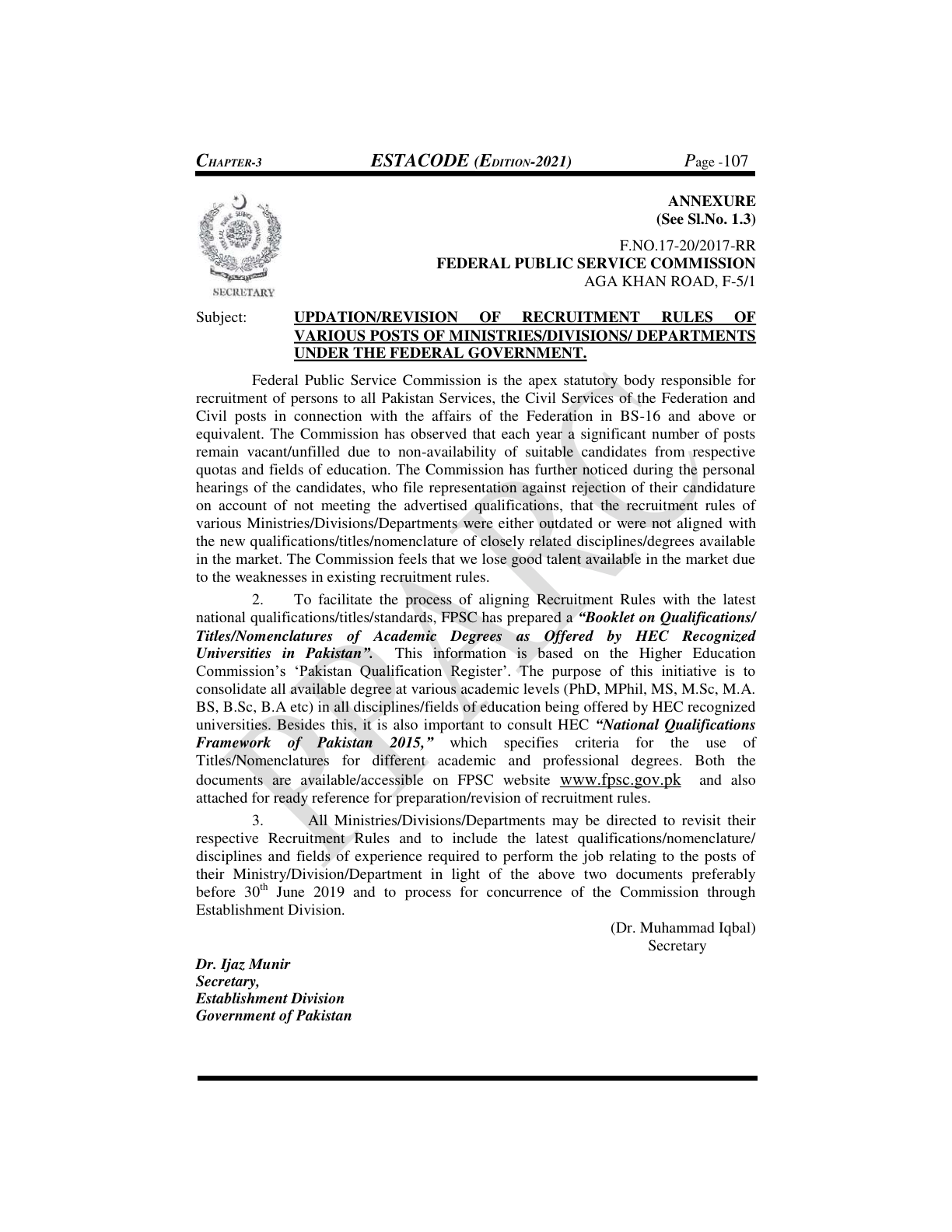
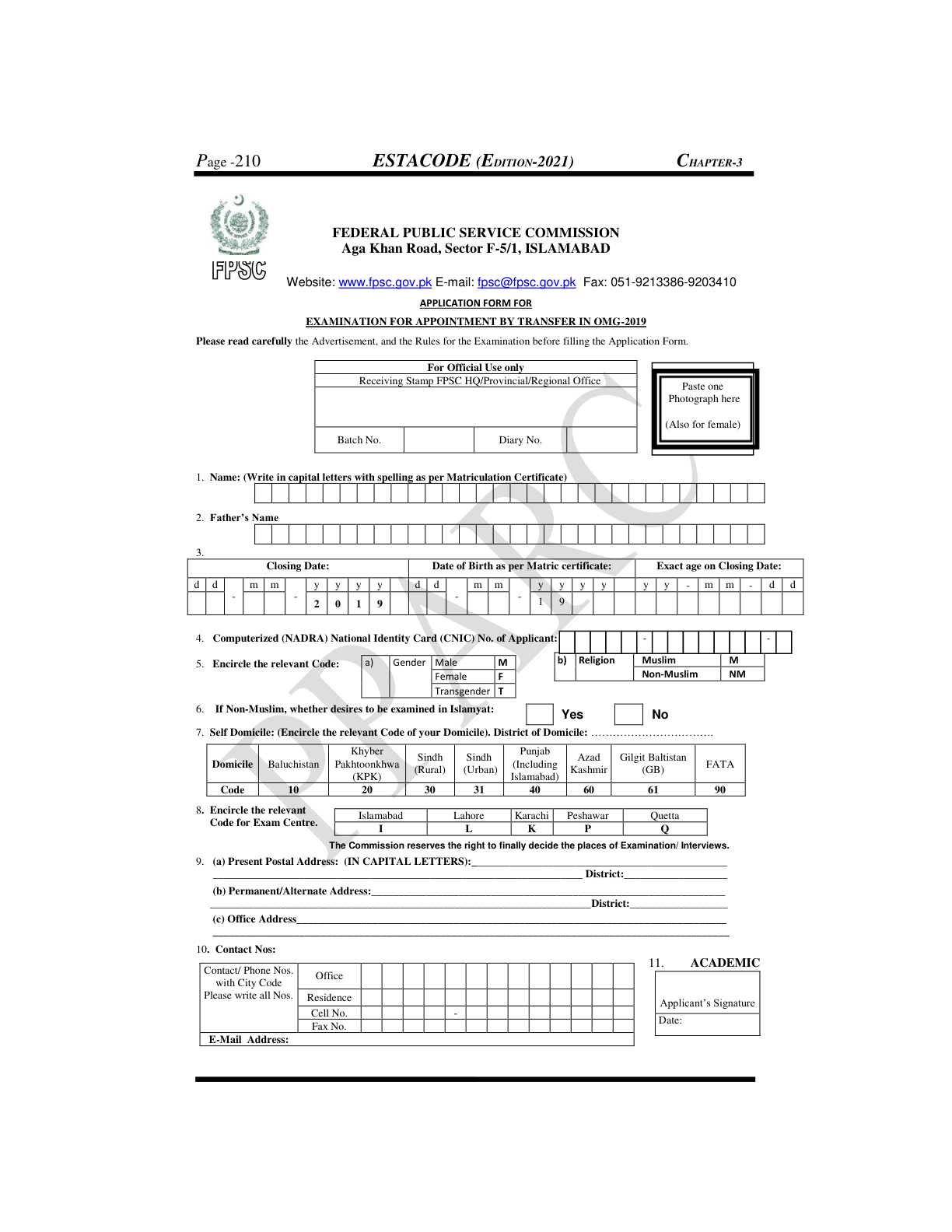
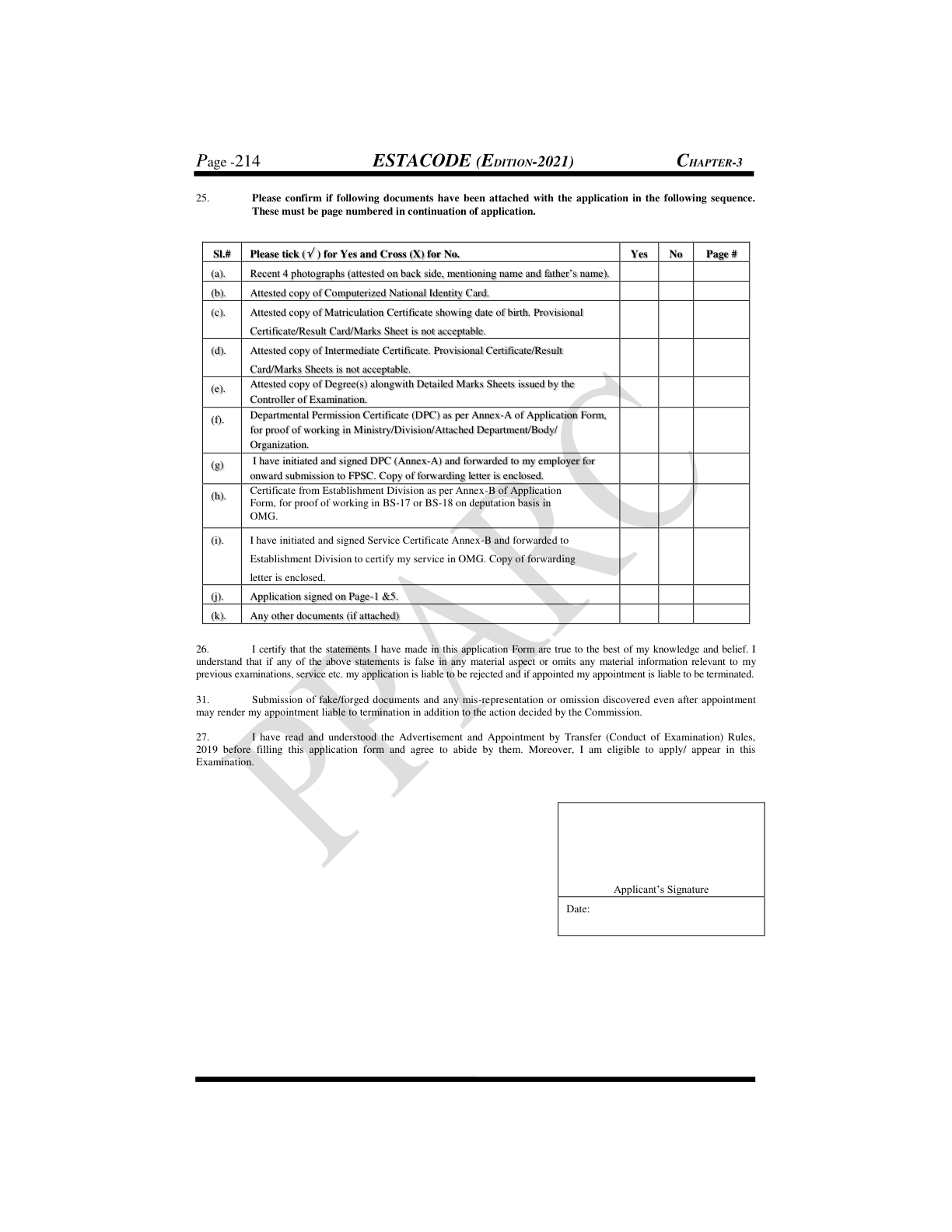
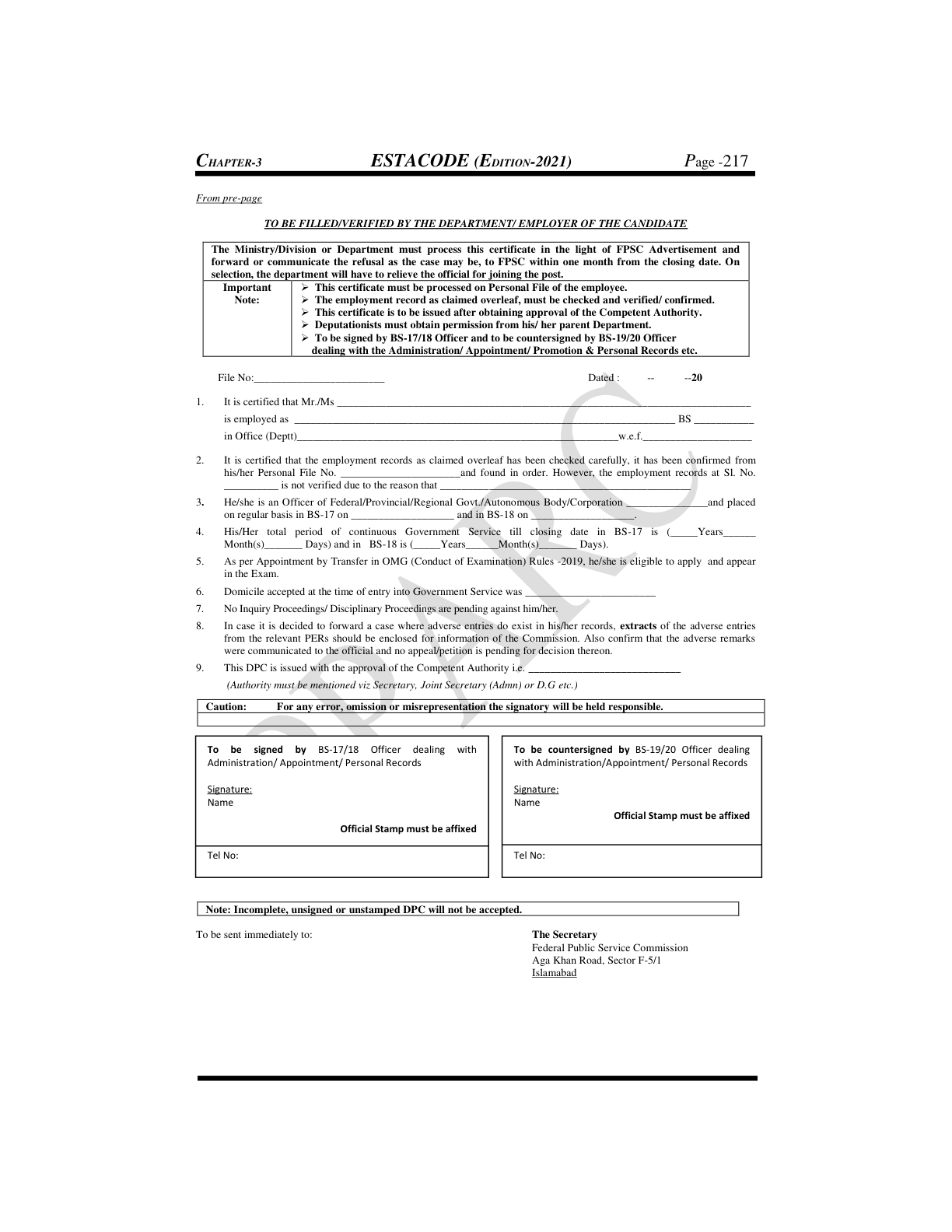
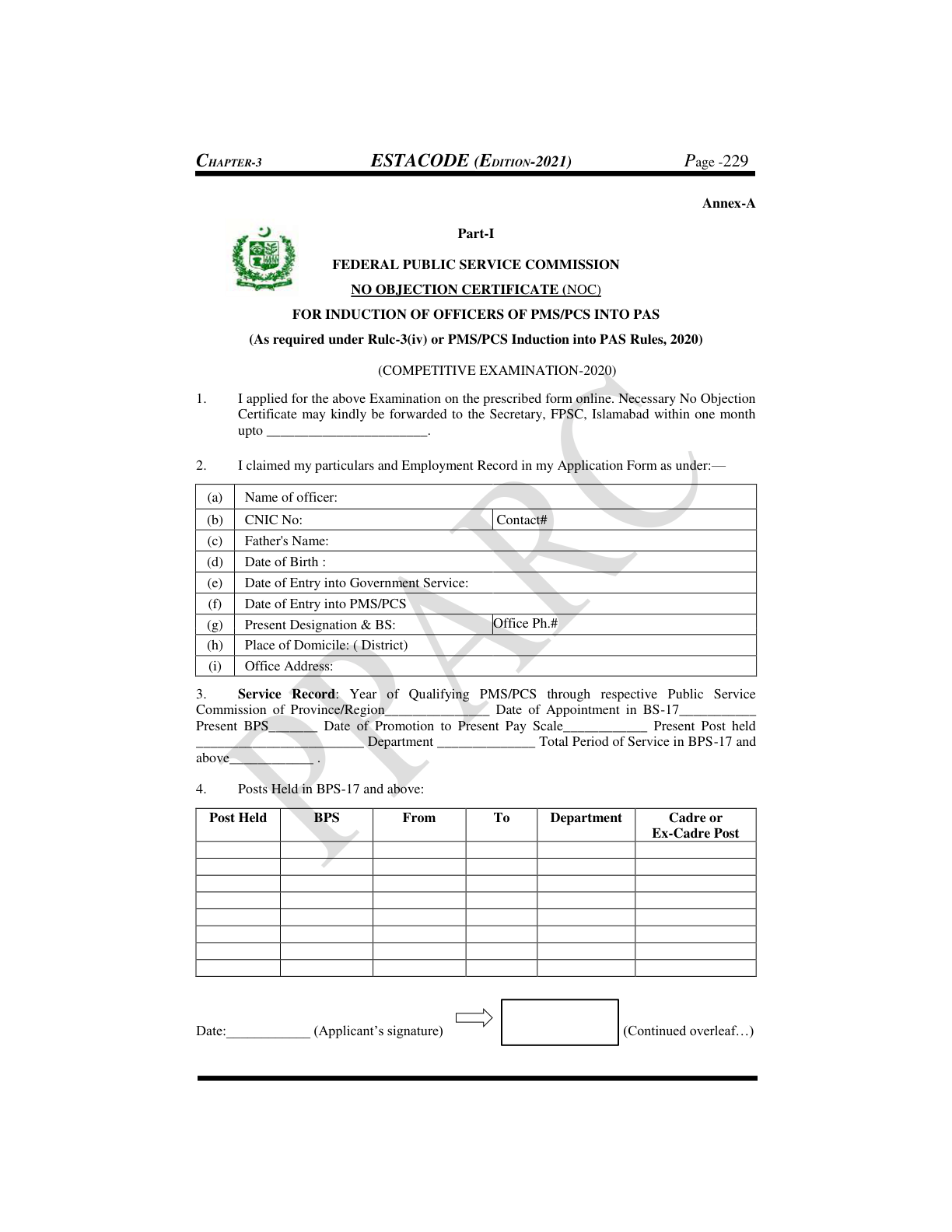
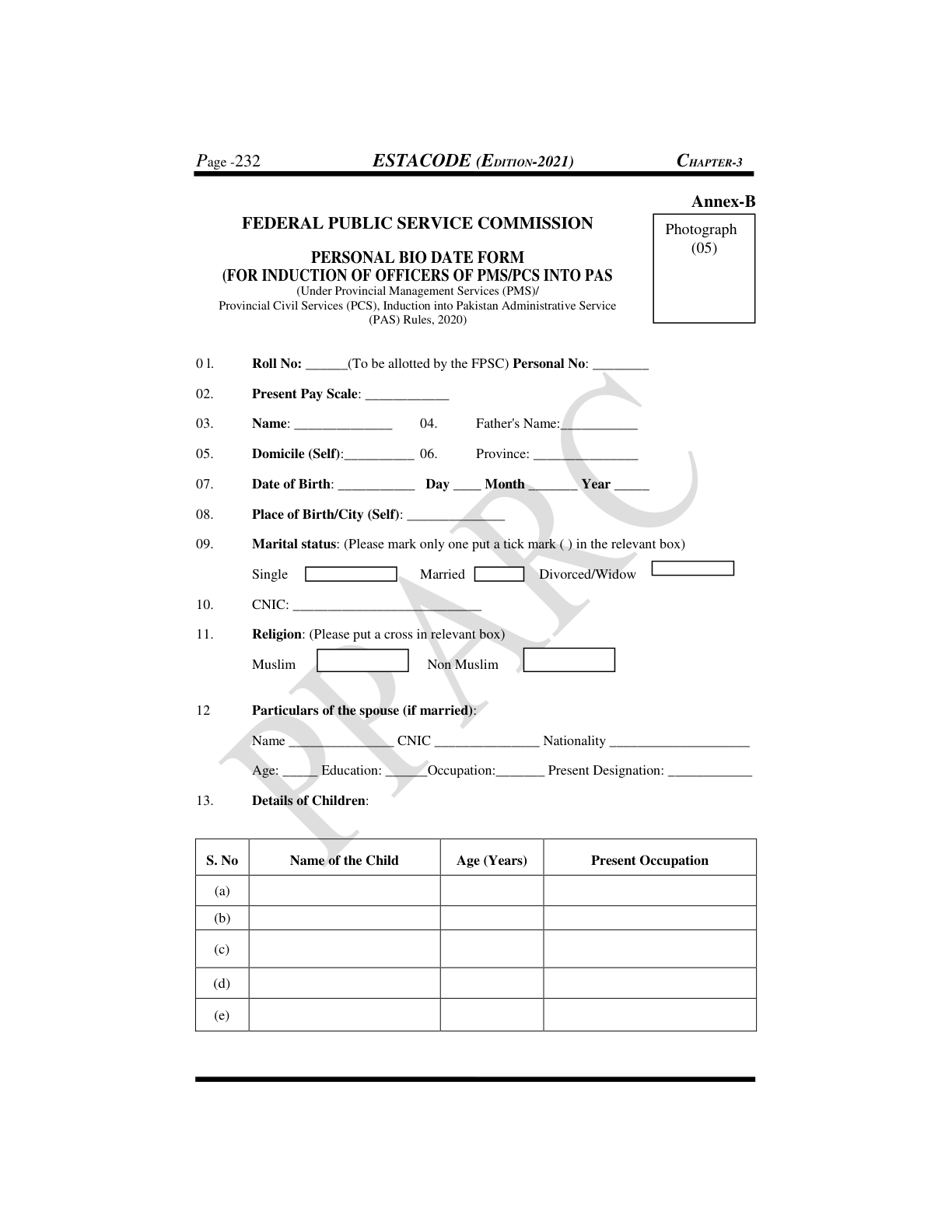
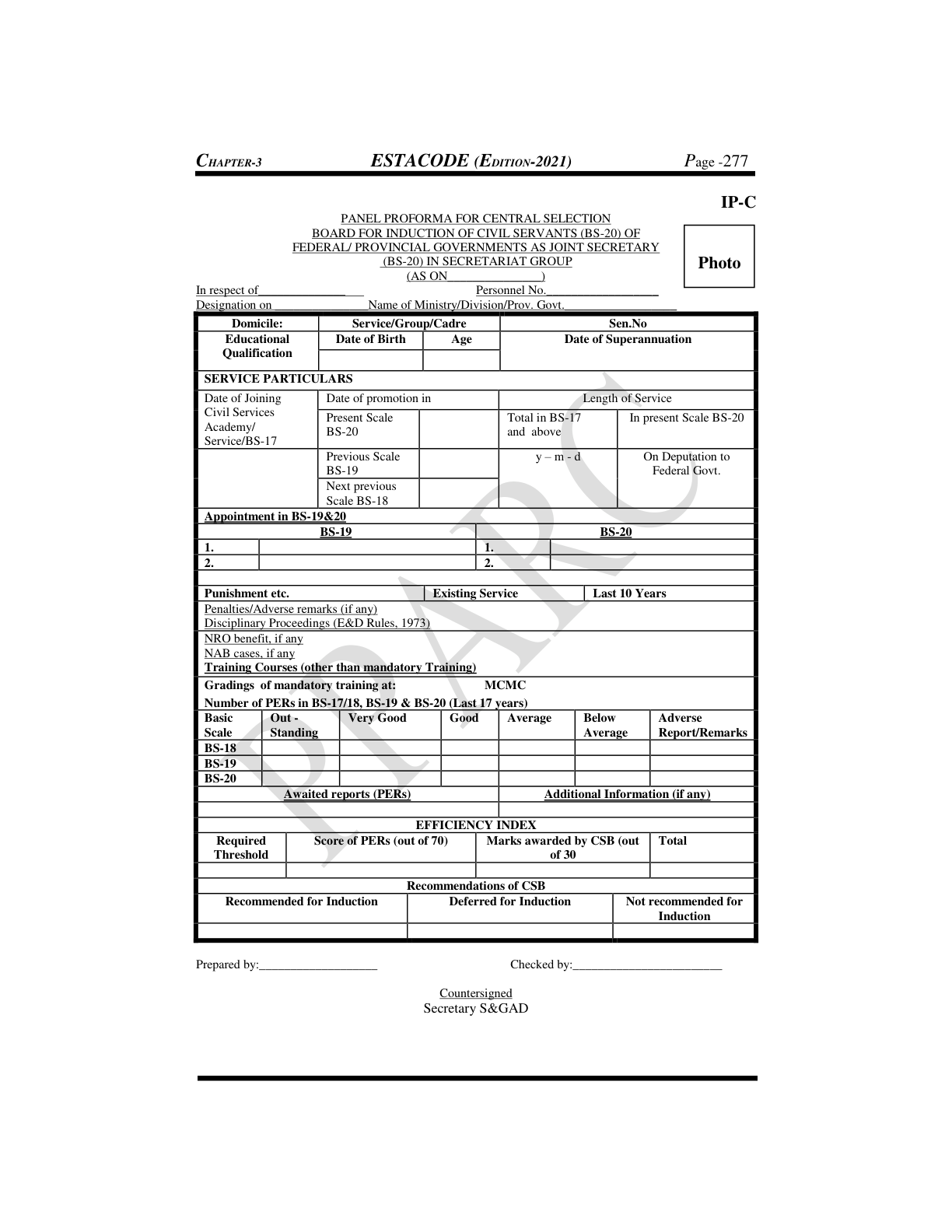
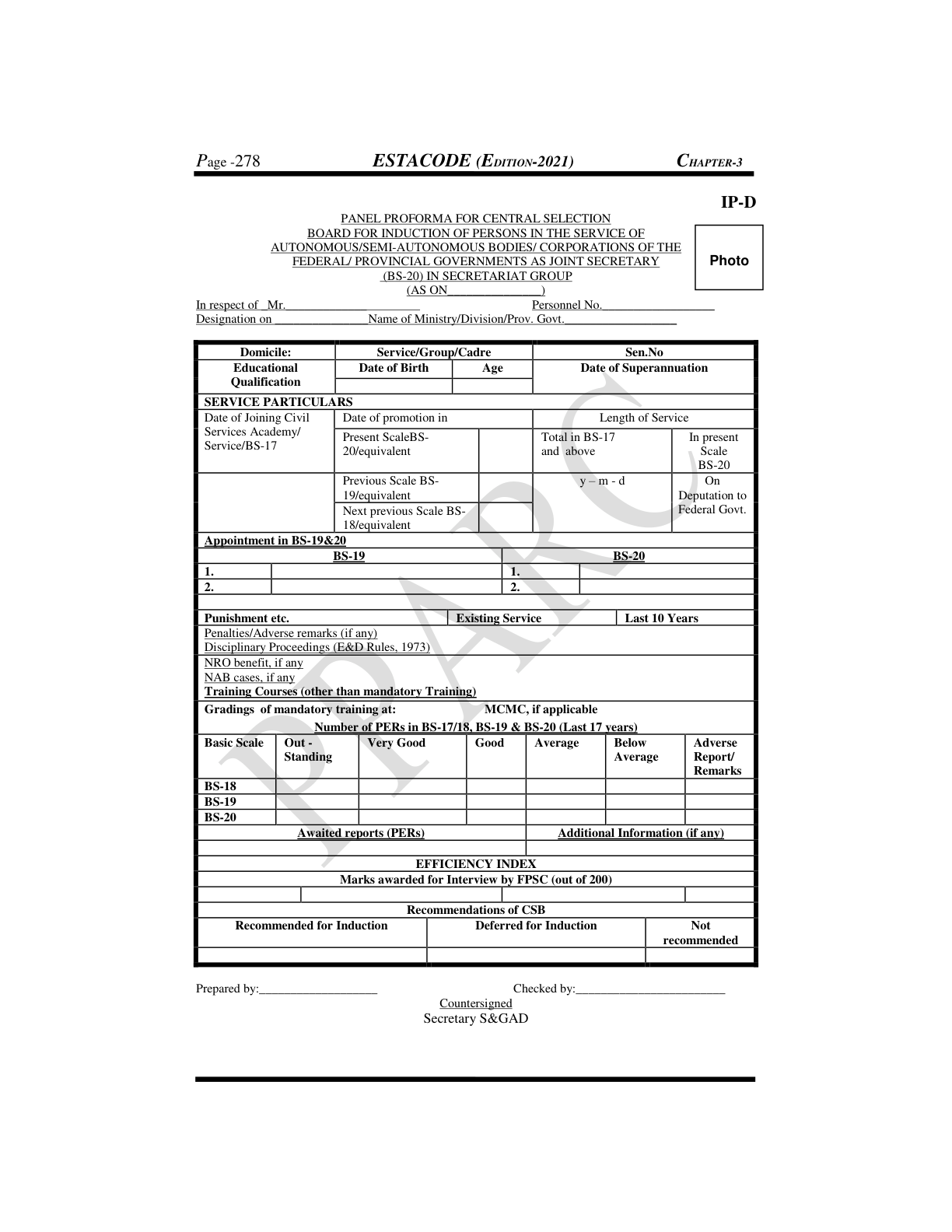
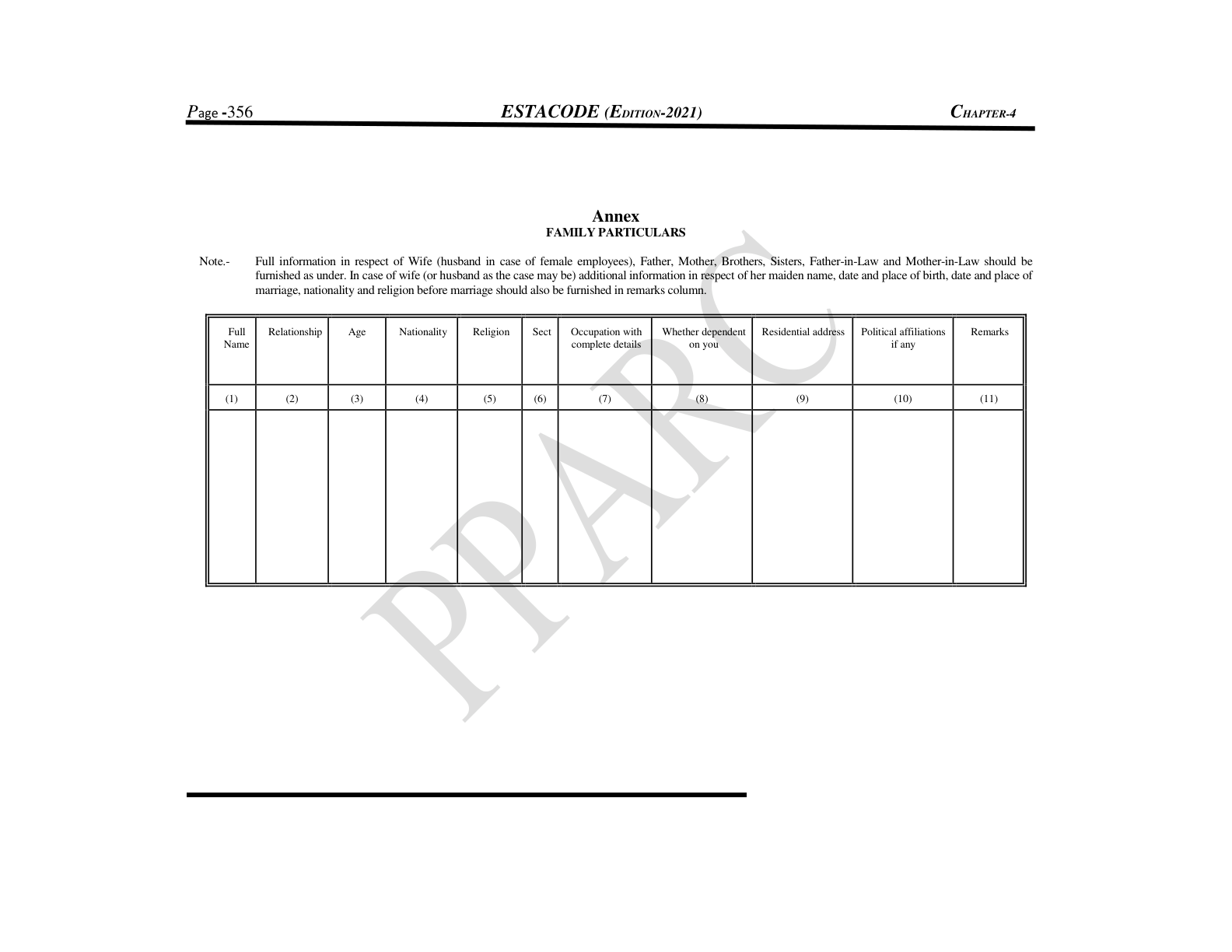
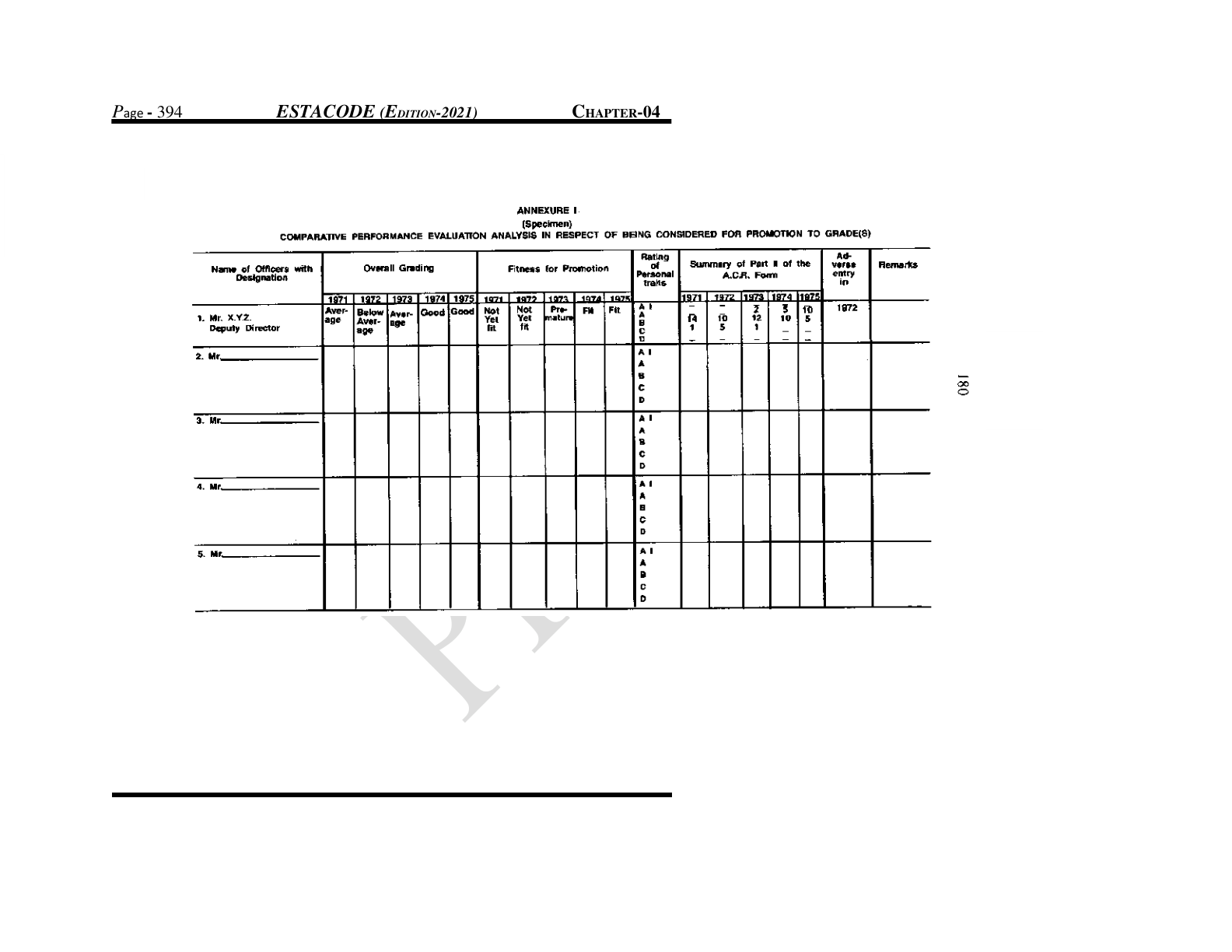
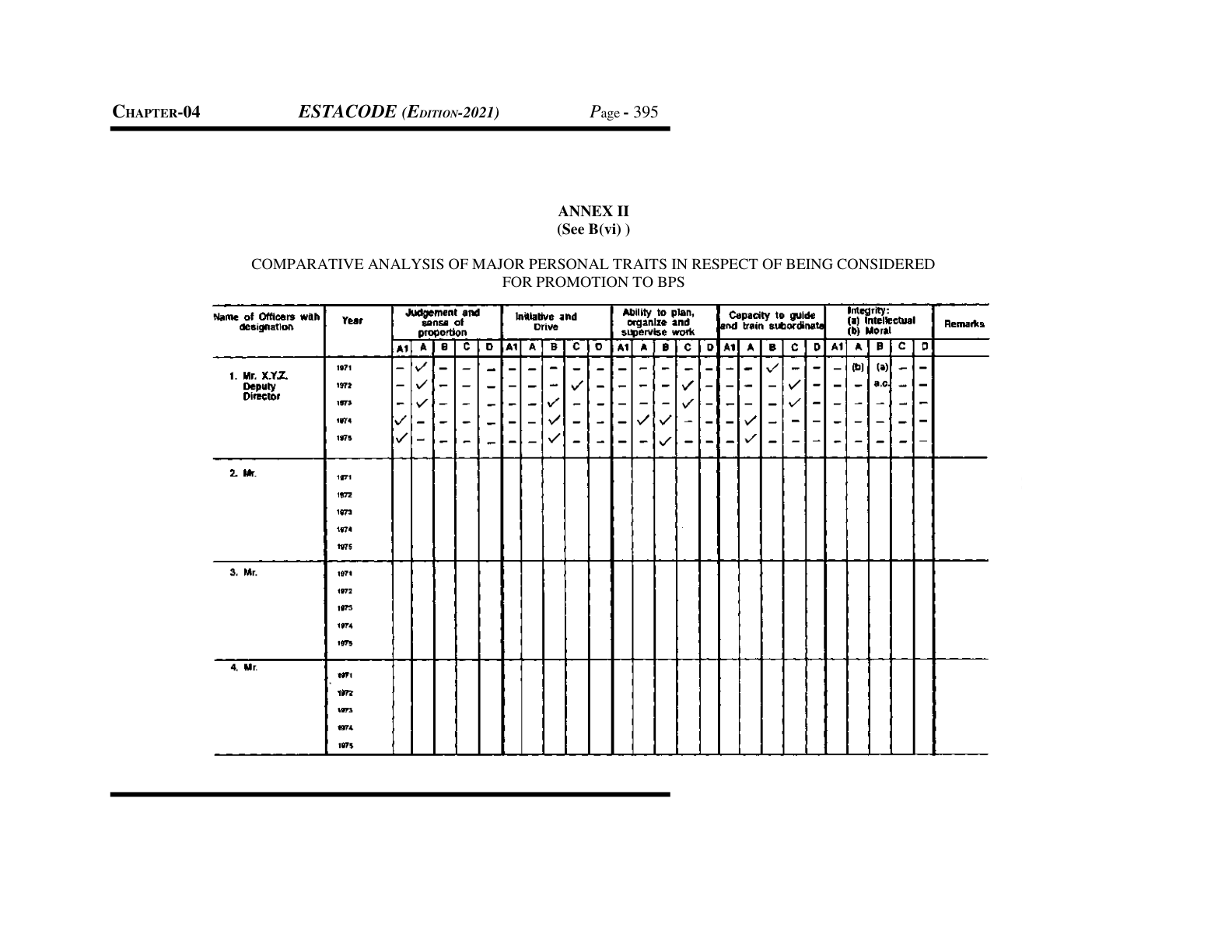
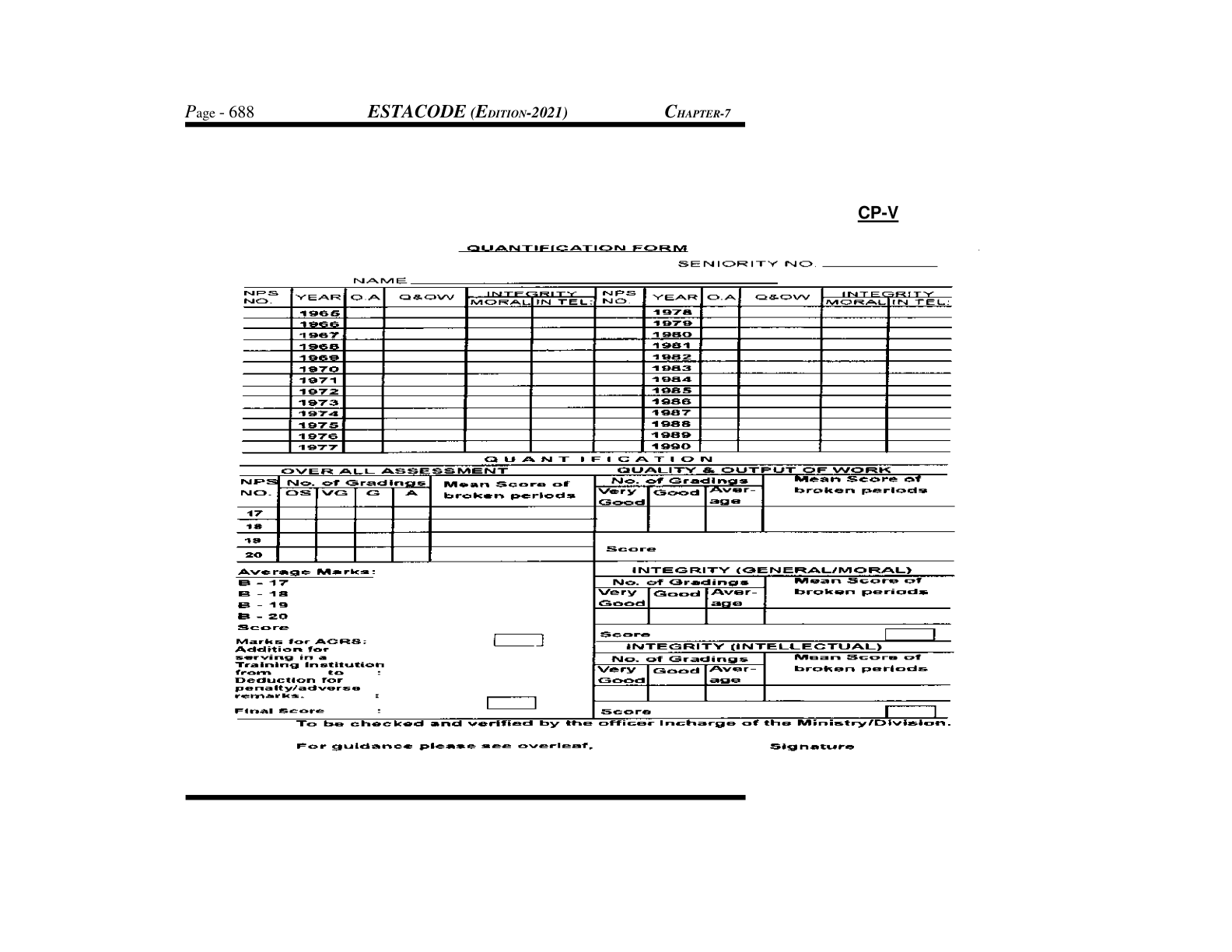
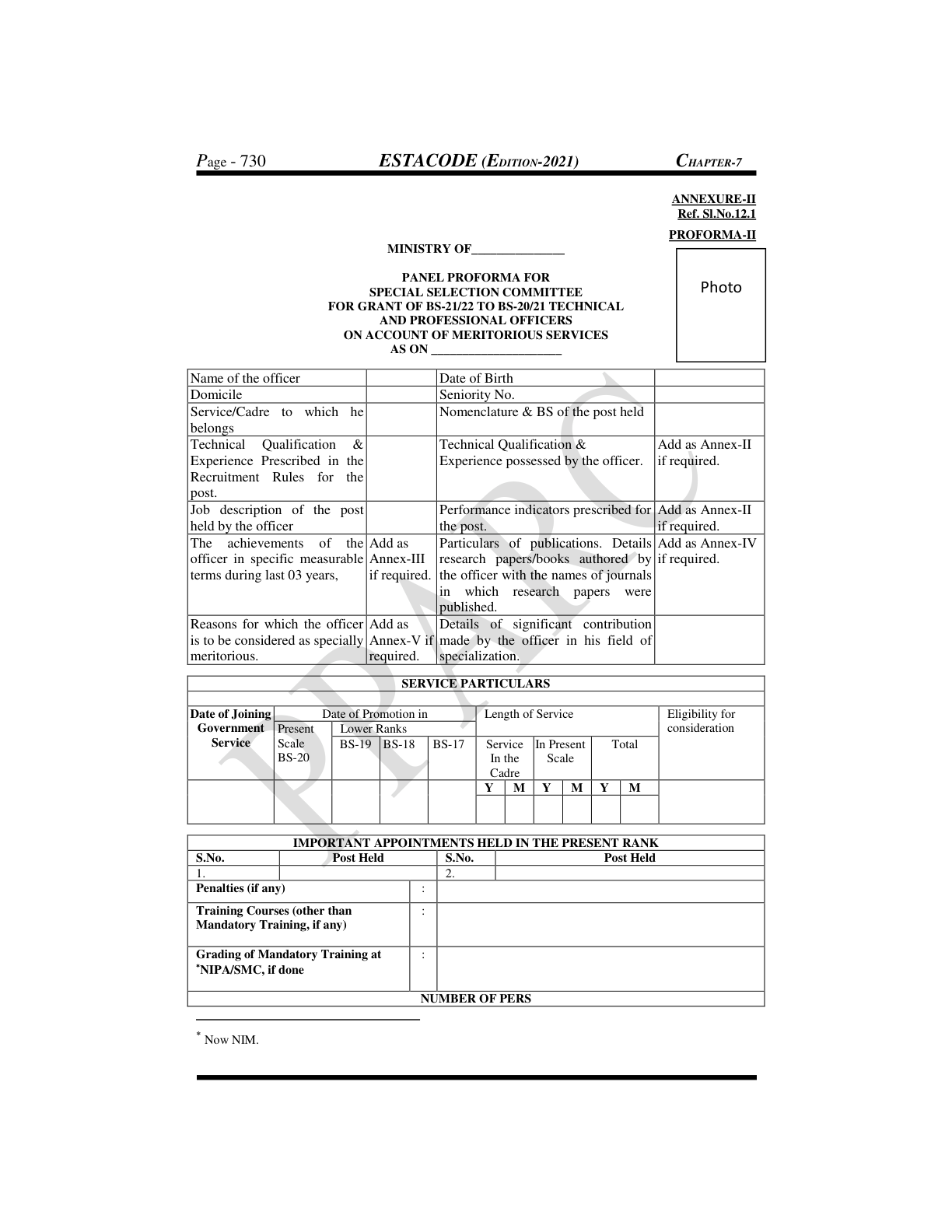
Original source and image integrity
Official original PDF source. Source PDF SHA-256: 0feb1c0acde32d1e5f0e34445f389ea593470a7f778eab203f13e857f047997c.
Each selected page is rendered in full without clipping. The original file and every page image are hashed. The source-page review identifies graphic or form material; it does not establish a complete OCR transcription, amendment completeness or current force.
- Physical PDF page 1:
ed55961e295218f197081f1d3f213f8ca767c3c55240bfc389910298976b79d9 - Physical PDF page 13:
d9330cc8e055ecab7eacfd24bcc99ec585bd4f714a3ee7d3f8e2146ce20cb564 - Physical PDF page 14:
ed8063f152c4739f9dad3094dacf7619ad2f1131f98e6af6edddc489965bf6f9 - Physical PDF page 15:
467620e1579d06bd660d19587800f75a99ecb608d2c7b67501f4b5ead63f111c - Physical PDF page 112:
b76190c477acb244fdc40c2a83ff425555bc77d70a0b9b1fdea28da56b7bd640 - Physical PDF page 215:
49601acb22ead1fc6ef38700ad899083b2609c97794e51e64392fa6ace20423e - Physical PDF page 219:
027c304eedb45e8457665423332969efaeb11c97edf7e58dbced7d021b9bcc27 - Physical PDF page 222:
ea6554b6777f9f05f63b058de1fae28924b337549646070a48c3279758360421 - Physical PDF page 234:
441c9db70c6dfb43e8c78554b3d632871f9a97863e677904c2e89d3aa02749e5 - Physical PDF page 237:
0a735f12e0ee9e3db108a5e27a95fd851dde86f7d00bb88063d88e70e6cc270c - Physical PDF page 282:
2de5a3cc7f3b7e1606c0e65bd8f5898d86b5883682ab7a5527e9dd2e6458fe03 - Physical PDF page 283:
f39cf63b660ec9caa49b2d7a67712c4b4069cfd33b96d229a7f42aff11a34baa - Physical PDF page 359:
ad4e3452d853d3f9c602388189ef462aea2c759b8415f7abf70d85c84d51966e - Physical PDF page 397:
80a487f7e4900d5b5d98512d6372f603402002ca096a34f0697911fc3b4f52a4 - Physical PDF page 398:
98b8d6bd91ccd80cd5883bac9946f0790cd9badaf9b36964943cccbc7e0f8b7f - Physical PDF page 686:
86bde37d66b9c276734b0c1029b2af3ff306867e5754bc23913a3e1b72632623 - Physical PDF page 728:
6a4d41bf45adfe48d941dd3397a21ab93ed564fa779210beead8c19815cf143f
This law in the library
Follow the instruments and provisions named in this source edition, and the laws that cite it. Citation links identify the text being referred to; legal effect and current force require separate examination.
Instruments cited by this law 45
References to provisions in this text 234
Article 240
An operative target heading has not been identified. Read the source passage
Read reference in context
NAL PROVISIONS 1.1 CONSTITUTIONAL PROVISIONS Extracts from the Constitution of the Islamic Republic of Pakistan, 1973: Part XII Miscellaneous, Chapter I– Services.– Article 240– Subject to the Constitution, the appointments to and the conditions of service of persons in the service of Pakistan shall be determined– (a) in the case of the services of the Federation, posts in connection with the affair
Article 241
An operative target heading has not been identified. Read the source passage
Read reference in context
to the Federation and the Provinces, which was in existence immediately before the commencing day or which may be created by Act of *[Majlis-e-Shoora (Parliament)]. Article 241– Until the appropriate Legislature makes a law under Article 240, all rules and orders in force immediately before the commencing day shall, so far as consistent with the provisions of the Constitution, continue in force and m
Article 240
An operative target heading has not been identified. Read the source passage
Read reference in context
ediately before the commencing day or which may be created by Act of *[Majlis-e-Shoora (Parliament)]. Article 241– Until the appropriate Legislature makes a law under Article 240, all rules and orders in force immediately before the commencing day shall, so far as consistent with the provisions of the Constitution, continue in force and may be amended from time to time by the Federal Government or, as
Article 242
An operative target heading has not been identified. Read the source passage
Read reference in context
he provisions of the Constitution, continue in force and may be amended from time to time by the Federal Government or, as the case may be, the Provincial Government. Article 242– (1) [Majlis-e-Shoora (Parliament)] in relation to the affairs of the Federation, and the Provincial Assembly of a Province in relation to affairs of the Province, may, by law, provide for the establishment and constitution o
Article 268
An operative target heading has not been identified. Read the source passage
Read reference in context
of the Federation shall be appointed by the President in his discretion.] (2) A Public Service Commission shall perform such functions as may be prescribed by law. Article 268– (1) Except as provided by this Article, all existing laws shall, subject to the Constitution, continue in force, so far as applicable and with the necessary adaptations, until altered, repealed or amended by the appropriate L
Article 212
An operative target heading has not been identified. Read the source passage
Read reference in context
commencing day. Explanation. In this Article, ―in force‖, in relation to any laws, means having effect as law whether or not the law has been brought into operation. Article 212– (1) Notwithstanding anything hereinbefore contained, the appropriate Legislature may by Act [provide for the establishment of] one or more Administrative Courts or Tribunals to exercise exclusive jurisdiction in respect of
Section 12
More than one operative heading has this number. Read the source passage
Read reference in context
73, Extraordinary, Part II, page 2001. Subs. and shall be deemed always to have been so substituted by the Constitution (First Amendment) Act, 1974 (33 of 1974), section 12, for ―establish‖. Administrative Courts and Tribunals
Article 27
Open the identified operative provision
Read reference in context
rt or Tribunal shall lie only if the Supreme Court, being satisfied that the case involves a substantial question of law of public importance, grants leave to appeal. Article 27– (1) No citizen otherwise qualified for appointment in the service of Pakistan shall be discriminated against in respect of any such appointment on the ground only of race, religion, caste, sex, residence or place of birth:
Section 12
More than one operative heading has this number. Read the source passage
Read reference in context
Ins. and shall be deemed always to have been so inserted by the Constitution (First Amendment) Act, 1974 (33 of 1974), section 12. ** Ins. and shall be deemed always to have been so inserted by the Constitution (First Amendment) Act, 1976 (62 of 1976), section 15. *** Subs. by P.O. No. 14 of 1985, Art. 2 and Sch., for ‗Parliaments‘. @ For such law, se
Section 15
More than one operative heading has this number. Read the source passage
Read reference in context
dment) Act, 1974 (33 of 1974), section 12. ** Ins. and shall be deemed always to have been so inserted by the Constitution (First Amendment) Act, 1976 (62 of 1976), section 15. *** Subs. by P.O. No. 14 of 1985, Art. 2 and Sch., for ‗Parliaments‘. @ For such law, see the Provincial Service Tribunal (Extension of Provisions of the Constitution) Act, 1974 (32 of 1974). @@Subs. and shall be deeme
Rule 15
More than one operative heading has this number. Read the source passage
Read reference in context
h the provisions of these Rules. (2) The tenure of the member of the Service appointed to a Provincial sub- cadre post other than a Chief Secretary appointed under Rule 15, shall be determined by the [Chief Minister or a person authorized by him] by Order. (3) The tenure of the member of the Service appointed to a Federal sub-cadre post shall be determined by the [Prime Minister or a perso
Rule 7
An operative target heading has not been identified. Read the source passage
Read reference in context
ing in view the deputation reserves of various services without further consultations with the federating units. (3) [Subject to the provisions of sub-rule (2) of rule 7 and based on the needs of various Ministries and Divisions, vacancies may, in such manner and on such terms and conditions as may be prescribed, be filled on temporary basis from time to time through a competitive process by t
Rule 7
An operative target heading has not been identified. Read the source passage
Read reference in context
temporarily dispense with the provisions of rules 8 and 9 requiring a Governor to report to the President any case in which a Cadre post is filled otherwise than under rule 7 by a person not being a member of the Service or in which a Cadre post is kept vacant for a period exceeding 3 months. 11. The Governor of a Province may direct that two Cadre posts in connection with the affairs of a Prov
Rule 7
An operative target heading has not been identified. Read the source passage
Read reference in context
st, station, for training and proceed on leave, as per prescribed procedure. 17. [The Cadre Schedule to the 1954 Agreement shall be amended from time to time, as per Rule 7 by the Establishment Division in consultation with the Provinces]. [Authority.— Estt. Division‘s Notification No. F.25/12/51-SEI, dated 1-6-1954]. **Schedule of Cadre strength of the Pakistan Administrative Service FEDERAL GO
Rule 3(3)
Open the identified operative provision
Read reference in context
of Revenue) inserted in the Rules of Business, 1973 (as amended upto 16th January, 2007), vide Cab. Div. Notification No. 4-14/98-Min. I. dated 1-12-1998, Schedule II [Rule 3(3) Distribution of Business Among the Divisions. BPS.
Rule 4(4)
An operative target heading has not been identified. Read the source passage
Read reference in context
Directorate of Military Lands & Cantonments; ref. Rules of Business, 1973 as amended upto 16th January, 2007, rule 4(4), Schedule-III. BPS All Pakistan Services (Change in Nomenclature) Rules, 1973, notified vide SRO 1307(I)/73 dated 14-09- 1973, have been repealed vide SRO 89(I)/2014 dated 14-02-2014, whereby all notifications and instruc
Rule 3
Open the identified operative provision
Read reference in context
ion" means the Federal Public Service Commission; (c) "Schedule" means the schedule to these rules; (d) "Service" means the Police Service of Pakistan referred to in rule 3. 3. Change in nomenclature and composition.-(1) Notwithstanding anything contained in the All-Pakistan Services (Change in Nomenclature) Rules, 1973, the Police Group is renamed as the Police Service of Pakistan. (2) The
Rule 3
Open the identified operative provision
Read reference in context
ld, if he is so directed, more than one post at the same time. 11. Seniority.— (1) The members of the Service referred to in clauses (a) and (b) of sub-rule (2) of rule 3 shall retain the same seniority as is shown in the gradation list as it stood immediately before the commencement of these rules. (2) Persons appointed to the Service in accordance with these rules shall count seniority fro
Section 25
More than one operative heading has this number. Read the source passage
Read reference in context
RVICES 3.1 Occupational Groups and Services (Probation, Training and Seniority) Rules, 1990 S.R.O. 874(I)90.— In exercise of the powers conferred by section 25 read with Section 6 and 8 of the Civil Servants Act 1973 (LXXI of 1973), the President is pleased to make the following amendments in the Occupational Groups and Services (Probation, Training and Seniority) Rules,1990. 1.
Section 6
Open the identified operative provision
Read reference in context
ational Groups and Services (Probation, Training and Seniority) Rules, 1990 S.R.O. 874(I)90.— In exercise of the powers conferred by section 25 read with Section 6 and 8 of the Civil Servants Act 1973 (LXXI of 1973), the President is pleased to make the following amendments in the Occupational Groups and Services (Probation, Training and Seniority) Rules,1990. 1. Short title and comm
Section 7A
An operative target heading has not been identified. Read the source passage
Read reference in context
ect are hereby repealed). 3.2 Occupational Groups and Services (Final Passing Out Examination) Rules, 2003 S.R.O 115 (KE)/2003: In exercise of powers conferred by Section 7-A read with Section 10 of the FPSC, Ordinance, 1977, the Chairman, FPSC, with the approval of the Federal Government has made the following rules for regulating the conduct of Final Passing Out Examination of Probation of differ
Rule 6(2)
Open the identified operative provision
Read reference in context
ated 21-04-2014, it is clarified that inter-se-seniority of probationers within a batch will be determined as per para 2 of the O.M. ibid from the date of insertion of Rule 6(2) in Occupational Groups and Services (Probation, Training and Seniority) Rules,1990 vide SRO 257(I)/2011 dated 15-03-2011. 2. With regard to queries received by this Division on determination of inter- se-seniority of probati
Rule 8
Open the identified operative provision
Read reference in context
s Section Officer on the basis of a competitive examination held by the Commission shall be appointed on probation. (2) Subject to the provisions of sub-rule (4) of rule 8 and rule 9, the period of probation of a probationer shall be two years unless the Government, in any case, extends it by a further period or periods not exceeding one year in the aggregate.
Rule 9
An operative target heading has not been identified. Read the source passage
Read reference in context
fficer on the basis of a competitive examination held by the Commission shall be appointed on probation. (2) Subject to the provisions of sub-rule (4) of rule 8 and rule 9, the period of probation of a probationer shall be two years unless the Government, in any case, extends it by a further period or periods not exceeding one year in the aggregate.
Rule 6
Open the identified operative provision
Read reference in context
bation of a probationer shall not end until he has fully qualified in the examinations referred to in rules 8 and 10 has earned satisfactory confidential reports under rule 6. Subs. vide Estt. Division‘s Notification No.9/2/66-C.III(B), dated 28-12-1972.
Rule 8
Open the identified operative provision
Read reference in context
m in (i) the competitive examination on the basis of which they were selected for appointment; and (ii) the first attempt in the examination held under sub-rule (1) of rule 8. (2) For the purposes of the fixation of the seniority of a probationer whose case falls within sub-rule (5) of rule 8, the Government may, in consultation with the Commission, pass such orders as it may consider equitable.
Rule 8
Open the identified operative provision
Read reference in context
in the examination held under sub-rule (1) of rule 8. (2) For the purposes of the fixation of the seniority of a probationer whose case falls within sub-rule (5) of rule 8, the Government may, in consultation with the Commission, pass such orders as it may consider equitable. 12. The service of a probationer shall count for leave and pension from the date of his first joining an institution fo
Rule 5
Open the identified operative provision
Read reference in context
as it may consider equitable. 12. The service of a probationer shall count for leave and pension from the date of his first joining an institution for training under rule 5. [Authority.- Estt. Division‘s Notification No. S.R.O.90(R), dated 2-9-1964]. 4.11 Fixation of ‘Inter-se-Seniority’ of Section Officers Appointed by Direct Recruitment Principles regarding the fixation of inter-se-seniorit
Rule 5(2)
Open the identified operative provision
Read reference in context
(Corporate Governance) Rules,2013 and other consequential/ancillary amendments will be made by the Securities & Exchange Commission of Pakistan and until amendment in Rule 5(2) is notified the existing provisions of rules 5(2) shall prevail. 4. While applying the above guidelines for appointment of Chief Executive Officers of banks and development financial institutions, the Fit and Proper Test C
Section 7(b)
Open the identified operative provision
Read reference in context
e of the Federal Public Service Commission is also required with regard to qualifications for, and methods of recruitment to posts in BPS 16 and above, in the light of Section 7(b) Federal Public Service Commission Ordinance, 1977 read with FPSC (Functions) Rules, 1978. 2. The question of finding ways to cut down the inordinate delay often involved in the finalization of the recruitment rules due to p
Section 28
More than one operative heading has this number. Read the source passage
Read reference in context
istan is a party; (i) ―freedom of movement‖ shall have the same meaning as expressed in Article 15 of the Constitution; (j) ―Fund‖ means the fund established under section 28; (k) ―Independent living‖ means environment to live with freedom, self- control, choice and self-determination in everyday life;
Section 23
More than one operative heading has this number. Read the source passage
Read reference in context
e been registered with the Council or its designated office of the area in which such establishment is located and against whose names in the register maintained under section 23 an-endorsement exists to the effect that they are fit to work. (2) The persons with disabilities employed against any post in pursuance of sub-section(1) shall be entitled to the terms and conditions which are not less favour
Section 24
More than one operative heading has this number. Read the source passage
Read reference in context
of 0.5 and above shall count as a whole-number. 25. Establishment to pay to the Fund.- An establishment which does not employ a person with disability as required by section 24 shall pay in the Fund each
Rule 10(1)
More than one operative heading has this number. Read the source passage
Read reference in context
BS-17 to be filled on the results of competitive examination shall be announced with the approval of the Establishment Division. 20. Appointments.- (1) Subject to Rule 10 (1), candidates securing the highest places on the combined results of the written examination, psychological assessment and viva voce and eligible for appointment shall be recommended by the Commission in order of
Section 7(1)
Open the identified operative provision
Read reference in context
ules,2015 S.R.O 418(I)/2015.— In exercises of the powers conferred by sub-rule (2) of Rule 3 of the Civil Servants (Appointment, Promotion and Transfer) Rules,1973 and Section 7(1)(b) (i0 and (ii0 of FPSC Ordinance, 1977 (XLV of 1977), the Chairman, FPSC in pursuance of Section 7-A of FPSC Ordinance,1977, and with the approval of the Federal Government has made, in supersession of all earlier Rules for Se
Rule 2
An operative target heading has not been identified. Read the source passage
Read reference in context
eath or removal etc. of an officer, shall again be available for induction under these rules. 5. Application for the examination.-(1) On receipt of requisition under rule 2, the Commission shall invite applications from the aspirants through public notice in leading newspapers as specified by the Commission. (2) The aspirants shall apply online till the closing date as specified by the Commissi
Rule 4
An operative target heading has not been identified. Read the source passage
Read reference in context
to sit in another centre and hall. ( 4) No officer shall be admitted to the examination hall who does not hold an admission certificate issued under sub-rule (4) of rule 4, original CNIC and original treasury receipt for the payment of fee as stated under sub-rule (3) of rule 5. (5) An admission certificate generated or downloaded from the FPSC website shall be accepted. Intimation about exami
Rule 5
Open the identified operative provision
Read reference in context
t hold an admission certificate issued under sub-rule (4) of rule 4, original CNIC and original treasury receipt for the payment of fee as stated under sub-rule (3) of rule 5. (5) An admission certificate generated or downloaded from the FPSC website shall be accepted. Intimation about examination center, roll number and schedule of examination or date sheet, may be downloaded from the FPSC websi
Section 2
Open the identified operative provision
Read reference in context
2006, completes his tenure or attains upper age-limit specified in sub-section (1) shall on such commencement forthwith cease to be member as defined in clause (b) of section 2.] (2) A member may resign his office by writing under his hand addressed to the President. [4A. Oath of office. Before entering upon office the Chairman and a member shall take oath in the form set out in the Schedul
Section 7(ii)
Open the identified operative provision
Read reference in context
―not exceeding two years‖ were omitted vide Ordinance XLVI of 2007 s.2 and now stands restored w.e.f. 25-03-2010 on expiry of the Ordinance, please see clarification of Section 7(ii) & (iv). Added vide FPSC (Amendment) Ordinance, 2001 dated 27-03-2001.
Section 4A
An operative target heading has not been identified. Read the source passage
Read reference in context
deral Government may, by notification in the official Gazette, make rules for carrying out the purposes of this Ordinance. 11. [Repeal]. [SCHEDULE] (See Section 4A) I, ___________________________________________ do solemnly swear that I will bear true faith and allegiance to Pakistan: That, as a Chairman (or Member) of the Federal Public Service Commission I will discharge my duties
Section 7(2)
Open the identified operative provision
Read reference in context
the National Assembly, however, it could not be passed till date. 3. Since, the FPSC (Amendment) Ordinance, 2009 is still under process, the existing provision of Section 7(2) (ii) & (iv) have become ineffective and position prior to 15-09-2007 stand restored w.e.f 25-03-2010 on expiry of aforesaid Ordinance in terms of Article-89 of the Constitution of Pakistan. Consequently, contract appointment- e
Regulation 4
An operative target heading has not been identified. Read the source passage
Read reference in context
Page -254 ESTACODE (EDITION-2021) CHAPTER-3 *SCHEDULE-I [See Regulation 4] PAY, ALLOWANCES AND PERQUISITES OF CHAIRMAN AND MEMBERS S. No. Items Chairman Member (1) (2) (3) (4) 1. Pay per month. Rs. 425, 000 Rs. 400,000 2. Special FPSC allowance per month Rs. 60,000 Rs. 50,000 3.
Rule 3(a)
Open the identified operative provision
Read reference in context
and, if not, whether they are fit to hold any other civil post in the same or lower Basic Scale compatible with their qualifications and experience.] @‖SCHEDULE‖ (See Rule 3(a) Posts excluded from the purview of the Commission Ministry, Division or Organization Name of post 1. President's Secretariat All posts (Personal or Public) @@2. Directorate General of All
Section 5
Open the identified operative provision
Read reference in context
ed manner by the President or by a person authorised by the President in that behalf. 6. Probation.– (1) An initial appointment to a service or post referred to in section 5, not being an ad hoc appointment, shall be on probation as may be prescribed. (2) Any appointment of a civil servant by promotion or transfer to a service or post may also be made on probation as may be prescribed. Where,
Rule 6
Open the identified operative provision
Read reference in context
2. In these rules, unless there is anything repugnant in the subject or context,– (a) ―appointing authority‖, in relation to a post means the person authorized under rule 6 to make appointment to that post; (b) * [―selection board‖ means a Board constituted by the **[Prime Minister], for the purpose of selection for promotion or transfer to posts in basic pay scales 19 to 21 and equivalent, cons
Rule 3
Open the identified operative provision
Read reference in context
***[Provided that unless otherwise specified in the method of appointment, qualifications and other conditions applicable to a post as laid down under sub rule (2) of rule 3, the experience prescribed for initial appointment shall be the post-qualification experience]. @[12-A. Alteration in the date of birth.–The date of birth once recorded at the time of joining government service shall be fina
Rule 14
More than one operative heading has this number. Read the source passage
Read reference in context
y percent of persons domiciled in the ICT. Provided further that the first proviso shall not be applicable to the vacancies in posts, as specified in clause (ii) of rule 14, in such offices of the Federal Government whose functional jurisdiction extends beyond the region of Islamabad Capital Territory e.g. Federal Ministries/Divisions, Regulatory Authorities, Corporations/Departments with a federa
Rule 19
More than one operative heading has this number. Read the source passage
Read reference in context
rm immediately. In exceptional cases, ad-hoc appointment may, however, be made for a period of six months or less with prior clearance of the Commission as provided in rule 19. 19. When the appointing authority considers it to be in public interest to fill a post falling within the purview of the Commission urgently pending nomination of a candidate by the Commission, it may proceed to fill it o
Rule 4
An operative target heading has not been identified. Read the source passage
Read reference in context
amended from time to time to the extent of the post of Assistant Private Secretary and Superintendent and S.R.O 99(KE)/87, dated 22nd October, 1987. SCHEDULE (See Rule 4) S. No. Designation and BPS of the post Qualification/ Experience Age Limit Minimum Maximum (1) (2) (3) (4) (5) 1. *Assistant Private Secretary (BPS-16) (i) Second class or Grade ―C‖ Bachelor‘s degree from a
Rule 3
Open the identified operative provision
Read reference in context
ghter of a deceased civil servant who dies during service 05 years (4) Where a candidate is entitled to age relaxation under more than one categories specified in rule 3, he shall be allowed relaxation in age only in one category. Subs. vide Estt. Div.‘s Notification SRO No. 519(I)/98 dated 25-05-1998. Amended vide Estt. Div.‘s Not
Rule 3
Open the identified operative provision
Read reference in context
all be relaxed by a period of five years; (2) The relaxation in upper age limit shall be over and above the relaxation of age admissible to candidates specified in rule 3 or in any other rules for the time being in force]. **[4B. Notwithstanding the provisions contained in these rules or any other rules for the time being in force, the President or the Prime Minister may, on extreme compass
Section 15
More than one operative heading has this number. Read the source passage
Read reference in context
nd shall be required. 12. Conduct and Discipline: Rules made and instructions issued by the Government or a prescribed authority as for civil servants under Section 15 and 16 of the Civil Servants Act, 1973 as amended from time to time shall apply. 13. Appeal: Civil Servants (Appeal) Rules 1977 with amendments if any shall apply. 14. Termination of contract: The appointment d
Rule 19
More than one operative heading has this number. Read the source passage
Read reference in context
ber, 1973 regarding Civil Servants (Appointment, Promotion and Transfer) Rules, 1973. 2. In accordance with Part IV dealing with ad-hoc and temporary appointments, rule 19 lays down that the post shall be advertised and the same procedure as laid down for the initial appointment in Part III shall be followed for making ad-hoc appointments. 3. A number of cases have come to notice where ad-h
Rule 8
Open the identified operative provision
Read reference in context
) Acting charge appointment is made to those officials who otherwise are eligible for promotion but do not possess the required length of service for promotion under Rule 8 B of Civil Servants (Appointment, Promotion & Transfer) Rules,1973. There-fore, the incumbent of the post of Assistant (BS-15) working on acting charge basis will be allowed grant of BS-16 in due time after regularization t
Rule 6
Open the identified operative provision
Read reference in context
sixtieth years of his age, whichever is earlier: Provided that such officer shall not be entitled to conversion of leave preparatory to retirement on full pay under rule 6 into leave on half pay]. *[17. Encashment of refused leave preparatory to retirement.– (1) If in case of retirement on superannuation or voluntary retirement on completion of thirty years qualifying service a civil servant c
Rule 34
Open the identified operative provision
Read reference in context
gering or his ill health is not due to such of his own action as cause or aggravate disease or injury. 35. Leave to disabled seaman.– A civil servant referred to in rule 34 who is disabled while performing his duty may be allowed leave on full pay for a maximum period not exceeding ninety days on each occasion if:- (a) the disability is duly certified by a government Medical Officer, (b) t
Rule 18A(1)
An operative target heading has not been identified. Read the source passage
Read reference in context
March, 12, 2002 on the subject. Through the aforesaid O.M, this Division‘s earlier O.M No. F.1(8)-R.4/90, dated 2nd June, 1991 has been withdrawn being contradictory to rule 18-A (1) or Revised Rules, 1980. The cancellation of OM dated 02-06-1991 has created the impression as if the facility of encashment of LPR has been discontinued is not correct. The OM dated 02-06-1991, stipulates that encashment of LP
Rule 18A(1)
An operative target heading has not been identified. Read the source passage
Read reference in context
been discontinued is not correct. The OM dated 02-06-1991, stipulates that encashment of LPR is admissible on completion of 31 years service. On the other hand, under rule 18-A(1), encashment of LPR is admissible on superannuation or thirty years qualifying service. Therefore, with the cancellation of this Division OM No. F.1(8)-R.4/90, dated 02-06-1991, the cases regarding encashment of LPR may be deci
Rule 38
Open the identified operative provision
Read reference in context
nistrative authority. While the officers belonging to Group/ Service/Cadre controlled by the Establishment Division shall apply and be granted leave as provided for in rule 38, copies of notifications granting leave to such officers shall invariably be endorsed to Establishment Division. Where a Ministry/Division required a substitute in place of the officer belonging to the Groups/Services/Cadres c
Rule 13
More than one operative heading has this number. Read the source passage
Read reference in context
e excess period of study leave unless he produces the assent of the sanctioning authority in Pakistan to his taking it as ordinary leave. 12. Except as provided in Rule 13, all applications for study leave should be submitted with the Audit Officer's certificate to the Head of the Department through the prescribed channel and the course or courses of study contemplated and any examination which
Rule 12
More than one operative heading has this number. Read the source passage
Read reference in context
ase may be, on claims submitted by the Government servant from time to time, supported by proper certificates of attendance. When the programme of study approved under Rule 12 does not include or does not consist entirely of such a course of study, the Government servant shall submit to the Ambassador or to the
Rule 15
More than one operative heading has this number. Read the source passage
Read reference in context
y and report show that the time of the Government servant has been properly employed, and will determine accordingly for what period the study allowance referred to in Rule 15 may be granted. 19. Study leave will count as service for promotion and pension, but not for leave. It will not affect any leave which may already be due to a Government servant; it will count as extra leave on half average
Rule 12
More than one operative heading has this number. Read the source passage
Read reference in context
During study leave a Government servant will draw half pay. A Government servant may, subject to the approval of the proper authorities being obtained as required by Rule 12 or 13, undertake or commence a course of study during leave on average pay, and, subject to Rules 15 and 16, draw study allowance in respect thereof, provided that study allowance is not drawn for an aggregate period exceeding
Rule 49
An operative target heading has not been identified. Read the source passage
Read reference in context
inefficiency or misbehaviour, or (2) on his written request, a Government servant shall not be transferred substantively to, or, except in a case covered by rule 49, appointed to officiate in, a post carrying less pay than the pay of the permanent post on which he holds a lien or would hold a lien had, his lien not been suspended under rule 14. (b) Nothing contained in clause (a) of this
Rule 14
More than one operative heading has this number. Read the source passage
Read reference in context
inted to officiate in, a post carrying less pay than the pay of the permanent post on which he holds a lien or would hold a lien had, his lien not been suspended under rule 14. (b) Nothing contained in clause (a) of this Rule or in clause (13) of Rule 9 shall operate to prevent the retransfer of a Government servant to the post on which he would hold a lien, had it not been suspended in accordance
Rule 9
An operative target heading has not been identified. Read the source passage
Read reference in context
st on which he holds a lien or would hold a lien had, his lien not been suspended under rule 14. (b) Nothing contained in clause (a) of this Rule or in clause (13) of Rule 9 shall operate to prevent the retransfer of a Government servant to the post on which he would hold a lien, had it not been suspended in accordance with the provisions of clause (a) of rule 14. Government decision.– Permanen
Rule 14
More than one operative heading has this number. Read the source passage
Read reference in context
prevent the retransfer of a Government servant to the post on which he would hold a lien, had it not been suspended in accordance with the provisions of clause (a) of rule 14. Government decision.– Permanent transfers from a higher to a lower scale in anticipation of the abolition of a post are not transfers within the meaning of F.R. 15. [Authority.- Government of India, Finance Div.‘s letter N
Rule 20
More than one operative heading has this number. Read the source passage
Read reference in context
that the following further amendment shall be made in the Civil Servants (Appointment, Promotion and Transfer) Rules, 1973, namely:— 2. In the aforesaid Rules, in rule 20 A after sub-rule (3) the following proviso has been inserted and shall deem to have always been so inserted, namely:— Provided that posting of serving husband and wife at the same station, unmarried female government servant
Article 178
An operative target heading has not been identified. Read the source passage
Read reference in context
& INSTRUCTIONS 7.1 Government Servants (Applications for Services and Posts) Rules, 1966 In exercise of the powers conferred by paragraph (a) of clause (2) of Article 178 and clause (1) of Article 179 of the Constitution, the President is pleased to make the following rules, namely:- 1. Short title, application and commencement.– (1) These rules may be called the Government Servants (Appl
Rule 3
Open the identified operative provision
Read reference in context
2021) Page - 541 4. Permission to be given or application to be forwarded not more than twice.– (1) Subject to the provisions of rule 3, the applications of, or permission to, a Government servant for appearing at competitive examinations at which he is otherwise eligible to appear shall not be withheld or refused, but in no case shall the applications
Rule 3
Open the identified operative provision
Read reference in context
rial services competitive examination shall not be permitted to apply for such examination more than once during his whole service. (2) Subject to the provisions of rule 3, no Government servant shall apply more than twice in any calendar year for, or for appearing at any test or interview for appointment in, or for the transfer of his services to, a service or post to be filled otherwise than b
Rule 3
Open the identified operative provision
Read reference in context
f the public service. 5. Release of Government servants for appointment to a better Service or post.– (1) Where a Government servant who applied in accordance with rule 3 for appearing at a competitive examination is selected for appointment on the result, of such examination, his release for such appointment shall not be withheld or refused if he is a member of a Service in a group and is sele
Rule 4
An operative target heading has not been identified. Read the source passage
Read reference in context
itive examination vide Office Memoranda of Establishment Division forming various Occupational Groups. This provision is, however, in conflict with the provisions of rule 4 *The latest orders are contained in Finance Division‘s OM No.F.3(2)-Exp.III/2006 dated 13th September, 2006. BPS Add ‗and Services‘.
Rule 6
Open the identified operative provision
Read reference in context
the above mentioned Act, 1973 the appointing authority for the posts in BPS 17 and above is the Prime Minister. Therefore, according to section 5 of the Act read with Rule 6, the approval of the Prime Minister is necessary for appointment to posts under the Federal Government, but a doubt has arisen in the case of appointment of officers belonging to Provincial Governments to posts under the Feder
Rule 9(7)
An operative target heading has not been identified. Read the source passage
Read reference in context
Service It appears that the position regarding promotion, in their parent cadres, of government servants transferred to ‗foreign service‘ [as defined in Fundamental Rule 9(7)], and the benefit occurring to them from such promotion is not clear in some quarters. 2. Cases of promotion, in their parent cadres, of government servants who are transferred to foreign service and the emoluments admissi
Rule 116
An operative target heading has not been identified. Read the source passage
Read reference in context
ary and Pension Contribution in Respect of Federal Government Employees on Deputation to Foreign Service within Pakistan or Abroad In accordance with Fundamental Rule 116, the rates of contributions payable on account of pension and leave salary shall be such as the President may by general orders, prescribe. The existing rates are contained in Appendix 11-A, FRs and SRs Vol. II. The question r
Rule 18
More than one operative heading has this number. Read the source passage
Read reference in context
s may be maintained and they may now be required to return by the 30th June, 1978. 2. In this connection, attention of all concerned may be invited to Fundamental Rule 18 which lays down that unless the President, in view of the special circumstances of the case, shall otherwise determine, after 5 years continuous absence from duty, elsewhere than on foreign service in Pakistan, whether with or
Rule 6
Open the identified operative provision
Read reference in context
Civil Servants (Appointment, Promotion and Transfer) Rules,1973 and other applicable rules under the Act; (d) ―Board‖ means Special Selection Board constituted under rule 6; (e) ―cadre‖ means the strength of a Service or Group as part of Service or Group sanctioned as separate unit and includes ex-cadre posts; (f) ―competent authority‖ means the authority competent to approve deputation under
Rule 9(21)
An operative target heading has not been identified. Read the source passage
Read reference in context
clarified under FR-9(28) as under: ―The substantive pay means the pay other than special pay, personal pay or emoluments classed by pay by the Governor General under rule 9(21) (a) (iii) to which a Government servant is entitled on account of a post to which he has been appointed substantively or by reasons of his substantive position in a cadre‖. When a police personnel is serving in the UN Missi
Section 8
Open the identified operative provision
Read reference in context
9-1975]. 1.3 Civil Servants (Seniority) Rules, 1993 In exercise of the powers conferred by section 25 of the Civil Servants Act, 1973 (LXXI of 1973), read with section 8 thereof, the President is pleased to make the following rules, namely:– 1. Short title, application and commencement.–(1) These rules may be called the Civil Servants (Seniority) Rules, 1993. (2) They shall apply to all
Section 2
Open the identified operative provision
Read reference in context
, 2010 In exercise of the powers conferred by sub-section (1) of section 25 of the Civil Servants Act, 1973 (LXXI of 1973), read with clause (h) of sub-section (1) of Section 2 read proviso to sub-section (1) of section 9 thereof, and all other powers enabling him in this behalf, the Prime Minister is please to make the following rules, namely:— 1. Short title, application and commencement. – (1)
Section 9
Open the identified operative provision
Read reference in context
y sub-section (1) of section 25 of the Civil Servants Act, 1973 (LXXI of 1973), read with clause (h) of sub-section (1) of Section 2 read proviso to sub-section (1) of section 9 thereof, and all other powers enabling him in this behalf, the Prime Minister is please to make the following rules, namely:— 1. Short title, application and commencement. – (1) These rules may be called the Civil Servants
Rule 5
Open the identified operative provision
Read reference in context
―Appendix‖ means Appendix to these rules; (b) ―Appointing Authority‖ means the Prime Minister; (c) ―Board‖ means the High Powered Selection Board constituted under rule 5; (d) ―Government‖ means the Federal Government; and (e) ―Secretary‖ means the Secretary to the Government of Pakistan. 3. Manner of Promotion.– (1) The posts in BS-22 in the Federal Government shall be filled in by promoti
Rule 4
An operative target heading has not been identified. Read the source passage
Read reference in context
service of the Federation or a post in connection with the affairs of the Federation and possessing the length of service and fulfilling other conditions specified in rule 4, shall be eligible for promotion to a post in Basic Scale 22 in the respective service, group or cadre to which the officer for the time being belongs: The preamble
Rule 4
An operative target heading has not been identified. Read the source passage
Read reference in context
interest from amongst officers of regularly constituted Occupational Groups and Services possessing the length of service and fulfilling other conditions specified in rule 4, holding, on regular basis, posts in Basic Scale 21. (3) Nothing in this rule shall prevent a post in Basic Scale 22 or equivalent already reserved for initial appointment in accordance with the method of appointment laid do
Rule 5
Open the identified operative provision
Read reference in context
Minister and Officer(s) holding the post in BS-22 for consultation where deemed appropriate.] The Note of Rule 5 substituted vide Establishment Div.‘s Notification S.R.O No. (I)/2017 dated 17-07-2017.
Rule 6
Open the identified operative provision
Read reference in context
anda about regularly constituted Occupational Group or Service specified in the Appendix A shall be deemed to have been modified to the above extent. APPENDIX-A (See rule 6) Occupational Groups & Services Name of the Occupational Group/Service OM constituting the Group/Service as amended from time to time 1. Pakistan Audit & Accounts Service 2. Commerce and Trade Group 3. Customs
Rule 19
More than one operative heading has this number. Read the source passage
Read reference in context
ent; (l) ―mandatory training‖ means the training of an officer required for consideration of his/her promotion to a particular post or basic pay scale as provided in rule 19; (m) ―promotion‖ means appointment by promotion as provided in the Civil Servants (Appointment, Promotion and Transfer) Rules,1973. (n) ―schedule‖ means schedule to these rules; and (o) ―supersession‖ means the decision o
Rule 6
Open the identified operative provision
Read reference in context
n for promotion in order of seniority, a civil servant shall be recommended for deferment, if — (a) the officer does not meet the eligibility criteria as contained in rule 6; (b) the officer has not submitted Part-I and Part-II of his/her performance evaluation report (PER) form to his/her reporting officer; (c) the CSB, DSB or DPC considers that service record of the officer is incomple
Rule 22
More than one operative heading has this number. Read the source passage
Read reference in context
/she does not meet the requisite threshold for promotion to a particular post or grade in any particular service, group or post; (b) subject to the provisions of rule 22, he/she fails thrice for any reason to attend the mandatory training; or (c) there is any other reason which shall be recorded in writing by the CSB, DSB or DPC as the case may be. 9. Consideration of promotion i
Rule 7
An operative target heading has not been identified. Read the source passage
Read reference in context
grade, as the case may be. 10. Consideration of promotion of civil servants who were deferred/ superseded.— (1) A civil servant deferred, except under clause (d) of rule 7, shall be considered for promotion again after the reason on the basis of which the deferment took place ceases to exist. (2) The civil servants falling in the category mentioned in clauses (g) and (h) of rule 7 shall be co
Rule 7
An operative target heading has not been identified. Read the source passage
Read reference in context
after the reason on the basis of which the deferment took place ceases to exist. (2) The civil servants falling in the category mentioned in clauses (g) and (h) of rule 7 shall be considered for promotion only on return to a cadre post and earning at least one PER for full year before consideration for promotion. (3) The one full year PER referred in sub-rule (2) means a report of twelve comp
Rule 8
Open the identified operative provision
Read reference in context
t basic pay scale shall invariably be required but the same shall not be quantified under any circumstances. (5) A civil servant, once superseded for promotion under rule 8 shall be eligible for reconsideration only after he/she earns one more PER of one full year. 11. Consideration for promotion of civil servants who are on deputation abroad.— (1) Promotion of a civil servant on deputation to
Rule 12
More than one operative heading has this number. Read the source passage
Read reference in context
cess and through Technical Assistance Program shall only be required to produce the evidence of successful completion of the course and the provision of sub-rule (2) of rule 12 shall not apply to such cases. 13. Reservation of vacancies.— In case of deferment of seniors, particularly in small cadres, the CSB, DSB or the DPC may, as it may deem fit, recommend to reserve a vacancy or vacancies for
Rule 6
Open the identified operative provision
Read reference in context
aining courses, as the case may be, if so prescribed. 15. Specialist cadres.— (1) The condition of mandatory training as contained in clause (b) of sub rule (1) of rule 6 shall not be strictly applicable to civil servants belonging to specialist cadres such as doctors, engineers, teachers, professors, research scientists and incumbents of purely technical posts, for promotion within their own l
Rule 8
Open the identified operative provision
Read reference in context
reports from the training institutions shall be worked out as set out in Schedule-V. 21. Exemption from mandatory training.— Subject to provisions of clause (b) of rule 8, an officer who is likely to retire within two years from service on attaining the age of superannuation shall be exempted from the mandatory training. Inserted vide
Rule 4(2)
An operative target heading has not been identified. Read the source passage
Read reference in context
Page - 646 ESTACODE (EDITION-2021) CHAPTER-7 SCHEDULE-I [See rule 4(2)] Guidelines for CSB/DSB/DPC While considering cases of officers on the panel, the CSB,DSB and DPC concerned shall adhere to the following guidelines, namely:— (a) performance evaluation reports shall be given due importanc
Rule 6(1)
Open the identified operative provision
Read reference in context
Page - 648 ESTACODE (EDITION-2021) CHAPTER-7 SCHEDULE-II [See rule 6 (1) (a)] MINIMUM LENGTH OF SERVICE FOR ELIGIBILITY FOR PROMOTION TO POSTS IN VARIOUS BPS In pursuance of rule 8-A of the Civil Servants (Appointment, Promotion and Transfer) Rules,1973 and in supersession of the instructions l
Rule 18(1)
More than one operative heading has this number. Read the source passage
Read reference in context
CHAPTER-7 ESTACODE (EDITION-2021) Page - 649 SCHEDULE-III (See rule 18 (1)] QUANTIFYING THE PERFORMANCE EVALUATION REPORTS 1. In accordance with clause (a) of sub-rule 3 of rule 18 of Civil Servants Promotion (BPS-18 to BPS-21) Rules, 2019, Performance Evaluation Reports (PERs) of an officer will b
Rule 18
More than one operative heading has this number. Read the source passage
Read reference in context
ll be taken. c) Weightage will be applied to the PER score and training score for computing the aggregate score, as per clauses (a), (b) & (e) of sub-rule 3 of rule 18 and as per rule 20.
Rule 20
More than one operative heading has this number. Read the source passage
Read reference in context
eightage will be applied to the PER score and training score for computing the aggregate score, as per clauses (a), (b) & (e) of sub-rule 3 of rule 18 and as per rule 20.
Rule 18
More than one operative heading has this number. Read the source passage
Read reference in context
considered for promotion to BPS 20 no deduction shall be made from his total quantification. ―[Exemption from Training Subject to clause (e) of sub-rule (3) of rule 18, if an officer is exempted from one or both trainings on the basis of either belonging to a specialist cadre or on attaining a certain age as given in rule 21 of these rules, his training score for the respective training or tr
Rule 21
More than one operative heading has this number. Read the source passage
Read reference in context
e (3) of rule 18, if an officer is exempted from one or both trainings on the basis of either belonging to a specialist cadre or on attaining a certain age as given in rule 21 of these rules, his training score for the respective training or trainings shall be placed at the disposal of the CSB or the DSB, as the case may be.; and] [**] **[***********] Endorsement of Quantification Score To ma
Rule 18(3)
More than one operative heading has this number. Read the source passage
Read reference in context
Page - 652 ESTACODE (EDITION-2021) CHAPTER-7 Schedule-IV [See rule 18(3)(c)] CONFIDENTIAL GOVERNMENT OF PAKISTAN MINISTRY/DIVISION_________________ OBJECTIVE ASSESSMENT BY CENTRAL/DEPARTMENTAL SELECTION BOARD Officer‘s Name:_________________ Seniority No.:______________ Group/Service/Cadre
Rule 20
More than one operative heading has this number. Read the source passage
Read reference in context
CHAPTER-7 ESTACODE (EDITION-2021) Page - 653 SCHEDULE-V [See rule 20] Evaluation of reports from the training institutions shall be worked out as under: (a) it shall be on the basis of grade percentage already awarded by the National School of Public Policy (National Management College and
Rule 24
More than one operative heading has this number. Read the source passage
Read reference in context
CHAPTER-7 ESTACODE (EDITION-2021) Page - 655 SCHEDULE-VI [See rule 24] Guidelines for Ministries, Divisions, Departments and Responsibilities of Departmental Representative (1) The Administrative Ministries, Divisions and Departments shall submit their cases of promotion for placing before CSB
Rule 9
An operative target heading has not been identified. Read the source passage
Read reference in context
e the Rector. 8. Directing staff.—(1) The directing staff of the School shall be posted by the competent authority through the selection committee constituted under rule 9, from amongst the regularly appointed officers belonging to the federally constituted occupational groups or services against fifty percent of the posts in management pay scales as specified in the Schedule. (2) The remai
Rule 9
An operative target heading has not been identified. Read the source passage
Read reference in context
dule. (2) The remaining fifty percent posts shall be filled through initial appointment in management pay scales through the selection committee constituted under rule 9, from amongst the persons from private sector or academia as specified in the Schedule duly observing regional and provincial and other quotas prescribed by the Government. (3) The Rector shall designate one of the directin
Rule 9
An operative target heading has not been identified. Read the source passage
Read reference in context
o them by the Chief Instructor. (5) On coming of these Rules into force, all existing incumbent Directing Staff shall have to go through the selection process under Rule 9, and •shall continue to perform functions under existing terms and conditions till their selection under these rules. (6) Service as directing staff shall be counted towards regular service to the extent of officers selecte
Rule 8(1)
Open the identified operative provision
Read reference in context
CHAPTER-7 ESTACODE (EDITION-2021) Page - 707 Schedule [Rule 8 (1),(9) & 9(2)] Sl. No. Name Post Pay Scale Qualification & Experience Method of Appointment Appointing Authority Age Limit (1) (2) (3) (4) (5) (6) (7) 1. Rector Rs. one million per month plus a staff car wi
Rule 8(1)
Open the identified operative provision
Read reference in context
50% by . appointment of serving civil servants Prime Minister 40-55 years for initial appointment No age limit for serving civil servants appointed under Rule 8(1) 3. Directing Staff for SMC MP-I for the Chief Instructor and MP- II for all others Initial appointment (a) M. Phil or 1st Class Master‘s Degree in Public Policy, Economics, Finance, Management, ‗Public Administr
Rule 8(1)
Open the identified operative provision
Read reference in context
% by appointment of serving civil servants Prime Minister 35-50 years for initial appointment No age limit for serving civil serva- nts appoint- ted under Rule 8 (1)
Rule 8(1)
Open the identified operative provision
Read reference in context
y appointment of serving civil servants. Prime Minister 30-45 years for initial appointment No age limit for serving civil serva- nts appoint- ted under Rule 8 (1) [Authority.— Establishment Division‘s S.R.O No. 126(I)/2017 dated 28-02-2017] 11.1 Promotion Related Capacity Building of Civil Servants in BPS 17 to BPS 19 of Various Occupational Groups/Services In order to ensure
Article 240(b)
An operative target heading has not been identified. Read the source passage
Read reference in context
ed to be determined in the case of services of a Province and posts in connection with the affairs of a Province by or under Act of the Provincial Assembly in terms of Article 240(b) and Article 142(c) of the Constitution of Islamic Republic of Pakistan,1973. 2. In view of the above, the decision to grant a higher grade to an employee of a provincial service on meritorious basis falls within the compete
Article 240(b)
An operative target heading has not been identified. Read the source passage
Read reference in context
ed to be determined in the case of services of a Province and posts in connection with the affairs of a Province by or under Act of the Provincial Assembly in terms of Article 240(b) and Article 142(c) of the Constitution of Islamic Republic of Pakistan,1973. 2. In view of above, the decision to grant of higher grade to an employee of a provincial service on meritorious basis falls within the competen
Article 178
An operative target heading has not been identified. Read the source passage
Read reference in context
NDUCT, EFFICIENCY AND DISCIPLINE I. CONDUCT 1.1 Government Servants (Conduct) Rules, 1964 In exercise of the powers conferred by paragraph (a) of clause (2) of Article 178 and clause (1) of Article 179 of the Constitution and of all powers enabling him in that behalf, the President is pleased to make the following rules, namely:— THE GOVERNMENT SERVANTS (CONDUCT) RULES, 1964 1. Short title
Rule 5
Open the identified operative provision
Read reference in context
s received by a Government servant, irrespective of their prices, Subs vide Estt. Div.‘s Notification No.807(I)/79, dated 12-9-1979. Note.- Rule 5 may be read in conjunctions with the instructions contained in the Cabinet Division O.M. No. 8/5/2017-TK, dated 18-12-2018 at Sl.No. 1.5.
Rule 5(7)
Open the identified operative provision
Read reference in context
c) the Head of a Pakistan Mission abroad, while so posted, may attend a public meeting or entertainment held in his honour. Values given in Rule 5(7) may be read in conjunctions with the Cabinet Division‘s O.M No. 8/5/2017-TK dated 18-12-2018 at Sl.No. 1.5.
Rule 7
An operative target heading has not been identified. Read the source passage
Read reference in context
accept any gift of moderate value offered in good faith by any person or body of persons in recognition of his professional services. 9. Subscriptions.— Subject to rule 7, no Government servant shall, except with the previous sanction of the Government, ask for or accept or in any way participate in the raising of any subscription or other pecuniary assistance in pursuance of any object whatsoe
Article 259(1)
An operative target heading has not been identified. Read the source passage
Read reference in context
trict compliance. The Ministries/Divisions are requested to please bring the rule position as defined in Section 6 of the Government Servants (Conduct) Rules, 1964 and Article 259 (1) of the Constitution of Pakistan, to the notice of all employees working under them and also to the employees of autonomous statutory bodies under their administrative control. [Authority.- Estt. Div.‘s O.M. No. 6/10/88-D-3, d
Rule 11A
An operative target heading has not been identified. Read the source passage
Read reference in context
overnment Housing Scheme no permission of the Government is necessary, but for construction of house on the same plot, permission of Government will be required under rule 11-A* of the Government Servants (Conduct) Rules, 1964. (b) for purchase of bonds, shares or securities from the approved security market, a semi-government institution or through public offer by a company prior permission is not
Rule 11A
An operative target heading has not been identified. Read the source passage
Read reference in context
mission is not necessary. Permission will, however, be necessary if the purchase is made from sources other than these mentioned above; and * Rule 11-A, omitted vide Estt. Div.‘s Notification SRO 984(1)/2004, dated 15-12-2004.
Rule 12
More than one operative heading has this number. Read the source passage
Read reference in context
increase or decrease of property as shown in the declaration under sub-rule (1) or the last annual return, as the case may be. According to the new sub-rule (3) of the rule 12, declaration of assets proforma shall be opened in the section concerned each year and entered into the relevant database. To meet the requirements of the amended provisions of rule-12 of the Government Servants (Conduct) Rule
Rule 196
An operative target heading has not been identified. Read the source passage
Read reference in context
ficer, spouse & dependent children. 12. Notwithstanding the applicability of any other law for the time being in- force, this declaration is being filed under Conduct Rule 1964 and any breach therefore (including concealment of assets or giving wrong information) is punishable under RSO* 2000. *Since Removal from Service (Special Powers) Ordinance, 2000, stands repealed vi
Rule 11
More than one operative heading has this number. Read the source passage
Read reference in context
d Cadre of the Officer Description of Property Sold/ Purchased Copy of Proforma as Prescribed by the Federal Government on which Permission was Sought in Case of Rule 11 & 11-A be attached 6.1 Private Medical Practice by Government Servants The private practice by unqualified practitioners, will continue to apply. Further, the private practice of homeopathy by the government
Rule 18
More than one operative heading has this number. Read the source passage
Read reference in context
n any document published or in any communication made to the press or in any public utterance or television programme or in any radio broadcast delivered by him. Also, Rule 18 bars the government servant from communicating any official document or information to a Government servant unauthorized to receive it or to a non-official person or to the press. 4. The above provisions of the Government
Rule 23
More than one operative heading has this number. Read the source passage
Read reference in context
s, the conduct of government servants who may, consciously or unconsciously, support the student agitators and have sympathies with them would attract the provision of rule 23** of the Government Servants Conduct Rules. 2. It is, therefore, requested that the above rule may be brought to the notice of all government servants and it may also be emphasized that a breach of this rule will make them
Rule 24
More than one operative heading has this number. Read the source passage
Read reference in context
24 of the Government Servants (Conduct) Rules, 1964 which prohibits government servants from taking part in politics and elections. The rule is reproduced below:- ―Rule 24 Taking part in politics and elections:- ―(1) No Government servant shall take part in, subscribe in aid of or assist in any way, any political movement in Pakistan or relating to the affairs of Pakistan. ―(2) No Government s
Rule 4
An operative target heading has not been identified. Read the source passage
Read reference in context
(e) exonerate the accused, by an order in writing, if the charge or charges have not been proved against him; and (f) impose any one or more penalties, mentioned in rule 4, by an order in writing, if the charge or charges have been proved against the accused. 8. Provision of record.— After initiation of order of inquiry the authority shall ensure that relevant record of the case and other re
Section 193
An operative target heading has not been identified. Read the source passage
Read reference in context
g commissions for the examination of witnesses or documents. (2) The proceedings under these rules shall be deemed to be judicial proceedings within the meaning of section 193 and 228 of the Pakistan Penal Code, 1860 (Act No. XLV of 1860). 13. Rules 7 and 9 not to apply in certain cases.— Nothing in rule 7 or 9 shall apply to a case—
Rule 7
An operative target heading has not been identified. Read the source passage
Read reference in context
eedings within the meaning of section 193 and 228 of the Pakistan Penal Code, 1860 (Act No. XLV of 1860). 13. Rules 7 and 9 not to apply in certain cases.— Nothing in rule 7 or 9 shall apply to a case—
Rule 4
An operative target heading has not been identified. Read the source passage
Read reference in context
nable opportunity of showing cause against the penalty or penalties proposed to be imposed upon him and to submit as to why one or more of the penalties as provided in rule 4 including the penalty of dismissal from service may not be imposed upon him and to submit additional defence in writing, if any, within a period which shall not be less than ten days and more than fourteen days from the day th
Rule 4
An operative target heading has not been identified. Read the source passage
Read reference in context
CHAPTER-8 (a) exonerate the accused if charge or charges are not proved; or (b) impose any one or more of the penalties specified in rule 4 if charges are proved: Provided that:— (i) where charge or charges of grave corruption are proved against an accused the penalty of dismissal from service shall be imposed, in addition to the penalty of recovery, if any; an
Rule 16
More than one operative heading has this number. Read the source passage
Read reference in context
ng which the post held by the authority remained vacant due to certain reasons. 17. Personal hearing.— Notwithstanding the proviso to clause (b) of sub-rule (6) of rule 16, the authority may, by an order in writing, call the accused and the departmental representative, alongwith relevant record of the case, to appear before him, or before a hearing officer, who shall as far as possible be senior
Rule 5(1)
Open the identified operative provision
Read reference in context
@@@[(ii) In case of a request for extension in suspension period of a government Now Civil Servants (Efficiency & Discipline) Rules,2020. Rule 5 (1) to (4) of Civil Servants (Efficiency & Discipline) Rules, 2020. The role of authorized Officer has not been incorporated in Civil Servants (Efficiency & Discipline) Rules,2020. @Under Rule 2(c) of Civil Servants (E&D)
Rule 5(1)
Open the identified operative provision
Read reference in context
(A.P&T)Rules,1973, the authorities for BS-17 to 19 Officers are now concerned Secretaries. Establishment Division is not required to be approached for their cases. @@Rule 5 (1) to (4) of Civil Servants (Efficiency & Discipline) Rules, 2020. @@@Cases of suspension or forced leave requires to be observed as given in Rule 5 (1) to (4) of Civil Servants
Rule 5(1)
Open the identified operative provision
Read reference in context
r their cases. @@Rule 5 (1) to (4) of Civil Servants (Efficiency & Discipline) Rules, 2020. @@@Cases of suspension or forced leave requires to be observed as given in Rule 5 (1) to (4) of Civil Servants
Rule 29
Open the identified operative provision
Read reference in context
or the penalty of reduction to a lower post or time scale or to a lower stage in a time scale. In this connection attention is invited to the provisions of Fundamental Rule 29 which stipulates that ― if a Government Servant on account of misconduct or inefficiency is reduced to a lower grade or post or to a lower stage in his time scale, the authority ordering such reduction shall state the period
Rule 7(a)
An operative target heading has not been identified. Read the source passage
Read reference in context
. Division‘s O.M. No. 16/18/94-R.2, dated 09-09-1998]. 22.2 Disciplinary Procedure to be Followed in Cases Where No Inquiry Officer/ Committee is Appointed [Rule 7 (a) to (f) of the Government Servants (Efficiency and Discipline) Rules, 2020] provides that if the authorized officer decides that it is not necessary to have an inquiry conducted through an Inquiry Officer or Inquiry Committee, h
Rule 5(1)
Open the identified operative provision
Read reference in context
against the action proposed to be taken e.g. where the allegations could be decided by reference to record in a summary manner, the procedure under sub-rule (iii) of rule 5(1) may be adopted. Otherwise, the ends of justice would be served by ordering an inquiry through an Inquiry Officer or Inquiry Committee. 3. In a Show Cause Notice, the proposed action is required to be specified, and no gene
Rule 7(a)
An operative target heading has not been identified. Read the source passage
Read reference in context
in denial of allegations or mere questions and answers do not amount to affording the accused a reasonable opportunity of showing cause as required by [clause (b) of rule 7 (a) to (f) of the Government Servants (Efficiency and Discipline) Rules, 2020]. The requirement of reasonable opportunity of showing cause against proposed action will only be satisfied if particulars of the charge or charges, sub
Rule 7(c)
An operative target heading has not been identified. Read the source passage
Read reference in context
n terms of [rule 7 (a) (b) of the Civil Servants (Efficiency & Discipline) Rules, 2020], or in the show cause notice issued by the authorized officer in terms of [rule 7 (c)], after considering the inquiry report, as the case may be; or (ii) Where the authority in exercise of its revisionary powers under @[rule 11] of the rules, decides to enhance a penalty already imposed in a case already dis
Rule 11
More than one operative heading has this number. Read the source passage
Read reference in context
cer in terms of [rule 7 (c)], after considering the inquiry report, as the case may be; or (ii) Where the authority in exercise of its revisionary powers under @[rule 11] of the rules, decides to enhance a penalty already imposed in a case already disposed of or which, in a pending case, is greater than the penalty shown in the show cause notice; or (iii) Where the appellate authority,
Rule 7(b)
An operative target heading has not been identified. Read the source passage
Read reference in context
be conveyed to him by different means, i.e. by registered post at his last known address or by affixation of a notice at that address, etc. Same is the position under rule 7(b) in respect of service of a charge-sheet. According to rule 13 of the said rules nothing in rule 7 shall apply if the authority competent to dismiss or remove a person from service, or to reduce a person in rank, is satisfied t
Rule 7
An operative target heading has not been identified. Read the source passage
Read reference in context
ation of a notice at that address, etc. Same is the position under rule 7(b) in respect of service of a charge-sheet. According to rule 13 of the said rules nothing in rule 7 shall apply if the authority competent to dismiss or remove a person from service, or to reduce a person in rank, is satisfied that, for reasons to be recorded, in writing, by that authority, it is not reasonably practicable to
Rule 8(b)
Open the identified operative provision
Read reference in context
t the accused has left his place of abode without leaving an address or he has gone out of the country and his whereabouts are not known. If the authority mentioned in rule 8(b) is satisfied about the genuineness of the report, it may invoke the provision contained in the said rule. The publication of a notice in newspapers may not be resorted to. 3. The publication of notice in the newspapers, in
Rule 13
More than one operative heading has this number. Read the source passage
Read reference in context
t. 3. In this connection, a reference is also invited to the Establishment Division O.M. No. 4/18/83-D.2, dated 15th February, 1984, bringing out the requirement of rule 13, clause (b) and the circumstances in which that rule can be involved. According to rule 13(b), nothing in rule 7 (containing inquiry procedure) will apply to a case where the competent authority is satisfied that for reasons to
Rule 13(b)
More than one operative heading has this number. Read the source passage
Read reference in context
. No. 4/18/83-D.2, dated 15th February, 1984, bringing out the requirement of rule 13, clause (b) and the circumstances in which that rule can be involved. According to rule 13(b), nothing in rule 7 (containing inquiry procedure) will apply to a case where the competent authority is satisfied that for reasons to be recorded, in writing, it is not reasonably practicable to give the accused an opportunity
Rule 7
An operative target heading has not been identified. Read the source passage
Read reference in context
15th February, 1984, bringing out the requirement of rule 13, clause (b) and the circumstances in which that rule can be involved. According to rule 13(b), nothing in rule 7 (containing inquiry procedure) will apply to a case where the competent authority is satisfied that for reasons to be recorded, in writing, it is not reasonably practicable to give the accused an opportunity or showing cause. I
Rule 7(c)
An operative target heading has not been identified. Read the source passage
Read reference in context
to communicate with the accused, the competent authority may publish the notice i.e. show cause notice in terms of rule 7(b) of the Civil Servants (E&D) Rules, 2020 or rule 7(c) or charge sheet in terms of rule 7 (as the case may be) in the newspapers and any lack of response to it may satisfy the competent authority that it is not responsibly practicable to give the accused an opportunity of showing
Rule 7
An operative target heading has not been identified. Read the source passage
Read reference in context
ompetent authority may publish the notice i.e. show cause notice in terms of rule 7(b) of the Civil Servants (E&D) Rules, 2020 or rule 7(c) or charge sheet in terms of rule 7 (as the case may be) in the newspapers and any lack of response to it may satisfy the competent authority that it is not responsibly practicable to give the accused an opportunity of showing cause. [Authority.- Estt. Division‘
Article 194
An operative target heading has not been identified. Read the source passage
Read reference in context
uld be taken to place him under suspension. The period of the employee‘s detention [should be treated as period spent under] committal to prison within the meaning of Article 194 C.S.R. and the pay and allowances during suspension should be regulated under F.R.53. (ii) If the employee is subsequently acquitted honourably, he should be reinstated forthwith. He will be entitled to receive full salary
Article 194
An operative target heading has not been identified. Read the source passage
Read reference in context
morandum. These words, as they stand, are capable of being interpreted as if a person who is detained under the Public Safety Act will be governed by the provisions of Article 194, Civil Service Regulations, as it stands. The position, however, is that Article 194 does not strictly apply to such cases but the intention is that, when a person is detained under the Public Safety Act, his pay and allowances
Article 194
An operative target heading has not been identified. Read the source passage
Read reference in context
n who is detained under the Public Safety Act will be governed by the provisions of Article 194, Civil Service Regulations, as it stands. The position, however, is that Article 194 does not strictly apply to such cases but the intention is that, when a person is detained under the Public Safety Act, his pay and allowances should, on the analogy of the provisions of Article 194, be regulated as if he was c
Article 194
An operative target heading has not been identified. Read the source passage
Read reference in context
pply to such cases but the intention is that, when a person is detained under the Public Safety Act, his pay and allowances should, on the analogy of the provisions of Article 194, be regulated as if he was committed to prison. In order to make this intention clear, it has been decided that the words ―considered as resulting from‖ referred to above may be replaced by the words ―treated as period spent u
Article 181(2)
An operative target heading has not been identified. Read the source passage
Read reference in context
ly. 3. If it is decided to award the penalty of dismissal, removal or reduction in rank it is not necessary to give a show cause notice to the person concerned vide Article 181 (2) proviso (a) of the late Constitution or Rule 55 of the Civil Services (Classification, Control and Appeal) Rules [Article 177 (I) (b) of the 1962 Constitution or rule 6 of the Efficiency and Discipline Rules, 1960 may be referr
Section 177
An operative target heading has not been identified. Read the source passage
Read reference in context
e to furnish information when applying for a post in government service. The offence of furnishing false information in such cases is not, therefore, punishable under section 177, but under section 182 of the Pakistan Penal Code. 2. As for tampering with the date of birth as recorded in an educational certificate, it is considered that this amounts to forgery within the meaning of section 463 of th
Section 465
An operative target heading has not been identified. Read the source passage
Read reference in context
ng of section 463 of the Pakistan Penal Code. The forging of certificates to support false assertions of educational qualifications would appear to be punishable under section 465, and the use of forged certificates punishable under section 468 of the Pakistan Penal Code. It is considered that these offences, which are punishable with long periods of imprisonment, cannot be tried summarily for the reaso
Section 3
Open the identified operative provision
Read reference in context
2. Definition.— In this Act, unless there is anything repugnant in the subject or context,— (a) ―Agency‖ means the Federal Investigation Agency constituted under section 3; (b) ―Code‖ means the Code of Criminal Procedure, 1898 (Act V of 1898); (c) ―Director-General‖ means the Director-General of the Agency; (d) ―Provincial Police‖ means the Police constituted by a Provincial Government
Section 3
Open the identified operative provision
Read reference in context
ithout warrant any person who has committed, or against whom a reasonable suspicion exists that he has committed, any of the offences referred to in sub-section (1) of section 3. (4) For the purpose of the exercise by the members of the Agency of the powers of an officer-in-charge of a police-station, ―Police-station‖ includes any place declared, generally or specially, by the Federal Government to
Section 25D
An operative target heading has not been identified. Read the source passage
Read reference in context
475, 476], b[477-A, 489-A, 489-B, 489-C, 489-D, 489-E], j[489-F], d[499, 500, 501, 502, 506, 507], of the Pakistan Penal Code (Act XLV of 1860) [TOTAL = 115] m[1-A] Section 25-D & Section 29 of Telegraphic Act,1885. b[2] Offences punishable under the Explosive Substance Act,1908(VI of 1908). b[3] Offences punishable under the Official Secret Act,1923 (XIX of 1923). b[4] Offences punishabl
Regulation 197
An operative target heading has not been identified. Read the source passage
Read reference in context
(IV of 1969). b[11] Offences punishable under the Foreign Exchange Repatriation Regulation, 1972. b[12] offences punishable under the Foreign Assets (Declaration) Regulation 1972. b[13] Offences punishable under the National Registration Act,1973 (LVI of 1973). (Omitted). b[14] Offences punishable under the High Treason (Punishment) Act, 1973 (LXVIII of 1973). b[15] Offences punishable u
Section 36
An operative target heading has not been identified. Read the source passage
Read reference in context
Act, 1996 (XVII of 1996) q[24] Offences punishable under the National Database and Registration Authority Ordinance, 2002. r[25] Offences Punishable under Section 36 & 37 of the Electronic Transmission Ordinance, 2002 (L1 of 2002). (Omitted) s[26] Offences punishable under the Copyright Ordinance, 1962 (XXXIV of 1962). t[27] Offences punishable under the Prevention of Electroni
Section 409
An operative target heading has not been identified. Read the source passage
Read reference in context
-A, 168,169 omitted by S.R.O. 702(I)2004 dated 16-08-2004 PLD 2004 Cent.St. Sup.649 Inst. By S.R.O.1097(I)/2008, dated 24-10-2008, PLD 2004-2009 Supp. Fed. St.125]. h. Section 409 omitted by 702(I) 2004 dated 16-08-2004, PLD 2004 Cent St. Sup. 649 Inst. By S.R.O 1097(I)/2008, dated 24-10-2008, PLD 2004-2009 Supp. Fed. St. 125. i. S.R.O. 237(I)/98 dated 10 April, 1998, [No. 1/18/97-FIA]. j. S.R.O. 977 (I
Section 3
Open the identified operative provision
Read reference in context
omitted ibid. 4Subs. and shall be deemed always to have been so subs, by the National Accountability Bureau (Amdt.) Ordinance, 1999 (19 of 1999), s.2, for the original section 3, 5Ins. by Ord. No. 133 of 2002, s, 4, 6 Subs. ibid., s5, for ―,‖. 7Ins. by the National Accountability Bureau (Amdt.) Ordinance, 2000 (4 of 2000), S.2, 8The word and oblique ―and/‖ omitted by ords. No. 1336 of 2002, s.5, 9Su
Section 6(b)
Open the identified operative provision
Read reference in context
nd enjoyment of the accused;] (e) ―Chairman National Accountability Bureau‖ means a person who is appointed as such by the President 3*** of Pakistan as mentioned in section 6 (b) hereafter; (f) ‖Code‖ means the Code of Criminal Procedure, 1898; 4[(fa) ―Conciliation Committee‖ means the Conciliation Committee constituted under section 25A;] 5[(g) ―Court‖ means an Accountability Court which s
Section 25A
An operative target heading has not been identified. Read the source passage
Read reference in context
on 6 (b) hereafter; (f) ‖Code‖ means the Code of Criminal Procedure, 1898; 4[(fa) ―Conciliation Committee‖ means the Conciliation Committee constituted under section 25A;] 5[(g) ―Court‖ means an Accountability Court which shall consist of a Judge who shall be appointed by the President of Pakistan, in consultation with the Chief Justice of the High Court 6[of the Province] concerned, 7 ***
Section 12
More than one operative heading has this number. Read the source passage
Read reference in context
e being in force, the 3* Court shall have exclusive jurisdiction to entertain and adjudicate upon all claims or objections against the freezing of any property under section 12 above. Such claims or objections shall be made before the 3* Court within 14 days from the date of the order freezing such property. (b) The Court may for sufficient cause extend the time for filing such claims or objection
Section 9
Open the identified operative provision
Read reference in context
ys file an appeal against such order before the High Court]. 14. (a) Where in any trial of 5[an offence under clauses (i), (ii), (iii) and (iv) of sub-section (a) of section 9] it is proved that an accused person has accepted or obtained, or has agreed to accept or attempted to obtain, for himself or for any other person any gratification, other than legal remuneration, or any valuable thing, or an
Section 161
An operative target heading has not been identified. Read the source passage
Read reference in context
that gratification or that valuable thing or pecuniary advantage for, himself or some other person, as the case may be, as a motive or a reward such as is specified in section 161 to 163 of the Pakistan Penal Code, 1860 (Act XLV of 1860), or, as the case may be, without consideration, or for a consideration which he, believed to be inadequate. (b) Where in any trial of an offence punishable under-s
Section 161
An operative target heading has not been identified. Read the source passage
Read reference in context
that he gave or offered to give, or attempted, to give, that gratification, or that valuable thing, as the case may be, as a motive or a reward such as is specified in section 161 to 163 of the said Code; or, as the case may, be without consideration or for a consideration which he believed to be inadequate. (c) In any trial of an offence punishable under [―clause (v) of sub-section (a) of section 9
Section 9
Open the identified operative provision
Read reference in context
without consideration or for a consideration which he believed to be inadequate. (c) In any trial of an offence punishable under [―clause (v) of sub-section (a) of section 9 of‖] this Ordinance, the fact that the accused person or any other person on his behalf, is in possession, for which the accused person cannot satisfactorily account, of 2[assets] or pecuniary resources disproportionate to his
Section 9
Open the identified operative provision
Read reference in context
herefore] shall not be invalid by reason only that it is based solely on such a presumption. 5[ (d) 6[In any trial] of an offence under 7[clauses (vi) and (vii) of section 9], the burden of proof that he used his authority, or issued any directive, or authorised the issuance of any policy or statutory rule or order (SRO), or made any grant or allowed any concession, in the public interest, fairly,
Section 9
Open the identified operative provision
Read reference in context
esumption:] 9[Provided that the prosecution shall first make out a reasonable case against the accused charged under clause (vi) or clause (vii) of sub-section (a) of section 9.] Ins. by the National Accountability Bureau (Amdt.) Ordinance, 2002 (133 of 2002), s. 15. 2Subs. ibid, for ―Property‖. 3The oblique and word ―or‖ omitted ibid: 4Subs. ibid., for ‗therefore‖. 5New
Section 9
Open the identified operative provision
Read reference in context
CHAPTER-8 ESTACODE (EDITION-2021) Page - 871 15. 2[(a) Where an accused person is convicted of 3[an offence under section 9 of this Ordinance] he shall forthwith cease to hold public office, if any, held by him and further he shall stand disqualified for a period of ten years, to be reckoned from the date he is released after serving the sentence,
Section 9
Open the identified operative provision
Read reference in context
representative of any public body or any statutory or local authority or in service of Pakistan or of any Province.] (b) Any person convicted of an offence 5[under section 9 of this Ordinance] shall not be allowed to apply for or be granted or allowed any financial facilities in the form of any loan or advances 6[or other financial accommodation by] any bank or financial institution 7[owned or co
Section 16A
Open the identified operative provision
Read reference in context
(Amdt.) Ordinance, 2001 (35 of 2001) s. 13. 2The word ―Accountability‖. Omitted by the National Accountability Bureau (Amdt.) Ordinance, 2002 (133 of 2002) s.17. 3New section 16A added by the National Accountability Bureau (Amdt.) Ordinance, 2000 (4 of 2000), s. 12. 4Subs. by Ord. No. 133 of 2002, s. 18. for ‗a Schedule‖. 5Ins. ibid. 6Subs. by Ord. No. 35 of 2001, s. 14 for sub-section (b). 7Subs. by
Section 16B
Open the identified operative provision
Read reference in context
to trials under this Ordinance. Subs. by the National Accountability Bureau (Amdt.) Ordinance, 2002 (133 of 2002) s. 18 for ―court‖. 2New section 16B ins. by the National Accountability Bureau (Second Amdt.) Ordinance 2000 (24 of 2000), s.7. 3Explancation omitted by the National Accountability Bureau (Amdt.) Ordinance, 2001 (35 of 2001), s.15. 4Subs. by Ord. No. 133 of 2002
Section 15
More than one operative heading has this number. Read the source passage
Read reference in context
3[(f) The Chairman NAB may declare and notify any place as 4[a police station or] a sub-jail at his discretion.] 5[25. (a) Notwithstanding anything contained in section 15 or in any other law for the time being in force, where a holder of public office or any other person, prior to the authorization of investigation against him, voluntarily comes forward and offers to return the assets or gains
Section 25
More than one operative heading has this number. Read the source passage
Read reference in context
e) renumbered as sub-section (f) by the National Accountability Bureau (Amdt.) Ordinance 2000 (4 of 2000) s.16. 4Ins. ibid. 5Subs. by Ord. No. 133 of 2002,s. 27, for ―section 25‖, which was previously amended by various enactments. Voluntary return and plea bargain
Section 25A
An operative target heading has not been identified. Read the source passage
Read reference in context
rd to the facts of each case. The9[accused], if he so desires, shall be heard at commencement and before the conclusion of proceedings: New section 25A ins. by the National Accountability Bureau (Amdt.) Ordinance, 2000 (4 of 2000), s. 18. 2Subs. by the National Accountability Bureau (Second Amdt.) Ordinance, 2000 (24 of 2000), s. 11, for sub- section (a) which was previously a
Section 31D
An operative target heading has not been identified. Read the source passage
Read reference in context
tan regarding the payment and matters relating thereto, such failure to accept or implement the decision shall be referred to the 9* Court subject to the provisions of Section 31D and the Court may proceed with the case thereafter: The word ―the‖ omitted by the National Accountability Bureau (Amdt.) Ordinance, 2002 (133 of 2002), s. 28. 2Ins. ibid., 3Subs. by the National A
Section 28
More than one operative heading has this number. Read the source passage
Read reference in context
. 3Ins. ibid., ss 30 and 31. 4Subs. ibid., for ―Chairman‘s‖. 5Subs. by the National Accountability Bureau (Amdt.) Ordinance, 2000 (4 of 2000), s. 19 for the Original section 28 6Subs. by Ord. No. 24 of 2002, s. 14, for sub-section (a), which was previously amended by Ord. No. 4 of 2000, s. 19. 7Subs. by the Ord. No. 133 of 2002, s. 31, for ―his functions‖ . 8Subs-section (b) omitted ibid., 9Subs-ib
Section 176
An operative target heading has not been identified. Read the source passage
Read reference in context
f a case by any officer, any witness, including an expert, who has tendered false evidence in the case, whether he deposed in court or not, or any other person, under section 176 to 182 of Chapter X, or section 191 to 204, or 211 to 223, or 225-A of Chapter XI, of the Pakistan Penal Code 1860 (Act XLV of 1860), or under any other law relating to false evidence and offences against public justice, and t
Section 191
An operative target heading has not been identified. Read the source passage
Read reference in context
s, including an expert, who has tendered false evidence in the case, whether he deposed in court or not, or any other person, under section 176 to 182 of Chapter X, or section 191 to 204, or 211 to 223, or 225-A of Chapter XI, of the Pakistan Penal Code 1860 (Act XLV of 1860), or under any other law relating to false evidence and offences against public justice, and to summarily try him and award punis
Section 87
An operative target heading has not been identified. Read the source passage
Read reference in context
r this Ordinance shall be guilty of an offence 11[under this Ordinance] punishable with imprisonment which may extend to three years notwithstanding the provisions of section 87 and 88 of 12[Code], or any other law for the time being in force. 13[(b) Notwithstanding the provisions of section 18 it shall not be necessary to file a reference under this section in cases where a reference is pending b
Section 18
More than one operative heading has this number. Read the source passage
Read reference in context
three years notwithstanding the provisions of section 87 and 88 of 12[Code], or any other law for the time being in force. 13[(b) Notwithstanding the provisions of section 18 it shall not be necessary to file a reference under this section in cases where a reference is pending before the Court. ] 14[31-B The Prosecutor General Accountability may, with the consent of the Court, withdraw from the pr
Section 31A
An operative target heading has not been identified. Read the source passage
Read reference in context
or an court‖ which was previously amended by Ord. No. 4 of 2000, s.21. 6Subs. ibid., for certain words. 7Subs. ibid., for ―with‖. 8Subs. ibid., for ―composing‖. 9New section 31A, 31B and 31C, ins. by Ord. No. 4 of 2000, s. 22. 10Relettered as sub-section (a) by Ord. No. 133 of 2002, s. 35. 11Ins. ibid., ss. 35 and 36 12Subs. ibid., for ―Code of Criminal Procedure, 1898‖. 13New sub-section (b) added
Section 31B
An operative target heading has not been identified. Read the source passage
Read reference in context
―Code of Criminal Procedure, 1898‖. 13New sub-section (b) added ibid., 14Subs. by the National Accountability Bureau (Amdt.) Ordinance, 2001 (35 of 2001), s. 25, or section 31B. 1[Prohibition to hamper investigation] Absconding to avoid service of warrants.- Withdrawal from prosecution
Section 31D
An operative target heading has not been identified. Read the source passage
Read reference in context
any interlocutory order of the Court]. Ins. by the National Accountability Bureau (Second Amdt.) Ordinance, 2000 (24 of 2000), s. 15. 2New section 31D ins. ibid., s. 16. 3New section 31E, ins. by the National Accountability Bureau (Amdt.) Ordinance, 2001 (35 of 2001), s. 26. 4added by the National Accountability Bureau (Amdt.) Ordinance, 2002 (133 of 2002), s. 37. 5Subs. by
Section 31E
An operative target heading has not been identified. Read the source passage
Read reference in context
t]. Ins. by the National Accountability Bureau (Second Amdt.) Ordinance, 2000 (24 of 2000), s. 15. 2New section 31D ins. ibid., s. 16. 3New section 31E, ins. by the National Accountability Bureau (Amdt.) Ordinance, 2001 (35 of 2001), s. 26. 4added by the National Accountability Bureau (Amdt.) Ordinance, 2002 (133 of 2002), s. 37. 5Subs. by the National Accountability Bureau (
Section 33
Open the identified operative provision
Read reference in context
2001), s. 27. 4Subs. and shall be deemed always to have been so subs. by the National Accountability Bureau (Amdt.) Ordinance, 1999 (19 of 1999, s.2, for the original section 33. 5Subs. by Ord. No. 133 of 2002, s. 38, for ―Court‖. 6Subs. ibid., for ―an Accountability‖. 7New section 33A ins. by Ord. No. 35 of 2001, s. 28. 8Subs. by Ord. No. 133 of 2002, s. 39. for ―payment ―. 9Subs. ibid., for ―Natio
Section 33A
An operative target heading has not been identified. Read the source passage
Read reference in context
Amdt.) Ordinance, 1999 (19 of 1999, s.2, for the original section 33. 5Subs. by Ord. No. 133 of 2002, s. 38, for ―Court‖. 6Subs. ibid., for ―an Accountability‖. 7New section 33A ins. by Ord. No. 35 of 2001, s. 28. 8Subs. by Ord. No. 133 of 2002, s. 39. for ―payment ―. 9Subs. ibid., for ―National Accountability Bureau‖. 10Subs. ibid., for certain words. Transfer of pending proceedings Payment of
Section 33B
An operative target heading has not been identified. Read the source passage
Read reference in context
evaluate the success or otherwise of such instructions and advice on the reduction and elimination of corruption and corrupt practices. New section 33B, 33D and 33E ins. by the National Accountability Bureau (Amdt.) Ordinance, 2002 (133 of 2002), s. 40. Reporting of public contracts Measures for the prevention of corruption and corrupt practices
Section 33
Open the identified operative provision
Read reference in context
Court established under the said Act, of 1997 3* or any of the aforesaid Ordinances amending the same, shall 4[continue under this Ordinance as transferred under 5*** section 33 to 6[a] Court. 7[(b) Any case or proceeding pending under the aforesaid Ordinances and the Act of 1997 immediately before the commencement of this Ordinance and transferred to any 8[Court] 9***shall be proceeded with an
Section 34
Open the identified operative provision
Read reference in context
and under the provisions of, this Ordinance.] Subs. by the National Accountability Bureau (Amdt.) Ordinance, 2002(133 of 2002), s. 41, for section 34, which was previously amended by Ord. No. 4 of 2000, s.24, for certain words. 2New section 34A ins. by the National Accountability Bureau (Amdt.) Ordinance 2001 (35 of 2001), s. 29. 3The word ―and/‖ omitted by Ord. No. 133 of
Section 34A
An operative target heading has not been identified. Read the source passage
Read reference in context
l Accountability Bureau (Amdt.) Ordinance, 2002(133 of 2002), s. 41, for section 34, which was previously amended by Ord. No. 4 of 2000, s.24, for certain words. 2New section 34A ins. by the National Accountability Bureau (Amdt.) Ordinance 2001 (35 of 2001), s. 29. 3The word ―and/‖ omitted by Ord. No. 133 of 2002, s. 42. 4Subs. by the National Accountability Bureau (Amdt.) Ordinance, 2000 (4 of 2000), s
Section 10(b)
More than one operative heading has this number. Read the source passage
Read reference in context
er, not inconsistent with the provisions of this Ordinance, as may appear to him to be necessary for the purpose of removing such difficulty.] 4[―THE SCHEDULE] [See section 10(b)] S.No. Offences Punishment (1) (2) (3) 1. Any person who aids, abets or through any willful act or omissions instrumental in the commission of the offence of willful default or with wrongful intent for illegal
Section 37
Open the identified operative provision
Read reference in context
Subs. by the National Accountability Bureau (Amdt.) Ordinance, 2001 (35 of 2001), s. 31. for section 37. 2Subs by the National Accountability Bureau (Amdt.) Ordinance, 2002 (133 of 2002), s. 43 for ―President‖. 3Subs. ibid., for certain words. 4Subs. ibid., for ―the Schedule‖ which was previously amended by various enactment. R
Section 25
More than one operative heading has this number. Read the source passage
Read reference in context
al has commenced, the Chairman NAB may, with the approval of the Court, release the accused. 2. A question had arisen whether release of a government servant under section 25 should be construed as an order of conviction, and thereby automatically disqualify him for holding the office which he was holding prior to initiation of proceedings against him under the said Ordinance. The matter has been ex
Rule 6(1)
Open the identified operative provision
Read reference in context
-CV, dated 6-6-1974]. Prime Minister. Note.— Competent Authorities may be meant as described under Rule 6(1) &(2) of the (Appointment, Promotion and Transfer) Rules,1973.
Article 465B
An operative target heading has not been identified. Read the source passage
Read reference in context
ded vide Finance Div.‘s O.M No. OB.2/12/63-Imp. (1), dated 14.12. 1967]. 1.5 Withdrawal of Applications for Premature Retirement According to ―Note 1‖ below Article 465-B/CSR, a written intimation once submitted by a government servant who intends to retire after completing 25 years service qualifying for pension, shall be final and shall not be allowed to be modified or withdrawn. 2. The m
Article 241
An operative target heading has not been identified. Read the source passage
Read reference in context
at once. 2. Definitions.– In this Act, unless there is anything repugnant in the subject or context,– Article 241, Constitution of Pakistan, 1973 provides for continuance in force of laws, rules and orders consistent with the provisions of the Constitution, 1973.
Section 3
Open the identified operative provision
Read reference in context
of the *Central Government, continue in such service after the expiry of three months from such commencement. [4. Penalty.– Whoever contravenes the provisions of section 3 shall be punishable with imprisonment for a term which may extend to seven years, or with fine which may extend to fifty thousand rupees or with forfeiture of property, or with any two or more of the said punishments]. [Autho
Section 3
Open the identified operative provision
Read reference in context
isions of the said rules and it is stated that the medical certificate of health should be * Now Federal. Section 3, as amended vide Ordinance No. XXIX of 1984, dated 27-6-1984. Subs. vide Ordinance No. XI of 1982, dated 18-5-1982.
Rule 29
Open the identified operative provision
Read reference in context
ER-9 ESTACODE (EDITION-2021) Page - 935 II. REVERSION 9.1 Reversion to Lower Grade/Post Fundamental Rule 29.-If a Government servant is, on account of misconduct or inefficiency, reduced to a lower BPS or post, or to a lower stage in his time-scale, the authority ordering such reduction shall state the period for which it shall be ef
Rule 29
Open the identified operative provision
Read reference in context
oration, it shall operate to postpone future increments and if so, to what extent. Auditor General's Decision.-Having regard to the principle underlying Fundamental Rule 29, the question as to whether an increment falling due during the period of reduction should or should not be allowed is one necessarily to be decided with reference to the exact terms of the orders of the punishing authority. If
Rule 4(1)
An operative target heading has not been identified. Read the source passage
Read reference in context
for Specific Period It has been noted that the Government Servants (E&D) Rules do not require an authority to specify the period for which any penalty mentioned in Rule 4 (1) shall be effective, although according to Fundamental Rule 29 it is imperative for him to do so. To resolve this apparent discrepancy between the two rules, it is decided that in imposing a penalty under Rule 4 (1) of **Gover
Rule 29
Open the identified operative provision
Read reference in context
vants (E&D) Rules do not require an authority to specify the period for which any penalty mentioned in Rule 4 (1) shall be effective, although according to Fundamental Rule 29 it is imperative for him to do so. To resolve this apparent discrepancy between the two rules, it is decided that in imposing a penalty under Rule 4 (1) of **Government Servants (E&D) Rules care should be taken to see that su
Rule 29
Open the identified operative provision
Read reference in context
should be stated whether, on restoration, it shall operate to postpone future increments and, if so, to what extent in order to make it in conformity with Fundamental Rule 29. [Authority.- Estt. Division‘s O.M. No. 2/3/65-DI, dated 7-8-1965]. 9.3 Reversion to Parent Group/Cadre Instances have come to the notice of the Establishment Division where officers inducted into the Secretariat Group h
Section 5
Open the identified operative provision
Read reference in context
ent servant, without reasonable excuse, abandons his employment or absents himself from work, he is liable to conviction to be punished with imprisonment and fine vide section 5 and 7 of the Act. 2. It is, therefore, requested that the attention of all government servants may kindly be drawn to the provisions of the Act and they may be warned that any contravention of the Act renders them liable t
Rule 5
Open the identified operative provision
Read reference in context
rator concerned to the relevant retirement board or retirement committees, as the case may be, if it is determined that grounds for directory retirement as specified in rule 5 have become applicable. (4) While referring cases to the retirement board or retirement committees either for mandatory review after service specified in sub-rule (1) or any subsequent review the Secretary or Cadre Admini
Rule 2(c)
An operative target heading has not been identified. Read the source passage
Read reference in context
e of authorized officer has not been incorporated in Civil Servants (Efficiency & Discipline) Rules,2020, therefore, it may be presumed as Authority in the meaning of Rule 2 (c) Civil Servants (Efficiency & Discipline) Rules,2020. Now Civil Servants (Efficiency & Discipline) Rules,2020. Note:— Since Government Servants (Efficiency & Discipline) Rules,1973 have been repealed vide Rule 21
Rule 3
Open the identified operative provision
Read reference in context
ESTACODE (EDITION-2021) Page -951 communication of the order appealed against. 6. (1) In the case of an appeal under rule 3, the appellate authority shall consider– (a) Whether the facts on which the order appealed against was based have been established; (b) Whether the facts established afford sufficient ground for taking action; and (
Rule 4
An operative target heading has not been identified. Read the source passage
Read reference in context
ll confirm, set aside or modify the previous order, *[and the appellant shall be informed of the reasons for passing such order]. (2) In the case of an appeal under rule 4, the appellate authority shall pass such order as, having regard to all circumstances of the case, appears to it just and equitable. *[and the appellant shall be informed of the reasons for passing such order]. (3) The auth
Rule 5
Open the identified operative provision
Read reference in context
if:– (a) it is an appeal in a case in which no appeal lies under these rules; or (b) it does not comply with the provisions of sub-rule (1), (2) or (3) of the rule 5; or (c) it is not preferred within the time specified in sub-rule (4) of rule 5 and no reasonable cause is shown for the delay; or (d) it is addressed to an authority to which no appeal lies under these rules; or **[(
Rule 5
Open the identified operative provision
Read reference in context
r (b) it does not comply with the provisions of sub-rule (1), (2) or (3) of the rule 5; or (c) it is not preferred within the time specified in sub-rule (4) of rule 5 and no reasonable cause is shown for the delay; or (d) it is addressed to an authority to which no appeal lies under these rules; or **[(e) it is a repetition of a previous appeal and is made to the same appellate au
Rule 5
Open the identified operative provision
Read reference in context
ormed of the fact and the reasons for it: Provided further that an appeal withheld on account only of failure to comply with the provisions of sub-rule (2) or (3) of rule 5 or clause (d) may be resubmitted within one month of the date on which the appellant is informed of the withholding of the appeal and, if resubmitted in a form which complies with those provisions or is addressed to the proper
Rule 7
An operative target heading has not been identified. Read the source passage
Read reference in context
be forwarded by the Provincial Government or the local authority to the Federal Government with an expression of its opinion. (3) A list of appeals withheld under rule 7, with reasons for withholding them, shall be forwarded quarterly by the withholding authority to the appellate authority. (4) An appellate authority may call for any appeal admissible under these rules which has been withhe
Rule 8
Open the identified operative provision
Read reference in context
peal) Rules, 1977 Appeals which do not lie under rule 7 of the Civil Servants (Appeal) Rules, 1977 and the same are not to be transmitted to the Prime Minister under rule 8 of these rules
Rule 7
An operative target heading has not been identified. Read the source passage
Read reference in context
endations of the authority to reject the appeal. 2. As per provisions of rule 8(I) of the Civil Servants (Appeal) Rules, 1977, an appeal which is not withheld under rule 7, is required to be forwarded to the appellate authority with an expression of opinion by the authority in the form of a speaking order foregoing his prerogative to withhold the appeal. Moreover, it would not be fair and proper
Section 2(a)
Open the identified operative provision
Read reference in context
has been, a civil servant within the meaning of the Civil Servants Act, 1973 (LXXI of 1973);] **[and shall include a person declared to be a civil servant under section 2(a); and] (b) ―Tribunal‖ means a Service Tribunal established under section 3. ***2-A [****] 3. Tribunals.–@[(1) The President may, by notification in the official Gazette, establish one or more Service Tribunals as here
Section 3
Open the identified operative provision
Read reference in context
(LXXI of 1973);] **[and shall include a person declared to be a civil servant under section 2(a); and] (b) ―Tribunal‖ means a Service Tribunal established under section 3. ***2-A [****] 3. Tribunals.–@[(1) The President may, by notification in the official Gazette, establish one or more Service Tribunals as hereinafter provided and, where there are established more than one Tribunal, the
Section 3
Open the identified operative provision
Read reference in context
al from service, compulsory retirement or reduction to a lower post or time-scale or to a lower stage in a time-scale, to a Tribunal referred to in sub-section (3) of section 3 ;and (b) in any other case, to a Tribunal referred to in sub-section (7) of that section. Explanation.– In this section, ―departmental authority‖ means any authority * Omitted vide Service Trib
Rule 6
Open the identified operative provision
Read reference in context
unal. 10. (1) The Registrar shall scrutinize every memorandum of appeal received by him, and shall — (i) if it is drawn up in accordance with the provisions of rule 6, cause it to be registered in the register of appeals, to be maintained in form appended to these rules and shall, with the approval of the Chairman, fix a date for its preliminary hearing before the Tribunal; and (ii) i
Rule 6
Open the identified operative provision
Read reference in context
, with the approval of the Chairman, fix a date for its preliminary hearing before the Tribunal; and (ii) if it is not drawn up in accordance with the provisions of rule 6, return it to the appellant for amendment, within a time to be specified in an order to be recorded by him on the memorandum of appeal, which shall in no case be less than fourteen days, pointing out the deficiency. (2) If
Rule 11
More than one operative heading has this number. Read the source passage
Read reference in context
s. (4) If the appellant does not comply with the provisions of sub-rule (3), his appeal may be dismissed by the Tribunal. 12. (1) A notice under sub-rule (2) of rule 11 shall be in such form as may be laid down by a Tribunal and may be served by registered post or in any other manner, including publication in one or more daily newspapers, as the Tribunal may direct: Provided that a notice s
Rule 12
More than one operative heading has this number. Read the source passage
Read reference in context
notice, and it shall not be necessary to prove that a party has actually received the notice. 13. (1) A respondent on whom a notice of appeal has been served under rule 12, may send his objections to the appeal by registered post acknowledgement due to the Registrar so as to reach him, or deliver the same to the Registrar either personally or through his advocate not later than seven days before
Rule 11
More than one operative heading has this number. Read the source passage
Read reference in context
deem fit. 15. (1) An application for summoning witnesses before a Tribunal shall be made as soon as possible after the issue of notice of admission of appeal under rule 11 and shall state:— (a) the names, designations and addresses of the witnesses to be summoned; and (b) a brief resume of the evidence which each witness is expected to give. (2) If the Tribunal is of the opinion that
Rule 11
More than one operative heading has this number. Read the source passage
Read reference in context
such order as to costs of proceedings before it as it may deem fit and such costs shall be paid out of the cash security deposited under clause (a) of sub-rule (3) or rule 11. (2) If, after deduction of the costs of proceedings under sub-rule (1), any amount deposited under clause (a) of sub-rule (3) of rule 11 remains unutilized, it shall be returned to the appellant.
Rule 11
More than one operative heading has this number. Read the source passage
Read reference in context
use (a) of sub-rule (3) or rule 11. (2) If, after deduction of the costs of proceedings under sub-rule (1), any amount deposited under clause (a) of sub-rule (3) of rule 11 remains unutilized, it shall be returned to the appellant.
Section 494
An operative target heading has not been identified. Read the source passage
Read reference in context
Page-1008 ESTACODE (EDITION-2021) INDEX ................... and Training Reserve 495-496 ................... Reserve Section 494 ................... Reserve under the Section Officers‟ Scheme and its Proper Utilization 493-494 ................... Salary Admissible During Re-employment 932 Leaving Headquarters During Holidays or Casual .................
Section 494
An operative target heading has not been identified. Read the source passage
Read reference in context
ourses of Islamic University Islamabad 496 Study ................... Rules Prescribed by the President (F.R. 84) 497-500 Utilization of ................... Reserve Section 494-495 Grant of ............... to Government Servants Compulsorily Retired from Service under the Government Servants (Efficiency and Discipline) Rules 832 Leave Preparatory to Retirement (L.P.R) Arrangements for providing s
Provisions explicitly cited in other instruments 115
Article 146 of Constitution of the Islamic Republic of Pakistan
Cited by Estacode
Read source and target evidence
Explicit source reference
Page -17 NOW, THEREFORE, in pursuance of that agreement and in exercise of the powers conferred by Article 146 of the Constitution of Islamic Republic of Pakistan, 1973 and of all other provisions empowering him in this behalf, the President is pleased to make the following Rules:— 1. These Rules may be cited as the Civil Service of Pakistan (Composition and Cadre) Rules, 1954. 2
Target heading · Constitution of the Islamic Republic of Pakistan
146. Power of Federation to confer power s, etc., on Provinces, in certain cases. __ (1) Notwithstanding anything contained in the Constitution, the Federal Government may, with the consent of the Government of a Province, entrust either conditionally or unconditionally to that Government, or to its officers func
Section 10 of Civil Servants Act, 1973
Cited by Estacode
Read source and target evidence
Explicit source reference
for Inland Revenue Service, the shortage of the Inland Revenue Service shall be met by posting of officers of Pakistan Customs Service and defunct Inland Revenue under Section 10 of the Civil Servants Act, 1973. Depending upon number of options to be exercised by the officers of Pakistan Customs Service and Inland Revenue Service, the tentative cadre strength of new Inland Revenue Service and Pakistan Customs Service may be as under
Target heading · Civil Servants Act, 1973
10. Posting and transfer. __ Every civil servant shall be liable to serve any where within or outside Pakistan, in any 2[equivalent or higher] post under the Federal Government, or any Provincial Government or local authority, or a corporation or body set up or established by any such Government: Provided th
Section 25 of Civil Servants Act, 1973
Cited by Estacode
Read source and target evidence
Explicit source reference
-2021) CHAPTER-2 ANNEX S.R.O. 1033(I)/85.—In exercise of the powers conferred by section 25 of the Civil Servants Act, 1973 (LXXI of 1973), the President is pleased to make the following rules, namely:- 1. Short title and commencement.— (1) These rules may be called the Police Service of Pakistan (Composition, Cadre and Seniority) Rules, 1985.
Target heading · Civil Servants Act, 1973
25. Rules.__ (1) The President, or any person authorised by the President in this behalf, may make such rules as appear to him to be necessary or expedient for carrying out the purposes of this Act. (2) Any rules, orders or instructions in respect of any terms and conditions of service of civil servants duly ma
Section 6 of Civil Servants Act, 1973
Cited by Estacode
Read source and target evidence
Explicit source reference
d attempt; (c) be allowed fourth attempt as a matter of grace to qualify the FPOE; and (d) be discharged from the service under clause (a) of sub-section (2) of section 6 of the Civil Servants Act, 1973 if he fails in the ***fourth attempt: @“Provided that the Government may, as a matter of grace provide the probationers who could not qualify in their Final Passing Out Examination upto the 31st December, 2002, an additiona
Target heading · Civil Servants Act, 1973
6. Probation.__ (1) An initial appointment to a service or post referred to in section 5, not being an ad hoc appointment, shall be on probation as may be prescribed. (2) Any appointment of a civil servant by promotion or transfer to a service or post may also be made on probation as may be prescribed. (3) Wher
Section 9 of Civil Servants Act, 1973
Cited by Estacode
Read source and target evidence
Explicit source reference
of service in the previous Group/Service will not be considered for the purpose of promotion in the new Occupational Group/Service being non-cadre service in light of Section 9 of Civil Servants Act,1973. [3. For the purpose of determining inter-se-seniority in the light of Rule 7(4) of Occupational Groups and Services (Probation, Training and Seniority) Rules,1990 marks obtained by a probationer in the latest/repeated CTP
Target heading · Civil Servants Act, 1973
9. Promotion.__ (1) A civil servant possessing such minimum qualifications as may be prescribed shall be eligible for promotion to a 2[higher] post for the time being reserved under the rules for departmental promotion in 3[* * *] the service or cadre to which he belongs [:]4 4[Provided that the posts of__ (a)
Section 25 of Civil Servants Act, 1973
Cited by Estacode
Read source and target evidence
Explicit source reference
e methods of appointment of Federal civil posts are regulated under the provisions of the Civil Servants (Appointment, Promotion and Transfer) Rules, 1973 framed under Section 25 of the Civil Servants Act, 1973. As these rules provide the basic framework for appointment to Federal civil posts, instructions were issued vide Establishment Division O.M.No. 9/1/73-D.V., dated 29.11.73 laying down a simplified format for notifying recruit
Target heading · Civil Servants Act, 1973
25. Rules.__ (1) The President, or any person authorised by the President in this behalf, may make such rules as appear to him to be necessary or expedient for carrying out the purposes of this Act. (2) Any rules, orders or instructions in respect of any terms and conditions of service of civil servants duly ma
Section 6 of Civil Servants Act, 1973
Cited by Estacode
Read source and target evidence
Explicit source reference
on period, the period of probation shall be deemed to have been extended under sub- rule (2): Provided that, subject to the provisions of proviso to sub-section(2) of section 6 of the Civil Servants Act, 1973 in the absence of an order under sub-rule (3), the period of probation shall, on the expiry of the extended period under sub-rule (2), be deemed to have successfully been completed]. 7. This notification issues with the
Target heading · Civil Servants Act, 1973
6. Probation.__ (1) An initial appointment to a service or post referred to in section 5, not being an ad hoc appointment, shall be on probation as may be prescribed. (2) Any appointment of a civil servant by promotion or transfer to a service or post may also be made on probation as may be prescribed. (3) Wher
Section 2(1)(c) of Civil Servants Act, 1973
Cited by Estacode
The source cites (1)(c). The target link identifies the numbered heading; this subparagraph chain has not been independently matched.
Read source and target evidence
Explicit source reference
ce of Provincial/Regional Quota While Making Contract Appointments It is clarified that as the contract appointments are initial appointments within the meaning of Section 2(1) (c) of the Civil Servants Act, 1973, the instructions relating to Provincial Regional Quota are applicable to such appointments [Authority:- Establishment Division‘s O.M. No.2/38/2002-CP-I dated 15-08-2002]. 4.5 Reservation of 10% Quota for Employment of W
Target heading · Civil Servants Act, 1973
2. Definitions.__ (1) In this Act, unless there is anything repugnant in the subject or context,__ (a) “ad hoc appointment” means appointment of a duly qualified person made otherwise than in accordance with the prescribed method of recruitment, pending recruitment in accordance with such method; (b) “civil ser
Article 260(3)(b) of Constitution of the Islamic Republic of Pakistan
Cited by Estacode
The source cites (3)(b). The target link identifies the numbered heading; this subparagraph chain has not been independently matched.
Read source and target evidence
Explicit source reference
nt Services/Jobs It has been decided by the Federal Government to reserve, with immediate effect, 05% quota for employment of Minorities (Non-Muslims), as defined in Article 260(3)(b) of the Constitution of the Islamic Republic of Pakistan 1973, to all posts across the board in the Federal Government Services/jobs to be filled by direct recruitment including CSS, in addition to their participation in the open merit. 2. This reservation will have the same par
Target heading · Constitution of the Islamic Republic of Pakistan
260. Definitions.__ (1) In the Constitution, unless the context otherwise requires, the following expressions have the meaning hereby respectively assigned to them, that is to say,— “Act of 1[Majlis-e-Shoora (Parliament)]” means an Act passed by 1[Majlis-e-Shoora (Parliament)] or the National Assembly and assente
Section 335 of Pakistan Penal Code, 1860
Cited by Estacode
The named instrument matches multiple source editions; no edition is selected.
- Pakistan Penal Code (PPC),1860 (Under Review) · Federal
- PAKISTAN PENAL CODE, 1860 · Punjab
Read source and target evidence
Explicit source reference
ct of physical violence against a person with disability causing even a minor injury shall be deemed as grievous injury and shall be treated as an act of violence under section 335 of the Pakistan Penal Code, 1860 (Act XLV of 1860) and shall attract punishment accordingly, other situation of aggravated abuse and violence shall also be deemed to have more gravity than in case of a person without disabilities. (4) In case of need for leg
Article 260(3)(b) of Constitution of the Islamic Republic of Pakistan
Cited by Estacode
The source cites (3)(b). The target link identifies the numbered heading; this subparagraph chain has not been independently matched.
Read source and target evidence
Explicit source reference
tes should not write their postal addresses care of post box number etc. as postal authorities do not accept registered letters at such address. (10) As provided in Article 260 (3)(b) of the Constitution of the Islamic Republic of Pakistan, non-Muslim means a person who is not Muslim and includes a person belonging to the Christian, Hindu, Sikh, Budhist or Parci community, a person of the Quadiani group or the Lahori group (who call themselves ―Ahmadis‖ or by any
Target heading · Constitution of the Islamic Republic of Pakistan
260. Definitions.__ (1) In the Constitution, unless the context otherwise requires, the following expressions have the meaning hereby respectively assigned to them, that is to say,— “Act of 1[Majlis-e-Shoora (Parliament)]” means an Act passed by 1[Majlis-e-Shoora (Parliament)] or the National Assembly and assente
Section 10 of Civil Servants Act, 1973
Cited by Estacode
Read source and target evidence
Explicit source reference
in terms of instructions issued by the Federal Government from time to time, and having served for two years in BS-19 in the Federal Secretariat on deputation /under Section 10 of Civil Servants Act, 1973.
Target heading · Civil Servants Act, 1973
10. Posting and transfer. __ Every civil servant shall be liable to serve any where within or outside Pakistan, in any 2[equivalent or higher] post under the Federal Government, or any Provincial Government or local authority, or a corporation or body set up or established by any such Government: Provided th
Section 10 of Civil Servants Act, 1973
Cited by Estacode
Read source and target evidence
Explicit source reference
in terms of instructions issued by the Federal Government from time to time, and having served for two years in BS-20 in the Federal Secretariat on deputation /under Section 10 of Civil Servants Act, 1973. c. PERs of the last twelve years in BS-17 & above or the actual service rendered in BS-17 & above, as the case may be, will be quantified. 70 marks will be assigned for PERs quantification. However, the officers will only be
Target heading · Civil Servants Act, 1973
10. Posting and transfer. __ Every civil servant shall be liable to serve any where within or outside Pakistan, in any 2[equivalent or higher] post under the Federal Government, or any Provincial Government or local authority, or a corporation or body set up or established by any such Government: Provided th
Section 10 of Civil Servants Act, 1973
Cited by Estacode
Read source and target evidence
Explicit source reference
e in terms of instructions issued by the Federal Government from time to time, and having served for two years in BS-20 in the Federal Secretariat on deputation/under Section 10 of Civil Servants Act, 1973. c) No disciplinary action under Government Servants (E&D) Rules,1973/Removal from Service (Special Powers) Ordinance 2000 or proceedings on criminal charges in the court of law is/are pending against any of the officer on th
Target heading · Civil Servants Act, 1973
10. Posting and transfer. __ Every civil servant shall be liable to serve any where within or outside Pakistan, in any 2[equivalent or higher] post under the Federal Government, or any Provincial Government or local authority, or a corporation or body set up or established by any such Government: Provided th
Section 15 of Civil Servants Act, 1973
Cited by Estacode
Read source and target evidence
Explicit source reference
tract officer shall be regulated by rules made, or deemed to have been made or instructions issued, by Government or a prescribed authority as for civil servants under section 15 of the Civil Servants Act, 1973. 30. A re-employed contract officer shall be liable to such disciplinary action and penalties in accordance with the rules made or deemed to have been made under section 16 of the Civil Servants Act, 1973. 31. The armed
Target heading · Civil Servants Act, 1973
15. Conduct.__ The conduct of a civil servant shall be regulated by rules made, or instructions issued, by Government or a prescribed authority, whether generally or in respect of a specified group or class of civil servants.
Section 16 of Civil Servants Act, 1973
Cited by Estacode
Read source and target evidence
Explicit source reference
73. 30. A re-employed contract officer shall be liable to such disciplinary action and penalties in accordance with the rules made or deemed to have been made under section 16 of the Civil Servants Act, 1973. 31. The armed forces officers re-employed on contract shall be governed by the leave rules contained in the Finance Division O.M. No. F. 1(2)-Rev. I/78, dated the 21st September, 1978 (Note 1 &2 below). However, provision
Target heading · Civil Servants Act, 1973
16. Efficiency and discipline.__ A civil servant shall be liable to prescribed disciplinary action and penalties in accordance with the prescribed procedure.
Section 3 of Ex-Government Servants (Employment with Foreign Governments) (Prohibition) Act, 1966
Cited by Estacode
Read source and target evidence
Explicit source reference
the appointing authority is the President, such re- employment may be ordered with the approval of the President. (2) Subject to the provisions of sub-section (1) of section 3 of the ex- Government Servants (Employment with Foreign Governments) (Prohibition) Act, 1966 (XII of 1966), a civil servant may, during leave preparatory to retirement, or after retirement from Government service, seek any private employment: Provided that, where employment is sought by a civil servant while on lea
Target heading · Ex-Government Servants (Employment with Foreign Governments) (Prohibition) Act, 1966
3. Prohibition of employment etc. ― (1) No ex-Government servant shall, except with the previous permission in writing of the 2[Federal Government], 3[or a person or authority authorized by it in this behalf ] seek or take up employment as an officer or servant of a foreign government or a foreign agency. (
Section 25 of Civil Servants Act, 1973
Cited by Estacode
Read source and target evidence
Explicit source reference
tte of Pakistan, Extra Part I, dated 29-9-1973.] 1.2 Civil Servants (Appointment, Promotion and Transfer) Rules, 1973 In exercise of the powers conferred by section 25 of the Civil Servants Act, 1973 (LXXI of 1973), the President is pleased to make the following rules, namely:– PART I – GENERAL 1. These rules may be called the Civil Servants (Appointment, Promotion and Transfer) Rules, 1973. 2. In these rules, unle
Target heading · Civil Servants Act, 1973
25. Rules.__ (1) The President, or any person authorised by the President in this behalf, may make such rules as appear to him to be necessary or expedient for carrying out the purposes of this Act. (2) Any rules, orders or instructions in respect of any terms and conditions of service of civil servants duly ma
Section 6 of Controller General of Accounts (Appointment Functions and Powers) Ordinance, 2001
Cited by Estacode
Read source and target evidence
Explicit source reference
s) notified by the Director General, Intelligence Bureau]. ***[3. Controller General of Accounts (i) BS-17 & 18 and equivalent posts in the offices specified in Section 6 of the Controller General of Accounts (Appointment, Functions and Powers) Ordinance, 2001 (XXIV of 2001). (ii) BS 1-16 or equivalent posts in the offices specified in Section 6 of the Controller General of Accounts (Appointment, Functions and Powers) Ordinance, 2001 (XXIV of 2001). Controller General of
Target heading · Controller General of Accounts (Appointment Functions and Powers) Ordinance, 2001
6. Ce rtain offices to work under the control of the Controller General .__(1) The Controller General shall have such offices as the Federal, Provincial and district levels and such officers working in these offices as tray be notified for this purpose by the Federal Government and the respective Provincial Gover
Section 6 of Controller General of Accounts (Appointment Functions and Powers) Ordinance, 2001
Cited by Estacode
Read source and target evidence
Explicit source reference
ntroller General of Accounts (Appointment, Functions and Powers) Ordinance, 2001 (XXIV of 2001). (ii) BS 1-16 or equivalent posts in the offices specified in Section 6 of the Controller General of Accounts (Appointment, Functions and Powers) Ordinance, 2001 (XXIV of 2001). Controller General of Accounts (Officer(s) notified by Controller General of Accounts. @[4. Directorate General, Inter Services Intelligence (i) BS-17 to BS-19 (ii) BS-1 to BS-16 Di
Target heading · Controller General of Accounts (Appointment Functions and Powers) Ordinance, 2001
6. Ce rtain offices to work under the control of the Controller General .__(1) The Controller General shall have such offices as the Federal, Provincial and district levels and such officers working in these offices as tray be notified for this purpose by the Federal Government and the respective Provincial Gover
Section 6 of Civil Servants Act, 1973
Cited by Estacode
Read source and target evidence
Explicit source reference
n period, the period of probation shall be deemed to have been extended under sub- rule (2): Provided that, subject to the provisions of proviso to sub-section (2) of section 6 of the Civil Servants Act, 1973 in the absence of an order under sub-rule (3), the period of probation shall, on the expiry of the extended period under sub-rule (2), be deemed to have successfully been completed. [Authority:— Estt. Div.‘s Notification S.R.O
Target heading · Civil Servants Act, 1973
6. Probation.__ (1) An initial appointment to a service or post referred to in section 5, not being an ad hoc appointment, shall be on probation as may be prescribed. (2) Any appointment of a civil servant by promotion or transfer to a service or post may also be made on probation as may be prescribed. (3) Wher
Section 25 of Civil Servants Act, 1973
Cited by Estacode
Read source and target evidence
Explicit source reference
[Authority:– Estab. Div.‘s OM No. 9/2/2002-R.5, dated 28th October, 2002] 1.4 Civil Servants (Confirmation) Rules, 1993 In exercise of the powers conferred by section 25 of the Civil Servants Act, 1973 (LXXI of 1973), the President is pleased to make the following rules, namely:-
Target heading · Civil Servants Act, 1973
25. Rules.__ (1) The President, or any person authorised by the President in this behalf, may make such rules as appear to him to be necessary or expedient for carrying out the purposes of this Act. (2) Any rules, orders or instructions in respect of any terms and conditions of service of civil servants duly ma
Section 6 of Civil Servants Act, 1973
Cited by Estacode
Read source and target evidence
Explicit source reference
nd Transfer) Rules, 1973. PROBATION 6. Persons appointed by promotion or initial appointment or transfer shall be on probation in accordance with the provision of Section 6 of Civil Servants Act, 1973 read with Rule 21 of the Civil Servants (Appointment, Promotion and Transfer) Rules, 1973. Deleted & subs. vide Estt. Div.‘s Notification S.R.O No. 920(I)/2016 dated
Target heading · Civil Servants Act, 1973
6. Probation.__ (1) An initial appointment to a service or post referred to in section 5, not being an ad hoc appointment, shall be on probation as may be prescribed. (2) Any appointment of a civil servant by promotion or transfer to a service or post may also be made on probation as may be prescribed. (3) Wher
Section 6 of Civil Servants Act, 1973
Cited by Estacode
Read source and target evidence
Explicit source reference
, it may be extended for a period not exceeding one year as may be specified at the time of appointment. Appointment or probation shall be subject to the provisions of Section 6 of the Civil Servants Act, 1973 read with Rule 21 of the Civil Servants (Appointment, Promotion and Transfer) Rules, 1973. 7. This Notification issues with the concurrence of the FPSC vide its letter No.F.2-4/2012-RR, dated 18-04-2012 and super
Target heading · Civil Servants Act, 1973
6. Probation.__ (1) An initial appointment to a service or post referred to in section 5, not being an ad hoc appointment, shall be on probation as may be prescribed. (2) Any appointment of a civil servant by promotion or transfer to a service or post may also be made on probation as may be prescribed. (3) Wher
Section 6 of Civil Servants Act, 1973
Cited by Estacode
Read source and target evidence
Explicit source reference
Page - 347 period not exceeding one year as may be prescribed at the time of appointment. Appointment on probation shall be subject to the provisions of section 6 of Civil Servants Act, 1973, read with rule 21 of the Civil Servants (Appointment, Promotion and Transfer ), Rules, 1973. 7. The other provisions specifically applicable to the employees holding posts in BPS 1 to 4 are given in the Appendix to this No
Target heading · Civil Servants Act, 1973
6. Probation.__ (1) An initial appointment to a service or post referred to in section 5, not being an ad hoc appointment, shall be on probation as may be prescribed. (2) Any appointment of a civil servant by promotion or transfer to a service or post may also be made on probation as may be prescribed. (3) Wher
Section 17 of Civil Servants Act, 1973
Cited by Estacode
Read source and target evidence
Explicit source reference
eligible for promotion, should be considered. 4. An officer appointed to hold current charge of a higher post shall be allowed, in term of F.R. 35 and proviso to Section 17 of the Civil Servants Act, 1973 pay in his own grade plus additional pay equal to 20% of his grade pay ***(In case of Additional Charge of Identical post 20% of the Basic Pay subject to maximum Rs.12,000/- and in case of Additional Charge of Non-Identic
Target heading · Civil Servants Act, 1973
17. Pay. A civil servant appointed to a post 1[* *] shall be entitled, in accordance with the rules, to the pay sanctioned for such post 1[* *]: Provided that, when the appointment is made on a current charge-basis or by way of additional charge, his pay shall be fixed in the prescribed manner: Provided further
Section 17 of Civil Servants Act, 1973
Cited by Estacode
Read source and target evidence
Explicit source reference
existing orders, an officer appointed to hold current charge of a higher post in addition to the duties of his own post, is allowed in terms of F.R. 35 and proviso to section 17 of Civil Servants Act, 1973, pay of his own post plus special pay equal to 10% of his pay. The position has been reviewed and in order to afford sufficient compensation to a person performing duties of higher post carrying higher responsibilities, it has
Target heading · Civil Servants Act, 1973
17. Pay. A civil servant appointed to a post 1[* *] shall be entitled, in accordance with the rules, to the pay sanctioned for such post 1[* *]: Provided that, when the appointment is made on a current charge-basis or by way of additional charge, his pay shall be fixed in the prescribed manner: Provided further
Section 25 of Civil Servants Act, 1973
Cited by Estacode
Read source and target evidence
Explicit source reference
ON-2021) Page - 467 CHAPTER 05 THE REVISED LEAVE RULES Sl.No. 1 Revised Leave Rules, 1980 In exercise of the powers conferred by section 25 of the Civil Servants Act, 1973 (LXXI of 1973), the President is pleased to make the following rules, namely:- 1. Short title, application and commencement.– (1) These rules may be called the Revised Leave Rules, 1980. (2) They shall apply to all ci
Target heading · Civil Servants Act, 1973
25. Rules.__ (1) The President, or any person authorised by the President in this behalf, may make such rules as appear to him to be necessary or expedient for carrying out the purposes of this Act. (2) Any rules, orders or instructions in respect of any terms and conditions of service of civil servants duly ma
Section 14 of Civil Servants Act, 1973
Cited by Estacode
Read source and target evidence
Explicit source reference
ed to be filled in by Civil Servants who may be desirous or seeking private employment during LPR or within two years of the date of the retirement, in accordance with Section 14 of the Civil Servants Act, 1973. [Authority:- Establishment Division‘s O.M. No.8/1/81-D.4/D.3, dated 17-07-2002].
Target heading · Civil Servants Act, 1973
14. Employment after retirement.__ (1) A retired civil servant shall not be re-employed under the Federal Government, unless such re -employment is necessary in the public interest and is made with the prior approval of the authority next above the appointing authority: Provided that, where the appointing authori
Section 13(1)(i) of Civil Servants Act, 1973
Cited by Estacode
The source cites (1)(i). The target link identifies the numbered heading; this subparagraph chain has not been independently matched.
Read source and target evidence
Explicit source reference
t held and Organization (i) On attaining the age of superannuation. (ii) Voluntary retirement on completion of 25 years service. (iii) Premature retirement, under Section 13(1)(i) of Civil Servants Act, 1973. (iv) Compulsory retirement on account of disciplinary action. (v) Retirement on medical grounds. (Additional sheet(s) may be added where necessary) Pl. indicate one of the following: (a) Volunt
Target heading · Civil Servants Act, 1973
2[13. Retirement from service.__ (1) A civil servant shall retire from service__ (i) on such date after he has completed 3[twenty] years of service qualifying for pension or other retirement benefits as the competent authority may, in public interest, direct; or (ii) where no direction is given under clause (i)
Section 10 of Civil Servants Act, 1973
Cited by Estacode
Read source and target evidence
Explicit source reference
ployees for reversion to lower posts for the purpose of posting abroad. 2. The above matter has been given careful consideration keeping in view the provisions of section 10 of the Civil Servants Act, 1973 and F.R. 15. It has been held that these provisions do not lend any support to voluntary requests of officials for reversion to lower posts with a view to winning posting in Pakistan Missions/offices in foreign countries. 3.
Target heading · Civil Servants Act, 1973
10. Posting and transfer. __ Every civil servant shall be liable to serve any where within or outside Pakistan, in any 2[equivalent or higher] post under the Federal Government, or any Provincial Government or local authority, or a corporation or body set up or established by any such Government: Provided th
Section 25 of Civil Servants Act, 1973
Cited by Estacode
Read source and target evidence
Explicit source reference
ESTACODE (EDITION-2021) Page - 523 II. WEDLOCK POLICY 2.1 In exercise of the powers conferred by sub-section (1) of section 25 of the Civil Servants Act, 1973 (LXXI of 1973), read with Notification No. SRO 120 (I)/98, dated the 27th February, 1998, the Prime Minister is pleased to direct that the following further amendment shall be made in the Civil Servants (Appointment, Promotion
Target heading · Civil Servants Act, 1973
25. Rules.__ (1) The President, or any person authorised by the President in this behalf, may make such rules as appear to him to be necessary or expedient for carrying out the purposes of this Act. (2) Any rules, orders or instructions in respect of any terms and conditions of service of civil servants duly ma
Section 10 of Civil Servants Act, 1973
Cited by Estacode
Read source and target evidence
Explicit source reference
at deputation allowance may be granted to all officers/officials of Ministries/ Divisions/Departments who have been transferred and posted on deputation basis or under Section 10 of Civil Servants Act, 1973, to a post in a department or service altogether different from the one to which they permanently belong. 4. In view of the above, Ministries/Divisions are advised that hence-forth the Notifications/Orders issued by them re
Target heading · Civil Servants Act, 1973
10. Posting and transfer. __ Every civil servant shall be liable to serve any where within or outside Pakistan, in any 2[equivalent or higher] post under the Federal Government, or any Provincial Government or local authority, or a corporation or body set up or established by any such Government: Provided th
Section 1 of Civil Servants Act, 1973
Cited by Estacode
Read source and target evidence
Explicit source reference
ty.- Estt. Division‘s O.M.No.1/4/86-R.I. dated 3-4-1986]. 12.3 Ruling Regarding Employees from Provinces/ Authority on Deputation to Federation Under clause (2) of section 1 of the Civil Servants Act, 1973, that Act applies only to civil servants. Under sub-clause (i) clause (b) of section 2 of that Act persons who are on deputation to the Federation from any Province or other authority have been excluded from the definition of
Target heading · Civil Servants Act, 1973
1. Short title, application and commencement .__ (1) This Act may be called the Civil Servants Act, 1973. (2) It applies to all civil servants wherever they may be. (3) It shall come into force at once. _______ CHAPTER I.__ PRELIMINARY
Section 5 of Civil Servants Act, 1973
Cited by Estacode
Read source and target evidence
Explicit source reference
of Provincial Governments are required to be approved by the competent authority in the Federal Government and if so under which legal-provision. 2. According to section 5 of the Civil Servants Act, 1973 appointment to civil posts in connection with the affairs of the Federation are made by the President or by an officer authorised by him in this behalf. Under Rule 6 of the Civil Servants (Appointment, Promotion and Transfer)
Target heading · Civil Servants Act, 1973
5. Appointments.__ Appointments to an All -Pakistan Service or to a civil service of the Federation or to a civil post in connection with the affairs of the Federation, including a ny civil post connected with defence, shall be made in the prescribed manner by the President or by a person authorised by the Presid
Section 10 of Civil Servants Act, 1973
Cited by Estacode
Read source and target evidence
Explicit source reference
.... 671-672 6.2 Counting of Ad-Hoc Service for the Purpose of Promotion ......................... 673 6.3 Counting of Service Rendered Against Higher Post Under Section 10 of the Civil Servants Act, 1973 ............................................................... 673-674 6.4 Length of Service for Promotion from BPS-16 to BPS-18 Where There is No Intermediate Post in BPS-17 ...............................................
Target heading · Civil Servants Act, 1973
10. Posting and transfer. __ Every civil servant shall be liable to serve any where within or outside Pakistan, in any 2[equivalent or higher] post under the Federal Government, or any Provincial Government or local authority, or a corporation or body set up or established by any such Government: Provided th
Section 8 of Civil Servants Act, 1973
Cited by Estacode
Read source and target evidence
Explicit source reference
age - 617 CHAPTER 7 CAREER PLANNING, PROMOTION & TRAINING I. CAREER PLANNING 1.1 Preparation of Seniority Lists BPS Wise According to sub-section (1) of section 8 of the Civil Servants Act, 1973, seniority lists of all persons employed under the Federal Government are required to be prepared. After promulgation of the All-Pakistan Services (Change in Nomenclature) Rules, 1973, and the Civil Servants (Change in Nomenc
Target heading · Civil Servants Act, 1973
8. Seniority.__ (1) For proper administration of a service, cadre or 1[post], the appointing authority shall cause a seniority list of the members for the time being of such service, cadre or 1[post] to be prepared, but nothing herein contained shall be construed to confer any vested right to a particular seniori
Section 8 of Civil Servants Act, 1973
Cited by Estacode
Read source and target evidence
Explicit source reference
, therefore be re-drawn grade-wise. In the case of appointments made by promotion, seniority in a particular grade would be determined according to sub- section (4), of section 8 of the Civil Servants Act, 1973, namely, according to the date of regular appointment to a post in that grade, subject to the proviso that civil servants selected for promotion to a higher grade in one batch shall, on their promotion, retain their inter-se-
Target heading · Civil Servants Act, 1973
8. Seniority.__ (1) For proper administration of a service, cadre or 1[post], the appointing authority shall cause a seniority list of the members for the time being of such service, cadre or 1[post] to be prepared, but nothing herein contained shall be construed to confer any vested right to a particular seniori
Section 8 of Civil Servants Act, 1973
Cited by Estacode
Read source and target evidence
Explicit source reference
ts grade-wise. It was provided that in the case of appointments made by promotion, seniority in a particular grade should be determined according to sub-section (4) of section 8 of the Civil Servants Act, 1973, namely from the date of regular appointment to a post in a grade. 2. A number of references have been received in the Establishment Division enquiring whether the seniorities in various grades which had already been estab
Target heading · Civil Servants Act, 1973
8. Seniority.__ (1) For proper administration of a service, cadre or 1[post], the appointing authority shall cause a seniority list of the members for the time being of such service, cadre or 1[post] to be prepared, but nothing herein contained shall be construed to confer any vested right to a particular seniori
Section 8 of Civil Servants Act, 1973
Cited by Estacode
Read source and target evidence
Explicit source reference
s on the subject differently from the principle of date of regular appointment to a grade could not be modified in accordance with the provisions of sub-section (4) of section 8 of the Civil Servants Act, 1973. The matter has been examined in consultation with the Law Division. The position is that consequent upon the Administrative Reforms, certain cadres have been transformed into occupational groups but the composition of the c
Target heading · Civil Servants Act, 1973
8. Seniority.__ (1) For proper administration of a service, cadre or 1[post], the appointing authority shall cause a seniority list of the members for the time being of such service, cadre or 1[post] to be prepared, but nothing herein contained shall be construed to confer any vested right to a particular seniori
Section 8 of Civil Servants Act, 1973
Cited by Estacode
Read source and target evidence
Explicit source reference
isturbed. However, seniority of persons promoted to higher grades after 15-8-1973 shall be determined strictly in accordance with the provisions of sub-section (4) of section 8 of the Civil Servants Act, 1973. 3. In regard to occupational groups which have been formed by amalgamating more than one cadre, no such protection of seniority is either permissible or practicable. The old cadres having ceased to exist, the seniorities
Target heading · Civil Servants Act, 1973
8. Seniority.__ (1) For proper administration of a service, cadre or 1[post], the appointing authority shall cause a seniority list of the members for the time being of such service, cadre or 1[post] to be prepared, but nothing herein contained shall be construed to confer any vested right to a particular seniori
Section 25 of Civil Servants Act, 1973
Cited by Estacode
Read source and target evidence
Explicit source reference
extent. [Authority:– Estt. Division‘s O.M.No. 1/36/75-D.II, dated 1-9-1975]. 1.3 Civil Servants (Seniority) Rules, 1993 In exercise of the powers conferred by section 25 of the Civil Servants Act, 1973 (LXXI of 1973), read with section 8 thereof, the President is pleased to make the following rules, namely:– 1. Short title, application and commencement.–(1) These rules may be called the Civil Servants (Seniority) Rules, 1
Target heading · Civil Servants Act, 1973
25. Rules.__ (1) The President, or any person authorised by the President in this behalf, may make such rules as appear to him to be necessary or expedient for carrying out the purposes of this Act. (2) Any rules, orders or instructions in respect of any terms and conditions of service of civil servants duly ma
Section 11(2) of Civil Servants Act, 1973
Cited by Estacode
The source cites (2). The target link identifies the numbered heading; this subparagraph chain has not been independently matched.
Read source and target evidence
Explicit source reference
ool for adjustment elsewhere. As a result of implementation of the above said decisions, the number of surplus civil servants will increase manifold. 3. In terms of Section 11(2) of the Civil Servants Act, 1973, the services of civil servants holding temporary and permanent posts can be terminated on abolition of such posts. However, on human considerations, government decided in 1993 to create a surplus pool under the charge of the
Target heading · Civil Servants Act, 1973
11. Termination of service .__ (1) The service of a civil servant may be terminated without notice__ (i) during the initial or extended period of his probation: Provided that, where such civil servant is appointed by promotion on probation or, as the case may be, is transferred from one 4[service], cadre or pos
Section 10 of Civil Servants Act, 1973
Cited by Estacode
Read source and target evidence
Explicit source reference
ted in the pool for a period of another one year whereafter his services shall stand terminated. (ii) If a post occupied by a deputationist or a person posted under Section 10 of Civil Servants Act, 1973 is declared surplus, the holder of the post shall be repatriated to his parent organization. (iii) During the period of his placement in the Surplus Pool a civil servant shall remain on the pay rolls of his parent departmen
Target heading · Civil Servants Act, 1973
10. Posting and transfer. __ Every civil servant shall be liable to serve any where within or outside Pakistan, in any 2[equivalent or higher] post under the Federal Government, or any Provincial Government or local authority, or a corporation or body set up or established by any such Government: Provided th
Section 25 of Civil Servants Act, 1973
Cited by Estacode
Read source and target evidence
Explicit source reference
2.3 Civil Servants (Promotion to the Post of Secretary, BS-22 and Equivalent) Rules, 2010 In exercise of the powers conferred by sub-section (1) of section 25 of the Civil Servants Act, 1973 (LXXI of 1973), read with clause (h) of sub-section (1) of Section 2 read proviso to sub-section (1) of section 9 thereof, and all other powers enabling him in this behalf, the Prime Minister is please to make the following rul
Target heading · Civil Servants Act, 1973
25. Rules.__ (1) The President, or any person authorised by the President in this behalf, may make such rules as appear to him to be necessary or expedient for carrying out the purposes of this Act. (2) Any rules, orders or instructions in respect of any terms and conditions of service of civil servants duly ma
Section 25 of Civil Servants Act, 1973
Cited by Estacode
Read source and target evidence
Explicit source reference
II, dated 7.5.2002]. Sl.No.3 Civil Servants Promotion (BPS-18 to BPS-21) Rules,2019 S.R.O 1493(I)/2019.— In exercise of the powers conferred by sub-section (1) of section 25 of the Civil Servants Act,1973(LXXI of 1973) read with Notification No. S.R.O. 120(I)/98 dated the 27th February,1998, the Prime Minister is pleased to make the following rules, namely: 1. Short title, application and commencement.— (1) These rules shall b
Target heading · Civil Servants Act, 1973
25. Rules.__ (1) The President, or any person authorised by the President in this behalf, may make such rules as appear to him to be necessary or expedient for carrying out the purposes of this Act. (2) Any rules, orders or instructions in respect of any terms and conditions of service of civil servants duly ma
Section 31A of National Accountability Ordinance, 1999
Cited by Estacode
A matching operative heading has not been identified.
Read source and target evidence
Explicit source reference
ants whose cases are being considered by the CSB, DSB and DPC. (4) Any benefit derived by any person in pursuance of a judgment, conviction or sentence passed under section 31A of the National Accountability Ordinance, 1999 declared by the Supreme Court as void ab-initio, shall not hold the field.
Section 10 of Civil Servants Act, 1973
Cited by Estacode
Read source and target evidence
Explicit source reference
e control of Ministries/ Divisions. [Authority:– Estt. Division‘s O.M.No.10/22/83-R.2, dated 20-3-1988]. 6.3 Counting of Service Rendered Against Higher Post Under Section 10 of the Civil Servants Act, 1973 Section 10 of the Civil Servants Act, 1973 reads as under:— ―10. Posting and transfer:—Every civil servant shall be liable to serve anywhere within or outside Pakistan in any equivalent or higher post under the Federal Go
Target heading · Civil Servants Act, 1973
10. Posting and transfer. __ Every civil servant shall be liable to serve any where within or outside Pakistan, in any 2[equivalent or higher] post under the Federal Government, or any Provincial Government or local authority, or a corporation or body set up or established by any such Government: Provided th
Section 10 of Civil Servants Act, 1973
Cited by Estacode
Read source and target evidence
Explicit source reference
y:– Estt. Division‘s O.M.No.10/22/83-R.2, dated 20-3-1988]. 6.3 Counting of Service Rendered Against Higher Post Under Section 10 of the Civil Servants Act, 1973 Section 10 of the Civil Servants Act, 1973 reads as under:— ―10. Posting and transfer:—Every civil servant shall be liable to serve anywhere within or outside Pakistan in any equivalent or higher post under the Federal Government or any Provincial Government or local
Target heading · Civil Servants Act, 1973
10. Posting and transfer. __ Every civil servant shall be liable to serve any where within or outside Pakistan, in any 2[equivalent or higher] post under the Federal Government, or any Provincial Government or local authority, or a corporation or body set up or established by any such Government: Provided th
Section 10 of Civil Servants Act, 1973
Cited by Estacode
Read source and target evidence
Explicit source reference
d have been entitled if he had not been so required to serve‖. 2. A point was raised how the service rendered by a civil servant posted against a higher post under Section 10 of the Civil Servants Act, 1973 would be counted for the purpose of promotion to higher post of the said civil servant. 3. The matter has been given careful consideration in the Establishment Division. It has been observed that according to section 5 of t
Target heading · Civil Servants Act, 1973
10. Posting and transfer. __ Every civil servant shall be liable to serve any where within or outside Pakistan, in any 2[equivalent or higher] post under the Federal Government, or any Provincial Government or local authority, or a corporation or body set up or established by any such Government: Provided th
Section 5 of Civil Servants Act, 1973
Cited by Estacode
Read source and target evidence
Explicit source reference
n to higher post of the said civil servant. 3. The matter has been given careful consideration in the Establishment Division. It has been observed that according to section 5 of the Civil Servants Act, 1973 all appointments are required to be made in the prescribed manner i.e. on the recommendations of appropriate Departmental Promotion / Selection Committee (s) or Board(s), as the case may be, and with the approval of the design
Target heading · Civil Servants Act, 1973
5. Appointments.__ Appointments to an All -Pakistan Service or to a civil service of the Federation or to a civil post in connection with the affairs of the Federation, including a ny civil post connected with defence, shall be made in the prescribed manner by the President or by a person authorised by the Presid
Section 10 of Civil Servants Act, 1973
Cited by Estacode
Read source and target evidence
Explicit source reference
rd(s), as the case may be, and with the approval of the designated appointing authorities followed by a notification promoting such civil servant to higher BPS. 4. Section 10 of the Civil Servants Act, 1973 is a liability provision i.e. a civil servant is liable to serve in an equivalent or higher post. Promotion to a higher post and holding temporary charge of a post are two different aspects. Legally, a person is not in a highe
Target heading · Civil Servants Act, 1973
10. Posting and transfer. __ Every civil servant shall be liable to serve any where within or outside Pakistan, in any 2[equivalent or higher] post under the Federal Government, or any Provincial Government or local authority, or a corporation or body set up or established by any such Government: Provided th
Section 10 of Civil Servants Act, 1973
Cited by Estacode
Read source and target evidence
Explicit source reference
CHAPTER-7 5. It has, therefore, been decided that the service rendered by a civil servant against higher post under Section 10 of the Civil Servants Act, 1973 cannot be treated at par with the service rendered by regularly promoted officers in the higher scale for the purpose of promotion to the next higher grade. 6. The decision may be brought to the notice of all concerned. [A
Target heading · Civil Servants Act, 1973
10. Posting and transfer. __ Every civil servant shall be liable to serve any where within or outside Pakistan, in any 2[equivalent or higher] post under the Federal Government, or any Provincial Government or local authority, or a corporation or body set up or established by any such Government: Provided th
Section 2(1)(h) of Civil Servants Act, 1973
Cited by Estacode
The source cites (1)(h). The target link identifies the numbered heading; this subparagraph chain has not been independently matched.
Read source and target evidence
Explicit source reference
.No.13/1/69-D.III, dated 3-11-1970]. 7.8 Composition of Departmental Selection Board (DSB) for Promotion of Federal Civil Servants from BS-18 to BS-19 In terms of Section 2(1)(h) of Civil Servants Act,1973 read with Rule-2 (b) of the Civil Servants (Appointment, Promotion and Transfer) Rules,1973, and under Rule 3(1) of Civil Servants Promotion (BS-18 to BS-19) Rules,2019, the Prime Minister has
Target heading · Civil Servants Act, 1973
2. Definitions.__ (1) In this Act, unless there is anything repugnant in the subject or context,__ (a) “ad hoc appointment” means appointment of a duly qualified person made otherwise than in accordance with the prescribed method of recruitment, pending recruitment in accordance with such method; (b) “civil ser
Section 16A of National School of Public Policy Ordinance, 2002
Cited by Estacode
Read source and target evidence
Explicit source reference
AINING A. National School of Public Policy Rules Sl.No.10 National School of Public Policy Rules,2017 S.R.O. 126(I)/2017.— In exercise of the powers conferred by section 16A of the National School of Public Policy‘ Ordinance, 2002 (XCIX of 2002), the Federal Government is pleased to make the following rules, namely:— 1. Short title and commencement.—(l) These rules may be called the National School of Public Policy Rules, 2017. (2) They shall com
Target heading · National School of Public Policy Ordinance, 2002
1[16A. Power to make rules. The Federal Government may, by notification in the official Gazette, make rules to carry out purposes of this Ordinance.]
Article 142(c) of Constitution of the Islamic Republic of Pakistan
Cited by Estacode
The source cites (c). The target link identifies the numbered heading; this subparagraph chain has not been independently matched.
Read source and target evidence
Explicit source reference
d in the case of services of a Province and posts in connection with the affairs of a Province by or under Act of the Provincial Assembly in terms of Article 240(b) and Article 142(c) of the Constitution of Islamic Republic of Pakistan,1973. 2. In view of the above, the decision to grant a higher grade to an employee of a provincial service on meritorious basis falls within the competence of the concerned Provincial Government and such cases do not requir
Target heading · Constitution of the Islamic Republic of Pakistan
142. Subject-matter of Federal and Provincial laws. Subject to the Constitution__ (a) 3[Majlis-e-Shoora (Parliament)] shall have exclusive power to make laws with respect to any matter in the Federal Legislative List; 4[(b) Majlis-e-Shoora (Parliament) and a Provincial Assembly shall have power to make laws wi
Article 142(c) of Constitution of the Islamic Republic of Pakistan
Cited by Estacode
The source cites (c). The target link identifies the numbered heading; this subparagraph chain has not been independently matched.
Read source and target evidence
Explicit source reference
in the case of services of a Province and posts in connection with the affairs of a Province by or under Act of the Provincial Assembly in terms of Article 240(b) and Article 142(c) of the Constitution of Islamic Republic of Pakistan,1973. 2. In view of above, the decision to grant of higher grade to an employee of a provincial service on meritorious basis falls within the competence of the concerned Provincial Government and case does not require any
Target heading · Constitution of the Islamic Republic of Pakistan
142. Subject-matter of Federal and Provincial laws. Subject to the Constitution__ (a) 3[Majlis-e-Shoora (Parliament)] shall have exclusive power to make laws with respect to any matter in the Federal Legislative List; 4[(b) Majlis-e-Shoora (Parliament) and a Provincial Assembly shall have power to make laws wi
Section 25(2) of Civil Servants Act, 1973
Cited by Estacode
The source cites (2). The target link identifies the numbered heading; this subparagraph chain has not been independently matched.
Read source and target evidence
Explicit source reference
mencing day shall, so far as consistent with the provisions of the constitution, continue in force and may be amended from time to time by the Federal Government. Hence section 25 (2) of Civil Servants Act, 1973. Federal
Target heading · Civil Servants Act, 1973
25. Rules.__ (1) The President, or any person authorised by the President in this behalf, may make such rules as appear to him to be necessary or expedient for carrying out the purposes of this Act. (2) Any rules, orders or instructions in respect of any terms and conditions of service of civil servants duly ma
Article 259(1) of CONSTITUTION OF PAKISTAN
Cited by Estacode
A matching operative heading has not been identified.
The source cites (1). The target link identifies the numbered heading; this subparagraph chain has not been independently matched.
Read source and target evidence
Explicit source reference
the Government Servants (Efficiency and Discipline) Rules, 1973 . [Authority.- Estt. Div.‘s Letter No. 4/4/63-D.II, dated 15-3-1963]. Article 259(1) of the Constitution of Pakistan, 1973 reads. ― No citizen shall accept any title, honour or decoration from any foreign State except with the approval of the Federal Government‖. Rules 7 and 9 of the Government Servants (Conduct) Rules, 1964. Now C
Section 5 of Official Secrets Act, 1923
Cited by Estacode
Read source and target evidence
Explicit source reference
s made in rule 18 of the Government Servants Conduct Rules,1964 and an infringement thereof can be the subject of departmental proceedings. It is also an offence under Section 5 of the Official Secrets Act, 1923. [Authority.— Cabinet Division‘s O.M. No. Cord.(1)-8/97/58, dated 28-11-1958]. 10.1 Premature Leakage of Information to the Press/Media Instances have come to the notice of the government where information regarding its p
Target heading · Official Secrets Act, 1923
5. Wrongful communication, etc., of information.(1) If any person having in his possession or control any secret official code or password or any sketch, plan, model, article, note, document or information which relates to or is used in a prohibited place 1[or relates to the activities of Armed Force s during
Rule 3 of Pakistan Essential Services (Maintenance) Act, 1952
Cited by Estacode
The cited provision kind differs from the numbered headings identified for this instrument.
Read source and target evidence
Explicit source reference
792 ESTACODE (EDITION-2021) CHAPTER-8 government servant, whose employment has been declared essential under rule 3 of the Pakistan Essential Services (Maintenance) Act, 1952, disobeys a lawful order or abandons work without reasonable excuse or departs from any area-specified in an order of a competent authority, he can be prosecuted under the Act and punished with imprisonment upto one year and
Section 25(1) of Civil Servants Act, 1973
Cited by Estacode
The source cites (1). The target link identifies the numbered heading; this subparagraph chain has not been independently matched.
Read source and target evidence
Explicit source reference
e - 805 II. EFFICIENCY AND DISCIPLINE 20.1 Civil Servants (Efficiency and Discipline) Rules, 2020 In exercise of the powers conferred by sub-section (1) of section 25(1) of the Civil Servants Act,1973 (LXXI of 1973), read with Notification No. S.R.O No. 120(I)/1998, dated the 27th day of February 1998, the Prime Minister is pleased to make the following rules, namely:— 1. Short title, commencement and application.— (1) T
Target heading · Civil Servants Act, 1973
25. Rules.__ (1) The President, or any person authorised by the President in this behalf, may make such rules as appear to him to be necessary or expedient for carrying out the purposes of this Act. (2) Any rules, orders or instructions in respect of any terms and conditions of service of civil servants duly ma
Section 11 of Civil Servants Act, 1973
Cited by Estacode
Read source and target evidence
Explicit source reference
not possible to spell out any power to terminate the services of an employee without notice and without assigning any reason from the provisions of sub section (3) of section 11 of Civil Servants Act, 1973, especially in the presence of the provisions of sub-section (1) thereof regarding termination of service during the initial or extended period of probation. If an employee has passed through the period of probation to the sat
Target heading · Civil Servants Act, 1973
11. Termination of service .__ (1) The service of a civil servant may be terminated without notice__ (i) during the initial or extended period of his probation: Provided that, where such civil servant is appointed by promotion on probation or, as the case may be, is transferred from one 4[service], cadre or pos
Section 260 of Code of Criminal Procedure (CrPC), 1898 (Under Review)
Cited by Estacode
A matching operative heading has not been identified.
Read source and target evidence
Explicit source reference
n Penal Code, ignoring the offence of forgery where it is also present. Steps should also be taken to have the cases tried in a summary manner under sub-section (1) of section 260 of the Code of Criminal Procedure, 1898. [Authority.- Estt. Division‘s Letter No.6/26/58-R, dated 20-1-1959 addressed to the [then] Government of East Pakistan]. 31.2 Anti-Corruption Measures – Government Servants to Disclose Their Assets/Severe Disciplinary Acti
Section 197 of Code of Criminal Procedure (CrPC), 1898 (Under Review)
Cited by Estacode
Read source and target evidence
Explicit source reference
egistration of the case: Provided that a reference to the competent authority shall not be necessary to the case of those government servants who are not governed by section 197 of the Code of Criminal Procedure, 1898 (Act V of 1898): Provided further that the Agency may register a case against any government servant at once, if for reasons to be recorded, it considers that delay in investigation will, or is likely to, result in the disap
Target heading · Code of Criminal Procedure (CrPC), 1898 (Under Review)
197. Prosecution of Judges and public servants. __ 1[(1) When any person who is a Judge within the meaning of section 19 of the Pakistan Penal Code ( XLV of 1860 ), or when any Magistrate, or when any public servant who is not removable from his office save by or with the sanction of 2[the 3[Fe
Section 197 of Code of Criminal Procedure (CrPC), 1898 (Under Review)
Cited by Estacode
Read source and target evidence
Explicit source reference
tation and dignity of the government servant involved in the case. 6. At the close of investigation into cases for which sanction for prosecution is required under section 197 of the Code of Criminal Procedure, 1898 (Act V of 1898), or under sub-section (5) of section 6 of the Pakistan Criminal Law Amendment Act, 1958 (XL of 1958). The Agency shall submit to the Anti-Corruption Council, in the case of officers of grade* 17 and above, as p
Target heading · Code of Criminal Procedure (CrPC), 1898 (Under Review)
197. Prosecution of Judges and public servants. __ 1[(1) When any person who is a Judge within the meaning of section 19 of the Pakistan Penal Code ( XLV of 1860 ), or when any Magistrate, or when any public servant who is not removable from his office save by or with the sanction of 2[the 3[Fe
Section 6 of Pakistan Criminal Law Amendment Act, 1958
Cited by Estacode
A matching operative heading has not been identified.
Read source and target evidence
Explicit source reference
gation into cases for which sanction for prosecution is required under section 197 of the Code of Criminal Procedure, 1898 (Act V of 1898), or under sub-section (5) of section 6 of the Pakistan Criminal Law Amendment Act, 1958 (XL of 1958). The Agency shall submit to the Anti-Corruption Council, in the case of officers of grade* 17 and above, as per instructions noted under (a) below, and to the Interior Division, in the case of other officers as pe
Section 197 of Code of Criminal Procedure (CrPC), 1898 (Under Review)
Cited by Estacode
Read source and target evidence
Explicit source reference
he affairs of the Federal Government or is not removable from his office save by or with the sanction of the Federal Government, the sanction for his prosecution under section 197 of the Code of Criminal Procedure, 1898, or sub-section (5) of section 6 of the Pakistan Criminal Law Amendment Act, 1958 (XL of 1958) as the case may be, shall be issued forthwith by the Interior Division. 10. If it is decided to take departmental action against
Target heading · Code of Criminal Procedure (CrPC), 1898 (Under Review)
197. Prosecution of Judges and public servants. __ 1[(1) When any person who is a Judge within the meaning of section 19 of the Pakistan Penal Code ( XLV of 1860 ), or when any Magistrate, or when any public servant who is not removable from his office save by or with the sanction of 2[the 3[Fe
Section 6 of Pakistan Criminal Law Amendment Act, 1958
Cited by Estacode
A matching operative heading has not been identified.
Read source and target evidence
Explicit source reference
ve by or with the sanction of the Federal Government, the sanction for his prosecution under section 197 of the Code of Criminal Procedure, 1898, or sub-section (5) of section 6 of the Pakistan Criminal Law Amendment Act, 1958 (XL of 1958) as the case may be, shall be issued forthwith by the Interior Division. 10. If it is decided to take departmental action against the government servant, the necessary action shall be taken by the authority unde
Section 415 of Pakistan Penal Code, 1860
Cited by Estacode
The named instrument matches multiple source editions; no edition is selected.
- Pakistan Penal Code (PPC),1860 (Under Review) · Federal
- PAKISTAN PENAL CODE, 1860 · Punjab
Read source and target evidence
Explicit source reference
or a benamidar 1[or any other person] 7 8[(viii) if he commits an offence of willful default, 9{; or }] 10[(ix) if he commits the offence of cheating as defined in section 415 of the Pakistan Penal Code, 1860 (Act XLV of 1860), and thereby dishonestly induces members of the public at large to deliver any property including money or valuable security to any person; or (x) if he commits the offence of criminal breach of trust as d
Section 405 of Pakistan Penal Code, 1860
Cited by Estacode
The named instrument matches multiple source editions; no edition is selected.
- Pakistan Penal Code (PPC),1860 (Under Review) · Federal
- PAKISTAN PENAL CODE, 1860 · Punjab
Read source and target evidence
Explicit source reference
lic at large to deliver any property including money or valuable security to any person; or (x) if he commits the offence of criminal breach of trust as defined in section 405 of the Pakistan Penal Code, 1860 (Act XLV of 1860) with regard to any property including money or valuable security entrusted to him by members of the public at large; Subs. by the National Accountability Bureau (Amdt.) Ordinan
Section 409 of Pakistan Penal Code, 1860
Cited by Estacode
The named instrument matches multiple source editions; no edition is selected.
- Pakistan Penal Code (PPC),1860 (Under Review) · Federal
- PAKISTAN PENAL CODE, 1860 · Punjab
Read source and target evidence
Explicit source reference
CHAPTER-8 (xi) if he, in his capacity as a banker, merchant, factor, broker, attorney or agent, commits criminal breach of trust as provided in section 409 of the Pakistan Penal Code, 1860 (Act XLV of 1860) in respect of property entrusted to him or over which he has dominion; and (xii) if he aids, assists, abets, attempts or acts in conspiracy with a person or a holder of public office accused of an offence
Section 165A of Pakistan Penal Code, 1860
Cited by Estacode
The named instrument matches multiple source editions; no edition is selected.
- Pakistan Penal Code (PPC),1860 (Under Review) · Federal
- PAKISTAN PENAL CODE, 1860 · Punjab
Read source and target evidence
Explicit source reference
, or, as the case may be, without consideration, or for a consideration which he, believed to be inadequate. (b) Where in any trial of an offence punishable under-section 165A of the Pakistan Penal Code, 1860 (Act XLV of 1860) it is proved that any gratification, other than legal remuneration or any valuable thing Subs. by the National Accountability Bureau (Amdt.) Ordinance, 2001 (35 of 2001), s. 9. for
Section 13(1)(i) of Civil Servants Act, 1973
Cited by Estacode
The source cites (1)(i). The target link identifies the numbered heading; this subparagraph chain has not been independently matched.
Read source and target evidence
Explicit source reference
lled by Federal Government, and have their own service rules/regulations, it is necessary to make enabling provision in their service rules/regulations on the lines of section 13(1)(i) of Civil Servants Act, 1973. 2. Ministries/Divisions are advised to take necessary action for making enabling provision in the Service Rules/ Regulations of Bodies Corporate which are under their administrative control. [Authority.– Establishment Div
Target heading · Civil Servants Act, 1973
2[13. Retirement from service.__ (1) A civil servant shall retire from service__ (i) on such date after he has completed 3[twenty] years of service qualifying for pension or other retirement benefits as the competent authority may, in public interest, direct; or (ii) where no direction is given under clause (i)
Section 13(1)(i) of Civil Servants Act, 1973
Cited by Estacode
The source cites (1)(i). The target link identifies the numbered heading; this subparagraph chain has not been independently matched.
Read source and target evidence
Explicit source reference
[Authority.– Establishment Division‘s O.M.No.8/31/2000-R.3, dated 11-10-2000]. 35.2 Clarification Regarding Option of Seeking Premature Retirement The amended section 13(1)(i) of the Civil Servants Act, 1973 lays down that– ―(1) a civil servant shall retire from service– (i) On such date after he has completed twenty years of service qualifying for pension and other retirement benefits as the competent authority may, in publi
Target heading · Civil Servants Act, 1973
2[13. Retirement from service.__ (1) A civil servant shall retire from service__ (i) on such date after he has completed 3[twenty] years of service qualifying for pension or other retirement benefits as the competent authority may, in public interest, direct; or (ii) where no direction is given under clause (i)
Section 13(1)(i) of Civil Servants Act, 1973
Cited by Estacode
The source cites (1)(i). The target link identifies the numbered heading; this subparagraph chain has not been independently matched.
Read source and target evidence
Explicit source reference
as to whether, or not, a civil servant can seek voluntary retirement on completion of twenty years of service qualifying for pension and other retiring benefits under section 13(1)(i) of the Civil Servants Act, 1973. 3. As such, it is clarified that there is no provision in the Civil Servants Act, 1973 under which a civil servant can seek voluntary retirement on completion of twenty years of service qualifying for pension and other ret
Target heading · Civil Servants Act, 1973
2[13. Retirement from service.__ (1) A civil servant shall retire from service__ (i) on such date after he has completed 3[twenty] years of service qualifying for pension or other retirement benefits as the competent authority may, in public interest, direct; or (ii) where no direction is given under clause (i)
Section 14 of Civil Servants Act, 1973
Cited by Estacode
Read source and target evidence
Explicit source reference
d to be filled in by civil servants who may be desirous of seeking private employment, during LPR or within two years of the date of the retirement, in accordance with section 14 of the Civil Servants Act, 1973 is enclosed (Annex). 2. All Ministries/Divisions are requested to circulate the above instructions and ensure that these are observed by their employees. [Authority: Estab. Div.‘s OM No. 8/1/83/D4/D3, dated 17th July, 2002
Target heading · Civil Servants Act, 1973
14. Employment after retirement.__ (1) A retired civil servant shall not be re-employed under the Federal Government, unless such re -employment is necessary in the public interest and is made with the prior approval of the authority next above the appointing authority: Provided that, where the appointing authori
Section 13(1)(i) of Civil Servants Act, 1973
Cited by Estacode
The source cites (1)(i). The target link identifies the numbered heading; this subparagraph chain has not been independently matched.
Read source and target evidence
Explicit source reference
Organization (i) On attaining the age of superannuation. (ii) Voluntary retirement on completion of 25 years service, (iii) Premature retirement, under Section 13(1)(i) of Civil Servants Act, 1973. (iv) Compulsory retirement on account of disciplinary action. (v) Retirement on medical grounds. (Additional sheet(s) may be added where necessary) Pl. indicat
Target heading · Civil Servants Act, 1973
2[13. Retirement from service.__ (1) A civil servant shall retire from service__ (i) on such date after he has completed 3[twenty] years of service qualifying for pension or other retirement benefits as the competent authority may, in public interest, direct; or (ii) where no direction is given under clause (i)
Section 11 of Civil Servants Act, 1973
Cited by Estacode
Read source and target evidence
Explicit source reference
s not possible to spell out any power to terminate the services of an employee without notice and without assigning any reason from the provision of sub section (3) of Section 11 of Civil Servants Act, 1973, especially in the presence of the provisions of sub-section (1) thereof regarding termination of service during the initial or extended period of probation. If an employee has passed through the period of probation to the sa
Target heading · Civil Servants Act, 1973
11. Termination of service .__ (1) The service of a civil servant may be terminated without notice__ (i) during the initial or extended period of his probation: Provided that, where such civil servant is appointed by promotion on probation or, as the case may be, is transferred from one 4[service], cadre or pos
Section 11 of Civil Servants Act, 1973
Cited by Estacode
Read source and target evidence
Explicit source reference
executed by him. [Authority.- Estt. Division‘s O.M. No.1/11/80-D.I., dated 13-2-1980]. 10.4 Resignation of Temporary Government Servants Sub-section (3) of section 11 of the Civil Servants Act, 1973 makes the services of a civil servant subject to the provision of sub-section (2) liable to termination on fourteen days' notice or pay in lieu thereof. Cases have come to the notice of the Establishment Division in which a c
Target heading · Civil Servants Act, 1973
11. Termination of service .__ (1) The service of a civil servant may be terminated without notice__ (i) during the initial or extended period of his probation: Provided that, where such civil servant is appointed by promotion on probation or, as the case may be, is transferred from one 4[service], cadre or pos
Section 25 of Civil Servants Act, 1973
Cited by Estacode
Read source and target evidence
Explicit source reference
IREMENT Sl.No.11 [Civil Servants (Directory Retirement from Service) Rules,2020 S.R.O. 320 (I)/2020.— In exercise of the powers conferred by sub-section (1) of Section 25 of the Civil Servants Act,1973 (LXXI of 1973) read with Notification No. S.R.O. 120(I)/98 dated the 27th February,1998, the Prime Minister is pleased to make the following rules, namely:— 1. Short title and commencement.— (1) These rules shall be called t
Target heading · Civil Servants Act, 1973
25. Rules.__ (1) The President, or any person authorised by the President in this behalf, may make such rules as appear to him to be necessary or expedient for carrying out the purposes of this Act. (2) Any rules, orders or instructions in respect of any terms and conditions of service of civil servants duly ma
Section 25 of Civil Servants Act, 1973
Cited by Estacode
Read source and target evidence
Explicit source reference
APPEALS, PETITIONS AND REPRESENTATIONS I. Appeals, Petitions and Representations 1.1 Civil Servants (Appeal) Rules, 1977 In exercise of the powers conferred by section 25 of the Civil Servants Act, 1973 (LXXI of 1973), the President is pleased to make the following rules, namely:– 1. (1) These rules may be called the Civil Servants (Appeal) Rules, 1977. (2) They shall come into force at once. 2. In these rules u
Target heading · Civil Servants Act, 1973
25. Rules.__ (1) The President, or any person authorised by the President in this behalf, may make such rules as appear to him to be necessary or expedient for carrying out the purposes of this Act. (2) Any rules, orders or instructions in respect of any terms and conditions of service of civil servants duly ma
Section 8 of Service Tribunals Act, 1973
Cited by Estacode
Read source and target evidence
Explicit source reference
in the Gazette of Pakistan Extraordinary Part-I, dated 29-9-1973]. 5.1 The Service Tribunals (Procedure) Rules, 1974 In exercise of the powers conferred by section 8 of the Service Tribunals Act, 1973 (LXX of 1973), the Federal Government is pleased to make the following rules, namely:— THE SERVICE TRIBUNALS (PROCEDURE) RULES, 1974 1. These rules may be called the Service Tribunals (Procedure) Rules, 1974. 2. (1)
Target heading · Service Tribunals Act, 1973
8. Rules. (1) The Federal Government may, by notification in the Official Gazette, make 1rules for carrying out the purposes of this Act. (2) In particular and without prejudice to the generality of the foregoing power, such rules may provide for all or any of the following matters, namely:— (a) requir
Section 10 of Civil Servants Act, 1973
Cited by Estacode
Read source and target evidence
Explicit source reference
signation of Officers Holding Current Charge of Higher ....................s 376 Counting of Service Rendered Against Higher .................................. Under Section 10 of the Civil Servants Act, 1973 673-674 Creation/Abolition of .......................s of Joint Secretary, Deputy Secretary and Section Officers 22 Deputation Against Pakistani ......................s Abroad – Proposal for Replacement 595 Deputation Ag
Target heading · Civil Servants Act, 1973
10. Posting and transfer. __ Every civil servant shall be liable to serve any where within or outside Pakistan, in any 2[equivalent or higher] post under the Federal Government, or any Provincial Government or local authority, or a corporation or body set up or established by any such Government: Provided th
Section 10 of Civil Servants Act, 1973
Cited by Estacode
Read source and target evidence
Explicit source reference
............. for Current Charge 374 Continuation in …................ Beyond Superannuation 919-920 Counting of …................ Rendered Against Higher Post Under Section 10 of the Civil Servants Act, 1973 673-674 Counting of Ad-Hoc …................ for the Purpose of Promotion 673 Employment of Ex-….............men and Pakistan Armed…................s Board (PASB) 290-291 Employment of Ex-…................men from Other Re
Target heading · Civil Servants Act, 1973
10. Posting and transfer. __ Every civil servant shall be liable to serve any where within or outside Pakistan, in any 2[equivalent or higher] post under the Federal Government, or any Provincial Government or local authority, or a corporation or body set up or established by any such Government: Provided th
Section 10 of FPSC, Ordinance, 1977
Cited by Estacode
The named instrument has not been matched in this library.
Read source and target evidence
Explicit source reference
). 3.2 Occupational Groups and Services (Final Passing Out Examination) Rules, 2003 S.R.O 115 (KE)/2003: In exercise of powers conferred by Section 7-A read with Section 10 of the FPSC, Ordinance, 1977, the Chairman, FPSC, with the approval of the Federal Government has made the following rules for regulating the conduct of Final Passing Out Examination of Probation of different Occupational Group and Services. 1. Short T
Section 7A of FPSC Ordinance,1977
Cited by Estacode
The named instrument has not been matched in this library.
Read source and target evidence
Explicit source reference
il Servants (Appointment, Promotion and Transfer) Rules,1973 and Section 7(1)(b) (i0 and (ii0 of FPSC Ordinance, 1977 (XLV of 1977), the Chairman, FPSC in pursuance of Section 7-A of FPSC Ordinance,1977, and with the approval of the Federal Government has made, in supersession of all earlier Rules for Section Officers Promotional Examination, the Section Officers Promotional Examination Rules,2015 for regulating and conduct o
Section 7A of FPSC Ordinance,1977
Cited by Estacode
The named instrument has not been matched in this library.
Read source and target evidence
Explicit source reference
R.O 1182(I)/2020.— In pursuance of orders of Supreme Court of Pakistan dated 30-03-2017 passed in Crl Original Petition 182 of 2016, the Chairman, FPSC in pursuance of Section 7-A of FPSC Ordinance,1977, and with the approval of the Federal Government has made rules for regulating and conduct of examination from time to time for Appointment by Transfer in Office Management Group (OMG). PART-I SHORT TITLE, COMMENCEMENT, DEFIN
Section 7A of Federal Public Service Commission Ordinance, 1977
Cited by Estacode
The named instrument has not been matched in this library.
Read source and target evidence
Explicit source reference
ement Services (PMS) and Provincial Civil Services (PCS) Induction into Pakistan Administrative Service Rules,2020 In exercise of the powers conferred by section 7-A of the Federal Public Service Commission Ordinance, 1977 (XLV of 1977), read with sub-rule (2) of rule 7 of the Civil Service of Pakistan (Composition and Cadre) Rules, 1954, the Chairman of the Commission, with the approval of the Federal Government, is pleased to make the followin
Section 7A of Federal Public Service Commission Ordinance, 1977
Cited by Estacode
The named instrument has not been matched in this library.
Read source and target evidence
Explicit source reference
the inductees in PAS at a training institution or place as Establishment Division may prescribe; and j) ―Specified‖ means specified by rules made by Commission under section 7A of the Federal Public Service Commission Ordinance, 1977 (XLV of 1977).
Section 7A of Federal Public Service Commission Ordinance, 1977
Cited by Estacode
The named instrument has not been matched in this library.
Read source and target evidence
Explicit source reference
Page -237 GUIDELINES OF SYLLABUS FOR INDUCTION OF PMS/PCS OFFICERS INTO PAS S. R. O. 275(I)/2021.-In exercise of the powers conferred under Section 7-A of the Federal Public Service Commission Ordinance, 1977 read with sub-rule (2) of rule 7 of the Civil Service of Pakistan (Composition and Cadre) Rules, 1954, and with approval of the Federal Government, the Chairman of the Commission is pleased to make following Guidelines for the
Section 10 of Federal Public Service Commission Ordinance, 1977
Cited by Estacode
The named instrument has not been matched in this library.
Read source and target evidence
Explicit source reference
(EDITION-2021) Page -257 7.3 Federal Public Service Commission (Functions) Rules, 1978 In exercise of the powers conferred by section 10 of the Federal Public Service Commission Ordinance, 1977 (XLV of 1977), the Federal Government is pleased to make the following rules, namely:- 1. These Rules may be called the Federal Public Service Commission (Functions) Rules, 1978. 2. In these rules, unless there is anyth
Section 7 of Federal Public Service Commission Ordinance, 1977
Cited by Estacode
The named instrument has not been matched in this library.
Read source and target evidence
Explicit source reference
lligence (ISI) [Authority: Estt. Div.‘s Notification S.R.O. No. 1316 (I)/78, dated 9-11-1978]. 7.4 Consultation with FPSC in Matters of Appointment Reference.— Section 7 of the Federal Public Service Commission Ordinance, 1977 (No. XLV of 1977). x x x x x x 2. The Federal Public Service Commission (Functions) Rules, 1978 which prescribe the posts in connection with the affairs of the Federation recruitment to which should be ma
Section 7 of Federal Public Service Commission Ordinance, 1977
Cited by Estacode
The named instrument has not been matched in this library.
Read source and target evidence
Explicit source reference
extension of the ad hoc appointment for a further period of six months has been obtained by the Ministry concerned. 3. It will also be observed from clause (b) of section 7 of the Federal Public Service Commission Ordinance, 1977, that the Commission will advise the President on matters relating to qualifications for, and methods of recruitment to, the services and posts recruitment to which is required to be made through the Commission. This being a s
Section 7 of Federal Public Service Commission Ordinance, 1977
Cited by Estacode
The named instrument has not been matched in this library.
Read source and target evidence
Explicit source reference
O.M.NO.1/2/78-DV, dated 27-8-1978.] 7.5 Consultation with Federal Public Service Commission in Respect of Recruitment Rules It will be observed from clause (b) of section 7 of the Federal Public Service Commission Ordinance, 1977, that the Commission will advise the President on matters relating to qualifications for, and methods of recruitment to, the services and posts recruitment to which is required to be made through the Commission. This being a s
Rule 9 of Revised Leave Rules, 1980
Cited by Estacode
The named instrument has not been matched in this library.
Read source and target evidence
Explicit source reference
r Posts ........................................................................................... 491 8.1 Grant of Extraordinary Leave (Leave Without Pay) under Rule 9 of the Revised Leave Rules, 1980 ........................................... 491 8.2 Grant of EOL Without Pay and Conversion of EOL into Another Kind of Leave .................................................................... 492
Rule 17(i) of Revised Leave Rules, 1980
Cited by Estacode
The named instrument has not been matched in this library.
The source cites (i). The target link identifies the numbered heading; this subparagraph chain has not been independently matched.
Read source and target evidence
Explicit source reference
f encashment of L.P.R. on retirement on superannuation or on completion of 30 years qualifying service was admissible upto the maximum of leave pay for *365 days under rule 17(i) of the Revised Leave Rules, 1980. The words "leave salary" and *"one year" used in para 25 of the Scheme of Basic Pay Scales contained in Finance Division's O.M. No.F.1(1)-Imp/83, dated 18.8.1983, shall, therefore, mean "leave pay" and *"three hundred and sixt
Rule 18A(1) of Revised Leave Rules, 1980
Cited by Estacode
The named instrument has not been matched in this library.
The source cites (1). The target link identifies the numbered heading; this subparagraph chain has not been independently matched.
Read source and target evidence
Explicit source reference
ualifying service. Therefore, with the cancellation of this Division OM No. F.1(8)-R.4/90, dated 02-06-1991, the cases regarding encashment of LPR may be decided under rule 18-A (1) of Revised Leave Rules, 1980. [Authority.— Finance Division (Regulations Wing) OM No. F.1(2) R-4/2001, dated 27-03-2002]. 3.7 Encashment of LPR/Amendment in the Revised Leave Rules 1980 in Respect of Leave Encashment/Grant of Encashment of LPR for
Rule 18A of Revised Leave Rules, 1980
Cited by Estacode
The named instrument has not been matched in this library.
Read source and target evidence
Explicit source reference
PR/Amendment in the Revised Leave Rules 1980 in Respect of Leave Encashment/Grant of Encashment of LPR for 365 Days Instead of 180 Days Sub rule (2A) inserted in Rule 18-A of the Revised Leave Rules, 1980 vide Finance Division SRO 70 (KE)/2012 dated 29-08-2012 clearly says that encashment of Leave Preparatory to Retirement (LPR) not exceeding three hundred and sixty five days shall be effective from the first day of July 2012,a
Rule 38 of Revised Leave Rules, 1980
Cited by Estacode
The named instrument has not been matched in this library.
Read source and target evidence
Explicit source reference
5.4 Procedure for Grant of Leave to High Officials and to the Officers Belonging to Groups/Services/Cadres Controlled by Establishment Division Under rule 38 of the Revised Leave Rules, 1980, leave is to be sanctioned by the head of the Ministry, Division, Department, Office or any other officer authorized by him to do so and in the case of the head of office by the next above administrative authority. While the o
Rule 9 of Revised Leave Rules, 1980
Cited by Estacode
The named instrument has not been matched in this library.
Read source and target evidence
Explicit source reference
fficer transferred has to go. [Authority.- Estt. Division‘s O.M. No. 8/20/60-F.I, dated 30-11-1961]. 8.1 Grant of Extraordinary Leave (Leave Without Pay) under Rule 9 of the Revised Leave Rules, 1980 It is clarified after consultation with Law and Justice Division, Establishment Division and Auditor General of Pakistan that EOL of five years is admissible to a government servant for each ‘spell of' ten years of continuou
Rule 9(3) of Revised Leave Rules 1980
Cited by Estacode
The named instrument has not been matched in this library.
The source cites (3). The target link identifies the numbered heading; this subparagraph chain has not been independently matched.
Read source and target evidence
Explicit source reference
The period of the EOL is not counted towards pension under CSR 361. (iii) The EOL can cover a period of unauthorized absence; either under an administrative order vide rule 9(3) of Revised Leave Rules 1980 or on a court‘s directions. (iv) The period of EOL is not considered as period spent on duty under FR-9 (6). 2. Due to the special characteristics of EOL stated above, no rule has been framed for its conversion into anoth
Rule 24 of Revised Leave Rules 1980
Cited by Estacode
The named instrument has not been matched in this library.
Read source and target evidence
Explicit source reference
ly involves payment of salary for the previous EOL period but would also involve change in the directions/orders of the authority. Moreover, a Government Servant under rule 24 of Revised Leave Rules 1980, has been given the option to apply for any kind of leave. The leave sanctioning authority has no power to change the nature of leave. This option, once exercised by the government servant, is considered final. Sometimes, cases
Rule 22 of Pakistan Allocation Rules, 1971
Cited by Estacode
The named instrument has not been matched in this library.
Read source and target evidence
Explicit source reference
(ii) The facility of hiring of a house owned by a civil servant will be admissible to a civil servant appointed on deputation in an autonomous body as provided under rule 22 of Pakistan Allocation Rules, 1971. iii) In case accommodation is to be hired for the deputationist, the rental ceiling laid down by the Works Division in the Pakistan Allocation Rules, 1971**, as amended from time to time, or that applicable to employees
Rule 27 of Revised Leave Rules 1980
Cited by Estacode
The named instrument has not been matched in this library.
Read source and target evidence
Explicit source reference
CHAPTER-7 (iv) During placement in the surplus pool, civil servants may be given the option to avail leave under rule 27 of the Revised Leave Rules 1980. (v) Civil servants placed in the surplus pool shall be posted for absorption in other Divisions/Departments/Organizations in accordance with rules 3(3) and 3(4) of the Civil Servants (Appointment, Promotion and Transfer)
Section 11A of Civil Servants Act, 1973
Cited by Estacode
The named instrument has not been matched in this library.
Read source and target evidence
Explicit source reference
rption in other Divisions/Departments/Organizations in accordance with rules 3(3) and 3(4) of the Civil Servants (Appointment, Promotion and Transfer) Rules, 1973 and Section 11-A of the Civil Servants Act, 1973. (vi) Surplus employees in BPS 1 – 5 shall, ordinarily, be posted for absorption at the station of their last posting or place of domicile. Civil servants in BPS 6 and above may be posted at a station other than the statio
Section 16 of Trade Union Act, 1926
Cited by Estacode
The named instrument has not been matched in this library.
Read source and target evidence
Explicit source reference
ber of local authority or body, whether in Pakistan or elsewhere; (ii) pay, or contribute towards, the expenses of any trade union which has constituted a fund under section 16 of the Trade Union Act, 1926 (XVI of 1926). [28-A. Membership of non-political associations.— No Government servant shall accept membership of any non-political association or organization whose aims and objects, nature of activities and membership are
Rule 11 of Conduct Rules, 1964
Cited by Estacode
The named instrument has not been matched in this library.
Read source and target evidence
Explicit source reference
O.M. No. 4/39/61-D.II, dated 28-4-1962]. 4.1 Grant of Permission for Acquisition of Property (Movable and Immovable) by Government Servants Clarifications to rule 11 of the Conduct Rules, 1964.— The following clarifications are issued for guidance of the Ministries/Divisions in partial modification of the instructions contained in Establishment Division O.M. No. 3/17/67-D.II, dated the 28th September, 1967 and with
Rule 3(1)(c) of Conduct Rules 1964
Cited by Estacode
The named instrument has not been matched in this library.
The source cites (1)(c). The target link identifies the numbered heading; this subparagraph chain has not been independently matched.
Read source and target evidence
Explicit source reference
ted. No column should be left blank. Columns which are not applicable should be crossed. 5. All assets owned by the officer & his family members (Family as defined in Rule 3(1) (c) of Conduct Rules 1964) should be declared. Assets acquired by major children dependents & others where funds have been provided by the officer are also to be declared. 6. Assets owned partly or acquired on ―Hire purchase Agreement‖ or installment
Rule 18 of Government Servants Conduct Rules,1964
Cited by Estacode
The named instrument has not been matched in this library.
Read source and target evidence
Explicit source reference
ment offices. 2. It may further be brought to the notice of the government servants that a provision to the same effect as in the Rules of Business, 1973 is made in rule 18 of the Government Servants Conduct Rules,1964 and an infringement thereof can be the subject of departmental proceedings. It is also an offence under Section 5 of the Official Secrets Act, 1923. [Authority.— Cabinet Division‘s O.M. No. Cord.(1)-8/97/58, dated 28-11-1958].
Rule 4(2)(a) of Efficiency and Discipline Rules, 2020
Cited by Estacode
The named instrument has not been matched in this library.
The source cites (2)(a). The target link identifies the numbered heading; this subparagraph chain has not been independently matched.
Read source and target evidence
Explicit source reference
e followed where punishment of Censure is awarded and regarding the distinction between ‗Censure‘ and ‗Warning‘. 2. Censure is one of the punishments mentioned in *[rule 4 (2) (a) of the Efficiency and Discipline Rules, 2020]. 3. There is essentially no difference between ‗Censure and reprimand‘, but as the official term is ‗Censure‘, it seems preferable that normally this term should be used. 4. [ Not reproduced ] 5. According to rule
Rule 6 of Efficiency and Discipline Rules, 1960
Cited by Estacode
The named instrument has not been matched in this library.
Read source and target evidence
Explicit source reference
81 (2) proviso (a) of the late Constitution or Rule 55 of the Civil Services (Classification, Control and Appeal) Rules [Article 177 (I) (b) of the 1962 Constitution or rule 6 of the Efficiency and Discipline Rules, 1960 may be referred to in the present context].The order of removal, dismissal or reduction can be passed by the competent authority taking into consideration the grounds of conduct which led to the conviction of the person concern
Section 29 of Telegraphic Act,1885
Cited by Estacode
The named instrument has not been matched in this library.
Read source and target evidence
Explicit source reference
477-A, 489-A, 489-B, 489-C, 489-D, 489-E], j[489-F], d[499, 500, 501, 502, 506, 507], of the Pakistan Penal Code (Act XLV of 1860) [TOTAL = 115] m[1-A] Section 25-D & Section 29 of Telegraphic Act,1885. b[2] Offences punishable under the Explosive Substance Act,1908(VI of 1908). b[3] Offences punishable under the Official Secret Act,1923 (XIX of 1923). b[4] Offences punishable under the Foreigners Act, 1946 (XXX
Section 3(4) of Service Tribunal Act,1973
Cited by Estacode
The named instrument has not been matched in this library.
The source cites (4). The target link identifies the numbered heading; this subparagraph chain has not been independently matched.
Read source and target evidence
Explicit source reference
Page -968 ESTACODE (EDITION-2021) CHAPTER-10 5.2 Placement of Members in MP-I Scale In terms of Section 3(4) of the Service Tribunal Act,1973, competent authority is pleased to approve following terms and conditions in respect of various categories of members of Federal Service Tribunal (FST) with effect from 1st July,2018:— i) All such members who were in any exec
Rule 9 of Revised Leave Rules,1980
Cited by Estacode
The named instrument has not been matched in this library.
Read source and target evidence
Explicit source reference
.............. of Casual Leave at a time 501 ................... of Deputation Allowance 570-571 ................... of Extraordinary Leave (Leave Without Pay) Under Rule 9 of the Revised Leave Rules,1980 491 ................... of Leave to Government Servants for the Period Spent in Giving Evidence Otherwise than on Behalf of the State in a Criminal/Civil Case Not Connected with their Official Duties, 491 .................
Cited instruments not matched in this library 153
Explore this law in the whole-library map · Download this law’s relationship evidence · Download preserved source record
Original-source comparison
Read the original graphic and form pages retained with this law. Their visual content is separate from the text comparison below.
Original-source text comparison matched
Open the compared original source
Source comparison checks the identified transcription and edition. The law's current force, later amendments and territorial application require separate legal review.
Comparison evidence
- Stored text SHA-256
- 5e8658e3b365ae9bb4cbe36b8bc32aba5e4bee1572d75daef292b031bb62e9f3
- Original source SHA-256
- 0feb1c0acde32d1e5f0e34445f389ea593470a7f778eab203f13e857f047997c
- Comparison method
- NFKC, typography-equivalent quotation marks, soft-hyphen removal and whitespace normalization; full-text equality required
Source, version and text details
- Recorded title
- Estacode
- Source collection
- Federal — this does not establish territorial applicability.
- Recorded version
- Edition 2021
- Source snapshot
- Not supplied in this record
- Legal status
- not independently verified
- Text quality
- Owned source-key PDF retained; searchable text extracted locally. Current legal status and completeness unverified.
- Recorded quality flags
- pdf_text_extraction_unreviewed, current_consolidation_unverified
- Stable record
- pk-code-50b156551c0e99ed
- Content extent
- Legal completeness not independently established
- Integrity scope
- Stored UTF-8 text and TXT download bytes checked against their recorded hash. This does not establish legal authenticity or currency.
- Passage offsets
- zero-based Unicode code points and UTF8 bytes; end exclusive
- Stored text SHA-256
- 5e8658e3b365ae9bb4cbe36b8bc32aba5e4bee1572d75daef292b031bb62e9f3